EP4064102A2 - Virtuelle realität zur zuordnung einer operationssequenzierung auf einer montagelinie - Google Patents
Virtuelle realität zur zuordnung einer operationssequenzierung auf einer montagelinie Download PDFInfo
- Publication number
- EP4064102A2 EP4064102A2 EP22163293.8A EP22163293A EP4064102A2 EP 4064102 A2 EP4064102 A2 EP 4064102A2 EP 22163293 A EP22163293 A EP 22163293A EP 4064102 A2 EP4064102 A2 EP 4064102A2
- Authority
- EP
- European Patent Office
- Prior art keywords
- assembly line
- parts
- processor
- user
- line layout
- Prior art date
- Legal status (The legal status is an assumption and is not a legal conclusion. Google has not performed a legal analysis and makes no representation as to the accuracy of the status listed.)
- Withdrawn
Links
Images






Classifications
-
- G—PHYSICS
- G06—COMPUTING OR CALCULATING; COUNTING
- G06F—ELECTRIC DIGITAL DATA PROCESSING
- G06F30/00—Computer-aided design [CAD]
- G06F30/10—Geometric CAD
- G06F30/12—Geometric CAD characterised by design entry means specially adapted for CAD, e.g. graphical user interfaces [GUI] specially adapted for CAD
-
- G—PHYSICS
- G06—COMPUTING OR CALCULATING; COUNTING
- G06T—IMAGE DATA PROCESSING OR GENERATION, IN GENERAL
- G06T19/00—Manipulating three-dimensional [3D] models or images for computer graphics
- G06T19/006—Mixed reality
-
- G—PHYSICS
- G06—COMPUTING OR CALCULATING; COUNTING
- G06F—ELECTRIC DIGITAL DATA PROCESSING
- G06F30/00—Computer-aided design [CAD]
- G06F30/20—Design optimisation, verification or simulation
- G06F30/27—Design optimisation, verification or simulation using machine learning, e.g. artificial intelligence, neural networks, support vector machines [SVM] or training a model
-
- G—PHYSICS
- G06—COMPUTING OR CALCULATING; COUNTING
- G06F—ELECTRIC DIGITAL DATA PROCESSING
- G06F30/00—Computer-aided design [CAD]
- G06F30/30—Circuit design
- G06F30/34—Circuit design for reconfigurable circuits, e.g. field programmable gate arrays [FPGA] or programmable logic devices [PLD]
- G06F30/347—Physical level, e.g. placement or routing
-
- G—PHYSICS
- G06—COMPUTING OR CALCULATING; COUNTING
- G06N—COMPUTING ARRANGEMENTS BASED ON SPECIFIC COMPUTATIONAL MODELS
- G06N3/00—Computing arrangements based on biological models
- G06N3/02—Neural networks
Definitions
- embodiments of the inventive concepts disclosed herein are directed to a system and method for designing an assembly line and optimizing the layout before actually implementing the assembly line.
- An artificial intelligence (Al) machine learning algorithm produces an initial assembly line layout based on sets of previous assembly lines, parts used, and space constraints.
- the initial assembly line layout is rendered in a virtual environment to allow a user to examine and interact with the initial assembly line layout before it is actually implemented. Any changes made in the virtual environment are used to update the initial assembly line layout.
- inventive concepts are not limited in their application to the details of construction and the arrangement of the components or steps or methodologies set forth in the following description or illustrated in the drawings.
- inventive concepts disclosed herein may be practiced without these specific details.
- well-known features may not be described in detail to avoid unnecessarily complicating the instant disclosure.
- inventive concepts disclosed herein are capable of other embodiments or of being practiced or carried out in various ways. Also, it is to be understood that the phraseology and terminology employed herein is for the purpose of description and should not be regarded as limiting.
- a letter following a reference numeral is intended to reference an embodiment of the feature or element that may be similar, but not necessarily identical, to a previously described element or feature bearing the same reference numeral (e.g., 1, 1a, 1b).
- reference numeral e.g. 1, 1a, 1b
- Such shorthand notations are used for purposes of convenience only, and should not be construed to limit the inventive concepts disclosed herein in any way unless expressly stated to the contrary.
- any reference to "one embodiment,” or “some embodiments” means that a particular element, feature, structure, or characteristic described in connection with the embodiment is included in at least one embodiment of the inventive concepts disclosed herein.
- the appearances of the phrase “in some embodiments” in various places in the specification are not necessarily all referring to the same embodiment, and embodiments of the inventive concepts disclosed may include one or more of the features expressly described or inherently present herein, or any combination of sub-combination of two or more such features, along with any other features which may not necessarily be expressly described or inherently present in the instant disclosure.
- inventions of the inventive concepts disclosed herein are directed to a system and method for designing an assembly line and optimizing the layout before actually implementing the assembly line.
- An artificial intelligence (Al) machine learning algorithm produces an initial assembly line layout based on sets of previous assembly lines, parts used, and space constraints.
- the initial assembly line layout is rendered in a virtual environment to allow a user to examine and interact with the initial assembly line layout before it is actually implemented. Any changes made in the virtual environment are used to update the initial assembly line layout.
- FIG. 1 a block diagram of a system useful for implementing exemplary embodiments is shown.
- the system includes a processor 100, memory 102 connected to the processor 100 for embodying processor executable code, a data storage element 104 connected to the processor 100 for storing assembly line specific data as more fully described herein, and a virtual reality (VR) headset 106 in data communication with the processor 100.
- the processor 100 is configured via processor executable code to implement an artificial intelligence (Al) or machine learning algorithm such as via a neural network to establish an initial assembly line design based on a set of initial conditions and / or constraints.
- Al artificial intelligence
- machine learning algorithm such as via a neural network to establish an initial assembly line design based on a set of initial conditions and / or constraints.
- Al, neural networks, or other machine learning algorithms are employed to receive a set of conditions such as available floor space, a list of components, and a design specification for the final product such as an aircraft seat.
- the Al / neural network is trained via sets of defined assembly line criteria for similar products to produce an initial assembly line layout as stored in the data storage element 104.
- AI and machine learning in general, and neural networks employ processing layers organized in a feed forward architecture where neurons (nodes) only receive inputs from the previous layer and deliver outputs only to the following layer, or a recurrent architecture, or some combination thereof.
- Each layer defines an activation function, comprised of neuron propagation functions, such as a Hyperbolic tangent function, a linear output function, and/or a logistic function, or some combination thereof.
- AI and machine learning in general, and neural networks in particular, utilize supervised learning conducted during the design phase to establish weighting factors and activation functions for each node.
- a designer may adjust one or more input biases or synaptic weights of the nodes in one or more processing layers of the neural network according to a loss function that defines an expected performance.
- the designer may utilize certain training data sets, categorized as selection data sets, to choose a predictive model for use by the neural networks.
- the neural network adjusts one or more input biases or synaptic weights of the nodes in one or more processing layers according to an algorithm.
- the training algorithm may comprise a first component to minimize disparity with approaches labeled "stable” and a second component to prevent close approximation with approaches labeled "unstable.”
- maximizing disparity with unstable approaches may be undesirable until the neural network has been sufficiently trained or designed so as to define constraints of normal operation within which both stable and unstable approaches are conceivable.
- training data sets may be categorized based on a defined level of stability or instability, and provided in ascending order of convergence such that the disparities between stable and unstable approaches diminish during training and necessary adjustments presumably become smaller over time according to first and second order deviations of the corresponding loss function.
- the loss function may define error according to mean square, root mean square, normalized square, a weighted square, or some combination thereof, where the gradient of the loss function may be calculated via backpropagation.
- the initial assembly line layout is rendered in a virtual environment on the VR headset 106.
- a user may examine and interact with the initial assembly line layout in the virtual environment.
- the processor 100 records any changes made by the user in the virtual environment and updates the initial assembly line layout according to those changes to produce an updated assembly line layout.
- the updated assembly line layout may then be communicated as necessary to implement the updated assembly line layout and, in at least one embodiment, added to the training set of defined assembly lines.
- assignment or reassignment of parts to operation sequences are captured in an excel export and imported into an ERP system.
- Changes made by the user may include changes to the relative or absolute spacing and orientation of operation stations, the relative or absolute spacing and orientation of parts benches, and any other features of the assembly line subject to manipulation.
- every change may be analyzed with respect to the set of initial conditions and constraints to ensure no change made by a user violates any of those conditions and constraints; for example, any changes to the position of operation stations and parts benches must remain within the space established for the assembly line.
- the virtual environment 200 includes one or more operation stations 202, 204, 206, 208 and one or more parts benches 210.
- the operation stations 202, 204, 206, 208 and parts benches 210 are repositionable and reorientable within certain initial constraints such as the overall size of the available area and necessary clearances as defined by the corresponding operation.
- operation stations 202, 204, 206, 208 and parts benches 210 may be moved with respect to each other to alter the sequence of production operations.
- each operating station 202, 204, 206, 208 may be associated with one or more corresponding parts benches 210 such that certain changes to an operating station 202, 204, 206, 208 are automatically reflected in the corresponding parts benches 210; for example, where an operating station 202, 204, 206, 208 is moved to alter the sequence of production, the corresponding parts benches 210 are automatically moved to accommodate the change in sequence.
- a virtual production sequence may be rendered to allow the user to more easily visualize the production process and identify any issues with placement or clearance.
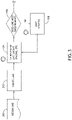
- an initial assembly line layout is designed 300, including takt time, number of operation sequences, stillages, monitors, etc.; either by a user or a trained Al.
- the initial assembly line layout is further developed 302 to include oval, stillages, scissor benches, stands, computer desks, and any other items available from a standard item catalogue; and the operation sequence is linked to kit boxes.
- the initial assembly line layout is then transferred to an appropriate VR system for rendering in a virtual environment on a VR headset.
- a user reviews 304 the initial assembly line layout with all components included. Components may be moved and manipulated at the discretion of the user. Either the rendering processor or a separate processor reviews any use-initiated changes to determine 306 if production can be carried out safely and meet customer demands. In at least one embodiment, a product, such as an aircraft seat, will be rendered in place at each operation station to assess if space is adequate for the product, including appropriate clearances for rotation. If the reviewing processor identifies a conflict, a corrective update is applied 308 and the updated assembly line is re-rendered for further review.
- the layout is finalized 310 into a standardized format to place into production.
- the finalized layout may include dimensions and a 2D printable rendering.
- the finalized design may be used to install 312 the designed assembly in the allocated space such as a shop floor.
- an augmented reality (AR) system may receive a 3D rendering of the finalized assembly line layout and a user may review 314 the actual layout in place as compared to the design.
- a processor may determine 316 if the initial installation steps conform to the finalized design and if the installation is adequate to meet production line specifications. If not, the user or processor may apply 318 one or more updates, and the updates are applied to the AR rendered environment for further review 314.
- the assembly line may be completed 320, including stillages, work stations, monitors, etc.
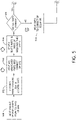
- a process flow diagram is created 400, including operation sequencing information for individual piece parts of the full assembly.
- parts identified in the process flow diagram are imported 402 into the virtual environment and allocated to the appropriate virtual kit boxes for the relevant operation sequence.
- a user may then review 404 the allocation of parts via a VR headset to determine 406 if the correct parts (including part sizes) are in the correct kit boxes, and the disposition of the kit boxes and overhang of parts is correct. If not, the user may reposition 408 any kit boxes as necessary and review 404 such new disposition.
- the user may complete 410 a virtual build of the product to confirm each kit box is correct.
- a sequential build alternatively, a full assembly may be executed with parts highlighted according to the kit box selected.
- the user again has the opportunity to determine 412 if all parts are correctly positioned. If not, the user may again reposition 414 parts and review 410 the resulting re-rendering in the context of the actual build operation.
- SAP may create 418 the operation sequence for individual parts.
- products of the assembly line may include variants; for example, the assembly line may be used to produce a standard aircraft seat and variants.
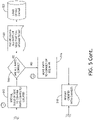
- the next variant (where the product is an aircraft seat, variants may include OB, AFT, FWD, etc.) will be uploaded 500 to the virtual environment.
- An AI process may use standard part allocation and locate 502 parts to the correct kit box for the relevant operation sequence. Such allocation may include the same parts being automatically allocated to same op sequence; similar parts in shape being automatically allocated to the same op sequence; and new parts that are different in number and shape being automatically allocated to a central bin for manual allocation in the virtual environment via the VR headset.
- the user may place 504 any parts that cannot be automatically positioned, including new parts by lifting and dropping in the relevant kit box.
- the user may then review 506 the allocation of parts via a VR headset to determine 508 if the correct parts (including part sizes) are in the correct kit boxes, and the disposition of the kit boxes and overhang of parts is correct. If not, the user may reposition 510 any kit boxes as necessary. Such repositioning is recorded 518 in the assembly line layout, specifically associated with the particular variant, and reported electronically for implementation.
- the user may complete 512 a virtual build of the product to confirm each kit box is correct.
- a sequential build alternatively, a full assembly may be executed with parts highlighted according to the kit box selected.
- the user again has the opportunity to determine 514 if all parts are correctly positioned. If not, the user may again reposition 516 parts with the changes recorded 518 in the assembly line layout, specifically associated with the particular variant, and reported electronically for implementation.
- SAP may create 522 the operation sequence for individual parts.
- SAP provides 600 operation sequences for a given part number and generates 600 a report of changes that have a down-stream effect on other operation sequences.
- Selected time frames and parts may be loaded 604 into a virtual environment to show changes that impact down-stream operation sequences. These parts may be automatically reallocated to correct operation sequence or sent to a holding area for manual allocation.
- a user may position and unallocated parts and then review 606 the allocation of parts via a VR headset to determine 608 if the correct parts (including part sizes) are in the correct kit boxes, and the disposition of the kit boxes and overhang of parts is correct. If not, the user may reposition 610 any kit boxes as necessary and review 606 such new disposition.
- SAP may create 614 the operation sequence for individual parts.
- Embodiments of the present disclosure enable designing an assembly line in Virtual Reality before committing to building the physical line, allowing for the assembly line to be built in a virtual environment mimicking that of a physical one all within the space assigned. This enables correct positioning of the line stations within the space available ensuring good access and clearance between stations and assembly work benches.
- Embodiments allow for assignment of parts to operation sequences with any assignment / reassignment captured in an excel export system.
- the Assembly line may be built in a virtual environment and parts imported, where they can be virtually lifted and assigned to the correct position.
- All line designs and operation sequencing is done based on previous knowledge acquired from the production of previous product designs and is prone to poor positioning of stations, incorrect operation sequence assigned, and suboptimal physical positioning of the assembly line. All operation sequencing is currently completed with thousands of parts, typically new, that must be manually assigned to a location on the assembly line with limited information.
Landscapes
- Engineering & Computer Science (AREA)
- Physics & Mathematics (AREA)
- Theoretical Computer Science (AREA)
- General Physics & Mathematics (AREA)
- Evolutionary Computation (AREA)
- Computer Hardware Design (AREA)
- General Engineering & Computer Science (AREA)
- Geometry (AREA)
- Software Systems (AREA)
- Artificial Intelligence (AREA)
- Computer Vision & Pattern Recognition (AREA)
- Medical Informatics (AREA)
- Computational Linguistics (AREA)
- Mathematical Physics (AREA)
- Biomedical Technology (AREA)
- Biophysics (AREA)
- Health & Medical Sciences (AREA)
- Data Mining & Analysis (AREA)
- General Health & Medical Sciences (AREA)
- Molecular Biology (AREA)
- Computing Systems (AREA)
- Life Sciences & Earth Sciences (AREA)
- Computer Graphics (AREA)
- Human Computer Interaction (AREA)
- Computational Mathematics (AREA)
- Mathematical Analysis (AREA)
- Mathematical Optimization (AREA)
- Pure & Applied Mathematics (AREA)
- Architecture (AREA)
- General Factory Administration (AREA)
- Stored Programmes (AREA)
- Optics & Photonics (AREA)
Applications Claiming Priority (1)
| Application Number | Priority Date | Filing Date | Title |
|---|---|---|---|
| US17/212,256 US20220309753A1 (en) | 2021-03-25 | 2021-03-25 | Virtual reality to assign operation sequencing on an assembly line |
Publications (2)
| Publication Number | Publication Date |
|---|---|
| EP4064102A2 true EP4064102A2 (de) | 2022-09-28 |
| EP4064102A3 EP4064102A3 (de) | 2022-10-19 |
Family
ID=80928551
Family Applications (1)
| Application Number | Title | Priority Date | Filing Date |
|---|---|---|---|
| EP22163293.8A Withdrawn EP4064102A3 (de) | 2021-03-25 | 2022-03-21 | Virtuelle realität zur zuordnung einer operationssequenzierung auf einer montagelinie |
Country Status (2)
| Country | Link |
|---|---|
| US (1) | US20220309753A1 (de) |
| EP (1) | EP4064102A3 (de) |
Families Citing this family (3)
| Publication number | Priority date | Publication date | Assignee | Title |
|---|---|---|---|---|
| WO2023157248A1 (ja) * | 2022-02-18 | 2023-08-24 | 株式会社 東芝 | 処理装置、作成方法、プログラム、及び記憶媒体 |
| CN116992758B (zh) * | 2023-07-17 | 2024-06-14 | 江苏科技大学 | 一种基于机器学习的复杂机械智能装配方法 |
| CN116932008B (zh) * | 2023-09-12 | 2023-12-08 | 湖南速子文化科技有限公司 | 虚拟社会模拟的组件数据更新方法、装置、设备及介质 |
Family Cites Families (70)
| Publication number | Priority date | Publication date | Assignee | Title |
|---|---|---|---|---|
| US6009406A (en) * | 1997-12-05 | 1999-12-28 | Square D Company | Methodology and computer-based tools for re-engineering a custom-engineered product line |
| US9323247B2 (en) * | 2007-09-14 | 2016-04-26 | Fisher-Rosemount Systems, Inc. | Personalized plant asset data representation and search system |
| US7676294B2 (en) * | 2007-09-27 | 2010-03-09 | Rockwell Automation Technologies, Inc. | Visualization of workflow in an industrial automation environment |
| US7899777B2 (en) * | 2007-09-27 | 2011-03-01 | Rockwell Automation Technologies, Inc. | Web-based visualization mash-ups for industrial automation |
| US8087729B2 (en) * | 2008-12-09 | 2012-01-03 | Wolfgang K, Llc | Aircraft seat |
| EP2625594A4 (de) * | 2010-10-05 | 2014-06-11 | Eyal Weinstein | Computerprogramm, system, verfahren und vorrichtung zum anzeigen und finden von einheiten in einer mehrschichtigen struktur |
| US9292180B2 (en) * | 2013-02-28 | 2016-03-22 | The Boeing Company | Locator system for three-dimensional visualization |
| US9612725B1 (en) * | 2013-02-28 | 2017-04-04 | The Boeing Company | Nonconformance visualization system |
| US9340304B2 (en) * | 2013-02-28 | 2016-05-17 | The Boeing Company | Aircraft comparison system |
| US20150302650A1 (en) * | 2014-04-16 | 2015-10-22 | Hazem M. Abdelmoati | Methods and Systems for Providing Procedures in Real-Time |
| US9760635B2 (en) * | 2014-11-07 | 2017-09-12 | Rockwell Automation Technologies, Inc. | Dynamic search engine for an industrial environment |
| US10155596B2 (en) * | 2016-06-06 | 2018-12-18 | The Boeing Company | Three-dimensional aircraft inspection system for layout of passenger accommodations |
| US10388075B2 (en) * | 2016-11-08 | 2019-08-20 | Rockwell Automation Technologies, Inc. | Virtual reality and augmented reality for industrial automation |
| US10735691B2 (en) * | 2016-11-08 | 2020-08-04 | Rockwell Automation Technologies, Inc. | Virtual reality and augmented reality for industrial automation |
| US10866631B2 (en) * | 2016-11-09 | 2020-12-15 | Rockwell Automation Technologies, Inc. | Methods, systems, apparatuses, and techniques for employing augmented reality and virtual reality |
| US10902160B2 (en) * | 2017-02-22 | 2021-01-26 | Middle Chart, LLC | Cold storage environmental control and product tracking |
| US11625510B2 (en) * | 2017-02-22 | 2023-04-11 | Middle Chart, LLC | Method and apparatus for presentation of digital content |
| US11619924B2 (en) * | 2017-04-13 | 2023-04-04 | Rockwell Automation, Inc. | Combined visualization thin client HMI system and method |
| JP6845072B2 (ja) * | 2017-04-21 | 2021-03-17 | ファナック株式会社 | 工場設備の保守支援装置及び保守支援システム |
| US11358337B2 (en) * | 2017-05-24 | 2022-06-14 | Divergent Technologies, Inc. | Robotic assembly of transport structures using on-site additive manufacturing |
| GB2568806B (en) * | 2017-10-02 | 2022-04-06 | Fisher Rosemount Systems Inc | I/O virtualization for commissioning |
| US10445944B2 (en) * | 2017-11-13 | 2019-10-15 | Rockwell Automation Technologies, Inc. | Augmented reality safety automation zone system and method |
| WO2019150321A1 (en) * | 2018-02-01 | 2019-08-08 | Isg Central Services Limited | Improved augmented reality system |
| US11663680B2 (en) * | 2018-03-07 | 2023-05-30 | Siemens Industry Software Ltd | Method and system for automatic work instruction creation |
| EP3579174A1 (de) * | 2018-06-08 | 2019-12-11 | Hexagon Technology Center GmbH | Mobile fahrzeuge in der herstellung |
| JP6823018B2 (ja) * | 2018-08-03 | 2021-01-27 | ファナック株式会社 | 協調動作支援装置 |
| US10942577B2 (en) * | 2018-09-26 | 2021-03-09 | Rockwell Automation Technologies, Inc. | Augmented reality interaction techniques |
| US11526827B2 (en) * | 2018-09-28 | 2022-12-13 | The Regents Of The University Of California | Non-intrusive workflow assessment (NIWA) for manufacturing optimization |
| US20200104723A1 (en) * | 2018-09-28 | 2020-04-02 | Rockwell Automation Technologies, Inc. | Industrial automation compute engine syndication |
| US20200103875A1 (en) * | 2018-09-28 | 2020-04-02 | Rockwell Automation Technologies, Inc. | Industrial automation project acceleration |
| JP6787966B2 (ja) * | 2018-10-02 | 2020-11-18 | ファナック株式会社 | 拡張現実と複合現実を用いたロボット制御装置及び表示装置 |
| JP6885909B2 (ja) * | 2018-10-12 | 2021-06-16 | ファナック株式会社 | ロボット制御装置 |
| US11559897B2 (en) * | 2018-10-26 | 2023-01-24 | George K. Ghanem | Reconfigurable, fixtureless manufacturing system and method assisted by learning software |
| WO2020176803A1 (en) * | 2019-02-27 | 2020-09-03 | Siminsights, Inc. | Augmented reality and virtual reality systems |
| US20200312036A1 (en) * | 2019-04-01 | 2020-10-01 | Bp Corporation North America Inc. | Dynamic digital replicas of production facilities |
| EP3736740B1 (de) * | 2019-05-06 | 2025-02-12 | Dassault Systèmes | Erfahrungslernen in einer virtuellen welt |
| US11249464B2 (en) * | 2019-06-10 | 2022-02-15 | Fisher-Rosemount Systems, Inc. | Industrial control system architecture for real-time simulation and process control |
| US11550311B2 (en) * | 2019-06-10 | 2023-01-10 | Fisher-Rosemount Systems, Inc. | Centralized virtualization management node in process control systems |
| US11048483B2 (en) * | 2019-09-24 | 2021-06-29 | Rockwell Automation Technologies, Inc. | Industrial programming development with an extensible integrated development environment (IDE) platform |
| US11733687B2 (en) * | 2019-09-26 | 2023-08-22 | Rockwell Automation Technologies, Inc. | Collaboration tools |
| US11392112B2 (en) * | 2019-09-26 | 2022-07-19 | Rockwell Automation Technologies, Inc. | Virtual design environment |
| US11442439B2 (en) * | 2019-09-27 | 2022-09-13 | Rockwell Automation Technologies, Inc. | System and method for industrial automation device library |
| EP4046004B1 (de) * | 2019-10-14 | 2026-01-28 | Siemens Industry Software Ltd. | Erzeugung eines 3d-modells eines anlagenlayouts |
| US11733667B2 (en) * | 2019-11-18 | 2023-08-22 | Rockwell Automation Technologies, Inc. | Remote support via visualizations of instructional procedures |
| US11263570B2 (en) * | 2019-11-18 | 2022-03-01 | Rockwell Automation Technologies, Inc. | Generating visualizations for instructional procedures |
| US20230053605A1 (en) * | 2020-01-28 | 2023-02-23 | Middle Chart, LLC | Cold chain management and product tracking |
| US20210248824A1 (en) * | 2020-02-10 | 2021-08-12 | B/E Aerospace, Inc. | System and Method for Locking Augmented and Mixed Reality Applications to Manufacturing Hardware |
| US11275883B2 (en) * | 2020-02-12 | 2022-03-15 | Siemens Industry Software Inc. | Machine learning-based classification in parasitic extraction automation for circuit design and verification |
| US11797721B2 (en) * | 2020-03-17 | 2023-10-24 | Industrial Artificial Intelligence Inc. | Computer-aided warehouse space planning |
| EP4114620A1 (de) * | 2020-04-06 | 2023-01-11 | Siemens Aktiengesellschaft | Aufgabenorientierte 3d-rekonstruktion für autonome roboteroperationen |
| US20220027529A1 (en) * | 2020-07-21 | 2022-01-27 | Rockwell Automation Technologies, Inc. | Controls system based digital twin for supervisory control of independent cart technology tracks and lines |
| US12327210B2 (en) * | 2020-09-11 | 2025-06-10 | Rockwell Automation Technologies, Inc. | Digital engineering on an industrial development hub |
| US11415969B2 (en) * | 2020-09-21 | 2022-08-16 | Rockwell Automation Technologies, Inc. | Connectivity to an industrial information hub |
| US11796983B2 (en) * | 2020-09-25 | 2023-10-24 | Rockwell Automation Technologies, Inc. | Data modeling and asset management using an industrial information hub |
| US11561535B2 (en) * | 2020-09-30 | 2023-01-24 | Rockwell Automation Technologies, Inc. | Systems and methods for data lifecycle management with code content optimization and servicing |
| US20220221845A1 (en) * | 2021-01-08 | 2022-07-14 | B/E Aerospace, Inc. | System and method for augmented reality (ar) assisted manufacture of composite structures and bonded assemblies |
| US12033114B2 (en) * | 2021-07-06 | 2024-07-09 | Ebay Inc. | System and method for providing warehousing service |
| US12020056B2 (en) * | 2021-07-13 | 2024-06-25 | Rockwell Automation Technologies, Inc. | Industrial automation control project conversion |
| US12079652B2 (en) * | 2021-07-13 | 2024-09-03 | Rockwell Automation Technologies, Inc. | Digital engineering virtual machine infrastructure |
| CN113658325B (zh) * | 2021-08-05 | 2022-11-11 | 郑州轻工业大学 | 数字孪生环境下的生产线不确定对象智能识别与预警方法 |
| US12242256B2 (en) * | 2021-09-22 | 2025-03-04 | Rockwell Automation Technologies, Inc. | Systems and methods for providing time-based user experiences for an industrial automation system |
| US11651528B2 (en) * | 2021-09-22 | 2023-05-16 | Rockwell Automation Technologies, Inc. | Systems and methods for providing context-based data for an industrial automation system |
| US12056924B2 (en) * | 2021-09-22 | 2024-08-06 | Rockwell Automation Technologies, Inc. | Systems and methods for providing context-based data to control a machine for an industrial automation system |
| US12038728B2 (en) * | 2021-09-23 | 2024-07-16 | Rockwell Automation Technologies, Inc. | Automated embedded tuning of model-less controllers |
| US11994962B2 (en) * | 2021-11-04 | 2024-05-28 | Rockwell Automation Technologies, Inc. | Concurrent operation of input/output (IO) modules in a duplex configuration |
| US12061462B2 (en) * | 2021-11-08 | 2024-08-13 | Rockwell Automation Technologies, Inc. | Symbolic access of industrial device systems and methods based on an on-premise gateway device |
| US12422794B2 (en) * | 2021-11-08 | 2025-09-23 | Rockwell Automation Technologies, Inc. | Generating digital twin systems for multiphysics systems |
| US11994843B2 (en) * | 2021-11-08 | 2024-05-28 | Rockwell Automation Technologies, Inc. | Symbolic access of industrial device systems and methods based on an off-premise gateway device |
| US12169964B2 (en) * | 2021-11-10 | 2024-12-17 | Honda Motor Co., Ltd. | System and method for providing weakly-supervised online action segmentation |
| US12482375B2 (en) * | 2021-12-01 | 2025-11-25 | Lafayette College | Virtual integrated machining simulator |
-
2021
- 2021-03-25 US US17/212,256 patent/US20220309753A1/en not_active Abandoned
-
2022
- 2022-03-21 EP EP22163293.8A patent/EP4064102A3/de not_active Withdrawn
Also Published As
| Publication number | Publication date |
|---|---|
| EP4064102A3 (de) | 2022-10-19 |
| US20220309753A1 (en) | 2022-09-29 |
Similar Documents
| Publication | Publication Date | Title |
|---|---|---|
| EP4064102A2 (de) | Virtuelle realität zur zuordnung einer operationssequenzierung auf einer montagelinie | |
| US11875292B2 (en) | Image-based decomposition for fast iterative solve of complex linear problems | |
| CN116414094A (zh) | 一种焊接装配智能调度方法及系统 | |
| US11755967B2 (en) | Time-based decomposition for supply chain optimization problem | |
| US20240112111A1 (en) | Systems and Methods for Efficiently Updating Solutions to Multi-Objective Hierarchical Linear Programming Problems | |
| Borthen et al. | Bi-objective offshore supply vessel planning with costs and persistence objectives | |
| US11816752B2 (en) | Image-based analytics of supply chain optimization problems | |
| US20220128964A1 (en) | Tool selection method, device, and tool path generation method | |
| Cheng et al. | Cost-service tradeoff analysis of reorder-point-lot-size inventory models | |
| US20260050955A1 (en) | Method, Medium, and System for Demand Planning | |
| US20250252381A1 (en) | Efficiently Solving Multi-Objective Hierarchical Linear Programming Problems | |
| US20240428187A1 (en) | Domain-Aware Decomposition for Supply Chain Master Planning using Linear Programming | |
| US12547973B1 (en) | System and method of variable-fixing decomposition of supply chain planning problems | |
| Daneshjo et al. | Software support for optimizing layout solution in lean production | |
| CN119990714A (zh) | 一种自动调配方法、装置、计算机设备及存储介质 | |
| Alfano et al. | Optimizing the order picking process via simulation: a case study | |
| US20260004213A1 (en) | Autonomous Multi-Dimension Segmentation User Interface Workflow | |
| Jaoua et al. | A Simulation-Based Optimization Approach Towards Human-Centric Scheduling in Presence of Heterogeneous Workforce | |
| Elaskari et al. | Introducing the Central Backup Cellular Manufacturing System (CBCMS) | |
| Borthen et al. | Bi-objective Offshore Supply Vessel Planning with Costs and Persistence Objectives using a Genetic Search Approach | |
| Demmy | RIME: The Recoverable Item Management Evaluator. Volume II. Section III. RIME Simulation Model Programs. | |
| Shang | Crane scheduling problem in a computer-integrated manufacturing environment | |
| Iwamura et al. | METHODS IN HOLONIC MANUFACTURING SYSTEMS | |
| Sadegh Amalnik | Design of Computer Integrated Manufacturing System for Irankhodro Auto Industry |
Legal Events
| Date | Code | Title | Description |
|---|---|---|---|
| PUAI | Public reference made under article 153(3) epc to a published international application that has entered the european phase |
Free format text: ORIGINAL CODE: 0009012 |
|
| STAA | Information on the status of an ep patent application or granted ep patent |
Free format text: STATUS: THE APPLICATION HAS BEEN PUBLISHED |
|
| PUAL | Search report despatched |
Free format text: ORIGINAL CODE: 0009013 |
|
| AK | Designated contracting states |
Kind code of ref document: A2 Designated state(s): AL AT BE BG CH CY CZ DE DK EE ES FI FR GB GR HR HU IE IS IT LI LT LU LV MC MK MT NL NO PL PT RO RS SE SI SK SM TR |
|
| AK | Designated contracting states |
Kind code of ref document: A3 Designated state(s): AL AT BE BG CH CY CZ DE DK EE ES FI FR GB GR HR HU IE IS IT LI LT LU LV MC MK MT NL NO PL PT RO RS SE SI SK SM TR |
|
| RIC1 | Information provided on ipc code assigned before grant |
Ipc: G06F 30/27 20200101ALI20220914BHEP Ipc: B23P 21/00 20060101ALI20220914BHEP Ipc: G06F 30/12 20200101AFI20220914BHEP |
|
| STAA | Information on the status of an ep patent application or granted ep patent |
Free format text: STATUS: REQUEST FOR EXAMINATION WAS MADE |
|
| 17P | Request for examination filed |
Effective date: 20230417 |
|
| RBV | Designated contracting states (corrected) |
Designated state(s): AL AT BE BG CH CY CZ DE DK EE ES FI FR GB GR HR HU IE IS IT LI LT LU LV MC MK MT NL NO PL PT RO RS SE SI SK SM TR |
|
| STAA | Information on the status of an ep patent application or granted ep patent |
Free format text: STATUS: THE APPLICATION HAS BEEN WITHDRAWN |
|
| 18W | Application withdrawn |
Effective date: 20230725 |
|
| P01 | Opt-out of the competence of the unified patent court (upc) registered |
Effective date: 20230922 |