EP4063756B1 - Air conditioner and self-cleaning control method therefor and device thereof, and storage medium - Google Patents
Air conditioner and self-cleaning control method therefor and device thereof, and storage medium Download PDFInfo
- Publication number
- EP4063756B1 EP4063756B1 EP20892545.3A EP20892545A EP4063756B1 EP 4063756 B1 EP4063756 B1 EP 4063756B1 EP 20892545 A EP20892545 A EP 20892545A EP 4063756 B1 EP4063756 B1 EP 4063756B1
- Authority
- EP
- European Patent Office
- Prior art keywords
- air conditioner
- self
- pressure
- duration
- controlling
- Prior art date
- Legal status (The legal status is an assumption and is not a legal conclusion. Google has not performed a legal analysis and makes no representation as to the accuracy of the status listed.)
- Active
Links
Images


Classifications
-
- F—MECHANICAL ENGINEERING; LIGHTING; HEATING; WEAPONS; BLASTING
- F24—HEATING; RANGES; VENTILATING
- F24F—AIR-CONDITIONING; AIR-HUMIDIFICATION; VENTILATION; USE OF AIR CURRENTS FOR SCREENING
- F24F11/00—Control or safety arrangements
- F24F11/30—Control or safety arrangements for purposes related to the operation of the system, e.g. for safety or monitoring
- F24F11/41—Defrosting; Preventing freezing
- F24F11/42—Defrosting; Preventing freezing of outdoor units
-
- F—MECHANICAL ENGINEERING; LIGHTING; HEATING; WEAPONS; BLASTING
- F24—HEATING; RANGES; VENTILATING
- F24F—AIR-CONDITIONING; AIR-HUMIDIFICATION; VENTILATION; USE OF AIR CURRENTS FOR SCREENING
- F24F11/00—Control or safety arrangements
- F24F11/30—Control or safety arrangements for purposes related to the operation of the system, e.g. for safety or monitoring
- F24F11/41—Defrosting; Preventing freezing
-
- F—MECHANICAL ENGINEERING; LIGHTING; HEATING; WEAPONS; BLASTING
- F24—HEATING; RANGES; VENTILATING
- F24F—AIR-CONDITIONING; AIR-HUMIDIFICATION; VENTILATION; USE OF AIR CURRENTS FOR SCREENING
- F24F11/00—Control or safety arrangements
- F24F11/50—Control or safety arrangements characterised by user interfaces or communication
- F24F11/61—Control or safety arrangements characterised by user interfaces or communication using timers
-
- F—MECHANICAL ENGINEERING; LIGHTING; HEATING; WEAPONS; BLASTING
- F24—HEATING; RANGES; VENTILATING
- F24F—AIR-CONDITIONING; AIR-HUMIDIFICATION; VENTILATION; USE OF AIR CURRENTS FOR SCREENING
- F24F11/00—Control or safety arrangements
- F24F11/62—Control or safety arrangements characterised by the type of control or by internal processing, e.g. using fuzzy logic, adaptive control or estimation of values
- F24F11/63—Electronic processing
- F24F11/64—Electronic processing using pre-stored data
-
- F—MECHANICAL ENGINEERING; LIGHTING; HEATING; WEAPONS; BLASTING
- F24—HEATING; RANGES; VENTILATING
- F24F—AIR-CONDITIONING; AIR-HUMIDIFICATION; VENTILATION; USE OF AIR CURRENTS FOR SCREENING
- F24F11/00—Control or safety arrangements
- F24F11/62—Control or safety arrangements characterised by the type of control or by internal processing, e.g. using fuzzy logic, adaptive control or estimation of values
- F24F11/63—Electronic processing
- F24F11/65—Electronic processing for selecting an operating mode
- F24F11/67—Switching between heating and cooling modes
-
- F—MECHANICAL ENGINEERING; LIGHTING; HEATING; WEAPONS; BLASTING
- F24—HEATING; RANGES; VENTILATING
- F24F—AIR-CONDITIONING; AIR-HUMIDIFICATION; VENTILATION; USE OF AIR CURRENTS FOR SCREENING
- F24F11/00—Control or safety arrangements
- F24F11/70—Control systems characterised by their outputs; Constructional details thereof
- F24F11/80—Control systems characterised by their outputs; Constructional details thereof for controlling the temperature of the supplied air
- F24F11/86—Control systems characterised by their outputs; Constructional details thereof for controlling the temperature of the supplied air by controlling compressors within refrigeration or heat pump circuits
-
- F—MECHANICAL ENGINEERING; LIGHTING; HEATING; WEAPONS; BLASTING
- F24—HEATING; RANGES; VENTILATING
- F24F—AIR-CONDITIONING; AIR-HUMIDIFICATION; VENTILATION; USE OF AIR CURRENTS FOR SCREENING
- F24F11/00—Control or safety arrangements
- F24F11/70—Control systems characterised by their outputs; Constructional details thereof
- F24F11/80—Control systems characterised by their outputs; Constructional details thereof for controlling the temperature of the supplied air
- F24F11/87—Control systems characterised by their outputs; Constructional details thereof for controlling the temperature of the supplied air by controlling absorption or discharge of heat in outdoor units
- F24F11/871—Control systems characterised by their outputs; Constructional details thereof for controlling the temperature of the supplied air by controlling absorption or discharge of heat in outdoor units by controlling outdoor fans
-
- F—MECHANICAL ENGINEERING; LIGHTING; HEATING; WEAPONS; BLASTING
- F24—HEATING; RANGES; VENTILATING
- F24F—AIR-CONDITIONING; AIR-HUMIDIFICATION; VENTILATION; USE OF AIR CURRENTS FOR SCREENING
- F24F11/00—Control or safety arrangements
- F24F11/30—Control or safety arrangements for purposes related to the operation of the system, e.g. for safety or monitoring
- F24F11/41—Defrosting; Preventing freezing
- F24F11/43—Defrosting; Preventing freezing of indoor units
-
- F—MECHANICAL ENGINEERING; LIGHTING; HEATING; WEAPONS; BLASTING
- F24—HEATING; RANGES; VENTILATING
- F24F—AIR-CONDITIONING; AIR-HUMIDIFICATION; VENTILATION; USE OF AIR CURRENTS FOR SCREENING
- F24F2140/00—Control inputs relating to system states
- F24F2140/20—Heat-exchange fluid temperature
-
- F—MECHANICAL ENGINEERING; LIGHTING; HEATING; WEAPONS; BLASTING
- F24—HEATING; RANGES; VENTILATING
- F24F—AIR-CONDITIONING; AIR-HUMIDIFICATION; VENTILATION; USE OF AIR CURRENTS FOR SCREENING
- F24F2221/00—Details or features not otherwise provided for
- F24F2221/22—Cleaning ducts or apparatus
Definitions
- the present invention relates to the field of air conditioners, and more particularly, to a self-cleaning control method for an air conditioner, a self-cleaning control device of an air conditioner, an air conditioner, and a computer readable storage medium.
- some air conditioners in the market have a self-cleaning function in the related art, an indoor unit is controlled to stop working so as to frost an evaporator of the indoor unit, then the indoor unit is defrosted, and the dust is removed through the defrosted water, so that the self-cleaning of the air conditioner is realized.
- CN104848738 relates to a method for cleaning an indoor heat exchanger of an air conditioner with a high-temperature sterilization function.
- a first object of the present invention is to provide a self-cleaning control method for an air conditioner, which can solve problems of an insufficient frosting degree and an incomplete cleaning effect during a self-cleaning process of the air conditioner, thereby further improving a cleaning effect of the air conditioner and improving the user experience.
- a second object of the present invention is to provide a self-cleaning control device of an air conditioner.
- a third object of the present invention is to provide an air conditioner.
- a fourth object of the present invention is to provide a computer readable storage medium.
- a self-cleaning control method for an air conditioner includes: controlling, in response to the air conditioner entering a self-cleaning mode, the air conditioner to perform a cooling operation; during the cooling operation of the air conditioner, acquiring a high-pressure-side pressure of an exhaust port of a compressor, and recording a duration of the cooling operation of the air conditioner; controlling, based on the high-pressure-side pressure and the duration of the cooling operation of the air conditioner, the air conditioner to switch to perform a heating operation; during the heating operation of the air conditioner, acquiring a temperature at a bottom of an outdoor heat exchanger, and recording a duration of the heating operation of the air conditioner; and controlling, based on the temperature at the bottom of the outdoor heat exchanger and the duration of the heating operation of the air conditioner, the air conditioner to exit the self-cleaning mode.
- the air conditioner in response to the air conditioner entering the self-cleaning mode, the air conditioner is controlled to perform a cooling operation; during the cooling operation of the air conditioner, the high-pressure-side pressure of an exhaust port of the compressor is acquired, and the duration of the cooling operation of the air conditioner is recorded; based on the high-pressure-side pressure and the duration of the cooling operation of the air conditioner, the air conditioner is controlled to switch to perform the heating operation; during the heating operation of the air conditioner, the temperature at the bottom of the outdoor heat exchanger is acquired, and the duration of the heating operation of the air conditioner is recorded; and based on the temperature at the bottom of the outdoor heat exchanger and the duration of the heating operation of the air conditioner, the air conditioner is controlled to exit the self-cleaning mode.
- the problems of an insufficient frosting degree and an incomplete cleaning effect during the self-cleaning process of the air conditioner can be solved, thereby further improving the cleaning effect of the air conditioner and improving the user experience.
- the self-cleaning control method for the air conditioner according to the embodiments of the present disclosure has following additional technical features.
- said controlling, based on the high-pressure-side pressure and the duration of the cooling operation of the air conditioner, the air conditioner to switch to perform the heating operation includes: determining whether the high-pressure-side pressure is greater than or equal to a first pressure threshold or whether the duration of the cooling operation of the air conditioner is longer than or equal to a first time threshold; and controlling, in response to the high-pressure-side pressure being greater than or equal to the first pressure threshold or the duration of the cooling operation of the air conditioner being longer than or equal to the first time threshold, the air conditioner to switch to perform the heating operation.
- the first pressure threshold is 5.5 Mpa
- the first time threshold is 10 min.
- said controlling, based on the temperature at the bottom of the outdoor heat exchanger and the duration of the heating operation of the air conditioner, the air conditioner to exit the self-cleaning mode includes: determining whether the temperature at the bottom of the outdoor heat exchanger is greater than or equal to a first temperature threshold or whether the duration of the heating operation of the air conditioner is longer than or equal to a second time threshold; and controlling, in response to the temperature at the bottom of the outdoor heat exchanger being greater than or equal to the first temperature threshold or the duration of the heating operation of the air conditioner being longer than or equal to the second time threshold, the air conditioner to exit the self-cleaning mode.
- the first temperature threshold is 18 °C and the second time threshold is 10 min.
- the method further includes: during the controlling of the air conditioner to perform the cooling operation, controlling the compressor to operate at a first frequency, controlling a throttling device to be opened at a first opening degree, and controlling an indoor fan and an outdoor fan to stop operating.
- the method further includes: during the controlling of the air conditioner to perform the heating operation, controlling the compressor to operate at a second frequency, controlling the throttling device to be opened at a second opening degree, controlling the indoor fan to stop operating, and controlling the outdoor fan to operate at a first rotation speed.
- the second opening degree is greater than the first opening degree.
- a self-cleaning control device of an air conditioner includes: a pressure detection unit configured to detect a high-pressure-side pressure of an exhaust port of a compressor; a temperature detection unit configured to detect a temperature at a bottom of an outdoor heat exchanger; and a control unit connected to the pressure detection unit and the temperature detection unit respectively.
- the control unit is configured to: control, in response to the air conditioner entering a self-cleaning mode, the air conditioner to perform a cooling operation; during the cooling operation of the air conditioner, acquire a high-pressure-side pressure of an exhaust port of a compressor, and record a duration of the cooling operation of the air conditioner; control, based on the high-pressure-side pressure and the duration of the cooling operation of the air conditioner, the air conditioner to switch to perform a heating operation; during the heating operation of the air conditioner, acquire a temperature at a bottom of an outdoor heat exchanger, and record a duration of the heating operation of the air conditioner; and control, based on the temperature at the bottom of the outdoor heat exchanger and the duration of the heating operation of the air conditioner, the air conditioner to exit the self-cleaning mode.
- the self-cleaning control device of the air conditioner the high-pressure-side pressure of the exhaust port of the compressor is detected by the pressure detection unit; the temperature at the bottom of the outdoor heat exchanger is detected by the temperature detection unit; further, in response to the air conditioner entering the self-cleaning mode, the air conditioner is controlled to perform the cooling operation; during the cooling operation of the air conditioner, the high-pressure-side pressure of the exhaust port of the compressor is acquired, and the duration of the cooling operation of the air conditioner is recorded; based on the high-pressure-side pressure and the duration of the cooling operation of the air conditioner, the air conditioner is controlled to switch to perform the heating operation control; during the heating operation of the air conditioner, the temperature at the bottom of the outdoor heat exchanger is acquired, and the duration of the heating operation of the air conditioner is recorded; and based on the temperature at the bottom of the outdoor heat exchanger and the duration of the heating operation of the air conditioner, the air conditioner is controlled to exit the self-cleaning mode.
- embodiments of a third aspect of the present invention are disclosed in claim 10 and provide an air conditioner including the self-cleaning control device of the air conditioner.
- the air conditioner provided by the embodiments of the present disclosure adopts the self-cleaning control device of the air conditioner, so that the problems of an insufficient frosting degree and an incomplete cleaning effect during the self-cleaning process of the air conditioner can be solved, thereby further improving the cleaning effect of the air conditioner and improving the user experience.
- a computer readable storage medium according to embodiments of a fourth aspect of the present invention is disclosed in claim 11 and has a self-cleaning control program for an air conditioner stored thereon.
- the self-cleaning control program when executed by a processor, implements the self-cleaning control method for the air conditioner as described above.
- the self-cleaning control program for the air conditioner is stored on the computer readable storage medium, which can solve the problems of an insufficient frosting degree and an incomplete cleaning effect during the self-cleaning process of the air conditioner, thereby further improving the cleaning effect of the air conditioner and improving the user experience.
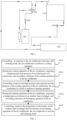
- the air conditioner includes a compressor 101, a four-way reversing valve 102, an outdoor heat exchanger 103, an electronic expansion valve 104 (hereinafter, a throttling device), an indoor heat exchanger 105, and a high-pressure detection valve 106.
- the high-pressure detection valve 106 is disposed between the compressor 101 and the four-way reversing valve 102 to obtain the high-pressure-side pressure of an exhaust port of the compressor.
- the remaining structures of the air conditioner operate in a same or similar operation principle to those of an air conditioner in the related art, which will not be elaborated here.
- FIG. 2 is a flow chart illustrating a self-cleaning control method for the air conditioner according to embodiments of the present disclosure.
- the self-cleaning control method for the air conditioner includes the following steps.
- the air conditioner is controlled, in response to the air conditioner entering a self-cleaning mode, to perform a cooling operation.
- a user can control the air conditioner to enter the self-cleaning mode through a remote controller of the air conditioner or an APP on a mobile terminal.
- a high-pressure-side pressure of an exhaust port of the compressor is acquired, and a duration of the cooling operation of the air conditioner is recorded.
- the high-pressure-side pressure P of the exhaust port of the compressor can be obtained through the high-pressure detection valve disposed between the compressor and the four-way reversing valve, the duration SL of the cooling operation of the air conditioner is recorded, and whether to control the air conditioner to switch to a heating operation is determined based on the high-pressure-side pressure P and the duration SL of the cooling operation of the air conditioner.
- the air conditioner is controlled, based on the high-pressure-side pressure and the duration of the cooling operation of the air conditioner, to switch to perform a heating operation.
- said controlling, based on the high-pressure-side pressure and the duration of the cooling operation of the air conditioner, the air conditioner to switch to perform the heating operation includes the following steps.
- a first pressure threshold P1 and a first time threshold S1 can be set accordingly based on parameters of the air conditioner.
- the first pressure threshold P1 may be set to 5.5 Mpa
- the first time threshold S1 may be set to 10 min.
- the air conditioner is controlled, in response to the high-pressure-side pressure being greater than or equal to the first pressure threshold or the duration of the cooling operation of the air conditioner being longer than or equal to the first time threshold, to switch to perform the heating operation.
- the air conditioner is controlled to switch to perform the heating operation and enter a defrosting and self-cleaning process.
- the air conditioner can be controlled to maintain the cooling operation so as to control the air conditioner to continue frosting.
- a temperature at a bottom of an outdoor heat exchanger is acquired, and a duration of the heating operation of the air conditioner is recorded.
- a temperature T at the bottom of the outdoor heat exchanger can be acquired through a temperature sensor disposed at the bottom of the outdoor heat exchanger, the duration SR of the heating operation of the air conditioner is recorded, and then whether to control the air conditioner to exit the self-cleaning mode is determined based on the temperature T at the bottom of the outdoor heat exchanger and the duration SR of the heating operation of the air conditioner.
- the air conditioner is controlled, based on the temperature at the bottom of the outdoor heat exchanger and the duration of the heating operation of the air conditioner, to exit the self-cleaning mode.
- said controlling, based on the temperature at the bottom of the outdoor heat exchanger and the duration of the heating operation of the air conditioner, the air conditioner to exit the self-cleaning mode includes the following steps.
- a first temperature threshold T1 and a second time threshold S2 may be set accordingly based on operation parameters of the air conditioner.
- the first temperature threshold T1 may be set to 18 °C and the second time threshold S2 may be set to 10 min.
- the air conditioner is controlled, in response to the temperature at the bottom of the outdoor heat exchanger being greater than or equal to the first temperature threshold or the duration of the heating operation of the air conditioner being longer than or equal to the second time threshold, to exit the self-cleaning mode.
- the air conditioner when the temperature T at the bottom of the outdoor heat exchanger is greater than or equal to the first temperature threshold T1 or the duration SR of the heating operation of the air conditioner is longer than or equal to the second time threshold S2, for example, T is greater than or equal to T1, or SR is longer than or equal to S2, it is considered that the air conditioner has finished defrosting and self-cleaning, and at this time, the air conditioner is controlled to exit the self-cleaning mode.
- the air conditioner may be controlled to maintain the heating operation so as to control the air conditioner to continue defrosting and self-cleaning.
- the compressor is controlled to operate at a first frequency
- the throttling device is controlled to be opened at a first opening degree
- an indoor fan and an outdoor fan are controlled to stop operating.
- the first frequency and the first opening degree can be set based on operation parameters of the air conditioner.
- the first frequency may be set to 70 Hz
- the first opening degree may be set to one fifth of a maximum opening degree of the throttling device.
- the compressor is controlled to operate at a second frequency
- the throttling device is controlled to be opened at a second opening degree
- an indoor fan is controlled to stop operating
- an outdoor fan is controlled to operate at a first rotation speed
- the air conditioner is controlled to perform defrosting and self-cleaning.
- the second frequency, the second opening degree, and the first rotation speed can be set based on operation parameters of the air conditioner.
- the second frequency may be set to 70 Hz
- the second opening degree may be set to one third of a maximum opening degree of the throttling device
- the second rotation speed may be set to 850 rad/min.
- the second opening degree is greater than the first opening degree.
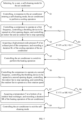
- step S1 After the user selects a self-cleaning mode of the air conditioner, step S1 is performed.
- the air conditioner is controlled, in response to the air conditioner entering a self-cleaning mode, to perform a cooling operation.
- the compressor is controlled to operate at a first frequency
- the throttling device is controlled to be opened at a first opening degree
- an indoor fan and an outdoor fan are controlled to stop operating.
- a high-pressure-side pressure P of an exhaust port of the compressor is acquired, and a duration SL of the cooling operation of the air conditioner is recorded.
- the high-pressure-side pressure P of the exhaust port of the compressor may be detected every 10 seconds.
- step S4 whether the high-pressure-side pressure P is greater than or equal to a first pressure threshold P1 or whether the duration SL of the cooling operation of the air conditioner is longer than or equal to a first time threshold S1 is determined. If yes, step S5 is performed; and if no, step S2 is performed.
- the air conditioner is controlled to switch to perform a heating operation.
- the compressor is controlled to operate at a second frequency
- the throttling device is controlled to be opened at a second opening degree
- the indoor fan is controlled to stop operating
- the outdoor fan is controlled to operate at a first rotation speed.
- a temperature T at a bottom of an outdoor heat exchanger is acquired, and a duration SR of the heating operation of the air conditioner is recorded.
- step S8 whether the temperature T at the bottom of the outdoor heat exchanger is greater than or equal to a first temperature threshold T1 or whether the duration SR of the heating operation of the air conditioner is longer than or equal to a second time threshold S2 is determined. If yes, step S9 is performed; and if no, step S6 is performed.
- the air conditioner is controlled to exit the self-cleaning mode.
- the air conditioner is controlled, in response to the air conditioner entering the self-cleaning mode, to perform a cooling operation; during the cooling operation of the air conditioner, the high-pressure-side pressure of the exhaust port of the compressor is acquired, and the duration of the cooling operation of the air conditioner is recorded; further, the air conditioner is controlled, based on the high-pressure-side pressure and the duration of the cooling operation of the air conditioner, to switch to perform the heating operation; in addition, during the heating operation of the air conditioner, the temperature at the bottom of the outdoor heat exchanger is acquired, and the duration of the heating operation of the air conditioner is recorded; and the air conditioner is controlled, based on the temperature at the bottom of the outdoor heat exchanger and the duration of the heating operation of the air conditioner, to exit the self-cleaning mode.
- the problems of an insufficient frosting degree and an incomplete cleaning effect during the self-cleaning process of the air conditioner can be solved, thereby further improving the cleaning effect of the air conditioner and improving the user experience.
- FIG. 6 is a block diagram illustrating a self-cleaning control device of the air conditioner according to embodiments of the present disclosure.
- the self-cleaning control device 100 of the air conditioner includes: a pressure detection unit 10, a temperature detection unit 20, and a control unit 30.
- the pressure detection unit 10 is configured to detect a high-pressure-side pressure of an exhaust port of the compressor.
- the temperature detection unit 20 is configured to detect a temperature at a bottom of the outdoor heat exchanger.
- the control unit 30 is connected to the pressure detection unit 10 and the temperature detection unit 20, respectively.
- the control unit 30 is configured to: control, in response to the air conditioner entering a self-cleaning mode, the air conditioner to perform a cooling operation; during the cooling operation of the air conditioner, acquire a high-pressure-side pressure of an exhaust port of the compressor, and record a duration of the cooling operation of the air conditioner; control, based on the high-pressure-side pressure and the duration of the cooling operation of the air conditioner, the air conditioner to switch to perform a heating operation; during the heating operation of the air conditioner, acquire a temperature at a bottom of the outdoor heat exchanger, and record a duration of the heating operation of the air conditioner; and control, based on the temperature at the bottom of the outdoor heat exchanger and the duration of the heating operation of the air conditioner, the air conditioner to exit the self-cleaning mode.
- control unit 30 controls, based on the duration of the cooling operation of the air conditioner and the high-pressure-side pressure detected by the pressure detection unit 10, the air conditioner to switch to perform the heating operation, and controls, based on the duration of the heating operation of the air conditioner and the temperature at the bottom of the outdoor heat exchanger detected by the temperature detection unit 20, the air conditioner to exit the self-cleaning mode.
- the problems of an insufficient frosting degree and an incomplete cleaning effect during the self-cleaning process of the air conditioner can be solved, thereby further improving the cleaning effect of the air conditioner and improving the user experience.
- the self-cleaning control device 100 of the air conditioner according to the embodiments of the present disclosure corresponds to the above-mentioned implementations of the self-cleaning control method for the air conditioner according to the above embodiments of the present disclosure, which will not be elaborated here.
- the air conditioner is controlled, in response to the air conditioner entering the self-cleaning mode, to perform the cooling operation; during the cooling operation of the air conditioner, the high-pressure-side pressure of the exhaust port of the compressor is acquired, and the duration of the cooling operation of the air conditioner is recorded; the air conditioner is controlled, based on the high-pressure-side pressure and the duration of the cooling operation of the air conditioner, to switch to perform the heating operation; during the heating operation of the air conditioner, the temperature at the bottom of the outdoor heat exchanger is acquired, and the duration of the heating operation of the air conditioner is recorded; and the air conditioner is controlled, based on the temperature at the bottom of the outdoor heat exchanger and the duration of the heating operation of the air conditioner, to exit the self-cleaning mode.
- FIG. 7 is a block schematic diagram of an air conditioner according to certain embodiments of the present disclosure.
- an air conditioner 1000 includes the aforementioned self-cleaning control device 100 of the air conditioner, and can realize the respective implementation of the self-cleaning control device 100 of the air conditioner described above.
- the self-cleaning control device of the air conditioner is adopted, so that the problems of an insufficient frosting degree and an incomplete cleaning effect during the self-cleaning process of the air conditioner can be solved, thereby further improving the cleaning effect of the air conditioner and improving the user experience.
- a computer readable storage medium has a self-cleaning control program for an air conditioner stored thereon.
- the self-cleaning control program when executed by a processor, implements the respective implementation of the self-cleaning control method for the air conditioner described above.
- the self-cleaning control program for the air conditioner is stored on the computer readable storage medium, so that the problems of an insufficient frosting degree and an incomplete cleaning effect during the self-cleaning process of the air conditioner can be solved, thereby further improving the cleaning effect of the air conditioner and improving the user experience.
- first and second are used herein for purposes of description only and are not intended to indicate or imply relative importance or significance or a quantity of the indicated feature.
- the feature defined with “first” and “second” may explicitly or implicitly include one or more this feature.
- a plurality of means at least two, for example, two or three, unless specified otherwise.
- Any process or method described in a flow chart or described herein in other ways may be understood to include one or more modules, segments or portions that can implement codes of executable instructions of customized logical functions or steps in the process.
- the scope of preferred embodiments of the present disclosure includes other implementations, which implement functions in an order other than the order shown or discussed, including a substantially simultaneous manner or a reverse order depending on the involved functions, which should be understood by those skilled in the art.
- the logic and/or steps described shown in the flow chart or described in other manners herein, for example, may be considered as a particular sequence of executable instructions for realizing the logical function, may be specifically implemented in any computer-readable medium to be used by the instruction execution system, device or equipment (e.g., the system based on computers, the system including processors or other systems capable of obtaining the instruction from the instruction execution system, device and equipment and executing the instruction), or to be used in combination with the instruction execution system, device and equipment.
- the computer-readable medium may be any device adaptive for including, storing, communicating, propagating or transferring programs to be used by or in combination with the instruction execution system, device or equipment.
- the computer-readable medium include but are not limited to: an electronic connection (an electronic device) with one or more wires, a portable computer enclosure (a magnetic device), a random-access memory (RAM), a read-only memory (ROM), an erasable programmable read-only memory (EPROM or a flash memory), an optical fiber device and a portable compact disk read-only memory (CDROM).
- the computer readable medium may even be a paper or other appropriate medium capable of printing programs thereon, this is because, for example, the paper or other appropriate medium may be optically scanned and then edited, decrypted or processed with other appropriate methods when necessary to obtain the programs in an electric manner, and then the programs may be stored in a computer memory.
- each part of the present disclosure may be realized by hardware, software, firmware or a combination thereof.
- a plurality of steps or methods may be realized by software or firmware stored in the memory and executed by an appropriate instruction execution system.
- the hardware likewise in another embodiment, it may be realized by one or a combination of the following techniques known in the art: a discrete logic circuit having a logic gate circuit for performing a logic function on a data signal, an application-specific integrated circuit having an appropriate combination logic gate circuit, a programmable gate array (PGA), a field programmable gate array (FPGA), etc.
- individual functional units in the embodiments of the present disclosure may be integrated in one processing module or may be separately physically present, or two or more units may be integrated in one module.
- the integrated module as described above may be achieved in the form of hardware, or may be achieved in the form of a software functional module. If the integrated module is achieved in the form of a software functional module and sold or used as a separate product, the integrated module may also be stored in a computer-readable storage medium.
Landscapes
- Engineering & Computer Science (AREA)
- Chemical & Material Sciences (AREA)
- Combustion & Propulsion (AREA)
- Mechanical Engineering (AREA)
- General Engineering & Computer Science (AREA)
- Signal Processing (AREA)
- Physics & Mathematics (AREA)
- Fuzzy Systems (AREA)
- Mathematical Physics (AREA)
- Thermal Sciences (AREA)
- Human Computer Interaction (AREA)
- Air Conditioning Control Device (AREA)
Description
- The present invention relates to the field of air conditioners, and more particularly, to a self-cleaning control method for an air conditioner, a self-cleaning control device of an air conditioner, an air conditioner, and a computer readable storage medium.
- At present, some air conditioners in the market have a self-cleaning function in the related art, an indoor unit is controlled to stop working so as to frost an evaporator of the indoor unit, then the indoor unit is defrosted, and the dust is removed through the defrosted water, so that the self-cleaning of the air conditioner is realized.
- However, upon intensive research by the applicant, it was found that the air conditioner of the related art may cause an excessively high system pressure exceeding a normal operating pressure of a compressor during the self-cleaning process. It is not conducive to the stable operation of the air conditioner, and moreover, a frosting effect is dissatisfactory, so that a cleaning effect cannot meet normal user requirements.
CN104848738 relates to a method for cleaning an indoor heat exchanger of an air conditioner with a high-temperature sterilization function. - Aspects of the invention are provided in the claims. The present disclosure aims to solve at least one of the technical problems in the related art.
- Therefore, a first object of the present invention is to provide a self-cleaning control method for an air conditioner, which can solve problems of an insufficient frosting degree and an incomplete cleaning effect during a self-cleaning process of the air conditioner, thereby further improving a cleaning effect of the air conditioner and improving the user experience.
- A second object of the present invention is to provide a self-cleaning control device of an air conditioner.
- A third object of the present invention is to provide an air conditioner.
- A fourth object of the present invention is to provide a computer readable storage medium.
- In order to achieve the above objective, a self-cleaning control method for an air conditioner according to embodiments of a first aspect of the present invention is disclosed in claim 1 and includes:
controlling, in response to the air conditioner entering a self-cleaning mode, the air conditioner to perform a cooling operation; during the cooling operation of the air conditioner, acquiring a high-pressure-side pressure of an exhaust port of a compressor, and recording a duration of the cooling operation of the air conditioner; controlling, based on the high-pressure-side pressure and the duration of the cooling operation of the air conditioner, the air conditioner to switch to perform a heating operation; during the heating operation of the air conditioner, acquiring a temperature at a bottom of an outdoor heat exchanger, and recording a duration of the heating operation of the air conditioner; and controlling, based on the temperature at the bottom of the outdoor heat exchanger and the duration of the heating operation of the air conditioner, the air conditioner to exit the self-cleaning mode. - According to the self-cleaning control method for the air conditioner, in response to the air conditioner entering the self-cleaning mode, the air conditioner is controlled to perform a cooling operation; during the cooling operation of the air conditioner, the high-pressure-side pressure of an exhaust port of the compressor is acquired, and the duration of the cooling operation of the air conditioner is recorded; based on the high-pressure-side pressure and the duration of the cooling operation of the air conditioner, the air conditioner is controlled to switch to perform the heating operation; during the heating operation of the air conditioner, the temperature at the bottom of the outdoor heat exchanger is acquired, and the duration of the heating operation of the air conditioner is recorded; and based on the temperature at the bottom of the outdoor heat exchanger and the duration of the heating operation of the air conditioner, the air conditioner is controlled to exit the self-cleaning mode. In this way, the problems of an insufficient frosting degree and an incomplete cleaning effect during the self-cleaning process of the air conditioner can be solved, thereby further improving the cleaning effect of the air conditioner and improving the user experience.
- In addition, the self-cleaning control method for the air conditioner according to the embodiments of the present disclosure has following additional technical features.
- According to an embodiment of the present disclosure, said controlling, based on the high-pressure-side pressure and the duration of the cooling operation of the air conditioner, the air conditioner to switch to perform the heating operation includes: determining whether the high-pressure-side pressure is greater than or equal to a first pressure threshold or whether the duration of the cooling operation of the air conditioner is longer than or equal to a first time threshold; and controlling, in response to the high-pressure-side pressure being greater than or equal to the first pressure threshold or the duration of the cooling operation of the air conditioner being longer than or equal to the first time threshold, the air conditioner to switch to perform the heating operation.
- According to an embodiment of the present disclosure, the first pressure threshold is 5.5 Mpa, and the first time threshold is 10 min.
- According to an embodiment of the present disclosure, said controlling, based on the temperature at the bottom of the outdoor heat exchanger and the duration of the heating operation of the air conditioner, the air conditioner to exit the self-cleaning mode includes: determining whether the temperature at the bottom of the outdoor heat exchanger is greater than or equal to a first temperature threshold or whether the duration of the heating operation of the air conditioner is longer than or equal to a second time threshold; and controlling, in response to the temperature at the bottom of the outdoor heat exchanger being greater than or equal to the first temperature threshold or the duration of the heating operation of the air conditioner being longer than or equal to the second time threshold, the air conditioner to exit the self-cleaning mode.
- According to an embodiment of the present disclosure, the first temperature threshold is 18 °C and the second time threshold is 10 min.
- According to an embodiment of the present disclosure, the method further includes: during the controlling of the air conditioner to perform the cooling operation, controlling the compressor to operate at a first frequency, controlling a throttling device to be opened at a first opening degree, and controlling an indoor fan and an outdoor fan to stop operating.
- According to an embodiment of the present disclosure, the method further includes: during the controlling of the air conditioner to perform the heating operation, controlling the compressor to operate at a second frequency, controlling the throttling device to be opened at a second opening degree, controlling the indoor fan to stop operating, and controlling the outdoor fan to operate at a first rotation speed.
- According to an embodiment of the present disclosure, the second opening degree is greater than the first opening degree.
- In order to achieve the above objective, a self-cleaning control device of an air conditioner according to embodiments of a second aspect of the present invention is disclosed in
claim 9 and includes: a pressure detection unit configured to detect a high-pressure-side pressure of an exhaust port of a compressor; a temperature detection unit configured to detect a temperature at a bottom of an outdoor heat exchanger; and a control unit connected to the pressure detection unit and the temperature detection unit respectively. The control unit is configured to: control, in response to the air conditioner entering a self-cleaning mode, the air conditioner to perform a cooling operation; during the cooling operation of the air conditioner, acquire a high-pressure-side pressure of an exhaust port of a compressor, and record a duration of the cooling operation of the air conditioner; control, based on the high-pressure-side pressure and the duration of the cooling operation of the air conditioner, the air conditioner to switch to perform a heating operation; during the heating operation of the air conditioner, acquire a temperature at a bottom of an outdoor heat exchanger, and record a duration of the heating operation of the air conditioner; and control, based on the temperature at the bottom of the outdoor heat exchanger and the duration of the heating operation of the air conditioner, the air conditioner to exit the self-cleaning mode. - According to the self-cleaning control device of the air conditioner, the high-pressure-side pressure of the exhaust port of the compressor is detected by the pressure detection unit; the temperature at the bottom of the outdoor heat exchanger is detected by the temperature detection unit; further, in response to the air conditioner entering the self-cleaning mode, the air conditioner is controlled to perform the cooling operation; during the cooling operation of the air conditioner, the high-pressure-side pressure of the exhaust port of the compressor is acquired, and the duration of the cooling operation of the air conditioner is recorded; based on the high-pressure-side pressure and the duration of the cooling operation of the air conditioner, the air conditioner is controlled to switch to perform the heating operation control; during the heating operation of the air conditioner, the temperature at the bottom of the outdoor heat exchanger is acquired, and the duration of the heating operation of the air conditioner is recorded; and based on the temperature at the bottom of the outdoor heat exchanger and the duration of the heating operation of the air conditioner, the air conditioner is controlled to exit the self-cleaning mode. In this way, the problems of an insufficient frosting degree and an incomplete cleaning effect during the self-cleaning process of the air conditioner can be solved, thereby further improving the cleaning effect of the air conditioner and improving the user experience.
- In order to achieve the above objective, embodiments of a third aspect of the present invention are disclosed in
claim 10 and provide an air conditioner including the self-cleaning control device of the air conditioner. - The air conditioner provided by the embodiments of the present disclosure adopts the self-cleaning control device of the air conditioner, so that the problems of an insufficient frosting degree and an incomplete cleaning effect during the self-cleaning process of the air conditioner can be solved, thereby further improving the cleaning effect of the air conditioner and improving the user experience.
- In order to achieve the above objective, a computer readable storage medium according to embodiments of a fourth aspect of the present invention is disclosed in claim 11 and has a self-cleaning control program for an air conditioner stored thereon. The self-cleaning control program, when executed by a processor, implements the self-cleaning control method for the air conditioner as described above.
- According to the computer readable storage medium provided by the embodiments of the present disclosure, the self-cleaning control program for the air conditioner is stored on the computer readable storage medium, which can solve the problems of an insufficient frosting degree and an incomplete cleaning effect during the self-cleaning process of the air conditioner, thereby further improving the cleaning effect of the air conditioner and improving the user experience.
- Additional aspects and advantages of the present disclosure will be given in part in the following descriptions, become apparent in part from the following descriptions, or be learned from the practice of the embodiments of the present disclosure.
- The above and/or other aspects and advantages of the present disclosure will become apparent and more readily appreciated from the following descriptions made with reference to the accompanying drawings, in which:
-
FIG. 1 is a schematic structural diagram of an air conditioner according to embodiments of the present invention -
FIG. 2 is a flow chart illustrating a self-cleaning control method for an air conditioner according to embodiments of the present invention; -
FIG. 3 is a flow chart illustrating a self-cleaning control method for an air conditioner according to an embodiment of the present invention; -
FIG. 4 is a flow chart illustrating a self-cleaning control method for an air conditioner according to another embodiment of the present invention; -
FIG. 5 is a flow chart illustrating a method for self-cleaning control of an air conditioner according to a specific embodiment of the present invention; -
FIG. 6 is a block diagram illustrating a self-cleaning control device of an air conditioner according to embodiments of the present invention; and -
FIG. 7 is a block schematic diagram of an air conditioner according to embodiments of the present invention, - Embodiments of the present invention are described below, and examples of the embodiments are illustrated in the accompanying drawings, throughout which same or similar reference numerals refer to the same or similar elements or elements having the same or similar functions. The embodiments described below with reference to the accompanying drawings are illustrative and intended to explain the present invention and should not be construed as limiting the present invention. The scope of the invention being defined in the claims.
- An air conditioner, a self-cleaning control method thereof, a self-cleaning control device therefor, and a storage medium according to embodiments of the present disclosure will be described below with reference to the accompanying drawings.
- Before describing the air conditioner, the self-cleaning control method thereof, the self-cleaning control device therefor, and the storage medium according to embodiments of the present disclosure, structures of the air conditioner according to the embodiments of the present disclosure will be described.
- As shown in
FIG. 1 , the air conditioner according to the embodiments of the present disclosure includes acompressor 101, a four-way reversing valve 102, anoutdoor heat exchanger 103, an electronic expansion valve 104 (hereinafter, a throttling device), anindoor heat exchanger 105, and a high-pressure detection valve 106. The high-pressure detection valve 106 is disposed between thecompressor 101 and the four-way reversing valve 102 to obtain the high-pressure-side pressure of an exhaust port of the compressor. The remaining structures of the air conditioner operate in a same or similar operation principle to those of an air conditioner in the related art, which will not be elaborated here. -
FIG. 2 is a flow chart illustrating a self-cleaning control method for the air conditioner according to embodiments of the present disclosure. - As shown in
FIG. 2 , the self-cleaning control method for the air conditioner includes the following steps. - At S101, the air conditioner is controlled, in response to the air conditioner entering a self-cleaning mode, to perform a cooling operation.
- Optionally, a user can control the air conditioner to enter the self-cleaning mode through a remote controller of the air conditioner or an APP on a mobile terminal.
- At S102, during the cooling operation of the air conditioner, a high-pressure-side pressure of an exhaust port of the compressor is acquired, and a duration of the cooling operation of the air conditioner is recorded.
- That is, during the cooling operation of the air conditioner, the high-pressure-side pressure P of the exhaust port of the compressor can be obtained through the high-pressure detection valve disposed between the compressor and the four-way reversing valve, the duration SL of the cooling operation of the air conditioner is recorded, and whether to control the air conditioner to switch to a heating operation is determined based on the high-pressure-side pressure P and the duration SL of the cooling operation of the air conditioner.
- At S103, the air conditioner is controlled, based on the high-pressure-side pressure and the duration of the cooling operation of the air conditioner, to switch to perform a heating operation.
- For example, in embodiments of the present disclosure, as shown in
FIG. 3 , said controlling, based on the high-pressure-side pressure and the duration of the cooling operation of the air conditioner, the air conditioner to switch to perform the heating operation includes the following steps. - At S201, whether the high-pressure-side pressure is greater than or equal to a first pressure threshold or whether the duration of the cooling operation of the air conditioner is longer than or equal to a first time threshold is determined.
- Optionally, a first pressure threshold P1 and a first time threshold S1 can be set accordingly based on parameters of the air conditioner. For example, in an embodiment of the present disclosure, the first pressure threshold P1 may be set to 5.5 Mpa, and the first time threshold S1 may be set to 10 min.
- At S202, the air conditioner is controlled, in response to the high-pressure-side pressure being greater than or equal to the first pressure threshold or the duration of the cooling operation of the air conditioner being longer than or equal to the first time threshold, to switch to perform the heating operation.
- That is, when the high-pressure-side pressure P is greater than or equal to the first pressure threshold P1 or the duration SL of the cooling operation of the air conditioner is longer than or equal to the first time threshold S1, for example, P is greater than or equal to 5.5 Mpa or SL is longer than or equal to 10 min, it is considered that a frosting degree during the cooling operation of the air conditioner reaches a self-cleaning requirement of the air conditioner, and at this time, the air conditioner is controlled to switch to perform the heating operation and enter a defrosting and self-cleaning process.
- It should be understood that when the high-pressure-side pressure P and the duration SL of the cooling operation of the air conditioner do not satisfy a condition for controlling the air conditioner to switch to perform the heating operation, the air conditioner can be controlled to maintain the cooling operation so as to control the air conditioner to continue frosting.
- At S104, during the heating operation of the air conditioner, a temperature at a bottom of an outdoor heat exchanger is acquired, and a duration of the heating operation of the air conditioner is recorded.
- Optionally, during the heating operation of the air conditioner, a temperature T at the bottom of the outdoor heat exchanger can be acquired through a temperature sensor disposed at the bottom of the outdoor heat exchanger, the duration SR of the heating operation of the air conditioner is recorded, and then whether to control the air conditioner to exit the self-cleaning mode is determined based on the temperature T at the bottom of the outdoor heat exchanger and the duration SR of the heating operation of the air conditioner.
- And S105, the air conditioner is controlled, based on the temperature at the bottom of the outdoor heat exchanger and the duration of the heating operation of the air conditioner, to exit the self-cleaning mode.
- For example, in the embodiments of the present disclosure, as shown in
FIG. 4 , said controlling, based on the temperature at the bottom of the outdoor heat exchanger and the duration of the heating operation of the air conditioner, the air conditioner to exit the self-cleaning mode includes the following steps. - At S301, whether the temperature at the bottom of the outdoor heat exchanger is greater than or equal to a first temperature threshold or whether the duration of the heating operation of the air conditioner is longer than or equal to a second time threshold is determined.
- Optionally, a first temperature threshold T1 and a second time threshold S2 may be set accordingly based on operation parameters of the air conditioner. For example, in the embodiments of the present disclosure, the first temperature threshold T1 may be set to 18 °C and the second time threshold S2 may be set to 10 min.
- At S302, the air conditioner is controlled, in response to the temperature at the bottom of the outdoor heat exchanger being greater than or equal to the first temperature threshold or the duration of the heating operation of the air conditioner being longer than or equal to the second time threshold, to exit the self-cleaning mode.
- That is, when the temperature T at the bottom of the outdoor heat exchanger is greater than or equal to the first temperature threshold T1 or the duration SR of the heating operation of the air conditioner is longer than or equal to the second time threshold S2, for example, T is greater than or equal to T1, or SR is longer than or equal to S2, it is considered that the air conditioner has finished defrosting and self-cleaning, and at this time, the air conditioner is controlled to exit the self-cleaning mode.
- It should be understood that when neither the temperature T at the bottom of the outdoor heat exchanger nor the duration SR of the heating operation of the air conditioner satisfies a condition for controlling the air conditioner to exit the self-cleaning mode, the air conditioner may be controlled to maintain the heating operation so as to control the air conditioner to continue defrosting and self-cleaning.
- Further, in the embodiments of the present disclosure, during the controlling of the air conditioner to perform the cooling operation, the compressor is controlled to operate at a first frequency, the throttling device is controlled to be opened at a first opening degree, and an indoor fan and an outdoor fan are controlled to stop operating.
- It should be understood that, during the controlling of the air conditioner to perform the cooling operation, by controlling the compressor to operate at the first frequency, controlling the throttling device to be opened at the first opening degree, and controlling the indoor fan and the outdoor fan to stop operating, the air conditioner is controlled to perform the frosting operation.
- Optionally, the first frequency and the first opening degree can be set based on operation parameters of the air conditioner. For example, the first frequency may be set to 70 Hz, and the first opening degree may be set to one fifth of a maximum opening degree of the throttling device.
- Further, in the embodiments of the present disclosure, during the controlling of the air conditioner to perform the heating operation, the compressor is controlled to operate at a second frequency, the throttling device is controlled to be opened at a second opening degree, an indoor fan is controlled to stop operating, and an outdoor fan is controlled to operate at a first rotation speed.
- It should be understood that, during the controlling of the air conditioner to perform the heating operation, by controlling the compressor to operate at the second frequency, controlling the throttling device to be opened at the second opening degree, controlling the indoor fan to stop operating, and controlling the outdoor fan to operate at the first rotating speed, the air conditioner is controlled to perform defrosting and self-cleaning.
- Optionally, the second frequency, the second opening degree, and the first rotation speed can be set based on operation parameters of the air conditioner. The second frequency may be set to 70 Hz, the second opening degree may be set to one third of a maximum opening degree of the throttling device, and the second rotation speed may be set to 850 rad/min.
- It is to be understood that, in the embodiments of the present disclosure, the second opening degree is greater than the first opening degree.
- Referring to
FIG. 5 , a self-cleaning control method for the air conditioner according to embodiments of the present disclosure will be further described. After the user selects a self-cleaning mode of the air conditioner, step S1 is performed. - At S1, the air conditioner is controlled, in response to the air conditioner entering a self-cleaning mode, to perform a cooling operation.
- At S2, the compressor is controlled to operate at a first frequency, the throttling device is controlled to be opened at a first opening degree, and an indoor fan and an outdoor fan are controlled to stop operating.
- At S3, a high-pressure-side pressure P of an exhaust port of the compressor is acquired, and a duration SL of the cooling operation of the air conditioner is recorded.
- Optionally, the high-pressure-side pressure P of the exhaust port of the compressor may be detected every 10 seconds.
- At S4, whether the high-pressure-side pressure P is greater than or equal to a first pressure threshold P1 or whether the duration SL of the cooling operation of the air conditioner is longer than or equal to a first time threshold S1 is determined. If yes, step S5 is performed; and if no, step S2 is performed.
- At S5, the air conditioner is controlled to switch to perform a heating operation.
- At S6, the compressor is controlled to operate at a second frequency, the throttling device is controlled to be opened at a second opening degree, the indoor fan is controlled to stop operating, and the outdoor fan is controlled to operate at a first rotation speed.
- At S7, a temperature T at a bottom of an outdoor heat exchanger is acquired, and a duration SR of the heating operation of the air conditioner is recorded.
- At S8, whether the temperature T at the bottom of the outdoor heat exchanger is greater than or equal to a first temperature threshold T1 or whether the duration SR of the heating operation of the air conditioner is longer than or equal to a second time threshold S2 is determined. If yes, step S9 is performed; and if no, step S6 is performed.
- At S9, the air conditioner is controlled to exit the self-cleaning mode.
- In summary, according to the self-cleaning control method for the air conditioner, the air conditioner is controlled, in response to the air conditioner entering the self-cleaning mode, to perform a cooling operation; during the cooling operation of the air conditioner, the high-pressure-side pressure of the exhaust port of the compressor is acquired, and the duration of the cooling operation of the air conditioner is recorded; further, the air conditioner is controlled, based on the high-pressure-side pressure and the duration of the cooling operation of the air conditioner, to switch to perform the heating operation; in addition, during the heating operation of the air conditioner, the temperature at the bottom of the outdoor heat exchanger is acquired, and the duration of the heating operation of the air conditioner is recorded; and the air conditioner is controlled, based on the temperature at the bottom of the outdoor heat exchanger and the duration of the heating operation of the air conditioner, to exit the self-cleaning mode. In this way, the problems of an insufficient frosting degree and an incomplete cleaning effect during the self-cleaning process of the air conditioner can be solved, thereby further improving the cleaning effect of the air conditioner and improving the user experience.
-
FIG. 6 is a block diagram illustrating a self-cleaning control device of the air conditioner according to embodiments of the present disclosure. - As shown in
FIG. 6 , the self-cleaningcontrol device 100 of the air conditioner includes: apressure detection unit 10, atemperature detection unit 20, and acontrol unit 30. - The
pressure detection unit 10 is configured to detect a high-pressure-side pressure of an exhaust port of the compressor. Thetemperature detection unit 20 is configured to detect a temperature at a bottom of the outdoor heat exchanger. Thecontrol unit 30 is connected to thepressure detection unit 10 and thetemperature detection unit 20, respectively. Thecontrol unit 30 is configured to: control, in response to the air conditioner entering a self-cleaning mode, the air conditioner to perform a cooling operation; during the cooling operation of the air conditioner, acquire a high-pressure-side pressure of an exhaust port of the compressor, and record a duration of the cooling operation of the air conditioner; control, based on the high-pressure-side pressure and the duration of the cooling operation of the air conditioner, the air conditioner to switch to perform a heating operation; during the heating operation of the air conditioner, acquire a temperature at a bottom of the outdoor heat exchanger, and record a duration of the heating operation of the air conditioner; and control, based on the temperature at the bottom of the outdoor heat exchanger and the duration of the heating operation of the air conditioner, the air conditioner to exit the self-cleaning mode. - Specifically, the
control unit 30 according to the embodiments of the present disclosure controls, based on the duration of the cooling operation of the air conditioner and the high-pressure-side pressure detected by thepressure detection unit 10, the air conditioner to switch to perform the heating operation, and controls, based on the duration of the heating operation of the air conditioner and the temperature at the bottom of the outdoor heat exchanger detected by thetemperature detection unit 20, the air conditioner to exit the self-cleaning mode. In this way, the problems of an insufficient frosting degree and an incomplete cleaning effect during the self-cleaning process of the air conditioner can be solved, thereby further improving the cleaning effect of the air conditioner and improving the user experience. - It should be noted that the self-cleaning
control device 100 of the air conditioner according to the embodiments of the present disclosure corresponds to the above-mentioned implementations of the self-cleaning control method for the air conditioner according to the above embodiments of the present disclosure, which will not be elaborated here. - In summary, according to the self-cleaning control device of the air conditioner, the high-pressure-side pressure of the exhaust port of the compressor is detected by the pressure detection unit, and the temperature at the bottom of the outdoor heat exchanger is detected by the temperature detection unit; the air conditioner is controlled, in response to the air conditioner entering the self-cleaning mode, to perform the cooling operation; during the cooling operation of the air conditioner, the high-pressure-side pressure of the exhaust port of the compressor is acquired, and the duration of the cooling operation of the air conditioner is recorded; the air conditioner is controlled, based on the high-pressure-side pressure and the duration of the cooling operation of the air conditioner, to switch to perform the heating operation; during the heating operation of the air conditioner, the temperature at the bottom of the outdoor heat exchanger is acquired, and the duration of the heating operation of the air conditioner is recorded; and the air conditioner is controlled, based on the temperature at the bottom of the outdoor heat exchanger and the duration of the heating operation of the air conditioner, to exit the self-cleaning mode. In this way, the problems of an insufficient frosting degree and an incomplete cleaning effect during the self-cleaning process of the air conditioner can be solved, thereby further improving the cleaning effect of the air conditioner and improving the user experience.
-
FIG. 7 is a block schematic diagram of an air conditioner according to certain embodiments of the present disclosure. - As shown in
FIG. 7 , anair conditioner 1000 includes the aforementioned self-cleaningcontrol device 100 of the air conditioner, and can realize the respective implementation of the self-cleaningcontrol device 100 of the air conditioner described above. - According to the air conditioner provided by the embodiments of the present disclosure, the self-cleaning control device of the air conditioner is adopted, so that the problems of an insufficient frosting degree and an incomplete cleaning effect during the self-cleaning process of the air conditioner can be solved, thereby further improving the cleaning effect of the air conditioner and improving the user experience.
- Further, in the embodiments of the present disclosure, a computer readable storage medium is further provided. The computer readable storage medium has a self-cleaning control program for an air conditioner stored thereon. The self-cleaning control program, when executed by a processor, implements the respective implementation of the self-cleaning control method for the air conditioner described above.
- According to the computer readable storage medium provided by the embodiments of the present disclosure, the self-cleaning control program for the air conditioner is stored on the computer readable storage medium, so that the problems of an insufficient frosting degree and an incomplete cleaning effect during the self-cleaning process of the air conditioner can be solved, thereby further improving the cleaning effect of the air conditioner and improving the user experience.
- Throughout this specification, description with reference to the term "an embodiment", "some embodiments", "an example", "a specific example", or "some examples" means that a particular feature, structure, material, or characteristic described in connection with the embodiment or example is included in at least one embodiment or example of the present disclosure. The illustrative representations of the above term throughout this specification are not necessarily referring to the same embodiment or example of the present disclosure. Furthermore, the particular features, structures, materials, or characteristics described may be combined in any suitable manner in one or more embodiments or examples. In addition, different embodiments or examples and features of different embodiments or examples described in the specification may be combined by those skilled in the art without mutual contradiction.
- In addition, terms such as "first" and "second" are used herein for purposes of description only and are not intended to indicate or imply relative importance or significance or a quantity of the indicated feature. Thus, the feature defined with "first" and "second" may explicitly or implicitly include one or more this feature. In the description of the present disclosure, "a plurality of" means at least two, for example, two or three, unless specified otherwise.
- Any process or method described in a flow chart or described herein in other ways may be understood to include one or more modules, segments or portions that can implement codes of executable instructions of customized logical functions or steps in the process. The scope of preferred embodiments of the present disclosure includes other implementations, which implement functions in an order other than the order shown or discussed, including a substantially simultaneous manner or a reverse order depending on the involved functions, which should be understood by those skilled in the art.
- The logic and/or steps described shown in the flow chart or described in other manners herein, for example, may be considered as a particular sequence of executable instructions for realizing the logical function, may be specifically implemented in any computer-readable medium to be used by the instruction execution system, device or equipment (e.g., the system based on computers, the system including processors or other systems capable of obtaining the instruction from the instruction execution system, device and equipment and executing the instruction), or to be used in combination with the instruction execution system, device and equipment. As to the specification, "the computer-readable medium" may be any device adaptive for including, storing, communicating, propagating or transferring programs to be used by or in combination with the instruction execution system, device or equipment. More specific examples of the computer-readable medium include but are not limited to: an electronic connection (an electronic device) with one or more wires, a portable computer enclosure (a magnetic device), a random-access memory (RAM), a read-only memory (ROM), an erasable programmable read-only memory (EPROM or a flash memory), an optical fiber device and a portable compact disk read-only memory (CDROM). In addition, the computer readable medium may even be a paper or other appropriate medium capable of printing programs thereon, this is because, for example, the paper or other appropriate medium may be optically scanned and then edited, decrypted or processed with other appropriate methods when necessary to obtain the programs in an electric manner, and then the programs may be stored in a computer memory.
- It should be understood that each part of the present disclosure may be realized by hardware, software, firmware or a combination thereof. In the above embodiments, a plurality of steps or methods may be realized by software or firmware stored in the memory and executed by an appropriate instruction execution system. For example, if it is realized by the hardware, likewise in another embodiment, it may be realized by one or a combination of the following techniques known in the art: a discrete logic circuit having a logic gate circuit for performing a logic function on a data signal, an application-specific integrated circuit having an appropriate combination logic gate circuit, a programmable gate array (PGA), a field programmable gate array (FPGA), etc.
- It would be understood by those skilled in the art that all or a part of the steps carried by the method in the above-described embodiments may be completed by relevant hardware instructed by a program. The program may be stored in a computer-readable storage medium. When the program is executed, one or a combination of the steps of the method in the above-described embodiments may be included.
- In addition, individual functional units in the embodiments of the present disclosure may be integrated in one processing module or may be separately physically present, or two or more units may be integrated in one module. The integrated module as described above may be achieved in the form of hardware, or may be achieved in the form of a software functional module. If the integrated module is achieved in the form of a software functional module and sold or used as a separate product, the integrated module may also be stored in a computer-readable storage medium.
Claims (11)
- A self-cleaning control method for an air conditioner, comprising:controlling (S101), in response to the air conditioner entering a self-cleaning mode, the air conditioner to perform a cooling operation;during the cooling operation of the air conditioner, acquiring (S102) a high-pressure-side pressure of an exhaust port of a compressor, and recording a duration of the cooling operation of the air conditioner;controlling (S103), based on the high-pressure-side pressure and the duration of the cooling operation of the air conditioner, the air conditioner to switch to perform a heating operation;during the heating operation of the air conditioner, acquiring (S104) a temperature at a bottom of an outdoor heat exchanger, and recording a duration of the heating operation of the air conditioner; andcontrolling (S105), based on the temperature at the bottom of the outdoor heat exchanger and the duration of the heating operation of the air conditioner, the air conditioner to exit the self-cleaning mode.
- The self-cleaning control method for the air conditioner according to claim 1, wherein said controlling (S103), based on the high-pressure-side pressure and the duration of the cooling operation of the air conditioner, the air conditioner to switch to perform the heating operation comprises:determining (S201) whether the high-pressure-side pressure is greater than or equal to a first pressure threshold or whether the duration of the cooling operation of the air conditioner is longer than or equal to a first time threshold; andcontrolling (S202), in response to a determination that the high-pressure-side pressure is greater than or equal to the first pressure threshold or the duration of the cooling operation of the air conditioner is longer than or equal to the first time threshold, the air conditioner to switch to perform the heating operation.
- The self-cleaning control method for the air conditioner according to claim 2, wherein the first pressure threshold is 5.5 Mpa and the first time threshold is 10 min.
- The self-cleaning control method for the air conditioner according to any one of claims 1 to 3, wherein said controlling (S105), based on the temperature at the bottom of the outdoor heat exchanger and the duration of the heating operation of the air conditioner, the air conditioner to exit the self-cleaning mode comprises:determining (S301) whether the temperature at the bottom of the outdoor heat exchanger is greater than or equal to a first temperature threshold or whether the duration of the heating operation of the air conditioner is longer than or equal to a second time threshold; andcontrolling (S302), in response to a determination that the temperature at the bottom of the outdoor heat exchanger is greater than or equal to the first temperature threshold or the duration of the heating operation of the air conditioner is longer than or equal to the second time threshold, the air conditioner to exit the self-cleaning mode.
- The self-cleaning control method for the air conditioner according to claim 4, wherein the first temperature threshold is 18 °C and the second time threshold is 10 min.
- The self-cleaning control method for the air conditioner according to any one of claims 1 to 5, further comprising:
during the controlling (S1) of the air conditioner to perform the cooling operation, controlling (S2) the compressor to operate at a first frequency, controlling a throttling device to be opened at a first opening degree, and controlling an indoor fan and an outdoor fan to stop operating. - The self-cleaning control method for the air conditioner according to claim 6, further comprising:
during the controlling (S5) of the air conditioner to perform the heating operation, controlling (S6) the compressor to operate at a second frequency, controlling the throttling device to be opened at a second opening degree, controlling the indoor fan to stop operating, and controlling the outdoor fan to operate at a first rotation speed. - The self-cleaning control method for the air conditioner according to claim 7, wherein the second opening degree is greater than the first opening degree.
- A self-cleaning control device (100) of an air conditioner, comprising:a pressure detection unit (10) configured to detect a high-pressure-side pressure of an exhaust port of a compressor;a temperature detection unit (20) configured to detect a temperature at a bottom of an outdoor heat exchanger;a control unit (30) connected to the pressure detection unit (10) and the temperature detection unit (20) respectively, wherein the control unit (30) is configured to:control, in response to the air conditioner entering a self-cleaning mode, the air conditioner to perform a cooling operation;during the cooling operation of the air conditioner, acquire a high-pressure-side pressure of an exhaust port of a compressor, and record a duration of the cooling operation of the air conditioner;control, based on the high-pressure-side pressure and the duration of the cooling operation of the air conditioner, the air conditioner to switch to perform a heating operation;during the heating operation of the air conditioner, acquire a temperature at a bottom of an outdoor heat exchanger, and record a duration of the heating operation of the air conditioner; andcontrol, based on the temperature at the bottom of the outdoor heat exchanger and the duration of the heating operation of the air conditioner, the air conditioner to exit the self-cleaning mode.
- An air conditioner (1000), comprising the self-cleaning control device (100) of the air conditioner according to claim 9.
- A computer readable storage medium, having a self-cleaning control program for an air conditioner stored thereon, wherein the self-cleaning control program, when executed by a processor, implements the self-cleaning control method for the air conditioner according to any one of claims 1 to 8.
Applications Claiming Priority (2)
| Application Number | Priority Date | Filing Date | Title |
|---|---|---|---|
| CN201911184658.1A CN110822636B (en) | 2019-11-27 | 2019-11-27 | Air conditioner, self-cleaning control method and device thereof and storage medium |
| PCT/CN2020/088411 WO2021103418A1 (en) | 2019-11-27 | 2020-04-30 | Air conditioner and self-cleaning control method therefor and device thereof, and storage medium |
Publications (4)
| Publication Number | Publication Date |
|---|---|
| EP4063756A1 EP4063756A1 (en) | 2022-09-28 |
| EP4063756A4 EP4063756A4 (en) | 2023-01-11 |
| EP4063756B1 true EP4063756B1 (en) | 2025-03-12 |
| EP4063756C0 EP4063756C0 (en) | 2025-03-12 |
Family
ID=69542555
Family Applications (1)
| Application Number | Title | Priority Date | Filing Date |
|---|---|---|---|
| EP20892545.3A Active EP4063756B1 (en) | 2019-11-27 | 2020-04-30 | Air conditioner and self-cleaning control method therefor and device thereof, and storage medium |
Country Status (4)
| Country | Link |
|---|---|
| US (1) | US12117192B2 (en) |
| EP (1) | EP4063756B1 (en) |
| CN (1) | CN110822636B (en) |
| WO (1) | WO2021103418A1 (en) |
Families Citing this family (5)
| Publication number | Priority date | Publication date | Assignee | Title |
|---|---|---|---|---|
| CN110822636B (en) * | 2019-11-27 | 2021-05-25 | 广东美的制冷设备有限公司 | Air conditioner, self-cleaning control method and device thereof and storage medium |
| CN115854479B (en) * | 2022-10-21 | 2024-05-28 | 珠海格力电器股份有限公司 | Self-cleaning method and device of air conditioner, air conditioner and storage medium |
| CN115751606B (en) * | 2022-11-30 | 2024-07-26 | 宁波奥克斯电气股份有限公司 | Control method and control device for entropy detection of air conditioner outdoor unit |
| CN115978704B (en) * | 2022-12-20 | 2024-12-03 | 广东西屋康达空调有限公司 | Ultra-high temperature bacteria cleaning self-cleaning control method and system for air conditioner |
| CN116428703B (en) * | 2023-03-07 | 2026-05-08 | 青岛海尔空调器有限总公司 | Self-cleaning control method and device for air conditioners, air conditioners, media |
Family Cites Families (11)
| Publication number | Priority date | Publication date | Assignee | Title |
|---|---|---|---|---|
| JPH07218055A (en) * | 1994-02-01 | 1995-08-18 | Hitachi Ltd | Defrost control method for air conditioner |
| CN104848738B (en) * | 2015-04-22 | 2019-03-19 | 珠海格力电器股份有限公司 | Cleaning method and device for indoor heat exchanger of air conditioner |
| CN104913452B (en) * | 2015-06-03 | 2017-11-10 | 广东美的制冷设备有限公司 | Air conditioner and its defrosting control method |
| CN106594976B (en) * | 2016-11-11 | 2018-12-18 | 青岛海尔空调器有限总公司 | Machine cleaning method inside and outside air-conditioning |
| JP6803282B2 (en) * | 2017-03-28 | 2020-12-23 | 東芝キヤリア株式会社 | Air conditioner |
| EP3617609A4 (en) * | 2017-04-28 | 2021-03-24 | Hitachi-Johnson Controls Air Conditioning, Inc. | AIR CONDITIONER |
| CN107228451A (en) * | 2017-05-17 | 2017-10-03 | 青岛海尔空调器有限总公司 | Air conditioner defrosting control method |
| CN107388658A (en) * | 2017-07-10 | 2017-11-24 | 青岛海尔空调器有限总公司 | A kind of air-conditioning and self-cleaning control method |
| CN108489030A (en) * | 2018-03-07 | 2018-09-04 | 广东美的制冷设备有限公司 | The self-cleaning control method of A/C evaporator, device, air conditioner and storage medium |
| CN110173828B (en) * | 2019-05-29 | 2021-04-27 | 广东美的制冷设备有限公司 | Air conditioner, self-cleaning method of indoor heat exchanger, and computer-readable storage medium |
| CN110822636B (en) * | 2019-11-27 | 2021-05-25 | 广东美的制冷设备有限公司 | Air conditioner, self-cleaning control method and device thereof and storage medium |
-
2019
- 2019-11-27 CN CN201911184658.1A patent/CN110822636B/en active Active
-
2020
- 2020-04-30 WO PCT/CN2020/088411 patent/WO2021103418A1/en not_active Ceased
- 2020-04-30 EP EP20892545.3A patent/EP4063756B1/en active Active
-
2022
- 2022-05-23 US US17/750,633 patent/US12117192B2/en active Active
Also Published As
| Publication number | Publication date |
|---|---|
| CN110822636A (en) | 2020-02-21 |
| WO2021103418A1 (en) | 2021-06-03 |
| EP4063756A4 (en) | 2023-01-11 |
| CN110822636B (en) | 2021-05-25 |
| EP4063756A1 (en) | 2022-09-28 |
| US12117192B2 (en) | 2024-10-15 |
| EP4063756C0 (en) | 2025-03-12 |
| US20220282878A1 (en) | 2022-09-08 |
Similar Documents
| Publication | Publication Date | Title |
|---|---|---|
| US12117192B2 (en) | Air conditioner and self-cleaning control method therefor and device thereof, and computer readable storage medium | |
| JP6548285B2 (en) | Control method of air conditioner and air conditioner | |
| US9879893B2 (en) | Air conditioning system, method for controlling air conditioning system, and outdoor apparatus of air conditioning system | |
| US20120216555A1 (en) | Mediating apparatus and air conditioning system | |
| CN104596171A (en) | Air conditioner and control method and device of compressor motor in air conditioner | |
| CN111964234B (en) | Method, device and air conditioner for air conditioner compressor control | |
| CN107842970A (en) | Air-conditioning system and its defrosting control method and device | |
| CN110848882B (en) | Air conditioner and self-cleaning control method and device thereof | |
| CN111426023B (en) | Operation control method, device, multi-line air conditioning system and storage medium | |
| CN110779183B (en) | Operation control method, device, air conditioner, and storage medium | |
| CN114413425A (en) | Control method and device for air conditioner, air conditioner and storage medium | |
| CN111023452A (en) | Multi-split self-cleaning control method and device and multi-split air conditioner | |
| EP3885662A1 (en) | Air conditioner, and control method and device for heating system thereof | |
| CN108131792A (en) | Air conditioner and its control method, device | |
| CN114543265A (en) | Method and device for self-cleaning of air conditioner, air conditioner and storage medium | |
| CN104791941A (en) | Air conditioning system and control method thereof and outdoor unit of air conditioning system | |
| CN115046294A (en) | Auxiliary electric heating control method and device for air conditioner and electronic equipment | |
| CN108644971B (en) | Control method and device for defrosting of air conditioner, storage medium and processor | |
| CN110986278A (en) | Method and device for self-cleaning control of air conditioner and air conditioner | |
| CN108826584A (en) | A kind of defrosting control method of air conditioner, device, storage medium | |
| CN109282436B (en) | Air conditioning unit compressor control method and device, computer equipment and storage medium | |
| CN108626856B (en) | Control method and control device for air conditioning equipment, storage medium and air conditioning equipment | |
| CN110986279A (en) | Method and device for air conditioner self-cleaning control and air conditioner | |
| CN110608543A (en) | Heat pump system, control method, device, equipment and storage medium thereof | |
| CN110848921B (en) | Air conditioner and self-cleaning control method and device thereof |
Legal Events
| Date | Code | Title | Description |
|---|---|---|---|
| STAA | Information on the status of an ep patent application or granted ep patent |
Free format text: STATUS: THE INTERNATIONAL PUBLICATION HAS BEEN MADE |
|
| PUAI | Public reference made under article 153(3) epc to a published international application that has entered the european phase |
Free format text: ORIGINAL CODE: 0009012 |
|
| STAA | Information on the status of an ep patent application or granted ep patent |
Free format text: STATUS: REQUEST FOR EXAMINATION WAS MADE |
|
| 17P | Request for examination filed |
Effective date: 20220623 |
|
| AK | Designated contracting states |
Kind code of ref document: A1 Designated state(s): AL AT BE BG CH CY CZ DE DK EE ES FI FR GB GR HR HU IE IS IT LI LT LU LV MC MK MT NL NO PL PT RO RS SE SI SK SM TR |
|
| A4 | Supplementary search report drawn up and despatched |
Effective date: 20221209 |
|
| RIC1 | Information provided on ipc code assigned before grant |
Ipc: F24F 11/41 20180101ALI20221205BHEP Ipc: F24F 11/86 20180101ALI20221205BHEP Ipc: F24F 11/67 20180101ALI20221205BHEP Ipc: F24F 11/64 20180101ALI20221205BHEP Ipc: F24F 11/61 20180101ALI20221205BHEP Ipc: F24F 11/43 20180101AFI20221205BHEP |
|
| DAV | Request for validation of the european patent (deleted) | ||
| DAX | Request for extension of the european patent (deleted) | ||
| GRAP | Despatch of communication of intention to grant a patent |
Free format text: ORIGINAL CODE: EPIDOSNIGR1 |
|
| STAA | Information on the status of an ep patent application or granted ep patent |
Free format text: STATUS: GRANT OF PATENT IS INTENDED |
|
| INTG | Intention to grant announced |
Effective date: 20241121 |
|
| GRAS | Grant fee paid |
Free format text: ORIGINAL CODE: EPIDOSNIGR3 |
|
| GRAA | (expected) grant |
Free format text: ORIGINAL CODE: 0009210 |
|
| STAA | Information on the status of an ep patent application or granted ep patent |
Free format text: STATUS: THE PATENT HAS BEEN GRANTED |
|
| AK | Designated contracting states |
Kind code of ref document: B1 Designated state(s): AL AT BE BG CH CY CZ DE DK EE ES FI FR GB GR HR HU IE IS IT LI LT LU LV MC MK MT NL NO PL PT RO RS SE SI SK SM TR |
|
| REG | Reference to a national code |
Ref country code: GB Ref legal event code: FG4D |
|
| REG | Reference to a national code |
Ref country code: CH Ref legal event code: EP |
|
| REG | Reference to a national code |
Ref country code: DE Ref legal event code: R096 Ref document number: 602020047744 Country of ref document: DE |
|
| REG | Reference to a national code |
Ref country code: IE Ref legal event code: FG4D |
|
| U01 | Request for unitary effect filed |
Effective date: 20250411 |
|
| U07 | Unitary effect registered |
Designated state(s): AT BE BG DE DK EE FI FR IT LT LU LV MT NL PT RO SE SI Effective date: 20250422 |
|
| U20 | Renewal fee for the european patent with unitary effect paid |
Year of fee payment: 6 Effective date: 20250422 |
|
| PG25 | Lapsed in a contracting state [announced via postgrant information from national office to epo] |
Ref country code: RS Free format text: LAPSE BECAUSE OF FAILURE TO SUBMIT A TRANSLATION OF THE DESCRIPTION OR TO PAY THE FEE WITHIN THE PRESCRIBED TIME-LIMIT Effective date: 20250612 |
|
| PG25 | Lapsed in a contracting state [announced via postgrant information from national office to epo] |
Ref country code: ES Free format text: LAPSE BECAUSE OF FAILURE TO SUBMIT A TRANSLATION OF THE DESCRIPTION OR TO PAY THE FEE WITHIN THE PRESCRIBED TIME-LIMIT Effective date: 20250312 |
|
| PG25 | Lapsed in a contracting state [announced via postgrant information from national office to epo] |
Ref country code: NO Free format text: LAPSE BECAUSE OF FAILURE TO SUBMIT A TRANSLATION OF THE DESCRIPTION OR TO PAY THE FEE WITHIN THE PRESCRIBED TIME-LIMIT Effective date: 20250612 |
|
| PG25 | Lapsed in a contracting state [announced via postgrant information from national office to epo] |
Ref country code: HR Free format text: LAPSE BECAUSE OF FAILURE TO SUBMIT A TRANSLATION OF THE DESCRIPTION OR TO PAY THE FEE WITHIN THE PRESCRIBED TIME-LIMIT Effective date: 20250312 |
|
| PG25 | Lapsed in a contracting state [announced via postgrant information from national office to epo] |
Ref country code: GR Free format text: LAPSE BECAUSE OF FAILURE TO SUBMIT A TRANSLATION OF THE DESCRIPTION OR TO PAY THE FEE WITHIN THE PRESCRIBED TIME-LIMIT Effective date: 20250613 |
|
| PG25 | Lapsed in a contracting state [announced via postgrant information from national office to epo] |
Ref country code: SM Free format text: LAPSE BECAUSE OF FAILURE TO SUBMIT A TRANSLATION OF THE DESCRIPTION OR TO PAY THE FEE WITHIN THE PRESCRIBED TIME-LIMIT Effective date: 20250312 |
|
| PG25 | Lapsed in a contracting state [announced via postgrant information from national office to epo] |
Ref country code: PL Free format text: LAPSE BECAUSE OF FAILURE TO SUBMIT A TRANSLATION OF THE DESCRIPTION OR TO PAY THE FEE WITHIN THE PRESCRIBED TIME-LIMIT Effective date: 20250312 |
|
| PG25 | Lapsed in a contracting state [announced via postgrant information from national office to epo] |
Ref country code: CZ Free format text: LAPSE BECAUSE OF FAILURE TO SUBMIT A TRANSLATION OF THE DESCRIPTION OR TO PAY THE FEE WITHIN THE PRESCRIBED TIME-LIMIT Effective date: 20250312 |
|
| PG25 | Lapsed in a contracting state [announced via postgrant information from national office to epo] |
Ref country code: SK Free format text: LAPSE BECAUSE OF FAILURE TO SUBMIT A TRANSLATION OF THE DESCRIPTION OR TO PAY THE FEE WITHIN THE PRESCRIBED TIME-LIMIT Effective date: 20250312 |
|
| PG25 | Lapsed in a contracting state [announced via postgrant information from national office to epo] |
Ref country code: IS Free format text: LAPSE BECAUSE OF FAILURE TO SUBMIT A TRANSLATION OF THE DESCRIPTION OR TO PAY THE FEE WITHIN THE PRESCRIBED TIME-LIMIT Effective date: 20250712 |
|
| REG | Reference to a national code |
Ref country code: CH Ref legal event code: H13 Free format text: ST27 STATUS EVENT CODE: U-0-0-H10-H13 (AS PROVIDED BY THE NATIONAL OFFICE) Effective date: 20251125 |
|
| PG25 | Lapsed in a contracting state [announced via postgrant information from national office to epo] |
Ref country code: MC Free format text: LAPSE BECAUSE OF FAILURE TO SUBMIT A TRANSLATION OF THE DESCRIPTION OR TO PAY THE FEE WITHIN THE PRESCRIBED TIME-LIMIT Effective date: 20250312 |
|
| PLBE | No opposition filed within time limit |
Free format text: ORIGINAL CODE: 0009261 |
|
| STAA | Information on the status of an ep patent application or granted ep patent |
Free format text: STATUS: NO OPPOSITION FILED WITHIN TIME LIMIT |
|
| PG25 | Lapsed in a contracting state [announced via postgrant information from national office to epo] |
Ref country code: CH Free format text: LAPSE BECAUSE OF NON-PAYMENT OF DUE FEES Effective date: 20250430 |
|
| REG | Reference to a national code |
Ref country code: CH Ref legal event code: L10 Free format text: ST27 STATUS EVENT CODE: U-0-0-L10-L00 (AS PROVIDED BY THE NATIONAL OFFICE) Effective date: 20260121 |
|
| 26N | No opposition filed |
Effective date: 20251215 |
|
| GBPC | Gb: european patent ceased through non-payment of renewal fee |
Effective date: 20250612 |
|
| PG25 | Lapsed in a contracting state [announced via postgrant information from national office to epo] |
Ref country code: GB Free format text: LAPSE BECAUSE OF NON-PAYMENT OF DUE FEES Effective date: 20250612 |
|
| PG25 | Lapsed in a contracting state [announced via postgrant information from national office to epo] |
Ref country code: IE Free format text: LAPSE BECAUSE OF NON-PAYMENT OF DUE FEES Effective date: 20250430 |