EP4062770A1 - Off-flavor suppressing agent - Google Patents
Off-flavor suppressing agent Download PDFInfo
- Publication number
- EP4062770A1 EP4062770A1 EP20891054.7A EP20891054A EP4062770A1 EP 4062770 A1 EP4062770 A1 EP 4062770A1 EP 20891054 A EP20891054 A EP 20891054A EP 4062770 A1 EP4062770 A1 EP 4062770A1
- Authority
- EP
- European Patent Office
- Prior art keywords
- taste
- oral product
- compound
- agent
- group
- Prior art date
- Legal status (The legal status is an assumption and is not a legal conclusion. Google has not performed a legal analysis and makes no representation as to the accuracy of the status listed.)
- Pending
Links
- 239000003795 chemical substances by application Substances 0.000 title claims abstract description 364
- 239000000796 flavoring agent Substances 0.000 title description 19
- 239000013588 oral product Substances 0.000 claims abstract description 758
- 229940023486 oral product Drugs 0.000 claims abstract description 753
- 150000001875 compounds Chemical class 0.000 claims abstract description 460
- 239000000126 substance Substances 0.000 claims abstract description 276
- CFAKWWQIUFSQFU-UHFFFAOYSA-N 2-hydroxy-3-methylcyclopent-2-en-1-one Chemical compound CC1=C(O)C(=O)CC1 CFAKWWQIUFSQFU-UHFFFAOYSA-N 0.000 claims abstract description 260
- 125000004432 carbon atom Chemical group C* 0.000 claims abstract description 209
- 239000001837 2-hydroxy-3-methylcyclopent-2-en-1-one Substances 0.000 claims abstract description 129
- 229910052799 carbon Inorganic materials 0.000 claims abstract description 115
- 235000014113 dietary fatty acids Nutrition 0.000 claims abstract description 94
- 229930195729 fatty acid Natural products 0.000 claims abstract description 94
- 239000000194 fatty acid Substances 0.000 claims abstract description 94
- 150000004665 fatty acids Chemical class 0.000 claims abstract description 94
- HYBBIBNJHNGZAN-UHFFFAOYSA-N furfural Chemical compound O=CC1=CC=CO1 HYBBIBNJHNGZAN-UHFFFAOYSA-N 0.000 claims description 197
- 150000003839 salts Chemical class 0.000 claims description 172
- -1 flavonoid compound Chemical class 0.000 claims description 169
- 238000000034 method Methods 0.000 claims description 153
- 125000004435 hydrogen atom Chemical group [H]* 0.000 claims description 139
- 108010082495 Dietary Plant Proteins Proteins 0.000 claims description 120
- 150000001413 amino acids Chemical class 0.000 claims description 120
- 239000000022 bacteriostatic agent Substances 0.000 claims description 109
- 229930003935 flavonoid Natural products 0.000 claims description 108
- 235000017173 flavonoids Nutrition 0.000 claims description 108
- 239000003002 pH adjusting agent Substances 0.000 claims description 108
- 230000008719 thickening Effects 0.000 claims description 108
- 229920001282 polysaccharide Polymers 0.000 claims description 107
- 239000005017 polysaccharide Substances 0.000 claims description 107
- IEMMBWWQXVXBEU-UHFFFAOYSA-N 2-acetylfuran Chemical compound CC(=O)C1=CC=CO1 IEMMBWWQXVXBEU-UHFFFAOYSA-N 0.000 claims description 103
- 239000008123 high-intensity sweetener Substances 0.000 claims description 102
- 235000013615 non-nutritive sweetener Nutrition 0.000 claims description 102
- 229910017053 inorganic salt Inorganic materials 0.000 claims description 96
- XBDQKXXYIPTUBI-UHFFFAOYSA-N dimethylselenoniopropionate Natural products CCC(O)=O XBDQKXXYIPTUBI-UHFFFAOYSA-N 0.000 claims description 82
- FERIUCNNQQJTOY-UHFFFAOYSA-N Butyric acid Chemical compound CCCC(O)=O FERIUCNNQQJTOY-UHFFFAOYSA-N 0.000 claims description 67
- 125000002496 methyl group Chemical group [H]C([H])([H])* 0.000 claims description 58
- 235000013305 food Nutrition 0.000 claims description 56
- UNYNVICDCJHOPO-UHFFFAOYSA-N sotolone Chemical compound CC1OC(=O)C(O)=C1C UNYNVICDCJHOPO-UHFFFAOYSA-N 0.000 claims description 47
- KEFJLCGVTHRGAH-UHFFFAOYSA-N 2-acetyl-5-methylfuran Chemical compound CC(=O)C1=CC=C(C)O1 KEFJLCGVTHRGAH-UHFFFAOYSA-N 0.000 claims description 45
- 235000019260 propionic acid Nutrition 0.000 claims description 41
- 238000004519 manufacturing process Methods 0.000 claims description 40
- IUVKMZGDUIUOCP-BTNSXGMBSA-N quinbolone Chemical compound O([C@H]1CC[C@H]2[C@H]3[C@@H]([C@]4(C=CC(=O)C=C4CC3)C)CC[C@@]21C)C1=CCCC1 IUVKMZGDUIUOCP-BTNSXGMBSA-N 0.000 claims description 40
- 125000002777 acetyl group Chemical group [H]C([H])([H])C(*)=O 0.000 claims description 35
- 125000004043 oxo group Chemical group O=* 0.000 claims description 32
- 125000002485 formyl group Chemical group [H]C(*)=O 0.000 claims description 29
- 235000019640 taste Nutrition 0.000 claims description 29
- INAXVXBDKKUCGI-UHFFFAOYSA-N 4-hydroxy-2,5-dimethylfuran-3-one Chemical compound CC1OC(C)=C(O)C1=O INAXVXBDKKUCGI-UHFFFAOYSA-N 0.000 claims description 25
- VPKIUOQJQJVLRW-UHFFFAOYSA-N Furaneol acetate Chemical compound CC1OC(C)=C(OC(C)=O)C1=O VPKIUOQJQJVLRW-UHFFFAOYSA-N 0.000 claims description 24
- KBSVBCHYXYXDAG-UHFFFAOYSA-N 3-acetyl-2,5-dimethylfuran Chemical compound CC(=O)C=1C=C(C)OC=1C KBSVBCHYXYXDAG-UHFFFAOYSA-N 0.000 claims description 23
- FCWYQRVIQDNGBI-UHFFFAOYSA-N Dihydro-2-methyl-3(2H)-furanone Chemical compound CC1OCCC1=O FCWYQRVIQDNGBI-UHFFFAOYSA-N 0.000 claims description 23
- DLVYTANECMRFGX-UHFFFAOYSA-N norfuraneol Natural products CC1=C(O)C(=O)CO1 DLVYTANECMRFGX-UHFFFAOYSA-N 0.000 claims description 23
- IYEVQBUAWBANLZ-UHFFFAOYSA-N 2-Acetyl-5-methylfuran Natural products CC(=O)C1=CC(C)=CO1 IYEVQBUAWBANLZ-UHFFFAOYSA-N 0.000 claims description 22
- KTKGSSUXUIUZDA-UHFFFAOYSA-N 4-hydroxy-5-methyloxolan-3-one Chemical compound CC1OCC(=O)C1O KTKGSSUXUIUZDA-UHFFFAOYSA-N 0.000 claims description 22
- 125000002887 hydroxy group Chemical group [H]O* 0.000 claims description 22
- 125000003668 acetyloxy group Chemical group [H]C([H])([H])C(=O)O[*] 0.000 claims description 21
- 235000019658 bitter taste Nutrition 0.000 claims description 19
- 125000001820 oxy group Chemical group [*:1]O[*:2] 0.000 claims description 16
- 235000019606 astringent taste Nutrition 0.000 claims description 14
- 208000025371 Taste disease Diseases 0.000 claims description 13
- 235000019656 metallic taste Nutrition 0.000 claims description 13
- 230000001629 suppression Effects 0.000 claims description 8
- 150000004676 glycans Chemical class 0.000 claims 3
- 239000006068 taste-masking agent Substances 0.000 abstract description 19
- WCUXLLCKKVVCTQ-UHFFFAOYSA-M Potassium chloride Chemical compound [Cl-].[K+] WCUXLLCKKVVCTQ-UHFFFAOYSA-M 0.000 description 166
- 229940024606 amino acid Drugs 0.000 description 117
- 235000001014 amino acid Nutrition 0.000 description 117
- 150000004804 polysaccharides Chemical class 0.000 description 104
- 239000001103 potassium chloride Substances 0.000 description 83
- 235000011164 potassium chloride Nutrition 0.000 description 83
- 235000011194 food seasoning agent Nutrition 0.000 description 32
- 239000000284 extract Substances 0.000 description 31
- 235000018102 proteins Nutrition 0.000 description 29
- 108090000623 proteins and genes Proteins 0.000 description 29
- 102000004169 proteins and genes Human genes 0.000 description 29
- 244000228451 Stevia rebaudiana Species 0.000 description 21
- 229920002678 cellulose Polymers 0.000 description 21
- 239000001913 cellulose Substances 0.000 description 21
- 235000010980 cellulose Nutrition 0.000 description 21
- HELXLJCILKEWJH-NCGAPWICSA-N rebaudioside A Chemical compound O([C@H]1[C@H](O)[C@@H](CO)O[C@H]([C@@H]1O[C@H]1[C@@H]([C@@H](O)[C@H](O)[C@@H](CO)O1)O)O[C@]12C(=C)C[C@@]3(C1)CC[C@@H]1[C@@](C)(CCC[C@]1([C@@H]3CC2)C)C(=O)O[C@H]1[C@@H]([C@@H](O)[C@H](O)[C@@H](CO)O1)O)[C@@H]1O[C@H](CO)[C@@H](O)[C@H](O)[C@H]1O HELXLJCILKEWJH-NCGAPWICSA-N 0.000 description 21
- DHMQDGOQFOQNFH-UHFFFAOYSA-N Glycine Chemical compound NCC(O)=O DHMQDGOQFOQNFH-UHFFFAOYSA-N 0.000 description 20
- WBZFUFAFFUEMEI-UHFFFAOYSA-M Acesulfame k Chemical compound [K+].CC1=CC(=O)[N-]S(=O)(=O)O1 WBZFUFAFFUEMEI-UHFFFAOYSA-M 0.000 description 19
- 108010011485 Aspartame Proteins 0.000 description 19
- CITFYDYEWQIEPX-UHFFFAOYSA-N Flavanol Natural products O1C2=CC(OCC=C(C)C)=CC(O)=C2C(=O)C(O)C1C1=CC=C(O)C=C1 CITFYDYEWQIEPX-UHFFFAOYSA-N 0.000 description 19
- 108010084695 Pea Proteins Proteins 0.000 description 19
- 108010073771 Soybean Proteins Proteins 0.000 description 19
- 239000004376 Sucralose Substances 0.000 description 19
- 235000010749 Vicia faba Nutrition 0.000 description 19
- 240000006677 Vicia faba Species 0.000 description 19
- 235000002098 Vicia faba var. major Nutrition 0.000 description 19
- 229960004998 acesulfame potassium Drugs 0.000 description 19
- 235000010358 acesulfame potassium Nutrition 0.000 description 19
- 239000000619 acesulfame-K Substances 0.000 description 19
- 239000000605 aspartame Substances 0.000 description 19
- 235000010357 aspartame Nutrition 0.000 description 19
- IAOZJIPTCAWIRG-QWRGUYRKSA-N aspartame Chemical compound OC(=O)C[C@H](N)C(=O)N[C@H](C(=O)OC)CC1=CC=CC=C1 IAOZJIPTCAWIRG-QWRGUYRKSA-N 0.000 description 19
- 229960003438 aspartame Drugs 0.000 description 19
- 150000005693 branched-chain amino acids Chemical class 0.000 description 19
- 235000011987 flavanols Nutrition 0.000 description 19
- 235000019702 pea protein Nutrition 0.000 description 19
- 229940001941 soy protein Drugs 0.000 description 19
- 235000019408 sucralose Nutrition 0.000 description 19
- BAQAVOSOZGMPRM-QBMZZYIRSA-N sucralose Chemical compound O[C@@H]1[C@@H](O)[C@@H](Cl)[C@@H](CO)O[C@@H]1O[C@@]1(CCl)[C@@H](O)[C@H](O)[C@@H](CCl)O1 BAQAVOSOZGMPRM-QBMZZYIRSA-N 0.000 description 19
- QTBSBXVTEAMEQO-UHFFFAOYSA-N Acetic acid Chemical compound CC(O)=O QTBSBXVTEAMEQO-UHFFFAOYSA-N 0.000 description 18
- 235000019634 flavors Nutrition 0.000 description 18
- 239000003814 drug Substances 0.000 description 17
- 239000000047 product Substances 0.000 description 17
- VMHLLURERBWHNL-UHFFFAOYSA-M Sodium acetate Chemical compound [Na+].CC([O-])=O VMHLLURERBWHNL-UHFFFAOYSA-M 0.000 description 15
- KRKNYBCHXYNGOX-UHFFFAOYSA-N citric acid Chemical compound OC(=O)CC(O)(C(O)=O)CC(O)=O KRKNYBCHXYNGOX-UHFFFAOYSA-N 0.000 description 15
- BNIILDVGGAEEIG-UHFFFAOYSA-L disodium hydrogen phosphate Chemical compound [Na+].[Na+].OP([O-])([O-])=O BNIILDVGGAEEIG-UHFFFAOYSA-L 0.000 description 15
- 229910000397 disodium phosphate Inorganic materials 0.000 description 15
- 235000019800 disodium phosphate Nutrition 0.000 description 15
- 239000001632 sodium acetate Substances 0.000 description 15
- 235000017281 sodium acetate Nutrition 0.000 description 15
- 239000001488 sodium phosphate Substances 0.000 description 15
- 239000000463 material Substances 0.000 description 14
- 229920000591 gum Polymers 0.000 description 12
- 235000014347 soups Nutrition 0.000 description 11
- 239000004471 Glycine Substances 0.000 description 10
- NBIIXXVUZAFLBC-UHFFFAOYSA-N Phosphoric acid Chemical compound OP(O)(O)=O NBIIXXVUZAFLBC-UHFFFAOYSA-N 0.000 description 10
- PFTAWBLQPZVEMU-DZGCQCFKSA-N (+)-catechin Chemical compound C1([C@H]2OC3=CC(O)=CC(O)=C3C[C@@H]2O)=CC=C(O)C(O)=C1 PFTAWBLQPZVEMU-DZGCQCFKSA-N 0.000 description 8
- AGPKZVBTJJNPAG-WHFBIAKZSA-N L-isoleucine Chemical compound CC[C@H](C)[C@H](N)C(O)=O AGPKZVBTJJNPAG-WHFBIAKZSA-N 0.000 description 8
- ROHFNLRQFUQHCH-YFKPBYRVSA-N L-leucine Chemical compound CC(C)C[C@H](N)C(O)=O ROHFNLRQFUQHCH-YFKPBYRVSA-N 0.000 description 8
- KZSNJWFQEVHDMF-BYPYZUCNSA-N L-valine Chemical compound CC(C)[C@H](N)C(O)=O KZSNJWFQEVHDMF-BYPYZUCNSA-N 0.000 description 8
- ROHFNLRQFUQHCH-UHFFFAOYSA-N Leucine Natural products CC(C)CC(N)C(O)=O ROHFNLRQFUQHCH-UHFFFAOYSA-N 0.000 description 8
- TWRXJAOTZQYOKJ-UHFFFAOYSA-L Magnesium chloride Chemical compound [Mg+2].[Cl-].[Cl-] TWRXJAOTZQYOKJ-UHFFFAOYSA-L 0.000 description 8
- KZSNJWFQEVHDMF-UHFFFAOYSA-N Valine Natural products CC(C)C(N)C(O)=O KZSNJWFQEVHDMF-UHFFFAOYSA-N 0.000 description 8
- ADRVNXBAWSRFAJ-UHFFFAOYSA-N catechin Natural products OC1Cc2cc(O)cc(O)c2OC1c3ccc(O)c(O)c3 ADRVNXBAWSRFAJ-UHFFFAOYSA-N 0.000 description 8
- 235000005487 catechin Nutrition 0.000 description 8
- 229950001002 cianidanol Drugs 0.000 description 8
- 229960000310 isoleucine Drugs 0.000 description 8
- AGPKZVBTJJNPAG-UHFFFAOYSA-N isoleucine Natural products CCC(C)C(N)C(O)=O AGPKZVBTJJNPAG-UHFFFAOYSA-N 0.000 description 8
- 229920000609 methyl cellulose Polymers 0.000 description 8
- 239000001923 methylcellulose Substances 0.000 description 8
- 235000010981 methylcellulose Nutrition 0.000 description 8
- 239000004474 valine Substances 0.000 description 8
- 229920000615 alginic acid Polymers 0.000 description 7
- 235000010443 alginic acid Nutrition 0.000 description 7
- 238000011156 evaluation Methods 0.000 description 7
- 239000000203 mixture Substances 0.000 description 7
- 235000015067 sauces Nutrition 0.000 description 7
- HZAXFHJVJLSVMW-UHFFFAOYSA-N 2-Aminoethan-1-ol Chemical compound NCCO HZAXFHJVJLSVMW-UHFFFAOYSA-N 0.000 description 6
- 239000004278 EU approved seasoning Substances 0.000 description 6
- 240000007594 Oryza sativa Species 0.000 description 6
- 235000007164 Oryza sativa Nutrition 0.000 description 6
- 235000011054 acetic acid Nutrition 0.000 description 6
- 239000007864 aqueous solution Substances 0.000 description 6
- 235000015277 pork Nutrition 0.000 description 6
- 235000009566 rice Nutrition 0.000 description 6
- 150000004781 alginic acids Chemical class 0.000 description 5
- 229910000147 aluminium phosphate Inorganic materials 0.000 description 5
- WQZGKKKJIJFFOK-VFUOTHLCSA-N beta-D-glucose Chemical compound OC[C@H]1O[C@@H](O)[C@H](O)[C@@H](O)[C@@H]1O WQZGKKKJIJFFOK-VFUOTHLCSA-N 0.000 description 5
- 235000013330 chicken meat Nutrition 0.000 description 5
- 235000013372 meat Nutrition 0.000 description 5
- FTLYMKDSHNWQKD-UHFFFAOYSA-N (2,4,5-trichlorophenyl)boronic acid Chemical compound OB(O)C1=CC(Cl)=C(Cl)C=C1Cl FTLYMKDSHNWQKD-UHFFFAOYSA-N 0.000 description 4
- YTKBWWKAVMSYHE-OALUTQOASA-N (3s)-3-[3-(3-hydroxy-4-methoxyphenyl)propylamino]-4-[[(2s)-1-methoxy-1-oxo-3-phenylpropan-2-yl]amino]-4-oxobutanoic acid Chemical compound C([C@@H](C(=O)OC)NC(=O)[C@H](CC(O)=O)NCCCC=1C=C(O)C(OC)=CC=1)C1=CC=CC=C1 YTKBWWKAVMSYHE-OALUTQOASA-N 0.000 description 4
- 244000215068 Acacia senegal Species 0.000 description 4
- 241000251468 Actinopterygii Species 0.000 description 4
- 239000004394 Advantame Substances 0.000 description 4
- 244000144725 Amygdalus communis Species 0.000 description 4
- 235000011437 Amygdalus communis Nutrition 0.000 description 4
- 239000004475 Arginine Substances 0.000 description 4
- 241000416162 Astragalus gummifer Species 0.000 description 4
- UXVMQQNJUSDDNG-UHFFFAOYSA-L Calcium chloride Chemical compound [Cl-].[Cl-].[Ca+2] UXVMQQNJUSDDNG-UHFFFAOYSA-L 0.000 description 4
- 239000001879 Curdlan Substances 0.000 description 4
- 229920002558 Curdlan Polymers 0.000 description 4
- 241000287828 Gallus gallus Species 0.000 description 4
- 229920002148 Gellan gum Polymers 0.000 description 4
- 240000004670 Glycyrrhiza echinata Species 0.000 description 4
- 235000001453 Glycyrrhiza echinata Nutrition 0.000 description 4
- 235000006200 Glycyrrhiza glabra Nutrition 0.000 description 4
- 235000017382 Glycyrrhiza lepidota Nutrition 0.000 description 4
- 229920002907 Guar gum Polymers 0.000 description 4
- 229920000084 Gum arabic Polymers 0.000 description 4
- 244000020551 Helianthus annuus Species 0.000 description 4
- 235000003222 Helianthus annuus Nutrition 0.000 description 4
- XUJNEKJLAYXESH-REOHCLBHSA-N L-Cysteine Chemical compound SC[C@H](N)C(O)=O XUJNEKJLAYXESH-REOHCLBHSA-N 0.000 description 4
- ODKSFYDXXFIFQN-BYPYZUCNSA-P L-argininium(2+) Chemical compound NC(=[NH2+])NCCC[C@H]([NH3+])C(O)=O ODKSFYDXXFIFQN-BYPYZUCNSA-P 0.000 description 4
- HNDVDQJCIGZPNO-YFKPBYRVSA-N L-histidine Chemical compound OC(=O)[C@@H](N)CC1=CN=CN1 HNDVDQJCIGZPNO-YFKPBYRVSA-N 0.000 description 4
- KDXKERNSBIXSRK-YFKPBYRVSA-N L-lysine Chemical compound NCCCC[C@H](N)C(O)=O KDXKERNSBIXSRK-YFKPBYRVSA-N 0.000 description 4
- FFEARJCKVFRZRR-BYPYZUCNSA-N L-methionine Chemical compound CSCC[C@H](N)C(O)=O FFEARJCKVFRZRR-BYPYZUCNSA-N 0.000 description 4
- COLNVLDHVKWLRT-QMMMGPOBSA-N L-phenylalanine Chemical compound OC(=O)[C@@H](N)CC1=CC=CC=C1 COLNVLDHVKWLRT-QMMMGPOBSA-N 0.000 description 4
- QIVBCDIJIAJPQS-VIFPVBQESA-N L-tryptophane Chemical compound C1=CC=C2C(C[C@H](N)C(O)=O)=CNC2=C1 QIVBCDIJIAJPQS-VIFPVBQESA-N 0.000 description 4
- OUYCCCASQSFEME-QMMMGPOBSA-N L-tyrosine Chemical compound OC(=O)[C@@H](N)CC1=CC=C(O)C=C1 OUYCCCASQSFEME-QMMMGPOBSA-N 0.000 description 4
- 229920000161 Locust bean gum Polymers 0.000 description 4
- KDXKERNSBIXSRK-UHFFFAOYSA-N Lysine Natural products NCCCCC(N)C(O)=O KDXKERNSBIXSRK-UHFFFAOYSA-N 0.000 description 4
- 239000004472 Lysine Substances 0.000 description 4
- 108010093901 N-(N-(3-(3-hydroxy-4-methoxyphenyl) propyl)-alpha-aspartyl)-L-phenylalanine 1-methyl ester Proteins 0.000 description 4
- 239000004384 Neotame Substances 0.000 description 4
- 235000010451 Plantago psyllium Nutrition 0.000 description 4
- 244000090599 Plantago psyllium Species 0.000 description 4
- ZONYXWQDUYMKFB-UHFFFAOYSA-N SJ000286395 Natural products O1C2=CC=CC=C2C(=O)CC1C1=CC=CC=C1 ZONYXWQDUYMKFB-UHFFFAOYSA-N 0.000 description 4
- 240000004584 Tamarindus indica Species 0.000 description 4
- 235000004298 Tamarindus indica Nutrition 0.000 description 4
- GAMYVSCDDLXAQW-AOIWZFSPSA-N Thermopsosid Natural products O(C)c1c(O)ccc(C=2Oc3c(c(O)cc(O[C@H]4[C@H](O)[C@@H](O)[C@H](O)[C@H](CO)O4)c3)C(=O)C=2)c1 GAMYVSCDDLXAQW-AOIWZFSPSA-N 0.000 description 4
- 229920001615 Tragacanth Polymers 0.000 description 4
- QIVBCDIJIAJPQS-UHFFFAOYSA-N Tryptophan Natural products C1=CC=C2C(CC(N)C(O)=O)=CNC2=C1 QIVBCDIJIAJPQS-UHFFFAOYSA-N 0.000 description 4
- 235000010489 acacia gum Nutrition 0.000 description 4
- 239000000205 acacia gum Substances 0.000 description 4
- 235000019453 advantame Nutrition 0.000 description 4
- 235000020224 almond Nutrition 0.000 description 4
- ODKSFYDXXFIFQN-UHFFFAOYSA-N arginine Natural products OC(=O)C(N)CCCNC(N)=N ODKSFYDXXFIFQN-UHFFFAOYSA-N 0.000 description 4
- 235000015278 beef Nutrition 0.000 description 4
- 210000000988 bone and bone Anatomy 0.000 description 4
- 239000001110 calcium chloride Substances 0.000 description 4
- 229910001628 calcium chloride Inorganic materials 0.000 description 4
- 235000010418 carrageenan Nutrition 0.000 description 4
- 239000000679 carrageenan Substances 0.000 description 4
- 229920001525 carrageenan Polymers 0.000 description 4
- 229940113118 carrageenan Drugs 0.000 description 4
- 235000019705 chickpea protein Nutrition 0.000 description 4
- 235000019316 curdlan Nutrition 0.000 description 4
- 229940078035 curdlan Drugs 0.000 description 4
- XUJNEKJLAYXESH-UHFFFAOYSA-N cysteine Natural products SCC(N)C(O)=O XUJNEKJLAYXESH-UHFFFAOYSA-N 0.000 description 4
- 235000018417 cysteine Nutrition 0.000 description 4
- 238000000855 fermentation Methods 0.000 description 4
- 230000004151 fermentation Effects 0.000 description 4
- 235000019688 fish Nutrition 0.000 description 4
- 229930003949 flavanone Natural products 0.000 description 4
- 235000011981 flavanones Nutrition 0.000 description 4
- 229930003944 flavone Natural products 0.000 description 4
- 235000011949 flavones Nutrition 0.000 description 4
- 235000010492 gellan gum Nutrition 0.000 description 4
- 239000000216 gellan gum Substances 0.000 description 4
- 235000010417 guar gum Nutrition 0.000 description 4
- 239000000665 guar gum Substances 0.000 description 4
- 229960002154 guar gum Drugs 0.000 description 4
- HNDVDQJCIGZPNO-UHFFFAOYSA-N histidine Natural products OC(=O)C(N)CC1=CN=CN1 HNDVDQJCIGZPNO-UHFFFAOYSA-N 0.000 description 4
- 229940010454 licorice Drugs 0.000 description 4
- 235000010420 locust bean gum Nutrition 0.000 description 4
- 239000000711 locust bean gum Substances 0.000 description 4
- 229910001629 magnesium chloride Inorganic materials 0.000 description 4
- 229930182817 methionine Natural products 0.000 description 4
- 235000019412 neotame Nutrition 0.000 description 4
- HLIAVLHNDJUHFG-HOTGVXAUSA-N neotame Chemical compound CC(C)(C)CCN[C@@H](CC(O)=O)C(=O)N[C@H](C(=O)OC)CC1=CC=CC=C1 HLIAVLHNDJUHFG-HOTGVXAUSA-N 0.000 description 4
- 108010070257 neotame Proteins 0.000 description 4
- 239000001814 pectin Substances 0.000 description 4
- 235000010987 pectin Nutrition 0.000 description 4
- 229920001277 pectin Polymers 0.000 description 4
- COLNVLDHVKWLRT-UHFFFAOYSA-N phenylalanine Natural products OC(=O)C(N)CC1=CC=CC=C1 COLNVLDHVKWLRT-UHFFFAOYSA-N 0.000 description 4
- 239000000843 powder Substances 0.000 description 4
- 235000021067 refined food Nutrition 0.000 description 4
- 229940081974 saccharin Drugs 0.000 description 4
- 235000019204 saccharin Nutrition 0.000 description 4
- CVHZOJJKTDOEJC-UHFFFAOYSA-N saccharin Chemical compound C1=CC=C2C(=O)NS(=O)(=O)C2=C1 CVHZOJJKTDOEJC-UHFFFAOYSA-N 0.000 description 4
- 239000000901 saccharin and its Na,K and Ca salt Substances 0.000 description 4
- 229940085605 saccharin sodium Drugs 0.000 description 4
- 235000019643 salty taste Nutrition 0.000 description 4
- 235000010491 tara gum Nutrition 0.000 description 4
- 239000000213 tara gum Substances 0.000 description 4
- 239000000892 thaumatin Substances 0.000 description 4
- 235000010436 thaumatin Nutrition 0.000 description 4
- OUYCCCASQSFEME-UHFFFAOYSA-N tyrosine Natural products OC(=O)C(N)CC1=CC=C(O)C=C1 OUYCCCASQSFEME-UHFFFAOYSA-N 0.000 description 4
- VHBFFQKBGNRLFZ-UHFFFAOYSA-N vitamin p Natural products O1C2=CC=CC=C2C(=O)C=C1C1=CC=CC=C1 VHBFFQKBGNRLFZ-UHFFFAOYSA-N 0.000 description 4
- 229920001285 xanthan gum Polymers 0.000 description 4
- 235000010493 xanthan gum Nutrition 0.000 description 4
- 239000000230 xanthan gum Substances 0.000 description 4
- 229940082509 xanthan gum Drugs 0.000 description 4
- UHVMMEOXYDMDKI-JKYCWFKZSA-L zinc;1-(5-cyanopyridin-2-yl)-3-[(1s,2s)-2-(6-fluoro-2-hydroxy-3-propanoylphenyl)cyclopropyl]urea;diacetate Chemical compound [Zn+2].CC([O-])=O.CC([O-])=O.CCC(=O)C1=CC=C(F)C([C@H]2[C@H](C2)NC(=O)NC=2N=CC(=CC=2)C#N)=C1O UHVMMEOXYDMDKI-JKYCWFKZSA-L 0.000 description 4
- LFQSCWFLJHTTHZ-UHFFFAOYSA-N Ethanol Chemical compound CCO LFQSCWFLJHTTHZ-UHFFFAOYSA-N 0.000 description 3
- PEDCQBHIVMGVHV-UHFFFAOYSA-N Glycerine Chemical compound OCC(O)CO PEDCQBHIVMGVHV-UHFFFAOYSA-N 0.000 description 3
- 235000005135 Micromeria juliana Nutrition 0.000 description 3
- DNIAPMSPPWPWGF-UHFFFAOYSA-N Propylene glycol Chemical compound CC(O)CO DNIAPMSPPWPWGF-UHFFFAOYSA-N 0.000 description 3
- 241000269851 Sarda sarda Species 0.000 description 3
- 235000007315 Satureja hortensis Nutrition 0.000 description 3
- 240000002114 Satureja hortensis Species 0.000 description 3
- 229930006000 Sucrose Natural products 0.000 description 3
- CZMRCDWAGMRECN-UGDNZRGBSA-N Sucrose Chemical compound O[C@H]1[C@H](O)[C@@H](CO)O[C@@]1(CO)O[C@@H]1[C@H](O)[C@@H](O)[C@H](O)[C@@H](CO)O1 CZMRCDWAGMRECN-UGDNZRGBSA-N 0.000 description 3
- 239000000783 alginic acid Substances 0.000 description 3
- 229960001126 alginic acid Drugs 0.000 description 3
- 230000001580 bacterial effect Effects 0.000 description 3
- 238000010411 cooking Methods 0.000 description 3
- 230000000694 effects Effects 0.000 description 3
- 238000000605 extraction Methods 0.000 description 3
- 235000003599 food sweetener Nutrition 0.000 description 3
- 239000008187 granular material Substances 0.000 description 3
- CJWQYWQDLBZGPD-UHFFFAOYSA-N isoflavone Natural products C1=C(OC)C(OC)=CC(OC)=C1C1=COC2=C(C=CC(C)(C)O3)C3=C(OC)C=C2C1=O CJWQYWQDLBZGPD-UHFFFAOYSA-N 0.000 description 3
- 235000008696 isoflavones Nutrition 0.000 description 3
- 235000012149 noodles Nutrition 0.000 description 3
- 239000007787 solid Substances 0.000 description 3
- 235000013555 soy sauce Nutrition 0.000 description 3
- 239000005720 sucrose Substances 0.000 description 3
- 239000003765 sweetening agent Substances 0.000 description 3
- 238000003786 synthesis reaction Methods 0.000 description 3
- 235000013311 vegetables Nutrition 0.000 description 3
- QGZKDVFQNNGYKY-UHFFFAOYSA-N Ammonia Chemical compound N QGZKDVFQNNGYKY-UHFFFAOYSA-N 0.000 description 2
- 241000512259 Ascophyllum nodosum Species 0.000 description 2
- 241001474374 Blennius Species 0.000 description 2
- 241000238557 Decapoda Species 0.000 description 2
- VZCYOOQTPOCHFL-OWOJBTEDSA-N Fumaric acid Chemical compound OC(=O)\C=C\C(O)=O VZCYOOQTPOCHFL-OWOJBTEDSA-N 0.000 description 2
- CPELXLSAUQHCOX-UHFFFAOYSA-N Hydrogen bromide Chemical compound Br CPELXLSAUQHCOX-UHFFFAOYSA-N 0.000 description 2
- 235000015429 Mirabilis expansa Nutrition 0.000 description 2
- 244000294411 Mirabilis expansa Species 0.000 description 2
- 241001125048 Sardina Species 0.000 description 2
- 241000269821 Scombridae Species 0.000 description 2
- VYPSYNLAJGMNEJ-UHFFFAOYSA-N Silicium dioxide Chemical compound O=[Si]=O VYPSYNLAJGMNEJ-UHFFFAOYSA-N 0.000 description 2
- QAOWNCQODCNURD-UHFFFAOYSA-N Sulfuric acid Chemical compound OS(O)(=O)=O QAOWNCQODCNURD-UHFFFAOYSA-N 0.000 description 2
- 150000001720 carbohydrates Chemical class 0.000 description 2
- XMOCLSLCDHWDHP-IUODEOHRSA-N epi-Gallocatechin Chemical compound C1([C@H]2OC3=CC(O)=CC(O)=C3C[C@H]2O)=CC(O)=C(O)C(O)=C1 XMOCLSLCDHWDHP-IUODEOHRSA-N 0.000 description 2
- 230000001747 exhibiting effect Effects 0.000 description 2
- PHTQWCKDNZKARW-UHFFFAOYSA-N isoamylol Chemical compound CC(C)CCO PHTQWCKDNZKARW-UHFFFAOYSA-N 0.000 description 2
- JVTAAEKCZFNVCJ-UHFFFAOYSA-N lactic acid Chemical compound CC(O)C(O)=O JVTAAEKCZFNVCJ-UHFFFAOYSA-N 0.000 description 2
- 239000007788 liquid Substances 0.000 description 2
- 235000020640 mackerel Nutrition 0.000 description 2
- 235000013536 miso Nutrition 0.000 description 2
- 238000000746 purification Methods 0.000 description 2
- 235000019512 sardine Nutrition 0.000 description 2
- 235000014102 seafood Nutrition 0.000 description 2
- 235000013599 spices Nutrition 0.000 description 2
- 235000000346 sugar Nutrition 0.000 description 2
- 239000013589 supplement Substances 0.000 description 2
- VZCYOOQTPOCHFL-UHFFFAOYSA-N trans-butenedioic acid Natural products OC(=O)C=CC(O)=O VZCYOOQTPOCHFL-UHFFFAOYSA-N 0.000 description 2
- XLYOFNOQVPJJNP-UHFFFAOYSA-N water Substances O XLYOFNOQVPJJNP-UHFFFAOYSA-N 0.000 description 2
- PFTAWBLQPZVEMU-ZFWWWQNUSA-N (+)-epicatechin Natural products C1([C@@H]2OC3=CC(O)=CC(O)=C3C[C@@H]2O)=CC=C(O)C(O)=C1 PFTAWBLQPZVEMU-ZFWWWQNUSA-N 0.000 description 1
- WMBWREPUVVBILR-WIYYLYMNSA-N (-)-Epigallocatechin-3-o-gallate Chemical compound O([C@@H]1CC2=C(O)C=C(C=C2O[C@@H]1C=1C=C(O)C(O)=C(O)C=1)O)C(=O)C1=CC(O)=C(O)C(O)=C1 WMBWREPUVVBILR-WIYYLYMNSA-N 0.000 description 1
- PFTAWBLQPZVEMU-UKRRQHHQSA-N (-)-epicatechin Chemical compound C1([C@H]2OC3=CC(O)=CC(O)=C3C[C@H]2O)=CC=C(O)C(O)=C1 PFTAWBLQPZVEMU-UKRRQHHQSA-N 0.000 description 1
- LSHVYAFMTMFKBA-TZIWHRDSSA-N (-)-epicatechin-3-O-gallate Chemical compound O([C@@H]1CC2=C(O)C=C(C=C2O[C@@H]1C=1C=C(O)C(O)=CC=1)O)C(=O)C1=CC(O)=C(O)C(O)=C1 LSHVYAFMTMFKBA-TZIWHRDSSA-N 0.000 description 1
- 239000001100 (2S)-5,7-dihydroxy-2-(3-hydroxy-4-methoxyphenyl)chroman-4-one Substances 0.000 description 1
- GWCRPYGYVRXVLI-UHFFFAOYSA-N 2-ethyl-4-hydroxy-5-methyl-3(2H)-furanone Chemical compound CCC1OC(C)=C(O)C1=O GWCRPYGYVRXVLI-UHFFFAOYSA-N 0.000 description 1
- CLUWOWRTHNNBBU-UHFFFAOYSA-N 3-methylthiopropanal Chemical compound CSCCC=O CLUWOWRTHNNBBU-UHFFFAOYSA-N 0.000 description 1
- ISIVDUBNFATCAR-UHFFFAOYSA-N 4,5-dimethyloxolan-3-one Chemical compound CC1OCC(=O)C1C ISIVDUBNFATCAR-UHFFFAOYSA-N 0.000 description 1
- 239000001606 7-[(2S,3R,4S,5S,6R)-4,5-dihydroxy-6-(hydroxymethyl)-3-[(2S,3R,4R,5R,6S)-3,4,5-trihydroxy-6-methyloxan-2-yl]oxyoxan-2-yl]oxy-5-hydroxy-2-(4-hydroxyphenyl)chroman-4-one Substances 0.000 description 1
- 240000007087 Apium graveolens Species 0.000 description 1
- 235000015849 Apium graveolens Dulce Group Nutrition 0.000 description 1
- 235000010591 Appio Nutrition 0.000 description 1
- 101100450469 Arabidopsis thaliana CPX1 gene Proteins 0.000 description 1
- 241001610600 Auxis rochei Species 0.000 description 1
- 235000010149 Brassica rapa subsp chinensis Nutrition 0.000 description 1
- 235000000536 Brassica rapa subsp pekinensis Nutrition 0.000 description 1
- 241000499436 Brassica rapa subsp. pekinensis Species 0.000 description 1
- OYPRJOBELJOOCE-UHFFFAOYSA-N Calcium Chemical compound [Ca] OYPRJOBELJOOCE-UHFFFAOYSA-N 0.000 description 1
- 235000002568 Capsicum frutescens Nutrition 0.000 description 1
- 229920002134 Carboxymethyl cellulose Polymers 0.000 description 1
- 241000251730 Chondrichthyes Species 0.000 description 1
- 241000207199 Citrus Species 0.000 description 1
- 241000238424 Crustacea Species 0.000 description 1
- 229920000858 Cyclodextrin Polymers 0.000 description 1
- 229920001353 Dextrin Polymers 0.000 description 1
- 239000004375 Dextrin Substances 0.000 description 1
- FEWJPZIEWOKRBE-JCYAYHJZSA-N Dextrotartaric acid Chemical compound OC(=O)[C@H](O)[C@@H](O)C(O)=O FEWJPZIEWOKRBE-JCYAYHJZSA-N 0.000 description 1
- LSHVYAFMTMFKBA-UHFFFAOYSA-N ECG Natural products C=1C=C(O)C(O)=CC=1C1OC2=CC(O)=CC(O)=C2CC1OC(=O)C1=CC(O)=C(O)C(O)=C1 LSHVYAFMTMFKBA-UHFFFAOYSA-N 0.000 description 1
- 241000196324 Embryophyta Species 0.000 description 1
- 108090000790 Enzymes Proteins 0.000 description 1
- 102000004190 Enzymes Human genes 0.000 description 1
- PIICEJLVQHRZGT-UHFFFAOYSA-N Ethylenediamine Chemical compound NCCN PIICEJLVQHRZGT-UHFFFAOYSA-N 0.000 description 1
- OEIJRRGCTVHYTH-UHFFFAOYSA-N Favan-3-ol Chemical compound OC1CC2=CC=CC=C2OC1C1=CC=CC=C1 OEIJRRGCTVHYTH-UHFFFAOYSA-N 0.000 description 1
- WMBWREPUVVBILR-UHFFFAOYSA-N GCG Natural products C=1C(O)=C(O)C(O)=CC=1C1OC2=CC(O)=CC(O)=C2CC1OC(=O)C1=CC(O)=C(O)C(O)=C1 WMBWREPUVVBILR-UHFFFAOYSA-N 0.000 description 1
- 239000006000 Garlic extract Substances 0.000 description 1
- WQZGKKKJIJFFOK-GASJEMHNSA-N Glucose Natural products OC[C@H]1OC(O)[C@H](O)[C@@H](O)[C@@H]1O WQZGKKKJIJFFOK-GASJEMHNSA-N 0.000 description 1
- QUQPHWDTPGMPEX-UHFFFAOYSA-N Hesperidine Natural products C1=C(O)C(OC)=CC=C1C1OC2=CC(OC3C(C(O)C(O)C(COC4C(C(O)C(O)C(C)O4)O)O3)O)=CC(O)=C2C(=O)C1 QUQPHWDTPGMPEX-UHFFFAOYSA-N 0.000 description 1
- DGAQECJNVWCQMB-PUAWFVPOSA-M Ilexoside XXIX Chemical compound C[C@@H]1CC[C@@]2(CC[C@@]3(C(=CC[C@H]4[C@]3(CC[C@@H]5[C@@]4(CC[C@@H](C5(C)C)OS(=O)(=O)[O-])C)C)[C@@H]2[C@]1(C)O)C)C(=O)O[C@H]6[C@@H]([C@H]([C@@H]([C@H](O6)CO)O)O)O.[Na+] DGAQECJNVWCQMB-PUAWFVPOSA-M 0.000 description 1
- XMOCLSLCDHWDHP-UHFFFAOYSA-N L-Epigallocatechin Natural products OC1CC2=C(O)C=C(O)C=C2OC1C1=CC(O)=C(O)C(O)=C1 XMOCLSLCDHWDHP-UHFFFAOYSA-N 0.000 description 1
- 241001465754 Metazoa Species 0.000 description 1
- 241000237509 Patinopecten sp. Species 0.000 description 1
- 241001494479 Pecora Species 0.000 description 1
- ZLMJMSJWJFRBEC-UHFFFAOYSA-N Potassium Chemical compound [K] ZLMJMSJWJFRBEC-UHFFFAOYSA-N 0.000 description 1
- OFOBLEOULBTSOW-UHFFFAOYSA-N Propanedioic acid Natural products OC(=O)CC(O)=O OFOBLEOULBTSOW-UHFFFAOYSA-N 0.000 description 1
- 108010009736 Protein Hydrolysates Proteins 0.000 description 1
- 240000004808 Saccharomyces cerevisiae Species 0.000 description 1
- 241001417494 Sciaenidae Species 0.000 description 1
- 229920002472 Starch Polymers 0.000 description 1
- UEDUENGHJMELGK-HYDKPPNVSA-N Stevioside Chemical compound O([C@@H]1[C@@H](O)[C@H](O)[C@@H](CO)O[C@H]1O[C@]12C(=C)C[C@@]3(C1)CC[C@@H]1[C@@](C)(CCC[C@]1([C@@H]3CC2)C)C(=O)O[C@H]1[C@@H]([C@@H](O)[C@H](O)[C@@H](CO)O1)O)[C@@H]1O[C@H](CO)[C@@H](O)[C@H](O)[C@H]1O UEDUENGHJMELGK-HYDKPPNVSA-N 0.000 description 1
- FEWJPZIEWOKRBE-UHFFFAOYSA-N Tartaric acid Natural products [H+].[H+].[O-]C(=O)C(O)C(O)C([O-])=O FEWJPZIEWOKRBE-UHFFFAOYSA-N 0.000 description 1
- 244000299461 Theobroma cacao Species 0.000 description 1
- 235000005764 Theobroma cacao ssp. cacao Nutrition 0.000 description 1
- 235000005767 Theobroma cacao ssp. sphaerocarpum Nutrition 0.000 description 1
- GSEJCLTVZPLZKY-UHFFFAOYSA-N Triethanolamine Chemical compound OCCN(CCO)CCO GSEJCLTVZPLZKY-UHFFFAOYSA-N 0.000 description 1
- 241001261506 Undaria pinnatifida Species 0.000 description 1
- 240000008042 Zea mays Species 0.000 description 1
- 235000005824 Zea mays ssp. parviglumis Nutrition 0.000 description 1
- 235000002017 Zea mays subsp mays Nutrition 0.000 description 1
- 239000002253 acid Substances 0.000 description 1
- 229910021529 ammonia Inorganic materials 0.000 description 1
- 239000010775 animal oil Substances 0.000 description 1
- 239000003963 antioxidant agent Substances 0.000 description 1
- 230000003078 antioxidant effect Effects 0.000 description 1
- 235000006708 antioxidants Nutrition 0.000 description 1
- QUQPHWDTPGMPEX-UTWYECKDSA-N aurantiamarin Natural products COc1ccc(cc1O)[C@H]1CC(=O)c2c(O)cc(O[C@@H]3O[C@H](CO[C@@H]4O[C@@H](C)[C@H](O)[C@@H](O)[C@H]4O)[C@@H](O)[C@H](O)[C@H]3O)cc2O1 QUQPHWDTPGMPEX-UTWYECKDSA-N 0.000 description 1
- 235000013361 beverage Nutrition 0.000 description 1
- 235000014121 butter Nutrition 0.000 description 1
- 235000001046 cacaotero Nutrition 0.000 description 1
- 239000011575 calcium Substances 0.000 description 1
- 229910052791 calcium Inorganic materials 0.000 description 1
- 159000000007 calcium salts Chemical class 0.000 description 1
- 239000002775 capsule Substances 0.000 description 1
- 235000014633 carbohydrates Nutrition 0.000 description 1
- 239000001768 carboxy methyl cellulose Substances 0.000 description 1
- 235000010948 carboxy methyl cellulose Nutrition 0.000 description 1
- 239000008112 carboxymethyl-cellulose Substances 0.000 description 1
- 150000001765 catechin Chemical class 0.000 description 1
- 235000013339 cereals Nutrition 0.000 description 1
- 235000013351 cheese Nutrition 0.000 description 1
- 239000003153 chemical reaction reagent Substances 0.000 description 1
- 150000001805 chlorine compounds Chemical class 0.000 description 1
- 235000015165 citric acid Nutrition 0.000 description 1
- 235000020971 citrus fruits Nutrition 0.000 description 1
- APSNPMVGBGZYAJ-GLOOOPAXSA-N clematine Natural products COc1cc(ccc1O)[C@@H]2CC(=O)c3c(O)cc(O[C@@H]4O[C@H](CO[C@H]5O[C@@H](C)[C@H](O)[C@@H](O)[C@H]5O)[C@@H](O)[C@H](O)[C@H]4O)cc3O2 APSNPMVGBGZYAJ-GLOOOPAXSA-N 0.000 description 1
- 239000003086 colorant Substances 0.000 description 1
- 239000012141 concentrate Substances 0.000 description 1
- 235000008504 concentrate Nutrition 0.000 description 1
- 235000005822 corn Nutrition 0.000 description 1
- 238000012258 culturing Methods 0.000 description 1
- 235000021438 curry Nutrition 0.000 description 1
- 235000013365 dairy product Nutrition 0.000 description 1
- 238000000354 decomposition reaction Methods 0.000 description 1
- 235000019425 dextrin Nutrition 0.000 description 1
- 235000015872 dietary supplement Nutrition 0.000 description 1
- ZBCBWPMODOFKDW-UHFFFAOYSA-N diethanolamine Chemical compound OCCNCCO ZBCBWPMODOFKDW-UHFFFAOYSA-N 0.000 description 1
- 238000007865 diluting Methods 0.000 description 1
- 238000002845 discoloration Methods 0.000 description 1
- PXEDJBXQKAGXNJ-QTNFYWBSSA-L disodium L-glutamate Chemical compound [Na+].[Na+].[O-]C(=O)[C@@H](N)CCC([O-])=O PXEDJBXQKAGXNJ-QTNFYWBSSA-L 0.000 description 1
- 235000015071 dressings Nutrition 0.000 description 1
- 229940079593 drug Drugs 0.000 description 1
- 239000003995 emulsifying agent Substances 0.000 description 1
- 239000000839 emulsion Substances 0.000 description 1
- LPTRNLNOHUVQMS-UHFFFAOYSA-N epicatechin Natural products Cc1cc(O)cc2OC(C(O)Cc12)c1ccc(O)c(O)c1 LPTRNLNOHUVQMS-UHFFFAOYSA-N 0.000 description 1
- 235000012734 epicatechin Nutrition 0.000 description 1
- DZYNKLUGCOSVKS-UHFFFAOYSA-N epigallocatechin Natural products OC1Cc2cc(O)cc(O)c2OC1c3cc(O)c(O)c(O)c3 DZYNKLUGCOSVKS-UHFFFAOYSA-N 0.000 description 1
- 229940030275 epigallocatechin gallate Drugs 0.000 description 1
- 230000032050 esterification Effects 0.000 description 1
- 238000005886 esterification reaction Methods 0.000 description 1
- 238000006266 etherification reaction Methods 0.000 description 1
- 239000003925 fat Substances 0.000 description 1
- 235000019197 fats Nutrition 0.000 description 1
- 239000000835 fiber Substances 0.000 description 1
- FVTCRASFADXXNN-SCRDCRAPSA-N flavin mononucleotide Chemical class OP(=O)(O)OC[C@@H](O)[C@@H](O)[C@@H](O)CN1C=2C=C(C)C(C)=CC=2N=C2C1=NC(=O)NC2=O FVTCRASFADXXNN-SCRDCRAPSA-N 0.000 description 1
- 150000002215 flavonoids Chemical group 0.000 description 1
- 235000013312 flour Nutrition 0.000 description 1
- 235000013373 food additive Nutrition 0.000 description 1
- 239000002778 food additive Substances 0.000 description 1
- 235000002864 food coloring agent Nutrition 0.000 description 1
- 235000013611 frozen food Nutrition 0.000 description 1
- 239000001530 fumaric acid Substances 0.000 description 1
- 235000020706 garlic extract Nutrition 0.000 description 1
- 239000008103 glucose Substances 0.000 description 1
- 239000001963 growth medium Substances 0.000 description 1
- 238000010438 heat treatment Methods 0.000 description 1
- QUQPHWDTPGMPEX-QJBIFVCTSA-N hesperidin Chemical compound C1=C(O)C(OC)=CC=C1[C@H]1OC2=CC(O[C@H]3[C@@H]([C@@H](O)[C@H](O)[C@@H](CO[C@H]4[C@@H]([C@H](O)[C@@H](O)[C@H](C)O4)O)O3)O)=CC(O)=C2C(=O)C1 QUQPHWDTPGMPEX-QJBIFVCTSA-N 0.000 description 1
- VUYDGVRIQRPHFX-UHFFFAOYSA-N hesperidin Natural products COc1cc(ccc1O)C2CC(=O)c3c(O)cc(OC4OC(COC5OC(O)C(O)C(O)C5O)C(O)C(O)C4O)cc3O2 VUYDGVRIQRPHFX-UHFFFAOYSA-N 0.000 description 1
- 229940025878 hesperidin Drugs 0.000 description 1
- 150000004677 hydrates Chemical class 0.000 description 1
- 239000001257 hydrogen Substances 0.000 description 1
- 229910052739 hydrogen Inorganic materials 0.000 description 1
- 229910000042 hydrogen bromide Inorganic materials 0.000 description 1
- 239000001866 hydroxypropyl methyl cellulose Substances 0.000 description 1
- 235000010979 hydroxypropyl methyl cellulose Nutrition 0.000 description 1
- 229920003088 hydroxypropyl methyl cellulose Polymers 0.000 description 1
- UFVKGYZPFZQRLF-UHFFFAOYSA-N hydroxypropyl methyl cellulose Chemical compound OC1C(O)C(OC)OC(CO)C1OC1C(O)C(O)C(OC2C(C(O)C(OC3C(C(O)C(O)C(CO)O3)O)C(CO)O2)O)C(CO)O1 UFVKGYZPFZQRLF-UHFFFAOYSA-N 0.000 description 1
- 230000001771 impaired effect Effects 0.000 description 1
- 239000004615 ingredient Substances 0.000 description 1
- 150000007529 inorganic bases Chemical class 0.000 description 1
- 150000002515 isoflavone derivatives Chemical class 0.000 description 1
- 239000004310 lactic acid Substances 0.000 description 1
- 235000014655 lactic acid Nutrition 0.000 description 1
- 244000144972 livestock Species 0.000 description 1
- 159000000003 magnesium salts Chemical class 0.000 description 1
- VZCYOOQTPOCHFL-UPHRSURJSA-N maleic acid Chemical compound OC(=O)\C=C/C(O)=O VZCYOOQTPOCHFL-UPHRSURJSA-N 0.000 description 1
- 239000011976 maleic acid Substances 0.000 description 1
- 235000010746 mayonnaise Nutrition 0.000 description 1
- 239000008268 mayonnaise Substances 0.000 description 1
- JZMJDSHXVKJFKW-UHFFFAOYSA-N methyl sulfate Chemical compound COS(O)(=O)=O JZMJDSHXVKJFKW-UHFFFAOYSA-N 0.000 description 1
- 244000005700 microbiome Species 0.000 description 1
- 239000003094 microcapsule Substances 0.000 description 1
- 150000007522 mineralic acids Chemical class 0.000 description 1
- 235000013923 monosodium glutamate Nutrition 0.000 description 1
- DUWWHGPELOTTOE-UHFFFAOYSA-N n-(5-chloro-2,4-dimethoxyphenyl)-3-oxobutanamide Chemical compound COC1=CC(OC)=C(NC(=O)CC(C)=O)C=C1Cl DUWWHGPELOTTOE-UHFFFAOYSA-N 0.000 description 1
- DFPMSGMNTNDNHN-ZPHOTFPESA-N naringin Chemical compound O[C@@H]1[C@H](O)[C@@H](O)[C@H](C)O[C@H]1O[C@H]1[C@H](OC=2C=C3O[C@@H](CC(=O)C3=C(O)C=2)C=2C=CC(O)=CC=2)O[C@H](CO)[C@@H](O)[C@@H]1O DFPMSGMNTNDNHN-ZPHOTFPESA-N 0.000 description 1
- 229930019673 naringin Natural products 0.000 description 1
- 229940052490 naringin Drugs 0.000 description 1
- 239000005445 natural material Substances 0.000 description 1
- 235000021096 natural sweeteners Nutrition 0.000 description 1
- ARGKVCXINMKCAZ-UHFFFAOYSA-N neohesperidine Natural products C1=C(O)C(OC)=CC=C1C1OC2=CC(OC3C(C(O)C(O)C(CO)O3)OC3C(C(O)C(O)C(C)O3)O)=CC(O)=C2C(=O)C1 ARGKVCXINMKCAZ-UHFFFAOYSA-N 0.000 description 1
- 150000007523 nucleic acids Chemical class 0.000 description 1
- 108020004707 nucleic acids Proteins 0.000 description 1
- 102000039446 nucleic acids Human genes 0.000 description 1
- 235000015097 nutrients Nutrition 0.000 description 1
- 235000016709 nutrition Nutrition 0.000 description 1
- 229940072113 onion extract Drugs 0.000 description 1
- 150000007524 organic acids Chemical class 0.000 description 1
- 235000005985 organic acids Nutrition 0.000 description 1
- 150000007530 organic bases Chemical class 0.000 description 1
- 239000006072 paste Substances 0.000 description 1
- 229940116257 pepper extract Drugs 0.000 description 1
- 239000000546 pharmaceutical excipient Substances 0.000 description 1
- 235000021110 pickles Nutrition 0.000 description 1
- 239000011591 potassium Substances 0.000 description 1
- 229910052700 potassium Inorganic materials 0.000 description 1
- 238000002360 preparation method Methods 0.000 description 1
- 125000002924 primary amino group Chemical group [H]N([H])* 0.000 description 1
- 108090000765 processed proteins & peptides Proteins 0.000 description 1
- 230000035755 proliferation Effects 0.000 description 1
- AOHJOMMDDJHIJH-UHFFFAOYSA-N propylenediamine Chemical compound CC(N)CN AOHJOMMDDJHIJH-UHFFFAOYSA-N 0.000 description 1
- 239000003531 protein hydrolysate Substances 0.000 description 1
- 239000002994 raw material Substances 0.000 description 1
- 229930188195 rebaudioside Natural products 0.000 description 1
- 229920006395 saturated elastomer Polymers 0.000 description 1
- 150000004671 saturated fatty acids Chemical class 0.000 description 1
- 235000013580 sausages Nutrition 0.000 description 1
- 235000020637 scallop Nutrition 0.000 description 1
- HFHDHCJBZVLPGP-UHFFFAOYSA-N schardinger α-dextrin Chemical compound O1C(C(C2O)O)C(CO)OC2OC(C(C2O)O)C(CO)OC2OC(C(C2O)O)C(CO)OC2OC(C(O)C2O)C(CO)OC2OC(C(C2O)O)C(CO)OC2OC2C(O)C(O)C1OC2CO HFHDHCJBZVLPGP-UHFFFAOYSA-N 0.000 description 1
- 230000001953 sensory effect Effects 0.000 description 1
- 239000000377 silicon dioxide Substances 0.000 description 1
- 235000012239 silicon dioxide Nutrition 0.000 description 1
- 239000002002 slurry Substances 0.000 description 1
- 239000011734 sodium Substances 0.000 description 1
- 229910052708 sodium Inorganic materials 0.000 description 1
- 229940073490 sodium glutamate Drugs 0.000 description 1
- 239000007901 soft capsule Substances 0.000 description 1
- 239000000243 solution Substances 0.000 description 1
- 239000003381 stabilizer Substances 0.000 description 1
- 235000019698 starch Nutrition 0.000 description 1
- 239000008107 starch Substances 0.000 description 1
- 229940013618 stevioside Drugs 0.000 description 1
- OHHNJQXIOPOJSC-UHFFFAOYSA-N stevioside Natural products CC1(CCCC2(C)C3(C)CCC4(CC3(CCC12C)CC4=C)OC5OC(CO)C(O)C(O)C5OC6OC(CO)C(O)C(O)C6O)C(=O)OC7OC(CO)C(O)C(O)C7O OHHNJQXIOPOJSC-UHFFFAOYSA-N 0.000 description 1
- 235000019202 steviosides Nutrition 0.000 description 1
- 230000001502 supplementing effect Effects 0.000 description 1
- 239000000725 suspension Substances 0.000 description 1
- 239000006188 syrup Substances 0.000 description 1
- 235000020357 syrup Nutrition 0.000 description 1
- 239000003826 tablet Substances 0.000 description 1
- 239000011975 tartaric acid Substances 0.000 description 1
- 235000002906 tartaric acid Nutrition 0.000 description 1
- 235000019583 umami taste Nutrition 0.000 description 1
- 235000015112 vegetable and seed oil Nutrition 0.000 description 1
- 239000008158 vegetable oil Substances 0.000 description 1
- 239000012138 yeast extract Substances 0.000 description 1
Classifications
-
- A—HUMAN NECESSITIES
- A23—FOODS OR FOODSTUFFS; TREATMENT THEREOF, NOT COVERED BY OTHER CLASSES
- A23L—FOODS, FOODSTUFFS OR NON-ALCOHOLIC BEVERAGES, NOT OTHERWISE PROVIDED FOR; PREPARATION OR TREATMENT THEREOF
- A23L27/00—Spices; Flavouring agents or condiments; Artificial sweetening agents; Table salts; Dietetic salt substitutes; Preparation or treatment thereof
- A23L27/84—Flavour masking or reducing agents
-
- A—HUMAN NECESSITIES
- A23—FOODS OR FOODSTUFFS; TREATMENT THEREOF, NOT COVERED BY OTHER CLASSES
- A23L—FOODS, FOODSTUFFS OR NON-ALCOHOLIC BEVERAGES, NOT OTHERWISE PROVIDED FOR; PREPARATION OR TREATMENT THEREOF
- A23L29/00—Foods or foodstuffs containing additives; Preparation or treatment thereof
- A23L29/03—Organic compounds
- A23L29/035—Organic compounds containing oxygen as heteroatom
Definitions
- the present invention relates to an agent for suppressing an off-taste of oral products, a method for suppressing an off-taste of oral products, and a method for producing an oral product with a suppressed off-taste.
- the present invention relates to an agent for suppressing an off-taste of an oral product containing an off-taste substance (e.g., inorganic salts such as potassium chloride and the like, amino acid or a salt thereof, high-intensity sweetener, vegetable protein, flavonoid compound, pH-adjusting or bacteriostatic agent, thickening polysaccharide, etc.) added thereto, a method for suppressing an off-taste of an oral product containing an off-taste substance added thereto, and a method for producing an oral product containing an off-taste substance added thereto in which the off-taste is suppressed.
- an off-taste substance e.g., inorganic salts such as potassium chloride and the like, amino acid or a salt thereof, high
- salt substitutes have been used for the purpose of supplementing the lack of salty taste.
- Potassium chloride is one of the most frequently used salt substitutes. While potassium chloride supplements the salty taste, it also imparts off-tastes such as a bitter taste, a metallic taste, a harsh taste, and other tastes, and sometimes degrades the quality of taste of food as a whole.
- Patent Literature 1 As a means for suppressing the off-taste imparted by potassium chloride, addition of acetic acid, HEMF, isoamyl alcohol, and methional in combination (Patent Literature 1), addition of a predetermined acidulant, calcium salt, magnesium salt, and rice flour in combination (Patent Literature 2), and the like have been proposed. However, the off-taste suppressing effects of these are not sufficient.
- amino acids or salts thereof, high-intensity sweeteners, vegetable proteins, flavonoid compounds, pH-adjusting or bacteriostatic agents, and thickening polysaccharides have been conventionally used in various foods.
- these substances impart off-tastes such as a bitter taste and the like to foods.
- the present invention has been made in view of the aforementioned situation, and the problem to be solved is to provide an off-taste suppressing agent, an off-taste suppressing method, and the like capable of effectively suppressing off-tastes caused by off-taste substances such as inorganic salt such as potassium chloride or the like, amino acid or a salt thereof, high-intensity sweetener, vegetable protein, flavonoid compound, pH-adjusting or bacteriostatic agent, thickening polysaccharide, etc.
- the present inventors have conducted intensive studies in an attempt to solve the aforementioned problem and found that the off-tastes derived from inorganic salts (e.g., potassium chloride) can be effectively suppressed by adding a predetermined compound (a compound represented by the following formula (I), cyclotene, fatty acid having 3 or 4 carbon atoms).
- a predetermined compound e.g., potassium chloride
- the present inventors have also found that the off-tastes derived from off-taste substances such as amino acid or a salt thereof, high-intensity sweetener, vegetable protein, flavonoid compound, pH-adjusting or bacteriostatic agent, thickening polysaccharide, etc. can be effectively suppressed by adding the compound.
- the present inventors have conducted further studies and completed the present invention.
- the present invention provides the following.
- an agent for suppressing an off-taste of an oral product containing an off-taste substance e.g., potassium chloride and the like inorganic salt, amino acid or a salt thereof, high-intensity sweetener, vegetable protein, flavonoid compound, pH-adjusting or bacteriostatic agent, thickening polysaccharide, etc.
- an off-taste substance e.g., potassium chloride and the like inorganic salt, amino acid or a salt thereof, high-intensity sweetener, vegetable protein, flavonoid compound, pH-adjusting or bacteriostatic agent, thickening polysaccharide, etc.
- the present invention can also provide a method for suppressing an off-taste of an oral product containing an off-taste substance (e.g., potassium chloride and the like inorganic salt, amino acid or a salt thereof, high-intensity sweetener, vegetable protein, flavonoid compound, pH-adjusting or bacteriostatic agent, thickening polysaccharide, etc.) added thereto, and a method for producing an oral product containing an off-taste substance (e.g., potassium chloride and the like inorganic salt, amino acid or a salt thereof, high-intensity sweetener, vegetable protein, flavonoid compound, pH-adjusting or bacteriostatic agent, thickening polysaccharide, etc.) added thereto in which the off-taste is suppressed.
- an off-taste substance e.g., potassium chloride and the like inorganic salt, amino acid or a salt thereof, high-intensity sweetener, vegetable protein, flavonoid compound, pH-adjusting or
- the agent of the present invention contains at least one compound (sometimes referred to as an "off-taste suppressing compound” in the present specification) selected from the group consisting of a compound represented by the following formula (I): wherein
- the "off-taste” refers to an uncomfortable taste and flavor that are not felt when ingesting or taking ordinary foods, oral medicines, or the like. Specific examples thereof include a bitter taste, a rough taste, a harsh taste, a metallic taste, an astringent taste (straining, feeling that the tongue is squeezed) and the like. The presence or absence and the degree thereof can be evaluated, for example, by sensory evaluation or the like by an expert panel.
- "suppression" of the off-taste means making the intensity of the off-taste of a substance causing the off-taste (e.g., potassium chloride, etc.) partially or completely undetectable.
- a substance causing the off-taste e.g., potassium chloride, etc.
- the agent of the present invention may contain one, or two or more of the compounds represented by the following formula (I) (hereinafter referred to as compound (I) at times) as the off-taste suppressing compound.
- R 1 is preferably a hydrogen atom, a methyl group, a formyl group, or an acetyl group, more preferably a methyl group, a formyl group, or an acetyl group, particularly preferably a formyl group or an acetyl group.
- R 1 may be a hydrogen atom, a methyl group, or an acetyl group, preferably a methyl group or an acetyl group, more preferably an acetyl group.
- R 3 is preferably a hydrogen atom, a hydroxy group, an acetyl group, or an acetoxy group, more preferably a hydrogen atom or an acetyl group, particularly preferably a hydrogen atom.
- R 2 and R 4 are each a hydrogen atom, or are absent when a carbon atom bonded to R 1 and a carbon atom bonded to R 3 are bonded to each other to form a double bond (i.e., when a doublet consisting of a solid line and a broken line between a carbon atom bonded to R 1 and a carbon atom bonded to R 3 is a double bond).
- R 5 is an oxo group when R 1 and R 3 are simultaneously hydrogen atoms.
- a doublet consisting of a solid line and a broken line between the carbon atoms bonded to R 5 and X is a single bond.
- one of X and Y is an oxy group (i.e., a group represented by -O-), and the other is a group represented by the following formula (II): wherein R 6 is a hydrogen atom or a methyl group;
- R 6 is a hydrogen atom or a methyl group, preferably a hydrogen atom.
- R 7 is a hydrogen atom, or is absent when X is a group represented by the formula (II), and a carbon atom bonded to R 5 and a carbon atom bonded to R 6 are bonded to each other to form a double bond (i.e., when X is a group represented by the formula (II), and a doublet consisting of a solid line and a broken line between the carbon atoms bonded to R 5 and X is a double bond).
- X is a group represented by the formula (II) and Y is an oxy group.
- a doublet consisting of a solid line and a broken line is a single bond or a double bond.
- a doublet consisting of a solid line and a broken line between the carbon atoms bonded to R 5 and X is a double bond when R 5 is a hydrogen atom, and is a single bond when R 5 is an oxo group.
- Compound (I) may exclude a compound wherein R 1 is a formyl group, R 3 is a hydrogen atom, a carbon atom bonded to R 1 and a carbon atom bonded to R 3 are bonded to each other to form a double bond (i.e., a doublet consisting of a solid line and a broken line between the carbon atom bonded to R 1 and the carbon atom bonded to R 3 is a double bond), R 2 and R 4 are absent, R 5 is a hydrogen atom, X is a group represented by the formula (II), R 6 is a methyl group, a carbon atom bonded to R 5 and a carbon atom bonded to R 6 are bonded to each other to form double bond (i.e., a doublet consisting of a solid line and a broken line between the carbon atoms bonded to R 5 an X is a double bond), R 7 is absent, and Y is an oxy group; and a compound wherein R 1 is a methyl group,
- Examples of the preferable compound (I) include compound (I) wherein
- compound (III) is a compound represented by the following formula (III) (hereinafter referred to as compound (III) at times).
- R 1A , R 2A , R 3A , R 4A and R 5A in the formula (III) are respectively as defined for R 1 , R 2 , R 3 , R 4 and R 5 in the formula (I), and preferred embodiment is also the same.
- R 6A in the formula (III) is as defined for R 6 in the formula (II), and preferred embodiment is also the same.
- R 7A is a hydrogen atom, or is absent when a carbon atom bonded to R 5A and a carbon atom bonded to R 6A are bonded to each other to form a double bond (i.e., when a doublet consisting of a solid line and a broken line between the carbon atom bonded to R 5A and the carbon atom bonded to R 6A is a double bond) .
- a doublet consisting of a solid line and a broken line in the formula (III) is as defined for the doublet consisting of a solid line and a broken line in the formula (I).
- a doublet consisting of a solid line and a broken line between the carbon atom bonded to R 5A and the carbon atom bonded to R 6A is a double bond when R 5A is a hydrogen atom, and a single bond when R 5A is an oxo group.
- Compound (III) may exclude a compound wherein R 1A is a formyl group, R 3A is a hydrogen atom, a carbon atom bonded to R 1A and a carbon atom bonded to R 3A are bonded to each other to form a double bond (i.e., a doublet consisting of a solid line and a broken line between the carbon atom bonded to R 1A and the carbon atom bonded to R 3A is a double bond), R 2A and R 4A are absent, R 5A is a hydrogen atom, R 6A is a methyl group, a carbon atom bonded to R 5A and a carbon atom bonded to R 6A are bonded to each other to form a double bond (i.e., a doublet consisting of a solid line and a broken line between the carbon atom bonded to R 5A and the carbon atom bonded to R 6A is a double bond), and R 7A is absent; and a compound wherein R 1A is a methyl
- Examples of a preferred compound (III) include compound (III) wherein
- a more preferred embodiment of compound (I) is a compound represented by the following formula (IV) (hereinafter referred to as compound (IV) at times).
- R 1B , R 3B , and R 5B in the formula (IV) are respectively as defined for R 1 , R 3 , and R 5 in the formula (I), and preferred embodiment is also the same.
- R 6B in the formula (IV) is as defined for R 6 in the formula (II), and preferred embodiment is also the same.
- R 7B is a hydrogen atom, or is absent when a carbon atom bonded to R 5B and a carbon atom bonded to R 6B are bonded to each other to form a double bond (i.e., when a doublet consisting of a solid line and a broken line between the carbon atom bonded to R 5B and the carbon atom bonded to R 6B is a double bond).
- a doublet consisting of a solid line and a broken line in the formula (IV) is as defined for the doublet consisting of a solid line and a broken line in the formula (I).
- a doublet consisting of a solid line and a broken line between the carbon atom bonded to R 5B and the carbon atom bonded to R 6B is a double bond when R 5B is a hydrogen atom, and a single bond when R 5B is an oxo group.
- Compound (IV) may exclude a compound wherein R 1B is a formyl group, R 3B is a hydrogen atom, R 5B is a hydrogen atom, R 6B is a methyl group, a carbon atom bonded to R 5B and a carbon atom bonded to R 6B are bonded to each other to form a double bond (i.e., a doublet consisting of a solid line and a broken line between the carbon atom bonded to R 5B and the carbon atom bonded to R 6B is a double bond), and R 7B is absent; and a compound wherein R 1B is a methyl group, R 3B is a hydrogen atom, R 5B is a hydrogen atom, R 6B is a hydrogen atom, a carbon atom bonded to R 5B and a carbon atom bonded to R 6B are bonded to each other to form a double bond (i.e., a doublet consisting of a solid line and a broken line between the carbon atom
- Examples of a preferred compound (IV) include compound (IV) wherein
- compound (I) is a compound represented by the following formula (V) (hereinafter referred to as compound (V) at times).
- V formula (V): wherein
- R 1C and R 3C in the formula (V) are respectively as defined for R 1 and R 3 in the formula (I) .
- R 1C is preferably a methyl group, a formyl group, or an acetyl group, more preferably a formyl group or an acetyl group.
- R 3C is preferably a hydrogen atom or an acetyl group, more preferably a hydrogen atom.
- R 1C and R 3C are not hydrogen atoms at the same time.
- R 6C in the formula (V) is as defined for R 6 in the formula (II), and preferred embodiment is also the same.
- Compound (V) may exclude a compound wherein R 1C is a formyl group, R 3C is a hydrogen atom, and R 6C is a methyl group; and a compound wherein R 1C is a methyl group, R 3C is a hydrogen atom, and R 6C is a hydrogen atom.
- Examples of the preferred compound (V) include compound (V) wherein
- compound (VI) Another particularly preferred embodiment of compound (I) is a compound represented by the following formula (VI) (hereinafter referred to as compound (VI) at times).
- R 1D and R 3D in the formula (VI) are respectively as defined for R 1 and R 3 in the formula (I).
- R 1D is preferably a methyl group.
- R 3D is preferably a hydroxy group or an acetoxy group.
- R 6D in the formula (VI) is as defined for R 6 in the formula (II), and preferred embodiment is also the same.
- Examples of preferred compound (VI) include compound (VI) wherein
- preferred compound (I) include the following compounds and the like. • furfural (CAS Registry Number:98-01-1):
- furaneol at times 4-hydroxy-2,5-dimethyl-3(2H)-furanone (referred to as furaneol at times) (CAS Registry Number:3658-77-3):
- furaneol acetate at times 4-acetoxy-2,5-dimethyl-3(2H)-furanone (referred to as furaneol acetate at times) (CAS Registry Number:4166-20-5):
- furfural and 2-acetylfuran are preferred because they suppress off-tastes particularly effectively.
- Cyclotene (referred to as methylcyclopentenolone at times) used as an off-taste suppressing compound in the present invention is a compound represented by the following formula (CAS Registry Number:80-71-7).
- Fatty acid (aliphatic monocarboxylic acid) used as an off-taste suppressing compound in the present invention may be saturated or unsaturated, preferably saturated fatty acid.
- the fatty acid may be linear or branched chain, preferably linear.
- the fatty acid preferably has 3 or 4, more preferably 3, carbon atoms.
- fatty acid used as an off-taste suppressing compound in the present invention examples include propionic acid (represented by CH 3 CH 2 COOH, and referred to as propanoic acid at times, CAS Registry Number:79-09-4), butyric acid (represented by CH 3 CH 2 CH 2 COOH, and referred to as butanoic acid at times, CAS Registry Number:107-92-6) and the like.
- Propionic acid is preferred because it can suppress off-tastes particularly effectively. Only one kind of the fatty acid may be used or two or more kinds thereof may be used in combination.
- Examples of the preferred off-taste suppressing compound include furfural, 2-acetylfuran, 2-acetyl-5-methylfuran, 3-acetyl-2,5-dimethylfuran, 4,5-dimethyl-3-hydroxy-2(5H)-furanone, 2-methyltetrahydrofuran-3-one, 4-hydroxy-5-methyl-3(2H)-furanone, 4-hydroxy-2,5-dimethyl-3(2H)-furanone, 4-acetoxy-2,5-dimethyl-3(2H)-furanone, cyclotene, propionic acid, butyric acid and the like can be mentioned, preferably, furfural, 2-acetylfuran, cyclotene, and propionic acid.
- off-taste suppressing compounds Only one kind of these off-taste suppressing compounds may be used or two or more kinds thereof may be used in combination.
- the off-taste suppressing compound furfural, 2-acetylfuran, and cyclotene and propionic acid may be used in combination.
- the method for producing the off-taste suppressing compound is not particularly limited, and a compound produced by a method known per se (e.g., chemical synthesis method, enzyme method, fermentation method, extraction method, etc.) or a method analogous thereto may be used.
- a commercially available product may be used as the off-taste suppressing compound.
- One embodiment of the off-taste suppressing compound used in the present invention may be a chemically synthesized product produced by a chemical synthesis method or an isolated product obtained by extraction and purification from a material containing an off-taste suppressing compound.
- the material containing an off-taste suppressing compound include naturally occurring substances such as agricultural/livestock/aquatic products and the like; fermentation products such as culture medium, bacterial cells and the like obtained by culturing microorganisms; and processed products thereof, and the like.
- a material containing an off-taste suppressing compound may be used as it is or purified to a desired degree and used in place of a chemically synthesized product or isolated product of the off-taste suppressing compound, or in addition to the chemically synthesized product or isolated product.
- the amount of the off-taste suppressing compound contained in the agent of the present invention is generally not less than 0.001 wt%, preferably not less than 0.1 wt%, particularly preferably not less than 1 wt%, with respect to the agent of the present invention.
- the amount is generally not more than 100 wt%, preferably not more than 99 wt%, more preferably not more than 90 wt%, with respect to the agent of the present invention.
- the form of the agent of the present invention is not particularly limited, and examples thereof include solid (including powder, granule, etc.), liquid (including slurry, etc.), gel, paste, and the like.
- the agent of the present invention may consist only of an off-taste suppressing compound, or may further contain, in addition to the compound, a conventional base depending on the form of the agent of the present invention.
- the base includes, for example, starch, dextrin, cyclodextrin, various saccharides such as sucrose and glucose, protein, peptide, salt, solid fat, silicon dioxide, mixtures thereof, yeast bacterial cell, various powder extracts, and the like.
- the base includes, for example, water, ethanol, glycerol, propylene glycol, various animal and vegetable oils, and the like.
- the agent of the present invention may further contain, in addition to the off-taste suppressing compound, for example, excipient, antioxidant, thickening stabilizer, emulsifier, sweetener (e.g., sugar, etc.), salt, organic salts, nucleic acid, seasoning (e.g., umami seasoning such as sodium glutamate and the like, etc.), acidulant, colorant, food color former, and the like, as long as the object of the present invention is not impaired.
- the agent of the present invention can be produced by a method known per se or a method analogous thereto.
- the agent of the present invention can be used to suppress the off-taste of an oral product (e.g., food, oral medicine, etc.) to which an off-taste substance is added.
- an oral product e.g., food, oral medicine, etc.
- the "off-taste substance” refers to a substance capable of exhibiting an off-taste (e.g., bitter taste, metallic taste, harsh taste, astringent taste, rough taste, etc.) in the mouth.
- off-taste substance examples include, but are not limited to, inorganic salt, amino acid or a salt thereof, high-intensity sweetener, vegetable protein, flavonoid compound, pH-adjusting or bacteriostatic agent, thickening polysaccharide, and the like.
- the inorganic salt that may become an off-taste substance is not particularly limited as long as it is used in food, and examples thereof include inorganic chlorine compounds such as potassium chloride, magnesium chloride, and calcium chloride, and the like.
- amino acid examples include branched chain amino acid (valine, leucine, isoleucine), tryptophan, phenylalanine, arginine, cysteine, methionine, lysine, histidine, tyrosine, glycine, and the like. These amino acids may be in the form of salts.
- the salt of amino acid is not particularly limited as long as it can exhibit an off-taste, and examples thereof include salts with inorganic acids (e.g., chloride hydrogen, hydrogen bromide, sulfuric acid, phosphoric acid, etc.); salts with organic acids (e.g., acetic acid, lactic acid, citric acid, tartaric acid, maleic acid, fumaric acid, mono methylsulfuric acid, etc.); salts with inorganic bases (e.g., sodium, potassium, calcium, ammonia, etc.); and salts with organic bases (e.g., ethylenediamine, propylenediamine, ethanolamine, monoalkyl ethanolamine, dialkyl ethanolamine, diethanolamine, triethanolamine, etc.).
- the salt of amino acid may be hydrate (hydrate salt), and examples of the hydrate include 1 - 6 hydrates and the like.
- the "high-intensity sweetener” is a generic term for non-carbohydrate sweeteners having higher sweetness as compared with sucrose (specifically, 10 times or more sweeter than sucrose).
- the high-intensity sweetener that may become an off-taste substance may be a natural sweetener or a synthetic sweetener, and examples thereof include acesulfame potassium, sucralose, aspartame, stevia (rebaudioside, stevioside), thaumatin, saccharin, saccharin sodium, licorice, neotame, advantame, and the like.
- the "vegetable protein” means a product having an enhanced protein content obtained by processing plants (e.g., grain, vegetable, etc.) containing proteins.
- examples of the vegetable protein that may become an off-taste substance include soy protein, pea protein, fava bean protein, chickpea protein, almond protein, sunflower protein, and the like.
- the form of the vegetable protein is not particularly limited, and it may be, for example, powder, granule, fiber, paste, or the like.
- the "flavonoid compound” is a generic term for compounds having a flavonoid skeleton.
- the flavonoid compound that may become an off-taste substance include flavanol (catechin) compounds (e.g., catechin, epicatechin, epigallocatechin, epicatechin gallate, epigallocatechin gallate, etc.), flavanone compounds (e.g., naringin, hesperidin etc.), flavone compounds, flavol compounds, isoflavone compounds, and the like.
- the "pH-adjusting or bacteriostatic agent” means a food additive having an action to adjust the degree of acidity or alkalinity for the purpose of preventing putrefaction or preventing discoloration, or an action to suppress bacterial proliferation, and is a concept encompassing pH adjusters and bacteriostatic agents.
- the pH-adjusting or bacteriostatic agent that may become an off-taste substance is not particularly limited as long as it can be used in foods, and examples thereof include acetic acid or a salt thereof (e.g., sodium acetate, etc.), phosphoric acid or a salt thereof (e.g., disodium phosphate, etc.), citric acid or a salt thereof, glycine, and the like.
- thickening polysaccharide examples include cellulose derivatives (e.g., methyl cellulose, carboxymethyl cellulose, hydroxypropyl methylcellulose, etc.), alginic acids (e.g., alginic acid, alginic acid salt, alginic acid ester, etc.), xanthan gum, guar gum, locust bean gum, tara gum, gellan gum, carrageenan, gum tragacanth, gum arabic, caraya gum, tamarind seed gum, psyllium seed gum, curdlan, pectin, and the like.
- the "cellulose derivative” means a derivative in which a part or all of the hydroxy groups of cellulose is/are chemically modified (e.g., esterification, etherification, etc.).
- the agent of the present invention can be preferably used to suppress an off-taste of an oral product (e.g., food, oral medicine, etc.) to which one selected from the group consisting of a inorganic salt, an amino acid or a salt thereof, a high-intensity sweetener, a vegetable protein, a flavonoid compound, a pH-adjusting or bacteriostatic agent, and a thickening polysaccharide has been added.
- an oral product e.g., food, oral medicine, etc.
- a inorganic salt e.g., an amino acid or a salt thereof, a high-intensity sweetener, a vegetable protein, a flavonoid compound, a pH-adjusting or bacteriostatic agent, and a thickening polysaccharide has been added.
- the agent of the present invention can be more preferably used to suppress an off-taste derived from one selected from the group consisting of an inorganic salt, an amino acid or a salt thereof, a high-intensity sweetener, a vegetable protein, a flavonoid compound, a pH-adjusting or bacteriostatic agent, and a thickening polysaccharide added to an oral product.
- the agent of the present invention can be preferably used to suppress an off-taste of an oral product (e.g., food, oral medicine, etc.) to which an inorganic salt (e.g., potassium chloride, etc.) has been added.
- an inorganic salt e.g., potassium chloride, etc.
- the agent of the present invention can be more preferably used to suppress an off-taste derived from an inorganic salt (e.g., potassium chloride, etc.) added to an oral product.
- the off-taste that may be suppressed by the agent of the present invention is preferably derived from an inorganic salt (e.g., potassium chloride, etc.), and examples of the specific kind thereof include bitter taste, metallic taste, harsh taste, astringent taste, and the like.
- an inorganic salt e.g., potassium chloride, etc.
- the agent of the present invention can be preferably used to suppress an off-taste of an oral product (e.g., food, oral medicine, etc.) to which an amino acid (e.g., branched chain amino acid, etc.) or a salt thereof has been added.
- an amino acid e.g., branched chain amino acid, etc.
- the agent of the present invention can be more preferably used to suppress an off-taste derived from an amino acid (e.g., branched chain amino acid, etc.) or a salt thereof added to an oral product.
- the off-taste that may be suppressed by the agent of the present invention is preferably derived from an amino acid (e.g., branched chain amino acid, etc.) or a salt thereof, and examples of the specific kind thereof include bitter taste, harsh taste, and the like.
- an amino acid e.g., branched chain amino acid, etc.
- a salt thereof examples of the specific kind thereof include bitter taste, harsh taste, and the like.
- the agent of the present invention can be preferably used to suppress an off-taste of an oral product (e.g., food, oral medicine, etc.) to which a high-intensity sweetener (e.g., acesulfame potassium, sucralose, aspartame, stevia, etc.) has been added.
- a high-intensity sweetener e.g., acesulfame potassium, sucralose, aspartame, stevia, etc.
- the agent of the present invention can be more preferably used to suppress an off-taste derived from a high-intensity sweetener (e.g., acesulfame potassium, sucralose, aspartame, stevia, etc.) added to an oral product.
- the off-taste that may be suppressed by the agent of the present invention is preferably derived from a high-intensity sweetener (e.g., acesulfame potassium, sucralose, aspartame, stevia, etc.), and examples of the specific kind thereof include bitter taste, harsh taste, metallic taste, and the like.
- a high-intensity sweetener e.g., acesulfame potassium, sucralose, aspartame, stevia, etc.
- examples of the specific kind thereof include bitter taste, harsh taste, metallic taste, and the like.
- the agent of the present invention can be preferably used to suppress an off-taste of an oral product (e.g., food, oral medicine, etc.) to which a vegetable protein (e.g., soy protein, pea protein, fava bean protein, etc.) has been added.
- a vegetable protein e.g., soy protein, pea protein, fava bean protein, etc.
- the agent of the present invention can be more preferably used to suppress an off-taste derived from a vegetable protein (e.g., soy protein, pea protein, fava bean protein, etc.) added to an oral product.
- the off-taste that may be suppressed by the agent of the present invention is preferably derived from a vegetable protein (e.g., soy protein, pea protein, fava bean protein, etc.), and examples of the specific kind thereof include bitter taste, harsh taste, astringent taste, and the like.
- a vegetable protein e.g., soy protein, pea protein, fava bean protein, etc.
- examples of the specific kind thereof include bitter taste, harsh taste, astringent taste, and the like.
- the agent of the present invention can be preferably used to suppress an off-taste of an oral product (e.g., food, oral medicine, etc.) to which a flavonoid compound (e.g., flavanol compound, etc.) has been added.
- a flavonoid compound e.g., flavanol compound, etc.
- the agent of the present invention can be more preferably used to suppress an off-taste derived from a flavonoid compound (e.g., flavanol compound, etc.) added to an oral product.
- the off-taste that may be suppressed by the agent of the present invention is preferably derived from a flavonoid compound (e.g., flavanol compound, etc.), and examples of the specific kind thereof include bitter taste, rough taste, harsh taste, and the like.
- a flavonoid compound e.g., flavanol compound, etc.
- the agent of the present invention can be preferably used to suppress an off-taste of an oral product (e.g., food, oral medicine, etc.) to which a pH-adjusting or bacteriostatic agent (e.g., sodium acetate, disodium phosphate, glycine, etc.) has been added.
- a pH-adjusting or bacteriostatic agent e.g., sodium acetate, disodium phosphate, glycine, etc.
- the agent of the present invention can be more preferably used to suppress an off-taste derived from a pH-adjusting or bacteriostatic agent (e.g., sodium acetate, disodium phosphate, etc.) added to an oral product.
- the off-taste that may be suppressed by the agent of the present invention is preferably derived from a pH-adjusting or bacteriostatic agent (e.g., sodium acetate, disodium phosphate, glycine, etc.), and examples of the specific kind thereof include bitter taste, harsh taste, astringent taste, and the like.
- a pH-adjusting or bacteriostatic agent e.g., sodium acetate, disodium phosphate, glycine, etc.
- examples of the specific kind thereof include bitter taste, harsh taste, astringent taste, and the like.
- the agent of the present invention can be preferably used to suppress an off-taste of an oral product (e.g., food, oral medicine, etc.) to which a thickening polysaccharide (e.g., cellulose derivative, etc.) has been added.
- a thickening polysaccharide e.g., cellulose derivative, etc.
- the agent of the present invention can be more preferably used to suppress an off-taste derived from a thickening polysaccharide (e.g., cellulose derivative, etc.) added to an oral product.
- the off-taste that may be suppressed by the agent of the present invention is preferably derived from a thickening polysaccharide (e.g., cellulose derivative, etc.), and examples of the specific kind thereof include bitter taste, harsh taste, astringent taste, and the like.
- a thickening polysaccharide e.g., cellulose derivative, etc.
- the oral product for which the agent of the present invention is used is preferably one to which an off-taste substance has been added.
- the agent of the present invention can be particularly preferably used for an oral product having an off-taste derived from an off-taste substance.
- the "oral product” means a substance that can be ingested or taken orally, and specific examples thereof include food, oral medicine, and the like.
- the "food” broadly includes foods that can be ingested orally (excluding medicine), and unless otherwise specified, also includes so-called foods, beverages, seasonings, supplements, and the like. Food is a concept also including food compositions.
- the oral product for which the agent of the present invention is used is preferably an oral product containing one selected from the group consisting of an inorganic salt, an amino acid or a salt thereof, a high-intensity sweetener, a vegetable protein, flavonoid compound, a pH-adjusting or bacteriostatic agent, and a thickening polysaccharide added thereto, more preferably an oral product containing one selected from the group consisting of potassium chloride, branched chain amino acid (leucine, isoleucine, valine), acesulfame potassium, sucralose, aspartame, stevia, soy protein, pea protein, fava bean protein, flavanol compound (e.g., catechin, etc.), sodium acetate, disodium phosphate, and cellulose derivative (e.g., methyl cellulose, etc.).
- the oral product for which the agent of the present invention is used is preferably an oral product containing at least an inorganic salt (e.g., potassium chloride, etc.) added thereto.
- the agent of the present invention can be particularly preferably used in an oral product having an off-taste derived from an inorganic salt (e.g., potassium chloride, etc.).
- the oral product for which the agent of the present invention is used is preferably an oral product containing at least an amino acid (e.g., branched chain amino acid, etc.) or a salt thereof added thereto.
- the agent of the present invention can be particularly preferably used in an oral product having an off-taste derived from an amino acid (e.g., branched chain amino acid, etc.) or a salt thereof.
- the oral product for which the agent of the present invention is used is preferably an oral product containing at least a high-intensity sweetener (e.g., acesulfame potassium, sucralose, aspartame, stevia, etc.) added thereto.
- a high-intensity sweetener e.g., acesulfame potassium, sucralose, aspartame, stevia, etc.
- the agent of the present invention can be particularly preferably used in an oral product having an off-taste derived from a high-intensity sweetener (e.g., acesulfame potassium, sucralose, aspartame, stevia, etc.).
- the oral product for which the agent of the present invention is used is preferably an oral product containing at least a vegetable protein (e.g., soy protein, pea protein, fava bean protein, etc.) added thereto.
- a vegetable protein e.g., soy protein, pea protein, fava bean protein, etc.
- the agent of the present invention can be particularly preferably used in an oral product having an off-taste derived from a vegetable protein (e.g., soy protein, pea protein, fava bean protein, etc.).
- the oral product for which the agent of the present invention is used is preferably an oral product containing at least a flavonoid compound (e.g., flavanol compound, etc.) added thereto.
- a flavonoid compound e.g., flavanol compound, etc.
- the agent of the present invention can be particularly preferably used in an oral product having an off-taste derived from a flavonoid compound (e.g., flavanol compound, etc.).
- the oral product for which the agent of the present invention is used is preferably an oral product containing at least a pH-adjusting or bacteriostatic agent added thereto.
- the agent of the present invention can be particularly preferably used in an oral product having an off-taste derived from a pH-adjusting or bacteriostatic agent (e.g., sodium acetate, disodium phosphate, etc.).
- the oral product for which the agent of the present invention is used is preferably an oral product containing at least a thickening polysaccharide (e.g., cellulose derivative, etc.) added thereto.
- the agent of the present invention can be particularly preferably used in an oral product having an off-taste derived from a thickening polysaccharide (e.g., cellulose derivative, etc.).
- the agent of the present invention may contain, as an off-taste suppressing compound, at least one compound selected from the group consisting of compound (I) (excluding furfural), cyclotene, and a fatty acid having 3 or 4 carbon atoms.
- the agent of the present invention preferably contains at least one compound selected from the group consisting of 2-acetylfuran, 2-acetyl-5-methylfuran, 3-acetyl-2,5-dimethylfuran, 4,5-dimethyl-3-hydroxy-2(5H)-furanone, 2-methyltetrahydrofuran-3-one, 4-hydroxy-5-methyl-3(2H)-furanone, 4-hydroxy-2,5-dimethyl-3(2H)-furanone, 4-acetoxy-2,5-dimethyl-3(2H)-furanone, cyclotene, propionic acid, and butyric acid, more preferably at least one compound selected from the group consisting of 2-acetylfuran, cyclotene, and propionic acid.
- the agent of the present invention may contain, as an off-taste suppressing compound, at least one compound selected from the group consisting of compound (I), cyclotene, and butyric acid.
- the agent of the present invention preferably contains at least one compound selected from the group consisting of furfural, 2-acetylfuran, 2-acetyl-5-methylfuran, 3-acetyl-2,5-dimethylfuran, 4,5-dimethyl-3-hydroxy-2(5H)-furanone, 2-methyltetrahydrofuran-3-one, 4-hydroxy-5-methyl-3(2H)-furanone, 4-hydroxy-2,5-dimethyl-3(2H)-furanone, 4-acetoxy-2,5-dimethyl-3(2H)-furanone, cyclotene, and butyric acid, more preferably at least one compound selected from the group consisting of furfural, 2-acetylfuran, and cyclotene.
- the agent of the present invention is an off-taste suppressing agent containing at least one compound selected from the group consisting of compound (I), cyclotene, and a fatty acid having 3 or 4 carbon atoms, and may be an off-taste suppressing agent for an oral product containing one selected from the group consisting of an inorganic salt, an amino acid or a salt thereof, a high-intensity sweetener, a vegetable protein, a flavonoid compound, a pH-adjusting or bacteriostatic agent, and a thickening polysaccharide added thereto.
- the agent of the present invention is an off-taste suppressing agent containing at least one compound selected from the group consisting of compound (I), cyclotene, and a fatty acid having 3 or 4 carbon atoms, and may be an off-taste suppressing agent for an oral product containing one selected from the group consisting of potassium chloride, branched chain amino acid (leucine, isoleucine, valine), acesulfame potassium, sucralose, aspartame, stevia, soy protein, pea protein, fava bean protein, a flavanol compound (e.g., catechin, etc.), sodium acetate, disodium phosphate, and a cellulose derivative (e.g., methyl cellulose, etc.) added thereto.
- potassium chloride branched chain amino acid
- valine branched chain amino acid
- acesulfame potassium sucralose, aspartame, stevia
- soy protein pea protein, fava bean protein
- the agent of the present invention is an off-taste suppressing agent containing at least one compound selected from the group consisting of furfural, 2-acetylfuran, 2-acetyl-5-methylfuran, 3-acetyl-2,5-dimethylfuran, 4,5-dimethyl-3-hydroxy-2(5H)-furanone, 2-methyltetrahydrofuran-3-one, 4-hydroxy-5-methyl-3(2H)-furanone, 4-hydroxy-2,5-dimethyl-3(2H)-furanone, 4-acetoxy-2,5-dimethyl-3(2H)-furanone, cyclotene, propionic acid, and butyric acid, and may be an off-taste suppressing agent for an oral product containing one selected from the group consisting of an inorganic salt, an amino acid or a salt thereof, a high-intensity sweetener, a vegetable protein, a flavonoid compound, a pH-adjusting or bacteriostatic agent, and a thick
- the agent of the present invention is an off-taste suppressing agent containing at least one compound selected from the group consisting of furfural, 2-acetylfuran, 2-acetyl-5-methylfuran, 3-acetyl-2,5-dimethylfuran, 4,5-dimethyl-3-hydroxy-2(5H)-furanone, 2-methyltetrahydrofuran-3-one, 4-hydroxy-5-methyl-3(2H)-furanone, 4-hydroxy-2,5-dimethyl-3(2H)-furanone, 4-acetoxy-2,5-dimethyl-3(2H)-furanone, cyclotene, propionic acid, and butyric acid, and may be an off-taste suppressing agent for an oral product containing one selected from the group consisting of potassium chloride, branched chain amino acid (leucine, isoleucine, valine), acesulfame potassium, sucralose, aspartame, stevia, soy protein, pea protein, f
- the agent of the present invention is an off-taste suppressing agent containing at least one compound selected from the group consisting of furfural, 2-acetylfuran, cyclotene, and propionic acid, and may be an off-taste suppressing agent for an oral product containing one selected from the group consisting of an inorganic salt, an amino acid or a salt thereof, a high-intensity sweetener, a vegetable protein, a flavonoid compound, a pH-adjusting or bacteriostatic agent, and a thickening polysaccharide added thereto.
- the agent of the present invention is an off-taste suppressing agent containing at least one compound selected from the group consisting of furfural, 2-acetylfuran, cyclotene, and propionic acid, and may be an off-taste suppressing agent for an oral product containing one selected from the group consisting of potassium chloride, branched chain amino acid (leucine, isoleucine, valine), acesulfame potassium, sucralose, aspartame, stevia, soy protein, pea protein, fava bean protein, a flavanol compound (e.g., catechin etc.), sodium acetate, disodium phosphate, and a cellulose derivative (e.g., methyl cellulose etc.) added thereto.
- potassium chloride branched chain amino acid
- valine branched chain amino acid
- acesulfame potassium sucralose, aspartame, stevia
- soy protein pea protein, fava bean protein
- the food for which the agent of the present invention is used is preferably a food to which an off-taste substance (e.g., inorganic salts such as potassium chloride and the like, amino acid or a salt thereof, high-intensity sweetener, vegetable protein, flavonoid compound, pH-adjusting or bacteriostatic agent, thickening polysaccharide, etc.) can be added.
- an off-taste substance e.g., inorganic salts such as potassium chloride and the like, amino acid or a salt thereof, high-intensity sweetener, vegetable protein, flavonoid compound, pH-adjusting or bacteriostatic agent, thickening polysaccharide, etc.
- Examples thereof include, but are not limited to, corn soup, consomme soup (e.g., chicken, pork, beef, etc.), potage, chicken broth, soup with egg, soup with Wakame seaweed, soup with shark fin, Chinese-style soup, curry flavor soup, ramen noodle soup, Japanese-style clear soup, Miso soup and the like; meat processed foods such as ham, sausage, Gyoza dumpling, Shumai dumpling, hamburg steak, deep-fried food, pork cutlet and the like; marine processed foods such as steamed fish paste cake, tube shaped fish paste cake and the like; dairy products such as butter and the like; rice processed foods such as Chinese fried rice and the like; seasonings such as savory seasoning, flavor seasoning, menu seasoning, mayonnaise, dressing, sauce (e.g., demi-glace sauce, Japanese Worcestershire-style sauce, white sauce, cheese sauce, etc.) and the like; other processed foods such as noodles, gratin, croquette, pickles, hamburg steak-like food and the like; frozen foods (
- the "savory seasoning” refers to a seasoning produced from a natural substance as a material according to a method such as extraction, decomposition, heating, fermentation, and the like.
- various meat extracts such as chicken meat extract, beef meat extract, pork meat extract, sheep meat extract, and the like
- various bone extracts such as chicken bone extract, beef bone extract, pork bone extract, and the like
- various seafood extracts such as bonito extract, mackerel extract, croaker extract, scallop extract, crab extract, shrimp extract, dried sardine extract, dried adductor extract, and the like
- various dried fish extracts such as dried bonito extract, dried mackerel extract, dried bullet mackerel extract, and the like
- various vegetable extracts such as onion extract, Chinese cabbage extract, celery extract, and the like
- various seaweed extracts such as kelp extract and the like
- various spice extracts such as garlic extract, chili extract, pepper extract, cacao extract, and the like
- yeast extracts various protein hydrolysates
- flavor seasoning refers to a seasoning used to impart aroma, flavor and taste of a flavor material to a food, and can be produced by, for example, adding sugar, salt and the like to a savory seasoning, or the like.
- Specific examples of the flavor seasoning include various meat flavor seasonings such as chicken flavor seasoning, beef flavor seasoning, pork flavor seasoning, and the like; various seafood flavor seasonings such as bonito flavor seasoning, dried sardine flavor seasoning, dried adductor flavor seasoning, crustacean flavor seasoning, and the like; various spicy vegetable flavor seasonings; kelp flavor seasoning and the like.
- menu seasoning refers to a seasoning suitable for cooking a particular menu (Chinese-style menu, etc.). Concrete examples thereof include Chinese-style combined seasoning, combined seasoning, generic paste seasoning, seasoning mix for cooked rice mixed with ingredients, seasoning mix for Chinese fried rice, spice mix, and the like.
- the food for which the agent of the present invention is used may be provided (sold, distributed) in a form suitable for eating, or may be provided in a form that requires a predetermined processing or cooking to have a form suitable for eating.
- the food to which the agent of the present invention is used may be provided (sold, distributed) as a concentrate or the like that requires diluting with water, etc. to become a form suitable for eating.
- the food for which the agent of the present invention is used may be provided, for example, as a food with health claims, a food for specified health uses, a food with nutrient function claims, a dietary supplement, a nutritional supplementary food, a health supplementary food, a food for medical use, a medical food, or the like.
- the food for which the agent of the present invention is used may be a salt-reduced food.
- the "salt-reduced food” refers to a food whose salt concentration (salt content) at the time of eating is adjusted to be lower than the general salt concentration of the food.
- Potassium chloride can be used in salt-reduced foods for the purpose of, for example, compensating for the lack of salty taste of salt-reduced foods.
- oral medicine examples include tablet, granule, powder, capsule (including soft capsule), elixir, syrup, microcapsule, drink, emulsion, suspension, and the like.
- a production method of the off-taste substance e.g., potassium chloride, amino acid or a salt thereof, high-intensity sweetener, vegetable protein, flavonoid compound, pH-adjusting or bacteriostatic agent, thickening polysaccharide, etc.
- the off-taste substance e.g., potassium chloride, amino acid or a salt thereof, high-intensity sweetener, vegetable protein, flavonoid compound, pH-adjusting or bacteriostatic agent, thickening polysaccharide, etc.
- the off-taste substance may be a commercially available product.
- one embodiment of the off-taste substance e.g., potassium chloride, amino acid or a salt thereof, high-intensity sweetener, vegetable protein, flavonoid compound, pH-adjusting or bacteriostatic agent, thickening polysaccharide, etc.
- the off-taste substance e.g., potassium chloride, amino acid or a salt thereof, high-intensity sweetener, vegetable protein, flavonoid compound, pH-adjusting or bacteriostatic agent, thickening polysaccharide, etc.
- the off-taste substance e.g., potassium chloride, amino acid or a salt thereof, high-intensity sweetener, vegetable protein, flavonoid compound, pH-adjusting or bacteriostatic agent, thickening polysaccharide, etc.
- a material containing an off-taste substance may be used as it is or after purification to a desired degree.
- the method and conditions for adding the agent of the present invention to an oral product are not particularly limited, and addition can be performed by a method known per se or a method analogous thereto, according to the form of the agent of the present invention, the kind of the oral product to which the agent of the present invention is added, and the like.
- the time when the agent of the present invention is added to an oral product is not particularly limited, and the agent can be added, for example, during the production of the oral product, after the production of the oral product, or the like.
- the agent of the present invention may be added to a raw material before producing the oral product.
- the agent of the present invention can be used such that an off-taste suppressing compound in a specific amount is added to an oral product.
- the amount of the off-taste suppressing compound to be added to the oral product can be set according to the amount of an off-taste substance (e.g., inorganic salts such as potassium chloride and the like, amino acid or a salt thereof, high-intensity sweetener, vegetable protein, flavonoid compound, pH-adjusting or bacteriostatic agent, thickening polysaccharide, etc.) to be added to the oral product.
- an off-taste substance e.g., inorganic salts such as potassium chloride and the like, amino acid or a salt thereof, high-intensity sweetener, vegetable protein, flavonoid compound, pH-adjusting or bacteriostatic agent, thickening polysaccharide, etc.
- the amount of the off-taste suppressing compound to be added to the oral product may be set according to the amount (increased amount) of the additionally added off-taste substance. It is not necessary to consider the amount of an off-taste substance originally contained in the oral product (oral product that does not exhibit an unacceptable off-taste) before the additional addition of the off-taste substance.
- the amount of the off-taste suppressing compound to be added to the oral product can be set according to the amount of the off-taste substance used as the material.
- the amount of the off-taste suppressing compound to be added to the oral product can be set according to the total amount of the off-taste substance used as the material and the amount of the off-taste substance added additionally.
- the agent of the present invention is preferably used such that the addition amount of the off-taste suppressing compound to the oral product (amount of the off-taste suppressing compound to be added to the oral product) is not less than 0.005 weight ppm (more preferably not less than 0.01 weight ppm, further preferably not less than 0.05 weight ppm, particularly preferably not less than 0.1 weight ppm) with respect to the addition amount of the off-taste substance to the oral product (amount of the off-taste substance added to the oral product).
- the agent of the present invention is preferably used such that an addition amount of the off-taste suppressing compound to the oral product is not more than 8000 weight ppm (more preferably not more than 5000 weight ppm, still more preferably not more than 1000 weight ppm, further preferably not more than 500 weight ppm, particularly preferably not more than 250 weight ppm) with respect to the addition amount of the off-taste substance to the oral product.
- the agent of the present invention is preferably used such that an addition amount of the compound (I) to the oral product is not less than 0.005 weight ppm (more preferably not less than 0.01 weight ppm, further preferably not less than 0.05 weight ppm, particularly preferably not less than 0.1 weight ppm) with respect to the addition amount of the off-taste substance to the oral product.
- the agent of the present invention is preferably used such that an addition amount of the compound (I) to the oral product is not more than 8000 weight ppm (more preferably not more than 5000 weight ppm, further preferably not more than 500 weight ppm, particularly preferably not more than 250 weight ppm) with respect to the addition amount of the off-taste substance to the oral product.
- the agent of the present invention is preferably used such that an addition amount of the furfural to the oral product is not less than 0.005 weight ppm (more preferably not less than 0.01 weight ppm, further preferably not less than 0.05 weight ppm, particularly preferably not less than 0.1 weight ppm) with respect to the addition amount of the off-taste substance to the oral product.
- the agent of the present invention is preferably used such that an addition amount of the furfural to the oral product is not more than 8000 weight ppm (more preferably not more than 1000 weight ppm, further preferably not more than 50 weight ppm, particularly preferably not more than 15 weight ppm) with respect to the addition amount of the off-taste substance to the oral product.
- the agent of the present invention is preferably used such that an addition amount of the 2-acetylfuran to the oral product is not less than 0.01 weight ppm (more preferably not less than 0.05 weight ppm, further preferably not less than 0.1 weight ppm, particularly preferably not less than 3 weight ppm) with respect to the addition amount of the off-taste substance to the oral product.
- the agent of the present invention is preferably used such that an addition amount of the 2-acetylfuran to the oral product is not more than 8000 weight ppm (more preferably not more than 1000 weight ppm, further preferably not more than 100 weight ppm, particularly preferably not more than 50 weight ppm) with respect to the addition amount of the off-taste substance to the oral product.
- the agent of the present invention is preferably used such that an addition amount of the cyclotene to the oral product is not less than 0.005 weight ppm (more preferably not less than 0.01 weight ppm, further preferably not less than 0.05 weight ppm, particularly preferably not less than 0.1 weight ppm) with respect to the addition amount of the off-taste substance to the oral product.
- the agent of the present invention is preferably used such that an addition amount of the cyclotene to the oral product is not more than 8000 weight ppm (more preferably not more than 2000 weight ppm, further preferably not more than 1000 weight ppm, particularly preferably not more than 50 weight ppm) with respect to the addition amount of the off-taste substance to the oral product.
- the agent of the present invention is preferably used such that an addition amount of the fatty acid having 3 or 4 carbon atoms to the oral product is not less than 0.05 weight ppm (more preferably not less than 0.1 weight ppm, further preferably not less than 0.5 weight ppm, particularly preferably not less than 1 weight ppm) with respect to the addition amount of the off-taste substance to the oral product.
- the agent of the present invention is preferably used such that an addition amount of the fatty acid having 3 or 4 carbon atoms to the oral product is not more than 8000 weight ppm (more preferably not more than 5000 weight ppm, further preferably not more than 1000 weight ppm, particularly preferably not more than 500 weight ppm) with respect to the addition amount of the off-taste substance to the oral product.
- the agent of the present invention is preferably used such that an addition amount of the off-taste suppressing compound to the oral product (amount of the off-taste suppressing compound to be added to the oral product) is not less than 0.05 weight ppm (more preferably not less than 0.07 weight ppm, still more preferably not less than 0.09 weight ppm, further preferably not less than 0.1 weight ppm, particularly preferably not less than 0.5 weight ppm) with respect to the addition amount of the inorganic salt to the oral product (amount of the inorganic salt added to the oral product), because the agent of the present invention can effectively suppress an off-taste derived from the inorganic salt (e.g., potassium chloride, etc.).
- an addition amount of the off-taste suppressing compound to the oral product is not less than 0.05 weight ppm (more preferably not less than 0.07 weight ppm, still more preferably not less than 0.09 weight ppm, further preferably not less than 0.1 weight ppm, particularly preferably not less than
- the agent of the present invention is preferably used such that an addition amount of the off-taste suppressing compound to the oral product is not more than 5000 weight ppm (more preferably not more than 4000 weight ppm, further preferably not more than 3000 weight ppm, particularly preferably not more than 2500 weight ppm) with respect to the addition amount of the inorganic salt to the oral product, because the agent of the present invention can more effectively suppress an off-taste derived from the inorganic salt (e.g., potassium chloride, etc.).
- the inorganic salt e.g., potassium chloride, etc.
- the agent of the present invention is preferably used such that an addition amount of the compound (I) to the oral product is not less than 0.05 weight ppm (more preferably not less than 0.07 weight ppm, still more preferably not less than 0.09 weight ppm, further preferably not less than 0.1 weight ppm, particularly preferably not less than 0.5 weight ppm) with respect to the addition amount of the inorganic salt to the oral product, because the agent of the present invention can more effectively suppress an off-taste derived from the inorganic salt (e.g., potassium chloride, etc.).
- the inorganic salt e.g., potassium chloride, etc.
- the agent of the present invention is preferably used such that an addition amount of the compound (I) to the oral product is not more than 5000 weight ppm (more preferably not more than 4000 weight ppm, further preferably not more than 3000 weight ppm, particularly preferably not more than 2500 weight ppm) with respect to the addition amount of the inorganic salt to the oral product, because the agent of the present invention can particularly effectively suppress an off-taste derived from the inorganic salt (e.g., potassium chloride, etc.).
- the inorganic salt e.g., potassium chloride, etc.
- the agent of the present invention is preferably used such that an addition amount of the furfural to the oral product is not less than 0.3 weight ppm (more preferably not less than 0.5 weight ppm, particularly preferably not less than 1 weight ppm) with respect to the addition amount of the inorganic salt to the oral product, because the agent of the present invention can more effectively suppress an off-taste derived from the inorganic salt (e.g., potassium chloride, etc.).
- the inorganic salt e.g., potassium chloride, etc.
- the agent of the present invention is preferably used such that an addition amount of the furfural to the oral product is not more than 1000 weight ppm (more preferably not more than 500 weight ppm, still more preferably not more than 300 weight ppm, further preferably not more than 200 weight ppm, particularly preferably not more than 40 weight ppm, most preferably not more than 8 weight ppm) with respect to the addition amount of the inorganic salt to the oral product, because the agent of the present invention can particularly effectively suppress an off-taste derived from the inorganic salt (e.g., potassium chloride, etc.).
- the inorganic salt e.g., potassium chloride, etc.
- the agent of the present invention is preferably used such that an addition amount of the 2-acetylfuran to the oral product is not less than 3 weight ppm (more preferably not less than 5 weight ppm, particularly preferably not less than 10 weight ppm) with respect to the addition amount of the inorganic salt to the oral product, because the agent of the present invention can more effectively suppress an off-taste derived from the inorganic salt (e.g., potassium chloride, etc.).
- the inorganic salt e.g., potassium chloride, etc.
- the agent of the present invention is preferably used such that an addition amount of the 2-acetylfuran to the oral product is not more than 1000 weight ppm (more preferably not more than 750 weight ppm, still more preferably not more than 500 weight ppm, further preferably not more than 250 weight ppm, particularly preferably not more than 30 weight ppm) with respect to the addition amount of the inorganic salt to the oral product, because the agent of the present invention can particularly effectively suppress an off-taste derived from the inorganic salt (e.g., potassium chloride, etc.).
- the inorganic salt e.g., potassium chloride, etc.
- the agent of the present invention is preferably used such that an addition amount of the cyclotene to the oral product is not less than 0.05 weight ppm (more preferably not less than 0.1 weight ppm, further preferably not less than 0.2 weight ppm, particularly preferably not less than 0.3 weight ppm) with respect to the addition amount of the inorganic salt to the oral product, because the agent of the present invention can more effectively suppress an off-taste derived from the inorganic salt (e.g., potassium chloride, etc.).
- the inorganic salt e.g., potassium chloride, etc.
- the agent of the present invention is preferably used such that an addition amount of the cyclotene to the oral product is not more than 2000 weight ppm (more preferably not more than 1000 weight ppm, still more preferably not more than 750 weight ppm, further preferably not more than 500 weight ppm, particularly preferably not more than 30 weight ppm) with respect to the addition amount of the inorganic salt to the oral product, because the agent of the present invention can particularly effectively suppress an off-taste derived from the inorganic salt (e.g., potassium chloride, etc.).
- the inorganic salt e.g., potassium chloride, etc.
- the agent of the present invention is preferably used such that an addition amount of the fatty acid having 3 or 4 carbon atoms to the oral product is not less than 10 weight ppm (more preferably not less than 50 weight ppm, further preferably not less than 75 weight ppm, particularly preferably not less than 100 weight ppm) with respect to the addition amount of the inorganic salt to the oral product, because the agent of the present invention can more effectively suppress an off-taste derived from the inorganic salt (e.g., potassium chloride, etc.).
- the inorganic salt e.g., potassium chloride, etc.
- the agent of the present invention is preferably used such that an addition amount of the fatty acid having 3 or 4 carbon atoms to the oral product is not more than 5000 weight ppm (more preferably not more than 4000 weight ppm, further preferably not more than 3000 weight ppm, particularly preferably not more than 2500 weight ppm) with respect to the addition amount of the inorganic salt to the oral product, because the agent of the present invention can particularly effectively suppress an off-taste derived from the inorganic salt (e.g., potassium chloride, etc.).
- the inorganic salt e.g., potassium chloride, etc.
- the agent of the present invention is preferably used such that an addition amount of the off-taste suppressing compound to the oral product (amount of the off-taste suppressing compound to be added to the oral product) is not less than 0.005 weight ppm (more preferably not less than 0.01 weight ppm, particularly preferably not less than 0.05 weight ppm) with respect to the addition amount of the amino acid or a salt thereof to the oral product (amount of the amino acid or a salt thereof added to the oral product), because the agent of the present invention can effectively suppress an off-taste derived from the amino acid or a salt thereof.
- the agent of the present invention is preferably used such that an addition amount of the off-taste suppressing compound to the oral product is not more than 1000 weight ppm (more preferably not more than 500 weight ppm, still more preferably not more than 300 weight ppm, further preferably not more than 100 weight ppm, particularly preferably not more than 50 ppm) with respect to the addition amount of the amino acid or a salt thereof to the oral product, because the agent of the present invention can more effectively suppress an off-taste derived from the amino acid or a salt thereof.
- the agent of the present invention is preferably used such that an addition amount of the compound (I) to the oral product is not less than 0.005 weight ppm (more preferably not less than 0.01 weight ppm, particularly preferably not less than 0.05 weight ppm) with respect to the addition amount of the amino acid or a salt thereof to the oral product, because the agent of the present invention can more effectively suppress an off-taste derived from the amino acid or a salt thereof.
- the agent of the present invention is preferably used such that an addition amount of the compound (I) to the oral product is not more than 100 weight ppm (more preferably not more than 50 weight ppm, particularly preferably not more than 30 weight ppm) with respect to the addition amount of the amino acid or a salt thereof to the oral product, because the agent of the present invention can particularly effectively suppress an off-taste derived from the amino acid or a salt thereof.
- the agent of the present invention is preferably used such that an addition amount of the furfural to the oral product is not less than 0.005 weight ppm (more preferably not less than 0.01 weight ppm, particularly preferably not less than 0.05 weight ppm) with respect to the addition amount of the amino acid or a salt thereof to the oral product, because the agent of the present invention can more effectively suppress an off-taste derived from the amino acid or a salt thereof.
- the agent of the present invention is preferably used such that an addition amount of the furfural to the oral product is not more than 50 weight ppm (more preferably not more than 25 weight ppm, particularly preferably not more than 15 weight ppm) with respect to the addition amount of the amino acid or a salt thereof to the oral product, because the agent of the present invention can particularly effectively suppress an off-taste derived from the amino acid or a salt thereof.
- the agent of the present invention is preferably used such that an addition amount of the 2-acetylfuran to the oral product is not less than 0.05 weight ppm (more preferably not less than 0.1 weight ppm, particularly preferably not less than 0.5 weight ppm) with respect to the addition amount of the amino acid or a salt thereof to the oral product, because the agent of the present invention can more effectively suppress an off-taste derived from the amino acid or a salt thereof.
- the agent of the present invention is preferably used such that an addition amount of the 2-acetylfuran to the oral product is not more than 100 weight ppm (more preferably not more than 50 weight ppm, particularly preferably not more than 30 weight ppm) with respect to the addition amount of the amino acid or a salt thereof to the oral product, because the agent of the present invention can particularly effectively suppress an off-taste derived from the amino acid or a salt thereof.
- the agent of the present invention is preferably used such that an addition amount of the cyclotene to the oral product is not less than 0.005 weight ppm (more preferably not less than 0.01 weight ppm, particularly preferably not less than 0.05 weight ppm) with respect to the addition amount of the amino acid or a salt thereof to the oral product, because the agent of the present invention can more effectively suppress an off-taste derived from the amino acid or a salt thereof.
- the agent of the present invention is preferably used such that an addition amount of the cyclotene to the oral product is not more than 50 weight ppm (more preferably not more than 25 weight ppm, particularly preferably not more than 15 weight ppm) with respect to the addition amount of the amino acid or a salt thereof to the oral product, because the agent of the present invention can particularly effectively suppress an off-taste derived from the amino acid or a salt thereof.
- the agent of the present invention is preferably used such that an addition amount of the fatty acid having 3 or 4 carbon atoms to the oral product is not less than 0.5 weight ppm (more preferably not less than 1 weight ppm, particularly preferably not less than 5 weight ppm) with respect to the addition amount of the amino acid or a salt thereof to the oral product, because the agent of the present invention can more effectively suppress an off-taste derived from the amino acid or a salt thereof.
- the agent of the present invention is preferably used such that an addition amount of the fatty acid having 3 or 4 carbon atoms to the oral product is not more than 1000 weight ppm (more preferably not more than 500 weight ppm, particularly preferably not more than 300 weight ppm) with respect to the addition amount of the amino acid or a salt thereof to the oral product, because the agent of the present invention can particularly effectively suppress an off-taste derived from the amino acid or a salt thereof.
- the agent of the present invention is preferably used such that an addition amount of the off-taste suppressing compound to the oral product (amount of the off-taste suppressing compound to be added to the oral product) is not less than 0.1 weight ppm (more preferably not less than 1 weight ppm, still more preferably not less than 5 weight ppm, further preferably not less than 10 weight ppm, particularly preferably not less than 50 weight ppm) with respect to the addition amount of the high-intensity sweetener to the oral product (amount of the high-intensity sweetener added to the oral product), because the agent of the present invention can effectively suppress an off-taste derived from the high-intensity sweetener.
- the agent of the present invention is preferably used such that an addition amount of the off-taste suppressing compound to the oral product is not more than 8000 weight ppm (more preferably not more than 4000 weight ppm, still more preferably not more than 2000 weight ppm, further preferably not more than 1000 weight ppm, particularly preferably not more than 250 weight ppm) with respect to the addition amount of the high-intensity sweetener to the oral product, because the agent of the present invention can more effectively suppress an off-taste derived from the high-intensity sweetener.
- the agent of the present invention is preferably used such that an addition amount of the compound (I) to the oral product is not less than 0.1 weight ppm (more preferably not less than 1 weight ppm, still more preferably not less than 5 weight ppm, further preferably not less than 10 weight ppm, particularly preferably not less than 50 weight ppm) with respect to the addition amount of the high-intensity sweetener to the oral product, because the agent of the present invention can more effectively suppress an off-taste derived from the high-intensity sweetener.
- the agent of the present invention is preferably used such that an addition amount of the compound (I) to the oral product is not more than 8000 weight ppm (more preferably not more than 4000 weight ppm, still more preferably not more than 2000 weight ppm, further preferably not more than 1000 weight ppm, particularly preferably not more than 250 weight ppm) with respect to the addition amount of the high-intensity sweetener to the oral product, because the agent of the present invention can particularly effectively suppress an off-taste derived from the high-intensity sweetener.
- the agent of the present invention is preferably used such that an addition amount of the cyclotene to the oral product is not less than 0.1 weight ppm (more preferably not less than 1 weight ppm, still more preferably not less than 5 weight ppm, further preferably not less than 10 weight ppm, particularly preferably not less than 50 weight ppm) with respect to the addition amount of the high-intensity sweetener to the oral product, because the agent of the present invention can more effectively suppress an off-taste derived from the high-intensity sweetener.
- the agent of the present invention is preferably used such that an addition amount of the cyclotene to the oral product is not more than 8000 weight ppm (more preferably not more than 4000 weight ppm, still more preferably not more than 2000 weight ppm, further preferably not more than 1000 weight ppm, particularly preferably not more than 250 weight ppm) with respect to the addition amount of the high-intensity sweetener to the oral product, because the agent of the present invention can particularly effectively suppress an off-taste derived from the high-intensity sweetener.
- the agent of the present invention is preferably used such that an addition amount of the fatty acid having 3 or 4 carbon atoms to the oral product is not less than 1 weight ppm (more preferably not less than 5 weight ppm, still more preferably not less than 10 weight ppm, further preferably not less than 50 weight ppm, particularly preferably not less than 100 weight ppm) with respect to the addition amount of the high-intensity sweetener to the oral product, because the agent of the present invention can more effectively suppress an off-taste derived from the high-intensity sweetener.
- 1 weight ppm more preferably not less than 5 weight ppm, still more preferably not less than 10 weight ppm, further preferably not less than 50 weight ppm, particularly preferably not less than 100 weight ppm
- the agent of the present invention is preferably used such that an addition amount of the fatty acid having 3 or 4 carbon atoms to the oral product is not more than 8000 weight ppm (more preferably not more than 4000 weight ppm, further preferably not more than 2000 weight ppm, particularly preferably not more than 1000 weight ppm) with respect to the addition amount of the high-intensity sweetener to the oral product, because the agent of the present invention can particularly effectively suppress an off-taste derived from the high-intensity sweetener.
- the agent of the present invention is preferably used such that an addition amount of the off-taste suppressing compound to the oral product (amount of the off-taste suppressing compound to be added to the oral product) is not less than 0.01 weight ppm (more preferably not less than 0.02 weight ppm, particularly preferably not less than 0.1 weight ppm) with respect to the addition amount of the vegetable protein to the oral product (amount of the vegetable protein added to the oral product), because the agent of the present invention can effectively suppress an off-taste derived from the vegetable protein.
- the agent of the present invention is preferably used such that an addition amount of the off-taste suppressing compound to the oral product is not more than 250 weight ppm (more preferably not more than 150 weight ppm, still more preferably not more than 100 weight ppm, further preferably not more than 50 weight ppm, particularly preferably not more than 25 weight ppm) with respect to the addition amount of the vegetable protein to the oral product, because the agent of the present invention can more effectively suppress an off-taste derived from the vegetable protein.
- the agent of the present invention is preferably used such that an addition amount of the compound (I) to the oral product is not less than 0.01 weight ppm (more preferably not less than 0.02 weight ppm, particularly preferably not less than 0.1 weight ppm) with respect to the addition amount of the vegetable protein to the oral product, because the agent of the present invention can more effectively suppress an off-taste derived from the vegetable protein.
- the agent of the present invention is preferably used such that an addition amount of the compound (I) to the oral product is not more than 250 weight ppm (more preferably not more than 150 weight ppm, still more preferably not more than 100 weight ppm, further preferably not more than 50 weight ppm, particularly preferably not more than 25 weight ppm) with respect to the addition amount of the vegetable protein to the oral product, because the agent of the present invention can particularly effectively suppress an off-taste derived from the vegetable protein.
- the agent of the present invention is preferably used such that an addition amount of the furfural to the oral product is not less than 0.01 weight ppm (more preferably not less than 0.02 weight ppm, particularly preferably not less than 0.1 weight ppm) with respect to the addition amount of the vegetable protein to the oral product, because the agent of the present invention can more effectively suppress an off-taste derived from the vegetable protein.
- the agent of the present invention is preferably used such that an addition amount of the furfural to the oral product is not more than 15 weight ppm (more preferably not more than 10 weight ppm, particularly preferably not more than 5 weight ppm) with respect to the addition amount of the vegetable protein to the oral product, because the agent of the present invention can particularly effectively suppress an off-taste derived from the vegetable protein.
- the agent of the present invention is preferably used such that an addition amount of the 2-acetylfuran to the oral product is not less than 0.01 weight ppm (more preferably not less than 0.02 weight ppm, particularly preferably not less than 0.1 weight ppm) with respect to the addition amount of the vegetable protein to the oral product, because the agent of the present invention can more effectively suppress an off-taste derived from the vegetable protein.
- the agent of the present invention is preferably used such that an addition amount of the 2-acetylfuran to the oral product is not more than 25 weight ppm (more preferably not more than 15 weight ppm, particularly preferably not more than 10 weight ppm) with respect to the addition amount of the vegetable protein to the oral product, because the agent of the present invention can particularly effectively suppress an off-taste derived from the vegetable protein.
- the agent of the present invention is preferably used such that an addition amount of the cyclotene to the oral product is not less than 0.01 weight ppm (more preferably not less than 0.02 weight ppm, particularly preferably not less than 0.1 weight ppm) with respect to the addition amount of the vegetable protein to the oral product, because the agent of the present invention can more effectively suppress an off-taste derived from the vegetable protein.
- the agent of the present invention is preferably used such that an addition amount of the cyclotene to the oral product is not more than 15 weight ppm (more preferably not more than 10 weight ppm, particularly preferably not more than 5 weight ppm) with respect to the addition amount of the vegetable protein to the oral product, because the agent of the present invention can particularly effectively suppress an off-taste derived from the vegetable protein.
- the agent of the present invention is preferably used such that an addition amount of the fatty acid having 3 or 4 carbon atoms to the oral product is not less than 0.05 weight ppm (more preferably not less than 0.1 weight ppm, particularly preferably not less than 0.5 weight ppm) with respect to the addition amount of the vegetable protein to the oral product, because the agent of the present invention can more effectively suppress an off-taste derived from the vegetable protein.
- the agent of the present invention is preferably used such that an addition amount of the fatty acid having 3 or 4 carbon atoms to the oral product is not more than 250 weight ppm (more preferably not more than 150 weight ppm, still more preferably not more than 100 weight ppm, further preferably not more than 50 weight ppm, particularly preferably not more than 25 weight ppm) with respect to the addition amount of the vegetable protein to the oral product, because the agent of the present invention can particularly effectively suppress an off-taste derived from the vegetable protein.
- the agent of the present invention is preferably used such that an addition amount of the off-taste suppressing compound to the oral product (amount of the off-taste suppressing compound to be added to the oral product) is not less than 0.1 weight ppm (more preferably not less than 0.5 weight ppm, particularly preferably not less than 1 weight ppm) with respect to the addition amount of the flavonoid compound to the oral product (amount of the flavonoid compound added to the oral product), because the agent of the present invention can effectively suppress an off-taste derived from the flavonoid compound.
- the agent of the present invention is preferably used such that an addition amount of the off-taste suppressing compound to the oral product is not more than 8000 weight ppm (more preferably not more than 4000 weight ppm, still more preferably not more than 2000 weight ppm, further preferably not more than 1000 weight ppm, particularly preferably not more than 100 weight ppm) with respect to the addition amount of the flavonoid compound to the oral product, because the agent of the present invention can more effectively suppress an off-taste derived from the flavonoid compound.
- the agent of the present invention is preferably used such that an addition amount of the compound (I) to the oral product is not less than 0.1 weight ppm (more preferably not less than 0.5 weight ppm, particularly preferably not less than 1 weight ppm) with respect to the addition amount of the flavonoid compound to the oral product, because the agent of the present invention can more effectively suppress an off-taste derived from the flavonoid compound.
- the agent of the present invention is preferably used such that an addition amount of the compound (I) to the oral product is not more than 8000 weight ppm (more preferably not more than 4000 weight ppm, still more preferably not more than 2000 weight ppm, further preferably not more than 1000 weight ppm, particularly preferably not more than 100 weight ppm) with respect to the addition amount of the flavonoid compound to the oral product, because the agent of the present invention can particularly effectively suppress an off-taste derived from the flavonoid compound.
- the agent of the present invention is preferably used such that an addition amount of the furfural or 2-acetylfuran to the oral product is not less than 0.1 weight ppm (more preferably not less than 0.5 weight ppm, particularly preferably not less than 1 weight ppm) with respect to the addition amount of the flavonoid compound to the oral product, because the agent of the present invention can more effectively suppress an off-taste derived from the flavonoid compound.
- the agent of the present invention is preferably used such that an addition amount of the furfural or 2-acetylfuran to the oral product is not more than 1000 weight ppm (more preferably not more than 500 weight ppm, particularly preferably not more than 100 weight ppm) with respect to the addition amount of the flavonoid compound to the oral product, because the agent of the present invention can particularly effectively suppress an off-taste derived from the flavonoid compound.
- the agent of the present invention is preferably used such that an addition amount of the cyclotene to the oral product is not less than 0.1 weight ppm (more preferably not less than 0.5 weight ppm, particularly preferably not less than 1 weight ppm) with respect to the addition amount of the flavonoid compound to the oral product, because the agent of the present invention can more effectively suppress an off-taste derived from the flavonoid compound.
- the agent of the present invention is preferably used such that an addition amount of the cyclotene to the oral product is not more than 1000 weight ppm (more preferably not more than 500 weight ppm, particularly preferably not more than 100 weight ppm) with respect to the addition amount of the flavonoid compound to the oral product, because the agent of the present invention can particularly effectively suppress an off-taste derived from the flavonoid compound.
- the agent of the present invention is preferably used such that an addition amount of the fatty acid having 3 or 4 carbon atoms to the oral product is not less than 1 weight ppm (more preferably not less than 5 weight ppm, particularly preferably not less than 10 weight ppm) with respect to the addition amount of the flavonoid compound to the oral product, because the agent of the present invention can more effectively suppress an off-taste derived from the flavonoid compound.
- the agent of the present invention is preferably used such that an addition amount of the fatty acid having 3 or 4 carbon atoms to the oral product is not more than 8000 weight ppm (more preferably not more than 4000 weight ppm, further preferably not more than 2000 weight ppm, particularly preferably not more than 1000 weight ppm) with respect to the addition amount of the flavonoid compound to the oral product, because the agent of the present invention can particularly effectively suppress an off-taste derived from the flavonoid compound.
- the agent of the present invention is preferably used such that an addition amount of the off-taste suppressing compound to the oral product (amount of the off-taste suppressing compound to be added to the oral product) is not less than 0.01 weight ppm (more preferably not less than 0.05 weight ppm, particularly preferably not less than 0.1 weight ppm) with respect to the addition amount of the pH-adjusting or bacteriostatic agent to the oral product (amount of the pH-adjusting or bacteriostatic agent added to the oral product), because the agent of the present invention can effectively suppress an off-taste derived from the pH-adjusting or bacteriostatic agent.
- the agent of the present invention is preferably used such that an addition amount of the off-taste suppressing compound to the oral product is not more than 500 weight ppm (more preferably not more than 300 weight ppm, still more preferably not more than 150 weight ppm, further preferably not more than 50 weight ppm, particularly preferably not more than 30 weight ppm) with respect to the addition amount of the pH-adjusting or bacteriostatic agent to the oral product, because the agent of the present invention can more effectively suppress an off-taste derived from the pH-adjusting or bacteriostatic agent.
- the agent of the present invention is preferably used such that an addition amount of the compound (I) to the oral product is not less than 0.01 weight ppm (more preferably not less than 0.05 weight ppm, particularly preferably not less than 0.1 weight ppm) with respect to the addition amount of the pH-adjusting or bacteriostatic agent to the oral product, because the agent of the present invention can more effectively suppress an off-taste derived from the pH-adjusting or bacteriostatic agent.
- the agent of the present invention is preferably used such that an addition amount of the compound (I) to the oral product is not more than 500 weight ppm (more preferably not more than 300 weight ppm, still more preferably not more than 150 weight ppm, further preferably not more than 50 weight ppm, particularly preferably not more than 30 weight ppm) with respect to the addition amount of the pH-adjusting or bacteriostatic agent to the oral product, because the agent of the present invention can particularly effectively suppress an off-taste derived from the pH-adjusting or bacteriostatic agent.
- the agent of the present invention is preferably used such that an addition amount of the furfural or 2-acetylfuran to the oral product is not less than 0.01 weight ppm (more preferably not less than 0.05 weight ppm, particularly preferably not less than 0.1 weight ppm) with respect to the addition amount of the pH-adjusting or bacteriostatic agent to the oral product, because the agent of the present invention can more effectively suppress an off-taste derived from the pH-adjusting or bacteriostatic agent.
- the agent of the present invention is preferably used such that an addition amount of the furfural or 2-acetylfuran to the oral product is not more than 50 weight ppm (more preferably not more than 30 weight ppm, particularly preferably not more than 15 weight ppm) with respect to the addition amount of the pH-adjusting or bacteriostatic agent to the oral product, because the agent of the present invention can particularly effectively suppress an off-taste derived from the pH-adjusting or bacteriostatic agent.
- the agent of the present invention is preferably used such that an addition amount of the cyclotene to the oral product is not less than 0.01 weight ppm (more preferably not less than 0.05 weight ppm, particularly preferably not less than 0.1 weight ppm) with respect to the addition amount of the pH-adjusting or bacteriostatic agent to the oral product, because the agent of the present invention can more effectively suppress an off-taste derived from the pH-adjusting or bacteriostatic agent.
- the agent of the present invention is preferably used such that an addition amount of the cyclotene to the oral product is not more than 50 weight ppm (more preferably not more than 30 weight ppm, particularly preferably not more than 15 weight ppm) with respect to the addition amount of the pH-adjusting or bacteriostatic agent to the oral product, because the agent of the present invention can particularly effectively suppress an off-taste derived from the pH-adjusting or bacteriostatic agent.
- the agent of the present invention is preferably used such that an addition amount of the fatty acid having 3 or 4 carbon atoms to the oral product is not less than 0.1 weight ppm (more preferably not less than 0.5 weight ppm, particularly preferably not less than 1 weight ppm) with respect to the addition amount of the pH-adjusting or bacteriostatic agent to the oral product, because the agent of the present invention can more effectively suppress an off-taste derived from the pH-adjusting or bacteriostatic agent.
- the agent of the present invention is preferably used such that an addition amount of the fatty acid having 3 or 4 carbon atoms to the oral product is not more than 500 weight ppm (more preferably not more than 300 weight ppm, particularly preferably not more than 150 weight ppm) with respect to the addition amount of the pH-adjusting or bacteriostatic agent to the oral product, because the agent of the present invention can particularly effectively suppress an off-taste derived from the pH-adjusting or bacteriostatic agent.
- the agent of the present invention is preferably used such that an addition amount of the off-taste suppressing compound to the oral product (amount of the off-taste suppressing compound to be added to the oral product) is not less than 0.05 weight ppm (more preferably not less than 0.1 weight ppm, particularly preferably not less than 0.5 weight ppm) with respect to the addition amount of the thickening polysaccharide to the oral product (amount of the thickening polysaccharide added to the oral product), because the agent of the present invention can effectively suppress an off-taste derived from the thickening polysaccharide.
- the agent of the present invention is preferably used such that an addition amount of the off-taste suppressing compound to the oral product is not more than 500 weight ppm (more preferably not more than 300 weight ppm, still more preferably not more than 150 weight ppm, further preferably not more than 50 weight ppm, particularly preferably not more than 30 weight ppm) with respect to the addition amount of the thickening polysaccharide to the oral product, because the agent of the present invention can more effectively suppress an off-taste derived from the thickening polysaccharide.
- the agent of the present invention is preferably used such that an addition amount of the compound (I) to the oral product is not less than 0.05 weight ppm (more preferably not less than 0.1 weight ppm, particularly preferably not less than 0.5 weight ppm) with respect to the addition amount of the thickening polysaccharide to the oral product, because the agent of the present invention can more effectively suppress an off-taste derived from the thickening polysaccharide.
- the agent of the present invention is preferably used such that an addition amount of the compound (I) to the oral product is not more than 500 weight ppm (more preferably not more than 300 weight ppm, still more preferably not more than 150 weight ppm, further preferably not more than 50 weight ppm, particularly preferably not more than 30 weight ppm) with respect to the addition amount of the thickening polysaccharide to the oral product, because the agent of the present invention can particularly effectively suppress an off-taste derived from the thickening polysaccharide.
- the agent of the present invention is preferably used such that an addition amount of the furfural or 2-acetylfuran to the oral product is not less than 0.05 weight ppm (more preferably not less than 0.1 weight ppm, particularly preferably not less than 0.5 weight ppm) with respect to the addition amount of the thickening polysaccharide to the oral product, because the agent of the present invention can more effectively suppress an off-taste derived from the thickening polysaccharide.
- the agent of the present invention is preferably used such that an addition amount of the furfural or 2-acetylfuran to the oral product is not more than 50 weight ppm (more preferably not more than 30 weight ppm, particularly preferably not more than 15 weight ppm) with respect to the addition amount of the thickening polysaccharide to the oral product, because the agent of the present invention can particularly effectively suppress an off-taste derived from the thickening polysaccharide.
- the agent of the present invention is preferably used such that an addition amount of the cyclotene to the oral product is not less than 0.05 weight ppm (more preferably not less than 0.1 weight ppm, particularly preferably not less than 0.5 weight ppm) with respect to the addition amount of the thickening polysaccharide to the oral product, because the agent of the present invention can more effectively suppress an off-taste derived from the thickening polysaccharide.
- the agent of the present invention is preferably used such that an addition amount of the cyclotene to the oral product is not more than 50 weight ppm (more preferably not more than 30 weight ppm, particularly preferably not more than 15 weight ppm) with respect to the addition amount of the thickening polysaccharide to the oral product, because the agent of the present invention can particularly effectively suppress an off-taste derived from the thickening polysaccharide.
- the agent of the present invention is preferably used such that an addition amount of the fatty acid having 3 or 4 carbon atoms to the oral product is not less than 0.5 weight ppm (more preferably not less than 1 weight ppm, particularly preferably not less than 5 weight ppm) with respect to the addition amount of the thickening polysaccharide to the oral product, because the agent of the present invention can more effectively suppress an off-taste derived from the thickening polysaccharide.
- the agent of the present invention is preferably used such that an addition amount of the fatty acid having 3 or 4 carbon atoms to the oral product is not more than 500 weight ppm (more preferably not more than 300 weight ppm, particularly preferably not more than 150 weight ppm) with respect to the addition amount of the thickening polysaccharide to the oral product, because the agent of the present invention can particularly effectively suppress an off-taste derived from the thickening polysaccharide.
- the amount of the off-taste substance e.g., potassium chloride, amino acid or a salt thereof, high-intensity sweetener, vegetable protein, flavonoid compound, pH-adjusting or bacteriostatic agent, thickening polysaccharide, etc.
- the amount of the off-taste substance may be appropriately set according to the purpose of the addition (e.g., substitute for salt, etc.) and is not particularly limited.
- an oral product e.g., food, oral medicine, etc.
- an off-taste substance e.g., potassium chloride, amino acid or a salt thereof, high-intensity sweetener, vegetable protein, flavonoid compound, pH-adjusting or bacteriostatic agent, thickening polysaccharide, etc.
- the off-taste particularly, bitter taste, metallic taste, harsh taste, astringent taste, etc. derived from off-taste substances such as potassium chloride, amino acid or a salt thereof, high-intensity sweetener, vegetable protein, flavonoid compound, pH-adjusting or bacteriostatic agent, thickening polysaccharide, or the like
- an oral product containing the agent of the present invention and an off-taste substance e.g., potassium chloride, amino acid or a salt thereof, high-intensity sweetener, vegetable protein, flavonoid compound, pH-adjusting or bacteriostatic agent, thickening polysaccharide, etc.
- an off-taste substance e.g., potassium chloride, amino acid or a salt thereof, high-intensity sweetener, vegetable protein, flavonoid compound, pH-adjusting or bacteriostatic agent, thickening polysaccharide, etc.
- the present invention also provides a production method of an oral product (simply referred to as "the production method of the present invention” at times in the present specification), including adding at least one compound selected from the group consisting of a compound represented by the following formula (I): wherein
- the off-taste suppressing compound and the off-taste substance e.g., inorganic salts such as potassium chloride and the like, amino acid or a salt thereof, high-intensity sweetener, vegetable protein, flavonoid compound, pH-adjusting or bacteriostatic agent, thickening polysaccharide, etc.
- the off-taste suppressing compound and the off-taste substance e.g., inorganic salts such as potassium chloride and the like, amino acid or a salt thereof, high-intensity sweetener, vegetable protein, flavonoid compound, pH-adjusting or bacteriostatic agent, thickening polysaccharide, etc.
- Off-taste suppressing agent and preferred embodiments are also the same.
- the production method of the present invention includes adding at least one compound selected from the group consisting of compound (I), cyclotene, and a fatty acid having 3 or 4 carbon atoms as an off-taste suppressing compound, and may include adding one selected from the group consisting of inorganic salt, amino acid or a salt thereof, high-intensity sweetener, vegetable protein, flavonoid compound, pH-adjusting or bacteriostatic agent, and thickening polysaccharide as an off-taste substance.
- the production method of the present invention includes adding at least one compound selected from the group consisting of compound (I), cyclotene, and a fatty acid having 3 or 4 carbon atoms as an off-taste suppressing compound, and may include adding one selected from the group consisting of potassium chloride, branched chain amino acid (leucine, isoleucine, valine), acesulfame potassium, sucralose, aspartame, stevia, soy protein, pea protein, fava bean protein, flavanol compound (e.g., catechin, etc.), sodium acetate, disodium phosphate, and cellulose derivative (e.g., methyl cellulose, etc.) as an off-taste substance.
- potassium chloride branched chain amino acid
- valine branched chain amino acid
- acesulfame potassium sucralose, aspartame, stevia
- soy protein pea protein, fava bean protein
- flavanol compound e.g., catechin,
- the production method of the present invention includes adding at least one compound selected from the group consisting of furfural, 2-acetylfuran, 2-acetyl-5-methylfuran, 3-acetyl-2,5-dimethylfuran, 4,5-dimethyl-3-hydroxy-2(5H)-furanone, 2-methyltetrahydrofuran-3-one, 4-hydroxy-5-methyl-3(2H)-furanone, 4-hydroxy-2,5-dimethyl-3(2H)-furanone, 4-acetoxy-2,5-dimethyl-3(2H)-furanone, cyclotene, propionic acid, and butyric acid as an off-taste suppressing compound, and may include adding one selected from the group consisting of inorganic salt, amino acid or a salt thereof, high-intensity sweetener, vegetable protein, flavonoid compound, pH-adjusting or bacteriostatic agent, and thickening polysaccharide as an off-taste substance.
- inorganic salt amino acid or a salt
- the production method of the present invention includes adding at least one compound selected from the group consisting of furfural, 2-acetylfuran, 2-acetyl-5-methylfuran, 3-acetyl-2,5-dimethylfuran, 4,5-dimethyl-3-hydroxy-2(5H)-furanone, 2-methyltetrahydrofuran-3-one, 4-hydroxy-5-methyl-3(2H)-furanone, 4-hydroxy-2,5-dimethyl-3(2H)-furanone, 4-acetoxy-2,5-dimethyl-3(2H)-furanone, cyclotene, propionic acid, and butyric acid as an off-taste suppressing compound, and may include adding one selected from the group consisting of potassium chloride, branched chain amino acid (leucine, isoleucine, valine), acesulfame potassium, sucralose, aspartame, stevia, soy protein, pea protein, fava bean protein, flavanol compound (e.
- the production method of the present invention includes adding at least one compound selected from the group consisting of furfural, 2-acetylfuran, cyclotene, and propionic acid as an off-taste suppressing compound, and may include adding at least one selected from the group consisting of inorganic salt, amino acid or a salt thereof, high-intensity sweetener, vegetable protein, flavonoid compound, pH-adjusting or bacteriostatic agent, and thickening polysaccharide as an off-taste substance.
- the production method of the present invention includes adding at least one compound selected from the group consisting of furfural, 2-acetylfuran, cyclotene, and propionic acid as an off-taste suppressing compound, and may include adding one selected from the group consisting of potassium chloride, branched chain amino acid (leucine, isoleucine, valine), acesulfame potassium, sucralose, aspartame, stevia, soy protein, pea protein, fava bean protein, flavanol compound (e.g., catechin, etc.), sodium acetate, disodium phosphate, cellulose derivative (e.g., methyl cellulose, etc.) as an off-taste substance.
- potassium chloride branched chain amino acid
- valine branched chain amino acid
- acesulfame potassium sucralose, aspartame, stevia
- soy protein pea protein, fava bean protein
- flavanol compound e.g., catechin, etc.
- the off-taste suppressing compound used in the production method of the present invention may be one compound selected from the group consisting of compound (I) (excluding furfural), cyclotene, and a fatty acid having 3 or 4 carbon atoms.
- the off-taste suppressing compound used in the production method of the present invention is preferably at least one compound selected from the group consisting of 2-acetylfuran, 2-acetyl-5-methylfuran, 3-acetyl-2,5-dimethylfuran, 4,5-dimethyl-3-hydroxy-2(5H)-furanone, 2-methyltetrahydrofuran-3-one, 4-hydroxy-5-methyl-3(2H)-furanone, 4-hydroxy-2,5-dimethyl-3(2H)-furanone, 4-acetoxy-2,5-dimethyl-3(2H)-furanone, cyclotene, propionic acid, and butyric acid, more preferably at least one compound selected from the group consisting of 2-acetylfuran, cyclotene, and propionic acid.
- the off-taste suppressing compound used in the production method of the present invention may be at least one compound selected from the group consisting of compound (I), cyclotene, and butyric acid.
- the off-taste suppressing compound used in the production method of the present invention is preferably at least one compound selected from the group consisting of furfural, 2-acetylfuran, 2-acetyl-5-methylfuran, 3-acetyl-2,5-dimethylfuran, 4,5-dimethyl-3-hydroxy-2(5H)-furanone, 2-methyltetrahydrofuran-3-one, 4-hydroxy-5-methyl-3(2H)-furanone, 4-hydroxy-2,5-dimethyl-3(2H)-furanone, 4-acetoxy-2,5-dimethyl-3(2H)-furanone, cyclotene, and butyric acid, more preferably at least one compound selected from the group consisting of furfural, 2-acetylfuran, and cyclotene.
- the addition amount of the off-taste suppressing compound to the oral product (amount of the off-taste suppressing compound to be added to the oral product) in the production method of the present invention is the same as the addition amount (mentioned above) of the off-taste suppressing compound to the oral product when the agent of the present invention is added to the oral product, and the preferable range is also the same.
- the addition amount of the off-taste substance (e.g., inorganic salts such as potassium chloride and the like, amino acid or a salt thereof, high-intensity sweetener, vegetable protein, flavonoid compound, pH-adjusting or bacteriostatic agent, thickening polysaccharide, etc.) to the oral product (amount of the off-taste substance to be added to the oral product) in the production method of the present invention may be appropriately set according to the purpose of the addition (e.g., substitute for salt, etc.) and is not particularly limited.
- the method and conditions for adding the off-taste suppressing compound and the off-taste substance e.g., inorganic salts such as potassium chloride and the like, amino acid or a salt thereof, high-intensity sweetener, vegetable protein, flavonoid compound, pH-adjusting or bacteriostatic agent, thickening polysaccharide, etc.
- the off-taste suppressing compound and the off-taste substance are not particularly limited and can be appropriately set according to the kind of the oral product, and the like.
- the time when the off-taste suppressing compound and the off-taste substance are added to an oral product is not particularly limited, and, for example, the off-taste suppressing compound and the off-taste substance may be added to the materials before production of an oral product.
- the order of addition of the off-taste suppressing compound and the off-taste substance e.g., inorganic salts such as potassium chloride and the like, amino acid or a salt thereof, high-intensity sweetener, vegetable protein, flavonoid compound, pH-adjusting or bacteriostatic agent, thickening polysaccharide, etc.
- the off-taste suppressing compound and the off-taste substance may be simultaneously added to the oral product.
- the production method of the present invention may appropriately include, in addition to the addition of an off-taste suppressing compound and an off-taste substance (e.g., inorganic salts such as potassium chloride and the like, amino acid or a salt thereof, high-intensity sweetener, vegetable protein, flavonoid compound, pH-adjusting or bacteriostatic agent, thickening polysaccharide, etc.) to an oral product, a treatment step, a production step, and a cooking step, which are conventionally used in the production of oral products, according to the kind of the oral product to be produced, and the like.
- an off-taste suppressing compound and an off-taste substance e.g., inorganic salts such as potassium chloride and the like, amino acid or a salt thereof, high-intensity sweetener, vegetable protein, flavonoid compound, pH-adjusting or bacteriostatic agent, thickening polysaccharide, etc.
- Examples of the oral product to be produced by the production method of the present invention include those similar to the oral products exemplified in the description of the oral product to which the agent of the present invention may be added (mentioned above).
- an oral product e.g., food, oral medicament, etc.
- an off-taste particularly, bitter taste, metallic taste, harsh taste, astringent taste, etc. derived from off-taste substances such as inorganic salts such as potassium chloride and the like, amino acid or a salt thereof, high-intensity sweetener, vegetable protein, flavonoid compound, pH-adjusting or bacteriostatic agent, thickening polysaccharide, and the like
- the present invention also provides a method for suppressing an off-taste of an oral product (simply referred to as "the suppression method of the present invention” at times in the present specification), including adding at least one compound selected from the group consisting of a compound represented by the following formula (I): wherein
- off-taste suppressing compound that may be used in the suppression method of the present invention is the same as the off-taste suppressing compound described in the aforementioned "1. off-taste suppressing agent", and preferred embodiments are also the same.
- the addition amount of the off-taste suppressing compound to the oral product (amount of the off-taste suppressing compound to be added to the oral product) in the suppression method of the present invention is the same as the addition amount (mentioned above) of the off-taste suppressing compound to the oral product when the agent of the present invention is added to the oral product, and the preferable range is also the same.
- the method and conditions for adding the off-taste suppressing compound to an oral product are not particularly limited, and can be appropriately set according to the kind of the oral product, and the like.
- the time when the off-taste suppressing compound is added to an oral product is not particularly limited, and, for example, during production of an oral product, after completion of the oral product, or the like can be mentioned.
- the off-taste suppressing compound and the off-taste substance e.g., inorganic salts such as potassium chloride and the like, amino acid or a salt thereof, high-intensity sweetener, vegetable protein, flavonoid compound, pH-adjusting or bacteriostatic agent, thickening polysaccharide, etc.
- inorganic salts such as potassium chloride and the like, amino acid or a salt thereof, high-intensity sweetener, vegetable protein, flavonoid compound, pH-adjusting or bacteriostatic agent, thickening polysaccharide, etc.
- Examples of the oral product to be produced by the production method of the present invention include those similar to the oral products exemplified in the description of the oral product to which the agent of the present invention may be added (mentioned above).
- the off-taste (particularly, bitter taste, metallic taste, harsh taste, astringent taste, etc. derived from off-taste substances such as potassium chloride, amino acid or a salt thereof, high-intensity sweetener, vegetable protein, flavonoid compound, pH-adjusting or bacteriostatic agent, thickening polysaccharide, and the like) of an oral product (e.g., food, oral medicine, etc.) containing an off-taste substance (e.g., inorganic salts such as potassium chloride and the like, amino acid or a salt thereof, high-intensity sweetener, vegetable protein, flavonoid compound, pH-adjusting or bacteriostatic agent, thickening polysaccharide, etc.) can be suppressed.
- an oral product e.g., food, oral medicine, etc.
- an off-taste substance e.g., inorganic salts such as potassium chloride and the like, amino acid or a salt thereof, high-intensity sweetener,
- the potassium chloride aqueous solutions to which formic acid, acetic acid, pentanoic acid, or hexanoic acid was added did not show changes in the intensity of the off-tastes derived from potassium chloride, and an off-taste suppressing effect could not be confirmed in these compounds.
- each base solution having an off-taste derived from potassium chloride.
- each base solution is prepared without adding potassium chloride, it does not exhibit an off-taste (bitter taste, metallic taste, harsh taste, astringent taste).
- Potassium chloride (0.8 g) was added to a soup powder (1.1 g) of a commercially available instant ramen noodle (manufactured by SANYO FOODS Co., Ltd., trade name "Sapporo Ichiban Shouyuaji"), hot water (98.1 g) was added to dissolve the mixture to prepare a base solution (ramen noodle soup solution).
- Potassium chloride (0.8 g) was added to a commercially available powdered chicken broth mix (manufactured by Ajinomoto Co., Inc., trade name "Marutorigara Soup") (1.0 g), hot water (98.2 g) was added to dissolve the mixture to prepare a base solution (chicken broth soup solution).
- Potassium chloride (0.8 g) was added to a commercially available powdered instant potage (manufactured by Ajinomoto Co., Inc., trade name "Knorr (registered trade mark) Cup Soup Potage”) (7.1 g), hot water (92.1 g) was added to dissolve the mixture to prepare a base solution (potage solution).
- each compound shown in the following Tables 15 to 17 was added to each base solution (ramen noodle soup solution, chicken broth solution, potage solution) so as to achieve the concentration (addition concentration) shown in the following Tables 15 to 17 to prepare each evaluation sample.
- Potassium chloride (0.1 g) was added to a commercially available Japanese noodle soup base (manufactured by Yamaki Co., Ltd.) (11.1 g), and dissolved by adding hot water (88.8 g) to prepare a base solution.
- the base solution is prepared without adding potassium chloride, it does not exhibit an off-taste (bitter taste, metallic taste, harsh taste, astringent taste).
- Potassium chloride (0.2 g) was added to a commercially available Japanese noodle soup base (manufactured by Yamaki Co., Ltd.) (11.1 g), and dissolved by adding hot water (88.7 g) to prepare a base solution.
- the base solution is prepared without adding potassium chloride, it does not exhibit an off-taste (bitter taste, metallic taste, harsh taste, astringent taste).
- Each compound shown in the following Table 20 was added to an aqueous solution prepared by dissolving leucine (0.50 parts by weight), isoleucine (0.25 parts by weight), valine (0.25 parts by weight), and granulated sugar (4 parts by weight) in ion exchange water (95 parts by weight) (hereinafter at times referred to as BCAA sweetness aqueous solution) so as to achieve the concentration (addition concentration) shown in the following Table 20 to prepare each evaluation sample.
- Each compound shown in the following Table 21 was added to an aqueous solution prepared by dissolving stevia (manufactured by PureCircle) (0.073 parts by weight) in ion exchange water (99.93 parts by weight) (hereinafter at times referred to as stevia aqueous solution) so as to achieve the concentration (addition concentration) shown in the following Table 21 to prepare each evaluation sample.
- stevia aqueous solution aqueous solution prepared by dissolving stevia (manufactured by PureCircle) (0.073 parts by weight) in ion exchange water (99.93 parts by weight)
- each compound shown in the following Table 22 was added to an aqueous solution prepared by dissolving powdered pea protein (6 parts by weight) and granulated sugar (4 parts by weight) in ion exchange water (90 parts by weight) (hereinafter at times referred to as pea protein aqueous solution) so as to achieve the concentration (addition concentration) shown in the following Table 22 to prepare each evaluation sample.
- pea protein aqueous solution prepared by dissolving powdered pea protein (6 parts by weight) and granulated sugar (4 parts by weight) in ion exchange water (90 parts by weight)
- Each compound shown in the following Table 23 was added to a 0.15 wt% catechin aqueous solution (an aqueous solution prepared by dissolving catechin (0.15 parts by weight) in ion exchange water (99.85 parts by weight)) so as to achieve the concentration (addition concentration) shown in the following Table 23 to prepare each evaluation sample.
- a 0.15 wt% catechin aqueous solution an aqueous solution prepared by dissolving catechin (0.15 parts by weight) in ion exchange water (99.85 parts by weight)
- Each compound shown in the following Table 24 was added to a 0.06 wt% acesulfame potassium aqueous solution (an aqueous solution prepared by dissolving acesulfame potassium (0.06 parts by weight) in water (99.94 parts by weight)) so as to achieve the concentration (addition concentration) shown in the following Table 24 to prepare each evaluation sample.
- a 0.06 wt% acesulfame potassium aqueous solution an aqueous solution prepared by dissolving acesulfame potassium (0.06 parts by weight) in water (99.94 parts by weight)
- Each compound shown in the following Table 25 was added to a 0.007 wt% sucralose aqueous solution (an aqueous solution prepared by dissolving sucralose (0.007 parts by weight) in water (99.993 parts by weight)) so as to achieve the concentration (addition concentration) shown in the following Table 25 to prepare each evaluation sample.
- each compound shown in the following Table 26 was added to a 0.12 wt% aspartame aqueous solution (an aqueous solution prepared by dissolving aspartame (0.12 parts by weight) in ion exchange water (99.88 parts by weight)) so as to achieve the concentration (addition concentration) shown in the following Table 26 to prepare each evaluation sample.
- each compound shown in the following Table 27 was added to an aqueous solution prepared by dissolving powdered soy protein (4 parts by weight) in water (96 parts by weight) (hereinafter at times referred to as soy protein aqueous solution) so as to achieve the concentration (addition concentration) shown in the following Table 27 to prepare each evaluation sample.
- soy protein aqueous solution prepared by dissolving powdered soy protein (4 parts by weight) in water (96 parts by weight) (hereinafter at times referred to as soy protein aqueous solution) so as to achieve the concentration (addition concentration) shown in the following Table 27 to prepare each evaluation sample.
- soy protein aqueous solution aqueous solution prepared by dissolving powdered soy protein (4 parts by weight) in water (96 parts by weight)
- the materials of category 1 were first mixed, and the materials of category 2 were further mixed.
- the obtained mixture was formed into a circular shape of about 100 g per piece, and then baked at 180°C for 2 minutes and 30 seconds for each of the front and back sides on an iron plate to produce a soy protein hamburg steak.
- the granular soy protein manufactured by FUJI OIL CO., LTD. was used.
- Each compound shown in the following Table 33 was added to an aqueous solution prepared by dissolving sodium acetate (1 part by weight) and acetic acid (0.3 parts by weight) in water (98.7 parts by weight) (hereinafter at times referred to as sodium acetate aqueous solution) so as to achieve the concentration (addition concentration) shown in the following Table 33 to prepare each evaluation sample.
- Each compound shown in the following Table 34 was added to a 1.5 wt% disodium phosphate aqueous solution (aqueous solution prepared by dissolving disodium phosphate (1.5 parts by weight) in water (98.5 parts by weight)) so as to achieve the concentration (addition concentration) shown in the following Table 34 to prepare each evaluation sample.
- a 1.5 wt% disodium phosphate aqueous solution aqueous solution prepared by dissolving disodium phosphate (1.5 parts by weight) in water (98.5 parts by weight)
- Each compound shown in the following Table 35 was added to a 1 wt% methyl cellulose aqueous solution (aqueous solution prepared by dissolving methyl cellulose (1 part by weight) in water (99 parts by weight)) so as to achieve the concentration (addition concentration) shown in the following Table 35 to prepare each evaluation sample.
- a 1 wt% methyl cellulose aqueous solution aqueous solution prepared by dissolving methyl cellulose (1 part by weight) in water (99 parts by weight)
- an agent for suppressing an off-taste of an oral product containing an off-taste substance e.g., potassium chloride, amino acid or a salt thereof, high-intensity sweetener, vegetable protein, flavonoid compound, pH-adjusting or bacteriostatic agent, thickening polysaccharide, etc.
- an off-taste substance e.g., potassium chloride, amino acid or a salt thereof, high-intensity sweetener, vegetable protein, flavonoid compound, pH-adjusting or bacteriostatic agent, thickening polysaccharide, etc.
- the present invention can also provide a method for suppressing an off-taste of an oral product containing an off-taste substance (e.g., potassium chloride, amino acid or a salt thereof, high-intensity sweetener, vegetable protein, flavonoid compound, pH-adjusting or bacteriostatic agent, thickening polysaccharide, etc.) added thereto, and a method for producing an oral product containing an off-taste substance (e.g., potassium chloride, amino acid or a salt thereof, high-intensity sweetener, vegetable protein, flavonoid compound, pH-adjusting or bacteriostatic agent, thickening polysaccharide, etc.) added thereto in which the off-taste is suppressed.
- an off-taste substance e.g., potassium chloride, amino acid or a salt thereof, high-intensity sweetener, vegetable protein, flavonoid compound, pH-adjusting or bacteriostatic agent, thickening polysaccharide, etc.
Landscapes
- Health & Medical Sciences (AREA)
- Nutrition Science (AREA)
- Life Sciences & Earth Sciences (AREA)
- Chemical & Material Sciences (AREA)
- Engineering & Computer Science (AREA)
- Food Science & Technology (AREA)
- Polymers & Plastics (AREA)
- Seasonings (AREA)
- Pharmaceuticals Containing Other Organic And Inorganic Compounds (AREA)
- Medicinal Preparation (AREA)
- Organic Low-Molecular-Weight Compounds And Preparation Thereof (AREA)
- Cosmetics (AREA)
Abstract
Description
- The present invention relates to an agent for suppressing an off-taste of oral products, a method for suppressing an off-taste of oral products, and a method for producing an oral product with a suppressed off-taste. Particularly, the present invention relates to an agent for suppressing an off-taste of an oral product containing an off-taste substance (e.g., inorganic salts such as potassium chloride and the like, amino acid or a salt thereof, high-intensity sweetener, vegetable protein, flavonoid compound, pH-adjusting or bacteriostatic agent, thickening polysaccharide, etc.) added thereto, a method for suppressing an off-taste of an oral product containing an off-taste substance added thereto, and a method for producing an oral product containing an off-taste substance added thereto in which the off-taste is suppressed.
- Due to health consciousness in recent years, there is an increasing need for foods with reduced salt content (salt-reduced food, etc.). However, foods with reduced salt content tend to cause less satisfaction due to the lack of salty taste. Conventionally, therefore, salt substitutes have been used for the purpose of supplementing the lack of salty taste.
- Potassium chloride is one of the most frequently used salt substitutes. While potassium chloride supplements the salty taste, it also imparts off-tastes such as a bitter taste, a metallic taste, a harsh taste, and other tastes, and sometimes degrades the quality of taste of food as a whole.
- As a means for suppressing the off-taste imparted by potassium chloride, addition of acetic acid, HEMF, isoamyl alcohol, and methional in combination (Patent Literature 1), addition of a predetermined acidulant, calcium salt, magnesium salt, and rice flour in combination (Patent Literature 2), and the like have been proposed. However, the off-taste suppressing effects of these are not sufficient.
-
- [PTL 1]
JP-A- 2015-092874 - [PTL 2]
Japanese Translation of PCT Application Publication No. 2010-521974 - In addition, amino acids or salts thereof, high-intensity sweeteners, vegetable proteins, flavonoid compounds, pH-adjusting or bacteriostatic agents, and thickening polysaccharides have been conventionally used in various foods. However, these substances impart off-tastes such as a bitter taste and the like to foods.
- The present invention has been made in view of the aforementioned situation, and the problem to be solved is to provide an off-taste suppressing agent, an off-taste suppressing method, and the like capable of effectively suppressing off-tastes caused by off-taste substances such as inorganic salt such as potassium chloride or the like, amino acid or a salt thereof, high-intensity sweetener, vegetable protein, flavonoid compound, pH-adjusting or bacteriostatic agent, thickening polysaccharide, etc.
- The present inventors have conducted intensive studies in an attempt to solve the aforementioned problem and found that the off-tastes derived from inorganic salts (e.g., potassium chloride) can be effectively suppressed by adding a predetermined compound (a compound represented by the following formula (I), cyclotene, fatty acid having 3 or 4 carbon atoms). The present inventors have also found that the off-tastes derived from off-taste substances such as amino acid or a salt thereof, high-intensity sweetener, vegetable protein, flavonoid compound, pH-adjusting or bacteriostatic agent, thickening polysaccharide, etc. can be effectively suppressed by adding the compound. The present inventors have conducted further studies and completed the present invention.
- Accordingly, the present invention provides the following.
-
- [1] An agent for suppressing an off-taste of an oral product to which an off-taste substance is added, which agent comprises at least one compound (hereinafter to be referred to as an off-taste suppressing compound) selected from the group consisting of
- a compound represented by the following formula (I):

wherein - R1 and R3 are each independently a hydrogen atom, a hydroxy group, a methyl group, a formyl group, an acetyl group, or an acetoxy group;
- R2 and R4 are each a hydrogen atom, or are absent when a carbon atom bonded to R1 and a carbon atom bonded to R3 are bonded to each other to form a double bond;
- R5 is a hydrogen atom or an oxo group;
- one of X and Y is an oxy group, and the other is a group represented by the following formula (II):

wherein R6 is a hydrogen atom or a methyl group; - R7 is a hydrogen atom, or is absent when a carbon atom bonded to R5 and a carbon atom bonded to R6 are bonded to each other to form a double bond;
- a doublet consisting of a solid line and a broken line is a single bond or a double bond,
- provided that R5 is an oxo group when R1 and R3 are simultaneously hydrogen atoms,
a fatty acid having 3 or 4 carbon atoms. - a compound represented by the following formula (I):
- [2] The agent of [1], wherein the off-taste suppressing compound is at least one compound selected from the group consisting of furfural, 2-acetylfuran, 2-acetyl-5-methylfuran, 3-acetyl-2,5-dimethylfuran, 4,5-dimethyl-3-hydroxy-2(5H)-furanone, 2-methyltetrahydrofuran-3-one, 4-hydroxy-5-methyl-3(2H)-furanone, 4-hydroxy-2,5-dimethyl-3(2H)-furanone, 4-acetoxy-2,5-dimethyl-3(2H)-furanone, cyclotene, propionic acid, and butyric acid.
- [3] The agent of [1] or [2], wherein the off-taste suppressing compound is at least one compound selected from the group consisting of furfural, 2-acetylfuran, cyclotene, and propionic acid.
- [4] The agent of any one of [1] to [3], wherein the off-taste suppressing compound comprises furfural, 2-acetylfuran, cyclotene, and propionic acid.
- [5] The agent of any one of [1] to [4], wherein the off-taste substance comprises at least one selected from the group consisting of an inorganic salt, an amino acid or a salt thereof, a high-intensity sweetener, a vegetable protein, a flavonoid compound, a pH-adjusting or bacteriostatic agent, and a thickening polysaccharide.
- [6] The agent of [5], wherein the inorganic salt comprises at least one selected from the group consisting of potassium chloride, magnesium chloride, and calcium chloride.
- [7] The agent of [5] or [6], wherein the amino acid or a salt thereof comprises at least one selected from the group consisting of a branched chain amino acid, tryptophan, phenylalanine, arginine, cysteine, methionine, lysine, histidine, tyrosine, glycine, and salts thereof.
- [8] The agent of any one of [5] to [7], wherein the high-intensity sweetener comprises at least one selected from the group consisting of acesulfame potassium, sucralose, aspartame, stevia, thaumatin, saccharin, saccharin sodium, licorice, neotame, and advantame.
- [9] The agent of any one of [5] to [8], wherein the vegetable protein comprises at least one selected from the group consisting of soy protein, pea protein, fava bean protein, chickpea protein, almond protein, and sunflower protein.
- [10] The agent of any one of [5] to [9], wherein the flavonoid compound comprises at least one selected from the group consisting of a flavanol compound, a flavanone compound, a flavone compound, a flavol compound, and an isoflavone compound.
- [11] The agent of any one of [5] to [10], wherein the pH-adjusting or bacteriostatic agent comprises at least one selected from the group consisting of acetic acid or salts thereof, phosphoric acid or salts thereof, citric acid or salts thereof, and glycine.
- [12] The agent of any one of [5] to [11], wherein the thickening polysaccharide comprises at least one selected from the group consisting of a cellulose derivative, alginic acids, xanthan gum, guar gum, locust bean gum, tara gum, gellan gum, carrageenan, gum tragacanth, gum arabic, caraya gum, tamarind seed gum, psyllium seed gum, curdlan, and pectin.
- [13] The agent of any one of [1] to [12], wherein the off-taste substance comprises at least one selected from the group consisting of potassium chloride, a branched chain amino acid, acesulfame potassium, sucralose, aspartame, stevia, soy protein, pea protein, fava bean protein, flavanol compound, sodium acetate, disodium phosphate, and a cellulose derivative.
- [14] The agent of any one of [1] to [13], wherein, when the oral product is an oral product comprising at least a high-intensity sweetener added thereto, the off-taste suppressing compound is at least one compound selected from the group consisting of 2-acetylfuran, 2-acetyl-5-methylfuran, 3-acetyl-2,5-dimethylfuran, 4,5-dimethyl-3-hydroxy-2(5H)-furanone, 2-methyltetrahydrofuran-3-one, 4-hydroxy-5-methyl-3(2H)-furanone, 4-hydroxy-2,5-dimethyl-3(2H)-furanone, 4-acetoxy-2,5-dimethyl-3(2H)-furanone, cyclotene, propionic acid, and butyric acid.
- [15] The agent of any one of [1] to [14], wherein, when the oral product is an oral product comprising at least potassium chloride added thereto, the off-taste suppressing compound is at least one compound selected from the group consisting of furfural, 2-acetylfuran, 2-acetyl-5-methylfuran, 3-acetyl-2,5-dimethylfuran, 4,5-dimethyl-3-hydroxy-2(5H)-furanone, 2-methyltetrahydrofuran-3-one, 4-hydroxy-5-methyl-3(2H)-furanone, 4-hydroxy-2,5-dimethyl-3(2H)-furanone, 4-acetoxy-2,5-dimethyl-3(2H)-furanone, cyclotene, and butyric acid.
- [16] The agent of any one of [1] to [15], wherein the agent is used such that an addition amount of the off-taste suppressing compound to the oral product is 0.005 - 8000 weight ppm with respect to the addition amount of the off-taste substance to the oral product.
- [17] The agent of any one of [1] to [16], wherein, when the off-taste suppressing compound comprises compound (I), the agent is used such that an addition amount of the compound (I) to the oral product is 0.005 - 8000 weight ppm with respect to the addition amount of the off-taste substance to the oral product.
- [18] The agent of any one of [1] to [17], wherein, when the off-taste suppressing compound comprises furfural, the agent is used such that an addition amount of the furfural to the oral product is 0.005 - 8000 weight ppm with respect to the addition amount of the off-taste substance to the oral product.
- [19] The agent of any one of [1] to [18], wherein, when the off-taste suppressing compound comprises 2-acetylfuran, the agent is used such that an addition amount of the 2-acetylfuran to the oral product is 0.01 - 8000 weight ppm with respect to the addition amount of the off-taste substance to the oral product.
- [20] The agent of any one of [1] to [19], wherein, when the off-taste suppressing compound comprises cyclotene, the agent is used such that an addition amount of the cyclotene to the oral product is 0.005 - 8000 weight ppm with respect to the addition amount of the off-taste substance to the oral product.
- [21] The agent of any one of [1] to [20], wherein, when the off-taste suppressing compound comprises a fatty acid having 3 or 4 carbon atoms, the agent is used such that an addition amount of the fatty acid having 3 or 4 carbon atoms to the oral product is 0.05 - 8000 weight ppm with respect to the addition amount of the off-taste substance to the oral product.
- [22] The agent of any one of [1] to [21], wherein, when the off-taste substance added to the oral product comprises an inorganic salt, the agent is used such that an addition amount of the off-taste suppressing compound to the oral product is 0.05 - 5000 weight ppm with respect to the addition amount of the inorganic salt to the oral product.
- [23] The agent of any one of [1] to [22], wherein, when the off-taste substance added to the oral product comprises an inorganic salt, and the off-taste suppressing compound comprises compound (I), the agent is used such that an addition amount of the compound (I) to the oral product is 0.05 - 5000 weight ppm with respect to the addition amount of the inorganic salt to the oral product.
- [24] The agent of any one of [1] to [23], wherein, when the off-taste substance added to the oral product comprises an inorganic salt, and the off-taste suppressing compound comprises furfural, the agent is used such that an addition amount of the furfural to the oral product is 0.3 - 1000 weight ppm with respect to the addition amount of the inorganic salt to the oral product.
- [25] The agent of any one of [1] to [24], wherein, when the off-taste substance added to the oral product comprises an inorganic salt, and the off-taste suppressing compound comprises 2-acetylfuran, the agent is used such that an addition amount of the 2-acetylfuran to the oral product is 3 - 1000 weight ppm with respect to the addition amount of the inorganic salt to the oral product.
- [26] The agent of any one of [1] to [25], wherein, when the off-taste substance added to the oral product comprises an inorganic salt, and the off-taste suppressing compound comprises cyclotene, the agent is used such that an addition amount of the cyclotene to the oral product is 0.05 - 2000 weight ppm with respect to the addition amount of the inorganic salt to the oral product.
- [27] The agent of any one of [1] to [26], wherein, when the off-taste substance added to the oral product comprises an inorganic salt, and the off-taste suppressing compound comprises a fatty acid having 3 or 4 carbon atoms, the agent is used such that an addition amount of the fatty acid having 3 or 4 carbon atoms to the oral product is 10 - 5000 weight ppm with respect to the addition amount of the inorganic salt to the oral product.
- [28] The agent of any one of [1] to [27], wherein, when the off-taste substance added to the oral product comprises an amino acid or a salt thereof, the agent is used such that an addition amount of the off-taste suppressing compound to the oral product is 0.005 - 1000 weight ppm with respect to the addition amount of the amino acid or a salt thereof to the oral product.
- [29] The agent of any one of [1] to [28], wherein, when the off-taste substance added to the oral product comprises an amino acid or a salt thereof, and the off-taste suppressing compound comprises compound (I), the agent is used such that an addition amount of the compound (I) to the oral product is 0.005 - 100 weight ppm with respect to the addition amount of the amino acid or a salt thereof to the oral product.
- [30] The agent of any one of [1] to [29], wherein, when the off-taste substance added to the oral product comprises an amino acid or a salt thereof, and the off-taste suppressing compound comprises furfural, the agent is used such that an addition amount of the furfural to the oral product is 0.005 - 50 weight ppm with respect to the addition amount of the amino acid or a salt thereof to the oral product.
- [31] The agent of any one of [1] to [30], wherein, when the off-taste substance added to the oral product comprises an amino acid or a salt thereof, and the off-taste suppressing compound comprises 2-acetylfuran, the agent is used such that an addition amount of the 2-acetylfuran to the oral product is 0.05 - 100 weight ppm with respect to the addition amount of the amino acid or a salt thereof to the oral product.
- [32] The agent of any one of [1] to [31], wherein, when the off-taste substance added to the oral product comprises an amino acid or a salt thereof, and the off-taste suppressing compound comprises cyclotene, the agent is used such that an addition amount of the cyclotene to the oral product is 0.005 - 50 weight ppm with respect to the addition amount of the amino acid or a salt thereof to the oral product.
- [33] The agent of any one of [1] to [32], wherein, when the off-taste substance added to the oral product comprises an amino acid or a salt thereof, and the off-taste suppressing compound comprises a fatty acid having 3 or 4 carbon atoms, the agent is used such that an addition amount of the fatty acid having 3 or 4 carbon atoms to the oral product is 0.5 - 1000 weight ppm with respect to the addition amount of the amino acid or a salt thereof to the oral product.
- [34] The agent of any one of [1] to [33], wherein, when the off-taste substance added to the oral product comprises a high-intensity sweetener, the agent is used such that an addition amount of the off-taste suppressing compound to the oral product is 0.1 - 8000 weight ppm with respect to the addition amount of the high-intensity sweetener to the oral product.
- [35] The agent of any one of [1] to [34], wherein, when the off-taste substance added to the oral product comprises a high-intensity sweetener, and the off-taste suppressing compound comprises compound (I), the agent is used such that an addition amount of the compound (I) to the oral product is 0.1 - 8000 weight ppm with respect to the addition amount of the high-intensity sweetener to the oral product.
- [36] The agent of any one of [1] to [35], wherein, when the off-taste substance added to the oral product comprises a high-intensity sweetener, and the off-taste suppressing compound comprises cyclotene, the agent is used such that an addition amount of the cyclotene to the oral product is 0.1 - 8000 weight ppm with respect to the addition amount of the high-intensity sweetener to the oral product.
- [37] The agent of any one of [1] to [36], wherein, when the off-taste substance added to the oral product comprises a high-intensity sweetener, and the off-taste suppressing compound comprises a fatty acid having 3 or 4 carbon atoms, the agent is used such that an addition amount of the fatty acid having 3 or 4 carbon atoms to the oral product is 1 - 8000 weight ppm with respect to the addition amount of the high-intensity sweetener to the oral product.
- [38] The agent of any one of [1] to [37], wherein, when the off-taste substance added to the oral product comprises a vegetable protein, the agent is used such that an addition amount of the off-taste suppressing compound to the oral product is 0.01 - 250 weight ppm with respect to the addition amount of the vegetable protein to the oral product.
- [39] The agent of any one of [1] to [38], wherein, when the off-taste substance added to the oral product comprises a vegetable protein, and the off-taste suppressing compound comprises compound (I), the agent is used such that an addition amount of the compound (I) to the oral product is 0.01 - 250 weight ppm with respect to the addition amount of the vegetable protein to the oral product.
- [40] The agent of any one of [1] to [39], wherein, when the off-taste substance added to the oral product comprises a vegetable protein, and the off-taste suppressing compound comprises furfural, the agent is used such that an addition amount of the furfural to the oral product is 0.01 - 15 weight ppm with respect to the addition amount of the vegetable protein to the oral product.
- [41] The agent of any one of [1] to [40], wherein, when the off-taste substance added to the oral product comprises a vegetable protein, and the off-taste suppressing compound comprises 2-acetylfuran, the agent is used such that an addition amount of the 2-acetylfuran to the oral product is 0.01 - 25 weight ppm with respect to the addition amount of the vegetable protein to the oral product.
- [42] The agent of any one of [1] to [41], wherein, when the off-taste substance added to the oral product comprises a vegetable protein, and the off-taste suppressing compound comprises cyclotene, the agent is used such that an addition amount of the cyclotene to the oral product is 0.01 - 15 weight ppm with respect to the addition amount of the vegetable protein to the oral product.
- [43] The agent of any one of [1] to [42], wherein, when the off-taste substance added to the oral product comprises a vegetable protein, and the off-taste suppressing compound comprises a fatty acid having 3 or 4 carbon atoms, the agent is used such that an addition amount of the fatty acid having 3 or 4 carbon atoms to the oral product is 0.05 - 250 weight ppm with respect to the addition amount of the vegetable protein to the oral product.
- [44] The agent of any one of [1] to [43], wherein, when the off-taste substance added to the oral product comprises a flavonoid compound, the agent is used such that an addition amount of the off-taste suppressing compound to the oral product is 0.1 - 8000 weight ppm with respect to the addition amount of the flavonoid compound to the oral product.
- [45] The agent of any one of [1] to [44], wherein, when the off-taste substance added to the oral product comprises a flavonoid compound, and the off-taste suppressing compound comprises compound (I), the agent is used such that an addition amount of the compound (I) to the oral product is 0.1 - 8000 weight ppm with respect to the addition amount of the flavonoid compound to the oral product.
- [46] The agent of any one of [1] to [45], wherein, when the off-taste substance added to the oral product comprises a flavonoid compound, and the off-taste suppressing compound comprises furfural or 2-acetylfuran, the agent is used such that an addition amount of the furfural or 2-acetylfuran to the oral product is 0.1 - 1000 weight ppm with respect to the addition amount of the flavonoid compound to the oral product.
- [47] The agent of any one of [1] to [46], wherein, when the off-taste substance added to the oral product comprises a flavonoid compound, and the off-taste suppressing compound comprises cyclotene, the agent is used such that an addition amount of the cyclotene to the oral product is 0.1 - 1000 weight ppm with respect to the addition amount of the flavonoid compound to the oral product.
- [48] The agent of any one of [1] to [47], wherein, when the off-taste substance added to the oral product comprises a flavonoid compound, and the off-taste suppressing compound comprises a fatty acid having 3 or 4 carbon atoms, the agent is used such that an addition amount of the fatty acid having 3 or 4 carbon atoms to the oral product is 1 - 8000 weight ppm with respect to the addition amount of the flavonoid compound to the oral product.
- [49] The agent of any one of [1] to [48], wherein, when the off-taste substance added to the oral product comprises a pH-adjusting or bacteriostatic agent, the agent is used such that an addition amount of the off-taste suppressing compound to the oral product is 0.01 - 500 weight ppm with respect to the addition amount of the pH-adjusting or bacteriostatic agent to the oral product.
- [50] The agent of any one of [1] to [49], wherein, when the off-taste substance added to the oral product comprises a pH-adjusting or bacteriostatic agent, and the off-taste suppressing compound comprises compound (I), the agent is used such that an addition amount of the compound (I) to the oral product is 0.01 - 500 weight ppm with respect to the addition amount of the pH-adjusting or bacteriostatic agent to the oral product.
- [51] The agent of any one of [1] to [50], wherein, when the off-taste substance added to the oral product comprises a pH-adjusting or bacteriostatic agent, and the off-taste suppressing compound comprises furfural or 2-acetylfuran, the agent is used such that an addition amount of the furfural or 2-acetylfuran to the oral product is 0.01 - 50 weight ppm with respect to the addition amount of the pH-adjusting or bacteriostatic agent to the oral product.
- [52] The agent of any one of [1] to [51], wherein, when the off-taste substance added to the oral product comprises a pH-adjusting or bacteriostatic agent, and the off-taste suppressing compound comprises cyclotene, the agent is used such that an addition amount of the cyclotene to the oral product is 0.01 - 50 weight ppm with respect to the addition amount of the pH-adjusting or bacteriostatic agent to the oral product.
- [53] The agent of any one of [1] to [52], wherein, when the off-taste substance added to the oral product comprises a pH-adjusting or bacteriostatic agent, and the off-taste suppressing compound comprises a fatty acid having 3 or 4 carbon atoms, the agent is used such that an addition amount of the fatty acid having 3 or 4 carbon atoms to the oral product is 0.1 - 500 weight ppm with respect to the addition amount of the pH-adjusting or bacteriostatic agent to the oral product.
- [54] The agent of any one of [1] to [53], wherein, when the off-taste substance added to the oral product comprises a thickening polysaccharide, the agent is used such that an addition amount of the off-taste suppressing compound to the oral product is 0.05 - 500 weight ppm with respect to the addition amount of the thickening polysaccharide to the oral product.
- [55] The agent of any one of [1] to [54], wherein, when the off-taste substance added to the oral product comprises a thickening polysaccharide, and the off-taste suppressing compound comprises compound (I), the agent is used such that an addition amount of the compound (I) to the oral product is 0.05 - 500 weight ppm with respect to the addition amount of the thickening polysaccharide to the oral product.
- [56] The agent of any one of [1] to [55], wherein, when the off-taste substance added to the oral product comprises a thickening polysaccharide, and the off-taste suppressing compound comprises furfural or 2-acetylfuran, the agent is used such that an addition amount of the furfural or 2-acetylfuran to the oral product is 0.05 - 50 weight ppm with respect to the addition amount of the thickening polysaccharide to the oral product.
- [57] The agent of any one of [1] to [56], wherein, when the off-taste substance added to the oral product comprises a thickening polysaccharide, and the off-taste suppressing compound comprises cyclotene, the agent is used such that an addition amount of the cyclotene to the oral product is 0.05 - 50 weight ppm with respect to the addition amount of the thickening polysaccharide to the oral product.
- [58] The agent of any one of [1] to [57], wherein, when the off-taste substance added to the oral product comprises a thickening polysaccharide, and the off-taste suppressing compound comprises a fatty acid having 3 or 4 carbon atoms, the agent is used such that an addition amount of the fatty acid having 3 or 4 carbon atoms to the oral product is 0.5 - 500 weight ppm with respect to the addition amount of the thickening polysaccharide to the oral product.
- [59] The agent of any one of [1] to [58], wherein the oral product is a food.
- [60] The agent of any one of [1] to [59], wherein the off-taste of the oral product derives from an off-taste substance added to the oral product.
- [61] The agent of any one of [1] to [60], wherein the off-taste is at least one selected from the group consisting of a bitter taste, a metallic taste, a harsh taste, an astringent taste, and a rough taste.
- [62] A method for suppressing an off-taste of an oral product comprising an off-taste substance added thereto, comprising adding at least one compound (hereinafter to be referred to as an off-taste suppressing compound) selected from the group consisting of
a compound represented by the following formula (I):
wherein- R1 and R3 are each independently a hydrogen atom, a hydroxy group, a methyl group, a formyl group, an acetyl group, or an acetoxy group;
- R2 and R4 are each a hydrogen atom, or are absent when a carbon atom bonded to R1 and a carbon atom bonded to R3 are bonded to each other to form a double bond;
- R5 is a hydrogen atom or an oxo group;
- one of X and Y is an oxy group, and the other is a group represented by the following formula (II):

wherein R6 is a hydrogen atom or a methyl group; - R7 is a hydrogen atom, or is absent when a carbon atom bonded to R5 and a carbon atom bonded to R6 are bonded to each other to form a double bond;
- a doublet consisting of a solid line and a broken line is a single bond or a double bond,
- provided that R5 is an oxo group when R1 and R3 are simultaneously hydrogen atoms,
a fatty acid having 3 or 4 carbon atoms. - [63] The method of [62], wherein the off-taste suppressing compound is at least one compound selected from the group consisting of furfural, 2-acetylfuran, 2-acetyl-5-methylfuran, 3-acetyl-2,5-dimethylfuran, 4,5-dimethyl-3-hydroxy-2(5H)-furanone, 2-methyltetrahydrofuran-3-one, 4-hydroxy-5-methyl-3(2H)-furanone, 4-hydroxy-2,5-dimethyl-3(2H)-furanone, 4-acetoxy-2,5-dimethyl-3(2H)-furanone, cyclotene, propionic acid, and butyric acid.
- [64] The method of [62] or [63], wherein the off-taste suppressing compound is at least one compound selected from the group consisting of furfural, 2-acetylfuran, cyclotene, and propionic acid.
- [65] The method of any one of [62] to [64], wherein the off-taste suppressing compound comprises furfural, 2-acetylfuran, cyclotene, and propionic acid.
- [66] The method of any one of [62] to [65], wherein the off-taste substance comprises at least one selected from the group consisting of an inorganic salt, an amino acid or a salt thereof, a high-intensity sweetener, a vegetable protein, a flavonoid compound, a pH-adjusting or bacteriostatic agent, and a thickening polysaccharide.
- [67] The method of [66], wherein the inorganic salt comprises at least one selected from the group consisting of potassium chloride, magnesium chloride, and calcium chloride.
- [68] The method of [66] or [67], wherein the amino acid or a salt thereof comprises at least one selected from the group consisting of a branched chain amino acid, tryptophan, phenylalanine, arginine, cysteine, methionine, lysine, histidine, tyrosine, glycine, and salts thereof.
- [69] The method of any one of [66] to [68], wherein the high-intensity sweetener comprises at least one selected from the group consisting of acesulfame potassium, sucralose, aspartame, stevia, thaumatin, saccharin, saccharin sodium, licorice, neotame, and advantame.
- [70] The method of any one of [66] to [69], wherein the vegetable protein comprises at least one selected from the group consisting of soy protein, pea protein, fava bean protein, chickpea protein, almond protein, and sunflower protein.
- [71] The method of any one of [66] to [70], wherein the flavonoid compound comprises at least one selected from the group consisting of a flavanol compound, a flavanone compound, a flavone compound, a flavol compound, and an isoflavone compound.
- [72] The method of any one of [66] to [71], wherein the pH-adjusting or bacteriostatic agent comprises at least one selected from the group consisting of acetic acid or salts thereof, phosphoric acid or salts thereof, citric acid or salts thereof, and glycine.
- [73] The method of any one of [66] to [72], wherein the thickening polysaccharide comprises at least one selected from the group consisting of a cellulose derivative, alginic acids, xanthan gum, guar gum, locust bean gum, tara gum, gellan gum, carrageenan, gum tragacanth, gum arabic, caraya gum, tamarind seed gum, psyllium seed gum, curdlan, and pectin.
- [74] The agent of any one of [62] to [73], wherein the off-taste substance comprises at least one selected from the group consisting of potassium chloride, a branched chain amino acid, acesulfame potassium, sucralose, aspartame, stevia, soy protein, pea protein, fava bean protein, flavanol compound, sodium acetate, disodium phosphate, and a cellulose derivative.
- [75] The method of any one of [62] to [74], wherein, when the oral product is an oral product comprising at least a high-intensity sweetener added thereto, the off-taste suppressing compound is at least one compound selected from the group consisting of 2-acetylfuran, 2-acetyl-5-methylfuran, 3-acetyl-2,5-dimethylfuran, 4,5-dimethyl-3-hydroxy-2(5H)-furanone, 2-methyltetrahydrofuran-3-one, 4-hydroxy-5-methyl-3(2H)-furanone, 4-hydroxy-2,5-dimethyl-3(2H)-furanone, 4-acetoxy-2,5-dimethyl-3(2H)-furanone, cyclotene, propionic acid, and butyric acid.
- [76] The method of any one of [62] to [75], wherein, when the oral product is an oral product comprising at least potassium chloride added thereto, the off-taste suppressing compound is at least one compound selected from the group consisting of furfural, 2-acetylfuran, 2-acetyl-5-methylfuran, 3-acetyl-2,5-dimethylfuran, 4,5-dimethyl-3-hydroxy-2(5H)-furanone, 2-methyltetrahydrofuran-3-one, 4-hydroxy-5-methyl-3(2H)-furanone, 4-hydroxy-2,5-dimethyl-3(2H)-furanone, 4-acetoxy-2,5-dimethyl-3(2H)-furanone, cyclotene, and butyric acid.
- [77] The method of any one of [62] to [76], wherein the off-taste suppressing compound is added to the oral product in an amount of 0.005 - 8000 weight ppm with respect to the amount of the off-taste substance added to the oral product.
- [78] The method of any one of [62] to [77], wherein, when the off-taste suppressing compound comprises compound (I), the compound (I) is added to the oral product in an amount of 0.005 - 8000 weight ppm with respect to the amount of the off-taste substance added to the oral product.
- [79] The method of any one of [62] to [78], wherein, when the off-taste suppressing compound comprises furfural, the furfural is added to the oral product in an amount of 0.005 - 8000 weight ppm with respect to the amount of the off-taste substance added to the oral product.
- [80] The method of any one of [62] to [79], wherein, when the off-taste suppressing compound comprises 2-acetylfuran, the 2-acetylfuran is added to the oral product in an amount of 0.01 - 8000 weight ppm with respect to the amount of the off-taste substance added to the oral product.
- [81] The method of any one of [62] to [80], wherein, when the off-taste suppressing compound comprises cyclotene, the cyclotene is added to the oral product in an amount of 0.005 - 8000 weight ppm with respect to the amount of the off-taste substance added to the oral product.
- [82] The method of any one of [62] to [81], wherein, when the off-taste suppressing compound comprises a fatty acid having 3 or 4 carbon atoms, the fatty acid having 3 or 4 carbon atoms is added to the oral product in an amount of 0.05 - 8000 weight ppm with respect to the amount of the off-taste substance added to the oral product.
- [83] The method of any one of [62] to [82], wherein, when the off-taste substance added to the oral product comprises an inorganic salt, the off-taste suppressing compound is added to the oral product in an amount of 0.05 - 5000 weight ppm with respect to the amount of the inorganic salt added to the oral product.
- [84] The method of any one of [62] to [83], wherein, when the off-taste substance added to the oral product comprises an inorganic salt, and the off-taste suppressing compound comprises compound (I), the compound (I) is added to the oral product in an amount of 0.05 - 5000 weight ppm with respect to the amount of the inorganic salt added to the oral product.
- [85] The method of any one of [62] to [84], wherein, when the off-taste substance added to the oral product comprises an inorganic salt, and the off-taste suppressing compound comprises furfural, the furfural is added to the oral product in an amount of 0.3 - 1000 weight ppm with respect to the amount of the inorganic salt added to the oral product.
- [86] The method of any one of [62] to [85], wherein, when the off-taste substance added to the oral product comprises an inorganic salt, and the off-taste suppressing compound comprises 2-acetylfuran, the 2-acetylfuran is added to the oral product in an amount of 3 - 1000 weight ppm with respect to the amount of the inorganic salt added to the oral product.
- [87] The method of any one of [62] to [86], wherein, when the off-taste substance added to the oral product comprises an inorganic salt, and the off-taste suppressing compound comprises cyclotene, the cyclotene is added to the oral product in an amount of 0.05 - 2000 weight ppm with respect to the amount of the inorganic salt added to the oral product.
- [88] The method of any one of [62] to [87], wherein, when the off-taste substance added to the oral product comprises an inorganic salt, and the off-taste suppressing compound comprises a fatty acid having 3 or 4 carbon atoms, the fatty acid having 3 or 4 carbon atoms is added to the oral product in an amount of 10 - 5000 weight ppm with respect to the amount of the inorganic salt added to the oral product.
- [89] The method of any one of [62] to [88], wherein, when the off-taste substance added to the oral product comprises an amino acid or a salt thereof, the off-taste suppressing compound is added to the oral product in an amount of 0.005 - 1000 weight ppm with respect to the amount of the amino acid or a salt thereof added to the oral product.
- [90] The method of any one of [62] to [89], wherein, when the off-taste substance added to the oral product comprises an amino acid or a salt thereof, and the off-taste suppressing compound comprises compound (I), the compound (I) is added to the oral product in an amount of 0.005 - 100 weight ppm with respect to the amount of the amino acid or a salt thereof added to the oral product.
- [91] The method of any one of [62] to [90], wherein, when the off-taste substance added to the oral product comprises an amino acid or a salt thereof, and the off-taste suppressing compound comprises furfural, the furfural is added to the oral product in an amount of 0.005 - 50 weight ppm with respect to the amount of the amino acid or a salt thereof added to the oral product.
- [92] The method of any one of [62] to [91], wherein, when the off-taste substance added to the oral product comprises an amino acid or a salt thereof, and the off-taste suppressing compound comprises 2-acetylfuran, the 2-acetylfuran is added to the oral product in an amount of 0.05 - 100 weight ppm with respect to the amount of the amino acid or a salt thereof added to the oral product.
- [93] The method of any one of [62] to [92], wherein, when the off-taste substance added to the oral product comprises an amino acid or a salt thereof, and the off-taste suppressing compound comprises cyclotene, the cyclotene is added to the oral product in an amount of 0.005 - 50 weight ppm with respect to the amount of the amino acid or a salt thereof added to the oral product.
- [94] The method of any one of [62] to [93], wherein, when the off-taste substance added to the oral product comprises an amino acid or a salt thereof, and the off-taste suppressing compound comprises a fatty acid having 3 or 4 carbon atoms, the fatty acid having 3 or 4 carbon atoms is added to the oral product in an amount of 0.5 - 1000 weight ppm with respect to the amount of the amino acid or a salt thereof added to the oral product.
- [95] The method of any one of [62] to [94], wherein, when the off-taste substance added to the oral product comprises a high-intensity sweetener, the off-taste suppressing compound is added to the oral product in an amount of 0.1 - 8000 weight ppm with respect to the amount of the high-intensity sweetener added to the oral product.
- [96] The method of any one of [62] to [95], wherein, when the off-taste substance added to the oral product comprises a high-intensity sweetener, and the off-taste suppressing compound comprises compound (I), the compound (I) is added to the oral product in an amount of 0.1 - 8000 weight ppm with respect to the amount of the high-intensity sweetener added to the oral product.
- [97] The method of any one of [62] to [96], wherein, when the off-taste substance added to the oral product comprises a high-intensity sweetener, and the off-taste suppressing compound comprises cyclotene, the cyclotene is added to the oral product in an amount of 0.1 - 8000 weight ppm with respect to the amount of the high-intensity sweetener added to the oral product.
- [98] The method of any one of [62] to [97], wherein, when the off-taste substance added to the oral product comprises a high-intensity sweetener, and the off-taste suppressing compound comprises a fatty acid having 3 or 4 carbon atoms, the fatty acid having 3 or 4 carbon atoms is added to the oral product in an amount of 1 - 8000 weight ppm with respect to the amount of the high-intensity sweetener added to the oral product.
- [99] The method of any one of [62] to [98], wherein, when the off-taste substance added to the oral product comprises a vegetable protein, the off-taste suppressing compound is added to the oral product in an amount of 0.01 - 250 weight ppm with respect to the amount of the vegetable protein added to the oral product.
- [100] The method of any one of [62] to [99], wherein, when the off-taste substance added to the oral product comprises a vegetable protein, and the off-taste suppressing compound comprises compound (I), the compound (I) is added to the oral product in an amount of 0.01 - 250 weight ppm with respect to the amount of the vegetable protein added to the oral product.
- [101] The method of any one of [62] to [100], wherein, when the off-taste substance added to the oral product comprises a vegetable protein, and the off-taste suppressing compound comprises furfural, the furfural is added to the oral product in an amount of 0.01 - 15 weight ppm with respect to the amount of the vegetable protein added to the oral product.
- [102] The method of any one of [62] to [101], wherein, when the off-taste substance added to the oral product comprises a vegetable protein, and the off-taste suppressing compound comprises 2-acetylfuran, the 2-acetylfuran is added to the oral product in an amount of 0.01 - 25 weight ppm with respect to the amount of the vegetable protein added to the oral product.
- [103] The method of any one of [62] to [102], wherein, when the off-taste substance added to the oral product comprises a vegetable protein, and the off-taste suppressing compound comprises cyclotene, the cyclotene is added to the oral product in an amount of 0.01 - 15 weight ppm with respect to the amount of the vegetable protein added to the oral product.
- [104] The method of any one of [62] to [103], wherein, when the off-taste substance added to the oral product comprises a vegetable protein, and the off-taste suppressing compound comprises a fatty acid having 3 or 4 carbon atoms, the fatty acid having 3 or 4 carbon atoms is added to the oral product in an amount of 0.05 - 250 weight ppm with respect to the amount of the vegetable protein added to the oral product.
- [105] The method of any one of [62] to [104], wherein, when the off-taste substance added to the oral product comprises a flavonoid compound, the off-taste suppressing compound is added to the oral product in an amount of 0.1 - 8000 weight ppm with respect to the amount of the flavonoid compound added to the oral product.
- [106] The method of any one of [62] to [105], wherein, when the off-taste substance added to the oral product comprises a flavonoid compound, and the off-taste suppressing compound comprises compound (I), the compound (I) is added to the oral product in an amount of 0.1 - 8000 weight ppm with respect to the amount of the flavonoid compound added to the oral product.
- [107] The method of any one of [62] to [106], wherein, when the off-taste substance added to the oral product comprises a flavonoid compound, and the off-taste suppressing compound comprises furfural or 2-acetylfuran, the furfural or 2-acetylfuran is added to the oral product in an amount of 0.1 - 1000 weight ppm with respect to the amount of the flavonoid compound added to the oral product.
- [108] The method of any one of [62] to [107], wherein, when the off-taste substance added to the oral product comprises a flavonoid compound, and the off-taste suppressing compound comprises cyclotene, the cyclotene is added to the oral product in an amount of 0.1 - 1000 weight ppm with respect to the amount of the flavonoid compound added to the oral product.
- [109] The method of any one of [62] to [108], wherein, when the off-taste substance added to the oral product comprises a flavonoid compound, and the off-taste suppressing compound comprises a fatty acid having 3 or 4 carbon atoms, the fatty acid having 3 or 4 carbon atoms is added to the oral product in an amount of 1 - 8000 weight ppm with respect to the amount of the flavonoid compound added to the oral product.
- [110] The method of any one of [62] to [109], wherein, when the off-taste substance added to the oral product comprises a pH-adjusting or bacteriostatic agent, the off-taste suppressing compound is added to the oral product in an amount of 0.01 - 500 weight ppm with respect to the amount of the pH-adjusting or bacteriostatic agent added to the oral product.
- [111] The method of any one of [62] to [110], wherein, when the off-taste substance added to the oral product comprises a pH-adjusting or bacteriostatic agent, and the off-taste suppressing compound comprises compound (I), the compound (I) is added to the oral product in an amount of 0.01 - 500 weight ppm with respect to the amount of the pH-adjusting or bacteriostatic agent added to the oral product.
- [112] The method of any one of [62] to [111], wherein, when the off-taste substance added to the oral product comprises a pH-adjusting or bacteriostatic agent, and the off-taste suppressing compound comprises furfural or 2-acetylfuran, the furfural or 2-acetylfuran is added to the oral product in an amount of 0.01 - 50 weight ppm with respect to the amount of the pH-adjusting or bacteriostatic agent added to the oral product.
- [113] The method of any one of [62] to [112], wherein, when the off-taste substance added to the oral product comprises a pH-adjusting or bacteriostatic agent, and the off-taste suppressing compound comprises cyclotene, the cyclotene is added to the oral product in an amount of 0.01 - 50 weight ppm with respect to the amount of the pH-adjusting or bacteriostatic agent added to the oral product.
- [114] The method of any one of [62] to [113], wherein, when the off-taste substance added to the oral product comprises a pH-adjusting or bacteriostatic agent, and the off-taste suppressing compound comprises a fatty acid having 3 or 4 carbon atoms, the fatty acid having 3 or 4 carbon atoms is added to the oral product in an amount of 0.1 - 500 weight ppm with respect to the amount of the pH-adjusting or bacteriostatic agent added to the oral product.
- [115] The method of any one of [62] to [114], wherein, when the off-taste substance added to the oral product comprises a thickening polysaccharide, the off-taste suppressing compound is added to the oral product in an amount of 0.05 - 500 weight ppm with respect to the amount of the thickening polysaccharide added to the oral product.
- [116] The method of any one of [62] to [115], wherein, when the off-taste substance added to the oral product comprises a thickening polysaccharide, and the off-taste suppressing compound comprises compound (I), the compound (I) is added to the oral product in an amount of 0.05 - 500 weight ppm with respect to the amount of the thickening polysaccharide added to the oral product.
- [117] The method of any one of [62] to [116], wherein, when the off-taste substance added to the oral product comprises a thickening polysaccharide, and the off-taste suppressing compound comprises furfural or 2-acetylfuran, the furfural or 2-acetylfuran is added to the oral product in an amount of 0.05 - 50 weight ppm with respect to the amount of the thickening polysaccharide added to the oral product.
- [118] The method of any one of [62] to [117], wherein, when the off-taste substance added to the oral product comprises a thickening polysaccharide, and the off-taste suppressing compound comprises cyclotene, the cyclotene is added to the oral product in an amount of 0.05 - 50 weight ppm with respect to the amount of the thickening polysaccharide added to the oral product.
- [119] The method of any one of [62] to [118], wherein, when the off-taste substance added to the oral product comprises a thickening polysaccharide, and the off-taste suppressing compound comprises a fatty acid having 3 or 4 carbon atoms, the fatty acid having 3 or 4 carbon atoms is added to the oral product in an amount of 0.5 - 500 weight ppm with respect to the amount of the thickening polysaccharide added to the oral product.
- [120] The method of any one of [62] to [119], wherein the oral product is a food.
- [121] The method of any one of [62] to [120], wherein the off-taste of the oral product derives from an off-taste substance added to the oral product.
- [122] The method of any one of [62] to [121], wherein the off-taste is at least one selected from the group consisting of a bitter taste, a metallic taste, a harsh taste, an astringent taste, and a rough taste.
- [123] A method for producing an oral product, comprising adding at least one compound (hereinafter to be referred to as an off-taste suppressing compound) selected from the group consisting of
- a compound represented by the following formula (I):

wherein - R1 and R3 are each independently a hydrogen atom, a hydroxy group, a methyl group, a formyl group, an acetyl group, or an acetoxy group;
- R2 and R4 are each a hydrogen atom, or are absent when a carbon atom bonded to R1 and a carbon atom bonded to R3 are bonded to each other to form a double bond;
- R5 is a hydrogen atom or an oxo group;
- one of X and Y is an oxy group, and the other is a group represented by the following formula (II):

wherein R6 is a hydrogen atom or a methyl group; - R7 is a hydrogen atom, or is absent when a carbon atom bonded to R5 and a carbon atom bonded to R6 are bonded to each other to form a double bond;
- a doublet consisting of a solid line and a broken line is a single bond or a double bond,
- provided that R5 is an oxo group when R1 and R3 are simultaneously hydrogen atoms,
- cyclotene, and
- a fatty acid having 3 or 4 carbon atoms, and
- an off-taste substance.
- a compound represented by the following formula (I):
- [124] The method of [123], wherein the off-taste suppressing compound is at least one compound selected from the group consisting of furfural, 2-acetylfuran, 2-acetyl-5-methylfuran, 3-acetyl-2,5-dimethylfuran, 4,5-dimethyl-3-hydroxy-2(5H)-furanone, 2-methyltetrahydrofuran-3-one, 4-hydroxy-5-methyl-3(2H)-furanone, 4-hydroxy-2,5-dimethyl-3(2H)-furanone, 4-acetoxy-2,5-dimethyl-3(2H)-furanone, cyclotene, propionic acid, and butyric acid.
- [125] The method of [123] or [124], wherein the off-taste suppressing compound is at least one compound selected from the group consisting of furfural, 2-acetylfuran, cyclotene, and propionic acid.
- [126] The method of any one of [123] to [125], wherein the off-taste suppressing compound comprises furfural, 2-acetylfuran, cyclotene, and propionic acid.
- [127] The method of any one of [123] to [126], wherein the off-taste substance comprises at least one selected from the group consisting of an inorganic salt, an amino acid or a salt thereof, a high-intensity sweetener, a vegetable protein, a flavonoid compound, a pH-adjusting or bacteriostatic agent, and a thickening polysaccharide.
- [128] The method of [127], wherein the inorganic salt comprises at least one selected from the group consisting of potassium chloride, magnesium chloride, and calcium chloride.
- [129] The method of [127] or [128], wherein the amino acid or a salt thereof comprises at least one selected from the group consisting of a branched chain amino acid, tryptophan, phenylalanine, arginine, cysteine, methionine, lysine, histidine, tyrosine, glycine, and salts thereof.
- [130] The method of any one of [127] to [129], wherein the high-intensity sweetener comprises at least one selected from the group consisting of acesulfame potassium, sucralose, aspartame, stevia, thaumatin, saccharin, saccharin sodium, licorice, neotame, and advantame.
- [131] The method of any one of [127] to [130], wherein the vegetable protein comprises at least one selected from the group consisting of soy protein, pea protein, fava bean protein, chickpea protein, almond protein, and sunflower protein.
- [132] The method of any one of [127] to [131], wherein the flavonoid compound comprises at least one selected from the group consisting of a flavanol compound, a flavanone compound, a flavone compound, a flavol compound, and an isoflavone compound.
- [133] The method of any one of [127] to [132], wherein the pH-adjusting or bacteriostatic agent comprises at least one selected from the group consisting of acetic acid or salts thereof, phosphoric acid or salts thereof, citric acid or salts thereof, and glycine.
- [134] The method of any one of [127] to [133], wherein the thickening polysaccharide comprises at least one selected from the group consisting of a cellulose derivative, alginic acids, xanthan gum, guar gum, locust bean gum, tara gum, gellan gum, carrageenan, gum tragacanth, gum arabic, caraya gum, tamarind seed gum, psyllium seed gum, curdlan, and pectin.
- [135] The method of any one of [123] to [134], wherein the off-taste substance comprises at least one selected from the group consisting of potassium chloride, a branched chain amino acid, acesulfame potassium, sucralose, aspartame, stevia, soy protein, pea protein, fava bean protein, flavanol compound, sodium acetate, disodium phosphate, and a cellulose derivative.
- [136] The method of any one of [123] to [135], wherein, when the oral product is an oral product comprising at least a high-intensity sweetener added thereto, the off-taste suppressing compound is at least one compound selected from the group consisting of 2-acetylfuran, 2-acetyl-5-methylfuran, 3-acetyl-2,5-dimethylfuran, 4,5-dimethyl-3-hydroxy-2(5H)-furanone, 2-methyltetrahydrofuran-3-one, 4-hydroxy-5-methyl-3(2H)-furanone, 4-hydroxy-2,5-dimethyl-3(2H)-furanone, 4-acetoxy-2,5-dimethyl-3(2H)-furanone, cyclotene, propionic acid, and butyric acid.
- [137] The method of any one of [123] to [136], wherein, when the oral product is an oral product comprising at least potassium chloride added thereto, the off-taste suppressing compound is at least one compound selected from the group consisting of furfural, 2-acetylfuran, 2-acetyl-5-methylfuran, 3-acetyl-2,5-dimethylfuran, 4,5-dimethyl-3-hydroxy-2(5H)-furanone, 2-methyltetrahydrofuran-3-one, 4-hydroxy-5-methyl-3(2H)-furanone, 4-hydroxy-2,5-dimethyl-3(2H)-furanone, 4-acetoxy-2,5-dimethyl-3(2H)-furanone, cyclotene, and butyric acid.
- [138] The method of any one of [123] to [137], wherein the off-taste suppressing compound is added to the oral product in an amount of 0.005 - 8000 weight ppm with respect to the amount of the off-taste substance to be added to the oral product.
- [139] The method of any one of [123] to [138], wherein, when the off-taste suppressing compound comprises compound (I), the compound (I) is added to the oral product in an amount of 0.005 - 8000 weight ppm with respect to the amount of the off-taste substance to be added to the oral product.
- [140] The method of any one of [123] to [139], wherein, when the off-taste suppressing compound comprises furfural, the furfural is added to the oral product in an amount of 0.005 - 8000 weight ppm with respect to the amount of the off-taste substance to be added to the oral product.
- [141] The method of any one of [123] to [140], wherein, when the off-taste suppressing compound comprises 2-acetylfuran, the 2-acetylfuran is added to the oral product in an amount of 0.01 - 8000 weight ppm with respect to the amount of the off-taste substance to be added to the oral product.
- [142] The method of any one of [123] to [141], wherein, when the off-taste suppressing compound comprises cyclotene, the cyclotene is added to the oral product in an amount of 0.005 - 8000 weight ppm with respect to the amount of the off-taste substance to be added to the oral product.
- [143] The method of any one of [123] to [142], wherein, when the off-taste suppressing compound comprises a fatty acid having 3 or 4 carbon atoms, the fatty acid having 3 or 4 carbon atoms is added to the oral product in an amount of 0.05 - 8000 weight ppm with respect to the amount of the off-taste substance to be added to the oral product.
- [144] The method of any one of [123] to [143], wherein, when the off-taste substance added to the oral product comprises an inorganic salt, the off-taste suppressing compound is added to the oral product in an amount of 0.05 - 5000 weight ppm with respect to the amount of the inorganic salt added to the oral product.
- [145] The method of any one of [123] to [144], wherein, when the off-taste substance added to the oral product comprises an inorganic salt, and the off-taste suppressing compound comprises compound (I), the compound (I) is added to the oral product in an amount of 0.05 - 5000 weight ppm with respect to the amount of the inorganic salt added to the oral product.
- [146] The method of any one of [123] to [145], wherein, when the off-taste substance added to the oral product comprises an inorganic salt, and the off-taste suppressing compound comprises furfural, the furfural is added to the oral product in an amount of 0.3 - 1000 weight ppm with respect to the amount of the inorganic salt added to the oral product.
- [147] The method of any one of [123] to [146], wherein, when the off-taste substance added to the oral product comprises an inorganic salt, and the off-taste suppressing compound comprises 2-acetylfuran, the 2-acetylfuran is added to the oral product in an amount of 3 - 1000 weight ppm with respect to the amount of the inorganic salt added to the oral product.
- [148] The method of any one of [123] to [147], wherein, when the off-taste substance added to the oral product comprises an inorganic salt, and the off-taste suppressing compound comprises cyclotene, the cyclotene is added to the oral product in an amount of 0.05 - 2000 weight ppm with respect to the amount of the inorganic salt added to the oral product.
- [149] The method of any one of [123] to [148], wherein, when the off-taste substance added to the oral product comprises an inorganic salt, and the off-taste suppressing compound comprises a fatty acid having 3 or 4 carbon atoms, the fatty acid having 3 or 4 carbon atoms is added to the oral product in an amount of 10 - 5000 weight ppm with respect to the amount of the inorganic salt added to the oral product.
- [150] The method of any one of [123] to [149], wherein, when the off-taste substance added to the oral product comprises an amino acid or a salt thereof, the off-taste suppressing compound is added to the oral product in an amount of 0.005 - 1000 weight ppm with respect to the amount of the amino acid or a salt thereof added to the oral product.
- [151] The method of any one of [123] to [150], wherein, when the off-taste substance added to the oral product comprises an amino acid or a salt thereof, and the off-taste suppressing compound comprises compound (I), the compound (I) is added to the oral product in an amount of 0.005 - 100 weight ppm with respect to the amount of the amino acid or a salt thereof added to the oral product.
- [152] The method of any one of [123] to [151], wherein, when the off-taste substance added to the oral product comprises an amino acid or a salt thereof, and the off-taste suppressing compound comprises furfural, the furfural is added to the oral product in an amount of 0.005 - 50 weight ppm with respect to the amount of the amino acid or a salt thereof added to the oral product.
- [153] The method of any one of [123] to [152], wherein, when the off-taste substance added to the oral product comprises an amino acid or a salt thereof, and the off-taste suppressing compound comprises 2-acetylfuran, the 2-acetylfuran is added to the oral product in an amount of 0.05 - 100 weight ppm with respect to the amount of the amino acid or a salt thereof added to the oral product.
- [154] The method of any one of [123] to [153], wherein, when the off-taste substance added to the oral product comprises an amino acid or a salt thereof, and the off-taste suppressing compound comprises cyclotene, the cyclotene is added to the oral product in an amount of 0.005 - 50 weight ppm with respect to the amount of the amino acid or a salt thereof added to the oral product.
- [155] The method of any one of [123] to [154], wherein, when the off-taste substance added to the oral product comprises an amino acid or a salt thereof, and the off-taste suppressing compound comprises a fatty acid having 3 or 4 carbon atoms, the fatty acid having 3 or 4 carbon atoms is added to the oral product in an amount of 0.5 - 1000 weight ppm with respect to the amount of the amino acid or a salt thereof added to the oral product.
- [156] The method of any one of [123] to [155], wherein, when the off-taste substance added to the oral product comprises a high-intensity sweetener, the off-taste suppressing compound is added to the oral product in an amount of 0.1 - 8000 weight ppm with respect to the amount of the high-intensity sweetener added to the oral product.
- [157] The method of any one of [123] to [156], wherein, when the off-taste substance added to the oral product comprises a high-intensity sweetener, and the off-taste suppressing compound comprises compound (I), the compound (I) is added to the oral product in an amount of 0.1 - 8000 weight ppm with respect to the amount of the high-intensity sweetener added to the oral product.
- [158] The method of any one of [123] to [157], wherein, when the off-taste substance added to the oral product comprises a high-intensity sweetener, and the off-taste suppressing compound comprises cyclotene, the cyclotene is added to the oral product in an amount of 0.1 - 8000 weight ppm with respect to the amount of the high-intensity sweetener added to the oral product.
- [159] The method of any one of [123] to [158], wherein, when the off-taste substance added to the oral product comprises a high-intensity sweetener, and the off-taste suppressing compound comprises a fatty acid having 3 or 4 carbon atoms, the fatty acid having 3 or 4 carbon atoms is added to the oral product in an amount of 1 - 8000 weight ppm with respect to the amount of the high-intensity sweetener added to the oral product.
- [160] The method of any one of [123] to [159], wherein, when the off-taste substance added to the oral product comprises a vegetable protein, the off-taste suppressing compound is added to the oral product in an amount of 0.01 - 250 weight ppm with respect to the amount of the vegetable protein added to the oral product.
- [161] The method of any one of [123] to [160], wherein, when the off-taste substance added to the oral product comprises a vegetable protein, and the off-taste suppressing compound comprises compound (I), the compound (I) is added to the oral product in an amount of 0.01 - 250 weight ppm with respect to the amount of the vegetable protein added to the oral product.
- [162] The method of any one of [123] to [161], wherein, when the off-taste substance added to the oral product comprises a vegetable protein, and the off-taste suppressing compound comprises furfural, the furfural is added to the oral product in an amount of 0.01 - 15 weight ppm with respect to the amount of the vegetable protein added to the oral product.
- [163] The method of any one of [123] to [162], wherein, when the off-taste substance added to the oral product comprises a vegetable protein, and the off-taste suppressing compound comprises 2-acetylfuran, the 2-acetylfuran is added to the oral product in an amount of 0.01 - 25 weight ppm with respect to the amount of the vegetable protein added to the oral product.
- [164] The method of any one of [123] to [163], wherein, when the off-taste substance added to the oral product comprises a vegetable protein, and the off-taste suppressing compound comprises cyclotene, the cyclotene is added to the oral product in an amount of 0.01 - 15 weight ppm with respect to the amount of the vegetable protein added to the oral product.
- [165] The method of any one of [123] to [164], wherein, when the off-taste substance added to the oral product comprises a vegetable protein, and the off-taste suppressing compound comprises a fatty acid having 3 or 4 carbon atoms, the fatty acid having 3 or 4 carbon atoms is added to the oral product in an amount of 0.05 - 250 weight ppm with respect to the amount of the vegetable protein added to the oral product.
- [166] The method of any one of [123] to [165], wherein, when the off-taste substance added to the oral product comprises a flavonoid compound, the off-taste suppressing compound is added to the oral product in an amount of 0.1 - 8000 weight ppm with respect to the amount of the flavonoid compound added to the oral product.
- [167] The method of any one of [123] to [166], wherein, when the off-taste substance added to the oral product comprises a flavonoid compound, and the off-taste suppressing compound comprises compound (I), the compound (I) is added to the oral product in an amount of 0.1 - 8000 weight ppm with respect to the amount of the flavonoid compound added to the oral product.
- [168] The method of any one of [123] to [167], wherein, when the off-taste substance added to the oral product comprises a flavonoid compound, and the off-taste suppressing compound comprises furfural or 2-acetylfuran, the furfural or 2-acetylfuran is added to the oral product in an amount of 0.1 - 1000 weight ppm with respect to the amount of the flavonoid compound added to the oral product.
- [169] The method of any one of [123] to [168], wherein, when the off-taste substance added to the oral product comprises a flavonoid compound, and the off-taste suppressing compound comprises cyclotene, the cyclotene is added to the oral product in an amount of 0.1 - 1000 weight ppm with respect to the amount of the flavonoid compound added to the oral product.
- [170] The method of any one of [123] to [169], wherein, when the off-taste substance added to the oral product comprises a flavonoid compound, and the off-taste suppressing compound comprises a fatty acid having 3 or 4 carbon atoms, the fatty acid having 3 or 4 carbon atoms is added to the oral product in an amount of 1 - 8000 weight ppm with respect to the amount of the flavonoid compound added to the oral product.
- [171] The method of any one of [123] to [170], wherein, when the off-taste substance added to the oral product comprises a pH-adjusting or bacteriostatic agent, the off-taste suppressing compound is added to the oral product in an amount of 0.01 - 500 weight ppm with respect to the amount of the pH-adjusting or bacteriostatic agent added to the oral product.
- [172] The method of any one of [123] to [171], wherein, when the off-taste substance added to the oral product comprises a pH-adjusting or bacteriostatic agent, and the off-taste suppressing compound comprises compound (I), the compound (I) is added to the oral product in an amount of 0.01 - 500 weight ppm with respect to the amount of the pH-adjusting or bacteriostatic agent added to the oral product.
- [173] The method of any one of [123] to [172], wherein, when the off-taste substance added to the oral product comprises a pH-adjusting or bacteriostatic agent, and the off-taste suppressing compound comprises furfural or 2-acetylfuran, the furfural or 2-acetylfuran is added to the oral product in an amount of 0.01 - 50 weight ppm with respect to the amount of the pH-adjusting or bacteriostatic agent added to the oral product.
- [174] The method of any one of [123] to [173], wherein, when the off-taste substance added to the oral product comprises a pH-adjusting or bacteriostatic agent, and the off-taste suppressing compound comprises cyclotene, the cyclotene is added to the oral product in an amount of 0.01 - 50 weight ppm with respect to the amount of the pH-adjusting or bacteriostatic agent added to the oral product.
- [175] The method of any one of [123] to [174], wherein, when the off-taste substance added to the oral product comprises a pH-adjusting or bacteriostatic agent, and the off-taste suppressing compound comprises a fatty acid having 3 or 4 carbon atoms, the fatty acid having 3 or 4 carbon atoms is added to the oral product in an amount of 0.1 - 500 weight ppm with respect to the amount of the pH-adjusting or bacteriostatic agent added to the oral product.
- [176] The method of any one of [123] to [175], wherein, when the off-taste substance added to the oral product comprises a thickening polysaccharide, the off-taste suppressing compound is added to the oral product in an amount of 0.05 - 500 weight ppm with respect to the amount of the thickening polysaccharide added to the oral product.
- [177] The method of any one of [123] to [176], wherein, when the off-taste substance added to the oral product comprises a thickening polysaccharide, and the off-taste suppressing compound comprises compound (I), the compound (I) is added to the oral product in an amount of 0.05 - 500 weight ppm with respect to the amount of the thickening polysaccharide added to the oral product.
- [178] The method of any one of [123] to [177], wherein, when the off-taste substance added to the oral product comprises a thickening polysaccharide, and the off-taste suppressing compound comprises furfural or 2-acetylfuran, the furfural or 2-acetylfuran is added to the oral product in an amount of 0.05 - 50 weight ppm with respect to the amount of the thickening polysaccharide added to the oral product.
- [179] The method of any one of [123] to [178], wherein, when the off-taste substance added to the oral product comprises a thickening polysaccharide, and the off-taste suppressing compound comprises cyclotene, the cyclotene is added to the oral product in an amount of 0.05 - 50 weight ppm with respect to the amount of the thickening polysaccharide added to the oral product.
- [180] The method of any one of [123] to [179], wherein, when the off-taste substance added to the oral product comprises a thickening polysaccharide, and the off-taste suppressing compound comprises a fatty acid having 3 or 4 carbon atoms, the fatty acid having 3 or 4 carbon atoms is added to the oral product in an amount of 0.5 - 500 weight ppm with respect to the amount of the thickening polysaccharide added to the oral product.
- [181] The method of any one of [123] to [180], wherein the oral product is a food.
- [182] The method of any one of [123] to [181], wherein the off-taste of the oral product derives from an off-taste substance added to the oral product.
- [183] The method of any one of [123] to [182], wherein the off-taste is at least one selected from the group consisting of a bitter taste, a metallic taste, a harsh taste, an astringent taste, and a rough taste.
- [184] The method of any one of [123] to [183], wherein the oral product is an oral product with a suppressed off-taste.
- According to the present invention, an agent for suppressing an off-taste of an oral product containing an off-taste substance (e.g., potassium chloride and the like inorganic salt, amino acid or a salt thereof, high-intensity sweetener, vegetable protein, flavonoid compound, pH-adjusting or bacteriostatic agent, thickening polysaccharide, etc.) added thereto can be provided.
- In addition, the present invention can also provide a method for suppressing an off-taste of an oral product containing an off-taste substance (e.g., potassium chloride and the like inorganic salt, amino acid or a salt thereof, high-intensity sweetener, vegetable protein, flavonoid compound, pH-adjusting or bacteriostatic agent, thickening polysaccharide, etc.) added thereto, and a method for producing an oral product containing an off-taste substance (e.g., potassium chloride and the like inorganic salt, amino acid or a salt thereof, high-intensity sweetener, vegetable protein, flavonoid compound, pH-adjusting or bacteriostatic agent, thickening polysaccharide, etc.) added thereto in which the off-taste is suppressed.
- One of the characteristics of the off-taste suppressing agent of the present invention (referred to as "the agent of the present invention" at times in the present specification) is that it contains at least one compound (sometimes referred to as an "off-taste suppressing compound" in the present specification) selected from the group consisting of
a compound represented by the following formula (I):
wherein - R1 and R3 are each independently a hydrogen atom, a hydroxy group, a methyl group, a formyl group, an acetyl group, or an acetoxy group;
- R2 and R4 are each a hydrogen atom, or are absent when a carbon atom bonded to R1 and a carbon atom bonded to R3 are bonded to each other to form a double bond;
- R5 is a hydrogen atom or an oxo group;
- one of X and Y is an oxy group, and the other is a group represented by the following formula (II):

wherein R6 is a hydrogen atom or a methyl group; - R7 is a hydrogen atom, or is absent when a carbon atom bonded to R5 and a carbon atom bonded to R6 are bonded to each other to form a double bond;
- a doublet consisting of a solid line and a broken line is a single bond or a double bond,
- provided that R5 is an oxo group when R1 and R3 are simultaneously hydrogen atoms,
- cyclotene, and
- a fatty acid having 3 or 4 carbon atoms.
- In the present invention, the "off-taste" refers to an uncomfortable taste and flavor that are not felt when ingesting or taking ordinary foods, oral medicines, or the like. Specific examples thereof include a bitter taste, a rough taste, a harsh taste, a metallic taste, an astringent taste (straining, feeling that the tongue is squeezed) and the like. The presence or absence and the degree thereof can be evaluated, for example, by sensory evaluation or the like by an expert panel.
- In the present invention, "suppression" of the off-taste means making the intensity of the off-taste of a substance causing the off-taste (e.g., potassium chloride, etc.) partially or completely undetectable.
- The agent of the present invention may contain one, or two or more of the compounds represented by the following formula (I) (hereinafter referred to as compound (I) at times) as the off-taste suppressing compound.

- R1 and R3 are each independently a hydrogen atom, a hydroxy group, a methyl group, a formyl group, an acetyl group or an acetoxy group;
- R2 and R4 are each independently a hydrogen atom, or are absent when a carbon atom bonded to R1 and a carbon atom bonded to R3 are bonded to each other to form a double bond;
- R5 is a hydrogen atom or an oxo group;
- one of X and Y is an oxy group, and the other is a group represented by the following formula (II):

wherein R6 is a hydrogen atom or a methyl group; - R7 is a hydrogen atom, or is absent when a carbon atom bonded to R5 and a carbon atom bonded to R6 are bonded to each other to form a double bond;
- a doublet consisting of a solid line and a broken line is a single bond or a double bond,
- provided that R5 is an oxo group when R1 and R3 are simultaneously hydrogen atoms.
- Each group in the formula (I) is explained below.
- In the formula (I), R1 and R3 are each independently a hydrogen atom, a hydroxy group (i.e., a group represented by - OH), a methyl group (i.e., a group represented by -CH3), a formyl group (i.e., a group represented by -CHO), an acetyl group (i.e., a group represented by -C(=O)-CH3), or an acetoxy group (i.e., a group represented by -O-C(=O)-CH3).
- R1 is preferably a hydrogen atom, a methyl group, a formyl group, or an acetyl group, more preferably a methyl group, a formyl group, or an acetyl group, particularly preferably a formyl group or an acetyl group.
- In one embodiment, R1 may be a hydrogen atom, a methyl group, or an acetyl group, preferably a methyl group or an acetyl group, more preferably an acetyl group.
- R3 is preferably a hydrogen atom, a hydroxy group, an acetyl group, or an acetoxy group, more preferably a hydrogen atom or an acetyl group, particularly preferably a hydrogen atom.
- In the formula (I), R2 and R4 are each a hydrogen atom, or are absent when a carbon atom bonded to R1 and a carbon atom bonded to R3 are bonded to each other to form a double bond (i.e., when a doublet consisting of a solid line and a broken line between a carbon atom bonded to R1 and a carbon atom bonded to R3 is a double bond).
- In the formula (I), R5 is a hydrogen atom or an oxo group (i.e., a group represented by =O), preferably a hydrogen atom.
- R5 is an oxo group when R1 and R3 are simultaneously hydrogen atoms. In this case, a doublet consisting of a solid line and a broken line between the carbon atoms bonded to R5 and X is a single bond.
- In the formula (I), one of X and Y is an oxy group (i.e., a group represented by -O-), and the other is a group represented by the following formula (II):

wherein R6 is a hydrogen atom or a methyl group; - R7 is a hydrogen atom, or is absent when a carbon atom bonded to R5 and a carbon atom bonded to R6 are bonded to each other to form a double bond.
- X and Y are not oxy groups at the same time, and are not groups represented by the formula (II) at the same time.
- In the formula (II), R6 is a hydrogen atom or a methyl group, preferably a hydrogen atom.
- In the formula (II), R7 is a hydrogen atom, or is absent when X is a group represented by the formula (II), and a carbon atom bonded to R5 and a carbon atom bonded to R6 are bonded to each other to form a double bond (i.e., when X is a group represented by the formula (II), and a doublet consisting of a solid line and a broken line between the carbon atoms bonded to R5 and X is a double bond).
- When a carbon atom bonded to R5 and a carbon atom bonded to R6 are bonded to each other to form a single bond or a double bond, X is a group represented by the formula (II) and Y is an oxy group.
- In the formula (I), a doublet consisting of a solid line and a broken line (i.e., part denoted by) is a single bond or a double bond.

- A doublet consisting of a solid line and a broken line between the carbon atoms bonded to R5 and X is a double bond when R5 is a hydrogen atom, and is a single bond when R5 is an oxo group.
- Compound (I) may exclude a compound wherein R1 is a formyl group, R3 is a hydrogen atom, a carbon atom bonded to R1 and a carbon atom bonded to R3 are bonded to each other to form a double bond (i.e., a doublet consisting of a solid line and a broken line between the carbon atom bonded to R1 and the carbon atom bonded to R3 is a double bond), R2 and R4 are absent, R5 is a hydrogen atom, X is a group represented by the formula (II), R6 is a methyl group, a carbon atom bonded to R5 and a carbon atom bonded to R6 are bonded to each other to form double bond (i.e., a doublet consisting of a solid line and a broken line between the carbon atoms bonded to R5 an X is a double bond), R7 is absent, and Y is an oxy group; and a compound wherein R1 is a methyl group, R3 is a hydrogen atom, a carbon atom bonded to R1 and a carbon atom bonded to R3 are bonded to each other to form a double bond (i.e., a doublet consisting of a solid line and a broken line between the carbon atom bonded to R1 and a carbon atom bonded to R3 is a double bond), R2 and R4 are absent, R5 is a hydrogen atom, X is a group represented by the formula (II), R6 is a hydrogen atom, a carbon atom bonded to R5 and a carbon atom bonded to R6 are bonded to each other to form a double bond (i.e., a doublet consisting of a solid line and a broken line between the carbon atoms bonded to R5 and X is a double bond), R7 is absent, and Y is an oxy group.
- Examples of the preferable compound (I) include compound (I) wherein
- R1 is a hydrogen atom, a methyl group, a formyl group, or an acetyl group;
- R3 is a hydrogen atom, a hydroxy group, an acetyl group or an acetoxy group;
- R2 and R4 are each a hydrogen atom, or are absent when a carbon atom bonded to R1 and a carbon atom bonded to R3 are bonded to each other to form double bond;
- R5 is a hydrogen atom or an oxo group;
- one of X and Y is an oxy group, and the other is a group represented by the following formula (II):

- R7 is a hydrogen atom, or is absent when a carbon atom bonded to R5 and a carbon atom bonded to R6 are bonded to each other to form a double bond);
- a doublet consisting of a solid line and a broken line is a single bond or a double bond,
- The preferred embodiment of compound (I) is a compound represented by the following formula (III) (hereinafter referred to as compound (III) at times).

- R1A and R3A are each independently a hydrogen atom, a hydroxy group, a methyl group, a formyl group, an acetyl group, or an acetoxy group;
- R2A and R4A are each a hydrogen atom, or are absent when a carbon atom bonded to R1A and a carbon atom bonded to R3A are bonded to each other to form a double bond;
- R5A is a hydrogen atom or an oxo group;
- R6A is a hydrogen atom or a methyl group;
- R7A is a hydrogen atom, or is absent when a carbon atom bonded to R5A and a carbon atom bonded to R6A are bonded to each other to form a double bond;
- a doublet consisting of a solid line and a broken line is a single bond or a double bond,
- provided that R5A is an oxo group when R1A and R3A are simultaneously hydrogen atoms.
- Each group in the formula (III) is described below.
- R1A, R2A, R3A, R4A and R5A in the formula (III) are respectively as defined for R1, R2, R3, R4 and R5 in the formula (I), and preferred embodiment is also the same.
- R6A in the formula (III) is as defined for R6 in the formula (II), and preferred embodiment is also the same.
- In the formula (III), R7A is a hydrogen atom, or is absent when a carbon atom bonded to R5A and a carbon atom bonded to R6A are bonded to each other to form a double bond (i.e., when a doublet consisting of a solid line and a broken line between the carbon atom bonded to R5A and the carbon atom bonded to R6A is a double bond) .
- A doublet consisting of a solid line and a broken line in the formula (III) is as defined for the doublet consisting of a solid line and a broken line in the formula (I).
- A doublet consisting of a solid line and a broken line between the carbon atom bonded to R5A and the carbon atom bonded to R6A is a double bond when R5A is a hydrogen atom, and a single bond when R5A is an oxo group.
- Compound (III) may exclude a compound wherein R1A is a formyl group, R3A is a hydrogen atom, a carbon atom bonded to R1A and a carbon atom bonded to R3A are bonded to each other to form a double bond (i.e., a doublet consisting of a solid line and a broken line between the carbon atom bonded to R1A and the carbon atom bonded to R3A is a double bond), R2A and R4A are absent, R5A is a hydrogen atom, R6A is a methyl group, a carbon atom bonded to R5A and a carbon atom bonded to R6A are bonded to each other to form a double bond (i.e., a doublet consisting of a solid line and a broken line between the carbon atom bonded to R5A and the carbon atom bonded to R6A is a double bond), and R7A is absent; and a compound wherein R1A is a methyl group, R3A is a hydrogen atom, a carbon atom bonded to R1A and a carbon atom bonded to R3A are bonded to each other to form a double bond (i.e., a doublet consisting of a solid line and a broken line between the carbon atom bonded to R1A and the carbon atom bonded to R3A is a double bond), R2A and R4A are absent, R5A is a hydrogen atom, R6A is a hydrogen atom, a carbon atom bonded to R5A and a carbon atom bonded to R6A are bonded to each other to form a double bond (i.e., a doublet consisting of a solid line and a broken line between the carbon atom bonded to R5A and the carbon atom bonded to R6A is a double bond), and R7A is absent.
- Examples of a preferred compound (III) include compound (III) wherein
- R1A is a hydrogen atom, a methyl group, a formyl group, or an acetyl group;
- R3A is a hydrogen atom, a hydroxy group, an acetyl group, or an acetoxy group;
- R2A and R4A are each a hydrogen atom, or are absent when a carbon atom bonded to R1A and a carbon atom bonded to R3A are bonded to each other to form a double bond;
- R5A is a hydrogen atom or an oxo group;
- R6A is a hydrogen atom or a methyl group;
- R7A is a hydrogen atom, or is absent when a carbon atom bonded to R5A and a carbon atom bonded to R6A are bonded to each other to form a double bond; and
- a doublet consisting of a solid line and a broken line is a single bond or a double bond,
- A more preferred embodiment of compound (I) is a compound represented by the following formula (IV) (hereinafter referred to as compound (IV) at times).

- R1B and R3B are each independently a hydrogen atom, a hydroxy group, a methyl group, a formyl group, an acetyl group, or an acetoxy group;
- R5B is a hydrogen atom or an oxo group;
- R6B is a hydrogen atom or a methyl group;
- R7B is a hydrogen atom, or is absent when a carbon atom bonded to R5B and a carbon atom bonded to R6B are bonded to each other to form a double bond; and
- a doublet consisting of a solid line and a broken line is a single bond or a double bond,
- provided that R5B is an oxo group when R1B and R3B are simultaneously hydrogen atoms.
- Each group in the formula (IV) is described below.
- R1B, R3B, and R5B in the formula (IV) are respectively as defined for R1 , R3, and R5 in the formula (I), and preferred embodiment is also the same.
- R6B in the formula (IV) is as defined for R6 in the formula (II), and preferred embodiment is also the same.
- In the formula (IV), R7B is a hydrogen atom, or is absent when a carbon atom bonded to R5B and a carbon atom bonded to R6B are bonded to each other to form a double bond (i.e., when a doublet consisting of a solid line and a broken line between the carbon atom bonded to R5B and the carbon atom bonded to R6B is a double bond).
- A doublet consisting of a solid line and a broken line in the formula (IV) is as defined for the doublet consisting of a solid line and a broken line in the formula (I).
- A doublet consisting of a solid line and a broken line between the carbon atom bonded to R5B and the carbon atom bonded to R6B is a double bond when R5B is a hydrogen atom, and a single bond when R5B is an oxo group.
- Compound (IV) may exclude a compound wherein R1B is a formyl group, R3B is a hydrogen atom, R5B is a hydrogen atom, R6B is a methyl group, a carbon atom bonded to R5B and a carbon atom bonded to R6B are bonded to each other to form a double bond (i.e., a doublet consisting of a solid line and a broken line between the carbon atom bonded to R5B and the carbon atom bonded to R6B is a double bond), and R7B is absent; and a compound wherein R1B is a methyl group, R3B is a hydrogen atom, R5B is a hydrogen atom, R6B is a hydrogen atom, a carbon atom bonded to R5B and a carbon atom bonded to R6B are bonded to each other to form a double bond (i.e., a doublet consisting of a solid line and a broken line between the carbon atom bonded to R5B and the carbon atom bonded to R6B is a double bond), and R7B is absent.
- Examples of a preferred compound (IV) include compound (IV) wherein
- R1B is a hydrogen atom, a methyl group, a formyl group, or an acetyl group;
- R3B is a hydrogen atom, a hydroxy group, an acetyl group, or an acetoxy group;
- R5B is a hydrogen atom or an oxo group;
- R6B is a hydrogen atom or a methyl group;
- R7B is a hydrogen atom, or is absent when a carbon atom bonded to R5B and a carbon atom bonded to R6B are bonded to each other to form a double bond; and
- a doublet consisting of a solid line and a broken line is a single bond or a double bond,
- Particularly preferred one embodiment of compound (I) is a compound represented by the following formula (V) (hereinafter referred to as compound (V) at times).
Formula (V):
wherein - R1C and R3C are each independently a hydrogen atom, a hydroxy group, a methyl group, a formyl group, an acetyl group, or an acetoxy group; and
- R6C is a hydrogen atom or a methyl group,
- provided that R1C and R3C are not hydrogen atoms at the same time.
- Each group in the formula (V) is described below.
- R1C and R3C in the formula (V) are respectively as defined for R1 and R3 in the formula (I) .
- R1C is preferably a methyl group, a formyl group, or an acetyl group, more preferably a formyl group or an acetyl group.
- R3C is preferably a hydrogen atom or an acetyl group, more preferably a hydrogen atom.
- R1C and R3C are not hydrogen atoms at the same time.
- R6C in the formula (V) is as defined for R6 in the formula (II), and preferred embodiment is also the same.
- Compound (V) may exclude a compound wherein R1C is a formyl group, R3C is a hydrogen atom, and R6C is a methyl group; and a compound wherein R1C is a methyl group, R3C is a hydrogen atom, and R6C is a hydrogen atom.
- Examples of the preferred compound (V) include compound (V) wherein
- R1C is a methyl group, a formyl group, or an acetyl group (preferably a formyl group or an acetyl group);
- R3C is a hydrogen atom or an acetyl group (preferably a hydrogen atom); and
- R6C is a hydrogen atom or a methyl group (preferably a hydrogen atom), and the like.
- Another particularly preferred embodiment of compound (I) is a compound represented by the following formula (VI) (hereinafter referred to as compound (VI) at times).
Formula (VI):
wherein - R1D and R3D are each independently a hydrogen atom, a hydroxy group, a methyl group, a formyl group, an acetyl group, or an acetoxy group; and
- R6D is a hydrogen atom or a methyl group.
- Each group in the formula (VI) is described below.
- R1D and R3D in the formula (VI) are respectively as defined for R1 and R3 in the formula (I).
- R1D is preferably a methyl group.
- R3D is preferably a hydroxy group or an acetoxy group.
- R6D in the formula (VI) is as defined for R6 in the formula (II), and preferred embodiment is also the same.
- Examples of preferred compound (VI) include compound (VI) wherein
- R1D is a methyl group;
- R3D is a hydroxy group or an acetoxy group; and
- R6D is a hydrogen atom or a methyl group,
- Specific examples of preferred compound (I) include the following compounds and the like. • furfural (CAS Registry Number:98-01-1):

- • 2-acetylfuran (CAS Registry Number:1192-62-7):
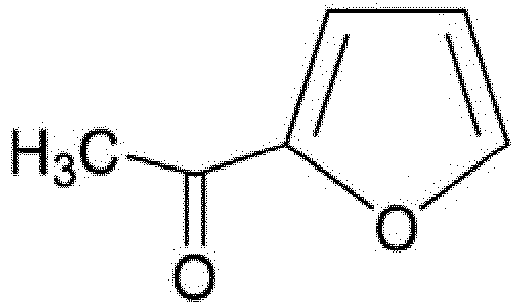
- • 2-acetyl-5-methylfuran (CAS Registry Number:1193-79-9):

- • 3-acetyl-2,5-dimethylfuran (CAS Registry Number:10599-70-9):
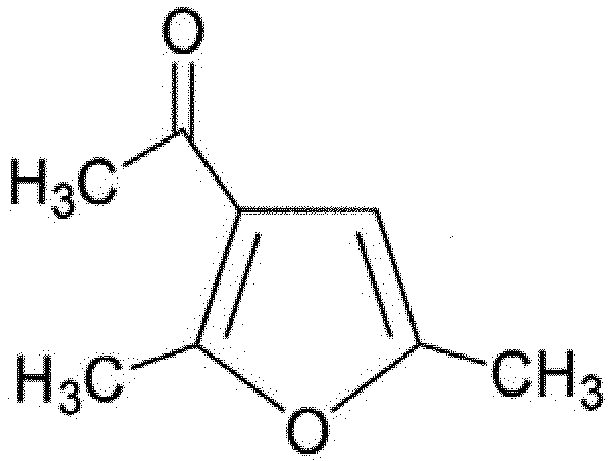
- • 4,5-dimethyl-3-hydroxy-2(5H)-furanone (referred to as sotolon at times) (CAS Registry Number:28664-35-9):

- • 2-methyltetrahydrofuran-3-one (referred to as 4,5-dihydro-2-methyl-3(2H)-furanone at times) (CAS Registry Number:3188-00-9):

- • 4-hydroxy-5-methyl-3(2H)-furanone (CAS Registry Number:19322-27-1):
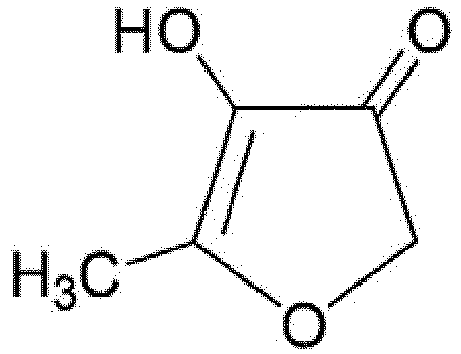
- • 4-hydroxy-2,5-dimethyl-3(2H)-furanone (referred to as furaneol at times) (CAS Registry Number:3658-77-3):

- • 4-acetoxy-2,5-dimethyl-3(2H)-furanone (referred to as furaneol acetate at times) (CAS Registry Number:4166-20-5):

- Among these, furfural and 2-acetylfuran are preferred because they suppress off-tastes particularly effectively.
- Only one kind of compound (I) may be used or two or more kinds thereof may be used in combination.
- Cyclotene (referred to as methylcyclopentenolone at times) used as an off-taste suppressing compound in the present invention is a compound represented by the following formula (CAS Registry Number:80-71-7).

- Fatty acid (aliphatic monocarboxylic acid) used as an off-taste suppressing compound in the present invention may be saturated or unsaturated, preferably saturated fatty acid. The fatty acid may be linear or branched chain, preferably linear. The fatty acid preferably has 3 or 4, more preferably 3, carbon atoms.
- Specific examples of the fatty acid used as an off-taste suppressing compound in the present invention include propionic acid (represented by CH3CH2COOH, and referred to as propanoic acid at times, CAS Registry Number:79-09-4), butyric acid (represented by CH3CH2CH2COOH, and referred to as butanoic acid at times, CAS Registry Number:107-92-6) and the like. Propionic acid is preferred because it can suppress off-tastes particularly effectively. Only one kind of the fatty acid may be used or two or more kinds thereof may be used in combination.
- Examples of the preferred off-taste suppressing compound include furfural, 2-acetylfuran, 2-acetyl-5-methylfuran, 3-acetyl-2,5-dimethylfuran, 4,5-dimethyl-3-hydroxy-2(5H)-furanone, 2-methyltetrahydrofuran-3-one, 4-hydroxy-5-methyl-3(2H)-furanone, 4-hydroxy-2,5-dimethyl-3(2H)-furanone, 4-acetoxy-2,5-dimethyl-3(2H)-furanone, cyclotene, propionic acid, butyric acid and the like can be mentioned, preferably, furfural, 2-acetylfuran, cyclotene, and propionic acid. Only one kind of these off-taste suppressing compounds may be used or two or more kinds thereof may be used in combination. For example, as the off-taste suppressing compound, furfural, 2-acetylfuran, and cyclotene and propionic acid may be used in combination.
- The method for producing the off-taste suppressing compound is not particularly limited, and a compound produced by a method known per se (e.g., chemical synthesis method, enzyme method, fermentation method, extraction method, etc.) or a method analogous thereto may be used. A commercially available product may be used as the off-taste suppressing compound.
- One embodiment of the off-taste suppressing compound used in the present invention may be a chemically synthesized product produced by a chemical synthesis method or an isolated product obtained by extraction and purification from a material containing an off-taste suppressing compound. Examples of the material containing an off-taste suppressing compound include naturally occurring substances such as agricultural/livestock/aquatic products and the like; fermentation products such as culture medium, bacterial cells and the like obtained by culturing microorganisms; and processed products thereof, and the like.
- In the present invention, a material containing an off-taste suppressing compound may be used as it is or purified to a desired degree and used in place of a chemically synthesized product or isolated product of the off-taste suppressing compound, or in addition to the chemically synthesized product or isolated product.
- The amount of the off-taste suppressing compound contained in the agent of the present invention is generally not less than 0.001 wt%, preferably not less than 0.1 wt%, particularly preferably not less than 1 wt%, with respect to the agent of the present invention. The amount is generally not more than 100 wt%, preferably not more than 99 wt%, more preferably not more than 90 wt%, with respect to the agent of the present invention.
- The form of the agent of the present invention is not particularly limited, and examples thereof include solid (including powder, granule, etc.), liquid (including slurry, etc.), gel, paste, and the like.
- The agent of the present invention may consist only of an off-taste suppressing compound, or may further contain, in addition to the compound, a conventional base depending on the form of the agent of the present invention.
- When the agent of the present invention is in the form of a solid, the base includes, for example, starch, dextrin, cyclodextrin, various saccharides such as sucrose and glucose, protein, peptide, salt, solid fat, silicon dioxide, mixtures thereof, yeast bacterial cell, various powder extracts, and the like.
- When the agent of the present invention is in the form of a liquid, the base includes, for example, water, ethanol, glycerol, propylene glycol, various animal and vegetable oils, and the like.
- The agent of the present invention may further contain, in addition to the off-taste suppressing compound, for example, excipient, antioxidant, thickening stabilizer, emulsifier, sweetener (e.g., sugar, etc.), salt, organic salts, nucleic acid, seasoning (e.g., umami seasoning such as sodium glutamate and the like, etc.), acidulant, colorant, food color former, and the like, as long as the object of the present invention is not impaired.
- The agent of the present invention can be produced by a method known per se or a method analogous thereto.
- The agent of the present invention can be used to suppress the off-taste of an oral product (e.g., food, oral medicine, etc.) to which an off-taste substance is added. In the present invention, the "off-taste substance" refers to a substance capable of exhibiting an off-taste (e.g., bitter taste, metallic taste, harsh taste, astringent taste, rough taste, etc.) in the mouth.
- Specific examples of the off-taste substance include, but are not limited to, inorganic salt, amino acid or a salt thereof, high-intensity sweetener, vegetable protein, flavonoid compound, pH-adjusting or bacteriostatic agent, thickening polysaccharide, and the like.
- The inorganic salt that may become an off-taste substance is not particularly limited as long as it is used in food, and examples thereof include inorganic chlorine compounds such as potassium chloride, magnesium chloride, and calcium chloride, and the like.
- Examples of the amino acid that may become an off-taste substance include branched chain amino acid (valine, leucine, isoleucine), tryptophan, phenylalanine, arginine, cysteine, methionine, lysine, histidine, tyrosine, glycine, and the like. These amino acids may be in the form of salts. The salt of amino acid is not particularly limited as long as it can exhibit an off-taste, and examples thereof include salts with inorganic acids (e.g., chloride hydrogen, hydrogen bromide, sulfuric acid, phosphoric acid, etc.); salts with organic acids (e.g., acetic acid, lactic acid, citric acid, tartaric acid, maleic acid, fumaric acid, mono methylsulfuric acid, etc.); salts with inorganic bases (e.g., sodium, potassium, calcium, ammonia, etc.); and salts with organic bases (e.g., ethylenediamine, propylenediamine, ethanolamine, monoalkyl ethanolamine, dialkyl ethanolamine, diethanolamine, triethanolamine, etc.). The salt of amino acid may be hydrate (hydrate salt), and examples of the hydrate include 1 - 6 hydrates and the like.
- In the present invention, the "high-intensity sweetener" is a generic term for non-carbohydrate sweeteners having higher sweetness as compared with sucrose (specifically, 10 times or more sweeter than sucrose). The high-intensity sweetener that may become an off-taste substance may be a natural sweetener or a synthetic sweetener, and examples thereof include acesulfame potassium, sucralose, aspartame, stevia (rebaudioside, stevioside), thaumatin, saccharin, saccharin sodium, licorice, neotame, advantame, and the like.
- In the present invention, the "vegetable protein" means a product having an enhanced protein content obtained by processing plants (e.g., grain, vegetable, etc.) containing proteins. Examples of the vegetable protein that may become an off-taste substance include soy protein, pea protein, fava bean protein, chickpea protein, almond protein, sunflower protein, and the like. The form of the vegetable protein is not particularly limited, and it may be, for example, powder, granule, fiber, paste, or the like.
- In the present invention, the "flavonoid compound" is a generic term for compounds having a flavonoid skeleton. Examples of the flavonoid compound that may become an off-taste substance include flavanol (catechin) compounds (e.g., catechin, epicatechin, epigallocatechin, epicatechin gallate, epigallocatechin gallate, etc.), flavanone compounds (e.g., naringin, hesperidin etc.), flavone compounds, flavol compounds, isoflavone compounds, and the like.
- In the present invention, the "pH-adjusting or bacteriostatic agent" means a food additive having an action to adjust the degree of acidity or alkalinity for the purpose of preventing putrefaction or preventing discoloration, or an action to suppress bacterial proliferation, and is a concept encompassing pH adjusters and bacteriostatic agents. The pH-adjusting or bacteriostatic agent that may become an off-taste substance is not particularly limited as long as it can be used in foods, and examples thereof include acetic acid or a salt thereof (e.g., sodium acetate, etc.), phosphoric acid or a salt thereof (e.g., disodium phosphate, etc.), citric acid or a salt thereof, glycine, and the like.
- Examples of the thickening polysaccharide that may become an off-taste substance include cellulose derivatives (e.g., methyl cellulose, carboxymethyl cellulose, hydroxypropyl methylcellulose, etc.), alginic acids (e.g., alginic acid, alginic acid salt, alginic acid ester, etc.), xanthan gum, guar gum, locust bean gum, tara gum, gellan gum, carrageenan, gum tragacanth, gum arabic, caraya gum, tamarind seed gum, psyllium seed gum, curdlan, pectin, and the like. As used herein, the "cellulose derivative" means a derivative in which a part or all of the hydroxy groups of cellulose is/are chemically modified (e.g., esterification, etherification, etc.).
- The agent of the present invention can be preferably used to suppress an off-taste of an oral product (e.g., food, oral medicine, etc.) to which one selected from the group consisting of a inorganic salt, an amino acid or a salt thereof, a high-intensity sweetener, a vegetable protein, a flavonoid compound, a pH-adjusting or bacteriostatic agent, and a thickening polysaccharide has been added. Particularly, the agent of the present invention can be more preferably used to suppress an off-taste derived from one selected from the group consisting of an inorganic salt, an amino acid or a salt thereof, a high-intensity sweetener, a vegetable protein, a flavonoid compound, a pH-adjusting or bacteriostatic agent, and a thickening polysaccharide added to an oral product.
- In one embodiment, the agent of the present invention can be preferably used to suppress an off-taste of an oral product (e.g., food, oral medicine, etc.) to which an inorganic salt (e.g., potassium chloride, etc.) has been added. Particularly, the agent of the present invention can be more preferably used to suppress an off-taste derived from an inorganic salt (e.g., potassium chloride, etc.) added to an oral product.
- In one embodiment, the off-taste that may be suppressed by the agent of the present invention is preferably derived from an inorganic salt (e.g., potassium chloride, etc.), and examples of the specific kind thereof include bitter taste, metallic taste, harsh taste, astringent taste, and the like.
- In one embodiment, the agent of the present invention can be preferably used to suppress an off-taste of an oral product (e.g., food, oral medicine, etc.) to which an amino acid (e.g., branched chain amino acid, etc.) or a salt thereof has been added. Particularly, the agent of the present invention can be more preferably used to suppress an off-taste derived from an amino acid (e.g., branched chain amino acid, etc.) or a salt thereof added to an oral product.
- In one embodiment, the off-taste that may be suppressed by the agent of the present invention is preferably derived from an amino acid (e.g., branched chain amino acid, etc.) or a salt thereof, and examples of the specific kind thereof include bitter taste, harsh taste, and the like.
- In one embodiment, the agent of the present invention can be preferably used to suppress an off-taste of an oral product (e.g., food, oral medicine, etc.) to which a high-intensity sweetener (e.g., acesulfame potassium, sucralose, aspartame, stevia, etc.) has been added. Particularly, the agent of the present invention can be more preferably used to suppress an off-taste derived from a high-intensity sweetener (e.g., acesulfame potassium, sucralose, aspartame, stevia, etc.) added to an oral product.
- In one embodiment, the off-taste that may be suppressed by the agent of the present invention is preferably derived from a high-intensity sweetener (e.g., acesulfame potassium, sucralose, aspartame, stevia, etc.), and examples of the specific kind thereof include bitter taste, harsh taste, metallic taste, and the like.
- In one embodiment, the agent of the present invention can be preferably used to suppress an off-taste of an oral product (e.g., food, oral medicine, etc.) to which a vegetable protein (e.g., soy protein, pea protein, fava bean protein, etc.) has been added. Particularly, the agent of the present invention can be more preferably used to suppress an off-taste derived from a vegetable protein (e.g., soy protein, pea protein, fava bean protein, etc.) added to an oral product.
- In one embodiment, the off-taste that may be suppressed by the agent of the present invention is preferably derived from a vegetable protein (e.g., soy protein, pea protein, fava bean protein, etc.), and examples of the specific kind thereof include bitter taste, harsh taste, astringent taste, and the like.
- In one embodiment, the agent of the present invention can be preferably used to suppress an off-taste of an oral product (e.g., food, oral medicine, etc.) to which a flavonoid compound (e.g., flavanol compound, etc.) has been added. Particularly, the agent of the present invention can be more preferably used to suppress an off-taste derived from a flavonoid compound (e.g., flavanol compound, etc.) added to an oral product.
- In one embodiment, the off-taste that may be suppressed by the agent of the present invention is preferably derived from a flavonoid compound (e.g., flavanol compound, etc.), and examples of the specific kind thereof include bitter taste, rough taste, harsh taste, and the like.
- In one embodiment, the agent of the present invention can be preferably used to suppress an off-taste of an oral product (e.g., food, oral medicine, etc.) to which a pH-adjusting or bacteriostatic agent (e.g., sodium acetate, disodium phosphate, glycine, etc.) has been added. Particularly, the agent of the present invention can be more preferably used to suppress an off-taste derived from a pH-adjusting or bacteriostatic agent (e.g., sodium acetate, disodium phosphate, etc.) added to an oral product.
- In one embodiment, the off-taste that may be suppressed by the agent of the present invention is preferably derived from a pH-adjusting or bacteriostatic agent (e.g., sodium acetate, disodium phosphate, glycine, etc.), and examples of the specific kind thereof include bitter taste, harsh taste, astringent taste, and the like.
- In one embodiment, the agent of the present invention can be preferably used to suppress an off-taste of an oral product (e.g., food, oral medicine, etc.) to which a thickening polysaccharide (e.g., cellulose derivative, etc.) has been added. Particularly, the agent of the present invention can be more preferably used to suppress an off-taste derived from a thickening polysaccharide (e.g., cellulose derivative, etc.) added to an oral product.
- In one embodiment, the off-taste that may be suppressed by the agent of the present invention is preferably derived from a thickening polysaccharide (e.g., cellulose derivative, etc.), and examples of the specific kind thereof include bitter taste, harsh taste, astringent taste, and the like.
- The oral product for which the agent of the present invention is used is preferably one to which an off-taste substance has been added. The agent of the present invention can be particularly preferably used for an oral product having an off-taste derived from an off-taste substance.
- In the present invention, the "oral product" means a substance that can be ingested or taken orally, and specific examples thereof include food, oral medicine, and the like. In the present invention, the "food" broadly includes foods that can be ingested orally (excluding medicine), and unless otherwise specified, also includes so-called foods, beverages, seasonings, supplements, and the like. Food is a concept also including food compositions.
- The oral product for which the agent of the present invention is used is preferably an oral product containing one selected from the group consisting of an inorganic salt, an amino acid or a salt thereof, a high-intensity sweetener, a vegetable protein, flavonoid compound, a pH-adjusting or bacteriostatic agent, and a thickening polysaccharide added thereto, more preferably an oral product containing one selected from the group consisting of potassium chloride, branched chain amino acid (leucine, isoleucine, valine), acesulfame potassium, sucralose, aspartame, stevia, soy protein, pea protein, fava bean protein, flavanol compound (e.g., catechin, etc.), sodium acetate, disodium phosphate, and cellulose derivative (e.g., methyl cellulose, etc.).
- In one embodiment, the oral product for which the agent of the present invention is used is preferably an oral product containing at least an inorganic salt (e.g., potassium chloride, etc.) added thereto. The agent of the present invention can be particularly preferably used in an oral product having an off-taste derived from an inorganic salt (e.g., potassium chloride, etc.).
- In one embodiment, the oral product for which the agent of the present invention is used is preferably an oral product containing at least an amino acid (e.g., branched chain amino acid, etc.) or a salt thereof added thereto. The agent of the present invention can be particularly preferably used in an oral product having an off-taste derived from an amino acid (e.g., branched chain amino acid, etc.) or a salt thereof.
- In one embodiment, the oral product for which the agent of the present invention is used is preferably an oral product containing at least a high-intensity sweetener (e.g., acesulfame potassium, sucralose, aspartame, stevia, etc.) added thereto. The agent of the present invention can be particularly preferably used in an oral product having an off-taste derived from a high-intensity sweetener (e.g., acesulfame potassium, sucralose, aspartame, stevia, etc.).
- In one embodiment, the oral product for which the agent of the present invention is used is preferably an oral product containing at least a vegetable protein (e.g., soy protein, pea protein, fava bean protein, etc.) added thereto. The agent of the present invention can be particularly preferably used in an oral product having an off-taste derived from a vegetable protein (e.g., soy protein, pea protein, fava bean protein, etc.).
- In one embodiment, the oral product for which the agent of the present invention is used is preferably an oral product containing at least a flavonoid compound (e.g., flavanol compound, etc.) added thereto. The agent of the present invention can be particularly preferably used in an oral product having an off-taste derived from a flavonoid compound (e.g., flavanol compound, etc.).
- In one embodiment, the oral product for which the agent of the present invention is used is preferably an oral product containing at least a pH-adjusting or bacteriostatic agent added thereto. The agent of the present invention can be particularly preferably used in an oral product having an off-taste derived from a pH-adjusting or bacteriostatic agent (e.g., sodium acetate, disodium phosphate, etc.).
- In one embodiment, the oral product for which the agent of the present invention is used is preferably an oral product containing at least a thickening polysaccharide (e.g., cellulose derivative, etc.) added thereto. The agent of the present invention can be particularly preferably used in an oral product having an off-taste derived from a thickening polysaccharide (e.g., cellulose derivative, etc.).
- When the oral product for which the agent of the present invention is used is an oral product containing at least a high-intensity sweetener (e.g., stevia, etc.) added thereto, the agent of the present invention may contain, as an off-taste suppressing compound, at least one compound selected from the group consisting of compound (I) (excluding furfural), cyclotene, and a fatty acid having 3 or 4 carbon atoms. In this case, the agent of the present invention preferably contains at least one compound selected from the group consisting of 2-acetylfuran, 2-acetyl-5-methylfuran, 3-acetyl-2,5-dimethylfuran, 4,5-dimethyl-3-hydroxy-2(5H)-furanone, 2-methyltetrahydrofuran-3-one, 4-hydroxy-5-methyl-3(2H)-furanone, 4-hydroxy-2,5-dimethyl-3(2H)-furanone, 4-acetoxy-2,5-dimethyl-3(2H)-furanone, cyclotene, propionic acid, and butyric acid, more preferably at least one compound selected from the group consisting of 2-acetylfuran, cyclotene, and propionic acid.
- When the oral product for which the agent of the present invention is used is an oral product containing at least potassium chloride added thereto, the agent of the present invention may contain, as an off-taste suppressing compound, at least one compound selected from the group consisting of compound (I), cyclotene, and butyric acid. In this case, the agent of the present invention preferably contains at least one compound selected from the group consisting of furfural, 2-acetylfuran, 2-acetyl-5-methylfuran, 3-acetyl-2,5-dimethylfuran, 4,5-dimethyl-3-hydroxy-2(5H)-furanone, 2-methyltetrahydrofuran-3-one, 4-hydroxy-5-methyl-3(2H)-furanone, 4-hydroxy-2,5-dimethyl-3(2H)-furanone, 4-acetoxy-2,5-dimethyl-3(2H)-furanone, cyclotene, and butyric acid, more preferably at least one compound selected from the group consisting of furfural, 2-acetylfuran, and cyclotene.
- In one embodiment, the agent of the present invention is an off-taste suppressing agent containing at least one compound selected from the group consisting of compound (I), cyclotene, and a fatty acid having 3 or 4 carbon atoms, and may be an off-taste suppressing agent for an oral product containing one selected from the group consisting of an inorganic salt, an amino acid or a salt thereof, a high-intensity sweetener, a vegetable protein, a flavonoid compound, a pH-adjusting or bacteriostatic agent, and a thickening polysaccharide added thereto.
- In one embodiment, the agent of the present invention is an off-taste suppressing agent containing at least one compound selected from the group consisting of compound (I), cyclotene, and a fatty acid having 3 or 4 carbon atoms, and may be an off-taste suppressing agent for an oral product containing one selected from the group consisting of potassium chloride, branched chain amino acid (leucine, isoleucine, valine), acesulfame potassium, sucralose, aspartame, stevia, soy protein, pea protein, fava bean protein, a flavanol compound (e.g., catechin, etc.), sodium acetate, disodium phosphate, and a cellulose derivative (e.g., methyl cellulose, etc.) added thereto.
- In one embodiment, the agent of the present invention is an off-taste suppressing agent containing at least one compound selected from the group consisting of furfural, 2-acetylfuran, 2-acetyl-5-methylfuran, 3-acetyl-2,5-dimethylfuran, 4,5-dimethyl-3-hydroxy-2(5H)-furanone, 2-methyltetrahydrofuran-3-one, 4-hydroxy-5-methyl-3(2H)-furanone, 4-hydroxy-2,5-dimethyl-3(2H)-furanone, 4-acetoxy-2,5-dimethyl-3(2H)-furanone, cyclotene, propionic acid, and butyric acid, and may be an off-taste suppressing agent for an oral product containing one selected from the group consisting of an inorganic salt, an amino acid or a salt thereof, a high-intensity sweetener, a vegetable protein, a flavonoid compound, a pH-adjusting or bacteriostatic agent, and a thickening polysaccharide added thereto.
- In one embodiment, the agent of the present invention is an off-taste suppressing agent containing at least one compound selected from the group consisting of furfural, 2-acetylfuran, 2-acetyl-5-methylfuran, 3-acetyl-2,5-dimethylfuran, 4,5-dimethyl-3-hydroxy-2(5H)-furanone, 2-methyltetrahydrofuran-3-one, 4-hydroxy-5-methyl-3(2H)-furanone, 4-hydroxy-2,5-dimethyl-3(2H)-furanone, 4-acetoxy-2,5-dimethyl-3(2H)-furanone, cyclotene, propionic acid, and butyric acid, and may be an off-taste suppressing agent for an oral product containing one selected from the group consisting of potassium chloride, branched chain amino acid (leucine, isoleucine, valine), acesulfame potassium, sucralose, aspartame, stevia, soy protein, pea protein, fava bean protein, a flavanol compound (e.g., catechin etc.), sodium acetate, disodium phosphate, and a cellulose derivative (e.g., methyl cellulose etc.) added thereto.
- In one embodiment, the agent of the present invention is an off-taste suppressing agent containing at least one compound selected from the group consisting of furfural, 2-acetylfuran, cyclotene, and propionic acid, and may be an off-taste suppressing agent for an oral product containing one selected from the group consisting of an inorganic salt, an amino acid or a salt thereof, a high-intensity sweetener, a vegetable protein, a flavonoid compound, a pH-adjusting or bacteriostatic agent, and a thickening polysaccharide added thereto.
- In one embodiment, the agent of the present invention is an off-taste suppressing agent containing at least one compound selected from the group consisting of furfural, 2-acetylfuran, cyclotene, and propionic acid, and may be an off-taste suppressing agent for an oral product containing one selected from the group consisting of potassium chloride, branched chain amino acid (leucine, isoleucine, valine), acesulfame potassium, sucralose, aspartame, stevia, soy protein, pea protein, fava bean protein, a flavanol compound (e.g., catechin etc.), sodium acetate, disodium phosphate, and a cellulose derivative (e.g., methyl cellulose etc.) added thereto.
- The food for which the agent of the present invention is used is preferably a food to which an off-taste substance (e.g., inorganic salts such as potassium chloride and the like, amino acid or a salt thereof, high-intensity sweetener, vegetable protein, flavonoid compound, pH-adjusting or bacteriostatic agent, thickening polysaccharide, etc.) can be added. Examples thereof include, but are not limited to, corn soup, consomme soup (e.g., chicken, pork, beef, etc.), potage, chicken broth, soup with egg, soup with Wakame seaweed, soup with shark fin, Chinese-style soup, curry flavor soup, ramen noodle soup, Japanese-style clear soup, Miso soup and the like; meat processed foods such as ham, sausage, Gyoza dumpling, Shumai dumpling, hamburg steak, deep-fried food, pork cutlet and the like; marine processed foods such as steamed fish paste cake, tube shaped fish paste cake and the like; dairy products such as butter and the like; rice processed foods such as Chinese fried rice and the like; seasonings such as savory seasoning, flavor seasoning, menu seasoning, mayonnaise, dressing, sauce (e.g., demi-glace sauce, Japanese Worcestershire-style sauce, white sauce, cheese sauce, etc.) and the like; other processed foods such as noodles, gratin, croquette, pickles, hamburg steak-like food and the like; frozen foods (frozen products of the aforementioned foods (e.g., Gyoza dumpling, Shumai dumpling, Chinese fried rice, hamburg steak, deep-fried food, gratin, pork cutlet, croquette, etc.), etc.) and the like.
- In the present specification, the "savory seasoning" refers to a seasoning produced from a natural substance as a material according to a method such as extraction, decomposition, heating, fermentation, and the like. Concrete examples thereof include various meat extracts such as chicken meat extract, beef meat extract, pork meat extract, sheep meat extract, and the like; various bone extracts such as chicken bone extract, beef bone extract, pork bone extract, and the like; various seafood extracts such as bonito extract, mackerel extract, croaker extract, scallop extract, crab extract, shrimp extract, dried sardine extract, dried adductor extract, and the like; various dried fish extracts such as dried bonito extract, dried mackerel extract, dried bullet mackerel extract, and the like; various vegetable extracts such as onion extract, Chinese cabbage extract, celery extract, and the like; various seaweed extracts such as kelp extract and the like; various spice extracts such as garlic extract, chili extract, pepper extract, cacao extract, and the like; yeast extracts; various protein hydrolysates; various fermentation seasonings such as soy sauce, fish sauce, shrimp sauce, Miso and the like, and the like, and mixtures thereof, processed product (e.g., soy sauce processed product such as Japanese noodle soup base, citrus seasoned soy sauce, and the like), and the like. The "flavor seasoning" refers to a seasoning used to impart aroma, flavor and taste of a flavor material to a food, and can be produced by, for example, adding sugar, salt and the like to a savory seasoning, or the like. Specific examples of the flavor seasoning include various meat flavor seasonings such as chicken flavor seasoning, beef flavor seasoning, pork flavor seasoning, and the like; various seafood flavor seasonings such as bonito flavor seasoning, dried sardine flavor seasoning, dried adductor flavor seasoning, crustacean flavor seasoning, and the like; various spicy vegetable flavor seasonings; kelp flavor seasoning and the like. The "menu seasoning" refers to a seasoning suitable for cooking a particular menu (Chinese-style menu, etc.). Concrete examples thereof include Chinese-style combined seasoning, combined seasoning, generic paste seasoning, seasoning mix for cooked rice mixed with ingredients, seasoning mix for Chinese fried rice, spice mix, and the like.
- The food for which the agent of the present invention is used may be provided (sold, distributed) in a form suitable for eating, or may be provided in a form that requires a predetermined processing or cooking to have a form suitable for eating. For example, the food to which the agent of the present invention is used may be provided (sold, distributed) as a concentrate or the like that requires diluting with water, etc. to become a form suitable for eating.
- The food for which the agent of the present invention is used may be provided, for example, as a food with health claims, a food for specified health uses, a food with nutrient function claims, a dietary supplement, a nutritional supplementary food, a health supplementary food, a food for medical use, a medical food, or the like.
- In one embodiment, the food for which the agent of the present invention is used may be a salt-reduced food. In the present invention, the "salt-reduced food" refers to a food whose salt concentration (salt content) at the time of eating is adjusted to be lower than the general salt concentration of the food. Potassium chloride can be used in salt-reduced foods for the purpose of, for example, compensating for the lack of salty taste of salt-reduced foods.
- Examples of the oral medicine to which the agent of the present invention is used include tablet, granule, powder, capsule (including soft capsule), elixir, syrup, microcapsule, drink, emulsion, suspension, and the like.
- In the present invention, a production method of the off-taste substance (e.g., potassium chloride, amino acid or a salt thereof, high-intensity sweetener, vegetable protein, flavonoid compound, pH-adjusting or bacteriostatic agent, thickening polysaccharide, etc.) that can be contained in the oral product is not particularly limited as long as it can be orally ingested, and an off-taste substance produced by a method known per se or a method analogous thereto may be used. The off-taste substance may be a commercially available product.
- In the present invention, one embodiment of the off-taste substance (e.g., potassium chloride, amino acid or a salt thereof, high-intensity sweetener, vegetable protein, flavonoid compound, pH-adjusting or bacteriostatic agent, thickening polysaccharide, etc.) that can be contained in the oral product may be a chemically synthesized product produced by a chemical synthesis method, or an isolated product extracted and purified from a material containing an off-taste substance. In addition, a material containing an off-taste substance may be used as it is or after purification to a desired degree.
- The method and conditions for adding the agent of the present invention to an oral product (e.g., food, oral medicine, etc.) are not particularly limited, and addition can be performed by a method known per se or a method analogous thereto, according to the form of the agent of the present invention, the kind of the oral product to which the agent of the present invention is added, and the like. The time when the agent of the present invention is added to an oral product is not particularly limited, and the agent can be added, for example, during the production of the oral product, after the production of the oral product, or the like. The agent of the present invention may be added to a raw material before producing the oral product.
- The agent of the present invention can be used such that an off-taste suppressing compound in a specific amount is added to an oral product.
- In the present invention, the amount of the off-taste suppressing compound to be added to the oral product can be set according to the amount of an off-taste substance (e.g., inorganic salts such as potassium chloride and the like, amino acid or a salt thereof, high-intensity sweetener, vegetable protein, flavonoid compound, pH-adjusting or bacteriostatic agent, thickening polysaccharide, etc.) to be added to the oral product.
- For example, in one embodiment, when additional addition of an off-taste substance to "an oral product containing an off-taste substance but not exhibiting an unacceptable off-taste" (that is, increasing the amount of the off-taste substance contained in the oral product) causes an unacceptable off-taste of the composition, the amount of the off-taste suppressing compound to be added to the oral product may be set according to the amount (increased amount) of the additionally added off-taste substance. It is not necessary to consider the amount of an off-taste substance originally contained in the oral product (oral product that does not exhibit an unacceptable off-taste) before the additional addition of the off-taste substance.
- In another embodiment, when an oral product produced by adding an off-taste substance as one of the materials exhibits an off-taste, the amount of the off-taste suppressing compound to be added to the oral product can be set according to the amount of the off-taste substance used as the material.
- In still another embodiment, when an off-taste substance is additionally added to an oral product having an off-taste produced by adding an off-taste substance as one of the materials, the amount of the off-taste suppressing compound to be added to the oral product can be set according to the total amount of the off-taste substance used as the material and the amount of the off-taste substance added additionally.
- Specifically, the agent of the present invention is preferably used such that the addition amount of the off-taste suppressing compound to the oral product (amount of the off-taste suppressing compound to be added to the oral product) is not less than 0.005 weight ppm (more preferably not less than 0.01 weight ppm, further preferably not less than 0.05 weight ppm, particularly preferably not less than 0.1 weight ppm) with respect to the addition amount of the off-taste substance to the oral product (amount of the off-taste substance added to the oral product). The agent of the present invention is preferably used such that an addition amount of the off-taste suppressing compound to the oral product is not more than 8000 weight ppm (more preferably not more than 5000 weight ppm, still more preferably not more than 1000 weight ppm, further preferably not more than 500 weight ppm, particularly preferably not more than 250 weight ppm) with respect to the addition amount of the off-taste substance to the oral product.
- In one embodiment, when the off-taste suppressing compound contains compound (I), the agent of the present invention is preferably used such that an addition amount of the compound (I) to the oral product is not less than 0.005 weight ppm (more preferably not less than 0.01 weight ppm, further preferably not less than 0.05 weight ppm, particularly preferably not less than 0.1 weight ppm) with respect to the addition amount of the off-taste substance to the oral product. In this case, the agent of the present invention is preferably used such that an addition amount of the compound (I) to the oral product is not more than 8000 weight ppm (more preferably not more than 5000 weight ppm, further preferably not more than 500 weight ppm, particularly preferably not more than 250 weight ppm) with respect to the addition amount of the off-taste substance to the oral product.
- In one embodiment, when the off-taste suppressing compound contains furfural, the agent of the present invention is preferably used such that an addition amount of the furfural to the oral product is not less than 0.005 weight ppm (more preferably not less than 0.01 weight ppm, further preferably not less than 0.05 weight ppm, particularly preferably not less than 0.1 weight ppm) with respect to the addition amount of the off-taste substance to the oral product. In this case, the agent of the present invention is preferably used such that an addition amount of the furfural to the oral product is not more than 8000 weight ppm (more preferably not more than 1000 weight ppm, further preferably not more than 50 weight ppm, particularly preferably not more than 15 weight ppm) with respect to the addition amount of the off-taste substance to the oral product.
- In one embodiment, when the off-taste suppressing compound contains 2-acetylfuran, the agent of the present invention is preferably used such that an addition amount of the 2-acetylfuran to the oral product is not less than 0.01 weight ppm (more preferably not less than 0.05 weight ppm, further preferably not less than 0.1 weight ppm, particularly preferably not less than 3 weight ppm) with respect to the addition amount of the off-taste substance to the oral product. In this case, the agent of the present invention is preferably used such that an addition amount of the 2-acetylfuran to the oral product is not more than 8000 weight ppm (more preferably not more than 1000 weight ppm, further preferably not more than 100 weight ppm, particularly preferably not more than 50 weight ppm) with respect to the addition amount of the off-taste substance to the oral product.
- In one embodiment, when the off-taste suppressing compound contains cyclotene, the agent of the present invention is preferably used such that an addition amount of the cyclotene to the oral product is not less than 0.005 weight ppm (more preferably not less than 0.01 weight ppm, further preferably not less than 0.05 weight ppm, particularly preferably not less than 0.1 weight ppm) with respect to the addition amount of the off-taste substance to the oral product. In this case, the agent of the present invention is preferably used such that an addition amount of the cyclotene to the oral product is not more than 8000 weight ppm (more preferably not more than 2000 weight ppm, further preferably not more than 1000 weight ppm, particularly preferably not more than 50 weight ppm) with respect to the addition amount of the off-taste substance to the oral product.
- In one embodiment, when the off-taste suppressing compound contains a fatty acid having 3 or 4 carbon atoms (e.g., propionic acid, butyric acid, etc.), the agent of the present invention is preferably used such that an addition amount of the fatty acid having 3 or 4 carbon atoms to the oral product is not less than 0.05 weight ppm (more preferably not less than 0.1 weight ppm, further preferably not less than 0.5 weight ppm, particularly preferably not less than 1 weight ppm) with respect to the addition amount of the off-taste substance to the oral product. In this case, the agent of the present invention is preferably used such that an addition amount of the fatty acid having 3 or 4 carbon atoms to the oral product is not more than 8000 weight ppm (more preferably not more than 5000 weight ppm, further preferably not more than 1000 weight ppm, particularly preferably not more than 500 weight ppm) with respect to the addition amount of the off-taste substance to the oral product.
- In one embodiment, when the off-taste substance added to the oral product contains an inorganic salt (e.g., potassium chloride, etc.), the agent of the present invention is preferably used such that an addition amount of the off-taste suppressing compound to the oral product (amount of the off-taste suppressing compound to be added to the oral product) is not less than 0.05 weight ppm (more preferably not less than 0.07 weight ppm, still more preferably not less than 0.09 weight ppm, further preferably not less than 0.1 weight ppm, particularly preferably not less than 0.5 weight ppm) with respect to the addition amount of the inorganic salt to the oral product (amount of the inorganic salt added to the oral product), because the agent of the present invention can effectively suppress an off-taste derived from the inorganic salt (e.g., potassium chloride, etc.). The agent of the present invention is preferably used such that an addition amount of the off-taste suppressing compound to the oral product is not more than 5000 weight ppm (more preferably not more than 4000 weight ppm, further preferably not more than 3000 weight ppm, particularly preferably not more than 2500 weight ppm) with respect to the addition amount of the inorganic salt to the oral product, because the agent of the present invention can more effectively suppress an off-taste derived from the inorganic salt (e.g., potassium chloride, etc.).
- In one embodiment, when the off-taste substance added to the oral product contains an inorganic salt (e.g., potassium chloride, etc.), and the off-taste suppressing compound contains compound (I), the agent of the present invention is preferably used such that an addition amount of the compound (I) to the oral product is not less than 0.05 weight ppm (more preferably not less than 0.07 weight ppm, still more preferably not less than 0.09 weight ppm, further preferably not less than 0.1 weight ppm, particularly preferably not less than 0.5 weight ppm) with respect to the addition amount of the inorganic salt to the oral product, because the agent of the present invention can more effectively suppress an off-taste derived from the inorganic salt (e.g., potassium chloride, etc.). In this case, the agent of the present invention is preferably used such that an addition amount of the compound (I) to the oral product is not more than 5000 weight ppm (more preferably not more than 4000 weight ppm, further preferably not more than 3000 weight ppm, particularly preferably not more than 2500 weight ppm) with respect to the addition amount of the inorganic salt to the oral product, because the agent of the present invention can particularly effectively suppress an off-taste derived from the inorganic salt (e.g., potassium chloride, etc.).
- In one embodiment, when the off-taste substance added to the oral product contains an inorganic salt (e.g., potassium chloride, etc.), and the off-taste suppressing compound contains furfural, the agent of the present invention is preferably used such that an addition amount of the furfural to the oral product is not less than 0.3 weight ppm (more preferably not less than 0.5 weight ppm, particularly preferably not less than 1 weight ppm) with respect to the addition amount of the inorganic salt to the oral product, because the agent of the present invention can more effectively suppress an off-taste derived from the inorganic salt (e.g., potassium chloride, etc.). In this case, the agent of the present invention is preferably used such that an addition amount of the furfural to the oral product is not more than 1000 weight ppm (more preferably not more than 500 weight ppm, still more preferably not more than 300 weight ppm, further preferably not more than 200 weight ppm, particularly preferably not more than 40 weight ppm, most preferably not more than 8 weight ppm) with respect to the addition amount of the inorganic salt to the oral product, because the agent of the present invention can particularly effectively suppress an off-taste derived from the inorganic salt (e.g., potassium chloride, etc.).
- In one embodiment, when the off-taste substance added to the oral product contains an inorganic salt (e.g., potassium chloride, etc.), and the off-taste suppressing compound contains 2-acetylfuran, the agent of the present invention is preferably used such that an addition amount of the 2-acetylfuran to the oral product is not less than 3 weight ppm (more preferably not less than 5 weight ppm, particularly preferably not less than 10 weight ppm) with respect to the addition amount of the inorganic salt to the oral product, because the agent of the present invention can more effectively suppress an off-taste derived from the inorganic salt (e.g., potassium chloride, etc.). In this case, the agent of the present invention is preferably used such that an addition amount of the 2-acetylfuran to the oral product is not more than 1000 weight ppm (more preferably not more than 750 weight ppm, still more preferably not more than 500 weight ppm, further preferably not more than 250 weight ppm, particularly preferably not more than 30 weight ppm) with respect to the addition amount of the inorganic salt to the oral product, because the agent of the present invention can particularly effectively suppress an off-taste derived from the inorganic salt (e.g., potassium chloride, etc.).
- In one embodiment, when the off-taste substance added to the oral product contains an inorganic salt (e.g., potassium chloride, etc.), and the off-taste suppressing compound contains cyclotene, the agent of the present invention is preferably used such that an addition amount of the cyclotene to the oral product is not less than 0.05 weight ppm (more preferably not less than 0.1 weight ppm, further preferably not less than 0.2 weight ppm, particularly preferably not less than 0.3 weight ppm) with respect to the addition amount of the inorganic salt to the oral product, because the agent of the present invention can more effectively suppress an off-taste derived from the inorganic salt (e.g., potassium chloride, etc.). In this case, the agent of the present invention is preferably used such that an addition amount of the cyclotene to the oral product is not more than 2000 weight ppm (more preferably not more than 1000 weight ppm, still more preferably not more than 750 weight ppm, further preferably not more than 500 weight ppm, particularly preferably not more than 30 weight ppm) with respect to the addition amount of the inorganic salt to the oral product, because the agent of the present invention can particularly effectively suppress an off-taste derived from the inorganic salt (e.g., potassium chloride, etc.).
- In one embodiment, when the off-taste substance added to the oral product contains an inorganic salt (e.g., potassium chloride, etc.), and the off-taste suppressing compound contains a fatty acid having 3 or 4 carbon atoms (e.g., propionic acid, butyric acid, etc.), the agent of the present invention is preferably used such that an addition amount of the fatty acid having 3 or 4 carbon atoms to the oral product is not less than 10 weight ppm (more preferably not less than 50 weight ppm, further preferably not less than 75 weight ppm, particularly preferably not less than 100 weight ppm) with respect to the addition amount of the inorganic salt to the oral product, because the agent of the present invention can more effectively suppress an off-taste derived from the inorganic salt (e.g., potassium chloride, etc.). In this case, the agent of the present invention is preferably used such that an addition amount of the fatty acid having 3 or 4 carbon atoms to the oral product is not more than 5000 weight ppm (more preferably not more than 4000 weight ppm, further preferably not more than 3000 weight ppm, particularly preferably not more than 2500 weight ppm) with respect to the addition amount of the inorganic salt to the oral product, because the agent of the present invention can particularly effectively suppress an off-taste derived from the inorganic salt (e.g., potassium chloride, etc.).
- In one embodiment, when the off-taste substance added to the oral product contains an amino acid or a salt thereof, the agent of the present invention is preferably used such that an addition amount of the off-taste suppressing compound to the oral product (amount of the off-taste suppressing compound to be added to the oral product) is not less than 0.005 weight ppm (more preferably not less than 0.01 weight ppm, particularly preferably not less than 0.05 weight ppm) with respect to the addition amount of the amino acid or a salt thereof to the oral product (amount of the amino acid or a salt thereof added to the oral product), because the agent of the present invention can effectively suppress an off-taste derived from the amino acid or a salt thereof. In addition, the agent of the present invention is preferably used such that an addition amount of the off-taste suppressing compound to the oral product is not more than 1000 weight ppm (more preferably not more than 500 weight ppm, still more preferably not more than 300 weight ppm, further preferably not more than 100 weight ppm, particularly preferably not more than 50 ppm) with respect to the addition amount of the amino acid or a salt thereof to the oral product, because the agent of the present invention can more effectively suppress an off-taste derived from the amino acid or a salt thereof.
- In one embodiment, when the off-taste substance added to the oral product contains an amino acid or a salt thereof, and the off-taste suppressing compound contains compound (I), the agent of the present invention is preferably used such that an addition amount of the compound (I) to the oral product is not less than 0.005 weight ppm (more preferably not less than 0.01 weight ppm, particularly preferably not less than 0.05 weight ppm) with respect to the addition amount of the amino acid or a salt thereof to the oral product, because the agent of the present invention can more effectively suppress an off-taste derived from the amino acid or a salt thereof. In this case, the agent of the present invention is preferably used such that an addition amount of the compound (I) to the oral product is not more than 100 weight ppm (more preferably not more than 50 weight ppm, particularly preferably not more than 30 weight ppm) with respect to the addition amount of the amino acid or a salt thereof to the oral product, because the agent of the present invention can particularly effectively suppress an off-taste derived from the amino acid or a salt thereof.
- In one embodiment, when the off-taste substance added to the oral product contains an amino acid or a salt thereof, and the off-taste suppressing compound contains furfural, the agent of the present invention is preferably used such that an addition amount of the furfural to the oral product is not less than 0.005 weight ppm (more preferably not less than 0.01 weight ppm, particularly preferably not less than 0.05 weight ppm) with respect to the addition amount of the amino acid or a salt thereof to the oral product, because the agent of the present invention can more effectively suppress an off-taste derived from the amino acid or a salt thereof. In this case, the agent of the present invention is preferably used such that an addition amount of the furfural to the oral product is not more than 50 weight ppm (more preferably not more than 25 weight ppm, particularly preferably not more than 15 weight ppm) with respect to the addition amount of the amino acid or a salt thereof to the oral product, because the agent of the present invention can particularly effectively suppress an off-taste derived from the amino acid or a salt thereof.
- In one embodiment, when the off-taste substance added to the oral product contains an amino acid or a salt thereof, and the off-taste suppressing compound contains 2-acetylfuran, the agent of the present invention is preferably used such that an addition amount of the 2-acetylfuran to the oral product is not less than 0.05 weight ppm (more preferably not less than 0.1 weight ppm, particularly preferably not less than 0.5 weight ppm) with respect to the addition amount of the amino acid or a salt thereof to the oral product, because the agent of the present invention can more effectively suppress an off-taste derived from the amino acid or a salt thereof. In this case, the agent of the present invention is preferably used such that an addition amount of the 2-acetylfuran to the oral product is not more than 100 weight ppm (more preferably not more than 50 weight ppm, particularly preferably not more than 30 weight ppm) with respect to the addition amount of the amino acid or a salt thereof to the oral product, because the agent of the present invention can particularly effectively suppress an off-taste derived from the amino acid or a salt thereof.
- In one embodiment, when the off-taste substance added to the oral product contains an amino acid or a salt thereof, and the off-taste suppressing compound contains cyclotene, the agent of the present invention is preferably used such that an addition amount of the cyclotene to the oral product is not less than 0.005 weight ppm (more preferably not less than 0.01 weight ppm, particularly preferably not less than 0.05 weight ppm) with respect to the addition amount of the amino acid or a salt thereof to the oral product, because the agent of the present invention can more effectively suppress an off-taste derived from the amino acid or a salt thereof. In this case, the agent of the present invention is preferably used such that an addition amount of the cyclotene to the oral product is not more than 50 weight ppm (more preferably not more than 25 weight ppm, particularly preferably not more than 15 weight ppm) with respect to the addition amount of the amino acid or a salt thereof to the oral product, because the agent of the present invention can particularly effectively suppress an off-taste derived from the amino acid or a salt thereof.
- In one embodiment, when the off-taste substance added to the oral product contains an amino acid or a salt thereof, and the off-taste suppressing compound contains a fatty acid having 3 or 4 carbon atoms (e.g., propionic acid, butyric acid, etc.), the agent of the present invention is preferably used such that an addition amount of the fatty acid having 3 or 4 carbon atoms to the oral product is not less than 0.5 weight ppm (more preferably not less than 1 weight ppm, particularly preferably not less than 5 weight ppm) with respect to the addition amount of the amino acid or a salt thereof to the oral product, because the agent of the present invention can more effectively suppress an off-taste derived from the amino acid or a salt thereof. In this case, the agent of the present invention is preferably used such that an addition amount of the fatty acid having 3 or 4 carbon atoms to the oral product is not more than 1000 weight ppm (more preferably not more than 500 weight ppm, particularly preferably not more than 300 weight ppm) with respect to the addition amount of the amino acid or a salt thereof to the oral product, because the agent of the present invention can particularly effectively suppress an off-taste derived from the amino acid or a salt thereof.
- In one embodiment, when the off-taste substance added to the oral product contains a high-intensity sweetener, the agent of the present invention is preferably used such that an addition amount of the off-taste suppressing compound to the oral product (amount of the off-taste suppressing compound to be added to the oral product) is not less than 0.1 weight ppm (more preferably not less than 1 weight ppm, still more preferably not less than 5 weight ppm, further preferably not less than 10 weight ppm, particularly preferably not less than 50 weight ppm) with respect to the addition amount of the high-intensity sweetener to the oral product (amount of the high-intensity sweetener added to the oral product), because the agent of the present invention can effectively suppress an off-taste derived from the high-intensity sweetener. In addition, the agent of the present invention is preferably used such that an addition amount of the off-taste suppressing compound to the oral product is not more than 8000 weight ppm (more preferably not more than 4000 weight ppm, still more preferably not more than 2000 weight ppm, further preferably not more than 1000 weight ppm, particularly preferably not more than 250 weight ppm) with respect to the addition amount of the high-intensity sweetener to the oral product, because the agent of the present invention can more effectively suppress an off-taste derived from the high-intensity sweetener.
- In one embodiment, when the off-taste substance added to the oral product contains a high-intensity sweetener, and the off-taste suppressing compound contains compound (I), the agent of the present invention is preferably used such that an addition amount of the compound (I) to the oral product is not less than 0.1 weight ppm (more preferably not less than 1 weight ppm, still more preferably not less than 5 weight ppm, further preferably not less than 10 weight ppm, particularly preferably not less than 50 weight ppm) with respect to the addition amount of the high-intensity sweetener to the oral product, because the agent of the present invention can more effectively suppress an off-taste derived from the high-intensity sweetener. In this case, the agent of the present invention is preferably used such that an addition amount of the compound (I) to the oral product is not more than 8000 weight ppm (more preferably not more than 4000 weight ppm, still more preferably not more than 2000 weight ppm, further preferably not more than 1000 weight ppm, particularly preferably not more than 250 weight ppm) with respect to the addition amount of the high-intensity sweetener to the oral product, because the agent of the present invention can particularly effectively suppress an off-taste derived from the high-intensity sweetener.
- In one embodiment, when the off-taste substance added to the oral product contains a high-intensity sweetener, and the off-taste suppressing compound comprises cyclotene, the agent of the present invention is preferably used such that an addition amount of the cyclotene to the oral product is not less than 0.1 weight ppm (more preferably not less than 1 weight ppm, still more preferably not less than 5 weight ppm, further preferably not less than 10 weight ppm, particularly preferably not less than 50 weight ppm) with respect to the addition amount of the high-intensity sweetener to the oral product, because the agent of the present invention can more effectively suppress an off-taste derived from the high-intensity sweetener. In this case, the agent of the present invention is preferably used such that an addition amount of the cyclotene to the oral product is not more than 8000 weight ppm (more preferably not more than 4000 weight ppm, still more preferably not more than 2000 weight ppm, further preferably not more than 1000 weight ppm, particularly preferably not more than 250 weight ppm) with respect to the addition amount of the high-intensity sweetener to the oral product, because the agent of the present invention can particularly effectively suppress an off-taste derived from the high-intensity sweetener.
- In one embodiment, when the off-taste substance added to the oral product contains a high-intensity sweetener, and the off-taste suppressing compound contains a fatty acid having 3 or 4 carbon atoms (e.g., propionic acid, butyric acid, etc.), the agent of the present invention is preferably used such that an addition amount of the fatty acid having 3 or 4 carbon atoms to the oral product is not less than 1 weight ppm (more preferably not less than 5 weight ppm, still more preferably not less than 10 weight ppm, further preferably not less than 50 weight ppm, particularly preferably not less than 100 weight ppm) with respect to the addition amount of the high-intensity sweetener to the oral product, because the agent of the present invention can more effectively suppress an off-taste derived from the high-intensity sweetener. In this case, the agent of the present invention is preferably used such that an addition amount of the fatty acid having 3 or 4 carbon atoms to the oral product is not more than 8000 weight ppm (more preferably not more than 4000 weight ppm, further preferably not more than 2000 weight ppm, particularly preferably not more than 1000 weight ppm) with respect to the addition amount of the high-intensity sweetener to the oral product, because the agent of the present invention can particularly effectively suppress an off-taste derived from the high-intensity sweetener.
- In one embodiment, when the off-taste substance added to the oral product contains a vegetable protein, the agent of the present invention is preferably used such that an addition amount of the off-taste suppressing compound to the oral product (amount of the off-taste suppressing compound to be added to the oral product) is not less than 0.01 weight ppm (more preferably not less than 0.02 weight ppm, particularly preferably not less than 0.1 weight ppm) with respect to the addition amount of the vegetable protein to the oral product (amount of the vegetable protein added to the oral product), because the agent of the present invention can effectively suppress an off-taste derived from the vegetable protein. In addition, the agent of the present invention is preferably used such that an addition amount of the off-taste suppressing compound to the oral product is not more than 250 weight ppm (more preferably not more than 150 weight ppm, still more preferably not more than 100 weight ppm, further preferably not more than 50 weight ppm, particularly preferably not more than 25 weight ppm) with respect to the addition amount of the vegetable protein to the oral product, because the agent of the present invention can more effectively suppress an off-taste derived from the vegetable protein.
- In one embodiment, when the off-taste substance added to the oral product contains a vegetable protein, and the off-taste suppressing compound contains compound (I), the agent of the present invention is preferably used such that an addition amount of the compound (I) to the oral product is not less than 0.01 weight ppm (more preferably not less than 0.02 weight ppm, particularly preferably not less than 0.1 weight ppm) with respect to the addition amount of the vegetable protein to the oral product, because the agent of the present invention can more effectively suppress an off-taste derived from the vegetable protein. In this case, the agent of the present invention is preferably used such that an addition amount of the compound (I) to the oral product is not more than 250 weight ppm (more preferably not more than 150 weight ppm, still more preferably not more than 100 weight ppm, further preferably not more than 50 weight ppm, particularly preferably not more than 25 weight ppm) with respect to the addition amount of the vegetable protein to the oral product, because the agent of the present invention can particularly effectively suppress an off-taste derived from the vegetable protein.
- In one embodiment, when the off-taste substance added to the oral product contains a vegetable protein, and the off-taste suppressing compound contains furfural, the agent of the present invention is preferably used such that an addition amount of the furfural to the oral product is not less than 0.01 weight ppm (more preferably not less than 0.02 weight ppm, particularly preferably not less than 0.1 weight ppm) with respect to the addition amount of the vegetable protein to the oral product, because the agent of the present invention can more effectively suppress an off-taste derived from the vegetable protein. In this case, the agent of the present invention is preferably used such that an addition amount of the furfural to the oral product is not more than 15 weight ppm (more preferably not more than 10 weight ppm, particularly preferably not more than 5 weight ppm) with respect to the addition amount of the vegetable protein to the oral product, because the agent of the present invention can particularly effectively suppress an off-taste derived from the vegetable protein.
- In one embodiment, when the off-taste substance added to the oral product contains a vegetable protein, and the off-taste suppressing compound contains 2-acetylfuran, the agent of the present invention is preferably used such that an addition amount of the 2-acetylfuran to the oral product is not less than 0.01 weight ppm (more preferably not less than 0.02 weight ppm, particularly preferably not less than 0.1 weight ppm) with respect to the addition amount of the vegetable protein to the oral product, because the agent of the present invention can more effectively suppress an off-taste derived from the vegetable protein. In this case, the agent of the present invention is preferably used such that an addition amount of the 2-acetylfuran to the oral product is not more than 25 weight ppm (more preferably not more than 15 weight ppm, particularly preferably not more than 10 weight ppm) with respect to the addition amount of the vegetable protein to the oral product, because the agent of the present invention can particularly effectively suppress an off-taste derived from the vegetable protein.
- In one embodiment, when the off-taste substance added to the oral product contains a vegetable protein, and the off-taste suppressing compound contains cyclotene, the agent of the present invention is preferably used such that an addition amount of the cyclotene to the oral product is not less than 0.01 weight ppm (more preferably not less than 0.02 weight ppm, particularly preferably not less than 0.1 weight ppm) with respect to the addition amount of the vegetable protein to the oral product, because the agent of the present invention can more effectively suppress an off-taste derived from the vegetable protein. In this case, the agent of the present invention is preferably used such that an addition amount of the cyclotene to the oral product is not more than 15 weight ppm (more preferably not more than 10 weight ppm, particularly preferably not more than 5 weight ppm) with respect to the addition amount of the vegetable protein to the oral product, because the agent of the present invention can particularly effectively suppress an off-taste derived from the vegetable protein.
- In one embodiment, when the off-taste substance added to the oral product contains a vegetable protein, and the off-taste suppressing compound contains a fatty acid having 3 or 4 carbon atoms (e.g., propionic acid, butyric acid, etc.), the agent of the present invention is preferably used such that an addition amount of the fatty acid having 3 or 4 carbon atoms to the oral product is not less than 0.05 weight ppm (more preferably not less than 0.1 weight ppm, particularly preferably not less than 0.5 weight ppm) with respect to the addition amount of the vegetable protein to the oral product, because the agent of the present invention can more effectively suppress an off-taste derived from the vegetable protein. In this case, the agent of the present invention is preferably used such that an addition amount of the fatty acid having 3 or 4 carbon atoms to the oral product is not more than 250 weight ppm (more preferably not more than 150 weight ppm, still more preferably not more than 100 weight ppm, further preferably not more than 50 weight ppm, particularly preferably not more than 25 weight ppm) with respect to the addition amount of the vegetable protein to the oral product, because the agent of the present invention can particularly effectively suppress an off-taste derived from the vegetable protein.
- In one embodiment, when the off-taste substance added to the oral product contains a flavonoid compound, the agent of the present invention is preferably used such that an addition amount of the off-taste suppressing compound to the oral product (amount of the off-taste suppressing compound to be added to the oral product) is not less than 0.1 weight ppm (more preferably not less than 0.5 weight ppm, particularly preferably not less than 1 weight ppm) with respect to the addition amount of the flavonoid compound to the oral product (amount of the flavonoid compound added to the oral product), because the agent of the present invention can effectively suppress an off-taste derived from the flavonoid compound. In addition, the agent of the present invention is preferably used such that an addition amount of the off-taste suppressing compound to the oral product is not more than 8000 weight ppm (more preferably not more than 4000 weight ppm, still more preferably not more than 2000 weight ppm, further preferably not more than 1000 weight ppm, particularly preferably not more than 100 weight ppm) with respect to the addition amount of the flavonoid compound to the oral product, because the agent of the present invention can more effectively suppress an off-taste derived from the flavonoid compound.
- In one embodiment, when the off-taste substance added to the oral product contains a flavonoid compound, and the off-taste suppressing compound contains compound (I), the agent of the present invention is preferably used such that an addition amount of the compound (I) to the oral product is not less than 0.1 weight ppm (more preferably not less than 0.5 weight ppm, particularly preferably not less than 1 weight ppm) with respect to the addition amount of the flavonoid compound to the oral product, because the agent of the present invention can more effectively suppress an off-taste derived from the flavonoid compound. In this case, the agent of the present invention is preferably used such that an addition amount of the compound (I) to the oral product is not more than 8000 weight ppm (more preferably not more than 4000 weight ppm, still more preferably not more than 2000 weight ppm, further preferably not more than 1000 weight ppm, particularly preferably not more than 100 weight ppm) with respect to the addition amount of the flavonoid compound to the oral product, because the agent of the present invention can particularly effectively suppress an off-taste derived from the flavonoid compound.
- In one embodiment, when the off-taste substance added to the oral product contains a flavonoid compound, and the off-taste suppressing compound contains furfural or 2-acetylfuran, the agent of the present invention is preferably used such that an addition amount of the furfural or 2-acetylfuran to the oral product is not less than 0.1 weight ppm (more preferably not less than 0.5 weight ppm, particularly preferably not less than 1 weight ppm) with respect to the addition amount of the flavonoid compound to the oral product, because the agent of the present invention can more effectively suppress an off-taste derived from the flavonoid compound. In this case, the agent of the present invention is preferably used such that an addition amount of the furfural or 2-acetylfuran to the oral product is not more than 1000 weight ppm (more preferably not more than 500 weight ppm, particularly preferably not more than 100 weight ppm) with respect to the addition amount of the flavonoid compound to the oral product, because the agent of the present invention can particularly effectively suppress an off-taste derived from the flavonoid compound.
- In one embodiment, when the off-taste substance added to the oral product contains a flavonoid compound, and the off-taste suppressing compound contains cyclotene, the agent of the present invention is preferably used such that an addition amount of the cyclotene to the oral product is not less than 0.1 weight ppm (more preferably not less than 0.5 weight ppm, particularly preferably not less than 1 weight ppm) with respect to the addition amount of the flavonoid compound to the oral product, because the agent of the present invention can more effectively suppress an off-taste derived from the flavonoid compound. In this case, the agent of the present invention is preferably used such that an addition amount of the cyclotene to the oral product is not more than 1000 weight ppm (more preferably not more than 500 weight ppm, particularly preferably not more than 100 weight ppm) with respect to the addition amount of the flavonoid compound to the oral product, because the agent of the present invention can particularly effectively suppress an off-taste derived from the flavonoid compound.
- In one embodiment, when the off-taste substance added to the oral product contains a flavonoid compound, and the off-taste suppressing compound contains a fatty acid having 3 or 4 carbon atoms (e.g., propionic acid, butyric acid, etc.), the agent of the present invention is preferably used such that an addition amount of the fatty acid having 3 or 4 carbon atoms to the oral product is not less than 1 weight ppm (more preferably not less than 5 weight ppm, particularly preferably not less than 10 weight ppm) with respect to the addition amount of the flavonoid compound to the oral product, because the agent of the present invention can more effectively suppress an off-taste derived from the flavonoid compound. In this case, the agent of the present invention is preferably used such that an addition amount of the fatty acid having 3 or 4 carbon atoms to the oral product is not more than 8000 weight ppm (more preferably not more than 4000 weight ppm, further preferably not more than 2000 weight ppm, particularly preferably not more than 1000 weight ppm) with respect to the addition amount of the flavonoid compound to the oral product, because the agent of the present invention can particularly effectively suppress an off-taste derived from the flavonoid compound.
- In one embodiment, when the off-taste substance added to the oral product contains a pH-adjusting or bacteriostatic agent, the agent of the present invention is preferably used such that an addition amount of the off-taste suppressing compound to the oral product (amount of the off-taste suppressing compound to be added to the oral product) is not less than 0.01 weight ppm (more preferably not less than 0.05 weight ppm, particularly preferably not less than 0.1 weight ppm) with respect to the addition amount of the pH-adjusting or bacteriostatic agent to the oral product (amount of the pH-adjusting or bacteriostatic agent added to the oral product), because the agent of the present invention can effectively suppress an off-taste derived from the pH-adjusting or bacteriostatic agent. In addition, the agent of the present invention is preferably used such that an addition amount of the off-taste suppressing compound to the oral product is not more than 500 weight ppm (more preferably not more than 300 weight ppm, still more preferably not more than 150 weight ppm, further preferably not more than 50 weight ppm, particularly preferably not more than 30 weight ppm) with respect to the addition amount of the pH-adjusting or bacteriostatic agent to the oral product, because the agent of the present invention can more effectively suppress an off-taste derived from the pH-adjusting or bacteriostatic agent.
- In one embodiment, when the off-taste substance added to the oral product contains a pH-adjusting or bacteriostatic agent, and the off-taste suppressing compound contains compound (I), the agent of the present invention is preferably used such that an addition amount of the compound (I) to the oral product is not less than 0.01 weight ppm (more preferably not less than 0.05 weight ppm, particularly preferably not less than 0.1 weight ppm) with respect to the addition amount of the pH-adjusting or bacteriostatic agent to the oral product, because the agent of the present invention can more effectively suppress an off-taste derived from the pH-adjusting or bacteriostatic agent. In this case, the agent of the present invention is preferably used such that an addition amount of the compound (I) to the oral product is not more than 500 weight ppm (more preferably not more than 300 weight ppm, still more preferably not more than 150 weight ppm, further preferably not more than 50 weight ppm, particularly preferably not more than 30 weight ppm) with respect to the addition amount of the pH-adjusting or bacteriostatic agent to the oral product, because the agent of the present invention can particularly effectively suppress an off-taste derived from the pH-adjusting or bacteriostatic agent.
- In one embodiment, when the off-taste substance added to the oral product contains a pH-adjusting or bacteriostatic agent, and the off-taste suppressing compound contains furfural or 2-acetylfuran, the agent of the present invention is preferably used such that an addition amount of the furfural or 2-acetylfuran to the oral product is not less than 0.01 weight ppm (more preferably not less than 0.05 weight ppm, particularly preferably not less than 0.1 weight ppm) with respect to the addition amount of the pH-adjusting or bacteriostatic agent to the oral product, because the agent of the present invention can more effectively suppress an off-taste derived from the pH-adjusting or bacteriostatic agent. In this case, the agent of the present invention is preferably used such that an addition amount of the furfural or 2-acetylfuran to the oral product is not more than 50 weight ppm (more preferably not more than 30 weight ppm, particularly preferably not more than 15 weight ppm) with respect to the addition amount of the pH-adjusting or bacteriostatic agent to the oral product, because the agent of the present invention can particularly effectively suppress an off-taste derived from the pH-adjusting or bacteriostatic agent.
- In one embodiment, when the off-taste substance added to the oral product contains a pH-adjusting or bacteriostatic agent, and the off-taste suppressing compound contains cyclotene, the agent of the present invention is preferably used such that an addition amount of the cyclotene to the oral product is not less than 0.01 weight ppm (more preferably not less than 0.05 weight ppm, particularly preferably not less than 0.1 weight ppm) with respect to the addition amount of the pH-adjusting or bacteriostatic agent to the oral product, because the agent of the present invention can more effectively suppress an off-taste derived from the pH-adjusting or bacteriostatic agent. In this case, the agent of the present invention is preferably used such that an addition amount of the cyclotene to the oral product is not more than 50 weight ppm (more preferably not more than 30 weight ppm, particularly preferably not more than 15 weight ppm) with respect to the addition amount of the pH-adjusting or bacteriostatic agent to the oral product, because the agent of the present invention can particularly effectively suppress an off-taste derived from the pH-adjusting or bacteriostatic agent.
- In one embodiment, when the off-taste substance added to the oral product contains a pH-adjusting or bacteriostatic agent, and the off-taste suppressing compound contains a fatty acid having 3 or 4 carbon atoms (e.g., propionic acid, butyric acid, etc.), the agent of the present invention is preferably used such that an addition amount of the fatty acid having 3 or 4 carbon atoms to the oral product is not less than 0.1 weight ppm (more preferably not less than 0.5 weight ppm, particularly preferably not less than 1 weight ppm) with respect to the addition amount of the pH-adjusting or bacteriostatic agent to the oral product, because the agent of the present invention can more effectively suppress an off-taste derived from the pH-adjusting or bacteriostatic agent. In this case, the agent of the present invention is preferably used such that an addition amount of the fatty acid having 3 or 4 carbon atoms to the oral product is not more than 500 weight ppm (more preferably not more than 300 weight ppm, particularly preferably not more than 150 weight ppm) with respect to the addition amount of the pH-adjusting or bacteriostatic agent to the oral product, because the agent of the present invention can particularly effectively suppress an off-taste derived from the pH-adjusting or bacteriostatic agent.
- In one embodiment, when the off-taste substance added to the oral product contains a thickening polysaccharide, the agent of the present invention is preferably used such that an addition amount of the off-taste suppressing compound to the oral product (amount of the off-taste suppressing compound to be added to the oral product) is not less than 0.05 weight ppm (more preferably not less than 0.1 weight ppm, particularly preferably not less than 0.5 weight ppm) with respect to the addition amount of the thickening polysaccharide to the oral product (amount of the thickening polysaccharide added to the oral product), because the agent of the present invention can effectively suppress an off-taste derived from the thickening polysaccharide. In addition, the agent of the present invention is preferably used such that an addition amount of the off-taste suppressing compound to the oral product is not more than 500 weight ppm (more preferably not more than 300 weight ppm, still more preferably not more than 150 weight ppm, further preferably not more than 50 weight ppm, particularly preferably not more than 30 weight ppm) with respect to the addition amount of the thickening polysaccharide to the oral product, because the agent of the present invention can more effectively suppress an off-taste derived from the thickening polysaccharide.
- In one embodiment, when the off-taste substance added to the oral product contains a thickening polysaccharide, and the off-taste suppressing compound comprises compound (I), the agent of the present invention is preferably used such that an addition amount of the compound (I) to the oral product is not less than 0.05 weight ppm (more preferably not less than 0.1 weight ppm, particularly preferably not less than 0.5 weight ppm) with respect to the addition amount of the thickening polysaccharide to the oral product, because the agent of the present invention can more effectively suppress an off-taste derived from the thickening polysaccharide. In this case, the agent of the present invention is preferably used such that an addition amount of the compound (I) to the oral product is not more than 500 weight ppm (more preferably not more than 300 weight ppm, still more preferably not more than 150 weight ppm, further preferably not more than 50 weight ppm, particularly preferably not more than 30 weight ppm) with respect to the addition amount of the thickening polysaccharide to the oral product, because the agent of the present invention can particularly effectively suppress an off-taste derived from the thickening polysaccharide.
- In one embodiment, when the off-taste substance added to the oral product contains a thickening polysaccharide, and the off-taste suppressing compound contains furfural or 2-acetylfuran, the agent of the present invention is preferably used such that an addition amount of the furfural or 2-acetylfuran to the oral product is not less than 0.05 weight ppm (more preferably not less than 0.1 weight ppm, particularly preferably not less than 0.5 weight ppm) with respect to the addition amount of the thickening polysaccharide to the oral product, because the agent of the present invention can more effectively suppress an off-taste derived from the thickening polysaccharide. In this case, the agent of the present invention is preferably used such that an addition amount of the furfural or 2-acetylfuran to the oral product is not more than 50 weight ppm (more preferably not more than 30 weight ppm, particularly preferably not more than 15 weight ppm) with respect to the addition amount of the thickening polysaccharide to the oral product, because the agent of the present invention can particularly effectively suppress an off-taste derived from the thickening polysaccharide.
- In one embodiment, when the off-taste substance added to the oral product contains a thickening polysaccharide, and the off-taste suppressing compound contains cyclotene, the agent of the present invention is preferably used such that an addition amount of the cyclotene to the oral product is not less than 0.05 weight ppm (more preferably not less than 0.1 weight ppm, particularly preferably not less than 0.5 weight ppm) with respect to the addition amount of the thickening polysaccharide to the oral product, because the agent of the present invention can more effectively suppress an off-taste derived from the thickening polysaccharide. In this case, the agent of the present invention is preferably used such that an addition amount of the cyclotene to the oral product is not more than 50 weight ppm (more preferably not more than 30 weight ppm, particularly preferably not more than 15 weight ppm) with respect to the addition amount of the thickening polysaccharide to the oral product, because the agent of the present invention can particularly effectively suppress an off-taste derived from the thickening polysaccharide.
- In one embodiment, when the off-taste substance added to the oral product contains a thickening polysaccharide, and the off-taste suppressing compound contains a fatty acid having 3 or 4 carbon atoms (e.g., propionic acid, butyric acid, etc.), the agent of the present invention is preferably used such that an addition amount of the fatty acid having 3 or 4 carbon atoms to the oral product is not less than 0.5 weight ppm (more preferably not less than 1 weight ppm, particularly preferably not less than 5 weight ppm) with respect to the addition amount of the thickening polysaccharide to the oral product, because the agent of the present invention can more effectively suppress an off-taste derived from the thickening polysaccharide. In this case, the agent of the present invention is preferably used such that an addition amount of the fatty acid having 3 or 4 carbon atoms to the oral product is not more than 500 weight ppm (more preferably not more than 300 weight ppm, particularly preferably not more than 150 weight ppm) with respect to the addition amount of the thickening polysaccharide to the oral product, because the agent of the present invention can particularly effectively suppress an off-taste derived from the thickening polysaccharide.
- The amount of the off-taste substance (e.g., potassium chloride, amino acid or a salt thereof, high-intensity sweetener, vegetable protein, flavonoid compound, pH-adjusting or bacteriostatic agent, thickening polysaccharide, etc.) to be added to the oral product may be appropriately set according to the purpose of the addition (e.g., substitute for salt, etc.) and is not particularly limited.
- By adding the agent of the present invention to an oral product (e.g., food, oral medicine, etc.) containing an off-taste substance (e.g., potassium chloride, amino acid or a salt thereof, high-intensity sweetener, vegetable protein, flavonoid compound, pH-adjusting or bacteriostatic agent, thickening polysaccharide, etc.), the off-taste (particularly, bitter taste, metallic taste, harsh taste, astringent taste, etc. derived from off-taste substances such as potassium chloride, amino acid or a salt thereof, high-intensity sweetener, vegetable protein, flavonoid compound, pH-adjusting or bacteriostatic agent, thickening polysaccharide, or the like) of the oral product can be suppressed.
- According to the present invention, an oral product containing the agent of the present invention and an off-taste substance (e.g., potassium chloride, amino acid or a salt thereof, high-intensity sweetener, vegetable protein, flavonoid compound, pH-adjusting or bacteriostatic agent, thickening polysaccharide, etc.) can also be provided.
- The present invention also provides a production method of an oral product (simply referred to as "the production method of the present invention" at times in the present specification), including adding at least one compound selected from the group consisting of a compound represented by the following formula (I):

wherein - R1 and R3 are each independently a hydrogen atom, a hydroxy group, a methyl group, a formyl group, an acetyl group, or an acetoxy group;
- R2 and R4 are each a hydrogen atom, or are absent when a carbon atom bonded to R1 and a carbon atom bonded to R3 are bonded to each other to form a double bond;
- R5 is a hydrogen atom or an oxo group;
- one of X and Y is an oxy group, and the other is a group represented by the following formula (II):
- R7 is a hydrogen atom, or is absent when a carbon atom bonded to R5 and a carbon atom bonded to R6 are bonded to each other to form a double bond; and
- a doublet consisting of a solid line and a broken line is a single bond or a double bond,
- provided that R5 is an oxo group when R1 and R3 are simultaneously hydrogen atoms,
- cyclotene, and
- a fatty acid having 3 or 4 carbon atoms
- (referred to as "off-taste suppressing compound" at times in the present specification) and an off-taste substance (e.g., inorganic salts such as potassium chloride and the like, amino
- acid or a salt thereof, high-intensity sweetener, vegetable protein, flavonoid compound, pH-adjusting or bacteriostatic agent, thickening polysaccharide, etc.).
- The off-taste suppressing compound and the off-taste substance (e.g., inorganic salts such as potassium chloride and the like, amino acid or a salt thereof, high-intensity sweetener, vegetable protein, flavonoid compound, pH-adjusting or bacteriostatic agent, thickening polysaccharide, etc.) that may be used in the production method of the present invention are the same as the off-taste suppressing compound and the off-taste substance (e.g., inorganic salts such as potassium chloride and the like, amino acid or a salt thereof, high-intensity sweetener, vegetable protein, flavonoid compound, pH-adjusting or bacteriostatic agent, thickening polysaccharide, etc.) explained in the aforementioned "1. Off-taste suppressing agent", and preferred embodiments are also the same.
- In one embodiment, the production method of the present invention includes adding at least one compound selected from the group consisting of compound (I), cyclotene, and a fatty acid having 3 or 4 carbon atoms as an off-taste suppressing compound, and may include adding one selected from the group consisting of inorganic salt, amino acid or a salt thereof, high-intensity sweetener, vegetable protein, flavonoid compound, pH-adjusting or bacteriostatic agent, and thickening polysaccharide as an off-taste substance.
- In one embodiment, the production method of the present invention includes adding at least one compound selected from the group consisting of compound (I), cyclotene, and a fatty acid having 3 or 4 carbon atoms as an off-taste suppressing compound, and may include adding one selected from the group consisting of potassium chloride, branched chain amino acid (leucine, isoleucine, valine), acesulfame potassium, sucralose, aspartame, stevia, soy protein, pea protein, fava bean protein, flavanol compound (e.g., catechin, etc.), sodium acetate, disodium phosphate, and cellulose derivative (e.g., methyl cellulose, etc.) as an off-taste substance.
- In one embodiment, the production method of the present invention includes adding at least one compound selected from the group consisting of furfural, 2-acetylfuran, 2-acetyl-5-methylfuran, 3-acetyl-2,5-dimethylfuran, 4,5-dimethyl-3-hydroxy-2(5H)-furanone, 2-methyltetrahydrofuran-3-one, 4-hydroxy-5-methyl-3(2H)-furanone, 4-hydroxy-2,5-dimethyl-3(2H)-furanone, 4-acetoxy-2,5-dimethyl-3(2H)-furanone, cyclotene, propionic acid, and butyric acid as an off-taste suppressing compound, and may include adding one selected from the group consisting of inorganic salt, amino acid or a salt thereof, high-intensity sweetener, vegetable protein, flavonoid compound, pH-adjusting or bacteriostatic agent, and thickening polysaccharide as an off-taste substance.
- In one embodiment, the production method of the present invention includes adding at least one compound selected from the group consisting of furfural, 2-acetylfuran, 2-acetyl-5-methylfuran, 3-acetyl-2,5-dimethylfuran, 4,5-dimethyl-3-hydroxy-2(5H)-furanone, 2-methyltetrahydrofuran-3-one, 4-hydroxy-5-methyl-3(2H)-furanone, 4-hydroxy-2,5-dimethyl-3(2H)-furanone, 4-acetoxy-2,5-dimethyl-3(2H)-furanone, cyclotene, propionic acid, and butyric acid as an off-taste suppressing compound, and may include adding one selected from the group consisting of potassium chloride, branched chain amino acid (leucine, isoleucine, valine), acesulfame potassium, sucralose, aspartame, stevia, soy protein, pea protein, fava bean protein, flavanol compound (e.g., catechin, etc.), sodium acetate, disodium phosphate, cellulose derivative (e.g., methyl cellulose, etc.) as an off-taste substance.
- In one embodiment, the production method of the present invention includes adding at least one compound selected from the group consisting of furfural, 2-acetylfuran, cyclotene, and propionic acid as an off-taste suppressing compound, and may include adding at least one selected from the group consisting of inorganic salt, amino acid or a salt thereof, high-intensity sweetener, vegetable protein, flavonoid compound, pH-adjusting or bacteriostatic agent, and thickening polysaccharide as an off-taste substance.
- In one embodiment, the production method of the present invention includes adding at least one compound selected from the group consisting of furfural, 2-acetylfuran, cyclotene, and propionic acid as an off-taste suppressing compound, and may include adding one selected from the group consisting of potassium chloride, branched chain amino acid (leucine, isoleucine, valine), acesulfame potassium, sucralose, aspartame, stevia, soy protein, pea protein, fava bean protein, flavanol compound (e.g., catechin, etc.), sodium acetate, disodium phosphate, cellulose derivative (e.g., methyl cellulose, etc.) as an off-taste substance.
- When the production method of the present invention includes adding at least a high-intensity sweetener (e.g., stevia, etc.) as an off-taste substance, the off-taste suppressing compound used in the production method of the present invention may be one compound selected from the group consisting of compound (I) (excluding furfural), cyclotene, and a fatty acid having 3 or 4 carbon atoms. In this case, the off-taste suppressing compound used in the production method of the present invention is preferably at least one compound selected from the group consisting of 2-acetylfuran, 2-acetyl-5-methylfuran, 3-acetyl-2,5-dimethylfuran, 4,5-dimethyl-3-hydroxy-2(5H)-furanone, 2-methyltetrahydrofuran-3-one, 4-hydroxy-5-methyl-3(2H)-furanone, 4-hydroxy-2,5-dimethyl-3(2H)-furanone, 4-acetoxy-2,5-dimethyl-3(2H)-furanone, cyclotene, propionic acid, and butyric acid, more preferably at least one compound selected from the group consisting of 2-acetylfuran, cyclotene, and propionic acid.
- When the production method of the present invention includes adding at least potassium chloride as the off-taste substance, the off-taste suppressing compound used in the production method of the present invention may be at least one compound selected from the group consisting of compound (I), cyclotene, and butyric acid. In this case, the off-taste suppressing compound used in the production method of the present invention is preferably at least one compound selected from the group consisting of furfural, 2-acetylfuran, 2-acetyl-5-methylfuran, 3-acetyl-2,5-dimethylfuran, 4,5-dimethyl-3-hydroxy-2(5H)-furanone, 2-methyltetrahydrofuran-3-one, 4-hydroxy-5-methyl-3(2H)-furanone, 4-hydroxy-2,5-dimethyl-3(2H)-furanone, 4-acetoxy-2,5-dimethyl-3(2H)-furanone, cyclotene, and butyric acid, more preferably at least one compound selected from the group consisting of furfural, 2-acetylfuran, and cyclotene.
- The addition amount of the off-taste suppressing compound to the oral product (amount of the off-taste suppressing compound to be added to the oral product) in the production method of the present invention is the same as the addition amount (mentioned above) of the off-taste suppressing compound to the oral product when the agent of the present invention is added to the oral product, and the preferable range is also the same.
- The addition amount of the off-taste substance (e.g., inorganic salts such as potassium chloride and the like, amino acid or a salt thereof, high-intensity sweetener, vegetable protein, flavonoid compound, pH-adjusting or bacteriostatic agent, thickening polysaccharide, etc.) to the oral product (amount of the off-taste substance to be added to the oral product) in the production method of the present invention may be appropriately set according to the purpose of the addition (e.g., substitute for salt, etc.) and is not particularly limited.
- The method and conditions for adding the off-taste suppressing compound and the off-taste substance (e.g., inorganic salts such as potassium chloride and the like, amino acid or a salt thereof, high-intensity sweetener, vegetable protein, flavonoid compound, pH-adjusting or bacteriostatic agent, thickening polysaccharide, etc.) to the oral product are not particularly limited and can be appropriately set according to the kind of the oral product, and the like. The time when the off-taste suppressing compound and the off-taste substance are added to an oral product is not particularly limited, and, for example, the off-taste suppressing compound and the off-taste substance may be added to the materials before production of an oral product.
- The order of addition of the off-taste suppressing compound and the off-taste substance (e.g., inorganic salts such as potassium chloride and the like, amino acid or a salt thereof, high-intensity sweetener, vegetable protein, flavonoid compound, pH-adjusting or bacteriostatic agent, thickening polysaccharide, etc.) to the oral product is not particularly limited, and they may be added in the order of, for example, the off-taste substance and then the off-taste suppressing compound, or may be added in the reverse order. Alternatively, the off-taste suppressing compound and the off-taste substance may be simultaneously added to the oral product.
- The production method of the present invention may appropriately include, in addition to the addition of an off-taste suppressing compound and an off-taste substance (e.g., inorganic salts such as potassium chloride and the like, amino acid or a salt thereof, high-intensity sweetener, vegetable protein, flavonoid compound, pH-adjusting or bacteriostatic agent, thickening polysaccharide, etc.) to an oral product, a treatment step, a production step, and a cooking step, which are conventionally used in the production of oral products, according to the kind of the oral product to be produced, and the like.
- Examples of the oral product to be produced by the production method of the present invention include those similar to the oral products exemplified in the description of the oral product to which the agent of the present invention may be added (mentioned above).
- According to the production method of the present invention, an oral product (e.g., food, oral medicament, etc.) in which an off-taste (particularly, bitter taste, metallic taste, harsh taste, astringent taste, etc. derived from off-taste substances such as inorganic salts such as potassium chloride and the like, amino acid or a salt thereof, high-intensity sweetener, vegetable protein, flavonoid compound, pH-adjusting or bacteriostatic agent, thickening polysaccharide, and the like) is suppressed can be produced.
- The present invention also provides a method for suppressing an off-taste of an oral product (simply referred to as "the suppression method of the present invention" at times in the present specification), including adding at least one compound selected from the group consisting of a compound represented by the following formula (I):

wherein - R1 and R3 are each independently a hydrogen atom, a hydroxy group, a methyl group, a formyl group, an acetyl group, or an acetoxy group;
- R2 and R4 are each a hydrogen atom, or are absent when a carbon atom bonded to R1 and a carbon atom bonded to R3 are bonded to each other to form a double bond;
- R5 is a hydrogen atom or an oxo group;
- one of X and Y is an oxy group, and the other is a group represented by the following formula (II):

wherein R6 is a hydrogen atom or a methyl group; - R7 is a hydrogen atom, or is absent when a carbon atom bonded to R5 and a carbon atom bonded to R6 are bonded to each other to form a double bond; and
- a doublet consisting of a solid line and a broken line is a single bond or a double bond,
- provided that R5 is an oxo group when R1 and R3 are simultaneously hydrogen atoms,
- cyclotene, and
- a fatty acid having 3 or 4 carbon atoms
- (referred to as "off-taste suppressing compound" at times in the present specification).
- The off-taste suppressing compound that may be used in the suppression method of the present invention is the same as the off-taste suppressing compound described in the aforementioned "1. off-taste suppressing agent", and preferred embodiments are also the same.
- The addition amount of the off-taste suppressing compound to the oral product (amount of the off-taste suppressing compound to be added to the oral product) in the suppression method of the present invention is the same as the addition amount (mentioned above) of the off-taste suppressing compound to the oral product when the agent of the present invention is added to the oral product, and the preferable range is also the same.
- The method and conditions for adding the off-taste suppressing compound to an oral product are not particularly limited, and can be appropriately set according to the kind of the oral product, and the like. The time when the off-taste suppressing compound is added to an oral product is not particularly limited, and, for example, during production of an oral product, after completion of the oral product, or the like can be mentioned. The off-taste suppressing compound and the off-taste substance (e.g., inorganic salts such as potassium chloride and the like, amino acid or a salt thereof, high-intensity sweetener, vegetable protein, flavonoid compound, pH-adjusting or bacteriostatic agent, thickening polysaccharide, etc.) may be added to the materials before production of an oral product.
- Examples of the oral product to be produced by the production method of the present invention include those similar to the oral products exemplified in the description of the oral product to which the agent of the present invention may be added (mentioned above).
- According to the suppression method of the present invention, the off-taste (particularly, bitter taste, metallic taste, harsh taste, astringent taste, etc. derived from off-taste substances such as potassium chloride, amino acid or a salt thereof, high-intensity sweetener, vegetable protein, flavonoid compound, pH-adjusting or bacteriostatic agent, thickening polysaccharide, and the like) of an oral product (e.g., food, oral medicine, etc.) containing an off-taste substance (e.g., inorganic salts such as potassium chloride and the like, amino acid or a salt thereof, high-intensity sweetener, vegetable protein, flavonoid compound, pH-adjusting or bacteriostatic agent, thickening polysaccharide, etc.) can be suppressed.
- The present invention is described in more detail in the following Examples; however, the present invention is not limited by these examples in any way.
- When "%", "ppm", "ppb" are indicated in the present specification, they mean "wt%", "weight ppm", and "weight ppb", respectively, unless otherwise specified.
- Unless otherwise specified, the materials, reagents, compounds, and the like used in the Examples can be easily obtained or prepared according to methods generally employed in the art, or are commercially available.
- Each compound shown in the following Tables 1 to 13 was added to a 0.8 wt% potassium chloride aqueous solution at the concentration (addition concentration) shown in the following Tables 1 to 13 to prepare each evaluation sample.
- Based on the following evaluation criteria, a panel of two experts determined by consensus the intensity of off-tastes (bitter taste, metallic taste, harsh taste, astringent taste) derived from potassium chloride in each evaluation sample, by reference to each potassium chloride aqueous solution adjusted to 0.8 wt%, 0.75 wt%, 0.7 wt%, or 0.65 wt%.
-
- - : intensity of the same level as potassium chloride aqueous solution with potassium chloride concentration of not less than 0.8 wt%
- + : intensity of the same level as potassium chloride aqueous solution with potassium chloride concentration of not less than 0.75 wt% and less than 0.8 wt%
- ++ : intensity of the same level as potassium chloride aqueous solution with potassium chloride concentration of not less than 0.7 wt% and less than 0.75 wt%
- +++: intensity of the same level as potassium chloride aqueous solution with potassium chloride concentration of not less than 0.65 wt% and less than 0.7 wt%
- The results are shown in the following Tables 1 - 13.
[Table 1] compound name: furfural addition concentration (weight ppb) 5 10 50 100 addition amount of compound (weight ppm) with respect to potassium chloride contained in potassium chloride aqueous solution 0.625 1.25 6.25 12.5 off-taste suppressing effect + +++ +++ + [Table 2] compound name: 2-acetylfuran addition concentration (weight ppb) 50 100 500 addition amount of compound (weight ppm) with respect to potassium chloride contained in potassium chloride aqueous solution 6.25 12.5 62.5 off-taste suppressing effect ++ +++ + [Table 3] compound name: cyclotene addition concentration (weight ppb) 1 5 10 50 100 addition amount of compound (weight ppm) with respect to potassium chloride contained in potassium chloride aqueous solution 0.125 0.625 1.25 6.25 12.5 off-taste suppressing effect + ++ +++ +++ ++ [Table 4] compound name: 2-acetyl-5-methylfuran addition concentration (weight ppb) 100 500 1000 2000 addition amount of compound (weight ppm) with respect to potassium chloride contained in potassium chloride aqueous solution 12.5 62.5 125 250 off-taste suppressing effect + ++ + + [Table 5] compound name: 3-acetyl-2,5-dimethylfuran addition concentration (weight ppb) 1 5 10 addition amount of compound (weight ppm) with respect to potassium chloride contained in potassium chloride aqueous solution 0.125 0.625 1.25 off-taste suppressing effect + ++ + [Table 6] compound name: 4,5-dimethyl-3-hydroxy-2(5H)-furanone addition concentration (weight ppb) 1 5 10 50 100 500 1000 addition amount of compound (weight ppm) with respect to potassium chloride contained in potassium chloride aqueous solution 0.125 0.625 1.25 6.25 12.5 62.5 125 off-taste suppressing effect + ++ ++ + + + + [Table 7] compound name: 2-methyltetrahydrofuran-3-one addition concentration (weight ppb) 10 50 100 500 addition amount of compound (weight ppm) with respect to potassium chloride contained in potassium chloride aqueous solution 1.25 6.25 12.5 62.5 off-taste suppressing effect ++ ++ ++ + [Table 8] compound name: 4-hydroxy-5-methyl-3(2H)-furanone addition concentration (weight ppb) 1 5 10 50 100 500 addition amount of compound (weight ppm) with respect to potassium chloride contained in potassium chloride aqueous solution 0.125 0.625 1.25 6.25 12.5 62.5 off-taste suppressing effect + + + ++ ++ + [Table 9] compound name: 4-hydroxy-2,5-dimethyl-3(2H)-furanone addition concentration (weight ppb) 1 5 10 50 100 addition amount of compound (weight ppm) with respect to potassium chloride contained in potassium chloride aqueous solution 0.125 0.625 1.25 6.25 12.5 off-taste suppressing effect + + ++ ++ ++ [Table 10] compound name: 4-acetoxy-2,5-dimethyl-3(2H)-furanone addition concentration (weight ppb) 50 100 500 addition amount of compound (weight ppm) with respect to potassium chloride contained in potassium chloride aqueous solution 6.25 12.5 62.5 off-taste suppressing effect + ++ + [Table 11] compound name: 5-ethyl-3-hydroxy-4-methyl-2(5H)-furanone addition concentration (weight ppb) 1 5 10 50 100 500 1000 addition amount of compound (weight ppm) with respect to potassium chloride contained in potassium chloride aqueous solution 0.125 0.625 1.25 6.25 12.5 62.5 125 off-taste suppressing effect - + + - - - - [Table 12] compound name: 5-ethyl-4-hydroxy-2-methyl-3(2H)-furanone (HEMF) addition concentration (weight ppb) 10 50 100 addition amount of compound (weight ppm) with respect to potassium chloride contained in potassium chloride aqueous solution 1.25 6.25 12.5 off-taste suppressing effect - + - [Table 13] compound name addition concentration (weight ppb) addition amount of compound (weight ppm) with respect to potassium chloride contained in potassium chloride aqueous solution off-taste suppressing effect 2-ethylfuran 100 12.5 - 2-pentylfuran 100 12.5 - - As is clear from the results shown in Tables 1 to 13, the intensity of off-tastes (bitter taste, metallic taste, harsh taste, astringent taste) derived from potassium chloride decreased in potassium chloride aqueous solutions to which furfural, 2-acetylfuran, 2-acetyl-5-methylfuran, 3-acetyl-2,5-dimethylfuran, 4,5-dimethyl-3-hydroxy-2(5H)-furanone, 2-methyltetrahydrofuran-3-one, 4-hydroxy-5-methyl-3(2H)-furanone, 4-hydroxy-2,5-dimethyl-3(2H)-furanone, 4-acetoxy-2,5-dimethyl-3(2H)-furanone, and cyclotene were added. Therefore, it was confirmed that these compounds have an effect of suppressing off-tastes derived from potassium chloride. Among these, furfural, 2-acetylfuran, and cyclotene each had a high off-taste suppressing effect.
- On the other hand, an off-taste suppressing effect could be hardly confirmed in 5-ethyl-3-hydroxy-4-methyl-2(5H)-furanone and 5-ethyl-4-hydroxy-2-methyl-3(2H)-furanone (HEMF), and even if the effect could be confirmed, it was weaker than in the above-mentioned compounds.
- In addition, the potassium chloride aqueous solutions to which 2-ethylfuran and 2-pentylfuran were added did not show changes in the intensity of the off-tastes derived from potassium chloride, and an off-taste suppressing effect could not be confirmed in these compounds.
- Each compound shown in the following Table 14 was added to a 0.8 wt% potassium chloride aqueous solution at the concentration (addition concentration) shown in the following Table 14 to prepare each evaluation sample.
- By a method similar to that in Experimental Example 1, a panel of two experts determined the intensity of off-tastes (bitter taste, metallic taste, harsh taste, astringent taste) derived from potassium chloride in each evaluation sample.
- The results are shown in the following Table 14.
[Table 14] compound name addition concentration (weight ppb) 100 500 1000 2000 addition amount of compound (weight ppm) with respect to potassium chloride contained in potassium chloride aqueous solution 12.5 62.5 125 250 formic acid off-taste suppressing effect - acetic acid - propionic acid + ++ ++ ++ butyric acid - + + pentanoic acid - hexanoic acid - - As is clear from the results shown in Table 14, the intensity of off-tastes (bitter taste, metallic taste, harsh taste, astringent taste) derived from potassium chloride decreased in potassium chloride aqueous solutions to which butyric acid or propionic acid was added. Therefore, it was confirmed that these compounds have an effect of suppressing off-tastes derived from potassium chloride. In particular, propionic acid had a high off-taste suppressing effect.
- On the other hand, the potassium chloride aqueous solutions to which formic acid, acetic acid, pentanoic acid, or hexanoic acid was added did not show changes in the intensity of the off-tastes derived from potassium chloride, and an off-taste suppressing effect could not be confirmed in these compounds.
- As shown in the following (1) to (3) below, 0.8 wt% of potassium chloride was added to a food base powder corresponding to 0.5 wt% of sodium chloride to prepare each base solution having an off-taste derived from potassium chloride. When each base solution is prepared without adding potassium chloride, it does not exhibit an off-taste (bitter taste, metallic taste, harsh taste, astringent taste).
- Potassium chloride (0.8 g) was added to a soup powder (1.1 g) of a commercially available instant ramen noodle (manufactured by SANYO FOODS Co., Ltd., trade name "Sapporo Ichiban Shouyuaji"), hot water (98.1 g) was added to dissolve the mixture to prepare a base solution (ramen noodle soup solution).
- Potassium chloride (0.8 g) was added to a commercially available powdered chicken broth mix (manufactured by Ajinomoto Co., Inc., trade name "Marutorigara Soup") (1.0 g), hot water (98.2 g) was added to dissolve the mixture to prepare a base solution (chicken broth soup solution).
- Potassium chloride (0.8 g) was added to a commercially available powdered instant potage (manufactured by Ajinomoto Co., Inc., trade name "Knorr (registered trade mark) Cup Soup Potage") (7.1 g), hot water (92.1 g) was added to dissolve the mixture to prepare a base solution (potage solution).
- Each compound shown in the following Tables 15 to 17 was added to each base solution (ramen noodle soup solution, chicken broth solution, potage solution) so as to achieve the concentration (addition concentration) shown in the following Tables 15 to 17 to prepare each evaluation sample.
- By a method similar to that in Experimental Example 1, a panel of two experts determined the intensity of off-tastes (bitter taste, metallic taste, harsh taste, astringent taste) derived from potassium chloride in each evaluation sample.
- The results are shown in the following Tables 15 to 17.
[Table 15] compound name Ramen noodle soup solution addition concentration addition amount of compound (weight ppm) with respect to potassium chloride added to base solution off-taste suppressing effect cyclotene 10 ppb 1.25 +++ propionic acid 1 ppm 125 ++ furfural 10 ppb 1.25 ++ 2-acetylfuran 100 ppb 12.5 +++ 4,5-dimethyl-3-hydroxy-2 (5H)-furanone 10 ppb 1.25 ++ 4-hydroxy-2,5-dimethyl-3 (2H)-furanone 10 ppb 1.25 ++ 4-hydroxy-5-methyl-3(2H)-furanone 100 ppb 12.5 ++ [Table 16] compound name chicken broth solution addition concentration addition amount of compound (weight ppm) with respect to potassium chloride added to base solution off-taste suppressing effect cyclotene 10 ppb 1.25 +++ propionic acid 1 ppm 125 +++ furfural 10 ppb 1.25 +++ 2-acetylfuran 100 ppb 12.5 ++ 4,5-dimethyl-3-hydroxy-2 (5H)-furanone 10 ppb 1.25 ++ 4-hydroxy-2,5-dimethyl-3 (2H)-furanone 10 ppb 1.25 ++ 4-hydroxy-5-methyl-3(2H)-furanone 100 ppb 12.5 ++ [Table 17] compound name Potage solution addition concentration addition amount of compound (weight ppm) with respect to potassium chloride added to base solution off-taste suppressing effect cyclotene 10 ppb 1.25 +++ propionic acid 1 ppm 125 ++ furfural 10 ppb 1.25 ++ 2-acetylfuran 100 ppb 12.5 ++ 4,5-dimethyl-3-hydroxy-2 (5H)-furanone 10 ppb 1.25 ++ 4-hydroxy-2,5-dimethyl-3 (2H)-furanone 10 ppb 1.25 ++ 4-hydroxy-5-methyl-3(2H)-furanone 100 ppb 12.5 ++ - As is clear from the results shown in Tables 15 to 17, the intensity of off-tastes (bitter taste, metallic taste, harsh taste, astringent taste) derived from potassium chloride decreased in the base solutions to which cyclotene, propionic acid, furfural, 2-acetylfuran, 4,5-dimethyl-3-hydroxy-2(5H)-furanone, 4-hydroxy-2,5-dimethyl-3(2H)-furanone, or 4-hydroxy-5-methyl-3(2H)-furanone was added. Therefore, it was confirmed that these compounds can suppress off-tastes derived from potassium chloride even in actual foods.
- Potassium chloride (0.1 g) was added to a commercially available Japanese noodle soup base (manufactured by Yamaki Co., Ltd.) (11.1 g), and dissolved by adding hot water (88.8 g) to prepare a base solution. When the base solution is prepared without adding potassium chloride, it does not exhibit an off-taste (bitter taste, metallic taste, harsh taste, astringent taste).
- Each compound shown in the following Table 18 was added to the base solution prepared above so as to achieve the concentration (addition concentration) shown in the following Table 18 to prepare each evaluation sample.
- Based on the following evaluation criteria, a panel of two experts determined by consensus the intensity of off-tastes (bitter taste, metallic taste, harsh taste, astringent taste) derived from potassium chloride in each evaluation sample, by reference to each potassium chloride aqueous solution adjusted to 0.1 wt% or 0.05 wt%.
-
- - : intensity of the same level as potassium chloride aqueous solution with potassium chloride concentration of not less than 0.1 wt%
- + : intensity of the same level as potassium chloride aqueous solution with potassium chloride concentration of not less than 0.05 wt% and less than 0.1 wt%
- ++ : intensity of the same level as potassium chloride aqueous solution with potassium chloride concentration of less than 0.05 wt%
- The results are shown in the following Table 18.
[Table 18] compound name addition concentration (weight ppb) addition amount of compound (weight ppm) with respect to potassium chloride added to base solution off-taste suppressing effect propionic acid 1000 1000 + 2000 2000 ++ 2-acetyl-5-methylfuran 1000 1000 + 2000 2000 ++ - As is clear from the results shown in Table 18, the intensity of off-tastes (bitter taste, metallic taste, harsh taste, astringent taste) derived from potassium chloride decreased in the base solutions to which propionic acid or 2-acetyl-5-methylfuran was added. Therefore, it was confirmed that these compounds can suppress off-tastes derived from potassium chloride even in actual foods.
- Potassium chloride (0.2 g) was added to a commercially available Japanese noodle soup base (manufactured by Yamaki Co., Ltd.) (11.1 g), and dissolved by adding hot water (88.7 g) to prepare a base solution. When the base solution is prepared without adding potassium chloride, it does not exhibit an off-taste (bitter taste, metallic taste, harsh taste, astringent taste).
- Each compound shown in the following Table 19 was added to the base solution prepared above so as to achieve the concentration (addition concentration) shown in the following Table 19 to prepare each evaluation sample.
- Based on the following evaluation criteria, a panel of two experts determined by consensus the intensity of off-tastes (bitter taste, metallic taste, harsh taste, astringent taste) derived from potassium chloride in each evaluation sample, by reference to each potassium chloride aqueous solution adjusted to 0.2 wt%, 0.15 wt% or 0.1 wt%.
-
- - : intensity of the same level as potassium chloride aqueous solution with potassium chloride concentration of not less than 0.2 wt%
- + : intensity of the same level as potassium chloride aqueous solution with potassium chloride concentration of not less than 0.15 wt% and less than 0.2 wt%
- ++ : intensity of the same level as potassium chloride aqueous solution with potassium chloride concentration of not less than 0.1 wt% and less than 0.15 wt%
- +++ : intensity of the same level as potassium chloride aqueous solution with potassium chloride concentration of less than 0.1 wt%
- The results are shown in the following Table 19.
[Table 19] compound name addition concentration (weight ppb) addition amount of compound (weight ppm) with respect to potassium chloride added to base solution off-taste suppressing effect cyclotene 25 12.5 +++ propionic acid 1000 500 ++ furfural 50 25 +++ 2-acetylfuran 100 50 ++ 3-acetyl-2,5-dimethylfuran 5 2.5 +++ 2-methyltetrahydrofuran-3-one 100 50 + 4-acetoxy-2,5-dimethyl-3 (2H)-furanone 100 50 + - As is clear from the results shown in Table 19, the intensity of off-tastes (bitter taste, metallic taste, harsh taste, astringent taste) derived from potassium chloride decreased in the base solutions to which cyclotene, propionic acid, furfural, 2-acetylfuran, 3-acetyl-2,5-dimethylfuran, 2-methyltetrahydrofuran-3-one, or 4-acetoxy-2,5-dimethyl-3(2H)-furanone was added. Therefore, it was confirmed that these compounds can suppress off-tastes derived from potassium chloride even in actual foods.
- Each compound shown in the following Table 20 was added to an aqueous solution prepared by dissolving leucine (0.50 parts by weight), isoleucine (0.25 parts by weight), valine (0.25 parts by weight), and granulated sugar (4 parts by weight) in ion exchange water (95 parts by weight) (hereinafter at times referred to as BCAA sweetness aqueous solution) so as to achieve the concentration (addition concentration) shown in the following Table 20 to prepare each evaluation sample.
- Based on the following evaluation criteria, a panel of four experts determined by consensus the intensity of off-tastes (bitter taste, harsh taste) derived from amino acid in each evaluation sample, by comparison with a BCAA sweetness aqueous solution without addition of any compound (negative control).
-
- ± : no change from negative control
- - : slightly suppressed compared to negative control
- -- : suppressed compared to negative control (same level of intensity as BCAA sweetness aqueous solution in which total concentration of leucine, isoleucine, and valine (weight ratio=2:1:1) exceeds 0.8 wt% and is not more than 0.9 wt%)
- ---: considerably suppressed compared to negative control (same level of intensity as BCAA sweetness aqueous solution in which total concentration of leucine, isoleucine, and valine (weight ratio=2:1:1) is not more than 0.8 wt%)
- The results are shown in the following Table 20.
[Table 20] compound name addition concentration (weight ppb) addition amount of compound (weight ppm) with respect to amino acid contained in BCAA sweetness aqueous solution off-taste suppressing effect cyclotene 1 0.1 -- 10 1 -- 50 5 -- 100 10 -- propionic acid 100 10 - 500 50 -- 1000 100 -- 2000 200 -- furfural 1 0.1 - 10 1 -- 50 5 -- 100 10 -- 2-acetylfuran 10 1 - 50 5 -- 100 10 -- 200 20 -- - As is clear from the results shown in Table 20, the intensity of off-tastes (bitter taste, harsh taste) derived from amino acid (branched chain amino acid) was suppressed in the BCAA sweetness aqueous solution to which cyclotene, propionic acid, furfural, or 2-acetylfuran was added. Therefore, it was confirmed that these compounds have an effect of suppressing off-tastes derived from amino acid (branched chain amino acid).
- Each compound shown in the following Table 21 was added to an aqueous solution prepared by dissolving stevia (manufactured by PureCircle) (0.073 parts by weight) in ion exchange water (99.93 parts by weight) (hereinafter at times referred to as stevia aqueous solution) so as to achieve the concentration (addition concentration) shown in the following Table 21 to prepare each evaluation sample.
- Based on the following evaluation criteria, a panel of four experts determined by consensus the intensity of off-tastes (bitter taste, harsh taste, metallic taste) derived from stevia in each evaluation sample, by comparison with a stevia aqueous solution without addition of any compound (negative control).
-
- ± : no change from negative control
- - : slightly suppressed compared to negative control
- -- : suppressed compared to negative control (same level of intensity as stevia aqueous solution having stevia concentration exceeding 0.0584 wt% and not more than 0.0657 wt%)
- ---: considerably suppressed compared to negative control (same level of intensity as stevia aqueous solution having stevia concentration of not more than 0.0584 wt%)
- The results are shown in the following Table 21.
[Table 21] compound name addition concentration (weight ppb) addition amount of compound (weight ppm) with respect to stevia contained in stevia aqueous solution off-taste suppressing effect cyclotene 1 1.4 - 10 13.7 -- 100 137.0 -- propionic acid 10 13.7 -- 100 137.0 -- 1000 1369.9 -- furfural 1 1.4 - 10 13.7 -- 100 137.0 -- 2-acetylfuran 1 1.4 - 10 13.7 -- 100 137.0 -- 2-acetyl-5-methylfuran 10 13.7 -- 100 137.0 -- 1000 1369.9 -- 2-methyltetrahydrofuran-3-one 10 13.7 -- 100 137.0 -- 1000 1369.9 -- - As is clear from the results shown in Table 21, the intensity of off-tastes (bitter taste, harsh taste, metallic taste) derived from stevia was suppressed in the stevia aqueous solution to which cyclotene, propionic acid, furfural, 2-acetylfuran, 2-acetyl-5-methylfuran, or 2-methyltetrahydrofuran-3-one was added. Therefore, it was confirmed that these compounds have an effect of suppressing off-tastes derived from stevia.
- Each compound shown in the following Table 22 was added to an aqueous solution prepared by dissolving powdered pea protein (6 parts by weight) and granulated sugar (4 parts by weight) in ion exchange water (90 parts by weight) (hereinafter at times referred to as pea protein aqueous solution) so as to achieve the concentration (addition concentration) shown in the following Table 22 to prepare each evaluation sample. Here, the powdered pea protein manufactured by Cosucra was used.
- Based on the following evaluation criteria, a panel of four experts determined by consensus the intensity of off-tastes (bitter taste, harsh taste, astringent taste) derived from pea protein in each evaluation sample, by comparison with a pea protein aqueous solution without addition of any compound (negative control).
-
- ± : no change from negative control
- - : slightly suppressed compared to negative control
- -- : suppressed compared to negative control (same level of intensity as pea protein aqueous solution having powdered pea protein content exceeding 4.8 wt% and not more than 5.4 wt%)
- ---: considerably suppressed compared to negative control (same level of intensity as pea protein aqueous solution having powdered pea protein content of not more than 4.8 wt%
- The results are shown in the following Table 22.
[Table 22] compound name addition concentration (weight ppb) addition amount of compound (weight ppm) with respect to powdered pea protein contained in pea protein aqueous solution off-taste suppressing effect cyclotene 10 0.2 --- 100 1.7 --- propionic acid 100 1.7 --- 1000 16.7 --- furfural 10 0.2 --- 100 1.7 --- 2-acetylfuran 10 0.2 --- 100 1.7 --- 2-acetyl-5-methylfuran 100 1.7 --- 1000 16.7 --- 2-methyltetrahydrofuran-3-one 100 1.7 --- 1000 16.7 --- - As is clear from the results shown in Table 22, the intensity of off-tastes (bitter taste, harsh taste, astringent taste) derived from pea protein was suppressed in the pea protein aqueous solution to which cyclotene, propionic acid, furfural, 2-acetylfuran, 2-acetyl-5-methylfuran, or 2-methyltetrahydrofuran-3-one was added. Therefore, it was confirmed that these compounds have an effect of suppressing off-tastes derived from pea protein.
- Each compound shown in the following Table 23 was added to a 0.15 wt% catechin aqueous solution (an aqueous solution prepared by dissolving catechin (0.15 parts by weight) in ion exchange water (99.85 parts by weight)) so as to achieve the concentration (addition concentration) shown in the following Table 23 to prepare each evaluation sample.
- Based on the following evaluation criteria, a panel of four experts determined by consensus the intensity of off-tastes (bitter taste, rough taste, harsh taste) derived from catechin in each evaluation sample, by comparison with a 0.15 wt% catechin aqueous solution without addition of any compound (negative control).
-
- ± : no change from negative control
- - : slightly suppressed compared to negative control
- -- : suppressed compared to negative control (same level of intensity as catechin aqueous solution having catechin concentration exceeding 0.12 wt% and not more than 0.135 wt%)
- ---: considerably suppressed compared to negative control (same level of intensity as catechin aqueous solution having catechin concentration of not more than 0.12 wt%)
- The results are shown in the following Table 23.
[Table 23] compound name addition concentration (weight ppb) addition amount of compound (weight ppm) with respect to catechin contained in catechin aqueous solution off-taste suppressing effect cyclotene 10 6.7 -- 100 66.7 -- propionic acid 100 66.7 -- 1000 666.7 --- furfural 10 6.7 -- 100 66.7 -- 2-acetylfuran 10 6.7 -- 100 66.7 -- 2-acetyl-5-methylfuran 100 66.7 -- 1000 666.7 -- 2-methyltetrahydrofuran-3-one 100 66.7 -- 1000 666.7 -- - As is clear from the results shown in Table 23, the intensity of off-tastes (bitter taste, rough taste, harsh taste) derived from catechin was suppressed in the catechin aqueous solution to which cyclotene, propionic acid, furfural, 2-acetylfuran, 2-acetyl-5-methylfuran, or 2-methyltetrahydrofuran-3-one was added. Therefore, it was confirmed that these compounds have an effect of suppressing off-tastes derived from catechin.
- Each compound shown in the following Table 24 was added to a 0.06 wt% acesulfame potassium aqueous solution (an aqueous solution prepared by dissolving acesulfame potassium (0.06 parts by weight) in water (99.94 parts by weight)) so as to achieve the concentration (addition concentration) shown in the following Table 24 to prepare each evaluation sample.
- Based on the following evaluation criteria, a panel of four experts determined by consensus the intensity of off-tastes (bitter taste) derived from acesulfame potassium in each evaluation sample, by comparison with a 0.06 wt% acesulfame potassium aqueous solution without addition of any compound (negative control).
-
- ± : no change from negative control
- - : slightly suppressed compared to negative control
- -- : suppressed compared to negative control (same level of intensity as acesulfame potassium aqueous solution having acesulfame potassium concentration exceeding 0.048 wt% and not more than 0.054 wt%)
- ---: considerably suppressed compared to negative control (same level of intensity as acesulfame potassium aqueous solution having acesulfame potassium concentration of not more than 0.048 wt%)
- The results are shown in the following Table 24.
[Table 24] compound name addition concentration (weight ppb) addition amount of compound (weight ppm) with respect to acesulfame potassium contained in acesulfame potassium aqueous solution off-taste suppressing effect cyclotene 10 16.7 -- 100 166.7 -- propionic acid 100 166.7 - 1000 1666.7 -- furfural 10 16.7 -- 100 166.7 -- 2-acetylfuran 10 16.7 - 100 166.7 -- 2-acetyl-5-methylfuran 100 166.7 -- 1000 1666.7 - 2-methyltetrahydrofuran-3-one 100 166.7 -- 1000 1666.7 -- - As is clear from the results shown in Table 24, the intensity of off-tastes (bitter taste) derived from acesulfame potassium was suppressed in the acesulfame potassium aqueous solution to which cyclotene, propionic acid, furfural, 2-acetylfuran, 2-acetyl-5-methylfuran, or 2-methyltetrahydrofuran-3-one was added. Therefore, it was confirmed that these compounds have an effect of suppressing off-tastes derived from acesulfame potassium.
- Each compound shown in the following Table 25 was added to a 0.007 wt% sucralose aqueous solution (an aqueous solution prepared by dissolving sucralose (0.007 parts by weight) in water (99.993 parts by weight)) so as to achieve the concentration (addition concentration) shown in the following Table 25 to prepare each evaluation sample.
- Based on the following evaluation criteria, a panel of three experts determined by consensus the intensity of off-tastes (bitter taste, harsh taste, metallic taste) derived from sucralose in each evaluation sample, by comparison with a 0.007 wt% sucralose aqueous solution without addition of any compound (negative control).
-
- ± : no change from negative control
- - : slightly suppressed compared to negative control
- -- : suppressed compared to negative control (same level of intensity as sucralose aqueous solution having sucralose concentration exceeding 0.0056 wt% and not more than 0.0063 wt%)
- ---: considerably suppressed compared to negative control (same level of intensity as sucralose aqueous solution having sucralose concentration of not more than 0.0056 wt%)
- The results are shown in the following Table 25.
[Table 25] compound name addition concentration (weight ppb) addition amount of compound (weight ppm) with respect to sucralose contained in sucralose aqueous solution off-taste suppressing effect cyclotene 10 143 -- 100 1429 -- propionic acid 100 1429 - furfural 10 143 - 100 1429 -- 2-acetylfuran 10 143 - 100 1429 -- 2-acetyl-5-methylfuran 100 1429 - 2-methyltetrahydrofuran-3-one 100 1429 - - As is clear from the results shown in Table 25, the intensity of off-tastes (bitter taste, harsh taste, metallic taste) derived from sucralose was suppressed in the sucralose aqueous solution to which cyclotene, propionic acid, furfural, 2-acetylfuran, 2-acetyl-5-methylfuran, or 2-methyltetrahydrofuran-3-one was added. Therefore, it was confirmed that these compounds have an effect of suppressing off-tastes derived from sucralose.
- Each compound shown in the following Table 26 was added to a 0.12 wt% aspartame aqueous solution (an aqueous solution prepared by dissolving aspartame (0.12 parts by weight) in ion exchange water (99.88 parts by weight)) so as to achieve the concentration (addition concentration) shown in the following Table 26 to prepare each evaluation sample.
- Based on the following evaluation criteria, a panel of three experts determined by consensus the intensity of off-tastes (bitter taste, harsh taste, metallic taste) derived from aspartame in each evaluation sample, by comparison with a 0.12 wt% aspartame aqueous solution without addition of any compound (negative control).
-
- ± : no change from negative control
- - : slightly suppressed compared to negative control
- -- : suppressed compared to negative control (same level of intensity as aspartame aqueous solution having aspartame concentration exceeding 0.096 wt% and not more than 0.108 wt%)
- ---: considerably suppressed compared to negative control (same level of intensity as aspartame aqueous solution having aspartame concentration of not more than 0.096 wt%)
- The results are shown in the following Table 26.
[Table 26] compound name addition concentration (weight ppb) addition amount of compound (weight ppm) with respect to aspartame contained in aspartame aqueous solution off-taste suppressing effect cyclotene 10 8 - 100 83 - propionic acid 100 83 - 1000 833 - furfural 10 8 - 100 83 - 2-acetylfuran 10 8 - 100 83 - 2-acetyl-5-methylfuran 100 83 - 1000 833 - 2-methyltetrahydrofuran-3-one 100 83 - 1000 833 - - As is clear from the results shown in Table 26, the intensity of off-tastes (bitter taste, harsh taste, metallic taste) derived from aspartame was suppressed in the aspartame aqueous solution to which cyclotene, propionic acid, furfural, 2-acetylfuran, 2-acetyl-5-methylfuran, or 2-methyltetrahydrofuran-3-one was added. Therefore, it was confirmed that these compounds have an effect of suppressing off-tastes derived from aspartame.
- Each compound shown in the following Table 27 was added to an aqueous solution prepared by dissolving powdered soy protein (4 parts by weight) in water (96 parts by weight) (hereinafter at times referred to as soy protein aqueous solution) so as to achieve the concentration (addition concentration) shown in the following Table 27 to prepare each evaluation sample. Here, the powdered soy protein manufactured by FUJI OIL CO., LTD. was used.
- Based on the following evaluation criteria, a panel of four experts determined by consensus the intensity of off-tastes (bitter taste, harsh taste, astringent taste) derived from soy protein in each evaluation sample, by comparison with a soy protein aqueous solution without addition of any compound (negative control).
-
- ± : no change from negative control
- - : slightly suppressed compared to negative control
- -- : suppressed compared to negative control (same level of intensity as soy protein aqueous solution having powdered soy protein content exceeding 3.2 wt% and not more than 3.6 wt%)
- ---: considerably suppressed compared to negative control (same level of intensity as soy protein aqueous solution having powdered soy protein content of not more than 3.2 wt%)
- The results are shown in the following Table 27.
[Table 27] compound name addition concentration (weight ppb) addition amount of compound (weight ppm) with respect to powdered soy protein contained in soy protein aqueous solution off-taste suppressing effect cyclotene 10 0.25 -- 100 2.50 -- propionic acid 100 2.50 -- 1000 25.00 -- furfural 10 0.25 - 100 2.50 -- 2-acetylfuran 10 0.25 - 100 2.50 - 2-acetyl-5-methylfuran 100 2.50 -- 1000 25.00 -- 2-methyltetrahydrofuran-3-one 100 2.50 -- 1000 25.00 -- - As is clear from the results shown in Table 27, the intensity of off-tastes (bitter taste, harsh taste, astringent taste) derived from soy protein was suppressed in the soy protein aqueous solution to which cyclotene, propionic acid, furfural, 2-acetylfuran, 2-acetyl-5-methylfuran, or 2-methyltetrahydrofuran-3-one was added. Therefore, it was confirmed that these compounds have an effect of suppressing off-tastes derived from soy protein.
- Each compound shown in the following Table 28 was added to granular soy protein (manufactured by FUJI OIL CO., LTD.) so as to achieve the concentration (addition concentration) shown in the following Table 28 to prepare each evaluation sample.
- Based on the following evaluation criteria, a panel of four experts determined by consensus the intensity of off-tastes (bitter taste, harsh taste, astringent taste) derived from soy protein in each evaluation sample, by comparison with granular soy protein without addition of any compound (negative control).
-
- ± : no change from negative control
- - : slightly suppressed compared to negative control
- -- : suppressed compared to negative control
- ---: considerably suppressed compared to negative control
- The results are shown in the following Table 28.
[Table 28] compound name addition concentration (weight ppb) addition amount of compound (weight ppm) with respect to granular soy protein off-taste suppressing effect cyclotene 250 0.3 -- propionic acid 10000 10.0 --- furfural 500 0.5 -- 2-acetylfuran 1000 1.0 - 2-acetyl-5-methylfuran 500 0.5 -- 2-methyltetrahydrofuran-3-one 10000 10.0 -- - As is clear from the results shown in Table 28, the intensity of off-tastes (bitter taste, harsh taste, astringent taste) derived from soy protein was suppressed in the granular soy protein to which cyclotene, propionic acid, furfural, 2-acetylfuran, 2-acetyl-5-methylfuran, or 2-methyltetrahydrofuran-3-one was added. Therefore, it was confirmed that these compounds have an effect of suppressing off-tastes derived from soy protein.
- Each compound shown in the following Table 29 was added to granular pea protein (manufactured by Roquette) so as to achieve the concentration (addition concentration) shown in the following Table 29 to prepare each evaluation sample.
- Based on the following evaluation criteria, a panel of four experts determined by consensus the intensity of off-tastes (bitter taste, harsh taste, astringent taste) derived from pea protein in each evaluation sample, by comparison with granular pea protein without addition of any compound (negative control).
-
- ± : no change from negative control
- - : slightly suppressed compared to negative control
- -- : suppressed compared to negative control
- ---: considerably suppressed compared to negative control
- The results are shown in the following Table 29.
[Table 29] compound name addition concentration (weight ppb) addition amount of compound (weight ppm) with respect to granular pea protein off-taste suppressing effect cyclotene 250 0.3 -- propionic acid 10000 10.0 -- furfural 500 0.5 - 2-acetylfuran 1000 1.0 -- 2-acetyl-5-methylfuran 500 0.5 -- 2-methyltetrahydrofuran-3-one 10000 10.0 -- - As is clear from the results shown in Table 29, the intensity of off-tastes (bitter taste, harsh taste, astringent taste) derived from pea protein was suppressed in the granular pea protein to which cyclotene, propionic acid, furfural, 2-acetylfuran, 2-acetyl-5-methylfuran, or 2-methyltetrahydrofuran-3-one was added. Therefore, it was confirmed that these compounds have an effect of suppressing off-tastes derived from pea protein.
- Each compound shown in the following Table 30 was added to granular fava bean protein (manufactured by Schouten) so as to achieve the concentration (addition concentration) shown in the following Table 30 to prepare each evaluation sample.
- Based on the following evaluation criteria, a panel of four experts determined by consensus the intensity of off-tastes (bitter taste, harsh taste, astringent taste) derived from fava bean protein in each evaluation sample, by comparison with granular fava bean protein without addition of any compound (negative control).
-
- ± : no change from negative control
- - : slightly suppressed compared to negative control
- -- : suppressed compared to negative control
- ---: considerably suppressed compared to negative control
- The results are shown in the following Table 30.
[Table 30] compound name addition concentration (weight ppb) addition amount of compound (weight ppm) with respect to granular fava bean protein off-taste suppressing effect cyclotene 250 0.3 -- propionic acid 10000 10.0 -- furfural 500 0.5 -- 2-acetylfuran 1000 1.0 -- 2-acetyl-5-methylfuran 500 0.5 - 2-methyltetrahydrofuran-3-one 10000 10.0 -- - As is clear from the results shown in Table 30, the intensity of off-tastes (bitter taste, harsh taste, astringent taste) derived from fava bean protein was suppressed in the granular fava bean protein to which cyclotene, propionic acid, furfural, 2-acetylfuran, 2-acetyl-5-methylfuran, or 2-methyltetrahydrofuran-3-one was added. Therefore, it was confirmed that these compounds have an effect of suppressing off-tastes derived from fava bean protein.
- Of the materials shown in the following Table 31, the materials of category 1 were first mixed, and the materials of category 2 were further mixed. The obtained mixture was formed into a circular shape of about 100 g per piece, and then baked at 180°C for 2 minutes and 30 seconds for each of the front and back sides on an iron plate to produce a soy protein hamburg steak. Here, the granular soy protein manufactured by FUJI OIL CO., LTD. was used.
[Table 31] category materials blended (wt%) 1 granular soy protein 21 water 41.1 canola oil 7.5 2 wheat protein 1 methyl cellulose 1.0 canola oil 2.5 water 10 shortening 8 margarine 2 salt 0.3 sugar 0.2 onion powder 0.4 garlic powder 0.4 black pepper 0.3 nutmeg 0.3 Western-style seasoning 4 total (wt%) 100 - Each compound shown in the following Table 32 was added to soy protein hamburg steak so as to achieve the concentration (addition concentration) shown in the following Table 32 to prepare each evaluation sample.
- Based on the following evaluation criteria, a panel of five experts determined by consensus the intensity of off-tastes (bitter taste, harsh taste, astringent taste) derived from soy protein in each evaluation sample, by comparison with soy protein hamburg steak without addition of any compound (negative control).
-
- ± : no change from negative control
- - : slightly suppressed compared to negative control
- -- : suppressed compared to negative control
- ---: considerably suppressed compared to negative control
- The results are shown in the following Table 32.
[Table 32] compound name addition concentration (weight ppb) addition amount of compound (weight ppm) with respect to granular soy protein contained in soy protein hamburg steak off-taste suppressing effect cyclotene 250 1.2 --- propionic acid 10000 47.6 -- furfural 500 2.4 -- 2-acetylfuran 1000 4.8 -- 2-acetyl-5-methylfuran 500 2.4 - 2-methyltetrahydrofuran-3-one 10000 47.6 -- - As is clear from the results shown in Table 32, the intensity of off-tastes (bitter taste, harsh taste, astringent taste) derived from soy protein was suppressed in the soy protein hamburg steak to which cyclotene, propionic acid, furfural, 2-acetylfuran, 2-acetyl-5-methylfuran, or 2-methyltetrahydrofuran-3-one was added. Therefore, it was confirmed that these compounds have an effect of suppressing off-tastes derived from soy protein.
- Each compound shown in the following Table 33 was added to an aqueous solution prepared by dissolving sodium acetate (1 part by weight) and acetic acid (0.3 parts by weight) in water (98.7 parts by weight) (hereinafter at times referred to as sodium acetate aqueous solution) so as to achieve the concentration (addition concentration) shown in the following Table 33 to prepare each evaluation sample.
- Based on the following evaluation criteria, a panel of four experts determined by consensus the intensity of off-tastes (bitter taste, harsh taste, astringent taste) derived from sodium acetate in each evaluation sample, by comparison with a sodium acetate aqueous solution without addition of any compound (negative control).
-
- ± : no change from negative control
- - : slightly suppressed compared to negative control
- -- : suppressed compared to negative control (same level of intensity as sodium acetate aqueous solution having sodium acetate concentration exceeding 0.8 wt% and not more than 0.9 wt%)
- ---: considerably suppressed compared to negative control (same level of intensity as sodium acetate aqueous solution having sodium acetate concentration of not more than 0.8 wt%)
- The results are shown in the following Table 33.
[Table 33] compound name addition concentration (weight ppb) addition amount of compound (weight ppm) with respect to sodium acetate contained in sodium acetate aqueous solution off-taste suppressing effect cyclotene 10 1 - 100 10 -- propionic acid 100 10 - 1000 100 - furfural 10 1 -- 100 10 -- 2-acetylfuran 10 1 - 100 10 - 2-acetyl-5-methylfuran 100 10 - 1000 100 - 2-methyltetrahydrofuran-3-one 100 10 - 1000 100 - - As is clear from the results shown in Table 33, the intensity of off-tastes (bitter taste, harsh taste, astringent taste) derived from sodium acetate was suppressed in the sodium acetate aqueous solution to which cyclotene, propionic acid, furfural, 2-acetylfuran, 2-acetyl-5-methylfuran, or 2-methyltetrahydrofuran-3-one was added. Therefore, it was confirmed that these compounds have an effect of suppressing off-tastes derived from sodium acetate.
- Each compound shown in the following Table 34 was added to a 1.5 wt% disodium phosphate aqueous solution (aqueous solution prepared by dissolving disodium phosphate (1.5 parts by weight) in water (98.5 parts by weight)) so as to achieve the concentration (addition concentration) shown in the following Table 34 to prepare each evaluation sample.
- Based on the following evaluation criteria, a panel of four experts determined by consensus the intensity of off-tastes (bitter taste, harsh taste, astringent taste) derived from disodium phosphate in each evaluation sample, by comparison with a 1.5 wt% disodium phosphate aqueous solution without addition of any compound (negative control).
-
- ± : no change from negative control
- - : slightly suppressed compared to negative control
- -- : suppressed compared to negative control (same level of intensity as disodium phosphate aqueous solution having disodium phosphate concentration exceeding 1.2 wt% and not more than 1.35 wt%)
- ---: considerably suppressed compared to negative control (same level of intensity as disodium phosphate aqueous solution having disodium phosphate concentration of not more than 1.2 wt%)
- The results are shown in the following Table 34.
[Table 34] compound name addition concentration (weight ppb) addition amount of compound (weight ppm) with respect to disodium phosphate contained in disodium phosphate aqueous solution off-taste suppressing effect cyclotene 10 0.7 - 100 6.7 -- propionic acid 100 6.7 - 1000 66.7 - furfural 10 0.7 -- 100 6.7 -- 2-acetylfuran 10 0.7 - 100 6.7 -- 2-acetyl-5-methylfuran 100 6.7 - 1000 66.7 -- 2-methyltetrahydrofuran-3-one 100 6.7 - 1000 66.7 - - As is clear from the results shown in Table 34, the intensity of off-tastes (bitter taste, harsh taste, astringent taste) derived from disodium phosphate was suppressed in the disodium phosphate aqueous solution to which cyclotene, propionic acid, furfural, 2-acetylfuran, 2-acetyl-5-methylfuran, or 2-methyltetrahydrofuran-3-one was added. Therefore, it was confirmed that these compounds have an effect of suppressing off-tastes derived from disodium phosphate.
- Each compound shown in the following Table 35 was added to a 1 wt% methyl cellulose aqueous solution (aqueous solution prepared by dissolving methyl cellulose (1 part by weight) in water (99 parts by weight)) so as to achieve the concentration (addition concentration) shown in the following Table 35 to prepare each evaluation sample. Here, the methyl cellulose manufactured by Unitec Foods Co., Ltd. was used.
- Based on the following evaluation criteria, a panel of four experts determined by consensus the intensity of off-tastes (bitter taste, harsh taste, astringent taste) derived from methyl cellulose in each evaluation sample, by comparison with a 1 wt% methyl cellulose aqueous solution without addition of any compound (negative control).
-
- ± : no change from negative control
- - : slightly suppressed compared to negative control
- -- : suppressed compared to negative control (same level of intensity as methyl cellulose aqueous solution having methyl cellulose concentration exceeding 0.8 wt% and not more than 0.9 wt%)
- ---: considerably suppressed compared to negative control (same level of intensity as methyl cellulose aqueous solution having methyl cellulose concentration of not more than 0.8 wt%)
- The results are shown in the following Table 35.
[Table 35] compound name addition concentration (weight ppb) addition amount of compound (weight ppm) relative to methyl cellulose contained in methyl cellulose aqueous solution off-taste suppressing effect cyclotene 10 1 - 100 10 -- propionic acid 100 10 - 1000 100 -- furfural 10 1 - 100 10 -- 2-acetylfuran 10 1 - 100 10 -- 2-acetyl-5-methylfuran 100 10 - 1000 100 - 2-methyltetrahydrofuran-3-one 100 10 - 1000 100 -- - As is clear from the results shown in Table 35, the intensity of off-tastes (bitter taste, harsh taste, astringent taste) derived from methyl cellulose was suppressed in the methyl cellulose aqueous solution to which cyclotene, propionic acid, furfural, 2-acetylfuran, 2-acetyl-5-methylfuran, or 2-methyltetrahydrofuran-3-one was added. Therefore, it was confirmed that these compounds have an effect of suppressing off-tastes derived from methyl cellulose.
- According to the present invention, an agent for suppressing an off-taste of an oral product containing an off-taste substance (e.g., potassium chloride, amino acid or a salt thereof, high-intensity sweetener, vegetable protein, flavonoid compound, pH-adjusting or bacteriostatic agent, thickening polysaccharide, etc.) added thereto can be provided.
- In addition, the present invention can also provide a method for suppressing an off-taste of an oral product containing an off-taste substance (e.g., potassium chloride, amino acid or a salt thereof, high-intensity sweetener, vegetable protein, flavonoid compound, pH-adjusting or bacteriostatic agent, thickening polysaccharide, etc.) added thereto, and a method for producing an oral product containing an off-taste substance (e.g., potassium chloride, amino acid or a salt thereof, high-intensity sweetener, vegetable protein, flavonoid compound, pH-adjusting or bacteriostatic agent, thickening polysaccharide, etc.) added thereto in which the off-taste is suppressed.
- This application is based on a patent application No.
2019-208858 filed in Japan (filing date: November 19, 2019 ), the contents of which are incorporated in full herein.

wherein R6 is a hydrogen atom or a methyl group;
Claims (16)
- An agent for suppressing an off-taste of an oral product to which an off-taste substance is added, which agent comprises at least one compound (hereinafter to be referred to as an off-taste suppressing compound) selected from the group consisting of
a compound represented by the following formula (I): R1 and R3 are each independently a hydrogen atom, a hydroxy group, a methyl group, a formyl group, an acetyl group, or an acetoxy group;R2 and R4 are each a hydrogen atom, or are absent when a carbon atom bonded to R1 and a carbon atom bonded to R3 are bonded to each other to form a double bond;R5 is a hydrogen atom or an oxo group;one of X and Y is an oxy group, and the other is a group represented by the following formula (II):
 R7 is a hydrogen atom, or is absent when a carbon atom bonded to R5 and a carbon atom bonded to R6 are bonded to each other to form a double bond;a doublet consisting of a solid line and a broken line is a single bond or a double bond,provided that R5 is an oxo group when R1 and R3 are simultaneously hydrogen atoms,cyclotene, anda fatty acid having 3 or 4 carbon atoms.
 - The agent according to claim 1, wherein the off-taste suppressing compound is at least one compound selected from the group consisting of furfural, 2-acetylfuran, 2-acetyl-5-methylfuran, 3-acetyl-2,5-dimethylfuran, 4,5-dimethyl-3-hydroxy-2(5H)-furanone, 2-methyltetrahydrofuran-3-one, 4-hydroxy-5-methyl-3(2H)-furanone, 4-hydroxy-2,5-dimethyl-3(2H)-furanone, 4-acetoxy-2,5-dimethyl-3(2H)-furanone, cyclotene, propionic acid, and butyric acid.
- The agent according to claim 1 or 2, wherein the off-taste substance comprises at least one selected from the group consisting of an inorganic salt, an amino acid or a salt thereof, a high-intensity sweetener, a vegetable protein, a flavonoid compound, a pH-adjusting or bacteriostatic agent, and a thickening polysaccharide.
- The agent according to any one of claims 1 to 3, wherein the agent is used such that an addition amount of the off-taste suppressing compound to the oral product is 0.005 - 8000 weight ppm with respect to the addition amount of the off-taste substance to the oral product.
- The agent according to any one of claims 1 to 4, wherein the oral product is a food.
- The agent according to any one of claims 1 to 5, wherein the off-taste of the oral product derives from an off-taste substance added to the oral product.
- The agent according to any one of claims 1 to 6, wherein the off-taste is at least one selected from the group consisting of a bitter taste, a metallic taste, a harsh taste, an astringent taste, and a rough taste.
- A method for suppressing an off-taste of an oral product comprising an off-taste substance added thereto, comprising adding at least one compound (hereinafter to be referred to as an off-taste suppressing compound) selected from the group consisting of
a compound represented by the following formula (I):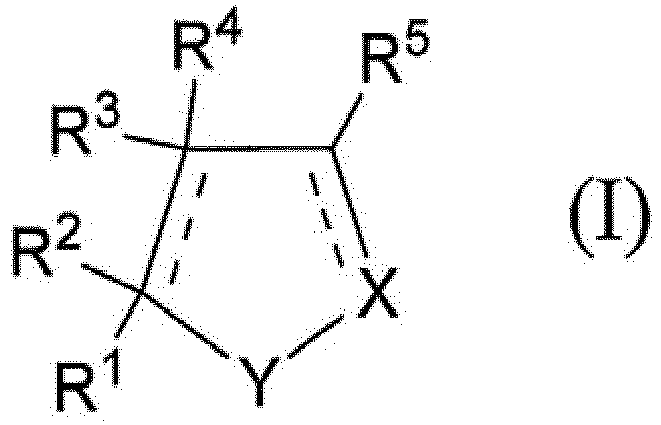 R1 and R3 are each independently a hydrogen atom, a hydroxy group, a methyl group, a formyl group, an acetyl group, or an acetoxy group;R2 and R4 are each a hydrogen atom, or are absent when a carbon atom bonded to R1 and a carbon atom bonded to R3 are bonded to each other to form a double bond;R5 is a hydrogen atom or an oxo group;one of X and Y is an oxy group, and the other is a group represented by the following formula (II):
 R7 is a hydrogen atom, or is absent when a carbon atom bonded to R5 and a carbon atom bonded to R6 are bonded to each other to form a double bond;a doublet consisting of a solid line and a broken line is a single bond or a double bond,provided that R5 is an oxo group when R1 and R3 are simultaneously hydrogen atoms,cyclotene, anda fatty acid having 3 or 4 carbon atoms.
 - The suppression method according to claim 8, wherein the off-taste suppressing compound is at least one compound selected from the group consisting of furfural, 2-acetylfuran, 2-acetyl-5-methylfuran, 3-acetyl-2,5-dimethylfuran, 4,5-dimethyl-3-hydroxy-2(5H)-furanone, 2-methyltetrahydrofuran-3-one, 4-hydroxy-5-methyl-3(2H)-furanone, 4-hydroxy-2,5-dimethyl-3(2H)-furanone, 4-acetoxy-2,5-dimethyl-3(2H)-furanone, cyclotene, propionic acid, and butyric acid.
- The suppression method according to claim 8 or 9, wherein the off-taste substance comprises at least one selected from the group consisting of an inorganic salt, an amino acid or a salt thereof, a high-intensity sweetener, a vegetable protein, a flavonoid compound, a pH-adjusting or bacteriostatic agent, and a thickening polysaccharide.
- The suppression method according to any one of claims 8 to 10, wherein the off-taste suppressing compound is added to the oral product in an amount of 0.005 - 8000 weight ppm with respect to the amount of the off-taste substance added to the oral product.
- A method for producing an oral product, comprising adding at least one compound (hereinafter to be referred to as an off-taste suppressing compound) selected from the group consisting of
a compound represented by the following formula (I): R1 and R3 are each independently a hydrogen atom, a hydroxy group, a methyl group, a formyl group, an acetyl group, or an acetoxy group;R2 and R4 are each a hydrogen atom, or are absent when a carbon atom bonded to R1 and a carbon atom bonded to R3 are bonded to each other to form a double bond;R5 is a hydrogen atom or an oxo group;one of X and Y is an oxy group, and the other is a group represented by the following formula (II):
 R7 is a hydrogen atom, or is absent when a carbon atom bonded to R5 and a carbon atom bonded to R6 are bonded to each other to form a double bond;a doublet consisting of a solid line and a broken line is a single bond or a double bond,provided that R5 is an oxo group when R1 and R3 are simultaneously hydrogen atoms,cyclotene, anda fatty acid having 3 or 4 carbon atoms, andan off-taste substance.
 - The production method according to claim 12, wherein the off-taste suppressing compound is at least one compound selected from the group consisting of furfural, 2-acetylfuran, 2-acetyl-5-methylfuran, 3-acetyl-2,5-dimethylfuran, 4,5-dimethyl-3-hydroxy-2(5H)-furanone, 2-methyltetrahydrofuran-3-one, 4-hydroxy-5-methyl-3(2H)-furanone, 4-hydroxy-2,5-dimethyl-3(2H)-furanone, 4-acetoxy-2,5-dimethyl-3(2H)-furanone, cyclotene, propionic acid, and butyric acid.
- The production method according to claim 12 or 13, wherein the off-taste substance comprises at least one selected from the group consisting of an inorganic salt, an amino acid or a salt thereof, a high-intensity sweetener, a vegetable protein, a flavonoid compound, a pH-adjusting or bacteriostatic agent, and a thickening polysaccharide.
- The production method according to any one of claims 12 to 14, wherein the off-taste suppressing compound is added to the oral product in an amount of 0.005 - 8000 weight ppm with respect to the amount of the off-taste substance to be added to the oral product.
- The production method according to any one of claims 12 to 15, wherein the oral product is an oral product with a suppressed off-taste.
Applications Claiming Priority (2)
| Application Number | Priority Date | Filing Date | Title |
|---|---|---|---|
| JP2019208858 | 2019-11-19 | ||
| PCT/JP2020/042890 WO2021100729A1 (en) | 2019-11-19 | 2020-11-18 | Off-flavor suppressing agent |
Publications (2)
| Publication Number | Publication Date |
|---|---|
| EP4062770A1 true EP4062770A1 (en) | 2022-09-28 |
| EP4062770A4 EP4062770A4 (en) | 2024-05-22 |
Family
ID=75979970
Family Applications (1)
| Application Number | Title | Priority Date | Filing Date |
|---|---|---|---|
| EP20891054.7A Pending EP4062770A4 (en) | 2019-11-19 | 2020-11-18 | Off-flavor suppressing agent |
Country Status (7)
| Country | Link |
|---|---|
| US (1) | US20220279826A1 (en) |
| EP (1) | EP4062770A4 (en) |
| JP (1) | JPWO2021100729A1 (en) |
| CN (1) | CN114760855A (en) |
| BR (1) | BR112022009052A2 (en) |
| PE (1) | PE20221272A1 (en) |
| WO (1) | WO2021100729A1 (en) |
Families Citing this family (5)
| Publication number | Priority date | Publication date | Assignee | Title |
|---|---|---|---|---|
| JP7735088B2 (en) * | 2021-06-10 | 2025-09-08 | サントリーホールディングス株式会社 | Sweetener Composition |
| FR3127370B1 (en) | 2021-09-24 | 2025-04-18 | Roquette Freres | METHOD FOR REDUCING THE BITTERNESS OF A LEGUMINE PROTEIN |
| JP7648554B2 (en) * | 2022-02-09 | 2025-03-18 | 長谷川香料株式会社 | Unpleasant flavor improving composition |
| JP7824783B2 (en) * | 2022-02-14 | 2026-03-05 | アサヒビール株式会社 | Mint-flavored drinks |
| CN118303505A (en) * | 2024-05-17 | 2024-07-09 | 江南大学 | Processing method for removing bad flavor of soy isolate protein in preparation process and application |
Family Cites Families (22)
| Publication number | Priority date | Publication date | Assignee | Title |
|---|---|---|---|---|
| JPH02276553A (en) * | 1989-04-17 | 1990-11-13 | Ajinomoto Co Inc | Taste-improving method |
| EP1124443B1 (en) * | 1998-11-04 | 2005-02-09 | Firmenich Sa | Solid delivery systems for aroma ingredients |
| JP2005143467A (en) * | 2003-11-20 | 2005-06-09 | Kiyomitsu Kawasaki | Green tea flavored composition |
| JP2006020526A (en) * | 2004-07-06 | 2006-01-26 | Kiyomitsu Kawasaki | Coffee flavor composition, and food and drink containing the same |
| JP2006025706A (en) * | 2004-07-16 | 2006-02-02 | Kiyomitsu Kawasaki | Nut-like flavor composition |
| KR100661398B1 (en) * | 2005-02-18 | 2006-12-27 | 주식회사 오스코텍 | Mixed herbal medicine extract of zelkova mushroom, Ogapi and samchil root and composition for preventing and treating periodontal disease containing the same as an active ingredient |
| JP2007153833A (en) * | 2005-12-07 | 2007-06-21 | Lion Corp | Oral composition |
| JP4897574B2 (en) * | 2007-05-31 | 2012-03-14 | 花王株式会社 | Container drink |
| EP2162017A1 (en) * | 2007-06-14 | 2010-03-17 | Firmenich S.A. | Frozen minced fish product |
| US20090047379A1 (en) * | 2007-08-17 | 2009-02-19 | Dewis Mark L | Benzamide Compounds Useful as High Potency Sweet Taste Enhancers |
| JP5258783B2 (en) * | 2007-11-12 | 2013-08-07 | 三栄源エフ・エフ・アイ株式会社 | Improvement of sweetness of stevia extract |
| JP5298526B2 (en) * | 2007-12-21 | 2013-09-25 | ライオン株式会社 | Composition for internal use |
| AU2009244077B2 (en) * | 2008-05-09 | 2014-10-02 | Cargill, Incorporated | Sweetener, methods of preparing sweetener and applications thereof |
| JP5639758B2 (en) * | 2009-12-22 | 2014-12-10 | 小川香料株式会社 | Taste improving agent for potassium salts or foods and drinks containing potassium salts |
| US20110318459A1 (en) * | 2010-06-25 | 2011-12-29 | Eapen George | Flavouring compositions and methods for making same |
| JP5340238B2 (en) * | 2010-08-05 | 2013-11-13 | 長谷川香料株式会社 | Acidity and acid odor inhibitor |
| US10292412B2 (en) * | 2012-02-15 | 2019-05-21 | Kraft Foods Global Brands Llc | High solubility natural sweetener compositions |
| US20170172169A1 (en) * | 2014-02-21 | 2017-06-22 | Impossible Food Inc. | Soy-based cheese |
| PT3331381T (en) * | 2015-08-07 | 2022-01-05 | V Mane Fils | Composition comprising taste modulation compounds, their use and foodstuff comprising them |
| JP7187445B2 (en) * | 2016-09-16 | 2022-12-12 | ペプシコ・インク | Compositions and methods for improving the taste of non-nutritive sweeteners |
| JP7627116B2 (en) * | 2018-05-31 | 2025-02-05 | 三栄源エフ・エフ・アイ株式会社 | Bean-flavor masking agent derived from legume protein |
| JP2019208858A (en) | 2018-06-05 | 2019-12-12 | パナソニックIpマネジメント株式会社 | Washing machine and washing system |
-
2020
- 2020-11-18 JP JP2021558406A patent/JPWO2021100729A1/ja active Pending
- 2020-11-18 CN CN202080080089.0A patent/CN114760855A/en active Pending
- 2020-11-18 BR BR112022009052A patent/BR112022009052A2/en unknown
- 2020-11-18 PE PE2022000785A patent/PE20221272A1/en unknown
- 2020-11-18 EP EP20891054.7A patent/EP4062770A4/en active Pending
- 2020-11-18 WO PCT/JP2020/042890 patent/WO2021100729A1/en not_active Ceased
-
2022
- 2022-05-13 US US17/743,873 patent/US20220279826A1/en active Pending
Also Published As
| Publication number | Publication date |
|---|---|
| BR112022009052A2 (en) | 2022-08-09 |
| WO2021100729A1 (en) | 2021-05-27 |
| CN114760855A (en) | 2022-07-15 |
| US20220279826A1 (en) | 2022-09-08 |
| JPWO2021100729A1 (en) | 2021-05-27 |
| PE20221272A1 (en) | 2022-09-01 |
| EP4062770A4 (en) | 2024-05-22 |
Similar Documents
| Publication | Publication Date | Title |
|---|---|---|
| US20220279826A1 (en) | Off-flavor suppressing agent | |
| EP2789246B1 (en) | Taste-improving agent and taste improvement method for a foodstuff | |
| US10407400B2 (en) | Compounds, compositions, and methods for modulating sweet taste | |
| JP5680815B2 (en) | Method for producing potassium chloride-containing food and drink, and potassium chloride-containing food and drink obtained by the production method | |
| CN111867396B (en) | Salty and/or spicy taste enhancer | |
| TW201315463A (en) | Liquid seasoning | |
| WO2018013739A2 (en) | Compounds, compositions, and methods for modulating sweet taste | |
| JP2020031564A (en) | Masking agent | |
| Toldrá et al. | Strategies for salt reduction in foods | |
| US20240081380A1 (en) | Off-taste suppressing composition | |
| US20250248431A1 (en) | Agent for enhancing saltiness or supressing off-flavor | |
| EP4656062A1 (en) | Salty taste/umami enhancer | |
| US20250024872A1 (en) | Salty taste enhancer | |
| JP2019170188A (en) | Salty taste enhancing composition | |
| JP7410654B2 (en) | Amino acid component-containing food and beverage composition, unpleasant taste masking agent for amino acid components, and method for improving unpleasant taste derived from amino acid components | |
| JP2020043784A (en) | Sour masking agent and sour masking method | |
| WO2025013813A1 (en) | Flavoring composition for enhancing salty taste, and reduced-sodium seasoning and reduced-sodium food or drink produced by using flavoring composition | |
| JP2025528262A (en) | Compositions containing aromadendrin 3-acetate | |
| CN114554869A (en) | Salt taste enhancer | |
| TW201438596A (en) | Food or drink with enhanced salty taste and/or umami and manufacturing method therefor, salty taste and/or umami-enhancing composition for food or drink, and method for enhancing salty taste and/or umami of food or drink |
Legal Events
| Date | Code | Title | Description |
|---|---|---|---|
| STAA | Information on the status of an ep patent application or granted ep patent |
Free format text: STATUS: THE INTERNATIONAL PUBLICATION HAS BEEN MADE |
|
| PUAI | Public reference made under article 153(3) epc to a published international application that has entered the european phase |
Free format text: ORIGINAL CODE: 0009012 |
|
| STAA | Information on the status of an ep patent application or granted ep patent |
Free format text: STATUS: REQUEST FOR EXAMINATION WAS MADE |
|
| 17P | Request for examination filed |
Effective date: 20220616 |
|
| AK | Designated contracting states |
Kind code of ref document: A1 Designated state(s): AL AT BE BG CH CY CZ DE DK EE ES FI FR GB GR HR HU IE IS IT LI LT LU LV MC MK MT NL NO PL PT RO RS SE SI SK SM TR |
|
| DAV | Request for validation of the european patent (deleted) | ||
| DAX | Request for extension of the european patent (deleted) | ||
| RIC1 | Information provided on ipc code assigned before grant |
Ipc: A23L 27/20 20160101AFI20240122BHEP |
|
| A4 | Supplementary search report drawn up and despatched |
Effective date: 20240418 |
|
| RIC1 | Information provided on ipc code assigned before grant |
Ipc: A23L 27/20 20160101AFI20240412BHEP |