EP4062602B1 - System and method for providing bandwidth congestion control in a private fabric in a high performance computing environment - Google Patents
System and method for providing bandwidth congestion control in a private fabric in a high performance computing environment Download PDFInfo
- Publication number
- EP4062602B1 EP4062602B1 EP20761390.2A EP20761390A EP4062602B1 EP 4062602 B1 EP4062602 B1 EP 4062602B1 EP 20761390 A EP20761390 A EP 20761390A EP 4062602 B1 EP4062602 B1 EP 4062602B1
- Authority
- EP
- European Patent Office
- Prior art keywords
- bandwidth
- accordance
- switches
- host channel
- switch
- Prior art date
- Legal status (The legal status is an assumption and is not a legal conclusion. Google has not performed a legal analysis and makes no representation as to the accuracy of the status listed.)
- Active
Links
Images













Classifications
-
- H—ELECTRICITY
- H04—ELECTRIC COMMUNICATION TECHNIQUE
- H04L—TRANSMISSION OF DIGITAL INFORMATION, e.g. TELEGRAPHIC COMMUNICATION
- H04L49/00—Packet switching elements
- H04L49/35—Switches specially adapted for specific applications
- H04L49/356—Switches specially adapted for specific applications for storage area networks
- H04L49/358—Infiniband Switches
-
- H—ELECTRICITY
- H04—ELECTRIC COMMUNICATION TECHNIQUE
- H04L—TRANSMISSION OF DIGITAL INFORMATION, e.g. TELEGRAPHIC COMMUNICATION
- H04L41/00—Arrangements for maintenance, administration or management of data switching networks, e.g. of packet switching networks
- H04L41/12—Discovery or management of network topologies
-
- H—ELECTRICITY
- H04—ELECTRIC COMMUNICATION TECHNIQUE
- H04L—TRANSMISSION OF DIGITAL INFORMATION, e.g. TELEGRAPHIC COMMUNICATION
- H04L41/00—Arrangements for maintenance, administration or management of data switching networks, e.g. of packet switching networks
- H04L41/50—Network service management, e.g. ensuring proper service fulfilment according to agreements
- H04L41/5003—Managing SLA; Interaction between SLA and QoS
-
- H—ELECTRICITY
- H04—ELECTRIC COMMUNICATION TECHNIQUE
- H04L—TRANSMISSION OF DIGITAL INFORMATION, e.g. TELEGRAPHIC COMMUNICATION
- H04L47/00—Traffic control in data switching networks
- H04L47/10—Flow control; Congestion control
- H04L47/12—Avoiding congestion; Recovering from congestion
-
- H—ELECTRICITY
- H04—ELECTRIC COMMUNICATION TECHNIQUE
- H04L—TRANSMISSION OF DIGITAL INFORMATION, e.g. TELEGRAPHIC COMMUNICATION
- H04L47/00—Traffic control in data switching networks
- H04L47/10—Flow control; Congestion control
- H04L47/17—Interaction among intermediate nodes, e.g. hop by hop
-
- H—ELECTRICITY
- H04—ELECTRIC COMMUNICATION TECHNIQUE
- H04L—TRANSMISSION OF DIGITAL INFORMATION, e.g. TELEGRAPHIC COMMUNICATION
- H04L47/00—Traffic control in data switching networks
- H04L47/10—Flow control; Congestion control
- H04L47/24—Traffic characterised by specific attributes, e.g. priority or QoS
-
- H—ELECTRICITY
- H04—ELECTRIC COMMUNICATION TECHNIQUE
- H04L—TRANSMISSION OF DIGITAL INFORMATION, e.g. TELEGRAPHIC COMMUNICATION
- H04L47/00—Traffic control in data switching networks
- H04L47/10—Flow control; Congestion control
- H04L47/24—Traffic characterised by specific attributes, e.g. priority or QoS
- H04L47/2425—Traffic characterised by specific attributes, e.g. priority or QoS for supporting services specification, e.g. SLA
- H04L47/2433—Allocation of priorities to traffic types
-
- H—ELECTRICITY
- H04—ELECTRIC COMMUNICATION TECHNIQUE
- H04L—TRANSMISSION OF DIGITAL INFORMATION, e.g. TELEGRAPHIC COMMUNICATION
- H04L47/00—Traffic control in data switching networks
- H04L47/10—Flow control; Congestion control
- H04L47/26—Flow control; Congestion control using explicit feedback to the source, e.g. choke packets
- H04L47/265—Flow control; Congestion control using explicit feedback to the source, e.g. choke packets sent by intermediate network nodes
-
- H—ELECTRICITY
- H04—ELECTRIC COMMUNICATION TECHNIQUE
- H04L—TRANSMISSION OF DIGITAL INFORMATION, e.g. TELEGRAPHIC COMMUNICATION
- H04L47/00—Traffic control in data switching networks
- H04L47/10—Flow control; Congestion control
- H04L47/30—Flow control; Congestion control in combination with information about buffer occupancy at either end or at transit nodes
-
- H—ELECTRICITY
- H04—ELECTRIC COMMUNICATION TECHNIQUE
- H04L—TRANSMISSION OF DIGITAL INFORMATION, e.g. TELEGRAPHIC COMMUNICATION
- H04L47/00—Traffic control in data switching networks
- H04L47/10—Flow control; Congestion control
- H04L47/33—Flow control; Congestion control using forward notification
-
- H—ELECTRICITY
- H04—ELECTRIC COMMUNICATION TECHNIQUE
- H04L—TRANSMISSION OF DIGITAL INFORMATION, e.g. TELEGRAPHIC COMMUNICATION
- H04L47/00—Traffic control in data switching networks
- H04L47/70—Admission control; Resource allocation
- H04L47/80—Actions related to the user profile or the type of traffic
- H04L47/805—QOS or priority aware
-
- H—ELECTRICITY
- H04—ELECTRIC COMMUNICATION TECHNIQUE
- H04W—WIRELESS COMMUNICATION NETWORKS
- H04W28/00—Network traffic management; Network resource management
- H04W28/02—Traffic management, e.g. flow control or congestion control
- H04W28/08—Load balancing or load distribution
- H04W28/09—Management thereof
- H04W28/0958—Management thereof based on metrics or performance parameters
- H04W28/0967—Quality of Service [QoS] parameters
- H04W28/0983—Quality of Service [QoS] parameters for optimizing bandwidth or throughput
-
- G—PHYSICS
- G06—COMPUTING OR CALCULATING; COUNTING
- G06F—ELECTRIC DIGITAL DATA PROCESSING
- G06F15/00—Digital computers in general; Data processing equipment in general
- G06F15/16—Combinations of two or more digital computers each having at least an arithmetic unit, a program unit and a register, e.g. for a simultaneous processing of several programs
- G06F15/163—Interprocessor communication
- G06F15/173—Interprocessor communication using an interconnection network, e.g. matrix, shuffle, pyramid, star, snowflake
- G06F15/17306—Intercommunication techniques
- G06F15/17331—Distributed shared memory [DSM], e.g. remote direct memory access [RDMA]
-
- G—PHYSICS
- G06—COMPUTING OR CALCULATING; COUNTING
- G06F—ELECTRIC DIGITAL DATA PROCESSING
- G06F9/00—Arrangements for program control, e.g. control units
- G06F9/06—Arrangements for program control, e.g. control units using stored programs, i.e. using an internal store of processing equipment to receive or retain programs
- G06F9/44—Arrangements for executing specific programs
- G06F9/455—Emulation; Interpretation; Software simulation, e.g. virtualisation or emulation of application or operating system execution engines
- G06F9/45533—Hypervisors; Virtual machine monitors
- G06F9/45558—Hypervisor-specific management and integration aspects
- G06F2009/4557—Distribution of virtual machine instances; Migration and load balancing
-
- G—PHYSICS
- G06—COMPUTING OR CALCULATING; COUNTING
- G06F—ELECTRIC DIGITAL DATA PROCESSING
- G06F9/00—Arrangements for program control, e.g. control units
- G06F9/06—Arrangements for program control, e.g. control units using stored programs, i.e. using an internal store of processing equipment to receive or retain programs
- G06F9/44—Arrangements for executing specific programs
- G06F9/455—Emulation; Interpretation; Software simulation, e.g. virtualisation or emulation of application or operating system execution engines
- G06F9/45533—Hypervisors; Virtual machine monitors
- G06F9/45558—Hypervisor-specific management and integration aspects
- G06F2009/45579—I/O management, e.g. providing access to device drivers or storage
-
- G—PHYSICS
- G06—COMPUTING OR CALCULATING; COUNTING
- G06F—ELECTRIC DIGITAL DATA PROCESSING
- G06F9/00—Arrangements for program control, e.g. control units
- G06F9/06—Arrangements for program control, e.g. control units using stored programs, i.e. using an internal store of processing equipment to receive or retain programs
- G06F9/44—Arrangements for executing specific programs
- G06F9/455—Emulation; Interpretation; Software simulation, e.g. virtualisation or emulation of application or operating system execution engines
- G06F9/45533—Hypervisors; Virtual machine monitors
- G06F9/45558—Hypervisor-specific management and integration aspects
- G06F2009/45583—Memory management, e.g. access or allocation
-
- G—PHYSICS
- G06—COMPUTING OR CALCULATING; COUNTING
- G06F—ELECTRIC DIGITAL DATA PROCESSING
- G06F9/00—Arrangements for program control, e.g. control units
- G06F9/06—Arrangements for program control, e.g. control units using stored programs, i.e. using an internal store of processing equipment to receive or retain programs
- G06F9/44—Arrangements for executing specific programs
- G06F9/455—Emulation; Interpretation; Software simulation, e.g. virtualisation or emulation of application or operating system execution engines
- G06F9/45533—Hypervisors; Virtual machine monitors
- G06F9/45558—Hypervisor-specific management and integration aspects
- G06F2009/45595—Network integration; Enabling network access in virtual machine instances
-
- G—PHYSICS
- G06—COMPUTING OR CALCULATING; COUNTING
- G06F—ELECTRIC DIGITAL DATA PROCESSING
- G06F9/00—Arrangements for program control, e.g. control units
- G06F9/06—Arrangements for program control, e.g. control units using stored programs, i.e. using an internal store of processing equipment to receive or retain programs
- G06F9/44—Arrangements for executing specific programs
- G06F9/455—Emulation; Interpretation; Software simulation, e.g. virtualisation or emulation of application or operating system execution engines
- G06F9/45533—Hypervisors; Virtual machine monitors
- G06F9/45558—Hypervisor-specific management and integration aspects
-
- H—ELECTRICITY
- H04—ELECTRIC COMMUNICATION TECHNIQUE
- H04L—TRANSMISSION OF DIGITAL INFORMATION, e.g. TELEGRAPHIC COMMUNICATION
- H04L49/00—Packet switching elements
- H04L49/70—Virtual switches
Definitions
- the present teaching relates to a system and method for enforcing quality of service (QOS) and service-level agreements (SLA) in private high performance interconnect fabrics, such as InfiniBand (IB) and RoCE (RDMA (remote direct memory access) over Converged Ethernet).
- QOS quality of service
- SLA service-level agreements
- IB InfiniBand
- RoCE RoCE
- IB InfiniBand
- US 2019/149473 discloses a system and method for supporting network isolation in a multi-tenant cluster environment.
- An example method can provide, at one or more microprocessors, a first subnet, the first subnet comprising a plurality of switches, and a plurality of host channel adapters, wherein each of the host channel adapters comprise at least one host channel adapter port, and wherein the plurality of host channel adapters are interconnected via the plurality of switches, and a plurality of end nodes.
- the method can provide, at a host channel adapter, an end node ingress bandwidth quota associated with an end node attached to the host channel adapter.
- the method can receive, at the end node of the host channel adapter, ingress bandwidth, the ingress bandwidth exceeding the ingress bandwidth quota of the end node.
- Described herein are systems and methods for providing quality of service (QOS) and service level agreements (SLA) in a private fabric in a high performance computing environment.
- QOS quality of service
- SLA service level agreements
- IB InfiniBand TM
- IB InfiniBand TM
- IB InfiniBand TM
- IB InfiniBand
- RoCE Remote Direct Memory Access
- RoCE is a standard protocol which enables RDMA's efficient data transfer over Ethernet networks allowing transport offload with hardware RDMA engine implementation, and superior performance.
- RoCE is a standard protocol defined in the InfiniBand Trade Association (IBTA) standard.
- IBTA InfiniBand Trade Association
- RoCE makes use of UDP (user datagram protocol) encapsulation allowing it to transcend Layer 3 networks.
- RDMA is a key capability natively used by the InfiniBand interconnect technology. Both InfiniBand and Ethernet RoCE share a common user API but have different physical and link layers.
- RDMA Remote Direct Memory Access
- SR-IOV Single-Root I/O Virtualization
- a virtual switch (vSwitch) SR-IOV architecture can be provided for applicability in high performance lossless interconnection networks.
- vSwitch virtual switch
- a scalable and topology-agnostic dynamic reconfiguration mechanism can be provided.
- routing strategies for virtualized environments using vSwitches can be provided, and an efficient routing algorithm for network topologies (e.g., Fat-Tree topologies) can be provided.
- the dynamic reconfiguration mechanism can be further tuned to minimize imposed overhead in Fat-Trees.
- virtualization can be beneficial to efficient resource utilization and elastic resource allocation in cloud computing.
- Live migration makes it possible to optimize resource usage by moving virtual machines (VMs) between physical servers in an application transparent manner.
- VMs virtual machines
- virtualization can enable consolidation, on-demand provisioning of resources, and elasticity through live migration.
- IB InfiniBand TM
- HPC high-performance computing
- IBA InfiniBand TM Architecture
- hosts can be connected using switches and point-to-point links. Additionally, there can be a master management entity, the subnet manager (SM), which resides on a designated device in the subnet. The subnet manager is responsible for configuring, activating and maintaining the IB subnet. Additionally, the subnet manager (SM) can be responsible for performing routing table calculations in an IB fabric. Here, for example, the routing of the IB network aims at proper load balancing between all source and destination pairs in the local subnet.
- SM master management entity
- Queue Pairs QPs
- EECs End-to-End contexts
- QP0 and QP1 Management Queue Pairs
- the P_Key information can then be added to every IB transport packet sent.
- a packet arrives at an HCA port or a switch, its P_Key value can be validated against a table configured by the SM. If an invalid P_Key value is found, the packet is discarded immediately. In this way, communication is allowed only between ports sharing a partition.
- the host e.g., HCA
- the host appears as a single port in the network with a single shared LID and shared Queue Pair (QP) space between the physical function 320 and the virtual functions 330, 350, 350.
- QP shared Queue Pair
- each function i.e., physical function and virtual functions
- the shared port architecture can allow for highly scalable data centers that are not limited by the number of VMs (which attach to the network by being assigned to the virtual functions), as the LID space is only consumed by physical machines and switches in the network.
- FIG. 5 shows an example vSwitch architecture, in accordance with an embodiment.
- a host 400 e.g., a host channel adapter
- a hypervisor 410 which can assign the various virtual functions 430, 440, 450, to a number of virtual machines.
- the physical function can be handled by the hypervisor 410.
- a virtual switch 415 can also be handled by the hypervisor 401.
- a vSwitch architecture provide transparent virtualization.
- each virtual function is assigned a unique LID, the number of available LIDs gets consumed rapidly.
- more communication paths have to be computed by the SM and more Subnet Management Packets (SMPs) have to be sent to the switches in order to update their LFTs.
- SMPs Subnet Management Packets
- the computation of the communication paths might take several minutes in large networks.
- LID space is limited to 49151 unicast LIDs, and as each VM (via a VF), physical node, and switch occupies one LID each, the number of physical nodes and switches in the network limits the number of active VMs, and vice versa.
- the present disclosure provides a system and method for providing a vSwitch architecture with prepopulated LIDs.
- FIG. 7 shows an example vSwitch architecture with prepopulated LIDs, in accordance with an embodiment.
- a number of switches 501-504 can provide communication within the network switched environment 600 (e.g., an IB subnet) between members of a fabric, such as an InfiniBand fabric.
- the fabric can include a number of hardware devices, such as host channel adapters 510, 520, 530. Each of the host channel adapters 510, 520, 530, can in turn interact with a hypervisor 511, 521, and 531, respectively.
- Each hypervisor can, in turn, in conjunction with the host channel adapter it interacts with, setup and assign a number of virtual functions 514, 515, 516, 524, 525, 526, 534, 535, 536, to a number of virtual machines.
- virtual machine 1 550 can be assigned by the hypervisor 511 to virtual function 1 514.
- Hypervisor 511 can additionally assign virtual machine 2 551 to virtual function 2 515, and virtual machine 3 552 to virtual function 3 516.
- Hypervisor 531 can, in turn, assign virtual machine 4 553 to virtual function 1 534.
- the hypervisors can access the host channel adapters through a fully featured physical function 513, 523, 533, on each of the host channel adapters.
- each of the switches 501-504 can comprise a number of ports (not shown), which are used in setting a linear forwarding table in order to direct traffic within the network switched environment 600.
- the present disclosure provides a system and method for providing a vSwitch architecture with prepopulated LIDs.
- the LIDs are prepopulated to the various physical functions 513, 523, 533, as well as the virtual functions 514-516, 524-526, 534-536 (even those virtual functions not currently associated with an active virtual machine).
- physical function 513 is prepopulated with LID 1
- virtual function 1 534 is prepopulated with LID 10.
- the LIDs are prepopulated in an SR-IOV vSwitch-enabled subnet when the network is booted. Even when not all of the VFs are occupied by VMs in the network, the populated VFs are assigned with a LID as shown in Figure 7 .
- each hypervisor in a vSwitch architecture with prepopulated LIDs, can consume one LID for itself through the PF and one more LID for each additional VF.
- the theoretical hypervisor limit for a single subnet is ruled by the number of available unicast LIDs and is: 2891 (49151 available LIDs divided by 17 LIDs per hypervisor), and the total number of VMs (i.e., the limit) is 46256 (2891 hypervisors times 16 VFs per hypervisor). (In actuality, these numbers are actually smaller since each switch, router, or dedicated SM node in the IB subnet consumes a LID as well). Note that the vSwitch does not need to occupy an additional LID as it can share the LID with the PF
- a vSwitch architecture with prepopulated LIDs communication paths are computed for all the LIDs the first time the network is booted.
- a new VM needs to be started the system does not have to add a new LID in the subnet, an action that would otherwise cause a complete reconfiguration of the network, including path recalculation, which is the most time consuming part.
- an available port for a VM is located (i.e., an available virtual function) in one of the hypervisors and the virtual machine is attached to the available virtual function.
- certain considerations can be taken into account. For example, because the LIDs are prepopulated in an SR-IOV vSwitch-enabled subnet when the network is booted, the initial path computation (e.g., on boot-up) can take longer than if the LIDs were not pre-populated.
- FIG. 8 shows an example vSwitch architecture with dynamic LID assignment, in accordance with an embodiment.
- a number of switches 501-504 can provide communication within the network switched environment 700 (e.g., an IB subnet) between members of a fabric, such as an InfiniBand fabric.
- the fabric can include a number of hardware devices, such as host channel adapters 510, 520, 530. Each of the host channel adapters 510, 520, 530, can in turn interact with a hypervisor 511, 521, 531, respectively.
- Each hypervisor can, in turn, in conjunction with the host channel adapter it interacts with, setup and assign a number of virtual functions 514, 515, 516, 524, 525, 526, 534, 535, 536, to a number of virtual machines.
- virtual machine 1 550 can be assigned by the hypervisor 511 to virtual function 1 514.
- Hypervisor 511 can additionally assign virtual machine 2 551 to virtual function 2 515, and virtual machine 3 552 to virtual function 3 516.
- Hypervisor 531 can, in turn, assign virtual machine 4 553 to virtual function 1 534.
- the hypervisors can access the host channel adapters through a fully featured physical function 513, 523, 533, on each of the host channel adapters.
- each of the switches 501-504 can comprise a number of ports (not shown), which are used in setting a linear forwarding table in order to direct traffic within the network switched environment 700.
- the virtual switches 512, 522, and 532 can be handled by their respective hypervisors 511, 521, 531.
- each virtual function is a complete virtual Host Channel Adapter (vHCA), meaning that the VM assigned to a VF is assigned a complete set of IB addresses (e.g., GID, GUID, LID) and a dedicated QP space in the hardware.
- vHCA virtual Host Channel Adapter
- IB addresses e.g., GID, GUID, LID
- the HCAs 510, 520, and 530 look like a switch, via the virtual switches, with additional nodes connected to them.
- the present disclosure provides a system and method for providing a vSwitch architecture with dynamic LID assignment.
- the LIDs are dynamically assigned to the various physical functions 513, 523, 533, with physical function 513 receiving LID 1, physical function 523 receiving LID 2, and physical function 533 receiving LID 3.
- Those virtual functions that are associated with an active virtual machine can also receive a dynamically assigned LID.
- virtual function 514 can be assigned LID 5.
- virtual function 2 515, virtual function 3 516, and virtual function 1 534 are each associated with an active virtual function.
- these virtual functions are assigned LIDs, with LID 7 being assigned to virtual function 2 515, LID 11 being assigned to virtual function 3 516, and LID 9 being assigned to virtual function 1 534. Unlike vSwitch with prepopulated LIDs, those virtual functions not currently associated with an active virtual machine do not receive a LID assignment.
- the initial path computation can be substantially reduced.
- a relatively small number of LIDs can be used for the initial path calculation and LFT distribution.
- virtual HCAs can also be represented with two ports and be connected via one, two or more virtual switches to the external IB subnet.
- a free VM slot is found in order to decide on which hypervisor to boot the newly added VM, and a unique non-used unicast LID is found as well.
- LFTs of the switches for handling the newly added LID.
- Computing a new set of paths in order to handle the newly added VM is not desirable in a dynamic environment where several VMs may be booted every minute. In large IB subnets, computing a new set of routes can take several minutes, and this procedure would have to repeat each time a new VM is booted.
- the LIDs assigned in the vSwitch with dynamic LID assignment architecture do not have to be sequential.
- the LIDs assigned on VMs on each hypervisor in vSwitch with prepopulated LIDs versus vSwitch with dynamic LID assignment
- the LIDs assigned in the dynamic LID assignment architecture are non-sequential, while those prepopulated in are sequential in nature.
- the vSwitch dynamic LID assignment architecture when a new VM is created, the next available LID is used throughout the lifetime of the VM.
- each VM inherits the LID that is already assigned to the corresponding VF, and in a network without live migrations, VMs consecutively attached to a given VF get the same LID.
- the vSwitch with dynamic LID assignment architecture can resolve the drawbacks of the vSwitch with prepopulated LIDs architecture model at a cost of some additional network and runtime SM overhead.
- the LFTs of the physical switches in the subnet are updated with the newly added LID associated with the created VM.
- One subnet management packet (SMP) per switch is needed to be sent for this operation.
- SMP subnet management packet
- the LMC-like functionality is also not available, because each VM is using the same path as its host hypervisor. However, there is no limitation on the total amount of VFs present in all hypervisors, and the number of VFs may exceed that of the unicast LID limit.
- VFs are allowed to be attached on active VMs simultaneously if this is the case, but having more spare hypervisors and VFs adds flexibility for disaster recovery and optimization of fragmented networks when operating close to the unicast LID limit.
- FIG. 9 shows an example vSwitch architecture with vSwitch with dynamic LID assignment and prepopulated LIDs, in accordance with an embodiment.
- a number of switches 501-504 can provide communication within the network switched environment 800 (e.g., an IB subnet) between members of a fabric, such as an InfiniBand fabric.
- the fabric can include a number of hardware devices, such as host channel adapters 510, 520, 530. Each of the host channel adapters 510, 520, 530, can in turn interact with a hypervisor 511, 521, and 531, respectively.
- Each hypervisor can, in turn, in conjunction with the host channel adapter it interacts with, setup and assign a number of virtual functions 514, 515, 516, 524, 525, 526, 534, 535, 536, to a number of virtual machines.
- virtual machine 1 550 can be assigned by the hypervisor 511 to virtual function 1 514.
- Hypervisor 511 can additionally assign virtual machine 2 551 to virtual function 2 515.
- Hypervisor 521 can assign virtual machine 3 552 to virtual function 3 526.
- Hypervisor 531 can, in turn, assign virtual machine 4 553 to virtual function 2 535.
- the hypervisors can access the host channel adapters through a fully featured physical function 513, 523, 533, on each of the host channel adapters.
- each of the switches 501-504 can comprise a number of ports (not shown), which are used in setting a linear forwarding table in order to direct traffic within the network switched environment 800.
- the virtual switches 512, 522, and 532 can be handled by their respective hypervisors 511, 521, 531.
- each virtual function is a complete virtual Host Channel Adapter (vHCA), meaning that the VM assigned to a VF is assigned a complete set of IB addresses (e.g., GID, GUID, LID) and a dedicated QP space in the hardware.
- vHCA virtual Host Channel Adapter
- IB addresses e.g., GID, GUID, LID
- the HCAs 510, 520, and 530 look like a switch, via the virtual switches, with additional nodes connected to them.
- the present disclosure provides a system and method for providing a hybrid vSwitch architecture with dynamic LID assignment and prepopulated LIDs.
- hypervisor 511 can be arranged with vSwitch with prepopulated LIDs architecture
- hypervisor 521 can be arranged with vSwitch with prepopulated LIDs and dynamic LID assignment
- Hypervisor 531 can be arranged with vSwitch with dynamic LID assignment.
- the physical function 513 and virtual functions 514-516 have their LIDs prepopulated (i.e., even those virtual functions not attached to an active virtual machine are assigned a LID).
- Physical function 523 and virtual function 1 524 can have their LIDs prepopulated, while virtual function 2 and 3, 525 and 526, have their LIDs dynamically assigned (i.e., virtual function 2 525 is available for dynamic LID assignment, and virtual function 3 526 has a LID of 11 dynamically assigned as virtual machine 3 552 is attached).
- the functions (physical function and virtual functions) associated with hypervisor 3 531 can have their LIDs dynamically assigned. This results in virtual functions 1 and 3, 534 and 536, are available for dynamic LID assignment, while virtual function 2 535 has LID of 9 dynamically assigned as virtual machine 4 553 is attached there.
- virtual HCAs can also be represented with two ports and be connected via one, two or more virtual switches to the external IB subnet.
- embodiments of the current disclosure can also provide for an InfiniBand fabric that spans two or more subnets.
- FIG. 10 shows an example multi-subnet InfiniBand fabric, in accordance with an embodiment.
- a number of switches 1001-1004 can provide communication within subnet A 1000 (e.g., an IB subnet) between members of a fabric, such as an InfiniBand fabric.
- the fabric can include a number of hardware devices, such as, for example, channel adapter 1010.
- Host channel adapter 1010 can in turn interact with a hypervisor 1011.
- the hypervisor can, in turn, in conjunction with the host channel adapter it interacts with, setup a number of virtual functions 1014.
- the hypervisor can additionally assign virtual machines to each of the virtual functions, such as virtual machine 1 1015 being assigned to virtual function 1 1014.
- the hypervisor can access their associated host channel adapters through a fully featured physical function, such as physical function 1013, on each of the host channel adapters.
- a number of switches 1021-1024 can provide communication within subnet B 1040 (e.g., an IB subnet) between members of a fabric, such as an InfiniBand fabric.
- the fabric can include a number of hardware devices, such as, for example, channel adapter 1030.
- Host channel adapter 1030 can in turn interact with a hypervisor 1031.
- the hypervisor can, in turn, in conjunction with the host channel adapter it interacts with, setup a number of virtual functions 1034.
- the hypervisor can additionally assign virtual machines to each of the virtual functions, such as virtual machine 2 1035 being assigned to virtual function 2 1034.
- the hypervisor can access their associated host channel adapters through a fully featured physical function, such as physical function 1033, on each of the host channel adapters. It is noted that although only one host channel adapter is shown within each subnet (i.e., subnet A and subnet B), it is to be understood that a plurality of host channel adapters, and their corresponding components, can be included within each subnet.
- each of the host channel adapters can additionally be associated with a virtual switch, such as virtual switch 1012 and virtual switch 1032, and each HCA can be set up with a different architecture model, as discussed above.
- a virtual switch such as virtual switch 1012 and virtual switch 1032
- each HCA can be set up with a different architecture model, as discussed above.
- At least one switch within each subnet can be associated with a router, such as switch 1002 within subnet A 1000 being associated with router 1005, and switch 1021 within subnet B 1040 being associated with router 1006.
- At least one device can be associated with a fabric manager (not shown).
- the fabric manager can be used, for example, to discover inter-subnet fabric topology, create a fabric profile (e.g., a virtual machine fabric profile), build virtual machine related database objects that forms the basis for building a virtual machine fabric profile.
- the fabric manager can define legal inter-subnet connectivity in terms of which subnets are allowed to communicate via which router ports using which partition numbers.
- the traffic when traffic at an originating source, such as virtual machine 1 within subnet A, is addressed to a destination in a different subnet, such as virtual machine 2 within subnet B, the traffic can be addressed to the router within subnet A, i.e., router 1005, which can then pass the traffic to subnet B via its link with router 1006.
- a dual port router abstraction can provide a simple way for enabling subnet-to-subnet router functionality to be defined based on a switch hardware implementation that has the ability to do GRH (global route header) to LRH (local route header) conversion in addition to performing normal LRH based switching.
- GRH global route header
- LRH local route header
- a virtual dual-port router can logically be connected outside a corresponding switch port.
- This virtual dual-port router can provide an InfiniBand specification compliant view to a standard management entity, such as a Subnet Manager.
- a dual-ported router model implies that different subnets can be connected in a way where each subnet fully controls the forwarding of packets as well as address mappings in the ingress path to the subnet, and without impacting the routing and logical connectivity within either of the incorrectly connected subnets.
- the use of a virtual dual-port router abstraction can also allow a management entity, such as a Subnet Manager and IB diagnostic software, to behave correctly in the presence of un-intended physical connectivity to a remote subnet.
- a management entity such as a Subnet Manager and IB diagnostic software
- FIG. 11 shows an interconnection between two subnets in a high performance computing environment, in accordance with an embodiment.
- a switch 1120 in subnet A 1101 Prior to configuration with a virtual dual port router, a switch 1120 in subnet A 1101 can be connected through a switch port 1121 of switch 1120, via a physical connection 1110, to a switch 1130 in subnet B 1102, via a switch port 1131 of switch 1130.
- each switch port, 1121 and 1131 can act both as switch ports and router ports.
- a problem with this configuration is that a management entity, such as a subnet manager in an InfiniBand subnet, cannot distinguish between a physical port that is both a switch port and a router port.
- a SM can treat the switch port as having a router port connected to that switch port. But if the switch port is connected to another subnet, via, for example, a physical link, with another subnet manager, then the subnet manager can be able to send a discovery message out on the physical link. However, such a discovery message cannot be allowed at the other subnet.
- Figure 12 shows an interconnection between two subnets via a dual-port virtual router configuration in a high performance computing environment, in accordance with an embodiment.
- a dual-port virtual router configuration can be provided such that a subnet manager sees a proper end node, signifying an end of the subnet that the subnet manager is responsible for.
- a switch port can be connected (i.e., logically connected) to a router port 1211 in a virtual router 1210 via a virtual link 1223.
- the virtual router 1210 e.g., a dual-port virtual router
- which while shown as being external to the switch 1220 can, in embodiments, be logically contained within the switch 1220, can also comprise a second router port, router port II 1212.
- a physical link 1203 which can have two ends, can connect the subnet A 1201 via first end of the physical link with subnet B 1202 via a second end of the physical link, via router port II 1212 and router port II 1232, contained in virtual router 1230 in subnet B 1202.
- Virtual router 1230 can additionally comprise router port 1231, which can be connected (i.e., logically connected) to switch port 1241 on switch 1240 via a virtual link 1233.
- a subnet manager (not shown) on subnet A can detect router port 1211, on virtual router 1210 as an end point of the subnet that the subnet manager controls.
- the dual-port virtual router abstraction can allow the subnet manager on subnet A to deal with subnet A in a usual manner (e.g., as defined per the InfiniBand specification).
- the dual-port virtual router abstraction can be provided such that the SM sees the normal switch port, and then at the SMA level, the abstraction that there is another port connected to the switch port, and this port is a router port on a dual-port virtual router.
- a conventional fabric topology can continue to be used (the SM sees the port as a standard switch port in the topology), and thus the SM sees the router port as an end port.
- Physical connection can be made between two switch ports that are also configured as router ports in two different subnets.
- the dual-port virtual router can also resolve the issue that a physical link could be mistakenly connected to some other switch port in the same subnet, or to a switch port that was not intended to provide a connection to another subnet. Therefore, the methods and systems described herein also provide a representation of what is on the outside of a subnet.
- a local SM determines a switch port, and then determines a router port connected to that switch port (e.g., router port 1211 connected, via a virtual link 1223, to switch port 1221). Because the SM sees the router port 1211 as the end of the subnet that the SM manages, the SM cannot send discovery and/or management messages beyond this point (e.g., to router port II 1212).
- the dual-port virtual router described above provides a benefit that the dual-port virtual router abstraction is entirely managed by a management entity (e.g., SM or SMA) within the subnet that the dual-port virtual router belongs to.
- a management entity e.g., SM or SMA
- SM or SMA management entity
- RDMA egress bandwidth is restricted from any one virtual machine from the end node in order to prevent any one virtual machine from monopolizing the bandwidth of any link connecting the end node to the subnet.
- egress bandwidth restriction while effective in the general case, cannot prevent an influx of RDMA read responses from monopolizing links between requesting VMs and the network.
- the method can provide a plurality of end nodes, including a plurality of virtual machines.
- the target group associations do not have to be synchronously updated as long as the systems and methods tolerate some transient periods where relevant bandwidth quotas are not 100% correct.
- the target group(s) associated with RC connections and address handles in both the VM being migrated as well as in its communication peer VMs may be "completely wrong" after a migration. This may imply both that less bandwidth than available is utilized (e.g. when a VM is moved from a remote location and into the same "leaf group” as its peers) and also that excessive bandwidth is generated (e.g. when a VM is moved from the same "leaf group" as its peers to a remote location that implies shared ISLs with restricted bandwidth).
- the target groups should normally be global for the HCA port, and VF/tenant quotas at the HCA level would represent the max local traffic that the tenant can generate for any combinations of targets either globally or for specific priorities. Still, it would be possible to use target groups that are specific for some tenants as well as "global" target groups in the same hierarchy.
- Figure 21 shows a host channel adapter 2101 that comprises a hypervisor 2111.
- the hypervisor can host/be associated with a number of virtual functions (VF), such as VF2114-2116, as well as a physical function (PF) 2113.
- the host channel adapter can additionally support/comprise a number of ports, such as port 2102 and 2103, which are used to connect the host channel adapter to a network, such as network 2100.
- the network can comprise, for example, a switched network, such as an InfiniBand network or a RoCE network that can connect the HCA 2101 to a number of other nodes, such as switches, additional and separate HCAs, and the like.
- the network 2100 can comprise a number of switches, such as switches 2140, 2141, 2142, and 2143, which are interconnected and which can be connected, e.g., via leaf switches 2140 and 2141, to the host channel adapter 2101.
- switches 2140, 2141, 2142, and 2143 which are interconnected and which can be connected, e.g., via leaf switches 2140 and 2141, to the host channel adapter 2101.
- target groups can also be shared by multiple flows. Depending on QoS and SLAs associated with respective flows, for example, the bandwidth quotas represented by target groups can be divided. As an example, of VM1 and VM2 both concurrently send flows that would implicate target group 2170, which, for example, represents a bandwidth quota of 10 Gb/s, and the respective flows have equal QoS and SLAs associated therewith, then target group 2170 would represent a 5 Gb/s limitation for each flow. This sharing or dividing of target group bandwidth quotas can be varied based upon QoS and SLAs associated with respective flows.
- each of the virtual functions can host a virtual machine (VM), such as VM1 2250, VM2 2251, and VM3 2252.
- VM virtual machine
- the switches 2240-2243 can be interconnected, and can additionally be connected with other switches and other end nodes (e.g., other HCAs) that are not shown in the figure.
- other switches and other end nodes e.g., other HCAs
- the target groups 2270 and 2271 decouple the object from a specific destination address, and the systems and methods get the ability to represent an intermediate, shared link or groups of links that may represent a bandwidth limitation that is in addition to the target and that may be more restrictive than the target limit. That is, for example, if a default/original egress limit on VM2 2251 is set at one threshold, but the destination of a packet sent from VM2 would pass through target group 2270 that sets a lower bandwidth limitation, then the egress bandwidth from VM2 can be restricted to a level lower than that of default/original egress limit placed on VM2.
- the HCA can be responsible for such throttling/egress bandwidth limitation adjustment, dependent upon the target groups implicated by the routing of packets from VM2, for example.
- target groups can also be hierarchical in nature, whereby the systems and methods can consider a hierarchy of target groups (bandwidth quotas) reflecting bandwidth/link sharing at different stages towards different targets. In principle, this implies that a specific flow should be associated with the target group (max rate) that represents the most limited rate in the hierarchy. That is, for example, if target group 2270 represents a bandwidth limitation higher than that of target group 2271, and a packet is addressed through both inter-switch links represented by the two target groups, then the bandwidth limitation of target group 2271 is the controlling bandwidth limiting factor.
- target groups can also be shared by multiple flows. Depending on QoS and SLAs associated with respective flows, for example, the bandwidth quotas represented by target groups can be divided. As an example, of VM1 and VM2 both concurrently send flows that would implicate target group 2270, which, for example, represents a bandwidth quota of 10 Gb/s, and the respective flows have equal QoS and SLAs associated therewith, then target group 2270 would represent a 5 Gb/s limitation for each flow. This sharing or dividing of target group bandwidth quotas can be varied based upon QoS and SLAs associated with respective flows.
- Figures 21 and 22 show target groups being defined at inter-switch links and at switch ports, respectively.
- target groups can be defined at various places in the subnet, and that any given subnet is not so limited that target groups are defined only at ISLs and switch ports, but that generally, such target groups can be defined at both ISLs and switch ports within any given subnets.
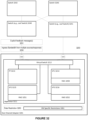
- Figure 23 shows a system for combining multiple shared bandwidth segments in a high performance computing environment, in accordance with an embodiment.
- Figure 23 shows a host channel adapter 2301 that comprises a hypervisor 2311.
- the hypervisor can host/be associated with a number of virtual functions (VF), such as VF2314-2316, as well as a physical function (PF) 2313.
- the host channel adapter can additionally support/comprise a number of ports, such as port 2302 and 2303, which are used to connect the host channel adapter to a network, such as network 2300.
- the network can comprise, for example, a switched network, such as an InfiniBand network or a RoCE network that can connect the HCA 2301 to a number of other nodes, such as switches, additional and separate HCAs, and the like.
- each of the virtual functions can host a virtual machine (VM), such as VM1 2350, VM2 2351, and VM3 2352.
- VM virtual machine
- the host channel adapter 2301 can additionally support, via the hypervisor, a virtual switch 2312. This is for situations where a vSwitch architecture is implemented.
- a virtual switch 2312 can additionally support a virtual port (vPort) architecture, as described above.
- the network 2300 can comprise a number of switches, such as switches 2340, 2341, 2342, and 2343, which are interconnected and which can be connected, e.g., via leaf switches 2340 and 2341, to the host channel adapter 2301.
- switches 2340, 2341, 2342, and 2343 which are interconnected and which can be connected, e.g., via leaf switches 2340 and 2341, to the host channel adapter 2301.
- the switches 2340-2343 can be interconnected, and can additionally be connected with other switches and other end nodes (e.g., other HCAs) that are not shown in the figure.
- other switches and other end nodes e.g., other HCAs
- target groups such as target groups 2370 and 2371
- target groups 2370 and 2371 can be defined along inter-switch links (ISLs), such as ISLs between leaf switch 2340 and switch 2342, as well as leaf switch 2341 and switch 2343.
- ISLs inter-switch links
- These target groups 2370 and 2371 can represent, for example, bandwidth quotas as HCA objects, stored at a target group repository 2361 associated with the HCA, which is accessible by a rate restriction component 2360.
- the target groups 2370 and 2371 can represent specific (and different) bandwidth quotas. These bandwidth quotas can be divided into quotas for specific priorities ("QOS classes") in order to reflect the expected bandwidth usage for the various priorities within the relevant paths in the fabric that the target groups represent.
- QOS classes specific priorities
- the target groups 2370 and 2371 decouple the object from a specific destination address, and the systems and methods get the ability to represent an intermediate, shared link or groups of links that may represent a bandwidth limitation that is in addition to the target and that may be more restrictive than the target limit. That is, for example, if a default/original egress limit on VM2 2351 is set at one threshold, but the destination of a packet sent from VM2 would pass through target group 2370 that sets a lower bandwidth limitation, then the egress bandwidth from VM2 can be restricted to a level lower than that of default/original egress limit placed on VM2.
- the HCA can be responsible for such throttling/egress bandwidth limitation adjustment, dependent upon the target groups implicated by the routing of packets from VM2, for example.
- target groups can also be hierarchical in nature, whereby the systems and methods can consider a hierarchy of target groups (bandwidth quotas) reflecting bandwidth/link sharing at different stages towards different targets. In principle, this implies that a specific flow should be associated with the target group (max rate) that represents the most limited rate in the hierarchy. That is, for example, if target group 2370 represents a bandwidth limitation higher than that of target group 2371, and a packet is addressed through both inter-switch links represented by the two target groups, then the bandwidth limitation of target group 2371 is the controlling bandwidth limiting factor.
- target groups can also be shared by multiple flows. Depending on QoS and SLAs associated with respective flows, for example, the bandwidth quotas represented by target groups can be divided. As an example, of VM1 and VM2 both concurrently send flows that would implicate target group 2370, which, for example, represents a bandwidth quota of 10 Gb/s, and the respective flows have equal QoS and SLAs associated therewith, then target group 2370 would represent a 5 Gb/s limitation for each flow. This sharing or dividing of target group bandwidth quotas can be varied based upon QoS and SLAs associated with respective flows.
- the target group repository can query 2375 the target group 2370 to determine, for example, a bandwidth quota of the target group.
- the target group repository can store a quota value associated with the target group. This quota can then be used by the rate restriction component to a) determine if the bandwidth quota of the target group is lower than that of a bandwidth quota for a VM based on QoS or SLA, and b) on such determination, update 2376 the bandwidth quota for the VM based upon a path traversing the target group 2370.
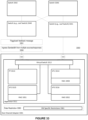
- Figure 24 shows a system for combining multiple shared bandwidth segments in a high performance computing environment, in accordance with an embodiment.
- Figure 24 shows a host channel adapter 2401 that comprises a hypervisor 2411.
- the hypervisor can host/be associated with a number of virtual functions (VF), such as VF2414-2416, as well as a physical function (PF) 2413.
- the host channel adapter can additionally support/comprise a number of ports, such as port 2402 and 2403, which are used to connect the host channel adapter to a network, such as network 2400.
- the network can comprise, for example, a switched network, such as an InfiniBand network or a RoCE network that can connect the HCA 2401 to a number of other nodes, such as switches, additional and separate HCAs, and the like.
- each of the virtual functions can host a virtual machine (VM), such as VM1 2450, VM2 2451, and VM3 2453.
- VM virtual machine
- the host channel adapter 2401 can additionally support, via the hypervisor, a virtual switch 2412. This is for situations where a vSwitch architecture is implemented.
- a virtual switch 2412 can additionally support a virtual port (vPort) architecture, as described above.
- the network 2400 can comprise a number of switches, such as switches 2440, 2441, 2442, and 2443, which are interconnected and which can be connected, e.g., via leaf switches 2440 and 2441, to the host channel adapter 2401.
- switches 2440, 2441, 2442, and 2443 which are interconnected and which can be connected, e.g., via leaf switches 2440 and 2441, to the host channel adapter 2401.
- the switches 2440-2443 can be interconnected, and can additionally be connected with other switches and other end nodes (e.g., other HCAs) that are not shown in the figure.
- other switches and other end nodes e.g., other HCAs
- target groups such as target groups 2470 and 2471
- the target groups 2470 and 2471 are defined at switch ports of switches 2442 and 2443, respectively.
- These target groups 2470 and 2471 can represent, for example, bandwidth quotas as HCA objects, stored at a target group repository 2461 associated with the HCA, which is accessible by a rate restriction component 2460.
- the target groups 2470 and 2471 can represent specific (and different) bandwidth quotas. These bandwidth quotas can be divided into quotas for specific priorities ("QOS classes") in order to reflect the expected bandwidth usage for the various priorities within the relevant paths in the fabric that the target groups represent.
- QOS classes specific priorities
- the target groups 2470 and 2471 decouple the object from a specific destination address, and the systems and methods get the ability to represent an intermediate, shared link or groups of links that may represent a bandwidth limitation that is in addition to the target and that may be more restrictive than the target limit. That is, for example, if a default/original egress limit on VM2 2451 is set at one threshold, but the destination of a packet sent from VM2 would pass through target group 2470 that sets a lower bandwidth limitation, then the egress bandwidth from VM2 can be restricted to a level lower than that of default/original egress limit placed on VM2.
- the HCA can be responsible for such throttling/egress bandwidth limitation adjustment, dependent upon the target groups implicated by the routing of packets from VM2, for example.
- target groups can also be hierarchical in nature, whereby the systems and methods can consider a hierarchy of target groups (bandwidth quotas) reflecting bandwidth/link sharing at different stages towards different targets. In principle, this implies that a specific flow should be associated with the target group (max rate) that represents the most limited rate in the hierarchy. That is, for example, if target group 2470 represents a bandwidth limitation higher than that of target group 2471, and a packet is addressed through both inter-switch links represented by the two target groups, then the bandwidth limitation of target group 2471 is the controlling bandwidth limiting factor.
- target groups can also be shared by multiple flows. Depending on QoS and SLAs associated with respective flows, for example, the bandwidth quotas represented by target groups can be divided. As an example, of VM1 and VM2 both concurrently send flows that would implicate target group 2470, which, for example, represents a bandwidth quota of 10 Gb/s, and the respective flows have equal QoS and SLAs associated therewith, then target group 2470 would represent a 5 Gb/s limitation for each flow. This sharing or dividing of target group bandwidth quotas can be varied based upon QoS and SLAs associated with respective flows.
- the target group repository can query 2475 the target group 2470 to determine, for example, a bandwidth quota of the target group.
- the target group repository can store a quota value associated with the target group. This quota can then be used by the rate restriction component to a) determine if the bandwidth quota of the target group is lower than that of a bandwidth quota for a VM based on QoS or SLA, and b) on such determination, update 2476 the bandwidth quota for the VM based upon a path traversing the target group 2470.
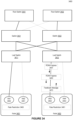
- Figure 25 shows a system for combining multiple shared bandwidth segments in a high performance computing environment, in accordance with an embodiment.
- a number of end nodes 2501 and 2502 can support a number of virtual machines, VM1-VM4 2550-2553, which are interconnected via a number of switches, such as leaf switches 2511 and 2512, switches 2521 and 2522, and root switches 2531 and 2532.
- each virtual machine can be associated with a virtual function of a hypervisor on a host channel adapter.
- a rate restriction component 2560 and 2561 can query various target groups, such as 2550 and 2551, to determine whether such target groups represent a bottleneck for traffic flow. Upon such determination, the rate restriction components 2560 and 2561 can then set different or new bandwidth restrictions on the end points that the rate restriction component has control over.
- the target groups can be queried in a nested/hierarchical manner, such that if traffic from VM1 to VM3 were to utilize both target groups 2550 and 2551, then the rate restriction 2560 could take restrictions from both such target groups into consideration when determining the bandwidth restriction from VM1 to VM3.
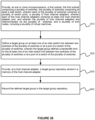
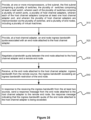
- Figure 26 is a flowchart of a method for supporting target groups for congestion control in a private fabric in a high performance computing environment, in accordance with an embodiment.
- the method can provide, at one or more microprocessors, a first subnet, the first subnet comprising a plurality of switches, the plurality of switches comprising at least a leaf switch, wherein each of the plurality of switches comprise a plurality of switch ports, a plurality of host channel adapters, wherein each of the host channel adapters comprise at least one host channel adapter port, and wherein the plurality of host channel adapters are interconnected via the plurality of switches, and a plurality of end nodes, including a plurality of virtual machines.
- the method can define a target group on at least one of an inter-switch link between two switches of the plurality of switches or at a port of a switch of the plurality of switches, wherein the target group defines a bandwidth limit on the at least one of an inter-switch link between two switches of the plurality of switches or at a port of a switch of the plurality of switches.
- the method can provide, at a host channel adapter, a target group repository stored in a memory of the host channel adapter.
- the method can record the defined target group in the target group repository.
- a node/VM can be a target for incoming data traffic that is both a result of Send and RDMA-write operations initiated by peer nodes/VMs as well as a result of RDMA-read operations initiated by the local node/VM itself.
- RDMA-read operations initiated by the local node/VM itself.
- the systems and methods described herein can implement target specific egress rate control in a way that allows all flows that represent fetching of data from local memory and sending the data to the relevant remote target are all subject to the same shared rate limitations and associated flow scheduling and arbitration. Also, different flow types may be given different priorities and/or different shares of the available bandwidth.
- the target group associations for flows from "producer/sender” nodes implies bandwidth regulation of all outgoing data packets - including UD (unreliable datagram) sends, RDMA write, RDMA send as well as RDMA read (i.e. the RDMA read responses with data), there is complete control of all ingress bandwidth for a vHCA port. This is independent of whether the VM owning the target vHCA port is generating "excessive" amounts of RDMA read requests to multiple peer nodes.
- the coupling of target groups to both flow specific and "unsolicited" BECN signaling implies the per vHCA port ingress bandwidth can be throttled dynamically for any number of remote peers.
- the "unsolicited BECN” messages can also be used to communicate specific rate values in addition to pure CE flagging/un-flagging for different stage numbers.
- a new peer e.g. a communication management (CM) packet
- CM communication management
- the HCA i.e. the relevant firmware/hyper-privileged software
- both ports on an HCA are used concurrently (i.e. active-active scheme)
- another reason for sharing target groups between HCA ports is if the HCA local memory bandwidth is not able to sustain full link speed for both (all) HCA ports.
- the target groups can be set up so that the total aggregated link bandwidth is never exceeding the local memory bandwidth independently of which port is involved on either source or destination HCA.
- any intermediate target group(s) will typically represent only a single ISL at a specific stage in the path.
- both target groups as well as ECN handling must take this into account.
- dynamic forwarding decisions will only take place in order to balance traffic between parallel ISLs between a pair of switches (e.g. uplinks from a single leaf switch to a single spine switch)
- all handling is in principle very similar to when only a single ISL is being used.
- FECN notification would take place based on the state of all ports in the relevant group and the signaling could be "aggressive" in the sense that it is signaled based on congestion indication from any of the ports, or it could be more conservative and be based on the size of a shared output queue for all ports in the group.
- Target group configuration would normally represent the aggregated bandwidth for all links in the group as long as the forwarding allows any packet to select the best output port at that point in time. However, if there is a notion of strict packet order preservation for each flow, then the evaluation of bandwidth quotas is more complex since some flows may "have to" use the same ISL at some point in time.
- an initial target group rate for a new remote target can be set conservatively low. In this way, there is an inherent throttling until the target has had a chance to update the relevant rate. Hence, all such rate control is independent of the involved VMs themselves, but the VM would be able to request the hypervisor to update the quotas for different remote peers for both ingress and egress traffic, but this would only be granted within the total constraints defined for both the local and remote vHCA ports.
- Figure 27 shows a system for combining target specific RDMA-write and RDMA-read bandwidth restrictions in a high performance computing environment, in accordance with an embodiment.
- Figure 27 shows a host channel adapter 2701 that comprises a hypervisor 2711.
- the hypervisor can host/be associated with a number of virtual functions (VF), such as VF2714-2716, as well as a physical function (PF) 2713.
- the host channel adapter can additionally support/comprise a number of ports, such as port 2702 and 2703, which are used to connect the host channel adapter to a network, such as network 2700.
- the network can comprise, for example, a switched network, such as an InfiniBand network or a RoCE network that can connect the HCA 2701 to a number of other nodes, such as switches, additional and separate HCAs, and the like.
- each of the virtual functions can host a virtual machine (VM), such as VM1 2750, VM2 2751, and VM3 2752.
- VM virtual machine
- the host channel adapter 2701 can additionally support, via the hypervisor, a virtual switch 2712. This is for situations where a vSwitch architecture is implemented.
- a virtual switch 2712 can additionally support a virtual port (vPort) architecture, as described above.
- the network 2700 can comprise a number of switches, such as switches 2740, 2741, 2742, and 2743, which are interconnected and which can be connected, e.g., via leaf switches 2740 and 2741, to the host channel adapter 2701.
- switches 2740, 2741, 2742, and 2743 which are interconnected and which can be connected, e.g., via leaf switches 2740 and 2741, to the host channel adapter 2701.
- the switches 2740-2743 can be interconnected, and can additionally be connected with other switches and other end nodes (e.g., other HCAs) that are not shown in the figure.
- other switches and other end nodes e.g., other HCAs
- target groups such as target groups 2770 and 2771
- ISLs inter-switch links
- target groups 2770 and 2771 can represent, for example, bandwidth quotas as HCA objects, stored at a target group repository 2761 associated with the HCA, which is accessible by a rate restriction component 2760.
- the target groups 2770 and 2771 can represent specific (and different) bandwidth quotas. These bandwidth quotas can be divided into quotas for specific priorities ("QOS classes") in order to reflect the expected bandwidth usage for the various priorities within the relevant paths in the fabric that the target groups represent.
- QOS classes specific priorities
- the target groups 2770 and 2771 decouple the object from a specific destination address, and the systems and methods get the ability to represent an intermediate, shared link or groups of links that may represent a bandwidth limitation that is in addition to the target and that may be more restrictive than the target limit. That is, for example, if a default/original egress limit on VM2 2751 is set at one threshold, but the destination of a packet sent from VM2 would pass through target group 2770 that sets a lower bandwidth limitation, then the egress bandwidth from VM2 can be restricted to a level lower than that of default/original egress limit placed on VM2.
- the HCA can be responsible for such throttling/egress bandwidth limitation adjustment, dependent upon the target groups implicated by the routing of packets from VM2, for example.
- target groups can also be hierarchical in nature, whereby the systems and methods can consider a hierarchy of target groups (bandwidth quotas) reflecting bandwidth/link sharing at different stages towards different targets. In principle, this implies that a specific flow should be associated with the target group (max rate) that represents the most limited rate in the hierarchy. That is, for example, if target group 2770 represents a bandwidth limitation higher than that of target group 2771, and a packet is addressed through both inter-switch links represented by the two target groups, then the bandwidth limitation of target group 2771 is the controlling bandwidth limiting factor.
- target groups can also be shared by multiple flows. Depending on QoS and SLAs associated with respective flows, for example, the bandwidth quotas represented by target groups can be divided. As an example, of VM1 and VM2 both concurrently send flows that would implicate target group 2770, which, for example, represents a bandwidth quota of 10 Gb/s, and the respective flows have equal QoS and SLAs associated therewith, then target group 2770 would represent a 5 Gb/s limitation for each flow. This sharing or dividing of target group bandwidth quotas can be varied based upon QoS and SLAs associated with respective flows.
- bandwidth quota and performance issues may arise when a VM, e.g., VM1 2750, is subject to an excess of ingress bandwidth 2790 from multiple sources.
- a VM e.g., VM1 2750
- This can arise, for example, in situations where VM1 is subject to one or more RDMA read responses concurrently with one or more RDMA write operations, where the ingress bandwidth on VM1 is coming from two or more sources (e.g., one RDMA read response from a connected VM, and one RDMA write request from another connected VM).
- a target group such as target group 2770 on an inter-switch link, can be updated to reflect a lower bandwidth quota, via a, e.g., a query 2775, than would typically be allowed.
- the rate restriction component 2760 of the HCA can additionally comprise VM specific rate restrictions 2762, which can be negotiated with other peer HCAs in order to coordinate an ingress bandwidth restriction, e.g., for VM1, with egress bandwidth restrictions for the nodes responsible for generating the ingress bandwidth on VM1.
- VM specific rate restrictions 2762 can be negotiated with other peer HCAs in order to coordinate an ingress bandwidth restriction, e.g., for VM1, with egress bandwidth restrictions for the nodes responsible for generating the ingress bandwidth on VM1.
- Figure 28 shows a system for combining target specific RDMA-write and RDMA-read bandwidth restrictions in a high performance computing environment, in accordance with an embodiment.
- Figure 28 shows a host channel adapter 2801 that comprises a hypervisor 2811.
- the hypervisor can host/be associated with a number of virtual functions (VF), such as VF2814-2816, as well as a physical function (PF) 2813.
- the host channel adapter can additionally support/comprise a number of ports, such as port 2802 and 2803, which are used to connect the host channel adapter to a network, such as network 2800.
- the network can comprise, for example, a switched network, such as an InfiniBand network or a RoCE network that can connect the HCA 2801 to a number of other nodes, such as switches, additional and separate HCAs, and the like.
- each of the virtual functions can host a virtual machine (VM), such as VM1 2850, VM2 2851, and VM3 2852.
- VM virtual machine
- bandwidth quota and performance issues may arise when a VM, e.g., VM1 3350, is subject to an excess of ingress bandwidth 3390 from multiple sources. This can arise, for example, in situations where VM1 is subject to one or more RDMA read responses concurrently with one or more RDMA write operations, where the ingress bandwidth on VM1 is coming from two or more sources (e.g., one RDMA read response from a connected VM, and one RDMA write request from another connected VM).
- sources e.g., one RDMA read response from a connected VM, and one RDMA write request from another connected VM.
- each virtual machine can be associated with a virtual function of a hypervisor on a host channel adapter.
- the systems and methods herein can extend the schemes for end-to-end congestion feedback to include both initial negotiation of bandwidth quotas (i.e., VM3 negotiating, or a bandwidth restriction associated with VM3, negotiating with all sender nodes that target VM3 within ingress traffic), dynamic adjustment of such bandwidth quotas (e.g. to adapt to changes in the number of sender nodes sharing the available bandwidth, or changes in SLAs), as well as dynamic congestion feedback to indicate that senders need to temporarily slow down the relevant egress data rate despite that the overall bandwidth quota remains the same.
- initial negotiation of bandwidth quotas i.e., VM3 negotiating, or a bandwidth restriction associated with VM3, negotiating with all sender nodes that target VM3 within ingress traffic
- dynamic adjustment of such bandwidth quotas e.g. to adapt to changes in the number of sender nodes sharing the available bandwidth, or changes in SLAs
- dynamic congestion feedback to indicate that senders need to temporarily slow down the relevant egress data rate
- Such dynamic congestion feedback can, for example, take place in a return message (e.g., feedback message 3470) to the various sender nodes instructing each sender node on an updated bandwidth restriction to utilize in sending traffic to VM3.
- a feedback message 3460 can take the form of an explicit, unsolicited message, as well as "piggyback" information in data packets to convey relevant information from target node (i.e., VM3 in the depicted embodiment) to sender nodes.
- the method can provide, at one or more microprocessors, a first subnet, the first subnet comprising a plurality of switches, the plurality of switches comprising at least a leaf switch, wherein each of the plurality of switches comprise a plurality of switch ports, a plurality of host channel adapters, wherein each of the host channel adapters comprise at least one host channel adapter port, and wherein the plurality of host channel adapters are interconnected via the plurality of switches, and a plurality of end nodes, including a plurality of virtual machines.
- the method can negotiate a bandwidth quota between the end node attached to the host channel adapter and a remote end node.
- the method can receive, at the end node attached to the host channel adapter, ingress bandwidth from the remote end node, the ingress bandwidth exceeding an ingress bandwidth restriction of the end node.
- the method in response to the receiving the ingress bandwidth from the remote end node, can send a response message from the end node attached to the host channel adapter to the remote end node, the response message indicating that the ingress bandwidth quota of the end node attached to the host channel adapter is being exceeded.
- congestion notification is based on data packets that encounter congestion at some point (e.g., some link segment between some node/switch pair along the path from the sender to the target through the network/fabric topology) are marked with a "congested" status flag (aka a CE flag), and then this status is reflected in response packets that are sent back from the target to the sender.
- some point e.g., some link segment between some node/switch pair along the path from the sender to the target through the network/fabric topology
- an issue with this scheme is that it does not allow sender nodes to discriminate between flows that are subject to congestion at the same link segments despite that they represent different targets. Also, when multiple paths are available between pairs of sender and target nodes, any information about congestion for different alternative paths requires that some flow is active for the relevant target via the relevant paths.
- the systems and methods described herein extend the congestion marking scheme to facilitate multiple CE flags in the same packet and configure switch ports to represent a stage number that defines what CE flag index it should update. Between a specific sender and a specific target a specific path through an ordered sequence of switch ports will then represent a specific ordered list of unique stage numbers and thereby also CE flag index numbers.
- a sender node that receives congestion feedback with multiple CE flags set to map the various CE flags onto different "target group” contexts that will then represent the relevant congestion condition state and associated dynamic rate reduction. Further, different flows for different targets will share congestion information and dynamic rate reduction states that are associated with shared link segments represented by shared "target groups" in the sender node.
- congestion feedback should ideally be associated with all relevant target groups in the hierarchy associated with the flow that receives the congestion feedback.
- the impacted target groups should then dynamically adjust the max rate accordingly.
- the HW state for each target group must also include any current congestion status and related "throttle info”.
- an important aspect here is that the FECN signaling should have the ability to include multiple "congestion experienced” (CE) flags so that the switch that detects the congestion could mark the flag that corresponds to its stage in the topology.
- each switch has a unique (max) stage number in the upward direction and another unique (max) stage number in the downward direction.
- a flow that uses a specific path will then be associated with a sequence of specific stage numbers that will include all or only a subset of the total set of stage numbers in the complete fabric.
- the various stage numbers associated with the path can then be mapped to one or more target groups associated with the flow. In this way a received BECN for a flow can imply that the target group(s) associated with each CE flagged stage in the BECN will be updated to indicate congestion, and the dynamic max rate for those target groups can subsequently be adjusted accordingly.
- stage number While inherently suited for fat-tree topologies, the "stage number" concept for switches can be generalized to represent almost any topology where it is possible to assign such numbers to switches.
- the stage number is not just a function of the output port but rather a function of each input/output port number tuples.
- the required amount of stage numbers as well as the path specific mapping to target groups is also more complicated in the general case.
- the reasoning assumes fat-tree topologies only.
- multiple CE flags in a single packet is not currently a supported feature for standard protocol headers. Hence, this could either be supported based on extension of standard headers and/or it could be supported by inserting additional independent FECN packets in the flow.
- the generation of additional packets in a flow is similar to the use of encapsulation schemes within a switch and the impact is that packets being received at wire speed cannot be forwarded at the same wire speed since more "overhead bytes" must be transmitted downstream. Inserting an additional packet will typically be more overhead than encapsulation, but as long as this overhead is amortized across multiple data packets (no need to send such extra notifications for every data packet), the overhead will likely be acceptable.
- switch firmware can monitor congestion conditions within the switch and as a result of this send "unsolicited BECNs" to relevant sender nodes.
- the "CE flag to target group" mapping will typically be part of the QP context, and any BECN information received in ACK/Response packets will thereby be handled for the relevant QP context and associated target groups in a straight forward manner.
- the backward mapping is not straight forward. - At least not in terms of being handled automatically by HW.
- FECNs can both lead to automatic HW generated BECNs in the case of connected (RC) flows, but that both FECN events with HW automated BECN generation as well as FECN events with no HW generated BECN can be processed by firmware and/or hyper privileged software associated with the HCA that receives the FECN.
- firmware and/or hyper privileged software associated with the HCA that receives the FECN.
- the FW/SW that receives these "unsolicited BECNs” can then perform mapping to relevant local target groups based on payload data in the received "BECN message” and can then trigger the local HW to update target group state similar to what takes place in fully HW controlled handling of RC related BECNs.
- RC ACK/response packets without any BECN notification or where the subset of stage numbers with CE flag set is different (less) than earlier recorded state may lead to a corresponding update of the relevant target groups within the local HCA.
- "unsolicited BECNs" can be sent by a responder HCA (i.e. related sw/fw) to indicate that earlier signaled congestion is no longer present.
- the target group concept combined with dynamic congestion feedback at either HW or FW/SW level provides flexible control of the egress bandwidth generated by a HCA as well as by individual vHCAs and tenants sharing the physical HCA.
- target groups are identified completely independently of the associated remote address and path info at the VM level, there is no dependency between use of target groups and to what extent the communication from the VM is based on overlays or other virtual networking schemes.
- the only requirement is that the hyper privileged software that controls the HCA resources is able to define the relevant mapping.
- this is useful except for that it hides the actual target group ID from the tenant.
- the update of target group has to involve updating all involved QPs and address handles rather than simply updating a logical to physical target group ID mapping.
- the target group hierarchy for remote peer nodes can include both a target group representing the destination physical HCA port as well as an additional target group representing the ultimate destination in terms of the vHCA port.
- the systems and methods have the ability to restrict the ingress bandwidth for individual vHCA ports (VFs) at the same time as the per physical HCA port bandwidth and associated sender target groups implies that the sum of per vHCA port ingress bandwidths quotas will not have to be kept less than the physical HCA port bandwidth (or associated bandwidth quotas).
- target groups within a sender HCA it is possible to use target groups to represent the sharing of the physical HCA port in the egress direction by assigning different target groups to different tenants. Also, in order to facilitate multiple VMs from the same tenant sharing the tenant level target group for the physical HCA port, it is possible to assign different target groups to different such VMs. Such target groups will then be set up as the initial target group for all egress communication from that VM.
- Figure 36 shows a system for using multiple CE flags in both FECN and BECN in a high performance computing environment, in accordance with an embodiment.
- Figure 36 shows a host channel adapter 3601 that comprises a hypervisor 3611.
- the hypervisor can host/be associated with a number of virtual functions (VF), such as VF3614-3616, as well as a physical function (PF) 3613.
- the host channel adapter can additionally support/comprise a number of ports, such as port 3602 and 3603, which are used to connect the host channel adapter to a network, such as network 3600.
- the network can comprise, for example, a switched network, such as an InfiniBand network or a RoCE network that can connect the HCA 3601 to a number of other nodes, such as switches, additional and separate HCAs, and the like.
- each of the virtual functions can host a virtual machine (VM), such as VM1 3650, VM2 3651, and VM3 3652.
- VM virtual machine
- the host channel adapter 3601 can additionally support, via the hypervisor, a virtual switch 3612. This is for situations where a vSwitch architecture is implemented.
- a virtual switch 3612 can additionally support a virtual port (vPort) architecture, as described above.
- the network 3600 can comprise a number of switches, such as switches 3640, 3641, 3642, and 3643, which are interconnected and which can be connected, e.g., via leaf switches 3640 and 3641, to the host channel adapter 3601.
- switches 3640, 3641, 3642, and 3643 which are interconnected and which can be connected, e.g., via leaf switches 3640 and 3641, to the host channel adapter 3601.
- the switches 3640-3643 can be interconnected, and can additionally be connected with other switches and other end nodes (e.g., other HCAs) that are not shown in the figure.
- other switches and other end nodes e.g., other HCAs
- the ingress packet 3690 while traversing the network, can experience congestion at any stage of its path, and the packet can be marked by the switches upon detecting such congestion at any of the stages.
- the switch doing the marking can additionally indicate the stage at which the packet experienced congestion.
- VM1 Upon arriving at the destination node, e.g., VM1 3650, VM1 can send (e.g., automatically) a response packet via an explicit feedback message 3691 that can indicate to the sending node that the packet experienced congestion, and at which stage(s) the packet experienced congestion.
- the ingress packet can comprise a bit field that is updated to indicate where the packet experienced congestion, and the explicit feedback message can mirror/represent this bit field in informing the sender node of such congestion.
- each switch port represents a stage in the total subnet.
- each packet sent in the subnet can traverse a maximum number of stages.
- the congestion marking e.g., CE flag
- Each bit of the bit-field can then be associated with a stage number, which can be assigned to each switch port. For example, in a three-stage fat-tree, the maximum number of stages would be three.
- the system can provide congestion feedback coming back indicating which stage at which congestion is detected, and then if end node have congestion which occurs due to a shared link segment, then congestion control applies to that segment, and not to the different end ports. This provides a finer grain of information regarding congestion.
- end nodes could then use alternative paths in routing future packets. Or, for example, if an end node has multiple flows that all go to different destinations, but congestion is detected at a common stage of a path, then rerouting can be triggered.
- the systems and methods provide an immediate reaction in terms of throttling associated with - rather than having 10 different congestion notification. This is more efficient handling of congestion notifications
- Figure 37 shows a system for using multiple CE flags in both FECN and BECN in a high performance computing environment, in accordance with an embodiment.
- Figure 37 shows a host channel adapter 3701 that comprises a hypervisor 3711.
- the hypervisor can host/be associated with a number of virtual functions (VF), such as VF3714-3716, as well as a physical function (PF) 3713.
- the host channel adapter can additionally support/comprise a number of ports, such as port 3702 and 3703, which are used to connect the host channel adapter to a network, such as network 3700.
- the network can comprise, for example, a switched network, such as an InfiniBand network or a RoCE network that can connect the HCA 3701 to a number of other nodes, such as switches, additional and separate HCAs, and the like.
- each of the virtual functions can host a virtual machine (VM), such as VM1 3750, VM2 3751, and VM3 3752.
- VM virtual machine
- the host channel adapter 3701 can additionally support, via the hypervisor, a virtual switch 3712. This is for situations where a vSwitch architecture is implemented.
- a virtual switch 3712 can additionally support a virtual port (vPort) architecture, as described above.
- the network 3700 can comprise a number of switches, such as switches 3740, 3741, 3742, and 3743, which are interconnected and which can be connected, e.g., via leaf switches 3740 and 3741, to the host channel adapter 3701.
- switches 3740, 3741, 3742, and 3743 which are interconnected and which can be connected, e.g., via leaf switches 3740 and 3741, to the host channel adapter 3701.
- the switches 3740-3743 can be interconnected, and can additionally be connected with other switches and other end nodes (e.g., other HCAs) that are not shown in the figure.
- other switches and other end nodes e.g., other HCAs
- the ingress packet 3790 while traversing the network, can experience congestion at any stage of its path, and the packet can be marked by the switches upon detecting such congestion at any of the stages.
- the switch doing the marking can additionally indicate the stage at which the packet experienced congestion.
- VM1 Upon arriving at the destination node, e.g., VM1 3750, VM1 can send (e.g., automatically) a response packet via a piggyback message (a message residing on top of another message/packet sent from the receiving node to the sender node) 3791 that can indicate to the sending node that the packet experienced congestion, and at which stage(s) the packet experienced congestion.
- a piggyback message a message residing on top of another message/packet sent from the receiving node to the sender node
- the ingress packet can comprise a bit field that is updated to indicate where the packet experienced congestion, and the explicit feedback message can mirror/represent this bit field in informing the sender node of such congestion.
- each switch port represents a stage in the total subnet.
- each packet sent in the subnet can traverse a maximum number of stages.
- the congestion marking e.g., CE flag
- Each bit of the bit-field can then be associated with a stage number, which can be assigned to each switch port. For example, in a three-stage fat-tree, the maximum number of stages would be three.
- the system can provide congestion feedback coming back indicating which stage at which congestion is detected, and then if end node have congestion which occurs due to a shared link segment, then congestion control applies to that segment, and not to the different end ports. This provides a finer grain of information regarding congestion.
- end nodes could then use alternative paths in routing future packets. Or, for example, if an end node has multiple flows that all go to different destinations, but congestion is detected at a common stage of a path, then rerouting can be triggered.
- the systems and methods provide an immediate reaction in terms of throttling associated with - rather than having 10 different congestion notification. This is more efficient handling of congestion notifications.
- Figure 38 shows a system for using multiple CE flags in both FECN and BECN in a high performance computing environment, in accordance with an embodiment.
- a number of end nodes 3801 and 3802 can support a number of virtual machines, VM1-VM4 3850-3853, which are interconnected via a number of switches, such as leaf switches 3811 and 3812, switches 3821 and 3822, and root switches 3831 and 3832.
- each virtual machine can be associated with a virtual function of a hypervisor on a host channel adapter.
- a node a packet 3851 sent from VM3 3852 to VM1 3850 can traverse the subnet 3800 via a number of links, or stages, such as stage 1 through stage 6, as shown in the figure.
- the packet 3851 while traversing the subnet, can experience congestion at any of these stages, and can be marked by the switches upon detecting such congestion at any of the stages.
- the switch doing the marking can additionally indicate the stage at which the packet experienced congestion.
- VM1, VM1 Upon arriving at the destination node, VM1, VM1 can send (e.g., automatically) a response packet via a feedback message 3870 that can indicate to VM3 3852 that the packet experienced congestion, and at which stage(s) the packet experienced congestion.
- each switch port represents a stage in the total subnet.
- each packet sent in the subnet can traverse a maximum number of stages.
- the congestion marking e.g., CE flag
- Each bit of the bit-field can then be associated with a stage number, which can be assigned to each switch port. For example, in a three-stage fat-tree, the maximum number of stages would be three.
- the system can provide congestion feedback coming back indicating which stage at which congestion is detected, and then if end node have congestion which occurs due to a shared link segment, then congestion control applies to that segment, and not to the different end ports. This provides a finer grain of information regarding congestion.
- end nodes could then use alternative paths in routing future packets. Or, for example, if an end node has multiple flows that all go to different destinations, but congestion is detected at a common stage of a path, then rerouting can be triggered.
- the systems and methods provide an immediate reaction in terms of throttling associated with - rather than having 10 different congestion notification. This is more efficient handling of congestion notifications.
- Figure 39 is a flowchart of a method for using multiple CE flags in both FECN and BECN in a high performance computing environment, in accordance with an embodiment.
- the method can provide, at one or more microprocessors, a first subnet, the first subnet comprising a plurality of switches, the plurality of switches comprising at least a leaf switch, wherein each of the plurality of switches comprise a plurality of switch ports, a plurality of host channel adapters, wherein each of the host channel adapters comprise at least one host channel adapter port, and wherein the plurality of host channel adapters are interconnected via the plurality of switches, and a plurality of end nodes, including a plurality of virtual machines.
- the method can receive, at an end node attached to a host channel adapter, an ingress packet from a remote end node, wherein the ingress packet traversed at least a portion of the first subnet prior to being received at the end node, wherein the ingress packet comprises a marking indicating that the ingress packet experienced congestion during the traversal of the at least a portion of the first subnet.
- the method can send, by the end node, a response message from the end node attached to the host channel adapter to the remote end node, the response message indicating that the ingress packet experienced congestion during the traversal of the at least a portion of the first subnet, wherein the response message comprises a bit field.
- private network fabrics e.g., private fabrics, such as those used to construct a specialized distributed appliance or a generic high-performance computing resource
- QOS Quality of Service
- workloads belonging to different tenants must be executed within the boundaries of relevant Service Level Agreements (SLAs) while minimizing interference between such workloads and maintaining the QOS assumptions for the different communication types.
- SLAs Service Level Agreements
- an initial scheme for provisioning fabric resources to cloud customers is that the tenant can be allocated a dedicated part of a rack (e.g. a quarter rack), or one or more full racks.
- This granularity implies that each tenant is guaranteed to have a communication SLA that is always fulfilled as long as the allocated resources are fully operational. This is the case also when a single rack is divided into multiple parts because the granularity is always a complete physical server with HCAs.
- the connectivity between different such servers in a single rack can in principle always be through a single full-crossbar switch. In this case there is no resource that is shared in a way that can lead to contention or congestion between flows belonging to different tenants as a result of communication traffic between sets of servers belonging to the same tenant.
- the redundant switches are shared, it is critical that it is not possible for traffic generated by the workload on one server to target a server belonging to another tenant. Even though such traffic does not facilitate any communication or data leak/observation between tenants, the result can be severe interference or even DOS (denial of service) like effects for the communication flows belonging to the other tenant.
- DOS denial of service
- the bisection bandwidth is as high as possible and ideally non-blocking or even overprovisioned.
- the best approach would be to perform a re-provisioning of at least some of the servers for different tenants in order to reduce the need for independent ISLs as well as bisection bandwidth in general.
- some multi-rack systems have a blocking fat-tree topology and the assumption behind this is that workloads will be provisioned so that relevant communicating servers to a large extent are located within the same racks implying that a significant portion of the bandwidth utilization is between ports on the local leaf switches only.
- the bulk of the data traffic is from one fixed set of nodes to another fixed set of nodes.
- the communication workloads will be even more demanding and less predictable since different servers may provide multiple functions at the same time.
- a goal is to provide a provisioning granularity per tenant that is at the VM level as opposed to the physical server level. Also, the goal is to be able to deploy up to several tens of VMs on the same physical server where different sets of VMs on the same physical server may belong to different tenants and the various tenants may each be representing multiple workloads with different characteristics.
- SLAs are supposed to ensure that the tenant experiences workload throughputs and response times that are in accordance with expectations even if the workload has been provisioned on physical infrastructure that is shared by other tenants.
- the relevant SLA for a tenant is supposed to be fulfilled independently of concurrent activity by workloads belonging to other tenants.
- a workload may be provisioned with a fixed (minimal) set of CPU cores/threads and physical memory on a fixed (minimal and/or maximal) set of physical servers
- the provisioning of fixed/guaranteed networking resources is in general less straight forward as long as the deployment implies sharing of HCA/NIC at the servers.
- the sharing of HCAs also inherently implies that at least the ingress and egress links to/from the fabric is shared by different tenants.
- different CPU cores/threads can operate in true parallel, there is no way to divide the capacity of a single fabric link except for some kind of bandwidth multiplexing or "timesharing".
- This basic bandwidth sharing may or may not be combined with the use of different "QOS IDs" (e.g. Service Level, Priority, DSCP, Traffic Class etc.) that will be considered when implementing buffer selection/allocation as well as bandwidth arbitration within the fabric.
- QOS IDs e.g. Service Level, Priority, DSCP, Traffic Class etc.
- overall server memory bandwidth should be very high relative to the typical memory bandwidth needs of any individual CPU core in order to prevent that memory intensive workloads on some cores impose delays for other cores.
- the available fabric bandwidth for a physical server should be large enough to allow each tenant sharing the server to have a sufficient bandwidth relative to the communication activity the relevant workload(s) generates.
- the systems and methods can configure average bandwidth limitations for a tenant that would ensure that the tenant would never exceed its relative portion of relevant link bandwidth in either ingress or egress direction independently of use of RDMA read operations as well as independently of the number of remote peers with active data traffic, and independently of bandwidth restrictions of the remote peers. (How to achieve this is discussed in the "Longer Term Goals" section below.)
- the highest level communication SLAs for a tenant can only be achieved by restricting that it cannot share a physical server with other tenants, or potentially, that it will not be sharing a physical HCA with other tenants. (I.e. in the case of servers with multiple physical HCAs.)
- physical HCAs can operate in Active-Active mode with full link bandwidth utilizations for both HCA ports, it is also possible to use restrictions where a given tenant is given exclusive access to one of the HCA ports in the normal case.
- the failure of a complete HCA (in the multi-HCA per server case) or a single HCA port may imply reconfiguration and sharing that no longer guarantees the expected communication SLA for a given tenant.
- the ability for each tenant to implement QOS between different communication flows or flow types depends on that it is not experiencing severe congestion conflicts relative to fabric level buffer resources or arbitration due to communication activity by other tenants.
- the tenant communication SLA implies that the tenant internal QOS assumptions cannot be fulfilled without dependency on other tenants sharing the same fabric link(s) being "well behaved", then this may impose that the tenant must be provisioned without HCA (or HCA port) sharing with other tenants.
- the sharing constraints applies to fabric internal links as well as the server local HCA port links.
- the deployment of VMs for the tenant may have restrictions on sharing of physical servers and/or HCAs as well as on sharing of fabric internal ISLs.
- both routing restrictions as well as restrictions on where VMs can be provisioned relative to each other within the private fabric topology can apply.
- the communication SW infrastructure must give the tenant a method to ensure that communication takes place in a way where different flows are not competing for the same link bandwidth). This would include a way to ensure that communication that can take place via a single leaf switch is actually implemented in this way. Also, in cases where communication has to involve ISLs, then it should be possible to balance traffic across the available ISLs in order to maximize throughput.
- the prevalent routing algorithm uses "dedicated down paths" which implies that in the non-blocking topology there is the same number of switch ports in each layer of the fat-tree. This implies that each end-port can have a dedicated chain of ports from one root switch, through each intermediate switch layer and until the egress leaf switch port connecting the relevant HCA port. Hence, all traffic targeting a single HCA port will use this dedicated down path and there will be no traffic to any other destination ports (in the downward direction) on these links.
- the upward direction there cannot be dedicated paths to each destination, and the consequence is that some links in the upward direction will have to be shared by traffic to different destinations.
- the best approach is probably to use a scheme where the tenant VMs are grouped based on which leaf switches (i.e. leaf switch pair) they are directly connected to, and then there needs to be an attribute that defines the available bandwidth between such groups.
- leaf switches i.e. leaf switch pair
- Still, in the special case of only two layers of switches i.e.
- a non-blocking topology implies that it is always possible to have N dedicated uplinks between a leaf switch with N HCA ports belonging to the same tenant and N spine ports.
- N spine ports represents spines that "owns" all dedicated down paths for all relevant remote peer ports, the configuration is non-blocking for that tenant.
- the relevant remote peers represent dedicated down paths from more than N spine switches, or if the N uplinks are not distributed among all relevant spine switches, then the systems and methods have a possible contention conflict relative to other tenants.
- higher radix, full-crossbar switches also have potential to increase the size of each single "leaf domain", as well as to reduce the number of spine switches required for a given system size.
- two full racks with 32 servers could be included in a single full crossbar leaf domain, and still provide non-blocking up-link connectivity.
- only 8 spines would be required to provide non-blocking connectivity between 16 racks (512 servers, 1024 HCA ports).
- still only 8 up-links from each leaf to each spine i.e. in the single, fully connected network case).
- InfiniBand uses static routes per destination address
Landscapes
- Engineering & Computer Science (AREA)
- Computer Networks & Wireless Communication (AREA)
- Signal Processing (AREA)
- Software Systems (AREA)
- Theoretical Computer Science (AREA)
- Physics & Mathematics (AREA)
- Quality & Reliability (AREA)
- General Engineering & Computer Science (AREA)
- General Physics & Mathematics (AREA)
- Data Exchanges In Wide-Area Networks (AREA)
- Computer Hardware Design (AREA)
- Mathematical Physics (AREA)
Applications Claiming Priority (6)
| Application Number | Priority Date | Filing Date | Title |
|---|---|---|---|
| US201962937594P | 2019-11-19 | 2019-11-19 | |
| US16/872,043 US11444881B2 (en) | 2019-11-19 | 2020-05-11 | System and method for supporting use of forward and backward congestion notifications in a private fabric in a high performance computing environment |
| US16/872,035 US11700206B2 (en) | 2019-11-19 | 2020-05-11 | System and method for supporting RDMA bandwidth restrictions in a private fabric in a high performance computing environment |
| US16/872,039 US11341082B2 (en) | 2019-11-19 | 2020-05-11 | System and method for supporting target groups for congestion control in a private fabric in a high performance computing environment |
| US16/872,038 US11256655B2 (en) | 2019-11-19 | 2020-05-11 | System and method for providing bandwidth congestion control in a private fabric in a high performance computing environment |
| PCT/US2020/045271 WO2021101600A1 (en) | 2019-11-19 | 2020-08-06 | System and method for providing bandwidth congestion control in a private fabric in a high performance computing environment |
Publications (2)
| Publication Number | Publication Date |
|---|---|
| EP4062602A1 EP4062602A1 (en) | 2022-09-28 |
| EP4062602B1 true EP4062602B1 (en) | 2025-04-02 |
Family
ID=75908967
Family Applications (4)
| Application Number | Title | Priority Date | Filing Date |
|---|---|---|---|
| EP20761390.2A Active EP4062602B1 (en) | 2019-11-19 | 2020-08-06 | System and method for providing bandwidth congestion control in a private fabric in a high performance computing environment |
| EP20760695.5A Pending EP4062601A1 (en) | 2019-11-19 | 2020-08-06 | System and method for supporting use of forward and backward congestion notifications in a private fabric in a high performance computing environment |
| EP20761031.2A Active EP4062603B1 (en) | 2019-11-19 | 2020-08-06 | System and method for supporting target groups for congestion control in a private fabric in a high performance computing environment |
| EP20760694.8A Active EP4062604B1 (en) | 2019-11-19 | 2020-08-06 | System and method for supporting rdma bandwidth restrictions in a private fabric in a high performance computing environment |
Family Applications After (3)
| Application Number | Title | Priority Date | Filing Date |
|---|---|---|---|
| EP20760695.5A Pending EP4062601A1 (en) | 2019-11-19 | 2020-08-06 | System and method for supporting use of forward and backward congestion notifications in a private fabric in a high performance computing environment |
| EP20761031.2A Active EP4062603B1 (en) | 2019-11-19 | 2020-08-06 | System and method for supporting target groups for congestion control in a private fabric in a high performance computing environment |
| EP20760694.8A Active EP4062604B1 (en) | 2019-11-19 | 2020-08-06 | System and method for supporting rdma bandwidth restrictions in a private fabric in a high performance computing environment |
Country Status (5)
| Country | Link |
|---|---|
| US (8) | US11444881B2 (https=) |
| EP (4) | EP4062602B1 (https=) |
| JP (7) | JP7566900B2 (https=) |
| CN (4) | CN116057913B (https=) |
| WO (4) | WO2021101602A1 (https=) |
Families Citing this family (45)
| Publication number | Priority date | Publication date | Assignee | Title |
|---|---|---|---|---|
| DE112020002491T5 (de) | 2019-05-23 | 2022-04-28 | Hewlett Packard Enterprise Development Lp | System und verfahren zur erleichterung der dynamischen befehlsverwaltung in einer netzwerkschnittstellensteuerung (nic) |
| US11444881B2 (en) | 2019-11-19 | 2022-09-13 | Oracle International Corporation | System and method for supporting use of forward and backward congestion notifications in a private fabric in a high performance computing environment |
| CN113076280B (zh) * | 2019-12-18 | 2024-03-01 | 华为技术有限公司 | 一种数据传输方法及相关设备 |
| US11411925B2 (en) | 2019-12-31 | 2022-08-09 | Oracle International Corporation | Methods, systems, and computer readable media for implementing indirect general packet radio service (GPRS) tunneling protocol (GTP) firewall filtering using diameter agent and signal transfer point (STP) |
| US11681542B2 (en) | 2020-01-16 | 2023-06-20 | Vmware, Inc. | Integrating virtualization and host networking |
| US11323918B2 (en) * | 2020-01-24 | 2022-05-03 | Cisco Technology, Inc. | Switch and backhaul capacity-based radio resource management |
| US11368399B2 (en) * | 2020-03-27 | 2022-06-21 | EMC IP Holding Company LLC | Congestion aware multipathing based on network congestion notifications |
| US11553342B2 (en) | 2020-07-14 | 2023-01-10 | Oracle International Corporation | Methods, systems, and computer readable media for mitigating 5G roaming security attacks using security edge protection proxy (SEPP) |
| US11751056B2 (en) | 2020-08-31 | 2023-09-05 | Oracle International Corporation | Methods, systems, and computer readable media for 5G user equipment (UE) historical mobility tracking and security screening using mobility patterns |
| US12143316B2 (en) * | 2020-09-21 | 2024-11-12 | Intel Corporation | Software-controlled active-backup mode of link aggregation for RDMA and virtual functions |
| US11832172B2 (en) | 2020-09-25 | 2023-11-28 | Oracle International Corporation | Methods, systems, and computer readable media for mitigating spoofing attacks on security edge protection proxy (SEPP) inter-public land mobile network (inter-PLMN) forwarding interface |
| US11825310B2 (en) | 2020-09-25 | 2023-11-21 | Oracle International Corporation | Methods, systems, and computer readable media for mitigating 5G roaming spoofing attacks |
| US12335099B2 (en) | 2020-10-19 | 2025-06-17 | Google Llc | Enhanced reconfigurable interconnect network |
| US11622255B2 (en) | 2020-10-21 | 2023-04-04 | Oracle International Corporation | Methods, systems, and computer readable media for validating a session management function (SMF) registration request |
| US11528251B2 (en) * | 2020-11-06 | 2022-12-13 | Oracle International Corporation | Methods, systems, and computer readable media for ingress message rate limiting |
| US11770694B2 (en) | 2020-11-16 | 2023-09-26 | Oracle International Corporation | Methods, systems, and computer readable media for validating location update messages |
| US11516087B2 (en) * | 2020-11-30 | 2022-11-29 | Google Llc | Connecting processors using twisted torus configurations |
| US11757778B2 (en) * | 2020-12-07 | 2023-09-12 | Pensando Systems Inc. | Methods and systems for fairness across RDMA requesters using a shared receive queue |
| US11818570B2 (en) | 2020-12-15 | 2023-11-14 | Oracle International Corporation | Methods, systems, and computer readable media for message validation in fifth generation (5G) communications networks |
| US11812271B2 (en) | 2020-12-17 | 2023-11-07 | Oracle International Corporation | Methods, systems, and computer readable media for mitigating 5G roaming attacks for internet of things (IoT) devices based on expected user equipment (UE) behavior patterns |
| CN112685290B (zh) * | 2020-12-23 | 2023-04-18 | 北京字跳网络技术有限公司 | 系统的混沌工程实验方法、设备及存储介质 |
| US11700510B2 (en) | 2021-02-12 | 2023-07-11 | Oracle International Corporation | Methods, systems, and computer readable media for short message delivery status report validation |
| US11516671B2 (en) | 2021-02-25 | 2022-11-29 | Oracle International Corporation | Methods, systems, and computer readable media for mitigating location tracking and denial of service (DoS) attacks that utilize access and mobility management function (AMF) location service |
| US11734036B2 (en) * | 2021-03-03 | 2023-08-22 | Dell Products L.P. | System and method to monitor and manage a passthrough device |
| US11677680B2 (en) * | 2021-03-05 | 2023-06-13 | Dell Products L.P. | Dynamic allocation of bandwidth to virtual network ports |
| US11689912B2 (en) | 2021-05-12 | 2023-06-27 | Oracle International Corporation | Methods, systems, and computer readable media for conducting a velocity check for outbound subscribers roaming to neighboring countries |
| US20220404980A1 (en) * | 2021-06-19 | 2022-12-22 | Netapp, Inc. | Cross-site high-availability distributed cloud storage system to provide multiple virtual channels between storage nodes |
| US11768990B1 (en) * | 2021-06-29 | 2023-09-26 | Amazon Technologies, Inc. | Interconnect flow graph for integrated circuit design |
| US20230015697A1 (en) * | 2021-07-13 | 2023-01-19 | Citrix Systems, Inc. | Application programming interface (api) authorization |
| US12047296B2 (en) * | 2021-08-12 | 2024-07-23 | Viscore Technologies Inc. | Scalable loss tolerant remote direct memory access over optical infrastructure with shaped quota management |
| TWI789116B (zh) * | 2021-11-15 | 2023-01-01 | 瑞昱半導體股份有限公司 | 具有資料流傳輸排序機制的網格網路系統及其通訊方法 |
| CN118575466A (zh) | 2021-11-23 | 2024-08-30 | F5公司 | 网络流量链路聚集系统和方法 |
| US12015923B2 (en) | 2021-12-21 | 2024-06-18 | Oracle International Corporation | Methods, systems, and computer readable media for mitigating effects of access token misuse |
| US11882086B1 (en) | 2022-06-29 | 2024-01-23 | Twilio Inc. | Dynamically distributing messaging resources in software as a service messaging platform |
| CN115297057B (zh) * | 2022-07-22 | 2024-02-02 | 国网黑龙江省电力有限公司信息通信公司 | 基于信息管理平台的网络流量控制方法 |
| CN115484212B (zh) * | 2022-07-26 | 2023-10-20 | 浪潮通信技术有限公司 | VF的QoS调整方法、装置及电子设备 |
| CN115801705B (zh) * | 2022-11-02 | 2025-01-28 | 西安微电子技术研究所 | 一种应用于计算微系统的数据交换网络架构 |
| US12556494B2 (en) | 2023-02-27 | 2026-02-17 | Mellanox Technologies, Ltd. | Managing multiplane networks |
| US12568044B2 (en) | 2023-03-13 | 2026-03-03 | Mellanox Technologies, Ltd. | Inter-plane access |
| US12580850B2 (en) * | 2023-05-22 | 2026-03-17 | Mellanox Technologies, Ltd. | Dual software interfaces for multiplane devices to separate network management and communication traffic |
| US11991073B1 (en) * | 2023-05-22 | 2024-05-21 | Mellanox Technologies, Ltd. | Dual software interfaces for multiplane devices to separate network management and communication traffic |
| US20250158890A1 (en) * | 2023-11-14 | 2025-05-15 | Mellanox Technologies, Ltd. | Evaluating the Available Bandwidth between Leaf Switches in a Fat-Tree Network |
| US20250240205A1 (en) * | 2023-12-20 | 2025-07-24 | Mellanox Technologies, Ltd. | System for allocation of network resources for executing deep learning recommendation model (dlrm) tasks |
| CN120567691B (zh) * | 2025-07-31 | 2025-09-30 | 苏州元脑智能科技有限公司 | 主机通道适配器的带宽确定方法及装置 |
| CN121098803B (zh) * | 2025-11-10 | 2026-04-17 | 上海芯力基半导体有限公司 | 支持路径重调度的设备并行数据通信系统及方法 |
Family Cites Families (62)
| Publication number | Priority date | Publication date | Assignee | Title |
|---|---|---|---|---|
| US3000323A (en) | 1960-04-14 | 1961-09-19 | Heil Co | High pressure gear pump |
| US6570850B1 (en) | 1998-04-23 | 2003-05-27 | Giganet, Inc. | System and method for regulating message flow in a digital data network |
| JP2000041060A (ja) | 1998-07-23 | 2000-02-08 | Canon Inc | マルチメディア通信システム、輻輳制御方法および記憶媒体 |
| US6600721B2 (en) | 1998-12-31 | 2003-07-29 | Nortel Networks Limited | End node pacing for QOS and bandwidth management |
| JP3565265B2 (ja) | 2000-07-19 | 2004-09-15 | 日本電気株式会社 | 優先度別クラス選択型通信システム及び通信方法 |
| US6978300B1 (en) * | 2000-10-19 | 2005-12-20 | International Business Machines Corporation | Method and apparatus to perform fabric management |
| US7107359B1 (en) | 2000-10-30 | 2006-09-12 | Intel Corporation | Host-fabric adapter having hardware assist architecture and method of connecting a host system to a channel-based switched fabric in a data network |
| US20040025166A1 (en) | 2002-02-02 | 2004-02-05 | International Business Machines Corporation | Server computer and a method for accessing resources from virtual machines of a server computer via a fibre channel |
| US7000043B2 (en) | 2002-09-18 | 2006-02-14 | Sun Microsystems, Inc. | Methods and apparatus for controlling performance of a communications device |
| US7283803B2 (en) | 2004-04-16 | 2007-10-16 | Broadcom Corporation | Location-aware application based quality of service (QOS) via a broadband access gateway |
| US8670309B2 (en) | 2005-09-30 | 2014-03-11 | Alcatel Lucent | Method and apparatus for preventing activation of a congestion control process |
| US8000323B2 (en) | 2008-04-30 | 2011-08-16 | Verizon Patent And Licensing Inc. | Method and system for announcing traffic engineering parameters of composite transport groups |
| CN101877665B (zh) | 2009-04-29 | 2013-12-18 | 华为技术有限公司 | 环网保护方法、网络节点及环网络 |
| US8593964B1 (en) * | 2009-11-06 | 2013-11-26 | Brocade Communications Systems, Inc. | Method and system for traffic management |
| US8891368B2 (en) * | 2009-11-06 | 2014-11-18 | Brocade Communications Systems, Inc. | Presentation of a selected port |
| US8352953B2 (en) | 2009-12-03 | 2013-01-08 | International Business Machines Corporation | Dynamically provisioning virtual machines |
| US8738986B2 (en) * | 2010-03-05 | 2014-05-27 | Microsoft Corporation | Remote presentation over lossy transport with forward error correction |
| US9602439B2 (en) | 2010-04-30 | 2017-03-21 | Juniper Networks, Inc. | Methods and apparatus for flow control associated with a switch fabric |
| US8842536B2 (en) * | 2010-12-23 | 2014-09-23 | Brocade Communications Systems, Inc. | Ingress rate limiting |
| US8982688B2 (en) | 2011-03-09 | 2015-03-17 | Cray Inc | Congestion abatement in a network interconnect |
| US8958301B2 (en) * | 2011-10-28 | 2015-02-17 | Iii Holdings 2, Llc | System and method for dynamically power and performance optimized server interconnects |
| US8705349B2 (en) * | 2011-11-27 | 2014-04-22 | Mellanox Technologies Ltd. | Destination-based congestion control |
| EP2834951B1 (en) | 2012-03-30 | 2016-03-23 | British Telecommunications Public Limited Company | Method for selecting a communication link |
| US9013995B2 (en) * | 2012-05-04 | 2015-04-21 | Telefonaktiebolaget L M Ericsson (Publ) | Congestion control in packet data networking |
| US10846788B1 (en) | 2012-06-28 | 2020-11-24 | Amazon Technologies, Inc. | Resource group traffic rate service |
| US10051054B2 (en) * | 2013-03-15 | 2018-08-14 | Oracle International Corporation | System and method for efficient virtualization in lossless interconnection networks |
| US9336166B1 (en) * | 2013-05-30 | 2016-05-10 | Emc Corporation | Burst buffer appliance with operating system bypass functionality to facilitate remote direct memory access |
| US9648560B2 (en) * | 2013-10-16 | 2017-05-09 | At&T Intellectual Property I, L.P. | Utilizing explicit congestion notification for network selection |
| US9980179B2 (en) | 2014-05-15 | 2018-05-22 | Cisco Technology, Inc. | Managing computational resources in a network environment |
| US9723009B2 (en) * | 2014-09-09 | 2017-08-01 | Oracle International Corporation | System and method for providing for secure network communication in a multi-tenant environment |
| US9548872B2 (en) | 2014-09-26 | 2017-01-17 | Dell Products, Lp | Reducing internal fabric congestion in leaf-spine switch fabric |
| US9699088B2 (en) * | 2014-11-10 | 2017-07-04 | Hughes Network Systems, Llc | Service plan based flow control |
| US9444764B2 (en) | 2015-01-20 | 2016-09-13 | State Farm Mutual Automobile Insurance Company | Scalable and secure interconnectivity in server cluster environments |
| CN106063206B (zh) * | 2015-02-18 | 2020-09-22 | 英特尔公司 | 基于优先级和带宽分配的通信量类别仲裁 |
| US9928093B2 (en) | 2015-02-24 | 2018-03-27 | Red Hat Israel, Ltd. | Methods and systems for establishing connections associated with virtual machine migrations |
| US9864719B2 (en) | 2015-03-12 | 2018-01-09 | Dell Products L.P. | Systems and methods for power optimization at input/output nodes of an information handling system |
| US10572509B2 (en) | 2015-07-27 | 2020-02-25 | Cisco Technology, Inc. | Scalable spine nodes with partial replication of routing information in a network environment |
| US10033647B2 (en) | 2015-10-13 | 2018-07-24 | Oracle International Corporation | System and method for efficient network isolation and load balancing in a multi-tenant cluster environment |
| US10178027B2 (en) | 2016-01-27 | 2019-01-08 | Oracle International Corporation | System and method for supporting inter subnet partitions in a high performance computing environment |
| JP2019503598A (ja) * | 2016-01-27 | 2019-02-07 | オラクル・インターナショナル・コーポレイション | 高性能コンピューティング環境においてスケーラブルなビットマップに基づくP_Keyテーブルをサポートするためのシステムおよび方法 |
| US10560318B2 (en) | 2016-01-27 | 2020-02-11 | Oracle International Corporation | System and method for correlating fabric-level group membership with subnet-level partition membership in a high-performance computing environment |
| JP6902527B2 (ja) * | 2016-01-27 | 2021-07-14 | オラクル・インターナショナル・コーポレイション | 高性能コンピューティング環境においてスイッチポートステータスのスケーラブルな表現をサポートするためのシステムおよび方法 |
| US10200308B2 (en) | 2016-01-27 | 2019-02-05 | Oracle International Corporation | System and method for supporting a scalable representation of link stability and availability in a high performance computing environment |
| US10374926B2 (en) * | 2016-01-28 | 2019-08-06 | Oracle International Corporation | System and method for monitoring logical network traffic flows using a ternary content addressable memory in a high performance computing environment |
| US10171353B2 (en) * | 2016-03-04 | 2019-01-01 | Oracle International Corporation | System and method for supporting dual-port virtual router in a high performance computing environment |
| JP6425273B2 (ja) * | 2016-03-31 | 2018-11-21 | Necプラットフォームズ株式会社 | 通信中継装置、通信制御プログラム及び通信制御方法 |
| US10909044B2 (en) | 2016-04-27 | 2021-02-02 | Nec Corporation | Access control device, access control method, and recording medium containing access control program |
| US9979637B2 (en) | 2016-06-07 | 2018-05-22 | Dell Products L.P. | Network flow management system |
| US20170366460A1 (en) * | 2016-06-19 | 2017-12-21 | E8 Storage Systems Ltd. | Rdma-over-ethernet storage system with congestion avoidance without ethernet flow control |
| CN107077426B (zh) | 2016-12-05 | 2019-08-02 | 华为技术有限公司 | NVMe over Fabric架构中数据读写命令的控制方法、设备和系统 |
| US11018945B2 (en) * | 2017-03-13 | 2021-05-25 | Futurewei Technologies, Inc. | Telemetry aggregation and network autonomic scaling |
| CN107203411B (zh) * | 2017-04-18 | 2020-02-28 | 中国科学院计算技术研究所 | 一种基于远程ssd的虚拟机内存扩展方法及系统 |
| US11070394B2 (en) | 2017-08-31 | 2021-07-20 | Oracle International Corporation | System and method for redundant independent networks in a high performance computing environment |
| US10992538B2 (en) * | 2017-08-31 | 2021-04-27 | Oracle International Corporation | System and method for using InfiniBand routing algorithms for ethernet fabrics in a high performance computing environment |
| TWI691185B (zh) * | 2018-01-15 | 2020-04-11 | 思銳科技股份有限公司 | 網路交換機頻寬管理方法與網路系統 |
| US20190044832A1 (en) * | 2018-03-16 | 2019-02-07 | Intel Corporation | Technologies for optimized quality of service acceleration |
| US20190372857A1 (en) * | 2018-05-29 | 2019-12-05 | Arris Enterprises Llc | Capacity planning and recommendation system |
| CN109831321B (zh) * | 2019-01-04 | 2021-02-09 | 东南大学 | 一种数据中心中rdma应用传输参数自适应选择方法 |
| US11005724B1 (en) * | 2019-01-06 | 2021-05-11 | Mellanox Technologies, Ltd. | Network topology having minimal number of long connections among groups of network elements |
| US11050675B2 (en) | 2019-05-31 | 2021-06-29 | Bae Systems Information And Electronic Systems Integration Inc. | Scheduler for coordination and synchronization of data across low-bandwidth links and method thereof |
| CN112532522B (zh) | 2019-09-19 | 2023-09-05 | 中兴通讯股份有限公司 | 一种业务路径的建立方法、装置、电子设备 |
| US11444881B2 (en) | 2019-11-19 | 2022-09-13 | Oracle International Corporation | System and method for supporting use of forward and backward congestion notifications in a private fabric in a high performance computing environment |
-
2020
- 2020-05-11 US US16/872,043 patent/US11444881B2/en active Active
- 2020-05-11 US US16/872,035 patent/US11700206B2/en active Active
- 2020-05-11 US US16/872,038 patent/US11256655B2/en active Active
- 2020-05-11 US US16/872,039 patent/US11341082B2/en active Active
- 2020-08-06 JP JP2022529054A patent/JP7566900B2/ja active Active
- 2020-08-06 CN CN202080080798.9A patent/CN116057913B/zh active Active
- 2020-08-06 WO PCT/US2020/045273 patent/WO2021101602A1/en not_active Ceased
- 2020-08-06 JP JP2022529078A patent/JP7603068B2/ja active Active
- 2020-08-06 EP EP20761390.2A patent/EP4062602B1/en active Active
- 2020-08-06 WO PCT/US2020/045271 patent/WO2021101600A1/en not_active Ceased
- 2020-08-06 CN CN202080080811.0A patent/CN114762304B/zh active Active
- 2020-08-06 WO PCT/US2020/045272 patent/WO2021101601A1/en not_active Ceased
- 2020-08-06 WO PCT/US2020/045270 patent/WO2021101599A1/en not_active Ceased
- 2020-08-06 EP EP20760695.5A patent/EP4062601A1/en active Pending
- 2020-08-06 EP EP20761031.2A patent/EP4062603B1/en active Active
- 2020-08-06 JP JP2022529052A patent/JP7565355B2/ja active Active
- 2020-08-06 EP EP20760694.8A patent/EP4062604B1/en active Active
- 2020-08-06 JP JP2022529077A patent/JP7509876B2/ja active Active
- 2020-08-06 CN CN202080080852.XA patent/CN114731337B/zh active Active
- 2020-08-06 CN CN202080080842.6A patent/CN114731336B/zh active Active
-
2022
- 2022-01-19 US US17/579,265 patent/US11700207B2/en active Active
- 2022-05-13 US US17/744,517 patent/US11838217B2/en active Active
-
2023
- 2023-10-24 US US18/493,541 patent/US12489718B2/en active Active
-
2024
- 2024-06-19 JP JP2024098702A patent/JP7732045B2/ja active Active
- 2024-10-01 JP JP2024172437A patent/JP2025013799A/ja active Pending
-
2025
- 2025-08-19 JP JP2025136320A patent/JP2025170317A/ja active Pending
- 2025-10-23 US US19/367,675 patent/US20260052114A1/en active Pending
Also Published As
Similar Documents
| Publication | Publication Date | Title |
|---|---|---|
| US12489718B2 (en) | System and method for supporting target groups for congestion control in a private fabric in a high performance computing environment | |
| US11223558B2 (en) | System and method for supporting inter-subnet control plane protocol for ensuring consistent path records in a high performance computing environment | |
| US10693809B2 (en) | System and method for representing PMA attributes as SMA attributes in a high performance computing environment | |
| US20170214636A1 (en) | System and method for supporting scalable bit map based p_key table in a high performance computing environment |
Legal Events
| Date | Code | Title | Description |
|---|---|---|---|
| STAA | Information on the status of an ep patent application or granted ep patent |
Free format text: STATUS: UNKNOWN |
|
| STAA | Information on the status of an ep patent application or granted ep patent |
Free format text: STATUS: THE INTERNATIONAL PUBLICATION HAS BEEN MADE |
|
| PUAI | Public reference made under article 153(3) epc to a published international application that has entered the european phase |
Free format text: ORIGINAL CODE: 0009012 |
|
| STAA | Information on the status of an ep patent application or granted ep patent |
Free format text: STATUS: REQUEST FOR EXAMINATION WAS MADE |
|
| 17P | Request for examination filed |
Effective date: 20220606 |
|
| AK | Designated contracting states |
Kind code of ref document: A1 Designated state(s): AL AT BE BG CH CY CZ DE DK EE ES FI FR GB GR HR HU IE IS IT LI LT LU LV MC MK MT NL NO PL PT RO RS SE SI SK SM TR |
|
| DAV | Request for validation of the european patent (deleted) | ||
| DAX | Request for extension of the european patent (deleted) | ||
| P01 | Opt-out of the competence of the unified patent court (upc) registered |
Effective date: 20230522 |
|
| REG | Reference to a national code |
Ref country code: DE Ref legal event code: R079 Free format text: PREVIOUS MAIN CLASS: H04L0012801000 Ipc: H04L0049356000 Ref document number: 602020048752 Country of ref document: DE |
|
| GRAP | Despatch of communication of intention to grant a patent |
Free format text: ORIGINAL CODE: EPIDOSNIGR1 |
|
| STAA | Information on the status of an ep patent application or granted ep patent |
Free format text: STATUS: GRANT OF PATENT IS INTENDED |
|
| RIC1 | Information provided on ipc code assigned before grant |
Ipc: H04L 47/265 20220101ALI20241029BHEP Ipc: H04L 47/2425 20220101ALI20241029BHEP Ipc: H04L 47/24 20220101ALI20241029BHEP Ipc: H04L 47/17 20220101ALI20241029BHEP Ipc: H04L 41/12 20220101ALI20241029BHEP Ipc: G06F 9/455 20180101ALI20241029BHEP Ipc: H04L 49/356 20220101AFI20241029BHEP |
|
| INTG | Intention to grant announced |
Effective date: 20241111 |
|
| GRAS | Grant fee paid |
Free format text: ORIGINAL CODE: EPIDOSNIGR3 |
|
| GRAA | (expected) grant |
Free format text: ORIGINAL CODE: 0009210 |
|
| STAA | Information on the status of an ep patent application or granted ep patent |
Free format text: STATUS: THE PATENT HAS BEEN GRANTED |
|
| AK | Designated contracting states |
Kind code of ref document: B1 Designated state(s): AL AT BE BG CH CY CZ DE DK EE ES FI FR GB GR HR HU IE IS IT LI LT LU LV MC MK MT NL NO PL PT RO RS SE SI SK SM TR |
|
| REG | Reference to a national code |
Ref country code: GB Ref legal event code: FG4D |
|
| REG | Reference to a national code |
Ref country code: CH Ref legal event code: EP |
|
| REG | Reference to a national code |
Ref country code: DE Ref legal event code: R096 Ref document number: 602020048752 Country of ref document: DE |
|
| REG | Reference to a national code |
Ref country code: IE Ref legal event code: FG4D |
|
| REG | Reference to a national code |
Ref country code: NL Ref legal event code: MP Effective date: 20250402 |
|
| PG25 | Lapsed in a contracting state [announced via postgrant information from national office to epo] |
Ref country code: NL Free format text: LAPSE BECAUSE OF FAILURE TO SUBMIT A TRANSLATION OF THE DESCRIPTION OR TO PAY THE FEE WITHIN THE PRESCRIBED TIME-LIMIT Effective date: 20250402 |
|
| REG | Reference to a national code |
Ref country code: AT Ref legal event code: MK05 Ref document number: 1782410 Country of ref document: AT Kind code of ref document: T Effective date: 20250402 |
|
| PG25 | Lapsed in a contracting state [announced via postgrant information from national office to epo] |
Ref country code: FI Free format text: LAPSE BECAUSE OF FAILURE TO SUBMIT A TRANSLATION OF THE DESCRIPTION OR TO PAY THE FEE WITHIN THE PRESCRIBED TIME-LIMIT Effective date: 20250402 Ref country code: ES Free format text: LAPSE BECAUSE OF FAILURE TO SUBMIT A TRANSLATION OF THE DESCRIPTION OR TO PAY THE FEE WITHIN THE PRESCRIBED TIME-LIMIT Effective date: 20250402 Ref country code: PT Free format text: LAPSE BECAUSE OF FAILURE TO SUBMIT A TRANSLATION OF THE DESCRIPTION OR TO PAY THE FEE WITHIN THE PRESCRIBED TIME-LIMIT Effective date: 20250804 |
|
| PGFP | Annual fee paid to national office [announced via postgrant information from national office to epo] |
Ref country code: DE Payment date: 20250702 Year of fee payment: 6 |
|
| REG | Reference to a national code |
Ref country code: LT Ref legal event code: MG9D |
|
| PG25 | Lapsed in a contracting state [announced via postgrant information from national office to epo] |
Ref country code: NO Free format text: LAPSE BECAUSE OF FAILURE TO SUBMIT A TRANSLATION OF THE DESCRIPTION OR TO PAY THE FEE WITHIN THE PRESCRIBED TIME-LIMIT Effective date: 20250702 Ref country code: GR Free format text: LAPSE BECAUSE OF FAILURE TO SUBMIT A TRANSLATION OF THE DESCRIPTION OR TO PAY THE FEE WITHIN THE PRESCRIBED TIME-LIMIT Effective date: 20250703 |
|
| PG25 | Lapsed in a contracting state [announced via postgrant information from national office to epo] |
Ref country code: PL Free format text: LAPSE BECAUSE OF FAILURE TO SUBMIT A TRANSLATION OF THE DESCRIPTION OR TO PAY THE FEE WITHIN THE PRESCRIBED TIME-LIMIT Effective date: 20250402 |
|
| PG25 | Lapsed in a contracting state [announced via postgrant information from national office to epo] |
Ref country code: BG Free format text: LAPSE BECAUSE OF FAILURE TO SUBMIT A TRANSLATION OF THE DESCRIPTION OR TO PAY THE FEE WITHIN THE PRESCRIBED TIME-LIMIT Effective date: 20250402 |
|
| PGFP | Annual fee paid to national office [announced via postgrant information from national office to epo] |
Ref country code: GB Payment date: 20250703 Year of fee payment: 6 |
|
| PG25 | Lapsed in a contracting state [announced via postgrant information from national office to epo] |
Ref country code: HR Free format text: LAPSE BECAUSE OF FAILURE TO SUBMIT A TRANSLATION OF THE DESCRIPTION OR TO PAY THE FEE WITHIN THE PRESCRIBED TIME-LIMIT Effective date: 20250402 |
|
| PG25 | Lapsed in a contracting state [announced via postgrant information from national office to epo] |
Ref country code: AT Free format text: LAPSE BECAUSE OF FAILURE TO SUBMIT A TRANSLATION OF THE DESCRIPTION OR TO PAY THE FEE WITHIN THE PRESCRIBED TIME-LIMIT Effective date: 20250402 |
|
| PG25 | Lapsed in a contracting state [announced via postgrant information from national office to epo] |
Ref country code: RS Free format text: LAPSE BECAUSE OF FAILURE TO SUBMIT A TRANSLATION OF THE DESCRIPTION OR TO PAY THE FEE WITHIN THE PRESCRIBED TIME-LIMIT Effective date: 20250702 |
|
| PG25 | Lapsed in a contracting state [announced via postgrant information from national office to epo] |
Ref country code: IS Free format text: LAPSE BECAUSE OF FAILURE TO SUBMIT A TRANSLATION OF THE DESCRIPTION OR TO PAY THE FEE WITHIN THE PRESCRIBED TIME-LIMIT Effective date: 20250802 |
|
| PG25 | Lapsed in a contracting state [announced via postgrant information from national office to epo] |
Ref country code: LV Free format text: LAPSE BECAUSE OF FAILURE TO SUBMIT A TRANSLATION OF THE DESCRIPTION OR TO PAY THE FEE WITHIN THE PRESCRIBED TIME-LIMIT Effective date: 20250402 |
|
| REG | Reference to a national code |
Ref country code: DE Ref legal event code: R097 Ref document number: 602020048752 Country of ref document: DE |
|
| PG25 | Lapsed in a contracting state [announced via postgrant information from national office to epo] |
Ref country code: SM Free format text: LAPSE BECAUSE OF FAILURE TO SUBMIT A TRANSLATION OF THE DESCRIPTION OR TO PAY THE FEE WITHIN THE PRESCRIBED TIME-LIMIT Effective date: 20250402 Ref country code: DK Free format text: LAPSE BECAUSE OF FAILURE TO SUBMIT A TRANSLATION OF THE DESCRIPTION OR TO PAY THE FEE WITHIN THE PRESCRIBED TIME-LIMIT Effective date: 20250402 |
|
| PG25 | Lapsed in a contracting state [announced via postgrant information from national office to epo] |
Ref country code: CZ Free format text: LAPSE BECAUSE OF FAILURE TO SUBMIT A TRANSLATION OF THE DESCRIPTION OR TO PAY THE FEE WITHIN THE PRESCRIBED TIME-LIMIT Effective date: 20250402 |
|
| PG25 | Lapsed in a contracting state [announced via postgrant information from national office to epo] |
Ref country code: EE Free format text: LAPSE BECAUSE OF FAILURE TO SUBMIT A TRANSLATION OF THE DESCRIPTION OR TO PAY THE FEE WITHIN THE PRESCRIBED TIME-LIMIT Effective date: 20250402 |
|
| PG25 | Lapsed in a contracting state [announced via postgrant information from national office to epo] |
Ref country code: SK Free format text: LAPSE BECAUSE OF FAILURE TO SUBMIT A TRANSLATION OF THE DESCRIPTION OR TO PAY THE FEE WITHIN THE PRESCRIBED TIME-LIMIT Effective date: 20250402 |
|
| PG25 | Lapsed in a contracting state [announced via postgrant information from national office to epo] |
Ref country code: IT Free format text: LAPSE BECAUSE OF FAILURE TO SUBMIT A TRANSLATION OF THE DESCRIPTION OR TO PAY THE FEE WITHIN THE PRESCRIBED TIME-LIMIT Effective date: 20250402 |
|
| PLBE | No opposition filed within time limit |
Free format text: ORIGINAL CODE: 0009261 |
|
| STAA | Information on the status of an ep patent application or granted ep patent |
Free format text: STATUS: NO OPPOSITION FILED WITHIN TIME LIMIT |
|
| PG25 | Lapsed in a contracting state [announced via postgrant information from national office to epo] |
Ref country code: RO Free format text: LAPSE BECAUSE OF FAILURE TO SUBMIT A TRANSLATION OF THE DESCRIPTION OR TO PAY THE FEE WITHIN THE PRESCRIBED TIME-LIMIT Effective date: 20250402 |
|
| REG | Reference to a national code |
Ref country code: CH Ref legal event code: L10 Free format text: ST27 STATUS EVENT CODE: U-0-0-L10-L00 (AS PROVIDED BY THE NATIONAL OFFICE) Effective date: 20260211 |
|
| 26N | No opposition filed |
Effective date: 20260105 |
|
| REG | Reference to a national code |
Ref country code: CH Ref legal event code: H13 Free format text: ST27 STATUS EVENT CODE: U-0-0-H10-H13 (AS PROVIDED BY THE NATIONAL OFFICE) Effective date: 20260324 |
|
| PG25 | Lapsed in a contracting state [announced via postgrant information from national office to epo] |
Ref country code: MC Free format text: LAPSE BECAUSE OF FAILURE TO SUBMIT A TRANSLATION OF THE DESCRIPTION OR TO PAY THE FEE WITHIN THE PRESCRIBED TIME-LIMIT Effective date: 20250402 |
|
| PG25 | Lapsed in a contracting state [announced via postgrant information from national office to epo] |
Ref country code: LU Free format text: LAPSE BECAUSE OF NON-PAYMENT OF DUE FEES Effective date: 20250806 |
|
| PG25 | Lapsed in a contracting state [announced via postgrant information from national office to epo] |
Ref country code: CH Free format text: LAPSE BECAUSE OF NON-PAYMENT OF DUE FEES Effective date: 20250831 |