EP4060372B1 - Detection system - Google Patents
Detection system Download PDFInfo
- Publication number
- EP4060372B1 EP4060372B1 EP22172712.6A EP22172712A EP4060372B1 EP 4060372 B1 EP4060372 B1 EP 4060372B1 EP 22172712 A EP22172712 A EP 22172712A EP 4060372 B1 EP4060372 B1 EP 4060372B1
- Authority
- EP
- European Patent Office
- Prior art keywords
- trailer
- distance
- group
- objects
- host
- Prior art date
- Legal status (The legal status is an assumption and is not a legal conclusion. Google has not performed a legal analysis and makes no representation as to the accuracy of the status listed.)
- Active
Links
Images



Classifications
-
- G—PHYSICS
- G01—MEASURING; TESTING
- G01S—RADIO DIRECTION-FINDING; RADIO NAVIGATION; DETERMINING DISTANCE OR VELOCITY BY USE OF RADIO WAVES; LOCATING OR PRESENCE-DETECTING BY USE OF THE REFLECTION OR RERADIATION OF RADIO WAVES; ANALOGOUS ARRANGEMENTS USING OTHER WAVES
- G01S13/00—Systems using the reflection or reradiation of radio waves, e.g. radar systems; Analogous systems using reflection or reradiation of waves whose nature or wavelength is irrelevant or unspecified
- G01S13/02—Systems using reflection of radio waves, e.g. primary radar systems; Analogous systems
- G01S13/06—Systems determining position data of a target
- G01S13/08—Systems for measuring distance only
-
- B—PERFORMING OPERATIONS; TRANSPORTING
- B60—VEHICLES IN GENERAL
- B60D—VEHICLE CONNECTIONS
- B60D1/00—Traction couplings; Hitches; Draw-gear; Towing devices
- B60D1/24—Traction couplings; Hitches; Draw-gear; Towing devices characterised by arrangements for particular functions
- B60D1/245—Traction couplings; Hitches; Draw-gear; Towing devices characterised by arrangements for particular functions for facilitating push back or parking of trailers
-
- B—PERFORMING OPERATIONS; TRANSPORTING
- B60—VEHICLES IN GENERAL
- B60D—VEHICLE CONNECTIONS
- B60D1/00—Traction couplings; Hitches; Draw-gear; Towing devices
- B60D1/58—Auxiliary devices
- B60D1/62—Auxiliary devices involving supply lines, electric circuits or the like
-
- G—PHYSICS
- G01—MEASURING; TESTING
- G01S—RADIO DIRECTION-FINDING; RADIO NAVIGATION; DETERMINING DISTANCE OR VELOCITY BY USE OF RADIO WAVES; LOCATING OR PRESENCE-DETECTING BY USE OF THE REFLECTION OR RERADIATION OF RADIO WAVES; ANALOGOUS ARRANGEMENTS USING OTHER WAVES
- G01S13/00—Systems using the reflection or reradiation of radio waves, e.g. radar systems; Analogous systems using reflection or reradiation of waves whose nature or wavelength is irrelevant or unspecified
- G01S13/87—Combinations of radar systems, e.g. primary radar and secondary radar
- G01S13/878—Combination of several spaced transmitters or receivers of known location for determining the position of a transponder or a reflector
-
- G—PHYSICS
- G01—MEASURING; TESTING
- G01S—RADIO DIRECTION-FINDING; RADIO NAVIGATION; DETERMINING DISTANCE OR VELOCITY BY USE OF RADIO WAVES; LOCATING OR PRESENCE-DETECTING BY USE OF THE REFLECTION OR RERADIATION OF RADIO WAVES; ANALOGOUS ARRANGEMENTS USING OTHER WAVES
- G01S13/00—Systems using the reflection or reradiation of radio waves, e.g. radar systems; Analogous systems using reflection or reradiation of waves whose nature or wavelength is irrelevant or unspecified
- G01S13/88—Radar or analogous systems specially adapted for specific applications
-
- G—PHYSICS
- G01—MEASURING; TESTING
- G01S—RADIO DIRECTION-FINDING; RADIO NAVIGATION; DETERMINING DISTANCE OR VELOCITY BY USE OF RADIO WAVES; LOCATING OR PRESENCE-DETECTING BY USE OF THE REFLECTION OR RERADIATION OF RADIO WAVES; ANALOGOUS ARRANGEMENTS USING OTHER WAVES
- G01S17/00—Systems using the reflection or reradiation of electromagnetic waves other than radio waves, e.g. lidar systems
- G01S17/02—Systems using the reflection of electromagnetic waves other than radio waves
- G01S17/06—Systems determining position data of a target
- G01S17/08—Systems determining position data of a target for measuring distance only
-
- G—PHYSICS
- G01—MEASURING; TESTING
- G01S—RADIO DIRECTION-FINDING; RADIO NAVIGATION; DETERMINING DISTANCE OR VELOCITY BY USE OF RADIO WAVES; LOCATING OR PRESENCE-DETECTING BY USE OF THE REFLECTION OR RERADIATION OF RADIO WAVES; ANALOGOUS ARRANGEMENTS USING OTHER WAVES
- G01S7/00—Details of systems according to groups G01S13/00, G01S15/00, G01S17/00
- G01S7/02—Details of systems according to groups G01S13/00, G01S15/00, G01S17/00 of systems according to group G01S13/00
- G01S7/28—Details of pulse systems
- G01S7/285—Receivers
- G01S7/292—Extracting wanted echo-signals
- G01S7/2923—Extracting wanted echo-signals based on data belonging to a number of consecutive radar periods
- G01S7/2927—Extracting wanted echo-signals based on data belonging to a number of consecutive radar periods by deriving and controlling a threshold value
-
- G—PHYSICS
- G01—MEASURING; TESTING
- G01S—RADIO DIRECTION-FINDING; RADIO NAVIGATION; DETERMINING DISTANCE OR VELOCITY BY USE OF RADIO WAVES; LOCATING OR PRESENCE-DETECTING BY USE OF THE REFLECTION OR RERADIATION OF RADIO WAVES; ANALOGOUS ARRANGEMENTS USING OTHER WAVES
- G01S7/00—Details of systems according to groups G01S13/00, G01S15/00, G01S17/00
- G01S7/02—Details of systems according to groups G01S13/00, G01S15/00, G01S17/00 of systems according to group G01S13/00
- G01S7/41—Details of systems according to groups G01S13/00, G01S15/00, G01S17/00 of systems according to group G01S13/00 using analysis of echo signal for target characterisation; Target signature; Target cross-section
- G01S7/411—Identification of targets based on measurements of radar reflectivity
-
- G—PHYSICS
- G01—MEASURING; TESTING
- G01S—RADIO DIRECTION-FINDING; RADIO NAVIGATION; DETERMINING DISTANCE OR VELOCITY BY USE OF RADIO WAVES; LOCATING OR PRESENCE-DETECTING BY USE OF THE REFLECTION OR RERADIATION OF RADIO WAVES; ANALOGOUS ARRANGEMENTS USING OTHER WAVES
- G01S7/00—Details of systems according to groups G01S13/00, G01S15/00, G01S17/00
- G01S7/02—Details of systems according to groups G01S13/00, G01S15/00, G01S17/00 of systems according to group G01S13/00
- G01S7/41—Details of systems according to groups G01S13/00, G01S15/00, G01S17/00 of systems according to group G01S13/00 using analysis of echo signal for target characterisation; Target signature; Target cross-section
- G01S7/411—Identification of targets based on measurements of radar reflectivity
- G01S7/412—Identification of targets based on measurements of radar reflectivity based on a comparison between measured values and known or stored values
-
- G—PHYSICS
- G01—MEASURING; TESTING
- G01S—RADIO DIRECTION-FINDING; RADIO NAVIGATION; DETERMINING DISTANCE OR VELOCITY BY USE OF RADIO WAVES; LOCATING OR PRESENCE-DETECTING BY USE OF THE REFLECTION OR RERADIATION OF RADIO WAVES; ANALOGOUS ARRANGEMENTS USING OTHER WAVES
- G01S7/00—Details of systems according to groups G01S13/00, G01S15/00, G01S17/00
- G01S7/48—Details of systems according to groups G01S13/00, G01S15/00, G01S17/00 of systems according to group G01S17/00
- G01S7/4802—Details of systems according to groups G01S13/00, G01S15/00, G01S17/00 of systems according to group G01S17/00 using analysis of echo signal for target characterisation; Target signature; Target cross-section
-
- G—PHYSICS
- G01—MEASURING; TESTING
- G01S—RADIO DIRECTION-FINDING; RADIO NAVIGATION; DETERMINING DISTANCE OR VELOCITY BY USE OF RADIO WAVES; LOCATING OR PRESENCE-DETECTING BY USE OF THE REFLECTION OR RERADIATION OF RADIO WAVES; ANALOGOUS ARRANGEMENTS USING OTHER WAVES
- G01S17/00—Systems using the reflection or reradiation of electromagnetic waves other than radio waves, e.g. lidar systems
- G01S17/87—Combinations of systems using electromagnetic waves other than radio waves
-
- G—PHYSICS
- G01—MEASURING; TESTING
- G01S—RADIO DIRECTION-FINDING; RADIO NAVIGATION; DETERMINING DISTANCE OR VELOCITY BY USE OF RADIO WAVES; LOCATING OR PRESENCE-DETECTING BY USE OF THE REFLECTION OR RERADIATION OF RADIO WAVES; ANALOGOUS ARRANGEMENTS USING OTHER WAVES
- G01S17/00—Systems using the reflection or reradiation of electromagnetic waves other than radio waves, e.g. lidar systems
- G01S17/88—Lidar systems specially adapted for specific applications
-
- G—PHYSICS
- G01—MEASURING; TESTING
- G01S—RADIO DIRECTION-FINDING; RADIO NAVIGATION; DETERMINING DISTANCE OR VELOCITY BY USE OF RADIO WAVES; LOCATING OR PRESENCE-DETECTING BY USE OF THE REFLECTION OR RERADIATION OF RADIO WAVES; ANALOGOUS ARRANGEMENTS USING OTHER WAVES
- G01S13/00—Systems using the reflection or reradiation of radio waves, e.g. radar systems; Analogous systems using reflection or reradiation of waves whose nature or wavelength is irrelevant or unspecified
- G01S13/88—Radar or analogous systems specially adapted for specific applications
- G01S13/93—Radar or analogous systems specially adapted for specific applications for anti-collision purposes
- G01S13/931—Radar or analogous systems specially adapted for specific applications for anti-collision purposes of land vehicles
- G01S2013/9323—Alternative operation using light waves
-
- G—PHYSICS
- G01—MEASURING; TESTING
- G01S—RADIO DIRECTION-FINDING; RADIO NAVIGATION; DETERMINING DISTANCE OR VELOCITY BY USE OF RADIO WAVES; LOCATING OR PRESENCE-DETECTING BY USE OF THE REFLECTION OR RERADIATION OF RADIO WAVES; ANALOGOUS ARRANGEMENTS USING OTHER WAVES
- G01S13/00—Systems using the reflection or reradiation of radio waves, e.g. radar systems; Analogous systems using reflection or reradiation of waves whose nature or wavelength is irrelevant or unspecified
- G01S13/88—Radar or analogous systems specially adapted for specific applications
- G01S13/93—Radar or analogous systems specially adapted for specific applications for anti-collision purposes
- G01S13/931—Radar or analogous systems specially adapted for specific applications for anti-collision purposes of land vehicles
- G01S2013/9327—Sensor installation details
- G01S2013/93272—Sensor installation details in the back of the vehicles
Definitions
- This disclosure generally relates to a detection system, and more particularly relates to a trailer detection system.
- a detection system comprises the features of claim 1.
- a detection system comprises a ranging-sensor, the ranging-sensor configured to detect objects proximate to a host-vehicle; and a controller-circuit in communication with the ranging-sensor, the controller-circuit configured to determine a trailer-distance between the host-vehicle and a front of the trailer based on a distance to a first-group of objects detected by the ranging-sensor, said first-group characterized by a first-distance indicated by the ranging-sensor, and determine a trailer-type being towed by the host-vehicle based on the trailer-distance.
- a detection method comprises:
- the trailer-type may be characterized as a cargo-trailer in accordance with a determination that the trailer-distance is less than a distance-threshold.
- the distance-threshold may be in a range of 2 meters to 3 meters.
- a width of the trailer may be determined by a distance between a third-group and a fourth-group of objects detected by the ranging-sensor, said third-group characterized by a first-lateral-offset relative to a centerline of the host-vehicle as indicated by the ranging-sensor, said fourth-group characterized by a second-lateral-offset relative to the centerline of the host-vehicle as indicated by the ranging-sensor.
- the controller-circuit may further determine an axle-distance between the front of the trailer and a trailer-axle based on a second-group of objects, said second-group characterized by a second-distance indicated by the ranging-sensor, and determines a trailer-length based on the trailer-distance and the axle-distance.
- the controller-circuit may further determine a peak-threshold that represents detections of real-objects detected by the ranging-sensor and a noise-threshold that represents detections of phantom-objects detected by the ranging-sensor, wherein the first-group of objects is determined by a first-detection-count that is closer in magnitude to the peak-threshold than to the noise-threshold and is first closest in proximity to the host-vehicle.
- the second-group of objects may be determined by a second-detection-count that is closer in magnitude to the peak-threshold than to the noise-threshold and is second closest in proximity to the host-vehicle.
- the controller-circuit may further determine a peak-threshold that represents detections of real-obj ects detected by the ranging-sensor and a noise-threshold that represents detections of phantom-objects detected by the ranging-sensor, wherein the first-group of objects is determined by a first-detection-count that is closer in magnitude to the peak-threshold than to the noise-threshold and is first closest in proximity to the host-vehicle.
- the last-group of objects may be determined by a last-detection-count that is closer in magnitude to the peak-threshold than to the noise-threshold and is farthest in proximity to the host-vehicle.
- the trailer 14 may be a cargo-trailer 14A that may be an enclosed-type with solid panels, while in other embodiments of the cargo-trailer 14A may be an open-type with an exposed frame. In the examples illustrated in Figs. 1 - 5B the trailer 14 is a cargo-trailer 14A.
- the system 10 includes a ranging-sensor 20.
- the ranging-sensor 20 may be a radar-sensor or a lidar-sensor as will be understood by those in the art.
- the ranging-sensor 20 is configured to detect objects 26 proximate to the host-vehicle 12.
- the ranging-sensor 20 is a radar-sensor.
- the radar-sensor detects the radar-signal that is reflected by the features of the cargo-trailer 14A towed by the host-vehicle 12.
- Typical radar-systems on vehicles are capable of only determining a distance 28 (i.e. range) and azimuth-angle 30 to the target so may be referred to as a two-dimensional (2D) radar-system.
- the controller-circuit 32 may include a memory (not specifically shown), including non-volatile memory, such as electrically erasable programmable read-only memory (EEPROM) for storing one or more routines, thresholds, and captured data.
- the one or more routines may be executed by the processor to perform steps for detecting the objects 26 based on signals received by the controller-circuit 32 from the ranging-sensor 20 as described herein.
- the controller-circuit 32 is configured to determine that the cargo-trailer 14A is being towed by the host-vehicle 12 (i.e. determine a trailer-presence) using the known methods of zero-range-rate (ZRR) detection of targets that will be understood by those in the art.
- ZRR zero-range-rate
- Fig. 3A illustrates a plot of multiple radar-sensor data acquisition cycles that locate the ZRR targets along the host-vehicle-longitudinal-axis 34 and a host-vehicle-lateral-axis 36.
- Each data acquisition cycle consists of 64-detections per radar-sensor within a time interval of 50-milliseconds (50ms), or a total of 128-detections for the two radar-sensors 22A and 22B.
- the data may be filtered to reduce noise by any of the known filtering methods, and in Fig. 3A the data has been filtered to 64-detections for the two radar-sensors 22A and 22B.
- the origin of the plot is located at a center of the host-vehicle's 12 front-bumper.
- Fig. 3B illustrates a plot of the groups of the ZRR targets from Fig. 3A along the host-vehicle-longitudinal-axis 34 only.
- the groups represent the ZRR targets detected in increments of 0.2 meters (0.2m) extending from a rear-end of the host-vehicle 12. For example, every 10 points along the x-axis of the plot in Fig. 3B represents 2.0m of distance 28 from the rear-end of the 5m long host-vehicle 12.
- the Y-axis in Fig. 3B represents the number of detections in a group.
- a total of 5 separate groups of detections are indicated by peaks in the plot and are labeled "A" through “E", with group A being closest to the host-vehicle 12 and group E being the furthest from the host-vehicle 12.
- Some of the groups represent real-objects 38 and others represent phantom-objects 40, as will be described below.
- the noise-threshold 52 is set to zero detections.
- the first-group 46 of objects 26 is determined by a first-detection-count 54 that is closer in magnitude to the peak-threshold 50 than to the noise-threshold 52, and is first closest in proximity to the host-vehicle 12.
- Each of the groups A through E are compared to both the peak-threshold 50 and to the noise-threshold 52 and a determination is made by the controller-circuit 32 whether each group is closer in magnitude to the peak-threshold 50 or closer to the noise-threshold 52.
- the groups that are closest to the noise-threshold 52 i.e.
- the controller-circuit 32 further determines an axle-distance 56 between the front 44 of the cargo-trailer 14A and a trailer-axle 58 based on a second-group 60 of objects 26 detected by the ranging-sensor 20, as illustrated in Fig. 4B . That is, the controller-circuit 32 determines the distance 28 between the rear-end of the host-vehicle 12 and the trailer-axle 58 of the cargo-trailer 14A based on a second major group of ZRR targets behind the host-vehicle 12 that are farther from the host-vehicle 12 relative to the first-group 46.
- the second-group 60 is characterized by a second-distance 62 indicated by the ranging-sensor 20.
- Each of the groups C, D, and E are compared to both the peak-threshold 50 and to the noise-threshold 52 and a determination is made by the controller-circuit 32 whether each group is closer in magnitude to the peak-threshold 50 or closer to the noise-threshold 52.
- the groups that are closest to the noise-threshold 52 i.e. group D in Fig. 4B ) are excluded from the determination of the second-group 60, leaving only groups C and E.
- group C is classified as the second-group 60 because group C is second closest to the host-vehicle 12, and the second-distance 62 is determined to be 3m from the rear-end of the host-vehicle 12.
- the controller-circuit 32 subtracts the first-distance 48 from the second-distance 62 to obtain the axle-distance 56, which is 1.6m in the example illustrated in Fig. 4B .
- the controller-circuit 32 further determines the trailer-width 18 of the trailer 14 by the distance 28 between a third-group 72 and a fourth-group 74 of objects 26 detected by the ranging-sensor 20.
- the third-group 72 is characterized by a first-lateral-offset 76 relative to the centerline 68 of the host-vehicle 12 as indicated by the ranging-sensor 20
- the fourth-group 74 is characterized by a second-lateral-offset 78 relative to the centerline 68 of the host-vehicle 12 as indicated by the ranging-sensor 20.
- the third-group 72 and the fourth-group 74 are identified by the controller-circuit 32 as the groups having the greatest number of ZRR detections on a left-side and a right-side of the centerline 68, and no filtering of the phantom-objects 40 is required.
- the estimated trailer-width 18 is 1.5m compared to the known-width of 1.52m, and indicates an error of 0.02m.
- the error may be reduced by increasing the resolution (i.e. reducing the spacing) of the lateral groups, which are 0.1m in the above example. Experimentation by the inventors has discovered that the 0.1m spacing provides an adequate balance of memory utilization requirements and measurement error.
- the system 10 may exclude any detections that are beyond a typical maximum trailer-dimension of 2.44m x 15.24m.
- Fig. 6 illustrates another embodiment of a detection system 110, hereafter referred to as the system 110, installed on a host-vehicle 112 towing a trailer 114.
- the system 110 is an improvement over other detection systems because the system 110 determines a trailer-type 113, a trailer-length 116 and a trailer-width 118 based on detected targets by filtering out erroneous detections.
- the trailer 114 may be a cargo-trailer 114A that may be an enclosed-type with solid panels, or may be an open-type with an exposed frame.
- the trailer 114 may also be a boat-trailer 114B.
- the boat-trailer 114B may, or may not, be carrying a boat, and may present a unique ranging-sensor-signal or signal-pattern compared to the cargo-trailer 114A that may further assist in a determination of the type of trailer 114 being towed by the host-vehicle 112.
- the system 110 includes a ranging-sensor 120.
- the ranging-sensor 120 may be a radar-sensor 122 or a lidar-sensor 124 as will be understood by those in the art.
- the ranging-sensor 120 is configured to detect objects 126 proximate to the host-vehicle 112. In the example illustrated in Fig. 6 , the ranging-sensor 120 is the radar-sensor 122.
- the radar-sensor 122 detects a radar-signal (not specifically shown) that is reflected by features of the trailer 114 towed by the host-vehicle 112.
- radar-systems on vehicles are capable of only determining a distance 128 (i.e.
- the 2D radar-sensor 122 includes a left-sensor 122A and a right-sensor 122B. It is contemplated that the teachings presented herein are applicable to both 2D radar-systems and 3-D radar-systems with one or more sensor devices, i.e. multiple instances of the radar-sensor 122.
- the radar-sensor 122 is generally configured to detect the radar-signal that may include data indicative of the detected-target present on the trailer 114.
- the detected-target present on the trailer 114 may be a feature of the trailer 114 that is detected by the radar-sensor 122 and tracked by a controller-circuit 132, as will be described below.
- Fig. 7 illustrates some of the various types of targets located on the trailer 114 detected by the radar-sensor 122.
- the radar-sensor 122 may be configured to output a continuous or periodic data stream that includes a variety of signal characteristics associated with each target detected.
- the signal characteristics may include or be indicative of, but are not limited to, the range to the detected-target from the host-vehicle 112, the azimuth-angle 130 to the detected-target relative to a host-vehicle-longitudinal-axis 134, an amplitude (not shown) of the radar-signal, and a relative-velocity (not shown) of closure relative to the detected-target.
- a target is generally detected because the radar-signal from the detected-target has sufficient signal strength to meet some predetermined threshold. That is, there may be targets that reflect the radar-signal, but the strength of the radar-signal is insufficient to be characterized as one of the detected-targets. Data that corresponds to a strong-target will generally be from consistent, non-intermittent signals. However, data that corresponds to a weak-target may be intermittent or have some substantial variability due to a low signal-to-noise ratio.
- the system 110 also includes the controller-circuit 132 in communication with the ranging-sensor 120.
- the ranging-sensor 120 may be hardwired to the controller-circuit 132 through the host-vehicle's 112 electrical-system (not shown), or may communicate through a wireless network (not shown).
- the controller-circuit 132 may include a processor (not shown) such as a microprocessor or other control circuitry such as analog and/or digital control circuitry including an application specific integrated circuit (ASIC) for processing data as should be evident to those in the art.
- ASIC application specific integrated circuit
- the controller-circuit 132 may include a memory (not specifically shown), including non-volatile memory, such as electrically erasable programmable read-only memory (EEPROM) for storing one or more routines, thresholds, and captured data.
- the one or more routines may be executed by the processor to perform steps for detecting the objects 126 based on signals received by the controller-circuit 132 from the ranging-sensor 120 as described herein.
- the controller-circuit 132 is configured to determine that the trailer 114 is being towed by the host-vehicle 112 (i.e. determine a trailer-presence) using the known methods of zero-range-rate (ZRR) detection of targets that will be understood by those in the art.
- ZRR zero-range-rate
- Fig. 8B illustrates a plot of the groups of the ZRR targets from Fig. 8A along the host-vehicle-longitudinal-axis 134 only.
- the groups represent the ZRR targets detected in increments of 0.2 meters (0.2m) extending from a rear-end of the host-vehicle 112. For example, every 10 points along the x-axis of the plot in Fig. 8B represents 2.0m of distance 128 from the rear-end of the 5m long host-vehicle 112.
- the Y-axis in Fig. 8B represents the number of detections in a group.
- a total of 5 separate groups of detections are indicated by peaks in the plot and are labeled "A" through “E", with group A being closest to the host-vehicle 112 and group E being the furthest from the host-vehicle 112.
- Some of the groups represent real-objects 138 and others represent phantom-objects 140, as will be described below.
- the first-group 146 is characterized by a first-distance 148 indicated by the ranging-sensor 120.
- the controller-circuit 132 further determines a peak-threshold 150 that represents detections of real-obj ects 138 detected by the ranging-sensor 120, and a noise-threshold 152 that represents detections of phantom-objects 140 detected by the ranging-sensor 120, with the peak-threshold 150 being greater than the noise-threshold 152.
- the peak-threshold 50 and the noise-threshold 52 may be defined by the user and in the example illustrated in Fig.
- the peak-threshold 150 is set to 50% of the largest group (i.e. group B) which is indicated by a dashed line at 1495-detections, and the noise-threshold 152 is set to zero-detections.
- the first-group 146 of objects 126 is determined by a first-detection-count 154 that is closer in magnitude to the peak-threshold 150 than to the noise-threshold 152, and is first closest in proximity to the host-vehicle 112.
- Each of the groups A through E are compared to both the peak-threshold 150 and to the noise-threshold 152 and a determination is made by the controller-circuit 132 whether each group is closer in magnitude to the peak-threshold 150 or to the noise-threshold 152.
- the groups that are closest to the noise-threshold 152 i.e. groups A, C, D and E in Fig. 9A ) are excluded from the determination of the first-group 146, leaving only group B.
- group B is classified as the first-group 146 and the first-distance 148 is determined to be 1.4m from the rear-end of the host-vehicle 12.
- the controller-circuit 132 determines the trailer-type 113 being towed by the host-vehicle 112 based on a comparison of the trailer-distance 142 to a distance-threshold 155.
- the trailer-type 113 is characterized as a cargo-trailer 114A in accordance with a determination that the trailer-distance 142 is less than the distance-threshold 155 that is in a range of 2m to 3m.
- the trailer-type 113 is characterized as the boat-trailer 114B in accordance with the determination that the trailer-distance 142 is greater than the distance-threshold 155.
- the distance-threshold 155 of 3m provides adequate results in distinguishing between the cargo-trailer 114A and the boat-trailer 114B.
- the controller-circuit 132 further determines an axle-distance 156 between the front 144 of the trailer 114 and a trailer-axle 158 based on a second-group 160 of objects 126 detected by the ranging-sensor 120, as illustrated in Fig. 9B . That is, the controller-circuit 132 determines the distance 128 between the rear-end of the host-vehicle 112 and the trailer-axle 158 of the cargo-trailer 114A based on a second major group of ZRR targets behind the host-vehicle 112 that are farther from the host-vehicle 112 relative to the first-group 146.
- the second-group 160 is characterized by a second-distance 162 indicated by the ranging-sensor 120.
- the controller-circuit 132 sets the peak-threshold 150 to 50% of the largest group (i.e. group E) which is indicated by the dashed line at 298-detections, and the noise-threshold 152 is set to zero-detections.
- the second-group 160 of objects 126 is determined by a second-detection-count 164 that is closer in magnitude to the peak-threshold 150 than to the noise-threshold 152, and is second closest in proximity to the host-vehicle 112.
- group F is classified as the last-group 182 because group F is farthest from the host-vehicle 112, and the last-distance 184 is determined to be 7.2m from the rear-end of the host-vehicle 112.
- the boat-trailer-length 116B is estimated to be 7.2m compared to the known-length of 7.2m and indicates an error of 0.0m.
- Step 204 DETERMINE TRAILER-DISTANCE, INCLUDES determining, with the controller-circuit 32, that the trailer 14 is being towed by the host-vehicle 12 and determining a trailer-distance 42.
- the controller-circuit uses the known method of zero range rate (ZRR) detections, as described above, to determine a distance 28 to a front 44 of a cargo-trailer 14A based on a first-group 46 of objects 26 illustrated in Fig. 4A .
- ZRR zero range rate
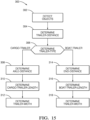
- Step 304 DETERMINE TRAILER-DISTANCE, includes determining, with the controller-circuit 132, that the trailer 114 is being towed by the host-vehicle 112, and determining a trailer-distance 142 between the host-vehicle 112 and a front 144 of the trailer 114 based on a first-group 146 of objects 126 illustrated in Fig. 9A .
- Step 310 DETERMINE CARGO-TRAILER-LENGTH, includes determining, with the controller-circuit 132, a cargo-trailer-length 116A of the cargo-trailer 114A based on the trailer-distance 142 and the axle-distance 156.
Landscapes
- Engineering & Computer Science (AREA)
- Radar, Positioning & Navigation (AREA)
- Remote Sensing (AREA)
- Physics & Mathematics (AREA)
- Computer Networks & Wireless Communication (AREA)
- General Physics & Mathematics (AREA)
- Electromagnetism (AREA)
- Transportation (AREA)
- Mechanical Engineering (AREA)
- Radar Systems Or Details Thereof (AREA)
- Length Measuring Devices With Unspecified Measuring Means (AREA)
Description
- This disclosure generally relates to a detection system, and more particularly relates to a trailer detection system.
- Related prior art is disclosed in
US 2009/271078 A1 as well as inDE 199 28 433 A1 . - According to the present invention, a detection system comprises the features of
claim 1. - According to the present invention, a detection method, comprises the features of
claim 8. - According to the system and the method described above, a width of the trailer may be determined by a distance between a third-group and a fourth-group of objects detected by the ranging-sensor, said third-group characterized by a first-lateral-offset relative to a centerline of the host-vehicle as indicated by the ranging-sensor, said fourth-group characterized by a second-lateral-offset relative to the centerline of the host-vehicle as indicated by the ranging-sensor.
- According to the system and the method described above, the controller-circuit may further determine a peak-threshold that represents detections of real-objects detected by the ranging-sensor and a noise-threshold that represents detections of phantom-objects detected by the ranging-sensor, said peak-threshold greater than the noise-threshold, wherein the first-group of objects is determined by a first-detection-count that is closer in magnitude to the peak-threshold than to the noise-threshold and is first closest in proximity to the host-vehicle. The second-group of objects may be determined by a second-detection-count that is closer in magnitude to the peak-threshold than to the noise-threshold and is second closest in proximity to the host-vehicle.
- According to one embodiment, a detection system comprises a ranging-sensor, the ranging-sensor configured to detect objects proximate to a host-vehicle; and a controller-circuit in communication with the ranging-sensor, the controller-circuit configured to determine a trailer-distance between the host-vehicle and a front of the trailer based on a distance to a first-group of objects detected by the ranging-sensor, said first-group characterized by a first-distance indicated by the ranging-sensor, and determine a trailer-type being towed by the host-vehicle based on the trailer-distance.
- According to one embodiment, a detection method comprises:
- detecting, with a ranging-sensor, objects proximate to a host-vehicle; and
- determining, with a controller-circuit in communication with the ranging-sensor, a trailer-distance between the host-vehicle and a front of the trailer based on a distance to a first-group of objects detected by the ranging-sensor, said first-group characterized by a first-distance indicated by the ranging-sensor, and determining a trailer-type being towed by the host-vehicle based on the trailer-distance.
- The trailer-type may be characterized as a cargo-trailer in accordance with a determination that the trailer-distance is less than a distance-threshold. The distance-threshold may be in a range of 2 meters to 3 meters. A width of the trailer may be determined by a distance between a third-group and a fourth-group of objects detected by the ranging-sensor, said third-group characterized by a first-lateral-offset relative to a centerline of the host-vehicle as indicated by the ranging-sensor, said fourth-group characterized by a second-lateral-offset relative to the centerline of the host-vehicle as indicated by the ranging-sensor.
- According to the system and the method described above, the controller-circuit may further determine an axle-distance between the front of the trailer and a trailer-axle based on a second-group of objects, said second-group characterized by a second-distance indicated by the ranging-sensor, and determines a trailer-length based on the trailer-distance and the axle-distance.
- According to the system and the method described above, the controller-circuit may further determine a peak-threshold that represents detections of real-objects detected by the ranging-sensor and a noise-threshold that represents detections of phantom-objects detected by the ranging-sensor, wherein the first-group of objects is determined by a first-detection-count that is closer in magnitude to the peak-threshold than to the noise-threshold and is first closest in proximity to the host-vehicle. The second-group of objects may be determined by a second-detection-count that is closer in magnitude to the peak-threshold than to the noise-threshold and is second closest in proximity to the host-vehicle.
- According to the system and the method described above, the trailer-type may be characterized as a boat-trailer in accordance with a determination that the trailer-distance is greater than a distance-threshold. The distance-threshold may be in a range from 2 meters to 3 meters. A width of the trailer may be determined by a distance between a third-group and a fourth-group of objects detected by the ranging-sensor, said third-group characterized by a first-lateral-offset relative to a centerline of the host-vehicle as indicated by the ranging-sensor, said fourth-group characterized by a second-lateral-offset relative to the centerline of the host-vehicle as indicated by the ranging-sensor.
- According to the system and the method described above, the controller-circuit may further determine an end-distance to an end of the trailer based on a last-group of objects detected by the ranging-sensor, said last-group characterized by a last-distance indicated by the ranging-sensor, and determines a trailer-length based on the end-distance. The controller-circuit may further determine a peak-threshold that represents detections of real-obj ects detected by the ranging-sensor and a noise-threshold that represents detections of phantom-objects detected by the ranging-sensor, wherein the first-group of objects is determined by a first-detection-count that is closer in magnitude to the peak-threshold than to the noise-threshold and is first closest in proximity to the host-vehicle. The last-group of objects may be determined by a last-detection-count that is closer in magnitude to the peak-threshold than to the noise-threshold and is farthest in proximity to the host-vehicle.
- According to any one of the system and the method described above The trailer-length (TL) may be determined by a formula including the trailer-distance (Lo), the axle-distance (L1), and a constant (C), wherein the formula is TL = Lo + L1 + L1*C, and wherein C may be in a range from 0.6 to 0.75, preferably 0.7
- The present invention will now be described, by way of example with reference to the accompanying drawings, in which:
-
Fig. 1 is an illustration of a detection system in accordance with one embodiment; -
Fig. 2 is an illustration of the detection system ofFig. 1 in accordance with one embodiment; -
Fig. 3A is a plot of objects detected by the detection system ofFig. 1 in accordance with one embodiment; -
Fig. 3B is a plot of the objects ofFig. 3A in a longitudinal direction in accordance with one embodiment; -
Fig. 4A is a plot of the objects inFig. 3B in accordance with one embodiment; -
Fig. 4B is a plot of the objects inFig. 3B in accordance with one embodiment; -
Fig. 5A is a plot of objects detected by the detection system ofFig. 1 in accordance with one embodiment; -
Fig. 5B is a plot of the objects ofFig. 5A in a lateral direction in accordance with one embodiment; -
Fig. 6 is an illustration of a detection system in accordance with another embodiment; -
Fig. 7 is an illustration of the detection system ofFig. 6 in accordance with another embodiment; -
Fig. 8A is a plot of objects detected by the detection system ofFig. 6 in accordance with another embodiment; -
Fig. 8B is a plot of the objects ofFig. 8A in a longitudinal direction in accordance with another embodiment; -
Fig. 9A is a plot of the objects inFig. 8B in accordance with another embodiment; -
Fig. 9B is a plot of the objects inFig. 8B in accordance with another embodiment; -
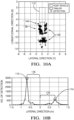
Fig. 10A is a plot of objects detected by the detection system ofFig. 6 in accordance with another embodiment; -
Fig. 10B is a plot of the objects ofFig. 10A in a lateral direction in accordance with another embodiment; -
Fig. 11A is a plot of objects detected by the detection system ofFig. 6 in accordance with another embodiment; -
Fig. 11B is a plot of the objects ofFig. 11A in a longitudinal direction in accordance with another embodiment; -
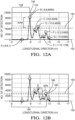
Fig. 12A is a plot of the objects inFig. 11B in accordance with another embodiment; -
Fig. 12B is a plot of the objects inFig. 11B in accordance with another embodiment; -
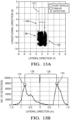
Fig. 13A is a plot of objects detected by the detection system ofFig. 6 in accordance with another embodiment; -
Fig. 13B is a plot of the objects ofFig. 13A in a lateral direction in accordance with another embodiment; -
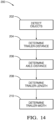
Fig. 14 is a flow chart of a detection method in accordance with yet another embodiment; and -
Fig. 15 is a flow chart of another detection method in accordance with yet another embodiment. - The reference numbers of similar elements in the embodiments shown in the various figures share the last two digits.
-
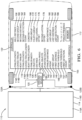
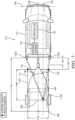
Fig. 1 illustrates a non-limiting example of adetection system 10, hereafter referred to as thesystem 10, installed on a host-vehicle 12 towing atrailer 14. As will be described in more detail below, thesystem 10 in an improvement over other detection systems because thesystem 10 estimates a trailer-length 16 and trailer-width 18 based on detected targets by filtering out erroneous detections. Thesystem 10 provides the technical benefit of enabling an adjustment of a blind zone of the host-vehicle 12 based on the size of thetrailer 14, improving safety for the driver and other vehicles. In some embodiments, thetrailer 14 may be a cargo-trailer 14A that may be an enclosed-type with solid panels, while in other embodiments of the cargo-trailer 14A may be an open-type with an exposed frame. In the examples illustrated inFigs. 1 - 5B thetrailer 14 is a cargo-trailer 14A. - The
system 10 includes a ranging-sensor 20. The ranging-sensor 20 may be a radar-sensor or a lidar-sensor as will be understood by those in the art. The ranging-sensor 20 is configured to detectobjects 26 proximate to the host-vehicle 12. In the example illustrated inFig. 1 , the ranging-sensor 20 is a radar-sensor. The radar-sensor detects the radar-signal that is reflected by the features of the cargo-trailer 14A towed by the host-vehicle 12. Typical radar-systems on vehicles are capable of only determining a distance 28 (i.e. range) and azimuth-angle 30 to the target so may be referred to as a two-dimensional (2D) radar-system. Other radar-systems are capable of determining an elevation-angle to the target so may be referred to as a three-dimensional (3D) radar-system. In the non-limiting example illustrated inFig. 1 , the 2D radar-sensor includes a left-sensor 22A and a right-sensor 22B. It is contemplated that the teachings presented herein are applicable to both 2D radar-systems and 3-D radar-systems with one or more sensor devices, i.e. multiple instances of the radar-sensor. The radar-sensor is generally configured to detect the radar-signal that may include data indicative of the detected-target present on the cargo-trailer 14A. As used herein, the detected-target present on the cargo-trailer 14A may be a feature of the cargo-trailer 14A that is detected by the radar-sensor and tracked by a controller-circuit 32, as will be described below. -
Fig. 2 illustrates some of the types of targets located on the cargo-trailer 14A detected by the radar-sensor. By way of example and not limitation, the radar-sensor may be configured to output a continuous or periodic data stream that includes a variety of signal characteristics associated with each target detected. The signal characteristics may include or be indicative of, but are not limited to, the range to the detected-target from the host-vehicle 12, the azimuth-angle 30 to the detected-target relative to a host-vehicle-longitudinal-axis 34, an amplitude (not shown) of the radar-signal, and a relative-velocity (not shown) of closure relative to the detected-target. A target is generally detected because the radar-signal from the detected-target has sufficient signal strength to meet a predetermined threshold. That is, there may be targets that reflect the radar-signal, but the strength of the radar-signal is insufficient to be characterized as one of the detected-targets. Data that corresponds to a strong-target will generally be from consistent, non-intermittent signals. However, data that corresponds to a weak-target may be intermittent or have some substantial variability due to a low signal-to-noise ratio. - Returning to
Fig. 1 , thesystem 10 also includes the controller-circuit 32 in communication with the ranging-sensor 20. The ranging-sensor 20 may be hardwired to the controller-circuit 32 through the host-vehicle's 12 electrical-system (not shown), or may communicate through a wireless network (not shown). The controller-circuit 32 may include a processor (not shown) such as a microprocessor or other control circuitry such as analog and/or digital control circuitry including an application specific integrated circuit (ASIC) for processing data as should be evident to those in the art. The controller-circuit 32 may include a memory (not specifically shown), including non-volatile memory, such as electrically erasable programmable read-only memory (EEPROM) for storing one or more routines, thresholds, and captured data. The one or more routines may be executed by the processor to perform steps for detecting theobjects 26 based on signals received by the controller-circuit 32 from the ranging-sensor 20 as described herein. The controller-circuit 32 is configured to determine that the cargo-trailer 14A is being towed by the host-vehicle 12 (i.e. determine a trailer-presence) using the known methods of zero-range-rate (ZRR) detection of targets that will be understood by those in the art. -
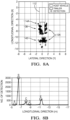
Fig. 3A illustrates a plot of multiple radar-sensor data acquisition cycles that locate the ZRR targets along the host-vehicle-longitudinal-axis 34 and a host-vehicle-lateral-axis 36. Each data acquisition cycle consists of 64-detections per radar-sensor within a time interval of 50-milliseconds (50ms), or a total of 128-detections for the two radar-sensors Fig. 3A the data has been filtered to 64-detections for the two radar-sensors -
Fig. 3B illustrates a plot of the groups of the ZRR targets fromFig. 3A along the host-vehicle-longitudinal-axis 34 only. The groups represent the ZRR targets detected in increments of 0.2 meters (0.2m) extending from a rear-end of the host-vehicle 12. For example, every 10 points along the x-axis of the plot inFig. 3B represents 2.0m ofdistance 28 from the rear-end of the 5m long host-vehicle 12. The Y-axis inFig. 3B represents the number of detections in a group. A total of 5 separate groups of detections are indicated by peaks in the plot and are labeled "A" through "E", with group A being closest to the host-vehicle 12 and group E being the furthest from the host-vehicle 12. Some of the groups represent real-objects 38 and others represent phantom-objects 40, as will be described below. -
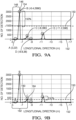
Figs. 4A-4B illustrate the plot ofFig 3B with limits applied to filter out the phantom-objects 40.Fig. 4A also includes the X-Y coordinates of the peaks of each group. The controller-circuit 32 determines a trailer-distance 42 between the host-vehicle 12 and afront 44 of the cargo-trailer 14A based on thedistance 28 to a first-group 46 ofobjects 26 detected by the ranging-sensor 20. That is, the controller-circuit 32 determines thedistance 28 between a rear-end of the host-vehicle 12 and thefront 44 of the cargo-trailer 14A based on a first major group of ZRR targets closest in proximity to the host-vehicle 12. The first-group 46 is characterized by a first-distance 48 indicated by the ranging-sensor 20. In order to distinguish the real-objects 38 from the phantom-objects 40 the controller-circuit 32 further determines a peak-threshold 50 that represents detections of real-objects 38 detected by the ranging-sensor 20, and a noise-threshold 52 that represents detections of phantom-objects 40 detected by the ranging-sensor 20, with the peak-threshold 50 being greater than the noise-threshold 52. The peak-threshold 50 and the noise-threshold 52 may be defined by the user and in the example illustrated inFig. 4A the peak-threshold 50 is set to 50% of the largest group (i.e. group B) which is indicated by a dashed line at 1495-detections. The noise-threshold 52 is set to zero detections. The first-group 46 ofobjects 26 is determined by a first-detection-count 54 that is closer in magnitude to the peak-threshold 50 than to the noise-threshold 52, and is first closest in proximity to the host-vehicle 12. Each of the groups A through E are compared to both the peak-threshold 50 and to the noise-threshold 52 and a determination is made by the controller-circuit 32 whether each group is closer in magnitude to the peak-threshold 50 or closer to the noise-threshold 52. The groups that are closest to the noise-threshold 52 (i.e. groups A, C, D and E inFig. 4A ) are excluded from the determination of the first-group 46, leaving only group B. Thus, group B is classified as the first-group 46 and the first-distance 48 is determined to be 1.4m from the rear-end of the host-vehicle 12. - The controller-
circuit 32 further determines an axle-distance 56 between the front 44 of the cargo-trailer 14A and a trailer-axle 58 based on a second-group 60 ofobjects 26 detected by the ranging-sensor 20, as illustrated inFig. 4B . That is, the controller-circuit 32 determines thedistance 28 between the rear-end of the host-vehicle 12 and the trailer-axle 58 of the cargo-trailer 14A based on a second major group of ZRR targets behind the host-vehicle 12 that are farther from the host-vehicle 12 relative to the first-group 46. The second-group 60 is characterized by a second-distance 62 indicated by the ranging-sensor 20. The controller-circuit 32 sets the peak-threshold 50 to 50% of the largest group (i.e. group E) which is shown by the dashed line at 298-detections, and the noise-threshold 52 is set to zero detections. The second-group 60 ofobjects 26 is determined by a second-detection-count 64 that is closer in magnitude to the peak-threshold 50 than to the noise-threshold 52, and is second closest in proximity to the host-vehicle 12. Each of the groups C, D, and E are compared to both the peak-threshold 50 and to the noise-threshold 52 and a determination is made by the controller-circuit 32 whether each group is closer in magnitude to the peak-threshold 50 or closer to the noise-threshold 52. The groups that are closest to the noise-threshold 52 (i.e. group D inFig. 4B ) are excluded from the determination of the second-group 60, leaving only groups C and E. Thus, group C is classified as the second-group 60 because group C is second closest to the host-vehicle 12, and the second-distance 62 is determined to be 3m from the rear-end of the host-vehicle 12. The controller-circuit 32 subtracts the first-distance 48 from the second-distance 62 to obtain the axle-distance 56, which is 1.6m in the example illustrated inFig. 4B . - The controller-
circuit 32 further determines the trailer-length 16 based on the trailer-distance 42 and the axle-distance 56. The trailer-length 16 (TL) is determined by a formula including the trailer-distance 42 (Lo), the axle-distance 56 (L1), and a constant 66 (C) using the following formula: TL = Lo + L1 + L1*C - The constant 66, C, is in a range from 0.6 to 0.75, and was determined by the inventors based on known trailer-specifications and empirical data. Experimentation by the inventors has discovered that the constant 66, equal to 0.7 provides adequate estimation of the trailer-
length 16 for a majority of the cargo-trailers 14A tested. Inserting the trailer-distance 42 and the axle-distance 56 into the above equation yields a trailer-length 16 estimation of TL = 1.4m + 1.6m + (1.6m * 0.7) = 4.12m - The known-length of the cargo-
trailer 14A in the example illustrated inFig. 4B is 3.9m and indicates an error of 0.22m. The error may be reduced by increasing the resolution (i.e. reducing the spacing) of the longitudinal groups along the host-vehicle-longitudinal-axis 34, which are 0.2m in the above example. Experimentation by the inventors has discovered that the 0.2m spacing provides an adequate balance of memory utilization requirements and measurement error. -
Fig. 5B illustrates a plot of the groups of the ZRR targets fromFig. 5A along the host-vehicle-lateral-axis 36 transverse to the host-vehicle-longitudinal-axis 34. The groups represent the ZRR targets detected in increments of 0.1m extending from acenterline 68 of the host-vehicle 12 in a lateral direction. For example, every 10 points along the x-axis of the plot inFig. 5B represents 1.0m ofdistance 28 from thecenterline 68 of the host-vehicle 12. Thecenterline 68 is indicated by zero on the Y-axis ofFigs. 5A-5B and is parallel with the host-vehicle-longitudinal-axis 34. The Y-axis inFig. 5B represents the number of detections in a group. - The controller-
circuit 32 further determines the trailer-width 18 of thetrailer 14 by thedistance 28 between a third-group 72 and a fourth-group 74 ofobjects 26 detected by the ranging-sensor 20. The third-group 72 is characterized by a first-lateral-offset 76 relative to thecenterline 68 of the host-vehicle 12 as indicated by the ranging-sensor 20, and the fourth-group 74 is characterized by a second-lateral-offset 78 relative to thecenterline 68 of the host-vehicle 12 as indicated by the ranging-sensor 20. The third-group 72 and the fourth-group 74 are identified by the controller-circuit 32 as the groups having the greatest number of ZRR detections on a left-side and a right-side of thecenterline 68, and no filtering of the phantom-objects 40 is required. In the example illustrated inFig. 5B , the estimated trailer-width 18 is 1.5m compared to the known-width of 1.52m, and indicates an error of 0.02m. The error may be reduced by increasing the resolution (i.e. reducing the spacing) of the lateral groups, which are 0.1m in the above example. Experimentation by the inventors has discovered that the 0.1m spacing provides an adequate balance of memory utilization requirements and measurement error. - The
system 10 may exclude any detections that are beyond a typical maximum trailer-dimension of 2.44m x 15.24m. -
Fig. 6 illustrates another embodiment of adetection system 110, hereafter referred to as thesystem 110, installed on a host-vehicle 112 towing atrailer 114. As will be described in more detail below, thesystem 110 is an improvement over other detection systems because thesystem 110 determines a trailer-type 113, a trailer-length 116 and a trailer-width 118 based on detected targets by filtering out erroneous detections. Thetrailer 114 may be a cargo-trailer 114A that may be an enclosed-type with solid panels, or may be an open-type with an exposed frame. Thetrailer 114 may also be a boat-trailer 114B. The boat-trailer 114B may, or may not, be carrying a boat, and may present a unique ranging-sensor-signal or signal-pattern compared to the cargo-trailer 114A that may further assist in a determination of the type oftrailer 114 being towed by the host-vehicle 112. - The
system 110 includes a ranging-sensor 120. The ranging-sensor 120 may be a radar-sensor 122 or a lidar-sensor 124 as will be understood by those in the art. The ranging-sensor 120 is configured to detectobjects 126 proximate to the host-vehicle 112. In the example illustrated inFig. 6 , the ranging-sensor 120 is the radar-sensor 122. The radar-sensor 122 detects a radar-signal (not specifically shown) that is reflected by features of thetrailer 114 towed by the host-vehicle 112. Typically, radar-systems on vehicles are capable of only determining a distance 128 (i.e. range) and azimuth-angle 130 to the target so may be referred to as a two-dimensional (2D) radar-system. Other radar-systems are capable of determining an elevation-angle to the target so may be referred to as a three-dimensional (3D) radar-system. In the non-limiting example illustrated inFig. 6 , the 2D radar-sensor 122 includes a left-sensor 122A and a right-sensor 122B. It is contemplated that the teachings presented herein are applicable to both 2D radar-systems and 3-D radar-systems with one or more sensor devices, i.e. multiple instances of the radar-sensor 122. The radar-sensor 122 is generally configured to detect the radar-signal that may include data indicative of the detected-target present on thetrailer 114. As used herein, the detected-target present on thetrailer 114 may be a feature of thetrailer 114 that is detected by the radar-sensor 122 and tracked by a controller-circuit 132, as will be described below. -
Fig. 7 illustrates some of the various types of targets located on thetrailer 114 detected by the radar-sensor 122. By way of example and not limitation, the radar-sensor 122 may be configured to output a continuous or periodic data stream that includes a variety of signal characteristics associated with each target detected. The signal characteristics may include or be indicative of, but are not limited to, the range to the detected-target from the host-vehicle 112, the azimuth-angle 130 to the detected-target relative to a host-vehicle-longitudinal-axis 134, an amplitude (not shown) of the radar-signal, and a relative-velocity (not shown) of closure relative to the detected-target. A target is generally detected because the radar-signal from the detected-target has sufficient signal strength to meet some predetermined threshold. That is, there may be targets that reflect the radar-signal, but the strength of the radar-signal is insufficient to be characterized as one of the detected-targets. Data that corresponds to a strong-target will generally be from consistent, non-intermittent signals. However, data that corresponds to a weak-target may be intermittent or have some substantial variability due to a low signal-to-noise ratio. - The
system 110 also includes the controller-circuit 132 in communication with the ranging-sensor 120. The ranging-sensor 120 may be hardwired to the controller-circuit 132 through the host-vehicle's 112 electrical-system (not shown), or may communicate through a wireless network (not shown). The controller-circuit 132 may include a processor (not shown) such as a microprocessor or other control circuitry such as analog and/or digital control circuitry including an application specific integrated circuit (ASIC) for processing data as should be evident to those in the art. The controller-circuit 132 may include a memory (not specifically shown), including non-volatile memory, such as electrically erasable programmable read-only memory (EEPROM) for storing one or more routines, thresholds, and captured data. The one or more routines may be executed by the processor to perform steps for detecting theobjects 126 based on signals received by the controller-circuit 132 from the ranging-sensor 120 as described herein. The controller-circuit 132 is configured to determine that thetrailer 114 is being towed by the host-vehicle 112 (i.e. determine a trailer-presence) using the known methods of zero-range-rate (ZRR) detection of targets that will be understood by those in the art. -
Fig. 8A illustrates a plot of multiple radar-sensor 122 data acquisition cycles that locate the ZRR targets along the host-vehicle-longitudinal-axis 134 and a host-vehicle-lateral-axis 136. Each data acquisition cycle consists of 64-detections per radar-sensor 122 within a time interval of 50-milliseconds (50ms), or a total of 128-detections for the two radar-sensors Fig. 8A has been filtered to 64-detections for the two radar-sensors -
Fig. 8B illustrates a plot of the groups of the ZRR targets fromFig. 8A along the host-vehicle-longitudinal-axis 134 only. The groups represent the ZRR targets detected in increments of 0.2 meters (0.2m) extending from a rear-end of the host-vehicle 112. For example, every 10 points along the x-axis of the plot inFig. 8B represents 2.0m ofdistance 128 from the rear-end of the 5m long host-vehicle 112. The Y-axis inFig. 8B represents the number of detections in a group. A total of 5 separate groups of detections are indicated by peaks in the plot and are labeled "A" through "E", with group A being closest to the host-vehicle 112 and group E being the furthest from the host-vehicle 112. Some of the groups represent real-objects 138 and others represent phantom-objects 140, as will be described below. -
Figs. 9A-9B illustrate the plot ofFig 8B with limits applied to filter out the phantom-objects 140.Fig. 9A also includes the X-Y coordinates of the peaks of each group. The controller-circuit 132 determines a trailer-distance 142 between the host-vehicle 112 and afront 144 of thetrailer 114 based on thedistance 128 to a first-group 146 ofobjects 126 detected by the ranging-sensor 120. That is, the controller-circuit 132 determines thedistance 128 between a rear-end of the host-vehicle 112 and thefront 144 of thetrailer 114 based on a first major group of ZRR targets closest to the host-vehicle 112. The first-group 146 is characterized by a first-distance 148 indicated by the ranging-sensor 120. In order to distinguish the real-objects 138 from the phantom-objects 140 the controller-circuit 132 further determines a peak-threshold 150 that represents detections of real-obj ects 138 detected by the ranging-sensor 120, and a noise-threshold 152 that represents detections of phantom-objects 140 detected by the ranging-sensor 120, with the peak-threshold 150 being greater than the noise-threshold 152. The peak-threshold 50 and the noise-threshold 52 may be defined by the user and in the example illustrated inFig. 9A , the peak-threshold 150 is set to 50% of the largest group (i.e. group B) which is indicated by a dashed line at 1495-detections, and the noise-threshold 152 is set to zero-detections. The first-group 146 ofobjects 126 is determined by a first-detection-count 154 that is closer in magnitude to the peak-threshold 150 than to the noise-threshold 152, and is first closest in proximity to the host-vehicle 112. Each of the groups A through E are compared to both the peak-threshold 150 and to the noise-threshold 152 and a determination is made by the controller-circuit 132 whether each group is closer in magnitude to the peak-threshold 150 or to the noise-threshold 152. The groups that are closest to the noise-threshold 152 (i.e. groups A, C, D and E inFig. 9A ) are excluded from the determination of the first-group 146, leaving only group B. Thus, group B is classified as the first-group 146 and the first-distance 148 is determined to be 1.4m from the rear-end of the host-vehicle 12. - The controller-
circuit 132 determines the trailer-type 113 being towed by the host-vehicle 112 based on a comparison of the trailer-distance 142 to a distance-threshold 155. The trailer-type 113 is characterized as a cargo-trailer 114A in accordance with a determination that the trailer-distance 142 is less than the distance-threshold 155 that is in a range of 2m to 3m. The trailer-type 113 is characterized as the boat-trailer 114B in accordance with the determination that the trailer-distance 142 is greater than the distance-threshold 155. Experimentation by the inventors has discovered that the distance-threshold 155 of 3m provides adequate results in distinguishing between the cargo-trailer 114A and the boat-trailer 114B. - In accordance with the determination that the trailer-
type 113 is characterized as the cargo-trailer 114A, the controller-circuit 132 further determines an axle-distance 156 between the front 144 of thetrailer 114 and a trailer-axle 158 based on a second-group 160 ofobjects 126 detected by the ranging-sensor 120, as illustrated inFig. 9B . That is, the controller-circuit 132 determines thedistance 128 between the rear-end of the host-vehicle 112 and the trailer-axle 158 of the cargo-trailer 114A based on a second major group of ZRR targets behind the host-vehicle 112 that are farther from the host-vehicle 112 relative to the first-group 146. The second-group 160 is characterized by a second-distance 162 indicated by the ranging-sensor 120. The controller-circuit 132 sets the peak-threshold 150 to 50% of the largest group (i.e. group E) which is indicated by the dashed line at 298-detections, and the noise-threshold 152 is set to zero-detections. The second-group 160 ofobjects 126 is determined by a second-detection-count 164 that is closer in magnitude to the peak-threshold 150 than to the noise-threshold 152, and is second closest in proximity to the host-vehicle 112. Each of the groups C, D, and E are compared to both the peak-threshold 150 and to the noise-threshold 152 and a determination is made by the controller-circuit 132 whether each group is closer in magnitude to the peak-threshold 150 or closer to the noise-threshold 152. The groups that are closest to the noise-threshold 152 (i.e. group D inFig. 9B ) are excluded from the determination of the second-group 160, leaving only groups C and E. Thus, group C is classified as the second-group 160 because group C is second closest to the host-vehicle 112, and the second-distance 162 is determined to be 3m from the rear-end of the host-vehicle 112. The controller-circuit 132 subtracts the first-distance 148 from the second-distance 162 to obtain the axle-distance 156, which is 1.6m in the example illustrated inFig. 9B . - The controller-
circuit 132 further determines a cargo-trailer-length 116A of the cargo-trailer 114A based on the trailer-distance 142 and the axle-distance 156. The cargo-trailer-length 116A (TL) is determined by a formula including the trailer-distance 142 (Lo), the axle-distance 156 (L1), and a constant 166 (C) using the following formula:

- The constant 166, C, is in a range from 0.6 to 0.75, and was determined by the inventors based on known
trailer 114 specifications and empirical data. Experimentation by the inventors has discovered that the constant 166, equal to 0.7 provides adequate estimation of the cargo-trailer-length 116A for a majority of cargo-trailers 114A tested. Inserting the trailer-distance 142 and the axle-distance 156 into the above equation yields the cargo-trailer-length 116A estimation of:
- The known-length of the cargo-
trailer 114A in the example illustrated inFig. 9B is 3.9m and indicates an error of 0.22m. The error may be reduced by increasing the resolution (i.e. reducing the spacing) of the longitudinal groups along the host-vehicle-longitudinal-axis 134, which are 0.2m in the above example. Experimentation by the inventors has discovered that the 0.2m spacing provides an adequate balance of memory utilization requirements and measurement error. -
Fig. 10B illustrates a plot of the groups of the ZRR targets fromFig. 10A along the host-vehicle-lateral-axis 136 transverse to the host-vehicle-longitudinal-axis 134. The groups represent the ZRR targets detected in increments of 0.1m extending from acenterline 168 of the host-vehicle 112 in a lateral direction. For example, every 10-points along the x-axis of the plot inFig. 10B represents 1.0m ofdistance 128 from thecenterline 168 host-vehicle 112. Thecenterline 168 is indicated by zero on the Y-axis ofFigs. 10A-10B and is parallel with the host-vehicle-longitudinal-axis 134. The Y-axis inFig. 10B represents the number of detections in a group. - The controller-
circuit 132 further determines a trailer-width 118 of the cargo-trailer 114A by thedistance 128 between a third-group 172 and a fourth-group 174 ofobjects 126 detected by the ranging-sensor 120. The third-group 172 is characterized by a first-lateral-offset 176 relative to thecenterline 168 of the host-vehicle 112 as indicated by the ranging-sensor 120 and the fourth-group 174 is characterized by a second-lateral-offset 178 relative to thecenterline 168 of the host-vehicle 112 as indicated by the ranging-sensor 120. The third-group 172 and the fourth-group 174 are identified by the controller-circuit 132 as the groups having the greatest number of detections on a left-side and a right-side of thecenterline 168, and no filtering of phantom-objects 140 is required. In the example illustrated inFig. 10B , the estimated trailer-width 118 is 1.5m compared to the known-width of 1.52m, and indicates an error of 0.02m. The error may be reduced by increasing the resolution (i.e. reducing the spacing) of the lateral groups, which are 0.1m in the above example. Experimentation by the inventors has discovered that the 0.1m spacing provides an adequate balance of memory utilization requirements and measurement error. -
Fig. 11A illustrates a plot of multiple radar-sensor 122 data acquisition cycles for the boat-trailer 114B that locate the ZRR targets along the host-vehicle-longitudinal-axis 134 and the host-vehicle-lateral-axis 136.Fig. 11B illustrates a plot of the groups of the ZRR targets fromFig. 11A along the host-vehicle-longitudinal-axis 134 only. In accordance with the determination that the trailer-type 113 is characterized as the boat-trailer 114B the controller-circuit 132 further determines an end-distance 180 to an end of the boat-trailer 114B based on a last-group 182 ofobjects 126 detected by the ranging-sensor 120. The last-group 182 is characterized by a last-distance 184 indicated by the ranging-sensor 120 and the controller-circuit 132 determines a boat-trailer-length 116B based on the end-distance 180. -
Figs. 12A-12B illustrate the plot ofFig. 11B with limits applied to filter out the phantom-objects 140 just as described for the cargo-trailer 114A above.Fig. 12A also includes the X-Y coordinates of the peaks of each group. The controller-circuit 132 determines the trailer-distance 142 between the host-vehicle 112 and thefront 144 of the boat-trailer 114B based on thedistance 128 to the first-group 146 ofobjects 126 detected by the ranging-sensor 120. That is, the controller-circuit 132 determines thedistance 128 between a rear-end of the host-vehicle 112 and thefront 144 of the boat-trailer 114B based on the first major group of ZRR targets closest to the host-vehicle 112. The first-group 146 is characterized by the first-distance 148 indicated by the ranging-sensor 120. In order to distinguish the real-objects 138 from the phantom-objects 140 the controller-circuit 132 further determines the peak-threshold 150 that represents detections of real-objects 138 detected by the ranging-sensor 120, and the noise-threshold 152 that represents detections of phantom-objects 140 detected by the ranging-sensor 120, with the peak-threshold 150 being greater than the noise-threshold 152. In the example illustrated inFig. 12A , the peak-threshold 150 is set to 50% of the largest group (i.e. group B) which is indicated by a dashed line at 4031-detections, and the noise-threshold 152 is set to zero-detections. The first-group 146 ofobjects 126 is determined by the first-detection-count 154 that is closer in magnitude to the peak-threshold 150 than to the noise-threshold 152, and is first closest in proximity to the host-vehicle 112. Each of the groups A through G are compared to both the peak-threshold 150 and to the noise-threshold 152 and the determination is made by the controller-circuit 132 whether each group is closer in magnitude to the peak-threshold 150 or to the noise-threshold 152. The groups that are closest to the noise-threshold 152 (i.e. groups A, E and G inFig. 12A ) are excluded from the determination of the first-group 146, leaving groups B, C, D and F. Thus, group B is classified as the first-group 146 and the first-distance 148 is determined to be 3.8m from the rear-end of the host-vehicle 12, which is located greater than the distance-threshold 155 of 3m behind the host-vehicle 112 and determined to be the boat-trailer 114B. - In accordance with the determination that the trailer-
type 113 is characterized as the boat-trailer 114B, the controller-circuit 32 further determines the last-group 182 of objects 126 (group-F) determined by a last-detection-count 186 that is closer in magnitude to the peak-threshold 150 than to the noise-threshold 152 and is farthest in proximity to the host-vehicle 112, as illustrated inFig. 12B . The controller-circuit 132 sets the peak-threshold 150 to 50% of the largest group (i.e. group D) which is indicated by the dashed line at 2329-detections, and the noise-threshold 152 is set to zero-detections. The last-group 182 ofobjects 126 is determined by the last-detection-count 186 that is closer in magnitude to the peak-threshold 150 than to the noise-threshold 152, and is farthest in proximity to the host-vehicle 112. Each of the groups C, through G are compared to both the peak-threshold 150 and to the noise-threshold 152 and a determination is made by the controller-circuit 132 whether each group is closer in magnitude to the peak-threshold 150 or closer to the noise-threshold 152. The groups that are closest to the noise-threshold 152 (i.e. groups E and G inFig. 12B ) are excluded from the determination of the second-group 160, leaving only groups C, D and F. Thus, group F is classified as the last-group 182 because group F is farthest from the host-vehicle 112, and the last-distance 184 is determined to be 7.2m from the rear-end of the host-vehicle 112. The boat-trailer-length 116B is estimated to be 7.2m compared to the known-length of 7.2m and indicates an error of 0.0m. -
Fig. 13B illustrates a plot of the groups of the ZRR targets fromFig. 13A along the host-vehicle-lateral-axis 136 transverse to the host-vehicle-longitudinal-axis 134. The groups represent the ZRR targets detected in increments of 0.1m extending from thecenterline 168 of the host-vehicle 112 in the lateral direction. For example, every 10-points along the x-axis of the plot inFig. 13B represents 1.0m ofdistance 128 from thecenterline 168 host-vehicle 112. Thecenterline 168 is indicated by zero on the Y-axis ofFigs. 13A-13B and is parallel with the host-vehicle-longitudinal-axis 134. The Y-axis inFig. 13B represents the number of detections in a group. - The controller-
circuit 132 further determines the trailer-width 118 of the boat-trailer 114B by thedistance 128 between the third-group 172 and the fourth-group 174 ofobjects 126 detected by the ranging-sensor 120. The third-group 172 is characterized by the first-lateral-offset 176 relative to thecenterline 168 of the host-vehicle 112 as indicated by the ranging-sensor 120, and the fourth-group 174 is characterized by the second-lateral-offset 178 relative to thecenterline 168 of the host-vehicle 112 as indicated by the ranging-sensor 120. The third-group 172 and the fourth-group 174 are identified by the controller-circuit 132 as the groups having the greatest number of detections on the left-side and the right-side of thecenterline 168, and no filtering of phantom-objects 140 is required. In the example illustrated inFig. 13B , the estimated trailer-width 118 is 1.7m compared to the known-width of 1.9m, and indicates an error of 0.2m. The error may be reduced by increasing the resolution (i.e. reducing the spacing) of the lateral groups, which are 0.1m in the above example. Experimentation by the inventors has discovered that the 0.1m spacing provides an adequate balance of memory utilization requirements and measurement error. Thesystem 110 may exclude any detections that are beyond a typical maximum trailer-dimension of 2.44m x 15.24m. -
Fig. 14 is a flow chart that illustrates yet another embodiment of adetection method 200, hereafter referred to as themethod 200, of operating adetection system 10, hereafter referred to as thesystem 10, and installed on a host-vehicle 12 towing atrailer 14. As will be described in more detail below, themethod 200 in an improvement over other detection methods because themethod 200 estimates a trailer-length 16 and trailer-width 18 based on detected targets by filtering out erroneous detections. Thetrailer 14 may be a cargo-trailer 14A that may be an enclosed-type with solid panels, or may be an open-type with an exposed frame. In the examples illustrated inFigs. 1 - 5B thetrailer 14 is the cargo-trailer 14A. -
Step 202, DETECT OBJECTS, includes detecting, with a ranging-sensor 20, objects 26 proximate to the host-vehicle 12.Fig. 1 illustrates thesystem 10 that includes the ranging-sensor 20 and a controller-circuit 32 in communication with the ranging-sensor 20 that tracks theobjects 26 as described above. -
Step 204, DETERMINE TRAILER-DISTANCE, INCLUDES determining, with the controller-circuit 32, that thetrailer 14 is being towed by the host-vehicle 12 and determining a trailer-distance 42. The controller-circuit uses the known method of zero range rate (ZRR) detections, as described above, to determine adistance 28 to afront 44 of a cargo-trailer 14A based on a first-group 46 ofobjects 26 illustrated inFig. 4A . -
Step 206, DETERMINE AXLE-DISTANCE, includes determining an axle-distance 56 between the front 44 of the cargo-trailer 14A and a trailer-axle 58 based on a second-group 60 ofobjects 26, as illustrated inFig. 4B . -
Step 208, DETERMINE TRAILER-LENGTH, includes determining, with the controller-circuit 32, a trailer-length 16 based on the trailer-distance 42 and the axle-distance 56. As described above, the trailer-length 16 (TL) is determined by a formula including the trailer-distance 42 (Lo), the axle-distance 56 (L1), and a constant 66 (C) using the following formula: TL = Lo + L1 + L1*C -
Step 210, DETERMINE TRAILER-WIDTH, includes determining, with the controller-circuit 32, a trailer-width 18.Fig. 5B illustrates a plot of the groups of the ZRR targets fromFig. 5A along the host-vehicle-lateral-axis 36 transverse to the host-vehicle-longitudinal-axis 34. The controller-circuit 32 further determines the trailer-width 18 of the cargo-trailer 14A by thedistance 28 between a third-group 72 and a fourth-group 74 ofobjects 26 detected by the ranging-sensor 20. -
Fig. 15 is a flow chart illustrating yet another embodiment of adetection method 300, hereafter referred to as themethod 300, of operating adetection system 110, hereafter referred to as thesystem 110, installed on a host-vehicle 112 towing atrailer 114. As will be described in more detail below, thesystem 110 in an improvement over other detection systems because thesystem 110 determines a trailer-type 113, a trailer-length 116 and a trailer-width 118 based on detected targets by filtering out erroneous detections. Thetrailer 114 may be a cargo-trailer 114A that may be an enclosed-type with solid panels, or may be an open-type with an exposed frame. Thetrailer 114 may also be a boat-trailer 114B. The boat-trailer 114B may, or may not, be carrying a boat, and may present a unique ranging-sensor-signal compared to the cargo-trailer 114A that may further assist in a determination of the type oftrailer 114 being towed by the host-vehicle 112. -
Step 302, DETECT OBJECTS, includes detecting, with a ranging-sensor 120,objects 126 proximate to the host-vehicle 112.Fig. 6 illustrates thesystem 110 that includes the ranging-sensor 120 and a controller-circuit 132 in communication with the ranging-sensor 120 that tracks theobjects 126 as described above. -
Step 304, DETERMINE TRAILER-DISTANCE, includes determining, with the controller-circuit 132, that thetrailer 114 is being towed by the host-vehicle 112, and determining a trailer-distance 142 between the host-vehicle 112 and afront 144 of thetrailer 114 based on a first-group 146 ofobjects 126 illustrated inFig. 9A . -
Step 306, DETERMINE TRAILER-TYPE, includes determining, with the controller-circuit 132, a trailer-type 113 being towed by the host-vehicle 112 based on a comparison of the trailer-distance 142 to a predetermined distance-threshold 155. The trailer-type 113 is characterized as a cargo-trailer 114A in accordance with a determination that the trailer-distance 142 is less than the distance-threshold 155 that is in a range of 2m to 3m. The trailer-type 113 is characterized as the boat-trailer 114B in accordance with the determination that the trailer-distance 142 is greater than the distance-threshold 155. -
Step 308, DETERMINE AXLE-DISTANCE, includes determining, with the controller-circuit 132, an axle-distance 156 of the cargo-trailer 114A. In accordance with the determination that the trailer-type 113 is characterized as the cargo-trailer 114A, the controller-circuit 132 further determines the axle-distance 156 between the front 144 of thetrailer 114 and a trailer-axle 158 based on a second-group 160 ofobjects 126 detected by the ranging-sensor 120, as illustrated inFig. 9B . -
Step 310, DETERMINE CARGO-TRAILER-LENGTH, includes determining, with the controller-circuit 132, a cargo-trailer-length 116A of the cargo-trailer 114A based on the trailer-distance 142 and the axle-distance 156. The cargo-trailer-length 116A (TL) is determined by a formula including the trailer-distance 142 (Lo), the axle-distance 156 (L1), and a constant 166 (C) using the following formula: TL = Lo + L1 + L1*C -
Step 312, DETERMINE TRAILER-WIDTH, includes determining, with the controller-circuit 132, a trailer-width 118 of the cargo-trailer 114A.Fig. 10B illustrates a plot of the groups of the ZRR targets fromFig. 10A along the host-vehicle-lateral-axis 136 transverse to the host-vehicle-longitudinal-axis 134. The controller-circuit 132 further determines the trailer-width 118 of the cargo-trailer 114A by thedistance 128 between a third-group 172 and a fourth-group 174 ofobjects 126 detected by the ranging-sensor 120. -
Step 314, DETERMINE END-DISTANCE, includes determining, with the controller-circuit 132, an end-distance 180 to an end of the boat-trailer 114B.Fig. 11A illustrates a plot of multiple radar-sensor 122 data acquisition cycles for the boat-trailer 114B that locate the ZRR targets along the host-vehicle-longitudinal-axis 134 and the host-vehicle-lateral-axis 136.Fig. 11B illustrates a plot of the groups of the ZRR targets fromFig. 11A along the host-vehicle-longitudinal-axis 134 only. In accordance with the determination that the trailer-type 113 is characterized as the boat-trailer 114B the controller-circuit 132 further determines the end-distance 180 to the end of the boat-trailer 114B based on a last-group 182 ofobjects 126 detected by the ranging-sensor 120. The last-group 182 is characterized by a last-distance 184 indicated by the ranging-sensor 120 and the controller-circuit 132 determines a boat-trailer-length 116B based on the end-distance 180, as illustrated inFig. 12B . -
Step 316, DETERMINE BOAT-TRAILER-LENGTH, includes determining, with the controller-circuit 132, the boat-trailer-length 116B. In accordance with the determination that the trailer-type 113 is characterized as the boat-trailer 114B, the controller-circuit 132 further determines the last-group 182 of objects 126 (group-F) determined by a last-detection-count 186 that is closer in magnitude to the peak-threshold 150 than to the noise-threshold 152 and is farthest in proximity to the host-vehicle 112, as illustrated inFig. 12B . -
Step 318, DETERMINE TRAILER-WIDTH, includes determining, with the controller-circuit 132, the trailer-width 118 of the boat-trailer 114B.Fig. 13B illustrates a plot of the groups of the ZRR targets fromFig. 13A along the host-vehicle-lateral-axis 136 transverse to the host-vehicle-longitudinal-axis 134. The controller-circuit 132 further determines the trailer-width 118 of the boat-trailer 114B by thedistance 128 between the third-group 172 and the fourth-group 174 ofobjects 126 detected by the ranging-sensor 120. Thesystem 110 may exclude any detections that are beyond a typical maximum trailer-dimension of 2.44m x 15.24m. - Accordingly, a detection system 10 (the system 10), a controller-
circuit 32 for thesystem 10, and amethod 200 of operating thesystem 10 are provided. Thesystem 10 is an improvement over other detection systems because thesystem 10 estimates the trailer-length 16 and the trailer-width 18 by filtering out the phantom-objects 40. - The use of the terms first, second, etc. does not denote any order of importance, but rather the terms first, second, etc. are used to distinguish one element from another. Furthermore, the use of the terms a, an, etc. do not denote a limitation of quantity, but rather denote the presence of at least one of the referenced items. Additionally, directional terms such as upper, lower, etc. do not denote any particular orientation, but rather the terms upper, lower, etc. are used to distinguish one element from another and locational establish a relationship between the various elements.
Claims (14)
- A detection system (10) comprising:a ranging sensor (20) configured to detect objects (26) proximate to a host vehicle (12); anda controller circuit (32) in communication with the ranging sensor (20) and configured to:determine a peak threshold (50) that represents detections of real objects (38) detected by the ranging sensor (20) and a noise threshold (52) that represents detections of phantom objects (40) detected by the ranging sensor (20);determine, based on a first detection count (54) that is closer in magnitude to the peak threshold (50) than to the noise threshold (52), a first group (46) of the objects (26) that are first closest in proximity to the host vehicle (12);determine, based on a first distance indicated by the ranging sensor (20) for the first group (46), a trailer distance (28) between the host vehicle (12) and a front (44) of a trailer (14) that is towed by the host vehicle (12); anddetermine, based on the trailer distance (28), a trailer type (113) of the trailer (14) towed by the host vehicle (12).
- The detection system (10) of claim 1, wherein the controller circuit (32) is further configured to determine the trailer type (113) based on:
a width of the trailer (14) determined based on a distance (28) between a third group (72) and a fourth group (74) of objects (26) detected by the ranging sensor (20), the third group (72) characterized by a first lateral offset (76) as indicated by the ranging sensor (20) relative to a centerline (68) of the host vehicle (12), the fourth group (74) characterized by a second lateral offset (78) relative to the centerline (68) indicated by the ranging sensor (20). - The detection system (10) of claim 1 or 2, wherein the controller circuit (32) is further configured to determine the trailer type (113) based on:
a trailer length (16) determined based on the trailer distance (42) and an axle distance (56) determined between the front of the trailer (14) and a trailer axle (58), the axle distance (56) determined based on a second group (60) of the objects (26) that are characterized by a second distance (62) indicated by the ranging sensor (20). - The detection system (10) of claim 3, wherein the controller circuit (32) is configured to determine the second group (60) of objects (26) as a second closest in proximity to the host vehicle (12) based on a second detection count (64) that is closer in magnitude to the peak threshold (50) than to the noise threshold (52).
- The detection system (10) of claim 3 or 4, wherein the trailer length (16) is determined based on a formula including the trailer distance (42), the axle distance (56), and a constant (66), wherein the formula is TL = Lo + L1 +L1*C, wherein TL is the trailer length (16), Lo is the trailer distance (42), L1 is the axle distance (56), and C is the constant (66).
- The detection system (10) of claim 5, wherein the constant (66) is in a range from 0.6 to 0.75.
- The detection system (10) of any of claims 5 or 6, wherein the constant (66) is 0.7.
- A method (200), comprising:detecting, with a ranging sensor (20), objects (26) proximate to a host vehicle (12); anddetermining, with a controller circuit (32) in communication with the ranging sensor (20), a trailer distance (42) between the host vehicle (12) and a front of a trailer (14) based on:a peak threshold (50) determined to represent detections of real objects (38) detected by the ranging sensor (20) and a noise threshold (52) determined to represent detections of phantom objects (40) detected by the ranging sensor (20);a first group (46) of the objects (26) determined to be first closest in proximity to the host vehicle (12) based on a first detection count (54) that is closer in magnitude to the peak threshold (50) than to the noise threshold (52); anda first distance indicated by the ranging sensor (20) for the first group (46); anddetermining, based on the trailer distance (28), a trailer type (113) of the trailer (14).
- The method of claim 8, determining the trailer type (113) is further based on:
determining a width of the trailer (14) determined based on a distance (28) between a third group (72) and a fourth group (74) of objects (26) detected by the ranging sensor (20), the third group (72) characterized by a first lateral offset (76) as indicated by the ranging sensor (20) relative to a centerline (68) of the host vehicle (12), the fourth group (74) characterized by a second lateral offset (78) relative to the centerline (68) indicated by the ranging sensor (20). - The method of claim 8 or 9, wherein determining the trailer type (113) is further based on:
determining a trailer length (16) based on the trailer distance (42) and an axle distance (56) determined between the front of the trailer (14) and a trailer axle (58), the axle distance (56) determined based on a second group (60) of the objects (26) that are characterized by a second distance (62) indicated by the ranging sensor (20). - The method of claim 10, further comprising: determining the second group (60) of objects (26) as a second closest in proximity to the host vehicle (12) based on a second detection count (64) that is closer in magnitude to the peak threshold (50) than to the noise threshold (52).
- The method of claim 10 or 11, wherein determining the trailer length (16) is based on using a formula including the trailer distance (42), the axle distance (56), and a constant (66), wherein the formula is TL = Lo + L1 +L1*C, wherein TL is the trailer length (16), Lo is the trailer distance (42), L1 is the axle distance (56), and C is the constant (66).
- The method of claim 12, wherein the constant (66) is in a range from 0.6 to 0.75.
- Method of claim 12 or 13, wherein the constant (66) is 0.7.
Applications Claiming Priority (3)
| Application Number | Priority Date | Filing Date | Title |
|---|---|---|---|
| US201762593418P | 2017-12-01 | 2017-12-01 | |
| US15/840,321 US10955540B2 (en) | 2017-12-01 | 2017-12-13 | Detection system |
| EP18208733.8A EP3502739B1 (en) | 2017-12-01 | 2018-11-27 | Detection systemfor determining a trailer length |
Related Parent Applications (2)
| Application Number | Title | Priority Date | Filing Date |
|---|---|---|---|
| EP18208733.8A Division-Into EP3502739B1 (en) | 2017-12-01 | 2018-11-27 | Detection systemfor determining a trailer length |
| EP18208733.8A Division EP3502739B1 (en) | 2017-12-01 | 2018-11-27 | Detection systemfor determining a trailer length |
Publications (2)
| Publication Number | Publication Date |
|---|---|
| EP4060372A1 EP4060372A1 (en) | 2022-09-21 |
| EP4060372B1 true EP4060372B1 (en) | 2024-07-03 |
Family
ID=64556684
Family Applications (2)
| Application Number | Title | Priority Date | Filing Date |
|---|---|---|---|
| EP22172712.6A Active EP4060372B1 (en) | 2017-12-01 | 2018-11-27 | Detection system |
| EP18208733.8A Active EP3502739B1 (en) | 2017-12-01 | 2018-11-27 | Detection systemfor determining a trailer length |
Family Applications After (1)
| Application Number | Title | Priority Date | Filing Date |
|---|---|---|---|
| EP18208733.8A Active EP3502739B1 (en) | 2017-12-01 | 2018-11-27 | Detection systemfor determining a trailer length |
Country Status (2)
| Country | Link |
|---|---|
| US (2) | US10955540B2 (en) |
| EP (2) | EP4060372B1 (en) |
Families Citing this family (19)
| Publication number | Priority date | Publication date | Assignee | Title |
|---|---|---|---|---|
| DE102017112786A1 (en) * | 2017-06-09 | 2018-12-13 | Valeo Schalter Und Sensoren Gmbh | Method for characterizing a trailer attached to a towing vehicle, driver assistance system and trailer |
| US10955540B2 (en) | 2017-12-01 | 2021-03-23 | Aptiv Technologies Limited | Detection system |
| US10845478B2 (en) * | 2018-09-07 | 2020-11-24 | GM Global Technology Operations LLC | Micro-doppler apparatus and method for trailer detection and tracking |
| US10838054B2 (en) | 2018-10-08 | 2020-11-17 | Aptiv Technologies Limited | Detection system and method |
| US10942271B2 (en) | 2018-10-30 | 2021-03-09 | Tusimple, Inc. | Determining an angle between a tow vehicle and a trailer |
| CN111366938B (en) | 2018-12-10 | 2023-03-14 | 北京图森智途科技有限公司 | Method, device and vehicle for measuring trailer angle |
| US11221399B2 (en) * | 2018-12-12 | 2022-01-11 | Waymo Llc | Detecting spurious objects for autonomous vehicles |
| CN111319629B (en) | 2018-12-14 | 2021-07-16 | 北京图森智途科技有限公司 | A method, device and system for forming an autonomous vehicle fleet |
| US11092668B2 (en) | 2019-02-07 | 2021-08-17 | Aptiv Technologies Limited | Trailer detection system and method |
| US11105896B2 (en) * | 2019-04-17 | 2021-08-31 | Valeo Radar Systems, Inc. | Trailer detection and estimation system and related techniques |
| JP7152355B2 (en) * | 2019-05-20 | 2022-10-12 | 株式会社Soken | Obstacle detection device and obstacle detection method |
| WO2021007427A1 (en) * | 2019-07-09 | 2021-01-14 | Continental Automotive Systems, Inc. | Trailer body length detection system |
| US11525911B2 (en) * | 2019-11-14 | 2022-12-13 | GM Global Technology Operations LLC | Radar system control to perform cross-traffic management in a vehicle with a trailer |
| US11231716B2 (en) * | 2020-01-28 | 2022-01-25 | GM Global Technology Operations LLC | Method and apparatus for determining trailer dimensions in a motor vehicle |
| US11408995B2 (en) | 2020-02-24 | 2022-08-09 | Aptiv Technologies Limited | Lateral-bin monitoring for radar target detection |
| AU2021203567A1 (en) | 2020-06-18 | 2022-01-20 | Tusimple, Inc. | Angle and orientation measurements for vehicles with multiple drivable sections |
| DE102021201522A1 (en) * | 2021-02-17 | 2022-08-18 | Robert Bosch Gesellschaft mit beschränkter Haftung | Method for determining a spatial orientation of a trailer |
| US12552209B2 (en) | 2023-08-18 | 2026-02-17 | Torc Robotics, Inc. | Systems and methods of monitoring and control for trailer dynamics |
| US20250060454A1 (en) * | 2023-08-18 | 2025-02-20 | Torc Robotics, Inc. | Systems and methods of monitoring and control for trailer dynamics |
Family Cites Families (103)
| Publication number | Priority date | Publication date | Assignee | Title |
|---|---|---|---|---|
| US5361072A (en) | 1992-02-28 | 1994-11-01 | Codar Ocean Sensors, Ltd. | Gated FMCW DF radar and signal processing for range/doppler/angle determination |
| US5517196A (en) | 1992-08-14 | 1996-05-14 | Pakett; Allan G. | Smart blind spot sensor with object ranging |
| JPH09267762A (en) | 1996-04-01 | 1997-10-14 | Mitsubishi Motors Corp | Trailer wheel steering control method and apparatus |
| DE19928433A1 (en) * | 1999-06-23 | 2000-12-28 | Daimlerchrysler Rail Systems T | Method for positioning a lifting gun under a trailer and trailer |
| DE19964048A1 (en) | 1999-06-30 | 2001-01-04 | Bosch Gmbh Robert | Method and device for stabilizing a road vehicle |
| JP3716722B2 (en) | 2000-08-24 | 2005-11-16 | いすゞ自動車株式会社 | Trailer connection angle detector |
| US6933837B2 (en) | 2002-01-25 | 2005-08-23 | Altra Technologies Incorporated | Trailer based collision warning system and method |
| DE10312548B3 (en) | 2003-03-21 | 2004-05-19 | Audi Ag | Vehicle with two symmetrical parking and reversing sensors at rear, employs them when trailer is attached, to detect its relative angle |
| US6680689B1 (en) | 2003-03-28 | 2004-01-20 | Visteon Global Technologies, Inc. | Method for determining object classification from side-looking sensor data |
| DE10325102B3 (en) | 2003-06-03 | 2004-05-27 | Fraunhofer-Gesellschaft zur Förderung der angewandten Forschung e.V. | Rigid chain, conjugated, organic solvent-insoluble polymer dispersion in aqueous and/or organic medium used for producing thin film electronic device e.g. FET, LED or photovoltaic cell, is prepared from solution e.g. in strong acid |
| DE10325192B4 (en) | 2003-06-04 | 2009-05-07 | Daimler Ag | Method and device for detecting a change in position |
| JP4148127B2 (en) | 2003-12-12 | 2008-09-10 | 株式会社デンソー | Fuel injection device |
| DE102004059596B4 (en) | 2004-12-09 | 2007-11-08 | Daimlerchrysler Ag | Method for determining a bending angle of a vehicle combination and corresponding device |
| DE102005019550A1 (en) | 2005-04-28 | 2006-11-09 | Daimlerchrysler Ag | A distance detection system for a towing vehicle and method for operating a distance detection system |
| KR100594513B1 (en) | 2005-08-04 | 2006-06-30 | 한국전력공사 | Video Surveillance System Linked with Near Field Radar |
| DE102005042729A1 (en) | 2005-09-05 | 2007-03-08 | Valeo Schalter Und Sensoren Gmbh | Motor vehicle radar system with horizontal and vertical resolution |
| DE102006028625A1 (en) | 2006-04-28 | 2007-10-31 | Daimlerchrysler Ag | Vehicle e.g. passenger car, measuring method, involves carrying out information exchange between sensor and driver assistance system, where exchange contains transmission of measuring data and/or vehicle parameter from sensor to vehicle |
| US7602276B2 (en) | 2007-01-17 | 2009-10-13 | Visteon Global Technologies, Inc. | Variable blind spot warning system |
| GB0701869D0 (en) | 2007-01-31 | 2007-03-14 | Cambridge Consultants | Adaptive radar |
| US7786849B2 (en) | 2007-02-02 | 2010-08-31 | Chrysler Group Llc | Trailer detection system |
| GB2447672B (en) | 2007-03-21 | 2011-12-14 | Ford Global Tech Llc | Vehicle manoeuvring aids |
| US7904222B2 (en) | 2007-06-27 | 2011-03-08 | GM Global Technology Operations LLC | Trailer articulation angle estimation |
| US8010252B2 (en) | 2007-10-05 | 2011-08-30 | Ford Global Technologies | Trailer oscillation detection and compensation method for a vehicle and trailer combination |
| US20090271078A1 (en) * | 2008-04-29 | 2009-10-29 | Mike Dickinson | System and method for identifying a trailer being towed by a vehicle |
| DE102009007990A1 (en) * | 2009-02-07 | 2010-08-12 | Hella Kgaa Hueck & Co. | Trailer data determining method, involves utilizing distance sensors provided in rear region of towing vehicle, for determining trailer data, and determining and processing different distances between vehicle and trailer |
| US8350684B2 (en) | 2009-12-14 | 2013-01-08 | Delphi Technologies, Inc. | Vehicle lane departure warning system having trailer mode and method |
| US9229102B1 (en) | 2009-12-18 | 2016-01-05 | L-3 Communications Security And Detection Systems, Inc. | Detection of movable objects |
| SE535786C2 (en) | 2010-01-19 | 2012-12-18 | Volvo Technology Corp | Dead Angle Warning System |
| US8571777B2 (en) | 2010-08-13 | 2013-10-29 | Robert Bosch Gmbh | Independent trailer sway controller |
| EP2428814A1 (en) | 2010-09-13 | 2012-03-14 | France Telecom | Object detection method, device and system |
| US8704887B2 (en) | 2010-12-02 | 2014-04-22 | GM Global Technology Operations LLC | Multi-object appearance-enhanced fusion of camera and range sensor data |
| KR101199202B1 (en) | 2011-01-04 | 2012-11-07 | 주식회사 만도 | Method and radar apparatus for detecting target object |
| US9854209B2 (en) | 2011-04-19 | 2017-12-26 | Ford Global Technologies, Llc | Display system utilizing vehicle and trailer dynamics |
| US9296423B2 (en) | 2011-04-19 | 2016-03-29 | Ford Global Technologies | Maximum trailer angle determination and control for a trailer backup assist system |
| US9238483B2 (en) | 2011-04-19 | 2016-01-19 | Ford Global Technologies, Llc | Trailer backup assist system with trajectory planner for multiple waypoints |
| US9723274B2 (en) | 2011-04-19 | 2017-08-01 | Ford Global Technologies, Llc | System and method for adjusting an image capture setting |
| US9937953B2 (en) | 2011-04-19 | 2018-04-10 | Ford Global Technologies, Llc | Trailer backup offset determination |
| US9335162B2 (en) | 2011-04-19 | 2016-05-10 | Ford Global Technologies, Llc | Trailer length estimation in hitch angle applications |
| US9164955B2 (en) | 2013-02-04 | 2015-10-20 | Ford Global Technologies | Trailer active back-up assist with object avoidance |
| US20170242443A1 (en) | 2015-11-02 | 2017-08-24 | Peloton Technology, Inc. | Gap measurement for vehicle convoying |
| DE102011108440B4 (en) | 2011-07-23 | 2017-01-05 | Volkswagen Aktiengesellschaft | Method and device for determining a total length of a trailer |
| US8665078B2 (en) | 2011-07-25 | 2014-03-04 | Ford Global Technologies | Width calibration of lane departure warning system |
| US9373044B2 (en) | 2011-07-25 | 2016-06-21 | Ford Global Technologies, Llc | Trailer lane departure warning system |
| US9269263B2 (en) | 2012-02-24 | 2016-02-23 | Magna Electronics Inc. | Vehicle top clearance alert system |
| US20130226390A1 (en) | 2012-02-29 | 2013-08-29 | Robert Bosch Gmbh | Hitch alignment assistance |
| US8824733B2 (en) | 2012-03-26 | 2014-09-02 | Tk Holdings Inc. | Range-cued object segmentation system and method |
| GB2522105B (en) | 2012-09-06 | 2016-09-14 | Jaguar Land Rover Ltd | Method and system for preventing instability in a vehicle-trailer combination |
| US9446713B2 (en) | 2012-09-26 | 2016-09-20 | Magna Electronics Inc. | Trailer angle detection system |
| US9558409B2 (en) | 2012-09-26 | 2017-01-31 | Magna Electronics Inc. | Vehicle vision system with trailer angle detection |
| CN203047062U (en) | 2012-12-06 | 2013-07-10 | 同济大学第一附属中学 | Detecting and early-warning device in process of turning of vehicle |
| US11455737B2 (en) | 2012-12-06 | 2022-09-27 | The Boeing Company | Multiple-scale digital image correlation pattern and measurement |
| US9129528B2 (en) | 2013-02-04 | 2015-09-08 | Ford Global Technologies | Trailer active back-up assist with lane width HMI |
| GB201312038D0 (en) | 2013-07-04 | 2013-08-21 | Jaguar Land Rover Ltd | Trailer parameter identification system |
| GB2518857B (en) | 2013-10-02 | 2018-02-14 | Jaguar Land Rover Ltd | Vehicle towing configuration system and method |
| US9352777B2 (en) | 2013-10-31 | 2016-05-31 | Ford Global Technologies, Llc | Methods and systems for configuring of a trailer maneuvering system |
| DE102015102889A1 (en) | 2014-03-03 | 2015-09-03 | Ford Global Technologies, Llc | Trailer lane departure warning system |
| US20150325126A1 (en) | 2014-05-07 | 2015-11-12 | Robert Bosch Gmbh | Method for detecting the presence of a trailer |
| DE102014107917A1 (en) | 2014-06-05 | 2015-09-10 | Valeo Schalter Und Sensoren Gmbh | A method and apparatus for avoiding a collision of a vehicle comprising a motor vehicle and a trailer with an obstacle |
| US9211889B1 (en) | 2014-07-29 | 2015-12-15 | Robert Bosch Gmbh | Enhanced blind spot detection for vehicle with trailer |
| US9594155B2 (en) * | 2014-08-08 | 2017-03-14 | Delphi Technologies, Inc. | Vehicle radar system with trailer detection |
| US9470777B2 (en) | 2014-09-19 | 2016-10-18 | Delphi Technologies, Inc. | Radar system for automated vehicle with phase change based target catagorization |
| GB2530995B (en) | 2014-10-06 | 2018-10-03 | Jaguar Land Rover Ltd | System for detection of trailer attachment dependent on vehicle pitch |
| KR20160041445A (en) | 2014-10-07 | 2016-04-18 | 현대모비스 주식회사 | Trailer Track Estimation Method and System by Image Recognition |
| US9493117B2 (en) | 2014-10-08 | 2016-11-15 | Ford Global Technologies, Llc | Vehicle blind spot system operation with trailer tow |
| US9315212B1 (en) | 2014-10-13 | 2016-04-19 | Ford Global Technologies, Llc | Trailer sensor module and associated method of wireless trailer identification and motion estimation |
| TWI584979B (en) | 2014-11-17 | 2017-06-01 | 鴻海精密工業股份有限公司 | Blind area monitoring system and vehicle employing same |
| US9428188B2 (en) | 2014-12-11 | 2016-08-30 | Robert Bosch Gmbh | Lane assist functions for vehicles with a trailer |
| US9563808B2 (en) | 2015-01-14 | 2017-02-07 | GM Global Technology Operations LLC | Target grouping techniques for object fusion |
| US20160209211A1 (en) * | 2015-01-16 | 2016-07-21 | GM Global Technology Operations LLC | Method for determining misalignment of an object sensor |
| US20160252610A1 (en) | 2015-02-26 | 2016-09-01 | Delphi Technologies, Inc. | Blind-spot radar system with improved semi-trailer tracking |
| GB2535789B (en) | 2015-02-27 | 2019-05-29 | Jaguar Land Rover Ltd | Trailer tracking apparatus and method |
| US9910151B2 (en) | 2015-03-19 | 2018-03-06 | Delphi Technologies, Inc. | Radar object detection system |
| US9804022B2 (en) | 2015-03-24 | 2017-10-31 | Ford Global Technologies, Llc | System and method for hitch angle detection |
| US20160297361A1 (en) | 2015-04-08 | 2016-10-13 | Jeffrey M. Drazan | Camera array system and method to detect a load status of a semi- trailer truck |
| US9477894B1 (en) | 2015-09-04 | 2016-10-25 | Ford Global Technologies, Llc | System and method for measuring object height for overhead clearance detection |
| DE102015012362A1 (en) | 2015-09-19 | 2017-03-23 | GM Global Technology Operations LLC (n. d. Ges. d. Staates Delaware) | A method of assisting a driver of a motor vehicle combination, computer program product, lane departure warning |
| CN205044655U (en) | 2015-10-12 | 2016-02-24 | 山东交通学院 | Road train blind area monitoring device |
| US10127459B2 (en) | 2015-12-17 | 2018-11-13 | Ford Global Technologies, Llc | Trailer type identification system |
| US9796228B2 (en) | 2015-12-17 | 2017-10-24 | Ford Global Technologies, Llc | Hitch angle detection for trailer backup assist system |
| DE102016200642A1 (en) | 2016-01-19 | 2017-07-20 | Conti Temic Microelectronic Gmbh | METHOD AND DEVICE FOR CLASSIFYING TRAFFIC LIMITS AND VEHICLE |
| US9975487B2 (en) | 2016-02-03 | 2018-05-22 | GM Global Technology Operations LLC | Rear vision system for a vehicle and method of using the same |
| US9975480B2 (en) | 2016-04-12 | 2018-05-22 | Denso International America, Inc. | Methods and systems for blind spot monitoring with adaptive alert zone |
| US10286916B2 (en) | 2016-06-20 | 2019-05-14 | Aptiv Technologies Limited | Trailer estimation and blind spot information system performance improvement |
| US10351146B2 (en) | 2016-06-20 | 2019-07-16 | Aptiv Technologies Limited | Trailer estimation improvement |
| US10393862B2 (en) | 2016-07-07 | 2019-08-27 | Aptiv Technologies Limited | Trailer estimation with elevation enhanced sensing |
| US10481255B2 (en) | 2016-08-09 | 2019-11-19 | Aptiv Technologies Limited | Trailer dimension estimation with two dimensional radar and camera |
| US10276049B2 (en) | 2016-08-29 | 2019-04-30 | Aptiv Technologies Limited | Camera based trailer identification and blind zone adjustment |
| US10207643B2 (en) | 2016-09-06 | 2019-02-19 | Aptiv Technologies Limited | Camera based trailer detection and tracking |
| US20180068566A1 (en) | 2016-09-08 | 2018-03-08 | Delphi Technologies, Inc. | Trailer lane departure warning and sway alert |
| US10488504B2 (en) | 2017-01-19 | 2019-11-26 | Veoneer Us, Inc. | System and method for automatic trailer detection |
| US10585188B2 (en) | 2017-07-28 | 2020-03-10 | Valeo Radar Systems, Inc. | Broadside detection system and techniques for use in a vehicular radar |
| US11215451B2 (en) | 2017-09-20 | 2022-01-04 | Continental Automotive Systems, Inc. | Trailer length detection system |
| US10955540B2 (en) | 2017-12-01 | 2021-03-23 | Aptiv Technologies Limited | Detection system |
| US10635933B2 (en) | 2018-01-23 | 2020-04-28 | Ford Global Technologies, Llc | Vision-based methods and systems for determining trailer presence |
| US11091162B2 (en) | 2018-01-30 | 2021-08-17 | Toyota Motor Engineering & Manufacturing North America, Inc. | Fusion of front vehicle sensor data for detection and ranging of preceding objects |
| US11633994B2 (en) | 2018-04-04 | 2023-04-25 | Continental Autonomous Mobility Us, Llc. | Vehicle-trailer distance detection device and method |
| US11050933B2 (en) | 2018-04-27 | 2021-06-29 | Continenal Automotive Systems, Inc. | Device and method for determining a center of a trailer tow coupler |
| US10628690B2 (en) | 2018-05-09 | 2020-04-21 | Ford Global Technologies, Llc | Systems and methods for automated detection of trailer properties |
| US10845478B2 (en) | 2018-09-07 | 2020-11-24 | GM Global Technology Operations LLC | Micro-doppler apparatus and method for trailer detection and tracking |
| US20200079165A1 (en) | 2018-09-10 | 2020-03-12 | Ford Global Technologies, Llc | Hitch assist system |
| US10838054B2 (en) | 2018-10-08 | 2020-11-17 | Aptiv Technologies Limited | Detection system and method |
| US11092668B2 (en) | 2019-02-07 | 2021-08-17 | Aptiv Technologies Limited | Trailer detection system and method |
| US11408995B2 (en) | 2020-02-24 | 2022-08-09 | Aptiv Technologies Limited | Lateral-bin monitoring for radar target detection |
-
2017
- 2017-12-13 US US15/840,321 patent/US10955540B2/en active Active
-
2018
- 2018-11-27 EP EP22172712.6A patent/EP4060372B1/en active Active
- 2018-11-27 EP EP18208733.8A patent/EP3502739B1/en active Active
-
2021
- 2021-01-25 US US17/157,301 patent/US11474224B2/en active Active
Also Published As
| Publication number | Publication date |
|---|---|
| US20210141075A1 (en) | 2021-05-13 |
| EP3502739B1 (en) | 2022-07-06 |
| US10955540B2 (en) | 2021-03-23 |
| US11474224B2 (en) | 2022-10-18 |
| EP3502739A2 (en) | 2019-06-26 |
| EP4060372A1 (en) | 2022-09-21 |
| US20190170867A1 (en) | 2019-06-06 |
| EP3502739A3 (en) | 2019-10-16 |
Similar Documents
| Publication | Publication Date | Title |
|---|---|---|
| EP4060372B1 (en) | Detection system | |
| EP3282284B1 (en) | Trailer dimension estimation with radar and camera | |
| US9117098B2 (en) | On-board traffic density estimator | |
| US11435466B2 (en) | Detection system and method | |
| US10393862B2 (en) | Trailer estimation with elevation enhanced sensing | |
| US10392015B2 (en) | Vehicle control device and vehicle control method | |
| EP3293052A1 (en) | Trailer lane departure warning and sway alert | |
| US20080106462A1 (en) | Object detection system and object detection method | |
| GB2544674A (en) | Intersection collision avoidance with adaptable vehicle dimensions | |
| EP3667612B1 (en) | Roadside object detection device, roadside object detection method, and roadside object detection system | |
| EP3693760B1 (en) | Trailer detection system and method | |
| CN110031844B (en) | Detection Systems | |
| EP1861829B1 (en) | A system for use in stations for road tolls |
Legal Events
| Date | Code | Title | Description |
|---|---|---|---|
| PUAI | Public reference made under article 153(3) epc to a published international application that has entered the european phase |
Free format text: ORIGINAL CODE: 0009012 |
|
| STAA | Information on the status of an ep patent application or granted ep patent |
Free format text: STATUS: THE APPLICATION HAS BEEN PUBLISHED |
|
| AC | Divisional application: reference to earlier application |
Ref document number: 3502739 Country of ref document: EP Kind code of ref document: P |
|
| AK | Designated contracting states |
Kind code of ref document: A1 Designated state(s): AL AT BE BG CH CY CZ DE DK EE ES FI FR GB GR HR HU IE IS IT LI LT LU LV MC MK MT NL NO PL PT RO RS SE SI SK SM TR |
|
| STAA | Information on the status of an ep patent application or granted ep patent |
Free format text: STATUS: REQUEST FOR EXAMINATION WAS MADE |
|
| 17P | Request for examination filed |
Effective date: 20221208 |
|
| RBV | Designated contracting states (corrected) |
Designated state(s): AL AT BE BG CH CY CZ DE DK EE ES FI FR GB GR HR HU IE IS IT LI LT LU LV MC MK MT NL NO PL PT RO RS SE SI SK SM TR |
|
| RAP3 | Party data changed (applicant data changed or rights of an application transferred) |
Owner name: APTIV TECHNOLOGIES LIMITED |
|
| GRAP | Despatch of communication of intention to grant a patent |
Free format text: ORIGINAL CODE: EPIDOSNIGR1 |
|
| STAA | Information on the status of an ep patent application or granted ep patent |
Free format text: STATUS: GRANT OF PATENT IS INTENDED |
|
| RIC1 | Information provided on ipc code assigned before grant |
Ipc: G01S 13/931 20200101ALN20240129BHEP Ipc: G01S 17/88 20060101ALN20240129BHEP Ipc: G01S 17/87 20200101ALN20240129BHEP Ipc: G01S 13/88 20060101ALI20240129BHEP Ipc: G01S 13/87 20060101ALI20240129BHEP Ipc: G01S 7/292 20060101ALI20240129BHEP Ipc: B60D 1/62 20060101ALI20240129BHEP Ipc: G01S 7/41 20060101AFI20240129BHEP |
|
| INTG | Intention to grant announced |
Effective date: 20240214 |
|
| RAP1 | Party data changed (applicant data changed or rights of an application transferred) |
Owner name: APTIV TECHNOLOGIES AG |
|
| GRAS | Grant fee paid |
Free format text: ORIGINAL CODE: EPIDOSNIGR3 |
|
| GRAA | (expected) grant |
Free format text: ORIGINAL CODE: 0009210 |
|
| STAA | Information on the status of an ep patent application or granted ep patent |
Free format text: STATUS: THE PATENT HAS BEEN GRANTED |
|
| P01 | Opt-out of the competence of the unified patent court (upc) registered |
Effective date: 20240429 |
|
| AC | Divisional application: reference to earlier application |
Ref document number: 3502739 Country of ref document: EP Kind code of ref document: P |
|
| AK | Designated contracting states |
Kind code of ref document: B1 Designated state(s): AL AT BE BG CH CY CZ DE DK EE ES FI FR GB GR HR HU IE IS IT LI LT LU LV MC MK MT NL NO PL PT RO RS SE SI SK SM TR |
|
| REG | Reference to a national code |
Ref country code: CH Ref legal event code: EP |
|
| REG | Reference to a national code |
Ref country code: DE Ref legal event code: R096 Ref document number: 602018071480 Country of ref document: DE |
|
| RAP4 | Party data changed (patent owner data changed or rights of a patent transferred) |
Owner name: APTIV TECHNOLOGIES AG |
|
| REG | Reference to a national code |
Ref country code: LT Ref legal event code: MG9D |
|
| REG | Reference to a national code |
Ref country code: NL Ref legal event code: MP Effective date: 20240703 |
|
| PG25 | Lapsed in a contracting state [announced via postgrant information from national office to epo] |
Ref country code: PT Free format text: LAPSE BECAUSE OF FAILURE TO SUBMIT A TRANSLATION OF THE DESCRIPTION OR TO PAY THE FEE WITHIN THE PRESCRIBED TIME-LIMIT Effective date: 20241104 |
|
| REG | Reference to a national code |
Ref country code: AT Ref legal event code: MK05 Ref document number: 1700380 Country of ref document: AT Kind code of ref document: T Effective date: 20240703 |
|
| PG25 | Lapsed in a contracting state [announced via postgrant information from national office to epo] |
Ref country code: NL Free format text: LAPSE BECAUSE OF FAILURE TO SUBMIT A TRANSLATION OF THE DESCRIPTION OR TO PAY THE FEE WITHIN THE PRESCRIBED TIME-LIMIT Effective date: 20240703 |
|
| PG25 | Lapsed in a contracting state [announced via postgrant information from national office to epo] |
Ref country code: PT Free format text: LAPSE BECAUSE OF FAILURE TO SUBMIT A TRANSLATION OF THE DESCRIPTION OR TO PAY THE FEE WITHIN THE PRESCRIBED TIME-LIMIT Effective date: 20241104 Ref country code: NL Free format text: LAPSE BECAUSE OF FAILURE TO SUBMIT A TRANSLATION OF THE DESCRIPTION OR TO PAY THE FEE WITHIN THE PRESCRIBED TIME-LIMIT Effective date: 20240703 |
|
| PG25 | Lapsed in a contracting state [announced via postgrant information from national office to epo] |
Ref country code: NO Free format text: LAPSE BECAUSE OF FAILURE TO SUBMIT A TRANSLATION OF THE DESCRIPTION OR TO PAY THE FEE WITHIN THE PRESCRIBED TIME-LIMIT Effective date: 20241003 |
|
| PG25 | Lapsed in a contracting state [announced via postgrant information from national office to epo] |
Ref country code: PL Free format text: LAPSE BECAUSE OF FAILURE TO SUBMIT A TRANSLATION OF THE DESCRIPTION OR TO PAY THE FEE WITHIN THE PRESCRIBED TIME-LIMIT Effective date: 20240703 Ref country code: FI Free format text: LAPSE BECAUSE OF FAILURE TO SUBMIT A TRANSLATION OF THE DESCRIPTION OR TO PAY THE FEE WITHIN THE PRESCRIBED TIME-LIMIT Effective date: 20240703 Ref country code: GR Free format text: LAPSE BECAUSE OF FAILURE TO SUBMIT A TRANSLATION OF THE DESCRIPTION OR TO PAY THE FEE WITHIN THE PRESCRIBED TIME-LIMIT Effective date: 20241004 |
|
| PG25 | Lapsed in a contracting state [announced via postgrant information from national office to epo] |
Ref country code: BG Free format text: LAPSE BECAUSE OF FAILURE TO SUBMIT A TRANSLATION OF THE DESCRIPTION OR TO PAY THE FEE WITHIN THE PRESCRIBED TIME-LIMIT Effective date: 20240703 |
|
| PG25 | Lapsed in a contracting state [announced via postgrant information from national office to epo] |
Ref country code: LV Free format text: LAPSE BECAUSE OF FAILURE TO SUBMIT A TRANSLATION OF THE DESCRIPTION OR TO PAY THE FEE WITHIN THE PRESCRIBED TIME-LIMIT Effective date: 20240703 |
|
| PG25 | Lapsed in a contracting state [announced via postgrant information from national office to epo] |
Ref country code: AT Free format text: LAPSE BECAUSE OF FAILURE TO SUBMIT A TRANSLATION OF THE DESCRIPTION OR TO PAY THE FEE WITHIN THE PRESCRIBED TIME-LIMIT Effective date: 20240703 Ref country code: IS Free format text: LAPSE BECAUSE OF FAILURE TO SUBMIT A TRANSLATION OF THE DESCRIPTION OR TO PAY THE FEE WITHIN THE PRESCRIBED TIME-LIMIT Effective date: 20241103 |
|
| PG25 | Lapsed in a contracting state [announced via postgrant information from national office to epo] |
Ref country code: HR Free format text: LAPSE BECAUSE OF FAILURE TO SUBMIT A TRANSLATION OF THE DESCRIPTION OR TO PAY THE FEE WITHIN THE PRESCRIBED TIME-LIMIT Effective date: 20240703 Ref country code: CZ Free format text: LAPSE BECAUSE OF FAILURE TO SUBMIT A TRANSLATION OF THE DESCRIPTION OR TO PAY THE FEE WITHIN THE PRESCRIBED TIME-LIMIT Effective date: 20240703 |
|
| PG25 | Lapsed in a contracting state [announced via postgrant information from national office to epo] |
Ref country code: RS Free format text: LAPSE BECAUSE OF FAILURE TO SUBMIT A TRANSLATION OF THE DESCRIPTION OR TO PAY THE FEE WITHIN THE PRESCRIBED TIME-LIMIT Effective date: 20241003 Ref country code: ES Free format text: LAPSE BECAUSE OF FAILURE TO SUBMIT A TRANSLATION OF THE DESCRIPTION OR TO PAY THE FEE WITHIN THE PRESCRIBED TIME-LIMIT Effective date: 20240703 |
|
| PG25 | Lapsed in a contracting state [announced via postgrant information from national office to epo] |
Ref country code: RS Free format text: LAPSE BECAUSE OF FAILURE TO SUBMIT A TRANSLATION OF THE DESCRIPTION OR TO PAY THE FEE WITHIN THE PRESCRIBED TIME-LIMIT Effective date: 20241003 Ref country code: PL Free format text: LAPSE BECAUSE OF FAILURE TO SUBMIT A TRANSLATION OF THE DESCRIPTION OR TO PAY THE FEE WITHIN THE PRESCRIBED TIME-LIMIT Effective date: 20240703 Ref country code: NO Free format text: LAPSE BECAUSE OF FAILURE TO SUBMIT A TRANSLATION OF THE DESCRIPTION OR TO PAY THE FEE WITHIN THE PRESCRIBED TIME-LIMIT Effective date: 20241003 Ref country code: LV Free format text: LAPSE BECAUSE OF FAILURE TO SUBMIT A TRANSLATION OF THE DESCRIPTION OR TO PAY THE FEE WITHIN THE PRESCRIBED TIME-LIMIT Effective date: 20240703 Ref country code: IS Free format text: LAPSE BECAUSE OF FAILURE TO SUBMIT A TRANSLATION OF THE DESCRIPTION OR TO PAY THE FEE WITHIN THE PRESCRIBED TIME-LIMIT Effective date: 20241103 Ref country code: HR Free format text: LAPSE BECAUSE OF FAILURE TO SUBMIT A TRANSLATION OF THE DESCRIPTION OR TO PAY THE FEE WITHIN THE PRESCRIBED TIME-LIMIT Effective date: 20240703 Ref country code: GR Free format text: LAPSE BECAUSE OF FAILURE TO SUBMIT A TRANSLATION OF THE DESCRIPTION OR TO PAY THE FEE WITHIN THE PRESCRIBED TIME-LIMIT Effective date: 20241004 Ref country code: FI Free format text: LAPSE BECAUSE OF FAILURE TO SUBMIT A TRANSLATION OF THE DESCRIPTION OR TO PAY THE FEE WITHIN THE PRESCRIBED TIME-LIMIT Effective date: 20240703 Ref country code: ES Free format text: LAPSE BECAUSE OF FAILURE TO SUBMIT A TRANSLATION OF THE DESCRIPTION OR TO PAY THE FEE WITHIN THE PRESCRIBED TIME-LIMIT Effective date: 20240703 Ref country code: CZ Free format text: LAPSE BECAUSE OF FAILURE TO SUBMIT A TRANSLATION OF THE DESCRIPTION OR TO PAY THE FEE WITHIN THE PRESCRIBED TIME-LIMIT Effective date: 20240703 Ref country code: BG Free format text: LAPSE BECAUSE OF FAILURE TO SUBMIT A TRANSLATION OF THE DESCRIPTION OR TO PAY THE FEE WITHIN THE PRESCRIBED TIME-LIMIT Effective date: 20240703 Ref country code: AT Free format text: LAPSE BECAUSE OF FAILURE TO SUBMIT A TRANSLATION OF THE DESCRIPTION OR TO PAY THE FEE WITHIN THE PRESCRIBED TIME-LIMIT Effective date: 20240703 |
|
| REG | Reference to a national code |
Ref country code: DE Ref legal event code: R097 Ref document number: 602018071480 Country of ref document: DE |
|
| PG25 | Lapsed in a contracting state [announced via postgrant information from national office to epo] |
Ref country code: DK Free format text: LAPSE BECAUSE OF FAILURE TO SUBMIT A TRANSLATION OF THE DESCRIPTION OR TO PAY THE FEE WITHIN THE PRESCRIBED TIME-LIMIT Effective date: 20240703 Ref country code: RO Free format text: LAPSE BECAUSE OF FAILURE TO SUBMIT A TRANSLATION OF THE DESCRIPTION OR TO PAY THE FEE WITHIN THE PRESCRIBED TIME-LIMIT Effective date: 20240703 Ref country code: SM Free format text: LAPSE BECAUSE OF FAILURE TO SUBMIT A TRANSLATION OF THE DESCRIPTION OR TO PAY THE FEE WITHIN THE PRESCRIBED TIME-LIMIT Effective date: 20240703 |
|
| PG25 | Lapsed in a contracting state [announced via postgrant information from national office to epo] |
Ref country code: EE Free format text: LAPSE BECAUSE OF FAILURE TO SUBMIT A TRANSLATION OF THE DESCRIPTION OR TO PAY THE FEE WITHIN THE PRESCRIBED TIME-LIMIT Effective date: 20240703 |
|
| PG25 | Lapsed in a contracting state [announced via postgrant information from national office to epo] |
Ref country code: IT Free format text: LAPSE BECAUSE OF FAILURE TO SUBMIT A TRANSLATION OF THE DESCRIPTION OR TO PAY THE FEE WITHIN THE PRESCRIBED TIME-LIMIT Effective date: 20240703 Ref country code: SK Free format text: LAPSE BECAUSE OF FAILURE TO SUBMIT A TRANSLATION OF THE DESCRIPTION OR TO PAY THE FEE WITHIN THE PRESCRIBED TIME-LIMIT Effective date: 20240703 |
|
| PLBE | No opposition filed within time limit |
Free format text: ORIGINAL CODE: 0009261 |
|
| STAA | Information on the status of an ep patent application or granted ep patent |
Free format text: STATUS: NO OPPOSITION FILED WITHIN TIME LIMIT |
|
| 26N | No opposition filed |
Effective date: 20250404 |
|
| REG | Reference to a national code |
Ref country code: CH Ref legal event code: PL |
|
| PG25 | Lapsed in a contracting state [announced via postgrant information from national office to epo] |
Ref country code: MC Free format text: LAPSE BECAUSE OF FAILURE TO SUBMIT A TRANSLATION OF THE DESCRIPTION OR TO PAY THE FEE WITHIN THE PRESCRIBED TIME-LIMIT Effective date: 20240703 |
|
| PG25 | Lapsed in a contracting state [announced via postgrant information from national office to epo] |
Ref country code: LU Free format text: LAPSE BECAUSE OF NON-PAYMENT OF DUE FEES Effective date: 20241127 |
|
| REG | Reference to a national code |
Ref country code: CH Ref legal event code: PL |
|
| PG25 | Lapsed in a contracting state [announced via postgrant information from national office to epo] |
Ref country code: CH Free format text: LAPSE BECAUSE OF NON-PAYMENT OF DUE FEES Effective date: 20241130 |
|
| REG | Reference to a national code |
Ref country code: BE Ref legal event code: MM Effective date: 20241130 |
|
| PG25 | Lapsed in a contracting state [announced via postgrant information from national office to epo] |
Ref country code: SE Free format text: LAPSE BECAUSE OF FAILURE TO SUBMIT A TRANSLATION OF THE DESCRIPTION OR TO PAY THE FEE WITHIN THE PRESCRIBED TIME-LIMIT Effective date: 20240703 |
|
| PG25 | Lapsed in a contracting state [announced via postgrant information from national office to epo] |
Ref country code: BE Free format text: LAPSE BECAUSE OF NON-PAYMENT OF DUE FEES Effective date: 20241130 |
|
| PG25 | Lapsed in a contracting state [announced via postgrant information from national office to epo] |
Ref country code: IE Free format text: LAPSE BECAUSE OF NON-PAYMENT OF DUE FEES Effective date: 20241127 |
|
| PGFP | Annual fee paid to national office [announced via postgrant information from national office to epo] |
Ref country code: DE Payment date: 20251010 Year of fee payment: 8 |
|
| PGFP | Annual fee paid to national office [announced via postgrant information from national office to epo] |
Ref country code: GB Payment date: 20251107 Year of fee payment: 8 |
|
| PGFP | Annual fee paid to national office [announced via postgrant information from national office to epo] |
Ref country code: FR Payment date: 20251112 Year of fee payment: 8 |
|
| PG25 | Lapsed in a contracting state [announced via postgrant information from national office to epo] |
Ref country code: HU Free format text: LAPSE BECAUSE OF FAILURE TO SUBMIT A TRANSLATION OF THE DESCRIPTION OR TO PAY THE FEE WITHIN THE PRESCRIBED TIME-LIMIT; INVALID AB INITIO Effective date: 20181127 |
|
| PG25 | Lapsed in a contracting state [announced via postgrant information from national office to epo] |
Ref country code: CY Free format text: LAPSE BECAUSE OF FAILURE TO SUBMIT A TRANSLATION OF THE DESCRIPTION OR TO PAY THE FEE WITHIN THE PRESCRIBED TIME-LIMIT; INVALID AB INITIO Effective date: 20181127 |