EP4057648B1 - Verfahren und system zur sprachkommunikation in einer breitbandigen und schmalbandigen interkommunikationsumgebung - Google Patents
Verfahren und system zur sprachkommunikation in einer breitbandigen und schmalbandigen interkommunikationsumgebung Download PDFInfo
- Publication number
- EP4057648B1 EP4057648B1 EP19951257.5A EP19951257A EP4057648B1 EP 4057648 B1 EP4057648 B1 EP 4057648B1 EP 19951257 A EP19951257 A EP 19951257A EP 4057648 B1 EP4057648 B1 EP 4057648B1
- Authority
- EP
- European Patent Office
- Prior art keywords
- voice data
- terminal
- data packet
- narrowband
- broadband
- Prior art date
- Legal status (The legal status is an assumption and is not a legal conclusion. Google has not performed a legal analysis and makes no representation as to the accuracy of the status listed.)
- Active
Links
Images
Classifications
-
- H—ELECTRICITY
- H04—ELECTRIC COMMUNICATION TECHNIQUE
- H04W—WIRELESS COMMUNICATION NETWORKS
- H04W28/00—Network traffic management; Network resource management
- H04W28/02—Traffic management, e.g. flow control or congestion control
- H04W28/06—Optimizing the usage of the radio link, e.g. header compression, information sizing, discarding information
-
- G—PHYSICS
- G10—MUSICAL INSTRUMENTS; ACOUSTICS
- G10L—SPEECH ANALYSIS TECHNIQUES OR SPEECH SYNTHESIS; SPEECH RECOGNITION; SPEECH OR VOICE PROCESSING TECHNIQUES; SPEECH OR AUDIO CODING OR DECODING
- G10L21/00—Speech or voice signal processing techniques to produce another audible or non-audible signal, e.g. visual or tactile, in order to modify its quality or its intelligibility
- G10L21/02—Speech enhancement, e.g. noise reduction or echo cancellation
- G10L21/0316—Speech enhancement, e.g. noise reduction or echo cancellation by changing the amplitude
-
- H—ELECTRICITY
- H04—ELECTRIC COMMUNICATION TECHNIQUE
- H04W—WIRELESS COMMUNICATION NETWORKS
- H04W4/00—Services specially adapted for wireless communication networks; Facilities therefor
- H04W4/06—Selective distribution of broadcast services, e.g. multimedia broadcast multicast service [MBMS]; Services to user groups; One-way selective calling services
- H04W4/08—User group management
-
- G—PHYSICS
- G10—MUSICAL INSTRUMENTS; ACOUSTICS
- G10L—SPEECH ANALYSIS TECHNIQUES OR SPEECH SYNTHESIS; SPEECH RECOGNITION; SPEECH OR VOICE PROCESSING TECHNIQUES; SPEECH OR AUDIO CODING OR DECODING
- G10L19/00—Speech or audio signals analysis-synthesis techniques for redundancy reduction, e.g. in vocoders; Coding or decoding of speech or audio signals, using source filter models or psychoacoustic analysis
- G10L19/04—Speech or audio signals analysis-synthesis techniques for redundancy reduction, e.g. in vocoders; Coding or decoding of speech or audio signals, using source filter models or psychoacoustic analysis using predictive techniques
- G10L19/16—Vocoder architecture
- G10L19/167—Audio streaming, i.e. formatting and decoding of an encoded audio signal representation into a data stream for transmission or storage purposes
-
- H—ELECTRICITY
- H04—ELECTRIC COMMUNICATION TECHNIQUE
- H04W—WIRELESS COMMUNICATION NETWORKS
- H04W84/00—Network topologies
- H04W84/02—Hierarchically pre-organised networks, e.g. paging networks, cellular networks, WLAN [Wireless Local Area Network] or WLL [Wireless Local Loop]
- H04W84/04—Large scale networks; Deep hierarchical networks
- H04W84/08—Trunked mobile radio systems
-
- Y—GENERAL TAGGING OF NEW TECHNOLOGICAL DEVELOPMENTS; GENERAL TAGGING OF CROSS-SECTIONAL TECHNOLOGIES SPANNING OVER SEVERAL SECTIONS OF THE IPC; TECHNICAL SUBJECTS COVERED BY FORMER USPC CROSS-REFERENCE ART COLLECTIONS [XRACs] AND DIGESTS
- Y02—TECHNOLOGIES OR APPLICATIONS FOR MITIGATION OR ADAPTATION AGAINST CLIMATE CHANGE
- Y02D—CLIMATE CHANGE MITIGATION TECHNOLOGIES IN INFORMATION AND COMMUNICATION TECHNOLOGIES [ICT], I.E. INFORMATION AND COMMUNICATION TECHNOLOGIES AIMING AT THE REDUCTION OF THEIR OWN ENERGY USE
- Y02D30/00—Reducing energy consumption in communication networks
- Y02D30/70—Reducing energy consumption in communication networks in wireless communication networks
Definitions
- the present invention relates generally to the field of communications, and more particularly to voice communication method and system under a broadband and narrowband intercommunication environment.
- a device includes a decoder that includes an extractor, a predictor, a selector, and a switch.
- the extractor is configured to extract a first plurality of parameters from a received input signal.
- the input signal corresponds to an encoded audio signal.
- the predictor is configured to perform blind bandwidth extension by generating a second plurality of parameters independent of high band information in the input signal.
- the second plurality of parameters corresponds to a high band portion of the encoded audio signal.
- the selector is configured to select a particular mode from multiple high band modes including a first mode using the first plurality of parameters and a second mode using the second plurality of parameters.
- the switch is configured to output the first plurality of parameters or the second plurality of parameters based on the selected particular mode.
- the call includes a group call or a single call.
- the broadband terminal When the narrowband terminal calls the broadband terminal, the broadband terminal receives a voice data packet after processing sequentially by the narrowband system, the IMS, and the broadband system, executes an amplifying operation on an energy amplitude of the voice data packet to obtain an amplified voice data packet, and plays the amplified voice data packet.
- the recognizing, by the TMF module, the two paths of voice data packets and distributing the reduced voice data packet to a narrowband terminal in the terminal group includes:
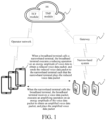
- the at least one broadband terminal 1 is connected with the IMS 2 through an operator network.
- the at least one narrowband terminal 5 is connected with the narrowband system 4.
- the narrowband system 4 is connected with the IMS 2 through the PDTGW 3.
- both the narrowband terminal and the broadband terminal can initiate calls.
- the call may be in two forms: a group call or a single call.
- the broadband terminal or the narrowband terminal needs to call another narrowband terminal or broadband terminal. This is a single call.
- a plurality of terminals may form a group, and a narrowband terminal or broadband terminal in the group may call all the other terminals in the group. This is a group call.
- the processing process for a group call is introduced.
- the processing process for a group call is divided into two embodiments according to different call initiators. Descriptions are made in embodiment 1 taking a broadband terminal as a group call initiator. Descriptions are made in embodiment 2 taking a narrowband terminal as a group call initiator.
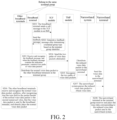
- the broadband terminal has established a communication link with the IMS in advance.
- the broadband terminal may send a call message to the TCF module in the IMS when needing to initiate a group call.
- the call message includes a group call type and a terminal group identifier.
- the group call type may notify the TCF module that the current call is a group call.
- the terminal group identifier may notify the TCF module that the current group call is made within a terminal group corresponding to the terminal group identifier.
- the TCF module When the terminal group type is the pure broadband type, the TCF module generates a feedback message, the feedback message indicates that the terminal group type is the pure broadband type.
- the broadband terminal constructs two paths of the voice data packet.
- a purpose of adding in the packet headers and changing the type fields into different numerical values is to recognize where the two paths of voice data packets are to be sent based on the type field.
- the first numerical value represents that the reduced voice data packet is to be sent to narrowband terminals.
- the second numerical value represents that the normal voice data packet is to be sent to broadband terminals.
- a synchronization source flag bit SSRC may be used for distinguishing.
- Synchronization source flag bits SSRC in the two paths of voice data packets are different data values. For example, an SSRC value of the first path is a randomly generated data value, and an SSRC value of the other path is the SSRC value of the first path plus one.
- step S204 the broadband terminal sends the two paths of voice data packets alternately to a TMF module in the IMS.
- step S205 the TMF module recognizes the two paths of voice data packets, distributes the reduced voice data packet to a narrowband system in the terminal group, and distributes the normal voice data packet to the other broadband terminals in the terminal group.
- the voice data packet is sent to the narrowband system through a PDTGW after the type field in the packet header is deleted. If the type field in the packet header of one path of voice data packet is the second numerical value, the voice data packet is sent to the other broadband terminals in the terminal group through an operator system.
- step S206 the other broadband terminals receive and recognize the normal voice data packet, and confirm, after recognizing that the type field in the packet header of the normal voice data packet is the second numerical value, that the voice data packet is sent by the broadband terminal, and directly play the normal voice data packet.
- step S207 the narrowband system analyzes the reduced voice data packet to obtain voice data, and sends the voice data to a narrowband terminal.
- the narrowband system after analyzing the reduced voice data packet to obtain voice data, sends the voice data to the narrowband terminal in the terminal group.
- step S208 the narrowband terminal in the terminal group receives and plays the voice data corresponding to the reduced voice data packet sent by the narrowband system.
- the broadband terminal executes a reducing operation on an energy amplitude of voice data to obtain a reduced voice data packet, and sends the reduced voice data packet to the narrowband terminal such that the narrowband terminal plays the reduced voice data packet. As such, whistling at the narrowband terminal is avoided.
- the broadband terminal sends two paths of voice data packets alternately to one port of the TMF module, which may reduce occupied network resources of the TMF module as compared with occupying two ports of the TMF module.
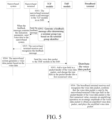
- embodiment 2 of a voice communication method under a broadband and narrowband intercommunication environment is illustrated, which may include the following steps.
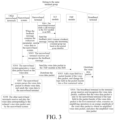
- a narrowband terminal sends a call message to a TCF module in an IMS, the call message including a group call type and a terminal group identifier in case of a group call.
- the TCF module In step S302, the TCF module generates and sends a feedback message to the narrowband terminal after determining a terminal group type based on the terminal group identifier, where when the terminal group type is a mixed group including both broadband terminals and narrowband terminals, the feedback message contains an indication parameter indicating the mixed group.
- steps S301 and S303 are similar to those of steps S201 and S202, and will not be elaborated herein.
- step S303 the narrowband terminal receives and recognizes the feedback message, and when the feedback message contains the indication parameter, sends voice data to a narrowband system.
- step S304 the narrowband system generates a voice data packet based on the voice data, and sends the voice data packet to a TMF module in the IMS.
- step S305 the TMF module adds a type field in a packet header of the voice data packet, changes the type field in the packet header into a first numerical value, and distributes the voice data packet to a broadband terminal in the terminal group and the narrowband system.
- the voice data packet transmitted by the narrowband system through a gateway does not contain any type field. Therefore, for facilitating the processing of the TMF module, the TMF module, when recognizing that the voice data packet is transmitted from a narrowband port, adds a type field for the voice data packet, and changes the type field in a packet header into a first numerical value to indicate that the voice data packet is from the narrowband terminal.
- the process that the TMF module distributes the voice data packet to a broadband terminal and other narrowband terminals in the terminal group includes the following operations.
- the TMF module recognizes the packet header of the voice data packet. If the type field in the packet header of the voice data packet is the first numerical value, the type field in the packet header of the voice data packet is deleted, and the voice data packet is distributed to the narrowband system. Details refer to the detailed explanations about step S205, and elaborations are omitted herein.
- step S306 the broadband terminal in the terminal group receives and recognizes the voice data packet, confirms that the voice data packet is sent by the narrowband terminal if the type field in the packet header of the voice data packet is the first numerical value, executes an amplifying operation on an energy amplitude of the voice data packet to obtain an amplified voice data packet, and plays the amplified voice data packet.
- the broadband terminal In order to solve the problem of relatively low volume if the voice data packet is played directly, the broadband terminal, after recognizing the voice data packet sent by the narrowband terminal, executes an amplifying operation on an energy amplitude of the voice data packet, and plays an amplified voice data packet. As such, the problem of relatively low volume at a broadband terminal side when a narrowband terminal calls a broadband terminal is solved.
- an amplification factor determined by multiple tests is pre-stored in the broadband terminal, and the broadband terminal may execute the amplifying operation on the energy amplitude according to the amplification factor, thereby obtaining the amplified voice data packet.
- step S307 the narrowband system analyzes the voice data packet to obtain voice data, and sends the voice data to a narrowband terminal.
- the narrowband system after analyzing the reduced voice data packet to obtain voice data, sends the voice data to the narrowband terminal in the terminal group.
- embodiment 2 has the following beneficial effects.
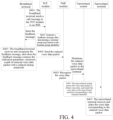
- FIG. 4 embodiment 3 of a voice communication method under a broadband and narrowband intercommunication environment is illustrated. The following steps may be included.
- a broadband terminal sends a call message to a TCF module in an IMS, the call message including a single call type and a terminal identifier in case of a single call.
- the broadband terminal has established a communication link with the IMS in advance.
- the broadband terminal may send a call message to the TCF module in the IMS when needing to initiating a single call.
- the call message includes a single call type and a terminal identifier.
- the single call type may notify the TCF module that the current call is a single call.
- the terminal identifier may notify the TCF module of a terminal that the current single call is initiated to.
- step S402 the TCF module generates and sends a feedback message to the broadband terminal after determining a terminal type based on the terminal identifier, the feedback message containing an indication parameter indicating a narrowband terminal when the terminal type is narrowband terminal.
- the TCF module When the terminal type is narrowband terminal, the TCF module generates a feedback message, the feedback message indicating that the terminal type is narrowband terminal For example, a pdtcall parameter is added in the feedback message to indicate that the terminal type is narrowband terminal.
- step S403 the broadband terminal receives and recognizes the feedback message, and when the feedback message contains the indication parameter, constructs one path of reduced voice data packet with a reduced energy amplitude.
- the broadband terminal constructs one path of voice data packet.
- One path of voice data packet is a reduced voice data packet with a reduced energy amplitude, and is used to be sent to a narrowband terminal in the terminal group.
- the broadband terminal enables one coder.
- Voice data is collected, a reducing process is executed on an energy amplitude of the voice data, and voice data with a reduced energy amplitude is sent to one path of coder.
- the coder adds a type field in a packet header, changes the type field in the packet header into a first numerical value, and generates the reduced voice data packet based on the packet header and the voice data.
- a reducing factor determined by multiple tests is pre-stored in the broadband terminal, and the broadband terminal may execute a reducing operation on the energy amplitude according to the reducing factor, thereby obtaining the reduced voice data packet.
- the normal energy amplitude approximately ranges from 14,000 to -24,000
- the reduced energy amplitude approximately ranges from 2,000 to -3,000.
- the type field is added in the packet header, and both the TMF module and the terminal determine whether the voice data packet is to be sent to the broadband terminal or the narrowband terminal according to the type field. If the type field is 0, it indicates that the voice data packet is to be forwarded to both the broadband terminal and the narrowband terminal. If the type field is 1, it indicates that the voice data packet is to be sent to the narrowband terminal. If the type field is 2, it indicates that the voice data packet is to be sent to the broadband terminal.
- step S404 the broadband terminal sends the reduced voice data packet to a TMF module in the IMS.
- the TMF module in the IMS provides a port for the broadband terminal.
- the broadband terminal may send the voice data packet to one port of the TMF module.
- step S406 the narrowband system analyzes the voice data packet to obtain voice data, and sends the voice data to the narrowband terminal corresponding to the terminal identifier.
- the functions of the method embodiments may also be stored in a readable storage medium of a computing device.
- the software product is stored in a storage medium, and includes several instructions for instructing a computing device (which may be a personal computer, a server, a mobile computing device, or a network device) to perform all or some of the steps of the methods described in the embodiments of the present invention.
- the foregoing storage medium includes: various media capable of storing program codes such as a U disk, a mobile hard disk, a Read-Only Memory (ROM), a Random Access Memory (RAM), a magnetic disk, or an optical disk.
Landscapes
- Engineering & Computer Science (AREA)
- Signal Processing (AREA)
- Multimedia (AREA)
- Computer Networks & Wireless Communication (AREA)
- Quality & Reliability (AREA)
- Health & Medical Sciences (AREA)
- Audiology, Speech & Language Pathology (AREA)
- Human Computer Interaction (AREA)
- Physics & Mathematics (AREA)
- Acoustics & Sound (AREA)
- Computational Linguistics (AREA)
- Telephonic Communication Services (AREA)
- Data Exchanges In Wide-Area Networks (AREA)
Claims (12)
- Sprachkommunikationsverfahren in einer Breitband- und Schmalband-Interkommunikationsumgebung, mit:wenn ein Breitbandendgerät (1) ein Schmalbandendgerät (5) anruft, Durchführen einer Reduzierungsoperation an einer Energieamplitude von Sprachdaten durch das Breitbandendgerät, um ein reduziertes Sprachdatenpaket zu erhalten, und Senden des reduzierten Sprachdatenpakets, durch das Breitbandendgerät, an das Schmalbandendgerät, damit das Schmalbandendgerät das reduzierte Sprachdatenpaket wiedergeben kann; undwenn das Schmalbandendgerät das Breitbandendgerät anruft, Empfangen eines Sprachdatenpakets, Durchführen einer Verstärkungsoperation an einer Energieamplitude des Sprachdatenpakets, um ein verstärktes Sprachdatenpaket zu erhalten, und Wiedergeben des verstärkten Sprachdatenpakets durch das Breitbandendgerät.
- Verfahren nach Anspruch 1, wobei der Anruf einen Gruppenanruf oder einen Einzelanruf umfasst, wobei, wenn der Anruf der Gruppenanruf ist, das Verfahren ferner umfasst:
Sammeln der Sprachdaten, um ein normales Sprachdatenpaket zu erzeugen, und Senden des normalen Sprachdatenpakets an andere Breitbandendgeräte in dem Gruppenanruf durch das Breitbandendgerät. - Verfahren nach Anspruch 2, wobeidas Ausführen der Reduzierungsoperation an der Energieamplitude der Sprachdaten zum Erhalten des reduzierten Sprachdatenpakets durch das Breitbandendgerät umfasst: Sammeln der Sprachdaten, Ausführen eines Reduzierungsprozesses an der Energieamplitude der Sprachdaten und Senden der Sprachdaten mit der reduzierten Energieamplitude an einen Codierer, so dass der Codierer ein Typfeld in einem Paketkopf hinzufügt, das Typfeld in dem Paketkopf in einen ersten numerischen Wert ändert und das reduzierte Sprachdatenpaket auf der Grundlage des Paketkopfes und der Sprachdaten erzeugt; undSammeln der Sprachdaten zum Erzeugen des normalen Sprachdatenpakets durch das Breitbandendgerät umfasst: Sammeln der Sprachdaten, Senden der Sprachdaten an einen weiteren Codierer, Hinzufügen eines Typfeldes in einem Paketkopf, Ändern des Typfeldes in dem Paketkopf in einen zweiten numerischen Wert und Erzeugen des normalen Sprachdatenpakets auf der Grundlage des Paketkopfes und der Sprachdaten.
- Sprachkommunikationssystem in einer Breitband- und Schmalband-Interkommunikationsumgebung, mit:einem Breitbandendgerät (1), einem Breitbandsystem, einem Schmalbandendgerät (5), einem Schmalbandsystem (4), einem Internetprotokoll, IP, einem Multimedia-Subsystem, IMS (2), wobei, wenn das Breitbandendgerät das Schmalbandendgerät anruft, das Breitbandendgerät eine Reduzierungsoperation an einer Energieamplitude von Sprachdaten ausführt, um ein reduziertes Sprachdatenpaket zu erhalten, und wobei nach der sequentiellen Verarbeitung durch das Breitbandsystem, das IMS und das Schmalbandsystem das reduzierte Sprachdatenpaket an das Schmalbandendgerät zur Wiedergabe des reduzierten Sprachdatenpakets durch das Schmalbandendgerät gesendet wird; undwobei, wenn das Schmalbandendgerät das Breitbandendgerät anruft, das Breitbandendgerät ein Sprachdatenpaket empfängt, nachdem es sequenziell von dem Schmalbandsystem, dem IMS und dem Breitbandsystem verarbeitet wurde, eine Verstärkungsoperation an einer Energieamplitude des Sprachdatenpakets durchführt, um ein verstärktes Sprachdatenpaket zu erhalten, und das verstärkte Sprachdatenpaket wiedergibt.
- Verfahren nach Anspruch 2, ferner mit:Senden (S201) einer Rufmeldung durch das Breitbandendgerät an ein Trunking-Steuerungsfunktionsmodul (TCF) in einem Internetprotokoll-, IP-, Multimedia-Subsystem (IMS), wobei die Rufmeldung einen Gruppenanruftyp und eine Endgerätgruppen-Kennung im Falle eines Gruppenanrufs aufweist;Erzeugen und Senden (S202) einer Rückmeldungsnachricht durch das TCF-Modul an das Breitbandendgerät nach Bestimmen eines Endgerätgruppentyps auf der Grundlage der Endgerätgruppen-Kennung, wobei die Rückmeldungsnachricht, wenn der Endgerätgruppentyp eine gemischte Gruppe ist, die sowohl ein Breitbandendgerät als auch ein Schmalbandendgerät umfasst, einen Indikationsparameter enthält, der die gemischte Gruppe angibt;Empfangen und Erkennen (S203) der Rückmeldungsnachricht durch das Breitbandendgerät, Erstellen von zwei Pfaden für Sprachdatenpakete, wenn die Rückmeldungsnachricht den Indikationsparameter enthält, und Senden (S204) der beiden Pfade für Sprachdatenpakete abwechselnd an ein Trunking-Medienfunktions- (TMF)-Modul in dem IMS, wobei ein Pfad für Sprachdatenpakete ein reduziertes Sprachdatenpaket mit einer reduzierten Energieamplitude ist, während der andere Pfad für Sprachdatenpakete ein normales Sprachdatenpaket mit einer normalen Energieamplitude ist; undErkennen (S205) der beiden Pfade von Sprachdatenpaketen durch das TMF-Modul, Verteilen des reduzierten Sprachdatenpakets an ein Schmalbandendgerät in der Endgerätgruppe und Verteilen des normalen Sprachdatenpakets an andere Breitbandendgeräte in der Endgerätgruppe.
- Verfahren nach Anspruch 5, wobei das Erstellen zweier Pfade von Sprachdatenpaketen umfasst:Sammeln von Sprachdaten durch das Breitbandendgerät und Aktivieren zweier Codierer;Ausführen eines Reduzierungsprozesses für eine Energieamplitude der Sprachdaten, Senden von Sprachdaten mit einer reduzierten Energieamplitude an einen Pfad des Codierers, Hinzufügen eines Typfeldes in einem Paketkopf, Ändern des Typfeldes in dem Paketkopf in einen ersten numerischen Wert und Erzeugen des reduzierten Sprachdatenpakets auf der Grundlage des Paketkopfes und der Sprachdaten; undSenden der Sprachdaten an den anderen Codiererpfad, Hinzufügen eines Typfeldes in einem Paketkopf, Ändern des Typfeldes in dem Paketkopf in einen zweiten numerischen Wert und Erzeugen des normalen Sprachdatenpakets auf der Grundlage des Paketkopfes und der Sprachdaten.
- Verfahren nach Anspruch 6, wobei das Erkennen der beiden Pfade von Sprachdatenpaketen durch das TMF-Modul und das Verteilen des reduzierten Sprachdatenpakets an ein Schmalbandendgerät in der Endgerätgruppe umfasst:Erkennen der Paketköpfe der beiden Pfade von Sprachdatenpaketen durch das TMF-Modul;Löschen des Typfelds in dem Paketkopf des Sprachdatenpakets, wenn das Typfeld in dem Paketkopf eines Pfads von Sprachdatenpaketen den ersten numerischen Wert hat, undanschließendes Verteilen des Sprachdatenpakets an ein Schmalbandsystem; undnach dem Erkennen des Sprachdatenpakets zum Erhalten der Sprachdaten, Senden der Sprachdaten durch das Schmalbandsystem an das Schmalbandendgerät in der Endgerätgruppe.
- Verfahren nach Anspruch 6, wobei nach dem Verteilen des normalen Sprachdatenpakets an andere Breitbandendgeräte in der Endgerätgruppe das Verfahren ferner umfasst:Empfangen und Erkennen (S206) des normalen Sprachdatenpakets durch die anderen Breitbandendgeräte; undBestätigen (S206), nachdem erkannt wurde, dass das Typfeld in dem Paketkopf des normalen Sprachdatenpakets der zweite numerische Wert ist, dass das Sprachdatenpaket von dem Breitbandendgerät gesendet wurde, und direktes Wiedergeben des normalen Sprachdatenpakets.
- Verfahren nach Anspruch 2, das ferner umfasst:Senden (S301) einer Rufmeldung durch das Schmalbandendgerät an ein Trunking-Steuerungsfunktions-, TCF, Modul in einem Internetprotokoll-, IP-, Multimedia-Subsystem, IMS, wobei die Rufnachricht einen Gruppenruf-Typ und eine Endgerätgruppen-Kennung im Falle eines Gruppenrufs umfasst, Erzeugen und Senden (S302) einer Rückmeldungsnachricht durch das TCF-Modul an das Schmalbandendgerät nach Bestimmen eines Endgerätgruppentyps auf der Grundlage der Endgerätgruppen-Kennung, wobei, wenn der Endgerätgruppentyp eine gemischte Gruppe ist, die sowohl ein Breitbandendgerät als auch ein Schmalbandendgerät umfasst, die Rückmeldungsnachricht einen Indikationsparameter enthält, der die gemischte Gruppe angibt;Empfangen und Erkennen (S303) der Rückmeldungsnachricht durch das Schmalbandendgerät und, wenn die Rückmeldungsnachricht den Indikationsparameter enthält, Senden von Sprachdaten an ein Schmalbandsystem, so dass das Schmalbandsystem ein Sprachdatenpaket erzeugt (S304) und das Sprachdatenpaket über ein Gateway an ein Trunking-Medienfunktions- (TMF-) Modul in dem IMS sendet;Hinzufügen (S305) eines Typfeldes in einem Paketkopf des Sprachdatenpakets durch das TMF-Modul, Ändern des Typfeldes in dem Paketkopf in einen ersten numerischen Wert und Verteilen des Sprachdatenpakets an ein Breitbandendgerät und andere Schmalbandendgeräte in der Endgerätgruppe; undEmpfangen und Erkennen (S306) des Sprachdatenpakets durch das Breitbandendgerät in der Endgerätgruppe, Bestätigen, dass das Sprachdatenpaket von dem Schmalbandendgerät gesendet wurde, wenn das Typfeld in dem Paketkopf des Sprachdatenpakets den ersten numerischen Wert aufweist, Ausführen einer Verstärkungsoperation an einer Energieamplitude des Sprachdatenpakets, um ein verstärktes Sprachdatenpaket zu erhalten, und Wiedergeben des verstärkten Sprachdatenpakets.
- Verfahren nach Anspruch 9, wobei das Verteilen des Sprachdatenpakets an ein Breitbandendgerät und andere Schmalbandendgeräte in der Endgerätgruppe umfasst:Erkennen des Paketkopfes des Sprachdatenpakets durch das TMF-Modul; undLöschen, wenn das Typfeld in dem Paketkopf des Sprachdatenpakets den ersten numerischen Wert hat, des Typfelds in dem Paketkopf des Sprachdatenpakets und anschließendes Verteilen des Sprachdatenpakets an das Schmalbandsystem.
- Verfahren nach Anspruch 2, ferner mit:Senden (S401) einer Rufmeldung durch das Breitbandendgerät an ein Trunking-Steuerungsfunktions-, TCF-, Modul in einem Internetprotokoll-, IP-, Multimedia-Subsystem, IMS, wobei die Rufmeldung im Falle eines einzelnen Anrufs einen einzelnen Anruftyp und eine Endgerätekennung umfasst;Erzeugen und Senden (S402) einer Rückmeldungsnachricht durch das TCF-Modul an das Breitbandendgerät nach Bestimmen eines Endgerätetyps auf der Grundlage der Endgerätekennung, wobei die Rückmeldungsnachricht, wenn der Endgerätetyp ein Schmalbandendgerät ist, einen Indikationsparameter enthält, der das Schmalbandendgerät angibt;Empfangen und Erkennen (S403) der Rückmeldungsnachricht des TCF-Moduls durch das Breitbandendgerät, Erstellen eines Pfads für ein reduziertes Sprachdatenpaket mit einer reduzierten Energieamplitude, wenn die Rückmeldungsnachricht den Indikationsparameter enthält, und Senden (S404) des reduzierten Sprachdatenpakets an ein TMF-Modul in dem IMS; undErkennen (S405) des reduzierten Sprachdatenpakets durch das TMF-Modul und Senden des reduzierten Sprachdatenpakets an das der Endgerätekennung entsprechende Schmalbandendgerät.
- Verfahren nach Anspruch 2, mit:Senden (S501) einer Rufmeldung durch ein Schmalbandendgerät an ein Trunking-Steuerungsfunktions-, TCF-, Modul in einem Internetprotokoll-, IP-, Multimedia-Subsystem, IMS, wobei die Rufmeldung im Falle eines einzelnen Anrufs einen einzelnen Anruftyp und eine Endgerätekennung umfasst;Erzeugen und Senden (S502) einer Rückmeldungsnachricht durch das TCF-Modul an das Schmalbandendgerät nach Bestimmen eines Endgerätetyps auf der Grundlage der Endgerätekennung, wobei die Rückmeldungsnachricht, wenn der Endgerätetyp ein Breitbandendgerät ist, einen Indikationsparameter enthält, der das Breitbandendgerät angibt;Empfangen und Erkennen (S503) der Rückmeldungsnachricht durch das Schmalbandendgerät und, wenn die Rückmeldungsnachricht den Indikationsparameter enthält, Senden von Sprachdaten an ein Schmalbandsystem, so dass das Schmalbandsystem ein Sprachdatenpaket erzeugt und das Sprachdatenpaket über ein Gateway an ein Trunking-Medienfunktions- (TMF-) Modul in dem IMS sendet;Hinzufügen (S505) eines Typfeldes in einem Paketkopf des Sprachdatenpakets durch das TMF-Modul, Ändern des Typfeldes in dem Paketkopf in einen ersten numerischen Wert und Verteilen des Sprachdatenpakets an das Breitbandendgerät, das der Endgerätekennung entspricht; undEmpfangen und Erkennen (S506) des Sprachdatenpakets durch das Breitbandendgerät, Bestätigen, dass das Sprachdatenpaket von dem Schmalbandendgerät gesendet wurde, wenn das Typfeld in dem Paketkopf des Sprachdatenpakets den ersten numerischen Wert aufweist, Ausführen einer Verstärkungsoperation an einer Energieamplitude des Sprachdatenpakets, um ein verstärktes Sprachdatenpaket zu erhalten, und Wiedergeben des verstärkten Sprachdatenpakets.
Applications Claiming Priority (1)
| Application Number | Priority Date | Filing Date | Title |
|---|---|---|---|
| PCT/CN2019/115655 WO2021087734A1 (zh) | 2019-11-05 | 2019-11-05 | 宽窄带互通环境下语音通讯方法及系统 |
Publications (3)
| Publication Number | Publication Date |
|---|---|
| EP4057648A1 EP4057648A1 (de) | 2022-09-14 |
| EP4057648A4 EP4057648A4 (de) | 2023-02-15 |
| EP4057648B1 true EP4057648B1 (de) | 2025-07-02 |
Family
ID=75849180
Family Applications (1)
| Application Number | Title | Priority Date | Filing Date |
|---|---|---|---|
| EP19951257.5A Active EP4057648B1 (de) | 2019-11-05 | 2019-11-05 | Verfahren und system zur sprachkommunikation in einer breitbandigen und schmalbandigen interkommunikationsumgebung |
Country Status (3)
| Country | Link |
|---|---|
| US (1) | US12335777B2 (de) |
| EP (1) | EP4057648B1 (de) |
| WO (1) | WO2021087734A1 (de) |
Families Citing this family (4)
| Publication number | Priority date | Publication date | Assignee | Title |
|---|---|---|---|---|
| CN114374673B (zh) * | 2021-12-15 | 2023-07-25 | 东方通信股份有限公司 | Pdt跨系统互联中信令网关选择最优媒体网关的方法 |
| CN116209101B (zh) * | 2023-05-06 | 2023-09-22 | 天津七一二移动通信有限公司 | 基于dmr系统和tetra系统互通网关的实现方法 |
| CN117496985A (zh) * | 2023-10-27 | 2024-02-02 | 海能达通信股份有限公司 | 音频处理方法及终端设备 |
| CN120434759A (zh) * | 2025-07-03 | 2025-08-05 | 福州市公安局 | 一种用于宽窄互联场景的语音增益处理方法、系统及介质 |
Family Cites Families (13)
| Publication number | Priority date | Publication date | Assignee | Title |
|---|---|---|---|---|
| US8335196B2 (en) * | 2006-09-19 | 2012-12-18 | Qualcomm Incorporated | Accommodating wideband and narrowband communication devices |
| JP5267257B2 (ja) * | 2009-03-23 | 2013-08-21 | 沖電気工業株式会社 | 音声ミキシング装置、方法及びプログラム、並びに、音声会議システム |
| US9349383B2 (en) * | 2013-01-29 | 2016-05-24 | 2236008 Ontario Inc. | Audio bandwidth dependent noise suppression |
| CN103581841B (zh) * | 2013-11-28 | 2016-08-17 | 哈尔滨工业大学 | 基于窄带空口实现宽窄带资源动态分配的系统及方法 |
| US9293143B2 (en) * | 2013-12-11 | 2016-03-22 | Qualcomm Incorporated | Bandwidth extension mode selection |
| WO2015129181A1 (ja) * | 2014-02-28 | 2015-09-03 | パナソニック インテレクチュアル プロパティ コーポレーション オブ アメリカ | 音声通信端末、中間ノード、処理装置、接続方法およびプログラム |
| CN108390816B (zh) * | 2015-09-23 | 2021-05-14 | 腾讯科技(深圳)有限公司 | 网络通话方法和装置 |
| CN105872999B (zh) * | 2016-05-27 | 2020-02-28 | 海能达通信股份有限公司 | 一种小区切换方法,终端以及核心网设备 |
| CN205864751U (zh) * | 2016-06-23 | 2017-01-04 | 上海三吉电子工程有限公司 | 宽带集群与窄带专网语音互通设备 |
| US11171999B2 (en) * | 2016-07-21 | 2021-11-09 | Qualcomm Incorporated | Methods and apparatus for use of compact concurrent codecs in multimedia communications |
| CN106331380B (zh) * | 2016-10-28 | 2019-06-28 | 大唐电信科技股份有限公司 | Android平台宽窄带融合对讲语音网关控制方法及系统 |
| CN109428854A (zh) * | 2017-08-22 | 2019-03-05 | 普天信息技术有限公司 | 一种基于宽窄带融合的呼叫处理方法、装置及系统 |
| US12609127B2 (en) * | 2022-11-03 | 2026-04-21 | Merrill Solomon | Neutralizing distortion in audio data |
-
2019
- 2019-11-05 EP EP19951257.5A patent/EP4057648B1/de active Active
- 2019-11-05 WO PCT/CN2019/115655 patent/WO2021087734A1/zh not_active Ceased
-
2022
- 2022-05-03 US US17/735,249 patent/US12335777B2/en active Active
Also Published As
| Publication number | Publication date |
|---|---|
| EP4057648A1 (de) | 2022-09-14 |
| US20230118085A1 (en) | 2023-04-20 |
| EP4057648A4 (de) | 2023-02-15 |
| WO2021087734A1 (zh) | 2021-05-14 |
| US12335777B2 (en) | 2025-06-17 |
Similar Documents
| Publication | Publication Date | Title |
|---|---|---|
| EP4057648B1 (de) | Verfahren und system zur sprachkommunikation in einer breitbandigen und schmalbandigen interkommunikationsumgebung | |
| KR20080094099A (ko) | 무선 디바이스를 호출할 때 조기 통지를 제공하는 시스템 및 방법 | |
| KR20080059312A (ko) | 인터넷 프로토콜 애플리케이션들에서 음성에 대한 적응형매체 번들링을 위한 시스템 및 방법 | |
| CN112770269B (zh) | 宽窄带互通环境下语音通讯方法及系统 | |
| MX2008000317A (es) | Sistema y metodo para resolver conflictos en comunicaciones simultaneas multiples en un sistema inalambrico. | |
| CN108199950B (zh) | 语音通讯方法及系统、宽窄带融合终端 | |
| CN105704338A (zh) | 一种混音方法、混音设备及系统 | |
| US8249223B2 (en) | Relay apparatus and memory product | |
| US11070665B2 (en) | Voice over internet protocol processing method and related network device | |
| JP2009194674A (ja) | 通信端末装置および通信端末装置の制御方法 | |
| EP2429256B1 (de) | Verfahren zur aushandlung von message session relay protocol verbindungsparametern | |
| CN103414836B (zh) | 接入基于ip的电话会议的处理方法及装置 | |
| CN113014544B (zh) | 基于webRtc无中心媒体链路建立方法及装置 | |
| CN114727352A (zh) | 信息传输的方法、装置、存储介质及电子设备 | |
| CN110034858B (zh) | 数据包重传方法、装置、移动终端及存储介质 | |
| JP2011029703A (ja) | Sipサーバ装置及び呼接続システム | |
| CN108616496A (zh) | 多方通话的实现方法、装置、多通终端及网络侧设备 | |
| US20220256031A1 (en) | Voice communication system, voice communication method, and voice communication program | |
| CN102726024B (zh) | Rtp媒体数据的接收、发送方法及装置、处理系统 | |
| CN104219619B (zh) | 业务协商方法、业务协商系统和通信终端 | |
| CN108124243A (zh) | 一种多通路终端多方通话方法及装置 | |
| CN114339886B (zh) | 一种数据流的发送方法、装置、存储介质和基站 | |
| CN112653503B (zh) | 一种天通卫星话音信道复用方法 | |
| KR101010867B1 (ko) | 녹취 제어 장치 및 방법 | |
| CN104244338B (zh) | 业务协商方法、系统和通信终端 |
Legal Events
| Date | Code | Title | Description |
|---|---|---|---|
| STAA | Information on the status of an ep patent application or granted ep patent |
Free format text: STATUS: THE INTERNATIONAL PUBLICATION HAS BEEN MADE |
|
| PUAI | Public reference made under article 153(3) epc to a published international application that has entered the european phase |
Free format text: ORIGINAL CODE: 0009012 |
|
| STAA | Information on the status of an ep patent application or granted ep patent |
Free format text: STATUS: REQUEST FOR EXAMINATION WAS MADE |
|
| 17P | Request for examination filed |
Effective date: 20220503 |
|
| AK | Designated contracting states |
Kind code of ref document: A1 Designated state(s): AL AT BE BG CH CY CZ DE DK EE ES FI FR GB GR HR HU IE IS IT LI LT LU LV MC MK MT NL NO PL PT RO RS SE SI SK SM TR |
|
| RIC1 | Information provided on ipc code assigned before grant |
Ipc: G10L 21/0316 20130101ALI20220920BHEP Ipc: G10L 19/00 20130101ALI20220920BHEP Ipc: H04W 4/10 20090101AFI20220920BHEP |
|
| DAV | Request for validation of the european patent (deleted) | ||
| DAX | Request for extension of the european patent (deleted) | ||
| A4 | Supplementary search report drawn up and despatched |
Effective date: 20230117 |
|
| RIC1 | Information provided on ipc code assigned before grant |
Ipc: G10L 21/0316 20130101ALI20230111BHEP Ipc: G10L 19/00 20000101ALI20230111BHEP Ipc: H04W 4/10 20090101AFI20230111BHEP |
|
| REG | Reference to a national code |
Ref country code: DE Ref legal event code: R079 Free format text: PREVIOUS MAIN CLASS: H04W0004100000 Ipc: H04W0004080000 Ref country code: DE Ref legal event code: R079 Ref document number: 602019072159 Country of ref document: DE Free format text: PREVIOUS MAIN CLASS: H04W0004100000 Ipc: H04W0004080000 |
|
| GRAP | Despatch of communication of intention to grant a patent |
Free format text: ORIGINAL CODE: EPIDOSNIGR1 |
|
| STAA | Information on the status of an ep patent application or granted ep patent |
Free format text: STATUS: GRANT OF PATENT IS INTENDED |
|
| RIC1 | Information provided on ipc code assigned before grant |
Ipc: H04W 4/08 20090101AFI20250213BHEP |
|
| INTG | Intention to grant announced |
Effective date: 20250221 |
|
| GRAS | Grant fee paid |
Free format text: ORIGINAL CODE: EPIDOSNIGR3 |
|
| GRAA | (expected) grant |
Free format text: ORIGINAL CODE: 0009210 |
|
| STAA | Information on the status of an ep patent application or granted ep patent |
Free format text: STATUS: THE PATENT HAS BEEN GRANTED |
|
| AK | Designated contracting states |
Kind code of ref document: B1 Designated state(s): AL AT BE BG CH CY CZ DE DK EE ES FI FR GB GR HR HU IE IS IT LI LT LU LV MC MK MT NL NO PL PT RO RS SE SI SK SM TR |
|
| REG | Reference to a national code |
Ref country code: GB Ref legal event code: FG4D |
|
| REG | Reference to a national code |
Ref country code: CH Ref legal event code: EP |
|
| REG | Reference to a national code |
Ref country code: DE Ref legal event code: R096 Ref document number: 602019072159 Country of ref document: DE |
|
| REG | Reference to a national code |
Ref country code: IE Ref legal event code: FG4D |
|
| REG | Reference to a national code |
Ref country code: NL Ref legal event code: MP Effective date: 20250702 |
|
| PG25 | Lapsed in a contracting state [announced via postgrant information from national office to epo] |
Ref country code: PT Free format text: LAPSE BECAUSE OF FAILURE TO SUBMIT A TRANSLATION OF THE DESCRIPTION OR TO PAY THE FEE WITHIN THE PRESCRIBED TIME-LIMIT Effective date: 20251103 |
|
| PG25 | Lapsed in a contracting state [announced via postgrant information from national office to epo] |
Ref country code: NL Free format text: LAPSE BECAUSE OF FAILURE TO SUBMIT A TRANSLATION OF THE DESCRIPTION OR TO PAY THE FEE WITHIN THE PRESCRIBED TIME-LIMIT Effective date: 20250702 |
|
| REG | Reference to a national code |
Ref country code: AT Ref legal event code: MK05 Ref document number: 1810686 Country of ref document: AT Kind code of ref document: T Effective date: 20250702 |
|
| PG25 | Lapsed in a contracting state [announced via postgrant information from national office to epo] |
Ref country code: IS Free format text: LAPSE BECAUSE OF FAILURE TO SUBMIT A TRANSLATION OF THE DESCRIPTION OR TO PAY THE FEE WITHIN THE PRESCRIBED TIME-LIMIT Effective date: 20251102 |
|
| PGFP | Annual fee paid to national office [announced via postgrant information from national office to epo] |
Ref country code: DE Payment date: 20251117 Year of fee payment: 7 |
|
| PGFP | Annual fee paid to national office [announced via postgrant information from national office to epo] |
Ref country code: GB Payment date: 20251126 Year of fee payment: 7 |
|
| PG25 | Lapsed in a contracting state [announced via postgrant information from national office to epo] |
Ref country code: NO Free format text: LAPSE BECAUSE OF FAILURE TO SUBMIT A TRANSLATION OF THE DESCRIPTION OR TO PAY THE FEE WITHIN THE PRESCRIBED TIME-LIMIT Effective date: 20251002 |
|
| REG | Reference to a national code |
Ref country code: LT Ref legal event code: MG9D |
|
| PG25 | Lapsed in a contracting state [announced via postgrant information from national office to epo] |
Ref country code: AT Free format text: LAPSE BECAUSE OF FAILURE TO SUBMIT A TRANSLATION OF THE DESCRIPTION OR TO PAY THE FEE WITHIN THE PRESCRIBED TIME-LIMIT Effective date: 20250702 |
|
| PG25 | Lapsed in a contracting state [announced via postgrant information from national office to epo] |
Ref country code: FI Free format text: LAPSE BECAUSE OF FAILURE TO SUBMIT A TRANSLATION OF THE DESCRIPTION OR TO PAY THE FEE WITHIN THE PRESCRIBED TIME-LIMIT Effective date: 20250702 |
|
| PG25 | Lapsed in a contracting state [announced via postgrant information from national office to epo] |
Ref country code: HR Free format text: LAPSE BECAUSE OF FAILURE TO SUBMIT A TRANSLATION OF THE DESCRIPTION OR TO PAY THE FEE WITHIN THE PRESCRIBED TIME-LIMIT Effective date: 20250702 |
|
| PGFP | Annual fee paid to national office [announced via postgrant information from national office to epo] |
Ref country code: FR Payment date: 20251127 Year of fee payment: 7 |
|
| PG25 | Lapsed in a contracting state [announced via postgrant information from national office to epo] |
Ref country code: GR Free format text: LAPSE BECAUSE OF FAILURE TO SUBMIT A TRANSLATION OF THE DESCRIPTION OR TO PAY THE FEE WITHIN THE PRESCRIBED TIME-LIMIT Effective date: 20251003 |
|
| PG25 | Lapsed in a contracting state [announced via postgrant information from national office to epo] |
Ref country code: CZ Free format text: LAPSE BECAUSE OF FAILURE TO SUBMIT A TRANSLATION OF THE DESCRIPTION OR TO PAY THE FEE WITHIN THE PRESCRIBED TIME-LIMIT Effective date: 20250702 Ref country code: SE Free format text: LAPSE BECAUSE OF FAILURE TO SUBMIT A TRANSLATION OF THE DESCRIPTION OR TO PAY THE FEE WITHIN THE PRESCRIBED TIME-LIMIT Effective date: 20250702 |
|
| PG25 | Lapsed in a contracting state [announced via postgrant information from national office to epo] |
Ref country code: LV Free format text: LAPSE BECAUSE OF FAILURE TO SUBMIT A TRANSLATION OF THE DESCRIPTION OR TO PAY THE FEE WITHIN THE PRESCRIBED TIME-LIMIT Effective date: 20250702 |
|
| PG25 | Lapsed in a contracting state [announced via postgrant information from national office to epo] |
Ref country code: BG Free format text: LAPSE BECAUSE OF FAILURE TO SUBMIT A TRANSLATION OF THE DESCRIPTION OR TO PAY THE FEE WITHIN THE PRESCRIBED TIME-LIMIT Effective date: 20250702 Ref country code: PL Free format text: LAPSE BECAUSE OF FAILURE TO SUBMIT A TRANSLATION OF THE DESCRIPTION OR TO PAY THE FEE WITHIN THE PRESCRIBED TIME-LIMIT Effective date: 20250702 |
|
| PG25 | Lapsed in a contracting state [announced via postgrant information from national office to epo] |
Ref country code: RS Free format text: LAPSE BECAUSE OF FAILURE TO SUBMIT A TRANSLATION OF THE DESCRIPTION OR TO PAY THE FEE WITHIN THE PRESCRIBED TIME-LIMIT Effective date: 20251002 |
|
| PG25 | Lapsed in a contracting state [announced via postgrant information from national office to epo] |
Ref country code: ES Free format text: LAPSE BECAUSE OF FAILURE TO SUBMIT A TRANSLATION OF THE DESCRIPTION OR TO PAY THE FEE WITHIN THE PRESCRIBED TIME-LIMIT Effective date: 20250702 |
|
| PG25 | Lapsed in a contracting state [announced via postgrant information from national office to epo] |
Ref country code: RO Free format text: LAPSE BECAUSE OF FAILURE TO SUBMIT A TRANSLATION OF THE DESCRIPTION OR TO PAY THE FEE WITHIN THE PRESCRIBED TIME-LIMIT Effective date: 20250702 |
|
| PG25 | Lapsed in a contracting state [announced via postgrant information from national office to epo] |
Ref country code: SM Free format text: LAPSE BECAUSE OF FAILURE TO SUBMIT A TRANSLATION OF THE DESCRIPTION OR TO PAY THE FEE WITHIN THE PRESCRIBED TIME-LIMIT Effective date: 20250702 |
|
| PG25 | Lapsed in a contracting state [announced via postgrant information from national office to epo] |
Ref country code: DK Free format text: LAPSE BECAUSE OF FAILURE TO SUBMIT A TRANSLATION OF THE DESCRIPTION OR TO PAY THE FEE WITHIN THE PRESCRIBED TIME-LIMIT Effective date: 20250702 |
|
| PG25 | Lapsed in a contracting state [announced via postgrant information from national office to epo] |
Ref country code: IT Free format text: LAPSE BECAUSE OF FAILURE TO SUBMIT A TRANSLATION OF THE DESCRIPTION OR TO PAY THE FEE WITHIN THE PRESCRIBED TIME-LIMIT Effective date: 20250702 |