EP4055784B1 - System und verfahren zur klassifizierung und handhabung von voice-over-ip-verkehr - Google Patents
System und verfahren zur klassifizierung und handhabung von voice-over-ip-verkehr Download PDFInfo
- Publication number
- EP4055784B1 EP4055784B1 EP21863086.1A EP21863086A EP4055784B1 EP 4055784 B1 EP4055784 B1 EP 4055784B1 EP 21863086 A EP21863086 A EP 21863086A EP 4055784 B1 EP4055784 B1 EP 4055784B1
- Authority
- EP
- European Patent Office
- Prior art keywords
- call
- parameters
- session
- data
- interest
- Prior art date
- Legal status (The legal status is an assumption and is not a legal conclusion. Google has not performed a legal analysis and makes no representation as to the accuracy of the status listed.)
- Active
Links
Images





Classifications
-
- H—ELECTRICITY
- H04—ELECTRIC COMMUNICATION TECHNIQUE
- H04L—TRANSMISSION OF DIGITAL INFORMATION, e.g. TELEGRAPHIC COMMUNICATION
- H04L12/00—Data switching networks
- H04L12/02—Details
- H04L12/14—Charging, metering or billing arrangements for data wireline or wireless communications
-
- H—ELECTRICITY
- H04—ELECTRIC COMMUNICATION TECHNIQUE
- H04L—TRANSMISSION OF DIGITAL INFORMATION, e.g. TELEGRAPHIC COMMUNICATION
- H04L12/00—Data switching networks
- H04L12/02—Details
- H04L12/14—Charging, metering or billing arrangements for data wireline or wireless communications
- H04L12/1453—Methods or systems for payment or settlement of the charges for data transmission involving significant interaction with the data transmission network
- H04L12/1482—Methods or systems for payment or settlement of the charges for data transmission involving significant interaction with the data transmission network involving use of telephony infrastructure for billing for the transport of data, e.g. call detail record [CDR] or intelligent network infrastructure
-
- H—ELECTRICITY
- H04—ELECTRIC COMMUNICATION TECHNIQUE
- H04L—TRANSMISSION OF DIGITAL INFORMATION, e.g. TELEGRAPHIC COMMUNICATION
- H04L43/00—Arrangements for monitoring or testing data switching networks
- H04L43/02—Capturing of monitoring data
-
- H—ELECTRICITY
- H04—ELECTRIC COMMUNICATION TECHNIQUE
- H04L—TRANSMISSION OF DIGITAL INFORMATION, e.g. TELEGRAPHIC COMMUNICATION
- H04L65/00—Network arrangements, protocols or services for supporting real-time applications in data packet communication
- H04L65/1066—Session management
- H04L65/1076—Screening of IP real time communications, e.g. spam over Internet telephony [SPIT]
-
- H—ELECTRICITY
- H04—ELECTRIC COMMUNICATION TECHNIQUE
- H04L—TRANSMISSION OF DIGITAL INFORMATION, e.g. TELEGRAPHIC COMMUNICATION
- H04L65/00—Network arrangements, protocols or services for supporting real-time applications in data packet communication
- H04L65/40—Support for services or applications
-
- H—ELECTRICITY
- H04—ELECTRIC COMMUNICATION TECHNIQUE
- H04M—TELEPHONIC COMMUNICATION
- H04M15/00—Arrangements for metering, time-control or time indication ; Metering, charging or billing arrangements for voice wireline or wireless communications, e.g. VoIP
-
- H—ELECTRICITY
- H04—ELECTRIC COMMUNICATION TECHNIQUE
- H04M—TELEPHONIC COMMUNICATION
- H04M15/00—Arrangements for metering, time-control or time indication ; Metering, charging or billing arrangements for voice wireline or wireless communications, e.g. VoIP
- H04M15/41—Billing record details, i.e. parameters, identifiers, structure of call data record [CDR]
-
- H—ELECTRICITY
- H04—ELECTRIC COMMUNICATION TECHNIQUE
- H04M—TELEPHONIC COMMUNICATION
- H04M15/00—Arrangements for metering, time-control or time indication ; Metering, charging or billing arrangements for voice wireline or wireless communications, e.g. VoIP
- H04M15/56—Arrangements for metering, time-control or time indication ; Metering, charging or billing arrangements for voice wireline or wireless communications, e.g. VoIP for VoIP communications
-
- H—ELECTRICITY
- H04—ELECTRIC COMMUNICATION TECHNIQUE
- H04M—TELEPHONIC COMMUNICATION
- H04M15/00—Arrangements for metering, time-control or time indication ; Metering, charging or billing arrangements for voice wireline or wireless communications, e.g. VoIP
- H04M15/58—Arrangements for metering, time-control or time indication ; Metering, charging or billing arrangements for voice wireline or wireless communications, e.g. VoIP based on statistics of usage or network monitoring
-
- H—ELECTRICITY
- H04—ELECTRIC COMMUNICATION TECHNIQUE
- H04M—TELEPHONIC COMMUNICATION
- H04M15/00—Arrangements for metering, time-control or time indication ; Metering, charging or billing arrangements for voice wireline or wireless communications, e.g. VoIP
- H04M15/80—Rating or billing plans; Tariff determination aspects
- H04M15/8016—Rating or billing plans; Tariff determination aspects based on quality of service [QoS]
-
- H—ELECTRICITY
- H04—ELECTRIC COMMUNICATION TECHNIQUE
- H04M—TELEPHONIC COMMUNICATION
- H04M15/00—Arrangements for metering, time-control or time indication ; Metering, charging or billing arrangements for voice wireline or wireless communications, e.g. VoIP
- H04M15/82—Criteria or parameters used for performing billing operations
- H04M15/8214—Data or packet based
-
- H—ELECTRICITY
- H04—ELECTRIC COMMUNICATION TECHNIQUE
- H04M—TELEPHONIC COMMUNICATION
- H04M15/00—Arrangements for metering, time-control or time indication ; Metering, charging or billing arrangements for voice wireline or wireless communications, e.g. VoIP
- H04M15/82—Criteria or parameters used for performing billing operations
- H04M15/8228—Session based
-
- H—ELECTRICITY
- H04—ELECTRIC COMMUNICATION TECHNIQUE
- H04M—TELEPHONIC COMMUNICATION
- H04M3/00—Automatic or semi-automatic exchanges
- H04M3/22—Arrangements for supervision, monitoring or testing
- H04M3/2218—Call detail recording
-
- H—ELECTRICITY
- H04—ELECTRIC COMMUNICATION TECHNIQUE
- H04M—TELEPHONIC COMMUNICATION
- H04M3/00—Automatic or semi-automatic exchanges
- H04M3/22—Arrangements for supervision, monitoring or testing
- H04M3/2281—Call monitoring, e.g. for law enforcement purposes; Call tracing; Detection or prevention of malicious calls
-
- H—ELECTRICITY
- H04—ELECTRIC COMMUNICATION TECHNIQUE
- H04M—TELEPHONIC COMMUNICATION
- H04M7/00—Arrangements for interconnection between switching centres
- H04M7/006—Networks other than PSTN/ISDN providing telephone service, e.g. Voice over Internet Protocol (VoIP), including next generation networks with a packet-switched transport layer
-
- H—ELECTRICITY
- H04—ELECTRIC COMMUNICATION TECHNIQUE
- H04L—TRANSMISSION OF DIGITAL INFORMATION, e.g. TELEGRAPHIC COMMUNICATION
- H04L43/00—Arrangements for monitoring or testing data switching networks
- H04L43/02—Capturing of monitoring data
- H04L43/026—Capturing of monitoring data using flow identification
-
- H—ELECTRICITY
- H04—ELECTRIC COMMUNICATION TECHNIQUE
- H04L—TRANSMISSION OF DIGITAL INFORMATION, e.g. TELEGRAPHIC COMMUNICATION
- H04L43/00—Arrangements for monitoring or testing data switching networks
- H04L43/06—Generation of reports
- H04L43/062—Generation of reports related to network traffic
Definitions
- the present disclosure relates generally to classifying and handling of computer network traffic. More particularly, the present disclosure relates to a system and method for classifying and handling of Voice over Internet Protocol (VoIP) traffic, including when encrypted.
- VoIP Voice over Internet Protocol
- Meta data such as IP addresses, hostnames, SNI (Server Name Identification), SSL Certificate information, DNS records and HTTP User Agents are traditionally used to allow network operators to classify applications and services. However, with encrypted traffic, some or all of these data points may not be available.
- Adya Joshi et al "Analyzing CDR/IPDR data to find people Network from Encrypted Messaging Services” details that criminals are increasingly using mobile based communication applications, like WhatsApp, that have end-to-end encryption to connect to each other.
- law enforcement must use extensive manual effort to parse data provided by cell companies to extract information.
- U.S. Patent Application Publication No. 2006/0045248 provides for a method of identifying arbitrage includes determining whether originating and terminating call detail records (CDRs) are correlated and obtaining correlated candidate pairs from the determined CDRs; establishing whether a correlated candidate pair of the obtained correlated candidate pairs is a unique pair; and if established that a correlated candidate pair is unique, determining an amount of arbitrage based on the comparison of the originating and terminating CDR fields of the unique correlated candidate pair.
- CDRs call detail records
- a method for classifying and handling Voice Over Internet Protocol (VoIP) traffic flows on a computer network including: collecting traffic flow data with respect to an IP session; collecting parameters associated with the IP session, wherein the parameters comprise traffic flow bitmasks; determining whether the IP session is a VoIP session; correlating IP sessions having similar parameters to the collected parameters of the VoIP session based at least in part on the traffic flow bitmasks; and creating at least one Internet Protocol Detail Records (IPDR) or Call Detail Records (CDR) based on the correlated IP session parameters.
- IPDR Internet Protocol Detail Records
- CDR Call Detail Records
- the method may further include: storing the parameters associated with the VoIP session; receiving a request, from a third party device, to query the stored records based on a parameter of interest; querying the stored parameters to determine at least one record matching with the parameter of interest; and providing any results that match the parameter of interest, to the third party device.
- the traffic flow may be an encrypted traffic flow.
- the method may provide an indication that a plurality of records match the parameter of interest.
- the parameters may include subscriber attributes, call start time, call end time and application type.
- a record is determined to be a match if the call start time and call end time are within a predetermined time interval of each other.
- the predetermined time interval is based on a latency metric of the network.
- the third party device may be associated with a law enforcement authority.
- storing the parameters associated with the VolP may include consolidating raw data to generate normalize the data.
- the method may further include, determining a confidence level of the created record.
- the IP sessions may originate from the same jurisdiction.
- a system for classifying Voice Over Internet Protocol (VoIP) traffic flows on a computer network including: a collection module configured to collect traffic flow data with respect to an IP session; an analysis module configured collect parameters associated with the IP session to determine whether the IP session is a VolP session, wherein the parameters comprise traffic flow bitmasks; and a correlation module configured to correlate IP sessions having similar parameters to the collected parameters of the VolP session, based at least in part on the traffic flow bitmasks, and create at least one Internet Protocol Detail Records (IPDR) or Call Detail Records (CDR) based on the correlated IP session parameters.
- IPDR Internet Protocol Detail Records
- CDR Call Detail Records
- the analysis module may further be configured to determine whether the traffic flow is an encrypted traffic flow.
- the system may further include: a memory component configured to store the parameters associated with the VolP session; and a query module configured to receive a request, from a third party device, to query the stored records based on a parameter of interest, query the stored parameters to determine at least one record matching with the parameter of interest; and provide any results that match the parameter of interest, to the third party device.
- a memory component configured to store the parameters associated with the VolP session
- a query module configured to receive a request, from a third party device, to query the stored records based on a parameter of interest, query the stored parameters to determine at least one record matching with the parameter of interest; and provide any results that match the parameter of interest, to the third party device.
- the query module may be configured to provide an indication that a plurality of records match the parameter of interest if there is more than one record matching the parameter of interest.
- a record may be determined to be a match if the call start time and call end time are within a predetermined time interval of each other.
- the predetermined time interval may be based on a latency metric for the network.
- the third party device may be associated with a law enforcement authority.
- the IP sessions may originate from the same jurisdiction.
- the analysis module may be configured to consolidate raw data to generate normalize the data.
- the correlation engine may be further configured to determine a confidence level of the created record.
- the present disclosure provides a method and system for classifying/determining and handling of Voice over Internet Protocol (VoIP) calls in a computer network.
- the system is configured to collect traffic flow data and to determine traffic flows related to VolP calls.
- the system may determine various parameters or information associated with the call.
- the system is configured to correlate calls, based on the determined parameters, including, for example, the start time and duration of the VolP call.
- the system may also receive queries or requests with respect to a particular user or a particular call from, for example, a legal authority or law enforcement agency.
- the system is configured to query the stored call information and provided for a matching record if a matching record exists in the database or storage associated with the system.
- the system may provide a plurality of records when a plurality of records match a querying parameter of interest.
- Encrypted text and voice/video platforms are tools that many people use to communicate these days, and it is expected the trends will continue.
- intelligence solutions were able to identify parties involved in the call, with additional call metadata, cell tower details, codecs, call duration, call scenario, and the like.
- intelligence platforms enabled analysts to identify via user-friendly interfaces communication end points, location whereabouts, relationship analysis and other analytics with respect to the phone call. Those details were able to be used for investigations by network operators, LEAs or the like.
- the call related metadata as being part of the application, is generally encrypted.
- the traffic is inspected over the wire, it will generally reveal only IP addresses of the user and OTT application server details outside of the country, and count the amount of data for complete application (mixture of voice, messaging, file sharing, browsing).
- Figure 1 is a table that illustrates the delta visibility between traditional voice and encrypted VoIP.
- IP sessions when encrypted, may only provide visibility in terms of header data up to layer 4 plus protocol classification. When focusing on IP addresses, if those are not specifically assigned to the end users, it is difficult to understand who may be involved in the communication.
- IP layer 3 header
- OTT voice over IP services
- IP sessions with available unencrypted information for voice over IP for OTT do not tend to have information about the call nor the other party involved in the call.
- Embodiments of the system and method detailed herein are intended to not only identify a call over encrypted IP channels, but also to produce as an end result consolidated CDRs that can be used by, for example, law enforcement agencies on targeted identities. It is intended that the CDR provide for data containing both parties of the call, time details, as well as the callers respective locations, with those attribute sets often being considered important to the targeted group of customers, such as the law enforcement agencies. At the same time, it is helpful to protect regular users from their data being exploited or misused in any way.
- embodiments of the system and method are intended to extract data of interest by identifying voice call behavior over encrypted service and collecting relevant parameters. Further, embodiments are intended to provide for data correlation and analytics and are intended to correlate and visualize the data in order to generate useful intelligence.
- Embodiments of the system and method are intended to extract data and provide for machine learning and heuristics to take advantage of the available data and create extra value that is not available by relying on protocol signatures.
- the system and method may focus on understanding the data and generating precise records when a call is being placed over the encrypted channel, together with call dynamics collected over time.
- Embodiments of the system and method are intended to provide for relationship, location and anomaly analysis.
- Figure 2 is a table illustrating various capabilities related to different call scenarios, which are detailed herein.
- the call data passes through the traffic inspection elements and is routed internally, there may still be little to no visibility into the caller information.
- principles detailed herein may provide for identifying situations wherein several people make the OTT voice over IP call in the approximate same time, using same service, and closing the call at the approximate same time.
- Each party will generate their own set of data, and when correlation takes place, it may result in false positives, as all call parties will be valid CDR candidates.
- Another example where more than two parties can present matching data for the correlation can be conference call.
- Embodiments of the system and method are configured to map to at least one Internet Protocol Detail Records (IPDR) as it will be understood that IP is used to establish each leg of a call. From the mapped IPDRs, the system and method are intended to determine call attributes as detailed herein.
- IPDR Internet Protocol Detail Records
- the system may be deployed inline, and collect data as the traffic flow is ongoing, or may be offline and may receive data from a network device to be analyzed and correlated after the traffic flow has been completed. In some cases, the system may also support data replay or being fed data collected from a third party solution or network device.
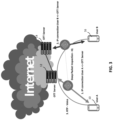
- FIG 3 illustrates a VolP call in an example scenario.
- User A 10 may initiate a call, establishing a new connection to the OTT application server 12 inside or outside User A's region. Based on the information provided, potentially other OTT server 14 will initiate the call towards User B 16. Once acknowledged, User A and User B will be connected via servers, and dedicated connections will be active during the call.
- the servers may generate two or more records (for example, two IPDRs), where one record contains User A calling the outside server details, and the second would be outside server calling User B. Both records are intended to be stored within a data server or other memory component. In cases where either the calling or receiving party is out of the network subscriber region, a single consolidated record may be generated.
- Figure 4 is a table illustrating call attributes that may be available in the IPDR. The values of these attributes may be determined by the system, for example, during post processing. Location and identities are values that may include further analysis once the call has been completed.
- a signature based deep packet inspection may not be sufficient. Deep packet inspection based on signatures may not be able to differentiate different types of the encrypted traffic (for example, voice, text, file share or the like).
- the system and method detailed herein may benefit from techniques such as machine learning and flow behavior analysis since sub classification of encrypted data may depend on understanding flow characteristics and session dynamics.
- behavioral correlation allows the system to provide traffic classification to link together associated flows spanning a plurality of protocols.
- a DNS request for YouTube TM followed by an SSL exchange to known YouTube TM servers. If these are the only two flows observed during a particular period, then it can be stated with very high confidence that these flows are related. If there are many flows happening concurrently, as is more likely the case, then correctly associating related flows becomes significantly more challenging.
- the system and associated network devices use supervised machine learning models that may be, for example, pre-trained in-house and validated for accuracy. These proprietary models and techniques are built upon a variety of different flow parameters, which would be understood in the art.
- the system is able not only to broadly classify encrypted traffic into categories (for example, Web Browsing, Video Streaming, VoIP, and the like.) and classify unique applications within categories (for example, Facebook TM vs. Instagram TM , WhatsApp TM vs. Lime TM , Netflix TM vs. YouTube TM , and the like).
- categories for example, Web Browsing, Video Streaming, VoIP, and the like.
- unique applications within categories for example, Facebook TM vs. Instagram TM , WhatsApp TM vs. Lime TM , Netflix TM vs. YouTube TM , and the like.
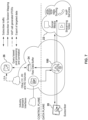
- FIG. 5 illustrates an embodiment of a system 100 for classifying Voice over IP traffic flows.
- the system includes a collection module 110, an analysis module 120, a correlation engine 130, a query module 140, at least one processor 150 and at least one memory component 160.
- the system is generally intended to reside on the core network but may be distributed and may be inline with the traffic flow or may be offline and receive data from another network device.
- the modules, including the processor 150 and memory 160, are in communication with each other but may be distributed over various network devices or may be housed within a single network device.
- the processor may be configured to retrieve stored instruction from the memory 160 and execute the instructions that provide for the functionality of the modules.
- the system 100 is intended to receive information from the computer network equipment that allows the system to determine traffic flow metrics, including deep packet inspection data such as application type, session metrics (for example, timestamps, bitmasks and the like) and the like.
- the collection module 110 is configured to collect various traffic metric measurements associated with a traffic flow and an IP session of a subscriber.
- the collection module 110 may further be configured to determine subscriber data associated with the IP session, for example, MSISDN, IMEI, IMSI/ ADSL username, or the like and may further collect data such as client IP address, server IP address, port number, location data, incoming and outgoing bitmasks, and the like.
- Incoming and outgoing bitmasks of a flow is intended to be reviewed on either side of a record to determine whether the incoming data in one record appears to be similar in such that it provides a match to the outgoing data of the second side of a record.
- the collection module 110 is intended to collect this information on encrypted data flows to determine the VolP traffic flows.
- Every VolP Over The Top (OTT) call is intended to generate 4 separate detail records about the data streams, incoming and outgoing patterns for both sides of the call. From the perspective of a single side, there is incoming and outgoing streams that may be used when data bitmasks are compared for correlation purposes.
- the analysis module 120 is configured to determine further traffic session metrics (sometimes referred to as parameters) associated with the IP session. Additional raw data records associated with call activity may be used in order to normalize call attributes and generate consolidated single side call record that may be used for correlation as detailed herein.
- the raw data records may include detailed information about at least some of the traffic session parameters including, for example, application, time, flow bitmasks and the like.
- the analysis module 120 may determine protocol or application of the traffic flow and may be configured to store data associated with traffic flows that match VolP parameters and disregard other flows. In some cases, the analysis module 120 may disregard non-encrypted VoIP traffic flows as it is the encrypted VoIP traffic flows where determining correlations have been shown to be more difficult. In some cases, the analysis module may further determine a start time and end time of the traffic flow. In some cases, the analysis module may further consolidate the raw data which is intended to provide normalized data to be used for correlation of the records as detailed herein.
- the correlation engine 130 is configured to determine correlations between IP sessions.
- the correlation engine 130 is configured to determine matching or correlated Internet Protocol Detail Records (IPDRs) to provide for a single Call Detail Record (CDR) as detailed herein.
- IPDRs Internet Protocol Detail Records
- CDR Call Detail Record
- the correlation engine 130 may find one to none, one to one or one to many relationships for IPDRs.
- the correlation engine 130 may be configured to determine a confidence level associated with the correlation based on for example, the matched parameters such as time stamps or bitmasks.
- the query module 140 is configured to perform queries for particular CDRs or for flagged subscribers based on data received by a law enforcement agency or other legal authority.
- the query module 140 may search or review the records stored in a memory component to determine whether any CDRs or IPDRs meet the criteria in the query.
- Figure 6 illustrates a method for classifying Voice over IP calls according to an embodiment.
- the collection module is configured to collect traffic flow data with respect to an IP session.
- the collection module 110 is further configured to collect data related to the subscriber, the location and other available parameters of the IP session that may not be encrypted.
- the analysis module 120 is configured to determine whether the IP session is a call or other type of IP activity.
- the analysis module 120 is configured to determine protocol and data flow to determine whether the traffic flow is more likely to be a call or other activity.
- the analysis module may determine whether an encrypted traffic flow is likely to be a VoIP traffic flow given the IP activity and traffic flow parameters.
- the analysis module may consolidate any raw data in order to generate normalize data used for the correlations.
- the correlation engine 130 is configured to determine matching or correlating IP sessions in order to have both sides of the call. In some cases, the correlation engine 130 may determine the other side of the call. In other cases, there may be a plurality of possible options for the second side of the call. In still other cases, there may not be a second record available, as detailed herein. In some cases, the correlation engine 130 may provide a confidence estimate or level based on the perceived accuracy of any correlation.
- the query module 140 may receive or have stored a query with respect to call parameters.
- the query module 140 may be configured to search the records, as detailed herein, in order to determine whether there is any CDRs that match the query parameters.
- the query module 140 may provide or transmit at least on CDR that matches the query parameters.
- Embodiments of the system and method detailed herein are intended to provide for inspection of a region or country's data, which is intended to maximize the results.
- subscriber mapping may be provided on a country level. Mapping between cell IDs (and preferably DSLAM location) and geo coordinates for various service providers in the country may be provided by the system and method.
- embodiments of the system and method are configured to process all the data and extract records that match the following ruleset:
- At least one record may be generate at the end of the call and may contain at least some of the following information:
- Extracted fields may be a combination of the details collected from both control and data plane associated with the traffic flow and may be extracted from encrypted traffic flows.
- the system is configured to be capable of extracting attributes linked to a specific identity (for example, mobile number, APN, connecting node, cell ID, of the like).
- IP address may also be considered an identity attribute as well as a key piece of information that links control and data plane. Based on this key value (IP address) all sessions in the data plane can be linked to all associated attributes for the subscriber holding IP address on the control plane.
- IP address IP address
- data plane might be processing the flows after NAT (Network Address Translation), hiding original IP address assigned to a subscriber in order to preserve IP address space.
- NAT Network Address Translation
- FIG. 7 illustrates an embodiment of the system in an inline mode.
- the system 100 may sit inline with the subscriber 20 and may collect and review data between the subscriber and the internet 22, for example reviewing social media, web surfing, streaming video, VoIP calling and the like.
- the system 100 may be operatively connected to a raw data buffer 24 or other memory or data store and may provide for storing the IPDRs.
- the system 100 may further map the IPDRs to the subscriber in view of the subscriber traffic as detailed herein.
- an LEA 26 may query the system based on post processing and correlations as detailed herein to determine or receive a CDR based on the mapped and correlated IPDRs.
- the system 100 may generate reports to be transmitted to or otherwise sent to be reviewed by an LEA in the case where there is mapping to known criminal elements, persons of interest, or otherwise flagged data.
- the data may be presented or displayed in a visual format to provide detail to the LEA with respect to the CDR data.
- the system may determine various scenarios when generating or reviewing and searching CDRs.
- both parties of the call may be successfully identified and CDR may have all fields populated for both (Identities - MSISDN/IMSI/IMSI, location - CelllD/DSLAM, protocol - OTT app, duration in seconds, and the like).
- CDR may have all fields populated for both (Identities - MSISDN/IMSI/IMSI, location - CelllD/DSLAM, protocol - OTT app, duration in seconds, and the like).
- for queried criteria only one side of the call may be identified (single IPDR without matching second leg).
- the system may provide information that queried parameter found a match and partial output is presented containing only single party metadata (Identity - MSISDN/IMSI/IMSI, location - CelllD/DSLAM, protocol - OTT app, duration in seconds) - for example, international call.
- the system may not be able to distinguish which are parties in a single call (only two sides possible or conference).
- the system may provide for output to show all possible combinations that could have happened (with queried criteria being involved as at least one side of the call), however, makes a clear differentiation, that all these scenarios represent a single call, and it may not be clear as to which parties are in the particular call.
- CDRs generated by this scenario may be flagged or otherwise identified in order to differentiate these results from the match that may have been found in other cases.
- no IPDR record may contain any information matching queried criteria.
- the system, and in particular the correlation engine may be configured to distinguish different confidence factors related to the accuracy of any correlation (for example, time compared to bitmask)
- Figure 8 is a flow chart for an embodiment of a method 300 for Front-End processing to obtain IPDRs where each represents a single leg (half) of the VOIP call. In some cases, there may be input from both the data plane and the control plane.
- control plane input service providers within the jurisdiction or country may follow certain procedures and protocols to manage their subscribers. Every device connecting to a network, requesting a certain service has a set of identities which may be used to uniquely determine ownership (for example, MSISDN) and many other details such as device itself (for example, IMEI), location (for example, Cell ID) and the like. As the system and method are intended to be focused on OTT voice over IP services, the system may differentiate between two general sets of subscribers: fixed and mobile users. Various parameters determined or retrieved from the control plane, at 305, for both fixed and mobile users are shown in figure 9 . These parameters may be retrieved from encrypted traffic flows. It will be understood that control plane data is not intended to be required for correlation. In some cases, the correlation process may be completed on an IP level and any result may be a more abstract CDR with IP address as identities.
- Embodiments of the system are intended to provide clear representation when it comes to the location.
- the system is intended to clearly pin a location of a subscriber on a map via address or coordinates.
- There are various protocols used for subscriber management for example: RADIUS, DHCP, CGNAT logs, fixed IP assignments and the like).
- the system is intended to provide for subscriber awareness and various subscriber management methods may be used to provide insight into a subscriber associated with each IP session on the data plane.
- subscriber data may be enriched by data collected by 3rd party systems (for example, dedicated location tracking solution, IMEI database, or the like).
- control and data plane data may be correlated.
- complete IP traffic for the entire network (for example, the country) is processed by enhanced deep packet inspection elements. Every session may be checked against targeted application with voice traffic flow behavior, using inspection techniques covering wide range of described options: signatures, behavior analysis, machine learning and the like, at 320. Once matched, at 325, the system may generate output as a single message with main parameters as follows:
- Generated raw data over a plurality of records may be consolidated as part of unique call information into a single side record.
- the system is configured to store each IPDRs over a pre-defined retention period, which may be defined by the service operator, by a law enforcement agency, or the like.
- the correlation engine 130 is intended to search for IPDRs containing queried parameter.
- the system may be configured to receive a query to identify all call records specific for a person of interest even if the person is availing themselves of OTT voice over IP.
- the system and method is intended to provide authorities the ability to investigate, track suspects, or generate new leads.
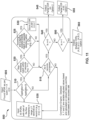
- Figure 10 illustrates an embodiment of a method 400 for querying the system for classifying VolP traffic flows.
- the query module will start with any information related to a specific identity, for example, a person or location of interest and time, or the like, at 405.
- Time can be specified in general as a full retention period, but may also be a fine tuned option for more specific time windows.
- a query may be associated with a phone number - MSISDN, as to get the answer: "Who are MSISDNs targeted MSISDN talked to, as they could be involved in a malicious activity and part of investigation?"
- a person of interest can be represented as a device, mobile number, ADSL username, cell ID, IP address, or any other information retrieved from the control plane or otherwise depicting a person of interest, which can be received by the system as input.
- the system is intended to search through the database, at 410, in order to see are there any records matching queried parameters, at 415. In case there are 0 records, that would suggest there was no activity for targeted identity within specified time period, meaning suspect did not make any calls at all and there will be no matching CDRs and no output will be delivered, at 420.
- a call may have been made, at 425.
- This record now has to be compared, via for example, correlation criteria, against other records in order to identify who was other side of the call.
- the system is intended to now inspect all records generated within a predetermined time interval, for example. between 07:59:50 and 08:00:10 for application A.
- There are many records available for suggested time slot however, it is expected if general prerequisites are met, there will be a record generated 08:00:01 with exact same duration of 1 minute. Small drift in time can be caused by network latency. It will be understood that the system is intended to have a much higher granularity than second range.
- the system may correlated the matching record and return a CDR having both sides of the call identified to the law enforcement agency or the authority requesting the query, at 435.
- the system may flag, at 445, or otherwise mark and store these results, 450.
- results will be stored and the system may continue looking for further records with queried parameters, and if found, will repeat the correlation process until all such records in the database or otherwise store in memory, at 460, are processed, at 465.
- Figure 11 illustrates a method 500 for processing queries according to an embodiment.
- the system may only attempt to correlate records which have a start timestamps in the time proximity, within a predetermined time interval, for example, within 1 second, 2 seconds, 5 seconds, 15 seconds of the start time, or the like.
- the predetermined time interval is not intended to be fixed, and with lower latency, it can be reduced to improve the system performance optimizing the process. With less reliable networks, this predetermined time interval may be higher to make sure potential qualified records for correlation criteria are covered. It will be understood that the system is able to determine with high degree of accuracy that other records are not valid candidates for the CDR, and may not be processed.
- This predetermined time interval may be selected based on an understanding of the network with added safety threshold, which is intended to ensure that a CDR is not generated because matching record was excluded from the correlation process.
- IPDR records Once an initial window of qualified IPDR records is set (X), at 505, those records are may be processed by the correlation module.
- the system is configured to support a plurality of different OTT applications at once, application details do not have to match, at 510. In case they do not match, then different services may have been used, and the candidate currently being reviewed and compared may be disqualified from the correlation, at 515.
- the correlation module may compared start timestamp and application, at 520. If both criteria are met, the correlation module may continue by reviewing stop timestamp of the candidate against record with queried parameters. If the stop time does not matched, that would imply the current record belongs to a call that started at the same time, using the same OTT provider, however the current record was finished before or after the targeted call and is unlikely to be a correct match.
- the system is configured to consolidate the IPDRs into a single CDR record that will contain control plane information from both identities, at 530.
- a parameter n may be introduced. This parameter is intended to be used as a control variable that identifies scenarios where more than a single B side party may be identified. Based on various conditions matched, the correlation engine is intended to determine various confidence factors on generated CDRs.
- all timestamps and application match may be almost 100% confident, without any found false positives, however, if a bitmask does not match the system may still produce a CDR, however, the produced CDR may have a lower confidence factor than match including 100% in both, time and bitmask.
- the method is intended to repeat for all remaining records within the predefined timeframe, at 535, and any outcome may be determined as a potential match and a potential outputs. It is then determined if the control variable is equal to 0, at 540, in which the output would be a partial CDR with one sided information, at 545. If the control variable is equal to 1, at 550, it would imply a single second side of the communication was found and a CDR may be constructed and sent or otherwise outputted as the response to the query, at 555.
- the plurality of possible CDRs may be provided as the output, at 560.
- the output would include an identifier that a plurality of options have been found.
- the CDR is intended to include all relevant parameters (metadata) from both legs (IPDRs), which is intended to identities, application, time, IP address, location, and the like.
- Embodiments of the system and method are intended to take the advantage of powerful existing traffic identification capabilities, via, for example, deep packet inspection and the like.
- the system identification may be based not only on signatures alone, but rather heuristics and machine learning, which is intended to offer better results, and understanding, even for encrypted traffic flows.
- advanced classification techniques provided by the system and method detailed herein, it may not be possible to extract traffic of interest from the general data flows and then handle the data associated with that traffic in a way that allows tracking of the traffic flows.
- extracted "half" records may be stored in a dedicated database, and may be excluded from other automated correlation and analytical modules.
- querying may be comparing and reviewing, the data related to specific people of interest, which is intended to preserve privacy of general users of the computer network.
- the system is intended to parse through time sorted IPDR records and look for all records matching the various criteria and save the data to a memory or database for further review, analysis, reporting or the like.
- Other records with the following types of parameters may be valid candidates for normalization, for example, if the candidates have:
- Embodiments of the disclosure or elements thereof may be represented as a computer program product stored in a machine-readable medium (also referred to as a computer-readable medium, a processor-readable medium, or a computer usable medium having a computer-readable program code embodied therein).
- the machine-readable medium can be any suitable tangible, non-transitory medium, including magnetic, optical, or electrical storage medium including a diskette, compact disk read only memory (CD-ROM), memory device (volatile or non-volatile), or similar storage mechanism.
- the machine-readable medium can contain various sets of instructions, code sequences, configuration information, or other data, which, when executed, cause a processor to perform steps in a method according to an embodiment of the disclosure.
Landscapes
- Engineering & Computer Science (AREA)
- Signal Processing (AREA)
- Computer Networks & Wireless Communication (AREA)
- Computer Security & Cryptography (AREA)
- Technology Law (AREA)
- Multimedia (AREA)
- Quality & Reliability (AREA)
- Business, Economics & Management (AREA)
- General Business, Economics & Management (AREA)
- Physics & Mathematics (AREA)
- Probability & Statistics with Applications (AREA)
- Data Exchanges In Wide-Area Networks (AREA)
- Telephonic Communication Services (AREA)
- Devices For Checking Fares Or Tickets At Control Points (AREA)
- Circuits Of Receivers In General (AREA)
Claims (15)
- Ein Verfahren zur Handhabung von Voice-over-Internet-Protocol-Verkehrsflüssen, VoIP-Verkehrsflüssen, in einem Computernetzwerk, wobei das Verfahren Folgendes beinhaltet:Sammeln von Verkehrsflussdaten in Bezug auf eine IP-Sitzung;Sammeln von Parametern, die mit der IP-Sitzung assoziiert sind, wobei die Parameter Verkehrsflussbitmasken beinhalten;Bestimmen, ob die IP-Sitzung eine VolP-Sitzung ist;Korrelieren von IP-Sitzungen mit ähnlichen Parametern mit den gesammelten Parametern der VoIP-Sitzung mindestens teilweise basierend auf den Verkehrsflussbitmasken; undErzeugen mindestens eines Internet Protocol Detail Record, IPDR, oder Call Detail Record, CDR, basierend auf den korrelierten IP-Sitzungsparametern.
- Verfahren gemäß Anspruch 1, das ferner Folgendes beinhaltet:Speichern der Parameter, die mit der VoIP-Sitzung assoziiert sind;Empfangen einer Anfrage, von einer Drittparteivorrichtung, um die abgespeicherten Aufzeichnungen basierend auf einem Parameter von Interesse abzufragen;Abfragen der gespeicherten Parameter, um mindestens eine Aufzeichnung zu bestimmen, die mit dem Parameter von Interesse übereinstimmt; undBereitstellen jedes Ergebnisses, das mit dem Parameter von Interesse übereinstimmt, an die Drittparteivorrichtung.
- Verfahren gemäß Anspruch 2, wobei, wenn es mehr als eine Aufzeichnung gibt, die mit dem Parameter von Interesse übereinstimmt, Bereitstellen einer Angabe, dass eine Vielzahl von Aufzeichnungen mit dem Parameter von Interesse übereinstimmen.
- Verfahren gemäß Anspruch 2, wobei die Parameter Teilnehmerattribute, Anrufstartzeit, Anrufendzeit, IP-Adresse, Ort, Vorrichtungsinformationen und Anwendungstyp beinhalten.
- Verfahren gemäß Anspruch 4, wobei bestimmt wird, dass eine Aufzeichnung übereinstimmt, wenn die Anrufstartzeit und Anrufendzeit innerhalb eines vorbestimmten Zeitintervalls voneinander liegen.
- Verfahren gemäß Anspruch 5, wobei das vorbestimmte Zeitintervall auf der Netzwerklatenz basiert.
- Verfahren gemäß Anspruch 2, wobei die Drittparteivorrichtung mit einer Strafverfolgungsbehörde assoziiert ist.
- Verfahren gemäß Anspruch 2, wobei das Speichern der Parameter, die mit dem VolP assoziiert sind, das Konsolidieren von Rohdaten beinhaltet, um die Daten zu generieren normalisieren.
- Verfahren gemäß einem der Ansprüche 1 und 2, das ferner das Bestimmen eines Konfidenzniveaus der erzeugten Aufzeichnung beinhaltet.
- Ein System (100) zur Handhabung von Voice-over-Internet-Protocol-Verkehrsflüssen, VoIP-Verkehrsflüssen, in einem Computernetzwerk, wobei das System Folgendes beinhaltet:ein Sammlungsmodul (110), das konfiguriert ist, um Verkehrsflussdaten in Bezug auf eine IP-Sitzung zu sammeln;ein Analysemodul (120), das konfiguriert ist, um Parameter sammeln, die mit der IP-Sitzung assoziiert sind, um zu bestimmen, ob die IP-Sitzung eine VolP-Sitzung ist, wobei die Parameter Verkehrsflussbitmasken beinhalten; undein Korrelationsmodul (130), das konfiguriert ist, um IP-Sitzungen mit ähnlichen Parametern mindestens teilweise basierend auf den Verkehrsflussbitmasken mit den gesammelten Parametern der VoIP-Sitzung zu korrelieren und mindestens einen Internet Protocol Detail Record, IPDR, oder Call Detail Record, CDR, basierend auf den korrelierten IP-Sitzungsparametern zu erzeugen.
- System gemäß Anspruch 10, das ferner Folgendes beinhaltet:eine Speicherkomponente (160), die konfiguriert ist, um die Parameter zu speichern, die mit der VolP-Sitzung assoziiert sind; undein Abfragemodul (140), das konfiguriert ist, um von einer Drittparteivorrichtung eine Anfrage zu empfangen, die gespeicherten Aufzeichnungen basierend auf einem Parameter von Interesse abzufragen, die gespeicherten Parameter abzufragen, um mindestens eine Aufzeichnung zu bestimmen, die mit dem Parameter von Interesse übereinstimmt; und jedes Ergebnis, das mit dem Parameter von Interesse übereinstimmt, an die Drittparteivorrichtung bereitzustellen.
- System gemäß Anspruch 10, wobei das Abfragemodul (160) konfiguriert ist, um eine Angabe bereitzustellen, dass eine Vielzahl von Aufzeichnungen mit dem Parameter von Interesse übereinstimmen, wenn es mehr als eine Aufzeichnung gibt, die mit dem Parameter von Interesse übereinstimmt.
- System gemäß Anspruch 10, wobei die Parameter Teilnehmerattribute, Anrufstartzeit, Anrufendzeit und Anwendungstyp beinhalten.
- System gemäß Anspruch 13, wobei bestimmt wird, dass eine Aufzeichnung übereinstimmt, wenn die Anrufstartzeit und Anrufendzeit innerhalb eines vorbestimmten Zeitintervalls voneinander liegen.
- System gemäß Anspruch 14, wobei das vorbestimmte Zeitintervall auf der Netzwerklatenz basiert.
Applications Claiming Priority (3)
| Application Number | Priority Date | Filing Date | Title |
|---|---|---|---|
| US202063084745P | 2020-09-29 | 2020-09-29 | |
| US17/380,299 US12143530B2 (en) | 2020-09-29 | 2021-07-20 | System and method for classifying and handling voice over IP traffic |
| PCT/CA2021/051359 WO2022067432A1 (en) | 2020-09-29 | 2021-09-29 | System and method for classifying and handling voice over ip traffic |
Publications (4)
| Publication Number | Publication Date |
|---|---|
| EP4055784A1 EP4055784A1 (de) | 2022-09-14 |
| EP4055784A4 EP4055784A4 (de) | 2023-10-11 |
| EP4055784B1 true EP4055784B1 (de) | 2025-06-11 |
| EP4055784C0 EP4055784C0 (de) | 2025-06-11 |
Family
ID=80821847
Family Applications (1)
| Application Number | Title | Priority Date | Filing Date |
|---|---|---|---|
| EP21863086.1A Active EP4055784B1 (de) | 2020-09-29 | 2021-09-29 | System und verfahren zur klassifizierung und handhabung von voice-over-ip-verkehr |
Country Status (7)
| Country | Link |
|---|---|
| US (2) | US12143530B2 (de) |
| EP (1) | EP4055784B1 (de) |
| JP (1) | JP2023544456A (de) |
| KR (1) | KR20230084207A (de) |
| AU (1) | AU2021351515A1 (de) |
| CA (1) | CA3150367A1 (de) |
| WO (1) | WO2022067432A1 (de) |
Families Citing this family (3)
| Publication number | Priority date | Publication date | Assignee | Title |
|---|---|---|---|---|
| US12107890B2 (en) * | 2022-04-12 | 2024-10-01 | Cujo LLC | Network security with server name indication |
| US12401973B2 (en) * | 2022-06-16 | 2025-08-26 | T-Mobile Usa, Inc. | Fee re-rating for a wireless carrier network |
| WO2025079118A1 (en) * | 2023-10-12 | 2025-04-17 | Jio Platforms Limited | System and method for detecting anomalies in a call flow of a network |
Family Cites Families (11)
| Publication number | Priority date | Publication date | Assignee | Title |
|---|---|---|---|---|
| KR100853045B1 (ko) * | 2003-08-14 | 2008-08-19 | 텔코디아 테크놀로지스, 인코포레이티드 | 모바일 통신 시스템에서 자동 ip 트래픽 최적화 |
| US8235762B2 (en) * | 2005-12-20 | 2012-08-07 | J.W. Pet Company, Inc. | Mounting arrangement for squeaker |
| US7424103B2 (en) * | 2004-08-25 | 2008-09-09 | Agilent Technologies, Inc. | Method of telecommunications call record correlation providing a basis for quantitative analysis of telecommunications call traffic routing |
| US8886245B2 (en) * | 2007-03-09 | 2014-11-11 | Qualcomm Incorporated | Messaging scheme for controlling uplink transmit power of a wireless device |
| US8150006B2 (en) * | 2007-11-08 | 2012-04-03 | At&T Intellectual Property I, L.P. | Method and apparatus for performing call correlation across network elements |
| MX2012005570A (es) * | 2009-11-11 | 2012-12-17 | Lifestream Corp | Conexión y botón de pánico de servicios de emergencias para dispositivo inalámbrico, con sistema de información sobre seguridad y delicuencia. |
| US10181049B1 (en) * | 2012-01-26 | 2019-01-15 | Hrl Laboratories, Llc | Method and apparatus for secure and privacy-preserving querying and interest announcement in content push and pull protocols |
| CN112383405B (zh) * | 2015-12-31 | 2022-04-08 | 华为技术有限公司 | 一种数据业务计费方法、装置和系统 |
| US20190005421A1 (en) * | 2017-06-28 | 2019-01-03 | RankMiner Inc. | Utilizing voice and metadata analytics for enhancing performance in a call center |
| CN111061845A (zh) * | 2018-10-16 | 2020-04-24 | 北京默契破冰科技有限公司 | 管理聊天室的聊天主题的方法、设备和计算机存储介质 |
| US11310162B2 (en) | 2019-02-22 | 2022-04-19 | Sandvine Corporation | System and method for classifying network traffic |
-
2021
- 2021-07-20 US US17/380,299 patent/US12143530B2/en active Active
- 2021-09-29 JP JP2023543249A patent/JP2023544456A/ja active Pending
- 2021-09-29 EP EP21863086.1A patent/EP4055784B1/de active Active
- 2021-09-29 WO PCT/CA2021/051359 patent/WO2022067432A1/en not_active Ceased
- 2021-09-29 AU AU2021351515A patent/AU2021351515A1/en active Pending
- 2021-09-29 CA CA3150367A patent/CA3150367A1/en active Pending
- 2021-09-29 KR KR1020237014870A patent/KR20230084207A/ko active Pending
-
2024
- 2024-11-12 US US18/944,793 patent/US20250193306A1/en active Pending
Also Published As
| Publication number | Publication date |
|---|---|
| US20250193306A1 (en) | 2025-06-12 |
| EP4055784A4 (de) | 2023-10-11 |
| KR20230084207A (ko) | 2023-06-12 |
| US12143530B2 (en) | 2024-11-12 |
| EP4055784A1 (de) | 2022-09-14 |
| AU2021351515A1 (en) | 2023-05-18 |
| US20220103680A1 (en) | 2022-03-31 |
| WO2022067432A1 (en) | 2022-04-07 |
| CA3150367A1 (en) | 2022-03-29 |
| JP2023544456A (ja) | 2023-10-23 |
| EP4055784C0 (de) | 2025-06-11 |
Similar Documents
| Publication | Publication Date | Title |
|---|---|---|
| US20250193306A1 (en) | System and method for classifying and handling voice over ip traffic | |
| US20160191549A1 (en) | Rich metadata-based network security monitoring and analysis | |
| US9204293B2 (en) | Apparatuses, methods, and computer program products for data retention and lawful intercept for law enforcement agencies | |
| KR101218253B1 (ko) | 보안 및 불법호 검출 시스템 및 방법 | |
| Steinberger et al. | Anomaly Detection and mitigation at Internet scale: A survey | |
| US8483672B2 (en) | System and method for selective monitoring of mobile communication terminals based on speech key-phrases | |
| Mazhar Rathore et al. | Exploiting encrypted and tunneled multimedia calls in high-speed big data environment | |
| US20210021645A1 (en) | Method and Device for Correlating in a Lawful Intercept Mediation System | |
| Tsai et al. | WhatsApp network forensics: Discovering the communication payloads behind cybercriminals | |
| US20160189160A1 (en) | System and method for deanonymization of digital currency users | |
| Sarhan et al. | VoIP Network Forensics of Instant Messaging Calls | |
| US20230273935A1 (en) | System and method for social media forensics | |
| CN114065153B (zh) | 基于多模型的家庭与个人账户关系识别方法和系统 | |
| CN118118234A (zh) | 匿名网络流量的关联度分布测定方法、关联方法及装置 | |
| Umrani et al. | Network forensic analysis of Twitter application on Android OS | |
| CN110995887B (zh) | 一种id关联方法和装置 | |
| Kao et al. | Forensic artifacts of network traffic on WeChat calls | |
| Da-Yu et al. | Extracting Suspicious IP Addresses from WhatsApp Network Traffic in Cybercrime Investigations | |
| Karamollahi | Pandemic Effects on Campus Network Traffic | |
| CN115134809A (zh) | 一种信息识别方法、装置、设备及可读存储介质 | |
| Kao et al. | Tool Mark Identification of Skype Traffic | |
| Tsiatsikas et al. | A Privacy-Preserving Entropy-Driven Framework for Tracing DoS Attacks in VoIP | |
| CN111049944B (zh) | 一种id发现方法和装置 | |
| KR101257067B1 (ko) | 인터넷 서비스 감청 방법 및 시스템 | |
| Kao et al. | Practical packet analysis: Exploring the cybercriminal behind the LINE voice calls |
Legal Events
| Date | Code | Title | Description |
|---|---|---|---|
| STAA | Information on the status of an ep patent application or granted ep patent |
Free format text: STATUS: UNKNOWN |
|
| STAA | Information on the status of an ep patent application or granted ep patent |
Free format text: STATUS: THE INTERNATIONAL PUBLICATION HAS BEEN MADE |
|
| PUAI | Public reference made under article 153(3) epc to a published international application that has entered the european phase |
Free format text: ORIGINAL CODE: 0009012 |
|
| STAA | Information on the status of an ep patent application or granted ep patent |
Free format text: STATUS: REQUEST FOR EXAMINATION WAS MADE |
|
| 17P | Request for examination filed |
Effective date: 20220310 |
|
| AK | Designated contracting states |
Kind code of ref document: A1 Designated state(s): AL AT BE BG CH CY CZ DE DK EE ES FI FR GB GR HR HU IE IS IT LI LT LU LV MC MK MT NL NO PL PT RO RS SE SI SK SM TR |
|
| REG | Reference to a national code |
Ref country code: DE Free format text: PREVIOUS MAIN CLASS: H04L0012660000 Ipc: H04L0065107600 Ref country code: DE Ref legal event code: R079 Ref document number: 602021032255 Country of ref document: DE Free format text: PREVIOUS MAIN CLASS: H04L0012660000 Ipc: H04L0065107600 |
|
| A4 | Supplementary search report drawn up and despatched |
Effective date: 20230908 |
|
| RIC1 | Information provided on ipc code assigned before grant |
Ipc: H04M 7/00 20060101ALI20230904BHEP Ipc: H04M 15/00 20060101ALI20230904BHEP Ipc: H04M 3/22 20060101ALI20230904BHEP Ipc: H04L 43/062 20220101ALI20230904BHEP Ipc: H04L 12/66 20060101ALI20230904BHEP Ipc: H04L 12/14 20060101ALI20230904BHEP Ipc: H04L 65/1076 20220101AFI20230904BHEP |
|
| DAV | Request for validation of the european patent (deleted) | ||
| DAX | Request for extension of the european patent (deleted) | ||
| GRAP | Despatch of communication of intention to grant a patent |
Free format text: ORIGINAL CODE: EPIDOSNIGR1 |
|
| STAA | Information on the status of an ep patent application or granted ep patent |
Free format text: STATUS: GRANT OF PATENT IS INTENDED |
|
| RIC1 | Information provided on ipc code assigned before grant |
Ipc: H04L 43/026 20220101ALI20241011BHEP Ipc: H04L 43/02 20220101ALI20241011BHEP Ipc: H04M 7/00 20060101ALI20241011BHEP Ipc: H04M 15/00 20060101ALI20241011BHEP Ipc: H04M 3/22 20060101ALI20241011BHEP Ipc: H04L 43/062 20220101ALI20241011BHEP Ipc: H04L 12/66 20060101ALI20241011BHEP Ipc: H04L 12/14 20060101ALI20241011BHEP Ipc: H04L 65/1076 20220101AFI20241011BHEP |
|
| INTG | Intention to grant announced |
Effective date: 20241105 |
|
| GRAJ | Information related to disapproval of communication of intention to grant by the applicant or resumption of examination proceedings by the epo deleted |
Free format text: ORIGINAL CODE: EPIDOSDIGR1 |
|
| STAA | Information on the status of an ep patent application or granted ep patent |
Free format text: STATUS: REQUEST FOR EXAMINATION WAS MADE |
|
| GRAP | Despatch of communication of intention to grant a patent |
Free format text: ORIGINAL CODE: EPIDOSNIGR1 |
|
| STAA | Information on the status of an ep patent application or granted ep patent |
Free format text: STATUS: GRANT OF PATENT IS INTENDED |
|
| INTC | Intention to grant announced (deleted) | ||
| INTG | Intention to grant announced |
Effective date: 20250317 |
|
| GRAS | Grant fee paid |
Free format text: ORIGINAL CODE: EPIDOSNIGR3 |
|
| GRAA | (expected) grant |
Free format text: ORIGINAL CODE: 0009210 |
|
| STAA | Information on the status of an ep patent application or granted ep patent |
Free format text: STATUS: THE PATENT HAS BEEN GRANTED |
|
| AK | Designated contracting states |
Kind code of ref document: B1 Designated state(s): AL AT BE BG CH CY CZ DE DK EE ES FI FR GB GR HR HU IE IS IT LI LT LU LV MC MK MT NL NO PL PT RO RS SE SI SK SM TR |
|
| REG | Reference to a national code |
Ref country code: GB Ref legal event code: FG4D |
|
| REG | Reference to a national code |
Ref country code: CH Ref legal event code: EP |
|
| REG | Reference to a national code |
Ref country code: IE Ref legal event code: FG4D |
|
| REG | Reference to a national code |
Ref country code: DE Ref legal event code: R096 Ref document number: 602021032255 Country of ref document: DE |
|
| U01 | Request for unitary effect filed |
Effective date: 20250619 |
|
| U07 | Unitary effect registered |
Designated state(s): AT BE BG DE DK EE FI FR IT LT LU LV MT NL PT RO SE SI Effective date: 20250630 |
|
| PG25 | Lapsed in a contracting state [announced via postgrant information from national office to epo] |
Ref country code: ES Free format text: LAPSE BECAUSE OF FAILURE TO SUBMIT A TRANSLATION OF THE DESCRIPTION OR TO PAY THE FEE WITHIN THE PRESCRIBED TIME-LIMIT Effective date: 20250611 |
|
| PG25 | Lapsed in a contracting state [announced via postgrant information from national office to epo] |
Ref country code: NO Free format text: LAPSE BECAUSE OF FAILURE TO SUBMIT A TRANSLATION OF THE DESCRIPTION OR TO PAY THE FEE WITHIN THE PRESCRIBED TIME-LIMIT Effective date: 20250911 Ref country code: GR Free format text: LAPSE BECAUSE OF FAILURE TO SUBMIT A TRANSLATION OF THE DESCRIPTION OR TO PAY THE FEE WITHIN THE PRESCRIBED TIME-LIMIT Effective date: 20250912 |
|
| PGFP | Annual fee paid to national office [announced via postgrant information from national office to epo] |
Ref country code: GB Payment date: 20250929 Year of fee payment: 5 |
|
| PG25 | Lapsed in a contracting state [announced via postgrant information from national office to epo] |
Ref country code: HR Free format text: LAPSE BECAUSE OF FAILURE TO SUBMIT A TRANSLATION OF THE DESCRIPTION OR TO PAY THE FEE WITHIN THE PRESCRIBED TIME-LIMIT Effective date: 20250611 |
|
| PG25 | Lapsed in a contracting state [announced via postgrant information from national office to epo] |
Ref country code: RS Free format text: LAPSE BECAUSE OF FAILURE TO SUBMIT A TRANSLATION OF THE DESCRIPTION OR TO PAY THE FEE WITHIN THE PRESCRIBED TIME-LIMIT Effective date: 20250911 |
|
| U20 | Renewal fee for the european patent with unitary effect paid |
Year of fee payment: 5 Effective date: 20250929 |