EP4055103B1 - Heterophasische propylenethylencopolymerzusammensetzung mit erwünschter balance mechanischer eigenschaften - Google Patents
Heterophasische propylenethylencopolymerzusammensetzung mit erwünschter balance mechanischer eigenschaften Download PDFInfo
- Publication number
- EP4055103B1 EP4055103B1 EP20797146.6A EP20797146A EP4055103B1 EP 4055103 B1 EP4055103 B1 EP 4055103B1 EP 20797146 A EP20797146 A EP 20797146A EP 4055103 B1 EP4055103 B1 EP 4055103B1
- Authority
- EP
- European Patent Office
- Prior art keywords
- range
- ethylene copolymer
- copolymer composition
- heterophasic propylene
- group
- Prior art date
- Legal status (The legal status is an assumption and is not a legal conclusion. Google has not performed a legal analysis and makes no representation as to the accuracy of the status listed.)
- Active
Links
Images

Classifications
-
- C—CHEMISTRY; METALLURGY
- C08—ORGANIC MACROMOLECULAR COMPOUNDS; THEIR PREPARATION OR CHEMICAL WORKING-UP; COMPOSITIONS BASED THEREON
- C08L—COMPOSITIONS OF MACROMOLECULAR COMPOUNDS
- C08L23/00—Compositions of homopolymers or copolymers of unsaturated aliphatic hydrocarbons having only one carbon-to-carbon double bond; Compositions of derivatives of such polymers
- C08L23/02—Compositions of homopolymers or copolymers of unsaturated aliphatic hydrocarbons having only one carbon-to-carbon double bond; Compositions of derivatives of such polymers not modified by chemical after-treatment
- C08L23/16—Ethylene-propylene or ethylene-propylene-diene copolymers
-
- C—CHEMISTRY; METALLURGY
- C08—ORGANIC MACROMOLECULAR COMPOUNDS; THEIR PREPARATION OR CHEMICAL WORKING-UP; COMPOSITIONS BASED THEREON
- C08F—MACROMOLECULAR COMPOUNDS OBTAINED BY REACTIONS ONLY INVOLVING CARBON-TO-CARBON UNSATURATED BONDS
- C08F10/00—Homopolymers and copolymers of unsaturated aliphatic hydrocarbons having only one carbon-to-carbon double bond
- C08F10/04—Monomers containing three or four carbon atoms
- C08F10/06—Propene
-
- C—CHEMISTRY; METALLURGY
- C08—ORGANIC MACROMOLECULAR COMPOUNDS; THEIR PREPARATION OR CHEMICAL WORKING-UP; COMPOSITIONS BASED THEREON
- C08F—MACROMOLECULAR COMPOUNDS OBTAINED BY REACTIONS ONLY INVOLVING CARBON-TO-CARBON UNSATURATED BONDS
- C08F110/00—Homopolymers of unsaturated aliphatic hydrocarbons having only one carbon-to-carbon double bond
- C08F110/04—Monomers containing three or four carbon atoms
- C08F110/06—Propene
-
- C—CHEMISTRY; METALLURGY
- C08—ORGANIC MACROMOLECULAR COMPOUNDS; THEIR PREPARATION OR CHEMICAL WORKING-UP; COMPOSITIONS BASED THEREON
- C08L—COMPOSITIONS OF MACROMOLECULAR COMPOUNDS
- C08L23/00—Compositions of homopolymers or copolymers of unsaturated aliphatic hydrocarbons having only one carbon-to-carbon double bond; Compositions of derivatives of such polymers
- C08L23/02—Compositions of homopolymers or copolymers of unsaturated aliphatic hydrocarbons having only one carbon-to-carbon double bond; Compositions of derivatives of such polymers not modified by chemical after-treatment
- C08L23/10—Homopolymers or copolymers of propene
- C08L23/12—Polypropene
-
- C—CHEMISTRY; METALLURGY
- C08—ORGANIC MACROMOLECULAR COMPOUNDS; THEIR PREPARATION OR CHEMICAL WORKING-UP; COMPOSITIONS BASED THEREON
- C08F—MACROMOLECULAR COMPOUNDS OBTAINED BY REACTIONS ONLY INVOLVING CARBON-TO-CARBON UNSATURATED BONDS
- C08F210/00—Copolymers of unsaturated aliphatic hydrocarbons having only one carbon-to-carbon double bond
- C08F210/04—Monomers containing three or four carbon atoms
- C08F210/06—Propene
-
- C—CHEMISTRY; METALLURGY
- C08—ORGANIC MACROMOLECULAR COMPOUNDS; THEIR PREPARATION OR CHEMICAL WORKING-UP; COMPOSITIONS BASED THEREON
- C08F—MACROMOLECULAR COMPOUNDS OBTAINED BY REACTIONS ONLY INVOLVING CARBON-TO-CARBON UNSATURATED BONDS
- C08F2410/00—Features related to the catalyst preparation, the catalyst use or to the deactivation of the catalyst
- C08F2410/06—Catalyst characterized by its size
-
- C—CHEMISTRY; METALLURGY
- C08—ORGANIC MACROMOLECULAR COMPOUNDS; THEIR PREPARATION OR CHEMICAL WORKING-UP; COMPOSITIONS BASED THEREON
- C08F—MACROMOLECULAR COMPOUNDS OBTAINED BY REACTIONS ONLY INVOLVING CARBON-TO-CARBON UNSATURATED BONDS
- C08F2420/00—Metallocene catalysts
- C08F2420/09—Cyclic bridge, i.e. Cp or analog where the bridging unit linking the two Cps or analogs is part of a cyclic group
-
- C—CHEMISTRY; METALLURGY
- C08—ORGANIC MACROMOLECULAR COMPOUNDS; THEIR PREPARATION OR CHEMICAL WORKING-UP; COMPOSITIONS BASED THEREON
- C08L—COMPOSITIONS OF MACROMOLECULAR COMPOUNDS
- C08L2205/00—Polymer mixtures characterised by other features
- C08L2205/02—Polymer mixtures characterised by other features containing two or more polymers of the same C08L -group
-
- C—CHEMISTRY; METALLURGY
- C08—ORGANIC MACROMOLECULAR COMPOUNDS; THEIR PREPARATION OR CHEMICAL WORKING-UP; COMPOSITIONS BASED THEREON
- C08L—COMPOSITIONS OF MACROMOLECULAR COMPOUNDS
- C08L2205/00—Polymer mixtures characterised by other features
- C08L2205/02—Polymer mixtures characterised by other features containing two or more polymers of the same C08L -group
- C08L2205/025—Polymer mixtures characterised by other features containing two or more polymers of the same C08L -group containing two or more polymers of the same hierarchy C08L, and differing only in parameters such as density, comonomer content, molecular weight, structure
-
- C—CHEMISTRY; METALLURGY
- C08—ORGANIC MACROMOLECULAR COMPOUNDS; THEIR PREPARATION OR CHEMICAL WORKING-UP; COMPOSITIONS BASED THEREON
- C08L—COMPOSITIONS OF MACROMOLECULAR COMPOUNDS
- C08L2205/00—Polymer mixtures characterised by other features
- C08L2205/22—Mixtures comprising a continuous polymer matrix in which are dispersed crosslinked particles of another polymer
-
- C—CHEMISTRY; METALLURGY
- C08—ORGANIC MACROMOLECULAR COMPOUNDS; THEIR PREPARATION OR CHEMICAL WORKING-UP; COMPOSITIONS BASED THEREON
- C08L—COMPOSITIONS OF MACROMOLECULAR COMPOUNDS
- C08L2207/00—Properties characterising the ingredient of the composition
- C08L2207/02—Heterophasic composition
-
- C—CHEMISTRY; METALLURGY
- C08—ORGANIC MACROMOLECULAR COMPOUNDS; THEIR PREPARATION OR CHEMICAL WORKING-UP; COMPOSITIONS BASED THEREON
- C08L—COMPOSITIONS OF MACROMOLECULAR COMPOUNDS
- C08L2308/00—Chemical blending or stepwise polymerisation process with the same catalyst
Definitions
- the present invention relates to a heterophasic propylene ethylene copolymer composition with good stiffness and impact properties and articles made therefrom.
- Polymers like polypropylene, are increasingly used in different demanding applications. At the same time, there is a continuous search for tailored polymers that meet the requirements of these applications.
- the demands can be challenging, since many polymer properties are directly or indirectly interrelated, i.e. improving a specific property can only be accomplished on the expense of another property.
- Stiffness can for instance be improved by increasing the crystallinity and/or the relative amount of homopolymer within the composition. As a consequence, the material becomes more brittle, thereby resulting in poor impact properties. It is known that impact strength of polypropylene can be improved by dispersing a rubber phase within the polymer matrix, thereby obtaining a heterophasic polypropylene composition.
- EP 2 729 529 B1 describes a heterophasic polypropylene comprising a homopolymer of propylene as the crystalline matrix and a propylene ethylene copolymer dispersed therein.
- the homopolymer of the matrix is extremely viscous, as exemplified by the very low matrix melt flow rates, thus limiting processability and applications.
- EP 2 454 298 B1 is directed to high melt flow rate random heterophasic propylene copolymers having a high content of elastomeric phase, said random heterophasic propylene copolymers being synthesized via Ziegler-Natta catalysis.
- the compositions therein require visbreaking for optimal performance, necessarily increasing emissions and smell.
- WO 2015/108634 A1 describes heterophasic polypropylenes wherein the intrinsic viscosity of the polypropylene homopolymer is considerably higher than that of the elastomeric phase, typically around three times as high. This leads to relatively large elastomer particles and also limits performance.
- EP 3 450 472 A1 describes a polypropylene composition having a melt flow rate MFR 2 in the range of 5 to 50 g/10min, to a composition comprising the polypropylene composition and one or more additive(s) in an amount of up to 4 wt.-%, based on the total weight of the composition, to a process for the preparation of the polypropylene composition and an article comprising the polypropylene composition as well as the use of the polypropylene composition for decreasing the brittle-to-ductile transition temperature.
- the present invention is based upon the finding that a heterophasic propylene ethylene copolymer composition having specific properties, including the intrinsic viscosities of both the elastomeric and matrix phases, and the ratio of said intrinsic viscosities, has an improved balance of stiffness and impact strength, whilst maintaining favorable properties in other areas, such as processability.
- the present invention is directed to a heterophasic propylene ethylene copolymer composition having an MFR 2 measured according to ISO 1333 at 230 °C and 2.16 kg in the range from 1.0 to 55.0 g/10 min and a melting temperature (T m ) measured by differential scanning calorimetry (DSC) in the range from 155 to 162 °C, comprising:
- the present invention is directed to an article comprising more than 75 wt.- % of the heterophasic propylene ethylene copolymer composition according to the invention, preferably wherein the article is a molded article, more preferably an injection molded article or a foam injection molded article.
- a heterophasic polypropylene is a propylene-based copolymer with a crystalline matrix phase, which can be a propylene homopolymer or a random copolymer of propylene and at least one alpha-olefin comonomer, and an elastomeric phase dispersed therein.
- said crystalline matrix phase is a random copolymer of propylene and at least one alpha-olefin comonomer.
- the polymers according to the present invention have such morphology.
- the elastomeric phase can be a propylene copolymer with a high amount of comonomer which is not randomly distributed in the polymer chain but is distributed in a comonomer-rich block structure and a propylene-rich block structure.
- a heterophasic polypropylene usually differentiates from a one-phasic propylene copolymer in that it shows two distinct glass transition temperatures Tg which are attributed to the matrix phase and the elastomeric phase.
- a propylene homopolymer is a polymer that essentially consists of propylene monomer units. Due to impurities especially during commercial polymerization processes a propylene homopolymer can comprise up to 0.1 mol% comonomer units, preferably up to 0.05 mol% comonomer units and most preferably up to 0.01 mol% comonomer units.
- a propylene random copolymer is a copolymer of propylene monomer units and comonomer units, preferably selected from ethylene and C4-C12 alpha-olefins, in which the comonomer units are distributed randomly over the polymeric chain.
- the propylene random copolymer can comprise comonomer units from one or more comonomers different in their amounts of carbon atoms. In the following amounts are given in % by weight (wt.-%) unless it is stated otherwise.
- a heterophasic propylene copolymer In a heterophasic propylene copolymer the matrix and elastomeric phases cannot be separated and measured, since the elastomeric phase is dispersed within the crystalline matrix.
- several methods are known. One method is the extraction with xylene of a fraction that contains for the most part the elastomeric phase, thus separating a xylene cold soluble (XCS) fraction from a xylene cold insoluble (XCI) fraction.
- XCS xylene cold soluble
- XCI xylene cold insoluble
- the heterophasic propylene ethylene copolymer composition of the present invention has a content of crystalline fraction (CF) within the range from 60.0 to 88.0 wt.-%, more preferably 60.0 to 85.0 wt.-%, based on the total weight of the heterophasic propylene ethylene copolymer composition.
- CF crystalline fraction
- the heterophasic propylene ethylene copolymer composition of the present invention has a content of crystalline fraction (CF) within the range from 70.0 to 88.0 wt.-%, more preferably 75.0 to 85.0 wt.-%, based on the total weight of the heterophasic propylene ethylene copolymer composition.
- CF crystalline fraction
- the crystalline fraction (CF) of the heterophasic propylene ethylene copolymer composition of the present invention has an intrinsic viscosity iV(CF) measured according to DIN ISO 1628/1, October 1999 (in Decalin at 135 °C) in the range from 1.40 to 2.50 dl/g, more preferably in the range from 1.45 to 2.30 dl/g.
- the crystalline fraction (CF) of the heterophasic propylene ethylene copolymer composition has an intrinsic viscosity iV(CF) measured according to DIN ISO 1628/1, October 1999 (in Decalin at 135 °C) in the range from 1.40 to 2.00 dl/g, more preferably from 1.40 to 1.80 dl/g, still more preferably from 1.45 to 1.80 dl/g, most preferably from 1.45 to 1.60 dl/g.
- the crystalline fraction (CF) of the heterophasic propylene ethylene copolymer composition of the present invention preferably has an ethylene content C2(CF), as determined by quantitative 13 C-NMR spectroscopy, in the range from 0.3 to 5.0 wt.-%.
- the heterophasic propylene ethylene copolymer composition of the present invention has a content of soluble fraction (SF) within the range from 12.0 to 40.0 wt.-%, more preferably 15.0 to 40.0 wt.-%, based on the total weight of the heterophasic propylene ethylene copolymer composition.
- SF soluble fraction
- the heterophasic propylene ethylene copolymer composition of the present invention has a content of soluble fraction (SF) within the range from 12.0 to 30.0 wt.-%, more preferably 15.0 to 25.0 wt.-%, based on the total weight of the heterophasic propylene ethylene copolymer composition.
- SF soluble fraction
- the soluble fraction (SF) of the heterophasic propylene ethylene copolymer composition of the present invention has an intrinsic viscosity iV(SF) measured according to DIN ISO 1628/1, October 1999 (in Decalin at 135 °C) in the range from 1.80 to 3.20 dl/g, more preferably in the range from 1.90 to 3.15 dl/g.
- the soluble fraction (SF) of the heterophasic propylene ethylene copolymer composition has an intrinsic viscosity iV(SF) measured according to DIN ISO 1628/1, October 1999 (in Decalin at 135 °C) in the range from 1.80 to 2.90 dl/g, more preferably from 1.80 to 2.80 dl/g, still more preferably from 1.90 to 2.70 dl/g, most preferably from 1.90 to 2.60 dl/g.
- the soluble fraction (SF) of the heterophasic propylene ethylene copolymer composition of the present invention has an ethylene content C2(SF), as determined by quantitative 13 C-NMR spectroscopy, in the range from 25 to 80 wt.-%.
- the heterophasic propylene ethylene copolymer composition of the present invention has a melt flow rate (MFR 2 ) measured according to ISO 1333 at 230 °C and 2.16 kg in the range from 1.0 to 55.0 g/10 min, preferably from 1.0 to 45.0 g/10 min, more preferably from 1.0 to 35.0 g/10 min, most preferably in the range from 1.0 to 25.0 g/10 min.
- MFR 2 melt flow rate measured according to ISO 1333 at 230 °C and 2.16 kg in the range from 1.0 to 55.0 g/10 min, preferably from 1.0 to 45.0 g/10 min, more preferably from 1.0 to 35.0 g/10 min, most preferably in the range from 1.0 to 25.0 g/10 min.
- the heterophasic propylene ethylene copolymer composition of the present invention has a melt flow rate (MFR 2 ) measured according to ISO 1333 at 230 °C and 2.16 kg in the range from 10.0 to 55.0 g/10 min, preferably from 10.0 to 40.0 g/10 min, more preferably from 12.0 to 35.0 g/10 min, yet more preferably from 14.0 to 30.0 g/10 min, most preferably in the range from 16.0 to 25.0 g/10 min.
- MFR 2 melt flow rate measured according to ISO 1333 at 230 °C and 2.16 kg in the range from 10.0 to 55.0 g/10 min, preferably from 10.0 to 40.0 g/10 min, more preferably from 12.0 to 35.0 g/10 min, yet more preferably from 14.0 to 30.0 g/10 min, most preferably in the range from 16.0 to 25.0 g/10 min.
- the heterophasic propylene ethylene copolymer composition of the present invention preferably has an ethylene content C(C2), as determined by quantitative 13 C-NMR spectroscopy, in the range from 4 to 20 wt.-%, more preferably in the range from 4 to 18 wt.- %.
- the heterophasic propylene ethylene copolymer composition of the present invention preferably has an intrinsic viscosity (iV) measured according to DIN ISO 1628/1, October 1999 (in Decalin at 135 °C) in the range from 1.30 to 3.00 dl/g, more preferably from 1.40 to 2.80 dl/g, most preferably in the range from 1.50 to 2.60 dl/g.
- iV intrinsic viscosity
- the heterophasic propylene ethylene copolymer composition of the present invention has an intrinsic viscosity measured according to DIN ISO 1628/1, October 1999 (in Decalin at 135 °C) in the range from 1.30 to 2.00 dl/g, more preferably from 1.40 to 1.90 dl/g, most preferably from 1.50 to 1.80 dl/g.
- the crystalline matrix component (M) of the heterophasic propylene ethylene copolymer composition of the present invention is a propylene homopolymer.
- the crystalline matrix component (M) of the heterophasic propylene ethylene copolymer composition has an isotactic pentad concentration [mmmm] as determined by 13 C-NMR spectroscopy of more than 97.0%, and a content of 2,1-regiodefects in the range from 0.1 to 0.4 mol%.
- the crystalline matrix component (M) of the heterophasic propylene ethylene copolymer composition preferably has a melt flow rate (MFR 2 ), measured according to ISO 1133 at 230 °C and 2.16 kg in the range from 1.0 to 100 g/10 min, more preferably from 2.0 to 50 g/10 min, yet more preferably from 3.0 to 45 g/10 min, still more preferably from 4.0 to 40 g/10 min, most preferably from 5.0 to 35 g/10 min.
- MFR 2 melt flow rate
- the heterophasic propylene ethylene copolymer composition of the present invention has a melting temperature (T m ) measured by differential scanning calorimetry (DSC) in the range from 155 to 162 °C, more preferably in the range from 157 to 161 °C, most preferably in the range from 158 to 161 °C.
- T m melting temperature measured by differential scanning calorimetry
- the heterophasic propylene ethylene copolymer composition of the present invention has a flexural modulus measured according to ISO 178 in the range from 900 to 1400 MPa.
- the heterophasic propylene ethylene copolymer composition of the present invention preferably has a Charpy Notched Impact Strength (NIS) measured according to ISO 179-1 eA at -20 °C in the range from 2.0 to 100 kJ/m 2 .
- NIS Charpy Notched Impact Strength
- heterophasic propylene ethylene copolymer composition is preferably polymerized according to the following sequence:
- the polymerization conditions in the first, second and optionally subsequent polymerization reactor(s) of process step c) can be different from each other, especially in one or more of polymerization temperature, polymerization pressure, comonomer feed or chain transfer agent feed.
- the elastomeric phase is a multimodal propylene ethylene copolymer.
- the elastomeric phase is a bimodal propylene ethylene copolymer.
- the first polymerization reactor is operating in bulk, such as a loop reactor and all subsequent polymerization reactors, preferably including the optional second and subsequent polymerization reactor(s) of process step a), are operating in gas phase. It is preferred that the polymerization steps of the process of the present invention are carried out in a bulk polymerization reactor, preferably a loop reactor, followed by one or more, such as 1, 2, 3 or 4, preferably 1 or 2 gas phase reactors, connected in series.
- the second polymerization mixture is compounded to form the heterophasic propylene ethylene copolymer composition of the present invention.
- the second polymerization mixture can be mixed with the additives as described above and optionally with other polymeric components.
- the second polymerization mixture can be treated with the usual post-polymerization treatments as known in the art such as catalyst deactivation, separation of reactants, post-polymerization reaction of the polymer such as vis-breaking or nucleation etc., though it is preferred that vis-breaking is not required.
- post-polymerization treatments are well known to a person skilled in the art.
- Compounding can be conducted in mixers or extruder using suitable compounding conditions. It is preferred that the heterophasic propylene ethylene copolymer composition is produced by compounding and pelletizing.
- the heterophasic propylene ethylene copolymer composition of the present invention is polymerized in the presence of a single-site catalyst.
- the catalyst used in the invention can be used in non-supported form or in solid form.
- the catalyst of the invention should however be used as a heterogeneous (solid) catalyst.
- the quantity of catalyst will depend upon the nature of the catalyst, the selected reactor types and conditions and the properties desired for the polypropylene composition.
- the catalyst of the invention in solid form preferably in solid particulate form, can be either supported on an external carrier material, like clay minerals, silica or alumina, or is free from an external carrier, however still being in solid form.
- the single site catalyst suitable for the present invention is represented by formula [ I ] as provided here below.
- M is Ti, Zr or Hf.
- Q is a carbon atom, a silicon atom or a germanium atom.
- Each of X 1 and X 2 is independently a halogen atom, an alkyl group having a carbon number of 1 to 6, an aryl group having a carbon number of 6 to 18, an amino group substituted with an alkyl group having a carbon number of 1 to 6, an alkoxy group having a carbon number of 1 to 6, a halogen-containing alkyl group having a carbon number of 1 to 6, or a halogen-containing aryl group having a carbon number of 6 to 18.
- R 7 and R 17 may be the same or different and are a hydrogen atom, a halogen atom, an alkyl group having a carbon number of 1 to 6, an alkoxy group having a carbon number of 1 to 6, a halogen-containing alkyl group having a carbon number of 1 to 6, an aryl group having a carbon number of 6 to 18, or a halogen-containing aryl group having a carbon number of 6 to 18, and when either one of R 7 and R 17 is a hydrogen atom, the other is a substituent except for a hydrogen atom.
- R 8 and R 18 may be the same or different and are a hydrogen atom, a halogen atom, an alkyl group having a carbon number of 1 to 6, an alkoxy group having a carbon number of 1 to 6, a halogen-containing alkyl group having a carbon number of 1 to 6, or a halogen-containing aryl group having a carbon number of 6 to 18.
- R 2 , R 3 , R 4 , R 5 , R 6 , R 9 , R 12 , R 13 , R 14 , R 15 , R 16 and R 19 may be the same or different and are a hydrogen atom, a halogen atom, an alkyl group having a carbon number of 1 to 6, an alkoxy group having a carbon number of 1 to 6, a halogen-containing alkyl group having a carbon number of 1 to 6, an aryl group having a carbon number of 6 to 18, a halogen-containing aryl group having a carbon number of 6 to 18.
- A is a divalent hydrocarbon group having a carbon number of 3 to 12 and forming a ring together with Q to which it is bonded, and may contain an unsaturated bond.
- R 10 is a substituent on A and is an alkyl group having a carbon number of 1 to 6, a halogen containing alkyl group having a carbon number of 1 to 6, a trialkylsilyl group-containing alkyl group having a carbon number of 1 to 6, a silyl group containing a hydrocarbon group having a carbon number of 1 to 6, an aryl group having a carbon number of 6 to 18, or a halogen-containing aryl group having a carbon number of 6 to 18.
- n represents an integer of 0 to 24, and when m is 2 or more, R 10 s may combine with each other to form a new ring structure).
- alkyl group having a carbon number of 1 to 6 examples include a methyl group, an ethyl group, an n-propyl group, an i-propyl group, an n-butyl group, an i-butyl group, an s-butyl group, a tert-butyl group, an n-pentyl group, an n-hexyl group, a cyclopropyl group, a cyclopentyl group, and a cyclohexyl group.
- alkoxy group having a carbon number of 1 to 6 examples include a methoxy group, an ethoxy group, a n-propoxy group, an i-propoxy group, a n-butoxy group, a i-butoxy group, a tert-butoxy group, and a phenoxy group.
- the aryl group having a carbon number of 6 to 18 may be substituted with a hydrocarbon group having a carbon number of 1 to 6, and specific examples of the aryl group include a phenyl group, a tolyl group, a dimethylphenyl group, an ethylphenyl group, a trimethylphenyl group, a tert-butylphenyl group, a di-tert-butylphenyl group, a biphenyl group, a 1-naphthyl group, a 2-naphthyl group, an acenaphthyl group, a phenanthryl group, and an anthryl group.
- the halogen atom includes a chlorine atom, a bromine atom, an iodine atom, and a fluorine atom.
- the amino group substituted with an alkyl group having a carbon number of 1 to 6 includes a dimethylamino group, a diethylamino group, a di-n-propylamino group, a di-i-propylamino group, a methylethylamino group, etc.
- the halogen atom in the halogen-containing alkyl group having a carbon number of 1 to 6 includes a fluorine atom, a chlorine atom, a bromine atom, and an iodine atom.
- the halogen-containing alkyl group having a carbon number of 1 to 6 is an alkyl group where a hydrogen atom on the skeleton of an alkyl group having a carbon number of 1 to 6 is replaced by a halogen atom.
- R 7 and R 17 are preferably an alkyl group having a carbon number of 1 to 6 or an alkoxy group having a carbon number of 1 to 6, more preferably an alkyl group having a carbon number of 1 to 6. Among others, R 7 and R 17 are preferably a methyl group.
- Quantitative nuclear-magnetic resonance (NMR) spectroscopy was used to quantify the stereo-regularity (tacticity) and regio-regularity of the crystalline matrix of the polymers.
- Quantitative 13C ⁇ 1H ⁇ NMR spectra were recorded in the solution-state using a Bruker Advance III 400 NMR spectrometer operating at 400.15 and 100.62 MHz for 1H and 13C respectively. All spectra were recorded using a 13C optimised 10 mm extended temperature probe head at 125°C using nitrogen gas for all pneumatics.
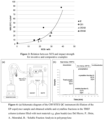
- FIG. 4a A schematic representation of the CRYSTEX QC instrument is shown in Figure 4a .
- the crystalline and amorphous fractions are separated through temperature cycles of dissolution at 160°C, crystallization at 40°C and re-dissolution in a1,2,4-trichlorobenzene (1,2,4-TCB) at 160°C as shown in Figure 4b .
- Quantification of SF and CF and determination of ethylene content (C2) are achieved by means of an infrared detector (IR4) and an online 2-capillary viscometer which is used for the determination of the intrinsic viscosity (iV).
- IR4 infrared detector
- iV intrinsic viscosity
- the intrinsic viscosity (iV) is measured according to DIN ISO 1628/1, October 1999, in Decalin at 135°C.
- the iV, iV(SF), iV(CF), and iV(XCS) were measured directly, whilst the iV(XCI) was calculated from the iV and iV(XCS) assuming validity of the following linear mixing rule, which has generally been found applicable for chemically similar polymers:
- iV XCS / 100 % * iV XCS + XCI / 100 % * iV XCI
- the aqueous solution of LiOH was prepared by solving 3.54 g of lithium hydroxide
Landscapes
- Chemical & Material Sciences (AREA)
- Health & Medical Sciences (AREA)
- Chemical Kinetics & Catalysis (AREA)
- Medicinal Chemistry (AREA)
- Polymers & Plastics (AREA)
- Organic Chemistry (AREA)
- Compositions Of Macromolecular Compounds (AREA)
- Graft Or Block Polymers (AREA)
- Transition And Organic Metals Composition Catalysts For Addition Polymerization (AREA)
Claims (13)
- Heterophasische Propylen-Ethylen-Copolymer-Zusammensetzung mit einer MFR2, gemessen gemäß ISO 1333 bei 230 °C und 2,16 kg im Bereich von 1,0 bis 55,0 g/10 min, und einer Schmelztemperatur (Tm), gemessen durch Differentialscanningkalorimetrie (DSC) im Bereich von 155 bis 162 °C, umfassend:a) eine kristalline Matrix (M), die ein Propylen-Homo- oder -Copolymer, vorzugsweise ein Homopolymer, ist;b) ein amorphes Propylen-Ethylen-Elastomer (E);wobei die heterophasische Propylen-Ethylen-Copolymer-Zusammensetzung durch ihren löslichen Anteil (SF) und ihren kristallinen Anteil (CF), wie durch CRYSTEX QC-Analyse bestimmt, gekennzeichnet ist:i) von 60 bis 88 Gew.-%, bezogen auf das Gesamtgewicht der heterophasischen Propylen-Ethylen-Copolymer-Zusammensetzung, einer kristallinen Fraktion (CF) mit einer Grenzviskosität iV(CF), gemessen nach DIN ISO 1628/1, Oktober 1999 (in Decalin bei 135 °C) im Bereich von 1,40 bis 2,50 dl/g, einer isotaktischen Pentadenkonzentration [mmmm], bestimmt durch 13C-NMR-Spektroskopie, von mehr als 97,0 % und einem Gehalt an 2,1-Regiodefekten im Bereich von 0,1 bis 0,4 Mol-%,ii) 12 bis 40 Gew.-%, bezogen auf das Gesamtgewicht der heterophasischen Propylen-Ethylen-Copolymer-Zusammensetzung, einer löslichen Fraktion (SF) mit einer Grenzviskosität iV(SF), gemessen nach DIN ISO 1628/1, Oktober 1999 (in Decalin bei 135 °C), im Bereich von 1,80 bis 3,20 dl/g und einem Ethylengehalt C2(SF), bestimmt durch quantitative 13C-NMR-Spektroskopie, im Bereich von 25 bis 80 Gew.-%,wobei das Verhältnis der intrinsischen Viskositäten der beiden Fraktionen, iV(SF)/iV(CF), im Bereich von 1,0 bis 2,0 liegt.
- Heterophasische Propylen-Ethylen-Copolymer-Zusammensetzung gemäß Anspruch 1, wobei:i) die nach ISO 1133 bei 230 °C und 2,16 kg gemessene Schmelzflussrate MFR2 im Bereich von 10,0 bis 55,0 g/10 min liegt,ii) die kristalline Fraktion (CF), wie durch CRYSTEX QC-Analyse bestimmt, in einer Menge im Bereich von 70 bis 88 Gew.-% vorhanden ist,iii) die lösliche Fraktion (SF), wie durch CRYSTEX QC-Analyse bestimmt, in einer Menge im Bereich von 12 bis 30 Gew.-% vorhanden ist,iv) die intrinsische Viskosität der löslichen Fraktion iV(SF) im Bereich von 1,80 bis 2,90 dl/g liegt, undv) die intrinsische Viskosität der kristallinen Fraktion iV(CF) im Bereich von 1,40 bis 2,00 liegt.
- Heterophasische Propylen-Ethylen-Copolymer-Zusammensetzung gemäß einem der vorhergehenden Ansprüche, wobei die kristalline Matrix (M) eine Schmelzflussrate (MFR2), gemessen nach ISO 1333 bei 230 °C und 2,16 kg, im Bereich von 1,0 bis 100 g/10 min aufweist.
- Heterophasische Propylen-Ethylen-Copolymer-Zusammensetzung gemäß einem der vorhergehenden Ansprüche, zusätzlich umfassend:
iii) mindestens einen Keimbildner in einer Menge im Bereich von 0,1 bis 2,0 Gew.-%, wobei der mindestens eine Keimbildner vorzugsweise ein partikelförmiger Keimbildner ist, der bevorzugt aus der Gruppe von Talk, Natriumbenzoat und Organophosphaten, am meisten bevorzugt Talk, ausgewählt ist. - Heterophasische Propylen-Ethylen-Copolymer-Zusammensetzung gemäß einem der vorhergehenden Ansprüche, mit:i) einem Ethylengehalt C(C2), bestimmt durch quantitative 13C-NMR-Spektroskopie, im Bereich von 4 bis 20 Gew.-%, und/oderii) eine intrinsische Viskosität (iV), gemessen nach DIN ISO 1628/1, Oktober 1999 (in Decalin bei 135 °C), im Bereich von 1,30 bis 3,00 dl/g.
- Heterophasische Propylen-Ethylen-Copolymer-Zusammensetzung gemäß einem der vorhergehenden Ansprüche mit einer dem amorphen Propylen-Ethylen-Elastomer zugeordneten Glasübergangstemperatur (Tg(E)), gemessen nach ISO 6721-7, im Bereich von -170 bis -135 °C.
- Heterophasische Propylen-Ethylen-Copolymer-Zusammensetzung gemäß einem der vorhergehenden Ansprüche, wobei die Zahlenwerte des nach ISO 178 gemessenen Biegemoduls, angegeben in MPa, und des Gehalts an kaltlöslichem Xylol C(XCS), bestimmt bei 23°C nach ISO 16152, angegeben in Gew.-%, der Ungleichung (I) folgen:

- Heterophasische Propylen-Ethylen-Copolymer-Zusammensetzung gemäß einem der vorhergehenden Ansprüche, wobei die Zahlenwerte der Charpy-Kerbschlagzähigkeit (NIS) , gemessen nach ISO 179-1 eA bei 23 °C, angegeben in kJ/m2, und der Gehalt an in kaltem Xylol löslichem C(XCS), bestimmt bei 23 °C nach ISO 16152, angegeben in Gew.-%, der Ungleichung (II) folgen

- Heterophasische Propylen-Ethylen-Copolymer-Zusammensetzung gemäß einem der vorhergehenden Ansprüche mit:i) einer Schmelzenthalpie (Hm), gemessen durch Differential-Scanning-Kalorimetrie (DSC), im Bereich von 50 bis 110 J/g und/oderii) einer Kristallisationstemperatur (Tc), gemessen durch Differential-Scanning-Kalorimetrie (DSC) im Bereich von 115 bis 125 °C.
- Heterophasische Propylen-Ethylen-Copolymer-Zusammensetzung gemäß einem der vorhergehenden Ansprüche, wobei die heterophasische Propylen-Ethylen-Copolymer-Zusammensetzung frei von radikalischen Initiatoren und deren Zersetzungsprodukten ist, vorzugsweise ist die heterophasische Propylen-Ethylen-Copolymer-Zusammensetzung nicht visgebrochen worden.
- Heterophasische Propylen-Ethylen-Copolymer-Zusammensetzung gemäß einem der vorhergehenden Ansprüche mit:i) einem nach ISO 178 gemessenen Biegemodul im Bereich von 400 bis 1400 MPa,ii) einer Charpy-Kerbschlagzähigkeit (NIS), gemessen nach ISO 179-1 eA bei 23 °C im Bereich von 8,0 bis 100 kJ/m2, und/oderiii) einer Charpy-Kerbschlagzähigkeit (NIS) gemessen nach ISO 179-1 eA bei -20 °C im Bereich von 2,0 bis 100 kJ/m2.
- Gegenstand, der mehr als 75 Gew.-% der heterophasischen Propylen-Ethylen-Copolymer-Zusammensetzung nach einem der vorhergehenden Ansprüche umfasst, wobei der Gegenstand vorzugsweise ein geformter Gegenstand, insbesondere ein spritzgegossener Gegenstand oder ein spritzgegossener Schaumstoffgegenstand ist.
- Gegenstand gemäß Anspruch 12, dadurch gekennzeichnet, dass der Gegenstand ein Teil von Haushaltsgeräten, insbesondere von Wasch- oder Geschirrspülmaschinenbauteilen, oder von Kraftfahrzeugartikeln, insbesondere von Kraftfahrzeuginnen- und -außenräumen, wie Instrumententräger, Verkleidungen, Strukturträger, Stoßstangen, Seitenverkleidungen, Trittstufenhilfen, Karosseriebleche, Spoiler, Armaturenbretter, Innenverkleidungen und dergleichen ist.
Applications Claiming Priority (2)
| Application Number | Priority Date | Filing Date | Title |
|---|---|---|---|
| EP19207490 | 2019-11-06 | ||
| PCT/EP2020/080665 WO2021089473A1 (en) | 2019-11-06 | 2020-11-02 | Heterophasic propylene ethylene copolymer composition with desirable balance of mechanical properties |
Publications (3)
| Publication Number | Publication Date |
|---|---|
| EP4055103A1 EP4055103A1 (de) | 2022-09-14 |
| EP4055103B1 true EP4055103B1 (de) | 2025-07-02 |
| EP4055103B8 EP4055103B8 (de) | 2025-08-06 |
Family
ID=68470412
Family Applications (1)
| Application Number | Title | Priority Date | Filing Date |
|---|---|---|---|
| EP20797146.6A Active EP4055103B8 (de) | 2019-11-06 | 2020-11-02 | Heterophasische propylenethylencopolymerzusammensetzung mit erwünschter balance mechanischer eigenschaften |
Country Status (4)
| Country | Link |
|---|---|
| US (1) | US20220396695A1 (de) |
| EP (1) | EP4055103B8 (de) |
| CN (1) | CN114616280B (de) |
| WO (1) | WO2021089473A1 (de) |
Families Citing this family (5)
| Publication number | Priority date | Publication date | Assignee | Title |
|---|---|---|---|---|
| EP3954737B1 (de) * | 2020-08-13 | 2024-08-07 | Borealis AG | Kraftfahrzeugzusammensetzung |
| CN118900851B (zh) * | 2022-03-23 | 2025-11-14 | 北欧化工公司 | 用于注塑成型应用的高流动性聚丙烯组合物 |
| WO2024223264A1 (en) * | 2023-04-26 | 2024-10-31 | Basell Poliolefine Italia S.R.L. | Propylene-based copolymer compositon |
| CN121079352A (zh) * | 2023-04-26 | 2025-12-05 | 巴塞尔聚烯烃意大利有限公司 | 基于丙烯的共聚物组合物 |
| WO2025027124A1 (en) * | 2023-08-01 | 2025-02-06 | Borealis Ag | Hydrogenated styrene farnesene block copolymer as a modifier for polypropylene compositions |
Family Cites Families (9)
| Publication number | Priority date | Publication date | Assignee | Title |
|---|---|---|---|---|
| KR20120051687A (ko) | 2009-07-14 | 2012-05-22 | 다우 글로벌 테크놀로지스 엘엘씨 | 높은 용융 유동 및 아이조드 연성을 갖는 폴리프로필렌 충격 공중합체 |
| CN103649101A (zh) | 2011-07-08 | 2014-03-19 | 博瑞立斯有限公司 | 催化剂 |
| EP2546298B1 (de) * | 2011-07-15 | 2017-04-12 | Borealis AG | Nicht ausgerichteter Film |
| US9309334B2 (en) | 2014-01-15 | 2016-04-12 | Exxonmobil Chemical Patents Inc. | Propylene-based impact copolymers |
| EP3121187B1 (de) | 2014-03-20 | 2018-10-10 | Japan Polypropylene Corporation | Metallocenkomplexe und verfahren zur herstellung von olefinpolymeren |
| EP3015503A1 (de) | 2014-10-27 | 2016-05-04 | Borealis AG | Heterophasisches Polypropylen mit verbesserter Steifheit/Schlagfestigkeitsbilanz |
| EP3315551B1 (de) * | 2016-10-25 | 2021-03-03 | Borealis AG | Heterophasische polypropylenzusammensetzung mit verbesserten mechanischen und optischen eigenschaften |
| EP3450472B1 (de) * | 2017-08-28 | 2019-11-13 | Borealis AG | Polypropylenzusammensetzung mit geringer schrumpfung über einen grossen anwendungstemperaturbereich hinweg |
| EP3740533B1 (de) * | 2018-01-18 | 2022-08-17 | Borealis AG | Heterophasisches polypropylenzusammensetzung mit hoher flexibilität und weichheit |
-
2020
- 2020-11-02 EP EP20797146.6A patent/EP4055103B8/de active Active
- 2020-11-02 US US17/773,722 patent/US20220396695A1/en active Pending
- 2020-11-02 CN CN202080077086.1A patent/CN114616280B/zh active Active
- 2020-11-02 WO PCT/EP2020/080665 patent/WO2021089473A1/en not_active Ceased
Also Published As
| Publication number | Publication date |
|---|---|
| CN114616280B (zh) | 2023-10-13 |
| EP4055103B8 (de) | 2025-08-06 |
| EP4055103A1 (de) | 2022-09-14 |
| US20220396695A1 (en) | 2022-12-15 |
| CN114616280A (zh) | 2022-06-10 |
| WO2021089473A1 (en) | 2021-05-14 |
Similar Documents
| Publication | Publication Date | Title |
|---|---|---|
| EP4055103B1 (de) | Heterophasische propylenethylencopolymerzusammensetzung mit erwünschter balance mechanischer eigenschaften | |
| US9074085B2 (en) | Heterophasic polypropylene with high flowability and enhanced mechanical properties | |
| EP3036284B1 (de) | Polyolefinzusammensetzung mit hohem durchfluss mit hoher steifigkeit und zähigkeit | |
| EP3036283B1 (de) | Polyolefinzusammensetzung mit hohem durchfluss mit hoher steifigkeit und zähigkeit | |
| CN116075554B (zh) | 汽车组合物 | |
| CN116134087B (zh) | 汽车组合物 | |
| CN107750265A (zh) | 含hdpe的冲击改性剂聚烯烃组合物 | |
| EP3850042B1 (de) | Polypropylenzusammensetzung mit hoher steifigkeit und schlagfestigkeit | |
| US12577383B2 (en) | Heterophasic polypropylene composition | |
| WO2021078857A1 (en) | Heterophasic polypropylene composition with improved stiffness and impact behaviour | |
| EP4153678B1 (de) | Glasfaserverbundstoff | |
| EP4355824B1 (de) | Heterophasige propylen-ethylen-copolymer-zusammensetzung mit hervorragenden optischen und abdichtenden eigenschaften | |
| EP3750927A1 (de) | Heterophasisches propylencopolymer mit verbesserten mechanischen eigenschaften | |
| US20220348750A1 (en) | Beta nucleated heterophasic polypropylene composition | |
| EP4600276A1 (de) | Single-site-katalysiertes polypropylenhomopolymer mit hohem gamma-phasengehalt | |
| CN122003464A (zh) | 用于高流动性抗冲共聚物的双成核 | |
| CN118749009A (zh) | 成核双峰聚丙烯 | |
| WO2021130228A1 (en) | Heterophasic propylene copolymer (heco) composition having excellent impact strength, stiffness and processability |
Legal Events
| Date | Code | Title | Description |
|---|---|---|---|
| STAA | Information on the status of an ep patent application or granted ep patent |
Free format text: STATUS: UNKNOWN |
|
| STAA | Information on the status of an ep patent application or granted ep patent |
Free format text: STATUS: THE INTERNATIONAL PUBLICATION HAS BEEN MADE |
|
| PUAI | Public reference made under article 153(3) epc to a published international application that has entered the european phase |
Free format text: ORIGINAL CODE: 0009012 |
|
| STAA | Information on the status of an ep patent application or granted ep patent |
Free format text: STATUS: REQUEST FOR EXAMINATION WAS MADE |
|
| 17P | Request for examination filed |
Effective date: 20220601 |
|
| AK | Designated contracting states |
Kind code of ref document: A1 Designated state(s): AL AT BE BG CH CY CZ DE DK EE ES FI FR GB GR HR HU IE IS IT LI LT LU LV MC MK MT NL NO PL PT RO RS SE SI SK SM TR |
|
| DAV | Request for validation of the european patent (deleted) | ||
| DAX | Request for extension of the european patent (deleted) | ||
| STAA | Information on the status of an ep patent application or granted ep patent |
Free format text: STATUS: EXAMINATION IS IN PROGRESS |
|
| 17Q | First examination report despatched |
Effective date: 20240704 |
|
| GRAP | Despatch of communication of intention to grant a patent |
Free format text: ORIGINAL CODE: EPIDOSNIGR1 |
|
| STAA | Information on the status of an ep patent application or granted ep patent |
Free format text: STATUS: GRANT OF PATENT IS INTENDED |
|
| INTG | Intention to grant announced |
Effective date: 20250219 |
|
| GRAS | Grant fee paid |
Free format text: ORIGINAL CODE: EPIDOSNIGR3 |
|
| GRAA | (expected) grant |
Free format text: ORIGINAL CODE: 0009210 |
|
| STAA | Information on the status of an ep patent application or granted ep patent |
Free format text: STATUS: THE PATENT HAS BEEN GRANTED |
|
| P01 | Opt-out of the competence of the unified patent court (upc) registered |
Free format text: CASE NUMBER: APP_19884/2025 Effective date: 20250425 |
|
| AK | Designated contracting states |
Kind code of ref document: B1 Designated state(s): AL AT BE BG CH CY CZ DE DK EE ES FI FR GB GR HR HU IE IS IT LI LT LU LV MC MK MT NL NO PL PT RO RS SE SI SK SM TR |
|
| REG | Reference to a national code |
Ref country code: GB Ref legal event code: FG4D |
|
| REG | Reference to a national code |
Ref country code: CH Ref legal event code: EP Ref country code: CH Ref legal event code: PK Free format text: BERICHTIGUNG B8 |
|
| REG | Reference to a national code |
Ref country code: DE Ref legal event code: R096 Ref document number: 602020053884 Country of ref document: DE |
|
| RAP4 | Party data changed (patent owner data changed or rights of a patent transferred) |
Owner name: BOREALIS GMBH |
|
| REG | Reference to a national code |
Ref country code: IE Ref legal event code: FG4D |
|
| REG | Reference to a national code |
Ref country code: DE Ref legal event code: R081 Ref document number: 602020053884 Country of ref document: DE Owner name: BOREALIS GMBH, AT Free format text: FORMER OWNER: BOREALIS AG, VIENNA, AT |
|
| REG | Reference to a national code |
Ref country code: NL Ref legal event code: MP Effective date: 20250702 |
|
| PG25 | Lapsed in a contracting state [announced via postgrant information from national office to epo] |
Ref country code: PT Free format text: LAPSE BECAUSE OF FAILURE TO SUBMIT A TRANSLATION OF THE DESCRIPTION OR TO PAY THE FEE WITHIN THE PRESCRIBED TIME-LIMIT Effective date: 20251103 |
|
| PG25 | Lapsed in a contracting state [announced via postgrant information from national office to epo] |
Ref country code: NL Free format text: LAPSE BECAUSE OF FAILURE TO SUBMIT A TRANSLATION OF THE DESCRIPTION OR TO PAY THE FEE WITHIN THE PRESCRIBED TIME-LIMIT Effective date: 20250702 |
|
| REG | Reference to a national code |
Ref country code: AT Ref legal event code: MK05 Ref document number: 1809237 Country of ref document: AT Kind code of ref document: T Effective date: 20250702 |
|
| PG25 | Lapsed in a contracting state [announced via postgrant information from national office to epo] |
Ref country code: IS Free format text: LAPSE BECAUSE OF FAILURE TO SUBMIT A TRANSLATION OF THE DESCRIPTION OR TO PAY THE FEE WITHIN THE PRESCRIBED TIME-LIMIT Effective date: 20251102 |
|
| PGFP | Annual fee paid to national office [announced via postgrant information from national office to epo] |
Ref country code: DE Payment date: 20251119 Year of fee payment: 6 |
|
| PG25 | Lapsed in a contracting state [announced via postgrant information from national office to epo] |
Ref country code: NO Free format text: LAPSE BECAUSE OF FAILURE TO SUBMIT A TRANSLATION OF THE DESCRIPTION OR TO PAY THE FEE WITHIN THE PRESCRIBED TIME-LIMIT Effective date: 20251002 |
|
| REG | Reference to a national code |
Ref country code: LT Ref legal event code: MG9D |
|
| PG25 | Lapsed in a contracting state [announced via postgrant information from national office to epo] |
Ref country code: AT Free format text: LAPSE BECAUSE OF FAILURE TO SUBMIT A TRANSLATION OF THE DESCRIPTION OR TO PAY THE FEE WITHIN THE PRESCRIBED TIME-LIMIT Effective date: 20250702 |
|
| PG25 | Lapsed in a contracting state [announced via postgrant information from national office to epo] |
Ref country code: FI Free format text: LAPSE BECAUSE OF FAILURE TO SUBMIT A TRANSLATION OF THE DESCRIPTION OR TO PAY THE FEE WITHIN THE PRESCRIBED TIME-LIMIT Effective date: 20250702 |
|
| PGFP | Annual fee paid to national office [announced via postgrant information from national office to epo] |
Ref country code: IT Payment date: 20251125 Year of fee payment: 6 |
|
| PG25 | Lapsed in a contracting state [announced via postgrant information from national office to epo] |
Ref country code: HR Free format text: LAPSE BECAUSE OF FAILURE TO SUBMIT A TRANSLATION OF THE DESCRIPTION OR TO PAY THE FEE WITHIN THE PRESCRIBED TIME-LIMIT Effective date: 20250702 |
|
| PGFP | Annual fee paid to national office [announced via postgrant information from national office to epo] |
Ref country code: FR Payment date: 20251126 Year of fee payment: 6 |
|
| PG25 | Lapsed in a contracting state [announced via postgrant information from national office to epo] |
Ref country code: GR Free format text: LAPSE BECAUSE OF FAILURE TO SUBMIT A TRANSLATION OF THE DESCRIPTION OR TO PAY THE FEE WITHIN THE PRESCRIBED TIME-LIMIT Effective date: 20251003 |
|
| PG25 | Lapsed in a contracting state [announced via postgrant information from national office to epo] |
Ref country code: CZ Free format text: LAPSE BECAUSE OF FAILURE TO SUBMIT A TRANSLATION OF THE DESCRIPTION OR TO PAY THE FEE WITHIN THE PRESCRIBED TIME-LIMIT Effective date: 20250702 Ref country code: SE Free format text: LAPSE BECAUSE OF FAILURE TO SUBMIT A TRANSLATION OF THE DESCRIPTION OR TO PAY THE FEE WITHIN THE PRESCRIBED TIME-LIMIT Effective date: 20250702 |
|
| PG25 | Lapsed in a contracting state [announced via postgrant information from national office to epo] |
Ref country code: LV Free format text: LAPSE BECAUSE OF FAILURE TO SUBMIT A TRANSLATION OF THE DESCRIPTION OR TO PAY THE FEE WITHIN THE PRESCRIBED TIME-LIMIT Effective date: 20250702 |
|
| PG25 | Lapsed in a contracting state [announced via postgrant information from national office to epo] |
Ref country code: BG Free format text: LAPSE BECAUSE OF FAILURE TO SUBMIT A TRANSLATION OF THE DESCRIPTION OR TO PAY THE FEE WITHIN THE PRESCRIBED TIME-LIMIT Effective date: 20250702 Ref country code: PL Free format text: LAPSE BECAUSE OF FAILURE TO SUBMIT A TRANSLATION OF THE DESCRIPTION OR TO PAY THE FEE WITHIN THE PRESCRIBED TIME-LIMIT Effective date: 20250702 |
|
| PG25 | Lapsed in a contracting state [announced via postgrant information from national office to epo] |
Ref country code: RS Free format text: LAPSE BECAUSE OF FAILURE TO SUBMIT A TRANSLATION OF THE DESCRIPTION OR TO PAY THE FEE WITHIN THE PRESCRIBED TIME-LIMIT Effective date: 20251002 |
|
| PG25 | Lapsed in a contracting state [announced via postgrant information from national office to epo] |
Ref country code: ES Free format text: LAPSE BECAUSE OF FAILURE TO SUBMIT A TRANSLATION OF THE DESCRIPTION OR TO PAY THE FEE WITHIN THE PRESCRIBED TIME-LIMIT Effective date: 20250702 |
|
| PG25 | Lapsed in a contracting state [announced via postgrant information from national office to epo] |
Ref country code: RO Free format text: LAPSE BECAUSE OF FAILURE TO SUBMIT A TRANSLATION OF THE DESCRIPTION OR TO PAY THE FEE WITHIN THE PRESCRIBED TIME-LIMIT Effective date: 20250702 |
|
| PG25 | Lapsed in a contracting state [announced via postgrant information from national office to epo] |
Ref country code: SM Free format text: LAPSE BECAUSE OF FAILURE TO SUBMIT A TRANSLATION OF THE DESCRIPTION OR TO PAY THE FEE WITHIN THE PRESCRIBED TIME-LIMIT Effective date: 20250702 |
|
| PG25 | Lapsed in a contracting state [announced via postgrant information from national office to epo] |
Ref country code: DK Free format text: LAPSE BECAUSE OF FAILURE TO SUBMIT A TRANSLATION OF THE DESCRIPTION OR TO PAY THE FEE WITHIN THE PRESCRIBED TIME-LIMIT Effective date: 20250702 |
|
| PG25 | Lapsed in a contracting state [announced via postgrant information from national office to epo] |
Ref country code: SK Free format text: LAPSE BECAUSE OF FAILURE TO SUBMIT A TRANSLATION OF THE DESCRIPTION OR TO PAY THE FEE WITHIN THE PRESCRIBED TIME-LIMIT Effective date: 20250702 |