EP4053406B1 - Capacity control valve - Google Patents
Capacity control valve Download PDFInfo
- Publication number
- EP4053406B1 EP4053406B1 EP20881943.3A EP20881943A EP4053406B1 EP 4053406 B1 EP4053406 B1 EP 4053406B1 EP 20881943 A EP20881943 A EP 20881943A EP 4053406 B1 EP4053406 B1 EP 4053406B1
- Authority
- EP
- European Patent Office
- Prior art keywords
- valve
- pressure
- control
- fluid
- valve body
- Prior art date
- Legal status (The legal status is an assumption and is not a legal conclusion. Google has not performed a legal analysis and makes no representation as to the accuracy of the status listed.)
- Active
Links
Images




Classifications
-
- F—MECHANICAL ENGINEERING; LIGHTING; HEATING; WEAPONS; BLASTING
- F04—POSITIVE - DISPLACEMENT MACHINES FOR LIQUIDS; PUMPS FOR LIQUIDS OR ELASTIC FLUIDS
- F04B—POSITIVE-DISPLACEMENT MACHINES FOR LIQUIDS; PUMPS
- F04B27/00—Multi-cylinder pumps specially adapted for elastic fluids and characterised by number or arrangement of cylinders
- F04B27/08—Multi-cylinder pumps specially adapted for elastic fluids and characterised by number or arrangement of cylinders having cylinders coaxial with, or parallel or inclined to, main shaft axis
- F04B27/14—Control
- F04B27/16—Control of pumps with stationary cylinders
- F04B27/18—Control of pumps with stationary cylinders by varying the relative positions of a swash plate and a cylinder block
- F04B27/1804—Controlled by crankcase pressure
-
- B—PERFORMING OPERATIONS; TRANSPORTING
- B60—VEHICLES IN GENERAL
- B60H—ARRANGEMENTS OF HEATING, COOLING, VENTILATING OR OTHER AIR-TREATING DEVICES SPECIALLY ADAPTED FOR PASSENGER OR GOODS SPACES OF VEHICLES
- B60H1/00—Heating, cooling or ventilating devices
- B60H1/00485—Valves for air-conditioning devices, e.g. thermostatic valves
-
- B—PERFORMING OPERATIONS; TRANSPORTING
- B60—VEHICLES IN GENERAL
- B60H—ARRANGEMENTS OF HEATING, COOLING, VENTILATING OR OTHER AIR-TREATING DEVICES SPECIALLY ADAPTED FOR PASSENGER OR GOODS SPACES OF VEHICLES
- B60H1/00—Heating, cooling or ventilating devices
- B60H1/32—Cooling devices
- B60H1/3204—Cooling devices using compression
- B60H1/3223—Cooling devices using compression characterised by the arrangement or type of the compressor
-
- F—MECHANICAL ENGINEERING; LIGHTING; HEATING; WEAPONS; BLASTING
- F16—ENGINEERING ELEMENTS AND UNITS; GENERAL MEASURES FOR PRODUCING AND MAINTAINING EFFECTIVE FUNCTIONING OF MACHINES OR INSTALLATIONS; THERMAL INSULATION IN GENERAL
- F16K—VALVES; TAPS; COCKS; ACTUATING-FLOATS; DEVICES FOR VENTING OR AERATING
- F16K27/00—Construction of housing; Use of materials therefor
- F16K27/02—Construction of housing; Use of materials therefor of lift valves
- F16K27/029—Electromagnetically actuated valves
-
- F—MECHANICAL ENGINEERING; LIGHTING; HEATING; WEAPONS; BLASTING
- F16—ENGINEERING ELEMENTS AND UNITS; GENERAL MEASURES FOR PRODUCING AND MAINTAINING EFFECTIVE FUNCTIONING OF MACHINES OR INSTALLATIONS; THERMAL INSULATION IN GENERAL
- F16K—VALVES; TAPS; COCKS; ACTUATING-FLOATS; DEVICES FOR VENTING OR AERATING
- F16K31/00—Actuating devices; Operating means; Releasing devices
- F16K31/02—Actuating devices; Operating means; Releasing devices electric; magnetic
- F16K31/06—Actuating devices; Operating means; Releasing devices electric; magnetic using a magnet, e.g. diaphragm valves, cutting off by means of a liquid
-
- F—MECHANICAL ENGINEERING; LIGHTING; HEATING; WEAPONS; BLASTING
- F16—ENGINEERING ELEMENTS AND UNITS; GENERAL MEASURES FOR PRODUCING AND MAINTAINING EFFECTIVE FUNCTIONING OF MACHINES OR INSTALLATIONS; THERMAL INSULATION IN GENERAL
- F16K—VALVES; TAPS; COCKS; ACTUATING-FLOATS; DEVICES FOR VENTING OR AERATING
- F16K31/00—Actuating devices; Operating means; Releasing devices
- F16K31/02—Actuating devices; Operating means; Releasing devices electric; magnetic
- F16K31/06—Actuating devices; Operating means; Releasing devices electric; magnetic using a magnet, e.g. diaphragm valves, cutting off by means of a liquid
- F16K31/0675—Electromagnet aspects, e.g. electric supply therefor
-
- B—PERFORMING OPERATIONS; TRANSPORTING
- B60—VEHICLES IN GENERAL
- B60H—ARRANGEMENTS OF HEATING, COOLING, VENTILATING OR OTHER AIR-TREATING DEVICES SPECIALLY ADAPTED FOR PASSENGER OR GOODS SPACES OF VEHICLES
- B60H1/00—Heating, cooling or ventilating devices
- B60H1/32—Cooling devices
- B60H2001/3269—Cooling devices output of a control signal
- B60H2001/327—Cooling devices output of a control signal related to a compressing unit
- B60H2001/3275—Cooling devices output of a control signal related to a compressing unit to control the volume of a compressor
-
- F—MECHANICAL ENGINEERING; LIGHTING; HEATING; WEAPONS; BLASTING
- F04—POSITIVE - DISPLACEMENT MACHINES FOR LIQUIDS; PUMPS FOR LIQUIDS OR ELASTIC FLUIDS
- F04B—POSITIVE-DISPLACEMENT MACHINES FOR LIQUIDS; PUMPS
- F04B27/00—Multi-cylinder pumps specially adapted for elastic fluids and characterised by number or arrangement of cylinders
- F04B27/08—Multi-cylinder pumps specially adapted for elastic fluids and characterised by number or arrangement of cylinders having cylinders coaxial with, or parallel or inclined to, main shaft axis
- F04B27/14—Control
- F04B27/16—Control of pumps with stationary cylinders
- F04B27/18—Control of pumps with stationary cylinders by varying the relative positions of a swash plate and a cylinder block
- F04B27/1804—Controlled by crankcase pressure
- F04B2027/1809—Controlled pressure
- F04B2027/1818—Suction pressure
-
- F—MECHANICAL ENGINEERING; LIGHTING; HEATING; WEAPONS; BLASTING
- F04—POSITIVE - DISPLACEMENT MACHINES FOR LIQUIDS; PUMPS FOR LIQUIDS OR ELASTIC FLUIDS
- F04B—POSITIVE-DISPLACEMENT MACHINES FOR LIQUIDS; PUMPS
- F04B27/00—Multi-cylinder pumps specially adapted for elastic fluids and characterised by number or arrangement of cylinders
- F04B27/08—Multi-cylinder pumps specially adapted for elastic fluids and characterised by number or arrangement of cylinders having cylinders coaxial with, or parallel or inclined to, main shaft axis
- F04B27/14—Control
- F04B27/16—Control of pumps with stationary cylinders
- F04B27/18—Control of pumps with stationary cylinders by varying the relative positions of a swash plate and a cylinder block
- F04B27/1804—Controlled by crankcase pressure
- F04B2027/1822—Valve-controlled fluid connection
- F04B2027/1831—Valve-controlled fluid connection between crankcase and suction chamber
-
- F—MECHANICAL ENGINEERING; LIGHTING; HEATING; WEAPONS; BLASTING
- F04—POSITIVE - DISPLACEMENT MACHINES FOR LIQUIDS; PUMPS FOR LIQUIDS OR ELASTIC FLUIDS
- F04B—POSITIVE-DISPLACEMENT MACHINES FOR LIQUIDS; PUMPS
- F04B27/00—Multi-cylinder pumps specially adapted for elastic fluids and characterised by number or arrangement of cylinders
- F04B27/08—Multi-cylinder pumps specially adapted for elastic fluids and characterised by number or arrangement of cylinders having cylinders coaxial with, or parallel or inclined to, main shaft axis
- F04B27/14—Control
- F04B27/16—Control of pumps with stationary cylinders
- F04B27/18—Control of pumps with stationary cylinders by varying the relative positions of a swash plate and a cylinder block
- F04B27/1804—Controlled by crankcase pressure
- F04B2027/184—Valve controlling parameter
- F04B2027/185—Discharge pressure
-
- F—MECHANICAL ENGINEERING; LIGHTING; HEATING; WEAPONS; BLASTING
- F04—POSITIVE - DISPLACEMENT MACHINES FOR LIQUIDS; PUMPS FOR LIQUIDS OR ELASTIC FLUIDS
- F04B—POSITIVE-DISPLACEMENT MACHINES FOR LIQUIDS; PUMPS
- F04B27/00—Multi-cylinder pumps specially adapted for elastic fluids and characterised by number or arrangement of cylinders
- F04B27/08—Multi-cylinder pumps specially adapted for elastic fluids and characterised by number or arrangement of cylinders having cylinders coaxial with, or parallel or inclined to, main shaft axis
- F04B27/14—Control
- F04B27/16—Control of pumps with stationary cylinders
- F04B27/18—Control of pumps with stationary cylinders by varying the relative positions of a swash plate and a cylinder block
- F04B27/1804—Controlled by crankcase pressure
- F04B2027/1863—Controlled by crankcase pressure with an auxiliary valve, controlled by
- F04B2027/1877—External parameters
-
- F—MECHANICAL ENGINEERING; LIGHTING; HEATING; WEAPONS; BLASTING
- F04—POSITIVE - DISPLACEMENT MACHINES FOR LIQUIDS; PUMPS FOR LIQUIDS OR ELASTIC FLUIDS
- F04B—POSITIVE-DISPLACEMENT MACHINES FOR LIQUIDS; PUMPS
- F04B27/00—Multi-cylinder pumps specially adapted for elastic fluids and characterised by number or arrangement of cylinders
- F04B27/08—Multi-cylinder pumps specially adapted for elastic fluids and characterised by number or arrangement of cylinders having cylinders coaxial with, or parallel or inclined to, main shaft axis
- F04B27/14—Control
- F04B27/16—Control of pumps with stationary cylinders
- F04B27/18—Control of pumps with stationary cylinders by varying the relative positions of a swash plate and a cylinder block
Definitions
- the present invention relates to a capacity control valve that variably controls capacity of a working fluid, for example, a capacity control valve that controls a discharge amount of a variable displacement compressor used for an air conditioning system of an automobile according to pressure.
- a variable displacement compressor used for an air conditioning system of an automobile, etc. includes a rotating shaft to be driven and rotated by an engine, a swash plate coupled to the rotating shaft in such a manner that a tilt angle is variable, compressing pistons coupled to the swash plate, etc., and by changing the tilt angle of the swash plate, changes a stroke amount of the pistons to control a discharge amount of a fluid.
- This tilt angle of the swash plate can be continuously changed by appropriately controlling pressure in a control chamber while utilizing a suction pressure Ps of a suction chamber that suctions the fluid, a discharge pressure Pd of a discharge chamber that discharges the fluid pressurized by the pistons, and a control pressure Pc of the control chamber that houses the swash plate, by means of a capacity control valve to be driven to open and close by electromagnetic force.
- the capacity control valve performs normal control in which energization is controlled by a control computer, a valve body is moved in an axial direction by electromagnetic force generated in a solenoid, and a CS valve provided between a control port through which a control fluid of the control pressure Pc passes and a suction port through which a suction fluid of the suction pressure Ps passes is opened and closed to adjust the control pressure Pc of the control chamber of the variable displacement compressor.
- the pressure of the control chamber in the variable displacement compressor is appropriately controlled, and the tilt angle of the swash plate with respect to the rotating shaft is continuously changed, so that the stroke amount of the pistons is changed, and the discharge amount of the fluid to the discharge chamber is controlled, and thereby the air conditioning system is adjusted to a target cooling capacity.
- a capacity control valve of Patent Citation 1 changes the discharge amount of the fluid to be discharged from the discharge chamber by opening and closing the CS valve to control the fluid of the control pressure Pc to be released from the control chamber to the suction chamber of the variable displacement compressor, and bringing a pressure difference between the discharge pressure Pd of the discharge chamber and the control pressure Pc of the control chamber, each of which is applied in a stroke direction of the pistons, to a target value.
- the valve opening degree of the CS valve changes according to an electromagnetic force due to an electric current applied to the solenoid, the target value of the pressure difference is changed according to the change, and the discharge amount of the fluid to be discharged from the discharge chamber is changed.
- a pressure-sensitive portion including a diaphragm is provided in a pressure-sensitive chamber of the capacity control valve, and the pressure-sensitive portion changes a force to move the valve body according to the suction pressure Ps to adjust the valve opening degree of the CS valve.
- the suction fluid of the suction pressure Ps to be supplied to the pressure-sensitive chamber is guided to a back side of the valve body through a communication passage formed in a shaft and a plunger that form the valve body and the solenoid, and influences of the suction pressure Ps applied to both sides of the valve body in a movement direction are cancelled out.
- a capacity control valve that leaks little fluid and has a wide control range.
- This capacity control valve is provided with: a valve housing; a main valve body that is inserted through the valve housing, that has a main valve part coming into contact with and separating from a main valve seat, and that opens and closes communication between an intake port and a control port due to the driving force of a solenoid; and a pressure-sensitive body that imparts urging force in an opening direction to the main valve body in accordance with peripheral fluid pressure; wherein a fluid is supplied to the periphery of the pressure-sensitive body from the control port, and the fluid is supplied to a back-pressure side of the main valve body from the intake port.
- the displacement control valve includes a drive force transmitting member, a valve member having a first valve body, a pressure sensing mechanism, which adjusts the valve opening degree of the first valve body, a communication passage, which connects a back pressure chamber and an accommodating chamber to each other, and a second valve body, which selectively opens and closes the communication passage.
- the first valve body opens when current supply to an electromagnetic solenoid is stopped and the pressure in a suction pressure zone is less than a threshold value.
- the second valve body closes when current is supplied to the electromagnetic solenoid and opens when the current supply to the electromagnetic solenoid is stopped and the pressure in the suction pressure zone is greater than or equal to the threshold value.
- a double-headed piston type swash plate compressor which includes a swash plate, a double-headed piston, a control pressure chamber, a discharge pressure region, a suction pressure region, a supplying passage, which extends from the discharge pressure region to the control pressure chamber, a narrowing portion, which narrows an opening degree of the supplying passage, and a displacement control valve.
- the displacement control valve controls a pressure in the control pressure chamber.
- the displacement control valve includes a driving force transmission rod, a valve chamber, a guide wall, and a back pressure chamber.
- the back pressure chamber is in communication with the valve chamber through a clearance between the guide wall and the driving force transmission rod.
- the narrowing portion has a passage cross-sectional area that is larger than a passage cross-sectional area of the clearance.
- the present invention has been made in view of such problems, and an object of the present invention is to provide a capacity control valve capable of improving responsiveness.
- a capacity control valve includes: a valve housing provided with a suction port through which a suction fluid of a suction pressure passes and a control port through which a control fluid of a control pressure passes; a valve body to be driven by a solenoid; a spring that biases the valve body in a direction opposite to a direction of driving by the solenoid; and a CS valve that includes a CS valve seat and the valve body, and that moves the valve body to open and close a communication between the control port and the suction port, the capacity control valve opening and closing the CS valve to control the control pressure, in which the control fluid of the control pressure is suppliable to a back side of the valve body, and the capacity control valve further includes a flow passage control device that uses a fluid pressure generated by opening and closing of the CS valve and a pressure on the back side of the valve body to decrease the pressure on the back side of the valve body.
- the flow passage control device uses a pressure difference between the fluid pressure generated by opening and closing of the CS valve, and the pressure on the back side of the valve body to discharge the fluid on the back side of the valve body through a flow passage, so that the pressure on the back side of the valve body can be decreased to reduce an influence of the control pressure which is applied to the valve body. Therefore, the responsiveness of the capacity control valve can be improved.
- the flow passage control device includes an actuating valve body and a biasing device
- the flow passage control device is a valve in which a force due to the fluid pressure and a biasing force of the biasing device are opposed to a force due to the pressure on the back side of the valve body.
- the fluid pressure is a pressure on a downstream side of the CS valve, and the biasing device biases the actuating valve body in a valve opening direction.
- the flow passage control device can be configured to open the flow passage that discharges the fluid on the back side of the valve body when the sum of the force due to the fluid pressure and the biasing force of the biasing device is larger than the force due to the pressure on the back side of the valve body, and the pressure on the back side of the valve body can be rapidly decreased to further improve responsiveness of the capacity control valve.
- the upstream side and the downstream side of the CS valve are a control port side and a suction port side of the CS valve, respectively, and the same applies to the following description.
- the fluid pressure is a pressure on an upstream side of the CS valve, and the biasing device biases the actuating valve body in a valve closing direction.
- the flow passage control device can be configured to open the flow passage that discharges the fluid on the back side of the valve body when the sum of the force due to the fluid pressure and the biasing force of the biasing device is smaller than the force due to the pressure on the back side of the valve body, and a state where a pressure difference between the pressure on the back side of the valve body and the pressure on the upstream side of the CS valve is small is maintained. Therefore, the controllability of the capacity control valve can be improved.
- the capacity control valve further includes a pressure-actuated valve to be actuated to open and close a communication between an upstream side of the CS valve and the back side of the valve body by a pressure difference.
- a pressure-actuated valve to be actuated to open and close a communication between an upstream side of the CS valve and the back side of the valve body by a pressure difference.
- the flow passage control device is provided in a through-hole of the valve housing, the through-hole communicating with the suction port. According to this preferable configuration, since the flow passage control device can be formed using the through-hole of the valve housing, the through-hole communicating with the existing suction port, the structure of the capacity control valve can be simplified.
- the flow passage control device is provided in a through-hole of the valve housing, the through-hole communicating with the upstream side of the CS valve. According to this preferable configuration, since the flow passage control device can be formed using the through-hole of the valve housing, the structure of the capacity control valve can be simplified.
- the CS valve 50 includes a CS valve body 51 as a valve body, and a CS valve seat 10a formed in an inner peripheral surface of the valve housing 10.
- An axially left end 52a of a large-diameter portion 52 of the CS valve body 51 comes into contact with and separates from the CS valve seat 10a to open and close the CS valve 50.
- the CS valve seat 10a is formed in the inner peripheral surface of the valve housing 10 at an opening end edge on a valve chamber 20 side of the Pc port 12.
- the CS valve seat 10a, and a guide hole 10b against which an outer peripheral surface of the CS valve body 51 is slidable on a solenoid 80 side of the valve chamber 20 are formed in the inner peripheral surface of the valve housing 10.
- the CS valve seat 10a and the guide hole 10b are integrally formed in the inner peripheral surface of the valve housing 10.
- an inner peripheral surface of the guide hole 10b and the outer peripheral surface of the CS valve body 51 are slightly separated from each other in a radial direction to form a very small gap therebetween.
- the CS valve body 51 is smoothly movable relative to the valve housing 10 in the axial direction.
- the biasing force F sp1 of the coil spring 85, and a force F P1 due to the pressure of the fluid on an axially left end surface of the CS valve body 51 are applied rightward to the CS valve body 51 in the axial direction, and a force F P2 due to the pressure of the fluid on an axially right end surface of the CS valve body 51 is applied leftward in the axial direction.
- a force F rod F sp1 + F P1 - F P2 is applied to the CS valve body 51, given that a right direction is positive.
- the force F P2 due to the pressure of the fluid on the axially right end surface of the CS valve body 51 is a force due to the pressure of the fluid that has flowed around from the valve chamber 20 to a back side of the CS valve body 51 through the gap between the inner peripheral surface of the guide hole 10b of the valve housing 10 and the outer peripheral surface of the CS valve body 51, namely, the pressure of the fluid existing in the internal space S of the casing 81.
- the force F P1 due to the pressure of the fluid on the axially left end surface of the CS valve body 51 is relatively higher than the force F P2 due to the pressure of the fluid on the axially right end surface of the CS valve body 51 (i.e., F P1 > F P2 ).
- the electromagnetic force F sol to the left in the axial direction and the force F rod to the right in the axial direction are applied to the CS valve body 51 (namely, a force F rod - F sol is applied to the CS valve body 51, given that the right direction is positive).
- the force F P1 due to the pressure of the fluid on the axially left end surface of the CS valve body 51 is a force due to the control pressure Pc of the control fluid inside the Pc port 12.
- control chamber 4 of the variable displacement compressor M and the internal space S of the casing 81 communicate with each other through the through-hole 21, the control fluid of the control pressure Pc is supplied from the control chamber 4 of the variable displacement compressor M to the internal space S of the casing 81 through the through-hole 21, and the pressure difference between the control pressure Pc of the control chamber 4 of the variable displacement compressor M and the pressure of the fluid in the internal space S of the casing 81 is reduced.
- a force F P22 due to the pressure of the fluid in the internal space S of the casing 81 which is larger than a combined force of the biasing force F sp21 of the return spring 42 and a force F P21 due to the pressure of the fluid inside the small-diameter hole portion 221 is applied leftward to the actuating valve body 41 in the axial direction (i.e., F sp21 + F P21 ⁇ F P22 , and shown by a white arrow in FIG. 4 ) .
- the Ps port 11 and the internal space S of the casing 81 enter a non-communication state, and the fluid supplied from the control chamber 4 of the variable displacement compressor M to the internal space S of the casing 81 through the through-hole 21 is not discharged to the Ps port 11 through the through-hole 22.
- the pressure of the fluid in the internal space S of the casing 81 can be efficiently increased.
- the combined force of the biasing force F sp21 of the return spring 42 and the force F P21 due to the pressure on the downstream side of the CS valve 50 namely, the pressure of the fluid inside the small-diameter hole portion 221, which is larger than the force F P22 due to the pressure of the fluid in the internal space S of the casing 81, is applied rightward to the actuating valve body 41 in the axial direction (i.e., F sp21 + F P21 > F P22 , and shown by a white arrow in FIG. 5 ).
- the internal space S of the casing 81 and the Ps port 11 communicate with each other through the through-hole 22, the fluid in the internal space S of the casing 81 is discharged from the internal space S of the casing 81 to the Ps port 11 through the through-hole 22, and the pressure of the fluid in the internal space S of the casing 81 decreases rapidly.
- the pressure difference between the control pressure Pc of the control fluid inside the Pc port 12 and the pressure of the fluid in the internal space S of the casing 81 is reduced.
- the biasing force is applied leftward to the actuating valve body 31 of the first pressure-actuated valve 30 in the axial direction, namely, in the valve closing direction by the return spring 32, and the actuating valve body 31 is seated on the valve seat 213, so that the first pressure-actuated valve 30 is closed in a substantially sealed manner.
- control chamber 4 of the variable displacement compressor M and the internal space S of the casing 81 enter a non-communication state, and the supply of the control fluid of the control pressure Pc to the internal space S of the casing 81 is cut off.
- the pressure of the fluid in the internal space S of the casing 81 can be decreased more rapidly because of opening of the second pressure-actuated valve 40 described above, and responsiveness to control for the CS valve 50 to start opening from a valve closed state can be further improved.
- the flow passage control device of the present embodiment is formed of the second pressure-actuated valve 40 in which a force due to the fluid pressure on the downstream side of the CS valve 50, namely, the force F P21 due to the pressure of the fluid inside the small-diameter hole portion 221 of the through-hole 22 communicating with the Ps port 11, and the biasing force F sp21 of the return spring 42 are opposed to the force F P22 due to the pressure of the fluid in the internal space S of the casing 81.
- a flow passage can be reliably opened and closed which discharges the pressure of the fluid in the internal space S of the casing 81 according to a pressure difference between the fluid pressure on the downstream side of the CS valve 50 generated by opening and closing of the CS valve 50, and the pressure of the fluid in the internal space S of the casing 81, and the reliability of the opening and closing operation of the second pressure-actuated valve 40 is high.
- the second pressure-actuated valve 40 is capable of operating the actuating valve body 41 biased by the return spring 42 according to the pressure difference between the fluid pressure generated because of a decrease in the control pressure Pc by opening of the CS valve 50, and the pressure of the fluid in the internal space S of the casing 81, the flow passage control device for decreasing the pressure of the fluid in the internal space S of the casing 81 can be simply configured.
- the second pressure-actuated valve 40 is provided in the through-hole 22 of the valve housing 10 which communicates with the Ps port 11, and the flow passage control device can be formed using the through-hole 22 communicating with the existing Ps port 11, the structure of the capacity control valve V can be simplified.
- the CS valve seat 10a and the guide hole 10b are integrally formed in the valve housing 10, the accuracy of operation of the CS valve body 51 can be improved.
- a capacity control valve according to a second embodiment of the present invention will be described with reference to FIGS. 6 to 9 . Incidentally, a description of the same and duplicated configurations as the configurations of the first embodiment will be omitted.
- a through-hole 23 extending in the axial direction between an axially left end surface and the bottom portion of the recessed portion 10c is formed in the valve housing 110.
- the through-hole 23 includes a large-diameter hole portion 231 of which an axially left end communicates with the control chamber 4 of the variable displacement compressor M, and a small-diameter hole portion 232 extending continuously from an axially right end of the large-diameter hole portion 231 and having a smaller diameter than that of the large-diameter hole portion 231.
- the pressure inside the Pc port 12, inside the small-diameter hole portion 211 of the through-hole 21, and inside the large-diameter hole portion 231 of the through-hole 23 in the valve housing 110 is a fluid pressure on an upstream side of the CS valve 50, namely, the control pressure Pc of the control fluid to be supplied from the control chamber 4 of the variable displacement compressor M.
- the actuating valve body 61 is biased rightward in the axial direction by the return spring 62.
- the actuating valve body 61 and the return spring 62 form a second pressure-actuated valve 60 as a flow passage control device for controlling a communication between the upstream side of the CS valve 50 and the internal space S of the casing 81.
- the actuating valve body 61 of the second pressure-actuated valve 60 is moved rightward in the axial direction by a biasing force of the return spring 62 and the pressure of the fluid inside the large-diameter hole portion 231 of the through-hole 23 to be seated on a tapered valve seat 233 formed in a connecting portion between the axially right end of the large-diameter hole portion 231 and an axially left end of the small-diameter hole portion 232 of the through-hole 23, so that the second pressure-actuated valve 60 is closed in a substantially sealed manner.
- control chamber 4 of the variable displacement compressor M and the internal space S of the casing 81 communicate with each other through the through-hole 21, the control fluid of the control pressure Pc is supplied from the control chamber 4 of the variable displacement compressor M to the internal space S of the casing 81 through the through-hole 21, and the pressure difference between the control pressure Pc of the control chamber 4 of the variable displacement compressor M and the pressure of the fluid in the internal space S of the casing 81 is reduced.
- the actuating valve body 61 of the second pressure-actuated valve 60 is pressed against the valve seat 233 mainly by the biasing force of the return spring 62, and a state where the second pressure-actuated valve 60 is closed in a substantially sealed manner is maintained.
- the actuating valve body 61 of the second pressure-actuated valve 60 moves leftward in the axial direction against the biasing force of the return spring 62 and the force due to the pressure of the fluid inside the large-diameter hole portion 231 to separate from the valve seat 233, so that the second pressure-actuated valve 60 is opened.
- the force F P32 due to the pressure of the fluid in the internal space S of the casing 81 which is larger than a combined force of the biasing force F sp31 of the return spring 62 and the force F P31 due to the pressure of the fluid inside the large-diameter hole portion 231 is applied leftward to the actuating valve body 61 in the axial direction (i.e., F P31 + F sp31 ⁇ F P32 , and shown by a white arrow in FIG. 9 ) .
- the internal space S of the casing 81 and the control chamber 4 of the variable displacement compressor M communicate with each other through the through-hole 23, the fluid in the internal space S of the casing 81 is discharged from the internal space S of the casing 81 through the through-hole 23, the Pc port 12, and the Ps port 11, and the pressure of the fluid in the internal space S of the casing 81 decreases rapidly.
- the pressure difference between the control pressure Pc of the control fluid inside the Pc port 12 and the pressure of the fluid in the internal space S of the casing 81 is reduced.
- the biasing force is applied leftward to the actuating valve body 31 of the first pressure-actuated valve 30 in the axial direction, namely, in the valve closing direction by the return spring 32, and the actuating valve body 31 is seated on the valve seat 213, so that the first pressure-actuated valve 30 is closed in a substantially sealed manner.
- the pressure difference between the control pressure Pc and the pressure of the fluid in the internal space S of the casing 81 is easily adjusted by the opening and closing operation of the second pressure-actuated valve 60 described above.
- the flow passage control device of the present embodiment is formed of the second pressure-actuated valve 60 in which a force due to the fluid pressure on the upstream side of the CS valve 50, namely, the force F P31 due to the pressure of the fluid inside the large-diameter hole portion 231 and the biasing force F sp21 of the return spring 62 are opposed to the force F P32 due to the pressure of the fluid in the internal space S of the casing 81.
- a flow passage can be reliably opened and closed which discharges the pressure of the fluid in the internal space S of the casing 81 according to a pressure difference between the fluid pressure on the upstream side of the CS valve 50 generated by opening and closing of the CS valve 50, namely, the control pressure Pc and the pressure of the fluid in the internal space S of the casing 81, and the reliability of the opening and closing operation of the second pressure-actuated valve 60 is high.
- the second pressure-actuated valve 60 is provided in the through-hole 23 of the valve housing 110 which communicates with the control chamber 4 of the variable displacement compressor M, and the flow passage control device can be formed using the through-hole 23 formed in the existing valve housing 110, the structure of the capacity control valve V can be simplified.
- the mode has been described in which the CS valve body is provided in a drive rod that is disposed through the coil 86 of the solenoid 80; however, the present invention is not limited to the mode, and the CS valve body may be configured to be reciprocatable integrally with a separate rod in the axial direction.
- the CS valve seat and the guide hole have been described as being integrally formed in the inner peripheral surface of the valve housing; however, the present invention is not limited thereto, and a valve housing including the CS valve seat and a valve housing including the guide hole may be provided separately.
- a guide portion is not limited to being formed in the valve housing, and may be formed, for example, in a part of the insertion hole 82c of the center post 82.
- the CS valve body 51 has been described as being biased in the axial direction by the coil spring 85 forming the solenoid 80; however, the present invention is not limited thereto, and an auxiliary spring that biases the CS valve body in the axial direction may be provided in the axially left end portion of the CS valve body, and the CS valve body may be biased in the axial direction by the coil spring 85 and the auxiliary spring on axially both sides of the CS valve body, so that an axial operation of the CS valve body is stabilized.
- the flow passage control device has been described as being formed of a pressure-actuated valve; however, the present invention is not limited thereto, and the flow passage control device may adjust the opening degree of the throttle.
- the mode has been described in which the first pressure-actuated valve 30 to be actuated to open and close a communication between the upstream side of the CS valve 50 and the internal space S of the casing 81 by a pressure difference is provided; however, the present invention is not limited to the mode, and the first pressure-actuated valve may not necessarily be provided.
Landscapes
- Engineering & Computer Science (AREA)
- General Engineering & Computer Science (AREA)
- Mechanical Engineering (AREA)
- Physics & Mathematics (AREA)
- Thermal Sciences (AREA)
- Electromagnetism (AREA)
- Compressors, Vaccum Pumps And Other Relevant Systems (AREA)
- Magnetically Actuated Valves (AREA)
- Control Of Positive-Displacement Pumps (AREA)
Description
- The present invention relates to a capacity control valve that variably controls capacity of a working fluid, for example, a capacity control valve that controls a discharge amount of a variable displacement compressor used for an air conditioning system of an automobile according to pressure.
- A variable displacement compressor used for an air conditioning system of an automobile, etc. includes a rotating shaft to be driven and rotated by an engine, a swash plate coupled to the rotating shaft in such a manner that a tilt angle is variable, compressing pistons coupled to the swash plate, etc., and by changing the tilt angle of the swash plate, changes a stroke amount of the pistons to control a discharge amount of a fluid. This tilt angle of the swash plate can be continuously changed by appropriately controlling pressure in a control chamber while utilizing a suction pressure Ps of a suction chamber that suctions the fluid, a discharge pressure Pd of a discharge chamber that discharges the fluid pressurized by the pistons, and a control pressure Pc of the control chamber that houses the swash plate, by means of a capacity control valve to be driven to open and close by electromagnetic force.
- At the time of continuously driving the variable displacement compressor, the capacity control valve performs normal control in which energization is controlled by a control computer, a valve body is moved in an axial direction by electromagnetic force generated in a solenoid, and a CS valve provided between a control port through which a control fluid of the control pressure Pc passes and a suction port through which a suction fluid of the suction pressure Ps passes is opened and closed to adjust the control pressure Pc of the control chamber of the variable displacement compressor.
- During normal control of the capacity control valve, the pressure of the control chamber in the variable displacement compressor is appropriately controlled, and the tilt angle of the swash plate with respect to the rotating shaft is continuously changed, so that the stroke amount of the pistons is changed, and the discharge amount of the fluid to the discharge chamber is controlled, and thereby the air conditioning system is adjusted to a target cooling capacity.
- A capacity control valve of Patent
Citation 1 changes the discharge amount of the fluid to be discharged from the discharge chamber by opening and closing the CS valve to control the fluid of the control pressure Pc to be released from the control chamber to the suction chamber of the variable displacement compressor, and bringing a pressure difference between the discharge pressure Pd of the discharge chamber and the control pressure Pc of the control chamber, each of which is applied in a stroke direction of the pistons, to a target value. In addition, the valve opening degree of the CS valve changes according to an electromagnetic force due to an electric current applied to the solenoid, the target value of the pressure difference is changed according to the change, and the discharge amount of the fluid to be discharged from the discharge chamber is changed. - In addition, in
Patent Citation 1, a pressure-sensitive portion including a diaphragm is provided in a pressure-sensitive chamber of the capacity control valve, and the pressure-sensitive portion changes a force to move the valve body according to the suction pressure Ps to adjust the valve opening degree of the CS valve. In addition, the suction fluid of the suction pressure Ps to be supplied to the pressure-sensitive chamber is guided to a back side of the valve body through a communication passage formed in a shaft and a plunger that form the valve body and the solenoid, and influences of the suction pressure Ps applied to both sides of the valve body in a movement direction are cancelled out. - In Patent Citation 2 a capacity control valve is described that leaks little fluid and has a wide control range. This capacity control valve is provided with: a valve housing; a main valve body that is inserted through the valve housing, that has a main valve part coming into contact with and separating from a main valve seat, and that opens and closes communication between an intake port and a control port due to the driving force of a solenoid; and a pressure-sensitive body that imparts urging force in an opening direction to the main valve body in accordance with peripheral fluid pressure; wherein a fluid is supplied to the periphery of the pressure-sensitive body from the control port, and the fluid is supplied to a back-pressure side of the main valve body from the intake port.
- Further, a variable displacement swash plate type compressor which includes a displacement control valve is described in Patent Citation 3. The displacement control valve includes a drive force transmitting member, a valve member having a first valve body, a pressure sensing mechanism, which adjusts the valve opening degree of the first valve body, a communication passage, which connects a back pressure chamber and an accommodating chamber to each other, and a second valve body, which selectively opens and closes the communication passage. The first valve body opens when current supply to an electromagnetic solenoid is stopped and the pressure in a suction pressure zone is less than a threshold value. The second valve body closes when current is supplied to the electromagnetic solenoid and opens when the current supply to the electromagnetic solenoid is stopped and the pressure in the suction pressure zone is greater than or equal to the threshold value.
- In
Patent Citation 4 a double-headed piston type swash plate compressor is described which includes a swash plate, a double-headed piston, a control pressure chamber, a discharge pressure region, a suction pressure region, a supplying passage, which extends from the discharge pressure region to the control pressure chamber, a narrowing portion, which narrows an opening degree of the supplying passage, and a displacement control valve. The displacement control valve controls a pressure in the control pressure chamber. The displacement control valve includes a driving force transmission rod, a valve chamber, a guide wall, and a back pressure chamber. The back pressure chamber is in communication with the valve chamber through a clearance between the guide wall and the driving force transmission rod. The narrowing portion has a passage cross-sectional area that is larger than a passage cross-sectional area of the clearance. -
- Patent Citation 1:
JP 2011-94554 A PAGE 10,FIG. 2 ) - Patent Citation 2:
WO 2019/131703 A1 - Patent Citation 3:
US 9 581 150 B2 - Patent Citation 4:
US 2014/369862 A1 - However, in
Patent Citation 1, the controllability of the CS valve is excellent since the influences of the suction pressure Ps are cancelled out, but when the CS valve is opened, a pressure receiving area for the control pressure Pc in the valve body is larger on a pressure receiving surface side to which the control pressure Pc is applied in a valve opening direction. Hence, the control pressure Pc higher than the suction pressure Ps is applied to bias the valve body in the valve opening direction, and the responsiveness of the capacity control valve is decreased, which is a problem. In addition, when the CS valve is opened, the fluid of the control pressure flows around to the back side of the valve body, so that the energy efficiency is decreased. - The present invention has been made in view of such problems, and an object of the present invention is to provide a capacity control valve capable of improving responsiveness.
- In order to solve the above problems, a capacity control valve according to the present invention includes: a valve housing provided with a suction port through which a suction fluid of a suction pressure passes and a control port through which a control fluid of a control pressure passes; a valve
body to be driven by a solenoid; a spring that biases the valve body in a direction opposite to a direction of driving by the solenoid; and a CS valve that includes a CS valve seat and the valve body, and that moves the valve body to open and close a communication between the control port and the suction port, the capacity control valve opening and closing the CS valve to control the control pressure, in which the control fluid of the control pressure is suppliable to a back side of the valve body, and the capacity control valve further includes a flow passage control device that uses a fluid pressure generated by opening and closing of the CS valve and a pressure on the back side of the valve body to decrease the pressure on the back side of the valve body. According to the aforesaid feature of the present invention, when the pressure of the fluid on the back side of the valve body is increased, the flow passage control device uses a pressure difference between the fluid pressure generated by opening and closing of the CS valve, and the pressure on the back side of the valve body to discharge the fluid on the back side of the valve body through a flow passage, so that the pressure on the back side of the valve body can be decreased to reduce an influence of the control pressure which is applied to the valve body. Therefore, the responsiveness of the capacity control valve can be improved. - According to the present invention the flow passage control device includes an actuating
valve body and a biasing device, and the flow passage control device is a valve in which a force due to the fluid pressure and a biasing force of the biasing device are opposed to a force due to the pressure on the back side of the valve body. According to this configuration, since the actuating valve body biased by the biasing device can be operated according to the pressure difference between the fluid pressure generated because of a decrease in the control pressure by opening of the CS valve, and the pressure on the back side of the valve body, the flow passage control device for decreasing the pressure on the back side of the valve body can be simply configured. - It may be preferable that the fluid pressure is a pressure on a downstream side of the CS valve, and the biasing device biases the actuating valve body in a valve opening direction. According to this preferable configuration, since a flow of the control fluid of the control pressure from an upstream side to the downstream side of the CS valve is generated by opening of the CS valve to increase the pressure on the downstream side of the CS valve, the flow passage control device can be configured to open the flow passage that discharges the fluid on the back side of the valve body when the sum of the force due to the fluid pressure and the biasing force of the biasing device is larger than the force due to the pressure on the back side of the valve body, and the pressure on the back side of the valve body can be rapidly decreased to further improve responsiveness of the capacity control valve. Incidentally, the upstream side and the downstream side of the CS valve are a control port side and a suction port side of the CS valve, respectively, and the same applies to the following description.
- It may be preferable that the fluid pressure is a pressure on an upstream side of the CS valve, and the biasing device biases the actuating valve body in a valve closing direction. According to this preferable configuration, since a flow of the control fluid of the control pressure from the upstream side to the downstream side of the CS valve is generated by opening of the CS valve to decrease the pressure on the upstream side of the CS valve, the flow passage control device can be configured to open the flow passage that discharges the fluid on the back side of the valve body when the sum of the force due to the fluid pressure and the biasing force of the biasing device is smaller than the force due to the pressure on the back side of the valve body, and a state where a pressure difference between the pressure on the back side of the valve body and the pressure on the upstream side of the CS valve is small is maintained. Therefore, the controllability of the capacity control valve can be improved.
- It may be preferable that the capacity control valve further includes a pressure-actuated valve to be actuated to open and close a communication between an upstream side of the CS valve and the back side of the valve body by a pressure difference. According to this preferable configuration, when the control pressure on the upstream side of the CS valve is increased, the pressure-actuated valve is opened, the upstream side of the CS valve and the back side of the valve body communicate with each other, and the control fluid of the control pressure is supplied to the back side of the valve body, so that the pressure on the back side of the valve body is increased to reduce an influence of the control pressure applied to the valve body. Therefore, the responsiveness of the capacity control valve can be improved. In addition, when the control pressure is decreased, the pressure-actuated valve is closed, and the supply of the control fluid of the control pressure to the back side of the valve body is cut off. Therefore, when the flow passage that discharges the fluid on the back side of the valve body is opened by the flow passage control device, the pressure on the back side of the valve body can be efficiently decreased, so that the responsiveness of the capacity control valve can be further improved.
- It may be preferable that the flow passage control device is provided in a through-hole of the valve housing, the through-hole communicating with the suction port. According to this preferable configuration, since the flow passage control device can be formed using the through-hole of the valve housing, the through-hole communicating with the existing suction port, the structure of the capacity control valve can be simplified.
- It may be preferable that the flow passage control device is provided in a through-hole of the valve housing, the through-hole communicating with the upstream side of the CS valve. According to this preferable configuration, since the flow passage control device can be formed using the through-hole of the valve housing, the structure of the capacity control valve can be simplified.
-
-
FIG. 1 is a schematic configuration view showing a swash plate-type variable displacement compressor into which a capacity control valve according to a first embodiment of the present invention is assembled. -
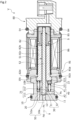
FIG. 2 is a cross-sectional view showing a state where a CS valve is opened when the capacity control valve according to the first embodiment is in a non-energized state. -
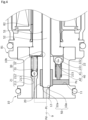
FIG. 3 is an enlarged view of main parts showing a state where the CS valve is opened when the capacity control valve according to the first embodiment is in the non-energized state, and showing a pressure distribution in a state where a first pressure-actuated valve is closed and a second pressure-actuated valve is opened when a control pressure is low. Incidentally, in order to show the pressure distribution, the hatching of a cross section of each member is omitted. -
FIG. 4 is an enlarged view of main parts showing a state where the CS valve is closed when the capacity control valve according to the first embodiment is in an energized state, and showing a pressure distribution in a state where the first pressure-actuated valve is opened and the second pressure-actuated valve is closed when the control pressure is high. Incidentally, in order to show the pressure distribution, the hatching of a cross section of each member is omitted. -
FIG. 5 is an enlarged view of main parts showing a pressure distribution in a state where when the capacity control valve according to the first embodiment switches from the energized state inFIG. 4 to the non-energized state to open the CS valve, the first pressure-actuated valve is opened and the second pressure-actuated valve is closed. Incidentally, in order to show the pressure distribution, the hatching of a cross section of each member is omitted. -
FIG. 6 is a cross-sectional view showing a state where a CS valve is opened when a capacity control valve according to a second embodiment of the present invention is in a non-energized state. -
FIG. 7 is an enlarged view of main parts showing a state where the CS valve is opened when the capacity control valve according to the second embodiment is in the non-energized state, and showing a pressure distribution in a state where a first pressure-actuated valve and a second pressure-actuated valve are closed when a control pressure is low. Incidentally, in order to show the pressure distribution, the hatching of a cross section of each member is omitted. -
FIG. 8 is an enlarged view of main parts showing a state where the CS valve is closed when the capacity control valve according to the second embodiment is in an energized state, and showing a pressure distribution in a state where the first pressure-actuated valve is opened and the second pressure-actuated valve is closed when the control pressure is high. Incidentally, in order to show the pressure distribution, the hatching of a cross section of each member is omitted. -
FIG. 9 is an enlarged view of main parts showing a pressure distribution in a state where when the capacity control valve according to the second embodiment switches from the energized state inFIG. 8 to the non-energized state to open the CS valve, the first pressure-actuated valve is closed and the second pressure-actuated valve is opened. Incidentally, in order to show the pressure distribution, the hatching of a cross section of each member is omitted. - Modes for implementing a capacity control valve according to the present invention will be described below based on embodiments.
- A capacity control valve according to a first embodiment of the present invention will be described with reference to
FIGS. 1 to 5 . In the following description, right and left sides ofFIG. 2 as viewed from a front side are right and left sides of the capacity control valve. In detail, a description will be given based on the assumption that the left side of the drawing sheet on which avalve housing 10 is disposed is the left side of the capacity control valve and the right side of the drawing sheet on which asolenoid 80 is disposed is the right side of the capacity control valve. - A capacity control valve V of the present invention is assembled into a variable displacement compressor M used for an air conditioning system of an automobile, etc., and by variably controlling the pressure of a working fluid (hereinafter, simply referred to as a "fluid") which is a refrigerant, controls a discharge amount of the variable displacement compressor M to adjust the air conditioning system to a target cooling capacity.
- First, the variable displacement compressor M will be described. As shown in
FIG. 1 , the variable displacement compressor M includes acasing 1 including adischarge chamber 2, asuction chamber 3, acontrol chamber 4, and a plurality ofcylinders 4a. Incidentally, the variable displacement compressor M is provided with a communication passage through which thedischarge chamber 2 and thecontrol chamber 4 directly communicate with each other, and the communication passage is provided with afixed orifice 9 that adjusts and balances the pressures of thedischarge chamber 2 and the control chamber 4 (seeFIG. 2 ). - In addition, the variable displacement compressor M includes a
rotating shaft 5 to be driven and rotated by an engine (not shown) installed outside thecasing 1; aswash plate 6 coupled to therotating shaft 5 so as to be tiltable by ahinge mechanism 8 in thecontrol chamber 4; and a plurality ofpistons 7 coupled to theswash plate 6 and reciprocatably fitted in therespective cylinders 4a. The tilt angle of theswash plate 6 is continuously changed by appropriately controlling pressure in thecontrol chamber 4 while utilizing a suction pressure Ps of thesuction chamber 3 that suctions the fluid, a discharge pressure Pd of thedischarge chamber 2 that discharges the fluid pressurized by thepistons 7, and a control pressure Pc of thecontrol chamber 4 that houses theswash plate 6, by means of the capacity control valve V to be driven to open and close by electromagnetic force. Thereby, the stroke amount of thepistons 7 is changed to control the discharge amount of the fluid. Incidentally, for convenience of description, the capacity control valve V assembled into the variable displacement compressor M is not shown inFIG. 1 . - Specifically, the higher the control pressure Pc in the
control chamber 4 is, the smaller the tilt angle of theswash plate 6 with respect to therotating shaft 5 is, and thus the stroke amount of thepistons 7 is reduced. When the control pressure Pc reaches a certain pressure or higher, theswash plate 6 is substantially perpendicular to therotating shaft 5, namely, is slightly tilted from perpendicularity. In this case, since the stroke amount of thepistons 7 is minimized and the pressurization of the fluid in thecylinders 4a by thepistons 7 is minimized, the discharge amount of the fluid to thedischarge chamber 2 is reduced, and the cooling capacity of the air conditioning system is minimized. On the other hand, the lower the control pressure Pc in thecontrol chamber 4 is, the larger the tilt angle of theswash plate 6 with respect to therotating shaft 5 is, and thus the stroke amount of thepistons 7 is increased. When the control pressure Pc reaches a certain pressure or lower, theswash plate 6 forms a maximum tilt angle with respect to therotating shaft 5. In this case, since the stroke amount of thepistons 7 is maximized and the pressurization of the fluid in thecylinders 4a by thepistons 7 is maximized, the discharge amount of the fluid to thedischarge chamber 2 is increased, and the cooling capacity of the air conditioning system is maximized. - As shown in
FIG. 2 , the capacity control valve V assembled into the variable displacement compressor M adjusts electric current which energizes acoil 86 forming thesolenoid 80, and controls the opening and closing of aCS valve 50 in the capacity control valve V, to control the fluid flowing out from thecontrol chamber 4 to thesuction chamber 3, and thereby the control pressure Pc in thecontrol chamber 4 is variably controlled. Incidentally, a discharge fluid of the discharge pressure Pd of thedischarge chamber 2 is always supplied to thecontrol chamber 4 via the fixedorifice 9, and theCS valve 50 in the capacity control valve V is closed to increase the control pressure Pc in thecontrol chamber 4. - In the present embodiment, the
CS valve 50 includes aCS valve body 51 as a valve body, and aCS valve seat 10a formed in an inner peripheral surface of thevalve housing 10. An axiallyleft end 52a of a large-diameter portion 52 of theCS valve body 51 comes into contact with and separates from theCS valve seat 10a to open and close theCS valve 50. - Next, a structure of the capacity control valve V will be described. As shown in
FIG. 2 , the capacity control valve V mainly includes thevalve housing 10 made of a metallic material or a resin material; theCS valve body 51 of which an axially left end portion is disposed inside thevalve housing 10; and thesolenoid 80 connected to thevalve housing 10 to exert a driving force on theCS valve body 51. - As shown in
FIG. 2 , theCS valve body 51 includes the large-diameter portion 52 that is a columnar body having a constant cross section, and a small-diameter portion 54 having a smaller diameter than that of the large-diameter portion 52 and extending rightward in an axial direction, and also serves as a rod that is disposed through thecoil 86 of thesolenoid 80. - As shown in
FIG. 2 , thesolenoid 80 mainly includes acasing 81 including anopening portion 81a that is open leftward in the axial direction; acenter post 82 that has a substantially cylindrical shape, and that is inserted into theopening portion 81a of thecasing 81 from the left in the axial direction to be disposed between a radially inner side of thecasing 81 and a radially inner side of thevalve housing 10; theCS valve body 51 which is inserted into thecenter post 82 to be reciprocatable in the axial direction, and of which the axially left end portion is disposed inside thevalve housing 10; amovable iron core 84 to which an axially right end portion of theCS valve body 51 is inserted and fixed; acoil spring 85 as a spring provided between thecenter post 82 and themovable iron core 84 to bias themovable iron core 84 rightward in the axial direction, which is a valve opening direction of theCS valve 50; and thecoil 86 for excitation wound on an outer side of thecenter post 82 with a bobbin interposed therebetween. - The
center post 82 is made of a rigid body that is a magnetic material such as iron or silicon steel, and includes acylindrical portion 82b provided with aninsertion hole 82c into which theCS valve body 51 extending in the axial direction is inserted, and aflange portion 82d having an annular shape and extending from an outer peripheral surface of an axially left end portion of thecylindrical portion 82b in a radially outward direction. - As shown in
FIGS. 2 and3 , aPs port 11 is formed in thevalve housing 10, as a suction port that penetrates through thevalve housing 10 in the radial direction to communicate with thesuction chamber 3 of the variable displacement compressor M. In addition, aPc port 12 is formed on a radially inner side of an axially left end of thevalve housing 10, as a control port that communicates with thecontrol chamber 4 of the variable displacement compressor M. - A
valve chamber 20 is formed inside thevalve housing 10, and the axiallyleft end 52a of the large-diameter portion 52 of theCS valve body 51 is disposed in thevalve chamber 20 so as to be reciprocatable in the axial direction. In addition, thePs port 11 extends from an outer peripheral surface of thevalve housing 10 in a radially inward direction to communicate with thevalve chamber 20. In addition, thePc port 12 extends rightward from the radially inner side of the axially left end of thevalve housing 10 in the axial direction to communicate with thevalve chamber 20. - The
CS valve seat 10a is formed in the inner peripheral surface of thevalve housing 10 at an opening end edge on avalve chamber 20 side of thePc port 12. In addition, theCS valve seat 10a, and aguide hole 10b against which an outer peripheral surface of theCS valve body 51 is slidable on asolenoid 80 side of thevalve chamber 20 are formed in the inner peripheral surface of thevalve housing 10. Namely, theCS valve seat 10a and theguide hole 10b are integrally formed in the inner peripheral surface of thevalve housing 10. Incidentally, an inner peripheral surface of theguide hole 10b and the outer peripheral surface of theCS valve body 51 are slightly separated from each other in a radial direction to form a very small gap therebetween. TheCS valve body 51 is smoothly movable relative to thevalve housing 10 in the axial direction. - In addition, a recessed
portion 10c recessed leftward in the axial direction is formed on an axially right side of thevalve housing 10, and theflange portion 82d of thecenter post 82 is inserted and fixed to the recessedportion 10c from the right in the axial direction in a substantially sealed manner, and thecasing 81 is inserted and fixed to thevalve housing 10 from the right in the axial direction in a substantially sealed manner, so that thevalve housing 10, thecenter post 82, and thecasing 81 are integrally connected to each other. Incidentally, an opening end on thesolenoid 80 side of theguide hole 10b is formed on a radially inner side of a bottom surface of the recessedportion 10c of thevalve housing 10. In such a manner, in a state where thevalve housing 10, thecenter post 82, and thecasing 81 are integrally connected to each other, an axially right end surface of thevalve housing 10 and an axially right side surface of theflange portion 82d of thecenter post 82 abut against a bottom surface of a recessedportion 81b formed on an axially left side of thecasing 81, and the bottom surface of the recessedportion 10c of thevalve housing 10 and an axially left end surface of thecenter post 82 are separated from each other in the axial direction to form a gap therebetween. - In addition, a through-
hole 21 extending in the axial direction between an axially left end surface of thevalve housing 10 and a bottom portion of the recessedportion 10c is formed in thevalve housing 10. The through-hole 21 includes a small-diameter hole portion 211 of which an axially left end communicates with thecontrol chamber 4 of the variable displacement compressor M, and a large-diameter hole portion 212 extending continuously from an axially right end of the small-diameter hole portion 211 and having a larger diameter than that of the small-diameter hole portion 211. An axially right end of the large-diameter hole portion 212 is open to the gap formed between the bottom surface of the recessedportion 10c and the axially left end surface of thecenter post 82. Incidentally, the control fluid of the control pressure Pc is supplied into thePc port 12 and the small-diameter hole portion 211 of the through-hole 21 from thecontrol chamber 4 of the variable displacement compressor M. - An
actuating valve body 31 having a ball shape, and areturn spring 32 of which an axially right end is fixed to the axially left end surface of thecenter post 82 and of which an axially left end abuts against the actuatingvalve body 31 from the right in the axial direction are disposed in the large-diameter hole portion 212 of the through-hole 21. Theactuating valve body 31 is biased leftward in the axial direction by thereturn spring 32. Theactuating valve body 31 and thereturn spring 32 form a first pressure-actuatedvalve 30 as a pressure-actuated valve that controls a communication between thecontrol chamber 4 of the variable displacement compressor M and an internal space S of thecasing 81 in the through-hole 21 that is a flow passage. Incidentally, the internal space S of thecasing 81 communicates with an internal space of thecenter post 82 and the gap formed between the bottom surface of the recessedportion 10c of thevalve housing 10 and the axially left end surface of thecenter post 82. - In addition, a through-
hole 22 extending in the axial direction between an inner peripheral surface of thePs port 11 that is a through-hole extending in the radial direction, and the bottom portion of the recessedportion 10c at the axially right end is formed in thevalve housing 10. The through-hole 22 includes a small-diameter hole portion 221 of which an axially left end communicates with the inside of thePs port 11, and a large-diameter hole portion 222 extending continuously from an axially right end of the small-diameter hole portion 221 and having a larger diameter than that of the small-diameter hole portion 221. An axially right end of the large-diameter hole portion 222 is open to the gap formed between the bottom surface of the recessedportion 10c of thevalve housing 10 and an axially left end of thecenter post 82. Incidentally, the pressure in thevalve chamber 20, inside thePs port 11, and inside the small-diameter hole portion 221 in thevalve housing 10 is a fluid pressure that is generated on a downstream side of theCS valve 50 by opening and closing of theCS valve 50. - An actuating valve body 41 having a ball shape and a return spring 42 as a biasing device of which an axially left end is fixed inside the small-diameter hole portion 221 and of which an axially right end abuts against the actuating valve body 41 from the left in the axial direction are disposed in the large-diameter hole portion 222 and the small-diameter hole portion 221 of the through-
hole 22. The actuating valve body 41 is biased rightward in the axial direction. The actuating valve body 41 and the return spring 42 form a second pressure-actuatedvalve 40 as a flow passage control device for controlling a communication between thePs port 11 and the internal space S of thecasing 81 in the through-hole 22 that is a flow passage. - Incidentally, the internal space S of the
casing 81 always communicates with thePs port 11 via a throttle. Specifically, the very small gap between the inner peripheral surface of theguide hole 10b and the outer peripheral surface of theCS valve body 51 functions as a throttle. The fluid in the internal space S of thecasing 81 can be gently released to thePs port 11, and a state where a pressure difference between the pressure of the fluid in thevalve chamber 20 and the pressure of the fluid in the internal space S of thecasing 81 is small is maintained during non-use for a long time. - Next, an operation of the capacity control valve V, mainly, an opening and closing operation of the
CS valve 50 will be described. - First, a non-energized state of the capacity control valve V will be described. As shown in
FIGS. 2 and3 , when the capacity control valve V is in the non-energized state, themovable iron core 84 is pressed rightward in the axial direction by a biasing force of thecoil spring 85, so that theCS valve body 51 moves rightward in the axial direction, and the axiallyleft end 52a of the large-diameter portion 52 of theCS valve body 51 separates from theCS valve seat 10a to open theCS valve 50. - At this time, the biasing force Fsp1 of the
coil spring 85, and a force FP1 due to the pressure of the fluid on an axially left end surface of theCS valve body 51 are applied rightward to theCS valve body 51 in the axial direction, and a force FP2 due to the pressure of the fluid on an axially right end surface of theCS valve body 51 is applied leftward in the axial direction. Namely, a force Frod = Fsp1 + FP1 - FP2 is applied to theCS valve body 51, given that a right direction is positive. Incidentally, when theCS valve 50 is opened, the force FP1 due to the pressure of the fluid on the axially left end surface of theCS valve body 51 is a force due to the pressure of the fluid in thevalve chamber 20, which is applied to the axiallyleft end 52a of the large-diameter portion 52 of theCS valve body 51. On the other hand, the force FP2 due to the pressure of the fluid on the axially right end surface of theCS valve body 51 is a force due to the pressure of the fluid that has flowed around from thevalve chamber 20 to a back side of theCS valve body 51 through the gap between the inner peripheral surface of theguide hole 10b of thevalve housing 10 and the outer peripheral surface of theCS valve body 51, namely, the pressure of the fluid existing in the internal space S of thecasing 81. The force FP1 due to the pressure of the fluid on the axially left end surface of theCS valve body 51 is relatively higher than the force FP2 due to the pressure of the fluid on the axially right end surface of the CS valve body 51 (i.e., FP1 > FP2). - Next, an energized state of the capacity control valve V will be described with reference to
FIG. 4 . As shown inFIG. 4 , when the capacity control valve V is in the energized state, namely, in normal control, in other words, in duty control, if an electromagnetic force Fsol generated by the application of an electric current to thesolenoid 80 is larger than the force Frod (i.e., Fsol > Frod), themovable iron core 84 is pulled toward acenter post 82 side, namely, to the axially left side, and theCS valve body 51 fixed to themovable iron core 84 moves together leftward in the axial direction, so that the axiallyleft end 52a of theCS valve body 51 is seated on theCS valve seat 10a of thevalve housing 10 to close theCS valve 50. - At this time, the electromagnetic force Fsol to the left in the axial direction and the force Frod to the right in the axial direction are applied to the CS valve body 51 (namely, a force Frod - Fsol is applied to the
CS valve body 51, given that the right direction is positive). Incidentally, when theCS valve 50 is closed, the force FP1 due to the pressure of the fluid on the axially left end surface of theCS valve body 51 is a force due to the control pressure Pc of the control fluid inside thePc port 12. - Next, when the control pressure Pc is high or when the control pressure Pc is desired to be rapidly increased, a transition from a fully open state of the
CS valve 50, namely, the non-energized state of the capacity control valve V to a fully closed state of theCS valve 50, namely, a maximum energized state of the capacity control valve V will be described. In the fully open state of theCS valve 50 shown inFIG. 3 , when the control pressure Pc is high, a pressure difference between the control pressure Pc of the control fluid inside thePc port 12, the pressure of the fluid in thevalve chamber 20 and the pressure of the fluid in the internal space S of thecasing 81 is increased, and the force FP1 due to the control pressure Pc of the control fluid inside thePc port 12 is greatly applied to theCS valve body 51 to bias theCS valve body 51 rightward in the axial direction, namely, in the valve opening direction, so that a large application electric current is required to move theCS valve body 51 leftward in the axial direction. In addition, also when the control pressure Pc is desired to be rapidly increased, a large application electric current is required to move theCS valve body 51 leftward in the axial direction. - As shown in
FIG. 4 , when the control pressure Pc is high, theactuating valve body 31 of the first pressure-actuatedvalve 30 moves rightward in the axial direction against a biasing force of thereturn spring 32 and the pressure of the fluid in the internal space S of thecasing 81 to separate from a taperedvalve seat 213 formed in a connecting portion between the axially right end of the small-diameter hole portion 211 and the axially left end of the large-diameter hole portion 212 of the through-hole 21, so that the first pressure-actuatedvalve 30 is opened. At this time, a force FP11 due to the control pressure Pc inside the small-diameter hole portion 211 which is larger than the biasing force Fsp11 of thereturn spring 32 and a force FP12 due to the pressure of the fluid in the internal space S of thecasing 81 is applied rightward to theactuating valve body 31 in the axial direction (i.e., FP11 > Fsp11 + FP12, and shown by a white arrow inFIG. 4 ). - Accordingly, the
control chamber 4 of the variable displacement compressor M and the internal space S of thecasing 81 communicate with each other through the through-hole 21, the control fluid of the control pressure Pc is supplied from thecontrol chamber 4 of the variable displacement compressor M to the internal space S of thecasing 81 through the through-hole 21, and the pressure difference between the control pressure Pc of thecontrol chamber 4 of the variable displacement compressor M and the pressure of the fluid in the internal space S of thecasing 81 is reduced. Hence, an influence of the force FP1 due to the control pressure Pc of the control fluid inside thePc port 12 which is applied to theCS valve body 51 is reduced, so that theCS valve body 51 can be smoothly operated leftward in the axial direction, namely, in a valve closing direction, and responsiveness to control of the variable displacement compressor M at high output can be improved. - In addition, since a pressure difference between the pressure of the fluid inside the small-diameter hole portion 221 of the through-
hole 22 communicating with thePs port 11 on the downstream side of theCS valve 50, and the pressure of the fluid in the internal space S of thecasing 81 increases because of the supply of the control fluid of the control pressure Pc to the internal space S of thecasing 81, the actuating valve body 41 of the second pressure-actuatedvalve 40 moves leftward in the axial direction against a biasing force of the return spring 42 and the pressure of the fluid inside the small-diameter hole portion 221 to be seated on a taperedvalve seat 223 formed in a connecting portion between the axially right end of the small-diameter hole portion 221 and the axially left end of the large-diameter hole portion 222 of the through-hole 22, so that the second pressure-actuatedvalve 40 is closed in a substantially sealed manner. At this time, a force FP22 due to the pressure of the fluid in the internal space S of thecasing 81 which is larger than a combined force of the biasing force Fsp21 of the return spring 42 and a force FP21 due to the pressure of the fluid inside the small-diameter hole portion 221 is applied leftward to the actuating valve body 41 in the axial direction (i.e., Fsp21 + FP21 < FP22, and shown by a white arrow inFIG. 4 ) . - Accordingly, the
Ps port 11 and the internal space S of thecasing 81 enter a non-communication state, and the fluid supplied from thecontrol chamber 4 of the variable displacement compressor M to the internal space S of thecasing 81 through the through-hole 21 is not discharged to thePs port 11 through the through-hole 22. Hence, the pressure of the fluid in the internal space S of thecasing 81 can be efficiently increased. - Here, as shown in
FIG. 4 , when the capacity control valve V switches from a state where because of an increase in the control pressure Pc, the first pressure-actuatedvalve 30 is opened to reduce the pressure difference between the control pressure Pc and the pressure of the fluid in the internal space S of thecasing 81, to the non-energized state to open the CS valve 50 (seeFIG. 5 ), thePc port 12 and thePs port 11 communicate with each other, the control fluid of the control pressure Pc is discharged from thecontrol chamber 4 of the variable displacement compressor M to thesuction chamber 3, and the control pressure Pc decreases. - As shown in
FIG. 5 , when the capacity control valve V switches from the energized state to the non-energized state to open theCS valve 50, the control pressure Pc of thePc port 12 decreases. At this time, since the first pressure-actuatedvalve 30 is in a valve open state, when the pressure of the fluid in the internal space S of thecasing 81 decreases to a pressure close to the control pressure Pc of thePc port 12, and the biasing force of thereturn spring 32 is larger than a force due to a differential pressure applied to theactuating valve body 31, the first pressure-actuatedvalve 30 is closed. In addition, since a part of the fluid to be discharged from thePc port 12 to thePs port 11 through thevalve chamber 20 flows into the small-diameter hole portion 221 of the through-hole 22, and the pressure inside the small-diameter hole portion 221 rises higher than pressure immediately before opening (see a solid line arrow inFIG. 5 ), the second pressure-actuatedvalve 40 is opened, and the internal space S of thecasing 81 communicates with thePs port 11. Therefore, when the pressure of the fluid in the internal space S of thecasing 81 decreases to a pressure close to the suction pressure Ps of thePs port 11, and the biasing force of the return spring 42 is larger than a force due to a differential pressure applied to the actuating valve body 41, the second pressure-actuatedvalve 40 maintains a valve open state. At this time, the combined force of the biasing force Fsp21 of the return spring 42 and the force FP21 due to the pressure on the downstream side of theCS valve 50, namely, the pressure of the fluid inside the small-diameter hole portion 221, which is larger than the force FP22 due to the pressure of the fluid in the internal space S of thecasing 81, is applied rightward to the actuating valve body 41 in the axial direction (i.e., Fsp21 + FP21 > FP22, and shown by a white arrow inFIG. 5 ). - Accordingly, the internal space S of the
casing 81 and thePs port 11 communicate with each other through the through-hole 22, the fluid in the internal space S of thecasing 81 is discharged from the internal space S of thecasing 81 to thePs port 11 through the through-hole 22, and the pressure of the fluid in the internal space S of thecasing 81 decreases rapidly. Hence, the pressure difference between the control pressure Pc of the control fluid inside thePc port 12 and the pressure of the fluid in the internal space S of thecasing 81 is reduced. Therefore, an influence of the force FP2 due to the pressure of the fluid in the internal space S of thecasing 81 which is applied to theCS valve body 51 is reduced, so that theCS valve body 51 can be smoothly operated rightward in the axial direction, namely, in the valve opening direction, and responsiveness when theCS valve 50 starts opening from a valve closed state can be improved. Incidentally, inFIG. 5 , a pressure distribution immediately after transition from the energized state to the non-energized state is shown by dots, and it goes without saying that the pressure inside the capacity control valve V becomes uniform over time. - In addition, since the
CS valve 50 is opened, and the control pressure Pc decreases, the biasing force is applied leftward to theactuating valve body 31 of the first pressure-actuatedvalve 30 in the axial direction, namely, in the valve closing direction by thereturn spring 32, and theactuating valve body 31 is seated on thevalve seat 213, so that the first pressure-actuatedvalve 30 is closed in a substantially sealed manner. At this time, a combined force of the biasing force Fsp11 of thereturn spring 32 and the force FP12 due to the pressure of the fluid in the internal space S of thecasing 81, which is larger than the force FP11 due to the control pressure Pc inside the small-diameter hole portion 211, is applied leftward to theactuating valve body 31 in the axial direction (i.e., FP11 < Fsp11 + FP12, and shown by a white arrow inFIG. 5 ). - Accordingly, the
control chamber 4 of the variable displacement compressor M and the internal space S of thecasing 81 enter a non-communication state, and the supply of the control fluid of the control pressure Pc to the internal space S of thecasing 81 is cut off. Hence, the pressure of the fluid in the internal space S of thecasing 81 can be decreased more rapidly because of opening of the second pressure-actuatedvalve 40 described above, and responsiveness to control for theCS valve 50 to start opening from a valve closed state can be further improved. - In addition, the flow passage control device of the present embodiment is formed of the second pressure-actuated
valve 40 in which a force due to the fluid pressure on the downstream side of theCS valve 50, namely, the force FP21 due to the pressure of the fluid inside the small-diameter hole portion 221 of the through-hole 22 communicating with thePs port 11, and the biasing force Fsp21 of the return spring 42 are opposed to the force FP22 due to the pressure of the fluid in the internal space S of thecasing 81. Since the biasing force of the return spring 42 is used for an opening and closing operation of the second pressure-actuatedvalve 40, a flow passage can be reliably opened and closed which discharges the pressure of the fluid in the internal space S of thecasing 81 according to a pressure difference between the fluid pressure on the downstream side of theCS valve 50 generated by opening and closing of theCS valve 50, and the pressure of the fluid in the internal space S of thecasing 81, and the reliability of the opening and closing operation of the second pressure-actuatedvalve 40 is high. - In addition, since the second pressure-actuated
valve 40 is capable of operating the actuating valve body 41 biased by the return spring 42 according to the pressure difference between the fluid pressure generated because of a decrease in the control pressure Pc by opening of theCS valve 50, and the pressure of the fluid in the internal space S of thecasing 81, the flow passage control device for decreasing the pressure of the fluid in the internal space S of thecasing 81 can be simply configured. - In addition, since the second pressure-actuated
valve 40 is provided in the through-hole 22 of thevalve housing 10 which communicates with thePs port 11, and the flow passage control device can be formed using the through-hole 22 communicating with the existingPs port 11, the structure of the capacity control valve V can be simplified. - In addition, since the
CS valve seat 10a and theguide hole 10b are integrally formed in thevalve housing 10, the accuracy of operation of theCS valve body 51 can be improved. - A capacity control valve according to a second embodiment of the present invention will be described with reference to
FIGS. 6 to 9 . Incidentally, a description of the same and duplicated configurations as the configurations of the first embodiment will be omitted. - As shown in
FIG. 6 , in the present embodiment, a through-hole 23 extending in the axial direction between an axially left end surface and the bottom portion of the recessedportion 10c is formed in thevalve housing 110. The through-hole 23 includes a large-diameter hole portion 231 of which an axially left end communicates with thecontrol chamber 4 of the variable displacement compressor M, and a small-diameter hole portion 232 extending continuously from an axially right end of the large-diameter hole portion 231 and having a smaller diameter than that of the large-diameter hole portion 231. Incidentally, the pressure inside thePc port 12, inside the small-diameter hole portion 211 of the through-hole 21, and inside the large-diameter hole portion 231 of the through-hole 23 in thevalve housing 110 is a fluid pressure on an upstream side of theCS valve 50, namely, the control pressure Pc of the control fluid to be supplied from thecontrol chamber 4 of the variable displacement compressor M. - An
actuating valve body 61 having a ball shape, and areturn spring 62 as a biasing device of which an axially left end is fixed to an axially right end of a fixedring 63 inserted and fixed to an axially left opening end portion of the large-diameter hole portion 231 and of which an axially right end abuts against the actuatingvalve body 61 from the left in the axial direction are disposed in the large-diameter hole portion 231 of the through-hole 23. Theactuating valve body 61 is biased rightward in the axial direction by thereturn spring 62. Theactuating valve body 61 and thereturn spring 62 form a second pressure-actuatedvalve 60 as a flow passage control device for controlling a communication between the upstream side of theCS valve 50 and the internal space S of thecasing 81. - As shown in
FIG. 7 , when the control pressure Pc is low, and the pressure difference between the control pressure Pc and the pressure of the fluid in the internal space S of thecasing 81 is small, theactuating valve body 31 of the first pressure-actuatedvalve 30 is moved leftward in the axial direction by the biasing force of thereturn spring 32 and the pressure of the fluid in the internal space S of thecasing 81 to be seated on thevalve seat 213, so that the first pressure-actuatedvalve 30 is closed in a substantially sealed manner. At this time, a combined force of the biasing force Fsp11 of thereturn spring 32 and the force FP12 due to the pressure of the fluid in the internal space S of thecasing 81, which is larger than the force FP11 due to the control pressure Pc inside the small-diameter hole portion 211, is applied leftward to theactuating valve body 31 in the axial direction (i.e., FP11 < Fsp11 + FP12, and shown by a white arrow inFIG. 7 ). - In addition, the
actuating valve body 61 of the second pressure-actuatedvalve 60 is moved rightward in the axial direction by a biasing force of thereturn spring 62 and the pressure of the fluid inside the large-diameter hole portion 231 of the through-hole 23 to be seated on a taperedvalve seat 233 formed in a connecting portion between the axially right end of the large-diameter hole portion 231 and an axially left end of the small-diameter hole portion 232 of the through-hole 23, so that the second pressure-actuatedvalve 60 is closed in a substantially sealed manner. At this time, a combined force of the biasing force Fsp31 of thereturn spring 62 and a force FP31 due to the pressure of the fluid inside the large-diameter hole portion 231, which is larger than a force FP32 due to the pressure of the fluid in the internal space S of thecasing 81, is applied rightward to theactuating valve body 61 in the axial direction (i.e., Fsp31 + FP31 > FP32, and shown by a white arrow inFIG. 7 ). - As shown in
FIG. 8 , when the control pressure Pc is high, and the pressure difference between the control pressure Pc and the pressure of the fluid in the internal space S of thecasing 81 is large, theactuating valve body 31 of the first pressure-actuatedvalve 30 moves rightward in the axial direction against the biasing force of thereturn spring 32 and the force due to the pressure of the fluid in the internal space S of thecasing 81 to separate from thevalve seat 213, so that the first pressure-actuatedvalve 30 is opened. At this time, the force FP11 due to the control pressure Pc inside the small-diameter hole portion 211 which is larger than the combined force of the biasing force Fsp11 of thereturn spring 32 and the force FP12 due to the pressure of the fluid in the internal space S of thecasing 81 is applied rightward to theactuating valve body 31 in the axial direction (i.e., FP11 > Fsp11 + FP12, and shown by a white arrow inFIG. 8 ) . - Accordingly, the
control chamber 4 of the variable displacement compressor M and the internal space S of thecasing 81 communicate with each other through the through-hole 21, the control fluid of the control pressure Pc is supplied from thecontrol chamber 4 of the variable displacement compressor M to the internal space S of thecasing 81 through the through-hole 21, and the pressure difference between the control pressure Pc of thecontrol chamber 4 of the variable displacement compressor M and the pressure of the fluid in the internal space S of thecasing 81 is reduced. Hence, an influence of the force 0FP1 due to the control pressure Pc of the control fluid inside thePc port 12 which is applied to theCS valve body 51 is reduced, so that theCS valve body 51 can be smoothly operated leftward in the axial direction, namely, in a valve closing direction, and responsiveness to control of the variable displacement compressor M at high output can be improved. - In addition, since the pressure difference between the control pressure Pc of the control fluid inside the large-
diameter hole portion 231 of the through-hole 23 and the pressure of the fluid in the internal space S of thecasing 81 is reduced because of the supply of the control fluid of the control pressure Pc to the internal space S of thecasing 81, theactuating valve body 61 of the second pressure-actuatedvalve 60 is pressed against thevalve seat 233 mainly by the biasing force of thereturn spring 62, and a state where the second pressure-actuatedvalve 60 is closed in a substantially sealed manner is maintained. - Next, as shown in
FIG. 9 , when the capacity control valve V switches from the energized state to the non-energized state to open theCS valve 50, the control fluid is discharged from thePc port 12 to thePs port 11 through the valve chamber 20 (see a solid line arrow inFIG. 9 ), so that the pressure of the fluid inside the large-diameter hole portion 231 of the through-hole 23 decreases, and a pressure difference between the pressure of the fluid inside the large-diameter hole portion 231 and the pressure of the fluid inside the small-diameter hole portion 232 of the through-hole 23, namely, the pressure of the fluid in the internal space S of thecasing 81 is increased. Therefore, theactuating valve body 61 of the second pressure-actuatedvalve 60 moves leftward in the axial direction against the biasing force of thereturn spring 62 and the force due to the pressure of the fluid inside the large-diameter hole portion 231 to separate from thevalve seat 233, so that the second pressure-actuatedvalve 60 is opened. At this time, the force FP32 due to the pressure of the fluid in the internal space S of thecasing 81 which is larger than a combined force of the biasing force Fsp31 of thereturn spring 62 and the force FP31 due to the pressure of the fluid inside the large-diameter hole portion 231 is applied leftward to theactuating valve body 61 in the axial direction (i.e., FP31 + Fsp31 < FP32, and shown by a white arrow inFIG. 9 ) . - Accordingly, the internal space S of the
casing 81 and thecontrol chamber 4 of the variable displacement compressor M communicate with each other through the through-hole 23, the fluid in the internal space S of thecasing 81 is discharged from the internal space S of thecasing 81 through the through-hole 23, thePc port 12, and thePs port 11, and the pressure of the fluid in the internal space S of thecasing 81 decreases rapidly. Hence, the pressure difference between the control pressure Pc of the control fluid inside thePc port 12 and the pressure of the fluid in the internal space S of thecasing 81 is reduced. Therefore, an influence of the force FP2 due to the pressure of the fluid in the internal space S of thecasing 81 which is applied to theCS valve body 51 is reduced, so that theCS valve body 51 can be smoothly operated rightward in the axial direction, namely, in the valve opening direction, and responsiveness when theCS valve 50 starts opening from a valve closed state can be improved. Incidentally, inFIG. 9 , a pressure distribution immediately after transition from the energized state to the non-energized state is shown by dots, and it goes without saying that the pressure inside the capacity control valve V becomes uniform over time. - In addition, when the pressure of the fluid in the internal space S of the
casing 81 decreases because of opening of the second pressure-actuatedvalve 60, and the pressure difference between the pressure of the fluid inside the large-diameter hole portion 231 and the pressure of the fluid in the internal space S of thecasing 81 is reduced, the second pressure-actuatedvalve 60 is closed, and the second pressure-actuatedvalve 60 is repeatedly opened and closed according to the pressure difference between the pressure of the fluid inside the large-diameter hole portion 231 and the pressure of the fluid in the internal space S of thecasing 81. Therefore, a state where the pressure difference between the pressure of the fluid inside the large-diameter hole portion 231, namely, the control pressure Pc and the pressure of the fluid in the internal space S of thecasing 81 is small can be maintained, and controllability of the capacity control valve V even during normal control can be improved. - In addition, since the
CS valve 50 is opened, and the control pressure Pc decreases, the biasing force is applied leftward to theactuating valve body 31 of the first pressure-actuatedvalve 30 in the axial direction, namely, in the valve closing direction by thereturn spring 32, and theactuating valve body 31 is seated on thevalve seat 213, so that the first pressure-actuatedvalve 30 is closed in a substantially sealed manner. Incidentally, since a state where the first pressure-actuatedvalve 30 is closed is maintained until the control pressure Pc increases, the pressure difference between the control pressure Pc and the pressure of the fluid in the internal space S of thecasing 81 is easily adjusted by the opening and closing operation of the second pressure-actuatedvalve 60 described above. - In addition, the flow passage control device of the present embodiment is formed of the second pressure-actuated
valve 60 in which a force due to the fluid pressure on the upstream side of theCS valve 50, namely, the force FP31 due to the pressure of the fluid inside the large-diameter hole portion 231 and the biasing force Fsp21 of thereturn spring 62 are opposed to the force FP32 due to the pressure of the fluid in the internal space S of thecasing 81. Since the biasing force of thereturn spring 62 is used for the opening and closing operation of the second pressure-actuatedvalve 60, a flow passage can be reliably opened and closed which discharges the pressure of the fluid in the internal space S of thecasing 81 according to a pressure difference between the fluid pressure on the upstream side of theCS valve 50 generated by opening and closing of theCS valve 50, namely, the control pressure Pc and the pressure of the fluid in the internal space S of thecasing 81, and the reliability of the opening and closing operation of the second pressure-actuatedvalve 60 is high. - In addition, since the second pressure-actuated
valve 60 is provided in the through-hole 23 of thevalve housing 110 which communicates with thecontrol chamber 4 of the variable displacement compressor M, and the flow passage control device can be formed using the through-hole 23 formed in the existingvalve housing 110, the structure of the capacity control valve V can be simplified. - For example, in the first and second embodiments, the mode has been described in which the CS valve body is provided in a drive rod that is disposed through the
coil 86 of thesolenoid 80; however, the present invention is not limited to the mode, and the CS valve body may be configured to be reciprocatable integrally with a separate rod in the axial direction. - In addition, in the first and second embodiments, the CS valve seat and the guide hole have been described as being integrally formed in the inner peripheral surface of the valve housing; however, the present invention is not limited thereto, and a valve housing including the CS valve seat and a valve housing including the guide hole may be provided separately.
- In addition, a guide portion is not limited to being formed in the valve housing, and may be formed, for example, in a part of the
insertion hole 82c of thecenter post 82. - In addition, in the first and second embodiments, the
CS valve body 51 has been described as being biased in the axial direction by thecoil spring 85 forming thesolenoid 80; however, the present invention is not limited thereto, and an auxiliary spring that biases the CS valve body in the axial direction may be provided in the axially left end portion of the CS valve body, and the CS valve body may be biased in the axial direction by thecoil spring 85 and the auxiliary spring on axially both sides of the CS valve body, so that an axial operation of the CS valve body is stabilized. - In addition, in the first and second embodiments, the flow passage control device has been described as being formed of a pressure-actuated valve; however, the present invention is not limited thereto, and the flow passage control device may adjust the opening degree of the throttle.
- In addition, in the first and second embodiments, the mode has been described in which the first pressure-actuated
valve 30 to be actuated to open and close a communication between the upstream side of theCS valve 50 and the internal space S of thecasing 81 by a pressure difference is provided; however, the present invention is not limited to the mode, and the first pressure-actuated valve may not necessarily be provided. -
- 1
- Casing
- 2
- Discharge chamber
- 3
- Suction chamber
- 4
- Control chamber
- 10
- Valve housing
- 10a
- CS valve seat
- 11
- Ps port (suction port)
- 12
- Pc port (control port)
- 20
- Valve chamber
- 21, 22, 23
- Through-hole
- 30
- First pressure-actuated valve (pressure-actuated valve)
- 31
- Actuating valve body
- 32
- Return spring
- 40
- Second pressure-actuated valve (flow passage control device)
- 41
- Actuating valve body
- 42
- Return spring (biasing device)
- 50
- CS valve
- 51
- CS valve body (valve body)
- 60
- Second pressure-actuated valve (flow passage control device)
- 61
- Actuating valve body
- 62
- Return spring (biasing device)
- 63
- Fixed ring
- 80
- Solenoid
- 85
- Coil spring (spring)
- 110
- Valve housing
- M
- Variable displacement compressor
- Pc
- Control pressure
- Pd
- Discharge pressure
- Ps
- Suction pressure
- S
- Space
- V
- Capacity control valve
Claims (6)
- A capacity control valve (V) comprising:a valve housing (10) provided with a suction port (11) through which a suction fluid of a suction pressure (Ps) passes and a control port (12) through which a control fluid of a control pressure (Pc) passes;a valve body (51) to be driven by a solenoid (80);a spring (85) that biases the valve body (51) in a direction opposite to a direction of driving by the solenoid (80); anda CS valve (50) that includes a CS valve seat (10a) and the valve body (51), and that moves the valve body (51) to open and close a communication between the control port (12) and the suction port (11), the capacity control valve (V) opening and closing the CS valve (50) to control the control pressure (Pc),wherein the control fluid of the control pressure (Pc) is suppliable to a back side of the valve body (51),the capacity control valve (V) further comprises a flow passage control device (40, 60) that uses a fluid pressure generated by opening and closing of the CS valve (50) and a pressure on the back side of the valve body (51) to decrease the pressure on the back side of the valve body (51), characterized in thatthe flow passage control device (40, 60) includes an actuating valve body (41, 61) and a biasing device (42, 62), andthe flow passage control device (40, 60) is a valve in which a force due to the fluid pressure and a biasing force of the biasing device (42, 62) are opposed to a force due to the pressure on the back side of the valve body (51).
- The capacity control valve (V) according to claim 1,
wherein the fluid pressure is a pressure on a downstream side of the CS valve (50), and the biasing device (42) biases the actuating valve body (41) in a valve opening direction. - The capacity control valve (V) according to claim 1,
wherein the fluid pressure is a pressure on an upstream side of the CS valve (50), and the biasing device (62) biases the actuating valve body (61) in a valve closing direction. - The capacity control valve (V) according to any one of claims 1 to 3, further comprising:
a pressure-actuated valve (30) to be actuated to open and close a communication between an upstream side of the CS valve (50) and the back side of the valve body (51) by a pressure difference. - The capacity control valve (V) according to claim 2,
wherein the flow passage control device (40) is provided in a through-hole (22) of the valve housing (10), the through-hole (22) communicating with the suction port (11). - The capacity control valve (V) according to claim 3,
wherein the flow passage control device (60) is provided in a through-hole (23) of the valve housing (10), the through-hole (23) communicating with the upstream side of the CS valve (50) .
Applications Claiming Priority (2)
| Application Number | Priority Date | Filing Date | Title |
|---|---|---|---|
| JP2019195454 | 2019-10-28 | ||
| PCT/JP2020/039833 WO2021085318A1 (en) | 2019-10-28 | 2020-10-23 | Capacity control valve |
Publications (3)
| Publication Number | Publication Date |
|---|---|
| EP4053406A1 EP4053406A1 (en) | 2022-09-07 |
| EP4053406A4 EP4053406A4 (en) | 2023-12-13 |
| EP4053406B1 true EP4053406B1 (en) | 2024-11-20 |
Family
ID=75715152
Family Applications (1)
| Application Number | Title | Priority Date | Filing Date |
|---|---|---|---|
| EP20881943.3A Active EP4053406B1 (en) | 2019-10-28 | 2020-10-23 | Capacity control valve |
Country Status (6)
| Country | Link |
|---|---|
| US (1) | US12129840B2 (en) |
| EP (1) | EP4053406B1 (en) |
| JP (1) | JP7467494B2 (en) |
| KR (1) | KR102787648B1 (en) |
| CN (1) | CN114641613B (en) |
| WO (1) | WO2021085318A1 (en) |
Family Cites Families (105)
| Publication number | Priority date | Publication date | Assignee | Title |
|---|---|---|---|---|
| US2267515A (en) | 1940-01-19 | 1941-12-23 | California Cedar Prod | Fluid control valve |
| US2470470A (en) | 1945-04-10 | 1949-05-17 | Parker Appliance Co | Valve operating mechanism |
| US3100103A (en) | 1959-06-19 | 1963-08-06 | Robinson D Bullard | Electro-magnetically actuated pilot and main valve |
| US3250294A (en) | 1962-09-07 | 1966-05-10 | American Brake Shoe Co | Valve and control circuit therefor |
| US3250293A (en) | 1963-10-17 | 1966-05-10 | American Brake Shoe Co | Electric and fluid pressure operated valve mechanism |
| US3360304A (en) | 1964-11-09 | 1967-12-26 | Abex Corp | Retarder systems |
| JPS5212681Y2 (en) | 1971-06-11 | 1977-03-22 | ||
| US3903919A (en) | 1972-04-20 | 1975-09-09 | Control Concepts | Two stage solenoid operated valve assembly with relief function |
| JPS5167121U (en) | 1974-11-18 | 1976-05-27 | ||
| JPS536679U (en) | 1976-07-02 | 1978-01-20 | ||
| JPS581598B2 (en) | 1978-05-15 | 1983-01-12 | 富士通株式会社 | Display image correction method |
| JPS5557901U (en) | 1978-10-16 | 1980-04-19 | ||
| US4305566A (en) | 1979-10-31 | 1981-12-15 | Fluid Controls, Inc. | Fluid control valve |
| GB8315079D0 (en) | 1983-06-01 | 1983-07-06 | Sperry Ltd | Pilot valves for two-stage hydraulic devices |
| DE8322570U1 (en) | 1983-08-05 | 1985-01-17 | Robert Bosch Gmbh, 7000 Stuttgart | PRESSURE REGULATOR |
| US4553732A (en) | 1984-02-13 | 1985-11-19 | Brundage Robert W | Solenoid controlled flow valve |
| JPS6135521U (en) | 1984-07-31 | 1986-03-05 | 矢崎総業株式会社 | Door wire harness extraction fixing structure |
| JPS626274U (en) | 1985-06-28 | 1987-01-14 | ||
| US4895192A (en) | 1987-12-24 | 1990-01-23 | Sundstrand Corporation | Process and apparatus for filling a constant speed drive |
| DE3814156A1 (en) | 1988-04-27 | 1989-11-09 | Mesenich Gerhard | PULSE-MODULATED HYDRAULIC VALVE |
| US4917150A (en) | 1988-07-29 | 1990-04-17 | Colt Industries Inc. | Solenoid operated pressure control valve |
| US4873817A (en) | 1988-08-01 | 1989-10-17 | United Technologies Automotive, Inc. | Electrically controlled pressure relief valve system and method |
| US4998559A (en) | 1988-09-13 | 1991-03-12 | Coltec Industries Inc. | Solenoid operated pressure control valve |
| SE462349B (en) | 1988-11-15 | 1990-06-11 | Bahco Hydrauto Ab | Pressure medium VALVE |
| US5020772A (en) | 1989-02-13 | 1991-06-04 | Degenfelder Joseph R | Proportional electromagnetic flow valve |
| KR910004933A (en) | 1989-08-09 | 1991-03-29 | 미다 가쓰시게 | Variable displacement swash plate compressor |
| DE69018251T2 (en) | 1989-09-06 | 1995-08-10 | Hitachi Construction Machinery | DEVICE WITH HIGH-SPEED ELECTROMAGNETIC VALVE. |
| US5060695A (en) | 1990-04-02 | 1991-10-29 | Coltec Industries Inc | Bypass flow pressure regulator |
| US5048790A (en) | 1990-07-18 | 1991-09-17 | Target Rock Corporation | Self-modulating control valve for high-pressure fluid flow |
| SG30647G (en) * | 1991-01-28 | 1995-09-01 | Sanden Corp | Slant plate type compressor with variable displacement mechanism |
| US5072752A (en) | 1991-03-14 | 1991-12-17 | Sterling Hydraulics, Inc. | Bidirectional cartridge valve |
| US5217047A (en) | 1991-05-30 | 1993-06-08 | Coltec Industries Inc. | Solenoid operated pressure regulating valve |
| JP3088536B2 (en) | 1991-12-26 | 2000-09-18 | サンデン株式会社 | Variable displacement oscillating compressor |
| JPH06200875A (en) | 1993-01-08 | 1994-07-19 | Toyota Autom Loom Works Ltd | Rocking swash plate type variable displacement compressor |
| US5538026A (en) | 1995-03-29 | 1996-07-23 | Parker-Hannifin Corporation | Pilot-operated proportional control valve |
| JP3490557B2 (en) | 1995-10-31 | 2004-01-26 | 株式会社テージーケー | Capacity control device for variable capacity compressor |
| US5778932A (en) | 1997-06-04 | 1998-07-14 | Vickers, Incorporated | Electrohydraulic proportional pressure reducing-relieving valve |
| US5992450A (en) | 1998-06-30 | 1999-11-30 | Eaton Corporation | Cartridge valve having solenoid bypass and integral relief valve |
| US6457696B1 (en) | 1998-11-06 | 2002-10-01 | Tgk Co., Ltd. | Pilot operated flow regulating valve |
| JP2000249051A (en) * | 1999-03-01 | 2000-09-12 | Toyota Autom Loom Works Ltd | Control valve for variable displacement swash plate type compressor |
| US6161585A (en) | 1999-03-26 | 2000-12-19 | Sterling Hydraulics, Inc. | High flow proportional pressure reducing valve |
| JP3581598B2 (en) | 1999-04-21 | 2004-10-27 | 株式会社テージーケー | Capacity control device for variable capacity compressor |
| JP3583951B2 (en) | 1999-06-07 | 2004-11-04 | 株式会社豊田自動織機 | Capacity control valve |
| JP3911937B2 (en) | 1999-08-04 | 2007-05-09 | 株式会社豊田自動織機 | Control method for air conditioner and variable capacity compressor |
| JP2001073939A (en) | 1999-08-31 | 2001-03-21 | Toyota Autom Loom Works Ltd | Control valve for variable displacement compressor and variable displacement compressor |
| JP2001132632A (en) | 1999-11-10 | 2001-05-18 | Toyota Autom Loom Works Ltd | Control valve of variable displacement compressor |
| EP1126169B1 (en) | 2000-02-18 | 2006-08-16 | Calsonic Kansei Corporation | Swashplate type variable-displacement compressor |
| JP2002286151A (en) | 2001-03-26 | 2002-10-03 | Denso Corp | solenoid valve |
| JP3088536U (en) | 2002-03-12 | 2002-09-20 | ジー・アンド・ジーファルマ株式会社 | POS system |
| JP4242624B2 (en) | 2002-09-26 | 2009-03-25 | イーグル工業株式会社 | Capacity control valve and control method thereof |
| US7014428B2 (en) | 2002-12-23 | 2006-03-21 | Visteon Global Technologies, Inc. | Controls for variable displacement compressor |
| US7159615B2 (en) | 2003-02-12 | 2007-01-09 | Isuzu Motors Limited | Flow control valve |
| JP2004360876A (en) | 2003-06-09 | 2004-12-24 | Tgk Co Ltd | Three-way valve |
| US6971232B2 (en) | 2003-07-22 | 2005-12-06 | Eaton Corporation | Hydraulic drive system and improved control valve assembly therefor |
| JP4331653B2 (en) | 2004-05-31 | 2009-09-16 | 株式会社テージーケー | Control valve for variable capacity compressor |
| JP4431462B2 (en) * | 2004-08-10 | 2010-03-17 | 株式会社鷺宮製作所 | Swash plate type variable capacity compressor and electromagnetic control valve |
| JP2006170140A (en) | 2004-12-17 | 2006-06-29 | Toyota Industries Corp | Displacement control valve for variable displacement type compressor |
| WO2006090760A1 (en) | 2005-02-24 | 2006-08-31 | Kabushiki Kaisha Toyota Jidoshokki | Capacity control valve |
| JP2006307828A (en) | 2005-03-31 | 2006-11-09 | Tgk Co Ltd | Control valve for variable displacement compressor |
| US8079827B2 (en) | 2006-03-15 | 2011-12-20 | Eagle Industry Co., Ltd. | Displacement control valve |
| US8387124B2 (en) | 2007-03-15 | 2013-02-26 | Palo Alto Research Center Incorporated | Wormhole devices for usable secure access to remote resource |
| US8006719B2 (en) | 2008-04-15 | 2011-08-30 | Husco Automotive Holdings Llc | Electrohydraulic valve having a solenoid actuator plunger with an armature and a bearing |
| CN102007331B (en) | 2008-04-28 | 2014-11-05 | 博格华纳公司 | Overmolded or pressed-in sleeve for hydraulic routing of solenoid |
| JP2011032916A (en) | 2009-07-31 | 2011-02-17 | Tgk Co Ltd | Control valve |
| JP2011094554A (en) | 2009-10-30 | 2011-05-12 | Tgk Co Ltd | Variable displacement compressor |
| JP5557901B2 (en) | 2010-03-16 | 2014-07-23 | イーグル工業株式会社 | Capacity control valve |
| CN102869884B (en) * | 2010-04-29 | 2015-04-22 | 伊格尔工业股份有限公司 | Capacity control valve |
| DE102011010474A1 (en) | 2011-02-05 | 2012-08-09 | Hydac Fluidtechnik Gmbh | Proportional pressure control valve |
| US8225818B1 (en) | 2011-03-22 | 2012-07-24 | Incova Technologies, Inc. | Hydraulic valve arrangement with an annular check valve element |
| JP5665722B2 (en) | 2011-11-17 | 2015-02-04 | 株式会社豊田自動織機 | Capacity control valve |
| KR101322404B1 (en) | 2012-01-19 | 2013-10-28 | (주)대정고분자산업 | Electric control valve for variable displacement compressor |
| EP2872958B1 (en) | 2012-07-11 | 2018-05-02 | Flextronics AP, LLC | Direct acting solenoid actuator |
| JP6064132B2 (en) | 2012-10-09 | 2017-01-25 | 株式会社テージーケー | Compound valve |
| DE102012222399A1 (en) | 2012-12-06 | 2014-06-12 | Robert Bosch Gmbh | Constantly adjustable hydraulic cartridge valve |
| WO2014091975A1 (en) | 2012-12-12 | 2014-06-19 | イーグル工業株式会社 | Capacity control valve |
| EP2952741B1 (en) | 2013-01-31 | 2019-03-13 | Eagle Industry Co., Ltd. | Variable capacity compressor |
| JP6103586B2 (en) | 2013-03-27 | 2017-03-29 | 株式会社テージーケー | Control valve for variable capacity compressor |
| JP5983539B2 (en) * | 2013-06-13 | 2016-08-31 | 株式会社豊田自動織機 | Double-head piston type swash plate compressor |
| JP5870971B2 (en) | 2013-07-24 | 2016-03-01 | 株式会社デンソー | solenoid valve |
| JP2015034510A (en) | 2013-08-08 | 2015-02-19 | 株式会社豊田自動織機 | Variable displacement swash plate compressor |
| JP6115393B2 (en) * | 2013-08-08 | 2017-04-19 | 株式会社豊田自動織機 | Variable capacity swash plate compressor |
| JP6135521B2 (en) | 2014-01-20 | 2017-05-31 | 株式会社豊田自動織機 | Variable capacity swash plate compressor |
| JP6206274B2 (en) | 2014-03-19 | 2017-10-04 | 株式会社豊田自動織機 | Capacity control valve |
| DE102014015704A1 (en) | 2014-10-22 | 2016-04-28 | Hydac Fluidtechnik Gmbh | Pilot operated directional control valve |
| US10830364B2 (en) | 2015-05-05 | 2020-11-10 | Eaton Intelligent Power Limited | Oil controlled valve |
| WO2017057160A1 (en) | 2015-09-29 | 2017-04-06 | 株式会社ヴァレオジャパン | Variable displacement compressor control valve |
| JP6663227B2 (en) | 2016-01-19 | 2020-03-11 | サンデン・オートモーティブコンポーネント株式会社 | Displacement control valve for variable displacement compressor |
| WO2017159553A1 (en) | 2016-03-17 | 2017-09-21 | イーグル工業株式会社 | Capacity control valve |
| JP6692215B2 (en) * | 2016-05-26 | 2020-05-13 | 株式会社不二工機 | Flow control valve |
| CN108071824B (en) | 2016-06-13 | 2021-08-10 | 株式会社Tgk | Control valve for variable displacement compressor |
| JP6714274B2 (en) | 2016-06-13 | 2020-06-24 | 株式会社テージーケー | Control valve for variable capacity compressor |
| JP2018021646A (en) | 2016-08-05 | 2018-02-08 | 株式会社鷺宮製作所 | Pressure sensitive control valve |
| JP2018040385A (en) | 2016-09-05 | 2018-03-15 | 株式会社テージーケー | solenoid valve |
| JP2018145877A (en) | 2017-03-06 | 2018-09-20 | 株式会社豊田自動織機 | Variable capacity-type swash plate compressor |
| JP6924476B2 (en) * | 2017-04-07 | 2021-08-25 | 株式会社テージーケー | Control valve for variable displacement compressor |
| JP6997536B2 (en) | 2017-05-09 | 2022-01-17 | サンデン・オートモーティブコンポーネント株式会社 | Solenoid control valve and variable displacement compressor equipped with it |
| JP7083844B2 (en) | 2017-11-30 | 2022-06-13 | イーグル工業株式会社 | Capacity control valve and capacity control valve control method |
| JP7114203B2 (en) | 2017-12-27 | 2022-08-08 | イーグル工業株式会社 | capacity control valve |
| EP3760864B1 (en) | 2018-02-27 | 2022-11-16 | Eagle Industry Co., Ltd. | Capacity control valve |
| US11473683B2 (en) | 2018-08-08 | 2022-10-18 | Eagle Industry Co., Ltd. | Capacity control valve |
| US10774853B2 (en) | 2018-09-18 | 2020-09-15 | Sun Hydraulics, Llc | Electrohydraulic valve normally operating in fluid flow-blocking mode and configured to operate in pressure relief mode when actuated |
| US10557483B1 (en) | 2018-09-18 | 2020-02-11 | Sun Hydraulics, Llc | Electrohydraulic valve normally operating in pressure relief mode and configured to operate in ventable mode when actuated |
| US10775812B1 (en) | 2019-01-22 | 2020-09-15 | Sun Hydraulics, Llc | Inverse proportional pressure relief valve |
| US12180950B2 (en) * | 2019-04-03 | 2024-12-31 | Eagle Industry Co., Ltd. | Capacity control valve |
| EP3998401B1 (en) | 2019-07-12 | 2024-12-04 | Eagle Industry Co., Ltd. | Capacity control valve |
-
2020
- 2020-10-23 US US17/771,412 patent/US12129840B2/en active Active
- 2020-10-23 KR KR1020227014816A patent/KR102787648B1/en active Active
- 2020-10-23 WO PCT/JP2020/039833 patent/WO2021085318A1/en not_active Ceased
- 2020-10-23 EP EP20881943.3A patent/EP4053406B1/en active Active
- 2020-10-23 CN CN202080074812.4A patent/CN114641613B/en active Active
- 2020-10-23 JP JP2021553547A patent/JP7467494B2/en active Active
Also Published As
| Publication number | Publication date |
|---|---|
| KR20220066410A (en) | 2022-05-24 |
| CN114641613B (en) | 2023-09-12 |
| US12129840B2 (en) | 2024-10-29 |
| US20220381364A1 (en) | 2022-12-01 |
| EP4053406A1 (en) | 2022-09-07 |
| JPWO2021085318A1 (en) | 2021-05-06 |
| WO2021085318A1 (en) | 2021-05-06 |
| CN114641613A (en) | 2022-06-17 |
| JP7467494B2 (en) | 2024-04-15 |
| EP4053406A4 (en) | 2023-12-13 |
| KR102787648B1 (en) | 2025-03-28 |
Similar Documents
| Publication | Publication Date | Title |
|---|---|---|
| US11156301B2 (en) | Capacity control valve | |
| US11225962B2 (en) | Capacity control valve | |
| US11873805B2 (en) | Capacity control valve | |
| EP3754190B1 (en) | Capacity control valve | |
| JP7504989B2 (en) | Capacity Control Valve | |
| KR102744360B1 (en) | Capacity control valve | |
| EP3892856B1 (en) | Capacity control valve | |
| US11378194B2 (en) | Capacity control valve | |
| EP3892855B1 (en) | Capacity control valve | |
| EP4053406B1 (en) | Capacity control valve | |
| US11994120B2 (en) | Capacity control valve | |
| EP3951170B1 (en) | Capacity control valve | |
| JP7423169B2 (en) | capacity control valve | |
| JP7638610B2 (en) | Capacity Control Valve |
Legal Events
| Date | Code | Title | Description |
|---|---|---|---|
| STAA | Information on the status of an ep patent application or granted ep patent |
Free format text: STATUS: THE INTERNATIONAL PUBLICATION HAS BEEN MADE |
|
| PUAI | Public reference made under article 153(3) epc to a published international application that has entered the european phase |
Free format text: ORIGINAL CODE: 0009012 |
|
| STAA | Information on the status of an ep patent application or granted ep patent |
Free format text: STATUS: REQUEST FOR EXAMINATION WAS MADE |
|
| 17P | Request for examination filed |
Effective date: 20220502 |
|
| AK | Designated contracting states |
Kind code of ref document: A1 Designated state(s): AL AT BE BG CH CY CZ DE DK EE ES FI FR GB GR HR HU IE IS IT LI LT LU LV MC MK MT NL NO PL PT RO RS SE SI SK SM TR |
|
| DAV | Request for validation of the european patent (deleted) | ||
| DAX | Request for extension of the european patent (deleted) | ||
| A4 | Supplementary search report drawn up and despatched |
Effective date: 20231109 |
|
| RIC1 | Information provided on ipc code assigned before grant |
Ipc: F16K 31/12 20060101ALI20231103BHEP Ipc: F16K 11/24 20060101ALI20231103BHEP Ipc: F16K 31/06 20060101ALI20231103BHEP Ipc: F04B 53/10 20060101ALI20231103BHEP Ipc: F04B 49/22 20060101ALI20231103BHEP Ipc: F04B 27/18 20060101AFI20231103BHEP |
|
| REG | Reference to a national code |
Ref legal event code: R079 Free format text: PREVIOUS MAIN CLASS: F04B0027180000 Ipc: B60H0001320000 Ref country code: DE Ref legal event code: R079 Ref document number: 602020041848 Country of ref document: DE Free format text: PREVIOUS MAIN CLASS: F04B0027180000 Ipc: B60H0001320000 |
|
| GRAP | Despatch of communication of intention to grant a patent |
Free format text: ORIGINAL CODE: EPIDOSNIGR1 |
|
| STAA | Information on the status of an ep patent application or granted ep patent |
Free format text: STATUS: GRANT OF PATENT IS INTENDED |
|
| RIC1 | Information provided on ipc code assigned before grant |
Ipc: B60H 1/00 20060101ALI20240606BHEP Ipc: B60H 1/32 20060101AFI20240606BHEP |
|
| INTG | Intention to grant announced |
Effective date: 20240625 |
|
| GRAS | Grant fee paid |
Free format text: ORIGINAL CODE: EPIDOSNIGR3 |
|
| GRAA | (expected) grant |
Free format text: ORIGINAL CODE: 0009210 |
|
| STAA | Information on the status of an ep patent application or granted ep patent |
Free format text: STATUS: THE PATENT HAS BEEN GRANTED |
|
| AK | Designated contracting states |
Kind code of ref document: B1 Designated state(s): AL AT BE BG CH CY CZ DE DK EE ES FI FR GB GR HR HU IE IS IT LI LT LU LV MC MK MT NL NO PL PT RO RS SE SI SK SM TR |
|
| REG | Reference to a national code |
Ref country code: GB Ref legal event code: FG4D |
|
| REG | Reference to a national code |
Ref country code: CH Ref legal event code: EP |
|
| REG | Reference to a national code |
Ref country code: DE Ref legal event code: R096 Ref document number: 602020041848 Country of ref document: DE |
|
| REG | Reference to a national code |
Ref country code: IE Ref legal event code: FG4D |
|
| REG | Reference to a national code |
Ref country code: LT Ref legal event code: MG9D |
|
| REG | Reference to a national code |
Ref country code: NL Ref legal event code: MP Effective date: 20241120 |
|
| PG25 | Lapsed in a contracting state [announced via postgrant information from national office to epo] |
Ref country code: HR Free format text: LAPSE BECAUSE OF FAILURE TO SUBMIT A TRANSLATION OF THE DESCRIPTION OR TO PAY THE FEE WITHIN THE PRESCRIBED TIME-LIMIT Effective date: 20241120 Ref country code: IS Free format text: LAPSE BECAUSE OF FAILURE TO SUBMIT A TRANSLATION OF THE DESCRIPTION OR TO PAY THE FEE WITHIN THE PRESCRIBED TIME-LIMIT Effective date: 20250320 Ref country code: PT Free format text: LAPSE BECAUSE OF FAILURE TO SUBMIT A TRANSLATION OF THE DESCRIPTION OR TO PAY THE FEE WITHIN THE PRESCRIBED TIME-LIMIT Effective date: 20250320 |
|
| PG25 | Lapsed in a contracting state [announced via postgrant information from national office to epo] |
Ref country code: NL Free format text: LAPSE BECAUSE OF FAILURE TO SUBMIT A TRANSLATION OF THE DESCRIPTION OR TO PAY THE FEE WITHIN THE PRESCRIBED TIME-LIMIT Effective date: 20241120 Ref country code: FI Free format text: LAPSE BECAUSE OF FAILURE TO SUBMIT A TRANSLATION OF THE DESCRIPTION OR TO PAY THE FEE WITHIN THE PRESCRIBED TIME-LIMIT Effective date: 20241120 |
|
| REG | Reference to a national code |
Ref country code: AT Ref legal event code: MK05 Ref document number: 1743278 Country of ref document: AT Kind code of ref document: T Effective date: 20241120 |
|
| PG25 | Lapsed in a contracting state [announced via postgrant information from national office to epo] |
Ref country code: BG Free format text: LAPSE BECAUSE OF FAILURE TO SUBMIT A TRANSLATION OF THE DESCRIPTION OR TO PAY THE FEE WITHIN THE PRESCRIBED TIME-LIMIT Effective date: 20241120 |
|
| PG25 | Lapsed in a contracting state [announced via postgrant information from national office to epo] |
Ref country code: ES Free format text: LAPSE BECAUSE OF FAILURE TO SUBMIT A TRANSLATION OF THE DESCRIPTION OR TO PAY THE FEE WITHIN THE PRESCRIBED TIME-LIMIT Effective date: 20241120 |
|
| PG25 | Lapsed in a contracting state [announced via postgrant information from national office to epo] |
Ref country code: NO Free format text: LAPSE BECAUSE OF FAILURE TO SUBMIT A TRANSLATION OF THE DESCRIPTION OR TO PAY THE FEE WITHIN THE PRESCRIBED TIME-LIMIT Effective date: 20250220 |
|
| PG25 | Lapsed in a contracting state [announced via postgrant information from national office to epo] |
Ref country code: GR Free format text: LAPSE BECAUSE OF FAILURE TO SUBMIT A TRANSLATION OF THE DESCRIPTION OR TO PAY THE FEE WITHIN THE PRESCRIBED TIME-LIMIT Effective date: 20250221 Ref country code: AT Free format text: LAPSE BECAUSE OF FAILURE TO SUBMIT A TRANSLATION OF THE DESCRIPTION OR TO PAY THE FEE WITHIN THE PRESCRIBED TIME-LIMIT Effective date: 20241120 Ref country code: LV Free format text: LAPSE BECAUSE OF FAILURE TO SUBMIT A TRANSLATION OF THE DESCRIPTION OR TO PAY THE FEE WITHIN THE PRESCRIBED TIME-LIMIT Effective date: 20241120 |
|
| PG25 | Lapsed in a contracting state [announced via postgrant information from national office to epo] |
Ref country code: PL Free format text: LAPSE BECAUSE OF FAILURE TO SUBMIT A TRANSLATION OF THE DESCRIPTION OR TO PAY THE FEE WITHIN THE PRESCRIBED TIME-LIMIT Effective date: 20241120 |
|
| PG25 | Lapsed in a contracting state [announced via postgrant information from national office to epo] |
Ref country code: RS Free format text: LAPSE BECAUSE OF FAILURE TO SUBMIT A TRANSLATION OF THE DESCRIPTION OR TO PAY THE FEE WITHIN THE PRESCRIBED TIME-LIMIT Effective date: 20250220 |
|
| PG25 | Lapsed in a contracting state [announced via postgrant information from national office to epo] |
Ref country code: SM Free format text: LAPSE BECAUSE OF FAILURE TO SUBMIT A TRANSLATION OF THE DESCRIPTION OR TO PAY THE FEE WITHIN THE PRESCRIBED TIME-LIMIT Effective date: 20241120 |
|
| PG25 | Lapsed in a contracting state [announced via postgrant information from national office to epo] |
Ref country code: DK Free format text: LAPSE BECAUSE OF FAILURE TO SUBMIT A TRANSLATION OF THE DESCRIPTION OR TO PAY THE FEE WITHIN THE PRESCRIBED TIME-LIMIT Effective date: 20241120 |
|
| PG25 | Lapsed in a contracting state [announced via postgrant information from national office to epo] |
Ref country code: EE Free format text: LAPSE BECAUSE OF FAILURE TO SUBMIT A TRANSLATION OF THE DESCRIPTION OR TO PAY THE FEE WITHIN THE PRESCRIBED TIME-LIMIT Effective date: 20241120 |
|
| PG25 | Lapsed in a contracting state [announced via postgrant information from national office to epo] |
Ref country code: RO Free format text: LAPSE BECAUSE OF FAILURE TO SUBMIT A TRANSLATION OF THE DESCRIPTION OR TO PAY THE FEE WITHIN THE PRESCRIBED TIME-LIMIT Effective date: 20241120 |
|
| PG25 | Lapsed in a contracting state [announced via postgrant information from national office to epo] |
Ref country code: SK Free format text: LAPSE BECAUSE OF FAILURE TO SUBMIT A TRANSLATION OF THE DESCRIPTION OR TO PAY THE FEE WITHIN THE PRESCRIBED TIME-LIMIT Effective date: 20241120 |
|
| PG25 | Lapsed in a contracting state [announced via postgrant information from national office to epo] |
Ref country code: CZ Free format text: LAPSE BECAUSE OF FAILURE TO SUBMIT A TRANSLATION OF THE DESCRIPTION OR TO PAY THE FEE WITHIN THE PRESCRIBED TIME-LIMIT Effective date: 20241120 |
|
| PG25 | Lapsed in a contracting state [announced via postgrant information from national office to epo] |
Ref country code: IT Free format text: LAPSE BECAUSE OF FAILURE TO SUBMIT A TRANSLATION OF THE DESCRIPTION OR TO PAY THE FEE WITHIN THE PRESCRIBED TIME-LIMIT Effective date: 20241120 |
|
| REG | Reference to a national code |
Ref country code: DE Ref legal event code: R097 Ref document number: 602020041848 Country of ref document: DE |
|
| PG25 | Lapsed in a contracting state [announced via postgrant information from national office to epo] |
Ref country code: SE Free format text: LAPSE BECAUSE OF FAILURE TO SUBMIT A TRANSLATION OF THE DESCRIPTION OR TO PAY THE FEE WITHIN THE PRESCRIBED TIME-LIMIT Effective date: 20241120 |
|
| PLBE | No opposition filed within time limit |
Free format text: ORIGINAL CODE: 0009261 |
|
| STAA | Information on the status of an ep patent application or granted ep patent |
Free format text: STATUS: NO OPPOSITION FILED WITHIN TIME LIMIT |
|
| 26N | No opposition filed |
Effective date: 20250821 |
|
| PGFP | Annual fee paid to national office [announced via postgrant information from national office to epo] |
Ref country code: DE Payment date: 20250902 Year of fee payment: 6 |