EP4052255B1 - Privatsphärenbewusste sitzungsraumtranskription aus einem audiovisuellen strom - Google Patents
Privatsphärenbewusste sitzungsraumtranskription aus einem audiovisuellen strom Download PDFInfo
- Publication number
- EP4052255B1 EP4052255B1 EP19817093.8A EP19817093A EP4052255B1 EP 4052255 B1 EP4052255 B1 EP 4052255B1 EP 19817093 A EP19817093 A EP 19817093A EP 4052255 B1 EP4052255 B1 EP 4052255B1
- Authority
- EP
- European Patent Office
- Prior art keywords
- audio data
- data
- privacy
- participant
- transcript
- Prior art date
- Legal status (The legal status is an assumption and is not a legal conclusion. Google has not performed a legal analysis and makes no representation as to the accuracy of the status listed.)
- Active
Links
Images





Classifications
-
- G—PHYSICS
- G06—COMPUTING OR CALCULATING; COUNTING
- G06F—ELECTRIC DIGITAL DATA PROCESSING
- G06F21/00—Security arrangements for protecting computers, components thereof, programs or data against unauthorised activity
- G06F21/60—Protecting data
- G06F21/62—Protecting access to data via a platform, e.g. using keys or access control rules
- G06F21/6218—Protecting access to data via a platform, e.g. using keys or access control rules to a system of files or objects, e.g. local or distributed file system or database
- G06F21/6245—Protecting personal data, e.g. for financial or medical purposes
- G06F21/6254—Protecting personal data, e.g. for financial or medical purposes by anonymising data, e.g. decorrelating personal data from the owner's identification
-
- H—ELECTRICITY
- H04—ELECTRIC COMMUNICATION TECHNIQUE
- H04N—PICTORIAL COMMUNICATION, e.g. TELEVISION
- H04N7/00—Television systems
- H04N7/14—Systems for two-way working
- H04N7/15—Conference systems
-
- G—PHYSICS
- G06—COMPUTING OR CALCULATING; COUNTING
- G06F—ELECTRIC DIGITAL DATA PROCESSING
- G06F21/00—Security arrangements for protecting computers, components thereof, programs or data against unauthorised activity
- G06F21/30—Authentication, i.e. establishing the identity or authorisation of security principals
- G06F21/31—User authentication
- G06F21/32—User authentication using biometric data, e.g. fingerprints, iris scans or voiceprints
-
- G—PHYSICS
- G06—COMPUTING OR CALCULATING; COUNTING
- G06F—ELECTRIC DIGITAL DATA PROCESSING
- G06F21/00—Security arrangements for protecting computers, components thereof, programs or data against unauthorised activity
- G06F21/60—Protecting data
- G06F21/62—Protecting access to data via a platform, e.g. using keys or access control rules
-
- G—PHYSICS
- G06—COMPUTING OR CALCULATING; COUNTING
- G06F—ELECTRIC DIGITAL DATA PROCESSING
- G06F21/00—Security arrangements for protecting computers, components thereof, programs or data against unauthorised activity
- G06F21/60—Protecting data
- G06F21/62—Protecting access to data via a platform, e.g. using keys or access control rules
- G06F21/6218—Protecting access to data via a platform, e.g. using keys or access control rules to a system of files or objects, e.g. local or distributed file system or database
- G06F21/6245—Protecting personal data, e.g. for financial or medical purposes
-
- G—PHYSICS
- G10—MUSICAL INSTRUMENTS; ACOUSTICS
- G10L—SPEECH ANALYSIS TECHNIQUES OR SPEECH SYNTHESIS; SPEECH RECOGNITION; SPEECH OR VOICE PROCESSING TECHNIQUES; SPEECH OR AUDIO CODING OR DECODING
- G10L15/00—Speech recognition
- G10L15/26—Speech to text systems
-
- H—ELECTRICITY
- H04—ELECTRIC COMMUNICATION TECHNIQUE
- H04L—TRANSMISSION OF DIGITAL INFORMATION, e.g. TELEGRAPHIC COMMUNICATION
- H04L12/00—Data switching networks
- H04L12/02—Details
- H04L12/16—Arrangements for providing special services to substations
- H04L12/18—Arrangements for providing special services to substations for broadcast or conference, e.g. multicast
-
- H—ELECTRICITY
- H04—ELECTRIC COMMUNICATION TECHNIQUE
- H04L—TRANSMISSION OF DIGITAL INFORMATION, e.g. TELEGRAPHIC COMMUNICATION
- H04L12/00—Data switching networks
- H04L12/02—Details
- H04L12/16—Arrangements for providing special services to substations
- H04L12/18—Arrangements for providing special services to substations for broadcast or conference, e.g. multicast
- H04L12/1813—Arrangements for providing special services to substations for broadcast or conference, e.g. multicast for computer conferences, e.g. chat rooms
- H04L12/1831—Tracking arrangements for later retrieval, e.g. recording contents, participants activities or behavior, network status
-
- H—ELECTRICITY
- H04—ELECTRIC COMMUNICATION TECHNIQUE
- H04N—PICTORIAL COMMUNICATION, e.g. TELEVISION
- H04N7/00—Television systems
- H04N7/14—Systems for two-way working
- H04N7/15—Conference systems
- H04N7/155—Conference systems involving storage of or access to video conference sessions
-
- G—PHYSICS
- G10—MUSICAL INSTRUMENTS; ACOUSTICS
- G10L—SPEECH ANALYSIS TECHNIQUES OR SPEECH SYNTHESIS; SPEECH RECOGNITION; SPEECH OR VOICE PROCESSING TECHNIQUES; SPEECH OR AUDIO CODING OR DECODING
- G10L17/00—Speaker identification or verification techniques
- G10L17/02—Preprocessing operations, e.g. segment selection; Pattern representation or modelling, e.g. based on linear discriminant analysis [LDA] or principal components; Feature selection or extraction
Definitions
- This disclosure relates to privacy-aware meeting room transcription from an audio-visual stream.
- Speaker diarization is the process of partitioning an input audio stream into homogenous segments according to speaker identity.
- speaker diarization answers the question " who is speaking when " and has a variety of applications including multimedia information retrieval, speaker turn analysis, and audio processing to name a few
- speaker diarization systems are capable of producing speaker boundaries that have the potential to significantly improve acoustic speech recognition accuracy.
- US 2019/341050 A1 describes a method for facilitating a remote conference that includes receiving a digital video and a computer-readable audio signal.
- a face recognition machine is operated to recognize a face of a first conference participant in the digital video, and a speech recognition machine is operated to translate the computer-readable audio signal into a first text.
- An attribution machine attributes the text to the first conference participant.
- a second computer-readable audio signal is processed similarly, to obtain a second text attributed to a second conference participant.
- a transcription machine automatically creates a transcript including the first text attributed to the first conference participant and the second text attributed to the second conference participant.
- US 2019/066686 A1 describes a computer-implemented method that includes identifying a plurality of protected pieces from a conversation.
- the computer-implemented method further includes generating one or more confidence scores for each protected piece, wherein a confidence score is a degree of associativity between a protected piece and a type of sensitive information.
- the computer-implemented method further includes determining that the protected piece is associated with the type of sensitive information.
- the computer-implemented method further includes determining a type of protection action for each protected piece in the plurality of protected pieces.
- the computer-implemented method further includes performing the type of protection action for each protected piece in the plurality of protected pieces to form a modified conversation that is devoid of the sensitive information.
- a corresponding computer system and computer program product are also disclosed.
- ZHIWEN YU ET AL "Smart meeting systems", ACM COMPUTING SURVEYS, ACM, NEW YORK, NY, US, US, vol. 42, no. 2, 5 March 2010 (2010-03-05), pages 1-20, ISSN: 0360-0300, DOI: 10.1145/1667062.1667065 presents a condensed survey of existing research and technologies, including smart meeting system architecture, meeting capture, meeting recognition, semantic processing, and evaluation methods.
- US 2014/278425 A1 describes a method or system for enabling training of a language model which includes producing segments of text in a text corpus and counts corresponding to the segments of text, the text corpus being in a depersonalized state. The method further includes enabling a system to train a language model using the segments of text in the depersonalized state and the counts. Because the data is depersonalized, actual data may be used.
- US 2007/153091 A1 describes methods and an apparatus for providing privacy during video or other communication across a network.
- video conferencing is performed over a network between two or more users. Images are generated by digital video cameras and processed by video servers. The digital video camera generates one or more digital images that are processed by the processing server, including identifying and obstructing any artifacts (e.g., faces, hands, etc.) in the images. The processing also optionally includes the tracking of the artifacts in the images as they move within the image, as well as search for new faces that may enter the field of view.
- video conferencing is performed over a network between two or more users. Images are generated by digital video cameras and processed by video servers. During the videoconference, one or more users may select a video (and audio) muting mode during which any artifacts of interest in the images (or portions thereof) are identified and obscured.
- US 9 396 354 B1 describes a method executed by a computer that includes receiving an image from a client device.
- a facial recognition technique is executed against an individual face within the image to obtain a recognized face.
- Privacy rules are applied to the image, where the privacy rules are associated with privacy settings for a user associated with the recognized face.
- a privacy protected version of the image is distributed, where the privacy protected version of the image has an altered image feature.
- One aspect of the disclosure provides a method for generating a privacy-aware meeting room transcript from a content stream.
- the method includes receiving, at data processing hardware, an audio-visual signal comprising audio data and image data.
- the audio data corresponds to speech utterances from a plurality of participants in a speech environment and the image data represents faces of the plurality of participants in the speech environment.
- the method also includes receiving, at the data processing hardware, a privacy request from a participant of the plurality of participants.
- the privacy request indicates a privacy condition associated with the participant in the speech environment.
- the method further includes segmenting, by the data processing hardware, the audio data into a plurality of segments.
- the method For each segment of the audio data, the method includes determining, by the data processing hardware, from among the plurality of participants, an identity of a speaker of a corresponding segment of the audio data based on the image data. For each segment of the audio data, the method also includes determining, by the data processing hardware, whether the identity of the speaker of the corresponding segment includes the participant associated with the privacy condition indicated by the received privacy request. When the identity of the speaker of the corresponding segment includes the participant, the method includes applying the privacy condition to the corresponding segment. The method further includes processing, by the data processing hardware, the plurality of segments of the audio data to determine a transcript for the audio data.
- Implementations of the disclosure may include one or more of the following optional features.
- applying the privacy condition to the corresponding segment includes deleting the corresponding segment of the audio data after determining the transcript. Additionally or alternatively, applying the privacy condition to the corresponding segment may include augmenting a corresponding segment of the image data to visually conceal the identity of the speaker of the corresponding segment of the audio data.
- processing the plurality of segments of the audio data to determine the transcript for the audio data includes modifying the corresponding portion of the transcript to not include the identity of the speaker.
- processing the plurality of segments of the audio data to determine the transcript for the audio data may include omitting transcribing the corresponding segment of the audio data.
- the privacy condition may include a content-specific condition, the content-specific condition indicating a type of content to exclude from the transcript.
- determining, from among the plurality of participants, the identity of the speaker of the corresponding segment of the audio data includes determining a plurality of candidate identities for the speaker based on the image data.
- the method includes selecting the identity of the speaker of the corresponding segment of the audio data as the candidate identity of the plurality of candidate identifies associated with the highest confidence score.
- the data processing hardware resides on a device that is local to at least one participant of the plurality of participants.
- the image data may include high-definition video processed by the data processing hardware.
- Processing the plurality of segments of the audio data to determine a transcript for the audio data may include processing the image data to determine the transcript.
- the system includes data processing hardware and memory hardware in communication with the data processing hardware.
- the memory hardware stores instructions that when executed on the data processing hardware cause the data processing hardware to perform operations.
- the operations include receiving an audio-visual signal including audio data and image data.
- the audio data corresponds to speech utterances from a plurality of participants in a speech environment and the image data represents faces of the plurality of participants in the speech environment.
- the operations also include receiving a privacy request from a participant of the plurality of participants, the privacy request indicating a privacy condition associated with the participant in the speech environment.
- the method further includes segmenting the audio data into a plurality of segments.
- the operations include determining from among the plurality of participants, an identity of a speaker of a corresponding segment of the audio data based on the image data. For each segment of the audio data, the operations also include determining whether the identity of the speaker of the corresponding segment includes the participant associated with the privacy condition indicated by the received privacy request. When the identity of the speaker of the corresponding segment includes the participant, the operations include applying the privacy condition to the corresponding segment. The operations further include processing the plurality of segments of the audio data to determine a transcript for the audio data.
- applying the privacy condition to the corresponding segment includes deleting the corresponding segment of the audio data after determining the transcript.
- applying the privacy condition to the corresponding segment may include augmenting a corresponding segment of the image data to visually conceal the identity of the speaker of the corresponding segment of the audio data.
- processing the plurality of segments of the audio data to determine the transcript for the audio data includes, for each portion of the transcript that corresponds to one of the segments of the audio data applying the privacy condition, modifying the corresponding portion of the transcript to not include the identity of the speaker. Additionally or alternatively, processing the plurality of segments of the audio data to determine the transcript for the audio data may include, for each segment of the audio data applying the privacy condition, omitting transcribing the corresponding segment of the audio data.
- the privacy condition may include a content-specific condition, the content-specific condition indicating a type of content to exclude from the transcript.
- the operation of determining, from among the plurality of participants, the identity of the speaker of the corresponding segment of the audio data includes determining a plurality of candidate identities for the speaker based on the image data.
- This implementation includes, for each candidate identity of the plurality of candidate identities, generating a confidence score indicating a likelihood that a face of a corresponding candidate identity based on the image data includes a speaking face of the corresponding segment of the audio data.
- This implementation also includes selecting the identity of the speaker of the corresponding segment of the audio data as the candidate identify of the plurality of candidate identities associated with the highest confidence score.
- the data processing hardware resides on a device that is local to at least one participant of the plurality of participants.
- the image data may include high-definition video processed by the data processing hardware.
- Processing the plurality of segments of the audio data to determine a transcript for the audio data may include processing the image data to determine the transcript.
- the process of generating the transcript of the video conference is performed locally to one or more of the participants of the video conference, e.g. by a device in the same room as those participants.
- the process of generating the transcript is not performed remotely, such as via one or more remote/cloud servers. This helps ensure that certain privacy desires can be met while also ensuring that full/original resolution and full/original quality video data captured locally is available for use when identifying the speakers during the video conference (as opposed to remote servers operating on lower-resolution and/or lower-quality video, which may detract from accuracy of speaker identification).
- the assembly environment serves as a shared space for its participants.
- This shared space may be a physical space, such as a meeting room or a classroom, a virtual space (e.g., a virtual meeting room), or any combination thereof.
- the environment may be a centralized location (e.g., hosted locally) or a decentralized location (e.g., hosted virtually).
- the environment is a single room where participants gather, such as a conference room or a classroom.
- the environment is more than one shared space linked together to form the assembly of participants.
- a meeting has a host location (e.g., where a coordinator or a presenter of a meeting may be located) and also one or more remote locations attending the meeting (e.g., using real-time communication applications).
- a business hosts a meeting from an office in Chicago, but other offices of the business (e.g., in San Francisco or New York) remotely attend the meeting.
- applications have become more robust for real-time communication, environments may be hosted for remote offices, remote employees, remote partners (e.g., business partners), remote customers, etc. Therefore, environments have evolved to accommodate a wide array of assembly logistics.
- the environment hosts multiple participants.
- each participant may contribute audio content (e.g., audible utterances by speaking) and/or visual content (e.g., actions of a participant) while present in the environment.
- audio content e.g., audible utterances by speaking
- visual content e.g., actions of a participant
- the participant in the Chicago office may not be able to distinguish all of the participants in the New York office.
- a speaker in the New York office is in a location far from a camera associated with the video feed making it difficult for a participant in the Chicago office to identify who the speaker is in the New York office.
- This may also be difficult when a Chicago-based participant is not familiar with other participants within the meeting (e.g., cannot identify a speaker by his/her voice).
- a speaker cannot be identified it can be problematic because the identity of the speaker may be a critical component during the meeting. In other words, it may be important to identify a speaker (or source of content) to understand takeaways/deliverables or generally to understand who shared what content.
- a transcription device is present in the environment that generates transcripts for the content that occurs within the environment (e.g., in real-time).
- the device can identify speakers (i.e., participants who generate audio content) and/or associate content with participants also present within the environment.
- the transcription device is capable of memorializing takeaways and/or deliverables and providing a record of who originates what content that is accessible for participants to reference. For instance, a participant may reference the transcript during the meeting (e.g., in real-time or substantially real-time) or at some later time after the meeting.
- Johnny can refer to a display of the transcript generated by the transcription device to recognize that Teddy (not Freddie) is who he needs to talk to in logistics and that he should follow up with Sally (not Tracy) on that action item.
- a transcript may solve some issues encountered in the environment, it presents an issue with regard to privacy.
- privacy refers to having a state of being free from observation on the transcript generated by the transcription device.
- content privacy is content-based such that it is desired that certain sensitive content is not memorialized in writing or a human-readable format (e.g., confidential content).
- part of a meeting may include audio content about another employee that is not present in the meeting (e.g., managers discuss a human resource issue that arose).
- participants in the meeting would prefer that this part of the meeting regarding the other employee is not transcribed or otherwise memorialized. This may also include not memorializing the audio content that includes the content about the other employee.
- a traditional transcription device indiscriminately transcribes content, the meeting would not be able to utilize the traditional transcription device, at least during that portion of the meeting.
- Identity privacy refers to a privacy that seeks to maintain an anonymity of a source of the content.
- a transcript often includes a label within the transcript that identifies a source of the transcribed content.
- labeling a speaker of the transcribed content may be referred to as speaker diarization to answer both " who spoke what " and " who spoke when ".
- the identity of the source of content is sensitive or the source (e.g., participant) generating the content prefers to mask his/her identity for whatever reason (e.g., personal reasons), the source does not want the label to be associated with the transcribed content.
- the source does not mind the content being revealed in the transcript, but does not want an identifier (e.g., the label) to associate the content with the source. Since a traditional transcription device lacks the ability to accommodate these privacy concerns, participants may opt not to use a transcription device even though the aforementioned benefits are surrendered.
- the environment may include a privacy-aware transcription device referred to as a transcriptor.
- a camera is capturing video of the speaker who wants to remain anonymous, the speaker may choose to not have their recorded image (e.g., face) memorialized.
- This may include distorting the video/image frames of the speaker's face and/or overlaying graphics that mask the identity of the speaker so that the other individuals in the meeting cannot visually identify the speaker. Additionally or alternatively, the audio of the speaker's voice may be distorted (e.g., by passing the audio through a vocoder) to mask the speaker's voice in a way that anonymizes the speaker.
- privacy concerns are further bolstered such that the transcript does not leave the confines of the assembly environment (e.g., a meeting room or a classroom) providing the shared space for its participants.
- the transcriptor to generate a transcript on-device, speaker labels identifying speakers that want to remain anonymous can be removed on-device to alleviate any concerns that these speakers' identities will be exposed/compromised if processing of the transcript were to occur on a remote system (e.g., cloud environment).
- a remote system e.g., cloud environment
- Audio-video transcription e.g., audio-video automated speech recognition (AVASR)
- AVASR audio-video automated speech recognition
- video data may be retained on locally on-device without the need to transmit it to a remote cloud server.
- video data may be performed using the uncompressed (highest quality) video data.
- uncompressed video data makes it easier to recognize matches between audio data and faces of speakers so that speaker labels assigned to transcribed portions of the audio data spoken by speakers who do not want to be identified can be anonymized.
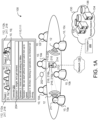
- the environment 100 includes a plurality of participants 10, 10a-j.
- the environment 100 is a host meeting room with six participants 10a-f attending a meeting (e.g., a video conference) in the host meeting room.
- the environment 100 includes a display device 110 that receives a content feed 112 (also referred to as a multi-media feed, a content stream, or a feed) via a network 120 from a remote system 130.
- the content feed 112 may be an audio feed 218 (i.e., audio data 218 such as audio content, an audio signal, or audio stream), a visual feed 217 (i.e., image data 217 such as video content, a video signal, or video stream), or some combination of both (e.g., also referred to as an audio-visual feed, an audio-visual signal, or an audio-visual stream).
- the display device 110 includes, or communicates with, a display 111 capable of displaying video content 217 and a speaker for audible output of the audio content 218.
- a display device 110 includes a computer, a laptop, a mobile computing device, a television, a monitor, a smart device (e.g., smart speaker, smart display, smart appliance), a wearable device, etc.
- the display device 110 includes audio-visual feeds 112 of other meeting rooms attending the meeting. For example, FIGS. 1A-1E depict two feeds 112, 112a-b where each feed 112 corresponds to a different remote meeting room.
- the first feed 112a includes three participants 10, 10g-i while the second feed 112b includes a single participant 10, 10j (e.g., an employee working remotely from a home office).
- the first feed 112a may correspond to a feed 112 from the New York office
- the second feed 112b corresponds to a feed 112 from the San Francisco office
- the host meeting room 100 corresponds to the Chicago office.
- the remote system 130 may be a distributed system (e.g., cloud computing environment or storage abstraction) having scalable/elastic resources 132.
- the resources 132 include computing resources 134 (e.g., data processing hardware) and/or storage resources 136 (e.g. memory hardware).
- the remote system 130 hosts software that coordinates the environment 100 (e.g., on the computing resources 132).
- the computing resources 132 of the remote system 130 execute software, such as a real-time communication application or a specialty meeting platform.
- the environment 100 also includes a transcriptor 200.
- the transcriptor 200 is configured to generate a transcript 202 for the content that occurs within the environment 100. This content may be from a location where the transcriptor 200 is present (e.g., participants 10 in a meeting room 100 with the transcriptor 200) and/or from a content feed 112 that communicates content to the location of the transcriptor 200.
- the display device 110 communicates one or more content feeds 112 to the transcriptor 200.
- the display device 110 includes speakers that output the audio content 218 of the content feed 112 to the transcriptor 200.
- the transcriptor 200 is configured to receive the same content feed 112 as the display device 110.
- the display device 110 may function as an extension of the transcriptor 200 by receiving the audio and video feeds of the content feed 112.
- the display device 110 may include hardware 210 such data processing hardware 212 and memory hardware 214 in communication with the data processing hardware 212 that cause the data processing hardware 212 to execute the transcriptor 200.
- the transcriptor 200 may receive the content feed 112 (e.g., audio and visual content/signals 218, 217) through a network connection rather than only audibly capturing the audio content/signal 218 relayed through a peripheral of the display device 110, such as speakers.
- this connectivity between the transcriptor 200 and the display device 110 enables the transcriptor 200 to seamlessly display the transcript 202 on the display/screen 111 of the display device 110 locally within the environment 100 (e.g., the host meeting room).
- the transcriptor 200 is located in the same local environment 110 as the display device 110, but corresponds to a computing device separate from the display device 110.
- the transcriptor 200 communicates with the display device 110 via a wired or wireless connection.
- the transcriptor 200 has one or more ports that permit a wired/wireless connection such that the display device 110 functions a peripheral to the transcriptor 200.
- an application that forms the environment 100 may be compatible with the transcriptor 200.
- the transcriptor 200 is configured as an input/output (I/O) device within the application such that audio and/or visual signals coordinated by the application are channeled to the transcriptor 200 (e.g., in addition to the display device 110).
- I/O input/output
- the transcriptor 200 (and optionally the display device 110) is portable such that the transcriptor 200 may be transferred between meeting rooms.
- the transcriptor 200 is configured with processing capabilities (e.g., processing hardware/software) to process the audio and video content 112 and generate the transcript 202 when the content 112 is being presented in the environment 100.
- the transcriptor 200 is configured to process content 112 (e.g., audio and/or visual content 218, 217) locally at the transcriptor 200 to generate the transcript 202 without any additional remote processing (e.g., at the remote system 130).
- this type of processing is referred to as on-device processing.
- on-device processing may be free of bandwidth constraints and thus allow the transcriptor 200 to utilize more accurate high definition video with high fidelity when processing visual content. Moreover, this on-device processing may allow an identity of a speaker to be tracked in real-time without delays due to latency that may occur if audio and/or visual signals 218, 217 were, in some degree, remotely processed (e.g., in the remote computing system 130 connected to the transcriptor 200).
- the transcriptor 200 includes the hardware 210 such as the data processing hardware 212 and the memory hardware 214 in communication with the data processing hardware 212.
- data processing hardware 212 include a central processing unit (CPU), a graphics processing unit (GPU), or a tensor processing unit (TPU).
- the transcriptor 200 executes on the remote system 130 by receiving content 112 (audio and video data 217, 218) from each of the first and second feeds 112a-b, as well as a feed 112 from the meeting room environment 100.
- the data processing hardware 134 of the remote system 130 may execute instructions stored on the memory hardware 136 of the remote system 130 for executing the transcriptor 200.
- the transcriptor 200 may process the audio data 218 and image data 217 to generate the transcript 202.
- the transcriptor 200 may generate the transcript 202 and transmit the transcript 202 over the network 120 to the display device 110 for display thereon.
- the transcriptor 200 may similarly transmit the transcript 202 to computing devices/ display devices associated with the participants 10g-i corresponding to the first feed and/or the participant 10j corresponding to the second feed 10j.
- the transcriptor 200 includes peripherals 216.
- the transcriptor 200 includes an audio capturing device 216, 216a (e.g., a microphone) that captures a sound (e.g., a speech utterance) about the transcriptor 200 and converts the sound into an audio signal 218 ( FIGS. 2A and 2B ) (or audio data 218).
- the audio signal 218 may then be used by the transcriptor 200 to generate the transcript 202.
- the transcriptor 200 also includes an image capturing device 216, 216b as a peripheral 216.
- the image capturing device 216b e.g., one or more cameras
- a transcriptor 200 may increase its accuracy for speaker identification because the transcriptor 200 may process image data 217 captured by image capturing device 216b to identify visual features (e.g., facial features) that indicate which participant 10, among the multiple participants 10a-10j, is speaking (i.e., generating utterances 12) at a particular instance.
- the image capturing device 216b is configured to capture 360-degrees about the transcriptor 200 to capture a full view of the environment 100.
- the image capturing device 216b includes an array of cameras configured to capture the 360-degree view.
- using image data 217 may improve the transcript 202 when a participant 10 has a speech disability.
- the transcriptor 200 may have difficulty generating a transcript for a speaker with a speech disability that causes the speaker to have issues articulating speech.
- the transcriptor 200 e.g., at an automatic speech recognition (ASR) module 230 of FIGS. 2A and 2B ) may be made aware of the articulation issue during generation of the transcript 202.
- ASR automatic speech recognition
- the transcriptor 200 may accommodate for the issue by leveraging image data 217 representing the face of the participant 10 while speaking to generate an improved, or otherwise more accurate, transcript 202 than if the transcript 202 were based on the audio data 218 of the participant 10 alone.
- certain speech disabilities may be noticeable in the image data 217 from the image capturing device 216b.
- image data 217 can be analyzed to correlate the lip motion of participants 10 with particular speech disorders into the speech intended by these participants 10 to thereby improve automatic speech recognition in ways that would not be possible using audio data 218 alone.
- the transcriptor 200 identifies a potential articulation issue and factors this issue to improve generation of the transcription 202 during ASR.
- the transcriptor 200 is privacy-aware such that a participant 10 may opt out of having any of his or her speech and/or image information shared (e.g., in a transcript 202 or visual feed 112, 217).
- one or more participants 10 communicate a privacy request 14 that indicates a privacy condition for a participant 10 during participation in the video conference environment 100.
- the privacy request 14 corresponds to configuration settings for the transcriptor 200. The privacy request 14 may occur before, during, or at the onset of a meeting or communication session with the transcriptor 200.
- the transcriptor 200 includes a profile (e.g., profile 500 as shown in FIG.
- the profile 500 may be stored on-device (e.g., in the memory hardware 214) or stored off-device (e.g., in the remote storage resources 136) and accessed by the transcriptor 200.
- the profile 500 may be configured before the communication session and may include an image (e.g., image data 217) of the respective participant's 10 face so the participant 10 can be correlated with respective portions of the received video content 217. That is, an individual profile 510 for a respective participant 10 may be accessed when video content 217 of that participant 10 in the content feed 112 matches the facial image associated with the individual profile 510.
- the participant's privacy settings may be applied during each communication session in which the participant 10 participates.
- the transcriptor 200 may recognize the participant 10 (e.g., based on image data 217 received at the transcriptor 200) and apply the appropriate settings for the participant 10.
- the profile 500 may include an individual profile 510, 510b for a particular participant 10, 10b that indicates the particular participant 10b doesn't mind being seen (i.e., included in a visual feed 217), but does not want to be heard (i.e., not included in audio feed 218) nor have his/her utterances 12 transcribed (i.e., not included speech in the transcript 202), while another individual profile 510, 510c for another participant 10, 10c may not want to be seen (i.e., not included in the visual feed 217), but is fine with having his/her utterances recorded and/or transcribed (i.e., included in the audio feed 218 and included in the transcript 202).
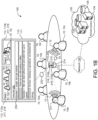
- the third participant 10c has submitted a privacy request 14 with a privacy condition that indicates that the third participant 10c does not mind being seen or heard, but does not want the transcript 202 to include an identifier 204 (e.g., a label of the identity for the speaker) for the third participant 10c when the third participant 10c speaks (i.e., a privacy request 14 for identity privacy).
- the third participant 10c does not want his or her identity shared or stored; therefore, the third participant 10c opts for the transcript 202 to not include an identifier 204 associated with the third participant 10c that reveals his or her identity.
- FIG. 1B the third participant 10c has submitted a privacy request 14 with a privacy condition that indicates that the third participant 10c does not mind being seen or heard, but does not want the transcript 202 to include an identifier 204 (e.g., a label of the identity for the speaker) for the third participant 10c when the third participant 10c speaks (i.e., a privacy request 14 for identity privacy).
- FIG. 1B illustrates the transcript 202 with a redacted gray box where the identifier 204 of the Speaker 3 would exist
- the transcriptor 200 may also remove the identifier 204 completely or obscure the identifier 204 in other ways that prevent the identity of the speaker associated with the privacy request 14 from being revealed by the transcriptor 200.
- FIG. 1B illustrates that the transcriptor 200 modifies a portion of the transcript 202 to not include the identity of the speaker (e.g., by removing or obscuring the identifier 204).
- FIG. 1C is similar to FIG. 1B except that the third participant 10c who communicates the privacy request 14 requests to not be seen in any visual feed 112, 217 of the environment 100 (e.g., another form of identity privacy).
- the requesting participant 10c may not mind being heard, but prefers to visually conceal his or her visual identity (i.e., not share nor store his or her visual identity in a visual feed 112, 217).
- the transcriptor 200 is configured to blur, distort, or otherwise obscure the visual presence of the requesting participant 10c throughout a communication session between the participants 10, 10a-10j.
- the transcriptor 200 determines, from image data 217 received from one or more content feeds 112, the location of the requestor 10c at any particular instance and applies an abstraction 119 to any physical features of the requestor (e.g., a blurring) that are communicated through the transcriptor 200. That is, when the image data 217 is displayed on the screen 111 of the display device 110, as well as displayed on screens in the remote environments associated with the participants 10g-10j, the abstraction 119 is overlaid over at least the face of the requestor 10c so that the requestor 10c cannot be visually identified.
- an abstraction 119 to any physical features of the requestor (e.g., a blurring) that are communicated through the transcriptor 200. That is, when the image data 217 is displayed on the screen 111 of the display device 110, as well as displayed on screens in the remote environments associated with the participants 10g-10j, the abstraction 119 is overlaid over at least the face of the requestor 10c so that the requestor 10c cannot be visually identified.
- the individual profile 510 for a participant 10 identifies whether the participant 10 wants to be blurred or obscured (i.e., distorted) or removed completely (e.g., as shown in FIG. 5 ). Accordingly, the transcriptor 200 is configured to augment, modify, or remove portions of video data 217 to conceal a participant's visual identity.
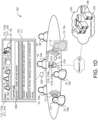
- FIG. 1D illustrates an example where a privacy request 14 from the third participant 10c requests that the transcriptor 200 not track either a visual representation of the third participant 10c or speech information of the third participant 10c.
- 'speech information' refers to audio data 218 corresponding to utterances 12 spoken by the participant 10c as well as transcripts 202 recognized from the audio data 218 corresponding to the utterances 12 spoken by the participant 10c.
- the participant 10c may be heard during the meeting, but the transcriptor 200 does not memorialize the participant 10c audibly or visually (e.g., by video feed 217 or in a transcript 202).
- This approach may preserve the participant's 10c privacy by having no record of any speech information of the participant 10c in the transcript 202 or any identifier 204 identifying the participant 10c in the transcript 202.
- the transcriptor 200 may omit portions of text in the transcript 202 altogether that transcribe utterances 12 spoken by the participant 10c, or the transcript 202 may leave these portions of the text in but not apply the identifier 204 identifying the participant 10c.
- the transcriptor 200 may, however, apply some other arbitrary identifier that does not personally identify the participant 10c, but merely delineates these portions of the text in the transcription 202 from other portions corresponding to utterances 12 spoken by the other participants 10a, 10b, 10d-10j.
- a participant 10 may request (e.g., via the privacy request 14) that the transcript 202 and any other record generated by the transcriptor 200 have no record of the participant's participation in the communication session.
- FIG. 1E depicts a content privacy request 14.
- the third participant 10c communicates a privacy request 14 that the transcriptor 200 does not include any content from the third participant 10c in the transcript 202.
- the third participant 10c makes such a privacy request 14 because the third participant 10c is going to discuss sensitive content (e.g., confidential information) during the meeting. Due to the sensitive nature of the content, the third participant 10c takes the precaution that the transcriptor 200 does not memorialize the audio content 218 associated with the third participant 10c in the transcript 202.
- sensitive content e.g., confidential information
- the transcriptor 200 is configured to receive a privacy request 14 that identifies a type of content that one or more participants 10 do not want included in the transcript 202 (e.g., by keywords) and to determine when that type of content occurs during the communication session in order to exclude it from the transcript 202.
- a privacy request 14 that identifies a type of content that one or more participants 10 do not want included in the transcript 202 (e.g., by keywords) and to determine when that type of content occurs during the communication session in order to exclude it from the transcript 202.
- not all audio content 218 from a particular participant 10 is excluded from the transcript 202, only content-specific audio such that the particular participant still may discuss other types of content and be included in the transcript 202.
- the third participant 10c communicates a privacy request 14 that requests that the transcriptor 200 does not transcribe audio content about Mike.
- the transcriptor 200 does not transcribe this audio content 218, but when the third participant talks about other topics (e.g., the weather), the transcriptor 200 does transcribe this audio content 218.
- the participant 10c may similarly set time boundaries to that the transcriptor 200 does not memorialize any audio content 218 for a length of time, e.g., the next 2-minutes.
- FIGS. 2A and 2B are examples of the transcriptor 200.
- the transcriptor 200 generally includes a diarization module 220 and an ASR module 230 (e.g., an AVASR module).
- the diarization module 220 is configured to receive audio data 218 that corresponds to the utterances 12 from the participants 10 of the communication session (e.g., captured by the audio capturing device 216a) and image data 217 representing faces of the participants 10 of the communication session, segment the audio data 218 into a plurality of segments 222, 222a-n (e.g., fixed-length segments or variable-length segments), and generate diarization results 224 that include a corresponding speaker label 226 assigned to each segment 222 using a probability model (e.g., a probabilistic generative model) based on the audio data 218 and the image data 217.
- a probability model e.g., a probabilistic generative model
- the diarization module 220 includes a series of speaker recognition tasks with short utterances (e.g., segments 222) and determines whether two segments 222 of a given conversation were spoken by the same participant 10. Simultaneously, the diarization module 220 may execute a face tracking routine to identify which participant 10 is speaking during which segment 222 to further optimize speaker recognition. The diarization module 220 is then configured to repeat the process for all segments 222 of the conversation.
- the diarization results 224 provide time-stamped speaker labels 226, 226a-e for the received audio data 218 that not only identify who is speaking during a given segment 222, but also identify when speaker changes occur between adjacent segments 222.
- the speaker labels 226 may serve as identifiers 204 within the transcript 202.
- the transcriptor 200 receives the privacy request 14 at the diarization module 220. Since the diarization module 220 identifies speaker labels 226 or identifiers 204, the diarization module 220 may advantageously resolve a privacy request 14 that corresponds to an identity-based privacy request 14. In other words, the diarization module 220 receives a privacy request 14 when the privacy request 14 requests not to identify a participant 10 by an identifier 204 such as the label 226 when the participant 10 is the speaker. When the diarization module 220 receives a privacy request 14, the diarization module 220 is configured to determine whether the participant 10 corresponding to the request 14 matches the label 226 generated for a given segment 222.
- an image of the participant's 10 face may be used to associate the participant 10 with the label 226 for that participant 10.
- the diarization module 220 may prevent the transcriptor 200 from applying the label 226 or identifier 204 to a corresponding portion of the resulting transcription 202 that transcribes the particular segment 222 into text.
- the diarization module 220 may allow the transcriptor to apply the label 226 and identifier 204 to the portion of the resulting transcription 202 that transcribes the particular segment into text.
- the ASR module 230 when the diarization module 220 receives the request 14, the ASR module 230 is configured to wait to transcribe the audio data 218 from utterances 12. In other implementations, the ASR module 230 transcribes in real-time and the resulting transcription 202 removes labels 226 and identifiers 204 in real-time for any participants 10 providing privacy requests 14 opting out from having their speech information transcribed. Optionally, the diarization module 220 may further distort the audio data 218 associated with these participants 10 seeking privacy so that their speaking voice is altered in a way that cannot be used to identify the participant 10.
- the ASR module 230 is configured to receive the audio data 218 corresponding to the utterances 12 and the image data 217 representing faces of the participants 10 while speaking the utterances 12. Using the image data 217, the ASR module 230 transcribes the audio data 218 into corresponding ASR results 232.
- the ASR result 232 refers to a textual transcription of the audio data 218 (e.g., the transcript 202).
- the ASR module 230 communicates with the diarization module 220 to utilize the diarization results 224 associated with the audio data 218 for improving speech recognition based on utterances 12.
- the ASR module 230 may apply different speech recognition models (e.g., language models, prosody models) for different speakers identified from the diarization results 224. Additionally or alternatively, the ASR module 230 and/or the diarization module 220 (or some other component of the transcriptor 200) may index a transcription 232 of the audio data 218 using the time-stamped speaker labels 226 predicted for each segment 222 obtained from the diarization results 224. Stated differently, the ASR module 230 uses the speaker labels 226 from the diarization module 220 to generate the identifiers 204 for speakers within the transcript 202. As shown in FIGS.
- different speech recognition models e.g., language models, prosody models
- the transcript 202 for a communication session within the environment 100 may be indexed by speaker/participant 10 to associate portions of the transcript 202 with the respective speaker/participant 10 in order to identify what each speaker/participant 10 said.
- the ASR module 230 receives the privacy request 14 for the transcriptor 200. For example, the ASR module 230 receives the privacy request 14 for the transcriptor 200 whenever the privacy request 14 corresponds to a request 14 not to transcribe speech for a particular participant 10. In other words, the ASR module 230 may receive the privacy request 14 whenever the request 14 is not a label/identifier based privacy request 14. In some examples, when the ASR module 230 receives a privacy request 14, the ASR module 230 first identifies the participant 10 corresponding to the privacy request 14 based on the speaker labels 226 determined by the diarization module 220. Then, when the ASR module 230 encounters speech to be transcribed for that participant 10, the ARS module 230 applies the privacy request 14. For instance, when the privacy request 14 requests not to transcribe speech for that particular participant 10, the ASR module 230 does not transcribe any speech for that participant and waits for speech to occur by a different participant 10.
- the transcriptor 200 includes a detector 240 for executing the face tracking routine.
- the transcriptor 200 first processes the audio data 218 to generate one or more candidate identities for the speaker.
- the diarization module 220 may include multiple labels 226, 226a 1-3 as candidate identities for the speaker.
- the model may be a probability model that outputs multiple labels 226, 226a 1-3 for each segment 222 where each label 226 of the multiple labels 226, 226a 1-3 is a potential candidate that identifies the speaker.
- the detector 240 of the transcriptor 200 uses the images 217, 217a-n captured by the image capturing device 216b to determine which candidate identity had the best visual features indicating that he or she is the speaker of a particular segment 22.
- the detector 240 generates a score 242 for each candidate identity where the score 242 indicates a confidence level that the candidate identity is the speaker based on the association between the audio signal (e.g., audio data 218) and the visual signal (e.g., the captured images 217a-n).
- the highest score 242 may indicate the greatest likelihood that the candidate identity is the speaker.
- the diarization module 220 generates three labels 226a 1-3 at a particular segment 222.
- the detector 240 generates a score 242 for each of these labels 226 (e.g., shown as three scores 242 1-3 ) based on images 217 from the time in the audio data 218 where the segment 222 occurs.
- FIG. 2B indicates the highest score 242 by a bolded square around the third label 226a 3 associated with the third score 242 3 .
- the best candidate identity may be communicated to the ASR module 230 to form the identifier 204 of the transcript 202.
- the process may be reversed such that the transcriptor 200 first processes the image data 217 to generate one or more candidate identities for the speaker based on the image data 217. Then for each candidate identity, the detector 240 generates a confidence score 242 indicating a likelihood that a face of the corresponding candidate identity includes a speaking face for a corresponding segment 222 of audio data 218. For instance, the confidence score 242 for each candidate identity indicates a likelihood that a face of the corresponding candidate identity includes a speaking face during the image data 217 corresponding to an instance of time for a segment 222 of the audio data 218.
- the detector 240 may score 242 whether image data 217 corresponding to participants 10 has facial expressions similar to or matching the facial expressions of a speaking face.
- the detector 240 selects the identity of the speaker of the corresponding segment of the audio data 218 with the highest confidence score 242 as the candidate identity.
- the detector 240 is part of the ASR module 230.
- the ASR module 230 executes the face tracking routine by implementing an encoder frontend having an attention layer configured to receive a plurality of video tracks 217a-n of the image data 217, whereby each video track is associated with a face of a respective participant.
- the attention layer at the ASR module 230 is configured to determine a confidence score indicating a likelihood that the face of the respective person associated with the video face track includes a speaking face of the audio track. Additional concepts and features related to an audio-visual ASR module including an encoder front end having an attention layer for multi-speaker ASR recognition can be found in U.S. Provisional Patent Application 62/923,096, filed on October 18, 2019 , which is hereby incorporated by reference in its entirety.
- the transcriptor 200 (e.g., at the ASR module 230) is configured to support a multi-lingual environment 100.
- the transcriptor 200 when the transcriptor 200 generates the transcript 202, the transcriptor 200 is capable of generating the transcript 202 in different languages.
- This feature may enable the environment 100 to include a remote location that has one or more participants 10 that speak a different language than the host location.
- the speaker in a meeting may be a non-native speaker or a speaker where the language of the meeting is not the first language of the speaker.
- a transcript 202 of the content from the speaker may assist other participants 10 in the meeting to understand the presented content.
- the transcriptor 200 may be used to provide a speaker with feedback on his or her pronunciation.
- the transcriptor 200 may indicate an incorrect pronunciation (e.g., allowing a speaker to learn and/or to adapt with the help of the transcriptor 200). As such, the transcriptor 200 may provide a notification to the speaker that provides the feedback on his/her pronunciation
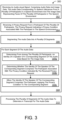
- FIG. 3 is an example arrangement of operations for a method 300 of transcribing content (e.g., at the data processing hardware 212 of the transcriptor 200).
- the method 300 includes receiving an audio-visual signal 217, 218 including audio data 218 and image data 217.
- the audio data 218 corresponds to speech utterances 12 from a plurality of participants 10, 10a-n in a speech environment 100 and the image data 217 represents faces of the plurality of participants 10 in the speech environment 100.
- the method 300 includes receiving a privacy request 14 from a participant 10 of the plurality of participants 10a-n.
- the privacy request 14 indicates a privacy condition associated with the participant 10 in the speech environment 100.
- the method 300 segments the audio data 218 into a plurality of segments 222, 222a-n.
- the method 300 includes performing operations 308, 308a-c for each segment 222 of the audio data 218.
- the method 300 includes determining from among the plurality of participants 10a-n, an identity of a speaker of a corresponding segment 222 of the audio data 218 based on the image data 217.
- the method 300 includes determining whether the identity of the speaker of the corresponding segment 222 includes the participant 10 associated with the privacy condition indicated by the received privacy request 14.
- the method 300 includes applying the privacy condition to the corresponding segment 222.
- the method 300 includes processing the plurality of segments 222a-n of the audio data 218 to determine a transcript 202 for the audio data 218.
- users may collect or use personal information about users (e.g., user data extracted from other electronic communications, information about a user's social network, a user's location, a user's time, a user's biometric information, and a user's activities and demographic information, relationships between users, etc .)
- users are provided with one or more opportunities to control whether information is collected, whether the personal information is stored, whether the personal information is used, and how the information is collected about the user, stored and used. That is, the systems and methods discussed herein collect, store and/or use user personal information only upon receiving explicit authorization from the relevant users to do so.
- a user is provided with control over whether programs or features collect user information about that particular user or other users relevant to the program or feature.
- Each user for which personal information is to be collected is presented with one or more options to allow control over the information collection relevant to that user, to provide permission or authorization as to whether the information is collected and as to which portions of the information are to be collected.
- users can be provided with one or more such control options over a communication network.
- certain data may be treated in one or more ways before it is stored or used so that personally identifiable information is removed.
- a user's identity may be treated so that no personally identifiable information can be determined.
- FIG. 4 is schematic view of an example computing device 400 that may be used to implement the systems and methods described in this document.
- the computing device 400 is intended to represent various forms of digital computers, such as laptops, desktops, workstations, personal digital assistants, servers, blade servers, mainframes, and other appropriate computers.
- the components shown here, their connections and relationships, and their functions, are meant to be exemplary only, and are not meant to limit implementations of the inventions described and/or claimed in this document.
- the computing device 400 includes a processor 410 (e.g., data processing hardware), memory 420 (e.g., memory hardware), a storage device 430, a high-speed interface/controller 440 connecting to the memory 420 and high-speed expansion ports 450, and a low speed interface/controller 460 connecting to a low speed bus 470 and a storage device 430.
- processor 410 e.g., data processing hardware
- memory 420 e.g., memory hardware
- storage device 430 e.g., a high-speed interface/controller 440 connecting to the memory 420 and high-speed expansion ports 450
- a low speed interface/controller 460 connecting to a low speed bus 470 and a storage device 430.
- Each of the components 410, 420, 430, 440, 450, and 460 are interconnected using various busses, and may be mounted on a common motherboard or in other manners as appropriate.
- the processor 410 can process instructions for execution within the computing device 400, including instructions stored in the memory 420 or on the storage device 430 to display graphical information for a graphical user interface (GUI) on an external input/output device, such as display 480 coupled to high speed interface 440.
- GUI graphical user interface
- multiple processors and/or multiple buses may be used, as appropriate, along with multiple memories and types of memory.
- multiple computing devices 400 may be connected, with each device providing portions of the necessary operations (e.g., as a server bank, a group of blade servers, or a multiprocessor system).
- the memory 420 stores information non-transitorily within the computing device 400.
- the memory 420 may be a computer-readable medium, a volatile memory unit(s), or non-volatile memory unit(s).
- the non-transitory memory 420 may be physical devices used to store programs (e.g., sequences of instructions) or data (e.g., program state information) on a temporary or permanent basis for use by the computing device 400.
- non-volatile memory examples include, but are not limited to, flash memory and read-only memory (ROM) / programmable read-only memory (PROM) / erasable programmable read-only memory (EPROM) / electronically erasable programmable read-only memory (EEPROM) (e.g., typically used for firmware, such as boot programs).
- volatile memory examples include, but are not limited to, random access memory (RAM), dynamic random access memory (DRAM), static random access memory (SRAM), phase change memory (PCM) as well as disks or tapes.
- the storage device 430 is capable of providing mass storage for the computing device 400.
- the storage device 430 is a computer-readable medium.
- the storage device 430 may be a floppy disk device, a hard disk device, an optical disk device, or a tape device, a flash memory or other similar solid state memory device, or an array of devices, including devices in a storage area network or other configurations.
- a computer program product is tangibly embodied in an information carrier.
- the computer program product contains instructions that, when executed, perform one or more methods, such as those described above.
- the information carrier is a computer- or machine-readable medium, such as the memory 420, the storage device 430, or memory on processor 410.
- the high speed controller 440 manages bandwidth-intensive operations for the computing device 400, while the low speed controller 460 manages lower bandwidth-intensive operations. Such allocation of duties is exemplary only.
- the high-speed controller 440 is coupled to the memory 420, the display 480 (e.g., through a graphics processor or accelerator), and to the high-speed expansion ports 450, which may accept various expansion cards (not shown).
- the low-speed controller 460 is coupled to the storage device 430 and a low-speed expansion port 470.
- the low-speed expansion port 470 which may include various communication ports (e.g., USB, Bluetooth, Ethernet, wireless Ethernet), may be coupled to one or more input/output devices, such as a keyboard, a pointing device, a scanner, or a networking device such as a switch or router, e.g., through a network adapter.
- input/output devices such as a keyboard, a pointing device, a scanner, or a networking device such as a switch or router, e.g., through a network adapter.
- the computing device 400 may be implemented in a number of different forms, as shown in the figure. For example, it may be implemented as a standard server 400a or multiple times in a group of such servers 400a, as a laptop computer 400b, or as part of a rack server system 400c.
- implementations of the systems and techniques described herein can be realized in digital electronic and/or optical circuitry, integrated circuitry, specially designed ASICs (application specific integrated circuits), computer hardware, firmware, software, and/or combinations thereof.
- ASICs application specific integrated circuits
- These various implementations can include implementation in one or more computer programs that are executable and/or interpretable on a programmable system including at least one programmable processor, which may be special or general purpose, coupled to receive data and instructions from, and to transmit data and instructions to, a storage system, at least one input device, and at least one output device.
- the processes and logic flows described in this specification can be performed by one or more programmable processors executing one or more computer programs to perform functions by operating on input data and generating output.
- the processes and logic flows can also be performed by special purpose logic circuitry, e.g., an FPGA (field programmable gate array) or an ASIC (application specific integrated circuit).
- processors suitable for the execution of a computer program include, by way of example, both general and special purpose microprocessors, and any one or more processors of any kind of digital computer.
- a processor will receive instructions and data from a read only memory or a random access memory or both.
- the essential elements of a computer are a processor for performing instructions and one or more memory devices for storing instructions and data.
- a computer will also include, or be operatively coupled to receive data from or transfer data to, or both, one or more mass storage devices for storing data, e.g., magnetic, magneto optical disks, or optical disks.
- mass storage devices for storing data
- a computer need not have such devices.
- Computer readable media suitable for storing computer program instructions and data include all forms of non-volatile memory, media and memory devices, including by way of example semiconductor memory devices, e.g., EPROM, EEPROM, and flash memory devices; magnetic disks, e.g., internal hard disks or removable disks; magneto optical disks; and CD ROM and DVD-ROM disks.
- the processor and the memory can be supplemented by, or incorporated in, special purpose logic circuitry.
- one or more aspects of the disclosure can be implemented on a computer having a display device, e.g., a CRT (cathode ray tube), LCD (liquid crystal display) monitor, or touch screen for displaying information to the user and optionally a keyboard and a pointing device, e.g., a mouse or a trackball, by which the user can provide input to the computer.
- a display device e.g., a CRT (cathode ray tube), LCD (liquid crystal display) monitor, or touch screen for displaying information to the user and optionally a keyboard and a pointing device, e.g., a mouse or a trackball, by which the user can provide input to the computer.
- Other kinds of devices can be used to provide interaction with a user as well; for example, feedback provided to the user can be any form of sensory feedback, e.g., visual feedback, auditory feedback, or tactile feedback; and input from the user can be received in any form, including acoustic, speech, or tactile input
Landscapes
- Engineering & Computer Science (AREA)
- Theoretical Computer Science (AREA)
- Health & Medical Sciences (AREA)
- Physics & Mathematics (AREA)
- Multimedia (AREA)
- General Engineering & Computer Science (AREA)
- Computer Security & Cryptography (AREA)
- General Health & Medical Sciences (AREA)
- Bioethics (AREA)
- Software Systems (AREA)
- Computer Hardware Design (AREA)
- General Physics & Mathematics (AREA)
- Signal Processing (AREA)
- Human Computer Interaction (AREA)
- Audiology, Speech & Language Pathology (AREA)
- Acoustics & Sound (AREA)
- Computer Networks & Wireless Communication (AREA)
- Medical Informatics (AREA)
- Databases & Information Systems (AREA)
- Computational Linguistics (AREA)
- Computer Vision & Pattern Recognition (AREA)
- Two-Way Televisions, Distribution Of Moving Picture Or The Like (AREA)
- Telephonic Communication Services (AREA)
Claims (11)
- Verfahren, umfassend:Empfangen (302) eines audiovisuellen Signals (217, 218), das Audiodaten (218) und Bilddaten (217) umfasst, an einer Datenverarbeitungshardware (410), wobei die Audiodaten (218) Sprachäußerungen (12) von einer Vielzahl von Teilnehmern (10) in einer Sprachumgebung (100) entsprechen und die Bilddaten (217) Gesichter der Vielzahl von Teilnehmern (10) in der Sprachumgebung (100) darstellen;Empfangen (304) einer Privatsphärenanforderung (14) von einem Teilnehmer der Vielzahl von Teilnehmern (10) an der Datenverarbeitungshardware (410), wobei die Privatsphärenanforderung (14) eine Privatsphärenbedingung angibt, die dem Teilnehmer (10) in der Sprachumgebung (100) zugeordnet ist;Segmentieren (306) der Audiodaten (218) in eine Vielzahl von Segmenten (222) durch die Datenverarbeitungshardware (410);für jedes Segment (222) der Audiodaten (218):Bestimmen (308a) einer Identität eines Sprechers eines entsprechenden Segments (222) der Audiodaten (218) aus der Vielzahl von Teilnehmern (10) basierend auf den Bilddaten (217) durch die Datenverarbeitungshardware (410);Bestimmen (308b) durch die Datenverarbeitungshardware (410), ob die Identität des Sprechers des entsprechenden Segments (222) den Teilnehmer (10) umfasst, der der Privatsphärenbedingung zugeordnet ist, die durch die empfangene Privatsphärenanforderung (14) angegeben ist; undwenn die Identität des Sprechers des entsprechenden Segments (222) den Teilnehmer (10) umfasst, Anwenden (308c) der Privatsphärenbedingung auf das entsprechende Segment (222); undVerarbeiten (310) der Vielzahl von Segmenten (222) der Audiodaten (218) durch die Datenverarbeitungshardware (410), um ein Transkript (202) für die Audiodaten (218) zu bestimmen.
- Verfahren nach Anspruch 1, wobei das Anwenden der Privatsphärenbedingung auf das entsprechende Segment (222) Löschen des entsprechenden Segments (222) der Audiodaten (218) nach dem Bestimmen des Transkripts (202) umfasst.
- Verfahren nach Anspruch 1, wobei das Anwenden der Privatsphärenbedingung auf das entsprechende Segment (222) Augmentieren des entsprechenden Segments der Bilddaten (217) umfasst, um die Identität des Sprechers des entsprechenden Segments (222) der Audiodaten (218) visuell zu verbergen.
- Verfahren nach einem der Ansprüche 1-3, wobei das Verarbeiten der Vielzahl von Segmenten (222) der Audiodaten (218), um das Transkript (202) für die Audiodaten (218) zu bestimmen, für jeden Abschnitt des Transkripts (202), der einem der Segmente (222) der Audiodaten (218) entspricht, das die Privatsphärenbedingung anwendet, Modifizieren des entsprechenden Abschnitts des Transkripts (202) umfasst, damit er die Identität (204) des Sprechers nicht beinhaltet.
- Verfahren nach einem der Ansprüche 1-4, wobei das Verarbeiten der Vielzahl von Segmenten (222) der Audiodaten (218), um das Transkript (202) für die Audiodaten (218) zu bestimmen, für jedes Segment (222) der Audiodaten (218), das die Privatsphärenbedingung anwendet, Auslassen des Transkribierens des entsprechenden Segments (222) der Audiodaten (218) umfasst.
- Verfahren nach einem der Ansprüche 1-5, wobei die Privatsphärenbedingung eine inhaltsspezifische Bedingung umfasst, wobei die inhaltsspezifische Bedingung einen Typ von Inhalt angibt, der von dem Transkript (202) auszuschließen ist.
- Verfahren nach einem der Ansprüche 1-6, wobei das Bestimmen der Identität des Sprechers des entsprechenden Segments (222) der Audiodaten (218) aus der Vielzahl von Teilnehmern (10) Folgendes umfasst:Bestimmen einer Vielzahl von möglichen Identitäten für den Sprecher basierend auf den Bilddaten (217);für jede mögliche Identität der Vielzahl von möglichen Identitäten, Generieren einer Konfidenzbewertung (242), die eine Wahrscheinlichkeit angibt, dass ein Gesicht einer entsprechenden möglichen Identität basierend auf den Bilddaten (217) ein sprechendes Gesicht des entsprechenden Segments (222) der Audiodaten (218) umfasst; undAuswählen der Identität des Sprechers des entsprechenden Segments (222) der Audiodaten (218) als die mögliche Identität der Vielzahl von möglichen Identitäten, die der höchsten Konfidenzbewertung (242) zugeordnet ist.
- Verfahren nach einem der Ansprüche 1-7, wobei sich die Datenverarbeitungshardware (410) auf einer Vorrichtung befindet, die für mindestens einen Teilnehmer (10) der Vielzahl von Teilnehmern (10) lokal ist.
- Verfahren nach einem der Ansprüche 1-8, wobei die Bilddaten (217) hochauflösendes Video umfassen, das durch die Datenverarbeitungshardware (410) verarbeitet wird.
- Verfahren nach einem der Ansprüche 1-9, wobei das Verarbeiten der Vielzahl von Segmenten (222) der Audiodaten (218), um ein Transkript (202) für die Audiodaten (218) zu bestimmen, ferner Verarbeiten der Bilddaten (217), um das Transkript (202) zu bestimmen, umfasst.
- System, umfassend:Datenverarbeitungshardware (410); undSpeicherhardware (420) in Kommunikation mit der Datenverarbeitungshardware (410), wobei die Speicherhardware (420) Anweisungen speichert, die bei Ausführung auf der Datenverarbeitungshardware (410) die Datenverarbeitungshardware (410) dazu veranlassen, Operationen durchzuführen, die das Verfahren nach einem der vorhergehenden Ansprüche umfassen.
Priority Applications (1)
| Application Number | Priority Date | Filing Date | Title |
|---|---|---|---|
| EP24197090.4A EP4468289A1 (de) | 2019-11-18 | 2019-11-18 | Datenschutzbewusste transkription eines sitzungsraums aus einem audiovisuellen strom |
Applications Claiming Priority (1)
| Application Number | Priority Date | Filing Date | Title |
|---|---|---|---|
| PCT/US2019/062024 WO2021101510A1 (en) | 2019-11-18 | 2019-11-18 | Privacy-aware meeting room transcription from audio-visual stream |
Related Child Applications (2)
| Application Number | Title | Priority Date | Filing Date |
|---|---|---|---|
| EP24197090.4A Division EP4468289A1 (de) | 2019-11-18 | 2019-11-18 | Datenschutzbewusste transkription eines sitzungsraums aus einem audiovisuellen strom |
| EP24197090.4A Division-Into EP4468289A1 (de) | 2019-11-18 | 2019-11-18 | Datenschutzbewusste transkription eines sitzungsraums aus einem audiovisuellen strom |
Publications (2)
| Publication Number | Publication Date |
|---|---|
| EP4052255A1 EP4052255A1 (de) | 2022-09-07 |
| EP4052255B1 true EP4052255B1 (de) | 2024-10-09 |
Family
ID=68808627
Family Applications (2)
| Application Number | Title | Priority Date | Filing Date |
|---|---|---|---|
| EP19817093.8A Active EP4052255B1 (de) | 2019-11-18 | 2019-11-18 | Privatsphärenbewusste sitzungsraumtranskription aus einem audiovisuellen strom |
| EP24197090.4A Pending EP4468289A1 (de) | 2019-11-18 | 2019-11-18 | Datenschutzbewusste transkription eines sitzungsraums aus einem audiovisuellen strom |
Family Applications After (1)
| Application Number | Title | Priority Date | Filing Date |
|---|---|---|---|
| EP24197090.4A Pending EP4468289A1 (de) | 2019-11-18 | 2019-11-18 | Datenschutzbewusste transkription eines sitzungsraums aus einem audiovisuellen strom |
Country Status (6)
| Country | Link |
|---|---|
| US (3) | US12118123B2 (de) |
| EP (2) | EP4052255B1 (de) |
| JP (2) | JP7400100B2 (de) |
| KR (1) | KR20220101672A (de) |
| CN (2) | CN120091101A (de) |
| WO (1) | WO2021101510A1 (de) |
Families Citing this family (22)
| Publication number | Priority date | Publication date | Assignee | Title |
|---|---|---|---|---|
| AU2020266531A1 (en) * | 2019-04-30 | 2021-12-02 | Resmed Inc. | Data consent storage and management system and method |
| US20220311634A1 (en) * | 2021-03-24 | 2022-09-29 | Zoom Video Communications, Inc. | Automated selection of participants for videoconference sub-meetings |
| US12374321B2 (en) * | 2021-06-08 | 2025-07-29 | Microsoft Technology Licensing, Llc | Reducing biases of generative language models |
| US12028176B2 (en) * | 2021-06-25 | 2024-07-02 | Microsoft Technology Licensing, Llc | Machine-learning-model based name pronunciation |
| US12537704B2 (en) * | 2021-10-28 | 2026-01-27 | Zoom Communications, Inc. | Content-based conference notifications |
| CN114154201A (zh) * | 2021-12-10 | 2022-03-08 | 北京明略昭辉科技有限公司 | 用于音频处理的方法及装置、电子设备、存储介质 |
| US11770268B2 (en) * | 2022-02-14 | 2023-09-26 | Intel Corporation | Enhanced notifications for online collaboration applications |
| JP2025512697A (ja) * | 2022-03-04 | 2025-04-22 | グーグル エルエルシー | 構造化ビデオドキュメント |
| US12001472B2 (en) * | 2022-04-01 | 2024-06-04 | Gracenote, Inc. | Method and system for generating podcast metadata to facilitate searching and recommendation |
| WO2023196624A1 (en) * | 2022-04-08 | 2023-10-12 | Modulate, Inc. | Predictive audio redaction for realtime communication |
| US12108118B2 (en) * | 2022-05-31 | 2024-10-01 | Tmrw Foundation Ip S.Àr.L. | System and method for controlling user interactions in virtual meeting to enable selective pausing |
| US20240127818A1 (en) * | 2022-10-12 | 2024-04-18 | discourse.ai, Inc. | Structuring and Displaying Conversational Voice Transcripts in a Message-style Format |
| US20240163390A1 (en) * | 2022-11-14 | 2024-05-16 | Zoom Video Communications, Inc. | Providing Assistance to Impaired Users within a Conferencing System |
| WO2024123364A1 (en) * | 2022-12-06 | 2024-06-13 | Google Llc | Annotating automatic speech recognition transcription |
| US12477081B2 (en) | 2022-12-30 | 2025-11-18 | Microsoft Technology Licensing, Llc | Meeting information sharing privacy tool |
| JP2024130681A (ja) * | 2023-03-15 | 2024-09-30 | ヤマハ株式会社 | マスク処理方法、マスク処理装置、およびプログラム |
| CN116527813B (zh) * | 2023-06-26 | 2023-08-29 | 深圳市易赛通信技术有限公司 | 录音手表的录音方法及录音手表 |
| US20250078842A1 (en) * | 2023-08-30 | 2025-03-06 | Nvidia Corporation | Multi-speaker speech recognition facilitated by language models |
| US12451116B2 (en) | 2023-09-27 | 2025-10-21 | Honeywell International Inc. | System and method for enhanced playback of air traffic control communication |
| EP4550191A1 (de) * | 2023-10-31 | 2025-05-07 | Honda Motor Co., Ltd. | Datenschutzbewahrende kommunikation durch speicherauslöser |
| US12581038B2 (en) | 2023-12-18 | 2026-03-17 | Gn Hearing A/S | Audio processing in video conferencing system using multimodal features |
| KR102768071B1 (ko) * | 2024-04-18 | 2025-02-19 | 주식회사 리턴제로 | 발화 텍스트에 대한 실제 발화자 표시 동작 수행을 위한 전자 장치 및 그의 처리 방법 |
Citations (1)
| Publication number | Priority date | Publication date | Assignee | Title |
|---|---|---|---|---|
| US20190052633A1 (en) * | 2015-06-26 | 2019-02-14 | Cecelumen, Llc | Methods and apparatus for allowing users to control use and/or sharing of images and/or biometric data |
Family Cites Families (27)
| Publication number | Priority date | Publication date | Assignee | Title |
|---|---|---|---|---|
| JPH1141578A (ja) * | 1997-07-18 | 1999-02-12 | Ricoh Co Ltd | 電子会議システム |
| JP2004080486A (ja) * | 2002-08-20 | 2004-03-11 | Toppan Printing Co Ltd | 議事録作成システム、議事録データ作成方法、議事録データ作成プログラム |
| CA2537931A1 (en) | 2003-09-05 | 2005-03-24 | Dennis Panicali | Multi-antigen vectors for melanoma |
| US20070153091A1 (en) * | 2005-12-29 | 2007-07-05 | John Watlington | Methods and apparatus for providing privacy in a communication system |
| US8522276B2 (en) * | 2006-02-17 | 2013-08-27 | Verizon Services Organization Inc. | System and methods for voicing text in an interactive programming guide |
| US20100141655A1 (en) * | 2008-12-08 | 2010-06-10 | Eran Belinsky | Method and System for Navigation of Audio and Video Files |
| US20120004910A1 (en) * | 2009-05-07 | 2012-01-05 | Romulo De Guzman Quidilig | System and method for speech processing and speech to text |
| WO2012094042A1 (en) * | 2011-01-07 | 2012-07-12 | Intel Corporation | Automated privacy adjustments to video conferencing streams |
| US8553065B2 (en) * | 2011-04-18 | 2013-10-08 | Cisco Technology, Inc. | System and method for providing augmented data in a network environment |
| US9514740B2 (en) * | 2013-03-13 | 2016-12-06 | Nuance Communications, Inc. | Data shredding for speech recognition language model training under data retention restrictions |
| US9817892B2 (en) * | 2014-01-31 | 2017-11-14 | Verint Systems Ltd. | Automated removal of private information |
| US9396354B1 (en) * | 2014-05-28 | 2016-07-19 | Snapchat, Inc. | Apparatus and method for automated privacy protection in distributed images |
| US10542126B2 (en) * | 2014-12-22 | 2020-01-21 | Cisco Technology, Inc. | Offline virtual participation in an online conference meeting |
| US10387548B2 (en) * | 2015-04-16 | 2019-08-20 | Nasdaq, Inc. | Systems and methods for transcript processing |
| US20170371496A1 (en) * | 2016-06-22 | 2017-12-28 | Fuji Xerox Co., Ltd. | Rapidly skimmable presentations of web meeting recordings |
| US10185840B2 (en) * | 2016-08-30 | 2019-01-22 | Google Llc | Conditional disclosure of individual-controlled content in group contexts |
| CN106504744B (zh) * | 2016-10-26 | 2020-05-01 | 科大讯飞股份有限公司 | 一种语音处理方法及装置 |
| JP7039118B2 (ja) | 2017-06-29 | 2022-03-22 | 株式会社オプティム | コールセンター会話内容表示システム、方法及びプログラム |
| US10540521B2 (en) * | 2017-08-24 | 2020-01-21 | International Business Machines Corporation | Selective enforcement of privacy and confidentiality for optimization of voice applications |
| JP7046546B2 (ja) * | 2017-09-28 | 2022-04-04 | 株式会社野村総合研究所 | 会議支援システムおよび会議支援プログラム |
| US10467335B2 (en) * | 2018-02-20 | 2019-11-05 | Dropbox, Inc. | Automated outline generation of captured meeting audio in a collaborative document context |
| US10957337B2 (en) * | 2018-04-11 | 2021-03-23 | Microsoft Technology Licensing, Llc | Multi-microphone speech separation |
| US10867610B2 (en) * | 2018-05-04 | 2020-12-15 | Microsoft Technology Licensing, Llc | Computerized intelligent assistant for conferences |
| US20200126583A1 (en) * | 2018-10-19 | 2020-04-23 | Reduct, Inc. | Discovering highlights in transcribed source material for rapid multimedia production |
| US20190130917A1 (en) * | 2018-12-27 | 2019-05-02 | Oleg POGORELIK | Automated enrichment of speech transcription with context |
| US11322148B2 (en) * | 2019-04-30 | 2022-05-03 | Microsoft Technology Licensing, Llc | Speaker attributed transcript generation |
| US11127403B2 (en) * | 2019-10-25 | 2021-09-21 | Intuit Inc. | Machine learning-based automatic detection and removal of personally identifiable information |
-
2019
- 2019-11-18 EP EP19817093.8A patent/EP4052255B1/de active Active
- 2019-11-18 WO PCT/US2019/062024 patent/WO2021101510A1/en not_active Ceased
- 2019-11-18 CN CN202510148254.6A patent/CN120091101A/zh active Pending
- 2019-11-18 US US17/755,892 patent/US12118123B2/en active Active
- 2019-11-18 EP EP24197090.4A patent/EP4468289A1/de active Pending
- 2019-11-18 JP JP2022528271A patent/JP7400100B2/ja active Active
- 2019-11-18 CN CN201980102276.1A patent/CN114667726B/zh active Active
- 2019-11-18 KR KR1020227020016A patent/KR20220101672A/ko active Pending
-
2023
- 2023-12-06 JP JP2023206380A patent/JP7713504B2/ja active Active
- 2023-12-11 US US18/535,214 patent/US12242648B2/en active Active
-
2025
- 2025-01-30 US US19/041,148 patent/US20250173461A1/en active Pending
Patent Citations (1)
| Publication number | Priority date | Publication date | Assignee | Title |
|---|---|---|---|---|
| US20190052633A1 (en) * | 2015-06-26 | 2019-02-14 | Cecelumen, Llc | Methods and apparatus for allowing users to control use and/or sharing of images and/or biometric data |
Also Published As
| Publication number | Publication date |
|---|---|
| EP4468289A1 (de) | 2024-11-27 |
| CN120091101A (zh) | 2025-06-03 |
| US20250173461A1 (en) | 2025-05-29 |
| JP2023501728A (ja) | 2023-01-18 |
| CN114667726A (zh) | 2022-06-24 |
| CN114667726B (zh) | 2025-02-18 |
| JP2024026295A (ja) | 2024-02-28 |
| EP4052255A1 (de) | 2022-09-07 |
| US20220382907A1 (en) | 2022-12-01 |
| WO2021101510A1 (en) | 2021-05-27 |
| US20240104247A1 (en) | 2024-03-28 |
| JP7713504B2 (ja) | 2025-07-25 |
| JP7400100B2 (ja) | 2023-12-18 |
| KR20220101672A (ko) | 2022-07-19 |
| US12118123B2 (en) | 2024-10-15 |
| US12242648B2 (en) | 2025-03-04 |
Similar Documents
| Publication | Publication Date | Title |
|---|---|---|
| US12242648B2 (en) | Privacy-aware meeting room transcription from audio-visual stream | |
| CN112075075B (zh) | 用于促进远程会议的方法和计算机化智能助理 | |
| Kim et al. | A comparison of online automatic speech recognition systems and the nonverbal responses to unintelligible speech | |
| US10834456B2 (en) | Intelligent masking of non-verbal cues during a video communication | |
| Mostefa et al. | The CHIL audiovisual corpus for lecture and meeting analysis inside smart rooms | |
| US20230403174A1 (en) | Intelligent virtual event assistant | |
| US20200160278A1 (en) | Cognitive scribe and meeting moderator assistant | |
| US10841115B2 (en) | Systems and methods for identifying participants in multimedia data streams | |
| US20160180850A1 (en) | Converting data between users during a data exchange session | |
| CN116762125A (zh) | 环境协作智能系统和方法 | |
| Baba et al. | Addressee identification for human-human-agent multiparty conversations in different proxemics | |
| US20230186198A1 (en) | Building A Pragmatic Action-Item System | |
| CN113312928A (zh) | 文本翻译方法、装置、电子设备和存储介质 | |
| CN114254157A (zh) | 视频生成方法、装置、电子设备以及存储介质 | |
| Cupitt et al. | Visuality without form: video-mediated communication and research practice across disciplinary contexts | |
| US20260120471A1 (en) | Intelligent audiovisual control systems and methods for room readiness and lost item detection | |
| Sarode et al. | Attendie AI: A Smart and Proactive Solution for Overlapping Meetings Using Natural Language Processing and Machine Learning | |
| US20260119412A1 (en) | Intelligent audiovisual control systems and methods with llm-based room agent and specialized sub-agent coordination | |
| CN121189342A (zh) | 实时翻译方法、设备和存储介质 | |
| Lee et al. | Multi-TPC: A Multimodal Dataset for Three-Party Conversations with Speech, Motion, and Gaze | |
| Ojha et al. | Speech Reproduction Using Lip Reading | |
| CN111144306A (zh) | 信息处理方法、信息处理装置和信息处理系统 |
Legal Events
| Date | Code | Title | Description |
|---|---|---|---|
| STAA | Information on the status of an ep patent application or granted ep patent |
Free format text: STATUS: UNKNOWN |
|
| STAA | Information on the status of an ep patent application or granted ep patent |
Free format text: STATUS: THE INTERNATIONAL PUBLICATION HAS BEEN MADE |
|
| PUAI | Public reference made under article 153(3) epc to a published international application that has entered the european phase |
Free format text: ORIGINAL CODE: 0009012 |
|
| STAA | Information on the status of an ep patent application or granted ep patent |
Free format text: STATUS: REQUEST FOR EXAMINATION WAS MADE |
|
| 17P | Request for examination filed |
Effective date: 20220601 |
|
| AK | Designated contracting states |
Kind code of ref document: A1 Designated state(s): AL AT BE BG CH CY CZ DE DK EE ES FI FR GB GR HR HU IE IS IT LI LT LU LV MC MK MT NL NO PL PT RO RS SE SI SK SM TR |
|
| DAV | Request for validation of the european patent (deleted) | ||
| DAX | Request for extension of the european patent (deleted) | ||
| REG | Reference to a national code |
Ref country code: DE Ref legal event code: R079 Free format text: PREVIOUS MAIN CLASS: G10L0015260000 Ipc: H04L0012180000 Ref country code: DE Ref legal event code: R079 Ref document number: 602019060178 Country of ref document: DE Free format text: PREVIOUS MAIN CLASS: G10L0015260000 Ipc: H04L0012180000 |
|
| GRAP | Despatch of communication of intention to grant a patent |
Free format text: ORIGINAL CODE: EPIDOSNIGR1 |
|
| STAA | Information on the status of an ep patent application or granted ep patent |
Free format text: STATUS: GRANT OF PATENT IS INTENDED |
|
| RIC1 | Information provided on ipc code assigned before grant |
Ipc: H04N 7/15 20060101ALI20240425BHEP Ipc: G06F 21/62 20130101ALI20240425BHEP Ipc: G06F 21/32 20130101ALI20240425BHEP Ipc: G10L 15/26 20060101ALI20240425BHEP Ipc: H04L 12/18 20060101AFI20240425BHEP |
|
| INTG | Intention to grant announced |
Effective date: 20240514 |
|
| GRAS | Grant fee paid |
Free format text: ORIGINAL CODE: EPIDOSNIGR3 |
|
| GRAA | (expected) grant |
Free format text: ORIGINAL CODE: 0009210 |
|
| STAA | Information on the status of an ep patent application or granted ep patent |
Free format text: STATUS: THE PATENT HAS BEEN GRANTED |
|
| AK | Designated contracting states |
Kind code of ref document: B1 Designated state(s): AL AT BE BG CH CY CZ DE DK EE ES FI FR GB GR HR HU IE IS IT LI LT LU LV MC MK MT NL NO PL PT RO RS SE SI SK SM TR |
|
| REG | Reference to a national code |
Ref country code: CH Ref legal event code: EP |
|
| REG | Reference to a national code |
Ref country code: DE Ref legal event code: R096 Ref document number: 602019060178 Country of ref document: DE |
|
| REG | Reference to a national code |
Ref country code: IE Ref legal event code: FG4D |
|
| P01 | Opt-out of the competence of the unified patent court (upc) registered |
Free format text: CASE NUMBER: APP_51189/2024 Effective date: 20240909 |
|
| REG | Reference to a national code |
Ref country code: LT Ref legal event code: MG9D |
|
| REG | Reference to a national code |
Ref country code: NL Ref legal event code: MP Effective date: 20241009 |
|
| REG | Reference to a national code |
Ref country code: AT Ref legal event code: MK05 Ref document number: 1731805 Country of ref document: AT Kind code of ref document: T Effective date: 20241009 |
|
| PG25 | Lapsed in a contracting state [announced via postgrant information from national office to epo] |
Ref country code: NL Free format text: LAPSE BECAUSE OF FAILURE TO SUBMIT A TRANSLATION OF THE DESCRIPTION OR TO PAY THE FEE WITHIN THE PRESCRIBED TIME-LIMIT Effective date: 20241009 |
|
| PG25 | Lapsed in a contracting state [announced via postgrant information from national office to epo] |
Ref country code: NL Free format text: LAPSE BECAUSE OF FAILURE TO SUBMIT A TRANSLATION OF THE DESCRIPTION OR TO PAY THE FEE WITHIN THE PRESCRIBED TIME-LIMIT Effective date: 20241009 |
|
| PG25 | Lapsed in a contracting state [announced via postgrant information from national office to epo] |
Ref country code: PT Free format text: LAPSE BECAUSE OF FAILURE TO SUBMIT A TRANSLATION OF THE DESCRIPTION OR TO PAY THE FEE WITHIN THE PRESCRIBED TIME-LIMIT Effective date: 20250210 Ref country code: IS Free format text: LAPSE BECAUSE OF FAILURE TO SUBMIT A TRANSLATION OF THE DESCRIPTION OR TO PAY THE FEE WITHIN THE PRESCRIBED TIME-LIMIT Effective date: 20250209 Ref country code: HR Free format text: LAPSE BECAUSE OF FAILURE TO SUBMIT A TRANSLATION OF THE DESCRIPTION OR TO PAY THE FEE WITHIN THE PRESCRIBED TIME-LIMIT Effective date: 20241009 |
|
| PG25 | Lapsed in a contracting state [announced via postgrant information from national office to epo] |
Ref country code: FI Free format text: LAPSE BECAUSE OF FAILURE TO SUBMIT A TRANSLATION OF THE DESCRIPTION OR TO PAY THE FEE WITHIN THE PRESCRIBED TIME-LIMIT Effective date: 20241009 |
|
| PG25 | Lapsed in a contracting state [announced via postgrant information from national office to epo] |
Ref country code: BG Free format text: LAPSE BECAUSE OF FAILURE TO SUBMIT A TRANSLATION OF THE DESCRIPTION OR TO PAY THE FEE WITHIN THE PRESCRIBED TIME-LIMIT Effective date: 20241009 |
|
| PG25 | Lapsed in a contracting state [announced via postgrant information from national office to epo] |
Ref country code: ES Free format text: LAPSE BECAUSE OF FAILURE TO SUBMIT A TRANSLATION OF THE DESCRIPTION OR TO PAY THE FEE WITHIN THE PRESCRIBED TIME-LIMIT Effective date: 20241009 |
|
| PG25 | Lapsed in a contracting state [announced via postgrant information from national office to epo] |
Ref country code: NO Free format text: LAPSE BECAUSE OF FAILURE TO SUBMIT A TRANSLATION OF THE DESCRIPTION OR TO PAY THE FEE WITHIN THE PRESCRIBED TIME-LIMIT Effective date: 20250109 |
|
| PG25 | Lapsed in a contracting state [announced via postgrant information from national office to epo] |
Ref country code: LV Free format text: LAPSE BECAUSE OF FAILURE TO SUBMIT A TRANSLATION OF THE DESCRIPTION OR TO PAY THE FEE WITHIN THE PRESCRIBED TIME-LIMIT Effective date: 20241009 Ref country code: AT Free format text: LAPSE BECAUSE OF FAILURE TO SUBMIT A TRANSLATION OF THE DESCRIPTION OR TO PAY THE FEE WITHIN THE PRESCRIBED TIME-LIMIT Effective date: 20241009 Ref country code: GR Free format text: LAPSE BECAUSE OF FAILURE TO SUBMIT A TRANSLATION OF THE DESCRIPTION OR TO PAY THE FEE WITHIN THE PRESCRIBED TIME-LIMIT Effective date: 20250110 |
|
| PG25 | Lapsed in a contracting state [announced via postgrant information from national office to epo] |
Ref country code: PL Free format text: LAPSE BECAUSE OF FAILURE TO SUBMIT A TRANSLATION OF THE DESCRIPTION OR TO PAY THE FEE WITHIN THE PRESCRIBED TIME-LIMIT Effective date: 20241009 |
|
| PG25 | Lapsed in a contracting state [announced via postgrant information from national office to epo] |
Ref country code: RS Free format text: LAPSE BECAUSE OF FAILURE TO SUBMIT A TRANSLATION OF THE DESCRIPTION OR TO PAY THE FEE WITHIN THE PRESCRIBED TIME-LIMIT Effective date: 20250109 |
|
| REG | Reference to a national code |
Ref country code: CH Ref legal event code: PL |
|
| PG25 | Lapsed in a contracting state [announced via postgrant information from national office to epo] |
Ref country code: SM Free format text: LAPSE BECAUSE OF FAILURE TO SUBMIT A TRANSLATION OF THE DESCRIPTION OR TO PAY THE FEE WITHIN THE PRESCRIBED TIME-LIMIT Effective date: 20241009 |
|
| PG25 | Lapsed in a contracting state [announced via postgrant information from national office to epo] |
Ref country code: MC Free format text: LAPSE BECAUSE OF FAILURE TO SUBMIT A TRANSLATION OF THE DESCRIPTION OR TO PAY THE FEE WITHIN THE PRESCRIBED TIME-LIMIT Effective date: 20241009 |
|
| PG25 | Lapsed in a contracting state [announced via postgrant information from national office to epo] |
Ref country code: DK Free format text: LAPSE BECAUSE OF FAILURE TO SUBMIT A TRANSLATION OF THE DESCRIPTION OR TO PAY THE FEE WITHIN THE PRESCRIBED TIME-LIMIT Effective date: 20241009 |
|
| REG | Reference to a national code |
Ref country code: DE Ref legal event code: R097 Ref document number: 602019060178 Country of ref document: DE |
|
| PG25 | Lapsed in a contracting state [announced via postgrant information from national office to epo] |
Ref country code: LU Free format text: LAPSE BECAUSE OF NON-PAYMENT OF DUE FEES Effective date: 20241118 |
|
| REG | Reference to a national code |
Ref country code: CH Ref legal event code: PL |
|
| PG25 | Lapsed in a contracting state [announced via postgrant information from national office to epo] |
Ref country code: EE Free format text: LAPSE BECAUSE OF FAILURE TO SUBMIT A TRANSLATION OF THE DESCRIPTION OR TO PAY THE FEE WITHIN THE PRESCRIBED TIME-LIMIT Effective date: 20241009 |
|
| PG25 | Lapsed in a contracting state [announced via postgrant information from national office to epo] |
Ref country code: CH Free format text: LAPSE BECAUSE OF NON-PAYMENT OF DUE FEES Effective date: 20241130 |
|
| PG25 | Lapsed in a contracting state [announced via postgrant information from national office to epo] |
Ref country code: RO Free format text: LAPSE BECAUSE OF FAILURE TO SUBMIT A TRANSLATION OF THE DESCRIPTION OR TO PAY THE FEE WITHIN THE PRESCRIBED TIME-LIMIT Effective date: 20241009 |
|
| PG25 | Lapsed in a contracting state [announced via postgrant information from national office to epo] |
Ref country code: SK Free format text: LAPSE BECAUSE OF FAILURE TO SUBMIT A TRANSLATION OF THE DESCRIPTION OR TO PAY THE FEE WITHIN THE PRESCRIBED TIME-LIMIT Effective date: 20241009 |
|
| PG25 | Lapsed in a contracting state [announced via postgrant information from national office to epo] |
Ref country code: CZ Free format text: LAPSE BECAUSE OF FAILURE TO SUBMIT A TRANSLATION OF THE DESCRIPTION OR TO PAY THE FEE WITHIN THE PRESCRIBED TIME-LIMIT Effective date: 20241009 |
|
| PG25 | Lapsed in a contracting state [announced via postgrant information from national office to epo] |
Ref country code: IT Free format text: LAPSE BECAUSE OF FAILURE TO SUBMIT A TRANSLATION OF THE DESCRIPTION OR TO PAY THE FEE WITHIN THE PRESCRIBED TIME-LIMIT Effective date: 20241009 |
|
| PLBE | No opposition filed within time limit |
Free format text: ORIGINAL CODE: 0009261 |
|
| STAA | Information on the status of an ep patent application or granted ep patent |
Free format text: STATUS: NO OPPOSITION FILED WITHIN TIME LIMIT |
|
| REG | Reference to a national code |
Ref country code: BE Ref legal event code: MM Effective date: 20241130 |
|
| PG25 | Lapsed in a contracting state [announced via postgrant information from national office to epo] |
Ref country code: SE Free format text: LAPSE BECAUSE OF FAILURE TO SUBMIT A TRANSLATION OF THE DESCRIPTION OR TO PAY THE FEE WITHIN THE PRESCRIBED TIME-LIMIT Effective date: 20241009 |
|
| 26N | No opposition filed |
Effective date: 20250710 |
|
| PG25 | Lapsed in a contracting state [announced via postgrant information from national office to epo] |
Ref country code: BE Free format text: LAPSE BECAUSE OF NON-PAYMENT OF DUE FEES Effective date: 20241130 |
|
| PG25 | Lapsed in a contracting state [announced via postgrant information from national office to epo] |
Ref country code: IE Free format text: LAPSE BECAUSE OF NON-PAYMENT OF DUE FEES Effective date: 20241118 |
|
| PGFP | Annual fee paid to national office [announced via postgrant information from national office to epo] |
Ref country code: DE Payment date: 20251128 Year of fee payment: 7 |
|
| PGFP | Annual fee paid to national office [announced via postgrant information from national office to epo] |
Ref country code: GB Payment date: 20251127 Year of fee payment: 7 |
|
| PGFP | Annual fee paid to national office [announced via postgrant information from national office to epo] |
Ref country code: FR Payment date: 20251125 Year of fee payment: 7 |
|
| PG25 | Lapsed in a contracting state [announced via postgrant information from national office to epo] |
Ref country code: HU Free format text: LAPSE BECAUSE OF FAILURE TO SUBMIT A TRANSLATION OF THE DESCRIPTION OR TO PAY THE FEE WITHIN THE PRESCRIBED TIME-LIMIT; INVALID AB INITIO Effective date: 20191118 |
|
| PG25 | Lapsed in a contracting state [announced via postgrant information from national office to epo] |
Ref country code: CY Free format text: LAPSE BECAUSE OF FAILURE TO SUBMIT A TRANSLATION OF THE DESCRIPTION OR TO PAY THE FEE WITHIN THE PRESCRIBED TIME-LIMIT; INVALID AB INITIO Effective date: 20191118 |