EP4051104B1 - Method to determine cognitive impairment - Google Patents
Method to determine cognitive impairment Download PDFInfo
- Publication number
- EP4051104B1 EP4051104B1 EP20807478.1A EP20807478A EP4051104B1 EP 4051104 B1 EP4051104 B1 EP 4051104B1 EP 20807478 A EP20807478 A EP 20807478A EP 4051104 B1 EP4051104 B1 EP 4051104B1
- Authority
- EP
- European Patent Office
- Prior art keywords
- concentration
- subject
- mci
- indicative
- develop
- Prior art date
- Legal status (The legal status is an assumption and is not a legal conclusion. Google has not performed a legal analysis and makes no representation as to the accuracy of the status listed.)
- Active
Links
Images

Classifications
-
- A—HUMAN NECESSITIES
- A61—MEDICAL OR VETERINARY SCIENCE; HYGIENE
- A61B—DIAGNOSIS; SURGERY; IDENTIFICATION
- A61B5/00—Measuring for diagnostic purposes; Identification of persons
- A61B5/48—Other medical applications
- A61B5/4842—Monitoring progression or stage of a disease
-
- A—HUMAN NECESSITIES
- A61—MEDICAL OR VETERINARY SCIENCE; HYGIENE
- A61B—DIAGNOSIS; SURGERY; IDENTIFICATION
- A61B5/00—Measuring for diagnostic purposes; Identification of persons
- A61B5/08—Measuring devices for evaluating the respiratory organs
- A61B5/082—Evaluation by breath analysis, e.g. determination of the chemical composition of exhaled breath
-
- A—HUMAN NECESSITIES
- A61—MEDICAL OR VETERINARY SCIENCE; HYGIENE
- A61B—DIAGNOSIS; SURGERY; IDENTIFICATION
- A61B5/00—Measuring for diagnostic purposes; Identification of persons
- A61B5/40—Detecting, measuring or recording for evaluating the nervous system
- A61B5/4076—Diagnosing or monitoring particular conditions of the nervous system
- A61B5/4088—Diagnosing of monitoring cognitive diseases, e.g. Alzheimer, prion diseases or dementia
-
- A—HUMAN NECESSITIES
- A61—MEDICAL OR VETERINARY SCIENCE; HYGIENE
- A61B—DIAGNOSIS; SURGERY; IDENTIFICATION
- A61B5/00—Measuring for diagnostic purposes; Identification of persons
- A61B5/72—Signal processing specially adapted for physiological signals or for diagnostic purposes
- A61B5/7271—Specific aspects of physiological measurement analysis
- A61B5/7275—Determining trends in physiological measurement data; Predicting development of a medical condition based on physiological measurements, e.g. determining a risk factor
Definitions
- the present invention relates to a method of determining if a subject has a mild cognitive impairment (MCI).
- MCI mild cognitive impairment
- the present disclosure also relates to a method of determining if a subject has Alzheimer's disease.
- the disclosure also extends to a method of determining if a subject is has MCI or AD.
- AD neurodegenerative diseases
- Dementia is characterised by a decline in memory, language, problem-solving, planning, reasoning, and other basic cognitive abilities, which has a direct impact on performing everyday activities. The decline occurs because nerve cells (neurons), in parts of the brain involved in cognitive functions, have been damaged or destroyed. While there is currently no cure or way to stop or slow the progression of dementia, medication, support and care in the disease can help manage symptoms and improve quality of life.
- the first and mildest phase of AD is a preclinical phase. This phase is followed by mild cognitive impairment (MCI), which, in turn, is followed by clinically diagnosable AD.
- MCI mild cognitive impairment
- the preclinical phase does not include any noticeable clinical signs; however, there are gradual physiological changes at the cellular level, which are associated with the pathogenesis of the disease.
- MCI is a transitory phase in the progression of AD. Individuals with MCI are defined as those with early memory loss and thinking problems and are identified based on clinical descriptors rather than a diagnosis. Thus, identification of individuals with MCI requires clinical skill and/or experience. For example, identifying individuals with MCI may include taking a history, checking dementia screening bloods, performing a brain scan (CT, MRI or PET) and using neuropsychology testing (e.g.
- MCI is not unique to AD. Thus, not all individuals who develop a MCI go on to develop AD, some individuals may develop other NDDs, such as Parkinson's disease (PD) or other medical conditions, such as depression or low vitamin levels. Typically, therefore, subjects with MCI who are likely to develop AD are tested for the presence of a biomarker (e.g. amyloid proteins). If, for example, the result of the test for amyloid proteins is positive, then the subject is believed to have a MCI caused by AD. However, from here onwards, the term MCI shall refer to MCI that will may or will go on to become AD.
- a biomarker e.g. amyloid proteins
- AD Alzheimer disease
- AKIRA TIELE ET AL "Breath-based non-invasive diagnosis of Alzheimer's disease: a pilot study", JOURNAL OF BREATH RESEARCH, vol. 14, no.
- AD Alzheimer's disease
- the concentration of 2-propanol in an exhaled sample is more than about 2.5%, 5%, 10%, 15%, 20%, 25%, 30%, 35%, 40%, 45%, 50%, 55%, 60%, 65%, 70%, 75%, 80%, 85%, 90%, 95% or 100% higher or less than the reference concentration, it may be indicative that the subject has or will develop a MCI.
- a higher concentration of 2-propanol than the reference concentration is indicative that the subject has or will develop a MCI.
- the concentration of 1-butanol in an exhaled sample is more than about 2.5%, 5%, 10%, 15%, 20%, 25%, 30%, 35%, 40%, 45%, 50%, 55%, 60%, 65%, 70%, 75%, 80%, 85%, 90%, 95% or 100% higher or less than the reference concentration, it may be indicative that the subject has or will develop a MCI.
- a higher concentration of 1-butanol than the reference concentration is indicative that the subject has or will develop a MCI.
- determining that the concentration of 2-butanone measured in a) is lower than the reference concentration of 2-butanone is indicative that the subject has or will develop AD.
- determining that the concentration of 2-butanone measured in a) is more than about 5% lower than the reference concentration of 2-butanone is indicative that the subject has or will develop AD.
- the method according to the second aspect may further comprise determining that if the concentration of 2-butanone measured in a) is less than about 5% lower than the reference concentration, it may be indicative that the subject is healthy.
- a method of determining if a subject is has MCI or AD comprising
- Step (a) may further comprise measuring, in an exhaled sample of a subject, the concentration of one or more further VOCs selected from the group comprising/consisting of hexanal, heptanal, 2-propanol, acetone and 2-butanone.
- the concentration of 2-butanone in an exhaled sample subject is about 2.5% to about 12% lower or about 5% to about 12% lower than the reference concentration, it is indicative that the subject has or will develop AD.
- the concentration of 2-butanone in an exhaled sample subject is more than about 12% lower than the reference concentration, it may be indicative that the subject has or will develop MCI.
- the concentration of 2-propanol in an exhaled sample subject is about 5% to about 49% higher, about 5% to about 45% higher, about 5% to about 40% higher, about 5% to about 35%, about 5% to about 30% higher or about 5% to about 25% higher than the reference concentration, it may be indicative that the subject has or will develop MCI.
- the concentration of 2-propanol in an exhaled sample subject is about 2.5% to about 49% higher, about 5% to about 45% higher, about 10% to about 45% higher, about 15% to about 45%, about 20% to about 45% higher or about 25% to about 45% higher than the reference concentration, it may be indicative that the subject has or will develop MCI.
- the concentration of 2-propanol in an exhaled sample subject is more than about 49%, 45%, 40%, 35%, 30% or 25% higher than the reference concentration, it may be indicative that the subject has or will develop AD.
- the concentration of hexanal in an exhaled sample subject is more than about 170%, 160%, 150%, 140%, 130%, 120%, 110%, 100%, 90%, 80%, 70%, 60% or 50% higher than the reference concentration, it may be indicative that the subject has or will develop MCI.
- the concentration of 1-butanol in an exhaled sample subject is about 5% to about 80% higher, about 5% to about 75% higher, about 5% to about 70% higher, about 5% to about 65% higher, about 5% to about 60% higher, about 5% to about 55% higher, about 5% to about 50% higher, about 5% to about 45% higher or about 5% to about 40% higher than the reference concentration, it may be indicative that the subject has or will develop MCI.
- concentration of 1-butanol in an exhaled sample subject is about 2.5% to about 80% higher, about 5% to about 75% higher, about 10% to about 70% higher, about 15% to about 65% higher, about 20% to about 65% higher, about 25% to about 65% higher, about 30% to about 65% higher, about 35% to about 65% higher or about 40% to about 65% higher than the reference concentration, it may be indicative that the subject has or will develop MCI.
- concentration of 1-butanol in an exhaled sample subject is more than about 80%, 75%, 70%, 65%, 60%, 55%, 50%, 45% or 40% higher than the reference concentration, it may be indicative that the subject has or will develop AD.
- the concentration of heptanal in an exhaled sample subject is about 5% to about 30% higher, about 5% to about 28% higher, about 5% to about 25% higher, about 5% to about 20% higher or about 5% to about 15% higher than the reference concentration, it may be indicative that the subject has or will develop AD. If the concentration of heptanal in an exhaled sample subject is about 2.5% to about 30% higher, about 5% to about 28% higher, about 10% to about 25% higher or about 15% to about 25% higher than the reference concentration, it may be indicative that the subject has or will develop AD. Thus, if the concentration of heptanal in an exhaled sample subject is more than about 30%, 28%, 25%, 20% or 15% higher than the reference concentration, it may be indicative that the subject has or will develop MCI.
- the method according to the third aspect may further comprise determining that if the concentration of 1-butanol measured in a) is less than about 5% higher than in the reference concentration, it may be indicative that the subject is healthy.
- the method according to the third aspect may further comprise determining that if the concentration of 1-butanol measured in a) is between about 5% higher and about 5% lower than the reference concentration, it may be indicative that the subject is healthy.
- step (a) comprises measuring, in an exhaled sample of a subject, the concentration of 1-butanol and one or both VOCs selected from the group consisting of hexanal and 2-propanol.
- step (a) comprises measuring, in an exhaled sample of a subject, the concentration of all of the VOCs in the group consisting of 1-butanol, hexanal and 2-propanol.
- determining that the concentration of hexanal measured in a) is about 5% to about 100% higher than the reference concentration of hexanal is indicative that the subject has or will develop AD.
- determining that if the concentration of hexanal measured in a) is more than about 100% higher than the reference concentration is indicative that the subject has or will develop MCI.
- the method according to the third aspect may further comprise determining that if the concentration of hexanal measured in a) is less than about 5% higher than in the reference concentration, it is indicative that the subject is healthy.
- the method according to the third aspect may further comprise determining that if the concentration of hexanal measured in a) is between about 5% higher and about 5% lower than the reference concentration, it may be indicative that the subject is healthy.
- determining that the concentration of 2-propanol measured in a) is about 5% to about 49% higher than the reference concentration of 2-propanol is indicative that the subject has or will develop MCI.
- determining that if the concentration of 2-propanol measured in a) is more than about 49% higher than the reference concentration is indicative that the subject has or will develop AD.
- the method according to the third aspect may further comprise determining that the concentration of 2-propanol measured in a) is less than about 5% higher than in the reference concentration, it is indicative that the subject is healthy.
- the method according to the third aspect may further comprise determining that if the concentration of 2-propanol measured in a) is between about 5% higher and about 5% lower than the reference concentration, it may be indicative that the subject is healthy.
- Volatile organic compounds may be defined as organic compounds that have a low boiling point at atmospheric pressure. Consequently, they form a liquid phase, which evaporates/diffuses also forms a gaseous phase.
- the inventors have surprisingly found that (out of the 3000+ VOCs present in the breath of mammals, such as humans) the concentration of specific VOCs present in exhaled (gaseous) samples is/are indicative of whether a subject is healthy, has a MCI or has AD. Consequently, clinicians can use the invention to ensure that a patient with AD is given the most appropriate treatment (e.g. palliative care and/or medication for the symptoms).
- the age of onset and rate of progression of AD varies widely from person to person. In light of this, this invention is particularly important in identifying individuals that will rapidly develop or are rapidly developing AD.
- the invention is non-invasive and, within minutes of a sample being taken, can easily be used to distinguish between healthy individuals, individuals with an MCI and individuals with AD.
- the invention is a significant improvement over known methods used to diagnose AD, which, for example, include testing CSF or performing a PET scan. Testing CSF involves invasive step, which require patient compliance, while PET scans are complicated and expensive.
- the difference in VOC concentration of an exhaled sample from a subject and a reference sample may be used as a marker that is suggestive of the presence or absence of an MCI or AD or that a subject is likely to develop or unlikely to develop an MCI or AD.
- the method according to the invention may further comprise determining that if the concentration of one or more of the VOCs in a) is between about 5% higher and about 5% lower than the reference concentration, it is indicative that the subject is healthy.
- the detection of a single VOC may be used to identify a healthy subject, a subject that has MCI or a subject that has AD.
- the detection of two or more relevant VOCs may provide a more robust diagnosis.
- hexanal, 2-propanol and heptanal may provide the most robust diagnosis.
- acetone, 2-propanol and 2-butanone may provide the most robust diagnosis.
- hexanal, 2-propanol, and 1-butanol may provide the most robust diagnosis.
- the method according to the first, second or third aspect of the invention may be complemented by other (known) methods.
- the absence or presence and/or concentration of a VOC may be determined using any suitable method/technique/technology known in the art, such as gas chromatograph - ion mobility spectrometry (GC - IMS) technology, Gas Chromatograph (GC), Gas Chromatograph - Mass Spectrometry (GCMS), Mass Spectrometry (MS), Ion Mobility Spectrometry (IMS), Differential Mobility Spectrometry (DMS), light absorption Spectrometry, Field Asymmetric Ion Mobility Spectrometry (FAIMS), Electronic Nose, Selective-Ion Flow Tube Mass Spectrometry (SIFT-MS), Protein-transfer-reaction-MS, Optical absorbance/Non-dispersive Infrared and gas sensors (individual or in an array).
- the step of measuring, in an exhaled sample from a subject, the concentration of a VOC comprises detecting the concentration of VOC in a sample by using, for example, GC - IMS
- VOCs exhaled volatile organic compounds
- GC-IMS gas chromatography - ion mobility spectrometry
- the chemicals in an exhaled breath sample including VOCs
- the GC column based on their interaction with a retentive layer lining the inside of the column.
- chemicals, including the VOCs are eluted from the column at different times (known as the retention time).
- the separated chemicals are further separated by IMS.
- the analytes are ionised using a radioactive source and injected into a drift tube, using a shutter grid.
- the ions drift against a buffer gas under influence of a uniform electric field (400 V/cm), where the various ions achieve different velocities, inversely related to their size, mass and charge.
- exhaled breath analysis for diagnostic and/or monitoring purposes should consider possible confounding factors. These are factors which are known to have some impact on breath content and can thus introduce bias or generate spurious associations. For example, age is a critical confounder in this study, because increased age is the biggest risk factor for AD. In addition to age, smoking habits, gender and alcohol consumption were considered. The impact of these factors can be evaluated by re-running the classification analysis applied to the diagnostic groups, after re-organising the patients and volunteers based on confounding factors.
- the confounding factor groups are summarised in Table 2. Table 2 - Summary of confounding factor groups.
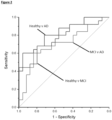
- VOC analysis indicates that the concentration of three compounds, identified as acetone, 2-propanol and 2-butanone play a crucial role in distinguishing between healthy controls and AD subjects.
- changes in the concentration of 2-propanol, hexanal and 1-butanol were significant.
- the separation of healthy controls and MCI relied on changes in the concentration of 2-propanol, hexanal and heptanal.
- VOC AD MCI Controls intensity of ion current signal in volts
- Acetone ⁇ 10.5% ⁇ 48.4% 2.66
- 2-Butanone ⁇ -11.4% ⁇ -13.2% 2.33
- 2-Propanol ⁇ 57.6% ⁇ 39.9% 1.03
- Hexanal ⁇ 52.4% ⁇ 209.5% 0.27
- V 1-Butanol ⁇ 97.7% ⁇ 11.8% 0.33
- Table 5 demonstrates that the possible confounding factors of gender, smoking and age have insignificant influence on breath content. However, alcohol consumption seems to have the most influence on breath, with an AUC of 0.60.
- a key advantage of the results within this application is that the ages and genders of the subject cohort are approximately balanced. Furthermore, by recruiting MCI and AD patients with their respective partners as healthy controls, it is possible to design a more robust experiment and minimise the possible effects of lifestyle and environmental factors, which can potentially introduce significant interpersonal differences. Moreover, age-matching is a critical factor to consider, since more women than men have AD and other forms of dementia. For example, almost two-thirds of Americans with Alzheimer's are women. It has been suggested that this discrepancy is due to women generally living longer than men, which increases the risk factor of developing AD. However, there are other factors, such as sex-specific genetic and hormonal factors which can contribute to variance in clinical efficacy.
- VOC analysis indicates that acetone, 2-propanol and 2-butanone contributed significantly to the efficacy of our analysis for AD vs controls. These compounds are generally associated with normal breath. Similarly, changes in other breath markers, such as 2-propanol, hexanal, heptanal and 1-butanol, contributed to separation in AD vs MCI and MCI vs control tests. This suggests that AD-related changes in breath have a subtle impact on overall breath content. Changes in acetone are of particular interest. Early stages of AD are associated with region-specific declines in brain glucose metabolism. This can be supplemented by ketone bodies, including acetoacetate, ⁇ -hydroxybutyrate and acetone.
- AD patients often suffer loss of appetite, with nearly half of mild-AD subjects reporting appetite changes. The changes observed in exhaled acetone in this study could be related to this phenomenon. To the best of our knowledge, there is currently no known link between 1-butanol and metabolic pathways relating to AD or other NDDs.
- VOC analysis indicates that six compounds, tentatively identified as acetone, 2-propanol, 2-butanone, hexanal, heptanal and 1-butanol play a crucial role in distinguishing between diagnostic groups.
- the GC-IMS analysis technique was shown to be suitable for non-invasive sampling of elderly subjects and demonstrates potential as a fast, high-throughput, real-time diagnostic tool for AD in a point-of-care clinical setting.
Landscapes
- Health & Medical Sciences (AREA)
- Life Sciences & Earth Sciences (AREA)
- Engineering & Computer Science (AREA)
- Molecular Biology (AREA)
- Animal Behavior & Ethology (AREA)
- Veterinary Medicine (AREA)
- Public Health (AREA)
- Physics & Mathematics (AREA)
- General Health & Medical Sciences (AREA)
- Biophysics (AREA)
- Pathology (AREA)
- Biomedical Technology (AREA)
- Heart & Thoracic Surgery (AREA)
- Medical Informatics (AREA)
- Surgery (AREA)
- Neurology (AREA)
- Physiology (AREA)
- Psychiatry (AREA)
- Psychology (AREA)
- Child & Adolescent Psychology (AREA)
- Developmental Disabilities (AREA)
- Hospice & Palliative Care (AREA)
- Neurosurgery (AREA)
- Pulmonology (AREA)
- Signal Processing (AREA)
- Computer Vision & Pattern Recognition (AREA)
- Artificial Intelligence (AREA)
- Investigating Or Analysing Biological Materials (AREA)
- Other Investigation Or Analysis Of Materials By Electrical Means (AREA)
Applications Claiming Priority (2)
| Application Number | Priority Date | Filing Date | Title |
|---|---|---|---|
| GB201915753A GB201915753D0 (en) | 2019-10-30 | 2019-10-30 | Alzheimer's disease |
| PCT/GB2020/052730 WO2021084251A1 (en) | 2019-10-30 | 2020-10-29 | Method to determine cognitive impairment |
Publications (2)
| Publication Number | Publication Date |
|---|---|
| EP4051104A1 EP4051104A1 (en) | 2022-09-07 |
| EP4051104B1 true EP4051104B1 (en) | 2025-07-02 |
Family
ID=68768969
Family Applications (1)
| Application Number | Title | Priority Date | Filing Date |
|---|---|---|---|
| EP20807478.1A Active EP4051104B1 (en) | 2019-10-30 | 2020-10-29 | Method to determine cognitive impairment |
Country Status (6)
| Country | Link |
|---|---|
| US (1) | US20220386952A1 (https=) |
| EP (1) | EP4051104B1 (https=) |
| JP (1) | JP7684536B2 (https=) |
| CN (1) | CN115297768A (https=) |
| GB (1) | GB201915753D0 (https=) |
| WO (1) | WO2021084251A1 (https=) |
Families Citing this family (2)
| Publication number | Priority date | Publication date | Assignee | Title |
|---|---|---|---|---|
| WO2025056488A1 (en) | 2023-09-13 | 2025-03-20 | Roche Diabetes Care Gmbh | Method for determining a subject's analyte level |
| CN117831756B (zh) * | 2024-03-05 | 2024-06-28 | 精智未来(广州)智能科技有限公司 | 一种认知障碍的辅助分析方法、装置、设备及存储介质 |
Family Cites Families (10)
| Publication number | Priority date | Publication date | Assignee | Title |
|---|---|---|---|---|
| US6540691B1 (en) * | 1999-01-12 | 2003-04-01 | Michael Phillips | Breath test for the detection of various diseases |
| GB0326148D0 (en) * | 2003-11-10 | 2003-12-17 | Lilly Co Eli | Morpholine derivatives |
| DE102010014684A1 (de) * | 2010-04-09 | 2011-10-13 | Universität Duisburg-Essen | Neue Ansätze zur Alzheimer-Diagnose |
| US10463275B2 (en) * | 2015-08-09 | 2019-11-05 | Elemental Sensor Llc | Device for capturing and concentrating volatile organic compounds |
| US10753949B2 (en) * | 2016-03-07 | 2020-08-25 | Rehabilitation Institute Of Chicago | Biomarkers in nasal exhaled breath |
| KR101973839B1 (ko) * | 2016-12-28 | 2019-04-30 | 재단법인대구경북과학기술원 | 알츠하이머 질환 진단용 조성물 |
| CA3052505A1 (en) * | 2017-02-06 | 2018-08-09 | University Of Ottawa | Methods and compounds for detection and binding of aldehydes |
| WO2019023239A1 (en) * | 2017-07-25 | 2019-01-31 | William Beaumont Hospital | METHODS FOR DIAGNOSING AND TREATING ALZHEIMER'S DISEASE |
| US11219387B2 (en) * | 2018-04-13 | 2022-01-11 | Northeastern University | Molecularly-imprinted electrochemical sensors |
| WO2020081834A1 (en) * | 2018-10-19 | 2020-04-23 | Regents Of The University Of Minnesota | Systems and methods for detecting a brain condition |
-
2019
- 2019-10-30 GB GB201915753A patent/GB201915753D0/en not_active Ceased
-
2020
- 2020-10-29 CN CN202080091176.6A patent/CN115297768A/zh active Pending
- 2020-10-29 WO PCT/GB2020/052730 patent/WO2021084251A1/en not_active Ceased
- 2020-10-29 JP JP2022525378A patent/JP7684536B2/ja active Active
- 2020-10-29 US US17/772,809 patent/US20220386952A1/en active Pending
- 2020-10-29 EP EP20807478.1A patent/EP4051104B1/en active Active
Also Published As
| Publication number | Publication date |
|---|---|
| US20220386952A1 (en) | 2022-12-08 |
| CN115297768A (zh) | 2022-11-04 |
| GB201915753D0 (en) | 2019-12-11 |
| WO2021084251A1 (en) | 2021-05-06 |
| EP4051104A1 (en) | 2022-09-07 |
| JP2023500850A (ja) | 2023-01-11 |
| JP7684536B2 (ja) | 2025-05-28 |
Similar Documents
| Publication | Publication Date | Title |
|---|---|---|
| Moor et al. | Exhaled breath analysis by use of eNose technology: a novel diagnostic tool for interstitial lung disease | |
| Perrot et al. | Prevalence of sarcopenia and malnutrition during acute exacerbation of COPD and after 6 months recovery | |
| Dallinga et al. | Volatile organic compounds in exhaled breath as a diagnostic tool for asthma in children | |
| Omari et al. | Swallowing dysfunction in healthy older people using pharyngeal pressure‐flow analysis | |
| Dummer et al. | Analysis of biogenic volatile organic compounds in human health and disease | |
| Gualerzi et al. | Raman profiling of circulating extracellular vesicles for the stratification of Parkinson’s patients | |
| Liu et al. | Role of exhaled nasal nitric oxide in distinguishing between chronic rhinosinusitis with and without nasal polyps | |
| US10753949B2 (en) | Biomarkers in nasal exhaled breath | |
| Steffens et al. | Amnestic mild cognitive impairment and incident dementia and Alzheimer's disease in geriatric depression | |
| Ricciardolo et al. | A pathophysiological approach for FeNO: A biomarker for asthma | |
| Nakhleh et al. | Distinguishing idiopathic Parkinson's disease from other parkinsonian syndromes by breath test | |
| Cutz et al. | Pulmonary neuroendocrine cells and neuroepithelial bodies in sudden infant death syndrome: potential markers of airway chemoreceptor dysfunction | |
| Bulbul et al. | Are oxidative stress markers useful to distinguish schizoaffective disorder from schizophrenia and bipolar disorder? | |
| Tan et al. | Using a chemiresistor-based alkane sensor to distinguish exhaled breaths of lung cancer patients from subjects with no lung cancer | |
| EP4051104B1 (en) | Method to determine cognitive impairment | |
| Halstrom et al. | Elevation of oxidative stress indicators in a pilot study of plasma following traumatic brain injury | |
| Washino et al. | Effects of inspiratory muscle strength and inspiratory resistance on neck inspiratory muscle activation during controlled inspirations | |
| Mustafina et al. | Exhaled breath analysis in adult patients with cystic fibrosis by real-time proton mass spectrometry | |
| EP4181781A1 (en) | Breath-based therapeutic drug monitoring method | |
| Ceolin et al. | Association of Alzheimer's Disease Blood Biomarkers With Sarcopenia Incidence and Progression: A 12‐Year Population‐Based Study | |
| Kim et al. | Use of cold dry air provocation with acoustic rhinometry in detecting nonspecific nasal hyperreactivity | |
| US9541543B2 (en) | Method for diagnosing acute alcoholic hepatitis | |
| Miyoshi et al. | Quantitative image analysis of nailfold capillaries during an in-hospital education program for type 2 diabetes or obesity | |
| Barta et al. | Analysis of cytokine pattern in exhaled breath condensate of patients with squamous cell lung carcinoma | |
| EP4226847A1 (en) | Novel biomarkers for diagnosing schizophrenia in exhaled breath |
Legal Events
| Date | Code | Title | Description |
|---|---|---|---|
| STAA | Information on the status of an ep patent application or granted ep patent |
Free format text: STATUS: UNKNOWN |
|
| STAA | Information on the status of an ep patent application or granted ep patent |
Free format text: STATUS: THE INTERNATIONAL PUBLICATION HAS BEEN MADE |
|
| PUAI | Public reference made under article 153(3) epc to a published international application that has entered the european phase |
Free format text: ORIGINAL CODE: 0009012 |
|
| STAA | Information on the status of an ep patent application or granted ep patent |
Free format text: STATUS: REQUEST FOR EXAMINATION WAS MADE |
|
| 17P | Request for examination filed |
Effective date: 20220527 |
|
| AK | Designated contracting states |
Kind code of ref document: A1 Designated state(s): AL AT BE BG CH CY CZ DE DK EE ES FI FR GB GR HR HU IE IS IT LI LT LU LV MC MK MT NL NO PL PT RO RS SE SI SK SM TR |
|
| DAV | Request for validation of the european patent (deleted) | ||
| DAX | Request for extension of the european patent (deleted) | ||
| GRAP | Despatch of communication of intention to grant a patent |
Free format text: ORIGINAL CODE: EPIDOSNIGR1 |
|
| STAA | Information on the status of an ep patent application or granted ep patent |
Free format text: STATUS: GRANT OF PATENT IS INTENDED |
|
| INTG | Intention to grant announced |
Effective date: 20250123 |
|
| GRAS | Grant fee paid |
Free format text: ORIGINAL CODE: EPIDOSNIGR3 |
|
| GRAA | (expected) grant |
Free format text: ORIGINAL CODE: 0009210 |
|
| STAA | Information on the status of an ep patent application or granted ep patent |
Free format text: STATUS: THE PATENT HAS BEEN GRANTED |
|
| AK | Designated contracting states |
Kind code of ref document: B1 Designated state(s): AL AT BE BG CH CY CZ DE DK EE ES FI FR GB GR HR HU IE IS IT LI LT LU LV MC MK MT NL NO PL PT RO RS SE SI SK SM TR |
|
| REG | Reference to a national code |
Ref country code: GB Ref legal event code: FG4D |
|
| REG | Reference to a national code |
Ref country code: CH Ref legal event code: EP |
|
| REG | Reference to a national code |
Ref country code: DE Ref legal event code: R096 Ref document number: 602020053904 Country of ref document: DE |
|
| REG | Reference to a national code |
Ref country code: IE Ref legal event code: FG4D |
|
| REG | Reference to a national code |
Ref country code: NL Ref legal event code: MP Effective date: 20250702 |
|
| PG25 | Lapsed in a contracting state [announced via postgrant information from national office to epo] |
Ref country code: PT Free format text: LAPSE BECAUSE OF FAILURE TO SUBMIT A TRANSLATION OF THE DESCRIPTION OR TO PAY THE FEE WITHIN THE PRESCRIBED TIME-LIMIT Effective date: 20251103 |
|
| PG25 | Lapsed in a contracting state [announced via postgrant information from national office to epo] |
Ref country code: NL Free format text: LAPSE BECAUSE OF FAILURE TO SUBMIT A TRANSLATION OF THE DESCRIPTION OR TO PAY THE FEE WITHIN THE PRESCRIBED TIME-LIMIT Effective date: 20250702 |
|
| REG | Reference to a national code |
Ref country code: AT Ref legal event code: MK05 Ref document number: 1808296 Country of ref document: AT Kind code of ref document: T Effective date: 20250702 |
|
| PG25 | Lapsed in a contracting state [announced via postgrant information from national office to epo] |
Ref country code: IS Free format text: LAPSE BECAUSE OF FAILURE TO SUBMIT A TRANSLATION OF THE DESCRIPTION OR TO PAY THE FEE WITHIN THE PRESCRIBED TIME-LIMIT Effective date: 20251102 |
|
| PG25 | Lapsed in a contracting state [announced via postgrant information from national office to epo] |
Ref country code: NO Free format text: LAPSE BECAUSE OF FAILURE TO SUBMIT A TRANSLATION OF THE DESCRIPTION OR TO PAY THE FEE WITHIN THE PRESCRIBED TIME-LIMIT Effective date: 20251002 |
|
| REG | Reference to a national code |
Ref country code: LT Ref legal event code: MG9D |
|
| PG25 | Lapsed in a contracting state [announced via postgrant information from national office to epo] |
Ref country code: AT Free format text: LAPSE BECAUSE OF FAILURE TO SUBMIT A TRANSLATION OF THE DESCRIPTION OR TO PAY THE FEE WITHIN THE PRESCRIBED TIME-LIMIT Effective date: 20250702 |
|
| PG25 | Lapsed in a contracting state [announced via postgrant information from national office to epo] |
Ref country code: FI Free format text: LAPSE BECAUSE OF FAILURE TO SUBMIT A TRANSLATION OF THE DESCRIPTION OR TO PAY THE FEE WITHIN THE PRESCRIBED TIME-LIMIT Effective date: 20250702 |
|
| PG25 | Lapsed in a contracting state [announced via postgrant information from national office to epo] |
Ref country code: HR Free format text: LAPSE BECAUSE OF FAILURE TO SUBMIT A TRANSLATION OF THE DESCRIPTION OR TO PAY THE FEE WITHIN THE PRESCRIBED TIME-LIMIT Effective date: 20250702 |
|
| PG25 | Lapsed in a contracting state [announced via postgrant information from national office to epo] |
Ref country code: GR Free format text: LAPSE BECAUSE OF FAILURE TO SUBMIT A TRANSLATION OF THE DESCRIPTION OR TO PAY THE FEE WITHIN THE PRESCRIBED TIME-LIMIT Effective date: 20251003 |
|
| PG25 | Lapsed in a contracting state [announced via postgrant information from national office to epo] |
Ref country code: CZ Free format text: LAPSE BECAUSE OF FAILURE TO SUBMIT A TRANSLATION OF THE DESCRIPTION OR TO PAY THE FEE WITHIN THE PRESCRIBED TIME-LIMIT Effective date: 20250702 Ref country code: SE Free format text: LAPSE BECAUSE OF FAILURE TO SUBMIT A TRANSLATION OF THE DESCRIPTION OR TO PAY THE FEE WITHIN THE PRESCRIBED TIME-LIMIT Effective date: 20250702 |
|
| PG25 | Lapsed in a contracting state [announced via postgrant information from national office to epo] |
Ref country code: LV Free format text: LAPSE BECAUSE OF FAILURE TO SUBMIT A TRANSLATION OF THE DESCRIPTION OR TO PAY THE FEE WITHIN THE PRESCRIBED TIME-LIMIT Effective date: 20250702 |
|
| PG25 | Lapsed in a contracting state [announced via postgrant information from national office to epo] |
Ref country code: BG Free format text: LAPSE BECAUSE OF FAILURE TO SUBMIT A TRANSLATION OF THE DESCRIPTION OR TO PAY THE FEE WITHIN THE PRESCRIBED TIME-LIMIT Effective date: 20250702 Ref country code: PL Free format text: LAPSE BECAUSE OF FAILURE TO SUBMIT A TRANSLATION OF THE DESCRIPTION OR TO PAY THE FEE WITHIN THE PRESCRIBED TIME-LIMIT Effective date: 20250702 |
|
| PG25 | Lapsed in a contracting state [announced via postgrant information from national office to epo] |
Ref country code: RS Free format text: LAPSE BECAUSE OF FAILURE TO SUBMIT A TRANSLATION OF THE DESCRIPTION OR TO PAY THE FEE WITHIN THE PRESCRIBED TIME-LIMIT Effective date: 20251002 |
|
| PG25 | Lapsed in a contracting state [announced via postgrant information from national office to epo] |
Ref country code: ES Free format text: LAPSE BECAUSE OF FAILURE TO SUBMIT A TRANSLATION OF THE DESCRIPTION OR TO PAY THE FEE WITHIN THE PRESCRIBED TIME-LIMIT Effective date: 20250702 |
|
| PG25 | Lapsed in a contracting state [announced via postgrant information from national office to epo] |
Ref country code: RO Free format text: LAPSE BECAUSE OF FAILURE TO SUBMIT A TRANSLATION OF THE DESCRIPTION OR TO PAY THE FEE WITHIN THE PRESCRIBED TIME-LIMIT Effective date: 20250702 |
|
| PG25 | Lapsed in a contracting state [announced via postgrant information from national office to epo] |
Ref country code: SM Free format text: LAPSE BECAUSE OF FAILURE TO SUBMIT A TRANSLATION OF THE DESCRIPTION OR TO PAY THE FEE WITHIN THE PRESCRIBED TIME-LIMIT Effective date: 20250702 |
|
| PG25 | Lapsed in a contracting state [announced via postgrant information from national office to epo] |
Ref country code: DK Free format text: LAPSE BECAUSE OF FAILURE TO SUBMIT A TRANSLATION OF THE DESCRIPTION OR TO PAY THE FEE WITHIN THE PRESCRIBED TIME-LIMIT Effective date: 20250702 |
|
| PG25 | Lapsed in a contracting state [announced via postgrant information from national office to epo] |
Ref country code: IT Free format text: LAPSE BECAUSE OF FAILURE TO SUBMIT A TRANSLATION OF THE DESCRIPTION OR TO PAY THE FEE WITHIN THE PRESCRIBED TIME-LIMIT Effective date: 20250702 |
|
| PG25 | Lapsed in a contracting state [announced via postgrant information from national office to epo] |
Ref country code: SK Free format text: LAPSE BECAUSE OF FAILURE TO SUBMIT A TRANSLATION OF THE DESCRIPTION OR TO PAY THE FEE WITHIN THE PRESCRIBED TIME-LIMIT Effective date: 20250702 Ref country code: EE Free format text: LAPSE BECAUSE OF FAILURE TO SUBMIT A TRANSLATION OF THE DESCRIPTION OR TO PAY THE FEE WITHIN THE PRESCRIBED TIME-LIMIT Effective date: 20250702 |