EP4050356B1 - Batterieverwaltungssystem - Google Patents
Batterieverwaltungssystem Download PDFInfo
- Publication number
- EP4050356B1 EP4050356B1 EP22158033.5A EP22158033A EP4050356B1 EP 4050356 B1 EP4050356 B1 EP 4050356B1 EP 22158033 A EP22158033 A EP 22158033A EP 4050356 B1 EP4050356 B1 EP 4050356B1
- Authority
- EP
- European Patent Office
- Prior art keywords
- battery cell
- battery
- switches
- control unit
- voltage difference
- Prior art date
- Legal status (The legal status is an assumption and is not a legal conclusion. Google has not performed a legal analysis and makes no representation as to the accuracy of the status listed.)
- Active
Links
Images


Classifications
-
- G—PHYSICS
- G01—MEASURING; TESTING
- G01R—MEASURING ELECTRIC VARIABLES; MEASURING MAGNETIC VARIABLES
- G01R31/00—Arrangements for testing electric properties; Arrangements for locating electric faults; Arrangements for electrical testing characterised by what is being tested not provided for elsewhere
- G01R31/36—Arrangements for testing, measuring or monitoring the electrical condition of accumulators or electric batteries, e.g. capacity or state of charge [SoC]
- G01R31/396—Acquisition or processing of data for testing or for monitoring individual cells or groups of cells within a battery
-
- H—ELECTRICITY
- H02—GENERATION; CONVERSION OR DISTRIBUTION OF ELECTRIC POWER
- H02J—ELECTRIC POWER NETWORKS; CIRCUIT ARRANGEMENTS OR SYSTEMS FOR SUPPLYING OR DISTRIBUTING ELECTRIC POWER; SYSTEMS FOR STORING ELECTRIC ENERGY
- H02J7/00—Circuit arrangements for charging or discharging batteries or for supplying loads from batteries
- H02J7/80—Circuit arrangements for charging or discharging batteries or for supplying loads from batteries including monitoring or indicating arrangements
-
- G—PHYSICS
- G01—MEASURING; TESTING
- G01R—MEASURING ELECTRIC VARIABLES; MEASURING MAGNETIC VARIABLES
- G01R19/00—Arrangements for measuring currents or voltages or for indicating presence or sign thereof
- G01R19/165—Indicating that current or voltage is either above or below a predetermined value or within or outside a predetermined range of values
- G01R19/16533—Indicating that current or voltage is either above or below a predetermined value or within or outside a predetermined range of values characterised by the application
- G01R19/16538—Indicating that current or voltage is either above or below a predetermined value or within or outside a predetermined range of values characterised by the application in AC or DC supplies
- G01R19/16542—Indicating that current or voltage is either above or below a predetermined value or within or outside a predetermined range of values characterised by the application in AC or DC supplies for batteries
-
- G—PHYSICS
- G01—MEASURING; TESTING
- G01R—MEASURING ELECTRIC VARIABLES; MEASURING MAGNETIC VARIABLES
- G01R31/00—Arrangements for testing electric properties; Arrangements for locating electric faults; Arrangements for electrical testing characterised by what is being tested not provided for elsewhere
- G01R31/36—Arrangements for testing, measuring or monitoring the electrical condition of accumulators or electric batteries, e.g. capacity or state of charge [SoC]
- G01R31/382—Arrangements for monitoring battery or accumulator variables, e.g. SoC
-
- G—PHYSICS
- G01—MEASURING; TESTING
- G01R—MEASURING ELECTRIC VARIABLES; MEASURING MAGNETIC VARIABLES
- G01R31/00—Arrangements for testing electric properties; Arrangements for locating electric faults; Arrangements for electrical testing characterised by what is being tested not provided for elsewhere
- G01R31/36—Arrangements for testing, measuring or monitoring the electrical condition of accumulators or electric batteries, e.g. capacity or state of charge [SoC]
- G01R31/382—Arrangements for monitoring battery or accumulator variables, e.g. SoC
- G01R31/3835—Arrangements for monitoring battery or accumulator variables, e.g. SoC involving only voltage measurements
-
- H—ELECTRICITY
- H01—ELECTRIC ELEMENTS
- H01M—PROCESSES OR MEANS, e.g. BATTERIES, FOR THE DIRECT CONVERSION OF CHEMICAL ENERGY INTO ELECTRICAL ENERGY
- H01M10/00—Secondary cells; Manufacture thereof
- H01M10/42—Methods or arrangements for servicing or maintenance of secondary cells or secondary half-cells
- H01M10/425—Structural combination with electronic components, e.g. electronic circuits integrated to the outside of the casing
-
- H—ELECTRICITY
- H02—GENERATION; CONVERSION OR DISTRIBUTION OF ELECTRIC POWER
- H02J—ELECTRIC POWER NETWORKS; CIRCUIT ARRANGEMENTS OR SYSTEMS FOR SUPPLYING OR DISTRIBUTING ELECTRIC POWER; SYSTEMS FOR STORING ELECTRIC ENERGY
- H02J7/00—Circuit arrangements for charging or discharging batteries or for supplying loads from batteries
- H02J7/50—Circuit arrangements for charging or discharging batteries or for supplying loads from batteries acting upon multiple batteries simultaneously or sequentially
- H02J7/52—Circuit arrangements for charging or discharging batteries or for supplying loads from batteries acting upon multiple batteries simultaneously or sequentially for charge balancing, e.g. equalisation of charge between batteries
-
- H—ELECTRICITY
- H02—GENERATION; CONVERSION OR DISTRIBUTION OF ELECTRIC POWER
- H02J—ELECTRIC POWER NETWORKS; CIRCUIT ARRANGEMENTS OR SYSTEMS FOR SUPPLYING OR DISTRIBUTING ELECTRIC POWER; SYSTEMS FOR STORING ELECTRIC ENERGY
- H02J7/00—Circuit arrangements for charging or discharging batteries or for supplying loads from batteries
- H02J7/50—Circuit arrangements for charging or discharging batteries or for supplying loads from batteries acting upon multiple batteries simultaneously or sequentially
- H02J7/52—Circuit arrangements for charging or discharging batteries or for supplying loads from batteries acting upon multiple batteries simultaneously or sequentially for charge balancing, e.g. equalisation of charge between batteries
- H02J7/54—Passive balancing, e.g. using resistors or parallel MOSFETs
-
- H—ELECTRICITY
- H02—GENERATION; CONVERSION OR DISTRIBUTION OF ELECTRIC POWER
- H02J—ELECTRIC POWER NETWORKS; CIRCUIT ARRANGEMENTS OR SYSTEMS FOR SUPPLYING OR DISTRIBUTING ELECTRIC POWER; SYSTEMS FOR STORING ELECTRIC ENERGY
- H02J7/00—Circuit arrangements for charging or discharging batteries or for supplying loads from batteries
- H02J7/50—Circuit arrangements for charging or discharging batteries or for supplying loads from batteries acting upon multiple batteries simultaneously or sequentially
- H02J7/52—Circuit arrangements for charging or discharging batteries or for supplying loads from batteries acting upon multiple batteries simultaneously or sequentially for charge balancing, e.g. equalisation of charge between batteries
- H02J7/56—Active balancing, e.g. using capacitor-based, inductor-based or DC-DC converters
-
- H—ELECTRICITY
- H02—GENERATION; CONVERSION OR DISTRIBUTION OF ELECTRIC POWER
- H02J—ELECTRIC POWER NETWORKS; CIRCUIT ARRANGEMENTS OR SYSTEMS FOR SUPPLYING OR DISTRIBUTING ELECTRIC POWER; SYSTEMS FOR STORING ELECTRIC ENERGY
- H02J7/00—Circuit arrangements for charging or discharging batteries or for supplying loads from batteries
- H02J7/50—Circuit arrangements for charging or discharging batteries or for supplying loads from batteries acting upon multiple batteries simultaneously or sequentially
- H02J7/575—Parallel/serial switching of connection of batteries to charge or load circuit
-
- H—ELECTRICITY
- H02—GENERATION; CONVERSION OR DISTRIBUTION OF ELECTRIC POWER
- H02J—ELECTRIC POWER NETWORKS; CIRCUIT ARRANGEMENTS OR SYSTEMS FOR SUPPLYING OR DISTRIBUTING ELECTRIC POWER; SYSTEMS FOR STORING ELECTRIC ENERGY
- H02J7/00—Circuit arrangements for charging or discharging batteries or for supplying loads from batteries
- H02J7/865—Battery or charger load switching, e.g. concurrent charging and load supply
-
- H—ELECTRICITY
- H02—GENERATION; CONVERSION OR DISTRIBUTION OF ELECTRIC POWER
- H02J—ELECTRIC POWER NETWORKS; CIRCUIT ARRANGEMENTS OR SYSTEMS FOR SUPPLYING OR DISTRIBUTING ELECTRIC POWER; SYSTEMS FOR STORING ELECTRIC ENERGY
- H02J7/00—Circuit arrangements for charging or discharging batteries or for supplying loads from batteries
- H02J7/90—Regulation of charging or discharging current or voltage
- H02J7/96—Regulation of charging or discharging current or voltage in response to battery voltage
-
- G—PHYSICS
- G01—MEASURING; TESTING
- G01R—MEASURING ELECTRIC VARIABLES; MEASURING MAGNETIC VARIABLES
- G01R31/00—Arrangements for testing electric properties; Arrangements for locating electric faults; Arrangements for electrical testing characterised by what is being tested not provided for elsewhere
- G01R31/50—Testing of electric apparatus, lines, cables or components for short-circuits, continuity, leakage current or incorrect line connections
- G01R31/54—Testing for continuity
-
- H—ELECTRICITY
- H01—ELECTRIC ELEMENTS
- H01M—PROCESSES OR MEANS, e.g. BATTERIES, FOR THE DIRECT CONVERSION OF CHEMICAL ENERGY INTO ELECTRICAL ENERGY
- H01M10/00—Secondary cells; Manufacture thereof
- H01M10/42—Methods or arrangements for servicing or maintenance of secondary cells or secondary half-cells
- H01M10/425—Structural combination with electronic components, e.g. electronic circuits integrated to the outside of the casing
- H01M2010/4271—Battery management systems including electronic circuits, e.g. control of current or voltage to keep battery in healthy state, cell balancing
Definitions
- Embodiments relate to a battery management system.
- a secondary battery can be charged and discharged.
- Low-capacity secondary batteries may be used for, e.g., portable small-sized electronic devices, e.g., a smart phone, a feature phone, a notebook computer, a camcorder, and the like, and high-capacity secondary batteries may be used for, e.g., driving a motor for a hybrid car, an electric vehicle, a power storage cell, and the like.
- EP 3 598 154 A1 discloses a sampling detection circuit and a method for detecting a circuit malfunction.
- US 2014/0253135 A1 discloses an apparatus and method for diagnosing an abnormality in a cell balancing circuit in a battery pack including a plurality of cells corresponding to each cell balancing circuit.
- US 2012/0146652 A1 discloses an assembled battery system including a plurality of serially connected battery cells, and voltage detecting lines connectable at one end to electrodes of the battery cells of the assembled battery.
- An embodiment is directed to a battery management system as described in claim 1, and a method according to claim 8.
- the term "and/or” includes any and all combinations of one or more of the associated listed items.
- an element A is referred to as being "connected to" an element B, the element A can be directly connected to the element B or an intervening element C may be present therebetween such that the element A and the element B are indirectly connected to each other.
- first, second, etc. may be used herein to describe various members, elements, regions, layers and/or sections, these members, elements, regions, layers and/or sections should not be limited by these terms. These terms are only used to distinguish one member, element, region, layer and/or section from another. Thus, for example, a first member, a first element, a first region, a first layer and/or a first section discussed below could be termed a second member, a second element, a second region, a second layer and/or a second section without departing from the teachings of the present disclosure.
- control unit and/or other related devices or components according to the present disclosure may be implemented using any suitable hardware, firmware (e.g., application specific semiconductor), software, or a suitable combination of software, firmware, and hardware.
- firmware e.g., application specific semiconductor
- various components of the control unit and/or other related devices or parts according to the present disclosure may be formed on one integrated circuit chip or on separate integrated circuit chips.
- various components of the control unit may be implemented on a flexible printed circuit film, and may be formed on a tape carrier package, a printed circuit board, or the same substrate as the control unit.
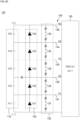
- FIG. 1 is a schematic diagram illustrating a battery management system according to an example embodiment.
- a battery management system 100 includes a diode unit 120, a switch unit 130, a sensing unit 140, and a control unit 150.
- the battery management system 100 may be connected to a battery 110, to manage the battery 110.
- the battery 110 may include a plurality of battery cells 111, 112, 113, 114, and 115, and may be charged or discharged at a constant voltage.
- the battery 110 may include a plurality of battery cells 111, 112, 113, 114, and 115 connected in series.
- the battery 110 is illustrated in FIG. 1 as having five battery cells 111, 112, 113, 114, and 115 connected in series, the number of battery cells may be greater or less than five.
- the battery 110 will be described as including a first battery cell 111, a second battery cell 112, a third battery cell 113, a fourth battery cell 114, and a fifth battery cell 115.
- the first battery cell 111 may be a cell located at a minus terminal side of the battery 110, and the fifth battery cell 115 may be a cell located at a plus terminal side of the battery 110.
- the first battery cell 111 may be referred to as a lowermost battery cell, and the fifth battery cell 115 may be referred to as an uppermost battery cell.
- the diode unit 120 may include a plurality of diodes 121, 122, 123, 124, and 125 connected in parallel to each of the plurality of battery cells 111, 112, 113, 114, 115.
- the number of diodes 121, 122, 123, 124, and 125 may correspond to the number of battery cells 111, 112, 113, 114 and 115.
- the diode unit 120 may include a first diode 121, a second diode 122, a third diode 123, a fourth diode 124, and a fifth diode 125.
- the plurality of diodes 121, 122, 123, 124, and 125 may allow the voltages of the battery cells 111, 112, 113, 114 and 115 to be measured even when at least one of sensing lines is disconnected. This will be described in additional detail below.
- the switch unit 130 may include a plurality of switches 131, 132, 133, 134, and 135 connected to each of the plurality of battery cells 111, 112, 113, 114, and 115.
- the switch unit 130 may include a first switch 131, a second switch 132, a third switch 133, a fourth switch 134, and a fifth switch 135.
- the respective switches 131, 132, 133, 134, and 135 may open/close discharge paths of the corresponding battery cells 111, 112, 113, 114, and 115.
- the sensing unit 140 may include a plurality of sensing lines 141, 142, 143, 144, and 145 for sensing voltages of each of the plurality of battery cells 111, 112, 113, 114, and 115.
- the sensing unit 140 may include a first sensing line 141, a second sensing line 142, a third sensing line 143, a fourth sensing line 144, and a fifth sensing line 145.
- the plurality of sensing lines 141 , 142, 143, 144, and 145 may be connected to a plus side of each of the battery cells 111 , 112, 113 , 114 and 115.
- the switch unit 130 may include a discharge resistor connected to both ends of each of the switches 131, 132, 133, 134, and 135, to perform cell balancing of the battery cells 111, 112, 113, 114, and 115.
- a discharge resistor may be connected between each end of each of the switches 131, 132, 133, 134, and 135 and a corresponding one of the sensing lines 141 , 142, 143 , 144, and 145.
- the control unit 150 may detect voltages, currents, temperatures, etc. of the respective battery cells 111, 112, 113, 114, and 115 which constitute the battery 110, and may control cell balancing for the battery 110.
- the control unit 150 may include a microprocessor, a central processing unit (CPU), and an application-specific integrated circuit (ASIC), such as an analog front end (AFE).
- AFE analog front end
- the control unit 150 may divide the switch unit 130 into an even-numbered group and an odd-numbered group.
- the even-numbered group may include the switches 132 and 134.
- the odd-numbered group may include the switches 131, 133, and 135.
- the control unit 150 may alternately turns on the switches 132 and 134 of the even-numbered group and the switches 131, 133, and 135 of the odd-numbered group to perform cell balancing. Accordingly, the control unit 150 may shorten the time required for cell balancing, compared to a case of sequentially balancing the plurality of battery cells 111, 112, 113, 114, and 115.
- control unit 150 may measure voltages before and after cell balancing of each of the battery cells 111, 112, 113, 114, and 115 to detect disconnection of the sensing lines 141, 142, 143, 144, and 145. This now will be described in additional detail.
- control unit 150 detects the disconnection of the sensing lines 141, 142, 143, 144, and 145 will be described in more detail.
- the second sensing line 142 (connected to the second battery cell 112) is disconnected (indicated by 'X' on the second sensing line 142 in FIGS. 2A-2C ) will be described.
- FIGS. 2A-2C are schematic diagrams for explaining a method for detecting the disconnection of a sensing line in a battery management system.
- control unit 150 may measure voltages of the respective battery cells 111, 112, 113, 114, and 115 in a state in which the switch unit 130 is turned off, e.g., in which the switches 131, 132, 133, 134, and 135 are all open or nonconductive.
- the control unit 150 may measure the voltages of the respective battery cells 111, 112, 113, 114, and 115 through the sensing unit 140.
- the control unit 150 may measure sensing voltages V1, V2, V3, V4, and V5 of the respective battery cells 111, 112, 113, 114, and 115 through the sensing lines 141, 142, 143, 144, and 145.
- the control unit 150 may obtain a difference between each of the sensing voltages V1, V2, V3, V4, and V5 of the respective battery cells 111, 112, 113, 114, and 115 and a sensing voltage of an adjacent lower battery cell to measure the voltages of the respective battery cells 111, 112, 113, 114, and 115.
- a sensing voltage may be measured from the disconnected sensing line by means of the diode unit 120.
- a sensing voltage V3 measured from the third sensing line 143 is 9 V
- the sensing voltage V1 measured from the first sensing line 141 is 3 V
- a sensing voltage V2 of 6 V which is an intermediate voltage between the third diode 123 and the second diode 122, may be measured from the disconnected second sensing line 142 through the use of voltage division therebetween.
- the control unit 150 may measure voltages of the respective battery cells 111, 112, 113, 114, and 115 by obtaining a difference between each of the sensing voltages measured from the respective sensing lines 141, 142, 143, 144, and 145 and the sensing voltage measured from an adjacent lower sensing line.
- control unit 150 may obtain a difference (V3-V2) between 9 V (which is the sensing voltage V3 measured from the third sensing line 143) and 6 V (which is the sensing voltage V2 measured from the second sensing line 142), thereby determining that the voltage of the third battery cell 113 is 3 V.
- control unit 150 may measure a difference (V2-V1) between 6 V (which is the sensing voltage V2 measured from the second sensing line 142) and 3 V (which is the sensing voltage V1 measured from the first sensing line 141), thereby determining that the voltage of the second battery cell 112 is 3 V.
- control unit 150 may obtain the voltages of the respective battery cells 111, 112, 113, 114, and 115.
- the control unit 150 may define a voltage difference between each of the battery cells 111, 112, 113, 114, and 115 and an adjacent upper battery cell as a first upper voltage difference and a voltage difference between each of the battery cells 111, 112, 113, 114, and 115 and an adjacent lower battery cell as a first lower voltage difference, to then store the same in a storage unit (not shown).
- the first lower voltage difference means the voltage of each of the battery cells 111, 112, 113, 114, and 115.
- control unit 150 may turn on the switches 132 and 134 of the even-numbered group of the switch unit 130 to perform cell balancing for a predetermined period of time, and may then measure the sensing voltages of the even-numbered battery cells 112 and 114 and then turn off the switches 132 and 134 of the even-numbered group.
- control unit 150 may turn on the switches 131, 133, and 135 of the odd-numbered group to perform cell balancing for a predetermined period of time, and may then measure the sensing voltages of the odd-numbered battery cells 111, 113, and 115 and then turn off the switches 131, 133, and 135 of the odd-numbered group.
- the cell balancing time may be set for a period of several seconds.
- the sensing voltage of the corresponding battery cell is measured as being similar to the sensing voltage measured at the sensing line connected to the lower battery cell. Therefore, after cell balancing, the voltage difference between the sensing voltage of each battery cell and the sensing voltage of an adjacent lower battery cell becomes relatively lower than the voltage difference before cell balancing. In other words, in the battery cell connected to the disconnected sensing line, the voltage after cell balancing becomes lower than the voltage before cell balancing. In addition, since the voltage of the battery cell connected to the disconnected sensing line is lowered, the voltage of an adjacent upper battery cell is relatively increased.
- control unit 150 may define, when the switch unit 130 is turned on, a voltage difference between each of the battery cells 111, 112, 113, 114, and 115 and an adjacent upper battery cell as a second upper voltage difference and a voltage difference between each of the battery cells 111, 112, 113, 114, and 115 and an adjacent lower battery cell as a second lower voltage difference to then store the same in the storage unit.
- the second lower voltage difference means the voltage of each of the battery cells 111, 112, 113, 114, and 115 after cell balancing.
- the control unit 150 may determine that the sensing line of the corresponding battery cell is disconnected.
- the control unit 150 may determine that the sensing line of the corresponding battery cell is disconnected.
- the control unit 150 may obtain a difference (V2-V1) between 3 V (which is the voltage V2 measured from the second sensing line 142) and 3 V (which is the voltage V1 measured from the first sensing line 141), thereby determining that the voltage of the second battery cell 112 is 0 V.
- control unit 150 may obtain a difference (V3-V2) between 9 V (which is the voltage V3 measured from the third sensing line 143) and 3 V (which is the voltage V2 measured from the second sensing line 142), thereby determining that the voltage of the third battery cell 113 is 6 V.
- control unit 150 may compare the first upper voltage difference between each of the battery cells 111, 112, 113, 114, and 115 and the upper battery cell thereof before cell balancing, with the second upper voltage difference between each of the battery cells 111, 112, 113, 114, and 115 and the upper battery cell thereof after cell balancing, and, when the second upper voltage difference is greater than the first upper voltage difference, may determine that the sensing line of the corresponding battery cell is disconnected.
- control unit 150 may compare the first lower voltage difference between each of the battery cells 111, 112, 113, 114, and 115 and the lower battery cell thereof before cell balancing, with the second lower voltage difference between each of the battery cells 111, 112, 113, 114, and 115 and the lower battery cell thereof after cell balancing, and, when the second lower voltage difference is greater than the first lower voltage difference, may determine that the sensing line of the corresponding battery cell is disconnected.
- each cell may directly affect the performance of the vehicle.
- a charge/discharge of each cell may be managed by measuring a voltage and current of each cell.
- a battery management system capable of stably controlling the corresponding cell by monitoring a state of a sensing unit that senses each cell may be used.
- embodiments may provide a battery management system capable of detecting disconnection of a sensing line of a battery cell.
- a disconnection of a sensing line may be detected by comparing a voltage difference between each battery cell and an adjacent battery cell in a state in which switches are turned off with a voltage difference between each battery cell and an adjacent battery cell after turning on the switches, thereby improving safety.
Landscapes
- Engineering & Computer Science (AREA)
- Power Engineering (AREA)
- Physics & Mathematics (AREA)
- General Physics & Mathematics (AREA)
- Microelectronics & Electronic Packaging (AREA)
- Manufacturing & Machinery (AREA)
- Chemical & Material Sciences (AREA)
- Chemical Kinetics & Catalysis (AREA)
- Electrochemistry (AREA)
- General Chemical & Material Sciences (AREA)
- Charge And Discharge Circuits For Batteries Or The Like (AREA)
- Secondary Cells (AREA)
Claims (8)
- Batteriemanagementsystem (100), das Folgendes umfasst:eine Vielzahl von Dioden (121, 122, 123, 124, 125), die zum Parallelschalten mit einer Vielzahl von Batteriezellen (111, 112, 113, 114, 115) konfiguriert sind, wobei die Vielzahl von Batteriezellen (111, 112, 113, 114, 115) in Reihe geschaltet ist;eine Schalteinheit (130), die eine Vielzahl von Schaltern (131, 132, 133, 134, 135) einschließt, die jeweils zum Verbinden mit der Vielzahl von Batteriezellen (111, 112, 113, 114, 115) konfiguriert sind;eine Steuereinheit (150), die zum Erkennen von Spannungen der Vielzahl von Batteriezellen (111, 112, 113, 114, 115) und zum Durchführen von Zellausgleich konfiguriert ist; undeine Vielzahl von Messleitungen (141, 142, 143, 144, 145), die zum Verbinden der Vielzahl von Batteriezellen (111, 112, 113, 114, 115) und der Steuereinheit (150) konfiguriert sind,wobei die Steuereinheit (150) ferner konfiguriert ist zum:Messen einer ersten oberen Spannungsdifferenz zwischen jeder Batteriezelle (111, 112, 113, 114, 115) und einer benachbarten oberen Batteriezelle in einem Zustand, in dem die Schalter (131, 132, 133, 134, 135) ausgeschaltet sind,Messen einer zweiten oberen Spannungsdifferenz zwischen jeder Batteriezelle (111, 112, 113, 114, 115) und der benachbarten oberen Batteriezelle nach dem Einschalten der Schalter (131, 132, 133, 134, 135) für eine vorbestimmte Zeit,Feststellen, wenn die zweite obere Spannungsdifferenz größer ist als die erste obere Spannungsdifferenz, dass eine Messleitung einer entsprechenden Batteriezelle eine getrennte Messleitung ist,dadurch gekennzeichnet, dass die Steuereinheit (150) ferner konfiguriert ist zum:Messen einer ersten unteren Spannungsdifferenz zwischen jeder Batteriezelle (111, 112, 113, 114, 115) und einer benachbarten unteren Batteriezelle in einem Zustand, in dem die Schalter (131, 132, 133, 134, 135) ausgeschaltet sind,Messen einer zweiten unteren Spannungsdifferenz zwischen jeder Batteriezelle (111, 112, 113, 114, 115) und der benachbarten unteren Batteriezelle nach dem Einschalten der Schalter (131, 132, 133, 134, 135) für eine vorbestimmte Zeit, undFeststellen, wenn die zweite untere Spannungsdifferenz kleiner ist als die erste untere Spannungsdifferenz, dass die Messleitung der entsprechenden Batteriezelle getrennt ist.
- Batteriemanagementsystem (100) nach Anspruch 1, wobei die Steuereinheit (150) zum Verwenden der getrennten Messleitung zum Messen einer Spannung der entsprechenden Batteriezelle durch Teilen einer Spannung zwischen einer mit der entsprechenden Batteriezelle verbundenen Diode und einer mit der oberen Batteriezelle verbundenen Diode konfiguriert ist.
- Batteriemanagementsystem (100) nach einem vorhergehenden Anspruch, wobei, wenn die Schalter (131, 132, 133, 134, 135) eingeschaltet sind, eine Spannung der benachbarten oberen Batteriezelle der getrennten Messleitung erhöht wird.
- Batteriemanagementsystem (100) nach Anspruch 1 oder 2, wobei, wenn die Schalter (131, 132, 133, 134, 135) eingeschaltet sind, eine Spannung der Batteriezelle der getrennten Messleitung verringert wird.
- Batteriemanagementsystem (100) nach einem vorhergehenden Anspruch, wobei in einem Zustand, in dem die Schalter (131, 132, 133, 134, 135) eingeschaltet sind, eine Spannung der Batteriezelle der getrennten Messleitung der Spannung einer benachbarten niedrigeren Batteriezelle entspricht.
- Batteriemanagementsystem (100) nach einem vorhergehenden Anspruch, wobei in der Schaltereinheit (130) die Schalter (131, 132, 133, 134, 135) einer geradzahligen Gruppe und die Schalter einer ungeradzahligen Gruppe abwechselnd eingeschaltet sind.
- Batteriemanagementsystem (100) nach Anspruch 6, wobei die Steuereinheit (1500) konfiguriert ist zum Einschalten der Schalter (131, 132, 133, 134, 135) der geradzahligen Gruppe zum Messen von Spannungen von geradzahligen Batteriezellen und dann Ausschalten der Schalter (131, 132, 133, 134, 135) der geradzahligen Gruppe, und Einschalten der Schalter (131, 132, 133, 134, 135) der ungeradzahligen Gruppe zum Messen von Spannungen von ungeradzahligen Batteriezellen und dann Ausschalten der Schalter (131, 132, 133, 134, 135) der ungeradzahligen Gruppe.
- Verfahren zum Erkennen der Trennung einer Messleitung in einem Batteriemanagementsystem (100), wobei das Batteriemanagementsystem (100) Folgendes umfasst:eine Vielzahl von Dioden (121, 122, 123, 124, 125), die parallel zu einer Vielzahl von Batteriezellen (111, 112, 113, 114, 115) geschaltet sind, wobei die Vielzahl von Batteriezellen (111, 112, 113, 114, 115) in Reihe geschaltet ist;eine Schalteinheit (130), die eine Vielzahl von Schaltern (131, 132, 133, 134, 135) einschließt, die jeweils mit der Vielzahl von Batteriezellen (111, 112, 113, 114, 115) verbunden sind;eine Steuereinheit (150), die zum Erkennen von Spannungen der Vielzahl von Batteriezellen (111, 112, 113, 114, 115) und zum Durchführen von Zellausgleich konfiguriert ist; undeine Vielzahl von Messleitungen (141, 142, 143, 144, 145), die die Vielzahl von Batteriezellen (111, 112, 113, 114, 115) und die Steuereinheit (150) verbinden,und wobei das Verfahren Folgendes umfasst:Messen, unter Verwendung der Steuereinheit (150), einer ersten oberen Spannungsdifferenz zwischen jeder Batteriezelle und einer benachbarten oberen Batteriezelle in einem Zustand, in dem die Schalter ausgeschaltet sind,Messen, unter Verwendung der Steuereinheit, einer zweiten oberen Spannungsdifferenz zwischen jeder Batteriezelle (111, 112, 113, 114, 115) und der benachbarten oberen Batteriezelle nach dem Einschalten der Schalter (131, 132, 133, 134, 135) für eine vorbestimmte Zeit,Feststellen, unter Verwendung der Steuereinheit (150), wenn die zweite obere Spannungsdifferenz größer ist als die erste obere Spannungsdifferenz, dass eine Messleitung einer entsprechenden Batteriezelle eine getrennte Messleitung ist,gekennzeichnet durchMessen, unter Verwendung der Steuereinheit, einer ersten unteren Spannungsdifferenz zwischen jeder Batteriezelle (111, 112, 113, 114, 115) und einer benachbarten unteren Batteriezelle in einem Zustand, in dem die Schalter (131, 132, 133, 134, 135) ausgeschaltet sind,Messen, unter Verwendung der Steuereinheit (150), einer zweiten unteren Spannungsdifferenz zwischen jeder Batteriezelle (111, 112, 113, 114, 115) und der benachbarten unteren Batteriezelle nach dem Einschalten der Schalter (131, 132, 133, 134, 135) für eine vorbestimmte Zeit, undFeststellen, unter Verwendung der Steuereinheit (150), wenn die zweite niedrigere Spannungsdifferenz kleiner ist als die erste niedrigere Spannungsdifferenz, dass die Messleitung der entsprechenden Batteriezelle getrennt ist.
Applications Claiming Priority (1)
| Application Number | Priority Date | Filing Date | Title |
|---|---|---|---|
| KR1020210023915A KR20220120165A (ko) | 2021-02-23 | 2021-02-23 | 배터리 관리 시스템 |
Publications (2)
| Publication Number | Publication Date |
|---|---|
| EP4050356A1 EP4050356A1 (de) | 2022-08-31 |
| EP4050356B1 true EP4050356B1 (de) | 2024-09-18 |
Family
ID=80446946
Family Applications (1)
| Application Number | Title | Priority Date | Filing Date |
|---|---|---|---|
| EP22158033.5A Active EP4050356B1 (de) | 2021-02-23 | 2022-02-22 | Batterieverwaltungssystem |
Country Status (7)
| Country | Link |
|---|---|
| US (1) | US20220268848A1 (de) |
| EP (1) | EP4050356B1 (de) |
| JP (1) | JP7325563B2 (de) |
| KR (1) | KR20220120165A (de) |
| CN (1) | CN114977362A (de) |
| HU (1) | HUE069242T2 (de) |
| PL (1) | PL4050356T3 (de) |
Families Citing this family (1)
| Publication number | Priority date | Publication date | Assignee | Title |
|---|---|---|---|---|
| CN117767483B (zh) * | 2023-12-22 | 2024-08-06 | 深圳市助尔达电子科技有限公司 | 一种电池电芯平衡管理方法及系统 |
Family Cites Families (17)
| Publication number | Priority date | Publication date | Assignee | Title |
|---|---|---|---|---|
| JP5549121B2 (ja) * | 2008-06-17 | 2014-07-16 | 三洋電機株式会社 | 組電池の電圧検出装置及びこれを具えたバッテリシステム |
| KR101065562B1 (ko) * | 2008-09-05 | 2011-09-19 | 주식회사 엘지화학 | 셀 밸런싱 스위치의 고장 진단 장치 및 방법 |
| CN102110997B (zh) * | 2009-12-28 | 2013-07-10 | 光宝电子(广州)有限公司 | 电池组平衡方法 |
| JP5443327B2 (ja) * | 2010-12-08 | 2014-03-19 | 株式会社東芝 | 組電池装置 |
| JP5353914B2 (ja) * | 2011-02-01 | 2013-11-27 | 株式会社デンソー | 電池電圧監視装置 |
| KR101856663B1 (ko) * | 2011-06-03 | 2018-05-10 | 에스케이이노베이션 주식회사 | 다중팩 병렬 구조의 정보 교환을 위한 2차 전지 관리 시스템 및 방법 |
| US9118191B2 (en) * | 2011-08-29 | 2015-08-25 | Samsung Sdi Co., Ltd. | Cell balancing method, cell balancing device, and energy storage system including the cell balancing device |
| WO2013150570A1 (ja) * | 2012-04-06 | 2013-10-10 | 富士通株式会社 | 電子機器、電源装置および電子機器の電源制御方法 |
| US9318910B2 (en) * | 2012-09-06 | 2016-04-19 | Samsung Sdi Co., Ltd. | Cell balancing circuit and cell balancing method using the same |
| JP5974849B2 (ja) * | 2012-11-19 | 2016-08-23 | 株式会社デンソー | 電池監視装置 |
| KR101589198B1 (ko) * | 2013-02-19 | 2016-01-28 | 주식회사 엘지화학 | 셀 밸런싱 회로의 고장 진단 장치 및 방법 |
| CN105164541B (zh) * | 2013-04-26 | 2018-04-06 | 日立汽车系统株式会社 | 电池监视装置和使用该电池监视装置的电池系统 |
| JP6245094B2 (ja) * | 2014-06-30 | 2017-12-13 | 日立化成株式会社 | 電池システム |
| KR101858321B1 (ko) * | 2015-12-14 | 2018-05-15 | 주식회사 엘지화학 | 셀 밸런싱 회로의 고장 진단 장치 및 방법 |
| US9876369B2 (en) * | 2016-03-15 | 2018-01-23 | Lg Chem, Ltd. | Battery system and method for determining an open circuit fault condition in a battery module |
| DE102017218211A1 (de) * | 2017-10-12 | 2019-04-18 | Bayerische Motoren Werke Aktiengesellschaft | Energiespeichereinrichtung |
| CN110736912B (zh) * | 2018-07-20 | 2021-06-08 | 宁德时代新能源科技股份有限公司 | 电路故障的检测方法和采样检测电路 |
-
2021
- 2021-02-23 KR KR1020210023915A patent/KR20220120165A/ko not_active Ceased
-
2022
- 2022-02-18 US US17/675,137 patent/US20220268848A1/en active Pending
- 2022-02-22 JP JP2022025695A patent/JP7325563B2/ja active Active
- 2022-02-22 EP EP22158033.5A patent/EP4050356B1/de active Active
- 2022-02-22 PL PL22158033.5T patent/PL4050356T3/pl unknown
- 2022-02-22 HU HUE22158033A patent/HUE069242T2/hu unknown
- 2022-02-23 CN CN202210166434.3A patent/CN114977362A/zh active Pending
Also Published As
| Publication number | Publication date |
|---|---|
| US20220268848A1 (en) | 2022-08-25 |
| KR20220120165A (ko) | 2022-08-30 |
| JP2022128598A (ja) | 2022-09-02 |
| PL4050356T3 (pl) | 2024-12-16 |
| CN114977362A (zh) | 2022-08-30 |
| EP4050356A1 (de) | 2022-08-31 |
| JP7325563B2 (ja) | 2023-08-14 |
| HUE069242T2 (hu) | 2025-02-28 |
Similar Documents
| Publication | Publication Date | Title |
|---|---|---|
| CN110785670B (zh) | 诊断电池组的正电极接触器的装置和方法 | |
| US11513139B2 (en) | Battery pack diagnosis apparatus | |
| EP2848955B1 (de) | Vorrichtung und verfahren zur diagnose von abnormalitäten einer zellenausgleichsschaltung | |
| US10353013B2 (en) | Voltage detection device, voltage detection method, abnormality determination device, abnormality determination method, and battery pack system | |
| US8836341B2 (en) | Semiconductor circuit, semiconductor device, method of diagnosing abnormality of wire, and computer readable storage medium | |
| EP3566894B1 (de) | Batteriepack für ein fahrzeug | |
| EP3907813B1 (de) | Temperaturmessgerät, batteriegerät damit und verfahren zur temperaturmessung | |
| EP1918728B1 (de) | Diagnose- und Prognose-Verfahren für eine Lithiumionenbatterie | |
| EP4050356B1 (de) | Batterieverwaltungssystem | |
| US9960610B2 (en) | Voltage detecting device, voltage detecting method, and battery pack system | |
| JPWO2006064786A1 (ja) | 電源装置 | |
| JP7359402B2 (ja) | プリチャージ抵抗異常判断方法およびこれを適用したバッテリーシステム | |
| KR101856067B1 (ko) | 배터리 관리 시스템의 센싱 정밀도 진단 장치 및 방법 | |
| CN114303273B (zh) | 电池管理设备和包括该电池管理设备的电池组 | |
| US12429522B2 (en) | Relay diagnosis device and relay diagnosis method | |
| EP4102245B1 (de) | Batterievorrichtung und verfahren zur diagnose von stromsensoren | |
| KR102839450B1 (ko) | 배터리 장치 및 드리프트 오류 진단 방법 | |
| KR20210014343A (ko) | 전기자동차용 직렬연결 배터리 셀의 균등 충전장치 및 이를 이용한 균등 충전 제어방법 | |
| KR102368977B1 (ko) | 배터리 관리 장치 | |
| JP7167878B2 (ja) | 電池監視システム | |
| KR102852055B1 (ko) | 다병렬 충/방전 fet 구조의 고장 진단 회로 및 그 진단 방법 | |
| US20230138164A1 (en) | Method for analyzing the contact assignment of a contact element of a cell module for a vehicle battery and module charger having a diagnosis function for the contact assignment of a contact element | |
| Wu et al. | A passive balancing algorithm for multi-cells | |
| CN121844433A (zh) | 电池状态检测装置及程序 | |
| JP2021192571A (ja) | セルバランス制御装置 |
Legal Events
| Date | Code | Title | Description |
|---|---|---|---|
| PUAI | Public reference made under article 153(3) epc to a published international application that has entered the european phase |
Free format text: ORIGINAL CODE: 0009012 |
|
| STAA | Information on the status of an ep patent application or granted ep patent |
Free format text: STATUS: REQUEST FOR EXAMINATION WAS MADE |
|
| 17P | Request for examination filed |
Effective date: 20220222 |
|
| AK | Designated contracting states |
Kind code of ref document: A1 Designated state(s): AL AT BE BG CH CY CZ DE DK EE ES FI FR GB GR HR HU IE IS IT LI LT LU LV MC MK MT NL NO PL PT RO RS SE SI SK SM TR |
|
| GRAP | Despatch of communication of intention to grant a patent |
Free format text: ORIGINAL CODE: EPIDOSNIGR1 |
|
| STAA | Information on the status of an ep patent application or granted ep patent |
Free format text: STATUS: GRANT OF PATENT IS INTENDED |
|
| INTG | Intention to grant announced |
Effective date: 20240412 |
|
| GRAS | Grant fee paid |
Free format text: ORIGINAL CODE: EPIDOSNIGR3 |
|
| GRAA | (expected) grant |
Free format text: ORIGINAL CODE: 0009210 |
|
| STAA | Information on the status of an ep patent application or granted ep patent |
Free format text: STATUS: THE PATENT HAS BEEN GRANTED |
|
| AK | Designated contracting states |
Kind code of ref document: B1 Designated state(s): AL AT BE BG CH CY CZ DE DK EE ES FI FR GB GR HR HU IE IS IT LI LT LU LV MC MK MT NL NO PL PT RO RS SE SI SK SM TR |
|
| REG | Reference to a national code |
Ref country code: GB Ref legal event code: FG4D |
|
| REG | Reference to a national code |
Ref country code: CH Ref legal event code: EP |
|
| REG | Reference to a national code |
Ref country code: IE Ref legal event code: FG4D |
|
| REG | Reference to a national code |
Ref country code: DE Ref legal event code: R096 Ref document number: 602022006107 Country of ref document: DE |
|
| REG | Reference to a national code |
Ref country code: SE Ref legal event code: TRGR |
|
| REG | Reference to a national code |
Ref country code: LT Ref legal event code: MG9D |
|
| PG25 | Lapsed in a contracting state [announced via postgrant information from national office to epo] |
Ref country code: NO Free format text: LAPSE BECAUSE OF FAILURE TO SUBMIT A TRANSLATION OF THE DESCRIPTION OR TO PAY THE FEE WITHIN THE PRESCRIBED TIME-LIMIT Effective date: 20241218 |
|
| PG25 | Lapsed in a contracting state [announced via postgrant information from national office to epo] |
Ref country code: GR Free format text: LAPSE BECAUSE OF FAILURE TO SUBMIT A TRANSLATION OF THE DESCRIPTION OR TO PAY THE FEE WITHIN THE PRESCRIBED TIME-LIMIT Effective date: 20241219 Ref country code: FI Free format text: LAPSE BECAUSE OF FAILURE TO SUBMIT A TRANSLATION OF THE DESCRIPTION OR TO PAY THE FEE WITHIN THE PRESCRIBED TIME-LIMIT Effective date: 20240918 |
|
| PG25 | Lapsed in a contracting state [announced via postgrant information from national office to epo] |
Ref country code: BG Free format text: LAPSE BECAUSE OF FAILURE TO SUBMIT A TRANSLATION OF THE DESCRIPTION OR TO PAY THE FEE WITHIN THE PRESCRIBED TIME-LIMIT Effective date: 20240918 |
|
| PG25 | Lapsed in a contracting state [announced via postgrant information from national office to epo] |
Ref country code: LV Free format text: LAPSE BECAUSE OF FAILURE TO SUBMIT A TRANSLATION OF THE DESCRIPTION OR TO PAY THE FEE WITHIN THE PRESCRIBED TIME-LIMIT Effective date: 20240918 |
|
| PG25 | Lapsed in a contracting state [announced via postgrant information from national office to epo] |
Ref country code: HR Free format text: LAPSE BECAUSE OF FAILURE TO SUBMIT A TRANSLATION OF THE DESCRIPTION OR TO PAY THE FEE WITHIN THE PRESCRIBED TIME-LIMIT Effective date: 20240918 |
|
| REG | Reference to a national code |
Ref country code: NL Ref legal event code: MP Effective date: 20240918 |
|
| PG25 | Lapsed in a contracting state [announced via postgrant information from national office to epo] |
Ref country code: RS Free format text: LAPSE BECAUSE OF FAILURE TO SUBMIT A TRANSLATION OF THE DESCRIPTION OR TO PAY THE FEE WITHIN THE PRESCRIBED TIME-LIMIT Effective date: 20241218 |
|
| PG25 | Lapsed in a contracting state [announced via postgrant information from national office to epo] |
Ref country code: RS Free format text: LAPSE BECAUSE OF FAILURE TO SUBMIT A TRANSLATION OF THE DESCRIPTION OR TO PAY THE FEE WITHIN THE PRESCRIBED TIME-LIMIT Effective date: 20241218 Ref country code: NO Free format text: LAPSE BECAUSE OF FAILURE TO SUBMIT A TRANSLATION OF THE DESCRIPTION OR TO PAY THE FEE WITHIN THE PRESCRIBED TIME-LIMIT Effective date: 20241218 Ref country code: LV Free format text: LAPSE BECAUSE OF FAILURE TO SUBMIT A TRANSLATION OF THE DESCRIPTION OR TO PAY THE FEE WITHIN THE PRESCRIBED TIME-LIMIT Effective date: 20240918 Ref country code: HR Free format text: LAPSE BECAUSE OF FAILURE TO SUBMIT A TRANSLATION OF THE DESCRIPTION OR TO PAY THE FEE WITHIN THE PRESCRIBED TIME-LIMIT Effective date: 20240918 Ref country code: GR Free format text: LAPSE BECAUSE OF FAILURE TO SUBMIT A TRANSLATION OF THE DESCRIPTION OR TO PAY THE FEE WITHIN THE PRESCRIBED TIME-LIMIT Effective date: 20241219 Ref country code: FI Free format text: LAPSE BECAUSE OF FAILURE TO SUBMIT A TRANSLATION OF THE DESCRIPTION OR TO PAY THE FEE WITHIN THE PRESCRIBED TIME-LIMIT Effective date: 20240918 Ref country code: BG Free format text: LAPSE BECAUSE OF FAILURE TO SUBMIT A TRANSLATION OF THE DESCRIPTION OR TO PAY THE FEE WITHIN THE PRESCRIBED TIME-LIMIT Effective date: 20240918 |
|
| REG | Reference to a national code |
Ref country code: AT Ref legal event code: MK05 Ref document number: 1725143 Country of ref document: AT Kind code of ref document: T Effective date: 20240918 |
|
| PG25 | Lapsed in a contracting state [announced via postgrant information from national office to epo] |
Ref country code: NL Free format text: LAPSE BECAUSE OF FAILURE TO SUBMIT A TRANSLATION OF THE DESCRIPTION OR TO PAY THE FEE WITHIN THE PRESCRIBED TIME-LIMIT Effective date: 20240918 |
|
| REG | Reference to a national code |
Ref country code: HU Ref legal event code: AG4A Ref document number: E069242 Country of ref document: HU |
|
| PG25 | Lapsed in a contracting state [announced via postgrant information from national office to epo] |
Ref country code: PT Free format text: LAPSE BECAUSE OF FAILURE TO SUBMIT A TRANSLATION OF THE DESCRIPTION OR TO PAY THE FEE WITHIN THE PRESCRIBED TIME-LIMIT Effective date: 20250120 Ref country code: IS Free format text: LAPSE BECAUSE OF FAILURE TO SUBMIT A TRANSLATION OF THE DESCRIPTION OR TO PAY THE FEE WITHIN THE PRESCRIBED TIME-LIMIT Effective date: 20250118 |
|
| PG25 | Lapsed in a contracting state [announced via postgrant information from national office to epo] |
Ref country code: RO Free format text: LAPSE BECAUSE OF FAILURE TO SUBMIT A TRANSLATION OF THE DESCRIPTION OR TO PAY THE FEE WITHIN THE PRESCRIBED TIME-LIMIT Effective date: 20240918 Ref country code: SM Free format text: LAPSE BECAUSE OF FAILURE TO SUBMIT A TRANSLATION OF THE DESCRIPTION OR TO PAY THE FEE WITHIN THE PRESCRIBED TIME-LIMIT Effective date: 20240918 |
|
| PG25 | Lapsed in a contracting state [announced via postgrant information from national office to epo] |
Ref country code: ES Free format text: LAPSE BECAUSE OF FAILURE TO SUBMIT A TRANSLATION OF THE DESCRIPTION OR TO PAY THE FEE WITHIN THE PRESCRIBED TIME-LIMIT Effective date: 20240918 |
|
| PG25 | Lapsed in a contracting state [announced via postgrant information from national office to epo] |
Ref country code: AT Free format text: LAPSE BECAUSE OF FAILURE TO SUBMIT A TRANSLATION OF THE DESCRIPTION OR TO PAY THE FEE WITHIN THE PRESCRIBED TIME-LIMIT Effective date: 20240918 Ref country code: EE Free format text: LAPSE BECAUSE OF FAILURE TO SUBMIT A TRANSLATION OF THE DESCRIPTION OR TO PAY THE FEE WITHIN THE PRESCRIBED TIME-LIMIT Effective date: 20240918 |
|
| PG25 | Lapsed in a contracting state [announced via postgrant information from national office to epo] |
Ref country code: CZ Free format text: LAPSE BECAUSE OF FAILURE TO SUBMIT A TRANSLATION OF THE DESCRIPTION OR TO PAY THE FEE WITHIN THE PRESCRIBED TIME-LIMIT Effective date: 20240918 |
|
| PG25 | Lapsed in a contracting state [announced via postgrant information from national office to epo] |
Ref country code: SK Free format text: LAPSE BECAUSE OF FAILURE TO SUBMIT A TRANSLATION OF THE DESCRIPTION OR TO PAY THE FEE WITHIN THE PRESCRIBED TIME-LIMIT Effective date: 20240918 Ref country code: IT Free format text: LAPSE BECAUSE OF FAILURE TO SUBMIT A TRANSLATION OF THE DESCRIPTION OR TO PAY THE FEE WITHIN THE PRESCRIBED TIME-LIMIT Effective date: 20240918 |
|
| REG | Reference to a national code |
Ref country code: DE Ref legal event code: R097 Ref document number: 602022006107 Country of ref document: DE |
|
| PG25 | Lapsed in a contracting state [announced via postgrant information from national office to epo] |
Ref country code: DK Free format text: LAPSE BECAUSE OF FAILURE TO SUBMIT A TRANSLATION OF THE DESCRIPTION OR TO PAY THE FEE WITHIN THE PRESCRIBED TIME-LIMIT Effective date: 20240918 |
|
| PLBE | No opposition filed within time limit |
Free format text: ORIGINAL CODE: 0009261 |
|
| STAA | Information on the status of an ep patent application or granted ep patent |
Free format text: STATUS: NO OPPOSITION FILED WITHIN TIME LIMIT |
|
| 26N | No opposition filed |
Effective date: 20250619 |
|
| PG25 | Lapsed in a contracting state [announced via postgrant information from national office to epo] |
Ref country code: MC Free format text: LAPSE BECAUSE OF FAILURE TO SUBMIT A TRANSLATION OF THE DESCRIPTION OR TO PAY THE FEE WITHIN THE PRESCRIBED TIME-LIMIT Effective date: 20240918 |
|
| REG | Reference to a national code |
Ref country code: CH Ref legal event code: PL |
|
| PG25 | Lapsed in a contracting state [announced via postgrant information from national office to epo] |
Ref country code: LU Free format text: LAPSE BECAUSE OF NON-PAYMENT OF DUE FEES Effective date: 20250222 |
|
| PG25 | Lapsed in a contracting state [announced via postgrant information from national office to epo] |
Ref country code: CH Free format text: LAPSE BECAUSE OF NON-PAYMENT OF DUE FEES Effective date: 20250228 |
|
| REG | Reference to a national code |
Ref country code: BE Ref legal event code: MM Effective date: 20250228 |
|
| PG25 | Lapsed in a contracting state [announced via postgrant information from national office to epo] |
Ref country code: BE Free format text: LAPSE BECAUSE OF NON-PAYMENT OF DUE FEES Effective date: 20250228 |
|
| PG25 | Lapsed in a contracting state [announced via postgrant information from national office to epo] |
Ref country code: IE Free format text: LAPSE BECAUSE OF NON-PAYMENT OF DUE FEES Effective date: 20250222 |
|
| PGFP | Annual fee paid to national office [announced via postgrant information from national office to epo] |
Ref country code: HU Payment date: 20260213 Year of fee payment: 5 |
|
| PGFP | Annual fee paid to national office [announced via postgrant information from national office to epo] |
Ref country code: SE Payment date: 20260128 Year of fee payment: 5 |
|
| PGFP | Annual fee paid to national office [announced via postgrant information from national office to epo] |
Ref country code: GB Payment date: 20260128 Year of fee payment: 5 |
|
| PGFP | Annual fee paid to national office [announced via postgrant information from national office to epo] |
Ref country code: DE Payment date: 20260128 Year of fee payment: 5 |
|
| PGFP | Annual fee paid to national office [announced via postgrant information from national office to epo] |
Ref country code: FR Payment date: 20260121 Year of fee payment: 5 |
|
| PGFP | Annual fee paid to national office [announced via postgrant information from national office to epo] |
Ref country code: PL Payment date: 20260129 Year of fee payment: 5 |