EP4050356B1 - Battery management system - Google Patents
Battery management system Download PDFInfo
- Publication number
- EP4050356B1 EP4050356B1 EP22158033.5A EP22158033A EP4050356B1 EP 4050356 B1 EP4050356 B1 EP 4050356B1 EP 22158033 A EP22158033 A EP 22158033A EP 4050356 B1 EP4050356 B1 EP 4050356B1
- Authority
- EP
- European Patent Office
- Prior art keywords
- battery cell
- battery
- switches
- control unit
- voltage difference
- Prior art date
- Legal status (The legal status is an assumption and is not a legal conclusion. Google has not performed a legal analysis and makes no representation as to the accuracy of the status listed.)
- Active
Links
Images


Classifications
-
- G—PHYSICS
- G01—MEASURING; TESTING
- G01R—MEASURING ELECTRIC VARIABLES; MEASURING MAGNETIC VARIABLES
- G01R31/00—Arrangements for testing electric properties; Arrangements for locating electric faults; Arrangements for electrical testing characterised by what is being tested not provided for elsewhere
- G01R31/36—Arrangements for testing, measuring or monitoring the electrical condition of accumulators or electric batteries, e.g. capacity or state of charge [SoC]
- G01R31/396—Acquisition or processing of data for testing or for monitoring individual cells or groups of cells within a battery
-
- H—ELECTRICITY
- H02—GENERATION; CONVERSION OR DISTRIBUTION OF ELECTRIC POWER
- H02J—ELECTRIC POWER NETWORKS; CIRCUIT ARRANGEMENTS OR SYSTEMS FOR SUPPLYING OR DISTRIBUTING ELECTRIC POWER; SYSTEMS FOR STORING ELECTRIC ENERGY
- H02J7/00—Circuit arrangements for charging or discharging batteries or for supplying loads from batteries
- H02J7/80—Circuit arrangements for charging or discharging batteries or for supplying loads from batteries including monitoring or indicating arrangements
-
- G—PHYSICS
- G01—MEASURING; TESTING
- G01R—MEASURING ELECTRIC VARIABLES; MEASURING MAGNETIC VARIABLES
- G01R19/00—Arrangements for measuring currents or voltages or for indicating presence or sign thereof
- G01R19/165—Indicating that current or voltage is either above or below a predetermined value or within or outside a predetermined range of values
- G01R19/16533—Indicating that current or voltage is either above or below a predetermined value or within or outside a predetermined range of values characterised by the application
- G01R19/16538—Indicating that current or voltage is either above or below a predetermined value or within or outside a predetermined range of values characterised by the application in AC or DC supplies
- G01R19/16542—Indicating that current or voltage is either above or below a predetermined value or within or outside a predetermined range of values characterised by the application in AC or DC supplies for batteries
-
- G—PHYSICS
- G01—MEASURING; TESTING
- G01R—MEASURING ELECTRIC VARIABLES; MEASURING MAGNETIC VARIABLES
- G01R31/00—Arrangements for testing electric properties; Arrangements for locating electric faults; Arrangements for electrical testing characterised by what is being tested not provided for elsewhere
- G01R31/36—Arrangements for testing, measuring or monitoring the electrical condition of accumulators or electric batteries, e.g. capacity or state of charge [SoC]
- G01R31/382—Arrangements for monitoring battery or accumulator variables, e.g. SoC
-
- G—PHYSICS
- G01—MEASURING; TESTING
- G01R—MEASURING ELECTRIC VARIABLES; MEASURING MAGNETIC VARIABLES
- G01R31/00—Arrangements for testing electric properties; Arrangements for locating electric faults; Arrangements for electrical testing characterised by what is being tested not provided for elsewhere
- G01R31/36—Arrangements for testing, measuring or monitoring the electrical condition of accumulators or electric batteries, e.g. capacity or state of charge [SoC]
- G01R31/382—Arrangements for monitoring battery or accumulator variables, e.g. SoC
- G01R31/3835—Arrangements for monitoring battery or accumulator variables, e.g. SoC involving only voltage measurements
-
- H—ELECTRICITY
- H01—ELECTRIC ELEMENTS
- H01M—PROCESSES OR MEANS, e.g. BATTERIES, FOR THE DIRECT CONVERSION OF CHEMICAL ENERGY INTO ELECTRICAL ENERGY
- H01M10/00—Secondary cells; Manufacture thereof
- H01M10/42—Methods or arrangements for servicing or maintenance of secondary cells or secondary half-cells
- H01M10/425—Structural combination with electronic components, e.g. electronic circuits integrated to the outside of the casing
-
- H—ELECTRICITY
- H02—GENERATION; CONVERSION OR DISTRIBUTION OF ELECTRIC POWER
- H02J—ELECTRIC POWER NETWORKS; CIRCUIT ARRANGEMENTS OR SYSTEMS FOR SUPPLYING OR DISTRIBUTING ELECTRIC POWER; SYSTEMS FOR STORING ELECTRIC ENERGY
- H02J7/00—Circuit arrangements for charging or discharging batteries or for supplying loads from batteries
- H02J7/50—Circuit arrangements for charging or discharging batteries or for supplying loads from batteries acting upon multiple batteries simultaneously or sequentially
- H02J7/52—Circuit arrangements for charging or discharging batteries or for supplying loads from batteries acting upon multiple batteries simultaneously or sequentially for charge balancing, e.g. equalisation of charge between batteries
-
- H—ELECTRICITY
- H02—GENERATION; CONVERSION OR DISTRIBUTION OF ELECTRIC POWER
- H02J—ELECTRIC POWER NETWORKS; CIRCUIT ARRANGEMENTS OR SYSTEMS FOR SUPPLYING OR DISTRIBUTING ELECTRIC POWER; SYSTEMS FOR STORING ELECTRIC ENERGY
- H02J7/00—Circuit arrangements for charging or discharging batteries or for supplying loads from batteries
- H02J7/50—Circuit arrangements for charging or discharging batteries or for supplying loads from batteries acting upon multiple batteries simultaneously or sequentially
- H02J7/52—Circuit arrangements for charging or discharging batteries or for supplying loads from batteries acting upon multiple batteries simultaneously or sequentially for charge balancing, e.g. equalisation of charge between batteries
- H02J7/54—Passive balancing, e.g. using resistors or parallel MOSFETs
-
- H—ELECTRICITY
- H02—GENERATION; CONVERSION OR DISTRIBUTION OF ELECTRIC POWER
- H02J—ELECTRIC POWER NETWORKS; CIRCUIT ARRANGEMENTS OR SYSTEMS FOR SUPPLYING OR DISTRIBUTING ELECTRIC POWER; SYSTEMS FOR STORING ELECTRIC ENERGY
- H02J7/00—Circuit arrangements for charging or discharging batteries or for supplying loads from batteries
- H02J7/50—Circuit arrangements for charging or discharging batteries or for supplying loads from batteries acting upon multiple batteries simultaneously or sequentially
- H02J7/52—Circuit arrangements for charging or discharging batteries or for supplying loads from batteries acting upon multiple batteries simultaneously or sequentially for charge balancing, e.g. equalisation of charge between batteries
- H02J7/56—Active balancing, e.g. using capacitor-based, inductor-based or DC-DC converters
-
- H—ELECTRICITY
- H02—GENERATION; CONVERSION OR DISTRIBUTION OF ELECTRIC POWER
- H02J—ELECTRIC POWER NETWORKS; CIRCUIT ARRANGEMENTS OR SYSTEMS FOR SUPPLYING OR DISTRIBUTING ELECTRIC POWER; SYSTEMS FOR STORING ELECTRIC ENERGY
- H02J7/00—Circuit arrangements for charging or discharging batteries or for supplying loads from batteries
- H02J7/50—Circuit arrangements for charging or discharging batteries or for supplying loads from batteries acting upon multiple batteries simultaneously or sequentially
- H02J7/575—Parallel/serial switching of connection of batteries to charge or load circuit
-
- H—ELECTRICITY
- H02—GENERATION; CONVERSION OR DISTRIBUTION OF ELECTRIC POWER
- H02J—ELECTRIC POWER NETWORKS; CIRCUIT ARRANGEMENTS OR SYSTEMS FOR SUPPLYING OR DISTRIBUTING ELECTRIC POWER; SYSTEMS FOR STORING ELECTRIC ENERGY
- H02J7/00—Circuit arrangements for charging or discharging batteries or for supplying loads from batteries
- H02J7/865—Battery or charger load switching, e.g. concurrent charging and load supply
-
- H—ELECTRICITY
- H02—GENERATION; CONVERSION OR DISTRIBUTION OF ELECTRIC POWER
- H02J—ELECTRIC POWER NETWORKS; CIRCUIT ARRANGEMENTS OR SYSTEMS FOR SUPPLYING OR DISTRIBUTING ELECTRIC POWER; SYSTEMS FOR STORING ELECTRIC ENERGY
- H02J7/00—Circuit arrangements for charging or discharging batteries or for supplying loads from batteries
- H02J7/90—Regulation of charging or discharging current or voltage
- H02J7/96—Regulation of charging or discharging current or voltage in response to battery voltage
-
- G—PHYSICS
- G01—MEASURING; TESTING
- G01R—MEASURING ELECTRIC VARIABLES; MEASURING MAGNETIC VARIABLES
- G01R31/00—Arrangements for testing electric properties; Arrangements for locating electric faults; Arrangements for electrical testing characterised by what is being tested not provided for elsewhere
- G01R31/50—Testing of electric apparatus, lines, cables or components for short-circuits, continuity, leakage current or incorrect line connections
- G01R31/54—Testing for continuity
-
- H—ELECTRICITY
- H01—ELECTRIC ELEMENTS
- H01M—PROCESSES OR MEANS, e.g. BATTERIES, FOR THE DIRECT CONVERSION OF CHEMICAL ENERGY INTO ELECTRICAL ENERGY
- H01M10/00—Secondary cells; Manufacture thereof
- H01M10/42—Methods or arrangements for servicing or maintenance of secondary cells or secondary half-cells
- H01M10/425—Structural combination with electronic components, e.g. electronic circuits integrated to the outside of the casing
- H01M2010/4271—Battery management systems including electronic circuits, e.g. control of current or voltage to keep battery in healthy state, cell balancing
Definitions
- Embodiments relate to a battery management system.
- a secondary battery can be charged and discharged.
- Low-capacity secondary batteries may be used for, e.g., portable small-sized electronic devices, e.g., a smart phone, a feature phone, a notebook computer, a camcorder, and the like, and high-capacity secondary batteries may be used for, e.g., driving a motor for a hybrid car, an electric vehicle, a power storage cell, and the like.
- EP 3 598 154 A1 discloses a sampling detection circuit and a method for detecting a circuit malfunction.
- US 2014/0253135 A1 discloses an apparatus and method for diagnosing an abnormality in a cell balancing circuit in a battery pack including a plurality of cells corresponding to each cell balancing circuit.
- US 2012/0146652 A1 discloses an assembled battery system including a plurality of serially connected battery cells, and voltage detecting lines connectable at one end to electrodes of the battery cells of the assembled battery.
- An embodiment is directed to a battery management system as described in claim 1, and a method according to claim 8.
- the term "and/or” includes any and all combinations of one or more of the associated listed items.
- an element A is referred to as being "connected to" an element B, the element A can be directly connected to the element B or an intervening element C may be present therebetween such that the element A and the element B are indirectly connected to each other.
- first, second, etc. may be used herein to describe various members, elements, regions, layers and/or sections, these members, elements, regions, layers and/or sections should not be limited by these terms. These terms are only used to distinguish one member, element, region, layer and/or section from another. Thus, for example, a first member, a first element, a first region, a first layer and/or a first section discussed below could be termed a second member, a second element, a second region, a second layer and/or a second section without departing from the teachings of the present disclosure.
- control unit and/or other related devices or components according to the present disclosure may be implemented using any suitable hardware, firmware (e.g., application specific semiconductor), software, or a suitable combination of software, firmware, and hardware.
- firmware e.g., application specific semiconductor
- various components of the control unit and/or other related devices or parts according to the present disclosure may be formed on one integrated circuit chip or on separate integrated circuit chips.
- various components of the control unit may be implemented on a flexible printed circuit film, and may be formed on a tape carrier package, a printed circuit board, or the same substrate as the control unit.
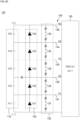
- FIG. 1 is a schematic diagram illustrating a battery management system according to an example embodiment.
- a battery management system 100 includes a diode unit 120, a switch unit 130, a sensing unit 140, and a control unit 150.
- the battery management system 100 may be connected to a battery 110, to manage the battery 110.
- the battery 110 may include a plurality of battery cells 111, 112, 113, 114, and 115, and may be charged or discharged at a constant voltage.
- the battery 110 may include a plurality of battery cells 111, 112, 113, 114, and 115 connected in series.
- the battery 110 is illustrated in FIG. 1 as having five battery cells 111, 112, 113, 114, and 115 connected in series, the number of battery cells may be greater or less than five.
- the battery 110 will be described as including a first battery cell 111, a second battery cell 112, a third battery cell 113, a fourth battery cell 114, and a fifth battery cell 115.
- the first battery cell 111 may be a cell located at a minus terminal side of the battery 110, and the fifth battery cell 115 may be a cell located at a plus terminal side of the battery 110.
- the first battery cell 111 may be referred to as a lowermost battery cell, and the fifth battery cell 115 may be referred to as an uppermost battery cell.
- the diode unit 120 may include a plurality of diodes 121, 122, 123, 124, and 125 connected in parallel to each of the plurality of battery cells 111, 112, 113, 114, 115.
- the number of diodes 121, 122, 123, 124, and 125 may correspond to the number of battery cells 111, 112, 113, 114 and 115.
- the diode unit 120 may include a first diode 121, a second diode 122, a third diode 123, a fourth diode 124, and a fifth diode 125.
- the plurality of diodes 121, 122, 123, 124, and 125 may allow the voltages of the battery cells 111, 112, 113, 114 and 115 to be measured even when at least one of sensing lines is disconnected. This will be described in additional detail below.
- the switch unit 130 may include a plurality of switches 131, 132, 133, 134, and 135 connected to each of the plurality of battery cells 111, 112, 113, 114, and 115.
- the switch unit 130 may include a first switch 131, a second switch 132, a third switch 133, a fourth switch 134, and a fifth switch 135.
- the respective switches 131, 132, 133, 134, and 135 may open/close discharge paths of the corresponding battery cells 111, 112, 113, 114, and 115.
- the sensing unit 140 may include a plurality of sensing lines 141, 142, 143, 144, and 145 for sensing voltages of each of the plurality of battery cells 111, 112, 113, 114, and 115.
- the sensing unit 140 may include a first sensing line 141, a second sensing line 142, a third sensing line 143, a fourth sensing line 144, and a fifth sensing line 145.
- the plurality of sensing lines 141 , 142, 143, 144, and 145 may be connected to a plus side of each of the battery cells 111 , 112, 113 , 114 and 115.
- the switch unit 130 may include a discharge resistor connected to both ends of each of the switches 131, 132, 133, 134, and 135, to perform cell balancing of the battery cells 111, 112, 113, 114, and 115.
- a discharge resistor may be connected between each end of each of the switches 131, 132, 133, 134, and 135 and a corresponding one of the sensing lines 141 , 142, 143 , 144, and 145.
- the control unit 150 may detect voltages, currents, temperatures, etc. of the respective battery cells 111, 112, 113, 114, and 115 which constitute the battery 110, and may control cell balancing for the battery 110.
- the control unit 150 may include a microprocessor, a central processing unit (CPU), and an application-specific integrated circuit (ASIC), such as an analog front end (AFE).
- AFE analog front end
- the control unit 150 may divide the switch unit 130 into an even-numbered group and an odd-numbered group.
- the even-numbered group may include the switches 132 and 134.
- the odd-numbered group may include the switches 131, 133, and 135.
- the control unit 150 may alternately turns on the switches 132 and 134 of the even-numbered group and the switches 131, 133, and 135 of the odd-numbered group to perform cell balancing. Accordingly, the control unit 150 may shorten the time required for cell balancing, compared to a case of sequentially balancing the plurality of battery cells 111, 112, 113, 114, and 115.
- control unit 150 may measure voltages before and after cell balancing of each of the battery cells 111, 112, 113, 114, and 115 to detect disconnection of the sensing lines 141, 142, 143, 144, and 145. This now will be described in additional detail.
- control unit 150 detects the disconnection of the sensing lines 141, 142, 143, 144, and 145 will be described in more detail.
- the second sensing line 142 (connected to the second battery cell 112) is disconnected (indicated by 'X' on the second sensing line 142 in FIGS. 2A-2C ) will be described.
- FIGS. 2A-2C are schematic diagrams for explaining a method for detecting the disconnection of a sensing line in a battery management system.
- control unit 150 may measure voltages of the respective battery cells 111, 112, 113, 114, and 115 in a state in which the switch unit 130 is turned off, e.g., in which the switches 131, 132, 133, 134, and 135 are all open or nonconductive.
- the control unit 150 may measure the voltages of the respective battery cells 111, 112, 113, 114, and 115 through the sensing unit 140.
- the control unit 150 may measure sensing voltages V1, V2, V3, V4, and V5 of the respective battery cells 111, 112, 113, 114, and 115 through the sensing lines 141, 142, 143, 144, and 145.
- the control unit 150 may obtain a difference between each of the sensing voltages V1, V2, V3, V4, and V5 of the respective battery cells 111, 112, 113, 114, and 115 and a sensing voltage of an adjacent lower battery cell to measure the voltages of the respective battery cells 111, 112, 113, 114, and 115.
- a sensing voltage may be measured from the disconnected sensing line by means of the diode unit 120.
- a sensing voltage V3 measured from the third sensing line 143 is 9 V
- the sensing voltage V1 measured from the first sensing line 141 is 3 V
- a sensing voltage V2 of 6 V which is an intermediate voltage between the third diode 123 and the second diode 122, may be measured from the disconnected second sensing line 142 through the use of voltage division therebetween.
- the control unit 150 may measure voltages of the respective battery cells 111, 112, 113, 114, and 115 by obtaining a difference between each of the sensing voltages measured from the respective sensing lines 141, 142, 143, 144, and 145 and the sensing voltage measured from an adjacent lower sensing line.
- control unit 150 may obtain a difference (V3-V2) between 9 V (which is the sensing voltage V3 measured from the third sensing line 143) and 6 V (which is the sensing voltage V2 measured from the second sensing line 142), thereby determining that the voltage of the third battery cell 113 is 3 V.
- control unit 150 may measure a difference (V2-V1) between 6 V (which is the sensing voltage V2 measured from the second sensing line 142) and 3 V (which is the sensing voltage V1 measured from the first sensing line 141), thereby determining that the voltage of the second battery cell 112 is 3 V.
- control unit 150 may obtain the voltages of the respective battery cells 111, 112, 113, 114, and 115.
- the control unit 150 may define a voltage difference between each of the battery cells 111, 112, 113, 114, and 115 and an adjacent upper battery cell as a first upper voltage difference and a voltage difference between each of the battery cells 111, 112, 113, 114, and 115 and an adjacent lower battery cell as a first lower voltage difference, to then store the same in a storage unit (not shown).
- the first lower voltage difference means the voltage of each of the battery cells 111, 112, 113, 114, and 115.
- control unit 150 may turn on the switches 132 and 134 of the even-numbered group of the switch unit 130 to perform cell balancing for a predetermined period of time, and may then measure the sensing voltages of the even-numbered battery cells 112 and 114 and then turn off the switches 132 and 134 of the even-numbered group.
- control unit 150 may turn on the switches 131, 133, and 135 of the odd-numbered group to perform cell balancing for a predetermined period of time, and may then measure the sensing voltages of the odd-numbered battery cells 111, 113, and 115 and then turn off the switches 131, 133, and 135 of the odd-numbered group.
- the cell balancing time may be set for a period of several seconds.
- the sensing voltage of the corresponding battery cell is measured as being similar to the sensing voltage measured at the sensing line connected to the lower battery cell. Therefore, after cell balancing, the voltage difference between the sensing voltage of each battery cell and the sensing voltage of an adjacent lower battery cell becomes relatively lower than the voltage difference before cell balancing. In other words, in the battery cell connected to the disconnected sensing line, the voltage after cell balancing becomes lower than the voltage before cell balancing. In addition, since the voltage of the battery cell connected to the disconnected sensing line is lowered, the voltage of an adjacent upper battery cell is relatively increased.
- control unit 150 may define, when the switch unit 130 is turned on, a voltage difference between each of the battery cells 111, 112, 113, 114, and 115 and an adjacent upper battery cell as a second upper voltage difference and a voltage difference between each of the battery cells 111, 112, 113, 114, and 115 and an adjacent lower battery cell as a second lower voltage difference to then store the same in the storage unit.
- the second lower voltage difference means the voltage of each of the battery cells 111, 112, 113, 114, and 115 after cell balancing.
- the control unit 150 may determine that the sensing line of the corresponding battery cell is disconnected.
- the control unit 150 may determine that the sensing line of the corresponding battery cell is disconnected.
- the control unit 150 may obtain a difference (V2-V1) between 3 V (which is the voltage V2 measured from the second sensing line 142) and 3 V (which is the voltage V1 measured from the first sensing line 141), thereby determining that the voltage of the second battery cell 112 is 0 V.
- control unit 150 may obtain a difference (V3-V2) between 9 V (which is the voltage V3 measured from the third sensing line 143) and 3 V (which is the voltage V2 measured from the second sensing line 142), thereby determining that the voltage of the third battery cell 113 is 6 V.
- control unit 150 may compare the first upper voltage difference between each of the battery cells 111, 112, 113, 114, and 115 and the upper battery cell thereof before cell balancing, with the second upper voltage difference between each of the battery cells 111, 112, 113, 114, and 115 and the upper battery cell thereof after cell balancing, and, when the second upper voltage difference is greater than the first upper voltage difference, may determine that the sensing line of the corresponding battery cell is disconnected.
- control unit 150 may compare the first lower voltage difference between each of the battery cells 111, 112, 113, 114, and 115 and the lower battery cell thereof before cell balancing, with the second lower voltage difference between each of the battery cells 111, 112, 113, 114, and 115 and the lower battery cell thereof after cell balancing, and, when the second lower voltage difference is greater than the first lower voltage difference, may determine that the sensing line of the corresponding battery cell is disconnected.
- each cell may directly affect the performance of the vehicle.
- a charge/discharge of each cell may be managed by measuring a voltage and current of each cell.
- a battery management system capable of stably controlling the corresponding cell by monitoring a state of a sensing unit that senses each cell may be used.
- embodiments may provide a battery management system capable of detecting disconnection of a sensing line of a battery cell.
- a disconnection of a sensing line may be detected by comparing a voltage difference between each battery cell and an adjacent battery cell in a state in which switches are turned off with a voltage difference between each battery cell and an adjacent battery cell after turning on the switches, thereby improving safety.
Landscapes
- Engineering & Computer Science (AREA)
- Power Engineering (AREA)
- Physics & Mathematics (AREA)
- General Physics & Mathematics (AREA)
- Microelectronics & Electronic Packaging (AREA)
- Manufacturing & Machinery (AREA)
- Chemical & Material Sciences (AREA)
- Chemical Kinetics & Catalysis (AREA)
- Electrochemistry (AREA)
- General Chemical & Material Sciences (AREA)
- Charge And Discharge Circuits For Batteries Or The Like (AREA)
- Secondary Cells (AREA)
Description
- Embodiments relate to a battery management system.
- Unlike a primary battery, which is not rechargeable, a secondary battery can be charged and discharged. Low-capacity secondary batteries may be used for, e.g., portable small-sized electronic devices, e.g., a smart phone, a feature phone, a notebook computer, a camcorder, and the like, and high-capacity secondary batteries may be used for, e.g., driving a motor for a hybrid car, an electric vehicle, a power storage cell, and the like.
- The above information disclosed in this Background section is only for enhancement of understanding of the background of the described technology and therefore it may contain information that does not form the prior art that is already known in this country to a person of ordinary skill in the art.
-
EP 3 598 154 A1 discloses a sampling detection circuit and a method for detecting a circuit malfunction. -
US 2014/0253135 A1 discloses an apparatus and method for diagnosing an abnormality in a cell balancing circuit in a battery pack including a plurality of cells corresponding to each cell balancing circuit. -
US 2012/0146652 A1 discloses an assembled battery system including a plurality of serially connected battery cells, and voltage detecting lines connectable at one end to electrodes of the battery cells of the assembled battery. - An embodiment is directed to a battery management system as described in claim 1, and a method according to claim 8.
- Features will become apparent to those of skill in the art by describing in detail example embodiments with reference to the attached drawings in which:
-
FIG. 1 is a schematic diagram illustrating a battery management system according to an example embodiment. -
FIGS. 2A and2B are schematic diagrams for explaining a method for detecting the disconnection of a sensing line in a battery management system. - Example embodiments will now be described more fully hereinafter with reference to the accompanying drawings; however, they may be embodied in different forms and should not be construed as limited to the embodiments set forth herein. Rather, these embodiments are provided so that this disclosure will be thorough and complete, and will fully convey example implementations to those skilled in the art.
- In the drawing figures, the dimensions of layers and regions may be exaggerated for clarity of illustration. It will also be understood that when a layer or element is referred to as being "on" another layer or substrate, it can be directly on the other layer or substrate, or intervening layers may also be present. Further, it will be understood that when a layer is referred to as being "under" another layer, it can be directly under, and one or more intervening layers may also be present. In addition, it will also be understood that when a layer is referred to as being "between" two layers, it can be the only layer between the two layers, or one or more intervening layers may also be present. Like reference numerals refer to like elements throughout.
- As used herein, the term "and/or" includes any and all combinations of one or more of the associated listed items. In addition, it will be understood that when an element A is referred to as being "connected to" an element B, the element A can be directly connected to the element B or an intervening element C may be present therebetween such that the element A and the element B are indirectly connected to each other.
- The terminology used herein is for the purpose of describing particular embodiments only and is not intended to be limiting of the disclosure. As used herein, the singular forms are intended to include the plural forms as well, unless the context clearly indicates otherwise. It will be further understood that the terms "comprise or include" and/or "comprising or including," when used in this specification, specify the presence of stated features, numbers, steps, operations, elements, and/or components, but do not preclude the presence or addition of one or more other features, numbers, steps, operations, elements, components, and/or groups thereof.
- It will be understood that, although the terms first, second, etc. may be used herein to describe various members, elements, regions, layers and/or sections, these members, elements, regions, layers and/or sections should not be limited by these terms. These terms are only used to distinguish one member, element, region, layer and/or section from another. Thus, for example, a first member, a first element, a first region, a first layer and/or a first section discussed below could be termed a second member, a second element, a second region, a second layer and/or a second section without departing from the teachings of the present disclosure.
- In addition, a control unit (controller) and/or other related devices or components according to the present disclosure may be implemented using any suitable hardware, firmware (e.g., application specific semiconductor), software, or a suitable combination of software, firmware, and hardware. For example, various components of the control unit and/or other related devices or parts according to the present disclosure may be formed on one integrated circuit chip or on separate integrated circuit chips. In addition, various components of the control unit may be implemented on a flexible printed circuit film, and may be formed on a tape carrier package, a printed circuit board, or the same substrate as the control unit.
-
FIG. 1 is a schematic diagram illustrating a battery management system according to an example embodiment. - Referring to
FIG. 1 , abattery management system 100 according to an example embodiment includes adiode unit 120, aswitch unit 130, asensing unit 140, and acontrol unit 150. Thebattery management system 100 may be connected to abattery 110, to manage thebattery 110. - The
battery 110 may include a plurality ofbattery cells battery 110 may include a plurality ofbattery cells - Although the
battery 110 is illustrated inFIG. 1 as having fivebattery cells battery 110 will be described as including afirst battery cell 111, asecond battery cell 112, athird battery cell 113, afourth battery cell 114, and afifth battery cell 115. - The
first battery cell 111 may be a cell located at a minus terminal side of thebattery 110, and thefifth battery cell 115 may be a cell located at a plus terminal side of thebattery 110. Thefirst battery cell 111 may be referred to as a lowermost battery cell, and thefifth battery cell 115 may be referred to as an uppermost battery cell. - The
diode unit 120 may include a plurality ofdiodes battery cells diodes battery cells diode unit 120 may include afirst diode 121, asecond diode 122, athird diode 123, afourth diode 124, and afifth diode 125. - The plurality of
diodes battery cells - The
switch unit 130 may include a plurality ofswitches battery cells switch unit 130 may include afirst switch 131, asecond switch 132, athird switch 133, afourth switch 134, and afifth switch 135. - The
respective switches corresponding battery cells - The
sensing unit 140 may include a plurality ofsensing lines battery cells sensing unit 140 may include afirst sensing line 141, asecond sensing line 142, athird sensing line 143, afourth sensing line 144, and afifth sensing line 145. - The plurality of
sensing lines battery cells - The
switch unit 130 may include a discharge resistor connected to both ends of each of theswitches battery cells switches sensing lines - The
control unit 150 may detect voltages, currents, temperatures, etc. of therespective battery cells battery 110, and may control cell balancing for thebattery 110. In an example embodiment, thecontrol unit 150 may include a microprocessor, a central processing unit (CPU), and an application-specific integrated circuit (ASIC), such as an analog front end (AFE). - The
control unit 150 may divide theswitch unit 130 into an even-numbered group and an odd-numbered group. The even-numbered group may include theswitches switches control unit 150 may alternately turns on theswitches switches control unit 150 may shorten the time required for cell balancing, compared to a case of sequentially balancing the plurality ofbattery cells - In addition, the
control unit 150 may measure voltages before and after cell balancing of each of thebattery cells sensing lines - Hereinafter, a method in which the
control unit 150 detects the disconnection of thesensing lines second sensing line 142 inFIGS. 2A-2C ) will be described. -
FIGS. 2A-2C are schematic diagrams for explaining a method for detecting the disconnection of a sensing line in a battery management system. - First, referring to
FIG. 2A , thecontrol unit 150 may measure voltages of therespective battery cells switch unit 130 is turned off, e.g., in which theswitches - The
control unit 150 may measure the voltages of therespective battery cells sensing unit 140. In an example embodiment, thecontrol unit 150 may measure sensing voltages V1, V2, V3, V4, and V5 of therespective battery cells sensing lines control unit 150 may obtain a difference between each of the sensing voltages V1, V2, V3, V4, and V5 of therespective battery cells respective battery cells - Even when any one sensing line of the
sensing unit 140 is disconnected (or opened), a sensing voltage may be measured from the disconnected sensing line by means of thediode unit 120. For example, referring toFIG. 2A , when the sensing voltage V3 measured from thethird sensing line 143 is 9 V, and the sensing voltage V1 measured from thefirst sensing line 141 is 3 V, a sensing voltage V2 of 6 V, which is an intermediate voltage between thethird diode 123 and thesecond diode 122, may be measured from the disconnectedsecond sensing line 142 through the use of voltage division therebetween. - The
control unit 150 may measure voltages of therespective battery cells respective sensing lines - For example, the
control unit 150 may obtain a difference (V3-V2) between 9 V (which is the sensing voltage V3 measured from the third sensing line 143) and 6 V (which is the sensing voltage V2 measured from the second sensing line 142), thereby determining that the voltage of thethird battery cell 113 is 3 V. - Similarly, the
control unit 150 may measure a difference (V2-V1) between 6 V (which is the sensing voltage V2 measured from the second sensing line 142) and 3 V (which is the sensing voltage V1 measured from the first sensing line 141), thereby determining that the voltage of thesecond battery cell 112 is 3 V. - In the same manner as described above, the
control unit 150 may obtain the voltages of therespective battery cells - In addition, when the
switch unit 130 is turned off, thecontrol unit 150 may define a voltage difference between each of thebattery cells battery cells battery cells - Next, referring to
FIG. 2B , thecontrol unit 150 may turn on theswitches switch unit 130 to perform cell balancing for a predetermined period of time, and may then measure the sensing voltages of the even-numberedbattery cells switches - Then, referring to
FIG. 2C , thecontrol unit 150 may turn on theswitches battery cells switches - In an example embodiment, the cell balancing time may be set for a period of several seconds.
- When the sensing line is disconnected during cell balancing, the sensing voltage of the corresponding battery cell is measured as being similar to the sensing voltage measured at the sensing line connected to the lower battery cell. Therefore, after cell balancing, the voltage difference between the sensing voltage of each battery cell and the sensing voltage of an adjacent lower battery cell becomes relatively lower than the voltage difference before cell balancing. In other words, in the battery cell connected to the disconnected sensing line, the voltage after cell balancing becomes lower than the voltage before cell balancing. In addition, since the voltage of the battery cell connected to the disconnected sensing line is lowered, the voltage of an adjacent upper battery cell is relatively increased. In addition, the
control unit 150 may define, when theswitch unit 130 is turned on, a voltage difference between each of thebattery cells battery cells battery cells - As such, when the second lower voltage difference between each of the
battery cells control unit 150 may determine that the sensing line of the corresponding battery cell is disconnected. In addition, when the second upper voltage difference between each of thebattery cells control unit 150 may determine that the sensing line of the corresponding battery cell is disconnected. - For example, referring again to
FIG. 2B , when thesecond switch 132 is turned on, thesecond battery cell 112 is not connected to thesecond sensing line 142, and thus the voltage V2 is measured to be about 3 V, which is similar to the voltage V1 measured from thefirst sensing line 141. Accordingly, thecontrol unit 150 may obtain a difference (V2-V1) between 3 V (which is the voltage V2 measured from the second sensing line 142) and 3 V (which is the voltage V1 measured from the first sensing line 141), thereby determining that the voltage of thesecond battery cell 112 is 0 V. In addition, thecontrol unit 150 may obtain a difference (V3-V2) between 9 V (which is the voltage V3 measured from the third sensing line 143) and 3 V (which is the voltage V2 measured from the second sensing line 142), thereby determining that the voltage of thethird battery cell 113 is 6 V. - Thus, the
control unit 150 may compare the first upper voltage difference between each of thebattery cells battery cells control unit 150 may compare the first lower voltage difference between each of thebattery cells battery cells - By way of summation and review, in a vehicle using a secondary battery, the performance of each cell may directly affect the performance of the vehicle. Thus, a charge/discharge of each cell may be managed by measuring a voltage and current of each cell. For this, a battery management system (BMS) capable of stably controlling the corresponding cell by monitoring a state of a sensing unit that senses each cell may be used.
- As described above, embodiments may provide a battery management system capable of detecting disconnection of a sensing line of a battery cell. As described above, in a battery management system according to an example embodiment, a disconnection of a sensing line may be detected by comparing a voltage difference between each battery cell and an adjacent battery cell in a state in which switches are turned off with a voltage difference between each battery cell and an adjacent battery cell after turning on the switches, thereby improving safety.
- Example embodiments have been disclosed herein, and although specific terms are employed, they are used and are to be interpreted in a generic and descriptive sense only and not for purpose of limitation. In some instances, as would be apparent to one of ordinary skill in the art as of the filing of the present application, features, characteristics, and/or elements described in connection with a particular embodiment may be used singly or in combination with features, characteristics, and/or elements described in connection with other embodiments unless otherwise specifically indicated. Accordingly, it will be understood by those of skill in the art that various changes in form and details may be made without departing from the scope of the present invention as set forth in the following claims.
Claims (8)
- A battery management system (100), comprising:a plurality of diodes (121, 122, 123, 124, 125) which are configured to be connected in parallel to a plurality of battery cells (111, 112, 113, 114, 115), the plurality of battery cells (111, 112, 113, 114, 115), being connected in series;a switch unit (130) which includes a plurality of switches (131, 132, 133, 134, 135) respectively configured to be connected to the plurality of battery cells (111, 112, 113, 114, 115);a control unit (150) which is configured to detect voltages of the plurality of battery cells (111, 112, 113, 114, 115) and is configured to perform cell balancing; anda plurality of sensing lines (141, 142, 143, 144, 145) which are configured to connect the plurality of battery cells (111, 112, 113, 114, 115) and the control unit (150),wherein the control unit (150) is further configured to:characterised in that the control unit (150) is further configured to:measure a first upper voltage difference between each battery cell (111, 112, 113, 114, 115) and an adjacent upper battery cell in a state in which the switches (131, 132, 133, 134, 135) are turned off,measure a second upper voltage difference between each battery cell (111, 112, 113, 114, 115) and the adjacent upper battery cell after turning on the switches (131, 132, 133, 134, 135) for a predetermined time,when the second upper voltage difference is greater than the first upper voltage difference, determine that a sensing line of a corresponding battery cell is a disconnected sensing line,measure a first lower voltage difference between each battery cell (111, 112, 113, 114, 115) and an adjacent lower battery cell in a state in which the switches (131, 132, 133, 134, 135) are turned off,measure a second lower voltage difference between each battery cell (111, 112, 113, 114, 115) and the adjacent lower battery cell after turning on the switches (131, 132, 133, 134, 135) for a predetermined time, andwhen the second lower voltage difference is smaller than the first lower voltage difference, determine that the sensing line of the corresponding battery cell is disconnected.
- The battery management system (100) as claimed in claim 1, wherein the control unit (150) is configured to use the disconnected sensing line to measure a voltage of the corresponding battery cell by dividing a voltage between a diode connected to the corresponding battery cell and a diode connected to the upper battery cell.
- The battery management system (100) as claimed in any preceding claim, wherein, when the switches (131, 132, 133, 134, 135) are turned on, a voltage of the adjacent upper battery cell of the disconnected sensing line is increased.
- The battery management system (100) as claimed in any one of claims 1 or 2, wherein, when the switches (131, 132, 133, 134, 135) are turned on, a voltage of the battery cell of the disconnected sensing line is decreased.
- The battery management system (100) as claimed in any preceding claim, wherein, in a state in which the switches (131, 132, 133, 134, 135) are on, a voltage of the battery cell of the disconnected sensing line corresponds to the voltage of an adjacent lower battery cell.
- The battery management system (100) as claimed in any preceding claim, wherein, in the switch unit (130), the switches (131, 132, 133, 134, 135) of an even-numbered group and the switches of an odd-numbered group are alternately turned on.
- The battery management system (100) as claimed in claim 6, wherein the control unit (1500 is configured to turn on the switches (131, 132, 133, 134, 135) of the even-numbered group to measure voltages of even-numbered battery cells and then turn off the switches (131, 132, 133, 134, 135) of the even-numbered group, and turn on the switches (131, 132, 133, 134, 135) of the odd-numbered group to measure voltages of odd-numbered battery cells and then turn off the switches (131, 132, 133, 134, 135) of the odd-numbered group.
- A method of detecting the disconnection of a sensing line in a battery management system (100)
wherein the battery management system (100), comprises:a plurality of diodes (121, 122, 123, 124, 125) which are connected in parallel to a plurality of battery cells (111, 112, 113, 114, 115), the plurality of battery cells (111, 112, 113, 114, 115) being connected in series;a switch unit (130) which includes a plurality of switches (131, 132, 133, 134, 135) respectively connected to the plurality of battery cells (111, 112, 113, 114, 115);a control unit (150) which is configured to detect voltages of the plurality of battery cells (111, 112, 113, 114, 115) and performs cell balancing; anda plurality of sensing lines (141, 142, 143, 144, 145) which connect the plurality of battery cells (111, 112, 113, 114, 115) and the control unit (150),and wherein said method comprises:measuring, using said control unit (150), a first upper voltage difference between each battery cell and an adjacent upper battery cell in a state in which the switches are turned off,measuring, using said control unit, a second upper voltage difference between each battery cell (111, 112, 113, 114, 115) and the adjacent upper battery cell after turning on the switches (131, 132, 133, 134, 135) for a predetermined time,when the second upper voltage difference is greater than the first upper voltage difference, determining, using said control unit (150), that a sensing line of a corresponding battery cell is a disconnected sensing line,characterised bymeasuring, using said control unit, a first lower voltage difference between each battery cell (111, 112, 113, 114, 115) and an adjacent lower battery cell in a state in which the switches (131, 132, 133, 134, 135) are turned off,measuring, using said control unit (150), a second lower voltage difference between each battery cell (111, 112, 113, 114, 115) and the adjacent lower battery cell after turning on the switches (131, 132, 133, 134, 135) for a predetermined time, andwhen the second lower voltage difference is smaller than the first lower voltage difference, determining, using said control unit (150), that the sensing line of the corresponding battery cell is disconnected.
Applications Claiming Priority (1)
| Application Number | Priority Date | Filing Date | Title |
|---|---|---|---|
| KR1020210023915A KR20220120165A (en) | 2021-02-23 | 2021-02-23 | Battery management system |
Publications (2)
| Publication Number | Publication Date |
|---|---|
| EP4050356A1 EP4050356A1 (en) | 2022-08-31 |
| EP4050356B1 true EP4050356B1 (en) | 2024-09-18 |
Family
ID=80446946
Family Applications (1)
| Application Number | Title | Priority Date | Filing Date |
|---|---|---|---|
| EP22158033.5A Active EP4050356B1 (en) | 2021-02-23 | 2022-02-22 | Battery management system |
Country Status (7)
| Country | Link |
|---|---|
| US (1) | US20220268848A1 (en) |
| EP (1) | EP4050356B1 (en) |
| JP (1) | JP7325563B2 (en) |
| KR (1) | KR20220120165A (en) |
| CN (1) | CN114977362A (en) |
| HU (1) | HUE069242T2 (en) |
| PL (1) | PL4050356T3 (en) |
Families Citing this family (1)
| Publication number | Priority date | Publication date | Assignee | Title |
|---|---|---|---|---|
| CN117767483B (en) * | 2023-12-22 | 2024-08-06 | 深圳市助尔达电子科技有限公司 | Battery cell balance management method and system |
Family Cites Families (17)
| Publication number | Priority date | Publication date | Assignee | Title |
|---|---|---|---|---|
| JP5549121B2 (en) * | 2008-06-17 | 2014-07-16 | 三洋電機株式会社 | BATTERY VOLTAGE DETECTION DEVICE AND BATTERY SYSTEM HAVING THE SAME |
| KR101065562B1 (en) * | 2008-09-05 | 2011-09-19 | 주식회사 엘지화학 | Device and method for diagnosing failure of cell balancing switch |
| CN102110997B (en) * | 2009-12-28 | 2013-07-10 | 光宝电子(广州)有限公司 | Balance method of battery pack |
| JP5443327B2 (en) * | 2010-12-08 | 2014-03-19 | 株式会社東芝 | Battery assembly |
| JP5353914B2 (en) * | 2011-02-01 | 2013-11-27 | 株式会社デンソー | Battery voltage monitoring device |
| KR101856663B1 (en) * | 2011-06-03 | 2018-05-10 | 에스케이이노베이션 주식회사 | Secondary battery sub Unit, Secondary battery management system and Method for exchanging information in multi-pack parallel structure using the same |
| US9118191B2 (en) * | 2011-08-29 | 2015-08-25 | Samsung Sdi Co., Ltd. | Cell balancing method, cell balancing device, and energy storage system including the cell balancing device |
| WO2013150570A1 (en) * | 2012-04-06 | 2013-10-10 | 富士通株式会社 | Electronic apparatus, power supply apparatus, and method for controlling power supply of electronic apparatus |
| US9318910B2 (en) * | 2012-09-06 | 2016-04-19 | Samsung Sdi Co., Ltd. | Cell balancing circuit and cell balancing method using the same |
| JP5974849B2 (en) * | 2012-11-19 | 2016-08-23 | 株式会社デンソー | Battery monitoring device |
| KR101589198B1 (en) * | 2013-02-19 | 2016-01-28 | 주식회사 엘지화학 | Apparatus and method for diagnosis of cell balancing circuit |
| CN105164541B (en) * | 2013-04-26 | 2018-04-06 | 日立汽车系统株式会社 | Battery monitoring apparatus and the battery system using the battery monitoring apparatus |
| JP6245094B2 (en) * | 2014-06-30 | 2017-12-13 | 日立化成株式会社 | Battery system |
| KR101858321B1 (en) * | 2015-12-14 | 2018-05-15 | 주식회사 엘지화학 | Apparatus and method for diagnosis of cell balancing circuit |
| US9876369B2 (en) * | 2016-03-15 | 2018-01-23 | Lg Chem, Ltd. | Battery system and method for determining an open circuit fault condition in a battery module |
| DE102017218211A1 (en) * | 2017-10-12 | 2019-04-18 | Bayerische Motoren Werke Aktiengesellschaft | Energy storage device |
| CN110736912B (en) * | 2018-07-20 | 2021-06-08 | 宁德时代新能源科技股份有限公司 | Circuit fault detection method and sampling detection circuit |
-
2021
- 2021-02-23 KR KR1020210023915A patent/KR20220120165A/en not_active Ceased
-
2022
- 2022-02-18 US US17/675,137 patent/US20220268848A1/en active Pending
- 2022-02-22 JP JP2022025695A patent/JP7325563B2/en active Active
- 2022-02-22 EP EP22158033.5A patent/EP4050356B1/en active Active
- 2022-02-22 PL PL22158033.5T patent/PL4050356T3/en unknown
- 2022-02-22 HU HUE22158033A patent/HUE069242T2/en unknown
- 2022-02-23 CN CN202210166434.3A patent/CN114977362A/en active Pending
Also Published As
| Publication number | Publication date |
|---|---|
| US20220268848A1 (en) | 2022-08-25 |
| KR20220120165A (en) | 2022-08-30 |
| JP2022128598A (en) | 2022-09-02 |
| PL4050356T3 (en) | 2024-12-16 |
| CN114977362A (en) | 2022-08-30 |
| EP4050356A1 (en) | 2022-08-31 |
| JP7325563B2 (en) | 2023-08-14 |
| HUE069242T2 (en) | 2025-02-28 |
Similar Documents
| Publication | Publication Date | Title |
|---|---|---|
| CN110785670B (en) | Apparatus and method for diagnosing positive electrode contactor of battery pack | |
| US11513139B2 (en) | Battery pack diagnosis apparatus | |
| EP2848955B1 (en) | Apparatus and method for diagnosing abnormality in a cell balancing circuit | |
| US10353013B2 (en) | Voltage detection device, voltage detection method, abnormality determination device, abnormality determination method, and battery pack system | |
| US8836341B2 (en) | Semiconductor circuit, semiconductor device, method of diagnosing abnormality of wire, and computer readable storage medium | |
| EP3566894B1 (en) | Battery pack for vehicle | |
| EP3907813B1 (en) | Temperature measuring apparatus, battery apparatus including the same and temperature measuring method | |
| EP1918728B1 (en) | Lithium-ion battery diagnostic and prognostic techniques | |
| EP4050356B1 (en) | Battery management system | |
| US9960610B2 (en) | Voltage detecting device, voltage detecting method, and battery pack system | |
| JPWO2006064786A1 (en) | Power supply | |
| JP7359402B2 (en) | Precharge resistance abnormality determination method and battery system applying this method | |
| KR101856067B1 (en) | Apparatus and method for diagnosing degree of sensing precision in battery management system | |
| CN114303273B (en) | Battery management device and battery pack including the same | |
| US12429522B2 (en) | Relay diagnosis device and relay diagnosis method | |
| EP4102245B1 (en) | Battery apparatus and current sensor diagnosis method | |
| KR102839450B1 (en) | Battery apparatus and drift fault diagnosis method | |
| KR20210014343A (en) | A control method for uniform charing battery on serial connet to EV | |
| KR102368977B1 (en) | Battery management device and fault diagnosis method | |
| JP7167878B2 (en) | battery monitoring system | |
| KR102852055B1 (en) | Fault diagnosis circuit of multi-parallel charge/discharge FET structure and diagnosis method thereof | |
| US20230138164A1 (en) | Method for analyzing the contact assignment of a contact element of a cell module for a vehicle battery and module charger having a diagnosis function for the contact assignment of a contact element | |
| Wu et al. | A passive balancing algorithm for multi-cells | |
| CN121844433A (en) | Battery state detection device and program | |
| JP2021192571A (en) | Cell balance control device |
Legal Events
| Date | Code | Title | Description |
|---|---|---|---|
| PUAI | Public reference made under article 153(3) epc to a published international application that has entered the european phase |
Free format text: ORIGINAL CODE: 0009012 |
|
| STAA | Information on the status of an ep patent application or granted ep patent |
Free format text: STATUS: REQUEST FOR EXAMINATION WAS MADE |
|
| 17P | Request for examination filed |
Effective date: 20220222 |
|
| AK | Designated contracting states |
Kind code of ref document: A1 Designated state(s): AL AT BE BG CH CY CZ DE DK EE ES FI FR GB GR HR HU IE IS IT LI LT LU LV MC MK MT NL NO PL PT RO RS SE SI SK SM TR |
|
| GRAP | Despatch of communication of intention to grant a patent |
Free format text: ORIGINAL CODE: EPIDOSNIGR1 |
|
| STAA | Information on the status of an ep patent application or granted ep patent |
Free format text: STATUS: GRANT OF PATENT IS INTENDED |
|
| INTG | Intention to grant announced |
Effective date: 20240412 |
|
| GRAS | Grant fee paid |
Free format text: ORIGINAL CODE: EPIDOSNIGR3 |
|
| GRAA | (expected) grant |
Free format text: ORIGINAL CODE: 0009210 |
|
| STAA | Information on the status of an ep patent application or granted ep patent |
Free format text: STATUS: THE PATENT HAS BEEN GRANTED |
|
| AK | Designated contracting states |
Kind code of ref document: B1 Designated state(s): AL AT BE BG CH CY CZ DE DK EE ES FI FR GB GR HR HU IE IS IT LI LT LU LV MC MK MT NL NO PL PT RO RS SE SI SK SM TR |
|
| REG | Reference to a national code |
Ref country code: GB Ref legal event code: FG4D |
|
| REG | Reference to a national code |
Ref country code: CH Ref legal event code: EP |
|
| REG | Reference to a national code |
Ref country code: IE Ref legal event code: FG4D |
|
| REG | Reference to a national code |
Ref country code: DE Ref legal event code: R096 Ref document number: 602022006107 Country of ref document: DE |
|
| REG | Reference to a national code |
Ref country code: SE Ref legal event code: TRGR |
|
| REG | Reference to a national code |
Ref country code: LT Ref legal event code: MG9D |
|
| PG25 | Lapsed in a contracting state [announced via postgrant information from national office to epo] |
Ref country code: NO Free format text: LAPSE BECAUSE OF FAILURE TO SUBMIT A TRANSLATION OF THE DESCRIPTION OR TO PAY THE FEE WITHIN THE PRESCRIBED TIME-LIMIT Effective date: 20241218 |
|
| PG25 | Lapsed in a contracting state [announced via postgrant information from national office to epo] |
Ref country code: GR Free format text: LAPSE BECAUSE OF FAILURE TO SUBMIT A TRANSLATION OF THE DESCRIPTION OR TO PAY THE FEE WITHIN THE PRESCRIBED TIME-LIMIT Effective date: 20241219 Ref country code: FI Free format text: LAPSE BECAUSE OF FAILURE TO SUBMIT A TRANSLATION OF THE DESCRIPTION OR TO PAY THE FEE WITHIN THE PRESCRIBED TIME-LIMIT Effective date: 20240918 |
|
| PG25 | Lapsed in a contracting state [announced via postgrant information from national office to epo] |
Ref country code: BG Free format text: LAPSE BECAUSE OF FAILURE TO SUBMIT A TRANSLATION OF THE DESCRIPTION OR TO PAY THE FEE WITHIN THE PRESCRIBED TIME-LIMIT Effective date: 20240918 |
|
| PG25 | Lapsed in a contracting state [announced via postgrant information from national office to epo] |
Ref country code: LV Free format text: LAPSE BECAUSE OF FAILURE TO SUBMIT A TRANSLATION OF THE DESCRIPTION OR TO PAY THE FEE WITHIN THE PRESCRIBED TIME-LIMIT Effective date: 20240918 |
|
| PG25 | Lapsed in a contracting state [announced via postgrant information from national office to epo] |
Ref country code: HR Free format text: LAPSE BECAUSE OF FAILURE TO SUBMIT A TRANSLATION OF THE DESCRIPTION OR TO PAY THE FEE WITHIN THE PRESCRIBED TIME-LIMIT Effective date: 20240918 |
|
| REG | Reference to a national code |
Ref country code: NL Ref legal event code: MP Effective date: 20240918 |
|
| PG25 | Lapsed in a contracting state [announced via postgrant information from national office to epo] |
Ref country code: RS Free format text: LAPSE BECAUSE OF FAILURE TO SUBMIT A TRANSLATION OF THE DESCRIPTION OR TO PAY THE FEE WITHIN THE PRESCRIBED TIME-LIMIT Effective date: 20241218 |
|
| PG25 | Lapsed in a contracting state [announced via postgrant information from national office to epo] |
Ref country code: RS Free format text: LAPSE BECAUSE OF FAILURE TO SUBMIT A TRANSLATION OF THE DESCRIPTION OR TO PAY THE FEE WITHIN THE PRESCRIBED TIME-LIMIT Effective date: 20241218 Ref country code: NO Free format text: LAPSE BECAUSE OF FAILURE TO SUBMIT A TRANSLATION OF THE DESCRIPTION OR TO PAY THE FEE WITHIN THE PRESCRIBED TIME-LIMIT Effective date: 20241218 Ref country code: LV Free format text: LAPSE BECAUSE OF FAILURE TO SUBMIT A TRANSLATION OF THE DESCRIPTION OR TO PAY THE FEE WITHIN THE PRESCRIBED TIME-LIMIT Effective date: 20240918 Ref country code: HR Free format text: LAPSE BECAUSE OF FAILURE TO SUBMIT A TRANSLATION OF THE DESCRIPTION OR TO PAY THE FEE WITHIN THE PRESCRIBED TIME-LIMIT Effective date: 20240918 Ref country code: GR Free format text: LAPSE BECAUSE OF FAILURE TO SUBMIT A TRANSLATION OF THE DESCRIPTION OR TO PAY THE FEE WITHIN THE PRESCRIBED TIME-LIMIT Effective date: 20241219 Ref country code: FI Free format text: LAPSE BECAUSE OF FAILURE TO SUBMIT A TRANSLATION OF THE DESCRIPTION OR TO PAY THE FEE WITHIN THE PRESCRIBED TIME-LIMIT Effective date: 20240918 Ref country code: BG Free format text: LAPSE BECAUSE OF FAILURE TO SUBMIT A TRANSLATION OF THE DESCRIPTION OR TO PAY THE FEE WITHIN THE PRESCRIBED TIME-LIMIT Effective date: 20240918 |
|
| REG | Reference to a national code |
Ref country code: AT Ref legal event code: MK05 Ref document number: 1725143 Country of ref document: AT Kind code of ref document: T Effective date: 20240918 |
|
| PG25 | Lapsed in a contracting state [announced via postgrant information from national office to epo] |
Ref country code: NL Free format text: LAPSE BECAUSE OF FAILURE TO SUBMIT A TRANSLATION OF THE DESCRIPTION OR TO PAY THE FEE WITHIN THE PRESCRIBED TIME-LIMIT Effective date: 20240918 |
|
| REG | Reference to a national code |
Ref country code: HU Ref legal event code: AG4A Ref document number: E069242 Country of ref document: HU |
|
| PG25 | Lapsed in a contracting state [announced via postgrant information from national office to epo] |
Ref country code: PT Free format text: LAPSE BECAUSE OF FAILURE TO SUBMIT A TRANSLATION OF THE DESCRIPTION OR TO PAY THE FEE WITHIN THE PRESCRIBED TIME-LIMIT Effective date: 20250120 Ref country code: IS Free format text: LAPSE BECAUSE OF FAILURE TO SUBMIT A TRANSLATION OF THE DESCRIPTION OR TO PAY THE FEE WITHIN THE PRESCRIBED TIME-LIMIT Effective date: 20250118 |
|
| PG25 | Lapsed in a contracting state [announced via postgrant information from national office to epo] |
Ref country code: RO Free format text: LAPSE BECAUSE OF FAILURE TO SUBMIT A TRANSLATION OF THE DESCRIPTION OR TO PAY THE FEE WITHIN THE PRESCRIBED TIME-LIMIT Effective date: 20240918 Ref country code: SM Free format text: LAPSE BECAUSE OF FAILURE TO SUBMIT A TRANSLATION OF THE DESCRIPTION OR TO PAY THE FEE WITHIN THE PRESCRIBED TIME-LIMIT Effective date: 20240918 |
|
| PG25 | Lapsed in a contracting state [announced via postgrant information from national office to epo] |
Ref country code: ES Free format text: LAPSE BECAUSE OF FAILURE TO SUBMIT A TRANSLATION OF THE DESCRIPTION OR TO PAY THE FEE WITHIN THE PRESCRIBED TIME-LIMIT Effective date: 20240918 |
|
| PG25 | Lapsed in a contracting state [announced via postgrant information from national office to epo] |
Ref country code: AT Free format text: LAPSE BECAUSE OF FAILURE TO SUBMIT A TRANSLATION OF THE DESCRIPTION OR TO PAY THE FEE WITHIN THE PRESCRIBED TIME-LIMIT Effective date: 20240918 Ref country code: EE Free format text: LAPSE BECAUSE OF FAILURE TO SUBMIT A TRANSLATION OF THE DESCRIPTION OR TO PAY THE FEE WITHIN THE PRESCRIBED TIME-LIMIT Effective date: 20240918 |
|
| PG25 | Lapsed in a contracting state [announced via postgrant information from national office to epo] |
Ref country code: CZ Free format text: LAPSE BECAUSE OF FAILURE TO SUBMIT A TRANSLATION OF THE DESCRIPTION OR TO PAY THE FEE WITHIN THE PRESCRIBED TIME-LIMIT Effective date: 20240918 |
|
| PG25 | Lapsed in a contracting state [announced via postgrant information from national office to epo] |
Ref country code: SK Free format text: LAPSE BECAUSE OF FAILURE TO SUBMIT A TRANSLATION OF THE DESCRIPTION OR TO PAY THE FEE WITHIN THE PRESCRIBED TIME-LIMIT Effective date: 20240918 Ref country code: IT Free format text: LAPSE BECAUSE OF FAILURE TO SUBMIT A TRANSLATION OF THE DESCRIPTION OR TO PAY THE FEE WITHIN THE PRESCRIBED TIME-LIMIT Effective date: 20240918 |
|
| REG | Reference to a national code |
Ref country code: DE Ref legal event code: R097 Ref document number: 602022006107 Country of ref document: DE |
|
| PG25 | Lapsed in a contracting state [announced via postgrant information from national office to epo] |
Ref country code: DK Free format text: LAPSE BECAUSE OF FAILURE TO SUBMIT A TRANSLATION OF THE DESCRIPTION OR TO PAY THE FEE WITHIN THE PRESCRIBED TIME-LIMIT Effective date: 20240918 |
|
| PLBE | No opposition filed within time limit |
Free format text: ORIGINAL CODE: 0009261 |
|
| STAA | Information on the status of an ep patent application or granted ep patent |
Free format text: STATUS: NO OPPOSITION FILED WITHIN TIME LIMIT |
|
| 26N | No opposition filed |
Effective date: 20250619 |
|
| PG25 | Lapsed in a contracting state [announced via postgrant information from national office to epo] |
Ref country code: MC Free format text: LAPSE BECAUSE OF FAILURE TO SUBMIT A TRANSLATION OF THE DESCRIPTION OR TO PAY THE FEE WITHIN THE PRESCRIBED TIME-LIMIT Effective date: 20240918 |
|
| REG | Reference to a national code |
Ref country code: CH Ref legal event code: PL |
|
| PG25 | Lapsed in a contracting state [announced via postgrant information from national office to epo] |
Ref country code: LU Free format text: LAPSE BECAUSE OF NON-PAYMENT OF DUE FEES Effective date: 20250222 |
|
| PG25 | Lapsed in a contracting state [announced via postgrant information from national office to epo] |
Ref country code: CH Free format text: LAPSE BECAUSE OF NON-PAYMENT OF DUE FEES Effective date: 20250228 |
|
| REG | Reference to a national code |
Ref country code: BE Ref legal event code: MM Effective date: 20250228 |
|
| PG25 | Lapsed in a contracting state [announced via postgrant information from national office to epo] |
Ref country code: BE Free format text: LAPSE BECAUSE OF NON-PAYMENT OF DUE FEES Effective date: 20250228 |
|
| PG25 | Lapsed in a contracting state [announced via postgrant information from national office to epo] |
Ref country code: IE Free format text: LAPSE BECAUSE OF NON-PAYMENT OF DUE FEES Effective date: 20250222 |
|
| PGFP | Annual fee paid to national office [announced via postgrant information from national office to epo] |
Ref country code: HU Payment date: 20260213 Year of fee payment: 5 |
|
| PGFP | Annual fee paid to national office [announced via postgrant information from national office to epo] |
Ref country code: SE Payment date: 20260128 Year of fee payment: 5 |
|
| PGFP | Annual fee paid to national office [announced via postgrant information from national office to epo] |
Ref country code: GB Payment date: 20260128 Year of fee payment: 5 |
|
| PGFP | Annual fee paid to national office [announced via postgrant information from national office to epo] |
Ref country code: DE Payment date: 20260128 Year of fee payment: 5 |
|
| PGFP | Annual fee paid to national office [announced via postgrant information from national office to epo] |
Ref country code: FR Payment date: 20260121 Year of fee payment: 5 |
|
| PGFP | Annual fee paid to national office [announced via postgrant information from national office to epo] |
Ref country code: PL Payment date: 20260129 Year of fee payment: 5 |