EP4049459B1 - Verfahren und gerät zur bereitstellung intelligenter vorschläge - Google Patents
Verfahren und gerät zur bereitstellung intelligenter vorschläge Download PDFInfo
- Publication number
- EP4049459B1 EP4049459B1 EP20793804.4A EP20793804A EP4049459B1 EP 4049459 B1 EP4049459 B1 EP 4049459B1 EP 20793804 A EP20793804 A EP 20793804A EP 4049459 B1 EP4049459 B1 EP 4049459B1
- Authority
- EP
- European Patent Office
- Prior art keywords
- container
- containers
- information
- healthy
- items
- Prior art date
- Legal status (The legal status is an assumption and is not a legal conclusion. Google has not performed a legal analysis and makes no representation as to the accuracy of the status listed.)
- Active
Links
Images
Classifications
-
- H—ELECTRICITY
- H04—ELECTRIC COMMUNICATION TECHNIQUE
- H04Q—SELECTING
- H04Q9/00—Arrangements in telecontrol or telemetry systems for selectively calling a substation from a main station, in which substation desired apparatus is selected for applying a control signal thereto or for obtaining measured values therefrom
-
- H—ELECTRICITY
- H04—ELECTRIC COMMUNICATION TECHNIQUE
- H04Q—SELECTING
- H04Q9/00—Arrangements in telecontrol or telemetry systems for selectively calling a substation from a main station, in which substation desired apparatus is selected for applying a control signal thereto or for obtaining measured values therefrom
- H04Q9/02—Automatically-operated arrangements
-
- G—PHYSICS
- G08—SIGNALLING
- G08B—SIGNALLING OR CALLING SYSTEMS; ORDER TELEGRAPHS; ALARM SYSTEMS
- G08B21/00—Alarms responsive to a single specified undesired or abnormal condition and not otherwise provided for
- G08B21/18—Status alarms
-
- H—ELECTRICITY
- H04—ELECTRIC COMMUNICATION TECHNIQUE
- H04Q—SELECTING
- H04Q2209/00—Arrangements in telecontrol or telemetry systems
- H04Q2209/40—Arrangements in telecontrol or telemetry systems using a wireless architecture
-
- H—ELECTRICITY
- H04—ELECTRIC COMMUNICATION TECHNIQUE
- H04Q—SELECTING
- H04Q2209/00—Arrangements in telecontrol or telemetry systems
- H04Q2209/80—Arrangements in the sub-station, i.e. sensing device
- H04Q2209/82—Arrangements in the sub-station, i.e. sensing device where the sensing device takes the initiative of sending data
- H04Q2209/823—Arrangements in the sub-station, i.e. sensing device where the sensing device takes the initiative of sending data where the data is sent when the measured values exceed a threshold, e.g. sending an alarm
Definitions
- the present invention generally relates to smart container systems. More particularly, the invention relates to an apparatus and a method for providing smart suggestion by the containers.
- one or more items are packed in a container and the container along with the items are transported from a manufacturer's place to another place by ships, aeroplane, vehicles, trains or through any other such means.
- the items packed in the container may include content which can be consumed/used by an end consumer.
- some manufacturers of the content may define certain environment conditions (like temperature, humidity or air pressure) for keeping the item so that the contents of the item remain fresh or to prevent the contents from becoming stale/unusable.
- the items are packed in a refrigerated container to maintain an environment that is suitable for the contents of the item.
- a defect in a container is only detected when a technician manually checks functioning of the container which is a time-consuming task. And, when the technician finds the defect in the container, a staff personnel needs to manually find a new container for moving the items from a defective container to the new container.
- a first aspect of the present invention describes a method for notifying a person to shift item/s from a defective/faulty container to a new container.
- the method comprises steps of determining a defect associated with a first container.
- the first container comprises one or more items.
- the first container establishes a communication with each of one or more second containers.
- the method further comprises steps of transmitting a request to each of the one or more second containers and receiving information from each of the one or more second containers in response to the request.
- the method further comprises steps of determining one or more healthy containers from the one or more second containers based on the information received from each of the one or more second containers and transmitting a message to a user equipment for shifting the one or more items from the first container to the one or more healthy containers.
- the first container is a refrigerated container.
- the one or more second containers are refrigerated containers.
- the defect associated with the first container is determined using one or more sensors associated with the first container.
- the defect associated with the first container comprises a refrigeration defect, an over-weight defect, a sensor defect or a door defect.
- the communication between the first container and the one or more second containers corresponds to a cellular communication or a shortrange communication.
- the information received from each of the one or more second containers comprises a payload information, a temperature information, a shipping destination information, a weight information, and/or a capacity information.
- the one or more healthy containers are determined by prioritizing the one or more second containers based on the information from each of the one or more second containers.
- the one or more healthy containers are determined by comparing a shipping destination information of each of the one or more second containers with a shipping destination information of the first container.
- the one or more healthy containers and the first container have same shipping destination information.
- the one or more healthy containers have capacity to accommodate the one or more items from the first container.
- the first container transmits information related to the defect to a server, wherein the server transmits the request to each of the one or more second containers and receives information from each of the one or more second containers in response to the request.
- the one or more healthy containers are determined by a server based on the information received from each of the one or more second containers.
- the message is transmitted from the server to the user equipment for notifying a staff personnel about the defect associated with the first container and/or for shifting the one or more items from the first container to the one or more healthy containers.
- a second aspect of the present invention describes a first container for notifying a person to shift item/s from a defective/faulty container to a new container.
- the first container comprises one or more sensors adapted to determine a defect associated with the first container and a communication unit adapted to establish a communication with each of one or more second containers.
- the first container comprises one or more items.
- the first container also comprises a transmitter adapted to transmit a request to each of the one or more second containers and a receiver adapted to receive information from each of the one or more second containers in response to the request.
- the first container further comprises a processor adapted to determine one or more healthy containers from the one or more second containers based on the information received from each of the one or more second containers and the transmitter adapted to transmit a message to a user equipment for shifting the one or more items from the first container to the one or more healthy containers.
- the first container is a refrigerated container.
- the one or more second containers are refrigerated containers.
- the defect associated with the first container comprises a refrigeration defect, an over-weight defect, a sensor defect or a door defect.
- the communication between the first container and the one or more second containers corresponds to a cellular communication or a short-range communication.
- the one or more healthy containers are determined by prioritizing the one or more second containers based on the information from each of the one or more second containers.
- the one or more healthy containers and the first container have same shipping destination information.
- the one or more healthy containers have capacity to accommodate the one or more items from the first container.
- the message is transmitted to the user equipment for notifying a staff personnel about the defect associated with the first container and/or for shifting the one or more items from the first container to the one or more healthy containers.
- a computer readable medium for notifying a person to shift item/s from a defective/faulty container to a new container.
- the computer readable medium comprises one or more processors and a memory coupled to the one or more processors, the memory storing instructions executed by the one or more processors.
- the memory stores instructions executed by the one or more processors that are configured to determine a defect associated with a 5 first container, the first container comprises one or more items and establish a communication with each of one or more second containers.
- the memory stores instructions executed by the one or more processors that are further configured to transmit a request to each of the one or more second containers and to receive information from each of the one or more second containers in response to the request.
- the memory stores instructions executed by the one or more processors that are also configured to determine one or more healthy containers from the one or more second containers based on the information received from each of the one or more second containers and transmit a message to a user equipment for shifting the one or more items from the first container to the one or more healthy containers.
- the first container is a refrigerated container.
- the one or more second containers are refrigerated containers.
- Each container may have one or more sensors to determine a defect associated with each of the container.
- the first container may establish a communication with one or more second containers.
- the first container may have one or more items inside the first container.
- the first container may transmit a request to each of the one or more second containers for providing information.
- the one or more second containers may provide information to the first container in response to the request received by the one or more second containers.
- the first container When the first container receives the information from the one or more second containers, the first container determines one or more healthy containers from the one or more second containers based on the information. And then, the first container may transmit a message to a user equipment for shifting the one or more items from the first container to the one or more healthy containers.
- each of the container may be used for storing, holding or keeping one or more items.
- the container may communicate with other containers, the item/s and/or a server through a network.
- An electronic circuit may be coupled with each of the containers, the electronic circuit may comprise, but is not limited to, a transmitter, a receiver, a communication unit, one or more sensor/s, a processor, and/or a memory.
- the electronic circuit of each of the containers may perform operations and functions as described further in the specification.
- the item/s includes content for consumption or usage by an end customer.
- An electronic device may also be coupled with the item/s.
- the electronic device of the item/s may comprise, but is not limited to, a transmitter, a receiver, a communication unit, one or more sensor/s, a processor, and/or a memory.
- the electronic device of the item may perform same operation/s and function/s as of the electronic circuit coupled with each of the container.
- Such item/s may be a bottle or a box having liquid content, solid content or semi solid content or any such item known in the art.
- the content in the item/s may be for any kind of consumption/usage and may be a pharmaceutical content, a liquid content, an eatable content, a lotion, a cream, tablets or any such content known in the art.
- the server has processing capabilities as disclosed further in the specification.
- the server may be a cloud storage, a remote database, or any such storage known in the art.
- the one or more sensor/s may possess capability of determining defect/s associated with the container.
- the one or more sensors may determine a refrigeration defect, an over-weight defect, a sensor defect or a door defect associated with the container.
- the refrigeration defect may be a defect related to cooling or refrigeration inside the container.
- the over-weight defect may be a defect related to weight of the items inside the container. Specifically, the over-weight defect means when the container contains more number of items than a specified threshold or weight of the items inside the container crosses a specified threshold as defined by a manufacturer of the container or a shipment agency.
- the sensor defect may be related to functioning or working of one or more sensors placed or located inside the container.
- the door defect may be a defect when the door of the container does not gets closed properly due to which the cooling inside the container is not effective enough for the items present inside the container.
- the one or more sensor/s may possess capability of determining any such defect/s associated with the container that is obvious to a person skilled in the art.
- the communication may refer to any communication established through a mesh network, any cellular network (e.g. Global System for Mobile (GSM) network, a Long-Term Evolution (LTE) network, a code-division multiple access (CDMA) network, a narrow-band internet of thing (NB-IoT) technique or category M1 technique), any short-range network (e.g. a bluetooth network, a WiFi network, a ZigBee network) or any such network/technique that is known in the art.
- GSM Global System for Mobile
- LTE Long-Term Evolution
- CDMA code-division multiple access
- NB-IoT narrow-band internet of thing
- any short-range network e.g. a bluetooth network, a WiFi network, a ZigBee network
- any short-range network e.g. a bluetooth network, a WiFi network, a ZigBee network
- reference numeral 102 depicts a single container.
- the reference numerals 102A, 102B, 102C, 102D may be considered as one or more containers.
- reference numeral 104 depicts a single electronic circuit coupled with a single container 102.
- the reference numerals 104A, 104B, 104C, 104D may be considered as one or more electronic circuits coupled to the one or more containers.
- reference numeral 106 depicts a single item placed inside a single container 102.
- the reference numerals 106A, 106B, 106C... 106L may be considered as one or more items placed inside one or more containers.
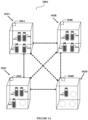
- Figure 1 depicts a system architecture 100 for notifying a person to shift item/s from a defective/faulty container to a new container, according to an exemplary embodiment of the invention.
- a container 102 may comprises an electronic circuit 104 coupled with the container 102 and one or more items 106 placed inside the container 102.
- the container 102 may determine defect/s associated with the container 102. Such defect/s may be determined using one or more sensors associated with the container 102.
- the container 102 may inspect for defect periodically. For an instance, the container 102 may inspect for any defect in every 30 minutes. In an exemplary alternative embodiment, the container 102 may inspect for any defect based on an occurrence of an event.
- the container 102 may inspect the defect when any gesture is made on the container 102 by a user or when the container 102 detects any motion through an accelerometer gesture.
- the defect/s may be a refrigeration defect, an over-weight defect, a sensor defect or a door defect associated with the container 102.
- the refrigeration defect may be a defect related to an effect of cooling or refrigeration inside the container 102.
- the container 102 may be required to maintain temperature within a limit of 12° Celsius to 22° Celsius.
- a temperature sensor of the container 102 may detect current temperature inside the container 102 is around 27° Celsius.
- the temperature sensor may communicate the current temperature to a processor of the container 102.
- the processor may determine that the current temperature inside the container 102 is not falling within the specified limit of 12° Celsius to 22° Celsius. In such a situation, the processor of the container 102 determines that the container 102 may be having a defect.
- a processor using a gas sensor may be associated with the container 102 may detect if the gas (such as ammonia gas or liquid nitrogen gas) used for cooling inside the container 102 has been exhausted or drained.
- a processor using a sensor may be used to determine if a compressor or throttling device associated with the container 102 is working properly and cooling inside the container 102.
- the over-weight defect associated with the container 102 may be a defect related to a total weight of the container 102.
- the over-weight defect relates to the container 102 containing more number of items than a specified limit.
- a defect may be determined when the total weight of the items present inside the container 102 crosses a specified threshold as defined by a manufacturer of the container or a shipment agency.
- the container 102 may be designed to carry 12 items at a time or carry a weight of 30 kilograms at a time. When the container 102 carries more than 12 items or more than 30 kilograms at a time, then a weight sensor may determine such defect of the container 102.
- the sensor defect may be related to functioning or working of one or more sensors placed or located inside the container 102.
- the container 102 may detect if the one or more sensors are functioning or working properly.
- the one or more sensors may be a temperature sensor, a compressor suction and discharge sensor, a supply air temperature sensor, a return air temperature sensor, a location sensor, an accelerometer sensor, a supply recorder sensor, an ambient sensor or any such sensor which may be required for the functioning of the container 102.
- the door defect may be a defect if a door of the container 102 does not gets closed properly due to which the cooling inside the container 102 is not effective enough for the items 106 present inside the container 102.
- a sensor associated with the container 102 may determine that a door of the container 102 is not latched properly or not functioning properly.
- the first container 102C may establish a communication with one or more second containers 102A/102B/102D.
- the first container 102C may establish a cellular communication (through a cellular network) with the one or more second containers 102A/102B/102D.
- the first container 102C may establish a short-range communication (through a short-range network) with the one or more second containers 102A/102B/102D.
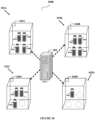
- the first container 102C may establish a communication with the one or more second containers 102A/102B/102D through a server 108 as depicted in Figure 1B .
- the first container 102C may transmit information related to the defect to a server 108.
- the server 108 may establish a communication with the one or more second containers 102A/102B/102D on behalf of the first container 102C.
- the first container 102C may transmit a request to each of the one or more second containers 102A/102B/102D.
- the one or more second containers 102A/102B/102D may provide information associated with the one or more second containers 102A/102B/102D.
- the server 108 may transmit a request to each of the one or more second containers 102A/102B/102D through a network, wherein the request is transmitted for providing an information associated with one or more second containers 102A/102B/102D.
- each of the container 102 may determine such information either periodically or based on the request from first container 102C or the server 108 and maintain this kind of information.
- the information associated with the container 102 may comprise, but is not limited to, a payload information, a temperature information, a shipping destination information, a weight information, and/or a capacity information.
- An exemplary Table 1 has been provided herein below to explain the information associated with each of the containers 102.
- exemplary Figure 1A exemplary Figure 1B and an exemplary Table 1 below
- four items namely, item 106A, item 106B, item 106C and item 106D
- four items namely, item 106E, item 106F, item 106G and item 106H
- three items namely, item 106I, item 106J and item 106K
- payload information associated with a container 102 may correspond to a total number of items 106 currently placed inside the container 102.
- capacity information associated with the container 102 may correspond to a volume of the container 102 for accommodating a maximum number of items 106 (at a time) inside the container 102.
- each of the containers may accommodate a total number of 4 items at a time inside the container.
- Container Container 102A Container 102B Container 102C Container 102D Information Defect No Defect No Defect One Defect No Defect Payload Information 4 Items 4 Items 3 Items 1 Items Capacity Information 4 Items 4 Items 4 Items 4 Items Weight Information (Current) 10 kilograms 10 kilograms 7.5 kilograms 2.5 kilograms Weight Limit Information (Maximum) 10 kilograms 10 kilograms 10 kilograms 10 kilograms 10 kilograms Temperature Information (Current) 15° Celsius 20° Celsius 29° Celsius 14° Celsius Temperature Information (Threshold Range) 13° Celsius - 18° Celsius 14° Celsius - 22° Celsius 13° Celsius - 17° Celsius 11° Celsius - 18° Celsius Shipping Departure Information California, United States California, United States California, United States California, United States Shipping Destination Information Texas, United States Washington DC, United States Texas, United States Texas, United States Texas, United States
- the weight information associated with the container 102 may correspond to a current weight of the container 102 as well current weight of each item 106 placed inside the container 102. For an instance, current weight of the container 102A and the container 102B is 10 kilograms as each of these containers have 4 items inside it. Also, the current weight of the container 102C (carrying 3 items) and the container 102D (carrying 1 item) is 7.5 kilograms and 2.5 kilograms, respectively.
- the weight limit information associated with the container 102 may correspond to a maximum weight limit of the items or container that is allowed for a container 102 to carry items. As per Table 1, each of the containers 102 have same weight limit of 10 kilograms.
- the temperature information (current) associated with a container 102 may correspond to a current temperature being maintained inside the container 102.
- the current temperature in the container 102A, the container 102B, the container 102C, and the container 102D is 15°C, 20°C, 29°C and 14°C, respectively.
- the temperature information (threshold range) associated with a container 102 may correspond to a temperature range that should ideally be maintained inside the container 102. As shown in Table 1, the threshold range of temperature for the container 102A, the container 102B, the container 102C and the container 102D is (13°C-18°C), (14°C-22°C), (13°C-17°C), and (11°C-18°C), respectively.
- the shipping departure information associated with a container 102 may correspond to an address/location in a city of a country from where the container 102 carrying items will depart/leave.
- the shipping destination information associated with a container 102 may correspond to an address/location in a city of a country to which the container 102 carrying items will reach or deliver items.
- the each of the container 102 may depart from California, United States.
- the container 102A may deliver items to Texas (United States)
- the container 102B may deliver items to the Washington DC (US)
- the container 102C and container 102D may deliver items to same location i.e. Texas (US).
- the first container 102C or the server may determine one or more healthy containers from the one or more second containers 102A/102B/102D for shifting three items (namely, item 106I, item 106J and item 106K) from the first container 102C to the one or more healthy containers.
- each of the one or more second containers 102A/102B/102D may determine the information and may transmit the information to the first container 102C using the communication.
- the first container 102C may determine one or more healthy containers from the one or more second containers 102A/102B/102D based on the information received from each of the one or more second containers 102A/102B/102D.
- each of the one or more second containers 102A/102B/102D may determine the information and may transmit the information to the server 108 through the network.
- the server 108 may determine one or more healthy containers from the one or more second containers 102A/102B/102D based on the information received from each of the one or more second containers 102A/102B/102D.
- the first container 102C or the server 108 may receive the information associated with the one or more second containers 102A/102B/102D from the one or more second containers 102A/102B/102D as per Table 1. Then, the first container 102C or the server 108 may determine information associated with the first container 102C (i.e. payload information as 3 items, weight information (current) as 7.5 kilograms), temperature information (threshold range) as (13°C-17°C), shipping destination information as California (US) and shipping departure information as Texas (US).
- payload information as 3 items, weight information (current) as 7.5 kilograms), temperature information (threshold range) as (13°C-17°C), shipping destination information as California (US) and shipping departure information as Texas (US).
- the first container 102C or the server 108 may prioritize the one or more second containers 102A/102B/102D based on the information associated with the one or more second containers 102A/102B/102D and the information associated with the first container 102C. For this, the first container 102C or the server 108 may compare the shipping destination information and the shipping departure information associated with the first container 102C with the shipping destination information and the shipping departure information associated with the one or more second containers 102A/102B/102D. By comparison, the first container 102C or the server 108 may determine that the container 102A and the container 102D are departing from same shipping departure information (i.e. California, US) and shall reach the same shipping destination information (i.e. Texas, US).
- same shipping departure information i.e. California, US
- the first container 102C or the server 108 may also determine that the container 102B has different shipping destination information (i.e. Washington, US) and thereby, may not consider the container102B as a healthy container and thus, may discard the container 102B for shifting item 106I, item 106J and item 106K from the first container 102C.
- the container 102B has different shipping destination information (i.e. Washington, US) and thereby, may not consider the container102B as a healthy container and thus, may discard the container 102B for shifting item 106I, item 106J and item 106K from the first container 102C.
- the first container 102C or the server 108 may also check/determine the temperature information (current) associated with the container 102A and the container 102D. For this, the first container 102C or the server 108 may determine that the container 102A and the container 102D maintain 15°C and 14°C (respectively) as current temperature. Also, the first container 102C or the server 108 may determine that the current temperature of the container 102A and the container 102D fall within threshold range of temperature information (i.e. 13°C-17°C) of the first container 102C. Based on such analysis, the first container 102C or the server 108 may consider the container 102A and the container 102D as healthy containers.
- threshold range of temperature information i.e. 13°C-17°C
- the first container 102C or the server 108 may further check the payload information, the capacity information, the weight information, and/or the weight limit information associated with the container 102A and the container 102D. By checking, the first container 102C or the server 108 may find that the container 102D is carrying only 1 item 106L but has capacity to accommodate 3 more items, and/or weighs 2.5 kilograms but has 10 kilograms of weight limit. Based on analysis of the information, the first container 102C or the server 108 may find that container 102D can be considered as a healthy container and 3 items (item 106I, item 106J and item 106K) may be shifted from the first container 102C to the healthy container (i.e. container 102D).
- the healthy container i.e. container 102D
- the first container 102C or the server 108 may also find that the container 102A cannot be considered as a healthy container as the container 102A is already carrying 4 items (i.e. maximum allowed capacity) and thus, do not have capacity to accommodate 3 more items.
- the present invention offers technical advantage of automatically analyzing information received from other containers 102A, 102B, 102D to determine one or more healthy containers 102C and providing an automated way to determine one or more healthy containers 102C for shifting the item 106I, item 106J and item 106K. By doing this, the content in the item/s 106 may be prevented from getting damaged and the end consumer as well as the manufacturer are also prevented from suffering loss.
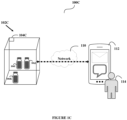
- the first container 102C or the server 108 may transmit a message to a user equipment 112 through a network 110.
- the message may be transmitted to the user equipment 112 for notifying a staff personnel 114 about the defect associated with the first container 102C and/or for shifting the one or more items from the first container 102C to the healthy container 102D.
- the first container 102C or the server 108 may already have details such as a contact number and/or an electronic mail for transmitting the message to the user equipment 112 for notifying the staff personnel 114.
- the message may be an electronic mail, an automated call, an automated sound alert, a text message, an audio/voice message, a video message, an instant message, a social post, or any such message well known in the art.
- the present invention also encompasses the first container 102C or the server 108 to determine two or more healthy containers in case items placed inside the first container 102C cannot be accommodated in a single/one healthy container. For an instance, if the first container 102C holds 10 items at a time, then the first container 102C or the server 108 may accordingly determine two or more healthy containers for shifting the 10 items. As an another example, if the first container 102C holds 3 items at a time and each of the one or more second containers 102A/102B/102D may have capacity left to accommodate only one more item, the first container 102C or the server 108 may accordingly determine two or more healthy containers for shifting the 3 items.
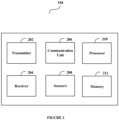
- FIG. 2 depicts a block diagram of different components of an electronic circuit 104 coupled with a container 102 according to an exemplary embodiment of the invention.
- the electronic circuit 104 may comprise of, but is not limited to, a transmitter 202, a receiver 204, a communication unit 206, one or more sensors 208, a processor 210 and/or a memory 212.
- the one or more sensors 208 along with the processor 210 of the electronic circuit 104 coupled with the container 102 may be adapted to determine defect/s associated with the container 102 as explained above in detail in Figure 1A .
- the one or more sensors 208 along with the processor 210 determine defect/s
- the one or more sensors 208 may inform the communication unit 206 about the defect.
- the communication unit 206 may be adapted to establish a communication with one or more second containers 102A/102B/102D through a server or through a network.
- the communication unit 206 may communicate with the transmitter 202 for confirming the communication establishment.
- the transmitter 202 may be adapted to transmit a request to each of the one or more second containers 102A/102B/102D using the communication for providing an information associated with one or more second containers 102A/102B/102D as discussed above.
- the receiver 204 may be adapted to receive information associated with one or more second containers 102A/102B/102D from the one or more second containers 102A/102B/102D.
- the receiver 204 may provide the information to the processor 210.
- the memory 212 may be adapted to store an identifier of the first container 102C, an identifier of healthy container 102D, an identifier of each of the one or more second containers 102A/102B/102D, the information associated with first container 102C and/or the information associated with one or more second containers 102A/102B/102D.
- the transmitter 202, the receiver 204, the communication unit 206, the one or more sensors 208, and/or the memory 212 may be communicably coupled with the processor 210.
- the different units described herein are exemplary. The invention may be performed using one or more units. For example, the tasks executed by the transmitter 202, the receiver 204, the communication unit 206, the one or more sensors 208, the memory 212, and/or the processor 210 may be performed by a single unit. Alternatively, more number of units as described herein may be used to perform the invention.
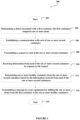
- Figure 3 depicts a flowchart outlining the features of the invention in an exemplary embodiment of the invention.
- the method flowchart 300 describes a method for notifying a person to shift item/s from a defective/faulty container to a new container.
- the method flowchart 300 starts at step 302.
- a first container 102C or a server 108 may determine defect/s associated with the first container 102C as explained above. Such defect/s may be determined using one or more sensors associated with the first container 102C. In an exemplary embodiment, the first container 102C may determine defect in a periodic manner. In an exemplary alternative embodiment, the first container 102C may determine defect based on an occurrence of an event.
- the first container 102C or the server 108 may establish a communication with one or more second containers 102A/102B/102D as explained above in Figure 1A and Figure 1B in details.
Landscapes
- Engineering & Computer Science (AREA)
- Computer Networks & Wireless Communication (AREA)
- Business, Economics & Management (AREA)
- Emergency Management (AREA)
- Physics & Mathematics (AREA)
- General Physics & Mathematics (AREA)
- Cold Air Circulating Systems And Constructional Details In Refrigerators (AREA)
- Devices That Are Associated With Refrigeration Equipment (AREA)
Claims (15)
- Verfahren, umfassend:Bestimmen eines Defekts, der mit einem ersten Behälter (102) assoziiert ist, wobei der erste Behälter einen oder mehrere Gegenstände umfasst (304);Herstellen einer Kommunikation mit jedem von einem oder mehreren zweiten Behältern (306);Übertragen einer Anforderung an jeden des einen oder der mehreren zweiten Behälter (308);Empfangen von Informationen von jedem des einen oder der mehreren zweiten Behälter als Reaktion auf die Anforderung (310);Bestimmen eines oder mehrerer gesunder Behälter aus dem einen oder den mehreren zweiten Behältern basierend auf den Informationen, die von jedem des einen oder der mehreren zweiten Behälter empfangen werden (312); undÜbertragen einer Nachricht an ein Benutzergerät zum Verlagern des einen oder der mehreren Gegenstände von dem ersten Behälter zu dem einen oder den mehreren gesunden Behältern (314);wobei der erste Behälter ein Kühlbehälter ist und der eine oder die mehreren zweiten Behälter Kühlbehälter sind.
- Verfahren nach Anspruch 1, wobei der mit dem ersten Behälter assoziierte Defekt unter Verwendung eines oder mehrerer mit dem ersten Behälter assoziierter Sensoren bestimmt wird.
- Verfahren nach Anspruch 1, wobei der mit dem ersten Behälter assoziierte Defekt einen Kühldefekt, einen Übergewichtsdefekt, einen Sensordefekt oder einen Türdefekt umfasst.
- Verfahren nach Anspruch 1, wobei die Kommunikation zwischen dem ersten Behälter und dem einen oder den mehreren zweiten Behältern einer Mobilfunkkommunikation oder einer Nahbereichskommunikation entspricht.
- Verfahren nach Anspruch 1, wobei die Informationen, die von jedem des einen oder der mehreren zweiten Behälter empfangen werden, eine Nutzlastinformation, eine Temperaturinformation, eine Versandzielinformation, eine Gewichtsinformation und/oder eine Kapazitätsinformation umfassen.
- Verfahren nach Anspruch 1, wobei der eine oder die mehreren gesunden Behälter bestimmt werden, indem der eine oder die mehreren zweiten Behälter basierend auf den Informationen von jedem des einen oder der mehreren zweiten Behälter priorisiert werden.
- Verfahren nach Anspruch 1, wobei der eine oder die mehreren gesunden Behälter bestimmt werden, indem eine Versandzielinformation von jedem des einen oder der mehreren zweiten Behälter mit einer Versandzielinformation des ersten Behälters verglichen wird.
- Verfahren nach Anspruch 1, wobei der eine oder die mehreren gesunden Behälter und der erste Behälter die gleichen Versandzielinformationen aufweisen.
- Verfahren nach Anspruch 1, wobei der eine oder die mehreren gesunden Behälter eine Kapazität zur Aufnahme des einen oder der mehreren Gegenstände aus dem ersten Behälter aufweisen.
- Verfahren nach Anspruch 1, wobei der erste Behälter Informationen in Bezug auf den Defekt an einen Server überträgt, wobei der Server die Anforderung an jeden des einen oder der mehreren zweiten Behälter überträgt und Informationen von jedem des einen oder der mehreren zweiten Behälter in Reaktion auf die Anforderung empfängt.
- Verfahren nach Anspruch 10, wobei der eine oder die mehreren gesunden Behälter durch den Server basierend auf den Informationen bestimmt werden, die von jedem des einen oder der mehreren zweiten Behälter empfangen werden.
- Verfahren nach Anspruch 10, wobei die Nachricht von dem Server an das Benutzergerät übertragen wird, um ein Fachpersonal über den mit dem ersten Behälter assoziierten Defekt zu benachrichtigen und/oder um den einen oder die mehreren Gegenstände von dem ersten Behälter zu dem einen oder den mehreren gesunden Behältern zu verlagern.
- Erster Behälter (102), umfassend:einen oder mehrere Sensoren (208), die dazu eingerichtet sind, einen Defekt zu bestimmen, der mit dem ersten Behälter assoziiert ist, wobei der erste Behälter einen oder mehrere Gegenstände umfasst (304);eine Kommunikationseinheit (206), die dazu eingerichtet ist, eine Kommunikation mit jedem von einem oder mehreren zweiten Behältern herzustellen (306);einen Sender (202), der dazu eingerichtet ist, eine Anforderung an jeden des einen oder der mehreren zweiten Behälter zu übertragen (308);einen Empfänger (204), der dazu eingerichtet ist, als Reaktion auf die Anforderung Informationen von jedem der einen oder mehreren zweiten Behälter zu empfangen (310);einen Prozessor (210), der dazu eingerichtet ist, einen oder mehrere gesunde Behälter aus dem einen oder den mehreren zweiten Behältern basierend auf den Informationen, die von jedem des einen oder der mehreren zweiten Behälter empfangen werden, zu bestimmen (312); undder Sender dazu eingerichtet ist, eine Nachricht an ein Benutzergerät zum Verlagern des einen oder der mehreren Gegenstände von dem ersten Behälter zu dem einen oder den mehreren gesunden Behältern zu übertragen (314);wobei der erste Behälter ein Kühlbehälter ist und der eine oder die mehreren zweiten Behälter Kühlbehälter sind.
- Erster Behälter nach Anspruch 13, wobei die Nachricht an das Benutzergerät übertragen wird, um ein Fachpersonal über den mit dem ersten Behälter assoziierten Defekt zu benachrichtigen und/oder um den einen oder die mehreren Gegenstände von dem ersten Behälter zu dem einen oder den mehreren gesunden Behältern zu verlagern.
- Computerlesbares Medium (104), umfassend einen oder mehrere Prozessoren (210) und einen Speicher (212), der mit dem einen oder den mehreren Prozessoren gekoppelt ist, wobei der Speicher Anweisungen speichert, die durch den einen oder die mehreren Prozessoren ausgeführt werden, wobei der eine oder die mehreren Prozessoren zu Folgendem ausgelegt sind:Bestimmen eines Defekts, der mit einem ersten Behälter assoziiert ist, wobei der erste Behälter einen oder mehrere Gegenstände umfasst (304);Herstellen einer Kommunikation mit jedem von einem oder mehreren zweiten Behältern (306);Übertragen einer Anforderung an jeden des einen oder der mehreren zweiten Behälter (308); Empfangen von Informationen von jedem des ein oder der mehreren zweiten Behälter als Reaktion auf die Anforderung (310);Bestimmen eines oder mehrerer gesunder Behälter aus dem einen oder den mehreren zweiten Behältern basierend auf den Informationen, die von jedem des einen oder der mehreren zweiten Behälter empfangen werden (312); und Übertragen einer Nachricht an ein Benutzergerät zum Verlagern des einen oder der mehreren Gegenstände von dem ersten Behälter zu dem einen oder den mehreren gesunden Behältern (314);wobei der erste Behälter ein Kühlbehälter ist und der eine oder die mehreren zweiten Behälter Kühlbehälter sind.
Applications Claiming Priority (2)
| Application Number | Priority Date | Filing Date | Title |
|---|---|---|---|
| IN201911042623 | 2019-10-21 | ||
| PCT/IB2020/059079 WO2021079213A1 (en) | 2019-10-21 | 2020-09-29 | A method and an apparatus for providing smart suggestions |
Publications (2)
| Publication Number | Publication Date |
|---|---|
| EP4049459A1 EP4049459A1 (de) | 2022-08-31 |
| EP4049459B1 true EP4049459B1 (de) | 2025-02-26 |
Family
ID=72964753
Family Applications (1)
| Application Number | Title | Priority Date | Filing Date |
|---|---|---|---|
| EP20793804.4A Active EP4049459B1 (de) | 2019-10-21 | 2020-09-29 | Verfahren und gerät zur bereitstellung intelligenter vorschläge |
Country Status (4)
| Country | Link |
|---|---|
| US (1) | US20220353590A1 (de) |
| EP (1) | EP4049459B1 (de) |
| CN (1) | CN114788299A (de) |
| WO (1) | WO2021079213A1 (de) |
Family Cites Families (11)
| Publication number | Priority date | Publication date | Assignee | Title |
|---|---|---|---|---|
| US7035856B1 (en) * | 2000-09-28 | 2006-04-25 | Nobuyoshi Morimoto | System and method for tracking and routing shipped items |
| US20060071786A1 (en) * | 2004-10-05 | 2006-04-06 | Accenture Global Sevices Gmbh | Cargo security sensing system |
| US8643503B2 (en) * | 2005-01-28 | 2014-02-04 | Kirill Mostov | Transportation security system and associated methods |
| US20110291828A1 (en) * | 2010-06-01 | 2011-12-01 | Walker Timothy A | Embedded communication system for refrigerated transportation containers |
| US8649996B2 (en) * | 2011-06-02 | 2014-02-11 | Nokia Solutions And Networks Oy | Container control |
| KR20150018704A (ko) * | 2013-08-09 | 2015-02-24 | 케이아이씨시스템즈 (주) | 냉동 컨테이너 모니터링 시스템 |
| US8989053B1 (en) * | 2013-11-29 | 2015-03-24 | Fedex Corporate Services, Inc. | Association management in a wireless node network |
| WO2016139364A1 (en) * | 2015-03-04 | 2016-09-09 | Maersk Line A/S | Method and system for reefer container evaluation |
| MX392407B (es) * | 2016-07-25 | 2025-03-24 | Eaton Intelligent Power Ltd | Puesta en marcha automática de dispositivos eléctricos. |
| US10341456B2 (en) * | 2017-11-20 | 2019-07-02 | Marc Berger | Caching sticker profiles within a sticker communication system |
| WO2019157534A1 (en) * | 2018-02-12 | 2019-08-15 | Overhaul Group, Inc. | Monitoring ambient conditions within a shipping medium |
-
2020
- 2020-09-29 EP EP20793804.4A patent/EP4049459B1/de active Active
- 2020-09-29 WO PCT/IB2020/059079 patent/WO2021079213A1/en not_active Ceased
- 2020-09-29 US US17/770,461 patent/US20220353590A1/en not_active Abandoned
- 2020-09-29 CN CN202080089127.9A patent/CN114788299A/zh active Pending
Also Published As
| Publication number | Publication date |
|---|---|
| EP4049459A1 (de) | 2022-08-31 |
| CN114788299A (zh) | 2022-07-22 |
| WO2021079213A1 (en) | 2021-04-29 |
| US20220353590A1 (en) | 2022-11-03 |
Similar Documents
| Publication | Publication Date | Title |
|---|---|---|
| JP6880056B2 (ja) | コールドチェーン流通システム全体を通じた生鮮品パラメータの自動化された予測監視 | |
| KR101974882B1 (ko) | 물류 배송 과정의 실시간 모니터링 시스템 및 그 운용방법 | |
| Hafliðason et al. | Criteria for temperature alerts in cod supply chains | |
| US20110193710A1 (en) | Refrigerated container monitoring system | |
| KR101963305B1 (ko) | 물류환경정보 관리 시스템 | |
| JP2019522596A (ja) | 遠隔監視能力を有する輸送容器 | |
| Monteleone et al. | A novel deployment of smart Cold Chain system using 2G-RFID-Sys temperature monitoring in medicine Cold Chain based on Internet of Things | |
| US20180039940A1 (en) | Environmental parameter monitor with wide area communication | |
| KR20220083561A (ko) | 전자 장치 및 그의 정보 제공 방법 | |
| Nechifor et al. | Predictive analytics based on CEP for logistic of sensitive goods | |
| EP4049459B1 (de) | Verfahren und gerät zur bereitstellung intelligenter vorschläge | |
| CN114399243B (zh) | 冷链运输温度监测方法和装置、电子设备和存储介质 | |
| US12073728B2 (en) | Method and a system to automatically start and stop a monitoring device | |
| US11703239B2 (en) | Method and a system for monitoring items | |
| US20190205835A1 (en) | Refrigeration management system | |
| US20210233014A1 (en) | System and a method for determining missing information in a blockchain network | |
| US20180372550A1 (en) | Determining hot cargo load condition in a refrigerated container | |
| EP3859628B1 (de) | Verfahren und vorrichtung zur verfolgung von gegenständen | |
| US11595894B2 (en) | Method and system for saving power of a battery associated with item/s | |
| KR20230085363A (ko) | 물류 배송 과정의 실시간 모니터링 시스템 | |
| US20220180314A1 (en) | A system and method for automated tracking of item/s | |
| JP2022029804A (ja) | 劣化部位特定装置及び劣化部位特定プログラム |
Legal Events
| Date | Code | Title | Description |
|---|---|---|---|
| STAA | Information on the status of an ep patent application or granted ep patent |
Free format text: STATUS: UNKNOWN |
|
| STAA | Information on the status of an ep patent application or granted ep patent |
Free format text: STATUS: THE INTERNATIONAL PUBLICATION HAS BEEN MADE |
|
| PUAI | Public reference made under article 153(3) epc to a published international application that has entered the european phase |
Free format text: ORIGINAL CODE: 0009012 |
|
| STAA | Information on the status of an ep patent application or granted ep patent |
Free format text: STATUS: REQUEST FOR EXAMINATION WAS MADE |
|
| 17P | Request for examination filed |
Effective date: 20220519 |
|
| AK | Designated contracting states |
Kind code of ref document: A1 Designated state(s): AL AT BE BG CH CY CZ DE DK EE ES FI FR GB GR HR HU IE IS IT LI LT LU LV MC MK MT NL NO PL PT RO RS SE SI SK SM TR |
|
| DAV | Request for validation of the european patent (deleted) | ||
| DAX | Request for extension of the european patent (deleted) | ||
| GRAP | Despatch of communication of intention to grant a patent |
Free format text: ORIGINAL CODE: EPIDOSNIGR1 |
|
| STAA | Information on the status of an ep patent application or granted ep patent |
Free format text: STATUS: GRANT OF PATENT IS INTENDED |
|
| INTG | Intention to grant announced |
Effective date: 20240709 |
|
| GRAJ | Information related to disapproval of communication of intention to grant by the applicant or resumption of examination proceedings by the epo deleted |
Free format text: ORIGINAL CODE: EPIDOSDIGR1 |
|
| STAA | Information on the status of an ep patent application or granted ep patent |
Free format text: STATUS: REQUEST FOR EXAMINATION WAS MADE |
|
| INTC | Intention to grant announced (deleted) | ||
| GRAP | Despatch of communication of intention to grant a patent |
Free format text: ORIGINAL CODE: EPIDOSNIGR1 |
|
| STAA | Information on the status of an ep patent application or granted ep patent |
Free format text: STATUS: GRANT OF PATENT IS INTENDED |
|
| INTG | Intention to grant announced |
Effective date: 20240923 |
|
| GRAS | Grant fee paid |
Free format text: ORIGINAL CODE: EPIDOSNIGR3 |
|
| GRAA | (expected) grant |
Free format text: ORIGINAL CODE: 0009210 |
|
| STAA | Information on the status of an ep patent application or granted ep patent |
Free format text: STATUS: THE PATENT HAS BEEN GRANTED |
|
| AK | Designated contracting states |
Kind code of ref document: B1 Designated state(s): AL AT BE BG CH CY CZ DE DK EE ES FI FR GB GR HR HU IE IS IT LI LT LU LV MC MK MT NL NO PL PT RO RS SE SI SK SM TR |
|
| REG | Reference to a national code |
Ref country code: GB Ref legal event code: FG4D |
|
| REG | Reference to a national code |
Ref country code: CH Ref legal event code: EP |
|
| REG | Reference to a national code |
Ref country code: DE Ref legal event code: R096 Ref document number: 602020046844 Country of ref document: DE |
|
| REG | Reference to a national code |
Ref country code: NL Ref legal event code: FP |
|
| REG | Reference to a national code |
Ref country code: IE Ref legal event code: FG4D |
|
| PG25 | Lapsed in a contracting state [announced via postgrant information from national office to epo] |
Ref country code: RS Free format text: LAPSE BECAUSE OF FAILURE TO SUBMIT A TRANSLATION OF THE DESCRIPTION OR TO PAY THE FEE WITHIN THE PRESCRIBED TIME-LIMIT Effective date: 20250526 |
|
| PG25 | Lapsed in a contracting state [announced via postgrant information from national office to epo] |
Ref country code: FI Free format text: LAPSE BECAUSE OF FAILURE TO SUBMIT A TRANSLATION OF THE DESCRIPTION OR TO PAY THE FEE WITHIN THE PRESCRIBED TIME-LIMIT Effective date: 20250226 |
|
| PG25 | Lapsed in a contracting state [announced via postgrant information from national office to epo] |
Ref country code: PL Free format text: LAPSE BECAUSE OF FAILURE TO SUBMIT A TRANSLATION OF THE DESCRIPTION OR TO PAY THE FEE WITHIN THE PRESCRIBED TIME-LIMIT Effective date: 20250226 |
|
| PG25 | Lapsed in a contracting state [announced via postgrant information from national office to epo] |
Ref country code: ES Free format text: LAPSE BECAUSE OF FAILURE TO SUBMIT A TRANSLATION OF THE DESCRIPTION OR TO PAY THE FEE WITHIN THE PRESCRIBED TIME-LIMIT Effective date: 20250226 |
|
| REG | Reference to a national code |
Ref country code: LT Ref legal event code: MG9D |
|
| PG25 | Lapsed in a contracting state [announced via postgrant information from national office to epo] |
Ref country code: NO Free format text: LAPSE BECAUSE OF FAILURE TO SUBMIT A TRANSLATION OF THE DESCRIPTION OR TO PAY THE FEE WITHIN THE PRESCRIBED TIME-LIMIT Effective date: 20250526 Ref country code: IS Free format text: LAPSE BECAUSE OF FAILURE TO SUBMIT A TRANSLATION OF THE DESCRIPTION OR TO PAY THE FEE WITHIN THE PRESCRIBED TIME-LIMIT Effective date: 20250626 |
|
| PG25 | Lapsed in a contracting state [announced via postgrant information from national office to epo] |
Ref country code: HR Free format text: LAPSE BECAUSE OF FAILURE TO SUBMIT A TRANSLATION OF THE DESCRIPTION OR TO PAY THE FEE WITHIN THE PRESCRIBED TIME-LIMIT Effective date: 20250226 |
|
| PG25 | Lapsed in a contracting state [announced via postgrant information from national office to epo] |
Ref country code: PT Free format text: LAPSE BECAUSE OF FAILURE TO SUBMIT A TRANSLATION OF THE DESCRIPTION OR TO PAY THE FEE WITHIN THE PRESCRIBED TIME-LIMIT Effective date: 20250626 Ref country code: LV Free format text: LAPSE BECAUSE OF FAILURE TO SUBMIT A TRANSLATION OF THE DESCRIPTION OR TO PAY THE FEE WITHIN THE PRESCRIBED TIME-LIMIT Effective date: 20250226 |
|
| PG25 | Lapsed in a contracting state [announced via postgrant information from national office to epo] |
Ref country code: BG Free format text: LAPSE BECAUSE OF FAILURE TO SUBMIT A TRANSLATION OF THE DESCRIPTION OR TO PAY THE FEE WITHIN THE PRESCRIBED TIME-LIMIT Effective date: 20250226 Ref country code: GR Free format text: LAPSE BECAUSE OF FAILURE TO SUBMIT A TRANSLATION OF THE DESCRIPTION OR TO PAY THE FEE WITHIN THE PRESCRIBED TIME-LIMIT Effective date: 20250527 |
|
| REG | Reference to a national code |
Ref country code: AT Ref legal event code: MK05 Ref document number: 1771837 Country of ref document: AT Kind code of ref document: T Effective date: 20250226 |
|
| PG25 | Lapsed in a contracting state [announced via postgrant information from national office to epo] |
Ref country code: SE Free format text: LAPSE BECAUSE OF FAILURE TO SUBMIT A TRANSLATION OF THE DESCRIPTION OR TO PAY THE FEE WITHIN THE PRESCRIBED TIME-LIMIT Effective date: 20250226 |
|
| PG25 | Lapsed in a contracting state [announced via postgrant information from national office to epo] |
Ref country code: SM Free format text: LAPSE BECAUSE OF FAILURE TO SUBMIT A TRANSLATION OF THE DESCRIPTION OR TO PAY THE FEE WITHIN THE PRESCRIBED TIME-LIMIT Effective date: 20250226 |
|
| PG25 | Lapsed in a contracting state [announced via postgrant information from national office to epo] |
Ref country code: DK Free format text: LAPSE BECAUSE OF FAILURE TO SUBMIT A TRANSLATION OF THE DESCRIPTION OR TO PAY THE FEE WITHIN THE PRESCRIBED TIME-LIMIT Effective date: 20250226 |
|
| PGFP | Annual fee paid to national office [announced via postgrant information from national office to epo] |
Ref country code: DE Payment date: 20250820 Year of fee payment: 6 |
|
| PG25 | Lapsed in a contracting state [announced via postgrant information from national office to epo] |
Ref country code: IT Free format text: LAPSE BECAUSE OF FAILURE TO SUBMIT A TRANSLATION OF THE DESCRIPTION OR TO PAY THE FEE WITHIN THE PRESCRIBED TIME-LIMIT Effective date: 20250226 |
|
| PGFP | Annual fee paid to national office [announced via postgrant information from national office to epo] |
Ref country code: GB Payment date: 20250822 Year of fee payment: 6 |
|
| PG25 | Lapsed in a contracting state [announced via postgrant information from national office to epo] |
Ref country code: AT Free format text: LAPSE BECAUSE OF FAILURE TO SUBMIT A TRANSLATION OF THE DESCRIPTION OR TO PAY THE FEE WITHIN THE PRESCRIBED TIME-LIMIT Effective date: 20250226 |
|
| PGFP | Annual fee paid to national office [announced via postgrant information from national office to epo] |
Ref country code: FR Payment date: 20250820 Year of fee payment: 6 |
|
| PG25 | Lapsed in a contracting state [announced via postgrant information from national office to epo] |
Ref country code: EE Free format text: LAPSE BECAUSE OF FAILURE TO SUBMIT A TRANSLATION OF THE DESCRIPTION OR TO PAY THE FEE WITHIN THE PRESCRIBED TIME-LIMIT Effective date: 20250226 Ref country code: CZ Free format text: LAPSE BECAUSE OF FAILURE TO SUBMIT A TRANSLATION OF THE DESCRIPTION OR TO PAY THE FEE WITHIN THE PRESCRIBED TIME-LIMIT Effective date: 20250226 |
|
| PG25 | Lapsed in a contracting state [announced via postgrant information from national office to epo] |
Ref country code: RO Free format text: LAPSE BECAUSE OF FAILURE TO SUBMIT A TRANSLATION OF THE DESCRIPTION OR TO PAY THE FEE WITHIN THE PRESCRIBED TIME-LIMIT Effective date: 20250226 |
|
| PG25 | Lapsed in a contracting state [announced via postgrant information from national office to epo] |
Ref country code: SK Free format text: LAPSE BECAUSE OF FAILURE TO SUBMIT A TRANSLATION OF THE DESCRIPTION OR TO PAY THE FEE WITHIN THE PRESCRIBED TIME-LIMIT Effective date: 20250226 |
|
| REG | Reference to a national code |
Ref country code: DE Ref legal event code: R097 Ref document number: 602020046844 Country of ref document: DE |
|
| PLBE | No opposition filed within time limit |
Free format text: ORIGINAL CODE: 0009261 |
|
| STAA | Information on the status of an ep patent application or granted ep patent |
Free format text: STATUS: NO OPPOSITION FILED WITHIN TIME LIMIT |
|
| 26N | No opposition filed |
Effective date: 20251127 |