EP4046888A1 - Dispositif, procédé et programme informatique permettant de déterminer le comportement de conduite d'un conducteur - Google Patents
Dispositif, procédé et programme informatique permettant de déterminer le comportement de conduite d'un conducteur Download PDFInfo
- Publication number
- EP4046888A1 EP4046888A1 EP22152704.7A EP22152704A EP4046888A1 EP 4046888 A1 EP4046888 A1 EP 4046888A1 EP 22152704 A EP22152704 A EP 22152704A EP 4046888 A1 EP4046888 A1 EP 4046888A1
- Authority
- EP
- European Patent Office
- Prior art keywords
- data
- driving behavior
- vehicle
- driver
- basis
- Prior art date
- Legal status (The legal status is an assumption and is not a legal conclusion. Google has not performed a legal analysis and makes no representation as to the accuracy of the status listed.)
- Granted
Links
Images


Classifications
-
- B—PERFORMING OPERATIONS; TRANSPORTING
- B60—VEHICLES IN GENERAL
- B60W—CONJOINT CONTROL OF VEHICLE SUB-UNITS OF DIFFERENT TYPE OR DIFFERENT FUNCTION; CONTROL SYSTEMS SPECIALLY ADAPTED FOR HYBRID VEHICLES; ROAD VEHICLE DRIVE CONTROL SYSTEMS FOR PURPOSES NOT RELATED TO THE CONTROL OF A PARTICULAR SUB-UNIT
- B60W30/00—Purposes of road vehicle drive control systems not related to the control of a particular sub-unit, e.g. of systems using conjoint control of vehicle sub-units
-
- B—PERFORMING OPERATIONS; TRANSPORTING
- B60—VEHICLES IN GENERAL
- B60K—ARRANGEMENT OR MOUNTING OF PROPULSION UNITS OR OF TRANSMISSIONS IN VEHICLES; ARRANGEMENT OR MOUNTING OF PLURAL DIVERSE PRIME-MOVERS IN VEHICLES; AUXILIARY DRIVES FOR VEHICLES; INSTRUMENTATION OR DASHBOARDS FOR VEHICLES; ARRANGEMENTS IN CONNECTION WITH COOLING, AIR INTAKE, GAS EXHAUST OR FUEL SUPPLY OF PROPULSION UNITS IN VEHICLES
- B60K28/00—Safety devices for propulsion-unit control, specially adapted for, or arranged in, vehicles, e.g. preventing fuel supply or ignition in the event of potentially dangerous conditions
- B60K28/02—Safety devices for propulsion-unit control, specially adapted for, or arranged in, vehicles, e.g. preventing fuel supply or ignition in the event of potentially dangerous conditions responsive to conditions relating to the driver
-
- A—HUMAN NECESSITIES
- A61—MEDICAL OR VETERINARY SCIENCE; HYGIENE
- A61B—DIAGNOSIS; SURGERY; IDENTIFICATION
- A61B5/00—Measuring for diagnostic purposes; Identification of persons
- A61B5/02—Detecting, measuring or recording for evaluating the cardiovascular system, e.g. pulse, heart rate, blood pressure or blood flow
- A61B5/0205—Simultaneously evaluating both cardiovascular conditions and different types of body conditions, e.g. heart and respiratory condition
-
- A—HUMAN NECESSITIES
- A61—MEDICAL OR VETERINARY SCIENCE; HYGIENE
- A61B—DIAGNOSIS; SURGERY; IDENTIFICATION
- A61B5/00—Measuring for diagnostic purposes; Identification of persons
- A61B5/02—Detecting, measuring or recording for evaluating the cardiovascular system, e.g. pulse, heart rate, blood pressure or blood flow
- A61B5/024—Measuring pulse rate or heart rate
-
- A—HUMAN NECESSITIES
- A61—MEDICAL OR VETERINARY SCIENCE; HYGIENE
- A61B—DIAGNOSIS; SURGERY; IDENTIFICATION
- A61B5/00—Measuring for diagnostic purposes; Identification of persons
- A61B5/103—Measuring devices for testing the shape, pattern, colour, size or movement of the body or parts thereof, for diagnostic purposes
- A61B5/11—Measuring movement of the entire body or parts thereof, e.g. head or hand tremor or mobility of a limb
- A61B5/1118—Determining activity level
-
- A—HUMAN NECESSITIES
- A61—MEDICAL OR VETERINARY SCIENCE; HYGIENE
- A61B—DIAGNOSIS; SURGERY; IDENTIFICATION
- A61B5/00—Measuring for diagnostic purposes; Identification of persons
- A61B5/145—Measuring characteristics of blood in vivo, e.g. gas concentration or pH-value ; Measuring characteristics of body fluids or tissues, e.g. interstitial fluid or cerebral tissue
- A61B5/14542—Measuring characteristics of blood in vivo, e.g. gas concentration or pH-value ; Measuring characteristics of body fluids or tissues, e.g. interstitial fluid or cerebral tissue for measuring blood gases
-
- A—HUMAN NECESSITIES
- A61—MEDICAL OR VETERINARY SCIENCE; HYGIENE
- A61B—DIAGNOSIS; SURGERY; IDENTIFICATION
- A61B5/00—Measuring for diagnostic purposes; Identification of persons
- A61B5/16—Devices for psychotechnics; Testing reaction times ; Devices for evaluating the psychological state
- A61B5/165—Evaluating the state of mind, e.g. depression, anxiety
-
- A—HUMAN NECESSITIES
- A61—MEDICAL OR VETERINARY SCIENCE; HYGIENE
- A61B—DIAGNOSIS; SURGERY; IDENTIFICATION
- A61B5/00—Measuring for diagnostic purposes; Identification of persons
- A61B5/16—Devices for psychotechnics; Testing reaction times ; Devices for evaluating the psychological state
- A61B5/18—Devices for psychotechnics; Testing reaction times ; Devices for evaluating the psychological state for vehicle drivers or machine operators
-
- A—HUMAN NECESSITIES
- A61—MEDICAL OR VETERINARY SCIENCE; HYGIENE
- A61B—DIAGNOSIS; SURGERY; IDENTIFICATION
- A61B5/00—Measuring for diagnostic purposes; Identification of persons
- A61B5/48—Other medical applications
- A61B5/4806—Sleep evaluation
-
- A—HUMAN NECESSITIES
- A61—MEDICAL OR VETERINARY SCIENCE; HYGIENE
- A61B—DIAGNOSIS; SURGERY; IDENTIFICATION
- A61B5/00—Measuring for diagnostic purposes; Identification of persons
- A61B5/48—Other medical applications
- A61B5/4869—Determining body composition
- A61B5/4875—Hydration status, fluid retention of the body
-
- B—PERFORMING OPERATIONS; TRANSPORTING
- B60—VEHICLES IN GENERAL
- B60K—ARRANGEMENT OR MOUNTING OF PROPULSION UNITS OR OF TRANSMISSIONS IN VEHICLES; ARRANGEMENT OR MOUNTING OF PLURAL DIVERSE PRIME-MOVERS IN VEHICLES; AUXILIARY DRIVES FOR VEHICLES; INSTRUMENTATION OR DASHBOARDS FOR VEHICLES; ARRANGEMENTS IN CONNECTION WITH COOLING, AIR INTAKE, GAS EXHAUST OR FUEL SUPPLY OF PROPULSION UNITS IN VEHICLES
- B60K28/00—Safety devices for propulsion-unit control, specially adapted for, or arranged in, vehicles, e.g. preventing fuel supply or ignition in the event of potentially dangerous conditions
- B60K28/02—Safety devices for propulsion-unit control, specially adapted for, or arranged in, vehicles, e.g. preventing fuel supply or ignition in the event of potentially dangerous conditions responsive to conditions relating to the driver
- B60K28/06—Safety devices for propulsion-unit control, specially adapted for, or arranged in, vehicles, e.g. preventing fuel supply or ignition in the event of potentially dangerous conditions responsive to conditions relating to the driver responsive to incapacity of driver
- B60K28/063—Safety devices for propulsion-unit control, specially adapted for, or arranged in, vehicles, e.g. preventing fuel supply or ignition in the event of potentially dangerous conditions responsive to conditions relating to the driver responsive to incapacity of driver preventing starting of vehicles
-
- B—PERFORMING OPERATIONS; TRANSPORTING
- B60—VEHICLES IN GENERAL
- B60K—ARRANGEMENT OR MOUNTING OF PROPULSION UNITS OR OF TRANSMISSIONS IN VEHICLES; ARRANGEMENT OR MOUNTING OF PLURAL DIVERSE PRIME-MOVERS IN VEHICLES; AUXILIARY DRIVES FOR VEHICLES; INSTRUMENTATION OR DASHBOARDS FOR VEHICLES; ARRANGEMENTS IN CONNECTION WITH COOLING, AIR INTAKE, GAS EXHAUST OR FUEL SUPPLY OF PROPULSION UNITS IN VEHICLES
- B60K28/00—Safety devices for propulsion-unit control, specially adapted for, or arranged in, vehicles, e.g. preventing fuel supply or ignition in the event of potentially dangerous conditions
- B60K28/10—Safety devices for propulsion-unit control, specially adapted for, or arranged in, vehicles, e.g. preventing fuel supply or ignition in the event of potentially dangerous conditions responsive to conditions relating to the vehicle
-
- B—PERFORMING OPERATIONS; TRANSPORTING
- B60—VEHICLES IN GENERAL
- B60K—ARRANGEMENT OR MOUNTING OF PROPULSION UNITS OR OF TRANSMISSIONS IN VEHICLES; ARRANGEMENT OR MOUNTING OF PLURAL DIVERSE PRIME-MOVERS IN VEHICLES; AUXILIARY DRIVES FOR VEHICLES; INSTRUMENTATION OR DASHBOARDS FOR VEHICLES; ARRANGEMENTS IN CONNECTION WITH COOLING, AIR INTAKE, GAS EXHAUST OR FUEL SUPPLY OF PROPULSION UNITS IN VEHICLES
- B60K31/00—Vehicle fittings, acting on a single sub-unit only, for automatically controlling vehicle speed, i.e. preventing speed from exceeding an arbitrarily established velocity or maintaining speed at a particular velocity, as selected by the vehicle operator
-
- B—PERFORMING OPERATIONS; TRANSPORTING
- B60—VEHICLES IN GENERAL
- B60Q—ARRANGEMENT OF SIGNALLING OR LIGHTING DEVICES, THE MOUNTING OR SUPPORTING THEREOF OR CIRCUITS THEREFOR, FOR VEHICLES IN GENERAL
- B60Q9/00—Arrangement or adaptation of signal devices not provided for in one of main groups B60Q1/00 - B60Q7/00, e.g. haptic signalling
-
- B—PERFORMING OPERATIONS; TRANSPORTING
- B60—VEHICLES IN GENERAL
- B60W—CONJOINT CONTROL OF VEHICLE SUB-UNITS OF DIFFERENT TYPE OR DIFFERENT FUNCTION; CONTROL SYSTEMS SPECIALLY ADAPTED FOR HYBRID VEHICLES; ROAD VEHICLE DRIVE CONTROL SYSTEMS FOR PURPOSES NOT RELATED TO THE CONTROL OF A PARTICULAR SUB-UNIT
- B60W40/00—Estimation or calculation of non-directly measurable driving parameters for road vehicle drive control systems not related to the control of a particular sub unit, e.g. by using mathematical models
- B60W40/08—Estimation or calculation of non-directly measurable driving parameters for road vehicle drive control systems not related to the control of a particular sub unit, e.g. by using mathematical models related to drivers or passengers
- B60W40/09—Driving style or behaviour
-
- G—PHYSICS
- G07—CHECKING-DEVICES
- G07C—TIME OR ATTENDANCE REGISTERS; REGISTERING OR INDICATING THE WORKING OF MACHINES; GENERATING RANDOM NUMBERS; VOTING OR LOTTERY APPARATUS; ARRANGEMENTS, SYSTEMS OR APPARATUS FOR CHECKING NOT PROVIDED FOR ELSEWHERE
- G07C5/00—Registering or indicating the working of vehicles
-
- G—PHYSICS
- G07—CHECKING-DEVICES
- G07C—TIME OR ATTENDANCE REGISTERS; REGISTERING OR INDICATING THE WORKING OF MACHINES; GENERATING RANDOM NUMBERS; VOTING OR LOTTERY APPARATUS; ARRANGEMENTS, SYSTEMS OR APPARATUS FOR CHECKING NOT PROVIDED FOR ELSEWHERE
- G07C5/00—Registering or indicating the working of vehicles
- G07C5/02—Registering or indicating driving, working, idle, or waiting time only
-
- G—PHYSICS
- G07—CHECKING-DEVICES
- G07C—TIME OR ATTENDANCE REGISTERS; REGISTERING OR INDICATING THE WORKING OF MACHINES; GENERATING RANDOM NUMBERS; VOTING OR LOTTERY APPARATUS; ARRANGEMENTS, SYSTEMS OR APPARATUS FOR CHECKING NOT PROVIDED FOR ELSEWHERE
- G07C5/00—Registering or indicating the working of vehicles
- G07C5/08—Registering or indicating performance data other than driving, working, idle, or waiting time, with or without registering driving, working, idle or waiting time
- G07C5/0841—Registering performance data
- G07C5/085—Registering performance data using electronic data carriers
-
- G—PHYSICS
- G08—SIGNALLING
- G08G—TRAFFIC CONTROL SYSTEMS
- G08G1/00—Traffic control systems for road vehicles
- G08G1/09—Arrangements for giving variable traffic instructions
- G08G1/0962—Arrangements for giving variable traffic instructions having an indicator mounted inside the vehicle, e.g. giving voice messages
- G08G1/0967—Systems involving transmission of highway information, e.g. weather, speed limits
- G08G1/096766—Systems involving transmission of highway information, e.g. weather, speed limits where the system is characterised by the origin of the information transmission
-
- A—HUMAN NECESSITIES
- A61—MEDICAL OR VETERINARY SCIENCE; HYGIENE
- A61B—DIAGNOSIS; SURGERY; IDENTIFICATION
- A61B2503/00—Evaluating a particular growth phase or type of persons or animals
- A61B2503/20—Workers
- A61B2503/22—Motor vehicles operators, e.g. drivers, pilots, captains
-
- B—PERFORMING OPERATIONS; TRANSPORTING
- B60—VEHICLES IN GENERAL
- B60K—ARRANGEMENT OR MOUNTING OF PROPULSION UNITS OR OF TRANSMISSIONS IN VEHICLES; ARRANGEMENT OR MOUNTING OF PLURAL DIVERSE PRIME-MOVERS IN VEHICLES; AUXILIARY DRIVES FOR VEHICLES; INSTRUMENTATION OR DASHBOARDS FOR VEHICLES; ARRANGEMENTS IN CONNECTION WITH COOLING, AIR INTAKE, GAS EXHAUST OR FUEL SUPPLY OF PROPULSION UNITS IN VEHICLES
- B60K28/00—Safety devices for propulsion-unit control, specially adapted for, or arranged in, vehicles, e.g. preventing fuel supply or ignition in the event of potentially dangerous conditions
- B60K2028/003—Safety devices for propulsion-unit control, specially adapted for, or arranged in, vehicles, e.g. preventing fuel supply or ignition in the event of potentially dangerous conditions inhibiting the starter motor, e.g. by controlling ignition or park lock circuits
-
- B—PERFORMING OPERATIONS; TRANSPORTING
- B60—VEHICLES IN GENERAL
- B60K—ARRANGEMENT OR MOUNTING OF PROPULSION UNITS OR OF TRANSMISSIONS IN VEHICLES; ARRANGEMENT OR MOUNTING OF PLURAL DIVERSE PRIME-MOVERS IN VEHICLES; AUXILIARY DRIVES FOR VEHICLES; INSTRUMENTATION OR DASHBOARDS FOR VEHICLES; ARRANGEMENTS IN CONNECTION WITH COOLING, AIR INTAKE, GAS EXHAUST OR FUEL SUPPLY OF PROPULSION UNITS IN VEHICLES
- B60K31/00—Vehicle fittings, acting on a single sub-unit only, for automatically controlling vehicle speed, i.e. preventing speed from exceeding an arbitrarily established velocity or maintaining speed at a particular velocity, as selected by the vehicle operator
- B60K2031/0091—Speed limiters or speed cutters
-
- B—PERFORMING OPERATIONS; TRANSPORTING
- B60—VEHICLES IN GENERAL
- B60W—CONJOINT CONTROL OF VEHICLE SUB-UNITS OF DIFFERENT TYPE OR DIFFERENT FUNCTION; CONTROL SYSTEMS SPECIALLY ADAPTED FOR HYBRID VEHICLES; ROAD VEHICLE DRIVE CONTROL SYSTEMS FOR PURPOSES NOT RELATED TO THE CONTROL OF A PARTICULAR SUB-UNIT
- B60W50/00—Details of control systems for road vehicle drive control not related to the control of a particular sub-unit, e.g. process diagnostic or vehicle driver interfaces
- B60W2050/0001—Details of the control system
- B60W2050/0019—Control system elements or transfer functions
- B60W2050/0022—Gains, weighting coefficients or weighting functions
- B60W2050/0025—Transfer function weighting factor
-
- B—PERFORMING OPERATIONS; TRANSPORTING
- B60—VEHICLES IN GENERAL
- B60W—CONJOINT CONTROL OF VEHICLE SUB-UNITS OF DIFFERENT TYPE OR DIFFERENT FUNCTION; CONTROL SYSTEMS SPECIALLY ADAPTED FOR HYBRID VEHICLES; ROAD VEHICLE DRIVE CONTROL SYSTEMS FOR PURPOSES NOT RELATED TO THE CONTROL OF A PARTICULAR SUB-UNIT
- B60W2520/00—Input parameters relating to overall vehicle dynamics
-
- B—PERFORMING OPERATIONS; TRANSPORTING
- B60—VEHICLES IN GENERAL
- B60W—CONJOINT CONTROL OF VEHICLE SUB-UNITS OF DIFFERENT TYPE OR DIFFERENT FUNCTION; CONTROL SYSTEMS SPECIALLY ADAPTED FOR HYBRID VEHICLES; ROAD VEHICLE DRIVE CONTROL SYSTEMS FOR PURPOSES NOT RELATED TO THE CONTROL OF A PARTICULAR SUB-UNIT
- B60W2520/00—Input parameters relating to overall vehicle dynamics
- B60W2520/10—Longitudinal speed
- B60W2520/105—Longitudinal acceleration
-
- B—PERFORMING OPERATIONS; TRANSPORTING
- B60—VEHICLES IN GENERAL
- B60W—CONJOINT CONTROL OF VEHICLE SUB-UNITS OF DIFFERENT TYPE OR DIFFERENT FUNCTION; CONTROL SYSTEMS SPECIALLY ADAPTED FOR HYBRID VEHICLES; ROAD VEHICLE DRIVE CONTROL SYSTEMS FOR PURPOSES NOT RELATED TO THE CONTROL OF A PARTICULAR SUB-UNIT
- B60W2520/00—Input parameters relating to overall vehicle dynamics
- B60W2520/28—Wheel speed
-
- B—PERFORMING OPERATIONS; TRANSPORTING
- B60—VEHICLES IN GENERAL
- B60W—CONJOINT CONTROL OF VEHICLE SUB-UNITS OF DIFFERENT TYPE OR DIFFERENT FUNCTION; CONTROL SYSTEMS SPECIALLY ADAPTED FOR HYBRID VEHICLES; ROAD VEHICLE DRIVE CONTROL SYSTEMS FOR PURPOSES NOT RELATED TO THE CONTROL OF A PARTICULAR SUB-UNIT
- B60W2540/00—Input parameters relating to occupants
- B60W2540/22—Psychological state; Stress level or workload
-
- B—PERFORMING OPERATIONS; TRANSPORTING
- B60—VEHICLES IN GENERAL
- B60W—CONJOINT CONTROL OF VEHICLE SUB-UNITS OF DIFFERENT TYPE OR DIFFERENT FUNCTION; CONTROL SYSTEMS SPECIALLY ADAPTED FOR HYBRID VEHICLES; ROAD VEHICLE DRIVE CONTROL SYSTEMS FOR PURPOSES NOT RELATED TO THE CONTROL OF A PARTICULAR SUB-UNIT
- B60W2540/00—Input parameters relating to occupants
- B60W2540/221—Physiology, e.g. weight, heartbeat, health or special needs
-
- B—PERFORMING OPERATIONS; TRANSPORTING
- B60—VEHICLES IN GENERAL
- B60W—CONJOINT CONTROL OF VEHICLE SUB-UNITS OF DIFFERENT TYPE OR DIFFERENT FUNCTION; CONTROL SYSTEMS SPECIALLY ADAPTED FOR HYBRID VEHICLES; ROAD VEHICLE DRIVE CONTROL SYSTEMS FOR PURPOSES NOT RELATED TO THE CONTROL OF A PARTICULAR SUB-UNIT
- B60W2540/00—Input parameters relating to occupants
- B60W2540/229—Attention level, e.g. attentive to driving, reading or sleeping
-
- B—PERFORMING OPERATIONS; TRANSPORTING
- B60—VEHICLES IN GENERAL
- B60W—CONJOINT CONTROL OF VEHICLE SUB-UNITS OF DIFFERENT TYPE OR DIFFERENT FUNCTION; CONTROL SYSTEMS SPECIALLY ADAPTED FOR HYBRID VEHICLES; ROAD VEHICLE DRIVE CONTROL SYSTEMS FOR PURPOSES NOT RELATED TO THE CONTROL OF A PARTICULAR SUB-UNIT
- B60W2555/00—Input parameters relating to exterior conditions, not covered by groups B60W2552/00, B60W2554/00
- B60W2555/20—Ambient conditions, e.g. wind or rain
-
- B—PERFORMING OPERATIONS; TRANSPORTING
- B60—VEHICLES IN GENERAL
- B60W—CONJOINT CONTROL OF VEHICLE SUB-UNITS OF DIFFERENT TYPE OR DIFFERENT FUNCTION; CONTROL SYSTEMS SPECIALLY ADAPTED FOR HYBRID VEHICLES; ROAD VEHICLE DRIVE CONTROL SYSTEMS FOR PURPOSES NOT RELATED TO THE CONTROL OF A PARTICULAR SUB-UNIT
- B60W2555/00—Input parameters relating to exterior conditions, not covered by groups B60W2552/00, B60W2554/00
- B60W2555/60—Traffic rules, e.g. speed limits or right of way
-
- B—PERFORMING OPERATIONS; TRANSPORTING
- B60—VEHICLES IN GENERAL
- B60W—CONJOINT CONTROL OF VEHICLE SUB-UNITS OF DIFFERENT TYPE OR DIFFERENT FUNCTION; CONTROL SYSTEMS SPECIALLY ADAPTED FOR HYBRID VEHICLES; ROAD VEHICLE DRIVE CONTROL SYSTEMS FOR PURPOSES NOT RELATED TO THE CONTROL OF A PARTICULAR SUB-UNIT
- B60W2556/00—Input parameters relating to data
- B60W2556/10—Historical data
-
- B—PERFORMING OPERATIONS; TRANSPORTING
- B60—VEHICLES IN GENERAL
- B60W—CONJOINT CONTROL OF VEHICLE SUB-UNITS OF DIFFERENT TYPE OR DIFFERENT FUNCTION; CONTROL SYSTEMS SPECIALLY ADAPTED FOR HYBRID VEHICLES; ROAD VEHICLE DRIVE CONTROL SYSTEMS FOR PURPOSES NOT RELATED TO THE CONTROL OF A PARTICULAR SUB-UNIT
- B60W2556/00—Input parameters relating to data
- B60W2556/45—External transmission of data to or from the vehicle
- B60W2556/50—External transmission of data to or from the vehicle of positioning data, e.g. GPS [Global Positioning System] data
-
- B—PERFORMING OPERATIONS; TRANSPORTING
- B60—VEHICLES IN GENERAL
- B60W—CONJOINT CONTROL OF VEHICLE SUB-UNITS OF DIFFERENT TYPE OR DIFFERENT FUNCTION; CONTROL SYSTEMS SPECIALLY ADAPTED FOR HYBRID VEHICLES; ROAD VEHICLE DRIVE CONTROL SYSTEMS FOR PURPOSES NOT RELATED TO THE CONTROL OF A PARTICULAR SUB-UNIT
- B60W2720/00—Output or target parameters relating to overall vehicle dynamics
- B60W2720/10—Longitudinal speed
-
- B—PERFORMING OPERATIONS; TRANSPORTING
- B60—VEHICLES IN GENERAL
- B60Y—INDEXING SCHEME RELATING TO ASPECTS CROSS-CUTTING VEHICLE TECHNOLOGY
- B60Y2302/00—Responses or measures related to driver conditions
- B60Y2302/03—Actuating a signal or alarm device
-
- B—PERFORMING OPERATIONS; TRANSPORTING
- B60—VEHICLES IN GENERAL
- B60Y—INDEXING SCHEME RELATING TO ASPECTS CROSS-CUTTING VEHICLE TECHNOLOGY
- B60Y2302/00—Responses or measures related to driver conditions
- B60Y2302/05—Leading to automatic stopping of the vehicle
Definitions
- the invention relates to a device for determining the driving behavior of a driver and for calculating a driving behavior index indicating the same. Furthermore, the invention relates to a method and a computer program to be executed in the device.
- the state and condition of a driver of a vehicle are important factors affecting safe driving.
- devices are available by which the driver can be instructed to take a break or, in an extreme situation, prevented from starting of the vehicle.
- the device for determining the driving behavior of a driver of a vehicle comprises at least means for receiving data from two or more data sources, of which at least one produces data relating to changes in the state of motion of the vehicle and at least one other generates measured data on the well-being of the driver; means for scoring the received data by comparing it with data-specific reference values; means for forming a respective sub-index from each scored item of data; means for determining a driving behavior index on the basis of the formed sub-indices; means for controlling control equipment of the vehicle on the basis of the driving behavior index and/or for storing the driving behavior index in a database.
- the computer-readable storage medium comprises computer commands which, when executed by at least one processor, make the device receive data from two or more data sources, of which at least one produces data relating to changes in the state of motion of a vehicle, and at least one other produces measured data on the well-being of the driver; score the received data by comparing it with data-specific reference values; form a respective sub-index from each scored item of data; determine a driving behavior index on the basis of the formed sub-indices; control control equipment of the vehicle on the basis of the driving behavior index; and/or store the driving behavior index in a database.
- the device comprises means for limiting driving in a specific area and/or at a specific time.
- the aim of the present solution is to disclose a device, a method and a computer program for determining driver-specific driving behavior, as well as a driving behavior index for indicating the same, and for controlling the functions of a vehicle on the basis of the driving behavior index.
- vehicles already comprise devices for detecting, for example, a decrease in the alertness of the driver.
- Such devices determine a decrease in the alertness on the basis of data obtained from e.g., cameras and relating to eye movements, as well as assessed anomalies in the driver's driving behavior.
- decreased alertness is a factor which affects the driver's capability to drive at a time and does not stand for the driver's driving behavior in general, that is, the driver's way of coping with a specific driving situation.
- alertness is a factor affecting the driving behavior, and this is why the determined data on alertness can also be utilized in determining the driving behavior index presented in this approach.
- well-being data covers any measurable data on a person, even if said data did not indicate well-being directly. Consequently, well-being data includes, e.g., the driver's heart rate but also the driver's movements. Other examples of well-being data are described in different examples of the description.
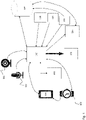
- FIG. 1 shows an example of the system and the related data sources.
- a primary element of the invention is a driving behavior device 100 (i.e., a vehicle monitoring system).
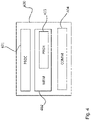
- the driving behavior device 100 may be an independent device (a more detailed example is shown in Fig. 4 ) which comprises at least one processor and a memory, as well as computer software stored in the memory, and is arranged in a vehicle.
- the functionality of the driving behavior device 100 may also be implemented by software in a control device or another device in the vehicle.
- the driving behavior device 100 is configured to collect data from various data sources. Examples of these include a bus data source 108, other vehicles 107, other external data sources 106, a driver microphone 103, a camera 111, such as a video camera, recording the driver, and a database 105.
- the external data source 106 may be, for example, a meteorological or road condition information service, and/or a traffic information service, or the like.
- the driving behavior device collects personal data from, for example, a well-being device 102 and/or a mobile device 109 of the driver.
- the database 105 may comprise stored history data, such as location data, speed data, acceleration data, data obtained from the systems of the vehicle and collected by driving behavior/monitoring systems, for example before the introduction of the present invention.
- the driver's well-being device 102 may be used for collecting data on, for example, heart rate, heartbeat intervals, oxygen saturation, alertness, activity, sleep, the temperature of the body or a body part, etc. Moreover, the driver's well-being device 102 may receive and transmit emergency calls from the driver. The driver's well-being device 102 together with a mobile device 109 may determine the driver's working hours on the basis of data obtained from the database 105, as well as verify pauses on the basis of the activity data. The driver's well-being device 102 and/or mobile device 109 may also provide the driver with information on the driving behavior and state to drive. In addition, the well-being device 102 and/or the mobile device 109 and/or the vehicle's information display may receive/transmit information and/or warnings relating to detected conditions, such as deer, road condition, weather condition, accidents, etc.
- data may be collected from samples taken from the skin or breath, such as a chemical sample indicating the use of alcohol, drugs or medicines.
- the driver of the vehicle may also have a measuring device consisting of one or more sensors measuring the movements of the limbs.
- movements of the driver are included in the analysis, for example movements of the hands on the steering wheel, movements of the head, movements of the body on the seat.
- Movement data may be collected by means of e.g., wearable sensors as well as movement and pressure sensors in the seat.
- it is essential to detect how the movements of the driver's hands and body react to perceptions and to movements of the automobile.
- data may be collected from an eye monitoring system, such as a camera producing data on eye movements, pupils, eyebrow positions, etc.
- Examples of data sources of third parties include weather and road condition services, traffic data services, traffic disruption services, operation control systems, emergency response centers, etc.
- the above-presented data source may produce data which is, for example:
- the driving behavior device may utilize several items of the above-mentioned data in various combinations, for determining the driving behavior index.
- Data is received and transmitted over one or more communication networks by a communications interface in the device 100.
- the communication network to be used is set up between the driving behavior device 100 and each data source 102, 103, 105, 106, 107, 108, 109, 111.
- various data transmission methods can be utilized, such as Bluetooth, WiFi, and/or 5G or 6G data transmission.
- data may be directed from a data source first to a data collecting device which will transmit the data further to the driving behavior device 100.
- An example of such an arrangement is data transmission from a well-being device 102 to a mobile device 109 which will transmit the data further to the driving behavior device 100.
- Driver-specific data relating to the evaluation of the driving and based on analyzed data, as well as decisions made on this, may be stored in the database 105. It is also possible to create statistics in the database, collected from several drivers and based on history data.
- the database 105 may also be used for storing driver-specific basic data relating to e.g., the driver's work shifts, driving behavior, underlying medical conditions, etc. This data may be stored in connection with the driver profile, and it may be anonymized for use by outsiders (e.g., statistics).
- the driving behavior device 100 makes decisions on the driver's driving behavior by computing a driving behavior index.
- the driver-specific driving behavior index is stored with the parameters indicating the driving situation in the database 105. Furthermore, if the driving behavior index indicates that the driver's driving behavior is substantially impaired in the situation at hand, the driving behavior device 100 will give a notice 104 of this and possibly make a decision on interrupting the driving.
- the decisions are stored in the database 105 and also transmitted to the driver, for example to the well-being device 102 and/or the mobile device 109 and/or a display of the vehicle.
- the driving behavior device 100 may also control an external system 110, such as the vehicle's steering equipment, speed limiters, etc.
- the driving behavior device 100 is also configured to give an alarm and/or a notice in real time, without/before computing the driving behavior index.
- a situation may occur when an abrupt change is detected in the data obtained from the driver's well-being sensor, relating to for example a rise in the heart rate or another occurrence indicating a change in the health, whereby the driving behavior device is configured, for example, to check on the driver, to limit the driving speed or the driving; and/or to report on the situation, for example to a driver supervisor.
- a real-time alarm can be given if the driver abruptly assumes an abnormal driving behavior which can be attributed to a change in the physical or mental health.
- the alarm can be given to a third party, such as a central station, an emergency response center, but inside the vehicle as well.
- the driving behavior index is generated in a number of ways, depending on by which, what kind of, and how much data is collected on the vehicle and/or its driver.
- the driving behavior index may be composed by data fusion of data obtained from different data sources, with dynamically different weightings.
- the driving behavior indices are commensurate with each other, but in computing, it is possible to rely on statistical processing and generalizations.
- Statistics is utilized when a limited amount of data and/or parameters is available. The analyses may be classified and named according to the depth of the data available.
- Computational results of the driving behaviour index may be presented after the driving, for example in reports and summaries, reflecting on history.
- one data source may also be data collected by other systems of the vehicle.
- An example of such a data source is software and cloud services of automobile manufacturers, which may provide usage data and status data on, for example, controls and accessories, as well as usage data on the power source (e.g., power, torque), and failure information. Consequently, this scheme makes it possible to cooperate with automobile manufacturers and their software providers.
- the system may compute other data on risk control and environmental impacts relating to transportation. Examples include precise attribution of discharges to driving performances, considering alternative fuels, as well as analysis and disclosure of safety risks relating to the performances.
- a driving behavior analysis is based on the analysis of data relating to well-being and data obtained from a third party, as well as of changes in the state of motion of the vehicle.
- Data relating to changes in the state of motion of the vehicle is obtained from acceleration measurement by an on-board device, from satellite data, and from systems of the vehicle. Accelerations caused by forces effective on the vehicle, as well as the speed of the vehicle, and changes in it, are used as a basis for the analysis.
- Norms are set for allowable acceleration values for driving the vehicle. Exceeding the limit values of the norms will cause a scoring having a negative effect on the driving index; in other words, penalty marks are computed for the driver for exposing the vehicle to excessively high accelerations.
- the basis for the norms is a large amount of data collected from transportation over more than ten years.
- the aim of using the acceleration norms is to protect passengers of the vehicle from uncomfortable and risky travelling, goods to be transported from being damaged, the vehicle itself from wearing and being damaged, and other transport users from risky driving behavior.
- the norms of acceleration are two-tiered and computed for each of the six directions separately.
- a minor penalty mark is given for exceeding the first level of the limit values, a major penalty mark for exceeding the second level. Repeated exceeding of the second level will also cause an immediate warning to be displayed to the driver and to be transmitted to the data system.
- the set limit values vary slightly according to the type of the vehicle and the transporting task, as well as the needs and wishes of the customer, but primarily the limit values are within a relatively small range, within a level of travel comfort experienced as convenient by people in passenger transport as well as freight transport.
- the speed of the vehicle and changes therein are measured, either indirectly by means of the speed computed by satellite positioning of the system, or directly by means of the speed indicated by the bus data of the vehicle.
- an average speed from a longer period of time as well as minimum and maximum values are determined in addition to the instantaneous speed of the vehicle.
- changes in the speed are analyzed in various ways.
- norms are set for allowable speed values for driving the vehicle. Exceeding the limit values of the norms will cause a score having a negative effect on the driving index; in other words, penalty marks are computed for the driver for exposing the vehicle to excessive speeds or changes in the speed.
- the purpose of using the speed norms is to reduce fuel costs and to protect passengers and goods transported on the vehicle, the vehicle itself, and other traffic users from selecting a harmful and dangerous driving speed.
- the speed norms are two-tiered as well.
- a lower, so-called soft limit value for continuous driving speed is set to a level according to the vehicle, the legislation and the needs of the transport company.
- the limit value defines the maximum speed that the driver should use in continuous driving of long distances.
- the limit value is compared with the average speed of the vehicle, so that the analysis does not significantly take into account instantaneous speed values exceeding the limit value.
- the upper, so-called hard limit value for instantaneous speed is set to a level according to the vehicle, the legislation and the needs of the transport company.
- the instantaneous limit value weights the actual safe use of the vehicle, possibly at the expense of legislation.
- the speed analysis also processes changes in the driving speed, in addition to occurrences of exceeding the defined limit values. Changes in the speed are analyzed for small uneven changes in the driving speed during long-distance driving and for continual changes in the driving speed primarily when driving in urban zones. These analyses apply fixed predetermined limit values which cannot be set according to the vehicle or the transport company.
- the aim of the analysis of uneven driving speed is to encourage the driver to drive at a steady travel speed, preferably by applying cruise control if it is available and applicable in the respective driving situation.
- a steady driving speed enhances a safe and smooth traffic flow by reducing unnecessary variation in speed.
- the analysis is only active at highway speeds. It allows very small speed variations ( ⁇ 2 km/h) without responding to them. Large speed variations (> ⁇ 5 km/h) are also interpreted as necessary speed variations and are not responded to. Other speed variations, falling between these ranges, are interpreted as harmful, and slight penalty marks are given for them.
- the aim of the analysis of varying driving speed is to encourage the driver to drive at a steady, proactive and predictable way in urban zones, as far as this is possible in each driving situation.
- a steady driving speed enhances a safe and smooth traffic flow by reducing unnecessary variation in speed.
- the analysis allows single variations in speed, such as slowing down when approaching an intersection, traffic lights or a bus stop, and accelerating again, without significantly responding to this. Only repeated clear changes in speed (> ⁇ 5 km/h back and forth) within a relatively short time are interpreted as being harmful, and a penalty marking is given for them, increasing progressively from mild to severe. If it is detected that a change in speed is associated with a change in the direction of the vehicle, for example at crossroads, it is not considered harmful even when repeated.
- Data on the well-being of the driver of the vehicle is measured by a personal sensor.
- the well-being analysis covers not only the current well-being (heart rate, stress, alertness, etc. ) of the driver of the vehicle but also the long-term well-being of the driver of the vehicle (sleep data, increase/decrease in stress level, activity, etc. ) , whereby overall well-being can be computed with various weightings.
- norms are set for allowable changes and deviations in relation to the average well-being of the driver. Exceeding the limit values of the norms will cause a marking having a negative effect on the driving behavior index; in other words, penalty marks are given for the driver for too little sleep, too high a stress level, too low alertness, etc.
- the norms relating to well-being may be two or more tiered, and they may involve a number of different factors on the well-being.
- the lower limit value should be slightly higher than resting heart rate, and the upper value should be well higher than the resting heart rate.
- Limit values can be set for driver-specific measured values or for average values. Irrespective of the parameter relating to well-being, a penalty mark is given for falling below the lower value as well as for exceeding the upper value, the penalty mark being the greater, the greater the deviation from the respective limit value is.
- the decisive factor is not necessarily considered to be exceeding a given numerical value but the decisive factor is a deviation from normal under the conditions in each case.
- a fixed numerical value or an average value is not necessarily significant but the deviation which reflects the normal situation.
- Each analysis conducted produces a score from the above-mentioned measured data, which score can be compressed into several sub-indices indicating the driving behavior, such as an acceleration sub-index, a speed sub-index and a well-being sub-index.
- the different sub-indices may be allocated their respective weighting coefficients which may be defined permanently or dynamically, whereby the magnitude of each weighting coefficient varies according to the prevailing circumstances. In other words, if the time of day is evening and the data obtained from weather condition data indicates freezing of road surfaces, more weight is given to the speed sub-index but also to alertness.
- the driving behavior index or data on the effect of the driving behavior index on the driver's performance may be transmitted to supervisory staff and/or, for example, to an occupational health centre, for measures and decisions.
- driver restrictions may be imposed by defining an allowable speed to be used and/or by defining allowable routes, or if the driving behavior index indicates that the current driving of the driver meets the criteria of risk driving, the driving may be gradually interrupted, etc.
- real-time observations on changes in health, affecting the driver's driving behavior may cause restrictions on the driving speed, the driving zone, or the driving time.
- the driving behavior index may be supplied to the provider of another fleet management service.
- the driving behavior index may be used for determining user fees based on performance, insurances, maintenance services, emergency calls, as well as data relating to shared e use, leasing, and charging.
- these are examples of possible uses of the driving behaviour index and they should thus not be interpreted to unnecessarily restrict the invention.
- the numerical value of the driving behavior index may be, for example, between 0 and 100.
- a relative driving behavior index may be determined in such a way that the best performance in a reference group is denoted by 100, and other performances below it fall in a scale from 0 to 100 or from 40 to 100.
- the relative driving behavior index may also be determined on the basis of the average for a reference group, which is denoted by 50, whereby the other indices range from 0 to 50 and from 50 to 100.
- the driving behavior index may be applied to restrict driving, for example, so that a good driver is allowed more decision-making power and freedom, for example in view of speeds. In addition, unnecessary giving of hints is avoided. Correspondingly, for a driver having a low driving behavior index, the speed and options are restricted, and the number of instructions to be given is increased.
- the driving behavior device 100 may utilize machine learning, deep learning, neural networks, or other solutions providing artificial intelligence 101.
- artificial intelligence solution 101 determines the driver's driving behaviour in the respective weather conditions (for example, foggy, rainy, dark), with the driver's capacity at the time (good sleep quality, alert and active mind), and/or how a decrease in a physiological parameter will affect the capability to drive at the time.
- the artificial intelligence solution 101 is also capable of determining weighting coefficients effective on the driving behavior index.
- the machine learning algorithm has to be trained with data from which the driving situations and the environmental and well-being parameters effective on them can be derived.
- the machine learning algorithm may be trained with data in a database before the algorithm is taken into use, but training is also implemented during the use of the driving behavior device, on the basis of data received continually. If an accident or a near miss occurs in a driving situation, training data can be strengthened on the basis of such data, whereby the driving situation that affected the event will be registered.
- FIG. 2 shows an example of a vehicle 280.
- the vehicle 280 comprises an electronic unit 270 which receives data obtained from different data sources of the vehicle.
- the data sources may be a well-being device 202 and one or more steering devices 208 of the vehicle.
- the electronic unit 270 transmits the received data to a database 205 and to a computing unit 200.
- the electronic unit 270 may act as a harmonizer for data, whereby the data to be transmitted is already in a commensurable format.
- the data harmonization may take place in the database 205 or in the computing unit 200.
- the database 205 receives data from one or more external data sources 250.
- the computing unit 200 which comprises a processor and a computer program stored in a memory, determines the driving behavior index on the basis of data received from the electronic unit 270 of the vehicle, and optionally from the external data sources 250 as well. On the basis of the driving behavior index determined by the computing unit 200, it is possible to control e.g., the control equipment 208 of the vehicle 280.
- the computing unit 200 may be a part of the database 205, a part of the electronic unit 270, or an independent device.
- the computing unit 200 is responsible for the functionality of the driving behavior device 100 of Fig. 1 .
- the method comprises at least receiving 301 data from two or more data sources, of which at least one produces data relating to changes in the state of motion of a vehicle, and at least one other produces measured data on the well-being of the driver; scoring 302 the received data by comparing it with data-specific reference values; forming 303 a respective sub-index from each scored item of data; determining 304 a driving behavior index on the basis of the formed sub-indices; and controlling 305 a control equipment of the vehicle on the basis of the driving behavior index; and/or storing the driving behavior index in a database.
- the different steps of the method can be implemented by corresponding hardware and/or software modules in a computer.
- the device 400 comprises at least one processor 401 and a memory 402. At least a computer program 403 comprising commands executable in a computer is stored in the memory 402. When executed by the processor 401, the commands of the computer program 403 make the device 400 perform the method according to Fig. 3 . Furthermore, the device 400 comprises a communication interface 404 configured for communication between the device 400 and an external system. The communication may be wireless and/or wired, as presented above.
Landscapes
- Health & Medical Sciences (AREA)
- Engineering & Computer Science (AREA)
- Life Sciences & Earth Sciences (AREA)
- Physics & Mathematics (AREA)
- Animal Behavior & Ethology (AREA)
- Surgery (AREA)
- Veterinary Medicine (AREA)
- Public Health (AREA)
- General Health & Medical Sciences (AREA)
- Molecular Biology (AREA)
- Medical Informatics (AREA)
- Biophysics (AREA)
- Pathology (AREA)
- Biomedical Technology (AREA)
- Heart & Thoracic Surgery (AREA)
- Mechanical Engineering (AREA)
- Transportation (AREA)
- Cardiology (AREA)
- Physiology (AREA)
- General Physics & Mathematics (AREA)
- Combustion & Propulsion (AREA)
- Chemical & Material Sciences (AREA)
- Psychiatry (AREA)
- Automation & Control Theory (AREA)
- Psychology (AREA)
- Hospice & Palliative Care (AREA)
- Educational Technology (AREA)
- Developmental Disabilities (AREA)
- Social Psychology (AREA)
- Child & Adolescent Psychology (AREA)
- Mathematical Physics (AREA)
- Dentistry (AREA)
- Oral & Maxillofacial Surgery (AREA)
- Human Computer Interaction (AREA)
- Pulmonology (AREA)
- Atmospheric Sciences (AREA)
- Optics & Photonics (AREA)
- Traffic Control Systems (AREA)
- Control Of Driving Devices And Active Controlling Of Vehicle (AREA)
Applications Claiming Priority (1)
| Application Number | Priority Date | Filing Date | Title |
|---|---|---|---|
| FI20215174A FI129297B (fi) | 2021-02-19 | 2021-02-19 | Laite, menetelmä ja tietokoneohjelma ajoneuvon kuljettajan ajotavan määrittämiseksi |
Publications (3)
| Publication Number | Publication Date |
|---|---|
| EP4046888A1 true EP4046888A1 (fr) | 2022-08-24 |
| EP4046888B1 EP4046888B1 (fr) | 2024-06-26 |
| EP4046888C0 EP4046888C0 (fr) | 2024-06-26 |
Family
ID=78475480
Family Applications (1)
| Application Number | Title | Priority Date | Filing Date |
|---|---|---|---|
| EP22152704.7A Active EP4046888B1 (fr) | 2021-02-19 | 2022-01-21 | Dispositif, procédé et programme informatique permettant de déterminer le comportement de conduite d'un conducteur |
Country Status (3)
| Country | Link |
|---|---|
| US (1) | US11597276B2 (fr) |
| EP (1) | EP4046888B1 (fr) |
| FI (1) | FI129297B (fr) |
Cited By (1)
| Publication number | Priority date | Publication date | Assignee | Title |
|---|---|---|---|---|
| EP4574613A1 (fr) * | 2023-12-22 | 2025-06-25 | Volvo Car Corporation | Procédé pour déclencher une procédure de sécurité pour décélérer un véhicule |
Families Citing this family (11)
| Publication number | Priority date | Publication date | Assignee | Title |
|---|---|---|---|---|
| WO2022221971A1 (fr) * | 2021-04-18 | 2022-10-27 | 上海联影医疗科技股份有限公司 | Système et procédé pour commander un appareil médical |
| US11820387B2 (en) * | 2021-05-10 | 2023-11-21 | Qualcomm Incorporated | Detecting driving behavior of vehicles |
| DE102022110158A1 (de) * | 2022-04-27 | 2023-11-02 | Bayerische Motoren Werke Aktiengesellschaft | Verfahren zum Betreiben eines Schlafassistenten während eines Ladevorgangs eines Fahrzeugs, computerlesbares Medium, System, und Fahrzeug |
| CN119630571A (zh) * | 2022-06-15 | 2025-03-14 | 安培股份公司 | 用于管理机动车辆的纵向速度的方法 |
| KR20240081635A (ko) * | 2022-11-30 | 2024-06-10 | 현대자동차주식회사 | 차량 주행 제어를 위한 서버, 시스템 및 그 방법 |
| CN117238131B (zh) * | 2023-09-14 | 2024-05-07 | 中国民航大学 | 一种车联网环境下交通流特性分析方法 |
| KR102756308B1 (ko) * | 2023-10-23 | 2025-01-21 | 주식회사 노타 | Dms에서 운전자의 행동에 따른 알람을 제공하기 위한 방법 |
| CN117653121A (zh) * | 2023-11-23 | 2024-03-08 | 北京津发科技股份有限公司 | 一种车辆驾驶舒适度评价方法、系统和装置 |
| CN117273245B (zh) * | 2023-11-23 | 2024-02-02 | 深圳市中农网有限公司 | 一种物流运输成本管理智能优化方法及系统 |
| CN117465394B (zh) * | 2023-12-28 | 2024-04-16 | 深圳市开心电子有限公司 | 一种电动车紧急制动的控制方法及系统 |
| CN118631862B (zh) * | 2024-05-27 | 2026-01-02 | 奇瑞新能源汽车股份有限公司 | 驾驶场景的数据处理方法、装置、存储介质及程序产品 |
Citations (7)
| Publication number | Priority date | Publication date | Assignee | Title |
|---|---|---|---|---|
| US4439824A (en) * | 1971-12-06 | 1984-03-27 | Ferdy Mayer | Device having one or more manually controlled functions |
| EP3006297A1 (fr) * | 2014-10-09 | 2016-04-13 | Hitachi, Ltd. | Dispositif de diagnostic de caractéristiques de conduite, système de diagnostic des caractéristiques de conduite, procédé de diagnostic des caractéristiques de conduite, dispositif d'envoi d'informations et procédé d'envoi d'informations |
| US20180281808A1 (en) * | 2017-03-29 | 2018-10-04 | Mazda Motor Corporation | Vehicle drive assistance system and vehicle drive assistance method |
| US20180326966A1 (en) * | 2017-05-11 | 2018-11-15 | Honda Motor Co., Ltd. | Understanding driver awareness through brake behavior analysis |
| US20190367029A1 (en) * | 2018-05-30 | 2019-12-05 | International Business Machines Corporation | Dynamic speed controller for vehicle |
| US20190375409A1 (en) * | 2018-06-12 | 2019-12-12 | Rivian Ip Holdings, Llc | Systems and methods for operating an autonomous vehicle in a guardian mode |
| US20210039644A1 (en) * | 2019-08-07 | 2021-02-11 | Ford Global Technologies, Llc | Nighttime driving vehicle speed limiting |
Family Cites Families (21)
| Publication number | Priority date | Publication date | Assignee | Title |
|---|---|---|---|---|
| FI120474B (fi) | 2005-09-14 | 2009-10-30 | Taipale Telematics Oy | Menetelmä ajoneuvon kuljettajan ajotavan havannoimiseksi, tallentamiseksi ja analysoimiseksi |
| US20130164715A1 (en) * | 2011-12-24 | 2013-06-27 | Zonar Systems, Inc. | Using social networking to improve driver performance based on industry sharing of driver performance data |
| US9527515B2 (en) * | 2011-12-23 | 2016-12-27 | Zonar Systems, Inc. | Vehicle performance based on analysis of drive data |
| US20160362118A1 (en) | 2011-08-31 | 2016-12-15 | Pulsar Informatics, Inc. | Driver performance metric |
| US8918229B2 (en) * | 2011-12-23 | 2014-12-23 | Zonar Systems, Inc. | Method and apparatus for 3-D accelerometer based slope determination, real-time vehicle mass determination, and vehicle efficiency analysis |
| JP6629199B2 (ja) * | 2013-11-22 | 2020-01-15 | コーニンクレッカ フィリップス エヌ ヴェKoninklijke Philips N.V. | 無呼吸安全管理 |
| US9714037B2 (en) * | 2014-08-18 | 2017-07-25 | Trimble Navigation Limited | Detection of driver behaviors using in-vehicle systems and methods |
| US9302584B2 (en) * | 2014-08-25 | 2016-04-05 | Verizon Patent And Licensing Inc. | Drowsy driver prevention systems and methods |
| US9771081B2 (en) * | 2014-09-29 | 2017-09-26 | The Boeing Company | System for fatigue detection using a suite of physiological measurement devices |
| JP5987922B2 (ja) | 2015-01-08 | 2016-09-07 | マツダ株式会社 | ドライバ感情に基づく運転支援装置 |
| US20210169417A1 (en) * | 2016-01-06 | 2021-06-10 | David Burton | Mobile wearable monitoring systems |
| JP6365554B2 (ja) | 2016-01-14 | 2018-08-01 | マツダ株式会社 | 運転支援装置 |
| US10262219B2 (en) * | 2016-04-21 | 2019-04-16 | Hyundai Motor Company | Apparatus and method to determine drowsiness of a driver |
| US9956963B2 (en) * | 2016-06-08 | 2018-05-01 | GM Global Technology Operations LLC | Apparatus for assessing, predicting, and responding to driver fatigue and drowsiness levels |
| DE102017200149B4 (de) | 2017-01-09 | 2022-06-15 | Ford Motor Company | Verfahren zum Erlernen und Überprüfen eines Fahrverhaltens eines Fahrzeugführers sowie Fahrzeug |
| US10065638B1 (en) * | 2017-08-03 | 2018-09-04 | Uber Technologies, Inc. | Multi-model switching on a collision mitigation system |
| US10379535B2 (en) * | 2017-10-24 | 2019-08-13 | Lear Corporation | Drowsiness sensing system |
| US10836403B2 (en) * | 2017-12-04 | 2020-11-17 | Lear Corporation | Distractedness sensing system |
| US10196071B1 (en) | 2017-12-26 | 2019-02-05 | Samsara Networks Inc. | Method and apparatus for monitoring driving behavior of a driver of a vehicle |
| US20190210591A1 (en) * | 2018-01-08 | 2019-07-11 | Sri International | System and Method to Enhance the Driving Performance of a Leanable Vehicle |
| US10867218B2 (en) * | 2018-04-26 | 2020-12-15 | Lear Corporation | Biometric sensor fusion to classify vehicle passenger state |
-
2021
- 2021-02-19 FI FI20215174A patent/FI129297B/fi active IP Right Grant
-
2022
- 2022-01-21 EP EP22152704.7A patent/EP4046888B1/fr active Active
- 2022-02-17 US US17/674,434 patent/US11597276B2/en active Active
Patent Citations (7)
| Publication number | Priority date | Publication date | Assignee | Title |
|---|---|---|---|---|
| US4439824A (en) * | 1971-12-06 | 1984-03-27 | Ferdy Mayer | Device having one or more manually controlled functions |
| EP3006297A1 (fr) * | 2014-10-09 | 2016-04-13 | Hitachi, Ltd. | Dispositif de diagnostic de caractéristiques de conduite, système de diagnostic des caractéristiques de conduite, procédé de diagnostic des caractéristiques de conduite, dispositif d'envoi d'informations et procédé d'envoi d'informations |
| US20180281808A1 (en) * | 2017-03-29 | 2018-10-04 | Mazda Motor Corporation | Vehicle drive assistance system and vehicle drive assistance method |
| US20180326966A1 (en) * | 2017-05-11 | 2018-11-15 | Honda Motor Co., Ltd. | Understanding driver awareness through brake behavior analysis |
| US20190367029A1 (en) * | 2018-05-30 | 2019-12-05 | International Business Machines Corporation | Dynamic speed controller for vehicle |
| US20190375409A1 (en) * | 2018-06-12 | 2019-12-12 | Rivian Ip Holdings, Llc | Systems and methods for operating an autonomous vehicle in a guardian mode |
| US20210039644A1 (en) * | 2019-08-07 | 2021-02-11 | Ford Global Technologies, Llc | Nighttime driving vehicle speed limiting |
Cited By (1)
| Publication number | Priority date | Publication date | Assignee | Title |
|---|---|---|---|---|
| EP4574613A1 (fr) * | 2023-12-22 | 2025-06-25 | Volvo Car Corporation | Procédé pour déclencher une procédure de sécurité pour décélérer un véhicule |
Also Published As
| Publication number | Publication date |
|---|---|
| EP4046888B1 (fr) | 2024-06-26 |
| FI129297B (fi) | 2021-11-15 |
| US20220266691A1 (en) | 2022-08-25 |
| FI20215174A1 (fi) | 2021-11-15 |
| EP4046888C0 (fr) | 2024-06-26 |
| US11597276B2 (en) | 2023-03-07 |
Similar Documents
| Publication | Publication Date | Title |
|---|---|---|
| US11597276B2 (en) | Device, a method, and a computer program for determining the driving behavior of a driver | |
| US11858419B2 (en) | Fatigue driving monitoring, reminding and early-warning method and system based on computer vision | |
| US11203294B2 (en) | Motor vehicle artificial intelligence expert system dangerous driving warning and control system and method | |
| US12600364B2 (en) | Exhaustive driving analytical systems and modelers | |
| US11634145B2 (en) | Systems and methods for detecting and dynamically mitigating driver fatigue | |
| US9198575B1 (en) | System and method for determining a level of operator fatigue | |
| JP6972629B2 (ja) | 情報処理装置、情報処理方法、及び、プログラム | |
| US11821741B2 (en) | Stress map and vehicle navigation route | |
| EP2678206B1 (fr) | Système et procédé permettant la formation d'un opérateur à bord d'un véhicule | |
| CN110316198A (zh) | 一种用于高速公路提速的安全保障系统及运行方法 | |
| US10528833B1 (en) | Health monitoring system operable in a vehicle environment | |
| CN114072865A (zh) | 信息处理装置、移动装置、方法和程序 | |
| JPWO2018190152A1 (ja) | 情報処理装置、情報処理方法、及び、プログラム | |
| CN106618524A (zh) | 丧失驾驶能力的检测和预防 | |
| CN115662143B (zh) | 一种公交企业运营安全态势动态预测系统及方法 | |
| CN109615856A (zh) | 一种智能交通服务器、智能交通灯设备和车载终端 | |
| CN118744721A (zh) | 驾驶辅助方法、装置、车辆、电子设备及存储介质 | |
| CN109523831A (zh) | 一种智能交通系统和方法 | |
| Arya et al. | Effective Driver Fatigue Management and Prevention Using Cloud-Integrated RNN Models | |
| RU240715U1 (ru) | Устройство регулирования скорости транспортного средства | |
| Saleh et al. | Fuzzy-based recognition model for driving styles | |
| RU2810707C1 (ru) | Способ определения эксплуатационных параметров автомобиля, фиксируемых при движении в колонне | |
| CN115497290B (zh) | 面向交通系统韧性提升的个体行为风险识别方法及系统 | |
| CN120116948A (zh) | 疲劳驾驶的检测方法、系统、设备和介质 | |
| JP2023118800A (ja) | 情報処理システム、情報処理装置、情報処理方法、及び、プログラム |
Legal Events
| Date | Code | Title | Description |
|---|---|---|---|
| PUAI | Public reference made under article 153(3) epc to a published international application that has entered the european phase |
Free format text: ORIGINAL CODE: 0009012 |
|
| STAA | Information on the status of an ep patent application or granted ep patent |
Free format text: STATUS: THE APPLICATION HAS BEEN PUBLISHED |
|
| AK | Designated contracting states |
Kind code of ref document: A1 Designated state(s): AL AT BE BG CH CY CZ DE DK EE ES FI FR GB GR HR HU IE IS IT LI LT LU LV MC MK MT NL NO PL PT RO RS SE SI SK SM TR |
|
| STAA | Information on the status of an ep patent application or granted ep patent |
Free format text: STATUS: REQUEST FOR EXAMINATION WAS MADE |
|
| 17P | Request for examination filed |
Effective date: 20230209 |
|
| RBV | Designated contracting states (corrected) |
Designated state(s): AL AT BE BG CH CY CZ DE DK EE ES FI FR GB GR HR HU IE IS IT LI LT LU LV MC MK MT NL NO PL PT RO RS SE SI SK SM TR |
|
| GRAP | Despatch of communication of intention to grant a patent |
Free format text: ORIGINAL CODE: EPIDOSNIGR1 |
|
| STAA | Information on the status of an ep patent application or granted ep patent |
Free format text: STATUS: GRANT OF PATENT IS INTENDED |
|
| RIC1 | Information provided on ipc code assigned before grant |
Ipc: B60K 28/06 20060101ALI20240207BHEP Ipc: B60W 40/09 20120101AFI20240207BHEP |
|
| INTG | Intention to grant announced |
Effective date: 20240221 |
|
| GRAS | Grant fee paid |
Free format text: ORIGINAL CODE: EPIDOSNIGR3 |
|
| GRAA | (expected) grant |
Free format text: ORIGINAL CODE: 0009210 |
|
| STAA | Information on the status of an ep patent application or granted ep patent |
Free format text: STATUS: THE PATENT HAS BEEN GRANTED |
|
| AK | Designated contracting states |
Kind code of ref document: B1 Designated state(s): AL AT BE BG CH CY CZ DE DK EE ES FI FR GB GR HR HU IE IS IT LI LT LU LV MC MK MT NL NO PL PT RO RS SE SI SK SM TR |
|
| REG | Reference to a national code |
Ref country code: GB Ref legal event code: FG4D |
|
| REG | Reference to a national code |
Ref country code: CH Ref legal event code: EP |
|
| REG | Reference to a national code |
Ref country code: DE Ref legal event code: R096 Ref document number: 602022004069 Country of ref document: DE |
|
| U01 | Request for unitary effect filed |
Effective date: 20240626 |
|
| U07 | Unitary effect registered |
Designated state(s): AT BE BG DE DK EE FI FR IT LT LU LV MT NL PT RO SE SI Effective date: 20240902 |
|
| PG25 | Lapsed in a contracting state [announced via postgrant information from national office to epo] |
Ref country code: HR Free format text: LAPSE BECAUSE OF FAILURE TO SUBMIT A TRANSLATION OF THE DESCRIPTION OR TO PAY THE FEE WITHIN THE PRESCRIBED TIME-LIMIT Effective date: 20240626 |
|
| PG25 | Lapsed in a contracting state [announced via postgrant information from national office to epo] |
Ref country code: GR Free format text: LAPSE BECAUSE OF FAILURE TO SUBMIT A TRANSLATION OF THE DESCRIPTION OR TO PAY THE FEE WITHIN THE PRESCRIBED TIME-LIMIT Effective date: 20240927 |
|
| PG25 | Lapsed in a contracting state [announced via postgrant information from national office to epo] |
Ref country code: NO Free format text: LAPSE BECAUSE OF FAILURE TO SUBMIT A TRANSLATION OF THE DESCRIPTION OR TO PAY THE FEE WITHIN THE PRESCRIBED TIME-LIMIT Effective date: 20240926 Ref country code: HR Free format text: LAPSE BECAUSE OF FAILURE TO SUBMIT A TRANSLATION OF THE DESCRIPTION OR TO PAY THE FEE WITHIN THE PRESCRIBED TIME-LIMIT Effective date: 20240626 Ref country code: GR Free format text: LAPSE BECAUSE OF FAILURE TO SUBMIT A TRANSLATION OF THE DESCRIPTION OR TO PAY THE FEE WITHIN THE PRESCRIBED TIME-LIMIT Effective date: 20240927 Ref country code: RS Free format text: LAPSE BECAUSE OF FAILURE TO SUBMIT A TRANSLATION OF THE DESCRIPTION OR TO PAY THE FEE WITHIN THE PRESCRIBED TIME-LIMIT Effective date: 20240926 |
|
| PG25 | Lapsed in a contracting state [announced via postgrant information from national office to epo] |
Ref country code: PL Free format text: LAPSE BECAUSE OF FAILURE TO SUBMIT A TRANSLATION OF THE DESCRIPTION OR TO PAY THE FEE WITHIN THE PRESCRIBED TIME-LIMIT Effective date: 20240626 |
|
| PG25 | Lapsed in a contracting state [announced via postgrant information from national office to epo] |
Ref country code: IS Free format text: LAPSE BECAUSE OF FAILURE TO SUBMIT A TRANSLATION OF THE DESCRIPTION OR TO PAY THE FEE WITHIN THE PRESCRIBED TIME-LIMIT Effective date: 20241026 |
|
| PG25 | Lapsed in a contracting state [announced via postgrant information from national office to epo] |
Ref country code: CZ Free format text: LAPSE BECAUSE OF FAILURE TO SUBMIT A TRANSLATION OF THE DESCRIPTION OR TO PAY THE FEE WITHIN THE PRESCRIBED TIME-LIMIT Effective date: 20240626 |
|
| PG25 | Lapsed in a contracting state [announced via postgrant information from national office to epo] |
Ref country code: SK Free format text: LAPSE BECAUSE OF FAILURE TO SUBMIT A TRANSLATION OF THE DESCRIPTION OR TO PAY THE FEE WITHIN THE PRESCRIBED TIME-LIMIT Effective date: 20240626 |
|
| PG25 | Lapsed in a contracting state [announced via postgrant information from national office to epo] |
Ref country code: SM Free format text: LAPSE BECAUSE OF FAILURE TO SUBMIT A TRANSLATION OF THE DESCRIPTION OR TO PAY THE FEE WITHIN THE PRESCRIBED TIME-LIMIT Effective date: 20240626 Ref country code: ES Free format text: LAPSE BECAUSE OF FAILURE TO SUBMIT A TRANSLATION OF THE DESCRIPTION OR TO PAY THE FEE WITHIN THE PRESCRIBED TIME-LIMIT Effective date: 20240626 |
|
| PG25 | Lapsed in a contracting state [announced via postgrant information from national office to epo] |
Ref country code: SM Free format text: LAPSE BECAUSE OF FAILURE TO SUBMIT A TRANSLATION OF THE DESCRIPTION OR TO PAY THE FEE WITHIN THE PRESCRIBED TIME-LIMIT Effective date: 20240626 Ref country code: SK Free format text: LAPSE BECAUSE OF FAILURE TO SUBMIT A TRANSLATION OF THE DESCRIPTION OR TO PAY THE FEE WITHIN THE PRESCRIBED TIME-LIMIT Effective date: 20240626 Ref country code: PL Free format text: LAPSE BECAUSE OF FAILURE TO SUBMIT A TRANSLATION OF THE DESCRIPTION OR TO PAY THE FEE WITHIN THE PRESCRIBED TIME-LIMIT Effective date: 20240626 Ref country code: IS Free format text: LAPSE BECAUSE OF FAILURE TO SUBMIT A TRANSLATION OF THE DESCRIPTION OR TO PAY THE FEE WITHIN THE PRESCRIBED TIME-LIMIT Effective date: 20241026 Ref country code: ES Free format text: LAPSE BECAUSE OF FAILURE TO SUBMIT A TRANSLATION OF THE DESCRIPTION OR TO PAY THE FEE WITHIN THE PRESCRIBED TIME-LIMIT Effective date: 20240626 Ref country code: CZ Free format text: LAPSE BECAUSE OF FAILURE TO SUBMIT A TRANSLATION OF THE DESCRIPTION OR TO PAY THE FEE WITHIN THE PRESCRIBED TIME-LIMIT Effective date: 20240626 |
|
| U20 | Renewal fee for the european patent with unitary effect paid |
Year of fee payment: 4 Effective date: 20250110 |
|
| PLBE | No opposition filed within time limit |
Free format text: ORIGINAL CODE: 0009261 |
|
| STAA | Information on the status of an ep patent application or granted ep patent |
Free format text: STATUS: NO OPPOSITION FILED WITHIN TIME LIMIT |
|
| 26N | No opposition filed |
Effective date: 20250327 |
|
| REG | Reference to a national code |
Ref country code: CH Ref legal event code: PL |
|
| PG25 | Lapsed in a contracting state [announced via postgrant information from national office to epo] |
Ref country code: MC Free format text: LAPSE BECAUSE OF FAILURE TO SUBMIT A TRANSLATION OF THE DESCRIPTION OR TO PAY THE FEE WITHIN THE PRESCRIBED TIME-LIMIT Effective date: 20240626 |
|
| PG25 | Lapsed in a contracting state [announced via postgrant information from national office to epo] |
Ref country code: CH Free format text: LAPSE BECAUSE OF NON-PAYMENT OF DUE FEES Effective date: 20250131 |
|
| PG25 | Lapsed in a contracting state [announced via postgrant information from national office to epo] |
Ref country code: IE Free format text: LAPSE BECAUSE OF NON-PAYMENT OF DUE FEES Effective date: 20250121 |
|
| U20 | Renewal fee for the european patent with unitary effect paid |
Year of fee payment: 5 Effective date: 20260114 |
|
| PGFP | Annual fee paid to national office [announced via postgrant information from national office to epo] |
Ref country code: GB Payment date: 20260121 Year of fee payment: 5 |