EP4045348B1 - Verfahren zum steuern eines hybridantriebsstrangs eines hybridkraftfahrzeugs - Google Patents
Verfahren zum steuern eines hybridantriebsstrangs eines hybridkraftfahrzeugs Download PDFInfo
- Publication number
- EP4045348B1 EP4045348B1 EP20772292.7A EP20772292A EP4045348B1 EP 4045348 B1 EP4045348 B1 EP 4045348B1 EP 20772292 A EP20772292 A EP 20772292A EP 4045348 B1 EP4045348 B1 EP 4045348B1
- Authority
- EP
- European Patent Office
- Prior art keywords
- drive unit
- transmission
- rotation speed
- friction clutch
- input shaft
- Prior art date
- Legal status (The legal status is an assumption and is not a legal conclusion. Google has not performed a legal analysis and makes no representation as to the accuracy of the status listed.)
- Active
Links
Images



Classifications
-
- B—PERFORMING OPERATIONS; TRANSPORTING
- B60—VEHICLES IN GENERAL
- B60K—ARRANGEMENT OR MOUNTING OF PROPULSION UNITS OR OF TRANSMISSIONS IN VEHICLES; ARRANGEMENT OR MOUNTING OF PLURAL DIVERSE PRIME-MOVERS IN VEHICLES; AUXILIARY DRIVES FOR VEHICLES; INSTRUMENTATION OR DASHBOARDS FOR VEHICLES; ARRANGEMENTS IN CONNECTION WITH COOLING, AIR INTAKE, GAS EXHAUST OR FUEL SUPPLY OF PROPULSION UNITS IN VEHICLES
- B60K6/00—Arrangement or mounting of plural diverse prime-movers for mutual or common propulsion, e.g. hybrid propulsion systems comprising electric motors and internal combustion engines
- B60K6/20—Arrangement or mounting of plural diverse prime-movers for mutual or common propulsion, e.g. hybrid propulsion systems comprising electric motors and internal combustion engines the prime-movers consisting of electric motors and internal combustion engines, e.g. HEVs
- B60K6/22—Arrangement or mounting of plural diverse prime-movers for mutual or common propulsion, e.g. hybrid propulsion systems comprising electric motors and internal combustion engines the prime-movers consisting of electric motors and internal combustion engines, e.g. HEVs characterised by apparatus, components or means specially adapted for HEVs
- B60K6/38—Arrangement or mounting of plural diverse prime-movers for mutual or common propulsion, e.g. hybrid propulsion systems comprising electric motors and internal combustion engines the prime-movers consisting of electric motors and internal combustion engines, e.g. HEVs characterised by apparatus, components or means specially adapted for HEVs characterised by the driveline clutches
- B60K6/387—Actuated clutches, i.e. clutches engaged or disengaged by electric, hydraulic or mechanical actuating means
-
- B—PERFORMING OPERATIONS; TRANSPORTING
- B60—VEHICLES IN GENERAL
- B60K—ARRANGEMENT OR MOUNTING OF PROPULSION UNITS OR OF TRANSMISSIONS IN VEHICLES; ARRANGEMENT OR MOUNTING OF PLURAL DIVERSE PRIME-MOVERS IN VEHICLES; AUXILIARY DRIVES FOR VEHICLES; INSTRUMENTATION OR DASHBOARDS FOR VEHICLES; ARRANGEMENTS IN CONNECTION WITH COOLING, AIR INTAKE, GAS EXHAUST OR FUEL SUPPLY OF PROPULSION UNITS IN VEHICLES
- B60K6/00—Arrangement or mounting of plural diverse prime-movers for mutual or common propulsion, e.g. hybrid propulsion systems comprising electric motors and internal combustion engines
- B60K6/20—Arrangement or mounting of plural diverse prime-movers for mutual or common propulsion, e.g. hybrid propulsion systems comprising electric motors and internal combustion engines the prime-movers consisting of electric motors and internal combustion engines, e.g. HEVs
- B60K6/42—Arrangement or mounting of plural diverse prime-movers for mutual or common propulsion, e.g. hybrid propulsion systems comprising electric motors and internal combustion engines the prime-movers consisting of electric motors and internal combustion engines, e.g. HEVs characterised by the architecture of the hybrid electric vehicle
- B60K6/48—Parallel type
-
- B—PERFORMING OPERATIONS; TRANSPORTING
- B60—VEHICLES IN GENERAL
- B60K—ARRANGEMENT OR MOUNTING OF PROPULSION UNITS OR OF TRANSMISSIONS IN VEHICLES; ARRANGEMENT OR MOUNTING OF PLURAL DIVERSE PRIME-MOVERS IN VEHICLES; AUXILIARY DRIVES FOR VEHICLES; INSTRUMENTATION OR DASHBOARDS FOR VEHICLES; ARRANGEMENTS IN CONNECTION WITH COOLING, AIR INTAKE, GAS EXHAUST OR FUEL SUPPLY OF PROPULSION UNITS IN VEHICLES
- B60K6/00—Arrangement or mounting of plural diverse prime-movers for mutual or common propulsion, e.g. hybrid propulsion systems comprising electric motors and internal combustion engines
- B60K6/20—Arrangement or mounting of plural diverse prime-movers for mutual or common propulsion, e.g. hybrid propulsion systems comprising electric motors and internal combustion engines the prime-movers consisting of electric motors and internal combustion engines, e.g. HEVs
- B60K6/50—Architecture of the driveline characterised by arrangement or kind of transmission units
- B60K6/54—Transmission for changing ratio
- B60K6/547—Transmission for changing ratio the transmission being a stepped gearing
-
- B—PERFORMING OPERATIONS; TRANSPORTING
- B60—VEHICLES IN GENERAL
- B60W—CONJOINT CONTROL OF VEHICLE SUB-UNITS OF DIFFERENT TYPE OR DIFFERENT FUNCTION; CONTROL SYSTEMS SPECIALLY ADAPTED FOR HYBRID VEHICLES; ROAD VEHICLE DRIVE CONTROL SYSTEMS FOR PURPOSES NOT RELATED TO THE CONTROL OF A PARTICULAR SUB-UNIT
- B60W10/00—Conjoint control of vehicle sub-units of different type or different function
- B60W10/04—Conjoint control of vehicle sub-units of different type or different function including control of propulsion units
- B60W10/06—Conjoint control of vehicle sub-units of different type or different function including control of propulsion units including control of combustion engines
-
- B—PERFORMING OPERATIONS; TRANSPORTING
- B60—VEHICLES IN GENERAL
- B60W—CONJOINT CONTROL OF VEHICLE SUB-UNITS OF DIFFERENT TYPE OR DIFFERENT FUNCTION; CONTROL SYSTEMS SPECIALLY ADAPTED FOR HYBRID VEHICLES; ROAD VEHICLE DRIVE CONTROL SYSTEMS FOR PURPOSES NOT RELATED TO THE CONTROL OF A PARTICULAR SUB-UNIT
- B60W10/00—Conjoint control of vehicle sub-units of different type or different function
- B60W10/04—Conjoint control of vehicle sub-units of different type or different function including control of propulsion units
- B60W10/08—Conjoint control of vehicle sub-units of different type or different function including control of propulsion units including control of electric propulsion units, e.g. motors or generators
-
- B—PERFORMING OPERATIONS; TRANSPORTING
- B60—VEHICLES IN GENERAL
- B60W—CONJOINT CONTROL OF VEHICLE SUB-UNITS OF DIFFERENT TYPE OR DIFFERENT FUNCTION; CONTROL SYSTEMS SPECIALLY ADAPTED FOR HYBRID VEHICLES; ROAD VEHICLE DRIVE CONTROL SYSTEMS FOR PURPOSES NOT RELATED TO THE CONTROL OF A PARTICULAR SUB-UNIT
- B60W10/00—Conjoint control of vehicle sub-units of different type or different function
- B60W10/10—Conjoint control of vehicle sub-units of different type or different function including control of change-speed gearings
- B60W10/11—Stepped gearings
- B60W10/113—Stepped gearings with two input flow paths, e.g. double clutch transmission selection of one of the torque flow paths by the corresponding input clutch
-
- B—PERFORMING OPERATIONS; TRANSPORTING
- B60—VEHICLES IN GENERAL
- B60W—CONJOINT CONTROL OF VEHICLE SUB-UNITS OF DIFFERENT TYPE OR DIFFERENT FUNCTION; CONTROL SYSTEMS SPECIALLY ADAPTED FOR HYBRID VEHICLES; ROAD VEHICLE DRIVE CONTROL SYSTEMS FOR PURPOSES NOT RELATED TO THE CONTROL OF A PARTICULAR SUB-UNIT
- B60W20/00—Control systems specially adapted for hybrid vehicles
- B60W20/50—Control strategies for responding to system failures, e.g. for fault diagnosis, failsafe operation or limp mode
-
- B—PERFORMING OPERATIONS; TRANSPORTING
- B60—VEHICLES IN GENERAL
- B60W—CONJOINT CONTROL OF VEHICLE SUB-UNITS OF DIFFERENT TYPE OR DIFFERENT FUNCTION; CONTROL SYSTEMS SPECIALLY ADAPTED FOR HYBRID VEHICLES; ROAD VEHICLE DRIVE CONTROL SYSTEMS FOR PURPOSES NOT RELATED TO THE CONTROL OF A PARTICULAR SUB-UNIT
- B60W30/00—Purposes of road vehicle drive control systems not related to the control of a particular sub-unit, e.g. of systems using conjoint control of vehicle sub-units
- B60W30/18—Propelling the vehicle
- B60W30/19—Improvement of gear change, e.g. by synchronisation or smoothing gear shift
-
- F—MECHANICAL ENGINEERING; LIGHTING; HEATING; WEAPONS; BLASTING
- F16—ENGINEERING ELEMENTS AND UNITS; GENERAL MEASURES FOR PRODUCING AND MAINTAINING EFFECTIVE FUNCTIONING OF MACHINES OR INSTALLATIONS; THERMAL INSULATION IN GENERAL
- F16H—GEARING
- F16H61/00—Control functions within control units of change-speed- or reversing-gearings for conveying rotary motion ; Control of exclusively fluid gearing, friction gearing, gearings with endless flexible members or other particular types of gearing
- F16H61/12—Detecting malfunction or potential malfunction, e.g. fail safe ; Circumventing or fixing failures
-
- B—PERFORMING OPERATIONS; TRANSPORTING
- B60—VEHICLES IN GENERAL
- B60K—ARRANGEMENT OR MOUNTING OF PROPULSION UNITS OR OF TRANSMISSIONS IN VEHICLES; ARRANGEMENT OR MOUNTING OF PLURAL DIVERSE PRIME-MOVERS IN VEHICLES; AUXILIARY DRIVES FOR VEHICLES; INSTRUMENTATION OR DASHBOARDS FOR VEHICLES; ARRANGEMENTS IN CONNECTION WITH COOLING, AIR INTAKE, GAS EXHAUST OR FUEL SUPPLY OF PROPULSION UNITS IN VEHICLES
- B60K6/00—Arrangement or mounting of plural diverse prime-movers for mutual or common propulsion, e.g. hybrid propulsion systems comprising electric motors and internal combustion engines
- B60K6/20—Arrangement or mounting of plural diverse prime-movers for mutual or common propulsion, e.g. hybrid propulsion systems comprising electric motors and internal combustion engines the prime-movers consisting of electric motors and internal combustion engines, e.g. HEVs
- B60K6/42—Arrangement or mounting of plural diverse prime-movers for mutual or common propulsion, e.g. hybrid propulsion systems comprising electric motors and internal combustion engines the prime-movers consisting of electric motors and internal combustion engines, e.g. HEVs characterised by the architecture of the hybrid electric vehicle
- B60K6/48—Parallel type
- B60K2006/4816—Electric machine connected or connectable to gearbox internal shaft
-
- B—PERFORMING OPERATIONS; TRANSPORTING
- B60—VEHICLES IN GENERAL
- B60K—ARRANGEMENT OR MOUNTING OF PROPULSION UNITS OR OF TRANSMISSIONS IN VEHICLES; ARRANGEMENT OR MOUNTING OF PLURAL DIVERSE PRIME-MOVERS IN VEHICLES; AUXILIARY DRIVES FOR VEHICLES; INSTRUMENTATION OR DASHBOARDS FOR VEHICLES; ARRANGEMENTS IN CONNECTION WITH COOLING, AIR INTAKE, GAS EXHAUST OR FUEL SUPPLY OF PROPULSION UNITS IN VEHICLES
- B60K6/00—Arrangement or mounting of plural diverse prime-movers for mutual or common propulsion, e.g. hybrid propulsion systems comprising electric motors and internal combustion engines
- B60K6/20—Arrangement or mounting of plural diverse prime-movers for mutual or common propulsion, e.g. hybrid propulsion systems comprising electric motors and internal combustion engines the prime-movers consisting of electric motors and internal combustion engines, e.g. HEVs
- B60K6/42—Arrangement or mounting of plural diverse prime-movers for mutual or common propulsion, e.g. hybrid propulsion systems comprising electric motors and internal combustion engines the prime-movers consisting of electric motors and internal combustion engines, e.g. HEVs characterised by the architecture of the hybrid electric vehicle
- B60K6/48—Parallel type
- B60K2006/4825—Electric machine connected or connectable to gearbox input shaft
-
- F—MECHANICAL ENGINEERING; LIGHTING; HEATING; WEAPONS; BLASTING
- F16—ENGINEERING ELEMENTS AND UNITS; GENERAL MEASURES FOR PRODUCING AND MAINTAINING EFFECTIVE FUNCTIONING OF MACHINES OR INSTALLATIONS; THERMAL INSULATION IN GENERAL
- F16H—GEARING
- F16H61/00—Control functions within control units of change-speed- or reversing-gearings for conveying rotary motion ; Control of exclusively fluid gearing, friction gearing, gearings with endless flexible members or other particular types of gearing
- F16H61/04—Smoothing ratio shift
- F16H61/0403—Synchronisation before shifting
- F16H2061/0407—Synchronisation before shifting by control of clutch in parallel torque path
-
- F—MECHANICAL ENGINEERING; LIGHTING; HEATING; WEAPONS; BLASTING
- F16—ENGINEERING ELEMENTS AND UNITS; GENERAL MEASURES FOR PRODUCING AND MAINTAINING EFFECTIVE FUNCTIONING OF MACHINES OR INSTALLATIONS; THERMAL INSULATION IN GENERAL
- F16H—GEARING
- F16H61/00—Control functions within control units of change-speed- or reversing-gearings for conveying rotary motion ; Control of exclusively fluid gearing, friction gearing, gearings with endless flexible members or other particular types of gearing
- F16H61/12—Detecting malfunction or potential malfunction, e.g. fail safe ; Circumventing or fixing failures
- F16H2061/1224—Adapting to failures or work around with other constraints, e.g. circumvention by avoiding use of failed parts
-
- F—MECHANICAL ENGINEERING; LIGHTING; HEATING; WEAPONS; BLASTING
- F16—ENGINEERING ELEMENTS AND UNITS; GENERAL MEASURES FOR PRODUCING AND MAINTAINING EFFECTIVE FUNCTIONING OF MACHINES OR INSTALLATIONS; THERMAL INSULATION IN GENERAL
- F16H—GEARING
- F16H61/00—Control functions within control units of change-speed- or reversing-gearings for conveying rotary motion ; Control of exclusively fluid gearing, friction gearing, gearings with endless flexible members or other particular types of gearing
- F16H61/12—Detecting malfunction or potential malfunction, e.g. fail safe ; Circumventing or fixing failures
- F16H2061/1256—Detecting malfunction or potential malfunction, e.g. fail safe ; Circumventing or fixing failures characterised by the parts or units where malfunctioning was assumed or detected
- F16H2061/1296—Detecting malfunction or potential malfunction, e.g. fail safe ; Circumventing or fixing failures characterised by the parts or units where malfunctioning was assumed or detected the failing part is an electric machine forming part of the transmission
-
- F—MECHANICAL ENGINEERING; LIGHTING; HEATING; WEAPONS; BLASTING
- F16—ENGINEERING ELEMENTS AND UNITS; GENERAL MEASURES FOR PRODUCING AND MAINTAINING EFFECTIVE FUNCTIONING OF MACHINES OR INSTALLATIONS; THERMAL INSULATION IN GENERAL
- F16H—GEARING
- F16H61/00—Control functions within control units of change-speed- or reversing-gearings for conveying rotary motion ; Control of exclusively fluid gearing, friction gearing, gearings with endless flexible members or other particular types of gearing
- F16H61/68—Control functions within control units of change-speed- or reversing-gearings for conveying rotary motion ; Control of exclusively fluid gearing, friction gearing, gearings with endless flexible members or other particular types of gearing specially adapted for stepped gearings
- F16H61/684—Control functions within control units of change-speed- or reversing-gearings for conveying rotary motion ; Control of exclusively fluid gearing, friction gearing, gearings with endless flexible members or other particular types of gearing specially adapted for stepped gearings without interruption of drive
- F16H61/688—Control functions within control units of change-speed- or reversing-gearings for conveying rotary motion ; Control of exclusively fluid gearing, friction gearing, gearings with endless flexible members or other particular types of gearing specially adapted for stepped gearings without interruption of drive with two inputs, e.g. selection of one of two torque-flow paths by clutches
-
- Y—GENERAL TAGGING OF NEW TECHNOLOGICAL DEVELOPMENTS; GENERAL TAGGING OF CROSS-SECTIONAL TECHNOLOGIES SPANNING OVER SEVERAL SECTIONS OF THE IPC; TECHNICAL SUBJECTS COVERED BY FORMER USPC CROSS-REFERENCE ART COLLECTIONS [XRACs] AND DIGESTS
- Y02—TECHNOLOGIES OR APPLICATIONS FOR MITIGATION OR ADAPTATION AGAINST CLIMATE CHANGE
- Y02T—CLIMATE CHANGE MITIGATION TECHNOLOGIES RELATED TO TRANSPORTATION
- Y02T10/00—Road transport of goods or passengers
- Y02T10/60—Other road transportation technologies with climate change mitigation effect
- Y02T10/62—Hybrid vehicles
Definitions
- the present invention relates to a method for controlling a hybrid drive train of a hybrid motor vehicle, wherein the hybrid drive train has a dual-clutch transmission with two partial transmissions, the transmission input shafts of which can each be coupled to a first drive unit in a driving manner by means of a friction clutch, wherein one of the two transmission input shafts is or can be coupled to a second drive unit in a driving manner.
- Dual-clutch transmissions have a dual clutch with a first friction clutch and a second friction clutch as well as a first partial transmission and a second partial transmission.
- a friction clutch is functionally assigned to each partial transmission.
- the respective partial transmission can be connected to a drive unit in a drivingly effective manner via the friction clutch assigned to it.
- hybrid motor vehicles It is also known to hybridize drive trains of motor vehicles. This means a combination of at least two different drive units that provide drive power for operating the motor vehicle.
- hybrid motor vehicles have an internal combustion engine and at least one electric machine that can be operated both as an electric motor and as a generator.
- a method for controlling a hybrid drive train of a hybrid motor vehicle wherein the hybrid drive train has a dual-clutch transmission with two partial transmissions, the transmission input shafts of which are each connected by means of a friction clutch to a first drive unit can be coupled in a drive-effective manner, wherein one of the two transmission input shafts is or can be coupled in a drive-effective manner to a second drive unit.
- the object is achieved by a method for controlling a hybrid drive train of a hybrid motor vehicle with the features according to claim 1.
- the hybrid drive train has a dual clutch transmission with two partial transmissions, the transmission input shafts of which can each be coupled to a first drive unit by means of a friction clutch, wherein one of the two transmission input shafts is or can be coupled to a second drive unit, wherein during a synchronization process to prepare for a gear change in the event of a malfunction of the second drive unit, the friction clutch which is assigned to the partial transmission, the transmission input shaft of which which is or can be coupled in a drivingly effective manner to the second drive unit, is caused to slip at least briefly, so that the sub-transmission and the second drive unit are set to a synchronization speed via the first drive unit.
- the second drive unit is or can be coupled in a driving manner to one of the two transmission input shafts.
- a required speed jump for setting the synchronization speed is essentially used according to the invention for Half set with the respective friction clutch ("half intermediate clutching").
- the first drive unit is designed as an internal combustion engine and the second drive unit as an electric machine.
- the electric machine can be operated both as an electric motor and as a generator.
- a required speed jump is set to adjust the synchronization speed with the respective friction clutch ("full intermediate clutching") if, in the case of a required gear upshift, the speed of the first drive unit is less than or equal to the synchronization speed to be set, i.e. the target synchronization speed, or if, in the case of a required gear downshift, the speed of the first drive unit is greater than or equal to the synchronization speed to be set.
- a required speed jump for setting the synchronization speed is set essentially halfway with the respective friction clutch
- a required speed jump for setting the synchronization speed is set entirely with the respective friction clutch.
- the dual clutch transmission has a first partial transmission and a second partial transmission, wherein the first partial transmission comprises a first transmission input shaft and the second partial transmission comprises a second transmission input shaft, wherein the first transmission input shaft is connected by means of a first friction clutch can be coupled to the first drive unit and the second transmission input shaft can be coupled to the first drive unit by means of a second friction clutch and wherein the second transmission input shaft is or can be coupled to the second drive unit.
- Fig.1 shows an exemplary hybrid drive train 1 for a hybrid motor vehicle in which the method according to the invention is applied.
- the hybrid drive train 1 shown has a first drive unit 9, namely an internal combustion engine 9', a second drive unit 10, namely an electric machine 10', and a dual-clutch transmission 2.
- the dual clutch transmission 2 has a first partial transmission 3 with a first transmission input shaft 5 and a second partial transmission 4 with a second transmission input shaft 6.
- the first transmission input shaft 5 of the first partial transmission 3 can be connected to a crankshaft 11 via a first friction clutch 7.
- the crankshaft 11 can be connected to the crankshaft 11 either directly as in the Fig.1 shown or connected to the internal combustion engine 9' via a separating element. All odd gear stages of the dual clutch transmission 2 are assigned to the first partial transmission 3.
- the first friction clutch 7 and the first partial transmission 3 form a first power transmission path. Behind the first partial transmission 3 there is a first clutch S1 for separating the output shaft from the differential D.
- the second transmission input shaft 6 of the second partial transmission 4 can be connected to the crankshaft 11 in a driving manner via a second friction clutch 8.
- the crankshaft 11 is connected to the internal combustion engine 9' in a driving manner. All even gears of the dual clutch transmission 2 are assigned to the second partial transmission 4.
- the second friction clutch 8 and the second partial transmission 4 form a second power transmission path with a second shift clutch S2.
- the electric machine 10 ⁇ is drive-connected to the second transmission input shaft 6.
- a drive torque provided by the internal combustion engine 9' and/or by the electric machine 10 ⁇ is transmitted alternately via a partial transmission 3, 4 activated by closing the relevant friction clutch 7, 8, i.e. alternately via the first power transmission path and the second power transmission path.
- a change in the drive torque from the first partial transmission 3 to the second partial transmission 4 or vice versa takes place through an overlapping operation of the first friction clutch 7 and the second friction clutch 8 by opening and closing the clutches S1 and S2.
- the second friction clutch 8 is caused to slip or is closed at least briefly, so that the second partial transmission 4 and the electric machine 10 ⁇ are set to a synchronization speed via the first drive unit 9, namely the internal combustion engine 9 ⁇ .
- the drive power for operating the hybrid motor vehicle is transmitted undisturbed via the first power transmission path.
- Fig.2 shows the operating state "pull upshift".
- the shifting sequence for a dual clutch transmission with a corresponding method from a lower-ratio odd gear to a higher-ratio even gear takes place, for example, when the lower-ratio odd gear is engaged in the first partial transmission and the first friction clutch between the internal combustion engine and the first transmission input shaft is closed. In this way, drive torque is transmitted via the first power transmission path of the dual clutch transmission.
- the next gear i.e. the higher-ratio even gear, is engaged on the second transmission input shaft when the second friction clutch between the internal combustion engine and the second transmission input shaft is open, with the synchronization of the second transmission input shaft being supported by a slipping contact of the second friction clutch.
- the speed of the internal combustion engine 9' or the crankshaft 11 is lower than the speed of the second transmission input shaft 6 only in the first half, namely in a first time interval a. Due to a slipping contact of the second friction clutch 8 in the first time interval a, the speed of the second transmission input shaft 6 is pulled down by the internal combustion engine 9' or the crankshaft 11 - here the internal combustion engine 9' delivers a negative torque and the second transmission input shaft 6 is braked.
- the speed of the internal combustion engine 9' or the crankshaft 11 is higher than that of the second transmission input shaft 6 - here the internal combustion engine 9' delivers a positive torque and the second transmission input shaft 6 would be accelerated by a slipping contact of the second friction clutch 8.
- the second friction clutch 8 is opened in order to To prevent acceleration of the second transmission input shaft 6 in this time interval.
- the synchronization unit takes over the further synchronization work.
- Fig.3 shows the operating state "overrun downshift".
- the speed of the internal combustion engine 9' or the crankshaft 11 is only higher than the speed of the second transmission input shaft 6 in the first half, namely in a first time interval a. Due to a slipping contact of the second friction clutch 8 in the first time interval a, the speed of the second transmission input shaft 6 is increased by the internal combustion engine 9' or the crankshaft 11 - here the internal combustion engine 9' delivers a positive torque and the second transmission input shaft 6 is accelerated.
- the speed of the internal combustion engine 9' or the crankshaft 11 is lower than that of the second transmission input shaft 6 - here the internal combustion engine 9' delivers a negative torque and the second transmission input shaft 6 would be braked by a slipping contact of the second friction clutch 8.
- the second friction clutch 8 is opened in order to prevent braking of the second transmission input shaft 6 in this time interval.
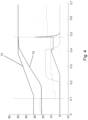
- Fig.4 shows the operating state "pull downshift".
- the speed of the internal combustion engine 9' or the crankshaft 11 is lower than the speed of the second transmission input shaft 6 during the entire synchronization process -
- the internal combustion engine 9' delivers a negative torque and the second transmission input shaft 6 is braked by a slipping contact of the second friction clutch 8 during the entire synchronization process.
- Fig.5 shows the operating state "overrun upshift".
- the speed of the internal combustion engine 9' or the crankshaft 11 is higher than the speed of the second transmission input shaft 6 during the entire synchronization process -
- the internal combustion engine 9' delivers a positive torque and the second transmission input shaft 6 is accelerated by a slipping contact of the second friction clutch 8 during the entire synchronization process.
- the degree of braking or acceleration of the second transmission input shaft 6 depends on the synchronization speed of the second transmission input shaft 6 to be set.
Landscapes
- Engineering & Computer Science (AREA)
- Mechanical Engineering (AREA)
- Chemical & Material Sciences (AREA)
- Combustion & Propulsion (AREA)
- Transportation (AREA)
- Automation & Control Theory (AREA)
- General Engineering & Computer Science (AREA)
- Health & Medical Sciences (AREA)
- Biomedical Technology (AREA)
- General Health & Medical Sciences (AREA)
- Control Of Transmission Device (AREA)
- Hybrid Electric Vehicles (AREA)
- Electric Propulsion And Braking For Vehicles (AREA)
Description
- Die vorliegende Erfindung betrifft ein Verfahren zum Steuern eines Hybridantriebsstrangs eines Hybridkraftfahrzeugs, wobei der Hybridantriebsstrang ein Doppelkupplungsgetriebe mit zwei Teilgetrieben aufweist, deren Getriebeeingangswellen jeweils mittels einer Reibkupplung mit einer ersten Antriebseinheit antriebswirksam koppelbar sind, wobei eine der beiden Getriebeeingangswellen mit einer zweiten Antriebseinheit antriebswirksam gekoppelt oder koppelbar ist.
- Auf dem Gebiet der Fahrzeuggetriebe sind Doppelkupplungsgetriebe in der beschriebenen Art allgemein bekannt. Doppelkupplungsgetriebe weisen eine Doppelkupplung mit einer ersten Reibkupplung und einer zweiten Reibkupplung sowie ein erstes Teilgetriebe und ein zweites Teilgetriebe auf. Dabei ist jeweils einem Teilgetriebe funktional eine Reibkupplung zugeordnet. Das jeweilige Teilgetriebe kann über die ihm zugeordnete Reibkupplung antriebswirksam mit einer Antriebseinheit verbunden werden. Durch das Bereitstellen dieser beiden Leistungsübertragungspfade ist es möglich, Gangwechsel ohne Zugkraftunterbrechung durchzuführen. Dabei wird das von der Antriebseinheit bereitgestellte Antriebsmoment durch überschneidende Betätigung von einem Leitungsübertragungspfad auf den anderen zugkraftunterbrechungsfrei, nämlich kontinuierlich, übergeben.
- Weiterhin ist es bekannt Antriebsstränge von Kraftfahrzeugen zu hybridisieren. Darunter ist eine Kombination von zumindest zwei unterschiedlichen Antriebseinheiten, die Antriebsleistung zum Betrieb des Kraftfahrzeugs bereitstellen, zu verstehen. In der gängisten Ausführung weisen Hybridkraftfahrzeuge eine Verbrennungskraftmaschine sowie zumindest eine elektrische Maschine, die sowohl elektromotorisch wie auch generatorisch betreibbar ist, auf.
- Zur Hybridisierung von Antriebssträngen mit einem Doppelkupplungsgetriebe sind unterschiedliche Konzepte bekannt. Beispielsweise ist es bekannt, eine elektrische Maschine mit einem der zwei Teilgetriebe des Doppelkupplungsgetriebes zu verbinden - im Leistungsfluss gesehen ist die elektrische Maschine in diesem Fall hinter der jeweiligen dem Teilgetriebe zugeordneten Reibkupplung angeordnet.
- Eine derartige Anordnung wird beispielsweise in dem Dokument
DE 10 2010 004 711 A1 beschrieben. - Es ist weiterhin bekannt in einem derartigen Aufbau eines Hybridantriebsstrangs während eines Schaltvorgangs insbesondere zur Unterstützung der Synchronisation der Gänge die elektrische Maschine zu nutzen, um der erhöhten Trägheit des Teilgetriebes an das die elektrische Maschine angebunden ist zu begegnen und so die Synchronisationseinheit vor zu hoher mechanischer Belastung zu schützen. Zu berücksichtigen ist in dieser konstruktiven Ausführungsvariante eines Hybridantriebsstrangs insbesondere der Fehlerfall der elektrischen Maschine und der damit verbundene Ausfall der Synchronisationsunterstützung seitens der elektrischen Maschine.
- Aus der
DE 10 2007 042 724 A1 ist ein Verfahren zum Steuern eines Hybridantriebsstrangs eines Hybridkraftfahrzeugs bekannt, wobei der Hybridantriebsstrang ein Doppelkupplungsgetriebe mit zwei Teilgetrieben aufweist, deren Getriebeeingangswellen jeweils mittels einer Reibkupplung mit einer ersten Antriebseinheit antriebswirksam koppelbar sind, wobei eine der beiden Getriebeeingangswellen mit einer zweiten Antriebseinheit antriebswirksam gekoppelt oder koppelbar ist. - Aus der
DE 10 2004 035 534 A1 ist bei einem Synchronisationsvorgang zur Vorbereitung eines Gangwechsels bekannt, bei einzulegendem Rückwärtsgang im Falle einer Fehlfunktion der zweiten Antriebseinheit die Reibkupplung, die dem Teilgetriebe, dessen Getriebeeingangswelle mit der zweiten Antriebseinheit antriebswirksam gekoppelt oder koppelbar ist, zugeordnet ist, zumindest kurzzeitig in Schlupf gebracht wird. - Es ist eine Aufgabe der Erfindung ein Verfahren zum Steuern eines Hybridantriebsstrangs anzugeben, das es ermöglicht das mit einer zweiten Antriebseinheit, wie beispielsweise einer elektrischen Maschine, antriebswirksam verbundene Teilgetriebe eines Doppelkupplungsgetriebes im Falle eines Ausfalls bzw. Fehlerfalls der zweiten Antriebseinheit trotzdem auf eine gewünschte Synchronisationsdrehzahl zu bringen, ohne dabei die Synchronisationseinheit übermäßig mechanisch zu belasten.
- Die Lösung der Aufgabe erfolgt durch ein Verfahren zum Steuern eines Hybridantriebsstrangs eines Hybridkraftfahrzeugs mit den Merkmalen gemäß Anspruch 1.
- Dabei weist der Hybridantriebsstrang ein Doppelkupplungsgetriebe mit zwei Teilgetrieben auf, deren Getriebeeingangswellen jeweils mittels einer Reibkupplung mit einer ersten Antriebseinheit antriebswirksam koppelbar sind, wobei eine der beiden Getriebeeingangswellen mit einer zweiten Antriebseinheit antriebswirksam gekoppelt oder koppelbar ist, wobei bei einem Synchronisationsvorgang zur Vorbereitung eines Gangwechsels im Falle einer Fehlfunktion der zweiten Antriebseinheit die Reibkupplung die dem Teilgetriebe dessen Getriebeeingangswelle mit der zweiten Antriebseinheit antriebswirksam gekoppelt oder koppelbar ist, zugeordnet ist, zumindest kurzzeitig in Schlupf gebracht wird, sodass das Teilgetriebe und die zweite Antriebseinheit über die erste Antriebseinheit auf eine Synchronisationsdrehzahl eingestellt werden.
- Das erfindungsgemäße Verfahren zum Steuern eines Hybridantriebsstrangs eines Hybridkraftfahrzeugs findet in einem Hybridantriebsstrang Anwendung der folgendes aufweist:
- eine erste Antriebseinheit,
- eine zweite Antriebseinheit und
- ein Doppelkupplungsgetriebe umfassend zwei Teilgetriebe, deren Getriebeeingangswellen jeweils mittels einer Reibkupplung mit der ersten Antriebseinheit antriebswirksam koppelbar sind.
- Entsprechend der vorliegenden Erfindung ist die zweite Antriebseinheit mit einer der beiden Getriebeeingangswellen antriebswirksam gekoppelt oder koppelbar.
- Ist die Drehzahl der ersten Antriebseinheit bei einer geforderten Ganghochschaltung größer als die einzustellende Synchrondrehzahl oder ist die Drehzahl der ersten Antriebseinheit bei einer geforderten Gangrückschaltung kleiner als die einzustellende Synchrondrehzahl, dann wird ein geforderter Drehzahlsprung zur Einstellung der Synchronisationsdrehzahl erfindungsgemäß im Wesentlichen zur Hälfte mit der jeweiligen Reibkupplung eingestellt ("half intermediate clutching").
- Weiterbildungen der Erfindung sind in den abhängigen Ansprüchen, der Beschreibung sowie den beigefügten Zeichnungen angegeben.
- Besonders bevorzugt ist die erste Antriebseinheit als eine Verbrennungskraftmaschine und die zweite Antriebseinheit als eine elektrische Maschine ausgeführt. Die elektrische Maschine kann sowohl als Elektromotor wie auch als Generator betrieben werden.
- Bevorzugt wird ein geforderter Drehzahlsprung zur Einstellung der Synchronisationsdrehzahl mit der jeweiligen Reibkupplung eingestellt ("full intermediate clutching"), wenn bei einer geforderten Ganghochschaltung die Drehzahl der ersten Antriebseinheit kleiner oder gleich der einzustellenden Synchronisationsdrehzahl, also der Ziel-Synchronisationsdrehzahl, ist oder wenn bei einer geforderten Gangrückschaltung die Drehzahl der ersten Antriebseinheit größer oder gleich der einzustellenden Synchronisationsdrehzahl ist.
- Bevorzugt wird bei einer Zughochschaltung und bei einer Schubrückschaltung ohne Zugkraftunterbrechung ein geforderter Drehzahlsprung zur Einstellung der Synchronisationsdrehzahl im Wesentlichen zur Hälfte mit der jeweiligen Reibkupplung eingestellt
- Bevorzugt wird bei einer Zugrückschaltung und bei einer Schubhochschaltung ohne Zugkraftunterbrechung ein geforderter Drehzahlsprung zur Einstellung der Synchronisationsdrehzahl vollständig mit der jeweiligen Reibkupplung eingestellt.
- Vorzugsweise weist das Doppelkupplungsgetriebe ein erstes Teilgetriebe und ein zweites Teilgetriebe auf, wobei das erste Teilgetriebe eine erste Getriebeeingangswelle umfasst und das zweite Teilgetriebe eine zweite Getriebeeingangswelle umfasst, wobei die erste Getriebeeingangswelle mittels einer ersten Reibkupplung mit der ersten Antriebseinheit koppelbar ist und die zweite Getriebeeingangswelle mittels einer zweiten Reibkupplung mit der ersten Antriebseinheit koppelbar ist und wobei die zweite Getriebeeingangswelle mit der zweiten Antriebseinheit gekoppelt oder koppelbar ist.
- Die Erfindung wird im Folgenden beispielhaft unter Bezugnahme auf die Zeichnungen beschrieben.
- Fig. 1
- zeigt eine schematische Darstellung eines Hybridantriebsstrangs.
- Fig. 2
- zeigt ein Diagramm "Drehzahl vs. Zeit" im Betriebszustand des Hybridkraftfahrzeugs "Zughochschaltung".
- Fig. 3
- zeigt ein Diagramm "Drehzahl vs. Zeit" im Betriebszustand des Hybridkraftfahrzeugs "Schubrückschaltung".
- Fig. 4
- zeigt ein Diagramm "Drehzahl vs. Zeit" im Betriebszustand des Hybridkraftfahrzeugs "Zugrückschaltung".
- Fig. 5
- zeigt ein Diagramm "Drehzahl vs. Zeit" im Betriebszustand des Hybridkraftfahrzeugs "Schubhochschaltung".
-
Fig. 1 zeigt einen beispielhaften Hybridantriebsstrang 1 für ein Hybridkraftfahrzeug, in dem das erfindungsgemäße Verfahren Anwendung findet. - Der in
Fig. 1 dargestellte Hybridantriebsstrang 1 weist eine erste Antriebseinheit 9, nämlich eine Verbrennungskraftmaschine 9', eine zweite Antriebseinheit 10, nämlich eine elektrische Maschine 10', sowie ein Doppelkupplungsgetriebe 2 auf. - Das Doppelkupplungsgetriebe 2 weist ein erstes Teilgetriebe 3 mit einer ersten getriebeeingangswelle 5 und ein zweites Teilgetriebe 4 mit einer zweiten Getriebeeingangswelle 6 auf.
- Die erste Getriebeeingangswelle 5 des ersten Teilgetriebes 3 ist über eine erste Reibkupplung 7 antriebswirksam mit einer Kurbelwelle 11 verbindbar. Die Kurbelwelle 11 ist antriebswirksam entweder direkt wie in der
Fig. 1 dargestellt oder über ein Trennelement mit der Verbrennungskraftmaschine 9' verbunden. Dem ersten Teilgetriebe 3 sind sämtliche ungeraden Gangstufen des Doppelkupplungsgetriebes 2 zugeordnet. Die erste Reibkupplung 7 und das erste Teilgetriebe 3 bilden einen ersten Leistungsübertragungspfad. Hinter dem ersten Teilgetriebe 3 ist eine erste Schaltkupplung S1 zur Trennung der Abtriebswelle vom Differential D. - Die zweite Getriebeeingangswelle 6 des zweiten Teilgetriebes 4 ist über eine zweite Reibkupplung 8 antriebswirksam mit der Kurbelwelle 11 verbindbar. Die Kurbelwelle 11 ist antriebswirksam mit der Verbrennungskraftmaschine 9' verbunden. Dem zweiten Teilgetriebe 4 sind sämtliche geraden Gangstufen des Doppelkupplungsgetriebes 2 zugeordnet. Die zweite Reibkupplung 8 und das zweite Teilgetriebe 4 bilden mit einer zweiten Schaltkupplung S2 einen zweiten Leistungsübertragungspfad.
- Die elektrische Maschine 10` ist antriebswirksam mit der zweiten Getriebeeingangswelle 6 verbunden.
- Ein von der Verbrennungskraftmaschine 9' und/oder von der elektrischen Maschine 10` bereitgestelltes Antriebsmoment wird wechselweise über ein durch Schlie-βen der betreffenden Reibkupplung 7, 8 aktiviertes Teilgetriebe 3, 4 übertragen, d.h. wechselweise über den ersten Leistungsübertragungspfand und den zweiten Leistungsübertragungspfad. Ein Wechsel des Antriebsmoments von dem ersten Teilgetriebe 3 auf das zweite Teilgetriebe 4 oder umgekehrt erfolgt durch einen überschneidenden Betrieb der ersten Reibkupplung 7 und der zweiten Reibkupplung 8 unter Öffnen und Schließen der Schaltkupplungen S1 und S2.
- Im Falle einer Fehlfunktion der elektrischen Maschine 10` wird bei einem Synchronisationsvorgang zur Vorbereitung eines Gangwechsels, wie beispielsweise bei einem Wechsel des Antriebsmoments von dem ersten Teilgetriebe 3 auf das zweite Teilgetriebe 4, die zweite Reibkupplung 8 zumindest kurzzeitig in Schlupf gebracht bzw. geschlossen, sodass das zweite Teilgetriebe 4 und die elektrische Maschine 10` über die erste Antriebseinheit 9, nämlich die Verbrennungskraftmaschine 9`, auf eine Synchronisationsdrehzahl eingestellt werden. Die Antriebsleistung zum Betrieb des Hybridkraftfahrzeugs wird währenddessen ungestört über den ersten Leistungsübertragungspfad übertragen.
- Im Folgenden wird zur näheren Beschreibung des erfindungsgemäßen Verfahrens zwischen vier Betriebszuständen des Hybridkraftfahrzeugs unterschieden, nämlich zwischen einer Zughochschaltung (
Fig. 2 ), einer Schubrückschaltung (Fig. 3 ), einer Zugrückschaltung (Fig. 4 ) und einer Schubhochschaltung (Fig. 5 ). - In
Fig. 2 bis Fig. 5 ist jeweils einer der oben genannten Betriebszustände dargestellt, wobei in sämtlichen Diagrammen auf der Abszisse die Zeit in Sekunden [s] und auf der Ordinate die Drehzahl in pro Sekunde [s-1] aufgetragen ist. Die jeweils mit "12" gekennzeichneten Kurven beschreiben den Drehzahlverlauf der zweiten Getriebeeingangswelle 6 über die Zeit. Die jeweils mit "13" gekennzeichneten Kurven beschreiben den Drehzahlverlauf der Kurbelwelle 11 über die Zeit. -
Fig. 2 zeigt den Betriebszustand "Zughochschaltung". Der Schaltablauf für ein Doppelkupplungsgetriebe mit einem entsprechenden Verfahren von einem niedriger übersetzenden ungeraden Gang in einen höher übersetzenden geraden Gang erfolgt beispielsweise indem der niedriger übersetzte ungerade Gang im ersten Teilgetriebe geschaltet ist und die erste Reibkupplung zwischen der Verbrennungskraftmaschine und der ersten Getriebeeingangswelle geschlossen ist. Derart wird Antriebsmoment über den ersten Leistungsübertragungspfad des Doppelkupplungsgetriebes übertragen. Während dieser Zeit wird auf der zweiten Getriebeeingangswelle bei geöffneter zweiter Reibkupplung zwischen der Verbrennungskraftmaschine und der zweiten Getriebeeingangswelle der nächstfolgende Gang, also der höher übersetzende gerade Gang, eingelegt, wobei die Synchronisation der zweiten Getriebeeingangswelle durch einen schlupfenden Kontakt der zweiten Reibkupplung unterstützt wird. In dem vorliegenden Betriebsfall "Zughochschaltung" ist während dem Synchronisationsvorgang die Drehzahl der Verbrennungskraftmaschine 9' bzw. der Kurbelwelle 11 nur in der ersten Hälfte, nämlich in einem ersten Zeitintervall a, niedriger als die Drehzahl der zweiten Getriebeeingangswelle 6. Durch einen schlupfenden Kontakt der zweiten Reibkupplung 8 im ersten Zeitintervall a wird die Drehzahl der zweiten Getriebeeingangswelle 6 seitens der Verbrennungskraftmaschine 9' bzw. der Kurbelwelle 11 herabgezogen - hier liefert die Verbrennungskraftmaschine 9' ein negatives Drehmoment und die zweite Getriebeeingangswelle 6 wird abgebremst. Im zweiten Zeitintervall b ist die Drehzahl der Verbrennungskraftmaschine 9' bzw. der Kurbelwelle 11 höher als die der zweiten Getriebeeingangswelle 6 - hier liefert die Verbrennungskraftmaschine 9' ein positives Drehmoment und die zweite Getriebeeingangswelle 6 würde durch einen schlupfenden Kontakt der zweiten Reibkupplung 8 beschleunigt werden. In diesem zweiten Zeitintervall b ist die zweite Reibkupplung 8 geöffnet, um so ein Beschleunigen der zweiten Getriebeeingangswelle 6 in diesem Zeitintervall zu verhindern. Im zweiten Zeitintervall b übernimmt die Synchronisationseinheit die weitere Synchronisationsarbeit. -
Fig. 3 zeigt den Betriebszustand "Schubrückschaltung". In diesem Betriebsfall ist während dem Synchronisationsvorgang die Drehzahl der Verbrennungskraftmaschine 9' bzw. der Kurbelwelle 11 nur in der ersten Hälfte, nämlich in einem ersten Zeitintervall a, höher als die Drehzahl der zweiten Getriebeeingangswelle 6.Durch einen schlupfenden Kontakt der zweiten Reibkupplung 8 im ersten Zeitintervall a wird die Drehzahl der zweiten Getriebeeingangswelle 6 seitens der Verbrennungskraftmaschine 9' bzw. der Kurbelwelle 11 hochgezogen - hier liefert die Verbrennungskraftmaschine 9' ein positives Drehmoment und die zweite Getriebeeingangswelle 6 wird beschleunigt. Im zweiten Zeitintervall b ist die Drehzahl der Verbrennungskraftmaschine 9' bzw. der Kurbelwelle 11 niedriger als die der zweiten Getriebeeingangswelle 6 - hier liefert die Verbrennungskraftmaschine 9' ein negatives Drehmoment und die zweite Getriebeeingangswelle 6 würde durch einen schlupfenden Kontakt der zweiten Reibkupplung 8 abgebremst werden. In diesem zweiten Zeitintervall b ist die zweite Reibkupplung 8 geöffnet, um so ein Abbremsen der zweiten Getriebeeingangswelle 6 in diesem Zeitintervall zu verhindern. - Für die in
Fig. 2 undFig. 3 gezeigten Betriebszustände ist somit zur Synchronisation ein sogenanntes "half intermediate clutching" von Nöten, d.h. ein geforderter Drehzahlsprung zur Einstellung der Synchronisationsdrehzahl wird im Wesentlichen zur Hälfte mit der zweiten Reibkupplung 8 eingestellt. -
Fig. 4 zeigt den Betriebszustand "Zugrückschaltung". In diesem Betriebsfall ist während dem gesamten Synchronisationsvorgang die Drehzahl der Verbrennungskraftmaschine 9' bzw. der Kurbelwelle 11 niedriger als die Drehzahl der zweiten Getriebeeingangswelle 6 - hier liefert die Verbrennungskraftmaschine 9' ein negatives Drehmoment und die zweite Getriebeeingangswelle 6 wird durch einen schlupfenden Kontakt der zweiten Reibkupplung 8 während des gesamten Synchronisationsvorgangs abgebremst. -
Fig. 5 zeigt den Betriebszustand "Schubhochschaltung". In diesem Betriebsfall ist während dem gesamten Synchronisationsvorgang die Drehzahl der Verbrennungskraftmaschine 9' bzw. der Kurbelwelle 11 höher als die Drehzahl der zweiten Getriebeeingangswelle 6 - hier liefert die Verbrennungskraftmaschine 9' ein positives Drehmoment und die zweite Getriebeeingangswelle 6 wird durch einen schlupfenden Kontakt der zweiten Reibkupplung 8 während des gesamten Synchronisationsvorgangs beschleunigt. - Für die in
Fig. 4 undFig. 5 gezeigten Betriebszustände ist somit zur Synchronisation ein sogenanntes "full intermediate clutching" von Nöten, d.h. ein geforderter Drehzahlsprung zur Einstellung der Synchronisationsdrehzahl wird zur Gänze mit der zweiten Reibkupplung 8 eingestellt. - Das Maß der Abbremsung bzw. der Beschleunigung der zweiten Getriebeeingangswelle 6 richtet sich jeweils nach der einzustellenden Synchronisationsdrehzahl der zweiten Getriebeeingangswelle 6.
-
- 1
- Hybridantriebsstrang
- 2
- Doppelkupplungsgetriebe
- 3
- Erstes Teilgetriebe
- 4
- Zweites Teilgetriebe
- 5
- Erste Getriebeeingangswelle
- 6
- Zweite Getriebeeingangswelle
- 7
- Erste Reibkupplung
- 8
- Zweite Reibkupplung
- 9
- Erste Antriebseinheit
- 9`
- Verbrennungskraftmaschine
- 10
- Zweite Antriebseinheit
- 10`
- Elektrische Maschine
- 11
- Kurbelwelle
- 12
- Drehzahlverlauf der zweiten Getriebeeingangswelle (Sekundärseite der zweiten Reibkupplung)
- 13
- Drehzahlverlauf der Kurbelwelle (Primärseite der zweiten Reibkupplung)
- a
- Erstes Zeitintervall
- b
- Zweites Zeitintervall
Claims (6)
- Verfahren zum Steuern eines Hybridantriebsstrangs (1) eines Hybridkraftfahrzeugs, wobei der Hybridantriebsstrang (1) ein Doppelkupplungsgetriebe (2) mit zwei Teilgetrieben (3, 4) aufweist, deren Getriebeeingangswellen (5, 6) jeweils mittels einer Reibkupplung (7, 8) mit einer ersten Antriebseinheit (9) antriebswirksam koppelbar sind, wobei eine der beiden Getriebeeingangswellen (5, 6) mit einer zweiten Antriebseinheit (10) antriebswirksam gekoppelt oder koppelbar ist, wobei bei einem Synchronisationsvorgang zur Vorbereitung eines Gangwechsels im Falle einer Fehlfunktion der zweiten Antriebseinheit (10) die Reibkupplung (7, 8) die dem Teilgetriebe (3, 4) dessen Getriebeeingangswelle (5, 6) mit der zweiten Antriebseinheit (10) antriebswirksam gekoppelt oder koppelbar ist, zugeordnet ist zumindest kurzzeitig in Schlupf gebracht wird, sodass das Teilgetriebe (3, 4) und die zweite Antriebseinheit (10) über die erste Antriebseinheit (9) auf eine Synchronisationsdrehzahl eingestellt werden, dadurch gekennzeichnet, dass ein geforderter Drehzahlsprung zur Einstellung der Synchronisationsdrehzahl im Wesentlichen zur Hälfte mit der jeweiligen Reibkupplung (7, 8) eingestellt wird, wenn bei einer geforderten Ganghochschaltung die Drehzahl der ersten Antriebseinheit (9) größer der einzustellenden Synchronisationsdrehzahl ist oder wenn bei einer geforderten Gangrückschaltung die Drehzahl der ersten Antriebseinheit (9) kleiner der einzustellenden Synchronisationsdrehzahl ist.
- Verfahren nach Anspruch 1,
dadurch gekennzeichnet, dass die erste Antriebseinheit (9) als eine Verbrennungskraftmaschine (9`) ausgeführt ist. - Verfahren nach Anspruch 1 oder 2,
dadurch gekennzeichnet, dass die zweite Antriebseinheit (10) als eine elektrische Maschine (10`) ausgeführt ist. - Verfahren nach Anspruch 1, 2 oder 3,
dadurch gekennzeichnet, dass ein geforderter Drehzahlsprung zur Einstellung der Synchronisationsdrehzahl vollständig mit der jeweiligen Reibkupplung (7, 8) abgebaut wird, wenn bei einer geforderten Ganghochschaltung die Drehzahl der ersten Antriebseinheit (9) kleiner oder gleich der einzustellenden Synchronisationsdrehzahl ist oder wenn bei einer geforderten Gangrückschaltung die Drehzahl der ersten Antriebseinheit (9) größer oder gleich der einzustellenden Synchronisationsdrehzahl ist. - Verfahren nach Anspruch 1, 2 oder 3,
dadurch gekennzeichnet, dass bei einer Zughochschaltung und bei einer Schubrückschaltung ein geforderter Drehzahlsprung zur Einstellung der Synchronisationsdrehzahl im Wesentlichen zur Hälfte mit der jeweiligen Reibkupplung (7, 8) eingestellt wird. - Verfahren nach einem der vorhergehenden Ansprüche,
dadurch gekennzeichnet, dass das Doppelkupplungsgetriebe (2) ein erstes Teilgetriebe (3) und ein zweites Teilgetriebe (4) aufweist, wobei das erste Teilgetriebe (3) eine erste Getriebeeingangswelle (5) umfasst und das zweite Teilgetriebe (4) eine zweite Getriebeeingangswelle (6) umfasst, wobei die erste Getriebeeingangswelle (5) mittels einer ersten Reibkupplung (7) mit der ersten Antriebseinheit (9) koppelbar ist und die zweite Getriebeeingangswelle (6) mittels einer zweiten Reibkupplung (8) mit der ersten Antriebseinheit (9) koppelbar ist und wobei die zweite Getriebeeingangswelle (6) mit der zweiten Antriebseinheit (10) gekoppelt oder koppelbar ist.
Applications Claiming Priority (3)
| Application Number | Priority Date | Filing Date | Title |
|---|---|---|---|
| DE102019215761 | 2019-10-14 | ||
| DE102020210728.9A DE102020210728B3 (de) | 2019-10-14 | 2020-08-25 | Verfahren zum Steuern eines Hybridantriebsstrangs eines Hybridkraftfahrzeugs |
| PCT/EP2020/075827 WO2021073825A1 (de) | 2019-10-14 | 2020-09-16 | Verfahren zum steuern eines hybridantriebsstrangs eines hybridkraftfahrzeugs |
Publications (2)
| Publication Number | Publication Date |
|---|---|
| EP4045348A1 EP4045348A1 (de) | 2022-08-24 |
| EP4045348B1 true EP4045348B1 (de) | 2024-09-11 |
Family
ID=74239836
Family Applications (1)
| Application Number | Title | Priority Date | Filing Date |
|---|---|---|---|
| EP20772292.7A Active EP4045348B1 (de) | 2019-10-14 | 2020-09-16 | Verfahren zum steuern eines hybridantriebsstrangs eines hybridkraftfahrzeugs |
Country Status (4)
| Country | Link |
|---|---|
| EP (1) | EP4045348B1 (de) |
| CN (1) | CN114555441B (de) |
| DE (1) | DE102020210728B3 (de) |
| WO (1) | WO2021073825A1 (de) |
Citations (1)
| Publication number | Priority date | Publication date | Assignee | Title |
|---|---|---|---|---|
| DE102010004711C5 (de) * | 2010-01-11 | 2018-11-15 | GETRAG B.V. & Co. KG | Verfahren zum Ansteuern eines Hybrid-Antriebsstrangs |
Family Cites Families (10)
| Publication number | Priority date | Publication date | Assignee | Title |
|---|---|---|---|---|
| EP1485642A2 (de) * | 2002-03-07 | 2004-12-15 | LuK Lamellen und Kupplungsbau Beteiligungs KG | Doppelkupplungsgetriebe und verfahren zum durchführen einer schaltung bei einem doppelkupplungsgetriebe |
| DE102004035534B4 (de) * | 2004-07-22 | 2020-07-09 | Zf Friedrichshafen Ag | Verfahren zur Steuerung eines Getriebes |
| US7628728B2 (en) * | 2007-06-07 | 2009-12-08 | Ford Global Technologies, Llc | Launch control of a hybrid electric vehicle |
| DE102007042724A1 (de) * | 2007-09-07 | 2009-03-12 | Robert Bosch Gmbh | Verfahren zum Betreiben einer Antriebsvorrichtung eines Fahrzeugs |
| DE102010028936A1 (de) * | 2010-05-12 | 2011-11-17 | Zf Friedrichshafen Ag | Verfahren zum Betreiben eines Antriebsstrangs |
| DE102012220827A1 (de) * | 2012-11-15 | 2014-05-15 | Zf Friedrichshafen Ag | Antriebseinheit für ein Hybridfahrzeug und Verfahren zum Betreiben derselben |
| DE102016202828B4 (de) * | 2016-02-24 | 2025-11-06 | Bayerische Motoren Werke Aktiengesellschaft | Antriebssystem für ein Hybridfahrzeug sowie Verfahren zum Betreiben eines solchen Antriebssystems |
| DE102016209006A1 (de) * | 2016-05-24 | 2017-11-30 | Schaeffler Technologies AG & Co. KG | Verfahren zum Betrieb eines Antriebsstrangs eines Hybridfahrzeugs und Antriebsstrang eines Hybridfahrzeugs |
| DE102017100683A1 (de) * | 2017-01-16 | 2018-07-19 | GETRAG B.V. & Co. KG | Verfahren zur Einrückpunkt-Ermittlung einer Reibkupplung in einem Hybrid-Antriebsstrang |
| DE102017130707A1 (de) * | 2017-12-20 | 2019-06-27 | GETRAG B.V. & Co. KG | Verfahren zum Betreiben eines Hybrid-Antriebsstranges sowie Hybrid-Antriebsstrang für ein Kraftfahrzeug |
-
2020
- 2020-08-25 DE DE102020210728.9A patent/DE102020210728B3/de active Active
- 2020-09-16 CN CN202080072022.2A patent/CN114555441B/zh active Active
- 2020-09-16 WO PCT/EP2020/075827 patent/WO2021073825A1/de not_active Ceased
- 2020-09-16 EP EP20772292.7A patent/EP4045348B1/de active Active
Patent Citations (1)
| Publication number | Priority date | Publication date | Assignee | Title |
|---|---|---|---|---|
| DE102010004711C5 (de) * | 2010-01-11 | 2018-11-15 | GETRAG B.V. & Co. KG | Verfahren zum Ansteuern eines Hybrid-Antriebsstrangs |
Also Published As
| Publication number | Publication date |
|---|---|
| CN114555441A (zh) | 2022-05-27 |
| WO2021073825A1 (de) | 2021-04-22 |
| CN114555441B (zh) | 2025-08-26 |
| DE102020210728B3 (de) | 2021-02-18 |
| EP4045348A1 (de) | 2022-08-24 |
Similar Documents
| Publication | Publication Date | Title |
|---|---|---|
| EP2920014B1 (de) | Verfahren zum betreiben einer antriebseinheit für ein hybridfahrzeug | |
| DE102011089467B4 (de) | Hybridantrieb eines Kraftfahrzeugs und Verfahren zum Betreiben desselben | |
| EP2920012B1 (de) | Verfahren zum betreiben einer antriebseinheit für ein hybridfahrzeug | |
| EP2794317B1 (de) | Hybridantrieb eines kraftfahrzeugs und verfahren zum betreiben desselben | |
| EP2794316B1 (de) | Hybridantrieb eines kraftfahrzeugs und verfahren zum betreiben desselben | |
| WO2017060010A1 (de) | Verfahren und vorrichtung zum betreiben einer antriebsvorrichtung, antriebsvorrichtung | |
| EP3501928B1 (de) | Verfahren zum betreiben eines hybrid-antriebsstranges sowie hybrid-antriebsstrang für ein kraftfahrzeug | |
| DE102010061827A1 (de) | Antriebsstrang und Verfahren zum Betreiben desselben | |
| EP2921746A1 (de) | Steuerverfahren für Antriebsstrang und Antriebsstrang | |
| DE102012218121A1 (de) | Hybridantrieb eines Kraftfahrzeugs und Verfahren zum Betreiben desselben | |
| DE102019211449B4 (de) | Doppelkupplungsgetriebe mit schaltbarer elektrischer Maschine | |
| DE102011011921A1 (de) | Verfahren zum Überwachen einer Kupplung | |
| EP4045348B1 (de) | Verfahren zum steuern eines hybridantriebsstrangs eines hybridkraftfahrzeugs | |
| EP4188765B1 (de) | Verfahren zum starten eines verbrennungsmotors in einem antriebsstrang mit hybridisiertem doppelkupplungsgetriebe | |
| DE102022201418A1 (de) | Schaltverfahren für ein Kraftfahrzeug mit einem P2-Hybridantriebsstrang bei extremer Kälte | |
| DE102021105070A1 (de) | Vorrichtung und Verfahren für Schubschaltungen in einem hybridisierten Doppelkupplungsgetriebe | |
| DE102017215172A1 (de) | Verfahren zum Betrieb eines Antriebsstranges eines Kraftfahrzeugs, und Antriebsstrangmodul eines solchen Kraftfahrzeugs | |
| EP3771583B1 (de) | Verfahren zum starten eines verbrennungsmotors in einem antriebsstrang mit hybridisiertem doppelkupplungsgetriebe | |
| DE102021209425B3 (de) | Verfahren zur Durchführung eines Schaltvorgangs | |
| DE102019212693B4 (de) | Verfahren zum Schalten eines Getriebes in einem Antriebsstrang | |
| EP3797231B1 (de) | Antriebsstrang für ein kraftfahrzeug und verfahren zum betreiben desselben | |
| DE102017220072A1 (de) | Verfahren beim Betrieb eines Hybridfahrzeugs | |
| DE102017214121A1 (de) | Verfahren zum Ansteuern eines Antriebsstranges für ein Kraftfahrzeug sowie Steuereinrichtung | |
| AT515935B1 (de) | Antriebsstrang eines fahrzeuges | |
| DE102020119691A1 (de) | Verfahren zur Steuerung eines Hybridantriebsstrangs und Hybridantriebsstrang |
Legal Events
| Date | Code | Title | Description |
|---|---|---|---|
| STAA | Information on the status of an ep patent application or granted ep patent |
Free format text: STATUS: UNKNOWN |
|
| STAA | Information on the status of an ep patent application or granted ep patent |
Free format text: STATUS: THE INTERNATIONAL PUBLICATION HAS BEEN MADE |
|
| PUAI | Public reference made under article 153(3) epc to a published international application that has entered the european phase |
Free format text: ORIGINAL CODE: 0009012 |
|
| STAA | Information on the status of an ep patent application or granted ep patent |
Free format text: STATUS: REQUEST FOR EXAMINATION WAS MADE |
|
| 17P | Request for examination filed |
Effective date: 20220215 |
|
| AK | Designated contracting states |
Kind code of ref document: A1 Designated state(s): AL AT BE BG CH CY CZ DE DK EE ES FI FR GB GR HR HU IE IS IT LI LT LU LV MC MK MT NL NO PL PT RO RS SE SI SK SM TR |
|
| DAV | Request for validation of the european patent (deleted) | ||
| DAX | Request for extension of the european patent (deleted) | ||
| STAA | Information on the status of an ep patent application or granted ep patent |
Free format text: STATUS: EXAMINATION IS IN PROGRESS |
|
| 17Q | First examination report despatched |
Effective date: 20240403 |
|
| GRAP | Despatch of communication of intention to grant a patent |
Free format text: ORIGINAL CODE: EPIDOSNIGR1 |
|
| STAA | Information on the status of an ep patent application or granted ep patent |
Free format text: STATUS: GRANT OF PATENT IS INTENDED |
|
| INTG | Intention to grant announced |
Effective date: 20240528 |
|
| GRAS | Grant fee paid |
Free format text: ORIGINAL CODE: EPIDOSNIGR3 |
|
| GRAA | (expected) grant |
Free format text: ORIGINAL CODE: 0009210 |
|
| STAA | Information on the status of an ep patent application or granted ep patent |
Free format text: STATUS: THE PATENT HAS BEEN GRANTED |
|
| AK | Designated contracting states |
Kind code of ref document: B1 Designated state(s): AL AT BE BG CH CY CZ DE DK EE ES FI FR GB GR HR HU IE IS IT LI LT LU LV MC MK MT NL NO PL PT RO RS SE SI SK SM TR |
|
| REG | Reference to a national code |
Ref country code: GB Ref legal event code: FG4D Free format text: NOT ENGLISH |
|
| REG | Reference to a national code |
Ref country code: CH Ref legal event code: EP |
|
| REG | Reference to a national code |
Ref country code: DE Ref legal event code: R096 Ref document number: 502020009220 Country of ref document: DE |
|
| REG | Reference to a national code |
Ref country code: IE Ref legal event code: FG4D Free format text: LANGUAGE OF EP DOCUMENT: GERMAN |
|
| REG | Reference to a national code |
Ref country code: LT Ref legal event code: MG9D |
|
| PG25 | Lapsed in a contracting state [announced via postgrant information from national office to epo] |
Ref country code: NO Free format text: LAPSE BECAUSE OF FAILURE TO SUBMIT A TRANSLATION OF THE DESCRIPTION OR TO PAY THE FEE WITHIN THE PRESCRIBED TIME-LIMIT Effective date: 20241211 |
|
| REG | Reference to a national code |
Ref country code: NL Ref legal event code: MP Effective date: 20240911 |
|
| PG25 | Lapsed in a contracting state [announced via postgrant information from national office to epo] |
Ref country code: GR Free format text: LAPSE BECAUSE OF FAILURE TO SUBMIT A TRANSLATION OF THE DESCRIPTION OR TO PAY THE FEE WITHIN THE PRESCRIBED TIME-LIMIT Effective date: 20241212 Ref country code: FI Free format text: LAPSE BECAUSE OF FAILURE TO SUBMIT A TRANSLATION OF THE DESCRIPTION OR TO PAY THE FEE WITHIN THE PRESCRIBED TIME-LIMIT Effective date: 20240911 |
|
| PG25 | Lapsed in a contracting state [announced via postgrant information from national office to epo] |
Ref country code: BG Free format text: LAPSE BECAUSE OF FAILURE TO SUBMIT A TRANSLATION OF THE DESCRIPTION OR TO PAY THE FEE WITHIN THE PRESCRIBED TIME-LIMIT Effective date: 20240911 |
|
| PG25 | Lapsed in a contracting state [announced via postgrant information from national office to epo] |
Ref country code: LV Free format text: LAPSE BECAUSE OF FAILURE TO SUBMIT A TRANSLATION OF THE DESCRIPTION OR TO PAY THE FEE WITHIN THE PRESCRIBED TIME-LIMIT Effective date: 20240911 |
|
| PG25 | Lapsed in a contracting state [announced via postgrant information from national office to epo] |
Ref country code: HR Free format text: LAPSE BECAUSE OF FAILURE TO SUBMIT A TRANSLATION OF THE DESCRIPTION OR TO PAY THE FEE WITHIN THE PRESCRIBED TIME-LIMIT Effective date: 20240911 |
|
| PG25 | Lapsed in a contracting state [announced via postgrant information from national office to epo] |
Ref country code: RS Free format text: LAPSE BECAUSE OF FAILURE TO SUBMIT A TRANSLATION OF THE DESCRIPTION OR TO PAY THE FEE WITHIN THE PRESCRIBED TIME-LIMIT Effective date: 20241211 Ref country code: ES Free format text: LAPSE BECAUSE OF FAILURE TO SUBMIT A TRANSLATION OF THE DESCRIPTION OR TO PAY THE FEE WITHIN THE PRESCRIBED TIME-LIMIT Effective date: 20240911 |
|
| PG25 | Lapsed in a contracting state [announced via postgrant information from national office to epo] |
Ref country code: RS Free format text: LAPSE BECAUSE OF FAILURE TO SUBMIT A TRANSLATION OF THE DESCRIPTION OR TO PAY THE FEE WITHIN THE PRESCRIBED TIME-LIMIT Effective date: 20241211 Ref country code: NO Free format text: LAPSE BECAUSE OF FAILURE TO SUBMIT A TRANSLATION OF THE DESCRIPTION OR TO PAY THE FEE WITHIN THE PRESCRIBED TIME-LIMIT Effective date: 20241211 Ref country code: LV Free format text: LAPSE BECAUSE OF FAILURE TO SUBMIT A TRANSLATION OF THE DESCRIPTION OR TO PAY THE FEE WITHIN THE PRESCRIBED TIME-LIMIT Effective date: 20240911 Ref country code: HR Free format text: LAPSE BECAUSE OF FAILURE TO SUBMIT A TRANSLATION OF THE DESCRIPTION OR TO PAY THE FEE WITHIN THE PRESCRIBED TIME-LIMIT Effective date: 20240911 Ref country code: GR Free format text: LAPSE BECAUSE OF FAILURE TO SUBMIT A TRANSLATION OF THE DESCRIPTION OR TO PAY THE FEE WITHIN THE PRESCRIBED TIME-LIMIT Effective date: 20241212 Ref country code: FI Free format text: LAPSE BECAUSE OF FAILURE TO SUBMIT A TRANSLATION OF THE DESCRIPTION OR TO PAY THE FEE WITHIN THE PRESCRIBED TIME-LIMIT Effective date: 20240911 Ref country code: ES Free format text: LAPSE BECAUSE OF FAILURE TO SUBMIT A TRANSLATION OF THE DESCRIPTION OR TO PAY THE FEE WITHIN THE PRESCRIBED TIME-LIMIT Effective date: 20240911 Ref country code: BG Free format text: LAPSE BECAUSE OF FAILURE TO SUBMIT A TRANSLATION OF THE DESCRIPTION OR TO PAY THE FEE WITHIN THE PRESCRIBED TIME-LIMIT Effective date: 20240911 |
|
| PG25 | Lapsed in a contracting state [announced via postgrant information from national office to epo] |
Ref country code: NL Free format text: LAPSE BECAUSE OF FAILURE TO SUBMIT A TRANSLATION OF THE DESCRIPTION OR TO PAY THE FEE WITHIN THE PRESCRIBED TIME-LIMIT Effective date: 20240911 |
|
| PG25 | Lapsed in a contracting state [announced via postgrant information from national office to epo] |
Ref country code: IS Free format text: LAPSE BECAUSE OF FAILURE TO SUBMIT A TRANSLATION OF THE DESCRIPTION OR TO PAY THE FEE WITHIN THE PRESCRIBED TIME-LIMIT Effective date: 20250111 Ref country code: PT Free format text: LAPSE BECAUSE OF FAILURE TO SUBMIT A TRANSLATION OF THE DESCRIPTION OR TO PAY THE FEE WITHIN THE PRESCRIBED TIME-LIMIT Effective date: 20250113 |
|
| PG25 | Lapsed in a contracting state [announced via postgrant information from national office to epo] |
Ref country code: RO Free format text: LAPSE BECAUSE OF FAILURE TO SUBMIT A TRANSLATION OF THE DESCRIPTION OR TO PAY THE FEE WITHIN THE PRESCRIBED TIME-LIMIT Effective date: 20240911 Ref country code: SM Free format text: LAPSE BECAUSE OF FAILURE TO SUBMIT A TRANSLATION OF THE DESCRIPTION OR TO PAY THE FEE WITHIN THE PRESCRIBED TIME-LIMIT Effective date: 20240911 |
|
| PG25 | Lapsed in a contracting state [announced via postgrant information from national office to epo] |
Ref country code: EE Free format text: LAPSE BECAUSE OF FAILURE TO SUBMIT A TRANSLATION OF THE DESCRIPTION OR TO PAY THE FEE WITHIN THE PRESCRIBED TIME-LIMIT Effective date: 20240911 |
|
| PG25 | Lapsed in a contracting state [announced via postgrant information from national office to epo] |
Ref country code: CZ Free format text: LAPSE BECAUSE OF FAILURE TO SUBMIT A TRANSLATION OF THE DESCRIPTION OR TO PAY THE FEE WITHIN THE PRESCRIBED TIME-LIMIT Effective date: 20240911 Ref country code: PL Free format text: LAPSE BECAUSE OF FAILURE TO SUBMIT A TRANSLATION OF THE DESCRIPTION OR TO PAY THE FEE WITHIN THE PRESCRIBED TIME-LIMIT Effective date: 20240911 |
|
| PG25 | Lapsed in a contracting state [announced via postgrant information from national office to epo] |
Ref country code: SK Free format text: LAPSE BECAUSE OF FAILURE TO SUBMIT A TRANSLATION OF THE DESCRIPTION OR TO PAY THE FEE WITHIN THE PRESCRIBED TIME-LIMIT Effective date: 20240911 Ref country code: IT Free format text: LAPSE BECAUSE OF FAILURE TO SUBMIT A TRANSLATION OF THE DESCRIPTION OR TO PAY THE FEE WITHIN THE PRESCRIBED TIME-LIMIT Effective date: 20240911 |
|
| REG | Reference to a national code |
Ref country code: CH Ref legal event code: PL |
|
| REG | Reference to a national code |
Ref country code: DE Ref legal event code: R082 Ref document number: 502020009220 Country of ref document: DE Representative=s name: EULER, MATTHIAS, DR., DE |
|
| PG25 | Lapsed in a contracting state [announced via postgrant information from national office to epo] |
Ref country code: LU Free format text: LAPSE BECAUSE OF NON-PAYMENT OF DUE FEES Effective date: 20240916 |
|
| REG | Reference to a national code |
Ref country code: DE Ref legal event code: R097 Ref document number: 502020009220 Country of ref document: DE |
|
| PG25 | Lapsed in a contracting state [announced via postgrant information from national office to epo] |
Ref country code: MC Free format text: LAPSE BECAUSE OF FAILURE TO SUBMIT A TRANSLATION OF THE DESCRIPTION OR TO PAY THE FEE WITHIN THE PRESCRIBED TIME-LIMIT Effective date: 20240911 |
|
| PG25 | Lapsed in a contracting state [announced via postgrant information from national office to epo] |
Ref country code: DK Free format text: LAPSE BECAUSE OF FAILURE TO SUBMIT A TRANSLATION OF THE DESCRIPTION OR TO PAY THE FEE WITHIN THE PRESCRIBED TIME-LIMIT Effective date: 20240911 |
|
| REG | Reference to a national code |
Ref country code: BE Ref legal event code: MM Effective date: 20240930 |
|
| PG25 | Lapsed in a contracting state [announced via postgrant information from national office to epo] |
Ref country code: BE Free format text: LAPSE BECAUSE OF NON-PAYMENT OF DUE FEES Effective date: 20240930 |
|
| PLBE | No opposition filed within time limit |
Free format text: ORIGINAL CODE: 0009261 |
|
| STAA | Information on the status of an ep patent application or granted ep patent |
Free format text: STATUS: NO OPPOSITION FILED WITHIN TIME LIMIT |
|
| PG25 | Lapsed in a contracting state [announced via postgrant information from national office to epo] |
Ref country code: CH Free format text: LAPSE BECAUSE OF NON-PAYMENT OF DUE FEES Effective date: 20240930 |
|
| PG25 | Lapsed in a contracting state [announced via postgrant information from national office to epo] |
Ref country code: IE Free format text: LAPSE BECAUSE OF NON-PAYMENT OF DUE FEES Effective date: 20240916 |
|
| 26N | No opposition filed |
Effective date: 20250612 |
|
| GBPC | Gb: european patent ceased through non-payment of renewal fee |
Effective date: 20241211 |
|
| PG25 | Lapsed in a contracting state [announced via postgrant information from national office to epo] |
Ref country code: SE Free format text: LAPSE BECAUSE OF FAILURE TO SUBMIT A TRANSLATION OF THE DESCRIPTION OR TO PAY THE FEE WITHIN THE PRESCRIBED TIME-LIMIT Effective date: 20240911 |
|
| REG | Reference to a national code |
Ref country code: DE Ref legal event code: R081 Ref document number: 502020009220 Country of ref document: DE Owner name: MAGNA PT B.V. & CO. KGAA, DE Free format text: FORMER OWNER: MAGNA PT B.V. & CO. KG, 74199 UNTERGRUPPENBACH, DE |
|
| PGFP | Annual fee paid to national office [announced via postgrant information from national office to epo] |
Ref country code: DE Payment date: 20250919 Year of fee payment: 6 |
|
| PG25 | Lapsed in a contracting state [announced via postgrant information from national office to epo] |
Ref country code: GB Free format text: LAPSE BECAUSE OF NON-PAYMENT OF DUE FEES Effective date: 20241211 |
|
| PGFP | Annual fee paid to national office [announced via postgrant information from national office to epo] |
Ref country code: FR Payment date: 20250922 Year of fee payment: 6 Ref country code: AT Payment date: 20251020 Year of fee payment: 5 |
|
| PG25 | Lapsed in a contracting state [announced via postgrant information from national office to epo] |
Ref country code: CY Free format text: LAPSE BECAUSE OF FAILURE TO SUBMIT A TRANSLATION OF THE DESCRIPTION OR TO PAY THE FEE WITHIN THE PRESCRIBED TIME-LIMIT; INVALID AB INITIO Effective date: 20200916 |
|
| PG25 | Lapsed in a contracting state [announced via postgrant information from national office to epo] |
Ref country code: HU Free format text: LAPSE BECAUSE OF FAILURE TO SUBMIT A TRANSLATION OF THE DESCRIPTION OR TO PAY THE FEE WITHIN THE PRESCRIBED TIME-LIMIT; INVALID AB INITIO Effective date: 20200916 |