EP4042556B1 - Verfahren zur steuerung einer stromabgabe einer batterie - Google Patents
Verfahren zur steuerung einer stromabgabe einer batterie Download PDFInfo
- Publication number
- EP4042556B1 EP4042556B1 EP20824099.4A EP20824099A EP4042556B1 EP 4042556 B1 EP4042556 B1 EP 4042556B1 EP 20824099 A EP20824099 A EP 20824099A EP 4042556 B1 EP4042556 B1 EP 4042556B1
- Authority
- EP
- European Patent Office
- Prior art keywords
- bat
- current
- ideal
- battery
- torque
- Prior art date
- Legal status (The legal status is an assumption and is not a legal conclusion. Google has not performed a legal analysis and makes no representation as to the accuracy of the status listed.)
- Active
Links
Images




Classifications
-
- H—ELECTRICITY
- H02—GENERATION; CONVERSION OR DISTRIBUTION OF ELECTRIC POWER
- H02P—CONTROL OR REGULATION OF ELECTRIC MOTORS, ELECTRIC GENERATORS OR DYNAMO-ELECTRIC CONVERTERS; CONTROLLING TRANSFORMERS, REACTORS OR CHOKE COILS
- H02P1/00—Arrangements for starting electric motors or dynamo-electric converters
- H02P1/16—Arrangements for starting electric motors or dynamo-electric converters for starting dynamo-electric motors or dynamo-electric converters
- H02P1/26—Arrangements for starting electric motors or dynamo-electric converters for starting dynamo-electric motors or dynamo-electric converters for starting an individual polyphase induction motor
-
- H—ELECTRICITY
- H02—GENERATION; CONVERSION OR DISTRIBUTION OF ELECTRIC POWER
- H02J—ELECTRIC POWER NETWORKS; CIRCUIT ARRANGEMENTS OR SYSTEMS FOR SUPPLYING OR DISTRIBUTING ELECTRIC POWER; SYSTEMS FOR STORING ELECTRIC ENERGY
- H02J7/00—Circuit arrangements for charging or discharging batteries or for supplying loads from batteries
- H02J7/90—Regulation of charging or discharging current or voltage
- H02J7/94—Regulation of charging or discharging current or voltage in response to battery current
-
- B—PERFORMING OPERATIONS; TRANSPORTING
- B60—VEHICLES IN GENERAL
- B60L—PROPULSION OF ELECTRICALLY-PROPELLED VEHICLES; SUPPLYING ELECTRIC POWER FOR AUXILIARY EQUIPMENT OF ELECTRICALLY-PROPELLED VEHICLES; ELECTRODYNAMIC BRAKE SYSTEMS FOR VEHICLES IN GENERAL; MAGNETIC SUSPENSION OR LEVITATION FOR VEHICLES; MONITORING OPERATING VARIABLES OF ELECTRICALLY-PROPELLED VEHICLES; ELECTRIC SAFETY DEVICES FOR ELECTRICALLY-PROPELLED VEHICLES
- B60L15/00—Methods, circuits, or devices for controlling the traction-motor speed of electrically-propelled vehicles
- B60L15/02—Methods, circuits, or devices for controlling the traction-motor speed of electrically-propelled vehicles characterised by the form of the current used in the control circuit
- B60L15/025—Methods, circuits, or devices for controlling the traction-motor speed of electrically-propelled vehicles characterised by the form of the current used in the control circuit using field orientation; Vector control; Direct Torque Control [DTC]
-
- H—ELECTRICITY
- H02—GENERATION; CONVERSION OR DISTRIBUTION OF ELECTRIC POWER
- H02J—ELECTRIC POWER NETWORKS; CIRCUIT ARRANGEMENTS OR SYSTEMS FOR SUPPLYING OR DISTRIBUTING ELECTRIC POWER; SYSTEMS FOR STORING ELECTRIC ENERGY
- H02J7/00—Circuit arrangements for charging or discharging batteries or for supplying loads from batteries
- H02J7/34—Parallel operation in networks using both storage and other DC sources, e.g. providing buffering
- H02J7/345—Parallel operation in networks using both storage and other DC sources, e.g. providing buffering using capacitors as storage or buffering devices
-
- H—ELECTRICITY
- H02—GENERATION; CONVERSION OR DISTRIBUTION OF ELECTRIC POWER
- H02J—ELECTRIC POWER NETWORKS; CIRCUIT ARRANGEMENTS OR SYSTEMS FOR SUPPLYING OR DISTRIBUTING ELECTRIC POWER; SYSTEMS FOR STORING ELECTRIC ENERGY
- H02J7/00—Circuit arrangements for charging or discharging batteries or for supplying loads from batteries
- H02J7/855—Circuit arrangements for charging or discharging batteries or for supplying loads from batteries with circuits adapted for supplying loads from the battery
-
- H—ELECTRICITY
- H02—GENERATION; CONVERSION OR DISTRIBUTION OF ELECTRIC POWER
- H02P—CONTROL OR REGULATION OF ELECTRIC MOTORS, ELECTRIC GENERATORS OR DYNAMO-ELECTRIC CONVERTERS; CONTROLLING TRANSFORMERS, REACTORS OR CHOKE COILS
- H02P23/00—Arrangements or methods for the control of AC motors characterised by a control method other than vector control
- H02P23/30—Direct torque control [DTC] or field acceleration method [FAM]
-
- B—PERFORMING OPERATIONS; TRANSPORTING
- B60—VEHICLES IN GENERAL
- B60L—PROPULSION OF ELECTRICALLY-PROPELLED VEHICLES; SUPPLYING ELECTRIC POWER FOR AUXILIARY EQUIPMENT OF ELECTRICALLY-PROPELLED VEHICLES; ELECTRODYNAMIC BRAKE SYSTEMS FOR VEHICLES IN GENERAL; MAGNETIC SUSPENSION OR LEVITATION FOR VEHICLES; MONITORING OPERATING VARIABLES OF ELECTRICALLY-PROPELLED VEHICLES; ELECTRIC SAFETY DEVICES FOR ELECTRICALLY-PROPELLED VEHICLES
- B60L15/00—Methods, circuits, or devices for controlling the traction-motor speed of electrically-propelled vehicles
- B60L15/20—Methods, circuits, or devices for controlling the traction-motor speed of electrically-propelled vehicles for control of the vehicle or its driving motor to achieve a desired performance, e.g. speed, torque, programmed variation of speed
-
- B—PERFORMING OPERATIONS; TRANSPORTING
- B60—VEHICLES IN GENERAL
- B60L—PROPULSION OF ELECTRICALLY-PROPELLED VEHICLES; SUPPLYING ELECTRIC POWER FOR AUXILIARY EQUIPMENT OF ELECTRICALLY-PROPELLED VEHICLES; ELECTRODYNAMIC BRAKE SYSTEMS FOR VEHICLES IN GENERAL; MAGNETIC SUSPENSION OR LEVITATION FOR VEHICLES; MONITORING OPERATING VARIABLES OF ELECTRICALLY-PROPELLED VEHICLES; ELECTRIC SAFETY DEVICES FOR ELECTRICALLY-PROPELLED VEHICLES
- B60L2200/00—Type of vehicles
- B60L2200/26—Rail vehicles
-
- B—PERFORMING OPERATIONS; TRANSPORTING
- B60—VEHICLES IN GENERAL
- B60L—PROPULSION OF ELECTRICALLY-PROPELLED VEHICLES; SUPPLYING ELECTRIC POWER FOR AUXILIARY EQUIPMENT OF ELECTRICALLY-PROPELLED VEHICLES; ELECTRODYNAMIC BRAKE SYSTEMS FOR VEHICLES IN GENERAL; MAGNETIC SUSPENSION OR LEVITATION FOR VEHICLES; MONITORING OPERATING VARIABLES OF ELECTRICALLY-PROPELLED VEHICLES; ELECTRIC SAFETY DEVICES FOR ELECTRICALLY-PROPELLED VEHICLES
- B60L2210/00—Converter types
- B60L2210/40—DC to AC converters
-
- B—PERFORMING OPERATIONS; TRANSPORTING
- B60—VEHICLES IN GENERAL
- B60L—PROPULSION OF ELECTRICALLY-PROPELLED VEHICLES; SUPPLYING ELECTRIC POWER FOR AUXILIARY EQUIPMENT OF ELECTRICALLY-PROPELLED VEHICLES; ELECTRODYNAMIC BRAKE SYSTEMS FOR VEHICLES IN GENERAL; MAGNETIC SUSPENSION OR LEVITATION FOR VEHICLES; MONITORING OPERATING VARIABLES OF ELECTRICALLY-PROPELLED VEHICLES; ELECTRIC SAFETY DEVICES FOR ELECTRICALLY-PROPELLED VEHICLES
- B60L50/00—Electric propulsion with power supplied within the vehicle
- B60L50/50—Electric propulsion with power supplied within the vehicle using propulsion power supplied by batteries or fuel cells
- B60L50/51—Electric propulsion with power supplied within the vehicle using propulsion power supplied by batteries or fuel cells characterised by AC-motors
-
- B—PERFORMING OPERATIONS; TRANSPORTING
- B60—VEHICLES IN GENERAL
- B60L—PROPULSION OF ELECTRICALLY-PROPELLED VEHICLES; SUPPLYING ELECTRIC POWER FOR AUXILIARY EQUIPMENT OF ELECTRICALLY-PROPELLED VEHICLES; ELECTRODYNAMIC BRAKE SYSTEMS FOR VEHICLES IN GENERAL; MAGNETIC SUSPENSION OR LEVITATION FOR VEHICLES; MONITORING OPERATING VARIABLES OF ELECTRICALLY-PROPELLED VEHICLES; ELECTRIC SAFETY DEVICES FOR ELECTRICALLY-PROPELLED VEHICLES
- B60L50/00—Electric propulsion with power supplied within the vehicle
- B60L50/50—Electric propulsion with power supplied within the vehicle using propulsion power supplied by batteries or fuel cells
- B60L50/60—Electric propulsion with power supplied within the vehicle using propulsion power supplied by batteries or fuel cells using power supplied by batteries
-
- B—PERFORMING OPERATIONS; TRANSPORTING
- B61—RAILWAYS
- B61C—LOCOMOTIVES; MOTOR RAILCARS
- B61C3/00—Electric locomotives or railcars
-
- H—ELECTRICITY
- H02—GENERATION; CONVERSION OR DISTRIBUTION OF ELECTRIC POWER
- H02J—ELECTRIC POWER NETWORKS; CIRCUIT ARRANGEMENTS OR SYSTEMS FOR SUPPLYING OR DISTRIBUTING ELECTRIC POWER; SYSTEMS FOR STORING ELECTRIC ENERGY
- H02J2105/00—Networks for supplying or distributing electric power characterised by their spatial reach or by the load
- H02J2105/30—Networks for supplying or distributing electric power characterised by their spatial reach or by the load the load networks being external to vehicles, i.e. exchanging power with vehicles
- H02J2105/33—Networks for supplying or distributing electric power characterised by their spatial reach or by the load the load networks being external to vehicles, i.e. exchanging power with vehicles exchanging power with road vehicles
- H02J2105/37—Networks for supplying or distributing electric power characterised by their spatial reach or by the load the load networks being external to vehicles, i.e. exchanging power with vehicles exchanging power with road vehicles exchanging power with electric vehicles [EV] or with hybrid electric vehicles [HEV]
-
- H—ELECTRICITY
- H02—GENERATION; CONVERSION OR DISTRIBUTION OF ELECTRIC POWER
- H02J—ELECTRIC POWER NETWORKS; CIRCUIT ARRANGEMENTS OR SYSTEMS FOR SUPPLYING OR DISTRIBUTING ELECTRIC POWER; SYSTEMS FOR STORING ELECTRIC ENERGY
- H02J2207/00—Details of circuit arrangements for charging or discharging batteries or supplying loads from batteries
- H02J2207/20—Charging or discharging characterised by the power electronics converter
-
- H—ELECTRICITY
- H02—GENERATION; CONVERSION OR DISTRIBUTION OF ELECTRIC POWER
- H02P—CONTROL OR REGULATION OF ELECTRIC MOTORS, ELECTRIC GENERATORS OR DYNAMO-ELECTRIC CONVERTERS; CONTROLLING TRANSFORMERS, REACTORS OR CHOKE COILS
- H02P2207/00—Indexing scheme relating to controlling arrangements characterised by the type of motor
- H02P2207/01—Asynchronous machines
-
- Y—GENERAL TAGGING OF NEW TECHNOLOGICAL DEVELOPMENTS; GENERAL TAGGING OF CROSS-SECTIONAL TECHNOLOGIES SPANNING OVER SEVERAL SECTIONS OF THE IPC; TECHNICAL SUBJECTS COVERED BY FORMER USPC CROSS-REFERENCE ART COLLECTIONS [XRACs] AND DIGESTS
- Y02—TECHNOLOGIES OR APPLICATIONS FOR MITIGATION OR ADAPTATION AGAINST CLIMATE CHANGE
- Y02T—CLIMATE CHANGE MITIGATION TECHNOLOGIES RELATED TO TRANSPORTATION
- Y02T10/00—Road transport of goods or passengers
- Y02T10/60—Other road transportation technologies with climate change mitigation effect
- Y02T10/70—Energy storage systems for electromobility, e.g. batteries
Definitions
- the invention relates to a method for controlling a current output of a battery, wherein the battery is used as a traction battery for driving a rail vehicle.
- Battery-powered rail vehicles are known in which electrical power is taken from the battery and used to drive motors.
- FIG 3 shows in a simplified schematic diagram a controlled drive of such a rail vehicle according to the state of the art.
- a power converter STR is connected on the input side to a battery BAT and on the output side to an asynchronous motor ASM.
- the asynchronous motor ASM is used as a traction motor of a locomotive or rail vehicle, while the battery BAT serves as a traction battery.
- the STR power converter contains a series circuit consisting of a DC/DC converter DCDCW, a (direct current) intermediate circuit ZWK and a DC/AC converter DCACW.
- the DC/DC converter DCDCW is connected to the battery BAT as the input element of the power converter STR, while the DC/AC converter DCACW is connected to the asynchronous motor ASM as the output element of the power converter STR.
- the intermediate circuit direct current I dcdc reaches the DC/AC converter DCACW via the intermediate circuit ZWK as motor current I mot .
- a capacitor is arranged in the intermediate circuit ZWK, to which a differential actual voltage U d,act is applied.
- the motor current I mot is fed via the DC/AC converter DCACW as three-phase current to the asynchronous motor ASM in order to drive it.
- the DC/DC converter DCDCW is controlled by a battery current regulator I bat -regulator in order to set the intermediate circuit direct current I dcdc .
- a battery target current I bat,soll and an actual current I bat,ist of the battery BAT are fed to the battery current regulator I bat -regulator as input signals.
- the intermediate circuit ZWK is connected to an intermediate circuit voltage regulator U zk -regulator.
- the intermediate circuit voltage regulator U zk -regulator is supplied with a differential target voltage U d,soll and a differential actual voltage U d,ist as input signals.
- the battery target current I bat,soll is formed from this.
- the DC/AC converter DCACW and the asynchronous motor ASM are controlled via an asynchronous motor torque controller M asm controller.
- a torque setpoint M set is fed to the asynchronous motor torque controller M asm controller as an input signal.
- the torque setpoint M soll is formed from a pre-control torque M ff and a preset torque M tf , which are the respective Input signals are fed to a minimum value formation unit MIN.
- the pre-control torque M ff is calculated using a pre-control torque calculation unit VMB, while the setpoint torque M tf is requested or released by the locomotive or rail vehicle driver at a specific point in time.
- the minimum value formation unit MIN ensures the following condition: M should ⁇ M tf
- an ideal battery current I bat,ideal is supplied to the pre-control torque calculation unit VMB.
- the ideal battery current I bat,ideal is set or defined in such a way that a specified maximum battery current is not exceeded when the traction vehicle is in operation. This is necessary to avoid a safety shutdown of the battery BAT due to excessive currents or excessive power consumption.
- the ideal battery current I bat,ideal is also defined in such a way that it enables a rapid build-up of the required traction torque of the asynchronous motor ASM. This is necessary to reduce restrictions on the operation of the locomotive as much as possible.
- the calculation of the feedforward torque M ff is carried out classically using a dynamic (transformed) transfer function H sys (z) of the torque setpoint M soll to the actual battery current I bat,ist .
- the transfer function H sys (z) is inverted to obtain an inverse transfer function H sys -1 (z).
- the principle diagram shown here ensures that the BAT battery is used in an electrically ideal manner during driving operations without violating the specified current limit values of the BAT battery.
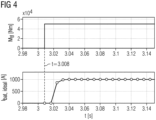
- FIG 4 shows with reference to FIG 3 a comparison of the driver's specified torque M tf with a desired ideal battery current I bat,ideal .
- an ideal, desired current is then delivered from the battery BAT in the form of the ideal battery current I bat,ideal , after a time delay.
- the desired course of the ideal battery current I bat,ideal is linear and does not exhibit any oscillations.
- I bat ,ideal z 850 z / z 2 ⁇ 1.15 z + 0 ,15
- FIG 5 shows a signal flow graph of the control system of the battery drive system from FIG 3 .
- the torque setpoint M soll is formed from the pre-control torque M ff and the driver's specified torque M tf , which is passed on to the asynchronous motor torque controller M asm controller as an input signal.
- the asynchronous motor torque controller M asm controller controls the torque of the asynchronous motor ASM via the DC/AC converter DCACW. This results in the motor current I mot .
- the motor current I mot reaches a first input of a first difference forming unit DIF1.
- the intermediate circuit direct current I dcdc reaches a second input of the first difference forming unit DIF1.
- the differential current I d is fed as an input signal to the intermediate circuit voltage regulator U zk -regulator and is converted into the differential actual voltage U d, act.
- the actual difference voltage U d, actual reaches a first input of a second difference forming unit DIF2.
- the difference actual voltage U d,ist is supplied as an input signal to a setpoint generator SWB, which specifies the difference target voltage U d, soll based on the difference actual voltage U d, ist.
- the differential target voltage U d,target is applied as an output signal of the target value generator SWB to a second input of the second difference forming unit DIF2.
- an associated intermediate circuit battery target current I bat,soll,zk is determined.
- the intermediate circuit battery target current I bat,soll,zk is supplied as an input signal to the battery current regulator I bat -controller, which uses this signal to specify both the actual battery current I bat,ist and the intermediate circuit direct current I dcdc .
- M ff z H sys ⁇ 1 z I bat ,ideal z / z
- the transfer function H sys (z) of a typical system modeling of FIG 3 is not minimal phase, so it is not stably invertible. This can be seen from the fact that a zero znmp exists outside the unit circle.
- This zero point znmp lies outside the unit circle, so that oscillations are to be expected in the battery current, while the feedforward torque should increase beyond all limits.
- FIG 6 shows with reference to FIG 3 to FIG 5 a comparison of the driver's specified torque M tf , the pre-control torque M ff and the course of a battery current I bat from practice.
- the driver requests or releases the specified torque M tf .
- the representation of the battery current I bat shows a desired (ideal) battery target current I bat,target , whose course is linear and oscillation-free.
- the battery current I bat represents a real, practical battery current I bat, practice has shown that the course is linear but subject to oscillations.
- the first output variable of the intermediate circuit voltage regulator is supplied with the second output variable of the battery current regulator to form a preset variable for the feed-in current, whereby the actual current value of the battery current is adjusted to regulate it using the feed-in current specified on the basis of the preset variable.
- the method according to the invention is based on the fact that an unstable system part of the inverse transfer function of H sys (z) is treated in such a way that oscillations and unstable behavior in the battery current are prevented.
- pole/zero cancellation reduces or prevents oscillations.
- a zero-dependent constant is added to the z-transform of the desired ideal battery current value I bat,ideal (z).
- FIG 1 shows with reference to FIG 3 a comparison of the driver's specified torque M tf to a battery current I bat,neu , which was manipulated with the aid of the present invention in order to be taken from the battery.
- FIG 2 shows a comparison of the driver's specified torque M tf , the pre-control torque M ff and the course of a battery current I bat based on the present invention.
- the driver requests or releases the specified torque M tf .
- the representation of the battery current I bat shows a desired (ideal) battery target current I bat,target , whose course is linear and oscillation-free.
- the representation of the battery current I bat shows a battery current I bat,new formed according to the invention, the course of which is linear and free of oscillations.
- the present invention enables the generation of a torque target value M target , whereby a desired battery current is drawn from the battery depending on the power requirement by the tractor driver without violating limit specifications.
- the present invention enables the ideal adjustment of the battery current without causing overshoots or oscillations in the battery current.
- the method according to the invention is based on the fact that an unstable system part is not excited by the new target signal curve.
- M ff z H sys ⁇ 1 z I bat ,new z / z
- M ff z I bat ,ideal z ⁇ I bat ,ideal znmp / z H sys z
Landscapes
- Engineering & Computer Science (AREA)
- Power Engineering (AREA)
- Transportation (AREA)
- Mechanical Engineering (AREA)
- Life Sciences & Earth Sciences (AREA)
- Sustainable Development (AREA)
- Sustainable Energy (AREA)
- Electric Propulsion And Braking For Vehicles (AREA)
Description
- Die Erfindung betriff ein Verfahren zur Steuerung einer Stromabgabe einer Batterie, wobei die Batterie als Traktionsbatterie zum Antrieb eines Schienenfahrzeugs benutzt wird.
- Es sind Batterie-betriebene Schienenfahrzeuge bekannt, bei denen elektrische Leistung der Batterie entnommen und zum Antrieb von Motoren verwendet wird.
-
FIG 3 zeigt in einer vereinfachten Prinzipdarstellung einen geregelten Antrieb eines derartigen Schienenfahrzeugs gemäß dem Stand der Technik. - Ein Stromrichter STR ist eingangsseitig mit einer Batterie BAT und ausgangsseitig mit einem Asynchronmotor ASM verbunden.
- Der Asynchronmotor ASM wird als Fahrmotor eines Triebfahrzeugs- bzw. Schienenfahrzeugs verwendet, während die Batterie BAT als Traktionsbatterie dient.
- Der Stromrichter STR beinhaltet eine Serienschaltung, die aufeinander folgend aus einem DC/DC-Wandler DCDCW, einem (Gleichstrom-) Zwischenkreis ZWK und aus einem DC/AC-Wandler DCACW besteht.
- Der DC/DC-Wandler DCDCW ist als Eingangselement des Stromrichters STR mit der Batterie BAT verbunden, während der DC/AC-Wandler DCACW als Ausgangselement des Stromrichters STR mit dem Asynchronmotor ASM verbunden ist.
- Damit gelangt aus der Batterie BAT ein elektrischer Batterie-Iststrom Ibat,ist zum DC/DC-Wandler DCDCW des Stromrichters STR, der diesen in einen Zwischenkreis-Gleichstrom Idcdc umwandelt.
- Der Zwischenkreis-Gleichstrom Idcdc gelangt über den Zwischenkreis ZWK als Motorstrom Imot zum DC/AC-Wandler DCACW.
- Im Zwischenkreis ZWK ist ein Kondensator angeordnet, an dem eine Differenz-Istspannung Ud,ist anliegt.
- Der Motorstrom Imot gelangt über den DC/AC-Wandler DCACW als Drehstrom zum Asynchronmotor ASM, um diesen anzutreiben.
- Der DC/DC-Wandler DCDCW wird über einen Batterie-Stromregler Ibat-Regler geregelt, um den Zwischenkreis-Gleichstrom Idcdc einzustellen. Zu diesem Zweck wird dem Batterie-Stromregler Ibat-Regler als Eingangssignal ein Batteriesollstrom Ibat,soll und ein Iststrom Ibat,ist der Batterie BAT zugeführt.
- Der Zwischenkreis ZWK ist mit einem Zwischenkreis-Spannungsregler Uzk-Regler verbunden. Dem Zwischenkreis-Spannungsregler Uzk-Regler wird als Eingangssignal eine Differenz-Sollspannung Ud,soll und eine Differenz-Istspannung Ud,ist zugeführt. Daraus wird der Batteriesollstrom Ibat,soll gebildet.
- Der DC/AC-Wandler DCACW und der Asynchronmotor ASM werden über einen Asynchronmotor-Momentenregler Masm-Regler geregelt. Zu diesem Zweck wird dem Asynchronmotor-Momentenregler Masm-Regler als Eingangssignal ein Momentensollwert Msoll zugeführt.
- Der Momentensollwert Msoll wird aus einem Vorsteuerungsmoment Mff und aus einem Vorgabemoment Mtf gebildet, die als jeweilige Eingangssignale einer Minimalwertbildungs-Einheit MIN zugeführt werden.
- Das Vorsteuerungsmoment Mff wird dabei mit Hilfe einer Vorsteuerungsmoment-Berechnungseinheit VMB berechnet, während das Vorgabemoment Mtf vom Triebfahrzeug- bzw. Schienenfahrzeugführer zu einem Zeitpunkt angefordert bzw. freigegeben wird.
- Mit Hilfe der Minimalwertbildungs-Einheit MIN wird folgende Bedingung sichergestellt:

- Zur Berechnung des Vorsteuerungsmoment Mff wird der Vorsteuerungsmoment-Berechnungseinheit VMB ein Batterie-Idealstrom Ibat,ideal zugeführt.
- Das Vorsteuerungsmoment Mff wird dabei so berechnet, dass der Batterie-Iststrom Ibat,ist so genau als möglich dem vorgegebenen Batterie-Idealstrom Ibat,ideal entspricht:

- Der Batterie-Idealstrom Ibat,ideal ist dabei so festgelegt bzw. so definiert, dass bei Fahrvorgängen des Triebfahrzeugs ein vorgegebener Batterie-Maximalstrom nicht überschritten wird. Dies ist nötig, um eine Sicherheits-Abschaltung der Batterie BAT aufgrund zu hoher Ströme bzw. aufgrund zu hoher Leistungsentnahme zu vermeiden.
- Der Batterie-Idealstrom Ibat,ideal ist darüber hinaus so definiert, dass er einen schnellen Aufbau eines geforderten Traktionsmomentes des Asynchronmotors ASM ermöglicht. Dies ist nötig, um Einschränkungen bei der Fahrt des Triebfahrzeugs soweit als möglich zu reduzieren.
- Die Berechnung des Vorsteuerungsmoments Mff erfolgt klassisch mit Hilfe einer dynamischen (transformierten) Übertragungsfunktion Hsys(z) des Momenten-Sollwerts Msoll auf den Batterie-Iststrom Ibat,ist.
- Die Übertragungsfunktion Hsys(z) wird invertiert, um eine inverse Übertragungsfunktion Hsys -1(z) zu erhalten.
- Die inverse Übertragungsfunktion Hsys -1(z) wird mit dem (transformierten) Batterie-Idealstrom Ibat,ideal(z) multipliziert, um daraus das Vorsteuerungsmoment Mff (z) zu erhalten. Dies wird nachfolgend weiter erläutert.
- Über die hier gezeigte Prinzipdarstellung wird erreicht, dass bei den Fahrvorgängen die Batterie BAT in elektrisch idealer Weise eingesetzt wird, ohne vorgegebene Strombegrenzungswerte der Batterie BAT zu verletzen.
- Damit wird ermöglicht, dass jeweilige Antriebskomponenten des Triebfahrzeugs bei Fahrvorgaben des Triebfahrzeugführers energieoptimal betrieben werden. Damit steht zu jeder Zeit eine projektierte Zugkraft des Triebfahrzeugs dem Triebfahrzeugführer im maximalen Umfang zur Verfügung.
-
FIG 4 zeigt mit Bezug aufFIG 3 eine Gegenüberstellung des Vorgabemoments Mtf des Triebfahrzeugführers zu einem gewünschten Batterie-Idealstrom Ibat,ideal . - Zum Zeitpunkt t=3,008 wird beispielhaft vom Triebfahrzeugführer das Vorgabemoment Mtf angefordert bzw. freigegeben.
- Zum Zeitpunkt t=3,016 erfolgt zeitverzögert dann eine ideale, gewünschte Stromabgabe aus der Batterie BAT in Form des Batterie-Idealstroms Ibat,ideal . Der gewünschte Verlauf des Batterie-Idealstroms Ibat,ideal ist dabei linear und weist keinerlei Oszillationen auf.
- In diesem Beispiel gilt für eine Transformierte des Batterie-Idealstroms Ibat,ideal (z) beispielhaft folgende Beziehung:

- Dies ist die mathematische Beschreibung zum dargestellten Verlauf.
-
FIG 5 zeigt einen Signalflussgrafen der Regelstrecke des Batterie-Antriebssystems ausFIG 3 . - Wie vorstehend unter
FIG 3 beschrieben, wird aus dem Vorsteuerungsmoment Mff und aus dem Vorgabemoment Triebfahrzeugführer Mtf der Momenten-Sollwert Msoll gebildet, der als Eingangssignal an den Asynchronmotor-Momentenregler Masm-Regler gelangt. - Der Asynchronmotor-Momentenregler Masm-Regler regelt über den DC/AC-Wandler DCACW das Moment des Asynchronmotors ASM. Daraus ergibt sich der Motorstrom Imot.
- Der Motorstrom Imot gelangt an einen ersten Eingang einer erste Differenzbildungs-Einheit DIF1.
- Der Zwischenkreis-Gleichstrom Idcdc gelangt an einen zweiten Eingang der ersten Differenzbildungs-Einheit DIF1.
- Die Differenzbildungs-Einheit DIF1 bildet aus diesen Strömen einen Differenzstrom Id:

- Der Differenzstrom Id gelangt als Eingangssignal an den Zwischenkreisspannungs-Regler Uzk-Regler und wird in die Differenz-Istspannung Ud,ist umgesetzt.
- Die Differenz-Istspannung Ud,ist gelangt an einen ersten Eingang einer zweiten Differenzbildungs-Einheit DIF2.
- Die Differenz-Istspannung Ud,ist gelangt als Eingangssignal an einen Sollwertbilder SWB, der anhand der Differenz-Istspannung Ud,ist die Differenz-Sollspannung Ud,soll vorgibt.
- Die Differenz-Sollspannung Ud,soll gelangt als Ausgangssignal des Sollwertbilders SWB an einen zweiten Eingang der zweiten Differenz-Bildungseinheit DIF2.
- Die zweite Differenzbildungseinheit DIF2 bildet aus den zugeführten Spannungen eine Differenzspannung Ud,delta:

- Für die Differenzspannung Ud,delta wird ein zugehöriger Zwischenkreis-Batteriesollstrom Ibat,soll,zk ermittelt.
- Der Zwischenkreis-Batteriesollstrom Ibat,soll,zk gelangt als Eingangssignal an den Batterie-Stromregler Ibat-Regler, der darauf basierend sowohl den Batterie-Iststrom Ibat,ist als auch den Zwischenkreis-Gleichstrom Idcdc vorgibt.
- Wie oben dargestellt gilt:


- Die zur Modellierung des gezeigten Signalflussgrafen verwendeten Teilmodelle sind linear gestaltet.
- Das dafür notwendige Vorsteuerungsmoment Mff wird jetzt wie folgt berechnet:

- Die Übertragungsfunktion Hsys(z) einer typischen Systemmodellierung von
FIG 3 ist nicht minimalphasig, so dass sie nicht stabil invertierbar ist. Dies ist daran zu erkennen, dass eine Nullstelle znmp außerhalb des Einheitskreises existiert. - Ein daraus berechnetes Vorsteuerungsmoment würde also unendlich groß werden und kann somit nicht verwendet werden.
- Ein beispielhaftes, realistisches Zahlenbeispiel für die Übertragungsfunktion Hsys(z) mit Blick auf
FIG 3 könnte wie folgt lauten:
- Diese Nullstelle znmp liegt außerhalb des Einheitskreises, so dass beim Batteriestrom Oszillationen zu erwarten sind, während das Vorsteuerungsmoment über alle Grenzen wachsen müsste.
- Um dieses Problem zu umgehen, wird in der Praxis bei Triebfahrzeugherstellern die dynamische Übertragungsfunktion Hsys(z) nicht als Ganzes invertiert, sondern nur ihr statischer Anteil. Dies erfolgt durch folgende Näherung:

- Hsys(z=1) ist ein Skalar, der problemlos invertiert werden kann.
-
FIG 6 zeigt mit Bezug aufFIG 3 bis FIG 5 eine Gegenüberstellung des Vorgabemoments Mtf des Triebfahrzeugführers, des Vorsteuerungsmoments Mff sowie den Verlauf eines Batterie-Stroms Ibat aus der Praxis. - Zum Zeitpunkt t=3 wird beispielhaft vom Triebfahrzeugführer das Vorgabemoment Mtf angefordert bzw. freigegeben.
- Zum Zeitpunkt t=3,017 wird in der Praxis ein zeitlich verzögertes Vorsteuerungsmoment Mff gebildet, das Stufen aufweist.
- Zum Zeitpunkt t=3,017 ist bei der Darstellung des Batteriestroms Ibat ein dazu gewünschter (idealer) Batterie-Sollstrom Ibat,soll gezeigt, dessen Verlauf linear und Oszillations-frei ist.
- Zum Zeitpunkt t=3,017 ist bei der Darstellung des Batteriestroms Ibat ein realer, der Praxis entsprechender Batterie-Strom Ibat,praxis gezeigt, dessen Verlauf linear jedoch mit Oszillationen behaftet ist.
- Diese Oszillationen sind störend, weil sich das Batteriesystem, wie oben beschrieben, aufgrund der Oszillationen abschalten könnte.
- Über die oben beschrieben praktische Vorgehensweise wird für den Batteriestrom ein langsamer Anstieg vorgegeben, wobei jedoch Zugkraft mit Folgen für Fahrspiel, Fahrpläne und mit Folgen für eine Auslegung von Antriebskomponenten verschenkt wird.
- Aus Dokument
DE 10 2018 203 015 B3 ist ein Verfahren zur Regelung eines Batteriestroms einer Traktionsbatterie bekannt. Dabei wandelt eine Gleichrichter-Einheit des Traktionssystems eine Netzspannung mittels eines vorgebbaren Einspeisestroms in eine regelbare Zwischenkreisspannung eines Zwischenkreises des Traktionssystems. Ein Zwischenkreis-Spannungsregler regelt einen Spannungsistwert der Zwischenkreisspannung auf einen Spannungssollwert der Zwischenkreisspannung und gibt eine erste Ausgangsgröße vor. Ein Batterie-Stromregler regelt einen Stromistwert des Batteriestroms auf einen Stromsollwert des Batteriestroms und gibt eine zweite Ausgangsgröße vor. Die erste Ausgangsgröße des Zwischenkreis-Spannungsreglers wird mit der zweiten Ausgangsgröße des Batterie-Stromreglers zur Bildung einer Vorgabegröße für den Einspeisestrom beaufschlagt, wobei mittels des anhand der Vorgabegröße vorgegebenen Einspeisestroms der Stromistwert des Batteriestroms zu dessen Regelung nachgestellt wird. - Es ist daher die Aufgabe der vorliegenden Erfindung, ein Verfahren zur Vorgabe einer Momenten-Vorsteuerung Mff für ein Triebfahrzeug mit Traktionsbatterie anzugeben, mit dem bei Anfahrt-Vorgängen die Stromentnahme an der Batterie ideal ausgenutzt wird, ohne dabei vorgebebene Stromgrenzwerte der Batterie zu verletzen.
- Diese Aufgabe wird durch die Merkmale des Anspruchs 1 gelöst. Vorteilhafte Weiterbildungen sind in den Unteransprüchen angegeben.
- Das erfindungsgemäße Verfahren beruht zusammengefasst darauf, dass ein instabiler Systemteil der inversen Übertragungsfunktion von Hsys(z) derart behandelt wird, dass beim Batteriestrom Oszillationen und instabiles Verhalten verhindert werden.
- Dazu wird der Batterie-Idealstrom zur Berechnung des Vorsteuerungsmoments Mff wie folgt manipuliert:


- Daraus folgt:

- Mit der Wahl von z = znmp beim Batterie-Idealstrom Ibat,ideal wird eine Pol-/Nullstellen-Auslöschung erreicht.
- Durch die Pol-/Nullstellen-Auslöschung werden mit Blick auf die vorstehenden Figuren Oszillationen reduziert bzw. verhindert.
- Bei der vorliegenden Erfindung wird zur z-Transformierten des gewünschten Batteriestrom-Idealwerts Ibat,ideal(z) eine Nullstellen-abhängige Konstante addiert.
- Der Wert der Konstanten ist als Ibat,ideal (znmp) bezeichnet, wobei z=znmp die Lage einer Nullstelle außerhalb des Einheitskreises der Übertragungsfunktion Hsys(z) bezeichnet.
- Die Addition der Konstanten Ibat,ideal(znmp) im z-Bereich wirkt sich im Zeitbereich nur auf den ersten Wert der zugehörigen Folge aus.
- Das ursprüngliche ideale Signal des Batteriestroms Ibat,ideal(z) muss nur an der ersten Stelle verändert werden, ansonsten gilt folgende Beziehung:

-
FIG 1 zeigt mit Bezug aufFIG 3 eine Gegenüberstellung des Vorgabemoments Mtf des Triebfahrzeugführers zu einem Batterie-Strom Ibat,neu, der mit Hilfe der vorliegenden Erfindung manipuliert wurde, um der Batterie entnommen zu werden. - Zum Zeitpunkt t=3,008 wird beispielhaft vom Triebfahrzeugführer das Vorgabemoment Mtf angefordert bzw. freigegeben.
- Mit Bezug auf
FIG 2 erfolgt zum Zeitpunkt t=3,008 eine Stromabgabe aus der Batterie BAT in Form des Batterie-Stroms Ibat,neu . - Der gewünschte Verlauf des Batterie-Stroms Ibat,neu weist keine Oszillationen und keine Überschwinger mehr auf.
- Mit Bezug auf
FIG 4 war ursprünglich der erste Wert des idealen Batteriestroms Ibat,ideal [n] = 0 zum Zeitpunkt t=3,016. - Nach erfolgter erfindungsgemäßer Manipulation ist der Wert des idealen, neuen Batteriestroms Ibat,ideal[n] = 367,3 A zum Zeitpunkt t=3.016 s.
- Entsprechend wird unter Beachtung des erfindungsgemäßen Prinzips die z-Transformierte des neuen Verlaufs des neuen Batteriestroms Ibat,neu(z) mit der Übertragungsfunktion der Inversen der Übertragungsfunktion Hsys -1(z) wie folgt multipliziert:

-
FIG 2 zeigt eine Gegenüberstellung des Vorgabemoments Mtf des Triebfahrzeugführers, des Vorsteuerungsmoments Mff sowie den Verlauf eines Batterie-Stroms Ibat basierend auf der vorliegenden Erfindung. - Zum Zeitpunkt t=3 wird beispielhaft vom Triebfahrzeugführer das Vorgabemoment Mtf angefordert bzw. freigegeben.
- Zum Zeitpunkt t=3,008 wird ein zeitlich verzögertes Vorsteuerungsmoment Mff gebildet, das Stufen aufweist.
- Zum Zeitpunkt t=3,017 ist bei der Darstellung des Batteriestroms Ibat ein dazu gewünschter (idealer) Batterie-Sollstrom Ibat,soll gezeigt, dessen Verlauf linear und Oszillations-frei ist.
- Zum Zeitpunkt t=3,008 ist bei der Darstellung des Batteriestroms Ibat ein erfindungsgemäß gebildeter Batterie-Strom Ibat,neu gezeigt, dessen Verlauf linear und frei von Oszillationen ist.
- Der Verlauf des Batterie-Stroms Ibat,neu folgt dem gewünschten Batterie-Strom Ibat,soll in sehr guter Annäherung.
- Die vorliegende Erfindung ermöglicht die Generierung eines Momenten-Sollwerts Msoll, wobei ein gewünschter Batteriestrom je nach Leistungsanforderung vom Zugfahrzeugführer ohne Verletzung von Grenzvorgaben der Batterie entnommen wird.
- Die vorliegende Erfindung ermöglicht die ideale Einstellung des Batteriestroms, ohne dabei Überschwinger bzw. Oszillationen im Batteriestrom zu verursachen.
- Das erfindungsgemäße Verfahren beruht darauf, dass ein instabiler Systemteil vom neuen Sollsignalverlauf nicht angeregt wird.
- Wie oben ausgeführt gilt:


- Man erkennt für z-> znmp eine Pol-/Nullstellen-Auslöschung. Damit wird erreicht, dass die berechnete Folge für Ibat,neu nicht mehr über vorgegebene Grenzen hinweg oszilliert.
- Dies ist auch an einem konkreten Zahlenbeispiel ablesbar, das sich auf die oben gemachten Ausführungen zu Hsys(z) stützt:

- Man erkennt, dass der ursprünglich vorhandene Pol zp=-1,017 außerhalb des Einheitskreises nach der Umformung nicht mehr vorhanden ist.
Claims (6)
- Verfahren zur Steuerung einer Stromabgabe einer Batterie (BAT), wobei die Batterie (BAT) als Traktionsbatterie zum Antrieb (ASM) eines Schienenfahrzeugs benutzt wird,- bei dem ein Batterie-Iststrom Ibat,ist über einen DC/DC-Wandler (DCDCW) als Zwischenkreis-Gleichstrom Idcdc zu einem Zwischenkreis (ZWK) gelangt,- bei dem am Zwischenkreis (ZWK) eine Differenz-Istspannung Ud,ist anliegt,- bei dem der Zwischenkreis-Gleichstrom Idcdc als Motorstrom Imot vom Zwischenkreis (ZWK) zu einem DC/AC-Wandler (DCACW) gelangt, der den Motorstrom Imot in einen dreiphasigen Wechselstrom umsetzt,- bei dem der dreiphasige Wechselstrom einem Asynchronmotor (ASM) zugeführt wird, der als Antrieb des Schienenfahrzeugs benutzt wird,- bei dem der Asynchronmotor (ASM) und der DC/AC-Wandler (DCACW) über einen Momentenregler (Masm-Regler) geregelt werden,- bei dem der Momentenregler (Masm-Regler) zur Regelung einen Momentensollwerts Msoll verwendet wird, durch den der Motorstrom Imot eingestellt wird,- bei dem ein Zwischenkreis-Spannungsregler (Uzk-Regler) basierend auf einer Differenz-Sollspannung Ud,soll und basierend auf einer Differenz-Istspannung Ud,ist einen Batterie-Sollstrom Ibat,soll bestimmt, auf den basierend der Zwischenkreis-Gleichstrom Idcdc einstellt wird,- bei dem der DC/DC-Wandler (DCDCW) über einen Batterie-Stromregler (Ibat-Regler) geregelt wird, der basierend auf dem Batterie-Sollstrom Ibat,soll und basierend auf dem Batterie-Iststrom Ibat,ist den Zwischenkreis-Gleichstrom Idcdc einstellt,- bei dem der Momentensollwert Msoll aus einem Vorsteuerungsmoment Mff und aus einem Vorgabemoment Mtf unter Beachtung der Beziehung Mtf > max (Mff) gebildet wird,- bei dem das Vorsteuerungsmoment Mff basierend auf dem Batterie-Iststrom Ibat,ist gebildet wird, bis der Batterie-Iststrom Ibat,ist einem Batterie-Idealstrom Ibat,ideal entspricht,- bei dem die Berechnung des Vorsteuerungsmoments Mff mit Hilfe einer Übertragungsfunktion Hsys(z) erfolgt, die den Momenten-Sollwert Msoll auf den Batterie-Iststrom Ibat,ist wie folgt abbildet:dadurch gekennzeichnet,
 - dass von der Übertragungsfunktion Hsys(z) eine Nullstelle z=znmp bestimmt wird, die außerhalb des Einheitskreises liegt,- dass die Berechnung des Vorsteuerungsmoments Mff wie folgt durchgeführt wird:


- Verfahren nach Anspruch 1, bei dem als DC/AC-Wandler (DCACW) ein Umrichter verwendet wird.
- Verfahren nach Anspruch 1, bei dem die Istspannung (Ud,ist) des Zwischenkreises (ZWK) an einem Kondensator anliegt.
- Verfahren nach Anspruch 1, bei dem das Vorgabemoment (Mtf) über einen Triebfahrzeugführer angefordert bzw. freigegeben wird.
- Verfahren nach Anspruch 1, bei dem der Batterie-Idealstrom (Ibat,ideal) so festgelegt bzw. definiert wird, dass vorgegebene Batterie-Maximalströme bei Fahrvorgängen des Schienenfahrzeugs nicht überschritten werden.
- Verfahren nach Anspruch 1, bei dem der Batterie-Idealstrom (Ibat,ideal) so festgelegt bzw. definiert wird, dass ein schneller Aufbau eines geforderten Traktionsmomentes des Asynchronmotors (ASM) ermöglicht wird.
Applications Claiming Priority (2)
| Application Number | Priority Date | Filing Date | Title |
|---|---|---|---|
| DE102019219677 | 2019-12-16 | ||
| PCT/EP2020/083407 WO2021121890A1 (de) | 2019-12-16 | 2020-11-25 | Verfahren zur steuerung einer stromabgabe einer batterie |
Publications (2)
| Publication Number | Publication Date |
|---|---|
| EP4042556A1 EP4042556A1 (de) | 2022-08-17 |
| EP4042556B1 true EP4042556B1 (de) | 2024-10-09 |
Family
ID=73834447
Family Applications (1)
| Application Number | Title | Priority Date | Filing Date |
|---|---|---|---|
| EP20824099.4A Active EP4042556B1 (de) | 2019-12-16 | 2020-11-25 | Verfahren zur steuerung einer stromabgabe einer batterie |
Country Status (6)
| Country | Link |
|---|---|
| US (1) | US12034328B2 (de) |
| EP (1) | EP4042556B1 (de) |
| CN (1) | CN114788160B (de) |
| ES (1) | ES2997986T3 (de) |
| PL (1) | PL4042556T3 (de) |
| WO (1) | WO2021121890A1 (de) |
Family Cites Families (9)
| Publication number | Priority date | Publication date | Assignee | Title |
|---|---|---|---|---|
| JPH0670751B2 (ja) * | 1987-08-24 | 1994-09-07 | 日本電気株式会社 | 位相特性の推定を伴う極零分析装置 |
| US5350989A (en) * | 1993-05-13 | 1994-09-27 | Hughes Aircraft Company | Torque oscillation compensation utilizing battery current sensing |
| CN1711736A (zh) * | 2002-10-08 | 2005-12-21 | M/A-Com公司 | 用于调制信号的预加重滤波的装置、方法和产品 |
| JP5209922B2 (ja) | 2007-09-14 | 2013-06-12 | 川崎重工業株式会社 | 電気鉄道システム |
| DE102013200019B4 (de) * | 2013-01-02 | 2021-09-30 | Bombardier Transportation Gmbh | Versorgung von elektrischen Traktionsmotoren eines Schienenfahrzeugs mit elektrischer Energie unter Verwendung einer Mehrzahl von Verbrennungsmotoren |
| JP2016113111A (ja) * | 2014-12-17 | 2016-06-23 | 日立オートモティブシステムズステアリング株式会社 | 電動パワーステアリング装置及び車両搭載機器の制御装置 |
| US10017071B2 (en) * | 2016-10-13 | 2018-07-10 | GM Global Technology Operations LLC | Method and system for diagnosing contactor health in a high-voltage electrical system |
| CN107379983B (zh) * | 2017-06-27 | 2019-07-16 | 中车青岛四方机车车辆股份有限公司 | 一种用于列车的蓄电池牵引供电系统及列车 |
| DE102018203015B3 (de) | 2018-02-28 | 2019-05-09 | Siemens Aktiengesellschaft | Verfahren zur Regelung eines Batteriestroms einer Traktionsbatterie |
-
2020
- 2020-11-25 WO PCT/EP2020/083407 patent/WO2021121890A1/de not_active Ceased
- 2020-11-25 EP EP20824099.4A patent/EP4042556B1/de active Active
- 2020-11-25 ES ES20824099T patent/ES2997986T3/es active Active
- 2020-11-25 PL PL20824099.4T patent/PL4042556T3/pl unknown
- 2020-11-25 US US17/786,034 patent/US12034328B2/en active Active
- 2020-11-25 CN CN202080087244.1A patent/CN114788160B/zh active Active
Also Published As
| Publication number | Publication date |
|---|---|
| CN114788160B (zh) | 2025-10-10 |
| EP4042556A1 (de) | 2022-08-17 |
| ES2997986T3 (en) | 2025-02-18 |
| WO2021121890A1 (de) | 2021-06-24 |
| PL4042556T3 (pl) | 2025-02-17 |
| US12034328B2 (en) | 2024-07-09 |
| US20230045807A1 (en) | 2023-02-16 |
| CN114788160A (zh) | 2022-07-22 |
Similar Documents
| Publication | Publication Date | Title |
|---|---|---|
| DE102007012350B4 (de) | Verfahren und Vorrichtung zur PWM-Steuerung eines Spannungszwischenkreisumrichters | |
| EP1305876B1 (de) | Verfahren zur regelung einer elektrischen maschine mit pulswechselrichter | |
| EP2433356B1 (de) | Überstrombegrenzung bei der regelung von stromrichtergespeisten drehstrommaschinen | |
| EP0800265A2 (de) | Verfahren und Vorrichtung zur direkten Drehmomentregelung einer Drehfeldmaschine | |
| DE102015223365A1 (de) | Verfahren zur Ermittlung eines d- und q-Stromes zur Ansteuerung einer permanenterregten Synchronmaschine | |
| DE102012205371A1 (de) | Reglerstruktur und Verfahren zur feldorientierten Regelung einer Drehfeldmaschine bei Feldschwächung | |
| EP3763026B1 (de) | Verfahren zum betreiben eines elektrischen antriebssystems mit energiespeicher und antriebssystem zur durchführung eines solchen verfahrens | |
| DE4129539A1 (de) | Verfahren und vorrichtung zur regelung der drehzahl eines elektromotors | |
| DE102004013243A1 (de) | Verfahren und Vorrichtung zur Wirkungsgradverbesserung parallelgeschalteter Gleichspannungswandler | |
| EP4042556B1 (de) | Verfahren zur steuerung einer stromabgabe einer batterie | |
| EP0179219A2 (de) | Verfahren und Einrichtung zur Erzeugung einer getakteten Stellspannung | |
| DE102005060859B4 (de) | Verfahren und Vorrichtung zur Ansteuerung eines Elektromotors | |
| EP4005086B1 (de) | Steuereinrichtung, wechselrichter, anordnung mit einem wechselrichter und einer elektrischen maschine, verfahren zum betreiben eines wechselrichters sowie computerprogramm | |
| DE102016003738A1 (de) | Zwischenkreisspannungsabhängige Rückspeiseenergiebegrenzung für elektrische Antriebe | |
| EP1880096B1 (de) | VERFAHREN UND EINRICHTUNG ZUR ELEKTRISCHEN ANSTEUERUNG EINES VENTILS MIT EINEM MECHANISCHEN SCHLIEßELEMENT | |
| WO2025083083A1 (de) | Verfahren zum betrieb eines bürstenlosen elektromotors, elektronische regel- und/oder steuereinrichtung sowie elektrowerkzeug | |
| DE102022117139B4 (de) | Verfahren zum Betrieb eines Leistungswandlers | |
| DE69820262T2 (de) | Verfahren und vorrichtung zur steuerung der schalter in einem steuersystem mit variabeler struktur und steuerbarer frequenz | |
| DE102021206419B3 (de) | Regeleinrichtung zur Regelung einer eine Brennkraftmaschine und einen mit der Brennkraftmaschine antriebswirkverbundenen Generator umfassenden Leistungsanordnung, Regelanordnung mit einer solchen Regeleinrichtung, Leistungsanordnung und Verfahren zur Regelung einer Leistungsanordnung | |
| DE3223786C2 (de) | ||
| EP3741022B1 (de) | Verfahren und vorrichtung zum regeln einer elektrischen spannung | |
| WO2022128508A1 (de) | Verfahren und vorrichtung zur ansteuerung eines wechselrichters | |
| DE102019218553A1 (de) | Verfahren und Vorrichtung zur Regelung einer elektrischen Maschine | |
| EP1487095A1 (de) | Verfahren und Vorrichtung zum Bremsen einer drehzahlveränderbaren Asynchronmaschine | |
| DE102019218547A1 (de) | Verfahren und Vorrichtung zur Regelung einer elektrischen Maschine |
Legal Events
| Date | Code | Title | Description |
|---|---|---|---|
| STAA | Information on the status of an ep patent application or granted ep patent |
Free format text: STATUS: UNKNOWN |
|
| STAA | Information on the status of an ep patent application or granted ep patent |
Free format text: STATUS: THE INTERNATIONAL PUBLICATION HAS BEEN MADE |
|
| PUAI | Public reference made under article 153(3) epc to a published international application that has entered the european phase |
Free format text: ORIGINAL CODE: 0009012 |
|
| STAA | Information on the status of an ep patent application or granted ep patent |
Free format text: STATUS: REQUEST FOR EXAMINATION WAS MADE |
|
| 17P | Request for examination filed |
Effective date: 20220512 |
|
| AK | Designated contracting states |
Kind code of ref document: A1 Designated state(s): AL AT BE BG CH CY CZ DE DK EE ES FI FR GB GR HR HU IE IS IT LI LT LU LV MC MK MT NL NO PL PT RO RS SE SI SK SM TR |
|
| DAV | Request for validation of the european patent (deleted) | ||
| DAX | Request for extension of the european patent (deleted) | ||
| REG | Reference to a national code |
Ref country code: DE Ref legal event code: R079 Free format text: PREVIOUS MAIN CLASS: H02P0001260000 Ipc: B60L0015020000 Ref country code: DE Ref legal event code: R079 Ref document number: 502020009469 Country of ref document: DE Free format text: PREVIOUS MAIN CLASS: H02P0001260000 Ipc: B60L0015020000 |
|
| GRAP | Despatch of communication of intention to grant a patent |
Free format text: ORIGINAL CODE: EPIDOSNIGR1 |
|
| STAA | Information on the status of an ep patent application or granted ep patent |
Free format text: STATUS: GRANT OF PATENT IS INTENDED |
|
| RIC1 | Information provided on ipc code assigned before grant |
Ipc: H02P 1/26 20060101ALI20240516BHEP Ipc: H02J 7/00 20060101ALI20240516BHEP Ipc: B60L 50/60 20190101ALI20240516BHEP Ipc: B60L 15/20 20060101ALI20240516BHEP Ipc: B60L 15/02 20060101AFI20240516BHEP |
|
| INTG | Intention to grant announced |
Effective date: 20240607 |
|
| GRAS | Grant fee paid |
Free format text: ORIGINAL CODE: EPIDOSNIGR3 |
|
| GRAA | (expected) grant |
Free format text: ORIGINAL CODE: 0009210 |
|
| STAA | Information on the status of an ep patent application or granted ep patent |
Free format text: STATUS: THE PATENT HAS BEEN GRANTED |
|
| AK | Designated contracting states |
Kind code of ref document: B1 Designated state(s): AL AT BE BG CH CY CZ DE DK EE ES FI FR GB GR HR HU IE IS IT LI LT LU LV MC MK MT NL NO PL PT RO RS SE SI SK SM TR |
|
| REG | Reference to a national code |
Ref country code: CH Ref legal event code: EP |
|
| REG | Reference to a national code |
Ref country code: DE Ref legal event code: R096 Ref document number: 502020009469 Country of ref document: DE |
|
| REG | Reference to a national code |
Ref country code: IE Ref legal event code: FG4D Free format text: LANGUAGE OF EP DOCUMENT: GERMAN |
|
| REG | Reference to a national code |
Ref country code: LT Ref legal event code: MG9D |
|
| REG | Reference to a national code |
Ref country code: ES Ref legal event code: FG2A Ref document number: 2997986 Country of ref document: ES Kind code of ref document: T3 Effective date: 20250218 |
|
| PG25 | Lapsed in a contracting state [announced via postgrant information from national office to epo] |
Ref country code: NL Free format text: LAPSE BECAUSE OF FAILURE TO SUBMIT A TRANSLATION OF THE DESCRIPTION OR TO PAY THE FEE WITHIN THE PRESCRIBED TIME-LIMIT Effective date: 20241009 |
|
| PG25 | Lapsed in a contracting state [announced via postgrant information from national office to epo] |
Ref country code: NL Free format text: LAPSE BECAUSE OF FAILURE TO SUBMIT A TRANSLATION OF THE DESCRIPTION OR TO PAY THE FEE WITHIN THE PRESCRIBED TIME-LIMIT Effective date: 20241009 |
|
| PG25 | Lapsed in a contracting state [announced via postgrant information from national office to epo] |
Ref country code: PT Free format text: LAPSE BECAUSE OF FAILURE TO SUBMIT A TRANSLATION OF THE DESCRIPTION OR TO PAY THE FEE WITHIN THE PRESCRIBED TIME-LIMIT Effective date: 20250210 Ref country code: IS Free format text: LAPSE BECAUSE OF FAILURE TO SUBMIT A TRANSLATION OF THE DESCRIPTION OR TO PAY THE FEE WITHIN THE PRESCRIBED TIME-LIMIT Effective date: 20250209 Ref country code: HR Free format text: LAPSE BECAUSE OF FAILURE TO SUBMIT A TRANSLATION OF THE DESCRIPTION OR TO PAY THE FEE WITHIN THE PRESCRIBED TIME-LIMIT Effective date: 20241009 |
|
| PG25 | Lapsed in a contracting state [announced via postgrant information from national office to epo] |
Ref country code: FI Free format text: LAPSE BECAUSE OF FAILURE TO SUBMIT A TRANSLATION OF THE DESCRIPTION OR TO PAY THE FEE WITHIN THE PRESCRIBED TIME-LIMIT Effective date: 20241009 |
|
| PG25 | Lapsed in a contracting state [announced via postgrant information from national office to epo] |
Ref country code: BG Free format text: LAPSE BECAUSE OF FAILURE TO SUBMIT A TRANSLATION OF THE DESCRIPTION OR TO PAY THE FEE WITHIN THE PRESCRIBED TIME-LIMIT Effective date: 20241009 |
|
| PG25 | Lapsed in a contracting state [announced via postgrant information from national office to epo] |
Ref country code: NO Free format text: LAPSE BECAUSE OF FAILURE TO SUBMIT A TRANSLATION OF THE DESCRIPTION OR TO PAY THE FEE WITHIN THE PRESCRIBED TIME-LIMIT Effective date: 20250109 |
|
| PG25 | Lapsed in a contracting state [announced via postgrant information from national office to epo] |
Ref country code: LV Free format text: LAPSE BECAUSE OF FAILURE TO SUBMIT A TRANSLATION OF THE DESCRIPTION OR TO PAY THE FEE WITHIN THE PRESCRIBED TIME-LIMIT Effective date: 20241009 Ref country code: GR Free format text: LAPSE BECAUSE OF FAILURE TO SUBMIT A TRANSLATION OF THE DESCRIPTION OR TO PAY THE FEE WITHIN THE PRESCRIBED TIME-LIMIT Effective date: 20250110 |
|
| PG25 | Lapsed in a contracting state [announced via postgrant information from national office to epo] |
Ref country code: RS Free format text: LAPSE BECAUSE OF FAILURE TO SUBMIT A TRANSLATION OF THE DESCRIPTION OR TO PAY THE FEE WITHIN THE PRESCRIBED TIME-LIMIT Effective date: 20250109 |
|
| PG25 | Lapsed in a contracting state [announced via postgrant information from national office to epo] |
Ref country code: SM Free format text: LAPSE BECAUSE OF FAILURE TO SUBMIT A TRANSLATION OF THE DESCRIPTION OR TO PAY THE FEE WITHIN THE PRESCRIBED TIME-LIMIT Effective date: 20241009 |
|
| PG25 | Lapsed in a contracting state [announced via postgrant information from national office to epo] |
Ref country code: MC Free format text: LAPSE BECAUSE OF FAILURE TO SUBMIT A TRANSLATION OF THE DESCRIPTION OR TO PAY THE FEE WITHIN THE PRESCRIBED TIME-LIMIT Effective date: 20241009 |
|
| PG25 | Lapsed in a contracting state [announced via postgrant information from national office to epo] |
Ref country code: DK Free format text: LAPSE BECAUSE OF FAILURE TO SUBMIT A TRANSLATION OF THE DESCRIPTION OR TO PAY THE FEE WITHIN THE PRESCRIBED TIME-LIMIT Effective date: 20241009 |
|
| REG | Reference to a national code |
Ref country code: DE Ref legal event code: R097 Ref document number: 502020009469 Country of ref document: DE |
|
| PG25 | Lapsed in a contracting state [announced via postgrant information from national office to epo] |
Ref country code: LU Free format text: LAPSE BECAUSE OF NON-PAYMENT OF DUE FEES Effective date: 20241125 |
|
| PG25 | Lapsed in a contracting state [announced via postgrant information from national office to epo] |
Ref country code: EE Free format text: LAPSE BECAUSE OF FAILURE TO SUBMIT A TRANSLATION OF THE DESCRIPTION OR TO PAY THE FEE WITHIN THE PRESCRIBED TIME-LIMIT Effective date: 20241009 |
|
| PG25 | Lapsed in a contracting state [announced via postgrant information from national office to epo] |
Ref country code: RO Free format text: LAPSE BECAUSE OF FAILURE TO SUBMIT A TRANSLATION OF THE DESCRIPTION OR TO PAY THE FEE WITHIN THE PRESCRIBED TIME-LIMIT Effective date: 20241009 |
|
| PG25 | Lapsed in a contracting state [announced via postgrant information from national office to epo] |
Ref country code: SK Free format text: LAPSE BECAUSE OF FAILURE TO SUBMIT A TRANSLATION OF THE DESCRIPTION OR TO PAY THE FEE WITHIN THE PRESCRIBED TIME-LIMIT Effective date: 20241009 |
|
| PLBE | No opposition filed within time limit |
Free format text: ORIGINAL CODE: 0009261 |
|
| STAA | Information on the status of an ep patent application or granted ep patent |
Free format text: STATUS: NO OPPOSITION FILED WITHIN TIME LIMIT |
|
| REG | Reference to a national code |
Ref country code: DE Ref legal event code: R081 Ref document number: 502020009469 Country of ref document: DE Owner name: SIEMENS MOBILITY GMBH, DE Free format text: FORMER OWNER: SIEMENS MOBILITY GMBH, 81739 MUENCHEN, DE |
|
| REG | Reference to a national code |
Ref country code: BE Ref legal event code: MM Effective date: 20241130 |
|
| PG25 | Lapsed in a contracting state [announced via postgrant information from national office to epo] |
Ref country code: SE Free format text: LAPSE BECAUSE OF FAILURE TO SUBMIT A TRANSLATION OF THE DESCRIPTION OR TO PAY THE FEE WITHIN THE PRESCRIBED TIME-LIMIT Effective date: 20241009 |
|
| 26N | No opposition filed |
Effective date: 20250710 |
|
| GBPC | Gb: european patent ceased through non-payment of renewal fee |
Effective date: 20250109 |
|
| PG25 | Lapsed in a contracting state [announced via postgrant information from national office to epo] |
Ref country code: BE Free format text: LAPSE BECAUSE OF NON-PAYMENT OF DUE FEES Effective date: 20241130 Ref country code: GB Free format text: LAPSE BECAUSE OF NON-PAYMENT OF DUE FEES Effective date: 20250109 |
|
| PG25 | Lapsed in a contracting state [announced via postgrant information from national office to epo] |
Ref country code: IE Free format text: LAPSE BECAUSE OF NON-PAYMENT OF DUE FEES Effective date: 20241125 |
|
| PGFP | Annual fee paid to national office [announced via postgrant information from national office to epo] |
Ref country code: AT Payment date: 20251014 Year of fee payment: 6 |
|
| PGFP | Annual fee paid to national office [announced via postgrant information from national office to epo] |
Ref country code: IT Payment date: 20251125 Year of fee payment: 6 |
|
| PGFP | Annual fee paid to national office [announced via postgrant information from national office to epo] |
Ref country code: FR Payment date: 20251114 Year of fee payment: 6 |
|
| PGFP | Annual fee paid to national office [announced via postgrant information from national office to epo] |
Ref country code: CZ Payment date: 20251119 Year of fee payment: 6 |
|
| PGFP | Annual fee paid to national office [announced via postgrant information from national office to epo] |
Ref country code: PL Payment date: 20251114 Year of fee payment: 6 |
|
| REG | Reference to a national code |
Ref country code: CH Ref legal event code: U11 Free format text: ST27 STATUS EVENT CODE: U-0-0-U10-U11 (AS PROVIDED BY THE NATIONAL OFFICE) Effective date: 20260209 |
|
| PG25 | Lapsed in a contracting state [announced via postgrant information from national office to epo] |
Ref country code: HU Free format text: LAPSE BECAUSE OF FAILURE TO SUBMIT A TRANSLATION OF THE DESCRIPTION OR TO PAY THE FEE WITHIN THE PRESCRIBED TIME-LIMIT; INVALID AB INITIO Effective date: 20201125 |
|
| PG25 | Lapsed in a contracting state [announced via postgrant information from national office to epo] |
Ref country code: CY Free format text: LAPSE BECAUSE OF FAILURE TO SUBMIT A TRANSLATION OF THE DESCRIPTION OR TO PAY THE FEE WITHIN THE PRESCRIBED TIME-LIMIT; INVALID AB INITIO Effective date: 20201125 |
|
| PGFP | Annual fee paid to national office [announced via postgrant information from national office to epo] |
Ref country code: ES Payment date: 20260220 Year of fee payment: 6 |
|
| PGFP | Annual fee paid to national office [announced via postgrant information from national office to epo] |
Ref country code: DE Payment date: 20260119 Year of fee payment: 6 |
|
| PGFP | Annual fee paid to national office [announced via postgrant information from national office to epo] |
Ref country code: CH Payment date: 20260209 Year of fee payment: 6 |