EP4040737B1 - Method and device for controlling laundry equipment, and storage medium - Google Patents
Method and device for controlling laundry equipment, and storage medium Download PDFInfo
- Publication number
- EP4040737B1 EP4040737B1 EP21188114.9A EP21188114A EP4040737B1 EP 4040737 B1 EP4040737 B1 EP 4040737B1 EP 21188114 A EP21188114 A EP 21188114A EP 4040737 B1 EP4040737 B1 EP 4040737B1
- Authority
- EP
- European Patent Office
- Prior art keywords
- washing
- mode
- target
- laundry equipment
- shared
- Prior art date
- Legal status (The legal status is an assumption and is not a legal conclusion. Google has not performed a legal analysis and makes no representation as to the accuracy of the status listed.)
- Active
Links
Images



Classifications
-
- H—ELECTRICITY
- H04—ELECTRIC COMMUNICATION TECHNIQUE
- H04L—TRANSMISSION OF DIGITAL INFORMATION, e.g. TELEGRAPHIC COMMUNICATION
- H04L12/00—Data switching networks
- H04L12/28—Data switching networks characterised by path configuration, e.g. LAN [Local Area Networks] or WAN [Wide Area Networks]
- H04L12/2803—Home automation networks
- H04L12/2823—Reporting information sensed by appliance or service execution status of appliance services in a home automation network
- H04L12/2825—Reporting to a device located outside the home and the home network
-
- D—TEXTILES; PAPER
- D06—TREATMENT OF TEXTILES OR THE LIKE; LAUNDERING; FLEXIBLE MATERIALS NOT OTHERWISE PROVIDED FOR
- D06F—LAUNDERING, DRYING, IRONING, PRESSING OR FOLDING TEXTILE ARTICLES
- D06F34/00—Details of control systems for washing machines, washer-dryers or laundry dryers
- D06F34/04—Signal transfer or data transmission arrangements
- D06F34/05—Signal transfer or data transmission arrangements for wireless communication between components, e.g. for remote monitoring or control
-
- D—TEXTILES; PAPER
- D06—TREATMENT OF TEXTILES OR THE LIKE; LAUNDERING; FLEXIBLE MATERIALS NOT OTHERWISE PROVIDED FOR
- D06F—LAUNDERING, DRYING, IRONING, PRESSING OR FOLDING TEXTILE ARTICLES
- D06F33/00—Control of operations performed in washing machines or washer-dryers
- D06F33/30—Control of washing machines characterised by the purpose or target of the control
- D06F33/32—Control of operational steps, e.g. optimisation or improvement of operational steps depending on the condition of the laundry
- D06F33/36—Control of operational steps, e.g. optimisation or improvement of operational steps depending on the condition of the laundry of washing
-
- D—TEXTILES; PAPER
- D06—TREATMENT OF TEXTILES OR THE LIKE; LAUNDERING; FLEXIBLE MATERIALS NOT OTHERWISE PROVIDED FOR
- D06F—LAUNDERING, DRYING, IRONING, PRESSING OR FOLDING TEXTILE ARTICLES
- D06F34/00—Details of control systems for washing machines, washer-dryers or laundry dryers
- D06F34/28—Arrangements for program selection, e.g. control panels therefor; Arrangements for indicating program parameters, e.g. the selected program or its progress
- D06F34/32—Arrangements for program selection, e.g. control panels therefor; Arrangements for indicating program parameters, e.g. the selected program or its progress characterised by graphical features, e.g. touchscreens
-
- D—TEXTILES; PAPER
- D06—TREATMENT OF TEXTILES OR THE LIKE; LAUNDERING; FLEXIBLE MATERIALS NOT OTHERWISE PROVIDED FOR
- D06F—LAUNDERING, DRYING, IRONING, PRESSING OR FOLDING TEXTILE ARTICLES
- D06F2101/00—User input for the control of domestic laundry washing machines, washer-dryers or laundry dryers
- D06F2101/20—Operation modes, e.g. delicate laundry washing programs, service modes or refreshment cycles
-
- D—TEXTILES; PAPER
- D06—TREATMENT OF TEXTILES OR THE LIKE; LAUNDERING; FLEXIBLE MATERIALS NOT OTHERWISE PROVIDED FOR
- D06F—LAUNDERING, DRYING, IRONING, PRESSING OR FOLDING TEXTILE ARTICLES
- D06F2103/00—Parameters monitored or detected for the control of domestic laundry washing machines, washer-dryers or laundry dryers
- D06F2103/68—Operation mode; Program phase
-
- D—TEXTILES; PAPER
- D06—TREATMENT OF TEXTILES OR THE LIKE; LAUNDERING; FLEXIBLE MATERIALS NOT OTHERWISE PROVIDED FOR
- D06F—LAUNDERING, DRYING, IRONING, PRESSING OR FOLDING TEXTILE ARTICLES
- D06F2105/00—Systems or parameters controlled or affected by the control systems of washing machines, washer-dryers or laundry dryers
- D06F2105/54—Changing between normal operation mode and special operation modes, e.g. service mode, component cleaning mode or stand-by mode
-
- H—ELECTRICITY
- H04—ELECTRIC COMMUNICATION TECHNIQUE
- H04L—TRANSMISSION OF DIGITAL INFORMATION, e.g. TELEGRAPHIC COMMUNICATION
- H04L12/00—Data switching networks
- H04L12/28—Data switching networks characterised by path configuration, e.g. LAN [Local Area Networks] or WAN [Wide Area Networks]
- H04L12/2803—Home automation networks
- H04L2012/2847—Home automation networks characterised by the type of home appliance used
- H04L2012/285—Generic home appliances, e.g. refrigerators
Definitions
- the present disclosure relates to the field of household appliances, and more particularly, to a method and device for controlling a laundry equipment, and a storage medium.
- the Internet of Things applies to various infrastructure fields, such as industry, agriculture, environment, transportation, logistics, security, etc., effectively promoting intelligent development of these aspects, allowing more reasonable use and distribution of limited resources, thereby improving the industry efficiency and benefit.
- a laundry treating apparatus includes a recommendation request unit configured to receive input that enables a recommendation of a laundry treating course from among a plurality of courses or a recommendation of a laundry treating option from among a plurality of options, a controller configured to, based on reception of the input from the recommendation request unit, determine a recommended course or a recommended option according to evaluation of one or more recommendation rules that are accessible by the controller and that have been stored in the controller, and a display unit configured to display the recommended course or the recommended option that has been determined by the controller.
- the present disclosure provides a method and device for controlling a laundry equipment, and a storage medium.
- a method for controlling laundry equipment implemented at a washing mode sharing platform.
- the method includes:
- a washing mode sharing platform may generate a historical data set based on a to-be-shared washing parameter and a to-be-shared washing mode acquired from first laundry equipment, and send a target washing mode and a target washing parameter determined from the historical data set to second laundry equipment, allowing the second laundry equipment to wash a to-be-washed object according to the target washing mode and the target washing parameter.
- a target washing mode and a target washing parameter corresponding to the target washing mode can be acquired from the washing mode sharing platform.
- the washing mode sharing platform stores an empirical parameter that has been verified and reviewed.
- a target washing parameter corresponding to a target washing mode can be acquired directly from the washing mode sharing platform, and laundry equipment can be controlled to wash a to-be-washed object according to the target washing parameter, without having to modify and adjust respective parameters one by one, decreasing difficulty and complexity in washing.
- each washing parameter of the washing mode sharing platform is a viewed and verified empirical parameter ready for a user to download and use without having to make multiple attempts, reducing possibility of a poor washing effect or damage to a to-be-washed object during the user attempts.
- the method further includes:
- determining the target washing mode from the historical data set according to the comparison result includes: in response to the comparison result indicating a to-be-shared washing mode in the historical data set with a mode identifier same as the target mode identifier, determining, as the target washing mode, the to-be-shared washing mode with the mode identifier same as the target mode identifier.
- a method for controlling laundry equipment, implemented at second laundry equipment includes:
- the method further includes:
- acquiring the to-be-shared washing parameter based on the target washing parameter includes: editing the target washing parameter based on an editing instruction detected, acquiring the to-be-shared washing parameter.
- the method further includes:
- the second laundry equipment has a touch display.
- the second laundry equipment may be communicatively connected to terminal equipment. Acquiring a washing request corresponding to the target washing mode may include:
- the method further includes: displaying a mode icon of a candidate washing mode in a set order on a touch display of the second laundry equipment, or on a display interface of terminal equipment.
- the mode icon may be configured to identify the candidate washing mode corresponding to the mode icon.
- a device for controlling laundry equipment implemented at a washing mode sharing platform.
- the device includes a first acquiring module, a generating module, a determining module, and a sending module.
- the first acquiring module is configured to acquire a to-be-shared washing parameter of at least one first laundry equipment, and a to-be-shared washing mode corresponding to the to-be-shared washing parameter.
- the generating module is configured to generate a historical data set based on the to-be-shared washing parameter and the to-be-shared washing mode.
- the determining module is configured to determine a target washing mode and a target washing parameter corresponding to the target washing mode from the historical data set.
- the sending module is configured to send the target washing mode and the target washing parameter to second laundry equipment.
- the device further includes a second acquiring module.
- the second acquiring module may be configured to acquire a washing request from the second laundry equipment or terminal equipment communicatively connected to the second laundry equipment.
- the determining module may be further configured to: determine the target washing mode and the target washing parameter corresponding to the target washing mode from the historical data set according to the washing request.
- the washing request includes a target mode identifier.
- the determining module may be further configured to: compare the target mode identifier to a mode identifier of each of the to-be-shared washing mode in the historical data set, and determine the target washing mode from the historical data set according to a comparison result.
- the determining module may be further configured to: in response to the comparison result indicating a to-be-shared washing mode in the historical data set with a mode identifier same as the target mode identifier, determine, as the target washing mode, the to-be-shared washing mode with the mode identifier same as the target mode identifier.
- the third acquiring module is configured to acquire, from a washing mode sharing platform, a target washing mode and a target washing parameter corresponding to the target washing mode.
- the controlling module is configured to control washing a to-be-washed object by the second laundry equipment according to the target washing mode according to the target washing parameter.
- the device further includes a fourth acquiring module and an uploading module.
- the fourth acquiring module may be configured to, after the second laundry equipment has washed the to-be-washed object, acquire a to-be-shared washing parameter based on the target washing parameter.
- the uploading module may be configured to upload the to-be-shared washing parameter to the washing mode sharing platform based on an uploading instruction detected.
- the fourth acquiring module is further configured to: edit the target washing parameter based on an editing instruction detected, acquiring the to-be-shared washing parameter.
- the device further includes a fifth acquiring module.
- the fifth acquiring module may be configured to acquire a washing request corresponding to the target washing mode.
- the washing request includes a target mode identifier.
- the third acquiring module may be further configured to: acquire, from the washing mode sharing platform based on the target mode identifier, the target washing mode and the target washing parameter corresponding to the target washing mode.
- the second laundry equipment has a touch display.
- the second laundry equipment may be communicatively connected to terminal equipment.
- the third acquiring module may be further configured to:
- the device further includes a displaying module.
- the displaying module may be configured to display a mode icon of a candidate washing mode in a set order on a touch display of the second laundry equipment, or on a display interface of terminal equipment.
- the mode icon may be configured to identify the candidate washing mode corresponding to the mode icon.
- a device for controlling laundry equipment including:
- the processor is configured to implement any method of the first aspect, or may be configured to implement any method of the second aspect.
- a computer-readable storage medium having stored therein instructions which, when executed by a processor of a device for controlling laundry equipment, allow the device for controlling laundry equipment to implement any method of the first aspect, or may be configured to implement any method of the second aspect.
- first, second, third may be adopted in an embodiment herein to describe various kinds of information, such information should not be limited to such a term. Such a term is merely for distinguishing information of the same type.
- first information may also be referred to as the second information.
- second information may also be referred to as the first information.
- a "if” as used herein may be interpreted as "when” or “while” or "in response to determining that”.
- a block diagram shown in the accompanying drawings may be a functional entity which may not necessarily correspond to a physically or logically independent entity.
- Such a functional entity may be implemented in form of software, in one or more hardware modules or integrated circuits, or in different networks and /or processor devices and /or microcontroller devices.
- a terminal may sometimes be referred to as a smart terminal.
- the terminal may be a mobile terminal.
- the terminal may also be referred to as User Equipment (UE), a Mobile Station (MS), etc.
- UE User Equipment
- MS Mobile Station
- a terminal may be equipment or a chip provided that provides a user with a voice and / or data connection, such as handheld equipment, onboard equipment, etc., with a wireless connection function.
- Examples of a terminal may include a mobile phone, a tablet computer, a notebook computer, a palm computer, a Mobile Internet Device (MID), wearable equipment, Virtual Reality (VR) equipment, Augmented Reality (AR) equipment, a wireless terminal in industrial control, a wireless terminal in unmanned drive, a wireless terminal in remote surgery, a wireless terminal in a smart grid, a wireless terminal in transportation safety, a wireless terminal in smart city, a wireless terminal in smart home, etc.
- MID Mobile Internet Device
- VR Virtual Reality
- AR Augmented Reality
- a wireless terminal in industrial control a wireless terminal in unmanned drive, a wireless terminal in remote surgery, a wireless terminal in a smart grid, a wireless terminal in transportation safety, a wireless terminal in smart city, a wireless terminal in smart home, etc.
- the Internet of Things applies to various infrastructure fields, such as industry, agriculture, environment, transportation, logistics, security, etc., effectively promoting intelligent development of these aspects, allowing more reasonable use and distribution of limited resources, thereby improving the industry efficiency and benefit.
- laundry equipment control may be implemented through terminal equipment.
- the laundry can only be washed through a program preset by a manufacturer, and a user can only manually modify some parameters.
- the program set by the manufacturer does not meet the need of the user, the user has to modify and adjust the parameters one by one, which increases difficulty and complexity in washing.
- the user has to try a number of times before she or he can find a right washing parameter corresponding to the laundry, and in this process, the laundry may be damaged or not washed well due to inaccurate parameter selection.
- the Internet of Things applies to various infrastructure fields, such as industry, agriculture, environment, transportation, logistics, security, etc., effectively promoting intelligent development of these aspects, allowing more reasonable use and distribution of limited resources, thereby improving the industry efficiency and benefit.
- laundry equipment control may be implemented through terminal equipment.
- the laundry can only be washed through a program preset by a manufacturer, and a user can only manually modify some parameters.
- the program set by the manufacturer does not meet the need of the user, the user has to modify and adjust the parameters one by one, which increases difficulty and complexity in washing.
- the user has to try a number of times before she or he can find a right washing parameter corresponding to the laundry, and in this process, the laundry may be damaged or not washed well due to inaccurate parameter selection.
- FIG. 1 is a flowchart of a method for controlling laundry equipment according to an illustrative embodiment. As shown in FIG. 1 , the method may be implemented at a washing mode sharing platform. The method mainly includes steps as follows.
- a to-be-shared washing parameter of at least one first laundry equipment, and a to-be-shared washing mode corresponding to the to-be-shared washing parameter, are acquired.
- a historical data set is generated based on the to-be-shared washing parameter and the to-be-shared washing mode.
- a target washing mode and a target washing parameter corresponding to the target washing mode are determined from the historical data set.
- the target washing mode and the target washing parameter are sent to second laundry equipment.
- the first laundry equipment and the second laundry equipment may include drum laundry equipment, pulsator laundry equipment, a washing and drying machine, etc.
- the washing mode sharing platform may include electronic equipment capable of processing data independently, such as a server.
- the washing mode sharing platform may acquire a to-be-shared washing parameter from at least one first laundry equipment and a to-be-shared washing mode corresponding to the to-be-shared washing parameter.
- a to-be-shared washing parameter and a to-be-shared washing mode may be acquired actively by the washing mode sharing platform from first laundry equipment, or may be uploaded triggered by a user using first laundry equipment, which is not specifically limited herein. In some embodiments, there may be multiple pieces of first laundry equipment.
- a historical data set may be formed based on the to-be-shared washing parameter and the to-be-shared washing mode acquired, and a mapping relation between a to-be-shared washing parameter and a to-be-shared washing mode.
- the washing mode sharing platform may determine a target washing mode and a target washing parameter corresponding to the target washing mode from the historical data set, and send the target washing mode and the target washing parameter to the second laundry equipment, to control washing a to-be-washed object by the second laundry equipment using the target washing parameter according to the target washing mode.
- a to-be-shared washing parameter includes at least a water temperature, an amount of water, an amount of laundry detergent used, a number of rinses, a spin speed, and a drying time, which are not specifically limited herein.
- a target washing mode and a target washing parameter corresponding to the target washing mode can be acquired from the washing mode sharing platform.
- the washing mode sharing platform stores an empirical parameter that has been verified and reviewed.
- a target washing parameter corresponding to a target washing mode can be acquired directly from the washing mode sharing platform, and laundry equipment can be controlled to wash a to-be-washed object according to the target washing parameter, without having to modify and adjust respective parameters one by one, decreasing difficulty and complexity in washing.
- each washing parameter of the washing mode sharing platform is a viewed and verified empirical parameter ready for a user to download and use without having to make multiple attempts, reducing possibility of a poor washing effect or damage to a to-be-washed object during the user attempts.
- the method further includes a step as follows.
- a washing request is acquired from the second laundry equipment or a terminal equipment communicatively connected to the second laundry equipment.
- the target washing mode and the target washing parameter corresponding to the target washing mode may be determined from the historical data set as follows.
- the target washing mode and the target washing parameter corresponding to the target washing mode are determined from the historical data set according to the washing request.
- a touch display may be provided on the second laundry equipment.
- the touch display may have both a display function and a touch function.
- both a touch area having a touch function and a display area having a display function may be provided on a door cover of the second laundry equipment.
- the touch area and the display area may both be provided on other locations on the second laundry equipment, such as on the body of the second laundry equipment.
- the touch area and the display area of the touch display may be provided separately.
- the touch area is provided on the body of the second laundry equipment, and the display area is provided on the door cover of the second laundry equipment, which may be provided as needed, and is not specifically limited herein.
- a touch display may be provided for the first laundry equipment, in a way same as the second laundry equipment, which is not specifically limited herein.
- a touch display is provided on the body of the second laundry equipment.
- the touch display on the body of the second laundry equipment and the display of the terminal equipment may perform synchronous display.
- the second laundry equipment may be controlled through the touch display on the body to perform a corresponding function.
- the second laundry equipment may be controlled through the display of the terminal equipment to perform a corresponding function.
- a user may input a touch operation through the display of the terminal equipment. After detecting the touch operation, the terminal equipment can acquire a washing request based on the touch operation, and send the washing request to a washing mode sharing platform.
- a washing request may be triggered based on a click operation applied to the display of the terminal equipment. For example, a washing request may be triggered based on a click operation, a double-click operation, a long-press operation, etc.
- the user may select a washing mode as needed, and input a corresponding touch operation through the mode icon corresponding to the washing mode selected by the user, thereby generating a washing request corresponding to the washing mode.
- the washing request may be sent to the washing mode sharing platform.
- the washing mode sharing platform determines a target washing mode and a target washing parameter corresponding to the target washing mode from the historical data set according to the washing request.
- the washing mode sharing platform may acquire the washing request from the second laundry equipment directly, or acquire the washing request through the terminal equipment, thereby improving flexibility in acquiring the washing request.
- the washing request includes a target mode identifier.
- the target washing mode is determined from the historical data set according to the washing request as follows.
- the target mode identifier is compared to a mode identifier of each of the to-be-shared washing mode in the historical data set.
- the target washing mode is determined from the historical data set according to a comparison result.
- the mode identifier of the washing mode required by the user may be included in the washing request.
- each to-be-shared washing mode has a corresponding mode identifier.
- the target mode identifier is compared to the mode identifier of each to-be-shared washing mode, and the target washing mode is determined according to the comparison result.
- a mode identifier may include a number, a letter, etc.
- the target washing mode is determined from the historical data set according to the comparison result as follows.
- the to-be-shared washing mode with the mode identifier same as the target mode identifier is determined as the target washing mode.
- the to-be-shared washing mode with the mode identifier same as the target mode identifier is determined as the target washing mode, improving accuracy of a determined target washing mode.
- to-be-shared washing modes of a plurality of laundry equipment, and a to-be-shared washing parameter corresponding to each to-be-shared washing mode may be stored to the washing mode sharing platform in form of a historical data set, so that a user may determine, from the historical data set, a target washing mode and a target washing parameter directly corresponding to the target mode identifier.
- a target washing mode and a target washing parameter corresponding to the target washing mode can be acquired directly from the washing mode sharing platform, and laundry equipment can be controlled to wash a to-be-washed object according to the target washing parameter, without having to modify and adjust respective parameters one by one, decreasing difficulty and complexity in washing.
- a massive number of users keep uploading and sharing historical washing modes and historical washing parameters. Better washing modes keep being filtered out.
- a user is allowed to acquire a laundry equipment operating program suitable for various clothes or with a better washing effect for same clothes.
- Program methods suitable for a variety of laundry equipment are created using a massive number of Internet users combining Internet of Things (IoT) technology, improving user experience in using laundry equipment.
- IoT Internet of Things
- FIG. 2 is a flowchart of a method for controlling laundry equipment according to an illustrative embodiment. As shown in FIG. 2 , the method may be implemented at second laundry equipment. The method mainly includes steps as follows.
- a target washing mode and a target washing parameter corresponding to the target washing mode are acquired from a washing mode sharing platform.
- S202 it is controlled to wash a to-be-washed object by the second laundry equipment according to the target washing mode according to the target washing parameter.
- the second laundry equipment may include drum laundry equipment, pulsator laundry equipment, a washing and drying machine, etc.
- the washing mode sharing platform may include electronic equipment capable of processing data independently, such as a server.
- a touch display may be provided on the second laundry equipment.
- the touch display may have both a display function and a touch function.
- both a touch area having a touch function and a display area having a display function may be provided on a door cover of the second laundry equipment.
- the touch area and the display area may both be provided on other locations on the second laundry equipment, such as on the body of the second laundry equipment.
- the touch area and the display area of the touch display may be provided separately.
- the touch area is provided on the body of the second laundry equipment
- the display area is provided on the door cover of the second laundry equipment, which may be provided as needed, and is not specifically limited herein.
- a touch display is provided on the body of the second laundry equipment.
- the second laundry equipment may be controlled through the touch display on the body to perform a corresponding function.
- a target washing mode may be a mode selected by the user for the to-be-washed object.
- a washing mode may be identified based on a mode icon on the second laundry equipment. For example, a mode icon for identifying a washing mode may be displayed on the touch display of the second laundry equipment. In use, a user may input a washing request through a mode icon displayed on the touch display of the second laundry equipment.
- a target washing mode and a target washing parameter corresponding to the target washing mode can be acquired from the washing mode sharing platform.
- the washing mode sharing platform stores an empirical parameter that has been verified and reviewed.
- a target washing parameter corresponding to a target washing mode can be acquired directly from the washing mode sharing platform, and laundry equipment can be controlled to wash a to-be-washed object according to the target washing parameter, without having to modify and adjust respective parameters one by one, decreasing difficulty and complexity in washing.
- each washing parameter of the washing mode sharing platform is a viewed and verified empirical parameter ready for a user to download and use without having to make multiple attempts, reducing possibility of a poor washing effect or damage to a to-be-washed object during the user attempts.
- the method further include a step as follows.
- a to-be-shared washing parameter is acquired based on the target washing parameter.
- the to-be-shared washing parameter is uploaded to the washing mode sharing platform based on an uploading instruction detected.
- the second laundry equipment may acquire a to-be-shared washing parameter based on the target washing parameter, and upload the washing parameter of the to-be-washed object to the washing mode sharing platform based on an uploading instruction.
- a to-be-washed object is washed based on a target washing parameter
- the user rates, edits, etc., the target washing parameter, acquiring a washing parameter more suitable for the to-be-washed object, i.e., a to-be-shared washing parameter.
- an uploading instruction for the second laundry equipment or the terminal equipment may be detected, and after detecting the uploading instruction, the to-be-shared washing parameter is uploaded to the washing mode sharing platform to share the washing parameter more suitable for the to-be-washed object with other users.
- the second laundry equipment can acquire a to-be-shared washing parameter based on a target washing parameter, and upload the to-be-shared washing data to the washing mode sharing platform for being shared by other users, thereby implementing washing parameter sharing by making full use of a feature of big data, which is more convenient and relevant than to find a washing mode and a washing parameter suitable for a to-be-washed object by manually attempting different washing modes and washing parameters.
- a to-be-shared washing parameter is acquired based on the initial washing parameter.
- the initial washing parameter may be a washing parameter preset by a manufacturer or a user-defined washing parameter.
- a to-be-shared washing parameter is acquired based on the initial washing parameter. The user rates, edits, etc., the initial washing parameter, acquiring a washing parameter more suitable for the to-be-washed object, i.e., the to-be-shared washing parameter.
- the to-be-shared washing parameter may be acquired based on the target washing parameter as follows.
- the target washing parameter may be edited based on an editing instruction detected, acquiring the to-be-shared washing parameter.
- an optimal washing effect may not be achieved after washing the to-be-washed object based on the target washing parameter. If the target washing parameter is uploaded directly to the washing mode sharing platform, other users may be misled.
- the user after washing the to-be-washed object, the user inputs an editing instruction to edit the target washing parameter, and to input user experience, acquiring a to-be-shared washing parameter.
- the target washing parameter is not uploaded directly to the washing mode sharing platform. Instead, the target washing parameter may be edited, acquiring a to-be-shared washing parameter.
- the to-be-shared washing parameter is uploaded to the washing mode sharing platform, allowing a washing parameter downloaded by another user to be more suitable for a target to be washed, improving washing effect.
- the method further includes a step as follows.
- An editing interface may be entered after detecting a sharing instruction for a sharing control.
- the target washing parameter may be edited based on the editing instruction detected, acquiring the to-be-shared washing parameter, as follows.
- the target washing parameter may be edited, acquiring the to-be-shared washing parameter.
- FIG. 3 is an illustrative diagram 1 of a display interface of terminal equipment according to an illustrative embodiment.
- a sharing control 301 may be displayed on the display interface of the terminal equipment in a floating manner.
- the sharing control may be displayed on the display interface of the terminal equipment in another mode, or the sharing control may be displayed on a touch display of laundry equipment.
- FIG. 4 is an illustrative diagram 2 of a display interface of terminal equipment according to an illustrative embodiment.
- a plurality of edit boxes 401 may be displayed on the editing interface, and an editing instruction for an edit box may be detected.
- Content in an edit box may be edited based on a detected editing instruction.
- an uploading instruction input based on the submit control is detected, an edited to-be-shared washing parameter is uploaded to the washing mode sharing platform.
- FIG. 5 is an illustrative diagram 3 of a display interface of terminal equipment according to an illustrative embodiment.
- prompt information may be output based on the display interface of the terminal equipment. For example, prompt information of successful uploading, or prompt information of an uploading failure, may be output.
- the to-be-shared washing parameter is to be audited before being presented to other users.
- an uploaded to-be-shared washing parameter may be audited manually, or through a trained mathematical model.
- an uploaded to-be-shared washing parameter may be audited based on a trained neural network model, which is not specifically limited herein.
- FIG. 6 is an illustrative diagram 4 of a display interface of terminal equipment according to an illustrative embodiment.
- a user may enter a "my sharing" interface to browse shared information.
- the shared information may include a washing mode shared by the user, a washing mode collected by the user, a washing mode recently browsed by the user, etc.
- the method further includes a step as follows.
- a washing request corresponding to the target washing mode is acquired.
- the washing request includes a target mode identifier.
- the target washing mode and the target washing parameter corresponding to the target washing mode may be acquired from the washing mode sharing platform as follows.
- the target washing mode and the target washing parameter corresponding to the target washing mode are acquired from the washing mode sharing platform based on the target mode identifier.
- the mode identifier of the washing mode required by the user may be included in the washing request.
- each to-be-shared washing mode has a corresponding mode identifier.
- the target mode identifier is compared to the mode identifier of each to-be-shared washing mode, and the target washing mode is determined according to the comparison result.
- a mode identifier may include a number, a letter, etc.
- the to-be-shared washing mode with the mode identifier same as the target mode identifier is determined as the target washing mode.
- a to-be-shared washing mode with a mode identifier same as a target mode identifier is determined as a target washing mode, improving accuracy of a determined target washing mode.
- the second laundry equipment has a touch display.
- the second laundry equipment may be communicatively connected to terminal equipment.
- a washing request corresponding to the target washing mode may be acquired as follows.
- the washing request including a target mode identifier may be acquired based on a touch operation applied to a mode icon displayed on the touch display.
- the touch area and the display area of the touch display may be provided separately.
- the touch area is provided on the body of the second laundry equipment, and the display area is provided on the door cover of the second laundry equipment, which may be provided as needed, and is not specifically limited herein.
- a touch display may be provided for the first laundry equipment, in a way same as the second laundry equipment, which is not specifically limited herein.
- a communication connection between second laundry equipment and terminal equipment may be established.
- the touch display of the second laundry equipment may perform synchronous display with the terminal equipment.
- a touch display is provided on the body of the second laundry equipment.
- the touch display on the body of the second laundry equipment and the display of the terminal equipment may perform synchronous display.
- the second laundry equipment may be controlled through the touch display on the body to perform a corresponding function.
- the second laundry equipment may be controlled through the display of the terminal equipment to perform a corresponding function.
- a user may input a touch operation through a touch display of second laundry equipment. After detecting the touch operation, the laundry equipment can acquire a washing request based on the touch operation.
- a washing request may be triggered based on a click operation applied to the touch display of the second laundry equipment. For example, a washing request may be triggered based on a click operation, a double-click operation, a long-press operation, etc.
- mode icons of multiple washing modes are displayed on the touch display of the second laundry equipment
- the user may select a washing mode as needed, and input a corresponding touch operation through a mode icon corresponding to the washing mode selected by the user. Then, the washing request corresponding to the washing mode may be generated.
- a mode icon may be displayed on the touch display of the second laundry equipment in in graphic or text form.
- a user may input a touch operation through the display of the terminal equipment. After detecting the touch operation, the terminal equipment can acquire a washing request based on the touch operation, and send the washing request to a washing mode sharing platform.
- a washing request may be triggered based on a click operation applied to the display of the terminal equipment. For example, a washing request may be triggered based on a click operation, a double-click operation, a long-press operation, etc.
- the user may select a washing mode as needed, and input a corresponding touch operation through the mode icon corresponding to the washing mode selected by the user, thereby generating a washing request corresponding to the washing mode.
- a filter control may also be displayed on the display of the terminal equipment.
- the filter control may be displayed above the multiple mode icons.
- the filter control may also be displayed at another location on the display of the terminal equipment, which is not specifically limited herein.
- FIG. 7 is an illustrative diagram 5 of a display interface of terminal equipment according to an illustrative embodiment.
- mode icons of a plurality of washing modes may be displayed on a display interface of terminal equipment.
- mode identifiers of a quick underwear mode, a large item super clean mode, a sneaker only mode, etc. may be displayed on the display interface in form of text.
- a user may trigger a washing request through a mode icon.
- a corresponding washing request may be triggered by clicking on text such as "quick underwear", “large item super clean”, “sneaker only”, etc.
- a filter control may be displayed above the mode icons.
- the filter control may include a fabric filter control, a type filter control, a temperature filter control, etc.
- a washing duration and a washing temperature required to perform a washing mode corresponding to a mode icon can also be displayed on the display interface in displaying the mode icon. For example, to perform the quick underwear mode, a washing time of 32 minutes and a washing temperature greater than 35°C are needed. To perform the large item super clean mode, a washing time of 285 minutes and a washing temperature greater than 95°C are needed.
- a washing parameter in a washing mode corresponding to the washing request may be displayed on a browsing interface of the touch display of laundry equipment, or on a browsing interface of the display of the terminal equipment.
- FIG. 8 is an illustrative diagram 6 of a display interface of terminal equipment according to an illustrative embodiment. As shown in FIG. 8 , washing parameters of a quick underwear mode may be displayed on the browsing interface of the display of the terminal equipment. The washing parameters may include a number of users using the quick underwear mode, a number of uses, and a number of users approving the quick underwear mode. In addition, evaluation of using the quick underwear mode by the user may also be displayed on the browsing interface.
- content displayed on the display interface of the terminal equipment may be displayed synchronously on the touch display of the second laundry equipment.
- a user can select a control mode as needed.
- a touch operation may be input directly through the touch display of second laundry equipment to control the laundry equipment.
- laundry equipment may be controlled through terminal equipment, improving flexibility in controlling the laundry equipment.
- the method further includes a step as follows.
- a mode icon of a candidate washing mode may be displayed in a set order on a touch display of the second laundry equipment, or on a display interface of terminal equipment.
- the mode icon may be configured to identify the candidate washing mode corresponding to the mode icon.
- a target washing mode may be a mode selected by the user for the to-be-washed obj ect.
- a washing mode may be identified based on a mode icon.
- a mode icon for identifying a washing mode may be displayed on the touch display of the second laundry equipment, or on the display interface of the terminal equipment.
- a user may input a washing request through a mode icon displayed on the touch display of the second laundry equipment, or through a mode icon displayed on the display interface of the terminal equipment.
- a user may input a washing request through the touch display of the second laundry equipment, for example. After detecting the washing request triggered through the touch display, the second laundry equipment may send the washing request to the washing mode sharing platform. In other embodiments, after acquiring the washing request, the second laundry equipment may also send the washing request to the washing mode sharing platform through the terminal equipment.
- the user may input a washing request through the terminal equipment.
- the terminal equipment may generate a washing request based on the trigger operation, and send the washing request to the washing mode sharing platform.
- the washing mode sharing platform can determine a target washing mode and a target washing parameter corresponding to the target washing mode based on the washing request, and send the target washing mode and the target washing parameter to the second laundry equipment.
- a user may upload a washing parameter used in washing a to-be-washed object using the laundry equipment to a target washing mode device, so as to be shared by users.
- a washing parameter in a target washing mode a user can input a washing request based on the touch display of the laundry equipment or the display of the terminal equipment, and acquire any target washing parameter corresponding to the target washing mode selected by the user from the target washing mode based on a washing request generated by the washing request.
- a target washing mode and a target washing parameter corresponding to the target washing mode can be acquired from the washing mode sharing platform.
- the washing mode sharing platform stores an empirical parameter that has been verified and reviewed.
- a target washing parameter corresponding to a target washing mode can be acquired directly from the washing mode sharing platform, and laundry equipment can be controlled to wash a to-be-washed object according to the target washing parameter, without having to modify and adjust respective parameters one by one, decreasing difficulty and complexity in washing.
- each washing parameter of the washing mode sharing platform is a viewed and verified empirical parameter ready for a user to download and use without having to make multiple attempts, reducing possibility of a poor washing effect or damage to a to-be-washed object during the user attempts.
- a set order may be determined according to a frequency of using a washing mode or a user rating.
- the set order may also be determined according to the washing duration required to perform a washing mode. As shown in FIG. 7 , in case the user triggers the washing time control, washing modes may be sorted according to the washing duration.
- washing modes can be sorted according to a set order, so that during use, a user can sort the washing modes as needed, thereby quickly locating a washing mode to be selected by the user.
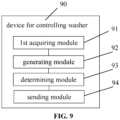
- FIG. 9 is a block diagram 1 of a device for controlling laundry equipment according to an illustrative embodiment. As shown in FIG. 9 , the device 90 includes a first acquiring module, a generating module, a determining module, and a sending module.
- the first acquiring module 91 is configured to acquire a to-be-shared washing parameter of at least one first laundry equipment, and a to-be-shared washing mode corresponding to the to-be-shared washing parameter.
- the generating module 92 is configured to generate a historical data set based on the to-be-shared washing parameter and the to-be-shared washing mode.
- the determining module 93 is configured to determine a target washing mode and a target washing parameter corresponding to the target washing mode from the historical data set.
- the fourth acquiring module is further configured to: edit the target washing parameter based on an editing instruction detected, acquiring the to-be-shared washing parameter.
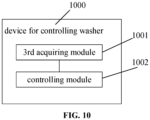
- the device 1000 further includes a displaying module.
Landscapes
- Engineering & Computer Science (AREA)
- Textile Engineering (AREA)
- Computer Networks & Wireless Communication (AREA)
- Automation & Control Theory (AREA)
- Signal Processing (AREA)
- Control Of Washing Machine And Dryer (AREA)
Description
- The present disclosure relates to the field of household appliances, and more particularly, to a method and device for controlling a laundry equipment, and a storage medium.
- In related art, the Internet of Things applies to various infrastructure fields, such as industry, agriculture, environment, transportation, logistics, security, etc., effectively promoting intelligent development of these aspects, allowing more reasonable use and distribution of limited resources, thereby improving the industry efficiency and benefit.
-
US 2018/305851 A1 discloses that a laundry treating apparatus includes a recommendation request unit configured to receive input that enables a recommendation of a laundry treating course from among a plurality of courses or a recommendation of a laundry treating option from among a plurality of options, a controller configured to, based on reception of the input from the recommendation request unit, determine a recommended course or a recommended option according to evaluation of one or more recommendation rules that are accessible by the controller and that have been stored in the controller, and a display unit configured to display the recommended course or the recommended option that has been determined by the controller. - The present disclosure provides a method and device for controlling a laundry equipment, and a storage medium.
- The features of the method and device are defined in the independent claims, and the preferable features are defined in the dependent claims. The following aspects are provided for illustrative purposes.
- According to a first aspect of embodiments of the present disclosure, there is provided a method for controlling laundry equipment, implemented at a washing mode sharing platform. The method includes:
- acquiring a to-be-shared washing parameter of at least one first laundry equipment, and a to-be-shared washing mode corresponding to the to-be-shared washing parameter;
- generating a historical data set based on the to-be-shared washing parameter and the to-be-shared washing mode;
- determining a target washing mode and a target washing parameter corresponding to the target washing mode from the historical data set; and
- sending the target washing mode and the target washing parameter to second laundry equipment.
- As may be seen from the embodiments, in the present disclosure, a washing mode sharing platform may generate a historical data set based on a to-be-shared washing parameter and a to-be-shared washing mode acquired from first laundry equipment, and send a target washing mode and a target washing parameter determined from the historical data set to second laundry equipment, allowing the second laundry equipment to wash a to-be-washed object according to the target washing mode and the target washing parameter.
- In embodiments of the present disclosure, a target washing mode and a target washing parameter corresponding to the target washing mode can be acquired from the washing mode sharing platform. The washing mode sharing platform stores an empirical parameter that has been verified and reviewed. Compared to washing a to-be-washed object through a fixed program preset by a manufacturer in related art, a target washing parameter corresponding to a target washing mode can be acquired directly from the washing mode sharing platform, and laundry equipment can be controlled to wash a to-be-washed object according to the target washing parameter, without having to modify and adjust respective parameters one by one, decreasing difficulty and complexity in washing. In addition, as each washing parameter of the washing mode sharing platform is a viewed and verified empirical parameter ready for a user to download and use without having to make multiple attempts, reducing possibility of a poor washing effect or damage to a to-be-washed object during the user attempts.
- Optionally, the method further includes:
- acquiring a washing request from the second laundry equipment or terminal equipment communicatively connected to the second laundry equipment.
- determining the target washing mode and the target washing parameter corresponding to the target washing mode from the historical data set may include:
- determining the target washing mode and the target washing parameter corresponding to the target washing mode from the historical data set according to the washing request.
- Optionally, the washing request includes a target mode identifier. Determining the target washing mode from the historical data set according to the washing request may include:
comparing the target mode identifier to a mode identifier of each of the to-be-shared washing mode in the historical data set, and determining the target washing mode from the historical data set according to a comparison result. - Optionally, determining the target washing mode from the historical data set according to the comparison result includes:
in response to the comparison result indicating a to-be-shared washing mode in the historical data set with a mode identifier same as the target mode identifier, determining, as the target washing mode, the to-be-shared washing mode with the mode identifier same as the target mode identifier. - According to a second aspect of embodiments of the present disclosure, there is provided a method for controlling laundry equipment, implemented at second laundry equipment. The method includes:
- acquiring, from a washing mode sharing platform, a target washing mode and a target washing parameter corresponding to the target washing mode; and
- controlling washing a to-be-washed object by the second laundry equipment according to the target washing mode according to the target washing parameter.
- The advantages and technical effects of the method of the second aspect correspond to those of the method of the first aspect.
- Optionally, the method further includes:
- after the second laundry equipment has washed the to-be-washed object, acquiring a to-be-shared washing parameter based on the target washing parameter; and
- uploading the to-be-shared washing parameter to the washing mode sharing platform based on an uploading instruction detected.
- Optionally, acquiring the to-be-shared washing parameter based on the target washing parameter includes:
editing the target washing parameter based on an editing instruction detected, acquiring the to-be-shared washing parameter. - Optionally, the method further includes:
- acquiring a washing request corresponding to the target washing mode, wherein the washing request includes a target mode identifier.
- acquiring, from the washing mode sharing platform, the target washing mode and the target washing parameter corresponding to the target washing mode may include:
- acquiring, from the washing mode sharing platform based on the target mode identifier, the target washing mode and the target washing parameter corresponding to the target washing mode.
- Optionally, the second laundry equipment has a touch display. The second laundry equipment may be communicatively connected to terminal equipment. Acquiring a washing request corresponding to the target washing mode may include:
- acquiring the washing request including a target mode identifier based on a touch operation applied to a mode icon displayed on the touch display; or
- acquiring the washing request from the terminal equipment.
- Optionally, the method further includes:
displaying a mode icon of a candidate washing mode in a set order on a touch display of the second laundry equipment, or on a display interface of terminal equipment. - The mode icon may be configured to identify the candidate washing mode corresponding to the mode icon.
- According to a third aspect of embodiments of the present disclosure, there is provided a device for controlling laundry equipment, implemented at a washing mode sharing platform. The device includes a first acquiring module, a generating module, a determining module, and a sending module.
- The first acquiring module is configured to acquire a to-be-shared washing parameter of at least one first laundry equipment, and a to-be-shared washing mode corresponding to the to-be-shared washing parameter.
- The generating module is configured to generate a historical data set based on the to-be-shared washing parameter and the to-be-shared washing mode.
- The determining module is configured to determine a target washing mode and a target washing parameter corresponding to the target washing mode from the historical data set.
- The sending module is configured to send the target washing mode and the target washing parameter to second laundry equipment.
- The advantages and technical effects of the device of the third aspect correspond to those of the method presented above.
- Optionally, the device further includes a second acquiring module.
- The second acquiring module may be configured to acquire a washing request from the second laundry equipment or terminal equipment communicatively connected to the second laundry equipment.
- The determining module may be further configured to:
determine the target washing mode and the target washing parameter corresponding to the target washing mode from the historical data set according to the washing request. - Optionally, the washing request includes a target mode identifier.
- The determining module may be further configured to: compare the target mode identifier to a mode identifier of each of the to-be-shared washing mode in the historical data set, and determine the target washing mode from the historical data set according to a comparison result.
- Optionally, the determining module may be further configured to:
in response to the comparison result indicating a to-be-shared washing mode in the historical data set with a mode identifier same as the target mode identifier, determine, as the target washing mode, the to-be-shared washing mode with the mode identifier same as the target mode identifier. - According to a fourth aspect of embodiments of the present disclosure, there is provided a device for controlling laundry equipment, implemented at second laundry equipment. The device includes a third acquiring module and a controlling module.
- The third acquiring module is configured to acquire, from a washing mode sharing platform, a target washing mode and a target washing parameter corresponding to the target washing mode.
- The controlling module is configured to control washing a to-be-washed object by the second laundry equipment according to the target washing mode according to the target washing parameter.
- The advantages and technical effects of the device of the fourth aspect correspond to those of the method presented above.
- Optionally, the device further includes a fourth acquiring module and an uploading module.
- The fourth acquiring module may be configured to, after the second laundry equipment has washed the to-be-washed object, acquire a to-be-shared washing parameter based on the target washing parameter.
- The uploading module may be configured to upload the to-be-shared washing parameter to the washing mode sharing platform based on an uploading instruction detected.
- Optionally, the fourth acquiring module is further configured to:
edit the target washing parameter based on an editing instruction detected, acquiring the to-be-shared washing parameter. - Optionally, the device further includes a fifth acquiring module.
- The fifth acquiring module may be configured to acquire a washing request corresponding to the target washing mode. The washing request includes a target mode identifier.
- The third acquiring module may be further configured to:
acquire, from the washing mode sharing platform based on the target mode identifier, the target washing mode and the target washing parameter corresponding to the target washing mode. - Optionally, the second laundry equipment has a touch display. The second laundry equipment may be communicatively connected to terminal equipment. The third acquiring module may be further configured to:
- acquire the washing request including a target mode identifier based on a touch operation applied to a mode icon displayed on the touch display; or
- acquire the washing request from the terminal equipment.
- Optionally, the device further includes a displaying module.
- The displaying module may be configured to display a mode icon of a candidate washing mode in a set order on a touch display of the second laundry equipment, or on a display interface of terminal equipment.
- The mode icon may be configured to identify the candidate washing mode corresponding to the mode icon.
- According to a fifth aspect of embodiments of the present disclosure, there is provided a device for controlling laundry equipment, including:
- a processor; and
- a memory configured to store processor executable instructions.
- The processor is configured to implement any method of the first aspect, or may be configured to implement any method of the second aspect.
- The advantages and technical effects of the device of the fifth aspect correspond to those of the method presented above.
- According to a sixth aspect of embodiments of the present disclosure, there is provided a computer-readable storage medium having stored therein instructions which, when executed by a processor of a device for controlling laundry equipment, allow the device for controlling laundry equipment to implement any method of the first aspect, or may be configured to implement any method of the second aspect.
- The advantages and technical effects of the storage medium correspond to those of the method presented above.
- It should be understood that the general description above and the detailed description below are illustrative and explanatory only, and do not limit the present disclosure.
- The accompanying drawings, which are incorporated in and form a part of this specification, illustrate embodiments consistent with the present disclosure and, together with the description, serve to explain the principles of the present disclosure.
-
FIG. 1 is a flowchart of a method for controlling laundry equipment according to an illustrative embodiment. -
FIG. 2 is a flowchart of a method for controlling laundry equipment according to an illustrative embodiment. -
FIG. 3 is an illustrative diagram of a display interface of terminal equipment according to an illustrative embodiment. -
FIG. 4 is an illustrative diagram of a display interface of terminal equipment according to an illustrative embodiment. -
FIG. 5 is an illustrative diagram of a display interface of terminal equipment according to an illustrative embodiment. -
FIG. 6 is an illustrative diagram of a display interface of terminal equipment according to an illustrative embodiment. -
FIG. 7 is an illustrative diagram of a display interface of terminal equipment according to an illustrative embodiment. -
FIG. 8 is an illustrative diagram of a display interface of terminal equipment according to an illustrative embodiment. -
FIG. 9 is a block diagram of a device for controlling laundry equipment according to an illustrative embodiment. -
FIG. 10 is a block diagram of a device for controlling laundry equipment according to an illustrative embodiment. -
FIG. 11 is a block diagram of hardware of a device for controlling laundry equipment according to an illustrative embodiment. -
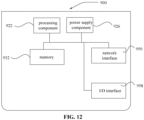
FIG. 12 is a block diagram of hardware of a device for controlling laundry equipment according to an illustrative embodiment. - Reference will now be made in detail to illustrative embodiments, examples of which are illustrated in the accompanying drawings. The following description refers to the accompanying drawings in which the same numbers in different drawings represent the same or similar elements unless otherwise represented. The implementations set forth in the following description of illustrative embodiments do not represent all implementations consistent with the present disclosure. Instead, they are merely examples of devices and methods consistent with aspects related to the present disclosure as recited in the appended claims. The illustrative implementation modes may take on multiple forms, and should not be taken as being limited to examples illustrated herein. Instead, by providing such implementation modes, embodiments herein may become more comprehensive and complete, and comprehensive concept of the illustrative implementation modes may be delivered to those skilled in the art. Implementations set forth in the following illustrative embodiments do not represent all implementations in accordance with the present disclosure. Rather, they are merely examples of the apparatus and method in accordance with certain aspects herein as recited in the accompanying claims.
- Note that although a term such as first, second, third may be adopted in an embodiment herein to describe various kinds of information, such information should not be limited to such a term. Such a term is merely for distinguishing information of the same type. For example, without departing from the scope of the embodiments herein, the first information may also be referred to as the second information. Similarly, the second information may also be referred to as the first information. Depending on the context, a "if" as used herein may be interpreted as "when" or "while" or "in response to determining that".
- In addition, described characteristics, structures or features may be combined in one or more implementation modes in any proper manner. In the following descriptions, many details are provided to allow a full understanding of embodiments herein. However, those skilled in the art will know that the technical solutions of embodiments herein may be carried out without one or more of the details; alternatively, another method, component, device, option, etc., may be adopted. Under other conditions, no detail of a known structure, method, device, implementation, material or operation may be shown or described to avoid obscuring aspects of embodiments herein.
- A block diagram shown in the accompanying drawings may be a functional entity which may not necessarily correspond to a physically or logically independent entity. Such a functional entity may be implemented in form of software, in one or more hardware modules or integrated circuits, or in different networks and /or processor devices and /or microcontroller devices.
- A terminal may sometimes be referred to as a smart terminal. The terminal may be a mobile terminal. The terminal may also be referred to as User Equipment (UE), a Mobile Station (MS), etc. A terminal may be equipment or a chip provided that provides a user with a voice and / or data connection, such as handheld equipment, onboard equipment, etc., with a wireless connection function. Examples of a terminal may include a mobile phone, a tablet computer, a notebook computer, a palm computer, a Mobile Internet Device (MID), wearable equipment, Virtual Reality (VR) equipment, Augmented Reality (AR) equipment, a wireless terminal in industrial control, a wireless terminal in unmanned drive, a wireless terminal in remote surgery, a wireless terminal in a smart grid, a wireless terminal in transportation safety, a wireless terminal in smart city, a wireless terminal in smart home, etc.
- The features of the method and device are defined in the independent claims, and the preferable features are defined in the dependent claims. The following embodiments and examples are not necessarily according to the invention and are provided for mere illustrative purposes.
- In related art, the Internet of Things applies to various infrastructure fields, such as industry, agriculture, environment, transportation, logistics, security, etc., effectively promoting intelligent development of these aspects, allowing more reasonable use and distribution of limited resources, thereby improving the industry efficiency and benefit.
- For example, laundry equipment control, etc., may be implemented through terminal equipment. However, at present, whether laundry equipment is controlled through terminal equipment or directly through the laundry equipment itself, the laundry can only be washed through a program preset by a manufacturer, and a user can only manually modify some parameters. On one hand, as there may be just one fixed program preset by the manufacturer, when the program set by the manufacturer does not meet the need of the user, the user has to modify and adjust the parameters one by one, which increases difficulty and complexity in washing. On the other hand, the user has to try a number of times before she or he can find a right washing parameter corresponding to the laundry, and in this process, the laundry may be damaged or not washed well due to inaccurate parameter selection.
- In related art, the Internet of Things applies to various infrastructure fields, such as industry, agriculture, environment, transportation, logistics, security, etc., effectively promoting intelligent development of these aspects, allowing more reasonable use and distribution of limited resources, thereby improving the industry efficiency and benefit.
- For example, laundry equipment control, etc., may be implemented through terminal equipment. However, at present, whether laundry equipment is controlled through terminal equipment or directly through the laundry equipment itself, the laundry can only be washed through a program preset by a manufacturer, and a user can only manually modify some parameters. On one hand, as there may be just one fixed program preset by the manufacturer, when the program set by the manufacturer does not meet the need of the user, the user has to modify and adjust the parameters one by one, which increases difficulty and complexity in washing. On the other hand, the user has to try a number of times before she or he can find a right washing parameter corresponding to the laundry, and in this process, the laundry may be damaged or not washed well due to inaccurate parameter selection.
- A method for controlling laundry equipment is provided in embodiments of the present disclosure.
FIG. 1 is a flowchart of a method for controlling laundry equipment according to an illustrative embodiment. As shown inFIG. 1 , the method may be implemented at a washing mode sharing platform. The method mainly includes steps as follows. - In S101, a to-be-shared washing parameter of at least one first laundry equipment, and a to-be-shared washing mode corresponding to the to-be-shared washing parameter, are acquired.
- In S102, a historical data set is generated based on the to-be-shared washing parameter and the to-be-shared washing mode.
- In S103, a target washing mode and a target washing parameter corresponding to the target washing mode are determined from the historical data set.
- In S104, the target washing mode and the target washing parameter are sent to second laundry equipment.
- Here, the first laundry equipment and the second laundry equipment may include drum laundry equipment, pulsator laundry equipment, a washing and drying machine, etc. The washing mode sharing platform may include electronic equipment capable of processing data independently, such as a server.
- In embodiments of the present disclosure, the washing mode sharing platform may acquire a to-be-shared washing parameter from at least one first laundry equipment and a to-be-shared washing mode corresponding to the to-be-shared washing parameter. Here, a to-be-shared washing parameter and a to-be-shared washing mode may be acquired actively by the washing mode sharing platform from first laundry equipment, or may be uploaded triggered by a user using first laundry equipment, which is not specifically limited herein. In some embodiments, there may be multiple pieces of first laundry equipment.
- In embodiments of the present disclosure, after the to-be-shared washing parameter and the to-be-shared washing mode have been acquired, a historical data set may be formed based on the to-be-shared washing parameter and the to-be-shared washing mode acquired, and a mapping relation between a to-be-shared washing parameter and a to-be-shared washing mode.
- In use, the washing mode sharing platform may determine a target washing mode and a target washing parameter corresponding to the target washing mode from the historical data set, and send the target washing mode and the target washing parameter to the second laundry equipment, to control washing a to-be-washed object by the second laundry equipment using the target washing parameter according to the target washing mode.
- In some embodiments, a to-be-shared washing parameter includes at least a water temperature, an amount of water, an amount of laundry detergent used, a number of rinses, a spin speed, and a drying time, which are not specifically limited herein.
- In embodiments of the present disclosure, a target washing mode and a target washing parameter corresponding to the target washing mode can be acquired from the washing mode sharing platform. The washing mode sharing platform stores an empirical parameter that has been verified and reviewed. Compared to washing a to-be-washed object through a fixed program preset by a manufacturer in related art, a target washing parameter corresponding to a target washing mode can be acquired directly from the washing mode sharing platform, and laundry equipment can be controlled to wash a to-be-washed object according to the target washing parameter, without having to modify and adjust respective parameters one by one, decreasing difficulty and complexity in washing. In addition, as each washing parameter of the washing mode sharing platform is a viewed and verified empirical parameter ready for a user to download and use without having to make multiple attempts, reducing possibility of a poor washing effect or damage to a to-be-washed object during the user attempts.
- In some embodiments, the method further includes a step as follows.
- A washing request is acquired from the second laundry equipment or a terminal equipment communicatively connected to the second laundry equipment.
- The target washing mode and the target washing parameter corresponding to the target washing mode may be determined from the historical data set as follows.
- The target washing mode and the target washing parameter corresponding to the target washing mode are determined from the historical data set according to the washing request.
- In embodiments of the present disclosure, a touch display may be provided on the second laundry equipment. The touch display may have both a display function and a touch function. During implementation, both a touch area having a touch function and a display area having a display function may be provided on a door cover of the second laundry equipment. Alternatively, the touch area and the display area may both be provided on other locations on the second laundry equipment, such as on the body of the second laundry equipment.
- In other embodiments, the touch area and the display area of the touch display may be provided separately. For example, the touch area is provided on the body of the second laundry equipment, and the display area is provided on the door cover of the second laundry equipment, which may be provided as needed, and is not specifically limited herein. Of course, a touch display may be provided for the first laundry equipment, in a way same as the second laundry equipment, which is not specifically limited herein.
- In some embodiments, a communication connection between second laundry equipment and terminal equipment may be established. During implementation, the touch display of the second laundry equipment may perform synchronous display with the terminal equipment.
- In embodiments of the present disclosure, for example, a touch display is provided on the body of the second laundry equipment. During implementation, the touch display on the body of the second laundry equipment and the display of the terminal equipment may perform synchronous display. The second laundry equipment may be controlled through the touch display on the body to perform a corresponding function. Alternatively, the second laundry equipment may be controlled through the display of the terminal equipment to perform a corresponding function.
- In embodiments of the present disclosure, a user may input a touch operation through a touch display of second laundry equipment. After detecting the touch operation, the laundry equipment can acquire a washing request based on the touch operation. In some embodiments, a washing request may be triggered based on a click operation applied to the touch display of the second laundry equipment. For example, a washing request may be triggered based on a click operation, a double-click operation, a long-press operation, etc.
- In other embodiments, when mode icons of multiple washing modes are displayed on the touch display of the second laundry equipment, the user may select a washing mode as needed, and input a corresponding touch operation through a mode icon corresponding to the washing mode selected by the user. Then, the washing request corresponding to the washing mode may be generated. A mode icon may be displayed on the touch display of the second laundry equipment in in graphic or text form.
- In other embodiments, a user may input a touch operation through the display of the terminal equipment. After detecting the touch operation, the terminal equipment can acquire a washing request based on the touch operation, and send the washing request to a washing mode sharing platform. In some embodiments, a washing request may be triggered based on a click operation applied to the display of the terminal equipment. For example, a washing request may be triggered based on a click operation, a double-click operation, a long-press operation, etc.
- In other embodiments, when mode icons of multiple washing modes are displayed on the display of the terminal equipment, the user may select a washing mode as needed, and input a corresponding touch operation through the mode icon corresponding to the washing mode selected by the user, thereby generating a washing request corresponding to the washing mode.
- In embodiments of the present disclosure, after the second washing device or the terminal equipment has generated the washing request, the washing request may be sent to the washing mode sharing platform. The washing mode sharing platform determines a target washing mode and a target washing parameter corresponding to the target washing mode from the historical data set according to the washing request.
- In embodiments of the present disclosure, the washing mode sharing platform may acquire the washing request from the second laundry equipment directly, or acquire the washing request through the terminal equipment, thereby improving flexibility in acquiring the washing request.
- The washing request includes a target mode identifier. The target washing mode is determined from the historical data set according to the washing request as follows.
- The target mode identifier is compared to a mode identifier of each of the to-be-shared washing mode in the historical data set. The target washing mode is determined from the historical data set according to a comparison result.
- In embodiments of the present disclosure, since the washing request is generated according to the mode icon of the washing mode required by the user, in generating the washing request, the mode identifier of the washing mode required by the user, that is, the target mode identifier, may be included in the washing request. In embodiments of the present disclosure, each to-be-shared washing mode has a corresponding mode identifier. During implementation, the target mode identifier is compared to the mode identifier of each to-be-shared washing mode, and the target washing mode is determined according to the comparison result. A mode identifier may include a number, a letter, etc.
- The target washing mode is determined from the historical data set according to the comparison result as follows.
- When the comparison result indicates that there is a to-be-shared washing mode in the historical data set with a mode identifier same as the target mode identifier, the to-be-shared washing mode with the mode identifier same as the target mode identifier is determined as the target washing mode.
- In embodiments of the present disclosure, the to-be-shared washing mode with the mode identifier same as the target mode identifier is determined as the target washing mode, improving accuracy of a determined target washing mode.
- When there is no to-be-shared washing mode with a mode identifier same as the target mode identifier, similarity between the target mode identifier and a mode identifier of a to-be-shared washing mode is determined. A to-be-shared washing mode corresponding to a mode identifier having similarity with the target mode identifier greater than a set similarity threshold is determined as the target washing mode.
- In embodiments of the present disclosure, to-be-shared washing modes of a plurality of laundry equipment, and a to-be-shared washing parameter corresponding to each to-be-shared washing mode, may be stored to the washing mode sharing platform in form of a historical data set, so that a user may determine, from the historical data set, a target washing mode and a target washing parameter directly corresponding to the target mode identifier. Compared to washing a to-be-washed object through a fixed program preset by a manufacturer in related art, a target washing mode and a target washing parameter corresponding to the target washing mode can be acquired directly from the washing mode sharing platform, and laundry equipment can be controlled to wash a to-be-washed object according to the target washing parameter, without having to modify and adjust respective parameters one by one, decreasing difficulty and complexity in washing..
- In embodiments of the present disclosure, a massive number of users keep uploading and sharing historical washing modes and historical washing parameters. Better washing modes keep being filtered out. Eventually, a user is allowed to acquire a laundry equipment operating program suitable for various clothes or with a better washing effect for same clothes. Program methods suitable for a variety of laundry equipment are created using a massive number of Internet users combining Internet of Things (IoT) technology, improving user experience in using laundry equipment.
- A method for controlling laundry equipment is provided in embodiments of the present disclosure.
FIG. 2 is a flowchart of a method for controlling laundry equipment according to an illustrative embodiment. As shown inFIG. 2 , the method may be implemented at second laundry equipment. The method mainly includes steps as follows. - In S201, a target washing mode and a target washing parameter corresponding to the target washing mode are acquired from a washing mode sharing platform.
- In S202, it is controlled to wash a to-be-washed object by the second laundry equipment according to the target washing mode according to the target washing parameter.
- Here, the second laundry equipment may include drum laundry equipment, pulsator laundry equipment, a washing and drying machine, etc. The washing mode sharing platform may include electronic equipment capable of processing data independently, such as a server.
- In embodiments of the present disclosure, a touch display may be provided on the second laundry equipment. The touch display may have both a display function and a touch function. During implementation, both a touch area having a touch function and a display area having a display function may be provided on a door cover of the second laundry equipment. Alternatively, the touch area and the display area may both be provided on other locations on the second laundry equipment, such as on the body of the second laundry equipment.
- In other embodiments, the touch area and the display area of the touch display may be provided separately. For example, the touch area is provided on the body of the second laundry equipment, and the display area is provided on the door cover of the second laundry equipment, which may be provided as needed, and is not specifically limited herein.
- In embodiments of the present disclosure, for example, a touch display is provided on the body of the second laundry equipment. During implementation, the second laundry equipment may be controlled through the touch display on the body to perform a corresponding function.
- Here, a target washing mode may be a mode selected by the user for the to-be-washed object. In some embodiments, a washing mode may be identified based on a mode icon on the second laundry equipment. For example, a mode icon for identifying a washing mode may be displayed on the touch display of the second laundry equipment. In use, a user may input a washing request through a mode icon displayed on the touch display of the second laundry equipment.
- In embodiments of the present disclosure, a target washing mode and a target washing parameter corresponding to the target washing mode can be acquired from the washing mode sharing platform. The washing mode sharing platform stores an empirical parameter that has been verified and reviewed. Compared to washing a to-be-washed object through a fixed program preset by a manufacturer in related art, a target washing parameter corresponding to a target washing mode can be acquired directly from the washing mode sharing platform, and laundry equipment can be controlled to wash a to-be-washed object according to the target washing parameter, without having to modify and adjust respective parameters one by one, decreasing difficulty and complexity in washing. In addition, as each washing parameter of the washing mode sharing platform is a viewed and verified empirical parameter ready for a user to download and use without having to make multiple attempts, reducing possibility of a poor washing effect or damage to a to-be-washed object during the user attempts.
- In some embodiments, the method further include a step as follows.
- After the second laundry equipment has washed the to-be-washed object, a to-be-shared washing parameter is acquired based on the target washing parameter.
- The to-be-shared washing parameter is uploaded to the washing mode sharing platform based on an uploading instruction detected.
- Here, having washed the to-be-washed object, the second laundry equipment may acquire a to-be-shared washing parameter based on the target washing parameter, and upload the washing parameter of the to-be-washed object to the washing mode sharing platform based on an uploading instruction.
- Here, since with the present disclosure, a to-be-washed object is washed based on a target washing parameter, after the to-be-washed object has been washed, the user rates, edits, etc., the target washing parameter, acquiring a washing parameter more suitable for the to-be-washed object, i.e., a to-be-shared washing parameter.
- After acquiring the to-be-shared washing parameter, an uploading instruction for the second laundry equipment or the terminal equipment may be detected, and after detecting the uploading instruction, the to-be-shared washing parameter is uploaded to the washing mode sharing platform to share the washing parameter more suitable for the to-be-washed object with other users.
- In embodiments of the present disclosure, having finished washing the to-be-washed object, the second laundry equipment can acquire a to-be-shared washing parameter based on a target washing parameter, and upload the to-be-shared washing data to the washing mode sharing platform for being shared by other users, thereby implementing washing parameter sharing by making full use of a feature of big data, which is more convenient and relevant than to find a washing mode and a washing parameter suitable for a to-be-washed object by manually attempting different washing modes and washing parameters.
- In other embodiments, if a to-be-washed object is washed based on an initial washing parameter, a to-be-shared washing parameter is acquired based on the initial washing parameter. The initial washing parameter may be a washing parameter preset by a manufacturer or a user-defined washing parameter. After the second laundry equipment has washed the to-be-washed object based on the initial washing parameter, a to-be-shared washing parameter is acquired based on the initial washing parameter. The user rates, edits, etc., the initial washing parameter, acquiring a washing parameter more suitable for the to-be-washed object, i.e., the to-be-shared washing parameter.
- In some embodiments, the to-be-shared washing parameter may be acquired based on the target washing parameter as follows.
- The target washing parameter may be edited based on an editing instruction detected, acquiring the to-be-shared washing parameter.
- Here, an optimal washing effect may not be achieved after washing the to-be-washed object based on the target washing parameter. If the target washing parameter is uploaded directly to the washing mode sharing platform, other users may be misled. In embodiments of the present disclosure, after washing the to-be-washed object, the user inputs an editing instruction to edit the target washing parameter, and to input user experience, acquiring a to-be-shared washing parameter.
- In embodiments of the present disclosure, after washing the to-be-washed object based on the target washing parameter, the target washing parameter is not uploaded directly to the washing mode sharing platform. Instead, the target washing parameter may be edited, acquiring a to-be-shared washing parameter. The to-be-shared washing parameter is uploaded to the washing mode sharing platform, allowing a washing parameter downloaded by another user to be more suitable for a target to be washed, improving washing effect.
- In other embodiments, the method further includes a step as follows.
- It may be detected whether there is a sharing instruction for a sharing control on a sharing interface.
- An editing interface may be entered after detecting a sharing instruction for a sharing control.
- It may be detected whether there is an editing instruction for the editing interface.
- The target washing parameter may be edited based on the editing instruction detected, acquiring the to-be-shared washing parameter, as follows.
- When an editing instruction for the editing interface is detected, the target washing parameter may be edited, acquiring the to-be-shared washing parameter.
-
FIG. 3 is an illustrative diagram 1 of a display interface of terminal equipment according to an illustrative embodiment. As shown inFIG. 3 , asharing control 301 may be displayed on the display interface of the terminal equipment in a floating manner. When the sharing control is displayed on the display interface of the terminal equipment in a floating manner, the user may drag the sharing control to a corresponding location during use. In other optional embodiments, the sharing control may be displayed on the display interface of the terminal equipment in another mode, or the sharing control may be displayed on a touch display of laundry equipment. -
FIG. 4 is an illustrative diagram 2 of a display interface of terminal equipment according to an illustrative embodiment. As shown inFIG. 4 , a plurality ofedit boxes 401 may be displayed on the editing interface, and an editing instruction for an edit box may be detected. Content in an edit box may be edited based on a detected editing instruction. After the editing is completed, it may be detected whether there is an uploading instruction input based on a submit control. When an uploading instruction input based on the submit control is detected, an edited to-be-shared washing parameter is uploaded to the washing mode sharing platform. -
FIG. 5 is an illustrative diagram 3 of a display interface of terminal equipment according to an illustrative embodiment. As shown inFIG. 5 , after uploading a to-be-shared washing parameter to a washing mode sharing platform, prompt information may be output based on the display interface of the terminal equipment. For example, prompt information of successful uploading, or prompt information of an uploading failure, may be output. - In other embodiments, after successfully uploading a to-be-shared washing parameter to the washing mode sharing platform, the to-be-shared washing parameter is to be audited before being presented to other users. Here, an uploaded to-be-shared washing parameter may be audited manually, or through a trained mathematical model. For example, an uploaded to-be-shared washing parameter may be audited based on a trained neural network model, which is not specifically limited herein.
-
FIG. 6 is an illustrative diagram 4 of a display interface of terminal equipment according to an illustrative embodiment. As shown inFIG. 6 , a user may enter a "my sharing" interface to browse shared information. The shared information may include a washing mode shared by the user, a washing mode collected by the user, a washing mode recently browsed by the user, etc. - In some embodiments, the method further includes a step as follows.
- A washing request corresponding to the target washing mode is acquired. The washing request includes a target mode identifier.
- The target washing mode and the target washing parameter corresponding to the target washing mode may be acquired from the washing mode sharing platform as follows.
- The target washing mode and the target washing parameter corresponding to the target washing mode are acquired from the washing mode sharing platform based on the target mode identifier.
- In embodiments of the present disclosure, since the washing request is generated according to the mode icon of the washing mode required by the user, in generating the washing request, the mode identifier of the washing mode required by the user, that is, the target mode identifier, may be included in the washing request. In embodiments of the present disclosure, each to-be-shared washing mode has a corresponding mode identifier. During implementation, the target mode identifier is compared to the mode identifier of each to-be-shared washing mode, and the target washing mode is determined according to the comparison result. A mode identifier may include a number, a letter, etc.
- During implementation, when the comparison result indicates that there is a to-be-shared washing mode in the historical data set with a mode identifier same as the target mode identifier, the to-be-shared washing mode with the mode identifier same as the target mode identifier is determined as the target washing mode.
- In embodiments of the present disclosure, a to-be-shared washing mode with a mode identifier same as a target mode identifier is determined as a target washing mode, improving accuracy of a determined target washing mode.
- In some embodiments, the second laundry equipment has a touch display. The second laundry equipment may be communicatively connected to terminal equipment. A washing request corresponding to the target washing mode may be acquired as follows.
- The washing request including a target mode identifier may be acquired based on a touch operation applied to a mode icon displayed on the touch display.
- Alternatively, the washing request may be acquired from the terminal equipment.
- In embodiments of the present disclosure, a touch display may be provided on the second laundry equipment. The touch display may have both a display function and a touch function. During implementation, both a touch area having a touch function and a display area having a display function may be provided on a door cover of the second laundry equipment. Alternatively, the touch area and the display area may both be provided on other locations on the second laundry equipment, such as on the body of the second laundry equipment.
- In other embodiments, the touch area and the display area of the touch display may be provided separately. For example, the touch area is provided on the body of the second laundry equipment, and the display area is provided on the door cover of the second laundry equipment, which may be provided as needed, and is not specifically limited herein. Of course, a touch display may be provided for the first laundry equipment, in a way same as the second laundry equipment, which is not specifically limited herein.
- In some embodiments, a communication connection between second laundry equipment and terminal equipment may be established. During implementation, the touch display of the second laundry equipment may perform synchronous display with the terminal equipment.
- In embodiments of the present disclosure, for example, a touch display is provided on the body of the second laundry equipment. During implementation, the touch display on the body of the second laundry equipment and the display of the terminal equipment may perform synchronous display. The second laundry equipment may be controlled through the touch display on the body to perform a corresponding function. Alternatively, the second laundry equipment may be controlled through the display of the terminal equipment to perform a corresponding function.
- In embodiments of the present disclosure, a user may input a touch operation through a touch display of second laundry equipment. After detecting the touch operation, the laundry equipment can acquire a washing request based on the touch operation. In some embodiments, a washing request may be triggered based on a click operation applied to the touch display of the second laundry equipment. For example, a washing request may be triggered based on a click operation, a double-click operation, a long-press operation, etc.
- In other embodiments, when mode icons of multiple washing modes are displayed on the touch display of the second laundry equipment, the user may select a washing mode as needed, and input a corresponding touch operation through a mode icon corresponding to the washing mode selected by the user. Then, the washing request corresponding to the washing mode may be generated. A mode icon may be displayed on the touch display of the second laundry equipment in in graphic or text form.
- In other embodiments, when mode icons of multiple washing modes are displayed on the touch display of the second laundry equipment, a filter control may also be displayed on the touch display. For example, the filter control may be displayed above the mode icons of the multiple washing modes. In some embodiments, the filter control may also be displayed at another location on the touch display, which is not specifically limited herein.
- In other embodiments, a user may input a touch operation through the display of the terminal equipment. After detecting the touch operation, the terminal equipment can acquire a washing request based on the touch operation, and send the washing request to a washing mode sharing platform. In some embodiments, a washing request may be triggered based on a click operation applied to the display of the terminal equipment. For example, a washing request may be triggered based on a click operation, a double-click operation, a long-press operation, etc.
- In other embodiments, when mode icons of multiple washing modes are displayed on the display of the terminal equipment, the user may select a washing mode as needed, and input a corresponding touch operation through the mode icon corresponding to the washing mode selected by the user, thereby generating a washing request corresponding to the washing mode.
- In other embodiments, when mode icons of multiple washing modes are displayed on the display of the terminal equipment, a filter control may also be displayed on the display of the terminal equipment. For example, the filter control may be displayed above the multiple mode icons. In some embodiments, the filter control may also be displayed at another location on the display of the terminal equipment, which is not specifically limited herein.
- For example, the user inputs a touch operation through the display of the terminal equipment.
FIG. 7 is an illustrative diagram 5 of a display interface of terminal equipment according to an illustrative embodiment. As shown inFIG. 7 , mode icons of a plurality of washing modes may be displayed on a display interface of terminal equipment. For example, mode identifiers of a quick underwear mode, a large item super clean mode, a sneaker only mode, etc., may be displayed on the display interface in form of text. During implementation, a user may trigger a washing request through a mode icon. For example, a corresponding washing request may be triggered by clicking on text such as "quick underwear", "large item super clean", "sneaker only", etc. - In
FIG. 7 , a filter control may be displayed above the mode icons. The filter control may include a fabric filter control, a type filter control, a temperature filter control, etc. In some embodiments, a washing duration and a washing temperature required to perform a washing mode corresponding to a mode icon can also be displayed on the display interface in displaying the mode icon. For example, to perform the quick underwear mode, a washing time of 32 minutes and a washing temperature greater than 35°C are needed. To perform the large item super clean mode, a washing time of 285 minutes and a washing temperature greater than 95°C are needed. - In other embodiments, after triggering a washing request, a washing parameter in a washing mode corresponding to the washing request may be displayed on a browsing interface of the touch display of laundry equipment, or on a browsing interface of the display of the terminal equipment.
FIG. 8 is an illustrative diagram 6 of a display interface of terminal equipment according to an illustrative embodiment. As shown inFIG. 8 , washing parameters of a quick underwear mode may be displayed on the browsing interface of the display of the terminal equipment. The washing parameters may include a number of users using the quick underwear mode, a number of uses, and a number of users approving the quick underwear mode. In addition, evaluation of using the quick underwear mode by the user may also be displayed on the browsing interface. - In other embodiments, the user may also set a washing mode corresponding to washing parameters displayed on the browsing interface as a custom mode based on a custom control on the browsing interface. In this way, to use the washing mode again, the user can determine the washing mode directly from a custom mode set, without having to enter the washing mode sharing platform and perform download again.
- In other embodiments, content displayed on the display interface of the terminal equipment may be displayed synchronously on the touch display of the second laundry equipment.
- In embodiments of the present disclosure, a user can select a control mode as needed. For example, a touch operation may be input directly through the touch display of second laundry equipment to control the laundry equipment. Alternatively, laundry equipment may be controlled through terminal equipment, improving flexibility in controlling the laundry equipment.
- In some embodiments, the method further includes a step as follows.
- A mode icon of a candidate washing mode may be displayed in a set order on a touch display of the second laundry equipment, or on a display interface of terminal equipment.
- The mode icon may be configured to identify the candidate washing mode corresponding to the mode icon.
- Here, a target washing mode may be a mode selected by the user for the to-be-washed obj ect. In some embodiments, a washing mode may be identified based on a mode icon. For example, a mode icon for identifying a washing mode may be displayed on the touch display of the second laundry equipment, or on the display interface of the terminal equipment. In use, a user may input a washing request through a mode icon displayed on the touch display of the second laundry equipment, or through a mode icon displayed on the display interface of the terminal equipment.
- In some embodiments, a user may input a washing request through the touch display of the second laundry equipment, for example. After detecting the washing request triggered through the touch display, the second laundry equipment may send the washing request to the washing mode sharing platform. In other embodiments, after acquiring the washing request, the second laundry equipment may also send the washing request to the washing mode sharing platform through the terminal equipment.
- In other embodiments, for example, the user may input a washing request through the terminal equipment. After detecting a trigger operation applied to the display of the terminal equipment, the terminal equipment may generate a washing request based on the trigger operation, and send the washing request to the washing mode sharing platform.
- In embodiments of the present disclosure, after a washing request is sent to the washing mode sharing platform, the washing mode sharing platform can determine a target washing mode and a target washing parameter corresponding to the target washing mode based on the washing request, and send the target washing mode and the target washing parameter to the second laundry equipment.
- In some embodiments, while using laundry equipment (including the first laundry equipment and the second laundry equipment), a user may upload a washing parameter used in washing a to-be-washed object using the laundry equipment to a target washing mode device, so as to be shared by users. To use a washing parameter in a target washing mode, a user can input a washing request based on the touch display of the laundry equipment or the display of the terminal equipment, and acquire any target washing parameter corresponding to the target washing mode selected by the user from the target washing mode based on a washing request generated by the washing request.
- As may be seen from the embodiments, with the present disclosure, when a washing request is detected, the washing request can be sent to a washing mode sharing platform, to acquire a target washing mode and a target washing parameter from the washing mode sharing platform. After acquiring the target washing mode and the target washing parameter, laundry equipment can be controlled to wash a to-be-washed object according to the target washing mode and the target washing parameter.
- In embodiments of the present disclosure, a target washing mode and a target washing parameter corresponding to the target washing mode can be acquired from the washing mode sharing platform. The washing mode sharing platform stores an empirical parameter that has been verified and reviewed. Compared to washing a to-be-washed object through a fixed program preset by a manufacturer in related art, a target washing parameter corresponding to a target washing mode can be acquired directly from the washing mode sharing platform, and laundry equipment can be controlled to wash a to-be-washed object according to the target washing parameter, without having to modify and adjust respective parameters one by one, decreasing difficulty and complexity in washing. In addition, as each washing parameter of the washing mode sharing platform is a viewed and verified empirical parameter ready for a user to download and use without having to make multiple attempts, reducing possibility of a poor washing effect or damage to a to-be-washed object during the user attempts.
- Here, a set order may be determined according to a frequency of using a washing mode or a user rating. In other embodiments, the set order may also be determined according to the washing duration required to perform a washing mode. As shown in
FIG. 7 , in case the user triggers the washing time control, washing modes may be sorted according to the washing duration. - In embodiments of the present disclosure, washing modes can be sorted according to a set order, so that during use, a user can sort the washing modes as needed, thereby quickly locating a washing mode to be selected by the user.
-
FIG. 9 is a block diagram 1 of a device for controlling laundry equipment according to an illustrative embodiment. As shown inFIG. 9 , thedevice 90 includes a first acquiring module, a generating module, a determining module, and a sending module. - The first acquiring
module 91 is configured to acquire a to-be-shared washing parameter of at least one first laundry equipment, and a to-be-shared washing mode corresponding to the to-be-shared washing parameter. - The generating
module 92 is configured to generate a historical data set based on the to-be-shared washing parameter and the to-be-shared washing mode. - The determining
module 93 is configured to determine a target washing mode and a target washing parameter corresponding to the target washing mode from the historical data set. - The sending
module 94 is configured to send the target washing mode and the target washing parameter to second laundry equipment. - The
device 90 further includes a second acquiring module. - The second acquiring module is configured to acquire a washing request from the second laundry equipment or the terminal equipment communicatively connected to the second laundry equipment.
- The determining
module 93 may be further configured to:
determine the target washing mode and the target washing parameter corresponding to the target washing mode from the historical data set according to the washing request. - The washing request includes a target mode identifier.
- The determining
module 93 may be further configured to: compare the target mode identifier to a mode identifier of each of the to-be-shared washing mode in the historical data set, and determine the target washing mode from the historical data set according to a comparison result. - In some embodiments, the determining
module 93 may be further configured to:
in response to the comparison result indicating a to-be-shared washing mode in the historical data set with a mode identifier same as the target mode identifier, determine, as the target washing mode, the to-be-shared washing mode with the mode identifier same as the target mode identifier. -
FIG. 10 is a block diagram 2 of a device for controlling laundry equipment according to an illustrative embodiment. As shown inFIG. 10 , the device may be implemented at second laundry equipment. Thedevice 1000 includes a third acquiring module and a controlling module. - The third acquiring
module 1001 is configured to acquire, from a washing mode sharing platform, a target washing mode and a target washing parameter corresponding to the target washing mode. - The controlling
module 1002 is configured to control washing a to-be-washed object by the second laundry equipment according to the target washing mode according to the target washing parameter. - The
device 1000 further includes a fourth acquiring module and an uploading module. - The fourth acquiring module is configured to, after the second laundry equipment has washed the to-be-washed object, acquire a to-be-shared washing parameter based on the target washing parameter.
- The uploading module is configured to upload the to-be-shared washing parameter to the washing mode sharing platform based on an uploading instruction detected.
- The fourth acquiring module is further configured to:
edit the target washing parameter based on an editing instruction detected, acquiring the to-be-shared washing parameter. - The
device 1000 further includes a fifth acquiring module. - The fifth acquiring module is configured to acquire a washing request corresponding to the target washing mode. The washing request includes a target mode identifier.
- The third acquiring
module 1001 is further configured to:
acquire, from the washing mode sharing platform based on the target mode identifier, the target washing mode and the target washing parameter corresponding to the target washing mode. - In some embodiments, the second laundry equipment has a touch display. The second laundry equipment may be communicatively connected to terminal equipment. The third acquiring
module 1001 may be further configured to: - acquire the washing request including a target mode identifier based on a touch operation applied to a mode icon displayed on the touch display; or
- acquire the washing request from the terminal equipment.
- In some embodiments, the
device 1000 further includes a displaying module. - The displaying module may be configured to display a mode icon of a candidate washing mode in a set order on a touch display of the second laundry equipment, or on a display interface of terminal equipment.
- The mode icon may be configured to identify the candidate washing mode corresponding to the mode icon.
- A module of a device according to an aforementioned embodiment may perform an operation in a mode elaborated in an embodiment of a method herein, which will not be repeated here.
-
FIG. 11 is a block diagram 1 of hardware of adevice 800 for controlling laundry equipment according to an illustrative embodiment. For example, thedevice 800 may be a mobile phone, a computer, a digital broadcasting terminal, a message transceiver, a game console, tablet equipment, medical equipment, fitness equipment, a Personal Digital Assistant (PDA), etc. - Referring to
FIG. 11 , thedevice 800 includes aprocessing component 802 and amemory 804. Thedevice 800 may include one or more components as follows: apower component 806, amultimedia component 808, anaudio component 810, an Input / Output (I/O)interface 812, and asensor component 814. Thedevice 800 includes acommunication component 816. - The
processing component 802 generally controls an overall operation of the display equipment, such as operations associated with display, a telephone call, data communication, a camera operation, a recording operation, etc. Theprocessing component 802 may include one ormore processors 820 to execute instructions so as to complete all or some steps of the method. In addition, theprocessing component 802 may include one or more modules to facilitate interaction between theprocessing component 802 and other components. For example, theprocessing component 802 may include a multimedia module to facilitate interaction between themultimedia component 808 and theprocessing component 802. - The
memory 804 is configured to store various types of data to support operation on thedevice 800. Examples of these data include instructions of any application or method configured to operate on thedevice 800, contact data, phonebook data, messages, images, videos, and /etc. Thememory 804 may be realized by any type of volatile or nonvolatile storage equipment or combination thereof, such as Static Random Access Memory (SRAM), Electrically Erasable Programmable Read-Only Memory (EEPROM), Erasable Programmable Read-Only Memory (EPROM), Programmable Read-Only Memory (PROM), Read-Only Memory (ROM), magnetic memory, flash memory, magnetic disk, or compact disk. - The
power component 806 supplies electric power to various components of thedevice 800. Thepower component 806 may include a power management system, one or more power supplies, and other components related to generating, managing and distributing electric power for thedevice 800. - The
multimedia component 808 includes a screen providing an output interface between thedevice 800 and a user. The screen may include a Liquid Crystal Display (LCD) and a Touch Panel (TP). If the screen includes a TP, the screen may be realized as a touch screen to receive an input signal from a user. The TP includes one or more touch sensors for sensing touch, slide and gestures on the TP. The touch sensors not only may sense the boundary of a touch or slide move, but also detect the duration and pressure related to the touch or slide move. In some embodiments, themultimedia component 808 includes a front camera and /or a rear camera. When thedevice 800 is in an operation mode such as a shooting mode or a video mode, the front camera and /or the rear camera may receive external multimedia data. Each of the front camera and /or the rear camera may be a fixed optical lens system or may have a focal length and be capable of optical zooming. - The
audio component 810 is configured to output and /or input an audio signal. For example, theaudio component 810 includes a microphone (MIC). When thedevice 800 is in an operation mode such as a call mode, a recording mode, and a voice recognition mode, the MIC is configured to receive an external audio signal. The received audio signal may be further stored in thememory 804 or may be sent via thecommunication component 816. In some embodiments, theaudio component 810 further includes a loudspeaker configured to output the audio signal. - The I/
O interface 812 provides an interface between theprocessing component 802 and a peripheral interface module. The peripheral interface module may be a keypad, a click wheel, a button, etc. These buttons may include but are not limited to: a homepage button, a volume button, a start button, and a lock button. - The
sensor component 814 includes one or more sensors for assessing various states of thedevice 800. For example, thesensor component 814 may detect an on/off state of thedevice 800 and relative location of components such as the display and the keypad of thedevice 800. Thesensor component 814 may further detect a change in the location of thedevice 800 or of a component of thedevice 800, whether there is contact between thedevice 800 and a user, the orientation or acceleration/deceleration of thedevice 800, and a change in the temperature of thedevice 800. Thesensor component 814 may include a proximity sensor configured to detect existence of a nearby object without physical contact. Thesensor component 814 may further include an optical sensor such as a Complementary Metal-Oxide-Semiconductor (CMOS) or Charge-Coupled-Device (CCD) image sensor used in an imaging application. In some embodiments, thesensor component 814 may further include an acceleration sensor, a gyroscope sensor, a magnetic sensor, a pressure sensor, or a temperature sensor. - The
communication component 816 is configured to facilitate wired or wireless/radio communication between thedevice 800 and other equipment. Thedevice 800 may access a radio network based on a communication standard such as WiFi, 2G, 3G, ..., or a combination thereof. In an illustrative embodiment, thecommunication component 816 broadcasts related information or receives a broadcast signal from an external broadcast management system via a broadcast channel. In an illustrative embodiment, thecommunication component 816 further includes a Near Field Communication (NFC) module for short-range communication. For example, the NFC module may be realized based on Radio Frequency Identification (RFID), Infrared Data Association (IrDA), Ultra-WideBand (UWB) technology, BlueTooth (BT) technology, and other technologies. - In an illustrative embodiment, the
device 800 may be realized by one or more of Application Specific Integrated Circuits (ASIC), Digital Signal Processors (DSP), Digital Signal Processing Device (DSPD), Programmable Logic Devices (PLD), Field Programmable Gate Arrays (FPGA), controllers, microcontrollers, microprocessors or other electronic components, to implement the method. - In an illustrative embodiment, a computer-readable storage medium including instructions, such as the
memory 804 including instructions, is further provided. The instructions may be executed by theprocessor 820 of thedevice 800 to implement an aforementioned method. For example, the computer-readable storage medium may be a Read-Only Memory (ROM), a Random Access Memory (RAM), a Compact Disc Read-Only Memory (CD-ROM), a magnetic tape, a floppy disk, optical data storage equipment, etc. - A computer-readable storage medium has stored therein instructions which, when executed by a processor of a device for controlling laundry equipment, allow the device for controlling laundry equipment to implement a method for controlling laundry equipment. The method is implemented at second laundry equipment. The method includes:
- acquiring, from a washing mode sharing platform, a target washing mode and a target washing parameter corresponding to the target washing mode; and
- controlling washing a to-be-washed object by the second laundry equipment according to the target washing mode according to the target washing parameter.
-
FIG. 12 is a block diagram 2 of hardware of a device for controlling laundry equipment according to an illustrative embodiment. For example, thedevice 900 may be provided as a server. Referring toFIG. 12 , thedevice 900 includes aprocessing component 922. The processing component includes one or more processors. The device includes a memory resource represented bymemory 932. The memory resource is configured for storing an instruction executable by theprocessing component 922, such as an APP. The APP stored in thememory 932 may include one or more modules. Each of the one or more modules may correspond to a group of instructions. In addition, theprocessing component 922 may be configured to execute instructions to implement the method for controlling laundry equipment. The method is implemented at a washing mode sharing platform. The method includes: - acquiring a to-be-shared washing parameter of at least one first laundry equipment, and a to-be-shared washing mode corresponding to the to-be-shared washing parameter;
- generating a historical data set based on the to-be-shared washing parameter and the to-be-shared washing mode;
- determining a target washing mode and a target washing parameter corresponding to the target washing mode from the historical data set; and
- sending the target washing mode and the target washing parameter to second laundry equipment.
- The
device 900 may further include apower supply component 926. The power supply component may be configured for managing power of thedevice 900. The device further includes a wired orwireless network interface 950 configured for connecting thedevice 900 to a network. The device may further include an Input / Output (I / O)interface 958. Thedevice 900 may operate based on an operating system stored in thememory 932, such as a Windows ServerTM, a Mac OS XTM, a UnixTM, a LinuxTM, a FreeBSDTM, etc. - Other implementations of the present disclosure will be apparent to a person having ordinary skill in the art that has deemed the specification and practiced the present disclosure. The present disclosure is intended to cover any variation, use, or adaptation of the present disclosure following the general principles of the present disclosure and including such departures from the present disclosure as come within common knowledge or customary practice in the art. The specification and the embodiments are intended to be illustrative only, with the scope of the present disclosure being indicated by the appended claims.
- It should be understood that the present disclosure is not limited to the exact construction that has been described above and illustrated in the accompanying drawings, and that various modifications and changes may be made within the scope of the apended claims. It is intended that the scope of the present disclosure is limited only by the appended claims.
Claims (9)
- A method for controlling a laundry equipment, implemented at a washing mode sharing platform, the method comprising:acquiring (101) a to-be-shared washing parameter of at least one first laundry equipment, and a to-be-shared washing mode corresponding to the to-be-shared washing parameter of the at least one first laundry equipment,characterized in thatthe to-be-shared washing parameter is acquired by receiving from the at least one first laundry equipment a user rating and a user edition of a washing parameter based on which the at least one first laundry equipment has washedan object, wherein the user edition comprises a user experience input;generating (102) a historical data set based on the to-be-shared washing parameter and the to-be-shared washing mode;acquiring a washing request from a second laundry equipment or a terminal equipment communicatively connected to the second laundry equipment, wherein the washing request comprises a target mode identifier;determining (103) a target washing mode and a target washing parameter corresponding to the target washing mode from the historical data set according to the washing request, by:comparing the target mode identifier to a mode identifier of each of the to-be-shared washing mode in the historical data set;in response to a comparison result indicates that there is a to-be-shared washing mode in the historical data set with a mode identifier same as the target mode identifier, determining, as the target washing mode, the to-be-shared washing mode with the mode identifier same as the target mode identifier; andin response to the comparison result indicates that there is no to-be-shared washing mode in the historical data set with a mode identifier same as the target mode identifier, determining similarity between the target mode identifier and the mode identifier of the to-be-shared washing mode in the historical data set, and determining, as the target washing mode, a to-be-shared washing mode corresponding to a mode identifier having similarity with the target mode identifier greater than a set similarity threshold; andsending (104) the target washing mode and the target washing parameter to the second laundry equipment.
- A method for controlling a laundry equipment, implemented at a second laundry equipment, the method comprising:acquiring a washing request comprising a target mode identifier;acquiring (201), from a washing mode sharing platform based on the target mode identifier, a target washing mode and a target washing parameter corresponding to the target washing mode;controlling (202) washing a to-be-washed object by the second laundry equipment according to the target washing mode according to the target washing parameter;after the second laundry equipment has washed the to-be-washed object, acquiring a to-be-shared washing parameter based on the target washing parameter,characterized in thatthe to-be-shared washing parameter is acquired by receiving a user rating and a user edition of the target washing parameter, wherein the user edition comprises a user experience input; anduploading the to-be-shared washing parameter to the washing mode sharing platform based on an uploading instruction detected.
- The method of claim 2, wherein the second laundry equipment has a touch display, wherein the second laundry equipment is communicatively connected to a terminal equipment, wherein acquiring the washing request comprises:acquiring the washing request comprising the target mode identifier based on a touch operation applied to a mode icon displayed on the touch display; oracquiring the washing request from the terminal equipment.
- The method of claim 3, further comprising:displaying a mode icon of a candidate washing mode in a set order on the touch display of the second laundry equipment, or on a display interface of the terminal equipment,wherein the mode icon is configured to identify the candidate washing mode corresponding to the mode icon.
- A device (90) for controlling a laundry equipment, implemented at a washing mode sharing platform, the device comprising a first acquiring module (91), a second acquiring module, a generating module (92), a determining module (93), and a sending module (94),wherein the first acquiring module (91) is configured to acquire a to-be-shared washing parameter of at least one first laundry equipment, and a to-be-shared washing mode corresponding to the to-be-shared washing parameter of the at least one first laundry equipment,characterized in thatthe to-be-shared washing parameter is acquired by receiving from the at least one first laundry equipment a user rating and a user edition of a washing parameter based on which the at least one first laundry equipment has washed an object, wherein the user edition comprises a user experience input,wherein the generating module (92) is configured to generate a historical data set based on the to-be-shared washing parameter and the to-be-shared washing mode,wherein the second acquiring module is configured to acquire a washing request from a second laundry equipment or a terminal equipment communicatively connected to the second laundry equipment, wherein the washing request comprises a target mode identifier,wherein the determining module (93) is configured to determine a target washing mode and a target washing parameter corresponding to the target washing mode from the historical data set according to the washing request, by:comparing the target mode identifier to a mode identifier of each of the to-be-shared washing mode in the historical data set;in response to a comparison result indicates that there is a to-be-shared washing mode in the historical data set with a mode identifier same as the target mode identifier, determining, as the target washing mode, the to-be-shared washing mode with the mode identifier same as the target mode identifier; andin response to the comparison result indicates that there is no to-be-shared washing mode in the historical data set with a mode identifier same as the target mode identifier, determining similarity between the target mode identifier and the mode identifier of the to-be-shared washing mode in the historical data set, and determining, as the target washing mode, a to-be-shared washing mode corresponding to a mode identifier having similarity with the target mode identifier greater than a set similarity threshold,wherein the sending module (94) is configured to send the target washing mode and the target washing parameter to the second laundry equipment.
- A device (1000) for controlling a laundry equipment, implemented at a second laundry equipment, the device comprising a third acquiring module (1001), a fourth acquiring module, a fifth acquiring module, an uploading module, and a controlling module (1002),wherein the fifth acquiring module is configured to acquire a washing request comprising a target mode identifier,wherein the third acquiring module (1001) is configured to acquire, from a washing mode sharing platform based on the target mode identifier, a target washing mode and a target washing parameter corresponding to the target washing mode,wherein the controlling module (1002) is configured to control washing a to-be-washed object by the second laundry equipment according to the target washing mode according to the target washing parameter,wherein the fourth acquiring module is configured to, after the second laundry equipment has washed the to-be-washed object, acquire a to-be-shared washing parameter based on the target washing parameter,characterized in thatthe to-be-shared washing parameter is acquired by receiving a user rating and a user edition of the target washing parameter, wherein the user edition comprises a user experience input,wherein the uploading module is configured to upload the to-be-shared washing parameter to the washing mode sharing platform based on an uploading instruction detected.
- A device (900) for controlling a laundry equipment, comprising:a network interface (950);a processor (922); anda memory (932) configured to store processor executable instructions,wherein the processor (922) is configured to implement the method of claim 1.
- A device (800) for controlling a laundry equipment, comprising:a communication component (816);a processor (820); anda memory (804) configured to store processor executable instructions,wherein the processor (820) is configured to implement the method of any one of claims 2 to 4.
- A computer-readable storage medium having stored therein instructions which, when executed by a processor of a device for controlling laundry equipment, allow the device for controlling laundry equipment to implement the method of any one of claims 1 to 4.
Applications Claiming Priority (1)
| Application Number | Priority Date | Filing Date | Title |
|---|---|---|---|
| CN202110152123.7A CN112981851A (en) | 2021-02-03 | 2021-02-03 | Control method and device for laundry equipment and storage medium |
Publications (2)
| Publication Number | Publication Date |
|---|---|
| EP4040737A1 EP4040737A1 (en) | 2022-08-10 |
| EP4040737B1 true EP4040737B1 (en) | 2025-04-30 |
Family
ID=76346576
Family Applications (1)
| Application Number | Title | Priority Date | Filing Date |
|---|---|---|---|
| EP21188114.9A Active EP4040737B1 (en) | 2021-02-03 | 2021-07-28 | Method and device for controlling laundry equipment, and storage medium |
Country Status (3)
| Country | Link |
|---|---|
| US (1) | US11859329B2 (en) |
| EP (1) | EP4040737B1 (en) |
| CN (1) | CN112981851A (en) |
Families Citing this family (1)
| Publication number | Priority date | Publication date | Assignee | Title |
|---|---|---|---|---|
| US12344984B2 (en) * | 2022-07-20 | 2025-07-01 | Haier Us Appliance Solutions, Inc. | Laundry appliances with customized features |
Family Cites Families (11)
| Publication number | Priority date | Publication date | Assignee | Title |
|---|---|---|---|---|
| KR20090039182A (en) * | 2007-10-17 | 2009-04-22 | 엘지전자 주식회사 | Update system of washing machine |
| CN103966797B (en) * | 2013-01-29 | 2018-02-23 | 青岛海尔洗衣机有限公司 | A kind of user can self-programming internet-of-thing washing machine control method and control device |
| KR102114860B1 (en) | 2013-09-04 | 2020-05-25 | 엘지전자 주식회사 | Home appliance, home appliance system and a controlling method of home appliance |
| US9767332B1 (en) * | 2015-08-18 | 2017-09-19 | Joan Volmut | System and method for marking, tracking, and locating stains on a fabric item for application of a stain treatment prior to laundering |
| CN108070978B (en) * | 2016-11-18 | 2020-12-29 | 上海小吉互联网科技有限公司 | Intelligent washing machine with internet of things and control method thereof |
| WO2018199543A1 (en) | 2017-04-25 | 2018-11-01 | 엘지전자 주식회사 | Clothing processing apparatus, control method of clothing processing apparatus, and online system including clothing processing apparatus |
| CN109385805B (en) * | 2017-08-09 | 2022-07-01 | 青岛海尔洗衣机有限公司 | Clothes treatment device interconnection system |
| US10676855B2 (en) * | 2017-11-17 | 2020-06-09 | Whirlpool Corporation | Laundry treating appliance having a user interface and methods of operating same |
| CN108411565B (en) * | 2018-06-11 | 2020-06-16 | 珠海格力电器股份有限公司 | Washing machine control method and device |
| KR20210067605A (en) * | 2019-11-29 | 2021-06-08 | 엘지전자 주식회사 | A method for controlling commercial laundry machine and system for the same using artificial intelligence |
| CN111796736B (en) * | 2020-06-30 | 2021-12-24 | 维沃移动通信(杭州)有限公司 | Application sharing method and device and electronic equipment |
-
2021
- 2021-02-03 CN CN202110152123.7A patent/CN112981851A/en active Pending
- 2021-07-27 US US17/386,241 patent/US11859329B2/en active Active
- 2021-07-28 EP EP21188114.9A patent/EP4040737B1/en active Active
Also Published As
| Publication number | Publication date |
|---|---|
| US11859329B2 (en) | 2024-01-02 |
| CN112981851A (en) | 2021-06-18 |
| EP4040737A1 (en) | 2022-08-10 |
| US20220243375A1 (en) | 2022-08-04 |
Similar Documents
| Publication | Publication Date | Title |
|---|---|---|
| CN104159255B (en) | Terminal room shares the method and device of network | |
| CN109729414A (en) | A kind of transmission, display methods, device, server and terminal for commenting on message | |
| RU2643461C2 (en) | Method and device for interaction with application | |
| CN104846588A (en) | Intelligent washing method and device | |
| CN104239094A (en) | Method and device for controlling background application programs and terminal equipment | |
| CN105099840A (en) | Setting method and device of intelligent household scene | |
| CN104486451B (en) | Application program recommends method and device | |
| CN104050035A (en) | Processing method and device for application program | |
| CN111050076A (en) | Shooting processing method and electronic equipment | |
| CN108024223A (en) | Data sharing method and device | |
| CN106292991A (en) | A method and device for reducing power consumption of terminal equipment | |
| CN105182783A (en) | Method, apparatus and terminal for controlling intelligent devices | |
| CN104035979A (en) | Object recommendation method and related device | |
| CN107346115B (en) | Control method and control terminal of intelligent device and intelligent device | |
| CN105487805A (en) | Object operating method and device | |
| CN105487798B (en) | The method and device that messaging application is operated on touch screen terminal | |
| EP4125273A1 (en) | Display control method and apparatus for virtual item, and display method and apparatus for virtual item | |
| CN112486387A (en) | Application program control method and device | |
| CN105101354A (en) | Wireless network connection method and device | |
| US11859329B2 (en) | Method and device for controlling laundry equipment, and storage medium | |
| CN107558099A (en) | The determination method, apparatus and smart machine of laundry mode | |
| CN104035764A (en) | Object control method and relevant device | |
| CN110472098A (en) | Method, device, electronic device and storage medium for determining video content theme | |
| CN116931777A (en) | Drag-based prediction model generation method, data set prediction method and device | |
| US11075811B2 (en) | Method and apparatus for device identification |
Legal Events
| Date | Code | Title | Description |
|---|---|---|---|
| PUAI | Public reference made under article 153(3) epc to a published international application that has entered the european phase |
Free format text: ORIGINAL CODE: 0009012 |
|
| STAA | Information on the status of an ep patent application or granted ep patent |
Free format text: STATUS: THE APPLICATION HAS BEEN PUBLISHED |
|
| AK | Designated contracting states |
Kind code of ref document: A1 Designated state(s): AL AT BE BG CH CY CZ DE DK EE ES FI FR GB GR HR HU IE IS IT LI LT LU LV MC MK MT NL NO PL PT RO RS SE SI SK SM TR |
|
| STAA | Information on the status of an ep patent application or granted ep patent |
Free format text: STATUS: REQUEST FOR EXAMINATION WAS MADE |
|
| 17P | Request for examination filed |
Effective date: 20230201 |
|
| RBV | Designated contracting states (corrected) |
Designated state(s): AL AT BE BG CH CY CZ DE DK EE ES FI FR GB GR HR HU IE IS IT LI LT LU LV MC MK MT NL NO PL PT RO RS SE SI SK SM TR |
|
| GRAP | Despatch of communication of intention to grant a patent |
Free format text: ORIGINAL CODE: EPIDOSNIGR1 |
|
| STAA | Information on the status of an ep patent application or granted ep patent |
Free format text: STATUS: GRANT OF PATENT IS INTENDED |
|
| INTG | Intention to grant announced |
Effective date: 20241202 |
|
| P01 | Opt-out of the competence of the unified patent court (upc) registered |
Free format text: CASE NUMBER: APP_64263/2024 Effective date: 20241204 |
|
| GRAS | Grant fee paid |
Free format text: ORIGINAL CODE: EPIDOSNIGR3 |
|
| GRAA | (expected) grant |
Free format text: ORIGINAL CODE: 0009210 |
|
| STAA | Information on the status of an ep patent application or granted ep patent |
Free format text: STATUS: THE PATENT HAS BEEN GRANTED |
|
| AK | Designated contracting states |
Kind code of ref document: B1 Designated state(s): AL AT BE BG CH CY CZ DE DK EE ES FI FR GB GR HR HU IE IS IT LI LT LU LV MC MK MT NL NO PL PT RO RS SE SI SK SM TR |
|
| REG | Reference to a national code |
Ref country code: CH Ref legal event code: EP Ref country code: GB Ref legal event code: FG4D |
|
| REG | Reference to a national code |
Ref country code: IE Ref legal event code: FG4D |
|
| REG | Reference to a national code |
Ref country code: DE Ref legal event code: R096 Ref document number: 602021029894 Country of ref document: DE |
|
| REG | Reference to a national code |
Ref country code: NL Ref legal event code: MP Effective date: 20250430 |
|
| REG | Reference to a national code |
Ref country code: AT Ref legal event code: MK05 Ref document number: 1791123 Country of ref document: AT Kind code of ref document: T Effective date: 20250430 |
|
| PG25 | Lapsed in a contracting state [announced via postgrant information from national office to epo] |
Ref country code: PT Free format text: LAPSE BECAUSE OF FAILURE TO SUBMIT A TRANSLATION OF THE DESCRIPTION OR TO PAY THE FEE WITHIN THE PRESCRIBED TIME-LIMIT Effective date: 20250901 Ref country code: ES Free format text: LAPSE BECAUSE OF FAILURE TO SUBMIT A TRANSLATION OF THE DESCRIPTION OR TO PAY THE FEE WITHIN THE PRESCRIBED TIME-LIMIT Effective date: 20250430 Ref country code: FI Free format text: LAPSE BECAUSE OF FAILURE TO SUBMIT A TRANSLATION OF THE DESCRIPTION OR TO PAY THE FEE WITHIN THE PRESCRIBED TIME-LIMIT Effective date: 20250430 |
|
| PGFP | Annual fee paid to national office [announced via postgrant information from national office to epo] |
Ref country code: DE Payment date: 20250722 Year of fee payment: 5 |
|
| REG | Reference to a national code |
Ref country code: LT Ref legal event code: MG9D |
|
| PG25 | Lapsed in a contracting state [announced via postgrant information from national office to epo] |
Ref country code: GR Free format text: LAPSE BECAUSE OF FAILURE TO SUBMIT A TRANSLATION OF THE DESCRIPTION OR TO PAY THE FEE WITHIN THE PRESCRIBED TIME-LIMIT Effective date: 20250731 Ref country code: NO Free format text: LAPSE BECAUSE OF FAILURE TO SUBMIT A TRANSLATION OF THE DESCRIPTION OR TO PAY THE FEE WITHIN THE PRESCRIBED TIME-LIMIT Effective date: 20250730 |
|
| PG25 | Lapsed in a contracting state [announced via postgrant information from national office to epo] |
Ref country code: NL Free format text: LAPSE BECAUSE OF FAILURE TO SUBMIT A TRANSLATION OF THE DESCRIPTION OR TO PAY THE FEE WITHIN THE PRESCRIBED TIME-LIMIT Effective date: 20250430 Ref country code: PL Free format text: LAPSE BECAUSE OF FAILURE TO SUBMIT A TRANSLATION OF THE DESCRIPTION OR TO PAY THE FEE WITHIN THE PRESCRIBED TIME-LIMIT Effective date: 20250430 |
|
| PG25 | Lapsed in a contracting state [announced via postgrant information from national office to epo] |
Ref country code: BG Free format text: LAPSE BECAUSE OF FAILURE TO SUBMIT A TRANSLATION OF THE DESCRIPTION OR TO PAY THE FEE WITHIN THE PRESCRIBED TIME-LIMIT Effective date: 20250430 |
|
| PGFP | Annual fee paid to national office [announced via postgrant information from national office to epo] |
Ref country code: GB Payment date: 20250724 Year of fee payment: 5 |
|
| PG25 | Lapsed in a contracting state [announced via postgrant information from national office to epo] |
Ref country code: HR Free format text: LAPSE BECAUSE OF FAILURE TO SUBMIT A TRANSLATION OF THE DESCRIPTION OR TO PAY THE FEE WITHIN THE PRESCRIBED TIME-LIMIT Effective date: 20250430 |
|
| PG25 | Lapsed in a contracting state [announced via postgrant information from national office to epo] |
Ref country code: AT Free format text: LAPSE BECAUSE OF FAILURE TO SUBMIT A TRANSLATION OF THE DESCRIPTION OR TO PAY THE FEE WITHIN THE PRESCRIBED TIME-LIMIT Effective date: 20250430 |
|
| PG25 | Lapsed in a contracting state [announced via postgrant information from national office to epo] |
Ref country code: RS Free format text: LAPSE BECAUSE OF FAILURE TO SUBMIT A TRANSLATION OF THE DESCRIPTION OR TO PAY THE FEE WITHIN THE PRESCRIBED TIME-LIMIT Effective date: 20250731 |
|
| PG25 | Lapsed in a contracting state [announced via postgrant information from national office to epo] |
Ref country code: IS Free format text: LAPSE BECAUSE OF FAILURE TO SUBMIT A TRANSLATION OF THE DESCRIPTION OR TO PAY THE FEE WITHIN THE PRESCRIBED TIME-LIMIT Effective date: 20250830 |
|
| PG25 | Lapsed in a contracting state [announced via postgrant information from national office to epo] |
Ref country code: LV Free format text: LAPSE BECAUSE OF FAILURE TO SUBMIT A TRANSLATION OF THE DESCRIPTION OR TO PAY THE FEE WITHIN THE PRESCRIBED TIME-LIMIT Effective date: 20250430 |
|
| PG25 | Lapsed in a contracting state [announced via postgrant information from national office to epo] |
Ref country code: SM Free format text: LAPSE BECAUSE OF FAILURE TO SUBMIT A TRANSLATION OF THE DESCRIPTION OR TO PAY THE FEE WITHIN THE PRESCRIBED TIME-LIMIT Effective date: 20250430 Ref country code: DK Free format text: LAPSE BECAUSE OF FAILURE TO SUBMIT A TRANSLATION OF THE DESCRIPTION OR TO PAY THE FEE WITHIN THE PRESCRIBED TIME-LIMIT Effective date: 20250430 |
|
| PG25 | Lapsed in a contracting state [announced via postgrant information from national office to epo] |
Ref country code: CZ Free format text: LAPSE BECAUSE OF FAILURE TO SUBMIT A TRANSLATION OF THE DESCRIPTION OR TO PAY THE FEE WITHIN THE PRESCRIBED TIME-LIMIT Effective date: 20250430 |
|
| PG25 | Lapsed in a contracting state [announced via postgrant information from national office to epo] |
Ref country code: EE Free format text: LAPSE BECAUSE OF FAILURE TO SUBMIT A TRANSLATION OF THE DESCRIPTION OR TO PAY THE FEE WITHIN THE PRESCRIBED TIME-LIMIT Effective date: 20250430 |
|
| PG25 | Lapsed in a contracting state [announced via postgrant information from national office to epo] |
Ref country code: SK Free format text: LAPSE BECAUSE OF FAILURE TO SUBMIT A TRANSLATION OF THE DESCRIPTION OR TO PAY THE FEE WITHIN THE PRESCRIBED TIME-LIMIT Effective date: 20250430 |
|
| PG25 | Lapsed in a contracting state [announced via postgrant information from national office to epo] |
Ref country code: IT Free format text: LAPSE BECAUSE OF FAILURE TO SUBMIT A TRANSLATION OF THE DESCRIPTION OR TO PAY THE FEE WITHIN THE PRESCRIBED TIME-LIMIT Effective date: 20250430 |
|
| REG | Reference to a national code |
Ref country code: DE Ref legal event code: R097 Ref document number: 602021029894 Country of ref document: DE |
|
| PG25 | Lapsed in a contracting state [announced via postgrant information from national office to epo] |
Ref country code: RO Free format text: LAPSE BECAUSE OF FAILURE TO SUBMIT A TRANSLATION OF THE DESCRIPTION OR TO PAY THE FEE WITHIN THE PRESCRIBED TIME-LIMIT Effective date: 20250430 |
|
| REG | Reference to a national code |
Ref country code: CH Ref legal event code: H13 Free format text: ST27 STATUS EVENT CODE: U-0-0-H10-H13 (AS PROVIDED BY THE NATIONAL OFFICE) Effective date: 20260224 |
|
| PLBE | No opposition filed within time limit |
Free format text: ORIGINAL CODE: 0009261 |
|
| STAA | Information on the status of an ep patent application or granted ep patent |
Free format text: STATUS: NO OPPOSITION FILED WITHIN TIME LIMIT |
|
| REG | Reference to a national code |
Ref country code: CH Ref legal event code: L10 Free format text: ST27 STATUS EVENT CODE: U-0-0-L10-L00 (AS PROVIDED BY THE NATIONAL OFFICE) Effective date: 20260311 |
|
| PG25 | Lapsed in a contracting state [announced via postgrant information from national office to epo] |
Ref country code: LU Free format text: LAPSE BECAUSE OF NON-PAYMENT OF DUE FEES Effective date: 20250728 |
|
| REG | Reference to a national code |
Ref country code: BE Ref legal event code: MM Effective date: 20250731 |
|
| 26N | No opposition filed |
Effective date: 20260202 |
|
| PG25 | Lapsed in a contracting state [announced via postgrant information from national office to epo] |
Ref country code: BE Free format text: LAPSE BECAUSE OF NON-PAYMENT OF DUE FEES Effective date: 20250731 |
|
| PG25 | Lapsed in a contracting state [announced via postgrant information from national office to epo] |
Ref country code: FR Free format text: LAPSE BECAUSE OF NON-PAYMENT OF DUE FEES Effective date: 20250731 |
|
| PG25 | Lapsed in a contracting state [announced via postgrant information from national office to epo] |
Ref country code: CH Free format text: LAPSE BECAUSE OF NON-PAYMENT OF DUE FEES Effective date: 20250731 |