EP4040549B1 - Ionomer dispersion having high dispersion stability, method for producing same, and polymer electrolyte membrane produced using same - Google Patents
Ionomer dispersion having high dispersion stability, method for producing same, and polymer electrolyte membrane produced using same Download PDFInfo
- Publication number
- EP4040549B1 EP4040549B1 EP20873148.9A EP20873148A EP4040549B1 EP 4040549 B1 EP4040549 B1 EP 4040549B1 EP 20873148 A EP20873148 A EP 20873148A EP 4040549 B1 EP4040549 B1 EP 4040549B1
- Authority
- EP
- European Patent Office
- Prior art keywords
- ionomer
- dispersion
- polymer electrolyte
- shear stress
- electrolyte membrane
- Prior art date
- Legal status (The legal status is an assumption and is not a legal conclusion. Google has not performed a legal analysis and makes no representation as to the accuracy of the status listed.)
- Active
Links
Images


Classifications
-
- C—CHEMISTRY; METALLURGY
- C09—DYES; PAINTS; POLISHES; NATURAL RESINS; ADHESIVES; COMPOSITIONS NOT OTHERWISE PROVIDED FOR; APPLICATIONS OF MATERIALS NOT OTHERWISE PROVIDED FOR
- C09D—COATING COMPOSITIONS, e.g. PAINTS, VARNISHES OR LACQUERS; FILLING PASTES; CHEMICAL PAINT OR INK REMOVERS; INKS; CORRECTING FLUIDS; WOODSTAINS; PASTES OR SOLIDS FOR COLOURING OR PRINTING; USE OF MATERIALS THEREFOR
- C09D127/00—Coating compositions based on homopolymers or copolymers of compounds having one or more unsaturated aliphatic radicals, each having only one carbon-to-carbon double bond, and at least one being terminated by a halogen; Coating compositions based on derivatives of such polymers
- C09D127/02—Coating compositions based on homopolymers or copolymers of compounds having one or more unsaturated aliphatic radicals, each having only one carbon-to-carbon double bond, and at least one being terminated by a halogen; Coating compositions based on derivatives of such polymers not modified by chemical after-treatment
- C09D127/12—Coating compositions based on homopolymers or copolymers of compounds having one or more unsaturated aliphatic radicals, each having only one carbon-to-carbon double bond, and at least one being terminated by a halogen; Coating compositions based on derivatives of such polymers not modified by chemical after-treatment containing fluorine atoms
- C09D127/18—Homopolymers or copolymers of tetrafluoroethene
-
- H—ELECTRICITY
- H01—ELECTRIC ELEMENTS
- H01M—PROCESSES OR MEANS, e.g. BATTERIES, FOR THE DIRECT CONVERSION OF CHEMICAL ENERGY INTO ELECTRICAL ENERGY
- H01M8/00—Fuel cells; Manufacture thereof
- H01M8/10—Fuel cells with solid electrolytes
- H01M8/1016—Fuel cells with solid electrolytes characterised by the electrolyte material
- H01M8/1018—Polymeric electrolyte materials
-
- C—CHEMISTRY; METALLURGY
- C08—ORGANIC MACROMOLECULAR COMPOUNDS; THEIR PREPARATION OR CHEMICAL WORKING-UP; COMPOSITIONS BASED THEREON
- C08F—MACROMOLECULAR COMPOUNDS OBTAINED BY REACTIONS ONLY INVOLVING CARBON-TO-CARBON UNSATURATED BONDS
- C08F214/00—Copolymers of compounds having one or more unsaturated aliphatic radicals, each having only one carbon-to-carbon double bond, and at least one being terminated by a halogen
- C08F214/18—Monomers containing fluorine
- C08F214/26—Tetrafluoroethene
- C08F214/262—Tetrafluoroethene with fluorinated vinyl ethers
-
- C—CHEMISTRY; METALLURGY
- C08—ORGANIC MACROMOLECULAR COMPOUNDS; THEIR PREPARATION OR CHEMICAL WORKING-UP; COMPOSITIONS BASED THEREON
- C08J—WORKING-UP; GENERAL PROCESSES OF COMPOUNDING; AFTER-TREATMENT NOT COVERED BY SUBCLASSES C08B, C08C, C08F, C08G or C08H
- C08J5/00—Manufacture of articles or shaped materials containing macromolecular substances
- C08J5/20—Manufacture of shaped structures of ion-exchange resins
- C08J5/22—Films, membranes or diaphragms
- C08J5/2206—Films, membranes or diaphragms based on organic and/or inorganic macromolecular compounds
- C08J5/2218—Synthetic macromolecular compounds
- C08J5/2231—Synthetic macromolecular compounds based on macromolecular compounds obtained by reactions involving unsaturated carbon-to-carbon bonds
- C08J5/2237—Synthetic macromolecular compounds based on macromolecular compounds obtained by reactions involving unsaturated carbon-to-carbon bonds containing fluorine
-
- C—CHEMISTRY; METALLURGY
- C08—ORGANIC MACROMOLECULAR COMPOUNDS; THEIR PREPARATION OR CHEMICAL WORKING-UP; COMPOSITIONS BASED THEREON
- C08L—COMPOSITIONS OF MACROMOLECULAR COMPOUNDS
- C08L27/00—Compositions of homopolymers or copolymers of compounds having one or more unsaturated aliphatic radicals, each having only one carbon-to-carbon double bond, and at least one being terminated by a halogen; Compositions of derivatives of such polymers
- C08L27/02—Compositions of homopolymers or copolymers of compounds having one or more unsaturated aliphatic radicals, each having only one carbon-to-carbon double bond, and at least one being terminated by a halogen; Compositions of derivatives of such polymers not modified by chemical after-treatment
- C08L27/12—Compositions of homopolymers or copolymers of compounds having one or more unsaturated aliphatic radicals, each having only one carbon-to-carbon double bond, and at least one being terminated by a halogen; Compositions of derivatives of such polymers not modified by chemical after-treatment containing fluorine atoms
- C08L27/18—Homopolymers or copolymers or tetrafluoroethene
-
- C—CHEMISTRY; METALLURGY
- C08—ORGANIC MACROMOLECULAR COMPOUNDS; THEIR PREPARATION OR CHEMICAL WORKING-UP; COMPOSITIONS BASED THEREON
- C08L—COMPOSITIONS OF MACROMOLECULAR COMPOUNDS
- C08L81/00—Compositions of macromolecular compounds obtained by reactions forming in the main chain of the macromolecule a linkage containing sulfur with or without nitrogen, oxygen or carbon only; Compositions of polysulfones; Compositions of derivatives of such polymers
- C08L81/06—Polysulfones; Polyethersulfones
-
- H—ELECTRICITY
- H01—ELECTRIC ELEMENTS
- H01M—PROCESSES OR MEANS, e.g. BATTERIES, FOR THE DIRECT CONVERSION OF CHEMICAL ENERGY INTO ELECTRICAL ENERGY
- H01M8/00—Fuel cells; Manufacture thereof
- H01M8/10—Fuel cells with solid electrolytes
- H01M8/1004—Fuel cells with solid electrolytes characterised by membrane-electrode assemblies [MEA]
-
- H—ELECTRICITY
- H01—ELECTRIC ELEMENTS
- H01M—PROCESSES OR MEANS, e.g. BATTERIES, FOR THE DIRECT CONVERSION OF CHEMICAL ENERGY INTO ELECTRICAL ENERGY
- H01M8/00—Fuel cells; Manufacture thereof
- H01M8/10—Fuel cells with solid electrolytes
- H01M8/1016—Fuel cells with solid electrolytes characterised by the electrolyte material
- H01M8/1018—Polymeric electrolyte materials
- H01M8/102—Polymeric electrolyte materials characterised by the chemical structure of the main chain of the ion-conducting polymer
- H01M8/1025—Polymeric electrolyte materials characterised by the chemical structure of the main chain of the ion-conducting polymer having only carbon and oxygen, e.g. polyethers, sulfonated polyetheretherketones [S-PEEK], sulfonated polysaccharides, sulfonated celluloses or sulfonated polyesters
-
- H—ELECTRICITY
- H01—ELECTRIC ELEMENTS
- H01M—PROCESSES OR MEANS, e.g. BATTERIES, FOR THE DIRECT CONVERSION OF CHEMICAL ENERGY INTO ELECTRICAL ENERGY
- H01M8/00—Fuel cells; Manufacture thereof
- H01M8/10—Fuel cells with solid electrolytes
- H01M8/1016—Fuel cells with solid electrolytes characterised by the electrolyte material
- H01M8/1018—Polymeric electrolyte materials
- H01M8/1039—Polymeric electrolyte materials halogenated, e.g. sulfonated polyvinylidene fluorides
-
- H—ELECTRICITY
- H01—ELECTRIC ELEMENTS
- H01M—PROCESSES OR MEANS, e.g. BATTERIES, FOR THE DIRECT CONVERSION OF CHEMICAL ENERGY INTO ELECTRICAL ENERGY
- H01M8/00—Fuel cells; Manufacture thereof
- H01M8/10—Fuel cells with solid electrolytes
- H01M8/1016—Fuel cells with solid electrolytes characterised by the electrolyte material
- H01M8/1018—Polymeric electrolyte materials
- H01M8/1041—Polymer electrolyte composites, mixtures or blends
- H01M8/1046—Mixtures of at least one polymer and at least one additive
- H01M8/1048—Ion-conducting additives, e.g. ion-conducting particles, heteropolyacids, metal phosphate or polybenzimidazole with phosphoric acid
-
- H—ELECTRICITY
- H01—ELECTRIC ELEMENTS
- H01M—PROCESSES OR MEANS, e.g. BATTERIES, FOR THE DIRECT CONVERSION OF CHEMICAL ENERGY INTO ELECTRICAL ENERGY
- H01M8/00—Fuel cells; Manufacture thereof
- H01M8/10—Fuel cells with solid electrolytes
- H01M8/1016—Fuel cells with solid electrolytes characterised by the electrolyte material
- H01M8/1018—Polymeric electrolyte materials
- H01M8/1041—Polymer electrolyte composites, mixtures or blends
- H01M8/1053—Polymer electrolyte composites, mixtures or blends consisting of layers of polymers with at least one layer being ionically conductive
-
- H—ELECTRICITY
- H01—ELECTRIC ELEMENTS
- H01M—PROCESSES OR MEANS, e.g. BATTERIES, FOR THE DIRECT CONVERSION OF CHEMICAL ENERGY INTO ELECTRICAL ENERGY
- H01M8/00—Fuel cells; Manufacture thereof
- H01M8/10—Fuel cells with solid electrolytes
- H01M8/1016—Fuel cells with solid electrolytes characterised by the electrolyte material
- H01M8/1018—Polymeric electrolyte materials
- H01M8/1067—Polymeric electrolyte materials characterised by their physical properties, e.g. porosity, ionic conductivity or thickness
-
- C—CHEMISTRY; METALLURGY
- C08—ORGANIC MACROMOLECULAR COMPOUNDS; THEIR PREPARATION OR CHEMICAL WORKING-UP; COMPOSITIONS BASED THEREON
- C08J—WORKING-UP; GENERAL PROCESSES OF COMPOUNDING; AFTER-TREATMENT NOT COVERED BY SUBCLASSES C08B, C08C, C08F, C08G or C08H
- C08J2327/00—Characterised by the use of homopolymers or copolymers of compounds having one or more unsaturated aliphatic radicals, each having only one carbon-to-carbon double bond, and at least one being terminated by a halogen; Derivatives of such polymers
- C08J2327/02—Characterised by the use of homopolymers or copolymers of compounds having one or more unsaturated aliphatic radicals, each having only one carbon-to-carbon double bond, and at least one being terminated by a halogen; Derivatives of such polymers not modified by chemical after-treatment
- C08J2327/12—Characterised by the use of homopolymers or copolymers of compounds having one or more unsaturated aliphatic radicals, each having only one carbon-to-carbon double bond, and at least one being terminated by a halogen; Derivatives of such polymers not modified by chemical after-treatment containing fluorine atoms
- C08J2327/18—Homopolymers or copolymers of tetrafluoroethylene
-
- H—ELECTRICITY
- H01—ELECTRIC ELEMENTS
- H01M—PROCESSES OR MEANS, e.g. BATTERIES, FOR THE DIRECT CONVERSION OF CHEMICAL ENERGY INTO ELECTRICAL ENERGY
- H01M8/00—Fuel cells; Manufacture thereof
- H01M8/10—Fuel cells with solid electrolytes
- H01M2008/1095—Fuel cells with polymeric electrolytes
-
- Y—GENERAL TAGGING OF NEW TECHNOLOGICAL DEVELOPMENTS; GENERAL TAGGING OF CROSS-SECTIONAL TECHNOLOGIES SPANNING OVER SEVERAL SECTIONS OF THE IPC; TECHNICAL SUBJECTS COVERED BY FORMER USPC CROSS-REFERENCE ART COLLECTIONS [XRACs] AND DIGESTS
- Y02—TECHNOLOGIES OR APPLICATIONS FOR MITIGATION OR ADAPTATION AGAINST CLIMATE CHANGE
- Y02E—REDUCTION OF GREENHOUSE GAS [GHG] EMISSIONS, RELATED TO ENERGY GENERATION, TRANSMISSION OR DISTRIBUTION
- Y02E60/00—Enabling technologies; Technologies with a potential or indirect contribution to GHG emissions mitigation
- Y02E60/30—Hydrogen technology
- Y02E60/50—Fuel cells
-
- Y—GENERAL TAGGING OF NEW TECHNOLOGICAL DEVELOPMENTS; GENERAL TAGGING OF CROSS-SECTIONAL TECHNOLOGIES SPANNING OVER SEVERAL SECTIONS OF THE IPC; TECHNICAL SUBJECTS COVERED BY FORMER USPC CROSS-REFERENCE ART COLLECTIONS [XRACs] AND DIGESTS
- Y02—TECHNOLOGIES OR APPLICATIONS FOR MITIGATION OR ADAPTATION AGAINST CLIMATE CHANGE
- Y02P—CLIMATE CHANGE MITIGATION TECHNOLOGIES IN THE PRODUCTION OR PROCESSING OF GOODS
- Y02P70/00—Climate change mitigation technologies in the production process for final industrial or consumer products
- Y02P70/50—Manufacturing or production processes characterised by the final manufactured product
Definitions
- the present disclosure relates to an ionomer dispersion, a method for preparing the same, and a polymer electrolyte membrane prepared using the same, and more specifically to an ionomer dispersion that exhibits excellent dispersion stability despite having high content of ionomer solids, thereby optimizing the morphology of an ionomer in a polymer electrolyte membrane and improving both the ionic conductivity and the durability of the polymer electrolyte membrane, a method of preparing the same, and a polymer electrolyte membrane prepared using the same.
- a fuel cell that generates electricity through bonding between hydrogen and oxygen has advantages of continuously generating electricity as long as hydrogen and oxygen are supplied and having efficiency about twice as high as that of an internal combustion engine because no heat is lost.
- EP 3 536 664 A1 relates to a method for manufacturing an electrode, an electrode manufactured thereby, a membrane-electrode assembly comprising the electrode, and a fuel cell comprising the membrane-electrode assembly.
- JP 2004 075978 A relates to a method for producing a fluorine-containing crystalline polymer dispersion.
- the fuel cell emits fewer pollutants because it directly converts the chemical energy generated by bonding between hydrogen and oxygen into electrical energy. Accordingly, the fuel cell has advantages of being environmentally friendly and alleviating concern over resource depletion caused by increased energy consumption.
- a stack that actually generates electricity in the fuel cell has a stacked structure of several to dozens of unit cells, each including a membrane-electrode assembly (MEA) and a separator (also referred to as a "bipolar plate").
- MEA membrane-electrode assembly
- separator also referred to as a "bipolar plate”
- the membrane-electrode assembly generally includes an anode, a cathode, and an electrolyte membrane interposed therebetween.
- the fuel cell may be classified into an alkaline electrolyte fuel cell and a polymer electrolyte fuel cell (PEMFC) depending on the type of the electrolyte Among them, the polymer electrolyte fuel cell is receiving attention as a portable power supply for vehicular and domestic use due to the advantages of a low operating temperature of less than 100°C, quick start-up, rapid response, and excellent durability.
- PEMFC polymer electrolyte fuel cell
- Typical examples of the polymer electrolyte fuel cell include a proton exchange membrane fuel cell (PEMFC), which uses hydrogen gas as a fuel and a direct methanol fuel cell (DMFC), which uses liquid methanol as a fuel.
- PEMFC proton exchange membrane fuel cell
- DMFC direct methanol fuel cell
- PEMFC proton exchange membrane fuel cell
- a fuel such as hydrogen gas
- the hydrogen at the anode is oxidized to produce a proton (H + ) and an electron (e - ).
- the produced proton is transferred to the cathode through the polymer electrolyte membrane, whereas the produced electron is transferred to the cathode through an external circuit.
- Oxygen supplied to the cathode is bonded to the proton and the electron and is thus reduced, thereby producing water.
- a membrane electrode assembly In order to increase the dimensional stability of the polymer electrolyte membrane and thereby improve mechanical durability thereof, a reinforced-composite-membrane-type polymer electrolyte membrane obtained by impregnating a porous support with an ionomer, followed by coating, has been developed.
- the porous support has a desirable effect of increasing the mechanical strength of the polymer electrolyte membrane, but has an undesirable effect of increasing the resistance of the polymer electrolyte membrane because it is formed of a material having no ion transport ability. Therefore, in order to secure high performance of the reinforced-composite-membrane-type polymer electrolyte membrane, it is necessary to optimize the morphology of the ionomer present in the porous support.
- the ionomer is generally introduced in the form of a dispersion rather than a solution into the porous support and coated thereon, since the hydrophobic backbone and the hydrophilic side chain of the ionomer have different solubilities. Therefore, it is preferable to manufacture as dense a polymer electrolyte membrane as possible by maximizing the concentration of the solid in the dispersion.
- a reinforced-composite-membrane-type polymer electrolyte membrane manufactured from a dispersion having insufficient dispersion stability has a problem in which through-plane resistance is high (that is, the through-plane water channel is not properly formed) due to the low impregnation of the dispersion into the same.
- the low dispersion stability of the dispersion prevents the ionomer from having an appropriate morphology in the polymer electrolyte membrane, thus resulting in a decrease in the in-plane ion conductivity of the polymer electrolyte membrane and an increase in the hydrogen permeability of the polymer electrolyte membrane.
- the hydrogen permeability of the polymer electrolyte membrane When the hydrogen permeability of the polymer electrolyte membrane is high, the amount of hydrogen gas that moves to the cathode through the polymer electrolyte membrane after being supplied to the anode increases.
- the hydrogen gas moving to the cathode reacts with the oxygen gas supplied to the cathode to produce hydrogen peroxide and radicals derived therefrom, which cause rapid degradation of the polymer electrolyte membrane.
- the present disclosure has been made in view of the above problems, and is directed to an ionomer dispersion, a method for preparing the same, and a polymer electrolyte membrane prepared using the same.
- an ionomer dispersion including: a dispersion medium; and an ionomer solid in the dispersion medium, wherein a concentration of the ionomer solid in the ionomer dispersion is 20% by weight or more, and when a viscosity of the ionomer dispersion is measured using a rheometer while a shear rate is increasing from 0.001 s -1 to 1,000 s -1 and then decreasing from 1,000 s -1 to 0.001 s -1 , a viscosity ratio of the ionomer dispersion defined by the following Equation 1 is 1.7 or less:
- the first viscosity and the second viscosity may be 1 Pa ⁇ s or less.
- a shear stress ratio of the ionomer dispersion defined by the following Equation 2 may be 1.5 or less:
- the first shear stress and the second shear stress may be 1 Pa ⁇ s or less.
- the ionomer solid may contain a fluorinated ionomer, a hydrocarbon-based ionomer, or a mixture thereof.
- the ionomer solid may contain a perfluorinated sulfonic acid-based ionomer (PFSA-based ionomer).
- PFSA-based ionomer perfluorinated sulfonic acid-based ionomer
- the concentration of the ionomer solid in the ionomer dispersion may be 20 to 50% by weight.
- a method for preparing an ionomer dispersion including: adding an ionomer to a dispersion medium such that a content of an ionomer solid is adjusted to 20% by weight or more; and mixing the dispersion medium with the ionomer using a resonant acoustic method.
- the mixing may include applying acoustic energy with a frequency of 10 to 100 Hz to the dispersion medium and the ionomer, whereby subjecting the dispersion medium and the ionomer to resonant vibration at an acceleration of 50G to 100G, wherein G is gravitational acceleration.
- the mixing may be performed for 5 to 60 minutes.
- the method further includes applying a pressure of 500 to 1,000 bar to a mixture of the dispersion medium and the ionomer, obtained through the mixing.
- the pressure may be applied to the mixture when the mixture is flowing.
- a polymer electrolyte membrane including: a porous support having a plurality of pores; and an ionomer formed by impregnating and coating the porous support with the ionomer dispersion according to any one of claims 1 to 7, and then removing the dispersion medium therefrom.
- a membrane-electrode assembly including: an anode; a cathode; and the polymer electrolyte membrane interposed between the anode and the cathode.
- an ionomer dispersion having high dispersion stability can be prepared by adding the ionomer to the dispersion medium, followed by mixing in a resonant acoustic method.
- the dispersion stability of the ionomer dispersion can be further increased by applying a high pressure to the mixture obtained through mixing based on a resonant acoustic method.
- the ionomer dispersion of the present disclosure which exhibits sufficiently high dispersion stability despite having a high content of ionomer solid, can optimize the morphology of the ionomer in the polymer electrolyte membrane, thereby improving both the ionic conductivity and durability of the polymer electrolyte membrane.
- the ionomer dispersion of the present disclosure having high dispersion stability exhibits excellent impregnation properties and has a small and uniform particle size, thus enabling water channels, which provide hydrogen ion paths, when a reinforced-composite-membrane-type polymer electrolyte membrane is produced by impregnating and coating the porous support with the ionomer dispersion, to be formed well in both in-plane and through-plane directions, thereby improving both in-plane and through-plane ionic conductivity of the polymer electrolyte membrane.
- the ionomer dispersion having high dispersion stability of the present disclosure has a large reaction surface area, thus effectively increasing the crystallinity of the ionomer through the drying and annealing processes performed following the impregnation/coating process, and eventually minimizing hydrogen permeability of the polymer electrolyte membrane. Therefore, according to the present disclosure, the production of radicals due to the permeation of hydrogen gas through the polymer electrolyte membrane and the degradation of the polymer electrolyte membrane caused thereby can be inhibited, and as a result, the durability of the polymer electrolyte membrane and the electrochemical elements including the same (for example, membrane electrode assemblies and fuel cells) can be improved.
- the ionomer dispersion of the present disclosure contains a dispersion medium and an ionomer solid dispersed therein.
- the dispersion medium may be water, an organic solvent, or a mixture thereof.
- the organic solvent contains, as a backbone (main chain), a linear or branched saturated or unsaturated hydrocarbon having 1 to 12 carbon atoms, and at least one functional group selected from the group consisting of alcohol, isopropyl alcohol, ketone, aldehyde, carbonate, carboxylate, carboxylic acid, ether, and amide.
- the backbone may include at least a part of an alicyclic or aromatic cyclic compound.
- the organic solvent may also be N-methylpyrrolidone, dimethyl sulfoxide, tetrahydrofuran, or a mixture thereof.
- the dispersion medium may be a mixture of a hydrophilic organic solvent and water. More specifically, the dispersion medium may be a mixture of C 1 -C 12 alcohol and water at a volume ratio of 1:2 to 2:1.
- the ionomer solid may contain an ionomer having, in a side chain, at least one ion-conductive group selected from the group consisting of a sulfonic acid group, a carboxyl group, a boronic acid group, a phosphoric acid group, an imide group, a sulfonimide group, a sulfonamide group, and a sulfonic acid fluoride group.
- the ionomer may be a cation conductor having a sulfonic acid group and/or a carboxyl group in a side chain.
- the ionomer may be a fluorinated ionomer, a hydrocarbon-based ionomer, or a mixture thereof.
- the ionomer may be a fluorinated ionomer such as poly(perfluorosulfonic acid) or poly(perfluorocarboxylic acid).
- the hydrocarbon-based ionomer may be a hydrocarbon-based polymer having the ion conductive group in the side chain [for example, sulfonated polyimide (S-PI), sulfonated polyarylethersulfone (S-PAES), sulfonated polyetheretherketone (SPEEK), sulfonated polybenzimidazole (SPBI), sulfonated polysulfone (S-PSU), sulfonated polystyrene (S-PS), sulfonated polyphosphazene, sulfonated polyquinoxaline, sulfonated polyketone, sulfonated polyphenylene oxide, sulfonated polyether sulfone, sulfonated polyether ketone, sulfonated polyphenylene sulfone, sulfonated polyphenylene sulfide, sulfonated polyphenylene sul
- the ionomer solid may contain a perfluorinated sulfonic acid-based ionomer (PFSA-based ionomer).
- PFSA-based ionomer perfluorinated sulfonic acid-based ionomer
- the concentration of the ionomer solid in the ionomer dispersion is 20% by weight or more.
- the concentration of the ionomer solid in the ionomer dispersion may be 20 to 50% by weight.
- the ionomer dispersion may further contain a radical scavenger capable of decomposing and/or removing peroxides (e.g., hydrogen peroxide) and radicals (e.g., hydrogen radicals) that are produced during redox reactions in fuel cells and cause degradation of polymer electrolyte membranes (more specifically, ionomers) and catalyst electrodes.
- a radical scavenger capable of decomposing and/or removing peroxides (e.g., hydrogen peroxide) and radicals (e.g., hydrogen radicals) that are produced during redox reactions in fuel cells and cause degradation of polymer electrolyte membranes (more specifically, ionomers) and catalyst electrodes.
- the ionomer dispersion may further contain at least one radical scavenger selected from the group consisting of: transition metals such as Ce, Ni, W, Co, Cr, Zr, Y, Mn, Fe, Ti, V, Mo, La, and Nd; noble metals such as Au, Pt, Ru, Pd, and Rh; ions thereof; oxides thereof; and salts thereof.
- at least one radical scavenger selected from the group consisting of: transition metals such as Ce, Ni, W, Co, Cr, Zr, Y, Mn, Fe, Ti, V, Mo, La, and Nd
- noble metals such as Au, Pt, Ru, Pd, and Rh
- ions thereof oxides thereof; and salts thereof.
- the viscosity ratio is a parameter indicating the dispersion stability of the ionomer dispersion, and as the viscosity ratio becomes closer to 1 (that is, as the difference between the first viscosity and the second viscosity decreases), the dispersion stability of the ionomer dispersion increases. It is ideal for the viscosity ratio to be 1.
- both the first and second viscosities may be 1 Pa s or less.
- the viscosity ratio is a primary parameter indicating the dispersion stability of the ionomer dispersion
- the shear stress ratio is a secondary parameter indicating the dispersion stability of the ionomer dispersion. That is, as the shear stress ratio becomes closer to 1 (that is, as the difference between the first shear stress and the second shear stress decreases), the dispersion stability of the ionomer dispersion increases. It is ideal for the shear stress ratio to be 1.
- both the first shear stress and the second shear stress may be 1 ⁇ Pa or less.
- the method for preparing an ionomer dispersion of the present disclosure includes adding an ionomer to a dispersion medium and mixing the dispersion medium with the ionomer.
- the ionomer is generally introduced into the porous support in the form of a dispersion rather than a solution and coated thereon, since the hydrophobic backbone and hydrophilic side chain of the ionomer have different solubilities. Therefore, according to the present disclosure, a dense polymer electrolyte membrane can be manufactured by adding the ionomer to the dispersion medium such that the ionomer dispersion contains an ionomer solid in a large amount of 20% by weight or more.
- the dispersion medium and the ionomer are mixed using a resonant acoustic method.
- the mixing based on the resonant acoustic method may be performed by applying acoustic energy with a frequency of 10 to 100 Hz to the dispersion medium to which the ionomer is added to subject the dispersion medium and the ionomer to resonant vibration at an acceleration of 50G to 100G, wherein G is gravitational acceleration.
- the mixing based on the resonant acoustic method is performed using, for example, a mixer (model name: LabRAM II) commercially available from Resodyn Acoustic Mixers, Inc.
- the mixing based on the resonance sound wave method may be performed for, for example, 5 to 60 minutes.
- an ionomer dispersion having high dispersion stability despite having high content of ionomer solids can be prepared.
- the method further includes applying a high pressure of 500 to 1,000 bar to the mixture of the dispersion medium and the ionomer, obtained through the mixing.
- the pressing may be performed using a homogenizer, and the high pressure described above may be applied to the mixture flowing in the homogenizer.
- high-pressure dispersion using a homogenizer may be repeated 2 to 5 times.
- the dispersion stability of the ionomer dispersion is further increased.
- the ionomer is imparted with a larger reaction surface area, so the crystallinity of the ionomer can be effectively increased through the drying and/or annealing process, and as a result, the hydrogen permeability of the polymer electrolyte membrane can be minimized. Therefore, radicals may be generated due to the permeation of hydrogen gas into the polymer electrolyte membrane and the degradation of the polymer electrolyte membrane can be suppressed, and as a result, the durability of the polymer electrolyte membrane and electrochemical components including the same (e.g., a membrane-electrode assembly or fuel cell) can be improved.
- the polymer electrolyte membrane of the present disclosure can be manufactured by impregnating and coating a porous support having a plurality of pores with the ionomer dispersion of the present disclosure prepared as described above, followed by removing the dispersion medium.
- PTFE polytetrafluoroethylene
- an e-PTFE porous support in the form of an expanded film may be formed by extrusion-molding PTFE on a piece of tape in the presence of a lubricant, followed by expansion and thermal treatment. Additional expansion and thermal treatment may be further performed after the thermal treatment.
- e-PTFE porous supports having various microstructures can be formed.
- the e-PTFE porous support may have a microstructure in which nodes are connected to one another through fibrils or a microstructure consisting only of fibrils.
- the porous support may be a nonwoven web.
- the nonwoven web may be formed with a support-forming liquid containing at least one hydrocarbon-based polymer selected from the group consisting of polyolefin (e.g., polyethylene, polypropylene, polybutylene), polyester (e.g.
- PET PET, PBT
- polyamide e.g., nylon-6, nylon-6,6, aramid
- polyamic acid converted to polyimide through imidization after being molded into a web
- polyurethane polybutene
- polylactic acid polyvinyl alcohol
- PPS polyphenylene sulfide
- polysulfone polysulfone
- fluid crystalline polymer polyethylene-co-vinyl acetate, polyacrylonitrile, cyclic polyolefin, polyoxymethylene, and polyolefin-based thermoplastic elastomer elastomers.
- the nonwoven web may be produced by any one method selected from the group consisting of wet-laying, electrospinning, carding, garneting, air-laying, melt blowing, spunbonding, and stitch bonding.
- the porous support that can be used in the present disclosure may have an average pore diameter of 0.1 to 0.2 ⁇ m and a porosity of 60 to 95%.
- the average pore diameter is less than 0.1 ⁇ m or the porosity is less than 60%, due to the excessively small amount of the ionomer in the porous support, the resistance of the polymer electrolyte membrane is increased and the ionic conductivity is decreased.
- the average pore diameter is higher than 0.2 ⁇ m or the porosity is higher than 95%, subsequent processing may not proceed smoothly due to the deteriorated shape stability of the polymer electrolyte membrane.
- two or more relatively thin porous supports may be used instead of one thick porous support.
- the porous support is impregnated and coated with the ionomer dispersion of the present disclosure.
- the impregnation and coating may be performed by (i) casting the ionomer dispersion on a substrate and then soaking the porous support with the ionomer dispersion, or (ii) coating the porous support with the ionomer dispersion.
- the coating may be performed, for example, using bar coating, comma coating, slot die coating, screen printing, spray coating or doctor blade coating.
- drying to remove the dispersion medium from the ionomer dispersion and annealing to increase the crystallinity of the ionomer are sequentially performed.
- the drying may be performed at 60°C to 150°C for 30 minutes to 2 hours.
- the drying temperature is less than 60°C or the drying time is less than 30 minutes, the dispersion medium may not escape and thus a dense polymer electrolyte membrane may be not formed.
- the drying may be performed in multiple steps while elevating the temperature within the drying temperature range.
- the annealing may be performed at 150°C to 190°C for 3 minutes to 1 hour.
- the annealing temperature is higher than 190°C or the annealing time is longer than 1 hour, there are problems in which the ion-conductive group of the ionomer is decomposed and the performance of the polymer electrolyte membrane is deteriorated.
- a membrane-electrode assembly including the polymer electrolyte membrane manufactured as described above and a fuel cell including the same.
- the membrane-electrode assembly includes an anode, a cathode, and the polymer electrolyte membrane interposed therebetween.
- the membrane-electrode assembly is the same as a conventional membrane-electrode assembly for a fuel cell except that it uses the polymer electrolyte membrane according to the present disclosure as the polymer electrolyte membrane, and thus a detailed description thereof will be omitted herein.
- the fuel cell is the same as a conventional fuel cell except that it includes the membrane-electrode assembly of the present disclosure, and thus a detailed description thereof will be omitted herein.
- a PFSA-based ionomer (EW 725) was added to a dispersion medium in which 1-propanol and water were mixed at a weight ratio of 55:45 such that an ionomer solid content was adjusted to 20% by weight. Then, the dispersion medium and the ionomer were mixed by inducing resonance at an acceleration of 90 G using a mixer (Resodyn Acoustic Mixers, Inc., LabRAM II) at room temperature and humidity for 20 minutes (i.e., mixed using a resonant acoustic method) to prepare an ionomer dispersion.
- a mixer Resodyn Acoustic Mixers, Inc., LabRAM II
- a PFSA-based ionomer (EW 725) was added to a dispersion medium in which 1-propanol and water were mixed at a weight ratio of 30:40 such that an ionomer solid content was adjusted to 30% by weight. Then, the dispersion medium and the ionomer were mixed by inducing resonance at an acceleration of 90 G using a mixer (Resodyn Acoustic Mixers, Inc., LabRAM II) at room temperature and humidity for 20 minutes. Then, high-pressure dispersion of applying a high pressure of 600 bar to the mixture of the dispersion medium and the ionomer using a homogenizer was repeated three times to prepare an ionomer dispersion.
- An ionomer dispersion was prepared in the same manner as in Example 1a except that a PFSA-based ionomer (EW 725) was added to a dispersion medium in which 1-propanol and water were mixed at a weight ratio of 49:51 such that an ionomer solid content was adjusted to 30% by weight.
- EW 725 PFSA-based ionomer
- a PFSA-based ionomer (EW 725) was added to a dispersion medium in which 1-propanol and water were mixed at a weight ratio of 55:45 such that an ionomer solid content was adjusted to 20% by weight. Then, the dispersion medium and the ionomer were mixed by inducing resonance at 250 rpm using a magnetic stirrer at room temperature and humidity for 48 hours to prepare an ionomer dispersion.
- a PFSA-based ionomer (EW 725) was added to a dispersion medium in which 1-propanol and water were mixed at a weight ratio of 47:53 such that an ionomer solid content was adjusted to 25% by weight. Then, the dispersion medium and the ionomer were mixed at 250 rpm using a magnetic stirrer at 50°C for 48 hours to prepare an ionomer dispersion.
- the dispersion stability of the ionomer dispersions prepared in Examples and Comparative Examples was evaluated while performing a flow sweep. Specifically, the viscosity and shear stress of the ionomer dispersion were measured under the following conditions using a "Discovery HR-3" rheometer from TA Instruments, while the shear rate was increasing from 0.001 s -1 to 1,000 s -1 and then decreasing from 1,000 s -1 to 0.001 s -1 .
- Example 1a 0.402 0.507 1.26 0.400 0.434 1.09
- Example 2a 0.226 0.228 1.01 0.226 0.228 1.01
- Example 3a 0.620 0.965 1.56 0.625 0.875 1.40
- Comparative Example 1a 0.515 3.000 5.83 0.523 1.305 2.50
- Comparative Example 2a 0.610 1.067 1.75 0.605 0.968 1.60
- FIGS. 1 to 3 are graphs respectively illustrating the viscosity and shear stress of the ionomer dispersions of Example 1a, Example 2a, and Comparative Example 1a, measured while performing a flow sweep.
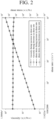
- Example 2a As can be seen from the graph of FIG. 2 and Table 1, in the ionomer dispersion of Example 2a, prepared by additionally performing a high-pressure dispersion process following the mixing process based on the resonant acoustic method, the viscosity and shear stress measured while the shear rate was increasing were substantially the same as those measured while the shear rate was decreasing, and the viscosity ratio and shear stress ratio respectively defined by Equations 1 and 2 reached about 1, which means that the ionomer dispersion of Example 2a exhibits the maximum dispersion stability.
- Example 3a As shown in Table 1, the ionomer dispersion of Example 3a, containing a higher amount of ionomer solid, exhibited a higher viscosity ratio and shear stress ratio compared to Example 1a, but exhibited a low viscosity ratio less than 1.7 (i.e., 1.56) and a low shear stress ratio less than 1.5 (i.e., 1.40) because it was prepared through the mixing process based on the resonant acoustic method, as in Example 1a.
- Comparative Example 2a the ionomer dispersion of Comparative Example 2a, prepared by performing mixing at a higher temperature, exhibited a lower viscosity ratio and shear stress ratio compared to Comparative Example 1a, but exhibited a high viscosity ratio exceeding 1.7 (i.e., 1.75) and a high shear stress ratio exceeding 1.5 (i.e., 1.60) because it was prepared through a mixing process using a conventional magnetic stirrer, as in Comparative Example 1a.
- Example 1a Two pieces of e-PTFE porous supports each having an average pore diameter of 0.15 ⁇ m and a porosity of 75% were laminated, and the ionomer dispersion of Example 1a was applied to both the upper and lower surfaces thereof. Subsequently, the resulting structure was sequentially subjected to drying and annealing processes to manufacture a reinforced-composite-membrane-type polymer electrolyte membrane. The drying process was performed at 80°C for 1 hour, and the annealing process was performed at 180°C for 10 minutes.
- a polymer electrolyte membrane was manufactured in the same manner as in Example 1b, except that the ionomer dispersion of Example 2a was used instead of the ionomer dispersion of Example 1a.
- a polymer electrolyte membrane was manufactured in the same manner as in Example 1b, except that the ionomer dispersion of Example 3a was used instead of the ionomer dispersion of Example 1a.
- a polymer electrolyte membrane was manufactured in the same manner as in Example 1b, except that the ionomer dispersion of Comparative Example 1a was used instead of the ionomer dispersion of Example 1a.
- a polymer electrolyte membrane was manufactured in the same manner as in Example 1b, except that the ionomer dispersion of Comparative Example 2a was used instead of the ionomer dispersion of Example 1a.
- the in-plane ionic conductivity and water uptake of the polymer electrolyte membrane at 80°C and 50 RH% were each measured using a magnetic suspension balance device (Bell Japan).
- the through-plane resistance of the polymer electrolyte membrane at 80°C and 50 RH% was measured using a membrane test system from Scribner (model name: MTS 740).
- the polymer electrolyte membranes of Examples 1b and 2b manufactured using ionomer dispersions having high dispersion stability exhibited the same water uptake as the polymer electrolyte membrane of Comparative Example 1b, manufactured using an ionomer dispersion having low dispersion stability, but exhibited (i) higher in-plane ionic conductivity, (ii) lower through-plane resistance, and (iii) lower hydrogen permeability.
- the polymer electrolyte membrane of Example 2b manufactured using the ionomer dispersion of Example 2a imparted with maximized dispersion stability by additionally performing a high-pressure dispersion process in addition to the mixing process based on a resonant acoustic method of the present disclosure, exhibited the best in-plane and through-plane ionic conductivity as well as the best hydrogen permeability (that is, the lowest hydrogen permeability).
- the polymer electrolyte membrane of Example 3b manufactured using the ionomer dispersion of Example 3a, having a viscosity ratio slightly lower than 1.7 (i.e., 1.56) and a shear stress ratio slightly lower than 1.5 (i.e., 1.40), also exhibited excellent physical properties in terms of ion conductivity and hydrogen permeability, albeit lower than those of the polymer electrolyte membranes of Examples 1b and 2b.
- the polymer electrolyte membrane of Example 3b manufactured using the ionomer dispersion of Example 3a having a viscosity ratio slightly higher than 1.7 (i.e., 1.75) and a shear stress ratio slightly higher than 1.5 (i.e., 1.60), exhibited physical properties inferior to those of the polymer electrolyte membrane of Example 3b.
- the hydrogen permeability of the polymer electrolyte membrane of Example 3b was at least double that of the polymer electrolyte membrane of Example 3b. This indicates that the polymer electrolyte membrane manufactured using the ionomer dispersion having a viscosity ratio higher than 1.7 and/or a shear stress ratio higher than 1.5 did not exhibit satisfactory ion conductivity or hydrogen permeability.
Landscapes
- Chemical & Material Sciences (AREA)
- Chemical Kinetics & Catalysis (AREA)
- Engineering & Computer Science (AREA)
- Manufacturing & Machinery (AREA)
- Life Sciences & Earth Sciences (AREA)
- Sustainable Development (AREA)
- Sustainable Energy (AREA)
- Electrochemistry (AREA)
- General Chemical & Material Sciences (AREA)
- Organic Chemistry (AREA)
- Medicinal Chemistry (AREA)
- Polymers & Plastics (AREA)
- Health & Medical Sciences (AREA)
- Composite Materials (AREA)
- Crystallography & Structural Chemistry (AREA)
- Materials Engineering (AREA)
- Inorganic Chemistry (AREA)
- Wood Science & Technology (AREA)
- Fuel Cell (AREA)
- Conductive Materials (AREA)
- Processes Of Treating Macromolecular Substances (AREA)
- Manufacture Of Porous Articles, And Recovery And Treatment Of Waste Products (AREA)
- Compositions Of Macromolecular Compounds (AREA)
- Manufacture Of Macromolecular Shaped Articles (AREA)
Description
- The present disclosure relates to an ionomer dispersion, a method for preparing the same, and a polymer electrolyte membrane prepared using the same, and more specifically to an ionomer dispersion that exhibits excellent dispersion stability despite having high content of ionomer solids, thereby optimizing the morphology of an ionomer in a polymer electrolyte membrane and improving both the ionic conductivity and the durability of the polymer electrolyte membrane, a method of preparing the same, and a polymer electrolyte membrane prepared using the same.
- A fuel cell that generates electricity through bonding between hydrogen and oxygen has advantages of continuously generating electricity as long as hydrogen and oxygen are supplied and having efficiency about twice as high as that of an internal combustion engine because no heat is lost.
EP 3 536 664 A1 relates to a method for manufacturing an electrode, an electrode manufactured thereby, a membrane-electrode assembly comprising the electrode, and a fuel cell comprising the membrane-electrode assembly.JP 2004 075978 A - The fuel cell emits fewer pollutants because it directly converts the chemical energy generated by bonding between hydrogen and oxygen into electrical energy. Accordingly, the fuel cell has advantages of being environmentally friendly and alleviating concern over resource depletion caused by increased energy consumption.
- A stack that actually generates electricity in the fuel cell has a stacked structure of several to dozens of unit cells, each including a membrane-electrode assembly (MEA) and a separator (also referred to as a "bipolar plate"). The membrane-electrode assembly generally includes an anode, a cathode, and an electrolyte membrane interposed therebetween.
- The fuel cell may be classified into an alkaline electrolyte fuel cell and a polymer electrolyte fuel cell (PEMFC) depending on the type of the electrolyte Among them, the polymer electrolyte fuel cell is receiving attention as a portable power supply for vehicular and domestic use due to the advantages of a low operating temperature of less than 100°C, quick start-up, rapid response, and excellent durability.
- Typical examples of the polymer electrolyte fuel cell include a proton exchange membrane fuel cell (PEMFC), which uses hydrogen gas as a fuel and a direct methanol fuel cell (DMFC), which uses liquid methanol as a fuel.
- For example, in the proton exchange membrane fuel cell (PEMFC), when a fuel such as hydrogen gas is supplied to an anode, the hydrogen at the anode is oxidized to produce a proton (H+) and an electron (e-). The produced proton is transferred to the cathode through the polymer electrolyte membrane, whereas the produced electron is transferred to the cathode through an external circuit. Oxygen supplied to the cathode is bonded to the proton and the electron and is thus reduced, thereby producing water.
- Meanwhile, in order to realize commercialization of fuel cells, requirements related to high performance and a long lifetime should be satisfied. One of the electrochemical components having the greatest influence thereon is a membrane electrode assembly. In order to increase the dimensional stability of the polymer electrolyte membrane and thereby improve mechanical durability thereof, a reinforced-composite-membrane-type polymer electrolyte membrane obtained by impregnating a porous support with an ionomer, followed by coating, has been developed.
- The porous support has a desirable effect of increasing the mechanical strength of the polymer electrolyte membrane, but has an undesirable effect of increasing the resistance of the polymer electrolyte membrane because it is formed of a material having no ion transport ability. Therefore, in order to secure high performance of the reinforced-composite-membrane-type polymer electrolyte membrane, it is necessary to optimize the morphology of the ionomer present in the porous support.
- The ionomer is generally introduced in the form of a dispersion rather than a solution into the porous support and coated thereon, since the hydrophobic backbone and the hydrophilic side chain of the ionomer have different solubilities. Therefore, it is preferable to manufacture as dense a polymer electrolyte membrane as possible by maximizing the concentration of the solid in the dispersion.
- However, as the concentration of solid in the dispersion increases, the dispersion stability of the dispersion decreases.
- A reinforced-composite-membrane-type polymer electrolyte membrane manufactured from a dispersion having insufficient dispersion stability has a problem in which through-plane resistance is high (that is, the through-plane water channel is not properly formed) due to the low impregnation of the dispersion into the same.
- In addition, the low dispersion stability of the dispersion prevents the ionomer from having an appropriate morphology in the polymer electrolyte membrane, thus resulting in a decrease in the in-plane ion conductivity of the polymer electrolyte membrane and an increase in the hydrogen permeability of the polymer electrolyte membrane.
- When the hydrogen permeability of the polymer electrolyte membrane is high, the amount of hydrogen gas that moves to the cathode through the polymer electrolyte membrane after being supplied to the anode increases. The hydrogen gas moving to the cathode reacts with the oxygen gas supplied to the cathode to produce hydrogen peroxide and radicals derived therefrom, which cause rapid degradation of the polymer electrolyte membrane.
- Therefore, the present disclosure has been made in view of the above problems, and is directed to an ionomer dispersion, a method for preparing the same, and a polymer electrolyte membrane prepared using the same.
- It is one aspect of the present disclosure to provide an ionomer dispersion that exhibits excellent dispersion stability despite having high content of ionomer solids, thereby optimizing the morphology of an ionomer in a polymer electrolyte membrane and improving both the ionic conductivity and the durability of the polymer electrolyte membrane.
- It is another aspect of the present disclosure to provide a method of preparing an ionomer dispersion that exhibits excellent dispersion stability despite having high content of ionomer solids, thereby optimizing the morphology of an ionomer in a polymer electrolyte membrane and improving both the ionic conductivity and the durability of the polymer electrolyte membrane.
- It is another aspect of the present disclosure to provide a polymer electrolyte membrane having improved ionic conductivity and durability.
- In addition to the aspects of the present disclosure described above, other features and advantages of the present disclosure will be disclosed in the following detailed description, as will be clearly understood by those skilled in the art to which the present disclosure pertains.
- In accordance with one aspect of the present disclosure, provided is an ionomer dispersion including: a dispersion medium; and an ionomer solid in the dispersion medium, wherein a concentration of the ionomer solid in the ionomer dispersion is 20% by weight or more, and when a viscosity of the ionomer dispersion is measured using a rheometer while a shear rate is increasing from 0.001 s-1 to 1,000 s-1 and then decreasing from 1,000 s-1 to 0.001 s-1, a viscosity ratio of the ionomer dispersion defined by the following Equation 1 is 1.7 or less:
- *

- The first viscosity and the second viscosity may be 1 Pa·s or less.
- When a shear stress of the ionomer dispersion is measured using a rheometer while the shear rate is increasing from 0.001 s-1 to 1,000 s-1 and then decreasing from 1,000 s-1 to 0.001 s-1, a shear stress ratio of the ionomer dispersion defined by the following Equation 2 may be 1.5 or less:
- *

- The first shear stress and the second shear stress may be 1 Pa·s or less.
- The ionomer solid may contain a fluorinated ionomer, a hydrocarbon-based ionomer, or a mixture thereof.
- The ionomer solid may contain a perfluorinated sulfonic acid-based ionomer (PFSA-based ionomer).
- The concentration of the ionomer solid in the ionomer dispersion may be 20 to 50% by weight.
- In accordance with another aspect of the present disclosure, provided is a method for preparing an ionomer dispersion including: adding an ionomer to a dispersion medium such that a content of an ionomer solid is adjusted to 20% by weight or more; and mixing the dispersion medium with the ionomer using a resonant acoustic method.
- The mixing may include applying acoustic energy with a frequency of 10 to 100 Hz to the dispersion medium and the ionomer, whereby subjecting the dispersion medium and the ionomer to resonant vibration at an acceleration of 50G to 100G, wherein G is gravitational acceleration.
- The mixing may be performed for 5 to 60 minutes.
- The method further includes applying a pressure of 500 to 1,000 bar to a mixture of the dispersion medium and the ionomer, obtained through the mixing.
- The pressure may be applied to the mixture when the mixture is flowing.
- In accordance with another aspect of the present disclosure, provided is a polymer electrolyte membrane including: a porous support having a plurality of pores; and an ionomer formed by impregnating and coating the porous support with the ionomer dispersion according to any one of claims 1 to 7, and then removing the dispersion medium therefrom.
- In accordance with another aspect of the present disclosure, provided is a membrane-electrode assembly including: an anode; a cathode; and the polymer electrolyte membrane interposed between the anode and the cathode.
- The general description of the present disclosure is provided only for illustration of the present disclosure, and does not limit the scope of the present disclosure.
- In accordance with the present disclosure, an ionomer dispersion having high dispersion stability can be prepared by adding the ionomer to the dispersion medium, followed by mixing in a resonant acoustic method.
- In addition, the dispersion stability of the ionomer dispersion can be further increased by applying a high pressure to the mixture obtained through mixing based on a resonant acoustic method.
- The ionomer dispersion of the present disclosure, which exhibits sufficiently high dispersion stability despite having a high content of ionomer solid, can optimize the morphology of the ionomer in the polymer electrolyte membrane, thereby improving both the ionic conductivity and durability of the polymer electrolyte membrane.
- Specifically, the ionomer dispersion of the present disclosure having high dispersion stability exhibits excellent impregnation properties and has a small and uniform particle size, thus enabling water channels, which provide hydrogen ion paths, when a reinforced-composite-membrane-type polymer electrolyte membrane is produced by impregnating and coating the porous support with the ionomer dispersion, to be formed well in both in-plane and through-plane directions, thereby improving both in-plane and through-plane ionic conductivity of the polymer electrolyte membrane.
- In addition, the ionomer dispersion having high dispersion stability of the present disclosure has a large reaction surface area, thus effectively increasing the crystallinity of the ionomer through the drying and annealing processes performed following the impregnation/coating process, and eventually minimizing hydrogen permeability of the polymer electrolyte membrane. Therefore, according to the present disclosure, the production of radicals due to the permeation of hydrogen gas through the polymer electrolyte membrane and the degradation of the polymer electrolyte membrane caused thereby can be inhibited, and as a result, the durability of the polymer electrolyte membrane and the electrochemical elements including the same (for example, membrane electrode assemblies and fuel cells) can be improved.
- The accompanying drawings, which are provided for better understanding of the present disclosure and constitute a part of the present specification, are given to exemplify the embodiments of the present disclosure and describe the principles and features of the present disclosure with reference to the following detailed description, in which:
-
FIG. 1 is a graph showing the viscosity and shear stress of the ionomer dispersion of Example 1a measured while performing a flow sweep; -
FIG. 2 is a graph showing the viscosity and shear stress of the ionomer dispersion of Example 2a measured while performing a flow sweep; and -
FIG. 3 is a graph showing the viscosity and shear stress of the ionomer dispersion of Comparative Example 1a measured while performing a flow sweep. - Hereinafter, embodiments of the present disclosure will be described in detail with reference to the accompanying drawings. However, the following embodiments are illustratively provided merely for clear understanding of the present disclosure, and do not limit the scope of the present disclosure.
- The ionomer dispersion of the present disclosure contains a dispersion medium and an ionomer solid dispersed therein.
- The dispersion medium may be water, an organic solvent, or a mixture thereof.
- The organic solvent contains, as a backbone (main chain), a linear or branched saturated or unsaturated hydrocarbon having 1 to 12 carbon atoms, and at least one functional group selected from the group consisting of alcohol, isopropyl alcohol, ketone, aldehyde, carbonate, carboxylate, carboxylic acid, ether, and amide. The backbone may include at least a part of an alicyclic or aromatic cyclic compound.
- The organic solvent may also be N-methylpyrrolidone, dimethyl sulfoxide, tetrahydrofuran, or a mixture thereof.
- According to an embodiment of the present disclosure, the dispersion medium may be a mixture of a hydrophilic organic solvent and water. More specifically, the dispersion medium may be a mixture of C1-C12 alcohol and water at a volume ratio of 1:2 to 2:1.
- The ionomer solid may contain an ionomer having, in a side chain, at least one ion-conductive group selected from the group consisting of a sulfonic acid group, a carboxyl group, a boronic acid group, a phosphoric acid group, an imide group, a sulfonimide group, a sulfonamide group, and a sulfonic acid fluoride group. For example, the ionomer may be a cation conductor having a sulfonic acid group and/or a carboxyl group in a side chain.
- The ionomer may be a fluorinated ionomer, a hydrocarbon-based ionomer, or a mixture thereof.
- For example, the ionomer may be a fluorinated ionomer such as poly(perfluorosulfonic acid) or poly(perfluorocarboxylic acid).
- The hydrocarbon-based ionomer may be a hydrocarbon-based polymer having the ion conductive group in the side chain [for example, sulfonated polyimide (S-PI), sulfonated polyarylethersulfone (S-PAES), sulfonated polyetheretherketone (SPEEK), sulfonated polybenzimidazole (SPBI), sulfonated polysulfone (S-PSU), sulfonated polystyrene (S-PS), sulfonated polyphosphazene, sulfonated polyquinoxaline, sulfonated polyketone, sulfonated polyphenylene oxide, sulfonated polyether sulfone, sulfonated polyether ketone, sulfonated polyphenylene sulfone, sulfonated polyphenylene sulfide, sulfonated polyphenylene sulfide sulfone, sulfonated polyphenylene sulfide sulfone nitrile, sulfonated polyarylene ether, sulfonated polyarylene ether nitrile, sulfonated polyarylene ether ether nitrile or sulfonated polyarylene ether sulfone ketone].
- According to an embodiment of the present disclosure, the ionomer solid may contain a perfluorinated sulfonic acid-based ionomer (PFSA-based ionomer).
- According to the present disclosure, in order to manufacture as dense a polymer electrolyte membrane as possible, the concentration of the ionomer solid in the ionomer dispersion is 20% by weight or more. For example, the concentration of the ionomer solid in the ionomer dispersion may be 20 to 50% by weight.
- Optionally, the ionomer dispersion may further contain a radical scavenger capable of decomposing and/or removing peroxides (e.g., hydrogen peroxide) and radicals (e.g., hydrogen radicals) that are produced during redox reactions in fuel cells and cause degradation of polymer electrolyte membranes (more specifically, ionomers) and catalyst electrodes.
- For example, the ionomer dispersion may further contain at least one radical scavenger selected from the group consisting of: transition metals such as Ce, Ni, W, Co, Cr, Zr, Y, Mn, Fe, Ti, V, Mo, La, and Nd; noble metals such as Au, Pt, Ru, Pd, and Rh; ions thereof; oxides thereof; and salts thereof.
- According to the present disclosure, when a flow sweep is performed by measuring the viscosity of the ionomer dispersion using a rheometer while a shear rate is increasing from 0.001 s-1 to 1,000 s-1 and then decreasing from 1,000 s-1 to 0.001 s-1, the viscosity ratio of the ionomer dispersion, defined by the following Equation 1, is 1.7 or less, preferably 0.5 to 1.5, more preferably 0.7 to 1.3, and still more preferably 0.9 to 1.1:

wherein η1 is a first viscosity of the ionomer dispersion, measured while the shear rate is increasing, when the shear rate is 1 s-1, and η2 is a second viscosity of the ionomer dispersion, measured while the shear rate is decreasing, when the shear rate is 1 s-1. - That is, the viscosity ratio is a parameter indicating the dispersion stability of the ionomer dispersion, and as the viscosity ratio becomes closer to 1 (that is, as the difference between the first viscosity and the second viscosity decreases), the dispersion stability of the ionomer dispersion increases. It is ideal for the viscosity ratio to be 1.
- An example of the rheometer used to perform the flow sweep to measure the viscosity ratio is Discovery HR-3, produced by TA Instruments, and the measurement conditions are as follows.
- * Temperature: 25°C
- * Soak Time: 0.0 s
- * Wait For Temperature: Off
- * Logarithmic sweep
- * Shear rate: 1.0·e-3 ~ 103 (s-1)
- * Points per decade: 5
- * Equilibration time: 1.0 s
- * Averaging time: 1.0 s
- According to an embodiment of the present disclosure, both the first and second viscosities may be 1 Pa s or less.
- In addition, according to an embodiment of the present disclosure, when the shear stress of the ionomer dispersion is measured while performing the flow sweep, the shear stress ratio of the ionomer dispersion, defined by the following Equation 2, may be 1.5 or less:

wherein σ1 is a first shear stress which is a shear stress of the ionomer dispersion, measured while the shear rate is increasing, when the shear rate is 1 s-1, and σ2 is a second shear stress which is a shear stress of the ionomer dispersion, measured while the shear rate is decreasing, when the shear rate is 1 s-1. - That is, the viscosity ratio is a primary parameter indicating the dispersion stability of the ionomer dispersion, whereas the shear stress ratio is a secondary parameter indicating the dispersion stability of the ionomer dispersion. That is, as the shear stress ratio becomes closer to 1 (that is, as the difference between the first shear stress and the second shear stress decreases), the dispersion stability of the ionomer dispersion increases. It is ideal for the shear stress ratio to be 1.
- According to an embodiment of the present disclosure, both the first shear stress and the second shear stress may be 1·Pa or less.
- Hereinafter, a method for preparing an ionomer dispersion according to an embodiment of the present disclosure will be described in detail.
- The method for preparing an ionomer dispersion of the present disclosure includes adding an ionomer to a dispersion medium and mixing the dispersion medium with the ionomer.
- As described above, the ionomer is generally introduced into the porous support in the form of a dispersion rather than a solution and coated thereon, since the hydrophobic backbone and hydrophilic side chain of the ionomer have different solubilities. Therefore, according to the present disclosure, a dense polymer electrolyte membrane can be manufactured by adding the ionomer to the dispersion medium such that the ionomer dispersion contains an ionomer solid in a large amount of 20% by weight or more.
- However, in order to overcome the problem in which the dispersion stability of the dispersion decreases as the concentration of the solid in the dispersion increases, the dispersion medium and the ionomer are mixed using a resonant acoustic method.
- The mixing based on the resonant acoustic method may be performed by applying acoustic energy with a frequency of 10 to 100 Hz to the dispersion medium to which the ionomer is added to subject the dispersion medium and the ionomer to resonant vibration at an acceleration of 50G to 100G, wherein G is gravitational acceleration.
- The mixing based on the resonant acoustic method is performed using, for example, a mixer (model name: LabRAM II) commercially available from Resodyn Acoustic Mixers, Inc.
- The mixing based on the resonance sound wave method may be performed for, for example, 5 to 60 minutes.
- By adding the ionomer to the dispersion medium, followed by mixing using the resonant acoustic method, an ionomer dispersion having high dispersion stability despite having high content of ionomer solids can be prepared.
- According to an embodiment of the present disclosure, the method further includes applying a high pressure of 500 to 1,000 bar to the mixture of the dispersion medium and the ionomer, obtained through the mixing. For example, the pressing may be performed using a homogenizer, and the high pressure described above may be applied to the mixture flowing in the homogenizer.
- Optionally, in order to further increase the dispersion stability of the ionomer dispersion, high-pressure dispersion using a homogenizer may be repeated 2 to 5 times.
- As the particle size becomes smaller and more uniform due to the pressing, the dispersion stability of the ionomer dispersion is further increased.
- In addition, owing to the small and uniform particle size, the ionomer is imparted with a larger reaction surface area, so the crystallinity of the ionomer can be effectively increased through the drying and/or annealing process, and as a result, the hydrogen permeability of the polymer electrolyte membrane can be minimized. Therefore, radicals may be generated due to the permeation of hydrogen gas into the polymer electrolyte membrane and the degradation of the polymer electrolyte membrane can be suppressed, and as a result, the durability of the polymer electrolyte membrane and electrochemical components including the same (e.g., a membrane-electrode assembly or fuel cell) can be improved.
- The polymer electrolyte membrane of the present disclosure can be manufactured by impregnating and coating a porous support having a plurality of pores with the ionomer dispersion of the present disclosure prepared as described above, followed by removing the dispersion medium.
- Hereinafter, a method for manufacturing a polymer electrolyte membrane according to an embodiment of the present disclosure will be described in detail.
- The porous support may be formed of polytetrafluoroethylene (PTFE) or a copolymer of tetrafluoroethylene and CF2=CFCnF2n+1 (wherein n is an integer of 1 to 5) or CF2=CFO-(CF2CF(CF3)O)mCnF2n+1 (wherein m is an integer of 0 to 15 and n is an integer of 1 to 15).
- For example, an e-PTFE porous support in the form of an expanded film may be formed by extrusion-molding PTFE on a piece of tape in the presence of a lubricant, followed by expansion and thermal treatment. Additional expansion and thermal treatment may be further performed after the thermal treatment. By controlling the expansion and thermal treatment, e-PTFE porous supports having various microstructures can be formed. For example, the e-PTFE porous support may have a microstructure in which nodes are connected to one another through fibrils or a microstructure consisting only of fibrils.
- Alternatively, the porous support may be a nonwoven web. The nonwoven web may be formed with a support-forming liquid containing at least one hydrocarbon-based polymer selected from the group consisting of polyolefin (e.g., polyethylene, polypropylene, polybutylene), polyester (e.g. PET, PBT), polyamide (e.g., nylon-6, nylon-6,6, aramid), polyamic acid (converted to polyimide through imidization after being molded into a web), polyurethane, polybutene, polylactic acid, polyvinyl alcohol, polyphenylene sulfide (PPS), polysulfone, fluid crystalline polymer, polyethylene-co-vinyl acetate, polyacrylonitrile, cyclic polyolefin, polyoxymethylene, and polyolefin-based thermoplastic elastomer elastomers.
- The nonwoven web may be produced by any one method selected from the group consisting of wet-laying, electrospinning, carding, garneting, air-laying, melt blowing, spunbonding, and stitch bonding.
- The porous support that can be used in the present disclosure may have an average pore diameter of 0.1 to 0.2 µm and a porosity of 60 to 95%.
- When the average pore diameter is less than 0.1 µm or the porosity is less than 60%, due to the excessively small amount of the ionomer in the porous support, the resistance of the polymer electrolyte membrane is increased and the ionic conductivity is decreased. On the other hand, when the average pore diameter is higher than 0.2 µm or the porosity is higher than 95%, subsequent processing may not proceed smoothly due to the deteriorated shape stability of the polymer electrolyte membrane.
- Optionally, in order to further improve the mechanical strength of the polymer electrolyte membrane and to allow all pores in the porous support to be sufficiently filled with the ionomer, two or more relatively thin porous supports may be used instead of one thick porous support.
- When the porous support is prepared, the porous support is impregnated and coated with the ionomer dispersion of the present disclosure. The impregnation and coating may be performed by (i) casting the ionomer dispersion on a substrate and then soaking the porous support with the ionomer dispersion, or (ii) coating the porous support with the ionomer dispersion. The coating may be performed, for example, using bar coating, comma coating, slot die coating, screen printing, spray coating or doctor blade coating.
- Then, drying to remove the dispersion medium from the ionomer dispersion and annealing to increase the crystallinity of the ionomer are sequentially performed.
- The drying may be performed at 60°C to 150°C for 30 minutes to 2 hours. When the drying temperature is less than 60°C or the drying time is less than 30 minutes, the dispersion medium may not escape and thus a dense polymer electrolyte membrane may be not formed.
- Optionally, the drying may be performed in multiple steps while elevating the temperature within the drying temperature range.
- The annealing may be performed at 150°C to 190°C for 3 minutes to 1 hour. When the annealing temperature is higher than 190°C or the annealing time is longer than 1 hour, there are problems in which the ion-conductive group of the ionomer is decomposed and the performance of the polymer electrolyte membrane is deteriorated.
- According to an embodiment of the present disclosure, provided are a membrane-electrode assembly including the polymer electrolyte membrane manufactured as described above and a fuel cell including the same.
- Specifically, the membrane-electrode assembly includes an anode, a cathode, and the polymer electrolyte membrane interposed therebetween. The membrane-electrode assembly is the same as a conventional membrane-electrode assembly for a fuel cell except that it uses the polymer electrolyte membrane according to the present disclosure as the polymer electrolyte membrane, and thus a detailed description thereof will be omitted herein.
- In addition, the fuel cell is the same as a conventional fuel cell except that it includes the membrane-electrode assembly of the present disclosure, and thus a detailed description thereof will be omitted herein.
- Hereinafter, the present disclosure will be described in more detail with reference to specific examples. However, the following examples are provided only for better understanding of the present disclosure, and should not be construed as limiting the scope of the present disclosure.
- A PFSA-based ionomer (EW 725) was added to a dispersion medium in which 1-propanol and water were mixed at a weight ratio of 55:45 such that an ionomer solid content was adjusted to 20% by weight. Then, the dispersion medium and the ionomer were mixed by inducing resonance at an acceleration of 90 G using a mixer (Resodyn Acoustic Mixers, Inc., LabRAM II) at room temperature and humidity for 20 minutes (i.e., mixed using a resonant acoustic method) to prepare an ionomer dispersion.
- A PFSA-based ionomer (EW 725) was added to a dispersion medium in which 1-propanol and water were mixed at a weight ratio of 30:40 such that an ionomer solid content was adjusted to 30% by weight. Then, the dispersion medium and the ionomer were mixed by inducing resonance at an acceleration of 90 G using a mixer (Resodyn Acoustic Mixers, Inc., LabRAM II) at room temperature and humidity for 20 minutes. Then, high-pressure dispersion of applying a high pressure of 600 bar to the mixture of the dispersion medium and the ionomer using a homogenizer was repeated three times to prepare an ionomer dispersion.
- An ionomer dispersion was prepared in the same manner as in Example 1a except that a PFSA-based ionomer (EW 725) was added to a dispersion medium in which 1-propanol and water were mixed at a weight ratio of 49:51 such that an ionomer solid content was adjusted to 30% by weight.
- A PFSA-based ionomer (EW 725) was added to a dispersion medium in which 1-propanol and water were mixed at a weight ratio of 55:45 such that an ionomer solid content was adjusted to 20% by weight. Then, the dispersion medium and the ionomer were mixed by inducing resonance at 250 rpm using a magnetic stirrer at room temperature and humidity for 48 hours to prepare an ionomer dispersion.
- A PFSA-based ionomer (EW 725) was added to a dispersion medium in which 1-propanol and water were mixed at a weight ratio of 47:53 such that an ionomer solid content was adjusted to 25% by weight. Then, the dispersion medium and the ionomer were mixed at 250 rpm using a magnetic stirrer at 50°C for 48 hours to prepare an ionomer dispersion.
- The dispersion stability of the ionomer dispersions prepared in Examples and Comparative Examples was evaluated while performing a flow sweep. Specifically, the viscosity and shear stress of the ionomer dispersion were measured under the following conditions using a "Discovery HR-3" rheometer from TA Instruments, while the shear rate was increasing from 0.001 s-1 to 1,000 s-1 and then decreasing from 1,000 s-1 to 0.001 s-1.
- * Temperature: 25°C
- * Soak Time: 0.0 s
- * Wait For Temperature: Off
- * Logarithmic sweep
- * Shear rate: 1.0·e-3 ~ 103 (s-1)
- * Points per decade: 5
- * Equilibration time: 1.0 s
- * Averaging time: 1.0 s
- The viscosity ratio of the ionomer dispersion defined by the following Equation 1 and the ionomer shear stress ratio defined by the following Equation 2 were calculated, and the results are shown in Table 1.


wherein η1 and σ1 respectively represent the viscosity and shear stress of the ionomer dispersion when the shear rate is 1 s-1, measured while the shear rate is increasing, and η2 and σ2 respectively represent the viscosity and shear stress of the ionomer dispersion when the shear rate is 1 s-1, measured while the shear rate is decreasing.[Table 1] η1 (Pa·s) η2 (Pa·s) η2/η1 σ1 (Pa) σ2 (Pa) σ2/σ1 Example 1a 0.402 0.507 1.26 0.400 0.434 1.09 Example 2a 0.226 0.228 1.01 0.226 0.228 1.01 Example 3a 0.620 0.965 1.56 0.625 0.875 1.40 Comparative Example 1a 0.515 3.000 5.83 0.523 1.305 2.50 Comparative Example 2a 0.610 1.067 1.75 0.605 0.968 1.60 -
FIGS. 1 to 3 are graphs respectively illustrating the viscosity and shear stress of the ionomer dispersions of Example 1a, Example 2a, and Comparative Example 1a, measured while performing a flow sweep. - As can be seen from the graph of
FIG. 1 and Table 1, in the ionomer dispersion of Example 1a, prepared by a resonant acoustic method, the viscosity and shear stress measured while the shear rate was increasing were very similar to those measured while the shear rate was decreasing, and the viscosity ratio and shear stress ratio respectively defined by Equation 1 and Equation 2 were less than 1.3, which means that the ionomer dispersion of Example 1a exhibited very high dispersion stability. - As can be seen from the graph of
FIG. 2 and Table 1, in the ionomer dispersion of Example 2a, prepared by additionally performing a high-pressure dispersion process following the mixing process based on the resonant acoustic method, the viscosity and shear stress measured while the shear rate was increasing were substantially the same as those measured while the shear rate was decreasing, and the viscosity ratio and shear stress ratio respectively defined by Equations 1 and 2 reached about 1, which means that the ionomer dispersion of Example 2a exhibits the maximum dispersion stability. - As shown in Table 1, the ionomer dispersion of Example 3a, containing a higher amount of ionomer solid, exhibited a higher viscosity ratio and shear stress ratio compared to Example 1a, but exhibited a low viscosity ratio less than 1.7 (i.e., 1.56) and a low shear stress ratio less than 1.5 (i.e., 1.40) because it was prepared through the mixing process based on the resonant acoustic method, as in Example 1a.
- Meanwhile, as can be seen from the graph of
FIG. 3 and Table 1, in the ionomer dispersion of Comparative Example 1a prepared through a mixing process using a conventional magnetic stirrer, the viscosity and shear stress measured while the shear rate was increasing were remarkably different from those measured while the shear rate was decreasing, and the dispersion stability of the ionomer dispersion was so low that the viscosity and shear stress ratios, respectively defined by Equations 1 and 2, were higher than 2. - On the other hand, the ionomer dispersion of Comparative Example 2a, prepared by performing mixing at a higher temperature, exhibited a lower viscosity ratio and shear stress ratio compared to Comparative Example 1a, but exhibited a high viscosity ratio exceeding 1.7 (i.e., 1.75) and a high shear stress ratio exceeding 1.5 (i.e., 1.60) because it was prepared through a mixing process using a conventional magnetic stirrer, as in Comparative Example 1a.
- Two pieces of e-PTFE porous supports each having an average pore diameter of 0.15 µm and a porosity of 75% were laminated, and the ionomer dispersion of Example 1a was applied to both the upper and lower surfaces thereof. Subsequently, the resulting structure was sequentially subjected to drying and annealing processes to manufacture a reinforced-composite-membrane-type polymer electrolyte membrane. The drying process was performed at 80°C for 1 hour, and the annealing process was performed at 180°C for 10 minutes.
- A polymer electrolyte membrane was manufactured in the same manner as in Example 1b, except that the ionomer dispersion of Example 2a was used instead of the ionomer dispersion of Example 1a.
- A polymer electrolyte membrane was manufactured in the same manner as in Example 1b, except that the ionomer dispersion of Example 3a was used instead of the ionomer dispersion of Example 1a.
- A polymer electrolyte membrane was manufactured in the same manner as in Example 1b, except that the ionomer dispersion of Comparative Example 1a was used instead of the ionomer dispersion of Example 1a.
- A polymer electrolyte membrane was manufactured in the same manner as in Example 1b, except that the ionomer dispersion of Comparative Example 2a was used instead of the ionomer dispersion of Example 1a.
- The (i) in-plane ionic conductivity, (ii) water uptake, (iii) through-plane resistance, and (iv) hydrogen permeability of the polymer electrolyte membranes of Examples and Comparative Examples were measured according to the following methods, and the results are shown in Table 2.
- The in-plane ionic conductivity and water uptake of the polymer electrolyte membrane at 80°C and 50 RH% were each measured using a magnetic suspension balance device (Bell Japan).
- The through-plane resistance of the polymer electrolyte membrane at 80°C and 50 RH% was measured using a membrane test system from Scribner (model name: MTS 740).
- The hydrogen permeability of the polymer electrolyte membrane at 65°C and 50 RH% was measured using gas chromatography.
[Table 2] In-Plane ionic conductivity (S/cm) Through-Plane resistance (Ω) Water uptake (%) Hydrogen permeability (cm2/sec) Example 1b 0.049 0.25 15 6.40E-05 Example 2b 0.055 0.19 15 4.47E-05 Example 3b 0.050 0.27 16 7.00E-05 Comparative Example 1b 0.040 0.34 15 2.02E-04 Comparative Example 2b 0.041 0.35 16 1.58E-04 - As can be seen from Table 2, the polymer electrolyte membranes of Examples 1b and 2b manufactured using ionomer dispersions having high dispersion stability exhibited the same water uptake as the polymer electrolyte membrane of Comparative Example 1b, manufactured using an ionomer dispersion having low dispersion stability, but exhibited (i) higher in-plane ionic conductivity, (ii) lower through-plane resistance, and (iii) lower hydrogen permeability.
- In addition, the polymer electrolyte membrane of Example 2b, manufactured using the ionomer dispersion of Example 2a imparted with maximized dispersion stability by additionally performing a high-pressure dispersion process in addition to the mixing process based on a resonant acoustic method of the present disclosure, exhibited the best in-plane and through-plane ionic conductivity as well as the best hydrogen permeability (that is, the lowest hydrogen permeability).
- On the other hand, the polymer electrolyte membrane of Example 3b, manufactured using the ionomer dispersion of Example 3a, having a viscosity ratio slightly lower than 1.7 (i.e., 1.56) and a shear stress ratio slightly lower than 1.5 (i.e., 1.40), also exhibited excellent physical properties in terms of ion conductivity and hydrogen permeability, albeit lower than those of the polymer electrolyte membranes of Examples 1b and 2b.
- In contrast, the polymer electrolyte membrane of Example 3b, manufactured using the ionomer dispersion of Example 3a having a viscosity ratio slightly higher than 1.7 (i.e., 1.75) and a shear stress ratio slightly higher than 1.5 (i.e., 1.60), exhibited physical properties inferior to those of the polymer electrolyte membrane of Example 3b. In particular, the hydrogen permeability of the polymer electrolyte membrane of Example 3b was at least double that of the polymer electrolyte membrane of Example 3b. This indicates that the polymer electrolyte membrane manufactured using the ionomer dispersion having a viscosity ratio higher than 1.7 and/or a shear stress ratio higher than 1.5 did not exhibit satisfactory ion conductivity or hydrogen permeability.
Claims (13)
- An ionomer dispersion comprising:a dispersion medium; andan ionomer solid in the dispersion medium,wherein the concentration of the ionomer solid in the ionomer dispersion is 20% by weight or more, andwhen the viscosity of the ionomer dispersion is measured using a rheometer while the shear rate is increasing from 0.001 s-1 to 1,000 s-1 and then decreasing from 1,000 s-1 to 0.001 s-1, the viscosity ratio of the ionomer dispersion defined by the following Equation 1 is 1.7 or less:
 wherein η1 is a first viscosity of the ionomer dispersion, measured while the shear rate is increasing, when the shear rate is 1 s-1, andη2 is a second viscosity of the ionomer dispersion, measured while the shear rate is decreasing, when the shear rate is 1 s-1,wherein the viscosity ratio is measured according to the description.
 - The ionomer dispersion according to claim 1, wherein the first viscosity and the second viscosity are 1 Pa·s or less.
- The ionomer dispersion according to claim 1, wherein, when the shear stress of the ionomer dispersion is measured using a rheometer while the shear rate is increasing from 0.001 s-1 to 1,000 s-1 and then decreasing from 1,000 s-1 to 0.001 s-1, the shear stress ratio of the ionomer dispersion defined by the following Equation 2 is 1.5 or less:

Kolon Industries, Inc., Application No.: 20 873 148.9wherein σ1 is a first shear stress which is a shear stress of the ionomer dispersion, measured while the shear rate is increasing, when the shear rate is 1 s-1, andσ2 is a second shear stress which is a shear stress of the ionomer dispersion, measured while the shear rate is decreasing, when the shear rate is 1 s-1,wherein the shear stress ratio is measured according to the description. - The ionomer dispersion according to claim 3, wherein the first shear stress and the second shear stress are 1 Pa·s or less.
- The ionomer dispersion according to claim 1, wherein the ionomer solid comprises a fluorinated ionomer, a hydrocarbon-based ionomer, or a mixture thereof.
- The ionomer dispersion according to claim 1, wherein the ionomer solid comprises a perfluorinated sulfonic acid-based ionomer (PFSA-based ionomer).
- The ionomer dispersion according to claim 1, wherein the concentration of the ionomer solid in the ionomer dispersion is 20 to 50% by weight.
- A method for preparing an ionomer dispersion comprising:adding an ionomer to a dispersion medium such that the content of an ionomer solid is adjusted to 20% by weight or more;mixing the dispersion medium with the ionomer using a resonant acoustic method; andapplying a pressure of 500 to 1,000 bar to the mixture of the dispersion medium and the ionomer, obtained through the mixing.
- The method according to claim 8, wherein the mixing comprises applying acoustic energy with a frequency of 10 to 100 Hz to the dispersion medium and the ionomer, whereby subjecting the dispersion medium and the ionomer to resonant vibration at an acceleration of 50G to 100G, wherein G is gravitational acceleration.
- The method according to claim 8, wherein the mixing is performed for 5 to 60 minutes.
- The method according to claim 8, wherein the pressure is applied to the mixture when the mixture is flowing.
- A polymer electrolyte membrane comprising:a porous support having a plurality of pores; andan ionomer formed by impregnating and coating the porous support with the ionomer dispersion according to any one of claims 1 to 7, and then removing the dispersion medium from the ionomer dispersion.
- A membrane-electrode assembly comprising:an anode;a cathode; andthe polymer electrolyte membrane according to claim 12, interposed between the anode and the cathode.
Applications Claiming Priority (2)
| Application Number | Priority Date | Filing Date | Title |
|---|---|---|---|
| KR20190121034 | 2019-09-30 | ||
| PCT/KR2020/013374 WO2021066544A1 (en) | 2019-09-30 | 2020-09-29 | Ionomer dispersion having high dispersion stability, method for producing same, and polymer electrolyte membrane produced using same |
Publications (3)
| Publication Number | Publication Date |
|---|---|
| EP4040549A1 EP4040549A1 (en) | 2022-08-10 |
| EP4040549A4 EP4040549A4 (en) | 2023-10-25 |
| EP4040549B1 true EP4040549B1 (en) | 2024-10-30 |
Family
ID=75337274
Family Applications (1)
| Application Number | Title | Priority Date | Filing Date |
|---|---|---|---|
| EP20873148.9A Active EP4040549B1 (en) | 2019-09-30 | 2020-09-29 | Ionomer dispersion having high dispersion stability, method for producing same, and polymer electrolyte membrane produced using same |
Country Status (6)
| Country | Link |
|---|---|
| US (1) | US12034192B2 (en) |
| EP (1) | EP4040549B1 (en) |
| JP (1) | JP7323701B2 (en) |
| KR (1) | KR102786326B1 (en) |
| CN (1) | CN114450831B (en) |
| WO (1) | WO2021066544A1 (en) |
Families Citing this family (4)
| Publication number | Priority date | Publication date | Assignee | Title |
|---|---|---|---|---|
| KR102701309B1 (en) * | 2022-12-09 | 2024-08-30 | 한국생산기술연구원 | Production method for permanent magnet containing heavy rare earth element and a permanent magnet using this method |
| KR102593282B1 (en) * | 2023-05-25 | 2023-10-24 | 주식회사 넥스트이앤엠 | Method for manufacturing a multi-layered ion exchange membrane having rectifying properties and multi-layered ion exchange membrane manufactured thereby |
| KR102593274B1 (en) * | 2023-05-25 | 2023-10-24 | 주식회사 넥스트이앤엠 | Apparatus for manufacturing a multi-layered ion exchange membrane having rectifying properties |
| GB2641804A (en) * | 2024-06-14 | 2025-12-17 | Johnson Matthey Plc | Ion-conducting membrane |
Family Cites Families (21)
| Publication number | Priority date | Publication date | Assignee | Title |
|---|---|---|---|---|
| US6100324A (en) | 1998-04-16 | 2000-08-08 | E. I. Du Pont De Nemours And Company | Ionomers and ionically conductive compositions |
| US20040028806A1 (en) * | 2002-04-24 | 2004-02-12 | Makoto Higami | Process for producing electrolyte membrane-bonded electrode and varnish composition used therein |
| JP4096764B2 (en) * | 2002-06-17 | 2008-06-04 | ダイキン工業株式会社 | Method for producing fluorine-containing crystalline polymer dispersion |
| JP4493287B2 (en) | 2003-03-28 | 2010-06-30 | 住友化学株式会社 | Method and apparatus for continuous production of polymer electrolyte composite membrane |
| CN100364880C (en) * | 2003-04-18 | 2008-01-30 | 日本科技股份有限公司 | Fuel for fuel cell, and power generation method using fuel cell |
| WO2005028522A1 (en) * | 2003-09-10 | 2005-03-31 | Asahi Kasei Chemicals Corporation | Stabilized fluoropolymer and method for producing same |
| JP2005209465A (en) | 2004-01-22 | 2005-08-04 | Ube Ind Ltd | Method of manufacturing polyelectrolyte film, polyelectrolyte film, film-electrode connector for fuel cell and fuel cell |
| JP4830304B2 (en) | 2004-07-29 | 2011-12-07 | 東洋紡績株式会社 | Proton conductive polymer composition |
| KR100622995B1 (en) * | 2005-02-07 | 2006-09-14 | 한국과학기술원 | Method for producing hydrogen ion exchange membrane of multilayer thin film for direct methanol fuel cell |
| DE102007011424A1 (en) | 2007-03-08 | 2008-09-11 | Lanxess Deutschland Gmbh | Polymer electrolyte membrane with functionalized nanoparticles |
| JP2009249483A (en) | 2008-04-04 | 2009-10-29 | Asahi Glass Co Ltd | Method for producing liquid composition |
| US8568952B2 (en) * | 2012-01-25 | 2013-10-29 | Xerox Corporation | Method for manufacturing photoreceptor layers |
| US20130224506A1 (en) * | 2012-02-29 | 2013-08-29 | E I Du Pont De Nemours And Company | Blends of ionomers and sub-partially hydrolyzed poly(vinyl alcohol)s |
| JP5915517B2 (en) | 2012-12-25 | 2016-05-11 | トヨタ自動車株式会社 | Manufacturing method of fuel cell electrode |
| JP5525629B2 (en) | 2013-02-12 | 2014-06-18 | 旭化成イーマテリアルズ株式会社 | Method for producing solid polymer electrolyte concentrated solution, composition for binder, solid polymer electrolyte membrane, and solid polymer fuel cell |
| US10717861B2 (en) * | 2015-04-28 | 2020-07-21 | Dankook University Cheonan Campus Industry Academic Cooperation Foundation | Perfluorinated ionomer nanoparticle dispersion solution, and preparation method therefor |
| KR101830291B1 (en) * | 2016-09-05 | 2018-02-20 | 상명대학교 천안산학협력단 | Highly durable electrode for membrane electrode assembly of polymer electrolyte fuel cells and method for preparing the same |
| KR101764068B1 (en) | 2016-10-26 | 2017-08-03 | 단국대학교 천안캠퍼스 산학협력단 | Method of preparing polymer electrolyte membrane using perfluorinated ionomer nanodispersion and polymer electrolyte membrane prepared by the same method |
| KR102189064B1 (en) * | 2016-12-28 | 2020-12-09 | 코오롱인더스트리 주식회사 | Method for manufacturing electrode, electrode manufactured by using the same, membrane-electrode assembly comprising the electrode, and fuel cell comprising the membrane-electrode assembly |
| US11283093B2 (en) | 2016-12-28 | 2022-03-22 | Kolon Industries, Inc. | Method for manufacturing electrode, electrode manufactured thereby, membrane-electrode assembly comprising same electrode, and fuel cell including same membrane-electrode assembly |
| KR101851643B1 (en) * | 2017-02-20 | 2018-04-25 | 한국과학기술연구원 | Composite polymer electrolyte membrane for fuel cell, and method of manufacturing the same |
-
2020
- 2020-09-29 US US17/628,345 patent/US12034192B2/en active Active
- 2020-09-29 CN CN202080068478.1A patent/CN114450831B/en active Active
- 2020-09-29 WO PCT/KR2020/013374 patent/WO2021066544A1/en not_active Ceased
- 2020-09-29 JP JP2022506847A patent/JP7323701B2/en active Active
- 2020-09-29 EP EP20873148.9A patent/EP4040549B1/en active Active
- 2020-09-29 KR KR1020200126960A patent/KR102786326B1/en active Active
Also Published As
| Publication number | Publication date |
|---|---|
| JP2022544089A (en) | 2022-10-17 |
| KR20210038388A (en) | 2021-04-07 |
| CN114450831B (en) | 2025-01-03 |
| JP7323701B2 (en) | 2023-08-08 |
| KR102786326B1 (en) | 2025-03-26 |
| EP4040549A1 (en) | 2022-08-10 |
| US20220285715A1 (en) | 2022-09-08 |
| US12034192B2 (en) | 2024-07-09 |
| EP4040549A4 (en) | 2023-10-25 |
| CN114450831A (en) | 2022-05-06 |
| WO2021066544A1 (en) | 2021-04-08 |
Similar Documents
| Publication | Publication Date | Title |
|---|---|---|
| EP4040549B1 (en) | Ionomer dispersion having high dispersion stability, method for producing same, and polymer electrolyte membrane produced using same | |
| EP3817114A1 (en) | Polymer electrolyte membrane, manufacturing method therefor, and membrane electrode assembly comprising same | |
| JP2012069536A (en) | Polymer electrolyte film for direct oxidation type fuel cell, manufacturing method therefor, and direct oxidation type fuel cell system including the same | |
| US11817608B2 (en) | Polymer electrolyte membrane, manufacturing method therefor, and electrochemical device comprising same | |
| JP2006147560A (en) | Membrane / electrode assembly for fuel cell and fuel cell system including the same | |
| TW201025711A (en) | Membrane-electrode assembly (MEA) structures and manufacturing methods thereof | |
| EP3998663B1 (en) | Polymer electrolyte membrane, manufacturing method therefor, and electrochemical device comprising same | |
| KR100658739B1 (en) | Polymer electrolyte membrane for fuel cell and manufacturing method thereof | |
| EP4084168A1 (en) | Polymer electrolyte membrane, manufacturing method therefor, and electrochemical device comprising same | |
| CN101029140A (en) | Polymer membrane, method of preparing the same and fuel cell employing the same | |
| EP4053950A1 (en) | Method for manufacturing polymer electrolyte membrane, and electrolyte membrane manufactured by same | |
| KR101630212B1 (en) | A composite membrane comprising nonwoven PAI-PTM and sulfonated poly(arylene ether sulfone) as hydrocarbon-based electrolyte therein and the use thereof | |
| KR20230081646A (en) | Reinforced composite membrane for fuel cell, manufacturing method thereof, and membrane-electrode assembly for fuel cell comprising the same | |
| KR102125412B1 (en) | Method for manufacturing hydrocarbon based reinforced polymer electrolyte membrane for fuel cell and reinforced polymer electrolyte membrane manufactured thereby | |
| KR102701793B1 (en) | Polymer Electrolyte Membrane, Method for Manufacturing The Same, and Electrochemical Device Comprising The Same | |
| KR102958003B1 (en) | Polymer electrolyte membrane, manufacturing method thereof and membrane-electrode assembly for fuel cell comprising the same | |
| JP2007157453A (en) | Membrane catalyst layer assembly, membrane electrode assembly using the same, and polymer electrolyte fuel cell | |
| KR20060086531A (en) | Fuel cell electrode and fuel cell system comprising same | |
| KR20180056301A (en) | Method for manufacturing ion exchanging membrane, ion exchanging membrane manufactured by using the same, membrane-electrode assembly and fuel cell comprising the ion exchanging membrane | |
| JP2026501407A (en) | Polymer electrolyte membrane, its manufacturing method and electrochemical device including the same | |
| KR20230149160A (en) | Polymer electrolyte membrane, manufacturing method thereof and membrane-electrode assembly for fuel cell comprising the same | |
| KR20230080961A (en) | Reinforced composite membrnae and membrane-electrode assembly comprising the same and fuel cell | |
| JP2018098097A (en) | Polymer electrolyte membrane, and fuel battery using the same |
Legal Events
| Date | Code | Title | Description |
|---|---|---|---|
| STAA | Information on the status of an ep patent application or granted ep patent |
Free format text: STATUS: THE INTERNATIONAL PUBLICATION HAS BEEN MADE |
|
| PUAI | Public reference made under article 153(3) epc to a published international application that has entered the european phase |
Free format text: ORIGINAL CODE: 0009012 |
|
| STAA | Information on the status of an ep patent application or granted ep patent |
Free format text: STATUS: REQUEST FOR EXAMINATION WAS MADE |
|
| 17P | Request for examination filed |
Effective date: 20220317 |
|
| AK | Designated contracting states |
Kind code of ref document: A1 Designated state(s): AL AT BE BG CH CY CZ DE DK EE ES FI FR GB GR HR HU IE IS IT LI LT LU LV MC MK MT NL NO PL PT RO RS SE SI SK SM TR |
|
| DAV | Request for validation of the european patent (deleted) | ||
| DAX | Request for extension of the european patent (deleted) | ||
| A4 | Supplementary search report drawn up and despatched |
Effective date: 20230926 |
|
| RIC1 | Information provided on ipc code assigned before grant |
Ipc: C08F 216/14 20060101ALN20230921BHEP Ipc: C08F 214/26 20060101ALN20230921BHEP Ipc: C08J 5/22 20060101ALI20230921BHEP Ipc: C09D 127/18 20060101ALI20230921BHEP Ipc: H01M 8/1018 20160101ALI20230921BHEP Ipc: H01M 8/1004 20160101ALI20230921BHEP Ipc: H01M 8/1025 20160101ALI20230921BHEP Ipc: H01M 8/1039 20160101ALI20230921BHEP Ipc: H01M 8/1053 20160101ALI20230921BHEP Ipc: H01M 8/1067 20160101ALI20230921BHEP Ipc: H01M 8/1048 20160101AFI20230921BHEP |
|
| GRAP | Despatch of communication of intention to grant a patent |
Free format text: ORIGINAL CODE: EPIDOSNIGR1 |
|
| STAA | Information on the status of an ep patent application or granted ep patent |
Free format text: STATUS: GRANT OF PATENT IS INTENDED |
|
| RIC1 | Information provided on ipc code assigned before grant |
Ipc: C08F 216/14 20060101ALN20240506BHEP Ipc: C08F 214/26 20060101ALN20240506BHEP Ipc: C08J 5/22 20060101ALI20240506BHEP Ipc: C09D 127/18 20060101ALI20240506BHEP Ipc: H01M 8/1018 20160101ALI20240506BHEP Ipc: H01M 8/1004 20160101ALI20240506BHEP Ipc: H01M 8/1025 20160101ALI20240506BHEP Ipc: H01M 8/1039 20160101ALI20240506BHEP Ipc: H01M 8/1053 20160101ALI20240506BHEP Ipc: H01M 8/1067 20160101ALI20240506BHEP Ipc: H01M 8/1048 20160101AFI20240506BHEP |
|
| INTG | Intention to grant announced |
Effective date: 20240607 |
|
| P01 | Opt-out of the competence of the unified patent court (upc) registered |
Free format text: CASE NUMBER: APP_44011/2024 Effective date: 20240729 |
|
| GRAS | Grant fee paid |
Free format text: ORIGINAL CODE: EPIDOSNIGR3 |
|
| GRAA | (expected) grant |
Free format text: ORIGINAL CODE: 0009210 |
|
| STAA | Information on the status of an ep patent application or granted ep patent |
Free format text: STATUS: THE PATENT HAS BEEN GRANTED |
|
| AK | Designated contracting states |
Kind code of ref document: B1 Designated state(s): AL AT BE BG CH CY CZ DE DK EE ES FI FR GB GR HR HU IE IS IT LI LT LU LV MC MK MT NL NO PL PT RO RS SE SI SK SM TR |
|
| REG | Reference to a national code |
Ref country code: GB Ref legal event code: FG4D |
|
| REG | Reference to a national code |
Ref country code: CH Ref legal event code: EP |
|
| REG | Reference to a national code |
Ref country code: IE Ref legal event code: FG4D |
|
| REG | Reference to a national code |
Ref country code: DE Ref legal event code: R096 Ref document number: 602020040548 Country of ref document: DE |
|
| REG | Reference to a national code |
Ref country code: LT Ref legal event code: MG9D |
|
| REG | Reference to a national code |
Ref country code: NL Ref legal event code: MP Effective date: 20241030 |
|
| PG25 | Lapsed in a contracting state [announced via postgrant information from national office to epo] |
Ref country code: HR Free format text: LAPSE BECAUSE OF FAILURE TO SUBMIT A TRANSLATION OF THE DESCRIPTION OR TO PAY THE FEE WITHIN THE PRESCRIBED TIME-LIMIT Effective date: 20241030 Ref country code: PT Free format text: LAPSE BECAUSE OF FAILURE TO SUBMIT A TRANSLATION OF THE DESCRIPTION OR TO PAY THE FEE WITHIN THE PRESCRIBED TIME-LIMIT Effective date: 20250228 Ref country code: IS Free format text: LAPSE BECAUSE OF FAILURE TO SUBMIT A TRANSLATION OF THE DESCRIPTION OR TO PAY THE FEE WITHIN THE PRESCRIBED TIME-LIMIT Effective date: 20250228 |
|
| PG25 | Lapsed in a contracting state [announced via postgrant information from national office to epo] |
Ref country code: FI Free format text: LAPSE BECAUSE OF FAILURE TO SUBMIT A TRANSLATION OF THE DESCRIPTION OR TO PAY THE FEE WITHIN THE PRESCRIBED TIME-LIMIT Effective date: 20241030 Ref country code: NL Free format text: LAPSE BECAUSE OF FAILURE TO SUBMIT A TRANSLATION OF THE DESCRIPTION OR TO PAY THE FEE WITHIN THE PRESCRIBED TIME-LIMIT Effective date: 20241030 |
|
| REG | Reference to a national code |
Ref country code: AT Ref legal event code: MK05 Ref document number: 1737831 Country of ref document: AT Kind code of ref document: T Effective date: 20241030 |
|
| PG25 | Lapsed in a contracting state [announced via postgrant information from national office to epo] |
Ref country code: BG Free format text: LAPSE BECAUSE OF FAILURE TO SUBMIT A TRANSLATION OF THE DESCRIPTION OR TO PAY THE FEE WITHIN THE PRESCRIBED TIME-LIMIT Effective date: 20241030 |
|
| PG25 | Lapsed in a contracting state [announced via postgrant information from national office to epo] |
Ref country code: ES Free format text: LAPSE BECAUSE OF FAILURE TO SUBMIT A TRANSLATION OF THE DESCRIPTION OR TO PAY THE FEE WITHIN THE PRESCRIBED TIME-LIMIT Effective date: 20241030 |
|
| PG25 | Lapsed in a contracting state [announced via postgrant information from national office to epo] |
Ref country code: NO Free format text: LAPSE BECAUSE OF FAILURE TO SUBMIT A TRANSLATION OF THE DESCRIPTION OR TO PAY THE FEE WITHIN THE PRESCRIBED TIME-LIMIT Effective date: 20250130 |
|
| PG25 | Lapsed in a contracting state [announced via postgrant information from national office to epo] |
Ref country code: LV Free format text: LAPSE BECAUSE OF FAILURE TO SUBMIT A TRANSLATION OF THE DESCRIPTION OR TO PAY THE FEE WITHIN THE PRESCRIBED TIME-LIMIT Effective date: 20241030 Ref country code: AT Free format text: LAPSE BECAUSE OF FAILURE TO SUBMIT A TRANSLATION OF THE DESCRIPTION OR TO PAY THE FEE WITHIN THE PRESCRIBED TIME-LIMIT Effective date: 20241030 Ref country code: GR Free format text: LAPSE BECAUSE OF FAILURE TO SUBMIT A TRANSLATION OF THE DESCRIPTION OR TO PAY THE FEE WITHIN THE PRESCRIBED TIME-LIMIT Effective date: 20250131 |
|
| PG25 | Lapsed in a contracting state [announced via postgrant information from national office to epo] |
Ref country code: PL Free format text: LAPSE BECAUSE OF FAILURE TO SUBMIT A TRANSLATION OF THE DESCRIPTION OR TO PAY THE FEE WITHIN THE PRESCRIBED TIME-LIMIT Effective date: 20241030 |
|
| PG25 | Lapsed in a contracting state [announced via postgrant information from national office to epo] |
Ref country code: RS Free format text: LAPSE BECAUSE OF FAILURE TO SUBMIT A TRANSLATION OF THE DESCRIPTION OR TO PAY THE FEE WITHIN THE PRESCRIBED TIME-LIMIT Effective date: 20250130 |
|
| PG25 | Lapsed in a contracting state [announced via postgrant information from national office to epo] |
Ref country code: SM Free format text: LAPSE BECAUSE OF FAILURE TO SUBMIT A TRANSLATION OF THE DESCRIPTION OR TO PAY THE FEE WITHIN THE PRESCRIBED TIME-LIMIT Effective date: 20241030 |
|
| PG25 | Lapsed in a contracting state [announced via postgrant information from national office to epo] |
Ref country code: DK Free format text: LAPSE BECAUSE OF FAILURE TO SUBMIT A TRANSLATION OF THE DESCRIPTION OR TO PAY THE FEE WITHIN THE PRESCRIBED TIME-LIMIT Effective date: 20241030 |
|
| PG25 | Lapsed in a contracting state [announced via postgrant information from national office to epo] |
Ref country code: EE Free format text: LAPSE BECAUSE OF FAILURE TO SUBMIT A TRANSLATION OF THE DESCRIPTION OR TO PAY THE FEE WITHIN THE PRESCRIBED TIME-LIMIT Effective date: 20241030 |
|
| PG25 | Lapsed in a contracting state [announced via postgrant information from national office to epo] |
Ref country code: RO Free format text: LAPSE BECAUSE OF FAILURE TO SUBMIT A TRANSLATION OF THE DESCRIPTION OR TO PAY THE FEE WITHIN THE PRESCRIBED TIME-LIMIT Effective date: 20241030 |
|
| PG25 | Lapsed in a contracting state [announced via postgrant information from national office to epo] |
Ref country code: SK Free format text: LAPSE BECAUSE OF FAILURE TO SUBMIT A TRANSLATION OF THE DESCRIPTION OR TO PAY THE FEE WITHIN THE PRESCRIBED TIME-LIMIT Effective date: 20241030 |
|
| PG25 | Lapsed in a contracting state [announced via postgrant information from national office to epo] |
Ref country code: CZ Free format text: LAPSE BECAUSE OF FAILURE TO SUBMIT A TRANSLATION OF THE DESCRIPTION OR TO PAY THE FEE WITHIN THE PRESCRIBED TIME-LIMIT Effective date: 20241030 |
|
| PG25 | Lapsed in a contracting state [announced via postgrant information from national office to epo] |
Ref country code: IT Free format text: LAPSE BECAUSE OF FAILURE TO SUBMIT A TRANSLATION OF THE DESCRIPTION OR TO PAY THE FEE WITHIN THE PRESCRIBED TIME-LIMIT Effective date: 20241030 |
|
| REG | Reference to a national code |
Ref country code: DE Ref legal event code: R097 Ref document number: 602020040548 Country of ref document: DE |
|
| PLBE | No opposition filed within time limit |
Free format text: ORIGINAL CODE: 0009261 |
|
| STAA | Information on the status of an ep patent application or granted ep patent |
Free format text: STATUS: NO OPPOSITION FILED WITHIN TIME LIMIT |
|
| PG25 | Lapsed in a contracting state [announced via postgrant information from national office to epo] |
Ref country code: SE Free format text: LAPSE BECAUSE OF FAILURE TO SUBMIT A TRANSLATION OF THE DESCRIPTION OR TO PAY THE FEE WITHIN THE PRESCRIBED TIME-LIMIT Effective date: 20241030 |
|
| 26N | No opposition filed |
Effective date: 20250731 |
|
| PGFP | Annual fee paid to national office [announced via postgrant information from national office to epo] |
Ref country code: DE Payment date: 20250805 Year of fee payment: 6 |
|
| PGFP | Annual fee paid to national office [announced via postgrant information from national office to epo] |
Ref country code: GB Payment date: 20250805 Year of fee payment: 6 |