EP4039673A1 - Method for producing propionic acid derivative - Google Patents
Method for producing propionic acid derivative Download PDFInfo
- Publication number
- EP4039673A1 EP4039673A1 EP20871963.3A EP20871963A EP4039673A1 EP 4039673 A1 EP4039673 A1 EP 4039673A1 EP 20871963 A EP20871963 A EP 20871963A EP 4039673 A1 EP4039673 A1 EP 4039673A1
- Authority
- EP
- European Patent Office
- Prior art keywords
- atom
- production method
- formula
- compound represented
- group
- Prior art date
- Legal status (The legal status is an assumption and is not a legal conclusion. Google has not performed a legal analysis and makes no representation as to the accuracy of the status listed.)
- Granted
Links
Images

Classifications
-
- C—CHEMISTRY; METALLURGY
- C07—ORGANIC CHEMISTRY
- C07C—ACYCLIC OR CARBOCYCLIC COMPOUNDS
- C07C51/00—Preparation of carboxylic acids or their salts, halides or anhydrides
- C07C51/16—Preparation of carboxylic acids or their salts, halides or anhydrides by oxidation
- C07C51/31—Preparation of carboxylic acids or their salts, halides or anhydrides by oxidation of cyclic compounds with ring-splitting
-
- C—CHEMISTRY; METALLURGY
- C07—ORGANIC CHEMISTRY
- C07C—ACYCLIC OR CARBOCYCLIC COMPOUNDS
- C07C67/00—Preparation of carboxylic acid esters
-
- C—CHEMISTRY; METALLURGY
- C07—ORGANIC CHEMISTRY
- C07C—ACYCLIC OR CARBOCYCLIC COMPOUNDS
- C07C67/00—Preparation of carboxylic acid esters
- C07C67/48—Separation; Purification; Stabilisation; Use of additives
- C07C67/56—Separation; Purification; Stabilisation; Use of additives by solid-liquid treatment; by chemisorption
-
- B—PERFORMING OPERATIONS; TRANSPORTING
- B01—PHYSICAL OR CHEMICAL PROCESSES OR APPARATUS IN GENERAL
- B01D—SEPARATION
- B01D39/00—Filtering material for liquid or gaseous fluids
- B01D39/02—Loose filtering material, e.g. loose fibres
- B01D39/06—Inorganic material, e.g. asbestos fibres, glass beads or fibres
-
- C—CHEMISTRY; METALLURGY
- C07—ORGANIC CHEMISTRY
- C07C—ACYCLIC OR CARBOCYCLIC COMPOUNDS
- C07C51/00—Preparation of carboxylic acids or their salts, halides or anhydrides
- C07C51/42—Separation; Purification; Stabilisation; Use of additives
- C07C51/47—Separation; Purification; Stabilisation; Use of additives by solid-liquid treatment; by chemisorption
-
- C—CHEMISTRY; METALLURGY
- C07—ORGANIC CHEMISTRY
- C07C—ACYCLIC OR CARBOCYCLIC COMPOUNDS
- C07C67/00—Preparation of carboxylic acid esters
- C07C67/24—Preparation of carboxylic acid esters by reacting carboxylic acids or derivatives thereof with a carbon-to-oxygen ether bond, e.g. acetal, tetrahydrofuran
- C07C67/26—Preparation of carboxylic acid esters by reacting carboxylic acids or derivatives thereof with a carbon-to-oxygen ether bond, e.g. acetal, tetrahydrofuran with an oxirane ring
-
- B—PERFORMING OPERATIONS; TRANSPORTING
- B01—PHYSICAL OR CHEMICAL PROCESSES OR APPARATUS IN GENERAL
- B01D—SEPARATION
- B01D2239/00—Aspects relating to filtering material for liquid or gaseous fluids
- B01D2239/12—Special parameters characterising the filtering material
- B01D2239/1241—Particle diameter
-
- B—PERFORMING OPERATIONS; TRANSPORTING
- B01—PHYSICAL OR CHEMICAL PROCESSES OR APPARATUS IN GENERAL
- B01D—SEPARATION
- B01D2239/00—Aspects relating to filtering material for liquid or gaseous fluids
- B01D2239/12—Special parameters characterising the filtering material
- B01D2239/125—Size distribution
Definitions
- the present disclosure relates to a method for producing a propionic acid derivative.
- Propionic acid derivatives such as 2,2-difluoropropionic acid esters
- 2,2-difluoropropionic acid esters are useful compounds as raw materials of pharmaceuticals, agricultural chemicals, etc.
- a method for producing 2,2-difluoropropionic acid esters a method for reacting 2,2,3,3-tetrafluorooxetane with alcohols or phenols in the presence of an alkali metal halide is known (Patent Literature 1).
- An object of the present disclosure is to solve the above problems and to provide a method for producing a propionic acid derivative having excellent productivity.
- the present disclosure includes the following embodiments.
- the present disclosure also includes ethyl 2,2-difluoro-3-iodo-propionate (ICH 2 CF 2 COOEt).
- a method for producing a propionic acid derivative having high productivity is provided.
- room temperature means a temperature within the range of 10 to 40°C.
- C n - m (n and m each represent a number) indicates that the number of carbon atoms is n or more and m or less, as can typically be understood by a person skilled in the art.
- halogen atom examples include fluorine, chlorine, bromine, and iodine.
- the "organic group” as referred to in the present specification means a group formed by removing one hydrogen atom from an organic compound.
- Examples of the "organic group" as referred to in the present specification include hydrocarbon groups optionally having one or more substituents, non-aromatic heterocyclic groups optionally having one or more substituents, heteroaryl groups optionally having one or more substituents, a cyano group, an aldehyde group, QO-, QS-, QCO-, QSO 2 -, QOCO-, and QOSO 2 -, wherein Q is independently a hydrocarbon group optionally having one or more substituents, a non-aromatic heterocyclic group optionally having one or more substituents, or a heteroaryl group optionally having one or more substituents.
- substituteduents include halogen atoms, a cyano group, an amino group, alkoxy groups, and alkylthio groups. Two or more substituents may be identical to or different from each other. The number of substituents can be selected from the range of 1 to the maximum substitutable number, and it may be 1, 2, 3, or 4.
- hydrocarbon groups as referred to in the present specification include alkyl, alkenyl, alkynyl, cycloalkyl, cycloalkenyl, cycloalkadienyl, aryl, and aralkyl.
- alkyl examples include linear or branched C 1-20 alkyl groups, such as methyl, ethyl, propyl (n-propyl, isopropyl), butyl (n-butyl, isobutyl, sec-butyl, tert-butyl), pentyl, and hexyl.
- haloalkyl as referred to in the present specification is an alkyl group optionally substituted with one or more halogen atoms.
- haloalkyl group include fluoromethyl, difluoromethyl, trifluoromethyl (perfluoromethyl), 2-fluoroethyl, 2,2-difluoroethyl, 2,2,2-trifluoroethyl, 1,1,2,2-tetrafluoroethyl, pentafluoroethyl (perfluoroethyl), and linear or branched-chain halo C 1-20 alkyl groups, such as groups in which some or all of the fluorine atoms are replaced by other halogen atoms.
- alkoxy examples include linear or branched C 1-20 alkoxy groups, such as methoxy, ethoxy, propoxy (n-propoxy and isopropoxy), butoxy (n-butoxy, isobutoxy, sec-butoxy, and tert-butoxy), pentyloxy, and hexyloxy.
- alkylthio examples include linear or branched C 1-20 alkylthio groups, such as methylthio, ethylthio, propylthio (n-propylthio and isopropylthio), butylthio (n-butylthio, isobutylthio, sec-butylthio, and tert-butylthio), pentylthio, and hexylthio.
- alkenyl examples include linear or branched C 2-20 alkenyl groups, such as vinyl, 1-propen-1-yl, 2-propen-1-yl, isopropenyl, 2-buten-1-yl, 4-penten-1-yl, and 5-hexen-1-yl.
- alkynyl examples include linear or branched C 2-20 alkynyl groups, such as ethynyl, 1-propyn-1-yl, 2-propin-1-yl, 4-pentyn-1-yl, and 5-hexyn-1-yl.
- cycloalkyl examples include C 3-10 cycloalkyl groups, such as cyclopropyl, cyclobutyl, cyclopentyl, cyclohexyl, and cycloheptyl.
- examples of the "cycloalkenyl” as referred to in the present specification include C 3-10 cycloalkenyl groups, such as cyclopropenyl, cyclobutenyl, cyclopentenyl, cyclohexenyl, and cycloheptenyl.
- examples of the "cycloalkadienyl” as referred to in the present specification include C 4-10 cycloalkadienyl groups, such as cyclobutadienyl, cyclopentadienyl, cyclohexadienyl, cycloheptadienyl, cyclooctadienyl, cyclononadienyl, and cyclodecadienyl.
- aryl as referred to in the present specification can be monocyclic, bicyclic, tricyclic, or tetracyclic.
- aryl as referred to in the present specification can be a C 6-18 aryl group.
- examples of the "aryl” as referred to in the present specification include phenyl, 1-naphthyl, 2-naphthyl, 2-biphenyl, 3-biphenyl, 4-biphenyl, and 2-anthryl.
- haloaryl as referred to in the present specification is an aryl group optionally substituted with one or more halogen atoms.
- examples of the "aralkyl” as referred to in the present specification include benzyl, phenethyl, diphenylmethyl, 1-naphthylmethyl, 2-naphthylmethyl, 2,2-diphenylethyl, 3-phenylpropyl, 4-phenylbutyl, 5-phenylpentyl, 2-biphenylmethyl, 3-biphenylmethyl, and 4-biphenylmethyl.
- the "haloaralkyl” as referred to in the present specification is an aralkyl group optionally substituted with one or more halogen atoms.
- non-aromatic heterocyclic group as referred to in the present specification means a group formed by removing one hydrogen atom from a non-aromatic heterocycle.
- non-aromatic heterocyclic group as referred to in the present specification can be monocyclic, bicyclic, tricyclic, or tetracyclic.
- non-aromatic heterocyclic group as referred to in the present specification can be saturated or unsaturated.
- non-aromatic heterocyclic group as referred to in the present specification can be a 5- to 18-membered non-aromatic heterocyclic group.
- non-aromatic heterocyclic group as referred to in the present specification can be, for example, a non-aromatic heterocyclic group containing, in addition to carbon atoms, 1 to 4 heteroatoms selected from oxygen, sulfur, and nitrogen atoms as a ring-constituting atom.
- non-aromatic heterocyclic group examples include tetrahydrofuryl, oxazolidinyl, imidazolinyl (e.g., 1-imidazolinyl, 2-imidazolinyl, and 4-imidazolinyl), aziridinyl (e.g., 1-aziridinyl and 2-aziridinyl), pyrrolidinyl (e.g., 1-pyrrolidinyl, 2-pyrrolidinyl, and 3-pyrrolidinyl), piperidinyl (e.g., 1-piperidinyl, 2-piperidinyl, and 3-piperidinyl), azepanyl (e.g., 1-azepanyl, 2-azepanyl, 3-azepanyl, and 4-azepanyl), azocanyl (e.g., 1-azocanyl, 2-azocanyl, 3-azocanyl), azocanyl (e.g., 1-azocanyl
- heteroaryl as referred to in the present specification can be monocyclic, bicyclic, tricyclic, or tetracyclic.
- heteroaryl as referred to in the present specification can be, for example, a 5- to 18-membered heteroaryl group.
- heteroaryl as referred to in the present specification can be, for example, a heteroaryl group containing, in addition to carbon atoms, 1 to 4 heteroatoms selected from oxygen, sulfur, and nitrogen atoms as a ring-constituting atom.
- heteroaryl examples include “monocyclic heteroaryl groups” and “aromatic fused heterocyclic groups.”
- examples of the "monocyclic heteroaryl groups" as referred to in the present specification include pyrrolyl (e.g., 1-pyrrolyl, 2-pyrrolyl, and 3-pyrrolyl), furyl (e.g., 2-furyl and 3-furyl), thienyl (e.g., 2-thienyl and 3-thienyl), pyrazolyl (e.g., 1-pyrazolyl, 3-pyrazolyl, and 4-pyrazolyl), imidazolyl (e.g., 1-imidazolyl, 2-imidazolyl, and 4-imidazolyl), isoxazolyl (e.g., 3-isoxazolyl, 4-isoxazolyl, and 5-isoxazolyl), oxazolyl (e.g., 2-oxazolyl, 4-oxazolyl, and 5-oxazolyl), isothiazolyl (e.g., 3-isothiazolyl, 4-iso
- examples of the "aromatic fused heterocyclic groups" as referred to in the present specification include isoindolyl (e.g., 1-isoindolyl, 2-isoindolyl, 3-isoindolyl, 4-isoindolyl, 5-isoindolyl, 6-isoindolyl, and 7-isoindolyl), indolyl (e.g., 1-indolyl, 2-indolyl, 3-indolyl, 4-indolyl, 5-indolyl, 6-indolyl, and 7-indolyl), benzo[b]furanyl (e.g., 2-benzo[b]furanyl, 3-benzo[b]furanyl, 4-benzo[b]furanyl, 5-benzo[b]furanyl, 6-benzo[b]furanyl, and 7-benzo[b]furanyl), benzo[c]furanyl (e.
- R 1 is preferably a halogen atom, a mercapto group, or an alkylthio group; more preferably a halogen atom; even more preferably a fluorine atom, a chlorine atom, a bromine atom, or an iodine atom; still more preferably a bromine atom or an iodine atom; and particularly preferably an iodine atom.
- R 2 and R 3 are each independently a hydrogen atom, a halogen atom, an alkyl group, or a haloalkyl group; more preferably a hydrogen atom, a halogen atom, a C 1-4 alkyl group, or a halo C 1-4 alkyl group; even more preferably a hydrogen atom or a halogen atom; still more preferably a hydrogen atom or a fluorine atom; and particularly preferably a hydrogen atom.
- the ring formed by R 2 and R 3 together with the carbon atom at the ⁇ -position is not limited, and can be, for example, a 5- to 8-membered aliphatic or heterocyclic ring (e.g., a nitrogen-containing heterocyclic ring, an oxygen-containing heterocyclic ring, or a sulfur-containing heterocyclic ring) optionally having one or more substituents.
- a 5- to 8-membered aliphatic or heterocyclic ring e.g., a nitrogen-containing heterocyclic ring, an oxygen-containing heterocyclic ring, or a sulfur-containing heterocyclic ring
- R 4 and R 5 are each independently a hydrogen atom, a halogen atom, an alkyl group, or a haloalkyl group; more preferably a hydrogen atom, a halogen atom, a C 1-4 alkyl group, or a halo C 1-4 alkyl group; even more preferably a halogen atom; and particularly preferably a fluorine atom.
- the ring formed by R 4 and R 5 together with the carbon atom at the ⁇ -position is not particularly limited, and can be, for example, a 5- to 8-membered aliphatic or heterocyclic ring (e.g., a nitrogen-containing heterocyclic ring, an oxygen-containing heterocyclic ring, and a sulfur-containing heterocyclic ring) optionally having one or more substituents.
- a 5- to 8-membered aliphatic or heterocyclic ring e.g., a nitrogen-containing heterocyclic ring, an oxygen-containing heterocyclic ring, and a sulfur-containing heterocyclic ring
- R 6 is preferably an alkyl group optionally having one or more substituents, an aryl group optionally having one or more substituents, or an aralkyl group optionally having one or more substituents; more preferably an alkyl group, a haloalkyl group, an aryl group, a haloaryl group, an aralkyl group, or a haloaralkyl group; even more preferably an alkyl group or a haloalkyl group; and particularly preferably a C 1-6 alkyl group or a halo C 1-6 alkyl group.
- X is preferably an oxygen atom.
- R 2 to R 5 in formula (2) can be individually a group corresponding to R 2 to R 5 in formula (1).
- Examples of the compound represented by formula (2) include 2,2-difluorooxetanes, and typically 2,2,3,3-tetrafluorooxetane.
- the compounds represented by formula (2) may be used alone or in a combination of two or more.
- R 1 in formula (3) can be a group corresponding to R 1 in formula (1).
- the cation represented by M in formula (3) is not particularly limited as long as it is a counter ion of R 1 , and examples include hydrogen, metal, ammonium, and the like.
- the metal include alkali metals and alkaline earth metals.
- the alkali metals include lithium, sodium, potassium, and cesium.
- the alkaline earth metals include magnesium and calcium.
- Specific examples of the ammonium include primary to quaternary ammonium. Examples of the primary ammonium include C 1-6 alkylamines such as methylamine, ethylamine, propylamine (n-propylamine, isopropylamine), and butylamine, and aniline.
- Examples of the secondary ammonium include di-C1-6 alkylamines such as dimethylamine, diethylamine, ethylmethylamine, and dipropylamine, pyrrolidine, imidazole, piperidine, and morpholine.
- tertiary ammonium examples include tri-C 1-6 alkylamines such as trimethylamine and triethylamine, pyridine, and quinoline.
- Examples of the quaternary ammonium include tetra-C 1-6 alkylammonium such as tetramethylammonium and tetraethylammonium.
- M is preferably a metal, more preferably an alkali metal or an alkaline earth metal, and even more preferably an alkali metal.
- n can be suitably selected according to the valence of M, and is, for example, 1 or 2.
- Examples of the compound represented by formula (3) include NaI, KI, CsI, MgI 2 , CaI 2 , NaBr, KBr, CsBr, MgBr 2 , CaBr 2 , NaCl, KCl, CsCl, MgCl 2 , and CaCl 2 .
- the compounds represented by formula (3) can be used alone or in a combination of two or more.
- the lower limit of the amount of the compound represented by formula (3) can be, for example, 0.1 mole, preferably 0.5 mole, and even more preferably 0.9 mole, relative to 1 mole of the compound represented by formula (2).
- the upper limit of the amount of the compound represented by formula (3) can be, for example, 10 moles, preferably 5 moles, and even more preferably 3 moles, relative to 1 mole of the compound represented by formula (2).
- the amount of the compound represented by formula (3) can be, for example, 0.1 to 10 moles, preferably from 0.5 to 5 moles, and even more preferably 0.9 to 3 moles, relative to 1 mole of the compound represented by formula (2).
- R 6 and X in formula (4) can be respectively groups corresponding to R 6 and X in formula (1).
- Specific examples of the compound represented by formula (4) include alcohols, phenols, and thiols.
- the alcohols include C 1-6 alkanols such as methanol, ethanol, propanol (n-propanol and isopropanol), and butanol.
- the phenols include phenol, cresol, and naphthol.
- the mercaptans (thiols) include C 1-6 alkyl mercaptans such as methyl mercaptan, ethyl mercaptan, propyl mercaptan (n-propyl mercaptan and isopropyl mercaptan), and butyl mercaptan.
- the compound represented by formula (4) may be used alone or in a combination of two or more.
- the lower limit of the amount of the compound represented by formula (4) can be, for example, 0.1 moles, preferably 0.5 moles, and even more preferably 0.9 moles, relative to 1 mole of the compound represented by formula (2).
- the upper limit of the amount of the compound represented by formula (4) can be, for example, 10 moles, preferably 5 moles, and even more preferably 3 moles, relative to 1 mole of the compound represented by formula (2).
- the amount of the compound represented by formula (4) can be, for example, 0.1 to 10 moles, preferably 0.5 to 5 moles, and even more preferably 0.9 to 3 moles, relative to 1 mole of the compound represented by formula (2).
- the compound represented by formula (4) may be used as a solvent, or a component other than the compound represented by formula (4) may be used as a solvent.
- the compound represented by formula (4) when used as a solvent, it can be preferably 10 moles or more relative to 1 mole of the compound represented by formula (2).
- Examples of the component other than the compound represented by formula (4) include aliphatic hydrocarbons (e.g., hexane), aromatic hydrocarbons (e.g., toluene, xylene), halogenated hydrocarbons (e.g., dichloromethane, dichloroethane, and chloroform), ethers (e.g., diethyl ether and tetrahydrofuran), ketones (e.g., acetone, methyl ethyl ketone), nitriles (e.g., acetonitrile), esters (e.g., ethyl acetate), amides (e.g., dimethylformamide (DMF) and dimethylacetamide (DMAc)).
- aliphatic hydrocarbons e.g., hexane
- aromatic hydrocarbons e.g., toluene, xylene
- halogenated hydrocarbons e.g.,
- the components other than the compound represented by formula (4) may be used alone or in a combination of two or more.
- reaction temperature and the reaction time are not particularly limited as long as the reaction proceeds.
- the lower limit of the reaction temperature can be, for example, -70°C, preferably -20°C, and even more preferably 0°C.
- the upper limit of the reaction temperature can be, for example, 150°C, preferably 100°C, and even more preferably 80°C.
- the reaction temperature can be, for example, in the range of -70 to 150°C, preferably -20 to 100°C, even more preferably 0 to 80°C.
- the lower limit of the reaction time can be, for example, 0.5 hours, preferably 1 hour, and even more preferably 1.5 hours.
- the upper limit of the reaction time can be, for example, 12 hours, preferably 10 hours, and even more preferably 5 hours.
- the reaction time is in the range of, for example, 0.5 to 12 hours, preferably 1 to 10 hours, and even more preferably 1.5 to 5 hours.
- Step B is capable of highly removing the compound represented by formula (5) from the reaction mixture obtained in
- step A
- M and n in formula (5) can respectively correspond to M and n in formula (3).
- Examples of the compound represented by formula (5) include NaF, KF, CsF, CaF 2 , and the like.
- the compound represented by formula (5) can be a compound with low solubility in water and/or an organic solvent.
- the solubility at 20°C can be, for example, 100 g/L or less, preferably 80 g/L or less, and even more preferably 50 g/L or less.
- the method of filtration is not limited.
- the filtration can usually be performed using a filter material, and preferably using a filter material and a filter aid.
- the method using a filter material and a filter aid may be pre-coating (a method of filtration using a product in which a filter aid layer is formed on a filter material), or body feeding (a method of filtration by adding a filter aid to the reaction mixture in step A).
- the filter material examples include paper, metal (e.g., stainless steel), polymer (e.g., cellulose, polypropylene, polyester, and polyamide), glass, ceramics, cloth, etc.
- metal e.g., stainless steel
- polymer e.g., cellulose, polypropylene, polyester, and polyamide
- glass e.g., glass, ceramics, cloth, etc.
- the filter material is preferably porous, for example, a porous membrane or a porous filter.
- the average pore diameter of the filter material is not limited, and is, for example, 0.01 to 20 ⁇ m, preferably 0.01 to 15 ⁇ m, and even more preferably 0.01 to 10 ⁇ m.
- the filter aid examples include diatomite (e.g., Celite (trademark)), filter sand (e.g., manganese sand, manganese zeolite, activated carbon, anthracite, ceramic sand), perlite, and cellulose.
- the filter aids can be used alone or in a combination of two or more.
- the filter aid is preferably diatomite.
- the filter aid for example, has an average particle size of 0.5 to 200 ⁇ m, preferably 1 to 150 ⁇ m, and even more preferably 1 to 100 ⁇ m.
- the lower limit of the filtration temperature is preferably 45°C, more preferably 50°C, 55°C, 60°C, or 65°C.
- the upper limit of the filtration temperature is preferably 90°C, more preferably 85°C, and even more preferably 80°C.
- the filtration temperature is preferably 45°C or more, and more preferably in the range of 45 to 90°C.
- the filtration can be performed under atmospheric pressure, under pressure, or under reduced pressure, for example, at -2 to 2 MPa, and preferably at -1 to 1 MPa.
- the method for producing the compound represented by formula (1) further includes step C of performing a liquid separation treatment on the filtrate obtained by the filtration.
- step C the compound represented by formula (5) can be further removed.
- the liquid separation treatment usually includes the step of adding water and an organic solvent to the filtrate, the step of separating the mixture into the aqueous phase and the organic phase, and collecting the organic phase.
- organic solvent used in the liquid separation treatment examples include aliphatic hydrocarbons (e.g., hexane), aromatic hydrocarbons (e.g., toluene and xylene), halogenated hydrocarbons (e.g., dichloromethane, and dichloroethane), ethers (e.g., diethyl ether and tetrahydrofuran), ketones (e.g., methyl ethyl ketone), esters (e.g., ethyl acetate), and the like.
- aliphatic hydrocarbons e.g., hexane
- aromatic hydrocarbons e.g., toluene and xylene
- halogenated hydrocarbons e.g., dichloromethane, and dichloroethane
- ethers e.g., diethyl ether and tetrahydrofuran
- ketones e.g., methyl ethy
- the organic solvents may be used alone or in a combination of two or more.
- the organic solvent is preferably an ether.
- the method for producing the compound represented by formula (1) may further include another optional step.
- a step include distillation, concentration, washing, or a combination of two or more steps.
- composition Comprising Compound Represented by Formula (1) and Compound Represented by Formula (5)
- the upper limit of the fluorine ion content concentration can be preferably 900 mg/L, 800 mg/L, 700 mg/L, 600 mg/L, 500 mg/L, 400 mg/L, 300 mg/L, 200 mg/L, or 150 mg/L.
- the lower limit of the fluorine ion content concentration can be usually the detection limit or 0.001 mg/L.
- the fluorine ion content concentration can be, for example, in the range of 0.001 to 1000 mg/L.
- composition further contains the compound represented by formula (4).
- the lower limit of the content of the compound represented by formula (4) in the composition can be, for example, the detection limit or 0.01 mass%.
- the upper limit of the content of the compound represented by formula (4) in the composition may be, for example, 5 mass%, and preferably 3 mass%.
- the content of the compound represented by formula (4) in the composition can be, for example, 5 mass% or less, or in the range of 0.01 to 5 mass%.
- the resulting reaction mixture (internal temperature: 50°C) was filtered using a filter material (paper product, average pore diameter: 4.0 ⁇ m) and a filter aid (Celite (trademark), average particle size: 12 to 20 ⁇ m), and ethanol was distilled off to obtain ICH 2 CF 2 COOEt (yield: 90.8%).
- a filter material paper product, average pore diameter: 4.0 ⁇ m
- a filter aid Celite (trademark), average particle size: 12 to 20 ⁇ m
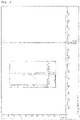
- Figs. 1 and 2 show the 1 H-NMR spectrum and 19 F-NMR spectrum of ICH 2 CF 2 COOEt, respectively.
- ICH 2 CF 2 COOEt was obtained by the same operation as in Example 1, except that a liquid separation treatment was performed by the addition of water and diethyl ether to the reaction mixture in place of filtration.
- the F ion content concentration in the products of Example 1, Comparative Example 1, and Example 2 was measured by the following method.
- Example 2 One hundred grams of the reaction mixture obtained in Example 1 was filtered under the conditions shown in Table 2. The time required for the filtration was as shown in Table 2.
- Table 2 Filtration temperature (inner temperature of a reaction mixture) (°C) Filtration pressure Filter material 1) Filter aid 2) Time required for filtration
- Example 5 65 Ordinal pressure Used Used 9 min. 39 sec.
- Example 6 25 Ordinal pressure Used Used 13 min. 45 sec.
- Example 7 65 Ordinal pressure Used Not used 4 min. 3 sec.
- Example 8 25 Ordinal pressure Used Not used 12 min. 9 sec.
- Celite trademark
Landscapes
- Chemical & Material Sciences (AREA)
- Organic Chemistry (AREA)
- Engineering & Computer Science (AREA)
- Oil, Petroleum & Natural Gas (AREA)
- Life Sciences & Earth Sciences (AREA)
- Geology (AREA)
- Inorganic Chemistry (AREA)
- Chemical Kinetics & Catalysis (AREA)
- Organic Low-Molecular-Weight Compounds And Preparation Thereof (AREA)
Abstract
Description
- The present disclosure relates to a method for producing a propionic acid derivative.
- Propionic acid derivatives, such as 2,2-difluoropropionic acid esters, are useful compounds as raw materials of pharmaceuticals, agricultural chemicals, etc. As a method for producing 2,2-difluoropropionic acid esters, a method for reacting 2,2,3,3-tetrafluorooxetane with alcohols or phenols in the presence of an alkali metal halide is known (Patent Literature 1).
- PTL 1:
JP1986-130254A - In the method of Patent Literature 1, after the reaction, (a) a solvent was distilled off, (b) water was added, and (c) an organic solvent was added to perform liquid separation. However, since the reaction liquid contains a large amount of alkali metal fluorides, liquid separation is difficult, which results in poor productivity.
- An object of the present disclosure is to solve the above problems and to provide a method for producing a propionic acid derivative having excellent productivity.
- The present disclosure includes the following embodiments.
- Item 1. A method for producing a compound represented by formula (1):

- R1 is a halogen atom or SR, wherein R is a hydrogen atom or a hydrocarbon group,
- R2 and R3 are each independently a hydrogen atom, a halogen atom, or an organic group, or R2 and R3 optionally form a ring together with a carbon atom at the β-position,
- X is an oxygen atom or a sulfur atom,
- R4 and R5 are each independently a hydrogen atom, a halogen atom, or a hydrocarbon group optionally having one or more substituents, or R4 and R5 optionally form a ring together with a carbon atom at the α position,
- R6 is a hydrocarbon group optionally having one or more substituents;
- step A of reacting a compound represented by formula (2):

- R2 to R5 are as defined above, with a compound represented by formula (3):
M(R1)n (3),
wherein - M is a cation, n is an integer corresponding to the valence of M, and R1 is as defined above, and a compound represented by formula (4):
R6-X-H (4),
wherein - R6 and X are as defined above; and
- R2 to R5 are as defined above, with a compound represented by formula (3):
- step B of separating, by filtration, the compound represented by formula (5):
MFn (5),
wherein
M and n are as defined above,
from the mixture obtained by the above reaction.
- Item 2. The production method according to Item 1, wherein the filtration is performed at a temperature of 45°C or more.
- Item 3. The production method according to Item 1 or 2, wherein the filtration is performed using a filter material and a filter aid.
- Item 4. The production method according to Item 3, wherein the filter aid is at least one member selected from the group consisting of diatomaceous earth, filter sand, perlite, and cellulose.
- Item 5. The production method according to Item 3 or 4, wherein the average particle size of the filter aid is in the range of 0.5 to 200 µm.
- Item 6. The production method according to any one of Items 1 to 5, further comprising step C of performing a liquid separation treatment on a filtrate obtained by the filtration.
- Item 7. The production method according to any one of Items 1 to 6, wherein R1 is a chlorine atom, a bromine atom, or an iodine atom.
- Item 8. The production method according to any one of Items 1 to 7, wherein R1 is a bromine atom or an iodine atom.
- Item 9. The production method according to any one of Items 1 to 8, wherein R2 and R3 are each independently a hydrogen atom, a halogen atom, an alkyl group, or a haloalkyl group.
- Item 10. The production method according to any one of Items 1 to 9, wherein R2 and R3 are hydrogen atoms.
- Item 11. The production method according to any one of Items 1 to 10, wherein R4 and R5 are each independently a hydrogen atom, a halogen atom, an alkyl group, or a haloalkyl group.
- Item 12. The production method according to any one of Items 1 to 11, wherein R4 and R5 are halogen atoms.
- Item 13. The production method according to any one of Items 1 to 12, wherein R4 and R5 are fluorine atoms.
- Item 14. The production method according to any one of Items 1 to 13, wherein R6 is an alkyl group or a haloalkyl group.
- Item 15. The production method according to any one of Items 1 to 14, wherein R6 is a C1-6 alkyl group or a halo C1-6 alkyl group.
- Item 16. The production method according to any one of Items 1 to 15, wherein X is an oxygen atom.
- Item 17. The production method according to any one of Items 1 to 16, wherein M is a metal.
- Item 18. The production method according to any one of Items 1 to 17, wherein M is an alkali metal or an alkaline earth metal.
- Item 19. The production method according to any one of Items 1 to 18, wherein M is an alkali metal.
- Item 20. A composition comprising a compound represented by formula (1):

- R1 is a halogen atom or SR, wherein R is a hydrogen atom or a hydrocarbon group,
- R2 and R3 are each independently a hydrogen atom, a halogen atom, or an organic group, or R2 and R3 optionally form a ring together with a carbon atom at the β-position,
- X is an oxygen atom or a sulfur atom,
- R4 and R5 are each independently a hydrogen atom, a halogen atom, or a hydrocarbon group optionally having one or more substituents, or
- R4 and R5 optionally form a ring together with a carbon atom at the α position,
- R6 is a hydrocarbon group optionally having one or more substituents; and a compound represented by formula (5):
MFn (5),
wherein
M is an alkali metal, and n is an integer corresponding to the valence of M;
the composition having a fluorine ion content concentration of more than 0 mg/L and 1000 mg/L or less.
- Item 21. The composition according to Item 20, wherein R1 is a chlorine atom, a bromine atom, or an iodine atom.
- Item 22. The composition according to Item 20 or 21, wherein R1 is a bromine atom or an iodine atom.
- Item 23. The composition according to any one of Items 20 to 22, wherein R2 and R3 are each independently a hydrogen atom, a halogen atom, an alkyl group, or a haloalkyl group.
- Item 24. The composition according to any one of Items 20 to 23, wherein R2 and R3 are hydrogen atoms.
- Item 25. The composition according to any one of Items 20 to 24, wherein R4 and R5 are each independently a hydrogen atom, a halogen atom, an alkyl group, or a haloalkyl group.
- Item 26. The composition according to any one of Items 20 to 25, wherein R4 and R5 are halogen atoms.
- Item 27. The composition according to any one of Items 20 to 26, wherein R4 and R5 are fluorine atoms.
- Item 28. The composition according to any one of Items 20 to 27, wherein R6 is an alkyl group or a haloalkyl group.
- Item 29. The composition according to any one of Items 20 to 28, wherein R6 is a C1-6 alkyl group or a halo C1-6 alkyl group.
- Item 30. The composition according to any one of Items 20 to 29, wherein X is an oxygen atom.
- Item 31. The composition according to any one of Items 20 to 30, wherein M is a metal.
- Item 32. The composition according to any one of Items 20 to 31, wherein M is an alkali metal or an alkaline earth metal.
- Item 33. The composition according to any one of Items 20 to 32, wherein M is an alkali metal.
- The present disclosure also includes ethyl 2,2-difluoro-3-iodo-propionate (ICH2CF2COOEt).
- According to the present disclosure, a method for producing a propionic acid derivative having high productivity is provided.
-
-
Fig. 1 is a diagram showing the 1H-NMR spectrum of ICH2CF2COOEt. -
Fig. 2 is a diagram showing the 19F-NMR spectrum of ICH2CF2COOEt. - The above summary of the present disclosure is not intended to describe each disclosed embodiment or every implementation of the present disclosure.
- The description of the present disclosure that follows more specifically exemplifies illustrative embodiments.
- In several places throughout the present disclosure, guidance is provided through lists of examples, and these examples can be used in various combinations.
- In each instance, the described list serves only as a representative group, and should not be interpreted as an exclusive list.
- All of the publications, patents, and patent applications cited herein are incorporated herein by reference in their entirety.
- The symbols and abbreviations in the present specification can be understood in the sense commonly used in the technical field to which the present disclosure pertains in the context of the present specification, unless otherwise specified.
- In the present specification, the terms "comprise" and "contain" are used with the intention of including the phrases consisting essentially of and consisting of.
- Unless otherwise specified, the steps, treatments, and operations described in the present specification can be performed at room temperature.
- In the present specification, "room temperature" means a temperature within the range of 10 to 40°C.
- In the present specification, the phrase "Cn-m" (n and m each represent a number) indicates that the number of carbon atoms is n or more and m or less, as can typically be understood by a person skilled in the art.
- Unless otherwise specified, examples of the "halogen atom" as referred to in the present specification include fluorine, chlorine, bromine, and iodine.
- The "organic group" as referred to in the present specification means a group formed by removing one hydrogen atom from an organic compound.
- Examples of the "organic group" as referred to in the present specification include hydrocarbon groups optionally having one or more substituents, non-aromatic heterocyclic groups optionally having one or more substituents, heteroaryl groups optionally having one or more substituents, a cyano group, an aldehyde group, QO-, QS-, QCO-, QSO2-, QOCO-, and QOSO2-, wherein Q is independently a hydrocarbon group optionally having one or more substituents, a non-aromatic heterocyclic group optionally having one or more substituents, or a heteroaryl group optionally having one or more substituents.
- Examples of the "substituents" include halogen atoms, a cyano group, an amino group, alkoxy groups, and alkylthio groups. Two or more substituents may be identical to or different from each other. The number of substituents can be selected from the range of 1 to the maximum substitutable number, and it may be 1, 2, 3, or 4.
- Unless otherwise specified, examples of "hydrocarbon groups" as referred to in the present specification include alkyl, alkenyl, alkynyl, cycloalkyl, cycloalkenyl, cycloalkadienyl, aryl, and aralkyl.
- Unless otherwise specified, examples of the "alkyl" as referred to in the present specification include linear or branched C1-20 alkyl groups, such as methyl, ethyl, propyl (n-propyl, isopropyl), butyl (n-butyl, isobutyl, sec-butyl, tert-butyl), pentyl, and hexyl.
- Unless otherwise specified, the "haloalkyl" as referred to in the present specification is an alkyl group optionally substituted with one or more halogen atoms. Examples of the haloalkyl group include fluoromethyl, difluoromethyl, trifluoromethyl (perfluoromethyl), 2-fluoroethyl, 2,2-difluoroethyl, 2,2,2-trifluoroethyl, 1,1,2,2-tetrafluoroethyl, pentafluoroethyl (perfluoroethyl), and linear or branched-chain halo C1-20 alkyl groups, such as groups in which some or all of the fluorine atoms are replaced by other halogen atoms.
- Unless otherwise specified, examples of the "alkoxy" as referred to in the present specification include linear or branched C1-20 alkoxy groups, such as methoxy, ethoxy, propoxy (n-propoxy and isopropoxy), butoxy (n-butoxy, isobutoxy, sec-butoxy, and tert-butoxy), pentyloxy, and hexyloxy.
- Unless otherwise specified, examples of the "alkylthio" as referred to in the present specification include linear or branched C1-20 alkylthio groups, such as methylthio, ethylthio, propylthio (n-propylthio and isopropylthio), butylthio (n-butylthio, isobutylthio, sec-butylthio, and tert-butylthio), pentylthio, and hexylthio.
- Unless otherwise specified, examples of the "alkenyl" as referred to in the present specification include linear or branched C2-20 alkenyl groups, such as vinyl, 1-propen-1-yl, 2-propen-1-yl, isopropenyl, 2-buten-1-yl, 4-penten-1-yl, and 5-hexen-1-yl.
- Unless otherwise specified, examples of the "alkynyl" as referred to in the present specification include linear or branched C2-20 alkynyl groups, such as ethynyl, 1-propyn-1-yl, 2-propin-1-yl, 4-pentyn-1-yl, and 5-hexyn-1-yl.
- Unless otherwise specified, examples of the "cycloalkyl" as referred to in the present specification include C3-10 cycloalkyl groups, such as cyclopropyl, cyclobutyl, cyclopentyl, cyclohexyl, and cycloheptyl.
- Unless otherwise specified, examples of the "cycloalkenyl" as referred to in the present specification include C3-10 cycloalkenyl groups, such as cyclopropenyl, cyclobutenyl, cyclopentenyl, cyclohexenyl, and cycloheptenyl.
- Unless otherwise specified, examples of the "cycloalkadienyl" as referred to in the present specification include C4-10 cycloalkadienyl groups, such as cyclobutadienyl, cyclopentadienyl, cyclohexadienyl, cycloheptadienyl, cyclooctadienyl, cyclononadienyl, and cyclodecadienyl.
- Unless otherwise specified, the "aryl" as referred to in the present specification can be monocyclic, bicyclic, tricyclic, or tetracyclic.
- Unless otherwise specified, the "aryl" as referred to in the present specification can be a C6-18 aryl group.
- Unless otherwise specified, examples of the "aryl" as referred to in the present specification include phenyl, 1-naphthyl, 2-naphthyl, 2-biphenyl, 3-biphenyl, 4-biphenyl, and 2-anthryl.
- Unless otherwise specified, the "haloaryl" as referred to in the present specification is an aryl group optionally substituted with one or more halogen atoms.
- Unless otherwise specified, examples of the "aralkyl" as referred to in the present specification include benzyl, phenethyl, diphenylmethyl, 1-naphthylmethyl, 2-naphthylmethyl, 2,2-diphenylethyl, 3-phenylpropyl, 4-phenylbutyl, 5-phenylpentyl, 2-biphenylmethyl, 3-biphenylmethyl, and 4-biphenylmethyl. Unless otherwise specified, the "haloaralkyl" as referred to in the present specification is an aralkyl group optionally substituted with one or more halogen atoms.
- Unless otherwise specified, the "non-aromatic heterocyclic group" as referred to in the present specification means a group formed by removing one hydrogen atom from a non-aromatic heterocycle.
- Unless otherwise specified, the "non-aromatic heterocyclic group" as referred to in the present specification can be monocyclic, bicyclic, tricyclic, or tetracyclic.
- Unless otherwise specified, the "non-aromatic heterocyclic group" as referred to in the present specification can be saturated or unsaturated.
- Unless otherwise specified, the "non-aromatic heterocyclic group" as referred to in the present specification can be a 5- to 18-membered non-aromatic heterocyclic group.
- Unless otherwise specified, the "non-aromatic heterocyclic group" as referred to in the present specification can be, for example, a non-aromatic heterocyclic group containing, in addition to carbon atoms, 1 to 4 heteroatoms selected from oxygen, sulfur, and nitrogen atoms as a ring-constituting atom.
- Unless otherwise specified, examples of the "non-aromatic heterocyclic group" as referred to in the present specification include tetrahydrofuryl, oxazolidinyl, imidazolinyl (e.g., 1-imidazolinyl, 2-imidazolinyl, and 4-imidazolinyl), aziridinyl (e.g., 1-aziridinyl and 2-aziridinyl), pyrrolidinyl (e.g., 1-pyrrolidinyl, 2-pyrrolidinyl, and 3-pyrrolidinyl), piperidinyl (e.g., 1-piperidinyl, 2-piperidinyl, and 3-piperidinyl), azepanyl (e.g., 1-azepanyl, 2-azepanyl, 3-azepanyl, and 4-azepanyl), azocanyl (e.g., 1-azocanyl, 2-azocanyl, 3-azocanyl, and 4-azocanyl), piperazinyl (e.g., 1,4-piperazin-1-yl and 1,4-piperazin-2-yl), diazepinyl (e.g., 1,4-diazepin-1-yl, 1,4-diazepin-2-yl, 1,4-diazepin-5-yl, and 1,4-diazepin-6-yl), diazocanyl (e.g., 1,4-diazocan-1-yl, 1,4-diazocan-2-yl, 1,4-diazocan-5-yl, 1,4-diazocan-6-yl, 1,5-diazocan-1-yl, 1,5-diazocan-2-yl, and 1,5-diazocan-3-yl), tetrahydropyranyl (e.g., tetrahydrofuran-4-yl), morpholinyl (e.g., 4-morpholinyl), thiomorpholinyl (e.g., 4-thiomorpholinyl), 2-oxazolidinyl, dihydrofuryl, dihydropyranyl, dihydroquinolyl, and the like.
- Unless otherwise specified, the "heteroaryl" as referred to in the present specification can be monocyclic, bicyclic, tricyclic, or tetracyclic.
- Unless otherwise specified, the "heteroaryl" as referred to in the present specification can be, for example, a 5- to 18-membered heteroaryl group.
- Unless otherwise specified, the "heteroaryl" as referred to in the present specification can be, for example, a heteroaryl group containing, in addition to carbon atoms, 1 to 4 heteroatoms selected from oxygen, sulfur, and nitrogen atoms as a ring-constituting atom.
- Unless otherwise specified, examples of the "heteroaryl" as referred to in the present specification include "monocyclic heteroaryl groups" and "aromatic fused heterocyclic groups."
- Unless otherwise specified, examples of the "monocyclic heteroaryl groups" as referred to in the present specification include pyrrolyl (e.g., 1-pyrrolyl, 2-pyrrolyl, and 3-pyrrolyl), furyl (e.g., 2-furyl and 3-furyl), thienyl (e.g., 2-thienyl and 3-thienyl), pyrazolyl (e.g., 1-pyrazolyl, 3-pyrazolyl, and 4-pyrazolyl), imidazolyl (e.g., 1-imidazolyl, 2-imidazolyl, and 4-imidazolyl), isoxazolyl (e.g., 3-isoxazolyl, 4-isoxazolyl, and 5-isoxazolyl), oxazolyl (e.g., 2-oxazolyl, 4-oxazolyl, and 5-oxazolyl), isothiazolyl (e.g., 3-isothiazolyl, 4-isothiazolyl, and 5-isothiazolyl), thiazolyl (e.g., 2-thiazolyl, 4-thiazolyl, and 5-thiazolyl), triazolyl (e.g., 1,2,3-triazol-3-yl and 1,2,4-triazol-4-yl), oxadiazolyl (e.g., 1,2,4-oxadiazol-3-yl and 1,2,4-oxadiazol-5-yl), thiadiazolyl (e.g., 1,2,4-thiadiazol-3-yl and 1,2,4-thiadiazol-5-yl), tetrazolyl, pyridyl (e.g., 2-pyridyl, 3-pyridyl, and 4-pyridyl), pyridazinyl (e.g., 3-pyridazinyl and 4-pyridazinyl), pyrimidinyl (e.g., 2-pyrimidinyl, 4-pyrimidinyl, and 5-pyrimidinyl), pyrazinyl, and the like.
- Unless otherwise specified, examples of the "aromatic fused heterocyclic groups" as referred to in the present specification include isoindolyl (e.g., 1-isoindolyl, 2-isoindolyl, 3-isoindolyl, 4-isoindolyl, 5-isoindolyl, 6-isoindolyl, and 7-isoindolyl), indolyl (e.g., 1-indolyl, 2-indolyl, 3-indolyl, 4-indolyl, 5-indolyl, 6-indolyl, and 7-indolyl), benzo[b]furanyl (e.g., 2-benzo[b]furanyl, 3-benzo[b]furanyl, 4-benzo[b]furanyl, 5-benzo[b]furanyl, 6-benzo[b]furanyl, and 7-benzo[b]furanyl), benzo[c]furanyl (e.g., 1-benzo[c]furanyl, 4-benzo[c]furanyl, and 5-benzo[c]furanyl), benzo[b]thienyl (e.g., 2-benzo[b]thienyl, 3-benzo[b]thienyl, 4-benzo[b]thienyl, 5-benzo[b]thienyl, 6-benzo[b]thienyl, and 7-benzo[b]thienyl), benzo[c]thienyl (e.g., 1-benzo[c]thienyl, 4-benzo[c]thienyl, and 5-benzo[c]thienyl), indazolyl (e.g., 1-indazolyl, 2-indazolyl, 3-indazolyl, 4-indazolyl, 5-indazolyl, 6-indazolyl, and 7-indazolyl), benzimidazolyl (e.g., 1-benzimidazolyl, 2-benzimidazolyl, 4-benzimidazolyl, and 5-benzimidazolyl), 1,2-benzisoxazolyl (e.g., 1,2-benzisoxazol-3-yl, 1,2-benzisoxazol-4-yl, 1,2-benzisoxazol-5-yl, 1,2-benzisoxazol-6-yl, and 1,2-benzisoxazol-7-yl), benzoxazolyl (e.g., 2-benzoxazolyl, 4-benzoxazolyl, 5-benzoxazolyl, 6-benzoxazolyl, and 7-benzoxazolyl), 1,2-benzisothiazolyl (e.g., 1,2-benzisothiazol-3-yl, 1,2-benzisothiazol-4-yl, 1,2-benzisothiazol-5-yl, 1,2-benzisothiazol-6-yl, and 1,2-benzisothiazol-7-yl), benzothiazolyl (e.g., 2-benzothiazolyl, 4-benzothiazolyl, 5-benzothiazolyl, 6-benzothiazolyl, and 7-benzothiazolyl), isoquinolyl (e.g., 1-isoquinolyl, 3-isoquinolyl, 4-isoquinolyl, and 5-isoquinolyl), quinolyl (e.g., 2-quinolyl, 3-quinolyl, 4-quinolyl, 5-quinolyl, and 8-quinolyl), cinnolinyl (e.g., 3-cinnolinyl, 4-cinnolinyl, 5-cinnolinyl, 6-cinnolinyl, 7-cinnolinyl, and 8-cinnolinyl), phthalazinyl (e.g., 1-phthalazinyl, 4-phthalazinyl, 5-phthalazinyl, 6-phthalazinyl, 7-phthalazinyl, and 8-phthalazinyl), quinazolinyl (e.g., 2-quinazolinyl, 4-quinazolinyl, 5-quinazolinyl, 6-quinazolinyl, 7-quinazolinyl, and 8-quinazolinyl), quinoxalinyl (e.g., 2-quinoxalinyl, 3-quinoxalinyl, 5-quinoxalinyl, 6-quinoxalinyl, 7-quinoxalinyl, and 8-quinoxalinyl), pyrazolo[1,5-a]pyridyl (e.g., pyrazolo[1,5-a]pyridin-2-yl, pyrazolo[1,5-a]pyridin-3-yl, pyrazolo[1,5-a]pyridin-4-yl, pyrazolo[1,5-a]pyridin-5-yl, pyrazolo[1,5-a]pyridin-6-yl, and pyrazolo[1,5-a]pyridin-7-yl), imidazo[1,2-a]pyridyl (e.g., imidazo[1,2-a]pyridin-2-yl, imidazo[1,2-a]pyridin-3-yl, imidazo[1,2-a]pyridin-5-yl, imidazo[1,2-a]pyridin-6-yl, imidazo[1,2-a]pyridin-7-yl, and imidazo[1,2-a]pyridin-8-yl), and the like.
- In one embodiment, the method for producing a compound represented by formula (1):

- R1 is a halogen atom or SR, wherein R is a hydrogen atom or a hydrocarbon group,
- R2 and R3 are each independently a hydrogen atom, a halogen atom, or an organic group, or R2 and R3 optionally form a ring together with a carbon atom at the β-position,
- X is an oxygen atom or a sulfur atom,
- R4 and R5 are each independently a hydrogen atom, a halogen atom, or a hydrocarbon group optionally having one or more substituents, or R4 and R5 optionally form a ring together with a carbon atom at the α position,
- R6 is a hydrocarbon group optionally having one or more substituents,
- R1 is preferably a halogen atom, a mercapto group, or an alkylthio group; more preferably a halogen atom; even more preferably a fluorine atom, a chlorine atom, a bromine atom, or an iodine atom; still more preferably a bromine atom or an iodine atom; and particularly preferably an iodine atom.
- It is preferable that R2 and R3 are each independently a hydrogen atom, a halogen atom, an alkyl group, or a haloalkyl group; more preferably a hydrogen atom, a halogen atom, a C1-4 alkyl group, or a halo C1-4 alkyl group; even more preferably a hydrogen atom or a halogen atom; still more preferably a hydrogen atom or a fluorine atom; and particularly preferably a hydrogen atom.
- The ring formed by R2 and R3 together with the carbon atom at the β-position is not limited, and can be, for example, a 5- to 8-membered aliphatic or heterocyclic ring (e.g., a nitrogen-containing heterocyclic ring, an oxygen-containing heterocyclic ring, or a sulfur-containing heterocyclic ring) optionally having one or more substituents.
- It is preferable that R4 and R5 are each independently a hydrogen atom, a halogen atom, an alkyl group, or a haloalkyl group; more preferably a hydrogen atom, a halogen atom, a C1-4 alkyl group, or a halo C1-4 alkyl group; even more preferably a halogen atom; and particularly preferably a fluorine atom.
- The ring formed by R4 and R5 together with the carbon atom at the α-position is not particularly limited, and can be, for example, a 5- to 8-membered aliphatic or heterocyclic ring (e.g., a nitrogen-containing heterocyclic ring, an oxygen-containing heterocyclic ring, and a sulfur-containing heterocyclic ring) optionally having one or more substituents.
- R6 is preferably an alkyl group optionally having one or more substituents, an aryl group optionally having one or more substituents, or an aralkyl group optionally having one or more substituents; more preferably an alkyl group, a haloalkyl group, an aryl group, a haloaryl group, an aralkyl group, or a haloaralkyl group; even more preferably an alkyl group or a haloalkyl group; and particularly preferably a C1-6 alkyl group or a halo C1-6 alkyl group.
- X is preferably an oxygen atom.
- R2 to R5 in formula (2) can be individually a group corresponding to R2 to R5 in formula (1). Examples of the compound represented by formula (2) include 2,2-difluorooxetanes, and typically 2,2,3,3-tetrafluorooxetane. The compounds represented by formula (2) may be used alone or in a combination of two or more.
- R1 in formula (3) can be a group corresponding to R1 in formula (1). The cation represented by M in formula (3) is not particularly limited as long as it is a counter ion of R1, and examples include hydrogen, metal, ammonium, and the like. Examples of the metal include alkali metals and alkaline earth metals. Examples of the alkali metals include lithium, sodium, potassium, and cesium. Examples of the alkaline earth metals include magnesium and calcium. Specific examples of the ammonium include primary to quaternary ammonium. Examples of the primary ammonium include C1-6 alkylamines such as methylamine, ethylamine, propylamine (n-propylamine, isopropylamine), and butylamine, and aniline.
- Examples of the secondary ammonium include di-C1-6 alkylamines such as dimethylamine, diethylamine, ethylmethylamine, and dipropylamine, pyrrolidine, imidazole, piperidine, and morpholine.
- Examples of the tertiary ammonium include tri-C1-6 alkylamines such as trimethylamine and triethylamine, pyridine, and quinoline.
- Examples of the quaternary ammonium include tetra-C1-6 alkylammonium such as tetramethylammonium and tetraethylammonium. M is preferably a metal, more preferably an alkali metal or an alkaline earth metal, and even more preferably an alkali metal.
- n can be suitably selected according to the valence of M, and is, for example, 1 or 2.
- Examples of the compound represented by formula (3) include NaI, KI, CsI, MgI2, CaI2, NaBr, KBr, CsBr, MgBr2, CaBr2, NaCl, KCl, CsCl, MgCl2, and CaCl2.
- The compounds represented by formula (3) can be used alone or in a combination of two or more.
- The lower limit of the amount of the compound represented by formula (3) can be, for example, 0.1 mole, preferably 0.5 mole, and even more preferably 0.9 mole, relative to 1 mole of the compound represented by formula (2).
- The upper limit of the amount of the compound represented by formula (3) can be, for example, 10 moles, preferably 5 moles, and even more preferably 3 moles, relative to 1 mole of the compound represented by formula (2).
- The amount of the compound represented by formula (3) can be, for example, 0.1 to 10 moles, preferably from 0.5 to 5 moles, and even more preferably 0.9 to 3 moles, relative to 1 mole of the compound represented by formula (2).
- R6 and X in formula (4) can be respectively groups corresponding to R6 and X in formula (1).
- Specific examples of the compound represented by formula (4) include alcohols, phenols, and thiols. Examples of the alcohols include C1-6 alkanols such as methanol, ethanol, propanol (n-propanol and isopropanol), and butanol. Examples of the phenols include phenol, cresol, and naphthol. Examples of the mercaptans (thiols) include C1-6 alkyl mercaptans such as methyl mercaptan, ethyl mercaptan, propyl mercaptan (n-propyl mercaptan and isopropyl mercaptan), and butyl mercaptan.
- The compound represented by formula (4) may be used alone or in a combination of two or more.
- The lower limit of the amount of the compound represented by formula (4) can be, for example, 0.1 moles, preferably 0.5 moles, and even more preferably 0.9 moles, relative to 1 mole of the compound represented by formula (2).
- The upper limit of the amount of the compound represented by formula (4) can be, for example, 10 moles, preferably 5 moles, and even more preferably 3 moles, relative to 1 mole of the compound represented by formula (2).
- The amount of the compound represented by formula (4) can be, for example, 0.1 to 10 moles, preferably 0.5 to 5 moles, and even more preferably 0.9 to 3 moles, relative to 1 mole of the compound represented by formula (2).
- In the reaction of step A, the compound represented by formula (4) may be used as a solvent, or a component other than the compound represented by formula (4) may be used as a solvent. When the compound represented by formula (4) is used as a solvent, it can be preferably 10 moles or more relative to 1 mole of the compound represented by formula (2).
- Examples of the component other than the compound represented by formula (4) include aliphatic hydrocarbons (e.g., hexane), aromatic hydrocarbons (e.g., toluene, xylene), halogenated hydrocarbons (e.g., dichloromethane, dichloroethane, and chloroform), ethers (e.g., diethyl ether and tetrahydrofuran), ketones (e.g., acetone, methyl ethyl ketone), nitriles (e.g., acetonitrile), esters (e.g., ethyl acetate), amides (e.g., dimethylformamide (DMF) and dimethylacetamide (DMAc)).
- The components other than the compound represented by formula (4) may be used alone or in a combination of two or more.
- In the reaction of step A, the reaction temperature and the reaction time are not particularly limited as long as the reaction proceeds.
- The lower limit of the reaction temperature can be, for example, -70°C, preferably -20°C, and even more preferably 0°C.
- The upper limit of the reaction temperature can be, for example, 150°C, preferably 100°C, and even more preferably 80°C.
- The reaction temperature can be, for example, in the range of -70 to 150°C, preferably -20 to 100°C, even more preferably 0 to 80°C.
- The lower limit of the reaction time can be, for example, 0.5 hours, preferably 1 hour, and even more preferably 1.5 hours.
- The upper limit of the reaction time can be, for example, 12 hours, preferably 10 hours, and even more preferably 5 hours.
- The reaction time is in the range of, for example, 0.5 to 12 hours, preferably 1 to 10 hours, and even more preferably 1.5 to 5 hours.
- Step B is capable of highly removing the compound represented by formula (5) from the reaction mixture obtained in
- M and n in formula (5) can respectively correspond to M and n in formula (3). Examples of the compound represented by formula (5) include NaF, KF, CsF, CaF2, and the like.
- The compound represented by formula (5) can be a compound with low solubility in water and/or an organic solvent. The solubility at 20°C can be, for example, 100 g/L or less, preferably 80 g/L or less, and even more preferably 50 g/L or less.
- The method of filtration is not limited. The filtration can usually be performed using a filter material, and preferably using a filter material and a filter aid. The method using a filter material and a filter aid may be pre-coating (a method of filtration using a product in which a filter aid layer is formed on a filter material), or body feeding (a method of filtration by adding a filter aid to the reaction mixture in step A).
- Examples of the filter material include paper, metal (e.g., stainless steel), polymer (e.g., cellulose, polypropylene, polyester, and polyamide), glass, ceramics, cloth, etc.
- The filter material is preferably porous, for example, a porous membrane or a porous filter.
- The average pore diameter of the filter material is not limited, and is, for example, 0.01 to 20 µm, preferably 0.01 to 15 µm, and even more preferably 0.01 to 10 µm.
- Examples of the filter aid include diatomite (e.g., Celite (trademark)), filter sand (e.g., manganese sand, manganese zeolite, activated carbon, anthracite, ceramic sand), perlite, and cellulose. The filter aids can be used alone or in a combination of two or more. The filter aid is preferably diatomite.
- The filter aid, for example, has an average particle size of 0.5 to 200 µm, preferably 1 to 150 µm, and even more preferably 1 to 100 µm.
- The filtration temperature (internal temperature of the reaction mixture subjected to filtration) is not particularly limited. In terms of filtration efficiency, filtration is preferably performed at room temperature or more.
- The lower limit of the filtration temperature is preferably 45°C, more preferably 50°C, 55°C, 60°C, or 65°C.
- The upper limit of the filtration temperature is preferably 90°C, more preferably 85°C, and even more preferably 80°C.
- The filtration temperature is preferably 45°C or more, and more preferably in the range of 45 to 90°C.
- The filtration can be performed under atmospheric pressure, under pressure, or under reduced pressure, for example, at -2 to 2 MPa, and preferably at -1 to 1 MPa.
- It is preferable that the method for producing the compound represented by formula (1) further includes step C of performing a liquid separation treatment on the filtrate obtained by the filtration. By combining the steps B and C, the compound represented by formula (5) can be further removed.
- The liquid separation treatment usually includes the step of adding water and an organic solvent to the filtrate, the step of separating the mixture into the aqueous phase and the organic phase, and collecting the organic phase.
- Examples of the organic solvent used in the liquid separation treatment include aliphatic hydrocarbons (e.g., hexane), aromatic hydrocarbons (e.g., toluene and xylene), halogenated hydrocarbons (e.g., dichloromethane, and dichloroethane), ethers (e.g., diethyl ether and tetrahydrofuran), ketones (e.g., methyl ethyl ketone), esters (e.g., ethyl acetate), and the like.
- The organic solvents may be used alone or in a combination of two or more. The organic solvent is preferably an ether.
- The method for producing the compound represented by formula (1) may further include another optional step. Examples of such a step include distillation, concentration, washing, or a combination of two or more steps.
- In one embodiment, the composition is a composition comprising a compound represented by formula (1) and a compound represented by formula (5), wherein the fluorine ion content concentration is more than 0 mg/L and 1000 mg/L or less.
- The upper limit of the fluorine ion content concentration can be preferably 900 mg/L, 800 mg/L, 700 mg/L, 600 mg/L, 500 mg/L, 400 mg/L, 300 mg/L, 200 mg/L, or 150 mg/L.
- The lower limit of the fluorine ion content concentration can be usually the detection limit or 0.001 mg/L.
- The fluorine ion content concentration can be, for example, in the range of 0.001 to 1000 mg/L.
- The composition further contains the compound represented by formula (4).
- The lower limit of the content of the compound represented by formula (4) in the composition can be, for example, the detection limit or 0.01 mass%.
- The upper limit of the content of the compound represented by formula (4) in the composition may be, for example, 5 mass%, and preferably 3 mass%.
- The content of the compound represented by formula (4) in the composition can be, for example, 5 mass% or less, or in the range of 0.01 to 5 mass%.
- One embodiment of the present disclosure is described in more detail by means of the Examples; however, the present disclosure is not limited to these.
- A solution of tetrafluorooxetane (75 wt% chloroform solution, 80 g, 0.462 mol) in ethanol (18.8 g) was added dropwise over 1 hour to a suspension of sodium iodide (69.3 g, 0.462 mol) in ethanol (60 g) under ice cooling. After dropwise addition, the temperature was raised to 50°C, and the mixture was stirred under heating for 2 hours. The resulting reaction mixture (internal temperature: 50°C) was filtered using a filter material (paper product, average pore diameter: 4.0 µm) and a filter aid (Celite (trademark), average particle size: 12 to 20 µm), and ethanol was distilled off to obtain ICH2CF2COOEt (yield: 90.8%).
-
Figs. 1 and2 show the 1H-NMR spectrum and 19F-NMR spectrum of ICH2CF2COOEt, respectively. - ICH2CF2COOEt was obtained by the same operation as in Example 1, except that a liquid separation treatment was performed by the addition of water and diethyl ether to the reaction mixture in place of filtration.
- ICH2CF2COOEt was obtained by the same operation as in Example 1 except that after filtration, water and diethyl ether were added to a filtrate to perform a liquid separation treatment.
- The F ion content concentration in the products of Example 1, Comparative Example 1, and Example 2 was measured by the following method.
- 1. 1 g of a sample was weighed in a plastic container.
- 2. 1 g of KOH was weighed in a plastic container, and distilled water was added thereto to make 100 g of a KOH aqueous solution.
- 3. 5 g of the 1% KOH aqueous solution prepared in Item 2 was added to the plastic container of Item 1.
- 4. The lid of the plastic container of Item 3 was closed, followed by mixing, and the container was allowed to stand. The supernatant was introduced into a disposable syringe with a filter (pore diameter: 0.45 µm), followed by filtration.
- 5. 1 g of the filtrate obtained in Item 4 was taken out, and 5 mL of distilled water was added thereto, followed by stirring. Thereafter, 4 mL of the upper layer was taken out and transferred into another centrifuge tube. 4 mL of TISAB (total ionic strength adjustment buffer) (produced by Merck Sharp and Dohme) was added thereto, followed by stirring and measurement with an F ion meter.
- The following table shows the measurement results of the F ion concentration.
Table 1 F ion concentration contained in 1 g of sample (mg/L) Example 1 104 Comparative Example 1 1104 Example 2 21 - ICH2CF2COOMe (yield: 81.5%) was obtained by the same operation as in Example 1 except that the ethanol used in Example 1 was changed to methanol.
- BrCH2CF2COOEt (yield: 61.1%) was obtained by the same operation as in Example 1 except that the sodium iodide used in Example 1 was changed to sodium bromide.
- One hundred grams of the reaction mixture obtained in Example 1 was filtered under the conditions shown in Table 2. The time required for the filtration was as shown in Table 2.
Table 2 Filtration temperature (inner temperature of a reaction mixture) (°C) Filtration pressure Filter material 1) Filter aid 2) Time required for filtration Example 5 65 Ordinal pressure Used Used 9 min. 39 sec. Example 6 25 Ordinal pressure Used Used 13 min. 45 sec. Example 7 65 Ordinal pressure Used Not used 4 min. 3 sec. Example 8 25 Ordinal pressure Used Not used 12 min. 9 sec. 1) Paper product, average pore diameter: 4.0 µm
2) Celite (trademark), average particle diameter: 12 to 20 µm

R2 to R5 are as defined above, with a compound represented by formula (3):
M(R1)n (3),
wherein
M is a cation, n is an integer corresponding to the valence of M, and R1 is as defined above, and a compound represented by formula (4):
R6-X-H (4),
wherein
R6 and X are as defined above; and
step B of separating, by filtration, the compound represented by formula (5):
MFn (5),
wherein
M and n are as defined above,
from the mixture obtained by the above reaction.
Claims (33)
- A method for producing a compound represented by formula (1):
 R1 is a halogen atom or SR, wherein R is a hydrogen atom or a hydrocarbon group,R2 and R3 are each independently a hydrogen atom, a halogen atom, or an organic group, or R2 and R3 optionally form a ring together with a carbon atom at the β position,X is an oxygen atom or a sulfur atom,R4 and R5 are each independently a hydrogen atom, a halogen atom, or a hydrocarbon group optionally having one or more substituents, or R4 and R5 optionally form a ring together with a carbon atom at the α position,R6 is a hydrocarbon group optionally having one or more substituents;the method comprisingstep A of reacting a compound represented by formula (2):
R2 to R5 are as defined above, with a compound represented by formula (3):
M(R1)n (3),
wherein
M is cation, n is an integer corresponding to the valence of M, and R1 is as defined above, and a compound represented by formula (4):
R6-X-H (4),
wherein
R6 and X are as defined above; andstep B of separating, by filtration, a compound represented by formula (5):from the mixture obtained by the above reaction.
MFn (5),
wherein
M and n are as defined above, - The production method according to claim 1, wherein the filtration is performed at a temperature of 45°C or more.
- The production method according to claim 1 or 2, wherein the filtration is performed using a filter material and a filter aid.
- The production method according to claim 3, wherein the filter aid is at least one member selected from the group consisting of diatomite, filter sand, perlite, and cellulose.
- The production method according to claim 3 or 4, wherein the average particle size of the filter aid is in the range of 0.5 to 200 µm.
- The production method according to any one of claims 1 to 5, further comprising step C of performing a liquid separation treatment on a filtrate obtained by the filtration.
- The production method according to any one of claims 1 to 6, wherein R1 is a chlorine atom, a bromine atom, or an iodine atom.
- The production method according to any one of claims 1 to 7, wherein R1 is a bromine atom or an iodine atom.
- The production method according to any one of claims 1 to 8, wherein R2 and R3 are each independently a hydrogen atom, a halogen atom, an alkyl group, or a haloalkyl group.
- The production method according to any one of claims 1 to 9, wherein R2 and R3 are hydrogen atoms.
- The production method according to any one of claims 1 to 10, wherein R4 and R5 are each independently a hydrogen atom, a halogen atom, an alkyl group, or a haloalkyl group.
- The production method according to any one of claims 1 to 11, wherein R4 and R5 are halogen atoms.
- The production method according to any one of claims 1 to 12, wherein R4 and R5 are fluorine atoms.
- The production method according to any one of claims 1 to 13, wherein R6 is an alkyl group or a haloalkyl group.
- The production method according to any one of claims 1 to 14, wherein R6 is a C1-6 alkyl group or a halo C1-6 alkyl group.
- The production method according to any one of claims 1 to 15, wherein X is an oxygen atom.
- The production method according to any one of claims 1 to 16, wherein M is a metal.
- The production method according to any one of claims 1 to 17, wherein M is an alkali metal or an alkaline earth metal.
- The production method according to any one of claims 1 to 18, wherein M is an alkali metal.
- A composition comprising a compound represented by formula (1):
 R1 is a halogen atom or SR, wherein R is a hydrogen atom or a hydrocarbon group,R2 and R3 are each independently a hydrogen atom, a halogen atom, or an organic group, or R2 and R3 optionally form a ring together with a carbon atom at the β position,X is an oxygen atom or a sulfur atom,R4 and R5 are each independently a hydrogen atom, a halogen atom, or a hydrocarbon group optionally having one or more substituents, or R4 and R5 optionally form a ring together with a carbon atom at the α position,R6 is a hydrocarbon group optionally having one or more substituents; and a compound represented by formula (5):the composition having a fluorine ion content concentration of more than 0 mg/L and 1000 mg/L or less.
MFn (5),
wherein
M is an alkali metal, and n is an integer corresponding to the valence of M; - The composition according to claim 20, wherein R1 is a chlorine atom, a bromine atom, or an iodine atom.
- The composition according to claim 20 or 21, wherein R1 is a bromine atom or an iodine atom.
- The composition according to any one of claims 20 to 22, wherein R2 and R3 are each independently a hydrogen atom, a halogen atom, an alkyl group, or a haloalkyl group.
- The composition according to any one of claims 20 to 23, wherein R2 and R3 are hydrogen atoms.
- The composition according to any one of claims 20 to 24, wherein R4 and R5 are each independently a hydrogen atom, a halogen atom, an alkyl group, or a haloalkyl group.
- The composition according to any one of claims 20 to 25, wherein R4 and R5 are halogen atoms.
- The composition according to any one of claims 20 to 26, wherein R4 and R5 are fluorine atoms.
- The composition according to any one of claims 20 to 27, wherein R6 is an alkyl group or a haloalkyl group.
- The composition according to any one of claims 20 to 28, wherein R6 is a C1-6 alkyl group or a halo C1-6 alkyl group.
- The composition according to any one of claims 20 to 29, wherein X is an oxygen atom.
- The composition according to any one of claims 20 to 30, wherein M is a metal.
- The composition according to any one of claims 20 to 31, wherein M is an alkali metal or an alkaline earth metal.
- The composition according to any one of claims 20 to 32, wherein M is an alkali metal.
Applications Claiming Priority (3)
| Application Number | Priority Date | Filing Date | Title |
|---|---|---|---|
| JP2019179617 | 2019-09-30 | ||
| JP2020000399A JP6919733B2 (en) | 2019-09-30 | 2020-01-06 | Method for producing propionic acid derivative |
| PCT/JP2020/036909 WO2021065908A1 (en) | 2019-09-30 | 2020-09-29 | Method for producing propionic acid derivative |
Publications (3)
| Publication Number | Publication Date |
|---|---|
| EP4039673A1 true EP4039673A1 (en) | 2022-08-10 |
| EP4039673A4 EP4039673A4 (en) | 2023-11-15 |
| EP4039673B1 EP4039673B1 (en) | 2024-12-18 |
Family
ID=75272181
Family Applications (1)
| Application Number | Title | Priority Date | Filing Date |
|---|---|---|---|
| EP20871963.3A Active EP4039673B1 (en) | 2019-09-30 | 2020-09-29 | Method for producing propionic acid derivative |
Country Status (6)
| Country | Link |
|---|---|
| US (1) | US11945773B2 (en) |
| EP (1) | EP4039673B1 (en) |
| JP (1) | JP6919733B2 (en) |
| CN (2) | CN114466833A (en) |
| ES (1) | ES3003314T3 (en) |
| WO (1) | WO2021065908A1 (en) |
Family Cites Families (12)
| Publication number | Priority date | Publication date | Assignee | Title |
|---|---|---|---|---|
| JPS61130254A (en) * | 1984-11-29 | 1986-06-18 | Daikin Ind Ltd | 2,2-difluoropropionic acid derivative |
| KR870002015B1 (en) * | 1983-12-26 | 1987-11-30 | 다이낑 고오교오 가부시기 가이샤 | Method for preparing 2,2-difluoropropionic acid derivative |
| JPS60137928A (en) * | 1983-12-26 | 1985-07-22 | Daikin Ind Ltd | Novel fluorine-containing polyether and production thereof |
| JPS61280468A (en) * | 1985-06-05 | 1986-12-11 | Daikin Ind Ltd | Fluorine-containing thioglycolic acid derivative |
| JPH0617338B2 (en) * | 1986-07-14 | 1994-03-09 | ダイキン工業株式会社 | Novel fluorine-containing polyester ester |
| JP3069112B2 (en) * | 1988-09-28 | 2000-07-24 | エクスフルアー・リサーチ・コーポレーシヨン | Epoxide fluorination method |
| JP3533889B2 (en) * | 1997-07-15 | 2004-05-31 | ダイキン工業株式会社 | Fluorovinyl ethers with terminal oxygen functional groups and their preparation |
| JP5881269B2 (en) | 2008-01-03 | 2016-03-09 | ダイキン工業株式会社 | Fluoroethercarboxylic acid and method for producing the same, surfactant, method for producing fluoropolymer using the same, and aqueous dispersion |
| WO2009139438A1 (en) * | 2008-05-15 | 2009-11-19 | 田辺三菱製薬株式会社 | Process for production of optically active carboxylic acid |
| JP5459221B2 (en) * | 2008-12-18 | 2014-04-02 | ダイキン工業株式会社 | Fluorine-containing alcohol and fluorine-containing monomer |
| CN104220413B (en) * | 2012-04-21 | 2018-12-04 | 大阪有机化学工业株式会社 | The manufacture method of 4-hydroxybutyl acrylate |
| JP7057489B2 (en) * | 2016-12-26 | 2022-04-20 | ダイキン工業株式会社 | Method for producing difluoromethylene compound |
-
2020
- 2020-01-06 JP JP2020000399A patent/JP6919733B2/en active Active
- 2020-09-29 ES ES20871963T patent/ES3003314T3/en active Active
- 2020-09-29 CN CN202080067669.6A patent/CN114466833A/en active Pending
- 2020-09-29 WO PCT/JP2020/036909 patent/WO2021065908A1/en not_active Ceased
- 2020-09-29 EP EP20871963.3A patent/EP4039673B1/en active Active
- 2020-09-29 CN CN202610224283.0A patent/CN121990905A/en active Pending
-
2022
- 2022-03-18 US US17/698,252 patent/US11945773B2/en active Active
Also Published As
| Publication number | Publication date |
|---|---|
| EP4039673A4 (en) | 2023-11-15 |
| CN121990905A (en) | 2026-05-08 |
| JP6919733B2 (en) | 2021-08-18 |
| US11945773B2 (en) | 2024-04-02 |
| ES3003314T3 (en) | 2025-03-10 |
| CN114466833A (en) | 2022-05-10 |
| WO2021065908A1 (en) | 2021-04-08 |
| JP2021054782A (en) | 2021-04-08 |
| EP4039673B1 (en) | 2024-12-18 |
| US20220259132A1 (en) | 2022-08-18 |
Similar Documents
| Publication | Publication Date | Title |
|---|---|---|
| DE112014004558T5 (en) | Flour-containing complex compound and production process for fluorine-containing organic compound using them | |
| US10851031B2 (en) | Method for manufacturing difluoromethylene compound | |
| JP7704380B2 (en) | Method for producing fluorinated organic compounds | |
| US20250282704A1 (en) | Method for producing fluoroalkoxide | |
| US11945773B2 (en) | Method for producing propionic acid derivative | |
| JP7244789B2 (en) | Cyclic carbonate compound and method for producing the same | |
| CN112004793B (en) | Method for manufacturing fluorinated organic compounds | |
| US11680037B2 (en) | Branched fluorine-containing compound | |
| JP2024039659A (en) | Method for producing α-chloroacrylic acid esters | |
| JP2024039602A (en) | Method for producing α-chloroacrylic acid esters | |
| JP6497548B2 (en) | Fluorine-containing complex compound, and method for producing fluorine-containing organic compound using fluorine-containing complex compound | |
| JP7264363B1 (en) | Method for producing fluoroether | |
| JP7473826B2 (en) | Method for producing fluoroether | |
| RU2807292C1 (en) | Method for production of fluoroacetic acid ester | |
| RU2807292C9 (en) | Method for production of fluoroacetic acid ester | |
| JP6629020B2 (en) | Method for producing substituted olefin compound | |
| EP4053098A1 (en) | Method for manufacturing fluoroacetic acid ester | |
| JP2018150263A (en) | Cyclic carbonate compound and method for producing the same | |
| JP2018150264A (en) | Cyclic carbonate compound and method for producing the same | |
| JP2017202989A (en) | Fluorine-containing compound, and method for producing the same | |
| JP2017202979A (en) | Method for producing halogenated fluorine-containing organic compound | |
| WO2019172360A1 (en) | Method for producing carbonyl compound | |
| JP2016166164A (en) | Method for producing organic fluorine compound |
Legal Events
| Date | Code | Title | Description |
|---|---|---|---|
| STAA | Information on the status of an ep patent application or granted ep patent |
Free format text: STATUS: THE INTERNATIONAL PUBLICATION HAS BEEN MADE |
|
| PUAI | Public reference made under article 153(3) epc to a published international application that has entered the european phase |
Free format text: ORIGINAL CODE: 0009012 |
|
| STAA | Information on the status of an ep patent application or granted ep patent |
Free format text: STATUS: REQUEST FOR EXAMINATION WAS MADE |
|
| 17P | Request for examination filed |
Effective date: 20220318 |
|
| AK | Designated contracting states |
Kind code of ref document: A1 Designated state(s): AL AT BE BG CH CY CZ DE DK EE ES FI FR GB GR HR HU IE IS IT LI LT LU LV MC MK MT NL NO PL PT RO RS SE SI SK SM TR |
|
| DAV | Request for validation of the european patent (deleted) | ||
| DAX | Request for extension of the european patent (deleted) | ||
| RAP3 | Party data changed (applicant data changed or rights of an application transferred) |
Owner name: DAIKIN INDUSTRIES, LTD. |
|
| P01 | Opt-out of the competence of the unified patent court (upc) registered |
Effective date: 20230525 |
|
| REG | Reference to a national code |
Ref country code: DE Ref legal event code: R079 Free format text: PREVIOUS MAIN CLASS: C07C0067000000 Ref country code: DE Ref legal event code: R079 Ref document number: 602020043504 Country of ref document: DE Free format text: PREVIOUS MAIN CLASS: C07C0067000000 Ipc: C07C0067560000 |
|
| A4 | Supplementary search report drawn up and despatched |
Effective date: 20231016 |
|
| RIC1 | Information provided on ipc code assigned before grant |
Ipc: C07C 67/26 20060101ALI20231010BHEP Ipc: C07C 69/63 20060101ALI20231010BHEP Ipc: C07C 69/22 20060101ALI20231010BHEP Ipc: C07C 67/56 20060101AFI20231010BHEP |
|
| GRAP | Despatch of communication of intention to grant a patent |
Free format text: ORIGINAL CODE: EPIDOSNIGR1 |
|
| STAA | Information on the status of an ep patent application or granted ep patent |
Free format text: STATUS: GRANT OF PATENT IS INTENDED |
|
| INTG | Intention to grant announced |
Effective date: 20240912 |
|
| GRAS | Grant fee paid |
Free format text: ORIGINAL CODE: EPIDOSNIGR3 |
|
| GRAA | (expected) grant |
Free format text: ORIGINAL CODE: 0009210 |
|
| STAA | Information on the status of an ep patent application or granted ep patent |
Free format text: STATUS: THE PATENT HAS BEEN GRANTED |
|
| AK | Designated contracting states |
Kind code of ref document: B1 Designated state(s): AL AT BE BG CH CY CZ DE DK EE ES FI FR GB GR HR HU IE IS IT LI LT LU LV MC MK MT NL NO PL PT RO RS SE SI SK SM TR |
|
| RIN1 | Information on inventor provided before grant (corrected) |
Inventor name: KUROKI, YOSHICHIKA Inventor name: MATSUURA, MAKOTO Inventor name: YOSHIYAMA, ASAKO Inventor name: SHIRAI, ATSUSHI |
|
| REG | Reference to a national code |
Ref country code: CH Ref legal event code: EP |
|
| RIN2 | Information on inventor provided after grant (corrected) |
Inventor name: KUROKI, YOSHICHIKA Inventor name: MATSUURA, MAKOTO Inventor name: YOSHIYAMA, ASAKO Inventor name: SHIRAI, ATSUSHI |
|
| REG | Reference to a national code |
Ref country code: DE Ref legal event code: R096 Ref document number: 602020043504 Country of ref document: DE |
|
| REG | Reference to a national code |
Ref country code: IE Ref legal event code: FG4D |
|
| REG | Reference to a national code |
Ref country code: ES Ref legal event code: FG2A Ref document number: 3003314 Country of ref document: ES Kind code of ref document: T3 Effective date: 20250310 |
|
| REG | Reference to a national code |
Ref country code: LT Ref legal event code: MG9D |
|
| PG25 | Lapsed in a contracting state [announced via postgrant information from national office to epo] |
Ref country code: HR Free format text: LAPSE BECAUSE OF FAILURE TO SUBMIT A TRANSLATION OF THE DESCRIPTION OR TO PAY THE FEE WITHIN THE PRESCRIBED TIME-LIMIT Effective date: 20241218 |
|
| PG25 | Lapsed in a contracting state [announced via postgrant information from national office to epo] |
Ref country code: FI Free format text: LAPSE BECAUSE OF FAILURE TO SUBMIT A TRANSLATION OF THE DESCRIPTION OR TO PAY THE FEE WITHIN THE PRESCRIBED TIME-LIMIT Effective date: 20241218 |
|
| PG25 | Lapsed in a contracting state [announced via postgrant information from national office to epo] |
Ref country code: BG Free format text: LAPSE BECAUSE OF FAILURE TO SUBMIT A TRANSLATION OF THE DESCRIPTION OR TO PAY THE FEE WITHIN THE PRESCRIBED TIME-LIMIT Effective date: 20241218 |
|
| PG25 | Lapsed in a contracting state [announced via postgrant information from national office to epo] |
Ref country code: NO Free format text: LAPSE BECAUSE OF FAILURE TO SUBMIT A TRANSLATION OF THE DESCRIPTION OR TO PAY THE FEE WITHIN THE PRESCRIBED TIME-LIMIT Effective date: 20250318 |
|
| REG | Reference to a national code |
Ref country code: NL Ref legal event code: MP Effective date: 20241218 |
|
| PG25 | Lapsed in a contracting state [announced via postgrant information from national office to epo] |
Ref country code: GR Free format text: LAPSE BECAUSE OF FAILURE TO SUBMIT A TRANSLATION OF THE DESCRIPTION OR TO PAY THE FEE WITHIN THE PRESCRIBED TIME-LIMIT Effective date: 20250319 Ref country code: LV Free format text: LAPSE BECAUSE OF FAILURE TO SUBMIT A TRANSLATION OF THE DESCRIPTION OR TO PAY THE FEE WITHIN THE PRESCRIBED TIME-LIMIT Effective date: 20241218 |
|
| PG25 | Lapsed in a contracting state [announced via postgrant information from national office to epo] |
Ref country code: RS Free format text: LAPSE BECAUSE OF FAILURE TO SUBMIT A TRANSLATION OF THE DESCRIPTION OR TO PAY THE FEE WITHIN THE PRESCRIBED TIME-LIMIT Effective date: 20250318 |
|
| PG25 | Lapsed in a contracting state [announced via postgrant information from national office to epo] |
Ref country code: NL Free format text: LAPSE BECAUSE OF FAILURE TO SUBMIT A TRANSLATION OF THE DESCRIPTION OR TO PAY THE FEE WITHIN THE PRESCRIBED TIME-LIMIT Effective date: 20241218 |
|
| PG25 | Lapsed in a contracting state [announced via postgrant information from national office to epo] |
Ref country code: SM Free format text: LAPSE BECAUSE OF FAILURE TO SUBMIT A TRANSLATION OF THE DESCRIPTION OR TO PAY THE FEE WITHIN THE PRESCRIBED TIME-LIMIT Effective date: 20241218 |
|
| PG25 | Lapsed in a contracting state [announced via postgrant information from national office to epo] |
Ref country code: PL Free format text: LAPSE BECAUSE OF FAILURE TO SUBMIT A TRANSLATION OF THE DESCRIPTION OR TO PAY THE FEE WITHIN THE PRESCRIBED TIME-LIMIT Effective date: 20241218 |
|
| PG25 | Lapsed in a contracting state [announced via postgrant information from national office to epo] |
Ref country code: IS Free format text: LAPSE BECAUSE OF FAILURE TO SUBMIT A TRANSLATION OF THE DESCRIPTION OR TO PAY THE FEE WITHIN THE PRESCRIBED TIME-LIMIT Effective date: 20250418 |
|
| PG25 | Lapsed in a contracting state [announced via postgrant information from national office to epo] |
Ref country code: PT Free format text: LAPSE BECAUSE OF FAILURE TO SUBMIT A TRANSLATION OF THE DESCRIPTION OR TO PAY THE FEE WITHIN THE PRESCRIBED TIME-LIMIT Effective date: 20250421 |
|
| PG25 | Lapsed in a contracting state [announced via postgrant information from national office to epo] |
Ref country code: EE Free format text: LAPSE BECAUSE OF FAILURE TO SUBMIT A TRANSLATION OF THE DESCRIPTION OR TO PAY THE FEE WITHIN THE PRESCRIBED TIME-LIMIT Effective date: 20241218 |
|
| PG25 | Lapsed in a contracting state [announced via postgrant information from national office to epo] |
Ref country code: RO Free format text: LAPSE BECAUSE OF FAILURE TO SUBMIT A TRANSLATION OF THE DESCRIPTION OR TO PAY THE FEE WITHIN THE PRESCRIBED TIME-LIMIT Effective date: 20241218 |
|
| PG25 | Lapsed in a contracting state [announced via postgrant information from national office to epo] |
Ref country code: SK Free format text: LAPSE BECAUSE OF FAILURE TO SUBMIT A TRANSLATION OF THE DESCRIPTION OR TO PAY THE FEE WITHIN THE PRESCRIBED TIME-LIMIT Effective date: 20241218 |
|
| PG25 | Lapsed in a contracting state [announced via postgrant information from national office to epo] |
Ref country code: CZ Free format text: LAPSE BECAUSE OF FAILURE TO SUBMIT A TRANSLATION OF THE DESCRIPTION OR TO PAY THE FEE WITHIN THE PRESCRIBED TIME-LIMIT Effective date: 20241218 |
|
| PG25 | Lapsed in a contracting state [announced via postgrant information from national office to epo] |
Ref country code: SE Free format text: LAPSE BECAUSE OF FAILURE TO SUBMIT A TRANSLATION OF THE DESCRIPTION OR TO PAY THE FEE WITHIN THE PRESCRIBED TIME-LIMIT Effective date: 20241218 |
|
| REG | Reference to a national code |
Ref country code: DE Ref legal event code: R097 Ref document number: 602020043504 Country of ref document: DE |
|
| REG | Reference to a national code |
Ref country code: CH Ref legal event code: U11 Free format text: ST27 STATUS EVENT CODE: U-0-0-U10-U11 (AS PROVIDED BY THE NATIONAL OFFICE) Effective date: 20251001 |
|
| PG25 | Lapsed in a contracting state [announced via postgrant information from national office to epo] |
Ref country code: DK Free format text: LAPSE BECAUSE OF FAILURE TO SUBMIT A TRANSLATION OF THE DESCRIPTION OR TO PAY THE FEE WITHIN THE PRESCRIBED TIME-LIMIT Effective date: 20241218 |
|
| PGFP | Annual fee paid to national office [announced via postgrant information from national office to epo] |
Ref country code: DE Payment date: 20250919 Year of fee payment: 6 |
|
| PGFP | Annual fee paid to national office [announced via postgrant information from national office to epo] |
Ref country code: IT Payment date: 20250923 Year of fee payment: 6 |
|
| PGFP | Annual fee paid to national office [announced via postgrant information from national office to epo] |
Ref country code: GB Payment date: 20250919 Year of fee payment: 6 |
|
| PGFP | Annual fee paid to national office [announced via postgrant information from national office to epo] |
Ref country code: FR Payment date: 20250922 Year of fee payment: 6 Ref country code: AT Payment date: 20250919 Year of fee payment: 6 |
|
| PLBE | No opposition filed within time limit |
Free format text: ORIGINAL CODE: 0009261 |
|
| STAA | Information on the status of an ep patent application or granted ep patent |
Free format text: STATUS: NO OPPOSITION FILED WITHIN TIME LIMIT |
|
| 26N | No opposition filed |
Effective date: 20250919 |
|
| PGFP | Annual fee paid to national office [announced via postgrant information from national office to epo] |
Ref country code: CH Payment date: 20251001 Year of fee payment: 6 |
|
| PGFP | Annual fee paid to national office [announced via postgrant information from national office to epo] |
Ref country code: ES Payment date: 20251030 Year of fee payment: 6 |
|
| REG | Reference to a national code |
Ref country code: AT Ref legal event code: UEP Ref document number: 1752167 Country of ref document: AT Kind code of ref document: T Effective date: 20241218 |
|
| PG25 | Lapsed in a contracting state [announced via postgrant information from national office to epo] |
Ref country code: LU Free format text: LAPSE BECAUSE OF NON-PAYMENT OF DUE FEES Effective date: 20250929 |
|
| REG | Reference to a national code |
Ref country code: BE Ref legal event code: MM Effective date: 20250930 |
|
| PG25 | Lapsed in a contracting state [announced via postgrant information from national office to epo] |
Ref country code: LT Free format text: LAPSE BECAUSE OF FAILURE TO SUBMIT A TRANSLATION OF THE DESCRIPTION OR TO PAY THE FEE WITHIN THE PRESCRIBED TIME-LIMIT Effective date: 20241218 |
|
| PG25 | Lapsed in a contracting state [announced via postgrant information from national office to epo] |
Ref country code: MC Free format text: LAPSE BECAUSE OF FAILURE TO SUBMIT A TRANSLATION OF THE DESCRIPTION OR TO PAY THE FEE WITHIN THE PRESCRIBED TIME-LIMIT Effective date: 20241218 |
|
| PG25 | Lapsed in a contracting state [announced via postgrant information from national office to epo] |
Ref country code: BE Free format text: LAPSE BECAUSE OF NON-PAYMENT OF DUE FEES Effective date: 20250930 Ref country code: IE Free format text: LAPSE BECAUSE OF NON-PAYMENT OF DUE FEES Effective date: 20250929 |