EP4039615A1 - Transport method, transport assistance method, transport assistance device, and program - Google Patents
Transport method, transport assistance method, transport assistance device, and program Download PDFInfo
- Publication number
- EP4039615A1 EP4039615A1 EP20870625.9A EP20870625A EP4039615A1 EP 4039615 A1 EP4039615 A1 EP 4039615A1 EP 20870625 A EP20870625 A EP 20870625A EP 4039615 A1 EP4039615 A1 EP 4039615A1
- Authority
- EP
- European Patent Office
- Prior art keywords
- transport
- target object
- precooling
- perishables
- temperature
- Prior art date
- Legal status (The legal status is an assumption and is not a legal conclusion. Google has not performed a legal analysis and makes no representation as to the accuracy of the status listed.)
- Withdrawn
Links
Images




Classifications
-
- B—PERFORMING OPERATIONS; TRANSPORTING
- B65—CONVEYING; PACKING; STORING; HANDLING THIN OR FILAMENTARY MATERIAL
- B65D—CONTAINERS FOR STORAGE OR TRANSPORT OF ARTICLES OR MATERIALS, e.g. BAGS, BARRELS, BOTTLES, BOXES, CANS, CARTONS, CRATES, DRUMS, JARS, TANKS, HOPPERS, FORWARDING CONTAINERS; ACCESSORIES, CLOSURES, OR FITTINGS THEREFOR; PACKAGING ELEMENTS; PACKAGES
- B65D81/00—Containers, packaging elements, or packages, for contents presenting particular transport or storage problems, or adapted to be used for non-packaging purposes after removal of contents
- B65D81/18—Containers, packaging elements, or packages, for contents presenting particular transport or storage problems, or adapted to be used for non-packaging purposes after removal of contents providing specific environment for contents, e.g. temperature above or below ambient
-
- F—MECHANICAL ENGINEERING; LIGHTING; HEATING; WEAPONS; BLASTING
- F25—REFRIGERATION OR COOLING; COMBINED HEATING AND REFRIGERATION SYSTEMS; HEAT PUMP SYSTEMS; MANUFACTURE OR STORAGE OF ICE; LIQUEFACTION SOLIDIFICATION OF GASES
- F25D—REFRIGERATORS; COLD ROOMS; ICE-BOXES; COOLING OR FREEZING APPARATUS NOT OTHERWISE PROVIDED FOR
- F25D11/00—Self-contained movable devices, e.g. domestic refrigerators
- F25D11/003—Transport containers
-
- B—PERFORMING OPERATIONS; TRANSPORTING
- B65—CONVEYING; PACKING; STORING; HANDLING THIN OR FILAMENTARY MATERIAL
- B65D—CONTAINERS FOR STORAGE OR TRANSPORT OF ARTICLES OR MATERIALS, e.g. BAGS, BARRELS, BOTTLES, BOXES, CANS, CARTONS, CRATES, DRUMS, JARS, TANKS, HOPPERS, FORWARDING CONTAINERS; ACCESSORIES, CLOSURES, OR FITTINGS THEREFOR; PACKAGING ELEMENTS; PACKAGES
- B65D81/00—Containers, packaging elements, or packages, for contents presenting particular transport or storage problems, or adapted to be used for non-packaging purposes after removal of contents
- B65D81/24—Adaptations for preventing deterioration or decay of contents; Applications to the container or packaging material of food preservatives, fungicides, pesticides or animal repellants
-
- B—PERFORMING OPERATIONS; TRANSPORTING
- B65—CONVEYING; PACKING; STORING; HANDLING THIN OR FILAMENTARY MATERIAL
- B65D—CONTAINERS FOR STORAGE OR TRANSPORT OF ARTICLES OR MATERIALS, e.g. BAGS, BARRELS, BOTTLES, BOXES, CANS, CARTONS, CRATES, DRUMS, JARS, TANKS, HOPPERS, FORWARDING CONTAINERS; ACCESSORIES, CLOSURES, OR FITTINGS THEREFOR; PACKAGING ELEMENTS; PACKAGES
- B65D81/00—Containers, packaging elements, or packages, for contents presenting particular transport or storage problems, or adapted to be used for non-packaging purposes after removal of contents
- B65D81/38—Containers, packaging elements, or packages, for contents presenting particular transport or storage problems, or adapted to be used for non-packaging purposes after removal of contents with thermal insulation
- B65D81/3813—Containers, packaging elements, or packages, for contents presenting particular transport or storage problems, or adapted to be used for non-packaging purposes after removal of contents with thermal insulation rigid container being in the form of a box, tray or like container
-
- B—PERFORMING OPERATIONS; TRANSPORTING
- B65—CONVEYING; PACKING; STORING; HANDLING THIN OR FILAMENTARY MATERIAL
- B65D—CONTAINERS FOR STORAGE OR TRANSPORT OF ARTICLES OR MATERIALS, e.g. BAGS, BARRELS, BOTTLES, BOXES, CANS, CARTONS, CRATES, DRUMS, JARS, TANKS, HOPPERS, FORWARDING CONTAINERS; ACCESSORIES, CLOSURES, OR FITTINGS THEREFOR; PACKAGING ELEMENTS; PACKAGES
- B65D81/00—Containers, packaging elements, or packages, for contents presenting particular transport or storage problems, or adapted to be used for non-packaging purposes after removal of contents
- B65D81/38—Containers, packaging elements, or packages, for contents presenting particular transport or storage problems, or adapted to be used for non-packaging purposes after removal of contents with thermal insulation
- B65D81/3813—Containers, packaging elements, or packages, for contents presenting particular transport or storage problems, or adapted to be used for non-packaging purposes after removal of contents with thermal insulation rigid container being in the form of a box, tray or like container
- B65D81/3823—Containers, packaging elements, or packages, for contents presenting particular transport or storage problems, or adapted to be used for non-packaging purposes after removal of contents with thermal insulation rigid container being in the form of a box, tray or like container formed of different materials, e.g. laminated or foam filling between walls
-
- B—PERFORMING OPERATIONS; TRANSPORTING
- B65—CONVEYING; PACKING; STORING; HANDLING THIN OR FILAMENTARY MATERIAL
- B65D—CONTAINERS FOR STORAGE OR TRANSPORT OF ARTICLES OR MATERIALS, e.g. BAGS, BARRELS, BOTTLES, BOXES, CANS, CARTONS, CRATES, DRUMS, JARS, TANKS, HOPPERS, FORWARDING CONTAINERS; ACCESSORIES, CLOSURES, OR FITTINGS THEREFOR; PACKAGING ELEMENTS; PACKAGES
- B65D85/00—Containers, packaging elements or packages, specially adapted for particular articles or materials
- B65D85/30—Containers, packaging elements or packages, specially adapted for particular articles or materials for articles particularly sensitive to damage by shock or pressure
- B65D85/34—Containers, packaging elements or packages, specially adapted for particular articles or materials for articles particularly sensitive to damage by shock or pressure for fruit, e.g. apples, oranges or tomatoes
Definitions
- the present invention has been made in view of such circumstances, and provides a transport method that makes it possible to maintain a low-temperature state of a target object without using a refrigerant such as dry ice and to realize a high transport efficiency.
- Another object of the present invention is to provide a method, a device, and a program capable of accurately setting precooling conditions for perishables when transporting the perishables at room temperature to assist the room temperature transport.
- the insulating material panel made of an insulating material having a thermal resistance of 0.3 m 2 ⁇ K/W or more per 10 mm in thickness may be used.
- the target object in the enclosing step, may be enclosed by an airtight housing made of the insulating material panel and having a gas exchange rate of 1 time/hour or less.
- the target object groups precooled in the precooling step can be enclosed by the same insulating material panel.
- one target object group acts as an ice pack for another target object group, and can be transported while maintaining the freshness as a whole.
- This is especially effective when target object groups with different heat capacities are consolidated.
- a target object group for example, potatoes
- a target object group for example, leaf vegetables such as spinach
- a target object group for example, leaf vegetables such as spinach
- the insulating container 1 is a substantially rectangular parallelepiped insulating container including a front plate 10 and a rear plate 20, a pair of left and right side plates 30, a bottom plate 40, and a top plate 50, which are made of an insulating material panel.
- a front plate 10 and a rear plate 20 a pair of left and right side plates 30, a bottom plate 40, and a top plate 50, which are made of an insulating material panel.
- an insulating material panel that forms the front plate 10, the rear plate 20, the side plate 30, the bottom plate 40, and the top plate 50 an insulating material panel that forms an insulating material having a thermal resistance of 50 m 2 ⁇ K/W or less and a bending strength of 0.15 N/mm 2 or more is adopted.
- the ambient temperature is lower than the temperature of the target object, it is possible to suppress the target object from being supercooled by the ambient temperature, and it is possible to prevent chilling injury of the target object (for example, fruits and vegetables).
- a refrigerant such as dry ice
- the target object stored in the insulating container was transported from the shipping base to the destination by a transport vehicle (transport step).
- the total transport time was 48 hours.
- the average ambient temperature during transport was 25°C.
- the arrival temperature of the target object was 13°C, and the target arrival temperature could be achieved.
- the temperature of the target object was measured at regular intervals, no rapid temperature rise was observed. Furthermore, in this Example, no deterioration was observed in the target object.
- the user of the transport assistance device 100 can calculate the overall heat transfer coefficient C HTR of the insulating container 1 at the stage when the design specifications of the insulating container 1 are finalized, input the value via the information acquisition unit 101, and record the input value as packing information in the packing information database 104D installed in a transport assistance device D.
- the RAM 120 and the ROM 130 form various databases 104 (request information database 104A, perishables information database 104B, transport information database 104C, packing information database 104D) of the transport assistance device 100.
- the information calculation unit 102 first calculates the overall heat transfer coefficient based on the heat transfer coefficient inside and outside the insulating container 1 and the thickness and the thermal conductivity of the insulating material panel that forms the insulating container 1. Next, the invading heat is calculated based on the air temperature inside and outside the insulating container 1, the heat transfer area and the overall heat transfer coefficient of the insulating container 1. Next, the temperature fluctuation is calculated based on the calculated invading heat and the weight and the specific heat of the perishables stored in the insulating container 1.
Landscapes
- Engineering & Computer Science (AREA)
- Mechanical Engineering (AREA)
- Chemical & Material Sciences (AREA)
- Combustion & Propulsion (AREA)
- Physics & Mathematics (AREA)
- Thermal Sciences (AREA)
- General Engineering & Computer Science (AREA)
- Food Science & Technology (AREA)
- Packages (AREA)
Abstract
Description
- The present invention relates to a transport method, a transport assistance method, a transport assistance device, and a program.
- Currently, cargo such as fruits and vegetables is being transported from the shipping base to the destination by a refrigerated transport vehicle. In refrigerated transport using a refrigerated transport vehicle, the refrigerating temperature of the cargo varies depending on the position where the cargo is loaded in the vehicle, and the refrigerating effect is reduced due to full loading/consolidation or unloading. In addition, when a refrigerated transport vehicle is used, cargo transshipment work may occur on the way or cargo may be left at room temperature when the cargo arrives. Therefore, it is difficult to maintain a low-temperature state to the destination even when the cargo is kept cold.
- Therefore, in recent years, a technology in which a refrigerant storage space for storing refrigerants such as dry ice, ice, ice packs, and cold storage materials is provided in an insulating container for storing cargo, and cold air is supplied from the refrigerant stored in the refrigerant storage space to the cargo (for example, refer to
Patent Documents 1 to 4). It can be said that, when such a technology is adopted, the low temperature of the cargo can be maintained by the cold air supplied from the refrigerant. -
- Patent Document 1:
Japanese Patent Application Laid-Open No. 2004-43020 - Patent Document 2:
Japanese Patent Application Laid-Open No. 2008-256336 - Patent Document 3:
Japanese Patent Application Laid-Open No. 2015-9838 - Patent Document 4:
Japanese Patent No. 6436822 - However, when the technology of the related art as described in
Patent Documents 1 to 4 is adopted, it is necessary to prepare a refrigerant such as dry ice in advance or to replenish or replace the refrigerant on the way, and the work of preparing, replenishing, and replacing such a refrigerant was complicated. Further, since the refrigerant storage space is provided in the insulating container, the space for storing the cargo is narrowed, and thus there is a problem that the load capacity of the cargo is reduced and the transport efficiency is lowered. - The present invention has been made in view of such circumstances, and provides a transport method that makes it possible to maintain a low-temperature state of a target object without using a refrigerant such as dry ice and to realize a high transport efficiency. Another object of the present invention is to provide a method, a device, and a program capable of accurately setting precooling conditions for perishables when transporting the perishables at room temperature to assist the room temperature transport.
- In order to achieve the above object, the transport method according to the present invention includes a precooling step of precooling a target object, an enclosing step of enclosing the precooled target object by an insulating material panel, and a transport step of transporting the target object enclosed by the insulating material panel. In the precooling step, the target object can be precooled in the range of -60 to 20°C.
- By adopting such a method, the precooled target object is enclosed by the insulating material panel and transported such that the target object can function as a refrigerant in the space inside the insulating material panel. Therefore, it is possible to maintain a low-temperature state of the target object even during transport. Therefore, for example, even when the ambient temperature is higher than the temperature of the target object, it is possible to suppress the target object from being heated by the ambient temperature, and it is possible to prevent the quality of the target object from deteriorating. In addition, even when the ambient temperature is lower than the temperature of the target object, it is possible to suppress the target object from being supercooled by the ambient temperature, and it is possible to prevent chilling injury of the target object (for example, fruits and vegetables). In this method, since it is not necessary to use a refrigerant such as dry ice, it is possible to omit the work of separately preparing the refrigerant and replenishing/replacing the refrigerant on the way, it is possible to omit the refrigerant storage space, and thus it is possible to increase the load capacity of the cargo and realize high transport efficiency.
- In the transport method according to the present invention, in the precooling step, when a temperature (arrival temperature) of the target object at the time of arrival at the destination is set, a precooling temperature may be set by calculating heat transfer based on an ambient temperature, a quantity of the target objects (bulk density or volume), specific heat of the target object, a transport time, and a thermal resistance value of the insulating material panel such that the arrival temperature is achieved.
- When such a method is adopted, the precooling temperature can be appropriately set based on the ambient temperature and the like such that the temperature (arrival temperature) of the target object at the time of arrival at the destination is achieved.
- In the transport method according to the present invention, in the precooling step, the target objects may be divided into at least two target object groups, and the target object groups may be precooled under different precooling conditions. At this time, in the enclosing step, the target object groups precooled in the precooling step may be enclosed by different insulating material panels, respectively.
- By adopting such a method, it is possible to transport the target object groups in each precooling temperature zone suitable for maintaining freshness.
- In the transport method according to the present invention, in the precooling step, the target objects may be divided into at least two target object groups, and the target object groups may be precooled under different precooling conditions. At this time, in the enclosing step, the target object groups precooled in the precooling step may be enclosed by the same heat insulating material panel.
- When such a method is adopted, one target object group acts as an ice pack for another target object group, and can be transported while maintaining the freshness as a whole. This is especially effective when target object groups with different heat capacities are consolidated.
- In the transport method according to the present invention, in the enclosing step, a ratio of a volume of the target object to a total volume of a space inside the insulating material panel may be set to 30% or more, or a density of the target object inside the insulating material panel may be set to 30 kg/m3 or more.
- When such a method is adopted, the ratio (bulk occupancy) of the volume of the target object to the total volume of the space inside the insulating material panel is set to a specific value (30%) or more, or the density of the target object inside the insulating material panel is set to a specific value (30 kg/m3) or more, and thus the desired refrigerant effect can be maintained. When the bulk occupancy is less than 30% or the density is less than 30 kg/m3, the desired refrigerant effect cannot be maintained, which is not preferable.
- In the transport method according to the present invention, in the enclosing step, the insulating material panel made of an insulating material having a thermal resistance of 50 m2·K/W or less may be used.
- When such a method is adopted, the target object is enclosed by the insulating material panel made of the insulating material having a specific thermal resistance (50 m2.K/W or less), and thus the insulating effect can be effectively maintained.
- In the transport method according to the present invention, in the enclosing step, the insulating material panel made of an insulating material having a thermal resistance of 0.3 m2·K/W or more per 10 mm in thickness may be used.
- When such a method is adopted, thermal resistance can be ensured even when the thickness of the insulating material panel is reduced, and the transport capacity can be increased.
- In the transport method according to the present invention, in the enclosing step, the insulating material panel made of an insulating material having a bending strength of 0.15 N/mm2 or more may be used.
- When such a method is adopted, the target object is enclosed by the insulating material panel made of the insulating material having a specific bending strength (0.15 N/mm2 or more), and thus it is possible to suppress deformation of the insulating material panel during transport, and to suppress crushing by absorbing vibration/impact, and it is possible to reliably protect the target object and effectively maintain the insulating effect.
- In the transport method according to the present invention, in the enclosing step, the target object may be enclosed by an airtight housing made of the insulating material panel and having a gas exchange rate of 1 time/hour or less.
- When such a method is adopted, the gas concentration (for example, CO2 concentration) in the housing can be controlled in order to enclose the target object by a housing made of the insulating material panel and having a specific airtightness (gas exchange rate of 1 time/hour or less). Therefore, for example, when the target object is fruits and vegetables, it is possible to suppress the respiration of fruits and vegetables and maintain the freshness.
- In addition, according to the present invention, there is provided a transport assistance method executed by a computer for assisting room temperature transport of perishables, the method including: an acquiring step of acquiring request information including information on a type and a quantity of the perishables and information on a transport destination; a calculating step of calculating a precooling condition when precooling the perishables based on the request information; and an output step of outputting the precooling condition.
- Further, according to the present invention, there is provided a program for causing a computer to execute the transport assistance method described above.
- In addition, according to the present invention, there is provided a transport assistance device for assisting room temperature transport of perishables, the device including: an acquisition unit that acquires request information including information on a type and a quantity of the perishables and information on a transport destination; a calculating unit that calculates a precooling condition when precooling the perishables based on the request information; and an output unit that outputs the precooling condition. In addition, "room temperature transport" in the present specification includes transport without cooling or heating. For example, the transport may be performed by using transport means or the like which does not have a cooling device, or may be performed by using the transport means or the like which does not have a heating device.
- When such a configuration and method are adopted, it is possible to acquire the request information including the information on the type and quantity of perishables and the information on the transport destination, to calculate the precooling conditions when precooling the perishables based on the acquired request information, and to output the calculated precooling conditions. Therefore, it is possible to output accurate precooling conditions by inputting the request information provided by the requester, and to provide the output precooling conditions to the keeper of the perishables. Then, the keeper who receives the provision of such precooling conditions can appropriately precool the perishables before shipment under the accurate precooling conditions, and thus it is possible to maintain the quality of the perishables at the transport destination.
- In the transport assistance method according to the present invention, in the calculating step, a transport time required to transport the perishables to the transport destination and a temperature fluctuation of the perishables during the transport may be calculated based on the request information, and the precooling condition may be calculated based on the transport time and the temperature fluctuation. Here, the temperature fluctuation of the perishables during transport may be calculated based on invading heat that enters an inside of a container for transporting the perishables during the transport and a weight and specific heat of the perishables stored in the container. The invading heat may be calculated based on an air temperature inside and outside the container and a heat transfer area and an overall heat transfer coefficient of the container. The overall heat transfer coefficient may be calculated based on the heat transfer coefficient inside and outside the container and a thickness and a thermal conductivity of an insulating material that forms the container.
- With such a method is adopted, a transport time required to transport the perishables to the transport destination and a temperature fluctuation of the perishables during the transport may be calculated based on the request information, and the precooling condition may be calculated based on the transport time and the temperature fluctuation. At this time, it is possible to accurately calculate the temperature fluctuation of the perishables during transport based on the information (heat transfer coefficient inside and outside the container, air temperature inside and outside the container, thickness and thermal conductivity of the insulating material that forms the container) on the container for transporting perishables, and the weight and the specific heat of the perishables stored in the container. Therefore, it is possible to accurately calculate the precooling conditions.
- In the transport assistance method according to the present invention, in the calculating step, the precooling condition may be calculated such that the temperature (or the integrated temperature of the perishables until arriving at the transport destination) of the perishables at a time of arrival at the transport destination is less than a predetermined threshold value.
- When such a method is adopted, the precooling condition can be accurately calculated such that the temperature (or the integrated temperature of the perishables until arriving at the transport destination) of the perishables at the time of arrival at the transport destination is less than a predetermined threshold value. Advantageous Effects of Invention
- According to an aspect of the present invention, it is possible to provide a transport method that makes it possible to maintain a low-temperature state of a target object without using a refrigerant such as dry ice and to realize a high transport efficiency. In addition, it is possible to provide a method, a device, and a program capable of accurately setting precooling conditions for perishables when transporting the perishables at room temperature to assist the room temperature transport.
-
-
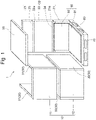
Fig. 1 is a perspective view of a state where an insulating container used in the transport method according to an embodiment of the present invention is disassembled. -
Fig. 2 is a perspective view of a state where the insulating container used in the transport method according to the embodiment of the present invention is assembled. -
Fig. 3 is a plan view illustrating a state where a support member is disposed on a pedestal of the insulating container used in the transport method according to the embodiment of the present invention. -
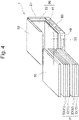
Fig. 4 is an explanatory view illustrating a state where each part of the insulating container used in the transport method according to the embodiment of the present invention is laminated to reduce the volume. -
Fig. 5 is a functional block diagram for describing a functional configuration of a transport assistance device according to the embodiment of the present invention. -
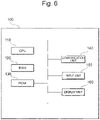
Fig. 6 is a configuration diagram for describing a physical configuration of the transport assistance device according to the embodiment of the present invention. -
Fig. 7 is a flowchart for describing each step of the transport assistance method according to the embodiment of the present invention. - Hereinafter, embodiments of the present invention will be described with reference to the drawings as appropriate. In addition, the following embodiments are merely suitable application examples, and the scope of application of the present invention is not limited thereto.
- First, a transport method according to the embodiment of the present invention will be described. The transport method according to the present embodiment is a method for transporting a predetermined target object in a precooled state, including a precooling step of precooling the target object, an enclosing step of enclosing the precooled target object by an insulating material panel; and a transport step of transporting the target object enclosed by the insulating material panel. The target objects are, for example, fruits and vegetables, meat, fresh fish, beverages, processed food products, grains, cosmetics, pharmaceuticals, flowers, tea leaves, coffee beans, and the like, and these target objects in a state of being stored in a housing (cardboard box, iron container, and the like) are also included.
- In the precooling step, the target object is precooled in a range of -60 to 20°C. For example, when the target object is fruits and vegetables, the target object is precooled in the range of 0 to 15°C in the precooling step. When the target object is meat or fresh fish, the target object is precooled within the range of -60 to 10°C in the precooling step. When the target object is a beverage (such as canned coffee or paper pack beverage), the target object is precooled within the range of -5 to 5°C in the precooling step. When the target object is a processed food product (such as chilled food product), the target object is precooled within the range of -5 to 5°C in the precooling step. When the target object is grains (such as rice or wheat), the target object is precooled within the range of 5 to 15°C in the precooling step. When the target object is cosmetics, the target object is precooled within the range of -20 to 20°C in the precooling step. When the target object is pharmaceuticals, the target object is precooled within the range of -60 to 10°C in the precooling step. When the target object is a flower, the target object is precooled within the range of 0 to 15°C in the precooling step. When the target object is tea leaves, the target object is precooled within the range of -20 to 15°C in the precooling step. When the target object is coffee beans, the target object is precooled within the range of -20 to 15°C in the precooling step.
- In the precooling step, when a temperature of the target object at the time of arrival at the destination (arrival temperature) is set, a precooling temperature can be set by calculating heat transfer based on an ambient temperature, a quantity of the target objects (bulk density or volume), specific heat of the target object, a transport time, and a thermal resistance value of the insulating material panel such that the arrival temperature is achieved. In this manner, the precooling temperature can be appropriately set based on the ambient temperature and the like such that the temperature of the target object at the time of arrival at the destination (arrival temperature) is achieved. In addition, in the precooling step, the target objects can be divided into at least two target object groups, and the target object groups can also be precooled under different precooling conditions.
- In the enclosing step, the target object groups precooled in the precooling step can be enclosed by different insulating material panels, respectively. For example, cabbage and carrots precooled to 5°C are put into a first heat insulating container, bell peppers and tomatoes precooled to 10°C are put into a second heat insulating container, and onions precooled to 1°C are put into the third heat insulating container, and the first, second, and third heat insulating containers can be transported by one transport vehicle. In this manner, it is possible to transport the target object group in the precooling temperature zone suitable for maintaining the freshness for each target object group (in contrast, in the transport by a conventional refrigerating vehicle, the target object group can be transported in only one precooling temperature zone).
- Further, in the enclosing step, the target object groups precooled in the precooling step can be enclosed by the same insulating material panel. In this manner, one target object group acts as an ice pack for another target object group, and can be transported while maintaining the freshness as a whole. This is especially effective when target object groups with different heat capacities are consolidated. For example, a target object group (for example, potatoes) which is precooled to 3°C and does not easily change in temperature and a target object group (for example, leaf vegetables such as spinach) which is precooled to 1°C and easily change in temperature can be consolidated and transported in one insulating container.
- In the enclosing step, a ratio (bulk occupancy) of a volume of the target object to the total volume of a space inside the insulating material panel is set to 30% or more, or a density of the target object inside the insulating material panel is set to 30 kg/m3 or more. Since the bulk occupancy of the target object is set to a specific value or more or the density of the target object is set to a specific value or more in this manner, the desired refrigerant effect can be maintained. When the bulk occupancy is less than 30% or the density is less than 30 kg/m3, the desired refrigerant effect cannot be maintained, which is not preferable.
- In the enclosing step, an insulating material panel made of an insulating material having a thermal resistance of 50 m2·K/W or less is used. The target object is enclosed by the insulating material panel made of the insulating material having a specific thermal resistance, and thus the insulating effect can be effectively maintained. In addition, in the enclosing step, the insulating material panel made of an insulating material having a thermal resistance of 0.3 m2·K/W or more per 10 mm in thickness can be used. In this manner, thermal resistance can be ensured even when the thickness of the insulating material panel is reduced, and the space for storing cargo can be increased.
- Further, in the enclosing step, an insulating material panel made of an insulating material having a bending strength of 0.15 N/mm2 or more is used. The target object is enclosed by the insulating material panel made of the insulating material having a specific bending strength, and thus it is possible to suppress deformation of the insulating material panel during transport, and to suppress crushing by absorbing vibration/impact, and it is possible to reliably protect the target object and effectively maintain the insulating effect. Further, in the enclosing step, the target object is enclosed by an airtight housing made of the insulating material panel and having a gas exchange rate of 1 time/hour or less. Since the target object is enclosed by the housing having a specific airtightness in this manner, the gas concentration (for example, CO2 concentration) in the housing can be controlled. Therefore, for example, when the target object is fruits and vegetables, it is possible to suppress the respiration of fruits and vegetables and maintain the freshness.
- Here, the configuration of the insulating
container 1 used in the transport method according to the present embodiment will be described with reference toFigs. 1 to 4 . - As illustrated in
Figs. 1 and2 , the insulatingcontainer 1 is a substantially rectangular parallelepiped insulating container including afront plate 10 and arear plate 20, a pair of left andright side plates 30, abottom plate 40, and atop plate 50, which are made of an insulating material panel. As already described, as the insulating material panel that forms thefront plate 10, therear plate 20, theside plate 30, thebottom plate 40, and thetop plate 50, an insulating material panel that forms an insulating material having a thermal resistance of 50 m2·K/W or less and a bending strength of 0.15 N/mm2 or more is adopted. - As illustrated in
Figs. 1 and2 , thefront plate 10 is a flat plate having a predetermined thickness and having a substantially rectangular shape in a plan view. In the present embodiment, as thefront plate 10, an upperfront plate 11 disposed above the insulatingcontainer 1 and a lowerfront plate 12 disposed below the insulatingcontainer 1 are adopted. As illustrated inFig. 3 , thelower front plate 12 is configured to be fitted in agroove 61 formed in apedestal 60 installed at a predetermined location and raised vertically upward, and the upperfront plate 11 is configured to be disposed above thelower front plate 12 and raised vertically upward. The upperfront plate 11 and thelower front plate 12 have edge portions connected to each other via a hook-and-loop fastener 70 which will be described later. - The heights of the upper
front plate 11 and thelower front plate 12 are substantially the same, but the width of the upperfront plate 11 is set to be slightly (by twice the thickness of the side plate 30) larger than the width of thelower front plate 12. The height, thickness, and width of thefront plate 10 can be appropriately set according to the size of the insulatingcontainer 1, the type of the target object stored in the insulatingcontainer 1, the strength of the insulating material panel that forms thefront plate 10, and the like. - As illustrated in
Fig. 1 , therear plate 20 is a flat plate having a predetermined thickness and having a substantially rectangular shape in a plan view to be foldable. In the present embodiment, there are provided a firstrear plate portion 21 disposed substantially perpendicular to thebottom plate 40; a secondrear plate portion 22 which is connected to anedge portion 21a on a side of the firstrear plate portion 21 opposite to thebottom plate 40 via afilm 24, and is freely bendable toward the inside of the container with respect to the firstrear plate portion 21; and a thirdrear plate portion 23 which is connected to anedge portion 22a on a side of the secondrear plate portion 22 opposite to the firstrear plate portion 21 via afilm 25, and is freely bendable toward the inside of the container with respect to the secondrear plate portion 22. Thefilm 24 is adhered to the inner side surfaces of the edge portions of the firstrear plate portion 21 and the secondrear plate portion 22 so as to make the secondrear plate portion 22 to be bendable toward the inside of the container with respect to the firstrear plate portion 21. Thefilm 25 is adhered to the inner side surfaces of the edge portions of the secondrear plate portion 22 and the thirdrear plate portion 23 so as to make the thirdrear plate portion 23 to be bendable toward the inside of the container with respect to the secondrear plate portion 22. - As illustrated in
Figs. 1 and3 , the firstrear plate portion 21 is configured to be fitted into agroove 62 formed in thepedestal 60 disposed at a predetermined location, and raised vertically upward to substantially the same height as that of asecond support portion 82 of asupport member 80 which will be described later. As illustrated inFig. 4 , the secondrear plate portion 22 functions to cover the upper part of a laminated body P consisting of thefront plate 10, theside plates 30, and thetop plate 50, and has substantially the same area as that of thebottom plate 40. As illustrated inFig. 4 , the thirdrear plate portion 23 functions to cover the front part of the laminated body P consisting of thefront plate 10, theside plates 30, and thetop plate 50, and has a slightly smaller area than the firstrear plate portion 21. The height, thickness, and width of therear plate 20 can be appropriately set according to the size of the insulatingcontainer 1, the type of the target object stored in the insulatingcontainer 1, the strength of the insulating material panel that forms therear plate 20, and the like. - As illustrated in
Figs. 1 and2 , theside plate 30 is a flat plate having a predetermined thickness and having a substantially rectangular shape in a plan view. In the present embodiment, as theside plate 30, anupper side plate 31 disposed above the insulatingcontainer 1 and alower side plate 32 disposed below the insulatingcontainer 1 are adopted. As illustrated inFig. 3 , thelower side plate 32 is configured to be fitted in agroove 63 formed in thepedestal 60 installed at a predetermined location and raised vertically upward, and theupper side plate 31 is configured to be disposed above thelower side plate 32 and raised vertically upward. Theupper side plate 31 and thelower side plate 32 have edge portions connected to each other via the hook-and-loop fastener 70 which will be described later. - The heights of the
upper side plate 31 and thelower side plate 32 are substantially the same, but the width of thelower side plate 32 is set to be slightly (by the thickness of the front plate 10) larger than the width of theupper side plate 31. The height, thickness, and width of theside plate 30 can be appropriately set according to the size of the insulatingcontainer 1, the type of the target object stored in the insulatingcontainer 1, the strength of the insulating material panel that forms theside plate 30, and the like. - As illustrated in
Fig. 1 , thebottom plate 40 is a flat plate having a predetermined thickness and having a substantially rectangular shape in a plan view, and is fixed in a state of being disposed in a substantially rectangular area (refer toFig. 3 ) surrounded bygrooves pedestal 60 installed in a predetermined location. The thickness of thebottom plate 40 and the lengths of each side can be appropriately set according to the size of the insulatingcontainer 1, the type of the target object stored in the insulatingcontainer 1, the strength of the insulating material panel that forms thebottom plate 40, and the like. - As illustrated in
Figs. 1 and2 , thetop plate 50 is a flat plate having a predetermined thickness and having a substantially rectangular shape in a plan view, and is disposed above thefront plate 10, therear plate 20, and theside plates 30. The thickness of thetop plate 50 and the lengths of each side can be appropriately set according to the size of the insulatingcontainer 1, the type of the target object stored in the insulatingcontainer 1, the strength of the insulating material panel that forms thetop plate 50, and the like. - The edge portions of the
front plate 10, therear plate 20, theside plate 30, and thetop plate 50 are connected to each other via the hook-and-loop fastener 70 (area indicated by a diagonal line inFig. 2 ). A width W of the hook-and-loop fastener 70 along each edge portion is set to 2% or more of the length L of each edge portion. Since the width (2% or more of the length of each edge portion) of the hook-and-loop fastener 70 is set to a specific value in this manner, the insulating function or airtightness of the insulatingcontainer 1 can be maintained, and leakage of heat or gas from the insulatingcontainer 1 can be suppressed. Further, as illustrated inFig. 4 , in a state of being separated from each other, thefront plate 10, theside plate 30, and thetop plate 50 are laminated on afirst support portion 81 of thesupport member 80, which will be described later, to form the laminated body P. - As illustrated in
Figs. 1 ,3 , and4 , the insulatingcontainer 1 includes thesupport member 80 that functions as a guide or the like when loading a target object to be stored in the container. Thesupport member 80 is configured such that the flat plate-shapedfirst support portion 81 made of a rigid material and the flat plate-shapedsecond support portion 82 made of a rigid material are rigidly joined in an L-shaped cross-section. As illustrated inFigs. 1 and3 , thefirst support portion 81 of thesupport member 80 in the present embodiment is fixed to thebottom plate 40 in a state of being disposed while being stacked substantially parallel (substantially horizontally) on thebottom plate 40. Thesecond support portion 82 of thesupport member 80 is configured to be disposed in the vicinity of the firstrear plate portion 21 of therear plate 20 as illustrated inFig. 1 , and raised vertically upward to substantially the same height as the height of the laminated body P (when all the parts are aligned) disposed on thefirst support portion 81 as illustrated in 4. - The
first support portion 81 and thesecond support portion 82 of thesupport member 80 have a bending rigidity of 700 N/mm or more. Since the bending rigidity of thefirst support portion 81 and thesecond support portion 82 is set to a specific value in this manner, it is possible to suppress deformation or damage of thesupport member 80 during loading, and it is possible to suppress the damage of the insulatingcontainer 1 and the leakage of heat or gas inside the container. The bending rigidity of thefirst support portion 81 and thesecond support portion 82 is preferably 2500 N/mm or more. The material of thesupport member 80 may be any material as long as the material realizes the bending rigidity, and for example, a metal material or the like can be adopted. - Next, a method of using the insulating
container 1 in each step of the transport method according to the present embodiment will be described. - First, as illustrated in
Fig. 1 , abottom plate 40 that forms the insulatingcontainer 1 is disposed and fixed on thepedestal 60 disposed at a predetermined location, and thefirst support portion 81 of thesupport member 80 is disposed and fixed on thebottom plate 40. Next, the target object is loaded on thefirst support portion 81 of thesupport member 80 using thesecond support portion 82 as a guide, and in this state, ventilation precooling is performed in a precooler (precooling step). - Next, the
lower front plate 12, the firstrear plate portion 21 of therear plate 20, and thelower side plate 32 that form the insulatingcontainer 1 are fitted into each of thegrooves pedestal 60, and are raised vertically upward. After this, the upperfront plate 11 and theupper side plate 31 are disposed above thelower front plate 12 and thelower side plate 32, respectively, so as to cover the cargo from all sides, and the edge portions of thefront plate 10, therear plate 20, and theside plate 30 are connected to each other by using the hook-and-loop fastener 70. Subsequently, as illustrated inFig. 2 , thetop plate 50 is disposed above thefront plate 10, therear plate 20, and theside plate 30, and thetop plate 50 is connected to thefront plate 10, therear plate 20, and theside plate 30 by using the hook-and-loop fastener 70 to seal the insulatingcontainer 1. Accordingly, the precooled target object is enclosed by the insulating material panel (enclosing step). - After this, the insulating
container 1 storing the target object is transported to a predetermined destination by using a refrigerated transport vehicle or the like (transport step). - When the target object is transported to a predetermined destination using the insulating
container 1, thetop plate 50 of the insulatingcontainer 1 is firstly removed, and then thefront plate 10 and theside plate 30 are removed from thegrooves pedestal 60, respectively. As illustrated inFig. 4 , the laminated body P consisting of thefront plate 10, theside plate 30, and thetop plate 50 is formed. Next, the laminated body P is loaded on thefirst support portion 81 of thesupport member 80 by using thesecond support portion 82 as a guide. At this time, since the height of thesecond support portion 82 of thesupport member 80 is substantially the same as the height of the laminated body P when all the parts are aligned, the shortage of the plates that form the laminated body P is easily visually recognized. - Subsequently, as illustrated in
Fig. 4 , the secondrear plate portion 22 of therear plate 20 is bent toward the inside of the container with respect to the firstrear plate portion 21 to cover the upper part of the laminated body P, and further, the thirdrear plate portion 23 of therear plate 20 is bent toward the inside of the container with respect to the secondrear plate portion 22 to cover the front part of the laminated body P. Accordingly, the laminated body (front plate 10,side plate 30, top plate 50) P can be reliably protected, and the insulatingcontainer 1 is kept in a predetermined location in this state. - In the transport method according to the above-described embodiment, the precooled target object is enclosed by the insulating material panel (
front plate 10,rear plate 20,side plate 30,bottom plate 40, and top plate 50) and transported such that the target object can function as a refrigerant in the space (internal space of the insulating container 1) inside the insulating material panel. Therefore, it is possible to maintain a low-temperature state of the target object even during transport. Therefore, for example, even when the ambient temperature is higher than the temperature of the target object, it is possible to suppress the target object from being heated by the ambient temperature, and it is possible to prevent the quality of the target object from deteriorating. In addition, even when the ambient temperature is lower than the temperature of the target object, it is possible to suppress the target object from being supercooled by the ambient temperature, and it is possible to prevent chilling injury of the target object (for example, fruits and vegetables). In this method, since it is not necessary to use a refrigerant such as dry ice, it is possible to omit the work of separately preparing the refrigerant and replenishing/replacing the refrigerant on the way, it is possible to omit the refrigerant storage space, and thus it is possible to increase the load capacity of the cargo and realize high transport efficiency. - In addition, in the transport method according to the above-described embodiment, the ratio (bulk occupancy) of the volume of the target object to the total volume of the space (internal space of the insulating container 1) inside the insulating material panel is set to a specific value (30%) or more, or the density of the target object inside the insulating material panel (inside the insulating container 1) is set to a specific value (30 kg/m3) or more, and thus the desired refrigerant effect can be maintained.
- In addition, in the transport method according to the above-described embodiment, the target object is enclosed by the insulating material panel (
front plate 10,rear plate 20,side plate 30,bottom plate 40, and top plate 50) made of the insulating material having a specific thermal resistance (50 m2·K/W or less), and thus the insulating effect can be effectively maintained. - In addition, in the transport method according to the above-described embodiment, the target object is enclosed by the insulating material panel (
front plate 10,rear plate 20,side plate 30,bottom plate 40, and top plate 50) made of the insulating material having a specific bending strength (0.15 N/mm2 or more), and thus it is possible to suppress deformation of the insulating material panel during transport, and to suppress crushing by absorbing vibration/impact, and it is possible to reliably protect the target object and effectively maintain the insulating effect. - In addition, in the transport method according to the above-described embodiment, the gas concentration (for example, CO2 concentration) in the housing can be controlled in order to enclose the target object by a housing (insulating container 1) made of the insulating material panel and having a specific airtightness (gas exchange rate of 1 time/hour or less). Therefore, for example, when the target object is fruits and vegetables, it is possible to suppress the respiration of fruits and vegetables and maintain the freshness.
- In the above embodiment, an example in which the
support member 80 having an L-shaped cross-section and the insulating material panel are used as separate members has been illustrated, but the support member can also serve as a part of the insulating material panel (a part of the support member is formed of an insulating material panel). Further, in the above embodiment, an example in which thesupport member 80 having an L-shaped cross-section is adopted has been illustrated, but such a support member is not essential, and the target object may be enclosed only by the insulating material panel. At this time, it is preferable to enclose the target object by a housing having a specific airtightness and made of an insulating material panel having a specific thermal resistance and bending rigidity. Further, when enclosing the target object by the insulating material panel, it is preferable that the bulk occupancy of the target object be set to a specific value or more, or the density of the target object be set to a specific value or more. - Next, Examples of the present invention will be described.
- In this Example, fruits and vegetables (cabbage, carrots, radishes, and the like) stored in a rectangular parallelepiped cardboard box having a volume of 0.047 m3 was set as a target object. First, the target object was ventilated and precooled at 5°C in a precooler such that the arrival temperature was 15°C or lower (precooling step). Next, the precooled target object was enclosed by an airtight insulating container having a gas exchange rate of 1 time/hour and made of the insulating material panel having a thermal resistance of 2.5 m2·K/W and a bending strength of 0.45 N/mm2 (enclosing step). In the enclosing step, the ratio (bulk occupancy) of the volume of the target object to the total volume of the internal space of the insulating container was set to 96%, and the density of the target object inside the insulating container was set to 250 kg/m3. After this, the target object stored in the insulating container was transported from the shipping base to the destination by a transport vehicle (transport step). The total transport time was 48 hours. The average ambient temperature during transport was 25°C. In this Example, the arrival temperature of the target object was 11°C, and the target arrival temperature could be achieved. Moreover, when the temperature of the target object was measured at regular intervals, no rapid temperature rise was observed. Furthermore, in this Example, no deterioration was observed in the target object.
- First, the target object similar to that of Example 1 was ventilated and precooled at 5°C in a precooler such that the arrival temperature was 15°C or lower (precooling step). Next, the precooled target object was enclosed by an airtight insulating container having a gas exchange rate of 1 time/hour and made of the insulating material panel having a thermal resistance of 1.5 m2·K/W and a bending strength of 0.25 N/mm2 (enclosing step). In the enclosing step, the ratio (bulk occupancy) of the volume of the target object to the total volume of the internal space of the insulating container was set to 96%, and the density of the target object inside the insulating container was set to 250 kg/m3. After this, the target object stored in the insulating container was transported from the shipping base to the destination by a transport vehicle (transport step). The total transport time was 48 hours. The average ambient temperature during transport was 25°C. In this Example, the arrival temperature of the target object was 13°C, and the target arrival temperature could be achieved. Moreover, when the temperature of the target object was measured at regular intervals, no rapid temperature rise was observed. Furthermore, in this Example, no deterioration was observed in the target object.
- First, the target object similar to that of Example 1 was ventilated and precooled at 5°C in a precooler (precooling step). Next, the precooled target object was enclosed by an insulating container made of the insulating material panel having a bending strength of 0.14 N/mm2 (enclosing step). In the enclosing step, the ratio (bulk occupancy) of the volume of the target object to the total volume of the internal space of the insulating container was set to 96%, and the density of the target object inside the insulating container was set to 250 kg/m3. After this, the target object stored in the insulating container was transported from the shipping base to the destination by a transport vehicle (transport step). The total transport time was 48 hours. The average ambient temperature during transport was 25°C. In this Example, the arrival temperature of the target object was 13°C, and the target arrival temperature could be achieved. On the other hand, when the temperature of the target object was measured at regular intervals, there was a time zone in which the temperature rise rate was large. It is presumed that this is because the outside air entered the insulating container due to the impact during transport. In addition, no deterioration was observed in the target object.
- First, the target object similar to that of Example 1 was ventilated and precooled at 5°C in a precooler (precooling step). Next, the precooled target object was enclosed by an airtight insulating container having a gas exchange rate of 2 time/hour and made of the insulating material panel having a thickness of 50 mm, a thermal resistance of 2.5 m2·K/W and a bending strength of 0.45 N/mm2 (enclosing step). In the enclosing step, the ratio (bulk occupancy) of the volume of the target object to the total volume of the internal space of the insulating container was set to 96%, and the density of the target object inside the insulating container was set to 250 kg/m3. After this, the target object stored in the insulating container was transported from the shipping base to the destination by a transport vehicle (transport step). The total transport time was 40 hours. The average ambient temperature during transport was 25°C. In this Example, the arrival temperature of the target object was 15°C, and it was found that the target arrival temperature could be achieved when the target object was transported in a shorter time than that in Example 1. In addition, no deterioration was observed in the target object.
- First, the target object similar to that of Example 1 was ventilated and precooled at 5°C in a precooler (precooling step). Next, the precooled target object was enclosed by an airtight insulating container having a gas exchange rate of 1 time/hour and made of the insulating material panel having a thickness of 50 mm, a thermal resistance of 2.5 m2·K/W and a bending strength of 0.45 N/mm2 (enclosing step). In the enclosing step, the ratio (bulk occupancy) of the volume of the target object to the total volume of the internal space of the insulating container was set to 39%, and the density of the target object inside the insulating container was set to 29 kg/m3. After this, the target object stored in the insulating container was transported from the shipping base to the destination by a transport vehicle (transport step). The total transport time was 10 hours. The average ambient temperature during transport was 25°C. In this Example, the arrival temperature of the target object was 14°C, and it was found that the target arrival temperature could be achieved when the target object was transported in a shorter time than that in Example 1. In addition, no deterioration was observed in the target object.
- First, the target object similar to that of Example 1 was ventilated and precooled at 5°C in a precooler (precooling step). Next, the precooled target object was enclosed by a container (
thickness 10 mm, thermal resistance 0.0002 m2·K/W, bending strength 270 N/mm2,gas exchange rate 1 time/hour) without using an insulating material panel (enclosing step). In the enclosing step, the ratio (bulk occupancy) of the volume of the target object to the total volume of the internal space of the container was set to 96%, and the density of the target object inside the container was set to 250 kg/m3. After this, the target object stored in the container was transported from the shipping base to the destination by a transport vehicle (transport step). The total transport time was 48 hours. The average ambient temperature during transport was 25°C. In Comparative Example, it was found that the arrival temperature of the target object was 25°C, which was much higher than that of Example 1, and approximately 10% of the target object was deteriorated. - Next, the functional configuration of a
transport assistance device 100 according to the embodiment of the present invention will be described with reference toFig. 5 . - The
transport assistance device 100 according to the present embodiment is for assisting room temperature transport of precooled perishables, including aninformation acquisition unit 101 for acquiring various information such as request information sent from a requester C or the like; aninformation calculation unit 102 for calculating various information such as precooling conditions; aninformation output unit 103 for outputting various information such as precooling conditions calculated by theinformation calculation unit 102 to a keeper P; and various databases 104 (requestinformation database 104A,perishables information database 104B,transport information database 104C, and packinginformation database 104D) for recording various information. The "perishables" in the present embodiment means food products and the like that deteriorate due to temperature changes during transport, and for example, includes fruits and vegetables, meat, fresh fish, grains, tea leaves, coffee beans, flowers and the like. Further, the "perishables" in the present embodiment also includes frozen food products. - The
information acquisition unit 101 functions to acquire the request information sent from the requester C and to receive various information input from the user of thetransport assistance device 100, and includes a communication unit 140 (will be described later inFig. 6 ) or an input unit 150 (will be described later inFig. 6 ). As illustrated inFig. 5 , the request information is input from a terminal Uc owned by the requester C to theinformation acquisition unit 101 of thetransport assistance device 100 via a communication network N. As the terminal Uc, various electronic devices (desktop type PC, notebook type PC, smartphone, and the like) having an information display unit, an information input unit, and communication means can be adopted. The communication network N is an information communication network capable of connecting a plurality of computers to each other, and may be a global information communication network such as the Internet. The request information acquired via theinformation acquisition unit 101 is stored in therequest information database 104A. - The request information includes information on the type and quantity of perishables. For example, "cucumber (600 kg)", "bell pepper (300 kg)", "eggplant (200 kg)", "lettuce (200 kg)", "potato (150 kg)" and the like are included in the request information. In the present embodiment, perishables information (for example, "respiration heat" and "frictional heat") on perishables such as "corn" or "okra" that have a large respiration amount and perishables such as "soybean" that are easily rubbed by vibration during transport are recorded in the
perishables information database 104B, and when these perishables are included in the request information, the perishables information on the perishables can be read from theperishables information database 104B, and is used to calculate the precooling conditions which will be described later. In addition, the request information includes information on the transport destination (location information of the transport destination, and the like). - The
information calculation unit 102 functions to calculate the precooling conditions when precooling the perishables based on the request information acquired by theinformation acquisition unit 101 or information (perishables information, transport information, and packing information) read from thevarious databases 104 based on the request information. Specifically, theinformation calculation unit 102 calculates the transport time required for transporting the perishables to the transport destination and the temperature fluctuation of the perishables during transport, and calculates the precooling conditions based on the transport time and the temperature fluctuation. - The transport time required to transport the perishables to the transport destination can be calculated based on the preset initial information (location information of the perishables keeping location, specifications of transport vehicle, and the like), or information (transport route, transport distance, and the like) on various types of transport set from the information on the transport destination, in addition to the information on the transport destination included in the request information. These initial information and information on transport are recorded in the
transport information database 104C as transport information, and when information on the transport destination is input as request information, the transport information on the transport destination is read from thetransport information database 104C. For example, when the location information of the perishables keeping location is "Nobeoka City, Miyazaki Prefecture", the location information of the transport destination is "Ota Ward, Tokyo Metropolis (Ota Market)", and the transport route is "land route and sea route", the assumed transport distance can be calculated as "1050 km", and the average cruising speed is assumed to be "70 km/h" based on the specifications of the transport vehicle, and thus the transport time is calculated as "15 hours". - The temperature fluctuations of perishables during transport can be calculated based on the invading heat that enters the insulating
container 1 during transport (refer toFigs. 1 to 4 ) for transporting perishables and the weight and specific heat of the perishables stored in the insulatingcontainer 1. Here, the invading heat that enters the inside of the insulatingcontainer 1 during transport can be calculated based on an air temperature inside and outside the insulatingcontainer 1 and a heat transfer area and an overall heat transfer coefficient of the insulatingcontainer 1. The overall heat transfer coefficient of the insulatingcontainer 1 can be calculated based on the heat transfer coefficient inside and outside the insulatingcontainer 1 and a thickness and a thermal conductivity of an insulating material that forms the insulatingcontainer 1. The invading heat may take a negative value. In other words, when heat is emitted from the insulatingcontainer 1 during transport, the invading heat becomes a negative value. - An overall heat transfer coefficient CHTR of the insulating
container 1 is determined by the design specifications of the insulatingcontainer 1. In other words, assuming that the heat transfer coefficient inside the insulatingcontainer 1 is CHTI, the heat transfer coefficient outside the insulatingcontainer 1 is CHTO, the thickness of the insulating material panel (front plate 10,rear plate 20,side plate 30,bottom plate 40, and thetop plate 50 which are already described) that forms the insulatingcontainer 1 is TH, and the thermal conductivity of the insulating panel is CTC, the overall heat transfer coefficient CHTR of the insulatingcontainer 1 is calculated by the following equation (1).
- The user of the
transport assistance device 100 can calculate the overall heat transfer coefficient CHTR of the insulatingcontainer 1 at the stage when the design specifications of the insulatingcontainer 1 are finalized, input the value via theinformation acquisition unit 101, and record the input value as packing information in the packinginformation database 104D installed in a transport assistance device D. - Further, assuming that the air temperature inside the insulating
container 1 is IT, the air temperature outside the insulatingcontainer 1 is OT, and the heat transfer area of the insulatingcontainer 1 is AT, invading heat HP that enters the inside of the insulatingcontainer 1 during transport is calculated by the following equation (2).
- The heat transfer area AT of the insulating
container 1 can also be recorded in advance as packing information in the packinginformation database 104D. As the air temperature IT inside the insulatingcontainer 1, the product temperature of the perishables (for example, one hour before the calculation) stored in the insulatingcontainer 1 can be adopted. As the air temperature OT outside the insulatingcontainer 1, the air temperature of the transport destination input as the request information can be adopted. - Then, assuming that the weight of the perishables stored in the insulating
container 1 is W and the specific heat of the perishables is S, a temperature fluctuation ΔT of the perishables during transport is calculated by the following equation (3).
- A specific heat S of the perishables is recorded in the
perishables information database 104B as perishables information, and when the type of perishables is input as request information, the specific heat S of the perishables is read from theperishables information database 104B and is used to calculate temperature fluctuations. When the perishables is a vegetable, the specific heat S thereof can be assumed to be the same value as the specific heat of water. - The temperature fluctuation may take into account the respiration heat generated by the perishables per unit time. Such respiration heat may use a constant value, or may be expressed as a function of the temperature inside the box, the CO2 concentration, or the like. As the specific value of respiration heat, for example, the value described in Journal of the Japanese Society of Agricultural Machinery Vol. 55(2): 69 to 75, 1993 69 can be used. Further, the temperature fluctuation may take into account the frictional heat during transport. The frictional heat can be calculated from the coefficient of friction for each product type, the surface pressure according to the packing state of perishables, the exercise speed, the amount of frictional heat per unit exercise, and the like.
- In this manner, the precooling conditions can be calculated using the information on the respiration heat or the frictional heat of the perishables set based on the request information (information on the perishables). Therefore, when the "respiration heat" cannot be ignored because the perishables has a large respiration amount such as "corn" and "okra", or when the "frictional heat" cannot be ignored because the perishables is easily rubbed by vibration during transportation like "soybeans", the precooling conditions can be calculated accurately.
- By using the above equations (1) to (3) based on the request information acquired by the
information acquisition unit 101 or the information read fromvarious databases 104 based on the request information, theinformation calculation unit 102 can calculate the temperature fluctuation ΔT of the perishables during transport. A case where the temperature fluctuation ΔT is referred to as "temperature rise", and a case where ΔT is negative is referred to as "temperature drop". Then, theinformation calculation unit 102 calculates the precooling condition based on the temperature fluctuation ΔT calculated in this manner and the transport time separately calculated. At this time, theinformation calculation unit 102 can calculate the precooling condition can be calculated such that the temperature of the perishables at the time of arrival at the transport destination (arrival temperature) satisfies a predetermined condition. As an example, the precooling condition can be calculated such that the arrival temperature is less than a predetermined threshold value. For example, when the perishables is a potato and the temperature fluctuation ΔT after the calculated transport time has elapsed is "5°C", the arrival temperature of the potato is set to be less than a predetermined threshold value (10°C), and set (calculate) the initial product temperature To of potatoes to "5°C". The initial product temperature To referred to here is an example of precooling conditions. The threshold value used here can be recorded in theperishables information database 104B for each type of perishables. - Further, the
information calculation unit 102 can calculate the precooling condition such that the integrated temperature of the perishables until arriving the transport destination satisfies a predetermined condition. As an example, the precooling condition can be calculated such that the integrated temperature is less than a predetermined threshold value. In this case, theinformation calculation unit 102 calculates the temperature fluctuations ΔT1, ΔT2, ..., and ΔTN of the perishables at a preset time interval, for example, every hour from the start of transport, and calculates the product temperatures T1, T2, ..., and TN of the perishables every hour based on each of the temperature fluctuations ΔT1, ΔT2, ..., and calculates an integrated temperature ΣT by integrating the product temperatures T1, T2, ..., and TN of the perishables every hour until the transport is completed. The product temperature T1 of the perishables after 1 hour from the start of transport is obtained by adding the temperature fluctuation ΔT1 for 0 to 1 hour to the initial product temperature To. Further, the product temperature T2 of the perishables after 2 hours from the start of transport is obtained by adding the temperature fluctuation ΔT2 of 1 to 2 hours to the product temperature T1 after 1 hour. Similarly, the product temperature TN of perishables after N hours from the start of transport is obtained by adding the temperature fluctuation ΔTN of (N-1) to N hours to the product temperature TN-1 after (N-1) hours. Theinformation calculation unit 102 can calculate the integrated temperature ΣT by integrating the product temperatures T1, T2, ..., and TN of the perishables every hour until the transport is completed, and can set (calculate) the initial product temperature To of the perishables such that the calculated integrated temperature ΣT is less than a predetermined threshold value. The threshold value used here can be recorded in theperishables information database 104B for each type of perishables. - The
information calculation unit 102 can also repeat the simulation by changing the initial product temperature To once set in order to optimize the arrival temperature (or integrated temperature) of the perishables. For example, in a case where the arrival temperature is calculated as "5°C" when the initial product temperature To of perishables is set to "0°C", the arrival temperature is calculated as "10°C" when the initial product temperature To is set to "5°C", and the arrival temperature is calculated as "15°C" when the initial product temperature To is set to "10°C", when it is determined that the quality of the perishables does not deteriorate when the temperature is "10°C" or less, it is possible to avoid deterioration of the perishables at the time of arrival at the transport destination without setting the initial product temperature To to "0°C", and thus it is possible to avoid extra precooling by setting the initial product temperature To to "5°C". Theinformation calculation unit 102 can also change the content (kg) of the perishables and the design specifications of the insulatingcontainer 1 as necessary during the simulation. Further, by using the correlation history between the request information when the perishables were transported in the past and the precooling condition, theinformation calculation unit 102 may estimate (calculate) the precooling condition by statistical processing, machine learning, and the like. - The "precooling condition" in the present embodiment is not limited to the initial product temperature To, but may include the perishables keeping condition before the start of transport (including not only "precooling" but also "preheating"). Regarding the precooling conditions, for example, the set temperature of the precooler for precooling the perishables to the predetermined initial product temperature To, the precooling temperature of the insulating
container 1 for storing the perishables, the precooling temperature of the packing box for packing by subdividing the perishables into predetermined weights (predetermined volume), and the like, can also be adopted as precooling conditions. As the keeping conditions, the set temperature of the precooler for preheating the perishables to the predetermined initial product temperature T0, the preheating temperature of the insulatingcontainer 1 for storing the perishables, the preheating temperature of the packing box for packing by subdividing the perishables into predetermined weights (predetermined volume), and the like, can also be adopted. - The initial product temperature To (precooling condition) can be calculated for each type of perishables. In this case, the initial product temperature To of a case where only one type of perishables is stored in the insulating
container 1 in a predetermined volume and the remaining space in the insulatingcontainer 1 is assumed to be air (the worst case where the temperature is most likely to fluctuate), is calculated. When such a method is adopted, the temperature fluctuation of each perishables can be suppressed compared to the worst case when other types of perishables are stored in the remaining space (all perishables have a larger specific heat than that of air and are less likely to fluctuate in temperature). Further, it is possible to calculate the initial product temperature To for each type of perishables using the above method, calculate the average value of the initial product temperature To of all types, and adopt the average value as the precooling temperature (precooling condition) of the insulatingcontainer 1. At this time, instead of adopting the average value, the initial product temperature To of the heaviest perishables may be used as a representative value, and the representative value may be adopted as the precooling temperature (precooling condition) of the insulatingcontainer 1. - The
information output unit 103 functions to output various information such as precooling conditions calculated by theinformation calculation unit 102 to the keeper P and the like, and includes the communication unit 140 (will be described later inFig. 6 ) or a display unit 160 (will be described later inFig. 6 ). As illustrated inFig. 5 , the precooling conditions calculated by theinformation calculation unit 102 and the various information read from thevarious databases 104 and used for calculating the precooling conditions are output from theinformation output unit 103 of thetransport assistance device 100 to the terminal UP owned by the keeper P via the communication network N. As the terminal UP, various electronic devices having the information display unit, the information input unit, and the communication means can be adopted as in the terminal Uc. - Next, the physical configuration for realizing the
transport assistance device 100 according to the present embodiment will be described with reference toFig. 6 . - As illustrated in
Fig. 6 , thetransport assistance device 100 includes a central processing unit (CPU) 110, a random access memory (RAM) 120, a read only memory (ROM) 130, thecommunication unit 140, theinput unit 150, and thedisplay unit 160, and each of these configurations is connected to each other via a bus such that data can be transmitted and received. In this example, a case where thetransport assistance device 100 includes one computer will be described, but thetransport assistance device 100 may include a plurality of computers. For example, thedisplay unit 160 may include a plurality of displays. Further, the configuration illustrated inFig. 6 is merely an example, and it is not necessary to have a part of these configurations. Furthermore, a part of the configuration may be provided in a remote place. For example, a part of theROM 130 may be provided at a remote place such that communication can be performed via a communication network. - The
CPU 110 is a computing unit that performs computing processing and the like in the present embodiment by executing a computer program or the like recorded in theROM 130 or the like, and forms theinformation calculation unit 102. TheCPU 110 includes a processor. TheCPU 110 receives various information (including process data) from theRAM 120, theROM 130, thecommunication unit 140, theinput unit 150, and the like, displays the computing processing result and the like on thedisplay unit 160, and stores the computing processing result and the like in theRAM 120 and/or theROM 130. - The
RAM 120 functions as a cache memory and can form a part of theinformation calculation unit 102. TheRAM 120 may include a volatile semiconductor storage element such as SRAM and DRAM. - The
ROM 130 functions as a main memory and can form a part of theinformation calculation unit 102. TheROM 130 may include a non-volatile semiconductor storage element such as a flash memory that can electrically rewrite information or an HDD that can magnetically rewrite information. TheROM 130 can store, for example, a computer program and data for executing various computing processes in the present embodiment. - The
RAM 120 and theROM 130 form various databases 104 (requestinformation database 104A,perishables information database 104B,transport information database 104C, packinginformation database 104D) of thetransport assistance device 100. - The
communication unit 140 is an interface for connecting thetransport assistance device 100 to another device, and forms theinformation acquisition unit 101 and theinformation output unit 103. Thecommunication unit 140 is connected to the communication network N such as the Internet. - The
input unit 150 receives data input, graph selection, and the like from the operator, and can form a part of theinformation acquisition unit 101. Theinput unit 150 may include, for example, a keyboard or a touch panel. - The
display unit 160 visually displays the computing result by theCPU 110, and can form a part of theinformation output unit 103. Thedisplay unit 160 may include, for example, a liquid crystal display (LCD). - In the above physical configuration, it is possible to realize each functional unit that forms the
transport assistance device 100 mainly by executing a computer program by theCPU 110. Thetransport assistance device 100 may include a tablet terminal. By configuring thetransport assistance device 100 with the tablet terminal, thetransport assistance device 100 can be carried around, and for example, thetransport assistance device 100 can be used while moving. - Subsequently, a transport assistance method using the
transport assistance device 100 according to the present embodiment will be described with reference to the flowchart ofFig. 7 . - First, the
information acquisition unit 101 of thetransport assistance device 100 acquires the request information sent from the terminal Uc owned by the requester C via the communication network N (request information acquiring step: S1). The request information acquired in the request information acquiring step S1 includes information on the type and quantity of perishables and information on the transport destination. - Next, the
information calculation unit 102 of thetransport assistance device 100 calculates the precooling condition when precooling the perishables based on the request information acquired in the request information acquiring step S1, and the like (precooling condition calculating step: S2). In the precooling condition calculating step S2, the transport time required for transporting the perishables to the transport destination and the temperature fluctuation of the perishables during transport are calculated based on the request information and the like, and the precooling conditions are calculated based on the transport time and the temperature fluctuation. The specific calculation method of the precooling condition is as described above. In other words, theinformation calculation unit 102 first calculates the overall heat transfer coefficient based on the heat transfer coefficient inside and outside the insulatingcontainer 1 and the thickness and the thermal conductivity of the insulating material panel that forms the insulatingcontainer 1. Next, the invading heat is calculated based on the air temperature inside and outside the insulatingcontainer 1, the heat transfer area and the overall heat transfer coefficient of the insulatingcontainer 1. Next, the temperature fluctuation is calculated based on the calculated invading heat and the weight and the specific heat of the perishables stored in the insulatingcontainer 1. After this, based on the calculated temperature fluctuation and the separately calculated transport time, the precooling condition (for example, initial product temperature To) is calculated such that the temperature (or the integrated temperature of the perishables until the arrival at the transport destination) of the perishables at the time of arrival at the transport destination is less than a predetermined threshold value. - Next, the
information output unit 103 of thetransport assistance device 100 outputs the precooling condition calculated in the precooling condition calculating step S2 to the terminal UP owned by the keeper P via the communication network N (precooling condition output step: S3). The keeper P who has been provided with the precooling conditions can precool the perishables before shipment according to the precooling conditions, and can ship the perishables when the precooling is completed. - It is also possible to calculate the required total volume (number of heat insulating containers 1) based on the type and weight of the perishables to be transported by using the
information calculation unit 102 of thetransport assistance device 100 according to the present embodiment. For example, when the perishables to be transported is "cucumber (600 kg)", "bell pepper (300 kg)", "eggplant (200 kg)", "lettuce (200 kg)", "potato (150 kg)", the total volume is calculated as follows. - First, when subdividing "cucumber (600 kg)" into 15 L (10 kg) packing boxes, 60 packing boxes are required, and the total volume of these 60 packing boxes is 900 L. Next, when subdividing "bell pepper (300 kg)" into 10 L (4 kg) packing boxes, 75 packing boxes are required, and the total volume of these 75 packing boxes is 750 L. Next, when subdividing "eggplant (200 kg)" into 15 L (8 kg) packing boxes, 25 packing boxes are required, and the total volume of these 25 packing boxes is 375 L. Next, when subdividing "lettuce (200 kg)" into 30 L (10 kg) packing boxes, 20 packing boxes are required, and the total volume of these 20 packing boxes is 600 L. Finally, when subdividing "potato (150 kg)" into 15 L (15 kg) packing boxes, 10 packing boxes are required, and the total volume of these 10 packing boxes is 150 L. Therefore, the required total volume is (900 + 750 + 375 + 600 + 150 =) 2775L. Assuming that the volume of one
heat insulating container 1 is 1500 L, twoheat insulating containers 1 are required to store all the perishables having a total volume of 2775 L. - When the type and weight of the perishables to be transported are input, the
information calculation unit 102 of thetransport assistance device 100 refers to the weight and volume of each packing box for each perishables stored in the table in advance, calculates the sum volume of each perishables and the total sum thereof (total volume), and can provide the information on the total volume (the number of required heat insulating containers 1) to the keeper P via theinformation output unit 103. The keeper P who received such information can appropriately distribute the perishables to the twoheat insulating containers 1. - For example, the keeper P distributes heavy perishables ("cucumber (600 kg)" and "bell pepper (300 kg)") to the two
heat insulating containers 1, respectively, and then can distribute the remaining perishables such that the volumes and weights in eachheat insulating container 1 are substantially equal to each other. For example, while "cucumber (600 kg: 900 L)" and "eggplant (200 kg: 375 L)" are distributed to the firstheat insulating container 1, "bell pepper (300 kg: 750 L)", "lettuce (200 kg: 600 L)", and "potato (150 kg: 150 L)" can be distributed to the second heat insulating container 1 (first distributing method). - Otherwise, the keeper P can divide the weight of each perishables by the number (2 pieces) of required
heat insulating containers 1 to determine the packing amount in eachheat insulating container 1. In other words, in each of the twoheat insulating containers 1, 300 kg (450 L) of "cucumber", 150 kg (375 L) of "bell pepper", 100 kg (187.5 L) of "eggplant", and 100 kg (300 L) of "lettuce", 75 kg (75 L) of "potato" can be distributed respectively (second distributing method). - In the transport assistance method according to the above-described embodiment, it is possible to acquire the request information including the information on the type and quantity of perishables and the information on the transport destination, to calculate the precooling conditions when precooling the perishables based on the acquired request information, and to output the calculated precooling conditions. Therefore, it is possible to output accurate precooling conditions by inputting the request information provided by the requester C, and to provide the output precooling conditions to the keeper P of the perishables. Then, the keeper P who receives the provision of such precooling conditions can appropriately precool the perishables before shipment under the accurate precooling conditions, and thus it is possible to maintain the quality of the perishables at the transport destination.
- In addition, in the transport assistance method according to the above-described embodiment, a transport time required to transport the perishables to the transport destination and the temperature fluctuation of the perishables during the transport can be calculated based on the request information, and the precooling condition can be calculated based on the transport time and the temperature fluctuation. At this time, it is possible to accurately calculate the temperature fluctuation of the perishables during transport based on the information (heat transfer coefficient inside and outside the insulating
container 1, air temperature inside and outside the insulatingcontainer 1, thickness and thermal conductivity of the insulating material panel that forms the insulating container 1) on the insulatingcontainer 1 for transporting the perishables, and the weight and the specific heat of the perishables stored in the insulatingcontainer 1. Therefore, it is possible to accurately calculate the precooling conditions. - In addition, in the transport assistance method according to the above-described embodiment, the precooling condition can be accurately calculated such that the temperature (or the integrated temperature of the perishables until arriving at the transport destination) of the perishables at the time of arrival at the transport destination is less than a predetermined threshold value.
- The present invention is not limited to each of the above-described embodiments, and those embodiments which were appropriately modified by a person skilled in the art are also within the scope of the present invention as long as the modifications have the features of the present invention. In other words, each element, the disposition, material, condition, shape, size and the like included in the embodiment are not limited to those exemplified, and can be appropriately changed. In addition, each element included in the embodiment can be combined as much as technically possible, and the combination of the elements is also included in the scope of the present invention as long as the features of the present invention are included.
-
- 1 insulating container (housing)
- 10 front plate (insulating material panel)
- 20 rear plate (insulating material panel)
- 30 side plate (insulating material panel)
- 40 bottom plate (insulating material panel)
- 50 top plate (insulating material panel)
- 100 transport assistance device
- 101 information acquisition unit
- 102 information calculation unit
- 103 information output unit
- S1 request information acquiring step
- S2 precooling condition calculating step
- S3 precooling condition output step
Claims (25)
- A transport method which is a method for transporting a target object, the method comprising:a precooling step of precooling the target object;an enclosing step of enclosing the precooled target object by an insulating material panel; anda transport step of transporting the target object enclosed by the insulating material panel.
- The transport method according to claim 1, wherein
in the precooling step, when an arrival temperature, which is a temperature of the target object at the time of arrival at the destination, is set, a precooling temperature is set by calculating heat transfer based on an ambient temperature, a quantity of the target objects, specific heat of the target object, a transport time, and a thermal resistance value of the insulating material panel such that the arrival temperature is achieved. - The transport method according to claim 1 or 2, wherein
in the precooling step, the target objects are divided into at least two target object groups, and the target object groups are precooled under different precooling conditions. - The transport method according to claim 3, wherein
in the enclosing step, the target object groups are enclosed by different insulating material panels, respectively. - The transport method according to claim 3, wherein
in the enclosing step, the target object groups are enclosed by the same heat insulating material panel. - The transport method according to any one of claims 1 to 5, wherein
in the enclosing step, a ratio of a volume of the target object to a total volume of a space inside the insulating material panel is set to 30% or more, or a density of the target object inside the insulating material panel is set to 30 kg/m3 or more. - The transport method according to any one of claims 1 to 6, wherein
in the enclosing step, the insulating material panel made of an insulating material having a thermal resistance of 50 m2·K/W or less is used. - The transport method according to claim 7, wherein
in the enclosing step, the insulating material panel made of an insulating material having a thermal resistance of 0.3 m2·K/W or more per 10 mm in thickness is used. - The transport method according to any one of claims 1 to 8, wherein
in the enclosing step, the insulating material panel made of an insulating material having a bending strength of 0.15 N/mm2 or more is used. - The transport method according to any one of claims 1 to 9, wherein
in the enclosing step, the target object is enclosed by an airtight housing made of the insulating material panel and having a gas exchange rate of 1 time/hour or less. - The transport method according to any one of claims 1 to 10, wherein
the target object includes fruits and vegetables. - The transport method according to any one of claims 1 to 10, wherein
the target object includes meat and/or fresh fish. - The transport method according to any one of claims 1 to 10, wherein the target object includes beverages.
- The transport method according to any one of claims 1 to 10, wherein the target object includes processed food products.
- The transport method according to any one of claims 1 to 10, wherein
the target object includes grains, cosmetics, pharmaceuticals, flowers, tea leaves, or coffee beans. - The transport method according to any one of claims 11 to 15, wherein
in the precooling step, the target object is precooled within a range of -60 to 20°C. - A transport assistance method executed by a computer for assisting room temperature transport of perishables, the method comprising:an acquiring step of acquiring request information including information on a type and a quantity of the perishables and information on a transport destination;a calculating step of calculating a precooling condition when precooling the perishables based on the request information; andan output step of outputting the precooling condition.
- The transport assistance method according to claim 17, wherein
in the calculating step, a transport time required to transport the perishables to the transport destination and a temperature fluctuation of the perishables during the transport are calculated based on the request information, and the precooling condition is calculated based on the transport time and the temperature fluctuation. - The transport assistance method according to claim 18, wherein
in the calculating step, the temperature fluctuation is calculated based on invading heat that enters an inside of a container for transporting the perishables during the transport and a weight and specific heat of the perishables stored in the container. - The transport assistance method according to claim 19, wherein
in the calculating step, the invading heat is calculated based on an air temperature inside and outside the container and a heat transfer area and an overall heat transfer coefficient of the container. - The transport assistance method according to claim 20, wherein
in the calculating step, the overall heat transfer coefficient is calculated based on the heat transfer coefficient inside and outside the container and a thickness and a thermal conductivity of an insulating material that forms the container. - The transport assistance method according to any one of claims 17 to 21, wherein
in the calculating step, the precooling condition is calculated such that the temperature of the perishables at a time of arrival at the transport destination is less than a predetermined threshold value. - The transport assistance method according to any one of claims 17 to 22, wherein
in the calculating step, the precooling condition is calculated such that an integrated temperature of the perishables until arriving at the transport destination is less than a predetermined threshold value. - A program for causing a computer to execute a process for assisting room temperature transport of perishables, the process comprisingan acquiring step of acquiring request information including information on a type and a quantity of the perishables and information on a transport destination,a calculating step of calculating a precooling condition when precooling the perishables based on the request information, andan output step of outputting the precooling condition.
- A transport assistance device for assisting room temperature transport of perishables, the device comprising:an acquisition unit that acquires request information including information on a type and a quantity of the perishables and information on a transport destination;a calculating unit that calculates a precooling condition when precooling the perishables based on the request information; andan output unit that outputs the precooling condition.
Applications Claiming Priority (2)
| Application Number | Priority Date | Filing Date | Title |
|---|---|---|---|
| JP2019180333 | 2019-09-30 | ||
| PCT/JP2020/037179 WO2021066022A1 (en) | 2019-09-30 | 2020-09-30 | Transport method, transport assistance method, transport assistance device, and program |
Publications (2)
| Publication Number | Publication Date |
|---|---|
| EP4039615A1 true EP4039615A1 (en) | 2022-08-10 |
| EP4039615A4 EP4039615A4 (en) | 2022-11-02 |
Family
ID=75338403
Family Applications (1)
| Application Number | Title | Priority Date | Filing Date |
|---|---|---|---|
| EP20870625.9A Withdrawn EP4039615A4 (en) | 2019-09-30 | 2020-09-30 | TRANSPORT METHOD, TRANSPORT AID METHOD, TRANSPORT AID DEVICE AND PROGRAM |
Country Status (5)
| Country | Link |
|---|---|
| US (1) | US20220333841A1 (en) |
| EP (1) | EP4039615A4 (en) |
| JP (2) | JP7237180B2 (en) |
| CN (1) | CN114450231B (en) |
| WO (1) | WO2021066022A1 (en) |
Family Cites Families (18)
| Publication number | Priority date | Publication date | Assignee | Title |
|---|---|---|---|---|
| US2521080A (en) * | 1944-07-10 | 1950-09-05 | Willard L Morrison | Apparatus for shipping perishable articles |
| US4294774A (en) | 1980-11-14 | 1981-10-13 | The Dow Chemical Company | Preparation of organic isocyanates |
| AU2002355858A1 (en) * | 2001-08-03 | 2003-02-17 | Xerxes K. Aghassipour | System and method for optimization of and analysis of insulated systems |
| JP4556019B2 (en) | 2002-05-24 | 2010-10-06 | 日本通運株式会社 | Cooling container for delivery |
| CN1188326C (en) * | 2003-08-15 | 2005-02-09 | 清华大学 | Temp management method for cold-keeping transportation |
| TW200535065A (en) * | 2004-01-30 | 2005-11-01 | Matsushita Electric Industrial Co Ltd | Foldable heat insulating container and distribution method |
| DE102004048560A1 (en) * | 2004-05-18 | 2005-12-29 | Thermosecure Medical Equipment Gmbh | Insulating box comprises plates which consist of polyurethane or expanded polystyrene, are foldable, hygienic, water repellent, disinfectable and comply with foodstuff regulations |
| JP2006076624A (en) * | 2004-09-10 | 2006-03-23 | Matsushita Electric Ind Co Ltd | Insulated container using vacuum heat insulating material and transportation method |
| JP2008256336A (en) | 2007-03-30 | 2008-10-23 | Tajiri Machine Manufacturing Co Ltd | Cold device using ice to be mounted on cold retaining/refrigerating transport vehicle |
| US20130014527A1 (en) * | 2011-07-12 | 2013-01-17 | A.P. Moller - Maersk A/S | Temperature control in a refrigerated transport container |
| JP2015009838A (en) | 2013-06-28 | 2015-01-19 | 高島株式会社 | Constant temperature holding container and constant temperature transport container |
| EP3041760A2 (en) * | 2013-09-03 | 2016-07-13 | Freshrealm LLC | Fresh food shipping vessel |
| US9920971B2 (en) * | 2015-09-23 | 2018-03-20 | International Business Machines Corporation | Refrigerated transport temperature regulation |
| JP2018008719A (en) * | 2016-07-13 | 2018-01-18 | 大日本印刷株式会社 | Cold insulation box |
| GB2567097B (en) * | 2016-07-27 | 2021-04-21 | Walmart Apollo Llc | Systems and methods for delivering perishable items |
| CN107403294A (en) * | 2017-06-20 | 2017-11-28 | 海航创新科技研究有限公司 | Logistics transportation methods, devices and systems |
| CN109436581B (en) * | 2018-12-25 | 2022-11-22 | 广州好高冷科技有限公司 | Multi-mode cold accumulation fresh-keeping transport case control system based on surplus cold volume prediction |
| CN109436580B (en) * | 2018-12-25 | 2023-08-01 | 广州好高冷科技有限公司 | Residual cold quantity prediction method of phase change cold accumulation insulation can |
-
2020
- 2020-09-30 EP EP20870625.9A patent/EP4039615A4/en not_active Withdrawn
- 2020-09-30 WO PCT/JP2020/037179 patent/WO2021066022A1/en not_active Ceased
- 2020-09-30 US US17/764,660 patent/US20220333841A1/en not_active Abandoned
- 2020-09-30 CN CN202080068806.8A patent/CN114450231B/en active Active
- 2020-09-30 JP JP2021551381A patent/JP7237180B2/en active Active
-
2023
- 2023-01-27 JP JP2023010874A patent/JP7470831B2/en active Active
Also Published As
| Publication number | Publication date |
|---|---|
| CN114450231B (en) | 2024-06-07 |
| EP4039615A4 (en) | 2022-11-02 |
| JP2023038366A (en) | 2023-03-16 |
| JP7470831B2 (en) | 2024-04-18 |
| JPWO2021066022A1 (en) | 2021-04-08 |
| JP7237180B2 (en) | 2023-03-10 |
| US20220333841A1 (en) | 2022-10-20 |
| WO2021066022A1 (en) | 2021-04-08 |
| CN114450231A (en) | 2022-05-06 |
Similar Documents
| Publication | Publication Date | Title |
|---|---|---|
| Leungtongkum et al. | Insulated box and refrigerated equipment with PCM for food preservation: State of the art | |
| Pathare et al. | Design of packaging vents for cooling fresh horticultural produce | |
| US6295830B1 (en) | Portable container for refrigerated or frozen goods | |
| US8371140B2 (en) | Refrigerated container for super frozen temperatures | |
| Ferrua et al. | Improved airflow method and packaging system for forced-air cooling of strawberries | |
| US12123644B2 (en) | System and method for package construction | |
| WO2020158936A1 (en) | Data processing device, data processing method, data processing program, evaluation system, evaluation method, and evaluation program | |
| Ilangovan et al. | Promising and potential applications of phase change materials in the cold chain: A systematic review | |
| Aung et al. | Cold chain management | |
| CN114118918A (en) | Cold chain package configuration method, device, equipment and storage medium | |
| Margeirsson et al. | Numerical modelling of temperature fluctuations of chilled and superchilled cod fillets packaged in expanded polystyrene boxes stored on pallets under dynamic temperature conditions | |
| Rodrigue et al. | Reefers in north american cold chain logistics: evidence from western Canadian supply chains | |
| Moureh et al. | Analysis of use of insulating pallet covers for shipping heat-sensitive foodstuffs in ambient conditions | |
| EP4039615A1 (en) | Transport method, transport assistance method, transport assistance device, and program | |
| CN109693881B (en) | Cold-storage transport case | |
| JP4878896B2 (en) | Insulated container | |
| Schemminger et al. | The impact of food type, wall-loading of pallets, and chute length on cargo temperature heterogeneity of refrigerated trailers | |
| US20240265335A1 (en) | Storage Assisting Method, Storage Assisting Device, and Program | |
| Aung et al. | Cold chain management essentials | |
| US20140017453A1 (en) | Thermal panel | |
| JP7174283B2 (en) | Repositories, Methods, and Servers | |
| Piala | Global transportation of foodstuffs | |
| Imtiaz et al. | Assessment of thermal performance of transport refrigeration vehicles by modifications in the compartment design and storage pattern | |
| JP7233104B2 (en) | Cooling method of cold storage space | |
| Isnaini et al. | Optimization Model of Multi Refrigerated-Container Loading Problem for Shipment Using Ventilated Cargo |
Legal Events
| Date | Code | Title | Description |
|---|---|---|---|
| STAA | Information on the status of an ep patent application or granted ep patent |
Free format text: STATUS: THE INTERNATIONAL PUBLICATION HAS BEEN MADE |
|
| PUAI | Public reference made under article 153(3) epc to a published international application that has entered the european phase |
Free format text: ORIGINAL CODE: 0009012 |
|
| STAA | Information on the status of an ep patent application or granted ep patent |
Free format text: STATUS: REQUEST FOR EXAMINATION WAS MADE |
|
| 17P | Request for examination filed |
Effective date: 20220329 |
|
| AK | Designated contracting states |
Kind code of ref document: A1 Designated state(s): AL AT BE BG CH CY CZ DE DK EE ES FI FR GB GR HR HU IE IS IT LI LT LU LV MC MK MT NL NO PL PT RO RS SE SI SK SM TR |
|
| STAA | Information on the status of an ep patent application or granted ep patent |
Free format text: STATUS: EXAMINATION IS IN PROGRESS |
|
| A4 | Supplementary search report drawn up and despatched |
Effective date: 20220930 |
|
| RIC1 | Information provided on ipc code assigned before grant |
Ipc: B65D 81/38 20060101AFI20220926BHEP |
|
| 17Q | First examination report despatched |
Effective date: 20221012 |
|
| DAV | Request for validation of the european patent (deleted) | ||
| DAX | Request for extension of the european patent (deleted) | ||
| STAA | Information on the status of an ep patent application or granted ep patent |
Free format text: STATUS: THE APPLICATION IS DEEMED TO BE WITHDRAWN |
|
| 18D | Application deemed to be withdrawn |
Effective date: 20250225 |