EP4036718A1 - Procédé de migration de mémoire, dispositif et appareil informatique - Google Patents
Procédé de migration de mémoire, dispositif et appareil informatique Download PDFInfo
- Publication number
- EP4036718A1 EP4036718A1 EP20867683.3A EP20867683A EP4036718A1 EP 4036718 A1 EP4036718 A1 EP 4036718A1 EP 20867683 A EP20867683 A EP 20867683A EP 4036718 A1 EP4036718 A1 EP 4036718A1
- Authority
- EP
- European Patent Office
- Prior art keywords
- thread
- dirty page
- dirty
- migrated
- traversal
- Prior art date
- Legal status (The legal status is an assumption and is not a legal conclusion. Google has not performed a legal analysis and makes no representation as to the accuracy of the status listed.)
- Pending
Links
Images





Classifications
-
- G—PHYSICS
- G06—COMPUTING OR CALCULATING; COUNTING
- G06F—ELECTRIC DIGITAL DATA PROCESSING
- G06F9/00—Arrangements for program control, e.g. control units
- G06F9/06—Arrangements for program control, e.g. control units using stored programs, i.e. using an internal store of processing equipment to receive or retain programs
- G06F9/44—Arrangements for executing specific programs
- G06F9/455—Emulation; Interpretation; Software simulation, e.g. virtualisation or emulation of application or operating system execution engines
- G06F9/45533—Hypervisors; Virtual machine monitors
- G06F9/45558—Hypervisor-specific management and integration aspects
-
- G—PHYSICS
- G06—COMPUTING OR CALCULATING; COUNTING
- G06F—ELECTRIC DIGITAL DATA PROCESSING
- G06F3/00—Input arrangements for transferring data to be processed into a form capable of being handled by the computer; Output arrangements for transferring data from processing unit to output unit, e.g. interface arrangements
- G06F3/06—Digital input from, or digital output to, record carriers, e.g. RAID, emulated record carriers or networked record carriers
- G06F3/0601—Interfaces specially adapted for storage systems
- G06F3/0628—Interfaces specially adapted for storage systems making use of a particular technique
- G06F3/0646—Horizontal data movement in storage systems, i.e. moving data in between storage devices or systems
- G06F3/0647—Migration mechanisms
-
- G—PHYSICS
- G06—COMPUTING OR CALCULATING; COUNTING
- G06F—ELECTRIC DIGITAL DATA PROCESSING
- G06F3/00—Input arrangements for transferring data to be processed into a form capable of being handled by the computer; Output arrangements for transferring data from processing unit to output unit, e.g. interface arrangements
- G06F3/06—Digital input from, or digital output to, record carriers, e.g. RAID, emulated record carriers or networked record carriers
- G06F3/0601—Interfaces specially adapted for storage systems
- G06F3/0602—Interfaces specially adapted for storage systems specifically adapted to achieve a particular effect
- G06F3/0604—Improving or facilitating administration, e.g. storage management
-
- G—PHYSICS
- G06—COMPUTING OR CALCULATING; COUNTING
- G06F—ELECTRIC DIGITAL DATA PROCESSING
- G06F3/00—Input arrangements for transferring data to be processed into a form capable of being handled by the computer; Output arrangements for transferring data from processing unit to output unit, e.g. interface arrangements
- G06F3/06—Digital input from, or digital output to, record carriers, e.g. RAID, emulated record carriers or networked record carriers
- G06F3/0601—Interfaces specially adapted for storage systems
- G06F3/0668—Interfaces specially adapted for storage systems adopting a particular infrastructure
- G06F3/0671—In-line storage system
- G06F3/0673—Single storage device
- G06F3/0679—Non-volatile semiconductor memory device, e.g. flash memory, one time programmable memory [OTP]
-
- G—PHYSICS
- G06—COMPUTING OR CALCULATING; COUNTING
- G06F—ELECTRIC DIGITAL DATA PROCESSING
- G06F9/00—Arrangements for program control, e.g. control units
- G06F9/06—Arrangements for program control, e.g. control units using stored programs, i.e. using an internal store of processing equipment to receive or retain programs
- G06F9/44—Arrangements for executing specific programs
- G06F9/455—Emulation; Interpretation; Software simulation, e.g. virtualisation or emulation of application or operating system execution engines
- G06F9/45533—Hypervisors; Virtual machine monitors
- G06F9/45558—Hypervisor-specific management and integration aspects
- G06F2009/4557—Distribution of virtual machine instances; Migration and load balancing
Definitions
- Embodiments of this application relate to the field of computer application technologies, and in particular, to a memory migration method, an apparatus, and a computing device.
- Virtual machine (Virtual Machine) live migration refers to a process of migrating a running virtual machine from one physical machine to another, during which the virtual machine can still provide services externally.
- the virtual machine live migration mainly includes live migrations of CPU, memory, and 10.
- the live migrations of CPU and IO are simple, and only their states are transferred, while memory migration is the most time-consuming part.
- a migration thread is first created, and the migration thread copies dirty pages to a destination end in an iterative manner. With the increase of the iteration round number, the number of dirty pages decreases. When the number of dirty pages converges to a threshold, a virtual machine at a source end can be suspended, and the remaining dirty pages, CPU states, and I/O states are copied to a virtual machine at a destination end. After the copy is complete, the virtual machine at the destination end resumes running, and the live migration ends.
- the migration thread executes a next round of iteration only after dirty pages at a previous round are all sent to the destination end. In each iteration process, the migration thread needs to perform a plurality of processing operations. If a bottleneck occurs in any processing operation, the memory migration efficiency will be affected.
- Embodiments of this application provide a memory migration method, an apparatus, and a computing device, to improve memory migration efficiency.
- an embodiment of this application provides a memory migration method, including:
- an embodiment of this application provides a memory migration method, including:
- an embodiment of this application provides a memory migration method, including:
- an embodiment of this application provides a memory migration method, including:
- an embodiment of this application provides a memory migration apparatus, including:
- an embodiment of this application provides a memory migration apparatus, including:
- an embodiment of this application provides a memory migration apparatus, including:
- an embodiment of this application provides a memory migration apparatus, including:
- a computing device provided in an embodiment of this application includes one or more processing components and one or more storage components, where the one or more processing components run source virtual machines;
- a computing device provided in an embodiment of this application includes one or more processing components and one or more storage components, where the one or more processing components run source virtual machines;
- a computing device provided in an embodiment of this application includes one or more processing components and one or more storage components, where the one or more processing components run source virtual machines;
- a computing device provided in an embodiment of this application includes one or more processing components and one or more storage components, where the one or more processing components run source virtual machines;
- an embodiment of this application provides a computer-readable storage medium storing a computer program, where when the computer program is executed by a computer, the memory migration method according to the first aspect is implemented.
- an embodiment of this application provides a computer-readable storage medium storing a computer program, where when the computer program is executed by a computer, the memory migration method according to the second aspect is implemented.
- an embodiment of this application provides a computer-readable storage medium storing a computer program, where when the computer program is executed by a computer, the memory migration method according to the third aspect is implemented.
- an embodiment of this application provides a computer-readable storage medium storing a computer program, where when the computer program is executed by a computer, the memory migration method according to the fourth aspect is implemented.
- a processing thread, a sending thread, and a traversal thread for a memory region are created, and the different threads iteratively execute respective operations independently, and add round number flag information in dirty pages, so that even if dirty pages at different rounds have not sequentially arrived at a destination end, the destination end can sequentially restore dirty page data based on the round number flag information in the dirty pages, ensuring memory consistency.
- a transmit end does not need to consider order preservation. Different threads can execute different processing operations in parallel at a same time point. Different threads do not need to be synchronized with or wait for each other, and the overall migration process will not be blocked by a slower processing operation, thereby improving the efficiency and success rate of memory migration.
- Embodiments of this application are applied to a virtual machine live migration scenario.
- the virtual machine live migration time-demanding and requires the total migration time to be short as possible.
- Memory migration in the virtual machine live migration process is the most time-consuming. Therefore, how to optimize the memory migration process and improve memory migration efficiency is a main technical problem to be resolved by the present invention.
- Virtual Machine refers to a software-simulated complete computer system having complete hardware system functions and running in a completely isolated environment.
- Virtual machine live migration refers to a process of migrating a running virtual machine from one physical machine to another, during which the virtual machine can still provide services externally.
- the virtual machine live migration mainly includes live migrations of CPU, memory, and 10.
- Memory iterative copy is a memory migration manner in the virtual machine live migration process, in which all memory pages are copied by a migration thread to a destination end in the first round, then dirty pages from a previous round are copied to the destination end in each round until the number of the remaining dirty pages converges to a threshold, the source virtual machine is suspended, and all the remaining dirty pages are copied to a destination virtual machine.
- Dirty page refers to a memory page in which data generated in a previous round has been modified during a memory iterative copy process.
- Dirty bitmap (dirty bitmap): is used to record which memory pages are dirty pages. Each bit in the dirty bitmap corresponds to a memory page. If a memory page is dirty, it is marked as 1, otherwise it is marked as 0.
- Dirty page flag is identification information at the header of a dirty page, used to indicate a dirty page address, data length, and the like.
- memory migration is executed by a migration thread, and after a round of iteration is completed, a next round of iteration proceeds.
- a plurality of processing operations such as traversing the dirty bitmap, acquiring dirty page data, and transmitting the dirty page data are required. If a problem occurs in any one processing operation, a barrel effect will be caused, affecting the overall migration efficiency.
- a compression thread may be created to compress the dirty page data for transmission. However, the migration thread can start transmission only after the compression thread completes the compression. A problem of the compression thread also affects the overall migration efficiency.
- the inventors have found in research that iterations in the memory migration process needs to be executed in order, so the migration thread is required to complete one round of iteration operations before starting a next round of iteration operations. Otherwise, it may occur at the destination end that dirty pages in an earlier round are delayed to reach the destination end, and overwrite dirty pages in a new round, causing memory inconsistency between a source virtual machine and a destination virtual machine. Therefore, according to the prior-art memory migration method, before proceeding to a next round of iteration, the source end needs to ensure that all dirty pages in the current round are sent out. To improve memory migration efficiency, and ensure memory consistency between the source end and the destination end, the inventors has carried out a series of research and put forward the technical solution of this application.
- a processing thread, a sending thread, and a traversal thread for a memory region are created, and the different threads iteratively execute respective operations independently, and add round number flag information for identifying an iteration round number to dirty pages, so that even if dirty pages at different rounds do not sequentially arrive at a destination end, the destination end can restore dirty page data based on the round number flag information in the dirty pages, ensuring memory consistency.
- the transmit end does not need to consider order preservation. Different threads can execute different processing operations in parallel at a same time point.
- Different threads do not need to be synchronized with or wait for each other, and the overall migration process will not be blocked by a slower processing operation, eliminating the "barrel effect", and thereby improving the efficiency and success rate of memory migration. Also, different threads iteratively execute respective operations at full load, improving resource utilization.
- FIG. 1 is a flowchart of an embodiment of a memory migration method according to this application. The method may include the following steps.
- a source memory acts as the memory region.
- the source memory refers to a memory corresponding to a source virtual machine.
- a source end may refer to a host machine providing a source virtual machine, or a computing device providing a running environment for the source virtual machine.
- a source memory may be divided into a plurality of memory regions, and different memory regions do not overlap each other. Therefore, for each memory region, content migration may be executed according to the technical solution of this embodiment.
- the source memory is divided into a plurality of memory regions
- different memory regions may share at least one processing thread and at least one sending thread.
- a set of processing threads and a set of sending threads may alternatively be separately created for each memory region.
- the creating a processing thread, a sending thread, and a traversal thread for any memory region may include: creating for the memory region a traversal thread, a sending thread, and a processing thread.
- a processing thread and a sending thread may be created for one memory region, or a processing thread and a sending thread may be correspondingly created for each memory region.
- a plurality of processing threads and a plurality of sending threads may be created for one memory region, or a set of processing threads (including a plurality of processing threads) and a set of sending threads (including a plurality of sending threads) are correspondingly created for each memory region.
- the traversal thread iteratively executes a traversal operation.
- the traversal operation includes traversing a dirty bitmap of the memory region and assigning a dirty page address to a corresponding processing thread.
- the traversal operation may specifically include: traversing a dirty bitmap of the memory region to determine a dirty page address and an iteration round number; and assigning the dirty page address and the iteration round number to the processing thread.
- traversing a dirty bitmap may obtain a plurality of dirty page addresses, if there are a plurality of processing threads, the plurality of dirty page addresses may be distributed to a plurality of processing threads.
- the traversal thread executes the traversal operation for each iteration. After the traversal operation in each round of iteration is completed, that is, after the dirty page addresses are assigned to the processing threads, a next round of iteration may proceed without synchronization with other threads or waiting for other threads.
- the dirty page address may include a block address and a memory address, where the memory address may indicate which page that is obtained by conversion according to the dirty bitmap is a dirty page, and the block address indicates on which memory block the dirty page is located.
- the virtual machine manages a memory in a form of memory pages. Each bit in the dirty bitmap corresponds to a memory page, and is set based on a storage location of a memory page.
- a corresponding memory page address may be determined based on each bit in the dirty bitmap. Dirty pages may be marked in the dirty bitmap. For example, if a value of a bit is 1, it indicates that the corresponding memory page is a dirty page.
- the traversal thread is responsible for traversing the dirty bitmap, and a memory region corresponds to only one traversal thread, so that the traversal thread can also know the current iteration round number.
- the dirty bitmap is controlled by a virtual machine monitor.
- the traversal thread may synchronize the dirty bitmap from the virtual machine monitor. Therefore, the traversal operation may also include synchronizing the dirty bitmap. After the dirty bitmap is synchronized, an operation of traversing the dirty bitmap and subsequent operations are executed.
- the processing thread iteratively executes a processing operation.
- the processing operation includes reading dirty page data based on the assigned dirty page address, and adding round number flag information to the dirty page data to generate a to-be-migrated dirty page.
- the round number flag information is used to identify its corresponding iteration round number, and the iteration round number may be determined by the traversal thread and informed to the processing thread.
- each processing thread may execute the processing operation, that is, reading dirty page data based on the assigned dirty page address, and adding round number flag information for identifying a corresponding iteration round number to the dirty page data to generate a to-be-migrated dirty page.
- the traversal thread may assign corresponding to-be-processed tasks to one or more processing threads with free resources.
- Each to-be-processed task may include at least one dirty page address.
- the number of to-be-processed dirty page addresses to be assigned to each processing thread may be determined in consideration of the number of remaining resources for each processing thread.
- the traversal thread keeps iteratively executing the traversal operation. Therefore, a same processing thread may be assigned to-be-processed dirty page addresses in different iteration rounds.
- a to-be-migrated dirty page includes dirty page data and a dirty page flag.
- the dirty page data is read from a memory page corresponding to the dirty page address, and the dirty page flag is added at the header to form a to-be-migrated dirty page.
- a destination end may restore the dirty page data based on the dirty page address in the dirty page flag, a data length, and other information. Therefore, optionally, round number flag information for identifying a corresponding iteration round number may be added to the dirty page flag, and the dirty page flag and the dirty page data constitute a to-be-migrated dirty page.
- round number flag information for identifying an iteration round number is added to the dirty page flag, so that the iteration round number can be determined based on the round number flag information.
- the round number flag information may directly be an Arabic numeral indicating the iteration round number, and the iteration round number starts counting from the number 1.
- the round number flag information may be time stamp information.
- the time stamp information may indicate synchronization time or traversal time of the dirty bitmap, or the like. Because during synchronization or traversal, a next round of iteration may proceed only after the current round is completed, the iteration round number may also be determined based on the sequence of the time stamps.
- the sending thread iteratively executes a transmission operation.
- the transmission operation includes sending at least one to-be-migrated dirty page to a destination end.
- Each sending thread may send at least one to-be-migrated dirty page to the destination end.
- Each processing thread may assign a generated to-be-migrated dirty page to the sending thread.
- the to-be-migrated dirty pages may be assigned for each sending thread in consideration of free resources for each sending thread.
- a plurality of sending threads run in parallel, and iteratively execute the transmission operation separately.
- each processing thread may also cache the generated to-be-migrated dirty pages to a dirty page cache queue corresponding to each processing thread, so that each sending thread is responsible for sending the to-be-migrated dirty pages in its corresponding dirty page cache queue.
- Each dirty page cache queue may correspond to at least one processing thread and at least one sending thread.
- the destination end may sequentially restore respective dirty page data to destination memories based on iteration round numbers in different to-be-migrated dirty pages.
- the destination end may receive to-be-migrated dirty pages sent by different sending threads, and each sending thread may send to-be-migrated dirty pages in different iteration rounds.
- the destination end only needs to parse the to-be-migrated dirty pages to obtain the iteration round numbers, and then may sequentially restore the dirty page data to the destination memory based on a sequence of the iteration round numbers.
- the round number flag information for identifying the iteration round number is added to the dirty page data, and each operation in the memory iteration process is executed by an independent thread, so that the operations in the memory migration process can be executed concurrently in a streamlined form. Because there is round number flag information indicating the iteration round number in the dirty page, the independent threads do not need to be synchronized with or wait for each other, and the overall migration process will not be blocked due to an operation being cached, so that the "barrel effect" is removed. This also ensures that each thread can run at full load, greatly improving the efficiency and success rate of memory migration.
- the processing operation executed by the processing thread may further include compressing the dirty page data, which means that the processing thread may execute a compression operation.
- the processing thread iteratively executes the following processing operation:
- Each processing thread iteratively executes the foregoing processing operation.
- the compressed dirty page data is stored in the to-be-migrated dirty page, so that an amount of transmitted data can be reduced.
- the destination end may execute a decompression operation to obtain the dirty page data, and then execute a restoration.
- the traversal thread may synchronize the dirty bitmap from the virtual machine monitor.
- the method may further include:
- the synchronization operation includes acquiring a dirty bitmap of the memory region and sending the dirty bitmap to the traversal thread.
- the iteration round number may also be sent to the traversal thread.
- the synchronization operation may be iteratively executed by an independent thread, so that the synchronization operation and the traversal operation can also be executed concurrently.
- the traversal thread iteratively executes the following traversal operation:
- the traversal thread When the traversal thread is responsible for assigning the to-be-processed tasks, it may take the number of to-be-processed dirty pages in the current round into account. In consideration of load balancing, one or more processing threads with free resources may be assigned corresponding to-be-processed tasks. Therefore, the to-be-processed dirty page addresses obtained by the processing threads may be different.
- the number of to-be-processed dirty pages is determined by traversing the dirty bitmap, for example, may refer to the number of Is in the dirty bitmap.
- the processing thread iteratively executes the following processing operation:
- the sending thread iteratively executes the following sending operation: transmitting at least one to-be-migrated dirty page in the dirty page cache queue to a destination end.
- each processing thread may correspond to a dirty page cache queue
- each sending thread may be responsible for one or more dirty page cache queues
- each sending thread may transmit at least one to-be-migrated dirty page in its corresponding dirty page cache queue to the destination end.
- each sending thread may send at least one to-be-migrated dirty page in the dirty page cache queue to the destination end.
- the number of to-be-migrated dirty pages sent by each sending thread may be determined by sending performance of each sending thread.
- the creating at least one sending thread, at least one processing thread, and a traversal thread for any one of the memory regions may include: creating a sending thread, a processing thread, and a traversal thread for a memory region in one or more processing components.
- each processing component may create only one type of thread, and certainly, may alternatively create one or more types of threads.
- FIG. 2 is a flowchart of another embodiment of a memory migration method according to this application. The method may include the following steps.
- a source memory may act as the memory region.
- a source memory may be divided into a plurality of memory regions, and different memory regions do not overlap each other. Therefore, for each memory region, memory migration may be executed according to the technical solution of this embodiment.
- the source memory is divided into a plurality of memory regions, different memory regions may share a sending thread.
- a sending thread may alternatively be created separately for each memory region. Therefore, the creating a sending thread and a traversal thread for a memory region may include: creating for the memory region a traversal thread and a sending thread.
- a plurality of sending threads may be created for each memory region.
- the traversal thread iteratively executes a traversal operation.
- the traversal operation includes traversing a dirty bitmap of the memory region, reading dirty page data based on a dirty page address, and adding round number flag information to the dirty page data to generate a to-be-migrated dirty page.
- the dirty page address and the iteration round number can be determined, so that dirty page data can be read based on the dirty page address, and round number flag information for identifying the iteration round number can be added to the dirty page data to generate a to-be-migrated dirty page.
- the traversal thread may synchronize the dirty bitmap from the virtual machine monitor. Therefore, the traversal operation may also include synchronizing the dirty bitmap. After the dirty bitmap is synchronized, an operation of traversing the dirty bitmap of the memory region and subsequent operations are executed.
- the sending thread iteratively executes a sending operation.
- the transmission operation includes sending the to-be-migrated dirty page to a destination end.
- one or more to-be-migrated dirty pages may be sent to the destination end in consideration of sending performance.
- the destination end is adapted to sequentially restore respective dirty page data to destination memories based on iteration round numbers in different to-be-migrated dirty pages.
- the plurality of sending threads may run in parallel, and iteratively execute the transmitting operation respectively.
- the traversal thread may assign a plurality of generated to-be-migrated dirty pages to a plurality of sending threads.
- the assignment may be executed in consideration of free resources for each sending thread, and the number of dirty pages assigned to each sending thread may be determined in consideration of sending performance of each sending thread.
- the traversal thread can cache the generated to-be-migrated dirty pages to a dirty page cache queue with free resources, so that each sending thread can send the to-be-migrated dirty page in the dirty page cache queue.
- a plurality of dirty page cache queues may be set.
- each of the dirty page cache queues may correspond to at least one sending thread.
- each sending thread may be responsible for sending the to-be-migrated dirty pages in its corresponding dirty page cache queue
- each dirty page cache queue may correspond to at least one sending thread.
- the round number flag information for identifying the iteration round number is added to the dirty page data, and each operation in the memory iteration process is executed by an independent thread, so that the operations in the memory migration process can be executed concurrently in a streamlined form.
- the method may further include:
- the traversal thread iteratively executes the following traversal operation:
- a source content is divided into a plurality of memory regions, and the creating a sending thread and a traversal thread for a memory region includes: creating for the memory region a traversal thread and a sending thread. To be specific, a corresponding traversal thread and sending thread are created for each memory region.
- the creating a sending thread and a traversal thread for a memory region may include: creating a sending thread and a traversal thread for a memory region in one or more processing components.
- an embodiment of this application further provides a memory migration method, which may include:
- a synchronization thread is created for a memory region
- a plurality of traversal threads may be created for concurrent execution, further improving memory migration efficiency.
- a traversal thread may be created for each memory region.
- only one traversal thread may alternatively be created, and a plurality of memory regions share one traversal thread.
- a plurality of processing threads, a plurality of sending threads and a plurality of traversal threads may be specifically created.
- the plurality of traversal threads run in parallel, and iteratively execute the traversal operation separately; the plurality of processing threads run in parallel, and iteratively execute the processing operation separately; and the plurality of sending threads run in parallel, and iteratively execute the sending operation separately.
- FIG. 3 is a flowchart of another embodiment of a memory migration method according to an embodiment of this application.
- the destination end may refer to a host machine of a destination virtual machine, or a computing device providing a running environment for the destination virtual machine.
- the method may include the following steps.
- it may be receiving at least one to-be-migrated dirty page transmitted by a sending thread of the source end.
- to-be-migrated dirty pages transmitted by all the sending threads may be received separately.
- a to-be-migrated dirty page may include a dirty page flag and a dirty page data structure, where the dirty page flag includes flag information for identifying iteration round number corresponding to the dirty page data.
- a to-be-migrated dirty page may include a dirty page flag and a compressed dirty page data structure, where the dirty page flag includes round number flag information for identifying iteration round number corresponding to the dirty page data.
- the dirty page flag may further include original dirty page information, for example, a dirty page address and a data length.
- the dirty page data may be obtained by parsing the to-be-migrated dirty page, and the iteration round number corresponding to the dirty page data may be determined based on the round number flag information.
- respective dirty page data may be restored to the destination memories sequentially.
- the round number flag information for identifying the iteration round numbers is added to the dirty page data, and the destination end may determine, after receiving the to-be-migrated pages, the iteration round numbers based on the round number flag information, so that the dirty page data in the to-be-migrated dirty pages can be restored to the destination memories sequentially, ensuring memory consistency.
- each operation in the memory iteration process is executed by an independent thread at the source end, so that the operations in the memory migration process can be executed concurrently in a streamlined form, and the overall migration process will not be blocked due to an operation being cached, greatly improving the efficiency and success rate of memory migration.
- One or more threads may also be created at the destination end to execute the operations of the above step 301 to step 303.
- the method may further include:
- a plurality of receiving threads and a plurality of restoration threads may be created.
- a plurality of receiving threads may run in parallel, and iteratively execute the receiving operation separately; and a plurality of restoration threads may run in parallel, and iteratively execute the restoration operation separately.
- the plurality of restoration threads need to restore the dirty page data for to-be-migrated dirty pages in a same round. After restoration of the dirty page data in the same round is completed, the plurality of restoration threads will execute restoration of dirty page data in a next round.
- a plurality of to-be-migrated dirty pages in the same round can be distributed to a plurality of restoration threads to restore dirty page data, as long as different restoration threads are restoring the to-be-migrated dirty pages in the same round at the same time.
- a plurality of receiving threads may parse the to-be-migrated dirty pages in different rounds, without considering iteration round numbers in the to-be-migrated dirty pages.
- the sequentially restoring dirty page data in the at least one to-be-migrated dirty page to a destination memory based on the iteration round number in the at least one to-be-migrated dirty page may include:
- the receiving thread may iteratively execute a receiving operation, including receiving at least one to-be-migrated dirty page transmitted by a source end, parsing round number flag information in the at least one to-be-migrated dirty page, to determine the iteration round number corresponding to the at least one to-be-migrated dirty page, and putting the at least one to-be-migrated dirty page into a receiving cache queue corresponding to a respective iteration round number.
- the restoration thread iteratively executes a restoration operation of sequentially restoring dirty page data in to-be-migrated dirty pages in different receiving cache queues to destination memories based on the iteration round numbers.
- the sequentially restoring dirty page data in to-be-migrated dirty pages in different receiving cache queues to destination memories based on the iteration round numbers may include: sequentially decompressing and restoring the dirty page data in the to-be-migrated dirty pages in the different receiving cache queues to the destination memories based on the iteration round numbers.
- the source memory can act as a memory region for memory migration without affecting overall migration efficiency.
- a traversal thread, a set of compression threads, a set of sending threads, and a synchronization thread may be created at the source end.
- the set of compression threads may include one or more compression threads
- the set of sending threads may include one or more sending threads.
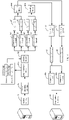
- a synchronization thread 401 is responsible for iteratively executing a synchronization operation, where the synchronization operation includes synchronizing a dirty bitmap of the source memory from a virtual machine monitor 41, and sending the dirty bitmap and corresponding iteration round number to a traversal thread 402. Each time the synchronization thread 401 executes the synchronization operation, the iteration round number may be increased by one.
- the traversal thread 402 is responsible for iteratively executing the iteration operation, where the traversal operation includes traversing the dirty bitmap to determine a dirty page address and an iteration round number, and assigning the dirty page address and the iteration round number to a corresponding compressed thread.
- a plurality of compression threads 403 may be included, and each compression thread 403 is responsible for iteratively executing a compression operation.
- the compression operation may include reading dirty page data based on any one of the assigned dirty page addresses; compressing the dirty page data; adding a dirty page flag to the compressed dirty page data to generate a to-be-migrated dirty page; and caching the to-be-migrated dirty page to a corresponding dirty page cache queue.
- the dirty page flag includes round number flag information for identifying an iteration round number.
- the traversal thread 402 may distribute a plurality of dirty page addresses in the same round to the plurality of compression threads 403 for processing, and may determine a processing quantity of each compression thread in consideration of remaining resources.
- the to-be-migrated dirty pages will be cached to their respective dirty page cache queues 42. Because each compression thread 403 may process the to-be-migrated dirty pages of different rounds, a dirty page cache queue may also include the to-be-migrated dirty pages corresponding to different iteration rounds.
- each sending thread 404 may be responsible for iteratively executing a sending operation, that is, sending at least one to-be-migrated dirty page in the corresponding dirty page cache queue 42 to the destination end.
- the destination end may create a receiving thread 405, a restoration thread 406, and the like, where a plurality of receiving threads 405 and restoration thread 406 may be included.
- Each receiving thread 405 is responsible for iteratively executing a receiving operation; where the receiving operation may include receiving at least one to-be-migrated dirty page sent by a source end, parsing each to-be-migrated dirty page to obtain round number flag information and dirty page data; and caching the dirty page data to a receiving cache queue 43 corresponding to the round number flag information.
- the dirty page data of a same round is cached into a same receiving cache queue 43, and only the dirty page data of the same round is cached in the same receiving cache queue 43.
- the restoration thread 406 may be responsible for iteratively executing a restoration operation, where the restoration operation may include: sequentially restoring the dirty page data from the receiving cache queue 43 to a destination memory 44 of the destination end based on the iteration round number.
- the dirty page data in the same receiving cache queue 43 can be distributed to the plurality of restoration threads for restoration.
- the plurality of restoration threads restore all the dirty page data in one receiving cache queue, they restore the dirty page data in a next receiving cache queue.
- the plurality of restoration threads may respectively restore at least part of the dirty page data in the same receiving cache queue.
- each type of thread takes the same time to execute its own operation.
- the sending thread executes the sending operation in round 1
- the compression thread may execute the compression operation in round 2 in parallel
- the traversal thread may execute the traverse operation in round 3 in parallel
- the synchronization thread may execute the synchronization operation in round 4 in parallel.
- Five rounds of iterative operations can be completed from time periods t0 to t7, while the prior-art method can complete only two rounds of iterative operations at most.
- the independent threads do not need to be synchronized with or wait for each other, and the overall migration process will not be blocked due to an operation being cached, ensuring that each thread can run at full load, and greatly improving the efficiency and success rate of memory migration.
- the plurality of processing threads or the plurality of sending threads may run in parallel, further improving memory migration efficiency.
- a source memory may be divided into a plurality of memory regions, and the plurality of memory regions do not overlap each other.
- Memory iteration can be executed in each memory region according to the scheme shown in FIG. 4 . It is assumed that the source memory is divided into two memory regions: region 1 and region 2.
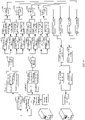
- region 1 and region 2 In the schematic diagram of memory iteration interaction shown in FIG. 6 , the memory iteration process for each memory region at the source end is shown.
- a synchronization thread 601, a traversal thread 602, a set of compression threads (including at least one compression thread 603), and a set of sending threads (including at least one sending thread 604) may be created.
- Each synchronization thread is only responsible for iteratively executing the synchronization operation for its corresponding memory region, where the synchronization operation also refers to synchronizing the dirty bitmap of its corresponding memory region.
- Each traversal thread is only responsible for iteratively executing the iteration operation for its corresponding memory region, where the traversal operation also refers to traversing the dirty bitmap of its corresponding memory region to determine a dirty page address and an iteration round number, and assigning the dirty page address and the iteration round number to a compressed thread corresponding to its corresponding memory region.
- each compression thread may be only responsible for iteratively executing a compression operation for its corresponding memory region, that is, reading dirty page data based on the assigned dirty page address; compressing the dirty page data; adding a dirty page flag to the compressed dirty page data to generate a to-be-migrated dirty page; and caching the to-be-migrated dirty page to a corresponding dirty page cache queue.
- the dirty page flag includes round number flag information for identifying an iteration round number.
- each sending thread may be only responsible for iteratively executing sending operations for its corresponding memory region, that is, sending at least one to-be-migrated dirty page in its corresponding dirty page cache queue to the destination end.
- the source memory is divided into a plurality of memory regions in the destination end, the plurality of memory regions do not overlap each other, and the dirty page address of each dirty page will not change.
- the destination end only needs to know the dirty page address to execute the restoration of the dirty page data, and finally the dirty page data will be restored to different memory regions of the destination memory without being overwritten. Therefore, the operation executed at the destination end is the same as that executed at the destination end shown in FIG. 4 , there is no need to know a memory region to which each to-be-migrated dirty page belongs, and no region-based restoration is required.
- FIG. 4 For specific restoration process, reference may be made to FIG. 4 , and details are not described herein again.
- the plurality of memory regions may concurrently execute memory iteration migration, increasing the memory iteration efficiency by many times. For example, in the case that a memory is divided into two memory regions, compared with the scheme shown in FIG. 4 , two rounds of iteration may be completed in the same time, doubling the memory iteration efficiency.
- each type of thread takes the same time to execute its own operation, and that a source memory is divided into two memory regions.
- two same operations may be executed in parallel.
- Memory regions are independent of each other without mutual impact.
- the independent threads in each memory region do not need to be synchronized with or wait for each other, and the overall migration process will not be blocked due to an operation being cached, ensuring that each independent thread can run at full load, and therefore greatly improving the efficiency and success rate of memory migration.
- FIG. 8 is a schematic structural diagram of an embodiment of a memory migration apparatus according to this application, where the apparatus may include:
- the processing operation that the second execution module controls the at least one processing thread to iteratively execute may include:
- the first creation module is further adapted to create a synchronization thread for the memory region.
- the apparatus may further include: a synchronization execution module adapted to control the synchronization thread to iteratively execute a synchronization operation, where the synchronization operation includes acquiring a dirty bitmap of any one of the memory regions and sending the dirty bitmap to the traversal thread.
- a synchronization execution module adapted to control the synchronization thread to iteratively execute a synchronization operation, where the synchronization operation includes acquiring a dirty bitmap of any one of the memory regions and sending the dirty bitmap to the traversal thread.
- the traversal operation that the first execution module controls the traversal thread to execute specifically includes:
- the processing operation that the second execution module controls the processing thread to iteratively execute may include:
- the transmission operation that the third execution module controls the sending threads to iteratively execute may specifically include: transmitting at least one to-be-migrated dirty page in the dirty page cache queue to a destination end.
- the first creation module is specifically adapted to create for the memory region a traversal thread, a sending thread, and a processing thread.
- the first creation module is specifically adapted to create a sending thread, a processing thread, and a traversal thread for a memory region in one or more processing components.
- a plurality of processing threads, a plurality of sending threads and a plurality of traversal threads may be specifically created.
- the plurality of traversal threads run in parallel, and iteratively execute the traversal operation separately; the plurality of processing threads run in parallel, and iteratively execute the processing operation separately; and the plurality of sending threads run in parallel, and iteratively execute the sending operation separately.
- a source memory is divided into the plurality of the memory regions, and different memory regions do not overlap each other.
- the memory migration apparatus in FIG. 8 may execute the memory migration method in the embodiment of FIG. 1 , and the implementation principle and technical effects are not described herein again.
- specific manners of executing operations by each module or unit are described in detail in the embodiments related to the method, and no details are repeated herein.
- the memory migration apparatus in the embodiment shown in FIG. 8 may be implemented as a computing device, where the computing device is a source virtual machine, that is, a host machine of the to-be-migrated virtual machine.
- the computing device may include one or more storage components 901 and one or more processing components 902.
- the one or more storage components 901 store one or more computer instructions, where the one or more computer instructions are to be called and executed by the one or more processing components 902.
- the one or more processing components 902 are adapted to:
- the processing thread, the sending thread, and the traversal thread can be created respectively in different processing components.
- the one or more processing components 902 may include central processing units (CPU), digital signal processors (DSP), digital signal processing devices (DSPD), programmable logic devices (PLD), field programmable gate arrays (FPGA), controllers, microcontrollers, microprocessors, or other electronic components.
- CPU central processing units
- DSP digital signal processors
- DSPD digital signal processing devices
- PLD programmable logic devices
- FPGA field programmable gate arrays
- controllers microcontrollers, microprocessors, or other electronic components.
- the one or more storage components 901 are adapted to store various types of data to support operations on the computing device.
- the one or more storage components may be implemented by any type of volatile or non-volatile storage devices or their combination, such as a static random access memory (SRAM), an electrically erasable programmable read-only memory (EEPROM), an erasable programmable read-only memory (EPROM), a programmable read-only memory (PROM), a read-only memory (ROM), a magnetic memory, a flash memory, a magnetic disk, or an optical disk.
- SRAM static random access memory
- EEPROM electrically erasable programmable read-only memory
- EPROM erasable programmable read-only memory
- PROM programmable read-only memory
- ROM read-only memory
- magnetic memory a magnetic memory
- flash memory a flash memory
- magnetic disk or an optical disk.
- optical disk an optical disk.
- the computing device may also include other components, such as input/output interfaces and
- An input/output interface provides an interface between a processing component and a peripheral interface module.
- the peripheral interface module may be an output device, an input device, or the like.
- the communication component is adapted to facilitate wired or wireless communication between the computing device and other devices.
- An embodiment of this application further provides a computer-readable storage medium storing a computer program thereon, where when the computer program is executed by a computer, the memory migration method in the embodiment shown in FIG. 1 can be implemented.
- FIG. 10 is a schematic structural diagram of another embodiment of a memory migration apparatus according to embodiments of this application.
- the apparatus may include:
- the second creation module may be further adapted to create a synchronization thread for any one of the memory regions.
- the apparatus may further include: a synchronization execution module adapted to control the synchronization thread to iteratively execute a synchronization operation, where the synchronization operation includes acquiring a dirty bitmap of any one of the memory regions and sending the dirty bitmap to the traversal thread.
- a synchronization execution module adapted to control the synchronization thread to iteratively execute a synchronization operation, where the synchronization operation includes acquiring a dirty bitmap of any one of the memory regions and sending the dirty bitmap to the traversal thread.
- the traversal operation that the fourth execution module controls the traversal thread to iteratively execute may include:
- the second creation module is specifically adapted to create a sending thread and a traversal thread for a memory region in one or more processing components.
- the memory migration apparatus in FIG. 10 may execute the memory migration method in the embodiment of FIG. 2 , and the implementation principle and technical effects are not described herein again.
- specific manners of executing operations by each module or unit are described in detail in the embodiments related to the method, and no details are repeated herein.
- the memory migration apparatus in the embodiment shown in FIG. 10 may be implemented as a computing device, where the computing device is a source virtual machine, that is, a host machine of the to-be-migrated virtual machine.
- the computing device may include one or more storage components 1101 and one or more processing components 1102.
- the one or more storage components 1101 store one or more computer instructions, where the one or more computer instructions are to be called and executed by the one or more processing components 1102.
- the one or more processing components 1102 are adapted to:
- the sending thread, and the traversal thread can be created respectively in different processing components.
- the one or more processing components 1102 may include central processing units (CPU), digital signal processors (DSP), digital signal processing devices (DSPD), programmable logic devices (PLD), field programmable gate arrays (FPGA), controllers, microcontrollers, microprocessors, or other electronic components.
- CPU central processing units
- DSP digital signal processors
- DSPD digital signal processing devices
- PLD programmable logic devices
- FPGA field programmable gate arrays
- controllers microcontrollers, microprocessors, or other electronic components.
- the one or more storage components 1101 are adapted to store various types of data to support operations on the computing device.
- the one or more storage components may be implemented by any type of volatile or non-volatile storage devices or their combination, such as a static random access memory (SRAM), an electrically erasable programmable read-only memory (EEPROM), an erasable programmable read-only memory (EPROM), a programmable read-only memory (PROM), a read-only memory (ROM), a magnetic memory, a flash memory, a magnetic disk, or an optical disk.
- SRAM static random access memory
- EEPROM electrically erasable programmable read-only memory
- EPROM erasable programmable read-only memory
- PROM programmable read-only memory
- ROM read-only memory
- magnetic memory a magnetic memory
- flash memory a flash memory
- magnetic disk or an optical disk.
- the computing device may also include other components, such as input/output interfaces and communication components.
- An input/output interface provides an interface between a processing component and a peripheral interface module.
- the peripheral interface module may be an output device, an input device, or the like.
- the communication component is adapted to facilitate wired or wireless communication between the computing device and other devices.
- An embodiment of this application further provides a computer-readable storage medium storing a computer program thereon, where when the computer program is executed by a computer, the memory migration method in the embodiment shown in FIG. 2 can be implemented.
- an embodiment of this application further provides a memory migration apparatus, including:
- the apparatus may be implemented as a computing device, where the computing device is a source virtual machine, that is, a host machine of the to-be-migrated virtual machine.
- the computing device may include one or more storage components and one or more processing components.
- the one or more storage components store one or more computer instructions, where the one or more computer instructions are to be called and executed by the one or more processing components.
- the one or more processing components are adapted to:
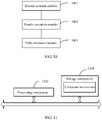
- FIG. 12 is a schematic structural diagram of another embodiment of a memory migration apparatus according to embodiments of this application.
- the apparatus may include:
- the restoration thread is specifically adapted to cache the at least one to-be-migrated dirty page to a receiving cache queue corresponding to a respective iteration round number; and sequentially restore dirty page data in to-be-migrated dirty pages in different receiving cache queues to destination memories based on the iteration round numbers.
- the restoration thread is specifically adapted to sequentially decompress and restore dirty page data in to-be-migrated dirty pages in different receiving cache queues to destination memories based on the iteration round numbers.
- the apparatus further includes: a fourth creation module adapted to create a receiving thread and a restoration thread.
- the parsing module specifically controls the receiving thread to iteratively execute a receiving operation, including receiving at least one to-be-migrated dirty page transmitted by a source end, parsing round number flag information in the at least one to-be-migrated dirty page, to determine the iteration round number corresponding to the at least one to-be-migrated dirty page, and putting the at least one to-be-migrated dirty page into a receiving cache queue corresponding to a respective iteration round number.
- the restoration thread module specifically controls the restoration thread to iteratively execute a restoration operation of sequentially restoring dirty page data in to-be-migrated dirty pages in different receiving cache queues to destination memories based on the iteration round numbers.
- the memory migration apparatus in FIG. 12 may execute the memory migration method in the embodiment of FIG. 3 , and the implementation principle and technical effects are not described herein again.
- specific manners of executing operations by each module or unit are described in detail in the embodiments related to the method, and no details are repeated herein.
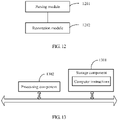
- the memory migration apparatus in the embodiment shown in FIG. 12 may be implemented as a computing device, where the computing device is a host machine of the destination virtual machine.
- the computing device may include one or more storage components 1301 and one or more processing components 1302.
- the one or more storage components 1301 store one or more computer instructions, where the one or more computer instructions are to be called and executed by the one or more processing components 1302.
- the one or more processing components 1302 are adapted to:
- the one or more processing components 1302 may include central processing units (CPU), digital signal processors (DSP), digital signal processing devices (DSPD), programmable logic devices (PLD), field programmable gate arrays (FPGA), controllers, microcontrollers, microprocessors, or other electronic components.
- CPU central processing units
- DSP digital signal processors
- DSPD digital signal processing devices
- PLD programmable logic devices
- FPGA field programmable gate arrays
- controllers microcontrollers, microprocessors, or other electronic components.
- the one or more storage components 1301 are adapted to store various types of data to support operations on the computing device.
- the one or more storage components may be implemented by any type of volatile or non-volatile storage devices or their combination, such as a static random access memory (SRAM), an electrically erasable programmable read-only memory (EEPROM), an erasable programmable read-only memory (EPROM), a programmable read-only memory (PROM), a read-only memory (ROM), a magnetic memory, a flash memory, a magnetic disk, or an optical disk.
- SRAM static random access memory
- EEPROM electrically erasable programmable read-only memory
- EPROM erasable programmable read-only memory
- PROM programmable read-only memory
- ROM read-only memory
- magnetic memory a magnetic memory
- flash memory a flash memory
- magnetic disk or an optical disk.
- optical disk an optical disk.
- the computing device may also include other components, such as input/output interfaces and
- An input/output interface provides an interface between a processing component and a peripheral interface module.
- the peripheral interface module may be an output device, an input device, or the like.
- the communication component is adapted to facilitate wired or wireless communication between the computing device and other devices.
- An embodiment of this application further provides a computer-readable storage medium storing a computer program thereon, where when the computer program is executed by a computer, the memory migration method in the embodiment shown in FIG. 3 can be implemented.
- the described apparatus embodiments are merely examples.
- the units described as separate parts may or may not be physically separated, and parts shown as units may or may not be physical units, may be located in one position, or may be distributed on a plurality of network units. Some or all the modules may be selected according to actual needs to achieve the objectives of the solutions of the embodiments. A person of ordinary skill in the art may understand and implement the embodiments of this application without creative efforts.
- the implementations may be implemented by software in addition to a necessary universal hardware platform or by hardware only. Based on such an understanding, the technical solutions essentially or the part contributing to the prior art may be implemented in a form of a software product.
- the software product is stored in a computer-readable storage medium, such as a ROM/RAM, a magnetic disk, or an optical disc, and includes several instructions for instructing a computer device (which may be a personal computer, a server, or a network device) to perform the methods described in the embodiments or some parts of the embodiments.
Landscapes
- Engineering & Computer Science (AREA)
- Theoretical Computer Science (AREA)
- Software Systems (AREA)
- Physics & Mathematics (AREA)
- General Engineering & Computer Science (AREA)
- General Physics & Mathematics (AREA)
- Human Computer Interaction (AREA)
- Memory System Of A Hierarchy Structure (AREA)
Applications Claiming Priority (2)
| Application Number | Priority Date | Filing Date | Title |
|---|---|---|---|
| CN201910913238.6A CN112559116B (zh) | 2019-09-25 | 2019-09-25 | 内存迁移方法、装置及计算设备 |
| PCT/CN2020/116981 WO2021057759A1 (fr) | 2019-09-25 | 2020-09-23 | Procédé de migration de mémoire, dispositif et appareil informatique |
Publications (2)
| Publication Number | Publication Date |
|---|---|
| EP4036718A1 true EP4036718A1 (fr) | 2022-08-03 |
| EP4036718A4 EP4036718A4 (fr) | 2023-11-08 |
Family
ID=75029442
Family Applications (1)
| Application Number | Title | Priority Date | Filing Date |
|---|---|---|---|
| EP20867683.3A Pending EP4036718A4 (fr) | 2019-09-25 | 2020-09-23 | Procédé de migration de mémoire, dispositif et appareil informatique |
Country Status (4)
| Country | Link |
|---|---|
| US (1) | US12124724B2 (fr) |
| EP (1) | EP4036718A4 (fr) |
| CN (1) | CN112559116B (fr) |
| WO (1) | WO2021057759A1 (fr) |
Families Citing this family (6)
| Publication number | Priority date | Publication date | Assignee | Title |
|---|---|---|---|---|
| US20230195533A1 (en) * | 2021-12-22 | 2023-06-22 | Vmware, Inc. | Prepopulating page tables for memory of workloads during live migrations |
| CN114528078A (zh) * | 2022-01-29 | 2022-05-24 | 苏州浪潮智能科技有限公司 | 一种对象存储的数据迁移的方法、装置、设备及介质 |
| CN115629844A (zh) * | 2022-11-10 | 2023-01-20 | 阿里云计算有限公司 | 一种虚拟机迁移方法、系统、设备及存储介质 |
| CN116107696A (zh) * | 2022-12-26 | 2023-05-12 | 天翼云科技有限公司 | 一种虚拟机迁移方法、装置、设备及介质 |
| CN118535313A (zh) * | 2023-02-23 | 2024-08-23 | 中兴通讯股份有限公司 | 虚拟机迁移方法、设备及存储介质 |
| CN119697069B (zh) * | 2025-02-21 | 2025-05-09 | 山东浪潮科学研究院有限公司 | 一种通信错误检测方法、装置、设备及介质 |
Family Cites Families (24)
| Publication number | Priority date | Publication date | Assignee | Title |
|---|---|---|---|---|
| JPH02273843A (ja) | 1989-04-14 | 1990-11-08 | Nec Corp | スワッピング装置 |
| US20110010711A1 (en) | 2009-07-10 | 2011-01-13 | Niket Keshav Patwardhan | Reliable movement of virtual machines between widely separated computers |
| US8671309B2 (en) | 2011-07-01 | 2014-03-11 | Intel Corporation | Mechanism for advanced server machine check recovery and associated system software enhancements |
| CN102609361B (zh) * | 2012-01-16 | 2015-06-24 | 北京红山世纪科技有限公司 | 虚拟机存储数据迁移方法和装置 |
| US8904068B2 (en) | 2012-05-09 | 2014-12-02 | Nvidia Corporation | Virtual memory structure for coprocessors having memory allocation limitations |
| KR20140035082A (ko) | 2012-09-13 | 2014-03-21 | 삼성전자주식회사 | 메모리 관리방법 |
| JP5561334B2 (ja) * | 2012-09-27 | 2014-07-30 | 日本電気株式会社 | データ転送装置 |
| CN104008061B (zh) | 2013-02-22 | 2018-01-23 | 华为技术有限公司 | 内存回收方法及装置 |
| CN103577249B (zh) * | 2013-11-13 | 2017-06-16 | 中国科学院计算技术研究所 | 虚拟机在线迁移方法与系统 |
| JP6372074B2 (ja) | 2013-12-17 | 2018-08-15 | 富士通株式会社 | 情報処理システム,制御プログラム及び制御方法 |
| KR102254099B1 (ko) | 2014-05-19 | 2021-05-20 | 삼성전자주식회사 | 메모리 스와핑 처리 방법과 이를 적용하는 호스트 장치, 스토리지 장치 및 데이터 처리 시스템 |
| CN105446790B (zh) * | 2014-07-15 | 2019-10-18 | 华为技术有限公司 | 一种虚拟机迁移方法及装置 |
| CN105786585B (zh) * | 2014-12-15 | 2019-01-29 | 中国电信股份有限公司 | 在线迁移内存数据的系统和方法 |
| US20160188490A1 (en) | 2014-12-26 | 2016-06-30 | Intel Corporation | Cost-aware page swap and replacement in a memory |
| US20160267005A1 (en) | 2015-03-12 | 2016-09-15 | Qualcomm Incorporated | Memory reclamation on a computing device |
| CN105701025B (zh) | 2015-12-31 | 2019-07-23 | 华为技术有限公司 | 一种内存回收方法及装置 |
| CN105760218B (zh) * | 2016-01-05 | 2019-12-06 | 新华三技术有限公司 | 一种虚拟机在线迁移方法及装置 |
| US10521256B2 (en) * | 2016-08-30 | 2019-12-31 | Red Had Israel, Ltd. | Virtual machine migration acceleration with page state indicators |
| CN107885666B (zh) | 2016-09-28 | 2021-07-20 | 华为技术有限公司 | 一种内存管理方法和装置 |
| US10108554B2 (en) | 2016-12-05 | 2018-10-23 | Intel Corporation | Apparatuses, methods, and systems to share translation lookaside buffer entries |
| CN110096332A (zh) * | 2018-01-31 | 2019-08-06 | 中国科学院计算技术研究所 | 一种面向基站任务的迁移方法和系统 |
| CN110134490B (zh) * | 2018-02-08 | 2023-12-29 | 中兴通讯股份有限公司 | 虚拟机动态迁移方法、设备及存储介质 |
| WO2019226250A1 (fr) * | 2018-05-23 | 2019-11-28 | Microsemi Storage Solutions, Inc. | Procédé et appareil pour un moteur de traitement de dispersion-regroupement dans un contrôleur de stockage pour des applications de mise en cache |
| CN108874588A (zh) * | 2018-06-08 | 2018-11-23 | 郑州云海信息技术有限公司 | 一种数据库实例恢复方法和装置 |
-
2019
- 2019-09-25 CN CN201910913238.6A patent/CN112559116B/zh active Active
-
2020
- 2020-09-23 WO PCT/CN2020/116981 patent/WO2021057759A1/fr not_active Ceased
- 2020-09-23 EP EP20867683.3A patent/EP4036718A4/fr active Pending
- 2020-09-23 US US17/761,536 patent/US12124724B2/en active Active
Also Published As
| Publication number | Publication date |
|---|---|
| CN112559116A (zh) | 2021-03-26 |
| EP4036718A4 (fr) | 2023-11-08 |
| US20220342579A1 (en) | 2022-10-27 |
| CN112559116B (zh) | 2024-05-07 |
| US12124724B2 (en) | 2024-10-22 |
| WO2021057759A1 (fr) | 2021-04-01 |
Similar Documents
| Publication | Publication Date | Title |
|---|---|---|
| US12124724B2 (en) | Memory migration method, apparatus, and computing device | |
| US12197758B2 (en) | Distributed object replication architecture | |
| US11327799B2 (en) | Dynamic allocation of worker nodes for distributed replication | |
| US11010240B2 (en) | Tracking status and restarting distributed replication | |
| US11340803B2 (en) | Method for configuring resources, electronic device and computer program product | |
| US7844853B2 (en) | Methods and apparatus for restoring a node state | |
| US11349915B2 (en) | Distributed replication and deduplication of an object from a source site to a destination site | |
| US8782235B2 (en) | Resource migration system and resource migration method | |
| EP2905709A2 (fr) | Procédé et appareil pour la réplication de fichiers et de systèmes de fichiers au moyen d'un espace de clefs de déduplication | |
| CN109857545B (zh) | 一种数据传输方法及装置 | |
| EP3494493B1 (fr) | Répartition de données dans un système informatique distribué | |
| KR102114245B1 (ko) | 그래픽스 상태 관리 장치 및 방법 | |
| CN118484136B (zh) | 一种分布式存储系统、数据处理方法、设备和介质 | |
| US20120304176A1 (en) | Virtual machine handling system, virtual machine handling method, computer, and storage medium | |
| US11341104B1 (en) | In place resize of a distributed database | |
| CN115033337A (zh) | 虚拟机内存迁移方法、装置、设备及存储介质 | |
| CN110445580B (zh) | 数据发送方法及装置、存储介质、电子装置 | |
| CN112631994A (zh) | 数据迁移方法及系统 | |
| US12287734B2 (en) | Client allocation of memory across memory servers | |
| US20170147518A1 (en) | Scanning memory for de-duplication using rdma | |
| CN114116790A (zh) | 数据处理的方法及装置 | |
| US10824374B1 (en) | System and method for storage volume compression | |
| CN113821174B (zh) | 存储处理方法、装置、网卡设备及存储介质 | |
| CN117332881B (zh) | 分布式训练方法及电子设备 | |
| US10824640B1 (en) | Framework for scheduling concurrent replication cycles |
Legal Events
| Date | Code | Title | Description |
|---|---|---|---|
| STAA | Information on the status of an ep patent application or granted ep patent |
Free format text: STATUS: THE INTERNATIONAL PUBLICATION HAS BEEN MADE |
|
| PUAI | Public reference made under article 153(3) epc to a published international application that has entered the european phase |
Free format text: ORIGINAL CODE: 0009012 |
|
| STAA | Information on the status of an ep patent application or granted ep patent |
Free format text: STATUS: REQUEST FOR EXAMINATION WAS MADE |
|
| 17P | Request for examination filed |
Effective date: 20220325 |
|
| AK | Designated contracting states |
Kind code of ref document: A1 Designated state(s): AL AT BE BG CH CY CZ DE DK EE ES FI FR GB GR HR HU IE IS IT LI LT LU LV MC MK MT NL NO PL PT RO RS SE SI SK SM TR |
|
| DAV | Request for validation of the european patent (deleted) | ||
| DAX | Request for extension of the european patent (deleted) | ||
| P01 | Opt-out of the competence of the unified patent court (upc) registered |
Effective date: 20230418 |
|
| A4 | Supplementary search report drawn up and despatched |
Effective date: 20231006 |
|
| RIC1 | Information provided on ipc code assigned before grant |
Ipc: G06F 9/455 20180101AFI20230929BHEP |
|
| STAA | Information on the status of an ep patent application or granted ep patent |
Free format text: STATUS: EXAMINATION IS IN PROGRESS |
|
| 17Q | First examination report despatched |
Effective date: 20250414 |