EP4036408A1 - Elektrische hydraulische arbeitsmaschine - Google Patents
Elektrische hydraulische arbeitsmaschine Download PDFInfo
- Publication number
- EP4036408A1 EP4036408A1 EP19946733.3A EP19946733A EP4036408A1 EP 4036408 A1 EP4036408 A1 EP 4036408A1 EP 19946733 A EP19946733 A EP 19946733A EP 4036408 A1 EP4036408 A1 EP 4036408A1
- Authority
- EP
- European Patent Office
- Prior art keywords
- hydraulic pump
- revolution speed
- hydraulic
- electric motor
- power
- Prior art date
- Legal status (The legal status is an assumption and is not a legal conclusion. Google has not performed a legal analysis and makes no representation as to the accuracy of the status listed.)
- Granted
Links
Images



Classifications
-
- F—MECHANICAL ENGINEERING; LIGHTING; HEATING; WEAPONS; BLASTING
- F04—POSITIVE - DISPLACEMENT MACHINES FOR LIQUIDS; PUMPS FOR LIQUIDS OR ELASTIC FLUIDS
- F04B—POSITIVE-DISPLACEMENT MACHINES FOR LIQUIDS; PUMPS
- F04B49/00—Control, e.g. of pump delivery, or pump pressure of, or safety measures for, machines, pumps, or pumping installations, not otherwise provided for, or of interest apart from, groups F04B1/00 - F04B47/00
- F04B49/06—Control using electricity
-
- F—MECHANICAL ENGINEERING; LIGHTING; HEATING; WEAPONS; BLASTING
- F15—FLUID-PRESSURE ACTUATORS; HYDRAULICS OR PNEUMATICS IN GENERAL
- F15B—SYSTEMS ACTING BY MEANS OF FLUIDS IN GENERAL; FLUID-PRESSURE ACTUATORS, e.g. SERVOMOTORS; DETAILS OF FLUID-PRESSURE SYSTEMS, NOT OTHERWISE PROVIDED FOR
- F15B21/00—Common features of fluid actuator systems; Fluid-pressure actuator systems or details thereof, not covered by any other group of this subclass
- F15B21/08—Servomotor systems incorporating electrically operated control means
- F15B21/087—Control strategy, e.g. with block diagram
-
- E—FIXED CONSTRUCTIONS
- E02—HYDRAULIC ENGINEERING; FOUNDATIONS; SOIL SHIFTING
- E02F—DREDGING; SOIL-SHIFTING
- E02F9/00—Component parts of dredgers or soil-shifting machines, not restricted to one of the kinds covered by groups E02F3/00 - E02F7/00
- E02F9/20—Drives; Control devices
- E02F9/2058—Electric or electro-mechanical or mechanical control devices of vehicle sub-units
- E02F9/2062—Control of propulsion units
- E02F9/207—Control of propulsion units of the type electric propulsion units, e.g. electric motors or generators
-
- E—FIXED CONSTRUCTIONS
- E02—HYDRAULIC ENGINEERING; FOUNDATIONS; SOIL SHIFTING
- E02F—DREDGING; SOIL-SHIFTING
- E02F9/00—Component parts of dredgers or soil-shifting machines, not restricted to one of the kinds covered by groups E02F3/00 - E02F7/00
- E02F9/20—Drives; Control devices
- E02F9/22—Hydraulic or pneumatic drives
- E02F9/2221—Control of flow rate; Load sensing arrangements
- E02F9/2232—Control of flow rate; Load sensing arrangements using one or more variable displacement pumps
- E02F9/2235—Control of flow rate; Load sensing arrangements using one or more variable displacement pumps including an electronic controller
-
- E—FIXED CONSTRUCTIONS
- E02—HYDRAULIC ENGINEERING; FOUNDATIONS; SOIL SHIFTING
- E02F—DREDGING; SOIL-SHIFTING
- E02F9/00—Component parts of dredgers or soil-shifting machines, not restricted to one of the kinds covered by groups E02F3/00 - E02F7/00
- E02F9/20—Drives; Control devices
- E02F9/22—Hydraulic or pneumatic drives
- E02F9/2246—Control of prime movers, e.g. depending on the hydraulic load of work tools
-
- E—FIXED CONSTRUCTIONS
- E02—HYDRAULIC ENGINEERING; FOUNDATIONS; SOIL SHIFTING
- E02F—DREDGING; SOIL-SHIFTING
- E02F9/00—Component parts of dredgers or soil-shifting machines, not restricted to one of the kinds covered by groups E02F3/00 - E02F7/00
- E02F9/20—Drives; Control devices
- E02F9/22—Hydraulic or pneumatic drives
- E02F9/2278—Hydraulic circuits
- E02F9/2282—Systems using center bypass type changeover valves
-
- E—FIXED CONSTRUCTIONS
- E02—HYDRAULIC ENGINEERING; FOUNDATIONS; SOIL SHIFTING
- E02F—DREDGING; SOIL-SHIFTING
- E02F9/00—Component parts of dredgers or soil-shifting machines, not restricted to one of the kinds covered by groups E02F3/00 - E02F7/00
- E02F9/20—Drives; Control devices
- E02F9/22—Hydraulic or pneumatic drives
- E02F9/2278—Hydraulic circuits
- E02F9/2285—Pilot-operated systems
-
- E—FIXED CONSTRUCTIONS
- E02—HYDRAULIC ENGINEERING; FOUNDATIONS; SOIL SHIFTING
- E02F—DREDGING; SOIL-SHIFTING
- E02F9/00—Component parts of dredgers or soil-shifting machines, not restricted to one of the kinds covered by groups E02F3/00 - E02F7/00
- E02F9/20—Drives; Control devices
- E02F9/22—Hydraulic or pneumatic drives
- E02F9/2278—Hydraulic circuits
- E02F9/2292—Systems with two or more pumps
-
- E—FIXED CONSTRUCTIONS
- E02—HYDRAULIC ENGINEERING; FOUNDATIONS; SOIL SHIFTING
- E02F—DREDGING; SOIL-SHIFTING
- E02F9/00—Component parts of dredgers or soil-shifting machines, not restricted to one of the kinds covered by groups E02F3/00 - E02F7/00
- E02F9/20—Drives; Control devices
- E02F9/22—Hydraulic or pneumatic drives
- E02F9/2278—Hydraulic circuits
- E02F9/2296—Systems with a variable displacement pump
-
- F—MECHANICAL ENGINEERING; LIGHTING; HEATING; WEAPONS; BLASTING
- F04—POSITIVE - DISPLACEMENT MACHINES FOR LIQUIDS; PUMPS FOR LIQUIDS OR ELASTIC FLUIDS
- F04B—POSITIVE-DISPLACEMENT MACHINES FOR LIQUIDS; PUMPS
- F04B49/00—Control, e.g. of pump delivery, or pump pressure of, or safety measures for, machines, pumps, or pumping installations, not otherwise provided for, or of interest apart from, groups F04B1/00 - F04B47/00
- F04B49/06—Control using electricity
- F04B49/065—Control using electricity and making use of computers
-
- F—MECHANICAL ENGINEERING; LIGHTING; HEATING; WEAPONS; BLASTING
- F15—FLUID-PRESSURE ACTUATORS; HYDRAULICS OR PNEUMATICS IN GENERAL
- F15B—SYSTEMS ACTING BY MEANS OF FLUIDS IN GENERAL; FLUID-PRESSURE ACTUATORS, e.g. SERVOMOTORS; DETAILS OF FLUID-PRESSURE SYSTEMS, NOT OTHERWISE PROVIDED FOR
- F15B11/00—Servomotor systems without provision for follow-up action; Circuits therefor
- F15B11/02—Systems essentially incorporating special features for controlling the speed or actuating force of an output member
- F15B11/04—Systems essentially incorporating special features for controlling the speed or actuating force of an output member for controlling the speed
-
- F—MECHANICAL ENGINEERING; LIGHTING; HEATING; WEAPONS; BLASTING
- F15—FLUID-PRESSURE ACTUATORS; HYDRAULICS OR PNEUMATICS IN GENERAL
- F15B—SYSTEMS ACTING BY MEANS OF FLUIDS IN GENERAL; FLUID-PRESSURE ACTUATORS, e.g. SERVOMOTORS; DETAILS OF FLUID-PRESSURE SYSTEMS, NOT OTHERWISE PROVIDED FOR
- F15B13/00—Details of servomotor systems ; Valves for servomotor systems
- F15B13/02—Fluid distribution or supply devices characterised by their adaptation to the control of servomotors
- F15B13/04—Fluid distribution or supply devices characterised by their adaptation to the control of servomotors for use with a single servomotor
- F15B13/042—Fluid distribution or supply devices characterised by their adaptation to the control of servomotors for use with a single servomotor operated by fluid pressure
-
- F—MECHANICAL ENGINEERING; LIGHTING; HEATING; WEAPONS; BLASTING
- F15—FLUID-PRESSURE ACTUATORS; HYDRAULICS OR PNEUMATICS IN GENERAL
- F15B—SYSTEMS ACTING BY MEANS OF FLUIDS IN GENERAL; FLUID-PRESSURE ACTUATORS, e.g. SERVOMOTORS; DETAILS OF FLUID-PRESSURE SYSTEMS, NOT OTHERWISE PROVIDED FOR
- F15B15/00—Fluid-actuated devices for displacing a member from one position to another; Gearing associated therewith
- F15B15/18—Combined units comprising both motor and pump
-
- E—FIXED CONSTRUCTIONS
- E02—HYDRAULIC ENGINEERING; FOUNDATIONS; SOIL SHIFTING
- E02F—DREDGING; SOIL-SHIFTING
- E02F3/00—Dredgers; Soil-shifting machines
- E02F3/04—Dredgers; Soil-shifting machines mechanically-driven
- E02F3/28—Dredgers; Soil-shifting machines mechanically-driven with digging tools mounted on a dipper- or bucket-arm, i.e. there is either one arm or a pair of arms, e.g. dippers, buckets
- E02F3/30—Dredgers; Soil-shifting machines mechanically-driven with digging tools mounted on a dipper- or bucket-arm, i.e. there is either one arm or a pair of arms, e.g. dippers, buckets with a dipper-arm pivoted on a cantilever beam, i.e. boom
- E02F3/32—Dredgers; Soil-shifting machines mechanically-driven with digging tools mounted on a dipper- or bucket-arm, i.e. there is either one arm or a pair of arms, e.g. dippers, buckets with a dipper-arm pivoted on a cantilever beam, i.e. boom working downwardly and towards the machine, e.g. with backhoes
- E02F3/325—Backhoes of the miniature type
-
- F—MECHANICAL ENGINEERING; LIGHTING; HEATING; WEAPONS; BLASTING
- F04—POSITIVE - DISPLACEMENT MACHINES FOR LIQUIDS; PUMPS FOR LIQUIDS OR ELASTIC FLUIDS
- F04B—POSITIVE-DISPLACEMENT MACHINES FOR LIQUIDS; PUMPS
- F04B2203/00—Motor parameters
- F04B2203/02—Motor parameters of rotating electric motors
- F04B2203/0208—Power
-
- F—MECHANICAL ENGINEERING; LIGHTING; HEATING; WEAPONS; BLASTING
- F04—POSITIVE - DISPLACEMENT MACHINES FOR LIQUIDS; PUMPS FOR LIQUIDS OR ELASTIC FLUIDS
- F04B—POSITIVE-DISPLACEMENT MACHINES FOR LIQUIDS; PUMPS
- F04B2205/00—Fluid parameters
- F04B2205/05—Pressure after the pump outlet
-
- F—MECHANICAL ENGINEERING; LIGHTING; HEATING; WEAPONS; BLASTING
- F15—FLUID-PRESSURE ACTUATORS; HYDRAULICS OR PNEUMATICS IN GENERAL
- F15B—SYSTEMS ACTING BY MEANS OF FLUIDS IN GENERAL; FLUID-PRESSURE ACTUATORS, e.g. SERVOMOTORS; DETAILS OF FLUID-PRESSURE SYSTEMS, NOT OTHERWISE PROVIDED FOR
- F15B2211/00—Circuits for servomotor systems
- F15B2211/20—Fluid pressure source, e.g. accumulator or variable axial piston pump
- F15B2211/205—Systems with pumps
- F15B2211/20507—Type of prime mover
- F15B2211/20515—Electric motor
-
- F—MECHANICAL ENGINEERING; LIGHTING; HEATING; WEAPONS; BLASTING
- F15—FLUID-PRESSURE ACTUATORS; HYDRAULICS OR PNEUMATICS IN GENERAL
- F15B—SYSTEMS ACTING BY MEANS OF FLUIDS IN GENERAL; FLUID-PRESSURE ACTUATORS, e.g. SERVOMOTORS; DETAILS OF FLUID-PRESSURE SYSTEMS, NOT OTHERWISE PROVIDED FOR
- F15B2211/00—Circuits for servomotor systems
- F15B2211/20—Fluid pressure source, e.g. accumulator or variable axial piston pump
- F15B2211/205—Systems with pumps
- F15B2211/2053—Type of pump
- F15B2211/20538—Type of pump constant capacity
-
- F—MECHANICAL ENGINEERING; LIGHTING; HEATING; WEAPONS; BLASTING
- F15—FLUID-PRESSURE ACTUATORS; HYDRAULICS OR PNEUMATICS IN GENERAL
- F15B—SYSTEMS ACTING BY MEANS OF FLUIDS IN GENERAL; FLUID-PRESSURE ACTUATORS, e.g. SERVOMOTORS; DETAILS OF FLUID-PRESSURE SYSTEMS, NOT OTHERWISE PROVIDED FOR
- F15B2211/00—Circuits for servomotor systems
- F15B2211/20—Fluid pressure source, e.g. accumulator or variable axial piston pump
- F15B2211/205—Systems with pumps
- F15B2211/2053—Type of pump
- F15B2211/20546—Type of pump variable capacity
-
- F—MECHANICAL ENGINEERING; LIGHTING; HEATING; WEAPONS; BLASTING
- F15—FLUID-PRESSURE ACTUATORS; HYDRAULICS OR PNEUMATICS IN GENERAL
- F15B—SYSTEMS ACTING BY MEANS OF FLUIDS IN GENERAL; FLUID-PRESSURE ACTUATORS, e.g. SERVOMOTORS; DETAILS OF FLUID-PRESSURE SYSTEMS, NOT OTHERWISE PROVIDED FOR
- F15B2211/00—Circuits for servomotor systems
- F15B2211/20—Fluid pressure source, e.g. accumulator or variable axial piston pump
- F15B2211/205—Systems with pumps
- F15B2211/2053—Type of pump
- F15B2211/20546—Type of pump variable capacity
- F15B2211/20553—Type of pump variable capacity with pilot circuit, e.g. for controlling a swash plate
-
- F—MECHANICAL ENGINEERING; LIGHTING; HEATING; WEAPONS; BLASTING
- F15—FLUID-PRESSURE ACTUATORS; HYDRAULICS OR PNEUMATICS IN GENERAL
- F15B—SYSTEMS ACTING BY MEANS OF FLUIDS IN GENERAL; FLUID-PRESSURE ACTUATORS, e.g. SERVOMOTORS; DETAILS OF FLUID-PRESSURE SYSTEMS, NOT OTHERWISE PROVIDED FOR
- F15B2211/00—Circuits for servomotor systems
- F15B2211/20—Fluid pressure source, e.g. accumulator or variable axial piston pump
- F15B2211/205—Systems with pumps
- F15B2211/20576—Systems with pumps with multiple pumps
-
- F—MECHANICAL ENGINEERING; LIGHTING; HEATING; WEAPONS; BLASTING
- F15—FLUID-PRESSURE ACTUATORS; HYDRAULICS OR PNEUMATICS IN GENERAL
- F15B—SYSTEMS ACTING BY MEANS OF FLUIDS IN GENERAL; FLUID-PRESSURE ACTUATORS, e.g. SERVOMOTORS; DETAILS OF FLUID-PRESSURE SYSTEMS, NOT OTHERWISE PROVIDED FOR
- F15B2211/00—Circuits for servomotor systems
- F15B2211/30—Directional control
- F15B2211/305—Directional control characterised by the type of valves
- F15B2211/30525—Directional control valves, e.g. 4/3-directional control valve
- F15B2211/3053—In combination with a pressure compensating valve
- F15B2211/30535—In combination with a pressure compensating valve the pressure compensating valve is arranged between pressure source and directional control valve
-
- F—MECHANICAL ENGINEERING; LIGHTING; HEATING; WEAPONS; BLASTING
- F15—FLUID-PRESSURE ACTUATORS; HYDRAULICS OR PNEUMATICS IN GENERAL
- F15B—SYSTEMS ACTING BY MEANS OF FLUIDS IN GENERAL; FLUID-PRESSURE ACTUATORS, e.g. SERVOMOTORS; DETAILS OF FLUID-PRESSURE SYSTEMS, NOT OTHERWISE PROVIDED FOR
- F15B2211/00—Circuits for servomotor systems
- F15B2211/30—Directional control
- F15B2211/31—Directional control characterised by the positions of the valve element
- F15B2211/3105—Neutral or centre positions
- F15B2211/3111—Neutral or centre positions the pump port being closed in the centre position, e.g. so-called closed centre
-
- F—MECHANICAL ENGINEERING; LIGHTING; HEATING; WEAPONS; BLASTING
- F15—FLUID-PRESSURE ACTUATORS; HYDRAULICS OR PNEUMATICS IN GENERAL
- F15B—SYSTEMS ACTING BY MEANS OF FLUIDS IN GENERAL; FLUID-PRESSURE ACTUATORS, e.g. SERVOMOTORS; DETAILS OF FLUID-PRESSURE SYSTEMS, NOT OTHERWISE PROVIDED FOR
- F15B2211/00—Circuits for servomotor systems
- F15B2211/30—Directional control
- F15B2211/31—Directional control characterised by the positions of the valve element
- F15B2211/3105—Neutral or centre positions
- F15B2211/3116—Neutral or centre positions the pump port being open in the centre position, e.g. so-called open centre
-
- F—MECHANICAL ENGINEERING; LIGHTING; HEATING; WEAPONS; BLASTING
- F15—FLUID-PRESSURE ACTUATORS; HYDRAULICS OR PNEUMATICS IN GENERAL
- F15B—SYSTEMS ACTING BY MEANS OF FLUIDS IN GENERAL; FLUID-PRESSURE ACTUATORS, e.g. SERVOMOTORS; DETAILS OF FLUID-PRESSURE SYSTEMS, NOT OTHERWISE PROVIDED FOR
- F15B2211/00—Circuits for servomotor systems
- F15B2211/50—Pressure control
- F15B2211/505—Pressure control characterised by the type of pressure control means
- F15B2211/50509—Pressure control characterised by the type of pressure control means the pressure control means controlling a pressure upstream of the pressure control means
- F15B2211/50536—Pressure control characterised by the type of pressure control means the pressure control means controlling a pressure upstream of the pressure control means using unloading valves controlling the supply pressure by diverting fluid to the return line
-
- F—MECHANICAL ENGINEERING; LIGHTING; HEATING; WEAPONS; BLASTING
- F15—FLUID-PRESSURE ACTUATORS; HYDRAULICS OR PNEUMATICS IN GENERAL
- F15B—SYSTEMS ACTING BY MEANS OF FLUIDS IN GENERAL; FLUID-PRESSURE ACTUATORS, e.g. SERVOMOTORS; DETAILS OF FLUID-PRESSURE SYSTEMS, NOT OTHERWISE PROVIDED FOR
- F15B2211/00—Circuits for servomotor systems
- F15B2211/50—Pressure control
- F15B2211/52—Pressure control characterised by the type of actuation
- F15B2211/528—Pressure control characterised by the type of actuation actuated by fluid pressure
-
- F—MECHANICAL ENGINEERING; LIGHTING; HEATING; WEAPONS; BLASTING
- F15—FLUID-PRESSURE ACTUATORS; HYDRAULICS OR PNEUMATICS IN GENERAL
- F15B—SYSTEMS ACTING BY MEANS OF FLUIDS IN GENERAL; FLUID-PRESSURE ACTUATORS, e.g. SERVOMOTORS; DETAILS OF FLUID-PRESSURE SYSTEMS, NOT OTHERWISE PROVIDED FOR
- F15B2211/00—Circuits for servomotor systems
- F15B2211/60—Circuit components or control therefor
- F15B2211/605—Load sensing circuits
- F15B2211/6058—Load sensing circuits with isolator valves
-
- F—MECHANICAL ENGINEERING; LIGHTING; HEATING; WEAPONS; BLASTING
- F15—FLUID-PRESSURE ACTUATORS; HYDRAULICS OR PNEUMATICS IN GENERAL
- F15B—SYSTEMS ACTING BY MEANS OF FLUIDS IN GENERAL; FLUID-PRESSURE ACTUATORS, e.g. SERVOMOTORS; DETAILS OF FLUID-PRESSURE SYSTEMS, NOT OTHERWISE PROVIDED FOR
- F15B2211/00—Circuits for servomotor systems
- F15B2211/60—Circuit components or control therefor
- F15B2211/63—Electronic controllers
- F15B2211/6303—Electronic controllers using input signals
- F15B2211/6306—Electronic controllers using input signals representing a pressure
- F15B2211/6309—Electronic controllers using input signals representing a pressure the pressure being a pressure source supply pressure
-
- F—MECHANICAL ENGINEERING; LIGHTING; HEATING; WEAPONS; BLASTING
- F15—FLUID-PRESSURE ACTUATORS; HYDRAULICS OR PNEUMATICS IN GENERAL
- F15B—SYSTEMS ACTING BY MEANS OF FLUIDS IN GENERAL; FLUID-PRESSURE ACTUATORS, e.g. SERVOMOTORS; DETAILS OF FLUID-PRESSURE SYSTEMS, NOT OTHERWISE PROVIDED FOR
- F15B2211/00—Circuits for servomotor systems
- F15B2211/60—Circuit components or control therefor
- F15B2211/63—Electronic controllers
- F15B2211/6303—Electronic controllers using input signals
- F15B2211/6346—Electronic controllers using input signals representing a state of input means, e.g. joystick position
-
- F—MECHANICAL ENGINEERING; LIGHTING; HEATING; WEAPONS; BLASTING
- F15—FLUID-PRESSURE ACTUATORS; HYDRAULICS OR PNEUMATICS IN GENERAL
- F15B—SYSTEMS ACTING BY MEANS OF FLUIDS IN GENERAL; FLUID-PRESSURE ACTUATORS, e.g. SERVOMOTORS; DETAILS OF FLUID-PRESSURE SYSTEMS, NOT OTHERWISE PROVIDED FOR
- F15B2211/00—Circuits for servomotor systems
- F15B2211/60—Circuit components or control therefor
- F15B2211/635—Circuits providing pilot pressure to pilot pressure-controlled fluid circuit elements
- F15B2211/6355—Circuits providing pilot pressure to pilot pressure-controlled fluid circuit elements having valve means
-
- F—MECHANICAL ENGINEERING; LIGHTING; HEATING; WEAPONS; BLASTING
- F15—FLUID-PRESSURE ACTUATORS; HYDRAULICS OR PNEUMATICS IN GENERAL
- F15B—SYSTEMS ACTING BY MEANS OF FLUIDS IN GENERAL; FLUID-PRESSURE ACTUATORS, e.g. SERVOMOTORS; DETAILS OF FLUID-PRESSURE SYSTEMS, NOT OTHERWISE PROVIDED FOR
- F15B2211/00—Circuits for servomotor systems
- F15B2211/60—Circuit components or control therefor
- F15B2211/665—Methods of control using electronic components
- F15B2211/6651—Control of the prime mover, e.g. control of the output torque or rotational speed
-
- F—MECHANICAL ENGINEERING; LIGHTING; HEATING; WEAPONS; BLASTING
- F15—FLUID-PRESSURE ACTUATORS; HYDRAULICS OR PNEUMATICS IN GENERAL
- F15B—SYSTEMS ACTING BY MEANS OF FLUIDS IN GENERAL; FLUID-PRESSURE ACTUATORS, e.g. SERVOMOTORS; DETAILS OF FLUID-PRESSURE SYSTEMS, NOT OTHERWISE PROVIDED FOR
- F15B2211/00—Circuits for servomotor systems
- F15B2211/60—Circuit components or control therefor
- F15B2211/665—Methods of control using electronic components
- F15B2211/6655—Power control, e.g. combined pressure and flow rate control
Definitions
- the present invention relates to an electrically driven hydraulic work machine such as a hydraulic excavator that drives a hydraulic pump by an electric motor and carries out various kinds of work.
- Electrically driven hydraulic work machines such as hydraulic excavators that drive a hydraulic pump by an electric motor and carry out various kinds of work by plural actuators have been used in environments in which exhaust gas emission is unfavorable, for example in work environments of indoor site, underground, and so forth, because of characteristics such as a point that the electrically driven hydraulic work machines do not emit an exhaust gas due to an engine and a point that they have low noise.
- an electrically driven hydraulic work machine includes, in addition to a built-in battery, a connector connected to a commercial power supply and a connector connected to an external battery, an AC-DC converter that converts AC power supplied from the connector connected to a commercial power supply to DC power and causes the DC power to merge into a line that supplies DC power from the built-in battery to an inverter for driving the electric motor, and a voltage adjuster that converts the voltage of DC power supplied from an external battery and causes the DC power to merge into the line that supplies DC power from the built-in battery to the inverter for driving the electric motor similarly to the above.
- the electrically driven hydraulic work machine can drive a hydraulic pump by using commercial AC power fed through the connector connected to a commercial power supply or DC power supplied through the connector connected to an external battery even if the situation in which the remaining charge of the built-in battery is insufficient in operation occurs.
- This enables continuous operation of the electrically driven hydraulic work machine and it is possible to avoid the situation in which the electrically driven hydraulic work machine becomes inoperable at a construction site due to depletion of the built-in battery.
- Patent Document 1 JP-2009-84838-A
- a work implement for example, front work implement of a hydraulic excavator
- the battery voltage suddenly lowers due to the electric power consumption of the electric motor that drives the hydraulic pump and the battery voltage falls below the allowable range of the inverter that drives the electric motor, and thus the electrically driven hydraulic work machine suddenly stops, in some cases.
- the electrically driven hydraulic work machine is operating by a commercial power supply through the connector connected to the commercial power supply
- the electric power consumption (or current) of the electric motor that drives the hydraulic pump exceeds the power capacity (or current capacity) of the commercial power supply and a breaker included in the commercial power supply carries out interrupt operation, and thus the electrically driven hydraulic work machine suddenly stops operation and the work implement suddenly stops, in some cases.
- An object of the present invention is to provide an electrically driven hydraulic work machines that drive a hydraulic pump by an electric motor to carry out work, and in which the power consumption of the electric motor is prevented from exceeding a value decided in advance when the power to be consumed by the hydraulic pump increases and a sudden stop of a work implement that occurs due to abnormal lowering of the voltage of a built-in battery and operation of a breaker of a commercial power supply can be surely prevented.
- the present invention provides an electrically driven hydraulic work machine comprising an electric motor, a hydraulic pump driven by the electric motor, and a controller that controls the revolution speed of the electric motor on the basis of a target revolution speed of the electric motor, and drives the hydraulic pump to carry out work
- the electrically driven hydraulic work machine further comprises a maximum allowable power setting device that sets maximum allowable power allowed to be consumed by the electric motor, and a pressure sensor that senses a delivery pressure of the hydraulic pump
- the controller is configured to calculate target power to be consumed by the hydraulic pump on the basis of the capacity of the hydraulic pump, the delivery pressure of the hydraulic pump sensed by the pressure sensor, and the target revolution speed of the electric motor and control the target revolution speed of the electric motor in such a manner that the target power falls within a range of the maximum allowable power.
- the power consumed by the electric motor is surely limited to be equal to or lower than the maximum allowable power. This prevents abnormal lowering of the voltage of a built-in battery that supplies electric power to the electric motor and operation of a breaker of a commercial power supply to the interruption position in operation of the electrically driven hydraulic work machine and can surely prevent a sudden stop of a work implement.
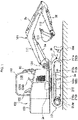
- FIG. 1 is a diagram illustrating the appearance of an electrically driven hydraulic work machine in a first embodiment of the present invention.
- the electrically driven hydraulic work machine includes a lower track structure 101, an upper swing structure 102, and a front work implement 104 of a swing type, and the front work implement 104 is composed of a boom 111, an arm 112, and a bucket 113.
- the upper swing structure 102 and the lower track structure 101 are rotatably connected to each other by a swing ring 215 and the upper swing structure 102 can swing relative to the lower track structure 101 by rotation of a swing motor 3c.
- a swing post 103 is attached to the front part of the upper swing structure 102 and the front work implement 104 is attached to this swing post 103 vertically movably.
- the swing post 103 can be pivoted in the horizontal direction relative to the upper swing structure 102 by extension and contraction of a swing cylinder 3e.
- the boom 111, the arm 112, and the bucket 113 of the front work implement 104 can be pivoted in the upward-downward direction by extension and contraction of a boom cylinder 3a, an arm cylinder 3b, and a bucket cylinder 3d.
- a center frame of the lower track structure 101 right and left track devices 105a and 105b and a blade 106 that carries out upward-downward operation by extension and contraction of a blade cylinder 3h are attached.
- the right and left track devices 105a and 105b include drive wheels 210a and 210b, idlers 211a and 211b, and crawlers 212a and 212b, respectively, and carry out travelling by driving the crawlers 212a and 212b through the drive wheels 210a and 210b by rotation of right and left travelling motors 3f and 3g.
- a battery mounting part 109 in which a battery 70 is mounted on a swing frame 107 and a cabin 110 inside which an operation room 108 is formed are set.
- an operation seat 122, right and left operation lever devices 124A and 124B for the boom cylinder 3a, the arm cylinder 3b, the bucket cylinder 3d, and the swing motor 3c, a monitor 80, and a gate lock lever 24 are disposed.
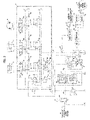
- FIG. 2 is a diagram illustrating a hydraulic drive system included in the electrically driven hydraulic work machine in the first embodiment.
- the hydraulic drive system includes an electric motor 1, a main hydraulic pump (hereinafter, referred to as main pump) 2 of the variable displacement type driven by the electric motor 1, and a pilot pump 30 of the fixed displacement type.
- the hydraulic drive system includes also the boom cylinder 3a, the arm cylinder 3b, the swing motor 3c, the bucket cylinder 3d (see FIG. 1 ), the swing cylinder 3e (see FIG. 1 ), the travelling motors 3f and 3g (see FIG. 1 ), and the blade cylinder 3h (see FIG. 1 ) that are plural actuators driven by a hydraulic fluid delivered from the main pump 2.
- the hydraulic drive system includes also a hydraulic fluid supply line 5 for introducing the hydraulic fluid delivered from the main pump 2 to the plural actuators 3a, 3b, 3c, 3d, 3e, 3f, 3g, and 3h and a control valve block 4 that is connected to the downstream side of the hydraulic fluid supply line 5 and to which the hydraulic fluid delivered from the main pump 2 is introduced.
- actuators 3a, 3b, 3c, 3d, 3e, 3f, 3g, and 3h will be represented with simplification to the "actuators 3a, 3b, 3c ⁇ .”
- the control valve block 4 is a control valve device that distributes and supplies the hydraulic fluid delivered from the main pump 2 to the plural actuators 3a, 3b, 3c ⁇ .
- plural directional control valves 6a, 6b, 6c ⁇ for controlling the plural actuators 3a, 3b, 3c ⁇ and plural pressure compensating valves 7a, 7b, 7c ⁇ each located on the downstream side of the respective meter-in openings of the plural directional control valves 6a, 6b, 6c ⁇ are disposed.
- the pressure of the upstream side of the meter-in openings of the directional control valves 6a, 6b, 6c ⁇ is introduced in such a direction as to bias a spool of the pressure compensating valves 7a, 7b, 7c ⁇ in the closing direction and the load pressure of the actuators 3a, 3b, 3c ⁇ and the output pressure of a differential pressure reducing valve 11 to be described later are introduced in such a direction as to bias the spool in the opening direction.
- check valves 8a, 8b, 8c ⁇ that each prevent backflow of the hydraulic fluid from the directional control valve 6a, 6b, 6c ⁇ to the pressure compensating valve 7a, 7b, 7c ⁇ are disposed.
- shuttle valves 9a, 9b, 9c ⁇ connected to load pressure sensing ports of the plural directional control valve 6a, 6b, 6c ⁇ are disposed.
- the shuttle valves 9a, 9b, 9c ⁇ are connected into a tournament format and the highest load pressure is sensed by the shuttle valve 9a of the highest level and is output to a hydraulic line 8.
- a main relief valve 14 that discharges the hydraulic fluid of the hydraulic fluid supply line 5 to a tank when the pressure of the hydraulic fluid supply line 5 (delivery pressure of the main pump 2) has become equal to or higher than a set pressure decided in advance
- an unloading valve 15 that discharges the hydraulic fluid of the hydraulic fluid supply line 5 to the tank when the differential pressure between the pressure (delivery pressure of the main pump 2) Pps of the hydraulic fluid supply line 5 and the highest load pressure Pplmax has become equal to or higher than a certain set pressure (unloading differential pressure) are disposed.
- the unloading valve 15 has pressure receiving parts 15a and 15d and a spring 15b that bias a spool of the unloading valve 15 in the closing direction and a pressure receiving part 15c that biases the spool in the opening direction.
- the highest load pressure Pplmax of the plural actuators 3a, 3b, 3c ⁇ is introduced to the pressure receiving part 15a.
- An output pressure Pgr (target LS differential pressure) of a prime mover revolution speed sensing valve 13 to be described later is introduced to the pressure receiving part 15d.
- the pressure (delivery pressure of the main pump 2) Pps of the hydraulic fluid supply line 5 is introduced to the pressure receiving part 15c.
- the unloading differential pressure of the unloading valve 15 is set based on the spring constant of the spring 15b and the output pressure of the prime mover revolution speed sensing valve 13 (target LS differential pressure Pgr) introduced to the pressure receiving part 15d.
- the main pump 2 of the variable displacement type has a regulator 12 and the regulator 12 includes a torque control piston 12d to which the pressure (delivery pressure of the main pump 2) Pps of the hydraulic fluid supply line 5 is introduced and that controls the capacity (tilting angle) of the main pump 2 in such a manner that the absorption torque of the main pump 2 does not exceed a predetermined value set based on a spring 12e.
- FIG. 3 is a diagram illustrating the absorption torque characteristic of the main pump 2 controlled by the torque control piston 12d.
- the abscissa axis is the delivery pressure Pps of the main pump 2 and the ordinate axis is capacity q (tilting angle) of the main pump 2.
- the capacity q of the main pump 2 is equal to a maximum capacity qmax that depends on specifications of the main pump 2.
- the capacity q gradually becomes lower from the maximum capacity qmax as the delivery pressure Pps rises.
- the capacity q becomes equal to qmin.
- the absorption torque of the main pump 2 is kept at the predetermined value set based on the spring 12e.
- Ppq2 is the maximum pressure that depends on the set pressure of the main relief valve 14.
- the regulator 12 includes a flow rate control piston 12c that controls the delivery flow rate of the main pump 2 and an LS valve 12b that switches whether to introduce a constant pilot pressure Pi0 generated by a pilot relief valve 32 to be described later to the flow rate control piston 12c or to discharge the pressure of the flow rate control piston 12c to the tank.
- the output pressure Pls of the differential pressure reducing valve 11 is introduced in such a direction as to carry out switching to introduce the constant pilot pressure Pi0 to the flow rate control piston 12c and the output pressure Pgr (target LS differential pressure) of the prime mover revolution speed sensing valve 13 is introduced in such a direction as to carry out switching to discharge the hydraulic fluid of the flow rate control piston 12c to the tank.
- the LS valve 12b and the flow rate control piston 12c control the capacity of the main pump 2 in such a manner that the pressure (delivery pressure of the main pump 2) Pps of the hydraulic fluid supply line 5 becomes higher than the highest load pressure Plmax of the actuator driven by the hydraulic fluid delivered from the main pump 202 by the output pressure Pgr (target LS differential pressure) of the prime mover revolution speed sensing valve 13.
- the prime mover revolution speed sensing valve 13 is disposed on a pilot pressure supply line 31a of the pilot pump 30 and senses the revolution speed of the electric motor 1 from the delivery flow rate of the pilot pump 30.
- the prime mover revolution speed sensing valve 13 has a flow rate sensing valve 13a connected between the hydraulic fluid supply line 31a of the pilot pump 30 and a pilot hydraulic fluid supply line 31b and a differential pressure reducing valve 13b that outputs the differential pressure across the flow rate sensing valve 13a as the target LS differential pressure Pgr.
- the pilot relief valve 32 that keeps the pressure of the pilot pressure supply line 31b constant and forms a pilot hydraulic fluid source on the pilot pressure supply line 31b and a selector valve 100 that switches whether or not to supply the pressure of the pilot pressure supply line 31b to plural pilot valves (pressure reducing valves) that are for actuating the plural directional control valves 6a, 6b, 6c ⁇ and are not illustrated in the diagram are disposed.
- the plural pilot valves are each incorporated in plural operation lever devices including the operation lever devices 124A and 124B (see FIG.
- the above-described gate lock lever 24 for switching whether or not to permit operation of the operation lever of the operation lever device is disposed.
- the selector valve 100 through operation of the gate lock lever 24 by the operator in the operation room 108 (see FIG. 1 ), whether the pressure of the pilot pressure supply line 31b is supplied to the plural pilot valves (not illustrated) as the pilot primary pressure or the pilot primary pressure supplied to the pilot valves is discharged to the tank is switched.
- the main pump 2 is a hydraulic pump driven by the electric motor 1 and the electrically driven hydraulic work machine is an electrically driven hydraulic work machine that drives the main pump 2 to carry out work.
- the electrically driven hydraulic work machine includes a controller 50 that controls the revolution speed of the electric motor 1 on the basis of a target revolution speed of the electric motor 1.
- the controller 50 calculates target power to be consumed by the main pump 2 on the basis of the capacity of the main pump 2 (hydraulic pump), the delivery pressure of the main pump 2 sensed by a pressure sensor 41, and the target revolution speed set in advance regarding the electric motor 1, and limits the target revolution speed of the electric motor 1 in such a manner that the target power falls within a range of the maximum allowable power. Details thereof will be described below.
- the hydraulic drive system includes an inverter 60 for controlling the revolution speed of the electric motor 1 and a battery 70 connected so as to supply DC power to the inverter 60 through a DC power supply line 65. Furthermore, the hydraulic drive system includes an AC/DC converter 90 connected to the DC power supply line 65 and a connector 91 connected to the AC/DC converter 90 and is configured to allow DC power to be supplied to the inverter 60 through the connector 91 and the AC/DC converter 90 on the basis of AC power supplied from a commercial power supply 92 when the commercial power supply 92 is connected to the connector 91.
- the hydraulic drive system includes a target revolution speed instruction dial (target revolution speed instruction device) 51 to make an instruction of the target revolution speed of the electric motor 1, a monitor 80 in which a maximum allowable power setting device 81 that sets the maximum allowable power that can be consumed by the electric motor 1 is incorporated, and the pressure sensor 41 that is connected to the hydraulic fluid supply line 5 and senses the pressure of the hydraulic fluid supply line 5 as the delivery pressure Pps of the main pump 2.
- the output of the pressure sensor 41, the output of the target revolution speed instruction dial 51, and the output of the maximum allowable power setting device 81 are each introduced to the controller 50.
- the controller 50 outputs the target revolution speed of the electric motor 1 to the inverter 60 as a command revolution speed.
- the maximum allowable power setting device 81 incorporated in the monitor 80, plural values of the maximum allowable power corresponding to the power supply that supplies electric power to the electric motor 1 are stored according to the kinds of power supply.
- the maximum allowable power setting device 81 is configured to select what corresponds to the battery 70 and the commercial power supply 92 that are the power supplies that supply electric power to the electric motor 1 from the stored values of the maximum allowable power and set the maximum allowable power. For example, current values are stored as the maximum allowable power.
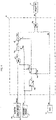
- FIG. 4 is a functional block diagram of the controller 50 in the first embodiment.
- the controller 50 has, as processing functions thereof, a table 50a, a multiplying section 50b, a multiplying section 50c, a minimum value selecting section 50d, a dividing section 50e, a dividing section 50f, and a minimum value selecting section 50g.
- the same characteristic as the absorption torque characteristic (see FIG. 3 ) of the main pump 2 controlled by the torque control piston 12d of the above-described regulator 12 is set.
- the delivery pressure Pps of the main pump 2 that is an output from the pressure sensor 41 is introduced to the table 50a. Reference to the delivery pressure Pps of the main pump 2 is made in the table 50a and the capacity q of the main pump 2 is calculated.
- the main pump 2 may be the fixed displacement type.
- a table in which constant capacity qmax like one illustrated in FIG. 7 is set is prepared, and the capacity can be calculated from the delivery pressure of the main pump at the time.
- the constant capacity qmax may be stored in a memory of the controller 50 and the capacity qmax may be used.
- a target revolution speed Nac that is an input from the target revolution speed instruction dial 51 is introduced to the multiplying section 50b together with the capacity q calculated with the table 50a and a target flow rate Qac is calculated.
- This target flow rate Qac and the delivery pressure Pps of the main pump 2 that is the output from the pressure sensor 41 are introduced to the multiplying section 50c and target power Pwac is calculated.
- maximum allowable power Pwmax that is an output from the maximum allowable power setting device 81 incorporated in the monitor 80 and the target power Pwac calculated in the multiplying section 50c are introduced to the minimum value selecting section 50d and post-limiting power Pwreg is calculated.
- the post-limiting power Pwreg and the delivery pressure Pps of the main pump 2 that is the output from the pressure sensor 41 are introduced to the dividing section 50e and a post-limiting flow rate Qreg is calculated.
- the post-limiting flow rate Qreg and the capacity q calculated with the table 50a are introduced to the dividing section 50f and a post-limiting revolution speed Nreg is calculated.
- the post-limiting revolution speed Nreg and the target revolution speed Nac that is the input from the target revolution speed instruction dial 51 are input to the minimum value selecting section 50g and the smaller value of the post-limiting revolution speed Nreg and the target revolution speed Nac is selected as a command revolution speed Nd and is output to the inverter 60.
- the controller 50 calculates the first target revolution speed (post-limiting revolution speed) Nreg of the electric motor 1 on the basis of the post-limiting power Pwreg that is the lower power of the target power Pwac and the maximum allowable power Pwmax set by the maximum allowable power setting device 81, and selects the lower target revolution speed of this first target revolution speed Nreg and the target revolution speed Nac of the electric motor 1 regarding which an instruction is made by the target revolution speed instruction device (target revolution speed instruction dial) 51 as the second target revolution speed (command target revolution speed) Nd and controls the revolution speed of the electric motor 1 on the basis of the second target revolution speed Nd.
- target revolution speed instruction dial target revolution speed instruction dial
- the hydraulic fluid delivered from the pilot pump 30 of the fixed displacement type is supplied to the pilot pressure supply line 31a and the prime mover revolution speed sensing valve 13 outputs the target LS differential pressure Pgr according to the delivery flow rate of the pilot pump 30.
- the pilot primary pressure Ppi0 generated by the pilot relief valve 32 is supplied to the respective pilot valves of the plural operation lever devices including the operation lever devices 124A and 124B through the selector valve 100 actuated to be switched by the gate lock lever.
- the corresponding pilot valve is actuated and the corresponding directional control valve is switched, and thus the hydraulic fluid is supplied to the corresponding actuator.
- the directional control valve is switched with a stroke according to the operation amount of the operation lever and the main pump 2 driven by the electric motor 1 delivers a flow rate according to the operation amount of the operation lever on the basis of load sensing control by the LS valve 12b and the flow rate control piston 12c of the regulator 12.
- the actuator is driven at a speed according to the operation amount of the operation lever.
- the flow rate control of the main pump 2 by the LS valve 12b and the flow rate control piston 12c is general load sensing control. Therefore, details thereof are omitted.
- DC power supplied from the battery 70 or DC power supplied after being converted from AC power by the AC/DC converter 90 from the commercial power supply 92 through the connector 91 or the DC power of both is supplied to the inverter 60 that drives the electric motor 1 through the DC power supply line 65.
- the maximum allowable power Pwmax set in advance is input to the controller 50 from the maximum allowable power setting device 81 incorporated in the monitor 80.
- the output from the pressure sensor 41 as the pump delivery pressure Pps and the output from the target revolution speed instruction dial 51 as the target revolution speed Nac are each input to the controller 50.
- the maximum allowable power Pwmax and the target power Pwac are each introduced to the minimum value selecting section 50d.
- the post-limiting revolution speed Nreg and the target revolution speed Nac are input to the minimum value selecting section 50g. At this time, since Nreg ⁇ Nac holds as described above, Nreg that is the smaller value than the target revolution speed Nac is selected as the command revolution speed Nd and is output from the controller 50 to the inverter 60.
- the electric power consumed by the electric motor of the electrically driven hydraulic work machine is almost equal to the power consumption of the hydraulic pump driven by the electric motor and is proportional to "delivery pressure” ⁇ "delivery flow rate,” and the delivery flow rate is proportional to the revolution speed of the electric motor. Therefore, when the electric power consumption of the electric motor is desired to be suppressed, setting the instruction value of the target revolution speed instruction dial small by the operator is generally carried out. However, the operator oneself needs to learn how small the instruction value of the target revolution speed instruction dial is set in order to allow prevention of a stop of the electrically driven hydraulic work machine in operation while carrying out actual work. This is a cause of impairing the comfort of the operator due to troublesomeness thereof.
- the controller 50 calculates the target power Pwac to be consumed by the main pump 2 on the basis of the capacity q of the main pump 2, the delivery pressure Pps of the main pump 2 sensed by the pressure sensor 41, and the target revolution speed Nac of the electric motor 1 regarding which an instruction is made by the target revolution speed instruction dial 51.
- the operator of the electrically driven hydraulic work machine does not need to operate the target revolution speed instruction dial 51 of the electric motor 1 to limit the revolution speed of the electric motor 1, and troublesomeness of operation can be eliminated.
- the maximum allowable power setting device 81 is configured to select what corresponds to the battery 70 and the commercial power supply 92 that are power supplies that supply electric power to the electric motor 1 from plural values of the maximum allowable power stored in advance and set the maximum allowable power. Therefore, even an operator who is inexperienced in handling of the electrically driven hydraulic work machine can easily set the maximum allowable power.
- the controller 50 sets the same characteristic as the absorption torque characteristic (see FIG. 4 ) of the main pump 2 in the table 50a and refers to the delivery pressure Pps of the main pump 2 sensed by the pressure sensor 1 in the table 50a to calculate the capacity q of the main pump 2. Therefore, it is possible to accurately calculate the absorption torque of the main pump 2 and surely prevent abnormal lowering of the voltage of the battery 70 that supplies electric power to the electric motor 1 and operation of the breaker of the commercial power supply 92 to the interruption position.
- the controller 50 does not output, to the inverter 60, the post-limiting revolution speed (first target revolution speed) Nreg of the electric motor 1 calculated based on the post-limiting power Pwreg as the command revolution speed Nd as it is but outputs, to the inverter 60, the lower target revolution speed (second target revolution speed) of the post-limiting revolution speed Nreg and the target revolution speed Nac regarding which an instruction is made by the target revolution speed instruction dial 51 as the command revolution speed Nd to control the revolution speed of the electric motor 1.
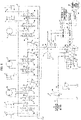
- FIG. 5 is a diagram illustrating a hydraulic drive system included in an electrically driven hydraulic work machine of the second embodiment.
- the hydraulic drive system is different from the first embodiment in that the hydraulic pump is a hydraulic pump for which flow rate control based on load sensing is not carried out and two hydraulic pumps (first and second hydraulic pumps) are included as the hydraulic pump, in that one of the two hydraulic pumps is the split-flow type and, corresponding thereto, three pressure sensors are included as pressure sensors that sense the delivery pressure of the hydraulic pumps, in that a control valve block is a control valve device including directional control valves of the open center type that do not carry out flow dividing control, and in that a regulator of the hydraulic pumps is configured to carry out total torque control (torque control in which, when plural hydraulic pumps exist, the capacity of one hydraulic pump is controlled in such a manner that the total of the absorption torque of the plural hydraulic pumps does not exceed a predetermined value).
- torque control in which, when plural hydraulic pumps exist, the capacity of one hydraulic pump is controlled in such a manner that the total of the absorption torque of the plural hydraulic pumps does not exceed a predetermined value.
- the hydraulic drive system of the present embodiment includes a main hydraulic pump (first hydraulic pump) 20 of the variable displacement type that is a hydraulic pump of the split-flow type driven by the electric motor 1 and a main hydraulic pump (second hydraulic pump) 21 that is a hydraulic pump of the fixed displacement type.
- the main pump 20 of the split-flow type has two delivery ports 20a and 20b that deliver a hydraulic fluid pushed out from a common pumping mechanism including swash plate, piston, and so forth and the hydraulic fluid delivered from the delivery ports 20a and 20b is supplied to the respective directional control valves.
- the main pump 20 may be a hydraulic pump having one delivery port. Furthermore, the main pump 20 may be two or more hydraulic pumps having one delivery port.
- the hydraulic drive system of the present embodiment includes a hydraulic fluid supply line 5a for introducing the hydraulic fluid delivered from one delivery port 20a of the main pump 20 to plural actuators 3a, 3d, and 3g, a hydraulic fluid supply line 5b for introducing the hydraulic fluid delivered from the other delivery port 20b of the main pump 20 to plural actuators 3b and 3f, a hydraulic fluid supply line 5c for introducing the hydraulic fluid delivered from the main pump 21 to plural actuators 3c, 33, and 3h, and a control valve block 40 that is connected to the downstream side of the hydraulic fluid supply lines 5a, 5b, and 5c and to which the hydraulic fluid delivered from the main pumps 20 and 21 is introduced.
- the plural actuators 3a, 3b, 3c, 3d, 3e, 3f, 3g, and 3h are boom cylinder, arm cylinder, swing motor, bucket cylinder, swing cylinder, travelling motors, and blade cylinder, respectively, as described in the first embodiment.
- the control valve block 40 is a control valve device that distributes and supplies the hydraulic fluid delivered from the main pumps 20 and 21 to the plural actuators 3a, 3b, 3c, 3d, 3e, 3f, 3g, and 3h.
- the main pump 20 of the variable displacement type has a regulator 22.
- the regulator 22 includes torque control pistons 22f, 22g, and 22h to which the pressures of the hydraulic fluid supply lines 5a and 5b (delivery pressures of the two delivery ports 20a and 20b of the main pump 20) and the hydraulic fluid of the hydraulic fluid supply line 5c are each introduced and that control the capacity (tilting angle) of the main pump 20 in such a manner that the total of the absorption torque of the main pump 20 and the absorption torque of the main pump 21 does not exceed a predetermined value set based on a spring 22e.
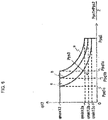
- FIG. 6 is a diagram illustrating the absorption torque characteristic of the main pump 20 controlled by the torque control pistons 22f, 22g, and 22h.
- the abscissa axis is an average delivery pressure (Pps1 + Pps2)/2 of the main pump 20 and the ordinate axis is capacity q12 (tilting angle) of the main pump 20.
- Pps1 and Pps2 are the delivery pressures of the two delivery ports 20a and 20b, respectively, of the main pump 20 and Pps3 is the delivery pressure of the main pump 21.
- the capacity q12 gradually becomes lower from the maximum capacity qmax12 as the average delivery pressure (Pps1 + Pps2)/2 rises.
- the capacity q12 becomes equal to qmin12a-qmin12c. While the average delivery pressure (Pps1 + Pps2)/2 is in the range of Ppq1a-Ppq1c to Ppq2, the absorption torque of the main pump 20 is kept at the predetermined value set based on the spring 22e.
- Ppq2 is the maximum pressure that depends on the set pressure of the main relief valves 14a and 14b.
- the characteristic between Ppqla-Ppqlc to Ppq2 changes depending on the magnitude of the delivery pressure Pps3 of the main pump 21.
- the characteristic becomes a characteristic on a curve a when the value of the delivery pressure Pps3 is small, becomes a characteristic on a curve c when the value of the delivery pressure Pps3 is large, and becomes a characteristic on a curve b when the value of the delivery pressure Pps3 is in the middle.
- the pilot pump 30 of the fixed displacement type is directly connected to the pilot pressure supply line 31b and the pilot relief valve 32 and the selector valve 100 are disposed on the pilot pressure supply line 31b similarly to the first embodiment.
- FIG. 7 is a diagram illustrating the absorption torque characteristic of the main pump 21 of the fixed displacement type.
- the abscissa axis is the delivery pressure Pps3 of the main pump 21 and the ordinate axis is capacity q3 (tilting angle) of the main pump 21. Since the main pump 21 is the fixed displacement type, the capacity is constant at qmax3 irrespective of the value of the delivery pressure Pps3 of the main pump 21.
- Ppq3 is the maximum pressure that depends on the set pressure of the main relief valve 14c.
- the hydraulic drive system includes a controller 55 that outputs a target revolution speed of the electric motor 1 to the inverter 60 as a command revolution speed, and includes pressure sensors 41a and 41b that are connected to the hydraulic fluid supply lines 5a and 5b and sense the delivery pressures Pps1 and Pps2 of the two delivery ports 20a and 20b of the main pump 20 and a pressure sensor 41c that is connected to the hydraulic fluid supply line 5c and senses the delivery pressure Pps3 of the main pump 21.
- the outputs of the pressure sensors 41a, 41b, and 41c, the output of the target revolution speed instruction dial 51, and the output of the maximum allowable power setting device 81 are each introduced to the controller 55.
- FIG. 8 is a functional block diagram of the controller 55 in the second embodiment.
- the controller 55 has, as processing functions thereof, an adding section 55a, a gain 55b, a table 55c, a gain 55d, a dividing section 55e, a dividing section 55f, an adding section 55g, a table 55h, a multiplying section 55i, a multiplying section 55j, a minimum value selecting section 55k, a gain 551, a dividing section 50m, a dividing section 55n, and a minimum value selecting section 55o.
- the delivery pressures Pps1 and Pps2 of the main pump 20 that are outputs from the pressure sensors 41a and 41b are introduced to the adding section 55a and the sum is turned to 1/2 by the gain 55b, and thus the average delivery pressure (Pps1 + Pps2)/2 of the two delivery ports 20a and 20b of the main pump 20 is calculated.
- This average delivery pressure (Pps1 + Pps2)/2 of the main pump 20 is introduced to the table 55c.
- the delivery pressure Pps3 of the main pump 21 that is an output from the pressure sensor 41c is introduced to the table 55c.
- the same characteristic as the absorption torque characteristic ( FIG. 6 ) of the main pump 20 controlled by the torque control pistons 22f, 22g, and 22h of the above-described regulator 22 is set.
- the average delivery pressure (Pps1 + Pps2)/2 of the main pump 20 and the delivery pressure Pps3 of the main pump 21 are introduced to the table 55c.
- Reference to the average delivery pressure (Pps1 + Pps2)/2 of the main pump 20 and the delivery pressure Pps3 of the main pump 21 is made in the table 55c and the capacity q12 of the main pump 20 is calculated.
- the capacity q12 of the main pump 20 calculated with the table 55c is doubled by the gain 55d.
- the target revolution speed Nac that is an input from the target revolution speed instruction dial 51 is introduced to the dividing section 55e together with the capacity q12*2 calculated with the gain 55d and a target flow rate Q12ac of the main pump 20 is calculated.
- the target flow rate Q12ac is the total of the delivery flow rates of two delivery ports 20a and 20b of the main pump 20.
- This target flow rate Q12ac and the average delivery pressure (Pps1 + Pps2)/2 of the main pump 20 calculated with the gain 55b are introduced to the multiplying-dividing section 55f and target power Pw12ac of the main pump 20 is calculated.
- the same characteristic as the absorption torque characteristic (see FIG. 7 ) of the above-described fixed displacement main pump 21 is set.
- the delivery pressure Pps3 of the main pump 21 that is the output from the pressure sensor 41c is introduced to the table 55h.
- Reference to the delivery pressure Pps3 of the main pump 21 is made in the table 55h and the capacity q3 of the main pump 21 is calculated.
- the table 55h outputs the constant value qmax3 as the capacity q3 irrespective of the value of the delivery pressure Pps3.
- the constant capacity qmax3 may be stored in a memory of the controller 55 and the capacity qmax3 may be used.
- the target revolution speed Nac that is the input from the target revolution speed instruction dial 51 is introduced to the multiplying section 55i together with the capacity q3 calculated with the table 55h and a target flow rate Q3ac of the main pump 21 is calculated.
- This target flow rate Q3ac and the delivery pressure Pps3 of the main pump 21 that is the output from the pressure sensor 41c are introduced to the multiplying section 55j and target power Pw3ac of the main pump 21 is calculated.
- the target power Pw12ac calculated in the multiplying section 55f and the target power Pw3ac calculated in the multiplying section 55j are added in the adding section 55g and total target power Pw123ac is calculated.
- Maximum allowable power Pwmax that is an output from the maximum allowable power setting device 81 incorporated in the monitor 80 and the target power Pw123ac calculated in the adding section 55g are introduced to the minimum value selecting section 55k and post-limiting power Pwreg is calculated.
- the post-limiting power Pwreg that is an output from the minimum value selecting section 55k is introduced to the gain 551 and the post-limiting power Pwreg is multiplied by Pw12ac/Pw123ac, and thus post-limiting power Pw12reg that can be used by the main pump 20 is calculated.
- Pw12ac/Pw123ac represents the ratio of the target power Pw12ac of the main pump 20 of the variable displacement type calculated in the multiplying section 55f to the total target power Pw123ac of the main pump 20 of the variable displacement type and the main pump 21 of the fixed displacement type calculated in the adding section 55g.
- Pw12ac/Pw123ac represents the power that can be consumed by the main pump 20 of the variable displacement type in the power limited to the maximum allowable power Pwmax.
- the post-limiting power Pw12reg and the average delivery pressure (Pps1 + Pps2)/2 of the main pump 20 calculated with the gain 55b are introduced to the dividing section 50m and a post-limiting flow rate Q12reg is calculated.
- the post-limiting flow rate Q12reg and the capacity q12*2 calculated with the gain 55d are introduced to the dividing section 55n and a post-limiting revolution speed Nreg is calculated.
- the post-limiting revolution speed Nreg and the target revolution speed Nac that is the input from the target revolution speed instruction dial 51 are input to the minimum value selecting section 55o and the smaller value of the post-limiting revolution speed Nreg and the target revolution speed Nac is selected as a command revolution speed Nd and is output to the inverter 60.
- the hydraulic drive system includes plural hydraulic pumps including the two main pumps 20 and 21 (first and second hydraulic pumps) and includes, as the pressure sensor, plural pressure sensors including the first pressure sensors 41a and 41b and the second pressure sensor 41c that sense the delivery pressure of each of the two main pumps 20 and 21.
- the controller 55 calculates the target power to be consumed by the two main pumps 20 and 21 (first and second hydraulic pumps) on the basis of the capacities of the two main pumps 20 and 21 (first and second hydraulic pumps), the delivery pressures of the two main pumps 20 and 21 sensed by the first pressure sensors 41a and 41b and the second pressure sensor 41c, and the target revolution speed of the electric motor 1.
- the main pump 20 (first hydraulic pump) is the variable displacement type and the main pump 21 (second hydraulic pump) is the fixed displacement type.
- the main pump 20 (first hydraulic pump) has the regulator 22 including the first torque control pistons 22f and 22g and the second torque control piston 22h to which the delivery pressures of the main pump 20 and the delivery pressure of the main pump 21 (second hydraulic pump) are each introduced and that control the capacity of the main pump 20 in such a manner that the total of the absorption torque of the main pump 20 and the absorption torque of the main pump 21 does not exceed a predetermined value.
- the absorption torque characteristic of the main pump 20 controlled by the first torque control pistons 22f and 22g and the second torque control piston 22h is set.
- the corresponding directional control valve When the operation lever of an optional operation lever device in the plural operation lever devices including the operation lever devices 24A and 124B (see FIG. 1 ) is operated, the corresponding directional control valve is switched and the hydraulic fluid is supplied to the corresponding actuator. At this time, the directional control valve is switched with a stroke according to the operation amount of the operation lever and the main pumps 20 and 21 driven by the electric motor 1 deliver a flow rate according to the revolution speed of the electric motor 1 and the absorption torque control of the torque control pistons 22f, 22g, and 22h of the regulator 22. The actuator is driven at a speed according to the operation amount of the operation lever.
- operation of the regulator 22 that carries out the absorption torque control and the directional control valves of the open center type is general and therefore details thereof are omitted.
- DC power supplied from the battery 70 or DC power supplied after being converted from AC power by the AC/DC converter 90 from the commercial power supply 92 through the connector 91 or the DC power of both is supplied to the inverter 60 that drives the electric motor 1 through the DC power supply line 65.
- the maximum allowable power Pwmax set in advance is input to the controller 50 from the maximum allowable power setting device 81 incorporated in the monitor 80.
- the outputs from the pressure sensors 41a, 41b, and 41c as the pump delivery pressures Pps1, Pps2, and Pps3 and the output from the target revolution speed instruction dial 51 as the target revolution speed Nac are each input to the controller 55.
- the maximum allowable power Pwmax and the target power Pw123ac are introduced to the minimum value selecting section 55k.
- Q12ac Pw12ac/(Pps1 + Pps2)/2 holds
- Q12reg/Q12ac Pwmax/Pw123ac ( ⁇ 1) holds from these two expressions.
- the post-limiting revolution speed Nreg and the target revolution speed Nac are input to the minimum value selecting section 55o. At this time, since Nreg ⁇ Nac holds as described above, Nreg that is the smaller value than the target revolution speed Nac is selected as the command revolution speed Nd and is output from the controller 55 to the inverter 60.
- the hydraulic drive system includes, as the hydraulic pump, plural hydraulic pumps including the two main pumps 20 and 21 (first and second hydraulic pumps) and includes, as the pressure sensor, plural pressure sensors including the first pressure sensors 41a and 41b and the second pressure sensor 41c that sense the respective delivery pressures Pps1 and Pps2 of the two main pumps 20 and 21.
- the controller 55 calculates the target power Pw123ac to be consumed by the two main pumps 20 and 21 (first and second hydraulic pumps) on the basis of the capacities q12 and q3 of the two main pumps 20 and 21 (first and second hydraulic pumps), the delivery pressures Pps1 and Pps2 of the two main pumps 20 and 21 sensed by the first pressure sensors 41a and 41b and the second pressure sensor 41c, and the target revolution speed Nac of the electric motor 1.
- the hydraulic drive system includes the plural hydraulic pumps (main pumps 21 and 22) as the hydraulic pump, the target power Pw123ac to be consumed by the plural hydraulic pumps (two main pumps 20 and 21) can be calculated and the target revolution speed Nac of the electric motor 1 can be limited in such a manner that the target power Pw123ac falls within the range of the maximum allowable power Pwmax.
- the main pump 20 is the variable displacement type and the main pump 21 is the fixed displacement type.
- the regulator 22 of the main pump 20 (first hydraulic pump) includes the torque control pistons (first torque control pistons) 22f and 22g and the torque control piston (second torque control piston) 22h to which the delivery pressures of the main pump 20 and the delivery pressure of the main pump 21 (second hydraulic pump) are each introduced and that control the capacity of the main pump 20 in such a manner that the total of the absorption torque of the main pump 20 and the absorption torque of the main pump 21 does not exceed a predetermined value, and carries out total torque control.
- the controller 55 can calculate the target power Pw123ac to be consumed by the two main pumps 20 and 21 and limit the target revolution speed Nac of the electric motor 1 in such a manner that the target power Pw123ac falls within the range of the maximum allowable power Pwmax because the same absorption torque characteristic as the absorption torque characteristic of the main pump 20 is set in the table 55c of the controller 55 and the same absorption torque characteristic as the absorption torque characteristic of the main pump 21 is set in the table 55h.
Landscapes
- Engineering & Computer Science (AREA)
- General Engineering & Computer Science (AREA)
- Mining & Mineral Resources (AREA)
- Structural Engineering (AREA)
- Civil Engineering (AREA)
- Mechanical Engineering (AREA)
- Physics & Mathematics (AREA)
- Fluid Mechanics (AREA)
- Computer Hardware Design (AREA)
- Chemical & Material Sciences (AREA)
- Analytical Chemistry (AREA)
- Fluid-Pressure Circuits (AREA)
- Control Of Positive-Displacement Pumps (AREA)
- Operation Control Of Excavators (AREA)
Applications Claiming Priority (1)
| Application Number | Priority Date | Filing Date | Title |
|---|---|---|---|
| PCT/JP2019/037330 WO2021059337A1 (ja) | 2019-09-24 | 2019-09-24 | 電動式油圧作業機械 |
Publications (3)
| Publication Number | Publication Date |
|---|---|
| EP4036408A1 true EP4036408A1 (de) | 2022-08-03 |
| EP4036408A4 EP4036408A4 (de) | 2023-05-31 |
| EP4036408B1 EP4036408B1 (de) | 2024-08-14 |
Family
ID=75165200
Family Applications (1)
| Application Number | Title | Priority Date | Filing Date |
|---|---|---|---|
| EP19946733.3A Active EP4036408B1 (de) | 2019-09-24 | 2019-09-24 | Elektrische hydraulische arbeitsmaschine |
Country Status (6)
| Country | Link |
|---|---|
| US (1) | US12416135B2 (de) |
| EP (1) | EP4036408B1 (de) |
| JP (1) | JP7261894B2 (de) |
| KR (1) | KR102715461B1 (de) |
| CN (1) | CN113994092B (de) |
| WO (1) | WO2021059337A1 (de) |
Families Citing this family (8)
| Publication number | Priority date | Publication date | Assignee | Title |
|---|---|---|---|---|
| JP6955524B2 (ja) * | 2019-03-26 | 2021-10-27 | 株式会社日立建機ティエラ | バッテリ式作業機械 |
| DE102020112660A1 (de) * | 2020-05-11 | 2021-11-11 | MOOG Gesellschaft mit beschränkter Haftung | Verfahren zum Bestimmen eines momentanen Verschleißzustandes einer hydrostatischen Maschine |
| JP7609684B2 (ja) * | 2021-03-30 | 2025-01-07 | 日立建機株式会社 | 電動式建設機械 |
| US12280382B2 (en) * | 2021-06-24 | 2025-04-22 | Elgin Separation Solutions Industrials, Llc | Electronically controlled hydraulic decanter centrifuge |
| JP7710390B2 (ja) * | 2022-02-28 | 2025-07-18 | ヤンマーホールディングス株式会社 | 作業機械 |
| CN114434448B (zh) * | 2022-03-25 | 2024-04-30 | 江苏徐工工程机械研究院有限公司 | 破拆机器人的工作臂控制方法及控制系统 |
| JP7757010B2 (ja) * | 2022-08-10 | 2025-10-21 | 株式会社クボタ | 作業車両及び作業車両の制御方法 |
| CN121420114A (zh) * | 2023-11-02 | 2026-01-27 | 斗山山猫北美公司 | 用于挖掘机和其他动力机器的控制的系统和方法 |
Family Cites Families (17)
| Publication number | Priority date | Publication date | Assignee | Title |
|---|---|---|---|---|
| JPS605176B2 (ja) * | 1980-03-28 | 1985-02-08 | 三和化學株式会社 | 合成樹脂製緩衝材およびその製造法 |
| JP3444503B2 (ja) * | 1993-03-26 | 2003-09-08 | 株式会社小松製作所 | 油圧駆動機械の制御装置 |
| JP3580260B2 (ja) * | 2001-03-01 | 2004-10-20 | 日産自動車株式会社 | 車両の制御装置 |
| JP3969068B2 (ja) * | 2001-11-21 | 2007-08-29 | コベルコ建機株式会社 | ハイブリッド作業機械のアクチュエータ駆動装置 |
| JP4188902B2 (ja) * | 2004-11-22 | 2008-12-03 | 日立建機株式会社 | 油圧建設機械の制御装置 |
| JP5064160B2 (ja) * | 2007-09-19 | 2012-10-31 | 株式会社小松製作所 | エンジンの制御装置 |
| JP4979529B2 (ja) | 2007-09-28 | 2012-07-18 | 日立建機株式会社 | バッテリ駆動建設機械 |
| EP2381114A4 (de) * | 2009-01-16 | 2018-04-18 | Sumitomo Heavy Industries, LTD. | Hybride arbeitsmaschine und verfahren zu ihrer steuerung |
| JP5096401B2 (ja) * | 2009-03-31 | 2012-12-12 | 理研ビタミン株式会社 | 粉末状ブラウンルウの製造方法 |
| WO2013031768A1 (ja) * | 2011-08-31 | 2013-03-07 | 日立建機株式会社 | 建設機械の油圧駆動装置 |
| JP5914510B2 (ja) * | 2011-10-20 | 2016-05-11 | 日立建機株式会社 | 電動式油圧作業機械の油圧駆動装置 |
| WO2013132721A1 (ja) * | 2012-03-05 | 2013-09-12 | 日立建機株式会社 | 建設機械の油圧駆動装置 |
| JP5952897B2 (ja) | 2012-05-01 | 2016-07-13 | 日立建機株式会社 | ハイブリッド式作業機械 |
| KR101736644B1 (ko) * | 2012-11-07 | 2017-05-16 | 히다찌 겐끼 가부시키가이샤 | 작업 기계의 유압 제어 장치 |
| CN104619996B (zh) * | 2012-11-27 | 2017-10-10 | 株式会社日立建机Tierra | 电动式液压作业机械的液压驱动装置 |
| JP6596458B2 (ja) * | 2017-03-13 | 2019-10-23 | 株式会社日立建機ティエラ | 電動式油圧作業機械の油圧駆動装置 |
| US10947702B2 (en) * | 2018-09-05 | 2021-03-16 | Hitachi Construction Machinery Tierra Co., Ltd | Hydraulic drive system for electrically driven hydraulic work machine |
-
2019
- 2019-09-24 US US17/595,712 patent/US12416135B2/en active Active
- 2019-09-24 KR KR1020217040942A patent/KR102715461B1/ko active Active
- 2019-09-24 JP JP2021548006A patent/JP7261894B2/ja active Active
- 2019-09-24 CN CN201980097557.2A patent/CN113994092B/zh active Active
- 2019-09-24 WO PCT/JP2019/037330 patent/WO2021059337A1/ja not_active Ceased
- 2019-09-24 EP EP19946733.3A patent/EP4036408B1/de active Active
Also Published As
| Publication number | Publication date |
|---|---|
| EP4036408A4 (de) | 2023-05-31 |
| US12416135B2 (en) | 2025-09-16 |
| CN113994092A (zh) | 2022-01-28 |
| US20220259821A1 (en) | 2022-08-18 |
| JP7261894B2 (ja) | 2023-04-20 |
| JPWO2021059337A1 (de) | 2021-04-01 |
| CN113994092B (zh) | 2024-06-04 |
| KR20220009430A (ko) | 2022-01-24 |
| WO2021059337A1 (ja) | 2021-04-01 |
| KR102715461B1 (ko) | 2024-10-11 |
| EP4036408B1 (de) | 2024-08-14 |
Similar Documents
| Publication | Publication Date | Title |
|---|---|---|
| EP4036408B1 (de) | Elektrische hydraulische arbeitsmaschine | |
| EP3674563B1 (de) | Hydraulische antriebsvorrichtung einer elektrisch angetriebenen hydraulischen arbeitsmaschine | |
| EP2775150B1 (de) | Hydraulische antriebsvorrichtung einer motorgetriebenen hydraulikbetriebsmaschine | |
| KR100520475B1 (ko) | 건설기계의 유압회로 | |
| JP5383537B2 (ja) | 油圧システムのポンプ制御装置 | |
| JP3533085B2 (ja) | 建設機械のポンプ制御装置 | |
| US10676897B2 (en) | Construction machine | |
| KR101693129B1 (ko) | 작업 기계 | |
| US9026297B2 (en) | Control system for hybrid construction machine | |
| US20120291427A1 (en) | Attachment control apparatus for hydraulic excavator | |
| US10330128B2 (en) | Hydraulic control system for work machine | |
| EP3581717B1 (de) | Hydraulische antriebsvorrichtung für eine baumaschine | |
| US11753800B2 (en) | Hydraulic drive system for construction machine | |
| US20240263424A1 (en) | Excavator | |
| EP4101995A1 (de) | Baumaschine | |
| EP4563827A1 (de) | Arbeitsmaschine |
Legal Events
| Date | Code | Title | Description |
|---|---|---|---|
| STAA | Information on the status of an ep patent application or granted ep patent |
Free format text: STATUS: THE INTERNATIONAL PUBLICATION HAS BEEN MADE |
|
| PUAI | Public reference made under article 153(3) epc to a published international application that has entered the european phase |
Free format text: ORIGINAL CODE: 0009012 |
|
| STAA | Information on the status of an ep patent application or granted ep patent |
Free format text: STATUS: REQUEST FOR EXAMINATION WAS MADE |
|
| 17P | Request for examination filed |
Effective date: 20220329 |
|
| AK | Designated contracting states |
Kind code of ref document: A1 Designated state(s): AL AT BE BG CH CY CZ DE DK EE ES FI FR GB GR HR HU IE IS IT LI LT LU LV MC MK MT NL NO PL PT RO RS SE SI SK SM TR |
|
| DAV | Request for validation of the european patent (deleted) | ||
| DAX | Request for extension of the european patent (deleted) | ||
| A4 | Supplementary search report drawn up and despatched |
Effective date: 20230504 |
|
| RIC1 | Information provided on ipc code assigned before grant |
Ipc: F15B 11/00 20060101ALI20230426BHEP Ipc: F04B 49/06 20060101AFI20230426BHEP |
|
| GRAP | Despatch of communication of intention to grant a patent |
Free format text: ORIGINAL CODE: EPIDOSNIGR1 |
|
| STAA | Information on the status of an ep patent application or granted ep patent |
Free format text: STATUS: GRANT OF PATENT IS INTENDED |
|
| INTG | Intention to grant announced |
Effective date: 20240606 |
|
| GRAS | Grant fee paid |
Free format text: ORIGINAL CODE: EPIDOSNIGR3 |
|
| GRAA | (expected) grant |
Free format text: ORIGINAL CODE: 0009210 |
|
| STAA | Information on the status of an ep patent application or granted ep patent |
Free format text: STATUS: THE PATENT HAS BEEN GRANTED |
|
| AK | Designated contracting states |
Kind code of ref document: B1 Designated state(s): AL AT BE BG CH CY CZ DE DK EE ES FI FR GB GR HR HU IE IS IT LI LT LU LV MC MK MT NL NO PL PT RO RS SE SI SK SM TR |
|
| REG | Reference to a national code |
Ref country code: GB Ref legal event code: FG4D |
|
| REG | Reference to a national code |
Ref country code: CH Ref legal event code: EP |
|
| REG | Reference to a national code |
Ref country code: DE Ref legal event code: R096 Ref document number: 602019057222 Country of ref document: DE |
|
| REG | Reference to a national code |
Ref country code: IE Ref legal event code: FG4D |
|
| REG | Reference to a national code |
Ref country code: LT Ref legal event code: MG9D |
|
| REG | Reference to a national code |
Ref country code: NL Ref legal event code: MP Effective date: 20240814 |
|
| PG25 | Lapsed in a contracting state [announced via postgrant information from national office to epo] |
Ref country code: NO Free format text: LAPSE BECAUSE OF FAILURE TO SUBMIT A TRANSLATION OF THE DESCRIPTION OR TO PAY THE FEE WITHIN THE PRESCRIBED TIME-LIMIT Effective date: 20241114 |
|
| REG | Reference to a national code |
Ref country code: AT Ref legal event code: MK05 Ref document number: 1713523 Country of ref document: AT Kind code of ref document: T Effective date: 20240814 |
|
| PG25 | Lapsed in a contracting state [announced via postgrant information from national office to epo] |
Ref country code: PT Free format text: LAPSE BECAUSE OF FAILURE TO SUBMIT A TRANSLATION OF THE DESCRIPTION OR TO PAY THE FEE WITHIN THE PRESCRIBED TIME-LIMIT Effective date: 20241216 Ref country code: FI Free format text: LAPSE BECAUSE OF FAILURE TO SUBMIT A TRANSLATION OF THE DESCRIPTION OR TO PAY THE FEE WITHIN THE PRESCRIBED TIME-LIMIT Effective date: 20240814 Ref country code: NL Free format text: LAPSE BECAUSE OF FAILURE TO SUBMIT A TRANSLATION OF THE DESCRIPTION OR TO PAY THE FEE WITHIN THE PRESCRIBED TIME-LIMIT Effective date: 20240814 Ref country code: GR Free format text: LAPSE BECAUSE OF FAILURE TO SUBMIT A TRANSLATION OF THE DESCRIPTION OR TO PAY THE FEE WITHIN THE PRESCRIBED TIME-LIMIT Effective date: 20241115 Ref country code: PL Free format text: LAPSE BECAUSE OF FAILURE TO SUBMIT A TRANSLATION OF THE DESCRIPTION OR TO PAY THE FEE WITHIN THE PRESCRIBED TIME-LIMIT Effective date: 20240814 |
|
| PG25 | Lapsed in a contracting state [announced via postgrant information from national office to epo] |
Ref country code: BG Free format text: LAPSE BECAUSE OF FAILURE TO SUBMIT A TRANSLATION OF THE DESCRIPTION OR TO PAY THE FEE WITHIN THE PRESCRIBED TIME-LIMIT Effective date: 20240814 |
|
| PG25 | Lapsed in a contracting state [announced via postgrant information from national office to epo] |
Ref country code: LV Free format text: LAPSE BECAUSE OF FAILURE TO SUBMIT A TRANSLATION OF THE DESCRIPTION OR TO PAY THE FEE WITHIN THE PRESCRIBED TIME-LIMIT Effective date: 20240814 |
|
| PG25 | Lapsed in a contracting state [announced via postgrant information from national office to epo] |
Ref country code: AT Free format text: LAPSE BECAUSE OF FAILURE TO SUBMIT A TRANSLATION OF THE DESCRIPTION OR TO PAY THE FEE WITHIN THE PRESCRIBED TIME-LIMIT Effective date: 20240814 Ref country code: IS Free format text: LAPSE BECAUSE OF FAILURE TO SUBMIT A TRANSLATION OF THE DESCRIPTION OR TO PAY THE FEE WITHIN THE PRESCRIBED TIME-LIMIT Effective date: 20241214 |
|
| PG25 | Lapsed in a contracting state [announced via postgrant information from national office to epo] |
Ref country code: HR Free format text: LAPSE BECAUSE OF FAILURE TO SUBMIT A TRANSLATION OF THE DESCRIPTION OR TO PAY THE FEE WITHIN THE PRESCRIBED TIME-LIMIT Effective date: 20240814 |
|
| PG25 | Lapsed in a contracting state [announced via postgrant information from national office to epo] |
Ref country code: RS Free format text: LAPSE BECAUSE OF FAILURE TO SUBMIT A TRANSLATION OF THE DESCRIPTION OR TO PAY THE FEE WITHIN THE PRESCRIBED TIME-LIMIT Effective date: 20241114 Ref country code: ES Free format text: LAPSE BECAUSE OF FAILURE TO SUBMIT A TRANSLATION OF THE DESCRIPTION OR TO PAY THE FEE WITHIN THE PRESCRIBED TIME-LIMIT Effective date: 20240814 |
|
| PG25 | Lapsed in a contracting state [announced via postgrant information from national office to epo] |
Ref country code: RS Free format text: LAPSE BECAUSE OF FAILURE TO SUBMIT A TRANSLATION OF THE DESCRIPTION OR TO PAY THE FEE WITHIN THE PRESCRIBED TIME-LIMIT Effective date: 20241114 Ref country code: PT Free format text: LAPSE BECAUSE OF FAILURE TO SUBMIT A TRANSLATION OF THE DESCRIPTION OR TO PAY THE FEE WITHIN THE PRESCRIBED TIME-LIMIT Effective date: 20241216 Ref country code: PL Free format text: LAPSE BECAUSE OF FAILURE TO SUBMIT A TRANSLATION OF THE DESCRIPTION OR TO PAY THE FEE WITHIN THE PRESCRIBED TIME-LIMIT Effective date: 20240814 Ref country code: NO Free format text: LAPSE BECAUSE OF FAILURE TO SUBMIT A TRANSLATION OF THE DESCRIPTION OR TO PAY THE FEE WITHIN THE PRESCRIBED TIME-LIMIT Effective date: 20241114 Ref country code: NL Free format text: LAPSE BECAUSE OF FAILURE TO SUBMIT A TRANSLATION OF THE DESCRIPTION OR TO PAY THE FEE WITHIN THE PRESCRIBED TIME-LIMIT Effective date: 20240814 Ref country code: LV Free format text: LAPSE BECAUSE OF FAILURE TO SUBMIT A TRANSLATION OF THE DESCRIPTION OR TO PAY THE FEE WITHIN THE PRESCRIBED TIME-LIMIT Effective date: 20240814 Ref country code: IS Free format text: LAPSE BECAUSE OF FAILURE TO SUBMIT A TRANSLATION OF THE DESCRIPTION OR TO PAY THE FEE WITHIN THE PRESCRIBED TIME-LIMIT Effective date: 20241214 Ref country code: HR Free format text: LAPSE BECAUSE OF FAILURE TO SUBMIT A TRANSLATION OF THE DESCRIPTION OR TO PAY THE FEE WITHIN THE PRESCRIBED TIME-LIMIT Effective date: 20240814 Ref country code: GR Free format text: LAPSE BECAUSE OF FAILURE TO SUBMIT A TRANSLATION OF THE DESCRIPTION OR TO PAY THE FEE WITHIN THE PRESCRIBED TIME-LIMIT Effective date: 20241115 Ref country code: FI Free format text: LAPSE BECAUSE OF FAILURE TO SUBMIT A TRANSLATION OF THE DESCRIPTION OR TO PAY THE FEE WITHIN THE PRESCRIBED TIME-LIMIT Effective date: 20240814 Ref country code: ES Free format text: LAPSE BECAUSE OF FAILURE TO SUBMIT A TRANSLATION OF THE DESCRIPTION OR TO PAY THE FEE WITHIN THE PRESCRIBED TIME-LIMIT Effective date: 20240814 Ref country code: BG Free format text: LAPSE BECAUSE OF FAILURE TO SUBMIT A TRANSLATION OF THE DESCRIPTION OR TO PAY THE FEE WITHIN THE PRESCRIBED TIME-LIMIT Effective date: 20240814 Ref country code: AT Free format text: LAPSE BECAUSE OF FAILURE TO SUBMIT A TRANSLATION OF THE DESCRIPTION OR TO PAY THE FEE WITHIN THE PRESCRIBED TIME-LIMIT Effective date: 20240814 |
|
| PG25 | Lapsed in a contracting state [announced via postgrant information from national office to epo] |
Ref country code: SM Free format text: LAPSE BECAUSE OF FAILURE TO SUBMIT A TRANSLATION OF THE DESCRIPTION OR TO PAY THE FEE WITHIN THE PRESCRIBED TIME-LIMIT Effective date: 20240814 Ref country code: DK Free format text: LAPSE BECAUSE OF FAILURE TO SUBMIT A TRANSLATION OF THE DESCRIPTION OR TO PAY THE FEE WITHIN THE PRESCRIBED TIME-LIMIT Effective date: 20240814 Ref country code: RO Free format text: LAPSE BECAUSE OF FAILURE TO SUBMIT A TRANSLATION OF THE DESCRIPTION OR TO PAY THE FEE WITHIN THE PRESCRIBED TIME-LIMIT Effective date: 20240814 |
|
| PG25 | Lapsed in a contracting state [announced via postgrant information from national office to epo] |
Ref country code: EE Free format text: LAPSE BECAUSE OF FAILURE TO SUBMIT A TRANSLATION OF THE DESCRIPTION OR TO PAY THE FEE WITHIN THE PRESCRIBED TIME-LIMIT Effective date: 20240814 |
|
| PG25 | Lapsed in a contracting state [announced via postgrant information from national office to epo] |
Ref country code: CZ Free format text: LAPSE BECAUSE OF FAILURE TO SUBMIT A TRANSLATION OF THE DESCRIPTION OR TO PAY THE FEE WITHIN THE PRESCRIBED TIME-LIMIT Effective date: 20240814 |
|
| PG25 | Lapsed in a contracting state [announced via postgrant information from national office to epo] |
Ref country code: SK Free format text: LAPSE BECAUSE OF FAILURE TO SUBMIT A TRANSLATION OF THE DESCRIPTION OR TO PAY THE FEE WITHIN THE PRESCRIBED TIME-LIMIT Effective date: 20240814 Ref country code: IT Free format text: LAPSE BECAUSE OF FAILURE TO SUBMIT A TRANSLATION OF THE DESCRIPTION OR TO PAY THE FEE WITHIN THE PRESCRIBED TIME-LIMIT Effective date: 20240814 |
|
| REG | Reference to a national code |
Ref country code: CH Ref legal event code: PL |
|
| REG | Reference to a national code |
Ref country code: DE Ref legal event code: R097 Ref document number: 602019057222 Country of ref document: DE |
|
| PG25 | Lapsed in a contracting state [announced via postgrant information from national office to epo] |
Ref country code: LU Free format text: LAPSE BECAUSE OF NON-PAYMENT OF DUE FEES Effective date: 20240924 |
|
| PLBE | No opposition filed within time limit |
Free format text: ORIGINAL CODE: 0009261 |
|
| STAA | Information on the status of an ep patent application or granted ep patent |
Free format text: STATUS: NO OPPOSITION FILED WITHIN TIME LIMIT |
|
| PG25 | Lapsed in a contracting state [announced via postgrant information from national office to epo] |
Ref country code: MC Free format text: LAPSE BECAUSE OF FAILURE TO SUBMIT A TRANSLATION OF THE DESCRIPTION OR TO PAY THE FEE WITHIN THE PRESCRIBED TIME-LIMIT Effective date: 20240814 |
|
| REG | Reference to a national code |
Ref country code: BE Ref legal event code: MM Effective date: 20240930 |
|
| PG25 | Lapsed in a contracting state [announced via postgrant information from national office to epo] |
Ref country code: BE Free format text: LAPSE BECAUSE OF NON-PAYMENT OF DUE FEES Effective date: 20240930 |
|
| PG25 | Lapsed in a contracting state [announced via postgrant information from national office to epo] |
Ref country code: FR Free format text: LAPSE BECAUSE OF NON-PAYMENT OF DUE FEES Effective date: 20241014 |
|
| 26N | No opposition filed |
Effective date: 20250515 |
|
| PG25 | Lapsed in a contracting state [announced via postgrant information from national office to epo] |
Ref country code: CH Free format text: LAPSE BECAUSE OF NON-PAYMENT OF DUE FEES Effective date: 20240930 |
|
| PG25 | Lapsed in a contracting state [announced via postgrant information from national office to epo] |
Ref country code: IE Free format text: LAPSE BECAUSE OF NON-PAYMENT OF DUE FEES Effective date: 20240924 |
|
| PG25 | Lapsed in a contracting state [announced via postgrant information from national office to epo] |
Ref country code: SE Free format text: LAPSE BECAUSE OF FAILURE TO SUBMIT A TRANSLATION OF THE DESCRIPTION OR TO PAY THE FEE WITHIN THE PRESCRIBED TIME-LIMIT Effective date: 20240814 |
|
| PGFP | Annual fee paid to national office [announced via postgrant information from national office to epo] |
Ref country code: DE Payment date: 20250730 Year of fee payment: 7 |
|
| PGFP | Annual fee paid to national office [announced via postgrant information from national office to epo] |
Ref country code: GB Payment date: 20250731 Year of fee payment: 7 |
|
| PG25 | Lapsed in a contracting state [announced via postgrant information from national office to epo] |
Ref country code: CY Free format text: LAPSE BECAUSE OF FAILURE TO SUBMIT A TRANSLATION OF THE DESCRIPTION OR TO PAY THE FEE WITHIN THE PRESCRIBED TIME-LIMIT; INVALID AB INITIO Effective date: 20190924 |