EP4036211A1 - Information processing device, method for operating information processing device, and program for operating information processing device - Google Patents
Information processing device, method for operating information processing device, and program for operating information processing device Download PDFInfo
- Publication number
- EP4036211A1 EP4036211A1 EP20869859.7A EP20869859A EP4036211A1 EP 4036211 A1 EP4036211 A1 EP 4036211A1 EP 20869859 A EP20869859 A EP 20869859A EP 4036211 A1 EP4036211 A1 EP 4036211A1
- Authority
- EP
- European Patent Office
- Prior art keywords
- semantic segmentation
- validity
- image
- information processing
- trained model
- Prior art date
- Legal status (The legal status is an assumption and is not a legal conclusion. Google has not performed a legal analysis and makes no representation as to the accuracy of the status listed.)
- Granted
Links
Images









Classifications
-
- G—PHYSICS
- G06—COMPUTING OR CALCULATING; COUNTING
- G06V—IMAGE OR VIDEO RECOGNITION OR UNDERSTANDING
- G06V20/00—Scenes; Scene-specific elements
- G06V20/60—Type of objects
- G06V20/69—Microscopic objects, e.g. biological cells or cellular parts
- G06V20/695—Preprocessing, e.g. image segmentation
-
- C—CHEMISTRY; METALLURGY
- C12—BIOCHEMISTRY; BEER; SPIRITS; WINE; VINEGAR; MICROBIOLOGY; ENZYMOLOGY; MUTATION OR GENETIC ENGINEERING
- C12M—APPARATUS FOR ENZYMOLOGY OR MICROBIOLOGY; APPARATUS FOR CULTURING MICROORGANISMS FOR PRODUCING BIOMASS, FOR GROWING CELLS OR FOR OBTAINING FERMENTATION OR METABOLIC PRODUCTS, i.e. BIOREACTORS OR FERMENTERS
- C12M1/00—Apparatus for enzymology or microbiology
- C12M1/34—Measuring or testing with condition measuring or sensing means, e.g. colony counters
-
- C—CHEMISTRY; METALLURGY
- C12—BIOCHEMISTRY; BEER; SPIRITS; WINE; VINEGAR; MICROBIOLOGY; ENZYMOLOGY; MUTATION OR GENETIC ENGINEERING
- C12Q—MEASURING OR TESTING PROCESSES INVOLVING ENZYMES, NUCLEIC ACIDS OR MICROORGANISMS; COMPOSITIONS OR TEST PAPERS THEREFOR; PROCESSES OF PREPARING SUCH COMPOSITIONS; CONDITION-RESPONSIVE CONTROL IN MICROBIOLOGICAL OR ENZYMOLOGICAL PROCESSES
- C12Q1/00—Measuring or testing processes involving enzymes, nucleic acids or microorganisms; Compositions therefor; Processes of preparing such compositions
- C12Q1/02—Measuring or testing processes involving enzymes, nucleic acids or microorganisms; Compositions therefor; Processes of preparing such compositions involving viable microorganisms
- C12Q1/04—Determining presence or kind of microorganism; Use of selective media for testing antibiotics or bacteriocides; Compositions containing a chemical indicator therefor
-
- G—PHYSICS
- G06—COMPUTING OR CALCULATING; COUNTING
- G06T—IMAGE DATA PROCESSING OR GENERATION, IN GENERAL
- G06T7/00—Image analysis
-
- G—PHYSICS
- G06—COMPUTING OR CALCULATING; COUNTING
- G06V—IMAGE OR VIDEO RECOGNITION OR UNDERSTANDING
- G06V10/00—Arrangements for image or video recognition or understanding
- G06V10/10—Image acquisition
- G06V10/16—Image acquisition using multiple overlapping images; Image stitching
-
- G—PHYSICS
- G06—COMPUTING OR CALCULATING; COUNTING
- G06V—IMAGE OR VIDEO RECOGNITION OR UNDERSTANDING
- G06V10/00—Arrangements for image or video recognition or understanding
- G06V10/20—Image preprocessing
- G06V10/22—Image preprocessing by selection of a specific region containing or referencing a pattern; Locating or processing of specific regions to guide the detection or recognition
-
- G—PHYSICS
- G06—COMPUTING OR CALCULATING; COUNTING
- G06V—IMAGE OR VIDEO RECOGNITION OR UNDERSTANDING
- G06V10/00—Arrangements for image or video recognition or understanding
- G06V10/20—Image preprocessing
- G06V10/25—Determination of region of interest [ROI] or a volume of interest [VOI]
-
- G—PHYSICS
- G06—COMPUTING OR CALCULATING; COUNTING
- G06V—IMAGE OR VIDEO RECOGNITION OR UNDERSTANDING
- G06V10/00—Arrangements for image or video recognition or understanding
- G06V10/20—Image preprocessing
- G06V10/26—Segmentation of patterns in the image field; Cutting or merging of image elements to establish the pattern region, e.g. clustering-based techniques; Detection of occlusion
-
- G—PHYSICS
- G06—COMPUTING OR CALCULATING; COUNTING
- G06V—IMAGE OR VIDEO RECOGNITION OR UNDERSTANDING
- G06V10/00—Arrangements for image or video recognition or understanding
- G06V10/70—Arrangements for image or video recognition or understanding using pattern recognition or machine learning
- G06V10/764—Arrangements for image or video recognition or understanding using pattern recognition or machine learning using classification, e.g. of video objects
-
- G—PHYSICS
- G06—COMPUTING OR CALCULATING; COUNTING
- G06V—IMAGE OR VIDEO RECOGNITION OR UNDERSTANDING
- G06V10/00—Arrangements for image or video recognition or understanding
- G06V10/70—Arrangements for image or video recognition or understanding using pattern recognition or machine learning
- G06V10/77—Processing image or video features in feature spaces; using data integration or data reduction, e.g. principal component analysis [PCA] or independent component analysis [ICA] or self-organising maps [SOM]; Blind source separation
- G06V10/774—Generating sets of training patterns; Bootstrap methods, e.g. bagging or boosting
-
- G—PHYSICS
- G06—COMPUTING OR CALCULATING; COUNTING
- G06V—IMAGE OR VIDEO RECOGNITION OR UNDERSTANDING
- G06V10/00—Arrangements for image or video recognition or understanding
- G06V10/70—Arrangements for image or video recognition or understanding using pattern recognition or machine learning
- G06V10/77—Processing image or video features in feature spaces; using data integration or data reduction, e.g. principal component analysis [PCA] or independent component analysis [ICA] or self-organising maps [SOM]; Blind source separation
- G06V10/776—Validation; Performance evaluation
-
- G—PHYSICS
- G06—COMPUTING OR CALCULATING; COUNTING
- G06V—IMAGE OR VIDEO RECOGNITION OR UNDERSTANDING
- G06V10/00—Arrangements for image or video recognition or understanding
- G06V10/70—Arrangements for image or video recognition or understanding using pattern recognition or machine learning
- G06V10/82—Arrangements for image or video recognition or understanding using pattern recognition or machine learning using neural networks
-
- G—PHYSICS
- G06—COMPUTING OR CALCULATING; COUNTING
- G06V—IMAGE OR VIDEO RECOGNITION OR UNDERSTANDING
- G06V10/00—Arrangements for image or video recognition or understanding
- G06V10/98—Detection or correction of errors, e.g. by rescanning the pattern or by human intervention; Evaluation of the quality of the acquired patterns
-
- G—PHYSICS
- G06—COMPUTING OR CALCULATING; COUNTING
- G06V—IMAGE OR VIDEO RECOGNITION OR UNDERSTANDING
- G06V20/00—Scenes; Scene-specific elements
- G06V20/60—Type of objects
- G06V20/69—Microscopic objects, e.g. biological cells or cellular parts
- G06V20/698—Matching; Classification
-
- G—PHYSICS
- G06—COMPUTING OR CALCULATING; COUNTING
- G06V—IMAGE OR VIDEO RECOGNITION OR UNDERSTANDING
- G06V20/00—Scenes; Scene-specific elements
- G06V20/10—Terrestrial scenes
- G06V20/13—Satellite images
Definitions
- a disclosed technology relates to an information processing apparatus, a method for operating an information processing apparatus, and an operating program of an information processing apparatus.
- a trained model is caused to perform semantic segmentation in which discrimination of a class which is a type of an object appearing in an input image is performed on a pixel-by-pixel basis and to output an output image in which the discriminated class is classified by color or the like from the trained model.
- Statistical information such as the number of objects appearing in the input image is derived based on the output image.
- JP2016-534709A describes a technology for giving, as an input image, a cell image obtained by imaging a plurality of cells in culture to a trained model for performing semantic segmentation.
- the trained model is caused to discriminate the cell as a class.
- the number and size of cells are derived as statistical information based on the output image.
- the output image and the statistical information are output.
- the discrimination accuracy of the class of the semantic segmentation by the trained model is not 100%, and the class may be erroneously discriminated.
- a user tends to focus on the statistical information of the output image and the statistical information, and may not check the output image on which the statistical information is based in order to confirm the validity of the semantic segmentation.
- the user overlooks that the semantic segmentation by the trained model does not have validity.
- an information processing apparatus includes an acquisition unit that acquires an output image output from a trained model as a result of causing the trained model to perform semantic segmentation in which discrimination of a class which is a type of an object appearing in an input image is performed on a pixel-by-pixel basis, an evaluation unit that evaluates validity of the semantic segmentation based on the output image, and a display controller that performs control such that an evaluation result indicating that the semantic segmentation does not have validity is displayed in a case where the evaluation unit evaluates that the semantic segmentation does not have validity.
- the evaluation unit calculates an image feature value from the output image and evaluates the validity of the semantic segmentation by using the image feature value.
- the input image is an image obtained by imaging one region of a plurality of regions obtained by dividing an imaging target
- the evaluation unit generates an entire image indicating the entire imaging target by joining a plurality of the output images corresponding to a plurality of the input images imaged for the plurality of regions, and calculates, as the image feature value, an intensity of a periodic noise of the entire image which is caused by dividing the imaging target into the plurality of regions and imaging the divided regions.
- the information processing apparatus further includes a derivation unit that derives statistical information of the object appearing in the input image based on the output image, and the display controller performs control such that a warning indicating that reliability of the statistical information is low is displayed together with the evaluation result in a case where the evaluation unit evaluates that the semantic segmentation does not have validity.
- the information processing apparatus further includes an output controller that performs control such that the output image evaluated as having no validity of the semantic segmentation is output.
- the information processing apparatus further includes an acceptance unit that accepts a correction instruction for the class of the output image evaluated as having no validity of the semantic segmentation.
- the information processing apparatus further includes a correction unit that corrects the class of the output image evaluated as having no validity of the semantic segmentation.
- the information processing apparatus further includes a re-learning unit that re-trains the trained model by using, as learning data, a corrected output image obtained by correcting the class of the output image evaluated as having no validity of the semantic segmentation.
- the input image is a cell image obtained by imaging a plurality of cells in culture.
- the evaluation unit calculates, as the image feature value, an area ratio between at least two types of classes including the cell or a structure of the cell.
- the evaluation unit changes a threshold value used for evaluating the validity of the semantic segmentation in comparison with the area ratio according to a type of the cell and/or the number of culture days of the cell.
- a method for operating an information processing apparatus includes an acquisition step of acquiring an output image output from a trained model as a result of causing the trained model to perform semantic segmentation in which discrimination of a class which is a type of an object appearing in an input image is performed on a pixel-by-pixel basis, an evaluation step of evaluating validity of the semantic segmentation based on the output image, and a display control step of performing control such that an evaluation result indicating that the semantic segmentation does not have validity is displayed in a case where the semantic segmentation is evaluated as having no validity in the evaluation step.
- An operating program of an information processing apparatus causes a computer to function as an acquisition unit that acquires an output image output from a trained model as a result of causing the trained model to perform semantic segmentation in which discrimination of a class which is a type of an object appearing in an input image is performed on a pixel-by-pixel basis, an evaluation unit that evaluates validity of the semantic segmentation based on the output image, and a display controller that performs control such that an evaluation result indicating that the semantic segmentation does not have validity is displayed in a case where the evaluation unit evaluates that the semantic segmentation does not have validity.
- an information processing apparatus a method for operating an information processing apparatus, and an operating program of an information processing apparatus capable of surely notifying that semantic segmentation by a trained model does not have validity.
- an information processing apparatus 10 is, for example, a desktop personal computer, and receives an input image 12 imaged by an imaging device 11.
- the imaging device 11 is, for example, a phase-contrast microscope, a bright-field microscope, or the like.
- a well plate 15 in which a plurality of wells 14 for culturing cells 13 (see also Figs. 5 and 6 ) are formed is set in the imaging device 11.
- the imaging device 11 images a cell image obtained by imaging a plurality of cells 13 in culture as the input image 12.
- the imaging device 11 images the input image 12 for each of a plurality of regions 20 in which the well 14 is divided.
- the imaging device 11 can move in two directions orthogonal to each other.
- the number of the plurality of regions 20 is, for example, several thousand.
- the well 14 is an example of an "imaging target" according to a disclosed technology.
- the computer constituting the information processing apparatus 10 includes a storage device 30, a memory 31, a central processing unit (CPU) 32, a communication unit 33, a display 34, and an input device 35. These components are interconnected via a busline 36.
- the storage device 30 is a hard disk drive built in the computer constituting the information processing apparatus 10 or connected via a cable or a network. Alternatively, the storage device 30 is a disk array in which a plurality of hard disk drives are connected in series. The storage device 30 stores control programs such as an operating system, various application programs, and various kinds of data attached to these programs. A solid state drive may be used instead of the hard disk drive.
- the memory 31 is a work memory for the CPU 32 to execute processing.
- the CPU 32 comprehensively controls the units of the computer by loading the program stored in the storage device 30 into the memory 31 and executing the processing according to the program.
- the communication unit 33 is a network interface that controls transmission of various kinds of information via a network such as a local area network (LAN).
- the display 34 displays various screens.
- the computer constituting the information processing apparatus 10 accepts an input of an operation instruction from the input device 35 through various screens.
- the input device 35 is a keyboard, a mouse, a touch panel, or the like.
- an operating program 40 is stored in the storage device 30 of the information processing apparatus 10.
- the operating program 40 is an application program for causing the computer to function as the information processing apparatus 10. That is, the operating program 40 is an example of an "operating program of an information processing apparatus" according to the disclosed technology.
- the storage device 30 also stores the input image 12, a trained model 41, an output image 42, statistical information 43, and an evaluation condition 44.
- the CPU 32 of the computer constituting the information processing apparatus 10 functions as a read write (hereinafter, abbreviated as RW) controller 50, a processing unit 51, a derivation unit 52, an evaluation unit 53, and a display controller 54 in cooperation with the memory 31 and the like.
- RW read write
- the RW controller 50 performs control such that various kinds of data are stored in the storage device 30 and various kinds of data within the storage device 30 are read out.
- the RW controller 50 receives the input image 12 from the imaging device 11 and stores the input image in the storage device 30.
- the RW controller 50 reads out the input image 12 and the trained model 41 from the storage device 30, and outputs the input image and the trained model to the processing unit 51.
- the processing unit 51 gives the input image 12 to the trained model 41.
- the trained model 41 is caused to perform semantic segmentation for discriminating a class which is a type of an object appearing in the input image 12 on a pixel-by-pixel basis, and the trained model 41 is caused to output the output image 42.
- the processing unit 51 passes the output image 42 to the RW controller 50.
- the RW controller 50 stores the output image 42 in the storage device 30.
- the trained model 41 is, for example, a convolutional neural network such as a U-shaped neural network (U-Net), SegNet, and a residual network (ResNet).
- the RW controller 50 reads out the output image 42 from the storage device 30 and outputs the output image to the derivation unit 52 and the evaluation unit 53. That is, the RW controller 50 is an example of an "acquisition unit" according to the disclosed technology.
- the RW controller 50 reads out the evaluation condition 44 from the storage device 30 and outputs the evaluation condition to the evaluation unit 53.
- the derivation unit 52 derives the statistical information 43 of the cell 13 based on the output image 42.
- the derivation unit 52 outputs the statistical information 43 to the RW controller 50.
- the RW controller 50 stores the statistical information 43 in the storage device 30.
- the evaluation unit 53 evaluates the validity of the semantic segmentation by the trained model 41 based on the output image 42 and the evaluation condition 44.
- the evaluation unit 53 outputs an evaluation result 55 of the validity to the display controller 54.
- the RW controller 50 reads out the output image 42 and the statistical information 43 from the storage device 30 and outputs the output image and the statistical information to the display controller 54.
- the display controller 54 controls the display of various screens on the display 34.
- the various screens include an analysis result display screen 70 (see Figs. 11 and 12 ) which is a screen for displaying the output image 42 and the statistical information 43, an evaluation result display screen 80 which is a screen for displaying the evaluation result 55 of the evaluation unit 53 (see Fig. 12 ), and the like.
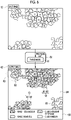
- the output image 42 is an image obtained by discriminating a cell nucleus 61 of class 1, a cellular cytoplasm 62 of class 2, a dead cell 63 of class 3, and a medium 64 of class 4 and color-coding these classes.
- the cell 13 is constituted by the cell nucleus 61 and the cellular cytoplasm 62.
- the cell nucleus 61, the cellular cytoplasm 62, the dead cell 63, and the medium 64 are examples of an "object" according to the disclosed technology.
- Fig. 5 shows a case where the discrimination of the class of the semantic segmentation by the trained model 41 is correct.
- Fig. 6 shows a case where the discrimination of the class of the semantic segmentation by the trained model 41 is incorrect.
- the dead cell 63 to be discriminated as class 3 is erroneously discriminated as the cellular cytoplasm 62 of class 2.
- a periodic noise caused by dividing the well 14 into the plurality of regions 20 and imaging the divided regions may be erroneously discriminated as the cell nucleus 61 of class 1 or the cellular cytoplasm 62 of class 2.
- Such the erroneous discrimination of the class of the semantic segmentation by the trained model 41 often occurs in a case where the input image 12 of the type not given as learning data is input in a training phase of the trained model 41.
- the trained model 41 may erroneously discriminate the class of the semantic segmentation.
- the derivation unit 52 counts the number of cells 13 (hereinafter, referred to as the number of cells) for each of a plurality of output images 42_1, 42_2, 42_3, ..., and 42_N corresponding to the plurality of input images 12 for the plurality of regions 20 illustrated in Fig. 2 .
- the derivation unit 52 counts the number of cells appearing in each of the output images 42_1 to 42_N by counting the number of cell nucleuses 61.
- the derivation unit 52 outputs, as the statistical information 43, the total number of cells appearing in each of the output images 42_1 to 42_N.
- N is a natural number representing the total number of output images 42.
- the evaluation condition 44 is a content indicating that the semantic segmentation by the trained model 41 is evaluated as having no validity in a case where an average of area ratios obtained by dividing an area of the cell nucleus 61 by an area of the cellular cytoplasm 62 (area of cell nucleus 61/area of cellular cytoplasm 62) is out of a range of 0.3 to 0.5.
- the area ratio is an example of an "image feature value” according to the disclosed technology.
- the cell nucleus 61 and the cellular cytoplasm 62 are examples of a "structure of a cell" according to the disclosed technology.
- 0.3 to 0.5 is an example of a "threshold value" according to the disclosed technology.
- the area of the cell nucleus 61 is the total number of pixels discriminated as the cell nucleus 61 by the semantic segmentation.
- the area of the cellular cytoplasm 62 is also the total number of pixels discriminated as the cellular cytoplasm 62 by the semantic segmentation.
- This evaluation condition 44 relies on a statistical fact that the area ratio of the cell nucleus 61 to the cellular cytoplasm 62 is in a range of approximately 0.3 to 0.5. In a case where the average of the area ratios deviates from the range of 0.3 to 0.5, the evaluation condition relies on a consideration that there is a high probability that the trained model 41 erroneously discriminates the class of the semantic segmentation as illustrated in Fig. 6 .
- the evaluation unit 53 calculates the area ratio of the cell nucleus 61 to the cellular cytoplasm 62 for each of the output images 42_1 to 42_N.
- the average of the area ratios is calculated by dividing the sum of the calculated area ratios by N.
- the evaluation unit 53 compares the calculated average of the area ratios with the range of 0.3 to 0.5 which is the average of the area ratios in the evaluation condition 44. As illustrated in Fig. 9 , in a case where the calculated average of the area ratios is within the range of the average of the area ratios in the evaluation condition 44, the evaluation unit 53 evaluates that the semantic segmentation by the trained model 41 has validity. The evaluation unit 53 outputs the evaluation result 55 indicating that the semantic segmentation has validity. On the other hand, as illustrated in Fig. 10 , in a case where the calculated average of the area ratios is out of the range of the average of the area ratios in the evaluation condition 44, the evaluation unit 53 evaluates that the semantic segmentation by the trained model 41 does not have validity. The evaluation unit 53 outputs the evaluation result 55 indicating that the semantic segmentation does not have validity.
- the display controller 54 performs control such that the analysis result display screen 70 is displayed on the display 34.
- the output image 42 and the statistical information 43 are displayed on the analysis result display screen 70.
- the explanatory note 60 of the class is displayed at a lower part of the output image 42.
- a rewind button 71 and a forward button 72 are provided at a lower part of the explanatory note 60.
- the rewind button 71 is selected in a case where one output image 42 to be displayed from among the plurality of output images 42_1 to 42_N is shifted backward.
- the forward button 72 is selected in a case where one output image 42 to be displayed from among the plurality of output images 42_1 to 42_N is shifted forward.
- the display of the analysis result display screen 70 disappears in a case where a confirmation button 73 is selected.
- Fig. 11 shows a case where the evaluation result 55 indicating that the semantic segmentation by the trained model 41 has validity is output from the evaluation unit 53.
- Fig. 12 shows a case where the evaluation result 55 indicating that the semantic segmentation by the trained model 41 does not have validity is output from the evaluation unit 53.
- the display controller 54 superimposes and displays the evaluation result display screen 80 on the analysis result display screen 70.
- the evaluation result 55 indicating that the semantic segmentation by the trained model 41 does not have validity is displayed on the evaluation result display screen 80.
- the display of the evaluation result display screen 80 disappears in a case where the confirmation button 82 is selected.
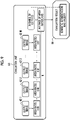
- the CPU 32 of the information processing apparatus 10 functions as the RW controller 50, the processing unit 51, the derivation unit 52, the evaluation unit 53, and the display controller 54.
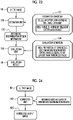
- the input image 12 and the trained model 41 are read out from the storage device 30 by the RW controller 50 (step ST100).
- the input image 12 and the trained model 41 are output from the RW controller 50 to the processing unit 51.
- the input image 12 is given to the trained model 41.
- the output image 42 for which the class of the object appearing in the input image 12 is discriminated is output from the trained model 41 (step ST110).
- the output image 42 is output from the processing unit 51 to the RW controller 50, and is stored in the storage device 30 by the RW controller 50 (step ST120).
- These steps ST100 to ST120 are performed for the plurality of input images 12 for the plurality of regions 20.
- the storage device 30 finally stores the output images 42_1 to 42_N.
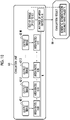
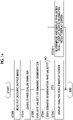
- the output images 42 are read out from the storage device 30 the RW controller 50 (step ST200).
- the output image 42 is output from the RW controller 50 to the derivation unit 52 and the evaluation unit 53.
- Step ST200 is an example of an "acquisition step" according to the disclosed technology.
- the statistical information 43 is derived by the derivation unit 52 based on the output image 42 (step ST210).
- the statistical information 43 is output from the derivation unit 52 to the RW controller 50, and is stored in the storage device 30 by the RW controller 50.
- the evaluation unit 53 evaluates the validity of the semantic segmentation by the trained model 41 based on the output image 42 and the evaluation condition 44 (step ST220).
- the evaluation result 55 of the validity of the semantic segmentation by the trained model 41 is output from the evaluation unit 53 to the display controller 54.
- Step ST220 is an example of an "evaluation step" according to the disclosed technology.
- the analysis result display screen 70 is obtained on the display 34 by the display controller 54 as illustrated in Fig. 11 (step ST240).
- Step ST250 is an example of a "display control step" according to the disclosed technology.
- the information processing apparatus 10 includes the RW controller 50 as the acquisition unit, the evaluation unit 53, and the display controller 54.
- the RW controller 50 acquires the output image 42 by reading out the output image 42 output from the trained model 41 from the storage device 30.
- the evaluation unit 53 evaluates the validity of the semantic segmentation by the trained model 41 based on the output image 42.
- the display controller 54 performs control such that the evaluation result display screen 80 including the evaluation result 55 indicating that the semantic segmentation by the trained model 41 does not have validity is displayed on the display 34. Accordingly, it is possible to reliably notify that the semantic segmentation by the trained model 41 does not have validity.
- the evaluation unit 53 calculates, as the image feature value, the area ratio obtained by dividing the area of the cell nucleus 61 by the area of the cellular cytoplasm 62 from the output image 42.
- the validity of the semantic segmentation by the trained model 41 is evaluated by using the area ratio. Accordingly, the reliability of the evaluation result 55 can be improved as compared with a case where a feature value other than the image feature value of the output image 42 is used for evaluation. Since the area ratio can be easily calculated, the validity can be easily evaluated.
- the information processing apparatus 10 includes the derivation unit 52 for deriving the statistical information 43 of the object appearing in the input image 12 based on the output image 42.
- the display controller 54 performs control such that the warning 81 indicating that the reliability of the statistical information 43 is low is displayed together with the evaluation result 55. Accordingly, in addition to the fact that the semantic segmentation by the trained model 41 does not have validity, it is also possible to notify that the reliability of the statistical information 43 is low. It is possible to effectively prevent the statistical information 43 having low reliability from being erroneously referred to.
- the field of the cell culture has recently been spotlighted with the advent of induced pluripotent stem (iPS) cells and the like.
- iPS induced pluripotent stem
- the disclosed technology the cell image obtained by imaging the plurality of cells 13 in culture is used as the input image 12. Accordingly, it can be said that the disclosed technology is a technology that can meet recent demands.
- the threshold value used for evaluating the validity of the semantic segmentation by the trained model 41 in comparison with the area ratio changes according to the type of the cell 13 and/or the number of culture days of the cell 13.
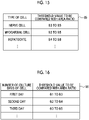
- Table 85 illustrated in Fig. 15 is an example in which the threshold value changes according to the type of the cell 13.
- Examples of the type of the cell 13 include a nerve cell, a myocardial cell, a hepatocyte, and the like.
- An example of the threshold value is 0.3 to 0.5 for the nerve cell, is 0.2 to 0.5 for the myocardial cell, and is 0.4 to 0.6 for the hepatocyte.
- the trained model 41 is a model using a plurality of types of cells 13 as targets.
- Table 86 illustrated in Fig. 16 is an example in which the threshold value changes according to the number of culture days of the cell 13.
- the threshold value is 0.1 to 0.3 in a case where the number of culture days of the cell 13 is on the first day, is 0.2 to 0.4 in a case where the number of culture days of the cell is on the second day, and is 0.3 to 0.5 in a case where the number of culture days of the cell is on the third day.
- Table 87 illustrated in Fig. 17 is an example in which the threshold value changes according to the type and the number of culture days of the cell 13.
- Examples of the type of the cell include a nerve cell, a myocardial cell, a hepatocyte, and the like, as in Table 85 illustrated in Fig. 15 .
- the example of the threshold value of the nerve cell is 0.2 to 0.3 in a case where the number of culture days is on the first day, is 0.22 to 0.33 in a case where the culture days are on the second day, and is 0.24 to 0.38 in a case where the culture days are on the third day.
- the threshold value used for evaluating the validity of the semantic segmentation by the trained model 41 as compared with the area ratio changes according to the type of the cell 13 and/or the number of culture days of the cell 13. Accordingly, it is possible to evaluate the validity of the semantic segmentation by the trained model 41 adapted to the type of the cell 13 and/or the number of culture days of the cell 13.
- the periodic noise caused by dividing the well 14 into the plurality of regions 20 and imaging the divided regions may be erroneously discriminated as the cell nucleus 61 of class 1 or the cellular cytoplasm 62 of class 2.
- an entire image 98 representing the entire well 14 is generated, and the intensity of the periodic noise of the entire image 98 is calculated as the image feature value.
- an evaluation unit 90 of the third embodiment includes a synthesis unit 95, an intensity calculation unit 96, and a comparison unit 97.
- the synthesis unit 95 generates the entire image 98 representing the entire well 14 by joining the plurality of output images 42_1 to 42_N corresponding to the input images 12 for the plurality of regions 20 obtained by dividing the well 14.
- the processing of generating the entire image 98 by joining the fragmentary output images 42_1 to 42_N in this manner is also called tiling.
- the synthesis unit 95 outputs the entire image 98 to the intensity calculation unit 96.
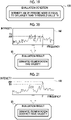
- the intensity calculation unit 96 performs a Fourier transform on the entire image 98 to generate a Fourier spectrum 102 (see Figs. 20 and 21 ) of the entire image 98.
- the intensity calculation unit 96 calculates an intensity AM of a periodic noise of the entire image 98 which is caused by dividing the well 14 into the plurality of regions 20 and imaging the divided regions from the generated Fourier spectrum 102.
- a frequency F of the periodic noise can be obtained in advance from the size, the number, and the like of the region 20.
- the intensity calculation unit 96 calculates, as the intensity AM of the periodic noise, the intensity of the Fourier spectrum 102 of the obtained frequency F.
- the intensity calculation unit 96 outputs the intensity AM of the periodic noise to the comparison unit 97.
- the comparison unit 97 compares the magnitude of the intensity AM of the periodic noise with a preset threshold value TH.
- the evaluation result 55 corresponding to this comparison result is output.
- an evaluation condition 100 of the third embodiment is a content indicating that the semantic segmentation by the trained model 41 is evaluated as having no validity in a case where the intensity AM of the periodic noise is equal to or larger than the threshold value TH.
- the evaluation unit 90 evaluates that the semantic segmentation by the trained model 41 has validity.
- the evaluation unit 90 outputs the evaluation result 55 indicating that the semantic segmentation has validity.
- the evaluation unit 90 evaluates that the semantic segmentation by the trained model 41 does not have validity.
- the evaluation unit 90 outputs the evaluation result 55 indicating that the semantic segmentation does not have validity.
- the synthesis unit 95 generates the entire image 98 by joining the plurality of output images 42_1 to 42_N.
- the intensity calculation unit 96 calculates the intensity AM of the periodic noise of the entire image 98 as the image feature value. Accordingly, in a case where the trained model 41 erroneously discriminates the periodic noise from the cell nucleus 61 of class 1 or the cellular cytoplasm 62 of class 2, it is possible to evaluate that the semantic segmentation does not have validity.
- the first and second embodiments in which the area ratio is calculated as the image feature value may be combined with the third embodiment.
- the evaluation unit evaluates that the semantic segmentation by the trained model 41 does not have validity.
- control is performed such that the output image 42 evaluated as having no validity of the semantic segmentation by the trained model 41 is displayed.
- a correction instruction for the class of the output image 42 evaluated as having no validity of the semantic segmentation by the trained model 41 is accepted.
- a display controller 110 performs control such that a correction screen 111 is displayed on the display 34.
- the display controller 110 turns off the display of the analysis result display screen 70, and then displays the correction screen 111 in place of the analysis result display screen 70.
- the output image 42 evaluated as having no validity of the semantic segmentation by the trained model 41 is displayed on the correction screen 111. That is, the display controller 110 is an example of an "output controller" according to the disclosed technology.
- Fig. 22 shows an example in which the output image 42 for which the dead cell 63 to be discriminated as class 3 is erroneously discriminated as the cellular cytoplasm 62 of class 2 illustrated in Fig. 6 is displayed.
- a rewind button 112 and a forward button 113 at the lower part of the explanatory note 60 of the class are selected in a case where one output image 42 to be displayed is shifted backward and in a case where on output image to be displayed is shifted forward, respectively.
- a correction button group 114 is provided at a lower part of the rewind button 112 and the forward button 113.
- Various buttons for correcting the class erroneously discriminated by the trained model 41 to the original class are provided in the correction button group 114.
- a user corrects the class erroneously discriminated by the trained model 41 to the original class by operating the various buttons of the correction button group 114, and then selects an OK button 115.
- an acceptance unit 120 accepts the correction instruction for the class of the output image 42.
- a corrected output image 42C of which the class is corrected according to this correction instruction is stored in the storage device 30 by the RW controller 50.
- the display of the correction screen 111 disappears.
- the output image 42 evaluated as having no validity of the semantic segmentation by the trained model 41 is controlled to be displayed.
- the acceptance unit 120 accepts the correction instruction for the class of the output image 42 evaluated as having no validity of the semantic segmentation by the trained model 41. Accordingly, the corrected output image 42C of which the class is corrected can be used as learning data for re-training the trained model 41 together with the original input image 12.
- the discrimination accuracy of the class of the trained model 41 can be further improved by re-training the trained model 41 with the corrected output image 42C. As a result, it is possible to reduce a probability that the semantic segmentation by the trained model 41 is evaluated as having no validity.
- a timing at which the correction screen 111 is displayed on the display 34 is not limited to after the display of the analysis result display screen 70 is turned off.
- the output image 42 evaluated as having no validity of the semantic segmentation by the trained model 41 may be stored in the storage device 30, and the correction screen 111 may be displayed on the display 34 according to the request of the user.
- a form in which the output image 42 evaluated as having no validity of the semantic segmentation by the trained model 41 is output is not limited to a form in which the output image 42 evaluated as having no validity of the semantic segmentation by the trained model 41 is displayed as described above.
- a form in which the output image 42 evaluated as having no validity of the semantic segmentation by the trained model 41 is output to the RW controller 50 in order to store the output image in the storage device 30 may be used.
- a form in which the output image 42 evaluated as having no validity of the semantic segmentation by the trained model 41 is transmitted to another apparatus connected to the information processing apparatus 10 via a network may be used.
- An apparatus that receives the output images 42 evaluated as having no validity of the semantic segmentation by the trained model 41 from a plurality of information processing apparatuses 10 via a network and collectively manage the output images 42 may be provided.
- an erroneous discrimination region in which the class is erroneously discriminated is estimated from the entire image 98.
- the output image 42 is corrected by correcting the class of the erroneous discrimination region.
- the entire image 98 is input to an estimation unit 130.
- the estimation unit 130 estimates the erroneous discrimination region in which the class is erroneously discriminated from the entire image 98 according to an estimation condition 131.
- the estimation condition 131 is a content indicating that the cellular cytoplasm 62 having no cell nucleus 61 inside and the cell nucleus 61 having no cellular cytoplasm 62 around are set as the erroneous discrimination regions.
- An estimation unit 130 outputs erroneous discrimination region information 132 which is an estimation result of the erroneous discrimination region to the evaluation unit 133.
- the erroneous discrimination region information 132 is information on coordinates of the erroneous discrimination region in the entire image 98.
- the evaluation unit 133 calculates, as the image feature value, an area proportion of the erroneous discrimination region within the entire image 98 based on the erroneous discrimination region information 132.
- An evaluation condition 134 in this case is a content indicating that the semantic segmentation by the trained model 41 is evaluated as having no validity in a case where the area proportion of the erroneous discrimination region within the entire image 98 is equal to or larger than a preset threshold value.
- the evaluation unit 133 outputs the evaluation result 55 indicating that the semantic segmentation has validity.
- the evaluation unit 133 outputs the evaluation result 55 indicating that the semantic segmentation does not have validity.
- a correction unit 140 corrects the output image 42 evaluated as having no validity of the semantic segmentation by the trained model 41 to obtain the corrected output image 42C. Specifically, the correction unit 140 sets a class of the erroneous discrimination region within the output image 42 to the uniform medium 64.
- the corrected output image 42C is stored in the storage device 30 by the RW controller 50.
- the correction unit 140 corrects the class of the output image 42 evaluated as having no validity of the semantic segmentation by the trained model 41. Accordingly, it is possible to reduce a burden on the user as compared with a case where the correction of the class is entirely entrusted to the user as in the fourth embodiment.
- the corrected output image 42C can be used as the learning data for re-training the trained model 41, and the discrimination accuracy of the class of the trained model 41 can be further improved.
- the user may accept the correction instruction for the class. Since the user only needs to correct the class that cannot be completely corrected by the correction unit 140, the effect that the burden on the user can be reduced can be exhibited in this case as well.
- the corrected output image 42C according to the fourth embodiment and the fifth embodiment is used as the learning data, and the trained model 41 is re-trained.
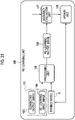
- a re-learning unit 145 has a processing unit 146, an accuracy evaluation unit 147, and an update unit 148.
- the processing unit 146 gives a re-learning input image 149 to the trained model 41, and outputs a re-learning output image 150 from the trained model 41.
- the processing unit 146 outputs the re-learning output image 150 to the accuracy evaluation unit.
- the re-learning input image 149 is the input image 12 input to the trained model 41 by the processing unit 51 in a case where the original output image 42 of the corrected output image 42C is output from the trained model 41.
- Learning data 151 includes the re-learning input image 149 and the corrected output image 42C.
- the accuracy evaluation unit 147 compares the corrected output image 42C with the re-learning output image 150, and evaluates the discrimination accuracy of the class of the trained model 41.
- the accuracy evaluation unit 147 evaluates the discrimination accuracy of the class of the trained model 41 by using a loss function.
- the loss function is a function representing a degree of difference in designation of the class between the corrected output image 42C and the re-learning output image 150. As a calculated value of the loss function becomes closer to zero, the discrimination accuracy of the class of the trained model 41 becomes higher.
- the accuracy evaluation unit 147 outputs an evaluation result of the discrimination accuracy of the class of the trained model 41 by the loss function to the update unit 148.
- the update unit 148 updates the trained model 41 according to the evaluation result from the accuracy evaluation unit 147.
- the update unit 148 changes values of various parameters of the trained model 41 by a stochastic gradient descent method or the like accompanied by a learning coefficient.
- the learning coefficient indicates a range of change in the values of the parameters. That is, as the learning coefficient is a relatively larger value, the range of change in the values of the parameters becomes wider, and a degree of update of the trained model 41 becomes larger.
- the re-learning unit 145 repeats the input of the re-learning input image 149 to the trained model 41 by the processing unit 146, the output of the re-learning output image 150 to the accuracy evaluation unit 147, the evaluation of the discrimination accuracy of the class of the trained model 41 by the accuracy evaluation unit 147, and the update of the trained model 41 by the update unit 148 until the discrimination accuracy of the class of the trained model 41 reaches a preset level.
- the re-learning unit 145 outputs the trained model 41 of which the discrimination accuracy of the class reaches the preset level to the RW controller 50.
- the RW controller 50 stores the trained model 41 from the re-learning unit 145 in the storage device 30, reads out the trained model, and outputs the trained model to the processing unit 51.
- the re-learning unit 145 causes the trained model 41 to perform mini-batch learning using, for example, mini-batch data.
- the mini-batch data is a part (for example, 100 images) of a plurality of divided images obtained by dividing the corrected output image 42C and the re-learning input image 149 (for example, 10,000 divided images divided by frames each having a size of 1/100 of the original image).
- the re-learning unit 145 trains the trained model 41 by creating a plurality of sets (for example, 100 sets) of mini-batch data and sequentially giving the sets to the trained model.
- the corrected output image 42C obtained by correcting the class of the output image 42 evaluated as having no validity of the semantic segmentation by the re-learning unit 145 is used as the learning data 151, and the trained model 41 is re-trained. Accordingly, the discrimination accuracy of the class of the trained model 41 can be easily improved as compared with a case where the re-training of the trained model 41 is performed by another apparatus.
- the trained model 41 having improved discrimination accuracy of the class can be immediately given to the processing unit 51 and can be used.
- the validity of the semantic segmentation by the trained model 41 is evaluated by using the image feature value
- the present invention is not limited thereto.
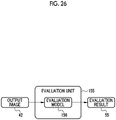
- the validity of the semantic segmentation by the trained model 41 may be evaluated by using an evaluation model 156.
- the evaluation model 156 is a machine learning model that outputs the evaluation result 55 in a case where the output image 42 is input.
- the evaluation model 156 is a model trained by giving a pair of the output image 42 and the evaluation result 55 as the learning data. By doing so, it is possible to omit the processing of calculating the image feature value.
- the image feature value is not limited to the illustrated area ratio and intensity AM of the periodic noise.
- a parameter related to the shape of the cell 13, such as circularity of the cell 13, may be used as the image feature value.
- the threshold value used for evaluating the validity of the semantic segmentation by the trained model 41 may change according to the type of the cell 13 and/or the number of culture days of the cell 13 by applying the second embodiment.
- the statistical information 43 is not limited to the number of cells 13 illustrated above.
- a total area of the cell 13 in the entire image 98 may be used, or an area ratio of the area of the cell nucleus 61 divided by the area of the cellular cytoplasm 62 which is illustrated as the image feature value may be used.
- the present invention is not limited thereto.
- Nucleolus which is a type of the structure of the cell may be used as the class.
- Live cells, dead cells, differentiated cells, undifferentiated cells, and the like may be used as the class.
- an area ratio obtained by dividing the area of the differentiated cell by the area of the undifferentiated cell is calculated as the image feature value.
- each of the plurality of cells 13 may be used as the class.
- a satellite moving image obtained by imaging a road may be used as the input image 12, a car may be used as the class, and the number of cars may be derived as the statistical information 43.
- a moving image obtained by imaging a street may be used as the input image 12, a person may be used as the class, and the number of persons may be used as the statistical information 43.
- a hardware configuration of the computer constituting the information processing apparatus 10 can be modified in various ways. It is also possible to constitute the information processing apparatus 10 by a plurality of computers separated as hardware in order to improve processing capability and reliability. For example, the function of the processing unit 51 of the information processing apparatus 10 and the functions of the derivation unit 52 and the evaluation unit 53 are distributed to two computers. In this case, the information processing apparatus 10 is constituted by two computers.
- the hardware configuration of the computer of the information processing apparatus 10 can be appropriately changed according to required performance such as processing capability, safety, and reliability.
- an application program such as the operating program 40 or the like can be duplicated or can be distributed and stored in a plurality of storage devices in order to ensure safety and reliability.
- the following various processors can be used as a hardware structure of the processing units that execute various kinds of processing such as the RW controller 50, the processing units 51 and 146, the derivation unit 52, the evaluation units 53, 90, 133, and 155, the display controllers 54 and 110, the synthesis unit 95, the intensity calculation unit 96, the comparison unit 97, the acceptance unit 120, the estimation unit 130, the correction unit 140, the accuracy evaluation unit 147, and the update unit 148.
- the various processors include a programmable logic device (PLD), which is a processor capable of changing a circuit configuration after manufacture, such as a field programmable gate array (FPGA), and a dedicated electrical circuit, which is a processor having a circuit configuration specifically designed in order to execute specific processing such as an application specific integrated circuit (ASIC).
- PLD programmable logic device
- FPGA field programmable gate array
- ASIC application specific integrated circuit
- One processing unit may be constituted by one of these various processors, or may be constituted by a combination of two or more processors of the same type or different types (for example, a combination of a plurality of FPGAs and/or a combination of a CPU and a FPGA).
- the plurality of processing units may be constituted by one processor.
- the plurality of processing units are constituted by one processor
- one processor is constituted by a combination of one or more CPUs and software as represented by computers such as clients and servers, and this processor functions as the plurality of processing units.
- a processor that realizes the functions of the entire system including the plurality of processing units via one integrated circuit (IC) chip is used as represented by a system on chip (SoC).
- SoC system on chip
- the various processing units are constituted by using one or more of the various processors as the hardware structure.
- circuit elements such as semiconductor elements are combined can be used as the hardware structure of these various processors.
- An information processing apparatus includes an acquisition processor that acquires an output image output from a trained model as a result of causing the trained model to perform semantic segmentation in which discrimination of a class which is a type of an object appearing in an input image is performed on a pixel-by-pixel basis, an evaluation processor that evaluates validity of the semantic segmentation based on the output image, and a display control processor that performs control such that an evaluation result indicating that the semantic segmentation does not have validity is displayed in a case where the evaluation processor evaluates that the semantic segmentation does not have validity.
- the disclosed technology can also appropriately combine the various embodiments described above with various modification examples.
- the disclosed technology is not limited to the above embodiments, and may adopt various configurations without departing from the gist.
- the disclosed technology extends to a storage medium for storing the program non-temporarily in addition to the program.
- a and/or B has the same meaning as "at least one of A or B". That is, “A and/or B” means that only A may be used, only B may be used, or a combination of A and B may be used. In the present specification, the same concept as “A and/or B” is also applied to a case where three or more matters are expressed by "and/or”.
Landscapes
- Engineering & Computer Science (AREA)
- Theoretical Computer Science (AREA)
- Physics & Mathematics (AREA)
- General Physics & Mathematics (AREA)
- Multimedia (AREA)
- Health & Medical Sciences (AREA)
- General Health & Medical Sciences (AREA)
- Life Sciences & Earth Sciences (AREA)
- Chemical & Material Sciences (AREA)
- Computer Vision & Pattern Recognition (AREA)
- Evolutionary Computation (AREA)
- Artificial Intelligence (AREA)
- Computing Systems (AREA)
- Databases & Information Systems (AREA)
- Medical Informatics (AREA)
- Software Systems (AREA)
- Biomedical Technology (AREA)
- Molecular Biology (AREA)
- Organic Chemistry (AREA)
- Bioinformatics & Cheminformatics (AREA)
- Wood Science & Technology (AREA)
- Zoology (AREA)
- Biotechnology (AREA)
- Genetics & Genomics (AREA)
- Proteomics, Peptides & Aminoacids (AREA)
- Microbiology (AREA)
- Analytical Chemistry (AREA)
- Biochemistry (AREA)
- General Engineering & Computer Science (AREA)
- Sustainable Development (AREA)
- Quality & Reliability (AREA)
- Toxicology (AREA)
- Biophysics (AREA)
- Medicinal Chemistry (AREA)
- Immunology (AREA)
- Image Analysis (AREA)
- Apparatus Associated With Microorganisms And Enzymes (AREA)
- Measuring Or Testing Involving Enzymes Or Micro-Organisms (AREA)
- Micro-Organisms Or Cultivation Processes Thereof (AREA)
Abstract
Description
- A disclosed technology relates to an information processing apparatus, a method for operating an information processing apparatus, and an operating program of an information processing apparatus.
- A trained model is caused to perform semantic segmentation in which discrimination of a class which is a type of an object appearing in an input image is performed on a pixel-by-pixel basis and to output an output image in which the discriminated class is classified by color or the like from the trained model. Statistical information such as the number of objects appearing in the input image is derived based on the output image.
-
JP2016-534709A JP2016-534709A - The discrimination accuracy of the class of the semantic segmentation by the trained model is not 100%, and the class may be erroneously discriminated. However, a user tends to focus on the statistical information of the output image and the statistical information, and may not check the output image on which the statistical information is based in order to confirm the validity of the semantic segmentation. Thus, there is a concern that the user overlooks that the semantic segmentation by the trained model does not have validity.
- It is an object of the disclosed technology to provide an information processing apparatus, a method for operating an information processing apparatus, and an operating program of an information processing apparatus capable of reliably notifying that semantic segmentation by a trained model does not have validity.
- In order to achieve the above object, an information processing apparatus according to the present disclosure includes an acquisition unit that acquires an output image output from a trained model as a result of causing the trained model to perform semantic segmentation in which discrimination of a class which is a type of an object appearing in an input image is performed on a pixel-by-pixel basis, an evaluation unit that evaluates validity of the semantic segmentation based on the output image, and a display controller that performs control such that an evaluation result indicating that the semantic segmentation does not have validity is displayed in a case where the evaluation unit evaluates that the semantic segmentation does not have validity.
- It is preferable that the evaluation unit calculates an image feature value from the output image and evaluates the validity of the semantic segmentation by using the image feature value.
- It is preferable that the input image is an image obtained by imaging one region of a plurality of regions obtained by dividing an imaging target, and the evaluation unit generates an entire image indicating the entire imaging target by joining a plurality of the output images corresponding to a plurality of the input images imaged for the plurality of regions, and calculates, as the image feature value, an intensity of a periodic noise of the entire image which is caused by dividing the imaging target into the plurality of regions and imaging the divided regions.
- It is preferable that the information processing apparatus further includes a derivation unit that derives statistical information of the object appearing in the input image based on the output image, and the display controller performs control such that a warning indicating that reliability of the statistical information is low is displayed together with the evaluation result in a case where the evaluation unit evaluates that the semantic segmentation does not have validity.
- It is preferable that the information processing apparatus further includes an output controller that performs control such that the output image evaluated as having no validity of the semantic segmentation is output.
- It is preferable that the information processing apparatus further includes an acceptance unit that accepts a correction instruction for the class of the output image evaluated as having no validity of the semantic segmentation.
- It is preferable that the information processing apparatus further includes a correction unit that corrects the class of the output image evaluated as having no validity of the semantic segmentation.
- It is preferable that the information processing apparatus further includes a re-learning unit that re-trains the trained model by using, as learning data, a corrected output image obtained by correcting the class of the output image evaluated as having no validity of the semantic segmentation.
- It is preferable that the input image is a cell image obtained by imaging a plurality of cells in culture.
- It is preferable that the evaluation unit calculates, as the image feature value, an area ratio between at least two types of classes including the cell or a structure of the cell.
- It is preferable that the evaluation unit changes a threshold value used for evaluating the validity of the semantic segmentation in comparison with the area ratio according to a type of the cell and/or the number of culture days of the cell.
- A method for operating an information processing apparatus according to the present disclosure includes an acquisition step of acquiring an output image output from a trained model as a result of causing the trained model to perform semantic segmentation in which discrimination of a class which is a type of an object appearing in an input image is performed on a pixel-by-pixel basis, an evaluation step of evaluating validity of the semantic segmentation based on the output image, and a display control step of performing control such that an evaluation result indicating that the semantic segmentation does not have validity is displayed in a case where the semantic segmentation is evaluated as having no validity in the evaluation step.
- An operating program of an information processing apparatus according to the present disclosure causes a computer to function as an acquisition unit that acquires an output image output from a trained model as a result of causing the trained model to perform semantic segmentation in which discrimination of a class which is a type of an object appearing in an input image is performed on a pixel-by-pixel basis, an evaluation unit that evaluates validity of the semantic segmentation based on the output image, and a display controller that performs control such that an evaluation result indicating that the semantic segmentation does not have validity is displayed in a case where the evaluation unit evaluates that the semantic segmentation does not have validity.
- According to the disclosed technology, it is possible to provide an information processing apparatus, a method for operating an information processing apparatus, and an operating program of an information processing apparatus capable of surely notifying that semantic segmentation by a trained model does not have validity.
-
-
Fig. 1 is a diagram illustrating an information processing apparatus and the like. -
Fig. 2 is a diagram illustrating a plurality of regions in which a well is divided. -
Fig. 3 is a block diagram illustrating a computer constituting the information processing apparatus. -
Fig. 4 is a block diagram illustrating a processing unit of a CPU of the information processing apparatus. -
Fig. 5 is a diagram illustrating an example of an input image and an output image. -
Fig. 6 is a diagram illustrating an example of the input image and the output image. -
Fig. 7 is a diagram illustrating processing of a derivation unit. -
Fig. 8 is a diagram illustrating an evaluation condition. -
Fig. 9 is a diagram illustrating processing of the evaluation unit. -
Fig. 10 is a diagram illustrating processing of the evaluation unit. -
Fig. 11 is a diagram illustrating an analysis result display screen. -
Fig. 12 is a diagram illustrating a state in which an evaluation result display screen is superimposed and displayed on the analysis result display screen. -
Fig. 13 is a flowchart illustrating a processing procedure of the information processing apparatus. -
Fig. 14 is a flowchart illustrating a processing procedure of the information processing apparatus. -
Fig. 15 is a diagram illustrating an example in which a threshold value to be compared with an area ratio obtained by dividing an area of a cell nucleus by an area of a cellular cytoplasm changes according to a type of a cell. -
Fig. 16 is a diagram illustrating an example in which the threshold value to be compared with the area ratio obtained by dividing the area of the cell nucleus by the area of the cellular cytoplasm changes according to the number of culture days of the cell. -
Fig. 17 is a diagram illustrating an example in which the threshold value to be compared with the area ratio obtained by dividing the area of the cell nucleus by the area of the cellular cytoplasm changes according to the type and the number of culture days of the cell. -
Fig. 18 is a diagram illustrating an evaluation unit according to a third embodiment. -
Fig. 19 is a diagram illustrating an evaluation condition according to the third embodiment. -
Fig. 20 is a diagram illustrating processing of the evaluation unit according to the third embodiment. -
Fig. 21 is a diagram illustrating processing of an evaluation unit according to a third embodiment. -
Fig. 22 is a diagram illustrating a correction screen. -
Fig. 23 is a diagram illustrating an aspect in which an erroneous discrimination region in which a class is erroneously discriminated is estimated from an entire image and evaluation is performed based on erroneous discrimination region information. -
Fig. 24 is a diagram illustrating an aspect in which the class of the output image evaluated as having no validity of semantic segmentation by a trained model is corrected. -
Fig. 25 is a block diagram illustrating a re-learning unit. -
Fig. 26 is a diagram illustrating an aspect in which validity of the semantic segmentation by the trained model is evaluated by using an evaluation model. - In
Fig. 1 , aninformation processing apparatus 10 is, for example, a desktop personal computer, and receives aninput image 12 imaged by animaging device 11. Theimaging device 11 is, for example, a phase-contrast microscope, a bright-field microscope, or the like. A wellplate 15 in which a plurality ofwells 14 for culturing cells 13 (see alsoFigs. 5 and6 ) are formed is set in theimaging device 11. Theimaging device 11 images a cell image obtained by imaging a plurality ofcells 13 in culture as theinput image 12. - As illustrated in
Fig. 2 , theimaging device 11 images theinput image 12 for each of a plurality ofregions 20 in which thewell 14 is divided. Thus, as illustrated by arrows inFig. 1 , theimaging device 11 can move in two directions orthogonal to each other. The number of the plurality ofregions 20 is, for example, several thousand. The well 14 is an example of an "imaging target" according to a disclosed technology. - In
Fig. 3 , the computer constituting theinformation processing apparatus 10 includes astorage device 30, amemory 31, a central processing unit (CPU) 32, acommunication unit 33, adisplay 34, and aninput device 35. These components are interconnected via abusline 36. - The
storage device 30 is a hard disk drive built in the computer constituting theinformation processing apparatus 10 or connected via a cable or a network. Alternatively, thestorage device 30 is a disk array in which a plurality of hard disk drives are connected in series. Thestorage device 30 stores control programs such as an operating system, various application programs, and various kinds of data attached to these programs. A solid state drive may be used instead of the hard disk drive. - The
memory 31 is a work memory for theCPU 32 to execute processing. TheCPU 32 comprehensively controls the units of the computer by loading the program stored in thestorage device 30 into thememory 31 and executing the processing according to the program. - The
communication unit 33 is a network interface that controls transmission of various kinds of information via a network such as a local area network (LAN). Thedisplay 34 displays various screens. The computer constituting theinformation processing apparatus 10 accepts an input of an operation instruction from theinput device 35 through various screens. Theinput device 35 is a keyboard, a mouse, a touch panel, or the like. - In
Fig. 4 , anoperating program 40 is stored in thestorage device 30 of theinformation processing apparatus 10. The operatingprogram 40 is an application program for causing the computer to function as theinformation processing apparatus 10. That is, the operatingprogram 40 is an example of an "operating program of an information processing apparatus" according to the disclosed technology. Thestorage device 30 also stores theinput image 12, a trainedmodel 41, anoutput image 42,statistical information 43, and anevaluation condition 44. - In a case where the
operating program 40 is activated, theCPU 32 of the computer constituting theinformation processing apparatus 10 functions as a read write (hereinafter, abbreviated as RW)controller 50, aprocessing unit 51, aderivation unit 52, anevaluation unit 53, and adisplay controller 54 in cooperation with thememory 31 and the like. - The
RW controller 50 performs control such that various kinds of data are stored in thestorage device 30 and various kinds of data within thestorage device 30 are read out. For example, theRW controller 50 receives theinput image 12 from theimaging device 11 and stores the input image in thestorage device 30. TheRW controller 50 reads out theinput image 12 and the trainedmodel 41 from thestorage device 30, and outputs the input image and the trained model to theprocessing unit 51. - The
processing unit 51 gives theinput image 12 to the trainedmodel 41. The trainedmodel 41 is caused to perform semantic segmentation for discriminating a class which is a type of an object appearing in theinput image 12 on a pixel-by-pixel basis, and the trainedmodel 41 is caused to output theoutput image 42. Theprocessing unit 51 passes theoutput image 42 to theRW controller 50. TheRW controller 50 stores theoutput image 42 in thestorage device 30. The trainedmodel 41 is, for example, a convolutional neural network such as a U-shaped neural network (U-Net), SegNet, and a residual network (ResNet). - The
RW controller 50 reads out theoutput image 42 from thestorage device 30 and outputs the output image to thederivation unit 52 and theevaluation unit 53. That is, theRW controller 50 is an example of an "acquisition unit" according to the disclosed technology. - The
RW controller 50 reads out theevaluation condition 44 from thestorage device 30 and outputs the evaluation condition to theevaluation unit 53. - The
derivation unit 52 derives thestatistical information 43 of thecell 13 based on theoutput image 42. Thederivation unit 52 outputs thestatistical information 43 to theRW controller 50. TheRW controller 50 stores thestatistical information 43 in thestorage device 30. - The
evaluation unit 53 evaluates the validity of the semantic segmentation by the trainedmodel 41 based on theoutput image 42 and theevaluation condition 44. Theevaluation unit 53 outputs anevaluation result 55 of the validity to thedisplay controller 54. - The
RW controller 50 reads out theoutput image 42 and thestatistical information 43 from thestorage device 30 and outputs the output image and the statistical information to thedisplay controller 54. - The
display controller 54 controls the display of various screens on thedisplay 34. The various screens include an analysis result display screen 70 (seeFigs. 11 and12 ) which is a screen for displaying theoutput image 42 and thestatistical information 43, an evaluationresult display screen 80 which is a screen for displaying theevaluation result 55 of the evaluation unit 53 (seeFig. 12 ), and the like. - In
Figs. 5 and6 , as illustrated in anexplanatory note 60, theoutput image 42 is an image obtained by discriminating acell nucleus 61 of class 1, acellular cytoplasm 62 ofclass 2, adead cell 63 ofclass 3, and a medium 64 ofclass 4 and color-coding these classes. Thecell 13 is constituted by thecell nucleus 61 and thecellular cytoplasm 62. Thecell nucleus 61, thecellular cytoplasm 62, thedead cell 63, and the medium 64 are examples of an "object" according to the disclosed technology. -
Fig. 5 shows a case where the discrimination of the class of the semantic segmentation by the trainedmodel 41 is correct. On the other hand,Fig. 6 shows a case where the discrimination of the class of the semantic segmentation by the trainedmodel 41 is incorrect. Specifically, as illustrated in acircle 65 of a dashed double-dotted line, thedead cell 63 to be discriminated asclass 3 is erroneously discriminated as thecellular cytoplasm 62 ofclass 2. Although not illustrated, in the trainedmodel 41, a periodic noise caused by dividing the well 14 into the plurality ofregions 20 and imaging the divided regions may be erroneously discriminated as thecell nucleus 61 of class 1 or thecellular cytoplasm 62 ofclass 2. Such the erroneous discrimination of the class of the semantic segmentation by the trainedmodel 41 often occurs in a case where theinput image 12 of the type not given as learning data is input in a training phase of the trainedmodel 41. As described above, the trainedmodel 41 may erroneously discriminate the class of the semantic segmentation. - As illustrated in
Fig. 7 , thederivation unit 52 counts the number of cells 13 (hereinafter, referred to as the number of cells) for each of a plurality of output images 42_1, 42_2, 42_3, ..., and 42_N corresponding to the plurality ofinput images 12 for the plurality ofregions 20 illustrated inFig. 2 . For example, thederivation unit 52 counts the number of cells appearing in each of the output images 42_1 to 42_N by counting the number ofcell nucleuses 61. Thederivation unit 52 outputs, as thestatistical information 43, the total number of cells appearing in each of the output images 42_1 to 42_N. N is a natural number representing the total number ofoutput images 42. - In
Fig. 8 , theevaluation condition 44 is a content indicating that the semantic segmentation by the trainedmodel 41 is evaluated as having no validity in a case where an average of area ratios obtained by dividing an area of thecell nucleus 61 by an area of the cellular cytoplasm 62 (area ofcell nucleus 61/area of cellular cytoplasm 62) is out of a range of 0.3 to 0.5. The area ratio is an example of an "image feature value" according to the disclosed technology. Thecell nucleus 61 and thecellular cytoplasm 62 are examples of a "structure of a cell" according to the disclosed technology. 0.3 to 0.5 is an example of a "threshold value" according to the disclosed technology. The area of thecell nucleus 61 is the total number of pixels discriminated as thecell nucleus 61 by the semantic segmentation. Similarly, the area of thecellular cytoplasm 62 is also the total number of pixels discriminated as thecellular cytoplasm 62 by the semantic segmentation. - This
evaluation condition 44 relies on a statistical fact that the area ratio of thecell nucleus 61 to thecellular cytoplasm 62 is in a range of approximately 0.3 to 0.5. In a case where the average of the area ratios deviates from the range of 0.3 to 0.5, the evaluation condition relies on a consideration that there is a high probability that the trainedmodel 41 erroneously discriminates the class of the semantic segmentation as illustrated inFig. 6 . - As illustrated in
Figs. 9 and10 , theevaluation unit 53 calculates the area ratio of thecell nucleus 61 to thecellular cytoplasm 62 for each of the output images 42_1 to 42_N. The average of the area ratios is calculated by dividing the sum of the calculated area ratios by N. - The
evaluation unit 53 compares the calculated average of the area ratios with the range of 0.3 to 0.5 which is the average of the area ratios in theevaluation condition 44. As illustrated inFig. 9 , in a case where the calculated average of the area ratios is within the range of the average of the area ratios in theevaluation condition 44, theevaluation unit 53 evaluates that the semantic segmentation by the trainedmodel 41 has validity. Theevaluation unit 53 outputs theevaluation result 55 indicating that the semantic segmentation has validity. On the other hand, as illustrated inFig. 10 , in a case where the calculated average of the area ratios is out of the range of the average of the area ratios in theevaluation condition 44, theevaluation unit 53 evaluates that the semantic segmentation by the trainedmodel 41 does not have validity. Theevaluation unit 53 outputs theevaluation result 55 indicating that the semantic segmentation does not have validity. - As illustrated in
Figs. 11 and12 , thedisplay controller 54 performs control such that the analysis result display screen 70 is displayed on thedisplay 34. Theoutput image 42 and thestatistical information 43 are displayed on the analysis result display screen 70. Theexplanatory note 60 of the class is displayed at a lower part of theoutput image 42. Arewind button 71 and aforward button 72 are provided at a lower part of theexplanatory note 60. Therewind button 71 is selected in a case where oneoutput image 42 to be displayed from among the plurality of output images 42_1 to 42_N is shifted backward. Theforward button 72 is selected in a case where oneoutput image 42 to be displayed from among the plurality of output images 42_1 to 42_N is shifted forward. The display of the analysis result display screen 70 disappears in a case where aconfirmation button 73 is selected. -
Fig. 11 shows a case where theevaluation result 55 indicating that the semantic segmentation by the trainedmodel 41 has validity is output from theevaluation unit 53. On the other hand,Fig. 12 shows a case where theevaluation result 55 indicating that the semantic segmentation by the trainedmodel 41 does not have validity is output from theevaluation unit 53. In this case, thedisplay controller 54 superimposes and displays the evaluationresult display screen 80 on the analysis result display screen 70. - The
evaluation result 55 indicating that the semantic segmentation by the trainedmodel 41 does not have validity is displayed on the evaluationresult display screen 80. A warning 81 indicating that the reliability of thestatistical information 43 is low is displayed on the evaluationresult display screen 80. The display of the evaluationresult display screen 80 disappears in a case where theconfirmation button 82 is selected. - Next, actions of the above configuration will be described with reference to the flowcharts of
Figs. 13 and14 . First, in a case where theoperating program 40 is activated in theinformation processing apparatus 10, as illustrated inFig. 4 , theCPU 32 of theinformation processing apparatus 10 functions as theRW controller 50, theprocessing unit 51, thederivation unit 52, theevaluation unit 53, and thedisplay controller 54. - As illustrated in
Fig. 13 , theinput image 12 and the trainedmodel 41 are read out from thestorage device 30 by the RW controller 50 (step ST100). Theinput image 12 and the trainedmodel 41 are output from theRW controller 50 to theprocessing unit 51. - In the
processing unit 51, theinput image 12 is given to the trainedmodel 41. Theoutput image 42 for which the class of the object appearing in theinput image 12 is discriminated is output from the trained model 41 (step ST110). Theoutput image 42 is output from theprocessing unit 51 to theRW controller 50, and is stored in thestorage device 30 by the RW controller 50 (step ST120). These steps ST100 to ST120 are performed for the plurality ofinput images 12 for the plurality ofregions 20. Thus, thestorage device 30 finally stores the output images 42_1 to 42_N. - As illustrated in
Fig. 14 , the output images 42 (output images 42_1 to 42_N) are read out from thestorage device 30 the RW controller 50 (step ST200). Theoutput image 42 is output from theRW controller 50 to thederivation unit 52 and theevaluation unit 53. Step ST200 is an example of an "acquisition step" according to the disclosed technology. - As illustrated in
Fig. 7 , thestatistical information 43 is derived by thederivation unit 52 based on the output image 42 (step ST210). Thestatistical information 43 is output from thederivation unit 52 to theRW controller 50, and is stored in thestorage device 30 by theRW controller 50. - As illustrated in
Figs. 9 and10 , theevaluation unit 53 evaluates the validity of the semantic segmentation by the trainedmodel 41 based on theoutput image 42 and the evaluation condition 44 (step ST220). Theevaluation result 55 of the validity of the semantic segmentation by the trainedmodel 41 is output from theevaluation unit 53 to thedisplay controller 54. Step ST220 is an example of an "evaluation step" according to the disclosed technology. - In a case where the
evaluation result 55 indicating that the semantic segmentation by the trainedmodel 41 has validity is output from the evaluation unit 53 (YES in step ST230), the analysis result display screen 70 is obtained on thedisplay 34 by thedisplay controller 54 as illustrated inFig. 11 (step ST240). - On the other hand, in a case where the
evaluation result 55 indicating that the semantic segmentation by the trainedmodel 41 does not have validity is output from the evaluation unit 53 (NO in step ST230), the evaluationresult display screen 80 is superimposed and displayed on the analysis result display screen 70 thedisplay controller 54 as illustrated inFig. 12 (step ST250). Step ST250 is an example of a "display control step" according to the disclosed technology. - As described above, the
information processing apparatus 10 includes theRW controller 50 as the acquisition unit, theevaluation unit 53, and thedisplay controller 54. TheRW controller 50 acquires theoutput image 42 by reading out theoutput image 42 output from the trainedmodel 41 from thestorage device 30. Theevaluation unit 53 evaluates the validity of the semantic segmentation by the trainedmodel 41 based on theoutput image 42. In a case where theevaluation unit 53 evaluates that the semantic segmentation by the trainedmodel 41 does not have validity, thedisplay controller 54 performs control such that the evaluationresult display screen 80 including theevaluation result 55 indicating that the semantic segmentation by the trainedmodel 41 does not have validity is displayed on thedisplay 34. Accordingly, it is possible to reliably notify that the semantic segmentation by the trainedmodel 41 does not have validity. - The
evaluation unit 53 calculates, as the image feature value, the area ratio obtained by dividing the area of thecell nucleus 61 by the area of thecellular cytoplasm 62 from theoutput image 42. The validity of the semantic segmentation by the trainedmodel 41 is evaluated by using the area ratio. Accordingly, the reliability of theevaluation result 55 can be improved as compared with a case where a feature value other than the image feature value of theoutput image 42 is used for evaluation. Since the area ratio can be easily calculated, the validity can be easily evaluated. - The
information processing apparatus 10 includes thederivation unit 52 for deriving thestatistical information 43 of the object appearing in theinput image 12 based on theoutput image 42. In a case where theevaluation unit 53 evaluates that the semantic segmentation by the trainedmodel 41 does not have validity, thedisplay controller 54 performs control such that the warning 81 indicating that the reliability of thestatistical information 43 is low is displayed together with theevaluation result 55. Accordingly, in addition to the fact that the semantic segmentation by the trainedmodel 41 does not have validity, it is also possible to notify that the reliability of thestatistical information 43 is low. It is possible to effectively prevent thestatistical information 43 having low reliability from being erroneously referred to. - Here, the field of the cell culture has recently been spotlighted with the advent of induced pluripotent stem (iPS) cells and the like. Thus, there is a demand for a technology that can surely notify that the discrimination of the class of the object within the cell image by the trained
model 41 does not have validity. In the disclosed technology, the cell image obtained by imaging the plurality ofcells 13 in culture is used as theinput image 12. Accordingly, it can be said that the disclosed technology is a technology that can meet recent demands. - It is considered that the area ratio obtained by dividing the area of the
cell nucleus 61 by the area of thecellular cytoplasm 62 differs depending on the type of thecell 13. Similarly, it is considered that the area ratio differs depending on the number of culture days of thecell 13. Thus, in the second embodiment illustrated inFigs. 15 to 17 , the threshold value used for evaluating the validity of the semantic segmentation by the trainedmodel 41 in comparison with the area ratio changes according to the type of thecell 13 and/or the number of culture days of thecell 13. - Table 85 illustrated in
Fig. 15 is an example in which the threshold value changes according to the type of thecell 13. Examples of the type of thecell 13 include a nerve cell, a myocardial cell, a hepatocyte, and the like. An example of the threshold value is 0.3 to 0.5 for the nerve cell, is 0.2 to 0.5 for the myocardial cell, and is 0.4 to 0.6 for the hepatocyte. In this case, it is premised that the trainedmodel 41 is a model using a plurality of types ofcells 13 as targets. - Table 86 illustrated in
Fig. 16 is an example in which the threshold value changes according to the number of culture days of thecell 13. The threshold value is 0.1 to 0.3 in a case where the number of culture days of thecell 13 is on the first day, is 0.2 to 0.4 in a case where the number of culture days of the cell is on the second day, and is 0.3 to 0.5 in a case where the number of culture days of the cell is on the third day. - Table 87 illustrated in
Fig. 17 is an example in which the threshold value changes according to the type and the number of culture days of thecell 13. Examples of the type of the cell include a nerve cell, a myocardial cell, a hepatocyte, and the like, as in Table 85 illustrated inFig. 15 . For example, the example of the threshold value of the nerve cell is 0.2 to 0.3 in a case where the number of culture days is on the first day, is 0.22 to 0.33 in a case where the culture days are on the second day, and is 0.24 to 0.38 in a case where the culture days are on the third day. - As described above, in the second embodiment, the threshold value used for evaluating the validity of the semantic segmentation by the trained
model 41 as compared with the area ratio changes according to the type of thecell 13 and/or the number of culture days of thecell 13. Accordingly, it is possible to evaluate the validity of the semantic segmentation by the trainedmodel 41 adapted to the type of thecell 13 and/or the number of culture days of thecell 13. - As described in
Fig. 6 , in the trainedmodel 41, the periodic noise caused by dividing the well 14 into the plurality ofregions 20 and imaging the divided regions may be erroneously discriminated as thecell nucleus 61 of class 1 or thecellular cytoplasm 62 ofclass 2. Thus, in the third embodiment illustrated inFigs. 18 to 21 , anentire image 98 representing theentire well 14 is generated, and the intensity of the periodic noise of theentire image 98 is calculated as the image feature value. - In
Fig. 18 , anevaluation unit 90 of the third embodiment includes asynthesis unit 95, anintensity calculation unit 96, and acomparison unit 97. Thesynthesis unit 95 generates theentire image 98 representing theentire well 14 by joining the plurality of output images 42_1 to 42_N corresponding to theinput images 12 for the plurality ofregions 20 obtained by dividing thewell 14. The processing of generating theentire image 98 by joining the fragmentary output images 42_1 to 42_N in this manner is also called tiling. Thesynthesis unit 95 outputs theentire image 98 to theintensity calculation unit 96. - The
intensity calculation unit 96 performs a Fourier transform on theentire image 98 to generate a Fourier spectrum 102 (seeFigs. 20 and 21 ) of theentire image 98. Theintensity calculation unit 96 calculates an intensity AM of a periodic noise of theentire image 98 which is caused by dividing the well 14 into the plurality ofregions 20 and imaging the divided regions from the generatedFourier spectrum 102. A frequency F of the periodic noise (seeFigs. 20 and 21 ) can be obtained in advance from the size, the number, and the like of theregion 20. Theintensity calculation unit 96 calculates, as the intensity AM of the periodic noise, the intensity of theFourier spectrum 102 of the obtained frequency F. Theintensity calculation unit 96 outputs the intensity AM of the periodic noise to thecomparison unit 97. - The
comparison unit 97 compares the magnitude of the intensity AM of the periodic noise with a preset threshold value TH. Theevaluation result 55 corresponding to this comparison result is output. - As illustrated in
Fig. 19 , anevaluation condition 100 of the third embodiment is a content indicating that the semantic segmentation by the trainedmodel 41 is evaluated as having no validity in a case where the intensity AM of the periodic noise is equal to or larger than the threshold value TH. - As illustrated in
Fig. 20 , in a case where the intensity AM of the periodic noise is less than the threshold value TH, theevaluation unit 90 evaluates that the semantic segmentation by the trainedmodel 41 has validity. Theevaluation unit 90 outputs theevaluation result 55 indicating that the semantic segmentation has validity. On the other hand, as illustrated inFig. 21 , in a case where the intensity AM of the periodic noise is equal to or larger than the threshold value TH, theevaluation unit 90 evaluates that the semantic segmentation by the trainedmodel 41 does not have validity. Theevaluation unit 90 outputs theevaluation result 55 indicating that the semantic segmentation does not have validity. - As described above, in the third embodiment, the
synthesis unit 95 generates theentire image 98 by joining the plurality of output images 42_1 to 42_N. Theintensity calculation unit 96 calculates the intensity AM of the periodic noise of theentire image 98 as the image feature value. Accordingly, in a case where the trainedmodel 41 erroneously discriminates the periodic noise from thecell nucleus 61 of class 1 or thecellular cytoplasm 62 ofclass 2, it is possible to evaluate that the semantic segmentation does not have validity. - The first and second embodiments in which the area ratio is calculated as the image feature value may be combined with the third embodiment. In this case, in a case where the average of the area ratios is out of the range of the average of the area ratios in the
evaluation condition 44 and/or in a case where the intensity AM of the periodic noise is equal to or larger than the threshold value TH, the evaluation unit evaluates that the semantic segmentation by the trainedmodel 41 does not have validity. - In a fourth embodiment illustrated in
Fig. 22 , control is performed such that theoutput image 42 evaluated as having no validity of the semantic segmentation by the trainedmodel 41 is displayed. A correction instruction for the class of theoutput image 42 evaluated as having no validity of the semantic segmentation by the trainedmodel 41 is accepted. - In
Fig. 22 , adisplay controller 110 according to the fourth embodiment performs control such that acorrection screen 111 is displayed on thedisplay 34. For example, thedisplay controller 110 turns off the display of the analysis result display screen 70, and then displays thecorrection screen 111 in place of the analysis result display screen 70. Theoutput image 42 evaluated as having no validity of the semantic segmentation by the trainedmodel 41 is displayed on thecorrection screen 111. That is, thedisplay controller 110 is an example of an "output controller" according to the disclosed technology.Fig. 22 shows an example in which theoutput image 42 for which thedead cell 63 to be discriminated asclass 3 is erroneously discriminated as thecellular cytoplasm 62 ofclass 2 illustrated inFig. 6 is displayed. - Similarly to the
rewind button 71 and theforward button 72 of the analysis result display screen 70, arewind button 112 and aforward button 113 at the lower part of theexplanatory note 60 of the class are selected in a case where oneoutput image 42 to be displayed is shifted backward and in a case where on output image to be displayed is shifted forward, respectively. Acorrection button group 114 is provided at a lower part of therewind button 112 and theforward button 113. Various buttons for correcting the class erroneously discriminated by the trainedmodel 41 to the original class are provided in thecorrection button group 114. - A user corrects the class erroneously discriminated by the trained
model 41 to the original class by operating the various buttons of thecorrection button group 114, and then selects anOK button 115. In a case where theOK button 115 is selected, anacceptance unit 120 accepts the correction instruction for the class of theoutput image 42. A correctedoutput image 42C of which the class is corrected according to this correction instruction is stored in thestorage device 30 by theRW controller 50. In a case where a cancelbutton 116 is selected, the display of thecorrection screen 111 disappears. - As described above, in the fourth embodiment, the
output image 42 evaluated as having no validity of the semantic segmentation by the trainedmodel 41 is controlled to be displayed. Theacceptance unit 120 accepts the correction instruction for the class of theoutput image 42 evaluated as having no validity of the semantic segmentation by the trainedmodel 41. Accordingly, the correctedoutput image 42C of which the class is corrected can be used as learning data for re-training the trainedmodel 41 together with theoriginal input image 12. The discrimination accuracy of the class of the trainedmodel 41 can be further improved by re-training the trainedmodel 41 with the correctedoutput image 42C. As a result, it is possible to reduce a probability that the semantic segmentation by the trainedmodel 41 is evaluated as having no validity. - A timing at which the
correction screen 111 is displayed on thedisplay 34 is not limited to after the display of the analysis result display screen 70 is turned off. Theoutput image 42 evaluated as having no validity of the semantic segmentation by the trainedmodel 41 may be stored in thestorage device 30, and thecorrection screen 111 may be displayed on thedisplay 34 according to the request of the user. - A form in which the
output image 42 evaluated as having no validity of the semantic segmentation by the trainedmodel 41 is output is not limited to a form in which theoutput image 42 evaluated as having no validity of the semantic segmentation by the trainedmodel 41 is displayed as described above. A form in which theoutput image 42 evaluated as having no validity of the semantic segmentation by the trainedmodel 41 is output to theRW controller 50 in order to store the output image in thestorage device 30 may be used. Alternatively, a form in which theoutput image 42 evaluated as having no validity of the semantic segmentation by the trainedmodel 41 is transmitted to another apparatus connected to theinformation processing apparatus 10 via a network may be used. - An apparatus that receives the
output images 42 evaluated as having no validity of the semantic segmentation by the trainedmodel 41 from a plurality ofinformation processing apparatuses 10 via a network and collectively manage theoutput images 42 may be provided. - In a fifth embodiment illustrated in
Figs. 23 and 24 , an erroneous discrimination region in which the class is erroneously discriminated is estimated from theentire image 98. Theoutput image 42 is corrected by correcting the class of the erroneous discrimination region. - In
Fig. 23 , theentire image 98 is input to anestimation unit 130. Theestimation unit 130 estimates the erroneous discrimination region in which the class is erroneously discriminated from theentire image 98 according to anestimation condition 131. Theestimation condition 131 is a content indicating that thecellular cytoplasm 62 having nocell nucleus 61 inside and thecell nucleus 61 having nocellular cytoplasm 62 around are set as the erroneous discrimination regions. Anestimation unit 130 outputs erroneousdiscrimination region information 132 which is an estimation result of the erroneous discrimination region to theevaluation unit 133. The erroneousdiscrimination region information 132 is information on coordinates of the erroneous discrimination region in theentire image 98. - The
evaluation unit 133 according to the fifth embodiment calculates, as the image feature value, an area proportion of the erroneous discrimination region within theentire image 98 based on the erroneousdiscrimination region information 132. Anevaluation condition 134 in this case is a content indicating that the semantic segmentation by the trainedmodel 41 is evaluated as having no validity in a case where the area proportion of the erroneous discrimination region within theentire image 98 is equal to or larger than a preset threshold value. In a case where the area proportion of the erroneous discrimination region within theentire image 98 is less than the threshold value, theevaluation unit 133 outputs theevaluation result 55 indicating that the semantic segmentation has validity. On the other hand, in a case where the area proportion of the erroneous discrimination region within theentire image 98 is equal to or larger than the threshold value, theevaluation unit 133 outputs theevaluation result 55 indicating that the semantic segmentation does not have validity. - In
Fig. 24 , acorrection unit 140 corrects theoutput image 42 evaluated as having no validity of the semantic segmentation by the trainedmodel 41 to obtain the correctedoutput image 42C. Specifically, thecorrection unit 140 sets a class of the erroneous discrimination region within theoutput image 42 to theuniform medium 64. The correctedoutput image 42C is stored in thestorage device 30 by theRW controller 50. - As described above, in the fifth embodiment, the
correction unit 140 corrects the class of theoutput image 42 evaluated as having no validity of the semantic segmentation by the trainedmodel 41. Accordingly, it is possible to reduce a burden on the user as compared with a case where the correction of the class is entirely entrusted to the user as in the fourth embodiment. As in the fourth embodiment, the correctedoutput image 42C can be used as the learning data for re-training the trainedmodel 41, and the discrimination accuracy of the class of the trainedmodel 41 can be further improved. - After the class is automatically corrected by the
correction unit 140, the user may accept the correction instruction for the class. Since the user only needs to correct the class that cannot be completely corrected by thecorrection unit 140, the effect that the burden on the user can be reduced can be exhibited in this case as well. - In a sixth embodiment illustrated in
Fig. 25 , the correctedoutput image 42C according to the fourth embodiment and the fifth embodiment is used as the learning data, and the trainedmodel 41 is re-trained. - In
Fig. 25 , are-learning unit 145 has aprocessing unit 146, anaccuracy evaluation unit 147, and anupdate unit 148. Theprocessing unit 146 gives are-learning input image 149 to the trainedmodel 41, and outputs are-learning output image 150 from the trainedmodel 41. Theprocessing unit 146 outputs there-learning output image 150 to the accuracy evaluation unit. - The
re-learning input image 149 is theinput image 12 input to the trainedmodel 41 by theprocessing unit 51 in a case where theoriginal output image 42 of the correctedoutput image 42C is output from the trainedmodel 41.Learning data 151 includes there-learning input image 149 and the correctedoutput image 42C. - The
accuracy evaluation unit 147 compares the correctedoutput image 42C with there-learning output image 150, and evaluates the discrimination accuracy of the class of the trainedmodel 41. Theaccuracy evaluation unit 147 evaluates the discrimination accuracy of the class of the trainedmodel 41 by using a loss function. The loss function is a function representing a degree of difference in designation of the class between the correctedoutput image 42C and there-learning output image 150. As a calculated value of the loss function becomes closer to zero, the discrimination accuracy of the class of the trainedmodel 41 becomes higher. Theaccuracy evaluation unit 147 outputs an evaluation result of the discrimination accuracy of the class of the trainedmodel 41 by the loss function to theupdate unit 148. - The
update unit 148 updates the trainedmodel 41 according to the evaluation result from theaccuracy evaluation unit 147. For example, theupdate unit 148 changes values of various parameters of the trainedmodel 41 by a stochastic gradient descent method or the like accompanied by a learning coefficient. The learning coefficient indicates a range of change in the values of the parameters. That is, as the learning coefficient is a relatively larger value, the range of change in the values of the parameters becomes wider, and a degree of update of the trainedmodel 41 becomes larger. - The
re-learning unit 145 repeats the input of there-learning input image 149 to the trainedmodel 41 by theprocessing unit 146, the output of there-learning output image 150 to theaccuracy evaluation unit 147, the evaluation of the discrimination accuracy of the class of the trainedmodel 41 by theaccuracy evaluation unit 147, and the update of the trainedmodel 41 by theupdate unit 148 until the discrimination accuracy of the class of the trainedmodel 41 reaches a preset level. There-learning unit 145 outputs the trainedmodel 41 of which the discrimination accuracy of the class reaches the preset level to theRW controller 50. TheRW controller 50 stores the trainedmodel 41 from there-learning unit 145 in thestorage device 30, reads out the trained model, and outputs the trained model to theprocessing unit 51. - The
re-learning unit 145 causes the trainedmodel 41 to perform mini-batch learning using, for example, mini-batch data. The mini-batch data is a part (for example, 100 images) of a plurality of divided images obtained by dividing the correctedoutput image 42C and the re-learning input image 149 (for example, 10,000 divided images divided by frames each having a size of 1/100 of the original image). There-learning unit 145 trains the trainedmodel 41 by creating a plurality of sets (for example, 100 sets) of mini-batch data and sequentially giving the sets to the trained model. - As described above, in the sixth embodiment, the corrected
output image 42C obtained by correcting the class of theoutput image 42 evaluated as having no validity of the semantic segmentation by there-learning unit 145 is used as the learningdata 151, and the trainedmodel 41 is re-trained. Accordingly, the discrimination accuracy of the class of the trainedmodel 41 can be easily improved as compared with a case where the re-training of the trainedmodel 41 is performed by another apparatus. The trainedmodel 41 having improved discrimination accuracy of the class can be immediately given to theprocessing unit 51 and can be used. - In each of the above embodiments, although the validity of the semantic segmentation by the trained
model 41 is evaluated by using the image feature value, the present invention is not limited thereto. As in theevaluation unit 155 illustrated inFig. 26 , the validity of the semantic segmentation by the trainedmodel 41 may be evaluated by using anevaluation model 156. Theevaluation model 156 is a machine learning model that outputs theevaluation result 55 in a case where theoutput image 42 is input. Theevaluation model 156 is a model trained by giving a pair of theoutput image 42 and theevaluation result 55 as the learning data. By doing so, it is possible to omit the processing of calculating the image feature value. - The image feature value is not limited to the illustrated area ratio and intensity AM of the periodic noise. A parameter related to the shape of the
cell 13, such as circularity of thecell 13, may be used as the image feature value. In a case where the parameter related to the shape of thecell 13 is used as the image feature value, the threshold value used for evaluating the validity of the semantic segmentation by the trainedmodel 41 may change according to the type of thecell 13 and/or the number of culture days of thecell 13 by applying the second embodiment. - The
statistical information 43 is not limited to the number ofcells 13 illustrated above. A total area of thecell 13 in theentire image 98 may be used, or an area ratio of the area of thecell nucleus 61 divided by the area of thecellular cytoplasm 62 which is illustrated as the image feature value may be used. - In each of the above embodiments, although the cell image obtained by imaging the plurality of
cells 13 in culture is illustrated as theinput image 12 and thecell nucleus 61, thecellular cytoplasm 62, and the like are illustrated as the class, the present invention is not limited thereto. Nucleolus which is a type of the structure of the cell may be used as the class. Live cells, dead cells, differentiated cells, undifferentiated cells, and the like may be used as the class. In this case, for example, an area ratio obtained by dividing the area of the differentiated cell by the area of the undifferentiated cell is calculated as the image feature value. In a case where the plurality ofcells 13 are cultured in onewell 14, each of the plurality ofcells 13 may be used as the class. - A satellite moving image obtained by imaging a road may be used as the
input image 12, a car may be used as the class, and the number of cars may be derived as thestatistical information 43. Alternatively, a moving image obtained by imaging a street may be used as theinput image 12, a person may be used as the class, and the number of persons may be used as thestatistical information 43. - A hardware configuration of the computer constituting the
information processing apparatus 10 can be modified in various ways. It is also possible to constitute theinformation processing apparatus 10 by a plurality of computers separated as hardware in order to improve processing capability and reliability. For example, the function of theprocessing unit 51 of theinformation processing apparatus 10 and the functions of thederivation unit 52 and theevaluation unit 53 are distributed to two computers. In this case, theinformation processing apparatus 10 is constituted by two computers. - As described above, the hardware configuration of the computer of the
information processing apparatus 10 can be appropriately changed according to required performance such as processing capability, safety, and reliability. Not only hardware but also an application program such as theoperating program 40 or the like can be duplicated or can be distributed and stored in a plurality of storage devices in order to ensure safety and reliability. - In each of the above embodiments, for example, the following various processors can be used as a hardware structure of the processing units that execute various kinds of processing such as the
RW controller 50, theprocessing units derivation unit 52, theevaluation units display controllers synthesis unit 95, theintensity calculation unit 96, thecomparison unit 97, theacceptance unit 120, theestimation unit 130, thecorrection unit 140, theaccuracy evaluation unit 147, and theupdate unit 148. As described above, in addition to theCPU 32 which is a general-purpose processor that functions as various processing units by executing software (operating program 40), the various processors include a programmable logic device (PLD), which is a processor capable of changing a circuit configuration after manufacture, such as a field programmable gate array (FPGA), and a dedicated electrical circuit, which is a processor having a circuit configuration specifically designed in order to execute specific processing such as an application specific integrated circuit (ASIC). - One processing unit may be constituted by one of these various processors, or may be constituted by a combination of two or more processors of the same type or different types (for example, a combination of a plurality of FPGAs and/or a combination of a CPU and a FPGA). The plurality of processing units may be constituted by one processor.
- As an example in which the plurality of processing units are constituted by one processor, firstly, one processor is constituted by a combination of one or more CPUs and software as represented by computers such as clients and servers, and this processor functions as the plurality of processing units. Secondly, a processor that realizes the functions of the entire system including the plurality of processing units via one integrated circuit (IC) chip is used as represented by a system on chip (SoC). As described above, the various processing units are constituted by using one or more of the various processors as the hardware structure.
- More specifically, an electric circuitry in which circuit elements such as semiconductor elements are combined can be used as the hardware structure of these various processors.
- From the above description, the invention described in the following Appendix 1 can be grasped.
- An information processing apparatus includes an acquisition processor that acquires an output image output from a trained model as a result of causing the trained model to perform semantic segmentation in which discrimination of a class which is a type of an object appearing in an input image is performed on a pixel-by-pixel basis, an evaluation processor that evaluates validity of the semantic segmentation based on the output image, and a display control processor that performs control such that an evaluation result indicating that the semantic segmentation does not have validity is displayed in a case where the evaluation processor evaluates that the semantic segmentation does not have validity.
- The disclosed technology can also appropriately combine the various embodiments described above with various modification examples. The disclosed technology is not limited to the above embodiments, and may adopt various configurations without departing from the gist. The disclosed technology extends to a storage medium for storing the program non-temporarily in addition to the program.
- The contents described and illustrated above are detailed descriptions for the portions related to the disclosed technology, and are merely an example of the disclosed technology. For example, the above description of the configurations, functions, actions, and effects is an example of the configurations, functions, actions, and effects of the portions of the disclosed technology. Thus, the deletion of unnecessary portions, the addition of new elements, or the substitution may be performed for the contents described and illustrated above without departing from the gist of the disclosed technology. In order to avoid complications and facilitate understanding of the portions related to the disclosed technology, in the contents described and illustrated above, common technical knowledge that does not particularly require description is not described in order to enable the implementation of the disclosed technology.
- In the present specification, "A and/or B" has the same meaning as "at least one of A or B". That is, "A and/or B" means that only A may be used, only B may be used, or a combination of A and B may be used. In the present specification, the same concept as "A and/or B" is also applied to a case where three or more matters are expressed by "and/or".
- All the documents, patent applications, and technical standards described in the present specification are incorporated in the present specification by reference to the same extent as a case where individual documents, patent applications, and technical standards are specifically and individually noted to be incorporated by reference.
Claims (13)
- An information processing apparatus, comprising:an acquisition unit that acquires an output image output from a trained model as a result of causing the trained model to perform semantic segmentation in which discrimination of a class which is a type of an object appearing in an input image is performed on a pixel-by-pixel basis;an evaluation unit that evaluates validity of the semantic segmentation based on the output image; anda display controller that performs control such that an evaluation result indicating that the semantic segmentation does not have validity is displayed in a case where the evaluation unit evaluates that the semantic segmentation does not have validity.
- The information processing apparatus according to claim 1,
wherein the evaluation unit calculates an image feature value from the output image, and evaluates the validity of the semantic segmentation by using the image feature value. - The information processing apparatus according to claim 2,wherein the input image is an image obtained by imaging one region of a plurality of regions obtained by dividing an imaging target, andthe evaluation unit generates an entire image indicating the entire imaging target by joining a plurality of the output images corresponding to a plurality of the input images imaged for the plurality of regions, and calculates, as the image feature value, an intensity of a periodic noise of the entire image which is caused by dividing the imaging target into the plurality of regions and imaging the divided regions.
- The information processing apparatus according to any one of claims 1 to 3, further comprising:a derivation unit that derives statistical information of the object appearing in the input image based on the output image,wherein the display controller performs control such that a warning indicating that reliability of the statistical information is low is displayed together with the evaluation result in a case where the evaluation unit evaluates that the semantic segmentation does not have validity.
- The information processing apparatus according to any one of claims 1 to 4, further comprising:
an output controller that performs control such that the output image evaluated as having no validity of the semantic segmentation is output. - The information processing apparatus according to claim 5, further comprising:
an acceptance unit that accepts a correction instruction for the class of the output image evaluated as having no validity of the semantic segmentation. - The information processing apparatus according to claim 5 or 6, further comprising:
a correction unit that corrects the class of the output image evaluated as having no validity of the semantic segmentation. - The information processing apparatus according to claim 6 or 7, further comprising:
a re-learning unit that re-trains the trained model by using, as learning data, a corrected output image obtained by correcting the class of the output image evaluated as having no validity of the semantic segmentation. - The information processing apparatus according to any one of claims 1 to 8,
wherein the input image is a cell image obtained by imaging a plurality of cells in culture. - The information processing apparatus according to claim 9 which cites claim 2,
wherein the evaluation unit calculates, as the image feature value, an area ratio between at least two types of classes including the cell or a structure of the cell. - The information processing apparatus according to claim 10,
wherein the evaluation unit changes a threshold value used for evaluating the validity of the semantic segmentation in comparison with the area ratio according to a type of the cell and/or the number of culture days of the cell. - A method for operating an information processing apparatus, comprising:an acquisition step of acquiring an output image output from a trained model as a result of causing the trained model to perform semantic segmentation in which discrimination of a class which is a type of an object appearing in an input image is performed on a pixel-by-pixel basis;an evaluation step of evaluating validity of the semantic segmentation based on the output image; anda display control step of performing control such that an evaluation result indicating that the semantic segmentation does not have validity is displayed in a case where the semantic segmentation is evaluated as having no validity in the evaluation step.
- An operating program of an information processing apparatus causing a computer to function as:an acquisition unit that acquires an output image output from a trained model as a result of causing the trained model to perform semantic segmentation in which discrimination of a class which is a type of an object appearing in an input image is performed on a pixel-by-pixel basis;an evaluation unit that evaluates validity of the semantic segmentation based on the output image; anda display controller that performs control such that an evaluation result indicating that the semantic segmentation does not have validity is displayed in a case where the evaluation unit evaluates that the semantic segmentation does not have validity.
Applications Claiming Priority (2)
| Application Number | Priority Date | Filing Date | Title |
|---|---|---|---|
| JP2019177219 | 2019-09-27 | ||
| PCT/JP2020/017405 WO2021059572A1 (en) | 2019-09-27 | 2020-04-22 | Information processing device, method for operating information processing device, and program for operating information processing device |
Publications (3)
| Publication Number | Publication Date |
|---|---|
| EP4036211A1 true EP4036211A1 (en) | 2022-08-03 |
| EP4036211A4 EP4036211A4 (en) | 2022-11-09 |
| EP4036211B1 EP4036211B1 (en) | 2026-04-29 |
Family
ID=75166939
Family Applications (1)
| Application Number | Title | Priority Date | Filing Date |
|---|---|---|---|
| EP20869859.7A Active EP4036211B1 (en) | 2019-09-27 | 2020-04-22 | Information processing apparatus, method for operating information processing apparatus, and operating program of information processing apparatus |
Country Status (4)
| Country | Link |
|---|---|
| US (1) | US12136258B2 (en) |
| EP (1) | EP4036211B1 (en) |
| JP (1) | JP7242882B2 (en) |
| WO (1) | WO2021059572A1 (en) |
Families Citing this family (11)
| Publication number | Priority date | Publication date | Assignee | Title |
|---|---|---|---|---|
| WO2020121678A1 (en) * | 2018-12-14 | 2020-06-18 | 富士フイルム株式会社 | Mini-batch learning device, operating program for mini-batch learning device, operating method for mini-batch learning device, and image processing device |
| EP3896646A4 (en) * | 2018-12-14 | 2022-01-26 | FUJIFILM Corporation | MINI-LOT LEARNING DEVICE, AND RELATED OPERATING PROGRAM AND METHOD OF OPERATING |
| JP6983451B1 (en) * | 2021-04-22 | 2021-12-17 | 株式会社Anamorphosis Networks | Counting method, counting system, and computer program for counting |
| CN117651969A (en) * | 2021-05-11 | 2024-03-05 | 株式会社岛津制作所 | Learned model generation method and learned model generation system |
| WO2022270179A1 (en) * | 2021-06-24 | 2022-12-29 | 富士フイルム株式会社 | Information processing device, information processing method, and program |
| WO2023008428A1 (en) * | 2021-07-29 | 2023-02-02 | 株式会社島津製作所 | Cell image analysis method |
| EP4498318A4 (en) * | 2022-03-22 | 2025-08-13 | Nikon Corp | IMAGE PROCESSING METHOD AND IMAGE PROCESSING DEVICE |
| JP7794952B2 (en) * | 2022-03-31 | 2026-01-06 | ファナック株式会社 | work analysis device |
| CN117409194A (en) * | 2022-07-06 | 2024-01-16 | 北京字跳网络技术有限公司 | Image semantic segmentation model optimization method, device, electronic equipment and storage medium |
| CN116150800B (en) * | 2022-12-02 | 2024-03-29 | 深圳市众志天成科技有限公司 | A computer information security monitoring system and method based on big data |
| EP4386626A1 (en) * | 2022-12-14 | 2024-06-19 | Leica Microsystems CMS GmbH | Methods, systems, and computer systems for training a machine-learning model, generating a training corpus, and using a machine-learning model for use in a scientific or surgical imaging system |
Family Cites Families (18)
| Publication number | Priority date | Publication date | Assignee | Title |
|---|---|---|---|---|
| JP2006349533A (en) * | 2005-06-16 | 2006-12-28 | Olympus Corp | Image processor and image processing program |
| US8442309B2 (en) * | 2009-06-04 | 2013-05-14 | Honda Motor Co., Ltd. | Semantic scene segmentation using random multinomial logit (RML) |
| JP2014515587A (en) * | 2011-06-01 | 2014-06-30 | ザ ボード オブ トラスティーズ オブ ザ レランド スタンフォード ジュニア ユニバーシティー | Learning image processing pipelines for digital imaging devices |
| US9830502B2 (en) | 2013-10-28 | 2017-11-28 | Dh Technologies Development Pte. Ltd. | Method and system for classifying and identifying individual cells in a microscopy image |
| GB2543030A (en) * | 2015-09-23 | 2017-04-12 | Pathxl Ltd | Pattern driven image processing method & apparatus for tissue recognition |
| WO2018081537A1 (en) | 2016-10-31 | 2018-05-03 | Konica Minolta Laboratory U.S.A., Inc. | Method and system for image segmentation using controlled feedback |
| US10229322B2 (en) * | 2017-04-06 | 2019-03-12 | Ants Technology (Hk) Limited | Apparatus, methods and computer products for video analytics |
| US11321585B2 (en) | 2017-04-14 | 2022-05-03 | Hitachi High-Tech Corporation | Imaging device and morphological feature data display method |
| US10152571B1 (en) * | 2017-05-25 | 2018-12-11 | Enlitic, Inc. | Chest x-ray differential diagnosis system |
| EP3629898A4 (en) * | 2017-05-30 | 2021-01-20 | Arterys Inc. | AUTOMATED LESION DETECTION, SEGMENTATION AND LONGITUDINAL IDENTIFICATION |
| CN107563383A (en) * | 2017-08-24 | 2018-01-09 | 杭州健培科技有限公司 | A kind of medical image auxiliary diagnosis and semi-supervised sample generation system |
| CN108345890B (en) * | 2018-03-01 | 2022-10-28 | 腾讯科技(深圳)有限公司 | Image processing method, apparatus and related equipment |
| CN109145939B (en) * | 2018-07-02 | 2021-11-02 | 南京师范大学 | A Small Object-Sensitive Two-Channel Convolutional Neural Network Semantic Segmentation Method |
| DE102018217903A1 (en) * | 2018-10-18 | 2020-04-23 | Leica Microsystems Cms Gmbh | Inference microscopy |
| US11011257B2 (en) * | 2018-11-21 | 2021-05-18 | Enlitic, Inc. | Multi-label heat map display system |
| CN109598727B (en) * | 2018-11-28 | 2021-09-14 | 北京工业大学 | CT image lung parenchyma three-dimensional semantic segmentation method based on deep neural network |
| CN110490081B (en) * | 2019-07-22 | 2022-04-01 | 武汉理工大学 | Remote sensing object interpretation method based on focusing weight matrix and variable-scale semantic segmentation neural network |
| CN110689623B (en) * | 2019-08-20 | 2020-12-18 | 重庆特斯联智慧科技股份有限公司 | Tourist guide system and method based on augmented reality display |
-
2020
- 2020-04-22 EP EP20869859.7A patent/EP4036211B1/en active Active
- 2020-04-22 JP JP2021548317A patent/JP7242882B2/en active Active
- 2020-04-22 WO PCT/JP2020/017405 patent/WO2021059572A1/en not_active Ceased
-
2022
- 2022-02-28 US US17/683,259 patent/US12136258B2/en active Active
Also Published As
| Publication number | Publication date |
|---|---|
| US20220189149A1 (en) | 2022-06-16 |
| EP4036211B1 (en) | 2026-04-29 |
| JPWO2021059572A1 (en) | 2021-04-01 |
| EP4036211A4 (en) | 2022-11-09 |
| JP7242882B2 (en) | 2023-03-20 |
| US12136258B2 (en) | 2024-11-05 |
| WO2021059572A1 (en) | 2021-04-01 |
Similar Documents
| Publication | Publication Date | Title |
|---|---|---|
| EP4036211A1 (en) | Information processing device, method for operating information processing device, and program for operating information processing device | |
| EP3523779B1 (en) | Digital pathology system and associated workflow for providing visualized whole-slide image analysis | |
| JP7278766B2 (en) | Image processing device, image processing method and program | |
| EP2846309B1 (en) | Method and apparatus for segmenting object in image | |
| JP2015087903A (en) | Apparatus and method for information processing | |
| US20220044147A1 (en) | Teaching data extending device, teaching data extending method, and program | |
| CN110853024B (en) | Medical image processing method, medical image processing device, storage medium and electronic equipment | |
| US20220383616A1 (en) | Information processing apparatus and image processing method | |
| EP3905191A1 (en) | Image determination device, image determination method, and image determination program | |
| JP2016139397A (en) | Image processing device, image processing method, image display apparatus, and computer program | |
| US9538920B2 (en) | Standalone annotations of axial-view spine images | |
| US20200219250A1 (en) | Image analysis device | |
| CN111274152A (en) | Application program testing method, device, equipment and storage medium | |
| JP2021128415A (en) | Machine learning method and information processing device for machine learning | |
| CN113642612B (en) | Sample image generation method and device, electronic equipment and storage medium | |
| US11244443B2 (en) | Examination apparatus, examination method, recording medium storing an examination program, learning apparatus, learning method, and recording medium storing a learning program | |
| JP7096361B2 (en) | Mini-batch learning device and its operation program, operation method, and image processing device | |
| EP3217356A1 (en) | Apparatus, system and method for extracting a region of interest from an image using graph cuts | |
| WO2021065574A1 (en) | Image processing device, image processing method, and program | |
| US9277891B2 (en) | Image diagnosis assistance apparatus, processing method thereof, and storage medium | |
| JP5910637B2 (en) | Biological image analysis system, biological image analysis method, and biological image analysis program | |
| Wallis et al. | Sensitivity to gaze-contingent contrast increments in naturalistic movies: An exploratory report and model comparison | |
| JP6331914B2 (en) | Algorithm generating apparatus, algorithm generating method and algorithm generating computer program | |
| JP7555223B2 (en) | Information processing device | |
| Xiao | Probing, Improving, and Verifying Machine Learning Model Robustness |
Legal Events
| Date | Code | Title | Description |
|---|---|---|---|
| STAA | Information on the status of an ep patent application or granted ep patent |
Free format text: STATUS: THE INTERNATIONAL PUBLICATION HAS BEEN MADE |
|
| PUAI | Public reference made under article 153(3) epc to a published international application that has entered the european phase |
Free format text: ORIGINAL CODE: 0009012 |
|
| STAA | Information on the status of an ep patent application or granted ep patent |
Free format text: STATUS: REQUEST FOR EXAMINATION WAS MADE |
|
| 17P | Request for examination filed |
Effective date: 20220304 |
|
| AK | Designated contracting states |
Kind code of ref document: A1 Designated state(s): AL AT BE BG CH CY CZ DE DK EE ES FI FR GB GR HR HU IE IS IT LI LT LU LV MC MK MT NL NO PL PT RO RS SE SI SK SM TR |
|
| A4 | Supplementary search report drawn up and despatched |
Effective date: 20221010 |
|
| RIC1 | Information provided on ipc code assigned before grant |
Ipc: G06V 20/69 20220101ALI20221004BHEP Ipc: C12Q 1/04 20060101ALI20221004BHEP Ipc: G06T 7/00 20170101ALI20221004BHEP Ipc: C12M 1/34 20060101AFI20221004BHEP |
|
| DAV | Request for validation of the european patent (deleted) | ||
| DAX | Request for extension of the european patent (deleted) | ||
| STAA | Information on the status of an ep patent application or granted ep patent |
Free format text: STATUS: EXAMINATION IS IN PROGRESS |
|
| 17Q | First examination report despatched |
Effective date: 20240621 |
|
| 17Q | First examination report despatched |
Effective date: 20240626 |
|
| REG | Reference to a national code |
Ref country code: DE Ipc: G06V0010220000 Ref country code: DE Ref legal event code: R079 Ref document number: 602020071337 Country of ref document: DE Free format text: PREVIOUS MAIN CLASS: C12M0001340000 Ipc: G06V0010220000 |
|
| GRAP | Despatch of communication of intention to grant a patent |
Free format text: ORIGINAL CODE: EPIDOSNIGR1 |
|
| STAA | Information on the status of an ep patent application or granted ep patent |
Free format text: STATUS: GRANT OF PATENT IS INTENDED |
|
| RIC1 | Information provided on ipc code assigned before grant |
Ipc: G06V 10/22 20220101AFI20260108BHEP Ipc: G06V 10/25 20220101ALI20260108BHEP Ipc: G06V 10/26 20220101ALI20260108BHEP Ipc: G06V 10/764 20220101ALI20260108BHEP Ipc: G06V 10/776 20220101ALI20260108BHEP Ipc: G06V 10/82 20220101ALI20260108BHEP Ipc: G06V 10/98 20220101ALI20260108BHEP Ipc: G06V 20/69 20220101ALI20260108BHEP Ipc: C12M 1/34 20060101ALI20260108BHEP Ipc: C12Q 1/04 20060101ALI20260108BHEP Ipc: G06T 7/00 20170101ALI20260108BHEP |
|
| INTG | Intention to grant announced |
Effective date: 20260123 |
|
| GRAS | Grant fee paid |
Free format text: ORIGINAL CODE: EPIDOSNIGR3 |
|
| GRAA | (expected) grant |
Free format text: ORIGINAL CODE: 0009210 |
|
| STAA | Information on the status of an ep patent application or granted ep patent |
Free format text: STATUS: THE PATENT HAS BEEN GRANTED |
|
| AK | Designated contracting states |
Kind code of ref document: B1 Designated state(s): AL AT BE BG CH CY CZ DE DK EE ES FI FR GB GR HR HU IE IS IT LI LT LU LV MC MK MT NL NO PL PT RO RS SE SI SK SM TR |
|
| REG | Reference to a national code |
Ref country code: CH Ref legal event code: F10 Free format text: ST27 STATUS EVENT CODE: U-0-0-F10-F00 (AS PROVIDED BY THE NATIONAL OFFICE) Effective date: 20260429 |
|
| REG | Reference to a national code |
Ref country code: CH Ref legal event code: R17 Free format text: ST27 STATUS EVENT CODE: U-0-0-R10-R17 (AS PROVIDED BY THE NATIONAL OFFICE) Effective date: 20260430 |