EP4035650B1 - Glasionomerzementzusammensetzung für zahnmedizinische zwecke und verfahren zu ihrer herstellung - Google Patents
Glasionomerzementzusammensetzung für zahnmedizinische zwecke und verfahren zu ihrer herstellung Download PDFInfo
- Publication number
- EP4035650B1 EP4035650B1 EP22153322.7A EP22153322A EP4035650B1 EP 4035650 B1 EP4035650 B1 EP 4035650B1 EP 22153322 A EP22153322 A EP 22153322A EP 4035650 B1 EP4035650 B1 EP 4035650B1
- Authority
- EP
- European Patent Office
- Prior art keywords
- ionomer cement
- glass ionomer
- cement composition
- acid
- dental
- Prior art date
- Legal status (The legal status is an assumption and is not a legal conclusion. Google has not performed a legal analysis and makes no representation as to the accuracy of the status listed.)
- Active
Links
Images







Classifications
-
- A—HUMAN NECESSITIES
- A61—MEDICAL OR VETERINARY SCIENCE; HYGIENE
- A61K—PREPARATIONS FOR MEDICAL, DENTAL OR TOILETRY PURPOSES
- A61K6/00—Preparations for dentistry
- A61K6/60—Preparations for dentistry comprising organic or organo-metallic additives
-
- A—HUMAN NECESSITIES
- A61—MEDICAL OR VETERINARY SCIENCE; HYGIENE
- A61K—PREPARATIONS FOR MEDICAL, DENTAL OR TOILETRY PURPOSES
- A61K6/00—Preparations for dentistry
- A61K6/70—Preparations for dentistry comprising inorganic additives
- A61K6/71—Fillers
-
- A—HUMAN NECESSITIES
- A61—MEDICAL OR VETERINARY SCIENCE; HYGIENE
- A61K—PREPARATIONS FOR MEDICAL, DENTAL OR TOILETRY PURPOSES
- A61K6/00—Preparations for dentistry
- A61K6/70—Preparations for dentistry comprising inorganic additives
- A61K6/71—Fillers
- A61K6/77—Glass
-
- A—HUMAN NECESSITIES
- A61—MEDICAL OR VETERINARY SCIENCE; HYGIENE
- A61K—PREPARATIONS FOR MEDICAL, DENTAL OR TOILETRY PURPOSES
- A61K6/00—Preparations for dentistry
- A61K6/80—Preparations for artificial teeth, for filling teeth or for capping teeth
- A61K6/884—Preparations for artificial teeth, for filling teeth or for capping teeth comprising natural or synthetic resins
- A61K6/887—Compounds obtained by reactions only involving carbon-to-carbon unsaturated bonds
- A61K6/889—Polycarboxylate cements; Glass ionomer cements
-
- A—HUMAN NECESSITIES
- A61—MEDICAL OR VETERINARY SCIENCE; HYGIENE
- A61K—PREPARATIONS FOR MEDICAL, DENTAL OR TOILETRY PURPOSES
- A61K6/00—Preparations for dentistry
- A61K6/80—Preparations for artificial teeth, for filling teeth or for capping teeth
- A61K6/884—Preparations for artificial teeth, for filling teeth or for capping teeth comprising natural or synthetic resins
- A61K6/898—Polysaccharides
-
- C—CHEMISTRY; METALLURGY
- C04—CEMENTS; CONCRETE; ARTIFICIAL STONE; CERAMICS; REFRACTORIES
- C04B—LIME, MAGNESIA; SLAG; CEMENTS; COMPOSITIONS THEREOF, e.g. MORTARS, CONCRETE OR LIKE BUILDING MATERIALS; ARTIFICIAL STONE; CERAMICS; REFRACTORIES; TREATMENT OF NATURAL STONE
- C04B28/00—Compositions of mortars, concrete or artificial stone, containing inorganic binders or the reaction product of an inorganic and an organic binder, e.g. polycarboxylate cements
- C04B28/28—Compositions of mortars, concrete or artificial stone, containing inorganic binders or the reaction product of an inorganic and an organic binder, e.g. polycarboxylate cements containing organic polyacids, e.g. polycarboxylate cements, i.e. ionomeric systems
-
- C—CHEMISTRY; METALLURGY
- C04—CEMENTS; CONCRETE; ARTIFICIAL STONE; CERAMICS; REFRACTORIES
- C04B—LIME, MAGNESIA; SLAG; CEMENTS; COMPOSITIONS THEREOF, e.g. MORTARS, CONCRETE OR LIKE BUILDING MATERIALS; ARTIFICIAL STONE; CERAMICS; REFRACTORIES; TREATMENT OF NATURAL STONE
- C04B2111/00—Mortars, concrete or artificial stone or mixtures to prepare them, characterised by specific function, property or use
- C04B2111/00474—Uses not provided for elsewhere in C04B2111/00
- C04B2111/00836—Uses not provided for elsewhere in C04B2111/00 for medical or dental applications
Definitions
- the present invention relates to a dental composition, and more specifically, to a dental glass ionomer cement composition and a method of preparing the same.
- these dental cements must have the durability to withstand temperature changes caused by cold and hot food, acidity changes caused by acidic and alkaline foods, severe pressure changes due to chewing force, and the characteristics of the human oral cavity that are always wet with saliva.
- bacterial plaque and tartar may adhere to most dental cements if mechanical cleaning such as brushing is neglected.
- a biofilm may be easily formed due to a humid oral environment, and the formed biofilm may further cause the formation of aggregation of bacteria and fungi.
- the above-mentioned glass ionomer cements have limitations in clinical application due to disadvantages such as low abrasion resistance, low tensile strength, drying sensitivity, difficulty in polishing, long curing time, aesthetically opacity (chalk), and the like.
- the objectives of this study were to combine nanoparticles of silver with 2-methacryloyloxyethyl phosphorylcholine (MPC) to develop a modified resin-modified glass ionomer cement as orthodontic cement with double benefits of antibacterial and protein-repellent capabilities.
- MPC 2-methacryloyloxyethyl phosphorylcholine
- a resin-modified glass ionomer cement was mixed with 3 wt% of MPC and 0.1 wt% silver 2-ethylhexanoate.
- US 2006/0205838 A1 provides dental compositions, methods of making, and methods of using dental compositions that include an antimicrobial lipid component and a hardenable component.
- the invention is defined by the appended claims, specifically a dental glass ionomer cement (GIC) composition as defined in claim 1 and a corresponding preparation method thereof as defined in claim 12.
- GIC dental glass ionomer cement
- the glass ionomer cement was used by mixing metal alloys such as silver-tin, silver-palladium, and silver-titanium to improve mechanical properties as well as the above-mentioned resin, but the bioactivity was impaired with an unpleasant metallic color change.
- HAp hydroxylapatite
- glass fiber silver-tin alloy
- zirconia ZrO 2
- alumina Al 2 O 3
- titania TiO 2 nanoparticles
- bioactive glass could improve the ion release effect of the GIC.
- the zwitterionic material comprises the MPC and the SB, more preferably comprise the MPC to the SB in a weight ratio of, but not limited to, 1:3 to 3:1 based on the weight, and when one or more various zwitterionic materials are included, they may be included in a mixture in various ratios.
- the present invention may further comprise a step of comprising one or more selected from the group consisting of hydroxylapatite (HAp), glass fiber, silver-tin alloy, zirconia (ZrO 2 ), alumina (Al 2 O 3 ), titania (TiO 2 ) nanoparticles, and bioactive glass in the step of mixing the zwitterionic material in the liquid of GIC.
- the present invention may overcome the limitations associated with the antibacterial prevention and treatment of the conventional dental composition composed of GIC alone, by providing a dental glass ionomer cement composition comprising a zwitterionic material.
- the present invention may provide improved antifouling effect and bioactivity compared to when GIC is used alone, by including one or more zwitterionic materials or modifiers together.
- the present invention may block and prevent dental caries by providing anti-fouling action and corresponding antibacterial activity when applied to restoration treatment of teeth, and furthermore, has the effect of providing a dental restoration material that prevents an inflammatory reaction due to an infection caused by microorganisms such as bacteria and has excellent antibacterial activity.
- the present invention may bring about a fundamental therapeutic and preventive effect on teeth unlike when using GIC alone, by including the zwitterionic material together. That is, the present invention improves the bio activity by releasing more ions when the zwitterionic material is included together, and thus, improves the formation of tooth enamel, thereby improving the protective function and mechanical properties of the tooth itself against caries bacteria.
- biofilm may refer to a community consisting of proteins, fungi, bacteria, and the like formed on the surfaces of teeth and orthodontic devices. This biofilm may continue to grow and thicken due to constant temperature and humidity in the oral cavity and food residues that serve as nutrients for bacteria.
- the thickened biofilm produces toxic substances, causing dental caries and gum inflammation, which in turn causes gingivitis and periodontitis.
- proteins and the like from food residues are accumulated thereon to form plaque, and the plaque may thicken and harden to form tartar. Accordingly, in order to block the formation of plaque and tartar, it is necessary to inhibit the formation of biofilms that cause plaque and tartar.
- biomass as used herein may refer to the total bacterial biomass of a community formed on a biofilm.
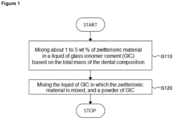
- Fig. 1 exemplarily shows a method of preparing a dental glass ionomer cement composition according to one example of the present invention.
- the ratio of MPC and SB may be the same amount of 1 SB for 1 MPC based on the weight ratio.
- These GICs containing MPC and SB in a specific ratio have different partial charges of functional groups included in each material, and thus their net charge is not "zero" but has a charge in a specific direction, and polarity may occur.
- the dental glass ionomer cement composition according to one example of the present invention which exhibits a higher polarity, may improve electrostatic interaction, that is, hydrogen bonding force to further increase the formation of a hydration layer.
- the ratio of MPC and SB may be, but is not limited to, about 1 MPC: about 1 SB based on the weight ratio, and the ratio of MPC to SB may be set between 1:3 to 3:1 based on the weight ratio.
- the modifier used in a method of preparing the dental glass ionomer cement composition according to one embodiment of the present invention may further comprise, in addition to the zwitterionic material described above, various materials capable of increasing the ratio of NBOs inside the GIC as it has a localized charge density.
- the dental glass ionomer cement composition according to one example of the present invention may be used in various fields requiring an increase in ion release as well as the dental use as described in the dental composition.
- the dental glass ionomer cement composition according to one example of the present invention may be used as a nanocarrier for delivering drugs and genes for the diagnosis and treatment of diseases using improved ion release properties, and may be used in various fields such as an agent for forming an organism requiring mineral synthesis, i.e., an osteoblast, as well as teeth.
- the dental glass ionomer cement composition according to one example of the present invention formed by the preparation method as described above includes one or more zwitterionic materials, so that the release of ions is increased to increase the polarity, so that the antifouling activity to block the adsorption of proteins and bacteria may be increased. Furthermore, the in vivo mechanism chained by the increase in the release of ions as described above may improve the bioactivity and enamelization activity capable of killing various microorganisms including bacteria.
- dental glass ionomer cement compositions may be a glass ionomer cement at least containing one or more zwitterionic materials. More specifically, with reference to Fig. 2A , an exemplary diagram for the composition and content of the dental glass ionomer cement compositions according to various examples below is shown.
- Example 1 of the present invention contains 97 wt % of glass ionomer cement (GIC) and 3 wt % of 2-methacryloyloxyethyl phosphorylcholine (MPC) based on the entire dental composition
- Example 2 of the present invention contains 97 wt % of GIC and 3 wt % of sulfobetaine methacrylate (SB) based on the total dental composition
- SB sulfobetaine methacrylate
- Example 3 of the present invention contains 97 wt % of GIC, 1.5 wt % MPC, and 1.5 wt % SB based on the total dental composition. Examples 1 and 2 do not fall under the present invention.
- each of the examples and the control were prepared by mixing the zwitterionic material in powder form with a liquid of GIC, and then mixing them with a powder of GIC, according to the content preset in the preparation method as described above.
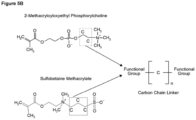
- MPC and SB used in various examples of the present invention are zwitterionic materials (zwitterions) including an anionic group and a cationic group at the same time. More specifically, with reference to Fig. 2B , a structural formula for a zwitterionic material used in one example of the present invention is shown.
- MPC 2-Methacryloyloxyethyl phosphorylcholine
- PC phosphatidylcholine
- MPC may form a stable hydration shell with high hydrophilicity, thereby having excellent anti-fouling function.
- SB sulfobetaine methacrylate
- SB includes sulfobetaine having a sulfonate functional group instead of the above-described phosphate group of phosphatidylcholine, it is bio-friendly and has high potential for in vivo application, similar to MPC, and is a zwitterion having both a sulfonate anion group and an ammonium cation group in one molecule.
- SB also has an antifouling function and may be easily and conveniently synthesized compared to PC-based polymers, and thus may be easily used for more commercial applications.
- the above-described zwitterionic materials MPC and SB may show some degree of difference, most dipolar polymers may inhibit non-specific adsorption in aqueous solution through hydrophobic or electrostatic attraction.
- the addition of a zwitterionic material as an additive may inhibit suppress thermal and chemical denaturation of the protein.
- the above-described MPC and SB may be used more stably in vivo by mimicking in vivo components.
- FTIR Fourier transformed infrared spectroscopy
- Examples 1 to 3 show each characteristic peak depending on the functional group contained in the zwitterionic material added to each, which may mean that each of the zwitterionic materials is stably bound to the GIC.
- XPS X-ray photoelectron spectroscopy
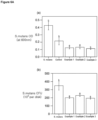
- the released amount of the control is about 0.23 ppm
- the released amounts of Examples 1 to 3 are about 1.08 ppm, about 2.27 ppm, and about 12.68 ppm, respectively, which is shown that the released amount of Sr in the examples of the present invention including the zwitterionic material is about 5 to 55 times higher than that of the control including no zwitterionic material.
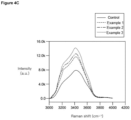
- XPS and Raman spectrum results for the net charge in one example of the present invention due to a zwitterionic material are shown.
- the ratio of protonated nitrogen is shown to increase, and in particular, Example 3 including MPC and SB together is shown to have a high strength of protonated nitrogen, which may mean that the cation may increase due to the addition of protonated nitrogen, that is, a zwitterionic material.
- nitrogen since nitrogen generates a repulsive force between molecules as it becomes protonated, intermolecular aggregation is minimized and strong polarity occurs, and thus, ion release may increase.
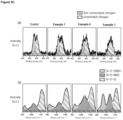
- NBO non-bridging oxygen
- BO bridging oxygen
- Example 2 appears to have a high proportion of NBO. That is, when two or more different zwitterionic materials are included, since the proportion of Si-O-NBO and Si-O-2NBO having a relatively unstable structure is higher than that of Si-O-Si having atomic structural stability, the difference in charge density due to them, that is, ionicity (polarity) may increase.
- the dental glass ionomer cement composition according to one example of the present invention includes a zwitterionic material
- the bonding of Si-O-Si is broken due to strong attractive force by the (-) functional group of the zwitterionic material, so that ion release increases (forming ion release channels), and thus, the polarity may increase.
- the difference in charge therebetween becomes larger, more ions may be released by their different charges.
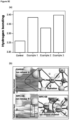
- the dental glass ionomer cement composition according to one example of the present invention may form strong hydrogen bonding, and thus, may from a thicker hydration layer.
- Examples 1 to 3 are shown to have stronger hydrogen bonding strength than the control. Furthermore, with reference to Fig. 5E , Examples 1 to 3 are shown to have stronger hydrogen bonding strength than the control. Furthermore, Example 3 of the present invention, which includes two or more kinds of zwitterionic materials among the examples of the present invention is shown to release more ions by partial charge of the functional groups of each zwitterionic material, as described above, and thus have the strongest hydrogen bonding strength.
- the dental glass ionomer cement composition according to one example of the present invention includes a zwitterionic material, ion release may be improved, and thus, hydrogen bonding strength may be improved to form a thicker hydration layer. Furthermore, the hydration layer formed by the above-described characteristics may improve the antifouling effect capable of blocking the adsorption of substances harmful to teeth, such as biofilm, to the dental glass ionomer cement composition according to one example of the present invention.
- CFU colony forming unit
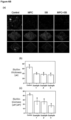
- control and Examples 1 to 3 were prepared in the form of a disk-shaped specimen by a mold having a diameter of 5 mm and a thickness of 1.5 mm, and the biofilm model was placed on the specimen and cultured for 24 hours in a CO 2 incubator at 37°C while changing the medium at intervals of 8 and 16 hours.
- the specimen on which the biofilm was formed was then stained using a live/dead bacterial viability kit (Molecular Probes; Eugene, OR, USA) that may check whether microorganisms are live or dead, and biofilms were visualized at 5 randomly selected locations using a confocal laser microscope (laser scanning microscopy, CLSM, LSM880, Carl Zeiss; Thornwood, NY, USA).
- Examples 1 to 3 show that low green fluorescence is expressed less than the control, and in particular, Example 3 shows that red fluorescence indicating dead microorganisms is expressed the most.
- Examples 1 to 3 show that the thickness of the biofilm is significantly lower than that of the control (p ⁇ 0.001), and it is shown that the thickness of the biofilm grown in the examples of the present invention is 0.5 to 0.6 times lower than that of the control.
- Examples 1 to 3 show that the biomass of the biofilm is significantly lower than that of the control (p ⁇ 0.001), and it is shown that the biomass of the biofilm grown in the examples of the present invention is 0.38 to 0.6 times lower than that of the control.
- the dental glass ionomer cement composition according to one example of the present invention includes a zwitterionic material, so that adhesion to proteins and microorganisms is reduced, and thus, the formation of a biofilm may be inhibited.
- the dental glass ionomer cement composition according to one example of the present invention shows that due to the release of ions by the zwitterionic material in addition to the prevention of adhesion by the formation of the hydration layer described above, that is, the antifouling effect, the biocidal effect of microorganisms is improved. That is, the present invention may mean to have an antibacterial effect on microorganisms in addition to the antifouling effect.
- FIG. 7A an SEM image of a surface and a cross-section of a dental glass ionomer cement composition according to one example of the present invention is shown.
- the dental glass ionomer cement composition according to one example of the present invention in order to evaluate the apatite forming ability of the dental glass ionomer cement composition according to one example of the present invention, it was prepared in the form of a disk-shaped specimen by a mold having a diameter of 5 mm and a thickness of 1.5 mm, and the above-mentioned specimen was immersed in simulated body fluid (SBF) similar to the blood component for 7 days, and then the layer formed on the specimen was analyzed using a field-emission scanning electron microscope and image J software.
- SBF simulated body fluid
- Teeth are composed of enamel, dentin, cementum, and pulp, and enamel is the hardest tissue in the outermost layer of teeth and includes hydroxyapatite, that is, Ca 10 (PO 4 ) 6 (OH) 2 as a main component. This enamel may be dissolved by acid. More specifically, since Ca 10 (PO 4 ) 6 (OH) 2 may be completely dissolved by hydrogen ions as shown in Formula 1 below, it may be easily dissolved in an acidic solution containing many hydrogen ions. [Formula 1] Ca 10 (PO 4 ) 6 (OH) 2 + 8H + ⁇ 10Ca 2+ + 6HPO4 2- + 2H 2 O
- pH in the teeth and oral cavity may be important.
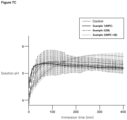
- the wettability measurement was performed by measuring the contact angle between the liquid and the solid surface when the liquid (water) is dropped on the solid surface and the liquid forms a droplet on the solid surface, and the examples and the control used in this case were prepared as disk-shaped specimens having a diameter of 15 mm and a thickness of 2 mm, and after dropping 3 ⁇ L of distilled water to each specimen, the contact angle thereof was measured.
- the compressive strength of the examples of the present invention and the control is shown to have 50 to 80 MPa with no difference. That is, due to the addition of the zwitterionic material, it may mean that the mechanical properties of the dental glass ionomer cement composition according to one example of the present invention are not changed or weakened.
Landscapes
- Health & Medical Sciences (AREA)
- Oral & Maxillofacial Surgery (AREA)
- Veterinary Medicine (AREA)
- Life Sciences & Earth Sciences (AREA)
- Animal Behavior & Ethology (AREA)
- General Health & Medical Sciences (AREA)
- Public Health (AREA)
- Epidemiology (AREA)
- Chemical & Material Sciences (AREA)
- Plastic & Reconstructive Surgery (AREA)
- Inorganic Chemistry (AREA)
- Ceramic Engineering (AREA)
- Engineering & Computer Science (AREA)
- Chemical Kinetics & Catalysis (AREA)
- Materials Engineering (AREA)
- Structural Engineering (AREA)
- Organic Chemistry (AREA)
- Dental Preparations (AREA)
- Glass Compositions (AREA)
Claims (14)
- Dental-Glasionomerzement(GIC)-Zusammensetzung, die ein Zwitterionenmaterial und einen Glasionomerzement umfasst, dadurch gekennzeichnet, dass das Zwitterionenmaterial 2-Methacryloyloxyethylphosphorylcholin (MPC) und Sulfobetainmethacrylat (SB) umfasst und das Zwitterionenmaterial einen Gehalt von 1 bis 5 Gew.-%, bezogen auf die Gesamtmasse der Dental-Glasionomerzement-Zusammensetzung, aufweist.
- Dental-Glasionomerzement-Zusammensetzung nach Anspruch 1, wobei die Dental-Glasionomerzement-Zusammensetzung ferner eines oder mehrere, ausgewählt aus der Gruppe, bestehend aus Hydroxylapatit (HAp), Glasfaser, Silber-Zinn-Legierung, Nanopartikeln von Zirkonoxid (ZrO2), Aluminiumoxid (Al2O3), Titandioxid (TiO2) und bioaktivem Glas, umfasst.
- Dental-Glasionomerzement-Zusammensetzung nach Anspruch 1, wobei MPC und SB in einem Gewichtsverhältnis von 1:3 bis 3:1 enthalten sind.
- Dental-Glasionomerzement-Zusammensetzung nach Anspruch 1, wobei der GIC einen Gehalt von 95 bis 99 Gew.-%, bezogen auf die Gesamtmasse der Dental-Glasionomerzement-Zusammensetzung, aufweist.
- Dental-Glasionomerzement-Zusammensetzung nach Anspruch 1, wobei der GIC ein sauer-reaktives anorganisches Füllmittelpulver und eine eine Polysäure enthaltende Flüssigkeit umfasst.
- Dental-Glasionomerzement-Zusammensetzung nach Anspruch 5, wobei die Polysäure eine oder mehrere, ausgewählt aus der Gruppe, bestehend aus: Homopolymeren von Acrylsäure, Methacrylsäure, Itaconsäure, Maleinsäure, Glutaconsäure, Aconitsäure, Citraconsäure, Mesaconsäure, Fumarsäure oder Tiglinsäure und Copolymeren davon sowie einem Copolymer von Maleinsäure und Ethylen, umfasst und die die Polysäure enthaltende Flüssigkeit vorzugsweise ferner Itaconsäure umfasst.
- Dental-Glasionomerzement-Zusammensetzung nach Anspruch 5, wobei das sauerreaktive anorganische Füllmittelpulver eines oder mehrere, ausgewählt aus der Gruppe, bestehend aus basischen Metalloxiden, Metallhydroxiden, Aluminiumsilicatglas, Fluoraluminiumsilicatglas und Calciumfluoraluminiumsilicatglas, umfasst und das sauerreaktive anorganische Füllmittelpulver vorzugsweise ferner Bariumglas umfasst.
- Dental-Glasionomerzement-Zusammensetzung nach Anspruch 1, wobei die Dental-Glasionomerzement-Zusammensetzung ferner eines oder mehrere, ausgewählt aus der Gruppe, bestehend aus einem Stabilisator, einem Flammschutzmittel, einem Antistatikum, einem Enthärter, einem Modifizierungsmittel, einem Füllstoff, einem Fluoreszenz-Aufheller, einem Schmiermittel, einem Einschlüsse reduzierenden Mittel, einem Polykondensationskatalysator, einem Entschäumer, einem Emulgator, einem Verdickungsmittel und einem Duft, umfasst.
- Dental-Glasionomerzement-Zusammensetzung nach Anspruch 1, wobei die Dental-Glasionomerzement-Zusammensetzung ferner ein oder mehrere Haftmaterialien, ausgewählt aus der Gruppe, bestehend aus Hydroxypropylmethylcellulose, Hydroxyethylcellulose, Hydroxypropylcellulose, Polyvinylalkohol, Polyvinylpyrrolidon, Carbomer und Vinylacetatharz, umfasst.
- Dental-Glasionomerzement-Zusammensetzung nach Anspruch 1, wobei die Dental-Glasionomerzement-Zusammensetzung ferner eine oder mehrere funktionelle Gruppen, ausgewählt aus der Gruppe, bestehend aus C=O, C-N, N+(CH3)3, POCH, S=O symmetrisch und S=O asymmetrisch, umfasst.
- Dental-Glasionomerzement-Zusammensetzung nach Anspruch 1, wobei die Dental-Glasionomerzement(GIC)-Zusammensetzung ein oder mehrere Ionen, ausgewählt aus der Gruppe, bestehend aus Zn, Na, F, O, N, Ca, C, Cl, S, P, Si und Al, umfasst.
- Verfahren zur Herstellung einer Dental-Glasionomerzement-Zusammensetzung, das die folgenden Schritte umfasst:Mischen von 1 bis 5 Gew.-% Zwitterionenmaterial in eine Flüssigkeit von Glasionomerzement (GIC), bezogen auf die Gesamtmasse der Dental-Glasionomerzement-Zusammensetzung, undMischen der Flüssigkeit von Glasionomerzement (GIC), in die das Zwitterionenmaterial gemischt ist, und eines Pulvers von Glasionomerzement (GIC), wobei das Zwitterionenmaterial 2-Methacryloyloxyethylphosphorylcholin (MPC) und Sulfobetainmethacrylat (SB) umfasst.
- Verfahren zur Herstellung der Dental-Glasionomerzement-Zusammensetzung nach Anspruch 12, wobei MPC und SB in einem Gewichtsverhältnis von 1:3 bis 3:1 enthalten sind.
- Verfahren zur Herstellung der Dental-Glasionomerzement-Zusammensetzung nach Anspruch 12, wobei der Schritt des Mischens des Zwitterionenmaterials einen Schritt des Mischens von einem oder mehreren, ausgewählt aus der Gruppe, bestehend aus Hydroxylapatit (HAp), Glasfaser, Silber-Zinn-Legierung, Nanopartikeln von Zirkonoxid (ZrO2), Aluminiumoxid (Al2O3), Titandioxid (TiO2) und bioaktivem Glas, umfasst.
Applications Claiming Priority (1)
| Application Number | Priority Date | Filing Date | Title |
|---|---|---|---|
| KR1020210012404A KR20220109121A (ko) | 2021-01-28 | 2021-01-28 | 치과용 글라스 아이오노머 시멘트 조성물 및 이의 제조 방법 |
Publications (2)
| Publication Number | Publication Date |
|---|---|
| EP4035650A1 EP4035650A1 (de) | 2022-08-03 |
| EP4035650B1 true EP4035650B1 (de) | 2025-02-26 |
Family
ID=80034755
Family Applications (1)
| Application Number | Title | Priority Date | Filing Date |
|---|---|---|---|
| EP22153322.7A Active EP4035650B1 (de) | 2021-01-28 | 2022-01-25 | Glasionomerzementzusammensetzung für zahnmedizinische zwecke und verfahren zu ihrer herstellung |
Country Status (8)
| Country | Link |
|---|---|
| US (1) | US12409107B2 (de) |
| EP (1) | EP4035650B1 (de) |
| JP (1) | JP2024520968A (de) |
| KR (1) | KR20220109121A (de) |
| CN (1) | CN116829115A (de) |
| AU (1) | AU2021423188A1 (de) |
| ES (1) | ES3017140T3 (de) |
| WO (1) | WO2022164026A1 (de) |
Families Citing this family (2)
| Publication number | Priority date | Publication date | Assignee | Title |
|---|---|---|---|---|
| CN116899027B (zh) * | 2023-07-25 | 2025-07-25 | 合肥工业大学 | 一种低放热抗菌消炎可注射骨水泥及其制备方法和用途 |
| JP2026502315A (ja) * | 2023-12-15 | 2026-01-22 | ハス コーポレーション | 歯科補綴物製作用複合体バルクブロック、その製造方法及びそれから製造された補綴物 |
Family Cites Families (14)
| Publication number | Priority date | Publication date | Assignee | Title |
|---|---|---|---|---|
| JPH0627047B2 (ja) * | 1988-12-16 | 1994-04-13 | 而至歯科工業株式会社 | 歯科用グラスアイオノマーセメント組成物 |
| US7619016B2 (en) * | 2003-07-02 | 2009-11-17 | Ada Foundation | Remineralizing dental cements |
| US20060205838A1 (en) | 2005-03-10 | 2006-09-14 | Velamakanni Bhaskar V | Hardenable antimicrobial dental compositions and methods |
| AR076179A1 (es) * | 2009-04-01 | 2011-05-26 | Colgate Palmolive Co | Composicion dentifrica no acuosa con vidrio bioaceptable y bioactivo y metodos de uso y fabricacion de la misma |
| US9408781B2 (en) * | 2013-02-11 | 2016-08-09 | Kerr Corporation | Dental resin modified glass-ionomer composition |
| JP6371580B2 (ja) | 2014-05-12 | 2018-08-08 | サンメディカル株式会社 | 歯科用組成物 |
| BR112019000329B1 (pt) | 2016-07-15 | 2022-08-02 | Gc Corporation | Vidro odontológico e composição odontológica |
| KR102037506B1 (ko) * | 2017-10-31 | 2019-10-28 | 단국대학교 천안캠퍼스 산학협력단 | 생체활성 유리나노입자가 혼입된 치과용 유리 이오노머 시멘트 조성물 |
| US10667994B2 (en) * | 2018-03-09 | 2020-06-02 | The Regents Of The University Of California | Bioactive dental restorative material with remineralization properties |
| JP7365776B2 (ja) | 2018-03-20 | 2023-10-20 | 株式会社松風 | 除去性のよい歯科合着用グラスアイオノマーセメント組成物 |
| KR102184281B1 (ko) | 2018-06-22 | 2020-11-30 | 주식회사 휴덴스 | 접착강도가 개선된 치과 교정용 시멘트 조성물 |
| KR102114824B1 (ko) * | 2018-09-17 | 2020-05-25 | 연세대학교 산학협력단 | 치아 도포제 조성물 |
| KR102861363B1 (ko) | 2019-03-26 | 2025-09-17 | 소후 인코포레이티드 | 2페이스트형 치과용 레진 강화형 글래스 아이오노머 시멘트 조성물 |
| KR102228918B1 (ko) | 2019-07-25 | 2021-03-18 | 주식회사 코리아하이텍 | 조립이 용이한 차량용 usb 미디어잭 |
-
2021
- 2021-01-28 KR KR1020210012404A patent/KR20220109121A/ko active Pending
- 2021-12-17 AU AU2021423188A patent/AU2021423188A1/en not_active Abandoned
- 2021-12-17 JP JP2023544557A patent/JP2024520968A/ja active Pending
- 2021-12-17 CN CN202180092314.7A patent/CN116829115A/zh active Pending
- 2021-12-17 WO PCT/KR2021/019267 patent/WO2022164026A1/ko not_active Ceased
- 2021-12-30 US US17/566,147 patent/US12409107B2/en active Active
-
2022
- 2022-01-25 ES ES22153322T patent/ES3017140T3/es active Active
- 2022-01-25 EP EP22153322.7A patent/EP4035650B1/de active Active
Also Published As
| Publication number | Publication date |
|---|---|
| AU2021423188A1 (en) | 2023-08-03 |
| AU2021423188A9 (en) | 2025-03-13 |
| US12409107B2 (en) | 2025-09-09 |
| US20220233409A1 (en) | 2022-07-28 |
| ES3017140T3 (en) | 2025-05-12 |
| KR20220109121A (ko) | 2022-08-04 |
| CN116829115A (zh) | 2023-09-29 |
| EP4035650A1 (de) | 2022-08-03 |
| JP2024520968A (ja) | 2024-05-28 |
| WO2022164026A1 (ko) | 2022-08-04 |
Similar Documents
| Publication | Publication Date | Title |
|---|---|---|
| Zhang et al. | Development of a multifunctional adhesive system for prevention of root caries and secondary caries | |
| Lee et al. | Bioactive resin-based composite with surface pre-reacted glass-ionomer filler and zwitterionic material to prevent the formation of multi-species biofilm | |
| Monteiro et al. | Oral prosthetic microbiology: aspects related to the oral microbiome, surface properties, and strategies for controlling biofilms | |
| Bhadila et al. | Novel antibacterial calcium phosphate nanocomposite with long-term ion recharge and re-release to inhibit caries | |
| Tanagawa et al. | Inhibitory effect of antibacterial resin composite against Streptococcus mutans | |
| Zhu et al. | Mechanical, antibacterial, biocompatible and microleakage evaluation of glass ionomer cement modified by nanohydroxyapatite/polyhexamethylene biguanide | |
| US12409107B2 (en) | Glass ionomer cement compostion for dental purposes and method for preparing the same | |
| Senges et al. | Bacterial and Candida albicans adhesion on different root canal filling materials and sealers | |
| Zhang et al. | Novel protein‐repellent and biofilm‐repellent orthodontic cement containing 2‐methacryloyloxyethyl phosphorylcholine | |
| Filemban et al. | Effects of thermal cycling on mechanical and antibacterial durability of bioactive low-shrinkage-stress nanocomposite | |
| US6034152A (en) | Plaque-inhibiting composites | |
| Madhubala et al. | Evaluation of enamel remineralization potential and anticariogenic efficacy of polydopamine coated biogenic amorphous calcium phosphate | |
| Kondo et al. | Chemical and biological properties of new sealant-use cement materials | |
| KR102238313B1 (ko) | 치과용 조성물 및 이를 포함하는 구강 내 장치 제조 방법 | |
| Hasani et al. | Dopamer: A bioactive polydopamine-containing glass-ionomer cement with mineralizing and antibacterial properties | |
| Obaees et al. | Fluoride release and antibiofilm of Alkasite restorative materials | |
| Davidi et al. | Effect of liquid-polish coating on in vivo biofilm accumulation on provisional restorations: part 1. | |
| Liu | Antibacterial effects of a glass-ionomer cement | |
| Jiang | Effect of bioceramic fillers on antibiofilm and remineralization properties of flowable composite used as clear aligner attachments | |
| Ratanakupt et al. | Evaluation of surface characteristics and mechanical properties of denture base resins containing nano-sized surface pre-reacted glass-ionomer filler | |
| Desai | Silver Nanoparticles-a versatile therapeutic and biomimetic intervention in dentistry: A Systematic Review | |
| Shamaa et al. | Development of a Novel Removable Acrylic Orthodontic Appliance Material with Protein-Repellent and Antifungal Properties | |
| Jolley | The Effects of Orthodontic Appliance Base Plate Material, PMMA, Infused with Silver and a Novel Antibacterial Compound On Biofilm Formation | |
| Simila | Sol-Gel Synthesis and Application of Ca-Si Nanoparticles as Multifunctional Additives in Restorative Dentistry | |
| 전보경 | Effect of Etching Procedures on the Bond Strength of Biofilm-Contaminated Dentin |
Legal Events
| Date | Code | Title | Description |
|---|---|---|---|
| PUAI | Public reference made under article 153(3) epc to a published international application that has entered the european phase |
Free format text: ORIGINAL CODE: 0009012 |
|
| STAA | Information on the status of an ep patent application or granted ep patent |
Free format text: STATUS: REQUEST FOR EXAMINATION WAS MADE |
|
| 17P | Request for examination filed |
Effective date: 20220125 |
|
| AK | Designated contracting states |
Kind code of ref document: A1 Designated state(s): AL AT BE BG CH CY CZ DE DK EE ES FI FR GB GR HR HU IE IS IT LI LT LU LV MC MK MT NL NO PL PT RO RS SE SI SK SM TR |
|
| GRAP | Despatch of communication of intention to grant a patent |
Free format text: ORIGINAL CODE: EPIDOSNIGR1 |
|
| STAA | Information on the status of an ep patent application or granted ep patent |
Free format text: STATUS: GRANT OF PATENT IS INTENDED |
|
| INTG | Intention to grant announced |
Effective date: 20240903 |
|
| RIC1 | Information provided on ipc code assigned before grant |
Ipc: C04B 111/00 20060101ALN20240823BHEP Ipc: C04B 28/28 20060101ALI20240823BHEP Ipc: A61K 6/60 20200101ALI20240823BHEP Ipc: A61K 6/889 20200101AFI20240823BHEP |
|
| GRAS | Grant fee paid |
Free format text: ORIGINAL CODE: EPIDOSNIGR3 |
|
| GRAA | (expected) grant |
Free format text: ORIGINAL CODE: 0009210 |
|
| STAA | Information on the status of an ep patent application or granted ep patent |
Free format text: STATUS: THE PATENT HAS BEEN GRANTED |
|
| AK | Designated contracting states |
Kind code of ref document: B1 Designated state(s): AL AT BE BG CH CY CZ DE DK EE ES FI FR GB GR HR HU IE IS IT LI LT LU LV MC MK MT NL NO PL PT RO RS SE SI SK SM TR |
|
| REG | Reference to a national code |
Ref country code: GB Ref legal event code: FG4D |
|
| REG | Reference to a national code |
Ref country code: CH Ref legal event code: EP |
|
| REG | Reference to a national code |
Ref country code: DE Ref legal event code: R096 Ref document number: 602022010964 Country of ref document: DE |
|
| REG | Reference to a national code |
Ref country code: IE Ref legal event code: FG4D |
|
| P01 | Opt-out of the competence of the unified patent court (upc) registered |
Free format text: CASE NUMBER: APP_9704/2025 Effective date: 20250226 |
|
| REG | Reference to a national code |
Ref country code: ES Ref legal event code: FG2A Ref document number: 3017140 Country of ref document: ES Kind code of ref document: T3 Effective date: 20250512 |
|
| REG | Reference to a national code |
Ref country code: NL Ref legal event code: MP Effective date: 20250226 |
|
| PG25 | Lapsed in a contracting state [announced via postgrant information from national office to epo] |
Ref country code: RS Free format text: LAPSE BECAUSE OF FAILURE TO SUBMIT A TRANSLATION OF THE DESCRIPTION OR TO PAY THE FEE WITHIN THE PRESCRIBED TIME-LIMIT Effective date: 20250526 |
|
| PG25 | Lapsed in a contracting state [announced via postgrant information from national office to epo] |
Ref country code: FI Free format text: LAPSE BECAUSE OF FAILURE TO SUBMIT A TRANSLATION OF THE DESCRIPTION OR TO PAY THE FEE WITHIN THE PRESCRIBED TIME-LIMIT Effective date: 20250226 |
|
| PG25 | Lapsed in a contracting state [announced via postgrant information from national office to epo] |
Ref country code: PL Free format text: LAPSE BECAUSE OF FAILURE TO SUBMIT A TRANSLATION OF THE DESCRIPTION OR TO PAY THE FEE WITHIN THE PRESCRIBED TIME-LIMIT Effective date: 20250226 |
|
| REG | Reference to a national code |
Ref country code: LT Ref legal event code: MG9D |
|
| PG25 | Lapsed in a contracting state [announced via postgrant information from national office to epo] |
Ref country code: NO Free format text: LAPSE BECAUSE OF FAILURE TO SUBMIT A TRANSLATION OF THE DESCRIPTION OR TO PAY THE FEE WITHIN THE PRESCRIBED TIME-LIMIT Effective date: 20250526 Ref country code: IS Free format text: LAPSE BECAUSE OF FAILURE TO SUBMIT A TRANSLATION OF THE DESCRIPTION OR TO PAY THE FEE WITHIN THE PRESCRIBED TIME-LIMIT Effective date: 20250626 |
|
| PG25 | Lapsed in a contracting state [announced via postgrant information from national office to epo] |
Ref country code: NL Free format text: LAPSE BECAUSE OF FAILURE TO SUBMIT A TRANSLATION OF THE DESCRIPTION OR TO PAY THE FEE WITHIN THE PRESCRIBED TIME-LIMIT Effective date: 20250226 |
|
| PG25 | Lapsed in a contracting state [announced via postgrant information from national office to epo] |
Ref country code: HR Free format text: LAPSE BECAUSE OF FAILURE TO SUBMIT A TRANSLATION OF THE DESCRIPTION OR TO PAY THE FEE WITHIN THE PRESCRIBED TIME-LIMIT Effective date: 20250226 |
|
| PG25 | Lapsed in a contracting state [announced via postgrant information from national office to epo] |
Ref country code: LV Free format text: LAPSE BECAUSE OF FAILURE TO SUBMIT A TRANSLATION OF THE DESCRIPTION OR TO PAY THE FEE WITHIN THE PRESCRIBED TIME-LIMIT Effective date: 20250226 Ref country code: PT Free format text: LAPSE BECAUSE OF FAILURE TO SUBMIT A TRANSLATION OF THE DESCRIPTION OR TO PAY THE FEE WITHIN THE PRESCRIBED TIME-LIMIT Effective date: 20250626 |
|
| PG25 | Lapsed in a contracting state [announced via postgrant information from national office to epo] |
Ref country code: BG Free format text: LAPSE BECAUSE OF FAILURE TO SUBMIT A TRANSLATION OF THE DESCRIPTION OR TO PAY THE FEE WITHIN THE PRESCRIBED TIME-LIMIT Effective date: 20250226 Ref country code: GR Free format text: LAPSE BECAUSE OF FAILURE TO SUBMIT A TRANSLATION OF THE DESCRIPTION OR TO PAY THE FEE WITHIN THE PRESCRIBED TIME-LIMIT Effective date: 20250527 |
|
| REG | Reference to a national code |
Ref country code: AT Ref legal event code: MK05 Ref document number: 1769961 Country of ref document: AT Kind code of ref document: T Effective date: 20250226 |
|
| PG25 | Lapsed in a contracting state [announced via postgrant information from national office to epo] |
Ref country code: SE Free format text: LAPSE BECAUSE OF FAILURE TO SUBMIT A TRANSLATION OF THE DESCRIPTION OR TO PAY THE FEE WITHIN THE PRESCRIBED TIME-LIMIT Effective date: 20250226 |
|
| PG25 | Lapsed in a contracting state [announced via postgrant information from national office to epo] |
Ref country code: SM Free format text: LAPSE BECAUSE OF FAILURE TO SUBMIT A TRANSLATION OF THE DESCRIPTION OR TO PAY THE FEE WITHIN THE PRESCRIBED TIME-LIMIT Effective date: 20250226 |
|
| PG25 | Lapsed in a contracting state [announced via postgrant information from national office to epo] |
Ref country code: DK Free format text: LAPSE BECAUSE OF FAILURE TO SUBMIT A TRANSLATION OF THE DESCRIPTION OR TO PAY THE FEE WITHIN THE PRESCRIBED TIME-LIMIT Effective date: 20250226 |
|
| PG25 | Lapsed in a contracting state [announced via postgrant information from national office to epo] |
Ref country code: AT Free format text: LAPSE BECAUSE OF FAILURE TO SUBMIT A TRANSLATION OF THE DESCRIPTION OR TO PAY THE FEE WITHIN THE PRESCRIBED TIME-LIMIT Effective date: 20250226 |
|
| PG25 | Lapsed in a contracting state [announced via postgrant information from national office to epo] |
Ref country code: EE Free format text: LAPSE BECAUSE OF FAILURE TO SUBMIT A TRANSLATION OF THE DESCRIPTION OR TO PAY THE FEE WITHIN THE PRESCRIBED TIME-LIMIT Effective date: 20250226 Ref country code: CZ Free format text: LAPSE BECAUSE OF FAILURE TO SUBMIT A TRANSLATION OF THE DESCRIPTION OR TO PAY THE FEE WITHIN THE PRESCRIBED TIME-LIMIT Effective date: 20250226 |
|
| PG25 | Lapsed in a contracting state [announced via postgrant information from national office to epo] |
Ref country code: RO Free format text: LAPSE BECAUSE OF FAILURE TO SUBMIT A TRANSLATION OF THE DESCRIPTION OR TO PAY THE FEE WITHIN THE PRESCRIBED TIME-LIMIT Effective date: 20250226 |
|
| PG25 | Lapsed in a contracting state [announced via postgrant information from national office to epo] |
Ref country code: SK Free format text: LAPSE BECAUSE OF FAILURE TO SUBMIT A TRANSLATION OF THE DESCRIPTION OR TO PAY THE FEE WITHIN THE PRESCRIBED TIME-LIMIT Effective date: 20250226 |
|
| REG | Reference to a national code |
Ref country code: DE Ref legal event code: R097 Ref document number: 602022010964 Country of ref document: DE |
|
| PLBE | No opposition filed within time limit |
Free format text: ORIGINAL CODE: 0009261 |
|
| STAA | Information on the status of an ep patent application or granted ep patent |
Free format text: STATUS: NO OPPOSITION FILED WITHIN TIME LIMIT |
|
| 26N | No opposition filed |
Effective date: 20251127 |