EP4033792B1 - Zusatzgerät, host-gerät und datenübertragungsverfahren - Google Patents
Zusatzgerät, host-gerät und datenübertragungsverfahren Download PDFInfo
- Publication number
- EP4033792B1 EP4033792B1 EP20891088.5A EP20891088A EP4033792B1 EP 4033792 B1 EP4033792 B1 EP 4033792B1 EP 20891088 A EP20891088 A EP 20891088A EP 4033792 B1 EP4033792 B1 EP 4033792B1
- Authority
- EP
- European Patent Office
- Prior art keywords
- communication
- devices
- tablet computer
- keyboard
- bluetooth
- Prior art date
- Legal status (The legal status is an assumption and is not a legal conclusion. Google has not performed a legal analysis and makes no representation as to the accuracy of the status listed.)
- Active
Links
Images





Classifications
-
- H—ELECTRICITY
- H04—ELECTRIC COMMUNICATION TECHNIQUE
- H04W—WIRELESS COMMUNICATION NETWORKS
- H04W4/00—Services specially adapted for wireless communication networks; Facilities therefor
- H04W4/80—Services using short range communication, e.g. near-field communication [NFC], radio-frequency identification [RFID] or low energy communication
-
- H—ELECTRICITY
- H04—ELECTRIC COMMUNICATION TECHNIQUE
- H04W—WIRELESS COMMUNICATION NETWORKS
- H04W76/00—Connection management
- H04W76/10—Connection setup
-
- H—ELECTRICITY
- H04—ELECTRIC COMMUNICATION TECHNIQUE
- H04W—WIRELESS COMMUNICATION NETWORKS
- H04W76/00—Connection management
- H04W76/10—Connection setup
- H04W76/11—Allocation or use of connection identifiers
-
- H—ELECTRICITY
- H04—ELECTRIC COMMUNICATION TECHNIQUE
- H04W—WIRELESS COMMUNICATION NETWORKS
- H04W76/00—Connection management
- H04W76/10—Connection setup
- H04W76/14—Direct-mode setup
-
- H—ELECTRICITY
- H04—ELECTRIC COMMUNICATION TECHNIQUE
- H04W—WIRELESS COMMUNICATION NETWORKS
- H04W88/00—Devices specially adapted for wireless communication networks, e.g. terminals, base stations or access point devices
- H04W88/02—Terminal devices
- H04W88/06—Terminal devices adapted for operation in multiple networks or having at least two operational modes, e.g. multi-mode terminals
Definitions
- One or more embodiments of this application generally relate to the field of communications technologies, and specifically, to an accessory device, a host device, and a data transmission method.
- Near field communication is a short-range wireless connection technology based on radio frequency identification (radio frequency identification devices, RFID).
- a media access control (media access control, MAC) address of a device is usually burned in an NFC tag before delivery, and the NFC tag is posted outside the body of the device.
- another device may approach the NFC tag, obtain the MAC address in the NFC tag through NFC communication, and establish a communication connection to the device posted with the NFC tag.
- WO 2017/035062 A1 discloses an improved fast wireless accessory device pairing process at a radio communication device that includes initiating, via a first short-range transceiver, a pairing procedure with a wearable computing device and establishing a link with the wearable computing device.
- the Bluetooth device connection information includes at least a hardware device identifier of the associated wireless accessory and capability information of the associated wireless accessory. Responsive to receiving the Bluetooth device connection information, and for each of the plurality wireless accessory devices, using the hardware device identifier and capability information to pair with and communicate with the wireless accessory device.
- US 2013/005250 A1 discloses a n NFC-enabled electronic device and a method for operating the same.
- the method includes performing, by the electronic device, tagging with a first external device to establish communication with the first external device; receiving, by the electronic device, at least one of device information and user information from the first external device through the communication; and transmitting, by the electronic device, a remote control signal to at least one second external device, based on the at least one of the device information and the user information.
- the present invention provides an accessory device of claim 1. Further embodiments of the invention are disclosed in the dependent claims.
- FIG. 1 shows structures of a tablet computer 10, a keyboard 20, and a mobile phone 30 and a scenario of data transmission between the tablet computer 10, the keyboard 20, and the mobile phone 30 according to an embodiment of this application.
- the tablet computer 10 and the keyboard 20 are disposed separately in space in FIG. 1
- the tablet computer 10 and the keyboard 20 may be sold together, or may be sold separately.
- the tablet computer 10 may establish a communication connection to the keyboard 20, and send device information (for example but not limited to a MAC address, a device serial number (serial number, SN), or other device information) of the tablet computer 10 to the keyboard 20; the keyboard 20 may write the device information of the tablet computer 10 into an NFC storage medium, and when an NFC connection is established between the keyboard 20 and the mobile phone 30, send the device information of the tablet computer 10 to the mobile phone 30; and the mobile phone 30 may establish a communication connection to the tablet computer 10 based on the device information of the tablet computer 10, for example but not limited to, a Bluetooth connection, a Wi-Fi connection, or another communication connection.
- device information for example but not limited to a MAC address, a device serial number (serial number, SN), or other device information
- the keyboard 20 may write the device information of the tablet computer 10 into an NFC storage medium, and when an NFC connection is established between the keyboard 20 and the mobile phone 30, send the device information of the tablet computer 10 to the mobile phone 30
- the tablet computer 10 may include but is not limited to a control module 11, a wireless charging communications module 12, and a Bluetooth communications module 13.
- the wireless charging communications module 12 includes a wireless charging control unit 121 and a wireless charging coil 122.
- the Bluetooth communications module 13 includes a Bluetooth control unit 131 and a Bluetooth antenna 132.
- the control module 11 in the tablet computer 10 may control, for example but not limited to, communication between the keyboard 20 and each of the wireless charging communications module 12 and the Bluetooth communications module 13, communication between the Bluetooth communications module 13 and the mobile phone 30, communication between the tablet computer 10 and another communications module, and interaction between the tablet computer 10 and a user.
- the keyboard 20 may include but is not limited to a microcontroller unit (Microcontroller Unit, MCU) 21, a wireless charging communications module 22, a Bluetooth communications module 23, and an NFC communications module 24.
- the wireless charging communications module 22 may include a wireless charging control unit 221 and a wireless charging coil 222.
- the Bluetooth communications module 23 may include a Bluetooth control unit 231 and a Bluetooth antenna 232.
- the NFC communications module 24 may include an NFC control unit 241, an amplification circuit 243, and an NFC coil 242.
- the NFC control unit 241 may include an NFC storage medium 2411, and the amplification circuit 243 is optional.
- the MCU 21 in the keyboard 20 may control, for example but not limited to, communication between the tablet computer 10 and each of the wireless charging communications module 22 and the Bluetooth communications module 23, communication between the NFC communications module 24 and the mobile phone 30, and communication between the keyboard 20 and another communications module.
- the mobile phone 30 may include an NFC communications module 31, a Bluetooth communications module 32, and a Wi-Fi communications module 33.
- the NFC communications module 31 is configured to: perform NFC communication with the keyboard 20, and obtain the device information of the tablet computer 10, for example, at least one of a Bluetooth MAC address and the device sn; the Bluetooth communications module 32 may establish a Bluetooth connection to the tablet computer 10 based on the device information of the tablet computer 10; and the Wi-Fi communications module 33 may establish a Wi-Fi connection to the tablet computer 10 based on the established Bluetooth connection to the tablet computer 10.
- the Bluetooth communications module 32 may initiate a Bluetooth connection request to the tablet computer 10 based on the Bluetooth MAC address of the tablet computer 10. For example, if the device information of the tablet computer 10 includes the device sn, the mobile phone 30 may determine the Bluetooth MAC address of the tablet computer 10 based on a stored correspondence between a device sn and a Bluetooth MAC address, and initiate a Bluetooth connection request to the tablet computer 10 by using the Bluetooth communications module 32.
- the following further describes the tablet computer 10 and the keyboard 20 based on the examples in FIG. 1 .
- the tablet computer 10 may enable a Bluetooth function of the tablet computer 10, and send the device information of the tablet computer 10 to the keyboard 20 based on a Bluetooth connection to the keyboard 20.
- the wireless charging control unit 121 in the tablet computer 10 may control the wireless charging coil 122 to perform wireless communication with the keyboard 20, and may also control the wireless charging coil 122 to wirelessly charge the keyboard 20 based on the magnetic resonance effect.
- the wireless charging control unit 121 may include but is not limited to a capacitor, a direct current power, an inverter, a demodulator, a charging electricity diverter switch, and the like that are configured to enable the wireless charging coil 122 to be in a resonant state.
- the inverter may convert a direct current into an alternating current.
- the charging electricity diverter switch may be configured to adjust wireless charging power.
- the demodulator may demodulate a signal from the keyboard 20.
- the wireless charging control unit 121 may control the wireless charging coil 122 to send a pulse signal.
- the pulse signal may be used by the tablet computer 10 to determine whether there is a keyboard that can be connected or needs to be charged.
- the wireless charging coil 122 may receive an acknowledgment signal from the keyboard 20.
- the acknowledgment signal may include the Bluetooth MAC address of the keyboard 20, and may further include configuration information related to charging power.
- the wireless charging control unit 121 may send a keyboard connection message to the control module 11.
- the keyboard connection message includes the Bluetooth MAC address of the keyboard 20.
- the control module 11 may control to enable the Bluetooth function of the tablet computer, and send a scanning indication message to the Bluetooth control unit 131.
- the scanning indication message indicates the Bluetooth control unit 131 to perform Bluetooth broadcast message scanning through the Bluetooth antenna 132.
- the control module 11 may compare the Bluetooth MAC addresses in the one or more Bluetooth broadcast messages with the Bluetooth MAC address received through the wireless charging coil 122, to determine a Bluetooth broadcast message of the keyboard 20 that performs wireless charging communication with the tablet computer 10.
- a source of the trusted device information is not limited herein.
- the control module 11 may control the interaction between the tablet computer 10 and the user, to be specific, display the device information of the keyboard 20 to the user, and determine, based on a user input, whether the keyboard 20 is trusted.
- the control module 11 may control, by using the Bluetooth control unit 131, the Bluetooth antenna 132 to send, according to a Bluetooth protocol such as a Bluetooth GATT service indicated by the keyboard 20 that performs wireless charging communication with the tablet computer 10 in the Bluetooth broadcast message, the device information of the tablet computer 10 such as at least one of the MAC address and the device sn to the keyboard 20 that performs wireless charging communication with the tablet computer 10.
- the device sn may be but is not limited to a device sn randomly generated by the control module 11, and the random device sn can improve security of communication between the tablet computer 10 and the mobile phone 30.
- Bluetooth broadcast messages received by the Bluetooth antenna 132 from one or more devices each may include one or more of a device name, a device sn, and a Bluetooth MAC address of the broadcast device, and a Bluetooth protocol related indication such as a Bluetooth GATT service related indication.
- the control module 11 may determine specific trusted broadcast devices based on device information in each Bluetooth broadcast message, for example, the one or more of the device name, the device sn, and the Bluetooth MAC address of the broadcast device.
- the broadcast devices include the keyboard 20 that performs wireless charging communication with the tablet computer 10.
- the control module 11 may control, by using the Bluetooth control unit 131, the Bluetooth antenna 132 to send the device information of the tablet computer 10 such as at least one of the MAC address and the device sn to each trusted broadcast device according to a Bluetooth protocol such as a Bluetooth GATT service indicated by each trusted broadcast device in the Bluetooth broadcast message of the trusted broadcast device.
- the device sn may be but is not limited to a device sn randomly generated by the control module 11, and the random device sn can improve security of communication between the tablet computer 10 and the mobile phone 30.
- the trusted broadcast devices may include the keyboard 20 that performs wireless charging communication with the tablet computer 10.
- the tablet computer 10 and the keyboard 20 perform wireless charging communication through the magnetic resonance effect in the foregoing embodiment. However, it may be understood that the tablet computer 10 and the keyboard 20 may alternatively perform wireless charging communication through electromagnetic induction.
- the wireless charging coil 222 in the keyboard 20 and the wireless charging coil 122 in the tablet computer 10 may exchange energy based on a magnetic resonance effect. Therefore, the wireless charging control unit 221 in the keyboard 20 may control the wireless charging coil 222 to perform wireless charging communication with the tablet computer 10, and the wireless charging coil 222 may also receive power from the tablet computer 10 based on the magnetic resonance effect.
- the wireless charging control unit 221 may include but is not limited to a capacitor, a rectifier, a filter and voltage regulator, a modulator, and the like that are configured to enable the wireless charging coil 222 to be in a resonant state.
- the modulator may adjust a voltage amplitude of the wireless charging coil 222 based on to-be sent information through load modulation (for example, resistance modulation and capacitance modulation).
- the demodulator in the wireless charging control unit 121 in the tablet computer 10 may obtain, through demodulation based on the voltage amplitude converted based on the magnetic resonance effect, the information sent by the keyboard 20.
- the wireless charging coil 222 may receive a pulse signal from the tablet computer 10.
- the pulse signal may be used by the tablet computer 10 to determine whether there is a keyboard that can be connected or needs to be charged.
- the wireless charging control unit 221 may control the wireless charging coil 222 to send an acknowledgment signal to the tablet computer 10.
- the acknowledgment signal may include the Bluetooth MAC address of the keyboard 20, or may include configuration information related to charging power.
- the wireless charging control unit 221 may store the Bluetooth MAC address of the keyboard 20, or may send a request to the MCU 21.
- the MCU 21 may control to enable a Bluetooth function of the keyboard 20, and control, by using the Bluetooth control unit 23 1, the Bluetooth antenna 232 to send a Bluetooth broadcast message.
- the Bluetooth broadcast message is used to enable the tablet computer 10 to determine whether the keyboard 20 is trusted and determine a to-be-used Bluetooth protocol, and may include the one or more of the device name, the device sn, and the Bluetooth MAC address of the keyboard 20, and a Bluetooth protocol related indication such as a Bluetooth GATT service related indication.
- the Bluetooth antenna 232 may send a Bluetooth broadcast message.
- the Bluetooth antenna 232 may receive the device information of the tablet computer 10 that is sent by the tablet computer 10 according to the Bluetooth protocol (for example, a Bluetooth GATT service), for example, the at least one of the MAC address and the device sn.
- the Bluetooth control unit 231 may send the device information of the tablet computer 10 to the MCU 21, and the MCU 21 performs security processing on the device information of the tablet computer 10, for example, encrypts the device information of the tablet computer 10 by using a hash algorithm, to obtain a hash value of the device information of the tablet computer 10, so that the mobile phone 30 can determine whether the device information of the tablet computer 10 is tampered with.
- the MCU 21 may send the device information of the tablet computer 10 on which security processing is performed to the NFC control unit 241, and the NFC control unit 241 writes the device information of the tablet computer 10 into the NFC storage medium 2411.
- the NFC storage medium 2411 may include but is not limited to a random access memory (RAM) such as a dynamic random access memory (DRAM) or a static random access memory (SRAM), a flash memory, and another type of accessible storage medium.
- RAM random access memory
- DRAM dynamic random access memory
- SRAM static random access memory
- flash memory a type of accessible storage medium.
- the NFC control unit 241 may determine whether the device information of the tablet computer 10 received from the MCU 21 is the same as device information in the NFC storage medium 2411. When determining that the two pieces of device information are different, the NFC control unit 241 updates the device information in the NFC storage medium 2411 by using the device information of the tablet computer 10; or when determining that the two pieces of device information are the same, the NFC control unit 241 does not update the device information in the NFC storage medium 2411.
- the NFC coil 242 may receive a radio frequency signal from the mobile phone 30 through electromagnetic induction.
- the radio frequency signal is used to indicate the keyboard 20 to send the device information of the tablet computer 10.
- the NFC control unit 241 may control the NFC coil 242 to send the device information of the tablet computer 10 in the NFC storage medium 2411 to the mobile phone 30 through electromagnetic induction.
- the amplification circuit 243 such as a low-frequency voltage amplifier (for example, a common-emitter amplification circuit or an emitter output amplification circuit), a power amplifier (for example, a class-A single-tube power amplifier or a class-B push-pull power amplifier), or a direct current amplifier (for example, a differential amplifier or an integrated operational amplifier) may amplify an electrical signal that indicates the device information of the tablet computer 10, so that the NFC coil 242 sends the amplified electrical signal to the mobile phone 30, to extend an NFC communication distance between the keyboard 20 and the mobile phone 30.
- the electrical signal that indicates the device information of the tablet computer 10 may be obtained based on the device information of the tablet computer 10 through load modulation.
- two communication modes are used between the tablet computer 10 and the keyboard 20, so that communication security can be improved.
- the Bluetooth function of the tablet computer 10 is triggered to be enabled, so that various operations required by the user to manually enable the Bluetooth function of the tablet computer 10 can be avoided.
- the Bluetooth function of the keyboard 20 is triggered to be enabled, so that various operations required by the user to manually enable the Bluetooth function of the keyboard 20 can be avoided.
- a message from the auxiliary device 20 is received through short-distance communication such as wireless charging communication, to trigger a long-distance communication mode between the tablet computer 10 and the auxiliary device 20, so that a communication distance between the tablet computer 10 and the auxiliary device 20 can be extended, and the tablet computer 10 and the auxiliary device 20 do not need to be limited to a short-distance communication range.
- short-distance communication such as wireless charging communication
- the communications modules included in the tablet computer 10 in the embodiment is not limited to the example in FIG. 1 .
- the tablet computer 10 may include one or more of the following communications modules: a cellular mobile communications module (for example but not limited to, a 2G mobile communications module, a 3G mobile communications module, a 4G mobile communications module, and a 5G mobile communications module, which are not shown in the figure), a Wi-Fi communications module (not shown in the figure), an NFC communications module (not shown in the figure), a direct-connection communications module (not shown in the figure) (for example but not limited to, a USB communications module and a Pogopin communications module), and another type of communications module.
- a cellular mobile communications module for example but not limited to, a 2G mobile communications module, a 3G mobile communications module, a 4G mobile communications module, and a 5G mobile communications module, which are not shown in the figure
- a Wi-Fi communications module not shown in the figure
- NFC communications module not shown in the figure
- control unit 11 one or more of the control module 11, the wireless charging control unit 121, the Bluetooth control unit 131, and a control unit in another type of communications module are referred to as a control unit in the tablet computer 10.
- Functions of the control unit include but is not limited to controlling communication between communications modules, communication between the tablet computer 10 and the keyboard 20, communication between the tablet computer 10 and the mobile phone 30, and interaction between the tablet computer 10 and the user.
- One or more of the wireless charging coil 122, the Bluetooth antenna 132, and a transceiver unit in another type of communications module are referred to as a transceiver unit in the tablet computer 10.
- a transceiver unit in a cellular mobile communications module may include an antenna used for mobile communication
- a transceiver unit in a Wi-Fi communications module may include an antenna used for Wi-Fi communication
- a transceiver unit in a direct-connection communications module may include a USB data cable, Pogopin, or another electronic component that physically connects the tablet computer 10 to the keyboard 20
- functions of the transceiver unit include but is not limited to implementing communication between the tablet computer 10 and the keyboard 20, communication between the tablet computer 10 and the mobile phone 30, or communication between the tablet computer 10 and another device.
- one or more components of the control unit (for example, the control module 11, the wireless charging control unit 121, the Bluetooth control unit 131, and/or another control unit) in the tablet computer 10 may include an application-specific integrated circuit (ASIC), an electronic circuit, a (shared, special-purpose, or group) processor and/or memory that executes one or more software or firmware programs, a combinational logic circuit, and/or another proper component that provides the described functions.
- ASIC application-specific integrated circuit
- the processor may be a microprocessor, a digital signal processor, a microcontroller, or the like, and/or may be any combination thereof.
- the processor may be a single-core processor, a multi-core processor, or the like, and/or may be any combination thereof.
- wireless charging communication between the tablet computer 10 and the keyboard 20 may be replaced with another communication mode
- Bluetooth communication may also be replaced with another communication mode
- even both wireless charging communication and Bluetooth communication may be replaced with another communication mode.
- the another communication mode may be a combination of one or more of cellular mobile communication, Wi-Fi communication, direct-connection communication (USB connection-based communication, Pogopin connection-based communication, or the like), NFC communication, wireless charging communication, and Bluetooth communication.
- the tablet computer 10 may establish a communication connection to the keyboard 20 in any proper communication mode, receive the device information of the keyboard 20 based on the communication connection, and send the device information of the tablet computer 10 to the keyboard 20 when determining, based on the device information of the keyboard 20, that the keyboard 20 is trusted.
- the communication modes include broadcast communication performed before each communication connection is established.
- FIG. 2 shows a schematic diagram of a scenario of data transmission between a plurality of televisions 40, a remote control 50, and a mobile phone 30.
- the remote control 50 may assist in implementing functions related to the plurality of televisions 40, for example, televisions 40a, 40b, and 40n.
- the plurality of televisions 40a, 40b, and 40n and the remote control 50 are disposed separately in space in FIG. 1 , one or more of the televisions 40a, 40b, and 40n and the remote control 50 may be sold together, or may be sold separately.
- the television 40 may include but is not limited to a module that is the same as that of the tablet computer 10 described in the foregoing embodiment
- the remote control 50 may include but is not limited to a module that is the same as that of the keyboard 20 described in the foregoing embodiment. Descriptions of the tablet computer 10 in the foregoing embodiment are also applicable to the television 40, and descriptions of the keyboard 20 in the foregoing embodiment are also applicable to the remote control 50.
- the remote control 50 may separately establish wireless charging communication and Bluetooth communication connections to the televisions 40a, 40b, and 40n, send device information of the remote control 50 based on the communication connections, receive device information of the televisions 40a, 40b, and 40n from the televisions 40a, 40b, and 40n, and write the device information of the televisions 40a, 40b, and 40n into an NFC storage medium of the remote control 50.
- the remote control 50 may separately establish wireless charging communication and Bluetooth communication connections to the televisions 40a, 40b, and 40n, send device information of the remote control 50 based on the communication connections, receive device information of the televisions 40a, 40b, and 40n from the televisions 40a, 40b, and 40n, and write the device information of the televisions 40a, 40b, and 40n into an NFC storage medium of the remote control 50.
- a control unit in the remote control 50 such as an MCU may establish a one-to-one correspondence between the device information of the televisions 40 and shortcut keys of the remote control 50, and control, based on shortcut key selection made by a user, a transceiver unit such as an NFC coil to send device information of a television 40 corresponding to a shortcut key selected by the user to the mobile phone 30.
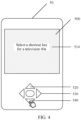
- FIG. 3 is a schematic diagram of the remote control 50 including shortcut keys.
- the remote control 50 may include a user interface 510.
- the MCU in the remote control 50 may control to display a plurality of shortcut keys on the user interface 510, for example, shortcut keys 511, 512, and 513.
- the shortcut keys 511, 512, and 513 may respectively indicate device names, Bluetooth MAC addresses, device SN numbers, or other device information of the televisions 40a, 40b, and 40n.
- the shortcut key 511 is selected by the user.
- the MCU in the remote control 50 may control, by using an NFC control unit, the NFC coil to send the device information of the television 40a to the mobile phone 30.
- the remote control 50 may further include physical buttons 520 to 540.
- the MCU in the remote control 50 may control to display, on the user interface 510, an indication 514 that enables the user to select a shortcut key for the television 40a.
- the physical button 540 is selected by the user.
- the MCU in the remote control 50 establishes a correspondence between the physical button 540 and the television 40n, in other words, the physical button 540 is used as a shortcut key of the television 40n.
- the MCU in the remote control 50 may establish a correspondence between the physical button 520 and the television 40a and a correspondence between the physical button 530 and the television 40b.
- the MCU in the remote control 50 may control, by using the NFC control unit, the NFC coil to send the device information of the television 40n to the mobile phone 30.
- each of the tablet computer 10, the keyboard 20, the mobile phone 30, the television 40, and the remote control 50 in this embodiment may be replaced with any one of the following devices: a portable or mobile device, a mobile phone, a tablet computer, a television, a personal digital assistant, a laptop device, a desktop computer, a handheld PC, a server, a network device, a graphics device, a video game device, a set-top box, a cellular phone, a portable media player, a handheld device, a wearable device (for example, display glasses or goggles, a head-mounted display, a watch, or a head-mounted device), a virtual reality device and/or an augmented reality device, an internet of things device, an industrial control device, an automotive infotainment device, a streaming media client device, an ebook, a reading device, a POS terminal, and other devices.
- a portable or mobile device for example, display glasses or goggles, a head-mounted display, a watch, or a head-mounted device
- the keyboard 20 or the remote control 50 may alternatively be replaced with any one of the following devices: a mouse, a dock, a router, a headphone, a compact disc drive, a USB (Universal Serial Bus, universal serial bus) flash drive, and other devices.
- the tablet computer 10, the television 40, and an alternative device thereof that have the structure described in the embodiment may be referred to as a host device; the keyboard 20, the remote control 50, and an alternative device thereof that have the structure described in the embodiment may be referred to as an accessory device; and the mobile phone 30 and an alternative device thereof that have the structure described in the embodiment may be referred to as a terminal device.
- the accessory device may assist in implementing a function of the host device.
- device information of the host device in the accessory device may be randomly updated according to a user requirement.
- information about an NFC tag posted on a surface of the host device is written before delivery, and cannot be updated by the user. This embodiment of this application can greatly improve user experience.
- the host device sends the device information of the host device to the accessory device that is disposed separately from the host device in space.
- the terminal device may obtain the device information of the host device by using the accessory device. Compared with the conventional technology, this can extend a distance of obtaining the device information of the host device, and can also improve user experience.
- the terminal device obtains device information of a plurality of host devices by using the accessory device, so that the user can manage and use the device information of the plurality of host devices.
- an NFC communications module may not need to be posted on the surface of the host device by using an amplification circuit unit, but may be placed inside the accessory device. This can improve aesthetics and make the NFC communications module not easily damaged.
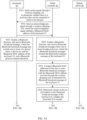
- FIG. 5A and FIG. 5B are a schematic flowchart of a method for data transmission between a tablet computer, a keyboard, and a mobile phone according to an embodiment of the present invention.
- Different modules in the tablet computer 10, the keyboard 20, and the mobile phone 30 in FIG. 1 may implement different blocks or other parts of the method.
- the method for data transmission between the tablet computer, the keyboard, and the mobile phone may include the following steps.
- the tablet computer 10 sends a pulse signal to the keyboard 20 through the wireless charging coil 122, where the pulse signal may be used by the tablet computer 10 to determine whether there is a keyboard that can be connected or needs to be charged.
- the wireless charging coil 122 in the tablet computer 10 and the wireless charging coil 222 in the keyboard 20 may exchange energy based on a magnetic resonance effect. Therefore, the tablet computer 10 and the keyboard 20 may perform wireless communication, and the tablet computer 10 may also wirelessly charge the keyboard 20 based on the magnetic resonance effect.
- the keyboard 20 In response to receiving the pulse signal, the keyboard 20 sends an acknowledgment signal to the tablet computer 10 through the wireless charging coil 222, where the acknowledgment signal may include a Bluetooth MAC address of the keyboard 20, and may further include configuration information related to charging power.
- the keyboard 20 In response to sending the acknowledgment signal to the tablet computer 10, the keyboard 20 enables a Bluetooth function, and sends a Bluetooth broadcast message, where the Bluetooth broadcast message is used to enable the tablet computer 10 to determine whether the keyboard 20 is trusted and determine a to-be-used Bluetooth protocol, and may include one or more of a device name, a device sn, and the Bluetooth MAC address of the keyboard 20, and a Bluetooth protocol related indication such as a Bluetooth GATT service related indication a. In another example, regardless of whether the keyboard 20 sends an acknowledgment signal to the tablet computer 10, the keyboard 20 may send a Bluetooth broadcast message.
- the tablet computer 10 In response to receiving the acknowledgment signal, the tablet computer 10 enables a Bluetooth function, and receives Bluetooth broadcast messages from one or more broadcast devices, where the one or more broadcast devices include the keyboard 20, and the Bluetooth broadcast messages each may include one or more of a device name, a device sn, and a Bluetooth MAC address of a broadcast device, and a Bluetooth protocol related indication such as a Bluetooth GATT service related indication.
- the tablet computer 10 may compare the Bluetooth MAC addresses in the one or more Bluetooth broadcast messages with the Bluetooth MAC address received through the wireless charging coil 122, to determine the Bluetooth broadcast message of the keyboard 20 that performs wireless charging communication with the tablet computer 10.
- the tablet computer 10 determines, based on the device information in the Bluetooth broadcast message of the keyboard 20 that performs wireless charging communication with the tablet computer 10, for example, the one or more of the device name, the device sn, and the Bluetooth MAC address of the broadcast device, whether the keyboard 20 that performs wireless charging communication with the tablet computer 10 is trusted.
- the tablet computer 10 may compare the device information of the keyboard 20 that performs wireless charging communication with the tablet computer 10 with trusted device information stored in the tablet computer 10, and determines whether the device information of the keyboard 20 that performs wireless charging communication with the tablet computer 10 is included in the trusted device information.
- the trusted device information includes information about a trusted device of the tablet computer 10, and the trusted device information may be information received from a server or another information source, or may be information burned when the tablet computer 10 is delivered from a factory, or may be information about a device that has communicated with the tablet computer 10.
- a source of the trusted device information is not limited herein.
- the tablet computer 10 may control interaction between the tablet computer 10 and a user, to be specific, display the device information of the keyboard 20 that performs wireless charging communication with the tablet computer 10 to the user, and determine, based on a user input, whether the keyboard 20 that performs wireless charging communication with the tablet computer 10 is trusted.
- the tablet computer 10 sends, according to the Bluetooth protocol such as a Bluetooth GATT service indicated by the keyboard 20 that performs wireless charging communication with the tablet computer 10 in the Bluetooth broadcast message, device information of the tablet computer 10 such as at least one of a MAC address and a device sn to the keyboard 20 that performs wireless charging communication with the tablet computer 10.
- the device sn may be but is not limited to a device sn randomly generated by the control module 11, and the random device sn can improve security of communication between the tablet computer 10 and the mobile phone 30.
- the tablet computer 10 when determining that the keyboard 20 that performs wireless charging communication with the tablet computer 10 is untrusted, for example, when determining that the device information of the keyboard 20 that performs wireless charging communication with the tablet computer 10 is not included in the trusted device information or the user input indicates that the keyboard 20 that performs wireless charging communication with the tablet computer 10 is untrusted, the tablet computer 10 does not send the device information of the tablet computer 10 such as the at least one of the MAC address and the device sn to the keyboard 20 that performs wireless charging communication with the tablet computer 10.
- the keyboard 20 may perform security processing on the device information of the tablet computer 10 and write the device information into the NFC storage medium 2411, where the security processing is, for example but not limited to, encrypting the device information of the tablet computer 10 by using a hash algorithm, to obtain a hash value of the device information of the tablet computer 10, so that the mobile phone 30 can determine whether the device information of the tablet computer 10 is tampered with.
- security processing is, for example but not limited to, encrypting the device information of the tablet computer 10 by using a hash algorithm, to obtain a hash value of the device information of the tablet computer 10, so that the mobile phone 30 can determine whether the device information of the tablet computer 10 is tampered with.
- the keyboard 20 may determine whether the device information of the tablet computer 10 is the same as device information in the NFC storage medium 2411. When determining that the two pieces of device information are different, the keyboard 20 updates the device information in the NFC storage medium 2411 by using the device information of the tablet computer 10; or when determining that the two pieces of device information are the same, the keyboard 20 does not update the device information in the NFC storage medium 2411.
- the mobile phone 30 sends a radio frequency signal through NFC communication, where the radio frequency signal indicates the keyboard 20 to send the device information in the NFC storage medium 2411.
- the keyboard 20 receives the radio frequency signal from the mobile phone 30 through the NFC coil 242 and electromagnetic induction.
- the keyboard 20 may amplify, by using an amplification circuit 243, an electrical signal that indicates the device information of the tablet computer 10, so that the NFC coil 242 can send the amplified electrical signal to the mobile phone 30, to extend an NFC communication distance between the keyboard 20 and the mobile phone 30.
- the electrical signal that indicates the device information of the tablet computer 10 may be obtained through load modulation based on the device information of the tablet computer 10.
- the keyboard 20 sends, to the mobile phone 30 through the NFC coil 242, the amplified electrical signal that indicates the device information of the tablet computer 10.
- the mobile phone 30 establishes a communication connection to the tablet computer 10 based on the device information of the tablet computer 10, for example, establishes a Bluetooth connection to the tablet computer 10 based on at least one of a Bluetooth MAC address and the device SN of the tablet computer 10, and further establishes a Wi-Fi connection based on the Bluetooth connection.
- the method may not include S505.
- the tablet computer 10 determines specific trusted broadcast devices based on device information in each Bluetooth broadcast message such as the one or more of the device name, the device sn, and the Bluetooth MAC address of the broadcast device.
- the broadcast devices include the keyboard 20 that performs wireless charging communication with the tablet computer 10.
- the tablet computer 10 sends the device information of the tablet computer 10 such as the at least one of the MAC address and the device sn to each trusted broadcast device according to a Bluetooth protocol such as a Bluetooth GATT service indicated by each trusted broadcast device in the Bluetooth broadcast message of the trusted broadcast device.
- the device sn may be but is not limited to a randomly generated device sn, and the random device sn can improve security of communication between the tablet computer 10 and the mobile phone 30.
- the trusted broadcast devices may include the keyboard 20 that performs wireless charging communication with the tablet computer 10.
- two communication modes are used between the tablet computer 10 and the keyboard 20, so that communication security can be improved.
- the Bluetooth function of the tablet computer 10 is triggered to be enabled, so that various operations required by the user to manually enable the Bluetooth function of the tablet computer 10 can be avoided.
- the Bluetooth function of the keyboard 20 is triggered to be enabled, so that various operations required by the user to manually enable the Bluetooth function of the keyboard 20 can be avoided.
- a message from the auxiliary device 20 is received through short-distance communication such as wireless charging communication, to trigger a long-distance communication mode between the tablet computer 10 and the auxiliary device 20, so that a communication distance between the tablet computer 10 and the auxiliary device 20 can be extended, and the tablet computer 10 and the auxiliary device 20 do not need to be limited to a short-distance communication range.
- short-distance communication such as wireless charging communication
- wireless charging communication between the tablet computer 10 and the keyboard 20 may be replaced with another communication mode
- Bluetooth communication may also be replaced with another communication mode
- even both wireless charging communication and Bluetooth communication may be replaced with another communication mode.
- the another communication mode may be a combination of one or more of cellular mobile communication, Wi-Fi communication, direct-connection communication (USB connection-based communication, Pogopin connection-based communication, or the like), NFC communication, wireless charging communication, and Bluetooth communication.
- the tablet computer 10 may establish a communication connection to the keyboard 20 in any proper communication mode, receive the device information of the keyboard 20 based on the communication connection, and send the device information of the tablet computer 10 to the keyboard 20 when determining, based on the device information of the keyboard 20, that the keyboard 20 is trusted.
- the communication modes include broadcast communication performed before each communication connection is established.
- FIG. 6 is a schematic flowchart of a method for data transmission between a plurality of televisions, a remote control, and a mobile phone according to an embodiment of the present invention.
- Different modules in the mobile phone 30, the television 40, and the remote control 50 in FIG. 2 may implement different blocks or other parts of the method.
- the method for data transmission between the plurality of televisions, the remote control, and the mobile phone may include the following steps.
- the remote control 50 performs wireless charging communication and Bluetooth communication with the television 40a and the television 40b respectively, and obtains device information of the television 40a and the television 40b.
- the television 40a and the television 40b perform a same block as the tablet computer 10, and the remote control 50 performs a same block as the keyboard 20. Details are not described herein again.
- the remote control 50 receives, through the NFC coil and electromagnetic induction, a radio frequency signal sent by the mobile phone 30, where the radio frequency signal is used to indicate the keyboard 20 to send device information in the NFC storage medium.
- the remote control 50 displays shortcut keys that are in a one-to-one correspondence with the television 40a and the television 40b on the user interface, for example, the shortcut keys 511 and 512 shown in FIG. 3 .
- the remote control 50 receives, through the user interface, selection made by a user for the shortcut key 511 of the television 40a.
- the remote control 50 receives, through the user interface, selection made by the user for the shortcut key 512 of the television 40b.
- the remote control 50 In response to a user input, the remote control 50 sends the device information of the television 40a to the mobile phone 30 through the NFC coil.
- the remote control 50 in response to the user input, sends the device information of the television 40b to the mobile phone 30 through the NFC coil.
- the television 40a and the television 40b are merely used as examples, and there may be any other quantity of televisions 40 in the data transmission method.
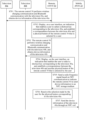
- FIG. 7 is another schematic flowchart of a method for data transmission between a plurality of televisions, a remote control, and a mobile phone according to an embodiment of the present invention.
- Different modules in the mobile phone 30, the television 40, and the remote control 50 in FIG. 2 may implement different blocks or other parts of the method.
- the method for data transmission between the plurality of televisions, the remote control, and the mobile phone may include the following steps.
- the remote control 50 performs wireless charging communication and Bluetooth communication with the television 40a, and obtains device information of the television 40a. For a specific process, refer to the descriptions of the tablet computer 10 and the keyboard 20 in FIG. 5A and FIG. 5B .
- the television 40a performs a same block as the tablet computer 10, and the remote control 50 performs a same block as the keyboard 20. Details are not described herein again.
- the remote control 50 displays, on the user interface, an indication that enables a user to select a shortcut key corresponding to the television 40a, for example, the indication 514 in FIG. 4 , and establishes a correspondence between the television 40a and a physical button (for example, the button 520 in FIG. 4 ) of the remote control 50 that is selected by the user.
- the remote control 50 communicates with the television 40b, and obtains device information of the television 40b. For a specific process, refer to the descriptions of the tablet computer 10 and the keyboard 20 in FIG. 5A and FIG. 5B .
- the television 40b performs a same block as the tablet computer 10, and the remote control 50 performs a same block as the keyboard 20. Details are not described herein again.
- the remote control 50 displays, on the user interface, an indication that enables the user to select a shortcut key corresponding to the television 40b, and establishes a correspondence between the television 40b and another physical button (for example, the button 530 in FIG. 4 ) of the remote control 50 that is selected by the user.
- the remote control 50 receives, through the NFC coil based on electromagnetic induction, a radio frequency signal sent by the mobile phone 30, where the radio frequency signal is used to indicate the remote control 50 to send device information in the NFC storage medium.
- the remote control 50 receives the selection made by the user for a physical button corresponding to the television 40a, for example, selection for 520 in FIG. 4 .
- the remote control 50 receives selection made by the user for a physical button corresponding to the television 40b, for example, selection for 530 in FIG. 4 .
- the remote control 50 sends the device information of the television 40a to the mobile phone 30 through the NFC coil.
- the remote control 50 sends the device information of the television 40b to the mobile phone 30 through the NFC coil.
- the television 40a and the television 40b are merely used as examples, and there may be any other quantity of televisions 40 in the data transmission method.
- each of the tablet computer 10, the keyboard 20, the mobile phone 30, the television 40, and the remote control 50 in this embodiment may be replaced with any one of the following devices: a portable or mobile device, a mobile phone, a tablet computer, a television, a personal digital assistant, a laptop device, a desktop computer, a handheld PC, a server, a network device, a graphics device, a video game device, a set-top box, a cellular phone, a portable media player, a handheld device, a wearable device (for example, display glasses or goggles, a head-mounted display, a watch, or a head-mounted device), a virtual reality device and/or an augmented reality device, an internet of things device, an industrial control device, an automotive infotainment device, a streaming media client device, an ebook, a reading device, a POS terminal, and other devices.
- a portable or mobile device for example, display glasses or goggles, a head-mounted display, a watch, or a head-mounted device
- the keyboard 20 or the remote control 50 may alternatively be replaced with any one of the following devices: a mouse, a dock, a router, a headphone, a compact disc drive, a USB (Universal Serial Bus, universal serial bus) flash drive, and other devices.
- the tablet computer 10, the television 40, and an alternative device thereof that have the structure described in the embodiment may be referred to as a host device; the keyboard 20, the remote control 50, and an alternative device thereof that have the structure described in the embodiment may be referred to as an accessory device; and the mobile phone 30 and an alternative device thereof that have the structure described in the embodiment may be referred to as a terminal device.
- the accessory device may assist in implementing a function of the host device.
- device information of the host device in the accessory device may be randomly updated according to a user requirement.
- information about an NFC tag posted on a surface of the host device is written before delivery, and cannot be updated by the user. This embodiment of this application can greatly improve user experience.
- the host device sends the device information of the host device to the accessory device that is disposed separately from the host device in space.
- the terminal device may obtain the device information of the host device by using the accessory device. Compared with the conventional technology, this can extend a distance of obtaining the device information of the host device, and can also improve user experience.
- the terminal device obtains device information of a plurality of host devices by using the accessory device, so that the user can manage and use the device information of the plurality of host devices.
- an NFC communications module may not need to be posted on the surface of the host device by using an amplification circuit unit, but may be placed inside the accessory device. This can improve aesthetics and make the NFC communications module not easily damaged.
- FIG. 8 is a schematic diagram of a structure of a data transmission apparatus 800 according to an embodiment of this application.
- the data transmission apparatus 800 may be the tablet computer or the keyboard in the foregoing embodiment.
- the apparatus 800 may include one or more processors 802, a system control logic 808 connected to at least one of the processors 802, a system memory 804 connected to the system control logic 808, a nonvolatile memory (NVM) 806 connected to the system control logic 808, and a network interface 810 connected to the system control logic 808.
- NVM nonvolatile memory
- the processor 802 may include one or more single-core or multi-core processors.
- the processor 802 may include any combination of a general-purpose processor and a special-purpose processor (for example, a graphics processor, an application processor, or a baseband processor). In this embodiment of this application, the processor 802 may be configured to perform one or more of embodiments shown in FIG. 6 to FIG. 9.
- system control logic 808 may include any proper interface controller, to provide any proper interface for the at least one of the processors 802 and/or any proper device or component that communicates with the system control logic 808.
- system control logic 808 may include one or more memory controllers, to provide an interface that connects to the system memory 804.
- the system memory 804 may be configured to load and store data and/or instructions.
- the memory 804 in the apparatus 800 may include any proper volatile memory, for example, a proper dynamic random access memory (DRAM).
- DRAM dynamic random access memory
- the NVM/memory 806 may include one or more tangible, non-transitory computer-readable media that are configured to store data and/or instructions.
- the NVM/memory 806 may include any proper nonvolatile memory such as a flash memory and/or any proper nonvolatile storage device such as at least one of a hard disk drive (Hard Disk Drive, HDD), a compact disc (Compact Disc, CD) drive, and a digital versatile disc (Digital Versatile Disc, DVD) drive.
- the NVM/memory 806 may include a part of storage resources installed on the apparatus 800, or may be accessed by a device, but is not necessarily a part of the device. For example, the NVM/memory 806 may be accessed over a network through the network interface 810.
- system memory 804 and the NVM/memory 806 may respectively include a temporary copy and a permanent copy of an instruction 820.
- the instruction 820 may include an instruction executed by the at least one of the processors 802 to enable the apparatus 800 to implement the methods shown in FIG. 3 and FIG. 4 .
- the instruction 820, hardware, firmware, and/or software components thereof may be additionally/alternatively placed in the system control logic 808, the network interface 810, and/or the processor 802.
- the network interface 810 may include a transceiver.
- the transceiver is configured to provide a radio interface for the apparatus 800 to communicate with any other proper device (for example, a front-end module or an antenna) over one or more networks.
- the network interface 810 may be integrated into another component in the apparatus 800.
- the network interface 810 may integrate into at least one of the processor 802, the system memory 804, the NVM/memory 806, and a firmware device (not shown) having instructions.
- the apparatus 800 implements one or more of embodiments shown in FIG. 3 to FIG. 6 .
- Communications module is configured to provide a radio interface for the apparatus 800 to communicate with any other proper device (for example, a front-end module or an antenna) over one or more networks.
- the network interface 810 may be integrated into another component in the apparatus 800.
- the network interface 810 may integrate into at least one of the processor 802, the system memory 804, the NVM/memory 806, and a firmware device (not shown) having instructions.
- the network interface 810 may further include any proper hardware and/or firmware, to provide a multiple-input multiple-output radio interface.
- the network interface 810 may be a network adapter, a wireless network adapter, a phone modem, and/or a wireless modem.
- At least one of the processors 802 may be packaged with logic of one or more controllers used for the system control logic 808, to form a system in package (SiP). In an embodiment, at least one of the processors 802 may be integrated on a same tube core with logic of one or more controllers used for the system control logic 808, to form a system on a chip (SoC).
- SiP system in package
- SoC system on a chip
- the apparatus 800 may further include an input/output (I/O) interface 812.
- the I/O interface 812 may include a user interface, so that a user can interact with the apparatus 800.
- a design of a peripheral component interface also enables a peripheral component to interact with the apparatus 800.
- the apparatus 800 further includes a sensor. The sensor is configured to determine at least one of an environmental condition and position information that are related to the apparatus 800.
- the user interface may include but is not limited to a display (for example, a liquid crystal display or a touchscreen display), a speaker, a microphone, one or more cameras (for example, a still image camera and/or a video camera), a flashlight (for example, a light emitting diode flashlight), and a keyboard.
- a display for example, a liquid crystal display or a touchscreen display
- a speaker for example, a microphone
- one or more cameras for example, a still image camera and/or a video camera
- a flashlight for example, a light emitting diode flashlight
- the peripheral component interface may include but is not limited to a nonvolatile memory port, an audio jack, and a charging port.
- the senor may include but is not limited to a gyroscope sensor, an accelerometer, a proximity sensor, an ambient light sensor, and a positioning unit.
- the positioning unit may alternatively be a part of the network interface 810, or may interact with the network interface 810, to communicate with a component (for example, a global positioning system (GPS) satellite) of a positioning network.
- GPS global positioning system
- module or “unit” may mean, be, or include: an application-specific integrated circuit (ASIC), an electronic circuit, a (shared, special-purpose, or group) processor and/or a memory that executes one or more software or firmware programs, a composite logic circuit, and/or another proper component that provides the described functions.
- ASIC application-specific integrated circuit
- electronic circuit a (shared, special-purpose, or group) processor and/or a memory that executes one or more software or firmware programs, a composite logic circuit, and/or another proper component that provides the described functions.
- ASIC application-specific integrated circuit
- processor shared, special-purpose, or group
- memory that executes one or more software or firmware programs
- composite logic circuit and/or another proper component that provides the described functions.
- Embodiments of a mechanism disclosed in this application may be implemented in hardware, software, firmware, or a combination of these implementations.
- Embodiments of this application may be implemented as a computer program or program code executed in a programmable system.
- the programmable system includes at least one processor, a storage system (including a volatile memory, a nonvolatile memory, and/or a storage element), at least one input device, and at least one output device.
- the program code may be configured to input instructions, to perform functions described in this application and generate output information.
- the output information may be applied to one or more output devices in a known manner.
- a processing system includes any system having a processor such as a digital signal processor (DSP), a microcontroller, an application-specific integrated circuit (ASIC), or a microprocessor.
- DSP digital signal processor
- ASIC application-specific integrated circuit
- the program code may be implemented by using a high-level programming language or an object oriented programming language, to communicate with the processing system.
- the program code may alternatively be implemented by using an assembly language or a machine language when needed.
- the mechanism described in this application is not limited to a scope of any particular programming language. In any case, the language may be a compiled language or an interpretive language.
- the disclosed embodiments may be implemented by hardware, firmware, software, or any combination thereof.
- one or more aspects of at least some embodiments may be implemented by expressive instructions stored in a computer-readable storage medium.
- the instructions represent various logic in a processor, and when the instructions are read by a machine, the machine is enabled to manufacture logic for performing the technologies described in this application.
- IP cores may be stored in a tangible computer-readable storage medium, and provided for a plurality of customers or production facilities for loading into a manufacturing machine that actually manufactures the logic or the processor.
- Such a computer-readable storage media may include but is not limited to non-transient tangible arrangements of articles manufactured or formed by machines or devices.
- the computer-readable storage media includes storage media, for example, a hard disk or any other type of disk including a floppy disk, a compact disc, a compact disc read-only memory (CD-ROM), a compact disc rewritable (CD-RW), or a magneto-optical disc; a semiconductor device, for example, a read-only memory (ROM) such as a random access memory (RAM) including a dynamic random access memory (DRAM) or a static random access memory (SRAM), an erasable programmable read-only memory (EPROM), a flash memory, or an electrically erasable programmable read-only memory (EEPROM); a phase change memory (PCM); a magnetic card or an optical card; or any other type of proper medium for storing electronic instructions.
- RAM random access memory
- DRAM dynamic random access memory
- SRAM static random access memory
- EPROM
- embodiments of this application further include a non-transient computer-readable storage medium.
- the medium includes instructions or design data, for example, a hardware description language (HDL), and defines a structure, a circuit, an apparatus, a processor, and/or a system feature described in this application.
- HDL hardware description language
Landscapes
- Engineering & Computer Science (AREA)
- Computer Networks & Wireless Communication (AREA)
- Signal Processing (AREA)
- Telephone Function (AREA)
- Position Input By Displaying (AREA)
Claims (13)
- Zusatzvorrichtung, die für eine Vielzahl von ersten Vorrichtungen verwendet wird, wobei die Zusatzvorrichtung und die ersten Vorrichtungen separat im Raum angeordnet sind und die Zusatzvorrichtung Folgendes umfasst:eine Sende-Empfangseinheit, die dazu konfiguriert ist: mit den ersten Vorrichtungen zu kommunizieren und Vorrichtungsinformationen der ersten Vorrichtungen zu erlangen; undeine Steuereinheit (241), die dazu konfiguriert ist: die Vorrichtungsinformationen der ersten Vorrichtungen, die durch die Sende-Empfangseinheit erlangt werden, in ein Speichermedium (2411) für Nahfeldkommunikation, NFC, zu schreiben; und wenn eine NFC-Verbindung zwischen der Zusatzvorrichtung und einer zweiten Vorrichtung hergestellt ist, die Sende-Empfangseinheit zum Senden der Vorrichtungsinformationen von einer der ersten Vorrichtungen an die zweite Vorrichtung zu steuern,wobei die Steuereinheit (241) ferner dazu konfiguriert ist: eine Eins-zu-Eins-Entsprechung zwischen Vorrichtungsinformationen der Vielzahl von ersten Vorrichtungen und Tastenkombinationen (511, 512, 513) der Zusatzvorrichtung herzustellen und die Sende-Empfangseinheit basierend auf der durch einen Benutzer vorgenommenen Auswahl von Tastenkombinationen (511, 512, 513) zum Senden von Vorrichtungsinformationen von einer beliebigen der ersten Vorrichtungen entsprechend der durch den Benutzer ausgewählten Tastenkombination (511, 512, 513) an die zweite Vorrichtung zu steuern; und wobei die Vorrichtungsinformationen der ersten Vorrichtungen verwendet werden, eine Kommunikation zwischen den ersten Vorrichtungen und der zweiten Vorrichtung herzustellen.
- Zusatzvorrichtung nach Anspruch 1, wobei der Umstand, dass die Sende-Empfangseinheit dazu konfiguriert ist, mit den ersten Vorrichtungen zu kommunizieren und Vorrichtungsinformationen der ersten Vorrichtungen zu erlangen, Folgendes umfasst:Senden einer Media-Access-Control-Adresse, MAC-Adresse, der Zusatzvorrichtung in einem ersten Kommunikationsmodus an die ersten Vorrichtungen; undSenden mindestens eines von einem Vorrichtungsnamen und einer Vorrichtungsseriennummer der Zusatzvorrichtung in einem zweiten Kommunikationsmodus an die ersten Vorrichtungen und Empfangen der Vorrichtungsinformationen von den ersten Vorrichtungen.
- Zusatzvorrichtung nach Anspruch 2, wobei der erste Kommunikationsmodus einen drahtlosen Ladekommunikationsmodus oder einen NFC-Kommunikationsmodus umfasst und der zweite Kommunikationsmodus einen Bluetooth-Kommunikationsmodus umfasst.
- Zusatzvorrichtung nach Anspruch 2, wobei der erste Kommunikationsmodus oder der zweite Kommunikationsmodus mindestens eine von drahtloser Ladekommunikation, Bluetooth-Kommunikation, zellularer Mobilkommunikation, WLAN-Kommunikation, USB-verbindungsbasierter Kommunikation, Pogopin-verbindungsbasierter Kommunikation und NFC-Kommunikation umfasst.
- Zusatzvorrichtung nach Anspruch 1, wobei die Zusatzvorrichtung ferner eine Verstärkungsschaltung (243) umfasst, die dazu konfiguriert ist, ein elektrisches Signal der Steuereinheit (241) zu verstärken, welche die Vorrichtungsinformationen von einem beliebigen der ersten Vorrichtungen anzeigt, damit die Sende-Empfangseinheit das verstärkte elektrische Signal an die zweite Vorrichtung sendet.
- Zusatzvorrichtung nach Anspruch 1, wobei die Steuereinheit (241) ferner dazu konfiguriert ist: die Vorrichtungsinformationen der ersten Vorrichtungen, die durch die Sende-Empfangseinheit erlangt werden, zu verschlüsseln und verschlüsselte Vorrichtungsinformationen der ersten Vorrichtungen in das NFC-Speichermedium (2411) zu schreiben.
- Zusatzvorrichtung nach einem der Ansprüche 1 bis 6, wobei die Vorrichtungsinformationen von einer beliebigen der ersten Vorrichtungen mindestens eine von einer MAC-Adresse und einer Vorrichtungsseriennummer umfassen.
- Datenübertragungssystem, umfassend die Zusatzvorrichtung nach einem der Ansprüche 1 bis 6 und eine Vielzahl von ersten Vorrichtungen, wobei mindestens eine der ersten Vorrichtungen und die Zusatzvorrichtung separat im Raum angeordnet sind und die mindestens eine erste Vorrichtung Folgendes umfasst:eine Sende-Empfangseinheit, die dazu konfiguriert ist, mit der Zusatzvorrichtung zu kommunizieren; undeine Steuereinheit, die dazu konfiguriert ist, die Sende-Empfangseinheit zum Senden von Vorrichtungsinformationen der mindestens einen der ersten Vorrichtungen an die Zusatzvorrichtung zu steuern, wobei die Vorrichtungsinformationen des mindestens einen der ersten Vorrichtungen verwendet werden, um eine Kommunikation zwischen der ersten Vorrichtung und einer zweiten Vorrichtung herzustellen.
- Datenübertragungssystem nach Anspruch 8, wobei der Umstand, dass die Sende-Empfangseinheit dazu konfiguriert ist, mit der Zusatzvorrichtung zu kommunizieren, Folgendes umfasst:Empfangen einer MAC-Adresse der Zusatzvorrichtung von der Zusatzvorrichtung in einem ersten Kommunikationsmodus;Aktivieren eines zweiten Kommunikationsmodus als Reaktion auf das Empfangen der MAC-Adresse der Zusatzvorrichtung; undEmpfangen mindestens eines von einem Vorrichtungsnamen und einer Vorrichtungsseriennummer von der Zusatzvorrichtung in dem zweiten Kommunikationsmodus.
- Datenübertragungssystem nach Anspruch 9, wobei der Umstand, dass die Sende-Empfangseinheit dazu konfiguriert ist, mit der Zusatzvorrichtung zu kommunizieren, ferner Folgendes umfasst:
wenn die MAC-Adresse der in dem ersten Kommunikationsmodus empfangenen Zusatzvorrichtung mindestens teilweise dieselbe wie jene der in dem zweiten Kommunikationsmodus empfangenen Zusatzvorrichtung ist, Senden der Vorrichtungsinformationen der mindestens einen der ersten Vorrichtungen in dem zweiten Kommunikationsmodus an die Zusatzvorrichtung. - Datenübertragungssystem nach Anspruch 9, wobei der erste Kommunikationsmodus einen drahtlosen Ladekommunikationsmodus oder einen NFC-Kommunikationsmodus umfasst und der zweite Kommunikationsmodus einen Bluetooth-Kommunikationsmodus umfasst.
- Datenübertragungssystem nach Anspruch 9, wobei der erste Kommunikationsmodus oder der zweite Kommunikationsmodus mindestens eine von drahtloser Ladekommunikation, Bluetooth-Kommunikation, zellularer Mobilkommunikation, WLAN-Kommunikation, USB-verbindungsbasierter Kommunikation, Pogopin-verbindungsbasierter Kommunikation und NFC-Kommunikation umfasst.
- Datenübertragungssystem nach einem der Ansprüche 8 bis 12, wobei die Vorrichtungsinformationen der ersten Vorrichtung mindestens eine von einer MAC-Adresse und einer Vorrichtungsseriennummer umfassen.
Priority Applications (1)
| Application Number | Priority Date | Filing Date | Title |
|---|---|---|---|
| EP25153243.8A EP4561259A3 (de) | 2019-11-22 | 2020-11-13 | Zubehörvorrichtung, hostvorrichtung und datenübertragungsverfahren |
Applications Claiming Priority (2)
| Application Number | Priority Date | Filing Date | Title |
|---|---|---|---|
| CN201911159401.0A CN110996307B (zh) | 2019-11-22 | 2019-11-22 | 一种配件设备、主机设备以及数据传输方法 |
| PCT/CN2020/128725 WO2021098605A1 (zh) | 2019-11-22 | 2020-11-13 | 一种配件设备、主机设备以及数据传输方法 |
Related Child Applications (2)
| Application Number | Title | Priority Date | Filing Date |
|---|---|---|---|
| EP25153243.8A Division EP4561259A3 (de) | 2019-11-22 | 2020-11-13 | Zubehörvorrichtung, hostvorrichtung und datenübertragungsverfahren |
| EP25153243.8A Division-Into EP4561259A3 (de) | 2019-11-22 | 2020-11-13 | Zubehörvorrichtung, hostvorrichtung und datenübertragungsverfahren |
Publications (3)
| Publication Number | Publication Date |
|---|---|
| EP4033792A1 EP4033792A1 (de) | 2022-07-27 |
| EP4033792A4 EP4033792A4 (de) | 2022-10-26 |
| EP4033792B1 true EP4033792B1 (de) | 2025-03-05 |
Family
ID=70086051
Family Applications (2)
| Application Number | Title | Priority Date | Filing Date |
|---|---|---|---|
| EP20891088.5A Active EP4033792B1 (de) | 2019-11-22 | 2020-11-13 | Zusatzgerät, host-gerät und datenübertragungsverfahren |
| EP25153243.8A Pending EP4561259A3 (de) | 2019-11-22 | 2020-11-13 | Zubehörvorrichtung, hostvorrichtung und datenübertragungsverfahren |
Family Applications After (1)
| Application Number | Title | Priority Date | Filing Date |
|---|---|---|---|
| EP25153243.8A Pending EP4561259A3 (de) | 2019-11-22 | 2020-11-13 | Zubehörvorrichtung, hostvorrichtung und datenübertragungsverfahren |
Country Status (4)
| Country | Link |
|---|---|
| US (1) | US12114242B2 (de) |
| EP (2) | EP4033792B1 (de) |
| CN (2) | CN115175150B (de) |
| WO (1) | WO2021098605A1 (de) |
Families Citing this family (7)
| Publication number | Priority date | Publication date | Assignee | Title |
|---|---|---|---|---|
| CN115175150B (zh) | 2019-11-22 | 2025-03-07 | 华为技术有限公司 | 一种数据传输的方法、设备及系统 |
| CN112969146B (zh) * | 2021-02-20 | 2022-05-20 | 上海吉盛网络技术有限公司 | 一种基于蓝牙广播在电梯用梯场景下的高效通信方法 |
| CN113115295B (zh) * | 2021-04-22 | 2022-07-08 | Tcl通讯(宁波)有限公司 | 用于移动设备的数据传输方法及系统 |
| CN114265806B (zh) * | 2021-12-17 | 2024-04-02 | 威创集团股份有限公司 | 一种实现usb数据信号共享的方法、装置、设备和存储介质 |
| CN114531741B (zh) * | 2022-02-23 | 2025-02-18 | Oppo广东移动通信有限公司 | 外接设备与终端的连接方法、装置、设备及存储介质 |
| CN117014842A (zh) * | 2022-04-27 | 2023-11-07 | 华为技术有限公司 | 主机连接方法、装置、系统、设备及存储介质 |
| CN116048290B (zh) * | 2022-08-04 | 2023-10-24 | 荣耀终端有限公司 | 数据传输方法及装置 |
Family Cites Families (18)
| Publication number | Priority date | Publication date | Assignee | Title |
|---|---|---|---|---|
| JP3800625B2 (ja) * | 2003-01-30 | 2006-07-26 | ソニー株式会社 | 制御装置および方法、記録媒体、並びにプログラム |
| EP2521372A1 (de) * | 2011-05-03 | 2012-11-07 | LG Electronics Inc. | Elektronische Vorrichtung und Betriebsverfahren dafür |
| US9628585B2 (en) | 2011-12-27 | 2017-04-18 | Intel Corporation | Systems and methods for cross-layer secure connection set up |
| CN104076913A (zh) * | 2013-03-28 | 2014-10-01 | 鸿富锦精密电子(天津)有限公司 | 电脑输入系统及方法 |
| CN103716675B (zh) * | 2013-11-12 | 2017-01-04 | 青岛海信电器股份有限公司 | 智能电视机、智能电视机的外围设备和智能通信系统 |
| CN103687061A (zh) * | 2013-11-27 | 2014-03-26 | 青岛海信信芯科技有限公司 | 连接建立方法及终端 |
| EP3276924B1 (de) * | 2015-04-15 | 2020-01-08 | Huawei Technologies Co. Ltd. | Verfahren zum senden einer nachricht in einem lan, lan-gateway und wearable-vorrichtung |
| CN204681378U (zh) * | 2015-04-30 | 2015-09-30 | 北京联云格科技有限公司 | 具有近场通信功能的电路及包含该电路的人机接口设备 |
| US9480096B1 (en) * | 2015-08-25 | 2016-10-25 | Motorola Solutions, Inc. | Method, device, and system for fast wireless accessory devices pairing |
| CN105516903A (zh) * | 2015-09-30 | 2016-04-20 | 北京清川科技有限公司 | 一种实现与多个蓝牙设备连接的控制方法及系统 |
| CN105407450A (zh) | 2015-10-21 | 2016-03-16 | 珠海奔图电子有限公司 | 智能设备、电子装置及基于近场通信的网络连接方法 |
| CN106657158B (zh) | 2017-02-13 | 2019-09-24 | 北京安云世纪科技有限公司 | 一种用于在设备间进行数据安全传输的系统及方法 |
| CN107197420B (zh) | 2017-05-16 | 2020-07-07 | 深圳市欧瑞博电子有限公司 | 一种近距离信息交互方法及系统 |
| CN107769881B (zh) * | 2017-10-10 | 2019-05-07 | 北京小米移动软件有限公司 | 信息同步方法、装置及系统、存储介质 |
| KR102393917B1 (ko) * | 2017-10-13 | 2022-05-04 | 삼성전자주식회사 | 원격 제어 장치, 디스플레이 장치, 시스템 및 그 제어 방법 |
| CN108337555B (zh) * | 2018-01-10 | 2021-06-01 | 西安万像电子科技有限公司 | 数据的显示方法、系统及可穿戴设备 |
| CN110288820A (zh) * | 2019-07-31 | 2019-09-27 | 歌尔股份有限公司 | 一种遥控设备与主机的连接方法 |
| CN115175150B (zh) * | 2019-11-22 | 2025-03-07 | 华为技术有限公司 | 一种数据传输的方法、设备及系统 |
-
2019
- 2019-11-22 CN CN202210501238.7A patent/CN115175150B/zh active Active
- 2019-11-22 CN CN201911159401.0A patent/CN110996307B/zh active Active
-
2020
- 2020-11-13 WO PCT/CN2020/128725 patent/WO2021098605A1/zh not_active Ceased
- 2020-11-13 EP EP20891088.5A patent/EP4033792B1/de active Active
- 2020-11-13 EP EP25153243.8A patent/EP4561259A3/de active Pending
-
2022
- 2022-05-20 US US17/664,289 patent/US12114242B2/en active Active
Also Published As
| Publication number | Publication date |
|---|---|
| EP4033792A1 (de) | 2022-07-27 |
| US20220279328A1 (en) | 2022-09-01 |
| EP4561259A3 (de) | 2025-07-30 |
| CN110996307A (zh) | 2020-04-10 |
| WO2021098605A1 (zh) | 2021-05-27 |
| US12114242B2 (en) | 2024-10-08 |
| CN115175150B (zh) | 2025-03-07 |
| CN115175150A (zh) | 2022-10-11 |
| CN110996307B (zh) | 2022-05-24 |
| EP4561259A2 (de) | 2025-05-28 |
| EP4033792A4 (de) | 2022-10-26 |
Similar Documents
| Publication | Publication Date | Title |
|---|---|---|
| US12114242B2 (en) | Accessory device, host device, and data transmission method | |
| KR102693979B1 (ko) | 링크 공유를 지원하는 전자 장치 및 이를 위한 방법 | |
| US11423379B2 (en) | Method for UWB transaction and electronic device therefor | |
| KR102754824B1 (ko) | 전자 장치 및 전자 장치에서 저전력 기반 통신 연결 방법 | |
| KR102632548B1 (ko) | Uwb 트랜잭션을 위한 방법 및 전자 장치 | |
| US20200128003A1 (en) | Method, apparatus, and system for controlling intelligent device, and storage medium | |
| CN112655230B (zh) | 用于uwb事务处理的方法及其电子装置 | |
| US11671253B2 (en) | Data processing method and device for safe data communication and processing in IoT environments | |
| EP3401864A1 (de) | Verfahren zur auswahl einer transaktionsanwendung und endgerät | |
| RU2628488C2 (ru) | Способ, терминальное устройство и сервер для передачи данных nfc | |
| KR102194301B1 (ko) | 전자 장치들의 통신 연결 방법 및 장치 | |
| KR102199030B1 (ko) | 주변 장치와의 통신 방법, 전자 장치 및 저장 매체 | |
| CN111699750B (zh) | 基于连接信息与外部装置连接的电子装置及其操作方法 | |
| KR102753033B1 (ko) | 블루투스 연결 정보 공유를 통한 소스 기기 전환 방법 및 장치 | |
| JPWO2013175674A1 (ja) | 無線通信システム、情報端末、通信制御方法、及びプログラム | |
| KR20150142218A (ko) | 전자 장치 및 전자 장치의 네트워크 연결방법 | |
| CN106161147B (zh) | 建立网络连接的方法及装置 | |
| US11250656B2 (en) | Electronic apparatus and operating method thereof | |
| JP6306866B2 (ja) | 通信装置及びその制御方法、並びにプログラム | |
| KR102206817B1 (ko) | 전자 장치 및 그의 기지국 리스트를 관리하는 방법 | |
| KR20250030862A (ko) | 가상 사설 네트워크 연결을 통해 통신하는 전자 장치 및 그 저장 매체 |
Legal Events
| Date | Code | Title | Description |
|---|---|---|---|
| STAA | Information on the status of an ep patent application or granted ep patent |
Free format text: STATUS: THE INTERNATIONAL PUBLICATION HAS BEEN MADE |
|
| PUAI | Public reference made under article 153(3) epc to a published international application that has entered the european phase |
Free format text: ORIGINAL CODE: 0009012 |
|
| STAA | Information on the status of an ep patent application or granted ep patent |
Free format text: STATUS: REQUEST FOR EXAMINATION WAS MADE |
|
| 17P | Request for examination filed |
Effective date: 20220421 |
|
| AK | Designated contracting states |
Kind code of ref document: A1 Designated state(s): AL AT BE BG CH CY CZ DE DK EE ES FI FR GB GR HR HU IE IS IT LI LT LU LV MC MK MT NL NO PL PT RO RS SE SI SK SM TR |
|
| A4 | Supplementary search report drawn up and despatched |
Effective date: 20220927 |
|
| RIC1 | Information provided on ipc code assigned before grant |
Ipc: H04W 76/14 20180101ALI20220921BHEP Ipc: H04W 76/11 20180101ALI20220921BHEP Ipc: H04W 4/80 20180101AFI20220921BHEP |
|
| DAV | Request for validation of the european patent (deleted) | ||
| DAX | Request for extension of the european patent (deleted) | ||
| STAA | Information on the status of an ep patent application or granted ep patent |
Free format text: STATUS: EXAMINATION IS IN PROGRESS |
|
| 17Q | First examination report despatched |
Effective date: 20231013 |
|
| GRAP | Despatch of communication of intention to grant a patent |
Free format text: ORIGINAL CODE: EPIDOSNIGR1 |
|
| STAA | Information on the status of an ep patent application or granted ep patent |
Free format text: STATUS: GRANT OF PATENT IS INTENDED |
|
| RIC1 | Information provided on ipc code assigned before grant |
Ipc: H04W 88/06 20090101ALI20240930BHEP Ipc: H04W 76/10 20180101ALI20240930BHEP Ipc: H04W 76/14 20180101ALI20240930BHEP Ipc: H04W 76/11 20180101ALI20240930BHEP Ipc: H04W 4/80 20180101AFI20240930BHEP |
|
| INTG | Intention to grant announced |
Effective date: 20241028 |
|
| GRAS | Grant fee paid |
Free format text: ORIGINAL CODE: EPIDOSNIGR3 |
|
| GRAA | (expected) grant |
Free format text: ORIGINAL CODE: 0009210 |
|
| STAA | Information on the status of an ep patent application or granted ep patent |
Free format text: STATUS: THE PATENT HAS BEEN GRANTED |
|
| AK | Designated contracting states |
Kind code of ref document: B1 Designated state(s): AL AT BE BG CH CY CZ DE DK EE ES FI FR GB GR HR HU IE IS IT LI LT LU LV MC MK MT NL NO PL PT RO RS SE SI SK SM TR |
|
| REG | Reference to a national code |
Ref country code: GB Ref legal event code: FG4D |
|
| REG | Reference to a national code |
Ref country code: CH Ref legal event code: EP |
|
| REG | Reference to a national code |
Ref country code: IE Ref legal event code: FG4D |
|
| REG | Reference to a national code |
Ref country code: DE Ref legal event code: R096 Ref document number: 602020047424 Country of ref document: DE |
|
| PG25 | Lapsed in a contracting state [announced via postgrant information from national office to epo] |
Ref country code: RS Free format text: LAPSE BECAUSE OF FAILURE TO SUBMIT A TRANSLATION OF THE DESCRIPTION OR TO PAY THE FEE WITHIN THE PRESCRIBED TIME-LIMIT Effective date: 20250605 |
|
| PG25 | Lapsed in a contracting state [announced via postgrant information from national office to epo] |
Ref country code: FI Free format text: LAPSE BECAUSE OF FAILURE TO SUBMIT A TRANSLATION OF THE DESCRIPTION OR TO PAY THE FEE WITHIN THE PRESCRIBED TIME-LIMIT Effective date: 20250305 |
|
| REG | Reference to a national code |
Ref country code: NL Ref legal event code: MP Effective date: 20250305 |
|
| PG25 | Lapsed in a contracting state [announced via postgrant information from national office to epo] |
Ref country code: ES Free format text: LAPSE BECAUSE OF FAILURE TO SUBMIT A TRANSLATION OF THE DESCRIPTION OR TO PAY THE FEE WITHIN THE PRESCRIBED TIME-LIMIT Effective date: 20250305 |
|
| REG | Reference to a national code |
Ref country code: LT Ref legal event code: MG9D |
|
| PG25 | Lapsed in a contracting state [announced via postgrant information from national office to epo] |
Ref country code: NO Free format text: LAPSE BECAUSE OF FAILURE TO SUBMIT A TRANSLATION OF THE DESCRIPTION OR TO PAY THE FEE WITHIN THE PRESCRIBED TIME-LIMIT Effective date: 20250605 |
|
| PG25 | Lapsed in a contracting state [announced via postgrant information from national office to epo] |
Ref country code: HR Free format text: LAPSE BECAUSE OF FAILURE TO SUBMIT A TRANSLATION OF THE DESCRIPTION OR TO PAY THE FEE WITHIN THE PRESCRIBED TIME-LIMIT Effective date: 20250305 |
|
| PG25 | Lapsed in a contracting state [announced via postgrant information from national office to epo] |
Ref country code: LV Free format text: LAPSE BECAUSE OF FAILURE TO SUBMIT A TRANSLATION OF THE DESCRIPTION OR TO PAY THE FEE WITHIN THE PRESCRIBED TIME-LIMIT Effective date: 20250305 |
|
| PG25 | Lapsed in a contracting state [announced via postgrant information from national office to epo] |
Ref country code: BG Free format text: LAPSE BECAUSE OF FAILURE TO SUBMIT A TRANSLATION OF THE DESCRIPTION OR TO PAY THE FEE WITHIN THE PRESCRIBED TIME-LIMIT Effective date: 20250305 Ref country code: GR Free format text: LAPSE BECAUSE OF FAILURE TO SUBMIT A TRANSLATION OF THE DESCRIPTION OR TO PAY THE FEE WITHIN THE PRESCRIBED TIME-LIMIT Effective date: 20250606 |
|
| REG | Reference to a national code |
Ref country code: AT Ref legal event code: MK05 Ref document number: 1774072 Country of ref document: AT Kind code of ref document: T Effective date: 20250305 |
|
| PG25 | Lapsed in a contracting state [announced via postgrant information from national office to epo] |
Ref country code: NL Free format text: LAPSE BECAUSE OF FAILURE TO SUBMIT A TRANSLATION OF THE DESCRIPTION OR TO PAY THE FEE WITHIN THE PRESCRIBED TIME-LIMIT Effective date: 20250305 |
|
| PG25 | Lapsed in a contracting state [announced via postgrant information from national office to epo] |
Ref country code: SE Free format text: LAPSE BECAUSE OF FAILURE TO SUBMIT A TRANSLATION OF THE DESCRIPTION OR TO PAY THE FEE WITHIN THE PRESCRIBED TIME-LIMIT Effective date: 20250305 |
|
| PG25 | Lapsed in a contracting state [announced via postgrant information from national office to epo] |
Ref country code: SM Free format text: LAPSE BECAUSE OF FAILURE TO SUBMIT A TRANSLATION OF THE DESCRIPTION OR TO PAY THE FEE WITHIN THE PRESCRIBED TIME-LIMIT Effective date: 20250305 |
|
| PG25 | Lapsed in a contracting state [announced via postgrant information from national office to epo] |
Ref country code: PT Free format text: LAPSE BECAUSE OF FAILURE TO SUBMIT A TRANSLATION OF THE DESCRIPTION OR TO PAY THE FEE WITHIN THE PRESCRIBED TIME-LIMIT Effective date: 20250707 |
|
| PG25 | Lapsed in a contracting state [announced via postgrant information from national office to epo] |
Ref country code: IT Free format text: LAPSE BECAUSE OF FAILURE TO SUBMIT A TRANSLATION OF THE DESCRIPTION OR TO PAY THE FEE WITHIN THE PRESCRIBED TIME-LIMIT Effective date: 20250305 Ref country code: PL Free format text: LAPSE BECAUSE OF FAILURE TO SUBMIT A TRANSLATION OF THE DESCRIPTION OR TO PAY THE FEE WITHIN THE PRESCRIBED TIME-LIMIT Effective date: 20250305 |
|
| PG25 | Lapsed in a contracting state [announced via postgrant information from national office to epo] |
Ref country code: AT Free format text: LAPSE BECAUSE OF FAILURE TO SUBMIT A TRANSLATION OF THE DESCRIPTION OR TO PAY THE FEE WITHIN THE PRESCRIBED TIME-LIMIT Effective date: 20250305 |
|
| PG25 | Lapsed in a contracting state [announced via postgrant information from national office to epo] |
Ref country code: CZ Free format text: LAPSE BECAUSE OF FAILURE TO SUBMIT A TRANSLATION OF THE DESCRIPTION OR TO PAY THE FEE WITHIN THE PRESCRIBED TIME-LIMIT Effective date: 20250305 Ref country code: EE Free format text: LAPSE BECAUSE OF FAILURE TO SUBMIT A TRANSLATION OF THE DESCRIPTION OR TO PAY THE FEE WITHIN THE PRESCRIBED TIME-LIMIT Effective date: 20250305 |
|
| PG25 | Lapsed in a contracting state [announced via postgrant information from national office to epo] |
Ref country code: RO Free format text: LAPSE BECAUSE OF FAILURE TO SUBMIT A TRANSLATION OF THE DESCRIPTION OR TO PAY THE FEE WITHIN THE PRESCRIBED TIME-LIMIT Effective date: 20250305 |
|
| PG25 | Lapsed in a contracting state [announced via postgrant information from national office to epo] |
Ref country code: SK Free format text: LAPSE BECAUSE OF FAILURE TO SUBMIT A TRANSLATION OF THE DESCRIPTION OR TO PAY THE FEE WITHIN THE PRESCRIBED TIME-LIMIT Effective date: 20250305 |
|
| PG25 | Lapsed in a contracting state [announced via postgrant information from national office to epo] |
Ref country code: IS Free format text: LAPSE BECAUSE OF FAILURE TO SUBMIT A TRANSLATION OF THE DESCRIPTION OR TO PAY THE FEE WITHIN THE PRESCRIBED TIME-LIMIT Effective date: 20250705 |
|
| REG | Reference to a national code |
Ref country code: DE Ref legal event code: R097 Ref document number: 602020047424 Country of ref document: DE |
|
| PGFP | Annual fee paid to national office [announced via postgrant information from national office to epo] |
Ref country code: DE Payment date: 20250930 Year of fee payment: 6 |
|
| PLBE | No opposition filed within time limit |
Free format text: ORIGINAL CODE: 0009261 |
|
| STAA | Information on the status of an ep patent application or granted ep patent |
Free format text: STATUS: NO OPPOSITION FILED WITHIN TIME LIMIT |
|
| PG25 | Lapsed in a contracting state [announced via postgrant information from national office to epo] |
Ref country code: DK Free format text: LAPSE BECAUSE OF FAILURE TO SUBMIT A TRANSLATION OF THE DESCRIPTION OR TO PAY THE FEE WITHIN THE PRESCRIBED TIME-LIMIT Effective date: 20250305 |
|
| REG | Reference to a national code |
Ref country code: CH Ref legal event code: L10 Free format text: ST27 STATUS EVENT CODE: U-0-0-L10-L00 (AS PROVIDED BY THE NATIONAL OFFICE) Effective date: 20260114 |
|
| 26N | No opposition filed |
Effective date: 20251208 |