EP4033695A1 - Information processing apparatus, method, and information processing program - Google Patents
Information processing apparatus, method, and information processing program Download PDFInfo
- Publication number
- EP4033695A1 EP4033695A1 EP21195759.2A EP21195759A EP4033695A1 EP 4033695 A1 EP4033695 A1 EP 4033695A1 EP 21195759 A EP21195759 A EP 21195759A EP 4033695 A1 EP4033695 A1 EP 4033695A1
- Authority
- EP
- European Patent Office
- Prior art keywords
- authentication device
- authentication
- processing apparatus
- device information
- image processing
- Prior art date
- Legal status (The legal status is an assumption and is not a legal conclusion. Google has not performed a legal analysis and makes no representation as to the accuracy of the status listed.)
- Granted
Links
Images
















Classifications
-
- H—ELECTRICITY
- H04—ELECTRIC COMMUNICATION TECHNIQUE
- H04L—TRANSMISSION OF DIGITAL INFORMATION, e.g. TELEGRAPHIC COMMUNICATION
- H04L63/00—Network architectures or network communication protocols for network security
- H04L63/08—Network architectures or network communication protocols for network security for authentication of entities
- H04L63/0861—Network architectures or network communication protocols for network security for authentication of entities using biometrical features, e.g. fingerprint, retina-scan
-
- H—ELECTRICITY
- H04—ELECTRIC COMMUNICATION TECHNIQUE
- H04N—PICTORIAL COMMUNICATION, e.g. TELEVISION
- H04N1/00—Scanning, transmission or reproduction of documents or the like, e.g. facsimile transmission; Details thereof
- H04N1/32—Circuits or arrangements for control or supervision between transmitter and receiver or between image input and image output device, e.g. between a still-image camera and its memory or between a still-image camera and a printer device
- H04N1/32101—Display, printing, storage or transmission of additional information, e.g. ID code, date and time or title
-
- G—PHYSICS
- G06—COMPUTING OR CALCULATING; COUNTING
- G06F—ELECTRIC DIGITAL DATA PROCESSING
- G06F21/00—Security arrangements for protecting computers, components thereof, programs or data against unauthorised activity
- G06F21/30—Authentication, i.e. establishing the identity or authorisation of security principals
- G06F21/31—User authentication
- G06F21/32—User authentication using biometric data, e.g. fingerprints, iris scans or voiceprints
-
- H—ELECTRICITY
- H04—ELECTRIC COMMUNICATION TECHNIQUE
- H04L—TRANSMISSION OF DIGITAL INFORMATION, e.g. TELEGRAPHIC COMMUNICATION
- H04L63/00—Network architectures or network communication protocols for network security
- H04L63/10—Network architectures or network communication protocols for network security for controlling access to devices or network resources
- H04L63/102—Entity profiles
-
- H—ELECTRICITY
- H04—ELECTRIC COMMUNICATION TECHNIQUE
- H04L—TRANSMISSION OF DIGITAL INFORMATION, e.g. TELEGRAPHIC COMMUNICATION
- H04L63/00—Network architectures or network communication protocols for network security
- H04L63/20—Network architectures or network communication protocols for network security for managing network security; network security policies in general
-
- H—ELECTRICITY
- H04—ELECTRIC COMMUNICATION TECHNIQUE
- H04L—TRANSMISSION OF DIGITAL INFORMATION, e.g. TELEGRAPHIC COMMUNICATION
- H04L67/00—Network arrangements or protocols for supporting network services or applications
- H04L67/01—Protocols
-
- H—ELECTRICITY
- H04—ELECTRIC COMMUNICATION TECHNIQUE
- H04L—TRANSMISSION OF DIGITAL INFORMATION, e.g. TELEGRAPHIC COMMUNICATION
- H04L9/00—Cryptographic mechanisms or cryptographic arrangements for secret or secure communications; Network security protocols
- H04L9/32—Cryptographic mechanisms or cryptographic arrangements for secret or secure communications; Network security protocols including means for verifying the identity or authority of a user of the system or for message authentication, e.g. authorization, entity authentication, data integrity or data verification, non-repudiation, key authentication or verification of credentials
- H04L9/3226—Cryptographic mechanisms or cryptographic arrangements for secret or secure communications; Network security protocols including means for verifying the identity or authority of a user of the system or for message authentication, e.g. authorization, entity authentication, data integrity or data verification, non-repudiation, key authentication or verification of credentials using a predetermined code, e.g. password, passphrase or PIN
- H04L9/3231—Biological data, e.g. fingerprint, voice or retina
-
- H—ELECTRICITY
- H04—ELECTRIC COMMUNICATION TECHNIQUE
- H04L—TRANSMISSION OF DIGITAL INFORMATION, e.g. TELEGRAPHIC COMMUNICATION
- H04L9/00—Cryptographic mechanisms or cryptographic arrangements for secret or secure communications; Network security protocols
- H04L9/32—Cryptographic mechanisms or cryptographic arrangements for secret or secure communications; Network security protocols including means for verifying the identity or authority of a user of the system or for message authentication, e.g. authorization, entity authentication, data integrity or data verification, non-repudiation, key authentication or verification of credentials
- H04L9/3247—Cryptographic mechanisms or cryptographic arrangements for secret or secure communications; Network security protocols including means for verifying the identity or authority of a user of the system or for message authentication, e.g. authorization, entity authentication, data integrity or data verification, non-repudiation, key authentication or verification of credentials involving digital signatures
-
- H—ELECTRICITY
- H04—ELECTRIC COMMUNICATION TECHNIQUE
- H04L—TRANSMISSION OF DIGITAL INFORMATION, e.g. TELEGRAPHIC COMMUNICATION
- H04L9/00—Cryptographic mechanisms or cryptographic arrangements for secret or secure communications; Network security protocols
- H04L9/32—Cryptographic mechanisms or cryptographic arrangements for secret or secure communications; Network security protocols including means for verifying the identity or authority of a user of the system or for message authentication, e.g. authorization, entity authentication, data integrity or data verification, non-repudiation, key authentication or verification of credentials
- H04L9/3271—Cryptographic mechanisms or cryptographic arrangements for secret or secure communications; Network security protocols including means for verifying the identity or authority of a user of the system or for message authentication, e.g. authorization, entity authentication, data integrity or data verification, non-repudiation, key authentication or verification of credentials using challenge-response
-
- H—ELECTRICITY
- H04—ELECTRIC COMMUNICATION TECHNIQUE
- H04L—TRANSMISSION OF DIGITAL INFORMATION, e.g. TELEGRAPHIC COMMUNICATION
- H04L2463/00—Additional details relating to network architectures or network communication protocols for network security covered by H04L63/00
- H04L2463/082—Additional details relating to network architectures or network communication protocols for network security covered by H04L63/00 applying multi-factor authentication
Definitions
- the present disclosure relates to an information processing apparatus, a method, and an information processing program.
- JP-A-2018-198400 discloses an image processing apparatus capable of communicating with a mobile terminal of a user, which includes an authentication module for biometric authentication. Upon receiving verification data issued by a service providing system, the image processing apparatus identifies the authentication module of the mobile terminal as the authentication module for the biometric authentication, and the authentication module of the mobile terminal executes an authentication process of the user.
- aspects of non-limiting embodiments of the present disclosure relate to providing an information processing apparatus, a method, and an information processing program which enables a FIDO client to restrict an authentication device used by a user in FIDO authentication.
- the FIDO client can restrict the authentication device used by the user in FIDO authentication.
- determination of permission of the authentication device used by the user can be performed by using the authentication device information stored in the memory.
- determination of whether to permit the authentication device used by the user can be performed after the assertion is acquired from the authentication device.
- the assertion acquired from the authentication device can be transmitted to the RP server.
- the information indicating that the assertion generation has failed can be transmitted to the RP server.
- the first condition can be used to acquire the authentication device information from the authentication device information management server
- the second condition can be used to update the authentication device information in the memory by using the authentication device information acquired from the authentication device information management server.
- any one of the following (i) to (iii) can be used as the first condition: (i) starting an update process for every predetermined period, (ii) starting an update process when an instruction is given by the administrator, and (iii) starting an update process in accordance with an update date and time included in authentication device information acquired last time from the authentication device information management server.
- any one of the following (i) and (ii) can be used as the second condition: (i) updating the authentication device information in the memory when validity of an authentication device included in the authentication device information acquired last time from the authentication device information management server becomes invalid, and (ii) updating the authentication device information in the memory in accordance with an operation of the administrator when the validity of the authentication device included in the authentication device information acquired last time from the authentication device information management server is changed.
- the FIDO client can restrict the authentication device used by the user in FIDO authentication.
- the FIDO client can restrict the authentication device used by the user in FIDO authentication.
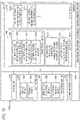
- Fig. 1 illustrates a conceptual module configuration diagram for a configuration example according to a first exemplary embodiment (information processing apparatus 100).
- module generally refers to a logically separable component such as software (including a computer program as an interpretation of "software”), hardware, or the like. Therefore, the module in the present exemplary embodiment refers to not only a module in a computer program but also a module in a hardware configuration. Therefore, the exemplary embodiment also serves as a description of a computer program (for example, a program for causing a computer to execute each procedure, a program for causing a computer to function as each unit, a program for causing a computer to realize each function), a system, and a method for functioning these modules.
- a computer program for example, a program for causing a computer to execute each procedure, a program for causing a computer to function as each unit, a program for causing a computer to realize each function
- modules may have a one-to-one correspondence with functions, in the implementation, one module may be configured by one program, plural modules may be configured by one program, and conversely, one module may be configured by plural programs.
- Plural modules may be executed by one computer, or one module may be executed by plural computers in a distributed or parallel environment.
- One module may include another module.
- connection is used not only for physical connection but also for logical connections (for example, transmission and reception of data, instruction, reference relationship between data, login, or the like).
- predetermined means determined prior to target processing, and includes a meaning of being determined according to a situation or state at that time or according to the situation or state up to that time even after the process according to the present exemplary embodiment starts, as a matter of course, before the process according to the exemplary embodiment starts.
- the values may be different from each other, or two or more values ("two or more values” may include, of course, all values) may be the same.
- a description of "when A, do B” is used in a meaning of "determine whether it is A, do B when it is determined to be A”. However, a case where it is not necessary to determine whether it is A is excluded.
- A, B, and C “A, B, and C” are only examples unless otherwise specified, and include a case where only one of them is selected (for example, only A).
- system or the apparatus may be configured such that plural computers, hardware, apparatuses, and the like are connected by a communication unit such as a network ("network” including a one-to-one communication connection), or may be realized by a single computer, hardware, an apparatus, or the like.
- a communication unit such as a network ("network” including a one-to-one communication connection)
- network including a one-to-one communication connection
- apparatus and the like are used as terms having the same meaning.
- system does not include anything that is nothing more than a social “mechanism” (that is, a social system) that is an artificial agreement.
- target information is read from the storage device for each processing by each module or for each processing when plural processing is performed in the module, and after the process is performed, a processing result is written to the storage device. Therefore, description of the reading from the storage device before the process and the writing to the storage device after the process may be omitted.
- the information processing apparatus 100 functions as a FIDO client.
- the information processing apparatus 100 has a function of restricting an authentication device used by a user during FIDO authentication.
- the information processing apparatus 100 includes at least a processor 105 and a memory 110, and is configured by a bus 198 for connecting the processor and the memory and exchanging data.
- the information processing apparatus 100 may include an output device 185, a reception device 190, and a communication device 195. Data is exchanged between the processor 105, the memory 110, the output device 185, the reception device 190, and the communication device 195 via the bus 198.
- FIDO authentication is one authentication technique conforming to a standard developed based on FIDO Alliance.
- FIDO is an abbreviation of Fast IDentify Online.
- the "FIDO client" When a RP server and an authentication device are connected to each other, the "FIDO client" is located therebetween so as to pass an authentication parameter from the RP server to the authentication device, causes the authentication device to generate an assertion, and transmits the assertion to the RP server.
- Detailed processing contents of the FIDO client will be described later with reference to examples of Figs. 3 to 5 .
- FIG. 1 also illustrates an example of a hardware configuration of a computer that implements the exemplary embodiment.
- the hardware configuration of the computer in which the program according to the exemplary embodiment is executed is a computer as illustrated in Fig. 1 , and specifically, may be used as a personal computer or a server.
- a processor 105 is used as a processing unit
- a memory 110 is used as a storage device.
- the number of the processor 105 may be one or more.
- the processor 105 includes, for example, a central processing unit (CPU), a microprocessor, or the like.
- CPU central processing unit
- microprocessor or the like.
- a tightly coupled multiprocessor or a loosely coupled multiprocessor may be used.
- plural processor cores may be mounted in one processor 105.
- a loosely coupled multiprocessor may be configured as a cluster system or a computer cluster.
- the processor 105 executes a program in a program memory 140.
- the memory 110 may include, for example, a semiconductor memory in the processor 105 such as a register or a cache memory, may be a main memory that is a storage device including a random access memory (RAM) and a read only memory (ROM), or the like, an internal storage device such as a hard disk drive (HDD) or a solid state drive (SSD) having a function as a permanent storage device, an external storage device or an auxiliary storage device such as a CD, a DVD, a Blu-ray (registered trademark) Disc, a USB memory, or a memory card, or may include a storage device such as a server connected via a communication line.
- a semiconductor memory in the processor 105 such as a register or a cache memory
- main memory that is a storage device including a random access memory (RAM) and a read only memory (ROM), or the like
- an internal storage device such as a hard disk drive (HDD) or a solid state drive (SSD) having a function as a permanent storage device, an
- the memory 110 includes a data memory 120 for storing data and a program memory 140 for storing programs.
- the data memory 120 and the program memory 140 may store a program such as an OS for starting the computer, data such as a parameter appropriately changed in execution of the module, or the like, in addition to the information shown and the module program.
- the output device 185 includes, for example, a display device 187, a printing device 189, or the like.
- the display device 187 such as a liquid crystal display, an organic EL display, a three-dimensional display, or a projector displays a processing result by the processor 105, data in the data memory 120, or the like as text, image information, or the like.
- the printing device 189 such as a printer or a multifunction device, prints the processing result by the processor 105, the data in the data memory 120, or the like.
- the output device 185 may include a speaker, an actuator for vibrating the device, or the like.
- the reception device 190 includes, for example, an instruction reception device 192, a document reading device 194, or the like.
- the instruction reception device 192 such as a keyboard, a mouse, a microphone, or a camera (including a line-of-sight detection camera or the like) receives data based on an operation (including an operation, a voice, a line of sight, or the like) of a user with respect to the keyboard, the mouse, the microphone, the camera (including the line-of-sight detection camera or the like).
- a touch screen may be provided with both functions of the display device 187 and the instruction reception device 192.
- an image of a keyboard also called a software keyboard, a screen keyboard, or the like
- a touch screen may be provided with both functions of the display device 187 and the instruction reception device 192.
- the display device 187 and the instruction reception device 192 are used as a user interface.
- the document reading device 194 such as a scanner or a camera reads or captures a document and receives the generated image data.
- the communication device 195 is a communication line interface such as a network card for connecting to other devices (an authentication device 210, an RP server 270, and an MDS server 280) via a communication line.
- the computer program that is software is read into the program memory 140 of the hardware configuration, and software and the hardware resources cooperate with each other to realize the exemplary embodiment. That is, the present exemplary embodiment is specifically realized by using hardware resources (including at least the processor 105, the memory 110, and in some cases the output device 185, the reception device 190, and the communication device 195) by the information processing by software, and the law of nature is used as a whole.
- hardware resources including at least the processor 105, the memory 110, and in some cases the output device 185, the reception device 190, and the communication device 195
- the hardware configuration illustrated in Fig. 1 illustrates one configuration example, and the present exemplary embodiment is not limited to the configuration illustrated in Fig. 1 , but may be any configuration as long as the module described in the present exemplary embodiment is executable.
- a GPU abbreviation of Graphics Processing Unit, including GPGPU (abbreviation of General-Purpose Graphics Processing Units)
- some of the modules may be executed by dedicated hardware (for example, an integrated circuit for a specific application (as a specific example, an ASIC (abbreviation of Application Specific Integrated Circuit) or the like) or a reconfigurable integrated circuit (as a specific example, an FPGA (abbreviation of Field-Programmable Gate Array) or the like)
- some modules may be in an external system and connected by a communication line, further, plural systems illustrated in Fig.
- the hardware may be incorporated into a portable information communication device (including a portable phone, a smartphone, a mobile device, a wearable computer, or the like), an information appliance, a robot, a copier, a fax machine, a scanner, a printer, a multifunction device (an image processing apparatus having two or more functions of a scanner, a printer, a copier, a fax machine, or the like), or the like.
- a portable information communication device including a portable phone, a smartphone, a mobile device, a wearable computer, or the like
- an information appliance including a portable phone, a smartphone, a mobile device, a wearable computer, or the like
- a robot including a copier, a fax machine, a scanner, a printer, a multifunction device (an image processing apparatus having two or more functions of a scanner, a printer, a copier, a fax machine, or the like), or the like.
- the processor 105 is connected to the memory 110, the output device 185, the reception device 190, and the communication device 195 via the bus 198.
- the processor 105 executes processing according to a computer program describing an execution sequence of each module, which is a program in the program memory 140. For example, when an operation of the user is received by the instruction reception device 192, processing by a module corresponding to the operation in the program memory 140 is executed, the processing result is stored in the data memory 120, output to the display device 187, or transmitted to another device by controlling the communication device 195.
- the memory 110 includes the data memory 120 and the program memory 140, and is connected to the processor 105, the output device 185, the reception device 190, and the communication device 195 via the bus 198.
- the data memory 120 includes an authentication device information storage module 122.
- the authentication device information storage module 122 stores authentication device information indicating authentication devices usable in FIDO authentication using the information processing apparatus 100.
- authentication device information may include at least information indicating the authentication device.
- authentication device information acquired from an authentication device information management server may include, in addition to the information indicating the authentication device, information indicating validity of the authentication device (for example, information indicating that the authentication device is valid or invalid).
- the program memory 140 stores a registration module 142 and an authentication device restriction and permission module 150.
- the registration module 142 includes an authentication device information acquisition module 144, an authentication device information display module 146, and an authentication device selection module 148.
- the authentication device information acquisition module 144 acquires the authentication device information from the authentication device information management server.
- the authentication device information display module 146 displays the authentication device information acquired by the authentication device information acquisition module 144 to an administrator.
- the authentication device selection module 148 causes the authentication device information storage module 122 to store authentication device information indicating an authentication device that is selected by the administrator and connectable to the information processing apparatus 100.
- the authentication device restriction and permission module 150 restricts use of the authentication device. That is, the authentication device restriction and permission module 150 prevents use of authentication devices other than the authentication devices indicated by the authentication device information stored in the authentication device information storage module 122.
- the authentication device restriction and permission module 150 may permit the use of the authentication device. That is, the authentication device restriction and permission module 150 only allows the authentication devices indicated by the authentication device information stored in the authentication device information storage module 122 to use the information processing apparatus 100 during FIDO authentication.
- the authentication device restriction and permission module 150 may determine whether the authentication device used by the user is included in the authentication devices indicated by the authentication device information stored in the authentication device information storage module 122 after an assertion is acquired from the authentication device. That is, it is suitable for the authentication device restriction and permission module 150 to determine whether the authentication device used by the user is included in the authentication devices indicated by the authentication device information stored in the authentication device information storage module 122 after the assertion is acquired from the authentication device. This is because, when the assertion is acquired from the authentication device, the authentication device information of the authentication device is able to be acquired. However, an independent protocol for acquiring the authentication device information may be employed before the assertion is acquired from the authentication device.
- the authentication device restriction and permission module 150 may transmit the assertion acquired from the authentication device to the RP server.
- a challenge is transmitted from the RP server, and the assertion acquired from the authentication device is returned as a reply thereto. Since the authentication device used by the user is an authentication device indicated by the authentication device information stored in the authentication device information storage module 122, a protocol with the RP server is normally continued.
- the authentication device restriction and permission module 150 may transmit information indicating that assertion generation has failed to the RP server.
- a challenge is transmitted from the RP server, and the information indicating that the assertion generation has failed is returned as a reply thereto. Since the authentication device used by the user is not an authentication device indicated by the authentication device information stored in the authentication device information storage module 122, and there is no information indicating such a case (being an unauthorized authentication device) as the protocol with the RP server, the information indicating that the assertion generation has failed is returned and the protocol with the RP server is followed.
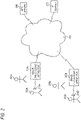
- Fig. 2 is an explanatory diagram illustrating a system configuration example using the first exemplary embodiment.
- An image processing apparatus 200A, an image processing apparatus 200B, the RP server 270, and the MDS server 280 are connected to each other via a communication line 290.
- the communication line 290 may be wireless, wired, or a combination thereof, and may be, for example, the Internet, an intranet, or the like as a communication infrastructure.
- Functions of the RP server 270 and the MDS server 280 may be implemented as a cloud service.
- the image processing apparatus 200 (the image processing apparatus 200A and the image processing apparatus 200B) is an exemplary embodiment of the information processing apparatus 100.
- the image processing apparatus 200 is a multifunction device that has a function of the information processing apparatus 100 and has a function of a FIDO client during FIDO authentication.
- the RP server 270 has a function as an RP (Relying Party) server during FIDO authentication.
- a FIDO server and a Web server are implemented in such a manner that a user 250 is able to perform FIDO authentication using authentication with the image processing apparatus 200, and a predetermined Web application is published.
- the MDS server 280 has a function as the above-described authentication device information management server.
- the authentication device 210 is a device that authenticates biometrics of the user 250.
- a smartphone, a wearable computer, or the like is applicable.
- the image processing apparatus 200A is used by a user 250A and an administrator 255A.
- the user 250A carries an authentication device 210A.
- the image processing apparatus 200A and the authentication device 210A are connected to each other via a communication line.
- the image processing apparatus 200B is used by a user 250B and an administrator 255B.
- the user 250B carries an authentication device 210B.
- the image processing apparatus 200B and the authentication device 210B are connected to each other via a communication line.
- the administrator 255 operates the image processing apparatus 200 to perform setting for restricting the authentication device 210 to be used in the FIDO authentication.
- the image processing apparatus 200 determines whether the authentication device 210 is the authentication device 210 permitted by the administrator 255, and performs control in such a manner that the FIDO authentication using the RP server 270 may be used if the authentication device 210 is permitted, and the FIDO authentication cannot be used if the authentication device 210 is not permitted.
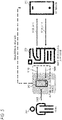
- Fig. 3 is an explanatory diagram illustrating an example of FIDO authentication technology.
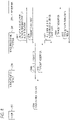
- Fig. 4 is a flowchart illustrating a process example according to FIDO authentication technology.
- FIDO authentication is performed between an authentication device 310 and an RP server 370 with an image processing apparatus 300 serving as an intermediary.
- the authentication device 310 and the image processing apparatus 300 are connected to each other by, for example, USB, Bluetooth Low Energy (BLE), Near Field Communication (NFC), or the like.
- step S402 the image processing apparatus 300 displays an authentication screen to a user 350 and requests the RP server 370 to start authentication.
- step S404 the RP server 370 transmits a challenge of FIDO authentication to the image processing device 300.
- the challenge is a random (including a pseudo random number) character string generated by the RP server 370.
- step S406 the image processing apparatus 300 requests the authentication device 310 to generate an assertion of FIDO authentication.
- the assertion is a certificate of a verification result, and is specifically a signed challenge.
- step S408 the user 350 uses the authentication device 310 to perform user authentication using biometric information.
- biometric information include a fingerprint, a face, a retina, an iris, and a palm vein pattern of the user 350.
- step S410 the authentication device 310 transmits the assertion of FIDO authentication to the image processing apparatus 300.
- step S412 the image processing apparatus 300 transmits the assertion received in step S410 to the RP server 370.
- step S414 the RP server 370 performs authentication using the challenge transmitted in step S404 and the assertion received in step S410, and transmits an authentication result to the image processing apparatus 300.
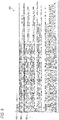
- Fig. 5 is an explanatory diagram illustrating an example of the related art.
- the image processing apparatus 300 attempts to restrict the authentication device 310 by using a whitelist method in which devices permitted to be connected are listed, for example, in a case where a USB connection is established between the image processing apparatus 300 and the authentication device 310, it takes time to check a vendor ID and a product ID of the authentication device 310. Specifically, it is necessary to connect each authentication device 310 to a PC or the like and check such IDs.
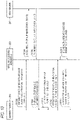
- Fig. 6 is an explanatory diagram illustrating the process example according to the first exemplary embodiment.
- Fig. 7 is a flowchart illustrating a process example (a registration process example) according to a first exemplary embodiment.
- Fig. 8 is a flowchart illustrating a process example (an authentication process example) according to the first exemplary embodiment.
- MDS is an abbreviation for Meta Data Service.
- the MDS server 280 is a server provided by FIDO alliance. Detailed information is listed on the following homepage. ⁇ https://fidoalliance.org/metadata/>
- the MDS server 280 manages information (vendor name, UUID, authentication acquisition date, and the like) on all authentication devices 210 that have acquired FIDO authentication (FIDO Certified). Such pieces of information are updated. Such update is performed, for example, daily.
- the information (JSON format) on all the authentication devices 210 may also be acquired from the MDS server 280 by an online application.
- the MDS server 280 is used such that the authentication device 210 to be used by the image processing apparatus 200 may be restricted.
- step S702 the image processing apparatus 200 acquires metadata from the MDS server 280.
- step S704 the image processing apparatus 200 displays information on the authentication device 210 in the metadata to the administrator 255, and sets the authentication device 210 permitted to be used by the image processing apparatus 200 in response to an operation of the administrator 255. That is, the authentication device information indicating the authentication device 210 connectable to the image processing apparatus 200 is stored in the authentication device information storage module 122.
- step S802 the image processing apparatus 200 displays an authentication screen and requests the RP server 270 to start authentication.
- step S804 the RP server 270 transmits a challenge to the image processing apparatus 200.
- step S806 the image processing apparatus 200 requests the authentication device 210 to generate an assertion.
- step S808 the user 250 uses the authentication device 210 to perform user authentication.
- step S810 the authentication device 210 transmits the assertion to the image processing apparatus 200.
- Processes from step S802 to step S810 are equivalent to processes from step S402 to step S410 described above in the example of Fig. 4 .
- step S812 the image processing apparatus 200 determines whether the authentication device 210 can be used. That is, it is determined whether metadata of the authentication device 210 is stored in the authentication device information storage module 122, the use of the authentication device 210 is permitted when the metadata is stored in the authentication device information storage module 122, and the use of the authentication device 210 is not permitted when the metadata is not stored in the authentication device information storage module 122.
- step S814 the image processing apparatus 200 transmits the assertion to the RP server 270.
- the assertion received in step S810 is transmitted to the RP server 270, and when the use of the authentication device 210 is prohibited, information indicating that assertion generation has failed is transmitted to the RP server 270.
- step S816 the RP server 270 transmits an authentication result to the image processing apparatus 200.
- the assertion is received (that is, when the use of the authentication device 210 is permitted)
- authentication is performed by using the challenge transmitted in step S804 and the assertion received in step S814, and the authentication result is transmitted to the image processing apparatus 200.
- the information indicating that the assertion generation has failed is received (that is, when the use of the authentication device 210 is not permitted)
- nothing may be performed, or information indicating a failure may be transmitted as the authentication result to the image processing apparatus 200.
- Fig. 9 is an explanatory diagram illustrating an example of a data structure of metadata 900.
- the metadata 900 is stored in the MDS server 280, and is acquired by the image processing apparatus 200 from the MDS server 280 in step S702 in the flowchart illustrated in the example of Fig. 7 .
- the metadata 900 includes next scheduled update date information 902 and one or more pieces of authentication device information 904.
- next scheduled update date information 902 indicates that a next scheduled update date of the metadata 900 is "January 3, 2020”.
- "status" in the authentication device information 904 represents a state of the authentication device 210. Possible values are defined in the following URL ⁇ https://fidoalliance.org/specs/fido-v2.0-id-20180227/fido-metadata-service-v2.0-id-20180227.html#authenticatorstatus-enum>
- FIDO_CERTIFIED indicates that "FIDO authentication has been acquired”
- REVOKED indicates “should not be trusted” which is a state regarded by FIDO alliance for certain reasons.
- the "REVOKED” corresponds to a case where the authentication device is unauthorized, a case where it is determined that a back door is installed in the authentication device, or the like.
- Fig. 10 is a flowchart illustrating a process example (a registration process example) according to the first exemplary embodiment. The process example illustrated in the example of Fig. 7 is described in more detail.
- step S1002 the administrator 255 requests the image processing apparatus 200 to start registration of an authentication device permitted to be used.
- the image processing apparatus 200 may detect that the administrator 255 selects a "register authentication device" button on a management screen.
- step S1004 the image processing apparatus 200 acquires a list of authentication devices from the MDS server 280. Specifically, the metadata 900 is acquired.
- step S1006 the MDS server 280 transmits the list of authentication devices to the image processing apparatus 200.
- step S1008 the image processing apparatus 200 displays a list of usable authentication devices to the administrator 255. Specifically, an authentication device that is "FIDO_CERTIFIED" and is not “REVOKED” in the metadata 900 is displayed on a screen of the image processing apparatus 200. Further, an authentication device that employs a communication method capable of communicating with the image processing apparatus 200 may be selected and displayed on the screen of the image processing apparatus 200.
- step S1010 the administrator 255 selects an authentication device permitted to be used from the list of authentication devices. For example, the administrator 255 selects an authentication device that is permitted to be used in a company.
- step S1012 the administrator 255 requests the image processing apparatus 200 to set the authentication device permitted to be used.
- step S1014 the image processing apparatus 200 stores the authentication device permitted to be used.
- the authentication device information storage module 122 in the image processing apparatus 200 is thus in a state where the authentication device information indicating the authentication device usable in FIDO authentication using the image processing apparatus 200 is stored.
- step S1016 the image processing apparatus 200 displays, to the administrator 255, a confirmation screen of the authentication device permitted to be used.
- Fig. 11 is a flowchart illustrating a process example (an authentication process example) according to the first exemplary embodiment. The process example illustrated in the example of Fig. 8 is described in more detail.
- step S1102 the user 250 requests the image processing apparatus 200 to start authentication by FIDO authentication.
- step S1104 the image processing apparatus 200 requests the RP server 270 for an authentication parameter.
- step S1106 the RP server 270 generates the authentication parameter.
- the authentication parameter here corresponds to the challenge illustrated in the example of Fig. 8 .
- step S1108 the RP server 270 transmits the authentication parameter to the image processing apparatus 200.
- step S1110 the image processing apparatus 200 requests the authentication device 210 to generate an assertion.
- step S1112 the authentication device 210 requests the user 250 to perform user authentication.
- step S1114 the user 250 uses the authentication device 210 to perform the user authentication. Specifically, as described above, a fingerprint, a face, or the like, which is biometric information of the user 250, is read by the authentication device 210 to perform biometric authentication by the authentication device 210.
- step S1116 when the biometric authentication is successful, the authentication device 210 generates the assertion.
- the authentication device 210 does not generate the assertion, and the assertion generation thus fails.
- step S1118 the authentication device 210 transmits the assertion to the image processing apparatus 200.
- step S1120 the image processing apparatus 200 determines whether the authentication device 210 can be used.
- step S1014 in the flowchart illustrated in the example of Fig. 10 the authentication device information stored in the authentication device information storage module 122 is used. That is, it is determined whether the target authentication device 210 coincides with the authentication device indicated by the authentication device information stored in the authentication device information storage module 122. If coincides, use of the authentication device 210 is permitted, and if does not coincide, the use of the authentication device 210 is not permitted.
- step S1122 the image processing apparatus 200 transmits the assertion to the RP server 270. More specifically, when the biometric authentication is successful in step S1114 and the use of the authentication device 210 is permitted in step S1120, the assertion received in step S1118 is directly transmitted to the RP server 270. When the biometric authentication fails in step S1114 or when the use of the authentication device 210 is not permitted in step S1120, information indicating that the assertion generation has failed is transmitted to the RP server 270.
- step S1124 the RP server 270 transmits an authentication result to the image processing apparatus 200.
- authentication is performed by using the authentication parameter generated in step S1106 and the assertion received in step S1122, and the authentication result is transmitted to the image processing apparatus 200.
- the information indicating that the assertion generation has failed is received, nothing may be performed, or information indicating a failure may be transmitted as the authentication result to the image processing apparatus 200.
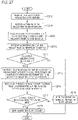
- Fig. 12 is a flowchart illustrating a process example (an authentication process example) according to the first exemplary embodiment (the information processing apparatus 100 and the image processing apparatus 200).
- step S1202 an authentication parameter is requested to the RP server 270.
- step S1204 the authentication parameter is received from the RP server 270.
- step S1206 the authentication parameter is passed to the authentication device 210 and assertion generation is requested.
- step S1208 an assertion generation result is received from the authentication device 210.
- step S1210 it is determined whether the assertion generation is successful. If successful, the process proceeds to step S1212. Otherwise, the process proceeds to step S1216.
- step S1212 the authentication device 210 is checked against a use-permitted authentication device table 1400.
- the use-permitted authentication device table 1400 will be described later with reference to an example of Fig. 14 .
- step S1214 it is determined whether the authentication device 210 is permitted to be used. If permitted, the process proceeds to step S1218. Otherwise, the process proceeds to step S1216.
- step S1216 an assertion generation failure is returned to the RP server 270.
- step S1218 the assertion is sent to the RP server 270.
- Fig. 13 is an explanatory diagram illustrating an example of a data structure of an authentication device list table 1300.
- the authentication device list table 1300 is generated by the image processing apparatus 200 acquiring the metadata 900 from the MDS server 280.
- the authentication device list table 1300 includes an authentication device identifier column 1310 and a validity column 1320.
- the authentication device identifier column 1310 stores an identifier that is information for identifying an authentication device.
- the validity column 1320 stores validity of the authentication device.
- Types of the validity include, for example, valid and invalid. As described above, the authentication device that is "REVOKED" in the metadata 900 is invalid.
- a first line indicates that an authentication device identifier AUTH a is valid
- a second line indicates that an authentication device identifier AUTH_b is invalid
- a third line indicates that an authentication device identifier AUTH_c is valid
- a fourth line indicates that an authentication device identifier AUTH_d is valid
- a fifth line indicates that an authentication device identifier AUTH e is valid
- a sixth line indicates that an authentication device identifier AUTH_f is invalid.
- the authentication device list table 1300 may be identified by a version or an issuance date and time of the metadata 900.
- the authentication device list table 1300 illustrated in the example of Fig. 13 is generated from the metadata 900 of version 1.0.
- invalid authentication devices may not be displayed on a use-permitted authentication device setting screen, or may be highlighted.
- the administrator 255 operates the use-permitted authentication device setting screen to select an authentication device permitted to be used by the information processing apparatus 100 (the image processing apparatus 200).
- Fig. 14 is an explanatory diagram illustrating an example of a data structure of the use-permitted authentication device table 1400.
- the use-permitted authentication device table 1400 is generated from the authentication device list table 1300. That is, the use-permitted authentication device table 1400 is a list of "authentication devices permitted to be used in the information processing apparatus 100 (image processing apparatus 200)" selected in the information processing apparatus 100 (image processing apparatus 200) by the administrator 255.
- the use-permitted authentication device table 1400 includes an authentication device identifier column 1410.
- the authentication device identifier column 1410 stores an authentication device identifier.
- the use-permitted authentication device table 1400 indicates that the authentication devices permitted to be used by the information processing apparatus 100 (the image processing apparatus 200) have the authentication device identifiers "AUTH_a”, "AUTH_c”, and "AUTH_d".
- the use-permitted authentication device table 1400 performs management in association with the version or issuance date and time of the authentication device list table 1300 to be used.
- the use-permitted authentication device table 1400 illustrated in the example of Fig. 14 is associated with the authentication device list table 1300 of version 1.0.
- Fig. 15 is a conceptual module configuration diagram illustrating a configuration example according to a second exemplary embodiment (use-permitted authentication device management server 1500).
- the administrator 255 of each image processing apparatus 200 sets the authentication device 210 that is permitted to be used by the image processing apparatus 200.
- each image processing apparatus 1600 is an information processing apparatus that functions as a FIDO client.
- the use-permitted authentication device management server 1500 includes a processor 1505, a memory 1510, an output device 1585, a reception device 1590, and a communication device 1595.
- the processor 1505, the output device 1585, the reception device 1590, and the communication device 1595 are the same as the processor 105, the output device 185, the reception device 190, and the communication device 195 illustrated in the example of Fig. 1 , respectively.
- the communication device 1595 is a communication line interface such as a network card for connecting to other devices (the RP server 270, the MDS server 280, and the image processing device 1600) via a communication line.
- the memory 1510 includes a data memory 1520 and a program memory 1540, and is connected to the processor 1505, the output device 1585, the reception device 1590, and the communication device 1595 via a bus 1598.
- the data memory 1520 stores one or more authentication device information storage modules 1522 (for example, an authentication device information storage module 1522A, an authentication device information storage module 1522B, and the like).
- one authentication device information storage module 1522 may be used.
- a number equal to the different groups of authentication device information storage modules 1522 are required.
- the authentication device information storage module 1522 is required for each image processing apparatus 1600.
- the authentication device information storage module 1522 stores authentication device information indicating authentication devices 210 usable during FIDO authentication using the image processing apparatus 1600 in association with the image processing apparatus 1600, and is equivalent to the authentication device information storage module 122 illustrated in the example of Fig. 1 . Note that "storing in association with the image processing apparatus 1600" indicates that each image processing apparatus 1600 and the authentication device information storage module 1522 are associated with each other. When there are N target image processing apparatuses 1600, as described above, in the case where the authentication devices 210 permitted to be used are the same in all the image processing apparatuses 1600, one authentication device information storage module 1522 is sufficient, and the number of the image processing apparatuses 1600 and the number of the authentication device information storage modules 1522 have a relationship of N to 1.
- the authentication device information storage module 1522 is required for each image processing apparatus 1600, and the number of image processing apparatuses 1600 and the number of the authentication device information storage modules 1522 have a relationship of N to N.
- Each authentication device information storage module 1522 has a data structure equivalent to that of the use-permitted authentication device table 1400 illustrated in the example of Fig. 14 .
- the use-permitted authentication device table 1400 is stored corresponding to each image processing apparatus 1600.
- the use-permitted authentication device table 1400 may include a column of an identifier of the image processing apparatus 1600 in addition to the authentication device identifier column 1410.
- the identifier of the image processing apparatus 1600 and the identifier of the authentication device 210 may be stored in association with each other, and the identifier of the authentication device 210 permitted to be used by the image processing apparatus 1600 may be retrieved based on the identifier of the image processing apparatus 1600, or conversely, the identifier of the image processing apparatus 1600 that permits the use of the authentication device 210 may be retrieved based on the identifier of the authentication device 210.
- the program memory 1540 stores a registration module 1542, an information processing apparatus transmission and reception module 1550, and an authentication device restriction and permission module 1552.
- the registration module 1542 includes an authentication device information acquisition module 1544, an authentication device information display module 1546, and an authentication device selection module 1548.
- the authentication device information acquisition module 1544 acquires authentication device information from the authentication device information management server (MDS server 280).
- the authentication device information display module 1546 displays the authentication device information acquired by the authentication device information acquisition module 1544 to the administrator.
- the authentication device selection module 1548 causes the authentication device information storage module 1522 corresponding to the image processing apparatus 1600 to store the authentication device information indicating the authentication device 210 that is selected by the administrator and connectable to each image processing apparatus 1600.
- the image processing apparatus 1600 transmits authentication device information indicating the authentication device 210 used by the user to the use-permitted authentication device management server 1500.
- the information processing apparatus transmission and reception module 1550 communicates with the image processing apparatus 1600 via the communication apparatus 1595.
- the information processing apparatus transmission and reception module 1550 receives the authentication device information transmitted from the image processing apparatus 1600. Then a result of determination by the authentication device restriction and permission module 1552 is returned to the image processing apparatus 1600.
- the authentication device restriction and permission module 1552 determines whether the authentication device information transmitted from the image processing apparatus 1600 is included in the authentication device information stored in the authentication device information storage module 1522 corresponding to the image processing apparatus 1600, and controls the information processing apparatus transmission and reception module 1550 to transmit information indicating a result of the determination to the image processing apparatus 1600.
- the image processing apparatus 1600 restricts use of the authentication device 210.
- Fig. 16 is an explanatory diagram illustrating a system configuration example using the second exemplary embodiment.
- the use-permitted authentication device management server 1500, an image processing apparatus 1600A, an image processing apparatus 1600B, the RP server 270, and the MDS server 280 are connected to each other via a communication line 1690.
- the communication line 1690 may be wireless, wired, or a combination thereof, and may be, for example, the Internet, an intranet, or the like as a communication infrastructure.
- Functions of the use-permitted authentication device management server 1500, the RP server 270, and the MDS server 280 may be implemented as a cloud service.
- the use-permitted authentication device management server 1500 is used by the administrator 255.
- the image processing apparatus 1600 (the image processing apparatus 1600A and the image processing apparatus 1600B) is a multifunction device that is used by the user 250 and has a function of a FIDO client during FIDO authentication.
- the image processing apparatus 1600A is used by a user 250A.
- the user 250A carries an authentication device 210A.
- the image processing apparatus 1600A and the authentication device 210A are connected to each other via a communication line.
- the image processing apparatus 1600B is used by the user 250B.
- the user 250B carries an authentication device 210B.
- the image processing apparatus 1600B and the authentication device 210B are connected to each other via a communication line.
- the administrator 255 operates the use-permitted authentication device management server 1500 to perform setting for restricting the authentication devices 210 to be used in the FIDO authentication by each image processing apparatus 1600. At this time, communication with the MDS server 280 is performed.
- the image processing apparatus 1600 requests the use-permitted authentication device management server 1500 to determine whether the authentication device 210 is the authentication device 210 permitted by the administrator 255, and performs control in such a manner that the FIDO authentication using the RP server 270 is able to be used if a reply from the use-permitted authentication device management server 1500 is "permitted authentication device 210", and the FIDO authentication cannot be used if the reply from the use-permitted authentication device management server 1500 is "non-permitted authentication device 210".
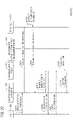
- FIG. 17 is an explanatory diagram illustrating a process example according to the second exemplary embodiment.
- Fig. 18 is a flowchart illustrating the process example according to the second exemplary embodiment.
- step S1802 the use-permitted authentication device management server 1500 acquires metadata from the MDS server 280.
- step S1804 the use-permitted authentication device management server 1500 displays information on the authentication device 210 in the metadata to the administrator 255, and sets the authentication device 210 permitted to be used for each target image processing apparatus 1600 in response to an operation of the administrator 255. That is, the authentication device information indicating the authentication device 210 connectable to the target image processing apparatus 1600 is stored in the authentication device information storage module 1522.
- Fig. 19 is a flowchart illustrating the process example (the registration process example) according to the second exemplary embodiment.
- step S1902 the administrator 255 requests the use-permitted authentication device management server 1500 to start registration of an authentication device permitted to be used by the target image processing apparatus 1600.
- step S1904 the use-permitted authentication device management server 1500 requests the MDS server 280 to acquire a list of authentication devices (metadata).
- step S1906 the MDS server 280 transmits the list of authentication devices to the use-permitted authentication device management server 1500.
- step S1908 the use-permitted authentication device management server 1500 displays a list of usable authentication devices to the administrator 255.
- step S1910 the administrator 255 selects an authentication device that is permitted to be used by the target image processing apparatus 1600.
- step S1912 the administrator 255 requests the use-permitted authentication device management server 1500 to set the authentication device permitted to be used.
- step S1914 the use-permitted authentication device management server 1500 stores the authentication device permitted to be used in the authentication device information storage module 1522 corresponding to the target image processing apparatus 1600.
- a version of an authentication device list may be stored.
- step S1916 the use-permitted authentication device management server 1500 displays a confirmation screen of the authentication device permitted to be used to the administrator 255.
- Fig. 20 is a flowchart illustrating the process example according to the second exemplary embodiment.
- step S2002 the user 250 requests the image processing apparatus 1600 to start authentication by FIDO authentication.
- step S2004 the image processing apparatus 1600 requests the RP server 270 for an authentication parameter.
- step S2006 the RP server 270 generates the authentication parameter.
- the authentication parameter here corresponds to the challenge described above.
- step S2008 the RP server 270 transmits the authentication parameter to the image processing apparatus 1600.
- step S2010 the image processing apparatus 1600 requests the authentication device 210 to generate an assertion.
- step S2012 the authentication device 210 requests the user 250 to perform user authentication.
- step S2014 the user 250 uses the authentication device 210 to perform the user authentication. Specifically, as described above, a fingerprint, a face, or the like, which is biometric information of the user 250, is read by the authentication device 210 to perform biometric authentication by the authentication device 210.
- step S2016 when the biometric authentication is successful, the authentication device 210 generates the assertion.
- the authentication device 210 does not generate the assertion, and the assertion generation thus fails.
- step S2018 the authentication device 210 transmits the assertion to the image processing apparatus 1600.
- step S2020 the image processing apparatus 1600 requests the use-permitted authentication device management server 1500 to determine whether the authentication device 210 can be used in the image processing apparatus 1600.
- step S2022 the use-permitted authentication device management server 1500 determines whether the authentication device 210 can be used in the target image processing apparatus 1600.
- step S1914 in the flowchart illustrated in the example of Fig. 19 the authentication device information stored in the authentication device information storage module 1522 is used. That is, it is determined whether the target authentication device 210 coincides with the authentication device indicated by the authentication device information stored in the authentication device information storage module 1522. If coincides, it is determined that the use of the authentication device 210 is permitted, and if does not coincide, it is determined that the use of the authentication device 210 is not permitted.
- step S2024 the use-permitted authentication device management server 1500 transmits, to the image processing apparatus 1600, a result of the determination in step S2022 of whether the authentication device 210 can be used.
- step S2026 the image processing apparatus 1600 transmits the assertion to the RP server 270. More specifically, when the biometric authentication is successful in step S2014 and the determination result that the use of the authentication device 210 is permitted is received in step S2024, the assertion received in step S2018 is directly transmitted to the RP server 270. When the biometric authentication fails in step S2014, or when the determination result that the use of the authentication device 210 is not permitted is received in step S2024, information indicating that the assertion generation has failed is transmitted to the RP server 270.
- step S2028 the RP server 270 transmits an authentication result to the image processing apparatus 1600.
- authentication is performed by using the authentication parameter generated in step S2006 and the assertion received in step S2026, and the authentication result is transmitted to the image processing apparatus 1600.
- the information indicating that the assertion generation has failed is received, nothing may be performed, or information indicating a failure may be transmitted as the authentication result to the image processing apparatus 1600.
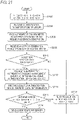
- Fig. 21 is a flowchart illustrating a process example (an authentication process example) according to the second exemplary embodiment (the image processing apparatus 1600).
- step S2102 an authentication parameter is requested to the RP server 270.
- step S2104 the authentication parameter is received from the RP server 270.
- step S2106 the authentication parameter is passed to the authentication device 210 and assertion generation is requested.
- step S2108 an assertion generation result is received from the authentication device 210.
- step S2110 it is determined whether the assertion generation is successful. If successful, the process proceeds to step S2112. Otherwise, the process proceeds to step S2118.
- step S2112 the use-permitted authentication device management server 1500 is requested to determine whether the authentication device can be used.
- step S2114 a result of the authentication device use permission determination is received.
- step S2116 it is determined whether the authentication device is permitted to be used. If permitted, the process proceeds to step S2120. Otherwise, the process proceeds to step S2118.
- step S2118 an assertion generation failure is returned to the RP server 270.
- step S2120 the assertion is sent to the RP server 270.
- a third exemplary embodiment is a modification of the second exemplary embodiment.
- the use-permitted authentication device management server 1500 determines whether the authentication device 210 can be used in each image processing apparatus 1600.
- a use-permitted authentication device management server 2300 stores the use-permitted authentication device table 1400 in each image processing apparatus 2200 (this point is the same as in the second exemplary embodiment), and the determination is performed by each image processing apparatus 2200.
- Fig. 22 is a conceptual module configuration diagram illustrating a configuration example according to the third exemplary embodiment (image processing apparatus 2200).
- the image processing apparatus 2200 includes a processor 2205, a memory 2210, an output device 2285, a reception device 2290, and a communication device 2295.
- the processor 2205, the output device 2285, the reception device 2290, and the communication device 2295 are equivalent to the processor 105, the output device 185, the reception device 190, and the communication device 195 illustrated in the example of Fig. 1 , respectively.
- the communication device 2295 is a communication line interface such as a network card for connecting to other devices (the authentication device 210, the RP server 270, and the use-permitted authentication device management server 2300) via a communication line.
- the memory 2210 includes a data memory 2220 and a program memory 2240, and is connected to the processor 2205, the output device 2285, the reception device 2290, and the communication device 2295 via a bus 2298.
- the data memory 2220 stores an authentication device information storage module 2222.
- the authentication device information storage module 2222 stores authentication device information indicating the authentication device 210 usable in FIDO authentication.
- the authentication device information is acquired from the use-permitted authentication device management server 2300.
- the authentication device information storage module 2222 has a function equivalent to that of the authentication device information storage module 122 in the first exemplary embodiment.
- the program memory 2240 stores a usable authentication device information acquisition module 2242 and an authentication device restriction and permission module 2250.
- the usable authentication device information acquisition module 2242 transmits a request for acquiring authentication device information indicating the authentication device 210 usable in the FIDO authentication using the information processing apparatus 2200 to the use-permitted authentication device management server 2300.
- the usable authentication device information acquisition module 2242 acquires the authentication device information indicating the authentication device 210 usable in the FIDO authentication using the image processing device 2200 from the use-permitted authentication device management server 2300, and stores the authentication device information in the authentication device information storage module 2222.
- the authentication device restriction and permission module 2250 restricts use of the authentication device 210.
- the authentication device restriction and permission module 2250 has a function equivalent to that of the authentication device restriction and permission module 150 in the first exemplary embodiment.
- Fig. 23 is a conceptual module configuration diagram illustrating a configuration example according to the third exemplary embodiment (use-permitted authentication device management server 2300).
- the use-permitted authentication device management server 2300 includes a processor 2305, a memory 2310, an output device 2385, a reception device 2390, and a communication device 2395.
- the processor 2305, the output device 2385, the reception device 2390, and the communication device 2395 are equivalent to the processor 105, the output device 185, the reception device 190, and the communication device 195 illustrated in the example of Fig. 1 , respectively.
- the communication device 2395 is a communication line interface such as a network card for connecting to other devices (the MDS server 280 and the image processing device 2200) via a communication line.
- the memory 2310 includes a data memory 2320 and a program memory 2340, and is connected to the processor 2305, the output device 2385, the reception device 2390, and the communication device 2395 via a bus 2398.
- the data memory 2320 stores an authentication device information storage module 2322A, an authentication device information storage module 2322B, and the like.
- the authentication device information storage module 2322 stores authentication device information indicating authentication devices 210 usable during FIDO authentication using the image processing apparatus 2200 in association with the image processing apparatus 2200.
- the authentication device information storage module 2322 has a function equivalent to that of the authentication device information storage module 1522 in the second exemplary embodiment.
- the program memory 2340 stores a registration module 2342 and an information processing apparatus transmission and reception module 2350.
- the registration module 2342 includes an authentication device information acquisition module 2344, an authentication device information display module 2346, and an authentication device selection module 2348.
- the registration module 2342 has a function equivalent to that of the registration module 1542 in the second exemplary embodiment.
- the authentication device information acquisition module 2344 acquires authentication device information from the authentication device information management server (MDS server 280).
- the authentication device information display module 2346 displays the authentication device information acquired by the authentication device information acquisition module 2344 to the administrator.
- the authentication device selection module 2348 causes the authentication device information storage module 2322 corresponding to the image processing apparatus 2200 to store the authentication device information indicating the authentication device 210 that is selected by the administrator and connectable to each image processing apparatus 2200.
- the information processing apparatus transmission and reception module 2350 communicates with the image processing apparatus 2200 via the communication apparatus 2395. For example, "a request for acquiring authentication device information" transmitted from the image processing apparatus 2200 is received. In response to the request transmitted from the image processing apparatus 2200, the authentication device information indicating the authentication device 210 that can be used by the image processing apparatus 2200 is transmitted to the image processing apparatus 2200. That is, the authentication device information corresponding to the image processing apparatus 2200 that has made the request is returned to the image processing apparatus 2200.
- Fig. 24 is an explanatory diagram illustrating a system configuration example using the third exemplary embodiment.
- the use-permitted authentication device management server 2300, an image processing apparatus 2200A, an image processing apparatus 2200B, the RP server 270, and the MDS server 280 are connected to each other via a communication line 2490.
- the communication line 2490 may be wireless, wired, or a combination thereof, and may be, for example, the Internet, an intranet, or the like as a communication infrastructure.
- Functions of the use-permitted authentication device management server 2300, the RP server 270, and the MDS server 280 may be implemented as a cloud service.
- the use-permitted authentication device management server 2300 is used by the administrator 255.
- the image processing apparatus 2200 (the image processing apparatus 2200A and the image processing apparatus 2200B) is a multifunction device that is used by the user 250 and has a function of a FIDO client during FIDO authentication.
- the image processing apparatus 2200A is used by the user 250A.
- the user 250A carries an authentication device 210A.
- the image processing apparatus 2200A and the authentication device 210A are connected to each other via a communication line.
- the image processing apparatus 2200B is used by the user 250B.
- the user 250B carries an authentication device 210B.
- the image processing apparatus 2200B and the authentication device 210B are connected to each other via a communication line.
- the administrator 255 operates the use-permitted authentication device management server 2300 to perform setting for restricting the authentication devices 210 to be used in the FIDO authentication by each image processing apparatus 2200. At this time, communication with the MDS server 280 is performed.
- the image processing apparatus 2200 acquires the authentication device information from the use-permitted authentication device management server 2300 when determining whether the authentication device 210 is the authentication device 210 permitted by the administrator 255. Then the image processing apparatus 2200 determines whether the authentication device 210 is the authentication device 210 permitted by the administrator 255, and performs control in such a manner that the FIDO authentication using the RP server 270 is able to be used if the authentication device 210 is permitted, and the FIDO authentication cannot be used if the authentication device 210 is not permitted.
- FIG. 25 is an explanatory diagram illustrating a process example according to the third exemplary embodiment.
- Fig. 18 is a flowchart illustrating the process example according to the third exemplary embodiment.
- step S1802 the use-permitted authentication device management server 2300 acquires metadata from the MDS server 280.
- step S1804 the use-permitted authentication device management server 2300 displays information on the authentication device 210 in the metadata to the administrator 255, and sets the authentication device 210 permitted to be used for each target image processing apparatus 2200 in response to an operation of the administrator 255. That is, the authentication device information indicating the authentication device 210 connectable to the target image processing apparatus 2200 is stored in the authentication device information storage module 2322.
- Fig. 26 is a flowchart illustrating the process example according to the third exemplary embodiment.
- step S2602 the user 250 requests the image processing apparatus 2200 to start authentication by FIDO authentication.
- step S2604 the image processing apparatus 2200 requests the RP server 270 for an authentication parameter.
- step S2606 the RP server 270 generates the authentication parameter.
- the authentication parameter here corresponds to the challenge described above.
- step S2608 the RP server 270 transmits the authentication parameter to the image processing apparatus 2200.
- step S2610 the image processing apparatus 2200 requests the authentication device 210 to generate an assertion.
- step S2612 the authentication device 210 requests the user 250 to perform user authentication.
- step S2614 the user 250 uses the authentication device 210 to perform the user authentication. Specifically, as described above, a fingerprint, a face, or the like, which is biometric information of the user 250, is read by the authentication device 210 to perform biometric authentication by the authentication device 210.
- step S2616 when the biometric authentication is successful, the authentication device 210 generates the assertion.
- the authentication device 210 does not generate the assertion, and the assertion generation thus fails.
- step S2618 the authentication device 210 transmits the assertion to the image processing apparatus 2200.
- step S2620 the image processing apparatus 2200 requests the use-permitted authentication device management server 2300 to acquire information on authentication devices permitted to be used by the image processing apparatus 2200.
- step S2622 the use-permitted authentication device management server 2300 transmits authentication device information corresponding to the image processing apparatus 2200 to the image processing apparatus 2200.
- the image processing device 2200 stores the received authentication device information in the authentication device information storage module 2222.
- step S2624 the image processing apparatus 2200 determines whether the authentication device 210 can be used.
- the authentication device information in the authentication device information storage module 2222 received in step S2622 is used. That is, it is determined whether the target authentication device 210 coincides with the authentication device indicated by the authentication device information stored in the authentication device information storage module 2222. If coincides, it is determined that the use of the authentication device 210 is permitted, and if does not coincide, it is determined that the use of the authentication device 210 is not permitted.
- step S2626 the image processing apparatus 2200 transmits the assertion to the RP server 270. More specifically, when the biometric authentication is successful in step S2614 and it is determined in step S2624 that the use of the authentication device 210 is permitted, the assertion received in step S2618 is directly transmitted to the RP server 270. When the biometric authentication fails in step S2614, or when it is determined in step S2624 that the use of the authentication device 210 is not permitted, information indicating that the assertion generation has failed is transmitted to the RP server 270.
- step S2628 the RP server 270 transmits an authentication result to the image processing apparatus 2200.
- authentication is performed by using the authentication parameter generated in step S2606 and the assertion received in step S2626, and the authentication result is transmitted to the image processing apparatus 2200.
- the information indicating that the assertion generation has failed is received, nothing may be performed, or information indicating a failure may be transmitted as the authentication result to the image processing apparatus 2200.
- Fig. 27 is a flowchart illustrating a process example according to the third exemplary embodiment (image processing apparatus 2200).
- step S2702 an authentication parameter is requested to the RP server 270.
- step S2704 the authentication parameter is received from the RP server 270.
- step S2706 the authentication parameter is passed to the authentication device 210 and assertion generation is requested.
- step S2708 an assertion generation result is received from the authentication device 210.
- step S2710 it is determined whether the assertion generation is successful. If successful, the process proceeds to step S2712. Otherwise, the process proceeds to step S2718.
- step S2712 the use-permitted authentication device management server 2300 is requested to acquire information on authentication devices permitted to be used by the image processing apparatus 2200.
- step S2714 the authentication device information is received from the use-permitted authentication device management server 2300.
- step S2716 it is determined whether the authentication device 210 is permitted to be used. If permitted, the process proceeds to step S2720. Otherwise, the process proceeds to step S2718. Specifically, if the authentication device information received in step S2714 includes information indicating the target authentication device, "the authentication device is permitted to be used", and if not included, "the authentication device is not permitted to be used".
- step S2718 an assertion generation failure is returned to the RP server 270.
- step S2720 the assertion is sent to the RP server 270.
- a fourth exemplary embodiment is implemented in combination with the first exemplary embodiment, the second exemplary embodiment, or the third exemplary embodiment, and performs a process of updating authentication device information.
- an example of a process performed between an image processing apparatus 2800 and an authentication device information management server 2850 will be described.
- the image processing apparatus 2800 may be replaced with the information processing apparatus 100 or the image processing apparatus 200, and the authentication device information management server 2850 may be replaced with the MDS server 280; when implemented in the second exemplary embodiment, the image processing apparatus 2800 may be replaced with the use-permitted authentication device management server 1500, and the authentication device information management server 2850 may be replaced with the MDS server 280; and when implemented in the third exemplary embodiment, the image processing apparatus 2800 may be replaced with the use-permitted authentication device management server 2300, and the authentication device information management server 2850 may be replaced with the MDS server 280.
- Fig. 28 is an explanatory diagram illustrating a process example according to the fourth exemplary embodiment.
- Authentication device information in the authentication device information management server 2850 is updated at certain timing.
- a use-permitted authentication device table (the authentication device information storage module 122 in the information processing apparatus 100, the authentication device information storage module 1522 in the use-permitted authentication device management server 1500, and the authentication device information storage module 2322 in the use-permitted authentication device management server 2300, more specifically, the use-permitted authentication device table 1400 illustrated in the example of Fig. 14 ) in the image processing apparatus 2800 is updated.
- latest authentication device information in the authentication device information management server 2850 may be followed. Therefore, as the authentication device 210, a device that has been used so far may not be used, or a device that has not been used so far may be used.
- step S2802 when a first condition is satisfied, the image processing apparatus 2800 acquires the latest authentication device information (the authentication device list table 1300, specifically, the metadata 900) from the authentication device information management server 2850.
- the latest authentication device information the authentication device list table 1300, specifically, the metadata 900
- step S2804 the image processing apparatus 2800 updates the use-permitted authentication device table 1400 in accordance with a second condition.
- An operation is performed by the administrator 255 as necessary.
- the image processing apparatus 2800 displays new authentication device information to the administrator 255, and the administrator 255 sets the authentication device 210 permitted to be used by the image processing apparatus 2800 (the information processing apparatus 100 or the image processing apparatus 200 in the first exemplary embodiment, the image processing apparatus 1600 in the second exemplary embodiment, and the image processing apparatus 2200 in the third exemplary embodiment).
- the image processing apparatus 2800 performs the following processing.
- the authentication device information is acquired from the authentication device information management server 2850 in accordance with the first condition under which a process of updating the authentication device information in the authentication device information storage module (the authentication device information storage module 122, the authentication device information storage module 1522, and the authentication device information storage module 2322) is started.
- the authentication device information in the authentication device information storage module is updated by using the authentication device information acquired from the authentication device information management server 2850.
- the first condition is an update process start condition of the use-permitted authentication device table 1400
- the second condition is an update condition of the use-permitted authentication device table 1400.
- the two conditions are determined in advance.
- the condition of (1-1) is so-called interval processing, and includes, for example, each X days, each Y months, and the like.
- the condition of (1-2) is update processing based on a so-called manual instruction.
- the condition of (1-3) is update processing using the next scheduled update date information 902 of the metadata 900. That is, after a date and time specified in the next scheduled update date information 902 of the metadata 900, acquisition of the metadata 900 is automatically performed.
- the authentication device 210 is automatically deleted from the use-permitted authentication device table 1400.
- Fig. 29 is a flowchart illustrating a process example according to a fourth exemplary embodiment.
- This process is a process of automatically acquiring the metadata 900 (a list of authentication devices) and automatically updating the use-permitted authentication device table 1400 during an update process of the use-permitted authentication device table 1400.
- a process example in a case where the condition of (1-1) or the condition of (1-3) is used as the first condition and the condition of (2-1) is used as the second condition is illustrated.
- step S2902 the image processing apparatus 2800 acquires a list of authentication devices from the authentication device information management server 2850. That is, step S2902 is performed for each predetermined period or using next scheduled update date and time in a list of authentication devices acquired last time.
- step S2904 the authentication device information management server 2850 transmits the list of authentication devices to the image processing apparatus 2800.
- step S2906 the image processing apparatus 2800 performs version verification. That is, it is verified whether a version of the list of authentication devices acquired this time is newer than a version of the list of authentication devices acquired before. If newer, the process of step S2908 and subsequent steps are performed. If not newer (if the version is the same), the process of step S2908 and subsequent steps is not performed, and the process is ended.
- step S2908 the image processing apparatus 2800 updates the authentication device permitted to be used. That is, the use-permitted authentication device table 1400 is updated by using the acquired list of authentication devices.
- step S2910 the image processing apparatus 2800 stores the version of the list of authentication devices. In a process of a next time, the stored version becomes the "version of the list of authentication devices acquired before".
- Fig. 30 is a flowchart illustrating the process example according to the fourth exemplary embodiment.
- This process is a process of automatically acquiring the metadata 900 (a list of authentication devices) and manually updating the use-permitted authentication device table 1400 during the update process of the use-permitted authentication device table 1400.
- a process example in a case where the condition of (1-1) or the condition of (1-3) is used as the first condition and the condition of (2-2) is used as the second condition is illustrated.
- step S3002 the image processing apparatus 2800 acquires a list of authentication devices from the authentication device information management server 2850. That is, step S3002 is performed for each predetermined period or using next scheduled update date and time in a list of authentication devices acquired last time.
- step S3004 the authentication device information management server 2850 transmits the list of authentication devices to the image processing apparatus 2800.
- step S3006 the image processing apparatus 2800 performs version verification.
- the same processing as the processing in step S2906 in the flowchart illustrated in the example of Fig. 29 is performed.
- step S3008 the image processing apparatus 2800 notifies the administrator 255 of updating of usable authentication devices.
- step S3010 the administrator 255 requests the image processing apparatus 2800 to start registration of an authentication device permitted to be used.
- step S3012 the image processing apparatus 2800 displays a list of usable authentication devices to the administrator 255.
- step S3014 the administrator 255 selects an authentication device permitted to be used.
- step S3016 the administrator 255 requests the image processing apparatus 2800 to set the authentication device permitted to be used.
- step S3018 the image processing apparatus 2800 stores the authentication device permitted to be used.
- step S3020 the image processing apparatus 2800 stores the version of the list of authentication devices. In a process of a next time, the stored version becomes the "version of the list of authentication devices acquired before".
- step S3022 the image processing apparatus 2800 displays, to the administrator 255, a confirmation screen of the authentication device permitted to be used.
- Fig. 31 is a flowchart illustrating the process example according to the fourth exemplary embodiment.
- This process is a process of manually acquiring the metadata 900 (a list of authentication devices) and manually updating the use-permitted authentication device table 1400 during the update process of the use-permitted authentication device table 1400.
- a process example in a case where the condition of (1-2) is used as the first condition and the condition of (2-2) is used as the second condition is illustrated.
- step S3102 the administrator 255 requests the image processing apparatus 2800 to start updating of an authentication device permitted to be used.
- step S3104 the image processing apparatus 2800 acquires a list of authentication devices from the authentication device information management server 2850.
- step S3106 the authentication device information management server 2850 transmits the list of authentication devices to the image processing apparatus 2800.
- step S3108 the image processing apparatus 2800 performs version verification.
- the same processing as the processing in step S2906 in the flowchart illustrated in the example of Fig. 29 is performed.
- step S3110 the image processing apparatus 2800 displays a list of usable authentication devices to the administrator 255.
- step S3112 the administrator 255 selects an authentication device permitted to be used.
- step S3114 the administrator 255 requests the image processing apparatus 2800 to set the authentication device permitted to be used.
- step S3116 the image processing apparatus 2800 stores the authentication device permitted to be used.
- step S3118 the image processing apparatus 2800 stores the version of the list of authentication devices. In a process of a next time, the stored version becomes the "version of the list of authentication devices acquired before".
- step S3120 the image processing apparatus 2800 displays, to the administrator 255, a confirmation screen of the authentication device permitted to be used.
- Fig. 32 is a flowchart illustrating the process example according to the fourth exemplary embodiment.
- This process is a process of manually acquiring the metadata 900 (a list of authentication devices) and automatically updating the use-permitted authentication device table 1400 during the update process of the use-permitted authentication device table 1400.
- a process example in a case where the condition of (1-2) is used as the first condition and the condition of (2-1) is used as the second condition is illustrated.
- step S3202 the administrator 255 requests the image processing apparatus 2800 to start updating of an authentication device permitted to be used.
- step S3204 the image processing apparatus 2800 acquires a list of authentication devices from the authentication device information management server 2850.
- step S3206 the authentication device information management server 2850 transmits the list of authentication devices to the image processing apparatus 2800.
- step S3208 the image processing apparatus 2800 performs version verification.
- the same processing as the processing in step S2906 in the flowchart illustrated in the example of Fig. 29 is performed.
- step S3210 the image processing apparatus 2800 updates the authentication device permitted to be used.
- step S3212 the image processing apparatus 2800 stores the version of the list of authentication devices. In a process of a next time, the stored version becomes the "version of the list of authentication devices acquired before".
- step S3214 the image processing apparatus 2800 displays, to the administrator 255, a confirmation screen of the authentication device permitted to be used.
- Fig. 33 is a flowchart illustrating the process example according to the fourth exemplary embodiment (image processing apparatus 2800). This process is a process of automatically updating the use-permitted authentication device table 1400 during the update process of the use-permitted authentication device table 1400. A process example in a case where the condition of (2-1) is used as the second condition is illustrated.
- an authentication device list (authentication device list table 3410) is acquired from the authentication device information management server 2850.
- the first condition applied to such acquisition may be any one of the condition of (1-1), the condition of (1-2), and the condition of (1-3).
- step S3304 it is determined whether a version of the authentication device list acquired this time is a newer version than a version of an authentication device list acquired last time. If the version is newer, the process proceeds to step S3306. Otherwise, the process is ended.
- step S3306 it is determined whether an authentication device of a use-permitted authentication device table (use-permitted authentication device table 3400) is included in the new authentication device list. If included, the process proceeds to step S3308. Otherwise, the process proceeds to step S3312.
- step S3308 it is determined whether a state of the authentication device is "invalid". If being "invalid”, the process proceeds to step S3310. Otherwise, the process proceeds to step S3312.
- step S3310 the invalid authentication device is deleted from the use-permitted authentication device table.
- step S3312 it is determined whether all authentication devices in the use-permitted authentication device table have been confirmed (determined in step S3306). If all have been confirmed, the process proceeds to step S3314. Otherwise, the process returns to step S3306.
- step S3314 the version of the authentication device list acquired in step S3302 is stored.
- Figs. 34A, 34B, and 34C show explanatory diagrams illustrating an example of data structures of the use-permitted authentication device table 3400 and the authentication device list table 3410.
- a specific example according to the process of Fig. 33 is illustrated. That is, when the use-permitted authentication device table 3400 is automatically updated and the authentication device list table 3410 acquired from the authentication device information management server 2850 is updated, if an authentication device described in the current use-permitted authentication device table 3400 is invalid, the authentication device is automatically deleted from the use-permitted authentication device table 3400. Further, the administrator 255 may be notified of such a fact by mail or the like.
- Fig. 34A shows an explanatory diagram illustrating an example of a data structure of a use-permitted authentication device table 3400a.
- the use-permitted authentication device table 3400a is the use-permitted authentication device table 3400 in a state before updating.
- the use-permitted authentication device table 3400a includes an authentication device identifier column 3402a.
- the authentication device identifier column 3402a stores an authentication device identifier.
- the use-permitted authentication device table 3400a indicates that authentication devices permitted to be used have authentication device identifiers "AUTH a", “AUTH c”, and "AUTH_d”.
- Fig. 34B shows an explanatory diagram illustrating an example of a data structure of the authentication device list table 3410.
- the authentication device list table 3410 is an authentication device list acquired by the image processing apparatus 2800 from the authentication device information management server 2850.
- the authentication device list table 3410 includes an authentication device identifier column 3412 and a validity column 3414.
- the authentication device identifier column 3412 stores an authentication device identifier.
- the validity column 3414 stores validity.
- a first line indicates that an authentication device identifier AUTH_a is valid
- a second line indicates that an authentication device identifier AUTH_b is invalid
- a third line indicates that an authentication device identifier AUTH_c is valid
- a fourth line indicates that an authentication device identifier AUTH d is invalid
- a fifth line indicates that an authentication device identifier AUTH e is valid
- a sixth line indicates that an authentication device identifier AUTH f is invalid.
- Fig. 34C shows an explanatory diagram illustrating an example of a data structure of a use-permitted authentication device table 3400c.
- the use-permitted authentication device table 3400c is a state after the use-permitted authentication device table 3400a is updated by the authentication device list table 3410.
- the use-permitted authentication device table 3400c includes an authentication device identifier column 3402c.
- the authentication device identifier column 3402c stores an authentication device identifier.
- the use-permitted authentication device table 3400a indicates that authentication devices permitted to be used have authentication device identifiers "AUTH_a" and "AUTH_c". That is, "AUTH d" that is permitted to be used in the use-permitted authentication device table 3400a before the update is deleted. This is because AUTH d is changed to be invalid in the authentication device list table 3410.
- an information processing system including: an information processing apparatus functioning as a FIDO client; and a use-permitted authentication device management server, wherein the use-permitted authentication device management server includes a memory configured to store authentication device information indicating an authentication device usable in FIDO authentication using the information processing apparatus in association with the information processing apparatus, and a processor configured to acquire authentication device information from an authentication device information management server to present the authentication device information to an administrator, cause the memory of the use-permitted authentication device management server to store authentication device information indicating an authentication device that is selected by the administrator as being connectable to each information processing apparatus, the information processing apparatus includes a processor configured to, in response to an authentication start request from a user for FIDO authentication, transmit authentication device information indicating an authentication device used by the user to the use-permitted authentication device management server, the processor of the use-permitted authentication device management server is configured to transmit, to the information processing apparatus, information indicating whether the authentication device information transmitted from the information processing apparatus is included in the authentication device information stored
- an information processing system including: an information processing apparatus functioning as a FIDO client; and a use-permitted authentication device management server, wherein the use-permitted authentication device management server includes a memory configured to store authentication device information indicating an authentication device usable in FIDO authentication using the information processing apparatus in association with the information processing apparatus, and a processor configured to acquire authentication device information from an authentication device information management server to present the authentication device information to an administrator, and cause the memory to store authentication device information indicating an authentication device that is selected by the administrator as being connectable to each information processing apparatus, the information processing apparatus includes a processor configured to, in response to an authentication start request from a user during FIDO authentication, transmit a request for acquiring the authentication device information indicating the authentication device usable in the FIDO authentication using the information processing apparatus to the use-permitted authentication device management server, the processor of the use-permitted authentication device management server is configured to transmit the authentication device information indicating the authentication device usable in relation to the information processing apparatus to the information processing
- processor refers to hardware in a broad sense.
- the processor include general processors (e.g., CPU: Central Processing Unit), dedicated processors (e.g., GPU: Graphics Processing Unit, ASIC: Application Specific Integrated Circuit, FPGA: Field Programmable Gate Array, and programmable logic device).
- general processors e.g., CPU: Central Processing Unit
- dedicated processors e.g., GPU: Graphics Processing Unit
- ASIC Application Specific Integrated Circuit
- FPGA Field Programmable Gate Array
- programmable logic device e.g., programmable logic device
- processor is broad enough to encompass one processor or plural processors in collaboration that are located physically apart from each other but may work cooperatively.
- the order of operations of the processor is not limited to one described in the present exemplary embodiments above, and may be changed as appropriate.
- the program described above may be provided by being stored in a recording medium, or may be provided by a communication unit.
- the above-described program may be regarded as an invention of a "computer-readable recording medium storing a program”.
- the "computer-readable recording medium storing a program” refers to a computer-readable recording medium in which a program is recorded, which is used for program installation, execution, program distribution, or the like.
- the recording medium includes, for example, a digital versatile disc (DVD) such as a "DVD-R, DVD-RW, DVD-RAM, or the like” that is a standard established by the DVD Forum, "DVD+R, DVD+RW, or the like” that is a standard established by DVD+RW, a compact disk (CD) including read-only memory (CD-ROM), CD recordable (CD-R), CD rewritable (CD-RW), or the like, and a Blu-ray (registered trademark) disc, a magneto-optical disk (MO), a flexible disk (FD), a magnetic tape, a hard disk, a read-only memory (ROM), an electrically erasable programmable read-only memory (EEPROM (registered trademark)), a flash memory, a random access memory (RAM), a secure digital (SD) memory card, or the like.
- DVD digital versatile disc
- DVD digital versatile disc
- DVD digital versatile disc
- DVD digital versatile disc
- DVD digital versatile disc
- the whole or a part of the program may be recorded in the recording medium and stored, distributed, or the like.
- the program may be transmitted by communication, for example, by using a transmission medium such as a wired network or a wireless communication network used for a local area network (LAN), a metropolitan area network (MAN), a wide area network (WAN), the Internet, an intranet, extranet, or the like, or a combination thereof, or may be carried on a carrier wave.
- LAN local area network
- MAN metropolitan area network
- WAN wide area network
- the Internet an intranet, extranet, or the like, or a combination thereof, or may be carried on a carrier wave.
- the program may be a part or the whole of another program, or may be recorded on a recording medium together with a separate program.
- the program may be divided and recorded on plural recording media.
- the program may be recorded in any mode as long as the program is restorable by compression, encryption, or the like.
Landscapes
- Engineering & Computer Science (AREA)
- Computer Security & Cryptography (AREA)
- Signal Processing (AREA)
- Computer Networks & Wireless Communication (AREA)
- Computer Hardware Design (AREA)
- General Engineering & Computer Science (AREA)
- Computing Systems (AREA)
- Biomedical Technology (AREA)
- Health & Medical Sciences (AREA)
- General Health & Medical Sciences (AREA)
- Life Sciences & Earth Sciences (AREA)
- Biodiversity & Conservation Biology (AREA)
- Theoretical Computer Science (AREA)
- Software Systems (AREA)
- Physics & Mathematics (AREA)
- General Physics & Mathematics (AREA)
- Multimedia (AREA)
- Facsimiles In General (AREA)
- Accessory Devices And Overall Control Thereof (AREA)
Abstract
Description
- The present disclosure relates to an information processing apparatus, a method, and an information processing program.
- When using a network service via a device installed in a public place, if a user ID or password is input to an operation unit of the device, there is a risk of being peeped by a third party. Therefore,
JP-A-2018-198400 - Although there are cases where it is desired to restrict an authentication device used by a user during FIDO (Fast IDentity Online) authentication, a FIDO client cannot restrict the authentication device.
- Aspects of non-limiting embodiments of the present disclosure relate to providing an information processing apparatus, a method, and an information processing program which enables a FIDO client to restrict an authentication device used by a user in FIDO authentication.
- [1] According to an aspect of the present disclosure, there is provided an information processing apparatus, configured to function as a FIDO client, including: a memory configured to store authentication device information indicating an authentication device usable in FIDO authentication using the information processing apparatus; and a processor configured to acquire the authentication device information from an authentication device information management server to present the authentication device information to an administrator, cause the memory to store the authentication device information indicating an authentication device that is selected by the administrator as being connectable to the information processing apparatus, and, in response to an authentication start request from a user for FIDO authentication, in a case where an authentication device used by the user is not included in the authentication device indicated by the authentication device information stored in the memory, restrict use of an authentication device used by the user.
- [2] In the information processing apparatus according to [1], in a case where the authentication device used by the user is included in the authentication device indicated by the authentication device information stored in the memory, the processor may be configured to permit the use of the authentication device.
- [3] In the information processing apparatus according to [2], the processor may be configured to determine whether the authentication device used by the user is included in the authentication device indicated by the authentication device information stored in the memory after an assertion is acquired from the authentication device.
- [4] In the information processing apparatus according to [3], in a case where the authentication device used by the user is included in the authentication device indicated by the authentication device information stored in the memory, the processor may be configured to transmit the assertion acquired from the authentication device to an RP server.
- [5] In the information processing apparatus according to [3], in a case where the authentication device used by the user is not included in the authentication device indicated by the authentication device information stored in the memory, the processor may be configured to transmit information indicating that assertion generation has failed to an RP server.
- [6] In the information processing apparatus according to [1], the processor may be configured to acquire the authentication device information from the authentication device information management server in accordance with a first condition under which an update process is started, and update the authentication device information in the memory by using the authentication device information acquired from the authentication device information management server in accordance with a second condition under which the authentication device information in the memory is updated.
- [7] In the information processing apparatus according to [6], the first condition may be any one of (i) starting the update process in every predetermined period, (ii) starting the update process in response to an instruction by the administrator, or (iii) starting the update process in accordance with an update date and time included in the authentication device information acquired last time from the authentication device information management server.
- [8] In the information processing apparatus according to [6] or [7], the second condition may be any one of (i) updating the authentication device information in the memory in a case where an authentication device that is valid in the authentication device information acquired last time from the authentication device information management server becomes invalid in the authentication device information newly acquired from the authentication device information management server, or (ii) updating the authentication device information in the memory in accordance with an operation of the administrator in a case where a validity of the authentication device included in the authentication device information newly acquired from the authentication device information management server is changed from the validity of the authentication device included in the authentication device information acquired last time from the authentication device information management server.
- [9] According to another aspect of the present disclosure, there is provided a method of functioning as a FIDO client, including: acquiring the authentication device information from an authentication device information management server to present the authentication device information to an administrator, storing the authentication device information indicating an authentication device that is selected by the administrator as being connectable in FIDO authentication, and, in response to an authentication start request from a user for FIDO authentication, in a case where an authentication device used by the user is not included in the authentication device indicated by the stored authentication device information, restricting use of the authentication device used by the user.
- [10] According to another aspect of the present disclosure, there is provided an information processing program causing a computer to execute a process, the computer including a memory configured to store authentication device information indicating an authentication device usable in FIDO authentication using the computer, and a processor, the process including: acquiring the authentication device information from an authentication device information management server to present the authentication device information to an administrator, causing the memory to store the authentication device information indicating an authentication device that is selected by the administrator as being connectable to the computer, and, in response to an authentication start request from a user for FIDO authentication, in a case where an authentication device used by the user is not included in the authentication device indicated by the authentication device information stored in the memory, restricting use of the authentication device.
- According to [1], the FIDO client can restrict the authentication device used by the user in FIDO authentication.
- According to [2], determination of permission of the authentication device used by the user can be performed by using the authentication device information stored in the memory.
- According to [3], determination of whether to permit the authentication device used by the user can be performed after the assertion is acquired from the authentication device.
- According to [4], when the authentication device used by the user is permitted, the assertion acquired from the authentication device can be transmitted to the RP server.
- According to [5], when the authentication device used by the user is not permitted, the information indicating that the assertion generation has failed can be transmitted to the RP server.
- According to [6], the first condition can be used to acquire the authentication device information from the authentication device information management server, and the second condition can be used to update the authentication device information in the memory by using the authentication device information acquired from the authentication device information management server.
- According to [7], any one of the following (i) to (iii) can be used as the first condition: (i) starting an update process for every predetermined period, (ii) starting an update process when an instruction is given by the administrator, and (iii) starting an update process in accordance with an update date and time included in authentication device information acquired last time from the authentication device information management server.
- According to [8], any one of the following (i) and (ii) can be used as the second condition: (i) updating the authentication device information in the memory when validity of an authentication device included in the authentication device information acquired last time from the authentication device information management server becomes invalid, and (ii) updating the authentication device information in the memory in accordance with an operation of the administrator when the validity of the authentication device included in the authentication device information acquired last time from the authentication device information management server is changed.
- According to [9], the FIDO client can restrict the authentication device used by the user in FIDO authentication.
- According to [10], the FIDO client can restrict the authentication device used by the user in FIDO authentication.
- Exemplary embodiment(s) of the present invention will be described in detail based on the following figures, wherein:
-
Fig. 1 is a conceptual module configuration diagram illustrating a configuration example according to a first exemplary embodiment (information processing apparatus); -
Fig. 2 is an explanatory diagram illustrating a system configuration example using the first exemplary embodiment; -
Fig. 3 is an explanatory diagram illustrating an example of FIDO authentication technology employed in the first exemplary embodiment; -
Fig. 4 is a flowchart illustrating a process example of FIDO authentication technology; -
Fig. 5 is an explanatory diagram illustrating an example of FIDO authentication technology; -
Fig. 6 is an explanatory diagram illustrating a process example according to the first exemplary embodiment; -
Fig. 7 is a flowchart illustrating a process example according to the first exemplary embodiment; -
Fig. 8 is a flowchart illustrating a process example according to the first exemplary embodiment; -
Fig. 9 is an explanatory diagram illustrating an example of a data structure of metadata; -
Fig. 10 is a flowchart illustrating a process example according to the first exemplary embodiment; -
Fig. 11 is a flowchart illustrating a process example according to the first exemplary embodiment; -
Fig. 12 is a flowchart illustrating a process example according to the first exemplary embodiment; -
Fig. 13 is an explanatory diagram illustrating an example of a data structure of an authentication device list table; -
Fig. 14 is an explanatory diagram illustrating an example of a data structure of a use-permitted authentication device table; -
Fig. 15 is a conceptual module configuration diagram illustrating a configuration example according to a second exemplary embodiment (use-permitted authentication device management server); -
Fig. 16 is an explanatory diagram illustrating a system configuration example using the second exemplary embodiment; -
Fig. 17 is an explanatory diagram illustrating a process example according to the second exemplary embodiment; -
Fig. 18 is a flowchart illustrating a process example according to the second exemplary embodiment or a third exemplary embodiment; -
Fig. 19 is a flowchart illustrating a process example according to the second exemplary embodiment; -
Fig. 20 is a flowchart illustrating a process example according to the second exemplary embodiment; -
Fig. 21 is a flowchart illustrating a process example according to the second exemplary embodiment; -
Fig. 22 is a conceptual module configuration diagram illustrating a configuration example according to the third exemplary embodiment (image processing apparatus); -
Fig. 23 is a conceptual module configuration diagram illustrating a configuration example according to the third exemplary embodiment (use-permitted authentication device management server); -
Fig. 24 is an explanatory diagram illustrating a system configuration example using the third exemplary embodiment; -
Fig. 25 is an explanatory diagram illustrating a process example according to the third exemplary embodiment; -
Fig. 26 is a flowchart illustrating a process example according to the third exemplary embodiment; -
Fig. 27 is a flowchart illustrating a process example according to the third exemplary embodiment; -
Fig. 28 is an explanatory diagram illustrating a process example according to a fourth exemplary embodiment; -
Fig. 29 is a flowchart illustrating a process example according to the fourth exemplary embodiment; -
Fig. 30 is a flowchart illustrating a process example according to the fourth exemplary embodiment; -
Fig. 31 is a flowchart illustrating a process example according to the fourth exemplary embodiment; -
Fig. 32 is a flowchart illustrating a process example according to the fourth exemplary embodiment; -
Fig. 33 is a flowchart illustrating a process example according to the fourth exemplary embodiment; and -
Figs. 34A, 34B and 34C show diagrams illustrating an example of data structures of a use-permitted authentication device table and an authentication device list table. - Hereinafter, examples of various exemplary embodiments for implementing the present disclosure will be described with reference to the drawings.
-
Fig. 1 illustrates a conceptual module configuration diagram for a configuration example according to a first exemplary embodiment (information processing apparatus 100). - The term "module" generally refers to a logically separable component such as software (including a computer program as an interpretation of "software"), hardware, or the like. Therefore, the module in the present exemplary embodiment refers to not only a module in a computer program but also a module in a hardware configuration. Therefore, the exemplary embodiment also serves as a description of a computer program (for example, a program for causing a computer to execute each procedure, a program for causing a computer to function as each unit, a program for causing a computer to realize each function), a system, and a method for functioning these modules. However, although terms "store" and "stored" and equivalents thereof are used for the sake of convenience of description, these terms mean that being stored in a storage device or controlled to be stored in a storage device when the exemplary embodiment is a computer program. In implementation, modules may have a one-to-one correspondence with functions, in the implementation, one module may be configured by one program, plural modules may be configured by one program, and conversely, one module may be configured by plural programs. Plural modules may be executed by one computer, or one module may be executed by plural computers in a distributed or parallel environment. One module may include another module. Hereinafter, the term "connection" is used not only for physical connection but also for logical connections (for example, transmission and reception of data, instruction, reference relationship between data, login, or the like). The term "predetermined" means determined prior to target processing, and includes a meaning of being determined according to a situation or state at that time or according to the situation or state up to that time even after the process according to the present exemplary embodiment starts, as a matter of course, before the process according to the exemplary embodiment starts. When there are plural "predetermined values", the values may be different from each other, or two or more values ("two or more values" may include, of course, all values) may be the same. In addition, a description of "when A, do B" is used in a meaning of "determine whether it is A, do B when it is determined to be A". However, a case where it is not necessary to determine whether it is A is excluded. In addition, when a thing is listed such as "A, B, and C", "A, B, and C" are only examples unless otherwise specified, and include a case where only one of them is selected (for example, only A).
- In addition, the system or the apparatus may be configured such that plural computers, hardware, apparatuses, and the like are connected by a communication unit such as a network ("network" including a one-to-one communication connection), or may be realized by a single computer, hardware, an apparatus, or the like. The terms "apparatus" and "system" are used as terms having the same meaning. Of course, the "system" does not include anything that is nothing more than a social "mechanism" (that is, a social system) that is an artificial agreement.
- In addition, target information is read from the storage device for each processing by each module or for each processing when plural processing is performed in the module, and after the process is performed, a processing result is written to the storage device. Therefore, description of the reading from the storage device before the process and the writing to the storage device after the process may be omitted.
- The
information processing apparatus 100 according to the present exemplary embodiment functions as a FIDO client. Theinformation processing apparatus 100 has a function of restricting an authentication device used by a user during FIDO authentication. As illustrated in an example ofFig. 1 , theinformation processing apparatus 100 includes at least aprocessor 105 and amemory 110, and is configured by abus 198 for connecting the processor and the memory and exchanging data. In addition, theinformation processing apparatus 100 may include anoutput device 185, areception device 190, and acommunication device 195. Data is exchanged between theprocessor 105, thememory 110, theoutput device 185, thereception device 190, and thecommunication device 195 via thebus 198. - The "FIDO authentication" is one authentication technique conforming to a standard developed based on FIDO Alliance. "FIDO" is an abbreviation of Fast IDentify Online.
- When a RP server and an authentication device are connected to each other, the "FIDO client" is located therebetween so as to pass an authentication parameter from the RP server to the authentication device, causes the authentication device to generate an assertion, and transmits the assertion to the RP server. Detailed processing contents of the FIDO client will be described later with reference to examples of
Figs. 3 to 5 . - Note that the block diagram illustrated in the example of
Fig. 1 also illustrates an example of a hardware configuration of a computer that implements the exemplary embodiment. The hardware configuration of the computer in which the program according to the exemplary embodiment is executed is a computer as illustrated inFig. 1 , and specifically, may be used as a personal computer or a server. As a specific example, aprocessor 105 is used as a processing unit, and amemory 110 is used as a storage device. - The number of the
processor 105 may be one or more. Theprocessor 105 includes, for example, a central processing unit (CPU), a microprocessor, or the like. Whenplural processors 105 are used, either a tightly coupled multiprocessor or a loosely coupled multiprocessor may be used. For example, plural processor cores may be mounted in oneprocessor 105. Further, it is also possible to use a system in which plural computers are virtually caused to behave as a single computer by connecting the plural computers through a communication path. As a specific example, a loosely coupled multiprocessor may be configured as a cluster system or a computer cluster. Theprocessor 105 executes a program in aprogram memory 140. - The
memory 110 may include, for example, a semiconductor memory in theprocessor 105 such as a register or a cache memory, may be a main memory that is a storage device including a random access memory (RAM) and a read only memory (ROM), or the like, an internal storage device such as a hard disk drive (HDD) or a solid state drive (SSD) having a function as a permanent storage device, an external storage device or an auxiliary storage device such as a CD, a DVD, a Blu-ray (registered trademark) Disc, a USB memory, or a memory card, or may include a storage device such as a server connected via a communication line. - The
memory 110 includes adata memory 120 for storing data and aprogram memory 140 for storing programs. Thedata memory 120 and theprogram memory 140 may store a program such as an OS for starting the computer, data such as a parameter appropriately changed in execution of the module, or the like, in addition to the information shown and the module program. - The
output device 185 includes, for example, adisplay device 187, aprinting device 189, or the like. Thedisplay device 187 such as a liquid crystal display, an organic EL display, a three-dimensional display, or a projector displays a processing result by theprocessor 105, data in thedata memory 120, or the like as text, image information, or the like. Theprinting device 189, such as a printer or a multifunction device, prints the processing result by theprocessor 105, the data in thedata memory 120, or the like. Theoutput device 185 may include a speaker, an actuator for vibrating the device, or the like. - The
reception device 190 includes, for example, aninstruction reception device 192, adocument reading device 194, or the like. Theinstruction reception device 192 such as a keyboard, a mouse, a microphone, or a camera (including a line-of-sight detection camera or the like) receives data based on an operation (including an operation, a voice, a line of sight, or the like) of a user with respect to the keyboard, the mouse, the microphone, the camera (including the line-of-sight detection camera or the like). - Further, a touch screen may be provided with both functions of the
display device 187 and theinstruction reception device 192. In this case, with respect to realization of a function of the keyboard, even when there is no physical key, an image of a keyboard (also called a software keyboard, a screen keyboard, or the like) may be drawn on the touch screen by software so as to realize the function of the keyboard. - The
display device 187 and theinstruction reception device 192 are used as a user interface. - The
document reading device 194 such as a scanner or a camera reads or captures a document and receives the generated image data. - The
communication device 195 is a communication line interface such as a network card for connecting to other devices (anauthentication device 210, anRP server 270, and an MDS server 280) via a communication line. - In the exemplary embodiment, for a computer program, the computer program that is software is read into the
program memory 140 of the hardware configuration, and software and the hardware resources cooperate with each other to realize the exemplary embodiment. That is, the present exemplary embodiment is specifically realized by using hardware resources (including at least theprocessor 105, thememory 110, and in some cases theoutput device 185, thereception device 190, and the communication device 195) by the information processing by software, and the law of nature is used as a whole. - Note that the hardware configuration illustrated in
Fig. 1 illustrates one configuration example, and the present exemplary embodiment is not limited to the configuration illustrated inFig. 1 , but may be any configuration as long as the module described in the present exemplary embodiment is executable. For example, as theprocessor 105, a GPU (abbreviation of Graphics Processing Unit, including GPGPU (abbreviation of General-Purpose Graphics Processing Units)) may be used, some of the modules may be executed by dedicated hardware (for example, an integrated circuit for a specific application (as a specific example, an ASIC (abbreviation of Application Specific Integrated Circuit) or the like) or a reconfigurable integrated circuit (as a specific example, an FPGA (abbreviation of Field-Programmable Gate Array) or the like), some modules may be in an external system and connected by a communication line, further, plural systems illustrated inFig. 1 may be connected to each other by a communication line so as to cooperate with each other. In addition, particularly, in addition to a personal computer, the hardware may be incorporated into a portable information communication device (including a portable phone, a smartphone, a mobile device, a wearable computer, or the like), an information appliance, a robot, a copier, a fax machine, a scanner, a printer, a multifunction device (an image processing apparatus having two or more functions of a scanner, a printer, a copier, a fax machine, or the like), or the like. - The
processor 105 is connected to thememory 110, theoutput device 185, thereception device 190, and thecommunication device 195 via thebus 198. Theprocessor 105 executes processing according to a computer program describing an execution sequence of each module, which is a program in theprogram memory 140. For example, when an operation of the user is received by theinstruction reception device 192, processing by a module corresponding to the operation in theprogram memory 140 is executed, the processing result is stored in thedata memory 120, output to thedisplay device 187, or transmitted to another device by controlling thecommunication device 195. - The
memory 110 includes thedata memory 120 and theprogram memory 140, and is connected to theprocessor 105, theoutput device 185, thereception device 190, and thecommunication device 195 via thebus 198. - The
data memory 120 includes an authentication deviceinformation storage module 122. - The authentication device
information storage module 122 stores authentication device information indicating authentication devices usable in FIDO authentication using theinformation processing apparatus 100. - Here, the "authentication device information" may include at least information indicating the authentication device. For example, authentication device information acquired from an authentication device information management server may include, in addition to the information indicating the authentication device, information indicating validity of the authentication device (for example, information indicating that the authentication device is valid or invalid).
- The
program memory 140 stores aregistration module 142 and an authentication device restriction andpermission module 150. - The
registration module 142 includes an authentication deviceinformation acquisition module 144, an authentication deviceinformation display module 146, and an authenticationdevice selection module 148. - The authentication device
information acquisition module 144 acquires the authentication device information from the authentication device information management server. - The authentication device
information display module 146 displays the authentication device information acquired by the authentication deviceinformation acquisition module 144 to an administrator. - The authentication
device selection module 148 causes the authentication deviceinformation storage module 122 to store authentication device information indicating an authentication device that is selected by the administrator and connectable to theinformation processing apparatus 100. - When there is an authentication start request from a user during FIDO authentication, if an authentication device used by the user is not included in authentication devices indicated by the authentication device information stored in the authentication device
information storage module 122, the authentication device restriction andpermission module 150 restricts use of the authentication device. That is, the authentication device restriction andpermission module 150 prevents use of authentication devices other than the authentication devices indicated by the authentication device information stored in the authentication deviceinformation storage module 122. - When the authentication device used by the user is included in the authentication devices indicated by the authentication device information stored in the authentication device
information storage module 122, the authentication device restriction andpermission module 150 may permit the use of the authentication device. That is, the authentication device restriction andpermission module 150 only allows the authentication devices indicated by the authentication device information stored in the authentication deviceinformation storage module 122 to use theinformation processing apparatus 100 during FIDO authentication. - The authentication device restriction and
permission module 150 may determine whether the authentication device used by the user is included in the authentication devices indicated by the authentication device information stored in the authentication deviceinformation storage module 122 after an assertion is acquired from the authentication device. That is, it is suitable for the authentication device restriction andpermission module 150 to determine whether the authentication device used by the user is included in the authentication devices indicated by the authentication device information stored in the authentication deviceinformation storage module 122 after the assertion is acquired from the authentication device. This is because, when the assertion is acquired from the authentication device, the authentication device information of the authentication device is able to be acquired. However, an independent protocol for acquiring the authentication device information may be employed before the assertion is acquired from the authentication device. - Further, when the authentication device used by the user is included in the authentication devices indicated by the authentication device information stored in the authentication device
information storage module 122, the authentication device restriction andpermission module 150 may transmit the assertion acquired from the authentication device to the RP server. A challenge is transmitted from the RP server, and the assertion acquired from the authentication device is returned as a reply thereto. Since the authentication device used by the user is an authentication device indicated by the authentication device information stored in the authentication deviceinformation storage module 122, a protocol with the RP server is normally continued. - When the authentication device used by the user is not included in the authentication devices indicated by the authentication device information stored in the authentication device
information storage module 122, the authentication device restriction andpermission module 150 may transmit information indicating that assertion generation has failed to the RP server. A challenge is transmitted from the RP server, and the information indicating that the assertion generation has failed is returned as a reply thereto. Since the authentication device used by the user is not an authentication device indicated by the authentication device information stored in the authentication deviceinformation storage module 122, and there is no information indicating such a case (being an unauthorized authentication device) as the protocol with the RP server, the information indicating that the assertion generation has failed is returned and the protocol with the RP server is followed. -
Fig. 2 is an explanatory diagram illustrating a system configuration example using the first exemplary embodiment. - An
image processing apparatus 200A, animage processing apparatus 200B, theRP server 270, and theMDS server 280 are connected to each other via acommunication line 290. Thecommunication line 290 may be wireless, wired, or a combination thereof, and may be, for example, the Internet, an intranet, or the like as a communication infrastructure. Functions of theRP server 270 and theMDS server 280 may be implemented as a cloud service. - The image processing apparatus 200 (the
image processing apparatus 200A and theimage processing apparatus 200B) is an exemplary embodiment of theinformation processing apparatus 100. Here, theimage processing apparatus 200 is a multifunction device that has a function of theinformation processing apparatus 100 and has a function of a FIDO client during FIDO authentication. - The
RP server 270 has a function as an RP (Relying Party) server during FIDO authentication. Specifically, a FIDO server and a Web server are implemented in such a manner that auser 250 is able to perform FIDO authentication using authentication with theimage processing apparatus 200, and a predetermined Web application is published. - The
MDS server 280 has a function as the above-described authentication device information management server. - The authentication device 210 (authenticator) is a device that authenticates biometrics of the
user 250. For example, a smartphone, a wearable computer, or the like is applicable. - The
image processing apparatus 200A is used by auser 250A and anadministrator 255A. - The
user 250A carries anauthentication device 210A. Theimage processing apparatus 200A and theauthentication device 210A are connected to each other via a communication line. - The
image processing apparatus 200B is used by auser 250B and anadministrator 255B. - The
user 250B carries anauthentication device 210B. Theimage processing apparatus 200B and theauthentication device 210B are connected to each other via a communication line. - The
administrator 255 operates theimage processing apparatus 200 to perform setting for restricting theauthentication device 210 to be used in the FIDO authentication. - At this time, communication with the
MDS server 280 is performed. - Thereafter, when the
user 250 uses theauthentication device 210 to use the FIDO authentication, theimage processing apparatus 200 determines whether theauthentication device 210 is theauthentication device 210 permitted by theadministrator 255, and performs control in such a manner that the FIDO authentication using theRP server 270 may be used if theauthentication device 210 is permitted, and the FIDO authentication cannot be used if theauthentication device 210 is not permitted. - A FIDO authentication technology used in the present exemplary embodiment will be described with reference to
Figs. 3 and4 . -
Fig. 3 is an explanatory diagram illustrating an example of FIDO authentication technology.Fig. 4 is a flowchart illustrating a process example according to FIDO authentication technology. - FIDO authentication is performed between an
authentication device 310 and anRP server 370 with animage processing apparatus 300 serving as an intermediary. - The
authentication device 310 and theimage processing apparatus 300 are connected to each other by, for example, USB, Bluetooth Low Energy (BLE), Near Field Communication (NFC), or the like. - In step S402, the
image processing apparatus 300 displays an authentication screen to auser 350 and requests theRP server 370 to start authentication. - In step S404, the
RP server 370 transmits a challenge of FIDO authentication to theimage processing device 300. The challenge is a random (including a pseudo random number) character string generated by theRP server 370. - In step S406, the
image processing apparatus 300 requests theauthentication device 310 to generate an assertion of FIDO authentication. The assertion is a certificate of a verification result, and is specifically a signed challenge. - In step S408, the
user 350 uses theauthentication device 310 to perform user authentication using biometric information. Examples of the biometric information include a fingerprint, a face, a retina, an iris, and a palm vein pattern of theuser 350. - In step S410, the
authentication device 310 transmits the assertion of FIDO authentication to theimage processing apparatus 300. - In step S412, the
image processing apparatus 300 transmits the assertion received in step S410 to theRP server 370. - In step S414, the
RP server 370 performs authentication using the challenge transmitted in step S404 and the assertion received in step S410, and transmits an authentication result to theimage processing apparatus 300. -
Fig. 5 is an explanatory diagram illustrating an example of the related art. - In the FIDO authentication technology described above, it is necessary to register the
authentication device 310 in advance. Thereafter, processing illustrated in the examples ofFigs. 3 and4 is performed. - Here, there are cases where it is desired to restrict the
authentication device 310 to be connected to theimage processing apparatus 300 during FIDO authentication. For example, there is a case where it is not desired to connect theauthentication device 310 that is not authorized in a company to theimage processing apparatus 300. That is, there is a case where it is desired to set restriction such that only theauthentication device 310 of a predetermined model is able to connect to theimage processing apparatus 300. However, according to a FIDO authentication standard, theimage processing apparatus 300 cannot restrict theauthentication device 310 registered in theRP server 370. - In a case where the
image processing apparatus 300 attempts to restrict theauthentication device 310 by using a whitelist method in which devices permitted to be connected are listed, for example, in a case where a USB connection is established between theimage processing apparatus 300 and theauthentication device 310, it takes time to check a vendor ID and a product ID of theauthentication device 310. Specifically, it is necessary to connect eachauthentication device 310 to a PC or the like and check such IDs. - Process examples according to the first exemplary embodiment will be described with reference to examples of
Figs. 6 ,7 , and8 .Fig. 6 is an explanatory diagram illustrating the process example according to the first exemplary embodiment.Fig. 7 is a flowchart illustrating a process example (a registration process example) according to a first exemplary embodiment.Fig. 8 is a flowchart illustrating a process example (an authentication process example) according to the first exemplary embodiment. - Information on the
authentication device 210 is referred to as metadata (an example of authentication device information), and is registered in theMDS server 280 and theRP server 270 through theMDS server 280. MDS is an abbreviation for Meta Data Service. TheMDS server 280 is a server provided by FIDO alliance. Detailed information is listed on the following homepage.
<https://fidoalliance.org/metadata/> - The
MDS server 280 manages information (vendor name, UUID, authentication acquisition date, and the like) on allauthentication devices 210 that have acquired FIDO authentication (FIDO Certified). Such pieces of information are updated. Such update is performed, for example, daily. The information (JSON format) on all theauthentication devices 210 may also be acquired from theMDS server 280 by an online application. - In the first exemplary embodiment, the
MDS server 280 is used such that theauthentication device 210 to be used by theimage processing apparatus 200 may be restricted. - The process example (registration process example) according to the first exemplary embodiment will be described with reference to
Figs. 6 and7 . - In step S702, the
image processing apparatus 200 acquires metadata from theMDS server 280. - In step S704, the
image processing apparatus 200 displays information on theauthentication device 210 in the metadata to theadministrator 255, and sets theauthentication device 210 permitted to be used by theimage processing apparatus 200 in response to an operation of theadministrator 255. That is, the authentication device information indicating theauthentication device 210 connectable to theimage processing apparatus 200 is stored in the authentication deviceinformation storage module 122. - The process example (authentication process example) according to the first exemplary embodiment will be described with reference to
Figs. 6 and8 . - In step S802, the
image processing apparatus 200 displays an authentication screen and requests theRP server 270 to start authentication. - In step S804, the
RP server 270 transmits a challenge to theimage processing apparatus 200. - In step S806, the
image processing apparatus 200 requests theauthentication device 210 to generate an assertion. - In step S808, the
user 250 uses theauthentication device 210 to perform user authentication. - In step S810, the
authentication device 210 transmits the assertion to theimage processing apparatus 200. - Processes from step S802 to step S810 are equivalent to processes from step S402 to step S410 described above in the example of
Fig. 4 . - In step S812, the
image processing apparatus 200 determines whether theauthentication device 210 can be used. That is, it is determined whether metadata of theauthentication device 210 is stored in the authentication deviceinformation storage module 122, the use of theauthentication device 210 is permitted when the metadata is stored in the authentication deviceinformation storage module 122, and the use of theauthentication device 210 is not permitted when the metadata is not stored in the authentication deviceinformation storage module 122. - In step S814, the
image processing apparatus 200 transmits the assertion to theRP server 270. When the use of theauthentication device 210 is permitted, the assertion received in step S810 is transmitted to theRP server 270, and when the use of theauthentication device 210 is prohibited, information indicating that assertion generation has failed is transmitted to theRP server 270. - In step S816, the
RP server 270 transmits an authentication result to theimage processing apparatus 200. When the assertion is received (that is, when the use of theauthentication device 210 is permitted), authentication is performed by using the challenge transmitted in step S804 and the assertion received in step S814, and the authentication result is transmitted to theimage processing apparatus 200. When the information indicating that the assertion generation has failed is received (that is, when the use of theauthentication device 210 is not permitted), nothing may be performed, or information indicating a failure may be transmitted as the authentication result to theimage processing apparatus 200. -
Fig. 9 is an explanatory diagram illustrating an example of a data structure ofmetadata 900. Themetadata 900 is stored in theMDS server 280, and is acquired by theimage processing apparatus 200 from theMDS server 280 in step S702 in the flowchart illustrated in the example ofFig. 7 . - The
metadata 900 includes next scheduledupdate date information 902 and one or more pieces of authentication device information 904. - For example, ""next Update": "2020-01-03"" is described in the next scheduled
update date information 902, which indicates that a next scheduled update date of themetadata 900 is "January 3, 2020". - In addition, "status" in the authentication device information 904 represents a state of the
authentication device 210. Possible values are defined in the following URL <https://fidoalliance.org/specs/fido-v2.0-id-20180227/fido-metadata-service-v2.0-id-20180227.html#authenticatorstatus-enum> - For example, "FIDO_CERTIFIED" indicates that "FIDO authentication has been acquired", and "REVOKED" indicates "should not be trusted", which is a state regarded by FIDO alliance for certain reasons. The "REVOKED" corresponds to a case where the authentication device is unauthorized, a case where it is determined that a back door is installed in the authentication device, or the like.
-
Fig. 10 is a flowchart illustrating a process example (a registration process example) according to the first exemplary embodiment. The process example illustrated in the example ofFig. 7 is described in more detail. - In step S1002, the
administrator 255 requests theimage processing apparatus 200 to start registration of an authentication device permitted to be used. For example, theimage processing apparatus 200 may detect that theadministrator 255 selects a "register authentication device" button on a management screen. - In step S1004, the
image processing apparatus 200 acquires a list of authentication devices from theMDS server 280. Specifically, themetadata 900 is acquired. - In step S1006, the
MDS server 280 transmits the list of authentication devices to theimage processing apparatus 200. - In step S1008, the
image processing apparatus 200 displays a list of usable authentication devices to theadministrator 255. Specifically, an authentication device that is "FIDO_CERTIFIED" and is not "REVOKED" in themetadata 900 is displayed on a screen of theimage processing apparatus 200. Further, an authentication device that employs a communication method capable of communicating with theimage processing apparatus 200 may be selected and displayed on the screen of theimage processing apparatus 200. - In step S1010, the
administrator 255 selects an authentication device permitted to be used from the list of authentication devices. For example, theadministrator 255 selects an authentication device that is permitted to be used in a company. - In step S1012, the
administrator 255 requests theimage processing apparatus 200 to set the authentication device permitted to be used. - In step S1014, the
image processing apparatus 200 stores the authentication device permitted to be used. The authentication deviceinformation storage module 122 in theimage processing apparatus 200 is thus in a state where the authentication device information indicating the authentication device usable in FIDO authentication using theimage processing apparatus 200 is stored. - In step S1016, the
image processing apparatus 200 displays, to theadministrator 255, a confirmation screen of the authentication device permitted to be used. -
Fig. 11 is a flowchart illustrating a process example (an authentication process example) according to the first exemplary embodiment. The process example illustrated in the example ofFig. 8 is described in more detail. - In step S1102, the
user 250 requests theimage processing apparatus 200 to start authentication by FIDO authentication. - In step S1104, the
image processing apparatus 200 requests theRP server 270 for an authentication parameter. - In step S1106, the
RP server 270 generates the authentication parameter. The authentication parameter here corresponds to the challenge illustrated in the example ofFig. 8 . - In step S1108, the
RP server 270 transmits the authentication parameter to theimage processing apparatus 200. - In step S1110, the
image processing apparatus 200 requests theauthentication device 210 to generate an assertion. - In step S1112, the
authentication device 210 requests theuser 250 to perform user authentication. - In step S1114, the
user 250 uses theauthentication device 210 to perform the user authentication. Specifically, as described above, a fingerprint, a face, or the like, which is biometric information of theuser 250, is read by theauthentication device 210 to perform biometric authentication by theauthentication device 210. - In step S1116, when the biometric authentication is successful, the
authentication device 210 generates the assertion. Of course, when the biometric authentication is not successful, theauthentication device 210 does not generate the assertion, and the assertion generation thus fails. - In step S1118, the
authentication device 210 transmits the assertion to theimage processing apparatus 200. - In step S1120, the
image processing apparatus 200 determines whether theauthentication device 210 can be used. In step S1014 in the flowchart illustrated in the example ofFig. 10 , the authentication device information stored in the authentication deviceinformation storage module 122 is used. That is, it is determined whether thetarget authentication device 210 coincides with the authentication device indicated by the authentication device information stored in the authentication deviceinformation storage module 122. If coincides, use of theauthentication device 210 is permitted, and if does not coincide, the use of theauthentication device 210 is not permitted. - In step S1122, the
image processing apparatus 200 transmits the assertion to theRP server 270. More specifically, when the biometric authentication is successful in step S1114 and the use of theauthentication device 210 is permitted in step S1120, the assertion received in step S1118 is directly transmitted to theRP server 270. When the biometric authentication fails in step S1114 or when the use of theauthentication device 210 is not permitted in step S1120, information indicating that the assertion generation has failed is transmitted to theRP server 270. - In step S1124, the
RP server 270 transmits an authentication result to theimage processing apparatus 200. When the assertion is received, authentication is performed by using the authentication parameter generated in step S1106 and the assertion received in step S1122, and the authentication result is transmitted to theimage processing apparatus 200. When the information indicating that the assertion generation has failed is received, nothing may be performed, or information indicating a failure may be transmitted as the authentication result to theimage processing apparatus 200. -
Fig. 12 is a flowchart illustrating a process example (an authentication process example) according to the first exemplary embodiment (theinformation processing apparatus 100 and the image processing apparatus 200). - In step S1202, an authentication parameter is requested to the
RP server 270. - In step S1204, the authentication parameter is received from the
RP server 270. - In step S1206, the authentication parameter is passed to the
authentication device 210 and assertion generation is requested. - In step S1208, an assertion generation result is received from the
authentication device 210. - In step S1210, it is determined whether the assertion generation is successful. If successful, the process proceeds to step S1212. Otherwise, the process proceeds to step S1216.
- In step S1212, the
authentication device 210 is checked against a use-permitted authentication device table 1400. The use-permitted authentication device table 1400 will be described later with reference to an example ofFig. 14 . - In step S1214, it is determined whether the
authentication device 210 is permitted to be used. If permitted, the process proceeds to step S1218. Otherwise, the process proceeds to step S1216. - In step S1216, an assertion generation failure is returned to the
RP server 270. - In step S1218, the assertion is sent to the
RP server 270. -
Fig. 13 is an explanatory diagram illustrating an example of a data structure of an authentication device list table 1300. The authentication device list table 1300 is generated by theimage processing apparatus 200 acquiring themetadata 900 from theMDS server 280. - The authentication device list table 1300 includes an authentication
device identifier column 1310 and avalidity column 1320. The authenticationdevice identifier column 1310 stores an identifier that is information for identifying an authentication device. Thevalidity column 1320 stores validity of the authentication device. In the authentication device list table 1300, a pair of the identifier of the authentication device and information indicating the validity is described. Types of the validity include, for example, valid and invalid. As described above, the authentication device that is "REVOKED" in themetadata 900 is invalid. - For example, in the authentication device list table 1300, a first line indicates that an authentication device identifier AUTH a is valid, a second line indicates that an authentication device identifier AUTH_b is invalid, a third line indicates that an authentication device identifier AUTH_c is valid, a fourth line indicates that an authentication device identifier AUTH_d is valid, a fifth line indicates that an authentication device identifier AUTH e is valid, and a sixth line indicates that an authentication device identifier AUTH_f is invalid.
- The authentication device list table 1300 may be identified by a version or an issuance date and time of the
metadata 900. The authentication device list table 1300 illustrated in the example ofFig. 13 is generated from themetadata 900 of version 1.0. - When the information processing apparatus 100 (the image processing apparatus 200) displays the authentication device list table 1300 to the
administrator 255, invalid authentication devices may not be displayed on a use-permitted authentication device setting screen, or may be highlighted. Theadministrator 255 operates the use-permitted authentication device setting screen to select an authentication device permitted to be used by the information processing apparatus 100 (the image processing apparatus 200). -
Fig. 14 is an explanatory diagram illustrating an example of a data structure of the use-permitted authentication device table 1400. The use-permitted authentication device table 1400 is generated from the authentication device list table 1300. That is, the use-permitted authentication device table 1400 is a list of "authentication devices permitted to be used in the information processing apparatus 100 (image processing apparatus 200)" selected in the information processing apparatus 100 (image processing apparatus 200) by theadministrator 255. - The use-permitted authentication device table 1400 includes an authentication
device identifier column 1410. The authenticationdevice identifier column 1410 stores an authentication device identifier. - The use-permitted authentication device table 1400 indicates that the authentication devices permitted to be used by the information processing apparatus 100 (the image processing apparatus 200) have the authentication device identifiers "AUTH_a", "AUTH_c", and "AUTH_d".
- The use-permitted authentication device table 1400 performs management in association with the version or issuance date and time of the authentication device list table 1300 to be used. The use-permitted authentication device table 1400 illustrated in the example of
Fig. 14 is associated with the authentication device list table 1300 of version 1.0. -
Fig. 15 is a conceptual module configuration diagram illustrating a configuration example according to a second exemplary embodiment (use-permitted authentication device management server 1500). - In the first exemplary embodiment, as illustrated in the example of
Fig. 2 , theadministrator 255 of eachimage processing apparatus 200 sets theauthentication device 210 that is permitted to be used by theimage processing apparatus 200. - However, for example, there may be a case where plural
image processing apparatuses 1600 are operated in a company, and oneadministrator 255 sets the pluralimage processing apparatuses 1600. For this reason, in the second exemplary embodiment, oneadministrator 255 may set the pluralimage processing apparatuses 1600 by the use-permitted authenticationdevice management server 1500. Specifically, use-permitted authentication device tables 1400 in relation to the pluralimage processing apparatuses 1600 are shared such that setting and management of theauthentication devices 210 permitted to be used in each of theimage processing apparatuses 1600 may be performed. Eachimage processing apparatus 1600 is an information processing apparatus that functions as a FIDO client. - The use-permitted authentication
device management server 1500 includes aprocessor 1505, amemory 1510, anoutput device 1585, areception device 1590, and acommunication device 1595. Theprocessor 1505, theoutput device 1585, thereception device 1590, and thecommunication device 1595 are the same as theprocessor 105, theoutput device 185, thereception device 190, and thecommunication device 195 illustrated in the example ofFig. 1 , respectively. Thecommunication device 1595 is a communication line interface such as a network card for connecting to other devices (theRP server 270, theMDS server 280, and the image processing device 1600) via a communication line. - The
memory 1510 includes adata memory 1520 and aprogram memory 1540, and is connected to theprocessor 1505, theoutput device 1585, thereception device 1590, and thecommunication device 1595 via abus 1598. - The
data memory 1520 stores one or more authentication device information storage modules 1522 (for example, an authentication deviceinformation storage module 1522A, an authentication deviceinformation storage module 1522B, and the like). In a case where theauthentication device 210 permitted to be used are the same in all theimage processing apparatuses 1600, one authentication device information storage module 1522 may be used. In a case where there are different groups ofauthentication devices 210 permitted to be used, a number equal to the different groups of authentication device information storage modules 1522 are required. In a case where theauthentication devices 210 permitted to be used by eachimage processing apparatus 1600 are different from each other, the authentication device information storage module 1522 is required for eachimage processing apparatus 1600. - The authentication device information storage module 1522 stores authentication device information indicating
authentication devices 210 usable during FIDO authentication using theimage processing apparatus 1600 in association with theimage processing apparatus 1600, and is equivalent to the authentication deviceinformation storage module 122 illustrated in the example ofFig. 1 . Note that "storing in association with theimage processing apparatus 1600" indicates that eachimage processing apparatus 1600 and the authentication device information storage module 1522 are associated with each other. When there are N targetimage processing apparatuses 1600, as described above, in the case where theauthentication devices 210 permitted to be used are the same in all theimage processing apparatuses 1600, one authentication device information storage module 1522 is sufficient, and the number of theimage processing apparatuses 1600 and the number of the authentication device information storage modules 1522 have a relationship of N to 1. In the case where there are different groups ofauthentication devices 210 permitted to be used, a number equal to the different groups (M, M < = N) of authentication device information storage modules 1522 are required, and the number of theimage processing apparatuses 1600 and the number of the authentication device information storage modules 1522 have a relationship of N to M. In the case where theauthentication devices 210 permitted to be used by eachimage processing apparatus 1600 are different from each other, the authentication device information storage module 1522 is required for eachimage processing apparatus 1600, and the number ofimage processing apparatuses 1600 and the number of the authentication device information storage modules 1522 have a relationship of N to N. - Each authentication device information storage module 1522 has a data structure equivalent to that of the use-permitted authentication device table 1400 illustrated in the example of
Fig. 14 . The use-permitted authentication device table 1400 is stored corresponding to eachimage processing apparatus 1600. The use-permitted authentication device table 1400 may include a column of an identifier of theimage processing apparatus 1600 in addition to the authenticationdevice identifier column 1410. That is, the identifier of theimage processing apparatus 1600 and the identifier of theauthentication device 210 may be stored in association with each other, and the identifier of theauthentication device 210 permitted to be used by theimage processing apparatus 1600 may be retrieved based on the identifier of theimage processing apparatus 1600, or conversely, the identifier of theimage processing apparatus 1600 that permits the use of theauthentication device 210 may be retrieved based on the identifier of theauthentication device 210. - The
program memory 1540 stores aregistration module 1542, an information processing apparatus transmission andreception module 1550, and an authentication device restriction andpermission module 1552. - The
registration module 1542 includes an authentication deviceinformation acquisition module 1544, an authentication deviceinformation display module 1546, and an authenticationdevice selection module 1548. - The authentication device
information acquisition module 1544 acquires authentication device information from the authentication device information management server (MDS server 280). - The authentication device
information display module 1546 displays the authentication device information acquired by the authentication deviceinformation acquisition module 1544 to the administrator. - The authentication
device selection module 1548 causes the authentication device information storage module 1522 corresponding to theimage processing apparatus 1600 to store the authentication device information indicating theauthentication device 210 that is selected by the administrator and connectable to eachimage processing apparatus 1600. - When there is an authentication start request from a user during FIDO authentication, the
image processing apparatus 1600 transmits authentication device information indicating theauthentication device 210 used by the user to the use-permitted authenticationdevice management server 1500. - The information processing apparatus transmission and
reception module 1550 communicates with theimage processing apparatus 1600 via thecommunication apparatus 1595. For example, the information processing apparatus transmission andreception module 1550 receives the authentication device information transmitted from theimage processing apparatus 1600. Then a result of determination by the authentication device restriction andpermission module 1552 is returned to theimage processing apparatus 1600. - The authentication device restriction and
permission module 1552 determines whether the authentication device information transmitted from theimage processing apparatus 1600 is included in the authentication device information stored in the authentication device information storage module 1522 corresponding to theimage processing apparatus 1600, and controls the information processing apparatus transmission andreception module 1550 to transmit information indicating a result of the determination to theimage processing apparatus 1600. - When the information transmitted from the use-permitted authentication
device management server 1500 is information indicating that the authentication device information transmitted by theimage processing apparatus 1600 is not included in the authentication device information stored in the authentication device information storage module 1522 of theimage processing apparatus 1600, theimage processing apparatus 1600 restricts use of theauthentication device 210. -
Fig. 16 is an explanatory diagram illustrating a system configuration example using the second exemplary embodiment. - The use-permitted authentication
device management server 1500, animage processing apparatus 1600A, animage processing apparatus 1600B, theRP server 270, and theMDS server 280 are connected to each other via acommunication line 1690. Thecommunication line 1690 may be wireless, wired, or a combination thereof, and may be, for example, the Internet, an intranet, or the like as a communication infrastructure. Functions of the use-permitted authenticationdevice management server 1500, theRP server 270, and theMDS server 280 may be implemented as a cloud service. - The use-permitted authentication
device management server 1500 is used by theadministrator 255. - The image processing apparatus 1600 (the
image processing apparatus 1600A and theimage processing apparatus 1600B) is a multifunction device that is used by theuser 250 and has a function of a FIDO client during FIDO authentication. - The
image processing apparatus 1600A is used by auser 250A. - The
user 250A carries anauthentication device 210A. Theimage processing apparatus 1600A and theauthentication device 210A are connected to each other via a communication line. - The
image processing apparatus 1600B is used by theuser 250B. - The
user 250B carries anauthentication device 210B. Theimage processing apparatus 1600B and theauthentication device 210B are connected to each other via a communication line. - The
administrator 255 operates the use-permitted authenticationdevice management server 1500 to perform setting for restricting theauthentication devices 210 to be used in the FIDO authentication by eachimage processing apparatus 1600. At this time, communication with theMDS server 280 is performed. - Thereafter, when the
user 250 uses theauthentication device 210 to use the FIDO authentication, theimage processing apparatus 1600 requests the use-permitted authenticationdevice management server 1500 to determine whether theauthentication device 210 is theauthentication device 210 permitted by theadministrator 255, and performs control in such a manner that the FIDO authentication using theRP server 270 is able to be used if a reply from the use-permitted authenticationdevice management server 1500 is "permittedauthentication device 210", and the FIDO authentication cannot be used if the reply from the use-permitted authenticationdevice management server 1500 is "non-permitted authentication device 210". - A process example (registration process example) according to the second exemplary embodiment will be described with reference to
Figs. 17 and18 .Fig. 17 is an explanatory diagram illustrating a process example according to the second exemplary embodiment.Fig. 18 is a flowchart illustrating the process example according to the second exemplary embodiment. - In step S1802, the use-permitted authentication
device management server 1500 acquires metadata from theMDS server 280. - In step S1804, the use-permitted authentication
device management server 1500 displays information on theauthentication device 210 in the metadata to theadministrator 255, and sets theauthentication device 210 permitted to be used for each targetimage processing apparatus 1600 in response to an operation of theadministrator 255. That is, the authentication device information indicating theauthentication device 210 connectable to the targetimage processing apparatus 1600 is stored in the authentication device information storage module 1522. - The registration process example illustrated in the example of
Fig. 17 will be described in more detail with reference to a flowchart illustrated in an example ofFig. 19 . -
Fig. 19 is a flowchart illustrating the process example (the registration process example) according to the second exemplary embodiment. - In step S1902, the
administrator 255 requests the use-permitted authenticationdevice management server 1500 to start registration of an authentication device permitted to be used by the targetimage processing apparatus 1600. - In step S1904, the use-permitted authentication
device management server 1500 requests theMDS server 280 to acquire a list of authentication devices (metadata). - In step S1906, the
MDS server 280 transmits the list of authentication devices to the use-permitted authenticationdevice management server 1500. - In step S1908, the use-permitted authentication
device management server 1500 displays a list of usable authentication devices to theadministrator 255. - In step S1910, the
administrator 255 selects an authentication device that is permitted to be used by the targetimage processing apparatus 1600. - In step S1912, the
administrator 255 requests the use-permitted authenticationdevice management server 1500 to set the authentication device permitted to be used. - In step S1914, the use-permitted authentication
device management server 1500 stores the authentication device permitted to be used in the authentication device information storage module 1522 corresponding to the targetimage processing apparatus 1600. - After step S1914, a version of an authentication device list may be stored.
- In step S1916, the use-permitted authentication
device management server 1500 displays a confirmation screen of the authentication device permitted to be used to theadministrator 255. - The process example (authentication process example) according to the second exemplary embodiment will be described with reference to
Figs. 17 and20. Fig. 20 is a flowchart illustrating the process example according to the second exemplary embodiment. - In step S2002, the
user 250 requests theimage processing apparatus 1600 to start authentication by FIDO authentication. - In step S2004, the
image processing apparatus 1600 requests theRP server 270 for an authentication parameter. - In step S2006, the
RP server 270 generates the authentication parameter. The authentication parameter here corresponds to the challenge described above. - In step S2008, the
RP server 270 transmits the authentication parameter to theimage processing apparatus 1600. - In step S2010, the
image processing apparatus 1600 requests theauthentication device 210 to generate an assertion. - In step S2012, the
authentication device 210 requests theuser 250 to perform user authentication. - In step S2014, the
user 250 uses theauthentication device 210 to perform the user authentication. Specifically, as described above, a fingerprint, a face, or the like, which is biometric information of theuser 250, is read by theauthentication device 210 to perform biometric authentication by theauthentication device 210. - In step S2016, when the biometric authentication is successful, the
authentication device 210 generates the assertion. Of course, when the biometric authentication is not successful, theauthentication device 210 does not generate the assertion, and the assertion generation thus fails. - In step S2018, the
authentication device 210 transmits the assertion to theimage processing apparatus 1600. - In step S2020, the
image processing apparatus 1600 requests the use-permitted authenticationdevice management server 1500 to determine whether theauthentication device 210 can be used in theimage processing apparatus 1600. - In step S2022, the use-permitted authentication
device management server 1500 determines whether theauthentication device 210 can be used in the targetimage processing apparatus 1600. In step S1914 in the flowchart illustrated in the example ofFig. 19 , the authentication device information stored in the authentication device information storage module 1522 is used. That is, it is determined whether thetarget authentication device 210 coincides with the authentication device indicated by the authentication device information stored in the authentication device information storage module 1522. If coincides, it is determined that the use of theauthentication device 210 is permitted, and if does not coincide, it is determined that the use of theauthentication device 210 is not permitted. - In step S2024, the use-permitted authentication
device management server 1500 transmits, to theimage processing apparatus 1600, a result of the determination in step S2022 of whether theauthentication device 210 can be used. - In step S2026, the
image processing apparatus 1600 transmits the assertion to theRP server 270. More specifically, when the biometric authentication is successful in step S2014 and the determination result that the use of theauthentication device 210 is permitted is received in step S2024, the assertion received in step S2018 is directly transmitted to theRP server 270. When the biometric authentication fails in step S2014, or when the determination result that the use of theauthentication device 210 is not permitted is received in step S2024, information indicating that the assertion generation has failed is transmitted to theRP server 270. - In step S2028, the
RP server 270 transmits an authentication result to theimage processing apparatus 1600. When the assertion is received, authentication is performed by using the authentication parameter generated in step S2006 and the assertion received in step S2026, and the authentication result is transmitted to theimage processing apparatus 1600. When the information indicating that the assertion generation has failed is received, nothing may be performed, or information indicating a failure may be transmitted as the authentication result to theimage processing apparatus 1600. -
Fig. 21 is a flowchart illustrating a process example (an authentication process example) according to the second exemplary embodiment (the image processing apparatus 1600). - In step S2102, an authentication parameter is requested to the
RP server 270. - In step S2104, the authentication parameter is received from the
RP server 270. - In step S2106, the authentication parameter is passed to the
authentication device 210 and assertion generation is requested. - In step S2108, an assertion generation result is received from the
authentication device 210. - In step S2110, it is determined whether the assertion generation is successful. If successful, the process proceeds to step S2112. Otherwise, the process proceeds to step S2118.
- In step S2112, the use-permitted authentication
device management server 1500 is requested to determine whether the authentication device can be used. - In step S2114, a result of the authentication device use permission determination is received.
- In step S2116, it is determined whether the authentication device is permitted to be used. If permitted, the process proceeds to step S2120. Otherwise, the process proceeds to step S2118.
- In step S2118, an assertion generation failure is returned to the
RP server 270. - In step S2120, the assertion is sent to the
RP server 270. - A third exemplary embodiment is a modification of the second exemplary embodiment. In the second exemplary embodiment, the use-permitted authentication
device management server 1500 determines whether theauthentication device 210 can be used in eachimage processing apparatus 1600. However, in the third exemplary embodiment, a use-permitted authenticationdevice management server 2300 stores the use-permitted authentication device table 1400 in each image processing apparatus 2200 (this point is the same as in the second exemplary embodiment), and the determination is performed by eachimage processing apparatus 2200. -
Fig. 22 is a conceptual module configuration diagram illustrating a configuration example according to the third exemplary embodiment (image processing apparatus 2200). - The
image processing apparatus 2200 includes aprocessor 2205, amemory 2210, anoutput device 2285, areception device 2290, and acommunication device 2295. Theprocessor 2205, theoutput device 2285, thereception device 2290, and thecommunication device 2295 are equivalent to theprocessor 105, theoutput device 185, thereception device 190, and thecommunication device 195 illustrated in the example ofFig. 1 , respectively. Thecommunication device 2295 is a communication line interface such as a network card for connecting to other devices (theauthentication device 210, theRP server 270, and the use-permitted authentication device management server 2300) via a communication line. - The
memory 2210 includes adata memory 2220 and aprogram memory 2240, and is connected to theprocessor 2205, theoutput device 2285, thereception device 2290, and thecommunication device 2295 via abus 2298. - The
data memory 2220 stores an authentication deviceinformation storage module 2222. - The authentication device
information storage module 2222 stores authentication device information indicating theauthentication device 210 usable in FIDO authentication. The authentication device information is acquired from the use-permitted authenticationdevice management server 2300. The authentication deviceinformation storage module 2222 has a function equivalent to that of the authentication deviceinformation storage module 122 in the first exemplary embodiment. - The
program memory 2240 stores a usable authentication deviceinformation acquisition module 2242 and an authentication device restriction andpermission module 2250. - When there is an authentication start request from a user during FIDO authentication, the usable authentication device
information acquisition module 2242 transmits a request for acquiring authentication device information indicating theauthentication device 210 usable in the FIDO authentication using theinformation processing apparatus 2200 to the use-permitted authenticationdevice management server 2300. - Then the usable authentication device
information acquisition module 2242 acquires the authentication device information indicating theauthentication device 210 usable in the FIDO authentication using theimage processing device 2200 from the use-permitted authenticationdevice management server 2300, and stores the authentication device information in the authentication deviceinformation storage module 2222. - When the authentication device information (authentication device information stored in the authentication device information storage module 2222) transmitted from the use-permitted authentication
device management server 2300 does not include authentication device information indicating theauthentication device 210 used by the user, the authentication device restriction andpermission module 2250 restricts use of theauthentication device 210. The authentication device restriction andpermission module 2250 has a function equivalent to that of the authentication device restriction andpermission module 150 in the first exemplary embodiment. -
Fig. 23 is a conceptual module configuration diagram illustrating a configuration example according to the third exemplary embodiment (use-permitted authentication device management server 2300). - The use-permitted authentication
device management server 2300 includes aprocessor 2305, amemory 2310, anoutput device 2385, areception device 2390, and acommunication device 2395. Theprocessor 2305, theoutput device 2385, thereception device 2390, and thecommunication device 2395 are equivalent to theprocessor 105, theoutput device 185, thereception device 190, and thecommunication device 195 illustrated in the example ofFig. 1 , respectively. Thecommunication device 2395 is a communication line interface such as a network card for connecting to other devices (theMDS server 280 and the image processing device 2200) via a communication line. - The
memory 2310 includes adata memory 2320 and aprogram memory 2340, and is connected to theprocessor 2305, theoutput device 2385, thereception device 2390, and thecommunication device 2395 via abus 2398. - The
data memory 2320 stores an authentication deviceinformation storage module 2322A, an authentication deviceinformation storage module 2322B, and the like. - The authentication device information storage module 2322 stores authentication device information indicating
authentication devices 210 usable during FIDO authentication using theimage processing apparatus 2200 in association with theimage processing apparatus 2200. The authentication device information storage module 2322 has a function equivalent to that of the authentication device information storage module 1522 in the second exemplary embodiment. - The
program memory 2340 stores aregistration module 2342 and an information processing apparatus transmission andreception module 2350. - The
registration module 2342 includes an authentication deviceinformation acquisition module 2344, an authentication deviceinformation display module 2346, and an authenticationdevice selection module 2348. Theregistration module 2342 has a function equivalent to that of theregistration module 1542 in the second exemplary embodiment. - The authentication device
information acquisition module 2344 acquires authentication device information from the authentication device information management server (MDS server 280). - The authentication device
information display module 2346 displays the authentication device information acquired by the authentication deviceinformation acquisition module 2344 to the administrator. - The authentication
device selection module 2348 causes the authentication device information storage module 2322 corresponding to theimage processing apparatus 2200 to store the authentication device information indicating theauthentication device 210 that is selected by the administrator and connectable to eachimage processing apparatus 2200. - The information processing apparatus transmission and
reception module 2350 communicates with theimage processing apparatus 2200 via thecommunication apparatus 2395. For example, "a request for acquiring authentication device information" transmitted from theimage processing apparatus 2200 is received. In response to the request transmitted from theimage processing apparatus 2200, the authentication device information indicating theauthentication device 210 that can be used by theimage processing apparatus 2200 is transmitted to theimage processing apparatus 2200. That is, the authentication device information corresponding to theimage processing apparatus 2200 that has made the request is returned to theimage processing apparatus 2200. -
Fig. 24 is an explanatory diagram illustrating a system configuration example using the third exemplary embodiment. - The use-permitted authentication
device management server 2300, animage processing apparatus 2200A, animage processing apparatus 2200B, theRP server 270, and theMDS server 280 are connected to each other via acommunication line 2490. Thecommunication line 2490 may be wireless, wired, or a combination thereof, and may be, for example, the Internet, an intranet, or the like as a communication infrastructure. Functions of the use-permitted authenticationdevice management server 2300, theRP server 270, and theMDS server 280 may be implemented as a cloud service. - The use-permitted authentication
device management server 2300 is used by theadministrator 255. - The image processing apparatus 2200 (the
image processing apparatus 2200A and theimage processing apparatus 2200B) is a multifunction device that is used by theuser 250 and has a function of a FIDO client during FIDO authentication. - The
image processing apparatus 2200A is used by theuser 250A. - The
user 250A carries anauthentication device 210A. Theimage processing apparatus 2200A and theauthentication device 210A are connected to each other via a communication line. - The
image processing apparatus 2200B is used by theuser 250B. - The
user 250B carries anauthentication device 210B. Theimage processing apparatus 2200B and theauthentication device 210B are connected to each other via a communication line. - The
administrator 255 operates the use-permitted authenticationdevice management server 2300 to perform setting for restricting theauthentication devices 210 to be used in the FIDO authentication by eachimage processing apparatus 2200. At this time, communication with theMDS server 280 is performed. - Thereafter, when the
user 250 uses theauthentication device 210 to use the FIDO authentication, theimage processing apparatus 2200 acquires the authentication device information from the use-permitted authenticationdevice management server 2300 when determining whether theauthentication device 210 is theauthentication device 210 permitted by theadministrator 255. Then theimage processing apparatus 2200 determines whether theauthentication device 210 is theauthentication device 210 permitted by theadministrator 255, and performs control in such a manner that the FIDO authentication using theRP server 270 is able to be used if theauthentication device 210 is permitted, and the FIDO authentication cannot be used if theauthentication device 210 is not permitted. - A process example (registration process example) according to the third exemplary embodiment will be described with reference to
Figs. 25 and18 .Fig. 25 is an explanatory diagram illustrating a process example according to the third exemplary embodiment.Fig. 18 is a flowchart illustrating the process example according to the third exemplary embodiment. - In step S1802, the use-permitted authentication
device management server 2300 acquires metadata from theMDS server 280. - In step S1804, the use-permitted authentication
device management server 2300 displays information on theauthentication device 210 in the metadata to theadministrator 255, and sets theauthentication device 210 permitted to be used for each targetimage processing apparatus 2200 in response to an operation of theadministrator 255. That is, the authentication device information indicating theauthentication device 210 connectable to the targetimage processing apparatus 2200 is stored in the authentication device information storage module 2322. - The process example (authentication process example) according to the third exemplary embodiment will be described with reference to
Figs. 25 and26. Fig. 26 is a flowchart illustrating the process example according to the third exemplary embodiment. - In step S2602, the
user 250 requests theimage processing apparatus 2200 to start authentication by FIDO authentication. - In step S2604, the
image processing apparatus 2200 requests theRP server 270 for an authentication parameter. - In step S2606, the
RP server 270 generates the authentication parameter. The authentication parameter here corresponds to the challenge described above. - In step S2608, the
RP server 270 transmits the authentication parameter to theimage processing apparatus 2200. - In step S2610, the
image processing apparatus 2200 requests theauthentication device 210 to generate an assertion. - In step S2612, the
authentication device 210 requests theuser 250 to perform user authentication. - In step S2614, the
user 250 uses theauthentication device 210 to perform the user authentication. Specifically, as described above, a fingerprint, a face, or the like, which is biometric information of theuser 250, is read by theauthentication device 210 to perform biometric authentication by theauthentication device 210. - In step S2616, when the biometric authentication is successful, the
authentication device 210 generates the assertion. Of course, when the biometric authentication is not successful, theauthentication device 210 does not generate the assertion, and the assertion generation thus fails. - In step S2618, the
authentication device 210 transmits the assertion to theimage processing apparatus 2200. - In step S2620, the
image processing apparatus 2200 requests the use-permitted authenticationdevice management server 2300 to acquire information on authentication devices permitted to be used by theimage processing apparatus 2200. - In step S2622, the use-permitted authentication
device management server 2300 transmits authentication device information corresponding to theimage processing apparatus 2200 to theimage processing apparatus 2200. Theimage processing device 2200 stores the received authentication device information in the authentication deviceinformation storage module 2222. - In step S2624, the
image processing apparatus 2200 determines whether theauthentication device 210 can be used. The authentication device information in the authentication deviceinformation storage module 2222 received in step S2622 is used. That is, it is determined whether thetarget authentication device 210 coincides with the authentication device indicated by the authentication device information stored in the authentication deviceinformation storage module 2222. If coincides, it is determined that the use of theauthentication device 210 is permitted, and if does not coincide, it is determined that the use of theauthentication device 210 is not permitted. - In step S2626, the
image processing apparatus 2200 transmits the assertion to theRP server 270. More specifically, when the biometric authentication is successful in step S2614 and it is determined in step S2624 that the use of theauthentication device 210 is permitted, the assertion received in step S2618 is directly transmitted to theRP server 270. When the biometric authentication fails in step S2614, or when it is determined in step S2624 that the use of theauthentication device 210 is not permitted, information indicating that the assertion generation has failed is transmitted to theRP server 270. - In step S2628, the
RP server 270 transmits an authentication result to theimage processing apparatus 2200. When the assertion is received, authentication is performed by using the authentication parameter generated in step S2606 and the assertion received in step S2626, and the authentication result is transmitted to theimage processing apparatus 2200. When the information indicating that the assertion generation has failed is received, nothing may be performed, or information indicating a failure may be transmitted as the authentication result to theimage processing apparatus 2200. -
Fig. 27 is a flowchart illustrating a process example according to the third exemplary embodiment (image processing apparatus 2200). - In step S2702, an authentication parameter is requested to the
RP server 270. - In step S2704, the authentication parameter is received from the
RP server 270. - In step S2706, the authentication parameter is passed to the
authentication device 210 and assertion generation is requested. - In step S2708, an assertion generation result is received from the
authentication device 210. - In step S2710, it is determined whether the assertion generation is successful. If successful, the process proceeds to step S2712. Otherwise, the process proceeds to step S2718.
- In step S2712, the use-permitted authentication
device management server 2300 is requested to acquire information on authentication devices permitted to be used by theimage processing apparatus 2200. - In step S2714, the authentication device information is received from the use-permitted authentication
device management server 2300. - In step S2716, it is determined whether the
authentication device 210 is permitted to be used. If permitted, the process proceeds to step S2720. Otherwise, the process proceeds to step S2718. Specifically, if the authentication device information received in step S2714 includes information indicating the target authentication device, "the authentication device is permitted to be used", and if not included, "the authentication device is not permitted to be used". - In step S2718, an assertion generation failure is returned to the
RP server 270. - In step S2720, the assertion is sent to the
RP server 270. - A fourth exemplary embodiment is implemented in combination with the first exemplary embodiment, the second exemplary embodiment, or the third exemplary embodiment, and performs a process of updating authentication device information. In the following description, an example of a process performed between an
image processing apparatus 2800 and an authentication deviceinformation management server 2850 will be described. When implemented in the first exemplary embodiment, theimage processing apparatus 2800 may be replaced with theinformation processing apparatus 100 or theimage processing apparatus 200, and the authentication deviceinformation management server 2850 may be replaced with theMDS server 280; when implemented in the second exemplary embodiment, theimage processing apparatus 2800 may be replaced with the use-permitted authenticationdevice management server 1500, and the authentication deviceinformation management server 2850 may be replaced with theMDS server 280; and when implemented in the third exemplary embodiment, theimage processing apparatus 2800 may be replaced with the use-permitted authenticationdevice management server 2300, and the authentication deviceinformation management server 2850 may be replaced with theMDS server 280. -
Fig. 28 is an explanatory diagram illustrating a process example according to the fourth exemplary embodiment. - Authentication device information in the authentication device
information management server 2850 is updated at certain timing. In the fourth exemplary embodiment, thereafter, a use-permitted authentication device table (the authentication deviceinformation storage module 122 in theinformation processing apparatus 100, the authentication device information storage module 1522 in the use-permitted authenticationdevice management server 1500, and the authentication device information storage module 2322 in the use-permitted authenticationdevice management server 2300, more specifically, the use-permitted authentication device table 1400 illustrated in the example ofFig. 14 ) in theimage processing apparatus 2800 is updated. As a result, in each exemplary embodiment, latest authentication device information in the authentication deviceinformation management server 2850 may be followed. Therefore, as theauthentication device 210, a device that has been used so far may not be used, or a device that has not been used so far may be used. - A basic process example will be described.
- In step S2802, when a first condition is satisfied, the
image processing apparatus 2800 acquires the latest authentication device information (the authentication device list table 1300, specifically, the metadata 900) from the authentication deviceinformation management server 2850. - In step S2804, the
image processing apparatus 2800 updates the use-permitted authentication device table 1400 in accordance with a second condition. An operation is performed by theadministrator 255 as necessary. For example, theimage processing apparatus 2800 displays new authentication device information to theadministrator 255, and theadministrator 255 sets theauthentication device 210 permitted to be used by the image processing apparatus 2800 (theinformation processing apparatus 100 or theimage processing apparatus 200 in the first exemplary embodiment, theimage processing apparatus 1600 in the second exemplary embodiment, and theimage processing apparatus 2200 in the third exemplary embodiment). - The
image processing apparatus 2800 performs the following processing. - The authentication device information is acquired from the authentication device
information management server 2850 in accordance with the first condition under which a process of updating the authentication device information in the authentication device information storage module (the authentication deviceinformation storage module 122, the authentication device information storage module 1522, and the authentication device information storage module 2322) is started. - Next, in accordance with the second condition under which the authentication device information in the authentication device information storage module is updated, the authentication device information in the authentication device information storage module is updated by using the authentication device information acquired from the authentication device
information management server 2850. - Specifically, the first condition is an update process start condition of the use-permitted authentication device table 1400, and the second condition is an update condition of the use-permitted authentication device table 1400. The two conditions are determined in advance.
- Here, as the first condition, any one of
- (1-1) starting an update process for every predetermined period,
- (1-2) starting an update process when an instruction is given by the
administrator 255, and - (1-3) starting an update process in accordance with an update date and time included in authentication device information acquired last time from the authentication device
information management server 2850
is used. - The condition of (1-1) is so-called interval processing, and includes, for example, each X days, each Y months, and the like.
- The condition of (1-2) is update processing based on a so-called manual instruction.
- The condition of (1-3) is update processing using the next scheduled
update date information 902 of themetadata 900. That is, after a date and time specified in the next scheduledupdate date information 902 of themetadata 900, acquisition of themetadata 900 is automatically performed. - As the second condition, any one of
- (2-1) updating the authentication device information in the authentication device information storage module in a case where the
authentication device 210 that is valid in the authentication device information acquired last time from the authentication deviceinformation management server 2850 becomes invalid in the authentication device information newly acquired from the authentication deviceinformation management server 2850, and - (2-2) updating the authentication device information in the authentication device information storage module in accordance with an operation of the
administrator 255 in a case where the validity of theauthentication device 210 included in the authentication device information newly acquired from the authentication deviceinformation management server 2850 is changed from that included in the authentication device information acquired last time from the authentication deviceinformation management server 2850
is used. - According to the condition (2-1), if the validity of the
authentication device 210 becomes invalid, theauthentication device 210 is automatically deleted from the use-permitted authentication device table 1400. - According to the condition of (2-2), if there is an update, the
administrator 255 is notified to manually perform updating. -
Fig. 29 is a flowchart illustrating a process example according to a fourth exemplary embodiment. This process is a process of automatically acquiring the metadata 900 (a list of authentication devices) and automatically updating the use-permitted authentication device table 1400 during an update process of the use-permitted authentication device table 1400. A process example in a case where the condition of (1-1) or the condition of (1-3) is used as the first condition and the condition of (2-1) is used as the second condition is illustrated. - In step S2902, the
image processing apparatus 2800 acquires a list of authentication devices from the authentication deviceinformation management server 2850. That is, step S2902 is performed for each predetermined period or using next scheduled update date and time in a list of authentication devices acquired last time. - In step S2904, the authentication device
information management server 2850 transmits the list of authentication devices to theimage processing apparatus 2800. - In step S2906, the
image processing apparatus 2800 performs version verification. That is, it is verified whether a version of the list of authentication devices acquired this time is newer than a version of the list of authentication devices acquired before. If newer, the process of step S2908 and subsequent steps are performed. If not newer (if the version is the same), the process of step S2908 and subsequent steps is not performed, and the process is ended. - In step S2908, the
image processing apparatus 2800 updates the authentication device permitted to be used. That is, the use-permitted authentication device table 1400 is updated by using the acquired list of authentication devices. - In step S2910, the
image processing apparatus 2800 stores the version of the list of authentication devices. In a process of a next time, the stored version becomes the "version of the list of authentication devices acquired before". -
Fig. 30 is a flowchart illustrating the process example according to the fourth exemplary embodiment. This process is a process of automatically acquiring the metadata 900 (a list of authentication devices) and manually updating the use-permitted authentication device table 1400 during the update process of the use-permitted authentication device table 1400. A process example in a case where the condition of (1-1) or the condition of (1-3) is used as the first condition and the condition of (2-2) is used as the second condition is illustrated. - In step S3002, the
image processing apparatus 2800 acquires a list of authentication devices from the authentication deviceinformation management server 2850. That is, step S3002 is performed for each predetermined period or using next scheduled update date and time in a list of authentication devices acquired last time. - In step S3004, the authentication device
information management server 2850 transmits the list of authentication devices to theimage processing apparatus 2800. - In step S3006, the
image processing apparatus 2800 performs version verification. The same processing as the processing in step S2906 in the flowchart illustrated in the example ofFig. 29 is performed. - In step S3008, the
image processing apparatus 2800 notifies theadministrator 255 of updating of usable authentication devices. - In step S3010, the
administrator 255 requests theimage processing apparatus 2800 to start registration of an authentication device permitted to be used. - In step S3012, the
image processing apparatus 2800 displays a list of usable authentication devices to theadministrator 255. - In step S3014, the
administrator 255 selects an authentication device permitted to be used. - In step S3016, the
administrator 255 requests theimage processing apparatus 2800 to set the authentication device permitted to be used. - In step S3018, the
image processing apparatus 2800 stores the authentication device permitted to be used. - In step S3020, the
image processing apparatus 2800 stores the version of the list of authentication devices. In a process of a next time, the stored version becomes the "version of the list of authentication devices acquired before". - In step S3022, the
image processing apparatus 2800 displays, to theadministrator 255, a confirmation screen of the authentication device permitted to be used. -
Fig. 31 is a flowchart illustrating the process example according to the fourth exemplary embodiment. This process is a process of manually acquiring the metadata 900 (a list of authentication devices) and manually updating the use-permitted authentication device table 1400 during the update process of the use-permitted authentication device table 1400. A process example in a case where the condition of (1-2) is used as the first condition and the condition of (2-2) is used as the second condition is illustrated. - In step S3102, the
administrator 255 requests theimage processing apparatus 2800 to start updating of an authentication device permitted to be used. - In step S3104, the
image processing apparatus 2800 acquires a list of authentication devices from the authentication deviceinformation management server 2850. - In step S3106, the authentication device
information management server 2850 transmits the list of authentication devices to theimage processing apparatus 2800. - In step S3108, the
image processing apparatus 2800 performs version verification. The same processing as the processing in step S2906 in the flowchart illustrated in the example ofFig. 29 is performed. - In step S3110, the
image processing apparatus 2800 displays a list of usable authentication devices to theadministrator 255. - In step S3112, the
administrator 255 selects an authentication device permitted to be used. - In step S3114, the
administrator 255 requests theimage processing apparatus 2800 to set the authentication device permitted to be used. - In step S3116, the
image processing apparatus 2800 stores the authentication device permitted to be used. - In step S3118, the
image processing apparatus 2800 stores the version of the list of authentication devices. In a process of a next time, the stored version becomes the "version of the list of authentication devices acquired before". - In step S3120, the
image processing apparatus 2800 displays, to theadministrator 255, a confirmation screen of the authentication device permitted to be used. -
Fig. 32 is a flowchart illustrating the process example according to the fourth exemplary embodiment. This process is a process of manually acquiring the metadata 900 (a list of authentication devices) and automatically updating the use-permitted authentication device table 1400 during the update process of the use-permitted authentication device table 1400. A process example in a case where the condition of (1-2) is used as the first condition and the condition of (2-1) is used as the second condition is illustrated. - In step S3202, the
administrator 255 requests theimage processing apparatus 2800 to start updating of an authentication device permitted to be used. - In step S3204, the
image processing apparatus 2800 acquires a list of authentication devices from the authentication deviceinformation management server 2850. - In step S3206, the authentication device
information management server 2850 transmits the list of authentication devices to theimage processing apparatus 2800. - In step S3208, the
image processing apparatus 2800 performs version verification. The same processing as the processing in step S2906 in the flowchart illustrated in the example ofFig. 29 is performed. - In step S3210, the
image processing apparatus 2800 updates the authentication device permitted to be used. - In step S3212, the
image processing apparatus 2800 stores the version of the list of authentication devices. In a process of a next time, the stored version becomes the "version of the list of authentication devices acquired before". - In step S3214, the
image processing apparatus 2800 displays, to theadministrator 255, a confirmation screen of the authentication device permitted to be used. -
Fig. 33 is a flowchart illustrating the process example according to the fourth exemplary embodiment (image processing apparatus 2800). This process is a process of automatically updating the use-permitted authentication device table 1400 during the update process of the use-permitted authentication device table 1400. A process example in a case where the condition of (2-1) is used as the second condition is illustrated. - In step S3302, an authentication device list (authentication device list table 3410) is acquired from the authentication device
information management server 2850. The first condition applied to such acquisition may be any one of the condition of (1-1), the condition of (1-2), and the condition of (1-3). - In step S3304, it is determined whether a version of the authentication device list acquired this time is a newer version than a version of an authentication device list acquired last time. If the version is newer, the process proceeds to step S3306. Otherwise, the process is ended.
- In step S3306, it is determined whether an authentication device of a use-permitted authentication device table (use-permitted authentication device table 3400) is included in the new authentication device list. If included, the process proceeds to step S3308. Otherwise, the process proceeds to step S3312.
- In step S3308, it is determined whether a state of the authentication device is "invalid". If being "invalid", the process proceeds to step S3310. Otherwise, the process proceeds to step S3312.
- In step S3310, the invalid authentication device is deleted from the use-permitted authentication device table.
- In step S3312, it is determined whether all authentication devices in the use-permitted authentication device table have been confirmed (determined in step S3306). If all have been confirmed, the process proceeds to step S3314. Otherwise, the process returns to step S3306.
- In step S3314, the version of the authentication device list acquired in step S3302 is stored.
-
Figs. 34A, 34B, and 34C show explanatory diagrams illustrating an example of data structures of the use-permitted authentication device table 3400 and the authentication device list table 3410. A specific example according to the process ofFig. 33 is illustrated. That is, when the use-permitted authentication device table 3400 is automatically updated and the authentication device list table 3410 acquired from the authentication deviceinformation management server 2850 is updated, if an authentication device described in the current use-permitted authentication device table 3400 is invalid, the authentication device is automatically deleted from the use-permitted authentication device table 3400. Further, theadministrator 255 may be notified of such a fact by mail or the like. -
Fig. 34A shows an explanatory diagram illustrating an example of a data structure of a use-permitted authentication device table 3400a. The use-permitted authentication device table 3400a is the use-permitted authentication device table 3400 in a state before updating. - The use-permitted authentication device table 3400a includes an authentication
device identifier column 3402a. The authenticationdevice identifier column 3402a stores an authentication device identifier. - The use-permitted authentication device table 3400a indicates that authentication devices permitted to be used have authentication device identifiers "AUTH a", "AUTH c", and "AUTH_d".
-
Fig. 34B shows an explanatory diagram illustrating an example of a data structure of the authentication device list table 3410. The authentication device list table 3410 is an authentication device list acquired by theimage processing apparatus 2800 from the authentication deviceinformation management server 2850. - The authentication device list table 3410 includes an authentication
device identifier column 3412 and avalidity column 3414. The authenticationdevice identifier column 3412 stores an authentication device identifier. Thevalidity column 3414 stores validity. - For example, in the authentication device list table 3410, a first line indicates that an authentication device identifier AUTH_a is valid, a second line indicates that an authentication device identifier AUTH_b is invalid, a third line indicates that an authentication device identifier AUTH_c is valid, a fourth line indicates that an authentication device identifier AUTH d is invalid, a fifth line indicates that an authentication device identifier AUTH e is valid, and a sixth line indicates that an authentication device identifier AUTH f is invalid.
-
Fig. 34C shows an explanatory diagram illustrating an example of a data structure of a use-permitted authentication device table 3400c. The use-permitted authentication device table 3400c is a state after the use-permitted authentication device table 3400a is updated by the authentication device list table 3410. - The use-permitted authentication device table 3400c includes an authentication
device identifier column 3402c. The authenticationdevice identifier column 3402c stores an authentication device identifier. - The use-permitted authentication device table 3400a indicates that authentication devices permitted to be used have authentication device identifiers "AUTH_a" and "AUTH_c". That is, "AUTH d" that is permitted to be used in the use-permitted authentication device table 3400a before the update is deleted. This is because AUTH d is changed to be invalid in the authentication device list table 3410.
- According to a further aspect of the present disclosure, there may be provided an information processing system including: an information processing apparatus functioning as a FIDO client; and a use-permitted authentication device management server, wherein the use-permitted authentication device management server includes a memory configured to store authentication device information indicating an authentication device usable in FIDO authentication using the information processing apparatus in association with the information processing apparatus, and a processor configured to acquire authentication device information from an authentication device information management server to present the authentication device information to an administrator, cause the memory of the use-permitted authentication device management server to store authentication device information indicating an authentication device that is selected by the administrator as being connectable to each information processing apparatus, the information processing apparatus includes a processor configured to, in response to an authentication start request from a user for FIDO authentication, transmit authentication device information indicating an authentication device used by the user to the use-permitted authentication device management server, the processor of the use-permitted authentication device management server is configured to transmit, to the information processing apparatus, information indicating whether the authentication device information transmitted from the information processing apparatus is included in the authentication device information stored in the memory, and, in a case where the information transmitted from the use-permitted authentication device management server is information indicating that the authentication device information transmitted by the information processing apparatus is not included in the authentication device information stored in the memory, the processor of the information processing apparatus is configured to restrict use of the authentication device.
- According to a further aspect of the present disclosure, there may be provided an information processing system including: an information processing apparatus functioning as a FIDO client; and a use-permitted authentication device management server, wherein the use-permitted authentication device management server includes a memory configured to store authentication device information indicating an authentication device usable in FIDO authentication using the information processing apparatus in association with the information processing apparatus, and a processor configured to acquire authentication device information from an authentication device information management server to present the authentication device information to an administrator, and cause the memory to store authentication device information indicating an authentication device that is selected by the administrator as being connectable to each information processing apparatus, the information processing apparatus includes a processor configured to, in response to an authentication start request from a user during FIDO authentication, transmit a request for acquiring the authentication device information indicating the authentication device usable in the FIDO authentication using the information processing apparatus to the use-permitted authentication device management server, the processor of the use-permitted authentication device management server is configured to transmit the authentication device information indicating the authentication device usable in relation to the information processing apparatus to the information processing apparatus in accordance with the request transmitted from the information processing apparatus, and, in a case where the authentication device information transmitted from the use-permitted authentication device management server does not include authentication device information indicating the authentication device used by the user, the processor of the information processing apparatus is configured to restrict use of the authentication device.
- In the exemplary embodiments above, the term "processor" refers to hardware in a broad sense. Examples of the processor include general processors (e.g., CPU: Central Processing Unit), dedicated processors (e.g., GPU: Graphics Processing Unit, ASIC: Application Specific Integrated Circuit, FPGA: Field Programmable Gate Array, and programmable logic device).
- In the exemplary embodiments above, the term "processor" is broad enough to encompass one processor or plural processors in collaboration that are located physically apart from each other but may work cooperatively. The order of operations of the processor is not limited to one described in the present exemplary embodiments above, and may be changed as appropriate.
- The program described above may be provided by being stored in a recording medium, or may be provided by a communication unit. In this case, for example, the above-described program may be regarded as an invention of a "computer-readable recording medium storing a program".
- The "computer-readable recording medium storing a program" refers to a computer-readable recording medium in which a program is recorded, which is used for program installation, execution, program distribution, or the like.
- The recording medium includes, for example, a digital versatile disc (DVD) such as a "DVD-R, DVD-RW, DVD-RAM, or the like" that is a standard established by the DVD Forum, "DVD+R, DVD+RW, or the like" that is a standard established by DVD+RW, a compact disk (CD) including read-only memory (CD-ROM), CD recordable (CD-R), CD rewritable (CD-RW), or the like, and a Blu-ray (registered trademark) disc, a magneto-optical disk (MO), a flexible disk (FD), a magnetic tape, a hard disk, a read-only memory (ROM), an electrically erasable programmable read-only memory (EEPROM (registered trademark)), a flash memory, a random access memory (RAM), a secure digital (SD) memory card, or the like.
- The whole or a part of the program may be recorded in the recording medium and stored, distributed, or the like. In addition, the program may be transmitted by communication, for example, by using a transmission medium such as a wired network or a wireless communication network used for a local area network (LAN), a metropolitan area network (MAN), a wide area network (WAN), the Internet, an intranet, extranet, or the like, or a combination thereof, or may be carried on a carrier wave.
- Further, the program may be a part or the whole of another program, or may be recorded on a recording medium together with a separate program. In addition, the program may be divided and recorded on plural recording media. In addition, the program may be recorded in any mode as long as the program is restorable by compression, encryption, or the like.
- The foregoing description of the exemplary embodiments of the present invention has been provided for the purposes of illustration and description. It is not intended to be exhaustive or to limit the invention to the precise forms disclosed. Obviously, many modifications and variations will be apparent to practitioners skilled in the art. The exemplary embodiments were chosen and described in order to best explain the principles of the invention and its practical applications, thereby enabling others skilled in the art to understand the invention for various embodiments and with the various modifications as are suited to the particular use contemplated. It is intended that the scope of the invention be defined by the following claims and their equivalents.
Claims (10)
- An information processing apparatus, configured to function as a FIDO client, comprising:a memory configured to store authentication device information indicating an authentication device usable in FIDO authentication using the information processing apparatus; anda processor configured toacquire the authentication device information from an authentication device information management server to present the authentication device information to an administrator,cause the memory to store the authentication device information indicating an authentication device that is selected by the administrator as being connectable to the information processing apparatus, and,in response to an authentication start request from a user for FIDO authentication, in a case where an authentication device used by the user is not included in the authentication device indicated by the authentication device information stored in the memory, restrict use of the authentication device used by the user.
- The information processing apparatus according to claim 1, wherein,
in a case where the authentication device used by the user is included in the authentication device indicated by the authentication device information stored in the memory, the processor is configured to permit the use of the authentication device. - The information processing apparatus according to any of the preceding claims, in particular claim 2, wherein
the processor is configured to determine whether the authentication device used by the user is included in the authentication device indicated by the authentication device information stored in the memory after an assertion is acquired from the authentication device. - The information processing apparatus according to any of the preceding claims, in particular claim 3, wherein
in a case where the authentication device used by the user is included in the authentication device indicated by the authentication device information stored in the memory, the processor is configured to transmit the assertion acquired from the authentication device to an RP server. - The information processing apparatus according to any of the preceding claims, in particular claim 3, wherein,
in a case where the authentication device used by the user is not included in the authentication device indicated by the authentication device information stored in the memory, the processor is configured to transmit information indicating that assertion generation has failed to an RP server. - The information processing apparatus according to any of the preceding claims, in particular claim 1, wherein
the processor is configured toacquire the authentication device information from the authentication device information management server in accordance with a first condition under which an update process is started, andupdate the authentication device information in the memory by using the authentication device information acquired from the authentication device information management server in accordance with a second condition under which the authentication device information in the memory is updated. - The information processing apparatus according to any of the preceding claims, in particular claim 6, wherein
the first condition is any one of(i) starting the update process in every predetermined period,(ii) starting the update process in response to an instruction by the administrator, or(iii) starting the update process in accordance with an update date and time included in the authentication device information acquired last time from the authentication device information management server. - The information processing apparatus according to any of the preceding claims, in particular claim 6 or claim 7, wherein
the second condition is any one of(i) updating the authentication device information in the memory in a case where an authentication device that is valid in the authentication device information acquired last time from the authentication device information management server becomes invalid in the authentication device information newly acquired from the authentication device information management server, or(ii) updating the authentication device information in the memory in accordance with an operation of the administrator in a case where a validity of the authentication device included in the authentication device information newly acquired from the authentication device information management server is changed from the validity of the authentication device included in the authentication device information acquired last time from the authentication device information management server. - A method of functioning as a FIDO client, comprising:acquiring the authentication device information from an authentication device information management server to present the authentication device information to an administrator,storing the authentication device information indicating an authentication device that is selected by the administrator as being connectable in FIDO authentication, and,in response to an authentication start request from a user for FIDO authentication, in a case where an authentication device used by the user is not included in the authentication device indicated by the stored authentication device information, restricting use of the authentication device used by the user.
- An information processing program causing a computer to execute a process, the computer including a memory configured to store authentication device information indicating an authentication device usable in FIDO authentication using the computer, and a processor, the process comprising:acquiring the authentication device information from an authentication device information management server to present the authentication device information to an administrator,causing the memory to store the authentication device information indicating an authentication device that is selected by the administrator as being connectable to the computer, and,in response to an authentication start request from a user for FIDO authentication, in a case where an authentication device used by the user is not included in the authentication device indicated by the authentication device information stored in the memory, restricting use of the authentication device.
Applications Claiming Priority (1)
| Application Number | Priority Date | Filing Date | Title |
|---|---|---|---|
| JP2021006838A JP7517165B2 (en) | 2021-01-20 | 2021-01-20 | Information processing device, information processing system, and information processing program |
Publications (2)
| Publication Number | Publication Date |
|---|---|
| EP4033695A1 true EP4033695A1 (en) | 2022-07-27 |
| EP4033695B1 EP4033695B1 (en) | 2023-08-02 |
Family
ID=77710525
Family Applications (1)
| Application Number | Title | Priority Date | Filing Date |
|---|---|---|---|
| EP21195759.2A Active EP4033695B1 (en) | 2021-01-20 | 2021-09-09 | Information processing apparatus, method, and information processing program |
Country Status (4)
| Country | Link |
|---|---|
| US (1) | US12323419B2 (en) |
| EP (1) | EP4033695B1 (en) |
| JP (1) | JP7517165B2 (en) |
| CN (1) | CN114866656A (en) |
Families Citing this family (1)
| Publication number | Priority date | Publication date | Assignee | Title |
|---|---|---|---|---|
| US12231570B2 (en) * | 2022-09-30 | 2025-02-18 | Konica Minolta Business Solutions U.S.A., Inc. | Method and system for custom authenticators |
Citations (3)
| Publication number | Priority date | Publication date | Assignee | Title |
|---|---|---|---|---|
| JP2018198400A (en) | 2017-05-24 | 2018-12-13 | キヤノン株式会社 | Image processing apparatus, method, program, and system |
| US20190124081A1 (en) * | 2017-10-19 | 2019-04-25 | Mastercard International Incorporated | Methods and systems for providing fido authentication services |
| US20190182237A1 (en) * | 2016-09-13 | 2019-06-13 | Queralt, Inc. | Mobile Authentication And Registration For Digital Certificates |
Family Cites Families (21)
| Publication number | Priority date | Publication date | Assignee | Title |
|---|---|---|---|---|
| US20010044840A1 (en) * | 1999-12-13 | 2001-11-22 | Live Networking, Inc. | Method and system for real-tme monitoring and administration of computer networks |
| AU2002217960A1 (en) * | 2000-12-04 | 2002-06-18 | The Regents Of The University Of California | A methanol sensor operated in a driven mode |
| JP4858271B2 (en) * | 2007-03-30 | 2012-01-18 | ブラザー工業株式会社 | Network systems and network devices |
| JP5332984B2 (en) * | 2009-07-08 | 2013-11-06 | 株式会社リコー | Image processing apparatus system and image processing apparatus utilization method |
| US8922335B2 (en) * | 2013-01-16 | 2014-12-30 | Timothy Deweese | Safe weapon container for securely releasing a defense weapon |
| JP6727775B2 (en) * | 2015-08-31 | 2020-07-22 | キヤノン株式会社 | Server device, control system, control method, and program |
| JP6077077B1 (en) * | 2015-09-14 | 2017-02-08 | ヤフー株式会社 | Authentication apparatus, authentication method, and authentication program |
| JP7152765B2 (en) * | 2016-06-29 | 2022-10-13 | 株式会社プロスパークリエイティブ | Communication system, communication device used therein, management device and information terminal |
| US10887113B2 (en) * | 2016-09-13 | 2021-01-05 | Queralt, Inc. | Mobile authentication interoperability for digital certificates |
| JP6880984B2 (en) * | 2017-04-24 | 2021-06-02 | コニカミノルタ株式会社 | Information processing equipment, information processing systems, and programs |
| JP7030476B2 (en) * | 2017-11-06 | 2022-03-07 | キヤノン株式会社 | Image processor, image processor control method, program, system, and system control method |
| JP7202688B2 (en) * | 2018-06-15 | 2023-01-12 | Capy株式会社 | Authentication system, authentication method, application providing device, authentication device, and authentication program |
| KR20200031803A (en) * | 2018-09-17 | 2020-03-25 | 삼성에스디에스 주식회사 | System and method for registration |
| KR102616421B1 (en) * | 2018-11-02 | 2023-12-21 | 삼성전자주식회사 | Payment method using biometric authentication and electronic device thereof |
| JP7054847B2 (en) * | 2019-03-04 | 2022-04-15 | パナソニックIpマネジメント株式会社 | Face recognition registration device and face recognition registration method |
| US11792024B2 (en) * | 2019-03-29 | 2023-10-17 | Nok Nok Labs, Inc. | System and method for efficient challenge-response authentication |
| US12126647B2 (en) * | 2019-12-18 | 2024-10-22 | Nok Nok Labs, Inc. | System and method for protection against malicious program code injection |
| US10848309B2 (en) * | 2020-07-02 | 2020-11-24 | BehavioSec Inc | Fido authentication with behavior report to maintain secure data connection |
| TWI738442B (en) * | 2020-07-29 | 2021-09-01 | 慧榮科技股份有限公司 | Data storage device and data processing method |
| JP7517177B2 (en) * | 2021-01-28 | 2024-07-17 | 富士フイルムビジネスイノベーション株式会社 | Information processing device and information processing program |
| US20220353256A1 (en) * | 2021-04-29 | 2022-11-03 | Microsoft Technology Licensing, Llc | Usage-limited passcodes for authentication bootstrapping |
-
2021
- 2021-01-20 JP JP2021006838A patent/JP7517165B2/en active Active
- 2021-08-25 US US17/411,266 patent/US12323419B2/en active Active
- 2021-09-09 EP EP21195759.2A patent/EP4033695B1/en active Active
- 2021-09-10 CN CN202111063833.9A patent/CN114866656A/en active Pending
Patent Citations (3)
| Publication number | Priority date | Publication date | Assignee | Title |
|---|---|---|---|---|
| US20190182237A1 (en) * | 2016-09-13 | 2019-06-13 | Queralt, Inc. | Mobile Authentication And Registration For Digital Certificates |
| JP2018198400A (en) | 2017-05-24 | 2018-12-13 | キヤノン株式会社 | Image processing apparatus, method, program, and system |
| US20190124081A1 (en) * | 2017-10-19 | 2019-04-25 | Mastercard International Incorporated | Methods and systems for providing fido authentication services |
Non-Patent Citations (1)
| Title |
|---|
| JAE JUNG KIM ET AL: "Design of a Secure Biometric Authentication Framework Using PKI and FIDO in Fintech Environments", INTERNATIONAL JOURNAL OF SECURITY AND ITS APPLICATIONS, vol. 10, no. 12, 31 December 2016 (2016-12-31), pages 69 - 80, XP055520629, ISSN: 1738-9976, DOI: 10.14257/ijsia.2016.10.12.07 * |
Also Published As
| Publication number | Publication date |
|---|---|
| JP2022111426A (en) | 2022-08-01 |
| CN114866656A (en) | 2022-08-05 |
| EP4033695B1 (en) | 2023-08-02 |
| US20220232005A1 (en) | 2022-07-21 |
| JP7517165B2 (en) | 2024-07-17 |
| US12323419B2 (en) | 2025-06-03 |
Similar Documents
| Publication | Publication Date | Title |
|---|---|---|
| KR102375777B1 (en) | Payment authentication method, device and system for on-board terminal | |
| CN102195961B (en) | Image forming system and image forming method | |
| CN102609635B (en) | Information processing apparatus and control method | |
| JP5772031B2 (en) | Communication device and secure module | |
| US10051154B2 (en) | Information processing apparatus, control method in information processing apparatus, and image processing apparatus | |
| US8848922B1 (en) | Distributed encryption key management | |
| CN1783052A (en) | Portable computing environment | |
| JP2002152458A (en) | IMAGE FORMING SYSTEM, SOFTWARE ACQUISITION METHOD, AND COMPUTER-READABLE RECORDING MEDIUM RECORDING PROGRAM FOR CAUSING COMPUTER TO EXECUTE THE METHOD | |
| KR20010041400A (en) | Transmitting reviews with digital signatures | |
| CN109831435B (en) | Database operation method, system, proxy server and storage medium | |
| JP2006341601A (en) | Secure printing of electronic documents | |
| CN111182021B (en) | File sharing method and device, electronic equipment and computer readable storage medium | |
| CN111966422B (en) | A localized plug-in service method, device, electronic device and storage medium | |
| JP2006341600A (en) | Secure printing of electronic documents | |
| JP2012088849A (en) | Image forming device, log management method, and log management program | |
| US20220239660A1 (en) | Information processing device and non-transitory computer readable medium | |
| EP4033695B1 (en) | Information processing apparatus, method, and information processing program | |
| CN113723126A (en) | Data acquisition method and device, electronic equipment and storage medium | |
| JP2020154874A (en) | Information processing apparatus, information processing system, and program | |
| US10958803B2 (en) | Information processing apparatus, information processing system, and non-transitory computer readable medium | |
| CN102291237B (en) | Information protection apparatus and information protection method | |
| US10389913B2 (en) | Information management control apparatus, image processing apparatus, and information management control system | |
| JP2010098585A (en) | Image forming apparatus, administrative server and image output system | |
| JP6089254B2 (en) | Data entry system | |
| CN114125175A (en) | Information processing apparatus, method, system, and computer-readable medium |
Legal Events
| Date | Code | Title | Description |
|---|---|---|---|
| PUAI | Public reference made under article 153(3) epc to a published international application that has entered the european phase |
Free format text: ORIGINAL CODE: 0009012 |
|
| STAA | Information on the status of an ep patent application or granted ep patent |
Free format text: STATUS: EXAMINATION IS IN PROGRESS |
|
| 17P | Request for examination filed |
Effective date: 20210909 |
|
| AK | Designated contracting states |
Kind code of ref document: A1 Designated state(s): AL AT BE BG CH CY CZ DE DK EE ES FI FR GB GR HR HU IE IS IT LI LT LU LV MC MK MT NL NO PL PT RO RS SE SI SK SM TR |
|
| GRAP | Despatch of communication of intention to grant a patent |
Free format text: ORIGINAL CODE: EPIDOSNIGR1 |
|
| STAA | Information on the status of an ep patent application or granted ep patent |
Free format text: STATUS: GRANT OF PATENT IS INTENDED |
|
| RIC1 | Information provided on ipc code assigned before grant |
Ipc: G06F 21/32 20130101ALI20220824BHEP Ipc: H04L 9/40 20220101ALI20220824BHEP Ipc: H04L 9/32 20060101AFI20220824BHEP |
|
| INTG | Intention to grant announced |
Effective date: 20220916 |
|
| GRAJ | Information related to disapproval of communication of intention to grant by the applicant or resumption of examination proceedings by the epo deleted |
Free format text: ORIGINAL CODE: EPIDOSDIGR1 |
|
| STAA | Information on the status of an ep patent application or granted ep patent |
Free format text: STATUS: EXAMINATION IS IN PROGRESS |
|
| GRAJ | Information related to disapproval of communication of intention to grant by the applicant or resumption of examination proceedings by the epo deleted |
Free format text: ORIGINAL CODE: EPIDOSDIGR1 |
|
| GRAP | Despatch of communication of intention to grant a patent |
Free format text: ORIGINAL CODE: EPIDOSNIGR1 |
|
| INTC | Intention to grant announced (deleted) | ||
| GRAP | Despatch of communication of intention to grant a patent |
Free format text: ORIGINAL CODE: EPIDOSNIGR1 |
|
| STAA | Information on the status of an ep patent application or granted ep patent |
Free format text: STATUS: GRANT OF PATENT IS INTENDED |
|
| INTG | Intention to grant announced |
Effective date: 20230213 |
|
| P01 | Opt-out of the competence of the unified patent court (upc) registered |
Effective date: 20230512 |
|
| GRAS | Grant fee paid |
Free format text: ORIGINAL CODE: EPIDOSNIGR3 |
|
| GRAA | (expected) grant |
Free format text: ORIGINAL CODE: 0009210 |
|
| STAA | Information on the status of an ep patent application or granted ep patent |
Free format text: STATUS: THE PATENT HAS BEEN GRANTED |
|
| AK | Designated contracting states |
Kind code of ref document: B1 Designated state(s): AL AT BE BG CH CY CZ DE DK EE ES FI FR GB GR HR HU IE IS IT LI LT LU LV MC MK MT NL NO PL PT RO RS SE SI SK SM TR |
|
| REG | Reference to a national code |
Ref country code: GB Ref legal event code: FG4D |
|
| REG | Reference to a national code |
Ref country code: CH Ref legal event code: EP |
|
| REG | Reference to a national code |
Ref country code: DE Ref legal event code: R096 Ref document number: 602021003943 Country of ref document: DE |
|
| REG | Reference to a national code |
Ref country code: IE Ref legal event code: FG4D |
|
| REG | Reference to a national code |
Ref country code: LT Ref legal event code: MG9D |
|
| REG | Reference to a national code |
Ref country code: NL Ref legal event code: MP Effective date: 20230802 |
|
| REG | Reference to a national code |
Ref country code: AT Ref legal event code: MK05 Ref document number: 1596062 Country of ref document: AT Kind code of ref document: T Effective date: 20230802 |
|
| PG25 | Lapsed in a contracting state [announced via postgrant information from national office to epo] |
Ref country code: GR Free format text: LAPSE BECAUSE OF FAILURE TO SUBMIT A TRANSLATION OF THE DESCRIPTION OR TO PAY THE FEE WITHIN THE PRESCRIBED TIME-LIMIT Effective date: 20231103 |
|
| PG25 | Lapsed in a contracting state [announced via postgrant information from national office to epo] |
Ref country code: IS Free format text: LAPSE BECAUSE OF FAILURE TO SUBMIT A TRANSLATION OF THE DESCRIPTION OR TO PAY THE FEE WITHIN THE PRESCRIBED TIME-LIMIT Effective date: 20231202 |
|
| PG25 | Lapsed in a contracting state [announced via postgrant information from national office to epo] |
Ref country code: SE Free format text: LAPSE BECAUSE OF FAILURE TO SUBMIT A TRANSLATION OF THE DESCRIPTION OR TO PAY THE FEE WITHIN THE PRESCRIBED TIME-LIMIT Effective date: 20230802 Ref country code: RS Free format text: LAPSE BECAUSE OF FAILURE TO SUBMIT A TRANSLATION OF THE DESCRIPTION OR TO PAY THE FEE WITHIN THE PRESCRIBED TIME-LIMIT Effective date: 20230802 Ref country code: PT Free format text: LAPSE BECAUSE OF FAILURE TO SUBMIT A TRANSLATION OF THE DESCRIPTION OR TO PAY THE FEE WITHIN THE PRESCRIBED TIME-LIMIT Effective date: 20231204 Ref country code: NO Free format text: LAPSE BECAUSE OF FAILURE TO SUBMIT A TRANSLATION OF THE DESCRIPTION OR TO PAY THE FEE WITHIN THE PRESCRIBED TIME-LIMIT Effective date: 20231102 Ref country code: NL Free format text: LAPSE BECAUSE OF FAILURE TO SUBMIT A TRANSLATION OF THE DESCRIPTION OR TO PAY THE FEE WITHIN THE PRESCRIBED TIME-LIMIT Effective date: 20230802 Ref country code: LV Free format text: LAPSE BECAUSE OF FAILURE TO SUBMIT A TRANSLATION OF THE DESCRIPTION OR TO PAY THE FEE WITHIN THE PRESCRIBED TIME-LIMIT Effective date: 20230802 Ref country code: LT Free format text: LAPSE BECAUSE OF FAILURE TO SUBMIT A TRANSLATION OF THE DESCRIPTION OR TO PAY THE FEE WITHIN THE PRESCRIBED TIME-LIMIT Effective date: 20230802 Ref country code: IS Free format text: LAPSE BECAUSE OF FAILURE TO SUBMIT A TRANSLATION OF THE DESCRIPTION OR TO PAY THE FEE WITHIN THE PRESCRIBED TIME-LIMIT Effective date: 20231202 Ref country code: HR Free format text: LAPSE BECAUSE OF FAILURE TO SUBMIT A TRANSLATION OF THE DESCRIPTION OR TO PAY THE FEE WITHIN THE PRESCRIBED TIME-LIMIT Effective date: 20230802 Ref country code: GR Free format text: LAPSE BECAUSE OF FAILURE TO SUBMIT A TRANSLATION OF THE DESCRIPTION OR TO PAY THE FEE WITHIN THE PRESCRIBED TIME-LIMIT Effective date: 20231103 Ref country code: FI Free format text: LAPSE BECAUSE OF FAILURE TO SUBMIT A TRANSLATION OF THE DESCRIPTION OR TO PAY THE FEE WITHIN THE PRESCRIBED TIME-LIMIT Effective date: 20230802 Ref country code: AT Free format text: LAPSE BECAUSE OF FAILURE TO SUBMIT A TRANSLATION OF THE DESCRIPTION OR TO PAY THE FEE WITHIN THE PRESCRIBED TIME-LIMIT Effective date: 20230802 |
|
| PG25 | Lapsed in a contracting state [announced via postgrant information from national office to epo] |
Ref country code: PL Free format text: LAPSE BECAUSE OF FAILURE TO SUBMIT A TRANSLATION OF THE DESCRIPTION OR TO PAY THE FEE WITHIN THE PRESCRIBED TIME-LIMIT Effective date: 20230802 |
|
| PG25 | Lapsed in a contracting state [announced via postgrant information from national office to epo] |
Ref country code: ES Free format text: LAPSE BECAUSE OF FAILURE TO SUBMIT A TRANSLATION OF THE DESCRIPTION OR TO PAY THE FEE WITHIN THE PRESCRIBED TIME-LIMIT Effective date: 20230802 |
|
| PG25 | Lapsed in a contracting state [announced via postgrant information from national office to epo] |
Ref country code: SM Free format text: LAPSE BECAUSE OF FAILURE TO SUBMIT A TRANSLATION OF THE DESCRIPTION OR TO PAY THE FEE WITHIN THE PRESCRIBED TIME-LIMIT Effective date: 20230802 Ref country code: RO Free format text: LAPSE BECAUSE OF FAILURE TO SUBMIT A TRANSLATION OF THE DESCRIPTION OR TO PAY THE FEE WITHIN THE PRESCRIBED TIME-LIMIT Effective date: 20230802 Ref country code: ES Free format text: LAPSE BECAUSE OF FAILURE TO SUBMIT A TRANSLATION OF THE DESCRIPTION OR TO PAY THE FEE WITHIN THE PRESCRIBED TIME-LIMIT Effective date: 20230802 Ref country code: EE Free format text: LAPSE BECAUSE OF FAILURE TO SUBMIT A TRANSLATION OF THE DESCRIPTION OR TO PAY THE FEE WITHIN THE PRESCRIBED TIME-LIMIT Effective date: 20230802 Ref country code: DK Free format text: LAPSE BECAUSE OF FAILURE TO SUBMIT A TRANSLATION OF THE DESCRIPTION OR TO PAY THE FEE WITHIN THE PRESCRIBED TIME-LIMIT Effective date: 20230802 Ref country code: CZ Free format text: LAPSE BECAUSE OF FAILURE TO SUBMIT A TRANSLATION OF THE DESCRIPTION OR TO PAY THE FEE WITHIN THE PRESCRIBED TIME-LIMIT Effective date: 20230802 Ref country code: SK Free format text: LAPSE BECAUSE OF FAILURE TO SUBMIT A TRANSLATION OF THE DESCRIPTION OR TO PAY THE FEE WITHIN THE PRESCRIBED TIME-LIMIT Effective date: 20230802 |
|
| REG | Reference to a national code |
Ref country code: DE Ref legal event code: R097 Ref document number: 602021003943 Country of ref document: DE |
|
| PG25 | Lapsed in a contracting state [announced via postgrant information from national office to epo] |
Ref country code: LU Free format text: LAPSE BECAUSE OF NON-PAYMENT OF DUE FEES Effective date: 20230909 |
|
| REG | Reference to a national code |
Ref country code: BE Ref legal event code: MM Effective date: 20230930 |
|
| PG25 | Lapsed in a contracting state [announced via postgrant information from national office to epo] |
Ref country code: LU Free format text: LAPSE BECAUSE OF NON-PAYMENT OF DUE FEES Effective date: 20230909 Ref country code: IT Free format text: LAPSE BECAUSE OF FAILURE TO SUBMIT A TRANSLATION OF THE DESCRIPTION OR TO PAY THE FEE WITHIN THE PRESCRIBED TIME-LIMIT Effective date: 20230802 Ref country code: MC Free format text: LAPSE BECAUSE OF FAILURE TO SUBMIT A TRANSLATION OF THE DESCRIPTION OR TO PAY THE FEE WITHIN THE PRESCRIBED TIME-LIMIT Effective date: 20230802 |
|
| PLBE | No opposition filed within time limit |
Free format text: ORIGINAL CODE: 0009261 |
|
| STAA | Information on the status of an ep patent application or granted ep patent |
Free format text: STATUS: NO OPPOSITION FILED WITHIN TIME LIMIT |
|
| REG | Reference to a national code |
Ref country code: IE Ref legal event code: MM4A |
|
| PG25 | Lapsed in a contracting state [announced via postgrant information from national office to epo] |
Ref country code: IE Free format text: LAPSE BECAUSE OF NON-PAYMENT OF DUE FEES Effective date: 20230909 |
|
| 26N | No opposition filed |
Effective date: 20240503 |
|
| PG25 | Lapsed in a contracting state [announced via postgrant information from national office to epo] |
Ref country code: IE Free format text: LAPSE BECAUSE OF NON-PAYMENT OF DUE FEES Effective date: 20230909 Ref country code: FR Free format text: LAPSE BECAUSE OF NON-PAYMENT OF DUE FEES Effective date: 20231002 Ref country code: SI Free format text: LAPSE BECAUSE OF FAILURE TO SUBMIT A TRANSLATION OF THE DESCRIPTION OR TO PAY THE FEE WITHIN THE PRESCRIBED TIME-LIMIT Effective date: 20230802 |
|
| PG25 | Lapsed in a contracting state [announced via postgrant information from national office to epo] |
Ref country code: BE Free format text: LAPSE BECAUSE OF NON-PAYMENT OF DUE FEES Effective date: 20230930 |
|
| PG25 | Lapsed in a contracting state [announced via postgrant information from national office to epo] |
Ref country code: BG Free format text: LAPSE BECAUSE OF FAILURE TO SUBMIT A TRANSLATION OF THE DESCRIPTION OR TO PAY THE FEE WITHIN THE PRESCRIBED TIME-LIMIT Effective date: 20230802 |
|
| PG25 | Lapsed in a contracting state [announced via postgrant information from national office to epo] |
Ref country code: BG Free format text: LAPSE BECAUSE OF FAILURE TO SUBMIT A TRANSLATION OF THE DESCRIPTION OR TO PAY THE FEE WITHIN THE PRESCRIBED TIME-LIMIT Effective date: 20230802 |
|
| REG | Reference to a national code |
Ref country code: CH Ref legal event code: PL |
|
| PG25 | Lapsed in a contracting state [announced via postgrant information from national office to epo] |
Ref country code: CH Free format text: LAPSE BECAUSE OF NON-PAYMENT OF DUE FEES Effective date: 20240930 |
|
| PG25 | Lapsed in a contracting state [announced via postgrant information from national office to epo] |
Ref country code: CY Free format text: LAPSE BECAUSE OF FAILURE TO SUBMIT A TRANSLATION OF THE DESCRIPTION OR TO PAY THE FEE WITHIN THE PRESCRIBED TIME-LIMIT; INVALID AB INITIO Effective date: 20210909 |
|
| PG25 | Lapsed in a contracting state [announced via postgrant information from national office to epo] |
Ref country code: HU Free format text: LAPSE BECAUSE OF FAILURE TO SUBMIT A TRANSLATION OF THE DESCRIPTION OR TO PAY THE FEE WITHIN THE PRESCRIBED TIME-LIMIT; INVALID AB INITIO Effective date: 20210909 |
|
| PGFP | Annual fee paid to national office [announced via postgrant information from national office to epo] |
Ref country code: DE Payment date: 20250730 Year of fee payment: 5 |
|
| PGFP | Annual fee paid to national office [announced via postgrant information from national office to epo] |
Ref country code: GB Payment date: 20250731 Year of fee payment: 5 |
|
| PG25 | Lapsed in a contracting state [announced via postgrant information from national office to epo] |
Ref country code: TR Free format text: LAPSE BECAUSE OF FAILURE TO SUBMIT A TRANSLATION OF THE DESCRIPTION OR TO PAY THE FEE WITHIN THE PRESCRIBED TIME-LIMIT Effective date: 20230802 |