EP4033367B1 - Speicherschutz mit nicht-lesbaren seiten - Google Patents
Speicherschutz mit nicht-lesbaren seiten Download PDFInfo
- Publication number
- EP4033367B1 EP4033367B1 EP22162579.1A EP22162579A EP4033367B1 EP 4033367 B1 EP4033367 B1 EP 4033367B1 EP 22162579 A EP22162579 A EP 22162579A EP 4033367 B1 EP4033367 B1 EP 4033367B1
- Authority
- EP
- European Patent Office
- Prior art keywords
- processor
- instructions
- code
- memory
- execution
- Prior art date
- Legal status (The legal status is an assumption and is not a legal conclusion. Google has not performed a legal analysis and makes no representation as to the accuracy of the status listed.)
- Active
Links
Images


Classifications
-
- G—PHYSICS
- G06—COMPUTING OR CALCULATING; COUNTING
- G06F—ELECTRIC DIGITAL DATA PROCESSING
- G06F12/00—Accessing, addressing or allocating within memory systems or architectures
- G06F12/14—Protection against unauthorised use of memory or access to memory
-
- G—PHYSICS
- G06—COMPUTING OR CALCULATING; COUNTING
- G06F—ELECTRIC DIGITAL DATA PROCESSING
- G06F12/00—Accessing, addressing or allocating within memory systems or architectures
- G06F12/02—Addressing or allocation; Relocation
- G06F12/08—Addressing or allocation; Relocation in hierarchically structured memory systems, e.g. virtual memory systems
- G06F12/10—Address translation
-
- G—PHYSICS
- G06—COMPUTING OR CALCULATING; COUNTING
- G06F—ELECTRIC DIGITAL DATA PROCESSING
- G06F12/00—Accessing, addressing or allocating within memory systems or architectures
- G06F12/14—Protection against unauthorised use of memory or access to memory
- G06F12/1408—Protection against unauthorised use of memory or access to memory by using cryptography
-
- G—PHYSICS
- G06—COMPUTING OR CALCULATING; COUNTING
- G06F—ELECTRIC DIGITAL DATA PROCESSING
- G06F12/00—Accessing, addressing or allocating within memory systems or architectures
- G06F12/14—Protection against unauthorised use of memory or access to memory
- G06F12/1416—Protection against unauthorised use of memory or access to memory by checking the object accessibility, e.g. type of access defined by the memory independently of subject rights
- G06F12/1425—Protection against unauthorised use of memory or access to memory by checking the object accessibility, e.g. type of access defined by the memory independently of subject rights the protection being physical, e.g. cell, word, block
- G06F12/1441—Protection against unauthorised use of memory or access to memory by checking the object accessibility, e.g. type of access defined by the memory independently of subject rights the protection being physical, e.g. cell, word, block for a range
-
- G—PHYSICS
- G06—COMPUTING OR CALCULATING; COUNTING
- G06F—ELECTRIC DIGITAL DATA PROCESSING
- G06F2212/00—Indexing scheme relating to accessing, addressing or allocation within memory systems or architectures
- G06F2212/10—Providing a specific technical effect
- G06F2212/1052—Security improvement
-
- G—PHYSICS
- G06—COMPUTING OR CALCULATING; COUNTING
- G06F—ELECTRIC DIGITAL DATA PROCESSING
- G06F2212/00—Indexing scheme relating to accessing, addressing or allocation within memory systems or architectures
- G06F2212/65—Details of virtual memory and virtual address translation
- G06F2212/657—Virtual address space management
Definitions
- the present disclosure relates in general to information security and in particular to the use of hardware-regulated access permissions.
- Modern computing systems employ a variety of techniques to ensure that malicious, spurious, or other invalid programs do not obtain control over a computer processor.
- Many processors are designed so that hardware and software can cooperate in efforts to prevent invalid code from being executed by the processor.
- Many processor designs enable hierarchical domains of protection for accessing the processor and/or other resources. For example, only special programs such as operating systems or hypervisors may be permitted to execute on a processor using the processor's highest-privilege mode (e.g., "ring 0" or a "supervisor" mode).
- various programs may or may not have access to protected resources, such as I/O devices, protected memory regions, memory tables, interrupt disablement, direct access to the processor, images of other virtual machines, or other resources.
- Various invalid programs may gain access to restricted resources by executing partial sections of otherwise-privileged code that is present on a computing system.
- Examples include malicious return-oriented programming (ROP) attacks and jump-oriented programming (JOP) attacks, which may attempt partial execution of privileged code (e.g., by initiating execution at a mid-point in the flow of the code).
- ROP malicious return-oriented programming
- JOP jump-oriented programming
- Trojan, worm, virus, or other vectors can introduce malware that initiates execution of sections of privileged code that is already present in a computer's memory. By executing a selected section or sections of the privileged code, the malware may be able to accomplish tasks that would otherwise be denied to the malware.
- Document US 2014/173293 A1 relates to a processor, a method and a computer-readable storage medium for encrypting a return address.
- the processor comprises hardware logic configured to encrypt an instruction pointer and push the encrypted instruction pointer onto a stack.
- the logic is further configured to retrieve the encrypted instruction pointer from the stack, decrypt the instruction pointer and redirect execution to the decrypted instruction pointer.
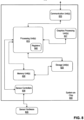
- FIG. 1 shows one implementation of a computing system 100.
- System 100 includes a processor 110, a random access memory (RAM) 130, an input/output circuitry (I/O) 140, and a storage device 160.
- a system bus 180 connects processor 110, RAM 130, I/O 140, and storage device 160 to enable communication among these components and others.
- Processor 110 includes circuitry configured to execute computing instructions. Internal to processor 110 are various memory components such as caches, registers, and buffers. In the illustrated example, processor 110 includes registers 120 and a memory management unit (MMU) 111 that includes a translation lookaside buffer (TLB) 112. RAM 130 is used to store executable code and information during operation of system 100. Storage device 160 represents one or more hard drives, optical drives, flash drives, or other memory used for bulk storage or non-volatile storage of data and instructions. I/O 140 is used by system 100 to communicate with other systems or devices. I/O 140 can include wired or wireless network devices or other receivers, transmitters, or transceivers and supporting modulators and baseband circuitry.
- MMU memory management unit
- TLB translation lookaside buffer
- I/O 140 is used by system 100 to communicate with other systems or devices. I/O 140 can include wired or wireless network devices or other receivers, transmitters, or transceivers and supporting modulators and baseband circuitry.
- Registers 120 are used by processor 110 to hold data that is being used or manipulated by machine language instructions executing on processor 110.
- registers 120 include several general registers (including rax 121 and rbx 122), base pointer (rbp) 123, stack pointer (rsp) 124, instruction pointer (rip) 125, and volatile registers (including rv1 126 and rv2 127).
- the volatile registers are configured in hardware to erase, scramble, or otherwise protect their contents in response to events that could indicate activity by malicious or other invalid code.
- volatile registers 126 and 127 may be configured so that their contents are erased whenever an interrupt, memory error, protection error, or other fault occurs, or any event occurs that indicates an asynchronous change in control flow.
- a set of pages may be stored in RAM 130, including pages 134, 135, 136.
- Each page is a block of memory that is assigned for use by one or more processes or other activities executed processor 110.
- each page consists of memory with a contiguous set of addresses.
- the contiguous addresses in each page are portions of a virtual address space.
- the pages are mapped to frames, which indicate the corresponding hardware addresses or machine addresses (not shown).
- the contiguous addresses in the memory pages directly indicate the addresses in a memory hardware device.
- a memory page is a basic unit of memory that is allocated by an operating system for use by a program or for transfers between RAM 130 and storage device 160.
- the architecture of processor 110 requires that size of each page is a fixed value, such as 512 Bytes, 4 KB, 2 MB, 1 MB, 16 MB, or other values.
- the pages can be allocated with different sizes.
- a page table 132 may also be stored in RAM 130.
- Page table 132 is an active index of the various pages being maintained in memory.
- page table 132 indicates the extents of each page 134, 135, 136, and also holds mapping information between the virtual address space and the corresponding physical address space where data is actually stored in hardware elements.
- page table 132 may indicate the appropriate frame number (in physical address space) that corresponds to a page number (in virtual address space).
- Page table 132 includes a page table entry (PTE) for each of the pages being used by applications and other programs executing on processor 110.
- PTE page table entry
- TLB 112 caches various page table mappings, which may relate directly or indirectly to the entries page table 132.
- a call stack 138 may also be stored in RAM 130.
- Call stack 138 holds information about a process or program being executed by processor 110, including the status of a currently executing sub-routine, and the status of any higher level routines that called the current routine. In particular, call stack 138 holds information about the calling point to which control should return once the current subroutine is completed.
- the top of call stack 138 is indicated by an address stored in stack pointer 124 (from FIG. 1 ).
- the bottom of the current section of call stack 138 is indicated by an address stored in base pointer 123.
- FIG. 2 shows one example of page table 132.
- the page table includes several page tale entries: one for each page that is resident in RAM 130 or that has been offloaded to storage device 160.
- Each PTE includes mappings that provide translations between virtual addresses (which may be used by processor 110 when communicating with programs) and physical addresses (which may be used by processor 110 when accessing memory hardware through an address bus).
- Each PTE also includes indicators of the permissions granted for the corresponding page, such as read, write, and execute permissions.
- these permissions are stored as read, write, and execute bits that grant or deny access.
- processor 110 will allow the process(es) or thread(s) that have access to that page to write data into the page or otherwise alter the information in the page. Otherwise, the process (or processes) will be unable to write into the page.
- processor 110 will allow the processes that have access to that page to read the information in the page and copy the information to other memory locations. Otherwise, the process will be unable to read the page.
- processor 110 will allow the processes that have access to that page to call or branch to instructions on the page, or otherwise initiate execution of the instructions by processor 110. Otherwise, the process will be unable to execute instructions stored in the page.
- Each PTE may also hold information on the status of the corresponding page. For example, a present bit can indicate whether or not the page is currently resident in RAM 130. If the page is not resident when it is needed, MMU 111 initiates a "pagefault" condition, which causes an operating system to load the page into RAM 130 from storage device 160. A modified bit can indicate whether or not the page has been modified in RAM 130 since it was last written to storage device 160.
- FIG. 3 shows an example of the contents of page 136.
- page 136 has been set to have execute-only access. Such access can be used, for example, for pages that hold a section of processor-executable instructions.
- a set of machine language instructions have been stored in page 136.
- the instructions form a set of executable code 305 that can be executed by a processor such as processor 110.
- Code 305 can be, for example, a set of instructions configured to work together in sequence to accomplish a desirable task, such as a portion of a calculation, a read or write to storage device 160 or to another portion of RAM 130, a communication through I/O 140, an access to a peripheral device, or some other operation.
- Code 305 may be used by one or more processes to accomplish tasks.
- the calling process would initiate execution of code 305 through a branching instruction such as a subroutine branch (call/ret), jump (jmp), or conditional jump (je, jne, jz, ).
- a valid branch into code 305 would update call stack 138 prior to starting execution of code 305. That update may, for example, record certain information about the status of the calling process.
- the status information recorded into call stack 138 may include the contents of various registers 120, including instruction pointer 125, and various variables in use by the calling process.
- the contents of stack pointer 124 and base pointer 123 can also be recorded into call stack 138, and then revised to indicate the new frame of the updated stack.
- code 305 can proceed.
- a valid call to code 305 will initiate execution of the code at a point that is suitable for proper execution of the code.
- code 305 has only one valid starting point: entry point 310.
- code 305 has been designed so that safe and reliable execution relies on execution starting at entry point 310.
- Code 305 is an example of code that has been configured to resist a code-reuse attack. Immediately or shortly after execution initiates in entry point 310, code 305 includes an entry-point instruction 324 to move a keystring into volatile register 126. The keystring is a value that is required for successful execution of subsequent portions of block 305. These subsequent instructions are illustrated in FIG. 3 as protected code 326.
- Code 305 may include, prior to protected code 326, some defensive instructions 325.
- Defensive instructions 325 may implement authentication or other protection measures to ensure that protected code is only reached by valid programs. For example, defensive instructions 325 may examine the stack or other portions of memory for appropriate signs or signatures that authenticate the validity of the calling program. If a malicious or otherwise invalid program attempts to run code 305, the defensive instructions may detect the invalid operation and return or otherwise end program control so that execution does not proceed to protected code 326. If, however, defensive instructions 325 validate the current execution, then control proceeds to protected code 326, which performs some useful function (memory access, read or write to a memory or device, or a calculation, or an encryption or signature operation, for example, among other functions).
- some useful function memory access, read or write to a memory or device, or a calculation, or an encryption or signature operation, for example, among other functions).
- An invalid calling program may attempt to enter code 305 at a point subsequent to the protection measures 325.
- protected code 326 may itself be designed with protective features.
- protected code 326 is configured to depend on the keystring, which is held as a secret value in volatile register 126.
- the protected code is structured so that it cannot be properly executed without knowledge of the keystring.
- the keystring may be a cryptographic key that is needed for unlocking or locking or authenticating data that is accessed by protected code 326.
- the keystring that is held as a secret in volatile register 126 may be a target address, or may be decoded or otherwise used for determining a target address.
- the protected code can use the target address for a jump or call for further execution, or to retrieve some sensitive data that is available at that address.
- the target address may be an address that is outside of protected code 326, or it may be an address within protected code 326.
- the keystring may be understood as a "wormhole" that provides access to the target address. Without the keystring, an adversary would have to guess at the target address to successfully reach it and the executable code or information that is available there. With the use of current addressing schemes (e.g., physical or virtual addresses that may have 64-bit or 128-bit address sizes), it may be intractable for an adversary to guess the target address among the large universe of possible addresses. Thus, the sensitive information or code is only accessible to a party who uses the "wormhole" keystring.
- a hypervisor may be configured to detect and shut down a program that performs suspicious behavior such as searching apparently randomly through memory space for the correct target address.
- the keystring may be understood as a tool for unraveling a "scrambled" or "randomized” format in which protected code 326 has been written.
- protected code 326 may be scrambled by a hypervisor or other supervisory program when it is initially stored on an execute-only page. At that time, the supervisory program may record the needed unscrambling information into the keystring in entry-point instruction 324.
- the keystring may be a page table address or a VMFUNC view index (which may be loaded as a secret value in an ECX register) for an extended page table.
- Subsequent instruction e.g., a MOVE CR3 instruction or a VMFUNC instruction
- protected code 326 Because of its dependence on the keystring that is held in volatile register 126, protected code 326 relies on the move instruction 324 that appears earlier in block 305. As a result, block 305 forms a transactional unit. In this example, the instructions in protected code 326 need to be executed after instruction 324 in order to produce a usable or sensible result. If a malicious or other invalid action were to jump to an instruction somewhere in the midst of protected code 326, the outcome would not be usable; indeed, the forward progress of the code might not be possible. Without knowledge of the keystring, the partial execution of protected code 326 would fail. In this sense, block 305 is an atomic section of code: unless this block is executed as a whole it is not practically usable.
- Exit point 330 may be, for example, a return instruction that causes a calling routine to resume execution, or a jump instruction that initiates execution of another block of code.
- Exit point 330 may include, for example, a subroutine branch (call/ret), jump (jmp), or conditional jump (je, jne, jz, ).
- call stack 138 is unstacked in a suitable manner to pass or return control to the other code.
- the old contents of stack pointer 124 and base pointer 123 can be removed from call stack 138 and loaded back into stack pointer 124 and base pointer 123.
- FIG. 4 shows an example of a valid operation 400 in which protected code is prepared and successfully executed.
- FIG. 4 shows a general illustration; the page of code from FIG. 3 is an example of code that could be used in operation 400.
- a memory page or other region of memory is designated for execute-only access (for example, memory page 136 from FIGs. 1 and 3 ). This designation can be performed, for example, by an operating system or other supervisory program that causes a processor to set the appropriate bits in a permission table. For example, the read, write, and execute bits in a corresponding extended page table may be set to ⁇ 0 0 1 ⁇ --or other settings that enable execution while denying read or write access to the memory region.
- an operating system or supervisory program causes a processor to write a set of instructions that include protected code (e.g., code 305 from FIG. 3 ) into the memory region.
- a processor may start execution of the set of instructions in act 430. This start is at a valid entry point in the set of instructions (e.g., entry point 310).
- an initial instruction or other early instruction in the set of instructions causes the processor to perform an action that is needed to enable proper operation of later instructions in the set (e.g., protected code 326 in FIG. 3 ).
- a volatile register can be loaded with a key on which later instructions depend (e.g., entry-point instruction 324).
- the remaining instructions in the set of instructions continue and conclude with proper execution on the processor. (In the example of FIG. 3 , the remaining instructions use the key stored in the volatile register to properly perform an intended activity.)
- FIG. 5 shows an example of an invalid operation 500 in which protected code is prepared and then subjected to an improper access.
- an adversary may attempt to benefit by using only a portion of the protected code.
- such inappropriate explorations may be thwarted by the use of later instructions that depend on the prior execution of earlier instructions.
- act 510 a memory page or other region of memory is designated for execute-only access.
- act 520 a set of instructions that include the protected code is written into the memory region. So far, these acts (510, 520) correspond to the acts discussed above (410, 420) during a valid operation in the previous example of FIG. 4 . In this example, however, some error or attack occurs, and a processor does not execute the set of instructions at a valid starting point 530. Instead, in act 545 a malicious or other invalid process causes the processor to initiate execution of the protected code at an invalid entry point--at a point subsequent to the valid entry point.
- This invalid entry may be helpful to the adversary because, for example, the later entry may bypass some initial protection measures that occur in an initial block of instructions right after the entry point (e.g., authentication or memory protections such as defensive instructions 325 in FIG. 3 ). By bypassing these initial protection measures, an adversary may hope to use the valuable part of the protected code, without being thwarted by the protection measures in the initial block. Such approaches may be used, for example, by an adversary in designing or executing ROP or JOP attacks.
- invalid operation 500 skips the initial portion of the protected code: the early instruction(s), which enable valid operation of later instructions, are not executed 540.
- one or more early instructions (e.g., instruction 324 in FIG. 3 ) in the protected code may be configured to load a key in a volatile register
- the later instructions e.g., instructions 326 in FIG. 3
- the later instructions do not have access to the enabling features that would have been provided by execution of the early instructions 540.
- the later instructions then fail when they are executed in act 550.
- the failure occurs because the later instructions cannot operate in a valid manner. For example, if the enabling instructions 540 were configured to provide a cryptographic key into a volatile register, then the later instructions may be unable to decrypt or authenticate or sign data that is to be read or written. Instead, the later instructions would attempt to use whatever residual information happens to be present in the volatile register as a key. This attempt would lead to a nonsensical or incorrect decryption, or a failed authentication, or a detectably invalid signature.
- the later instructions may be unable to jump to an appropriate instruction at that address, or may be unable to read data from that address. Instead, the later instructions may access an incorrect address, based on whatever residual information happens to be present in the volatile register. Similarly, if the missing feature was a page table address or a view index for an extended page table, then the later instructions may be unable to change memory mappings or permissions in a usable manner.
- operation 500 may complete execution of the later instructions (e.g., instructions 326 in FIG. 3 ) using spurious residual information instead of an appropriate key.
- the result would be invalid or unusable results, as indicated in act 552.
- the improper execution in act 550 may trigger a fault or an interrupt or otherwise alert a supervisory program, which may halt the execution of invalid operation 500 in act 554.
- Either of these outcomes (552 or 554), or other failure outcomes, are successful denials of a malicious or otherwise invalid attempt to use the protected code. These denials may prevent a ROP or JOP from being able to execute (or examine) the protected code.
- both the successful conclusion in act 450 of a valid operation and the thwarting conclusion 552 of invalid operation 500 are reached by in-line execution of protected code, without the need for page switching that may accompany an interrupt or other intervention by a hypervisor or other supervisory program.
- FIG. 6 shows some examples of entry-point instructions that may be used to load a volatile register with a keystring.
- entry-point instruction is Intel 64 assembly instruction 610: mov rsp, 0xF4F4F4F4F4F4F4F4F4F4F4
- the stack pointer (e.g., stack pointer 124) is used as a volatile register.
- instruction 610 may be presented as "48BCF4F4F4F4F4F4F4F4" (in raw hexadecimal) or " ⁇ x48 ⁇ xBC ⁇ xF4 ⁇ xF4 ⁇ xF4 ⁇ xF4 ⁇ xF4 ⁇ xF4 ⁇ xF4 ⁇ xF4 ⁇ xF4" (in a string constant) or " ⁇ 0x48, 0xBC, 0xF4, 0xF4, 0xF4, 0xF4, 0xF4, 0xF4, 0xF4, 0xF4, 0xF4, 0xF4, 0xF4 ⁇ " (in an array constant).
- One example of a disassembly presentation of instruction 610 is: 0: 48 bc F4 F4 F4 F4 F4 movabs rsp,0xF4F4F4F4F4F4F4F4F4 7: F4 F4 F4
- Instruction 610 may be used, for example, as an entry-point instruction (e.g., instruction 324 in FIG. 3 ) to be placed on a memory page that has execute-only access.
- instruction 610 may be placed on a memory page that is executable only in supervisory mode (and which does not have read or write access).
- "F4F4F4F4F4F4F4F4F4F4F4F4" is an immediate quad-word (64 bit) value. Instruction 610 causes this immediate value to be moved into the stack pointer.
- a system may be configured so that using a non-canonical address (e.g., when performing a read or write) causes a general protection fault (#GP) or double-fault (e.g., when executed in 64-bit supervisory mode).
- a hypervisor such as a root mode of virtual machine extensions (VMX-root).
- VMCS Virtual Machine Control Structure
- VM Exit virtual machine exit
- the F4 hex values decode to 1-byte HLT (halt) opcodes would invoke a hypervisor or other supervisory program if executed.
- the full string (the eight F4 values) is an immediate value for the MOV instruction: this string is itself included in the instruction. This value is loaded into the stack pointer by the MOV instruction.
- the HEX value F4F4F4F4F4F4F4F4 serves as a keystring or secret value that is then available to subsequent instructions. The subsequent instructions in the protected code may read the keystring from the stack pointer.
- non-canonical values for the stack pointer register in 64-bit mode may help assure that the VMX-root (hypervisor) will be invoked if the code is subsequently interrupted. Returning control to the hypervisor in this manner can help avoid revealing the secret stack pointer value to an improper operating system or other improper software.
- a hypervisor can be configured to ensure that the entry-point instruction, with its secret keystring, is placed within an executable-only (not read, not write) page. This configuration adds security because various software would be forbidden to read information from an executable-only memory page. Thus, a malicious or otherwise invalid software may be unable to read the keystring from the executable-only memory page.
- various implementations of processors allow a hypervisor to designate a page of memory as executable-only in supervisory mode, using permissions in extended page tables. Thus, the code on such a page can be executed only if it is running with high (supervisor) privilege, and cannot be executed from userspace.
- the stack pointer is volatile in the sense that its contents are rewritten in the event of an asynchronous change to the control flow.
- Valid software programs which would start execution of code on the executable-only page at the entry-point instruction, would initially load the keystring into the stack pointer and would then be able to access the keystring from the stack pointer when needed during the later instructions.
- instruction 610 diverts the stack pointer from its normal utility: after instruction 610 has been executed, the stack pointer no longer indicates the correct top of the stack.
- the code that follows instruction 610 may be tailored so that it does not require use of the stack, or at least, so that it does not require knowledge of the top of the stack.
- Instruction 610 may be helpful to protect the subsequent instructions in the code sequence.
- These later instructions e.g., protected code 326 in FIG. 3
- the keystring may be an address that the later instructions can decode and then jump (JMP) to, or a memory address that the later instructions can decode and then use to access load/store memory (e.g.
- the improper software program would lack the secret keystring. As a result, the improper software program would not be able to accomplish a useful operation with the later instructions.
- the entry-point instruction stores a secret value in the stack pointer as a non-canonical address, HEX value "F4F4F4F4F4F4F4F4.”
- This approach may result in a double fault if the later instructions are interrupted and the processor attempts to access this invalid stack address. Thus, if some event interrupts the subsequent program execution flow, the hypervisor will be alerted.
- the instructions on the execute-only page are accessed correctly, starting with the entry-point instruction, and there is no attempt to interrupt the program flow, the later instructions will execute properly, in secrecy from other software.
- encoding the keystring on an execute-only page may prevent an adversary from somehow executing the keystring to reveal it. While the adversary may be able to read the memory, various processor architectures (e.g., various x86 architectures) can allows byte granularity offsets for execution attempts. In various 64-bit x86 modes, there are a number of invalid opcodes in Intel 64. These invalid opcodes can be used to trigger an exit to the hypervisor if they are executed. For example, opcodes 60h, 61h, 62h are invalid instructions in 64-bit mode. As with the HLT instruction, a hypervisor can be configured so that execution of these opcodes will result in an exit to the hypervisor. Thus, an adversary attempting to use byte-offset execution to examine the keystring could be detected while trying to deduce the secret keystring.
- various processor architectures e.g., various x86 architectures
- 64-bit x86 modes there are a number of invalid opcode
- the keystring is HEX value "F4F4F4F4F4F4F4F4.”
- Other values of the keystring are also possible.
- opcodes 60h, 61h, 62h can be used in addition to the 1-byte HLT opcode (F4).
- this set of four opcodes is used as an alphabet of 2-bit symbols to construct keystrings that encode secret values.
- One example approach may have the number 0 (binary 00) encoded as 60 in the keystring, the number 1 (binary 01) encoded as 61 in the keystring, the number 2 (binary 10) encoded as 62 in the keystring, and the number 3 (binary 11) encoded as F4 in the keystring,
- FIG. 6 shows three examples entry-point instructions 620, 630, 640 that illustrate this encoding.
- Instruction 620 is: mov rsp, 0x606162F4F4F4F4F4F4F4F4F4
- instruction 620 may be presented as "48BCF4F4F4F4F4626160" (in raw hexadecimal machine code). This instruction loads the stack pointer with a four-byte string (606162F4) that encodes the binary number 00011011 (decimal 27), along with four padding bytes of "F4.” The encoded string (606162F4) would be decoded for use by subsequent instructions that are also on the same execute-only memory page as the entry-point instruction 620.
- the four padding bytes (F4F4F4F4) of "HLT" opcodes may be helpful to prevent an adversary from trying to deduce the keystring.
- This execution may, in some situations, reveal the secret part of the encoding if it were not properly padded.
- FIG. 6 also shows an example instruction 630: mov rsp, 0xF4626160F4F4F4F4
- instruction 630 may be presented as "48BCF4F4F4F4606162F4" (in raw hexadecimal). This instruction loads the stack pointer with a four-byte string (F4626160) that encodes the binary number 11100100 (decimal 228), along with four padding bytes of "F4.”
- FIG. 6 also shows an example instruction 640: mov rsp, 0x60606060F4F4F4F4F4
- instruction 640 may be presented as "48BCF4F4F4F460606060” (in raw hexadecimal). This instruction loads the stack pointer with a four-byte string (60606060) that encodes the binary number 00000000 (decimal 0), along with four padding bytes of "F4.”
- the entry point instruction 324 can be configured to provide an eight-bit value (256 possible index values) by moving a keystring that is encoded with the four corresponding opcodes.
- multiple such instructions can be used to encode a large secret in parts that can be concatenated or otherwise compiled together by the intervening code between several stack pointer MOV instructions.
- simple encodings can be used to encode 128-bit or larger secret values.
- a first entry point instruction would MOV a first part of the secret value to a stack pointer.
- Subsequent instructions could then decode the result into a separate scratchpad register (e.g., another volatile register), then execute another MOV to the stack pointer, then decode that value into the next part of the scratchpad register, and so on.
- This repetitive approach could build up a large secret value in a scratchpad register.
- the same stack pointer may be used as the volatile register.
- the previous partial secret value of the keystring should first be copied from the stack pointer register to the scratchpad register, where it can be manipulated.
- the next immediate non-canonical partial secret value can then be loaded into the stack pointer, and then combined with the scratch pad value. This process can be repeated until the full secret value is constructed.
- Using the stack pointer and scratchpad register in this manner can assist in avoiding any part of the secret value from being disclosed to other software.
- entry-point instructions 610, 620, 630, 640 the previous contents of the stack pointer are immediately destroyed upon proper entry into a protected section of code.
- This limitation illustrates what may be a feature of the protected code.
- the protected code 326 is intended to be executed as a unit transaction, without disturbance.
- this code may generally be structured so that it does not rely on branching to any foreign code. Thus, the initial destruction of the stack pointer's prior contents may not pose a problem.
- the old stack pointer value (relevant to the calling frame) is reloaded back into the stack pointer as part of the normal return process.
- an alternative entry-point instruction may be used. Instead of immediately overwriting the stack pointer, these other entry-point instructions may first read and record the stack pointer of the current frame, and then move a keyword into the stack pointer.
- FIG. 6 also has examples of entry-point instructions that do not employ the stack pointer.
- Example instruction 650 reads: mov rv1, 0x6062F461F4F4F4F4
- This instruction loads a volatile register with a four-byte string (6062F461) that encodes the binary number 00101101 (decimal 45), along with four padding bytes of "F4."
- the volatile register e.g., volatile register 126 in FIG. 1
- This register is configured to erase, scramble, or otherwise protect its contents in response to events that could indicate activity by malicious or other invalid code.
- entry-point instruction 650 makes use of the volatile register and leaves the stack pointer undisturbed.
- volatile registers may be configured in hardware so that their contents are erased whenever an interrupt, memory error, protection error, or other fault occurs, or an event occurs that indicates an asynchronous change in control flow.
- Example instruction 660 reads: mov rv2, 0x3aee5514cb65f3fc
- This instruction loads a volatile register rv2 with an eight-byte string (3aee5514cb65f3fc), (without the padding bytes of "F4" in the previous examples).
- Entry-point instruction 660 makes use of a designated volatile register (e.g., volatile register 127 in FIG. 1 ) and, as in the previous example, leaves the stack pointer undisturbed.
- volatile registers such as stack pointer 124 or specialized volatile registers 126, 127) may protect a keystring from malicious access following an interrupt or asynchronous change in control flow.
- a protected instruction set may include instructions that disable interrupts and all other asynchronous events.
- a protected instruction set may include instructions that disable breakpoints. After that point, an adversary program would not readily be able to interrupt the execution and attempt to expose the keystring by executing alternate code.
- a system may be configured so that the act of loading a value into a special register can also cause the processor to disable interrupts, so that interrupts are disabled and the secret is loaded in a single atomic operation.
- the protected instruction set may be configured to disable asynchronous events and then read the keystring out from the volatile register or otherwise store it in other registers or other memory.
- some implementations of a protected instruction set may reclaim the volatile registers for other uses, after disabling asynchronous events.
- a future version of a VMFUNC may be used with a keystring that authorizes access to the instruction (e.g. if a correct key is used the instruction function will execute, otherwise a fault will be generated).
- Such an instruction may be a VMFUNC that has a larger index field or can hold another larger secret keystring (e.g., a 64-bit value loaded into another register), to make guessing by an adversary additionally impractical.
- a functionality-enabling keystring stored in a volatile register may be helpful in a variety of other contexts.
- various examples in the above discussion contemplate the use of page tables (e.g., extended page tables managed by a virtual machine monitor (VMM)).
- VMM virtual machine monitor
- some systems may be configured so that execute-only memory is declared as a range of memory addresses. If such a memory range represents addresses of physical memory, then a basic input/output system (BIOS) or early-booting firmware or software may be configured to fill a memory range with the code that uses and relies on a keystring stored in a volatile register (e.g., code 305), and configured to then set that memory range for execute-only access.
- BIOS basic input/output system
- a keystring stored in a volatile register e.g., code 305
- this memory range could be defined in a set-once register so it cannot be undone by software after it is set (until a system undergoes a hardware reset or reboot).
- Various implementations of a system may allow pre-boot services to configure protected memory ranges in which secret keystrings may be held and to provide related privacy and/or security services.
- FIG. 7 illustrates one example of a processor core 700.
- Processor core 700 may be a core for various types of processors or processing elements, such as a micro-processor, an embedded processor, a digital signal processor (DSP), a network processor, or other circuit device for executing code. Although only one processor core 700 is illustrated in FIG. 7 , a processing element may alternatively include more than one processor core.
- Processor core 700 may be a single-threaded core or may be multithreaded in that it may include more than one hardware thread context (or "logical processor") per core.
- FIG. 7 also illustrates a memory 770 coupled to the processor core 700.
- Memory 770 may be any of a wide variety of types of memory circuits.
- Memory 770 may include one or more instruction codes 713 to be executed by processor core 700.
- Processor core 700 is configured to follows a program sequence of instructions indicated by code 713. Each instruction enters a front-end portion 710 of the processor core and is processed by one or more decoders 720 in the core.
- a decoder may generate as its output a micro operation such as a fixed width micro operation in a predefined format, or may generate other instructions, microinstructions, or control signals, which reflect the original code instruction.
- Front end 710 may also include register renaming logic 725 and scheduling logic 730, which generally allocate resources and queue operations for execution.
- Processor core 700 includes one or more registers 740 configured to store data within processor core 700.
- Registers 740 may include general registers, one or more stack pointers and other stack-elated registers, one or more instruction pointers, and/or one or more volatile registers.
- Processor core 700 includes an execution logic 750 that has a set of execution units 755-1, 755-2, through 755-N. Some versions of a processor may include a number of execution units dedicated to specific functions or sets of functions. Other embodiments may include only one execution unit or one execution unit that can perform a particular function. Execution logic 750 performs the operations that are specified by code instructions. After completion of execution of the operations specified by the code instructions, a back end logic 760 in the processor core retires the instructions of the code 713. In one embodiment, the processor core 700 allows out-of-order execution but requires in-order retirement of instructions.
- a retirement logic 765 in back end logic 760 may take a variety of forms as known to those of skill in the art (e.g., re-order buffers or the like). In this manner, processor core 700 is transformed during execution of the code 713, at least in terms of the output generated by the decoder, tables utilized by the register renaming logic 725, and any registers 740 modified by the operation of execution logic 750.
- a processing element may include other elements on chip with processor core 700.
- a processing element may include memory control along with the processor core.
- the processing element may include I/O control logic and/or may include I/O control logic integrated with memory control logic.
- the processing element may also include one or more caches.
- FIG. 8 is a block diagram of one example of a system-on-chip 800.
- System-on-chip 800 may be designed, in various implementations, as a single integrated circuit package. In some implementations, system-on-chip 800 may be fabricated on a single semiconductor wafer substrate. In various examples, system-on-chip 800 may be constructed using various SOC designs and manufacturing methods to create effectively a small computing system. Among other units, system-on-chip 800 may include processing units 815, memory units 820, storage units 825, graphics processing units 827, communication units 850, and sensor controller units 830. It should be noted that in other implementations, one or more of the various devices and modules in system-on-chip 800 may be fabricated on separate semiconductor wafer substrates.
- system-on-chip 800 may be coupled via sensor controller unit 830 to sensor hardware 835 such as cameras, microphones, antennas, speakers, touchscreens, keyboards, mice, location sensors, proximity sensors, light sensors, accelerometers, magnetic sensors, pressure sensors, temperature sensors, biometric security sensors, etc.
- sensor hardware 835 such as cameras, microphones, antennas, speakers, touchscreens, keyboards, mice, location sensors, proximity sensors, light sensors, accelerometers, magnetic sensors, pressure sensors, temperature sensors, biometric security sensors, etc.
- instructions/software code may be stored in a combination of non-volatile/volatile memory such as storage units 825 and memory units 820.
- the instructions may be configured to be processed by processing unit 815 in order to facilitate at least some of the functionality of system-on-chip 800.
- Processing unit 815 includes registers 840, which may be configured to store data for quick accessibility by the processing unit.
- Registers 840 may include one or more volatile registers.
- system-on-chip 800 may be a portable device, such as a mobile phone, a smartphone with a touchscreen, a tablet, a laptop, a hybrid device, another communication device, etc.
- a method of storing computer instructions for execution may be provided.
- the method may include regulating a memory region for execute-only access, storing a set of instructions in the memory region, and executing an early instruction among the set of instructions.
- the executing the early instruction may include loading a secret value into a volatile register and executing a set of subsequent instructions. A correct execution of the subsequent instructions may depend on the secret value being loaded into the volatile register.
- the set of executable instructions forming a transactional set of instructions that may be configured to use the secret value to thwart improper execution (e.g., partial execution or out-of-order execution).
- the instructions may be configured so that they cannot successfully be executed unless a keystring or other secret value has been loaded into a register.
- the volatile register may include a stack pointer.
- the secret value may include a non-canonical address.
- the subsequent instructions may be configured to perform an indirect jump to an address based on the secret value.
- the subsequent instructions may be configured not to disturb a stack pointer during a time period that is after the loading the secret value and prior to the indirect jump.
- the secret value may be preserved in a stack pointer until the secret value is no longer needed for the correct execution of the subsequent instructions.
- the subsequent instructions may be configured to disable interrupts, and/or indirect jumps, and/or call/return instructions.
- the regulating the memory region may include restricting the memory region to execution under: a Ring 0 access privilege, a CPLO protection level, or other supervisory mode.
- the loading the secret value into the volatile register may include loading an immediate value into the volatile register.
- the executing the set of subsequent instructions may include converting the secret value to a valid address.
- the executing the set of subsequent instructions may include erasing the secret value from the stack pointer.
- the secret value may include an address.
- the executing the set of subsequent instructions may include decoding an address from the secret value loaded in the volatile register.
- the executing the set of subsequent instructions may include performing a jump to an address.
- the executing the set of subsequent instructions may include performing or more load/store operations to an address.
- the executing the set of subsequent instructions may include one or more MOV instructions with an address as an operand.
- the secret value stored in the volatile register may include a memory-view index, and with the processor being configured to switch to a memory view, based at least on the memory-view index, in response to execution of a VMFUNC instruction.
- the secret value stored in the volatile register may include a key, and with the processor being configured to perform a cryptographic function based at least on the key.
- the cryptographic function may include one or more of: encrypting contents of a portion of memory, decrypting contents of a portion of memory, or authenticating contents of a portion of memory.
- the regulating the memory region may include setting, by a processor, an access permission for an Extended Page Table to be one of: an execute-only permission or a supervisor execute-only permission.
- the regulating the memory region may include setting, by a processor, an access permission for an Extended Page Table to forbid a read access and to forbid a write access.
- the regulating the memory region may include preventing an operating system from reading the memory region, within the preventing being performed by a processor that executes the operating system.
- the memory region may include memory for which a set of contiguous virtual memory addresses are mapped to a set of discontiguous machine memory addresses, or a set of potentially discontiguous machine memory addresses.
- a mapping from the virtual memory addresses to the machine memory addresses may be maintained.
- the hypervisor may execute with Ring 0 access privilege.
- An operating system may be supported by the hypervisor and may call the set of instructions.
- the operating system may execute with an access protection that is more restricted than Ring 0.
- the regulating the memory region may be performed by the hypervisor.
- the set of instructions may be among instructions in software supported by the hypervisor.
- the secret value may indicate a wormhole address.
- the set of instructions may be configured not to store information about the secret value in memory that is accessible to low-security software.
- the set of instructions may be configured not to store information about the secret value in memory that is readable by adversarial code configured to execute a code-reuse attack.
- the adversarial code may be configured to execute one or more of: a return-oriented programming attack, or a jump-oriented programming attack.
- a system for storing computer instructions may be provided.
- the system may include a memory and a processor that includes one or more volatile registers.
- the processor may be configured to regulate access to portions of the memory, and to execute a first set of instructions stored in a first portion of the memory.
- the first set of instructions may be configured to cause the processor to load a secret value into one or more of the volatile registers.
- the processor may be configured to lose, in response to an asynchronous event, information loaded in the volatile registers.
- the first portion of the memory may be regulated with execute-only access.
- a storage medium may include instructions executable by the processor.
- the instructions may be executable by the processor to store the first set of instructions in the first portion of the memory and to regulate the first portion of the memory as execute-only memory.
- one or more early instructions among the first set of instructions may be configured to direct the processor to load the secret value into the volatile register.
- One or more subsequent instructions among the first set of instructions may depend on the secret value for correct execution.
- the system may also comprise a storage medium comprising instructions executable by the processor and configured to cause the processor to store the first set of instructions in the first portion of the memory, and regulate the first portion of the memory as execute-only memory.
- One or more early instructions among the first set of instructions may be configured to cause the processor to load the secret value into the volatile register; and one or more subsequent instructions among the first set of instructions may depend on the secret value for correct execution.
- the first set of instructions may comprise a transactional set of instructions that may be configured to thwart one or more of:
- the secret value may comprise a non-canonical address and wherein the volatile register comprises a stack pointer.
- the subsequent instructions may be configured to cause the processor to perform a jump to an address based on the secret value in the stack pointer.
- the subsequent instructions may be configured to avoid disturbance of the stack pointer during a time period that is after the secret value is loaded and prior to the jump.
- the subsequent instructions may be configured to cause the processor to preserve the secret value in the stack pointer until the secret value is no longer needed for the correct execution of the subsequent instructions.
- the first set of instructions may be configured to cause the processor to disable one or more of:
- the processor may be configured to restrict the first portion of the memory to execution under: a Ring 0 access privilege or a CPLO protection level, or other supervisory mode.
- the first set of instructions may be configured to cause the processor to load an immediate value into the volatile register.
- the first set of instructions may be configured to cause the processor to convert the secret value to a valid address.
- the first set of instructions may be configured to cause the processor to erase the secret value from the volatile register.
- the first set of instructions may be configured to cause the processor to decode an address from the secret value loaded in the volatile register.
- the first set of instructions may be configured to cause the processor to perform a jump to an address based at least on the secret value.
- the first set of instructions may comprise at least one MOV instruction with an address based at least on the secret value loaded in the volatile register.
- the secret value may comprise a memory-view index; and the first set of instructions may comprise a VMFUNC instruction configured to cause the processor to switch to a memory view based at least on the memory-view index loaded in the volatile register.
- the secret value may comprise a key; and the processor may be configured to perform a cryptographic function based at least on the key.
- the processor may be configured to set an access permission for an Extended Page Table to be one of:
- the processor may be configured to set an access permission for an Extended Page Table to exclude: a read access and a write access.
- the processor may be configured to prevent an operating system from reading the first portion of the memory.
- the system may comprise:
- the first set of instructions may be among instructions in software that is supported by the hypervisor.
- the secret value may indicate a wormhole address.
- At least one non-transitory, machine-accessible storage medium may be provided having instructions stored thereon, wherein the instructions are configured, when executed on a machine, to cause the machine to:
- the processor may be configured to lose, in response to an asynchronous event, information loaded in the volatile register; and the set of instructions may comprise a transactional set of instructions that are configured to thwart one or more of:
- the secret value may comprise a non-canonical address and wherein the volatile register comprises a stack pointer.
- the subsequent instructions may be configured to cause the processor to perform an indirect jump to an address based on the secret value in the stack pointer.
- the subsequent instructions may be configured not to disturb the stack pointer during a time period that is after the secret value is loaded and prior to the indirect jump.
- the set of instructions may be configured to cause the processor to: preserve the secret value in the stack pointer until the secret value is no longer needed for the correct execution of the subsequent instructions.
- the set of instructions may be configured to cause the processor to disable one or more of:
- the set of instructions may be configured to cause the processor to: restrict the memory region to execution under: a Ring 0 access privilege, a CPLO protection level, or other supervisory mode.
- the set of instructions may be configured to cause the processor to: load an immediate value into the volatile register.
- the set of instructions may be configured to cause the processor to: convert the secret value to a valid address.
- the set of instructions may be configured to cause the processor to: erase the secret value from the volatile register.
- the set of instructions may be configured to cause the processor to: decode an address from the secret value loaded in the volatile register.
- the set of instructions may be configured to cause the processor to: perform a jump to an address based at least on the secret value loaded in the volatile register.
- the set of instructions may comprise at least one MOV instruction with an address based at least on the secret value loaded in the volatile register.
- the secret value may be stored in the volatile register comprises a memory-view index; and the processor may be configured to switch to a memory view, based at least on the memory-view index, in response to execution of a VMFUNC instruction.
- the secret value may be stored in the volatile register comprises a key; and the processor may be configured to perform a cryptographic function based at least on the key.
- the set of instructions may be configured to cause the processor to set an access permission for an Extended Page Table to be one of a supervisor execute only permission.
- the set of instructions may be configured to cause the processor to set an access permission for an Extended Page Table to exclude: a read access and a write access.
- the set of instructions may be configured to cause the processor to prevent an operating system from reading the memory region, wherein the processor executes the operating system.
- the memory region may comprise memory for which a set of contiguous virtual memory addresses are mapped to a set of discontiguous machine memory addresses.
- the set of instructions may be configured to cause the processor to: execute a hypervisor configured to maintain a mapping from the virtual memory addresses to the machine memory addresses, wherein the hypervisor may be configured to execute in a vmx-root ring-0 access privilege, an operating system may call the set of instructions, and the operating system may be supported by the hypervisor and executes with an access protection that is more restricted than Ring 0.
- the hypervisor may be configured to regulate the memory region.
- the secret value may indicate a wormhole address.
- the set of instructions may be configured to cause the processor to store information about the secret value only in memory that is protected from adversarial code.
- Examples of hardware elements may include processors, microprocessors, circuits, circuit elements (e.g., transistors, resistors, capacitors, inductors, and so forth), integrated circuits, application specific integrated circuits (ASIC), programmable logic devices (PLD), digital signal processors (DSP), field programmable gate array (FPGA), logic gates, registers, semiconductor device, chips, microchips, chip sets, and so forth.
- Examples of software may include software components, application programs, operating system software, firmware, subroutines, application program interfaces (API), or others, or any combination thereof.
- Some systems or supporting systems may be implemented, for example, using a machine or tangible computer-readable medium or article which may store an instruction or a set of instructions that, if executed by a machine, may cause the machine to perform a method and/or operations in accordance with the embodiments.
- Instructions may be stored on machine-readable medium such as a magnetic medium (e.g., hard disk, floppy disk, tape), a semiconductor medium (e.g., flash memory, RAM), an optical medium (e.g., CD, DVD), or others, or combinations thereof.
- a magnetic medium e.g., hard disk, floppy disk, tape
- a semiconductor medium e.g., flash memory, RAM
- an optical medium e.g., CD, DVD
- One or more aspects of a system may include representative instructions stored on a machine-readable medium that represents various logic within a processor, which when read by a machine causes the machine to fabricate logic to perform the techniques described herein.
- Various actions described herein involve operations performed by electronic computing devices that manipulate and/or transform data represented as physical quantities (e.g., electronic) within the computing system's registers and/or memories into other data similarly represented as physical quantities within the computing system's memories, registers or other such information storage, transmission, or display devices.
- data represented as physical quantities e.g., electronic
Landscapes
- Engineering & Computer Science (AREA)
- Theoretical Computer Science (AREA)
- Computer Security & Cryptography (AREA)
- Physics & Mathematics (AREA)
- General Engineering & Computer Science (AREA)
- General Physics & Mathematics (AREA)
- Storage Device Security (AREA)
Claims (11)
- Prozessor (110), umfassend:eine Vielzahl von Registern (120; 740);eine Ausführungseinheit (755-1, 755-2, ..., 755-N) zum Ausführen einer Aufrufanweisung eines Aufrufprozesses, wobei die Aufrufanweisung dazu geeignet ist, eine Ausführung einer Codesequenz (305; 326) auf einer höheren Privilegstufe als der Aufrufprozess zu initiieren, wobei die Codesequenz (326), die auf einer geschützten Speicherseite (136) gespeichert wird, auf der Benutzerprivilegstufe nicht ausführbar ist; undein Register aus der Vielzahl von Registern (120; 740) zum Speichern einer Zieladresse, die auf der höheren Privilegstufe zugänglich ist;wobei die Ausführungseinheit (755-1, 755-2, ..., 755-N) dazu geeignet ist, eine Authentifizierungsoperation mindestens teilweise basierend auf einer Untersuchung eines Stapels durchzuführen,wobei die Ausführungseinheit (755-1, 755-2, ..., 755-N) als Reaktion auf eine erfolgreiche Authentifizierung dazu geeignet ist, die Codesequenz (326) auszuführen und den Stapel auf der höheren Privilegstufe zu modifizieren, und wobei die Ausführungseinheit (755-1, 755-2, ..., 755-N) als Reaktion auf eine fehlgeschlagene Authentifizierung dazu geeignet ist, eine Ausführung der Codesequenz (326) auf der höheren Privilegstufe zu verhindern und eine Störung oder eine Unterbrechung oder eine Warnung eines Überwachungsprogramms zu triggern.
- Prozessor (110) nach Anspruch 1, wobei die Ausführungseinheit (755-1, 755-2, ..., 755-N) als Reaktion auf die Aufrufanweisung dazu geeignet ist, eine zweite oder mehr Anweisungen auszuführen, um einen geheimen Wert zu speichern, der die Zieladresse in dem Register beinhaltet, und um die Authentifizierungsoperation durchzuführen.
- Prozessor (110) nach Anspruch 1, wobei die Ausführungseinheit (755-1, 755-2, ..., 755-N) dazu geeignet ist, eine Rückkehranweisung auszuführen, um zur Ausführung des Aufrufprozesses zurückzukehren.
- Prozessor (110) nach Anspruch 1, wobei die Codesequenz (326) in einem verschlüsselten Format in einem Register gespeichert wird und wobei die Codesequenz (326) vor der Ausführung mit einem geheimen Schlüssel entschlüsselt wird.
- Prozessor (110) nach Anspruch 1, der ferner umfasst: eine Vielzahl von Prozessorkernen (700), wobei die Ausführungseinheit (755-1, 755-2, ..., 755-N) ein integraler Bestandteil eines Kerns (700) der Vielzahl von Kernen (700) ist.
- Prozessor (110) nach Anspruch 5, wobei der Prozessorkern (700) ferner umfasst: einen Decodierer (720 zum Decodieren der Anweisungen.
- Prozessor (110) nach Anspruch 5, wobei jeder Prozessorkern (700) einen Multithread-Kern umfasst.
- Prozessor (110) nach Anspruch 7, wobei jeder Prozessorkern (700), dazu geeignet ist, dass er mehr als einen Hardware-Thread-Kontext oder logischen Prozessor beinhaltet.
- Prozessor (110) nach Anspruch 1, wobei die Ausführungseinheit (755-1, 755-2, ..., 755-N) als Reaktion auf eine erfolgreiche Authentifizierung geeignet ist zum Ausführen der Codesequenz (326) auf der höheren Privilegstufe unter Verwendung der Zieladresse in dem Register.
- Prozessor (110) nach Anspruch 1, wobei die Untersuchung des Stapels ein Untersuchen des Stapels nach angemessenen Zeichen oder Signaturen beinhaltet, welche die Gültigkeit eines Aufrufprogramms authentifizieren.
- Prozessor (110) nach Anspruch 1, wobei die Vielzahl von Registern (120; 740) allgemeine Register (121, 122), Basiszeiger (123), Stapelzeiger (124), Anweisungszeiger (125) und flüchtige Register (126, 127) beinhalten.
Applications Claiming Priority (3)
| Application Number | Priority Date | Filing Date | Title |
|---|---|---|---|
| US14/583,681 US9753863B2 (en) | 2014-12-27 | 2014-12-27 | Memory protection with non-readable pages |
| EP15873828.6A EP3238070B1 (de) | 2014-12-27 | 2015-12-26 | Speicherschutz mit nicht-lesbaren seiten |
| PCT/US2015/000457 WO2016105562A1 (en) | 2014-12-27 | 2015-12-26 | Memory protection with non-readable pages |
Related Parent Applications (2)
| Application Number | Title | Priority Date | Filing Date |
|---|---|---|---|
| EP15873828.6A Division-Into EP3238070B1 (de) | 2014-12-27 | 2015-12-26 | Speicherschutz mit nicht-lesbaren seiten |
| EP15873828.6A Division EP3238070B1 (de) | 2014-12-27 | 2015-12-26 | Speicherschutz mit nicht-lesbaren seiten |
Publications (2)
| Publication Number | Publication Date |
|---|---|
| EP4033367A1 EP4033367A1 (de) | 2022-07-27 |
| EP4033367B1 true EP4033367B1 (de) | 2024-08-07 |
Family
ID=56151283
Family Applications (2)
| Application Number | Title | Priority Date | Filing Date |
|---|---|---|---|
| EP22162579.1A Active EP4033367B1 (de) | 2014-12-27 | 2015-12-26 | Speicherschutz mit nicht-lesbaren seiten |
| EP15873828.6A Active EP3238070B1 (de) | 2014-12-27 | 2015-12-26 | Speicherschutz mit nicht-lesbaren seiten |
Family Applications After (1)
| Application Number | Title | Priority Date | Filing Date |
|---|---|---|---|
| EP15873828.6A Active EP3238070B1 (de) | 2014-12-27 | 2015-12-26 | Speicherschutz mit nicht-lesbaren seiten |
Country Status (4)
| Country | Link |
|---|---|
| US (1) | US9753863B2 (de) |
| EP (2) | EP4033367B1 (de) |
| CN (1) | CN107003936B (de) |
| WO (1) | WO2016105562A1 (de) |
Families Citing this family (19)
| Publication number | Priority date | Publication date | Assignee | Title |
|---|---|---|---|---|
| US20120331303A1 (en) * | 2011-06-23 | 2012-12-27 | Andersson Jonathan E | Method and system for preventing execution of malware |
| US9753863B2 (en) | 2014-12-27 | 2017-09-05 | Intel Corporation | Memory protection with non-readable pages |
| US9569247B2 (en) * | 2015-03-31 | 2017-02-14 | Red Hat Israel, Ltd. | Range based virtual machine functions |
| DE112015006934T5 (de) * | 2015-09-25 | 2018-06-14 | Intel Corporation | Verschachtelte Virtualisierung für virtuelle Maschinenexits |
| US20180004946A1 (en) * | 2016-07-01 | 2018-01-04 | Intel Corporation | Regulating control transfers for execute-only code execution |
| US20180004418A1 (en) * | 2016-07-01 | 2018-01-04 | Intel Corporation | Non-unified code and data decoding to provide execute-only memory |
| US10114768B2 (en) * | 2016-08-29 | 2018-10-30 | Intel Corporation | Enhance memory access permission based on per-page current privilege level |
| US10713177B2 (en) | 2016-09-09 | 2020-07-14 | Intel Corporation | Defining virtualized page attributes based on guest page attributes |
| US11113422B2 (en) | 2018-08-03 | 2021-09-07 | Micron Technology, Inc. | Data protection in computer processors |
| US11074198B2 (en) | 2018-09-18 | 2021-07-27 | Micron Technology, Inc. | Key management in computer processors |
| TWI688861B (zh) * | 2018-09-18 | 2020-03-21 | 新唐科技股份有限公司 | 資料處理裝置及其資料保護方法 |
| EP3872606B1 (de) * | 2020-02-25 | 2023-08-02 | NXP USA, Inc. | Prozessorsystem |
| US11379135B2 (en) * | 2020-08-04 | 2022-07-05 | Honeywell International Inc. | Memory protection unit |
| US12061803B2 (en) * | 2020-10-14 | 2024-08-13 | Microchip Technology Incorporated | System with increasing protected storage area and erase protection |
| DE102021102777A1 (de) * | 2021-02-05 | 2022-08-11 | Infineon Technologies Ag | Verarbeitung von in einem speicher gespeicherter daten |
| US12242875B2 (en) * | 2021-09-24 | 2025-03-04 | Intel Corporation | Multiple secure virtual processors for a trust domain |
| CN117093377A (zh) * | 2022-05-12 | 2023-11-21 | 北京图森智途科技有限公司 | 用于在多个模块之间传输数据的系统和方法 |
| US12039201B2 (en) * | 2022-08-30 | 2024-07-16 | Micron Technology, Inc. | Control parameter address virtualization |
| US20250086328A1 (en) * | 2023-09-12 | 2025-03-13 | Qualcomm Incorporated | Windowed out-of-order execution in processing units as a side-channel attack countermeasure |
Family Cites Families (17)
| Publication number | Priority date | Publication date | Assignee | Title |
|---|---|---|---|---|
| US5497494A (en) * | 1993-07-23 | 1996-03-05 | International Business Machines Corporation | Method for saving and restoring the state of a CPU executing code in protected mode |
| US5949973A (en) | 1997-07-25 | 1999-09-07 | Memco Software, Ltd. | Method of relocating the stack in a computer system for preventing overrate by an exploit program |
| TWI247241B (en) * | 2003-09-29 | 2006-01-11 | Ip First Llc | Microprocessor apparatus and method for performing block cipher cryptographic functions |
| JP4738068B2 (ja) * | 2005-06-17 | 2011-08-03 | 富士通セミコンダクター株式会社 | プロセッサ及びシステム |
| WO2007015204A2 (en) | 2005-08-03 | 2007-02-08 | Nxp B.V. | A secure terminal, a routine and a method of protecting a secret key |
| US8099574B2 (en) | 2006-12-27 | 2012-01-17 | Intel Corporation | Providing protected access to critical memory regions |
| US7895404B2 (en) * | 2008-02-14 | 2011-02-22 | Atmel Rousset S.A.S. | Access rights on a memory map |
| KR20110106849A (ko) | 2008-11-10 | 2011-09-29 | 윌리엄 브이 옥스포드 | 회귀형 보안 프로토콜을 이용하여 컴퓨팅 장치에서 코드 실행을 제어하는 방법 및 시스템 |
| CN107015926B (zh) * | 2010-05-25 | 2020-08-07 | 威盛电子股份有限公司 | 微处理器以及相关的操作方法 |
| US8756591B2 (en) * | 2011-10-03 | 2014-06-17 | International Business Machines Corporation | Generating compiled code that indicates register liveness |
| US9372812B2 (en) | 2011-12-22 | 2016-06-21 | Intel Corporation | Determining policy actions for the handling of data read/write extended page table violations |
| US9037872B2 (en) | 2012-12-17 | 2015-05-19 | Advanced Micro Devices, Inc. | Hardware based return pointer encryption |
| US9275225B2 (en) | 2013-03-15 | 2016-03-01 | Intel Corporation | Linear address mapping protection |
| US10324863B2 (en) * | 2013-06-24 | 2019-06-18 | Intel Corporation | Protected memory view for nested page table access by virtual machine guests |
| US9454497B2 (en) * | 2014-08-15 | 2016-09-27 | Intel Corporation | Technologies for secure inter-virtual-machine shared memory communication |
| US20160188354A1 (en) * | 2014-12-24 | 2016-06-30 | Michael Goldsmith | Efficient enabling of extended page tables |
| US9753863B2 (en) | 2014-12-27 | 2017-09-05 | Intel Corporation | Memory protection with non-readable pages |
-
2014
- 2014-12-27 US US14/583,681 patent/US9753863B2/en active Active
-
2015
- 2015-12-26 EP EP22162579.1A patent/EP4033367B1/de active Active
- 2015-12-26 EP EP15873828.6A patent/EP3238070B1/de active Active
- 2015-12-26 WO PCT/US2015/000457 patent/WO2016105562A1/en not_active Ceased
- 2015-12-26 CN CN201580064767.3A patent/CN107003936B/zh active Active
Also Published As
| Publication number | Publication date |
|---|---|
| EP3238070A4 (de) | 2018-07-25 |
| US20160188492A1 (en) | 2016-06-30 |
| CN107003936A (zh) | 2017-08-01 |
| US9753863B2 (en) | 2017-09-05 |
| EP3238070B1 (de) | 2023-09-20 |
| WO2016105562A1 (en) | 2016-06-30 |
| CN107003936B (zh) | 2021-03-30 |
| EP3238070A1 (de) | 2017-11-01 |
| EP4033367A1 (de) | 2022-07-27 |
Similar Documents
| Publication | Publication Date | Title |
|---|---|---|
| EP3238070B1 (de) | Speicherschutz mit nicht-lesbaren seiten | |
| US12050701B2 (en) | Cryptographic isolation of memory compartments in a computing environment | |
| US11641272B2 (en) | Seamless one-way access to protected memory using accessor key identifier | |
| EP3757858A1 (de) | Speicherschreiben für eigentumszugriff in einem kern | |
| CN104520867B (zh) | 用于目标装置的主动监测、存储器保护和完整性验证的方法、系统和计算机可读介质 | |
| CN112988624B (zh) | 用于保护影子栈的处理器、方法、系统和指令 | |
| Blass et al. | TRESOR-HUNT: attacking CPU-bound encryption | |
| KR20210097021A (ko) | 컴퓨터 시스템의 추측적 사이드 채널 분석에 대항하는 방어 | |
| US10095862B2 (en) | System for executing code with blind hypervision mechanism | |
| CN102667794B (zh) | 用于保护操作系统免于非授权修改的方法和系统 | |
| US20160378522A1 (en) | Protecting state information for virtual machines | |
| CN107667350A (zh) | 基于虚拟化的平台保护技术 | |
| US9665373B2 (en) | Protecting confidential data with transactional processing in execute-only memory | |
| CN103955438A (zh) | 基于硬件辅助虚拟化技术的进程内存保护方法 | |
| KR102584506B1 (ko) | 가상 기계들을 위한 상태 정보 보호 | |
| JP2023047278A (ja) | トランスフォーマ鍵識別子を使用する仮想機械マネージャによる信頼されたドメイン保護メモリへのシームレスなアクセス | |
| CN105264540A (zh) | 数据处理设备中的软件库的安全保护 | |
| CN110069935B (zh) | 基于标记内存的内部敏感数据保护方法及系统 | |
| KR20180026719A (ko) | 제어된 암호화 키 관리에 의한 소프트웨어 모듈들의 분리 | |
| Cheng et al. | DriverGuard: Virtualization-based fine-grained protection on i/o flows | |
| JP2018535483A (ja) | メモリアクセス命令 | |
| JP5316592B2 (ja) | セキュアプロセッサ用プログラム | |
| Hornetz et al. | Lixom: Protecting Encryption Keys with Execute-Only Memory | |
| JP5365664B2 (ja) | セキュアプロセッサ | |
| CN112948863B (zh) | 敏感数据的读取方法、装置、电子设备及存储介质 |
Legal Events
| Date | Code | Title | Description |
|---|---|---|---|
| PUAI | Public reference made under article 153(3) epc to a published international application that has entered the european phase |
Free format text: ORIGINAL CODE: 0009012 |
|
| STAA | Information on the status of an ep patent application or granted ep patent |
Free format text: STATUS: THE APPLICATION HAS BEEN PUBLISHED |
|
| AC | Divisional application: reference to earlier application |
Ref document number: 3238070 Country of ref document: EP Kind code of ref document: P |
|
| AK | Designated contracting states |
Kind code of ref document: A1 Designated state(s): AL AT BE BG CH CY CZ DE DK EE ES FI FR GB GR HR HU IE IS IT LI LT LU LV MC MK MT NL NO PL PT RO RS SE SI SK SM TR |
|
| STAA | Information on the status of an ep patent application or granted ep patent |
Free format text: STATUS: REQUEST FOR EXAMINATION WAS MADE |
|
| 17P | Request for examination filed |
Effective date: 20230119 |
|
| RBV | Designated contracting states (corrected) |
Designated state(s): AL AT BE BG CH CY CZ DE DK EE ES FI FR GB GR HR HU IE IS IT LI LT LU LV MC MK MT NL NO PL PT RO RS SE SI SK SM TR |
|
| GRAP | Despatch of communication of intention to grant a patent |
Free format text: ORIGINAL CODE: EPIDOSNIGR1 |
|
| STAA | Information on the status of an ep patent application or granted ep patent |
Free format text: STATUS: GRANT OF PATENT IS INTENDED |
|
| RIC1 | Information provided on ipc code assigned before grant |
Ipc: G06F 12/14 20060101AFI20240217BHEP |
|
| INTG | Intention to grant announced |
Effective date: 20240313 |
|
| GRAS | Grant fee paid |
Free format text: ORIGINAL CODE: EPIDOSNIGR3 |
|
| GRAA | (expected) grant |
Free format text: ORIGINAL CODE: 0009210 |
|
| STAA | Information on the status of an ep patent application or granted ep patent |
Free format text: STATUS: THE PATENT HAS BEEN GRANTED |
|
| AC | Divisional application: reference to earlier application |
Ref document number: 3238070 Country of ref document: EP Kind code of ref document: P |
|
| AK | Designated contracting states |
Kind code of ref document: B1 Designated state(s): AL AT BE BG CH CY CZ DE DK EE ES FI FR GB GR HR HU IE IS IT LI LT LU LV MC MK MT NL NO PL PT RO RS SE SI SK SM TR |
|
| REG | Reference to a national code |
Ref country code: GB Ref legal event code: FG4D |
|
| REG | Reference to a national code |
Ref country code: CH Ref legal event code: EP |
|
| REG | Reference to a national code |
Ref country code: DE Ref legal event code: R096 Ref document number: 602015089514 Country of ref document: DE |
|
| REG | Reference to a national code |
Ref country code: IE Ref legal event code: FG4D |
|
| P01 | Opt-out of the competence of the unified patent court (upc) registered |
Free format text: CASE NUMBER: APP_45688/2024 Effective date: 20240807 |
|
| REG | Reference to a national code |
Ref country code: NL Ref legal event code: FP |
|
| REG | Reference to a national code |
Ref country code: LT Ref legal event code: MG9D |
|
| PG25 | Lapsed in a contracting state [announced via postgrant information from national office to epo] |
Ref country code: NO Free format text: LAPSE BECAUSE OF FAILURE TO SUBMIT A TRANSLATION OF THE DESCRIPTION OR TO PAY THE FEE WITHIN THE PRESCRIBED TIME-LIMIT Effective date: 20241107 |
|
| REG | Reference to a national code |
Ref country code: AT Ref legal event code: MK05 Ref document number: 1711700 Country of ref document: AT Kind code of ref document: T Effective date: 20240807 |
|
| PG25 | Lapsed in a contracting state [announced via postgrant information from national office to epo] |
Ref country code: PT Free format text: LAPSE BECAUSE OF FAILURE TO SUBMIT A TRANSLATION OF THE DESCRIPTION OR TO PAY THE FEE WITHIN THE PRESCRIBED TIME-LIMIT Effective date: 20241209 Ref country code: FI Free format text: LAPSE BECAUSE OF FAILURE TO SUBMIT A TRANSLATION OF THE DESCRIPTION OR TO PAY THE FEE WITHIN THE PRESCRIBED TIME-LIMIT Effective date: 20240807 Ref country code: PL Free format text: LAPSE BECAUSE OF FAILURE TO SUBMIT A TRANSLATION OF THE DESCRIPTION OR TO PAY THE FEE WITHIN THE PRESCRIBED TIME-LIMIT Effective date: 20240807 Ref country code: GR Free format text: LAPSE BECAUSE OF FAILURE TO SUBMIT A TRANSLATION OF THE DESCRIPTION OR TO PAY THE FEE WITHIN THE PRESCRIBED TIME-LIMIT Effective date: 20241108 |
|
| PG25 | Lapsed in a contracting state [announced via postgrant information from national office to epo] |
Ref country code: BG Free format text: LAPSE BECAUSE OF FAILURE TO SUBMIT A TRANSLATION OF THE DESCRIPTION OR TO PAY THE FEE WITHIN THE PRESCRIBED TIME-LIMIT Effective date: 20240807 |
|
| PG25 | Lapsed in a contracting state [announced via postgrant information from national office to epo] |
Ref country code: LV Free format text: LAPSE BECAUSE OF FAILURE TO SUBMIT A TRANSLATION OF THE DESCRIPTION OR TO PAY THE FEE WITHIN THE PRESCRIBED TIME-LIMIT Effective date: 20240807 |
|
| PG25 | Lapsed in a contracting state [announced via postgrant information from national office to epo] |
Ref country code: AT Free format text: LAPSE BECAUSE OF FAILURE TO SUBMIT A TRANSLATION OF THE DESCRIPTION OR TO PAY THE FEE WITHIN THE PRESCRIBED TIME-LIMIT Effective date: 20240807 Ref country code: IS Free format text: LAPSE BECAUSE OF FAILURE TO SUBMIT A TRANSLATION OF THE DESCRIPTION OR TO PAY THE FEE WITHIN THE PRESCRIBED TIME-LIMIT Effective date: 20241207 |
|
| PG25 | Lapsed in a contracting state [announced via postgrant information from national office to epo] |
Ref country code: HR Free format text: LAPSE BECAUSE OF FAILURE TO SUBMIT A TRANSLATION OF THE DESCRIPTION OR TO PAY THE FEE WITHIN THE PRESCRIBED TIME-LIMIT Effective date: 20240807 |
|
| PG25 | Lapsed in a contracting state [announced via postgrant information from national office to epo] |
Ref country code: ES Free format text: LAPSE BECAUSE OF FAILURE TO SUBMIT A TRANSLATION OF THE DESCRIPTION OR TO PAY THE FEE WITHIN THE PRESCRIBED TIME-LIMIT Effective date: 20240807 Ref country code: RS Free format text: LAPSE BECAUSE OF FAILURE TO SUBMIT A TRANSLATION OF THE DESCRIPTION OR TO PAY THE FEE WITHIN THE PRESCRIBED TIME-LIMIT Effective date: 20241107 |
|
| PG25 | Lapsed in a contracting state [announced via postgrant information from national office to epo] |
Ref country code: RS Free format text: LAPSE BECAUSE OF FAILURE TO SUBMIT A TRANSLATION OF THE DESCRIPTION OR TO PAY THE FEE WITHIN THE PRESCRIBED TIME-LIMIT Effective date: 20241107 Ref country code: PT Free format text: LAPSE BECAUSE OF FAILURE TO SUBMIT A TRANSLATION OF THE DESCRIPTION OR TO PAY THE FEE WITHIN THE PRESCRIBED TIME-LIMIT Effective date: 20241209 Ref country code: PL Free format text: LAPSE BECAUSE OF FAILURE TO SUBMIT A TRANSLATION OF THE DESCRIPTION OR TO PAY THE FEE WITHIN THE PRESCRIBED TIME-LIMIT Effective date: 20240807 Ref country code: NO Free format text: LAPSE BECAUSE OF FAILURE TO SUBMIT A TRANSLATION OF THE DESCRIPTION OR TO PAY THE FEE WITHIN THE PRESCRIBED TIME-LIMIT Effective date: 20241107 Ref country code: LV Free format text: LAPSE BECAUSE OF FAILURE TO SUBMIT A TRANSLATION OF THE DESCRIPTION OR TO PAY THE FEE WITHIN THE PRESCRIBED TIME-LIMIT Effective date: 20240807 Ref country code: IS Free format text: LAPSE BECAUSE OF FAILURE TO SUBMIT A TRANSLATION OF THE DESCRIPTION OR TO PAY THE FEE WITHIN THE PRESCRIBED TIME-LIMIT Effective date: 20241207 Ref country code: HR Free format text: LAPSE BECAUSE OF FAILURE TO SUBMIT A TRANSLATION OF THE DESCRIPTION OR TO PAY THE FEE WITHIN THE PRESCRIBED TIME-LIMIT Effective date: 20240807 Ref country code: GR Free format text: LAPSE BECAUSE OF FAILURE TO SUBMIT A TRANSLATION OF THE DESCRIPTION OR TO PAY THE FEE WITHIN THE PRESCRIBED TIME-LIMIT Effective date: 20241108 Ref country code: FI Free format text: LAPSE BECAUSE OF FAILURE TO SUBMIT A TRANSLATION OF THE DESCRIPTION OR TO PAY THE FEE WITHIN THE PRESCRIBED TIME-LIMIT Effective date: 20240807 Ref country code: ES Free format text: LAPSE BECAUSE OF FAILURE TO SUBMIT A TRANSLATION OF THE DESCRIPTION OR TO PAY THE FEE WITHIN THE PRESCRIBED TIME-LIMIT Effective date: 20240807 Ref country code: BG Free format text: LAPSE BECAUSE OF FAILURE TO SUBMIT A TRANSLATION OF THE DESCRIPTION OR TO PAY THE FEE WITHIN THE PRESCRIBED TIME-LIMIT Effective date: 20240807 Ref country code: AT Free format text: LAPSE BECAUSE OF FAILURE TO SUBMIT A TRANSLATION OF THE DESCRIPTION OR TO PAY THE FEE WITHIN THE PRESCRIBED TIME-LIMIT Effective date: 20240807 |
|
| PG25 | Lapsed in a contracting state [announced via postgrant information from national office to epo] |
Ref country code: DK Free format text: LAPSE BECAUSE OF FAILURE TO SUBMIT A TRANSLATION OF THE DESCRIPTION OR TO PAY THE FEE WITHIN THE PRESCRIBED TIME-LIMIT Effective date: 20240807 Ref country code: SM Free format text: LAPSE BECAUSE OF FAILURE TO SUBMIT A TRANSLATION OF THE DESCRIPTION OR TO PAY THE FEE WITHIN THE PRESCRIBED TIME-LIMIT Effective date: 20240807 |
|
| PG25 | Lapsed in a contracting state [announced via postgrant information from national office to epo] |
Ref country code: EE Free format text: LAPSE BECAUSE OF FAILURE TO SUBMIT A TRANSLATION OF THE DESCRIPTION OR TO PAY THE FEE WITHIN THE PRESCRIBED TIME-LIMIT Effective date: 20240807 |
|
| PG25 | Lapsed in a contracting state [announced via postgrant information from national office to epo] |
Ref country code: CZ Free format text: LAPSE BECAUSE OF FAILURE TO SUBMIT A TRANSLATION OF THE DESCRIPTION OR TO PAY THE FEE WITHIN THE PRESCRIBED TIME-LIMIT Effective date: 20240807 |
|
| PG25 | Lapsed in a contracting state [announced via postgrant information from national office to epo] |
Ref country code: SK Free format text: LAPSE BECAUSE OF FAILURE TO SUBMIT A TRANSLATION OF THE DESCRIPTION OR TO PAY THE FEE WITHIN THE PRESCRIBED TIME-LIMIT Effective date: 20240807 |
|
| REG | Reference to a national code |
Ref country code: DE Ref legal event code: R097 Ref document number: 602015089514 Country of ref document: DE |
|
| PLBE | No opposition filed within time limit |
Free format text: ORIGINAL CODE: 0009261 |
|
| STAA | Information on the status of an ep patent application or granted ep patent |
Free format text: STATUS: NO OPPOSITION FILED WITHIN TIME LIMIT |
|
| PG25 | Lapsed in a contracting state [announced via postgrant information from national office to epo] |
Ref country code: MC Free format text: LAPSE BECAUSE OF FAILURE TO SUBMIT A TRANSLATION OF THE DESCRIPTION OR TO PAY THE FEE WITHIN THE PRESCRIBED TIME-LIMIT Effective date: 20240807 |
|
| 26N | No opposition filed |
Effective date: 20250508 |
|
| REG | Reference to a national code |
Ref country code: CH Ref legal event code: PL |
|
| PG25 | Lapsed in a contracting state [announced via postgrant information from national office to epo] |
Ref country code: LU Free format text: LAPSE BECAUSE OF NON-PAYMENT OF DUE FEES Effective date: 20241226 |
|
| PG25 | Lapsed in a contracting state [announced via postgrant information from national office to epo] |
Ref country code: SE Free format text: LAPSE BECAUSE OF FAILURE TO SUBMIT A TRANSLATION OF THE DESCRIPTION OR TO PAY THE FEE WITHIN THE PRESCRIBED TIME-LIMIT Effective date: 20240807 |
|
| REG | Reference to a national code |
Ref country code: BE Ref legal event code: MM Effective date: 20241231 |
|
| PG25 | Lapsed in a contracting state [announced via postgrant information from national office to epo] |
Ref country code: BE Free format text: LAPSE BECAUSE OF NON-PAYMENT OF DUE FEES Effective date: 20241231 |
|
| PG25 | Lapsed in a contracting state [announced via postgrant information from national office to epo] |
Ref country code: CH Free format text: LAPSE BECAUSE OF NON-PAYMENT OF DUE FEES Effective date: 20241231 |
|
| PG25 | Lapsed in a contracting state [announced via postgrant information from national office to epo] |
Ref country code: IE Free format text: LAPSE BECAUSE OF NON-PAYMENT OF DUE FEES Effective date: 20241226 |
|
| PG25 | Lapsed in a contracting state [announced via postgrant information from national office to epo] |
Ref country code: RO Free format text: LAPSE BECAUSE OF FAILURE TO SUBMIT A TRANSLATION OF THE DESCRIPTION OR TO PAY THE FEE WITHIN THE PRESCRIBED TIME-LIMIT Effective date: 20240807 |
|
| PGFP | Annual fee paid to national office [announced via postgrant information from national office to epo] |
Ref country code: NL Payment date: 20251126 Year of fee payment: 11 |
|
| PGFP | Annual fee paid to national office [announced via postgrant information from national office to epo] |
Ref country code: DE Payment date: 20251119 Year of fee payment: 11 |
|
| PGFP | Annual fee paid to national office [announced via postgrant information from national office to epo] |
Ref country code: GB Payment date: 20251120 Year of fee payment: 11 |
|
| PGFP | Annual fee paid to national office [announced via postgrant information from national office to epo] |
Ref country code: FR Payment date: 20251124 Year of fee payment: 11 |
|
| PG25 | Lapsed in a contracting state [announced via postgrant information from national office to epo] |
Ref country code: IT Free format text: LAPSE BECAUSE OF FAILURE TO SUBMIT A TRANSLATION OF THE DESCRIPTION OR TO PAY THE FEE WITHIN THE PRESCRIBED TIME-LIMIT Effective date: 20240807 |
|
| PG25 | Lapsed in a contracting state [announced via postgrant information from national office to epo] |
Ref country code: CY Free format text: LAPSE BECAUSE OF FAILURE TO SUBMIT A TRANSLATION OF THE DESCRIPTION OR TO PAY THE FEE WITHIN THE PRESCRIBED TIME-LIMIT Effective date: 20240807 |