EP4032736B1 - Koordination der zustellung von benachrichtigungen an den fahrer eines fahrzeugs zum reduzieren von ablenkungen - Google Patents
Koordination der zustellung von benachrichtigungen an den fahrer eines fahrzeugs zum reduzieren von ablenkungen Download PDFInfo
- Publication number
- EP4032736B1 EP4032736B1 EP22161900.0A EP22161900A EP4032736B1 EP 4032736 B1 EP4032736 B1 EP 4032736B1 EP 22161900 A EP22161900 A EP 22161900A EP 4032736 B1 EP4032736 B1 EP 4032736B1
- Authority
- EP
- European Patent Office
- Prior art keywords
- driver
- notification
- notifications
- load
- vehicle
- Prior art date
- Legal status (The legal status is an assumption and is not a legal conclusion. Google has not performed a legal analysis and makes no representation as to the accuracy of the status listed.)
- Active
Links
Images


Classifications
-
- B—PERFORMING OPERATIONS; TRANSPORTING
- B60—VEHICLES IN GENERAL
- B60W—CONJOINT CONTROL OF VEHICLE SUB-UNITS OF DIFFERENT TYPE OR DIFFERENT FUNCTION; CONTROL SYSTEMS SPECIALLY ADAPTED FOR HYBRID VEHICLES; ROAD VEHICLE DRIVE CONTROL SYSTEMS FOR PURPOSES NOT RELATED TO THE CONTROL OF A PARTICULAR SUB-UNIT
- B60W50/00—Details of control systems for road vehicle drive control not related to the control of a particular sub-unit, e.g. process diagnostic or vehicle driver interfaces
- B60W50/08—Interaction between the driver and the control system
- B60W50/14—Means for informing the driver, warning the driver or prompting a driver intervention
-
- B—PERFORMING OPERATIONS; TRANSPORTING
- B60—VEHICLES IN GENERAL
- B60K—ARRANGEMENT OR MOUNTING OF PROPULSION UNITS OR OF TRANSMISSIONS IN VEHICLES; ARRANGEMENT OR MOUNTING OF PLURAL DIVERSE PRIME-MOVERS IN VEHICLES; AUXILIARY DRIVES FOR VEHICLES; INSTRUMENTATION OR DASHBOARDS FOR VEHICLES; ARRANGEMENTS IN CONNECTION WITH COOLING, AIR INTAKE, GAS EXHAUST OR FUEL SUPPLY OF PROPULSION UNITS IN VEHICLES
- B60K35/00—Instruments specially adapted for vehicles; Arrangement of instruments in or on vehicles
- B60K35/20—Output arrangements, i.e. from vehicle to user, associated with vehicle functions or specially adapted therefor
- B60K35/21—Output arrangements, i.e. from vehicle to user, associated with vehicle functions or specially adapted therefor using visual output, e.g. blinking lights or matrix displays
- B60K35/22—Display screens
-
- B—PERFORMING OPERATIONS; TRANSPORTING
- B60—VEHICLES IN GENERAL
- B60K—ARRANGEMENT OR MOUNTING OF PROPULSION UNITS OR OF TRANSMISSIONS IN VEHICLES; ARRANGEMENT OR MOUNTING OF PLURAL DIVERSE PRIME-MOVERS IN VEHICLES; AUXILIARY DRIVES FOR VEHICLES; INSTRUMENTATION OR DASHBOARDS FOR VEHICLES; ARRANGEMENTS IN CONNECTION WITH COOLING, AIR INTAKE, GAS EXHAUST OR FUEL SUPPLY OF PROPULSION UNITS IN VEHICLES
- B60K35/00—Instruments specially adapted for vehicles; Arrangement of instruments in or on vehicles
- B60K35/20—Output arrangements, i.e. from vehicle to user, associated with vehicle functions or specially adapted therefor
-
- B—PERFORMING OPERATIONS; TRANSPORTING
- B60—VEHICLES IN GENERAL
- B60K—ARRANGEMENT OR MOUNTING OF PROPULSION UNITS OR OF TRANSMISSIONS IN VEHICLES; ARRANGEMENT OR MOUNTING OF PLURAL DIVERSE PRIME-MOVERS IN VEHICLES; AUXILIARY DRIVES FOR VEHICLES; INSTRUMENTATION OR DASHBOARDS FOR VEHICLES; ARRANGEMENTS IN CONNECTION WITH COOLING, AIR INTAKE, GAS EXHAUST OR FUEL SUPPLY OF PROPULSION UNITS IN VEHICLES
- B60K35/00—Instruments specially adapted for vehicles; Arrangement of instruments in or on vehicles
- B60K35/20—Output arrangements, i.e. from vehicle to user, associated with vehicle functions or specially adapted therefor
- B60K35/25—Output arrangements, i.e. from vehicle to user, associated with vehicle functions or specially adapted therefor using haptic output
-
- B—PERFORMING OPERATIONS; TRANSPORTING
- B60—VEHICLES IN GENERAL
- B60K—ARRANGEMENT OR MOUNTING OF PROPULSION UNITS OR OF TRANSMISSIONS IN VEHICLES; ARRANGEMENT OR MOUNTING OF PLURAL DIVERSE PRIME-MOVERS IN VEHICLES; AUXILIARY DRIVES FOR VEHICLES; INSTRUMENTATION OR DASHBOARDS FOR VEHICLES; ARRANGEMENTS IN CONNECTION WITH COOLING, AIR INTAKE, GAS EXHAUST OR FUEL SUPPLY OF PROPULSION UNITS IN VEHICLES
- B60K35/00—Instruments specially adapted for vehicles; Arrangement of instruments in or on vehicles
- B60K35/20—Output arrangements, i.e. from vehicle to user, associated with vehicle functions or specially adapted therefor
- B60K35/26—Output arrangements, i.e. from vehicle to user, associated with vehicle functions or specially adapted therefor using acoustic output
-
- B—PERFORMING OPERATIONS; TRANSPORTING
- B60—VEHICLES IN GENERAL
- B60K—ARRANGEMENT OR MOUNTING OF PROPULSION UNITS OR OF TRANSMISSIONS IN VEHICLES; ARRANGEMENT OR MOUNTING OF PLURAL DIVERSE PRIME-MOVERS IN VEHICLES; AUXILIARY DRIVES FOR VEHICLES; INSTRUMENTATION OR DASHBOARDS FOR VEHICLES; ARRANGEMENTS IN CONNECTION WITH COOLING, AIR INTAKE, GAS EXHAUST OR FUEL SUPPLY OF PROPULSION UNITS IN VEHICLES
- B60K35/00—Instruments specially adapted for vehicles; Arrangement of instruments in or on vehicles
- B60K35/20—Output arrangements, i.e. from vehicle to user, associated with vehicle functions or specially adapted therefor
- B60K35/26—Output arrangements, i.e. from vehicle to user, associated with vehicle functions or specially adapted therefor using acoustic output
- B60K35/265—Voice
-
- B—PERFORMING OPERATIONS; TRANSPORTING
- B60—VEHICLES IN GENERAL
- B60K—ARRANGEMENT OR MOUNTING OF PROPULSION UNITS OR OF TRANSMISSIONS IN VEHICLES; ARRANGEMENT OR MOUNTING OF PLURAL DIVERSE PRIME-MOVERS IN VEHICLES; AUXILIARY DRIVES FOR VEHICLES; INSTRUMENTATION OR DASHBOARDS FOR VEHICLES; ARRANGEMENTS IN CONNECTION WITH COOLING, AIR INTAKE, GAS EXHAUST OR FUEL SUPPLY OF PROPULSION UNITS IN VEHICLES
- B60K35/00—Instruments specially adapted for vehicles; Arrangement of instruments in or on vehicles
- B60K35/20—Output arrangements, i.e. from vehicle to user, associated with vehicle functions or specially adapted therefor
- B60K35/28—Output arrangements, i.e. from vehicle to user, associated with vehicle functions or specially adapted therefor characterised by the type of the output information, e.g. video entertainment or vehicle dynamics information; characterised by the purpose of the output information, e.g. for attracting the attention of the driver
-
- B—PERFORMING OPERATIONS; TRANSPORTING
- B60—VEHICLES IN GENERAL
- B60K—ARRANGEMENT OR MOUNTING OF PROPULSION UNITS OR OF TRANSMISSIONS IN VEHICLES; ARRANGEMENT OR MOUNTING OF PLURAL DIVERSE PRIME-MOVERS IN VEHICLES; AUXILIARY DRIVES FOR VEHICLES; INSTRUMENTATION OR DASHBOARDS FOR VEHICLES; ARRANGEMENTS IN CONNECTION WITH COOLING, AIR INTAKE, GAS EXHAUST OR FUEL SUPPLY OF PROPULSION UNITS IN VEHICLES
- B60K35/00—Instruments specially adapted for vehicles; Arrangement of instruments in or on vehicles
- B60K35/20—Output arrangements, i.e. from vehicle to user, associated with vehicle functions or specially adapted therefor
- B60K35/29—Instruments characterised by the way in which information is handled, e.g. showing information on plural displays or prioritising information according to driving conditions
-
- B—PERFORMING OPERATIONS; TRANSPORTING
- B60—VEHICLES IN GENERAL
- B60W—CONJOINT CONTROL OF VEHICLE SUB-UNITS OF DIFFERENT TYPE OR DIFFERENT FUNCTION; CONTROL SYSTEMS SPECIALLY ADAPTED FOR HYBRID VEHICLES; ROAD VEHICLE DRIVE CONTROL SYSTEMS FOR PURPOSES NOT RELATED TO THE CONTROL OF A PARTICULAR SUB-UNIT
- B60W40/00—Estimation or calculation of non-directly measurable driving parameters for road vehicle drive control systems not related to the control of a particular sub unit, e.g. by using mathematical models
- B60W40/08—Estimation or calculation of non-directly measurable driving parameters for road vehicle drive control systems not related to the control of a particular sub unit, e.g. by using mathematical models related to drivers or passengers
-
- B—PERFORMING OPERATIONS; TRANSPORTING
- B60—VEHICLES IN GENERAL
- B60W—CONJOINT CONTROL OF VEHICLE SUB-UNITS OF DIFFERENT TYPE OR DIFFERENT FUNCTION; CONTROL SYSTEMS SPECIALLY ADAPTED FOR HYBRID VEHICLES; ROAD VEHICLE DRIVE CONTROL SYSTEMS FOR PURPOSES NOT RELATED TO THE CONTROL OF A PARTICULAR SUB-UNIT
- B60W40/00—Estimation or calculation of non-directly measurable driving parameters for road vehicle drive control systems not related to the control of a particular sub unit, e.g. by using mathematical models
- B60W40/08—Estimation or calculation of non-directly measurable driving parameters for road vehicle drive control systems not related to the control of a particular sub unit, e.g. by using mathematical models related to drivers or passengers
- B60W40/09—Driving style or behaviour
-
- G—PHYSICS
- G06—COMPUTING OR CALCULATING; COUNTING
- G06F—ELECTRIC DIGITAL DATA PROCESSING
- G06F16/00—Information retrieval; Database structures therefor; File system structures therefor
- G06F16/90—Details of database functions independent of the retrieved data types
- G06F16/903—Querying
- G06F16/9035—Filtering based on additional data, e.g. user or group profiles
-
- G—PHYSICS
- G06—COMPUTING OR CALCULATING; COUNTING
- G06V—IMAGE OR VIDEO RECOGNITION OR UNDERSTANDING
- G06V20/00—Scenes; Scene-specific elements
- G06V20/50—Context or environment of the image
- G06V20/59—Context or environment of the image inside of a vehicle, e.g. relating to seat occupancy, driver state or inner lighting conditions
- G06V20/597—Recognising the driver's state or behaviour, e.g. attention or drowsiness
-
- H—ELECTRICITY
- H04—ELECTRIC COMMUNICATION TECHNIQUE
- H04L—TRANSMISSION OF DIGITAL INFORMATION, e.g. TELEGRAPHIC COMMUNICATION
- H04L51/00—User-to-user messaging in packet-switching networks, transmitted according to store-and-forward or real-time protocols, e.g. e-mail
- H04L51/21—Monitoring or handling of messages
- H04L51/226—Delivery according to priorities
-
- H—ELECTRICITY
- H04—ELECTRIC COMMUNICATION TECHNIQUE
- H04W—WIRELESS COMMUNICATION NETWORKS
- H04W68/00—User notification, e.g. alerting and paging, for incoming communication, change of service or the like
- H04W68/005—Transmission of information for alerting of incoming communication
-
- B—PERFORMING OPERATIONS; TRANSPORTING
- B60—VEHICLES IN GENERAL
- B60K—ARRANGEMENT OR MOUNTING OF PROPULSION UNITS OR OF TRANSMISSIONS IN VEHICLES; ARRANGEMENT OR MOUNTING OF PLURAL DIVERSE PRIME-MOVERS IN VEHICLES; AUXILIARY DRIVES FOR VEHICLES; INSTRUMENTATION OR DASHBOARDS FOR VEHICLES; ARRANGEMENTS IN CONNECTION WITH COOLING, AIR INTAKE, GAS EXHAUST OR FUEL SUPPLY OF PROPULSION UNITS IN VEHICLES
- B60K2360/00—Indexing scheme associated with groups B60K35/00 or B60K37/00 relating to details of instruments or dashboards
- B60K2360/151—Instrument output devices for configurable output
-
- B—PERFORMING OPERATIONS; TRANSPORTING
- B60—VEHICLES IN GENERAL
- B60K—ARRANGEMENT OR MOUNTING OF PROPULSION UNITS OR OF TRANSMISSIONS IN VEHICLES; ARRANGEMENT OR MOUNTING OF PLURAL DIVERSE PRIME-MOVERS IN VEHICLES; AUXILIARY DRIVES FOR VEHICLES; INSTRUMENTATION OR DASHBOARDS FOR VEHICLES; ARRANGEMENTS IN CONNECTION WITH COOLING, AIR INTAKE, GAS EXHAUST OR FUEL SUPPLY OF PROPULSION UNITS IN VEHICLES
- B60K2360/00—Indexing scheme associated with groups B60K35/00 or B60K37/00 relating to details of instruments or dashboards
- B60K2360/16—Type of output information
- B60K2360/164—Infotainment
-
- B—PERFORMING OPERATIONS; TRANSPORTING
- B60—VEHICLES IN GENERAL
- B60K—ARRANGEMENT OR MOUNTING OF PROPULSION UNITS OR OF TRANSMISSIONS IN VEHICLES; ARRANGEMENT OR MOUNTING OF PLURAL DIVERSE PRIME-MOVERS IN VEHICLES; AUXILIARY DRIVES FOR VEHICLES; INSTRUMENTATION OR DASHBOARDS FOR VEHICLES; ARRANGEMENTS IN CONNECTION WITH COOLING, AIR INTAKE, GAS EXHAUST OR FUEL SUPPLY OF PROPULSION UNITS IN VEHICLES
- B60K2360/00—Indexing scheme associated with groups B60K35/00 or B60K37/00 relating to details of instruments or dashboards
- B60K2360/16—Type of output information
- B60K2360/166—Navigation
-
- B—PERFORMING OPERATIONS; TRANSPORTING
- B60—VEHICLES IN GENERAL
- B60K—ARRANGEMENT OR MOUNTING OF PROPULSION UNITS OR OF TRANSMISSIONS IN VEHICLES; ARRANGEMENT OR MOUNTING OF PLURAL DIVERSE PRIME-MOVERS IN VEHICLES; AUXILIARY DRIVES FOR VEHICLES; INSTRUMENTATION OR DASHBOARDS FOR VEHICLES; ARRANGEMENTS IN CONNECTION WITH COOLING, AIR INTAKE, GAS EXHAUST OR FUEL SUPPLY OF PROPULSION UNITS IN VEHICLES
- B60K2360/00—Indexing scheme associated with groups B60K35/00 or B60K37/00 relating to details of instruments or dashboards
- B60K2360/16—Type of output information
- B60K2360/168—Target or limit values
-
- B—PERFORMING OPERATIONS; TRANSPORTING
- B60—VEHICLES IN GENERAL
- B60K—ARRANGEMENT OR MOUNTING OF PROPULSION UNITS OR OF TRANSMISSIONS IN VEHICLES; ARRANGEMENT OR MOUNTING OF PLURAL DIVERSE PRIME-MOVERS IN VEHICLES; AUXILIARY DRIVES FOR VEHICLES; INSTRUMENTATION OR DASHBOARDS FOR VEHICLES; ARRANGEMENTS IN CONNECTION WITH COOLING, AIR INTAKE, GAS EXHAUST OR FUEL SUPPLY OF PROPULSION UNITS IN VEHICLES
- B60K2360/00—Indexing scheme associated with groups B60K35/00 or B60K37/00 relating to details of instruments or dashboards
- B60K2360/18—Information management
- B60K2360/186—Displaying information according to relevancy
-
- B—PERFORMING OPERATIONS; TRANSPORTING
- B60—VEHICLES IN GENERAL
- B60K—ARRANGEMENT OR MOUNTING OF PROPULSION UNITS OR OF TRANSMISSIONS IN VEHICLES; ARRANGEMENT OR MOUNTING OF PLURAL DIVERSE PRIME-MOVERS IN VEHICLES; AUXILIARY DRIVES FOR VEHICLES; INSTRUMENTATION OR DASHBOARDS FOR VEHICLES; ARRANGEMENTS IN CONNECTION WITH COOLING, AIR INTAKE, GAS EXHAUST OR FUEL SUPPLY OF PROPULSION UNITS IN VEHICLES
- B60K2360/00—Indexing scheme associated with groups B60K35/00 or B60K37/00 relating to details of instruments or dashboards
- B60K2360/18—Information management
- B60K2360/195—Blocking or enabling display functions
-
- B—PERFORMING OPERATIONS; TRANSPORTING
- B60—VEHICLES IN GENERAL
- B60W—CONJOINT CONTROL OF VEHICLE SUB-UNITS OF DIFFERENT TYPE OR DIFFERENT FUNCTION; CONTROL SYSTEMS SPECIALLY ADAPTED FOR HYBRID VEHICLES; ROAD VEHICLE DRIVE CONTROL SYSTEMS FOR PURPOSES NOT RELATED TO THE CONTROL OF A PARTICULAR SUB-UNIT
- B60W40/00—Estimation or calculation of non-directly measurable driving parameters for road vehicle drive control systems not related to the control of a particular sub unit, e.g. by using mathematical models
- B60W40/08—Estimation or calculation of non-directly measurable driving parameters for road vehicle drive control systems not related to the control of a particular sub unit, e.g. by using mathematical models related to drivers or passengers
- B60W2040/0872—Driver physiology
-
- B—PERFORMING OPERATIONS; TRANSPORTING
- B60—VEHICLES IN GENERAL
- B60W—CONJOINT CONTROL OF VEHICLE SUB-UNITS OF DIFFERENT TYPE OR DIFFERENT FUNCTION; CONTROL SYSTEMS SPECIALLY ADAPTED FOR HYBRID VEHICLES; ROAD VEHICLE DRIVE CONTROL SYSTEMS FOR PURPOSES NOT RELATED TO THE CONTROL OF A PARTICULAR SUB-UNIT
- B60W50/00—Details of control systems for road vehicle drive control not related to the control of a particular sub-unit, e.g. process diagnostic or vehicle driver interfaces
- B60W2050/0001—Details of the control system
- B60W2050/0019—Control system elements or transfer functions
- B60W2050/0028—Mathematical models, e.g. for simulation
- B60W2050/0029—Mathematical model of the driver
-
- B—PERFORMING OPERATIONS; TRANSPORTING
- B60—VEHICLES IN GENERAL
- B60W—CONJOINT CONTROL OF VEHICLE SUB-UNITS OF DIFFERENT TYPE OR DIFFERENT FUNCTION; CONTROL SYSTEMS SPECIALLY ADAPTED FOR HYBRID VEHICLES; ROAD VEHICLE DRIVE CONTROL SYSTEMS FOR PURPOSES NOT RELATED TO THE CONTROL OF A PARTICULAR SUB-UNIT
- B60W50/00—Details of control systems for road vehicle drive control not related to the control of a particular sub-unit, e.g. process diagnostic or vehicle driver interfaces
- B60W50/08—Interaction between the driver and the control system
- B60W50/14—Means for informing the driver, warning the driver or prompting a driver intervention
- B60W2050/143—Alarm means
-
- B—PERFORMING OPERATIONS; TRANSPORTING
- B60—VEHICLES IN GENERAL
- B60W—CONJOINT CONTROL OF VEHICLE SUB-UNITS OF DIFFERENT TYPE OR DIFFERENT FUNCTION; CONTROL SYSTEMS SPECIALLY ADAPTED FOR HYBRID VEHICLES; ROAD VEHICLE DRIVE CONTROL SYSTEMS FOR PURPOSES NOT RELATED TO THE CONTROL OF A PARTICULAR SUB-UNIT
- B60W50/00—Details of control systems for road vehicle drive control not related to the control of a particular sub-unit, e.g. process diagnostic or vehicle driver interfaces
- B60W50/08—Interaction between the driver and the control system
- B60W50/14—Means for informing the driver, warning the driver or prompting a driver intervention
- B60W2050/146—Display means
-
- B—PERFORMING OPERATIONS; TRANSPORTING
- B60—VEHICLES IN GENERAL
- B60W—CONJOINT CONTROL OF VEHICLE SUB-UNITS OF DIFFERENT TYPE OR DIFFERENT FUNCTION; CONTROL SYSTEMS SPECIALLY ADAPTED FOR HYBRID VEHICLES; ROAD VEHICLE DRIVE CONTROL SYSTEMS FOR PURPOSES NOT RELATED TO THE CONTROL OF A PARTICULAR SUB-UNIT
- B60W2540/00—Input parameters relating to occupants
- B60W2540/22—Psychological state; Stress level or workload
Definitions
- the invention relates generally to automobiles, and more specifically to coordinating delivery of notifications to the driver of a vehicle to reduce distractions.
- Modem vehicles commonly include multiple devices that occupants of a vehicle can interact with to perform various functions.
- a vehicle could include an interactive navigation system with which a vehicle occupant could obtain driving instructions.
- Such systems may be display based (center console display, display cluster, head-up display (HUD)), and have other components (haptics, remote haptics, shape-shifting controllers such as shape-shifting rotary knobs and shape-shifting steering wheels).
- the vehicle could also include an interactive stereo system with which a vehicle occupant could play music.
- occupants of vehicles may bring portable and wearable interactive devices into vehicles.
- a vehicle occupant could bring a mobile phone, a tablet computer, a portable video game console, a smart phone, a head-mounted display device (for notifications and augmented reality content), smart glasses, and other devices with which the occupant could interact.
- Each of these different devices may be configured to generate notifications that may require interaction from vehicle occupants or otherwise cause those occupants to divert attention.
- the mobile phone mentioned above could ring, indicating that an incoming call should be answered.
- the interactive navigation system noted above could generate a visual and/or auditory notification indicating that a selection of a driving route is needed.
- any interactive device that is integrated with or brought into a vehicle may produce one or more types of notification at any given time. These notifications pose specific problems to the driver of the vehicle.
- notifications can be distracting to the driver of the vehicle and may cause the driver to divert attention away from driving.
- a mobile phone within the vehicle rings the driver could be compelled to divert attention away from driving in order to answer the call.
- This problem is worsened when multiple devices generate notifications simultaneously. For example, and without limitation, if the driver's mobile phone rings at the same time that the navigation system requests that a route be selected, then the driver may become overwhelmed with input and then pay an insufficient amount of attention to driving.
- the above-described problem may also be worsened if one or more devices generate notifications during a period of time during which the driver needs to focus an elevated level of attention on the act of driving.
- the invention sets forth a computer-implemented method for transmitting notifications to a driver of a vehicle, the method including determining a first mental load on the driver based on sensor data, determining a second mental load on the driver associated with a first notification, determining, based on the first mental load and the second mental load, that a mental load threshold will be exceeded, determining a priority level associated with the first notification, and transmitting, based on the priority level, either the first notification or a modified version of the first notification to one or more output devices to be output within the vehicle, thereby causing a third mental load on the driver that does not exceed a maximum load threshold.
- devices within a vehicle can generate notifications at unpredictable times, thereby leading to situations in which the driver of the vehicle can become distracted. This situation is especially problematic when multiple notifications arrive simultaneously and/or when one or more notifications arrive during periods of time when the driver needs to focus an elevated level of attention on the act of driving. As a general matter, because in-vehicle devices generate notifications unpredictably and independently of context, those devices may distract a driver of a vehicle and/or the vehicle occupants.
- embodiments of the invention include a notification control system (NCS) configured to coordinate the delivery of notifications issued from a set of devices to the driver of a vehicle.
- the NCS registers all interactive devices residing in a vehicle and causes those devices to conform to specific directives generated by the NCS.
- the NCS analyzes and predicts the cognitive and emotional load on the driver and also estimates the cognitive and emotional impact on the driver potentially caused by any incoming notifications.
- the NCS then coordinates the delivery of notifications to the driver in a manner that avoids overwhelming the cognitive and/or emotional capacity of the driver.
- the NCS may suppress notifications, delay the delivery of notifications, and/or transcode notifications into other media associated with different sensory modalities.
- the NCS may perform these operations in real-time based on the cognitive and emotional state of the driver and/or based on the current and predicted driving context.
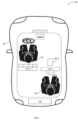
- Figure 1 illustrates a notification control system configured to implement one or more aspects of the various embodiments.
- a notification control system (NCS) 100 includes a computing device 110 and sensor arrays 120.
- Computing device 110 is configured to couple with various interactive devices 130 that reside within a vehicle 140.
- Vehicle 140 transports occupants, including driver 150 and passenger 160.
- Vehicle 140 may include a car, truck, construction machine and/or heavy machinery, motorcycle, boat, submarine, jet ski, snowmobile, airplane, spaceship, exoskeleton, and a power loader, among others.
- Sensors 120 are configured to measure data that reflects a plurality of different physiological attributes of driver 150.
- Computing device 110 implements a discovery process to establish communications with interactive devices 130 and assume control over when and how those devices output notifications to driver 150.
- Computing device 110 also processes data gathered via sensors 120 to determine the cognitive and/or emotional load on driver 150 at any given time.
- Computing device 110 then analyzes notifications to be scheduled for delivery and estimates the cognitive and/or emotional impact of those notifications on driver 150.
- computing device 110 coordinates the delivery of notifications to driver 150 to avoid causing driver 150 excessive mental load, as described in greater detail below in conjunction with Figures 2A-2C .
- FIGS 2A-2C illustrate various graphs depicting how device notifications may be throttled in response to mental load, according to various embodiments.
- a graph 200 includes load axis 210 and impact axis 220.
- Load axis 210 corresponds to the mental load of driver 150 at any given time.
- Impact axis 220 corresponds to the predicted additional cognitive/emotional load driver may potentially experience in response to a given notification.
- impact refers to additional mental load caused by sensory input driver 150 receives.
- Plot 230 indicates the maximum allowed impact of a given notification output to driver 150 as a function of the mental load on driver 150.
- graph 200(A) includes plot 230(A) plotted against load axis 210 and impact axis 220.
- plot 230(A) when mental load is low, as in region 242, higher impact notifications can be output to driver 150. Conversely, when mental load is high, as in region 244, only lower impact notifications can be output to driver 150.
- Region 242 may correspond to driving contexts that do not require elevated attention from driver 150. For example, and without limitation, region 242 may correspond to driving along a straight country road with little traffic.
- Region 244, on the other hand may correspond to driving contexts that do require elevated attention from driver 150. For example, and without limitation, region 244 may correspond to driving in heavy traffic during rush hour after a long day at the office.
- notifications having higher impact levels can be output to driver 150 until the mental load on driver 150 reaches threshold 240, after which only lower impact notifications can be output.
- Figures 2B-2C illustrate other ways notifications can be throttled.
- graph 200(B) includes plot 230(B) plotted against load axis 210 and impact axis 220.
- plot 230(B) the maximum impact level of notifications that can be output to driver 150 gradually decreases as the mental load on driver 150 increases.
- the maximum impact level of any notification to be output to driver 150 is approximately and/or indirectly proportional to the current mental load of driver 150.
- graph 200(C) includes plot 230(C) plotted against load axis 210 and impact axis 220.
- Plot 230(C) includes regions 252, 262, and 272 corresponding to low, medium, and high mental load. Plot 230(C) may also include other regions as well. When the mental load on driver 150 falls within any given region, only notifications having less than or equal to the corresponding maximum impact level can be output to driver 150.
- NCS 100 may buffer notifications with predicted impact exceeding the current maximum impact for later delivery. Additionally or alternatively, NCS 100 may transcode those notifications into a different delivery mechanism that may be less distracting to driver 150. These particular techniques are described in greater detail below in conjunction with Figures 5A-6C .
- NCS 100 coordinates notifications output by interactive devices 130 in a manner that avoids consuming excessive attention from driver 150.
- NCS 100 may avoid situations where driver 150 is distracted from driving by incoming device notifications.
- FIG 3 is a more detailed illustration of the computing device of Figure 1 , according to various embodiments.
- computing device 110 includes processor 300, input/output (I/O) devices 310, and memory 320, and is coupled to sensor arrays 120 and interactive devices 130.
- I/O input/output
- Processor 300 includes any technically feasible set of hardware units configured to process data and execute software applications.
- processor 300 could include one or more of a central processing unit (CPU), a graphics processing unit (GPU), and an application specific integrated circuit (ASICs).
- I/O devices 310 include any technically feasible set of devices configured to perform input and/or output operations, including, for example, and without limitation, a display device, a keyboard, a mouse, a touchscreen, a loudspeaker, haptic actuators, mid-air haptic transducers, and shape-shifting interfaces, among others.
- Memory 320 includes any technically feasible set of storage media configured to store data and software applications, such as a hard disk, a random-access memory (RAM) module, and a read-only memory (ROM), for example.
- Memory 320 includes a throttling application 322 and a database 324.
- Throttling application 322 includes program code that, when executed by processor 300, analyzes data captured by sensor arrays 120 to determine the mental load on driver 150 at any given time.
- Sensor arrays 120 may include pupil sensors, heart rate sensors, breathing rate sensors, galvanic skin response sensors, optical devices configured for facial recognition, neural activity sensors, audio sensors, muscle contraction sensors, eye gaze detectors, voice analyzers, gesture sensors, radar sensors, thermal sensors, and any other technically feasible type of sensor configured to measure any attribute of a human being.
- Sensor arrays 120 may also include gesture detectors, touch detectors, kinematic and/or dynamic sensors for measuring the dynamics of vehicle 140, state sensors for determining the mechanical state of vehicle 140, and environmental sensors for detecting the ambient conditions inside and outside of vehicle 140.
- Sensor arrays 120 may further include devices configured to gather information from third party services that may provide weather, traffic, and road condition data, among other types of data.
- Sensor arrays 120 may also include outward-facing sensors configured to collect information associated with the environment surrounding vehicle 140, including geolocation sensors, range sensors, daylight sensors, and so forth.
- throttling application 322 determines the current cognitive and/or emotional load on driver 150. Throttling application 322 may also predict the cognitive/emotional load on driver 150 at any future time based on contextual data, such as driving conditions, weather conditions, road conditions, among other examples and without limitation. Throttling application 322 also discovers and registers interactive devices 130 and assumes control over notifications output by those devices. Throttling application 322 may implement a cognitive and/or emotional model of driver 150 in order to predict the cognitive and/or emotional impact of a given notification on driver 150. Throttling application 322 then coordinates the delivery of notifications to driver 150 to prevent the cognitive and/or emotional load on driver 150 from exceeding a maximum level. Various modules within throttling application 322 responsible for performing these operations are described in greater detail below in conjunction with Figure 4 .
- FIG 4 is a more detailed illustration of the throttling application of Figure 3 , according to various embodiments.
- throttling application 322 includes load analysis and prediction engine 400, impact modeling and estimation engine 410, prioritization engine 420, and scheduling engine 430.
- Load analysis and prediction engine 400 includes cognitive load module 402 and emotional load module 404.
- Cognitive load module 402 analyzes data captured from sensor arrays 120 to determine the cognitive load on driver 150.
- Cognitive load module 402 may include a machine learning (ML) model of driver 150 that is updated based on the cognitive responses of driver 150 to various types of events, including, for example and without limitation, notifications generated by interactive devices 130 as well as various driving-related events.
- the ML model may initially include a baseline model that is generated based on analyzing the responses of a plurality of other drivers of other vehicles. That baseline model can be fine-tuned over time to better approximate the cognitive load of driver 150 based on sensor data.
- Emotional load module 404 analyzes data captured from sensor arrays 120 to determine the emotional load on driver 150. Similar to cognitive load module 402, emotional load module 404 may include an ML model of driver 150 that is updated based on the emotional responses of driver 152 to various types of events, including, for example and without limitation, notifications and other events. This ML model may initially include a baseline model that is generated based on analyzing the emotional responses of other drivers. The baseline model can be fine-tuned over time to better approximate the emotional load of driver 150 given various sensor readings.
- Load analysis and prediction engine 400 synthesizes the determined cognitive load and emotional load of driver 150 to generate a combined load metric, referred to herein as "mental load” or simply “load.” Load analysis and extension 400 outputs this load metric to scheduling engine 430.
- impact modeling and estimation engine 410 analyzes notifications associated with interactive devices 130 in order to estimate the cognitive and/or emotional impact of those notifications on driver 150.
- Impact modeling and estimation engine 410 includes a cognitive impact module 412 and an emotional impact module 414.
- Cognitive impact module 412 is configured to predict the cognitive impact on driver 150 of any given notification.
- Cognitive impact module 412 may include an ML model of driver 150 that, in some embodiments, is derived from the ML model included in cognitive load module 402 and trained in like fashion.
- emotional impact module 414 is configured to predict the emotional impact on driver 150 of any given notification.
- Emotional impact module 414 may include an ML model of driver 150 that, in some embodiments, is derived from the ML model included in emotional load module 404 and trained in like fashion.
- Impact modeling and estimation engine 410 synthesizes the predicted cognitive and emotional impact of any given notification on driver 150 to generate an impact metric.
- Impact modeling and estimation engine 410 outputs this impact metric to scheduling engine 430.
- prioritization engine 420 analyzes received notifications using a set of source weightings 422.
- Each source weighting 422 indicates a priority associated with a particular source from which a notification may be received.
- a given source weighting 422 could indicate that email messages received from the spouse of driver 150 should take priority over email messages received from the boss of driver 150.
- a given source weighting 422 could indicate that vehicle notifications associated with driving should take priority over all other notifications.
- Prioritization engine 420 assigns priorities to different notifications and outputs these priorities to scheduling engine 430.
- Scheduling engine 430 analyzes the current load on driver 150, the predicted impact of received notifications on driver 150, and the priorities assigned to those notifications, and then coordinates the delivery of notifications to driver 150 in a manner that avoids causing the cognitive and/or emotional load of driver 150 to exceed a maximum level. For example, and without limitation, scheduling engine 430 could identify that the load on driver 150 is elevated, and then determine that a given notification should be delayed because that notification could potentially cause the load on driver to exceed a maximum level. In addition, scheduling engine 430 may implement transcoding module 432 to transcode a high priority notification into a different medium that allows more immediate delivery to driver 150. For example, and without limitation, scheduling engine 430 could identify that a text message was received from the spouse of driver.
- Figures 5A-5C illustrate examples of how the notification control system of Figure 1 coordinates delivery of multiple notifications to the driver of a vehicle, according to various embodiments.
- a graph 500(A) includes time axis 510 and load axis 520.
- a function, L(t) 530 is plotted against time axis 510 and load axis 520.
- L(t) 530 represents the load of driver 150 over time.
- a portion of L(t) 530 is determined based on the real-time, current load computed based on sensor readings.
- Another portion of L(t) 530 is estimated based on contextual information, including traffic data, driving data, weather information, road conditions, and so forth.
- peak 532 of L(t) 530 corresponds to a predicted lane change.
- L(t) 530 represents the load of driver 150 within a time window starting with the current time.
- maximum load 522 represents the maximum allowable load that driver 150 should experience at any time.
- NCS 100 coordinates the delivery of notifications to driver 150 to keep driver load beneath maximum load 522.
- graph 500(B) includes input axis 540 and impact axis 550.
- Notifications 542 and 544 are displayed along input axis 540. These notifications may be received via interactive devices 130 and then transmitted to NCS 100 for delivery to driver 150.
- Notification 542 corresponds to a viral media clip
- notification 544 corresponds to a text message from the spouse of driver 150.
- NCS 100 analyzes these notifications and determines that notification 542 will likely have a high impact on the load of driver 150 and therefore may be distracting.
- NCS 100 also determines that notification 544 may have a lower impact on driver 150 and therefore be less distracting. NCS 100 generally makes these predictions using the various models discussed above in conjunction with Figure 4 .
- NCS 100 schedules notification 544 to be delivered to driver 150 at time t 1 and schedules notification 542 to be delivered to driver 150 at time t 2 . Both of these notifications increase the load on driver 150. However, notification 544 only increases the load by a small amount, notification 542 increases the load by larger amount, and over time neither notification causes the load on driver 150 to exceed the maximum load 522. In addition, because NCS 100 distributes the delivery of notifications across time, driver 150 can process those notifications separately and therefore may not become overloaded. NCS 100 also transcodes notifications into different media to expedite the delivery of certain notifications while avoiding exceeding the maximum load of driver 150, as described in greater detail below in conjunction with Figures 6A-6C .
- FIGS 6A-6C illustrate examples of how the notification control system of Figure 1 transcodes notifications between sensory modalities, according to various embodiments.
- a graph 600(A) includes time axis 610 and load axis 620.
- Two functions 630 are plotted against time axis 610 and load axis 620.
- L opt (t) 630(0) represents the load of driver 150 over time caused by optical inputs, which may include visual inputs falling within the visual range of humans as well as other optical transmissions.
- L aud (t) 630(1) represents the load of driver 150 over time caused by auditory inputs.
- NCS 100 may determine L opt (t) 630(0) and L aud (t) 630(1) by analyzing sensor data associated with driver 150, analyzing information associated with vehicle 140, and analyzing contextual information related to driving, among others. For example, and without limitation, NCS 100 could analyze real-time driving information and determine that driver 150 is currently engaged with navigating heavy traffic. As is shown, heavy traffic begins at peak 632. NCS 100 could then compute L opt (t) 630(0) to indicate that the optical load on driver 150 is elevated. In another example, and without limitation, NCS 100 could analyze sensor data indicating that the interior cabin of vehicle 140 is relatively quiet. NCS 100 could then compute L aud (t) 630(1) to indicate that the auditory load on driver 150 is minimal, as is shown.
- the overall load on driver 150 at any given time may be derived from the individual loadings associated with each different sensory modality. Based on real-time estimates and predictions of L opt (t) 630(0) and L aud (t) 630(1) computed in the manner described above, NCS 100 transcodes notifications between sensory modalities to prevent the overall load on driver 150 from exceeding maximum load 622.
- NCS 100 relies on cloud-based data to update and/or generate machine learning models used to predict the cognitive and/or emotional load on driver 150 in response to various events.
- the cloud-based data may include indications of specific events that cause predictable increases in mental loading across a range of other drivers.
- NCS 100 could acquire cloud-based data indicating that a particular stretch of highway includes a sequence of distracting billboards, and then anticipate that the mental load on driver 150 when driving along that stretch of highway will also increase.
- NCS 100 coordinates the delivery of notifications to passengers within vehicle 140 using a different approach than that used to deliver notifications to driver 150. For example, and without limitation, NCS 100 could determine that passenger 160 is sufficiently far away from driver 150 that a mobile device in the possession of passenger 160 should be allowed to deliver notifications to passenger 160 without restrictions. In another example, NCS 100 could determine that a backseat infotainment system cannot be seen by driver 150, and therefore should not be restricted from issuing optical notifications. NCS 100 may also deliver notifications according to specific sound zones within vehicle 140. For example, and without limitation, NCS 100 could cause notifications to be output within sound zones that are inaudible to driver 150, thereby allowing notifications to be delivered to vehicle passengers without distracting driver 150.
- FIGS 7A-7B set forth a flow diagram of method steps for coordinating delivery of multiple notifications to the driver of a vehicle, according to various embodiments. Although the method steps are described in conjunction with the systems of Figures 1-6 , persons skilled in the art will understand that the method steps can be performed in any order by any system.
- a method 700 begins at step 702, where NCS 100 registers a set of devices for centralized management.
- the set of devices generally includes interactive devices that can generate notifications of various types.
- NCS 100 captures physiological data associated with driver 150.
- NCS 100 determines the mental load on driver over a timespan based on the physiological data and current driving context.
- NCS 100 may implement a cognitive model and/or an emotional model in order to estimate the cognitive and/or emotional load on driver 150 at any given time.
- NCS 100 may also model the predicted cognitive and/or emotional load on driver 150 in response to future events, such as anticipated traffic, predicted weather, and so forth.
- NCS 100 captures physiological data associated with driver 150 in response to the delivered notifications.
- NCS 100 determines the mental load on driver in response to each notification.
- NCS 100 updates the cognitive and/or emotional model of driver 150 based on the estimated mental impact computed at step 710. In this manner, NCS 100 continuously improves the accuracy with which the cognitive and/or emotional impact of driver 150 can be predicted.
- a notification control system is configured to coordinate the delivery of notifications issued from a set of devices to the driver of a vehicle.
- the NCS registers all interactive devices residing in a vehicle and causes those devices to conform to specific directives generated by the NCS.
- the NCS analyzes and predicts the cognitive and/or emotional load on the driver and also estimates the cognitive and/or emotional impact on the driver that may be caused by any incoming notifications.
- the NCS then coordinates the delivery of notifications to the driver in a manner that avoids overwhelming the cognitive and/or emotional capacity of the driver.
- the NCS may suppress notifications, delay the delivery of notifications, and/or transcode notifications into other media associated with different sensory modalities.
- the NCS performs these operations in real-time based on the cognitive and/or emotional state of the driver and/or based on the current and predicted driving context.
- the driver of the vehicle may maintain sufficient cognitive and mental resources to safely operate the vehicle.
- the NCS coordinates the delivery of notifications based upon the state of the driver and also the driving context, the NCS avoids situations where device notifications cause the driver to unsafely divert attention away from driving. Accordingly, the techniques described herein represent a technological advancement over conventional systems that do not coordinate the delivery of notifications.
- the computer readable medium may be a computer readable signal medium or a computer readable storage medium.
- a computer readable storage medium may be, for example, but not limited to, an electronic, magnetic, optical, electromagnetic, infrared, or semiconductor system, apparatus, or device, or any suitable combination of the foregoing.
- a computer readable storage medium may be any tangible medium that can contain, or store a program for use by or in connection with an instruction execution system, apparatus, or device.
- each block in the flowchart or block diagrams may represent a module, segment, or portion of code, which comprises one or more executable instructions for implementing the specified logical function(s).
- the functions noted in the block may occur out of the order noted in the figures. For example, two blocks shown in succession may, in fact, be executed substantially concurrently, or the blocks may sometimes be executed in the reverse order, depending upon the functionality involved.
Landscapes
- Engineering & Computer Science (AREA)
- Transportation (AREA)
- Mechanical Engineering (AREA)
- Combustion & Propulsion (AREA)
- Chemical & Material Sciences (AREA)
- Automation & Control Theory (AREA)
- Physics & Mathematics (AREA)
- Theoretical Computer Science (AREA)
- Signal Processing (AREA)
- Human Computer Interaction (AREA)
- Computer Networks & Wireless Communication (AREA)
- Mathematical Physics (AREA)
- Databases & Information Systems (AREA)
- General Physics & Mathematics (AREA)
- Computational Linguistics (AREA)
- Data Mining & Analysis (AREA)
- General Engineering & Computer Science (AREA)
- Multimedia (AREA)
- Traffic Control Systems (AREA)
Claims (11)
- Computerimplementiertes Verfahren (700) zum Übertragen von Benachrichtigungen an einen Fahrer (150) eines Fahrzeugs (140), wobei das Verfahren Folgendes umfasst:Bestimmen einer ersten mentalen Belastung (530, 630) des Fahrers (150) basierend auf Sensordaten;Bestimmen einer zweiten mentalen Belastung des Fahrers (150), die einer ersten Benachrichtigung (542, 544, 642, 644) zugeordnet ist;Bestimmen, basierend auf der ersten mentalen Belastung (530, 630) und der zweiten mentalen Belastung, dass eine Schwelle der mentalen Belastung (240, 522, 622) überschritten wird;Bestimmen einer der ersten Benachrichtigung (542, 544, 642, 644) zugeordneten Prioritätsstufe; undÜbertragen entweder der ersten Benachrichtigung (542, 544, 642, 644) oder einer modifizierten Version der ersten Benachrichtigung an eine oder mehrere Ausgabevorrichtungen (130) zum Ausgeben innerhalb des Fahrzeugs (140) basierend auf der Prioritätsstufe, wodurch eine dritte mentale Belastung des Fahrers (150) verursacht wird, die eine maximale Belastungsschwelle (522) nicht überschreitet.
- Computerimplementiertes Verfahren (700) nach Anspruch 1, wobei das Bestimmen der zweiten mentalen Belastung Folgendes umfasst:Identifizieren von Inhalt, der in der ersten Benachrichtigung (542, 544, 642, 644) beinhaltet ist; undEingeben des Inhalts in ein Maschinenlernmodell, wobei das Maschinenlernmodell physiologische Reaktionen des Fahrers (150) auf Reize vorhersagt.
- Computerimplementiertes Verfahren (700) nach Anspruch 1 oder Anspruch 2, ferner umfassend Trainieren des Maschinenlernmodells basierend auf einer vorherigen Reaktion des Fahrers (150) auf eine vorherige Benachrichtigung und basierend auf Inhalt, der in der vorherigen Benachrichtigung beinhaltet war.
- Computerimplementiertes Verfahren (700) nach einem der Ansprüche 1 bis 3, wobei die erste Benachrichtigung (542, 544, 642, 644) durch eine in das Fahrzeug (140) integrierte Vorrichtung erzeugt wird.
- Computerimplementiertes Verfahren (700) nach einem der Ansprüche 1 bis 4, wobei die erste Benachrichtigung (542, 544, 642, 644) durch eine dem Fahrer (150) zugeordnete portable Vorrichtung oder tragbare Vorrichtung erzeugt wird.
- Computerimplementiertes Verfahren (700) nach einem der Ansprüche 1 bis 5, wobei die erste Benachrichtigung (542, 544, 642, 644) durch eine einem Fahrgast (160) des Fahrzeugs (140) zugeordnete portable Vorrichtung erzeugt wird und ferner umfassend Übertragen der ersten Benachrichtigung (542, 544, 642, 644) an die dem Fahrgast (160) zugeordnete portable Vorrichtung.
- Computerimplementiertes Verfahren (700) nach einem der Ansprüche 1 bis 5, wobei die erste Benachrichtigung (542, 544, 642, 644) durch eine einem Fahrgast (160) des Fahrzeugs (140) zugeordnete portable Vorrichtung erzeugt wird und ferner umfassend Ausgeben der ersten Benachrichtigung (542, 544, 642, 644) innerhalb eines dem Fahrgast (160) zugeordneten Schallfelds, wobei das Schallfeld den Fahrer (150) ausschließt.
- Computerimplementiertes Verfahren (700) nach einem der Ansprüche 1 bis 7, ferner umfassend Registrieren eines Satzes von Benachrichtigungen erzeugenden Vorrichtungen bei einer zentralen Steuerung, die die an den Fahrer (150) auszugebenden Benachrichtigungen plant, wobei eine erste in dem Satz von Vorrichtungen beinhaltete Vorrichtung die erste Benachrichtigung (542, 544, 642, 644) erzeugt.
- Computerimplementiertes Verfahren (700) nach einem der Ansprüche 1 bis 8, ferner umfassend Bestimmen einer der ersten Benachrichtigung (542, 544, 642, 644) zugeordneten Übertragungszeit basierend auf der Prioritätsstufe.
- Computerprogrammprodukt, umfassend Anweisungen, die beim Ausführen durch einen Prozessor (300) den Prozessor (300) zum Durchführen der Schritte nach einem der Ansprüche 1 bis 9 veranlassen.
- System (100), umfassend:eine Sensoranordnung (120), die zum Erfassen von einem Fahrer (150) eines Fahrzeugs (140) zugeordneten physiologischen Daten konfiguriert ist; einen Speicher (320), der eine Softwareanwendung (322) speichert; undeinen Prozessor (300), der beim Ausführen der Softwareanwendung (322) zum Durchführen der Schritte nach einem der Ansprüche 1 bis 9 konfiguriert ist.
Applications Claiming Priority (2)
| Application Number | Priority Date | Filing Date | Title |
|---|---|---|---|
| US16/044,437 US10850746B2 (en) | 2018-07-24 | 2018-07-24 | Coordinating delivery of notifications to the driver of a vehicle to reduce distractions |
| EP19184402.6A EP3599124B1 (de) | 2018-07-24 | 2019-07-04 | Koordination der zustellung von benachrichtigungen an den fahrer eines fahrzeugs zur reduzierung von distraktionen |
Related Parent Applications (1)
| Application Number | Title | Priority Date | Filing Date |
|---|---|---|---|
| EP19184402.6A Division EP3599124B1 (de) | 2018-07-24 | 2019-07-04 | Koordination der zustellung von benachrichtigungen an den fahrer eines fahrzeugs zur reduzierung von distraktionen |
Publications (2)
| Publication Number | Publication Date |
|---|---|
| EP4032736A1 EP4032736A1 (de) | 2022-07-27 |
| EP4032736B1 true EP4032736B1 (de) | 2025-04-23 |
Family
ID=67180640
Family Applications (2)
| Application Number | Title | Priority Date | Filing Date |
|---|---|---|---|
| EP19184402.6A Active EP3599124B1 (de) | 2018-07-24 | 2019-07-04 | Koordination der zustellung von benachrichtigungen an den fahrer eines fahrzeugs zur reduzierung von distraktionen |
| EP22161900.0A Active EP4032736B1 (de) | 2018-07-24 | 2019-07-04 | Koordination der zustellung von benachrichtigungen an den fahrer eines fahrzeugs zum reduzieren von ablenkungen |
Family Applications Before (1)
| Application Number | Title | Priority Date | Filing Date |
|---|---|---|---|
| EP19184402.6A Active EP3599124B1 (de) | 2018-07-24 | 2019-07-04 | Koordination der zustellung von benachrichtigungen an den fahrer eines fahrzeugs zur reduzierung von distraktionen |
Country Status (3)
| Country | Link |
|---|---|
| US (1) | US10850746B2 (de) |
| EP (2) | EP3599124B1 (de) |
| CN (1) | CN110843798B (de) |
Families Citing this family (25)
| Publication number | Priority date | Publication date | Assignee | Title |
|---|---|---|---|---|
| US11488399B2 (en) * | 2018-12-19 | 2022-11-01 | Magna Electronics Inc. | Vehicle driver monitoring system for determining driver workload |
| US11810373B2 (en) * | 2019-09-19 | 2023-11-07 | Mitsubishi Electric Corporation | Cognitive function estimation device, learning device, and cognitive function estimation method |
| JP2021060927A (ja) * | 2019-10-09 | 2021-04-15 | トヨタ自動車株式会社 | 情報出力制御方法および情報出力制御システム |
| US10913464B1 (en) * | 2019-10-11 | 2021-02-09 | GM Global Technology Operations LLC | Intelligent escalation strategy for autonomous vehicle |
| US11735206B2 (en) | 2020-03-27 | 2023-08-22 | Harman International Industries, Incorporated | Emotionally responsive virtual personal assistant |
| US11702103B2 (en) * | 2020-04-02 | 2023-07-18 | Harman International Industries, Incorporated | Affective-cognitive load based digital assistant |
| US11878714B2 (en) | 2020-04-06 | 2024-01-23 | Harman International Industries, Incorporated | Techniques for customizing self-driving models |
| US11683684B2 (en) | 2020-07-23 | 2023-06-20 | Qualcomm Incorporated | Obtaining a credential for V2X transmission on behalf of a vehicle |
| US11410551B2 (en) * | 2020-07-23 | 2022-08-09 | Qualcomm Incorporated | Techniques for utilizing a mobile device as a proxy for a vehicle |
| US11511767B2 (en) | 2020-07-23 | 2022-11-29 | Qualcomm Incorporated | Techniques for utilizing CV2X registration data |
| EP4210568A1 (de) * | 2020-09-11 | 2023-07-19 | Harman Becker Automotive Systems GmbH | System und verfahren zur bestimmung des kognitiven bedarfs |
| US11539762B2 (en) | 2020-10-06 | 2022-12-27 | Harman International Industries, Incorporated | Conferencing based on driver state and context |
| US11283751B1 (en) * | 2020-11-03 | 2022-03-22 | International Business Machines Corporation | Using speech and facial bio-metrics to deliver text messages at the appropriate time |
| DE102021200243A1 (de) * | 2021-01-13 | 2022-07-14 | Albert Ziegler Gmbh | BOS-Fahrzeug |
| CN116278739A (zh) * | 2021-12-20 | 2023-06-23 | 华为技术有限公司 | 一种风险提醒方法及装置 |
| US12055405B2 (en) * | 2022-03-08 | 2024-08-06 | Telenav, Inc. | Navigation system with voice assistant mechanism and method of operation thereof |
| JP7666377B2 (ja) * | 2022-03-25 | 2025-04-22 | 株式会社デンソー | 運転操作支援装置 |
| JP2024002167A (ja) * | 2022-06-23 | 2024-01-11 | ソニーグループ株式会社 | 情報処理装置 |
| CN115416671B (zh) * | 2022-08-01 | 2024-05-14 | 阿维塔科技(重庆)有限公司 | 一种情绪调节方法、装置及设备 |
| US12403931B2 (en) | 2022-12-13 | 2025-09-02 | Magna Electronics Inc. | Vehicular driver monitoring system |
| US20250047928A1 (en) * | 2023-08-01 | 2025-02-06 | Google Llc | Automated pacing of vehicle operator content interaction |
| US12475611B2 (en) | 2023-12-01 | 2025-11-18 | Toyota Motor Engineering & Manufacturing North America, Inc. | Systems and methods for superimposing augmented reality vehicle lights in a vehicle display |
| US12406572B2 (en) | 2023-12-01 | 2025-09-02 | Toyota Motor Engineering & Manufacturing North America, Inc. | Systems and methods for synchronizing the presentation of vehicle exterior lights |
| US20250368042A1 (en) * | 2024-05-31 | 2025-12-04 | Fca Us Llc | Notification management for vehicles |
| WO2026020734A1 (en) * | 2024-07-22 | 2026-01-29 | Wuhan Lotus Cars Co., Ltd. | Method for operating vehicle system and vehicle |
Family Cites Families (53)
| Publication number | Priority date | Publication date | Assignee | Title |
|---|---|---|---|---|
| US6060993A (en) * | 1998-11-03 | 2000-05-09 | Adapt Media, Inc. | Mobile display system |
| US7565230B2 (en) * | 2000-10-14 | 2009-07-21 | Temic Automotive Of North America, Inc. | Method and apparatus for improving vehicle operator performance |
| US6580973B2 (en) * | 2000-10-14 | 2003-06-17 | Robert H. Leivian | Method of response synthesis in a driver assistance system |
| US20020151297A1 (en) * | 2000-10-14 | 2002-10-17 | Donald Remboski | Context aware wireless communication device and method |
| US6909947B2 (en) * | 2000-10-14 | 2005-06-21 | Motorola, Inc. | System and method for driver performance improvement |
| US7365651B2 (en) * | 2002-08-20 | 2008-04-29 | Motorola, Inc. | Method and apparatus for selecting a user interface |
| US7292152B2 (en) * | 2003-06-12 | 2007-11-06 | Temic Automotive Of North America, Inc. | Method and apparatus for classifying vehicle operator activity state |
| SE0303122D0 (sv) * | 2003-11-20 | 2003-11-20 | Volvo Technology Corp | Method and system for communication and/or interaction between a vehicle driver and a plurality of applications |
| DE102005019705A1 (de) * | 2005-04-28 | 2006-11-02 | Bayerische Motoren Werke Ag | Fahrerassistenzsystem zur Ausgabe zumindest einer Information |
| JP5088669B2 (ja) * | 2007-03-23 | 2012-12-05 | 株式会社デンソー | 車両周辺監視装置 |
| US8275348B2 (en) * | 2008-05-30 | 2012-09-25 | Volkswagen Ag | Method for managing telephone calls in a vehicle |
| US20100007479A1 (en) * | 2008-07-08 | 2010-01-14 | Smith Matthew R | Adaptive driver warning methodology |
| US8224300B2 (en) * | 2009-12-11 | 2012-07-17 | Alpine Electronics, Inc. | Method and apparatus to enhance navigation user experience for a smart phone device |
| CA2720892A1 (en) * | 2010-11-12 | 2012-05-12 | The Regents Of The University Of California | Enhancing cognition in the presence of distraction and/or interruption |
| US9542847B2 (en) * | 2011-02-16 | 2017-01-10 | Toyota Motor Engineering & Manufacturing North America, Inc. | Lane departure warning/assistance method and system having a threshold adjusted based on driver impairment determination using pupil size and driving patterns |
| WO2012128952A2 (en) * | 2011-03-18 | 2012-09-27 | Battelle Memorial Institute | Apparatuses and methods of determining if a person operating equipment is experiencing an elevated cognitive load |
| KR101901417B1 (ko) * | 2011-08-29 | 2018-09-27 | 한국전자통신연구원 | 감성기반 안전운전 자동차 서비스 시스템, 안전운전 서비스를 위한 감성인지 처리 장치 및 안전운전 서비스 장치, 감성기반 차량용 안전운전 서비스 방법 |
| CN103153707B (zh) * | 2011-08-31 | 2016-08-10 | 观致汽车有限公司 | 管理车辆中来电信息的系统和方法 |
| US9055509B2 (en) * | 2011-12-21 | 2015-06-09 | Nuance Communications, Inc. | Situation-aware message presentation for automotive messaging |
| US20140007010A1 (en) * | 2012-06-29 | 2014-01-02 | Nokia Corporation | Method and apparatus for determining sensory data associated with a user |
| US9608952B2 (en) * | 2012-12-14 | 2017-03-28 | Intel Corporation | Systems and methods for user device interaction |
| EP2936847B1 (de) * | 2012-12-21 | 2019-11-20 | Harman Becker Automotive Systems GmbH | System für ein fahrzeug und kommunikationsverfahren |
| US9141583B2 (en) | 2013-03-13 | 2015-09-22 | Ford Global Technologies, Llc | Method and system for supervising information communication based on occupant and vehicle environment |
| US9277349B2 (en) * | 2013-06-12 | 2016-03-01 | Blackberry Limited | Method of processing an incoming communication signal at a mobile communication device |
| US9501693B2 (en) * | 2013-10-09 | 2016-11-22 | Honda Motor Co., Ltd. | Real-time multiclass driver action recognition using random forests |
| US9188449B2 (en) * | 2013-12-06 | 2015-11-17 | Harman International Industries, Incorporated | Controlling in-vehicle computing system based on contextual data |
| JP6546741B2 (ja) * | 2014-01-06 | 2019-07-17 | ハーマン インターナショナル インダストリーズ インコーポレイテッド | 車内通知提示のスケジューリング |
| US9758116B2 (en) * | 2014-01-10 | 2017-09-12 | Sony Corporation | Apparatus and method for use in configuring an environment of an automobile |
| US9381813B2 (en) * | 2014-03-24 | 2016-07-05 | Harman International Industries, Incorporated | Selective message presentation by in-vehicle computing system |
| GB2529997B (en) * | 2014-05-01 | 2019-01-02 | Jaguar Land Rover Ltd | Vehicle communication system with occupant monitoring |
| US9272658B2 (en) * | 2014-06-24 | 2016-03-01 | Google Inc. | Attention and event management |
| US9767373B2 (en) * | 2014-09-05 | 2017-09-19 | Ford Global Technologies, Llc | Head-mounted display head pose and activity estimation |
| DE102015105581A1 (de) * | 2014-11-03 | 2016-05-04 | Audi Ag | System und Verfahren zur Überwachung des Gesundheitszustandes und/oder des Befindens eines Fahrzeuginsassen |
| US20160147563A1 (en) * | 2014-11-24 | 2016-05-26 | Ford Global Technologies, Llc | Method and Apparatus for Brought-In Device Communication Request Handling |
| US10614726B2 (en) * | 2014-12-08 | 2020-04-07 | Life Long Driver, Llc | Behaviorally-based crash avoidance system |
| US9686400B2 (en) * | 2014-12-09 | 2017-06-20 | Yahoo! Inc. | System and method for driving-aware notification |
| US10009738B2 (en) * | 2014-12-23 | 2018-06-26 | Palo Alto Research Center Incorporated | System and method for determining an appropriate time for providing a message to a driver |
| EP3936363B1 (de) | 2015-01-12 | 2025-04-30 | Harman International Industries, Incorporated | Kognitive-last-fahrassistent |
| DE102015200775A1 (de) * | 2015-01-20 | 2016-07-21 | Bayerische Motoren Werke Aktiengesellschaft | Unabhängigen Beurteilung eines emotionalen Zustandes und einer kognitiven Belastung |
| JP6426025B2 (ja) | 2015-02-20 | 2018-11-21 | クラリオン株式会社 | 情報処理装置 |
| US20170011640A1 (en) * | 2015-07-08 | 2017-01-12 | Genaro Rebolledo-Mendez | System For Monitoring, Processing, Analyses And Storage Of Physiological Signals For Emotion Recognition |
| US10614164B2 (en) * | 2017-02-27 | 2020-04-07 | International Business Machines Corporation | Message sentiment based alert |
| US10191462B2 (en) * | 2017-06-06 | 2019-01-29 | International Business Machines Corporation | Vehicle electronic receptionist for communications management |
| US10869627B2 (en) * | 2017-07-05 | 2020-12-22 | Osr Enterprises Ag | System and method for fusing information related to a driver of a vehicle |
| US10248379B2 (en) * | 2017-07-27 | 2019-04-02 | Motorola Solutions, Inc. | Automatic and selective context-based gating of a speech-output function of an electronic digital assistant |
| WO2019028798A1 (zh) * | 2017-08-10 | 2019-02-14 | 北京市商汤科技开发有限公司 | 驾驶状态监控方法、装置和电子设备 |
| US20190135177A1 (en) * | 2017-09-07 | 2019-05-09 | Truemotion, Inc. | Method and system for aggregation of behavior modification results |
| US20190163331A1 (en) * | 2017-11-28 | 2019-05-30 | International Business Machines Corporation | Multi-Modal Dialog Broker |
| KR102302917B1 (ko) * | 2017-12-18 | 2021-09-15 | 현대모비스 주식회사 | 안전운전 지원 장치 및 방법 |
| US10196071B1 (en) * | 2017-12-26 | 2019-02-05 | Samsara Networks Inc. | Method and apparatus for monitoring driving behavior of a driver of a vehicle |
| US10958610B2 (en) * | 2018-01-10 | 2021-03-23 | International Business Machines Corporation | Generating alerts based on predicted mood responses to received electronic messages |
| US10210409B1 (en) * | 2018-02-07 | 2019-02-19 | Lear Corporation | Seating system with occupant stimulation and sensing |
| US11599767B2 (en) * | 2018-04-04 | 2023-03-07 | Toyota Motor Engineering & Manufacturing North America, Inc. | Automotive virtual personal assistant |
-
2018
- 2018-07-24 US US16/044,437 patent/US10850746B2/en active Active
-
2019
- 2019-07-04 EP EP19184402.6A patent/EP3599124B1/de active Active
- 2019-07-04 EP EP22161900.0A patent/EP4032736B1/de active Active
- 2019-07-11 CN CN201910623701.3A patent/CN110843798B/zh active Active
Also Published As
| Publication number | Publication date |
|---|---|
| US10850746B2 (en) | 2020-12-01 |
| EP4032736A1 (de) | 2022-07-27 |
| US20200031365A1 (en) | 2020-01-30 |
| CN110843798B (zh) | 2024-08-13 |
| EP3599124A1 (de) | 2020-01-29 |
| EP3599124B1 (de) | 2022-04-06 |
| CN110843798A (zh) | 2020-02-28 |
Similar Documents
| Publication | Publication Date | Title |
|---|---|---|
| EP4032736B1 (de) | Koordination der zustellung von benachrichtigungen an den fahrer eines fahrzeugs zum reduzieren von ablenkungen | |
| Ayoub et al. | From manual driving to automated driving: A review of 10 years of autoui | |
| EP3889740B1 (de) | Auf affektiv-kognitiver belastung basierender digitaler assistent | |
| US10053113B2 (en) | Dynamic output notification management for vehicle occupant | |
| KR102709343B1 (ko) | 사용자의 산만함을 줄이고 및/또는 컴퓨팅 자원들의 사용을 경감시키기 위한 통지 출력 제공의 동적 조정 | |
| US10399575B2 (en) | Cognitive load driving assistant | |
| JP4659754B2 (ja) | 車両運転者および複数のアプリケーション間の対話方法およびシステム | |
| US20120139816A1 (en) | In-vehicle display management system | |
| KR20190022553A (ko) | 상황 인식 개인 비서 | |
| US10185392B2 (en) | Method for transmitting information to a driver of a motor vehicle, and adaptive driver assistance system | |
| US20190315342A1 (en) | Preference adjustment of autonomous vehicle performance dynamics | |
| US12545104B2 (en) | Method, device, computer program and computer-readable storage medium for controlling the provision of suggestion information to a vehicle occupant of a vehicle | |
| CN113811851A (zh) | 用户界面耦合 | |
| CN115675513A (zh) | 在装置的自动控制期间的非监控时间段的分配 | |
| US20250171034A1 (en) | Custom environment in a vehicle | |
| JP2023006970A (ja) | 運転支援制御装置、及び運転支援制御方法 | |
| US11027747B2 (en) | Vehicle content based symbiosis for vehicle occupants | |
| US12233797B2 (en) | System and method for a voice-activated user support system | |
| US20260075015A1 (en) | Tracking data broker for managing multiple sources of tracking data | |
| CN117651655A (zh) | 适配车辆的人机界面的图形用户界面的计算机实施方法、计算机程序产品、人机界面和车辆 | |
| Park et al. | Multimodal interface for driving-workload optimization | |
| Langdon | Inclusive Product Interfaces for the Future: Automotive, Aerospace, IoT and Inclusion Design | |
| Wang et al. | Toward Driver Stage-wise Takeover Behavior in Autonomous Driving: A Cognitive Process Modeling Approach for Adaptive Takeover Requests Design |
Legal Events
| Date | Code | Title | Description |
|---|---|---|---|
| PUAI | Public reference made under article 153(3) epc to a published international application that has entered the european phase |
Free format text: ORIGINAL CODE: 0009012 |
|
| STAA | Information on the status of an ep patent application or granted ep patent |
Free format text: STATUS: THE APPLICATION HAS BEEN PUBLISHED |
|
| AC | Divisional application: reference to earlier application |
Ref document number: 3599124 Country of ref document: EP Kind code of ref document: P |
|
| AK | Designated contracting states |
Kind code of ref document: A1 Designated state(s): AL AT BE BG CH CY CZ DE DK EE ES FI FR GB GR HR HU IE IS IT LI LT LU LV MC MK MT NL NO PL PT RO RS SE SI SK SM TR |
|
| STAA | Information on the status of an ep patent application or granted ep patent |
Free format text: STATUS: REQUEST FOR EXAMINATION WAS MADE |
|
| 17P | Request for examination filed |
Effective date: 20230113 |
|
| RBV | Designated contracting states (corrected) |
Designated state(s): AL AT BE BG CH CY CZ DE DK EE ES FI FR GB GR HR HU IE IS IT LI LT LU LV MC MK MT NL NO PL PT RO RS SE SI SK SM TR |
|
| REG | Reference to a national code |
Ref country code: DE Ref legal event code: R079 Free format text: PREVIOUS MAIN CLASS: B60K0035000000 Ipc: B60K0035200000 Ref document number: 602019069214 Country of ref document: DE |
|
| GRAP | Despatch of communication of intention to grant a patent |
Free format text: ORIGINAL CODE: EPIDOSNIGR1 |
|
| STAA | Information on the status of an ep patent application or granted ep patent |
Free format text: STATUS: GRANT OF PATENT IS INTENDED |
|
| RIC1 | Information provided on ipc code assigned before grant |
Ipc: B60K 35/00 20060101ALI20241121BHEP Ipc: B60K 35/29 20240101ALI20241121BHEP Ipc: B60K 35/28 20240101ALI20241121BHEP Ipc: B60K 35/26 20240101ALI20241121BHEP Ipc: B60K 35/25 20240101ALI20241121BHEP Ipc: B60K 35/22 20240101ALI20241121BHEP Ipc: B60K 35/20 20240101AFI20241121BHEP |
|
| INTG | Intention to grant announced |
Effective date: 20241204 |
|
| RIN1 | Information on inventor provided before grant (corrected) |
Inventor name: NAHMAN, JAIME ELLIOT Inventor name: SPASOJEVIC, MIRJANA Inventor name: DI CENSO, DAVIDE Inventor name: VERBEKE, JOSEPH Inventor name: BOULANGER, ADAM Inventor name: MARTI, STEFAN |
|
| GRAS | Grant fee paid |
Free format text: ORIGINAL CODE: EPIDOSNIGR3 |
|
| GRAA | (expected) grant |
Free format text: ORIGINAL CODE: 0009210 |
|
| STAA | Information on the status of an ep patent application or granted ep patent |
Free format text: STATUS: THE PATENT HAS BEEN GRANTED |
|
| P01 | Opt-out of the competence of the unified patent court (upc) registered |
Free format text: CASE NUMBER: APP_11887/2025 Effective date: 20250311 |
|
| AC | Divisional application: reference to earlier application |
Ref document number: 3599124 Country of ref document: EP Kind code of ref document: P |
|
| AK | Designated contracting states |
Kind code of ref document: B1 Designated state(s): AL AT BE BG CH CY CZ DE DK EE ES FI FR GB GR HR HU IE IS IT LI LT LU LV MC MK MT NL NO PL PT RO RS SE SI SK SM TR |
|
| REG | Reference to a national code |
Ref country code: GB Ref legal event code: FG4D |
|
| REG | Reference to a national code |
Ref country code: CH Ref legal event code: EP |
|
| REG | Reference to a national code |
Ref country code: DE Ref legal event code: R096 Ref document number: 602019069214 Country of ref document: DE |
|
| REG | Reference to a national code |
Ref country code: IE Ref legal event code: FG4D |
|
| PGFP | Annual fee paid to national office [announced via postgrant information from national office to epo] |
Ref country code: GB Payment date: 20250619 Year of fee payment: 7 |
|
| REG | Reference to a national code |
Ref country code: NL Ref legal event code: MP Effective date: 20250423 |
|
| PG25 | Lapsed in a contracting state [announced via postgrant information from national office to epo] |
Ref country code: NL Free format text: LAPSE BECAUSE OF FAILURE TO SUBMIT A TRANSLATION OF THE DESCRIPTION OR TO PAY THE FEE WITHIN THE PRESCRIBED TIME-LIMIT Effective date: 20250423 |
|
| REG | Reference to a national code |
Ref country code: AT Ref legal event code: MK05 Ref document number: 1787475 Country of ref document: AT Kind code of ref document: T Effective date: 20250423 |
|
| PG25 | Lapsed in a contracting state [announced via postgrant information from national office to epo] |
Ref country code: PT Free format text: LAPSE BECAUSE OF FAILURE TO SUBMIT A TRANSLATION OF THE DESCRIPTION OR TO PAY THE FEE WITHIN THE PRESCRIBED TIME-LIMIT Effective date: 20250825 Ref country code: FI Free format text: LAPSE BECAUSE OF FAILURE TO SUBMIT A TRANSLATION OF THE DESCRIPTION OR TO PAY THE FEE WITHIN THE PRESCRIBED TIME-LIMIT Effective date: 20250423 Ref country code: ES Free format text: LAPSE BECAUSE OF FAILURE TO SUBMIT A TRANSLATION OF THE DESCRIPTION OR TO PAY THE FEE WITHIN THE PRESCRIBED TIME-LIMIT Effective date: 20250423 |
|
| PGFP | Annual fee paid to national office [announced via postgrant information from national office to epo] |
Ref country code: DE Payment date: 20250620 Year of fee payment: 7 |
|
| REG | Reference to a national code |
Ref country code: LT Ref legal event code: MG9D |
|
| PG25 | Lapsed in a contracting state [announced via postgrant information from national office to epo] |
Ref country code: NO Free format text: LAPSE BECAUSE OF FAILURE TO SUBMIT A TRANSLATION OF THE DESCRIPTION OR TO PAY THE FEE WITHIN THE PRESCRIBED TIME-LIMIT Effective date: 20250723 Ref country code: GR Free format text: LAPSE BECAUSE OF FAILURE TO SUBMIT A TRANSLATION OF THE DESCRIPTION OR TO PAY THE FEE WITHIN THE PRESCRIBED TIME-LIMIT Effective date: 20250724 |
|
| PG25 | Lapsed in a contracting state [announced via postgrant information from national office to epo] |
Ref country code: PL Free format text: LAPSE BECAUSE OF FAILURE TO SUBMIT A TRANSLATION OF THE DESCRIPTION OR TO PAY THE FEE WITHIN THE PRESCRIBED TIME-LIMIT Effective date: 20250423 |
|
| PG25 | Lapsed in a contracting state [announced via postgrant information from national office to epo] |
Ref country code: BG Free format text: LAPSE BECAUSE OF FAILURE TO SUBMIT A TRANSLATION OF THE DESCRIPTION OR TO PAY THE FEE WITHIN THE PRESCRIBED TIME-LIMIT Effective date: 20250423 |
|
| PG25 | Lapsed in a contracting state [announced via postgrant information from national office to epo] |
Ref country code: HR Free format text: LAPSE BECAUSE OF FAILURE TO SUBMIT A TRANSLATION OF THE DESCRIPTION OR TO PAY THE FEE WITHIN THE PRESCRIBED TIME-LIMIT Effective date: 20250423 |
|
| PG25 | Lapsed in a contracting state [announced via postgrant information from national office to epo] |
Ref country code: AT Free format text: LAPSE BECAUSE OF FAILURE TO SUBMIT A TRANSLATION OF THE DESCRIPTION OR TO PAY THE FEE WITHIN THE PRESCRIBED TIME-LIMIT Effective date: 20250423 |
|
| PG25 | Lapsed in a contracting state [announced via postgrant information from national office to epo] |
Ref country code: RS Free format text: LAPSE BECAUSE OF FAILURE TO SUBMIT A TRANSLATION OF THE DESCRIPTION OR TO PAY THE FEE WITHIN THE PRESCRIBED TIME-LIMIT Effective date: 20250723 |
|
| PG25 | Lapsed in a contracting state [announced via postgrant information from national office to epo] |
Ref country code: IS Free format text: LAPSE BECAUSE OF FAILURE TO SUBMIT A TRANSLATION OF THE DESCRIPTION OR TO PAY THE FEE WITHIN THE PRESCRIBED TIME-LIMIT Effective date: 20250823 |
|
| PG25 | Lapsed in a contracting state [announced via postgrant information from national office to epo] |
Ref country code: LV Free format text: LAPSE BECAUSE OF FAILURE TO SUBMIT A TRANSLATION OF THE DESCRIPTION OR TO PAY THE FEE WITHIN THE PRESCRIBED TIME-LIMIT Effective date: 20250423 |
|
| PG25 | Lapsed in a contracting state [announced via postgrant information from national office to epo] |
Ref country code: SM Free format text: LAPSE BECAUSE OF FAILURE TO SUBMIT A TRANSLATION OF THE DESCRIPTION OR TO PAY THE FEE WITHIN THE PRESCRIBED TIME-LIMIT Effective date: 20250423 Ref country code: DK Free format text: LAPSE BECAUSE OF FAILURE TO SUBMIT A TRANSLATION OF THE DESCRIPTION OR TO PAY THE FEE WITHIN THE PRESCRIBED TIME-LIMIT Effective date: 20250423 |
|
| PG25 | Lapsed in a contracting state [announced via postgrant information from national office to epo] |
Ref country code: CZ Free format text: LAPSE BECAUSE OF FAILURE TO SUBMIT A TRANSLATION OF THE DESCRIPTION OR TO PAY THE FEE WITHIN THE PRESCRIBED TIME-LIMIT Effective date: 20250423 |
|
| PG25 | Lapsed in a contracting state [announced via postgrant information from national office to epo] |
Ref country code: EE Free format text: LAPSE BECAUSE OF FAILURE TO SUBMIT A TRANSLATION OF THE DESCRIPTION OR TO PAY THE FEE WITHIN THE PRESCRIBED TIME-LIMIT Effective date: 20250423 |
|
| REG | Reference to a national code |
Ref country code: DE Ref legal event code: R097 Ref document number: 602019069214 Country of ref document: DE |
|
| PG25 | Lapsed in a contracting state [announced via postgrant information from national office to epo] |
Ref country code: SK Free format text: LAPSE BECAUSE OF FAILURE TO SUBMIT A TRANSLATION OF THE DESCRIPTION OR TO PAY THE FEE WITHIN THE PRESCRIBED TIME-LIMIT Effective date: 20250423 |
|
| PG25 | Lapsed in a contracting state [announced via postgrant information from national office to epo] |
Ref country code: IT Free format text: LAPSE BECAUSE OF FAILURE TO SUBMIT A TRANSLATION OF THE DESCRIPTION OR TO PAY THE FEE WITHIN THE PRESCRIBED TIME-LIMIT Effective date: 20250423 |
|
| PG25 | Lapsed in a contracting state [announced via postgrant information from national office to epo] |
Ref country code: RO Free format text: LAPSE BECAUSE OF FAILURE TO SUBMIT A TRANSLATION OF THE DESCRIPTION OR TO PAY THE FEE WITHIN THE PRESCRIBED TIME-LIMIT Effective date: 20250423 |
|
| REG | Reference to a national code |
Ref country code: CH Ref legal event code: H13 Free format text: ST27 STATUS EVENT CODE: U-0-0-H10-H13 (AS PROVIDED BY THE NATIONAL OFFICE) Effective date: 20260224 |
|
| PLBE | No opposition filed within time limit |
Free format text: ORIGINAL CODE: 0009261 |
|
| STAA | Information on the status of an ep patent application or granted ep patent |
Free format text: STATUS: NO OPPOSITION FILED WITHIN TIME LIMIT |
|
| REG | Reference to a national code |
Ref country code: CH Ref legal event code: L10 Free format text: ST27 STATUS EVENT CODE: U-0-0-L10-L00 (AS PROVIDED BY THE NATIONAL OFFICE) Effective date: 20260304 |
|
| PG25 | Lapsed in a contracting state [announced via postgrant information from national office to epo] |
Ref country code: LU Free format text: LAPSE BECAUSE OF NON-PAYMENT OF DUE FEES Effective date: 20250704 |
|
| REG | Reference to a national code |
Ref country code: BE Ref legal event code: MM Effective date: 20250731 |
|
| 26N | No opposition filed |
Effective date: 20260126 |
|
| PG25 | Lapsed in a contracting state [announced via postgrant information from national office to epo] |
Ref country code: BE Free format text: LAPSE BECAUSE OF NON-PAYMENT OF DUE FEES Effective date: 20250731 |
|
| PG25 | Lapsed in a contracting state [announced via postgrant information from national office to epo] |
Ref country code: FR Free format text: LAPSE BECAUSE OF NON-PAYMENT OF DUE FEES Effective date: 20250731 |
|
| PG25 | Lapsed in a contracting state [announced via postgrant information from national office to epo] |
Ref country code: CH Free format text: LAPSE BECAUSE OF NON-PAYMENT OF DUE FEES Effective date: 20250731 |