EP4030729B1 - Router mit doppelseitiger tcp-sitzungsüberwachung - Google Patents
Router mit doppelseitiger tcp-sitzungsüberwachung Download PDFInfo
- Publication number
- EP4030729B1 EP4030729B1 EP22158329.7A EP22158329A EP4030729B1 EP 4030729 B1 EP4030729 B1 EP 4030729B1 EP 22158329 A EP22158329 A EP 22158329A EP 4030729 B1 EP4030729 B1 EP 4030729B1
- Authority
- EP
- European Patent Office
- Prior art keywords
- tcp
- session
- aipr
- packet
- packets
- Prior art date
- Legal status (The legal status is an assumption and is not a legal conclusion. Google has not performed a legal analysis and makes no representation as to the accuracy of the status listed.)
- Active
Links
Images














Classifications
-
- H—ELECTRICITY
- H04—ELECTRIC COMMUNICATION TECHNIQUE
- H04L—TRANSMISSION OF DIGITAL INFORMATION, e.g. TELEGRAPHIC COMMUNICATION
- H04L45/00—Routing or path finding of packets in data switching networks
- H04L45/22—Alternate routing
-
- H—ELECTRICITY
- H04—ELECTRIC COMMUNICATION TECHNIQUE
- H04L—TRANSMISSION OF DIGITAL INFORMATION, e.g. TELEGRAPHIC COMMUNICATION
- H04L45/00—Routing or path finding of packets in data switching networks
- H04L45/70—Routing based on monitoring results
-
- H—ELECTRICITY
- H04—ELECTRIC COMMUNICATION TECHNIQUE
- H04L—TRANSMISSION OF DIGITAL INFORMATION, e.g. TELEGRAPHIC COMMUNICATION
- H04L67/00—Network arrangements or protocols for supporting network services or applications
- H04L67/14—Session management
- H04L67/142—Managing session states for stateless protocols; Signalling session states; State transitions; Keeping-state mechanisms
-
- H—ELECTRICITY
- H04—ELECTRIC COMMUNICATION TECHNIQUE
- H04L—TRANSMISSION OF DIGITAL INFORMATION, e.g. TELEGRAPHIC COMMUNICATION
- H04L67/00—Network arrangements or protocols for supporting network services or applications
- H04L67/50—Network services
- H04L67/56—Provisioning of proxy services
- H04L67/561—Adding application-functional data or data for application control, e.g. adding metadata
-
- H—ELECTRICITY
- H04—ELECTRIC COMMUNICATION TECHNIQUE
- H04L—TRANSMISSION OF DIGITAL INFORMATION, e.g. TELEGRAPHIC COMMUNICATION
- H04L69/00—Network arrangements, protocols or services independent of the application payload and not provided for in the other groups of this subclass
- H04L69/16—Implementation or adaptation of Internet protocol [IP], of transmission control protocol [TCP] or of user datagram protocol [UDP]
-
- H—ELECTRICITY
- H04—ELECTRIC COMMUNICATION TECHNIQUE
- H04L—TRANSMISSION OF DIGITAL INFORMATION, e.g. TELEGRAPHIC COMMUNICATION
- H04L45/00—Routing or path finding of packets in data switching networks
- H04L45/02—Topology update or discovery
- H04L45/021—Ensuring consistency of routing table updates, e.g. by using epoch numbers
Definitions
- the present invention relates to data routing and, more particularly, to bilateral TCP session monitoring by routers in a communication system.
- IP Internet Protocol
- datagrams data messages
- Each packet has two principal parts: (1) a payload with the information being conveyed (e.g., text, graphic, audio, or video data), and (2) a header, known as an "IP header," having the address of the network device to receive the packet(s) (the "destination device"), the identity of the network device that sent the packet (the "originating device”), and other data for routing the packet.
- IP generally operates at the internet layer, which generally corresponds to layer 3 (i.e., the network layer) of the OSI 7-layer model.
- IPv4 IP version 4
- IPv6 IP version 6
- IPv4 IP version 4
- IPv6 IP version 6
- IPv4 IP version 4
- IPv6 IP version 6
- the main purpose of both versions is to provide unique global computer addressing to ensure that communicating devices can identify one another.
- IPv4 uses 32-bit addresses
- IPv6 utilizes 128 bit addresses.
- IPv6 can support larger datagram sizes.
- IPv4 datagrams have the following general header format: Version IHL Type of Service Total Length Identification Flags Fragment Offset Time to Live Protocol Header Checksum Source Address Destination Address Options Padding
- IPv6 datagrams have the following general header format: Version Traffic Class Flow Label Payload Length Next Header Hop Limit Source Address Destination Address
- IP datagrams often encapsulate higher layer protocol messages as part of the IP datagram payload.
- TCP Transmission Control Protocol
- UDP User Datagram Protocol
- TCP and UDP messages include a header and a payload in which data from upper protocol layers are carried.
- TCP and UDP generally operate at the transport layer, which generally corresponds to layer 4 (i.e., the transport layer) of the OSI 7-layer model.
- TCP is described generally in IETF RFC 793.
- the following is the general format of a TCP segment: Source Port Destination Port Sequence Number Acknowledgment Number Data Offset Reserved U A P R S F Window R C S S Y I G K H T N N Checksum Urgent Pointer Options Padding data
- UDP is described generally in IETF RFC 768. The following is the general format of a UDP segment: Source Port Destination Port Length Checksum data octets ...
- an IP datagram will often include an IP header, a TCP or UDP header, and a payload.
- the TCP or UDP payload can be used to carry upper layer protocol messages that in turn may include a header and a payload.
- IP Internet Protocol
- Embodiments of the present invention monitor the status of TCP sessions by ensuring that TCP session packets transmitted between two nodes are made to traverse a given set of routers such that each of the routers receives session packets traveling in both directions between the nodes (referred to herein as a "bi-flow" route or session).
- the set of routers includes at least one router (referred to herein as a "TCP Augmented Router” or "TAR") that is specially configured to implement a bilateral TCP state machine to monitor the status of TCP sessions based on TCP sequence numbers in both forward session packets and return session packets received by the router for the TCP bi-flow session.
- the TAR may determine the status of a TCP session, for example, based on statistical information such as the number or rate of errors detected (e.g., the number of dropped packets, duplicated packets, out-of-sequence packets, and/or out-of-window packets).
- Each TAR is typically configured to collect and store status information and optionally also to use the status information in making intelligent routing decisions, such as, for example, deciding whether or not to forward a particular packet, deciding whether to reconfigure a bi-flow routing session, or updating routing table information used for routing packets.
- Illustrative embodiments preferably are implemented within an otherwise conventional computer network that uses common networking devices and protocols.
- a network includes at least two nodes and at least one communication link between the nodes.
- Nodes can include computing devices (sometimes referred to as hosts or devices) and routers.
- Computers can include personal computers, smart phones, television “cable boxes," automatic teller machines (ATMs) and many other types of equipment that include processors and network interfaces.
- Links can include wired and wireless connections between pairs of nodes.
- nodes and/or links may be implemented completely in software, such as in a virtual machine, a software defined network, and using network function virtualization.
- Many networks include switches, which are largely transparent for purposes of this discussion. However, some switches also perform routing functions. For the present discussion, such routing switches are considered routers. Routers are described below.
- a node can be directly connected to one or more other nodes, each via a distinct communication link.
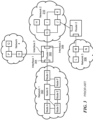
- FIG. 1 schematically shows a Node A directly connected to Node B via Link 1.
- each node has a unique network address to facilitate sending and receiving data.
- a network includes all the nodes addressable within the network according to the network's addressing scheme and all the links that interconnect the nodes for communication according to the network's addressing scheme.
- Nodes A-F and all the links 1-8 together make up a network 100.
- a network is depicted as a cloud or as being enclosed within a cloud. Absence of a cloud, however, does not mean a collection of nodes and links are not a network.
- a network may be formed by a plurality of smaller networks.
- Nodes can initiate communications with other nodes via the network, and nodes can receive communications initiated by other nodes via the network.
- a node may transmit/forward/send data (a message) to a directly connected (adjacent) node by sending the message via the link that interconnects the adjacent nodes.
- the message includes the network address of a sending node (the "source address") and the network address of an intended receiving node (the "destination address").
- a sending node can send a message to a non-adjacent node via one or more other intervening nodes.
- Node D may send a message to Node F via Node B.
- the node(s) between the source and the destination forward the message until the message reaches its destination. Accordingly, to operate properly, network protocols enable nodes to learn or discover network addresses of non-adjacent nodes in their network.
- Nodes communicate via networks according to protocols, such as the well-known Internet Protocol (IP) and Transmission Control Protocol (TCP).
- IP Internet Protocol
- TCP Transmission Control Protocol
- the protocols are typically implemented by layered software and/or hardware components, such as according to the well-known seven-layer Open System Interconnect (OSI) model.
- OSI Open System Interconnect
- IP operates at OSI Layer 3 (Network Layer)
- TCP and UDP operate largely at OSI Layer 4 (Transport Layer).
- OSI Layer 3 Network Layer
- TCP and UDP operate largely at OSI Layer 4 (Transport Layer).
- Each layer performs a logical function and abstracts the layer below it, therefore hiding details of the lower layer.
- a Layer 3 message may be fragmented into smaller Layer 2 packets if Layer 2 (Data Link Layer) cannot handle the Layer 3 message as one transmission.
- FIG. 2 schematically illustrates a large message 200 divided into several pieces 202, 204, 206, 208, 210 and 212. Each piece 202-212 may then be sent in a separate packet, exemplified by packet 214. Each packet includes a payload (body) portion, exemplified by payload 216, and a header portion, exemplified at 218.
- the header portion 218 contains information, such as the packet's source address, destination address and packet sequence number, necessary or desirable for: 1) routing the packet to its destination, 2) reassembling the packets of a message, and 3) other functions provided according to the protocol.
- a trailer portion is also appended to the payload, such as to carry a checksum of the payload or of the entire packet. All packets of a message need not be sent along the same path, i.e., through the same nodes, on their way to their common destination. It should be noted that although IP packets are officially called IP datagrams, they are commonly referred to simply as packets.
- TCP protocol can fragment Layer 4 (Transport Layer) messages into segments, officially referred to as TCP protocol data units (PDUs), if Layer 3 (Network Layer) cannot handle the Layer 4 (Transport Layer) message as one transmission.
- PDUs TCP protocol data units
- packet is used to refer to PDUs and datagrams, as well as Ethernet frames.
- a router is considered a Layer 3 device because its primary forwarding decision is based on the information in the Layer 3 IP packet-specifically the destination IP address.
- a conventional router does not look into the actual data contents (i.e., the encapsulated payload) that the packet carries. Instead, the router only looks at the Layer 3 addresses to make a forwarding decision, plus optionally other information in the header for hints, such as quality of service (QoS) requirements.
- QoS quality of service
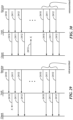
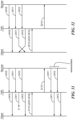
- the source client node 726 can acknowledge all three messages by transmitting a TCP ACK message (MSG 2413) with an acknowledgement of 251, indicating that the source client node 726 has now received 251 bytes from the destination service node 728 (i.e., MSG 2402, MSG 2406, MSG 2408, MSG 2410, MSG 2411, and MSG 2412).
- MSG 2413 TCP ACK message
- the destination service node 728 would at least infer that those packets were lost because it would not receive an acknowledgement for those packets. Therefore, the destination service node 728 typically would retransmit messages 2410-2412 after a predetermined time-out period.
- each of these AIPRs associated with the TCP session will (or at least should) receive all packets associated with the session in both directions, i.e., MSG 2401 - MSG 2413 and beyond.
- At least one of these AIPRs is a TCP augmented router (TAR).
- each TAR is configured to implement a bilateral TCP state machine for each TCP session, where the bilateral TCP state machine mirrors the TCP sequence numbering and windowing of the source client node (referred to in the following examples as "Node A") and the destination service node (referred to in the following examples as "Node B").
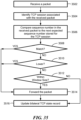
- the bilateral TCP state machine tracks the sequence numbers between the two parties in a TCP connection, as well as monitors the bytes sent between them. As packets arrive, the bilateral TCP state machine compares the sequence numbers that the host inserted to what the bilateral TCP state machine expects. If the sequence number in a packet is equal to the expected sequence number, then the bilateral TCP state machine forwards the packet.
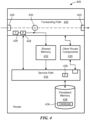
- the bilateral TCP state machine stores forward TCP state information and return TCP state information for each TCP bi-flow session.
- the bilateral TCP state machine stores forward TCP state information including information from which the bilateral TCP state machine can determine the next sequence number expected from Node A (ExpectedSeqA) and optionally also the highest acknowledgment sequence number received from Node B (HighestAckB) and also stores return TCP state information including information from which the bilateral TCP state machine can determine the next sequence number expected from Node B (ExpectedSeqB) and optionally also the highest acknowledgment sequence number received from Node A (HighestAckA).
- the bilateral TCP state machine uses such reference TCP sequence information to monitor the TCP bi-flow session, in combination with TCP sequence information received in TCP session packets.
- the bilateral TCP state machine also stores various statistical information (e.g., counters) for each direction of the bi-flow route, e.g., to track the number or rate of erroneous packets (e.g., dropped packets, duplicate packets, out-of-sequence packets, and/or out-of-window packets) encountered for each direction.
- FIG. 25 is a schematic diagram showing the contents of a bilateral TCP state record that is maintained as part of a bilateral TCP state database by the bilateral TCP state machine, in accordance with one exemplary embodiment.
- the bilateral TCP state record includes the forward TCP state information (e.g., HighestSeqA, HighestAckB, Forward Counters) and the return TCP state information (e.g., HighestSeqB, HighestAckA, Return Counters) as discussed above.
- the forward TCP state information e.g., HighestSeqA, HighestAckB, Forward Counters
- return TCP state information e.g., HighestSeqB, HighestAckA, Return Counters
- the HighestSeqA and HighestSeqB store the next expected sequence number (e.g., the sum of the sequence number and length from a given packet, as in the various examples provided below), although the HighestSeqA and HighestSeqB alternatively may store the sequence number and length from a given packet.
- the bilateral TCP state record may contain other information, such as, for example, a full or partial history of forward and return packets received for the TCP session, where such information could be used by the bilateral TCP state machine in characterizing various types of errors.
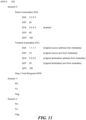
- the bilateral TCP state machine also may maintain TCP Session State and TCP Session Statistics in the bilateral TCP state record to monitor the state of the corresponding TCP session (e.g., initiated, established, or closed), as discussed below.
- the bilateral TCP state machine could determine that at least one packet (MSG 2411 in this example) was missing, because the TAR would expect to receive sequence number 151 in the next message from the destination service 728 following MSG 2410 but MSG 2412 includes sequence number 201. Furthermore, the bilateral TCP state machine can infer that the error occurred on the service side of the TCP session because the TAR had not previously received MSG 2410 and MSG 2412.
- the bilateral TCP state machine determines whether MSG 2412 is within the advertised window size for the TCP session, e.g., by comparing the sequence number in MSG 2412 to the next expected sequence number (i.e., ExpectedSeqB), and only forwards MSG 2412 if it is within the advertised window size for the TCP session; in alternative embodiments, the bilateral TCP state machine may forward MSG 2412 unconditionally.
- the bilateral TCP state machine may be configured to increment a counter (e.g., an error counter or a specific "lost packet" counter) associated with the return path and update the sequence number information as follows: ExpectedSeqA 11 HighestAckB 11 ExpectedSeqB 251 HighestAckA 101
- the client generally will not acknowledge receipt of MSG 2412 because the client has not received MSG 2411.
- MSG 2411 was lost prior to reaching the TAR, the destination service 728 will not receive acknowledgment of MSG 2411 and MSG 2412 and therefore will retransmit those packets after expiration of a predetermined timeout period.
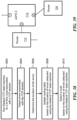
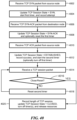
- TCP session states and statistics referred to in FIGs. 40-42 are for example only; embodiments are not limited to these or to any particular types of TCP session states and statistics. It also should be noted that the TCP session state and statistics may be recorded in the TCP Session State and TCP Session Statistics in the bilateral TCP state record described above with reference to FIG. 25 .
- the statistical information obtained from monitoring the status of TCP sessions can be used in combination with statistical information obtained from monitoring TCP sequence numbers, as discussed above, to provide a wide range of advanced network diagnostics and management functions including route management, bandwidth management, and quality of service management for TCP sessions.
- AIPRs are specially configured to perform "stateful" routing on packets associated with a given session between a source node and destination node, as discussed herein.
- routers may be referred to as waypoint routers. Stateful routing also is discussed in various related patent applications.
- all forward packets associated with a particular session are made to follow the same path through a given set of AIPRs on their way from the source client node 726 to the destination service node 728.
- all return packets associated with the session typically, but not necessarily, are made to traverse the same set of AIPRs in reverse order on their way from the destination service node 728 to the source client node 726 (which may be referred to herein as "bi-flow").
- the source client node 726 initiates a session with the destination service node 728.
- the source client node 726 may request a web page
- the destination service node 728 may include a web server.
- the source client node 726 may, for example, be part of a first local area network (LAN) (not shown) within a first corporation, and the LAN may be connected to the telecommunications carrier network 700 via a gateway router 730 operated by the corporation.
- the destination service node 728 may be operated by a second corporation, and it may be part of a second LAN (not shown) coupled to the network 706 of the second ISP via a gateway router 732 operated by the second corporation.
- This lead packet typically will include a source address equal to the IP address of the source client node 726 (i.e., 1.1.1.1), a destination address equal to the IP address of the destination service node 728 (i.e., 5.5.5.5), and various types of Transport Layer information including a source port number, a destination port number, and a protocol identifier.
- a source address equal to the IP address of the source client node 726 (i.e.1.1.1.1)
- a destination address equal to the IP address of the destination service node 728 (i.e., 5.5.5.5)
- Transport Layer information including a source port number, a destination port number, and a protocol identifier.
- FIG. 8 shows an exemplary lead packet 801 transmitted by the source client node 726.
- the lead packet 801 includes a source address (SA) of 1.1.1.1; a source port number (SP) of 10; a destination address (DA) of 5.5.5.5; a destination port number (DP) of 20; and a protocol identifier (PR) of 100.
- SA source address
- SP source port number
- DA destination address
- DP destination port number
- PR protocol identifier
- the lead packet 801 may be routed naturally and therefore, depending on various factors, the lead packet may or may not reach an AIPR on its way from the source node to the destination node. Thus, waypoints are not necessarily predetermined before the lead packet is transmitted by the source node.
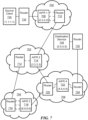
- a particular AIPR e.g., AIPR 1 708 in FIG. 7
- AIPR 1 708 automatically identifies the lead packet as being an initial packet of a new session (in this example, referred to as "Session X").
- AIPR 1 708 may use various techniques to identify the beginning of a session, as discussed in more detail below. For example, for a TCP/IP-based session, AIPR 1 708 may identify the beginning of the session based on the 5-tuple of information in the lead packet. AIPR 1 708 also determines that the lead packet 801 is not a modified lead packet containing session metadata.
- AIPR 1 708 accesses its routing information base to look up routing information based on the original destination address of 5.5.5.5 (e.g., outgoing interface and next node information). In this example, AIPR 1 708 identifies AIPR 2 714 as the next waypoint AIPR based on the original destination address of 5.5.5.5.
- AIPR 1 708 then assigns a source port number and a destination port number for outgoing packets associated with the session to permit more than 65,535 sessions to be supported concurrently (in this example, source port number 30 and destination port number 40) and stores the resulting 5-tuple as the Forward Association (FA) for outgoing packets associated with the session. This is shown in FIG. 9 as "Forward Association" information. Implicitly, the network address of AIPR 1 708 (i.e., 2.2.2.2) will be the source address for session-related packets forwarded over an outgoing interface.
- FA Forward Association
- AIPR 1 708 modifies the destination address in the lead packet to the IP address of AIPR 2 714 (i.e., 3.3.3.3). In this example, AIPR 1 708 also modifies the source address in the lead packet to its own IP address (i.e., 2.2.2.2) so that AIPR 2 714 can route return packets back to AIPR 1 708. Also in this example, AIPR 1 708 modifies the source port and destination port fields to the assigned values.
- AIPR 1 708 also modifies the lead packet to include a section of metadata including the original source address, destination address, source port, destination port, and protocol identifier from the original lead packet 801. As discussed below, this metadata is propagated to each successive AIPR on the path to allow each AIPR to maintain session information and also to allow the final AIPR on the path to restore the lead packet to its original form.
- AIPR 1 708 establishes and maintains various session parameters so that it can identify subsequent session packets and forward such session packets to AIPR 2 714 for stateful routing. AIPR 1 708 then transmits the modified lead packet 802 into the network toward AIPR 2 714 via the selected outgoing interface. In certain exemplary embodiments, AIPR 1 708 may establish a flow that associates the session with the incoming interface over which the lead packet 801 was received and the outgoing interface over which the modified lead packet 802 is forwarded.
- FIG. 8 shows an exemplary modified lead packet 802 transmitted by AIPR 1 708.
- the modified lead packet 802 includes the network address of AIPR 1 708 (i.e., 2.2.2.2) as the source address (SA), the assigned session source port number (SSP) of 30 as the source port number (SP), the network address of AIPR 2 714 (i.e., 3.3.3.3) as the destination address (DA), the assigned session destination port number (SDP) of 40 as the destination port number (DP), and the received protocol identifier of 100 as the protocol identifier (PR).
- AIPR 1 708 also includes the original source address (OSA) of 1.1.1.1, the original source port number (OSP) of 10, the original destination address (ODA) of 5.5.5.5, and the original destination port number (ODP) of 20 from the original lead packet 801 as metadata in the modified lead packet 802. This information is shown in parentheses to represent that it is metadata that has been added to the lead packet.
- OSA original source address
- OSP original source port number
- ODA original destination address
- ODP original destination port number
- FA Forward Association
- error location information produced from the bilateral TCP state machine can be used to enhance routing decisions when establishing a "stateful" routing session.
- each AIPR may run the bilateral TCP state machine for various TCP sessions on an ongoing basis and may store error location information produced therefrom.
- each AIPR may use the error location information when selecting the next waypoint AIPR for the stateful routing session.
- AIPR 2 714 may use error location information to choose between AIPR 3 718 and AIPR 4 722 as the next waypoint AIPR for the stateful routing session.
- AIPR 2 714 selected AIPR 4 722 as the next waypoint AIPR, although AIPR 2 714 alternatively may select AIPR 3 718 or some other AIPR (not shown) as the next waypoint if bilateral TCP session monitoring by AIPR 2 714 had detected excessive errors associated with TCP sessions routed through Router 720.
- AIPR 1 708 Based on the 5-tuple information contained in the received session packet 1201 and the Return Association stored in memory by AIPR 1 708, AIPR 1 708 is able to determine that the received session packet 1201 is associated with Session X. AIPR 1 708 forwards the packet according to the Forward Association information associated with Session X as shown in FIG. 9 . Specifically, the forwarded session packet 1202 transmitted by AIPR 1 708 has a source address (SA) of 2.2.2.2; a source port number of 30 (i.e., the SSP assigned by AIPR 1 708); a destination address of 3.3.3.3; a destination port number of 40 (i.e., the SDP assigned by AIPR 1 708); and a protocol identifier of 100.
- SA source address
- the session packet 1203 Since the forwarded session packet 1203 has a destination address of 4.4.4.4 (i.e., the network address of AIPR 4 722), the session packet 1203 is routed to AIPR 4 722. Based on the 5-tuple information contained in the received session packet 1203 and the Return Association stored in memory by AIPR 4 722, AIPR 4 722 is able to determine that the received session packet 1203 is associated with Session X. AIPR 4 722 forwards the packet according to the Forward Association information associated with Session X as shown in FIG. 11 .
- the forwarded session packet 1204 transmitted by AIPR 4 722 has a source address (SA) of 1.1.1.1 (i.e., the original source address); a source port number of 10 (i.e., the original SP); a destination address of 5.5.5.5 (i.e., the original destination address); a destination port number of 20 (i.e., the original DP); and a protocol identifier of 100.
- SA source address
- 10 source port number
- 5.5.5.5 i.e., the original destination address
- 20 i.e., the original DP
- protocol identifier 100.
- the forwarded session packet 1204 Since the forwarded session packet 1204 has a destination address of 5.5.5.5 (i.e., the network address of destination service node 728), the forwarded session packet 1204 is routed to the destination service node 728, which processes the packet.
- 5.5.5.5 i.e., the network address of destination service node 728
- AIPR 4 722 Based on the 5-tuple information contained in the received return packet 1301 and the Forward Association stored in memory by AIPR 4 722, AIPR 4 722 is able to determine that the received return packet 1301 is associated with Session X. AIPR 4 722 forwards the packet according to the Return Association information associated with Session X as shown in FIG. 11 .
- the forwarded return packet 1302 transmitted by AIPR 4 722 has a source address (SA) of 4.4.4.4; a source port number of 60 (i.e., the SDP assigned by AIPR 2 714); a destination address of 3.3.3.3; a destination port number of 50 (i.e., the SSP assigned by AIPR 2 714); and a protocol identifier of 100.
- SA source address
- the return packet 1302 Since the forwarded return packet 1302 has a destination address of 3.3.3.3 (i.e., the network address of AIPR 2 714), the return packet 1302 is routed to AIPR 2 714. Based on the 5-tuple information contained in the received return packet 1302 and the Forward Association stored in memory by AIPR 2 714, AIPR 2 714 is able to determine that the received return packet 1302 is associated with Session X. AIPR 2 714 forwards the packet according to the Return Association information associated with Session X as shown in FIG. 10 .
- the forwarded return packet 1303 transmitted by AIPR 2 714 has a source address (SA) of 3.3.3.3; a source port number of 40 (i.e., the SDP assigned by AIPR 1 708); a destination address of 2.2.2.2; a destination port number of 30 (i.e., the SSP assigned by AIPR 1 708); and a protocol identifier of 100.
- SA source address
- 40 source port number
- 2.2.2.2 i.e., the SDP assigned by AIPR 1 708
- a destination address of 2.2.2.2 i.e., the SSP assigned by AIPR 1 708
- a protocol identifier of 100.
- the return packet 1303 Since the forwarded return packet 1303 has a destination address of 2.2.2.2 (i.e., the network address of AIPR 1 708), the return packet 1303 is routed to AIPR 1 708. Based on the 5-tuple information contained in the received return packet 1303 and the Forward Association stored in memory by AIPR 1 708, AIPR 1 708 is able to determine that the received return packet 1303 is associated with Session X. AIPR 1 708 forwards the packet according to the Return Association information associated with Session X as shown in FIG. 9 .
- the forwarded return packet 1304 transmitted by AIPR 1 708 has a source address (SA) of 5.5.5.5; a source port number of 20 (i.e., the original DP); a destination address of 1.1.1.1; a destination port number of 10 (i.e., the original SP); and a protocol identifier of 100.
- SA source address
- 20 i.e., the original DP
- destination address 1.1.1.1
- destination port number of 10 i.e., the original SP
- protocol identifier 100.
- the forwarded return packet 1304 Since the forwarded return packet 1304 has a destination address of 1.1.1.1 (i.e., the network address of source client node 726), the forwarded return packet 1304 is routed to the source client node 726, which processes the packet.
- 1.1.1.1 i.e., the network address of source client node 726
- an AIPR can assign source and destination port numbers in any of a variety of ways (e.g., sequentially, non-sequentially, randomly).
- FIG. 14 is a flowchart schematically illustrating some lead packet processing operations performed by an intermediate AIPR, in accordance with one exemplary embodiment.
- an intermediate AIPR obtains the lead packet of a session.
- the AIPR stores 5-tuple information from the received packet as Return Association information for the session.
- the AIPR determines the next waypoint AIPR based on the original destination address. This typically involves accessing the AIPR's routing information base from which the AIPR can determine the outgoing port and next waypoint AIPR (if any) for the original destination address.
- the AIPR assigns a session source port number and a session destination port number.
- the AIPR stores 5-tuple information for a Forward Association.
- the Forward Association includes the AIPR's network address as the source address, the next node address as the destination address, the assigned session source and destination port numbers, and the original protocol identifier.
- the AIPR creates a modified lead packet including the AIPR network address as the source address, the next node address as the destination address, the assigned session source and destination port numbers, and the original protocol identifier, and also including the original source and destination addresses and the original source and destination port numbers as metadata.
- the AIPR forwards the modified lead packet.
- the flowchart of FIG. 14 applies to intermediate AIPRs other than the final waypoint AIPR, which performs slightly different processing as discussed above (e.g., the final waypoint AIPR uses the original source address, original source port number, original destination address, and original destination port number contained in the metadata of the received packet for its Forward Association information).
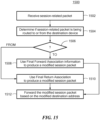
- FIG. 15 is a flowchart 1500 schematically illustrating some packet processing operations performed by an AIPR, in accordance with one exemplary embodiment.
- the AIPR receives a session-related packet.
- the AIPR determines if the session-related packet is being routed to or from the destination device. If the session-related packet is being routed to the destination device in block 1506, then the AIPR uses the Final Forward Association information to produce a modified session packet, in block 1508. If, however, the session-related packet is being routed from the destination device in block 1506, then the AIPR uses the Final Return Association information to produce a modified session packet, in block 1510. In either case, the AIPR forwards the modified session packet based on the modified destination address, in block 1512.
- Stateful routing can be accomplished without presuming that each AIPR has a priori knowledge of the other AIPRs in the network in relation to the network/next hop associations contained in its routing information base. For example, a particular AIPR may not know the next waypoint AIPR (if any) to use for the destination network address. Rather, each waypoint AIPR can determine the presence or absence of a next waypoint AIPR after forwarding a modified lead packet.
- AIPR 1 708 To forward a modified lead packet, AIPR 1 708 does not know whether or not there is a next hop AIPR through which the modified lead packet will traverse. Therefore, rather than changing both the source address field and the destination address field in the lead packet, AIPR 1 708 may change just the source address field to be the network address of AIPR 1 708 (i.e., 2.2.2.2) and may insert any assigned source and destination port numbers as metadata rather than inserting the assigned source and destination port numbers in the source and destination port number fields of the modified lead packet and carrying the original source and destination port numbers as metadata as in the exemplary embodiment discussed above.
- AIPR 1 708 may change just the source address field to be the network address of AIPR 1 708 (i.e., 2.2.2.2) and may insert any assigned source and destination port numbers as metadata rather than inserting the assigned source and destination port numbers in the source and destination port number fields of the modified lead packet and carrying the original source and destination port numbers as metadata as in the exemplary embodiment discussed above.
- AIPR 4 722 may change just the source address field to be the network address of AIPR 4 722 (i.e., 4.4.4.4) and may insert any assigned source and destination port numbers as metadata rather than inserting the assigned source and destination port numbers in the source and destination port number fields of the modified lead packet and carrying the original source and destination port numbers as metadata as in the exemplary embodiment discussed above.
- the waypoint may use a timer. After a predetermined amount of time, during which no packet is handled for a session, the waypoint may assume the session is ended. Such a timeout period may also be applied to sessions using protocols that define end sequences.
- Protocol Destination Port Technique for Start/End Determination TCP Any Detect start on the first SYN packet from a new address/port unique within the TCP protocol's guard time between address/port reuse. Following the TCP state machine to determine an end (FIN exchange, RST, or guard timeout).
- UDP-TFTP 69 Trap on the first RRQ or WRQ message to define a new session, trap on an undersized DAT packet for an end of session.
- UDP-SNMP 161, 162 Trap on the message type, including GetRequest, SetRequest, GetNextRequest, GetBulkRequest, InformRequest for a start of session, and monitor the Response for end of session.
- port 162 is used, and the flow of data generally travels in the "reverse" direction.
- UDP-SYSLOG 514 A single message protocol, thus each message is a start of session, and end of session.
- UDP-RTP Any RTP has a unique header structure, which can be reviewed/analyzed to identify a start of a session. This is not always accurate, but if used in combination with a guard timer on the exact same five-tuple address, it should work well enough.
- Each RTCP packet is sent periodically and can be considered a "start of session" with the corresponding RTCP response ending the session. This provides a very high quality way of getting analytics for RTCP at a network middle point, without using a Session Border Controller.
- UDP-DNS (Nameserver) 53 Each DNS query is a single UDP message and response. By establishing a forward session (and subsequent backward session) the Augmented router gets the entire transaction. This allows analytics to be gathered and manipulations that are appropriate at the Augmented router.
- UDP-NTP 123 Each DNS query/response is a full session. So, each query is a start, and each response is an end.
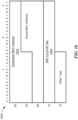
- FIG 16 is a schematic layout of an Ethernet header 1600, including a Destination MAC Address 1602 and an 802.1q VLAN Tag 1604.
- FIG. 17 is a schematic layout of an IPv4 header 1700, including a Protocol field 1702, a Source IP Address 1704 and a Destination IP Address 1706.
- IPv4 IP version 4
- IPv6 IP version 6
- IPv4 IP version 4
- IPv6 IP version 6
- IPv4 IP version 4
- IPv6 IP version 6
- the main purpose of both versions is to provide unique global computer addressing to ensure that communicating devices can identify one another.
- IPv4 and IPv6 is that IPv4 uses 32-bit IP addresses, whereas IPv6 utilizes 128 bit IP addresses.
- IPv6 can support larger datagram sizes.
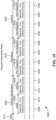
- FIG. 18 is a schematic layout of a TCP header 1800, including a Source Port 1802, a Destination Port 1804, a Sequence Number 1806, a SYN flag 1808 and a FIN flag 1810.
- TCP is described generally in IETF RFC 793, which is hereby incorporated herein by reference in its entirety.
- the UDP header includes a Source Port field and a Destination Port field.
- UDP is described generally in IETF RFC 768, which is hereby incorporated herein by reference in its entirety.
- Protocol IP Header This defines the protocol in use and, for the TCP case, it must be set to a value that corresponds to TCP
- Source IP Address IP Header Defines the source IP Address of the initial packet of a flow.
- Destination IP Address IP Header Defines the destination IP Address of the initial packet of a flow.
- Source Port TCP or UDP Header Defines the flow instance from the source.
- This may reflect a client, a firewall in front of the client, or a carrier grade NAT.
- Destination Port TCP or UDP Header This defines the desired service requested, such as 80 for HTTP.
- Sequence Number TCP Header This is a random number assigned by the client. It may be updated by a firewall or carrier grade NAT.
- SYN Bit On TCP Header When the SYN bit is on, and no others, this is an initial packet of a session. It may be retransmitted if there is no response to the first SYN message.
- the lead packet, and hence the session identifying information can include information from a single field or can include information from multiple fields.
- sessions are based on a "5-tuple" of information including the source IP address, source port number, destination IP address, destination port number, and protocol from the IP and TCP headers.
- the AIPR when a first packet for a new session arrives at an AIPR on a given ingress interface, the AIPR establishes a stateful routing session for routing forward and return session packets.
- the AIPR In order to establish a bi-flow route, the AIPR typically establishes the session such that return session packets will be forwarded back over the ingress interface used for forward session packets such that both forward session packets and return session packets associated with the session traverse the same set of AIPRs.
- the AIPR will only establish the bi-flow route if the ingress interface is suitable for use in forwarding return session packets, for example, as described in 4094/1021.
- determining whether the ingress interface is suitable for the return path includes first determining if the routing information base includes a valid route for the return path and, if so, determining whether the next hop on the return path is associated with the ingress interface. If there is a valid route for the return path and the next hop for the route is associated with the ingress interface, then the ingress interface is deemed to be suitable for the return path; otherwise the ingress interface is deemed to be not suitable for the return path.
- the AIPR may determine whether the ingress interface can provide that level of performance for return packets. If the ingress interface is suitable for the return path, then the AIPR may continue to establish the bi-flow routing session using the ingress port for the return path. If the ingress interface is not suitable for the return path, then the AIPR may drop the session (e.g., by either sending back a session rejection message or sending back no reply message).
- a certain level of performance e.g., bandwidth, error rate, latency, etc.
- Such modification of the bi-flow route may involve AIPR 2 714 selecting a new router interface for the TCP session (i.e., the interface to Router 712) and then modifying the flows associated with the TCP session to utilize the new router interface and propagate the modification to AIPR 3 718 and AIPR 4 722.
- FIG. 39 shows an enlarged section of FIG. 7 focusing on AIPR 2 714.
- AIPR 2 714 Prior to any bi-flow route modification, the bi-flow session between the source client node 726 and the destination service node 728 traverses AIPR 2 714 via interfaces 1 and 2.
- AIPR 2 714 typically has forward and return flows between interface 1 (the "ingress” interface for packets sent by the source node to the destination node) and interface 2 (the "egress” interface for packets sent by the source node to the destination node).
- each AIPR maintains a flow configuration information record for each flow that it manages, where each flow is associated with a session.
- AIPR 2 714 maintains a flow configuration information record for the flows between interfaces 1 and 2 for the session.
- the flow configuration information record generally allows for bi-directional packet forwarding within the router.
- the flow configuration information record maintained by AIPR 2 714 may associate or map egress interface 2 with session packets received over ingress interface 1 and may associate or map ingress interface 1 with return session packets received over egress interface 2.
- the flow configuration information record for a packet received on an interface can be found using a set of information including session information associated with the packet (e.g., the 5-tuple information associated with the packet) plus a VLAN identifier and interface identifier (i.e., the "7-tuple").
- the AIPR 1900 receives the return packet via the second interface 1904. If another AIPR (downstream AIPR) between the present AIPR 1900 and the destination service handles the lead packet and the return packet, the downstream AIPR modifies the return packet to include the downstream AIPR's network address and a port number.
- a downstream controller 1916 identifier uses stateful inspection, as described herein, to identify the return packet.
- the downstream controller 1916 stores information 2034 ( Figure 20 ), specifically the network address and port number, about the next AIPR in the waypoint information base 2000. The present AIPR 1900 may use this information to address subsequent packets to the next AIPR.
Landscapes
- Engineering & Computer Science (AREA)
- Computer Networks & Wireless Communication (AREA)
- Signal Processing (AREA)
- Computer Security & Cryptography (AREA)
- Library & Information Science (AREA)
- Data Exchanges In Wide-Area Networks (AREA)
Claims (15)
- Verfahren, umfassend:Erstellen, durch eine Verarbeitungsschaltungsanordnung eines Routers und in einer Bilateral-TCP-Zustand-Datenbank des Routers, einer Bilateral-TCP-Zustand-Aufzeichnung für eine TCP-Bi-Flow-Sitzung, wobei die Bilateral-TCP-Zustand-Aufzeichnung Referenz-TCP-Sequenzinformationen für die TCP-Bi-Flow-Sitzung und statistische Informationen bezüglich durch die Bilateral-TCP-Zustandsmaschine detektierten TCP-Fehlern beinhaltet, und wobei die TCP-Bi-Flow-Sitzung einen Vorwärtspaketfluss und einen Rückkehrpaketfluss umfasst; Empfangen, durch die Verarbeitungsschaltungsanordnung und über eine erste Netzwerkschnittstelle des Routers, von Paketen des Vorwärtspaketflusses;Empfangen, durch die Verarbeitungsschaltungsanordnung und über eine zweite Netzwerkschnittstelle des Routers, von Paketen des Rückkehrpaketflusses;Überwachen der TCP-Bi-Flow-Sitzung, wobei das Überwachen Detektieren, durch die Verarbeitungsschaltungsanordnung und basierend auf (1) empfangenen TCP-Sequenzinformationen von sowohl den empfangenen Paketen des Vorwärtspaketflusses als auch von den empfangenen Paketen des Rückkehrpaketflusses und (2) den Referenz-TCP-Sequenzinformationen der Bilateral-TCP-Zustand-Aufzeichnung für die TCP-Bi-Flow-Sitzung, eines oder mehrerer TCP-Fehler beinhaltet; unddadurch gekennzeichnet, dass es ferner Folgendes umfasst:
derartiges Rekonfigurieren, durch die Verarbeitungsschaltungsanordnung und basierend auf dem Detektieren des einen oder der mehreren TCP-Fehler, der TCP-Bi-Flow-Sitzung, dass die Verarbeitungsschaltungsanordnung über eine dritte Netzwerkschnittstelle des Routers entweder nachfolgende Pakete des Vorwärtspaketflusses oder nachfolgende Pakete des Rückkehrpaketflusses empfängt, wobei sich die dritte Netzwerkschnittstelle von der ersten Netzwerkschnittstelle und der zweiten Netzwerkschnittstelle unterscheidet. - Verfahren nach Anspruch 1, wobei das Rekonfigurieren derartiges Rekonfigurieren der TCP-Bi-Flow-Sitzung umfasst, dass die Verarbeitungsschaltungsanordnung über die dritte Netzwerkschnittstelle nachfolgende Pakete des Vorwärtspaketflusses empfängt.
- Verfahren nach Anspruch 1, wobei das Rekonfigurieren derartiges Rekonfigurieren der TCP-Bi-Flow-Sitzung umfasst, dass die Verarbeitungsschaltungsanordnung über die dritte Netzwerkschnittstelle nachfolgende Pakete des Rückkehrpaketflusses empfängt.
- Verfahren nach einem der Ansprüche 1 bis 3, wobei das Rekonfigurieren darauf basiert, dass detektiert wird, dass der eine oder die mehreren TCP-Fehler eine vorbestimmte Schwelle überschreiten.
- Verfahren nach einem der Ansprüche 1 bis 4, wobei das Rekonfigurieren darauf basiert, dass detektiert wird, dass eine Rate des einen oder der mehreren TCP-Fehler eine vorbestimmte Schwelle überschreiten.
- Verfahren nach einem der Ansprüche 1 bis 5, wobei das Detektieren des einen oder der mehreren TCP-Fehler auf dem Bestimmen basiert, dass sich eine TCP-Sequenznummer der empfangenen TCP-Sequenzinformationen von sowohl den empfangenen Paketen des Vorwärtspaketflusses als auch den empfangenen Paketen des Rückkehrpaketflusses von einer nächsten TCP-Sequenznummer unterscheidet, die basierend auf den Referenz-TCP-Sequenzinformationen der Bilateral-TCP-Zustand-Aufzeichnung für die TCP-Bi-Flow-Sitzung erwartet wird.
- Verfahren nach einem der Ansprüche 1 bis 6, wobei das Detektieren des einen oder der mehreren TCP-Fehler Detektieren eines oder mehrerer der Folgenden umfasst:eines verworfenen Pakets des Vorwärtspaketflusses oder des Rückkehrpaketflusses;eines duplizierten Pakets des Vorwärtspaketflusses oder des Rückkehrpaketflusses;eines Paket außerhalb der Sequenz des Vorwärtspaketflusses oder des Rückkehrpaketflusses; oder eines Paket außerhalb des Fensters des Vorwärtspaketflusses oder des Rückkehrpaketflusses.
- Verfahren nach einem der Ansprüche 1 bis 7, ferner umfassend Bestimmen, durch die Verarbeitungsschaltungsanordnung und basierend auf (1) den empfangenen TCP-Sequenzinformationen von sowohl den empfangenen Paketen des Vorwärtspaketflusses als auch von den empfangenen Paketen des Rückkehrpaketflusses und (2) den Referenz-TCP-Sequenzinformationen der Bilateral-TCP-Zustand-Aufzeichnung für die TCP-Bi-Flow-Sitzung, eines Orts des einen oder der mehreren TCP-Fehler.
- Verfahren nach Anspruch 8, wobei das Bestimmen des Ortes des einen oder der mehreren TCP-Fehler Bestimmen umfasst, dass der eine oder die mehreren TCP-Fehler auf einem Vorwärtspfad des Vorwärtspaketflusses der TCP-Bi-Flow-Sitzung auftreten.
- Verfahren nach Anspruch 8, wobei das Bestimmen des Ortes des einen oder der mehreren TCP-Fehler Bestimmen umfasst, dass der eine oder die mehreren TCP-Fehler auf einem Rückkehrpfad des Rückkehrpaketflusses der TCP-Bi-Flow-Sitzung auftreten.
- Verfahren nach einem der Ansprüche 8 bis 10, ferner umfassend Aktualisieren, durch die Verarbeitungsschaltungsanordnung und basierend auf dem Ort des einen oder der mehreren TCP-Fehler, einer Routingtabelle des Routers, wobei die Routingtabelle Informationen zum Weiterleiten der Pakete des Vorwärtspaketflusses und/oder der Pakete des Rückkehrpaketflusses umfasst.
- Verfahren nach einem der Ansprüche 8 bis 10, ferner umfassend Auswählen, durch die Verarbeitungsschaltungsanordnung und basierend auf dem Ort des einen oder der mehreren TCP-Fehler, einer Route für die nachfolgenden Pakete des Vorwärtspaketflusses und/oder die nachfolgenden Pakete des Rückkehrpaketflusses.
- Router, der Folgendes umfasst:eine Bilateral-TCP-Zustand-Datenbank;eine erste Netzwerkschnittstelle;eine zweite Netzwerkschnittstelle;eine dritte Netzwerkschnittstelle, wobei sich die dritte Netzwerkschnittstelle von der ersten Netzwerkschnittstelle und der zweiten Netzwerkschnittstelle unterscheidet; undeine Verarbeitungsschaltungsanordnung, die zu Folgendem ausgelegt ist:Erstellen, in der Bilateral-TCP-Zustand-Datenbank, einer Bilateral-TCP-Zustand-Aufzeichnung für eine TCP-Bi-Flow-Sitzung, wobei die Bilateral-TCP-Zustand-Aufzeichnung Referenz-TCP-Sequenzinformationen für die TCP-Bi-Flow-Sitzung und statistische Informationen bezüglich durch die Bilateral-TCP-Zustandsmaschine detektierten TCP-Fehlern beinhaltet, und wobei die TCP-Bi-Flow-Sitzung einen Vorwärtspaketfluss und einen Rückkehrpaketfluss umfasst;Empfangen, über die erste Netzwerkschnittstelle, von Paketen des Vorwärtspaketflusses;Empfangen, über die zweite Netzwerkschnittstelle, von Paketen des Rückkehrpaketflusses;Überwachen der TCP-Bi-Flow-Sitzung zum Detektieren, basierend auf (1) empfangenen TCP-Sequenzinformationen von sowohl den empfangenen Paketen des Vorwärtspaketflusses als auch von den empfangenen Paketen des Rückkehrpaketflusses und (2) den Referenz-TCP-Sequenzinformationen der Bilateral-TCP-Zustand-Aufzeichnung für die TCP-Bi-Flow-Sitzung, eines oder mehrerer TCP-Fehler; unddadurch gekennzeichnet, dass die Verarbeitungsschaltungsanordnung ferner zu Folgendem ausgelegt ist:
derartiges Rekonfigurieren, basierend auf dem Detektieren des einen oder der mehreren TCP-Fehler, der TCP-Bi-Flow-Sitzung, dass die Verarbeitungsschaltungsanordnung über die dritte Netzwerkschnittstelle entweder nachfolgende Pakete des Vorwärtspaketflusses oder nachfolgende Pakete des Rückkehrpaketflusses empfängt. - Router nach Anspruch 11, der zum Durchführen des Verfahrens nach einem der Ansprüche 1 bis 12 ausgelegt ist.
- Computerprogrammprodukt, das Anweisungen umfasst, um zu bewirken, dass ein oder mehrere programmierbare Prozessoren das Verfahren nach einem der Ansprüche 1 bis 12 durchführen.
Applications Claiming Priority (3)
| Application Number | Priority Date | Filing Date | Title |
|---|---|---|---|
| US15/283,946 US9985872B2 (en) | 2016-10-03 | 2016-10-03 | Router with bilateral TCP session monitoring |
| PCT/US2017/052997 WO2018067328A1 (en) | 2016-10-03 | 2017-09-22 | Router with bilateral tcp session monitoring |
| EP17858900.8A EP3520267B1 (de) | 2016-10-03 | 2017-09-22 | Router mit doppelseitiger tcp-sitzungsüberwachung |
Related Parent Applications (1)
| Application Number | Title | Priority Date | Filing Date |
|---|---|---|---|
| EP17858900.8A Division EP3520267B1 (de) | 2016-10-03 | 2017-09-22 | Router mit doppelseitiger tcp-sitzungsüberwachung |
Publications (2)
| Publication Number | Publication Date |
|---|---|
| EP4030729A1 EP4030729A1 (de) | 2022-07-20 |
| EP4030729B1 true EP4030729B1 (de) | 2025-07-09 |
Family
ID=61759117
Family Applications (2)
| Application Number | Title | Priority Date | Filing Date |
|---|---|---|---|
| EP17858900.8A Active EP3520267B1 (de) | 2016-10-03 | 2017-09-22 | Router mit doppelseitiger tcp-sitzungsüberwachung |
| EP22158329.7A Active EP4030729B1 (de) | 2016-10-03 | 2017-09-22 | Router mit doppelseitiger tcp-sitzungsüberwachung |
Family Applications Before (1)
| Application Number | Title | Priority Date | Filing Date |
|---|---|---|---|
| EP17858900.8A Active EP3520267B1 (de) | 2016-10-03 | 2017-09-22 | Router mit doppelseitiger tcp-sitzungsüberwachung |
Country Status (3)
| Country | Link |
|---|---|
| US (1) | US9985872B2 (de) |
| EP (2) | EP3520267B1 (de) |
| WO (1) | WO2018067328A1 (de) |
Families Citing this family (39)
| Publication number | Priority date | Publication date | Assignee | Title |
|---|---|---|---|---|
| US9461931B1 (en) * | 2014-03-03 | 2016-10-04 | Sonus Networks, Inc. | Methods and apparatus for preventing head of line blocking for RTP over TCP |
| US9977853B2 (en) | 2015-11-04 | 2018-05-22 | Chronos Tech Llc | Application specific integrated circuit link |
| US11550982B2 (en) | 2015-11-04 | 2023-01-10 | Chronos Tech Llc | Application specific integrated circuit interconnect |
| US10073939B2 (en) | 2015-11-04 | 2018-09-11 | Chronos Tech Llc | System and method for application specific integrated circuit design |
| US10181939B2 (en) | 2016-07-08 | 2019-01-15 | Chronos Tech Llc | Systems and methods for the design and implementation of an input and output ports for circuit design |
| US11546266B2 (en) * | 2016-12-15 | 2023-01-03 | Arbor Networks, Inc. | Correlating discarded network traffic with network policy events through augmented flow |
| US20180375762A1 (en) * | 2017-06-21 | 2018-12-27 | Microsoft Technology Licensing, Llc | System and method for limiting access to cloud-based resources including transmission between l3 and l7 layers using ipv6 packet with embedded ipv4 addresses and metadata |
| US11625267B2 (en) * | 2017-08-02 | 2023-04-11 | Felica Networks, Inc. | Information processing apparatus and information processing method for changing contents of a process to be performed after an interrupt is detected |
| US10637592B2 (en) * | 2017-08-04 | 2020-04-28 | Chronos Tech Llc | System and methods for measuring performance of an application specific integrated circuit interconnect |
| CN113839871B (zh) | 2017-09-25 | 2024-10-22 | 华为技术有限公司 | 一种报文转发的方法及网络设备 |
| US20190253341A1 (en) | 2018-02-15 | 2019-08-15 | 128 Technology, Inc. | Service Related Routing Method and Apparatus |
| JP7047441B2 (ja) * | 2018-02-15 | 2022-04-05 | 日本電信電話株式会社 | 情報収集方法 |
| US10153978B1 (en) * | 2018-05-04 | 2018-12-11 | Nefeli Networks, Inc. | Distributed anticipatory bidirectional packet steering for software network functions |
| CN112154628B (zh) * | 2018-05-17 | 2022-10-14 | 瑞典爱立信有限公司 | 拆除经过通信网络的标签交换路径 |
| US10579469B2 (en) * | 2018-05-25 | 2020-03-03 | Arm Limited | Interconnection network for integrated circuit |
| CN112753198B (zh) * | 2018-09-30 | 2022-04-05 | 华为技术有限公司 | 在网络中的负载均衡和报文重排序方法及装置 |
| JP6800933B2 (ja) * | 2018-10-11 | 2020-12-16 | 株式会社ソニー・インタラクティブエンタテインメント | ネットワーク評価装置、評価方法およびプログラム |
| US11223567B2 (en) * | 2019-01-18 | 2022-01-11 | Cisco Technology, Inc. | Transmission control protocol session mobility |
| US11087057B1 (en) | 2019-03-22 | 2021-08-10 | Chronos Tech Llc | System and method for application specific integrated circuit design related application information including a double nature arc abstraction |
| US10999182B2 (en) | 2019-05-13 | 2021-05-04 | 128 Technology, Inc. | Routing using segment-based metrics |
| US11153202B2 (en) | 2019-05-13 | 2021-10-19 | 128 Technology, Inc. | Service and topology exchange protocol |
| US11329912B2 (en) | 2019-05-13 | 2022-05-10 | 128 Technology, Inc. | Source-based routing |
| US12137045B2 (en) | 2019-05-13 | 2024-11-05 | Juniper Networks, Inc. | Metric-based multi-hop path selection |
| CN112242935B (zh) * | 2019-07-19 | 2022-05-10 | 腾讯科技(深圳)有限公司 | 获取tcp状态信息的方法、装置、设备及存储介质 |
| CN115428411B (zh) * | 2020-04-23 | 2024-05-28 | 瞻博网络公司 | 使用会话建立度量的会话监测 |
| EP4241405A4 (de) * | 2020-11-05 | 2024-10-16 | Qualcomm Incorporated | Techniken zur wiederherstellung aus einem datenstillstand mit doppelter konnektivität |
| US12278762B2 (en) * | 2020-11-23 | 2025-04-15 | Pensando Systems Inc. | Systems and methods to prevent packet reordering when establishing a flow entry |
| EP4293977A4 (de) * | 2021-03-17 | 2024-04-03 | Huawei Technologies Co., Ltd. | Vorrichtung und verfahren zur handhabung von netzwerknachrichten und elektronische vorrichtung |
| US11477288B1 (en) * | 2021-05-18 | 2022-10-18 | Juniper Networks, Inc. | High availability for streaming telemetry |
| US11552883B1 (en) * | 2021-09-29 | 2023-01-10 | Juniper Networks, Inc. | Session establishment using path change |
| CN115914079A (zh) * | 2021-09-30 | 2023-04-04 | 瞻博网络公司 | 基于度量的多跳路径选择 |
| CN113612612A (zh) * | 2021-09-30 | 2021-11-05 | 阿里云计算有限公司 | 一种数据加密传输方法、系统、设备及存储介质 |
| US12069025B2 (en) * | 2021-12-22 | 2024-08-20 | Palo Alto Networks, Inc. | Networking and security split architecture |
| CN116366704A (zh) * | 2021-12-23 | 2023-06-30 | 中国电信股份有限公司 | 双向转发检测会话的控制方法、系统和交互端 |
| US20230291673A1 (en) * | 2022-02-27 | 2023-09-14 | Arris Enterprises Llc | Quadrant-based latency and jitter measurement |
| US20230283404A1 (en) * | 2022-02-27 | 2023-09-07 | Arris Enterprises Llc | Quadrant-based fault detection and location |
| US12020035B2 (en) * | 2022-03-10 | 2024-06-25 | Nvidia Corporation | Programmatically controlled data multicasting across multiple compute engines |
| CN117596014B (zh) * | 2023-10-18 | 2024-12-13 | 北京火山引擎科技有限公司 | 数据处理方法、装置、设备及存储介质 |
| US20250220075A1 (en) * | 2024-01-02 | 2025-07-03 | runZero, Inc. | TCP Service Discovery for Stateful Inline Network Devices |
Family Cites Families (92)
| Publication number | Priority date | Publication date | Assignee | Title |
|---|---|---|---|---|
| US5754754A (en) | 1995-07-26 | 1998-05-19 | International Business Machines Corporation | Transmission order based selective repeat data transmission error recovery system and method |
| US7466703B1 (en) | 1998-05-01 | 2008-12-16 | Alcatel-Lucent Usa Inc. | Scalable high speed router apparatus |
| US6515963B1 (en) | 1999-01-27 | 2003-02-04 | Cisco Technology, Inc. | Per-flow dynamic buffer management |
| US6721334B1 (en) | 1999-02-18 | 2004-04-13 | 3Com Corporation | Method and apparatus for packet aggregation in packet-based network |
| US6798743B1 (en) | 1999-03-22 | 2004-09-28 | Cisco Technology, Inc. | Packet prioritization processing technique for routing traffic in a packet-switched computer network |
| US6563824B1 (en) | 1999-04-20 | 2003-05-13 | 3Com Corporation | Apparatus and methods for determining the correct workstation within a LAN for a LAN modem to route a packet |
| US6584071B1 (en) | 1999-08-03 | 2003-06-24 | Lucent Technologies Inc. | Routing with service level guarantees between ingress-egress points in a packet network |
| US7035214B1 (en) | 1999-09-28 | 2006-04-25 | Nortel Networks Limited | System and method for a negative acknowledgement-based transmission control protocol |
| US6778531B1 (en) | 1999-11-04 | 2004-08-17 | Lucent Technologies Inc. | Multicast routing with service-level guarantees between ingress egress-points in a packet network |
| JP3349490B2 (ja) | 2000-02-14 | 2002-11-25 | インターナショナル・ビジネス・マシーンズ・コーポレーション | 画像表示方法、画像表示システム、ホスト装置、画像表示装置、およびディスプレイ用インターフェイス |
| JP2001285400A (ja) * | 2000-03-29 | 2001-10-12 | Kddi Corp | トラヒック統計情報収集方法 |
| TW480858B (en) | 2000-06-15 | 2002-03-21 | Nat Science Council | Expandability design of QoS route and transfer |
| AU2002211560A1 (en) | 2000-10-12 | 2002-04-22 | Signafor, Inc. | Advanced switching mechanism for providing high-speed communications with high quality of service |
| US7218632B1 (en) | 2000-12-06 | 2007-05-15 | Cisco Technology, Inc. | Packet processing engine architecture |
| US7161906B2 (en) | 2000-12-15 | 2007-01-09 | Agere Systems Inc. | Three-stage switch fabric with input device features |
| US20020176363A1 (en) | 2001-05-08 | 2002-11-28 | Sanja Durinovic-Johri | Method for load balancing in routers of a network using overflow paths |
| US7020143B2 (en) | 2001-06-18 | 2006-03-28 | Ericsson Inc. | System for and method of differentiated queuing in a routing system |
| US7106739B2 (en) | 2001-06-27 | 2006-09-12 | Intel Corporation | Method enabling network address translation of incoming session initiation protocol connections based on dynamic host configuration protocol address assignments |
| DE60125554T2 (de) | 2001-11-19 | 2007-10-04 | Motorola, Inc., Schaumburg | Verfahren zur Optimierung der Wegeauswahl in einem Paketnetz |
| US20030214938A1 (en) | 2002-03-21 | 2003-11-20 | Jindal Deepak Kumar | Method for routing of label switched paths (LSPS) through an internet supporting multi-protocol label switching (MPLS) technology |
| US7315541B1 (en) | 2002-04-03 | 2008-01-01 | Cisco Technology, Inc. | Methods and apparatus for routing a content request |
| US7804785B2 (en) | 2002-04-19 | 2010-09-28 | Avaya Inc. | Network system having an instructional sequence for performing packet processing and optimizing the packet processing |
| US7536720B2 (en) | 2002-05-07 | 2009-05-19 | Nortel Networks Limited | Method and apparatus for accelerating CPE-based VPN transmissions over a wireless network |
| US7313141B2 (en) | 2002-10-09 | 2007-12-25 | Alcatel Lucent | Packet sequence number network monitoring system |
| US7154902B1 (en) | 2002-10-21 | 2006-12-26 | Force10 Networks, Inc. | Epoch-based packet switching |
| US7574738B2 (en) | 2002-11-06 | 2009-08-11 | At&T Intellectual Property Ii, L.P. | Virtual private network crossovers based on certificates |
| DE50301796D1 (de) | 2002-11-25 | 2006-01-05 | Siemens Ag | Verfahren und Anordnung zum verschlüsselten Übertragen von Kommunikationsdatenströmen über ein paketorientiertes Kommunikationsnetz |
| US7634805B2 (en) | 2003-03-05 | 2009-12-15 | Microsoft Corporation | Use of network address translation for implementation of stateful routing |
| US7567504B2 (en) | 2003-06-30 | 2009-07-28 | Microsoft Corporation | Network load balancing with traffic routing |
| US7656799B2 (en) | 2003-07-29 | 2010-02-02 | Citrix Systems, Inc. | Flow control system architecture |
| US7401217B2 (en) | 2003-08-12 | 2008-07-15 | Mitsubishi Electric Research Laboratories, Inc. | Secure routing protocol for an ad hoc network using one-way/one-time hash functions |
| US7373660B1 (en) | 2003-08-26 | 2008-05-13 | Cisco Technology, Inc. | Methods and apparatus to distribute policy information |
| US7596086B2 (en) | 2003-11-05 | 2009-09-29 | Xiaolin Wang | Method of and apparatus for variable length data packet transmission with configurable adaptive output scheduling enabling transmission on the same transmission link(s) of differentiated services for various traffic types |
| US7464266B2 (en) | 2004-02-13 | 2008-12-09 | Microsoft Corporation | Cheap signatures for synchronous broadcast communication |
| US7706411B2 (en) | 2004-03-29 | 2010-04-27 | Hewlett-Packard Development Company, L.P. | Handling oversubscribed mesh ports with re-tagging |
| US7586851B2 (en) | 2004-04-26 | 2009-09-08 | Cisco Technology, Inc. | Programmable packet parsing processor |
| GB2414367B (en) | 2004-05-20 | 2009-03-04 | Vodafone Plc | Data transmission |
| KR100693058B1 (ko) | 2005-02-04 | 2007-03-12 | 삼성전자주식회사 | 패킷의 유실을 방지하기 위한 라우팅 방법 및 장치 |
| US7773611B2 (en) | 2005-06-15 | 2010-08-10 | Cisco Technology, Inc. | Method and apparatus for packet loss detection |
| US8547843B2 (en) | 2006-01-20 | 2013-10-01 | Saisei Networks Pte Ltd | System, method, and computer program product for controlling output port utilization |
| US20070171825A1 (en) | 2006-01-20 | 2007-07-26 | Anagran, Inc. | System, method, and computer program product for IP flow routing |
| WO2007083687A1 (ja) | 2006-01-23 | 2007-07-26 | Nec Corporation | 通信方法、通信システム、ノードおよびプログラム |
| US7872973B2 (en) | 2006-03-17 | 2011-01-18 | Alcatel Lucent | Method and system for using a queuing device as a lossless stage in a network device in a communications network |
| US20080028445A1 (en) | 2006-07-31 | 2008-01-31 | Fortinet, Inc. | Use of authentication information to make routing decisions |
| US8264949B2 (en) | 2006-08-30 | 2012-09-11 | Rockstar Bidco Lp | Method and apparatus for selecting between available neighbors in a rapid alternate path calculation |
| CN101155178B (zh) | 2006-09-30 | 2010-08-04 | 华为技术有限公司 | 多协议标签交换中建立双向lsp的方法、装置和系统 |
| KR101319872B1 (ko) | 2006-10-04 | 2013-10-29 | 엘지전자 주식회사 | 제어 신호 송신 방법 및 이를 위한 통신 자원 할당 방법 |
| US8068417B1 (en) | 2006-10-12 | 2011-11-29 | Anagran, Inc. | System, method, and computer program product for processing flow requests based on an associated preference using a single computation |
| US8584199B1 (en) | 2006-10-17 | 2013-11-12 | A10 Networks, Inc. | System and method to apply a packet routing policy to an application session |
| CN101207604B (zh) | 2006-12-20 | 2012-03-28 | 联想(北京)有限公司 | 一种虚拟机系统及其通信处理方法 |
| US7984140B2 (en) | 2007-03-14 | 2011-07-19 | Cisco Technology, Inc. | Network response time measurements in an asymmetric routing environment |
| CN101068242B (zh) | 2007-05-31 | 2010-04-14 | 武汉虹旭信息技术有限责任公司 | 一种安全审计系统中获取内外网地址映射关系的方法 |
| US20090007021A1 (en) | 2007-06-28 | 2009-01-01 | Richard Hayton | Methods and systems for dynamic generation of filters using a graphical user interface |
| US7992209B1 (en) * | 2007-07-19 | 2011-08-02 | Owl Computing Technologies, Inc. | Bilateral communication using multiple one-way data links |
| CN101483558B (zh) | 2008-01-10 | 2012-07-04 | 华为技术有限公司 | 网络设备接入分组交换网络的方法、系统及装置 |
| CN102084628B (zh) | 2008-04-24 | 2014-12-03 | 马维尔国际有限公司 | 通信量管理器和用于通信量管理器的方法 |
| US8094560B2 (en) | 2008-05-19 | 2012-01-10 | Cisco Technology, Inc. | Multi-stage multi-core processing of network packets |
| CN101640629B (zh) | 2008-07-29 | 2012-08-29 | 华为技术有限公司 | 一种链路丢包监控的方法和双向转发探测设备 |
| CN101729303B (zh) | 2008-10-25 | 2012-12-12 | 华为技术有限公司 | 测量网络性能参数的方法和装置 |
| EP2351333B1 (de) | 2008-11-25 | 2019-09-18 | Citrix Systems, Inc. | Systeme und verfahren zum anwenden von transformationen auf ip-adressen, die durch den domänennamendienst (dns) erhalten werden |
| US8904177B2 (en) | 2009-01-27 | 2014-12-02 | Sony Corporation | Authentication for a multi-tier wireless home mesh network |
| US8139479B1 (en) | 2009-03-25 | 2012-03-20 | Juniper Networks, Inc. | Health probing detection and enhancement for traffic engineering label switched paths |
| CN101552703B (zh) | 2009-04-10 | 2011-07-27 | 中国联合网络通信集团有限公司 | 服务质量参数测量方法和设备及服务质量判定方法和设备 |
| US9305189B2 (en) * | 2009-04-14 | 2016-04-05 | Owl Computing Technologies, Inc. | Ruggedized, compact and integrated one-way controlled interface to enforce confidentiality of a secure enclave |
| CN101646220B (zh) | 2009-08-25 | 2011-08-31 | 浙江大学 | 用于802.11多接口无线mesh网络路由的路径比较方法 |
| CN101997826A (zh) | 2009-08-28 | 2011-03-30 | 中兴通讯股份有限公司 | 一种控制网元、转发网元及因特网协议网络的路由方法 |
| US8634428B2 (en) | 2009-09-21 | 2014-01-21 | At&T Intellectual Property I, L.P. | Method and system for symmetric routing |
| US8989020B2 (en) | 2009-12-03 | 2015-03-24 | Verizon Patent And Licensing Inc. | Bidirectional forwarding detection (BFD) protocol extension for detecting random traffic dropping |
| KR101098082B1 (ko) | 2009-12-04 | 2011-12-26 | 이학종 | 디엔에스 패킷 변조를 통한 인터넷 접속 경로 우회 유도시스템 및 그 방법 |
| US8804489B2 (en) | 2010-09-29 | 2014-08-12 | Telefonaktiebolaget L M Ericsson (Publ) | Fast flooding based fast convergence to recover from network failures |
| US8462632B1 (en) | 2010-12-28 | 2013-06-11 | Amazon Technologies, Inc. | Network traffic control |
| CN102055817B (zh) | 2010-12-30 | 2014-07-30 | 中国人民解放军信息工程大学 | 同源地址束汇聚方法及同源汇聚网络路由系统 |
| US9692687B2 (en) | 2011-03-18 | 2017-06-27 | Alcatel Lucent | Method and apparatus for rapid rerouting of LDP packets |
| CN102158371A (zh) | 2011-04-12 | 2011-08-17 | 杭州华三通信技术有限公司 | 一种基于bfd的链路性能检测方法及其装置 |
| CN102739507B (zh) | 2011-04-14 | 2015-04-15 | 中国科学院声学研究所 | 一种承载状态感知的路由器及其业务流带宽分配方法 |
| US9049251B2 (en) | 2012-02-28 | 2015-06-02 | Futurewei Technologies, Inc. | Method and apparatus for internet protocol based content router |
| US8942085B1 (en) | 2012-05-23 | 2015-01-27 | Google Inc. | System and method for routing around failed links |
| US9300766B2 (en) | 2012-07-31 | 2016-03-29 | At&T Intellectual Property I, L.P. | Method and apparatus for initiating and maintaining sessions between endpoints |
| CN102769679B (zh) | 2012-08-01 | 2015-06-03 | 深信服网络科技(深圳)有限公司 | Nat后的ip地址溯源方法及装置 |
| US9160652B2 (en) | 2012-08-31 | 2015-10-13 | Cisco Technology, Inc. | Fast reroute for bidirectional co-routed traffic engineering tunnels |
| CN103179192B (zh) | 2013-02-07 | 2015-11-25 | 杭州华三通信技术有限公司 | 虚拟服务器迁移的报文转发方法、系统及nat服务设备 |
| US8898227B1 (en) * | 2013-05-10 | 2014-11-25 | Owl Computing Technologies, Inc. | NFS storage via multiple one-way data links |
| US9088558B2 (en) * | 2013-08-21 | 2015-07-21 | Owl Computing Technologies, Inc. | Secure one-way interface for OPC data transfer |
| US9680794B2 (en) * | 2013-09-04 | 2017-06-13 | Owl Computing Technologies, Llc | Secure one-way interface for archestra data transfer |
| US10044610B2 (en) | 2013-12-31 | 2018-08-07 | Alcatel Lucent | System, method and apparatus providing bi-directional forwarding detection support to unnumbered IP interfaces |
| US20150229618A1 (en) | 2014-02-11 | 2015-08-13 | Futurewei Technologies, Inc. | System and Method for Securing Source Routing Using Public Key based Digital Signature |
| US9311329B2 (en) * | 2014-06-05 | 2016-04-12 | Owl Computing Technologies, Inc. | System and method for modular and continuous data assurance |
| US9979515B2 (en) | 2014-06-30 | 2018-05-22 | Telefonaktiebolaget Lm Ericsson (Publ) | Control for BFD return path |
| CN105490932A (zh) | 2014-09-19 | 2016-04-13 | 中兴通讯股份有限公司 | 一种双向转发检测的方法、设备和系统 |
| US9729439B2 (en) | 2014-09-26 | 2017-08-08 | 128 Technology, Inc. | Network packet flow controller |
| CN105245469B (zh) | 2015-08-27 | 2019-05-28 | 珠海豹好玩科技有限公司 | 数据传输方法、装置以及系统 |
| US10205801B2 (en) * | 2016-01-12 | 2019-02-12 | International Business Machines Corporation | Data transfer policies between source and target servers in a wide area network |
-
2016
- 2016-10-03 US US15/283,946 patent/US9985872B2/en active Active
-
2017
- 2017-09-22 EP EP17858900.8A patent/EP3520267B1/de active Active
- 2017-09-22 WO PCT/US2017/052997 patent/WO2018067328A1/en not_active Ceased
- 2017-09-22 EP EP22158329.7A patent/EP4030729B1/de active Active
Also Published As
| Publication number | Publication date |
|---|---|
| US9985872B2 (en) | 2018-05-29 |
| WO2018067328A1 (en) | 2018-04-12 |
| EP3520267A1 (de) | 2019-08-07 |
| EP4030729A1 (de) | 2022-07-20 |
| EP3520267B1 (de) | 2022-03-23 |
| EP3520267A4 (de) | 2020-05-27 |
| US20180097720A1 (en) | 2018-04-05 |
Similar Documents
| Publication | Publication Date | Title |
|---|---|---|
| EP4030729B1 (de) | Router mit doppelseitiger tcp-sitzungsüberwachung | |
| US20240333632A1 (en) | Flow modification including shared context | |
| EP3972226B1 (de) | Netzpaketflussregler mit erweiterter sitzungsverwaltung | |
| US10200264B2 (en) | Link status monitoring based on packet loss detection | |
| US11799760B2 (en) | Router device using flow duplication | |
| US12231327B2 (en) | Reverse forwarding information base enforcement | |
| US10257061B2 (en) | Detecting source network address translation in a communication system | |
| US10091099B2 (en) | Session continuity in the presence of network address translation | |
| US10425511B2 (en) | Method and apparatus for managing routing disruptions in a computer network | |
| US10432519B2 (en) | Packet redirecting router |
Legal Events
| Date | Code | Title | Description |
|---|---|---|---|
| PUAI | Public reference made under article 153(3) epc to a published international application that has entered the european phase |
Free format text: ORIGINAL CODE: 0009012 |
|
| STAA | Information on the status of an ep patent application or granted ep patent |
Free format text: STATUS: THE APPLICATION HAS BEEN PUBLISHED |
|
| AC | Divisional application: reference to earlier application |
Ref document number: 3520267 Country of ref document: EP Kind code of ref document: P |
|
| AK | Designated contracting states |
Kind code of ref document: A1 Designated state(s): AL AT BE BG CH CY CZ DE DK EE ES FI FR GB GR HR HU IE IS IT LI LT LU LV MC MK MT NL NO PL PT RO RS SE SI SK SM TR |
|
| STAA | Information on the status of an ep patent application or granted ep patent |
Free format text: STATUS: REQUEST FOR EXAMINATION WAS MADE |
|
| 17P | Request for examination filed |
Effective date: 20230113 |
|
| RBV | Designated contracting states (corrected) |
Designated state(s): AL AT BE BG CH CY CZ DE DK EE ES FI FR GB GR HR HU IE IS IT LI LT LU LV MC MK MT NL NO PL PT RO RS SE SI SK SM TR |
|
| GRAP | Despatch of communication of intention to grant a patent |
Free format text: ORIGINAL CODE: EPIDOSNIGR1 |
|
| STAA | Information on the status of an ep patent application or granted ep patent |
Free format text: STATUS: GRANT OF PATENT IS INTENDED |
|
| INTG | Intention to grant announced |
Effective date: 20250212 |
|
| GRAS | Grant fee paid |
Free format text: ORIGINAL CODE: EPIDOSNIGR3 |
|
| GRAA | (expected) grant |
Free format text: ORIGINAL CODE: 0009210 |
|
| STAA | Information on the status of an ep patent application or granted ep patent |
Free format text: STATUS: THE PATENT HAS BEEN GRANTED |
|
| AC | Divisional application: reference to earlier application |
Ref document number: 3520267 Country of ref document: EP Kind code of ref document: P |
|
| AK | Designated contracting states |
Kind code of ref document: B1 Designated state(s): AL AT BE BG CH CY CZ DE DK EE ES FI FR GB GR HR HU IE IS IT LI LT LU LV MC MK MT NL NO PL PT RO RS SE SI SK SM TR |
|
| REG | Reference to a national code |
Ref country code: GB Ref legal event code: FG4D |
|
| REG | Reference to a national code |
Ref country code: CH Ref legal event code: EP |
|
| P01 | Opt-out of the competence of the unified patent court (upc) registered |
Free format text: CASE NUMBER: APP_27036/2025 Effective date: 20250606 |
|
| REG | Reference to a national code |
Ref country code: IE Ref legal event code: FG4D |
|
| REG | Reference to a national code |
Ref country code: DE Ref legal event code: R096 Ref document number: 602017090546 Country of ref document: DE |
|
| PGFP | Annual fee paid to national office [announced via postgrant information from national office to epo] |
Ref country code: DE Payment date: 20250820 Year of fee payment: 9 |
|
| PGFP | Annual fee paid to national office [announced via postgrant information from national office to epo] |
Ref country code: GB Payment date: 20250820 Year of fee payment: 9 |
|
| PGFP | Annual fee paid to national office [announced via postgrant information from national office to epo] |
Ref country code: FR Payment date: 20250821 Year of fee payment: 9 |
|
| REG | Reference to a national code |
Ref country code: NL Ref legal event code: MP Effective date: 20250709 |
|
| PG25 | Lapsed in a contracting state [announced via postgrant information from national office to epo] |
Ref country code: PT Free format text: LAPSE BECAUSE OF FAILURE TO SUBMIT A TRANSLATION OF THE DESCRIPTION OR TO PAY THE FEE WITHIN THE PRESCRIBED TIME-LIMIT Effective date: 20251110 |
|
| PG25 | Lapsed in a contracting state [announced via postgrant information from national office to epo] |
Ref country code: NL Free format text: LAPSE BECAUSE OF FAILURE TO SUBMIT A TRANSLATION OF THE DESCRIPTION OR TO PAY THE FEE WITHIN THE PRESCRIBED TIME-LIMIT Effective date: 20250709 |
|
| REG | Reference to a national code |
Ref country code: AT Ref legal event code: MK05 Ref document number: 1812935 Country of ref document: AT Kind code of ref document: T Effective date: 20250709 |
|
| PG25 | Lapsed in a contracting state [announced via postgrant information from national office to epo] |
Ref country code: IS Free format text: LAPSE BECAUSE OF FAILURE TO SUBMIT A TRANSLATION OF THE DESCRIPTION OR TO PAY THE FEE WITHIN THE PRESCRIBED TIME-LIMIT Effective date: 20251109 |
|
| PG25 | Lapsed in a contracting state [announced via postgrant information from national office to epo] |
Ref country code: NO Free format text: LAPSE BECAUSE OF FAILURE TO SUBMIT A TRANSLATION OF THE DESCRIPTION OR TO PAY THE FEE WITHIN THE PRESCRIBED TIME-LIMIT Effective date: 20251009 |
|
| REG | Reference to a national code |
Ref country code: LT Ref legal event code: MG9D |
|
| PG25 | Lapsed in a contracting state [announced via postgrant information from national office to epo] |
Ref country code: AT Free format text: LAPSE BECAUSE OF FAILURE TO SUBMIT A TRANSLATION OF THE DESCRIPTION OR TO PAY THE FEE WITHIN THE PRESCRIBED TIME-LIMIT Effective date: 20250709 |
|
| PG25 | Lapsed in a contracting state [announced via postgrant information from national office to epo] |
Ref country code: FI Free format text: LAPSE BECAUSE OF FAILURE TO SUBMIT A TRANSLATION OF THE DESCRIPTION OR TO PAY THE FEE WITHIN THE PRESCRIBED TIME-LIMIT Effective date: 20250709 |
|
| PG25 | Lapsed in a contracting state [announced via postgrant information from national office to epo] |
Ref country code: HR Free format text: LAPSE BECAUSE OF FAILURE TO SUBMIT A TRANSLATION OF THE DESCRIPTION OR TO PAY THE FEE WITHIN THE PRESCRIBED TIME-LIMIT Effective date: 20250709 |
|
| PG25 | Lapsed in a contracting state [announced via postgrant information from national office to epo] |
Ref country code: GR Free format text: LAPSE BECAUSE OF FAILURE TO SUBMIT A TRANSLATION OF THE DESCRIPTION OR TO PAY THE FEE WITHIN THE PRESCRIBED TIME-LIMIT Effective date: 20251010 |
|
| PG25 | Lapsed in a contracting state [announced via postgrant information from national office to epo] |
Ref country code: SE Free format text: LAPSE BECAUSE OF FAILURE TO SUBMIT A TRANSLATION OF THE DESCRIPTION OR TO PAY THE FEE WITHIN THE PRESCRIBED TIME-LIMIT Effective date: 20250709 |
|
| PG25 | Lapsed in a contracting state [announced via postgrant information from national office to epo] |
Ref country code: LV Free format text: LAPSE BECAUSE OF FAILURE TO SUBMIT A TRANSLATION OF THE DESCRIPTION OR TO PAY THE FEE WITHIN THE PRESCRIBED TIME-LIMIT Effective date: 20250709 |
|
| PG25 | Lapsed in a contracting state [announced via postgrant information from national office to epo] |
Ref country code: PL Free format text: LAPSE BECAUSE OF FAILURE TO SUBMIT A TRANSLATION OF THE DESCRIPTION OR TO PAY THE FEE WITHIN THE PRESCRIBED TIME-LIMIT Effective date: 20250709 Ref country code: BG Free format text: LAPSE BECAUSE OF FAILURE TO SUBMIT A TRANSLATION OF THE DESCRIPTION OR TO PAY THE FEE WITHIN THE PRESCRIBED TIME-LIMIT Effective date: 20250709 |
|
| PG25 | Lapsed in a contracting state [announced via postgrant information from national office to epo] |
Ref country code: RS Free format text: LAPSE BECAUSE OF FAILURE TO SUBMIT A TRANSLATION OF THE DESCRIPTION OR TO PAY THE FEE WITHIN THE PRESCRIBED TIME-LIMIT Effective date: 20251009 |
|
| PG25 | Lapsed in a contracting state [announced via postgrant information from national office to epo] |
Ref country code: ES Free format text: LAPSE BECAUSE OF FAILURE TO SUBMIT A TRANSLATION OF THE DESCRIPTION OR TO PAY THE FEE WITHIN THE PRESCRIBED TIME-LIMIT Effective date: 20250709 |
|
| PG25 | Lapsed in a contracting state [announced via postgrant information from national office to epo] |
Ref country code: RO Free format text: LAPSE BECAUSE OF FAILURE TO SUBMIT A TRANSLATION OF THE DESCRIPTION OR TO PAY THE FEE WITHIN THE PRESCRIBED TIME-LIMIT Effective date: 20250709 |
|
| PG25 | Lapsed in a contracting state [announced via postgrant information from national office to epo] |
Ref country code: SM Free format text: LAPSE BECAUSE OF FAILURE TO SUBMIT A TRANSLATION OF THE DESCRIPTION OR TO PAY THE FEE WITHIN THE PRESCRIBED TIME-LIMIT Effective date: 20250709 |
|
| PG25 | Lapsed in a contracting state [announced via postgrant information from national office to epo] |
Ref country code: DK Free format text: LAPSE BECAUSE OF FAILURE TO SUBMIT A TRANSLATION OF THE DESCRIPTION OR TO PAY THE FEE WITHIN THE PRESCRIBED TIME-LIMIT Effective date: 20250709 |
|
| PG25 | Lapsed in a contracting state [announced via postgrant information from national office to epo] |
Ref country code: IT Free format text: LAPSE BECAUSE OF FAILURE TO SUBMIT A TRANSLATION OF THE DESCRIPTION OR TO PAY THE FEE WITHIN THE PRESCRIBED TIME-LIMIT Effective date: 20250709 |
|
| PG25 | Lapsed in a contracting state [announced via postgrant information from national office to epo] |
Ref country code: CZ Free format text: LAPSE BECAUSE OF FAILURE TO SUBMIT A TRANSLATION OF THE DESCRIPTION OR TO PAY THE FEE WITHIN THE PRESCRIBED TIME-LIMIT Effective date: 20250709 |
|
| PG25 | Lapsed in a contracting state [announced via postgrant information from national office to epo] |
Ref country code: EE Free format text: LAPSE BECAUSE OF FAILURE TO SUBMIT A TRANSLATION OF THE DESCRIPTION OR TO PAY THE FEE WITHIN THE PRESCRIBED TIME-LIMIT Effective date: 20250709 Ref country code: SK Free format text: LAPSE BECAUSE OF FAILURE TO SUBMIT A TRANSLATION OF THE DESCRIPTION OR TO PAY THE FEE WITHIN THE PRESCRIBED TIME-LIMIT Effective date: 20250709 |