EP4026046B1 - Erfassung und analyse biometrischer daten mittels eines hybriden erfassungssystems - Google Patents
Erfassung und analyse biometrischer daten mittels eines hybriden erfassungssystems Download PDFInfo
- Publication number
- EP4026046B1 EP4026046B1 EP20775122.3A EP20775122A EP4026046B1 EP 4026046 B1 EP4026046 B1 EP 4026046B1 EP 20775122 A EP20775122 A EP 20775122A EP 4026046 B1 EP4026046 B1 EP 4026046B1
- Authority
- EP
- European Patent Office
- Prior art keywords
- biometric
- information
- hazard
- resultant
- thermal
- Prior art date
- Legal status (The legal status is an assumption and is not a legal conclusion. Google has not performed a legal analysis and makes no representation as to the accuracy of the status listed.)
- Active
Links
Images








Classifications
-
- G—PHYSICS
- G06—COMPUTING OR CALCULATING; COUNTING
- G06F—ELECTRIC DIGITAL DATA PROCESSING
- G06F18/00—Pattern recognition
- G06F18/20—Analysing
- G06F18/24—Classification techniques
- G06F18/241—Classification techniques relating to the classification model, e.g. parametric or non-parametric approaches
- G06F18/2413—Classification techniques relating to the classification model, e.g. parametric or non-parametric approaches based on distances to training or reference patterns
- G06F18/24133—Distances to prototypes
- G06F18/24137—Distances to cluster centroïds
-
- A—HUMAN NECESSITIES
- A61—MEDICAL OR VETERINARY SCIENCE; HYGIENE
- A61B—DIAGNOSIS; SURGERY; IDENTIFICATION
- A61B5/00—Measuring for diagnostic purposes; Identification of persons
- A61B5/0059—Measuring for diagnostic purposes; Identification of persons using light, e.g. diagnosis by transillumination, diascopy, fluorescence
- A61B5/0075—Measuring for diagnostic purposes; Identification of persons using light, e.g. diagnosis by transillumination, diascopy, fluorescence by spectroscopy, i.e. measuring spectra, e.g. Raman spectroscopy, infrared absorption spectroscopy
-
- A—HUMAN NECESSITIES
- A61—MEDICAL OR VETERINARY SCIENCE; HYGIENE
- A61B—DIAGNOSIS; SURGERY; IDENTIFICATION
- A61B5/00—Measuring for diagnostic purposes; Identification of persons
- A61B5/02—Detecting, measuring or recording for evaluating the cardiovascular system, e.g. pulse, heart rate, blood pressure or blood flow
- A61B5/024—Measuring pulse rate or heart rate
-
- A—HUMAN NECESSITIES
- A61—MEDICAL OR VETERINARY SCIENCE; HYGIENE
- A61B—DIAGNOSIS; SURGERY; IDENTIFICATION
- A61B5/00—Measuring for diagnostic purposes; Identification of persons
- A61B5/103—Measuring devices for testing the shape, pattern, colour, size or movement of the body or parts thereof, for diagnostic purposes
- A61B5/11—Measuring movement of the entire body or parts thereof, e.g. head or hand tremor or mobility of a limb
- A61B5/1116—Determining posture transitions
- A61B5/1117—Fall detection
-
- A—HUMAN NECESSITIES
- A61—MEDICAL OR VETERINARY SCIENCE; HYGIENE
- A61B—DIAGNOSIS; SURGERY; IDENTIFICATION
- A61B5/00—Measuring for diagnostic purposes; Identification of persons
- A61B5/103—Measuring devices for testing the shape, pattern, colour, size or movement of the body or parts thereof, for diagnostic purposes
- A61B5/11—Measuring movement of the entire body or parts thereof, e.g. head or hand tremor or mobility of a limb
- A61B5/1121—Determining geometric values, e.g. centre of rotation or angular range of movement
- A61B5/1122—Determining geometric values, e.g. centre of rotation or angular range of movement of movement trajectories
-
- A—HUMAN NECESSITIES
- A61—MEDICAL OR VETERINARY SCIENCE; HYGIENE
- A61B—DIAGNOSIS; SURGERY; IDENTIFICATION
- A61B5/00—Measuring for diagnostic purposes; Identification of persons
- A61B5/72—Signal processing specially adapted for physiological signals or for diagnostic purposes
- A61B5/7235—Details of waveform analysis
- A61B5/7264—Classification of physiological signals or data, e.g. using neural networks, statistical classifiers, expert systems or fuzzy systems
- A61B5/7267—Classification of physiological signals or data, e.g. using neural networks, statistical classifiers, expert systems or fuzzy systems involving training the classification device
-
- A—HUMAN NECESSITIES
- A61—MEDICAL OR VETERINARY SCIENCE; HYGIENE
- A61B—DIAGNOSIS; SURGERY; IDENTIFICATION
- A61B5/00—Measuring for diagnostic purposes; Identification of persons
- A61B5/72—Signal processing specially adapted for physiological signals or for diagnostic purposes
- A61B5/7271—Specific aspects of physiological measurement analysis
- A61B5/7275—Determining trends in physiological measurement data; Predicting development of a medical condition based on physiological measurements, e.g. determining a risk factor
-
- A—HUMAN NECESSITIES
- A61—MEDICAL OR VETERINARY SCIENCE; HYGIENE
- A61B—DIAGNOSIS; SURGERY; IDENTIFICATION
- A61B5/00—Measuring for diagnostic purposes; Identification of persons
- A61B5/74—Details of notification to user or communication with user or patient; User input means
- A61B5/746—Alarms related to a physiological condition, e.g. details of setting alarm thresholds or avoiding false alarms
-
- B—PERFORMING OPERATIONS; TRANSPORTING
- B60—VEHICLES IN GENERAL
- B60W—CONJOINT CONTROL OF VEHICLE SUB-UNITS OF DIFFERENT TYPE OR DIFFERENT FUNCTION; CONTROL SYSTEMS SPECIALLY ADAPTED FOR HYBRID VEHICLES; ROAD VEHICLE DRIVE CONTROL SYSTEMS FOR PURPOSES NOT RELATED TO THE CONTROL OF A PARTICULAR SUB-UNIT
- B60W40/00—Estimation or calculation of non-directly measurable driving parameters for road vehicle drive control systems not related to the control of a particular sub unit, e.g. by using mathematical models
- B60W40/08—Estimation or calculation of non-directly measurable driving parameters for road vehicle drive control systems not related to the control of a particular sub unit, e.g. by using mathematical models related to drivers or passengers
-
- B—PERFORMING OPERATIONS; TRANSPORTING
- B60—VEHICLES IN GENERAL
- B60W—CONJOINT CONTROL OF VEHICLE SUB-UNITS OF DIFFERENT TYPE OR DIFFERENT FUNCTION; CONTROL SYSTEMS SPECIALLY ADAPTED FOR HYBRID VEHICLES; ROAD VEHICLE DRIVE CONTROL SYSTEMS FOR PURPOSES NOT RELATED TO THE CONTROL OF A PARTICULAR SUB-UNIT
- B60W50/00—Details of control systems for road vehicle drive control not related to the control of a particular sub-unit, e.g. process diagnostic or vehicle driver interfaces
- B60W50/08—Interaction between the driver and the control system
- B60W50/14—Means for informing the driver, warning the driver or prompting a driver intervention
-
- B—PERFORMING OPERATIONS; TRANSPORTING
- B60—VEHICLES IN GENERAL
- B60W—CONJOINT CONTROL OF VEHICLE SUB-UNITS OF DIFFERENT TYPE OR DIFFERENT FUNCTION; CONTROL SYSTEMS SPECIALLY ADAPTED FOR HYBRID VEHICLES; ROAD VEHICLE DRIVE CONTROL SYSTEMS FOR PURPOSES NOT RELATED TO THE CONTROL OF A PARTICULAR SUB-UNIT
- B60W60/00—Drive control systems specially adapted for autonomous road vehicles
- B60W60/005—Handover processes
- B60W60/0051—Handover processes from occupants to vehicle
-
- G—PHYSICS
- G06—COMPUTING OR CALCULATING; COUNTING
- G06F—ELECTRIC DIGITAL DATA PROCESSING
- G06F18/00—Pattern recognition
- G06F18/20—Analysing
- G06F18/25—Fusion techniques
-
- G—PHYSICS
- G06—COMPUTING OR CALCULATING; COUNTING
- G06F—ELECTRIC DIGITAL DATA PROCESSING
- G06F18/00—Pattern recognition
- G06F18/20—Analysing
- G06F18/25—Fusion techniques
- G06F18/253—Fusion techniques of extracted features
-
- G—PHYSICS
- G06—COMPUTING OR CALCULATING; COUNTING
- G06F—ELECTRIC DIGITAL DATA PROCESSING
- G06F21/00—Security arrangements for protecting computers, components thereof, programs or data against unauthorised activity
- G06F21/30—Authentication, i.e. establishing the identity or authorisation of security principals
- G06F21/31—User authentication
- G06F21/316—User authentication by observing the pattern of computer usage, e.g. typical user behaviour
-
- G—PHYSICS
- G06—COMPUTING OR CALCULATING; COUNTING
- G06F—ELECTRIC DIGITAL DATA PROCESSING
- G06F21/00—Security arrangements for protecting computers, components thereof, programs or data against unauthorised activity
- G06F21/30—Authentication, i.e. establishing the identity or authorisation of security principals
- G06F21/31—User authentication
- G06F21/32—User authentication using biometric data, e.g. fingerprints, iris scans or voiceprints
-
- G—PHYSICS
- G06—COMPUTING OR CALCULATING; COUNTING
- G06N—COMPUTING ARRANGEMENTS BASED ON SPECIFIC COMPUTATIONAL MODELS
- G06N3/00—Computing arrangements based on biological models
- G06N3/02—Neural networks
- G06N3/04—Architecture, e.g. interconnection topology
- G06N3/045—Combinations of networks
-
- G—PHYSICS
- G06—COMPUTING OR CALCULATING; COUNTING
- G06N—COMPUTING ARRANGEMENTS BASED ON SPECIFIC COMPUTATIONAL MODELS
- G06N3/00—Computing arrangements based on biological models
- G06N3/02—Neural networks
- G06N3/04—Architecture, e.g. interconnection topology
- G06N3/0464—Convolutional networks [CNN, ConvNet]
-
- G—PHYSICS
- G06—COMPUTING OR CALCULATING; COUNTING
- G06N—COMPUTING ARRANGEMENTS BASED ON SPECIFIC COMPUTATIONAL MODELS
- G06N3/00—Computing arrangements based on biological models
- G06N3/02—Neural networks
- G06N3/08—Learning methods
-
- G—PHYSICS
- G06—COMPUTING OR CALCULATING; COUNTING
- G06N—COMPUTING ARRANGEMENTS BASED ON SPECIFIC COMPUTATIONAL MODELS
- G06N3/00—Computing arrangements based on biological models
- G06N3/02—Neural networks
- G06N3/08—Learning methods
- G06N3/09—Supervised learning
-
- G—PHYSICS
- G06—COMPUTING OR CALCULATING; COUNTING
- G06N—COMPUTING ARRANGEMENTS BASED ON SPECIFIC COMPUTATIONAL MODELS
- G06N3/00—Computing arrangements based on biological models
- G06N3/02—Neural networks
- G06N3/08—Learning methods
- G06N3/092—Reinforcement learning
-
- G—PHYSICS
- G06—COMPUTING OR CALCULATING; COUNTING
- G06V—IMAGE OR VIDEO RECOGNITION OR UNDERSTANDING
- G06V10/00—Arrangements for image or video recognition or understanding
- G06V10/10—Image acquisition
- G06V10/12—Details of acquisition arrangements; Constructional details thereof
- G06V10/14—Optical characteristics of the device performing the acquisition or on the illumination arrangements
- G06V10/143—Sensing or illuminating at different wavelengths
-
- G—PHYSICS
- G06—COMPUTING OR CALCULATING; COUNTING
- G06V—IMAGE OR VIDEO RECOGNITION OR UNDERSTANDING
- G06V10/00—Arrangements for image or video recognition or understanding
- G06V10/70—Arrangements for image or video recognition or understanding using pattern recognition or machine learning
- G06V10/77—Processing image or video features in feature spaces; using data integration or data reduction, e.g. principal component analysis [PCA] or independent component analysis [ICA] or self-organising maps [SOM]; Blind source separation
- G06V10/80—Fusion, i.e. combining data from various sources at the sensor level, preprocessing level, feature extraction level or classification level
- G06V10/806—Fusion, i.e. combining data from various sources at the sensor level, preprocessing level, feature extraction level or classification level of extracted features
-
- G—PHYSICS
- G06—COMPUTING OR CALCULATING; COUNTING
- G06V—IMAGE OR VIDEO RECOGNITION OR UNDERSTANDING
- G06V10/00—Arrangements for image or video recognition or understanding
- G06V10/70—Arrangements for image or video recognition or understanding using pattern recognition or machine learning
- G06V10/82—Arrangements for image or video recognition or understanding using pattern recognition or machine learning using neural networks
-
- G—PHYSICS
- G06—COMPUTING OR CALCULATING; COUNTING
- G06V—IMAGE OR VIDEO RECOGNITION OR UNDERSTANDING
- G06V20/00—Scenes; Scene-specific elements
- G06V20/50—Context or environment of the image
- G06V20/52—Surveillance or monitoring of activities, e.g. for recognising suspicious objects
-
- G—PHYSICS
- G06—COMPUTING OR CALCULATING; COUNTING
- G06V—IMAGE OR VIDEO RECOGNITION OR UNDERSTANDING
- G06V20/00—Scenes; Scene-specific elements
- G06V20/50—Context or environment of the image
- G06V20/59—Context or environment of the image inside of a vehicle, e.g. relating to seat occupancy, driver state or inner lighting conditions
- G06V20/597—Recognising the driver's state or behaviour, e.g. attention or drowsiness
-
- G—PHYSICS
- G06—COMPUTING OR CALCULATING; COUNTING
- G06V—IMAGE OR VIDEO RECOGNITION OR UNDERSTANDING
- G06V40/00—Recognition of biometric, human-related or animal-related patterns in image or video data
- G06V40/70—Multimodal biometrics, e.g. combining information from different biometric modalities
-
- G—PHYSICS
- G08—SIGNALLING
- G08B—SIGNALLING SYSTEMS, e.g. PERSONAL CALLING SYSTEMS; ORDER TELEGRAPHS; ALARM SYSTEMS
- G08B21/00—Alarms responsive to a single specified undesired or abnormal condition and not otherwise provided for
- G08B21/02—Alarms for ensuring the safety of persons
- G08B21/04—Alarms for ensuring the safety of persons responsive to non-activity, e.g. of elderly persons
- G08B21/0438—Sensor means for detecting
- G08B21/0492—Sensor dual technology, i.e. two or more technologies collaborate to extract unsafe condition, e.g. video tracking and RFID tracking
-
- G—PHYSICS
- G08—SIGNALLING
- G08B—SIGNALLING SYSTEMS, e.g. PERSONAL CALLING SYSTEMS; ORDER TELEGRAPHS; ALARM SYSTEMS
- G08B21/00—Alarms responsive to a single specified undesired or abnormal condition and not otherwise provided for
- G08B21/02—Alarms for ensuring the safety of persons
- G08B21/06—Alarms for ensuring the safety of persons indicating a condition of sleep, e.g. anti-dozing alarms
-
- A—HUMAN NECESSITIES
- A61—MEDICAL OR VETERINARY SCIENCE; HYGIENE
- A61B—DIAGNOSIS; SURGERY; IDENTIFICATION
- A61B2562/00—Details of sensors; Constructional details of sensor housings or probes; Accessories for sensors
- A61B2562/02—Details of sensors specially adapted for in-vivo measurements
- A61B2562/0271—Thermal or temperature sensors
-
- A—HUMAN NECESSITIES
- A61—MEDICAL OR VETERINARY SCIENCE; HYGIENE
- A61B—DIAGNOSIS; SURGERY; IDENTIFICATION
- A61B2576/00—Medical imaging apparatus involving image processing or analysis
-
- B—PERFORMING OPERATIONS; TRANSPORTING
- B60—VEHICLES IN GENERAL
- B60W—CONJOINT CONTROL OF VEHICLE SUB-UNITS OF DIFFERENT TYPE OR DIFFERENT FUNCTION; CONTROL SYSTEMS SPECIALLY ADAPTED FOR HYBRID VEHICLES; ROAD VEHICLE DRIVE CONTROL SYSTEMS FOR PURPOSES NOT RELATED TO THE CONTROL OF A PARTICULAR SUB-UNIT
- B60W40/00—Estimation or calculation of non-directly measurable driving parameters for road vehicle drive control systems not related to the control of a particular sub unit, e.g. by using mathematical models
- B60W40/08—Estimation or calculation of non-directly measurable driving parameters for road vehicle drive control systems not related to the control of a particular sub unit, e.g. by using mathematical models related to drivers or passengers
- B60W2040/0818—Inactivity or incapacity of driver
-
- B—PERFORMING OPERATIONS; TRANSPORTING
- B60—VEHICLES IN GENERAL
- B60W—CONJOINT CONTROL OF VEHICLE SUB-UNITS OF DIFFERENT TYPE OR DIFFERENT FUNCTION; CONTROL SYSTEMS SPECIALLY ADAPTED FOR HYBRID VEHICLES; ROAD VEHICLE DRIVE CONTROL SYSTEMS FOR PURPOSES NOT RELATED TO THE CONTROL OF A PARTICULAR SUB-UNIT
- B60W40/00—Estimation or calculation of non-directly measurable driving parameters for road vehicle drive control systems not related to the control of a particular sub unit, e.g. by using mathematical models
- B60W40/08—Estimation or calculation of non-directly measurable driving parameters for road vehicle drive control systems not related to the control of a particular sub unit, e.g. by using mathematical models related to drivers or passengers
- B60W2040/0872—Driver physiology
-
- B—PERFORMING OPERATIONS; TRANSPORTING
- B60—VEHICLES IN GENERAL
- B60W—CONJOINT CONTROL OF VEHICLE SUB-UNITS OF DIFFERENT TYPE OR DIFFERENT FUNCTION; CONTROL SYSTEMS SPECIALLY ADAPTED FOR HYBRID VEHICLES; ROAD VEHICLE DRIVE CONTROL SYSTEMS FOR PURPOSES NOT RELATED TO THE CONTROL OF A PARTICULAR SUB-UNIT
- B60W50/00—Details of control systems for road vehicle drive control not related to the control of a particular sub-unit, e.g. process diagnostic or vehicle driver interfaces
- B60W50/08—Interaction between the driver and the control system
- B60W50/14—Means for informing the driver, warning the driver or prompting a driver intervention
- B60W2050/143—Alarm means
-
- B—PERFORMING OPERATIONS; TRANSPORTING
- B60—VEHICLES IN GENERAL
- B60W—CONJOINT CONTROL OF VEHICLE SUB-UNITS OF DIFFERENT TYPE OR DIFFERENT FUNCTION; CONTROL SYSTEMS SPECIALLY ADAPTED FOR HYBRID VEHICLES; ROAD VEHICLE DRIVE CONTROL SYSTEMS FOR PURPOSES NOT RELATED TO THE CONTROL OF A PARTICULAR SUB-UNIT
- B60W2420/00—Indexing codes relating to the type of sensors based on the principle of their operation
- B60W2420/40—Photo, light or radio wave sensitive means, e.g. infrared sensors
-
- B—PERFORMING OPERATIONS; TRANSPORTING
- B60—VEHICLES IN GENERAL
- B60W—CONJOINT CONTROL OF VEHICLE SUB-UNITS OF DIFFERENT TYPE OR DIFFERENT FUNCTION; CONTROL SYSTEMS SPECIALLY ADAPTED FOR HYBRID VEHICLES; ROAD VEHICLE DRIVE CONTROL SYSTEMS FOR PURPOSES NOT RELATED TO THE CONTROL OF A PARTICULAR SUB-UNIT
- B60W2540/00—Input parameters relating to occupants
- B60W2540/221—Physiology, e.g. weight, heartbeat, health or special needs
-
- B—PERFORMING OPERATIONS; TRANSPORTING
- B60—VEHICLES IN GENERAL
- B60W—CONJOINT CONTROL OF VEHICLE SUB-UNITS OF DIFFERENT TYPE OR DIFFERENT FUNCTION; CONTROL SYSTEMS SPECIALLY ADAPTED FOR HYBRID VEHICLES; ROAD VEHICLE DRIVE CONTROL SYSTEMS FOR PURPOSES NOT RELATED TO THE CONTROL OF A PARTICULAR SUB-UNIT
- B60W2540/00—Input parameters relating to occupants
- B60W2540/26—Incapacity
-
- B—PERFORMING OPERATIONS; TRANSPORTING
- B60—VEHICLES IN GENERAL
- B60W—CONJOINT CONTROL OF VEHICLE SUB-UNITS OF DIFFERENT TYPE OR DIFFERENT FUNCTION; CONTROL SYSTEMS SPECIALLY ADAPTED FOR HYBRID VEHICLES; ROAD VEHICLE DRIVE CONTROL SYSTEMS FOR PURPOSES NOT RELATED TO THE CONTROL OF A PARTICULAR SUB-UNIT
- B60W2556/00—Input parameters relating to data
- B60W2556/10—Historical data
-
- B—PERFORMING OPERATIONS; TRANSPORTING
- B60—VEHICLES IN GENERAL
- B60W—CONJOINT CONTROL OF VEHICLE SUB-UNITS OF DIFFERENT TYPE OR DIFFERENT FUNCTION; CONTROL SYSTEMS SPECIALLY ADAPTED FOR HYBRID VEHICLES; ROAD VEHICLE DRIVE CONTROL SYSTEMS FOR PURPOSES NOT RELATED TO THE CONTROL OF A PARTICULAR SUB-UNIT
- B60W2556/00—Input parameters relating to data
- B60W2556/45—External transmission of data to or from the vehicle
-
- G—PHYSICS
- G06—COMPUTING OR CALCULATING; COUNTING
- G06V—IMAGE OR VIDEO RECOGNITION OR UNDERSTANDING
- G06V40/00—Recognition of biometric, human-related or animal-related patterns in image or video data
- G06V40/10—Human or animal bodies, e.g. vehicle occupants or pedestrians; Body parts, e.g. hands
- G06V40/15—Biometric patterns based on physiological signals, e.g. heartbeat, blood flow
-
- G—PHYSICS
- G08—SIGNALLING
- G08B—SIGNALLING SYSTEMS, e.g. PERSONAL CALLING SYSTEMS; ORDER TELEGRAPHS; ALARM SYSTEMS
- G08B29/00—Checking or monitoring of signalling or alarm systems; Prevention or correction of operating errors, e.g. preventing unauthorised operation
- G08B29/18—Prevention or correction of operating errors
- G08B29/185—Signal analysis techniques for reducing or preventing false alarms or for enhancing the reliability of the system
- G08B29/186—Fuzzy logic; neural networks
Definitions
- aspects of the disclosure relate to extracting biometric data from thermal and radar sensors in order to assess a health condition of a user and to perform an appropriate action.
- Image sensors are popular for home applications. Examples include those used for a baby monitor, internet protocol (IP) camera, security camera, and so. Other image sensors include thermal cameras as well as an array of thermal sensors. Expanding the effective applications of image sensors would enhance the popularity.
- IP internet protocol
- US 2003/214408 A1 GAAJALES LILIANA [US] ET AL) 20 November 2003 (2003-11-20), discloses the use of multiple sensors to assess the physical state of a user.
- an apparatus for assessing a health condition of a user by supporting biometric data about the user comprising: a thermal sensor interface configured to obtain a thermal signal from a thermal sensor; a radar sensor interface configured to obtain a radar signal from a radar sensor; a processor for executing computer-executable instructions; a memory storing the computer-executable instructions that when executed by the processor cause the apparatus to perform: generating a first biometric vector from the thermal signal, wherein the first biometric vector contains first information about a first biometric feature and wherein the first biometric vector contains third information about a second biometric feature, wherein the first biometric feature and the second biometric feature are different biometric features; generating a second biometric vector from the radar signal, wherein the second biometric vector contains second information about the first biometric feature and wherein the second biometric vector contains fourth information about the second biometric feature; extracting first resultant information about the first biometric feature from the first and second information; generating a first resultant
- a method for assessing a health condition of a user comprising: obtaining a thermal signal from a thermal sensor; obtaining a radar signal from a radar sensor; generating a first biometric vector from the thermal signal, wherein the first biometric vector contains first information about a first biometric feature and wherein the first biometric vector contains third information about a second biometric feature, wherein the first biometric feature and the second biometric feature are different biometric features; generating a second biometric vector from the radar signal, wherein the second biometric vector contains second information about the first biometric feature and wherein the second biometric vector contains fourth information about the second biometric feature; extracting first resultant information about the first biometric feature from the first and second information; generating a first resultant biometric vector containing the first resultant information about the first biometric feature; generating the first resultant biometric vector further containing second resultant information about the second biometric feature, wherein the second resultant information is extracted from the third information and the fourth
- a thermal signature which identifies a user, is extracted from a thermal signal.
- an apparatus sends a message indicative of the hazard level about the user to a medical facility.
- an apparatus downloads a health record of a user. Biometric features are weighed differently based on the health record.
- first and second trained machine learning models may transform thermal signals and radar signals, respectively.
- the transformed signals are then used to obtain biometric vectors.
- a thermal signature and/or motion vector provided by the first machine learning model to the second machine learning model may assist in transforming the radar signal.
- machine learning models may be downloaded by an apparatus from a cloud server.
- the models may be updated at the cloud server so that updated model information can be received by the apparatus in order to update the downloaded models.
- an apparatus provides an assessment of a vehicle driver.
- the apparatus obtains a thermal signal and a radar signal about the vehicle driver from a thermal sensor and a radar sensor, respectively.
- the apparatus generates biometric vectors from the thermal and radar signals, extracts resultant information about one or more biometric features, and generates a resultant biometric vector from the resultant information.
- the apparatus determines hazard information from the resultant biometric vector when a health event occurs. Based on the hazard information, the apparatus identifies an appropriate action and performs the appropriate action on behalf of the vehicle driver.
- an apparatus downloads a chronicle health record and conduct record of a vehicle driver and identifies an appropriate action based on the chronicle health and conduct record.
- an apparatus applies a first weight to the first resultant information about a first biometric feature and a second weight to a second resultant information about a second biometric feature based on the chronicle health and conduct record of a vehicle driver.
- an apparatus when a health event about a vehicle driver is detected, an apparatus sends a chronicle health and conduct record to an emergency service to prepare for the arrival of the vehicle driver.
- an apparatus uses a thermal sensor for biometric data extraction and tracking for smart home applications.
- Applications such as health condition analysis, motion estimation (for example, fall estimation or motion trajectory), casual prediction (for example, heart beat is slowing down to a hazardous level), hazard detection (for example, endurance abnormal body position such as laying down on floor, laying sideway on sofa or head down for a long time), learning the profile of individuals, and system adaptation according to individual preferences.
- parameters of a thermal sensor may be enhanced to allow as much data to be extracted as possible. Examples include, but not limited to: increasing the number of sensing element (i.e., the resolution), frame rate, sensitivity, and/or signal-to-noise level.
- signal processing techniques extract biometric data from the thermal images.
- an analytic model is used for hazard prediction and subsequently associated actions taken.
- hazard analysis is done by a deep learning model. Actions are taking based on the hazard coefficients with the associated confidence levels estimated from the model.
- the model would suggest actions to be taken with the associated confidence levels based on the input data sequence.
- the model may be trained to predict the hazard coefficients, and the corresponding actions if necessary, with the corresponding confidence levels based on the events previously occurring.
- the model may reside in a cloud server rather than a local processing unit for applications that are less time critical.
- parameters of a smart device are configured differently based on a thermal signature of a detected person.
- an executed application is changed from a first application to a second application based on a detected condition detected by the first application.
- an apparatus detects a health condition of a user that is assessed from a thermal sensor signal and radar sensor signal.
- One or more resultant biometric vectors are generated from biometric vectors based on the thermal and radar signals, where the resultant biometric vectors contain resultant information about first and second biometric features for a user.
- Hazard information about the user is obtained from the one or more resultant biometric vectors, where the hazard information is indicative of a health event for the user. Consequently, an appropriate action on behalf of the user may be performed to ameliorate the health condition.
- the one or more resultant biometric vectors may include additional biometric features and/or a time sequence of the resultant biometric vectors to enhance hazard prediction.
- performance indices for example, resolution, frame rate, and sensitivity
- Prediction may be carried out by monitoring a time sequence of thermal images and consequently an early warning of the health condition may be generated.
- the frame rate of a thermal sensor may be increased to a determined level to capture the change in the minor details in the thermal radiation from a human body against time, for example, the detail change in the thermal radiation from human body.
- the thermal image of the blood flows through the skin may be converted to a time signal for pulse rate extraction. Further signal processing techniques may be applied to extra biometric data of an individual for analyzing the health condition. An image signal may be processed to identify multiple objects from the content and to track associated biometric data.
- an application may determine the position of a human body within the image signal, together with motion tracking from the previous images, for fall detection. Motion estimation may be applied to predict if there is any hazard to the individuals within the image signal.
- a profile may be associated to an individual.
- An apparatus may track and learn the behavior of the individual from the history of image signal. Moreover, the apparatus may adapt when the individual is detected in the scene. For example, the set temperature of the air conditioner in the sitting room may be adapted to an individual's preference when the individual is detected going into the sitting room in the summer time.
- the environment temperature can be controlled according to the body surface temperature of individual(s), together with other parameters (such as relative humidity and outside temperature, and so forth) to reach the overall comfort zone through machine learning.
- the accuracy of an analysis is determined by the resolution, sampling frequency and sensitivity of a thermal sensor, signal processing techniques in extracting biometric data from the image signals, and analytic/learning algorithms.
- applications of thermal sensors may be extended to domestic applications.
- the analytic model is composed of a trained model.
- the model is trained from a database of reference thermal image signals and an associated target vector, which may represent a series of settings for the smart home devices. Reinforcement learning may be deployed to allow the model to adapt to a new target vector. For example, a user may change the temperature setting of a room between summer and winter.
- no training is applied to the analytic model but learning from the sequence of target vectors over time that is associated with a thermal signature. For example when a new thermal signature, which is associated with a new user, is detected, a default setting for the smart home devices is applied. When the user changes the setting of individual device, the new setting would be recorded for re-training the model.
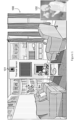
- Figure 1 shows thermal camera 101 positioned in room 100 in accordance with an embodiment.
- Camera 101 may generate thermal image (thermogram) 102 of an individual not explicitly shown.
- thermal camera 101 comprises a lens that focuses infrared or far-infrared radiation by objects in view.
- the focused light is scanned by a thermal sensor, which comprises a plurality of infrared-detector elements (for example, 24 by 32 pixels).
- the detector elements may create a very detailed temperature pattern (for example, thermogram 102).
- camera 101 may require one-hundredth of a second for the detector array to obtain sensor information to obtain the thermal image.
- the sensor information may be periodically obtained from several thousand points in the field of view of the thermal sensor to form a sequence of thermal images.
- Thermogram 102 created by the detector elements of the thermal sensor may be converted into electric impulses.
- the impulses are then sent to a signal-processing unit (for example, apparatus 300 as shown in Figure 3 ), which may be implemented as a circuit board with a dedicated chip that converts the sensor information into biometric data.
- Thermal camera 101 may also include a tracking capability so that the direction of camera 101 may vary to track a moving object such as person 102 moving in room 100.
- thermal sensor arrays may be positioned in different rooms and/or at entry points of a dwelling.
- Figure 2 shows apparatus 200 interfacing with thermal sensor 204 and/or 205 through sensor interface 206 and smart devices 202 and/or 203 through smart device interface 209 in accordance with an embodiment.
- Thermal sensors 204 and 205 are often used for access control and presence detection. With some embodiments, in order for processor 201 to extract biometric data from sensor information, the performance of thermal sensor 204 may be extended by increasing the sample frequency (for example, frame rate) of capturing the image signal, identifying and tracking individuals from the image signal, and analyzing detail changes in thermal images against time. Processor 201 converts sensor information (signals) to biometric data, such as heart rate, body position, health condition, and so forth. Apparatus 200 may also support prediction of future health events may by processing the image signals and/or support system personalization.
- sample frequency for example, frame rate
- Processor 201 converts sensor information (signals) to biometric data, such as heart rate, body position, health condition, and so forth.
- Apparatus 200 may also support prediction of future health events may by processing the image signals and/or support system personalization.
- processor 201 may process sensor information to detect a thermal signature of a user.
- processor 201 may apply the individual's profile (for example, a temperature setting) to smart device 202 (for example, an air conditioner).
- Processor 201 may support one or more health applications that processes and/or analyzes biometric data and may generate notifications about the biometric data to an external entity (for example, a doctor) over communications channel 251 via interface 210.
- a health application may detect that a user is having a possible heart attack from the biometric data; consequently, an urgent notification is sent to the user's doctor about the event.
- a computing system environment may include a computing device where the processes (for example, process 300 shown in Figure 3 ) discussed herein may be implemented.
- the computing device includes processor 201 for controlling overall operation of the computing device and its associated components, including RAM, ROM, communications module, and first memory device 207.
- the computing device typically includes a variety of computer readable media.
- Computer readable media may be any available media that may be accessed by computing device and include both volatile and nonvolatile media, removable and non-removable media.
- computer readable media may comprise a combination of computer storage media and communication media.
- Computer storage media may include volatile and nonvolatile, removable and non-removable media implemented in any method or technology for storage of information such as computer readable instructions, data structures, program modules or other data.
- Computer storage media include, but is not limited to, random access memory (RAM), read only memory (ROM), electronically erasable programmable read only memory (EEPROM), flash memory or other memory technology, CD-ROM, digital versatile disks (DVD) or other optical disk storage, magnetic cassettes, magnetic tape, magnetic disk storage or other magnetic storage devices, or any other medium that can be used to store the desired information and that can be accessed by the computing device.
- Communication media typically embodies computer readable instructions, data structures, program modules or other data in a modulated data signal such as a carrier wave or other transport mechanism and includes any information delivery media.
- Modulated data signal is a signal that has one or more of its characteristics set or changed in such a manner as to encode information in the signal.
- communication media includes wired media such as a wired network or direct-wired connection, and wireless media such as acoustic, RF, infrared and other wireless media.
- processor 201 executes computer-executable instructions stored at memory 207 and access profile data stored at memory 208.
- memory devices 207 and 208 may be physically implemented within a single memory device.
- Figure 3a shows apparatus 300a that processes information from one or more thermal sensors 301 in accordance with an embodiment.
- biometric data 351 may be extracted via appropriate signal processing techniques via analog front end 302, analog to digital convertor (ADC) 303, and feature extractor 305.
- Biometric data 351 may include pulse rate, body surface temperature, temperature distribution pattern, body contour and posture, and so forth.
- An application may utilize a domestic thermal camera installed for fall detection by tracking the change of posture. For example, when the posture changes from upright to horizontal in a short time, a possible fall may be detected and hence an associated alert may be generated. Moreover, a variation of posture, body surface temperature, temperature distribution pattern, and heart rate may be tracked to estimate the hazard level, and associated actions 353 can be taken.
- Hazard prediction from biometric data 351 may be also supported. For example, when one's body surface temperature is continuously dropping and his/her posture is shaking, the chance of a fall may be higher (as indicated by hazard level 352) and hence an alert may be generated (triggered) before a fall can occur.
- Block 302 may perform signal amplification and non-recursive band-pass filtering, in which the analog signal corresponding to the thermal image is processed for DC offset removal, noise reduction and frequency limited before being processed by ADC 303.
- block 303 may comprise a 16-bit ADC with the sampling frequency (for example, 200 Hz) being set high enough to capture the details of temperature change of an object.)
- image processing is applied to identify valid objects, track the thermal profile of individual objects over time and extract the parameters from the thermal profile to form a feature vector.
- the parameters for the feature vector include period time, variation of the period times, certain time constants within each periodic cycle and their variations over time, etc.
- the analytic model 306 takes in the feature vector and compares it over a trained model.
- the model is pre-trained with a large set of generic feature vectors using deep learning algorithms, e.g. a deep neural network. Reinforcement learning may be deployed to allow the model to learn from the mistakes.
- Hazard levels may be provided for the identified objects.
- a list of actions may be pre-defined and may be triggered based on the associated hazard levels.
- Figure 3b shows apparatus 300b that processes information from one or more thermal sensors 301 in accordance with another embodiment.
- Hazard coefficients 322 with associated confidence levels 321 are estimated by a model trained using a deep learning model 308, for example, a convolutional neural network with supervised learning.
- Actions 324 are determined from action list 323 and may be based on hazard coefficients 322 and confidence level 321 provided by model 308.
- Model 308 may initially support hazard levels but subsequently identify different hazards with more empirical data such as heart-rate abnormality, body surface temperature drop, fall detection, and so forth.
- Model 308 in apparatus 300b may also be trained to predict hazards, rather than estimating hazards, based on the training sequence which started from a substantially earlier time.
- Figure 3c shows apparatus 300c that processes information from one or more thermal sensors 301 in accordance with a third embodiment, in which actions 332 and associated confidence levels 331 are estimated by trained model 309. Again, model 309 in apparatus 300c also may be trained to predict any actions needed.
- the image processing technique depends on the system complexity, including the number of thermal sensors, the resolution of each thermal sensor, the list of hazards and actions, the system computation power and memory available, and so forth.
- the analytic models may be implemented locally or in a cloud server, depending on criticality of response time.
- Figure 4 shows process 400 that identifies a user from thermal sensor information and applies a corresponding profile in accordance with an embodiment.
- Process (application) 400 supports human presence detection and thermal signature verification at block 401. If a human object is detected and the thermal signature is matched to a known entity at block 401, all supported smart devices (for example, air conditioner, smart TV, or smart lighting) may be adjusted 403 in accordance with the profile database stored at block 402.
- all supported smart devices for example, air conditioner, smart TV, or smart lighting
- the adjustment data 453 may be sent to a profile adaptation unit 406 in which the new settings in the profile may be included.
- the profile database would be updated 451 by profile adaptation unit 406 if an adjustment is needed.
- profile adaptation unit 406 sends the thermal signature of the new user 453 to the user identifier unit 401 together with the associated profile, which could be a default profile, to the profile database unit 402.
- Profile adaptation unit 406 may comprise a deep learning model trained using reinforcement learning.
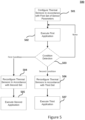
- Figure 5 shows flowchart 500 for sequencing through a plurality of applications, as executed by apparatus 200, in accordance with an embodiment.
- Apparatus 200 may execute one of the plurality of applications depending on a detected condition.
- a first health application may monitor general health measurements (for example, an amount of activity and temperature) of a user. If one or more of the measurements are abnormal, apparatus 200 may initiate different health applications based on the detected condition.
- apparatus 200 configures thermal sensors 204 and 205 in accordance with a first set of sensor parameters at block 501 in order to execute a first application at block 502.
- apparatus 200 initiates an appropriate application. For example, apparatus may transition to a second application to monitor fall prediction or to a third application to monitor the heart rate of the user at blocks 504-505 and 506-507, respectively.
- apparatus 200 may configure thermal sensors 204 and 205 differently in order to obtain different biometric data.
- different configuration parameters may be applied to individual sensor for each application.
- a most comprehensive set of configuration parameters is used for all sensors and applications. All of the sensors may be set to the best set of configuration, for example but no limited to, highest image resolution, number of bits, frame rate, sensitivity, signal to noise ratio (SNR), computational power, power consumption, and so forth.
- SNR signal to noise ratio
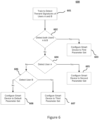
- FIG. 6 shows flowchart 600 where apparatus 200 configures a smart device with one of a plurality of parameter sets based on detected users in accordance with an embodiment.
- Apparatus 200 may monitor sensor data from thermal sensors 204 and/or 205 to detect thermal signatures of one or more users.
- thermal sensor 204 may be positioned at an entry point of a dwelling. Based on sensor information obtained from sensor 204, apparatus 200 may identify users entering and exiting the dwelling. With some embodiments, apparatus may detect either a thermal signature from the front (corresponding to a person entering the dwelling) or from the back (corresponding to the person exiting the dwelling). Based on the detected thermal signatures, a smart device can be configured with different sets of parameters (for example, the temperature setting of an air conditioner).
- apparatus 200 trains to detect thermal signatures of different users from sensor data. For example distinguishing characteristics may be stored at memory 208.
- a smart device may be configured in accordance with a first set of smart device parameters at block 603, a second set at block 605, or a third set at block 607, respectively.
- the first set when both users are detected
- the smart device may be configured in accordance with a default set of smart device parameters at block 608.
- An apparatus uses a thermal sensor for biometric data extraction and tracking for smart home applications.
- Applications such as health condition analysis, motion estimation (for example, fall estimation), casual prediction (for example, heart beat is slowing down to hazard level), hazard detection (for example, laying down for a long time), learning the profile of individuals, and system adaptation according to individual preferences.
- the parameters of a thermal sensor may be enhanced to allow as much data to be extracted as possible. Examples include, but not limited to:
- Signal processing techniques extract biometric data from thermal images.
- Model for learning the behaviors of individual(s) to the smart devices according to the biometric data extracted from the thermal sensors.
- Configure parameters of a smart device based on different detected people.
- the set of configuration parameters for individual sensors for an active health application may or may not be identical.
- thermal sensor data to detect a thermal signature for either the front or the back of a person.
- the sets of configuration parameters for all the sensors may be identical, in other words, all sensors can be configured with a most comprehensive set of parameters for all applications.
- the best sensor configuration may include, but not limited to, highest image resolution, number of bits, frame rate, sensitivity, and signal to noise ratio (SNR).
- the following is directed to vehicle operator continuous physical health monitoring embodiments.
- embodiments support assessing the health of a person in a room using a thermal sensor
- embodiments utilize thermal sensor data to assess the health of a person within other types of confined spaces such as a vehicle.
- the parameters used may include, but is not limited to, heart rate, breathing rate, body surface temperature, posture (in particular, head position), and the trajectories of these data over time, and so forth.
- the physical health condition of a vehicle operator may be critical to the safety of the operator, the passengers, and the vehicle itself.
- the state of the vehicle operator condition could determine the output of a situation should an emergency arises unexpectedly.
- a wearable device is specific to the individual wearing the device and not to the vehicle and may not ensure that the information or data of the vehicle operator's health is securely monitored during the duration of the vehicle when it is in use.
- monitoring of a driver and/or vehicle may be performed in an non-intrusive and accurate manner that is activated all of the time that the vehicle is in operation. Consequently, the health of whoever is driving the vehicle may be assessed.
- biometric information about the driver is utilized for accident prevention, incident alert, critical health warning and postmortem analysis.
- Figure 7 shows vehicular system 700 for continuously monitoring a vehicular operator's physical health in accordance with an embodiment.
- the embodiment obtain thermal sensor data from thermal sensor 204 via thermal sensor interface 206 as previously discussed.
- the thermal sensor 204 is typically fitted at a fixed location in front of the vehicle operator (driver), for example, mounted against the top windshield corner in front of the driver.
- Processor 703 configures the thermal sensor by reference to methods in Figure 5 .
- Processor 703 extracts biometric information contained in sensor data 750. For example, processor 703 may continuously monitor the heart rate and head posture about the driver as soon as he sits in the driving seat. In addition, the health record of the driver may be loaded into processor 703 via wireless devices 704 from a remote database server.
- Processor 703 may decide addition biometric data are needed based on the health record of the driver. For example if the BMI of the driver exceeds a certain value, the change of heart rate, the change of body surface temperature, and change of head posture over time may also be monitored.
- processor 703 detects one or more current physical conditions about the driver and executes one or more actions to address the detected physical conditions.
- Processor 703 may report detected physical conditions to the driver, doctor, emergency contact, and so forth via wireless device 704 (for example a smartphone) executing an application, initiating a telephone call to 911, generating an e-mail message to a designated person, and so forth.
- wireless device 704 for example a smartphone
- Processor 703 may also initiate an action in response to the detected physical condition. For example, if processor 703 determines that the driver is experiencing a heart attack, processor may instruct self-driving interface 704 to route the vehicle to the nearest hospital.
- biometric information may be stored in storage device 706 for subsequent analysis about the health condition of the vehicle driver. While storage device 706 is shown as a separate device, storage device 706 may be integrated within wireless device 704.
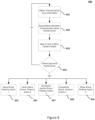
- Figure 8 shows process 800 that performs one or more actions based a detected physical condition of a vehicle driver in accordance with an embodiment.
- processor 703 extracts biometric information contained in sensor data 750.
- Processor 703 processes the information conveyed in signal 750 to extract measurements for one or more biometric characteristics of the vehicle driver at block 802.
- Biometric characteristics may include, but are not limited to, heart rate, breathing rate, and deviation from average heart rate (for example, degree of heart beat irregularity).
- the measurements of the biometric characteristics may be stored in storage device 706 for analysis about the health condition of the vehicle driver at a later time. For example, the stored data may be evaluated by the driver's doctor to determine if medical treatment is needed.
- process 800 obtains the measurements of the biometric characteristics (for example, the vehicle driver's heart rate and breathing rate) and determines whether a health profile applies to the drives.
- a plurality of health profiles may be specified, where a first health profile maps to normal vital functions of the driver (in other words, no detected health event), a second health profile maps to a heart attack event, a health third profile maps to the driver falling asleep, a fourth health profile maps to excessive alcohol consumption, and so forth.
- process 800 If an abnormal health is detected based on the determined health profile is detected at block 804, process 800 detects whether a particular health event occurred at blocks 805-809. Based on a particular health event, process 800 executes an appropriate action. Exemplary actions include, but are not limited to:
- a processing unit continuously monitors and analyzes the heartbeat of a vehicle driver to generate an alert about any irregularity.
- the processing unit may use a unique algorithm to provide this capability.
- a processing unit may identifying a detected irregularity to correspond to one of a plurality of events about a vehicle driver, including, but not limited to, falling asleep, a heart attack, consuming an excessive amount of alcohol, and so forth.
- data about the heartbeat of a vehicle driver may be stored in a storage device.
- the data may be retrieved at a later time for analyzing whether an abnormal health event occurred.
- biometric data is captured using thermal sensors 204 and 205.
- one or more RF sensors a radar sensor
- a thermal signature of user may be obtained from a thermal sensor array and associated with a radar signal. Consequently, as will be discussed, utilizing both thermal and radar sensors may complement each other to improve the accuracy of hazard/action estimation.
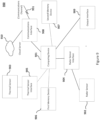
- Figure 9 shows apparatus 900 interfacing with radar sensor 902 and thermal sensor 903 through radar sensor interface 904 and thermal sensor interface 905, respectively.
- radar sensor 904 may comprise a transmitter transmitting a radio frequency (RF) signal in the radar spectrum (for example, operating at 20GHz or 60GHz) and one or more receivers detecting reflected radar signals.
- Apparatus 900 may subsequently extract biometric data (for example, breathing rates and motion vectors) from the detected reflected radar signals.
- RF radio frequency
- Thermal sensor 903 may be used for access control and presence detection. With some embodiments, in order for processor 901 to extract biometric data from thermal sensor information, the performance of thermal sensor 903 may be extended by increasing the sample frequency (for example, frame rate) of capturing the image signal, identifying and tracking individuals from the image signal, and analyzing detail changes in thermal images against time. Computing device 901 converts sensor information (signals) to biometric data, such as heart rate, body position, health condition, and so forth.
- sample frequency for example, frame rate
- Computing device 901 converts sensor information (signals) to biometric data, such as heart rate, body position, health condition, and so forth.
- computing device 901 may utilize thermal signatures and associated motion vectors derived from thermal sensor data to assist in processing radar sensor data.
- Apparatus 900 may also support prediction of future health events may by processing the sensor signals and/or support system personalization.
- computing device 901 processes thermal and radar sensor information to detect biometric data about a user.
- computing device 901 may apply the individual's profile (for example, a temperature setting) to a smart device (for example, an air conditioner) through output interface 909.
- a smart device for example, an air conditioner
- computing device 901 may support a radio frequency (RF) sensor.
- the RF sensor may operate in the radar spectrum (5-60 GHz).
- Computing device 901 may support one or more health applications that processes and/or analyzes biometric data and may generate notifications about the biometric data to an external entity (for example, a doctor) over communications channel 951 via interface 908.
- a health application may detect that a user is having a possible heart attack from the biometric data; consequently, an urgent notification is sent to the user's doctor about the event.
- the health application may stop the vehicle (though output interface 909) and report to emergency health service (though communications interface 908), and/or activate a self-driving function (via output interface 909) to drive the user to a hospital.
- Apparatus 900 may also interact with cloud server 910 to enable computing device 901 to access data (for example, a health record of a user) from a remote database. For example, computing device 901 may alter a decision based on the health record of the user. In addition, apparatus 900 may continuously stream sensor data to cloud server 910 for storage or real-time analysis of the health condition of the user.
- data for example, a health record of a user
- apparatus 900 may continuously stream sensor data to cloud server 910 for storage or real-time analysis of the health condition of the user.
- a computing system environment includes a computing device where the processes (for example, processes 1003-1006 shown in Figure 10 ) discussed herein may be implemented. Each process may correspond to a block of computer readable instructions that is executed by computing device 901.
- the computing system includes computing device 901 for controlling overall operation of the computing device and its associated components, including RAM, ROM, communications module, and first memory device 906.
- the computing device typically includes a variety of computer readable media.
- Computer readable media may be any available media that may be accessed by computing device and include both volatile and nonvolatile media, removable and non-removable media.
- computer readable media may comprise a combination of computer storage media and communication media.
- Computer storage media may include volatile and nonvolatile, removable and non-removable media implemented in any method or technology for storage of information such as computer readable instructions, data structures, program modules or other data.
- Computer storage media include, but is not limited to, random access memory (RAM), read only memory (ROM), electronically erasable programmable read only memory (EEPROM), flash memory or other memory technology, CD-ROM, digital versatile disks (DVD) or other optical disk storage, magnetic cassettes, magnetic tape, magnetic disk storage or other magnetic storage devices, or any other medium that can be used to store the desired information and that can be accessed by the computing device.
- Communication media typically embodies computer readable instructions, data structures, program modules or other data in a modulated data signal such as a carrier wave or other transport mechanism and includes any information delivery media.
- Modulated data signal is a signal that has one or more of its characteristics set or changed in such a manner as to encode information in the signal.
- communication media includes wired media such as a wired network or direct-wired connection, and wireless media such as acoustic, RF, infrared and other wireless media.
- computing device 901 executes computer-executable instructions stored at memory 906 and access profile data stored at memory 907.
- memory devices 906 and 907 may be physically implemented within a single memory device.
- FIG 10 shows hybrid sensing system 1000.
- Thermal and radar sensor data are separately captured by thermal sensor 1001 and radar sensor 1002, respectively.
- thermal sensor 1001 may comprise a 32x32 thermopile array
- radar sensor 1002 may operate at 20 GHz with 1 transmit and 3 receive antennas.
- the thermal and radar signals 1051 and 1052 are processed through the corresponding analytical models 1003 and 1004, respectively, to obtain biometric vectors with associated confidence levels.
- Model 1003 may be a neural network model pre-trained using pre-processed thermal images and the resulting feature vectors.
- Model 1004 may be another neural network model pre-trained using pre-processed RF signals and the resulting feature vectors.
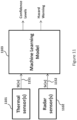
- model 1103 may contain models 1003 and 1004 as the first stage processing and an additional neural network layers as the second stage processing. The additional neural network layers may be trained with the feature vectors as inputs, and resultant hazard and confidence level as outputs.
- feature vectors 1053 and 1054 are obtained from the biometric vectors.
- the biometric data extracted from thermal sensor 1001 may include, but is not limited to, breathing rates, heart rates, body surface temperatures, thermal signatures, and motion vectors.
- the biometric data extracted from the radar sensor 1002 may include, but is not limited to, breathing rates and motion vectors.
- thermal signature(s) and the associated motion vector(s) 1055 from thermal sensor model 1003 may be provided to radar sensor model 1004 to assist its data analytic processing.
- Feature vectors 1053 and 1054 are then passed to feature analytic block 1005, where vectors 1053 and 1054 are compared to obtain resultant feature vector 1056.
- Resultant feature vector 1056 is then passed to decision logic block 1006 for risk analysis to provide hazard level 1057 and corresponding confidence level 1058.
- V r and V t convey one or more features.
- Biometric data vectors that convey only one biometric feature are not part of the claimed invention.
- V t may convey additional features that are not conveyed by V r .
- B rx and B ry are the components of the motion vector in X and Y, respectively, with the confidence level C rm .
- a confidence level of 0 is indicative that the measurement is inconclusive.
- Biometric vectors V r and V t include a measured value and corresponding confidence level for one or more biometric features. For example, with the examples shown above, V r and V t span breathing rate and motion features.
- Feature vectors 1053 and 1054 are then processed by feature analysis block 1005.
- Exemplary flow chart 1200 for feature analysis logic block 1005 is shown in Figure 12 .
- a biometric feature for example, the breathing rate
- V 1056 may pass through a decision matrix to obtain resultant feature vector V 1056.
- breathing rate vectors 1053 and 1054 are equal to [25,0.9] and [23,0.8], respectively.
- the biometric feature may be the breathing rate.
- C min 0.6.
- C min is the minimum confidence level for a measured value to be considered. The confidence level may be chosen based on empirical results. It may also be adaptive based on the quality of the sensor signals.
- and B th 0.1* (0.5 * (Bt + B r )).
- each feature may be separately processed by process 1200.
- V r1 [25, 0.90, 0, 0, 0.80]
- V t1 [23, 0.80, 0, 0, 0.90]
- decision logic block 1006 determines hazard level 1057 and its associated confidence level 1058.
- V 1 since the breathing rate is normal the potential hazard is low with a confidence level, for example, 0.7 (high) although there is no detected movement for the identified subject (user).
- the value of the confidence level may be adjusted based on empirical results associated with an embodiment.
- Decision logic block 1006 continuously monitors resultant feature vector 1056, as well as its evolvement over time, to determine a potential hazard measure (corresponding hazard warning 1057).
- Decision logic block 1006 may determine that the hazard level is high and the confidence level (0.6) is medium at the 5 th measurement because the breathing rate of the subject is dropping and there is no movement detection. However, decision logic block 1006 may determine that the hazard level is high and confidence level (0.8) is high at the 7 th measurement because the breathing level of the subject is dropping rapidly to a hazardous level and there was no movement detected over seven consecutive measurements.
- the detection accuracy may be improved if more biometric data (corresponding to additional features) are obtained from sensors 1001 and/or 1002.
- heart rate and thermal signature may also be obtained from thermal sensor 1001.
- V t [B tb , C tb , B th , C th , B tt , C tt , B ts1 , C ts1 , B tx , B ty , C tv ], where B tb , C tb corresponds to the measured breathing rate, B th , C th corresponds to the measured heart rate, B tt , C tt corresponds to the measured body surface temperature, B ts1 , C ts1 corresponds to the thermal signature of an associated entity (for example, registered user1), and B tx , B ty and C tm corresponds to the motion vector in X and Y with the confidence level C tm .
- the hazard level would be low with confidence level 0.8 (high) as all biometric data of the identified subject (user1) are normal.
- decision logic block 1006 may estimate a hazard level as being high with confidence level 0.8 (high) for the identified subject (user1) after the 5 th measurement since both the breathing rate and heart rate are dropping together. Moreover, because user1 is detected via thermal signature, more valuable information may be provided, such as reporting the hazard level and confidence level to the registered hospital of user1 and preparing the medical care of user1 before arrival to the hospital.
- hazard prediction may also be done solely by using solely machine learning models 1003 and 1004.
- Analytical model 1103 may be an artificial neural network pre-trained with artificial vectors extracted from clinical data. Analytical model 1103 may be fine-tuned (re-trained) with empirical data directly obtained from the field.
- thermal sensors and radar sensors may be installed through an associated entity (for example, a house or business) to ensure a desired coverage with optimal system cost in smart home/business applications.
- a thermal sensor and a radar sensor may be installed in the sitting room as well as in each bed room.
- only thermal sensor arrays may be installed near a toilet and in the kitchen and/or the garage.
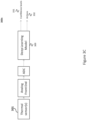
- Signals 1351 and 1352 from two thermal sensors 1301 and 1302 may be pre-processed by signal pre-processing unit 1303, as shown in Figure 13 , to obtain a resultant thermal sensor signal 1353, which may be provided to the systems shown in Figure 10 or Figure 11 .
- signal pre-processing may include high-pass filtering the image signals over time and choosing the one with the higher residual.
- signal pre-processing unit 1303 may include stitching the two thermal sensor signals 1351 and 1352 to form a better thermal sensor signal.
- machine learning models 1003 and 1004 (as shown in Figure 10 ) or machine learning model 1103 (as shown in Figure 11 ) may be re-trained for a specific combination of thermal sensors and radar sensors without signal pre-processing.
- a hybrid sensing system may be inside vehicle to increase the accuracy in monitoring the physical health condition of a vehicle operator (vehicle driver) to reduce the chance of false detections.
- the state of the vehicle operator condition may determine a course of action should an emergency happen.
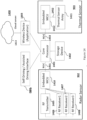
- hybrid sensing system 1400 continuously monitors a vehicular operator's physical health for a vehicle application as shown.
- Hybrid sensing system 1400 includes radar sensor 902 and thermal sensor 903.
- Radar sensor 902 includes RF transmitter 1405, which is typically fitted at a fixed location in front of the vehicle operator (driver) (for example, mounted against the top windshield corner in front of the driver such that the signal from the transmitter is reflected by the driver's body to the receiver without obstructed by any uninterested moving objects, such as the steering wheel).
- RF transmitter 1405 generates fixed frequency signal, for example, between 20-30 GHz with a power level between 0.1-0.5 watts depending on the RF characteristics of the vehicle.
- RF signals received by receivers 1406-1408 are processed by embedded microcontroller unit (MCU) 1410 to obtain radar signal 1451, which is suitable for a corresponding machine learning model.
- MCU embedded microcontroller unit
- Thermal sensor 903 is typically physically situated next to radar sensor 902 to capture thermal signal 1452 via thermal sensor array 1411 from the driver's head as well as the body. Thermal signal 1452 is processed by embedded MCU 1412 to output signal 1453, which is suitable for a corresponding machine learning model.
- Core processor 1401 executes computer readable instructions stored at device 1402 to support machine learning models for thermal sensor 903 and radar sensor 902, feature analysis block 1005, and decision logic block 1006 as shown in Figure 10 .
- core processor 1401 may have a machine learning model implemented for both sensor types as shown in Figure 11 .
- core processor 1401 When core processor 1401 detects any hazardous physical conditions about the driver, it may execute one or more actions to address the detected physical conditions.
- the list of actions includes, but not limited to, reporting the detected physical conditions to the driver, doctor, or emergency contact via embedded wireless device 1403 (for example, an LTE module) installed in the hybrid sensing system 1400, initiating a telephone call to 911, and generating an e-mail message to a designated person.
- embedded wireless device 1403 for example, an LTE module
- Wireless device 1403 may allow the health record of the driver to be loaded into core processor 1401 via the wireless devices from a remote database server.
- the parametric of the decision logic supported by core processor 1401 may be altered based on the heath record of the driver.
- wireless device 1403 may also allow the sensor data to be continuously streamed to cloud server 1413 for storage or for real-time analyzing the health condition of the driver (if one chooses to execute the analytic model in the cloud instead of locally or to execute the model both locally as well as in the cloud for cross-checking purposes).
- Cloud server 1413 may use the data from hybrid sensor system 1400 to fine-tune the analytic model.
- system 1400 may train new models based on new sensor combinations. The re-trained or new analytic models may be downloaded from cloud server 1413 to the core processor 1401 to continuously improve the accuracy of the analytic models.
- Downloaded information from cloud server 1413 may include a chronicle health record and the conduct record of the user (driver) for reference. For example, if the downloaded conduct record indicates that the user has previously driven while intoxicated, system 1400 may extract pertinent feature information that may be indicative of intoxication so that appropriate actions can the performed.
- system 1400 may send the record of the driver's conduct to a control center if system 1400 detects a hazard in order to assist with a decision making process.
- the chronicle health record, as well as the driver's conduct record, may be sent to an emergency service when a hazard occurs to allow for better preparation when the user arrives at the hospital.
- All the downloaded information may be temporarily stored in storage device 1402 (which may also store computer readable instructions as previously discussed).
- the data may be retained until it is cleared by authorized persons, for example, after the data is backed up at the end of business hours.
- the data may be retrieved under certain conditions by authorized persons, for example, when an accident happens that involves the user.
- Core processor 1401 may store biometric data (for example, sensor data, biometric vectors, and/or resultant biometric vectors) at storage device 1402.
- biometric data for example, sensor data, biometric vectors, and/or resultant biometric vectors
- the stored biometric data may be subsequently retrieved to reconstruct an health event that occurred or to provide data for legal evidence.
- Advanced functions may be implemented by core processor 1401 when computational power is available. For example, if core processor 1401 determines that the user (driver) is experiencing a heart attack, it may instruct initiate an autonomous driving unit via interface 1404 to route the vehicle to the nearest hospital.
- thermal signal for example, from thermal sensor 903
- a received RF signal for example, from radar sensor 902
- Figure 15 shows an embodiment of the processing that may supported by system 1400.
- the sequence of actions is similar to the ones as discussed with Figure 10 .
- Health record 1551 of the driver and profiles of the hazards to be detected/the associated actions for each hazard 1552 may loaded into decision logic block 1504.
- decision logic block 1504. By presenting feature vector to decision logic, block 1504 is able to detect a particular hazard and to perform associated actions 1554 from presented feature vectors 1553.
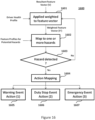
- Figure 16 shows flow chart 1600 for decision logic block 1504. Different weightings are applied to the elements (corresponding to different feature information) in the resultant feature vector based on the health record of the driver. For example, if the driver is over certain age (for example, 55 years of age) and is obese (for example, 85 kg and 1.68 m), more weight can be applied to the change of heart rate over time and to the breathing rhythm. As another example, if the user (driver) has a record of being a careless driver, more weight can be applied to the motion vectors. The weighted feature vector is then mapped to the list of hazards.
- age for example, 55 years of age
- obese for example, 85 kg and 1.68 m
- An exemplary list of hazards may be: Hazard type Action type Actions Sleep Warning event Activate the alert in the vehicle Unconscious Emergency event Stop vehicle and report to emergency health service, or Switch to self-driving function to the emergency health service Abnormal driving pattern Duty stop event Stop vehicle and request for backup driver Abnormal heart rate pattern Duty stop event Abnormal breathing pattern Duty stop event Abnormal body surface temperature change pattern Duty stop event
- the list of associated actions may be performed. For example, if the driver is determined to be tired and prone to driving while asleep, the alert system in the vehicle may be activated in order to wake the driver. As another example, if critical biometric data is found to be abnormal (for example, a change of heart rate is abnormal), the alert system may instruct the driver to pull over the vehicle and a message may be sent to the control center to request a backup driver to take over the driving. As another example, if the driver is detected to be unconscious, the alert system in the vehicle may stop the vehicle. Moreover, the alert system may automatically request for emergency health service. If autonomous driving is available with the vehicle, the vehicle may be self-driven to the nearest emergency health service.
- critical biometric data for example, a change of heart rate is abnormal
- the alert system may instruct the driver to pull over the vehicle and a message may be sent to the control center to request a backup driver to take over the driving.
- the alert system in the vehicle may stop the vehicle.
- the alert system may automatically request for emergency health service. If autonomous driving
- the computer system may include at least one computer such as a microprocessor, digital signal processor, and associated peripheral electronic circuitry.
Landscapes
- Engineering & Computer Science (AREA)
- Health & Medical Sciences (AREA)
- Physics & Mathematics (AREA)
- Life Sciences & Earth Sciences (AREA)
- Theoretical Computer Science (AREA)
- General Health & Medical Sciences (AREA)
- General Physics & Mathematics (AREA)
- Biophysics (AREA)
- Biomedical Technology (AREA)
- Molecular Biology (AREA)
- Artificial Intelligence (AREA)
- Medical Informatics (AREA)
- Evolutionary Computation (AREA)
- General Engineering & Computer Science (AREA)
- Animal Behavior & Ethology (AREA)
- Public Health (AREA)
- Veterinary Medicine (AREA)
- Surgery (AREA)
- Pathology (AREA)
- Heart & Thoracic Surgery (AREA)
- Software Systems (AREA)
- Multimedia (AREA)
- Data Mining & Analysis (AREA)
- Physiology (AREA)
- Computer Vision & Pattern Recognition (AREA)
- Computing Systems (AREA)
- Mathematical Physics (AREA)
- Computer Security & Cryptography (AREA)
- Computational Linguistics (AREA)
- Computer Hardware Design (AREA)
- Oral & Maxillofacial Surgery (AREA)
- Automation & Control Theory (AREA)
- Human Computer Interaction (AREA)
- Cardiology (AREA)
- Business, Economics & Management (AREA)
- Psychiatry (AREA)
- Signal Processing (AREA)
- Dentistry (AREA)
- Emergency Management (AREA)
- Databases & Information Systems (AREA)
Claims (15)
- Einrichtung zum Bewerten eines Gesundheitszustands eines Benutzers durch Unterstützen biometrischer Daten (351) über den Benutzer, wobei die Einrichtung Folgendes umfasst:eine Wärmesensorschnittstelle (206, 905), die dazu konfiguriert ist, ein Wärmesignal (1051, 1351, 1352, 1353, 1452) von einem Wärmesensor (204, 205, 301, 903, 1001, 1301, 1302) zu erhalten;eine Radarsensorschnittstelle (904), die dazu konfiguriert ist, ein Radarsignal (1052, 1451) von einem Radarsensor (902, 1002) zu erhalten;einen Prozessor (201, 703, 901, 1401) zum Ausführen computerausführbarer Anweisungen;einen Speicher (207, 208, 706, 906, 907, 1402), der die computerausführbaren Anweisungen speichert, die, wenn sie vom Prozessor ausgeführt werden, bewirken, dass die Einrichtung Folgendes durchführt:Erzeugen eines ersten biometrischen Vektors aus dem Wärmesignal, wobei der erste biometrische Vektor erste Informationen über ein erstes biometrisches Merkmal enthält und wobei der erste biometrische Vektor dritte Informationen über ein zweites biometrisches Merkmal enthält, wobei das erste biometrische Merkmal und das zweite biometrische Merkmal unterschiedliche biometrische Merkmale sind;Erzeugen eines zweiten biometrischen Vektors aus dem Radarsignal, wobei der zweite biometrische Vektor zweite Informationen über das erste biometrische Merkmal enthält und wobei der zweite biometrische Vektor vierte Informationen über das zweite biometrische Merkmal enthält;Extrahieren erster resultierender Informationen über das erste biometrische Merkmal aus den ersten und zweiten Informationen;Erzeugen eines ersten resultierenden biometrischen Vektors, der die ersten resultierenden Informationen über das erste biometrische Merkmal enthält;Erzeugen des ersten resultierenden biometrischen Vektors, der weiter zweite resultierende Informationen über das zweite biometrische Merkmal enthält, wobei die zweiten resultierenden Informationen aus den dritten Informationen und den vierten Informationen extrahiert werden;basierend auf einer Patientenakte des Benutzers, Anwenden einer ersten Gewichtung auf die ersten resultierenden Informationen über das erste biometrische Merkmal und einer zweiten Gewichtung auf die zweiten resultierenden Informationen über das zweite biometrische Merkmal, wobei die erste Gewichtung und die zweite Gewichtung unterschiedlich sind; undBestimmen von Gefahreninformationen aus dem ersten resultierenden biometrischen Vektor, wobei die Gefahreninformationen eine Gefahrenstufe (352, 1057) und eine Konfidenzstufe (322, 1058) einschließen und wobei die Gefahrenstufe auf ein Auftreten eines gesundheitlichen Ereignisses für den Benutzer hinweist und die Konfidenzstufe einen Gewissheitsgrad der Gefahrenstufe angibt.
- Einrichtung nach Anspruch 1, umfassend:eine Kommunikationsschnittstelle (210, 908),wobei der Speicher computerausführbare Anweisungen speichert, die, wenn sie vom Prozessor ausgeführt werden, die Einrichtung weiter dazu veranlassen, Folgendes durchzuführen:Extrahieren einer Wärmesignatur aus dem Wärmesignal, wobei die Wärmesignatur den Benutzer identifiziert; undwenn das gesundheitliche Ereignis erkannt wird, Senden einer Nachricht über die Kommunikationsschnittstelle, die die Gefahrenstufe für den Benutzer angibt.
- Einrichtung nach Anspruch 2, wobei die Gefahreninformationen eine Gefahrenart einschließen und wobei der Speicher computerausführbare Anweisungen speichert, die, wenn sie vom Prozessor ausgeführt werden, die Einrichtung weiter veranlassen, Folgendes durchzuführen:Herunterladen und Speichern der Patientenakte des Benutzers;Einschließen von zumindest einem Teil der Patientenakte in die Nachricht;Identifizieren einer Aktion (324, 332, 353, 1554), die der Gefahrenart zugeordnet ist; undAusführen der identifizierten Aktion im Namen des Benutzers.
- Einrichtung nach Anspruch 1, wobei der Speicher computerausführbare Anweisungen speichert, die, wenn sie vom Prozessor ausgeführt werden, die Einrichtung weiter dazu veranlassen, Folgendes durchzuführen:Bestimmen einer Gefahrenart aus dem ersten resultierenden biometrischen Vektor;Identifizieren einer Aktion (324, 332, 353, 1554), die der Gefahrenart zugeordnet ist; undDurchführen der identifizierten Aktion im Namen des Benutzers.
- Einrichtung nach Anspruch 4, wobei die Gefahrenart eine einer Vielzahl von Gefahrenarten ist und wobei der Speicher computerausführbare Anweisungen speichert, die, wenn sie vom Prozessor ausgeführt werden, die Einrichtung weiter veranlassen, Folgendes durchzuführen:Gruppieren der Vielzahl von Gefahrenarten mit unterschiedlichen Wichtigkeitsstufen; undErzeugen einer Warnmeldung basierend auf den unterschiedlichen Wichtigkeitsstufen.
- Einrichtung nach Anspruch 4, wobei der Speicher computerausführbare Anweisungen speichert, die, wenn sie vom Prozessor ausgeführt werden, die Einrichtung weiter dazu veranlassen, Folgendes durchzuführen:Erzeugen einer Zeitsequenz von resultierenden biometrischen Vektoren, wobei die Zeitsequenz den ersten resultierenden biometrischen Vektor und einen zweiten resultierenden biometrischen Vektor umfasst, die einem ersten beziehungsweise einem zweiten Zeitpunkt entsprechen; undBestimmen der Gefahrenstufe aus der zeitlichen Abfolge der resultierenden biometrischen Vektoren.
- Einrichtung nach Anspruch 1, wobei der Speicher computerausführbare Anweisungen speichert, die, wenn sie vom Prozessor ausgeführt werden, die Einrichtung weiter dazu veranlassen, Folgendes durchzuführen:Trainieren eines ersten Modells (1003) basierend auf einem zuvor aufgetretenen Wärmesignal;Umwandeln des Wärmesignals in Übereinstimmung mit dem ersten Modell;Erhalten des ersten biometrischen Vektors aus dem umgewandelten Wärmesignal als Ausgabe des ersten Modells (1003);Trainieren eines zweiten Modells (1004) basierend auf einem zuvor aufgetretenen Radarsignal;Bereitstellen einer Wärmesignatur und eines Bewegungsvektors (1055) vom ersten Modell zum zweiten Modell;Umwandeln des Radarsignals in Übereinstimmung mit dem zweiten Modell, der Wärmesignatur und dem Bewegungsvektor; undErhalten des zweiten biometrischen Vektors aus dem umgewandelten Radarsignal als Ausgabe des zweiten Modells (1004).
- Einrichtung nach Anspruch 7, wobei das erste Modell ein erstes neuronales Netzwerkmodell umfasst, wobei das zweite Modell ein zweites neuronales Netzwerkmodell umfasst und wobei der Speicher computerausführbare Anweisungen speichert, die, wenn sie vom Prozessor ausgeführt werden, die Einrichtung weiter dazu veranlassen, Folgendes durchzuführen:Vortrainieren des ersten neuronalen Netzwerkmodells unter Verwendung eines vorverarbeiteten Bildes und eines ersten resultierenden Merkmalsvektors; undVortrainieren des zweiten neuronalen Netzwerkmodells unter Verwendung eines vorverarbeiteten HF-Signals und eines zweiten resultierenden Merkmalsvektors.
- Einrichtung nach Anspruch 7, wobei der Speicher computerausführbare Anweisungen speichert, die, wenn sie vom Prozessor ausgeführt werden, die Einrichtung weiter dazu veranlassen, Folgendes durchzuführen:Herunterladen des ersten und zweiten Modells von einem Cloud-Server (1413);Empfangen aktualisierter Modellinformationen vom Cloud-Server; undAktualisieren zumindest eines des ersten und zweiten Modells basierend auf aktualisierten Modellinformationen.
- Verfahren zum Bewerten eines Gesundheitszustands eines Benutzers, wobei das Verfahren umfasst:Erhalten eines Wärmesignals (1051, 1351, 1352, 1353, 1452) von einem Wärmesensor (204, 205, 301, 903, 1001, 1301, 1302);Empfangen eines Radarsignals (1052, 1451) von einem Radarsensor (902, 1002);Erzeugen eines ersten biometrischen Vektors aus dem Wärmesignal, wobei der erste biometrische Vektor erste Informationen über ein erstes biometrisches Merkmal enthält und wobei der erste biometrische Vektor dritte Informationen über ein zweites biometrisches Merkmal enthält, wobei das erste biometrische Merkmal und das zweite biometrische Merkmal unterschiedliche biometrische Merkmale sind;Erzeugen eines zweiten biometrischen Vektors aus dem Radarsignal, wobei der zweite biometrische Vektor zweite Informationen über das erste biometrische Merkmal enthält und wobei der zweite biometrische Vektor vierte Informationen über das zweite biometrische Merkmal enthält;Extrahieren erster resultierender Informationen über das erste biometrische Merkmal aus den ersten und zweiten Informationen;Erzeugen eines ersten resultierenden biometrischen Vektors, der die ersten resultierenden Informationen über das erste biometrische Merkmal enthält;Erzeugen des ersten resultierenden biometrischen Vektors, der weiter zweite resultierende Informationen über das zweite biometrische Merkmal enthält, wobei die zweiten resultierenden Informationen aus den dritten Informationen und den vierten Informationen extrahiert werden;basierend auf einer Patientenakte des Benutzers, Anwenden einer ersten Gewichtung auf die ersten resultierenden Informationen über das erste biometrische Merkmal und einer zweiten Gewichtung auf die zweiten resultierenden Informationen über das zweite biometrische Merkmal, wobei die erste Gewichtung und die zweite Gewichtung unterschiedlich sind; undBestimmen von Gefahreninformationen aus dem ersten resultierenden biometrischen Vektor, wobei die Gefahreninformationen eine Gefahrenstufe (352, 1057) und eine Konfidenzstufe (322, 1058) einschließen und wobei die Gefahrenstufe auf ein Auftreten eines gesundheitlichen Ereignisses für den Benutzer hinweist und die Konfidenzstufe einen Gewissheitsgrad der Gefahrenstufe angibt.
- Verfahren nach Anspruch 10, umfassend:Extrahieren einer Wärmesignatur aus dem Wärmesignal, wobei die Wärmesignatur den Benutzer identifiziert; undwenn das gesundheitliche Ereignis erkannt wird, Senden einer Nachricht, die die Gefahrenstufe für den Benutzer angibt.
- Verfahren nach Anspruch 11, wobei die Gefahreninformationen eine Gefahrenart einschließen, wobei das Verfahren umfasst:Herunterladen und Speichern der Patientenakte des Benutzers;Einschließen von zumindest einem Teil der Patientenakte in die Nachricht;Identifizieren einer Aktion (324, 332, 353, 1554), die der Gefahrenart zugeordnet ist; undAusführen der identifizierten Aktion im Namen des Benutzers.
- Verfahren nach Anspruch 10, umfassend:Senden des ersten und zweiten biometrischen Vektors an einen Cloud-Server (910, 1413); undEmpfangen der Gefahreninformationen vom Cloud-Server.
- Verfahren nach Anspruch 10, umfassend:Bestimmen einer Gefahrenart aus dem ersten resultierenden biometrischen Vektor;Identifizieren einer Aktion (324, 332, 353, 1554), die der Gefahrenart zugeordnet ist; undDurchführen der identifizierten Aktion im Namen des Benutzers.
- Verfahren nach Anspruch 10, wobei der erste biometrische Vektor fünfte Informationen über ein drittes biometrisches Merkmal enthält und der zweite biometrische Vektor keine Informationen über das dritte biometrische Merkmal enthält, wobei das Verfahren umfasst:
Extrahieren zweiter resultierender Informationen über das dritte biometrische Merkmal nur aus den fünften Informationen.
Priority Applications (1)
| Application Number | Priority Date | Filing Date | Title |
|---|---|---|---|
| EP25151591.2A EP4546287A1 (de) | 2019-09-04 | 2020-09-03 | Erfassung und analyse biometrischer daten mittels eines hybriden erfassungssystems |
Applications Claiming Priority (3)
| Application Number | Priority Date | Filing Date | Title |
|---|---|---|---|
| US16/559,814 US10943137B2 (en) | 2018-09-12 | 2019-09-04 | Biometric data capturing and analysis |
| US16/797,071 US11170899B2 (en) | 2018-09-12 | 2020-02-21 | Biometric data capturing and analysis using a hybrid sensing systems |
| PCT/US2020/049127 WO2021046172A1 (en) | 2019-09-04 | 2020-09-03 | Biometric data capturing and analysis using a hybrid sensing system |
Related Child Applications (1)
| Application Number | Title | Priority Date | Filing Date |
|---|---|---|---|
| EP25151591.2A Division EP4546287A1 (de) | 2019-09-04 | 2020-09-03 | Erfassung und analyse biometrischer daten mittels eines hybriden erfassungssystems |
Publications (2)
| Publication Number | Publication Date |
|---|---|
| EP4026046A1 EP4026046A1 (de) | 2022-07-13 |
| EP4026046B1 true EP4026046B1 (de) | 2025-02-12 |
Family
ID=74853007
Family Applications (2)
| Application Number | Title | Priority Date | Filing Date |
|---|---|---|---|
| EP20775122.3A Active EP4026046B1 (de) | 2019-09-04 | 2020-09-03 | Erfassung und analyse biometrischer daten mittels eines hybriden erfassungssystems |
| EP25151591.2A Withdrawn EP4546287A1 (de) | 2019-09-04 | 2020-09-03 | Erfassung und analyse biometrischer daten mittels eines hybriden erfassungssystems |
Family Applications After (1)
| Application Number | Title | Priority Date | Filing Date |
|---|---|---|---|
| EP25151591.2A Withdrawn EP4546287A1 (de) | 2019-09-04 | 2020-09-03 | Erfassung und analyse biometrischer daten mittels eines hybriden erfassungssystems |
Country Status (3)
| Country | Link |
|---|---|
| EP (2) | EP4026046B1 (de) |
| CN (1) | CN114586073B (de) |
| WO (1) | WO2021046172A1 (de) |
Families Citing this family (4)
| Publication number | Priority date | Publication date | Assignee | Title |
|---|---|---|---|---|
| US12230113B2 (en) * | 2022-02-11 | 2025-02-18 | Intellisafe Analytics Llc | Human centered safety system using physiological indicators to identify and predict potential hazards |
| US12263869B2 (en) | 2022-04-20 | 2025-04-01 | Toyota Jidosha Kabushiki Kaisha | Medical emergency detection in-vehicle caretaker |
| CN116313094B (zh) * | 2023-03-21 | 2023-11-07 | 江苏二郎神塑业有限公司 | 一种远程宠物治疗检测系统及方法 |
| US20260019675A1 (en) * | 2024-07-15 | 2026-01-15 | Sony Group Corporation | Managing media streaming with a machine-learning model |
Family Cites Families (14)
| Publication number | Priority date | Publication date | Assignee | Title |
|---|---|---|---|---|
| US6930608B2 (en) * | 2002-05-14 | 2005-08-16 | Motorola, Inc | Apparel having multiple alternative sensors and corresponding method |
| US20130173926A1 (en) * | 2011-08-03 | 2013-07-04 | Olea Systems, Inc. | Method, Apparatus and Applications for Biometric Identification, Authentication, Man-to-Machine Communications and Sensor Data Processing |
| CN104068868A (zh) * | 2014-06-30 | 2014-10-01 | 优迪亚电子(深圳)有限公司 | 一种基于机器视觉的驾驶人疲劳监测方法及装置 |
| US9399430B2 (en) * | 2014-12-02 | 2016-07-26 | Honda Motor Co., Ltd. | System and method for vehicle control integrating health priority alerts of vehicle occupants |
| CN105460713B (zh) * | 2016-01-22 | 2017-08-04 | 重庆威斯特电梯有限公司 | 一种无线电梯乘客安全管理系统 |
| US20170323069A1 (en) * | 2016-05-05 | 2017-11-09 | James Stewart Bates | Systems and methods for medical instrument patient measurements |
| CN108806720B (zh) * | 2017-05-05 | 2019-12-06 | 京东方科技集团股份有限公司 | 话筒、数据处理器、监测系统及监测方法 |
| CN107510457A (zh) * | 2017-09-27 | 2017-12-26 | 福山信(北京)科技有限公司 | 一种生物体征检测装置 |
| WO2019081975A1 (en) * | 2017-10-24 | 2019-05-02 | Orcam Technologies Ltd. | PORTABLE CAMERA SYSTEMS AND METHODS OF IDENTITY AUTHENTICATION |
| CA3083108A1 (en) * | 2017-11-21 | 2019-05-31 | Omniscient Medical As | System, sensor and method for monitoring health related aspects of a patient |
| US20190202467A1 (en) * | 2018-01-04 | 2019-07-04 | Pony.ai, Inc. | System and method for engaging in emergency autonomous driving mode for assisted-driving vehicles |
| CN207744558U (zh) * | 2018-01-10 | 2018-08-21 | 深圳和而泰数据资源与云技术有限公司 | 一种动物监测电路及地垫 |
| CN109045575A (zh) * | 2018-08-30 | 2018-12-21 | 合肥工业大学 | 基于非接触式生理参数测量的智能跑步机 |
| CN110435662A (zh) * | 2019-07-30 | 2019-11-12 | 上海思致汽车工程技术有限公司 | 一种汽车驾乘人员监测系统 |
-
2020
- 2020-09-03 EP EP20775122.3A patent/EP4026046B1/de active Active
- 2020-09-03 EP EP25151591.2A patent/EP4546287A1/de not_active Withdrawn
- 2020-09-03 CN CN202080072325.4A patent/CN114586073B/zh active Active
- 2020-09-03 WO PCT/US2020/049127 patent/WO2021046172A1/en not_active Ceased
Also Published As
| Publication number | Publication date |
|---|---|
| EP4546287A1 (de) | 2025-04-30 |
| WO2021046172A1 (en) | 2021-03-11 |
| CN114586073A (zh) | 2022-06-03 |
| CN114586073B (zh) | 2025-07-22 |
| EP4026046A1 (de) | 2022-07-13 |
Similar Documents
| Publication | Publication Date | Title |
|---|---|---|
| EP4026046B1 (de) | Erfassung und analyse biometrischer daten mittels eines hybriden erfassungssystems | |
| US11734405B2 (en) | Biometric data capturing and analysis | |
| US11170899B2 (en) | Biometric data capturing and analysis using a hybrid sensing systems | |
| US11793406B2 (en) | Image processing method and corresponding system | |
| US9272689B2 (en) | System and method for biometric identification in a vehicle | |
| JP6308161B2 (ja) | 脈波検出装置、及び脈波検出プログラム | |
| US20200334477A1 (en) | State estimation apparatus, state estimation method, and state estimation program | |
| CN106218405A (zh) | 疲劳驾驶监控方法及云端服务器 | |
| US20240112337A1 (en) | Vehicular driver monitoring system with health monitoring | |
| US10482350B2 (en) | Drowsiness detection apparatus and drowsiness detection method thereof | |
| US12094313B2 (en) | Environment sensing for care systems | |
| CN110737201A (zh) | 一种监护方法、装置、存储介质及空调 | |
| CN114999643A (zh) | 一种基于WiFi的老人智能监护方法 | |
| CN114469076A (zh) | 一种融合身份特征的独居老人跌倒识别方法及系统 | |
| KR20200052175A (ko) | 사용자의 건강을 관리하기 위한 장치 및 이를 위한 방법 | |
| JP2016193022A (ja) | 脈波検出装置、及び脈波検出プログラム | |
| JP2018036879A (ja) | 生体情報記録装置 | |
| JP7420000B2 (ja) | 状態判定装置、状態判定システム、および制御方法 | |
| Beukman et al. | A multi-sensor system for detection of driver fatigue | |
| GB2581767A (en) | Patient fall prevention | |
| CN114492525A (zh) | 一种运用无线网络监控酒后驾驶的方法及可存储介质 | |
| CN117142276A (zh) | 电梯乘梯跌人倒检测方法、系统和家用电梯跌倒检测方法 | |
| Khawandi et al. | Integrated monitoring system for fall detection in elderly | |
| Kiriti et al. | Smart band for senior citizens | |
| CN117485418A (zh) | 一种装载智能检测设备的方向盘 |
Legal Events
| Date | Code | Title | Description |
|---|---|---|---|
| STAA | Information on the status of an ep patent application or granted ep patent |
Free format text: STATUS: UNKNOWN |
|
| STAA | Information on the status of an ep patent application or granted ep patent |
Free format text: STATUS: THE INTERNATIONAL PUBLICATION HAS BEEN MADE |
|
| PUAI | Public reference made under article 153(3) epc to a published international application that has entered the european phase |
Free format text: ORIGINAL CODE: 0009012 |
|
| STAA | Information on the status of an ep patent application or granted ep patent |
Free format text: STATUS: REQUEST FOR EXAMINATION WAS MADE |
|
| 17P | Request for examination filed |
Effective date: 20220331 |
|
| AK | Designated contracting states |
Kind code of ref document: A1 Designated state(s): AL AT BE BG CH CY CZ DE DK EE ES FI FR GB GR HR HU IE IS IT LI LT LU LV MC MK MT NL NO PL PT RO RS SE SI SK SM TR |
|
| DAV | Request for validation of the european patent (deleted) | ||
| DAX | Request for extension of the european patent (deleted) | ||
| REG | Reference to a national code |
Ref country code: HK Ref legal event code: DE Ref document number: 40079927 Country of ref document: HK |
|
| REG | Reference to a national code |
Ref country code: DE Ref legal event code: R079 Free format text: PREVIOUS MAIN CLASS: G06K0009000000 Ipc: A61B0005000000 Ref country code: DE Ref legal event code: R079 Ref document number: 602020045956 Country of ref document: DE Free format text: PREVIOUS MAIN CLASS: G06K0009000000 Ipc: A61B0005000000 |
|
| GRAP | Despatch of communication of intention to grant a patent |
Free format text: ORIGINAL CODE: EPIDOSNIGR1 |
|
| STAA | Information on the status of an ep patent application or granted ep patent |
Free format text: STATUS: GRANT OF PATENT IS INTENDED |
|
| RIC1 | Information provided on ipc code assigned before grant |
Ipc: G06V 20/52 20220101ALI20240417BHEP Ipc: A61B 5/024 20060101ALI20240417BHEP Ipc: G06F 21/32 20130101ALI20240417BHEP Ipc: G06V 10/80 20220101ALI20240417BHEP Ipc: G08B 21/06 20060101ALI20240417BHEP Ipc: G06N 3/08 20060101ALI20240417BHEP Ipc: G08B 29/18 20060101ALI20240417BHEP Ipc: G08B 21/04 20060101ALI20240417BHEP Ipc: G06V 40/70 20220101ALI20240417BHEP Ipc: G06V 20/59 20220101ALI20240417BHEP Ipc: G06V 10/82 20220101ALI20240417BHEP Ipc: G06N 3/045 20230101ALI20240417BHEP Ipc: G06F 21/31 20130101ALI20240417BHEP Ipc: G06V 10/143 20220101ALI20240417BHEP Ipc: G06F 18/25 20230101ALI20240417BHEP Ipc: G06F 18/2413 20230101ALI20240417BHEP Ipc: A61B 5/11 20060101ALI20240417BHEP Ipc: A61B 5/00 20060101AFI20240417BHEP |
|
| INTG | Intention to grant announced |
Effective date: 20240516 |
|
| RIN1 | Information on inventor provided before grant (corrected) |
Inventor name: CHAN, LEUNG YIN Inventor name: HA, WAI-LEUNG Inventor name: CHU, CHUN KIT Inventor name: CHOI, HUNG BUN |
|
| GRAJ | Information related to disapproval of communication of intention to grant by the applicant or resumption of examination proceedings by the epo deleted |
Free format text: ORIGINAL CODE: EPIDOSDIGR1 |
|
| STAA | Information on the status of an ep patent application or granted ep patent |
Free format text: STATUS: REQUEST FOR EXAMINATION WAS MADE |
|
| GRAP | Despatch of communication of intention to grant a patent |
Free format text: ORIGINAL CODE: EPIDOSNIGR1 |
|
| STAA | Information on the status of an ep patent application or granted ep patent |
Free format text: STATUS: GRANT OF PATENT IS INTENDED |
|
| INTC | Intention to grant announced (deleted) | ||
| INTG | Intention to grant announced |
Effective date: 20240925 |
|
| GRAS | Grant fee paid |
Free format text: ORIGINAL CODE: EPIDOSNIGR3 |
|
| GRAA | (expected) grant |
Free format text: ORIGINAL CODE: 0009210 |
|
| STAA | Information on the status of an ep patent application or granted ep patent |
Free format text: STATUS: THE PATENT HAS BEEN GRANTED |
|
| AK | Designated contracting states |
Kind code of ref document: B1 Designated state(s): AL AT BE BG CH CY CZ DE DK EE ES FI FR GB GR HR HU IE IS IT LI LT LU LV MC MK MT NL NO PL PT RO RS SE SI SK SM TR |
|
| REG | Reference to a national code |
Ref country code: GB Ref legal event code: FG4D |
|
| REG | Reference to a national code |
Ref country code: CH Ref legal event code: EP |
|
| REG | Reference to a national code |
Ref country code: DE Ref legal event code: R096 Ref document number: 602020045956 Country of ref document: DE |
|
| REG | Reference to a national code |
Ref country code: IE Ref legal event code: FG4D |
|
| REG | Reference to a national code |
Ref country code: NL Ref legal event code: MP Effective date: 20250212 |
|
| PG25 | Lapsed in a contracting state [announced via postgrant information from national office to epo] |
Ref country code: RS Free format text: LAPSE BECAUSE OF FAILURE TO SUBMIT A TRANSLATION OF THE DESCRIPTION OR TO PAY THE FEE WITHIN THE PRESCRIBED TIME-LIMIT Effective date: 20250512 |
|
| PG25 | Lapsed in a contracting state [announced via postgrant information from national office to epo] |
Ref country code: FI Free format text: LAPSE BECAUSE OF FAILURE TO SUBMIT A TRANSLATION OF THE DESCRIPTION OR TO PAY THE FEE WITHIN THE PRESCRIBED TIME-LIMIT Effective date: 20250212 |
|
| PG25 | Lapsed in a contracting state [announced via postgrant information from national office to epo] |
Ref country code: PL Free format text: LAPSE BECAUSE OF FAILURE TO SUBMIT A TRANSLATION OF THE DESCRIPTION OR TO PAY THE FEE WITHIN THE PRESCRIBED TIME-LIMIT Effective date: 20250212 |
|
| PG25 | Lapsed in a contracting state [announced via postgrant information from national office to epo] |
Ref country code: ES Free format text: LAPSE BECAUSE OF FAILURE TO SUBMIT A TRANSLATION OF THE DESCRIPTION OR TO PAY THE FEE WITHIN THE PRESCRIBED TIME-LIMIT Effective date: 20250212 |
|
| REG | Reference to a national code |
Ref country code: LT Ref legal event code: MG9D |
|
| PG25 | Lapsed in a contracting state [announced via postgrant information from national office to epo] |
Ref country code: IS Free format text: LAPSE BECAUSE OF FAILURE TO SUBMIT A TRANSLATION OF THE DESCRIPTION OR TO PAY THE FEE WITHIN THE PRESCRIBED TIME-LIMIT Effective date: 20250612 Ref country code: NO Free format text: LAPSE BECAUSE OF FAILURE TO SUBMIT A TRANSLATION OF THE DESCRIPTION OR TO PAY THE FEE WITHIN THE PRESCRIBED TIME-LIMIT Effective date: 20250512 |
|
| PG25 | Lapsed in a contracting state [announced via postgrant information from national office to epo] |
Ref country code: NL Free format text: LAPSE BECAUSE OF FAILURE TO SUBMIT A TRANSLATION OF THE DESCRIPTION OR TO PAY THE FEE WITHIN THE PRESCRIBED TIME-LIMIT Effective date: 20250212 |
|
| PG25 | Lapsed in a contracting state [announced via postgrant information from national office to epo] |
Ref country code: HR Free format text: LAPSE BECAUSE OF FAILURE TO SUBMIT A TRANSLATION OF THE DESCRIPTION OR TO PAY THE FEE WITHIN THE PRESCRIBED TIME-LIMIT Effective date: 20250212 |
|
| PG25 | Lapsed in a contracting state [announced via postgrant information from national office to epo] |
Ref country code: LV Free format text: LAPSE BECAUSE OF FAILURE TO SUBMIT A TRANSLATION OF THE DESCRIPTION OR TO PAY THE FEE WITHIN THE PRESCRIBED TIME-LIMIT Effective date: 20250212 Ref country code: PT Free format text: LAPSE BECAUSE OF FAILURE TO SUBMIT A TRANSLATION OF THE DESCRIPTION OR TO PAY THE FEE WITHIN THE PRESCRIBED TIME-LIMIT Effective date: 20250612 |
|
| PG25 | Lapsed in a contracting state [announced via postgrant information from national office to epo] |
Ref country code: GR Free format text: LAPSE BECAUSE OF FAILURE TO SUBMIT A TRANSLATION OF THE DESCRIPTION OR TO PAY THE FEE WITHIN THE PRESCRIBED TIME-LIMIT Effective date: 20250513 Ref country code: BG Free format text: LAPSE BECAUSE OF FAILURE TO SUBMIT A TRANSLATION OF THE DESCRIPTION OR TO PAY THE FEE WITHIN THE PRESCRIBED TIME-LIMIT Effective date: 20250212 |
|
| REG | Reference to a national code |
Ref country code: AT Ref legal event code: MK05 Ref document number: 1765248 Country of ref document: AT Kind code of ref document: T Effective date: 20250212 |
|
| PG25 | Lapsed in a contracting state [announced via postgrant information from national office to epo] |
Ref country code: SE Free format text: LAPSE BECAUSE OF FAILURE TO SUBMIT A TRANSLATION OF THE DESCRIPTION OR TO PAY THE FEE WITHIN THE PRESCRIBED TIME-LIMIT Effective date: 20250212 |
|
| PG25 | Lapsed in a contracting state [announced via postgrant information from national office to epo] |
Ref country code: SM Free format text: LAPSE BECAUSE OF FAILURE TO SUBMIT A TRANSLATION OF THE DESCRIPTION OR TO PAY THE FEE WITHIN THE PRESCRIBED TIME-LIMIT Effective date: 20250212 |
|
| PG25 | Lapsed in a contracting state [announced via postgrant information from national office to epo] |
Ref country code: DK Free format text: LAPSE BECAUSE OF FAILURE TO SUBMIT A TRANSLATION OF THE DESCRIPTION OR TO PAY THE FEE WITHIN THE PRESCRIBED TIME-LIMIT Effective date: 20250212 |
|
| PGFP | Annual fee paid to national office [announced via postgrant information from national office to epo] |
Ref country code: DE Payment date: 20250917 Year of fee payment: 6 |
|
| PG25 | Lapsed in a contracting state [announced via postgrant information from national office to epo] |
Ref country code: IT Free format text: LAPSE BECAUSE OF FAILURE TO SUBMIT A TRANSLATION OF THE DESCRIPTION OR TO PAY THE FEE WITHIN THE PRESCRIBED TIME-LIMIT Effective date: 20250212 |
|
| PGFP | Annual fee paid to national office [announced via postgrant information from national office to epo] |
Ref country code: GB Payment date: 20250929 Year of fee payment: 6 |
|
| PG25 | Lapsed in a contracting state [announced via postgrant information from national office to epo] |
Ref country code: AT Free format text: LAPSE BECAUSE OF FAILURE TO SUBMIT A TRANSLATION OF THE DESCRIPTION OR TO PAY THE FEE WITHIN THE PRESCRIBED TIME-LIMIT Effective date: 20250212 |
|
| PGFP | Annual fee paid to national office [announced via postgrant information from national office to epo] |
Ref country code: FR Payment date: 20250925 Year of fee payment: 6 |
|
| PG25 | Lapsed in a contracting state [announced via postgrant information from national office to epo] |
Ref country code: EE Free format text: LAPSE BECAUSE OF FAILURE TO SUBMIT A TRANSLATION OF THE DESCRIPTION OR TO PAY THE FEE WITHIN THE PRESCRIBED TIME-LIMIT Effective date: 20250212 Ref country code: CZ Free format text: LAPSE BECAUSE OF FAILURE TO SUBMIT A TRANSLATION OF THE DESCRIPTION OR TO PAY THE FEE WITHIN THE PRESCRIBED TIME-LIMIT Effective date: 20250212 |
|
| PG25 | Lapsed in a contracting state [announced via postgrant information from national office to epo] |
Ref country code: RO Free format text: LAPSE BECAUSE OF FAILURE TO SUBMIT A TRANSLATION OF THE DESCRIPTION OR TO PAY THE FEE WITHIN THE PRESCRIBED TIME-LIMIT Effective date: 20250212 |
|
| PG25 | Lapsed in a contracting state [announced via postgrant information from national office to epo] |
Ref country code: SK Free format text: LAPSE BECAUSE OF FAILURE TO SUBMIT A TRANSLATION OF THE DESCRIPTION OR TO PAY THE FEE WITHIN THE PRESCRIBED TIME-LIMIT Effective date: 20250212 |
|
| REG | Reference to a national code |
Ref country code: DE Ref legal event code: R097 Ref document number: 602020045956 Country of ref document: DE |
|
| PLBE | No opposition filed within time limit |
Free format text: ORIGINAL CODE: 0009261 |
|
| STAA | Information on the status of an ep patent application or granted ep patent |
Free format text: STATUS: NO OPPOSITION FILED WITHIN TIME LIMIT |
|
| 26N | No opposition filed |
Effective date: 20251113 |