EP4023265B1 - Gewebegerüst zur verwendung in sehnen und/oder bändern - Google Patents
Gewebegerüst zur verwendung in sehnen und/oder bändern Download PDFInfo
- Publication number
- EP4023265B1 EP4023265B1 EP21193592.9A EP21193592A EP4023265B1 EP 4023265 B1 EP4023265 B1 EP 4023265B1 EP 21193592 A EP21193592 A EP 21193592A EP 4023265 B1 EP4023265 B1 EP 4023265B1
- Authority
- EP
- European Patent Office
- Prior art keywords
- tissue scaffold
- weave
- tissue
- bioceramic material
- main body
- Prior art date
- Legal status (The legal status is an assumption and is not a legal conclusion. Google has not performed a legal analysis and makes no representation as to the accuracy of the status listed.)
- Active
Links
Images







Classifications
-
- A—HUMAN NECESSITIES
- A61—MEDICAL OR VETERINARY SCIENCE; HYGIENE
- A61L—METHODS OR APPARATUS FOR STERILISING MATERIALS OR OBJECTS IN GENERAL; DISINFECTION, STERILISATION OR DEODORISATION OF AIR; CHEMICAL ASPECTS OF BANDAGES, DRESSINGS, ABSORBENT PADS OR SURGICAL ARTICLES; MATERIALS FOR BANDAGES, DRESSINGS, ABSORBENT PADS OR SURGICAL ARTICLES
- A61L27/00—Materials for grafts or prostheses or for coating grafts or prostheses
- A61L27/28—Materials for coating prostheses
- A61L27/30—Inorganic materials
- A61L27/306—Other specific inorganic materials not covered by A61L27/303 - A61L27/32
-
- A—HUMAN NECESSITIES
- A61—MEDICAL OR VETERINARY SCIENCE; HYGIENE
- A61L—METHODS OR APPARATUS FOR STERILISING MATERIALS OR OBJECTS IN GENERAL; DISINFECTION, STERILISATION OR DEODORISATION OF AIR; CHEMICAL ASPECTS OF BANDAGES, DRESSINGS, ABSORBENT PADS OR SURGICAL ARTICLES; MATERIALS FOR BANDAGES, DRESSINGS, ABSORBENT PADS OR SURGICAL ARTICLES
- A61L27/00—Materials for grafts or prostheses or for coating grafts or prostheses
- A61L27/14—Macromolecular materials
- A61L27/22—Polypeptides or derivatives thereof, e.g. degradation products
- A61L27/24—Collagen
-
- A—HUMAN NECESSITIES
- A61—MEDICAL OR VETERINARY SCIENCE; HYGIENE
- A61F—FILTERS IMPLANTABLE INTO BLOOD VESSELS; PROSTHESES; DEVICES PROVIDING PATENCY TO, OR PREVENTING COLLAPSING OF, TUBULAR STRUCTURES OF THE BODY, e.g. STENTS; ORTHOPAEDIC, NURSING OR CONTRACEPTIVE DEVICES; FOMENTATION; TREATMENT OR PROTECTION OF EYES OR EARS; BANDAGES, DRESSINGS OR ABSORBENT PADS; FIRST-AID KITS
- A61F2/00—Filters implantable into blood vessels; Prostheses, i.e. artificial substitutes or replacements for parts of the body; Appliances for connecting them with the body; Devices providing patency to, or preventing collapsing of, tubular structures of the body, e.g. stents
- A61F2/02—Prostheses implantable into the body
- A61F2/08—Muscles; Tendons; Ligaments
-
- A—HUMAN NECESSITIES
- A61—MEDICAL OR VETERINARY SCIENCE; HYGIENE
- A61F—FILTERS IMPLANTABLE INTO BLOOD VESSELS; PROSTHESES; DEVICES PROVIDING PATENCY TO, OR PREVENTING COLLAPSING OF, TUBULAR STRUCTURES OF THE BODY, e.g. STENTS; ORTHOPAEDIC, NURSING OR CONTRACEPTIVE DEVICES; FOMENTATION; TREATMENT OR PROTECTION OF EYES OR EARS; BANDAGES, DRESSINGS OR ABSORBENT PADS; FIRST-AID KITS
- A61F2/00—Filters implantable into blood vessels; Prostheses, i.e. artificial substitutes or replacements for parts of the body; Appliances for connecting them with the body; Devices providing patency to, or preventing collapsing of, tubular structures of the body, e.g. stents
- A61F2/02—Prostheses implantable into the body
- A61F2/08—Muscles; Tendons; Ligaments
- A61F2/0811—Fixation devices for tendons or ligaments
-
- A—HUMAN NECESSITIES
- A61—MEDICAL OR VETERINARY SCIENCE; HYGIENE
- A61L—METHODS OR APPARATUS FOR STERILISING MATERIALS OR OBJECTS IN GENERAL; DISINFECTION, STERILISATION OR DEODORISATION OF AIR; CHEMICAL ASPECTS OF BANDAGES, DRESSINGS, ABSORBENT PADS OR SURGICAL ARTICLES; MATERIALS FOR BANDAGES, DRESSINGS, ABSORBENT PADS OR SURGICAL ARTICLES
- A61L27/00—Materials for grafts or prostheses or for coating grafts or prostheses
- A61L27/02—Inorganic materials
- A61L27/10—Ceramics or glasses
-
- A—HUMAN NECESSITIES
- A61—MEDICAL OR VETERINARY SCIENCE; HYGIENE
- A61L—METHODS OR APPARATUS FOR STERILISING MATERIALS OR OBJECTS IN GENERAL; DISINFECTION, STERILISATION OR DEODORISATION OF AIR; CHEMICAL ASPECTS OF BANDAGES, DRESSINGS, ABSORBENT PADS OR SURGICAL ARTICLES; MATERIALS FOR BANDAGES, DRESSINGS, ABSORBENT PADS OR SURGICAL ARTICLES
- A61L27/00—Materials for grafts or prostheses or for coating grafts or prostheses
- A61L27/14—Macromolecular materials
- A61L27/16—Macromolecular materials obtained by reactions only involving carbon-to-carbon unsaturated bonds
-
- A—HUMAN NECESSITIES
- A61—MEDICAL OR VETERINARY SCIENCE; HYGIENE
- A61L—METHODS OR APPARATUS FOR STERILISING MATERIALS OR OBJECTS IN GENERAL; DISINFECTION, STERILISATION OR DEODORISATION OF AIR; CHEMICAL ASPECTS OF BANDAGES, DRESSINGS, ABSORBENT PADS OR SURGICAL ARTICLES; MATERIALS FOR BANDAGES, DRESSINGS, ABSORBENT PADS OR SURGICAL ARTICLES
- A61L27/00—Materials for grafts or prostheses or for coating grafts or prostheses
- A61L27/14—Macromolecular materials
- A61L27/18—Macromolecular materials obtained otherwise than by reactions only involving carbon-to-carbon unsaturated bonds
-
- A—HUMAN NECESSITIES
- A61—MEDICAL OR VETERINARY SCIENCE; HYGIENE
- A61L—METHODS OR APPARATUS FOR STERILISING MATERIALS OR OBJECTS IN GENERAL; DISINFECTION, STERILISATION OR DEODORISATION OF AIR; CHEMICAL ASPECTS OF BANDAGES, DRESSINGS, ABSORBENT PADS OR SURGICAL ARTICLES; MATERIALS FOR BANDAGES, DRESSINGS, ABSORBENT PADS OR SURGICAL ARTICLES
- A61L27/00—Materials for grafts or prostheses or for coating grafts or prostheses
- A61L27/14—Macromolecular materials
- A61L27/26—Mixtures of macromolecular compounds
-
- A—HUMAN NECESSITIES
- A61—MEDICAL OR VETERINARY SCIENCE; HYGIENE
- A61L—METHODS OR APPARATUS FOR STERILISING MATERIALS OR OBJECTS IN GENERAL; DISINFECTION, STERILISATION OR DEODORISATION OF AIR; CHEMICAL ASPECTS OF BANDAGES, DRESSINGS, ABSORBENT PADS OR SURGICAL ARTICLES; MATERIALS FOR BANDAGES, DRESSINGS, ABSORBENT PADS OR SURGICAL ARTICLES
- A61L27/00—Materials for grafts or prostheses or for coating grafts or prostheses
- A61L27/28—Materials for coating prostheses
- A61L27/30—Inorganic materials
- A61L27/32—Phosphorus-containing materials, e.g. apatite
-
- A—HUMAN NECESSITIES
- A61—MEDICAL OR VETERINARY SCIENCE; HYGIENE
- A61L—METHODS OR APPARATUS FOR STERILISING MATERIALS OR OBJECTS IN GENERAL; DISINFECTION, STERILISATION OR DEODORISATION OF AIR; CHEMICAL ASPECTS OF BANDAGES, DRESSINGS, ABSORBENT PADS OR SURGICAL ARTICLES; MATERIALS FOR BANDAGES, DRESSINGS, ABSORBENT PADS OR SURGICAL ARTICLES
- A61L27/00—Materials for grafts or prostheses or for coating grafts or prostheses
- A61L27/28—Materials for coating prostheses
- A61L27/34—Macromolecular materials
-
- A—HUMAN NECESSITIES
- A61—MEDICAL OR VETERINARY SCIENCE; HYGIENE
- A61F—FILTERS IMPLANTABLE INTO BLOOD VESSELS; PROSTHESES; DEVICES PROVIDING PATENCY TO, OR PREVENTING COLLAPSING OF, TUBULAR STRUCTURES OF THE BODY, e.g. STENTS; ORTHOPAEDIC, NURSING OR CONTRACEPTIVE DEVICES; FOMENTATION; TREATMENT OR PROTECTION OF EYES OR EARS; BANDAGES, DRESSINGS OR ABSORBENT PADS; FIRST-AID KITS
- A61F2/00—Filters implantable into blood vessels; Prostheses, i.e. artificial substitutes or replacements for parts of the body; Appliances for connecting them with the body; Devices providing patency to, or preventing collapsing of, tubular structures of the body, e.g. stents
- A61F2/02—Prostheses implantable into the body
- A61F2/30—Joints
- A61F2002/30001—Additional features of subject-matter classified in A61F2/28, A61F2/30 and subgroups thereof
- A61F2002/30003—Material related properties of the prosthesis or of a coating on the prosthesis
- A61F2002/30004—Material related properties of the prosthesis or of a coating on the prosthesis the prosthesis being made from materials having different values of a given property at different locations within the same prosthesis
- A61F2002/30009—Material related properties of the prosthesis or of a coating on the prosthesis the prosthesis being made from materials having different values of a given property at different locations within the same prosthesis differing in fibre orientations
-
- A—HUMAN NECESSITIES
- A61—MEDICAL OR VETERINARY SCIENCE; HYGIENE
- A61L—METHODS OR APPARATUS FOR STERILISING MATERIALS OR OBJECTS IN GENERAL; DISINFECTION, STERILISATION OR DEODORISATION OF AIR; CHEMICAL ASPECTS OF BANDAGES, DRESSINGS, ABSORBENT PADS OR SURGICAL ARTICLES; MATERIALS FOR BANDAGES, DRESSINGS, ABSORBENT PADS OR SURGICAL ARTICLES
- A61L2430/00—Materials or treatment for tissue regeneration
- A61L2430/10—Materials or treatment for tissue regeneration for reconstruction of tendons or ligaments
-
- C—CHEMISTRY; METALLURGY
- C08—ORGANIC MACROMOLECULAR COMPOUNDS; THEIR PREPARATION OR CHEMICAL WORKING-UP; COMPOSITIONS BASED THEREON
- C08L—COMPOSITIONS OF MACROMOLECULAR COMPOUNDS
- C08L75/00—Compositions of polyureas or polyurethanes; Compositions of derivatives of such polymers
- C08L75/04—Polyurethanes
Definitions
- This disclosure relates to scaffolds for use in tissue engineering, in particular to a tissue scaffold for use in a tendon and/or ligament injury.
- Tear or rupture of a tendon or ligament is a common clinical sports injury, especially when the injury occurs on the cruciate ligament in the knee joint. Due to biological environment and limited blood supply of the ligament tissue, it does not have the ability to heal naturally after it is ruptured, and needs to be reconstructed through surgery.
- autograft As tendons or ligaments, it can be divided into autograft, allograft and artificial graft according to the type of repair material.
- autografts have good reconstruction effects and no immune rejections, there are problems such as complications at donor site. Allografts are not only costly, but also have the risk of immune rejection and disease transmission. By contrast, because of its convenient materials, no risk of disease transmission, and high mechanical strength, artificial grafts have gradually attracted the attention of the medical community recently. However, artificial grafts only have mechanical load-bearing effects, and do not have biological activities and tissue inductions, which are not good for the healing of tendons/ligaments and bone interface.
- the cells and tissues on the surface of the artificial ligament are difficult to grow to form a normal tendon or ligament tissue.
- the artificial graft is prone to fatigue, abrasion, and fracture, which can lead to instability of the knee j oint, and the wear fragments can easily cause iatrogenic injury such as water accumulation in the joint cavity.
- CN111450316 discloses an integrated scaffold for simulating gradient structure from bone-tendon-bone mineralization to non-mineralization, wherein warps are nanofiber yarns with zero mineral content, and the wefts are nanofiber yarns with gradually increased loaded mineral content from the middle to two ends.
- tissue scaffold with a biological activity and tissue induction to improve fatigue, abrasion, fracture and poor stability of existing artificial grafts after long-term use.
- the disclosure provides a tissue scaffold for use in a tendon and/or ligament, which comprises a weave with a pore size of 0.1 to 1 mm formed by interlacing a warp yarn and a weft yarn, wherein the warp yarn comprises a plurality of fibers each with a non-circular cross section structure, and the weave comprises: a main body area comprising a bioactive component on the fiber surface thereof; and a fixed area, wherein the fixed area is formed on the both sides of the main body area, and the weft yarn comprises a bioceramic material, wherein the bioceramic material accounts for 1 to 4% by weight of the total weight of the weft yarn of the fixed area, and the warp yarn of the fixed area is free from containing the bioceramic material.
- the corresponding bioactive materials are respectively combined according to the tissue scaffold sections, to provide more cell attachment area and a good proliferation environment, effectively enhancing the activity and proliferation capacity of soft and bone tissues. It can be provided for the reconstruction of tendon and/or ligament tissue, and it has application prospects.
- a diameter of a long axis of the fibers with the non-circular cross section structure comprised in the warp yarn is 15 to 50 micrometers, and a diameter of each of the fibers of the weft yarn constituting the weave is 20 to 50 micrometers.
- the non-circular cross section structure comprises an H-shaped section, an S-shaped section, a W-shaped section, a Y-shaped section or a cross-shaped section.
- a fineness of the warp yarn comprising the fiber with the non-circular cross section structure is 1.5 to 50 denier, and a fineness of the fibers of the weft yarn constituting the weave is 40 to 100 denier.
- the material of the weave comprises polyethylene terephthalate, polyethylene, polytetrafluoroethylene, polyurethane, or a combination thereof.
- the bioactive component comprises collagen, and collagen accounts for 0.5 to 5% by weight of the total weight of the main body area.
- the bioceramic material comprises calcium phosphate, calcium sulfate, bioglass, or a combination thereof.
- the bioceramic material is hydroxyapatite, and an average particle size thereof is 10 to 200 nanometers.
- a tissue scaffold for use in a tendon and/or ligament is provided.
- a tissue scaffold 1 is constituted by a weave formed by interlacing warp yarns 101 and weft yarns 110 and 120.
- the warp yarn 101 comprises a plurality of fibers with an alternative shaped cross section structure, and the plurality of fibers constitute the warp yarn.
- the weave comprises a main body area 11 containing a bioactive component on a surface thereof, and the bioactive component may be further impregnated into the pores of the main body area 11; and fixed areas 121 and 122 containing the bioceramic material weft yarn 120 being formed on two sides of the main body area.
- warp yarn used herein refers to the yarn that extends along the length of a loom during weaving and is used as the main support structure in the weave, and the direction is the same as that of tension when performing the stretching action of tendons and/or ligaments. Further, as shown in FIG. 1 , the warp yarn 101 of the main body area 11 and the fixed area 121 and 122 of the tissue scaffold of the present disclosure are integrally formed. On the other hand, the term “weft yarn” refers to yarns interlaced or perpendicular with the warps.
- the above-mentioned warp yarns and the weft yarns are formed by twisting and drawing multiple fibers.
- the warp yarns in the tissue scaffold of the present disclosure are twisted into 200 to 800 denier, the weft yarns are twisted into 50 to 100 denier.
- weave used herein is woven by warp yarns and weft yarns in an interlaced and or mutually perpendicular manner, and the interweaving points formed thereby may be arranged continuously or discontinuously, and the positions of the interweaving points may be selected periodically or irregularly.
- the pore size of the weave of the tissue scaffold of the present disclosure is 0.1 to 1 mm, and the pore of the weave may provide sufficient growth space for cells and provides the transportation space for gas exchange, nutrient and metabolism required during cells growth.
- the weave of the disclosure is not limited to a single-layer weaving structure, but also includes a multi-layer upper and lower weaving structure.
- the thickness or diameter of the weave is 1.0 to 10 mm.
- the material of the weave can be a polymer material or a polymer composite material, wherein the polymer composite material comprises other fillers, such as carbon fiber, in addition to the polymer material.
- the polymer material is selected in consideration of the mechanical properties, stability, abrasion resistance and biocompatibility thereof, but is not limited thereto.
- the polymer material may be one of polyethylene terephthalate, polyethylene, polytetrafluoroethylene, polyurethane, polycaprolactone, polylactic acid, polyglycolic acid, polyether ether ketone, polyether ketone, or a mixture or copolymer thereof, wherein polyethylene may include ultra-high molecular weight polyethylene.
- the material of the above-mentioned weave is polyethylene terephthalate.
- alternative shaped cross section structure refers to a fiber structure with a non-circular cross-section, which has a relatively high fiber surface area and brings the effect of enhancing the adhesion of cells.
- the alternative shaped cross section structure of the warp yarn fiber of the present disclosure may comprise an H-shaped cross-section, an S-shaped cross-section, a W-shaped cross-section, a Y-shaped cross-section, or a cross-shaped cross-section.
- the fiber's thickness of the weave corresponds to the overall surface area, which affects the surface properties and mechanical properties of the weave.
- the diameter of the long axis of the fibers with the alternative shaped cross section structure comprised in the warp yarn is 15 to 50 micrometers, and the fibers' diameter of the weft yarn constituting the weave is 20 to 50 micrometers.
- the fineness of the fibers with the alternative shaped cross section structure comprised in the warp yarn is 1.5 to 50 denier, and the fineness of the fibers of the weft yarn constituting the weave is 40 to 100 denier.
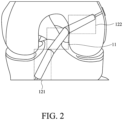
- FIG. 2 illustrates the actual implementation of the tissue scaffold of the present disclosure.
- the "main body area” 11 refers to the part of the weave exposed outside the bone
- the "fixed area” 121 and 122 refers to the part of the weave implanted in bone, for example, used to the bone connected with the original tendon and/or ligament tissue.
- bioactive component on the fiber surface of the main body area, and the bioactive component can be further impregnated into the pores of the main body area to increase cell proliferation ability, wherein the bioactive component is collagen.
- tissue scaffold comprising the bioactive component of the present disclosure
- the tissue scaffold may be prepared by the following steps of:
- reaction solution includes a solvent and a pH adjusting agent in addition to a bioactive component.
- the above bioactive component includes collagen, gelatin, silk protein, and the like.
- the bioactive component comprises collagen, and the collagen accounts for 0.5 to 5% by weight of the total weight of the main body area.
- the weight ratio of the collagen to the total weight of the main body area may be about 0.6, 0.7, 0.8, 0.9, 1.0, 1.5, 2.0, 2.5, 3.0, 3.5, 4.0 or 4.5% by weight, and but it is also not limited thereto.
- the bioactive component is collagen.
- the solvent is an aqueous acetic acid solution with pH ⁇ 3.0.
- the pH adjusting agent is phosphate buffered saline and sodium hydroxide.
- the specific preparation method comprises: dissolving 0.1 g of the collagen powder in a 60 ml of an aqueous acetic acid solution, adding 1 g of the main body area of the weave, then adding 40 ml of phosphate buffered saline and adjust the pH to 7.5 with sodium hydroxide. So that the collagen is formed on the fiber surface of the main body area.
- the solid content of the collagen dissolved in the acetic acid is 0.01 to 0.1% by weight, and the reaction temperature of the main body area and the reaction solution is 20 to 40 °C, and the reaction time is 24 to 48 hours.
- main body area of the present disclosure can be modified to comprise other cell proliferation stimulating components, such as gelatin, silk protein, keratin, and the like.
- the bioceramic material is, for example, calcium phosphate, calcium sulfate, bioglass or a combination of the foregoing.
- the calcium phosphate may be hydroxyapatite or tricalcium phosphate.
- the bioceramic material is hydroxyapatite, and an average particle size thereof is about 10 to 200 nanometers.
- the bioceramic material is present in the weft yarn of the fixed area, and the bioceramic material accounts for 1 to 4% by weight of the total weight of the weft yarn of the fixed area. In another embodiment, the bioceramic material accounts for more than 1% to 4% by weight of the total weight of the weft yarn in the fixed area.
- the weight ratio of bioceramic materials is too low, the bone growth cannot be enhanced. If the weight ratio of the bioceramic material is too high, it is easy to break when spinning the fiber.
- the weight ratio of the bioceramic material to the total weight of the weft yarns of the fixed area may be about 1.5, 2.0, 2.5, 3.0, or 3.5% by weight, and is not limited thereto.
- the weft yarns comprising the bioceramic material and the weft yarns free of bioceramic material may be selected in the fixed area of the present disclosure, or the bioceramic material may be included in each weft yarn.
- the ratio of weft yarns comprising the bioceramic material to the weft yarns free of bioceramic material is about 1:9 to 10:0.
- the weft yarns comprising the bioceramic material can be used alone in the fixed area of the present disclosure.
- weft fiber comprising the bioceramic material in the fixed area of the tissue scaffold of the present disclosure
- it is prepared by the following steps of:
- the masterbatch may comprise the above weave material and bioceramic material, and the content of the bioceramic material accounts for 1 to 4% by weight of the masterbatch.
- the masterbatch system may also comprise a dispersant.
- the dispersant may be a polyester polymer material, and the content of the dispersant accounts for 0.1 to 2% by weight of the masterbatch.
- the specific preparation method of the masterbatch comprises the steps of: subjecting the polyethylene terephthalate, hydroxyapatite and polyester dispersant to mixing and granulation to form the masterbatch.
- Example 1 Preparation of a tissue scaffold
- Preparation of a warp yarn polyethylene terephthalate was subjected to hot melt spinning to obtain a semi-stretched yarn through a modified cross-section spinning nozzle at a temperature of 270°C or higher, and then stretched at a temperature of 100 to 200°C to obtain a fully stretched yarn with Y-shaped cross-section structure.
- Preparation of a weft yarn the preparation method of the weft yarn was the same as the above preparation method of the warp yarn, except that the modified cross-section spinning nozzle was adjusted to a circular spinning nozzle.
- bioceramics-incorporated masterbatch When preparing the weft yarns comprising bioceramics, bioceramics-incorporated masterbatch was used, wherein the method for preparing bioceramics-incorporated masterbatch was prepared by the following steps of: mixing polyethylene terephthalate, hydroxyapatite with an average particle size of 60 nm, and polyester dispersant, and granulating the mixture to form a masterbatch with 2% by weight of the bioceramic material.
- Preparation of the weave according to the main body area and fixed area of the weave shown in FIG. 1 , the warp yarns and the weft yarns were selected for interlaced weaving, and the main body area was brought into contact with the reaction solution comprising the bioactive components.
- the reaction solution also included a solvent and pH adjusting agents, wherein the solvent was an aqueous acetic acid solution with pH ⁇ 3.0, and the pH adjusting agents were phosphate buffered saline and sodium hydroxide.
- the specific modification method thereof includes the following steps for preparation: dissolving 0.1 g of the collagen powder in a 60 ml of an aqueous acetic acid solution, adding 1 g of the main body area of the weave, then adding 40 ml of phosphate buffered saline and adjust the pH to 7.5 with sodium hydroxide, and after 48 hours of reaction at a reaction temperature of 20 to 40°C, forming collagen on the fiber surface of the main body area.
- tissue scaffold prepared above was subjected to subsequent animal experiments.
- the preparation method of the tissue scaffold is the same as in Example 1, except that the cross-sectional structure of the warp yarn fiber was changed to H-shaped, S-shaped, W-shaped and cross-shaped respectively. Then, the prepared tissue scaffolds were used to determine the number of cell proliferation and analyze the cell attachment ratio, and are recorded in FIG. 3 and FIG. 4 .
- the preparation method of the tissue scaffold was the same as in Example 1, except that the content of the bioceramic material was 4%. Then, the prepared tissue scaffold was analyzed for the activity of osteogenic enzymes, and recorded in FIG. 5 .
- the preparation method of the tissue scaffold was the same as in Example 1, except that the cross-sectional structure of the warp yarn fibers was a circular cross-section. Then, the prepared tissue scaffold was used to determine the number of cell proliferation and analyze the cell attachment ratio, and is recorded in FIG. 3 and FIG. 4 .
- the preparation method of the tissue scaffold was the same as in Example 1, except that the surface of the main body area of the weave was not modified. Then, the prepared tissue scaffold was used to determine the number of cell proliferation and analyze the cell attachment ratio, and are recorded in FIG. 3 and FIG. 4 .
- the preparation method of the tissue scaffold was the same as in Comparative Example 2, except that the cross-sectional structure of the warp yarn fiber was changed to a circular cross-section, an H-shaped cross-section, an S-shaped cross-section, a W-shaped cross-section, and a cross-shaped cross-section, respectively. Then, the prepared tissue scaffolds were used to determine the number of cell proliferation and analyze the cell attachment ratio, and are recorded in FIG. 3 and FIG. 4 .
- the preparation method of the tissue scaffold was the same as in Example 1, except that the bioceramic material was not added. Then, the prepared tissue scaffold was analyzed for the activity of osteogenic enzymes and bone differentiation ability, which is recorded in FIG. 5 and FIG. 6 .
- the preparation method of the tissue scaffold was the same as in Example 1, except that the content of the bioceramic material was adjusted to 1%. Then, the prepared tissue scaffold was analyzed for the activity of osteogenic enzymes, which is recorded in FIG. 5 .
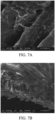
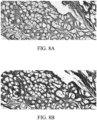
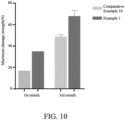
- a commercial tissue scaffold (Orthomed, LCA60NEF) was used for the animal test of the ligament reconstruction surgery of Example 1. Then, the tissue scaffold was analyzed by the surface observation, tissue section, micro-CT and biomechanical testing, etc. and the results are recorded in FIGs. 7D to 7E , 8C to 8D , 9C to 9D , and FIG. 10 .
- the present disclosure combines the corresponding bioactive materials according to different sections of the tissue scaffold to induce the regeneration of tendons or ligaments and at the same time improve the osseointegration ability. Accordingly, a tendon or a ligament tissue similar to autogenous ones is gradually formed, and the problems of fatigue, abrasion, rupture and poor stability of existing artificial grafts after long-term use are solved.
Landscapes
- Health & Medical Sciences (AREA)
- Chemical & Material Sciences (AREA)
- Life Sciences & Earth Sciences (AREA)
- Veterinary Medicine (AREA)
- Oral & Maxillofacial Surgery (AREA)
- Transplantation (AREA)
- Animal Behavior & Ethology (AREA)
- General Health & Medical Sciences (AREA)
- Public Health (AREA)
- Epidemiology (AREA)
- Dermatology (AREA)
- Medicinal Chemistry (AREA)
- Engineering & Computer Science (AREA)
- Inorganic Chemistry (AREA)
- Rheumatology (AREA)
- Orthopedic Medicine & Surgery (AREA)
- Rehabilitation Therapy (AREA)
- Cardiology (AREA)
- Biomedical Technology (AREA)
- Heart & Thoracic Surgery (AREA)
- Vascular Medicine (AREA)
- Chemical Kinetics & Catalysis (AREA)
- Ceramic Engineering (AREA)
- Biophysics (AREA)
- Materials For Medical Uses (AREA)
- Prostheses (AREA)
Claims (8)
- Gewebegerüst (1) zur Verwendung für eine Sehne und/oder ein Band, mit einem Gewirk mit einer Porengröße von 0,1 bis 1 mm, gebildet durch Verweben eines Kettgarns (101) und eines Schussgarns (110, 120), wobei das Kettgarn (101) mehrere Fasern mit jeweils nicht-kreisförmiger Querschnittsstruktur beinhaltet, und das Gewirk beinhaltet:eine Hauptteilfläche (11) mit einer bioaktiven Komponenten an seiner Faseroberfläche; undeine befestigte Fläche (121, 122), wobei die befestigte Fläche (121, 122) auf beiden Seiten der Hauptteilfläche (11) gebildet ist und das Schussgarn (120) ein biokeramisches Material beinhaltet;wobei das biokeramische Material 1 bis 4 Gewichtsprozent des Gesamtgewichts des Schussgarns (120) der befestigten Fläche (121, 122) ausmacht, und das Kettgarn (101) der befestigten Fläche (121, 122) frei von enthaltenem biokeramischem Material ist.
- Gewebegerüst (1) nach Anspruch 1, wobei ein Durchmesser einer langen Achse der in dem Kettgarn (101) enthaltenen Fasern mit nicht-kreisförmiger Querschnittsstruktur 15 bis 50 µm beträgt, und ein Durchmesser jeder der das Gewirk darstellenden Fasern des Schussgarns (110, 120) 20 bis 50 µm beträgt.
- Gewebegerüst (1) nach Anspruch 1, wobei die nicht-kreisförmige Querschnittsstruktur einen H-förmigen, einen S-förmigen, einen W-förmigen, einen Y-förmigen oder einen kreuzförmigen Querschnitt aufweist.
- Gewebegerüst (1) nach Anspruch 1, wobei eine Feinheit des die Faser mit der nichtkreisförmigen Querschnittsstruktur beinhaltenden Kettgarns 1,5 bis 50 Denier beträgt, und eine Feinheit der das Gewirk darstellenden Fasern des Schussgarns (11, 120) 40 bis 100 Denier beträgt.
- Gewebegerüst (1) nach Anspruch 1, wobei das Material des Gewirks Polyethylenterephthalat, Polyethylen, Polytetrafluorethylen, Polyurethan oder eine Kombination davon beinhaltet.
- Gewebegerüst (1) nach Anspruch 1, wobei die bioaktive Komponente Kollagen beinhaltet, und Kollagen 0,5 bis 5 Gewichtsprozent des Gesamtgewichts der Hauptteilfläche (11) ausmacht.
- Gewebegerüst (1) nach Anspruch 1, wobei das biokeramische Material Calciumphosphat, Calciumsulfat, Bioglas oder eine Kombination davon beinhaltet.
- Gewebegerüst (1) nach Anspruch 1, wobei das biokeramische Material Hydroxylapatit ist, und seine durchschnittliche Partikelgröße 10 bis 200 nm beträgt.
Applications Claiming Priority (1)
| Application Number | Priority Date | Filing Date | Title |
|---|---|---|---|
| US17/136,077 US12194192B2 (en) | 2020-12-29 | 2020-12-29 | Tissue scaffold for use in tendon and/or ligament |
Publications (2)
| Publication Number | Publication Date |
|---|---|
| EP4023265A1 EP4023265A1 (de) | 2022-07-06 |
| EP4023265B1 true EP4023265B1 (de) | 2024-02-07 |
Family
ID=77520636
Family Applications (1)
| Application Number | Title | Priority Date | Filing Date |
|---|---|---|---|
| EP21193592.9A Active EP4023265B1 (de) | 2020-12-29 | 2021-08-27 | Gewebegerüst zur verwendung in sehnen und/oder bändern |
Country Status (2)
| Country | Link |
|---|---|
| US (1) | US12194192B2 (de) |
| EP (1) | EP4023265B1 (de) |
Families Citing this family (1)
| Publication number | Priority date | Publication date | Assignee | Title |
|---|---|---|---|---|
| TWI852580B (zh) * | 2023-05-24 | 2024-08-11 | 捷立康生物科技股份有限公司 | 手術線材、其用途與製法 |
Family Cites Families (24)
| Publication number | Priority date | Publication date | Assignee | Title |
|---|---|---|---|---|
| US5004474A (en) * | 1989-11-28 | 1991-04-02 | Baxter International Inc. | Prosthetic anterior cruciate ligament design |
| US6599319B2 (en) | 2001-12-14 | 2003-07-29 | Celanese Advanced Materials, Inc. | Prosthetic ligament |
| FR2850026B1 (fr) | 2003-01-17 | 2007-08-31 | L A R S Laboratoire D Applic E | Ligament prothetique biomimetique et procede d'obtention |
| JP4627978B2 (ja) | 2003-10-27 | 2011-02-09 | 泰晴 野一色 | 低血液透過性医用材料 |
| FR2865380B1 (fr) | 2004-01-23 | 2006-03-03 | L A R S Laboratoire D Applic E | Procede pour la fixation de fils de traction aux extremites d'un ligament prothetique |
| FI20055304L (fi) * | 2005-06-13 | 2007-02-20 | Bioretec Oy | Bioabsorboituva implantti, jolla on muuttuva ominaisuus |
| EP1964583A1 (de) * | 2007-02-09 | 2008-09-03 | Royal College of Surgeons in Ireland | Verfahren zur Herstellung eines Kollagen/Hydroxyapatitverbundgerüsts |
| JP5363076B2 (ja) | 2008-11-14 | 2013-12-11 | 国立大学法人神戸大学 | 組織再生用の材料 |
| CN102908210B (zh) | 2012-10-15 | 2015-06-17 | 复旦大学附属华山医院 | 单孔悬吊式人工韧带 |
| GB201317636D0 (en) * | 2013-10-04 | 2013-11-20 | Isis Innovation | Scaffold |
| US10632230B2 (en) * | 2015-07-10 | 2020-04-28 | Warsaw Orthopedic, Inc. | Implants having a high drug load of an oxysterol and methods of use |
| US11008676B2 (en) * | 2015-12-16 | 2021-05-18 | Edwards Lifesciences Corporation | Textured woven fabric for use in implantable bioprostheses |
| TWI766853B (zh) | 2016-01-14 | 2022-06-11 | 學校法人大阪醫科藥科大學 | 經編針織物及醫療材料 |
| US10813763B2 (en) * | 2016-07-26 | 2020-10-27 | Warsaw Orthopedic, Inc. | Implantable mesh |
| WO2019055656A1 (en) * | 2017-09-13 | 2019-03-21 | Northwestern University | PHOTOREACTIVE INKS AND THERMOSETTING MATERIALS MANUFACTURED THEREFROM |
| CN107510520B (zh) | 2017-09-21 | 2020-08-11 | 上海松力生物技术有限公司 | 十字交叉韧带再生性植入物及其制备方法与应用 |
| AU2019226562C1 (en) * | 2018-03-01 | 2022-10-06 | Tepha, Inc. | Medical devices containing poly(butylene succinate) and copolymers thereof |
| US11589973B2 (en) * | 2018-05-16 | 2023-02-28 | Mimedx Group, Inc. | Methods of making collagen fiber medical constructs and related medical constructs, including patches |
| TWI692559B (zh) | 2019-06-03 | 2020-05-01 | 財團法人紡織產業綜合研究所 | 具有細胞親和性的纖維及使用其所製成的纖維製品 |
| CN110680558A (zh) | 2019-10-28 | 2020-01-14 | 北京天星博迈迪医疗器械有限公司 | 韧带重建固定装置及其使用方法 |
| CN111450316B (zh) | 2020-03-04 | 2021-07-20 | 深圳市迈捷生命科学有限公司 | 一种模拟骨-肌腱-骨矿化到非矿化梯度结构一体化支架 |
| CN111345920B (zh) | 2020-03-11 | 2022-11-11 | 上海市第六人民医院 | 一种促进腱骨愈合的移行结构化纺织基支架及其制备方法 |
| CN111359012A (zh) | 2020-04-24 | 2020-07-03 | 李军 | 可诱导腱-骨梯度结构形成的人工肩袖补片及其制备方法 |
| CN111544654B (zh) | 2020-05-15 | 2022-06-28 | 李军 | 一种复合型人工韧带及其制作方法 |
-
2020
- 2020-12-29 US US17/136,077 patent/US12194192B2/en active Active
-
2021
- 2021-08-27 EP EP21193592.9A patent/EP4023265B1/de active Active
Also Published As
| Publication number | Publication date |
|---|---|
| US12194192B2 (en) | 2025-01-14 |
| EP4023265A1 (de) | 2022-07-06 |
| US20220202990A1 (en) | 2022-06-30 |
Similar Documents
| Publication | Publication Date | Title |
|---|---|---|
| Vaquette et al. | The effect of polystyrene sodium sulfonate grafting on polyethylene terephthalate artificial ligaments on in vitro mineralisation and in vivo bone tissue integration | |
| Lu et al. | Interface tissue Engineeringand the formulation of multiple-tissue systems | |
| Cooper et al. | Fiber-based tissue-engineered scaffold for ligament replacement: design considerations and in vitro evaluation | |
| US7108721B2 (en) | Tissue regrafting | |
| EP2109470B1 (de) | Gewebte oder geflochtene faserimplantate und herstellungsverfahren dafür | |
| EP2432426B1 (de) | Mechanisch kompetentes gerüst für bänder- und sehnenregeneration | |
| US5522895A (en) | Biodegradable bone templates | |
| CA2606379A1 (en) | Three-dimensional fiber scaffolds for tissue engineering | |
| Milthorpe | Xenografts for tendon and ligament repair | |
| JP2003500162A (ja) | 結合組織再構成用移植片 | |
| JP2003512896A (ja) | 組織修復 | |
| US20100136086A1 (en) | Dynamic bioactive nanofiber scaffolding | |
| Wang et al. | Phytic acid/magnesium ion complex coating on PEEK fiber woven fabric as an artificial ligament with anti-fibrogenesis and osteogenesis for ligament-bone healing | |
| Hasegawa et al. | Marrow cell culture on poly-L-lactic acid fabrics. | |
| Savić et al. | Early development of a polycaprolactone electrospun augment for anterior cruciate ligament reconstruction | |
| EP4255517A1 (de) | Bioabsorbierbare textilien und verfahren zur wiederherstellung der gelenkfunktion | |
| US12194192B2 (en) | Tissue scaffold for use in tendon and/or ligament | |
| Kock et al. | Interface and biocompatibility of polyethylene terephthalate knee ligament prostheses A histological and ultrastructural device retrieval analysis in failed synthetic implants used for surgical repair of anterior cruciate ligaments | |
| Mendes et al. | Histologic Pattern of Biomechanic Properties of the Carbon Fiber-Augmented Ligament Tendon A Laboratory and Clinical Study | |
| Mäkisalo et al. | Reconstruction of anterior cruciate ligament with carbon fiber: An experimental study on pigs | |
| TWI765500B (zh) | 用於肌腱及/或韌帶之組織支架 | |
| CN114681123A (zh) | 用于肌腱及/或韧带的组织支架 | |
| Mutsuzaki et al. | Firm anchoring between a calcium phosphate-hybridized tendon and bone for anterior cruciate ligament reconstruction in a goat model | |
| US20250205038A1 (en) | Tissue scaffold and method of manufacturing the same | |
| Yang et al. | Advancements in anterior cruciate ligament reconstruction based on weaving technology: current developments and future prospects |
Legal Events
| Date | Code | Title | Description |
|---|---|---|---|
| PUAI | Public reference made under article 153(3) epc to a published international application that has entered the european phase |
Free format text: ORIGINAL CODE: 0009012 |
|
| STAA | Information on the status of an ep patent application or granted ep patent |
Free format text: STATUS: REQUEST FOR EXAMINATION WAS MADE |
|
| 17P | Request for examination filed |
Effective date: 20210827 |
|
| AK | Designated contracting states |
Kind code of ref document: A1 Designated state(s): AL AT BE BG CH CY CZ DE DK EE ES FI FR GB GR HR HU IE IS IT LI LT LU LV MC MK MT NL NO PL PT RO RS SE SI SK SM TR |
|
| STAA | Information on the status of an ep patent application or granted ep patent |
Free format text: STATUS: EXAMINATION IS IN PROGRESS |
|
| 17Q | First examination report despatched |
Effective date: 20230630 |
|
| GRAP | Despatch of communication of intention to grant a patent |
Free format text: ORIGINAL CODE: EPIDOSNIGR1 |
|
| STAA | Information on the status of an ep patent application or granted ep patent |
Free format text: STATUS: GRANT OF PATENT IS INTENDED |
|
| INTG | Intention to grant announced |
Effective date: 20231020 |
|
| GRAS | Grant fee paid |
Free format text: ORIGINAL CODE: EPIDOSNIGR3 |
|
| GRAA | (expected) grant |
Free format text: ORIGINAL CODE: 0009210 |
|
| STAA | Information on the status of an ep patent application or granted ep patent |
Free format text: STATUS: THE PATENT HAS BEEN GRANTED |
|
| AK | Designated contracting states |
Kind code of ref document: B1 Designated state(s): AL AT BE BG CH CY CZ DE DK EE ES FI FR GB GR HR HU IE IS IT LI LT LU LV MC MK MT NL NO PL PT RO RS SE SI SK SM TR |
|
| REG | Reference to a national code |
Ref country code: GB Ref legal event code: FG4D |
|
| REG | Reference to a national code |
Ref country code: CH Ref legal event code: EP |
|
| REG | Reference to a national code |
Ref country code: IE Ref legal event code: FG4D |
|
| REG | Reference to a national code |
Ref country code: DE Ref legal event code: R096 Ref document number: 602021009170 Country of ref document: DE |
|
| REG | Reference to a national code |
Ref country code: LT Ref legal event code: MG9D |
|
| REG | Reference to a national code |
Ref country code: NL Ref legal event code: MP Effective date: 20240207 |
|
| PG25 | Lapsed in a contracting state [announced via postgrant information from national office to epo] |
Ref country code: IS Free format text: LAPSE BECAUSE OF FAILURE TO SUBMIT A TRANSLATION OF THE DESCRIPTION OR TO PAY THE FEE WITHIN THE PRESCRIBED TIME-LIMIT Effective date: 20240607 |
|
| PG25 | Lapsed in a contracting state [announced via postgrant information from national office to epo] |
Ref country code: LT Free format text: LAPSE BECAUSE OF FAILURE TO SUBMIT A TRANSLATION OF THE DESCRIPTION OR TO PAY THE FEE WITHIN THE PRESCRIBED TIME-LIMIT Effective date: 20240207 |
|
| PG25 | Lapsed in a contracting state [announced via postgrant information from national office to epo] |
Ref country code: GR Free format text: LAPSE BECAUSE OF FAILURE TO SUBMIT A TRANSLATION OF THE DESCRIPTION OR TO PAY THE FEE WITHIN THE PRESCRIBED TIME-LIMIT Effective date: 20240508 |
|
| REG | Reference to a national code |
Ref country code: AT Ref legal event code: MK05 Ref document number: 1654968 Country of ref document: AT Kind code of ref document: T Effective date: 20240207 |
|
| PG25 | Lapsed in a contracting state [announced via postgrant information from national office to epo] |
Ref country code: RS Free format text: LAPSE BECAUSE OF FAILURE TO SUBMIT A TRANSLATION OF THE DESCRIPTION OR TO PAY THE FEE WITHIN THE PRESCRIBED TIME-LIMIT Effective date: 20240507 Ref country code: HR Free format text: LAPSE BECAUSE OF FAILURE TO SUBMIT A TRANSLATION OF THE DESCRIPTION OR TO PAY THE FEE WITHIN THE PRESCRIBED TIME-LIMIT Effective date: 20240207 Ref country code: NL Free format text: LAPSE BECAUSE OF FAILURE TO SUBMIT A TRANSLATION OF THE DESCRIPTION OR TO PAY THE FEE WITHIN THE PRESCRIBED TIME-LIMIT Effective date: 20240207 |
|
| PG25 | Lapsed in a contracting state [announced via postgrant information from national office to epo] |
Ref country code: ES Free format text: LAPSE BECAUSE OF FAILURE TO SUBMIT A TRANSLATION OF THE DESCRIPTION OR TO PAY THE FEE WITHIN THE PRESCRIBED TIME-LIMIT Effective date: 20240207 |
|
| PG25 | Lapsed in a contracting state [announced via postgrant information from national office to epo] |
Ref country code: AT Free format text: LAPSE BECAUSE OF FAILURE TO SUBMIT A TRANSLATION OF THE DESCRIPTION OR TO PAY THE FEE WITHIN THE PRESCRIBED TIME-LIMIT Effective date: 20240207 |
|
| PG25 | Lapsed in a contracting state [announced via postgrant information from national office to epo] |
Ref country code: RS Free format text: LAPSE BECAUSE OF FAILURE TO SUBMIT A TRANSLATION OF THE DESCRIPTION OR TO PAY THE FEE WITHIN THE PRESCRIBED TIME-LIMIT Effective date: 20240507 Ref country code: NO Free format text: LAPSE BECAUSE OF FAILURE TO SUBMIT A TRANSLATION OF THE DESCRIPTION OR TO PAY THE FEE WITHIN THE PRESCRIBED TIME-LIMIT Effective date: 20240507 Ref country code: NL Free format text: LAPSE BECAUSE OF FAILURE TO SUBMIT A TRANSLATION OF THE DESCRIPTION OR TO PAY THE FEE WITHIN THE PRESCRIBED TIME-LIMIT Effective date: 20240207 Ref country code: LT Free format text: LAPSE BECAUSE OF FAILURE TO SUBMIT A TRANSLATION OF THE DESCRIPTION OR TO PAY THE FEE WITHIN THE PRESCRIBED TIME-LIMIT Effective date: 20240207 Ref country code: IS Free format text: LAPSE BECAUSE OF FAILURE TO SUBMIT A TRANSLATION OF THE DESCRIPTION OR TO PAY THE FEE WITHIN THE PRESCRIBED TIME-LIMIT Effective date: 20240607 Ref country code: HR Free format text: LAPSE BECAUSE OF FAILURE TO SUBMIT A TRANSLATION OF THE DESCRIPTION OR TO PAY THE FEE WITHIN THE PRESCRIBED TIME-LIMIT Effective date: 20240207 Ref country code: GR Free format text: LAPSE BECAUSE OF FAILURE TO SUBMIT A TRANSLATION OF THE DESCRIPTION OR TO PAY THE FEE WITHIN THE PRESCRIBED TIME-LIMIT Effective date: 20240508 Ref country code: FI Free format text: LAPSE BECAUSE OF FAILURE TO SUBMIT A TRANSLATION OF THE DESCRIPTION OR TO PAY THE FEE WITHIN THE PRESCRIBED TIME-LIMIT Effective date: 20240207 Ref country code: ES Free format text: LAPSE BECAUSE OF FAILURE TO SUBMIT A TRANSLATION OF THE DESCRIPTION OR TO PAY THE FEE WITHIN THE PRESCRIBED TIME-LIMIT Effective date: 20240207 Ref country code: BG Free format text: LAPSE BECAUSE OF FAILURE TO SUBMIT A TRANSLATION OF THE DESCRIPTION OR TO PAY THE FEE WITHIN THE PRESCRIBED TIME-LIMIT Effective date: 20240207 Ref country code: AT Free format text: LAPSE BECAUSE OF FAILURE TO SUBMIT A TRANSLATION OF THE DESCRIPTION OR TO PAY THE FEE WITHIN THE PRESCRIBED TIME-LIMIT Effective date: 20240207 |
|
| PG25 | Lapsed in a contracting state [announced via postgrant information from national office to epo] |
Ref country code: PL Free format text: LAPSE BECAUSE OF FAILURE TO SUBMIT A TRANSLATION OF THE DESCRIPTION OR TO PAY THE FEE WITHIN THE PRESCRIBED TIME-LIMIT Effective date: 20240207 Ref country code: PT Free format text: LAPSE BECAUSE OF FAILURE TO SUBMIT A TRANSLATION OF THE DESCRIPTION OR TO PAY THE FEE WITHIN THE PRESCRIBED TIME-LIMIT Effective date: 20240607 |
|
| PG25 | Lapsed in a contracting state [announced via postgrant information from national office to epo] |
Ref country code: SE Free format text: LAPSE BECAUSE OF FAILURE TO SUBMIT A TRANSLATION OF THE DESCRIPTION OR TO PAY THE FEE WITHIN THE PRESCRIBED TIME-LIMIT Effective date: 20240207 Ref country code: PT Free format text: LAPSE BECAUSE OF FAILURE TO SUBMIT A TRANSLATION OF THE DESCRIPTION OR TO PAY THE FEE WITHIN THE PRESCRIBED TIME-LIMIT Effective date: 20240607 Ref country code: PL Free format text: LAPSE BECAUSE OF FAILURE TO SUBMIT A TRANSLATION OF THE DESCRIPTION OR TO PAY THE FEE WITHIN THE PRESCRIBED TIME-LIMIT Effective date: 20240207 Ref country code: LV Free format text: LAPSE BECAUSE OF FAILURE TO SUBMIT A TRANSLATION OF THE DESCRIPTION OR TO PAY THE FEE WITHIN THE PRESCRIBED TIME-LIMIT Effective date: 20240207 |
|
| PG25 | Lapsed in a contracting state [announced via postgrant information from national office to epo] |
Ref country code: DK Free format text: LAPSE BECAUSE OF FAILURE TO SUBMIT A TRANSLATION OF THE DESCRIPTION OR TO PAY THE FEE WITHIN THE PRESCRIBED TIME-LIMIT Effective date: 20240207 |
|
| PG25 | Lapsed in a contracting state [announced via postgrant information from national office to epo] |
Ref country code: SM Free format text: LAPSE BECAUSE OF FAILURE TO SUBMIT A TRANSLATION OF THE DESCRIPTION OR TO PAY THE FEE WITHIN THE PRESCRIBED TIME-LIMIT Effective date: 20240207 |
|
| PG25 | Lapsed in a contracting state [announced via postgrant information from national office to epo] |
Ref country code: EE Free format text: LAPSE BECAUSE OF FAILURE TO SUBMIT A TRANSLATION OF THE DESCRIPTION OR TO PAY THE FEE WITHIN THE PRESCRIBED TIME-LIMIT Effective date: 20240207 Ref country code: CZ Free format text: LAPSE BECAUSE OF FAILURE TO SUBMIT A TRANSLATION OF THE DESCRIPTION OR TO PAY THE FEE WITHIN THE PRESCRIBED TIME-LIMIT Effective date: 20240207 |
|
| PG25 | Lapsed in a contracting state [announced via postgrant information from national office to epo] |
Ref country code: SK Free format text: LAPSE BECAUSE OF FAILURE TO SUBMIT A TRANSLATION OF THE DESCRIPTION OR TO PAY THE FEE WITHIN THE PRESCRIBED TIME-LIMIT Effective date: 20240207 |
|
| PG25 | Lapsed in a contracting state [announced via postgrant information from national office to epo] |
Ref country code: SM Free format text: LAPSE BECAUSE OF FAILURE TO SUBMIT A TRANSLATION OF THE DESCRIPTION OR TO PAY THE FEE WITHIN THE PRESCRIBED TIME-LIMIT Effective date: 20240207 Ref country code: SK Free format text: LAPSE BECAUSE OF FAILURE TO SUBMIT A TRANSLATION OF THE DESCRIPTION OR TO PAY THE FEE WITHIN THE PRESCRIBED TIME-LIMIT Effective date: 20240207 Ref country code: RO Free format text: LAPSE BECAUSE OF FAILURE TO SUBMIT A TRANSLATION OF THE DESCRIPTION OR TO PAY THE FEE WITHIN THE PRESCRIBED TIME-LIMIT Effective date: 20240207 Ref country code: EE Free format text: LAPSE BECAUSE OF FAILURE TO SUBMIT A TRANSLATION OF THE DESCRIPTION OR TO PAY THE FEE WITHIN THE PRESCRIBED TIME-LIMIT Effective date: 20240207 Ref country code: DK Free format text: LAPSE BECAUSE OF FAILURE TO SUBMIT A TRANSLATION OF THE DESCRIPTION OR TO PAY THE FEE WITHIN THE PRESCRIBED TIME-LIMIT Effective date: 20240207 Ref country code: CZ Free format text: LAPSE BECAUSE OF FAILURE TO SUBMIT A TRANSLATION OF THE DESCRIPTION OR TO PAY THE FEE WITHIN THE PRESCRIBED TIME-LIMIT Effective date: 20240207 |
|
| REG | Reference to a national code |
Ref country code: DE Ref legal event code: R097 Ref document number: 602021009170 Country of ref document: DE |
|
| PG25 | Lapsed in a contracting state [announced via postgrant information from national office to epo] |
Ref country code: IT Free format text: LAPSE BECAUSE OF FAILURE TO SUBMIT A TRANSLATION OF THE DESCRIPTION OR TO PAY THE FEE WITHIN THE PRESCRIBED TIME-LIMIT Effective date: 20240207 |
|
| PLBE | No opposition filed within time limit |
Free format text: ORIGINAL CODE: 0009261 |
|
| STAA | Information on the status of an ep patent application or granted ep patent |
Free format text: STATUS: NO OPPOSITION FILED WITHIN TIME LIMIT |
|
| PG25 | Lapsed in a contracting state [announced via postgrant information from national office to epo] |
Ref country code: IT Free format text: LAPSE BECAUSE OF FAILURE TO SUBMIT A TRANSLATION OF THE DESCRIPTION OR TO PAY THE FEE WITHIN THE PRESCRIBED TIME-LIMIT Effective date: 20240207 |
|
| 26N | No opposition filed |
Effective date: 20241108 |
|
| REG | Reference to a national code |
Ref country code: CH Ref legal event code: PL |
|
| PG25 | Lapsed in a contracting state [announced via postgrant information from national office to epo] |
Ref country code: LU Free format text: LAPSE BECAUSE OF NON-PAYMENT OF DUE FEES Effective date: 20240827 |
|
| PG25 | Lapsed in a contracting state [announced via postgrant information from national office to epo] |
Ref country code: MC Free format text: LAPSE BECAUSE OF FAILURE TO SUBMIT A TRANSLATION OF THE DESCRIPTION OR TO PAY THE FEE WITHIN THE PRESCRIBED TIME-LIMIT Effective date: 20240207 Ref country code: SI Free format text: LAPSE BECAUSE OF FAILURE TO SUBMIT A TRANSLATION OF THE DESCRIPTION OR TO PAY THE FEE WITHIN THE PRESCRIBED TIME-LIMIT Effective date: 20240207 Ref country code: CH Free format text: LAPSE BECAUSE OF NON-PAYMENT OF DUE FEES Effective date: 20240831 |
|
| REG | Reference to a national code |
Ref country code: BE Ref legal event code: MM Effective date: 20240831 |
|
| PG25 | Lapsed in a contracting state [announced via postgrant information from national office to epo] |
Ref country code: BE Free format text: LAPSE BECAUSE OF NON-PAYMENT OF DUE FEES Effective date: 20240831 |
|
| PG25 | Lapsed in a contracting state [announced via postgrant information from national office to epo] |
Ref country code: IE Free format text: LAPSE BECAUSE OF NON-PAYMENT OF DUE FEES Effective date: 20240827 |
|
| PGFP | Annual fee paid to national office [announced via postgrant information from national office to epo] |
Ref country code: DE Payment date: 20250827 Year of fee payment: 5 |
|
| PGFP | Annual fee paid to national office [announced via postgrant information from national office to epo] |
Ref country code: FR Payment date: 20250825 Year of fee payment: 5 |
|
| PG25 | Lapsed in a contracting state [announced via postgrant information from national office to epo] |
Ref country code: CY Free format text: LAPSE BECAUSE OF FAILURE TO SUBMIT A TRANSLATION OF THE DESCRIPTION OR TO PAY THE FEE WITHIN THE PRESCRIBED TIME-LIMIT; INVALID AB INITIO Effective date: 20210827 |
|
| PG25 | Lapsed in a contracting state [announced via postgrant information from national office to epo] |
Ref country code: HU Free format text: LAPSE BECAUSE OF FAILURE TO SUBMIT A TRANSLATION OF THE DESCRIPTION OR TO PAY THE FEE WITHIN THE PRESCRIBED TIME-LIMIT; INVALID AB INITIO Effective date: 20210827 |
|
| GBPC | Gb: european patent ceased through non-payment of renewal fee |
Effective date: 20250827 |