EP4020747B1 - Power supply control method, apparatus and system - Google Patents
Power supply control method, apparatus and system Download PDFInfo
- Publication number
- EP4020747B1 EP4020747B1 EP20854634.1A EP20854634A EP4020747B1 EP 4020747 B1 EP4020747 B1 EP 4020747B1 EP 20854634 A EP20854634 A EP 20854634A EP 4020747 B1 EP4020747 B1 EP 4020747B1
- Authority
- EP
- European Patent Office
- Prior art keywords
- power consumption
- communication station
- duration
- controller
- battery
- Prior art date
- Legal status (The legal status is an assumption and is not a legal conclusion. Google has not performed a legal analysis and makes no representation as to the accuracy of the status listed.)
- Active
Links
Images





Classifications
-
- H—ELECTRICITY
- H02—GENERATION; CONVERSION OR DISTRIBUTION OF ELECTRIC POWER
- H02J—ELECTRIC POWER NETWORKS; CIRCUIT ARRANGEMENTS OR SYSTEMS FOR SUPPLYING OR DISTRIBUTING ELECTRIC POWER; SYSTEMS FOR STORING ELECTRIC ENERGY
- H02J7/00—Circuit arrangements for charging or discharging batteries or for supplying loads from batteries
- H02J7/40—Circuit arrangements for charging or discharging batteries or for supplying loads from batteries characterised by the exchange of charge or discharge related data
-
- H—ELECTRICITY
- H02—GENERATION; CONVERSION OR DISTRIBUTION OF ELECTRIC POWER
- H02J—ELECTRIC POWER NETWORKS; CIRCUIT ARRANGEMENTS OR SYSTEMS FOR SUPPLYING OR DISTRIBUTING ELECTRIC POWER; SYSTEMS FOR STORING ELECTRIC ENERGY
- H02J7/00—Circuit arrangements for charging or discharging batteries or for supplying loads from batteries
- H02J7/80—Circuit arrangements for charging or discharging batteries or for supplying loads from batteries including monitoring or indicating arrangements
- H02J7/82—Control of state of charge [SOC]
-
- H—ELECTRICITY
- H02—GENERATION; CONVERSION OR DISTRIBUTION OF ELECTRIC POWER
- H02J—ELECTRIC POWER NETWORKS; CIRCUIT ARRANGEMENTS OR SYSTEMS FOR SUPPLYING OR DISTRIBUTING ELECTRIC POWER; SYSTEMS FOR STORING ELECTRIC ENERGY
- H02J7/00—Circuit arrangements for charging or discharging batteries or for supplying loads from batteries
- H02J7/855—Circuit arrangements for charging or discharging batteries or for supplying loads from batteries with circuits adapted for supplying loads from the battery
-
- H—ELECTRICITY
- H02—GENERATION; CONVERSION OR DISTRIBUTION OF ELECTRIC POWER
- H02J—ELECTRIC POWER NETWORKS; CIRCUIT ARRANGEMENTS OR SYSTEMS FOR SUPPLYING OR DISTRIBUTING ELECTRIC POWER; SYSTEMS FOR STORING ELECTRIC ENERGY
- H02J9/00—Circuit arrangements for emergency or stand-by power supply, e.g. for emergency lighting
- H02J9/04—Circuit arrangements for emergency or stand-by power supply, e.g. for emergency lighting in which the distribution system is disconnected from the normal source and connected to a standby source
-
- H—ELECTRICITY
- H02—GENERATION; CONVERSION OR DISTRIBUTION OF ELECTRIC POWER
- H02J—ELECTRIC POWER NETWORKS; CIRCUIT ARRANGEMENTS OR SYSTEMS FOR SUPPLYING OR DISTRIBUTING ELECTRIC POWER; SYSTEMS FOR STORING ELECTRIC ENERGY
- H02J9/00—Circuit arrangements for emergency or stand-by power supply, e.g. for emergency lighting
- H02J9/04—Circuit arrangements for emergency or stand-by power supply, e.g. for emergency lighting in which the distribution system is disconnected from the normal source and connected to a standby source
- H02J9/06—Circuit arrangements for emergency or stand-by power supply, e.g. for emergency lighting in which the distribution system is disconnected from the normal source and connected to a standby source with automatic change-over, e.g. UPS systems
- H02J9/061—Circuit arrangements for emergency or stand-by power supply, e.g. for emergency lighting in which the distribution system is disconnected from the normal source and connected to a standby source with automatic change-over, e.g. UPS systems for DC powered loads
-
- Y—GENERAL TAGGING OF NEW TECHNOLOGICAL DEVELOPMENTS; GENERAL TAGGING OF CROSS-SECTIONAL TECHNOLOGIES SPANNING OVER SEVERAL SECTIONS OF THE IPC; TECHNICAL SUBJECTS COVERED BY FORMER USPC CROSS-REFERENCE ART COLLECTIONS [XRACs] AND DIGESTS
- Y02—TECHNOLOGIES OR APPLICATIONS FOR MITIGATION OR ADAPTATION AGAINST CLIMATE CHANGE
- Y02B—CLIMATE CHANGE MITIGATION TECHNOLOGIES RELATED TO BUILDINGS, e.g. HOUSING, HOUSE APPLIANCES OR RELATED END-USER APPLICATIONS
- Y02B70/00—Technologies for an efficient end-user side electric power management and consumption
- Y02B70/30—Systems integrating technologies related to power network operation and communication or information technologies for improving the carbon footprint of the management of residential or tertiary loads, i.e. smart grids as climate change mitigation technology in the buildings sector, including also the last stages of power distribution and the control, monitoring or operating management systems at local level
-
- Y—GENERAL TAGGING OF NEW TECHNOLOGICAL DEVELOPMENTS; GENERAL TAGGING OF CROSS-SECTIONAL TECHNOLOGIES SPANNING OVER SEVERAL SECTIONS OF THE IPC; TECHNICAL SUBJECTS COVERED BY FORMER USPC CROSS-REFERENCE ART COLLECTIONS [XRACs] AND DIGESTS
- Y04—INFORMATION OR COMMUNICATION TECHNOLOGIES HAVING AN IMPACT ON OTHER TECHNOLOGY AREAS
- Y04S—SYSTEMS INTEGRATING TECHNOLOGIES RELATED TO POWER NETWORK OPERATION, COMMUNICATION OR INFORMATION TECHNOLOGIES FOR IMPROVING THE ELECTRICAL POWER GENERATION, TRANSMISSION, DISTRIBUTION, MANAGEMENT OR USAGE, i.e. SMART GRIDS
- Y04S20/00—Management or operation of end-user stationary applications or the last stages of power distribution; Controlling, monitoring or operating thereof
- Y04S20/20—End-user application control systems
Definitions
- This application relates to the communication field, and in particular, to a backup power supply control method, apparatus, and system.
- CN109256836A describes a power-down control method and a device, which relates to the technical field of communication. It is described that the method comprises the following steps of: acquiring a first discharge current of a battery at a first time, wherein the battery is used for supplying power to a communication device, and the first time is a time when the battery starts supplying power to the communication device; determining a first discharge time of the battery according to the first discharge current; and if the first discharge time of the battery is shorter than the first preset time, turning off the first service in the communication device.
- US2013/176000A1 describes a method and system for controlling charging of a rechargeable battery to obtain a desired state of battery charge. It is described that in one embodiment the method comprises assessing an indicator of state of battery charge to determine current battery charge and determining the desired state of battery charge at a predetermined point in an expected battery load pattern, and then receiving an indication of an operational characteristic of an available charge source per time slot to charge the rechargeable battery until the predetermined point and calculating in which of the time slots to charge the battery in order to charge the rechargeable battery to the desired state of battery charge by the predetermined point in the expected battery load pattern to optimise a charging characteristic to the predetermined point.
- US10283987B1 describes a smart battery unit capable of assessing its suitability to support a particular load. It is described that in some embodiments, the battery unit may receive an indication of power requirements for the particular load with respect to a period of time and may evaluate a total electrical capacity that would be required to support such a load based on those power requirements. It is described that the battery backup unit may monitor and dynamically update a full-charge capacity value related to its battery cells as well as the capacity requirement related to the load. It is described that the two values may then be compared to determine whether the battery backup unit is capable of supporting the load, and if the full-charge capacity value is less than the capacity requirement for the load, then the battery unit may determine that it is not suitable for that load.
- a communication power supply system may be used to supply power to a communication device in the communication station. Specifically, when mains power supplying is normal, the mains supplies power to the communication device in the communication station; and when mains outage occurs, a battery is used to supply power to the communication device in the communication station.
- the communication station 101 may include a baseband unit (baseband unit, BBU) and a radio frequency unit.
- BBU baseband unit
- the BBU as a brain of the entire system, is configured to centrally manage the entire base station, provides a physical interface between the base station and a transmission network, provides communication interfaces with the radio frequency unit and the communication power supply system 102, and is responsible for controlling an operation mode of the communication device in the base station.
- the radio frequency unit is a radio frequency part of the base station, and mainly completes modulation and demodulation, data processing, and the like of a baseband signal and a radio frequency signal.
- the communication power supply system 102 may supply power to the radio frequency unit.
- carrier transmit power may be reduced by disabling a carrier frequency, a channel, or the like of the radio frequency part, to reduce power consumption of the base station.
- the base station may further include other network elements, which are not described one by one herein.
- the communication power supply system 102 may include an energy controlling monitor, a rectifier, and a battery.
- the energy controlling monitor may be considered as a central processing unit of the entire communication power supply system 102, and centrally monitors working statuses of energy components such as the rectifier, the battery, and a temperature control device in the communication power supply system 102.
- the energy controlling monitor may collect and analyze related data of the communication power supply system 102, and may communicate with the BBU of the communication station.
- the rectifier is configured to transform alternating current to direct current that is usable for the communication device and the rectifier is controlled by the energy controlling monitor.
- the battery is used for electric energy storage.
- the battery is equipped with a battery management system (battery management system, BMS), and is managed by the energy controlling monitor.
- BMS battery management system
- the energy controlling monitor can monitor related data of the battery in real time through the battery BMS, such as a battery voltage, a current, a remaining capacity, a battery state of health, and other data.
- the communication power supply system 102 may further include other devices, which are not described one by one herein.
- the communication power supply system may supply power to the communication station 101 in a hybrid power supplying manner.
- the communication station 101 is powered by the mains and a solar supply.
- the communication station 101 is powered by the mains and a diesel generation supply. This is not specifically limited in the embodiments of this application.
- the communication station 101 may enter an energy saving running state. Specifically, the communication device in the communication station performs an energy saving action within the specified time. For example, transmit power of a radio frequency module is reduced within a T1 time period, some transmit channels are disabled within a T2 time period, and a carrier is disabled within a T3 time period. T1, T2, and T3 are determined by a user based on experience.
- T1, T2, and T3 are determined by a user based on experience.
- this manner because an actual status of the battery, such as a state of charge of the battery, is not considered, this manner cannot enable the battery to supply power to the communication station during the entire mains outage. As a result, power supplying duration of the battery is less than mains outage duration. Consequently, within some time periods during the mains outage, the battery cannot supply power to the communication device in the communication station.
- the communication power supply system 102 may control, based on low-load voltage disconnection and battery-load voltage disconnection of the battery by itself, some communication devices in the communication station 101 to be powered off. For example, when the low-load voltage disconnection of the battery is lower than a first voltage, for example, 44 V, some communication devices are controlled to be powered off; and when the battery-load voltage disconnection of the battery is lower than a second voltage, for example, 43.2 V, some other communication devices are controlled to be powered off.
- a first voltage for example, 44 V
- a second voltage for example, 43.2 V
- the communication station enters the energy saving running state (that is, some communication devices are powered off) only when the low-load voltage disconnection of the battery is lower than the first voltage, and when the low-load voltage disconnection of the battery is lower than the first voltage, the state of charge of the battery is usually small, that is, the battery may continue supplying power to the communication station 101 for a short period of time. Therefore, this manner cannot enable the battery to supply power to the communication station during the entire mains outage. As a result, the power supplying duration of the battery is less than duration of the mains outage. As a result, the power supplying duration of the battery is less than the mains outage duration. Consequently, within some time periods during the mains outage, the battery cannot supply power to the communication device in the communication station.
- the energy saving running state that is, some communication devices are powered off
- an embodiment of this application provides a backup power supply control method, to enable actual power supplying duration of a battery to meet a requirement in a case of mains outage.
- the following describes the backup power supply control method provided in the embodiment of this application.
- FIG. 2 is a schematic flowchart of a backup power supply control method according to an embodiment of this application.
- the backup power supply control method shown in FIG. 2 may be implemented, for example, by using the following steps 101 to 103.
- the backup power supply control method shown in FIG. 2 may be performed by a controller of a communication station 101 shown in FIG. 2 , or may be performed by a controller of a communication power supply system 102.
- the controller of the communication power supply system 102 is referred to as a first controller, and the first controller may be, for example, the foregoing energy controlling monitor.
- the controller of the communication station 101 is referred to as a second controller, and the second controller may be, for example, the foregoing BBU.
- an occasion for performing the method shown in FIG. 2 is not specifically limited in this embodiment of this application. For example, the method shown in FIG.
- the method shown in FIG. 2 may also be performed at a moment before the mains outage is about to occur.
- Step 101 Obtain target power supplying duration of a battery, and determine average power consumption of a communication station within a time period corresponding to the target power supplying duration.
- the target power supplying duration mentioned herein may be considered as mains outage duration. In other words, within the time period corresponding to the target power supplying duration, the battery needs to be used to supply power to the communication station.
- the battery mentioned herein may be a lithium battery, or may be a lead acid battery. This is not specifically limited in this embodiment of this application.
- the "time period corresponding to the target power supplying duration" is referred to as a "mains outage time period”. It may be understood that, to some extent, the average power consumption may be reflected in a quantity of electricity required for supplying power to the communication station within the mains outage time period.
- the target power supplying duration may be entered by a user through a human-computer interaction interface.
- the related department delivers the mains outage notification, and the notification specifies the mains outage duration.
- the user may enter the target power supplying duration through the human-computer interaction interface.
- the user estimates mains outage duration, and enters, through the human-computer interaction interface, the target power supplying duration estimated by the user.
- the first controller or the second controller may estimate the target power supplying duration according to related mains outage duration estimation logic.
- the terminal device mentioned herein usually refers to a terminal device on a communication power supply system side.
- the first controller may directly obtain the target supply powering duration entered by the user on the terminal device through the human-computer interaction interface. If the method shown in FIG. 2 is performed by the second controller, after obtaining the target power supplying duration, the first controller may send the target power supplying duration to the second controller, that is, the second controller may obtain the target power supplying duration from the first controller.
- the first controller collects statistics on power consumption data of the communication station at a specific time interval. Therefore, if the method shown in FIG. 2 is implemented by the first controller, the first controller may directly obtain the historical power consumption data that is of the communication station and on which the first controller collects statistics. If the method shown in FIG. 2 is implemented by the second controller, the second controller may obtain the historical power consumption data of the communication station from the first controller, and determine, based on the historical power consumption data, the average power consumption of the communication station within the mains outage time period.
- Step 102 Obtain a state of charge of the battery, and determine, based on the state of charge of the battery and the foregoing average power consumption, actual power supplying duration for the battery to supply power to the communication station.
- the first controller may obtain the state of charge of the battery by using a BMS of the battery. Certainly, if the method shown in FIG. 2 is performed by the second controller, the first controller may send the state of charge to the second controller.
- the actual power supplying duration for the battery to supply power to the communication station may be determined based on the state of charge of the battery and the foregoing average power consumption.
- Step 103 If the actual power supplying duration is less than the target power supplying duration, adjust the operation mode of the communication device in the communication station, to reduce the average power consumption, where actual power supplying duration for the battery to supply power to the communication station whose average power consumption is reduced is enabled to be greater than or equal to the target power supplying duration.
- the operation mode of the communication device in the communication station may be adjusted, to reduce the average power consumption, so that the actual power supplying duration for the battery to supply power to the communication station whose average power consumption is reduced is greater than or equal to the target power supplying duration.
- a specific implementation of adjusting the operation mode of the communication device in the communication station is not specifically limited in this embodiment of this application. It is considered that in actual application, turning off the communication device in the communication station can reduce the foregoing average power consumption. Therefore, in an implementation of this embodiment of this application, the communication device in the communication station may be turned off. For example, some communication devices in the communication station, such as a temperature controlling device, may be turned off. In addition, it is considered that in actual application, power of the communication device may be adjusted, and if the power of the communication device is reduced, the foregoing average power may also be reduced. Therefore, in another implementation of this embodiment of this application, the power of the communication device may be reduced. For example, power of some communication devices may be reduced. In this embodiment of this application, the power of some communication devices may be reduced in a manner such as disabling a carrier frequency or reducing a pilot.
- the second controller may be considered as a control center of the communication station
- the second controller may directly adjust the operation mode of the communication device in the communication station.
- the first controller may indirectly adjust the operation mode of the communication device in the communication station.
- the first controller may send an energy saving instruction to the second controller.
- the second controller may adjust the operation mode of the communication device in the communication station according to the energy saving instruction.
- the foregoing steps 101 to 103 may be repeatedly performed, that is, average power consumption of the communication station after the operation mode adjustment within the mains outage time period is re-determined.
- Corresponding actual power supplying duration is re-determined based on the state of charge of the battery and the re-determined average power consumption, until the determined actual power supplying duration is greater than or equal to the target power supplying duration.
- the operation mode of the communication device in the communication station may be adjusted in a gradient adjustment manner, that is, an energy saving level of the communication station is gradually increased, to fully utilize a power supplying capability of the battery.
- the solution provided in this embodiment of this application may be used to enable the actual power supplying duration of the battery to meet a requirement during the mains outage.
- the average power consumption of the communication station within the mains outage time period may be determined based on the historical power consumption data of the communication station.
- the following describes, with reference to the accompanying drawings, a specific implementation of determining the average power consumption of the communication station within the mains outage time period.
- the integrated unit When the integrated unit is implemented in the form of a software service unit and sold or used as an independent product, the integrated unit may be stored in a computer-readable storage medium. Based on such an understanding, the technical solutions of this application essentially, or the part contributing to the conventional technology, or all or some of the technical solutions may be implemented in a form of a software product.
- the computer software product is stored in a storage medium and includes a plurality of instructions for instructing a computer device (which may be a personal computer, a server, or a network device) to perform all or some of the steps of the methods described in the embodiments of this application.
- the storage medium includes any medium that can store program code, such as a USB flash drive, a removable hard disk drive, a read-only memory (Read-Only Memory, ROM), a random access memory (Random Access Memory, RAM), a magnetic disk, or an optical disc.
- program code such as a USB flash drive, a removable hard disk drive, a read-only memory (Read-Only Memory, ROM), a random access memory (Random Access Memory, RAM), a magnetic disk, or an optical disc.
- the services described in the present invention may be implemented by using hardware, software, firmware, or any combination thereof.
- the services When the services are implemented by software, the services may be stored in a computer-readable medium or transmission of the services may be performed by using the services as one or more instructions or code in the computer-readable medium.
- the computer-readable medium includes a computer storage medium and a communication medium.
- the communication medium includes any medium that facilitates transmission of a computer program from one place to another.
- the storage medium may be any available medium accessible to a general-purpose or dedicated computer.
Landscapes
- Engineering & Computer Science (AREA)
- Power Engineering (AREA)
- Business, Economics & Management (AREA)
- Emergency Management (AREA)
- Stand-By Power Supply Arrangements (AREA)
- Telephone Function (AREA)
- Charge And Discharge Circuits For Batteries Or The Like (AREA)
Description
- This application relates to the communication field, and in particular, to a backup power supply control method, apparatus, and system.
-
CN109256836A describes a power-down control method and a device, which relates to the technical field of communication. It is described that the method comprises the following steps of: acquiring a first discharge current of a battery at a first time, wherein the battery is used for supplying power to a communication device, and the first time is a time when the battery starts supplying power to the communication device; determining a first discharge time of the battery according to the first discharge current; and if the first discharge time of the battery is shorter than the first preset time, turning off the first service in the communication device. -
US2013/176000A1 describes a method and system for controlling charging of a rechargeable battery to obtain a desired state of battery charge. It is described that in one embodiment the method comprises assessing an indicator of state of battery charge to determine current battery charge and determining the desired state of battery charge at a predetermined point in an expected battery load pattern, and then receiving an indication of an operational characteristic of an available charge source per time slot to charge the rechargeable battery until the predetermined point and calculating in which of the time slots to charge the battery in order to charge the rechargeable battery to the desired state of battery charge by the predetermined point in the expected battery load pattern to optimise a charging characteristic to the predetermined point. -
US10283987B1 - Currently, in a communication station, a communication power supply system may be used to supply power to a communication device in the communication station. Specifically, when mains power supplying is normal, the mains supplies power to the communication device in the communication station; and when mains outage occurs, a battery is used to supply power to the communication device in the communication station.
- It may be understood that the quantity of electricity stored by the battery is limited. Therefore, when the mains outage occurs, if the battery needs to be used to supply power to the communication device in the communication station, power supplying duration of the battery may fail to meet a requirement. That the power supplying duration of the battery fails to meet the requirement means that the power supplying duration of the battery is less than duration of the mains outage. As a result, during the mains outage, the battery cannot supply power to the communication device in the communication station within some time periods. For example, the power supplying duration of the battery is three hours, and the duration of the mains outage is four hours. As a result, the battery cannot supply power to the communication device in the communication station for one hour. Duration in which the battery can supply power to the communication device in the communication station may also be referred to as backup power duration of the battery. In this case, the quantity of batteries may be increased to resolve the above problem. However, the increase of the quantity of the batteries may occupy a part of space in the communication station, and currently the communication station has a problem of not having plenty of space.
- Therefore, how to enable the power supplying duration of the battery to meet the requirement during the mains outage is a problem that urgently needs to be resolved.
- Embodiments of this application provide a backup power supply control method, apparatus, and system, to resolve a problem, in a conventional technology, of how to enable power supplying duration of a battery to meet a requirement during mains outage.
- Appended
claim 1 defines a backup power supply control method. Appended claim 5 defines a backup power supply control system. Appended claim 10 defines a backup power supply control device. Appended claim 11 defines a computer-readable storage medium. The invention and its scope of protection is defined by these independent claims. - To describe the technical solutions in the embodiments of this application or in a conventional technology more clearly, the following briefly describes the accompanying drawings used in describing the embodiments or the conventional technology. It is clear that, the accompanying drawings in the following descriptions show some embodiments of this application, and a person of ordinary skill in the art may still derive another drawing from these accompanying drawings without creative efforts.
-
FIG. 1 is a schematic diagram of an example application scenario according to an embodiment of this application; -
FIG. 2 is a schematic flowchart of a backup power supply control method according to an embodiment of this application; -
FIG. 3 is a schematic flowchart of a method for determining average power consumption of a communication station within a mains outage time period according to an embodiment of this application; -
FIG. 4 is a schematic flowchart of a method for determining target power supplying duration according to an embodiment of this application; -
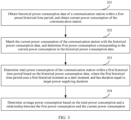
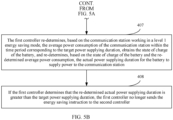
FIG. 5A andFIG. 5B are a schematic flowchart of another backup power supply control method according to an embodiment of this application; -
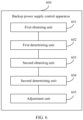
FIG. 6 is a schematic diagram of a structure of a backup power supply control apparatus according to an embodiment of this application; -
FIG. 7 is a schematic diagram of a structure of another backup power supply control apparatus according to an embodiment of this application; -
FIG. 8 is a schematic diagram of a structure of another backup power supply control apparatus according to an embodiment of this application; and -
FIG. 9 is a schematic diagram of a structure of a backup power supply control device according to an embodiment of this application. - Embodiments of this application provide a backup power supply control method, apparatus, and system, to enable actual power supplying duration of a battery to meet a requirement during mains outage.
- For ease of understanding, the following first describes an application scenario of the embodiments of this application.
FIG. 1 is a schematic diagram of an example application scenario according to an embodiment of this application. - The scenario shown in
FIG. 1 includes acommunication station 101 and a communicationpower supply system 102. Thecommunication station 101 may be, for example, a base station, and the communicationpower supply system 102 is configured to supply power to a communication device in thecommunication station 101. - It should be noted that when the
communication station 101 is the base station, the communication station may include a baseband unit (baseband unit, BBU) and a radio frequency unit. The BBU, as a brain of the entire system, is configured to centrally manage the entire base station, provides a physical interface between the base station and a transmission network, provides communication interfaces with the radio frequency unit and the communicationpower supply system 102, and is responsible for controlling an operation mode of the communication device in the base station. The radio frequency unit is a radio frequency part of the base station, and mainly completes modulation and demodulation, data processing, and the like of a baseband signal and a radio frequency signal. The communicationpower supply system 102 may supply power to the radio frequency unit. For the radio frequency unit, carrier transmit power may be reduced by disabling a carrier frequency, a channel, or the like of the radio frequency part, to reduce power consumption of the base station. - Certainly, the base station may further include other network elements, which are not described one by one herein.
- It should be noted that the communication
power supply system 102 may include an energy controlling monitor, a rectifier, and a battery. The energy controlling monitor may be considered as a central processing unit of the entire communicationpower supply system 102, and centrally monitors working statuses of energy components such as the rectifier, the battery, and a temperature control device in the communicationpower supply system 102. The energy controlling monitor may collect and analyze related data of the communicationpower supply system 102, and may communicate with the BBU of the communication station. The rectifier is configured to transform alternating current to direct current that is usable for the communication device and the rectifier is controlled by the energy controlling monitor. The battery is used for electric energy storage. The battery is equipped with a battery management system (battery management system, BMS), and is managed by the energy controlling monitor. The energy controlling monitor can monitor related data of the battery in real time through the battery BMS, such as a battery voltage, a current, a remaining capacity, a battery state of health, and other data. - Certainly, the communication
power supply system 102 may further include other devices, which are not described one by one herein. - Usually, the communication
power supply system 102 may supply power to the communication device in thecommunication station 101 by using the mains. After mains outage, the battery may be used to supply power to the communication device in thecommunication station 101. - Certainly, the communication power supply system may supply power to the
communication station 101 in a hybrid power supplying manner. For example, thecommunication station 101 is powered by the mains and a solar supply. For another example, thecommunication station 101 is powered by the mains and a diesel generation supply. This is not specifically limited in the embodiments of this application. - In research, it is found that, in a conventional technology, when mains outage occurs, the
communication station 101 may enter an energy saving running state. Specifically, the communication device in the communication station performs an energy saving action within the specified time. For example, transmit power of a radio frequency module is reduced within a T1 time period, some transmit channels are disabled within a T2 time period, and a carrier is disabled within a T3 time period. T1, T2, and T3 are determined by a user based on experience. However, in this manner, because an actual status of the battery, such as a state of charge of the battery, is not considered, this manner cannot enable the battery to supply power to the communication station during the entire mains outage. As a result, power supplying duration of the battery is less than mains outage duration. Consequently, within some time periods during the mains outage, the battery cannot supply power to the communication device in the communication station. - In addition, in research, it is further found that, in the conventional technology, during the mains outage, the communication
power supply system 102 may control, based on low-load voltage disconnection and battery-load voltage disconnection of the battery by itself, some communication devices in thecommunication station 101 to be powered off. For example, when the low-load voltage disconnection of the battery is lower than a first voltage, for example, 44 V, some communication devices are controlled to be powered off; and when the battery-load voltage disconnection of the battery is lower than a second voltage, for example, 43.2 V, some other communication devices are controlled to be powered off. However, the communication station enters the energy saving running state (that is, some communication devices are powered off) only when the low-load voltage disconnection of the battery is lower than the first voltage, and when the low-load voltage disconnection of the battery is lower than the first voltage, the state of charge of the battery is usually small, that is, the battery may continue supplying power to thecommunication station 101 for a short period of time. Therefore, this manner cannot enable the battery to supply power to the communication station during the entire mains outage. As a result, the power supplying duration of the battery is less than duration of the mains outage. As a result, the power supplying duration of the battery is less than the mains outage duration. Consequently, within some time periods during the mains outage, the battery cannot supply power to the communication device in the communication station. - In view of this, an embodiment of this application provides a backup power supply control method, to enable actual power supplying duration of a battery to meet a requirement in a case of mains outage. With reference to the accompanying drawings, the following describes the backup power supply control method provided in the embodiment of this application.
-
FIG. 2 is a schematic flowchart of a backup power supply control method according to an embodiment of this application. The backup power supply control method shown inFIG. 2 may be implemented, for example, by using the followingsteps 101 to 103. - It should be noted that the backup power supply control method shown in
FIG. 2 may be performed by a controller of acommunication station 101 shown inFIG. 2 , or may be performed by a controller of a communicationpower supply system 102. This is not specifically limited in this embodiment of this application. In the following descriptions of this embodiment of this application, the controller of the communicationpower supply system 102 is referred to as a first controller, and the first controller may be, for example, the foregoing energy controlling monitor. The controller of thecommunication station 101 is referred to as a second controller, and the second controller may be, for example, the foregoing BBU. It should be noted that an occasion for performing the method shown inFIG. 2 is not specifically limited in this embodiment of this application. For example, the method shown inFIG. 2 may be performed after the first controller detects mains outage. Certainly, it is considered that in actual application, in some cases, a related department delivers a mains outage notification before the mains outage. In this case, the method shown inFIG. 2 may also be performed at a moment before the mains outage is about to occur. - Step 101: Obtain target power supplying duration of a battery, and determine average power consumption of a communication station within a time period corresponding to the target power supplying duration.
- It should be noted that the target power supplying duration mentioned herein may be considered as mains outage duration. In other words, within the time period corresponding to the target power supplying duration, the battery needs to be used to supply power to the communication station. The battery mentioned herein may be a lithium battery, or may be a lead acid battery. This is not specifically limited in this embodiment of this application.
- For ease of description, in the following descriptions implemented in this application, the "time period corresponding to the target power supplying duration" is referred to as a "mains outage time period". It may be understood that, to some extent, the average power consumption may be reflected in a quantity of electricity required for supplying power to the communication station within the mains outage time period.
- A specific implementation of "obtaining target power supplying duration of a battery" in
step 101 is not specifically limited in this embodiment of this application. In an example, the target power supplying duration may be entered by a user through a human-computer interaction interface. For example, the related department delivers the mains outage notification, and the notification specifies the mains outage duration. In this case, the user may enter the target power supplying duration through the human-computer interaction interface. For another example, the user estimates mains outage duration, and enters, through the human-computer interaction interface, the target power supplying duration estimated by the user. For still another example, the first controller or the second controller may estimate the target power supplying duration according to related mains outage duration estimation logic. It should be noted that the terminal device mentioned herein usually refers to a terminal device on a communication power supply system side. - It should be noted that, if the method shown in
FIG. 2 is implemented by the first controller, the first controller may directly obtain the target supply powering duration entered by the user on the terminal device through the human-computer interaction interface. If the method shown inFIG. 2 is performed by the second controller, after obtaining the target power supplying duration, the first controller may send the target power supplying duration to the second controller, that is, the second controller may obtain the target power supplying duration from the first controller. - A specific implementation of "determining average power consumption of a communication station within a time period corresponding to the target power supplying duration" in
step 101 is not specifically limited in this embodiment of this application. In an example, it is considered that historical power consumption data of the communication station can reflect an operation mode of a communication device in the communication station to some extent, and the operation mode of the communication device in the communication station has correlation in terms of time. Therefore, in this embodiment of this application, average power consumption of the communication station within the mains outage time period may be determined based on the historical power consumption data of the communication station. - It is considered that, in actual application, the first controller collects statistics on power consumption data of the communication station at a specific time interval. Therefore, if the method shown in
FIG. 2 is implemented by the first controller, the first controller may directly obtain the historical power consumption data that is of the communication station and on which the first controller collects statistics. If the method shown inFIG. 2 is implemented by the second controller, the second controller may obtain the historical power consumption data of the communication station from the first controller, and determine, based on the historical power consumption data, the average power consumption of the communication station within the mains outage time period. - Step 102: Obtain a state of charge of the battery, and determine, based on the state of charge of the battery and the foregoing average power consumption, actual power supplying duration for the battery to supply power to the communication station.
- In this embodiment of this application, the first controller may obtain the state of charge of the battery by using a BMS of the battery. Certainly, if the method shown in
FIG. 2 is performed by the second controller, the first controller may send the state of charge to the second controller. - It may be understood that after the state of charge of the battery is determined, the actual power supplying duration for the battery to supply power to the communication station may be determined based on the state of charge of the battery and the foregoing average power consumption. The state of charge of the battery may be determined based on a state of charge (state of charge, SOC) percentage of the battery and a nominal capacity of the battery. For example, if the state of charge of the battery is C, the average power consumption is P, and a voltage of the battery is V, the actual power supplying duration for the battery to supply power to the communication station is T=C/(P/V), where C=C1*c2, C1 is the nominal capacity of the battery, and c2 is the state of charge percentage of the battery.
- It may be understood that, in actual application, the state of charge of the battery is related to a state of health of the battery. After the battery is used for a period of time, a quantity of actual available electricity of the battery is usually less than the nominal capacity of the battery. Therefore, when the state of charge of the battery is determined, the state of health (state of health, SOH) of the battery may be further considered. For example, if the state of health of the battery is K, C=C1*c2*K.
- Step 103: If the actual power supplying duration is less than the target power supplying duration, adjust the operation mode of the communication device in the communication station, to reduce the average power consumption, where actual power supplying duration for the battery to supply power to the communication station whose average power consumption is reduced is enabled to be greater than or equal to the target power supplying duration.
- It may be understood that if the actual power supplying duration is less than the target power supplying duration, it indicates that the state of charge of the battery is not plenty and the battery cannot supply power to the communication station within the entire mains outage time period. In this case, the operation mode of the communication device in the communication station may be adjusted, to reduce the average power consumption, so that the actual power supplying duration for the battery to supply power to the communication station whose average power consumption is reduced is greater than or equal to the target power supplying duration.
- A specific implementation of adjusting the operation mode of the communication device in the communication station is not specifically limited in this embodiment of this application. It is considered that in actual application, turning off the communication device in the communication station can reduce the foregoing average power consumption. Therefore, in an implementation of this embodiment of this application, the communication device in the communication station may be turned off. For example, some communication devices in the communication station, such as a temperature controlling device, may be turned off. In addition, it is considered that in actual application, power of the communication device may be adjusted, and if the power of the communication device is reduced, the foregoing average power may also be reduced. Therefore, in another implementation of this embodiment of this application, the power of the communication device may be reduced. For example, power of some communication devices may be reduced. In this embodiment of this application, the power of some communication devices may be reduced in a manner such as disabling a carrier frequency or reducing a pilot.
- It should be noted that, in this embodiment of this application, because the second controller may be considered as a control center of the communication station, if the method shown in
FIG. 2 is performed by the second controller, the second controller may directly adjust the operation mode of the communication device in the communication station. If the method shown inFIG. 2 is implemented by the first controller, the first controller may indirectly adjust the operation mode of the communication device in the communication station. For example, the first controller may send an energy saving instruction to the second controller. The second controller may adjust the operation mode of the communication device in the communication station according to the energy saving instruction. - In this embodiment of this application, after the operation mode of the communication device in the communication station is adjusted, the foregoing
steps 101 to 103 may be repeatedly performed, that is, average power consumption of the communication station after the operation mode adjustment within the mains outage time period is re-determined. Corresponding actual power supplying duration is re-determined based on the state of charge of the battery and the re-determined average power consumption, until the determined actual power supplying duration is greater than or equal to the target power supplying duration. In a process of repeatedly performing the foregoingstep 103, the operation mode of the communication device in the communication station may be adjusted in a gradient adjustment manner, that is, an energy saving level of the communication station is gradually increased, to fully utilize a power supplying capability of the battery. - It can be learned from the foregoing descriptions that, the solution provided in this embodiment of this application may be used to enable the actual power supplying duration of the battery to meet a requirement during the mains outage.
- As described above, the average power consumption of the communication station within the mains outage time period may be determined based on the historical power consumption data of the communication station. The following describes, with reference to the accompanying drawings, a specific implementation of determining the average power consumption of the communication station within the mains outage time period.
-
FIG. 3 is a schematic flowchart of a method for determining average power consumption of a communication station within a mains outage time period according to the invention. The method shown inFIG. 3 is implemented by using the followingsteps 201 to 204. - Step 201: Obtain historical power consumption data of the communication station within a first preset historical time period, and obtain current power consumption of the communication station.
- The first preset historical time period is not specifically limited in this embodiment of this application. For example, the first preset historical time period may be a week before a current moment, or may be a half month before the current moment. The current power consumption mentioned in this embodiment of this application is power consumption of the communication station at an execution moment of the method shown in
FIG. 2 . In other words, the current power consumption may be power consumption of the communication station at a moment when a first controller detects mains outage, or may be power consumption of the communication station at a moment before the mains outage is about to occur. This is not specifically limited in this embodiment of this application. As described above, the first controller collects statistics on power consumption data of the communication station at a specific time interval. Therefore, the first controller may directly obtain, from the power consumption data that is of the communication station and on which the first controller collects statistics, the historical power consumption data of the communication station within the first preset historical time period. Correspondingly, if the steps shown inFIG. 3 are performed by a second controller, the first controller may send the historical power consumption data of the communication station within the first preset historical time period to the second controller. - Step 202: Match the current power consumption of the communication station with the historical power consumption data, and determine first power consumption corresponding to the current power consumption in the historical power consumption data.
- In this embodiment of this application, the current power consumption of the communication station is matched with the historical power consumption data. For example, first power consumption whose difference from the current power consumption is the smallest may be determined in the historical power consumption data. The first power consumption is power consumption corresponding to the communication station at a first historical moment within the first preset time period.
- Step 203: Determine total power consumption of the communication station within a first historical time period based on the historical power consumption data, where the first historical time period uses the first historical moment as a start moment, and has duration equal to target power supplying duration.
- Step 204: Determine the average power consumption based on the total power consumption and a relationship between the first power consumption and the current power consumption.
- It should be noted that, in actual application, power consumption of the communication station has regularity. For example, from Monday to Friday, power consumption data of the communication station has regularity. From 10 o'clock in the evening every day to 1 o'clock of the next day, the power consumption data of the communication station has regularity. In view of this, in this embodiment of this application, after the first power consumption that matches the current power consumption is determined, total power consumption of the communication station within the mains outage time period may be determined based on the total power consumption of the communication station within the first historical time period. The first historical time period uses the first historical moment as the start moment, and has the duration equal to the target power supplying duration. For example, if the target power supplying duration is three hours, and the first power consumption that matches the current power consumption is power consumption corresponding to the communication station at 12 o'clock at noon last Wednesday, the total power consumption of the communication station within the mains outage time period may be determined based on total power consumption of the communication station from 12 o'clock at noon last Wednesday to 3 o'clock in the afternoon last Wednesday.
- In this embodiment of this application, considering that there may be a difference between the first power consumption and the current power consumption, the relationship between the first power consumption and the current power consumption may be further considered when the average power consumption is determined. For example, the total power consumption of the communication station within the first historical time period may be corrected by further considering the difference between the first power consumption and the current power consumption, and the corrected total power consumption is determined as the total power consumption of the communication station within the mains outage time period, so as to further determine the average power consumption of the communication station within the mains outage time period based on the total power consumption of the communication station within the first historical time period and the foregoing target power supplying duration.
- As described above, the first controller or the second controller may estimate the target power supplying duration according to the related mains outage duration estimation logic. The following describes a possible implementation of determining the target power supplying duration with reference to
FIG. 4 . -
FIG. 4 is a schematic flowchart of a method for determining target power supplying duration according to an embodiment of this application. The method shown inFIG. 4 may be implemented, for example, by using the followingsteps 301 to 303. - Step 301: Obtain mains outage data of a communication station within a second preset historical time period.
- It should be noted that when mains outage occurs, a first controller may record a mains outage moment. Correspondingly, when the mains restores power supplying, the first controller may record a corresponding mains power supplying restoration moment. Therefore, in this embodiment of this application, the first controller may obtain the mains outage data of the communication station within the second preset historical time period based on mains outage data stored in the first controller. A second controller may obtain the mains outage data of the communication station within the second preset historical time period by using the first controller.
- The second preset historical time period is not specifically limited in this embodiment of this application. For example, the second preset historical time period may be one month before a current moment, or may be two months before the current moment.
- Step 302: Determine, based on the mains outage data, mains average daily outage duration of the communication station within the second preset historical time period, and determine, based on the mains outage data, mains maximum daily outage duration of the communication station within the second preset historical time period.
- Step 303: Determine the target power supplying duration based on the mains average daily outage duration and the mains maximum daily outage duration, where the target power supplying duration is greater than the average daily outage duration and less than the maximum daily outage duration.
- It is considered that in actual application, mains outage duration also has regularity. Usually, future outage duration of the mains is target outage duration, and is usually not less than average daily outage duration within a period of time before a current moment, and not greater than maximum daily outage duration within a period of time before the current moment. Therefore, after the mains outage data of the communication station within the second preset historical time period is obtained, the mains average daily outage duration of the communication station within the second preset historical time period may be determined based on the mains outage data, and the mains maximum daily outage duration of the communication station within the second preset historical time period is determined based on the mains outage data. Then, duration between the average daily outage duration and the maximum daily outage duration is determined as the target power supplying duration.
- As described above, a user may estimate the mains outage duration, and enters, through a human-computer interaction interface, the target power supplying duration estimated by the user. In this embodiment of this application, the first controller and the second controller may further perform
steps 301 to 303, and control a terminal device to display the target power supplying duration obtained by performingsteps 301 to 303, to assist the user in estimating the mains outage duration. - As described above, if the method shown in
FIG. 2 is implemented by the first controller, the first controller may indirectly adjust an operation mode of a communication device in the communication station. For example, the first controller may send an energy saving instruction to the second controller. The second controller may adjust the operation mode of the communication device in the communication station according to the energy saving instruction. - The following describes a specific implementation in which the second controller adjusts the operation mode of the communication device in the communication station according to the energy saving instruction.
- It should be noted that the foregoing energy saving instruction is not specifically limited in this embodiment of this application. The energy saving instruction is used to instruct the second controller to control the communication station to work in an energy saving mode. In an implementation of this embodiment of this application, the energy saving instruction may carry a corresponding energy saving parameter, and the energy saving parameter is an energy saving parameter corresponding to an energy saving policy. After receiving the energy saving instruction, the second controller may adjust an operation mode of a corresponding communication device based on the energy saving parameter, for example, turn off a temperature controlling device or reduce a pilot.
- In another implementation of this embodiment of this application, to enable a structure of the energy saving instruction to be relatively simple, and also reduce workload of parsing the energy saving instruction by the second controller, the energy saving instruction may carry a target energy saving level. The target energy saving level may be determined based on a difference that is between actual power supplying duration and the target power supplying duration and that is calculated in
step 102. A smaller difference that is between the actual power supplying duration and the target power supplying duration and that is calculated instep 102 indicates a lower corresponding target energy saving level, and a lower target energy saving level indicates a smaller energy saving gain of the communication device in the communication station. A larger difference that is between the actual power supplying duration and the target power supplying duration and that is calculated instep 102 indicates a higher corresponding target energy saving level, and a higher target energy saving level indicates a larger energy saving gain of the communication device in the communication station. - The second controller may pre-establish a mapping relationship between an energy saving level and an energy saving policy, and after receiving the energy saving instruction, the second controller may parse the energy saving instruction to obtain the target energy saving level carried in the energy saving instruction, and determine, based on the predetermined mapping relationship between an energy saving level and an energy saving policy, a target energy saving policy corresponding to the target energy saving level. Then, the second controller may adjust the operation mode of the communication device in the communication station according to the determined target energy saving policy, to reduce average power consumption of the communication station within a mains outage time period.
- The mapping relationship between an energy saving level and an energy saving policy may be determined based on an actual situation. This is not specifically limited in this embodiment of this application. For ease of understanding, the following uses Table 1 as an example for description.
Table 1 Energy saving level Energy saving policy L1 Reduce the pilot and limit available service power. L2 Turn off the temperature controlling device and limit the available service power. L3 Turn off the temperature controlling device and disable a carrier frequency. - It should be noted that Table 1 is merely shown for ease of understanding, and does not constitute a limitation on this embodiment of this application. The energy saving level mentioned in this embodiment of this application is not limited to the three types shown in Table 1, and the corresponding energy saving policy is not limited to those shown in Table 1. In addition, considering that currently the communication station may provide services corresponding to 2G, 3G, 4G, and even 5G, in this embodiment of this application, for different energy saving levels, the services corresponding to 2G, 3G, 4G, and 5G may respectively have corresponding energy saving policies. Enumeration is not performed for description herein.
- The foregoing describes a backup power supply control method provided in the embodiments of this application. The following describes the backup power supply control method provided in the embodiments of this application with reference to a specific scenario. In this scenario, it is considered that in actual application, the first controller collects statistics on power consumption data of the communication station at a specific time interval, and the first controller may also obtain related data of a battery by using a BMS system of the battery, for example, a state of charge percentage of the battery and a state of health of the battery. The second controller may directly control the operation mode of the communication device of the communication station. Therefore, in the embodiments of this application, to reduce data exchange between the first controller and the second controller as much as possible, so as to reduce costs of interface reconstruction between the first controller and the second controller,
step 101 and step 102 in the backup power supply control method shown inFIG. 2 are performed by the first controller. Adjusting the operation mode of the communication device in the communication station instep 103 is performed by the second controller. -
FIG. 5A andFIG. 5B are a schematic flowchart of another backup power supply control method according to an embodiment of this application. The backup power supply control method shown inFIG. 5A andFIG. 5B may be implemented, for example, by using the followingsteps 401 to 408. - Step 401: A first controller detects mains outage, controls a battery to discharge, and obtains target power supplying duration entered by a user through a human-computer interaction interface.
- Step 402: The first controller determines average power consumption of a communication station within a time period corresponding to the target power supplying duration.
- Step 403: The first controller obtains a state of charge of the battery, and determines, based on the state of charge of the battery and the average power consumption that is determined in
step 402, actual power supplying duration for the battery to supply power to the communication station. - Step 404: The first controller determines that the actual power supplying duration is less than the target power supplying duration, and sends an energy saving instruction to a second controller, where an energy saving level carried in the energy saving instruction is
level 1. - It may be understood that if the first controller determines that the actual power supplying duration is greater than or equal to the target power supplying duration, the first controller may not send the energy saving instruction to the second controller, so that the communication station works in a current operation mode. Certainly, the first controller may also send an energy saving instruction carrying an energy saving level of level 0 to the second controller, to instruct the second controller not to adjust an operation mode of a communication device in the communication station.
- Step 405: The second controller parses the energy saving instruction, and obtains an energy saving policy corresponding to
level 1 energy saving. - The
level 1 energy saving mentioned herein means that the energy saving level islevel 1. - Step 406: The second controller adjusts the operation mode of the communication device in the communication station according to the energy saving policy corresponding to the
level 1 energy saving. - After the second controller performs
step 406, the first controller performssteps level 1 energy saving mode. The working in thelevel 1 energy saving mode is an operation mode in which the communication device in the communication station works after the second controller adjusts the operation mode of the communication device in the communication station according to the energy saving policy corresponding to thelevel 1 energy saving. - Step 407: The first controller re-determines, based on the communication station working in the
level 1 energy saving mode, the average power consumption of the communication station within the time period corresponding to the target power supplying duration, obtains the state of charge of the battery, and re-determines, based on the state of charge of the battery and the re-determined average power consumption, the actual power supplying duration for the battery to supply power to the communication station. - Step 408: If the first controller determines that the re-determined actual power supplying duration is greater than the target power supplying duration, the first controller no longer sends the energy saving instruction to the second controller.
- It may be understood that, if the second controller does not receive the energy saving instruction from the first controller again, the second controller controls the communication device in the communication station to work in the
level 1 energy saving mode. Certainly, the first controller may alternatively send, to the second controller, an energy saving instruction carrying the energy saving level that is stilllevel 1. After receiving the energy saving instruction, the second controller determines that a current energy saving level is equal to the energy saving level carried in the energy saving instruction, and then no longer adjusts the operation mode of the communication device in the communication station. - It should be noted that, if the first controller determines that the re-determined actual power supplying duration is less than the target power supplying duration, the first controller may send an energy saving instruction to the second controller, where an energy saving level carried in the energy saving instruction is higher than
level 1. For example, the energy saving level carried in the energy saving instruction is level 2. After receiving the energy saving instruction, the second controller may adjust the operation mode of the communication device in the communication station according to the energy saving policy corresponding to thelevel 1 energy saving. Correspondingly, the first controller may re-determine, based on the communication station working in a level 2 energy saving mode, the average power consumption of the communication station within the time period corresponding to the target power supplying duration, obtain the state of charge of the battery, and re-determine, based on the state of charge of the battery and the re-determined average power consumption, the actual power supplying duration for the battery to supply power to the communication station. If the re-determined actual power supplying duration is still less than the target power supplying duration, the corresponding energy saving level may be further increased until re-determined actual power supplying duration is greater than the target power supplying duration. - Based on the backup power supply control methods provided in the foregoing embodiments, an embodiment of this application further provides a backup power supply control apparatus. The following describes the backup power supply control apparatus with reference to the accompanying drawings.
-
FIG. 6 is a schematic diagram of a structure of a backup powersupply control apparatus 600 according to an embodiment of this application. The backup powersupply control apparatus 600 shown inFIG. 6 may include, for example, a first obtainingunit 601, a first determiningunit 602, a second obtainingunit 603, a second determiningunit 604, and anadjustment unit 605. - The first obtaining
unit 601 is configured to obtain target power supplying duration of a battery. - The first determining
unit 602 is configured to determine average power consumption of a communication station within a time period corresponding to the target power supplying duration. - The second obtaining
unit 603 is configured to obtain a state of charge of the battery. - The second determining
unit 604 is configured to determine, based on the state of charge of the battery and the average power consumption, actual power supplying duration for the battery to supply power to the communication station. - The
adjustment unit 605 is configured to: if the actual power supplying duration is less than the target power supplying duration, adjust an operation mode of a communication device in the communication station, to reduce the average power consumption, where actual power supplying duration for the battery to supply power to the communication station whose average power consumption is reduced is enabled to be greater than or equal to the target power supplying duration. - In a possible implementation, the first determining
unit 602 is specifically configured to: - obtain historical power consumption data of the communication station within a first preset historical time period, and obtain current power consumption of the communication station;
- match the current power consumption of the communication station with the historical power consumption data, and determine, in the historical power consumption data, first power consumption corresponding to the current power consumption, where the first power consumption is power consumption corresponding to the communication station at a first historical moment within the first preset historical time period;
- determine total power consumption of the communication station within a first historical time period based on the historical power consumption data, where the first historical time period uses the first historical moment as a start moment, and has duration equal to the target power supplying duration; and
- determine the average power consumption based on the total power consumption and a relationship between the first power consumption and the current power consumption.
- In a possible implementation, the first obtaining
unit 601 is specifically configured to:
obtain the target power supplying duration entered by a user through a human-computer interaction interface. - In a possible implementation, the target power supplying duration is determined in the following manner:
- obtaining mains outage data of the communication station within a second preset historical time period;
- determining, based on the mains outage data, mains average daily outage duration of the communication station within the second preset historical time period, and determining, based on the mains outage data, mains maximum daily outage duration of the communication station within the second preset historical time period; and
- determining the target power supplying duration based on the mains average daily outage duration and the mains maximum daily outage duration, where the target power supplying duration is greater than the average daily outage duration and less than the maximum daily outage duration.
- In a possible implementation, the
adjustment unit 605 is specifically configured to:
control the communication device in the communication station to be turned off, and/or control power of the communication device in the communication station to be reduced. - Specific implementation of each unit of the backup power
supply control apparatus 600 has a same concept as that of the backup power supply control method shown inFIG. 2 . Therefore, for the specific implementation of each unit of the backup powersupply control apparatus 600, refer to the description part about the backup power supply control method shown inFIG. 2 in the foregoing embodiments. Details are not described herein again. -
FIG. 7 is a schematic diagram of a structure of another backup powersupply control apparatus 700 according to an embodiment of this application. The backup powersupply control apparatus 700 shown inFIG. 7 may include, for example, a first obtainingunit 701, a first determiningunit 702, a second obtainingunit 703, a second determiningunit 704, and a sendingunit 705. - The first obtaining
unit 701 is configured to obtain target power supplying duration of a battery. - The first determining
unit 702 is configured to determine average power consumption of a communication station within a time period corresponding to the target power supplying duration. - The second obtaining
unit 703 is configured to obtain a state of charge of the battery. - The second determining
unit 704 is configured to determine, based on the state of charge of the battery and the average power consumption, actual power supplying duration for the battery to supply power to the communication station. - The sending
unit 705 is configured to: if the actual power supplying duration is less than the target power supplying duration, send an energy saving instruction to a second controller. - In a possible implementation, the first obtaining
unit 701 is specifically configured to:
obtain the target power supplying duration entered by a user through a human-computer interaction interface. - In a possible implementation, the target power supplying duration is determined in the following manner:
- obtaining mains outage data of the communication station within a second preset historical time period;
- determining, based on the mains outage data, mains average daily outage duration of the communication station within the second preset historical time period, and determining, based on the mains outage data, mains maximum daily outage duration of the communication station within the second preset historical time period; and
- determining the target power supplying duration based on the mains average daily outage duration and the mains maximum daily outage duration, where the target power supplying duration is greater than the average daily outage duration and less than the maximum daily outage duration.
- In a possible implementation, the energy saving instruction carries a target energy saving level, and the target energy saving level is determined based on a difference between the target power supplying duration and the actual power supplying duration.
- It should be noted that the backup power
supply control apparatus 700 shown inFIG. 7 is a backup power supply control apparatus corresponding to a first controller. Therefore, for specific implementation of each unit of the backup powersupply control apparatus 700, refer to the description part of the steps performed by the first controller in the foregoing embodiments. Details are not described herein again. -
FIG. 8 is a schematic diagram of a structure of another backup powersupply control apparatus 800 according to an embodiment of this application. The backup powersupply control apparatus 800 shown inFIG. 8 may specifically include, for example, a receivingunit 801 and anadjustment unit 802. - The receiving
unit 801 is configured to receive an energy saving instruction sent by a first controller. - The
adjustment unit 802 is configured to adjust an operation mode of a communication device in a communication station according to the energy saving instruction, to reduce average power consumption, where actual power supplying duration for a battery to supply power to the communication station whose average power consumption is reduced is enabled to be greater than or equal to target power supplying duration, and the average power consumption is power consumption of the communication station within a time period corresponding to the target power supplying duration. - In a possible implementation, the energy saving instruction carries a target energy saving level; and
theadjustment unit 802 is specifically configured to: - determine, based on a predetermined mapping relationship between an energy saving level and an energy saving policy, a target energy saving policy corresponding to the target energy saving level; and
- adjust the operation mode of the communication device in the communication station according to the target energy saving policy, to reduce the average power consumption.
- In a possible implementation, the adjusting an operation mode of a communication device in the communication station includes any one or any combination of the following:
controlling the communication device in the communication station to be turned off, or controlling power of the communication device in the communication station to be reduced. - It should be noted that the backup power
supply control apparatus 800 shown inFIG. 8 is a backup power supply control apparatus corresponding to a second controller. Therefore, for specific implementation of each unit of the backup powersupply control apparatus 800, refer to the description part of the steps performed by the second controller in the foregoing embodiments. Details are not described herein again. - An embodiment of this application further provides a backup power supply control device corresponding to the backup power
supply control apparatus 600. The device includes a processor and a memory. - The memory is configured to store instructions; and
the processor is configured to: execute the instructions in the memory, and perform the backup power supply control method corresponding to the backup powersupply control apparatus 600 in the foregoing method embodiments. - An embodiment of this application further provides a backup power supply control device corresponding to the backup power
supply control apparatus 700. The device includes a processor and a memory. - The memory is configured to store instructions; and
the processor is configured to: execute the instructions in the memory, and perform the backup power supply control method corresponding to the backup powersupply control apparatus 700 in the foregoing method embodiments. - An embodiment of this application further provides a backup power supply control device corresponding to the backup power
supply control apparatus 800. The device includes a processor and a memory. - The memory is configured to store instructions; and
the processor is configured to: execute the instructions in the memory, and perform the backup power supply control method corresponding to the backup powersupply control apparatus 800 in the foregoing method embodiments. - It should be noted that, hardware structures of the backup power supply control device corresponding to the backup power
supply control apparatus 600, the backup power supply control device corresponding to the backup powersupply control apparatus 700, and the backup power supply control device corresponding to the backup powersupply control apparatus 800 that are provided in the embodiments of this application may all be a structure shown inFIG. 9. FIG. 9 is a schematic diagram of a structure of a backup powersupply control device 900 according to an embodiment of this application. - Refer to
FIG. 9 . The backup powersupply control device 900 includes aprocessor 910, acommunication interface 920, and amemory 930. There may be one ormore processors 910 in the backup powersupply control device 900. One processor is used as an example inFIG. 9 . In this embodiment of this application, theprocessor 910, thecommunication interface 920, and thememory 930 may be connected by using a bus system or in another manner. InFIG. 9 , an example in which thebus system 940 is used for the connection. - The
processor 910 may be a central processing unit (central processing unit, CPU), a network processor (network processor, NP), or a combination of a CPU and an NP. Theprocessor 910 may further include a hardware chip. The hardware chip may be an application-specific integrated circuit (application-specific integrated circuit, ASIC), a programmable logic device (programmable logic device, PLD), or a combination thereof. The PLD may be a complex programmable logic device (complex programmable logic device, CPLD), a field-programmable gate array (field-programmable gate array, FPGA), generic array logic (generic array logic, GAL), or any combination thereof. - The
memory 930 may include a volatile memory (English: volatile memory), for example, a random access memory (random access memory, RAM). Thememory 930 may alternatively include a non-volatile memory (English: non-volatile memory), for example, a flash memory (English: flash memory), a hard disk drive (hard disk drive, HDD), or a solid-state drive (solid-state drive, SSD). Thememory 930 may further include a combination of the foregoing types of memories. - The
memory 930 may store the historical power consumption data and the mains outage data of the communication station that are mentioned in the foregoing embodiments in thememory 930 in a log form. - Optionally, the
memory 930 stores an operating system and a program, an executable module, or a data structure, or a subset thereof, or an extended set thereof. The program may include various operation instructions, used to implement various operations. The operating system may include various system programs, to implement various basic services and process hardware-based tasks. Theprocessor 910 may read the program in thememory 930, to implement a backup power supply control method provided in the embodiments of this application. - The
bus system 940 may be a peripheral component interconnect (peripheral component interconnect, PCI) bus, an extended industry standard architecture (extended industry standard architecture, EISA) bus, or the like. Thebus system 940 may be classified into an address bus, a data bus, a control bus, and the like. For ease of representation, only one thick line is used for representation inFIG. 9 , but this does not mean that there is only one bus or only one type of bus. - An embodiment of this application further provides a computer-readable storage medium, including instructions. When the instructions are run on a computer, the computer is enabled to perform the backup power supply control method corresponding to the backup power
supply control apparatus 600 in the foregoing method embodiments. - An embodiment of this application further provides a computer-readable storage medium, including instructions. When the instructions are run on a computer, the computer is enabled to perform the backup power supply control method corresponding to the backup power
supply control apparatus 700 in the foregoing method embodiments. - An embodiment of this application further provides a computer-readable storage medium, including instructions. When the instructions are run on a computer, the computer is enabled to perform the backup power supply control method corresponding to the backup power
supply control apparatus 800 in the foregoing method embodiments. - An embodiment of this application further provides a computer program product including instructions. When the computer program product runs on a computer, the computer is enabled to perform the backup power supply control method corresponding to the backup power
supply control apparatus 600 in the foregoing method embodiments. - An embodiment of this application further provides a computer program product including instructions. When the computer program product runs on a computer, the computer is enabled to perform the backup power supply control method corresponding to the backup power
supply control apparatus 700 in the foregoing method embodiments. - An embodiment of this application further provides a computer program product including instructions. When the computer program product runs on a computer, the computer is enabled to perform the backup power supply control method corresponding to the backup power
supply control apparatus 800 in the foregoing method embodiments. - In this specification, the claims, and the accompanying drawings of this application, terms "first", "second", "third", "fourth", and the like (if existent) are intended to distinguish between similar objects but do not necessarily indicate a specific order or sequence. It should be understood that the data termed in such a way is interchangeable in a proper circumstance, so that the embodiments described herein can be implemented in an order other than the order illustrated or described herein. Moreover, the terms "include", "contain" and any other variant mean to cover non-exclusive inclusion, for example, a process, method, system, product, or device that includes a list of steps or units is not necessarily limited to those steps or units, but may include other steps or units not expressly listed or inherent to such a process, method, product, or device.
- It may be clearly understood by a person skilled in the art that, for the purpose of convenient and brief description, for a detailed working process of the foregoing system, apparatus, and unit, refer to a corresponding process in the foregoing method embodiments, and details are not described herein again.
- In a plurality of embodiments provided in this application, it should be understood that the disclosed systems, apparatuses, and methods may be implemented in another manner. For example, the described apparatus embodiments are merely examples. For example, the unit division is merely logical service division and may be other division in actual implementation. For example, a plurality of units or components may be combined or integrated into another system, or some features may be ignored or not performed. In addition, the displayed or discussed mutual couplings or direct couplings or communication connections may be implemented through some interfaces. The indirect couplings or communication connections between the apparatuses or units may be implemented in an electrical, a mechanical, or another form.
- The units described as separate parts may or may not be physically separate, and parts displayed as units may or may not be physical units, in other words, may be located in one position, or may be distributed on a plurality of network units. Some or all of the units may be selected based on actual requirements to achieve objectives of the solutions of the embodiments of this application.
- In addition, service units in the embodiments of this application may be integrated into one processing unit, or each of the units may exist alone physically, or two or more units are integrated into one unit. The integrated unit may be implemented in a form of hardware, or may be implemented in a form of a software service unit.
- When the integrated unit is implemented in the form of a software service unit and sold or used as an independent product, the integrated unit may be stored in a computer-readable storage medium. Based on such an understanding, the technical solutions of this application essentially, or the part contributing to the conventional technology, or all or some of the technical solutions may be implemented in a form of a software product. The computer software product is stored in a storage medium and includes a plurality of instructions for instructing a computer device (which may be a personal computer, a server, or a network device) to perform all or some of the steps of the methods described in the embodiments of this application. The storage medium includes any medium that can store program code, such as a USB flash drive, a removable hard disk drive, a read-only memory (Read-Only Memory, ROM), a random access memory (Random Access Memory, RAM), a magnetic disk, or an optical disc.
- The person skilled in the art should be aware that in the foregoing one or more examples, the services described in the present invention may be implemented by using hardware, software, firmware, or any combination thereof. When the services are implemented by software, the services may be stored in a computer-readable medium or transmission of the services may be performed by using the services as one or more instructions or code in the computer-readable medium. The computer-readable medium includes a computer storage medium and a communication medium. The communication medium includes any medium that facilitates transmission of a computer program from one place to another. The storage medium may be any available medium accessible to a general-purpose or dedicated computer.
- The objectives, technical solutions, and beneficial effects of the present invention have been described in further detail in the foregoing specific implementations. It should be understood that the foregoing descriptions are merely specific implementations of the present invention.
Claims (11)
- A backup power supply control method, wherein the method comprises:obtaining (101) target power supplying duration of a battery, and determining average power consumption of a communication station within a time period corresponding to the target power supplying duration;obtaining (102) a state of charge of the battery, and determining, based on the state of charge of the battery and the average power consumption, actual power supplying duration for the battery to supply power to the communication station; andif the actual power supplying duration is less than the target power supplying duration, adjusting (103) an operation mode of a communication device in the communication station, to reduce the average power consumption, wherein actual power supplying duration for the battery to supply power to the communication station whose average power consumption is reduced is enabled to be greater than or equal to the target power supplying duration; andwherein the determining average power consumption of a communication station within a time period corresponding to the target power supplying duration comprises:obtaining (201) historical power consumption data of the communication station within a first preset historical time period, and obtaining current power consumption of the communication station;matching (202) the current power consumption of the communication station with the historical power consumption data, and determining, in the historical power consumption data, first power consumption corresponding to the current power consumption, wherein the first power consumption is power consumption corresponding to the communication station at a first historical moment within the first preset historical time period;determining (203) total power consumption of the communication station within a first historical time period based on the historical power consumption data, wherein a start moment of the first historical time period is the first historical moment , and the first historical time period has duration equal to the target power supplying duration; anddetermining (204) the average power consumption based on the total power consumption and a relationship between the first power consumption and the current power consumption.
- The method according to claim 1, wherein the obtaining target power supplying duration of a battery comprises:
obtaining the target power supplying duration entered by a user through a human-computer interaction interface. - The method according to any one of claims 1 to 2, wherein the target power supplying duration is determined in the following manner:obtaining mains outage data of the communication station within a second preset historical time period;determining, based on the mains outage data, mains average daily outage duration of the communication station within the second preset historical time period, and determining, based on the mains outage data, mains maximum daily outage duration of the communication station within the second preset historical time period; anddetermining the target power supplying duration based on the mains average daily outage duration and the mains maximum daily outage duration, wherein the target power supplying duration is greater than the average daily outage duration and less than the maximum daily outage duration.
- The method according to claim 1, wherein the adjusting an operation mode of a communication device in the communication station, to reduce the average power consumption comprises any one or any combination of the following:
controlling the communication device in the communication station to be turned off, or controlling power of the communication device in the communication station to be reduced. - A backup power supply control system, wherein the system comprises a first controller and a second controller, whereinthe first controller is configured to: obtain target power supplying duration of a battery, and determine average power consumption of a communication station within a time period corresponding to the target power supplying duration;the first controller is further configured to: obtain a state of charge of the battery, and determine, based on the state of charge of the battery and the average power consumption, actual power supplying duration for the battery to supply power to the communication station;the first controller is further configured to: if the actual power supplying duration is less than the target power supplying duration, send an energy saving instruction to the second controller; andthe second controller is configured to: adjust an operation mode of a communication device in the communication station according to the energy saving instruction, to reduce the average power consumption, wherein actual power supplying duration for the battery to supply power to the communication station whose average power consumption is reduced is enabled to be greater than or equal to the target power supplying duration;wherein that the first controller being configured to determine average power consumption of a communication station within a time period corresponding to the target power supplying duration comprises:the first controller is configured to obtain historical power consumption data of the communication station within a first preset historical time period, and configured to obtain current power consumption of the communication station;the first controller is configured to match the current power consumption of the communication station with the historical power consumption data, and configured to determine, in the historical power consumption data, first power consumption corresponding to the current power consumption, wherein the first power consumption is power consumption corresponding to the communication station at a first historical moment within the first preset historical time period;the first controller is configured to determine total power consumption of the communication station within a first historical time period based on the historical power consumption data, wherein the first historical time period uses the first historical moment as a start moment, and has duration equal to the target power supplying duration; andthe first controller is configured to determine the average power consumption based on the total power consumption and a relationship between the first power consumption and the current power consumption.
- The system according to claim 5, wherein that the first controller being configured to obtain target power supplying duration of a battery comprises:
the first controller is configured to obtains the target power supplying duration entered by a user through a human-computer interaction interface. - The system according to any one of claims 5 to 6, wherein the target power supplying duration is determined in the following manner:the first controller is configured to obtain mains outage data of the communication station within a second preset historical time period;the first controller is configured to determine, based on the mains outage data, mains average daily outage duration of the communication station within the second preset historical time period, and the first controller is configured to determine, based on the mains outage data, mains maximum daily outage duration of the communication station within the second preset historical time period; andthe first controller is configured to determine the target power supplying duration based on the mains average daily outage duration and the mains maximum daily outage duration, wherein the target power supplying duration is greater than the average daily outage duration and less than the maximum daily outage duration.
- The system according to claim 5, wherein the energy saving instruction carries a target energy saving level; and
that the second controller being configured to adjust an operation mode of a communication device in the communication station according to the energy saving instruction, to reduce the average power consumption comprises:the second controller is configured to determine, based on a predetermined mapping relationship between an energy saving level and an energy saving policy, a target energy saving policy corresponding to the target energy saving level; andthe second controller is configured to adjust the operation mode of the communication device in the communication station according to the target energy saving policy, to reduce the average power consumption. - The system according to any one of claims 5 to 8, wherein that the second controller adjusts an operation mode of a communication device in the communication station comprises any one or any combination of the following:
controlling, by the second controller, the communication device in the communication station to be turned off, or controlling, by the second controller, power of the communication device in the communication station to be reduced. - A backup power supply control device, configured to perform the methods according to any one of claims 1 to 4.
- A computer-readable storage medium, comprising instructions, which, when the instructions are executed by a computer, cause the computer to carry out the steps of the method of claims 1 to 4.
Applications Claiming Priority (2)
| Application Number | Priority Date | Filing Date | Title |
|---|---|---|---|
| CN201910780185.5A CN112421701B (en) | 2019-08-22 | 2019-08-22 | A backup power control method, device and system |
| PCT/CN2020/101636 WO2021031742A1 (en) | 2019-08-22 | 2020-07-13 | Power supply control method, apparatus and system |
Publications (3)
| Publication Number | Publication Date |
|---|---|
| EP4020747A1 EP4020747A1 (en) | 2022-06-29 |
| EP4020747A4 EP4020747A4 (en) | 2023-01-04 |
| EP4020747B1 true EP4020747B1 (en) | 2025-03-26 |
Family
ID=74660133
Family Applications (1)
| Application Number | Title | Priority Date | Filing Date |
|---|---|---|---|
| EP20854634.1A Active EP4020747B1 (en) | 2019-08-22 | 2020-07-13 | Power supply control method, apparatus and system |
Country Status (4)
| Country | Link |
|---|---|
| US (1) | US12224618B2 (en) |
| EP (1) | EP4020747B1 (en) |
| CN (1) | CN112421701B (en) |
| WO (1) | WO2021031742A1 (en) |
Families Citing this family (23)
| Publication number | Priority date | Publication date | Assignee | Title |
|---|---|---|---|---|
| CN113747548B (en) * | 2020-05-27 | 2023-11-10 | 上海华为技术有限公司 | Electric energy control methods and related equipment |
| CN113013968A (en) * | 2021-04-07 | 2021-06-22 | 岳阳东瑞电气有限公司 | Digital storage battery charging system and power failure magnetic protection control method |
| CN115549228B (en) * | 2021-06-30 | 2025-12-30 | 上海华为技术有限公司 | A power backup method and related equipment |
| CN115642681A (en) * | 2021-07-19 | 2023-01-24 | 上海华为技术有限公司 | Power supply method and related device |
| CN113765206A (en) * | 2021-08-02 | 2021-12-07 | 华信咨询设计研究院有限公司 | Refined standby power control method, device and system for base station |
| CN115802453B (en) * | 2021-09-09 | 2025-11-14 | 上海华为技术有限公司 | Power consumption control methods, devices and systems for electrical equipment |
| CN115915354A (en) * | 2021-09-24 | 2023-04-04 | 上海华为技术有限公司 | Base station power supply management method and power supply management device |
| CN115882545A (en) * | 2021-09-29 | 2023-03-31 | 上海华为技术有限公司 | Battery control method, device and equipment |
| CN114142593B (en) * | 2021-10-27 | 2024-09-06 | 华为数字能源技术有限公司 | A management method and related device for base station backup power duration |
| CN116095793B (en) * | 2021-11-03 | 2025-09-16 | 中国移动通信集团重庆有限公司 | Storage battery charging and discharging method, device, equipment and computer storage medium |
| CN116137456A (en) * | 2021-11-16 | 2023-05-19 | 中国移动通信集团广东有限公司 | A method and device for managing backup power of a base station |
| CN116137579B (en) * | 2021-11-17 | 2025-11-07 | 华为技术有限公司 | Power backup method and device |
| CN113917880A (en) * | 2021-11-17 | 2022-01-11 | 北京中科海钠科技有限责任公司 | Intelligent electric quantity control system and method |
| CN114142557B (en) * | 2021-11-22 | 2024-12-27 | 杭州东方通信软件技术有限公司 | Method and device for determining battery life |
| CN113937866B (en) * | 2021-12-17 | 2022-04-22 | 深圳市爱图仕影像器材有限公司 | Method and device for controlling equipment operation, terminal equipment and storage medium |
| CN114828042B (en) * | 2022-04-07 | 2024-07-16 | 中国联合网络通信集团有限公司 | Base station system control method, device, equipment, base station system and storage medium |
| CN117956480A (en) * | 2022-10-31 | 2024-04-30 | 华为技术有限公司 | A network equipment management method, device and communication system |
| CN116780742A (en) * | 2023-05-15 | 2023-09-19 | 华为数字能源技术有限公司 | Uninterruptible power supply and its control method, related devices and systems |
| CN116739830A (en) * | 2023-08-15 | 2023-09-12 | 深圳市倍联德实业有限公司 | Detection method, system, terminal and storage medium for workstation power supply |
| US20250078134A1 (en) * | 2023-09-01 | 2025-03-06 | Toyota Motor North America, Inc. | On-premises energy storage based on predicted energy availability |
| EP4542809A1 (en) | 2023-10-20 | 2025-04-23 | Nokia Solutions and Networks Oy | Mapping between cell load and rectifier efficiency |
| CN117369619B (en) * | 2023-12-06 | 2024-03-22 | 深圳市德晟达电子科技有限公司 | Intelligent energy-saving method and system for computer |
| CN117748691B (en) * | 2024-02-20 | 2024-07-05 | 荣耀终端有限公司 | Restoring power supply circuits, battery control modules and electronic equipment |
Family Cites Families (15)
| Publication number | Priority date | Publication date | Assignee | Title |
|---|---|---|---|---|
| JP2006160176A (en) * | 2004-12-10 | 2006-06-22 | Yazaki Corp | Vehicle power supply system |
| US20060182262A1 (en) * | 2005-02-15 | 2006-08-17 | Goldman Stuart O | Auxiliary power conservation for telecommunications site |
| US8729732B2 (en) * | 2008-07-10 | 2014-05-20 | T-Mobile Usa, Inc. | Cell site power generation |
| CN102853871B (en) | 2011-06-30 | 2015-07-22 | 艾默生网络能源有限公司 | Oil level monitoring method and system |
| GB201200220D0 (en) * | 2012-01-06 | 2012-02-22 | Poweroasis Ltd | Battery charging |
| CN103676817B (en) | 2013-06-13 | 2016-09-14 | 奇瑞新能源汽车技术有限公司 | A kind of communication base station photoelectric complementary power-supply system and How It Works thereof |
| CN105682300A (en) | 2016-04-01 | 2016-06-15 | 深圳硕日新能源科技有限公司 | Wireless solar street lamp management system |
| CN107706953B (en) * | 2016-08-09 | 2019-12-13 | 中国移动通信集团湖北有限公司 | A base station power supply method and device |
| CN106787150A (en) * | 2017-01-23 | 2017-05-31 | 北京创智信科科技股份有限公司 | Base station system |
| CN208337178U (en) | 2018-01-29 | 2019-01-04 | 北京凯华网联新能源技术有限公司 | Communication base station power supply ensures and electricity charge Optimal Control System |
| US10283987B1 (en) * | 2018-02-06 | 2019-05-07 | Amazon Technologies, Inc. | Dynamic adjustment of capacity threshold for a battery unit |
| CN108388335B (en) * | 2018-02-27 | 2020-01-10 | 维沃移动通信有限公司 | Method for controlling mobile terminal and mobile terminal |
| CN109245275B (en) | 2018-08-31 | 2024-09-17 | 江西远东电池有限公司 | An energy storage device for communication base station |
| CN109256836A (en) * | 2018-10-18 | 2019-01-22 | 中国联合网络通信集团有限公司 | A kind of lower electric control method and device |
| CN109831019B (en) * | 2019-01-25 | 2021-02-19 | 格林美股份有限公司 | Power control method and system of energy storage type intelligent home system |
-
2019
- 2019-08-22 CN CN201910780185.5A patent/CN112421701B/en active Active
-
2020
- 2020-07-13 EP EP20854634.1A patent/EP4020747B1/en active Active
- 2020-07-13 WO PCT/CN2020/101636 patent/WO2021031742A1/en not_active Ceased
-
2022
- 2022-02-21 US US17/651,853 patent/US12224618B2/en active Active
Also Published As
| Publication number | Publication date |
|---|---|
| CN112421701A (en) | 2021-02-26 |
| EP4020747A1 (en) | 2022-06-29 |
| CN112421701B (en) | 2024-07-16 |
| WO2021031742A1 (en) | 2021-02-25 |
| EP4020747A4 (en) | 2023-01-04 |
| US12224618B2 (en) | 2025-02-11 |
| US20220181903A1 (en) | 2022-06-09 |
Similar Documents
| Publication | Publication Date | Title |
|---|---|---|
| EP4020747B1 (en) | Power supply control method, apparatus and system | |
| US20240348048A1 (en) | Data center energy management system | |
| US8129946B2 (en) | Method and system for regulating current discharge during battery discharge conditioning cycle | |
| US8129947B2 (en) | Method and system for utilizing a memory control circuit for controlling data transfer to and from a memory system | |
| US10270071B2 (en) | Systems and methods for voltage regulated battery backup management | |
| CN111355252B (en) | A distributed energy storage system and charging and discharging method thereof | |
| EP4401270A1 (en) | Energy storage system control method and apparatus, energy storage system, and energy storage device | |
| CN111103962A (en) | Power supply sleep, sleep determination method and device, sleep device | |
| CN119696129A (en) | UPS peak-shifting charging method, device, electronic device and storage medium | |
| CN117526519A (en) | Energy storage systems and maintenance methods | |
| US11121554B2 (en) | Electrical power control apparatus, electrical power control method and electrical power control system | |
| US10985591B2 (en) | System and method to improve battery performance with cycled current transfer | |
| EP4465477A1 (en) | Uninterruptible power supply, uninterruptible power supply control method, related apparatus, and system | |
| US20150194827A1 (en) | Information processing device including battery and charging method of battery | |
| CN110707679B (en) | Voltage control method, photovoltaic power supply device and system | |
| US8595534B2 (en) | Method for system energy use management of current shared power supplies | |
| CN110768359B (en) | Voltage control method and photovoltaic power supply device and system | |
| CN108304059A (en) | A kind of computer abnormal power-down auto shutdown system and method | |
| CN117748641A (en) | Charging control method and device for standby power supply of server and storage medium | |
| US12541236B2 (en) | Systems and methods for determining electrical characteristics of power supply cable/s and taking one or more actions based on same | |
| WO2016134570A1 (en) | Battery set, and method for controlling battery set | |
| TW201546605A (en) | Integrated ups power supply system | |
| CN115459427B (en) | Auxiliary power supply control method, device, equipment, uninterruptible power supply and medium | |
| CN114498890B (en) | Multi-battery main battery switching method, device, equipment, system and storage medium | |
| RU2813336C2 (en) | Power source hibernation method and device, method and device for power source hibernation and hibernation apparatus |
Legal Events
| Date | Code | Title | Description |
|---|---|---|---|
| STAA | Information on the status of an ep patent application or granted ep patent |
Free format text: STATUS: THE INTERNATIONAL PUBLICATION HAS BEEN MADE |
|
| PUAI | Public reference made under article 153(3) epc to a published international application that has entered the european phase |
Free format text: ORIGINAL CODE: 0009012 |
|
| STAA | Information on the status of an ep patent application or granted ep patent |
Free format text: STATUS: REQUEST FOR EXAMINATION WAS MADE |
|
| 17P | Request for examination filed |
Effective date: 20220322 |
|
| AK | Designated contracting states |
Kind code of ref document: A1 Designated state(s): AL AT BE BG CH CY CZ DE DK EE ES FI FR GB GR HR HU IE IS IT LI LT LU LV MC MK MT NL NO PL PT RO RS SE SI SK SM TR |
|
| DAV | Request for validation of the european patent (deleted) | ||
| DAX | Request for extension of the european patent (deleted) | ||
| A4 | Supplementary search report drawn up and despatched |
Effective date: 20221201 |
|
| RIC1 | Information provided on ipc code assigned before grant |
Ipc: H02J 9/04 20060101ALI20221125BHEP Ipc: H02J 9/06 20060101ALI20221125BHEP Ipc: H02J 7/00 20060101AFI20221125BHEP |
|
| GRAP | Despatch of communication of intention to grant a patent |
Free format text: ORIGINAL CODE: EPIDOSNIGR1 |
|
| STAA | Information on the status of an ep patent application or granted ep patent |
Free format text: STATUS: GRANT OF PATENT IS INTENDED |
|
| INTG | Intention to grant announced |
Effective date: 20240603 |
|
| GRAJ | Information related to disapproval of communication of intention to grant by the applicant or resumption of examination proceedings by the epo deleted |
Free format text: ORIGINAL CODE: EPIDOSDIGR1 |
|
| STAA | Information on the status of an ep patent application or granted ep patent |
Free format text: STATUS: REQUEST FOR EXAMINATION WAS MADE |
|
| INTC | Intention to grant announced (deleted) | ||
| GRAP | Despatch of communication of intention to grant a patent |
Free format text: ORIGINAL CODE: EPIDOSNIGR1 |
|
| STAA | Information on the status of an ep patent application or granted ep patent |
Free format text: STATUS: GRANT OF PATENT IS INTENDED |
|
| INTG | Intention to grant announced |
Effective date: 20241108 |
|
| GRAS | Grant fee paid |
Free format text: ORIGINAL CODE: EPIDOSNIGR3 |
|
| GRAA | (expected) grant |
Free format text: ORIGINAL CODE: 0009210 |
|
| STAA | Information on the status of an ep patent application or granted ep patent |
Free format text: STATUS: THE PATENT HAS BEEN GRANTED |
|
| AK | Designated contracting states |
Kind code of ref document: B1 Designated state(s): AL AT BE BG CH CY CZ DE DK EE ES FI FR GB GR HR HU IE IS IT LI LT LU LV MC MK MT NL NO PL PT RO RS SE SI SK SM TR |
|
| REG | Reference to a national code |
Ref country code: GB Ref legal event code: FG4D |
|
| REG | Reference to a national code |
Ref country code: CH Ref legal event code: EP |
|
| REG | Reference to a national code |
Ref country code: DE Ref legal event code: R096 Ref document number: 602020048476 Country of ref document: DE |
|
| REG | Reference to a national code |
Ref country code: IE Ref legal event code: FG4D |
|
| PG25 | Lapsed in a contracting state [announced via postgrant information from national office to epo] |
Ref country code: RS Free format text: LAPSE BECAUSE OF FAILURE TO SUBMIT A TRANSLATION OF THE DESCRIPTION OR TO PAY THE FEE WITHIN THE PRESCRIBED TIME-LIMIT Effective date: 20250626 |
|
| PG25 | Lapsed in a contracting state [announced via postgrant information from national office to epo] |
Ref country code: FI Free format text: LAPSE BECAUSE OF FAILURE TO SUBMIT A TRANSLATION OF THE DESCRIPTION OR TO PAY THE FEE WITHIN THE PRESCRIBED TIME-LIMIT Effective date: 20250326 |
|
| PGFP | Annual fee paid to national office [announced via postgrant information from national office to epo] |
Ref country code: GB Payment date: 20250529 Year of fee payment: 6 |
|
| REG | Reference to a national code |
Ref country code: LT Ref legal event code: MG9D |
|
| PG25 | Lapsed in a contracting state [announced via postgrant information from national office to epo] |
Ref country code: NO Free format text: LAPSE BECAUSE OF FAILURE TO SUBMIT A TRANSLATION OF THE DESCRIPTION OR TO PAY THE FEE WITHIN THE PRESCRIBED TIME-LIMIT Effective date: 20250626 |
|
| PG25 | Lapsed in a contracting state [announced via postgrant information from national office to epo] |
Ref country code: HR Free format text: LAPSE BECAUSE OF FAILURE TO SUBMIT A TRANSLATION OF THE DESCRIPTION OR TO PAY THE FEE WITHIN THE PRESCRIBED TIME-LIMIT Effective date: 20250326 |
|
| PG25 | Lapsed in a contracting state [announced via postgrant information from national office to epo] |
Ref country code: LV Free format text: LAPSE BECAUSE OF FAILURE TO SUBMIT A TRANSLATION OF THE DESCRIPTION OR TO PAY THE FEE WITHIN THE PRESCRIBED TIME-LIMIT Effective date: 20250326 |
|
| PG25 | Lapsed in a contracting state [announced via postgrant information from national office to epo] |
Ref country code: BG Free format text: LAPSE BECAUSE OF FAILURE TO SUBMIT A TRANSLATION OF THE DESCRIPTION OR TO PAY THE FEE WITHIN THE PRESCRIBED TIME-LIMIT Effective date: 20250326 Ref country code: GR Free format text: LAPSE BECAUSE OF FAILURE TO SUBMIT A TRANSLATION OF THE DESCRIPTION OR TO PAY THE FEE WITHIN THE PRESCRIBED TIME-LIMIT Effective date: 20250627 |
|
| REG | Reference to a national code |
Ref country code: NL Ref legal event code: MP Effective date: 20250326 |
|
| PG25 | Lapsed in a contracting state [announced via postgrant information from national office to epo] |
Ref country code: NL Free format text: LAPSE BECAUSE OF FAILURE TO SUBMIT A TRANSLATION OF THE DESCRIPTION OR TO PAY THE FEE WITHIN THE PRESCRIBED TIME-LIMIT Effective date: 20250326 |
|
| PG25 | Lapsed in a contracting state [announced via postgrant information from national office to epo] |
Ref country code: SE Free format text: LAPSE BECAUSE OF FAILURE TO SUBMIT A TRANSLATION OF THE DESCRIPTION OR TO PAY THE FEE WITHIN THE PRESCRIBED TIME-LIMIT Effective date: 20250326 |
|
| REG | Reference to a national code |
Ref country code: AT Ref legal event code: MK05 Ref document number: 1779940 Country of ref document: AT Kind code of ref document: T Effective date: 20250326 |
|
| PG25 | Lapsed in a contracting state [announced via postgrant information from national office to epo] |
Ref country code: SM Free format text: LAPSE BECAUSE OF FAILURE TO SUBMIT A TRANSLATION OF THE DESCRIPTION OR TO PAY THE FEE WITHIN THE PRESCRIBED TIME-LIMIT Effective date: 20250326 |
|
| PG25 | Lapsed in a contracting state [announced via postgrant information from national office to epo] |
Ref country code: PT Free format text: LAPSE BECAUSE OF FAILURE TO SUBMIT A TRANSLATION OF THE DESCRIPTION OR TO PAY THE FEE WITHIN THE PRESCRIBED TIME-LIMIT Effective date: 20250728 Ref country code: ES Free format text: LAPSE BECAUSE OF FAILURE TO SUBMIT A TRANSLATION OF THE DESCRIPTION OR TO PAY THE FEE WITHIN THE PRESCRIBED TIME-LIMIT Effective date: 20250326 |
|
| PGFP | Annual fee paid to national office [announced via postgrant information from national office to epo] |
Ref country code: DE Payment date: 20250604 Year of fee payment: 6 |
|
| PG25 | Lapsed in a contracting state [announced via postgrant information from national office to epo] |
Ref country code: PL Free format text: LAPSE BECAUSE OF FAILURE TO SUBMIT A TRANSLATION OF THE DESCRIPTION OR TO PAY THE FEE WITHIN THE PRESCRIBED TIME-LIMIT Effective date: 20250326 Ref country code: IT Free format text: LAPSE BECAUSE OF FAILURE TO SUBMIT A TRANSLATION OF THE DESCRIPTION OR TO PAY THE FEE WITHIN THE PRESCRIBED TIME-LIMIT Effective date: 20250326 |
|
| PG25 | Lapsed in a contracting state [announced via postgrant information from national office to epo] |
Ref country code: AT Free format text: LAPSE BECAUSE OF FAILURE TO SUBMIT A TRANSLATION OF THE DESCRIPTION OR TO PAY THE FEE WITHIN THE PRESCRIBED TIME-LIMIT Effective date: 20250326 |
|
| PG25 | Lapsed in a contracting state [announced via postgrant information from national office to epo] |
Ref country code: EE Free format text: LAPSE BECAUSE OF FAILURE TO SUBMIT A TRANSLATION OF THE DESCRIPTION OR TO PAY THE FEE WITHIN THE PRESCRIBED TIME-LIMIT Effective date: 20250326 |
|
| PG25 | Lapsed in a contracting state [announced via postgrant information from national office to epo] |
Ref country code: RO Free format text: LAPSE BECAUSE OF FAILURE TO SUBMIT A TRANSLATION OF THE DESCRIPTION OR TO PAY THE FEE WITHIN THE PRESCRIBED TIME-LIMIT Effective date: 20250326 |
|
| PG25 | Lapsed in a contracting state [announced via postgrant information from national office to epo] |
Ref country code: SK Free format text: LAPSE BECAUSE OF FAILURE TO SUBMIT A TRANSLATION OF THE DESCRIPTION OR TO PAY THE FEE WITHIN THE PRESCRIBED TIME-LIMIT Effective date: 20250326 |
|
| PG25 | Lapsed in a contracting state [announced via postgrant information from national office to epo] |
Ref country code: IS Free format text: LAPSE BECAUSE OF FAILURE TO SUBMIT A TRANSLATION OF THE DESCRIPTION OR TO PAY THE FEE WITHIN THE PRESCRIBED TIME-LIMIT Effective date: 20250726 |
|
| REG | Reference to a national code |
Ref country code: DE Ref legal event code: R097 Ref document number: 602020048476 Country of ref document: DE |
|
| PG25 | Lapsed in a contracting state [announced via postgrant information from national office to epo] |
Ref country code: DK Free format text: LAPSE BECAUSE OF FAILURE TO SUBMIT A TRANSLATION OF THE DESCRIPTION OR TO PAY THE FEE WITHIN THE PRESCRIBED TIME-LIMIT Effective date: 20250326 |
|
| PG25 | Lapsed in a contracting state [announced via postgrant information from national office to epo] |
Ref country code: CZ Free format text: LAPSE BECAUSE OF FAILURE TO SUBMIT A TRANSLATION OF THE DESCRIPTION OR TO PAY THE FEE WITHIN THE PRESCRIBED TIME-LIMIT Effective date: 20250326 |
|
| PLBE | No opposition filed within time limit |
Free format text: ORIGINAL CODE: 0009261 |
|
| STAA | Information on the status of an ep patent application or granted ep patent |
Free format text: STATUS: NO OPPOSITION FILED WITHIN TIME LIMIT |
|
| REG | Reference to a national code |
Ref country code: CH Ref legal event code: L10 Free format text: ST27 STATUS EVENT CODE: U-0-0-L10-L00 (AS PROVIDED BY THE NATIONAL OFFICE) Effective date: 20260211 |
|
| REG | Reference to a national code |
Ref country code: CH Ref legal event code: H13 Free format text: ST27 STATUS EVENT CODE: U-0-0-H10-H13 (AS PROVIDED BY THE NATIONAL OFFICE) Effective date: 20260224 |
|
| 26N | No opposition filed |
Effective date: 20260105 |
|
| PG25 | Lapsed in a contracting state [announced via postgrant information from national office to epo] |
Ref country code: LU Free format text: LAPSE BECAUSE OF NON-PAYMENT OF DUE FEES Effective date: 20250713 |
|
| REG | Reference to a national code |
Ref country code: BE Ref legal event code: MM Effective date: 20250731 |
|
| PG25 | Lapsed in a contracting state [announced via postgrant information from national office to epo] |
Ref country code: BE Free format text: LAPSE BECAUSE OF NON-PAYMENT OF DUE FEES Effective date: 20250731 |
|
| PG25 | Lapsed in a contracting state [announced via postgrant information from national office to epo] |
Ref country code: FR Free format text: LAPSE BECAUSE OF NON-PAYMENT OF DUE FEES Effective date: 20250731 |
|
| PG25 | Lapsed in a contracting state [announced via postgrant information from national office to epo] |
Ref country code: CH Free format text: LAPSE BECAUSE OF NON-PAYMENT OF DUE FEES Effective date: 20250731 |