EP4017071B1 - Datenübertragungsverfahren und zugehörige vorrichtung - Google Patents
Datenübertragungsverfahren und zugehörige vorrichtung Download PDFInfo
- Publication number
- EP4017071B1 EP4017071B1 EP20854963.4A EP20854963A EP4017071B1 EP 4017071 B1 EP4017071 B1 EP 4017071B1 EP 20854963 A EP20854963 A EP 20854963A EP 4017071 B1 EP4017071 B1 EP 4017071B1
- Authority
- EP
- European Patent Office
- Prior art keywords
- base station
- network device
- indication information
- secondary base
- terminal device
- Prior art date
- Legal status (The legal status is an assumption and is not a legal conclusion. Google has not performed a legal analysis and makes no representation as to the accuracy of the status listed.)
- Active
Links
Images







Classifications
-
- H—ELECTRICITY
- H04—ELECTRIC COMMUNICATION TECHNIQUE
- H04W—WIRELESS COMMUNICATION NETWORKS
- H04W36/00—Hand-off or reselection arrangements
- H04W36/0005—Control or signalling for completing the hand-off
- H04W36/0055—Transmission or use of information for re-establishing the radio link
- H04W36/0079—Transmission or use of information for re-establishing the radio link in case of hand-off failure or rejection
-
- H—ELECTRICITY
- H04—ELECTRIC COMMUNICATION TECHNIQUE
- H04W—WIRELESS COMMUNICATION NETWORKS
- H04W24/00—Supervisory, monitoring or testing arrangements
- H04W24/02—Arrangements for optimising operational condition
-
- H—ELECTRICITY
- H04—ELECTRIC COMMUNICATION TECHNIQUE
- H04W—WIRELESS COMMUNICATION NETWORKS
- H04W36/00—Hand-off or reselection arrangements
- H04W36/0005—Control or signalling for completing the hand-off
- H04W36/0011—Control or signalling for completing the hand-off for data sessions of end-to-end connection
- H04W36/0027—Control or signalling for completing the hand-off for data sessions of end-to-end connection for a plurality of data sessions of end-to-end connections, e.g. multi-call or multi-bearer end-to-end data connections
-
- H—ELECTRICITY
- H04—ELECTRIC COMMUNICATION TECHNIQUE
- H04W—WIRELESS COMMUNICATION NETWORKS
- H04W36/00—Hand-off or reselection arrangements
- H04W36/0005—Control or signalling for completing the hand-off
- H04W36/0083—Determination of parameters used for hand-off, e.g. generation or modification of neighbour cell lists
- H04W36/00837—Determination of triggering parameters for hand-off
-
- H—ELECTRICITY
- H04—ELECTRIC COMMUNICATION TECHNIQUE
- H04W—WIRELESS COMMUNICATION NETWORKS
- H04W36/00—Hand-off or reselection arrangements
- H04W36/08—Reselecting an access point
-
- H—ELECTRICITY
- H04—ELECTRIC COMMUNICATION TECHNIQUE
- H04W—WIRELESS COMMUNICATION NETWORKS
- H04W36/00—Hand-off or reselection arrangements
- H04W36/0005—Control or signalling for completing the hand-off
- H04W36/0055—Transmission or use of information for re-establishing the radio link
- H04W36/0069—Transmission or use of information for re-establishing the radio link in case of dual connectivity, e.g. decoupled uplink/downlink
- H04W36/00698—Transmission or use of information for re-establishing the radio link in case of dual connectivity, e.g. decoupled uplink/downlink using different RATs
Definitions
- the present invention relates to the field of communication technologies, and in particular, to data transmission methods, communication apparatuses, a communication system, and a computer-readable storage medium.
- a multi-radio dual connectivity (multi-radio dual connectivity, MR-DC) scenario user equipment (user equipment, UE) may be connected to at least two base stations: a master base station (master node, MN) and a secondary base station (secondary node, SN).
- MN master node
- SN secondary node
- the MN or a source SN connected to the UE may trigger the UE to be handed over from the source SN to a target SN.
- the MN sends a context release message of the UE to the source SN, and the source SN releases a context of the UE.
- the target SN cannot detect a mobility problem.
- FIG. 1 shows a wireless communication system according to an embodiment of this application.
- the wireless communication system 100 includes a communication device, and the communication device may perform wireless communication by using air interface resources.
- the communication device may include a network device 101 and a terminal device 102, and the network device 101 may also be referred to as a network side device.
- the air interface resources may include at least one of time domain resources, frequency domain resources, code domain resources, and space domain resources.
- the network device 101 may perform wireless communication with the terminal device 102 through one or more antennas. Each network device 101 may provide communication coverage for a coverage area 104 corresponding to each network device 101.
- the coverage area 104 corresponding to the network device 101 may be divided into a plurality of sectors (sectors) (or cells), where one sector corresponds to a part of coverage area (not shown).
- the network device 101 may communicate with the terminal device 102 through a radio air interface 105.
- network devices 101 may directly or indirectly communicate with each other through an interface 107 (for example, an X2/Xn interface).
- the terminal device 102 in the embodiments of this application may also be referred to as a terminal, and may be a device having a wireless transceiver function.
- the terminal device 102 may be deployed on land, which may be an indoor device, an outdoor device, a handheld device, or a vehicle-mounted device. Alternatively, the terminal device 102 may be deployed on a water surface (for example, on a ship) or deployed in the air (for example, on an airplane, a balloon, or a satellite).
- the terminal device may be user equipment (user equipment, UE).
- the UE may be a handheld device, a vehicle-mounted device, a wearable device, or a computing device having a wireless communication function.
- the UE may be a machine type communication (machine type communication, MTC) terminal, a mobile phone (mobile phone), a tablet computer, or a computer having a wireless transceiver function.
- the terminal device may be a virtual reality (virtual reality, VR) terminal device, an augmented reality (augmented reality, AR) terminal device, a wireless terminal in industrial control, a wireless terminal in selfdriving, a wireless terminal in telemedicine, a wireless terminal in a smart grid, a wireless terminal in a smart city (smart city), a wireless terminal in a smart home (smart home), or the like.
- an apparatus configured to implement terminal functions may be a terminal, or may be an apparatus that can support the terminal to implement the functions, for example, a chip system.
- the apparatus may be installed in the terminal.
- the chip system may include a chip, or may include a chip and another discrete component.
- the network device in the embodiments of this application may be a base station (base station, BS), and may be a device deployed in a radio access network capable of performing wireless communication with the terminal.
- the base station may be in a plurality of forms, such as a macro base station, a micro base station, a relay station, and an access point.
- the base station in the embodiments of this application may be a base station in 5G or a base station in LTE.
- the base station in 5G may also be referred to as a transmission reception point (transmission reception point, TRP) or a next-generation node (next-generation NodeB, gNB).
- TRP transmission reception point
- gNB next-generation node
- an apparatus configured to implement network device functions may be a network device, or may be an apparatus that can support the network device to implement the functions, for example, a chip system.
- the apparatus may be installed in the network device.
- the technical solutions provided in the embodiments of this application the technical solutions provided in the embodiments of this application are described by using an example in which the apparatus for implementing network device functions is a network device and the network device is a base station.
- the wireless communication system 100 is not limited to a long term evolution (long term evolution, LTE) system, and may be alternatively a 5G system (NR system), a wireless high fidelity (wireless fidelity, Wi-Fi) system, or the like.
- the wireless communication system 100 may be alternatively an internet of things (internet of things, IoT) system, a machine type communication (machine type communication, MTC) system, a massive machine type communication (massive machine type communication, mMTC) system, an enhanced machine type communication (enhanced machine type communication, eMTC) system, or the like.
- IoT internet of things
- MTC machine type communication
- MTC massive machine type communication
- mMTC massive machine type communication
- eMTC enhanced machine type communication
- the technical solutions provided in the embodiments of this application may be applied to wireless communication between communication devices.
- the wireless communication between communication devices may include but is not limited to: wireless communication between a network device and a terminal, wireless communication between network devices, and wireless communication between terminals.
- wireless communication may be referred to as “communication” for short, and the term “communication” may also be described as "data transmission", "information transmission”, or “transmission”.
- performing data transmission between a network device and a terminal includes: The network device sends a signal to the terminal, and/or the terminal sends a signal to the network device.
- the technical solutions may be used to perform wireless communication between a scheduling entity and a subordinate entity.
- a person skilled in the art may use the technical solutions provided in the embodiments of this application to perform wireless communication between another scheduling entity and the subordinate entity, for example, wireless communication between a macro base station and a micro base station, for example, wireless communication between a first terminal and a second terminal.
- a signal may also be described as a sequence, data, or the like.
- At least one may also be described as “one or more”
- a plurality of may be two, three, four, or more. This is not limited in this application.
- "a plurality of” may also be understood as “at least two” in the embodiments of this application.
- the term “and/or” describes an association relationship for describing associated objects and represents that three relationships may exist. For example, A and/or B may represent the following three cases: Only A exists, both A and B exist, and only B exists.
- the character "/" generally indicates an “or” relationship between the associated objects unless otherwise specified.
- multi-radio dual connectivity multi-radio dual connectivity, MR-DC
- dual-connectivity dual-connectivity
- a terminal device may be communicatively connected to two radio access network devices and can receive and send data. This is referred to as dual connectivity.
- the two radio access network devices one may be referred to as a master base station (master node, MN) or a master node, which is responsible for exchanging radio resource control messages with the terminal device and interacting with core network control plane entities; and the other radio access network device may be referred to as a secondary base station (secondary node, SN) or a secondary node.
- master node master node
- SN secondary node
- a terminal device may be communicatively connected to a plurality of radio access network devices and can receive and send data, this may be referred to as multi-radio dual connectivity.
- the plurality of radio access network devices there may be an MN, which is responsible for exchanging radio resource control messages with the terminal device and interacting with core network control plane entities; and the remaining radio access network devices may be referred to as SNs.
- MN which is responsible for exchanging radio resource control messages with the terminal device and interacting with core network control plane entities
- the remaining radio access network devices may be referred to as SNs.
- an example in which dual connectivity is configured for the terminal device 102 and the network device is a base station is used for description.
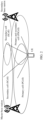
- the terminal device 102 In DC mode, the terminal device 102 may be connected to two serving base stations: a master base station and a secondary base station. Refer to FIG. 2 .
- Serving cells of the terminal device 102 serving by the master base station include a primary cell (primary cell, PCell) and 0 to n (where n is a positive integer) secondary cells (secondary cells, SCells).
- a serving cell group of the terminal device 102 serving by the master base station is referred to as a master cell group (master cell group, MCG).
- Serving cells of the terminal device 102 of the secondary base station include a primary secondary cell PSCell and 0 to n secondary cells SCells.
- a serving cell group of the terminal device 102 serving by the secondary base station is referred to as a secondary cell group (secondary cell group, SCG).
- an MN or a source SN connected to UE may trigger the UE to be handed over from the source SN (source secondary node, S-SN) to a target SN (target secondary node, T-SN).
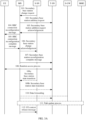
- an SN (secondary base station) change procedure may be shown in FIG. 3A and FIG. 3B .
- FIG. 3A shows a secondary base station change procedure triggered by an SN
- FIG. 3B shows a secondary base station change procedure triggered by an MN.
- step 101 A source SN (S-SN) sends a secondary base station update request to an MN.
- the secondary base station update request carries identification information of a target secondary base station.
- Step 104 The MN sends an RRC connection reconfiguration message to the UE to indicate a new configuration to the UE.
- RRC radio resource control
- Step 105 The UE sends an RRC connection reconfiguration complete message to the MN, and the UE applies the new RRC configuration.
- Step 106 If the target SN successfully allocates a resource, the MN determines to release a resource of the source SN, and sends a secondary base station change acknowledgment message to the S-SN. If data forwarding is required, step 110 is performed.
- Step 107 If the RRC connection reconfiguration procedure succeeds, the MN sends a secondary base station reconfiguration complete message to the T-SN.
- Step 108 The UE is synchronized to the target SN, that is, the UE performs a random access process with the T-SN.
- Steps 109a and 109b For a SN-terminated bearer that uses a radio link control (radio link control, RLC) acknowledgment mode (AM), the S-SN sends a secondary base station state transfer message to the MN, and the MN sends the secondary base station state transfer message to the T-SN.
- Step 110 If applicable, a data forwarding process needs to be performed, that is, data is forwarded from the S-SN, and the S-SN may initiate the request when receiving the secondary base station change acknowledgment message sent by the MN.
- Step 111 If one of bearers is terminated on the source SN, the MN triggers execution of a path update process.
- Step 112 The MN sends a UE context release message to the S-SN. After the S-SN receives the UE context release message, the S-SN may release UE context-related radio and control plane resources, and any ongoing data forwarding may continue.
- step 201 An MN sends a secondary base station addition request to a target SN (T-SN).
- T-SN target SN
- Step 202 The T-SN sends a secondary base station addition request acknowledgment message to the MN.
- Step 203a The MN sends a secondary base station release request to an S-SN.
- Step 203b The S-SN sends a secondary base station release request acknowledgment message to the MN, where the acknowledgment message includes RRC configuration information.
- Step 204 The MN sends an RRC connection reconfiguration message to a UE to indicate a new configuration to the UE.
- Step 205 The UE sends an RRC connection reconfiguration complete message to the MN, and the UE applies the new RRC configuration.
- Step 206 If the RRC connection reconfiguration procedure succeeds, the MN sends a secondary base station reconfiguration complete message to the T-SN.
- Step 207 The UE is synchronized to the target SN, that is, the UE performs a random access process with the T-SN.
- Steps 208a and 208b For a SN-terminated bearer that uses an RLC AM, the S-SN sends a secondary base station state transfer message to the MN, and the MN sends the secondary base station state transfer message to the T-SN.
- Step 209 If applicable, a data forwarding process needs to be performed, that is, data is forwarded from the S-SN, and the S-SN may initiate the request when receiving the secondary base station change acknowledgment message sent by the MN.
- Step 210 If one of bearers is terminated on the source SN, the MN triggers execution of a path update process, that is, a bearer modification procedure.
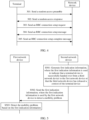
- the random access process shown in step 108 in FIG. 3A or step 207 in FIG. 3B may be 4-step random access or 2-step random access. This is not limited in the embodiments of this application. The following describes in detail the 4-step random access process. For the random access process, refer to FIG. 4 .
- Step 301 UE sends a random access preamble (random access preamble, Preamble) message (also referred to as msg1) to a network device (for example, a gNB), where the preamble message includes a random access preamble selected by the UE.
- a random access preamble random access preamble, Preamble
- Step 302 After receiving the preamble sent by the UE, the network device sends a radio resource control (radio resource control, RRC) random access response (also referred to as msg2) to the UE in a random access response window.
- RRC radio resource control
- Step 303 After receiving the RRC random access response, the UE sends an RRC connection setup request (also referred to as msg3) on an uplink resource allocated by the network device.
- RRC connection setup request also referred to as msg3
- Step 304 The network device sends an RRC connection setup message (also referred to as msg4) to the UE.
- RRC connection setup message also referred to as msg4
- Step 305 After contention resolution is completed, the UE establishes a signaling radio bearer based on information in the RRC connection setup message, and sends an RRC connection setup complete message to the network device.
- inappropriate configuration of a change parameter may cause a radio link failure between the UE and a target SN.
- the change parameter includes at least one of a quality threshold, hysteresis time, trigger time, a threshold deviation, and the like.
- the inappropriate configuration of the change parameter may trigger too early SN change (too early change), too late SN change (too late change), SN change to wrong cell (change to wrong cell), or the like.
- an MN may decide for the UE, so that the UE establishes a radio link connection to the source SN, selects a new SN to establish a radio link, or does not select any SN to establish a radio link. Too late change means that an SCG radio link fault occurs after UE stays in a cell of a source SN for a long time, but the UE does not receive an SN change command before this.
- an MN decides for the UE, so that the UE establishes a radio link connection to another SN, selects a new SN to establish a radio link, or does not select any SN to establish a radio link. There are two change to wrong cell scenarios.
- One scenario is that UE is not successfully handed over from a source SN to a target SN.
- the other scenario is that UE is successfully handed over from a source SN to a target SN, but an SCG radio link fault occurs soon thereafter.
- an MN decides for the UE, so that the UE establishes a radio link connection to an SN other than the source SN and the target SN.
- the SN change to wrong cell scenario may also belong to the too early SN change scenario.
- “soon” may be understood as “very short” or “very soon”, and may be understood as a relatively short period of time.
- a specific length of the period of time is not limited in the embodiments.
- a value of the period of time corresponding to "soon” may be less than 10 ms, that is, a radio link failure occurs within 10 ms after a terminal device is successfully handed over from a source SN to a target SN.
- long time may be a relatively long period of time, namely, relatively long duration.
- a specific length of the "long time” is not limited in the embodiments.
- a value of the "long time” may be greater than 1 s, that is, a radio link failure occurs after a terminal device is connected to a target SN for at least 1 s.
- a radio link failure between a terminal device and a target SN may also be referred to as "a radio connection failure occurs between a terminal device and a target SN", “a connection failure occurs on a radio link of a target SN", “a connection failure occurs on a radio link of an SCG on a target SN”, or “a connection failure occurs on a radio link between a terminal device and an SCG on a target SN”.
- a connection failure occurs on an SCG on a target SN in the embodiments of this application may mean that a connection failure occurs on a radio link between a terminal device and a cell in a target SN.
- the radio link failure may include an SCG failure.
- a connection failure cause may include at least one of the following: an SN change failure (SN change failure), a radio link failure (radio link failure, RLF), a reconfiguration synchronization failure, a failure of handover from new radio (new radio, NR) to another system, an integrity check failure (integrity check failure), an RRC connection reconfiguration failure, or the like. This is not limited in the embodiments of this application.
- a master base station may also be referred to as a master station, an MeNB, or an MgNB; and a secondary base station may also be referred to as a secondary station, an SeNB, or an SgNB.
- the master base station may be a base station in an LTE system, an NR system, a future evolved radio network system, or the like.
- the secondary base station may be a base station in an LTE system, an NR system, a future evolved radio network system, or the like.
- a mobility problem may also be referred to as a change failure event, a radio link failure event, a radio connection failure event, or the like.
- the mobility problem may be too early secondary base station change, too late secondary base station change, or change to wrong cell (or change to wrong SN).
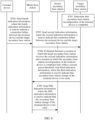
- the data transmission method includes but is not limited to the following steps.
- a second network device generates,as claimed, first indication information, where the first indication information is used to indicate that a terminal device is successfully handed over from a third network device to a first network device or that the third network device has released a context of the terminal device.
- the second network device sends,as claimed, the first indication information to the first network device, and the first network device receives ,as claimed, the first indication information from the second network device, where the first indication information is used by the first network device to detect a mobility problem.
- the first network device detects,as claimed, the mobility problem based on the first indication information.
- the network device may be a base station, or a software module, a hardware circuit, a chip, a chip system, or another component in the base station.
- the second network device may be but is not limited to a master base station (MN) connected to the terminal device.
- the third network device may be but is not limited to a source secondary base station (S-SN) connected to the terminal device before secondary base station change.
- the first network device may be but is not limited to a target secondary base station (T-SN) after the terminal device is handed over. This embodiment of this application is described by using an example in which the first network device is a target secondary base station of UE, the second network device is a master base station of the UE, and the third network device is a source secondary base station of the UE.
- the method may further include: The master base station sends a UE context release message to the source secondary base station (that is, step 112 in FIG. 3A or step 211 in FIG. 3B ).
- the source secondary base station releases a context of the UE based on the UE context release message.
- the method may further include: The terminal device is synchronized to the target secondary base station. That the terminal device is synchronized to the target secondary base station may also be understood as that the target secondary base station completes a random access process with the terminal device (that is, step 108 in FIG. 3A ). Alternatively, that the terminal device is synchronized to the target secondary base station may be understood as that the target secondary base station receives an RRC connection setup complete message sent by the UE. After the terminal device is synchronized to the target secondary base station, the master base station performs a bearer (bearer) modification procedure with the terminal device, for example, step 111 in FIG. 3A .
- a bearer bearer
- the method may further include a secondary base station reconfiguration process of the terminal device (that is, step 206 in FIG. 3B ). That secondary base station reconfiguration of the terminal device is completed may also be understood as that the target secondary base station receives a secondary base station reconfiguration complete message sent by the master base station.
- the master base station performs a bearer (bearer) modification procedure with the terminal device, for example, step 210 in FIG. 3B .
- the master base station After sending the context release message of the terminal device to the source secondary base station, the master base station sends the first indication information to the target secondary base station, to indicate that the source secondary base station has released the context of the terminal device, or indicate that the terminal device is successfully handed over from the source secondary base station to the target secondary base station.
- the indicating that the source secondary base station has released the context of the terminal device means that the master base station sends the context release message of the terminal device to the source secondary base station.
- the target secondary base station detects the mobility problem based on the first indication information. For a process in which the target secondary base station detects the mobility problem, refer to FIG. 6 . After step S502 and before step S503, the method further includes the following steps.
- the terminal device sends fourth indication information to the master base station, and the master base station receives the fourth indication information from the terminal device, where the fourth indication information is used to indicate a radio link failure between the terminal device and the target secondary base station.
- the master base station sends second indication information to the target secondary base station, and the target secondary base station receives the second indication information from the master base station, where the second indication information is used to indicate the radio link failure between the terminal device and the target secondary base station.
- the second indication information includes content in the fourth indication information.
- the second indication information may further include one or more of an identifier of a cell on which the radio link failure occurs, an identifier of the master base station, an identifier of the source secondary base station, and the like. This is not limited in this application.
- the fourth indication information may include radio link failure indication information, for example, a radio link failure report.
- Step S503 includes: The target secondary base station determines, based on an interval between a receiving moment of the first indication information and a receiving moment of the second indication information, whether secondary base station change of the terminal device is too early. If duration between a moment at which the target secondary base station receives the second indication information and a moment at which the target secondary base station receives the first indication information falls within a first preset threshold, the target secondary base station determines that the secondary base station change of the terminal device is too early.
- the target secondary base station may further perform step S506.
- S506 The target secondary base station sends third indication information to the master base station, and the master base station receives the third indication information from the target secondary base station, where the third indication information is used to indicate that the secondary base station change of the terminal device is too early.
- the third indication information is used to indicate a radio link failure cause between the terminal device and the target secondary base station.
- the radio link failure cause is that the secondary base station change of the terminal device is too early.
- the third indication information may further indicate one or more of a source cell identifier (for example, a cell global identifier (cell global identifier, CGI), a physical cell identifier (physical cell identifier, PCI), or a cell frequency), an identifier of a cell on which the radio link failure occurs (for example, a CGI), an identifier of a terminal (for example, a cell radio network temporary identifier (cell radio network temporary identifier, CRNTI)), a radio link failure report, and the like.
- a source cell identifier for example, a cell global identifier (cell global identifier, CGI), a physical cell identifier (physical cell identifier, PCI), or a cell frequency
- an identifier of a cell on which the radio link failure occurs for example, a CGI
- an identifier of a terminal for example, a cell radio network temporary identifier (cell radio network temporary identifier, CRNTI)
- a radio link failure report and the like.
- the master base station adjusts a mobility parameter based on the third indication information.
- the master base station may further send fifth indication information to the source secondary base station after receiving the third indication information, and the source secondary base station receives the fifth indication information from the master base station, where the fifth indication information is used to indicate that the secondary base station change of the terminal device is too early.
- the secondary base station adjusts the mobility parameter based on the fifth indication information. For example, adjusting the mobility parameter means to adjust related parameters in events A5, A6, B1, and B2 in measurement report triggering events.
- the related parameters may include one or more of a handover hysteresis parameter Hysteresis, a handover trigger time (Time-To-Trigger), and a handover offset (cell individual offset, CIO). This is not limited in this embodiment of this application.
- the terminal device can detect whether a radio link failure occurs with the target secondary base station.
- the radio link failure includes at least one of the following: a radio link failure between the terminal device and a primary cell in the target secondary base station, a radio link failure between the terminal device and a special cell in the target secondary base station, or a radio link failure between the terminal device and all cells in the target secondary base station.
- the terminal device may detect a radio link failure based on that a timer expires that is started after a physical layer indicates that a radio problem occurs, a random access procedure failure, an RLC failure, or the like.
- the fifth indication information may be a radio link failure report.
- the terminal device may report, to the master base station, a report about the radio link failure with the target secondary base station.
- the master base station After learning of the report, the master base station sends indication information about the radio link failure between the terminal device and the target secondary base station (that is, the second indication information) to the target secondary base station.
- the target secondary base station determines, by identifying whether the duration between the moment at which the second indication information is received and the moment at which the first indication information is received falls within the first preset threshold, whether the secondary base station change of the terminal device is too early.
- the target secondary base station determines that the secondary base station change of the terminal device is too early.
- the target secondary base station sends, to the master base station, indication information indicating that the secondary base station change is too early (that is, the third indication information).
- the target secondary base station after receiving the first indication information from the master base station, the target secondary base station starts a timer, where timing duration of the timer is the first preset threshold. If the timer is still running when the target secondary base station receives the second indication information sent by the master base station, the target secondary base station determines that a cause for the radio link failure between the terminal device and the target secondary base station is too early secondary base station change.
- the first preset threshold may be a relatively short period of time. A specific length of the period of time is not limited in this embodiment. For example, a value of the period of time corresponding to the "first preset threshold" may be less than 10 ms.
- Too early SN change may be defined as follows.
- a target cell to which the terminal device is handed over belongs to an SN 2, where the SN 2 is a target secondary base station other than a source secondary base station SN 1 to which a source cell belongs.
- the target secondary base station SN 2 After the SN 2 receives the second indication information sent by the master base station, if the target secondary base station SN 2 learns that the master base station has sent a UE context release message to the source secondary base station SN 1, or if the target secondary base station SN 2 receives an indication indicating that secondary base station change succeeds, that is, if the target secondary base station SN 2 receives the first indication information, if the timer (the timer is started after the SN 2 receives the first indication information, where timing duration of the timer is the first preset threshold) is still running at this time, the terminal device is handed over from the source secondary base station to the target secondary base station too early.
- the too early SN change may be defined as follows.
- a target cell to which the terminal device is handed over belongs to an SN 2 other than an SN 1 to which a source cell belongs.
- the target secondary base station SN 2 learns that the master base station has sent a UE context release message to the source secondary base station SN 1, or if the target secondary base station SN 2 receives an indication indicating that secondary base station change succeeds, that is, if the target secondary base station SN 2 receives the first indication information, if the first indication information is sent within the first preset threshold or if the first indication information is sent at the last timing moment within the first preset threshold (for example, the last timing moment is the last second recorded by the timer if duration of the timer is measured in a unit of seconds or at a granularity of seconds, or the last timing moment is the last millisecond recorded by the timer if duration of the timer is measured in a unit of milliseconds
- the too early SN change may be defined as follows. If a target cell to which the terminal device is handed over belongs to an SN 2 other than an SN 1 to which a source cell belongs, after the SN 2 receives the second indication information sent by the master base station, if the target secondary base station SN 2 learns that the master base station has sent a UE context release message to the source secondary base station SN 1, or if the target secondary base station SN 2 receives an indication indicating that secondary base station change succeeds, that is, if the target secondary base station SN 2 receives the first indication information, and there is same UE in the target secondary base station SN 2 ready for the secondary base station change, the terminal device is handed over from the source secondary base station to the target secondary base station too early.
- the target SN may further determine whether the mobility problem of the terminal device is too early change or change to wrong SN, based on the first indication information and whether a secondary base station that the MN reselects for the terminal device after the radio link failure between the terminal device and the target SN occurs is a source SN or a new SN (that is, an SN other than the source SN and the target SN).
- the MN learns of the radio link failure between the terminal device and the target SN, and the MN reselects an SN for the terminal device.
- the MN sends an identifier of the reselected SN to the target SN, and the target SN learns whether the SN reselected by the MN for the terminal device is a source SN or a new SN.
- change to wrong SN may be defined as follows: If duration between a moment at which the target SN receives the second indication information and a moment at which the target SN receives the first indication information falls within the first preset threshold, and the SN reselected by the MN for the UE is a new SN, it is determined that the mobility problem of the terminal device is change to wrong SN. If the duration between the moment at which the target SN receives the second indication information and the moment at which the target SN receives the first indication information falls within the first preset threshold, and the SN reselected by the MN for the UE is a source SN, it is determined that the mobility problem of the terminal device is too early SN change.
- the MN may further detect whether the mobility problem of the terminal device is too early change or change to wrong SN.
- the change to wrong SN may be understood as a special case of the too early change. For example, if the MN receives the third indication information indicating that SN change for the terminal device is too early, and the MN determines that the mobility problem of the terminal device is too early change if the SN reselected by the MN for the terminal device is a source SN, or the MN determines that the mobility problem of the terminal device is change to wrong SN if the SN reselected by the MN for the terminal device is a new SN.
- the master base station may send the first indication information or the second indication information to the target secondary base station via an existing X2/Xn interface message, or may send the first indication information or the second indication information to the target secondary base station via a newly defined X2/Xn interface message.
- the target secondary base station may send the third indication information to the master base station via an existing X2/Xn interface message, or may send the third indication information to the master base station via a newly defined X2/Xn interface message.
- the master base station may send the fifth indication information to the source secondary base station via an existing X2/Xn interface message, or may send the fifth indication information to the source secondary base station via a newly defined X2/Xn interface message. This is not limited in this application.
- the terminal device may send the fourth indication information to the master base station through an air interface.
- the first preset threshold may be configured by the target secondary base station, or configured by an operation administration and maintenance (operation administration and maintenance, OAM) device of the target secondary base station, or obtained by the target secondary base station from the master base station. If the first preset threshold is obtained by the target secondary base station from the master base station, the master base station may further send, in addition to sending the first preset threshold to the target secondary base station, an identifier of a secondary cell to which the first preset threshold is applicable, so that the target secondary base station identifies one or more specific secondary cells on the target secondary base station that the first preset threshold is specific for. It should be noted that, when the first preset threshold is obtained by the target secondary base station from the master base station, the first preset threshold may be configured by the OAM for the master base station or by the master base station. This is not limited in this embodiment of this application.
- the preset threshold mentioned in this embodiment of this application may be a timer at a cell granularity, that is, different cells served by a same base station may correspond to separate time thresholds, and thresholds corresponding to different cells may be the same as or different from each other.
- the preset threshold may be a timer at a base station granularity, that is, different cells served by a same base station may correspond to a same time threshold.
- steps S502 and S504 are not limited.
- This embodiment of this application may be applicable to the secondary base station change process of the UE triggered by the SN shown in FIG. 3A , or may be applicable to the secondary base station change process of the UE triggered by the MN shown in FIG. 3B .
- the master base station may send the first indication information to the target secondary base station, to indicate that the secondary base station of the terminal device hands over from the source secondary base station to the target secondary base station (or to indicate that the source secondary base station releases the context of the terminal device). If a radio link failure occurs after the terminal device successfully accesses the target secondary base station, the terminal device may send the second indication information to the target secondary base station through the master base station, to indicate the radio link failure between the terminal device and the target secondary base station.
- the target secondary base station determines, based on the interval between the receiving moment of the first indication information and the receiving moment of the second indication information, whether the radio link failure cause is that the secondary base station change is too early, so that the master base station or the source secondary base station optimizes a mobility parameter of the secondary base station based on the radio link failure cause. This avoids a mobility failure caused by too early secondary base station change.
- the first preset threshold, the second preset threshold, or the third preset threshold mentioned in this embodiment of this application and the following embodiments may be a storage time threshold of the context of the UE (tstore_UE_cntxt), or may be defined as another name, for example, a timer. This is not limited in this application.
- the target secondary base station detects the mobility problem based on whether the an interval between a receiving moment of the first indication information and a receiving moment of the second indication information falls within the preset threshold.
- the target secondary base station may further detect the mobility problem based on whether an interval between a moment at which the terminal device is synchronized to the target secondary base station and a moment at which the second indication information is received falls within the preset threshold.
- FIG. 7 The embodiment shown in FIG. 7 is not according to the present invention but helpful for understanding certain aspects thereof.
- a target secondary base station determines that a terminal device is synchronized to the target secondary base station.
- this embodiment of this application may be applicable to the scenario shown in FIG. 3A in which an SN triggers secondary base station change of the UE. That a target secondary base station determines that a terminal device is synchronized to the target secondary base station may also be understood as that the target secondary base station completes a random access process with the terminal device. For example, the target secondary base station receives an RRC connection setup complete message sent by the terminal device.
- the terminal device sends fourth indication information to a master base station, and the master base station receives the fourth indication information from the terminal device, where the fourth indication information is used to indicate a radio link failure between the terminal device and the target secondary base station.
- the master base station sends second indication information to the target secondary base station, and the target secondary base station receives the second indication information from the master base station, where the second indication information is used to indicate the radio link failure between the terminal device and the target secondary base station.
- the target secondary base station sends third indication information to the master base station, and the master base station receives the third indication information from the target secondary base station, where the third indication information is used to indicate that secondary base station change of the terminal device is too early.
- the third indication information is used to indicate a radio link failure cause between the terminal device and the target secondary base station.
- the radio link failure cause is that the secondary base station change of the terminal device is too early.
- the master base station sends fifth indication information to a source secondary base station, and the source secondary base station receives the fifth indication information from the master base station, where the fifth indication information is used to indicate that the secondary base station change of the terminal device is too early.
- the source secondary base station may adjust a mobility parameter based on the fifth indication information.
- adjusting the mobility parameter based on the fifth indication information by the source secondary base station means to adjust related parameters in events A5, A6, B1, and B2 in measurement report triggering events.
- the parameters may include one or more of a handover hysteresis parameter Hysteresis, a handover trigger time Time-To-Trigger, and a handover offset (cell individual offset, CIO). This is not limited in this embodiment of this application.
- this embodiment of this application may be applicable to a split bearer (split bearer) scenario, that is, a scenario in which there is no bearer update process between the master base station and a core network (that is, step 109 to step 111 in FIG. 3A are not performed) in the secondary base station change process.
- This embodiment of this application may also be applicable to a scenario in which there is a bearer update process between the master base station and the core network. This is not limited in this application.
- the terminal device can detect whether a radio link failure occurs with the target secondary base station. If a radio link failure occurs, the terminal device may report, to the master base station, a report about the radio link failure with the target secondary base station. After learning of the report, the master base station sends indication information about the radio link failure between the terminal device and the target secondary base station (that is, the second indication information) to the target secondary base station. The target secondary base station determines, by identifying whether duration between the moment at which the second indication information is received and a moment at which the RRC connection setup complete message is received falls within the second preset threshold, whether the secondary base station change of the terminal device is too early.
- the target secondary base station determines that the secondary base station change of the terminal device is too early.
- the target secondary base station sends, to the master base station, indication information indicating that the secondary base station change is too early (that is, the third indication information).
- the target secondary base station after receiving the RRC connection setup complete message from the terminal device, the target secondary base station starts a timer, where timing duration of the timer is the second preset threshold. If the timer is still running when the target secondary base station receives the second indication information sent by the master base station, the target secondary base station determines that a cause for the radio link failure between the terminal device and the target secondary base station is too early secondary base station change.
- the second preset threshold may be a relatively short period of time. A specific length of the period of time is not limited in this embodiment. For example, a value of the period of time corresponding to the "second preset threshold" may be less than 10 ms.
- the second preset threshold in this embodiment of this application may be equal or unequal to the first preset threshold in the foregoing embodiment.
- Too early SN change may be defined as follows.
- a target cell to which the terminal device is handed over belongs to an SN 2 other than an SN 1 to which a source cell belongs.
- the SN 2 receives the second indication information sent by the master base station, if the SN 2 has received the RRC connection setup complete message sent by the UE, if the timer (the timer is started after the SN 2 receives the RRC connection setup complete message sent by the UE, where timing duration of the timer is the second preset threshold) is still running, the terminal device is handed over from the source secondary base station to the target secondary base station too early.
- the too early SN change may be defined as follows.
- a target cell to which the terminal device is handed over belongs to an SN 2 other than an SN 1 to which a source cell belongs.
- the SN 2 receives the second indication information sent by the master base station, if the SN 2 receives, within the second preset threshold, the RRC connection setup complete message sent by the UE, or if the SN 2 receives, at the last timing moment within the second preset threshold, the RRC connection setup complete message sent by the master base station (optionally, if the RRC connection setup complete message is related to handover completion of the UE), the terminal device is handed over from the source secondary base station to the target secondary base station too early.
- the too early SN change may be defined as follows. If a target cell to which the terminal device is handed over belongs to an SN 2 other than an SN 1 to which a source cell belongs, after the SN 2 receives the second indication information sent by the master base station, if the SN 2 has received the RRC connection setup complete message sent by the UE, and there is same UE in the SN 2 ready for the secondary base station change, the terminal device is handed over from the source secondary base station to the target secondary base station too early.
- the target SN may alternatively determine whether the mobility problem of the UE is too early SN change or change to wrong SN, based on whether the duration between the moment at which the second indication information is received and the moment at which the RRC connection setup complete message is received falls within the second preset threshold and based on whether an SN reselected by the MN for the UE is a source SN or a new SN.
- the target SN may alternatively determine whether the mobility problem of the UE is too early SN change or change to wrong SN, based on whether the duration between the moment at which the second indication information is received and the moment at which the RRC connection setup complete message is received falls within the second preset threshold and based on whether an SN reselected by the MN for the UE is a source SN or a new SN.
- the second preset threshold may be started by the target secondary base station.
- the second preset threshold may be configured by the target secondary base station, an OAM device of the target secondary base station, or the master base station.
- the master base station sends the second preset threshold to the target secondary base station.
- the terminal device may send the second indication information to the target secondary base station through the master base station, to indicate the radio link failure between the terminal device and the target secondary base station.
- the target secondary base station determines, based on an interval between a moment at which the second indication information is received and the moment at which the RRC connection setup complete message sent by the UE is received, whether the radio link failure cause is that the secondary base station change is too early, so that the source secondary base station optimizes a mobility parameter of the secondary base station based on the radio link failure cause. This avoids a mobility failure caused by too early secondary base station change.
- This embodiment of this application may be further applied to a secondary base station change scenario triggered by an MN, in addition to the secondary base station change scenario triggered by the SN.
- the target secondary base station further detects the mobility problem based on whether an interval between a moment at which secondary base station reconfiguration is complete and the moment at which the second indication information is received falls within a preset threshold. For details, refer to FIG. 8 .
- a target secondary base station determines that secondary base station reconfiguration of a terminal device is completed.
- a target secondary base station determines that secondary base station reconfiguration of a terminal device is completed is that, for example, the target secondary base station receives a secondary base station reconfiguration complete message (for example, an SgNB reconfiguration complete message) sent by a master base station.
- a secondary base station reconfiguration complete message for example, an SgNB reconfiguration complete message
- the master base station sends second indication information to the target secondary base station, and the target secondary base station receives the second indication information from the master base station, where the second indication information is used to indicate the radio link failure between the terminal device and the target secondary base station.
- S704 If duration between a moment at which the target secondary base station receives the second indication information and a moment at which the target secondary base station determines that the secondary base station reconfiguration of the terminal device is completed falls within a second preset threshold, the target secondary base station sends third indication information to the master base station, and the master base station receives the third indication information from the target secondary base station, where the third indication information is used to indicate that secondary base station change of the terminal device is too early.
- the third indication information is used to indicate a radio link failure cause between the terminal device and the target secondary base station.
- the radio link failure cause is that the secondary base station change of the terminal device is too early.
- the master base station adjusts a mobility parameter based on the third indication information.
- the adjusting a mobility parameter based on the third indication information means to adjust related parameters in events A5, A6, B1, and B2 in measurement report triggering events.
- the parameters may include one or more of a handover hysteresis parameter Hysteresis, a handover trigger time Time-To-Trigger and a handover offset (cell individual offset, CIO). This is not limited in this embodiment of this application.
- this embodiment of this application may be applicable to a split bearer (split bearer) scenario, that is, a scenario in which there is no bearer update process between the master base station and a core network (that is, step 208 to step 210 in FIG. 3B are not performed) in the secondary base station change process.
- This embodiment of this application may also be applicable to a scenario in which there is a bearer update process between the master base station and the core network. This is not limited in this application.
- the target secondary base station after receiving the secondary base station reconfiguration complete message sent by the master base station, the target secondary base station starts a timer, where timing duration of the timer is the second preset threshold. If the timer is still running when the target secondary base station receives the second indication information sent by the master base station, the target secondary base station determines that a cause for the radio link failure between the terminal device and the target secondary base station is too early secondary base station change.
- the second preset threshold may be a relatively short period of time. A specific length of the period of time is not limited in this embodiment. For example, a value of the period of time corresponding to the "second preset threshold" may be less than 10 ms.
- the second preset threshold in this embodiment of this application may be equal or unequal to the first preset threshold in the foregoing embodiment.
- too early SN change may be defined as follows.
- a target cell to which the terminal device is handed over belongs to an SN 2 other than an SN 1 to which a source cell belongs.
- the SN 2 receives the second indication information sent by the master base station, if the SN 2 has received the secondary base station reconfiguration complete message sent by an MN, if the timer (the timer is started after the SN 2 receives the secondary base station reconfiguration complete message sent by the MN, where timing duration of the timer is the second preset threshold) is still running, the terminal device is handed over from a source secondary base station to the target secondary base station too early.
- the too early SN change may be defined as follows.
- a target cell to which the terminal device is handed over belongs to an SN 2 other than an SN 1 to which a source cell belongs.
- the SN 2 receives the second indication information sent by the master base station, if the SN 2 receives, within the second preset threshold, the secondary base station reconfiguration complete message sent by the master base station, or if the SN 2 receives, at the last timing moment within the second preset threshold, the secondary base station reconfiguration complete message sent by the master base station (optionally, if the secondary base station reconfiguration complete message is related to handover completion of the UE), the terminal device is handed over from the source secondary base station to the target secondary base station too early.
- the too early SN change may be defined as follows. If a target cell to which the terminal device is handed over belongs to an SN 2 other than an SN 1 to which a source cell belongs, after the SN 2 receives the second indication information sent by the master base station, if the SN 2 receives the secondary base station reconfiguration complete message sent by the master base station, and there is same UE in the SN 2 ready for the secondary base station change, the terminal device is handed over from the source secondary base station to the target secondary base station too early.
- the target SN may alternatively determine whether the mobility problem of the UE is too early SN change or change to wrong SN, based on whether the duration between the moment at which the second indication information is received and the moment at which the secondary base station reconfiguration complete message is received falls within the second preset threshold and whether the SN reselected by the MN for the UE is a source SN or a new SN.
- the target SN may alternatively determine whether the mobility problem of the UE is too early SN change or change to wrong SN, based on whether the duration between the moment at which the second indication information is received and the moment at which the secondary base station reconfiguration complete message is received falls within the second preset threshold and whether the SN reselected by the MN for the UE is a source SN or a new SN.
- the second preset threshold may be started by the target secondary base station.
- the second preset threshold may be configured by the target secondary base station, an OAM device of the target secondary base station, or the master base station.
- the master base station sends the second preset threshold to the target secondary base station.
- the terminal device may send the second indication information to the target secondary base station through the master base station, to indicate the radio link failure between the terminal device and the target secondary base station.
- the target secondary base station determines, based on an interval between a moment at which the second indication information is received and the moment at which the secondary base station reconfiguration complete message is received, whether the radio link failure cause is that the secondary base station change is too early, so that the master base station optimizes a mobility parameter of the secondary base station based on the radio link failure cause. This avoids a mobility failure caused by too early secondary base station change.
- the target secondary base station detects a mobility problem.
- the master base station may further detect a mobility problem of the terminal device. For details, refer to FIG. 9 .
- a target secondary base station sends a third preset threshold to a master base station, and the master base station receives the third preset threshold, where the third preset threshold is used by the master base station to detect a mobility problem of a terminal device.
- the master base station detects the mobility problem of the terminal device based on the third preset threshold.
- the third preset threshold is obtained by the master base station from the target secondary base station. If the third preset threshold is obtained by the master base station from the target secondary base station, the target secondary base station may further send, in addition to sending the third preset threshold to the master base station, an identifier of the target secondary base station to which the third preset threshold is applicable and/or an identifier of a cell to which the third preset threshold is applicable, so that the master base station identifies a specific secondary base station and/or one or more specific secondary cells on the secondary base station that the third preset threshold is specific for.
- the third preset threshold may be configured by the target secondary base station or an OAM of the target secondary base station.
- the master base station may detect the mobility problem based on the third preset threshold. For example, for a process in which the master base station detects the mobility problem, refer to FIG. 10 . Before step S802, the method further includes the following steps.
- the master base station sends a release request to a source secondary base station, and the source secondary base station receives the release request from the master base station, where the release request is used to request the source secondary base station to release a context of the terminal device.
- the terminal device sends fourth indication information to the master base station, and the master base station receives the fourth indication information from the terminal device, where the fourth indication information is used to indicate a radio link failure between the terminal device and the target secondary base station.
- Step S802 is specifically: If duration between a moment at which the master base station receives the fourth indication information and a moment at which the master base station sends the release request falls within the third preset threshold, the master base station determines that secondary base station change of the terminal device is too early.
- a sequence of performing steps S801 and S803 is not limited.
- the master base station adjusts a mobility parameter based on the third indication information. If the secondary base station triggers the secondary base station change process, the master base station may further send fifth indication information to the source secondary base station after determining that the secondary base station change of the terminal device is too early, where the fifth indication information is used to indicate that secondary network device change of the terminal device is too early. The secondary base station adjusts the mobility parameter based on the fifth indication information.
- the terminal device may report a radio link failure event of the target secondary base station to the master base station via the fourth indication information.
- the master base station determines, by identifying whether the duration between the moment at which the fourth indication information is received and the moment at which the master base station sends the release request falls within the third preset threshold, whether the secondary base station change of the terminal device is too early. If the duration between the moment at which the master base station receives the fourth indication information and the moment at which the master base station sends the release request falls within the third preset threshold, the master base station determines that the secondary base station change of the terminal device is too early.
- the master base station after sending the release request, the master base station starts a timer, where timing duration of the timer is the third preset threshold. If the timer is still running when the master base station receives the fourth indication information sent by the terminal device, the master base station determines that a cause for the radio link failure between the terminal device and the target secondary base station is too early secondary base station change.
- the third preset threshold may be a relatively short period of time. A specific length of the period of time is not limited in this embodiment. For example, a value of the period of time corresponding to the "third preset threshold" may be less than 10 ms.
- the third preset threshold may be the same as or different from the first preset threshold and the second preset threshold in the foregoing embodiments.
- Too early SN change may be defined as follows. A target cell to which the terminal device is handed over belongs to an SN 2 other than an SN 1 to which a source cell belongs. After an MN receives the fourth indication information sent by the UE, if the master base station sends a UE context release request to the source secondary base station, if the timer is still running, the terminal device is handed over from the source secondary base station to the target secondary base station too early.
- the too early SN change may be defined as follows.
- a target cell to which the terminal device is handed over belongs to an SN 2 other than an SN 1 to which a source cell belongs.
- the SN 2 receives the fourth indication information sent by the UE, if the master base station sends the release request to the source secondary base station, the release request is sent within the third preset threshold or is sent at the last timing moment of the third preset threshold, and the release request is related to handover completion of the UE, the terminal device is handed over from the source secondary base station to the target secondary base station too early.
- the too early SN change may be defined as follows. If a target cell to which the terminal device is handed over belongs to an SN 2 other than an SN 1 to which a source cell belongs, after the SN 2 receives the fourth indication information sent by the master base station, if the master base station sends the release request, and there is same UE in the SN 2 ready for the secondary base station change, the terminal device is handed over from the source secondary base station to the target secondary base station too early.
- the too early SN change may be defined as follows. If SN change is performed on the terminal device recently, that is, if timing duration of the timer reported by the terminal device is less than the third preset threshold, and a secondary base station to which the UE is reconnected and that is determined by an MN is a secondary base station that serves the UE during initialization of the last SN change, the terminal device is handed over from the source secondary base station to the target secondary base station too early.
- the timer reported by the terminal device is used to indicate interval time from initialization of last SN change to a moment at which the terminal device reports radio link failure indication information (that is, the fourth indication information) to the MN.
- the timer may be included in the fourth indication information and reported to the MN.
- the mobility problem may further include too late SN change or change to wrong cell (or wrong SN), in addition to the too early SN change.
- the SN change to wrong cell may be defined as follows. If SN change is performed on the terminal device recently, that is, if timing duration of the timer reported by the terminal device is less than the third preset threshold, and a secondary base station to which the UE is reconnected and that is determined by the MN is neither a secondary base station that serves the UE during initialization of the last SN change nor a secondary base station on which a secondary base station radio link failure occurs, incorrect SN change occurs.
- the too late SN change may be defined as follows. If the terminal device does not receive an SN change command before a radio link failure occurs on the terminal device (a radio link failure with the target secondary base station), that is, if timing duration of the timer reported by the terminal device is greater than the third preset threshold, the terminal device is handed over from the source secondary base station to the target secondary base station too late.
- the timer reported by the terminal device is used to indicate interval time from initialization of last SN change to a moment at which the terminal device reports radio link failure indication information (that is, the fourth indication information) to the MN. The timer may be included in the fourth indication information and reported to the MN.
- the third preset threshold may further be configured by the master base station or an OAM of the master base station.
- This embodiment of this application may be applicable to the secondary base station change process of the UE triggered by the SN shown in FIG. 3A , or may be applicable to the secondary base station change process of the UE triggered by the MN shown in FIG. 3B .
- the terminal device may send the fourth indication information to the master base station, to indicate the radio link failure between the terminal device and the target secondary base station.
- the master base station determines, based on an interval between a moment at which the fourth indication information is received and a moment at which a UE context release message is sent to the source secondary base station, whether the radio link failure cause is that the secondary base station change is too early, so that the master base station or the source secondary base station optimizes a mobility parameter of the secondary base station based on the radio link failure cause. This avoids a mobility failure caused by too early secondary base station change.
- the master base station detects too late secondary base station change and change to wrong cell based on the timer reported by the terminal device and the third preset threshold.
- the master base station may further send the timer to the target secondary base station after receiving the timer sent by the terminal device.
- the target secondary base station may detect the too late secondary base station change and the change to wrong cell based on the timer and the fourth preset threshold. For details, refer to the following procedure.
- a master base station sends a first timer to a target secondary base station, and the target secondary base station receives the first timer from the master base station, where the first timer is used to indicate time from initialization of last secondary base station change of a terminal device to a moment at which the terminal device reports fourth indication information.
- the first timer is sent by the terminal device to the master base station.
- the first timer is included in the fourth indication information sent by the UE to the master base station, and the fourth indication information is used to indicate a radio link failure between the terminal device and the target secondary base station.
- the master base station may further send second indication information to the target base station, where the second indication information is used to indicate the radio link failure between the terminal device and the target secondary base station.
- the second indication information may include content in the fourth indication information.
- the second indication information may further include one or more of an identifier of a cell on which the radio link failure occurs, an identifier of the master base station, an identifier of a source secondary base station, and the like. This is not limited in this application.
- the target secondary base station detects a mobility problem of the terminal device based on the first timer.
- the target secondary base station determines that SN change is too late if timing duration of the first timer is greater than the fourth preset threshold, or SN change is too early or SN change is incorrect if timing duration of the first timer is less than the fourth preset threshold.
- the fourth preset threshold may be configured by the master base station, an OAM of the master base station, or an OAM of the secondary base station. This is not limited in this embodiment of this application.
- the terminal device sends the fourth indication information to the master base station, and the master base station receives the fourth indication information from the terminal device, where the fourth indication information is used to indicate the radio link failure between the terminal device and the target secondary base station.
- the radio link failure between the terminal device and the target secondary base station may be an SCG failure.
- Information about the SCG failure includes a timer, and the timer is used to indicate time since initialization of last SN change of the UE.
- the too early SN change may be defined as follows. If SN change is performed on the terminal device recently, that is, if timing duration of the first timer is less than the fourth preset threshold, and a secondary base station to which the UE is reconnected and that is determined by an MN is a secondary base station that serves the UE during initialization of the last SN change, the UE is handed over from the source secondary base station to the target secondary base station too early.
- timing duration of the first timer is less than the fourth preset threshold, and a secondary base station to which the UE is reconnected and that is determined by an MN is neither a secondary base station that serves the UE during initialization of the last SN change nor a secondary base station on which a secondary base station radio link failure occurs, incorrect SN change occurs.
- too late SN change may be defined as: If timing duration of the first timer is greater than the fourth preset threshold, the terminal device is handed over from the source secondary base station to the target secondary base station too late.
- each network element for example, the first network device, the second network device, and the third network device, includes a corresponding hardware structure and/or software module for performing each function.
- network elements and algorithm steps may be implemented by hardware or a combination of hardware and computer software in this application. Whether a function is performed by hardware or hardware driven by computer software depends on particular applications and design constraints of the technical solutions. A person skilled in the art may use different methods to implement the described functions for each particular application, but it should not be considered that the implementation goes beyond the scope of this application.
- the method implemented by the first network device may alternatively be implemented by a component (for example, a chip or a circuit) that may be configured in the first network device
- the method implemented by the second network device may alternatively be implemented by a component (for example, a chip or a circuit) that may be configured in the second network device
- the method implemented by the third network device may alternatively be implemented by a component (for example, a chip or a circuit) that may be configured in the third network device
- the method implemented by the terminal device may alternatively be implemented by a component (for example, a chip or a circuit) that may be configured in the terminal device.
- division into functional modules may be performed on the first network device, the second network device, and the like based on the foregoing method examples.
- each functional module may be obtained through division based on each corresponding function, or two or more functions may be integrated into one processing module.
- the integrated module may be implemented in a form of hardware, or may be implemented in a form of a software functional module. It should be noted that in the embodiments of this application, division into the modules is an example and is merely logical function division, and may be other division in an actual implementation.
- FIG. 11 is a schematic diagram of a structure of a communication apparatus.
- the communication apparatus may correspondingly implement functions or operations of the first network device in the foregoing embodiment.
- the communication apparatus may be the first network device or a component configured in the first network device.
- the communication apparatus 1100 may include a receiving unit 1101 and a processing unit 1102.
- the receiving unit 1101 is configured to support the communication apparatus 1100 to perform the step corresponding to receiving information by the first network device in the method embodiment shown in FIG. 5 or FIG. 6 .
- the processing unit 1102 is configured to support the communication apparatus 1100 to perform processing steps corresponding to the first network device in the foregoing method embodiment shown in FIG. 5 or FIG. 6 , for example, implement functions other than functions of a sending unit and the receiving unit.
- the communication apparatus 1100 may further include the sending unit, configured to support the communication apparatus 1100 to perform the step corresponding to sending information by the first network device in the method embodiment shown in FIG. 5 or FIG. 6 .
- the communication apparatus 1100 may further include a storage unit, configured to store code (a program) or data.
- the processing unit 1102 may read the code or data from the storage unit, to implement a corresponding operation.
- the receiving unit 1101 is configured to receive first indication information from a second network device, where the first indication information is used to indicate that a terminal device is successfully handed over from a third network device to the first network device or that the third network device has released a context of the terminal device.
- the processing unit 1102 is configured to detect a mobility problem based on the first indication information.
- the receiving unit 1101 may be a receiver, a receiving circuit, an interface circuit, or the like.
- the processing unit 1102 may be a processor, a processing circuit, or the like.
- the sending unit may be a transmitter, a transmitting circuit, an interface circuit, or the like.
- the storage unit may be a memory. The processing unit, the sending unit, the receiving unit, and the storage unit may be integrated together or separated from each other.
- FIG. 12 is a schematic diagram of a structure of another communication apparatus.
- the communication apparatus may correspondingly implement functions or operations of the first network device in the foregoing embodiment.
- the communication apparatus may be the first network device or a component configured in the first network device.
- the communication apparatus 1200 may include a processing unit 1201, a receiving unit 1202, and a sending unit 1203.
- the processing unit 1201 is configured to support the communication apparatus 1200 to perform processing steps corresponding to the first network device in the foregoing method embodiment shown in FIG. 7 or FIG. 8 , for example, implement functions other than functions of the sending unit and the receiving unit.
- the receiving unit 1202 is configured to support the communication apparatus 1200 to perform the step corresponding to receiving information by the first network device in the method embodiment shown in FIG. 7 or FIG. 8 .
- the sending unit 1203 is configured to support the communication apparatus 1200 to perform the step corresponding to sending information by the first network device in the method embodiment shown in FIG. 7 or FIG. 8 .
- the communication apparatus 1200 may further include a storage unit, configured to store code (a program) or data.
- the processing unit 1201 may read the code or data from the storage unit, to implement a corresponding operation.
- the processing unit 1201 is configured to determine that a terminal device is synchronized to the first network device.
- the receiving unit 1202 is configured to receive second indication information from a second network device, where the second indication information is used to indicate a radio link failure between the terminal device and the first network device.
- the sending unit 1203 is configured to: if duration between a moment at which the communication apparatus 1200 receives the second indication information and a moment at which the terminal device is synchronized to the first network device falls within a second preset threshold, send third indication information to the second network device, where the third indication information is used to indicate that secondary network device change of the terminal device is too early.
- the processing unit 1201 is configured to determine that secondary network device reconfiguration of a terminal device is completed.
- the receiving unit 1202 is configured to receive second indication information from a second network device, where the second indication information is used to indicate a radio link failure between the terminal device and the first network device.
- the sending unit 1203 is configured to: if duration between the moment at which the communication apparatus 1200 receives the second indication information and the moment at which the secondary network device reconfiguration of the terminal device is completed falls within a second preset threshold, send third indication information to the second network device, where the third indication information is used to indicate that secondary network device change of the terminal device is too early.
- the processing unit 1201 may be a processor, a processing circuit, or the like.
- the receiving unit 1202 may be a receiver, a receiving circuit, an interface circuit, or the like.
- the sending unit 1203 may be a transmitter, a transmitting circuit, an interface circuit, or the like.
- the storage unit may be a memory. The processing unit, the sending unit, the receiving unit, and the storage unit may be integrated together or separated from each other.
- FIG. 13 is a schematic diagram of a structure of another communication apparatus.
- the communication apparatus 1300 may include one or more processors 1301, a memory 1302, a network interface 1303, a transceiver 1305, and an antenna 1308. These components may be connected to each other through a bus 1304 or in another manner. In FIG. 13 , an example in which the components are connected to each other through the bus is used.
- the network interface 1303 may be used by the communication apparatus 1300 for communicating with another communication device, for example, another network device.
- the network interface 1303 may be a wired interface.
- the transceiver 1305 may be configured to perform transmission processing on a signal output by the processor 1301, for example, signal modulation.
- the transceiver 1305 may further be configured to perform reception processing on a mobile communication signal received by the antenna 1308, for example, signal demodulation.
- the transceiver 1305 may be considered as a wireless modem.
- the antenna 1308 may be configured to convert electromagnetic energy in a transmission line into an electromagnetic wave in free space, or convert an electromagnetic wave in free space into electromagnetic energy in a transmission line.
- the memory 1302 may be coupled to the processor 1301 through the bus 1304 or an input/output port. Alternatively, the memory 1302 may be integrated with the processor 1301.
- the memory 1302 is configured to store various software programs and/or a plurality of groups of instructions or data.
- the memory 1302 may include a high-speed random access memory, and may further include a non-volatile memory, for example, one or more magnetic disk storage devices, a flash storage device, or another non-volatile solid-state storage device.
- the memory 1302 may store an operating system (which is briefly referred to as a system below), for example, an embedded operating system such as uCOS, VxWorks, or RTLinux.
- the memory 1302 may further store a network communication program.
- the network communication program may be used to communicate with one or more additional devices, one or more user equipment devices, and one or more network devices.
- the processor 1301 may be a central processing unit, a general-purpose processor, a digital signal processor, an application-specific integrated circuit, a field programmable gate array or another programmable logic device, a transistor logic device, a hardware component, or any combination thereof.
- the processor 1301 may implement or execute various example logical blocks, modules, and circuits described with reference to content disclosed in this application.
- the processor may be a combination of processors implementing a determining function, for example, a combination of one or more microprocessors or a combination of a digital signal processor and a microprocessor.
- the processor 1301 may be configured to read and execute computer-readable instructions. Specifically, the processor 1301 may be configured to invoke a program stored in the memory 1302, for example, a program for implementing the data transmission method on a first network device side provided in one or more embodiments of this application, and execute instructions included in the program.
- the communication apparatus 1300 may be the network device 101 in the wireless communication system 100 shown in FIG. 1 , a target secondary base station connected to a terminal device after secondary base station change, or the like.
- the communication apparatus 1300 shown in FIG. 13 is merely an implementation of this embodiment of this application. In actual application, the communication apparatus 1300 may further include more or fewer components. This is not limited herein. For a specific implementation of the communication apparatus 1300, refer to related descriptions about the first network device in the foregoing method embodiment. Details are not described herein again.
- FIG. 14 is a schematic diagram of a structure of another communication apparatus.
- the communication apparatus may be the second network device in the foregoing method embodiment, or a component (for example, a chip system or a hardware circuit) configured in the second network device.
- the communication apparatus 1400 may include a processing unit 1401 and a sending unit 1402.
- the processing unit 1401 is configured to support the second network device to perform processing steps corresponding to the second network device in the foregoing method embodiment shown in FIG. 5 or FIG. 6 , for example, implement functions other than functions of the sending unit and a receiving unit.
- the sending unit 1402 is configured to support the communication apparatus 1400 to perform the step corresponding to sending information by the second network device in the method embodiment shown in FIG. 5 or FIG. 6 .
- the second network device may further include a receiving unit, configured to support the communication apparatus 1400 to perform the step corresponding to receiving information by the second network device in the method embodiment shown in FIG. 5 or FIG. 6 .
- the communication apparatus 1400 may further include a storage unit, configured to store code (a program) or data.
- the processing unit 1102 may read the code or data from the storage unit, to implement a corresponding operation.
- the processing unit 1401 is configured to generate first indication information, where the first indication information is used to indicate that a terminal device is successfully handed over from a third network device to the first network device or that the third network device has released a context of the terminal device.
- the sending unit 1402 is configured to send the first indication information to the first network device, where the first indication information is used by the first network device to detect a mobility problem.
- the processing unit 1401 may be a processor, a processing circuit, or the like.
- the sending unit 1402 may be a transmitter, a transmitting circuit, an interface circuit, or the like.
- the storage unit may be a memory.
- the receiving unit may be a receiver, a receiving circuit, an interface circuit, or the like.
- the processing unit, the sending unit, the receiving unit, and the storage unit may be integrated together or separated from each other.
- FIG. 15 is a schematic diagram of a structure of another communication apparatus.
- the communication apparatus may correspondingly implement functions or operations of the second network device in the foregoing embodiment.
- the communication apparatus may be the second network device or a component configured in the second network device.
- the communication apparatus 1500 may include a sending unit 1501, a receiving unit 1502, and a processing unit 1503.
- the sending unit 1501 is configured to support the communication apparatus 1500 to perform the step corresponding to sending information by the second network device in the method embodiment shown in FIG. 9 .
- the receiving unit 1502 is configured to support the communication apparatus 1500 to perform the step corresponding to receiving information by the second network device in the method embodiment shown in FIG. 9 .
- the processing unit 1503 is configured to support the second network device to perform processing steps corresponding to the second network device in the foregoing method embodiment shown in FIG. 9 , for example, implement functions other than functions of the sending unit and the receiving unit.
- the communication apparatus 1500 may further include a storage unit, configured to store code (a program) or data.
- the processing unit 1503 may read the code or data from the storage unit, to implement a corresponding operation.
- the sending unit 1501 is configured to send a release request to a third network device, where the release request is used to request the third network device to release a context of a terminal device.
- the receiving unit 1502 is configured to receive fourth indication information from the terminal device, where the fourth indication information is used to indicate a radio link failure between the terminal device and a first network device.
- the first network device is a target secondary network device to which the terminal device is handed over from the third network device.
- the processing unit 1503 is configured to: if duration between a moment at which the communication apparatus 1500 receives the fourth indication information and a moment at which the second network device sends the release request falls within a third preset threshold, determine that secondary network device change of the terminal device is too early.
- the sending unit 1501 may be a transmitter, a transmitting circuit, an interface circuit, or the like.
- the receiving unit 1502 may be a receiver, a receiving circuit, an interface circuit, or the like.
- the processing unit 1503 may be a processor, a processing circuit, or the like.
- the storage unit may be a memory. The processing unit, the sending unit, the receiving unit, and the storage unit may be integrated together or separated from each other.
- FIG. 16 is a schematic diagram of a structure of another communication apparatus.
- the communication apparatus 1600 may include one or more processors 1601, a memory 1602, a network interface 1603, a transceiver 1605, and an antenna 1608. These components may be connected to each other through a bus 1604 or in another manner. In FIG. 16 , an example in which the components are connected to each other through the bus is used.
- the network interface 1603 may be used by the communication apparatus 1600 for communicating with another communication device, for example, another network device.
- the network interface 1603 may be a wired interface.
- the transceiver 1605 may be configured to perform transmission processing on a signal output by the processor 1601, for example, signal modulation.
- the transceiver 1605 may further be configured to perform reception processing on a mobile communication signal received by the antenna 1608, for example, signal demodulation.
- the transceiver 1605 may be considered as a wireless modem.
- the antenna 1608 may be configured to convert electromagnetic energy in a transmission line into an electromagnetic wave in free space, or convert an electromagnetic wave in free space into electromagnetic energy in a transmission line.
- the memory 1602 may be coupled to the processor 1601 through the bus 1604 or an input/output port. Alternatively, the memory 1602 may be integrated with the processor 1601.
- the memory 1602 is configured to store various software programs and/or a plurality of groups of instructions or data.
- the memory 1602 may include a high-speed random access memory, and may further include a non-volatile memory, for example, one or more magnetic disk storage devices, a flash storage device, or another non-volatile solid-state storage device.
- the memory 1602 may store an operating system (which is briefly referred to as a system below), for example, an embedded operating system such as uCOS, VxWorks, or RTLinux.
- the memory 1602 may further store a network communication program.
- the network communication program may be used to communicate with one or more additional devices, one or more user equipment devices, and one or more network devices.
- the processor 1601 may be a central processing unit, a general-purpose processor, a digital signal processor, an application-specific integrated circuit, a field programmable gate array or another programmable logic device, a transistor logic device, a hardware component, or any combination thereof.
- the processor 1601 may implement or execute various example logical blocks, modules, and circuits described with reference to content disclosed in this application.
- the processor may be a combination of processors implementing a determining function, for example, a combination of one or more microprocessors or a combination of a digital signal processor and a microprocessor.
- the processor 1601 may be configured to read and execute computer-readable instructions. Specifically, the processor 1601 may be configured to invoke a program stored in the memory 1602, for example, a program for implementing the data transmission method on a second network device side provided in one or more embodiments of this application, and execute instructions included in the program.
- the communication apparatus 1600 may be the network device 101 in the wireless communication system 100 shown in FIG. 1 , a master base station connected to a terminal device, or the like.
- the communication apparatus 1600 shown in FIG. 16 is merely an implementation of this embodiment of this application.
- the communication apparatus 1600 may further include more or fewer components. This is not limited herein.
- the communication apparatus 1600 refer to related descriptions about the second network device in the foregoing method embodiment. Details are not described herein again.
- FIG. 17 is a schematic diagram of a structure of a communication chip according to this application.
- the communication chip 1700 may include a processor 1701, and one or more interfaces 1702 coupled to the processor 1701.
- the processor 1701 may be configured to read and execute computer-readable instructions.
- the processor 1701 may mainly include a controller, an arithmetic unit, and a register.
- the controller is mainly responsible for decoding instructions, and sends a control signal for operations corresponding to the instructions.
- the arithmetic unit is mainly responsible for performing a fixed-point or floatingpoint arithmetic operation, a shift operation, a logic operation, and the like, and may also perform an address operation and address translation.
- the register is mainly responsible for saving a quantity of register operations, intermediate operation results, and the like that are temporarily stored during instruction execution.
- a hardware architecture of the processor 1701 may be an application-specific integrated circuit (application-specific integrated circuit, ASIC) architecture, a microprocessor without interlocked piped stages (microprocessor without interlocked piped stages architecture, MIPS) architecture, an advanced reduced instruction set computing machine (advanced RISC machine, ARM) architecture, a network processor (network processor, NP) architecture, or the like.
- ASIC application-specific integrated circuit
- MIPS microprocessor without interlocked piped stages architecture
- an advanced reduced instruction set computing machine advanced reduced instruction set computing machine
- NP network processor
- the interface 1702 may be configured to input to-be-processed data to the processor 1701, and may output a processing result of the processor 1701.
- the interface 1702 may be a general-purpose input/output (general-purpose input output, GPIO) interface, and may be connected to at least one peripheral device (for example, a display (LCD), a camera (camera), and a radio frequency (radio frequency, RF) module).
- the interface 1702 is connected to the processor 1701 through a bus 1703.
- the processor 1701 may be configured to invoke, from a memory, a program or data for implementing the data transmission method on an access network device side provided in one or more embodiments of this application, so that the chip can implement related functions of the data transmission methods shown in FIG. 5 to FIG. 9 on the first network device.
- the processor 1701 may be configured to invoke, from a memory, a program or data for implementing the data transmission method on a second network device side provided in one or more embodiments of this application, so that the chip can implement related operations of the data transmission methods shown in FIG. 5 to FIG. 9 on customer premises equipment.
- the memory may be integrated with the processor 1701, or may be coupled to the communication chip 1700 through the interface 1702.
- the memory may be a part of the communication chip 1700, or may be independent of the communication chip 1700.
- the interface 1702 may be configured to output an execution result of the processor 1701.
- a function corresponding to each of the processor 1701 and the interface 1702 may be implemented by using a hardware design, a software design, or a combination of software and hardware. This is not limited herein.
- a computer-readable storage medium stores computer-executable instructions.
- a device which may be a single chip microcomputer, a chip, or the like
- a processor may invoke the computer-executable instructions stored in the readable storage medium, so that the device or the processor performs the steps of the first network device or the second network device in the data transmission method provided in FIG. 5 to FIG. 10 .
- the computer-readable storage medium may include any medium that can store program code, such as a USB flash drive, a removable hard disk, a read-only memory, a random access memory, a magnetic disk, or an optical disc.
- a computer program product includes computer-executable instructions, and the computer-executable instructions are stored in a computer-readable storage medium.
- At least one processor of a device may read the computer-executable instructions from the computer-readable storage medium, and the at least one processor executes the computer-executable instructions, so that the device performs steps of the first network device or the second network device in the data transmission method provided in FIG. 5 to FIG. 10 .
- a communication system is further provided.
- the communication system includes a plurality of devices, and the plurality of devices include a first network device or a second network device.
- the first network device may be the first network device shown in FIG. 10 , FIG. 11, or FIG. 12 , and is configured to perform steps corresponding to the first network device in the data transmission method provided in FIG. 5 to FIG. 10 ; and/or the second network device may be the second network device shown in FIG. 13, FIG. 14 , or FIG. 15 , and is configured to perform steps corresponding to the second network device in the data transmission method provided in FIG. 5 to FIG. 10 .
- the plurality of devices may further include the third network device and the terminal device.
- the third network device refer to descriptions of the third network device in FIG. 5 to FIG. 10 .
- the terminal device refer to descriptions of the terminal device in FIG. 5 to FIG. 10 . Details are not described herein again.
- All or some of the foregoing embodiments may be implemented by using software, hardware, firmware, or any combination thereof.
- the software is used to implement the embodiments, all or a part of the embodiments may be implemented in a form of a computer program product.
- the computer program product includes one or more computer instructions.
- the computer may be a general-purpose computer, a dedicated computer, a computer network, or another programmable apparatus.
- the computer instructions may be stored in a computer-readable storage medium or may be transmitted from a computer-readable storage medium to another computer-readable storage medium.
- the computer instructions may be transmitted from a website, computer, server, or data center to another website, computer, server, or data center in a wired (for example, a coaxial cable, an optical fiber, or a digital subscriber line (digital subscriber line, DSL)) or wireless (for example, infrared, radio, and microwave) manner.
- the computer-readable storage medium may be any usable medium accessible by a computer, or a data storage device, for example, a server or a data center, integrating one or more usable media.
- the usable medium may be a magnetic medium (for example, a floppy disk, a hard disk, or a magnetic tape), an optical medium (for example, a DVD), a semiconductor medium (for example, a solid-state drive (solid-state drive, SSD)), or the like.
- a magnetic medium for example, a floppy disk, a hard disk, or a magnetic tape
- an optical medium for example, a DVD
- a semiconductor medium for example, a solid-state drive (solid-state drive, SSD)
Landscapes
- Engineering & Computer Science (AREA)
- Computer Networks & Wireless Communication (AREA)
- Signal Processing (AREA)
- Mobile Radio Communication Systems (AREA)
Claims (10)
- Datenübertragungsverfahren, umfassend:Empfangen (S502), durch ein erstes Netzwerkgerät, von ersten Angabeinformationen von einem zweiten Netzwerkgerät, wobei die ersten Angabeinformationen angeben, dass ein Endgerät von einem dritten Netzwerkgerät an das erste Netzwerkgerät erfolgreich übergeben wird oder dass das dritte Netzwerkgerät einen Kontext des Endgeräts freigegeben hat; undDetektieren (S503), durch das erste Netzwerkgerät, eines Mobilitätsproblems basierend auf den ersten Angabeinformationen;dadurch gekennzeichnet, dass das Verfahren ferner Folgendes umfasst:Empfangen (S505), durch das erste Netzwerkgerät, von zweiten Angabeinformationen von dem zweiten Netzwerkgerät, wobei die zweiten Angabeinformationen einen Funkverbindungsausfall zwischen dem Endgerät und dem ersten Netzwerkgerät angeben; unddas Detektieren (S503), durch das erste Netzwerkgerät, eines Mobilitätsproblems basierend auf den ersten Angabeinformationen Folgendes umfasst:
wenn eine Dauer zwischen einem Zeitpunkt, zu dem das erste Netzwerkgerät die zweiten Angabeinformationen empfängt, und einem Zeitpunkt, zu dem das erste Netzwerkgerät die ersten Angabeinformationen empfängt, in einen ersten im Voraus eingestellten Schwellenwert fällt, Bestimmen, durch das erste Netzwerkgerät, dass ein sekundärer Netzwerkgerätwechsel des Endgeräts zu früh ist, wodurch dritte Angabeinformationen, die angeben, dass ein sekundärer Netzwerkgerätwechsel des Endgeräts zu früh ist, durch das erste Netzwerkgerät an das zweite Netzwerkgerät gesandt werden sollen. - Verfahren nach Anspruch 1, ferner umfassend:
Senden (S506), durch das erste Netzwerkgerät, der dritten Angabeinformationen an das zweite Netzwerkgerät. - Verfahren nach Anspruch 2, wobei der erste im Voraus eingestellte Schwellenwert durch das erste Netzwerkgerät oder ein Betriebsverwaltungs- und -wartungs- bzw. OAM-Gerät des ersten Netzwerkgeräts konfiguriert wird.
- Verfahren nach Anspruch 2 oder 3, wobei nach dem Empfangen, durch ein erstes Netzwerkgerät, von ersten Angabeinformationen von einem zweiten Netzwerkgerät, das Verfahren ferner Folgendes umfasst:Starten, durch das erste Netzwerkgerät, eines Zeitgebers, wobei eine zeitliche Dauer des Zeitgebers der erste im Voraus eingestellte Schwellenwert ist; undwobei dass die Dauer zwischen dem Zeitpunkt, zu dem das erste Netzwerkgerät die zweiten Angabeinformationen empfängt, und dem Zeitpunkt, zu dem das erste Netzwerkgerät die ersten Angabeinformationen empfängt, in den ersten im Voraus eingestellten Schwellenwert fällt, Folgendes umfasst: der Zeitgeber hört nicht auf zu laufen, wenn das erste Netzwerkgerät die zweiten Angabeinformationen empfängt.
- Datenübertragungsverfahren, umfassend:Erzeugen (S501), durch ein zweites Netzwerkgerät, von ersten Angabeinformationen, wobei die ersten Angabeinformationen angeben, dass ein Endgerät von einem dritten Netzwerkgerät an ein erstes Netzwerkgerät erfolgreich übergeben wird oder dass das dritte Netzwerkgerät einen Kontext des Endgeräts freigegeben hat; undSenden (S502), durch das zweite Netzwerkgerät, der ersten Angabeinformationen an das erste Netzwerkgerät, wobei die ersten Angabeinformationen durch das erste Netzwerkgerät zum Detektieren eines Mobilitätsproblems verwendet werden;dadurch gekennzeichnet, dass das Verfahren ferner Folgendes umfasst:Empfangen (S702), durch das zweite Netzwerkgerät, von vierten Angabeinformationen von dem Endgerät, wobei die vierten Angabeinformationen einen Funkverbindungsausfall zwischen dem Endgerät und dem ersten Netzwerkgerät angeben;Senden (S703), durch das zweite Netzwerkgerät, von zweiten Angabeinformationen an das erste Netzwerkgerät, wobei die zweiten Angabeinformationen den Funkverbindungsausfall zwischen dem Endgerät und dem ersten Netzwerkgerät angeben; undEmpfangen (S704), durch das zweite Netzwerkgerät, von dritten Angabeinformationen von dem ersten Netzwerkgerät, wobei die dritten Angabeinformationen angeben, dass ein sekundärer Netzwerkgerätwechsel des Endgeräts zu früh ist, wobei das Verwenden der ersten Angabeinformationen durch das erste Netzwerkgerät zum Detektieren eines Mobilitätsproblems Folgendes umfasst:
wenn eine Dauer zwischen einem Zeitpunkt, zu dem die zweiten Angabeinformationen durch das erste Netzwerkgerät empfangen werden, und einem Zeitpunkt, zu dem die ersten Angabeinformationen durch das erste Netzwerkgerät empfangen werden, in einen ersten im Voraus eingestellten Schwellenwert fällt, durch das erste Netzwerkgerät bestimmt werden soll, dass ein sekundärer Netzwerkgerätwechsel des Endgeräts zu früh ist. - Kommunikationsvorrichtung (1100, 1200), umfassend ein Modul oder eine Einheit (1101, 1102, 1201, 1202, 1203), konfiguriert zum Durchführen des Verfahrens nach einem der Ansprüche 1 bis 4.
- Kommunikationsvorrichtung (1400, 1500), umfassend ein Modul oder eine Einheit (1401, 1402, 1501, 1502, 1503), konfiguriert zum Durchführen des Verfahrens nach Anspruch 5.
- Kommunikationssystem, umfassend ein erstes Netzwerkgerät und ein zweites Netzwerkgerät, wobei das erste Netzwerkgerät die Kommunikationsvorrichtung (1100, 1200) nach Anspruch 6 umfasst und das zweite Netzwerkgerät die Kommunikationsvorrichtung (1400, 1500) nach Anspruch 7 umfasst.
- Kommunikationssystem nach Anspruch 8, wobei das Kommunikationssystem ferner ein Endgerät (102) umfasst.
- Computerlesbares Speichermedium, wobei das computerlesbare Speichermedium Anweisungen speichert, und wenn die Anweisungen auf einem Prozessor ausgeführt werden, der Prozessor in die Lage versetzt wird, das Verfahren nach einem der Ansprüche 1 bis 4 oder nach Anspruch 5 durchzuführen.
Priority Applications (1)
| Application Number | Priority Date | Filing Date | Title |
|---|---|---|---|
| EP25166313.4A EP4626063A3 (de) | 2019-08-16 | 2020-08-12 | Datenübertragungsverfahren und zugehörige vorrichtung |
Applications Claiming Priority (2)
| Application Number | Priority Date | Filing Date | Title |
|---|---|---|---|
| CN201910767626.8A CN112399444B (zh) | 2019-08-16 | 2019-08-16 | 数据传输方法及相关设备 |
| PCT/CN2020/108648 WO2021031951A1 (zh) | 2019-08-16 | 2020-08-12 | 数据传输方法及相关设备 |
Related Child Applications (1)
| Application Number | Title | Priority Date | Filing Date |
|---|---|---|---|
| EP25166313.4A Division EP4626063A3 (de) | 2019-08-16 | 2020-08-12 | Datenübertragungsverfahren und zugehörige vorrichtung |
Publications (3)
| Publication Number | Publication Date |
|---|---|
| EP4017071A1 EP4017071A1 (de) | 2022-06-22 |
| EP4017071A4 EP4017071A4 (de) | 2022-09-28 |
| EP4017071B1 true EP4017071B1 (de) | 2025-04-23 |
Family
ID=74603639
Family Applications (2)
| Application Number | Title | Priority Date | Filing Date |
|---|---|---|---|
| EP25166313.4A Pending EP4626063A3 (de) | 2019-08-16 | 2020-08-12 | Datenübertragungsverfahren und zugehörige vorrichtung |
| EP20854963.4A Active EP4017071B1 (de) | 2019-08-16 | 2020-08-12 | Datenübertragungsverfahren und zugehörige vorrichtung |
Family Applications Before (1)
| Application Number | Title | Priority Date | Filing Date |
|---|---|---|---|
| EP25166313.4A Pending EP4626063A3 (de) | 2019-08-16 | 2020-08-12 | Datenübertragungsverfahren und zugehörige vorrichtung |
Country Status (4)
| Country | Link |
|---|---|
| US (1) | US20220174556A1 (de) |
| EP (2) | EP4626063A3 (de) |
| CN (2) | CN114980173B (de) |
| WO (1) | WO2021031951A1 (de) |
Families Citing this family (3)
| Publication number | Priority date | Publication date | Assignee | Title |
|---|---|---|---|---|
| CN115250487A (zh) * | 2021-04-28 | 2022-10-28 | 华为技术有限公司 | 一种优化移动性能的方法及通信装置 |
| US20250039751A1 (en) * | 2021-11-29 | 2025-01-30 | Nokia Solutions And Networks Oy | De-configuration of mobility management |
| CN119138012A (zh) * | 2022-08-08 | 2024-12-13 | 中兴通讯股份有限公司 | 用于优化改变辅小区组中的主小区的过程的系统和方法 |
Family Cites Families (37)
| Publication number | Priority date | Publication date | Assignee | Title |
|---|---|---|---|---|
| US20080132239A1 (en) * | 2006-10-31 | 2008-06-05 | Amit Khetawat | Method and apparatus to enable hand-in for femtocells |
| EP2274931B1 (de) * | 2008-04-04 | 2012-08-01 | Nokia Siemens Networks OY | Aktionszeiten für die übergabe von mobilstationen |
| US8929894B2 (en) * | 2009-01-06 | 2015-01-06 | Qualcomm Incorporated | Handover failure messaging schemes |
| CN101959262B (zh) * | 2009-07-15 | 2015-07-22 | 中兴通讯股份有限公司 | 切换失败指示信息的通知方法与装置 |
| US8417244B2 (en) * | 2010-04-23 | 2013-04-09 | Telefonaktiebolaget L M Ericsson (Publ) | Detection of early inter-radio access technology (IRAT) handover triggering |
| WO2011134108A1 (en) * | 2010-04-27 | 2011-11-03 | Nokia Siemens Networks Oy | Method of determining a radio link failure associated with a handover of a user equipment from a source access node to a target access node, access node for determining a radio link failure associated with a handover of a user equipment from a source access node to a target access node, and user equipment |
| CN102300278B (zh) * | 2010-06-28 | 2016-03-30 | 中兴通讯股份有限公司 | 一种切换场景的判决方法及系统 |
| US9357464B2 (en) * | 2010-07-31 | 2016-05-31 | Huawei Technologies Co., Ltd. | Arrangement and method for optimising handling of handovers in telecommunication systems |
| CN102413494B (zh) * | 2010-09-21 | 2016-06-01 | 北京三星通信技术研究有限公司 | 一种检测无线链路失败或切换失败原因的方法 |
| CN102413528B (zh) * | 2010-09-21 | 2015-09-16 | 中兴通讯股份有限公司 | 切换失败的处理方法及用户设备 |
| KR101555614B1 (ko) * | 2011-08-09 | 2015-09-24 | 노키아 솔루션스 앤드 네트웍스 오와이 | 확장된 키 성능 표시자 메시지를 이용한 이동성 견고성 최적화 |
| CN103108351B (zh) * | 2011-11-14 | 2015-07-08 | 华为技术有限公司 | 一种无线链路失败统计方法和相关装置及通信系统 |
| CN110267289B (zh) * | 2011-12-23 | 2022-10-11 | 北京三星通信技术研究有限公司 | 一种检测无线链路失败或切换失败原因的方法 |
| CN103686673B (zh) * | 2012-09-21 | 2019-06-04 | 北京三星通信技术研究有限公司 | 一种支持指示失败事件给源接入系统的方法 |
| EP3018928B1 (de) * | 2013-07-05 | 2019-01-02 | Fujitsu Connected Technologies Limited | Parameterkonfigurationsverfahren sowie vorrichtung dafür |
| US9713047B2 (en) * | 2013-11-27 | 2017-07-18 | Telefonaktiebolaget Lm Ericsson (Publ) | Method and apparatus for optimizing UE identification |
| BR112016016372B1 (pt) * | 2014-01-21 | 2023-03-21 | Telefonaktiebolaget Lm Ericsson (Publ) | Métodos executados por nós de rede para tratar comunicações em uma rede de comunicações de rádio e nós de rede relacionados |
| CN105101314A (zh) * | 2014-04-29 | 2015-11-25 | 北京三星通信技术研究有限公司 | 一种切换报告及rlf报告的发送方法和设备 |
| US20170230232A1 (en) * | 2014-08-07 | 2017-08-10 | Nokia Solutions And Networks Oy | SON for Dual Connectivity |
| CN106576381B (zh) * | 2014-08-08 | 2020-10-02 | Lg电子株式会社 | 在无线通信系统中通知针对双连接的服务释放的方法和设备 |
| WO2016119109A1 (zh) * | 2015-01-26 | 2016-08-04 | 华为技术有限公司 | 一种切换装置及方法 |
| CN106332114A (zh) * | 2015-06-19 | 2017-01-11 | 北京信威通信技术股份有限公司 | 一种网络移动性优化的方法 |
| US9883430B2 (en) * | 2016-06-02 | 2018-01-30 | Qualcomm Incorporated | Detecting handover failures at an access point |
| CN107690163A (zh) * | 2016-08-03 | 2018-02-13 | 中兴通讯股份有限公司 | 小区切换方法及装置 |
| CN117545105A (zh) * | 2017-05-05 | 2024-02-09 | 华为技术有限公司 | 一种失败处理方法、切换方法及终端设备、网络设备 |
| CN108990116B (zh) * | 2017-06-01 | 2021-08-06 | 中兴通讯股份有限公司 | 一种移动切换的管理方法、装置及设备 |
| EP3461219B1 (de) * | 2017-09-20 | 2023-12-13 | HTC Corporation | Basisstation zur handhabung eines sekundärzellengruppenfehlers |
| EP3689099A1 (de) * | 2017-09-28 | 2020-08-05 | Telefonaktiebolaget LM Ericsson (Publ) | Drahtlose vorrichtung, netzwerkknoten und dadurch durchgeführte verfahren zur behandlung eines fehlers in einer sekundärzelle, die die drahtlose vorrichtung bedient |
| EP3711332B1 (de) * | 2017-11-16 | 2025-04-23 | Nokia Technologies Oy | Endgerätevorrichtungsspezifische handover-parameter |
| US11490304B2 (en) * | 2018-01-08 | 2022-11-01 | Lenovo (Beijing) Limited | Method and apparatus for UE handover |
| KR102466075B1 (ko) * | 2018-03-30 | 2022-11-10 | 지티이 코포레이션 | 보조 통신 노드 변경 |
| WO2020051588A1 (en) * | 2018-09-08 | 2020-03-12 | Kyungmin Park | Backhaul link connection information |
| CN113475121B (zh) * | 2019-02-01 | 2023-06-20 | Lg电子株式会社 | 为连接故障检测提供rach相关信息 |
| US12192838B2 (en) * | 2019-05-03 | 2025-01-07 | Lg Electronics Inc. | Method and apparatus for radio resource management in wireless communication system |
| KR102880881B1 (ko) * | 2019-08-09 | 2025-11-05 | 삼성전자주식회사 | 무선 통신 시스템에서 조건부 핸드오버를 지원하기 위한 장치 및 방법 |
| CN112399454B (zh) * | 2019-08-14 | 2022-12-13 | 大唐移动通信设备有限公司 | 信息传输方法及装置 |
| US12550121B2 (en) * | 2020-08-05 | 2026-02-10 | Samsung Electronics Co., Ltd | Method and apparatus for recording information in mobile communication system |
-
2019
- 2019-08-16 CN CN202210570168.0A patent/CN114980173B/zh active Active
- 2019-08-16 CN CN201910767626.8A patent/CN112399444B/zh active Active
-
2020
- 2020-08-12 EP EP25166313.4A patent/EP4626063A3/de active Pending
- 2020-08-12 WO PCT/CN2020/108648 patent/WO2021031951A1/zh not_active Ceased
- 2020-08-12 EP EP20854963.4A patent/EP4017071B1/de active Active
-
2022
- 2022-02-15 US US17/651,091 patent/US20220174556A1/en active Pending
Also Published As
| Publication number | Publication date |
|---|---|
| CN112399444A (zh) | 2021-02-23 |
| CN114980173A (zh) | 2022-08-30 |
| EP4626063A2 (de) | 2025-10-01 |
| EP4017071A4 (de) | 2022-09-28 |
| US20220174556A1 (en) | 2022-06-02 |
| CN114980173B (zh) | 2024-05-14 |
| EP4017071A1 (de) | 2022-06-22 |
| EP4626063A3 (de) | 2025-11-19 |
| CN112399444B (zh) | 2022-05-24 |
| WO2021031951A1 (zh) | 2021-02-25 |
Similar Documents
| Publication | Publication Date | Title |
|---|---|---|
| US10716038B2 (en) | Wireless device, network nodes and methods therein for handling a device-to-device (D2D) communication during handover in a wireless telecommunications network | |
| US11985555B2 (en) | Beam limitations for RACH-less access | |
| US10057937B2 (en) | Communications via multiple access points | |
| CN116114303B (zh) | 利用多个候选目标小区的服务小区改变过程 | |
| US12238590B2 (en) | Core network indication and security handling for handover | |
| US20220174556A1 (en) | Data Transmission Method and Related Device | |
| US20230422137A1 (en) | Methods and apparatuses for a daps failure recovery mechanism and a mro mechanism for cho and daps procedures | |
| CN118318471A (zh) | 5g nr切换方案 | |
| US12309848B2 (en) | Random access method and apparatus | |
| US12262274B2 (en) | Communication method, terminal device, and computer-readable storage medium | |
| WO2020089779A1 (en) | Methods and nodes for performing random access in case of lbt failure | |
| CN114600515B (zh) | 针对在上行链路中失步的用户装备的波束故障管理 | |
| US20200252842A1 (en) | Managing cell group configuration in disaggregated base station architecture | |
| US20250184836A1 (en) | Methods and apparatuses of a mro mechanism for spar or spcr and scg failure information procedure | |
| TWI920084B (zh) | 在基地台單元中之方法及基地台單元 | |
| WO2023245338A1 (en) | Methods and apparatuses for son enhancements | |
| CN115211174B (zh) | 切换中的测量报告 | |
| CN121666818A (zh) | 随机接入信道(rach)过程的区分和标识 |
Legal Events
| Date | Code | Title | Description |
|---|---|---|---|
| STAA | Information on the status of an ep patent application or granted ep patent |
Free format text: STATUS: THE INTERNATIONAL PUBLICATION HAS BEEN MADE |
|
| PUAI | Public reference made under article 153(3) epc to a published international application that has entered the european phase |
Free format text: ORIGINAL CODE: 0009012 |
|
| STAA | Information on the status of an ep patent application or granted ep patent |
Free format text: STATUS: REQUEST FOR EXAMINATION WAS MADE |
|
| 17P | Request for examination filed |
Effective date: 20220315 |
|
| AK | Designated contracting states |
Kind code of ref document: A1 Designated state(s): AL AT BE BG CH CY CZ DE DK EE ES FI FR GB GR HR HU IE IS IT LI LT LU LV MC MK MT NL NO PL PT RO RS SE SI SK SM TR |
|
| A4 | Supplementary search report drawn up and despatched |
Effective date: 20220831 |
|
| RIC1 | Information provided on ipc code assigned before grant |
Ipc: H04W 36/00 20090101AFI20220825BHEP |
|
| DAV | Request for validation of the european patent (deleted) | ||
| DAX | Request for extension of the european patent (deleted) | ||
| REG | Reference to a national code |
Ref country code: DE Ref legal event code: R079 Free format text: PREVIOUS MAIN CLASS: H04W0024020000 Ipc: H04W0036000000 Ref document number: 602020050125 Country of ref document: DE |
|
| RIC1 | Information provided on ipc code assigned before grant |
Ipc: H04W 24/02 20090101ALI20241031BHEP Ipc: H04W 36/08 20090101ALI20241031BHEP Ipc: H04W 36/00 20090101AFI20241031BHEP |
|
| GRAP | Despatch of communication of intention to grant a patent |
Free format text: ORIGINAL CODE: EPIDOSNIGR1 |
|
| STAA | Information on the status of an ep patent application or granted ep patent |
Free format text: STATUS: GRANT OF PATENT IS INTENDED |
|
| INTG | Intention to grant announced |
Effective date: 20241220 |
|
| GRAS | Grant fee paid |
Free format text: ORIGINAL CODE: EPIDOSNIGR3 |
|
| GRAA | (expected) grant |
Free format text: ORIGINAL CODE: 0009210 |
|
| STAA | Information on the status of an ep patent application or granted ep patent |
Free format text: STATUS: THE PATENT HAS BEEN GRANTED |
|
| AK | Designated contracting states |
Kind code of ref document: B1 Designated state(s): AL AT BE BG CH CY CZ DE DK EE ES FI FR GB GR HR HU IE IS IT LI LT LU LV MC MK MT NL NO PL PT RO RS SE SI SK SM TR |
|
| REG | Reference to a national code |
Ref country code: GB Ref legal event code: FG4D |
|
| REG | Reference to a national code |
Ref country code: CH Ref legal event code: EP |
|
| REG | Reference to a national code |
Ref country code: DE Ref legal event code: R096 Ref document number: 602020050125 Country of ref document: DE |
|
| REG | Reference to a national code |
Ref country code: IE Ref legal event code: FG4D |
|
| REG | Reference to a national code |
Ref country code: NL Ref legal event code: MP Effective date: 20250423 |
|
| PG25 | Lapsed in a contracting state [announced via postgrant information from national office to epo] |
Ref country code: NL Free format text: LAPSE BECAUSE OF FAILURE TO SUBMIT A TRANSLATION OF THE DESCRIPTION OR TO PAY THE FEE WITHIN THE PRESCRIBED TIME-LIMIT Effective date: 20250423 |
|
| REG | Reference to a national code |
Ref country code: AT Ref legal event code: MK05 Ref document number: 1789033 Country of ref document: AT Kind code of ref document: T Effective date: 20250423 |
|
| PG25 | Lapsed in a contracting state [announced via postgrant information from national office to epo] |
Ref country code: FI Free format text: LAPSE BECAUSE OF FAILURE TO SUBMIT A TRANSLATION OF THE DESCRIPTION OR TO PAY THE FEE WITHIN THE PRESCRIBED TIME-LIMIT Effective date: 20250423 Ref country code: ES Free format text: LAPSE BECAUSE OF FAILURE TO SUBMIT A TRANSLATION OF THE DESCRIPTION OR TO PAY THE FEE WITHIN THE PRESCRIBED TIME-LIMIT Effective date: 20250423 Ref country code: PT Free format text: LAPSE BECAUSE OF FAILURE TO SUBMIT A TRANSLATION OF THE DESCRIPTION OR TO PAY THE FEE WITHIN THE PRESCRIBED TIME-LIMIT Effective date: 20250825 |
|
| PGFP | Annual fee paid to national office [announced via postgrant information from national office to epo] |
Ref country code: DE Payment date: 20250702 Year of fee payment: 6 |
|
| REG | Reference to a national code |
Ref country code: LT Ref legal event code: MG9D |
|
| PG25 | Lapsed in a contracting state [announced via postgrant information from national office to epo] |
Ref country code: NO Free format text: LAPSE BECAUSE OF FAILURE TO SUBMIT A TRANSLATION OF THE DESCRIPTION OR TO PAY THE FEE WITHIN THE PRESCRIBED TIME-LIMIT Effective date: 20250723 Ref country code: GR Free format text: LAPSE BECAUSE OF FAILURE TO SUBMIT A TRANSLATION OF THE DESCRIPTION OR TO PAY THE FEE WITHIN THE PRESCRIBED TIME-LIMIT Effective date: 20250724 |
|
| PG25 | Lapsed in a contracting state [announced via postgrant information from national office to epo] |
Ref country code: PL Free format text: LAPSE BECAUSE OF FAILURE TO SUBMIT A TRANSLATION OF THE DESCRIPTION OR TO PAY THE FEE WITHIN THE PRESCRIBED TIME-LIMIT Effective date: 20250423 |
|
| PG25 | Lapsed in a contracting state [announced via postgrant information from national office to epo] |
Ref country code: BG Free format text: LAPSE BECAUSE OF FAILURE TO SUBMIT A TRANSLATION OF THE DESCRIPTION OR TO PAY THE FEE WITHIN THE PRESCRIBED TIME-LIMIT Effective date: 20250423 |
|
| PG25 | Lapsed in a contracting state [announced via postgrant information from national office to epo] |
Ref country code: HR Free format text: LAPSE BECAUSE OF FAILURE TO SUBMIT A TRANSLATION OF THE DESCRIPTION OR TO PAY THE FEE WITHIN THE PRESCRIBED TIME-LIMIT Effective date: 20250423 |
|
| PG25 | Lapsed in a contracting state [announced via postgrant information from national office to epo] |
Ref country code: AT Free format text: LAPSE BECAUSE OF FAILURE TO SUBMIT A TRANSLATION OF THE DESCRIPTION OR TO PAY THE FEE WITHIN THE PRESCRIBED TIME-LIMIT Effective date: 20250423 |
|
| PG25 | Lapsed in a contracting state [announced via postgrant information from national office to epo] |
Ref country code: RS Free format text: LAPSE BECAUSE OF FAILURE TO SUBMIT A TRANSLATION OF THE DESCRIPTION OR TO PAY THE FEE WITHIN THE PRESCRIBED TIME-LIMIT Effective date: 20250723 |
|
| PG25 | Lapsed in a contracting state [announced via postgrant information from national office to epo] |
Ref country code: IS Free format text: LAPSE BECAUSE OF FAILURE TO SUBMIT A TRANSLATION OF THE DESCRIPTION OR TO PAY THE FEE WITHIN THE PRESCRIBED TIME-LIMIT Effective date: 20250823 |
|
| PG25 | Lapsed in a contracting state [announced via postgrant information from national office to epo] |
Ref country code: LV Free format text: LAPSE BECAUSE OF FAILURE TO SUBMIT A TRANSLATION OF THE DESCRIPTION OR TO PAY THE FEE WITHIN THE PRESCRIBED TIME-LIMIT Effective date: 20250423 |
|
| PG25 | Lapsed in a contracting state [announced via postgrant information from national office to epo] |
Ref country code: DK Free format text: LAPSE BECAUSE OF FAILURE TO SUBMIT A TRANSLATION OF THE DESCRIPTION OR TO PAY THE FEE WITHIN THE PRESCRIBED TIME-LIMIT Effective date: 20250423 Ref country code: SM Free format text: LAPSE BECAUSE OF FAILURE TO SUBMIT A TRANSLATION OF THE DESCRIPTION OR TO PAY THE FEE WITHIN THE PRESCRIBED TIME-LIMIT Effective date: 20250423 |
|
| PG25 | Lapsed in a contracting state [announced via postgrant information from national office to epo] |
Ref country code: CZ Free format text: LAPSE BECAUSE OF FAILURE TO SUBMIT A TRANSLATION OF THE DESCRIPTION OR TO PAY THE FEE WITHIN THE PRESCRIBED TIME-LIMIT Effective date: 20250423 |
|
| PG25 | Lapsed in a contracting state [announced via postgrant information from national office to epo] |
Ref country code: EE Free format text: LAPSE BECAUSE OF FAILURE TO SUBMIT A TRANSLATION OF THE DESCRIPTION OR TO PAY THE FEE WITHIN THE PRESCRIBED TIME-LIMIT Effective date: 20250423 |
|
| REG | Reference to a national code |
Ref country code: DE Ref legal event code: R097 Ref document number: 602020050125 Country of ref document: DE |
|
| PG25 | Lapsed in a contracting state [announced via postgrant information from national office to epo] |
Ref country code: RO Free format text: LAPSE BECAUSE OF FAILURE TO SUBMIT A TRANSLATION OF THE DESCRIPTION OR TO PAY THE FEE WITHIN THE PRESCRIBED TIME-LIMIT Effective date: 20250423 Ref country code: SK Free format text: LAPSE BECAUSE OF FAILURE TO SUBMIT A TRANSLATION OF THE DESCRIPTION OR TO PAY THE FEE WITHIN THE PRESCRIBED TIME-LIMIT Effective date: 20250423 |
|
| PG25 | Lapsed in a contracting state [announced via postgrant information from national office to epo] |
Ref country code: IT Free format text: LAPSE BECAUSE OF FAILURE TO SUBMIT A TRANSLATION OF THE DESCRIPTION OR TO PAY THE FEE WITHIN THE PRESCRIBED TIME-LIMIT Effective date: 20250423 |
|
| PLBE | No opposition filed within time limit |
Free format text: ORIGINAL CODE: 0009261 |
|
| STAA | Information on the status of an ep patent application or granted ep patent |
Free format text: STATUS: NO OPPOSITION FILED WITHIN TIME LIMIT |
|
| REG | Reference to a national code |
Ref country code: CH Ref legal event code: L10 Free format text: ST27 STATUS EVENT CODE: U-0-0-L10-L00 (AS PROVIDED BY THE NATIONAL OFFICE) Effective date: 20260304 |
|
| REG | Reference to a national code |
Ref country code: CH Ref legal event code: H13 Free format text: ST27 STATUS EVENT CODE: U-0-0-H10-H13 (AS PROVIDED BY THE NATIONAL OFFICE) Effective date: 20260324 |
|
| PG25 | Lapsed in a contracting state [announced via postgrant information from national office to epo] |
Ref country code: MC Free format text: LAPSE BECAUSE OF FAILURE TO SUBMIT A TRANSLATION OF THE DESCRIPTION OR TO PAY THE FEE WITHIN THE PRESCRIBED TIME-LIMIT Effective date: 20250423 |
|
| 26N | No opposition filed |
Effective date: 20260126 |
|
| PG25 | Lapsed in a contracting state [announced via postgrant information from national office to epo] |
Ref country code: LU Free format text: LAPSE BECAUSE OF NON-PAYMENT OF DUE FEES Effective date: 20250812 |