EP4016793B1 - Method for implementing temperature control for wireless charging system - Google Patents
Method for implementing temperature control for wireless charging system Download PDFInfo
- Publication number
- EP4016793B1 EP4016793B1 EP20895132.7A EP20895132A EP4016793B1 EP 4016793 B1 EP4016793 B1 EP 4016793B1 EP 20895132 A EP20895132 A EP 20895132A EP 4016793 B1 EP4016793 B1 EP 4016793B1
- Authority
- EP
- European Patent Office
- Prior art keywords
- wireless charging
- charging system
- transmitting end
- power
- temperature control
- Prior art date
- Legal status (The legal status is an assumption and is not a legal conclusion. Google has not performed a legal analysis and makes no representation as to the accuracy of the status listed.)
- Active
Links
Images
Classifications
-
- H—ELECTRICITY
- H02—GENERATION; CONVERSION OR DISTRIBUTION OF ELECTRIC POWER
- H02J—ELECTRIC POWER NETWORKS; CIRCUIT ARRANGEMENTS OR SYSTEMS FOR SUPPLYING OR DISTRIBUTING ELECTRIC POWER; SYSTEMS FOR STORING ELECTRIC ENERGY
- H02J50/00—Circuit arrangements or systems for wireless supply or distribution of electric power
- H02J50/80—Circuit arrangements or systems for wireless supply or distribution of electric power involving the exchange of data, concerning supply or distribution of electric power, between transmitting devices and receiving devices
-
- H—ELECTRICITY
- H02—GENERATION; CONVERSION OR DISTRIBUTION OF ELECTRIC POWER
- H02J—ELECTRIC POWER NETWORKS; CIRCUIT ARRANGEMENTS OR SYSTEMS FOR SUPPLYING OR DISTRIBUTING ELECTRIC POWER; SYSTEMS FOR STORING ELECTRIC ENERGY
- H02J50/00—Circuit arrangements or systems for wireless supply or distribution of electric power
- H02J50/90—Circuit arrangements or systems for wireless supply or distribution of electric power involving detection or optimisation of position, e.g. alignment
Definitions
- the present disclosure relates to the field of energy transmission, and in particular, to the field of wireless charging, and specifically refers to a method for implementing temperature control for a wireless charging system.
- Wireless charging is a technology using electromagnetic fields or electromagnetic waves for energy transmission.
- a transmitting end will adjust an output power according to a data packet sent by a receiving end to meet requirements of the receiving end.
- KR 20180064741 A discloses that the maximum transmission distance of wireless power transmission via the magnetic induction method is 1 centimeter or less
- WO 2018/212499 A1 discloses that in an electromagnetic resonance scheme, a magnetic field generated by a transmission coil of a wireless power transmitter is tuned to a specific resonance frequency to transmit power to a wireless power receiver located in close proximity
- US 2013/307348 A1 discloses that electromagnetic induction works on the principle of a primary coil generating a predominantly magnetic field and a secondary coil being within that field so that a current is induced in the secondary, as the distance from the primary is increased, more and more of the magnetic field misses the secondary, even over a relatively short range the induction method is rather inefficient, wasting much of the transmitted energy, and the main drawback to wireless transmission is short range.
- Qi as the technical specification of a system for inductive charging that uses the protocol established by the Wireless Power Consortium (WPC), discloses that the distance from the secondary coil to the primary coil should be in a range of 4-5 mm.
- WPC Wireless Power Consortium
- the objective of the present disclosure is to overcome the above-mentioned shortcomings in the prior art and provide a method for implementing temperature control for a wireless charging system, which achieves a good effect, is easy to operate, and has a wide application range.
- the method for implementing temperature control for a wireless charging system in the present disclosure is as follows:
- the method for implementing temperature control for a wireless charging system includes the following steps:
- step (3) specifically includes the following steps:
- the adjusting, by the transmitting end, the operating frequency specifically includes the following steps: reducing, by the transmitting end, the received power of the receiving end.
- the reducing, by the transmitting end, the received power of the receiving end specifically includes the following steps: adjusting, by the transmitting end, the operating frequency through a fixed negative value to reduce the received power of the receiving end.
- the method further includes a step of setting the power loss threshold, which specifically includes the following steps:
- the adjusting of the position of the wireless charging system in step (1.1) specifically includes the following operation: adjusting an offset position of the wireless charging system with a vertical distance unchanged.
- the initial value of the power control flag is 0.
- the flag value of the power control flag is 1.
- the preset test time in step (1.1) is 20 minutes.
- the preset temperature in step (1.1) is 60 °C.
- the method for implementing temperature control for a wireless charging system in the present disclosure solves the problem that the charging current of the transmitting end is excessively large and the temperature of the board components of the transmitting end is excessively high when the wireless charging system works at a relatively remote position, causing burnout of the components.
- heating of the components of the transmitting end can be effectively reduced, and normal and stable operation of the system can be ensured.
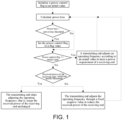
- Fig. 1 is a flowchart of a method for implementing temperature control for a wireless charging system in the present disclosure.
- the method for implementing temperature control for a wireless charging system in the present disclosure includes the following steps:
- the initial value of the power control flag is 0.
- the flag value of the power control flag is 1.
- the preset test time in step (1.1) is 20 minutes.
- the preset temperature in step (1.1) is 60 °C.
- the present disclosure solves the problem that when a wireless charging system works at a far distance (about 20 mm) and has a relatively large position offset during working, that is, a horizontal offset distance between a center position of the transmitting end coil and a center position of a receiving end coil is about 15 mm to 20 mm, long-time working of the wireless charging system causes an excessively large charging current of the transmitting end and overheating of the board components. As a result, the components are burned out, and the system cannot work normally.
- the wireless charging transmitting end reduces heating of the components of the transmitting end by limiting the received power of the receiving end, to ensure normal operation of the wireless charging system.
- FIG. 1 A flowchart for implementing temperature control for a wireless charging system in this embodiment is shown in Fig. 1 :
- the wireless charging system works at each offset position for 20 minutes to test the temperature of the board components of the transmitting end. If the temperature exceeds 60 °C, the value of power loss at the offset position is used as the power loss threshold; otherwise, the system is in a safe state.
- a temperature of MOS transistors of the transmitting end reaches the highest and exceeds 75°C after the wireless charging system works for more than 15 minutes.
- the temperature of the MOS transistors of the transmitting end is lower than 60°C.
- the method for implementing temperature control for a wireless charging system in the present disclosure solves the problem that the charging current of the transmitting end is excessively large and the temperature of the board components of the transmitting end is excessively high when the wireless charging system works at a relatively remote position, causing burnout of the components.
- heating of the components of the transmitting end can be effectively reduced, and normal and stable operation of the system can be ensured.
Landscapes
- Engineering & Computer Science (AREA)
- Computer Networks & Wireless Communication (AREA)
- Power Engineering (AREA)
- Charge And Discharge Circuits For Batteries Or The Like (AREA)
Description
- The present disclosure relates to the field of energy transmission, and in particular, to the field of wireless charging, and specifically refers to a method for implementing temperature control for a wireless charging system.
- Wireless charging is a technology using electromagnetic fields or electromagnetic waves for energy transmission. Currently, it is widely used for low power applications, mainly for a smart phone, a microcomputer, a small portable household appliance and the like. In a wireless charging system, regardless of positions of a transmitting end coil and a receiving end coil, a transmitting end will adjust an output power according to a data packet sent by a receiving end to meet requirements of the receiving end.
- The existing technology is suitable for a system working at a close distance and having a small position offset. For example,
KR 20180064741 A WO 2018/212499 A1 discloses that in an electromagnetic resonance scheme, a magnetic field generated by a transmission coil of a wireless power transmitter is tuned to a specific resonance frequency to transmit power to a wireless power receiver located in close proximity, andUS 2013/307348 A1 discloses that electromagnetic induction works on the principle of a primary coil generating a predominantly magnetic field and a secondary coil being within that field so that a current is induced in the secondary, as the distance from the primary is increased, more and more of the magnetic field misses the secondary, even over a relatively short range the induction method is rather inefficient, wasting much of the transmitted energy, and the main drawback to wireless transmission is short range. In addition, Qi, as the technical specification of a system for inductive charging that uses the protocol established by the Wireless Power Consortium (WPC), discloses that the distance from the secondary coil to the primary coil should be in a range of 4-5 mm. For a system working at a far distance and having a large offset distance, to ensure normal operation of the receiving end, a charging current of the transmitting end is relatively large, causing serious heating of components of the transmitting end, and burnout and failure of the components after long-time working. - The objective of the present disclosure is to overcome the above-mentioned shortcomings in the prior art and provide a method for implementing temperature control for a wireless charging system, which achieves a good effect, is easy to operate, and has a wide application range.
- To achieve the above-mentioned objective, the method for implementing temperature control for a wireless charging system in the present disclosure is as follows:
- the method for implementing temperature control for a wireless charging system includes the following steps:
- (1) initializing a power control flag to an initial value;
- (2) calculating, by a transmitting end, power loss according to a transmitting power of the transmitting end and a received power of a receiving end;
- (3) determining, by the transmitting end, whether a value of the power loss is greater than a preset power loss threshold, and if so, performing step (4); otherwise, adjusting, by the transmitting end, an operating frequency according to an actual data packet sent by the receiving end, and performing step (2); and
- (4) determining, by the transmitting end, whether a value of the received power of the receiving end is less than a preset received power threshold, and if so, skipping adjusting, by the transmitting end, the operating frequency and exiting the step; otherwise, adjusting, by the transmitting end, the operating frequency and performing step (2).
- Preferably, step (3) specifically includes the following steps:
- (3.1) determining, by the transmitting end, whether the power loss is greater than the preset power loss threshold, and if so, setting the power control flag to a flag value and performing step (3.2); otherwise, performing step (3.2); and
- (3.2) determining, by the transmitting end, whether the power control flag is the initial value, and if so, skipping setting a power limit for the receiving end, and adjusting, by the transmitting end, the operating frequency according to the actual data packet sent by the receiving end, and performing step (2); otherwise, performing step (4).
- Preferably, in step (4), the adjusting, by the transmitting end, the operating frequency specifically includes the following steps:
reducing, by the transmitting end, the received power of the receiving end. - Preferably, the reducing, by the transmitting end, the received power of the receiving end specifically includes the following steps:
adjusting, by the transmitting end, the operating frequency through a fixed negative value to reduce the received power of the receiving end. - Preferably, the method further includes a step of setting the power loss threshold, which specifically includes the following steps:
- (1.1) initializing the power control flag to the initial value, adjusting a position of the wireless charging system, and testing a temperature of board components of the transmitting end after the wireless charging system works for a preset test time; and
- (1.2) determining whether the temperature exceeds a preset temperature, and if so, determining that a value of power loss at the position is the power loss threshold; otherwise, performing step (1.1).
- Preferably, the adjusting of the position of the wireless charging system in step (1.1) specifically includes the following operation:
adjusting an offset position of the wireless charging system with a vertical distance unchanged. - Preferably, the initial value of the power control flag is 0.
- Preferably, the flag value of the power control flag is 1.
- Preferably, the preset test time in step (1.1) is 20 minutes.
- Preferably, the preset temperature in step (1.1) is 60 °C.
- The method for implementing temperature control for a wireless charging system in the present disclosure solves the problem that the charging current of the transmitting end is excessively large and the temperature of the board components of the transmitting end is excessively high when the wireless charging system works at a relatively remote position, causing burnout of the components. For a system working at a far distance and having coil centers with a relatively large position offset, heating of the components of the transmitting end can be effectively reduced, and normal and stable operation of the system can be ensured.
-
Fig. 1 is a flowchart of a method for implementing temperature control for a wireless charging system in the present disclosure. - To describe the technical content of the present disclosure more clearly, further descriptions are provided below in combination with specific embodiments.
- The method for implementing temperature control for a wireless charging system in the present disclosure includes the following steps:
- (1) Initialize a power control flag to an initial value.
- (1.1) Initialize the power control flag to the initial value, adjust a position of the wireless charging system, and test a temperature of board components of the transmitting end after the wireless charging system works for a preset test time; and
adjust an offset position of the wireless charging system with a vertical distance unchanged. - (1.2) Determine whether the temperature exceeds a preset temperature, and if so, determine that a value of power loss at the position is a power loss threshold; otherwise, perform step (1.1).
- (1.1) Initialize the power control flag to the initial value, adjust a position of the wireless charging system, and test a temperature of board components of the transmitting end after the wireless charging system works for a preset test time; and
- (2) The transmitting end calculates power loss according to a transmitting power of the transmitting end and a received power of a receiving end.
- (3) The transmitting end determines whether a value of the power loss is greater than a preset power loss threshold, and if so, performs step (4); otherwise, the transmitting end adjusts an operating frequency, and performs step (2).
- (3.1) The transmitting end determines whether the power loss is greater than the preset power loss threshold, and if so, sets the power control flag to a flag value and performs step (3.2); otherwise, the transmitting end performs step (3.2).
- (3.2) The transmitting end determines whether the power control flag is the initial value, and if so, the transmitting end skips setting a power limit for the receiving end, adjusts the operating frequency according to the actual data packet sent by the receiving end, and performs step (2); otherwise, the transmitting end performs step (4).
- (4) The transmitting end determines whether a value of the received power of the receiving end is less than a preset received power threshold, and if so, the transmitting end skips adjusting the operating frequency and exits the step; otherwise, the transmitting end reduces the received power of the receiving end and performs step (2);
- the transmitting end reduces the received power of the receiving end; and
- adjusts the operating frequency through a fixed negative value to reduce the received power of the receiving end.
- In a preferred embodiment of the present disclosure, the initial value of the power control flag is 0.
- In a preferred embodiment of the present disclosure, the flag value of the power control flag is 1.
- In a preferred embodiment of the present disclosure, the preset test time in step (1.1) is 20 minutes.
- In a preferred embodiment of the present disclosure, the preset temperature in step (1.1) is 60 °C.
- In specific embodiments of the present disclosure, the present disclosure solves the problem that when a wireless charging system works at a far distance (about 20 mm) and has a relatively large position offset during working, that is, a horizontal offset distance between a center position of the transmitting end coil and a center position of a receiving end coil is about 15 mm to 20 mm, long-time working of the wireless charging system causes an excessively large charging current of the transmitting end and overheating of the board components. As a result, the components are burned out, and the system cannot work normally. For a system working at a far distance and having coil centers with a relatively large position offset, the wireless charging transmitting end reduces heating of the components of the transmitting end by limiting the received power of the receiving end, to ensure normal operation of the wireless charging system.
- A flowchart for implementing temperature control for a wireless charging system in this embodiment is shown in
Fig. 1 : - (1) Initialize a power control flag to 0.
- (2) A transmitting end calculates power loss, that is, PowerLoss, according to a transmitting power of the transmitting end and a received power of the receiving end, and performs step (3).
- (3) Then, determine whether a value of the power loss is greater than a preset power loss threshold PowerLossTemp, and if so, perform step (3); otherwise, perform step (5).
- (4) Set a power control flag LossPowerLimitFlag to 1, that is, the transmitting end limits the received power of the receiving end, and performs step (5).
- (5) Determine whether the power control flag LossPowerLimitFlag is 0, if the power control flag is 0, the power loss has not reached the preset power loss threshold, and it is unnecessary to set the power limit for the receiving end, and step (6) is performed; otherwise, step (7) is performed.
- (6) The transmitting end skips limiting the received power of the receiving end, and the transmitting end adjusts the operating frequency according to the actual data packet sent by the receiving end to meet a power requirement of the receiving end.
- (7) The transmitting end limits the received power of the receiving end, and determines whether the value of the received power of the receiving end is less than a preset received power threshold ReceiverPower, and if so, the transmitting end performs step (8); otherwise, the transmitting end reduces the received power of the receiving end, that is, performs step (9).
- (8) The transmitting end skips adjusting the operating frequency to keep the received power of the receiving end unchanged.
- (9) The transmitting end adjusts the operating frequency by using a fixed negative value to reduce the received power of the receiving end.
- While the vertical distance remains unchanged, the wireless charging system works at each offset position for 20 minutes to test the temperature of the board components of the transmitting end. If the temperature exceeds 60 °C, the value of power loss at the offset position is used as the power loss threshold; otherwise, the system is in a safe state.
- In the specific embodiments of the present disclosure, in a case that the wireless charging system works at a vertical distance of 18 mm to 20 mm and an offset position of 18 mm to 20 mm, with the traditional method, a temperature of MOS transistors of the transmitting end reaches the highest and exceeds 75°C after the wireless charging system works for more than 15 minutes. Using the method of the present disclosure, under the same working conditions, the temperature of the MOS transistors of the transmitting end is lower than 60°C.
- The method for implementing temperature control for a wireless charging system in the present disclosure solves the problem that the charging current of the transmitting end is excessively large and the temperature of the board components of the transmitting end is excessively high when the wireless charging system works at a relatively remote position, causing burnout of the components. For a system working at a far distance and having coil centers with a relatively large position offset, heating of the components of the transmitting end can be effectively reduced, and normal and stable operation of the system can be ensured.
- In this specification, the present disclosure has been described with reference to the specific embodiments. The description and drawings should be regarded as illustrative rather than restrictive.
Claims (12)
- A method for implementing temperature control for a wireless charging system, comprising the following steps:(1) initializing a power control flag to an initial value;(2) calculating, by a transmitting end, a power loss according to a transmitting power of the transmitting end and a received power of a receiving end;characterized in that the method further comprises the following steps:(3.1) determining, by the transmitting end, whether the power loss is greater than a preset power loss threshold, and if so, setting the power control flag to a flag value and performing step (3.2); otherwise, performing step (3.2); and(3.2) determining, by the transmitting end, whether the power control flag is the initial value, and if so, adjusting, by the transmitting end, the operating frequency according to an actual data packet sent by the receiving end, and performing step (2); otherwise, performing step (5);(5) determining, by the transmitting end, whether a value of the received power of the receiving end is less than a preset received power threshold, and if so, skipping adjusting, by the transmitting end, the operating frequency and exiting the step; otherwise, adjusting, by the transmitting end, the operating frequency and performing step (2).
- The method for implementing temperature control for a wireless charging system as in claim 1, wherein, in step (3.2), if the transmitting end determines that the power control flag is the initial value, the method specifically comprises:
adjusting, by the transmitting end, the operating frequency according to the actual data packet sent by the receiving end, and performing step (2). - The method for implementing temperature control for a wireless charging system as in claim 1, wherein the adjusting, by the transmitting end, the operating frequency specifically comprises the following steps:
reducing, by the transmitting end, the received power of the receiving end. - The method for implementing temperature control for a wireless charging system as in claim 3, wherein the reducing, by the transmitting end, the received power of the receiving end specifically comprises the following steps:
adjusting, by the transmitting end, the operating frequency through a fixed negative value to reduce the received power of the receiving end. - The method for implementing temperature control for a wireless charging system as in claim 1, wherein step (1) further comprises a step of setting the power loss threshold, which specifically comprises the following steps:(1.1) initializing the power control flag to the initial value, adjusting a position of the wireless charging system, and acquiring a temperature of board components of the transmitting end after the wireless charging system works for a preset test time; and(1.2) determining whether the temperature exceeds a preset temperature, and if so, determining that a value of power loss at the position is the power loss threshold; otherwise, performing step (1.1).
- The method for implementing temperature control for a wireless charging system as in claim 5, wherein in step (1.1), the adjusting a position of the wireless charging system specifically comprises the following operation:
adjusting an offset position of the wireless charging system with a vertical distance unchanged. - The method for implementing temperature control for a wireless charging system as in claim 6, wherein the vertical distance is 18 mm to 20 mm.
- The method for implementing temperature control for a wireless charging system as in claim 6, wherein the offset position is 18 mm to 20 mm.
- The method for implementing temperature control for a wireless charging system as in claim 1, wherein the initial value of the power control flag is 0.
- The method for implementing temperature control for a wireless charging system as in claim 1, wherein the flag value of the power control flag is 1.
- The method for implementing temperature control for a wireless charging system as in claim 5, wherein the preset test time in step (1.1) is 20 minutes.
- The method for implementing temperature control for a wireless charging system as in claim 5, wherein the preset temperature in step (1.1) is 60 °C.
Applications Claiming Priority (2)
| Application Number | Priority Date | Filing Date | Title |
|---|---|---|---|
| CN201911221761.9A CN110729808B (en) | 2019-12-03 | 2019-12-03 | Method for realizing temperature control of wireless charging system |
| PCT/CN2020/133583 WO2021110093A1 (en) | 2019-12-03 | 2020-12-03 | Method for implementing temperature control for wireless charging system |
Publications (4)
| Publication Number | Publication Date |
|---|---|
| EP4016793A1 EP4016793A1 (en) | 2022-06-22 |
| EP4016793A4 EP4016793A4 (en) | 2023-01-25 |
| EP4016793B1 true EP4016793B1 (en) | 2024-10-16 |
| EP4016793C0 EP4016793C0 (en) | 2024-10-16 |
Family
ID=69226431
Family Applications (1)
| Application Number | Title | Priority Date | Filing Date |
|---|---|---|---|
| EP20895132.7A Active EP4016793B1 (en) | 2019-12-03 | 2020-12-03 | Method for implementing temperature control for wireless charging system |
Country Status (3)
| Country | Link |
|---|---|
| EP (1) | EP4016793B1 (en) |
| CN (1) | CN110729808B (en) |
| WO (1) | WO2021110093A1 (en) |
Families Citing this family (3)
| Publication number | Priority date | Publication date | Assignee | Title |
|---|---|---|---|---|
| CN110729808B (en) * | 2019-12-03 | 2021-07-23 | 华润微集成电路(无锡)有限公司 | Method for realizing temperature control of wireless charging system |
| CN113258626B (en) * | 2020-02-12 | 2025-05-23 | 北京小米移动软件有限公司 | Wireless charging method and device, charging equipment and storage medium |
| CN111586572B (en) * | 2020-05-29 | 2022-06-03 | 深圳市吉祥腾达科技有限公司 | A heat dissipation method and system for ensuring the stability of network equipment |
Family Cites Families (15)
| Publication number | Priority date | Publication date | Assignee | Title |
|---|---|---|---|---|
| US20120299540A1 (en) * | 2011-05-27 | 2012-11-29 | uBeam Inc. | Sender communications for wireless power transfer |
| US9536656B2 (en) * | 2012-05-21 | 2017-01-03 | Texas Instruments Incorporated | Systems and methods of reduction of parasitic losses in a wireless power system |
| US9929576B2 (en) * | 2013-06-03 | 2018-03-27 | Mediatek Inc. | Method, device, and adaptor for dynamically adjusting charging current of adaptor to achieve thermal protection and fast charging |
| JP5972497B2 (en) * | 2013-07-17 | 2016-08-17 | コーニンクレッカ フィリップス エヌ ヴェKoninklijke Philips N.V. | Wireless inductive power transfer with temperature control of the receiver |
| US9929601B2 (en) * | 2013-08-23 | 2018-03-27 | Qualcomm Incorporated | Apparatus and method for lost power detection |
| CN105334539B (en) * | 2014-06-30 | 2018-09-14 | 无锡华润矽科微电子有限公司 | The method that foreign bodies detection is realized in wireless charging |
| EP3326258B1 (en) * | 2015-07-21 | 2018-12-26 | Koninklijke Philips N.V. | Inductive wireless power transfer with synchronized power measurement |
| TWI574483B (en) * | 2015-09-21 | 2017-03-11 | 緯創資通股份有限公司 | Wireless charging device, wireless charging box and wireless charging method thereof |
| CN107026516B (en) * | 2016-02-01 | 2022-04-05 | 恩智浦美国有限公司 | Receiver removal detection in wireless charging systems |
| KR102633453B1 (en) * | 2016-12-06 | 2024-02-05 | 엘지이노텍 주식회사 | Foreign Object Detection Method and Apparatus therefor |
| KR20180125826A (en) * | 2017-05-16 | 2018-11-26 | 엘지이노텍 주식회사 | Wireless Charging Method and Apparatus and System therefor |
| CN107801237A (en) * | 2017-11-15 | 2018-03-13 | 北京联盛德微电子有限责任公司 | Possess the wireless charging system and Poewr control method of output control device |
| US10784044B2 (en) * | 2018-04-30 | 2020-09-22 | Integrated Device Technology, Inc. | Optimization of transmit and transmit/receive (TRX) coils for wireless transfer of power |
| CN108879887A (en) * | 2018-08-20 | 2018-11-23 | 广州全界通讯科技有限公司 | A kind of control method of wireless charging, device, system and equipment |
| CN110729808B (en) * | 2019-12-03 | 2021-07-23 | 华润微集成电路(无锡)有限公司 | Method for realizing temperature control of wireless charging system |
-
2019
- 2019-12-03 CN CN201911221761.9A patent/CN110729808B/en active Active
-
2020
- 2020-12-03 EP EP20895132.7A patent/EP4016793B1/en active Active
- 2020-12-03 WO PCT/CN2020/133583 patent/WO2021110093A1/en not_active Ceased
Also Published As
| Publication number | Publication date |
|---|---|
| CN110729808B (en) | 2021-07-23 |
| WO2021110093A1 (en) | 2021-06-10 |
| EP4016793A1 (en) | 2022-06-22 |
| EP4016793A4 (en) | 2023-01-25 |
| EP4016793C0 (en) | 2024-10-16 |
| CN110729808A (en) | 2020-01-24 |
Similar Documents
| Publication | Publication Date | Title |
|---|---|---|
| CN107070486B (en) | Method and radio frequency circuit for adjusting power supply voltage of radio frequency power amplifier | |
| KR101831993B1 (en) | Apparatus and method for controlling amount of charging current for wireless power receiver | |
| US9680335B2 (en) | Apparatus for transmitting and receiving wireless power | |
| CA2423261A1 (en) | Transmission power control device and method, mobile station, and communication device in mobile communication system | |
| EP4016793A1 (en) | Method for implementing temperature control for wireless charging system | |
| MY166584A (en) | Method and arrangement for uplink power control | |
| RU2011109020A (en) | METHOD AND DEVICE FOR AUTOMATIC REGULATION OF PARAMETERS TO COMPENSATE SELF-REGULATING TRANSMISSION POWER AND SENSITIVITY LEVEL IN NODE-B | |
| CN103501532A (en) | Method and device for controlling mobile WIFI (wireless fidelity) hotspot transmitting power | |
| KR20150056345A (en) | Method and apparatus for power control in wireless power transmitting system | |
| KR20130023618A (en) | Wireless power transmission system and control method thereof | |
| KR102409276B1 (en) | Mouse pad and wireless power transmission system including wireless power transceiver and receiver | |
| JP2021510058A (en) | Power control in wireless power transfer systems | |
| WO2019122937A3 (en) | Monitoring system | |
| TWI895690B (en) | Methods and apparatus for handling harq feedback | |
| US9787128B2 (en) | Wireless charger and wireless charging method | |
| CN111600367A (en) | Transmission frequency control method, device and related equipment in wireless charging | |
| CN102932894A (en) | Communication system and method for controlling radio frequency output power | |
| CN107682920A (en) | Method of adjustment, device, intelligent door lock and the storage medium of Zigbee chip emission power | |
| WO2014176872A1 (en) | Power regulation method and system for wireless electric energy transmission system | |
| CN100440752C (en) | Transmit power control method to achieve rapid convergence of target signal-to-noise ratio | |
| US20220173617A1 (en) | Apparatus and methods for inverter mode switching in wireless charging transmitters | |
| CN104124779B (en) | The control method and system of dynamic load switching | |
| CN102573037A (en) | Anti-interference method in terminal and terminal equipment | |
| CN116193554B (en) | Power control methods, devices and related equipment | |
| CN106376072A (en) | 3g module transmitting power control system and control method thereof |
Legal Events
| Date | Code | Title | Description |
|---|---|---|---|
| STAA | Information on the status of an ep patent application or granted ep patent |
Free format text: STATUS: THE INTERNATIONAL PUBLICATION HAS BEEN MADE |
|
| PUAI | Public reference made under article 153(3) epc to a published international application that has entered the european phase |
Free format text: ORIGINAL CODE: 0009012 |
|
| STAA | Information on the status of an ep patent application or granted ep patent |
Free format text: STATUS: REQUEST FOR EXAMINATION WAS MADE |
|
| 17P | Request for examination filed |
Effective date: 20220316 |
|
| AK | Designated contracting states |
Kind code of ref document: A1 Designated state(s): AL AT BE BG CH CY CZ DE DK EE ES FI FR GB GR HR HU IE IS IT LI LT LU LV MC MK MT NL NO PL PT RO RS SE SI SK SM TR |
|
| A4 | Supplementary search report drawn up and despatched |
Effective date: 20221222 |
|
| RIC1 | Information provided on ipc code assigned before grant |
Ipc: H02J 50/80 20160101ALI20221216BHEP Ipc: H02J 7/02 20160101ALI20221216BHEP Ipc: H02J 7/04 20060101AFI20221216BHEP |
|
| DAV | Request for validation of the european patent (deleted) | ||
| DAX | Request for extension of the european patent (deleted) | ||
| STAA | Information on the status of an ep patent application or granted ep patent |
Free format text: STATUS: EXAMINATION IS IN PROGRESS |
|
| 17Q | First examination report despatched |
Effective date: 20231207 |
|
| GRAP | Despatch of communication of intention to grant a patent |
Free format text: ORIGINAL CODE: EPIDOSNIGR1 |
|
| STAA | Information on the status of an ep patent application or granted ep patent |
Free format text: STATUS: GRANT OF PATENT IS INTENDED |
|
| INTG | Intention to grant announced |
Effective date: 20240522 |
|
| GRAS | Grant fee paid |
Free format text: ORIGINAL CODE: EPIDOSNIGR3 |
|
| GRAA | (expected) grant |
Free format text: ORIGINAL CODE: 0009210 |
|
| STAA | Information on the status of an ep patent application or granted ep patent |
Free format text: STATUS: THE PATENT HAS BEEN GRANTED |
|
| AK | Designated contracting states |
Kind code of ref document: B1 Designated state(s): AL AT BE BG CH CY CZ DE DK EE ES FI FR GB GR HR HU IE IS IT LI LT LU LV MC MK MT NL NO PL PT RO RS SE SI SK SM TR |
|
| REG | Reference to a national code |
Ref country code: GB Ref legal event code: FG4D |
|
| REG | Reference to a national code |
Ref country code: DE Ref legal event code: R096 Ref document number: 602020039720 Country of ref document: DE Ref country code: CH Ref legal event code: EP |
|
| REG | Reference to a national code |
Ref country code: IE Ref legal event code: FG4D |
|
| U01 | Request for unitary effect filed |
Effective date: 20241107 |
|
| U07 | Unitary effect registered |
Designated state(s): AT BE BG DE DK EE FI FR IT LT LU LV MT NL PT RO SE SI Effective date: 20241115 |
|
| U20 | Renewal fee for the european patent with unitary effect paid |
Year of fee payment: 5 Effective date: 20241125 |
|
| PG25 | Lapsed in a contracting state [announced via postgrant information from national office to epo] |
Ref country code: IS Free format text: LAPSE BECAUSE OF FAILURE TO SUBMIT A TRANSLATION OF THE DESCRIPTION OR TO PAY THE FEE WITHIN THE PRESCRIBED TIME-LIMIT Effective date: 20250216 Ref country code: HR Free format text: LAPSE BECAUSE OF FAILURE TO SUBMIT A TRANSLATION OF THE DESCRIPTION OR TO PAY THE FEE WITHIN THE PRESCRIBED TIME-LIMIT Effective date: 20241016 |
|
| PG25 | Lapsed in a contracting state [announced via postgrant information from national office to epo] |
Ref country code: ES Free format text: LAPSE BECAUSE OF FAILURE TO SUBMIT A TRANSLATION OF THE DESCRIPTION OR TO PAY THE FEE WITHIN THE PRESCRIBED TIME-LIMIT Effective date: 20241016 |
|
| PG25 | Lapsed in a contracting state [announced via postgrant information from national office to epo] |
Ref country code: NO Free format text: LAPSE BECAUSE OF FAILURE TO SUBMIT A TRANSLATION OF THE DESCRIPTION OR TO PAY THE FEE WITHIN THE PRESCRIBED TIME-LIMIT Effective date: 20250116 |
|
| PG25 | Lapsed in a contracting state [announced via postgrant information from national office to epo] |
Ref country code: GR Free format text: LAPSE BECAUSE OF FAILURE TO SUBMIT A TRANSLATION OF THE DESCRIPTION OR TO PAY THE FEE WITHIN THE PRESCRIBED TIME-LIMIT Effective date: 20250117 |
|
| PG25 | Lapsed in a contracting state [announced via postgrant information from national office to epo] |
Ref country code: PL Free format text: LAPSE BECAUSE OF FAILURE TO SUBMIT A TRANSLATION OF THE DESCRIPTION OR TO PAY THE FEE WITHIN THE PRESCRIBED TIME-LIMIT Effective date: 20241016 |
|
| PG25 | Lapsed in a contracting state [announced via postgrant information from national office to epo] |
Ref country code: RS Free format text: LAPSE BECAUSE OF FAILURE TO SUBMIT A TRANSLATION OF THE DESCRIPTION OR TO PAY THE FEE WITHIN THE PRESCRIBED TIME-LIMIT Effective date: 20250116 |
|
| PG25 | Lapsed in a contracting state [announced via postgrant information from national office to epo] |
Ref country code: SM Free format text: LAPSE BECAUSE OF FAILURE TO SUBMIT A TRANSLATION OF THE DESCRIPTION OR TO PAY THE FEE WITHIN THE PRESCRIBED TIME-LIMIT Effective date: 20241016 |
|
| PG25 | Lapsed in a contracting state [announced via postgrant information from national office to epo] |
Ref country code: MC Free format text: LAPSE BECAUSE OF FAILURE TO SUBMIT A TRANSLATION OF THE DESCRIPTION OR TO PAY THE FEE WITHIN THE PRESCRIBED TIME-LIMIT Effective date: 20241016 |
|
| PG25 | Lapsed in a contracting state [announced via postgrant information from national office to epo] |
Ref country code: SK Free format text: LAPSE BECAUSE OF FAILURE TO SUBMIT A TRANSLATION OF THE DESCRIPTION OR TO PAY THE FEE WITHIN THE PRESCRIBED TIME-LIMIT Effective date: 20241016 |
|
| PG25 | Lapsed in a contracting state [announced via postgrant information from national office to epo] |
Ref country code: CZ Free format text: LAPSE BECAUSE OF FAILURE TO SUBMIT A TRANSLATION OF THE DESCRIPTION OR TO PAY THE FEE WITHIN THE PRESCRIBED TIME-LIMIT Effective date: 20241016 |
|
| REG | Reference to a national code |
Ref country code: CH Ref legal event code: PL |
|
| PLBE | No opposition filed within time limit |
Free format text: ORIGINAL CODE: 0009261 |
|
| STAA | Information on the status of an ep patent application or granted ep patent |
Free format text: STATUS: NO OPPOSITION FILED WITHIN TIME LIMIT |
|
| 26N | No opposition filed |
Effective date: 20250717 |
|
| GBPC | Gb: european patent ceased through non-payment of renewal fee |
Effective date: 20250116 |
|
| PG25 | Lapsed in a contracting state [announced via postgrant information from national office to epo] |
Ref country code: GB Free format text: LAPSE BECAUSE OF NON-PAYMENT OF DUE FEES Effective date: 20250116 |
|
| PG25 | Lapsed in a contracting state [announced via postgrant information from national office to epo] |
Ref country code: CH Free format text: LAPSE BECAUSE OF NON-PAYMENT OF DUE FEES Effective date: 20241231 |
|
| PG25 | Lapsed in a contracting state [announced via postgrant information from national office to epo] |
Ref country code: IE Free format text: LAPSE BECAUSE OF NON-PAYMENT OF DUE FEES Effective date: 20241203 |
|
| U20 | Renewal fee for the european patent with unitary effect paid |
Year of fee payment: 6 Effective date: 20251230 |
|
| PG25 | Lapsed in a contracting state [announced via postgrant information from national office to epo] |
Ref country code: CY Free format text: LAPSE BECAUSE OF FAILURE TO SUBMIT A TRANSLATION OF THE DESCRIPTION OR TO PAY THE FEE WITHIN THE PRESCRIBED TIME-LIMIT; INVALID AB INITIO Effective date: 20201203 |
|
| PG25 | Lapsed in a contracting state [announced via postgrant information from national office to epo] |
Ref country code: TR Free format text: LAPSE BECAUSE OF FAILURE TO SUBMIT A TRANSLATION OF THE DESCRIPTION OR TO PAY THE FEE WITHIN THE PRESCRIBED TIME-LIMIT Effective date: 20241016 |
|
| PG25 | Lapsed in a contracting state [announced via postgrant information from national office to epo] |
Ref country code: HU Free format text: LAPSE BECAUSE OF FAILURE TO SUBMIT A TRANSLATION OF THE DESCRIPTION OR TO PAY THE FEE WITHIN THE PRESCRIBED TIME-LIMIT; INVALID AB INITIO Effective date: 20201203 |