EP4015653B1 - Verwendung von mirnas als diagnostische und prognostische biomarker eines oralen schuppenzellkarzinoms - Google Patents
Verwendung von mirnas als diagnostische und prognostische biomarker eines oralen schuppenzellkarzinoms Download PDFInfo
- Publication number
- EP4015653B1 EP4015653B1 EP21215086.6A EP21215086A EP4015653B1 EP 4015653 B1 EP4015653 B1 EP 4015653B1 EP 21215086 A EP21215086 A EP 21215086A EP 4015653 B1 EP4015653 B1 EP 4015653B1
- Authority
- EP
- European Patent Office
- Prior art keywords
- mir
- mirnas
- expression
- sample
- mirna
- Prior art date
- Legal status (The legal status is an assumption and is not a legal conclusion. Google has not performed a legal analysis and makes no representation as to the accuracy of the status listed.)
- Active
Links
Images


Classifications
-
- C—CHEMISTRY; METALLURGY
- C12—BIOCHEMISTRY; BEER; SPIRITS; WINE; VINEGAR; MICROBIOLOGY; ENZYMOLOGY; MUTATION OR GENETIC ENGINEERING
- C12Q—MEASURING OR TESTING PROCESSES INVOLVING ENZYMES, NUCLEIC ACIDS OR MICROORGANISMS; COMPOSITIONS OR TEST PAPERS THEREFOR; PROCESSES OF PREPARING SUCH COMPOSITIONS; CONDITION-RESPONSIVE CONTROL IN MICROBIOLOGICAL OR ENZYMOLOGICAL PROCESSES
- C12Q1/00—Measuring or testing processes involving enzymes, nucleic acids or microorganisms; Compositions therefor; Processes of preparing such compositions
- C12Q1/68—Measuring or testing processes involving enzymes, nucleic acids or microorganisms; Compositions therefor; Processes of preparing such compositions involving nucleic acids
- C12Q1/6876—Nucleic acid products used in the analysis of nucleic acids, e.g. primers or probes
- C12Q1/6883—Nucleic acid products used in the analysis of nucleic acids, e.g. primers or probes for diseases caused by alterations of genetic material
- C12Q1/6886—Nucleic acid products used in the analysis of nucleic acids, e.g. primers or probes for diseases caused by alterations of genetic material for cancer
-
- C—CHEMISTRY; METALLURGY
- C12—BIOCHEMISTRY; BEER; SPIRITS; WINE; VINEGAR; MICROBIOLOGY; ENZYMOLOGY; MUTATION OR GENETIC ENGINEERING
- C12Q—MEASURING OR TESTING PROCESSES INVOLVING ENZYMES, NUCLEIC ACIDS OR MICROORGANISMS; COMPOSITIONS OR TEST PAPERS THEREFOR; PROCESSES OF PREPARING SUCH COMPOSITIONS; CONDITION-RESPONSIVE CONTROL IN MICROBIOLOGICAL OR ENZYMOLOGICAL PROCESSES
- C12Q2600/00—Oligonucleotides characterized by their use
- C12Q2600/118—Prognosis of disease development
-
- C—CHEMISTRY; METALLURGY
- C12—BIOCHEMISTRY; BEER; SPIRITS; WINE; VINEGAR; MICROBIOLOGY; ENZYMOLOGY; MUTATION OR GENETIC ENGINEERING
- C12Q—MEASURING OR TESTING PROCESSES INVOLVING ENZYMES, NUCLEIC ACIDS OR MICROORGANISMS; COMPOSITIONS OR TEST PAPERS THEREFOR; PROCESSES OF PREPARING SUCH COMPOSITIONS; CONDITION-RESPONSIVE CONTROL IN MICROBIOLOGICAL OR ENZYMOLOGICAL PROCESSES
- C12Q2600/00—Oligonucleotides characterized by their use
- C12Q2600/158—Expression markers
-
- C—CHEMISTRY; METALLURGY
- C12—BIOCHEMISTRY; BEER; SPIRITS; WINE; VINEGAR; MICROBIOLOGY; ENZYMOLOGY; MUTATION OR GENETIC ENGINEERING
- C12Q—MEASURING OR TESTING PROCESSES INVOLVING ENZYMES, NUCLEIC ACIDS OR MICROORGANISMS; COMPOSITIONS OR TEST PAPERS THEREFOR; PROCESSES OF PREPARING SUCH COMPOSITIONS; CONDITION-RESPONSIVE CONTROL IN MICROBIOLOGICAL OR ENZYMOLOGICAL PROCESSES
- C12Q2600/00—Oligonucleotides characterized by their use
- C12Q2600/178—Oligonucleotides characterized by their use miRNA, siRNA or ncRNA
Definitions
- the present invention concerns the field of biomarkers suitable for the diagnosis and prognosis of cancer, and in particular relates to the use of miRNAs as a diagnostic and prognostic markers for oral carcinoma.
- the present invention further describes a method for diagnosing or for making a prognosis of an oral carcinoma, comprising at least the step of determining the level of miRNA expression in a sample.
- tumors with similar TNM staging may present wide differences in biologic features having an impact on prognosis (i.e., worst pattern of invasion, tumor budding, tumor-stroma ratio and gene-expression signatures).
- the small size of preoperative tumor biopsies does not allow to obtain a representative profile of the different neoplastic cell subpopulations, their pattern of invasion and related risk factors.
- distinct areas of OSCC may express a diverse array of features, thus preventing a comprehensive tumor characterization through an incisional biopsy alone.
- miRNAs are small non-coding RNA molecules, which show remarkable stability in biologic fluids and altered expression in various cancers, both promising characteristics for the diagnostic and prognostic definition of tumors by means of a liquid biopsy.
- JP 2020068673 A and Chang Yi-An et al, 2018 show for instance that expression level of microRNAs, including miR-423-5p, in body fluid samples can be used for the diagnosis and prognosis of oral cancer.
- the present invention concerns the use of a combination of target miRNAs:miR-423-5p, miR-106b-5p and miR-193b-3p, as diagnostic markers for diagnosing an oral carcinoma.
- a further aspect of the present invention is a method for diagnosing or for making a prognosis of an oral carcinoma, comprising the steps of:
- the critical issue underlying the present invention lies in making available a biomarker capable of identifying an oral carcinoma with a non-invasive procedure, in order to permit an easier and earlier diagnosis which would allow to save lives.
- the present invention concerns the use of a combination of target miRNAs for diagnosing an oral carcinoma, said combination of target miRNAs consisting of miRNAs miR-423-5p, miR-106b-5p and miR-193b-3p. Moreover, miR-423-5p shows potential as prognostic biomarker for OSCC.
- miR-423-5p refers to a miRNA having a miRBase database accession number MI0001445, having the following sequence:
- miR-106b-5p refers to a miRNA having a miRBase database accession number MI0000734, having the following sequence:
- miR-193b-3p refers to a miRNA having a miRBase database accession number MI0003137, having the following sequence:
- miRNAs miR-423-5p, miR-106b-5p and miR-193b-3p are target miRNAs.
- the reference miRNAs are:
- the oral carcinoma that is diagnosed with a combination of target miRNAs consisting of miRNAs miR-423-5p, miR-106b-5p and miR-193b-3, and the oral carcinoma for which a prognosis is made with the miR-423-5p miRNA, can be an oral squamous cell carcinoma.
- the combination of miRNAs consists of miR-423-5p, miR-106b-5p and miR-193b, used for diagnosing or the miR-423-5p used for making a prognosis of an oral carcinoma, is a salivary miRNA.
- Salivary miRNAs have emerged as excellent non-invasive cancer biomarker candidates, but their association with OSCC prognosis has not been investigated yet.
- the present invention analyses global salivary miRNA expression profile in OSCC patients and healthy controls, with the aim of defining its diagnostic and prognostic potential.
- saliva has the potential to provide an overall view of OSCC tumor heterogeneity, thanks to its capability of collecting molecules originating from different cellular populations and neoplasm sites.
- salivary analysis may offer significant advantages, since it requires a non-invasive procedure and can be performed in the preoperative period, without altering radiologic imaging quality, nor adding discomfort to the patients.
- Previous studies showed that saliva contains high levels of miRNAs that are protected by enzymatic degradation and that their concentration is higher than in plasma, which might designate a higher sensitivity in detecting changes of expression.
- the present invention relates to a method for diagnosing or making a prognosis of an oral carcinoma, comprising the steps of:
- diagnosis it is intended to identify the nature of the medical condition, while by “making a prognosis” it is meant that an opinion of the likely course of a medical condition is made.
- the method for diagnosing or making a prognosis of an oral carcinoma comprises the further step of comparing said levels of expression of the miRNAs miR-423-5p, miR-106b-5p and miR-193b-3p (target miRNAs) in a sample to the level of expression of the reference miRNAs miR-16-5p, miR-484 and miR-191-5p.
- said method comprises at least the steps of:
- making a prognosis of the outcome of an oral carcinoma means the estimate of the likely course of the disease.
- said method comprises at least the steps of:
- the invention relates to a method for diagnosing or for making a prognosis of an oral carcinoma by determining the level of expression of the target miRNAs miR-423-5p, miR-106b-5p and miR-193b-3p and the reference miRNAs miR-16-5p, miR-484 and miR-191-5p in a sample, wherein said sample is a liquid biopsy.
- said sample is a saliva sample.
- the invention relates to a method for diagnosing or for making a prognosis of an oral carcinoma by determining the level of expression of the miRNA miR-423-5p in a sample, wherein said level of expression determination is carried out by real-time PCR.
- saliva was collected from patients with newly diagnosed untreated primary OSCC and healthy controls.
- Global profiling of salivary miRNAs was carried out through a microarray approach, while signature validation was performed by quantitative real-time PCR (RT-qPCR).
- RT-qPCR quantitative real-time PCR
- miRNAs emerged as differentially expressed between OSCC patients and healthy controls and, among them, seven were significantly associated with disease-free survival (DFS).
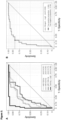
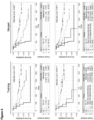
- high expression of miR-423-5p was an independent predictor of poor DFS, when included in multivariate survival analysis with the number of positive lymph nodes - the only significant clinical prognosticator.
- a significant decrease in miR-423-5p expression was observed in matched post-operative saliva samples, suggesting its potential cancer-specific origin.
- salivary miRNAs identified in the cohort of patients show a surprising and unexpected accuracy in OSCC detection and to effectively stratify patients according to their likelihood of relapse. These results, are particularly promising for screening/follow-up of high-risk populations and useful for preoperative prognostic assessment.
- a highly effective diagnostic test could be regarded as a tool for secondary prevention (i.e., screening programs) only in at-risk populations (i.e., heavy smokers, alcohol abusers and patients with lesions at risk of malignant progression and/or an history of previous head and neck cancers).
- at-risk populations i.e., heavy smokers, alcohol abusers and patients with lesions at risk of malignant progression and/or an history of previous head and neck cancers.
- patients previously treated for OSCC represent a particularly high-risk cohort that could significantly benefit from early diagnosis of recurrence.
- this study could represent a first step towards validation of saliva-based screening methods that could help improving diagnosis in the initial stages of cancer recurrence.
- chemoradiotherapy having a survival benefit in comparison to radiation among patients with node-positive, resected, locally advanced head and neck squamous cell cancers, without pathologic major risk factors. It may be hypothesized that miR-423-5p may better define patient selection, thus improving survival and more precisely profiling adjuvant treatment.
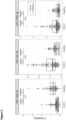
- Salivary raw microarray data comprised 1361 miRNAs. Among them, 826 miRNAs fulfilled the filtering criteria described in the method section and resulted as detected in saliva samples. In total, 25 out of 826 miRNAs (3%) were identified to be differentially expressed (adjusted p ⁇ 0.05) between saliva of OSCC patients and healthy controls (Table 2), indicating a distinct salivary miRNA profile in OSCC patients ( Figure 1 ).
- a set of potential miRNAs was chosen for validation by RT-qPCR, based on the following criteria: i) high expression level (log2 average expression ⁇ 6); ii) commercially available and experimentally validated locked-nucleic acid PCR primer set; and iii) statistical significance in both the comparison between saliva of OSCC patients and healthy controls ( ⁇ 0.05) and univariate survival analysis ( ⁇ 0.1).
- miRNAs were selected according to the defined criteria, as shown in Table 2. Their expression was evaluated by RT-qPCR in a cohort of 55 OSCC patients and 39 healthy controls from the training set, including 48 and 37 microarray-profiled samples, respectively.
- a median Cq ⁇ 30 was considered indicative of a reliable detection regarding circulating miRNA quantification, as reported by other groups ( Bianchi F, et al. A serum circulating miRNA diagnostic test to identify asymptomatic high-risk individuals with early stage lung cancer. EMBO Mol Med 2011;3(8):495-503 .).
- High miR-423-5p expression is an independent predictor of reduced DFS in OSCC patients
- miR-423-5p is a tumor-specific prognostic biomarker for OSCC
- miR-423-5p its putative target genes were included in KEGG pathway annotations to perform the Over-Representation Analysis (361 targets out of 6.229 annotated genes). 52 out of 302 pathways (17.2%) resulted as significantly enriched (adjusted p.val ⁇ 0.05,). These included several cancer-related pathways, such as cell signaling (MAPK, Notch), metabolism (N-Glycans biosynthesis) and those related to cell migration. Focal adhesion, cell junctions and gap junctions, in particular, were among the most enriched pathways, suggesting that miR-423-5p might play a role in OSCC progression and metastasis (since most of the biological functions of the target genes are involved in it).
- RNA microarrays Global profiling of salivary miRNAs was carried out using commercially available G4872A-046064 human miRNA microarray (Agilent Technologies, Santa Clara, CA, USA), customized with probes for the detection of specific RNA oligo spike-in. Fifteen ⁇ l of total RNA were dried by speedvac and resuspended in 2 ⁇ l H2O before being labelled and hybridized on miRNA array, according to miRNA labelling and hybridization kit instructions (Agilent Technologies). Following washing and scanning with laser confocal scanner (G2565BA, Agilent Technologies), miRNA microarrays underwent standard post-hybridization processing and the intensity of fluorescence was calculated by Feature Extraction software version 11 (Agilent Technologies). Raw data are available at GEO database (accession number pending).
- RT miRNA PCR system (Exiqon, Qiagen Hilden, Germany), based on universal reverse transcription followed by RT PCR amplification with miRNA-specific primers, was used for first-strand cDNA synthesis and SYBR Green-based amplification.
- RNA samples 4 ⁇ l were used as input for reverse transcription following manufacturer's instructions.
- a total of 4 ⁇ l of a 50X dilution of cDNA were used for subsequent qPCR experiments, run in triplicate using Bio-Rad CFX96 Real-Time system.
- An inter-run calibration sample was used in all plates to correct for the technical variance between the different runs and to compare results from different plates.
- the 2- ⁇ Cq method was used to analyze raw Cq data following normalization with selected reference miRNAs and results were displayed as relative expression.
- RNA-Seq Level 3 miRNA sequencing data for the Head and Neck Squamous Cell Carcinoma Tissues
- NIH GDC Data Portal
- RPM mapped reads per millions
- TCGA code HD-8635, CV-6961, CV-6959, CV-6939, CV-6933, CV-7238, CV-7235, CV-6936, CV-6934, CV-7103, CV-6956, CV-7255, HD-A6HZ, CV-7438).
- Salivary raw microarray data comprised 1361 miRNAs repeated 40-times.
- the expressions of the 40 miRNAs replicates were used as technical replicates and quality control.
- the miRNA replicates within samples were summarized using mean values. The few missing values still present (0.9%) were imputed with k-nearest neighborhood method.
- Normalized RT-qPCR data were obtained as the difference between Cq values of target miRNA and the selected reference ( ⁇ Cq); in case of multiple references, the arithmetic mean computed by the sample was used. Batch effect and age bias were removed from Cq values using the beta coefficients of the linear regression model estimated for each miRNA. Normalized Ct values in different groups were compared, performing one-tail paired sample t-test (OSCC versus healthy; pre- versus post-operative saliva). The equivalence of reference candidates was assessed using both Normfinder approach ( Andersen CL, et al. Normalization of real-time quantitative reverse transcription-PCR data: a model-based variance estimation approach to identify genes suited for normalization, applied to bladder and colon cancer data sets.
- ROC Receiver Operating Characteristic
- DFS Disease-free survival
- miR-423-5p/gene interactions were obtained from the manually curated database DIANA-TarBase (versione 7.0) via web server interfaces.
- ORA Over-Representation Analysis
- KEGG pathway annotations were retrieved using graphite package (version 1.34.0) ( Sales G, et al Graphite - a Bioconductor package to convert pathway topology to gene network. BMC Bioinformatics 2012, Jan 31;13:20 ).
- the present invention therefore resolves the above-lamented problem of allowing the diagnosisi and the stratification of oral cancer patients, offering at the same time numerous other advantages, including the development of diagnostic methods capable of avoiding invasive techniques and predicting the therapeutic response so to refine not only the diagnostics but above all direct the best therapeutic choice.
Landscapes
- Chemical & Material Sciences (AREA)
- Life Sciences & Earth Sciences (AREA)
- Health & Medical Sciences (AREA)
- Organic Chemistry (AREA)
- Proteomics, Peptides & Aminoacids (AREA)
- Engineering & Computer Science (AREA)
- Immunology (AREA)
- Pathology (AREA)
- Analytical Chemistry (AREA)
- Zoology (AREA)
- Genetics & Genomics (AREA)
- Wood Science & Technology (AREA)
- Physics & Mathematics (AREA)
- Biotechnology (AREA)
- Microbiology (AREA)
- Molecular Biology (AREA)
- Hospice & Palliative Care (AREA)
- Biophysics (AREA)
- Oncology (AREA)
- Biochemistry (AREA)
- Bioinformatics & Cheminformatics (AREA)
- General Engineering & Computer Science (AREA)
- General Health & Medical Sciences (AREA)
- Measuring Or Testing Involving Enzymes Or Micro-Organisms (AREA)
- Investigating Or Analysing Biological Materials (AREA)
Claims (8)
- Verfahren zur Diagnose oder Prognose eines oralen Karzinoms, umfassend die Schritte:- Bestimmen der Expressionsniveaus der miRNAs miR-423-5p, miR-106b-5p und miR-193b-3p in einer Probe; und- Vergleichen der Expressionsniveaus der miRNAs miR-423-5p, miR-106b-5p und miR-193b-3p in einer Probe mit gesunden Kontrollen.
- Verfahren nach Anspruch 1, umfassend mindestens den weiteren Schritt des Vergleichens der Expressionsniveaus der miRNAs miR-423-5p, miR-106b-5p und miR-193b-3p in einer Probe mit den Expressionsniveaus der Referenz-miRNAs miR-16-5p, miR-484 und miR-191-5p.
- Verfahren zur Diagnose eines oralen Karzinoms nach einem der Ansprüche 1 oder 2, wobei das Verfahren mindestens die Schritte umfasst:(a) Bestimmen des Expressionsniveaus (Cq) der Ziel-miRNAs miR-423-5p, miR-106b-5p und miR-193b-3p in einer Probe;(b) Bestimmen des Expressionsniveaus (Cq) der Referenz-miRNAs miR-16-5p, miR-484 und miR-191-5p in einer Probe;(c) Normalisieren des Expressionsniveaus der Ziel-miRNAs auf die Expression der Referenz-miRNAs (ΔCq);(d) Berechnen des diagnostischen Scores als lineare Kombinationen von normalisierten Expressionsniveaus von Ziel-miRNAs; unde) Vergleichen des diagnostischen Scores mit einem vorbestimmten Grenzwert, der so gewählt ist, dass orale Karzinome ausgeschlossen sind, wobei ein diagnostischer Score über dem Grenzwert von -0,48426 auf ein orales Karzinom hinweist.
- Verfahren zur Erstellung einer Verlaufsprognose eines oralen Karzinoms nach einem der Ansprüche 1 oder 2, wobei das Verfahren mindestens die Schritte umfasst:(a) Bestimmen des Expressionsniveaus (Cq) der miRNA miR-423-5p in einer Probe;(b) Bestimmen des Expressionsniveaus (Cq) der Referenz-miRNAs miR-16-5p, miR-484 und miR-191-5p in einer Probe;(c) Normalisieren des Expressionsniveaus von miR-423-5p auf die Expression der Referenz-miRNAs (ΔCq);(d) Vergleichen des normalisierten Expressionsniveaus von miRNA-423-5p mit einem vorbestimmten Grenzwert, um ein Rückfallrisiko für ein orales Karzinom vorherzusagen, wobei das normalisierte Expressionsniveau über dem Grenzwert von 0,49 auf ein erhöhtes Rückfallrisiko für ein orales Karzinom hinweist.
- Verfahren nach einem der Ansprüche 1 bis 4, wobei die Probe eine Flüssigbiopsie ist.
- Verfahren nach einem der Ansprüche 1 bis 5, wobei die Probe eine Speichelprobe ist.
- Verfahren nach einem der Ansprüche 1 bis 6, wobei die Bestimmung des Expressionsniveaus durch Echtzeit-PCR durchgeführt wird.
- Verwendung einer Kombination von Ziel-miRNAs zur Diagnose eines oralen Karzinoms, wobei die Kombination von Ziel-miRNAs aus den miRNAs miR-423-5p, miR-106b-5p und miR-193b-3p besteht.
Applications Claiming Priority (1)
| Application Number | Priority Date | Filing Date | Title |
|---|---|---|---|
| IT102020000031061A IT202000031061A1 (it) | 2020-12-16 | 2020-12-16 | Uso di mirna come biomarcatori per la diagnosi e prognosi del carcinoma orale a cellule squamose |
Publications (3)
| Publication Number | Publication Date |
|---|---|
| EP4015653A1 EP4015653A1 (de) | 2022-06-22 |
| EP4015653C0 EP4015653C0 (de) | 2025-06-11 |
| EP4015653B1 true EP4015653B1 (de) | 2025-06-11 |
Family
ID=74669471
Family Applications (1)
| Application Number | Title | Priority Date | Filing Date |
|---|---|---|---|
| EP21215086.6A Active EP4015653B1 (de) | 2020-12-16 | 2021-12-16 | Verwendung von mirnas als diagnostische und prognostische biomarker eines oralen schuppenzellkarzinoms |
Country Status (2)
| Country | Link |
|---|---|
| EP (1) | EP4015653B1 (de) |
| IT (1) | IT202000031061A1 (de) |
Families Citing this family (4)
| Publication number | Priority date | Publication date | Assignee | Title |
|---|---|---|---|---|
| CN116121377A (zh) * | 2022-11-01 | 2023-05-16 | 山西医科大学 | 一种食管鳞癌外泌体富含的miRNA作为诊断食管鳞癌的标志物中的应用 |
| EP4417709A1 (de) * | 2023-02-14 | 2024-08-21 | Gemeinnützige Salzburger Landeskliniken Betriebsges.mbH | Mirna-basierter diagnostischer test zum nachweis eines risikos, hauttumore gegen den hintergrund schwerer hautläsionen zu entwickeln |
| US20250137056A1 (en) * | 2023-11-01 | 2025-05-01 | Bio Preventive Medicine Corp. | Assay and related methods, kits and devices |
| CN117904292B (zh) * | 2023-12-26 | 2025-05-16 | 中山大学附属口腔医院 | 非编码rna作为分子标志物在制备预测口腔黏膜潜在恶性疾患癌变试剂盒中的应用 |
Family Cites Families (2)
| Publication number | Priority date | Publication date | Assignee | Title |
|---|---|---|---|---|
| WO2017079571A1 (en) * | 2015-11-05 | 2017-05-11 | Arphion Diagnostics | Process for the indentication of patients at risk for oscc |
| JP2020068673A (ja) * | 2018-10-29 | 2020-05-07 | 国立大学法人 鹿児島大学 | 口腔癌判定装置、口腔癌判定方法、プログラム及び口腔癌判定キット |
-
2020
- 2020-12-16 IT IT102020000031061A patent/IT202000031061A1/it unknown
-
2021
- 2021-12-16 EP EP21215086.6A patent/EP4015653B1/de active Active
Also Published As
| Publication number | Publication date |
|---|---|
| IT202000031061A1 (it) | 2022-06-16 |
| EP4015653C0 (de) | 2025-06-11 |
| EP4015653A1 (de) | 2022-06-22 |
Similar Documents
| Publication | Publication Date | Title |
|---|---|---|
| Romani et al. | Genome-wide study of salivary miRNAs identifies miR-423-5p as promising diagnostic and prognostic biomarker in oral squamous cell carcinoma | |
| Kodahl et al. | Novel circulating microRNA signature as a potential non-invasive multi-marker test in ER-positive early-stage breast cancer: a case control study | |
| EP4015653A1 (de) | Verwendung von mirnas als diagnostische und prognostische biomarker eines oralen schuppenzellkarzinoms | |
| Zhi et al. | Identification of circulating microRNAs as potential biomarkers for detecting acute myeloid leukemia | |
| Hofbauer et al. | A urinary microRNA (miR) signature for diagnosis of bladder cancer | |
| Tembe et al. | MicroRNA and mRNA expression profiling in metastatic melanoma reveal associations with BRAF mutation and patient prognosis | |
| Arantes et al. | Validation of methylation markers for diagnosis of oral cavity cancer | |
| US20230287507A1 (en) | Methods of detecing lung cancer | |
| US10457994B2 (en) | 4-miRNA signature for predicting clear cell renal cell carcinoma metastasis and prognosis | |
| US7927805B2 (en) | Process for predicting the prognosis of squamous cell lung cancer | |
| JP2009528825A (ja) | デュークスb大腸がんの再発を予測するための分子的解析 | |
| CN116064800A (zh) | 通过检测微小RNA(miRNA)的表达水平来确定患乳腺癌的风险的方法 | |
| MX2013013746A (es) | Biomarcadores para cancer de pulmon. | |
| WO2012151212A1 (en) | Multifocal hepatocellular carcinoma microrna expression patterns and uses thereof | |
| US20180142303A1 (en) | Methods and compositions for diagnosing or detecting lung cancers | |
| JP2008521412A (ja) | 肺癌予後判定手段 | |
| JP2011509689A (ja) | Ii及びiii期結腸癌の分子病期分類並びに予後診断 | |
| US20250137066A1 (en) | Compostions and methods for diagnosing lung cancers using gene expression profiles | |
| AU2023384165A1 (en) | Cell-free dna methylation test for breast cancer | |
| Lehmann et al. | Relative levels of let‑7a, miR‑17, miR‑27b, miR‑125a, miR‑125b and miR‑206 as potential molecular markers to evaluate grade, receptor status and molecular type in breast cancer | |
| US20240352530A1 (en) | Circulating microrna panel for the early detection of breast cancer and methods thereof | |
| Sakata et al. | Expression of cellular retinoic acid binding protein 1 predicts peritoneal recurrence of gastric cancer | |
| US10059998B2 (en) | Microrna signature as an indicator of the risk of early recurrence in patients with breast cancer | |
| Novakova et al. | Expression of BCL2, TP53, FOXA1, and GATA3 in pTa bladder cancer recurrence. | |
| EP4341441A1 (de) | Dna-methylierungsbiomarker für leberzellkarzinom |
Legal Events
| Date | Code | Title | Description |
|---|---|---|---|
| PUAI | Public reference made under article 153(3) epc to a published international application that has entered the european phase |
Free format text: ORIGINAL CODE: 0009012 |
|
| STAA | Information on the status of an ep patent application or granted ep patent |
Free format text: STATUS: THE APPLICATION HAS BEEN PUBLISHED |
|
| AK | Designated contracting states |
Kind code of ref document: A1 Designated state(s): AL AT BE BG CH CY CZ DE DK EE ES FI FR GB GR HR HU IE IS IT LI LT LU LV MC MK MT NL NO PL PT RO RS SE SI SK SM TR |
|
| STAA | Information on the status of an ep patent application or granted ep patent |
Free format text: STATUS: REQUEST FOR EXAMINATION WAS MADE |
|
| 17P | Request for examination filed |
Effective date: 20221221 |
|
| RBV | Designated contracting states (corrected) |
Designated state(s): AL AT BE BG CH CY CZ DE DK EE ES FI FR GB GR HR HU IE IS IT LI LT LU LV MC MK MT NL NO PL PT RO RS SE SI SK SM TR |
|
| GRAP | Despatch of communication of intention to grant a patent |
Free format text: ORIGINAL CODE: EPIDOSNIGR1 |
|
| STAA | Information on the status of an ep patent application or granted ep patent |
Free format text: STATUS: GRANT OF PATENT IS INTENDED |
|
| INTG | Intention to grant announced |
Effective date: 20250102 |
|
| RIN1 | Information on inventor provided before grant (corrected) |
Inventor name: SALVIATO, ELISA Inventor name: NICOLAI, PIERO Inventor name: ROMUALDI, CHIARA Inventor name: PADERNO, ALBERTO Inventor name: BIGNOTTI, ELIANA Inventor name: BOSSI, PAOLO Inventor name: ROMANI, CHIARA |
|
| GRAS | Grant fee paid |
Free format text: ORIGINAL CODE: EPIDOSNIGR3 |
|
| GRAA | (expected) grant |
Free format text: ORIGINAL CODE: 0009210 |
|
| STAA | Information on the status of an ep patent application or granted ep patent |
Free format text: STATUS: THE PATENT HAS BEEN GRANTED |
|
| AK | Designated contracting states |
Kind code of ref document: B1 Designated state(s): AL AT BE BG CH CY CZ DE DK EE ES FI FR GB GR HR HU IE IS IT LI LT LU LV MC MK MT NL NO PL PT RO RS SE SI SK SM TR |
|
| REG | Reference to a national code |
Ref country code: GB Ref legal event code: FG4D |
|
| REG | Reference to a national code |
Ref country code: CH Ref legal event code: EP |
|
| RAP4 | Party data changed (patent owner data changed or rights of a patent transferred) |
Owner name: UNIVERSITA' DEGLI STUDI DI PADOVA Owner name: UNIVERSITA' DEGLI STUDI DI BRESCIA |
|
| REG | Reference to a national code |
Ref country code: DE Ref legal event code: R096 Ref document number: 602021032063 Country of ref document: DE |
|
| REG | Reference to a national code |
Ref country code: IE Ref legal event code: FG4D |
|
| U01 | Request for unitary effect filed |
Effective date: 20250703 |
|
| U07 | Unitary effect registered |
Designated state(s): AT BE BG DE DK EE FI FR IT LT LU LV MT NL PT RO SE SI Effective date: 20250711 |
|
| PG25 | Lapsed in a contracting state [announced via postgrant information from national office to epo] |
Ref country code: ES Free format text: LAPSE BECAUSE OF FAILURE TO SUBMIT A TRANSLATION OF THE DESCRIPTION OR TO PAY THE FEE WITHIN THE PRESCRIBED TIME-LIMIT Effective date: 20250611 |
|
| PG25 | Lapsed in a contracting state [announced via postgrant information from national office to epo] |
Ref country code: NO Free format text: LAPSE BECAUSE OF FAILURE TO SUBMIT A TRANSLATION OF THE DESCRIPTION OR TO PAY THE FEE WITHIN THE PRESCRIBED TIME-LIMIT Effective date: 20250911 Ref country code: GR Free format text: LAPSE BECAUSE OF FAILURE TO SUBMIT A TRANSLATION OF THE DESCRIPTION OR TO PAY THE FEE WITHIN THE PRESCRIBED TIME-LIMIT Effective date: 20250912 |
|
| PG25 | Lapsed in a contracting state [announced via postgrant information from national office to epo] |
Ref country code: HR Free format text: LAPSE BECAUSE OF FAILURE TO SUBMIT A TRANSLATION OF THE DESCRIPTION OR TO PAY THE FEE WITHIN THE PRESCRIBED TIME-LIMIT Effective date: 20250611 |
|
| PG25 | Lapsed in a contracting state [announced via postgrant information from national office to epo] |
Ref country code: RS Free format text: LAPSE BECAUSE OF FAILURE TO SUBMIT A TRANSLATION OF THE DESCRIPTION OR TO PAY THE FEE WITHIN THE PRESCRIBED TIME-LIMIT Effective date: 20250911 |
|
| U20 | Renewal fee for the european patent with unitary effect paid |
Year of fee payment: 5 Effective date: 20251110 |
|
| PG25 | Lapsed in a contracting state [announced via postgrant information from national office to epo] |
Ref country code: IS Free format text: LAPSE BECAUSE OF FAILURE TO SUBMIT A TRANSLATION OF THE DESCRIPTION OR TO PAY THE FEE WITHIN THE PRESCRIBED TIME-LIMIT Effective date: 20251011 |
|
| PG25 | Lapsed in a contracting state [announced via postgrant information from national office to epo] |
Ref country code: SM Free format text: LAPSE BECAUSE OF FAILURE TO SUBMIT A TRANSLATION OF THE DESCRIPTION OR TO PAY THE FEE WITHIN THE PRESCRIBED TIME-LIMIT Effective date: 20250611 |
|
| PG25 | Lapsed in a contracting state [announced via postgrant information from national office to epo] |
Ref country code: CZ Free format text: LAPSE BECAUSE OF FAILURE TO SUBMIT A TRANSLATION OF THE DESCRIPTION OR TO PAY THE FEE WITHIN THE PRESCRIBED TIME-LIMIT Effective date: 20250611 |
|
| PG25 | Lapsed in a contracting state [announced via postgrant information from national office to epo] |
Ref country code: PL Free format text: LAPSE BECAUSE OF FAILURE TO SUBMIT A TRANSLATION OF THE DESCRIPTION OR TO PAY THE FEE WITHIN THE PRESCRIBED TIME-LIMIT Effective date: 20250611 |
|
| PG25 | Lapsed in a contracting state [announced via postgrant information from national office to epo] |
Ref country code: SK Free format text: LAPSE BECAUSE OF FAILURE TO SUBMIT A TRANSLATION OF THE DESCRIPTION OR TO PAY THE FEE WITHIN THE PRESCRIBED TIME-LIMIT Effective date: 20250611 |
|
| PLBE | No opposition filed within time limit |
Free format text: ORIGINAL CODE: 0009261 |
|
| STAA | Information on the status of an ep patent application or granted ep patent |
Free format text: STATUS: NO OPPOSITION FILED WITHIN TIME LIMIT |
|
| REG | Reference to a national code |
Ref country code: CH Ref legal event code: L10 Free format text: ST27 STATUS EVENT CODE: U-0-0-L10-L00 (AS PROVIDED BY THE NATIONAL OFFICE) Effective date: 20260423 |