EP4014485B1 - Zweiteilige signalisierung von adaptiven schleifenfiltern in der videocodierung - Google Patents
Zweiteilige signalisierung von adaptiven schleifenfiltern in der videocodierung Download PDFInfo
- Publication number
- EP4014485B1 EP4014485B1 EP20866732.9A EP20866732A EP4014485B1 EP 4014485 B1 EP4014485 B1 EP 4014485B1 EP 20866732 A EP20866732 A EP 20866732A EP 4014485 B1 EP4014485 B1 EP 4014485B1
- Authority
- EP
- European Patent Office
- Prior art keywords
- syntax element
- alf
- filter
- luma
- aps
- Prior art date
- Legal status (The legal status is an assumption and is not a legal conclusion. Google has not performed a legal analysis and makes no representation as to the accuracy of the status listed.)
- Active
Links
Images







Classifications
-
- H—ELECTRICITY
- H04—ELECTRIC COMMUNICATION TECHNIQUE
- H04N—PICTORIAL COMMUNICATION, e.g. TELEVISION
- H04N19/00—Methods or arrangements for coding, decoding, compressing or decompressing digital video signals
- H04N19/10—Methods or arrangements for coding, decoding, compressing or decompressing digital video signals using adaptive coding
- H04N19/102—Methods or arrangements for coding, decoding, compressing or decompressing digital video signals using adaptive coding characterised by the element, parameter or selection affected or controlled by the adaptive coding
- H04N19/117—Filters, e.g. for pre-processing or post-processing
-
- H—ELECTRICITY
- H04—ELECTRIC COMMUNICATION TECHNIQUE
- H04N—PICTORIAL COMMUNICATION, e.g. TELEVISION
- H04N19/00—Methods or arrangements for coding, decoding, compressing or decompressing digital video signals
- H04N19/10—Methods or arrangements for coding, decoding, compressing or decompressing digital video signals using adaptive coding
- H04N19/102—Methods or arrangements for coding, decoding, compressing or decompressing digital video signals using adaptive coding characterised by the element, parameter or selection affected or controlled by the adaptive coding
- H04N19/13—Adaptive entropy coding, e.g. adaptive variable length coding [AVLC] or context adaptive binary arithmetic coding [CABAC]
-
- H—ELECTRICITY
- H04—ELECTRIC COMMUNICATION TECHNIQUE
- H04N—PICTORIAL COMMUNICATION, e.g. TELEVISION
- H04N19/00—Methods or arrangements for coding, decoding, compressing or decompressing digital video signals
- H04N19/10—Methods or arrangements for coding, decoding, compressing or decompressing digital video signals using adaptive coding
- H04N19/134—Methods or arrangements for coding, decoding, compressing or decompressing digital video signals using adaptive coding characterised by the element, parameter or criterion affecting or controlling the adaptive coding
- H04N19/157—Assigned coding mode, i.e. the coding mode being predefined or preselected to be further used for selection of another element or parameter
-
- H—ELECTRICITY
- H04—ELECTRIC COMMUNICATION TECHNIQUE
- H04N—PICTORIAL COMMUNICATION, e.g. TELEVISION
- H04N19/00—Methods or arrangements for coding, decoding, compressing or decompressing digital video signals
- H04N19/10—Methods or arrangements for coding, decoding, compressing or decompressing digital video signals using adaptive coding
- H04N19/169—Methods or arrangements for coding, decoding, compressing or decompressing digital video signals using adaptive coding characterised by the coding unit, i.e. the structural portion or semantic portion of the video signal being the object or the subject of the adaptive coding
- H04N19/17—Methods or arrangements for coding, decoding, compressing or decompressing digital video signals using adaptive coding characterised by the coding unit, i.e. the structural portion or semantic portion of the video signal being the object or the subject of the adaptive coding the unit being an image region, e.g. an object
- H04N19/174—Methods or arrangements for coding, decoding, compressing or decompressing digital video signals using adaptive coding characterised by the coding unit, i.e. the structural portion or semantic portion of the video signal being the object or the subject of the adaptive coding the unit being an image region, e.g. an object the region being a slice, e.g. a line of blocks or a group of blocks
-
- H—ELECTRICITY
- H04—ELECTRIC COMMUNICATION TECHNIQUE
- H04N—PICTORIAL COMMUNICATION, e.g. TELEVISION
- H04N19/00—Methods or arrangements for coding, decoding, compressing or decompressing digital video signals
- H04N19/10—Methods or arrangements for coding, decoding, compressing or decompressing digital video signals using adaptive coding
- H04N19/169—Methods or arrangements for coding, decoding, compressing or decompressing digital video signals using adaptive coding characterised by the coding unit, i.e. the structural portion or semantic portion of the video signal being the object or the subject of the adaptive coding
- H04N19/184—Methods or arrangements for coding, decoding, compressing or decompressing digital video signals using adaptive coding characterised by the coding unit, i.e. the structural portion or semantic portion of the video signal being the object or the subject of the adaptive coding the unit being bits, e.g. of the compressed video stream
-
- H—ELECTRICITY
- H04—ELECTRIC COMMUNICATION TECHNIQUE
- H04N—PICTORIAL COMMUNICATION, e.g. TELEVISION
- H04N19/00—Methods or arrangements for coding, decoding, compressing or decompressing digital video signals
- H04N19/10—Methods or arrangements for coding, decoding, compressing or decompressing digital video signals using adaptive coding
- H04N19/169—Methods or arrangements for coding, decoding, compressing or decompressing digital video signals using adaptive coding characterised by the coding unit, i.e. the structural portion or semantic portion of the video signal being the object or the subject of the adaptive coding
- H04N19/186—Methods or arrangements for coding, decoding, compressing or decompressing digital video signals using adaptive coding characterised by the coding unit, i.e. the structural portion or semantic portion of the video signal being the object or the subject of the adaptive coding the unit being a colour or a chrominance component
-
- H—ELECTRICITY
- H04—ELECTRIC COMMUNICATION TECHNIQUE
- H04N—PICTORIAL COMMUNICATION, e.g. TELEVISION
- H04N19/00—Methods or arrangements for coding, decoding, compressing or decompressing digital video signals
- H04N19/70—Methods or arrangements for coding, decoding, compressing or decompressing digital video signals characterised by syntax aspects related to video coding, e.g. related to compression standards
-
- H—ELECTRICITY
- H04—ELECTRIC COMMUNICATION TECHNIQUE
- H04N—PICTORIAL COMMUNICATION, e.g. TELEVISION
- H04N19/00—Methods or arrangements for coding, decoding, compressing or decompressing digital video signals
- H04N19/80—Details of filtering operations specially adapted for video compression, e.g. for pixel interpolation
- H04N19/82—Details of filtering operations specially adapted for video compression, e.g. for pixel interpolation involving filtering within a prediction loop
Definitions
- This patent document relates to video coding and decoding.
- Embodiments of the disclosed technology may be applied to existing video coding standards (e.g., HEVC, H.265) and future standards to improve compression performance. Section headings are used in the present document to improve readability of the description and do not in any way limit the discussion or the embodiments (and/or implementations) to the respective sections only.
- This document is related to video coding technologies. Specifically, it is related to adaptive loop filter in video coding or decoding. It may be applied to the existing video coding standard like HEVC, or the standard (Versatile Video Coding) to be finalized. It may be also applicable to future video coding standards or video codec.
- Video coding standards have evolved primarily through the development of the well-known ITU-T and ISO/IEC standards.
- the ITU-T produced H.261 and H.263, ISO/IEC produced MPEG-1 and MPEG-4 Visual, and the two organizations jointly produced the H.262/MPEG-2 Video and H.264/MPEG-4 Advanced Video Coding (AVC) and H.265/HEVC standards.
- AVC H.264/MPEG-4 Advanced Video Coding
- H.265/HEVC H.265/HEVC
- the video coding standards are based on the hybrid video coding structure wherein temporal prediction plus transform coding are utilized.
- Joint Video Exploration Team JVET was founded by VCEG and MPEG jointly in 2015. Since then, many new methods have been adopted by JVET and put into the reference software named Joint Exploration Model (JEM).
- JEM Joint Exploration Model
- VVC draft i.e., Versatile Video Coding (Draft 6)
- Draft 6 The latest version of VVC draft, i.e., Versatile Video Coding (Draft 6) could be found at: http://phenix.it-sudparis.eu/jvet/doc_end_user/documents/15_Gothenburg/wg11/JVET-O2001-v14.zip
- VTM The latest reference software of VVC, named VTM, could be found at: https://vcgit.hhi.fraunhofer.de/jvet/VVCSoftware_VTM/tags/VTM-2.1
- Color space also known as the color model (or color system) is an abstract mathematical model which simply describes the range of colors as tuples of numbers, typically as 3 or 4 values or color components (e.g. RGB). Basically speaking, color space is an elaboration of the coordinate system and sub-space.
- YCbCr, Y'CbCr, or Y Pb/Cb Pr/Cr is a family of color spaces used as a part of the color image pipeline in video and digital photography systems.
- Y' is the luma component and CB and CR are the blue-difference and red-difference chroma components.
- Y' (with prime) is distinguished from Y, which is luminance, meaning that light intensity is nonlinearly encoded based on gamma corrected RGB primaries.
- Chroma subsampling is the practice of encoding images by implementing less resolution for chroma information than for luma information, taking advantage of the human visual system's lower acuity for color differences than for luminance.
- FIG. 1 shows an example of encoder block diagram of VVC, which contains three in-loop filtering blocks: deblocking filter (DF), sample adaptive offset (SAO) and ALF.
- DF deblocking filter
- SAO sample adaptive offset
- ALF utilize the original samples of the current picture to reduce the mean square errors between the original samples and the reconstructed samples by adding an offset and by applying a finite impulse response (FIR) filter, respectively, with coded side information signaling the offsets and filter coefficients.
- FIR finite impulse response
- ALF is located at the last processing stage of each picture and can be regarded as a tool trying to catch and fix artifacts created by the previous stages.
- a geometry transformation-based adaptive loop filter (GALF) with block-based filter adaption is applied.
- GLF geometry transformation-based adaptive loop filter
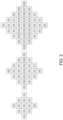
- up to three diamond filter shapes (as shown in FIG. 2 ) can be selected for the luma component.
- An index is signalled at the picture level to indicate the filter shape used for the luma component.
- FIG. 2 shows examples of GALF filter shapes (left: 5 ⁇ 5 diamond, middle: 7 ⁇ 7 diamond, right: 9 ⁇ 9 diamond).
- the 5 ⁇ 5 diamond shape is always used.
- Each 2 ⁇ 2 block is categorized into one out of 25 classes.
- Indices i and j refer to the coordinates of the upper left sample in the 2 ⁇ 2 block and R ( i,j ) indicates a reconstructed sample at coordinate ( i, j ) .
- A is further quantized to the range of 0 to 4, inclusively, and the quantized value is denoted as ⁇ .
- no classification method is applied, i.e. a single set of ALF coefficients is applied for each chroma component.
- Table 1 Mapping of the gradient calculated for one block and the transformations Gradient values Transformation g d2 ⁇ g d1 and g h ⁇ g v No transformation g d2 ⁇ g d1 and g v ⁇ g h Diagonal g d1 ⁇ g d2 and g h ⁇ g v Vertical flip g d1 ⁇ g d2 and g v ⁇ g h Rotation
- GALF filter parameters are signalled for the first CTU, i.e., after the slice header and before the SAO parameters of the first CTU. Up to 25 sets of luma filter coefficients could be signalled. To reduce bits overhead, filter coefficients of different classification can be merged. Also, the GALF coefficients of reference pictures are stored and allowed to be reused as GALF coefficients of a current picture. The current picture may choose to use GALF coefficients stored for the reference pictures, and bypass the GALF coefficients signalling. In this case, only an index to one of the reference pictures is signalled, and the stored GALF coefficients of the indicated reference picture are inherited for the current picture.
- each array assigned by temporal layer index may compose filter sets of previously decoded pictures with equal to lower TempIdx.
- the k-th array is assigned to be associated with TempIdx equal to k, and it only contains filter sets from pictures with TempIdx smaller than or equal to k. After coding a certain picture, the filter sets associated with the picture will be used to update those arrays associated with equal or higher TempIdx.
- Temporal prediction of GALF coefficients is used for inter coded frames to minimize signalling overhead.
- temporal prediction is not available, and a set of 16 fixed filters is assigned to each class.
- a flag for each class is signalled and if required, the index of the chosen fixed filter.
- the coefficients of the adaptive filter f ( k, l ) can still be sent for this class in which case the coefficients of the filter which will be applied to the reconstructed image are sum of both sets of coefficients.
- the filtering process of luma component can controlled at CU level.
- a flag is signalled to indicate whether GALF is applied to the luma component of a CU.
- For chroma component whether GALF is applied or not is indicated at picture level only.
- each sample R ( i, j ) within the block is filtered, resulting in sample value R' ( i, j ) as shown below, where L denotes filter length, f m,n represents filter coefficient, and f ( k, l ) denotes the decoded filter coefficients.
- the encoder makes a decision on whether or not the GALF is applied and the appropriate signalling flag is included in the slice header.
- the decision to apply the filter is done based on the picture-level rather than CU-level.
- chroma GALF for a picture is checked only when luma GALF is enabled for the picture.
- ALF parameters can be signaled in Adaptation Parameter Set (APS) and can be selected by each CTU adaptively.
- APS Adaptation Parameter Set
- Each APS RBSP shall be available to the decoding process prior to it being referred, included in at least one access unit with TemporalId less than or equal to the TemporalId of the coded slice NAL unit that refers it or provided through external means.
- aspLayerId be the nuh_layer_id of an APS NAL unit. If the layer with nuh_layer_id equal to aspLayerId is an independent layer (i.e., vps_independent_layer_flag[ GeneralLayerIdx[ aspLayerId ] ] is equal to 1), the APS NAL unit containing the APS RBSP shall have nuh_layer_id equal to the nuh_layer_id of a coded slice NAL unit that referrs it.
- the APS NAL unit containing the APS RBSP shall have nuh_layer_id either equal to the nuh_layer_id of a coded slice NAL unit that referrs it, or equal to the nuh_layer_id of a direct dependent layer of the layer containing a coded slice NAL unit that referrs it.
- All APS NAL units with a particular value of adaptation_parameter_set_id and a particular value of aps_params_type within an access unit shall have the same content.
- adaptation_parameter_set_id provides an identifier for the APS for reference by other syntax elements.
- adaptation_parameter_set_id shall be in the range of 0 to 7, inclusive.
- adaptation_parameter_set_id shall be in the range of 0 to 3, inclusive.
- aps_params_type specifies the type of APS parameters carried in the APS as specified in Table 7-2.
- aps_params_type is equal to 1 (LMCS_APS)
- the value of adaptation_parameter_set_id shall be in the range of 0 to 3, inclusive.
- Table 7-2 APS parameters type codes and types of APS parameters aps_params_type Name of aps_params_type Type of APS parameters 0 ALF_APS ALF parameters 1 LMCS_APS LMCS parameters 2 SCALING_APS Scaling list parameters 3..7 Reserved Reserved NOTE 1 -
- Each type of APSs uses a separate value space for adaptation_parameter_set_id.
- An APS NAL unit (with a particular value of adaptation_parameter_set_id and a particular value of aps_params_type) can be shared across pictures, and different slices within a picture can refer to different ALF APSs.
- aps_extension_flag 0 specifies that no aps_extension_data_flag syntax elements are present in the APS RBSP syntax structure.
- aps_extension_flag 1 specifies that there are aps_extension_data_flag syntax elements present in the APS RBSP syntax structure.
- aps_extension_data_flag may have any value. Its presence and value do not affect decoder conformance to profiles specified in this version of this Specification. Decoders conforming to this version of this Specification shall ignore all aps_extension_data_flag syntax elements.
- alf_luma_filter_signal_flag 1 specifies that a luma filter set is signalled.
- alf_luma_filter_signal_flag 0 specifies that a luma filter set is not signalled.
- alf_chroma_filter_signal_flag 1 specifies that a chroma filter is signalled.
- alf_chroma_filter_signal_flag 0 specifies that a chroma filter is not signalled.
- ChromaArrayType is equal to 0
- alf_chroma_filter_signal_flag shall be equal to 0.
- the variable NumAlfFilters specifying the number of different adaptive loop filters is set equal to 25.
- alf_luma_clip_flag 0 specifies that linear adaptive loop filtering is applied on luma component.
- alf_luma_clip_flag 1 specifies that non-linear adaptive loop filtering may be applied on luma component.
- alf_luma_num_filters_signalled_minus1 plus 1 specifies the number of adpative loop filter classes for which luma coefficients can be signalled.
- the value of alf_luma_num_filters_signalled_minus1 shall be in the range of 0 to NumAlfFilters - 1, inclusive.
- alf_luma_coeff_delta_idx [ filtIdx ] specifies the indices of the signalled adaptive loop filter luma coefficient deltas for the filter class indicated by filtIdx ranging from 0 to NumAlfFilters - 1.
- alf_luma_coeff_delta_idx[ filtIdx ] is not present, it is inferred to be equal to 0.
- the length of alf_luma_coeff_delta_idx[ filtIdx ] is
- alf_luma_coeff_signalled_flag 1 indicates that alf_luma_coeff_flag[ sfIdx ] is signalled.
- alf_luma_coeff_signalled_flag 0 indicates that alf_luma_coeff_flag[ sfIdx ] is not signalled.
- alf_luma_coeff_flag [ sfIdx ] 1 specifies that the coefficients of the luma filter indicated by sfIdx are signalled.
- alf_luma_coeff_flag[ sfIdx ] 0 specifies that all filter coefficients of the luma filter indicated by sfIdx are set equal to 0.
- alf_luma_coeff_flag[ sfIdx ] is set equal to 1.
- alf_luma_coeff_abs [ sfIdx ][ j ] specifies the absolute value of the j-th coefficient of the signalled luma filter indicated by sfIdx.
- alf_luma_coeff_abs[ sfIdx ][ j ] is not present, it is inferred to be equal 0.
- the order k of the exp-Golomb binarization uek(v) is set equal to 3.
- alf_luma_coeff_sign [ sfIdx ][ j ] specifies the sign of the j-th luma coefficient of the filter indicated by sfIdx as follows:
- alf_luma_coeff_sign[ sfIdx ][ j ] is not present, it is inferred to be equal to 0.
- alf_chroma_num_alt_filters_minus1 plus 1 specifies the number of alternative filters for chroma components.
- alf_chroma_clip_flag[ altIdx ] is inferred to be equal to 0.
- alf_chroma_coeff_abs [ altIdx ][ j ] specifies the absolute value of the j-th chroma filter coefficient for the alternative chroma filter with index altIdx.
- alf_chroma coeff_abs[ altIdx ][ j ] is not present, it is inferred to be equal 0. It is a requirement of bitstream conformance that the values of alf_chroma coeff_abs[ altIdx ][ j ] shall be in the range of 0 to 2 7 - 1, inclusive.
- the order k of the exp-Golomb binarization uek(v) is set equal to 3.
- alf_chroma_coeff_sign [ altIdx ][ j ] specifies the sign of the j-th chroma filter coefficient for the alternative chroma filter with index altIdx as follows:
- alf_chroma_coeff_sign[ altIdx ][ j ] is not present, it is inferred to be equal to 0.
- ALF filter parameters are signalled in Adaptation Parameter Set (APS).
- APS Adaptation Parameter Set
- up to 25 sets of luma filter coefficients and clipping value indexes, and up to 8 sets of chroma filter coefficients and clipping value indexes could be signalled.
- filter coefficients of different classification for luma component can be merged.
- slice header the indices of the APSs used for the current slice are signaled.
- APS indices can be signaled to specify the luma filter sets that are used for the current slice.
- the filtering process can be further controlled at CTB level.
- a flag is always signalled to indicate whether ALF is applied to a luma CTB.
- a luma CTB can choose a filter set among 16 fixed filter sets and the filter sets from APSs.
- a filter set index is signaled for a luma CTB to indicate which filter set is applied.
- the 16 fixed filter sets are pre-defined and hard-coded in both the encoder and the decoder.
- an APS index is signaled in slice header to indicate the chroma filter sets being used for the current slice.
- a filter index is signaled for each chroma CTB if there is more than one chroma filter set in the APS.
- Slice on/off control flags are firstly coded to indicate whether at least one CTU in the slice applies ALF. When it is true, for each CTU, the following are checked and signaled in order:
- xCtb ( CtbAddrInRs % PicWidthInCtbsY ) ⁇ CtbLog2SizeY
- yCtb ( CtbAddrInRs / PicWidthInCtbsY ) ⁇ CtbLog2SizeY if( slice_sao_luma_flag ⁇ slice_sao_chroma_flag) sao( xCtb >> CtbLog2SizeY, yCtb >> CtbLog2SizeY) if( slice_alf_enabled_flag ) ⁇ alf_ctb_flag [ 0 ][ xCtb >> CtbLog2SizeY ][ yCtb >> CtbLog2SizeY ] ae(v) if( alf_ctb_flag[ 0 ][ xCtb >> C
- Partitioning of pictures, subpictures, slices, tiles, bricks, and CTUs subpicture An rectangular region of one or more slices within a picture.
- a tile may be partitioned into multiple bricks, each of which consisting of one or more CTU rows within the tile.
- a tile that is not partitioned into multiple bricks is also referred to as a brick.
- a brick that is a true subset of a tile is not referred to as a tile.
- brick scan A specific sequential ordering of CTUs partitioning a picture in which the CTUs are ordered consecutively in CTU raster scan in a brick, bricks within a tile are ordered consecutively in a raster scan of the bricks of the tile, and tiles in a picture are ordered consecutively in a raster scan of the tiles of the picture.
- a picture is divided into one or more tile rows and one or more tile columns.
- a tile is a sequence of CTUs that covers a rectangular region of a picture.
- a tile is divided into one or more bricks, each of which consisting of a number of CTU rows within the tile.
- a tile that is not partitioned into multiple bricks is also referred to as a brick.
- a brick that is a true subset of a tile is not referred to as a tile.
- a slice either contains a number of tiles of a picture or a number of bricks of a tile.
- a subpicture contains one or more slices that collectively cover a rectangular region of a picture.
- a slice contains a sequence of tiles in a tile raster scan of a picture.
- a slice contains a number of bricks of a picture that collectively form a rectangular region of the picture. The bricks within a rectangular slice are in the order of brick raster scan of the slice.
- FIG. 5 shows an example of raster-scan slice partitioning of a picture, where the picture is divided into 12 tiles and 3 raster-scan slices.
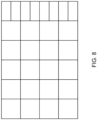
- FIG. 6 shows an example of rectangular slice partitioning of a picture, where the picture is divided into 24 tiles (6 tile columns and 4 tile rows) and 9 rectangular slices.
- FIG. 7 shows an example of a picture partitioned into tiles, bricks, and rectangular slices, where the picture is divided into 4 tiles (2 tile columns and 2 tile rows), 11 bricks (the top-left tile contains 1 brick, the top-right tile contains 5 bricks, the bottom-left tile contains 2 bricks, and the bottom-right tile contain 3 bricks), and 4 rectangular slices.
- FIG. 8 shows an example of subpicture partitioning of a picture, where a picture is partitioned into 28 subpictures of varying dimensions.
- a slice contains only CTUs of one colour component being identified by the corresponding value of colour_plane_id, and each colour component array of a picture consists of slices having the same colour_plane_id value.
- Coded slices with different values of colour_plane_id within a picture may be interleaved with each other under the constraint that for each value of colour_plane_id, the coded slice NAL units with that value of colour_plane_id shall be in the order of increasing CTU address in brick scan order for the first CTU of each coded slice NAL unit.
- AVC and HEVC does not have the ability to change resolution without having to introduce an IDR or intra random access point (IRAP) picture; such ability can be referred to as adaptive resolution change (ARC).
- ARC adaptive resolution change
- ARC is also known as Dynamic resolution conversion.
- ARC may also be regarded as a special case of Reference Picture Resampling (RPR) such as H.263 Annex P.
- RPR Reference Picture Resampling
- the ARC, a.k.a. RPR Reference Picture Resampling
- JVET-O2001-v14 the ARC, a.k.a. RPR (Reference Picture Resampling) is incorporated in JVET-O2001-v14.
- TMVP Reference Picture Resampling
- BDOF and DMVR are disabled when the reference picture has a different resolution to the current picture.
- SPS the maximum picture resolution is defined.
- PPS its resolution (including picture width and height in luma samples) are defined.
- the RPR is enabled.
- Conformance window in VVC defines a rectangle. Samples inside the conformance window belongs to the image of interest. Samples outside the conformance window may be discarded when output.
- the scaling ration in RPR is derived based on conformance windows.
- pic_width_in_luma_samples When subpics_present _flag is equal to 1, the value of pic_width_in_luma_samples shall be equal to pic_width_max_in_luma_samples.
- pic_height_in_luma_samples specifies the height of each decoded picture referring to the PPS in units of luma samples.
- pic_height_in_luma_samples shall not be equal to 0 and shall be an integer multiple of Max( 8, MinCbSizeY ), and shall be less than or equal to pic_height_max_in_luma_samples.
- pic_height_in_luma_samples When subpics_present _flag is equal to 1, the value of pic_height_in_luma_samples shall be equal to pic_height_max_in_luma_samples.
- refPicWidthInLumaSamples and refPicHeightInLumaSamples be the pic_width_in_luma_samples and pic_height_in_luma_samples, respectively, of a reference picture of a current picture referring to this PPS. Is a requirement of bitstream conformance that all of the following conditions are satisfied:
- the conformance cropping window contains the luma samples with horizontal picture coordinates from SubWidthC * conf_win _left_offset to pic_width_in_luma_samples - ( SubWidthC * conf_win_right_offset + 1 ) and vertical picture coordinates from SubHeightC * conf_win_top_offset to pic_height_in_luma_samples - ( SubHeightC * conf_win_bottom_offset + 1 ), inclusive.
- SubWidthC * ( conf_win_left_offset + conf_win_right_offset ) shall be less than pic_width_in_luma_samples
- SubHeightC * ( conf_win_top_offset + conf_win_bottom_offset ) shall be less than pic_height_in_luma_samples.
- PicOutputWidthL pic_width_in_luma_samples - (7-43)
- PicOutputHeightL pic_height_in_pic_size_units - (7-44)
- the corresponding specified samples of the two chroma arrays are the samples having picture coordinates ( x / SubWidthC, y / SubHeightC ), where ( x, y ) are the picture coordinates of the specified luma samples.
- ppsA and ppsB be any two PPSs referring to the same SPS. It is a requirement of bitstream conformance that, when ppsA and ppsB have the same the values of pic_width_in_luma_samples and pic_height_in_luma_samples, respectively, ppsA and ppsB shall have the same values of conf_win_left_offset, conf_win_right_offset, conf_win_top_offset, and conf_win_bottom_offset, respectively.
- the ALF data in APS has the following problem:
- the resolution (or dimensions, or width/height, or size) of a picture may refer to the resolution (or dimensions, or width/height, or size) of the coded/decoded picture, or may refer to the resolution (or dimensions, or width/height, or size) of the conformance window in the coded/decoded picture.
- This part gives some examples on how to signal ALF parameters in ALF APS.
- alf_luma_filter_signal_flag 1 specifies that a luma filter set is signalled.
- alf_luma_filter_signal_flag 0 specifies that a luma filter set is not signalled.
- alf_chroma_filter_signal_flag 1 specifies that a chroma filter is signalled.
- alf_chroma_filter_signal_flag 0 specifies that a chroma filter is not signalled.
- the variable NumAlfFilters specifying the number of different adaptive loop filters is set equal to 25.
- alf_luma_clip_flag 0 specifies that linear adaptive loop filtering is applied on luma component.
- alf_luma_clip_flag 1 specifies that non-linear adaptive loop filtering may be applied on luma component.
- alf_luma_num_filters_signalled_minus1 plus 1 specifies the number of adpative loop filter classes for which luma coefficients can be signalled.
- the value of alf_luma_num_filters_signalled_minus1 shall be in the range of 0 to NumAlfFilters - 1, inclusive.
- alf_luma_coeff_delta_idx [ filtIdx ] specifies the indices of the signalled adaptive loop filter luma coefficient deltas for the filter class indicated by filtIdx ranging from 0 to NumAlfFilters - 1.
- alf_luma_coeff_delta_idx[ filtIdx ] is not present, it is inferred to be equal to 0.
- the length of alf_luma_coeff_delta_idx[ filtIdx ] is Ceil( Log2( alf_luma_num_filters_signalled_minus1 + 1 ) ) bits.
- alf_luma_coeff_signalled_flag 1 indicates that alf_luma_coeff_flag[ sfIdx ] is signalled.
- alf_luma_coeff_signalled_flag 0 indicates that alf_luma_coeff_flag[ sfIdx ] is not signalled.
- alf_luma_coeff_flag [ sfIdx ] 1 specifies that the coefficients of the luma filter indicated by sfIdx are signalled.
- alf_luma_coeff_flag[ sfIdx ] 0 specifies that all filter coefficients of the luma filter indicated by sfIdx are set equal to 0.
- the order k of the exp-Golomb binarization uek(v) is set equal to 3.
- alf_luma_coeff_sign [ sfIdx ][ j ] specifies the sign of the j-th luma coefficient of the filter indicated by sfIdx as follows:
- alf_luma_coeff_sign[ sfIdx ][ j ] is not present, it is inferred to be equal to 0.
- alf_ctb_use_first_aps_flag 0 specifies that the luma CTB does not use the filter information in APS with adaptive_parameter_set_id equal to slice_alf_aps_id_luma[ 0 ].
- alf_ctb_use_first_aps_flag not present, it is inferred to be equal to 0.
- alf_use_aps_flag 0 specifies that one of the fixed filter sets is applied to the luma CTB.
- alf_use_aps_flag 1 specifies that a filter set from an APS is applied to the luma CTB. When alf_use_aps_flag is not present, it is inferred to be equal to 0.
- alf_luma_prev_filter_idx[[_minus1 plus 1]] specifies the previous filter that is applied to the luma CTB.
- the value of alf_luma_prev_filter_idx[[_minus1]] shall be in a range of 0 to slice_num_alf_aps_ids_luma - ⁇ 1 ⁇ [[2]], inclusive.
- alf_luma_prev_filter_idx[[_minus1]] is not present, it is inferred to be equal to 0.
- variable AlfCtbFiltSetIdxY[ xCtb >> CtbLog2SizeY ][ yCtb >> CtbLog2SizeY ] specifying the filter set index for the luma CTB at location ( xCtb, yCtb ) is derived as follows:
- alf_luma_fixed_filter_idx specifies the fixed filter that is applied to the luma CTB.
- the value of alf_luma_fixed_filter_idx shall be in a range of 0 to 15, inclusive.
- FIG. 9 is a block diagram showing an example video processing system 900 in which various techniques disclosed herein may be implemented.
- the system 900 may include input 902 for receiving video content.
- the video content may be received in a raw or uncompressed format, e.g., 8 or 10 bit multi-component pixel values, or may be in a compressed or encoded format.
- the input 902 may represent a network interface, a peripheral bus interface, or a storage interface. Examples of network interface include wired interfaces such as Ethernet, passive optical network (PON), etc. and wireless interfaces such as Wi-Fi or cellular interfaces.
- the system 900 may include a coding component 904 that may implement the various coding or encoding methods described in the present document.
- the coding component 904 may reduce the average bitrate of video from the input 902 to the output of the coding component 904 to produce a coded representation of the video.
- the coding techniques are therefore sometimes called video compression or video transcoding techniques.
- the output of the coding component 904 may be either stored, or transmitted via a communication connected, as represented by the component 906.
- the stored or communicated bitstream (or coded) representation of the video received at the input 902 may be used by the component 908 for generating pixel values or displayable video that is sent to a display interface 910.
- the process of generating user-viewable video from the bitstream representation is sometimes called video decompression.
- certain video processing operations are referred to as "coding" operations or tools, it will be appreciated that the coding tools or operations are used at an encoder and corresponding decoding tools or operations that reverse the results of the coding will be performed by
- peripheral bus interface or a display interface may include universal serial bus (USB) or high definition multimedia interface (HDMI) or Displayport, and so on.
- storage interfaces include SATA (serial advanced technology attachment), PCI, IDE interface, and the like.
- FIG. 10 is a block diagram of a video processing apparatus 1000.
- the apparatus 1000 may be used to implement one or more of the methods described herein.
- the apparatus 1000 may be embodied in a smartphone, tablet, computer, Internet of Things (IoT) receiver, and so on.
- the apparatus 1000 may include one or more processors 1002, one or more memories 1004 and video processing hardware 1006.
- the processor(s) 1002 may be configured to implement one or more methods described in the present document.
- the memory (memories) 1004 may be used for storing data and code used for implementing the methods and techniques described herein.
- the video processing hardware 1006 may be used to implement, in hardware circuitry, some techniques described in the present document. In some implementations, the hardware 1606 may be partially or completely a part of the processor 1002, e.g., a graphics processor.
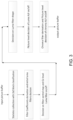
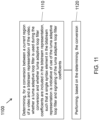
- FIG. 11 is a flowchart of an example method of video processing.
- the method 1100 includes, at operation 1110, determining, for a conversion between a current region of a video and a bitstream representation of the video, whether a luma adaptive loop filter is used during the conversion and whether luma adaptive loop filter coefficients are included in the bitstream representation, such that a single syntax element in the bitstream representation is indicative of use of the luma adaptive loop filter and signaling of the luma adaptive loop filter coefficients.
- the method 1100 includes, at operation 1120, performing, based on the determining, the conversion.
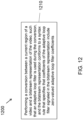
- FIG. 12 is a flowchart of an example method of video processing.
- the method 1200 includes, at operation 1210, performing a conversion between a current region of a video and a bitstream representation of the video, such that an adaptive loop filter is used during the conversion, and the bitstream representation conforms to a syntax rule that specifies that coefficients of the adaptive loop filter signaled in the bitstream representation include zero-valued adaptive loop filter coefficients.
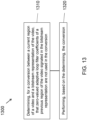
- FIG. 13 is a flowchart of an example method of video processing.
- the method 1300 includes, at operation 1310, determining, for a conversion between a current region of a video and a bitstream representation of the video, that zero-valued adaptive loop filter coefficients of a previous region of the video signaled in the bitstream representation are not used in the conversion.
- the method 1300 includes, at operation 1320, performing, based on the determining, the conversion.
- FIG. 14 is a flowchart of an example method of video processing.
- the method 1400 includes, at operation 1410, performing a conversion between a current region of a video and a bitstream representation of the video, such that the bitstream representation conforms to a syntax rule that specifies a flag indicating whether in-loop filtering is used for the conversion is included in the bitstream representation at a video unit level comprising the current region that is smaller than a slice level of the video.
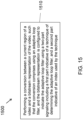
- FIG. 15 is a flowchart of an example method of video processing.
- the method 1500 includes, at operation 1510, performing a conversion between a current region of a video and a bitstream representation of the video, such that the conversion comprises using an adaptive loop filter, and the bitstream representation is configured to indicate the adaptive loop filter using a two-part signaling including a first part indicative of a technique of determining the adaptive loop filter, and a second part indicative of an index used by the technique.
- FIG. 16 is a flowchart of an example method of video processing.
- the method 1600 includes, at operation 1610, determining, based on a property of a video, a size of a current region of the video that shares a common loop filtering setting for a conversion between the current region and a bitstream representation of the video.
- the method 1600 includes, at operation 1620, performing, based on the determining, the conversion.
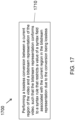
- FIG. 17 is a flowchart of an example method of video processing.
- the method 1700 includes, at operation 1710, performing a lossless conversion between a current region of the video and a bitstream representation of the video, such that the bitstream representation conforms to a syntax rule that restricts a value of a syntax field associated with the current region in the bitstream representation due to the conversion being lossless.
- the disclosed and other solutions, examples, embodiments, modules and the functional operations described in this document can be implemented in digital electronic circuitry, or in computer software, firmware, or
- the disclosed and other embodiments can be implemented as one or more computer program products, i.e., one or more modules of computer program instructions encoded on a computer readable medium for execution by, or to control the operation of, data processing apparatus.
- the computer readable medium can be a machine-readable storage device, a machine-readable storage substrate, a memory device, a composition of matter effecting a machine-readable propagated signal, or a combination of one or more them.
- data processing apparatus encompasses all apparatus, devices, and machines for processing data, including by way of example a programmable processor, a computer, or multiple processors or computers.
- the apparatus can include, in addition to hardware, code that creates an execution environment for the computer program in question, e.g., code that constitutes processor firmware, a protocol stack, a database management system, an operating system, or a combination of one or more of them.
- a propagated signal is an artificially generated signal, e.g., a machine-generated electrical, optical, or electromagnetic signal, that is generated to encode information for transmission to suitable receiver apparatus.
- a computer program (also known as a program, software, software application, script, or code) can be written in any form of programming language, including compiled or interpreted languages, and it can be deployed in any form, including as a stand-alone program or as a module, component, subroutine, or other unit suitable for use in a computing environment.
- a computer program does not necessarily correspond to a file in a file system.
- a program can be stored in a portion of a file that holds other programs or data (e.g., one or more scripts stored in a markup language document), in a single file dedicated to the program in question, or in multiple coordinated files (e.g., files that store one or more modules, sub programs, or portions of code).
- a computer program can be deployed to be executed on one computer or on multiple computers that are located at one site or distributed across multiple sites and interconnected by a communication network.
- the processes and logic flows described in this document can be performed by one or more programmable processors executing one or more computer programs to perform functions by operating on input data and generating output.
- the processes and logic flows can also be performed by, and apparatus can also be implemented as, special purpose logic circuitry, e.g., an FPGA (field programmable gate array) or an ASIC (application specific integrated circuit).
- processors suitable for the execution of a computer program include, by way of example, both general and special purpose microprocessors, and any one or more processors of any kind of digital computer.
- a processor will receive instructions and data from a read only memory or a random-access memory or both.
- the essential elements of a computer are a processor for performing instructions and one or more memory devices for storing instructions and data.
- a computer will also include, or be operatively coupled to receive data from or transfer data to, or both, one or more mass storage devices for storing data, e.g., magnetic, magneto optical disks, or optical disks.
- mass storage devices for storing data, e.g., magnetic, magneto optical disks, or optical disks.
- a computer need not have such devices.
- Computer readable media suitable for storing computer program instructions and data include all forms of non-volatile memory, media and memory devices, including by way of example semiconductor memory devices, e.g., EPROM, EEPROM, and flash memory devices; magnetic disks, e.g., internal hard disks or removable disks; magneto optical disks; and CD ROM and DVD-ROM disks.
- semiconductor memory devices e.g., EPROM, EEPROM, and flash memory devices
- magnetic disks e.g., internal hard disks or removable disks
- magneto optical disks e.g., CD ROM and DVD-ROM disks.
- the processor and the memory can be supplemented by, or incorporated in, special purpose logic circuitry.
Landscapes
- Engineering & Computer Science (AREA)
- Multimedia (AREA)
- Signal Processing (AREA)
- Compression Or Coding Systems Of Tv Signals (AREA)
Claims (13)
- Verfahren zum Verarbeiten von Videodaten, Folgendes umfassend:
Durchführen einer Konvertierung zwischen einem aktuellen Block eines aktuellen Bereichs eines Videos und einem Bitstrom des Videos, wobei die Konvertierung das Verwenden eines adaptiven Schleifenfilters für den aktuellen Block umfasst, und wobei der Bitstrom dafür konfiguriert ist, den adaptiven Schleifenfilter unter Verwendung mehrerer Syntaxelemente anzugeben, welche Folgendes einschließen:ein erstes Syntaxelement der mehreren Syntaxelemente, wobei das erste Syntaxelement alf_use_aps_flag ist, und wobei das erste Syntaxelement angibt, ob ein feststehender Filtersatz oder ein Filtersatz aus einem Anpassungsparametersatz (APS) auf den aktuellen Block angewendet wird,ein zweites Syntaxelement der mehreren Syntaxelemente, wobei das zweite Syntaxelement alf_luma_prev_ filter_idx ist, und wobei das zweite Syntaxelement einen Index des Filtersatzes aus dem APS angibt und den vorherigen Filter spezifiziert, der auf den Luminanz-Codierungsbaumblock CTB angewendet wird, undein drittes Syntaxelement der mehreren Syntaxelemente, wobei das dritte Syntaxelement alf_luma_fixed_filter_idx ist, und wobei das dritte Syntaxelement einen Index des feststehenden Filtersatzes angibt,wobei der Bitstrom ein viertes Syntaxelement in einem Slice-Header umfasst, wobei das vierte Syntaxelement slice_num_alf_aps_ids_luma ist, und wobei das vierte Syntaxelement eine Anzahl von adaptiven Schleifenfilter-APS angibt, die für den aktuellen Bereich verwendet werden,wobei das erste Syntaxelement in den Bitstrom eingeschlossen wird, wenn ein Wert des vierten Syntaxelements im Slice-Header größer als eins ist, und das erste Syntaxelement in den Bitstrom eingeschlossen wird, wenn der Wert des vierten Syntaxelements im Slice-Header gleich eins ist,wobei das zweite Syntaxelement, das den Index des Filtersatzes aus dem APS angibt, in den Bitstrom eingeschlossen wird, wenn ein Wert des ersten Syntaxelements gleich eins ist und der Wert des vierten Syntaxelements im Slice-Header größer als eins ist, undwobei das dritte Syntaxelement in den Bitstrom eingeschlossen wird, wenn der Wert des ersten Syntaxelements gleich null ist. - Verfahren nach Anspruch 1, wobei, dass das erste Syntaxelement null ist, angibt, dass der feststehende Filtersatz auf den aktuellen Block angewendet wird.
- Verfahren nach Anspruch 1, wobei, dass das erste Syntaxelement eins ist, angibt, dass der Filtersatz aus dem APS auf den aktuellen Block angewendet wird.
- Verfahren nach Anspruch 1, wobei der Bitstrom als Antwort darauf, dass der Wert des vierten Syntaxelements im Slice-Header gleich null ist, das erste Teil-Syntaxelement ausschließt, und wobei das erste Syntaxelement abgeleitet wird, um anzugeben, dass der feststehende Filtersatz auf den aktuellen Block angewendet wird.
- Verfahren nach Anspruch 1, wobei das zweite Syntaxelement, das den Index des Filtersatzes aus dem APS angibt, als Antwort darauf, dass der Wert des vierten Syntaxelements im Slice-Header gleich 1 ist, aus dem Bitstrom ausgeschlossen wird.
- Verfahren nach einem der Ansprüche 1 bis 5, wobei der aktuelle Bereich ein Slice ist.
- Verfahren nach einem der Ansprüche 1 bis 6, wobei das zweite Syntaxelement, das den Index des Filtersatzes aus dem APS angibt, mit einem abgeschnittenen Binärverfahren codiert wird;wobei ein Maximalwert des zweiten Syntaxelements, das den Index des Filtersatzes aus dem APS angibt, auf eine Anzahl von erlaubten ALF-APS für den aktuellen Bereich minus K gesetzt wird, und wobei K = 1; undwobei alle Bins eines binarisierten Bin-Strings des zweiten Syntaxelements, das den Index des Filtersatzes aus dem APS angibt, Bypass-codiert werden.
- Verfahren nach einem der Ansprüche 1 bis 7, wobei die Konvertierung das Codieren des Videos in den Bitstrom einschließt.
- Verfahren nach einem der Ansprüche 1 bis 7, wobei die Konvertierung das Decodieren des Videos aus dem Bitstrom einschließt.
- Vorrichtung zum Verarbeiten von Videodaten, die einen Prozessor und einen nichtflüchtigen Speicher mit Anweisungen darauf umfasst, wobei die Anweisungen bei einer Ausführung durch den Prozessor den Prozessor zum Folgenden veranlassen:
Durchführen einer Konvertierung zwischen einem aktuellen Block eines aktuellen Bereichs eines Videos und einem Bitstrom des Videos, wobei die Konvertierung das Verwenden eines adaptiven Schleifenfilters für den aktuellen Block umfasst, und wobei der Bitstrom dafür konfiguriert ist, den adaptiven Schleifenfilter unter Verwendung mehrerer Syntaxelemente anzugeben, welche Folgendes einschließen:ein erstes Syntaxelement der mehreren Syntaxelemente, wobei das erste Syntaxelement alf_use_aps_flag ist, und wobei das erste Syntaxelement angibt, ob ein feststehender Filtersatz oder ein Filtersatz aus einem Anpassungsparametersatz (APS) auf den aktuellen Block angewendet wird, undein zweites Syntaxelement der mehreren Syntaxelemente, wobei das zweite Syntaxelement alf_luma_prev_ filter_idx ist, und wobei das zweite Syntaxelement einen Index des Filtersatzes aus dem APS angibt und den vorherigen Filter spezifiziert, der auf den Luminanz-Codierungsbaumblock CTB angewendet wird, undein drittes Syntaxelement der mehreren Syntaxelemente, wobei das dritte Syntaxelement alf_luma_fixed_filter _idx ist, und wobei das dritte Syntaxelement einen Index des feststehenden Filtersatzes angibt,wobei der Bitstrom ein viertes Syntaxelement in einem Slice-Header umfasst, wobei das vierte Syntaxelement slice_num_alf_aps_ids_luma ist, und wobei das vierte Syntaxelement eine Anzahl von adaptiven Schleifenfilter-APS angibt, die für den aktuellen Bereich verwendet werden;wobei das erste Syntaxelement in den Bitstrom eingeschlossen wird, wenn ein Wert des vierten Syntaxelements im Slice-Header größer als eins ist, und das erste Syntaxelement in den Bitstrom eingeschlossen wird, wenn der Wert des vierten Syntaxelements im Slice-Header gleich eins ist,wobei das zweite Syntaxelement, das den Index des Filtersatzes aus dem APS angibt, in den Bitstrom eingeschlossen wird, wenn ein Wert des ersten Syntaxelements gleich eins ist und ein Wert des vierten Syntaxelements im Slice-Header größer als eins ist, undwobei das dritte Syntaxelement in den Bitstrom eingeschlossen wird, wenn der Wert des ersten Syntaxelements gleich null ist. - Nichtflüchtiges computerlesbares Speichermedium, das Anweisungen speichert, die einen Prozessor zum Folgenden veranlassen:
Durchführen einer Konvertierung zwischen einem aktuellen Block eines aktuellen Bereichs eines Videos und einem Bitstrom des Videos, wobei die Konvertierung das Verwenden eines adaptiven Schleifenfilters für den aktuellen Block umfasst, und wobei der Bitstrom dafür konfiguriert ist, den adaptiven Schleifenfilter unter Verwendung mehrerer Syntaxelemente anzugeben, welche Folgendes einschließen:ein erstes Syntaxelement der mehreren Syntaxelemente, wobei das erste Syntaxelement alf_use_aps_flag ist, und wobei das erste Syntaxelement angibt, ob ein feststehender Filtersatz oder ein Filtersatz aus einem Anpassungsparametersatz (APS) auf den aktuellen Block angewendet wird, undein zweites Syntaxelement der mehreren Syntaxelemente, wobei das zweite Syntaxelement alf_luma_prev_ filter_idx ist, und wobei das zweite Syntaxelement einen Index des Filtersatzes aus dem APS angibt und den vorherigen Filter spezifiziert, der auf den Luminanz-Codierungsbaumblock CTB angewendet wird, undein drittes Syntaxelement der mehreren Syntaxelemente, wobei das dritte Syntaxelement alf_luma_fixed_filter_idx ist, und wobei das dritte Syntaxelement einen Index des feststehenden Filtersatzes angibt,wobei der Bitstrom ein viertes Syntaxelement in einem Slice-Header umfasst, wobei das vierte Syntaxelement slice_num_alf_aps_ids_luma ist, und wobei das vierte Syntaxelement eine Anzahl von adaptiven Schleifenfilter-APS angibt, die für den aktuellen Bereich verwendet werden; undwobei das erste Syntaxelement in den Bitstrom eingeschlossen wird, wenn ein Wert des vierten Syntaxelements im Slice-Header größer als eins ist, und das erste Syntaxelement in den Bitstrom eingeschlossen wird, wenn der Wert des vierten Syntaxelements im Slice-Header gleich eins ist,wobei das zweite Syntaxelement, das den Index des Filtersatzes aus dem APS angibt, in den Bitstrom eingeschlossen wird, wenn ein Wert des ersten Syntaxelements gleich eins ist und der Wert des vierten Syntaxelements im Slice-Header größer als eins ist, undwobei das dritte Syntaxelement in den Bitstrom eingeschlossen wird, wenn der Wert des ersten Syntaxelements gleich null ist. - Nichtflüchtiges computerlesbares Aufzeichnungsmedium, das einen Bitstrom eines Videos speichert, der durch ein Verfahren erzeugt wird, das durch eine Videoverarbeitungsvorrichtung durchgeführt wird, wobei das Verfahren Folgendes umfasst:
Erzeugen des Bitstroms für einen aktuellen Block eines aktuellen Bereichs des Videos, wobei das Erzeugen das Verwenden eines adaptiven Schleifenfilters für den aktuellen Block umfasst, und wobei der Bitstrom dafür konfiguriert ist, den adaptiven Schleifenfilter unter Verwendung mehrerer Syntaxelemente anzugeben, welche Folgendes einschließen:ein erstes Syntaxelement der mehreren Syntaxelemente, wobei das erste Syntaxelement alf_use_aps_flag ist, und wobei das erste Syntaxelement angibt, ob ein feststehender Filtersatz oder ein Filtersatz aus einem Anpassungsparametersatz (APS) auf den aktuellen Block angewendet wird, undein zweites Syntaxelement der mehreren Syntaxelemente, wobei das zweite Syntaxelement alf_luma_prev_ filter_idx ist, und wobei das zweite Syntaxelement einen Index des Filtersatzes aus dem APS angibt und den vorherigen Filter spezifiziert, der auf den Luminanz-Codierungsbaumblock CTB angewendet wird, undein drittes Syntaxelement der mehreren Syntaxelemente, wobei das dritte Syntaxelement alf_luma_fixed_filter_idx ist, und wobei das dritte Syntaxelement einen Index des feststehenden Filtersatzes angibt,wobei der Bitstrom ein viertes Syntaxelement in einem Slice-Header umfasst, wobei das vierte Syntaxelement slice_num_alf_aps_ids_luma ist, und wobei das vierte Syntaxelement eine Anzahl von adaptiven Schleifenfilter-APS angibt, die für den aktuellen Bereich verwendet werden; undwobei das erste Syntaxelement in den Bitstrom eingeschlossen wird, wenn ein Wert des vierten Syntaxelements im Slice-Header größer als eins ist, und das erste Syntaxelement in den Bitstrom eingeschlossen wird, wenn der Wert des vierten Syntaxelements im Slice-Header gleich eins ist,wobei das zweite Syntaxelement, das den Index des Filtersatzes aus dem APS angibt, in den Bitstrom eingeschlossen wird, wenn ein Wert des ersten Syntaxelements gleich eins ist und der Wert des vierten Syntaxelements im Slice-Header größer als eins ist, undwobei das dritte Syntaxelement in den Bitstrom eingeschlossen wird, wenn der Wert des ersten Syntaxelements gleich null ist. - Verfahren zum Speichern eines Bitstroms eines Videos, Folgendes umfassend:Erzeugen des Bitstroms für einen aktuellen Block eines aktuellen Bereichs des Videos; undSpeichern des Bitstroms in einem nichtflüchtigen computerlesbaren Aufzeichnungsmedium,wobei das Erzeugen das Verwenden eines adaptiven Schleifenfilters für den aktuellen Block umfasst, und wobei der Bitstrom dafür konfiguriert ist, den adaptiven Schleifenfilter unter Verwendung mehrerer Syntaxelemente anzugeben, welche Folgendes einschließen:ein erstes Syntaxelement der mehreren Syntaxelemente, wobei das erste Syntaxelement alf_use_aps_flag ist, und wobei das erste Syntaxelement angibt, ob ein feststehender Filtersatz oder ein Filtersatz aus einem Anpassungsparametersatz (APS) auf den aktuellen Block angewendet wird,ein zweites Syntaxelement der mehreren Syntaxelemente, wobei das zweite Syntaxelement alf_luma_prev_ filter_idx ist, und wobei das zweite Syntaxelement einen Index des Filtersatzes aus dem APS angibt und den vorherigen Filter spezifiziert, der auf den Luminanz-Codierungsbaumblock CTB angewendet wird, undein drittes Syntaxelement der mehreren Syntaxelemente, wobei das dritte Syntaxelement alf_luma_fixed_filter_idx ist, und wobei das dritte Syntaxelement einen Index des feststehenden Filtersatzes angibt,wobei der Bitstrom ein viertes Syntaxelement in einem Slice-Header umfasst, wobei das vierte Syntaxelement slice_num_alf_aps_ids_luma ist, und wobei das vierte Syntaxelement eine Anzahl von adaptiven Schleifenfilter-APS angibt, die für den aktuellen Bereich verwendet werden;wobei das erste Syntaxelement in den Bitstrom eingeschlossen wird, wenn ein Wert des vierten Syntaxelements im Slice-Header größer als eins ist, und das erste Syntaxelement in den Bitstrom eingeschlossen wird, wenn der Wert des vierten Syntaxelements im Slice-Header gleich eins ist,wobei das zweite Syntaxelement, das den Index des Filtersatzes aus dem APS angibt, in den Bitstrom eingeschlossen wird, wenn ein Wert des ersten Syntaxelements gleich eins ist und der Wert des vierten Syntaxelements im Slice-Header größer als eins ist, undwobei das dritte Syntaxelement in den Bitstrom eingeschlossen wird, wenn der Wert des ersten Syntaxelements gleich null ist.
Applications Claiming Priority (2)
| Application Number | Priority Date | Filing Date | Title |
|---|---|---|---|
| CN2019106420 | 2019-09-18 | ||
| PCT/CN2020/116086 WO2021052453A1 (en) | 2019-09-18 | 2020-09-18 | Two-part signaling of adaptive loop filters in video coding |
Publications (4)
| Publication Number | Publication Date |
|---|---|
| EP4014485A1 EP4014485A1 (de) | 2022-06-22 |
| EP4014485A4 EP4014485A4 (de) | 2022-10-26 |
| EP4014485B1 true EP4014485B1 (de) | 2025-05-07 |
| EP4014485C0 EP4014485C0 (de) | 2025-05-07 |
Family
ID=74883900
Family Applications (1)
| Application Number | Title | Priority Date | Filing Date |
|---|---|---|---|
| EP20866732.9A Active EP4014485B1 (de) | 2019-09-18 | 2020-09-18 | Zweiteilige signalisierung von adaptiven schleifenfiltern in der videocodierung |
Country Status (9)
| Country | Link |
|---|---|
| US (3) | US11601686B2 (de) |
| EP (1) | EP4014485B1 (de) |
| JP (2) | JP7323711B2 (de) |
| KR (1) | KR102707780B1 (de) |
| CN (3) | CN114424529B (de) |
| BR (1) | BR112022005046A2 (de) |
| ES (1) | ES3030107T3 (de) |
| PL (1) | PL4014485T3 (de) |
| WO (2) | WO2021052452A1 (de) |
Families Citing this family (12)
| Publication number | Priority date | Publication date | Assignee | Title |
|---|---|---|---|---|
| KR102696461B1 (ko) * | 2019-03-11 | 2024-08-21 | 텐센트 아메리카 엘엘씨 | 비디오 비트스트림에서의 적응적 픽처 크기의 시그널링 |
| WO2021052452A1 (en) | 2019-09-18 | 2021-03-25 | Beijing Bytedance Network Technology Co., Ltd. | Signaling usage of adaptive loop filter in video coding |
| KR102790212B1 (ko) | 2019-09-24 | 2025-04-04 | 후아웨이 테크놀러지 컴퍼니 리미티드 | Sei 메시지들에 대한 시간 식별자 제약들 |
| CN117337568A (zh) * | 2021-03-26 | 2024-01-02 | 抖音视界有限公司 | 用于视频处理的方法、设备和介质 |
| CN117256139A (zh) | 2021-04-12 | 2023-12-19 | 抖音视界有限公司 | 视频编解码中的导向滤波器 |
| US12603998B2 (en) | 2021-07-07 | 2026-04-14 | Lemon Inc. | Configurable neural network model depth in neural network-based video coding |
| US20230051066A1 (en) * | 2021-07-27 | 2023-02-16 | Lemon Inc. | Partitioning Information In Neural Network-Based Video Coding |
| TW202539237A (zh) * | 2024-01-16 | 2025-10-01 | 聯發科技股份有限公司 | 在影片編解碼中具有與跨組件色度模型和固定濾波器相關的附加模式和抽頭的適應性環路濾波器的方法與裝置 |
| WO2025218810A1 (en) * | 2024-04-19 | 2025-10-23 | Douyin Vision Co., Ltd. | Using pre-defined filter for classification of adaptive loop filter in video coding |
| WO2026007114A1 (zh) * | 2024-07-05 | 2026-01-08 | Oppo广东移动通信有限公司 | 编解码方法、编解码器以及存储介质 |
| WO2026016999A1 (en) * | 2024-07-15 | 2026-01-22 | Douyin Vision Co., Ltd. | Parameter and control information reusing for loop-filters in video coding |
| WO2026017116A1 (en) * | 2024-07-18 | 2026-01-22 | Mediatek Inc. | Adaptive loop filter syntax design for filter sets selection of cascade filtering |
Family Cites Families (64)
| Publication number | Priority date | Publication date | Assignee | Title |
|---|---|---|---|---|
| US9001899B2 (en) * | 2006-09-15 | 2015-04-07 | Freescale Semiconductor, Inc. | Video information processing system with selective chroma deblock filtering |
| JP5436695B2 (ja) * | 2010-01-14 | 2014-03-05 | ドルビー ラボラトリーズ ライセンシング コーポレイション | ビデオ適応フィルタリングのための方法、システム、ビデオエンコーダ、ビデオデコーダ、コンピュータ装置、集積回路(ic)装置、及びコンピュータ読取可能な記録媒体 |
| US9094658B2 (en) * | 2010-05-10 | 2015-07-28 | Mediatek Inc. | Method and apparatus of adaptive loop filtering |
| US20120039383A1 (en) * | 2010-08-12 | 2012-02-16 | Mediatek Inc. | Coding unit synchronous adaptive loop filter flags |
| US9819966B2 (en) * | 2010-09-01 | 2017-11-14 | Qualcomm Incorporated | Filter description signaling for multi-filter adaptive filtering |
| CN103535035B (zh) * | 2011-05-16 | 2017-03-15 | 寰发股份有限公司 | 用于亮度和色度分量的样本自适应偏移的方法和装置 |
| US9807403B2 (en) * | 2011-10-21 | 2017-10-31 | Qualcomm Incorporated | Adaptive loop filtering for chroma components |
| US9247258B2 (en) | 2011-10-26 | 2016-01-26 | Qualcomm Incorporated | Unified design for picture partitioning schemes |
| US9077998B2 (en) | 2011-11-04 | 2015-07-07 | Qualcomm Incorporated | Padding of segments in coded slice NAL units |
| US20130113880A1 (en) * | 2011-11-08 | 2013-05-09 | Jie Zhao | High Efficiency Video Coding (HEVC) Adaptive Loop Filter |
| CN103796015A (zh) * | 2012-10-31 | 2014-05-14 | 朱洪波 | 系数数目自适应的量化参数差分编码 |
| US10321130B2 (en) | 2013-01-07 | 2019-06-11 | Vid Scale, Inc. | Enhanced deblocking filters for video coding |
| US20140192862A1 (en) * | 2013-01-07 | 2014-07-10 | Research In Motion Limited | Methods and systems for prediction filtering in video coding |
| US9467707B2 (en) | 2013-03-05 | 2016-10-11 | Qualcomm Incorporated | Parallel processing for video coding |
| US9578328B2 (en) | 2013-07-15 | 2017-02-21 | Qualcomm Incorporated | Cross-layer parallel processing and offset delay parameters for video coding |
| HK1218820A1 (zh) | 2013-09-27 | 2017-03-10 | 高通股份有限公司 | 用於深度幀內預測模式的殘餘譯碼 |
| US9807406B2 (en) | 2014-03-17 | 2017-10-31 | Qualcomm Incorporated | Picture flushing and decoded picture buffer parameter inference for multi-layer bitstreams |
| US9591325B2 (en) | 2015-01-27 | 2017-03-07 | Microsoft Technology Licensing, Llc | Special case handling for merged chroma blocks in intra block copy prediction mode |
| US10057574B2 (en) | 2015-02-11 | 2018-08-21 | Qualcomm Incorporated | Coding tree unit (CTU) level adaptive loop filter (ALF) |
| US10448015B2 (en) * | 2015-06-16 | 2019-10-15 | Lg Electronics Inc. | Method and device for performing adaptive filtering according to block boundary |
| CN107750459B (zh) * | 2015-06-18 | 2020-09-15 | Lg电子株式会社 | 图像编码系统中的基于图像特性的自适应滤波方法和装置 |
| WO2017045101A1 (en) | 2015-09-14 | 2017-03-23 | Mediatek Singapore Pte. Ltd. | Advanced deblocking filter in video coding |
| WO2017075804A1 (en) | 2015-11-06 | 2017-05-11 | Microsoft Technology Licensing, Llc | Flexible reference picture management for video encoding and decoding |
| US11405611B2 (en) | 2016-02-15 | 2022-08-02 | Qualcomm Incorporated | Predicting filter coefficients from fixed filters for video coding |
| JP6983862B2 (ja) | 2016-07-08 | 2021-12-17 | ヴィド スケール インコーポレイテッド | ジオメトリ投影を使用する360度ビデオ符号化 |
| US11095922B2 (en) | 2016-08-02 | 2021-08-17 | Qualcomm Incorporated | Geometry transformation-based adaptive loop filtering |
| US20180184127A1 (en) | 2016-12-22 | 2018-06-28 | Qualcomm Incorporated | Determining neighboring samples for bilateral filtering in video coding |
| US10506230B2 (en) | 2017-01-04 | 2019-12-10 | Qualcomm Incorporated | Modified adaptive loop filter temporal prediction for temporal scalability support |
| US10440396B2 (en) * | 2017-03-28 | 2019-10-08 | Qualcomm Incorporated | Filter information sharing among color components |
| SG11201909450WA (en) | 2017-04-11 | 2019-11-28 | Vid Scale Inc | 360-degree video coding using face continuities |
| US10778974B2 (en) | 2017-07-05 | 2020-09-15 | Qualcomm Incorporated | Adaptive loop filter with enhanced classification methods |
| US10728573B2 (en) | 2017-09-08 | 2020-07-28 | Qualcomm Incorporated | Motion compensated boundary pixel padding |
| WO2019060443A1 (en) | 2017-09-20 | 2019-03-28 | Vid Scale, Inc. | HANDLING FACIAL DISCONTINUITIES IN 360-DEGREE VIDEO CODING |
| US10965941B2 (en) | 2017-10-09 | 2021-03-30 | Qualcomm Incorporated | Position-dependent prediction combinations in video coding |
| CN111316649B (zh) | 2017-11-01 | 2024-06-11 | Vid拓展公司 | 重叠块运动补偿 |
| JP7390300B2 (ja) | 2017-11-01 | 2023-12-01 | ヴィド スケール インコーポレイテッド | ビデオコーディングにおける適応ループフィルタを簡略化する方法 |
| CN107801024B (zh) | 2017-11-09 | 2019-07-12 | 北京大学深圳研究生院 | 一种用于帧内预测的边界滤波方法 |
| US10721469B2 (en) | 2017-11-28 | 2020-07-21 | Qualcomm Incorporated | Line buffer reduction for adaptive loop filtering in video coding |
| CN118509596A (zh) | 2017-12-19 | 2024-08-16 | Vid拓展公司 | 用于360度视频译码的面不连续性滤波 |
| WO2019131651A1 (en) | 2017-12-29 | 2019-07-04 | Sharp Kabushiki Kaisha | Systems and methods for partitioning video blocks at a boundary of a picture for video coding |
| US10972729B2 (en) | 2018-01-20 | 2021-04-06 | Qualcomm Incorporated | Deblocking filter selection and application in video coding |
| US20190238845A1 (en) * | 2018-01-26 | 2019-08-01 | Qualcomm Incorporated | Adaptive loop filtering on deblocking filter results in video coding |
| CN110337811A (zh) | 2018-02-14 | 2019-10-15 | 北京大学 | 运动补偿的方法、装置和计算机系统 |
| US11470359B2 (en) | 2018-03-30 | 2022-10-11 | Sharp Kabushiki Kaisha | Systems and methods for partitioning video blocks at a boundary of a picture for video coding |
| US20190306502A1 (en) | 2018-04-02 | 2019-10-03 | Qualcomm Incorporated | System and method for improved adaptive loop filtering |
| US10708592B2 (en) | 2018-04-02 | 2020-07-07 | Qualcomm Incorporated | Deblocking filter for video coding and processing |
| CN112703743B (zh) | 2018-09-14 | 2022-05-24 | 华为技术有限公司 | 视频译码中的条带和分块 |
| CN116939198A (zh) | 2018-10-23 | 2023-10-24 | 北京字节跳动网络技术有限公司 | 并置的局部照明补偿和修改的帧间预测编解码 |
| JP7556861B2 (ja) | 2019-01-09 | 2024-09-26 | ホアウェイ・テクノロジーズ・カンパニー・リミテッド | ビデオエンコーダ、ビデオデコーダ、および対応する方法 |
| WO2020143824A1 (en) | 2019-01-13 | 2020-07-16 | Beijing Bytedance Network Technology Co., Ltd. | Interaction between lut and shared merge list |
| BR112021016895A2 (pt) | 2019-02-27 | 2021-11-03 | Huawei Tech Co Ltd | Codificador, decodificador e métodos correspondentes |
| KR20210130735A (ko) | 2019-03-02 | 2021-11-01 | 베이징 바이트댄스 네트워크 테크놀로지 컴퍼니, 리미티드 | 인-루프 필터링에 대한 제한들 |
| GB2582029A (en) * | 2019-03-08 | 2020-09-09 | Canon Kk | An adaptive loop filter |
| WO2020182620A1 (en) * | 2019-03-08 | 2020-09-17 | Canon Kabushiki Kaisha | An adaptive loop filter |
| JP7485689B2 (ja) | 2019-03-11 | 2024-05-16 | 華為技術有限公司 | エンコーダ、デコーダ及び対応する方法 |
| CN113574889B (zh) | 2019-03-14 | 2024-01-12 | 北京字节跳动网络技术有限公司 | 环路整形信息的信令和语法 |
| WO2020192644A1 (en) | 2019-03-24 | 2020-10-01 | Beijing Bytedance Network Technology Co., Ltd. | Nonlinear adaptive loop filtering in video processing |
| WO2020211769A1 (en) | 2019-04-15 | 2020-10-22 | Beijing Bytedance Network Technology Co., Ltd. | Clipping parameter derivation in adaptive loop filter |
| CN113767632B (zh) | 2019-04-16 | 2023-08-25 | 北京字节跳动网络技术有限公司 | 用于视频编解码的自适应环路滤波 |
| US11368684B2 (en) * | 2019-04-23 | 2022-06-21 | Qualcomm Incorporated | Adaptation parameter sets (APS) for adaptive loop filter (ALF) parameters |
| CN118631990A (zh) * | 2019-06-17 | 2024-09-10 | 韩国电子通信研究院 | 自适应环内滤波方法和设备 |
| KR102889120B1 (ko) * | 2019-07-08 | 2025-11-19 | 엘지전자 주식회사 | 적응적 루프 필터를 적용하는 비디오 또는 영상 코딩 |
| US11451834B2 (en) | 2019-09-16 | 2022-09-20 | Tencent America LLC | Method and apparatus for cross-component filtering |
| WO2021052452A1 (en) | 2019-09-18 | 2021-03-25 | Beijing Bytedance Network Technology Co., Ltd. | Signaling usage of adaptive loop filter in video coding |
-
2020
- 2020-09-18 WO PCT/CN2020/116084 patent/WO2021052452A1/en not_active Ceased
- 2020-09-18 JP JP2022517344A patent/JP7323711B2/ja active Active
- 2020-09-18 BR BR112022005046A patent/BR112022005046A2/pt active IP Right Grant
- 2020-09-18 EP EP20866732.9A patent/EP4014485B1/de active Active
- 2020-09-18 KR KR1020227006935A patent/KR102707780B1/ko active Active
- 2020-09-18 CN CN202080065895.0A patent/CN114424529B/zh active Active
- 2020-09-18 ES ES20866732T patent/ES3030107T3/es active Active
- 2020-09-18 CN CN202311511214.0A patent/CN117294847A/zh active Pending
- 2020-09-18 CN CN202080065752.XA patent/CN114424540B/zh active Active
- 2020-09-18 PL PL20866732.9T patent/PL4014485T3/pl unknown
- 2020-09-18 WO PCT/CN2020/116086 patent/WO2021052453A1/en not_active Ceased
-
2022
- 2022-03-16 US US17/696,583 patent/US11601686B2/en active Active
- 2022-03-16 US US17/696,560 patent/US11683531B2/en active Active
-
2023
- 2023-06-20 US US18/337,980 patent/US20230336788A1/en active Pending
- 2023-07-27 JP JP2023122345A patent/JP7659014B2/ja active Active
Also Published As
| Publication number | Publication date |
|---|---|
| CN114424540A (zh) | 2022-04-29 |
| CN114424529A (zh) | 2022-04-29 |
| WO2021052452A1 (en) | 2021-03-25 |
| US20220210478A1 (en) | 2022-06-30 |
| KR20220058899A (ko) | 2022-05-10 |
| US20220217340A1 (en) | 2022-07-07 |
| JP2022548296A (ja) | 2022-11-17 |
| US20230336788A1 (en) | 2023-10-19 |
| EP4014485A1 (de) | 2022-06-22 |
| JP7323711B2 (ja) | 2023-08-08 |
| CN114424540B (zh) | 2023-12-29 |
| JP7659014B2 (ja) | 2025-04-08 |
| BR112022005046A2 (pt) | 2022-07-05 |
| JP2023153166A (ja) | 2023-10-17 |
| ES3030107T3 (en) | 2025-06-26 |
| EP4014485C0 (de) | 2025-05-07 |
| KR102707780B1 (ko) | 2024-09-20 |
| EP4014485A4 (de) | 2022-10-26 |
| US11601686B2 (en) | 2023-03-07 |
| US11683531B2 (en) | 2023-06-20 |
| CN114424529B (zh) | 2025-09-19 |
| CN117294847A (zh) | 2023-12-26 |
| PL4014485T3 (pl) | 2025-08-25 |
| WO2021052453A1 (en) | 2021-03-25 |
Similar Documents
| Publication | Publication Date | Title |
|---|---|---|
| EP4014485B1 (de) | Zweiteilige signalisierung von adaptiven schleifenfiltern in der videocodierung | |
| US12206859B2 (en) | Cross-component adapive loop filter | |
| US20240129462A1 (en) | Cross-component adaptive loop filter | |
| WO2021027928A1 (en) | Weighting factors for prediction sample filtering in intra mode | |
| US20230291930A1 (en) | Position-dependent intra prediction sample filtering | |
| WO2021121419A1 (en) | Interaction between adaptive color transform and quantization parameters | |
| US20240179351A1 (en) | Fusion Mode For Adaptive Loop Filter In Video Coding | |
| US20260046401A1 (en) | Conditional filter shape switch for adaptive loop filter in video coding | |
| US20250260812A1 (en) | Adaptive filter reusing methods on adaptive loop filter in video coding | |
| WO2021160126A1 (en) | Interplay between in-loop filtering and video slices | |
| US20240179308A1 (en) | Advanced Fusion Mode For Adaptive Loop Filter In Video Coding | |
| US12231698B2 (en) | Filter parameter signaling in video picture headers | |
| US20250168336A1 (en) | Using non-adajacent samples for adaptive loop filter in video coding | |
| US20250063206A1 (en) | Filter shape switch for adaptive loop filter in video coding | |
| US20260052241A1 (en) | Limitation for temporal reference in gdr based video coding |
Legal Events
| Date | Code | Title | Description |
|---|---|---|---|
| STAA | Information on the status of an ep patent application or granted ep patent |
Free format text: STATUS: THE INTERNATIONAL PUBLICATION HAS BEEN MADE |
|
| PUAI | Public reference made under article 153(3) epc to a published international application that has entered the european phase |
Free format text: ORIGINAL CODE: 0009012 |
|
| STAA | Information on the status of an ep patent application or granted ep patent |
Free format text: STATUS: REQUEST FOR EXAMINATION WAS MADE |
|
| 17P | Request for examination filed |
Effective date: 20220318 |
|
| AK | Designated contracting states |
Kind code of ref document: A1 Designated state(s): AL AT BE BG CH CY CZ DE DK EE ES FI FR GB GR HR HU IE IS IT LI LT LU LV MC MK MT NL NO PL PT RO RS SE SI SK SM TR |
|
| REG | Reference to a national code |
Ipc: H04N0019130000 Ref country code: DE Ref legal event code: R079 Ref document number: 602020051045 Country of ref document: DE Free format text: PREVIOUS MAIN CLASS: H04N0017000000 Ipc: H04N0019130000 |
|
| A4 | Supplementary search report drawn up and despatched |
Effective date: 20220922 |
|
| RIC1 | Information provided on ipc code assigned before grant |
Ipc: H04N 19/82 20140101ALI20220916BHEP Ipc: H04N 19/70 20140101ALI20220916BHEP Ipc: H04N 19/117 20140101ALI20220916BHEP Ipc: H04N 19/174 20140101ALI20220916BHEP Ipc: H04N 19/13 20140101AFI20220916BHEP |
|
| DAV | Request for validation of the european patent (deleted) | ||
| DAX | Request for extension of the european patent (deleted) | ||
| GRAP | Despatch of communication of intention to grant a patent |
Free format text: ORIGINAL CODE: EPIDOSNIGR1 |
|
| STAA | Information on the status of an ep patent application or granted ep patent |
Free format text: STATUS: GRANT OF PATENT IS INTENDED |
|
| INTG | Intention to grant announced |
Effective date: 20241202 |
|
| GRAS | Grant fee paid |
Free format text: ORIGINAL CODE: EPIDOSNIGR3 |
|
| GRAA | (expected) grant |
Free format text: ORIGINAL CODE: 0009210 |
|
| STAA | Information on the status of an ep patent application or granted ep patent |
Free format text: STATUS: THE PATENT HAS BEEN GRANTED |
|
| AK | Designated contracting states |
Kind code of ref document: B1 Designated state(s): AL AT BE BG CH CY CZ DE DK EE ES FI FR GB GR HR HU IE IS IT LI LT LU LV MC MK MT NL NO PL PT RO RS SE SI SK SM TR |
|
| REG | Reference to a national code |
Ref country code: GB Ref legal event code: FG4D |
|
| REG | Reference to a national code |
Ref country code: CH Ref legal event code: EP |
|
| REG | Reference to a national code |
Ref country code: DE Ref legal event code: R096 Ref document number: 602020051045 Country of ref document: DE |
|
| REG | Reference to a national code |
Ref country code: IE Ref legal event code: FG4D |
|
| REG | Reference to a national code |
Ref country code: ES Ref legal event code: FG2A Ref document number: 3030107 Country of ref document: ES Kind code of ref document: T3 Effective date: 20250626 |
|
| U01 | Request for unitary effect filed |
Effective date: 20250606 |
|
| U07 | Unitary effect registered |
Designated state(s): AT BE BG DE DK EE FI FR IT LT LU LV MT NL PT RO SE SI Effective date: 20250616 |
|
| U20 | Renewal fee for the european patent with unitary effect paid |
Year of fee payment: 6 Effective date: 20250826 |
|
| PG25 | Lapsed in a contracting state [announced via postgrant information from national office to epo] |
Ref country code: GR Free format text: LAPSE BECAUSE OF FAILURE TO SUBMIT A TRANSLATION OF THE DESCRIPTION OR TO PAY THE FEE WITHIN THE PRESCRIBED TIME-LIMIT Effective date: 20250808 Ref country code: NO Free format text: LAPSE BECAUSE OF FAILURE TO SUBMIT A TRANSLATION OF THE DESCRIPTION OR TO PAY THE FEE WITHIN THE PRESCRIBED TIME-LIMIT Effective date: 20250807 |
|
| PGFP | Annual fee paid to national office [announced via postgrant information from national office to epo] |
Ref country code: PL Payment date: 20250909 Year of fee payment: 6 |
|
| PGFP | Annual fee paid to national office [announced via postgrant information from national office to epo] |
Ref country code: GB Payment date: 20250716 Year of fee payment: 6 |
|
| PG25 | Lapsed in a contracting state [announced via postgrant information from national office to epo] |
Ref country code: HR Free format text: LAPSE BECAUSE OF FAILURE TO SUBMIT A TRANSLATION OF THE DESCRIPTION OR TO PAY THE FEE WITHIN THE PRESCRIBED TIME-LIMIT Effective date: 20250507 |
|
| PG25 | Lapsed in a contracting state [announced via postgrant information from national office to epo] |
Ref country code: RS Free format text: LAPSE BECAUSE OF FAILURE TO SUBMIT A TRANSLATION OF THE DESCRIPTION OR TO PAY THE FEE WITHIN THE PRESCRIBED TIME-LIMIT Effective date: 20250807 |
|
| PG25 | Lapsed in a contracting state [announced via postgrant information from national office to epo] |
Ref country code: IS Free format text: LAPSE BECAUSE OF FAILURE TO SUBMIT A TRANSLATION OF THE DESCRIPTION OR TO PAY THE FEE WITHIN THE PRESCRIBED TIME-LIMIT Effective date: 20250907 |
|
| PG25 | Lapsed in a contracting state [announced via postgrant information from national office to epo] |
Ref country code: SM Free format text: LAPSE BECAUSE OF FAILURE TO SUBMIT A TRANSLATION OF THE DESCRIPTION OR TO PAY THE FEE WITHIN THE PRESCRIBED TIME-LIMIT Effective date: 20250507 |
|
| PG25 | Lapsed in a contracting state [announced via postgrant information from national office to epo] |
Ref country code: CZ Free format text: LAPSE BECAUSE OF FAILURE TO SUBMIT A TRANSLATION OF THE DESCRIPTION OR TO PAY THE FEE WITHIN THE PRESCRIBED TIME-LIMIT Effective date: 20250507 |
|
| PG25 | Lapsed in a contracting state [announced via postgrant information from national office to epo] |
Ref country code: SK Free format text: LAPSE BECAUSE OF FAILURE TO SUBMIT A TRANSLATION OF THE DESCRIPTION OR TO PAY THE FEE WITHIN THE PRESCRIBED TIME-LIMIT Effective date: 20250507 |
|
| PGFP | Annual fee paid to national office [announced via postgrant information from national office to epo] |
Ref country code: ES Payment date: 20251020 Year of fee payment: 6 |
|
| PLBE | No opposition filed within time limit |
Free format text: ORIGINAL CODE: 0009261 |
|
| STAA | Information on the status of an ep patent application or granted ep patent |
Free format text: STATUS: NO OPPOSITION FILED WITHIN TIME LIMIT |
|
| REG | Reference to a national code |
Ref country code: CH Ref legal event code: L10 Free format text: ST27 STATUS EVENT CODE: U-0-0-L10-L00 (AS PROVIDED BY THE NATIONAL OFFICE) Effective date: 20260318 |
|
| 26N | No opposition filed |
Effective date: 20260210 |