EP4014414B1 - Abwärtsverbindungsplanung über eine zelluläre trägeraggregation - Google Patents
Abwärtsverbindungsplanung über eine zelluläre trägeraggregation Download PDFInfo
- Publication number
- EP4014414B1 EP4014414B1 EP20761434.8A EP20761434A EP4014414B1 EP 4014414 B1 EP4014414 B1 EP 4014414B1 EP 20761434 A EP20761434 A EP 20761434A EP 4014414 B1 EP4014414 B1 EP 4014414B1
- Authority
- EP
- European Patent Office
- Prior art keywords
- scheduling
- prb
- ues
- data transfer
- base station
- Prior art date
- Legal status (The legal status is an assumption and is not a legal conclusion. Google has not performed a legal analysis and makes no representation as to the accuracy of the status listed.)
- Active
Links
Images



Classifications
-
- H—ELECTRICITY
- H04—ELECTRIC COMMUNICATION TECHNIQUE
- H04W—WIRELESS COMMUNICATION NETWORKS
- H04W72/00—Local resource management
- H04W72/50—Allocation or scheduling criteria for wireless resources
- H04W72/54—Allocation or scheduling criteria for wireless resources based on quality criteria
- H04W72/542—Allocation or scheduling criteria for wireless resources based on quality criteria using measured or perceived quality
-
- H—ELECTRICITY
- H04—ELECTRIC COMMUNICATION TECHNIQUE
- H04B—TRANSMISSION
- H04B17/00—Monitoring; Testing
- H04B17/30—Monitoring; Testing of propagation channels
- H04B17/309—Measuring or estimating channel quality parameters
-
- H—ELECTRICITY
- H04—ELECTRIC COMMUNICATION TECHNIQUE
- H04L—TRANSMISSION OF DIGITAL INFORMATION, e.g. TELEGRAPHIC COMMUNICATION
- H04L5/00—Arrangements affording multiple use of the transmission path
- H04L5/0001—Arrangements for dividing the transmission path
- H04L5/0003—Two-dimensional division
- H04L5/0005—Time-frequency
- H04L5/0007—Time-frequency the frequencies being orthogonal, e.g. OFDM(A) or DMT
- H04L5/001—Time-frequency the frequencies being orthogonal, e.g. OFDM(A) or DMT the frequencies being arranged in component carriers
-
- H—ELECTRICITY
- H04—ELECTRIC COMMUNICATION TECHNIQUE
- H04L—TRANSMISSION OF DIGITAL INFORMATION, e.g. TELEGRAPHIC COMMUNICATION
- H04L5/00—Arrangements affording multiple use of the transmission path
- H04L5/003—Arrangements for allocating sub-channels of the transmission path
- H04L5/0053—Allocation of signalling, i.e. of overhead other than pilot signals
- H04L5/0057—Physical resource allocation for CQI
-
- H—ELECTRICITY
- H04—ELECTRIC COMMUNICATION TECHNIQUE
- H04W—WIRELESS COMMUNICATION NETWORKS
- H04W24/00—Supervisory, monitoring or testing arrangements
- H04W24/08—Testing, supervising or monitoring using real traffic
-
- H—ELECTRICITY
- H04—ELECTRIC COMMUNICATION TECHNIQUE
- H04W—WIRELESS COMMUNICATION NETWORKS
- H04W72/00—Local resource management
- H04W72/04—Wireless resource allocation
- H04W72/044—Wireless resource allocation based on the type of the allocated resource
- H04W72/0453—Resources in frequency domain, e.g. a carrier in FDMA
-
- H—ELECTRICITY
- H04—ELECTRIC COMMUNICATION TECHNIQUE
- H04W—WIRELESS COMMUNICATION NETWORKS
- H04W72/00—Local resource management
- H04W72/04—Wireless resource allocation
- H04W72/044—Wireless resource allocation based on the type of the allocated resource
- H04W72/0457—Variable allocation of band or rate
-
- H—ELECTRICITY
- H04—ELECTRIC COMMUNICATION TECHNIQUE
- H04W—WIRELESS COMMUNICATION NETWORKS
- H04W72/00—Local resource management
- H04W72/20—Control channels or signalling for resource management
- H04W72/23—Control channels or signalling for resource management in the downlink direction of a wireless link, i.e. towards a terminal
-
- H—ELECTRICITY
- H04—ELECTRIC COMMUNICATION TECHNIQUE
- H04W—WIRELESS COMMUNICATION NETWORKS
- H04W72/00—Local resource management
- H04W72/50—Allocation or scheduling criteria for wireless resources
- H04W72/54—Allocation or scheduling criteria for wireless resources based on quality criteria
-
- H—ELECTRICITY
- H04—ELECTRIC COMMUNICATION TECHNIQUE
- H04W—WIRELESS COMMUNICATION NETWORKS
- H04W72/00—Local resource management
- H04W72/50—Allocation or scheduling criteria for wireless resources
- H04W72/52—Allocation or scheduling criteria for wireless resources based on load
Definitions
- This application relates to a method for scheduling data transmissions from a base station to user equipment, and a cellular network that schedules downlink data transmissions.
- communication resources such as physical resource blocks
- scheduling may need to be performed in a fair manner such that different wireless devices are provided an opportunity to transmit data to the cellular network.
- NARARAT RUANGCHAIJATUPON ET AL "MAC 10-2 - Simple Proportional Fairness Scheduling for OFDHA Frame-Based Wireless Systems", WIRELESS COMMUNICATIONS AND NETWORKING CONFERENCE, 2008. IEEE, PISCATAWAY, NJ, USA, 31 March 2008 , discloses a packet scheduling scheme called OFDMA frame-based proportional fairness (OFPF) for a frame-based OFDMA wireless system.
- OFPF aims to maximize system throughput as well as maintain fairness between users.
- the authors define the scheduling resources as slots of fixed duration per OFDMA subchannel. Furthermore, the authors assume a realistic traffic pattern in which the user queues are not always backlogged. The authors suggest a method to update the average data rate in the PF ratio. In addition, the authors introduce an approach to schedule user data using matrix-based calculation.
- a first aspect relates to a method for scheduling data transmissions from a base station to user equipment (UE).
- the method comprises determining, by a cellular network, a plurality of channel quality indicator (CQI) values that correspond to a plurality of UE. For each UE of the plurality of UE, a CQI value of the plurality CQI values are determined for each carrier component of a plurality of carrier components that make up a carrier aggregation.
- the method comprises determining, by the cellular network, an average data transfer rate for each UE of the plurality of UE.
- the method comprises creating, by a scheduler system of the cellular network, a scheduling matrix comprising a plurality of elements storing a plurality of instantaneous data transfer rates based on the determined plurality of CQI values.
- the method comprises normalizing, by the scheduler system of the cellular network, each element of the plurality of elements of the scheduling matrix by modifying the plurality of instantaneous data transfer rates that are based on a plurality of average data transfer rates and a plurality of assigned data transfer bitrates.
- Each average data transfer rate of the plurality of average data transfer rates corresponds to a UE of the plurality of UE mapped to the element of the plurality of elements.
- Each assigned data transfer bitrate of the plurality of assigned data transfer bitrates corresponds to a UE of the plurality of UE that is mapped to the element of the plurality elements and is based on current scheduling decisions made by the scheduler.
- the method comprises making, by the scheduler, scheduling decisions for the plurality of UE based on the normalized scheduling matrix.
- Embodiments of such a method may include one or more of the following features:
- the method may further comprise transmitting, by the base station of the cellular network, data to the plurality of UE based on the scheduling decisions.
- the cellular network may use 5G New Radio (NR) Radio Access Technology (RAT) for communication with the UE.
- NR 5G New Radio
- RAT Radio Access Technology
- Each row of the scheduling matrix may correspond to a physical resource block (PRB) of a plurality of PRBs.
- Each column of the scheduling matrix may correspond to a UE of the plurality of UE.
- Each PRB of the plurality of PRBs may correspond to one of the plurality of carrier components.
- BWPs active bandwidth parts
- the method may further comprise identifying, by the scheduler system, an element of the plurality of elements of the scheduling matrix that may have a maximum value among the plurality of elements.
- the method may further comprise assigning the PRB of the plurality of PRBs that may correspond to the element to the UE of the plurality of UE that may correspond to the element.
- the method may further comprise determining that an additional PRB may not be needed for data transmission to the UE for which the PRB may be assigned.
- the method may further comprise removing all other entries for the UE within the scheduling matrix in response to determining that the additional PRB may not be needed for data transmission to the UE.
- the method may further comprise determining that an additional PRB may be needed for data transmission to the UE for which the PRB may be assigned.
- the method may further comprise updating the data transfer rate for all other elements mapped to the UE within the scheduling matrix in response to determining that the additional PRB may be needed for data transmission to the UE. Updating the data transfer rate may comprise all other elements mapped to the UE being decreased in magnitude.
- a second aspect relates to a cellular network that schedules downlink data transmissions.
- the network comprises a base station that comprises a scheduler system.
- the base station is configured to determine a plurality of channel quality indicator (CQI) values that correspond to a plurality of UE. For each UE of the plurality of UE, a CQI value of the plurality CQI values is determined for each carrier component of a plurality of carrier components that make up a carrier aggregation.
- the base station is configured to determine an average data transfer rate for each UE of the plurality of UE.
- the base station is configured to create a scheduling matrix comprising a plurality of elements storing a plurality of instantaneous data transfer rates.
- the base station is configured to normalize each element of the plurality of elements of the scheduling matrix by modifying the plurality of instantaneous data transfer rates based on a plurality of average data transfer rates and a plurality of assigned data transfer bitrates.
- Each average rate of the plurality of average data transfer rates corresponds to a UE of the plurality of UE mapped to the element of the plurality of elements.
- Each assigned data transfer bitrate of the plurality of assigned data transfer bitrates corresponds to a UE of the plurality of UE that is mapped to the element of the plurality elements and is based on current scheduling decisions made by the scheduler.
- the base station is configured to make scheduling decisions for the plurality of UE based on the normalized scheduling matrix.
- the cellular network may further comprise the plurality of UE.
- the base station may be a gNodeB and the cellular network may be a 5G New Radio (NR) radio access technology (RAT) cellular network.
- the cellular network may comprise a plurality of base stations that each may be configured to perform the functions of the base station.
- the base station may be further configured to transmit data to the plurality of UE based on the scheduling decisions.
- Each row of the scheduling matrix may correspond to a physical resource block (PRB) of a plurality of PRBs.
- Each column of the scheduling matrix may correspond to a UE of the plurality of UE.
- PRB physical resource block
- Each PRB of the plurality of PRBs may correspond to one of the plurality of carrier components.
- the base station may be further configured to identify an element of the plurality of elements of the scheduling matrix that may have a maximum value among the plurality of elements.
- the base station may be further configured to assign the PRB of the plurality of PRBs that may correspond to the element to the UE of the plurality of UE that may correspond to the element.
- the base station may be further configured to determine that an additional PRB may not be needed for data transmission to the UE for which the PRB may be assigned.
- the base station may be further configured to remove all other entries for the UE within the scheduling matrix in response to determining that the additional PRB may not be needed for data transmission to the UE.
- FIG. 1 illustrates an embodiment 100 of multiple carrier components (CCs) forming a carrier aggregation (CA).
- a cellular network carrier may have the rights to various portions of spectrum that are not continuous. For instance, the rights to various portions of spectrum may have been acquired over time from various sources.
- three carrier components are present: carrier component 101-1, carrier component 101-2, and carrier component 101-3. These carrier components may vary in bandwidth. For instance CC 101-1 may have greater bandwidth than CC 101-2.
- the cellular network carrier may not be permitted to use the frequencies between CC 101-1 and CC 101-2 or between CC 101-2 and CC 101-3.
- CCs 101 can be spread across a wide range of frequencies. For instance, CC 101-1 can be centered around 600 MHz, CC 101-2 can be centered around 800 MHz; and CC 101-3 can be centered around 1.9 GHz. It can be expected that the signal strength between the base station (BS) and the user equipment (UE) of each CC will vary based on the UE's location in relation to the BS due to distance and obstacles between the UE and the BS. For example, a UE may experience a greater signal strength from the BS on CC 101-1 than CC 101-3 due to the path-loss dependency on frequency. Generally, the higher the frequency, the greater the path-loss. Embodiments detailed herein are focused on fair and proportional arrangements for scheduling communication between the BS and the UE across the entire CA 104.
- embodiment 100 illustrates three CCs, it should be understood that this number is only an example. Fewer or greater numbers of CCs are possible; for instance, Rep-15 NR can support a carrier aggregation up to sixteen carrier components. In some embodiments, only a single CC may be present. In other embodiments 2, 4, 5, 6, or more CCs may be present. Further, bandwidth of individual CCs may vary; for example, for a 5G NR cellular network, the bandwidth of each CC may be up to 100 MHz and the total carrier aggregation bandwidth can be up to 1 GHz.
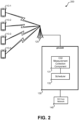
- FIG. 2 illustrates an embodiment of a cellular system 200 that can perform proportional fair scheduling.
- Cellular system 200 can include: UE 110; base station tower 120; gNodeB 130; and 5G core network 140. Collectively, BS tower 120 and gNodeB 130 may be referred to as a BS. While cellular system 200 refers to 5G and gNodeBs, the embodiments detailed herein can be applicable to other types of cellular networks, such as a 4G Long Term Evolution (LTE) cellular network, that uses eNodeBs in place of gNodeBs. Cellular system 200 operates according to the 5G New Radio (NR) radio access technology (RAT).
- NR 5G New Radio
- a different RAT may be used, such as 3G, 4G Long Term Evolution (LTE), or some other RAT.
- a 5G network may use an evolved packet core (EPC). Communications from base station tower 120 to UE 110 may be scheduled.
- EPC evolved packet core
- PRBs Physical resource blocks
- Each PRB may define a timeslot on a particular frequency within a CC. The number of PRBs available on a given CC is dependent on the bandwidth of the CC and the subcarrier spacing (SCS) of the CC.
- SCS subcarrier spacing
- UEs 110 can be various forms of wireless devices that are capable of communication according to the RAT of cellular system 200.
- UEs 110 can be smartphones, wireless modems, cellular phones, laptop computers, wireless access points (APs), etc.
- each UE may perform signal strength measurements.
- a channel quality indicator (CQI) may be an index value that is representative of the downlink (from gNB to UE) channel quality.
- the CQI is indicative of a specific data transfer rate than can be achieved between the UE and the BS. Since different CCs of the CA are at different frequencies, the CQI for PRBs in different CCs of the CA can vary.
- the CQI may be higher near the lower end of the CC's bandwidth than near the higher end of the CC's bandwidth.
- the RAT of the cellular network is 5GNR.
- the BS includes a gNodeB (gNB).
- the BS may include a different system for controlling communication with UE.
- gNodeB eNodeB
- eNB eNodeB
- gNodeB 130 comprises: CQI measurement collection component 131; and scheduler 132.
- these components may be part of the BS or may be part of the core wireless network.
- scheduler 132 is performed by gNB 130, but in other embodiments, it may be possible for a component of 5G core network 140 to perform scheduling tasks.
- CQI measurement collection component 131 may receive and store CQI measurements received from UE 110. Every PRB data transmission has at least some reference signals, a UE can measure the quality of the reference signals to obtain a CQI measurement. Therefore, the CQI measurement is indicative of the downlink channel quality of PRBs on which data was previously-received by the UE on a PRB from the BS. From these received CQIs for a given UE, scheduler 132 can create a proportionally fair schedule that takes into account each UE's CQI across the entire CA. In other embodiments, rather than using CQI measurements, some other indication of signal strength or channel quality may be used.
- Scheduler 132 creates a schedule for data transmissions across the CA based on channel quality experienced by each UE on individual CCs. Details of how scheduler 132 functions is described in relation to FIG. 3 .
- the functionality of scheduler 132 and CQI measurement collection component 131 may be performed using one or more processors and one or more non-transitory processor readable mediums.
- Scheduler 132 may include one or more special-purpose or general-purpose processors.
- Such special-purpose processors may include processors that are specifically designed to perform the functions detailed herein.
- Such special-purpose processors may be ASICs or FPGAs which are general-purpose components that are physically and electrically configured to perform the functions detailed herein.
- Such general-purpose processors may execute special-purpose software that is stored using one or more non-transitory processor-readable mediums, such as random access memory (RAM), flash memory, a hard disk drive (HDD), or a solid state drive (SSD).
- RAM random access memory
- HDD hard disk drive
- SSD solid state drive
- a single gNodeB is illustrated.
- a large number of gNodeBs or, more generally, base stations may be present.
- Each BS may have its own scheduler that is locally incorporated as part of the BS or is part of a system that communicates with the BS. For instance, it may be possible for a gNodeB to communication with multiple base station towers that are scattered over a geographical area. Therefore, it may be possible for scheduler 132 to manage scheduling for multiple base station towers.
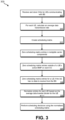
- FIG. 3 illustrates an embodiment of a method 300 for scheduling.
- Method 300 may be performed by the components of a base station, such as a gNB of a 5G NR RAT cellular network or an eNB of a 4G LTE RAT cellular network. More specifically, blocks of method 300 may be performed by CQI measurement collection component 131 and scheduler 132 of FIG. 2 .
- CQIs may be received by a BS from the UEs communicating with a BS.
- the CQIs may be received by the base station (e.g., gNB) and stored.
- Each CQI may be indicative of the quality on a particular resource block on which the UE previously received data.
- Multiple CQIs may be received from and stored for each UE. For instance, a separate CQI may be received for each PRB on which data was previously transmitted to the UE. If the UE received data across each CC of the CA, then at least one CQI may be stored that is representative of the channel quality on each CC of the CA.
- BWP active bandwidth part
- PRBs for which a CQI value is not available for a specific UE.
- only a most recent or an average of most-recent CQIs for a particular CC may be stored.
- multiple CQIs, such as for each PRB within a CC may be stored for each UE.
- a historical data transmission rate which may be an average data transmission rate, may be calculated for each UE by the scheduler. Therefore, a single historical data transmission rate may be calculated for each UE.
- Equation 1 n indicates the n th UE and t indicates the time for which scheduling is currently being performed. Therefore, r n (t-1) represents the historical data transmission rate for the immediately-preceding scheduling time. Therefore, the scheduler may store or have access to stored average data transmission rates for each UE.
- T represents the time constant of the exponential filter. In some embodiments, the value of T may be between 3 and 5. While Equation 1 provides one possible way in which the average data rate may be calculated using an exponential filter, other various filtering methods can be used to find a historical data transmission rate.
- R n (t) represents the instantaneous rate of UE n at scheduling time t.
- R n (t) is based on the determined CQI for a particular PRB. Based on the CQI, the number of data bits in a PRB varies. While the total number of symbols transmitted as part of a PRB stays the same, as the channel quality increases, the percentage of symbols that can be devoted to data in a PRB compared to error correction increases. Therefore, for different PRBs, a separate R n (t) value may be computed based on previously-measured CQI values.
- the calculated value of r n ( t ) may be stored by the scheduler. For scheduling during the next time period, the r n ( t ) may be used as r n ( t - 1).
- a scheduling matrix may be created.
- the scheduling matrix may be created such than entries are present that correspond to each PRB of the CA and the UEs connected with the BS. Since the PRBs are spread across the entire CA, the scheduling matrix includes PRBs for each CC of the CA.
- each row of the scheduling matrix corresponds to a different UE.
- each column of the scheduling matrix corresponds to a different UE.
- Each column may correspond to a different PRB; therefore, columns will correspond to PRBs on different CCs of the CA.
- different rows can correspond to different PRBs. Therefore, each entry within the scheduling matrix corresponds to a particular UE and PRB.
- Scheduling matrix 401 has entries for N UEs and M PRBs.
- the value of each entry, R represents the instantaneous downlink data rate of a UE, which is dependent on CQI. Therefore, the instantaneous rate of UE n sending on PRB m is Rnm(t) .
- matrix elements are set to zero if the UE is unable to receive data on the carrier component associated with the PRB. For instance, the farther a UE is from a BS, higher-frequency CCs may not have a sufficient signal strength to be used for communication.
- each UE may have been provided an active BWP definition that defines a portion of each CC that is eligible to be used by the UE or potentially excludes one or more entire CCs from use. For instance, if the CA includes three CCs, each UE may have three active BWP definitions for uplink communications and three active BWP definitions for downlink communications.
- matrix elements are set to zero by the scheduler for PRBs that not within the UE's active downlink BWP on each CC of the CA.
- each UE that the scheduler determines does not have any data pending for transmission via a downlink to the UE, all entries for the UE are set to zero. Therefore, each entry of the entire row of entries in the scheduling matrix corresponding to the UE is set to zero (or otherwise ignored) when no data is pending transfer to the UE.
- the order of operations of blocks 320-330 can be performed in any order.
- each entry of the scheduling matrix may be normalized.
- the scheduling matrix may be sparse, meaning that many of the elements are zero.
- the normalization process of block 335 does not result in the zeroed entries within the scheduling matrix changing. Rather, for each UE, non-zero entries within the scheduling matrix will be adjusted based on the average data transfer bitrate of the UE. This normalization is reflected in normalized scheduling matrix 402 in which each entry is divided by the average data transfer bitrate r N (t-1), represented by ⁇ N .
- the process of normalizing of block 335 can help make scheduling proportionally fairer.
- UEs that have previously had a relatively lower data transfer rate will be prioritized over UEs that have previously had a relatively higher data transfer rate by the instantaneous transfer rate being divided by a smaller number.
- all ⁇ N values are zero. Further detail regarding computation of ⁇ N is provided in relation to FIG. 5 .
- a sparse matrix is present in which normalized entries are present for: 1) only UEs that have data pending to be sent to the UE from the BS; 2) PRBs that are within CCs that the UE can receive based on signal strength and BWP definition; and 3) fall within one of the UE's active downlink BWP definitions. All other entries within the scheduling matrix are set to zero.
- Table 1 An example of such a normalized scheduling matrix that has been created according to method 300 is shown in Table 1.
- Table 1 UE 1 UE 2 UE 3 UE 4 UE 5 UE 6 PRB 1 R 1,1 t ⁇ 1 + ⁇ 1 0 R 3,1 t ⁇ 3 + ⁇ 3 R 4,1 t ⁇ 4 + ⁇ 4 0 0 PRB 2 0 0 0 0 0 R 6,2 t ⁇ 6 + ⁇ 6 PRB 3 R 1,3 t ⁇ 1 + ⁇ 1 0 R 3,3 t ⁇ 3 + ⁇ 3 0 0 R 6,3 t ⁇ 6 + ⁇ 6 PRB 4 0 0 R 3,4 t ⁇ 3 + ⁇ 3 R 4,4 t ⁇ 4 + ⁇ 4 0 0 PRB 5 R 1,5 t ⁇ 1 + ⁇ 1 0 0 0 0 R 6,5 t ⁇ 6 + ⁇ 6 PRB 6 0 0 0 R 4,6 t ⁇ 4 + ⁇ 4 0
- Table 1 an example scheduling matrix is shown for six UE and six PRBs. It should be understood that in a real-world implementation, the number of UEs and PRBs is likely much greater. However, it is also possible that fewer UEs, fewer PRBs, or both are present. Table 1 is sparse due to the removing (e.g., zeroing out) of various entries based on block 320, block 325, and block 330 of method 300. As an example, PRB 6 was zeroed for UE 1 because PRB 6 is part of an ineligible CC for UE 1 . As another example, PRB 2 was zeroed for UE 4 because PRB 2 is outside of the BWP definition for the CC on which PRB 2 is present. Continuing with the example, all entries for UE 2 and UE 5 were zeroed because these UEs do not have any data to be received from the BS.
- FIG. 5 illustrates an embodiment of a method 500 of how the scheduling decisions of block 340 are performed using the normalized scheduling matrix.
- Method 500 may be performed by the components of a base station, such as a gNB of a 5G NR RAT cellular network or an eNB of a 4G LTE RAT cellular network. More specifically, blocks of method 500 may be performed by scheduler 132 of FIG. 2 . All of method 500 may be performed as part of block 340 of method 300 or may be performed using a scheduling matrix created according to some other method.
- the element in any row or column having the largest value within the scheduling matrix is selected. This element is mapped to a UE (e.g., by row) and to a PRB (e.g., by column).
- the PRB mapped to the largest value is assigned to the UE mapped to the largest value.
- Block 510 can involve modifying the block to indicate that it has been assigned to the particular UE. Alternatively, a separate table or data storage arrangement may be created that indicates that the particular PRB has been assigned to the UE.
- the UE to which the PRB was assigned at block 510 is in need of any additional PRBs for data to be transmitted to the UE. For instance, the amount of data to be transmitted via the downlink to the UE may be able to fit within a single PRB. Alternatively, for a larger amount of data, one or more additional PRBs may be needed. If no additional PRBs are needed, method 500 proceeds to block 525. At block 525, at least all other entries for the UE are removed, such as by converting the values to zero. Therefore, the entire row for the UE can be converted to all zeros. Method 500 then proceeds to block 535.
- method 500 proceeds to block 530.
- the (downlink) data transfer rate of the UE in the scheduling matrix is updated. While ⁇ N reflects the average data transfer rate, ⁇ N reflects the data transfer bitrate assigned to a UE during the current scheduling process. Collectively, ⁇ N + ⁇ N can represent the UE's data transfer bitrate. As more PRBs are assigned to a particular UE during a scheduling process, the value of ⁇ N will be increased to reflect the transfer bitrate currently assigned to the UE. Therefore, as ⁇ N increases, the magnitude of the value of the corresponding element within the scheduling matrix can decrease.
- ⁇ N for each entry corresponding to the UE that has been assigned a PRB is updated to reflect the data rate that will be transmitted to the UE on the assigned PRB. Therefore, ⁇ N is dependent on the CQI previously measured on the PRB (or the CC) by the UE.
- ⁇ N to adjust the UE's entries in the scheduling matrix has the effect of increasing the dominator of each value in the UE's row and deprioritizing the UE compared to other UEs since the magnitude of the UE's values will be decreased and therefore be less likely to be selected during a subsequent assignment of another PRB.
- values of ⁇ for all other UE may still be zero.
- the values in the column for UE 3 are recalculated which will result in each value decreasing; thus decreasing the likelihood that one of these value will be the next-largest value for assignment.
- method 500 may proceed to block 540.
- scheduling is complete and downlink data transfers to the various UE may be performed by the BS in accordance with the assignments made during method 500.
- configurations may be described as a process which is depicted as a flow diagram or block diagram. Although each may describe the operations as a sequential process, many of the operations can be performed in parallel or concurrently. In addition, the order of the operations may be rearranged. A process may have additional steps not included in the figure.
- examples of the methods may be implemented by hardware, software, firmware, middleware, microcode, hardware description languages, or any combination thereof. When implemented in software, firmware, middleware, or microcode, the program code or code segments to perform the necessary tasks may be stored in a non-transitory computer-readable medium such as a storage medium. Processors may perform the described tasks.
Landscapes
- Engineering & Computer Science (AREA)
- Signal Processing (AREA)
- Computer Networks & Wireless Communication (AREA)
- Quality & Reliability (AREA)
- Physics & Mathematics (AREA)
- Electromagnetism (AREA)
- Mobile Radio Communication Systems (AREA)
Claims (15)
- Verfahren zum Planen von Datenübertragungen von einer Basisstation (120, 130) zu einem Teilnehmergerät, UE (110), wobei das Verfahren umfasst:Bestimmen, durch ein Funkzellennetz, einer Vielzahl von Kanalqualitätsindikator-, CQI, -werten, die einer Vielzahl von UE (110) entsprechen, wobei:
für jedes UE der Vielzahl von UE ein CQI-Wert der Vielzahl von CQI-Werten für jede Trägerkomponente einer Vielzahl von Trägerkomponenten (101) bestimmt wird, die eine Trägeraggregation bilden; undBestimmen (310), durch das Funkzellennetz, einer durchschnittlichen Datenübertragungsrate für jedes UE der Vielzahl von UE;Erzeugen (315), durch ein Planersystem (132) des Funkzellennetzes, einer Planungsmatrix (401), die eine Vielzahl von Elementen umfasst, die eine Vielzahl von momentanen Datenübertragungsraten auf Basis der bestimmten Vielzahl von CQI-Werten speichern; undNormalisieren (335), durch das Planersystem des Funkzellennetzes, jedes Elements der Vielzahl von Elementen der Planungsmatrix durch Modifizieren der Vielzahl von momentanen Datenübertragungsraten auf Basis einer Vielzahl von durchschnittlichen Datenübertragungsraten und einer Vielzahl von zugewiesenen Datenübertragungsbitraten, wobei:jede durchschnittliche Datenübertragungsrate der Vielzahl von durchschnittlichen Datenübertragungsraten einem UE der Vielzahl von UE entspricht, wobei das UE jeweiligen der Vielzahl von Elementen zugeordnet wird; undjede zugewiesene Datenübertragungsbitrate der Vielzahl von zugewiesenen Datenübertragungsbitraten einem UE der Vielzahl von UE entspricht, wobei das UE den genannten jeweiligen Elementen der Vielzahl von Elementen zugeordnet wird, und auf von dem Planer getroffenen aktuellen Planungsentscheidungen basiert; undTreffen (340), durch den Planer, von Planungsentscheidungen für die Vielzahl von UE auf Basis der normalisierten Planungsmatrix (402). - Verfahren zum Planen von Datenübertragungen von der Basisstation (120, 130) zu dem Teilnehmergerät, UE (110), nach Anspruch 1, das ferner umfasst:
Übertragen (540), durch die Basisstation des Funkzellennetzes, von Daten zu der Vielzahl von UE auf Basis der Planungsentscheidungen. - Verfahren zum Planen von Datenübertragungen von der Basisstation (120, 130) zu dem UE (110) nach Anspruch 1, wobei das Funkzellennetz die Funkzugangstechnologie (Radio Access Technology), RAT, 5G New Radio, NR, zur Kommunikation mit dem EU verwendet.
- Verfahren zum Planen von Datenübertragungen von der Basisstation zu dem UE nach Anspruch 1, wobei:jede Zeile der Planungsmatrix (401) einem physikalischen Ressourcenblock (PRB) einer Vielzahl von PRB entspricht;jede Spalte der Planungsmatrix einem UE der Vielzahl von UE (101) entspricht; undjeder PRB der Vielzahl von PRB einer der Vielzahl von Trägerkomponenten entspricht; und,für jede Zeile der Planungsmatrix (401), Entfernen (320) von Einträgen, die einer Trägerkomponente der Vielzahl von Trägerkomponenten entsprechen, für die das entsprechende UE der Zeile außerhalb der Reichweite von Kommunikationen von der Basisstation auf der Trägerkomponente ist.
- Verfahren zum Planen von Datenübertragungen von der Basisstation (120, 130) zu dem UE (110) nach Anspruch 4, wobei:
für jede Zeile der Planungsmatrix (401), Entfernen (325) von Einträgen, die einem PRB der Vielzahl von PRB entsprechen, das außerhalb eines oder mehrerer aktiver Bandbreitenteile, BWP, liegt, für die das entsprechende UE der Zeile zugewiesen ist. - Verfahren zum Planen von Datenübertragungen von der Basisstation (120, 130) zu dem UE (110) nach Anspruch 4, wobei für jedes UE der Vielzahl von UE der CQI-Wert der Vielzahl von CQI-Werten, der jeder Trägerkomponente der Vielzahl von Trägerkomponenten und dem UE entspricht, verwendet wird, um die durchschnittliche Datenübertragungsrate zu berechnen.
- Verfahren zum Planen von Datenübertragungen von der Basisstation (120, 130) zu dem UE (110) nach Anspruch 4, ferner umfassend:
Identifizieren (505), durch das Planersystem (132), eines Elements der Vielzahl von Elementen der Planungsmatrix, das einen maximalen Wert hat, unter der Vielzahl von Elementen. - Verfahren zum Planen von Datenübertragungen von der Basisstation (120, 130) zu dem UE (110) nach Anspruch 7,Zuweisen (510) des PRB der Vielzahl von PRB, der dem Element entspricht, zu dem UE der Vielzahl von UE, das dem Element entspricht;Bestimmen (520), dass ein zusätzlicher PRB für die Datenübertragung zu dem UE, für das der PRB zugewiesen ist, nicht benötigt wird; undEntfernen (525) aller anderen Einträge für das UE innerhalb der Planungsmatrix als Reaktion auf das Bestimmen, dass der zusätzliche PRB für die Datenübertragung an das UE nicht benötigt wird.
- Verfahren zum Planen von Datenübertragungen von der Basisstation (120, 130) zu dem UE (110) nach Anspruch 8, das ferner umfasst:Bestimmen (520), dass ein zusätzlicher PRB für die Datenübertragung zu dem UE benötigt wird, dem der PRB zugewiesen ist; undAktualisieren (530) der Datenübertragungsrate für alle anderen Elemente, die dem UE innerhalb der Planungsmatrix zugeordnet sind, als Reaktion auf das Bestimmen, dass der zusätzliche PRB für die Datenübertragung an das UE benötigt wird.
- Verfahren zum Planen von Datenübertragungen von der Basisstation (120, 130) zum UE (110) nach Anspruch 9, wobei das Aktualisieren der Datenübertragungsrate umfasst, dass alle anderen Elemente, die dem UE zugeordnet sind, in ihrer Größe verringert werden.
- Funkzellennetz, das Abwärtsverbindungs-Datenübertragungen plant, wobei das Funkzellennetz umfasst:
eine Basisstation (120, 130), die ein Planersystem umfasst, wobei die Basisstation konfiguriert ist zum:Bestimmen einer Vielzahl von Kanalqualitätsindikator-, CQI, -werten, die einer Vielzahl von UE (110) entsprechen, wobei:
für jedes UE (110) der Vielzahl von UE ein CQI-Wert der Vielzahl von CQI-Werten für jede Trägerkomponente einer Vielzahl von Trägerkomponenten bestimmt wird, die eine Trägeraggregation bilden; undBestimmen (310) einer durchschnittlichen Datenübertragungsrate für jedes UE der Vielzahl von UE;Erzeugen (315) einer Planungsmatrix (401), die eine Vielzahl von Elementen umfasst, die eine Vielzahl von momentanen Datenübertragungsraten auf Basis der bestimmten Vielzahl von CQI-Werten speichern;Normalisieren (335) jedes Elements der Vielzahl von Elementen der Planungsmatrix durch Modifizieren der Vielzahl von momentanen Datenübertragungsraten auf Basis einer Vielzahl von durchschnittlichen Datenübertragungsraten und einer Vielzahl von zugewiesenen Datenübertragungsbitraten, wobei:jede durchschnittliche Rate der Vielzahl von durchschnittlichen Datenübertragungsraten einem UE der Vielzahl von UE entspricht, wobei das UE jeweiligen der Vielzahl von Elementen zugeordnet wird; undjede zugewiesene Datenübertragungsbitrate der Vielzahl von zugewiesenen Datenübertragungsbitraten einem UE der Vielzahl von UE entspricht, wobei das UE den genannten jeweiligen Elementen der Vielzahl von Elementen zugeordnet wird, und auf von dem Planer getroffenen aktuellen Planungsentscheidungen basiert; undTreffen (340) von Planungsentscheidungen für die Vielzahl von UE auf Basis der normalisierten Planungsmatrix (402) . - Funkzellennetz, das Abwärtsverbindungs-Datenübertragungen plant, nach Anspruch 11, wobei das Funkzellennetz ferner die Vielzahl von UE (110) umfasst.
- Funkzellennetz, das Abwärtsverbindungs-Datenübertragungen plant, nach Anspruch 11, wobei die Basisstation (120, 130) ein gNodeB ist und das Funkzellennetz ein 5G New Radio-, NR, -Funkzugangstechnologie- (Radio Access Technology), RAT, -Funkzellennetz ist.
- Funkzellennetz, das Abwärtsverbindungs-Datenübertragungen plant, nach Anspruch 11, wobei:jede Zeile der Planungsmatrix (401) einem physikalischen Ressourcenblock (PRB) einer Vielzahl von PRB entspricht;jede Spalte der Planungsmatrix einem UE der Vielzahl von UE (101) entspricht; undjeder PRB der Vielzahl von PRB einer der Vielzahl von Trägerkomponenten entspricht.
- Funkzellennetz, das Abwärtsverbindungs-Datenübertragungen plant, nach Anspruch 14, wobei die Basisstation (120, 130) ferner konfiguriert ist zum:Identifizieren (505) eines Elements der Vielzahl von Elementen der Planungsmatrix (401), das einen maximalen Wert hat, unter der Vielzahl von Elementen;Zuweisen (510) des PRB der Vielzahl von PRB, der dem Element entspricht, zu dem UE der Vielzahl von UE (101), das dem Element entspricht;Bestimmen (520), dass ein zusätzlicher PRB für die Datenübertragung zu dem UE, für das der PRB zugewiesen ist, nicht benötigt wird; undEntfernen (525) aller anderen Einträge für das UE innerhalb der Planungsmatrix als Reaktion auf das Bestimmen, dass der zusätzliche PRB für die Datenübertragung an das UE nicht benötigt wird.
Applications Claiming Priority (3)
| Application Number | Priority Date | Filing Date | Title |
|---|---|---|---|
| US201962888001P | 2019-08-16 | 2019-08-16 | |
| US16/678,974 US11109405B2 (en) | 2019-08-16 | 2019-11-08 | Downlink scheduling across a cellular carrier aggregation |
| PCT/US2020/045707 WO2021034535A1 (en) | 2019-08-16 | 2020-08-11 | Downlink scheduling across a cellular carrier aggregation |
Publications (2)
| Publication Number | Publication Date |
|---|---|
| EP4014414A1 EP4014414A1 (de) | 2022-06-22 |
| EP4014414B1 true EP4014414B1 (de) | 2024-10-23 |
Family
ID=74568012
Family Applications (1)
| Application Number | Title | Priority Date | Filing Date |
|---|---|---|---|
| EP20761434.8A Active EP4014414B1 (de) | 2019-08-16 | 2020-08-11 | Abwärtsverbindungsplanung über eine zelluläre trägeraggregation |
Country Status (5)
| Country | Link |
|---|---|
| US (3) | US11109405B2 (de) |
| EP (1) | EP4014414B1 (de) |
| JP (1) | JP7624970B2 (de) |
| KR (1) | KR20220051845A (de) |
| WO (1) | WO2021034535A1 (de) |
Families Citing this family (4)
| Publication number | Priority date | Publication date | Assignee | Title |
|---|---|---|---|---|
| US11109405B2 (en) | 2019-08-16 | 2021-08-31 | Dish Wireless L.L.C. | Downlink scheduling across a cellular carrier aggregation |
| US11614899B1 (en) * | 2021-09-30 | 2023-03-28 | Dell Products L.P. | Secure data transfers using physical carriers |
| US20240292389A1 (en) * | 2023-02-23 | 2024-08-29 | Dish Network L.L.C. | Intelligent band switching |
| US20250081050A1 (en) * | 2023-08-30 | 2025-03-06 | Dish Wireless L.L.C. | Optimal or intelligent secondary cell selection in a wireless communications o-ran network |
Family Cites Families (28)
| Publication number | Priority date | Publication date | Assignee | Title |
|---|---|---|---|---|
| US20050207367A1 (en) * | 2004-03-22 | 2005-09-22 | Onggosanusi Eko N | Method for channel quality indicator computation and feedback in a multi-carrier communications system |
| US7869403B2 (en) | 2007-09-19 | 2011-01-11 | Sharp Laboratories Of America, Inc. | Systems and methods for assigning physical resource blocks |
| CN102439869B (zh) * | 2009-01-30 | 2014-12-03 | 诺基亚公司 | 多用户mimo干扰抑制通信系统和方法 |
| US8285291B2 (en) * | 2010-02-02 | 2012-10-09 | Clearwire Ip Holdings Llc | System and method for multimode device handover |
| US10333650B2 (en) * | 2010-08-16 | 2019-06-25 | Qualcomm Incorporated | Aperiodic channel quality indicator report in carrier aggregation |
| US8948103B2 (en) * | 2011-08-17 | 2015-02-03 | Verizon Patent And Licensing Inc. | Using user device feed back to dynamically allocate network resources for provisioning services |
| KR20130074077A (ko) * | 2011-12-26 | 2013-07-04 | 삼성전자주식회사 | 무선통신 시스템에서 기지국의 자원 할당 방법 및 장치 |
| EP2798896B1 (de) * | 2011-12-29 | 2018-10-17 | Telecom Italia S.p.A. | Plannungsalgorithmus für drahtlose kommunikationsnetze |
| US9363749B2 (en) * | 2012-09-13 | 2016-06-07 | Qualcomm Incorporated | Dynamic power scaling of digital modems |
| EP2712257B1 (de) * | 2012-09-24 | 2014-11-05 | Alcatel Lucent | Vorrichtung, Verfahren und Computerprogramm zur Zeitplanung von Datenübertragung |
| US9144080B2 (en) * | 2012-11-07 | 2015-09-22 | Telefonaktiebolaget L M Ericsson (Publ) | Selecting transmission parameters for downlink transmissions based on retransmission rates |
| US20150318966A1 (en) * | 2012-12-05 | 2015-11-05 | Nec Corporation | Radio communication system and communication control method |
| JP2015005943A (ja) * | 2013-06-24 | 2015-01-08 | 株式会社東芝 | 基地局及び中央局 |
| US9137001B2 (en) * | 2014-02-18 | 2015-09-15 | Sprint Spectrum L.P. | Enhanced scheduling of resources based on use of carrier aggregation |
| US9642155B2 (en) | 2014-06-03 | 2017-05-02 | Cellos Software Ltd | Method and apparatus for dynamic inter-cell interference avoidance in cellular communication networks |
| KR102275579B1 (ko) * | 2014-12-22 | 2021-07-09 | 삼성전자 주식회사 | 이동 통신 시스템에서 전송 차별화를 제공하는 방법 및 장치 |
| EP3407639A4 (de) * | 2016-01-18 | 2019-07-17 | SoftBank Corp. | Basisstationsvorrichtung und kommunikationssystem |
| US20170238316A1 (en) * | 2016-02-12 | 2017-08-17 | Futurewei Technologies, Inc. | Configuration of a set of carriers in a carrier aggregation operation of a wireless communication system |
| FR3048149B1 (fr) * | 2016-02-23 | 2018-03-23 | Sagemcom Energy & Telecom Sas | Procede d'adaptation dynamique d'un debit de donnees |
| WO2017163543A1 (ja) * | 2016-03-23 | 2017-09-28 | 日本電気株式会社 | デバイス・ツー・デバイス通信に関するリソーススケジューリングのための装置及び方法 |
| WO2018116148A1 (en) * | 2016-12-20 | 2018-06-28 | Netsia Inc. | System and method for service group based dynamic optimization of |
| US10237877B1 (en) * | 2016-12-22 | 2019-03-19 | Sprint Spectrum L.P. | Systems and methods for scheduling high power wireless devices for resource allocation |
| US10798775B2 (en) * | 2017-08-10 | 2020-10-06 | Qualcomm Incorporated | Techniques and apparatuses for duplication bearer management |
| US10548149B1 (en) * | 2017-08-18 | 2020-01-28 | Sprint Spectrum L.P. | Systems and methods for allocating resources to high power capable wireless devices |
| US10827019B2 (en) * | 2018-01-08 | 2020-11-03 | All Purpose Networks, Inc. | Publish-subscribe broker network overlay system |
| US10432798B1 (en) * | 2018-05-25 | 2019-10-01 | At&T Intellectual Property I, L.P. | System, method, and apparatus for service grouping of users to different speed tiers for wireless communication |
| US10833984B1 (en) * | 2019-05-02 | 2020-11-10 | At&T Intellectual Property I, L.P. | Integrated access backhaul network metric exchange for 5G or other next generation network |
| US11109405B2 (en) | 2019-08-16 | 2021-08-31 | Dish Wireless L.L.C. | Downlink scheduling across a cellular carrier aggregation |
-
2019
- 2019-11-08 US US16/678,974 patent/US11109405B2/en active Active
-
2020
- 2020-08-11 EP EP20761434.8A patent/EP4014414B1/de active Active
- 2020-08-11 KR KR1020227008639A patent/KR20220051845A/ko active Pending
- 2020-08-11 JP JP2022509618A patent/JP7624970B2/ja active Active
- 2020-08-11 WO PCT/US2020/045707 patent/WO2021034535A1/en not_active Ceased
-
2021
- 2021-07-28 US US17/443,912 patent/US11716742B2/en active Active
-
2023
- 2023-06-20 US US18/337,658 patent/US12335974B2/en active Active
Also Published As
| Publication number | Publication date |
|---|---|
| JP7624970B2 (ja) | 2025-01-31 |
| US11109405B2 (en) | 2021-08-31 |
| US20230337252A1 (en) | 2023-10-19 |
| EP4014414A1 (de) | 2022-06-22 |
| US20210360684A1 (en) | 2021-11-18 |
| JP2022544593A (ja) | 2022-10-19 |
| US12335974B2 (en) | 2025-06-17 |
| KR20220051845A (ko) | 2022-04-26 |
| US11716742B2 (en) | 2023-08-01 |
| US20210051697A1 (en) | 2021-02-18 |
| WO2021034535A1 (en) | 2021-02-25 |
Similar Documents
| Publication | Publication Date | Title |
|---|---|---|
| EP4014414B1 (de) | Abwärtsverbindungsplanung über eine zelluläre trägeraggregation | |
| US8797983B2 (en) | Apparatuses and methods for allocating spectrum resources in a wireless communication network | |
| US9485774B2 (en) | Efficient transmission of stand-alone aperiodic CSI reporting for LTE carrier aggregation | |
| CN109392022B (zh) | 传输数据的方法、终端设备和网络设备 | |
| EP2554000B1 (de) | Methode und netzentität für die betriebsmittelzuweisung in beweglichen radionachrichtennetzen | |
| KR102743756B1 (ko) | 무선 통신 시스템에서 상향링크 스케줄링을 위한 장치 및 방법 | |
| CN103686966B (zh) | 降低发射功率的方法和装置 | |
| CN109792716B (zh) | 通信方法、终端设备、网络设备和存储介质 | |
| KR20210126779A (ko) | 공유 스펙트럼 시스템들을 위한 중앙집중식 조정 | |
| US11963109B2 (en) | Method, apparatus, device and system for power configuration during multi-bandwidth transmission | |
| EP3869881B1 (de) | Verfahren und vorrichtung zur erfassung von kanalzustandsinformationen und computerspeichermedium | |
| EP2684414B1 (de) | Funkbasisstation und verfahren zur planung von funkressourcen | |
| CN103621171B (zh) | 调度方法和调度装置以及基站 | |
| US11985546B2 (en) | Network node, a wireless communications device and methods therein for accessing an unlicensed radio frequency band | |
| EP3420770B1 (de) | Passivintermodulationsformung | |
| US20210219266A1 (en) | Distributed method for allocating transmission resources to d2d terminals in a cellular access network | |
| KR102771253B1 (ko) | 무선 통신 시스템에서 스케줄링을 위한 방법 및 장치 | |
| EP3104655B1 (de) | Downlink-signalübertragungsverfahren, basisstation und benutzergerät | |
| CN111836351B (zh) | 一种功率分配方法及装置 | |
| JP5652193B2 (ja) | 割り当て無線リソース決定方法、割り当て無線リソース決定装置、無線通信システム、およびコンピュータプログラム | |
| CN115334525B (zh) | 网络利用率计算方法和装置 | |
| US10129882B1 (en) | Systems and methods for allocating resource blocks based on uplink transmission parameters | |
| HK40003491A (en) | Communication method, terminal device, network device and storage medium | |
| HK40003491B (en) | Communication method, terminal device, network device and storage medium | |
| HK1226586A1 (en) | Downlink signal transmission method, base station and user equipment |
Legal Events
| Date | Code | Title | Description |
|---|---|---|---|
| STAA | Information on the status of an ep patent application or granted ep patent |
Free format text: STATUS: UNKNOWN |
|
| STAA | Information on the status of an ep patent application or granted ep patent |
Free format text: STATUS: THE INTERNATIONAL PUBLICATION HAS BEEN MADE |
|
| PUAI | Public reference made under article 153(3) epc to a published international application that has entered the european phase |
Free format text: ORIGINAL CODE: 0009012 |
|
| STAA | Information on the status of an ep patent application or granted ep patent |
Free format text: STATUS: REQUEST FOR EXAMINATION WAS MADE |
|
| 17P | Request for examination filed |
Effective date: 20220303 |
|
| AK | Designated contracting states |
Kind code of ref document: A1 Designated state(s): AL AT BE BG CH CY CZ DE DK EE ES FI FR GB GR HR HU IE IS IT LI LT LU LV MC MK MT NL NO PL PT RO RS SE SI SK SM TR |
|
| DAV | Request for validation of the european patent (deleted) | ||
| DAX | Request for extension of the european patent (deleted) | ||
| P01 | Opt-out of the competence of the unified patent court (upc) registered |
Effective date: 20230526 |
|
| GRAP | Despatch of communication of intention to grant a patent |
Free format text: ORIGINAL CODE: EPIDOSNIGR1 |
|
| STAA | Information on the status of an ep patent application or granted ep patent |
Free format text: STATUS: GRANT OF PATENT IS INTENDED |
|
| INTG | Intention to grant announced |
Effective date: 20240627 |
|
| GRAS | Grant fee paid |
Free format text: ORIGINAL CODE: EPIDOSNIGR3 |
|
| GRAA | (expected) grant |
Free format text: ORIGINAL CODE: 0009210 |
|
| STAA | Information on the status of an ep patent application or granted ep patent |
Free format text: STATUS: THE PATENT HAS BEEN GRANTED |
|
| AK | Designated contracting states |
Kind code of ref document: B1 Designated state(s): AL AT BE BG CH CY CZ DE DK EE ES FI FR GB GR HR HU IE IS IT LI LT LU LV MC MK MT NL NO PL PT RO RS SE SI SK SM TR |
|
| REG | Reference to a national code |
Ref country code: GB Ref legal event code: FG4D |
|
| REG | Reference to a national code |
Ref country code: CH Ref legal event code: EP |
|
| REG | Reference to a national code |
Ref country code: DE Ref legal event code: R096 Ref document number: 602020039937 Country of ref document: DE |
|
| REG | Reference to a national code |
Ref country code: IE Ref legal event code: FG4D |
|
| REG | Reference to a national code |
Ref country code: NL Ref legal event code: FP |
|
| REG | Reference to a national code |
Ref country code: LT Ref legal event code: MG9D |
|
| REG | Reference to a national code |
Ref country code: AT Ref legal event code: MK05 Ref document number: 1735734 Country of ref document: AT Kind code of ref document: T Effective date: 20241023 |
|
| PG25 | Lapsed in a contracting state [announced via postgrant information from national office to epo] |
Ref country code: HR Free format text: LAPSE BECAUSE OF FAILURE TO SUBMIT A TRANSLATION OF THE DESCRIPTION OR TO PAY THE FEE WITHIN THE PRESCRIBED TIME-LIMIT Effective date: 20241023 Ref country code: IS Free format text: LAPSE BECAUSE OF FAILURE TO SUBMIT A TRANSLATION OF THE DESCRIPTION OR TO PAY THE FEE WITHIN THE PRESCRIBED TIME-LIMIT Effective date: 20250223 Ref country code: PT Free format text: LAPSE BECAUSE OF FAILURE TO SUBMIT A TRANSLATION OF THE DESCRIPTION OR TO PAY THE FEE WITHIN THE PRESCRIBED TIME-LIMIT Effective date: 20250224 |
|
| PG25 | Lapsed in a contracting state [announced via postgrant information from national office to epo] |
Ref country code: FI Free format text: LAPSE BECAUSE OF FAILURE TO SUBMIT A TRANSLATION OF THE DESCRIPTION OR TO PAY THE FEE WITHIN THE PRESCRIBED TIME-LIMIT Effective date: 20241023 |
|
| PGFP | Annual fee paid to national office [announced via postgrant information from national office to epo] |
Ref country code: NL Payment date: 20250321 Year of fee payment: 6 |
|
| PG25 | Lapsed in a contracting state [announced via postgrant information from national office to epo] |
Ref country code: BG Free format text: LAPSE BECAUSE OF FAILURE TO SUBMIT A TRANSLATION OF THE DESCRIPTION OR TO PAY THE FEE WITHIN THE PRESCRIBED TIME-LIMIT Effective date: 20241023 |
|
| PG25 | Lapsed in a contracting state [announced via postgrant information from national office to epo] |
Ref country code: ES Free format text: LAPSE BECAUSE OF FAILURE TO SUBMIT A TRANSLATION OF THE DESCRIPTION OR TO PAY THE FEE WITHIN THE PRESCRIBED TIME-LIMIT Effective date: 20241023 |
|
| PG25 | Lapsed in a contracting state [announced via postgrant information from national office to epo] |
Ref country code: NO Free format text: LAPSE BECAUSE OF FAILURE TO SUBMIT A TRANSLATION OF THE DESCRIPTION OR TO PAY THE FEE WITHIN THE PRESCRIBED TIME-LIMIT Effective date: 20250123 |
|
| PG25 | Lapsed in a contracting state [announced via postgrant information from national office to epo] |
Ref country code: LV Free format text: LAPSE BECAUSE OF FAILURE TO SUBMIT A TRANSLATION OF THE DESCRIPTION OR TO PAY THE FEE WITHIN THE PRESCRIBED TIME-LIMIT Effective date: 20241023 Ref country code: AT Free format text: LAPSE BECAUSE OF FAILURE TO SUBMIT A TRANSLATION OF THE DESCRIPTION OR TO PAY THE FEE WITHIN THE PRESCRIBED TIME-LIMIT Effective date: 20241023 Ref country code: GR Free format text: LAPSE BECAUSE OF FAILURE TO SUBMIT A TRANSLATION OF THE DESCRIPTION OR TO PAY THE FEE WITHIN THE PRESCRIBED TIME-LIMIT Effective date: 20250124 |
|
| PG25 | Lapsed in a contracting state [announced via postgrant information from national office to epo] |
Ref country code: PL Free format text: LAPSE BECAUSE OF FAILURE TO SUBMIT A TRANSLATION OF THE DESCRIPTION OR TO PAY THE FEE WITHIN THE PRESCRIBED TIME-LIMIT Effective date: 20241023 |
|
| PG25 | Lapsed in a contracting state [announced via postgrant information from national office to epo] |
Ref country code: RS Free format text: LAPSE BECAUSE OF FAILURE TO SUBMIT A TRANSLATION OF THE DESCRIPTION OR TO PAY THE FEE WITHIN THE PRESCRIBED TIME-LIMIT Effective date: 20250123 |
|
| PG25 | Lapsed in a contracting state [announced via postgrant information from national office to epo] |
Ref country code: SM Free format text: LAPSE BECAUSE OF FAILURE TO SUBMIT A TRANSLATION OF THE DESCRIPTION OR TO PAY THE FEE WITHIN THE PRESCRIBED TIME-LIMIT Effective date: 20241023 |
|
| PG25 | Lapsed in a contracting state [announced via postgrant information from national office to epo] |
Ref country code: DK Free format text: LAPSE BECAUSE OF FAILURE TO SUBMIT A TRANSLATION OF THE DESCRIPTION OR TO PAY THE FEE WITHIN THE PRESCRIBED TIME-LIMIT Effective date: 20241023 |
|
| PG25 | Lapsed in a contracting state [announced via postgrant information from national office to epo] |
Ref country code: EE Free format text: LAPSE BECAUSE OF FAILURE TO SUBMIT A TRANSLATION OF THE DESCRIPTION OR TO PAY THE FEE WITHIN THE PRESCRIBED TIME-LIMIT Effective date: 20241023 |
|
| PG25 | Lapsed in a contracting state [announced via postgrant information from national office to epo] |
Ref country code: RO Free format text: LAPSE BECAUSE OF FAILURE TO SUBMIT A TRANSLATION OF THE DESCRIPTION OR TO PAY THE FEE WITHIN THE PRESCRIBED TIME-LIMIT Effective date: 20241023 |
|
| REG | Reference to a national code |
Ref country code: DE Ref legal event code: R097 Ref document number: 602020039937 Country of ref document: DE |
|
| PG25 | Lapsed in a contracting state [announced via postgrant information from national office to epo] |
Ref country code: SK Free format text: LAPSE BECAUSE OF FAILURE TO SUBMIT A TRANSLATION OF THE DESCRIPTION OR TO PAY THE FEE WITHIN THE PRESCRIBED TIME-LIMIT Effective date: 20241023 |
|
| PG25 | Lapsed in a contracting state [announced via postgrant information from national office to epo] |
Ref country code: CZ Free format text: LAPSE BECAUSE OF FAILURE TO SUBMIT A TRANSLATION OF THE DESCRIPTION OR TO PAY THE FEE WITHIN THE PRESCRIBED TIME-LIMIT Effective date: 20241023 |
|
| PG25 | Lapsed in a contracting state [announced via postgrant information from national office to epo] |
Ref country code: IT Free format text: LAPSE BECAUSE OF FAILURE TO SUBMIT A TRANSLATION OF THE DESCRIPTION OR TO PAY THE FEE WITHIN THE PRESCRIBED TIME-LIMIT Effective date: 20241023 |
|
| PLBE | No opposition filed within time limit |
Free format text: ORIGINAL CODE: 0009261 |
|
| STAA | Information on the status of an ep patent application or granted ep patent |
Free format text: STATUS: NO OPPOSITION FILED WITHIN TIME LIMIT |
|
| PG25 | Lapsed in a contracting state [announced via postgrant information from national office to epo] |
Ref country code: SE Free format text: LAPSE BECAUSE OF FAILURE TO SUBMIT A TRANSLATION OF THE DESCRIPTION OR TO PAY THE FEE WITHIN THE PRESCRIBED TIME-LIMIT Effective date: 20241023 |
|
| 26N | No opposition filed |
Effective date: 20250724 |
|
| PGFP | Annual fee paid to national office [announced via postgrant information from national office to epo] |
Ref country code: DE Payment date: 20250827 Year of fee payment: 6 |
|
| PGFP | Annual fee paid to national office [announced via postgrant information from national office to epo] |
Ref country code: GB Payment date: 20250822 Year of fee payment: 6 |
|
| PGFP | Annual fee paid to national office [announced via postgrant information from national office to epo] |
Ref country code: FR Payment date: 20250827 Year of fee payment: 6 |
|
| REG | Reference to a national code |
Ref country code: CH Ref legal event code: H13 Free format text: ST27 STATUS EVENT CODE: U-0-0-H10-H13 (AS PROVIDED BY THE NATIONAL OFFICE) Effective date: 20260324 |