EP4012702B1 - Internetanrufverfahren und -vorrichtung, computervorrichtung und speichermedium - Google Patents
Internetanrufverfahren und -vorrichtung, computervorrichtung und speichermedium Download PDFInfo
- Publication number
- EP4012702B1 EP4012702B1 EP20899237.0A EP20899237A EP4012702B1 EP 4012702 B1 EP4012702 B1 EP 4012702B1 EP 20899237 A EP20899237 A EP 20899237A EP 4012702 B1 EP4012702 B1 EP 4012702B1
- Authority
- EP
- European Patent Office
- Prior art keywords
- bit rate
- sample
- pieces
- frequency domain
- audio signal
- Prior art date
- Legal status (The legal status is an assumption and is not a legal conclusion. Google has not performed a legal analysis and makes no representation as to the accuracy of the status listed.)
- Active
Links
Images

Classifications
-
- G—PHYSICS
- G10—MUSICAL INSTRUMENTS; ACOUSTICS
- G10L—SPEECH ANALYSIS TECHNIQUES OR SPEECH SYNTHESIS; SPEECH RECOGNITION; SPEECH OR VOICE PROCESSING TECHNIQUES; SPEECH OR AUDIO CODING OR DECODING
- G10L19/00—Speech or audio signals analysis-synthesis techniques for redundancy reduction, e.g. in vocoders; Coding or decoding of speech or audio signals, using source filter models or psychoacoustic analysis
- G10L19/002—Dynamic bit allocation
-
- H—ELECTRICITY
- H04—ELECTRIC COMMUNICATION TECHNIQUE
- H04L—TRANSMISSION OF DIGITAL INFORMATION, e.g. TELEGRAPHIC COMMUNICATION
- H04L65/00—Network arrangements, protocols or services for supporting real-time applications in data packet communication
- H04L65/80—Responding to QoS
-
- G—PHYSICS
- G10—MUSICAL INSTRUMENTS; ACOUSTICS
- G10L—SPEECH ANALYSIS TECHNIQUES OR SPEECH SYNTHESIS; SPEECH RECOGNITION; SPEECH OR VOICE PROCESSING TECHNIQUES; SPEECH OR AUDIO CODING OR DECODING
- G10L19/00—Speech or audio signals analysis-synthesis techniques for redundancy reduction, e.g. in vocoders; Coding or decoding of speech or audio signals, using source filter models or psychoacoustic analysis
- G10L19/02—Speech or audio signals analysis-synthesis techniques for redundancy reduction, e.g. in vocoders; Coding or decoding of speech or audio signals, using source filter models or psychoacoustic analysis using spectral analysis, e.g. transform vocoders or subband vocoders
-
- G—PHYSICS
- G10—MUSICAL INSTRUMENTS; ACOUSTICS
- G10L—SPEECH ANALYSIS TECHNIQUES OR SPEECH SYNTHESIS; SPEECH RECOGNITION; SPEECH OR VOICE PROCESSING TECHNIQUES; SPEECH OR AUDIO CODING OR DECODING
- G10L19/00—Speech or audio signals analysis-synthesis techniques for redundancy reduction, e.g. in vocoders; Coding or decoding of speech or audio signals, using source filter models or psychoacoustic analysis
- G10L19/04—Speech or audio signals analysis-synthesis techniques for redundancy reduction, e.g. in vocoders; Coding or decoding of speech or audio signals, using source filter models or psychoacoustic analysis using predictive techniques
- G10L19/06—Determination or coding of the spectral characteristics, e.g. of the short-term prediction coefficients
-
- G—PHYSICS
- G10—MUSICAL INSTRUMENTS; ACOUSTICS
- G10L—SPEECH ANALYSIS TECHNIQUES OR SPEECH SYNTHESIS; SPEECH RECOGNITION; SPEECH OR VOICE PROCESSING TECHNIQUES; SPEECH OR AUDIO CODING OR DECODING
- G10L19/00—Speech or audio signals analysis-synthesis techniques for redundancy reduction, e.g. in vocoders; Coding or decoding of speech or audio signals, using source filter models or psychoacoustic analysis
- G10L19/04—Speech or audio signals analysis-synthesis techniques for redundancy reduction, e.g. in vocoders; Coding or decoding of speech or audio signals, using source filter models or psychoacoustic analysis using predictive techniques
- G10L19/16—Vocoder architecture
- G10L19/167—Audio streaming, i.e. formatting and decoding of an encoded audio signal representation into a data stream for transmission or storage purposes
-
- G—PHYSICS
- G10—MUSICAL INSTRUMENTS; ACOUSTICS
- G10L—SPEECH ANALYSIS TECHNIQUES OR SPEECH SYNTHESIS; SPEECH RECOGNITION; SPEECH OR VOICE PROCESSING TECHNIQUES; SPEECH OR AUDIO CODING OR DECODING
- G10L19/00—Speech or audio signals analysis-synthesis techniques for redundancy reduction, e.g. in vocoders; Coding or decoding of speech or audio signals, using source filter models or psychoacoustic analysis
- G10L19/04—Speech or audio signals analysis-synthesis techniques for redundancy reduction, e.g. in vocoders; Coding or decoding of speech or audio signals, using source filter models or psychoacoustic analysis using predictive techniques
- G10L19/16—Vocoder architecture
- G10L19/18—Vocoders using multiple modes
- G10L19/24—Variable rate codecs, e.g. for generating different qualities using a scalable representation such as hierarchical encoding or layered encoding
-
- H—ELECTRICITY
- H04—ELECTRIC COMMUNICATION TECHNIQUE
- H04B—TRANSMISSION
- H04B17/00—Monitoring; Testing
- H04B17/30—Monitoring; Testing of propagation channels
- H04B17/391—Modelling the propagation channel
- H04B17/3913—Predictive models, e.g. based on neural network models
-
- H—ELECTRICITY
- H04—ELECTRIC COMMUNICATION TECHNIQUE
- H04L—TRANSMISSION OF DIGITAL INFORMATION, e.g. TELEGRAPHIC COMMUNICATION
- H04L65/00—Network arrangements, protocols or services for supporting real-time applications in data packet communication
- H04L65/1066—Session management
- H04L65/1069—Session establishment or de-establishment
-
- H—ELECTRICITY
- H04—ELECTRIC COMMUNICATION TECHNIQUE
- H04L—TRANSMISSION OF DIGITAL INFORMATION, e.g. TELEGRAPHIC COMMUNICATION
- H04L65/00—Network arrangements, protocols or services for supporting real-time applications in data packet communication
- H04L65/1066—Session management
- H04L65/1083—In-session procedures
-
- H—ELECTRICITY
- H04—ELECTRIC COMMUNICATION TECHNIQUE
- H04L—TRANSMISSION OF DIGITAL INFORMATION, e.g. TELEGRAPHIC COMMUNICATION
- H04L65/00—Network arrangements, protocols or services for supporting real-time applications in data packet communication
- H04L65/60—Network streaming of media packets
-
- H—ELECTRICITY
- H04—ELECTRIC COMMUNICATION TECHNIQUE
- H04L—TRANSMISSION OF DIGITAL INFORMATION, e.g. TELEGRAPHIC COMMUNICATION
- H04L65/00—Network arrangements, protocols or services for supporting real-time applications in data packet communication
- H04L65/60—Network streaming of media packets
- H04L65/70—Media network packetisation
-
- H—ELECTRICITY
- H04—ELECTRIC COMMUNICATION TECHNIQUE
- H04L—TRANSMISSION OF DIGITAL INFORMATION, e.g. TELEGRAPHIC COMMUNICATION
- H04L65/00—Network arrangements, protocols or services for supporting real-time applications in data packet communication
- H04L65/60—Network streaming of media packets
- H04L65/75—Media network packet handling
-
- H—ELECTRICITY
- H04—ELECTRIC COMMUNICATION TECHNIQUE
- H04L—TRANSMISSION OF DIGITAL INFORMATION, e.g. TELEGRAPHIC COMMUNICATION
- H04L65/00—Network arrangements, protocols or services for supporting real-time applications in data packet communication
- H04L65/60—Network streaming of media packets
- H04L65/75—Media network packet handling
- H04L65/752—Media network packet handling adapting media to network capabilities
-
- G—PHYSICS
- G10—MUSICAL INSTRUMENTS; ACOUSTICS
- G10L—SPEECH ANALYSIS TECHNIQUES OR SPEECH SYNTHESIS; SPEECH RECOGNITION; SPEECH OR VOICE PROCESSING TECHNIQUES; SPEECH OR AUDIO CODING OR DECODING
- G10L19/00—Speech or audio signals analysis-synthesis techniques for redundancy reduction, e.g. in vocoders; Coding or decoding of speech or audio signals, using source filter models or psychoacoustic analysis
- G10L19/02—Speech or audio signals analysis-synthesis techniques for redundancy reduction, e.g. in vocoders; Coding or decoding of speech or audio signals, using source filter models or psychoacoustic analysis using spectral analysis, e.g. transform vocoders or subband vocoders
- G10L19/032—Quantisation or dequantisation of spectral components
Definitions
- the present disclosure relates to the field of audio data processing, and in particular, to a method and apparatus for network-based telephony, a computer device, and a storage medium.
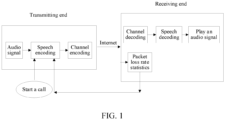
- an audio encoder is generally set with relevant parameters based on some experimental empirical values before a network-based telephony is started, so that the audio encoder encodes an audio signal at a fixed bit rate.
- FIG. 1 for a network-based telephony process in the related art.
- the document EP1233408A1 provides a system for selecting an encoding rate for an input signal, comprising: a subband filter subsystem for determining a signal energy for each frequency subband of the input signal; and a rate selection subsystem for selecting the encoding rate of the input signal based upon the signal energies of each frequency subband of the input.
- Embodiments of the present disclosure provide a method and apparatus for network-based telephony, a computer device, and a storage medium, to improve the quantity of a network-based telephony.
- the technical solutions are as follows.
- a method for network-based telephony is provided according to claim 1 and further detailed in the dependent claims referring back to this claim.
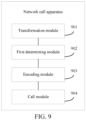
- an apparatus for network-based telephony is provided according to claim 7 and further detailed in the dependent claims referring back to this claim.
- a computer device is provided according to claim 9.
- a storage medium is provided according to claim 10.
- the technical solutions provided by the embodiments of the present disclosure do not use a fixed encoding bit rate to encode audio signals, but determine different target bit rates for different audio signals for encoding, so that a solution of individualized encoding performed on different audio signals during a network-based telephony is implemented. Compared with encoding with a fixed bit rate, the technical solutions provided by the embodiments of the present disclosure have a better network-based telephony effect.
- AI Artificial intelligence
- the AI is to study the design principles and implementation methods of various intelligent machines, to enable the machines to have the functions of perception, reasoning, and decision-making.
- ML is a multi-field interdiscipline, and relates to a plurality of disciplines such as the probability theory, statistics, the approximation theory, convex analysis, and the algorithm complexity theory.
- the ML specializes in studying how a computer simulates or implements a human learning behavior to obtain new knowledge or skills, and reorganize an existing knowledge submodel, so as to keep improving its performance.
- ML is the core of AI, is a basic way to make the computer intelligent, and is applied to various fields of AI.
- ML and deep learning generally include technologies such as an artificial neural network, a belief network, reinforcement learning, transfer learning, inductive learning, and learning from demonstrations.
- a power spectrum is a power spectral density function for short, which is defined as signal power in a unit frequency band.
- the power spectrum shows a changing status of signal power with frequency, that is, a distribution status of signal power in frequency domain.
- MOS mean opinion score
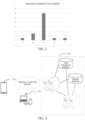
- FIG. 4 is a schematic diagram of an implementation environment of a method for network-based telephony according to an embodiment of the present disclosure.
- the implementation environment includes a terminal 410 and a server 440.
- the terminal 410 is connected to the server 440 by using a wireless network or a wired network.
- the server 440 includes: an access server, a server for network-based telephony, and a database.
- the access server is configured to provide an access service for the terminal 410.
- the server for network-based telephony is configured to provide background services related to network-based telephonies.
- the database includes a user information database, a sample database, and like. Certainly, different services provided by the server can further correspond to different databases.
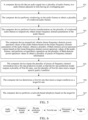
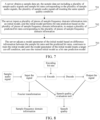
- FIG. 5 is a flowchart of a method for network-based telephony according to an embodiment of the present disclosure
- FIG. 6 is also a flowchart of a method for network-based telephony according to an embodiment of the present disclosure.
- the method for network-based telephony provided by the embodiments of the present disclosure is understood more clearly. Refer to FIG. 5 and FIG. 6 , the method includes the following steps.
- a computer device divides an audio signal into a plurality of audio frames, two audio frames adjacent in time having an overlapping part.
- Any sound is essentially a sound wave generated by the vibration of an object.
- An audio signal acquisition device may acquire an audio signal by transforming a sound wave generated by such a vibration into an electrical signal.
- the electrical signal acquired by the audio signal acquisition device is a changing status of voltage over time.
- the voltage herein can be used for representing a changing status of a sound to a certain extent.
- Time domain describes a changing status of a variable over time, and the audio signal acquired by the audio signal acquisition device is located in the time domain.
- the computer device can divide a received audio signal into frames, and decompose an overall unstable audio signal into a plurality of audio frames, and the plurality of audio frames can be considered stable locally. In this way, the computer device performs time-frequency transformation on the decomposed audio frame, and can obtain more realistic frequency domain information.
- the computer device sets an overlapping part on two audio frames adjacent in time, and the overlapping part between the two audio frames is referred to as a frame shift. For example, a part of a frame tail of a previous frame and a frame head of the next frame are overlapped, which can ensure a smooth transition between the audio frames and is convenient for subsequent analysis and processing performed by the computer device.
- the computer device extracts a human voice signal from the audio signal, and divides the human voice signal into a plurality of audio frames.
- the following describes a manner in which the computer device extracts the human voice signal by using a plurality of examples.
- Example 1 The computer device can obtain a noise signal and remove the noise signal from the audio signal to obtain the human voice signal. If a microphone for noise reduction is provided on the computer device, the computer device can use a sound signal acquired by the microphone for noise reduction as a noise signal, and the computer device can obtain the human voice signal based on the noise signal.
- Example 2 If there is no microphone for noise reduction provided on the computer device, the computer device can remove a noise signal from the audio signal based on waveforms of different noise signals to obtain the human voice signal.
- the computer device can then superpose the human voice signal and the noise signal based on a target weight and perform subsequent processing on the superposed audio signal, which can improve the quality of the network-based telephony.
- the computer device can obtain a start time point and an end time point of a human voice from the audio signal, divide an audio signal between the start time point and the end time point, and perform subsequent processing.
- Example 3 During a call, a user tends to get close to a terminal to make a call. Therefore, the computer device can also extract the human voice signal from the audio signal according to the volume. For example, the computer device determines a signal with a high volume as a human voice signal and a signal with a low volume as a noise signal, and extracts the human voice signal from the audio signal.
- the computer device performs windowing on the audio frames to obtain a plurality of windowed audio frames.
- the computer device can use different window functions to perform windowing based on different audio signals. For example, the computer device multiplies an audio frame and a window function to obtain a windowed audio frame.
- window functions include a Hamming window, a Hanning window, a triangular window, a Blackman window, a Kaiser window, and the like.
- X (i, k) is a linear frequency-domain parameter
- x (n) is an audio signal
- n is the length of the audio frame
- N is a quantity of audio frames
- N is a positive integer
- k is an index point number
- k 1, 2, 3, ..., or N
- i is a sequence number of the audio frame
- j represents a complex number.
- the computer device divides first bit rates having the same bit rate in the plurality of first bit rates into a bit rate group.
- the computer device obtains a quantity of the first bit rates included in each bit rate group, and determines a bit rate group including the largest quantity of the first bit rates as a target bit rate group.
- the computer device determines the first bit rate included in the target bit rate group as the target bit rate.
- the computer device inputs five pieces of frequency domain information into the bit rate prediction model, and the bit rate prediction model outputs five first bit rates correspondingly.
- That plurality of sample audio signals all meets the same speech quality condition refers to that after the plurality of sample audio signals are respectively encoded by using the sample bit rates corresponding to the plurality of sample audio signals, the audio signals obtained all meet the same speech quality condition.
- the server inputs the sample audio signals and the decoded sample audio signals into a speech quality evaluation tool, and the speech quality evaluation tool evaluates the speech quality based on a waveform difference between the sample audio signals and the decoded sample audio signals.
- the apparatus further includes:
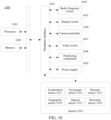
- the display screen 1005 may be a flexible display screen, disposed on a curved surface or a folded surface of the computer device 1000. Even, the display screen 1005 may be further set in a non-rectangular irregular pattern, namely, a special-shaped screen.
- the display screen 1005 may be made of materials such as a liquid crystal display (LCD), an organic light-emitting diode (OLED), and the like.
- the pressure sensor 1013 may be disposed on a side frame of the computer device 1000 and/or a lower layer of the display screen 1005. In a case that the pressure sensor 1013 is disposed on the side frame of the computer device 1000, a holding signal of the user on the computer device 1000 may be detected.
- the processor 1001 performs left and right hand recognition or a quick operation according to the holding signal acquired by the pressure sensor 1013.
- the processor 1001 controls, according to a pressure operation of the user on the display screen 1005, an operable control on the UI.
- the operable control includes at least one of a button control, a scroll-bar control, an icon control, and a menu control.
- the fingerprint sensor 1014 is configured to acquire a user's fingerprint, and the processor 1001 identifies a user's identity according to the fingerprint acquired by the fingerprint sensor 1014, or the fingerprint sensor 1014 identifies a user's identity according to the acquired fingerprint.
- the processor 1001 authorizes the user to perform a related sensitive operation.
- the sensitive operation includes unlocking a screen, viewing encrypted information, downloading software, payment, changing settings, and the like.
- the fingerprint sensor 1014 may be disposed on a front face, a back face, or a side face of the computer device 1000. When a physical button or a vendor logo is disposed on the computer device 1000, the fingerprint sensor 1014 may be integrated together with the physical button or the vendor logo.
- the proximity sensor 1016 also referred to as a distance sensor, is usually disposed on the front panel of the computer device 1000.
- the proximity sensor 1016 is configured to acquire a distance between a front face of the user and the front face of the computer device 1000.
- the processor 1001 controls the display screen 1005 to switch from a screen-on state to a screen-off state.
- the processor 1001 controls the display screen 1005 to switch from the screen-off state to the screen-on state.
Landscapes
- Engineering & Computer Science (AREA)
- Multimedia (AREA)
- Signal Processing (AREA)
- Computer Networks & Wireless Communication (AREA)
- Physics & Mathematics (AREA)
- Acoustics & Sound (AREA)
- Computational Linguistics (AREA)
- Health & Medical Sciences (AREA)
- Audiology, Speech & Language Pathology (AREA)
- Human Computer Interaction (AREA)
- General Business, Economics & Management (AREA)
- Business, Economics & Management (AREA)
- Spectroscopy & Molecular Physics (AREA)
- Quality & Reliability (AREA)
- Electromagnetism (AREA)
- Artificial Intelligence (AREA)
- Evolutionary Computation (AREA)
- Telephonic Communication Services (AREA)
Claims (10)
- Verfahren für netzwerkbasierte Telefonie, ausführbar durch eine Computer Vorrichtung, dadurch gekennzeichnet, dass das Verfahren umfasst:Durchführen einer Zeit-Frequenz-Transformation an einem erfassten Audiosignal, um eine Vielzahl von Teilen der Frequenzdomäneninformationen des Audiosignals zu erhalten;Bestimmen einer Zielbitrate, die dem Audiosignal entspricht, gemäß der Vielzahl von Frequenzdomäneninformationen, n, umfassend: Eingeben (505) der Vielzahl von Frequenzdomäneninformationen in ein Bitratenvorhersagemodell, so dass das Bitratenvorhersagemodell eine Vielzahl von ersten Bitraten ausgibt und die Vielzahl von ersten Bitraten eine Sprachqualität der netzbasierten Telefonie ermöglicht, um eine Zielsprachqualitätsbedingung zu erfüllen; und Bestimmen (506) einer ersten Bitrate, die eine Zielbedingung erfüllt, aus der Vielzahl von ersten Bitraten als die Zielbitrate;Codieren des Audiosignals auf der Grundlage der Zielbitrate; undDurchführen einer netzbasierten Telefonie auf der Grundlage des codierten Audiosignals,wobei das Bestimmen der ersten Bitrate, die die Zielbedingung erfüllt, aus der Vielzahl der ersten Bitraten als die Zielbitrate umfasst:Aufteilen der ersten Bitraten mit demselben Bitratenwert in der Vielzahl der ersten Bitraten in eine Bitratengruppe;Ermitteln einer Menge von ersten Bitraten, die in jeder Bitratengruppe enthalten sind, und Bestimmen einer Bitratengruppe, die die größte Menge der ersten Bitraten umfasst, als Zielbitratengruppe; undBestimmung der ersten Bitrate, die die Zielbitratengruppe umfasst, als Zielbitrate;Oderwobei das Verfahren ferner umfasst: vor der Eingabe der Vielzahl von Frequenzdomäneninformationen in das Bitratenvorhersagemodell Durchführen eines Modelltrainings auf der Grundlage eines Musterdatensatzes, um das Bitratenvorhersagemodell zu erhalten, wobei der Musterdatensatz eine Vielzahl von Musteraudiosignalen und Musterbitraten umfasst, die der Vielzahl von Musteraudiosignalen entsprechen, wobei die Vielzahl von Musteraudiosignalen eine gleiche Sprachqualitätsbedingung erfüllt.
- Verfahren gemäß Anspruch 1, ferner umfassend: vor dem Durchführen des Modelltrainings auf der Grundlage des Beispieldatensatzes, um das Bitratenvorhersagemodell zu erhalten,Codieren und anschließendes Decodieren der Vielzahl von Audioabtastsignalen auf der Grundlage der Abtastbitraten, die der Vielzahl von Audioabtastsignalen entsprechen, um eine Vielzahl von decodierten Audioabtastsignalen zu erhalten; undBestimmen von Sprachqualitäten jeweils für eines der Vielzahl von Audioabtastungssignalen auf der Grundlage der Vielzahl von Audioabtastungssignalen und der Vielzahl von decodierten Audioabtastungssignalen.
- Verfahren gemäß Anspruch 1, wobei das Durchführen des Modelltrainings auf der Grundlage des Beispieldatensatzes zum Erhalt des Bitratenvorhersagemodells umfasst:Durchführen einer Zeit-Frequenz-Transformation an der Vielzahl von Abtast-Audiosignalen, um eine Vielzahl von Teilen von Abtast-Frequenzdomäneninformationen zu erhalten;Eingeben (702) der Vielzahl von Teilen von Abtast-Frequenzdomäneninformationen ein Ausgangsmodell;Durchführen (702) einer Bitratenvorhersage durch das Ausgangsmodell, basierend auf der Vielzahl von Teilen von Abtast-Frequenzdomäneninformationen, um eine Vielzahl von vorhergesagten Bitraten auszugeben, die der Vielzahl von Teilen von Abtast-Frequenzdomäneninformationen entsprechen;iteratives Anpassen (703) eines oder mehrerer Modellparameter des Ausgangsmodells auf der Grundlage von Differenzinformationen zwischen den Abtastbitraten und den vorhergesagten Bitraten, bis eine Zielabschneidebedingung erfüllt ist; undAnwenden (703) des Ausgangsmodells mit dem angepassten einen oder mehreren Modellparametern als Modell für die Bitratenvorhersage.
- Verfahren gemäß Anspruch 1, wobei das Durchführen der Zeit-Frequenz-Transformation an dem erfassten Audiosignal zur Gewinnung der Vielzahl von Teilen der Frequenzdomäneninformationen umfasst:Aufteilen (501) des Audiosignals in eine Vielzahl von Audiorahmen, wobei zwei zeitlich benachbarte Audiorahmen einen überlappenden Teil haben;Durchführen (502) von Fensterung an den Audio-Frames, um eine Vielzahl von gefensterten Audio-Frames zu erhalten; undDurchführen (503) einer Fourier-Transformation an der Vielzahl von mit Fenstern versehenen Audio-Frames, um die Vielzahl von Teilen der Frequenzdomäneninformationen zu erhalten.
- Verfahren nach Anspruch 4, wobei das Durchführen einer Fourier-Transformation an der Vielzahl von gefensterten Audio-Frames zur Gewinnung der Vielzahl von Teilen der Frequenzdomäneninformationen umfasst:Durchführen einer Fourier-Transformation an der Vielzahl der gefensterten Audio-Frames, um lineare Frequenzbereichsparameter der Audio-Frames zu erhalten;Erhalten von linearen Frequenzbereichs-Leistungsspektrum-Werten der Audio-Frames basierend auf den linearen Frequenzbereichsparametern der Audio-Frames;Erhalten einer Vielzahl von Bark-Domain-Power-Spectrum-Werten basierend auf den linearen Frequenz-Domain-Power-Spectrum-Werten der Audio-Frames; undDurchführen einer logarithmischen Operation an der Vielzahl von Bark-Domain-Power-Spectrum-Werten, um die Vielzahl von Frequenzdomäneninformationen zu erhalten.
- Verfahren gemäß Anspruch 1, wobei das Durchführen einer Zeit-Frequenz-Transformation an dem erfassten Audiosignal, um die Vielzahl von Teilen der Frequenzdomäneninformationen des Audiosignals zu erhalten, umfasst:Extrahieren eines menschlichen Stimmsignals aus dem Audiosignal, Durchführen einer Zeit-Frequenz-Transformation an dem menschlichen Stimmsignal, um eine Vielzahl von Frequenzdomäneninformationen des menschlichen Stimmsignals zu erhalten, und Anwenden der Vielzahl von Frequenzdomäneninformationen des menschlichen Stimmsignals als die Vielzahl von Frequenzdomäneninformationen des Audiosignals; oderErkennen eines Startzeitpunkts und eines Endzeitpunkts einer menschlichen Stimme in dem Audiosignal, und Durchführen einer Zeit-Frequenz-Transformation an einem Audiosignal zwischen dem Startzeitpunkt und dem Endzeitpunkt, um die Vielzahl von Teilen der Frequenzdomäneninformationen des Audiosignals zu erhalten.
- Vorrichtung für netzbasierte Telefonie, dadurch gekennzeichnet, dass sie umfasst:ein Transformationsmodul (901), das so konfiguriert ist, dass es eine Zeit-Frequenz-Transformation an einem erfassten Audiosignal durchführt, um eine Vielzahl von Teilen der Frequenzdomäneninformationen des Audiosignals zu erhalten;ein erstes Bestimmungsmodul (902), das so konfiguriert ist, dass es eine dem Audiosignal entsprechende Zielbitrate gemäß der Vielzahl von Frequenzdomäneninformationen bestimmt, wobei das erste Bestimmungsmodul (902) umfasst eine erste Eingabeeinheit, die so konfiguriert ist, dass sie die Vielzahl von Frequenzdomäneninformationen in ein Bitratenvorhersagemodell eingibt, so dass das Bitratenvorhersagemodell eine Vielzahl von ersten Bitraten ausgibt und die Vielzahl von ersten Bitraten es der Sprachqualität der netzbasierten Telefonie ermöglicht, eine Zielsprachqualitätsbedingung zu erfüllen; und eine erste Bestimmungseinheit, die so konfiguriert ist, dass sie eine erste Bitrate, die eine Zielbedingung erfüllt, aus der Vielzahl von ersten Bitraten als die Zielbitrate bestimmt;ein Codiermodul (903), das so konfiguriert ist, dass es das Audiosignal auf der Grundlage der Zielbitrate codiert; undein Anrufmodul (904), das so konfiguriert ist, dass es eine netzbasierte Telefonie auf der Grundlage des codierten Audiosignals durchführtwobei das erste Bestimmungsmodul (902) ferner umfasst:eine Bitratengruppen-Teilungsuntereinheit, die so konfiguriert ist, dass sie erste Bitraten mit der gleichen Bitrate in der Vielzahl der ersten Bitraten in eine Bitratengruppe aufteilt;eine Bitratengruppen-Bestimmungsuntereinheit, die so konfiguriert ist, dass sie eine Menge der ersten Bitraten, die in jeder Bitratengruppe enthalten sind, erhält und eine Bitratengruppe, die die größte Menge der ersten Bitraten enthält, als eine Zielbitratengruppe bestimmt; undeine Untereinheit zur Bestimmung der Zielbitrate, die so konfiguriert ist, dass sie die erste in der Zielbitratengruppe enthaltene Bitrate als die Zielbitrate bestimmt,oderwobei die Vorrichtung ferner ein Trainingsmodul umfasst, das so konfiguriert ist, dass es ein Modelltraining auf der Grundlage eines Abtastdatensatzes durchführt, um das Bitratenvorhersagemodell zu erhalten, wobei der Abtastdatensatz eine Vielzahl von Abtast-Audiosignalen und Abtast-Bitraten umfasst, die der Vielzahl von Abtast-Audiosignalen entsprechen, wobei die Vielzahl von Abtast-Audiosignalen eine gleiche Sprachqualitätsbedingung erfüllt.
- Vorrichtung nach Anspruch 7, ferner umfassend:ein Codec-Modul, das so konfiguriert ist, dass es die Vielzahl von Abtast-Audiosignalen basierend auf den Abtast-Bitraten, die der Vielzahl von Abtast-Audiosignalen entsprechen, codiert und dann decodiert, um eine Vielzahl von decodierten Abtast-Audiosignalen zu erhalten; undein zweites Bestimmungsmodul, das so konfiguriert ist, dass es die Sprachqualitäten jeweils für eines der Vielzahl von Audioabtastsignalen auf der Grundlage der Vielzahl von Audioabtastsignalen und der Vielzahl von decodierten Audioabtastsignalen bestimmt.
- Computervorrichtung (1000), die einen oder mehrere Prozessoren und einen oder mehrere Speicher umfasst, wobei der eine oder die mehreren Speicher mindestens einen Programmcode speichern, wobei der mindestens eine Programmcode von dem einen oder den mehreren Prozessoren geladen und ausgeführt wird, um zu bewirken, dass die Computervorrichtung das Verfahren für netzbasierte Telefonie gemäß einem der Ansprüche 1 bis 6 ausführt.
- Speichermedium, auf dem mindestens ein Programmcode gespeichert ist, der, wenn er geladen und von einem Prozessor ausgeführt wird, den Prozessor veranlasst, das Verfahren für netzbasierte Telefonie gemäß einem der Ansprüche 1 bis 6 auszuführen.
Applications Claiming Priority (2)
| Application Number | Priority Date | Filing Date | Title |
|---|---|---|---|
| CN201911259913.4A CN110992963B (zh) | 2019-12-10 | 2019-12-10 | 网络通话方法、装置、计算机设备及存储介质 |
| PCT/CN2020/120184 WO2021114847A1 (zh) | 2019-12-10 | 2020-10-10 | 网络通话方法、装置、计算机设备及存储介质 |
Publications (3)
| Publication Number | Publication Date |
|---|---|
| EP4012702A1 EP4012702A1 (de) | 2022-06-15 |
| EP4012702A4 EP4012702A4 (de) | 2022-09-28 |
| EP4012702B1 true EP4012702B1 (de) | 2024-07-10 |
Family
ID=70091935
Family Applications (1)
| Application Number | Title | Priority Date | Filing Date |
|---|---|---|---|
| EP20899237.0A Active EP4012702B1 (de) | 2019-12-10 | 2020-10-10 | Internetanrufverfahren und -vorrichtung, computervorrichtung und speichermedium |
Country Status (4)
| Country | Link |
|---|---|
| US (1) | US12335328B2 (de) |
| EP (1) | EP4012702B1 (de) |
| CN (1) | CN110992963B (de) |
| WO (1) | WO2021114847A1 (de) |
Families Citing this family (9)
| Publication number | Priority date | Publication date | Assignee | Title |
|---|---|---|---|---|
| CN110992963B (zh) | 2019-12-10 | 2023-09-29 | 腾讯科技(深圳)有限公司 | 网络通话方法、装置、计算机设备及存储介质 |
| CN111816197B (zh) * | 2020-06-15 | 2024-02-23 | 北京达佳互联信息技术有限公司 | 音频编码方法、装置、电子设备和存储介质 |
| CN111862995A (zh) * | 2020-06-22 | 2020-10-30 | 北京达佳互联信息技术有限公司 | 一种码率确定模型训练方法、码率确定方法及装置 |
| CN112822482B (zh) * | 2020-12-31 | 2022-11-08 | 上海掌门科技有限公司 | 一种确定音视频通话的评估得分的方法与设备 |
| CN112767956B (zh) * | 2021-04-09 | 2021-07-16 | 腾讯科技(深圳)有限公司 | 音频编码方法、装置、计算机设备及介质 |
| CN115334349B (zh) * | 2022-07-15 | 2024-01-02 | 北京达佳互联信息技术有限公司 | 音频处理方法、装置、电子设备及存储介质 |
| CN115831133A (zh) * | 2022-09-29 | 2023-03-21 | 北京达佳互联信息技术有限公司 | 音频处理方法、装置、电子设备及存储介质 |
| EP4606078A4 (de) * | 2022-10-21 | 2025-11-05 | Rakuten Mobile Inc | Verfahren zur analyse von sprache über internetprotokoll-kommunikation und system zur implementierung davon |
| CN120217274A (zh) * | 2025-01-23 | 2025-06-27 | 中山大学附属第一医院 | 一种融合呼吸气流数据的多模态唇语识别方法和装置 |
Citations (2)
| Publication number | Priority date | Publication date | Assignee | Title |
|---|---|---|---|---|
| CN101494054A (zh) * | 2009-02-09 | 2009-07-29 | 深圳华为通信技术有限公司 | 一种音频码率控制方法及系统 |
| CN110992963A (zh) * | 2019-12-10 | 2020-04-10 | 腾讯科技(深圳)有限公司 | 网络通话方法、装置、计算机设备及存储介质 |
Family Cites Families (24)
| Publication number | Priority date | Publication date | Assignee | Title |
|---|---|---|---|---|
| US5742734A (en) * | 1994-08-10 | 1998-04-21 | Qualcomm Incorporated | Encoding rate selection in a variable rate vocoder |
| US6625226B1 (en) * | 1999-12-03 | 2003-09-23 | Allen Gersho | Variable bit rate coder, and associated method, for a communication station operable in a communication system |
| US6647366B2 (en) * | 2001-12-28 | 2003-11-11 | Microsoft Corporation | Rate control strategies for speech and music coding |
| KR100431162B1 (ko) * | 2002-06-29 | 2004-05-12 | 피앤피네트워크 주식회사 | 코드레이트 검출장치 |
| JP2006047561A (ja) * | 2004-08-03 | 2006-02-16 | Matsushita Electric Ind Co Ltd | オーディオ信号符号化装置およびオーディオ信号復号化装置 |
| KR100682890B1 (ko) * | 2004-09-08 | 2007-02-15 | 삼성전자주식회사 | 비트량 고속제어가 가능한 오디오 부호화 방법 및 장치 |
| KR101610765B1 (ko) * | 2008-10-31 | 2016-04-11 | 삼성전자주식회사 | 음성 신호의 부호화/복호화 방법 및 장치 |
| KR20110001130A (ko) * | 2009-06-29 | 2011-01-06 | 삼성전자주식회사 | 가중 선형 예측 변환을 이용한 오디오 신호 부호화 및 복호화 장치 및 그 방법 |
| SG181148A1 (en) * | 2010-01-22 | 2012-07-30 | Agency Science Tech & Res | Method and device for determining a number of bits for encoding an audio signal |
| CN102543090B (zh) * | 2011-12-31 | 2013-12-04 | 深圳市茂碧信息科技有限公司 | 一种应用于变速率语音和音频编码的码率自动控制系统 |
| WO2015037969A1 (ko) * | 2013-09-16 | 2015-03-19 | 삼성전자 주식회사 | 신호 부호화방법 및 장치와 신호 복호화방법 및 장치 |
| US10395663B2 (en) | 2014-02-17 | 2019-08-27 | Samsung Electronics Co., Ltd. | Signal encoding method and apparatus, and signal decoding method and apparatus |
| KR102386738B1 (ko) * | 2014-02-17 | 2022-04-14 | 삼성전자주식회사 | 신호 부호화방법 및 장치와 신호 복호화방법 및 장치 |
| GB2526128A (en) * | 2014-05-15 | 2015-11-18 | Nokia Technologies Oy | Audio codec mode selector |
| US9685166B2 (en) * | 2014-07-26 | 2017-06-20 | Huawei Technologies Co., Ltd. | Classification between time-domain coding and frequency domain coding |
| CN105162555B (zh) * | 2015-09-24 | 2019-06-25 | 广州市百果园网络科技有限公司 | 一种码率调整方法及其终端 |
| CN108010533A (zh) * | 2016-10-27 | 2018-05-08 | 北京酷我科技有限公司 | 音频数据码率的自动识别方法和装置 |
| CN108011686B (zh) * | 2016-10-31 | 2020-07-14 | 腾讯科技(深圳)有限公司 | 信息编码帧丢失恢复方法和装置 |
| US10616587B2 (en) * | 2017-04-26 | 2020-04-07 | Dts, Inc. | Bit rate control over groups of frames |
| US10734006B2 (en) * | 2018-06-01 | 2020-08-04 | Qualcomm Incorporated | Audio coding based on audio pattern recognition |
| CN108989880B (zh) * | 2018-06-21 | 2020-04-14 | 北京邮电大学 | 一种码率自适应切换方法及系统 |
| US11509703B2 (en) * | 2018-09-26 | 2022-11-22 | Vmware, Inc. | System and method for widescale adaptive bitrate selection |
| CN110310650A (zh) * | 2019-04-08 | 2019-10-08 | 清华大学 | 一种基于二阶微分麦克风阵列的语音增强算法 |
| CN110265046B (zh) | 2019-07-25 | 2024-05-17 | 腾讯科技(深圳)有限公司 | 一种编码参数调控方法、装置、设备及存储介质 |
-
2019
- 2019-12-10 CN CN201911259913.4A patent/CN110992963B/zh active Active
-
2020
- 2020-10-10 WO PCT/CN2020/120184 patent/WO2021114847A1/zh not_active Ceased
- 2020-10-10 EP EP20899237.0A patent/EP4012702B1/de active Active
-
2021
- 2021-10-21 US US17/507,533 patent/US12335328B2/en active Active
Patent Citations (2)
| Publication number | Priority date | Publication date | Assignee | Title |
|---|---|---|---|---|
| CN101494054A (zh) * | 2009-02-09 | 2009-07-29 | 深圳华为通信技术有限公司 | 一种音频码率控制方法及系统 |
| CN110992963A (zh) * | 2019-12-10 | 2020-04-10 | 腾讯科技(深圳)有限公司 | 网络通话方法、装置、计算机设备及存储介质 |
Also Published As
| Publication number | Publication date |
|---|---|
| CN110992963B (zh) | 2023-09-29 |
| EP4012702A4 (de) | 2022-09-28 |
| US12335328B2 (en) | 2025-06-17 |
| US20220044693A1 (en) | 2022-02-10 |
| EP4012702A1 (de) | 2022-06-15 |
| WO2021114847A1 (zh) | 2021-06-17 |
| CN110992963A (zh) | 2020-04-10 |
Similar Documents
| Publication | Publication Date | Title |
|---|---|---|
| EP4012702B1 (de) | Internetanrufverfahren und -vorrichtung, computervorrichtung und speichermedium | |
| US12106768B2 (en) | Speech signal processing method and speech separation method | |
| CN110544488B (zh) | 一种多人语音的分离方法和装置 | |
| EP3968223B1 (de) | Verfahren und vorrichtung zur erfassung der positionen eines ziels sowie computervorrichtung und speichermedium | |
| CN111986691B (zh) | 音频处理方法、装置、计算机设备及存储介质 | |
| CN108615526B (zh) | 语音信号中关键词的检测方法、装置、终端及存储介质 | |
| US11482237B2 (en) | Method and terminal for reconstructing speech signal, and computer storage medium | |
| CN105719659A (zh) | 基于声纹识别的录音文件分离方法及装置 | |
| EP4586105A1 (de) | Audioverarbeitungsverfahren und -vorrichtung, vorrichtung, lesbares speichermedium und programmprodukt | |
| CN113823296B (zh) | 语音数据处理方法、装置、计算机设备及存储介质 | |
| CN114462580B (zh) | 文本识别模型的训练方法、文本识别方法、装置和设备 | |
| CN111445901A (zh) | 音频数据获取方法、装置、电子设备及存储介质 | |
| WO2021147417A1 (zh) | 语音识别方法、装置、计算机设备及计算机可读存储介质 | |
| CN117998166A (zh) | 视频生成模型的训练方法、装置、设备、存储介质和产品 | |
| CN111048109A (zh) | 声学特征的确定方法、装置、计算机设备及存储介质 | |
| EP4198559A1 (de) | Objekterkennungsverfahren und -vorrichtung auf basis von ultraschallecho und speichermedium | |
| CN117710541A (zh) | 音频驱动三维人脸动画模型的生成方法、装置及设备 | |
| CN114283827B (zh) | 音频去混响方法、装置、设备和存储介质 | |
| CN114333774A (zh) | 语音识别方法、装置、计算机设备及存储介质 | |
| CN117354435A (zh) | 深度卷积神经网络的训练方法、逆色调映射方法和装置 | |
| CN116860913A (zh) | 语音交互方法、装置、设备及存储介质 | |
| CN116977884A (zh) | 视频切分模型的训练方法、视频切分方法及装置 | |
| HK40021713A (en) | Network call method and apparatus, computer device and storage medium | |
| CN120358378B (zh) | 音频生成方法、装置、设备及计算机可读存储介质 | |
| CN112750449A (zh) | 回声消除方法、装置、终端、服务器及存储介质 |
Legal Events
| Date | Code | Title | Description |
|---|---|---|---|
| STAA | Information on the status of an ep patent application or granted ep patent |
Free format text: STATUS: THE INTERNATIONAL PUBLICATION HAS BEEN MADE |
|
| PUAI | Public reference made under article 153(3) epc to a published international application that has entered the european phase |
Free format text: ORIGINAL CODE: 0009012 |
|
| STAA | Information on the status of an ep patent application or granted ep patent |
Free format text: STATUS: REQUEST FOR EXAMINATION WAS MADE |
|
| 17P | Request for examination filed |
Effective date: 20220310 |
|
| AK | Designated contracting states |
Kind code of ref document: A1 Designated state(s): AL AT BE BG CH CY CZ DE DK EE ES FI FR GB GR HR HU IE IS IT LI LT LU LV MC MK MT NL NO PL PT RO RS SE SI SK SM TR |
|
| RAP3 | Party data changed (applicant data changed or rights of an application transferred) |
Owner name: TENCENT TECHNOLOGY (SHENZHEN) COMPANY LIMITED |
|
| REG | Reference to a national code |
Ref country code: DE Ref legal event code: R079 Free format text: PREVIOUS MAIN CLASS: G10L0019002000 Ipc: G10L0019240000 Ref country code: DE Ref legal event code: R079 Ref document number: 602020033913 Country of ref document: DE Free format text: PREVIOUS MAIN CLASS: G10L0019002000 Ipc: G10L0019240000 |
|
| A4 | Supplementary search report drawn up and despatched |
Effective date: 20220831 |
|
| RIC1 | Information provided on ipc code assigned before grant |
Ipc: G10L 19/032 20130101ALN20220825BHEP Ipc: H04B 17/391 20150101ALI20220825BHEP Ipc: H04L 65/80 20220101ALI20220825BHEP Ipc: H04L 65/752 20220101ALI20220825BHEP Ipc: H04L 65/1083 20220101ALI20220825BHEP Ipc: H04L 65/70 20220101ALI20220825BHEP Ipc: G10L 19/24 20130101AFI20220825BHEP |
|
| DAV | Request for validation of the european patent (deleted) | ||
| DAX | Request for extension of the european patent (deleted) | ||
| GRAP | Despatch of communication of intention to grant a patent |
Free format text: ORIGINAL CODE: EPIDOSNIGR1 |
|
| STAA | Information on the status of an ep patent application or granted ep patent |
Free format text: STATUS: GRANT OF PATENT IS INTENDED |
|
| RIC1 | Information provided on ipc code assigned before grant |
Ipc: G10L 19/032 20130101ALN20240321BHEP Ipc: H04B 17/391 20150101ALI20240321BHEP Ipc: H04L 65/80 20220101ALI20240321BHEP Ipc: H04L 65/752 20220101ALI20240321BHEP Ipc: H04L 65/1083 20220101ALI20240321BHEP Ipc: H04L 65/70 20220101ALI20240321BHEP Ipc: G10L 19/24 20130101AFI20240321BHEP |
|
| INTG | Intention to grant announced |
Effective date: 20240404 |
|
| GRAS | Grant fee paid |
Free format text: ORIGINAL CODE: EPIDOSNIGR3 |
|
| GRAA | (expected) grant |
Free format text: ORIGINAL CODE: 0009210 |
|
| STAA | Information on the status of an ep patent application or granted ep patent |
Free format text: STATUS: THE PATENT HAS BEEN GRANTED |
|
| AK | Designated contracting states |
Kind code of ref document: B1 Designated state(s): AL AT BE BG CH CY CZ DE DK EE ES FI FR GB GR HR HU IE IS IT LI LT LU LV MC MK MT NL NO PL PT RO RS SE SI SK SM TR |
|
| REG | Reference to a national code |
Ref country code: CH Ref legal event code: EP |
|
| REG | Reference to a national code |
Ref country code: DE Ref legal event code: R096 Ref document number: 602020033913 Country of ref document: DE |
|
| REG | Reference to a national code |
Ref country code: LT Ref legal event code: MG9D |
|
| REG | Reference to a national code |
Ref country code: NL Ref legal event code: MP Effective date: 20240710 |
|
| PG25 | Lapsed in a contracting state [announced via postgrant information from national office to epo] |
Ref country code: PT Free format text: LAPSE BECAUSE OF FAILURE TO SUBMIT A TRANSLATION OF THE DESCRIPTION OR TO PAY THE FEE WITHIN THE PRESCRIBED TIME-LIMIT Effective date: 20241111 |
|
| REG | Reference to a national code |
Ref country code: AT Ref legal event code: MK05 Ref document number: 1702767 Country of ref document: AT Kind code of ref document: T Effective date: 20240710 |
|
| PG25 | Lapsed in a contracting state [announced via postgrant information from national office to epo] |
Ref country code: NL Free format text: LAPSE BECAUSE OF FAILURE TO SUBMIT A TRANSLATION OF THE DESCRIPTION OR TO PAY THE FEE WITHIN THE PRESCRIBED TIME-LIMIT Effective date: 20240710 |
|
| PG25 | Lapsed in a contracting state [announced via postgrant information from national office to epo] |
Ref country code: PT Free format text: LAPSE BECAUSE OF FAILURE TO SUBMIT A TRANSLATION OF THE DESCRIPTION OR TO PAY THE FEE WITHIN THE PRESCRIBED TIME-LIMIT Effective date: 20241111 Ref country code: NL Free format text: LAPSE BECAUSE OF FAILURE TO SUBMIT A TRANSLATION OF THE DESCRIPTION OR TO PAY THE FEE WITHIN THE PRESCRIBED TIME-LIMIT Effective date: 20240710 |
|
| PG25 | Lapsed in a contracting state [announced via postgrant information from national office to epo] |
Ref country code: NO Free format text: LAPSE BECAUSE OF FAILURE TO SUBMIT A TRANSLATION OF THE DESCRIPTION OR TO PAY THE FEE WITHIN THE PRESCRIBED TIME-LIMIT Effective date: 20241010 |
|
| PG25 | Lapsed in a contracting state [announced via postgrant information from national office to epo] |
Ref country code: FI Free format text: LAPSE BECAUSE OF FAILURE TO SUBMIT A TRANSLATION OF THE DESCRIPTION OR TO PAY THE FEE WITHIN THE PRESCRIBED TIME-LIMIT Effective date: 20240710 Ref country code: GR Free format text: LAPSE BECAUSE OF FAILURE TO SUBMIT A TRANSLATION OF THE DESCRIPTION OR TO PAY THE FEE WITHIN THE PRESCRIBED TIME-LIMIT Effective date: 20241011 Ref country code: PL Free format text: LAPSE BECAUSE OF FAILURE TO SUBMIT A TRANSLATION OF THE DESCRIPTION OR TO PAY THE FEE WITHIN THE PRESCRIBED TIME-LIMIT Effective date: 20240710 |
|
| PG25 | Lapsed in a contracting state [announced via postgrant information from national office to epo] |
Ref country code: BG Free format text: LAPSE BECAUSE OF FAILURE TO SUBMIT A TRANSLATION OF THE DESCRIPTION OR TO PAY THE FEE WITHIN THE PRESCRIBED TIME-LIMIT Effective date: 20240710 |
|
| PG25 | Lapsed in a contracting state [announced via postgrant information from national office to epo] |
Ref country code: LV Free format text: LAPSE BECAUSE OF FAILURE TO SUBMIT A TRANSLATION OF THE DESCRIPTION OR TO PAY THE FEE WITHIN THE PRESCRIBED TIME-LIMIT Effective date: 20240710 |
|
| PG25 | Lapsed in a contracting state [announced via postgrant information from national office to epo] |
Ref country code: AT Free format text: LAPSE BECAUSE OF FAILURE TO SUBMIT A TRANSLATION OF THE DESCRIPTION OR TO PAY THE FEE WITHIN THE PRESCRIBED TIME-LIMIT Effective date: 20240710 Ref country code: IS Free format text: LAPSE BECAUSE OF FAILURE TO SUBMIT A TRANSLATION OF THE DESCRIPTION OR TO PAY THE FEE WITHIN THE PRESCRIBED TIME-LIMIT Effective date: 20241110 |
|
| PG25 | Lapsed in a contracting state [announced via postgrant information from national office to epo] |
Ref country code: HR Free format text: LAPSE BECAUSE OF FAILURE TO SUBMIT A TRANSLATION OF THE DESCRIPTION OR TO PAY THE FEE WITHIN THE PRESCRIBED TIME-LIMIT Effective date: 20240710 |
|
| PG25 | Lapsed in a contracting state [announced via postgrant information from national office to epo] |
Ref country code: ES Free format text: LAPSE BECAUSE OF FAILURE TO SUBMIT A TRANSLATION OF THE DESCRIPTION OR TO PAY THE FEE WITHIN THE PRESCRIBED TIME-LIMIT Effective date: 20240710 Ref country code: RS Free format text: LAPSE BECAUSE OF FAILURE TO SUBMIT A TRANSLATION OF THE DESCRIPTION OR TO PAY THE FEE WITHIN THE PRESCRIBED TIME-LIMIT Effective date: 20241010 |
|
| PG25 | Lapsed in a contracting state [announced via postgrant information from national office to epo] |
Ref country code: RS Free format text: LAPSE BECAUSE OF FAILURE TO SUBMIT A TRANSLATION OF THE DESCRIPTION OR TO PAY THE FEE WITHIN THE PRESCRIBED TIME-LIMIT Effective date: 20241010 Ref country code: PL Free format text: LAPSE BECAUSE OF FAILURE TO SUBMIT A TRANSLATION OF THE DESCRIPTION OR TO PAY THE FEE WITHIN THE PRESCRIBED TIME-LIMIT Effective date: 20240710 Ref country code: NO Free format text: LAPSE BECAUSE OF FAILURE TO SUBMIT A TRANSLATION OF THE DESCRIPTION OR TO PAY THE FEE WITHIN THE PRESCRIBED TIME-LIMIT Effective date: 20241010 Ref country code: LV Free format text: LAPSE BECAUSE OF FAILURE TO SUBMIT A TRANSLATION OF THE DESCRIPTION OR TO PAY THE FEE WITHIN THE PRESCRIBED TIME-LIMIT Effective date: 20240710 Ref country code: IS Free format text: LAPSE BECAUSE OF FAILURE TO SUBMIT A TRANSLATION OF THE DESCRIPTION OR TO PAY THE FEE WITHIN THE PRESCRIBED TIME-LIMIT Effective date: 20241110 Ref country code: HR Free format text: LAPSE BECAUSE OF FAILURE TO SUBMIT A TRANSLATION OF THE DESCRIPTION OR TO PAY THE FEE WITHIN THE PRESCRIBED TIME-LIMIT Effective date: 20240710 Ref country code: GR Free format text: LAPSE BECAUSE OF FAILURE TO SUBMIT A TRANSLATION OF THE DESCRIPTION OR TO PAY THE FEE WITHIN THE PRESCRIBED TIME-LIMIT Effective date: 20241011 Ref country code: FI Free format text: LAPSE BECAUSE OF FAILURE TO SUBMIT A TRANSLATION OF THE DESCRIPTION OR TO PAY THE FEE WITHIN THE PRESCRIBED TIME-LIMIT Effective date: 20240710 Ref country code: ES Free format text: LAPSE BECAUSE OF FAILURE TO SUBMIT A TRANSLATION OF THE DESCRIPTION OR TO PAY THE FEE WITHIN THE PRESCRIBED TIME-LIMIT Effective date: 20240710 Ref country code: BG Free format text: LAPSE BECAUSE OF FAILURE TO SUBMIT A TRANSLATION OF THE DESCRIPTION OR TO PAY THE FEE WITHIN THE PRESCRIBED TIME-LIMIT Effective date: 20240710 Ref country code: AT Free format text: LAPSE BECAUSE OF FAILURE TO SUBMIT A TRANSLATION OF THE DESCRIPTION OR TO PAY THE FEE WITHIN THE PRESCRIBED TIME-LIMIT Effective date: 20240710 |
|
| REG | Reference to a national code |
Ref country code: DE Ref legal event code: R097 Ref document number: 602020033913 Country of ref document: DE |
|
| PG25 | Lapsed in a contracting state [announced via postgrant information from national office to epo] |
Ref country code: RO Free format text: LAPSE BECAUSE OF FAILURE TO SUBMIT A TRANSLATION OF THE DESCRIPTION OR TO PAY THE FEE WITHIN THE PRESCRIBED TIME-LIMIT Effective date: 20240710 Ref country code: DK Free format text: LAPSE BECAUSE OF FAILURE TO SUBMIT A TRANSLATION OF THE DESCRIPTION OR TO PAY THE FEE WITHIN THE PRESCRIBED TIME-LIMIT Effective date: 20240710 Ref country code: SM Free format text: LAPSE BECAUSE OF FAILURE TO SUBMIT A TRANSLATION OF THE DESCRIPTION OR TO PAY THE FEE WITHIN THE PRESCRIBED TIME-LIMIT Effective date: 20240710 |
|
| PG25 | Lapsed in a contracting state [announced via postgrant information from national office to epo] |
Ref country code: EE Free format text: LAPSE BECAUSE OF FAILURE TO SUBMIT A TRANSLATION OF THE DESCRIPTION OR TO PAY THE FEE WITHIN THE PRESCRIBED TIME-LIMIT Effective date: 20240710 |
|
| PG25 | Lapsed in a contracting state [announced via postgrant information from national office to epo] |
Ref country code: CZ Free format text: LAPSE BECAUSE OF FAILURE TO SUBMIT A TRANSLATION OF THE DESCRIPTION OR TO PAY THE FEE WITHIN THE PRESCRIBED TIME-LIMIT Effective date: 20240710 |
|
| PG25 | Lapsed in a contracting state [announced via postgrant information from national office to epo] |
Ref country code: SK Free format text: LAPSE BECAUSE OF FAILURE TO SUBMIT A TRANSLATION OF THE DESCRIPTION OR TO PAY THE FEE WITHIN THE PRESCRIBED TIME-LIMIT Effective date: 20240710 Ref country code: IT Free format text: LAPSE BECAUSE OF FAILURE TO SUBMIT A TRANSLATION OF THE DESCRIPTION OR TO PAY THE FEE WITHIN THE PRESCRIBED TIME-LIMIT Effective date: 20240710 |
|
| PLBE | No opposition filed within time limit |
Free format text: ORIGINAL CODE: 0009261 |
|
| STAA | Information on the status of an ep patent application or granted ep patent |
Free format text: STATUS: NO OPPOSITION FILED WITHIN TIME LIMIT |
|
| REG | Reference to a national code |
Ref country code: CH Ref legal event code: PL |
|
| 26N | No opposition filed |
Effective date: 20250411 |
|
| PG25 | Lapsed in a contracting state [announced via postgrant information from national office to epo] |
Ref country code: MC Free format text: LAPSE BECAUSE OF FAILURE TO SUBMIT A TRANSLATION OF THE DESCRIPTION OR TO PAY THE FEE WITHIN THE PRESCRIBED TIME-LIMIT Effective date: 20240710 |
|
| PG25 | Lapsed in a contracting state [announced via postgrant information from national office to epo] |
Ref country code: BE Free format text: LAPSE BECAUSE OF NON-PAYMENT OF DUE FEES Effective date: 20241031 Ref country code: LU Free format text: LAPSE BECAUSE OF NON-PAYMENT OF DUE FEES Effective date: 20241010 |
|
| PG25 | Lapsed in a contracting state [announced via postgrant information from national office to epo] |
Ref country code: CH Free format text: LAPSE BECAUSE OF NON-PAYMENT OF DUE FEES Effective date: 20241031 |
|
| REG | Reference to a national code |
Ref country code: BE Ref legal event code: MM Effective date: 20241031 |
|
| PG25 | Lapsed in a contracting state [announced via postgrant information from national office to epo] |
Ref country code: SE Free format text: LAPSE BECAUSE OF FAILURE TO SUBMIT A TRANSLATION OF THE DESCRIPTION OR TO PAY THE FEE WITHIN THE PRESCRIBED TIME-LIMIT Effective date: 20240710 |
|
| PG25 | Lapsed in a contracting state [announced via postgrant information from national office to epo] |
Ref country code: IE Free format text: LAPSE BECAUSE OF NON-PAYMENT OF DUE FEES Effective date: 20241010 |
|
| PGFP | Annual fee paid to national office [announced via postgrant information from national office to epo] |
Ref country code: DE Payment date: 20251020 Year of fee payment: 6 |
|
| PGFP | Annual fee paid to national office [announced via postgrant information from national office to epo] |
Ref country code: GB Payment date: 20251024 Year of fee payment: 6 |
|
| PGFP | Annual fee paid to national office [announced via postgrant information from national office to epo] |
Ref country code: FR Payment date: 20251017 Year of fee payment: 6 |
|
| PG25 | Lapsed in a contracting state [announced via postgrant information from national office to epo] |
Ref country code: CY Free format text: LAPSE BECAUSE OF FAILURE TO SUBMIT A TRANSLATION OF THE DESCRIPTION OR TO PAY THE FEE WITHIN THE PRESCRIBED TIME-LIMIT; INVALID AB INITIO Effective date: 20201010 |