EP4009708B1 - Verfahren und vorrichtung zur verwaltung und zugriffssteuerung von netzwerk-slices in einem drahtlosen kommunikationssystem - Google Patents
Verfahren und vorrichtung zur verwaltung und zugriffssteuerung von netzwerk-slices in einem drahtlosen kommunikationssystem Download PDFInfo
- Publication number
- EP4009708B1 EP4009708B1 EP20866235.3A EP20866235A EP4009708B1 EP 4009708 B1 EP4009708 B1 EP 4009708B1 EP 20866235 A EP20866235 A EP 20866235A EP 4009708 B1 EP4009708 B1 EP 4009708B1
- Authority
- EP
- European Patent Office
- Prior art keywords
- slice
- network
- information
- network function
- network slice
- Prior art date
- Legal status (The legal status is an assumption and is not a legal conclusion. Google has not performed a legal analysis and makes no representation as to the accuracy of the status listed.)
- Active
Links
Images






Classifications
-
- H—ELECTRICITY
- H04—ELECTRIC COMMUNICATION TECHNIQUE
- H04W—WIRELESS COMMUNICATION NETWORKS
- H04W24/00—Supervisory, monitoring or testing arrangements
- H04W24/02—Arrangements for optimising operational condition
-
- H—ELECTRICITY
- H04—ELECTRIC COMMUNICATION TECHNIQUE
- H04W—WIRELESS COMMUNICATION NETWORKS
- H04W28/00—Network traffic management; Network resource management
- H04W28/02—Traffic management, e.g. flow control or congestion control
- H04W28/0268—Traffic management, e.g. flow control or congestion control using specific QoS parameters for wireless networks, e.g. QoS class identifier [QCI] or guaranteed bit rate [GBR]
-
- H—ELECTRICITY
- H04—ELECTRIC COMMUNICATION TECHNIQUE
- H04W—WIRELESS COMMUNICATION NETWORKS
- H04W48/00—Access restriction; Network selection; Access point selection
- H04W48/16—Discovering, processing access restriction or access information
-
- H—ELECTRICITY
- H04—ELECTRIC COMMUNICATION TECHNIQUE
- H04W—WIRELESS COMMUNICATION NETWORKS
- H04W48/00—Access restriction; Network selection; Access point selection
- H04W48/18—Selecting a network or a communication service
-
- H—ELECTRICITY
- H04—ELECTRIC COMMUNICATION TECHNIQUE
- H04W—WIRELESS COMMUNICATION NETWORKS
- H04W88/00—Devices specially adapted for wireless communication networks, e.g. terminals, base stations or access point devices
- H04W88/14—Backbone network devices
-
- H—ELECTRICITY
- H04—ELECTRIC COMMUNICATION TECHNIQUE
- H04W—WIRELESS COMMUNICATION NETWORKS
- H04W88/00—Devices specially adapted for wireless communication networks, e.g. terminals, base stations or access point devices
- H04W88/18—Service support devices; Network management devices
Definitions
- the disclosure relates to a method and apparatus for access control in a wireless communication system and, more particularly, to a method and apparatus for network slice management and access control in a wireless communication system.
- the 5G or pre-5G communication system is also called a beyond 4G network communication system or a post long term evolution (post LTE) system.
- the 5G communication system is considered to be implemented in higher frequency (mmWave) bands (e.g., 60 GHz bands) so as to accomplish higher data rates.
- mmWave e.g., 60 GHz bands
- MIMO massive multiple-input multiple-output
- FD-MIMO full dimensional MIMO
- array antenna an analog beamforming, and large scale antenna techniques are discussed in 5G communication systems.
- RANs cloud radio access networks
- D2D device-to-device
- wireless backhaul moving network
- CoMP coordinated multi-points
- FQAM FSK and QAM modulation
- SWSC sliding window superposition coding
- ACM advanced coding modulation
- FBMC filter bank multi carrier
- NOMA non-orthogonal multiple access
- SCMA sparse code multiple access
- NF network function
- DCs data centers
- the NF may be freely expanded/reduced (scaling), installed (initiation), or ended (termination), depending on service requirements, system capacity, or network load.
- a physical constitution is not excluded because they have to be basically driven in the physical constitution, for example, certain equipment.
- Network slicing is a technology that logically constructs a network as a set of network functions (NFs) so as to support a specific service and separates it from other slices.
- NFs network functions
- One terminal may access two or more slices when receiving various services.
- CN 109 951 877 A describes a slice information update method and an apparatus to notify a corresponding terminal when a network slice not supported by a PLMN is updated to be supported by the PLMN.
- the disclosure provides a method and apparatus for managing a network slice in a wireless communication system and accessing the network slice.
- the disclosure provides a method and apparatus for selecting a network slice in a wireless communication system.
- the disclosure provides a procedure for accessing and selecting a network slice in a wireless communication system.
- the disclosure relates to a method and apparatus for supporting various services in a wireless communication system. Specifically, the disclosure describes a technology for supporting various services by supporting mobility of a user equipment (UE) in a wireless communication system.
- UE user equipment
- the disclosure uses terms and names defined in the 3 rd generation partnership project long term evolution (3GPP LTE) and 5G standards.
- 3GPP LTE 3 rd generation partnership project long term evolution
- 5G 5th Generation
- the NF may include, for example, an access and mobility management function (hereinafter, AMF) device, a session management function (hereinafter, SMF) device, and a network slice selection function (hereinafter, NSSF) device.
- AMF access and mobility management function
- SMF session management function
- NSSF network slice selection function
- embodiments of the disclosure can be equally applied even when the NF is actually implemented as an instance (Instance, i.e., an AMF instance, an SMF instance, an NSSF instance, etc.).
- the term 'instance' may mean that a specific NF exists in the form of software code and, in order to perform the function of the NF in a physical computing system (e.g., a specific computing system existing on the core network), is in an executable state by being allocated physical and/or logical resources from the computing system. Therefore, the AMF instance, the SMF instance, and the NSSF instance may mean that, for AMF, SMF, and NSSF operations, physical and/or logical resources are allocated from a specific computing system existing on the core network and thus become usable.
- the AMF instance, the SMF instance, and the NSSF instance that are allocated physical and/or logical resources for AMF operation, SMF operation, and NSSF operation from a specific computing system existing on the network can perform the same operations as a physical AMF device, a physical SMF device, and a physical NSSF device, respectively. Therefore, in embodiments of the disclosure, items described as an NF (e.g., AMF, SMF, UPF, NSSF, NRF, SCP, etc.) device may be replaced with an NF instance or, conversely, items described as an NF instance may be replaced with an NF device. Similarly, in embodiments of the disclosure, items described as an NW slice may be replaced with an NW slice instance, or items described as an NW slice instance may be replaced with an NW slice.
- NF e.g., AMF, SMF, UPF, NSSF, NRF, SCP, etc.
- FIG. 1 illustrates a wireless communication system according to various embodiments of the disclosure.
- FIG. 1 As a part of nodes using a radio channel in the wireless communication system, a radio access node (RAN) 110 and a user equipment (UE) 120 are illustrated.
- RAN radio access node
- UE user equipment
- FIG. 1 illustrates only one RAN 110 and only one UE 120, other RANs identical or similar to the RAN 110 may be further included.
- FIG. 1 illustrates that only one UE 120 communicates with one RAN 110. However, in actual, a plurality of UEs can communicate with one RAN 110.
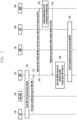
- FIG. 3 is a signal flow diagram illustrating an operation of performing access control for each network slice according to various embodiments of the disclosure.
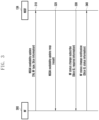
- a capacity parameter may be contained for each network slice identifier (NW slice ID).
- the capacity parameter may be one or more of the above-described parameters 1 to 5.
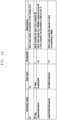
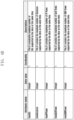
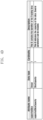
- FIGS. 4A to 4E are diagrams illustrating information contained in a message transmitted by an NF 300 according to various embodiments of the disclosure.
- the above-described attribute name fields of FIG. 4B may be information corresponding to the capacity of the network slice described above with reference to FIG. 2 .
- the attribute name fields of 'Tai' and 'NF Type' in FIG. 4C may be the same information as the attribute name fields described above in FIG. 4A .
- the field of 'supportedSnssaiList' may contain network slice information supported by the NF 300, and if the TAI is included, this information is valid for the TA.
- the attribute for each array constituting the 'supportedSnssaiList' may be defined as in FIG. 4D .
- the attribute fields of SliceCapacity may include at least one of 'maxUEs', 'maxSessions', 'maxIPFlows', 'maxQoSFlows', and 'maxGBRFlows'.
- the NF 300 may transmit the "Nnssf_NSSAIAvailability_Update" message to the NSSF 134 in order to call a service for notifying its own network slice related information.
- the NSSF 134 may store the information received from the NF 300 and, in response to the service request, transmit an NSSAI Availability Update response message to the NF 300 that has transmitted the Nnssf_NSSAIAvailability_Update message. Thereafter, when a request for providing information about a specific network slice or selecting a network slice is received from the NF 300, the NSSF 134 may respond using the stored information.
- the NSSF 134 may request the NF 300 to notify a status or configuration when it is changed, or request the NF 300 to periodically inform the current status/configuration information.
- This request may be implemented as a subscribe message for an NF status change or a request message for reporting on a specific event.
- the request message may contain information (identifier) about the corresponding network slice to be a target, and status/configuration information to be received.
- the status information to be received may contain the following parameters. If a response is received only when a specific condition is met, the condition (threshold for a specific value, etc.) may be contained. If periodic information reporting is requested, the request message may contain a period for response.
- the current status per network slice may contain the following information.
- the current usage per network slice is in the form of dividing the current usage by the maximum supportable usage and multiplying it by 100, thus being percentage (%) information.
- the NF 300 may generate and transmit a reporting (NF status change notification) message about network slice information of the NF 300. If a condition for reporting is configured, the NF 300 may generate the reporting message and transmit it to the NSSF 134 only when the condition is satisfied. Accordingly, the NSSF 134 may receive the reporting message. Also, the NSSF 134 may update pre-stored data, based on the received reporting message.
- a reporting NF status change notification
- a specific network slice instance is selected as a result of network slice selection, and a network slice instance (NSI) ID is contained in the response message
- subsequent selection of an NF belonging to the network slice may be made using an NSI ID.
- a basic operating principle is as follows.
- FIG. 5 is a signal flow diagram illustrating a control operation in consideration of the capacity of a network slice during registration management, mobility management, and session management of a UE according to an embodiment of the disclosure.
- the NF 300 is described in a form including the AMF 131, the SMF 132, and the UPF 133, and the NF 300 may have a meaning to collectively refer to the AMF 131, the SMF 132, and the UPF 133.
- the NF 300 may correspond to one network slice.
- the AMF 131, the SMF 132, and the UPF 133 included in the NF 300 may be implemented as a device and/or software and/or firmware for operating in the same single network slice.
- the AMF 131, the SMF 132, and the UPF 133 included in the NF 300 may be some functions allocated to the corresponding network slice in the AMF device, the SMF device, and the UPF device.
- the NF 300 may call a service for notifying its own network slice related information to the network slice selection function (NSSF) 134.
- the service used by the NF 300 may be an Nnssf_NSSAIAvailability_Update message.
- the description is made using the NSSF 134 in this embodiment, it may be performed by another specific network entity having a function of storing information of a network slice and assisting the selection of a network slice according to various embodiments of the disclosure.
- the information (SupportedNssaiAvailabilityData) message transmitted to the NSSF 134 by the AMF 131 may contain a location (TAI) of the AMF 131 and an identifier (S-NSSAI) list of a network slice to which the AMF 131 belongs.
- TAI location of the AMF 131
- S-NSSAI identifier
- a capacity parameter per network slice identifier may be contained.
- the capacity parameter may be one or more of the parameters described above in the embodiments of FIGS. 3 and 4A to 4E .
- the maximum number of UEs (subscribers or users) capable of being provided in a network slice may be contained.
- the information (SupportedNssaiAvailabilityData) message transmitted to the NSSF 134 by the SMF 132 may contain a location (TAI or service area ID) of the SMF 132 and an identifier (S-NSSAI) list of a network slice to which the SMF 132 belongs.
- a capacity parameter per network slice identifier may be contained.
- the capacity parameter may be one or more of the parameters described above in the embodiments of FIGS. 3 and 4A to 4E .
- the maximum number of sessions and the maximum number of flows (IP flow, QoS flow, GBR flow) capable of being provided in a network slice may be contained.
- the information (SupportedNssaiAvailabilityData) message transmitted to the NSSF 134 by the UPF 133 may contain a location (TAI or service area ID) of the UPF 133 and an identifier (S-NSSAI) list of a network slice to which the UPF 133 belongs.
- a capacity parameter per network slice identifier may be contained.
- the capacity parameter may be one or more of the parameters described above in the embodiments of FIGS. 3 and 4A to 4E .
- the maximum data rate capable of being provided in a network slice may be contained.
- the NSSF 134 may store the information received from the UPF 133 at the operation 510c and transmit a response message to the UPF 133 at operation 520a.
- the NSSF 134 may store the information received from the SMF 133 at the operation 510b and transmit a response message to the SMF 132 at operation 520b.
- the NSSF 134 may store the information received from the AMF 131 at the operation 510a and transmit a respond message to the AMF 131 at operation 520c.
- the NSSF 134 may request, at operation 530a, reporting on the number of currently registered UEs and the number of accessing UEs in relation to a specific network slice among the status information of the AMF 131. If the NF 300 is the SMF 132, the NSSF 134 may request, at operation 530b, reporting on the number of currently established sessions and the number of activated sessions in relation to a specific network slice among the status information of the SMF 132. In addition, if the NF 300 is the SMF 132, the NSSF 134 may additionally request information for each specific data network name (DNN) or data network access identifier (DNAI).
- DNN data network name
- DNAI data network access identifier
- the NSSF 134 may request, at operation 530c, reporting on the current data rate in relation to a specific network slice among the status information of the UPF 133, and request information for each specific DNN or DNAI.
- the NRF 153 (or a service communication proxy (SCP) 157) that stores information for each NF and provides the information upon selecting the NF may be used alternatively.
- the NFR 153 may basically store NF information, and the NF information may include information about a network slice to which the corresponding NF belongs. Therefore, when providing selection information to a specific NF in a state where information is stored for each NF, the NRF 153 may provide the stored NF information together with network slice information to which the corresponding NF belongs.
- the SCP 157 may perform the operation of the NRF 153.
- each NF AMF, SMF, or UPF
- the NF profile transmitted by each NF may contain not only basic NF information but also the network slice information described at the operation 510.
- the NRF 153 may request and receive reporting on the current status information of the network slice from the corresponding NF.
- the subscribe message for status change reporting or a status check function (heartbeat) between the NRF 153 and the NF may be used.
- request information and response information may contain the parameters described above in the operation 530.
- FIG. 6 is a signal flow diagram illustrating an operation of performing access control of a UE according to an embodiment of the disclosure.
- the signal flow diagram of FIG. 6 exemplarily shows a case in which the NSSF 134 becomes a subject according to the disclosure.
- the NRF 153 or the SCP 157 may be substituted for the NSSF 134.
- the UE 120 may select a network slice desired to access and transmit a connection request (RRC Connection (NSSAI)) message to the RAN 110.
- RRC Connection NSSAI
- the NG-RAN is only illustrated as an example of a base station and is not construed as a limitation. That is, any base station among the various types of base stations described above with reference to FIG. 1 may be used.
- the NG-RAN 110 may select a first AMF 131a by using a network slice identifier specified by the UE 120 and transmit, to the first AMF 131a, an initial UE message (Initial UE message - Registration Req (Requested NSSAI)) containing a registration request, based on the connection request message transmitted by the UE, for example, an N1 (NAS) message (the registration request message described in embodiments of the disclosure).
- an initial UE message Initial UE message - Registration Req (Requested NSSAI)
- NAS N1
- the NG-RAN 110 may select one AMF in accordance with an AMF selection rule.
- the NG-RAN 110 may select the first AMF 131a, based on the network slice information specified by the UE 120, or in accordance with the AMF selection rule, and transmit the initial UE message (Initial UE message - Registration Req (Requested NSSAI)) to the first AMF 131a.
- the initial UE message Initial UE message - Registration Req (Requested NSSAI)
- the first AMF 131a may perform an operation of processing a registration request message transmitted by the UE 120 through the NG-RAN 110. If it is necessary to select a new network slice for the UE 120, change a network slice, or select a new AMF belonging to a network slice, the first AMF 131a may transmit a network slice selection request (NSSelection Req) message to the NSSF 134.
- the network slice selection request (NSSelection Req) message may be performed through a GET operation of the Nnssf_NSSelection Service provided by the NSSF 134.
- the first AMF 131a does not need to select a new network slice, change a network slice, or select a new AMF belonging to a network slice, it may not perform operations after the operation 612.
- the first AMF 131a may add the network slice identifiers (Requested NSSAI) requested by the UE 120, and the network slice identifiers (Subscribed NSSAI) contained in the subscription information.
- the first AMF 131a may inform that a selection target is all NFs included in the network slice, or may designate a specific NF type in the network slice as a selection target.
- the NSSF 134 may perform an operation of selecting a network slice in response to the request of the first AMF 131a.
- information for each slice (maximum capacity for each slice, current load (usage)) received or stored through the above-described embodiments of FIGS. 2 to 5 may be considered.
- the request of the first AMF 131a is the entire network slice
- the selection of a network slice and the selection of candidate NFs included in the network slice may be made in consideration of the overall status of the network slice. For example, if the AMF 131, the SMF 132, and the UPF 133 are included in the network slice, all of them may be included in candidate NFs.
- candidate NFs having the corresponding NF type may be selected. If the network slice is formed of an instance, one network slice instance may be selected. If there are multiple NFs or instances as a selection target, the selection may be made so as to distribute the load in consideration of the received maximum capacity and current load status.
- the NSSF 134 may transmit, to the first AMF 131a, a network slice selection response (NSSelection Resp) message containing network slice information.
- the network slice selection response may be implemented in the form of Nnssf_NSSelection Service and may include authenticated network slice information (AuthorizedNetworkSliceInfo) containing the previously selected network slice information.
- the AuthorizedNetworkSliceInfo may contain information on the network slice and candidate NFs therein, selected in consideration of the overall status of the network slice.
- the network slice includes the AMF 131 (referring to both the first AMF 131a and the second AMF 131b), the SMF 132, and the UPF 133, their candidate information may be contained. If the request of the first AMF 131a designates a specific NF belonging to the network slice, information on the selected candidate NFs having the corresponding NF type may be contained. If the network slice is formed of an instance, the selected one slice instance may be contained. Information containing the network slice may be constructed in the form of a name or identifier that allows the selected candidate or selected instance to be identified.
- the NSSF 134 may add a failure result and reason in the network slice selection response message. Through this, the NSSF 134 may inform the first AMF 131a of the reason that the selection of the NF has failed.
- the first AMF 131a that has received the network slice selection response message through the operation 618 may identify whether the selection of a new AMF is necessary, by using the received information. If the new AMF selection is required, and if additional information is required for the new AMF selection, an AMF selection process may be performed through the NRF 153 (or the SCP 157) (not shown in FIG. 6 ). In this case, the AMF selection may consider the network slice information and candidate AMFs previously received at the operation 618.
- the first AMF 131a transmit to the NF-RAN 110 a reroute request message (Reroute NAS message) for rerouting the registration process for the UE 120 to the selected AMF, for example, the new second AMF 131b in FIG. 6 .
- the Reroute NAS message transmitted to the NG-RAN 110 by the firstAMF 131a may contain the N1 (NAS) message received from the UE 120, an identifier of the selected new second AMF 131b, and the network slice information received from the NSSF 134 at the operation 618. If it is unnecessary to change the AMF after reroute, the network slice information may be transmitted without AMF information.
- the NG-RAN 110 may transmit an initial UE message to the second AMF 131b selected based on the Reroute NAS message received from the first AMF 131a.
- the initial UE message may be referred to as different names, and may contain the message transmitted to the NG-RAN 110 by the UE 110 at the operation 610 and the NAS message and network slice information acquired from the first AMF 131a.
- a registration procedure for the UE 120 may be performed between the first AMF 131a and the new second AMF 131b.
- the registration procedure may be performed when there is additionally necessary information in addition to the information transmitted through the NG-RAN 110.
- FIG. 7 is a signal flow diagram based on a network slice status in a session establishment procedure according to an embodiment of the disclosure.
- a specific network slice may be selected during the registration procedure among the UE 110, the AMF 131, and the NFs.
- the UE 110 may transmit a PDU session establishment request message to the AMF 131.
- the PDU session establishment message may contain information about a target of PDU session establishment, for example, a DNN and a slice identifier.
- the AMF 131 may transmit a network slice selection request (NSSelection Req) message to the NSSF 134.
- the network slice selection request message may use a GET operation of the Nnssf_NSSelection Service provided by the NSSF 134.
- the AMF 131 may add network slice identifiers requested by the UE 110 and network slice identifiers contained in subscription information.
- the AMF 131 may inform that a selection target is all NFs included in the network slice during the session establishment, or may designate a specific NF type (SMF and/or UPF) in the network slice as a selection target. Also, the AMF 131 may additionally transmit information about the session by using DNN or DNAI during the session establishment.
- the NSSF 134 may perform an operation of selecting a network slice in response to the request of the AMF 131.
- information per network slice maximum capacity per slice, current load (usage) received or stored through the above-described embodiments may be considered.
- the request of the AMF 131 is the entire network slice, the selection of the network slice and the selection of candidate NFs included in the network slice may be made in consideration of the overall status of the network slice. If the SMF 132 and the UPF 133 are included in the network slice, both may be included. If the request of the AMF 131 designates a specific NF belonging to the network slice, candidate NFs having the corresponding NF type may be selected.
- the network slice is formed of an instance, one slice instance may be selected. If there are multiple NFs or instances as a selection target, the selection may be made so as to distribute the load in consideration of the received maximum capacity and current load status. If DNN or DNAI is specified, supportability may be considered when selecting a slice and an NF belonging to the slice.
- the NSSF 134 may generate a network slice selection response (NSSelection Resp) message in response to the network slice selection request message and transmit it to the AMF 131.
- the network slice selection response message may contain selected network slice information.
- the network slice selection response message may use the Nnssf_NSSelection Service, and more specifically, may include authenticated network slice information (AuthorizedNetworkSliceInfo) containing the previously selected slice information.
- the authenticated network slice information (AuthorizedNetworkSliceInfo) may contain information on the network slice and candidate NFs therein, selected in consideration of the overall status of the network slice.
- the network slice includes the SMF 132 and the UPF 133 related to the session, their information may be contained. If the request of the AMF 131 designates a specific NF belonging to the network slice, information on the selected candidate NFs having the corresponding NF type may be contained. If the network slice is formed of an instance, the selected one slice instance may be contained. Contained information may be constructed in the form of a name or identifier that allows the selected candidate or selected instance to be identified. If the selection of the network slice or NF that can process the request fails, for example, in case of exceeding the capacity of the network slice, the NSSF 134 may notify a failure result and reason for the network slice selection.
- the AMF 131 may identify whether the selection of the SMF is necessary, by using information contained in the received network slice selection response message. If the SMF selection is required, and if additional information is required for the SMF selection, an SMF selection process may be performed through the NRF 153 (or the SCP 157) (not shown in FIG. 7 ). In this case, the SMF selection may consider the network slice information and candidate SMFs previously received at the operation 718.
- the AMF 131 may perform the remaining session establishment procedure for the UE 110 through the selected SMF 132. If the network slice information is received at the operation 718 and information for the SMF or UPF selection is contained in the network slice information, the AMF 131 may transmit it to the SMF 132 and/or the UPF 133.
- one NF in the operator network transmits a policy or UE configuration to be used upon selecting a network slice to the UE.
- the NF may be the UDM (based on subscription information), the PCF (based on policy), or any other NF that stores information for slice control.
- the NF may firstly transmit information to another NF (e.g., the AMF or the SMF) that manages the slice status for each UE during the communication process with the UE, which may be converted into a NAS layer message and delivered to the UE.
- the policy/configuration to be used for slice selection may include the following information.
- each slice managed by the UE and the network (5GS) may be one of the following statuses.
- the status for each slice should be simultaneously managed by the UE and one or more NFs in the network that manages the status of the UE, and the corresponding NF may be, for example, the AMF.
- the slice may be considered in the active status. If the UE does not establish a PDU session for an allowed slice, or if all PDU sessions are released, the slice may be considered in the inactive status.
- a PDU session is not created (established) for a time set in a timer, for example, the above-mentioned slice duration timer, configured for an active slice
- the UE or the network may change the slice to the inactive status.
- the timer may be configured so that the network transmits it to the UE through a NAS message.
- the UE may explicitly transmit a request to change the status of a specific slice from active to inactive to the network (5GS).
- the network (5GS) may explicitly transmit a command to change the status of a specific slice from inactive to active to the UE.
- the UE or the network (5GS) may exclude the slice from allowed slices.
- the timer may be configured so that the network (5GS) transmits it to the UE through a NAS message.
- the UE may explicitly transmit a message to the network (5GS) to inform that the status of a specific slice is out of permission.
- the network (5GS) may explicitly transmit a command for excluding a specific slice from allowed slices to the UE.
- the network applies a quota limit (the number of simultaneous access UEs, the number of concurrently established sessions, the maximum transfer rate for each slice, etc.) to the slice, the detailed status of the slice may be considered.
- a quota limit the number of simultaneous access UEs, the number of concurrently established sessions, the maximum transfer rate for each slice, etc.
- the value of the above-described timer may be differentially applied depending on user and service characteristics and may be contained in a part of subscription information or policy.
- the corresponding information may be transmitted from the UDM to an NF that controls the slice.
- the corresponding information may be transmitted from the PCF to an NF that controls the slice. For example, by configuring the value of the timer to be long for a subscriber whose service quality is important or with high priority/grade, the corresponding slice can be maintained in the allowed/active status for a long time.
- the NF that controls the slice is an NF that determines the parameters delivered to the UE in accordance with the policy or subscription information and manages the slice status (allowed, requested, active, inactive, etc.) for the UE.
- an NF may be the AMF or the SMF.
- FIG. 8 is an internal functional block diagram of an NF according to the disclosure.
- the NF 300 may include the AMF 131, the SMF 132, and the UPF 133 as described above.
- the NF 300 may include other network entities or network instances such as the NSSF 134, the NFR 153, the SCP 157, the PCF 154, and the UDM 155.
- the NF 300 may be a separate network entity or instance not mentioned above.
- a network interface 810 may communicate with other network entities and/or instances in the core network.
- the NF 300 may perform communication with the SMF 132, the UPF 133, the NSSF 134, the NFR 153, the PCF 154, the UDM 155, and/or the SCP 157.
- the NF 300 is the SMF 132, it may perform communication with the AMF 131, the UPF 133, the NSSF 134, the NFR 153, the PCF 154, the UDM 155, and/or the SCP 157.
- the NF 300 may perform communication with the AMF 131, the UPF 133, the SMF 132, the NFR 153, the PCF 154, the UDM 155, and/or the SCP 157.
- the NF 300 is one specific network entity, it may perform communication with another entity in the core network.
- a controller 811 may be implemented as at least one processor and/or a program driven by the processor for performing the operations of the NF. For example, if the NF 300 is the AMF 131, the controller 811 may perform the above-described operations of the AMF 131. In another example, if the NF 300 is the NSSF 134, the controller 811 may perform the above-described operations of the NSSF 134. Similarly, in case of any other network entity, the controller 811 may perform the control necessary for the above-described operations.
- a memory 812 may store a program and various kinds of control information required for the controller 811 and may also store each information described in the disclosure. For example, if the NF 300 is the AMF 131, the memory 812 may store the above-described information received by the AMF 131 or received from an external entity. In another example, if the NF 300 is the NSSF 134, the memory 812 may store the above-described control information required for the NSSF 134 and/or received information. Similarly, in case of any other network entity, the memory 812 may store information necessary for the above-described operations.
- a computer-readable storage medium for storing one or more programs may be provided as hardware.
- One or more programs stored in the computer-readable storage medium are configured for execution by one or more processors in an electronic device.
- the one or more programs include instructions that cause the electronic device to perform the methods according to claims or embodiments described herein.
- Such programs may be stored in a random access memory, a non-volatile memory including a flash memory, a read only memory (ROM), an electrically erasable programmable ROM (EEPROM), a magnetic disc storage device, a compact disc ROM, digital versatile discs (DVDs) or other optical storage devices, and a magnetic cassette.
- the programs may be stored in a memory combining part or all of the above recording media. A plurality of memories may be equipped.
- the programs may be stored in an attachable storage device accessible via a communication network formed of Internet, Intranet, local area network (LAN), wide area network (WAN), or storage area network (SAN) alone or in combination.
- This storage device may access an apparatus performing embodiments of the disclosure through an external port.
- a separate storage device in the communication network may access an apparatus performing embodiments of the disclosure.
- the disclosure may be used for access and control of the UE when at least a part of the core network in the wireless communication system is constructed with a network slice.
Landscapes
- Engineering & Computer Science (AREA)
- Computer Networks & Wireless Communication (AREA)
- Signal Processing (AREA)
- Computer Security & Cryptography (AREA)
- Mobile Radio Communication Systems (AREA)
Claims (15)
- Verfahren zur Verwaltung eines Netzwerk-Slice durch eine erste Netzwerkfunktion (134) in einem drahtlosen Kommunikationssystem, wobei das Verfahren Folgendes umfasst:Empfangen (Schritt 310), von mindestens einer zweiten Netzwerkfunktion (300), die mit dem Netzwerk-Slice, NW(network)-Slice, assoziiert ist, einer Netzwerk-Slice-Auswahlunterstützungsinformations-Verfügbarkeitsaktualisierungsnachricht, NSSAI(network slice selection assistance information)-Verfügbarkeitsaktualisierungsnachricht, wobei die NSSAI-Verfügbarkeitsaktualisierungsnachricht einen Kapazitätsparameter des NW-Slice enthält;Speichern (Schritt 320) von Informationen, die in der NSSAI-Verfügbarkeitsaktualisierungsnachricht enthalten sind;Übertragen (Schritt 320), an die zweite Netzwerkfunktion (300), einer Antwortnachricht auf die NSSAI-Verfügbarkeitsaktualisierungsnachricht,Übertragen (Schritt 330), an die zweite Netzwerkfunktion (300), einer Nachricht, die geänderte Informationen anfordert, falls ein Status oder eine Konfiguration der zweiten Netzwerkfunktion (300) geändert wird;Empfangen, von der zweiten Netzwerkfunktion (300), einer Netzwerk-Slice-Auswahlanforderungsnachricht;Durchführen einer Auswahl eines Netzwerk-Slice basierend auf dem Kapazitätsparameter des NW-Slice; undÜbertragen, an die zweite Netzwerkfunktion (300), einer Netzwerk-Slice-Auswahlantwortnachricht, die Netzwerk-Slice-Informationen enthält.
- Verfahren nach Anspruch 1, wobei die NSSAI-Verfügbarkeitsaktualisierungsnachricht mindestens eines von Folgendem enthält: einen Typ der zweiten Netzwerkfunktion, eine Verfolgungsbereichskennung, TAI (tracking area indicator), der zweiten Netzwerkfunktion, eine einen einzigen Netzwerk-Slice betreffende Auswahlunterstützungsinformationsliste, S-NSSAI(single network slice selection assistance information)-Liste, eines Netzwerk-Slice, der mit der zweiten Netzwerkfunktion (300) assoziiert ist, oder Kapazitätsinformationen der S-NSSAI, die mit der zweiten Netzwerkfunktion (300) assoziiert sind.
- Verfahren nach Anspruch 2, wobei der Kapazitätsparameter des NW-Slice, der in den Kapazitätsinformationen der S-NSSAI enthalten ist, mindestens eines von Folgendem umfasst: die maximale Anzahl von Endgeräten, die von dem NW-Slice unterstützt werden können, die maximale Anzahl von Sitzungen, die von dem NW-Slice unterstützt werden können, die maximale Anzahl von Internetprotokoll-Flüssen, IP(Internet protocol)-Flüssen, die von dem NW-Slice unterstützt werden können, die maximale Anzahl von Dienstgüte-Flüssen, QoS(quality of service)-Flüssen, die von dem NW-Slice unterstützt werden können, oder die maximale Anzahl von Flüssen garantierter Bitraten, GBR(guaranteed bit rate)-Flüssen, die von dem NW-Slice unterstützt werden können.
- Verfahren nach Anspruch 1, wobei die Nachricht, die die geänderten Informationen anfordert, eine Anmeldenachricht für eine Statusänderung der zweiten Netzwerkfunktion (300) oder eine Berichtsanforderungsnachricht für ein spezifisches Ereignis ist.
- Verfahren nach Anspruch 4, wobei die Statusänderung mit mindestens einem aus einem Parameter für die Kapazität des NW-Slice, einem aktuellen Status des NW-Slice oder einer aktuellen Nutzung des NW-Slice assoziiert ist.
- Verfahren nach Anspruch 5, wobei der aktuelle Status des NW-Slice mindestens eines von Folgendem umfasst: die Anzahl von Teilnehmern, Endgeräten oder Benutzern, die derzeit auf den NW-Slice zugreifen, die Anzahl von Teilnehmern, Endgeräten oder Benutzern, die in dem NW-Slice registriert sind, die Anzahl von PDU-Sitzungen, die von dem NW-Slice unterstützt werden, die Anzahl von IP-Flüssen, die von dem NW-Slice unterstützt werden, die Anzahl von QoS-Flüssen, die von dem NW-Slice unterstützt werden, oder eine Anzahl von GBR-Flüssen, die von dem NW-Slice unterstützt werden.
- Verfahren nach Anspruch 5, wobei die aktuelle Nutzung des NW-Slice mindestens eines von Folgendem umfasst: ein Verhältnis der Anzahl von Teilnehmern, Endgeräten oder Benutzern, die derzeit auf den NW-Slice zugreifen, zur maximalen Anzahl von Teilnehmern, Endgeräten oder Benutzern, die von dem NW-Slice unterstützt werden können, ein Verhältnis der Anzahl von PDU-Sitzungen, die von dem NW-Slice unterstützt werden, zur maximalen Anzahl von Sitzungen, die von dem NW-Slice unterstützt werden können, ein Verhältnis der Anzahl von IP-Flüssen, die von dem NW-Slice unterstützt werden, zur maximalen Anzahl von IP-Flüssen, die von dem NW-Slice unterstützt werden können, ein Verhältnis der Anzahl von QoS-Flüssen, die von dem NW-Slice unterstützt werden, zur maximalen Anzahl von QoS-Flüssen, die von dem NW-Slice unterstützt werden können, oder ein Verhältnis der Anzahl von GBR-Flüssen, die von dem NW-Slice unterstützt werden, zur maximalen Anzahl von GBR-Flüssen, die von dem NW-Slice unterstützt werden können.
- Verfahren nach Anspruch 1, das ferner Folgendes umfasst:
Aktualisieren der gespeicherten Informationen, die in der NSSAI-Verfügbarkeitsaktualisierungsnachricht enthalten sind, falls eine Netzwerkfunktionsstatus-Änderungsbenachrichtigungsnachricht von der zweiten Netzwerkfunktion (300) als Antwort auf die Nachricht, die die geänderten Informationen anfordert, empfangen wird. - Erste Netzwerkfunktion (134) zur Verwaltung eines Netzwerk-Slice in einem drahtlosen Kommunikationssystem, wobei die erste Netzwerkfunktion (134) Folgendes umfasst:eine Netzwerkschnittstelle, die mit anderen Netzwerkfunktionen in dem drahtlosen Kommunikationssystem kommuniziert;einen Speicher, der Informationen über den Netzwerk-Slice speichert; undmindestens einen Prozessor, der für Folgendes konfiguriert ist:Empfangen (Schritt 310), von mindestens einer zweiten Netzwerkfunktion (300), die mit dem Netzwerk-Slice, NW(network)-Slice, assoziiert ist, einer Netzwerk-Slice-Auswahlunterstützungsinformations-Verfügbarkeitsaktualisierungsnachricht, NSSAI(network slice selection assistance information)-Verfügbarkeitsaktualisierungsnachricht, wobei die NSSAI-Verfügbarkeitsaktualisierungsnachricht einen Kapazitätsparameter des NW-Slice enthält,Speichern (Schritt 320), in dem Speicher, von Informationen, die in der NSSAI-Verfügbarkeitsaktualisierungsnachricht enthalten sind,Übertragen (Schritt 320), an die zweite Netzwerkfunktion (300), einer Antwortnachricht auf die NSSAI-Verfügbarkeitsaktualisierungsnachricht,Übertragen (Schritt 330), an die zweite Netzwerkfunktion (300), einer Nachricht, die geänderte Informationen anfordert, falls ein Status oder eine Konfiguration der zweiten Netzwerkfunktion (300) geändert wird,Empfangen, von der zweiten Netzwerkfunktion (300), einer Netzwerk-Slice-Auswahlanforderungsnachricht,Durchführen einer Auswahl eines Netzwerk-Slice basierend auf dem Kapazitätsparameter des NW-Slice undÜbertragen, an die zweite Netzwerkfunktion (300), einer Netzwerk-Slice-Auswahlantwortnachricht, die Netzwerk-Slice-Informationen enthält.
- Erste Netzwerkfunktion (134) nach Anspruch 9, wobei die NSSAI-Verfügbarkeitsaktualisierungsnachricht mindestens eines von Folgendem enthält: einen Typ der zweiten Netzwerkfunktion (300), eine Verfolgungsbereichskennung, TAI (tracking area indicator), der zweiten Netzwerkfunktion (300), eine einen einzigen Netzwerk-Slice betreffende Auswahlunterstützungsinformationsliste, S-NSSAI(single network slice selection assistance information)-Liste, eines Netzwerk-Slice, der mit der zweiten Netzwerkfunktion (300) assoziiert ist, oder Kapazitätsinformationen der S-NSSAI, die mit der zweiten Netzwerkfunktion (300) assoziiert sind.
- Erste Netzwerkfunktion (134) nach Anspruch 10, wobei der Kapazitätsparameter des NW-Slice, der in den Kapazitätsinformationen der S-NSSAI enthalten ist, mindestens eines von Folgendem umfasst: die maximale Anzahl von Endgeräten, die von dem NW-Slice unterstützt werden können, die maximale Anzahl von Sitzungen, die von dem NW-Slice unterstützt werden können, die maximale Anzahl von Internetprotokoll-Flüssen, IP(Internet protocol)-Flüssen, die von dem NW-Slice unterstützt werden können, die maximale Anzahl von Dienstgüte-Flüssen, QoS(quality of service)-Flüssen, die von dem NW-Slice unterstützt werden können, oder die maximale Anzahl von Flüssen mit garantierter Bitrate, GBR(guarateed bit rate)-Flüssen, die von dem NW-Slice unterstützt werden können.
- Erste Netzwerkfunktion (134) nach Anspruch 9, wobei die Nachricht, die die geänderten Informationen anfordert, eine Anmeldenachricht für eine Statusänderung der zweiten Netzwerkfunktion (300) oder eine Berichtsanforderungsnachricht für ein spezifisches Ereignis ist.
- Erste Netzwerkfunktion (134) nach Anspruch 12, wobei die Statusänderung mit mindestens einem aus einem Parameter für die Kapazität des NW-Slice, einem aktuellen Status des NW-Slice oder einer aktuellen Nutzung des NW-Slice assoziiert ist.
- Erste Netzwerkfunktion (134) nach Anspruch 13, wobei der aktuelle Status des NW-Slice mindestens eines von Folgendem umfasst: die Anzahl von Teilnehmern, Endgeräten oder Benutzern, die derzeit auf den NW-Slice zugreifen, die Anzahl von Teilnehmern, Endgeräten oder Benutzern, die in dem NW-Slice registriert sind, die Anzahl von PDU-Sitzungen, die von dem NW-Slice unterstützt werden, die Anzahl von IP-Flüssen, die von dem NW-Slice unterstützt werden, die Anzahl von QoS-Flüssen, die von dem NW-Slice unterstützt werden, oder eine Anzahl von GBR-Flüssen, die von dem NW-Slice unterstützt werden, und
wobei die aktuelle Nutzung des NW-Slice mindestens eines von Folgendem umfasst: ein Verhältnis der Anzahl von Teilnehmern, Endgeräten oder Benutzern, die derzeit auf den NW-Slice zugreifen, zur maximalen Anzahl von Teilnehmern, Endgeräten oder Benutzern, die von dem NW-Slice unterstützt werden können, ein Verhältnis der Anzahl von PDU-Sitzungen, die von dem NW-Slice unterstützt werden, zur maximalen Anzahl von Sitzungen, die von dem NW-Slice unterstützt werden können, ein Verhältnis der Anzahl von IP-Flüssen, die von dem NW-Slice unterstützt werden, zur maximalen Anzahl von IP-Flüssen, die von dem NW-Slice unterstützt werden können, ein Verhältnis der Anzahl von QoS-Flüssen, die von dem NW-Slice unterstützt werden, zur maximalen Anzahl von QoS-Flüssen, die von dem NW-Slice unterstützt werden können, oder ein Verhältnis der Anzahl von GBR-Flüssen, die von dem NW-Slice unterstützt werden, zur maximalen Anzahl von GBR-Flüssen, die von dem NW-Slice unterstützt werden können. - Erste Netzwerkfunktion (134) nach Anspruch 9, wobei der Prozessor für Folgendes konfiguriert ist:
Aktualisieren der Informationen, die in der NSSAI-Verfügbarkeitsaktualisierungsnachricht enthalten und in dem Speicher gespeichert sind, falls eine Netzwerkfunktionsstatus-Änderungsbenachrichtigungsnachricht von der zweiten Netzwerkfunktion (300) als Antwort auf die Nachricht, die die geänderten Informationen anfordert, empfangen wird.
Applications Claiming Priority (2)
| Application Number | Priority Date | Filing Date | Title |
|---|---|---|---|
| KR20190116405 | 2019-09-20 | ||
| PCT/KR2020/012652 WO2021054781A1 (ko) | 2019-09-20 | 2020-09-18 | 무선 통신 시스템에서 네트워크 슬라이스의 관리 및 접속 제어 방법 및 장치 |
Publications (3)
| Publication Number | Publication Date |
|---|---|
| EP4009708A1 EP4009708A1 (de) | 2022-06-08 |
| EP4009708A4 EP4009708A4 (de) | 2022-10-19 |
| EP4009708B1 true EP4009708B1 (de) | 2025-07-02 |
Family
ID=74883432
Family Applications (1)
| Application Number | Title | Priority Date | Filing Date |
|---|---|---|---|
| EP20866235.3A Active EP4009708B1 (de) | 2019-09-20 | 2020-09-18 | Verfahren und vorrichtung zur verwaltung und zugriffssteuerung von netzwerk-slices in einem drahtlosen kommunikationssystem |
Country Status (4)
| Country | Link |
|---|---|
| US (1) | US12309691B2 (de) |
| EP (1) | EP4009708B1 (de) |
| KR (1) | KR20210034531A (de) |
| WO (1) | WO2021054781A1 (de) |
Families Citing this family (10)
| Publication number | Priority date | Publication date | Assignee | Title |
|---|---|---|---|---|
| EP4042765B1 (de) * | 2019-10-08 | 2025-12-03 | Telefonaktiebolaget LM Ericsson (publ) | Skalierbarkeitsattribute für netzwerk-slicing |
| CN115551122A (zh) * | 2021-06-30 | 2022-12-30 | 华为技术有限公司 | 切片准入控制的方法和通信装置 |
| US11722928B1 (en) | 2021-07-12 | 2023-08-08 | T-Mobile Innovations Llc | Network slicing in a wireless communication network |
| US11910306B2 (en) * | 2021-07-21 | 2024-02-20 | Oracle International Corporation | Methods, systems, and computer readable media for providing updated network slice information to a network slice selection function (NSSF) |
| CN114501493B (zh) * | 2021-12-10 | 2025-01-14 | 中国电信股份有限公司 | 网络切片更新方法及系统、存储介质及电子设备 |
| CN118947159B (zh) * | 2022-03-17 | 2026-02-03 | 欧芬诺有限责任公司 | 基于不活动性的网络切片管理的方法 |
| US12342269B2 (en) * | 2022-08-01 | 2025-06-24 | Verizon Patent And Licensing Inc. | Systems and methods for network slice modification by policy control function in a wireless network |
| GB202217096D0 (en) * | 2022-11-16 | 2022-12-28 | Samsung Electronics Co Ltd | Using radio resources during emergency session network slicing |
| WO2025144925A1 (en) * | 2023-12-29 | 2025-07-03 | Calix, Inc. | Reduced power media access control processor design |
| US12513070B1 (en) | 2024-06-26 | 2025-12-30 | Oracle International Corporation | Methods, systems, and computer readable media for communicating and using producer network function (NF) network slice level load information |
Family Cites Families (7)
| Publication number | Priority date | Publication date | Assignee | Title |
|---|---|---|---|---|
| WO2019036494A1 (en) * | 2017-08-14 | 2019-02-21 | Idac Holdings, Inc. | TERMINAL REQUESTING NETWORK WAFER CAPABILITIES FROM A NON 3GPP ACCESS NETWORK |
| KR102425675B1 (ko) | 2017-08-14 | 2022-07-28 | 삼성전자 주식회사 | 5g 시스템에서 네트워크와 단말 간 제공 기능 협상 및 슬라이스 정보 맵핑 방법 |
| CN109951877B (zh) * | 2017-12-20 | 2023-06-02 | 华为技术有限公司 | 一种切片信息更新方法及装置 |
| US20190230556A1 (en) * | 2018-01-19 | 2019-07-25 | Electronics And Telecommunications Research Institute | Apparatus and method for network function profile management |
| US10506506B2 (en) * | 2018-04-30 | 2019-12-10 | Ofinno, Llc | 5G policy control for restricted local operator services |
| GB2577804B (en) * | 2018-10-03 | 2022-03-02 | Samsung Electronics Co Ltd | Improvements in and relating to telecommunications networks |
| KR20200143134A (ko) | 2019-06-14 | 2020-12-23 | 삼성전자주식회사 | 무선통신 시스템에서 서비스를 제공하는 방법 및 장치 |
-
2020
- 2020-09-18 EP EP20866235.3A patent/EP4009708B1/de active Active
- 2020-09-18 WO PCT/KR2020/012652 patent/WO2021054781A1/ko not_active Ceased
- 2020-09-18 US US17/753,691 patent/US12309691B2/en active Active
- 2020-09-18 KR KR1020200120712A patent/KR20210034531A/ko active Pending
Also Published As
| Publication number | Publication date |
|---|---|
| WO2021054781A1 (ko) | 2021-03-25 |
| EP4009708A4 (de) | 2022-10-19 |
| US12309691B2 (en) | 2025-05-20 |
| KR20210034531A (ko) | 2021-03-30 |
| EP4009708A1 (de) | 2022-06-08 |
| US20220345996A1 (en) | 2022-10-27 |
Similar Documents
| Publication | Publication Date | Title |
|---|---|---|
| EP4009708B1 (de) | Verfahren und vorrichtung zur verwaltung und zugriffssteuerung von netzwerk-slices in einem drahtlosen kommunikationssystem | |
| US12302163B2 (en) | Method and device for controlling data rate in wireless communication system | |
| AU2020384842B2 (en) | Method and apparatus for improving network slice control accuracy in wireless communication system | |
| CN114651482B (zh) | 在无线通信系统中控制网络切片的方法和装置 | |
| US11496581B2 (en) | Apparatus and method for supporting UPF event exposure service in wireless communication system | |
| US11558813B2 (en) | Apparatus and method for network automation in wireless communication system | |
| EP3846386B1 (de) | Verfahren und vorrichtung zur bereitstellung von diensten in einem drahtloskommunikationssystem | |
| US11363447B2 (en) | Method and device for managing and allocating binding service in a wireless network | |
| US10051527B2 (en) | Systems and methods for evolved packet core cluster and session handling | |
| EP3780679A1 (de) | Roaming-unterstützung für slice-architektur der nächsten generation | |
| JP7584525B2 (ja) | 無線通信システムでネットワーク選択精度を高める方法及び装置 | |
| CN109076448B (zh) | 用于选择网络切片和服务的方法和装置 | |
| KR20220042796A (ko) | 망 연동 시 네트워크 슬라이스를 지원하는 방법 및 장치 | |
| EP3913982A1 (de) | Netzwerk-slicing mit einem funkzugangsnetzwerkknoten | |
| CN111758269B (zh) | 用于漫游用户的跨管理或技术域网络功能实例化和配置的系统和接口 | |
| JP7850816B2 (ja) | 無線通信システムにおけるネットワークスライス変更をサポートするための方法及び装置 | |
| CN119137914A (zh) | 无线通信系统中基于网络拥塞信息确定机器学习模型的方法和装置 | |
| WO2023137579A1 (zh) | 紧急业务的提供方法、装置、设备及存储介质 | |
| WO2023142887A1 (zh) | 通信方法及通信装置 | |
| KR20220015350A (ko) | 슬라이스 연동을 지원하는 방법 및 장치 | |
| CN121220093A (zh) | 无线通信系统中用于控制能量使用的方法和装置 | |
| CN120752969A (zh) | 考虑网络切片配额的支持网络切片改变的方法和设备 | |
| KR20210034463A (ko) | 무선통신 시스템에서 데이터 속도 제어 방법 및 장치 | |
| KR20210034453A (ko) | 무선통신 시스템에서 데이터 속도 제어 방법 및 장치 | |
| KR20210054967A (ko) | 무선통신 시스템에서 네트워크 슬라이스를 관리하는 방법 및 장치 |
Legal Events
| Date | Code | Title | Description |
|---|---|---|---|
| STAA | Information on the status of an ep patent application or granted ep patent |
Free format text: STATUS: THE INTERNATIONAL PUBLICATION HAS BEEN MADE |
|
| PUAI | Public reference made under article 153(3) epc to a published international application that has entered the european phase |
Free format text: ORIGINAL CODE: 0009012 |
|
| STAA | Information on the status of an ep patent application or granted ep patent |
Free format text: STATUS: REQUEST FOR EXAMINATION WAS MADE |
|
| 17P | Request for examination filed |
Effective date: 20220304 |
|
| AK | Designated contracting states |
Kind code of ref document: A1 Designated state(s): AL AT BE BG CH CY CZ DE DK EE ES FI FR GB GR HR HU IE IS IT LI LT LU LV MC MK MT NL NO PL PT RO RS SE SI SK SM TR |
|
| A4 | Supplementary search report drawn up and despatched |
Effective date: 20220920 |
|
| RIC1 | Information provided on ipc code assigned before grant |
Ipc: H04W 48/18 20090101ALN20220915BHEP Ipc: H04W 88/14 20090101ALN20220915BHEP Ipc: H04W 24/02 20090101AFI20220915BHEP |
|
| DAV | Request for validation of the european patent (deleted) | ||
| DAX | Request for extension of the european patent (deleted) | ||
| REG | Reference to a national code |
Ref country code: DE Ref legal event code: R079 Free format text: PREVIOUS MAIN CLASS: H04W0048180000 Ipc: H04W0024020000 Ref document number: 602020053980 Country of ref document: DE |
|
| GRAP | Despatch of communication of intention to grant a patent |
Free format text: ORIGINAL CODE: EPIDOSNIGR1 |
|
| STAA | Information on the status of an ep patent application or granted ep patent |
Free format text: STATUS: GRANT OF PATENT IS INTENDED |
|
| RIC1 | Information provided on ipc code assigned before grant |
Ipc: H04W 48/18 20090101ALN20240805BHEP Ipc: H04W 88/14 20090101ALN20240805BHEP Ipc: H04W 24/02 20090101AFI20240805BHEP |
|
| INTG | Intention to grant announced |
Effective date: 20240903 |
|
| GRAJ | Information related to disapproval of communication of intention to grant by the applicant or resumption of examination proceedings by the epo deleted |
Free format text: ORIGINAL CODE: EPIDOSDIGR1 |
|
| STAA | Information on the status of an ep patent application or granted ep patent |
Free format text: STATUS: REQUEST FOR EXAMINATION WAS MADE |
|
| INTC | Intention to grant announced (deleted) | ||
| GRAP | Despatch of communication of intention to grant a patent |
Free format text: ORIGINAL CODE: EPIDOSNIGR1 |
|
| STAA | Information on the status of an ep patent application or granted ep patent |
Free format text: STATUS: GRANT OF PATENT IS INTENDED |
|
| RIC1 | Information provided on ipc code assigned before grant |
Ipc: H04W 48/18 20090101ALN20250110BHEP Ipc: H04W 88/14 20090101ALN20250110BHEP Ipc: H04W 24/02 20090101AFI20250110BHEP |
|
| INTG | Intention to grant announced |
Effective date: 20250127 |
|
| GRAS | Grant fee paid |
Free format text: ORIGINAL CODE: EPIDOSNIGR3 |
|
| GRAA | (expected) grant |
Free format text: ORIGINAL CODE: 0009210 |
|
| STAA | Information on the status of an ep patent application or granted ep patent |
Free format text: STATUS: THE PATENT HAS BEEN GRANTED |
|
| AK | Designated contracting states |
Kind code of ref document: B1 Designated state(s): AL AT BE BG CH CY CZ DE DK EE ES FI FR GB GR HR HU IE IS IT LI LT LU LV MC MK MT NL NO PL PT RO RS SE SI SK SM TR |
|
| REG | Reference to a national code |
Ref country code: GB Ref legal event code: FG4D |
|
| REG | Reference to a national code |
Ref country code: CH Ref legal event code: EP |
|
| REG | Reference to a national code |
Ref country code: DE Ref legal event code: R096 Ref document number: 602020053980 Country of ref document: DE |
|
| REG | Reference to a national code |
Ref country code: IE Ref legal event code: FG4D |
|
| PGFP | Annual fee paid to national office [announced via postgrant information from national office to epo] |
Ref country code: DE Payment date: 20250820 Year of fee payment: 6 |
|
| PGFP | Annual fee paid to national office [announced via postgrant information from national office to epo] |
Ref country code: GB Payment date: 20250820 Year of fee payment: 6 |
|
| REG | Reference to a national code |
Ref country code: NL Ref legal event code: MP Effective date: 20250702 |
|
| PG25 | Lapsed in a contracting state [announced via postgrant information from national office to epo] |
Ref country code: PT Free format text: LAPSE BECAUSE OF FAILURE TO SUBMIT A TRANSLATION OF THE DESCRIPTION OR TO PAY THE FEE WITHIN THE PRESCRIBED TIME-LIMIT Effective date: 20251103 |
|
| PG25 | Lapsed in a contracting state [announced via postgrant information from national office to epo] |
Ref country code: NL Free format text: LAPSE BECAUSE OF FAILURE TO SUBMIT A TRANSLATION OF THE DESCRIPTION OR TO PAY THE FEE WITHIN THE PRESCRIBED TIME-LIMIT Effective date: 20250702 |
|
| REG | Reference to a national code |
Ref country code: AT Ref legal event code: MK05 Ref document number: 1810711 Country of ref document: AT Kind code of ref document: T Effective date: 20250702 |
|
| PG25 | Lapsed in a contracting state [announced via postgrant information from national office to epo] |
Ref country code: IS Free format text: LAPSE BECAUSE OF FAILURE TO SUBMIT A TRANSLATION OF THE DESCRIPTION OR TO PAY THE FEE WITHIN THE PRESCRIBED TIME-LIMIT Effective date: 20251102 |
|
| PG25 | Lapsed in a contracting state [announced via postgrant information from national office to epo] |
Ref country code: NO Free format text: LAPSE BECAUSE OF FAILURE TO SUBMIT A TRANSLATION OF THE DESCRIPTION OR TO PAY THE FEE WITHIN THE PRESCRIBED TIME-LIMIT Effective date: 20251002 |
|
| REG | Reference to a national code |
Ref country code: LT Ref legal event code: MG9D |
|
| PG25 | Lapsed in a contracting state [announced via postgrant information from national office to epo] |
Ref country code: AT Free format text: LAPSE BECAUSE OF FAILURE TO SUBMIT A TRANSLATION OF THE DESCRIPTION OR TO PAY THE FEE WITHIN THE PRESCRIBED TIME-LIMIT Effective date: 20250702 |
|
| PG25 | Lapsed in a contracting state [announced via postgrant information from national office to epo] |
Ref country code: FI Free format text: LAPSE BECAUSE OF FAILURE TO SUBMIT A TRANSLATION OF THE DESCRIPTION OR TO PAY THE FEE WITHIN THE PRESCRIBED TIME-LIMIT Effective date: 20250702 |
|
| PG25 | Lapsed in a contracting state [announced via postgrant information from national office to epo] |
Ref country code: HR Free format text: LAPSE BECAUSE OF FAILURE TO SUBMIT A TRANSLATION OF THE DESCRIPTION OR TO PAY THE FEE WITHIN THE PRESCRIBED TIME-LIMIT Effective date: 20250702 |
|
| PG25 | Lapsed in a contracting state [announced via postgrant information from national office to epo] |
Ref country code: GR Free format text: LAPSE BECAUSE OF FAILURE TO SUBMIT A TRANSLATION OF THE DESCRIPTION OR TO PAY THE FEE WITHIN THE PRESCRIBED TIME-LIMIT Effective date: 20251003 |
|
| PG25 | Lapsed in a contracting state [announced via postgrant information from national office to epo] |
Ref country code: CZ Free format text: LAPSE BECAUSE OF FAILURE TO SUBMIT A TRANSLATION OF THE DESCRIPTION OR TO PAY THE FEE WITHIN THE PRESCRIBED TIME-LIMIT Effective date: 20250702 Ref country code: SE Free format text: LAPSE BECAUSE OF FAILURE TO SUBMIT A TRANSLATION OF THE DESCRIPTION OR TO PAY THE FEE WITHIN THE PRESCRIBED TIME-LIMIT Effective date: 20250702 |
|
| PG25 | Lapsed in a contracting state [announced via postgrant information from national office to epo] |
Ref country code: LV Free format text: LAPSE BECAUSE OF FAILURE TO SUBMIT A TRANSLATION OF THE DESCRIPTION OR TO PAY THE FEE WITHIN THE PRESCRIBED TIME-LIMIT Effective date: 20250702 |
|
| PG25 | Lapsed in a contracting state [announced via postgrant information from national office to epo] |
Ref country code: PL Free format text: LAPSE BECAUSE OF FAILURE TO SUBMIT A TRANSLATION OF THE DESCRIPTION OR TO PAY THE FEE WITHIN THE PRESCRIBED TIME-LIMIT Effective date: 20250702 Ref country code: BG Free format text: LAPSE BECAUSE OF FAILURE TO SUBMIT A TRANSLATION OF THE DESCRIPTION OR TO PAY THE FEE WITHIN THE PRESCRIBED TIME-LIMIT Effective date: 20250702 |
|
| PG25 | Lapsed in a contracting state [announced via postgrant information from national office to epo] |
Ref country code: RS Free format text: LAPSE BECAUSE OF FAILURE TO SUBMIT A TRANSLATION OF THE DESCRIPTION OR TO PAY THE FEE WITHIN THE PRESCRIBED TIME-LIMIT Effective date: 20251002 |
|
| PG25 | Lapsed in a contracting state [announced via postgrant information from national office to epo] |
Ref country code: ES Free format text: LAPSE BECAUSE OF FAILURE TO SUBMIT A TRANSLATION OF THE DESCRIPTION OR TO PAY THE FEE WITHIN THE PRESCRIBED TIME-LIMIT Effective date: 20250702 |
|
| PG25 | Lapsed in a contracting state [announced via postgrant information from national office to epo] |
Ref country code: RO Free format text: LAPSE BECAUSE OF FAILURE TO SUBMIT A TRANSLATION OF THE DESCRIPTION OR TO PAY THE FEE WITHIN THE PRESCRIBED TIME-LIMIT Effective date: 20250702 |
|
| PG25 | Lapsed in a contracting state [announced via postgrant information from national office to epo] |
Ref country code: SM Free format text: LAPSE BECAUSE OF FAILURE TO SUBMIT A TRANSLATION OF THE DESCRIPTION OR TO PAY THE FEE WITHIN THE PRESCRIBED TIME-LIMIT Effective date: 20250702 |
|
| PG25 | Lapsed in a contracting state [announced via postgrant information from national office to epo] |
Ref country code: DK Free format text: LAPSE BECAUSE OF FAILURE TO SUBMIT A TRANSLATION OF THE DESCRIPTION OR TO PAY THE FEE WITHIN THE PRESCRIBED TIME-LIMIT Effective date: 20250702 |
|
| PG25 | Lapsed in a contracting state [announced via postgrant information from national office to epo] |
Ref country code: IT Free format text: LAPSE BECAUSE OF FAILURE TO SUBMIT A TRANSLATION OF THE DESCRIPTION OR TO PAY THE FEE WITHIN THE PRESCRIBED TIME-LIMIT Effective date: 20250702 |