EP4008085B1 - Sichere ausserband-symmetrische verschlüsselungsschlüsselausgabe - Google Patents
Sichere ausserband-symmetrische verschlüsselungsschlüsselausgabe Download PDFInfo
- Publication number
- EP4008085B1 EP4008085B1 EP20730881.8A EP20730881A EP4008085B1 EP 4008085 B1 EP4008085 B1 EP 4008085B1 EP 20730881 A EP20730881 A EP 20730881A EP 4008085 B1 EP4008085 B1 EP 4008085B1
- Authority
- EP
- European Patent Office
- Prior art keywords
- symmetric encryption
- trusted
- request
- encryption keys
- node
- Prior art date
- Legal status (The legal status is an assumption and is not a legal conclusion. Google has not performed a legal analysis and makes no representation as to the accuracy of the status listed.)
- Active
Links
Images



Classifications
-
- H—ELECTRICITY
- H04—ELECTRIC COMMUNICATION TECHNIQUE
- H04L—TRANSMISSION OF DIGITAL INFORMATION, e.g. TELEGRAPHIC COMMUNICATION
- H04L9/00—Cryptographic mechanisms or cryptographic arrangements for secret or secure communications; Network security protocols
- H04L9/08—Key distribution or management, e.g. generation, sharing or updating, of cryptographic keys or passwords
- H04L9/0816—Key establishment, i.e. cryptographic processes or cryptographic protocols whereby a shared secret becomes available to two or more parties, for subsequent use
- H04L9/0819—Key transport or distribution, i.e. key establishment techniques where one party creates or otherwise obtains a secret value, and securely transfers it to the other(s)
- H04L9/0827—Key transport or distribution, i.e. key establishment techniques where one party creates or otherwise obtains a secret value, and securely transfers it to the other(s) involving distinctive intermediate devices or communication paths
-
- H—ELECTRICITY
- H04—ELECTRIC COMMUNICATION TECHNIQUE
- H04L—TRANSMISSION OF DIGITAL INFORMATION, e.g. TELEGRAPHIC COMMUNICATION
- H04L9/00—Cryptographic mechanisms or cryptographic arrangements for secret or secure communications; Network security protocols
- H04L9/08—Key distribution or management, e.g. generation, sharing or updating, of cryptographic keys or passwords
- H04L9/0816—Key establishment, i.e. cryptographic processes or cryptographic protocols whereby a shared secret becomes available to two or more parties, for subsequent use
- H04L9/0852—Quantum cryptography
-
- H—ELECTRICITY
- H04—ELECTRIC COMMUNICATION TECHNIQUE
- H04L—TRANSMISSION OF DIGITAL INFORMATION, e.g. TELEGRAPHIC COMMUNICATION
- H04L67/00—Network arrangements or protocols for supporting network services or applications
- H04L67/01—Protocols
- H04L67/10—Protocols in which an application is distributed across nodes in the network
- H04L67/1001—Protocols in which an application is distributed across nodes in the network for accessing one among a plurality of replicated servers
-
- H—ELECTRICITY
- H04—ELECTRIC COMMUNICATION TECHNIQUE
- H04L—TRANSMISSION OF DIGITAL INFORMATION, e.g. TELEGRAPHIC COMMUNICATION
- H04L67/00—Network arrangements or protocols for supporting network services or applications
- H04L67/01—Protocols
- H04L67/10—Protocols in which an application is distributed across nodes in the network
- H04L67/104—Peer-to-peer [P2P] networks
-
- H—ELECTRICITY
- H04—ELECTRIC COMMUNICATION TECHNIQUE
- H04L—TRANSMISSION OF DIGITAL INFORMATION, e.g. TELEGRAPHIC COMMUNICATION
- H04L9/00—Cryptographic mechanisms or cryptographic arrangements for secret or secure communications; Network security protocols
- H04L9/08—Key distribution or management, e.g. generation, sharing or updating, of cryptographic keys or passwords
- H04L9/0816—Key establishment, i.e. cryptographic processes or cryptographic protocols whereby a shared secret becomes available to two or more parties, for subsequent use
- H04L9/0819—Key transport or distribution, i.e. key establishment techniques where one party creates or otherwise obtains a secret value, and securely transfers it to the other(s)
- H04L9/083—Key transport or distribution, i.e. key establishment techniques where one party creates or otherwise obtains a secret value, and securely transfers it to the other(s) involving central third party, e.g. key distribution center [KDC] or trusted third party [TTP]
-
- H—ELECTRICITY
- H04—ELECTRIC COMMUNICATION TECHNIQUE
- H04L—TRANSMISSION OF DIGITAL INFORMATION, e.g. TELEGRAPHIC COMMUNICATION
- H04L9/00—Cryptographic mechanisms or cryptographic arrangements for secret or secure communications; Network security protocols
- H04L9/08—Key distribution or management, e.g. generation, sharing or updating, of cryptographic keys or passwords
- H04L9/0816—Key establishment, i.e. cryptographic processes or cryptographic protocols whereby a shared secret becomes available to two or more parties, for subsequent use
- H04L9/0852—Quantum cryptography
- H04L9/0855—Quantum cryptography involving additional nodes, e.g. quantum relays, repeaters, intermediate nodes or remote nodes
Definitions
- the present embodiments relate to the fields of cryptographic communication systems and cryptographic communication in networks.
- Encryption and decryption are commonly used for cryptographic communication over various networks.
- Typical encrypted communication uses symmetric keys to encrypt and decrypt data between 2 points. These keys are typically derived from Diffie-Hellman negotiation at the beginning of the data exchange utilizing the same link. With enough computing power, eavesdropping on the data link would allow the attacker to deduct the symmetric keys from the exchange. So far this danger was strictly theoretical, but advent of quantum computers makes this brute-force attack vulnerability very real.
- QKD Quadratum Key Distribution
- a method for secure out-of-band symmetric encryption key delivery A first trusted node in a network receives a request. The request is from a first one of a pair of user devices. The request is to deliver symmetric encryption keys to the pair of user devices. The first trusted node delivers a second one of the symmetric encryption keys to a second one of the pair of user devices. The symmetric encryption key is delivered via further trusted nodes in the network. The first trusted node receives confirmation from one of the further trusted nodes in the network. The confirmation is of delivery of the second one of the symmetric encryption keys to the second one of the pair of user devices. The first trusted node delivers a first one of the symmetric encryption keys to the first one of the pair of user devices. This delivery is responsive to the confirmation of the delivery of the second one of the symmetric encryption keys to the second one of the pair of user devices.
- a tangible, non-transitory, computer-readable media is disclosed.
- the media has instructions thereupon which, when executed by a processor, cause the processor to perform a method.
- a first trusted node in a network receives a request from a first user device. The request is to deliver symmetric encryption keys to the first user device and a second user device. From the first trusted node, a second symmetric encryption key is delivered to the second user device. The key is delivered via trusted nodes in the network. At the first node, confirmation is received from one of the trusted nodes in the network. This is confirmation of delivery of the second symmetric encryption key to the second user device. From the first trusted node in the network, a first symmetric encryption key is delivered. The first and second symmetric encryption keys are symmetric to each other. The first symmetric encryption key is delivered to the first user device, responsive to the confirmation of the delivery of the second symmetric encryption key to the second user device.
- An apparatus for secure out-of-band symmetric encryption key delivery has a plurality of nodes of a network that are to form trusted nodes in a peer-to-peer or mesh network.
- a first trusted node which is one of the trusted nodes, is to receive a request from a first user device to deliver symmetric encryption keys to the first user device and a second user device.
- the first trusted node is to deliver a second symmetric encryption key to the second user device.
- the key is to be delivered from the first trusted node, via the trusted nodes.
- the first trusted node is to receive confirmation of delivery of the second symmetric encryption key to the second user device. This confirmation is to be received from one of the trusted nodes.
- the first trusted node is to deliver a first symmetric key to the first user device. This first symmetric key is symmetric to the second symmetric encryption key. This delivery is responsive to the confirmation of the delivery of the second symmetric encryption key to the second user device.
- Various embodiments of a system disclosed herein remove limitations regarding distance and network expansion, work with or without the QKD system, and introduce a self-organizing mesh network of Trusted Xchange Nodes (i.e., Trusted Exchange Nodes or TX Nodes) with adaptive routing and fault tolerance, which also can benefit from additional in-transit key encryption from QKD Alice/Bob pairs where available.
- Trusted Xchange Nodes i.e., Trusted Exchange Nodes or TX Nodes
- TX Nodes in a network connect via TLS (Transport Layer Security) with strong encryption and mutual certificates, i.e. client validation of server and server validation of client, where client and server are defined per TLS communications.
- TLS Transport Layer Security
- TX Nodes communicate and cooperate to discover neighbors, generate keys per user requests, deliver key(s) to requested TX Node(s), confirm delivery of the key(s), find an optimal delivery route, find another route if one of the neighbor TX Nodes is inaccessible and repeat the procedure.
- the keys are encryption symmetric keys (or symmetric encryption keys)
- the network is a mesh network or a peer-to-peer network, and/or the keys may be additionally encrypted by external keys in each hop-to-hop transmission.
- External keys may be generated by connected QKD Alice/Bob pair(s), (e.g., each symmetric key being delivered is wrapped by an external key on that particular hop) in one or more, or all network hops.
- Some embodiments perform out-of-band symmetric key delivery in combination with peer-to-peer communication. Some embodiments perform path optimization to various criteria, such as minimizing hops, or availability of external keys, or availability of external QKD keys.
- Neighboring nodes in a network can establish trust and become trusted nodes in a mesh network or peer-to-peer network through one or more mechanisms, including one-way or two-way exchange or verification of certificates or tokens. Further mechanisms or protocols for establishing trust, building a mesh network or peer-to-peer network, and pre-configuring nodes to trust each other are readily devised in keeping with the teachings herein.
- Fig. 1 depicts a system for out-of-band delivery of cryptographic keys in accordance with present embodiments.
- TX1 to TX7 represent Trusted Xchange Nodes (i.e., Trusted Exchange or TX Nodes 106, 108, 110, 112, 114, 116, 118),
- U1 to U4 represent Users with corresponding User Devices 102, 120, 104, 122 of the system.
- Two user devices engage in in-band cryptographic (i.e., encrypted, decrypted) communication with each other, using cryptographic keys received through out-of-band delivery.
- in-band cryptographic i.e., encrypted, decrypted
- a peer-to-peer or mesh network includes the TX Nodes 106, 108, 110, 112, 114, 116, 118 individually shown in Fig. 1 , and these nodes are communicating in peer-to-peer mode with their neighbors. This communication is encrypted by TLS with both client-server and server-client certificate validation. TX Nodes only talk to neighbors which were configured by the system administrator and belong to the same Certificate Authority. Collectively, with more than two TX Nodes involved, they can create a mesh network. Some TX Nodes 108, 110, 112, 114 may not have user devices attached to them and only function as transition nodes, e.g., used for forwarding or routing.
- the peer-to-peer or mesh network and more specifically the TX Nodes 106, 108, 110, 112, 114, 116, 118 in the network, perform a process to deliver cryptographic keys between any given pair of user devices 102, 120, 104, 122 connected to the network.
- Processors executing software, firmware, hardware, and various combinations thereof can perform the various actions of this and other processes in various embodiments.
- Connections in the peer-to-peer or mesh network can be one-to-one (e.g., an end TX Node), many-to-one, or many-to-many, in various embodiments.
- TX Nodes 106, 108, 110, 112, 114, 116, 118 periodically communicate with their pre-configured neighbors, pulling the information about neighbors of the neighbors and all the connected User Devices.
- each TX Node 106, 108, 110, 112, 114, 116, 118 maintains a near-real-time map of all nodes in the Mesh and all active User Devices while only requesting the information from the allowed neighbors.
- This Map automatically changes if new TX Nodes / User Devices are added/removed by the System Admin or if some nodes become inaccessible.
- one of the User Devices 102 requests key(s).
- U1 also specifies another User Device 104 which should receive the same key(s), for example U3.
- the request for keys is sent to the TX Node 106 this User Device 102 is connected to, in this example TX1.
- the key request is performed in accordance to mutually agreed specifications and may include TLS encryption and certificate validation and may be performed, e.g., via REST API (Representational State Transfer Application Programming Interface). As another variant, it can be performed via serial communication in a format both User Device and TX Node agree upon.
- a TX Node 106 Upon receiving the request, a TX Node 106 (TX1 in this example) generates the requested key(s) and prepares to deliver them to the U3 first before returning the keys to the requestor user device 102 (U1).
- TX1 looks up the name of the TX Node 116 that U3 is connected to, in this example TX6.
- TX1 being only allowed to talk to its pre-configured neighbors, in this case TX Nodes 108, 112 TX2 and TX4, calculates the next hop based on its current nodes Map.
- TXNode 106 TX1 will see several equal-length paths -- i.e., both TX2 and TX4 would have equal weight. In other examples, paths could have different weighting.
- TX1 will perform a load-balancing action and send the generated key to TX4 if the previous key delivery transaction was performed via TX2 and vice-versa.
- the internal data block is called a Parcel and has a destination TX Node label attached to it.
- TX4 Upon receiving this Parcel from TX1, TX4 will perform a similar calculation of next hop and find out that TX4 has only one alternative -- namely, TX Node 114 TX5.
- the operation of optimal path calculation and potential load-balancing is performed on every transitional TX Node (hop) until the Parcel reaches its destination TX Node 116 (in this example TX6).
- TX Node in the chain keeps the connection from the previous peer open in this transaction so any potential error is immediately returned within the context of this transaction.
- TX1 Upon successful delivery of the Parcel with the keys to TX6, TX1 returns a success code and closes the connection. Each previous TX Node does the same until the success code reaches the originator (in this example TX1).
- TX1 Upon receiving the success code, TX1 finally returns the requested key(s) to the U1 User Device 102.
- U3 can now request the key(s) after which the key(s) are erased from TX6. There is no storage of the delivered keys in transitional TX Nodes beyond the time of the Parcel delivery transaction.
- the system can be configured such that TX Nodes supplied with additional encryption keys receive the path priority, for example by according greater weight to such paths.
- TX Nodes additionally encrypt/decrypt the Parcel using those keys on both sides of that particular hop.
- quantum key encryption and decryption can occur on one hop, two or more hops, or each and every hop of the Parcel along a path, in various embodiments.
- the TX Node that generates the keys on request for delivery could get the Key Material from a pre-configured RNG (Random Number Generator) system, including but not limited to a QKD system, or a specialized QRNG (Quantum Random Number Generator), from an internal hardware RNG or from a standard software entropy-based RNG, or generate keys in various embodiments.
- RNG Random Number Generator
- QRNG Quadratum Random Number Generator
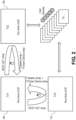
- Fig. 2 depicts an embodiment of the information collection loop ("chat with the peers") from the perspective of TX Node 106 TX1.
- Each Node 106, 108, 110 in the network must have a unique name.
- node TX1 is pre-configured by a System Administrator so that TX1 is allowed to talk to Nodes TX2 and TX3.
- the exchange is implemented via REST API over TLS with both client - server and server - client certificate validation.
- TX1 in this example runs an independent "chat" thread per each peer Node that TX1 is configured to talk to.
- TX1 initiates a REST ⁇ GET /chat' request with pre-set interval T to TX2 and TX3.
- Each TX Node generates a one-time UUID (Universally Unique Identifier) that lasts while a TX Node process is running and is replaced when the process restarts. There is no long-term storage for this UUID.
- This UUID is supplied alongside of the TX Node name in each response to a "chat" request.
- TX1 receives information from each of its peers that is structured as an array of ([TX Name, TX UUID] -> array of (peer names), array of (User Device names)), although other ways of organizing and recording this information are readily devised in keeping with the teachings herein. TX1 then creates memory structures for lookups for where User Devices are located and which TX Node knows which peers.
- TX1 also checks for changes of UUID associated with TX Names and replaces appropriate lookup slots when a UUID has changed. TX1 also marks TX name/UUID pair as "stale" if TX1 did not see that particular UUID in responses in T x 2 time. Absence of that UUID in more than T x 2 time indicates that the TX Node in question is inaccessible and must be avoided during the path calculations. In the example in Fig. 2 , all other Nodes perform similar REST "chat" requests to each other, thus building a collective picture of the TX Node network while only talking to allowed peers. Each TX Node 106, 108, 110 keeps its own copy of this collective memory as the TX node is relative to it.
- the run-time UUID refresh method was chosen for various embodiments because it does not rely on the notion of global time that otherwise needs to be maintained across the TX Node network.
- Each TX Node 106, 108, 110 only relies on its own clock to calculate the "stale" timeouts and each TX Node clock can be skewed significantly without affecting inter-operability and collective memory.
- the GET method of REST API was chosen as most secure so no "impostor" TX Node can inject the incorrect information into the collective memory by just pushing the incorrect information, even if somehow the "impostor" TX Node passes the certificate validation.
- Path finding thus embodies a TX Node receiving the Parcel with the keys for delivery and finding the next optimal peer TX Node to give this parcel to, based on the current TX Node network picture the TX node created in memory.
- Approximate time of propagation of the newly configured TX Node across the network is bracketed between T ⁇ L and T ⁇ L ⁇ 2 where L is the length of the chain from TX1 (as in the Fig 2 . example) to the TX Node in question.
- propagation time in the network is linear relative to the length of the chain of TX nodes.
- Time to mark the Node i.e., TX Node
- TX Node i.e., TX Node
- stale is of less significance because next hop calculation happens immediately on the TX Node that currently holds the Parcel with the keys and needs to find the next hop, independently of what other Nodes know about the current state of the Network. Relative to this Node this time is constant and bracketed between T and T x 2.
- Fig. 3 depicts an out-of-band encryption key(s) ("Parcel") delivery in the Mesh of TX Nodes 106, 108, 110, 112, 114, 116 in accordance with present embodiments.
- This example also covers the rare situation when TX Node 116 TX6 is experiencing problems (or became unavailable) very recently so the information about this failure did not yet propagate through the Mesh "Chat" as described above.
- the TX Nodes Mesh is configured as follows: TX1 talks to TX4; TX4 talks to TX1 and TX5; TX5 talks to TX2 and TX6; TX2 talks to TX5 and TX3; TX3 talks to TX2 and TX6; TX6 talks to TX5 and TX3.
- User Device 102 U1 requests the encryption keys from the TX Node 106 TX1 and also specifies its counterpart User Device 120 U2 which should receive the same key(s). U1 then waits for response. TX1 generates the requested key(s) and generates the Parcel. TX1 finds the TX Node 110 that U2 is connected to from the current node map of TX1. This TX Node 110 happens to be the TX3. Thus, the Parcel is formed with the final destination specified as TX3. TX1 then sends the Parcel to its only peer, TX4 as Step 1 and waits for response. TX4 sends the parcel to TX5 in exactly same manner in Step 2 and waits for response.
- TX4 and TX5 also happen to receive the additional symmetric encryption keys from external devices -- for example, quantum keys from a QKD Alice/Bob pair.
- the Parcel itself is encrypted using those quantum keys.
- TX5 would normally be aware that its peer TX6 has problems by performing the Chat with time interval T, but in this very rare case TX6 is experiencing difficulties or became unavailable in a time frame bracketed between 0 and T. So TX5 still thinks that its peer TX6 is operational and has equal-path load-balancing opportunity between TX2 and TX6. If TX6 is finally chosen as a next hop, TX5 sends the Parcel to TX6 in Step 3. The Error response 302 (or timeout) is raised (response arrow) and TX5 then sends the Parcel to its other peer TX2 in Step 4 and waits for response. TX2 sends the Parcel to TX3 in Step 5 and waits for response.
- TX3 sees that the Parcel destination matches its name and perform actions in accordance with the method e.g., through an Application Programming Interface (API) for the User Device key(s) delivery.
- API Application Programming Interface
- the parcel is deleted immediately after the key(s) are retrieved by the User Device 120 U2.
- TX3 then returns a Success response 304 (response arrow) to TX2 and closes the transaction.
- TX2 returns a Success response 306 to TX5 and closes the transaction.
- TX5 returns a Success response 308 to TX4 and closes the transaction.
- TX4 returns a Success feedback 310 to TX1 and closes the transaction.
- TX1 gives the key(s) to waiting User Device 102 U1 in accordance with the method (e.g., through an API) for the User Device key(s) delivery and closes the transaction.
- Typical delivery would involve TX5 learning about TX6 problems from the Chat and marking TX6 as Stale. This knowledge also propagates across all the nodes in the Mesh via Chat as described above. In this typical case the Parcel delivery path would consist of Steps 1, 2, 4 and 5 - avoiding Step 3 altogether.
- the Parcel delivery is implemented using REST method "POST /parcel".
- the Parcel is never stored on HDD (hard disk drive) or other storage memory while in transit to a User Device and is immediately deleted from memory after retrieval by the User Device.
- a User Device and its associated TX Node perform both client/server and server/client certificate validation and/or are connected via an otherwise highly-secure link, which may be implemented via serial interface for example.
- Fig. 4 depicts an embodiment of a path calculation process, suitable for use in embodiments of the out-of-band symmetric key delivery system of Fig. 1 and the Parcel delivery depicted in Fig. 3 .
- TX Node 106 TX1 is the initiator of the Parcel delivery to the TX Node 116 TX6.
- Tx Node 106 TX1 keeps the current map of all the nodes in the Mesh and their peers as obtained via Chat as described above.
- TX1 uses Step 1 to create a just-in-time map consisting of all the possible destinations, peers of TX1 through which those destinations are accessible, and number of hops to take to deliver to a particular destination via a particular peer. Stale TX Nodes are excluded from mapping.
- TX1 then uses Step 2 to filter out all irrelevant records so only TX6 remains as a destination.
- Fig. 4 example it yields 2 records with an equal number of hops. So TX1 switches to load-balancing mode and sends Parcels in round-robin fashion alternatively to TX2 and TX4.
- TX2 receives the Parcel destined to TX6, TX2 performs identical calculation taking its copy of the current map of all the nodes and their peers as obtained via Chat and, converting the map to an all possible destinations map with hops count, only now relative to the TX Node 108 TX2 (itself), and then filtering out by destination TX6.
- TX6->TX3->2 and TX6->TX5->2 alternatives which trigger again the load-balancing round-robin between TX3 and TX5.
- One will be chosen and the next identical step will result in delivery of the Parcel to the TX Node 116 TX6.
- Path calculation happens on each TX Node 106, 108, 110, 112, 114, 116, 118 independently, on every Parcel delivery based on the freshest information obtained from the Chat as described above.
- a request to deliver symmetric encryption keys to user devices is received at a TX Node that is not directly connected to a user device, but which communicates with the user device(s) through further TX Node(s).
- the TX node that receives the request for symmetric encryption keys from a user device delivers one of the symmetric encryption keys to another specified user device, receives confirmation of delivery, then delivers the other symmetric encryption key to the user device that requested the keys, all through TX Nodes.
Landscapes
- Engineering & Computer Science (AREA)
- Computer Networks & Wireless Communication (AREA)
- Signal Processing (AREA)
- Computer Security & Cryptography (AREA)
- Physics & Mathematics (AREA)
- Electromagnetism (AREA)
- Theoretical Computer Science (AREA)
- Data Exchanges In Wide-Area Networks (AREA)
- Computer And Data Communications (AREA)
- Information Transfer Between Computers (AREA)
Claims (20)
- Verfahren zur sicheren Außerband-Ausgabe symmetrischer Verschlüsselungsschlüssel, umfassend:Empfangen, an einem ersten vertrauenswürdigen Knoten (106) in einem Netzwerk, einer Anforderung von einem ersten (102) eines Paars von Benutzergeräten, symmetrische Verschlüsselungsschlüssel an das Paar von Benutzergeräten auszugeben, wobei die Anforderung vom ersten vertrauenswürdigen Knoten als Anweisung zu interpretieren ist, die symmetrischen Verschlüsselungsschlüssel als Reaktion auf das Empfangen der Anforderung zu generieren, einen der symmetrischen Verschlüsselungsschlüssel an ein zweites (104) des Paars von Benutzergeräten als Reaktion auf das Empfangen der Anforderung auszugeben, die Ausgabe des einen der symmetrischen Verschlüsselungsschlüssel an das zweite des Paars von Benutzergeräten zu bestätigen und nach dem Bestätigen einer solchen Ausgabe als Reaktion auf das Empfangen der Anforderung einen weiteren der symmetrischen Verschlüsselungsschlüssel an das erste des Paars von Benutzergeräten auszugeben;Generieren, am ersten vertrauenswürdigen Knoten, eines ersten und eines zweiten der symmetrischen Verschlüsselungsschlüssel als Reaktion auf das Empfangen der Anforderung, wobei weder das erste noch das zweite des Paars von Benutzergeräten einen der symmetrischen Verschlüsselungsschlüssel als Ergebnis des Generierens vor den Ausgaben aufweist;Ausgeben, vom ersten vertrauenswürdigen Knoten über die vertrauenswürdigen Knoten im Netzwerk, des zweiten der symmetrischen Verschlüsselungsschlüssel an das zweite des Paars von Benutzergeräten als Reaktion auf das Empfangen der Anforderung;Empfangen, am ersten vertrauenswürdigen Knoten, von einem der vertrauenswürdigen Knoten im Netzwerk, der Bestätigung der Ausgabe des zweiten der symmetrischen Verschlüsselungsschlüssel an das zweite des Paars von Benutzergeräten, die als Reaktion darauf war, dass der erste vertrauenswürdige Knoten die Anforderung empfängt; undAusgeben, vom ersten vertrauenswürdigen Knoten im Netzwerk, des ersten der symmetrischen Verschlüsselungsschlüssel an das erste des Paars von Benutzergeräten als Reaktion auf die Bestätigung der Ausgabe des zweiten der symmetrischen Verschlüsselungsschlüssel an das zweite des Paars von Benutzergeräten, die als Reaktion darauf war, dass der erste vertrauenswürdige Knoten die Anforderung empfängt.
- Verfahren nach Anspruch 1, wobei von den vertrauenswürdigen Knoten garantiert wird, dass der erste und der zweite der symmetrischen Verschlüsselungsschlüssel nur an den ersten und zweiten des Paars von Benutzergeräten ausgegeben werden.
- Verfahren nach Anspruch 1, wobei das Ausgeben des zweiten der symmetrischen Verschlüsselungsschlüssel das Ausgeben des zweiten der symmetrischen Verschlüsselungsschlüssel über das Netzwerk zwischen Knoten umfasst, die dazu vorkonfiguriert sind, einander als vertrauenswürdige Knoten zu vertrauen.
- Verfahren nach Anspruch 1, wobei die vertrauenswürdigen Knoten im Netzwerk Knoten in einem Peer-to-Peer- oder Mesh-Netzwerk umfassen, jeweils in einer Eins-zu-Eins-, Eins-zu-N- oder N-zu-N-Konfiguration.
- Verfahren nach Anspruch 1, ferner umfassend:
Durchführen einer optimalen Just-in-Time-Wegfindung während der Ausgabe des ersten und zweiten der symmetrischen Verschlüsselungsschlüssel. - Verfahren nach Anspruch 1, ferner umfassend:
Durchführen eines Just-in-Time-Lastausgleichs während der Ausgabe des zweiten der symmetrischen Verschlüsselungsschlüssel. - Verfahren nach Anspruch 1, ferner umfassend:
Generieren und Ausgeben von Quantenschlüsseln an jeden von zwei oder mehr vertrauenswürdigen Knoten im Netzwerk. - Verfahren nach Anspruch 1, ferner umfassend:
Verschlüsseln jeder von einer oder mehreren Knoten-zu-Knoten-Übertragungen mit einem Quantenschlüssel während der Ausgabe des ersten und zweiten der symmetrischen Verschlüsselungsschlüssel. - Verfahren nach Anspruch 1, ferner umfassend:
Durchführen einer optimalen Just-in-Time-Wegfindung basierend auf einer Verfügbarkeit von Quantenschlüsseln während der Ausgabe des ersten und zweiten der symmetrischen Verschlüsselungsschlüssel. - Materielles, nichtflüchtiges, computerlesbares Medium mit darauf befindlichen Anweisungen, die, wenn sie von einem Prozessor ausgeführt werden, bewirken, dass der Prozessor ein Verfahren durchführt, das umfasst:Empfangen, an einem ersten vertrauenswürdigen Knoten (106) in einem Netzwerk, einer Anforderung von einem ersten Benutzergerät (102), symmetrische Verschlüsselungsschlüssel an das erste Benutzergerät und ein zweites Benutzergerät (104) auszugeben, wobei die Anforderung vom ersten vertrauenswürdigen Knoten als Anweisung zu interpretieren ist, die symmetrischen Verschlüsselungsschlüssel als Reaktion auf das Empfangen der Anforderung zu generieren, einen der symmetrischen Verschlüsselungsschlüssel an das zweite Benutzergerät als Reaktion auf das Empfangen der Anforderung auszugeben, die Ausgabe des einen der symmetrischen Verschlüsselungsschlüssel an das zweite Benutzergerät zu bestätigen und nach dem Bestätigen einer solchen Ausgabe als Reaktion auf das Empfangen der Anforderung einen weiteren der symmetrischen Verschlüsselungsschlüssel an das erste Benutzergerät auszugeben;Generieren, am ersten vertrauenswürdigen Knoten, eines ersten und eines zweiten symmetrischen Verschlüsselungsschlüssels als Reaktion auf das Empfangen der Anforderung, wobei weder das erste noch das zweite Gerät einen der symmetrischen Verschlüsselungsschlüssel als Ergebnis des Generierens vor den Ausgaben der Verschlüsselungsschlüssel aufweist;Ausgeben, vom ersten vertrauenswürdigen Knoten über vertrauenswürdigen Knoten im Netzwerk, des zweiten symmetrischen Verschlüsselungsschlüssels an das zweite Benutzergerät als Reaktion auf das Empfangen der Anforderung;Empfangen, am ersten vertrauenswürdigen Knoten, von einem der vertrauenswürdigen Knoten im Netzwerk, der Bestätigung der Ausgabe des zweiten symmetrischen Verschlüsselungsschlüssels an das zweite Benutzergerät, die als Reaktion darauf war, dass der erste vertrauenswürdige Knoten die Anforderung empfängt; undAusgeben, vom ersten vertrauenswürdigen Knoten im Netzwerk, des ersten symmetrischen Verschlüsselungsschlüssels, wobei der erste und der zweite symmetrische Verschlüsselungsschlüssel symmetrisch zueinander sind, an das erste Benutzergerät als Reaktion auf die Bestätigung der Ausgabe des zweiten symmetrischen Verschlüsselungsschlüssels an das zweite Benutzergerät, die als Reaktion darauf war, dass der erste vertrauenswürdige Knoten die Anforderung empfängt.
- Materielles, nichtflüchtiges computerlesbares Medium nach Anspruch 10, wobei das Verfahren ferner umfasst:
Vorkonfigurieren von Knoten im Netzwerk so, dass sie einander als vertrauenswürdige Knoten in einem Mesh-Netzwerk oder Peer-to-Peer-Netzwerk vertrauen. - Materielles, nichtflüchtiges computerlesbares Medium nach Anspruch 10, wobei das Verfahren ferner umfasst:
Durchführen einer optimalen Just-in-Time-Wegfindung im Netzwerk. - Materielles, nichtflüchtiges computerlesbares Medium nach Anspruch 10, wobei das Verfahren ferner umfasst:
Durchführen eines Just-in-Time-Lastausgleichs im Netzwerk. - Materielles, nichtflüchtiges computerlesbares Medium nach Anspruch 10, wobei das Verfahren ferner umfasst:Generieren von Quantenschlüsseln in zwei oder mehr benachbarten vertrauenswürdigen Knoten; undVerschlüsseln und Entschlüsseln des ersten oder des zweiten symmetrischen Verschlüsselungsschlüssels unter Verwendung der Quantenschlüssel.
- Vorrichtung zur sicheren Außerband-Ausgabe symmetrischer Verschlüsselungsschlüssel, umfassend:eine Vielzahl von Knoten eines Netzwerks, um vertrauenswürdige Knoten in einem Peer-to-Peer- oder Mesh-Netzwerk zu bilden; undeinen ersten vertrauenswürdigen Knoten (106) der vertrauenswürdigen Knoten zum:Empfangen einer Anforderung von einem ersten Benutzergerät (102), symmetrische Verschlüsselungsschlüssel an das erste Benutzergerät und ein zweites Benutzergerät (104) auszugeben,wobei die Anforderung vom ersten vertrauenswürdigen Knoten als Anweisung zu interpretieren ist, die symmetrischen Verschlüsselungsschlüssel als Reaktion auf das Empfangen der Anforderung zu generieren, einen der symmetrischen Verschlüsselungsschlüssel an das zweite Benutzergerät als Reaktion auf das Empfangen der Anforderung auszugeben, die Ausgabe des einen der symmetrischen Verschlüsselungsschlüssel an das zweite Benutzergerät zu bestätigen und nach dem Bestätigen einer solchen Ausgabe als Reaktion auf das Empfangen der Anforderung einen weiteren der symmetrischen Verschlüsselungsschlüssel an das erste Benutzergerät auszugeben;Generieren, am ersten vertrauenswürdigen Knoten, von ersten und zweiten symmetrischen Verschlüsselungsschlüsseln als Reaktion auf das Empfangen der Anforderung, wobei weder das erste Benutzergerät noch das zweite Benutzergerät Geräte einen der symmetrischen Verschlüsselungsschlüssel als Ergebnis des Generierens vor den Ausgaben aufweist;Ausgeben, vom ersten vertrauenswürdigen Knoten über die vertrauenswürdigen Knoten, des zweiten symmetrischen Verschlüsselungsschlüssels an das zweite Benutzergerät als Reaktion auf das Empfangen der Anforderung;Empfangen, von einem der vertrauenswürdigen Knoten, der Bestätigung der Ausgabe des zweiten symmetrischen Verschlüsselungsschlüssels an das zweite Benutzergerät, die als Reaktion darauf war, dass der erste vertrauenswürdige Knoten die Anforderung empfängt; undAusgeben, vom ersten vertrauenswürdigen Knoten, des ersten symmetrischen Verschlüsselungsschlüssels, der symmetrisch zum zweiten symmetrischen Verschlüsselungsschlüssel ist, an das erste Benutzergerät als Reaktion auf die Bestätigung der Ausgabe des zweiten symmetrischen Verschlüsselungsschlüssels an das zweite Benutzergerät, die als Reaktion darauf war, dass der erste vertrauenswürdige Knoten die Anforderung empfängt.
- Vorrichtung nach Anspruch 15, wobei die vertrauenswürdigen Knoten ferner dienen zum:
Durchführen einer optimalen Just-in-Time-Wegfindung im Peer-to-Peer- oder Mesh-Netzwerk. - Vorrichtung nach Anspruch 15, wobei die vertrauenswürdigen Knoten ferner dienen zum:
Durchführen eines Just-in-Time-Lastausgleichs im Netzwerk. - Vorrichtung nach Anspruch 15, wobei die vertrauenswürdigen Knoten ferner dienen zum:Generieren von Quantenschlüsseln in zwei oder mehr benachbarten vertrauenswürdigen Knoten; undVerschlüsseln und Entschlüsseln des ersten oder des zweiten symmetrischen Verschlüsselungsschlüssels, während der Ausgabe, unter Verwendung der Quantenschlüssel.
- Vorrichtung nach Anspruch 15, wobei die vertrauenswürdigen Knoten ferner dienen zum:
Verwenden der Verschlüsselung und Entschlüsselung mit Quantenschlüsseln für jede Knoten-zu-Knoten-Übertragung während der Ausgabe des ersten und zweiten symmetrischen Verschlüsselungsschlüssels. - Vorrichtung nach Anspruch 15, wobei die vertrauenswürdigen Knoten ferner dienen zum:
Durchführen einer optimalen Just-in-Time-Wegfindung basierend auf der Verfügbarkeit von Quantenschlüsseln während der Ausgabe des ersten und zweiten symmetrischen Verschlüsselungsschlüssels.
Applications Claiming Priority (2)
| Application Number | Priority Date | Filing Date | Title |
|---|---|---|---|
| US16/530,987 US11483140B2 (en) | 2019-08-02 | 2019-08-02 | Secure out-of-band symmetric encryption key delivery |
| PCT/US2020/033293 WO2021025749A1 (en) | 2019-08-02 | 2020-05-15 | Secure out-of-band symmetric encryption key delivery |
Publications (3)
| Publication Number | Publication Date |
|---|---|
| EP4008085A1 EP4008085A1 (de) | 2022-06-08 |
| EP4008085B1 true EP4008085B1 (de) | 2024-04-17 |
| EP4008085C0 EP4008085C0 (de) | 2024-04-17 |
Family
ID=70978647
Family Applications (1)
| Application Number | Title | Priority Date | Filing Date |
|---|---|---|---|
| EP20730881.8A Active EP4008085B1 (de) | 2019-08-02 | 2020-05-15 | Sichere ausserband-symmetrische verschlüsselungsschlüsselausgabe |
Country Status (8)
| Country | Link |
|---|---|
| US (1) | US11483140B2 (de) |
| EP (1) | EP4008085B1 (de) |
| JP (2) | JP2022544423A (de) |
| KR (1) | KR20220092853A (de) |
| CN (1) | CN114556862B (de) |
| AU (1) | AU2020324336B2 (de) |
| IL (1) | IL290283B2 (de) |
| WO (1) | WO2021025749A1 (de) |
Families Citing this family (4)
| Publication number | Priority date | Publication date | Assignee | Title |
|---|---|---|---|---|
| US20220294618A1 (en) * | 2019-08-12 | 2022-09-15 | British Telecommunications Public Limited Company | Improvements to qkd methods |
| KR102778317B1 (ko) | 2021-11-08 | 2025-03-10 | 한국과학기술정보연구원 | 양자키 관리장치 및 그 동작 방법 |
| KR102814559B1 (ko) | 2022-05-30 | 2025-05-29 | 한국과학기술정보연구원 | 양자키분배 네트워크장치 및 양자키분배 네트워크 운용 방법 |
| US12476984B2 (en) * | 2023-08-15 | 2025-11-18 | Wells Fargo Bank, N.A. | Quantum-based information protection |
Citations (1)
| Publication number | Priority date | Publication date | Assignee | Title |
|---|---|---|---|---|
| WO2014081677A1 (en) * | 2012-11-20 | 2014-05-30 | Ut-Battelle, Llc | Method for adding nodes to a quantum key distribution system |
Family Cites Families (41)
| Publication number | Priority date | Publication date | Assignee | Title |
|---|---|---|---|---|
| DE19534114A1 (de) | 1995-09-14 | 1997-03-20 | Schlafhorst & Co W | Verfahren und Vorrichtung zum Überprüfen von pneumatischen Spleißvorrichtungen |
| US7457416B1 (en) | 2002-07-17 | 2008-11-25 | Bbn Technologies Corp. | Key distribution center for quantum cryptographic key distribution networks |
| AT412932B (de) | 2002-11-22 | 2005-08-25 | Arc Seibersdorf Res Gmbh | Kommunikationssystem mit quantenkryptographie |
| US7430295B1 (en) | 2003-03-21 | 2008-09-30 | Bbn Technologies Corp. | Simple untrusted network for quantum cryptography |
| US7706535B1 (en) | 2003-03-21 | 2010-04-27 | Bbn Technologies Corp. | Systems and methods for implementing routing protocols and algorithms for quantum cryptographic key transport |
| US7512242B2 (en) | 2003-03-21 | 2009-03-31 | Bbn Technologies Corp. | Systems and methods for quantum cryptographic key transport |
| US7113598B2 (en) | 2003-05-14 | 2006-09-26 | Science Research Laboratory, Inc. | Methods and systems for high-data-rate quantum cryptography |
| JP2005117511A (ja) | 2003-10-10 | 2005-04-28 | Nec Corp | 量子暗号通信システム及びそれに用いる量子暗号鍵配布方法 |
| US7181011B2 (en) | 2004-05-24 | 2007-02-20 | Magiq Technologies, Inc. | Key bank systems and methods for QKD |
| US20050286723A1 (en) | 2004-06-28 | 2005-12-29 | Magiq Technologies, Inc. | QKD system network |
| US7646873B2 (en) | 2004-07-08 | 2010-01-12 | Magiq Technologies, Inc. | Key manager for QKD networks |
| US7889868B2 (en) | 2005-09-30 | 2011-02-15 | Verizon Business Global Llc | Quantum key distribution system |
| CN100452697C (zh) * | 2005-10-14 | 2009-01-14 | 西安电子科技大学 | 无线环境下的会话密钥安全分发方法 |
| US8688856B2 (en) * | 2006-01-24 | 2014-04-01 | Novell, Inc. | Techniques for managing a network delivery path of content via a key |
| US8006300B2 (en) * | 2006-10-24 | 2011-08-23 | Authernative, Inc. | Two-channel challenge-response authentication method in random partial shared secret recognition system |
| GB0801395D0 (en) | 2008-01-25 | 2008-03-05 | Qinetiq Ltd | Network having quantum key distribution |
| EP2245789B1 (de) | 2008-01-25 | 2014-08-20 | QinetiQ Limited | Quantenkryptographievorrichtung |
| JP2009265159A (ja) * | 2008-04-22 | 2009-11-12 | Nec Corp | 秘匿通信ネットワークにおける共有乱数管理方法および管理システム |
| GB0822253D0 (en) | 2008-12-05 | 2009-01-14 | Qinetiq Ltd | Method of establishing a quantum key for use between network nodes |
| WO2010097940A1 (ja) * | 2009-02-27 | 2010-09-02 | 富士通株式会社 | コンテンツサーバ装置、コンテンツ配信方法、および、コンテンツ配信プログラム |
| US8483394B2 (en) * | 2010-06-15 | 2013-07-09 | Los Alamos National Security, Llc | Secure multi-party communication with quantum key distribution managed by trusted authority |
| US9698979B2 (en) | 2011-04-15 | 2017-07-04 | Quintessencelabs Pty Ltd. | QKD key management system |
| EP2555466B1 (de) | 2011-08-05 | 2014-07-02 | SELEX ES S.p.A. | System zur verteilung von kryptographischen schlüsseln |
| US9509506B2 (en) * | 2011-09-30 | 2016-11-29 | Los Alamos National Security, Llc | Quantum key management |
| EP2891267B1 (de) * | 2012-08-30 | 2022-04-06 | Triad National Security, LLC | Multifaktorielle authentifizierung unter verwendung von quantenkommunikation |
| US9264225B1 (en) | 2013-02-27 | 2016-02-16 | The Boeing Company | Quantum communication using quantum teleportation |
| CN103763099B (zh) * | 2014-02-13 | 2017-04-19 | 国家电网公司 | 一种基于量子密钥分配技术的电力安全通信网络 |
| CN105827397B (zh) * | 2015-01-08 | 2019-10-18 | 阿里巴巴集团控股有限公司 | 基于可信中继的量子密钥分发系统、方法及装置 |
| EP3043508B1 (de) * | 2015-01-09 | 2019-06-26 | Institut Mines Telecom | Hybride Klassische quantenkryptografie |
| JP6478749B2 (ja) | 2015-03-24 | 2019-03-06 | 株式会社東芝 | 量子鍵配送装置、量子鍵配送システムおよび量子鍵配送方法 |
| US10291400B2 (en) | 2016-03-14 | 2019-05-14 | Kabushiki Kaisha Toshiba | Quantum key distribution device, quantum key distribution system, and quantum key distribution method |
| US20180013556A1 (en) * | 2016-07-06 | 2018-01-11 | Teloip Inc. | System, apparatus and method for encrypting overlay networks using quantum key distribution |
| CN112217637B (zh) * | 2016-11-04 | 2024-03-15 | 华为技术有限公司 | 一种基于集中管理与控制网络的量子密钥中继方法和装置 |
| US10554397B2 (en) | 2017-09-27 | 2020-02-04 | The Boeing Company | Quantum-based data encryption |
| US10432395B2 (en) * | 2017-10-04 | 2019-10-01 | The Boeing Company | Recipient-driven data encryption |
| US10833860B2 (en) | 2018-09-04 | 2020-11-10 | International Business Machines Corporation | Shared key processing by a host to secure links |
| US10764291B2 (en) | 2018-09-04 | 2020-09-01 | International Business Machines Corporation | Controlling access between nodes by a key server |
| CN109818756A (zh) * | 2019-03-13 | 2019-05-28 | 北京信息科技大学 | 一种基于量子密钥分发技术的身份认证系统实现方法 |
| US11469888B2 (en) | 2019-05-03 | 2022-10-11 | Quantumxchange, Inc. | Tamper detection in a quantum communications system |
| US11411722B2 (en) | 2019-05-03 | 2022-08-09 | Quantumxchange, Inc. | Method of operation of a quantum key controller |
| US11424918B2 (en) | 2019-05-03 | 2022-08-23 | Quantumxchange, Inc. | Method of operation of a trusted node software in a quantum key distribution system |
-
2019
- 2019-08-02 US US16/530,987 patent/US11483140B2/en active Active
-
2020
- 2020-05-15 KR KR1020227007107A patent/KR20220092853A/ko active Pending
- 2020-05-15 CN CN202080055271.0A patent/CN114556862B/zh active Active
- 2020-05-15 WO PCT/US2020/033293 patent/WO2021025749A1/en not_active Ceased
- 2020-05-15 JP JP2022533051A patent/JP2022544423A/ja active Pending
- 2020-05-15 IL IL290283A patent/IL290283B2/en unknown
- 2020-05-15 EP EP20730881.8A patent/EP4008085B1/de active Active
- 2020-05-15 AU AU2020324336A patent/AU2020324336B2/en active Active
-
2025
- 2025-07-07 JP JP2025114460A patent/JP2025158978A/ja active Pending
Patent Citations (1)
| Publication number | Priority date | Publication date | Assignee | Title |
|---|---|---|---|---|
| WO2014081677A1 (en) * | 2012-11-20 | 2014-05-30 | Ut-Battelle, Llc | Method for adding nodes to a quantum key distribution system |
Non-Patent Citations (1)
| Title |
|---|
| TOWNSEND KEVIN: "Security Startup Quantum Xchange Promises Unbreakable Quantum-Safe Encryption - SecurityWeek", CYBER SECURITY WEEK, 26 June 2018 (2018-06-26), pages 1 - 12, XP093098856, Retrieved from the Internet <URL:https://www.securityweek.com/security-startup-quantum-xchange-promises-unbreakable-quantum-safe-encryption/> [retrieved on 20231107] * |
Also Published As
| Publication number | Publication date |
|---|---|
| JP2025158978A (ja) | 2025-10-17 |
| WO2021025749A1 (en) | 2021-02-11 |
| CN114556862A (zh) | 2022-05-27 |
| AU2020324336B2 (en) | 2025-10-23 |
| AU2020324336A1 (en) | 2022-03-17 |
| US11483140B2 (en) | 2022-10-25 |
| KR20220092853A (ko) | 2022-07-04 |
| US20210036845A1 (en) | 2021-02-04 |
| EP4008085A1 (de) | 2022-06-08 |
| CA3149609A1 (en) | 2021-02-11 |
| IL290283A (en) | 2022-04-01 |
| CN114556862B (zh) | 2025-07-25 |
| IL290283B1 (en) | 2024-06-01 |
| JP2022544423A (ja) | 2022-10-18 |
| IL290283B2 (en) | 2024-10-01 |
| EP4008085C0 (de) | 2024-04-17 |
Similar Documents
| Publication | Publication Date | Title |
|---|---|---|
| Tysowski et al. | The engineering of a scalable multi-site communications system utilizing quantum key distribution (QKD) | |
| AU2020324336B2 (en) | Secure out-of-band symmetric encryption key delivery | |
| EP3432509B1 (de) | Quantenverbesserte anwendungssicherheit | |
| EP3633949A1 (de) | Verfahren und system zur durchführung von ssl-handshakes | |
| JP2018502514A (ja) | 信頼できるリレーに基づいた量子鍵配送システム、方法、及び装置 | |
| US7957320B2 (en) | Method for changing a group key in a group of network elements in a network system | |
| US11652620B2 (en) | System and method for proactively buffering quantum key distribution (QKD) key material | |
| Mink et al. | Quantum key distribution (QKD) and commodity security protocols: Introduction and integration | |
| CN118573408B (zh) | 一种端到端的数据加密处理方法 | |
| JP2016171530A (ja) | 通信装置、通信方法、プログラムおよび通信システム | |
| KR102298716B1 (ko) | 통신 노드, 이의 동작 방법 및 협업 시스템 | |
| Choe et al. | ECC-based authentication protocol for military Internet of Drone (IoD): A holistic security framework | |
| CN113612612A (zh) | 一种数据加密传输方法、系统、设备及存储介质 | |
| CN117858081A (zh) | 通信网络加密方法、系统、电子设备和存储介质 | |
| JP2022031361A (ja) | 通信装置、通信方法、プログラムおよび通信システム | |
| Shenets | Security infrastructure of FANET based on secret sharing and authenticated encryption | |
| CN121217341B (zh) | 基于抗量子身份认证与密钥封装的物联网安全接入方法 | |
| Prévost et al. | An etsi gs qkd compliant tls implementation | |
| WO2019004942A1 (en) | ALGORITHMS FOR PAIR-TO-PAIR MESSAGING SYSTEM | |
| Renugadevi et al. | Key management schemes for secure group communication in wireless networks-a survey | |
| Rhee et al. | An architecture for key management in hierarchical mobile ad-hoc networks | |
| CA3149609C (en) | Secure out-of-band symmetric encryption key delivery | |
| Huang et al. | A novel key distribution scheme based on transmission delays | |
| Chunka et al. | A secure key agreement protocol for data communication in public network based on the Diffie-Hellman key agreement protocol | |
| Vasić et al. | Lightweight and adaptable solution for security agility. |
Legal Events
| Date | Code | Title | Description |
|---|---|---|---|
| STAA | Information on the status of an ep patent application or granted ep patent |
Free format text: STATUS: UNKNOWN |
|
| STAA | Information on the status of an ep patent application or granted ep patent |
Free format text: STATUS: THE INTERNATIONAL PUBLICATION HAS BEEN MADE |
|
| PUAI | Public reference made under article 153(3) epc to a published international application that has entered the european phase |
Free format text: ORIGINAL CODE: 0009012 |
|
| STAA | Information on the status of an ep patent application or granted ep patent |
Free format text: STATUS: REQUEST FOR EXAMINATION WAS MADE |
|
| 17P | Request for examination filed |
Effective date: 20220228 |
|
| AK | Designated contracting states |
Kind code of ref document: A1 Designated state(s): AL AT BE BG CH CY CZ DE DK EE ES FI FR GB GR HR HU IE IS IT LI LT LU LV MC MK MT NL NO PL PT RO RS SE SI SK SM TR |
|
| DAV | Request for validation of the european patent (deleted) | ||
| DAX | Request for extension of the european patent (deleted) | ||
| GRAP | Despatch of communication of intention to grant a patent |
Free format text: ORIGINAL CODE: EPIDOSNIGR1 |
|
| STAA | Information on the status of an ep patent application or granted ep patent |
Free format text: STATUS: GRANT OF PATENT IS INTENDED |
|
| INTG | Intention to grant announced |
Effective date: 20231120 |
|
| GRAS | Grant fee paid |
Free format text: ORIGINAL CODE: EPIDOSNIGR3 |
|
| GRAA | (expected) grant |
Free format text: ORIGINAL CODE: 0009210 |
|
| STAA | Information on the status of an ep patent application or granted ep patent |
Free format text: STATUS: THE PATENT HAS BEEN GRANTED |
|
| AK | Designated contracting states |
Kind code of ref document: B1 Designated state(s): AL AT BE BG CH CY CZ DE DK EE ES FI FR GB GR HR HU IE IS IT LI LT LU LV MC MK MT NL NO PL PT RO RS SE SI SK SM TR |
|
| REG | Reference to a national code |
Ref country code: GB Ref legal event code: FG4D |
|
| REG | Reference to a national code |
Ref country code: CH Ref legal event code: EP |
|
| REG | Reference to a national code |
Ref country code: DE Ref legal event code: R096 Ref document number: 602020029163 Country of ref document: DE |
|
| REG | Reference to a national code |
Ref country code: IE Ref legal event code: FG4D |
|
| U01 | Request for unitary effect filed |
Effective date: 20240501 |
|
| U07 | Unitary effect registered |
Designated state(s): AT BE BG DE DK EE FI FR IT LT LU LV MT NL PT SE SI Effective date: 20240516 |
|
| U20 | Renewal fee for the european patent with unitary effect paid |
Year of fee payment: 5 Effective date: 20240528 |
|
| PG25 | Lapsed in a contracting state [announced via postgrant information from national office to epo] |
Ref country code: IS Free format text: LAPSE BECAUSE OF FAILURE TO SUBMIT A TRANSLATION OF THE DESCRIPTION OR TO PAY THE FEE WITHIN THE PRESCRIBED TIME-LIMIT Effective date: 20240817 |
|
| PG25 | Lapsed in a contracting state [announced via postgrant information from national office to epo] |
Ref country code: HR Free format text: LAPSE BECAUSE OF FAILURE TO SUBMIT A TRANSLATION OF THE DESCRIPTION OR TO PAY THE FEE WITHIN THE PRESCRIBED TIME-LIMIT Effective date: 20240417 |
|
| PG25 | Lapsed in a contracting state [announced via postgrant information from national office to epo] |
Ref country code: GR Free format text: LAPSE BECAUSE OF FAILURE TO SUBMIT A TRANSLATION OF THE DESCRIPTION OR TO PAY THE FEE WITHIN THE PRESCRIBED TIME-LIMIT Effective date: 20240718 |
|
| PG25 | Lapsed in a contracting state [announced via postgrant information from national office to epo] |
Ref country code: ES Free format text: LAPSE BECAUSE OF FAILURE TO SUBMIT A TRANSLATION OF THE DESCRIPTION OR TO PAY THE FEE WITHIN THE PRESCRIBED TIME-LIMIT Effective date: 20240417 |
|
| PG25 | Lapsed in a contracting state [announced via postgrant information from national office to epo] |
Ref country code: PL Free format text: LAPSE BECAUSE OF FAILURE TO SUBMIT A TRANSLATION OF THE DESCRIPTION OR TO PAY THE FEE WITHIN THE PRESCRIBED TIME-LIMIT Effective date: 20240417 |
|
| PG25 | Lapsed in a contracting state [announced via postgrant information from national office to epo] |
Ref country code: PL Free format text: LAPSE BECAUSE OF FAILURE TO SUBMIT A TRANSLATION OF THE DESCRIPTION OR TO PAY THE FEE WITHIN THE PRESCRIBED TIME-LIMIT Effective date: 20240417 Ref country code: NO Free format text: LAPSE BECAUSE OF FAILURE TO SUBMIT A TRANSLATION OF THE DESCRIPTION OR TO PAY THE FEE WITHIN THE PRESCRIBED TIME-LIMIT Effective date: 20240717 Ref country code: IS Free format text: LAPSE BECAUSE OF FAILURE TO SUBMIT A TRANSLATION OF THE DESCRIPTION OR TO PAY THE FEE WITHIN THE PRESCRIBED TIME-LIMIT Effective date: 20240817 Ref country code: HR Free format text: LAPSE BECAUSE OF FAILURE TO SUBMIT A TRANSLATION OF THE DESCRIPTION OR TO PAY THE FEE WITHIN THE PRESCRIBED TIME-LIMIT Effective date: 20240417 Ref country code: GR Free format text: LAPSE BECAUSE OF FAILURE TO SUBMIT A TRANSLATION OF THE DESCRIPTION OR TO PAY THE FEE WITHIN THE PRESCRIBED TIME-LIMIT Effective date: 20240718 Ref country code: ES Free format text: LAPSE BECAUSE OF FAILURE TO SUBMIT A TRANSLATION OF THE DESCRIPTION OR TO PAY THE FEE WITHIN THE PRESCRIBED TIME-LIMIT Effective date: 20240417 Ref country code: RS Free format text: LAPSE BECAUSE OF FAILURE TO SUBMIT A TRANSLATION OF THE DESCRIPTION OR TO PAY THE FEE WITHIN THE PRESCRIBED TIME-LIMIT Effective date: 20240717 |
|
| REG | Reference to a national code |
Ref country code: DE Ref legal event code: R097 Ref document number: 602020029163 Country of ref document: DE |
|
| PG25 | Lapsed in a contracting state [announced via postgrant information from national office to epo] |
Ref country code: CZ Free format text: LAPSE BECAUSE OF FAILURE TO SUBMIT A TRANSLATION OF THE DESCRIPTION OR TO PAY THE FEE WITHIN THE PRESCRIBED TIME-LIMIT Effective date: 20240417 |
|
| PG25 | Lapsed in a contracting state [announced via postgrant information from national office to epo] |
Ref country code: SK Free format text: LAPSE BECAUSE OF FAILURE TO SUBMIT A TRANSLATION OF THE DESCRIPTION OR TO PAY THE FEE WITHIN THE PRESCRIBED TIME-LIMIT Effective date: 20240417 Ref country code: RO Free format text: LAPSE BECAUSE OF FAILURE TO SUBMIT A TRANSLATION OF THE DESCRIPTION OR TO PAY THE FEE WITHIN THE PRESCRIBED TIME-LIMIT Effective date: 20240417 |
|
| PG25 | Lapsed in a contracting state [announced via postgrant information from national office to epo] |
Ref country code: SM Free format text: LAPSE BECAUSE OF FAILURE TO SUBMIT A TRANSLATION OF THE DESCRIPTION OR TO PAY THE FEE WITHIN THE PRESCRIBED TIME-LIMIT Effective date: 20240417 |
|
| PG25 | Lapsed in a contracting state [announced via postgrant information from national office to epo] |
Ref country code: SM Free format text: LAPSE BECAUSE OF FAILURE TO SUBMIT A TRANSLATION OF THE DESCRIPTION OR TO PAY THE FEE WITHIN THE PRESCRIBED TIME-LIMIT Effective date: 20240417 Ref country code: SK Free format text: LAPSE BECAUSE OF FAILURE TO SUBMIT A TRANSLATION OF THE DESCRIPTION OR TO PAY THE FEE WITHIN THE PRESCRIBED TIME-LIMIT Effective date: 20240417 Ref country code: RO Free format text: LAPSE BECAUSE OF FAILURE TO SUBMIT A TRANSLATION OF THE DESCRIPTION OR TO PAY THE FEE WITHIN THE PRESCRIBED TIME-LIMIT Effective date: 20240417 Ref country code: CZ Free format text: LAPSE BECAUSE OF FAILURE TO SUBMIT A TRANSLATION OF THE DESCRIPTION OR TO PAY THE FEE WITHIN THE PRESCRIBED TIME-LIMIT Effective date: 20240417 Ref country code: MC Free format text: LAPSE BECAUSE OF FAILURE TO SUBMIT A TRANSLATION OF THE DESCRIPTION OR TO PAY THE FEE WITHIN THE PRESCRIBED TIME-LIMIT Effective date: 20240417 |
|
| PLBE | No opposition filed within time limit |
Free format text: ORIGINAL CODE: 0009261 |
|
| STAA | Information on the status of an ep patent application or granted ep patent |
Free format text: STATUS: NO OPPOSITION FILED WITHIN TIME LIMIT |
|
| 26N | No opposition filed |
Effective date: 20250120 |
|
| PG25 | Lapsed in a contracting state [announced via postgrant information from national office to epo] |
Ref country code: IE Free format text: LAPSE BECAUSE OF NON-PAYMENT OF DUE FEES Effective date: 20240515 |
|
| U20 | Renewal fee for the european patent with unitary effect paid |
Year of fee payment: 6 Effective date: 20250527 |
|
| PGFP | Annual fee paid to national office [announced via postgrant information from national office to epo] |
Ref country code: GB Payment date: 20250527 Year of fee payment: 6 |
|
| PGFP | Annual fee paid to national office [announced via postgrant information from national office to epo] |
Ref country code: CH Payment date: 20250601 Year of fee payment: 6 |
|
| PG25 | Lapsed in a contracting state [announced via postgrant information from national office to epo] |
Ref country code: CY Free format text: LAPSE BECAUSE OF FAILURE TO SUBMIT A TRANSLATION OF THE DESCRIPTION OR TO PAY THE FEE WITHIN THE PRESCRIBED TIME-LIMIT; INVALID AB INITIO Effective date: 20200515 |
|
| PG25 | Lapsed in a contracting state [announced via postgrant information from national office to epo] |
Ref country code: HU Free format text: LAPSE BECAUSE OF FAILURE TO SUBMIT A TRANSLATION OF THE DESCRIPTION OR TO PAY THE FEE WITHIN THE PRESCRIBED TIME-LIMIT; INVALID AB INITIO Effective date: 20200515 |