EP4007201A1 - Informationsübertragungsverfahren und -gerät sowie vorrichtung und speichermedium - Google Patents
Informationsübertragungsverfahren und -gerät sowie vorrichtung und speichermedium Download PDFInfo
- Publication number
- EP4007201A1 EP4007201A1 EP20848621.7A EP20848621A EP4007201A1 EP 4007201 A1 EP4007201 A1 EP 4007201A1 EP 20848621 A EP20848621 A EP 20848621A EP 4007201 A1 EP4007201 A1 EP 4007201A1
- Authority
- EP
- European Patent Office
- Prior art keywords
- prs
- pdsch
- information
- occupied
- terminal device
- Prior art date
- Legal status (The legal status is an assumption and is not a legal conclusion. Google has not performed a legal analysis and makes no representation as to the accuracy of the status listed.)
- Pending
Links
Images
Classifications
-
- H—ELECTRICITY
- H04—ELECTRIC COMMUNICATION TECHNIQUE
- H04L—TRANSMISSION OF DIGITAL INFORMATION, e.g. TELEGRAPHIC COMMUNICATION
- H04L5/00—Arrangements affording multiple use of the transmission path
- H04L5/003—Arrangements for allocating sub-channels of the transmission path
- H04L5/0053—Allocation of signalling, i.e. of overhead other than pilot signals
-
- H—ELECTRICITY
- H04—ELECTRIC COMMUNICATION TECHNIQUE
- H04L—TRANSMISSION OF DIGITAL INFORMATION, e.g. TELEGRAPHIC COMMUNICATION
- H04L5/00—Arrangements affording multiple use of the transmission path
- H04L5/003—Arrangements for allocating sub-channels of the transmission path
- H04L5/0044—Allocation of payload; Allocation of data channels, e.g. PDSCH or PUSCH
-
- H—ELECTRICITY
- H04—ELECTRIC COMMUNICATION TECHNIQUE
- H04L—TRANSMISSION OF DIGITAL INFORMATION, e.g. TELEGRAPHIC COMMUNICATION
- H04L1/00—Arrangements for detecting or preventing errors in the information received
- H04L1/004—Arrangements for detecting or preventing errors in the information received by using forward error control
- H04L1/0056—Systems characterized by the type of code used
- H04L1/0067—Rate matching
- H04L1/0068—Rate matching by puncturing
-
- H—ELECTRICITY
- H04—ELECTRIC COMMUNICATION TECHNIQUE
- H04L—TRANSMISSION OF DIGITAL INFORMATION, e.g. TELEGRAPHIC COMMUNICATION
- H04L5/00—Arrangements affording multiple use of the transmission path
- H04L5/0001—Arrangements for dividing the transmission path
- H04L5/0003—Two-dimensional division
- H04L5/0005—Time-frequency
- H04L5/0007—Time-frequency the frequencies being orthogonal, e.g. OFDM(A) or DMT
-
- H—ELECTRICITY
- H04—ELECTRIC COMMUNICATION TECHNIQUE
- H04L—TRANSMISSION OF DIGITAL INFORMATION, e.g. TELEGRAPHIC COMMUNICATION
- H04L5/00—Arrangements affording multiple use of the transmission path
- H04L5/003—Arrangements for allocating sub-channels of the transmission path
- H04L5/0048—Allocation of pilot signals, i.e. of signals known to the receiver
-
- H—ELECTRICITY
- H04—ELECTRIC COMMUNICATION TECHNIQUE
- H04W—WIRELESS COMMUNICATION NETWORKS
- H04W72/00—Local resource management
- H04W72/20—Control channels or signalling for resource management
- H04W72/23—Control channels or signalling for resource management in the downlink direction of a wireless link, i.e. towards a terminal
-
- H—ELECTRICITY
- H04—ELECTRIC COMMUNICATION TECHNIQUE
- H04L—TRANSMISSION OF DIGITAL INFORMATION, e.g. TELEGRAPHIC COMMUNICATION
- H04L27/00—Modulated-carrier systems
- H04L27/0006—Assessment of spectral gaps suitable for allocating digitally modulated signals, e.g. for carrier allocation in cognitive radio
-
- H—ELECTRICITY
- H04—ELECTRIC COMMUNICATION TECHNIQUE
- H04L—TRANSMISSION OF DIGITAL INFORMATION, e.g. TELEGRAPHIC COMMUNICATION
- H04L27/00—Modulated-carrier systems
- H04L27/26—Systems using multi-frequency codes
- H04L27/2601—Multicarrier modulation systems
- H04L27/2602—Signal structure
-
- H—ELECTRICITY
- H04—ELECTRIC COMMUNICATION TECHNIQUE
- H04L—TRANSMISSION OF DIGITAL INFORMATION, e.g. TELEGRAPHIC COMMUNICATION
- H04L5/00—Arrangements affording multiple use of the transmission path
- H04L5/0091—Signalling for the administration of the divided path, e.g. signalling of configuration information
- H04L5/0094—Indication of how sub-channels of the path are allocated
Definitions
- the present disclosure relates to the field of communications technologies, and in particular, to an information transmission method, and an apparatus, a device and a medium.
- Wireless spectrum resources are uniformly allocated by a country for use, and a wireless spectrum is divided into two parts: a licensed frequency band (licensed frequency band, LFB) and an unlicensed frequency band (unlicensed frequency band, UFB).
- LFB licensed frequency band
- UFB unlicensed frequency band
- the UFB can be used as a supplement to the LFB to help operators expand their services.
- a positioning reference signal positioning reference signal
- PRS positioning reference signal
- PDSCH Physical downlink shared channel
- Embodiments of the present disclosure provide an information transmission method, an apparatus, a device and a medium, to multiplex a PDSCH and a PRS.
- an embodiment of the present disclosure provides an information transmission method.
- the method includes:
- an embodiment of the present disclosure provides an information transmission method.
- the method includes: receiving a PDSCH and a PRS transmitted by a network side device, where the PDSCH and the PRS are mapped onto different REs of a same RB; or the PDSCH and the PRS are mapped onto different RBs; or the PDSCH and the PRS are mapped onto different OFDM symbols.
- an embodiment of the present disclosure provides an information transmission apparatus.
- the apparatus includes:
- an embodiment of the present disclosure provides a network side device.
- the network side device includes a memory, a processor, and a computer program stored in the memory and executable on the processor, where when the processor executes the computer program, the information transmission method provided in the first aspect of the embodiments of the present disclosure is implemented.
- an embodiment of the present disclosure provides a terminal device.
- the terminal device includes a memory, a processor, and a computer program stored in the memory and executable on the processor, where when the processor executes the computer program, the information transmission method provided in the second aspect of the embodiments of the present disclosure is implemented.
- an embodiment of the present disclosure provides a computer-readable storage medium.
- the computer-readable storage medium stores a computer program.
- the computer program is executed by a processor, the information transmission method provided in the first aspect of the embodiments of the present disclosure is implemented, or the information transmission method provided in the second aspect of the embodiments of the present disclosure is implemented.
- a PDSCH and a PRS are mapped onto different REs of a same RB; or the PDSCH and the PRS are mapped onto different RBs; or the PDSCH and the PRS are mapped onto different OFDM symbols, so that the PDSCH and the PRS can be multiplexed.
- any lower limit may be combined with any upper limit to form a range that is not explicitly specified, any lower limit may be combined with another lower limit to form a range that is not explicitly specified, and likewise, any upper limit may be combined with any other upper limit to form a range that is not explicitly specified.
- each point or single value between end points of a range is included in the range. Therefore, each point or single numerical value can be used as its lower limit or upper limit to be combined with any other point or single numerical value, or to be combined with another lower or upper limit to form a range that is not explicitly specified.
- an embodiment of the present disclosure provides an information transmission method, an apparatus, a device and a medium, so that a PDSCH and a PRS can be multiplexed.
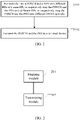
- FIG. 1 shows a schematic flowchart of an information transmission method applied to a network side device according to an embodiment of the present disclosure.
- the information transmission method applied to the network side device may include:
- the network side device provided in this embodiment of the present disclosure may be a base station, and the base station may be a commonly used base station, or may be an evolved nodeB (evolved node base station, eNB), or may be a device such as a network side device (for example, a next generation nodeB (next generation node base station, gNB) or a transmission and reception point (transmission and reception point, TRP)) or a cell (cell) in a 5G system, or may be a network side device in a subsequent evolved communications system.
- a network side device for example, a next generation nodeB (next generation node base station, gNB) or a transmission and reception point (transmission and reception point, TRP)
- TRP transmission and reception point
- the terminal device may be a mobile phone, a tablet computer, a smart watch, a smart home appliance, or the like, which is not limited in this embodiment of the present disclosure.
- the information transmission method applied to the network side device and provided in this embodiment of the present disclosure may be applicable to a UFB.
- the resource element RE is usually also referred to as a resource unit or resource particle.
- transmission content of the PDSCH may include at least one of remaining minimum system information (Remaining Minimum System Information, RMSI), other system information (Other System Information, OSI), a paging message, a random access response (random access response, RAR), and fourth signaling MSG4 in contention-based random access.
- RMSI remaining Minimum System Information
- OSI Operating System Information
- RAR random access response
- a PDSCH and a PRS are mapped onto different REs of a same RB; or the PDSCH and the PRS are mapped onto different RBs; or the PDSCH and the PRS are mapped onto different OFDM symbols, so that the PDSCH and the PRS can be multiplexed.
- the network side device may further transmit downlink control information (Downlink Control Information, DCI) to the terminal device, wherein the DCI is used to instruct the terminal device to perform rate matching (rate matching) or puncturing on an RE or an RB or an OFDM symbol of the PRS.
- DCI Downlink Control Information
- REs are mapped first in frequency domain and then time domain one by one. These REs exclude RE resources such as a demodulation reference signal (Demodulation Reference Signal, DMRS) and a channel state information reference signal (Channel State Information Reference Signal, CSI-RS).
- Rate matching means skipping a PRS resource (RE or RB or OFDM symbol) for mapping during a mapping process. Punching means that a PDSCH is mapped still according to an original mapping rule, but PDSCH transmission is not performed for an RE on a PRS resource (RE or RB or OFDM symbol). In the manner of rate matching or puncturing, this resource can be reserved as a transmission resource of the PRS. After receiving the DCI, the terminal device performs rate matching or puncturing on the PRS.
- DMRS demodulation Reference Signal
- CSI-RS Channel State Information Reference Signal
- the downlink control information DCI provided in this embodiment of the present disclosure may be DCI used to schedule the PDSCH, or group-common (group-common) DCI.
- the network side device may further transmit a first message to the terminal device, where the first message may include configuration information of the PRS.
- the first message may include: a physical broadcast channel (Physical broadcast channel, PBCH) or system information (System Information, SI) or DCI.
- PBCH Physical broadcast channel
- SI System Information
- the configuration information of the PRS may be located in a field of the PBCH, or in a code point of a specific field of the PBCH.
- the configuration information of the PRS may include: PRS-occupied time-frequency resource information, PRS identification information, PRS power information, a PRS quasi co-location (Quasi co-location, QCL) relationship, PRS position information, a serving cell configuration, and a neighboring cell configuration.
- the PRS-occupied time-frequency resource information may include: at least one of a quantity of ports occupied by a PRS, a density occupied by a PRS, an OFDM symbol (a position in a slot (slot) or a position relative to a synchronization signal block (Synchronization Signal and PBCH block, SSB)) occupied by a PRS, a start RE position of a PRS in an RB, an RE offset between OFDM symbols, a bandwidth occupied by a PRS, a quantity of RBs occupied by a PRS, a set of RBs occupied by a PRS, and a start RB position of a PRS (for example, an RB offset relative to an SSB).
- a quantity of ports occupied by a PRS for example, an RB offset relative to an SSB.
- the PRS-occupied time-frequency resource information may further include: a PRS period, PRS transmission occasion (occasion) information, zero-power PRS information, PRS subcarrier spacing information, and the like.
- the PRS occasion information is a quantity of slots occupied by a PRS, and optionally may occupy be a plurality of occupied consecutive slots.
- the PRS identification information may include: at least one of a sequence identifier (sequence ID), a PRS resource identifier (resource ID), a PRS resource set identifier (resource set ID), and a PRS resource setting identifier (resource setting ID), and a cell identifier (cell ID).
- the PRS power information is, for example, a power offset (power offset) of a PRS relative to a secondary synchronization Signal (Secondary Synchronization Signal, SSS), a power offset of a PRS relative to a PBCH DMRS, and a type of code division multiplexing (Code Division Multiplexing, CDM).
- the PRS QCL relationship may include: QCL relationship between a PRS and an SSB, QCL relationship between a PRS and a CSI-RS, QCL relationship between a PRS and a physical downlink control channel (Physical downlink control channel, PDCCH) DMRS, a QCL relationship between a PRS and a PDSCH DMRS, and the like.
- QCL relationship between a PRS and an SSB QCL relationship between a PRS and a CSI-RS
- PDCCH Physical downlink control channel
- the network side device may instruct the terminal to receive position information of an RE time-frequency resource of a PDSCH on which rate matching or puncturing is to be performed.
- the PDSCH may be at least one of RMSI, OSI, a paging message, a RAR, and MSG4.
- the position information of the RE time-frequency resource may be indicated through a PBCH or SI or DCI.
- the terminal When receiving the PDSCH based on the position information of the RE time-frequency resource indicated by the network side device, the terminal performs rate matching or puncturing on the RE resource. In this way, some RE resources are reserved.
- the RE resources can be used for PRS transmission, or CSI-RS transmission, or transmission of any other RS (such as a zero-power RS). In this way, the network side device can multiplex the PDSCH and these RSs for transmission.
- An embodiment of the present disclosure provides an information transmission method applied to a terminal device.
- the information transmission method applied to the terminal device may include: receiving a PDSCH and a PRS transmitted by a network side device, where the PDSCH and the PRS are mapped onto different REs of a same RB; or the PDSCH and the PRS are mapped onto different RBs; or the PDSCH and the PRS are mapped onto different OFDM symbols.
- the information transmission method applied to the terminal device and provided in this embodiment of the present disclosure may be applicable to a UFB.
- transmission content of the PDSCH may include at least one of RMSI, OSI, a paging message, a RAR, and MSG4.
- the terminal device may receive DCI transmitted by a network side device, where the DCI is used to instruct to perform rate matching or puncturing on an RE or an RB or an OFDM symbol of the PRS.
- the DCI may be DCI used to schedule the PDSCH, or group-common DCI.
- the terminal device may receive a first message transmitted by the network side device, where the first message may include configuration information of the PRS.
- the first message may include a PBCH or SI or DCI.
- the configuration information of the PRS may be located in a field of the PBCH, or in a code point of a specific field of the PBCH.
- the configuration information of the PRS may include: PRS-occupied time-frequency resource information, PRS identification information, PRS power information, a PRS QCL relationship, PRS position information, a serving cell configuration, and a neighboring cell configuration.
- the PRS-occupied time-frequency resource information may include: at least one of a quantity of ports occupied by a PRS, a density occupied by a PRS, an OFDM symbol (a position in a slot or a position relative to an SSB) occupied by a PRS, a start RE position of a PRS in an RB, an RE offset between OFDM symbols, a bandwidth occupied by a PRS, a quantity of RBs occupied by a PRS, a set of RBs occupied by a PRS, and a start RB position of a PRS (for example, an RB offset relative to an SSB).
- the PRS-occupied time-frequency resource information may further include: a PRS period, PRS occasion information, zero-power PRS information, PRS subcarrier spacing information, and the like.
- the PRS occasion information is a quantity of slots occupied by a PRS, and optionally may occupy be a plurality of occupied consecutive slots.
- the PRS identification information may include: at least one of a sequence ID, a PRS resource ID, a PRS resource set ID, and a PRS resource setting ID, and a cell ID.
- the PRS power information is, for example, a power offset of a PRS relative to an SSS, a power offset of a PRS relative to a PBCH DMRS, and a type of CDM.
- the PRS QCL relationship may include: QCL relationship between a PRS and an SSB, QCL relationship between a PRS and a CSI-RS, QCL relationship between a PRS and a PDCCH DMRS, a QCL relationship between a PRS and a PDSCH DMRS, and the like.
- the terminal device may use the default PRS configuration information, for example, default time-frequency resource information, a default PRS period, default PRS occasion information, default PRS muting information, and default PRS subcarrier spacing information.
- a subcarrier spacing of a PRS is the same as that of the SSB, CSI-RS, PDCCH, or PDSCH.
- FIG. 2 is a schematic structural diagram of an information transmission apparatus applied to a network side device according to an embodiment of the present disclosure.
- the information transmission apparatus applied to the network side device may include:
- the transmission module 202 may be further configured to: transmit DCI to the terminal device, where the DCI is used to instruct the terminal device to perform rate matching or puncturing on an RE or an RB or an OFDM symbol of the PRS.
- the DCI may be DCI used to schedule the PDSCH, or group-common DCI.
- the transmission module 202 may be further configured to: transmit a first message to the terminal device, where the first may include configuration information of the PRS.
- the configuration information may include: at least one of PRS-occupied time-frequency resource information, PRS identification information, PRS power information, a PRS QCL relationship, PRS position information, a serving cell configuration, and a neighboring cell configuration.
- the PRS-occupied time-frequency resource information may include: at least one of a quantity of ports occupied by a PRS, a density occupied by a PRS, an OFDM symbol occupied by a PRS, a start RE position of a PRS in an RB, an RE offset between OFDM symbols, a bandwidth occupied by a PRS, a quantity of RBs occupied by a PRS, a set of RBs occupied by a PRS, and a start RB position of a PRS.
- the first message may include: a PBCH or SI or DCI.
- transmission content of the PDSCH may include: at least one of RMSI, OSI, a paging message, a RAR, and MSG4.
- the information transmission apparatus applied to the network side device and provided in this embodiment of the present disclosure may be applicable to a UFB.
- An embodiment of the present disclosure further provides an information transmission apparatus applied to a terminal device.
- the information transmission apparatus applied to the terminal device may include: a receiving module, configured to receive a PDSCH and a PRS transmitted by a network side device, where the PDSCH and the PRS are mapped onto different REs of a same RB; or the PDSCH and the PRS are mapped onto different RBs; or the PDSCH and the PRS are mapped onto different OFDM symbols.
- the receiving module may be further configured to: receive DCI transmitted by a network side device, where the DCI is used to instruct to perform rate matching or puncturing on an RE or an RB or an OFDM symbol of the PRS.
- the DCI may be DCI used to schedule the PDSCH, or group-common DCI.
- the receiving module may be further configured to: receive a first message transmitted by the network side device, where the first message may include configuration information of the PRS.
- the configuration information may include: at least one of PRS-occupied time-frequency resource signal, PRS identification information, PRS power information, a PRS QCL relationship, PRS position information, a serving cell configuration, and a neighboring cell configuration.
- the PRS-occupied time-frequency resource information may include: at least one of a quantity of ports occupied by a PRS, a density occupied by a PRS, an OFDM symbol occupied by a PRS, a start RE position of a PRS in an RB, an RE offset between OFDM symbols, a bandwidth occupied by a PRS, a quantity of RBs occupied by a PRS, a set of RBs occupied by a PRS, and a start RB position of a PRS.
- the first message may include: a PBCH or SI or DCI.
- transmission content of the PDSCH may include: at least one of RMSI, OSI, a paging message, a RAR, and MSG4.
- the information transmission apparatus applied to the terminal device and provided in this embodiment of the present disclosure may be applicable to a UFB.
- the information transmission apparatus applied to the terminal device further may include:
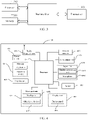
- FIG. 3 is a schematic diagram of a hardware structure of a network side device according to an embodiment of the present disclosure.
- the network side device includes a memory 301, a processor 302, a transceiver 303, and a computer program stored in the memory 301 and executable on the processor 302.
- the processor 302 may be configured to map a PDSCH and a PRS onto different REs of a same RB; or map the PDSCH and the PRS onto different RBs; or map the PDSCH and the PRS onto different OFDM symbols.
- the transceiver 303 may be configured to transmit the PDSCH and the PRS to a terminal device.
- a bus architecture may include any quantity of interconnected buses and bridges, which are specifically connect together one or more processors represented by the processor 302 and various circuits of a memory represented by the memory 301.
- the bus architecture may further connect together various other circuits of a peripheral device, a voltage stabilizer, a power management circuit, and the like, which are known in this art and will not be further described herein.
- the bus interface provides an interface.
- the transceiver 303 may be a plurality of elements, including a transmitter and a receiver, provides a unit for communicating with various other devices on a transmission medium, and is configured to receive and send data under control of the processor 302.
- the processor 302 is responsible for management on and general processing of the bus architecture.
- the memory 301 may store data used by the processor 302 during operation execution.
- an embodiment of the present disclosure further provides a network side device, including a processor 302, a memory 301, a computer program stored in the memory 301 and executable on the processor 302.
- a network side device including a processor 302, a memory 301, a computer program stored in the memory 301 and executable on the processor 302.
- FIG. 4 is a schematic diagram of a hardware structure of a terminal device according to an embodiment of the present disclosure.
- the terminal device 400 includes but is not limited to: a radio frequency unit 401, a network module 402, an audio output unit 403, an input unit 404, a sensor 405, a display unit 406, a user input unit 407, an interface unit 408, a memory 409, a processor 410 and a power supply 411.
- a radio frequency unit 401 includes but is not limited to: a radio frequency unit 401, a network module 402, an audio output unit 403, an input unit 404, a sensor 405, a display unit 406, a user input unit 407, an interface unit 408, a memory 409, a processor 410 and a power supply 411.
- the terminal device may include more or fewer components than that shown in the figure, or a combination of some components, or an arrangement of different components.
- the terminal device includes but is not limited to: a mobile phone, a tablet computer, a notebook computer, a palmtop computer, an in-vehicle terminal, a wearable device, a pedometer, or the like.
- the radio frequency unit 401 is configured to receive a PDSCH and a PRS transmitted by a network side device, where the PDSCH and the PRS are mapped onto different REs of a same RB; or the PDSCH and the PRS are mapped onto different RBs; or the PDSCH and the PRS are mapped onto different OFDM symbols.
- the radio frequency unit 401 may be configured to receive and transmit information, or receive and transmit a signal during a call. Specifically, the radio frequency unit 401 receives downlink data from a base station, and then transmits the downlink data to the processor 410 for processing; and in addition, transmits uplink data to the base station.
- the radio frequency unit 401 includes but is not limited to, an antenna, at least one amplifier, a transceiver, a coupler, a low noise amplifier, a duplexer, and the like.
- the radio frequency unit 401 further may communicate with a network and another device through a wireless communications system.
- the terminal device provides a user with wireless broadband internet access by using the network module 402, for example, helping the user receive and send an email, browse a web page, and access streaming media.
- the audio output unit 403 may convert audio data received by the radio frequency unit 401 or the network module 402 or stored in the memory 409 into an audio signal and output the audio signal as a sound. Moreover, the audio output unit 403 may also provide an audio output (such as a receiving sound of a calling signal, a message receiving sound and the like) related to a specific function executed by the terminal device 400.
- the audio output unit 403 includes a speaker, a buzzer, a telephone receiver, and the like.
- the input unit 404 is configured to receive audio or video signals.
- the input unit 404 may include a graphics processing unit (Graphics Processing Unit, GPU) 4041 and a microphone 4042.
- the graphics processing unit 4041 processes image data of a static picture or a video obtained by an image capturing apparatus (for example, a camera) in a video capturing mode or an image capturing mode.
- a processed image frame can be displayed on the display unit 406.
- An image frame processed by the graphics processing unit 4041 may be stored in the memory 409 (or another storage medium) or sent via the radio frequency unit 401 or the network module 402.
- the microphone 4042 can receive a sound, and can process such a sound to obtain audio data.
- Processed audio data may be converted, in a telephone call mode, into a format that can be sent to a mobile communication base station via the radio frequency unit 401 for output.
- the terminal device 400 further includes at least one sensor 405, such as an optical sensor, a motion sensor, and other sensors.
- the light sensor includes an ambient light sensor and a proximity sensor.
- the ambient light sensor may adjust luminance of the display panel 4061 based on brightness of ambient light
- the proximity sensor may turn off the display panel 4061 and/or backlight when the terminal device 400 approaches an ear.
- an accelerometer sensor may detect an acceleration in each direction (generally, three axes), and detect a value and a direction of gravity when the accelerometer sensor is static, and may be used to recognize a terminal device posture (such as screen switching between landscape and portrait modes, a related game, or magnetometer posture calibration), a function related to vibration recognition (such as a pedometer or a knock), and the like.
- the sensor 405 may further include a fingerprint sensor, a pressure sensor, an iris sensor, a molecular sensor, a gyroscope, a barometer, a hygrometer, a thermometer, and an infrared sensor. Details are not described herein.
- the display unit 406 is configured to display information entered by the user or information provided for the user.
- the display unit 406 may include the display panel 4061, and the display panel 4061 may be configured in a form of a liquid crystal display (Liquid Crystal Display, LCD), an organic light-emitting diode (Organic Light-Emitting Diode, OLED), or the like.
- LCD Liquid Crystal Display
- OLED Organic Light-Emitting Diode
- the user input unit 407 may be configured to receive input digit or character information and generate key signal input related to user settings and function control of the terminal device.
- the user input unit 407 includes a touch panel 4071 and other input devices 4072.
- the touch panel 4071 also referred to as a touchscreen, can collect a touch operation performed by a user on or near the touch panel 4071 (such as an operation on or near the touch panel 4071 performed by a user by using any suitable object or accessory such as a finger or a stylus).
- the touch panel 4071 may include two parts: a touch detection apparatus and a touch controller.
- the touch detection apparatus detects a touch direction and position of the user, detects a signal brought by the touch operation, and transmits the signal to the touch controller.
- the touch controller receives touch information from the touch detection apparatus, converts the touch information into touch point coordinates, and sends the touch point coordinates to the processor 410; and receives and executes a command sent by the processor 410.
- the touch panel 4071 may be implemented as a resistive type, a capacitive type, an infrared type, a surface acoustic wave type, or the like.
- the user input unit 407 may further include other input devices 4072.
- other input devices 4072 may include but are not limited to at least one of a physical keyboard, a functional button (such as a volume control button or a power on/off button), a trackball, a mouse, and a joystick. Details are not described herein.
- the touch panel 4071 can cover the display panel 4061.
- the touch panel 4071 transmits the touch operation to the processor 410 to determine a type of a touch event. Then, the processor 410 provides corresponding visual output on the display panel 4061 based on the type of the touch event.
- the touch panel 4071 and the display panel 4061 are used as two separate components to implement input and output functions of the terminal device in FIG. 4 , in some embodiments, the touch panel 4071 and the display panel 4061 may be integrated to implement the input and output functions of the terminal device. This is not specifically limited herein.
- the interface unit 408 is an interface for connecting an external apparatus to the terminal device 400.
- the external apparatus may include a wired or wireless headset port, an external power supply (or a battery charger) port, a wired or wireless data port, a memory card port, a port for connecting an apparatus having an identification module, an audio input/output (I/O) port, a video I/O port, a headset port, and the like.
- the interface unit 408 may be configured to receive an input (for example, data information or power) from the external apparatus and transmit the received input to one or more elements in the terminal device 400, or transmit data between the terminal device 400 and the external device.
- the memory 409 may be configured to store a software program and various data.
- the memory 409 may mainly include a program storage area and a data storage area.
- the program storage area may store an operating system, an application (for example, a sound play function or an image play function) required for at least one function, and the like.
- the data storage area may store data created based on use of the mobile phone (for example, audio data and a phone book), and the like.
- the memory 409 may include a high-speed random access memory, or may include a nonvolatile memory, for example, at least one disk storage device, a flash memory, or another volatile solid-state storage device.
- the processor 410 is a control center of the terminal device, and is connected to various parts of the entire terminal device by using various interfaces and lines, and performs various functions of the terminal device and processes data by running or executing the software program and/or modules stored in the memory 409 and invoking the data stored in the memory 409, to implement overall monitoring on the terminal device.
- the processor 410 may include one or more processing units.
- an application processor and a modem processor may be integrated into the processor 410.
- the application processor mainly processes an operating system, a user interface, an application program, and the like.
- the modem processor mainly processes wireless communications. It should be understood that the modem processor may be not integrated in the processor 410.
- the terminal device 400 may further include the power supply 411 (such as a battery) that supplies power to each component.
- the power supply 411 may be logically connected to the processor 410 by using a power management system, to implement functions such as charging, discharging, and power consumption management by using the power management system.
- the terminal device 400 includes some functional modules that are not shown. Details are not described herein.
- an embodiment of the present disclosure further provides a terminal device, including a processor 410, a memory 409, and a computer program stored in the memory 409 and executable on the processor 410.
- a terminal device including a processor 410, a memory 409, and a computer program stored in the memory 409 and executable on the processor 410.
- the computer program is executed by the processor 410, processes of the foregoing information transmission method embodiment applied to the terminal device are implemented, and a same technical effect can be achieved. To avoid repetition, details are not described herein again.
- An embodiment of the present disclosure further provides a computer-readable storage medium.
- the computer-readable storage medium stores computer program instructions.
- processes of the information transmission method embodiment applied to the terminal device and provided in the embodiments of the present disclosure are implemented, or processes of the information transmission method embodiment applied to the network side device are implemented, and a same technical effect can be achieved. To avoid repetition, details are not described herein again.
- the computer-readable storage medium may include, for example, a non-transitory computer-readable storage medium such as a read-only memory (Read-Only Memory, ROM), a random access memory (Random Access Memory, RAM), a magnetic disk, or an optical disc.
- Such a processor may be, but is not limited to, a general-purpose processor, a special-purpose processor, an application-specific processor, or a field programmable logic circuit. It can be further understood that each block in the flowcharts and/or block diagrams and a combination of blocks in the flowcharts and/or block diagrams may alternatively be implemented by dedicated hardware that performs a specified function or action, or implemented by a combination of dedicated hardware and computer instructions.
Landscapes
- Engineering & Computer Science (AREA)
- Signal Processing (AREA)
- Computer Networks & Wireless Communication (AREA)
- Mobile Radio Communication Systems (AREA)
Applications Claiming Priority (2)
| Application Number | Priority Date | Filing Date | Title |
|---|---|---|---|
| CN201910701053.9A CN111800241B (zh) | 2019-07-31 | 2019-07-31 | 信息传输方法、装置、设备及介质 |
| PCT/CN2020/105134 WO2021018134A1 (zh) | 2019-07-31 | 2020-07-28 | 信息传输方法、装置、设备及介质 |
Publications (2)
| Publication Number | Publication Date |
|---|---|
| EP4007201A1 true EP4007201A1 (de) | 2022-06-01 |
| EP4007201A4 EP4007201A4 (de) | 2022-08-31 |
Family
ID=72805433
Family Applications (1)
| Application Number | Title | Priority Date | Filing Date |
|---|---|---|---|
| EP20848621.7A Pending EP4007201A4 (de) | 2019-07-31 | 2020-07-28 | Informationsübertragungsverfahren und -gerät sowie vorrichtung und speichermedium |
Country Status (4)
| Country | Link |
|---|---|
| US (1) | US12476753B2 (de) |
| EP (1) | EP4007201A4 (de) |
| CN (1) | CN111800241B (de) |
| WO (1) | WO2021018134A1 (de) |
Families Citing this family (2)
| Publication number | Priority date | Publication date | Assignee | Title |
|---|---|---|---|---|
| EP4085701A1 (de) * | 2020-01-03 | 2022-11-09 | Qualcomm Incorporated | Intra-slot-positionierungs- signalstummschaltung |
| WO2025118795A1 (en) * | 2023-12-05 | 2025-06-12 | Guangdong Oppo Mobile Telecommunications Corp., Ltd. | Apparatus and method of wireless communication |
Family Cites Families (24)
| Publication number | Priority date | Publication date | Assignee | Title |
|---|---|---|---|---|
| CN101616360B (zh) * | 2009-07-24 | 2012-05-09 | 中兴通讯股份有限公司 | 一种定位参考信号的发送方法及系统 |
| US8743799B2 (en) * | 2010-06-24 | 2014-06-03 | Nokia Siemens Networks Oy | Change of rate matching modes in presence of channel state information reference signal transmission |
| CN102594756B (zh) * | 2011-01-07 | 2016-09-07 | 中兴通讯股份有限公司 | 定位参考信号子帧的传输方法及系统 |
| KR20120082717A (ko) * | 2011-01-14 | 2012-07-24 | 주식회사 팬택 | 이종 통신 시스템에서의 위치 참조 신호 뮤팅 방법과 장치, 및 그를 이용한 위치측정 장치와 방법 |
| JP6392227B2 (ja) * | 2012-09-16 | 2018-09-19 | エルジー エレクトロニクス インコーポレイティド | 無線通信システムにおいてアンテナポート関係を考慮した下りリンク信号送受信方法及び装置 |
| CN104010363B (zh) * | 2013-02-26 | 2018-05-29 | 华为技术有限公司 | 一种定位参考信号子帧的发送、接收方法及装置 |
| TW201507497A (zh) * | 2013-04-03 | 2015-02-16 | Interdigital Patent Holdings | 針對一個或多個載波類型的epdcch共用檢索空間設計 |
| US9913268B2 (en) * | 2013-05-16 | 2018-03-06 | Lg Electronics Inc. | Signal transmission method for coverage improvement and apparatus for same |
| US10349371B2 (en) * | 2014-06-23 | 2019-07-09 | Lg Electronics Inc. | Method for performing positioning in wireless communication system, and apparatus therefor |
| CN106576343B (zh) * | 2014-07-28 | 2020-02-28 | Lg 电子株式会社 | 在无线通信系统中收发无线信号的方法及其设备 |
| WO2016093662A1 (ko) * | 2014-12-12 | 2016-06-16 | 엘지전자 주식회사 | 기계타입통신을 지원하는 무선접속시스템에서 포지셔닝 참조신호를 전송하는 방법 및 장치 |
| US10250420B2 (en) * | 2015-04-10 | 2019-04-02 | Motorola Mobility Llc | Method and apparatus for reception of control signaling |
| WO2017057989A1 (ko) * | 2015-10-02 | 2017-04-06 | 엘지전자(주) | 무선 통신 시스템에서의 하향링크 제어 정보의 전송 방법 |
| MX2018011730A (es) * | 2016-03-30 | 2019-01-10 | Interdigital Patent Holdings Inc | Metodo y procedimientos para canales fisicos de enlace descendente para reducir la latencia en un sistema lte avanzado. |
| WO2017204595A1 (ko) * | 2016-05-27 | 2017-11-30 | 주식회사 아이티엘 | Nr 시스템을 위한 제어 채널 및 데이터 채널 송수신 방법 및 장치 |
| US10660109B2 (en) * | 2016-11-16 | 2020-05-19 | Qualcomm Incorporated | Systems and methods to support multiple configurations for positioning reference signals in a wireless network |
| WO2018164474A1 (ko) * | 2017-03-08 | 2018-09-13 | 삼성전자 주식회사 | 무선 셀룰라 통신 시스템에서 제어 및 데이터 정보 자원 매핑 방법 및 장치 |
| US11689313B2 (en) * | 2018-07-06 | 2023-06-27 | Qualcomm Incorporated | Re-allocation of positioning reference signal resources to accommodate another transmission |
| CN110690950B (zh) * | 2018-07-06 | 2020-08-11 | 维沃移动通信有限公司 | 定位参考信号配置、接收方法和设备 |
| WO2020065894A1 (ja) * | 2018-09-27 | 2020-04-02 | 三菱電機株式会社 | 基地局、端末装置および測位方法 |
| US11695459B2 (en) * | 2019-01-11 | 2023-07-04 | Apple Inc. | Resource allocation, reference signal design, and beam management for new radio (NR) positioning |
| CN109863810B (zh) * | 2019-01-23 | 2022-06-17 | 北京小米移动软件有限公司 | 参考信号传输方法及装置 |
| WO2020201143A1 (en) * | 2019-03-29 | 2020-10-08 | Telefonaktiebolaget Lm Ericsson (Publ) | Handling of transmissions in the serving cell discovery burst transmission (dbt) window |
| EP3994827A4 (de) * | 2019-07-04 | 2023-03-08 | ZTE Corporation | System und verfahren zum empfangen von geteilten kanälen für multi-trp-übertragung |
-
2019
- 2019-07-31 CN CN201910701053.9A patent/CN111800241B/zh active Active
-
2020
- 2020-07-28 WO PCT/CN2020/105134 patent/WO2021018134A1/zh not_active Ceased
- 2020-07-28 EP EP20848621.7A patent/EP4007201A4/de active Pending
-
2022
- 2022-01-28 US US17/587,146 patent/US12476753B2/en active Active
Also Published As
| Publication number | Publication date |
|---|---|
| EP4007201A4 (de) | 2022-08-31 |
| CN111800241B (zh) | 2021-10-15 |
| CN111800241A (zh) | 2020-10-20 |
| US20220158791A1 (en) | 2022-05-19 |
| US12476753B2 (en) | 2025-11-18 |
| WO2021018134A1 (zh) | 2021-02-04 |
Similar Documents
| Publication | Publication Date | Title |
|---|---|---|
| CN113037449B (zh) | 信道资源确定方法、信道检测方法及终端 | |
| EP3832934B1 (de) | Synchronisationssignalübertragungsverfahren und endgerät | |
| EP3986032A1 (de) | Pdcch-überwachungsverfahren und endgerät | |
| US12267272B2 (en) | Scheduling method, network device, and terminal | |
| CN111817831B (zh) | 一种传输方法和通信设备 | |
| JP7436685B2 (ja) | 周波数領域リソース処理方法、周波数領域リソース構成方法及び関連機器 | |
| CN110971322A (zh) | 一种信息传输方法、网络设备及终端 | |
| EP3952583A1 (de) | Abbildungsverfahren, endgerätevorrichtung und netzwerkseitige vorrichtung | |
| EP3952183A1 (de) | Verfahren zur bestimmung eines referenzwertes und endgerät | |
| CN111278159B (zh) | 一种随机接入传输方法及终端 | |
| US12476753B2 (en) | Information transmission method, network side device and terminal device | |
| CN111182646A (zh) | 一种随机接入传输方法及终端 | |
| CN111836398B (zh) | 一种传输方法、终端设备和网络侧设备 | |
| CN111436104B (zh) | 消息发送方法、消息接收方法、终端设备及网络设备 | |
| CN110035500B (zh) | 通信方法及相关设备 | |
| CN111818645B (zh) | 一种信息传输方法、网络设备及终端 | |
| CN111432481B (zh) | 一种资源映射方法及用户设备 | |
| EP3996450A1 (de) | Übertragungsverfahren, interferenzverarbeitungsverfahren, endgerät und netzwerkseitige vorrichtung | |
| CN113498088A (zh) | 资源确定方法及终端 | |
| HK40062013A (en) | Channel resource determination method, channel detection method and terminal | |
| CN112769528B (zh) | 上行探测导频发送方法、接收方法及相关设备 | |
| HK40076955A (en) | Frequency domain resource processing method, frequency domain resource configuration method and related device | |
| HK40060274A (en) | Method for determining reference value, and terminal | |
| HK40064729A (en) | Transmission method, interference processing method, terminal, and network-side device | |
| HK40063757A (en) | Pdcch monitoring method and terminal |
Legal Events
| Date | Code | Title | Description |
|---|---|---|---|
| STAA | Information on the status of an ep patent application or granted ep patent |
Free format text: STATUS: THE INTERNATIONAL PUBLICATION HAS BEEN MADE |
|
| PUAI | Public reference made under article 153(3) epc to a published international application that has entered the european phase |
Free format text: ORIGINAL CODE: 0009012 |
|
| STAA | Information on the status of an ep patent application or granted ep patent |
Free format text: STATUS: REQUEST FOR EXAMINATION WAS MADE |
|
| 17P | Request for examination filed |
Effective date: 20220126 |
|
| AK | Designated contracting states |
Kind code of ref document: A1 Designated state(s): AL AT BE BG CH CY CZ DE DK EE ES FI FR GB GR HR HU IE IS IT LI LT LU LV MC MK MT NL NO PL PT RO RS SE SI SK SM TR |
|
| A4 | Supplementary search report drawn up and despatched |
Effective date: 20220802 |
|
| RIC1 | Information provided on ipc code assigned before grant |
Ipc: H04W 64/00 20090101ALI20220727BHEP Ipc: H04L 27/26 20060101ALI20220727BHEP Ipc: H04L 27/00 20060101ALI20220727BHEP Ipc: H04L 5/00 20060101AFI20220727BHEP |
|
| DAV | Request for validation of the european patent (deleted) | ||
| DAX | Request for extension of the european patent (deleted) | ||
| STAA | Information on the status of an ep patent application or granted ep patent |
Free format text: STATUS: EXAMINATION IS IN PROGRESS |
|
| 17Q | First examination report despatched |
Effective date: 20250221 |
|
| GRAP | Despatch of communication of intention to grant a patent |
Free format text: ORIGINAL CODE: EPIDOSNIGR1 |
|
| STAA | Information on the status of an ep patent application or granted ep patent |
Free format text: STATUS: GRANT OF PATENT IS INTENDED |