EP4006771B1 - Verfahren, vorrichtung und system zur verarbeitung von bilddaten, die eine szene darstellen, um merkmale zu extrahieren - Google Patents
Verfahren, vorrichtung und system zur verarbeitung von bilddaten, die eine szene darstellen, um merkmale zu extrahieren Download PDFInfo
- Publication number
- EP4006771B1 EP4006771B1 EP20210295.0A EP20210295A EP4006771B1 EP 4006771 B1 EP4006771 B1 EP 4006771B1 EP 20210295 A EP20210295 A EP 20210295A EP 4006771 B1 EP4006771 B1 EP 4006771B1
- Authority
- EP
- European Patent Office
- Prior art keywords
- image data
- scene
- portions
- processing
- layers
- Prior art date
- Legal status (The legal status is an assumption and is not a legal conclusion. Google has not performed a legal analysis and makes no representation as to the accuracy of the status listed.)
- Active
Links
Images


Classifications
-
- G—PHYSICS
- G06—COMPUTING OR CALCULATING; COUNTING
- G06V—IMAGE OR VIDEO RECOGNITION OR UNDERSTANDING
- G06V10/00—Arrangements for image or video recognition or understanding
- G06V10/40—Extraction of image or video features
-
- G—PHYSICS
- G06—COMPUTING OR CALCULATING; COUNTING
- G06V—IMAGE OR VIDEO RECOGNITION OR UNDERSTANDING
- G06V20/00—Scenes; Scene-specific elements
- G06V20/60—Type of objects
- G06V20/69—Microscopic objects, e.g. biological cells or cellular parts
- G06V20/695—Preprocessing, e.g. image segmentation
-
- G—PHYSICS
- G06—COMPUTING OR CALCULATING; COUNTING
- G06V—IMAGE OR VIDEO RECOGNITION OR UNDERSTANDING
- G06V10/00—Arrangements for image or video recognition or understanding
- G06V10/94—Hardware or software architectures specially adapted for image or video understanding
- G06V10/95—Hardware or software architectures specially adapted for image or video understanding structured as a network, e.g. client-server architectures
-
- G—PHYSICS
- G06—COMPUTING OR CALCULATING; COUNTING
- G06F—ELECTRIC DIGITAL DATA PROCESSING
- G06F18/00—Pattern recognition
- G06F18/20—Analysing
- G06F18/25—Fusion techniques
- G06F18/251—Fusion techniques of input or preprocessed data
-
- G—PHYSICS
- G06—COMPUTING OR CALCULATING; COUNTING
- G06N—COMPUTING ARRANGEMENTS BASED ON SPECIFIC COMPUTATIONAL MODELS
- G06N3/00—Computing arrangements based on biological models
- G06N3/02—Neural networks
- G06N3/04—Architecture, e.g. interconnection topology
- G06N3/045—Combinations of networks
-
- G—PHYSICS
- G06—COMPUTING OR CALCULATING; COUNTING
- G06N—COMPUTING ARRANGEMENTS BASED ON SPECIFIC COMPUTATIONAL MODELS
- G06N3/00—Computing arrangements based on biological models
- G06N3/02—Neural networks
- G06N3/04—Architecture, e.g. interconnection topology
- G06N3/0464—Convolutional networks [CNN, ConvNet]
-
- G—PHYSICS
- G06—COMPUTING OR CALCULATING; COUNTING
- G06T—IMAGE DATA PROCESSING OR GENERATION, IN GENERAL
- G06T5/00—Image enhancement or restoration
- G06T5/20—Image enhancement or restoration using local operators
-
- G—PHYSICS
- G06—COMPUTING OR CALCULATING; COUNTING
- G06V—IMAGE OR VIDEO RECOGNITION OR UNDERSTANDING
- G06V10/00—Arrangements for image or video recognition or understanding
- G06V10/10—Image acquisition
- G06V10/12—Details of acquisition arrangements; Constructional details thereof
- G06V10/14—Optical characteristics of the device performing the acquisition or on the illumination arrangements
- G06V10/147—Details of sensors, e.g. sensor lenses
-
- G—PHYSICS
- G06—COMPUTING OR CALCULATING; COUNTING
- G06V—IMAGE OR VIDEO RECOGNITION OR UNDERSTANDING
- G06V10/00—Arrangements for image or video recognition or understanding
- G06V10/20—Image preprocessing
- G06V10/25—Determination of region of interest [ROI] or a volume of interest [VOI]
-
- G—PHYSICS
- G06—COMPUTING OR CALCULATING; COUNTING
- G06V—IMAGE OR VIDEO RECOGNITION OR UNDERSTANDING
- G06V10/00—Arrangements for image or video recognition or understanding
- G06V10/40—Extraction of image or video features
- G06V10/44—Local feature extraction by analysis of parts of the pattern, e.g. by detecting edges, contours, loops, corners, strokes or intersections; Connectivity analysis, e.g. of connected components
- G06V10/443—Local feature extraction by analysis of parts of the pattern, e.g. by detecting edges, contours, loops, corners, strokes or intersections; Connectivity analysis, e.g. of connected components by matching or filtering
- G06V10/449—Biologically inspired filters, e.g. difference of Gaussians [DoG] or Gabor filters
- G06V10/451—Biologically inspired filters, e.g. difference of Gaussians [DoG] or Gabor filters with interaction between the filter responses, e.g. cortical complex cells
- G06V10/454—Integrating the filters into a hierarchical structure, e.g. convolutional neural networks [CNN]
-
- G—PHYSICS
- G06—COMPUTING OR CALCULATING; COUNTING
- G06V—IMAGE OR VIDEO RECOGNITION OR UNDERSTANDING
- G06V10/00—Arrangements for image or video recognition or understanding
- G06V10/40—Extraction of image or video features
- G06V10/46—Descriptors for shape, contour or point-related descriptors, e.g. scale invariant feature transform [SIFT] or bags of words [BoW]; Salient regional features
- G06V10/462—Salient features, e.g. scale invariant feature transforms [SIFT]
-
- G—PHYSICS
- G06—COMPUTING OR CALCULATING; COUNTING
- G06V—IMAGE OR VIDEO RECOGNITION OR UNDERSTANDING
- G06V10/00—Arrangements for image or video recognition or understanding
- G06V10/70—Arrangements for image or video recognition or understanding using pattern recognition or machine learning
- G06V10/764—Arrangements for image or video recognition or understanding using pattern recognition or machine learning using classification, e.g. of video objects
-
- G—PHYSICS
- G06—COMPUTING OR CALCULATING; COUNTING
- G06V—IMAGE OR VIDEO RECOGNITION OR UNDERSTANDING
- G06V10/00—Arrangements for image or video recognition or understanding
- G06V10/70—Arrangements for image or video recognition or understanding using pattern recognition or machine learning
- G06V10/77—Processing image or video features in feature spaces; using data integration or data reduction, e.g. principal component analysis [PCA] or independent component analysis [ICA] or self-organising maps [SOM]; Blind source separation
- G06V10/80—Fusion, i.e. combining data from various sources at the sensor level, preprocessing level, feature extraction level or classification level
- G06V10/803—Fusion, i.e. combining data from various sources at the sensor level, preprocessing level, feature extraction level or classification level of input or preprocessed data
-
- G—PHYSICS
- G06—COMPUTING OR CALCULATING; COUNTING
- G06T—IMAGE DATA PROCESSING OR GENERATION, IN GENERAL
- G06T2207/00—Indexing scheme for image analysis or image enhancement
- G06T2207/20—Special algorithmic details
- G06T2207/20084—Artificial neural networks [ANN]
Definitions
- the present invention relates to image processing, and specifically to capturing and processing image data representing a scene for extracting features related to objects in the scene using a convolutional neural network.
- Convolutional neural networks may be used when processing an image of a scene to extract features related to objects in the scene.
- the number of calculations required is substantially increased with increased size, i.e. number of pixels, of the image.
- the processing time will be substantially increased with increased size of the image. Examples of such large images are high resolution images and panoramic images representing a wide scene.
- One way of reducing the number of calculations is to reduce the resolution of the image to be processed. However, this will reduce the possibility to extract small features related to objects in the scene.
- a view-free image stitching network based on global homography by L. Nie et al, Journal of Visual Communication and Image Representation, Vol. 73, 4 November 2020 , discloses a method including three stages using convolutional neural networks for image stitching.
- An object of the present invention is to facilitate time-efficient processing of image data representing a scene for extracting features related to objects in the scene whilst maintaining the possibility to extract small features related to objects in the scene.
- a method of processing image data representing a scene for extracting features related to objects in the scene using a convolutional neural network comprises processing, by means of a respective one of two or more circuitries, two or more portions of the image data representing a respective one of two or more portions of the scene through a first number of layers of the convolutional neural network to form two or more outputs, wherein the two or more portions of the scene are partially overlapping.
- the method further comprises more portions of the image data representing a respective one of two or more portions of the scene through a first number of layers of the convolutional neural network to form two or more outputs, wherein the two or more portions of the scene are partially overlapping, wherein each of the two or more portions of the image data includes image data representing an overlapping part of each neighbouring portions of the two or more portions of the scene.
- the method further comprises combining the two or more outputs to form a combined output by stitching the two or more outputs together and cropping image data relating to each overlapping part, and processing the combined output through a second number of layers of the convolutional neural network by means of one of the two or more circuitries for extracting features related to objects in the scene.
- the processing of the image data through the first number of layers is divided on two or more different circuitries. Specifically, two or more different portions of the image data are processed through the first number of layers by means of different ones of the two or more circuitries.
- the two or more different portions are arranged such that the corresponding two or more portions of the scene they represent are partially overlapping.
- each portion of the image data of the two or more portions of the image data represents a portion of the scene which partially overlaps a portion of the scene represented by another one of the portions of the image data.
- the two or more circuitries may be equal in number as the two or more portions of the image data.
- the processing of the combined output through a second number of layers of the convolutional neural network will be by means of one of the two or more circuitry that processed one of the two or more portions of the image data through the first number of layers of the convolutional neural network.
- the two or more circuitries may be larger in number than the two or more portions of the image data.
- the processing of the combined output through a second number of layers of the convolutional neural network may be by means of one of the two or more circuitry that did not process any one of the two or more portions of the image data through the first number of layers of the convolutional neural network.
- the respective two or more portions of the image data will include image data representing partially overlapping portions of the scene. This enables processing the two or more portions of the image data the first number of layers of the convolutional neural network independently on a respective one of the two or more circuitries.
- the size by which the two or more portions of the scene are partially overlapping may be selected such that processing the first number of layers is encompassed.
- the size by which the two or more portions of the scene are partially overlapping may further be based on a filter (kernel) size and a stride of the convolution in each layer of the first number of layers of the convolutional neural network.
- the first number of layers may further be based on a filter size and a stride of the convolution in each layer of the first number of layers of the convolutional neural network.
- the first number of layers and the size by which the two or more portions of the scene are partially overlapping may be based on the filter size and the stride of each convolution of the first number of layers of the convolutional neural network.
- the two or more circuitries may consist of a first circuitry and a second circuitry.
- the act of processing the two or more portions of the image data may then comprise processing, by means of the first circuitry, a first portion of the image data representing a first portion of the scene through the first number of layers of the convolutional neural network to form a first output, and processing, by means of the second circuitry, a second portion of the image data representing a second portion of the scene through the first number of layers of the convolutional neural network to form a second output, wherein the first and second portions of the scene are partially overlapping, wherein the second portion of the image data includes image data representing an overlapping part of the first portion of the image data.
- the act of combining the two or more outputs then comprises combining the first and second outputs to form the combined output by stitching the first and second outputs together and cropping image data relating to the overlapping part, and the act of processing the combined output comprises processing the combined output through the second number of layers of the convolutional neural network by means of one of the first and second circuitry for extracting features related to objects in the scene.
- the processing of the image data through the first number of layers is divided on the first circuitry and the second circuitry.
- the first portion of the image data and the second portion of the image data are processed through the first number of layers by means of the first circuitry and the second circuitry, respectively.
- the first portion of the image data and the second portion of the image data are arranged such that the corresponding first portion of the scene and the second portion of the scene they represent are partially overlapping.
- the first portion of the image data represents the first portion of the scene which partially overlaps the second portion of the scene represented by second portion of the image data.
- the first portion of the image data may be image data captured by a first image sensor and the second portion of the image data may be image data captured by a second image sensor.
- the first image sensor captures the first portion of the scene and the second image sensor captures the second portion of the scene and the first and second portions of the scene are partially overlapping.
- image data representing two portions of a scene in order to form a panoramic image by combining the image data representing the two portions of the scene.
- the two portions of the scene are in such cases typically partially overlapping, and the overlap between the two portions of the scene is used, e.g. by means of blending of image data from both of the two sensors, to reduce the risk of joint lines or the like in areas of the panoramic image corresponding to the border in the scene between what is captured by the two sensors.
- Image data from the first image sensor and the second image sensor may be processed directly through the first number of layers by means of the first circuitry and the second circuitry, respectively, without first combining them to form one image, e.g. by blending of image data from both of the two sensors.
- the two or more circuitries may consist of four circuitries.
- the act of processing the two or more portions of the image data may then comprise:
- the act of combining the two or more outputs then comprises combining the first, second, third and fourth outputs from the processing of the first and second portions of the image data to form the combined output by stitching the first, second, third and fourth output together and cropping image data relating to each overlapping part, and the act of processing the combined output comprises processing the combined output through the second number of layers of the convolutional neural network by means of one of the first, second, third and fourth circuitry for extracting features related to objects in the scene.
- the number of calculations for each circuitry is reduced in relation to using two circuitries to process the image data divided into two portions.
- the number of calculations to process the four portions of the image data through using the four circuitries is not half of the number of calculations to process two portions of the image data using two circuitries.
- the act of processing the two or more portions of the image data may comprise:
- the act of combining the two or more outputs then comprises combining the first and second outputs to form the combined output by stitching the first and second intermediate combined outputs together and cropping image data relating to the overlapping part of the first intermediate combined output, and the act of processing the combined output comprises processing the combined output through the second number of layers of the convolutional neural network by means of one of the first, second, third and fourth circuitry for extracting features related to objects in the scene.
- the size by which the first and second portions of the scene, second and third portions of the scene, and third and fourth portions of the scene are partially overlapping may be selected such that processing the first number of layers is encompassed. Additionally, for a given third number of layers, the size by which the second and third portions of the scene are partially overlapping may be selected such that, in addition to processing the first number of layers is encompassed, processing the third number of layers is also encompassed.
- the size by which the first and second portions of the scene, second and third portions of the scene, and third and fourth portions of the scene are partially overlapping may further be based on a filter size and a stride of each convolution in the first number of layers of the convolutional neural network and in the third number of layers of the convolutional neural network.
- the first number of layers may be selected such that processing the first number of layers is encompassed and processing the third number of layers is encompassed.
- the first number of layers and the third number of layers may further be based on a filter size and a stride of each convolution of the first number of layers of the convolutional neural network and of the third number of layers of the convolutional neural network.
- the first portion of the image data may be image data captured by a first image sensor
- the second portion of the image may be image data captured by a second image sensor
- the third portion of the image data may be image data captured by a third image sensor
- the fourth portion of the image data may be image data captured by a fourth image sensor, wherein the second and third portions of the scene are overlapping more than the first and second portions and more than the third and fourth portions.
- the four portions of the scene are in such cases typically partially overlapping, and the overlap between the four portions of the scene is used, e.g. by means of blending of image data from both of the two sensors, to reduce the risk of joint lines or the like in areas of the panoramic image corresponding to the border in the scene between what is captured by the four sensors.
- Image data from the first image sensor, the second image sensor, the third image sensor, and the fourth image sensor may be processed directly through the first number of layers by means of the first circuitry, the second circuitry, the third circuitry, and the fourth circuitry, respectively, without first combining them to form one image, e.g. by blending of image data from the four sensors.
- the second and third portions of the scene overlapping more than the first and second portions and more than the third and fourth portions enables processing the first and second intermediate combined outputs through the third number of layers of the convolutional neural network.
- the image data may be image data captured by one image sensor.
- the image data may be image data captured by at least two image sensors. Each portion of the image data may then be captured by a separate image sensor of the at least two image sensors, and the at least two image sensors may be arranged such that image data are captured by the respective image sensors that represent respective portions of the scene that are partially overlapping.
- the image data may also be a combination, such that two or more portions of the image data are captured by the same image sensor and two or more portions of the image data are captured by separate image sensors.
- the first number of layers and a size by which the two or more portions of the scene are partially overlapping may be selected such that processing the first number of layers is encompassed.
- a non-transitory computer-readable storage medium having stored thereon instructions for implementing the method according to the first aspect, when executed by a device having processing capabilities.
- a device for processing image data representing a scene for extracting features related to objects in the scene using a convolutional neural network comprises two or more circuitries configured to execute a first processing function configured to process, by means of a respective one of the two or more circuitries, two or more portions of the image data representing a respective one of two or more portions of the scene through a first number of layers of the convolutional neural network to form two or more outputs, wherein the two or more portions of the scene are partially overlapping, wherein each of the two or more portions of the image data includes image data representing an overlapping part of each neighbouring portions of the two or more portions of the scene.
- the two or more circuitries are further configured to execute a combining function configured to combine the two or more outputs to form a combined output by stitching the two or more outputs together and cropping image data relating to each overlapping part, and a second processing function configured to process the combined output through a second number of layers of the convolutional neural network by means of one of the two or more circuitries for extracting features related to objects in the scene.
- a combining function configured to combine the two or more outputs to form a combined output by stitching the two or more outputs together and cropping image data relating to each overlapping part
- a second processing function configured to process the combined output through a second number of layers of the convolutional neural network by means of one of the two or more circuitries for extracting features related to objects in the scene.
- the image data may be image data captured by one image sensor.
- the image data may be image data captured by at least two image sensors.
- the device may comprise four or more circuitries.
- the first processing function is then further configured to process, by means of a respective one of the four or more circuitries, four portions of the image data captured by a respective one of four image sensors and representing a respective one of four portions of the scene through the first number of layers of the convolutional neural network to form four intermediate outputs, wherein the four portions of the scene are partially overlapping, wherein each of the four or more portions of the image data includes image data representing an overlapping part of each neighbouring portions of the four or more portions of the scene, and to combine two of the four intermediate outputs to a first intermediate combined output and the remaining two of the four intermediate outputs to a second intermediate combined output by stitching the four or more outputs together and cropping image data relating to each overlapping part.
- the device is further configured to execute a third processing function configured to process, by means of two of the four or more circuitries, a respective one of the first intermediate combined output and the second intermediate combined output through a third number of layers of the convolutional neural network to form a first output and a second output, respectively.
- a third processing function configured to process, by means of two of the four or more circuitries, a respective one of the first intermediate combined output and the second intermediate combined output through a third number of layers of the convolutional neural network to form a first output and a second output, respectively.
- a system for capturing and processing image data representing a scene for extracting features related to objects in the scene using a convolutional neural network comprises a device according to the third aspect where the device comprises four or more circuitries.
- the system further comprises a camera for capturing the image data representing the scene.
- the camera comprises a first image sensor arranged for capturing a first portion of the image data representing a first portion of the scene, a second image sensor arranged for capturing a second portion of the image data representing a second portion of the scene, a third image sensor arranged for capturing a third portion of the image data representing a third portion of the scene, a fourth image sensor arranged for capturing a fourth portion of the image data representing a fourth portion of the scene.
- the first, second, third and fourth image sensors are arranged such that the second and third portions of the scene are overlapping more than the first and second portions and more than the third and fourth portions.
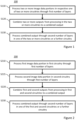
- Figure 1 is a flow chart of embodiments of a method 100 of processing image data representing a scene for extracting features related to objects in the scene using a convolutional neural network.
- the image data representing the scene relates to a high-resolution image or a panoramic image
- the image data may thus be divided into two or more portions representing a respective one of two or more portions of the scene which are processed S110 by means of a respective one of two or more circuitries through a first number of layers of the convolutional neural network to form two or more outputs.
- these two or more portions of the image data may be processed in parallel through the first number of layers of the convolutional neural network and thus the total time for processing will be reduced.
- each of the two or more portions of the image data need to include image data representing an overlapping part of each of neighbouring portions of the scene of the two or more portions of the scene, to be able to identify also features related to objects in the scene occurring at the border between two portions of the scene of the two or more portions of the scene.
- the two or more portions of the scene are arranged such that they partially overlap.
- the size by which the two or more portions of the scene are partially overlapping and the first number of layers of the convolutional neural network are interdependent.
- the larger the size of the overlap the larger the first number of layers may be and the larger the first number of layers to be processed, the larger the size of the overlap needs to be.
- the size by which the two or more portions of the scene are partially overlapping needs to be selected large enough to encompass such processing.
- the size by which the two or more portions of the scene are partially overlapping is typically determined to result in a required number of pixels the two or more portions of the image data need to partially overlap in order to encompass processing through the first number of layers of the convolutional neural network.
- Properties of the first layers of the convolutional neural network affecting the size by which the two or more portions of the scene need to be partially overlapping are a filter size and a stride of the convolution in each layer of the first number of layers of the convolutional neural network. Conversely, for a given size by which the two or more portions of the scene are partially overlapping, the filter size and a stride of the convolution in each layer of the convolutional neural network will govern the first number of layers that may be processed.
- the partial overlap between the portions of the scene will correspond to an overlap of pixels between the portions of the image data.
- the overlapping pixels between two portions of the image data may be identical pixels if a single image sensor has been used for the two portions of the image data.
- the overlapping pixels may be captured from two different image sensors such that the overlapping pixels are not identical for the two portions of the image data but represent the same part of the scene.
- FIG. 5 is a schematic view of a first layer 510, a second layer 520, and a third layer 530, each relating to a subset of 5x5 pixels of an image in relation to processing of layers of a convolutional neural network.
- a convolution in each of the second layer 520 and the third layer 530 is 3x3. This means that features in these layers have a data locality of 3x3 pixels. To create one "pixel" in a layer, 3x3 pixels are needed in the preceding layer.
- a pixel in the third layer 530 illustrated with a striped pattern requires 3x3 pixels in the second layer 520 with the striped pattern and the grid pattern.
- the pixel in the third layer 530 illustrated with the striped pattern requires 5x5 pixels in the first layer 510 illustrated with the striped pattern and the grid pattern.
- an image is to be divided into two or more portions and a border between two neighbouring portions of the two or more portions is vertical in the image corresponding to a vertical line 540 between the second and third column of pixels in the first layer 510, the second layer 520 and the third layer 530
- one additional column of pixels has to be processed for each of the two neighbouring portions through the second layer 520 in order to create pixels of the third layer 530 at the border corresponding to the vertical line 540.
- two additional columns of pixels have to be processed for each of the two neighbouring portions through the second layer 520 in order to create pixels of the third layer 530 at the border corresponding to the vertical line 540.
- the number of additional columns of pixels required in the first layer 510 is based on the filter size of the convolution in the second layer 520 and the third layer 530. In this case the number of additional columns is (3-1)/2 + (3-1)/2. For a NxN convolution in a layer, the number of additional columns required from a previous layer would be (N-1)/2 in order to create pixels at the border in the layer. Furthermore, a stride of a layer, i.e. the number of pixels the NxN filter moves in the layer when creating pixels for a next layer, also affects the number of additional columns required in the layer in order to create pixels at the border in the next layer. In Figure 5 , the stride is 1 for both the first layer 510 and the second layer 520. If the stride is 2 in a layer with NxN convolution, the number of additional columns required in relation to that layer in order to create pixels at the border in a next layer would be ((N-1)/2)x2.
- the overlap needed into a neighbouring portion of the image data in order to process a portion of the image data through the first number of layers of the convolutional neural network is also needed into that portion of the image data to process the neighbouring portion of the image data through the first number of layers of the convolutional neural network.
- the additional pixels between two neighbouring portions of the two or more portions of the image data is two times the additional pixels for one portion.
- the greater number of portions of the image data there are, the greater number of borders between portions there are and hence, the greater number of additional pixels are required.
- the number of additional pixels required depends on the length of the border.
- the division should preferably be made such that the border is as short as possible.
- An image that is wider than it is high, e.g. a panoramic image, for example, is preferably divided by the width with vertical borders between the portions.
- Dividing the processing of the image data through the first number of layers of the convolutional neural network into separate processing of the two or more portions of the image data through the first number of layers of the convolutional neural network on a respective one of the two or more circuitries enables a portion of the processing to be made in parallel which reduces total processing time.
- the more portions the image data are divided into and processed through the first number of layers of the convolutional neural network on respective separate circuitries the more the total processing time is reduced.
- the size by which the portions need to overlap depends on properties of the first number of layers of the convolutional neural network, the size will be the same regardless of the number of portions the image data are divided into.
- the portion of the image data that will be processed on two different circuitries will increase with the number of portions the image data are divided into and thus the reduction of processing time will be less significant the greater number of portions the image data are divided into.
- the division of the image data into the two or more portions of image data is preferably made such that the overlap is as short as possible.
- the division is preferably made vertically, such that the two or more portions of the image data represent a respective one of two or more vertical portions of the scene where the vertical portions overlap at the vertical border between adjacent vertical portions.
- the partial overlap between the two or more portions of the scene corresponds to the partial overlap between two or more portions of image data of the image.
- the size of the partial overlap required between the two or more portions of the image data representing the two or more portions of the scene depends on the number of layers together with the filter size and stride of each layer. Hence, given the filter size and stride of each layer, the size of the partial overlap required will depend on the number of layers. Hence, if the overlap is made large, the number of layers that can be processed in parallel, i.e. the first number of layers, can be made large.
- a large overlap between the two or more portions of the image data will result in processing a larger amount of the same image data by the two circuitries.
- an alternative approach can be used.
- two or more portions of the image data with a reduced partial overlap are processed through a subset of the first number of layers on a respective one of the two or more circuitries. After this, data resulting from the processing on each of the two or more circuitries, which data are needed for processing through a subsequent subset of the first number of layers on other ones of the two or more circuitries, are provided to the other ones of the two or more circuitries, i.e.
- the two or more portions of the image data may relate to image data of one image of the scene.
- the image may have been captured by one image sensor or produced by combining images captured by more than one image sensor.
- the image data may be divided into two or more portions, where each of the two or more portions of the image data partially overlaps neighbouring portions of the image data, i.e. include a portion of the same image data as the neighbouring portions of image data corresponding to the overlap. This overlap then corresponds to the overlap between the two or more portions of the scene which the two or more portions of the image data represent.
- the two or more portions of the image data may relate to image data from a respective one of two or more images captured by two or more image sensors wherein the two or more image sensors captures a respective one of the two or more portions of the scene and wherein the two or more portions of the scene are partially overlapping.
- the two or more portions of the image data will not include a portion of the same image data as the neighbouring portions of image data corresponding to the overlap since the image data for the overlap is captured by different image sensors for different portions of the image data.
- the image sensors are calibrated the portion of the image data corresponding to the overlap will be similar except for noise.
- At least two of the two or more portions of the image data relate to image data captured by a respective one of at least two image sensors, and at least two of the two or more portions of the image data relate to image data captured by one image sensor.
- one of the portions may relate to one image sensor and two of the portions may relate to a different image sensor.
- the two or more outputs are combined S120 to form a combined output.
- the combination of the two or more outputs is made by stitching the two outputs together and cropping data relating to the overlap.
- the combined output is then processed S130 through a second number of layers of the convolutional neural network by means of one of the two or more circuitries for extracting features related to objects in the scene.
- Using one of the two or more circuitries used to process one of the two or more portions of the image data through the first number of layers of the convolutional neural network, also to process the combined output through the second number of layers of the convolutional neural network means that the total number of circuitries needed is the same as the number of portions of the image data.
- One of the two or more circuitries will then be busy during the time when the processing of the combined output through the second number of layers of the convolutional neural network whilst the other circuitries of the two or more circuitries are not.
- circuitries of the two or more circuitries that are not processing the combined output may be started by the circuitries of the two or more circuitries that are not processing the combined output.
- the circuitry of the two or more circuitries used to process the combined output through the second number of layers of the convolutional neural network may be alternated between different image frames, such as between different image frames of a video stream in order to achieve load balancing between the two or more circuitries.
- a circuitry other than the circuitries of the two or more circuitries used to process a respective one of the two or more portions of the image data through the first number of layers of the convolutional neural network may be used to process the combined output through the second number of layers of the convolutional neural network.
- the circuitries other than the circuitry used to process the combined output through the second number of layers of the convolutional neural network may be used directly to start processing of two or more portions of image data relating to another image, such as a next image frame of a video stream. This will reduce the need for load balancing between the two or more circuitries but on the other hand at least one further circuitry is required.
- Figure 2 is a flow chart of further embodiments of a method 200 of processing image data representing a scene for extracting features related to objects in the scene using a convolutional neural network.
- Figure 2 relates to embodiments where there are two portions of the image data and where processing is done on a respective one of two circuitries.
- a first portion of the image data representing a first portion of the scene is processed S210, by means of the first circuitry, through the first number of layers of the convolutional neural network to form a first output.
- a second portion of the image data representing a second portion of the scene is processed S215, by means of the second circuitry, through the first number of layers of the convolutional neural network to form a second output.
- the first and second portions of the scene are partially overlapping.
- the first and second outputs are then combined S220 to form a combined output.
- the combination of the two or more outputs is made by stitching the two outputs together and cropping data relating to the overlap.
- the combined output is processed S230 through the second number of layers of the convolutional neural network by means of one of the first circuitry and the second circuitry for extracting features related to objects in the scene.
- the combined output may in alternative be processed S230 through the second number of layers of the convolutional neural network by means of a further circuitry other than the first circuitry and the second circuitry.
- the first circuitry may process a first portion of image data relating to a first image frame through the first number of layers and the second circuitry may process a second portion of the image data relating to the first image frame through the first number of layers.
- the first circuitry may then be used to process the combined output through the second number of layers. Once the first circuitry is finished with processing the combined output relating to the first frame through the second number of layers, it may start processing a first portion of image data relating to a second image frame through the first number of layers.
- the second circuitry may be used to process a second portion of the image data relating to the second image frame through the first number of layers, and depending on the processing time for the first circuitry to process the combined output through the second number of layers and processing the first portion of the image data relating to the second image frame, the second circuitry may continue to be used in parallel to process a first portion of image data relating to a third image frame etc.
- the second circuitry may start processing the combined output relating to the second image frame through the second number of layers.
- the second circuitry may start processing a second portion of the image data relating to the third image frame through the first number of layers. The circuitry of the first circuitry and the second circuitry may then be alternated between image frames in order to achieve load balancing.
- the size of the first portion and the second portion of the image data relating to each image frame may also differ.
- the first portion of the image data relating to the first frame may be smaller than the second portion of the image data relating to the first frame, e.g. half the size, when the first circuitry that processes the first portion through the first number of layers also processes the combined output relating to the first image frame through the second number of layers.
- the first portion of the image data relating to the second frame may then be larger than the second portion of the image data relating to the second frame, e.g. twice the size, when the second circuitry that processes the second portion through the first number of layers also processes the combined output relating to the second image frame through the second number of layers. This may reduce the number of image frames that are required to be processed in parallel.
- one of the one or more further circuitries can be used to process the combined output through the second number of layers of the convolutional neural network.
- the first circuitry and the second circuitry may be used directly for processing of the first portion of image data relating to the second image frame, and a second portion image data relating to the second image frame, respectively. This will reduce the need for load balancing between the two or more circuitries over image frames but on the other hand at least one or more further circuitries are required.
- the number of the one or more further circuitries may be selected depending on the processing time for processing a portion of image data through the first number of layers and processing time for processing the combined output through the second number of layers. If, for example, the processing time for the first number of layers is half the processing time for the second number of layers, using two further circuitries for alternating the processing of combined output through the second number of layers will balance load in relation to the first circuitry and second circuitry.
- the first portion of the image data and the second portion of the image data may relate to image data of one image of the scene.
- the image may have been captured by one image sensor or produced by combining images captured by more than one image sensor.
- some of the image data of the first portion of the image data will be identical to some of the image data of the second portion of the image data, namely the image data representing the partial overlap between the first portion of the scene and the second portion of the scene.
- the first portion of the image data may be image data captured by a first image sensor and the second portion of the image data may be image data captured by a second image sensor.
- the first image sensor captures the first portion of the scene and the second image sensor captures the second portion of the scene and the first portion of the scene and the second portion of the scene are partially overlapping.
- the first portion of the image data and the second portion of the image data will not include some identical data as the image data representing the partial overlap between the first portion of the scene and the second portion of the scene since the image data representing this overlap is captured by different sensors for the first portion of the image data and the second portion of the image data.
- Image data from the first image sensor and the second image sensor may be used as the first portion of the image data and the second portion of the image data, respectively, and processed directly through the first number of layers by means of the first circuitry and the second circuitry, respectively, without first combining them to form one image.
- image data directly from the first image sensor and second image sensor as the first portion of time image data and the second portion of the image data, respectively, there is no need for exchanging image data captured by the first image sensor and the second image sensor between the first circuitry and the second circuitry before processing through the first number of layers.
- an original image representing a scene has the size (resolution) 8192x2048 pixels
- an image representing the scene of the size (resolution) 2048x512 pixels should be processed through the layers of a convolutional neural network, such as mobilenet-ssd
- the original image first has to be downscaled with a factor 4.
- two portions of image data of the image to be processed should be processed through a first number of layers and the first number of layers are 48
- each of the two portions of image data need to overlap with 148 pixels (592 pixels in relation to the resolution of the original image) into the other portion.
- the total size including the overlap of each portion of the image data then has to be 1172x512 pixels.
- Figure 3 is a flow chart of yet further embodiments of a method 300 of processing image data representing a scene for extracting features related to objects in the scene using a convolutional neural network. Specifically, Figure 3 relates to embodiments where there are four portions of the image data and where processing is done on a respective one of four circuitries.
- a first portion of the image data representing a first portion of the scene is processed S310, by means of a first circuitry, through the first number of layers of the convolutional neural network to form a first output.
- a second portion of the image data representing a second portion of the scene is processed S312, by means of a second circuitry, through the first number of layers of the convolutional neural network to form a second output, wherein the first and second portions of the scene are partially overlapping.
- a third portion of the image data representing a third portion of the scene is processed S314, by means of a third circuitry, through the first number of layers of the convolutional neural network to form a third output, wherein the second and third portions of the scene are partially overlapping.
- a fourth portion of the image data representing a fourth portion of the scene is processed S316, by means of a fourth circuitry, through the first number of layers of the convolutional neural network to form a fourth output, wherein the third and fourth portions of the scene are partially overlapping.
- the first, second, third and fourth outputs from the processing of the first and second portions of the image data are combined S320 to form a combined output.
- the combined output is processed S330 through a second number of layers of the convolutional neural network by means of one of the first, second, third and fourth circuitry for extracting features related to objects in the scene.
- the number of calculations for each circuitry is reduced in relation to using two circuitries to process the image data divided into two portions.
- the number of calculations to process the four portions of the image data through using the four circuitries is not half of the number of calculations to process two portions of the image data using two circuitries.
- the first, second, third and fourth portions of the image data may relate to image data of one image of the scene.
- the image may have been captured by one image sensor or produced by combining images captured by more than one image sensor into one image analogously to what is described in relation to two portions of the image data in relation to Figure 2 .
- the first, second, third, and fourth portions of the image data may be image data captured by a respective one of first, second, third and fourth image sensors as described analogously to what is described in relation to two portions of the image data in relation to Figure 2 .
- the image data captured by the respective one of the first, second, third, and fourth image sensors need not be combined to one image first and then divided into portions of the image data but may be used directly as a respective one of the first, second, third and fourth portions of the image data.
- Figures 4a and 4b is a flow chart of yet further embodiments of a method 400 of processing image data representing a scene for extracting features related to objects in the scene using a convolutional neural network.
- Figures 4a and 4b relate to embodiments where there are four portions of the image data and where processing is done first by means of a respective one of four circuitries and then on a respective one of two of the four circuitries.
- a first portion of the image data representing a first portion of the scene is processed S410, by means of a first circuitry, through the first number of layers of the convolutional neural network to form a first intermediate output.
- a second portion of the image data representing a second portion of the scene is processed S411, by means of a second circuitry, through the first number of layers of the convolutional neural network to form a second intermediate output, wherein the first and second portions of the scene are partially overlapping.
- the first and second intermediate outputs from the processing of the first and second portions of the image data are combined S412 to form a first intermediate combined output.
- a third portion of the image data representing a third portion of the scene is processed S413, by means of a third circuitry, through the first number of layers of the convolutional neural network to form a third intermediate output, wherein the second and third portions of the scene are partially overlapping.
- a fourth portion of the image data representing a fourth portion of the scene is processed S413, by means of a fourth circuitry, through the first number of layers of the convolutional neural network to form a fourth intermediate output, wherein the third and fourth portions of the scene are partially overlapping.
- the third and fourth intermediate outputs from the processing of the third and fourth portions of the image data are combined S415 to form a second intermediate combined output.
- the first intermediate combined output is processed S416, by means of one of the first, second, third and fourth circuitries, through a third number of layers (referred to as "intermediate number of layers" in relation to Figures 4a and 4b ) of the convolutional neural network to form a first output.
- the second intermediate combined output is processed S417, by means of a different one of the first, second, third and fourth circuitries, through the intermediate number of layers of the convolutional neural network to form a second output.
- the first and second outputs are combined S420 to form the combined output.
- the combined output is processed S430 through the second number of layers (referred to as "last number of layers" in relation to Figures 4a and 4b ) of the convolutional neural network by means of one of the first, second, third and fourth circuitry for extracting features related to objects in the scene.
- the first and second portions of the scene, and third and fourth portions of the scene need to be partially overlapping by a size such that processing the first number of layers is encompassed, and the second and third portions of the scene need to be partially overlapping by a size such that, processing the first number of layers and processing the intermediate number of layers are encompassed.
- the size by which the first and second portions of the scene, and third and fourth portions of the scene need to be partially overlapping is based on a filter size and a stride of each convolution in the first number of layers of the convolutional neural network.
- the size by which the second and third portions of the scene need to be partially overlapping is based on the filter size and the stride of each convolution in the first number of layers of the convolutional neural network and a filter size and a stride of each convolution in the intermediate number of layers of the convolutional neural network.
- processing of a first number of layers is encompassed and processing of an intermediate number of layers is encompassed.
- the first number of layers and the intermediate number of layers encompassed are based on a filter size and a stride of each convolution of the first number of layers of the convolutional neural network and of the intermediate number of layers of the convolutional neural network.
- the first, second, third and fourth portions of the image data may relate to image data of one image of the scene.
- the image may have been captured by one image sensor or produced by combining images captured by more than one image sensor into one image analogously to what is described in relation to two portions of the image data in relation to Figure 2 .
- the first, second, third, and fourth portions of the image data may be image data captured by a respective one of first, second, third and fourth image sensors as described analogously to what is described in relation to two portions of the image data in relation to Figure 2 .
- the image data captured by the respective one of the first, second, third, and fourth image sensors need not be combined to one image first and then divided into portions of the image data but may be used directly as a respective one of the first, second, third and fourth portions of the image data.
- the two combined intermediate outputs are processed by means of respective ones of the four circuitries through the intermediate number of layers of the convolutional neural network, the second and third portions of the scene are overlapping more than the first and second portions and more than the third and fourth portions.
- Figure 6 is a schematic block diagram of embodiments of a device 500 for processing image data representing a scene for extracting features related to objects in the scene using a convolutional neural network.
- the device 600 comprises two or more circuitries 610 configured to execute a first processing function 661 configured to process, by means of a respective one of the two or more circuitries 610, two or more portions of the image data representing a respective one of two or more portions of the scene through a first number of layers of the convolutional neural network to form two or more outputs, wherein the two or more portions of the scene are partially overlapping.
- the two or more circuitries 610 are further configured to execute a combining function 663 configured to combine the two or more outputs to form a combined output, and a second processing function 665 configured to process the combined output through a second number of layers of the convolutional neural network by means of one of the two or more circuitries 610 for extracting features related to objects in the scene.
- the one circuitry of the two or more circuitries 610 by means of which the combined output is processed through the second number of layers of the convolutional neural network may be a circuitry of the two or more circuitries by means of which one of the two or more portions of the image data representing is processed through a first number of layers of the convolutional neural network or it may not.
- the number of circuitries need only be as many as the number of portions of the image data that should be processed through the first number of layers of the convolutional neural network since the second number of layers of the neural network is processed by means of one of the circuitries used for processing the first number of layers.
- one more circuitry than the number of portions of the image data that should be processed through the first number of layers is needed since the second number of layers should be processed by a circuitry that did not process one of the portions of the image data through the first number of layers.
- the image data may be image data captured by one image sensor.
- the image data may be image data captured by at least two image sensors.
- the two or more circuitries 610 are configured to carry out functions of the device 600.
- the two or more circuitries 610 may each include a processor (not shown), such as a central processing unit (CPU), microcontroller, or microprocessor.
- the processors are configured to execute program code such as program code configured to carry out the functions of the device 600.
- the device 600 may further comprise a memory 650.
- the memory 650 may be one or more of a buffer, a flash memory, a hard drive, a removable media, a volatile memory, a non-volatile memory, a random access memory (RAM), or another suitable device.
- the memory 650 may include a non-volatile memory for long term data storage and a volatile memory that functions as system memory for the two or more circuitries 610.
- the memory 650 may exchange data with the two or more circuitries 610 over a data bus. Accompanying control lines and an address bus between the memory 650 and the two or more circuitries 610 also may be present.
- the functions of the device 600 may be embodied in the form of executable logic routines (e.g., lines of code, software programs, etc.) that are stored on a non-transitory computer readable medium (e.g., the memory 650) of the device 600 and are executed by the two or more circuitries 610 (e.g., using processors). Furthermore, the functions of the device 600 may be a stand-alone software application or form a part of a software application that carries out additional tasks related to the device 600. The described functions may be considered a method that processing units, e.g. processors of the two or more circuitries 610, are configured to carry out. Also, while the described functions may be implemented in software, such functionality may as well be carried out via dedicated hardware or firmware, or some combination of hardware, firmware and/or software.
- the functions carried out by the device 600 and the circuitries 610 may be further adapted as corresponding steps of the method 100 described in relation to Figure 1 , of the method 200 described in relation to Figure 2 , of the method 300 described in relation to Figure 3 , and of the method 400 described in relation to Figures 4a and 4b .
- Figure 7 is a schematic block diagram of further embodiments of a device 700 for processing image data representing a scene for extracting features related to objects in the scene using a convolutional neural network.
- Figure 6 relates to embodiments where there are four circuitries 710, 720, 730, 740.
- the device 700 is configured to execute a first processing function 761.
- the first processing function 761 is configured to process, by means of a respective one of the four circuitries 710, 720, 730, 740, four portions of the image data captured by a respective one of four image sensors and representing a respective one of four portions of the scene through the first number of layers of the convolutional neural network to form four intermediate outputs, wherein the four portions of the scene are partially overlapping.
- the first processing function 761 is further configured to combine two of the four intermediate outputs to a first intermediate combined output and the remaining two of the four intermediate outputs to a second intermediate combined output.
- the device 700 is further configured to execute a third processing function 764 configured to process, by means of two of the four circuitries 710, 720, 730, 740, a respective one of the first intermediate combined output and the second intermediate combined output through a third number of layers (referred to as "intermediate number of layers" in relation to Figure 7 ) of the convolutional neural network to form a first output and a second output, respectively.
- the device 700 is further configured to execute a combining function 763 configured to combine the first output and the second output to a combined output.
- the device 700 is further configured to execute a second processing function 665 configured to process the combined output through a second number of layers (referred to as "last number of layers" in relation to Figure 7 ) of the convolutional neural network by means of one of the four circuitries 710, 720, 730, 740 for extracting features related to objects in the scene.
- the device 700 may comprise a further circuitry (not shown) in addition to the four circuitries 710, 720, 730, 740.
- the second processing function 765 may then be configured to process the combined output through the second number of layers of the convolutional neural network by means of the further circuitry (not shown) for extracting features related to objects in the scene.
- the four portions of the image data may relate to image data of one image of the scene.
- the image may have been captured by one image sensor or produced by combining images captured by more than one image sensor into one image analogously to what is described in relation to two portions of the image data in relation to Figure 2 .
- the four portions of the image data may be image data captured by a respective one of four image sensors as described analogously to what is described in relation to two portions of the image data in relation to Figure 2 .
- the image data captured by the respective one of the first, second, third, and fourth image sensors need not be combined to one image first and then be divided into portions of the image data but may be used directly as a respective one of the first, second, third and fourth portions of the image data.
- the two combined intermediate outputs are processed by means of respective ones of the four circuitries through the intermediate number of layers of the convolutional neural network, the overlap between two of the four portions of the scene is larger than the other overlaps between portions of the four portions of the scene.
- the four portions of the scene may each relate to a portion of the width of the wide scene. In such a case, there will be two peripheral portions of the scene and two central portions of the scene.
- the central portions of the scene are overlapping more than each of the peripheral portions of the scene are overlapping with the respective one of the central portions of the scene.
- the four circuitries 710, 720, 730, 740 are configured to carry out functions of the device 700.
- the four circuitries 710, 720, 730, 740 may each include a processor 715, 725, 735, 745, such as a central processing unit (CPU), microcontroller, or microprocessor.
- the processors are configured to execute program code such as program code configured to carry out the functions of the device 700.
- the device 700 may further comprise a memory 750.
- the memory 750 may be one or more of a buffer, a flash memory, a hard drive, a removable media, a volatile memory, a non-volatile memory, a random access memory (RAM), or another suitable device.
- the memory 750 may include a non-volatile memory for long term data storage and a volatile memory that functions as system memory for the four circuitries 710, 720, 730, 740.
- the memory 750 may exchange data with the four circuitries 710, 720, 730, 740 over a data bus.
- Accompanying control lines and an address bus between the memory 750 and the four circuitries 710, 720, 730, 740 also may be present.
- the functions of the device 700 may be embodied in the form of executable logic routines (e.g., lines of code, software programs, etc.) that are stored on a non-transitory computer readable medium (e.g., the memory 750) of the device 600 and are executed by the four circuitries 710, 720, 730, 740 (e.g., using processors 715, 725, 735, 745).
- the functions of the device 700 may be a stand-alone software application or form a part of a software application that carries out additional tasks related to the device 700.
- the described functions may be considered a method that processing units, e.g.
- processors 715, 725, 735, 745 of the four circuitries 710, 720, 730, 740 are configured to carry out. Also, while the described functions may be implemented in software, such functionality may as well be carried out via dedicated hardware or firmware, or some combination of hardware, firmware and/or software.
- the functions carried out by the device 700 and the four circuitries 710, 720, 730, 740 may be further adapted as corresponding steps of the method 300 described in relation to Figure 3 , and of the method 400 described in relation to Figures 4a and 4b .
- Figure 8 is a schematic block diagram of embodiments of a system 800 for capturing and processing image data representing a scene for extracting features related to objects in the scene using a convolutional neural network.
- the system 800 comprises the device 700 as described in relation to Figure 7 .
- the system further comprises a camera 810 for capturing the image data representing the scene.
- the camera 810 comprises a first image sensor 821 arranged for capturing a first portion of the image data representing a first portion of the scene, a second image sensor 822 arranged for capturing a second portion of the image data representing a second portion of the scene, a third image sensor 823 arranged for capturing a third portion of the image data representing a third portion of the scene, and a fourth image sensor 824 arranged for capturing a fourth portion of the image data representing a fourth portion of the scene.
- the four image sensors 821, 822, 823, 824 are arranged such that the second and third portions of the scene are overlapping more than the first and second portions and more than the third and fourth portions.
- the four image sensors 821, 822, 823, 824 may be arranged to capture a wide scene by arranging them to each capture a portion of the width of the wide scene, e.g. to then stich the captured image data of the four image sensors 821, 822, 823, 824 together to form a panoramic image.
- Such an arrangement is disclosed in Figure 9 .
- the first image sensor 821 and the fourth image sensor 827 will capture image data representing the two peripheral portions of the scene and the second image sensor 823 and the third image sensor 825 will capture image data representing the two central portions of the scene.
- the image sensors are arranged such that the portions of the scene captured by the image sensors partially overlap in order to enable a more seamless combination of the image data from each sensor to a panoramic image.
- the four image sensors 821, 822, 823, 824 are arranged such that the central portions of the scene are overlapping more than each of the peripheral portions of the scene are overlapping with the respective one of the central portions of the scene.
- the partial overlap 960 between the second portion of the scene captured by the second image sensor 823 and the third portion of the scene captured by the third image sensor 825 is larger than the partial overlap 950 between the first portion of the scene captured by the first image sensor 821 and the second portion of the scene captured by the second image sensor 823 and the partial overlap 970 between the third portion of the scene captured by the third image sensor 825 and the fourth portion of the scene captured by the fourth image sensor 827.
- the image data captured by the respective one of the first, second, third, and fourth image sensors 821, 823, 825, 827 need not be combined to one image first and then be divided into portions of the image data but may be used directly as a respective one of the first, second, third and fourth portions of the image data. Hence, there is no need for exchanging image data captured the first, second, third, and fourth image sensors between the first, second, third, and fourth circuitries before processing through the first number of layers.
Landscapes
- Engineering & Computer Science (AREA)
- Theoretical Computer Science (AREA)
- Physics & Mathematics (AREA)
- General Physics & Mathematics (AREA)
- Multimedia (AREA)
- Health & Medical Sciences (AREA)
- General Health & Medical Sciences (AREA)
- Artificial Intelligence (AREA)
- Evolutionary Computation (AREA)
- Software Systems (AREA)
- Computer Vision & Pattern Recognition (AREA)
- Life Sciences & Earth Sciences (AREA)
- Data Mining & Analysis (AREA)
- Biomedical Technology (AREA)
- Molecular Biology (AREA)
- Computing Systems (AREA)
- General Engineering & Computer Science (AREA)
- Computational Linguistics (AREA)
- Biophysics (AREA)
- Mathematical Physics (AREA)
- Medical Informatics (AREA)
- Databases & Information Systems (AREA)
- Vascular Medicine (AREA)
- Bioinformatics & Cheminformatics (AREA)
- Bioinformatics & Computational Biology (AREA)
- Evolutionary Biology (AREA)
- Biodiversity & Conservation Biology (AREA)
- Image Analysis (AREA)
- Image Processing (AREA)
Claims (15)
- Verfahren (100) zur Verarbeitung von Bilddaten, die eine Szene darstellen, um unter Verwendung eines neuronalen Faltungsnetzwerks Merkmale zu extrahieren, die sich auf Objekte in der Szene beziehen, wobei das Verfahren umfasst:Verarbeiten (S110), mittels einem jeweiligen von zwei oder mehr Schaltkreisen, von zwei oder mehr Teilen der Bilddaten, die einen jeweiligen von zwei oder mehr Teilen der Szene darstellen, durch eine erste Anzahl von Schichten des neuronalen Faltungsnetzwerks, um zwei oder mehr Ausgaben zu bilden, wobei die zwei oder mehr Teile der Szene sich teilweise überlappen, wobei jeder der zwei oder mehr Teile der Bilddaten Bilddaten aufweist, die einen überlappenden Teil jedes benachbarten Teils der zwei oder mehr Teile der Szene darstellen;gekennzeichnet durchKombinieren (S120) der zwei oder mehr Ausgaben, um eine kombinierte Ausgabe zu bilden durch Stitchen der zwei oder mehr Ausgaben und Zuschneiden von Bilddaten bezüglich jedes überlappenden Teils; undVerarbeiten (S130) der kombinierten Ausgabe durch eine zweite Anzahl von Schichten des neuronalen Faltungsnetzwerks mittels einer der zwei oder mehr Schaltkreise, um Merkmale zu extrahieren, die sich auf Objekte in der Szene beziehen.
- Verfahren nach Anspruch 1, wobei der Vorgang des Verarbeitens der zwei oder mehr Teile der Bilddaten umfasst:Verarbeiten (S210), mittels eines ersten Schaltkreises, eines ersten Teils der Bilddaten, die einen ersten Teil der Szene darstellen, durch die erste Anzahl von Schichten des neuronalen Faltungsnetzwerks, um eine erste Ausgabe zu bilden; undVerarbeiten (S215), mittels eines zweiten Schaltkreises, eines zweiten Teils der Bilddaten, die einen zweiten Teil der Szene darstellen, durch die erste Anzahl von Schichten des neuronalen Faltungsnetzwerks, um eine zweite Ausgabe zu bilden, wobei der erste und der zweite Teil der Szene sich teilweise überlappen, wobei der zweite Teil der Bilddaten Bilddaten aufweist, die einen überlappenden Teil des ersten Teils der Bilddaten darstellen,wobei der Vorgang des Kombinierens der zwei oder mehr Ausgaben umfasst:Kombinieren (S220) der ersten und der zweiten Ausgabe, um die kombinierte Ausgabe zu bilden, indem die erste und die zweite Ausgabe gestitcht werden und Bilddaten zugeschnitten werden, die sich auf den überlappenden Teil beziehen, undwobei der Vorgang des Verarbeitens der kombinierten Ausgabe umfasst:
Verarbeiten (S230) der kombinierten Ausgabe durch die zweite Anzahl von Schichten des neuronalen Faltungsnetzwerks mittels eines von dem ersten und dem zweiten Schaltkreis, um Merkmale zu extrahieren, die sich auf Objekte in der Szene beziehen. - Verfahren nach Anspruch 2, wobei es sich bei dem ersten Teil der Bilddaten um Bilddaten handelt, die von einem ersten Bildsensor erfasst wurden, und wobei es sich bei dem zweiten Teil der Bilddaten um Bilddaten handelt, die von einem zweiten Bildsensor erfasst wurden.
- Verfahren nach Anspruch 1, wobei der Vorgang des Verarbeitens der zwei oder mehr Teile der Bilddaten umfasst:Verarbeiten (S310), mittels eines ersten Schaltkreises, eines ersten Teils der Bilddaten, die einen ersten Teil der Szene darstellen, durch die erste Anzahl von Schichten des neuronalen Faltungsnetzwerks, um eine erste Ausgabe zu bilden;Verarbeiten (S312), mittels eines zweiten Schaltkreises, eines zweiten Teils der Bilddaten, die einen zweiten Teil der Szene darstellen, durch die erste Anzahl von Schichten des neuronalen Faltungsnetzwerks, um eine zweite Ausgabe zu bilden, wobei der erste und der zweite Teil der Szene sich teilweise überlappen, wobei der zweite Teil der Bilddaten Bilddaten aufweist, die einen überlappenden Teil des ersten Teils der Bilddaten darstellen,Verarbeiten (S314), mittels eines dritten Schaltkreiseses, eines dritten Teils der Bilddaten, die einen dritten Teil der Szene darstellen, durch die erste Anzahl von Schichten des neuronalen Faltungsnetzwerks, um eine dritte Ausgabe zu bilden, wobei der zweite und der dritte Teil der Szene sich teilweise überlappen, wobei der dritte Teil der Bilddaten Bilddaten aufweist, die einen überlappenden Teil des zweiten Teils der Bilddaten darstellen; undVerarbeiten (S316), mittels eines vierten Schaltkreises, eines vierten Teils der Bilddaten, die einen vierten Teil der Szene darstellen, durch die erste Anzahl von Schichten des neuronalen Faltungsnetzwerks, um eine vierte Ausgabe zu bilden, wobei sich der dritte und der vierte Teil der Szene teilweise überlappen, wobei der vierte Teil der Bilddaten Bilddaten aufweist, die einen überlappenden Teil des dritten Teils der Bilddaten darstellen,wobei der Vorgang des Kombinierens der zwei oder mehr Ausgaben umfasst:Kombinieren (S320) der ersten, zweiten, dritten und vierten Ausgabe aus der Verarbeitung des ersten und zweiten Teils der Bilddaten, um die kombinierte Ausgabe zu bilden, indem die erste, zweite, dritte und vierte Ausgabe gestitcht werden und Bilddaten zugeschnitten werden, die sich auf den überlappenden Teil beziehen, undwobei der Vorgang des Verarbeitens der kombinierten Ausgabe umfasst:
Verarbeiten (S330) der kombinierten Ausgabe durch die zweite Anzahl von Schichten des neuronalen Faltungsnetzwerks mittels eines von dem ersten, zweiten, dritten und vierten Schaltkreis, um Merkmale zu extrahieren, die sich auf Objekte in der Szene beziehen. - Verfahren nach Anspruch 1, wobei der Vorgang des Verarbeitens der zwei oder mehr Teile der Bilddaten umfasst:Verarbeiten (S410), mittels eines ersten Schaltkreises, eines ersten Teils der Bilddaten, die einen ersten Teil der Szene darstellen, durch die erste Anzahl von Schichten des neuronalen Faltungsnetzwerks, um eine erste Zwischenausgabe zu bilden;Verarbeiten (S411), mittels eines zweiten Schaltkreises, eines zweiten Teils der Bilddaten, die einen zweiten Teil der Szene darstellen, durch die erste Anzahl von Schichten des neuronalen Faltungsnetzwerks, um eine zweite Zwischenausgabe zu bilden, wobei der erste und der zweite Teil der Szene sich teilweise überlappen, wobei der zweite Teil der Bilddaten Bilddaten aufweist, die einen überlappenden Teil des ersten Teils der Bilddaten darstellen;Kombinieren (S412) der ersten und der zweiten Zwischenausgabe aus der Verarbeitung des ersten und des zweiten Teils der Bilddaten, um eine erste kombinierte Zwischenausgabe zu bilden, indem die erste und die zweite Zwischenausgabe gestitcht werden und Bilddaten zugeschnitten werden, die sich auf den überlappenden Teil des ersten Teils der beziehen;Verarbeiten (S413), mittels eines dritten Schaltkreises, eines dritten Teils der Bilddaten, die einen dritten Teil der Szene darstellen, durch die erste Anzahl von Schichten des neuronalen Faltungsnetzwerks, um eine dritte Zwischenausgabe zu bilden, wobei der zweite und der dritte Teil der Szene sich teilweise überlappen, wobei der dritte Teil der Bilddaten Bilddaten aufweist, die einen überlappenden Teil des zweiten Teils der Bilddaten darstellen;Verarbeiten (S414), mittels eines vierten Schaltkreises, eines vierten Teils der Bilddaten, der einen vierten Teil der Szene darstellt, durch die erste Anzahl von Schichten des neuronalen Faltungsnetzwerks, um eine vierte Zwischenausgabe zu bilden, wobei der dritte und der vierte Teil der Szene sich teilweise überlappen, wobei der vierte Teil der Bilddaten Bilddaten aufweist, die einen überlappenden Teil des dritten Teils der Bilddaten darstellen;Kombinieren (S415) der dritten und der vierten Zwischenausgabe aus der Verarbeitung des dritten und des vierten Teils der Bilddaten, um eine zweite kombinierte Zwischenausgabe zu bilden, indem die dritte und die vierte Zwischenausgabe gestitcht werden und Bilddaten zugeschnitten werden, die sich auf den überlappenden Teil des dritten Teils der Bilddaten beziehen;Verarbeiten (S416) der ersten kombinierten Zwischenausgabe durch eine dritte Anzahl von Schichten des neuronalen Faltungsnetzwerks mittels eines von dem ersten, zweiten, dritten und vierten Schaltkreis, um eine erste Ausgabe zu bilden; undVerarbeiten (S417), mittels eines anderen von dem ersten, zweiten, dritten und vierten Schaltkreis, der zweiten kombinierten Zwischenausgabe durch die dritte Anzahl von Schichten des neuronalen Faltungsnetzwerks, um eine zweite Ausgabe zu bilden, wobei die zweite kombinierte Zwischenausgabe Bilddaten aufweist, die einen überlappenden Teil der ersten kombinierten Zwischenausgabe darstellen,wobei der Vorgang des Kombinierens der zwei oder mehr Ausgaben umfasst:Kombinieren (S420) der ersten und der zweiten Ausgabe, um die kombinierte Ausgabe zu bilden, indem die erste und die zweite kombinierte Zwischenausgabe gestitcht werden und Bilddaten zugeschnitten werden, die sich auf den überlappenden Teil der ersten kombinierten Zwischenausgabe beziehen, undwobei der Vorgang des Verarbeitens der kombinierten Ausgabe umfasst:
Verarbeiten (S430) der kombinierten Ausgabe durch die zweite Anzahl von Schichten des neuronalen Faltungsnetzwerks mittels eines von dem ersten, zweiten, dritten und vierten Schaltkreis, um Merkmale zu extrahieren, die sich auf Objekte in der Szene beziehen. - Verfahren nach Anspruch 5, wobei es sich bei dem ersten Teil der Bilddaten um Bilddaten handelt, die von einem ersten Bildsensor erfasst wurden, wobei es sich bei dem zweiten Teil der Bilddaten um Bilddaten handelt, die von einem zweiten Bildsensor erfasst wurden, wobei es sich bei dem dritten Teil der Bilddaten um Bilddaten handelt, die von einem dritten Bildsensor erfasst wurden, und wobei es sich bei dem vierten Teil der Bilddaten um Bilddaten handelt, die von einem vierten Bildsensor erfasst wurden, und wobei der zweite und der dritte Teil der Szene sich stärker als der erste und der zweite Teil und stärker als der dritte und der vierte Teil überlappen.
- Verfahren nach einem der Ansprüche 1, 2, 4 und 5, wobei die Bilddaten von einem Bildsensor erfasste Bilddaten sind.
- Verfahren nach einem der Ansprüche 1, 2, 4 und 5, wobei die Bilddaten von mindestens zwei Bildsensoren erfasste Bilddaten sind.
- Verfahren nach Anspruch 8, wobei jeder Teil der Bilddaten von einem separaten Bildsensor der mindestens zwei Bildsensoren erfasst wird, und wobei die mindestens zwei Bildsensoren so angeordnet sind, dass Bilddaten erfasst werden, die jeweilige Teile der Szene darstellen, die sich teilweise überlappen.
- Verfahren nach einem der Ansprüche 1 bis 9, wobei die erste Anzahl von Schichten und eine Filtergröße jeder Überlappung so gewählt werden, dass die Verarbeitung der ersten Anzahl von Schichten umfasst ist.
- Nichtflüchtiges computerlesbares Speichermedium, auf dem Anweisungen gespeichert sind, um das Verfahrens nach einem der Ansprüche 1 bis 9 zu implementieren, wenn es von einer Vorrichtung mit Verarbeitungsfähigkeiten ausgeführt wird.
- Vorrichtung (600; 700) zur Verarbeitung von Bilddaten, die eine Szene darstellen, um unter Verwendung eines neuronalen Faltungsnetzwerks Merkmale zu extrahieren, die sich auf Objekte in der Szene beziehen, wobei die Vorrichtung zwei oder mehr Schaltkreise (610; 710, 720, 730, 740) umfasst, die dazu ausgelegt sind, auszuführen:eine erste Verarbeitungsfunktion (661; 761), die dazu ausgelegt ist, mittels eines jeweiligen der zwei oder mehr Schaltkreise zwei oder mehr Teile der Bilddaten zu verarbeiteten, die einen jeweiligen von zwei oder mehr Teilen der Szene durch eine erste Anzahl von Schichten des neuronalen Faltungsnetzwerks darstellen, um zwei oder mehr Ausgaben zu bilden, wobei die zwei oder mehr Teile der Szene sich teilweise überlappen, wobei jeder der zwei oder mehr Teile der Bilddaten Bilddaten aufweist, die einen überlappenden Teil jedes benachbarten Teils der zwei oder mehr Teile der Szene darstellen;gekennzeichnet durch eineKombinationsfunktion (663; 763), die dazu ausgelegt ist, die zwei oder mehr Ausgaben zu kombinieren, um eine kombinierte Ausgabe zu bilden, indem die zwei oder mehr Ausgaben gestitcht werden und Bilddaten zugeschnitten werden bezüglich jedes überlappenden Teils; undeine zweite Verarbeitungsfunktion (665; 765), die dazu ausgelegt ist, die kombinierte Ausgabe durch eine zweite Anzahl von Schichten des neuronalen Faltungsnetzwerks mittels einem der zwei oder mehr Schaltkreise zu verarbeiten, um Merkmale zu extrahieren, die sich auf Objekte in der Szene beziehen.
- Vorrichtung nach Anspruch 12, wobei die Bilddaten Bilddaten sind, die von einem Bildsensor oder von mindestens zwei Bildsensoren erfasst wurden.
- Vorrichtung (700) nach Anspruch 12, wobeidie Vorrichtung vier oder mehr Schaltkreise (710, 720, 730, 740) umfasst,die erste Verarbeitungsfunktion (761) ferner ausgelegt ist zum:Verarbeiten, mittels eines jeweiligen der vier oder mehr Schaltkreise, von vier Teilen der Bilddaten, die von einem jeweiligen der vier Bildsensoren erfasst wurden und einen jeweiligen von vier Teilen der Szene durch die erste Anzahl von Schichten des neuronalen Faltungsnetzwerks darstellen, um vier Zwischenausgaben zu bilden, wobei die vier Teile der Szene sich teilweise überlappen, wobei jeder der vier oder mehr Teile der Bilddaten Bilddaten aufweist, die einen überlappenden Teil jedes benachbarten Teils der vier oder mehr Teile der Szene darstellen; undKombinieren von zwei der vier Zwischenausgaben zu einer ersten kombinierten Zwischenausgabe und der verbleibenden zwei der vier Zwischenausgaben zu einer zweiten kombinierten Zwischenausgabe, indem die vier oder mehr Ausgaben gestitcht werden und Bilddaten zugeschnitten werden bezüglich jedes überlappenden Teils;und die Vorrichtung ferner dazu ausgelegt ist, auszuführen:
eine dritte Verarbeitungsfunktion (764), die dazu ausgelegt ist, mittels zwei der vier oder mehr Schaltkreisen jeweils eine der ersten kombinierten Zwischenausgabe und der zweiten kombinierten Zwischenausgabe durch eine dritte Anzahl von Schichten des neuronalen Faltungsnetzwerks zu verarbeiten, um eine erste Ausgabe bzw. eine zweite Ausgabe zu bilden. - System (800) zur Erfassung und Verarbeitung von Bilddaten, die eine Szene darstellen, um unter Verwendung eines neuronalen Faltungsnetzwerks Merkmale zu extrahieren, die sich auf Objekte in der Szene beziehen, umfassend:eine Vorrichtung (700) nach Anspruch 14; undeine Kamera zum Erfassen der Bilddaten, die die Szene darstellen, wobei die Kamera umfasst:einen ersten Bildsensor (821), der zum Erfassen eines ersten Teil der Bilddaten angeordnet ist, die einen ersten Teil der Szene darstellen;einen zweiten Bildsensor (823), der zum Erfassen eines zweiten Teils der Bilddaten angeordnet ist, die einen zweiten Teil der Szene darstellen;einen dritten Bildsensor (825), der zum Erfassen eines dritten Teils der Bilddaten angeordnet ist, die einen dritten Teil der Szene darstellen;einen vierten Bildsensor (826), der zum Erfassen eines vierten Teils der Bilddaten angeordnet ist, die einen vierten Teil der Szene darstellen,wobei der erste, zweite, dritte und vierte Bildsensor so angeordnet sind, dass sich der zweite und der dritte Teil der Szene stärker als der erste und der zweite Teil (950) und stärker als der dritte und der vierte Teil (970) überlappen (960).
Priority Applications (6)
| Application Number | Priority Date | Filing Date | Title |
|---|---|---|---|
| EP20210295.0A EP4006771B1 (de) | 2020-11-27 | 2020-11-27 | Verfahren, vorrichtung und system zur verarbeitung von bilddaten, die eine szene darstellen, um merkmale zu extrahieren |
| KR1020210133098A KR102728142B1 (ko) | 2020-11-27 | 2021-10-07 | 특징부를 추출하기 위한 장면을 나타내는 이미지 데이터를 처리하기 위한 방법, 장치 및 시스템 |
| US17/510,407 US12125273B2 (en) | 2020-11-27 | 2021-10-26 | Method, device, and system for processing image data representing a scene for extracting features |
| TW110139973A TWI880042B (zh) | 2020-11-27 | 2021-10-28 | 處理表示場景之影像資料用於提取特徵之方法、裝置及系統 |
| JP2021189322A JP7553424B2 (ja) | 2020-11-27 | 2021-11-22 | シーンを表す画像データを、特徴を抽出するために処理するための方法、デバイス、及びシステム |
| CN202111385867.XA CN114627301A (zh) | 2020-11-27 | 2021-11-22 | 处理表示场景的图像数据以提取特征的方法、装置和系统 |
Applications Claiming Priority (1)
| Application Number | Priority Date | Filing Date | Title |
|---|---|---|---|
| EP20210295.0A EP4006771B1 (de) | 2020-11-27 | 2020-11-27 | Verfahren, vorrichtung und system zur verarbeitung von bilddaten, die eine szene darstellen, um merkmale zu extrahieren |
Publications (3)
| Publication Number | Publication Date |
|---|---|
| EP4006771A1 EP4006771A1 (de) | 2022-06-01 |
| EP4006771B1 true EP4006771B1 (de) | 2024-07-17 |
| EP4006771C0 EP4006771C0 (de) | 2024-07-17 |
Family
ID=73642656
Family Applications (1)
| Application Number | Title | Priority Date | Filing Date |
|---|---|---|---|
| EP20210295.0A Active EP4006771B1 (de) | 2020-11-27 | 2020-11-27 | Verfahren, vorrichtung und system zur verarbeitung von bilddaten, die eine szene darstellen, um merkmale zu extrahieren |
Country Status (6)
| Country | Link |
|---|---|
| US (1) | US12125273B2 (de) |
| EP (1) | EP4006771B1 (de) |
| JP (1) | JP7553424B2 (de) |
| KR (1) | KR102728142B1 (de) |
| CN (1) | CN114627301A (de) |
| TW (1) | TWI880042B (de) |
Family Cites Families (12)
| Publication number | Priority date | Publication date | Assignee | Title |
|---|---|---|---|---|
| US8731278B2 (en) | 2011-08-15 | 2014-05-20 | Molecular Devices, Inc. | System and method for sectioning a microscopy image for parallel processing |
| KR101930049B1 (ko) | 2014-11-28 | 2018-12-17 | 한국전자통신연구원 | 관심 객체 기반 병렬 영상 분석 장치 및 그 방법 |
| EP3709271B1 (de) * | 2016-09-15 | 2022-11-02 | Google LLC | Neuronale netzwerke zur bildtiefenvorhersage |
| US10019654B1 (en) * | 2017-06-28 | 2018-07-10 | Accenture Global Solutions Limited | Image object recognition |
| CN108228969A (zh) | 2017-12-07 | 2018-06-29 | 中国航空工业集团公司西安航空计算技术研究所 | 一种面向深度神经网络的双fpga协同工作方法 |
| EP3561727A1 (de) * | 2018-04-23 | 2019-10-30 | Aptiv Technologies Limited | Vorrichtung und verfahren zum extrahieren von dynamischen informationen über eine szene unter verwendung eines neuronalen faltungsnetzwerks |
| TWI696145B (zh) * | 2018-06-01 | 2020-06-11 | 國立臺灣大學 | 大腸鏡影像電腦輔助辨識系統及方法 |
| KR101939349B1 (ko) | 2018-07-09 | 2019-04-11 | 장현민 | 기계학습모델을 이용하여 자동차용 어라운드 뷰 영상을 제공하는 방법 |
| KR102628058B1 (ko) * | 2018-08-01 | 2024-01-22 | 삼성에스디에스 주식회사 | 관심 영역 검출 방법 및 그 장치 |
| KR102051032B1 (ko) | 2018-08-01 | 2019-12-02 | 경북대학교 산학협력단 | 객체 탐지 장치 및 제어 방법 |
| KR102235745B1 (ko) * | 2018-08-10 | 2021-04-02 | 네이버 주식회사 | 컨볼루션 순환 신경망을 훈련시키는 방법 및 훈련된 컨볼루션 순환 신경망을 사용하는 입력된 비디오의 의미적 세그먼트화 방법 |
| TWI679612B (zh) * | 2018-08-14 | 2019-12-11 | 國立交通大學 | 影像追蹤方法 |
-
2020
- 2020-11-27 EP EP20210295.0A patent/EP4006771B1/de active Active
-
2021
- 2021-10-07 KR KR1020210133098A patent/KR102728142B1/ko active Active
- 2021-10-26 US US17/510,407 patent/US12125273B2/en active Active
- 2021-10-28 TW TW110139973A patent/TWI880042B/zh active
- 2021-11-22 CN CN202111385867.XA patent/CN114627301A/zh active Pending
- 2021-11-22 JP JP2021189322A patent/JP7553424B2/ja active Active
Also Published As
| Publication number | Publication date |
|---|---|
| CN114627301A (zh) | 2022-06-14 |
| KR20220074717A (ko) | 2022-06-03 |
| JP7553424B2 (ja) | 2024-09-18 |
| KR102728142B1 (ko) | 2024-11-07 |
| US12125273B2 (en) | 2024-10-22 |
| JP2022085875A (ja) | 2022-06-08 |
| EP4006771C0 (de) | 2024-07-17 |
| EP4006771A1 (de) | 2022-06-01 |
| TWI880042B (zh) | 2025-04-11 |
| TW202228067A (zh) | 2022-07-16 |
| US20220171978A1 (en) | 2022-06-02 |
Similar Documents
| Publication | Publication Date | Title |
|---|---|---|
| CN109509146B (zh) | 图像拼接方法及装置、存储介质 | |
| US20070230817A1 (en) | Image processing apparatus, image processing method and image processing program | |
| CN109636731B (zh) | 一种图像拖影的消除方法、电子设备及存储介质 | |
| CN113989392B (zh) | 拼接摄像机的彩色棋盘格标定方法、装置及摄像机 | |
| CN111767752B (zh) | 一种二维码识别方法及装置 | |
| US20200092467A1 (en) | Image processing apparatus, image processing method, and image processing program | |
| CN110782463A (zh) | 分割方式的确定方法、装置、显示方法和设备、存储介质 | |
| EP4006771B1 (de) | Verfahren, vorrichtung und system zur verarbeitung von bilddaten, die eine szene darstellen, um merkmale zu extrahieren | |
| CN104517273B (zh) | 一种图像超分辨率处理方法及装置 | |
| WO2024087088A1 (zh) | 一种基于抖动算法的图像处理方法及显示设备 | |
| CN111489313B (zh) | 一种cfa图像去马赛克方法及装置 | |
| CN113191975A (zh) | 图像畸变矫正方法及装置 | |
| CN113487477A (zh) | 超分辨率图像重构方法及装置 | |
| CN112529872A (zh) | 一种摄像头模组的检测方法及装置 | |
| CN114358173A (zh) | 一种图像处理方法和相关模型训练方法及相关装置 | |
| JP4611212B2 (ja) | 画像データ処理方法および画像データ処理装置 | |
| US9917972B2 (en) | Image processor, image-processing method and program | |
| JP2862387B2 (ja) | 超高速画像処理システムのフィルタリング処理方式 | |
| US20150235349A1 (en) | Image processing apparatus, image processing method, and computer-readable recording medium | |
| JP4802482B2 (ja) | 画像処理装置及び画像処理方法 | |
| JP2017228849A (ja) | 画像処理装置、撮像装置、制御方法及びプログラム | |
| CN119785983A (zh) | 图像冻结方法、图像处理单元及内窥镜系统 | |
| CN119579414A (zh) | 基于多模态大模型的视频处理方法、装置、设备及介质 | |
| CN116485650A (zh) | 影像的拼接方法、装置、计算机设备和存储介质 | |
| JP5278497B2 (ja) | 画像処理装置及び画像処理方法 |
Legal Events
| Date | Code | Title | Description |
|---|---|---|---|
| PUAI | Public reference made under article 153(3) epc to a published international application that has entered the european phase |
Free format text: ORIGINAL CODE: 0009012 |
|
| STAA | Information on the status of an ep patent application or granted ep patent |
Free format text: STATUS: REQUEST FOR EXAMINATION WAS MADE |
|
| 17P | Request for examination filed |
Effective date: 20210629 |
|
| AK | Designated contracting states |
Kind code of ref document: A1 Designated state(s): AL AT BE BG CH CY CZ DE DK EE ES FI FR GB GR HR HU IE IS IT LI LT LU LV MC MK MT NL NO PL PT RO RS SE SI SK SM TR |
|
| STAA | Information on the status of an ep patent application or granted ep patent |
Free format text: STATUS: EXAMINATION IS IN PROGRESS |
|
| 17Q | First examination report despatched |
Effective date: 20221031 |
|
| REG | Reference to a national code |
Ref country code: DE Ref legal event code: R079 Free format text: PREVIOUS MAIN CLASS: G06K0009000000 Ipc: G06V0010440000 Ref country code: DE Ref legal event code: R079 Ref document number: 602020034042 Country of ref document: DE Free format text: PREVIOUS MAIN CLASS: G06K0009000000 Ipc: G06V0010440000 |
|
| GRAP | Despatch of communication of intention to grant a patent |
Free format text: ORIGINAL CODE: EPIDOSNIGR1 |
|
| STAA | Information on the status of an ep patent application or granted ep patent |
Free format text: STATUS: GRANT OF PATENT IS INTENDED |
|
| RIC1 | Information provided on ipc code assigned before grant |
Ipc: G06F 18/25 20230101ALI20240305BHEP Ipc: G06V 20/69 20220101ALI20240305BHEP Ipc: G06V 10/80 20220101ALI20240305BHEP Ipc: G06V 10/764 20220101ALI20240305BHEP Ipc: G06V 10/44 20220101AFI20240305BHEP |
|
| INTG | Intention to grant announced |
Effective date: 20240408 |
|
| GRAS | Grant fee paid |
Free format text: ORIGINAL CODE: EPIDOSNIGR3 |
|
| GRAA | (expected) grant |
Free format text: ORIGINAL CODE: 0009210 |
|
| STAA | Information on the status of an ep patent application or granted ep patent |
Free format text: STATUS: THE PATENT HAS BEEN GRANTED |
|
| AK | Designated contracting states |
Kind code of ref document: B1 Designated state(s): AL AT BE BG CH CY CZ DE DK EE ES FI FR GB GR HR HU IE IS IT LI LT LU LV MC MK MT NL NO PL PT RO RS SE SI SK SM TR |
|
| REG | Reference to a national code |
Ref country code: CH Ref legal event code: EP |
|
| REG | Reference to a national code |
Ref country code: DE Ref legal event code: R096 Ref document number: 602020034042 Country of ref document: DE |
|
| REG | Reference to a national code |
Ref country code: IE Ref legal event code: FG4D |
|
| U01 | Request for unitary effect filed |
Effective date: 20240717 |
|
| U07 | Unitary effect registered |
Designated state(s): AT BE BG DE DK EE FI FR IT LT LU LV MT NL PT SE SI Effective date: 20240724 |
|
| U20 | Renewal fee for the european patent with unitary effect paid |
Year of fee payment: 5 Effective date: 20241022 |
|
| PG25 | Lapsed in a contracting state [announced via postgrant information from national office to epo] |
Ref country code: NO Free format text: LAPSE BECAUSE OF FAILURE TO SUBMIT A TRANSLATION OF THE DESCRIPTION OR TO PAY THE FEE WITHIN THE PRESCRIBED TIME-LIMIT Effective date: 20241017 |
|
| PG25 | Lapsed in a contracting state [announced via postgrant information from national office to epo] |
Ref country code: PL Free format text: LAPSE BECAUSE OF FAILURE TO SUBMIT A TRANSLATION OF THE DESCRIPTION OR TO PAY THE FEE WITHIN THE PRESCRIBED TIME-LIMIT Effective date: 20240717 Ref country code: GR Free format text: LAPSE BECAUSE OF FAILURE TO SUBMIT A TRANSLATION OF THE DESCRIPTION OR TO PAY THE FEE WITHIN THE PRESCRIBED TIME-LIMIT Effective date: 20241018 |
|
| PG25 | Lapsed in a contracting state [announced via postgrant information from national office to epo] |
Ref country code: IS Free format text: LAPSE BECAUSE OF FAILURE TO SUBMIT A TRANSLATION OF THE DESCRIPTION OR TO PAY THE FEE WITHIN THE PRESCRIBED TIME-LIMIT Effective date: 20241117 |
|
| PG25 | Lapsed in a contracting state [announced via postgrant information from national office to epo] |
Ref country code: HR Free format text: LAPSE BECAUSE OF FAILURE TO SUBMIT A TRANSLATION OF THE DESCRIPTION OR TO PAY THE FEE WITHIN THE PRESCRIBED TIME-LIMIT Effective date: 20240717 |
|
| PG25 | Lapsed in a contracting state [announced via postgrant information from national office to epo] |
Ref country code: RS Free format text: LAPSE BECAUSE OF FAILURE TO SUBMIT A TRANSLATION OF THE DESCRIPTION OR TO PAY THE FEE WITHIN THE PRESCRIBED TIME-LIMIT Effective date: 20241017 Ref country code: ES Free format text: LAPSE BECAUSE OF FAILURE TO SUBMIT A TRANSLATION OF THE DESCRIPTION OR TO PAY THE FEE WITHIN THE PRESCRIBED TIME-LIMIT Effective date: 20240717 |
|
| PG25 | Lapsed in a contracting state [announced via postgrant information from national office to epo] |
Ref country code: RS Free format text: LAPSE BECAUSE OF FAILURE TO SUBMIT A TRANSLATION OF THE DESCRIPTION OR TO PAY THE FEE WITHIN THE PRESCRIBED TIME-LIMIT Effective date: 20241017 Ref country code: PL Free format text: LAPSE BECAUSE OF FAILURE TO SUBMIT A TRANSLATION OF THE DESCRIPTION OR TO PAY THE FEE WITHIN THE PRESCRIBED TIME-LIMIT Effective date: 20240717 Ref country code: NO Free format text: LAPSE BECAUSE OF FAILURE TO SUBMIT A TRANSLATION OF THE DESCRIPTION OR TO PAY THE FEE WITHIN THE PRESCRIBED TIME-LIMIT Effective date: 20241017 Ref country code: IS Free format text: LAPSE BECAUSE OF FAILURE TO SUBMIT A TRANSLATION OF THE DESCRIPTION OR TO PAY THE FEE WITHIN THE PRESCRIBED TIME-LIMIT Effective date: 20241117 Ref country code: HR Free format text: LAPSE BECAUSE OF FAILURE TO SUBMIT A TRANSLATION OF THE DESCRIPTION OR TO PAY THE FEE WITHIN THE PRESCRIBED TIME-LIMIT Effective date: 20240717 Ref country code: GR Free format text: LAPSE BECAUSE OF FAILURE TO SUBMIT A TRANSLATION OF THE DESCRIPTION OR TO PAY THE FEE WITHIN THE PRESCRIBED TIME-LIMIT Effective date: 20241018 Ref country code: ES Free format text: LAPSE BECAUSE OF FAILURE TO SUBMIT A TRANSLATION OF THE DESCRIPTION OR TO PAY THE FEE WITHIN THE PRESCRIBED TIME-LIMIT Effective date: 20240717 |
|
| PG25 | Lapsed in a contracting state [announced via postgrant information from national office to epo] |
Ref country code: SM Free format text: LAPSE BECAUSE OF FAILURE TO SUBMIT A TRANSLATION OF THE DESCRIPTION OR TO PAY THE FEE WITHIN THE PRESCRIBED TIME-LIMIT Effective date: 20240717 |
|
| PG25 | Lapsed in a contracting state [announced via postgrant information from national office to epo] |
Ref country code: CZ Free format text: LAPSE BECAUSE OF FAILURE TO SUBMIT A TRANSLATION OF THE DESCRIPTION OR TO PAY THE FEE WITHIN THE PRESCRIBED TIME-LIMIT Effective date: 20240717 |
|
| PG25 | Lapsed in a contracting state [announced via postgrant information from national office to epo] |
Ref country code: SK Free format text: LAPSE BECAUSE OF FAILURE TO SUBMIT A TRANSLATION OF THE DESCRIPTION OR TO PAY THE FEE WITHIN THE PRESCRIBED TIME-LIMIT Effective date: 20240717 |
|
| PLBE | No opposition filed within time limit |
Free format text: ORIGINAL CODE: 0009261 |
|
| STAA | Information on the status of an ep patent application or granted ep patent |
Free format text: STATUS: NO OPPOSITION FILED WITHIN TIME LIMIT |
|
| 26N | No opposition filed |
Effective date: 20250422 |
|
| REG | Reference to a national code |
Ref country code: CH Ref legal event code: PL |
|
| PG25 | Lapsed in a contracting state [announced via postgrant information from national office to epo] |
Ref country code: MC Free format text: LAPSE BECAUSE OF FAILURE TO SUBMIT A TRANSLATION OF THE DESCRIPTION OR TO PAY THE FEE WITHIN THE PRESCRIBED TIME-LIMIT Effective date: 20240717 |
|
| REG | Reference to a national code |
Ref country code: CH Ref legal event code: PL |
|
| PG25 | Lapsed in a contracting state [announced via postgrant information from national office to epo] |
Ref country code: CH Free format text: LAPSE BECAUSE OF NON-PAYMENT OF DUE FEES Effective date: 20241130 |
|
| PG25 | Lapsed in a contracting state [announced via postgrant information from national office to epo] |
Ref country code: IE Free format text: LAPSE BECAUSE OF NON-PAYMENT OF DUE FEES Effective date: 20241127 |
|
| PG25 | Lapsed in a contracting state [announced via postgrant information from national office to epo] |
Ref country code: RO Free format text: LAPSE BECAUSE OF FAILURE TO SUBMIT A TRANSLATION OF THE DESCRIPTION OR TO PAY THE FEE WITHIN THE PRESCRIBED TIME-LIMIT Effective date: 20240717 |
|
| U20 | Renewal fee for the european patent with unitary effect paid |
Year of fee payment: 6 Effective date: 20251022 |
|
| PGFP | Annual fee paid to national office [announced via postgrant information from national office to epo] |
Ref country code: GB Payment date: 20251023 Year of fee payment: 6 |