EP4005033B1 - Steckverbinder mit isolationsüberwachung - Google Patents
Steckverbinder mit isolationsüberwachung Download PDFInfo
- Publication number
- EP4005033B1 EP4005033B1 EP20734359.1A EP20734359A EP4005033B1 EP 4005033 B1 EP4005033 B1 EP 4005033B1 EP 20734359 A EP20734359 A EP 20734359A EP 4005033 B1 EP4005033 B1 EP 4005033B1
- Authority
- EP
- European Patent Office
- Prior art keywords
- plug
- connector part
- insulation
- contact
- load contacts
- Prior art date
- Legal status (The legal status is an assumption and is not a legal conclusion. Google has not performed a legal analysis and makes no representation as to the accuracy of the status listed.)
- Active
Links
Images




Classifications
-
- B—PERFORMING OPERATIONS; TRANSPORTING
- B60—VEHICLES IN GENERAL
- B60L—PROPULSION OF ELECTRICALLY-PROPELLED VEHICLES; SUPPLYING ELECTRIC POWER FOR AUXILIARY EQUIPMENT OF ELECTRICALLY-PROPELLED VEHICLES; ELECTRODYNAMIC BRAKE SYSTEMS FOR VEHICLES IN GENERAL; MAGNETIC SUSPENSION OR LEVITATION FOR VEHICLES; MONITORING OPERATING VARIABLES OF ELECTRICALLY-PROPELLED VEHICLES; ELECTRIC SAFETY DEVICES FOR ELECTRICALLY-PROPELLED VEHICLES
- B60L53/00—Methods of charging batteries, specially adapted for electric vehicles; Charging stations or on-board charging equipment therefor; Exchange of energy storage elements in electric vehicles
- B60L53/10—Methods of charging batteries, specially adapted for electric vehicles; Charging stations or on-board charging equipment therefor; Exchange of energy storage elements in electric vehicles characterised by the energy transfer between the charging station and the vehicle
- B60L53/14—Conductive energy transfer
- B60L53/16—Connectors, e.g. plugs or sockets, specially adapted for charging electric vehicles
-
- H—ELECTRICITY
- H01—ELECTRIC ELEMENTS
- H01R—ELECTRICALLY-CONDUCTIVE CONNECTIONS; STRUCTURAL ASSOCIATIONS OF A PLURALITY OF MUTUALLY-INSULATED ELECTRICAL CONNECTING ELEMENTS; COUPLING DEVICES; CURRENT COLLECTORS
- H01R13/00—Details of coupling devices of the kinds covered by groups H01R12/70 or H01R24/00 - H01R33/00
- H01R13/648—Protective earth or shield arrangements on coupling devices, e.g. anti-static shielding
- H01R13/652—Protective earth or shield arrangements on coupling devices, e.g. anti-static shielding with earth pin, blade or socket
-
- B—PERFORMING OPERATIONS; TRANSPORTING
- B60—VEHICLES IN GENERAL
- B60L—PROPULSION OF ELECTRICALLY-PROPELLED VEHICLES; SUPPLYING ELECTRIC POWER FOR AUXILIARY EQUIPMENT OF ELECTRICALLY-PROPELLED VEHICLES; ELECTRODYNAMIC BRAKE SYSTEMS FOR VEHICLES IN GENERAL; MAGNETIC SUSPENSION OR LEVITATION FOR VEHICLES; MONITORING OPERATING VARIABLES OF ELECTRICALLY-PROPELLED VEHICLES; ELECTRIC SAFETY DEVICES FOR ELECTRICALLY-PROPELLED VEHICLES
- B60L53/00—Methods of charging batteries, specially adapted for electric vehicles; Charging stations or on-board charging equipment therefor; Exchange of energy storage elements in electric vehicles
- B60L53/10—Methods of charging batteries, specially adapted for electric vehicles; Charging stations or on-board charging equipment therefor; Exchange of energy storage elements in electric vehicles characterised by the energy transfer between the charging station and the vehicle
- B60L53/14—Conductive energy transfer
- B60L53/18—Cables specially adapted for charging electric vehicles
-
- G—PHYSICS
- G01—MEASURING; TESTING
- G01R—MEASURING ELECTRIC VARIABLES; MEASURING MAGNETIC VARIABLES
- G01R31/00—Arrangements for testing electric properties; Arrangements for locating electric faults; Arrangements for electrical testing characterised by what is being tested not provided for elsewhere
- G01R31/50—Testing of electric apparatus, lines, cables or components for short-circuits, continuity, leakage current or incorrect line connections
- G01R31/66—Testing of connections, e.g. of plugs or non-disconnectable joints
- G01R31/68—Testing of releasable connections, e.g. of terminals mounted on a printed circuit board
- G01R31/69—Testing of releasable connections, e.g. of terminals mounted on a printed circuit board of terminals at the end of a cable or a wire harness; of plugs; of sockets, e.g. wall sockets or power sockets in appliances
-
- H—ELECTRICITY
- H01—ELECTRIC ELEMENTS
- H01R—ELECTRICALLY-CONDUCTIVE CONNECTIONS; STRUCTURAL ASSOCIATIONS OF A PLURALITY OF MUTUALLY-INSULATED ELECTRICAL CONNECTING ELEMENTS; COUPLING DEVICES; CURRENT COLLECTORS
- H01R13/00—Details of coupling devices of the kinds covered by groups H01R12/70 or H01R24/00 - H01R33/00
- H01R13/46—Bases; Cases
- H01R13/52—Dustproof, splashproof, drip-proof, waterproof, or flameproof cases
- H01R13/5227—Dustproof, splashproof, drip-proof, waterproof, or flameproof cases with evacuation of penetrating liquids
-
- H—ELECTRICITY
- H01—ELECTRIC ELEMENTS
- H01R—ELECTRICALLY-CONDUCTIVE CONNECTIONS; STRUCTURAL ASSOCIATIONS OF A PLURALITY OF MUTUALLY-INSULATED ELECTRICAL CONNECTING ELEMENTS; COUPLING DEVICES; CURRENT COLLECTORS
- H01R2201/00—Connectors or connections adapted for particular applications
- H01R2201/26—Connectors or connections adapted for particular applications for vehicles
-
- Y—GENERAL TAGGING OF NEW TECHNOLOGICAL DEVELOPMENTS; GENERAL TAGGING OF CROSS-SECTIONAL TECHNOLOGIES SPANNING OVER SEVERAL SECTIONS OF THE IPC; TECHNICAL SUBJECTS COVERED BY FORMER USPC CROSS-REFERENCE ART COLLECTIONS [XRACs] AND DIGESTS
- Y02—TECHNOLOGIES OR APPLICATIONS FOR MITIGATION OR ADAPTATION AGAINST CLIMATE CHANGE
- Y02T—CLIMATE CHANGE MITIGATION TECHNOLOGIES RELATED TO TRANSPORTATION
- Y02T10/00—Road transport of goods or passengers
- Y02T10/60—Other road transportation technologies with climate change mitigation effect
- Y02T10/70—Energy storage systems for electromobility, e.g. batteries
-
- Y—GENERAL TAGGING OF NEW TECHNOLOGICAL DEVELOPMENTS; GENERAL TAGGING OF CROSS-SECTIONAL TECHNOLOGIES SPANNING OVER SEVERAL SECTIONS OF THE IPC; TECHNICAL SUBJECTS COVERED BY FORMER USPC CROSS-REFERENCE ART COLLECTIONS [XRACs] AND DIGESTS
- Y02—TECHNOLOGIES OR APPLICATIONS FOR MITIGATION OR ADAPTATION AGAINST CLIMATE CHANGE
- Y02T—CLIMATE CHANGE MITIGATION TECHNOLOGIES RELATED TO TRANSPORTATION
- Y02T10/00—Road transport of goods or passengers
- Y02T10/60—Other road transportation technologies with climate change mitigation effect
- Y02T10/7072—Electromobility specific charging systems or methods for batteries, ultracapacitors, supercapacitors or double-layer capacitors
-
- Y—GENERAL TAGGING OF NEW TECHNOLOGICAL DEVELOPMENTS; GENERAL TAGGING OF CROSS-SECTIONAL TECHNOLOGIES SPANNING OVER SEVERAL SECTIONS OF THE IPC; TECHNICAL SUBJECTS COVERED BY FORMER USPC CROSS-REFERENCE ART COLLECTIONS [XRACs] AND DIGESTS
- Y02—TECHNOLOGIES OR APPLICATIONS FOR MITIGATION OR ADAPTATION AGAINST CLIMATE CHANGE
- Y02T—CLIMATE CHANGE MITIGATION TECHNOLOGIES RELATED TO TRANSPORTATION
- Y02T90/00—Enabling technologies or technologies with a potential or indirect contribution to GHG emissions mitigation
- Y02T90/10—Technologies relating to charging of electric vehicles
- Y02T90/14—Plug-in electric vehicles
Definitions
- the invention relates to a plug connector part for electrical connection to a mating plug connector part, with a housing, at least two load contacts, an electrically insulating contact carrier by which the load contacts are held on the housing, a protective conductor contact and a grounding element which is arranged in the housing and is electrically connected to the protective conductor contact. It is provided that the grounding element extends at least in sections (e.g. by moisture, in particular penetrating water) on a creepage path between the two load contacts.
- the invention further relates to a charging arrangement for loading and/or unloading an electric vehicle and to an electric vehicle.
- a potential source of danger for connector parts in general can be assemblies that carry high voltages and are exposed to environmental influences. With such assemblies, there is a risk that damage to housing components could result in leaks that allow moisture to enter the interior of the connector part of one of the assemblies mentioned.
- the possibility of contamination by salt water, i.e. by a highly conductive electrolyte makes matters worse. Moisture that has penetrated in this way can lead to a deterioration in the insulation or even to its failure, e.g. due to arcing.
- the EN 10 2016 105 311 A1 describes a connector part with a contact holder which has a base body which is provided with an electrically insulating sheath.
- the object of the present invention is to provide a connector part that is as safe as possible.
- a connector part which is characterized in that the grounding element comprises a blade which penetrates an opening in the contact carrier.
- the connector part enables insulation monitoring between the load contacts, which can significantly increase safety, especially against arcing.
- the connector part can be, for example, a vehicle charging socket or a charging plug (e.g. from a charging station).
- the earthing element can extend in particular in an electrically contactable manner at least in sections along the shortest creepage path between the two load contacts. In this case, the creepage path can be monitored where there is a comparatively high risk of faulty insulation.
- the earthing element extends at least partially between the load contacts. This enables particularly reliable insulation monitoring.
- the connector part comprises an electrically insulating contact carrier by which the load contacts are held on the housing. This enables simple assembly and secure holding of the load contacts.
- the grounding element comprises a protruding, e.g. flat section in the form of a blade.
- the protruding section e.g. a projection or the blade, can reach through an opening in the contact carrier. This allows the insulation of the load contacts to be monitored particularly reliably using the grounding element.
- the contact carrier comprises an insulation contour for each of the load contacts. It can be provided that the blade of the earthing element extends at least partially between the insulation contours.
- the connector part comprises a plug body which has an insulation contour for each of the load contacts.
- Each of the insulation contours of the plug body can be aligned with the insulation contour of the contact carrier for the respective load contact. This allows an extension of the creepage path on which the blade of the earthing element is arranged.
- the contact carrier can have a shield section for each load contact for electrical insulation from the other load contact, which enables particularly reliable insulation.
- the earthing element can extend at least partially between the shield sections and/or at least partially around the shield sections in order to further improve insulation monitoring.
- At least part of the grounding element can extend to a location further down than the load contacts when the connector part is connected as intended to the mating connector part. If water can penetrate into the housing, the water collects in a lower area. The reliability of the insulation monitoring can be further increased by arranging the grounding element closer to this area than the load contacts.
- the earthing element comprises a particularly metallic, electrically conductive body.
- the (particularly metallic) body can be electrically connected to the protective conductor contact via a cable, which allows a particularly flexible and thus optimal arrangement of the body for insulation monitoring.
- the connector part can be a high-current and/or high-voltage connector part.
- the connector part is designed to conduct an electrical power of 10 kW or more, in particular 50 kW or more, 135 kW or more, or 350 kW or more.
- the connector part is designed to conduct electrical currents with current intensities of 100 A or more, 200 A or more, 300 A or more, in particular 500 A or more.
- the connector part can be designed as a vehicle charging plug, in particular for high-current direct current charging.
- a charging arrangement for charging and/or discharging an electric vehicle which comprises the connector part according to any embodiment described herein and an insulation monitoring device that is or can be connected electrically to the protective conductor contact of the connector part.
- the insulation monitoring device is designed, for example, to to detect the electrical voltage present in relation to an earth potential, e.g. before initiating a charging process.
- the charging arrangement is, for example, part of a vehicle or a stationary charging station connected to a power grid.
- an electric vehicle comprising the connector part according to any embodiment described herein and/or the charging arrangement according to any embodiment described herein.
- Fig.1 shows an electrically powered vehicle 4, also referred to as an electric vehicle, with a connector part 1, here in the form of a charging socket, for detachable electrical connection with a mating connector part 3.
- a charging station 5 which is used to charge the vehicle 4.
- the charging station 5 is designed to provide a charging current in the form of a direct current (alternatively or additionally an alternating current) and is connected via a cable 52 to the mating connector part 3 in the form of a charging plug.
- the mating connector part 3 is designed as a manually operated charging plug for the electric vehicle 4.
- the charging station 5 further comprises a charging device 50 (in the form of a DC charging device) for charging the vehicle 4 with direct current and/or for receiving direct current provided by the vehicle 4.
- the charging station 5 comprises an (optional) insulation monitoring device 51.
- the insulation monitoring device 51 is designed to detect a potential applied to a protective earth (PE conductor) and/or to measure an electrical resistance between a load contact and the PE conductor.
- the vehicle 4 typically comprises a charging device 40 (in the form of a DC charging device) which is designed to charge a traction battery of the vehicle 4 by means of the direct current provided at the connector part 1 and/or to provide energy stored in the traction battery as direct current via the connector part 1.
- the vehicle 4 also comprises an (optional) insulation monitoring device 41.
- the insulation monitoring device 51 is designed to detect a potential applied to a protective conductor and/or to measure an electrical resistance between a load contact and the protective conductor.
- the insulation monitoring device 41 of the vehicle 4 and/or the insulation monitoring device 51 of the charging station 5 can detect when one or more load contacts (in particular the one in Fig.2 shown load contacts 11A, 11B) are no longer sufficiently electrically insulated, e.g. due to moisture penetrating into the connector part 1.
- the charging device 40 of the vehicle 4 and/or the charging device 50 of the charging station 5 can be designed to, before starting a charging process of the vehicle 4, (or generally before initiating an energy transfer between the vehicle 4 and the charging station 5) the insulation of the load contacts (in particular the Fig.2 shown load contacts 11A, 11B) by means of the insulation monitoring device 41 of the vehicle 4 and/or the insulation monitoring device 51 of the charging station 5 (e.g. by comparing a measured value of a potential or an electrical resistance with a predetermined threshold value).
- the charging device 40 of the vehicle 4 and/or the charging device 50 of the charging station 5 can further be designed to only initiate the charging process (generally the energy transfer) if it has been determined during the test that the insulation is intact, and not to initiate or abort the charging process (the energy transfer) if it has been determined during the test that the insulation is not intact.
- the charging process generally the energy transfer
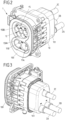
- Fig. 2 and 3 show the connector part 1.
- the connector part 1 is designed for installation on the vehicle 4, specifically as a vehicle inlet, e.g. in accordance with the CCS (Combined Charging System) Type 2.
- CCS Combined Charging System
- the connector part 1 is designed to transmit a charging current in the form of a direct current and/or in the form of an alternating current.
- the connector part 1 comprises a housing 10.
- the housing 10 encloses an interior space.
- the housing 10 comprises several housing parts 100, 101.
- a plug body 15 is mounted on the housing 10, which together with the housing 10 defines the interior space and in particular seals it against environmental influences, e.g. against moisture.
- the plug body 15 forms at least one plug section, in this case two plug sections 150A, 150B.
- the plug sections 150A, 150B are designed to be brought into engagement with corresponding plug sections of the mating connector part 3 for electrical contact.
- Two load contacts 11A, 11B in the form of plug contacts are used to set up a direct current circuit.
- the load contacts 11A, 11B are high-current load contacts. They can conduct currents of 50 A or more, in particular 100 A or more, during, in particular for the duration of a charging or discharging process. Further plug contacts are arranged on the other plug section 150B.
- the connector part 1 comprises in particular a protective conductor contact 12, which in this case is arranged on that plug section 150B. Additional (optional) plug contacts serve, for example, as alternating or three-phase contacts or as data connections.
- the connector part 1 comprises a Figures 4 to 13 shown and described in more detail below, which is arranged in the housing 10 and is electrically connected to the protective conductor contact 12, wherein the grounding element 13 extends in an electrically contactable manner along a creepage path between the two load contacts 11A, 11B.
- a correspondingly arranged earthing element can equally be provided alternatively or additionally in the mating connector part 3.
- cables 2A-2C are connected to the connector part 1.
- One of the cables 2A-2C is used for connection to one of the two load contacts 11A, 11B.
- Another cable 2C carries a protective conductor 20 that is electrically connected to the protective conductor contact 12.
- the connector part 1 forms a connector arrangement.
- some of the cables 2A-2C are combined to form a cable bundle.
- Fig.4 shows the connector part 1 without the housing 10, so that part of the interior I of the connector part 1 defined by the housing 10 and the plug body 15 can be seen.
- the body 137 is electrically connected to the protective conductor contact 12.
- the body 137 is connected via a cable 135 to a connection connected to the protective conductor contact 12, to which a protective conductor 20 of the cable 2C is also electrically connected.
- the cable 135 is electrically connected to the body 137 via a screw terminal 134.
- the screw terminal 134 is arranged on the body 137, in particular firmly connected to it, e.g. welded to it.
- a contact carrier 14 is arranged in the interior I.
- the load contacts 11A, 11B are attached to the contact carrier 14.
- the contact carrier 14 is firmly connected to the plug body 15, e.g. screwed to it.
- the contact carrier 14 and the earthing element 13 are in engagement with each other.
- the shield sections 141A, 141B protrude from a mounting section 144.
- the mounting section 144 serves to mount the contact carrier 14 on the plug body 15.
- the mounting section 144 forms together with each of the shield sections 141A, 141B a receptacle 143A, 143B for each of the load contacts 11A, 11B, see in particular Fig. 8 and 9 .
- Each of the load contacts 11A, 11B can be inserted into one of the two receptacles 143A, 143B, in this case coming from opposite directions.
- the load contacts 11A, 11B each have a collar. The respective collar can be inserted into a corresponding recess (in the example shown on the mounting section 144 and in this case in the form of a circumferential groove) on the corresponding receptacle 143A, 143B in order to axially secure each of the load contacts 11A, 11B.
- the grounding element 13 further comprises a protruding section 130, which in the example shown is in the form of a knife.
- the protruding section 130 protrudes from the central section 133 and in the example shown represents an extension of the central section 133, which protrudes relative to the wing sections 131, 132.
- the protruding section 130 is flat and level.
- the protruding section 130 in the assembled state passes through an opening 140 in the contact carrier 14, in this case in the mounting section 144 of the contact carrier 14.
- the protruding section 130 passes through the opening 140 with respect to the (mutually parallel) alignment of the load contacts 11A, 11B in the axial direction.
- the protruding section 130 is arranged between the two receptacles 143A, 143B of the contact carrier 14 for the load contacts 11A, 11B.
- the protruding section 130 is arranged between the two load contacts 11A, 11B.
- the contact carrier 14 On both sides of the protruding section 130 of the grounding element 13, the contact carrier 14 has an insulation contour 142A, 142B.
- the insulation contours 142A, 142B each have two segments of circular cylinders with different radii arranged coaxially to one another. These segments are arranged in such a way that no water can collect in them during intended use, for which reason they are open at the sides and downwards in this case. The segments each form a part of the respective receptacle 143A, 143B.
- the insulation contours 142A, 142B serve to extend a creepage path between the two load contacts 11A, 11B, along which an electrical connection between the load contacts 11A, 11B could be established by moisture penetrating.
- the protruding section 130 of the grounding element 13 is arranged on this creepage path. In this way, a defective insulation between the two load contacts 11A, 11B can be reliably detected (e.g. by means of one of the insulation monitoring devices 41, 51).
- the insulation contours 142A, 142B protrude from the mounting section 144, specifically on a side opposite the shield sections 141A, 141B.
- Fig. 10 and 11 show in particular that the plug body 15 has insulation contours 151A, 151B.
- the insulation contours 151A, 151B are designed to match the insulation contours 142A, 142B of the contact carrier 14 so that they can be brought into engagement therewith and remain in the assembled state.
- the (DC) load contacts 11A, 11B are arranged closer to each other than each of the load contacts 11A, 11B is to the protective conductor contact 12. Furthermore, the load contacts 11A, 11B are arranged (in use) below the protective conductor contact 12.
- Fig. 12 and 13 show the assembled state of the connector part 1 in the cross-sectional view. It can be seen in particular that the insulation contours 142A, 142B, 151A, 151B of the contact carrier 14 and the plug body 15 are in engagement with one another, in this case in particular in an area between the two load contacts 11A, 11B. A kind of meandering course is formed.
- the protruding portion 130 extends between the respective engaging insulation contours 142A, 142B, 151A, 151B of the contact carrier 14 and the plug body 15.
- each of the load contacts 11A, 11B as well as a conductor of the respective cable 2A, 2B connected thereto is enclosed by a sheath 21, which is made, for example, of an insulating material.
- the shortest creepage path K between the load contacts 11A, 11B runs between the contact carrier 14 (in this case the mounting section 144 of the contact carrier 14) and the plug body 15.
- the earthing element 13 in particular the protruding section 130 of the earthing element 13, is arranged on the shortest creepage path K. This makes it particularly reliable to detect a lack of insulation.
- the body 137 of the grounding element 13 consists, for example, of metal or another electrically conductive material and can be electrically contacted by touching it (at any point), e.g. by water.
- the body 137 of the grounding element 13 is here formed in one piece, but can alternatively also be formed in several parts.
- the grounding element 13 also serves as a heat sink.
- a coolant e.g. it flows through it.
- the earthing element 13 designed and arranged as described can be used in the same way both in vehicle charging sockets and in charging plugs on charging stations.
Landscapes
- Engineering & Computer Science (AREA)
- Power Engineering (AREA)
- Transportation (AREA)
- Mechanical Engineering (AREA)
- Physics & Mathematics (AREA)
- General Physics & Mathematics (AREA)
- Details Of Connecting Devices For Male And Female Coupling (AREA)
- Connector Housings Or Holding Contact Members (AREA)
Description
- Die Erfindung betrifft ein Steckverbinderteil zur elektrischen Verbindung mit einem Gegensteckverbinderteil, mit einem Gehäuse, zumindest zwei Lastkontakten, einem elektrisch isolierenden Kontaktträger, durch den die Lastkontakte am Gehäuse gehalten sind, einem Schutzleiterkontakt und einem Erdungselement, das im Gehäuse angeordnet ist und elektrisch mit dem Schutzleiterkontakt verbunden ist. Dabei ist vorgesehen, dass sich das Erdungselement zumindest abschnittsweise (z.B. durch Feuchtigkeit, insbesondere eindringendes Wasser) elektrisch kontaktierbar an einem Kriechpfad zwischen den beiden Lastkontakten erstreckt. Weiter betrifft die Erfindung eine Ladeanordnung zum Be- und/oder Entladen eines Elektrofahrzeugs und ein Elektrofahrzeug.
- Insbesondere im Bereich der E-Mobilität bestehen für Steckverbinderteile und damit verbundene Ladekabel besonders hohe Anforderungen hinsichtlich ihrer funktionalen Leistungsfähigkeit, Stabilität und Sicherheit. Insbesondere bei möglichen Gleichstrom-Ladeströmen, z.B. bis zu 500 A mit Ladespannungen bis zu 1000 V, ist es wünschenswert, dass auch bei mehrjährigem Gebrauch mit einer Vielzahl an Ladezyklen die Leistungsfähigkeit der Steckverbinderteile aufrechterhalten wird.
- Eine potentielle Gefahrenquelle können bei Steckverbinderteilen allgemein Baugruppen darstellen, die hohe Spannungen führen und Umwelteinflüssen ausgesetzt sind. Bei solchen Baugruppen besteht ein Risiko, dass sich durch Beschädigungen von Gehäusebauteilen Undichtigkeiten ergeben, die einen Eintritt von Feuchtigkeit in das Innere des Steckverbinderteils an eine der genannten Baugruppen erlauben. Im Bereich der E-Mobilität kommt erschwerend die Möglichkeit einer Verschmutzung durch Salzwasser hinzu, also durch einen gut leitfähigen Elektrolyten. Derart eingedrungene Feuchtigkeit kann zu einer Verschlechterung der Isolation oder gar zu deren Versagen, z.B. durch Lichtbogenbildung, führen.
- Die
DE 10 2016 105 311 A1 beschreibt ein Steckverbinderteil mit einem Kontakthalter, der einen Grundkörper aufweist, welcher mit einer elektrisch isolierenden Ummantelung versehen ist. - Aufgabe der vorliegenden Erfindung ist es, ein möglichst sicheres Steckverbinderteil bereitzustellen.
- Diese Aufgabe wird durch einen Gegenstand mit den Merkmalen des Anspruchs 1 gelöst.
- Danach wird ein Steckverbinderteil zur Verfügung gestellt, welches sich dadurch auszeichnet, dass das Erdungselement ein Messer umfasst, das eine Öffnung im Kontaktträger durchgreift.
- Ein derartiges Steckverbinderteil ermöglicht eine Isolationsüberwachung zwischen den Lastkontakten, wodurch die Sicherheit, insbesondere gegenüber einer Lichtbogenbildung, deutlich erhöht werden kann. Bei dem Steckverbinderteil kann es sich z.B. um eine Fahrzeugladedose oder um einen Ladestecker (z.B. von einer Ladesäule) handeln.
- Das Erdungselement kann sich insbesondere elektrisch kontaktierbar zumindest abschnittsweise an dem kürzesten Kriechpfad zwischen den beiden Lastkontakten erstrecken. Hierbei kann der Kriechpfad überwacht werden, an dem ein vergleichsweise hohes Risiko einer fehlerhaften Isolation besteht.
- Optional erstreckt sich das Erdungselement zumindest abschnittsweise räumlich zwischen den Lastkontakten. Hierdurch ist eine besonders sichere Isolationsüberwachung möglich.
- Erfindungsgemäß umfasst das Steckverbinderteil einen elektrisch isolierenden Kontaktträger, durch den die Lastkontakte am Gehäuse gehalten sind. Das ermöglicht eine einfache Montage und sichere Halterung der Lastkontakte.
- Weiter erfindungsgemäß umfasst das Erdungselement einen vorstehenden, z.B. flachen Abschnitt, in Form eines Messers. Dabei kann der vorstehende Abschnitt, z.B. ein Vorsprung bzw. das Messer, eine Öffnung im Kontaktträger durchgreifen. Hierdurch kann mit dem Erdungselement besonders sicher die Isolation der Lastkontakte überwacht werden.
- Optional umfasst der Kontaktträger für jeden der Lastkontakte eine Isolationskontur. Dabei kann vorgesehen sein, dass sich das Messer des Erdungselements zumindest abschnittsweise zwischen den Isolationskonturen erstreckt.
- Gemäß einer Ausgestaltung umfasst das Steckverbinderteil einen Steckkörper, der für jeden der Lastkontakte eine Isolationskontur aufweist. Jede der Isolationskonturen des Steckkörpers kann mit der Isolationskontur des Kontaktträgers für den jeweiligen Lastkontakt in Eingriff stehen. Das ermöglicht eine Verlängerung des Kriechpfades, an welchem das Messer des Erdungselements angeordnet ist.
- Der Kontaktträger kann für jeden Lastkontakt einen Schirmabschnitt zur elektrischen Isolation vom jeweils anderen Lastkontakt aufweisen, was eine besonders sichere Isolation ermöglicht.
- Das Erdungselement kann sich in einer Weiterbildung zumindest abschnittsweise zwischen den Schirmabschnitten und/oder zumindest abschnittsweise um die Schirmabschnitte herum erstrecken, um eine Isolationsüberwachung weiter zu verbessern.
- Zumindest ein Teil des Erdungselements kann sich bei einer bestimmungsgemäßen Verbindung des Steckverbinderteils mit dem Gegensteckverbinderteil an einer weiter unten gelegenen Stelle erstrecken als die Lastkontakte. Falls Wasser in das Gehäuse eindringen kann, dann sammelt sich das Wasser in einem unteren Bereich. Durch Anordnung des Erdungselements näher an diesem Bereich als die Lastkontakte kann die Sicherheit der Isolationsüberwachung weiter gesteigert werden.
- Optional umfasst das Erdungselement einen insbesondere metallischen, elektrisch leitfähigen Körper.
- Der (insbesondere metallische) Körper kann über ein Kabel mit dem Schutzleiterkontakt elektrisch verbunden sein, was eine besonders flexible und damit für die Isolationsüberwachung optimale Anordnung des Körpers erlaubt.
- Bei dem Steckverbinderteil kann es sich um ein Hochstrom- und/oder Hochspannungs-Steckverbinderteil handeln. Beispielsweise ist das Steckverbinderteil dazu ausgebildet, eine elektrische Leistung von 10 kW oder mehr zu leiten, insbesondere von 50 kW oder mehr, 135 kW oder mehr, oder 350 kW oder mehr. Beispielsweise ist das Steckverbinderteil dazu ausgebildet, elektrische Ströme mit Stromstärken von 100A oder mehr, 200A oder mehr, 300 A oder mehr, insbesondere von 500 A oder mehr zu leiten.
- Das Steckverbinderteil kann als Fahrzeugladestecker ausgebildet sein, insbesondere zum Gleichstrom-Hochstrom laden.
- Gemäß einem Aspekt wird eine Ladeanordnung zum Be- und/oder Entladen eines Elektrofahrzeugs bereitgestellt, die das Steckverbinderteil nach einer beliebigen, hierin beschriebenen Ausgestaltung umfasst und eine elektrisch mit dem Schutzleiterkontakt des Steckverbinderteils verbundene oder verbindbare Isolationsüberwachungseinrichtung. Die Isolationsüberwachungseinrichtung ist z.B. dazu eingerichtet, eine am Schutzleiterkontakt anliegende elektrische Spannung gegenüber einem Erdpotential zu erfassen, z.B. vor Einleiten eines Ladevorgangs. Die Ladeanordnung ist z.B. Teil eines Fahrzeugs oder einer stationären, an ein Stromnetz angeschlossenen Ladestation.
- Gemäß einem Aspekt wird ein Elektrofahrzeug bereitgestellt, das das Steckverbinderteil nach einer beliebigen, hierin beschriebenen Ausgestaltung und/oder die Ladeanordnung nach einer beliebigen, hierin beschriebenen Ausgestaltung umfasst.
- Der der Erfindung zugrunde liegende Gedanke soll nachfolgend anhand von in den Figuren dargestellten Ausführungsbeispielen näher erläutert werden. Es zeigen:
- Fig. 1
- eine Ansicht eines Fahrzeugs mit einem Steckverbinderteil und einer Ladestation mit einem Gegensteckverbinderteil;
- Fig. 2 und 3
- Ansichten des Steckverbinderteils gemäß
Fig. 1 mit einem Gehäuse und einem Steckkörper und mit daran angeschlossenen Kabeln; - Fig. 4
- eine Ansicht des Steckkörpers und weiteren Teilen des Steckverbinderteils gemäß
Fig. 2 und 3 ; - Fig. 5
- eine Ansicht eines Kontaktträgers mit daran gehaltenen Lastkontakten, eines Erdungselements und eines Schutzleiterkontakts des Steckverbinderteils gemäß
Fig. 2 und 3 ; - Fig. 6
- eine Ansicht des Kontaktträgers mit den daran gehaltenen Lastkontakten und des Erdungselements des Steckverbinderteils gemäß
Fig. 2 und 3 ; - Fig. 7
- eine Explosionsansicht der in
Fig. 6 gezeigten Komponenten des Steckverbinderteils gemäßFig. 2 und 3 ; - Fig. 8 und 9
- Ansichten des Kontaktträgers und des Erdungselements des Steckverbinderteils gemäß
Fig. 2 und 3 ; - Fig. 10 und 11
- Ansichten eines Gehäuseteils mit dem daran montierten Steckkörper des Steckverbinderteils gemäß
Fig. 2 und 3 ; und - Fig. 12 und 13
- Querschnittsansichten des Steckverbinderteils gemäß
Fig. 2 und 3 . -
Fig. 1 zeigt ein elektrisch angetriebenes Fahrzeug 4, auch bezeichnet als Elektrofahrzeug, mit einem Steckverbinderteil 1, hier in Form einer Ladebuchse, zur lösbaren elektrischen Verbindung mit einem Gegensteckverbinderteil 3. Gemeinsam bilden das Steckverbinderteil 1 und das Gegensteckverbinderteil 3 einen Steckverbinder. Ferner zeigtFig. 1 eine Ladestation 5, die zum Aufladen des Fahrzeugs 4 dient. Die Ladestation 5 ist dazu ausgestaltet, einen Ladestrom in Form eines Gleichstroms (alternativ oder zusätzlich eines Wechselstroms) zur Verfügung zu stellen und ist über ein Kabel 52 mit dem Gegensteckverbinderteil 3 in Form eines Ladesteckers verbunden. Das Gegensteckverbinderteil 3 ist im gezeigten Beispiel als manuell betätigbarer Ladestecker für das Elektrofahrzeug 4 ausgebildet. - Die Ladestation 5 umfasst im gezeigten Beispiel ferner eine Ladeeinrichtung 50 (in Form einer DC-Ladeeinrichtung) zum Laden des Fahrzeugs 4 mit Gleichstrom und/oder zum Aufnehmen von durch das Fahrzeug 4 bereitgestelltem Gleichstrom. Darüber hinaus umfasst die Ladestation 5 eine (optionale) Isolationsüberwachungseinrichtung 51. Die Isolationsüberwachungseinrichtung 51 ist dazu ausgebildet, ein an einem Schutzleiter (Protective Earth, PE-Leiter) anliegendes Potential zu erkennen und/oder einen elektrischen Widerstand zwischen einem Lastkontakt und dem PE-Leiter zu messen.
- Das Fahrzeug 4 umfasst typischerweise eine Ladeeinrichtung 40 (in Form einer DC-Ladeeinrichtung), welche dazu ausgebildet ist, eine Traktionsbatterie des Fahrzeugs 4 mittels des am Steckverbinderteil 1 bereitgestellten Gleichstroms zu laden und/oder um in der Traktionsbatterie gespeicherte Energie als Gleichstrom über das Steckverbinderteil 1 bereitzustellen. Ferner umfasst das Fahrzeug 4 eine (optionale) Isolationsüberwachungseinrichtung 41. Die Isolationsüberwachungseinrichtung 51 ist dazu ausgebildet, ein an einem Schutzleiter anliegendes Potential zu erkennen und/oder einen elektrischen Widerstand zwischen einem Lastkontakt und dem Schutzleiter zu messen.
- Die Isolationsüberwachungseinrichtung 41 des Fahrzeugs 4 und/oder die Isolationsüberwachungseinrichtung 51 der Ladesäule 5 kann/können erkennen, wenn ein oder mehrere Lastkontakte (insbesondere der in
Fig. 2 gezeigten Lastkontakte 11A, 11B) nicht mehr ausreichend elektrisch isoliert sind, z.B. durch in das Steckverbinderteil 1 eingedrungene Feuchtigkeit. - Die Ladeeinrichtung 40 des Fahrzeugs 4 und/oder die Ladeeinrichtung 50 der Ladestation 5 kann/können dazu ausgebildet sein, vor Beginn eines Ladevorgangs des Fahrzeugs 4 (oder allgemein vor dem Einleiten einer Energieübertragung zwischen dem Fahrzeug 4 und der Ladestation 5) die Isolation der Lastkontakte (insbesondere der in
Fig. 2 gezeigten Lastkontakte 11A, 11B) mittels der Isolationsüberwachungseinrichtung 41 des Fahrzeugs 4 und/oder die Isolationsüberwachungseinrichtung 51 der Ladesäule 5 zu prüfen (z.B. durch Vergleich eines Messwerts eines Potentials oder eines elektrischen Widerstands mit einem vorbestimmten Schwellenwert). Die Ladeeinrichtung 40 des Fahrzeugs 4 und/oder die Ladeeinrichtung 50 der Ladestation 5 kann/können ferner dazu ausgebildet sein, nur dann den Ladevorgang (allgemein die Energieübertragung) einzuleiten, wenn bei der Prüfung ermittelt worden ist, dass die Isolation intakt ist, und den Ladevorgang (die Energieübertragung) nicht einzuleiten oder abzubrechen, wenn bei der Prüfung ermittelt worden ist, dass die Isolation nicht intakt ist. -
Fig. 2 und 3 zeigen das Steckverbinderteil 1. Das Steckverbinderteil 1 ist vorliegend zur Montage am Fahrzeug 4 ausgebildet, konkret als Fahrzeug-Inlet, z.B. gemäß dem CCS (Combined Charging System) Typ 2. - Das Steckverbinderteil 1 ist dazu ausgebildet, einen Ladestrom in Form eines Gleichstroms und/oder in Form eines Wechselstroms zu übertragen.
- Das Steckverbinderteil 1 umfasst ein Gehäuse 10. Das Gehäuse 10 umschließt einen Innenraum. Vorliegend umfasst das Gehäuse 10 mehrere Gehäuseteile 100, 101. Am Gehäuse 10 ist ein Steckkörper 15 montiert, der gemeinsam mit dem Gehäuse 10 den Innenraum definiert und insbesondere gegenüber Umwelteinflüssen abdichtet, z.B. gegenüber Feuchtigkeit.
- Der Steckkörper 15 bildet zumindest einen Steckabschnitt, vorliegend zwei Steckabschnitte 150A, 150B aus. Die Steckabschnitte 150A, 150B sind dazu ausgebildet, mit entsprechenden Steckabschnitten des Gegensteckverbinderteils 3 zur elektrischen Kontaktierung in Eingriff gebracht zu werden. Dabei dienen zwei Lastkontakte 11A, 11B in Form von Steckkontakten (an dem einen Steckabschnitt 150A) zum Aufbau eines Gleichstromstromkreises. Die Lastkontakte 11A, 11B sind Hochstrom-Lastkontakte. Sie können während, insbesondere für die Dauer eines Ladevorgangs oder Entladevorgangs Ströme von 50 A oder mehr, insbesondere 100 A oder mehr leiten. Weitere Steckkontakte sind an dem anderen Steckabschnitt 150B angeordnet. Das Steckverbinderteil 1 umfasst insbesondere einen Schutzleiterkontakt 12, der vorliegend an jenem Steckabschnitt 150B angeordnet ist. Weitere (optionale) Steckkontakte dienen z.B. als Wechsel- oder Drehstromkontakte oder als Datenverbindungen.
- Ferner umfasst das Steckverbinderteil 1 ein in den
Figuren 4 bis 13 gezeigtes und nachfolgend noch näher beschriebenes Erdungselement 13, das im Gehäuse 10 angeordnet ist und elektrisch mit dem Schutzleiterkontakt 12 verbunden ist, wobei sich das Erdungselement 13 elektrisch kontaktierbar an einem Kriechpfad zwischen den beiden Lastkontakten 11A, 11B erstreckt. - Es sei darauf hingewiesen, dass ein entsprechend angeordnetes Erdungselement gleichermaßen alternativ oder zusätzlich im Gegensteckverbinderteil 3 vorgesehen sein kann.
- Zum Anschluss an die Ladeeinrichtung 40 und/oder an die Isolationsüberwachungseinrichtung 41 sind Kabel 2A-2C an das Steckverbinderteil 1 angeschlossen. Jeweils eines der Kabel 2A-2C dient zum Anschluss an einen der beiden Lastkontakte 11A, 11B. Ein weiteres Kabel 2C führt einen mit dem Schutzleiterkontakt 12 elektrisch verbundenen Schutzleiter 20. Gemeinsam mit den Kabeln 2 bildet das Steckverbinderteil 1 eine Steckverbinderanordnung. Optional sind einige der Kabel 2A-2C zu einem Kabelbündel zusammengefasst.
-
Fig. 4 zeigt das Steckverbinderteil 1 ohne Gehäuse 10, sodass ein Teil des durch das Gehäuse 10 und den Steckkörper 15 definierten Innenraumes I des Steckverbinderteils 1 erkennbar ist. Im Innenraum I ist das Erdungselement 13 angeordnet, welches einen elektrisch leitfähigen, z.B. metallischen Körper 137 umfasst. Der Körper 137 ist elektrisch mit dem Schutzleiterkontakt 12 verbunden. Vorliegend ist der Körper 137 über ein Kabel 135 mit einem an den Schutzleiterkontakt 12 angeschlossenen Anschluss verbunden, mit der auch ein Schutzleiter 20 des Kabels 2C elektrisch verbunden ist. Im gezeigten Beispiel ist das Kabel 135 über eine Schraubklemme 134 mit dem Körper 137 elektrisch verbunden. Die Schraubklemme 134 ist am Körper 137 angeordnet, insbesondere fest damit verbunden, z.B. daran angeschweißt. - Ferner ist im Innenraum I ein Kontaktträger 14 angeordnet. Am Kontaktträger 14 sind die Lastkontakte 11A, 11B befestigt. Der Kontaktträger 14 ist fest mit dem Steckkörper 15 verbunden, z.B. damit verschraubt.
- Wie z.B. anhand der
Fig. 5 und6 ersichtlich, stehen der Kontaktträger 14 und das Erdungselement 13 miteinander in Eingriff. - Dabei ist ein insbesondere in
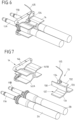
Fig. 7 gezeigter Zentralabschnitt 133 (im Allgemeinen: ein Abschnitt) des Erdungselements 13 zwischen zwei Schirmabschnitten 141A, 141B (im Allgemeinen: Abschnitten) des Kontaktträgers 14 angeordnet. Die Schirmabschnitte 141A, 141B des Kontaktträgers 14 weisen jeweils einen U-förmigen Querschnitt auf. Im montierten Zustand wird jeweils eines der Kabel 2A, 2B durch jeweils einen der Schirmabschnitte 141A, 141B teilweise umgriffen. Die Schirmabschnitte 141A, 141B weisen jeweils eine Öffnung auf, wobei die Öffnungen der Schirmabschnitte 141A, 141B (insbesondere im Querschnitt betrachtet) von einander abgewandt sind. Die Schirmabschnitte 141A, 141B dienen insbesondere zur elektrischen Isolation des darin aufgenommenen Lastkontakts 11A, 11B vom jeweils anderen Lastkontakt 11A, 11B. - Die Schirmabschnitte 141A, 141B stehen von einem Montageabschnitt 144 ab. Der Montageabschnitt 144 dient zur Montage des Kontaktträgers 14 am Steckkörper 15.
- Der Montageabschnitt 144 bildet gemeinsam mit jedem der Schirmabschnitte 141A, 141B eine Aufnahme 143A, 143B für jeweils einen der Lastkontakte 11A, 11B aus, siehe insbesondere
Fig. 8 und 9 . Dabei ist jeder der Lastkontakte 11A, 11B in eine der beiden Aufnahmen 143A, 143B einsetzbar und zwar vorliegend aus entgegengesetzten Richtungen kommend. Die Lastkontakte 11A, 11B weisen jeweils einen Bund auf. Der jeweilige Bund ist jeweils in eine entsprechende Vertiefung (im gezeigten Beispiel am Montageabschnitt 144 und vorliegend in Form jeweils einer umlaufenden Nut) an der entsprechenden Aufnahme 143A, 143B einsetzbar, um jeden der Lastkontakte 11A, 11B axial zu sichern. - Das Erdungselement umfasst einen unteren Flügelabschnitt 131 und einen oberen Flügelabschnitt 132. Die Flügelabschnitte 131, 132 sind an gegenüberliegenden Seiten des Zentralabschnitts 133 angeordnet. Die Flügelabschnitte 131, 132 stehen jeweils beidseitig vom Zentralabschnitt 133 ab, und zwar vorliegend derart, dass sie gemeinsam die Schirmabschnitte 141A, 141B teilweise umgreifen. Der bei bestimmungsgemäßer Benutzung des Steckverbinderteils 1 unterhalb des oberen Flügelabschnitts 132 angeordnete untere Flügelabschnitt 131 ist größer als der obere Flügelabschnitt 132.
- Insbesondere aus der Zusammenschau der
Fig. 6 und 7 ist ersichtlich, dass ein Teil des Erdungselements 13, vorliegend der untere Flügelabschnitt 131, im bestimmungsgemäßen Gebrauch unterhalb der Lastkontakte 11A, 11B angeordnet ist. Hierdurch kann besonders zuverlässig und frühzeitig eine sich unten im Gehäuse 10 sammelnde Feuchtigkeit erkannt werden. - Das Erdungselement 13 umfasst ferner einen vorstehenden Abschnitt 130, der im gezeigten Beispiel in Form eines Messers ausgebildet ist. Der vorstehende Abschnitt 130 steht vom Zentralabschnitt 133 ab und stellt im gezeigten Beispiel eine Verlängerung des Zentralabschnitts 133 dar, die gegenüber den Flügelabschnitten 131, 132 vorsteht. Vorliegend ist der vorstehende Abschnitt 130 flach und eben.
- Wie insbesondere anhand der
Fig. 8 und 9 veranschaulicht, durchgreift der vorstehende Abschnitt 130 im montierten Zustand eine Öffnung 140 im Kontaktträger 14, vorliegend im Montageabschnitt 144 des Kontaktträgers 14. Im gezeigten Beispiel durchgreift der vorstehende Abschnitt 130 die Öffnung 140 in Bezug auf die (zueinander parallele) Ausrichtung der Lastkontakte 11A, 11B in axialer Richtung. Der vorstehende Abschnitt 130 ist zwischen den beiden Aufnahmen 143A, 143B des Kontaktträgers 14 für die Lastkontakte 11A, 11B angeordnet. Im montierten Zustand ist der vorstehende Abschnitt 130 zwischen den beiden Lastkontakten 11A, 11B angeordnet. - Beiderseits des vorstehenden Abschnitts 130 des Erdungselements 13 weist der Kontaktträger 14 jeweils eine Isolationskontur 142A, 142B auf. Die Isolationskonturen 142A, 142B weisen jeweils zwei koaxial zueinander angeordnete Segmente von Kreiszylindern mit unterschiedlichen Radien auf. Diese Segmente sind so angeordnet, dass sich darin in der bestimmungsgemäßen Benutzung kein Wasser sammeln kann, wozu sie vorliegend seitlich und nach unten geöffnet sind. Die Segmente bilden jeweils einen Teil der jeweiligen Aufnahme 143A, 143B. Die Isolationskonturen 142A, 142B dienen dazu, einen Kriechpfad zwischen den beiden Lastkontakten 11A, 11B, entlang dem durch eingedrungene Feuchtigkeit eine elektrische Verbindung zwischen den Lastkontakten 11A, 11B hergestellt werden könnte, zu verlängern. Der vorstehende Abschnitt 130 des Erdungselements 13 ist auf diesem Kriechpfad angeordnet. Hierdurch kann (z.B. mittels einer der Isolationsüberwachungseinrichtungen 41, 51) eine defekte Isolierung zwischen den beiden Lastkontakten 11A, 11B sicher erkannt werden.
- Die Isolationskonturen 142A, 142B stehen vom Montageabschnitt 144 ab, konkret an einer den Schirmabschnitten 141A, 141B gegenüberliegenden Seite.
-
Fig. 10 und 11 zeigen insbesondere, dass der Steckkörper 15 Isolationskonturen 151A, 151B aufweist. Die Isolationskonturen 151A, 151B sind passend zu den Isolationskonturen 142A, 142B des Kontaktträgers 14 ausgebildet, sodass sie damit in Eingriff gebracht werden können und im montierten Zustand stehen. - Anhand von
Fig. 10 sowie z.B. vonFig. 2 lässt sich ferner erkennen, dass bei dem Steckverbinderteil 1 die (Gleichstrom-) Lastkontakte 11A, 11B näher zueinander angeordnet sind als jeder der Lastkontakte 11A, 11B zum Schutzleiterkontakt 12. Ferner sind die Lastkontakte 11A, 11B (im Gebrauch) unterhalb des Schutzleiterkontakts 12 angeordnet. -
Fig. 12 und 13 zeigen in der Querschnittsansicht den montierten Zustand des Steckverbinderteils 1. Dabei ist insbesondere zu erkennen, dass die Isolationskonturen 142A, 142B, 151A, 151B des Kontaktträgers 14 und des Steckkörpers 15 miteinander in Eingriff stehen, und zwar vorliegend insbesondere in einem Bereich zwischen den beiden Lastkontakten 11A, 11B. Dabei bildet sich eine Art mäanderförmiger Verlauf. - Ferner ist veranschaulicht, dass sich der vorstehende Abschnitt 130 zwischen den jeweils in Eingriff stehenden Isolationskonturen 142A, 142B, 151A, 151B des Kontaktträgers 14 und des Steckkörpers 15 erstreckt.
- Innerhalb des jeweiligen Schirmabschnitts 141A, 141B (und darüber hinaus) ist jeder der Lastkontakte 11A, 11B sowie ein daran angeschlossener Leiter des jeweiligen Kabels 2A, 2B von einer Hülle 21 umschlossen, die z.B. aus einem Isoliermaterial hergestellt ist.
- Trotz des mäanderförmigen Verlaufs durch die in Eingriff stehenden Isolationskonturen 142A, 142B, 151A, 151B des Kontaktträgers 14 und des Steckkörpers 15 verläuft der kürzeste Kriechpfad K zwischen den Lastkontakten 11A, 11B zwischen dem Kontaktträger 14 (vorliegend dem Montageabschnitt 144 des Kontaktträgers 14) und dem Steckkörper 15. Insbesondere in
Fig. 13 ist zu erkennen, dass das Erdungselement 13, insbesondere der vorstehende Abschnitt 130 des Erdungselements 13, auf dem kürzesten Kriechpfad K angeordnet ist. Hierdurch kann besonders zuverlässig eine mangelnde Isolation erkannt werden. - Der Körper 137 des Erdungselements 13 besteht z.B. aus Metall oder einem anderen elektrisch leitfähigen Material und ist durch Berührung (an beliebiger Stelle), z.B. durch Wasser, elektrisch kontaktierbar. Der Körper 137 des Erdungselements 13 ist vorliegend einteilig ausgebildet, kann alternativ aber auch mehrteilig ausgebildet sein.
- Optional dient das Erdungselement 13 auch als Kühlkörper. Beispielsweise wird es mit einem Kühlmittel beaufschlagt, z.B. dadurch durchströmt.
- Es sei nochmals verdeutlicht, dass das wie beschrieben ausgebildete und angeordnete Erdungselement 13 in gleicher Wirkweise sowohl in Fahrzeugladedosen, als auch in Ladesteckern an Ladesäulen einsetzbar ist.
-
- 1
- Steckverbinderteil
- 10
- Gehäuse
- 100, 101
- Gehäuseteil
- 11A, 11B
- Lastkontakt
- 12
- Schutzleiterkontakt
- 13
- Erdungselement
- 130
- vorstehender Abschnitt (Messer)
- 131
- unterer Flügelabschnitt
- 132
- oberer Flügelabschnitt
- 133
- Zentralabschnitt
- 134
- Schraubklemme
- 135
- Kabel
- 137
- Körper
- 14
- Kontaktträger
- 140
- Öffnung
- 141A, 141B
- Schirmabschnitt
- 142A, 142B
- Isolationskontur
- 143A, 143B
- Aufnahme
- 144
- Montageabschnitt
- 15
- Steckkörper
- 150A, 150B
- Steckabschnitt
- 151A, 151B
- Isolationskontur
- 2A-2C
- Kabel
- 20
- Schutzleiter
- 21
- Hülle
- 3
- Gegensteckverbinderteil
- 4
- Fahrzeug
- 40
- Ladeeinrichtung
- 41
- Isolationsüberwachungseinrichtung
- 5
- Ladestation
- 50
- Ladeeinrichtung
- 51
- Isolationsüberwachungseinrichtung
- 52
- Kabel
- I
- Innenraum
- K
- Kriechpfad
Claims (14)
- Steckverbinderteil (1) zur elektrischen Verbindung mit einem Gegensteckverbinderteil (3), mit- einem Gehäuse (10),- zumindest zwei Lastkontakten (11A, 11B),- einem elektrisch isolierenden Kontaktträger (14), durch den die Lastkontakte (11A, 11B) am Gehäuse (10) gehalten sind,- einem Schutzleiterkontakt (12) und- einem Erdungselement (13), das im Gehäuse (10) angeordnet und elektrisch mit dem Schutzleiterkontakt (12) verbunden ist,wobei sich das Erdungselement (13) elektrisch kontaktierbar an einem Kriechpfad (K) zwischen den beiden Lastkontakten (11A, 11B) erstreckt,dadurch gekennzeichnet, dass das Erdungselement (13) ein Messer (130) umfasst, das eine Öffnung (140) im Kontaktträger (14) durchgreift.
- Steckverbinderteil (1) nach Anspruch 1, dadurch gekennzeichnet, dass sich das Erdungselement (13) elektrisch kontaktierbar an dem kürzesten Kriechpfad (K) zwischen den beiden Lastkontakten (11A, 11B) erstreckt.
- Steckverbinderteil (1) nach Anspruch 1 oder 2, dadurch gekennzeichnet, dass sich das Erdungselement (13) zwischen den Lastkontakten (11A, 11B) erstreckt.
- Steckverbinderteil (1) nach einem der Ansprüche 1 bis 3, dadurch gekennzeichnet, dass der Kontaktträger (14) für jeden der Lastkontakte (11A, 11B) eine Isolationskontur (142A, 142B) aufweist, wobei sich das Messer (130) des Erdungselements (13) zumindest abschnittsweise zwischen den Isolationskonturen (142A, 142B) erstreckt.
- Steckverbinderteil (1) nach Anspruch 4, gekennzeichnet durch einen Steckkörper (15), der für jeden der Lastkontakte (11A, 11B) eine Isolationskontur (151A, 151B) aufweist, die mit der Isolationskontur (142A, 142B) des Kontaktträgers (14) für den jeweiligen Lastkontakt (11A, 11B) in Eingriff steht.
- Steckverbinderteil (1) nach einem der Ansprüche 1 bis 5, dadurch gekennzeichnet, dass der Kontaktträger (14) für jeden Lastkontakt (11A, 11B) einen Schirmabschnitt (141A, 141B) zur elektrischen Isolation vom jeweils anderen Lastkontakt (11A, 11B) aufweist.
- Steckverbinderteil (1) nach Anspruch 6, dadurch gekennzeichnet, dass sich das Erdungselement (13) zwischen den Schirmabschnitten (141A, 141B) und zumindest teilweise um die Schirmabschnitte (141A, 141B) herum erstreckt.
- Steckverbinderteil (1) nach einem der vorhergehenden Ansprüche, dadurch gekennzeichnet, dass sich zumindest ein Teil des Erdungselements (13) bei einer bestimmungsgemäßen Verbindung des Steckverbinderteils (1) mit dem Gegensteckverbinderteil (3) an einer weiter unten gelegenen Stelle erstreckt als die Lastkontakte (11A, 11B).
- Steckverbinderteil (1) nach einem der vorhergehenden Ansprüche, dadurch gekennzeichnet, dass das Erdungselement (13) einen metallischen Körper (137) umfasst.
- Steckverbinderteil (1) nach Anspruch 9, dadurch gekennzeichnet, dass der metallische Körper (137) über ein Kabel (135) mit dem Schutzleiterkontakt (12) elektrisch verbunden ist.
- Steckverbinderteil (1) nach einem der vorhergehenden Ansprüche, dadurch gekennzeichnet, dass das Steckverbinderteil (1) dazu ausgebildet ist, eine elektrische Leistung von 10 kW oder mehr zu leiten.
- Steckverbinderteil (1) nach einem der vorhergehenden Ansprüche, dadurch gekennzeichnet, dass das Steckverbinderteil (1) als Fahrzeugladestecker zum Gleichstrom-Hochstromladen ausgebildet ist.
- Ladeanordnung zum Be- und/oder Entladen eines Elektrofahrzeugs (4), gekennzeichnet durch das Steckverbinderteil (1) nach einem der vorhergehenden Ansprüche und eine elektrisch mit dem Schutzleiterkontakt (12) des Steckverbinderteils (1) verbundene oder verbindbare Isolationsüberwachungseinrichtung (41), die dazu eingerichtet ist, eine am Schutzleiterkontakt (12) anliegende elektrische Spannung gegenüber einem Erdpotential zu erfassen.
- Elektrofahrzeug (4), gekennzeichnet durch ein Steckverbinderteil (1) nach einem der Ansprüche 1 bis 12 oder durch eine Ladeanordnung nach Anspruch 13.
Applications Claiming Priority (2)
| Application Number | Priority Date | Filing Date | Title |
|---|---|---|---|
| DE102019120470.4A DE102019120470A1 (de) | 2019-07-30 | 2019-07-30 | Steckverbinder mit Isolationsüberwachung |
| PCT/EP2020/067279 WO2021018475A1 (de) | 2019-07-30 | 2020-06-22 | Steckverbinder mit isolationsüberwachung |
Publications (2)
| Publication Number | Publication Date |
|---|---|
| EP4005033A1 EP4005033A1 (de) | 2022-06-01 |
| EP4005033B1 true EP4005033B1 (de) | 2024-05-22 |
Family
ID=71130967
Family Applications (1)
| Application Number | Title | Priority Date | Filing Date |
|---|---|---|---|
| EP20734359.1A Active EP4005033B1 (de) | 2019-07-30 | 2020-06-22 | Steckverbinder mit isolationsüberwachung |
Country Status (4)
| Country | Link |
|---|---|
| US (1) | US12240342B2 (de) |
| EP (1) | EP4005033B1 (de) |
| DE (1) | DE102019120470A1 (de) |
| WO (1) | WO2021018475A1 (de) |
Cited By (1)
| Publication number | Priority date | Publication date | Assignee | Title |
|---|---|---|---|---|
| DE102024114514A1 (de) * | 2024-05-23 | 2025-11-27 | BRUGG eConnect AG | Steckervorrichtung, Stecker und Ladesystem |
Families Citing this family (10)
| Publication number | Priority date | Publication date | Assignee | Title |
|---|---|---|---|---|
| KR102807982B1 (ko) * | 2019-11-27 | 2025-05-14 | 엘에스이브이코리아 주식회사 | 전기차 충전용 커넥터 및 이를 포함하는 전기차 충전용 어셈블리 |
| DE102020125943A1 (de) * | 2020-10-05 | 2022-04-07 | Dr. Ing. H.C. F. Porsche Aktiengesellschaft | Verfahren zum Betrieb einer fahrzeugexternen Ladevorrichtung zum Laden eines Fahrzeugs und Ladevorrichtung |
| CN113173087B (zh) * | 2021-04-27 | 2022-12-23 | 奇瑞新能源汽车股份有限公司 | 电动汽车的充电插座及具有其的电动汽车 |
| DE102021206188A1 (de) * | 2021-06-17 | 2022-12-22 | Robert Bosch Gesellschaft mit beschränkter Haftung | Vorrichtung und Verfahren zum Kontaktieren eines Elektrofahrzeugs mit einer Ladestation und Ladestation |
| US20230085351A1 (en) * | 2021-09-10 | 2023-03-16 | Aptiv Technologies Limited | Serviceable power inlet connector |
| LU500693B1 (de) * | 2021-09-27 | 2023-03-27 | Phoenix Contact Gmbh & Co | Steckverbinderteil mit einer Schirmauflage |
| US12476393B2 (en) * | 2022-03-18 | 2025-11-18 | Aptiv Technologies AG | Hybrid electric charging inlet |
| DE102023101873A1 (de) * | 2023-01-26 | 2024-08-01 | Phoenix Contact E-Mobility Gmbh | Steckverbinderteil für ein Ladesystem zum Aufladen eines Elektrofahrzeugs |
| US12571824B2 (en) | 2024-01-19 | 2026-03-10 | HELLA GmbH & Co. KGaA | Method and system for monitoring impedance in a conductor |
| DE102024108757A1 (de) | 2024-03-27 | 2025-10-02 | Kiekert Aktiengesellschaft | Ladesteckverbinder für ein Elektro- oder Hybridfahrzeug |
Family Cites Families (7)
| Publication number | Priority date | Publication date | Assignee | Title |
|---|---|---|---|---|
| JP2509408Y2 (ja) * | 1990-08-31 | 1996-09-04 | 第一電子工業株式会社 | 電気コネクタ |
| JPH086390Y2 (ja) * | 1991-03-25 | 1996-02-21 | 日本航空電子工業株式会社 | コネクタ |
| US5266039A (en) * | 1992-11-13 | 1993-11-30 | General Electric Company | Electrical outlet receptacle |
| DE102013213336B4 (de) * | 2013-07-08 | 2024-02-01 | Te Connectivity Germany Gmbh | Elektrischer steckverbinder, ladedose und steckverbindersystem für ein elektro- oder hybridfahrzeug |
| FR3041172B1 (fr) * | 2015-09-11 | 2019-03-29 | Renault Sas | Dispositif amovible anti-claquage |
| DE102016105311A1 (de) * | 2016-03-22 | 2017-09-28 | Phoenix Contact E-Mobility Gmbh | Steckverbinderteil mit einem gekühlten Kontaktelement |
| DE102017215116A1 (de) | 2017-08-30 | 2019-02-28 | Heidelberger Druckmaschinen Ag | Kommunikation mit Ladekabel eines batterieelektrischen Fahrzeugs |
-
2019
- 2019-07-30 DE DE102019120470.4A patent/DE102019120470A1/de not_active Withdrawn
-
2020
- 2020-06-22 WO PCT/EP2020/067279 patent/WO2021018475A1/de not_active Ceased
- 2020-06-22 EP EP20734359.1A patent/EP4005033B1/de active Active
- 2020-06-22 US US17/628,576 patent/US12240342B2/en active Active
Cited By (1)
| Publication number | Priority date | Publication date | Assignee | Title |
|---|---|---|---|---|
| DE102024114514A1 (de) * | 2024-05-23 | 2025-11-27 | BRUGG eConnect AG | Steckervorrichtung, Stecker und Ladesystem |
Also Published As
| Publication number | Publication date |
|---|---|
| US12240342B2 (en) | 2025-03-04 |
| US20220250491A1 (en) | 2022-08-11 |
| WO2021018475A1 (de) | 2021-02-04 |
| EP4005033A1 (de) | 2022-06-01 |
| DE102019120470A1 (de) | 2021-02-04 |
Similar Documents
| Publication | Publication Date | Title |
|---|---|---|
| EP4005033B1 (de) | Steckverbinder mit isolationsüberwachung | |
| DE112017003853B4 (de) | Zwingenanordnung für einen elektrischen Verbinder | |
| DE102014017081A1 (de) | Anschlussanordnung zum elektrischen Kontaktieren eines Batteriemoduls, Koppelelement zum elektrischen Verbinden von Batteriemodulen, Batteriemodul, Batterie für ein Kraftfahrzeug und Kraftfahrzeug | |
| DE102014012320B3 (de) | Batteriemodul mit einer Mehrzahl von Batteriezellen und Batterie | |
| DE202017101060U1 (de) | Steckverbinder, insbesondere für eine Hochstromanwendung | |
| DE102009016756B4 (de) | Abschirmverbinderstruktur | |
| EP2606535B1 (de) | Elektrische wanddurchführungsklemme | |
| EP2286489B1 (de) | Stecker eines steckverbinders | |
| DE102021117009B3 (de) | Steckverbindungseinrichtung und verfahren zum montieren einer steckverbindungseinrichtung | |
| WO2021001093A1 (de) | Aktiv gekühltes ladesteckverbinderteil | |
| DE102020211091A1 (de) | Elektrischer Kontaktverbinder sowie Batterie | |
| EP4089855A1 (de) | Kontakteinrichtung für eine doppelstromschiene und kontaktsystem für zwei doppelstromschienen | |
| WO2023222615A1 (de) | Vorrichtung und anordnung zum überprüfen der funktionsfähigkeit einer ladestation | |
| DE112014002174T5 (de) | Verbinderstruktur für eine Leitung | |
| EP4089854B1 (de) | Kontakteinrichtung für eine doppelstromschiene, gegenstück zu der kontakteinrichtung und kontaktsystem für zwei doppelstromschienen | |
| EP3756933B1 (de) | Ladesteckverbinder und ladesteckverbindungssystem | |
| DE102023110642A1 (de) | Steckverbindungssystem und elektrifiziertes kraftfahrzeug mit einem solchen steckverbindungssystem | |
| AT521292B1 (de) | Leistungsbaugruppe mit definiertem Umladepfad und Verfahren zur Herstellung | |
| EP2732488A1 (de) | Vorrichtung zum führen eines elektrischen stromes | |
| EP2404339B1 (de) | Hochstromanschlussvorrichtung für energiespeicher | |
| EP4089853B1 (de) | Stromschienenverbindung von zwei doppelstromschienen | |
| DE102011088402B4 (de) | Ladeeinrichtung mit elektrischem Steckverbinder für Elektrofahrzeug | |
| DE102023133830A1 (de) | Kontaktstecker, DC Kontakthalter und DC Trennstelle eines DC Steckers eines Ladekabels | |
| EP0773601A2 (de) | Sicherheitssteckverbindung | |
| DE102023119078A1 (de) | Leistungskabelbaum mit Sammelschiene |
Legal Events
| Date | Code | Title | Description |
|---|---|---|---|
| STAA | Information on the status of an ep patent application or granted ep patent |
Free format text: STATUS: UNKNOWN |
|
| STAA | Information on the status of an ep patent application or granted ep patent |
Free format text: STATUS: THE INTERNATIONAL PUBLICATION HAS BEEN MADE |
|
| PUAI | Public reference made under article 153(3) epc to a published international application that has entered the european phase |
Free format text: ORIGINAL CODE: 0009012 |
|
| STAA | Information on the status of an ep patent application or granted ep patent |
Free format text: STATUS: REQUEST FOR EXAMINATION WAS MADE |
|
| 17P | Request for examination filed |
Effective date: 20220112 |
|
| AK | Designated contracting states |
Kind code of ref document: A1 Designated state(s): AL AT BE BG CH CY CZ DE DK EE ES FI FR GB GR HR HU IE IS IT LI LT LU LV MC MK MT NL NO PL PT RO RS SE SI SK SM TR |
|
| DAV | Request for validation of the european patent (deleted) | ||
| DAX | Request for extension of the european patent (deleted) | ||
| P01 | Opt-out of the competence of the unified patent court (upc) registered |
Effective date: 20230525 |
|
| P02 | Opt-out of the competence of the unified patent court (upc) changed |
Effective date: 20230530 |
|
| GRAP | Despatch of communication of intention to grant a patent |
Free format text: ORIGINAL CODE: EPIDOSNIGR1 |
|
| STAA | Information on the status of an ep patent application or granted ep patent |
Free format text: STATUS: GRANT OF PATENT IS INTENDED |
|
| INTG | Intention to grant announced |
Effective date: 20240122 |
|
| GRAS | Grant fee paid |
Free format text: ORIGINAL CODE: EPIDOSNIGR3 |
|
| GRAA | (expected) grant |
Free format text: ORIGINAL CODE: 0009210 |
|
| STAA | Information on the status of an ep patent application or granted ep patent |
Free format text: STATUS: THE PATENT HAS BEEN GRANTED |
|
| AK | Designated contracting states |
Kind code of ref document: B1 Designated state(s): AL AT BE BG CH CY CZ DE DK EE ES FI FR GB GR HR HU IE IS IT LI LT LU LV MC MK MT NL NO PL PT RO RS SE SI SK SM TR |
|
| REG | Reference to a national code |
Ref country code: GB Ref legal event code: FG4D Free format text: NOT ENGLISH |
|
| REG | Reference to a national code |
Ref country code: CH Ref legal event code: EP |
|
| REG | Reference to a national code |
Ref country code: DE Ref legal event code: R096 Ref document number: 502020008076 Country of ref document: DE |
|
| REG | Reference to a national code |
Ref country code: IE Ref legal event code: FG4D Free format text: LANGUAGE OF EP DOCUMENT: GERMAN |
|
| REG | Reference to a national code |
Ref country code: LT Ref legal event code: MG9D |
|
| REG | Reference to a national code |
Ref country code: NL Ref legal event code: MP Effective date: 20240522 |
|
| PG25 | Lapsed in a contracting state [announced via postgrant information from national office to epo] |
Ref country code: IS Free format text: LAPSE BECAUSE OF FAILURE TO SUBMIT A TRANSLATION OF THE DESCRIPTION OR TO PAY THE FEE WITHIN THE PRESCRIBED TIME-LIMIT Effective date: 20240922 |
|
| PG25 | Lapsed in a contracting state [announced via postgrant information from national office to epo] |
Ref country code: BG Free format text: LAPSE BECAUSE OF FAILURE TO SUBMIT A TRANSLATION OF THE DESCRIPTION OR TO PAY THE FEE WITHIN THE PRESCRIBED TIME-LIMIT Effective date: 20240522 |
|
| PG25 | Lapsed in a contracting state [announced via postgrant information from national office to epo] |
Ref country code: FI Free format text: LAPSE BECAUSE OF FAILURE TO SUBMIT A TRANSLATION OF THE DESCRIPTION OR TO PAY THE FEE WITHIN THE PRESCRIBED TIME-LIMIT Effective date: 20240522 Ref country code: HR Free format text: LAPSE BECAUSE OF FAILURE TO SUBMIT A TRANSLATION OF THE DESCRIPTION OR TO PAY THE FEE WITHIN THE PRESCRIBED TIME-LIMIT Effective date: 20240522 |
|
| PG25 | Lapsed in a contracting state [announced via postgrant information from national office to epo] |
Ref country code: GR Free format text: LAPSE BECAUSE OF FAILURE TO SUBMIT A TRANSLATION OF THE DESCRIPTION OR TO PAY THE FEE WITHIN THE PRESCRIBED TIME-LIMIT Effective date: 20240823 |
|
| PG25 | Lapsed in a contracting state [announced via postgrant information from national office to epo] |
Ref country code: PT Free format text: LAPSE BECAUSE OF FAILURE TO SUBMIT A TRANSLATION OF THE DESCRIPTION OR TO PAY THE FEE WITHIN THE PRESCRIBED TIME-LIMIT Effective date: 20240923 |
|
| PG25 | Lapsed in a contracting state [announced via postgrant information from national office to epo] |
Ref country code: NL Free format text: LAPSE BECAUSE OF FAILURE TO SUBMIT A TRANSLATION OF THE DESCRIPTION OR TO PAY THE FEE WITHIN THE PRESCRIBED TIME-LIMIT Effective date: 20240522 |
|
| PG25 | Lapsed in a contracting state [announced via postgrant information from national office to epo] |
Ref country code: ES Free format text: LAPSE BECAUSE OF FAILURE TO SUBMIT A TRANSLATION OF THE DESCRIPTION OR TO PAY THE FEE WITHIN THE PRESCRIBED TIME-LIMIT Effective date: 20240522 |
|
| PG25 | Lapsed in a contracting state [announced via postgrant information from national office to epo] |
Ref country code: PL Free format text: LAPSE BECAUSE OF FAILURE TO SUBMIT A TRANSLATION OF THE DESCRIPTION OR TO PAY THE FEE WITHIN THE PRESCRIBED TIME-LIMIT Effective date: 20240522 |
|
| PG25 | Lapsed in a contracting state [announced via postgrant information from national office to epo] |
Ref country code: LV Free format text: LAPSE BECAUSE OF FAILURE TO SUBMIT A TRANSLATION OF THE DESCRIPTION OR TO PAY THE FEE WITHIN THE PRESCRIBED TIME-LIMIT Effective date: 20240522 |
|
| PG25 | Lapsed in a contracting state [announced via postgrant information from national office to epo] |
Ref country code: PT Free format text: LAPSE BECAUSE OF FAILURE TO SUBMIT A TRANSLATION OF THE DESCRIPTION OR TO PAY THE FEE WITHIN THE PRESCRIBED TIME-LIMIT Effective date: 20240923 Ref country code: PL Free format text: LAPSE BECAUSE OF FAILURE TO SUBMIT A TRANSLATION OF THE DESCRIPTION OR TO PAY THE FEE WITHIN THE PRESCRIBED TIME-LIMIT Effective date: 20240522 Ref country code: NO Free format text: LAPSE BECAUSE OF FAILURE TO SUBMIT A TRANSLATION OF THE DESCRIPTION OR TO PAY THE FEE WITHIN THE PRESCRIBED TIME-LIMIT Effective date: 20240822 Ref country code: NL Free format text: LAPSE BECAUSE OF FAILURE TO SUBMIT A TRANSLATION OF THE DESCRIPTION OR TO PAY THE FEE WITHIN THE PRESCRIBED TIME-LIMIT Effective date: 20240522 Ref country code: LV Free format text: LAPSE BECAUSE OF FAILURE TO SUBMIT A TRANSLATION OF THE DESCRIPTION OR TO PAY THE FEE WITHIN THE PRESCRIBED TIME-LIMIT Effective date: 20240522 Ref country code: IS Free format text: LAPSE BECAUSE OF FAILURE TO SUBMIT A TRANSLATION OF THE DESCRIPTION OR TO PAY THE FEE WITHIN THE PRESCRIBED TIME-LIMIT Effective date: 20240922 Ref country code: HR Free format text: LAPSE BECAUSE OF FAILURE TO SUBMIT A TRANSLATION OF THE DESCRIPTION OR TO PAY THE FEE WITHIN THE PRESCRIBED TIME-LIMIT Effective date: 20240522 Ref country code: GR Free format text: LAPSE BECAUSE OF FAILURE TO SUBMIT A TRANSLATION OF THE DESCRIPTION OR TO PAY THE FEE WITHIN THE PRESCRIBED TIME-LIMIT Effective date: 20240823 Ref country code: FI Free format text: LAPSE BECAUSE OF FAILURE TO SUBMIT A TRANSLATION OF THE DESCRIPTION OR TO PAY THE FEE WITHIN THE PRESCRIBED TIME-LIMIT Effective date: 20240522 Ref country code: ES Free format text: LAPSE BECAUSE OF FAILURE TO SUBMIT A TRANSLATION OF THE DESCRIPTION OR TO PAY THE FEE WITHIN THE PRESCRIBED TIME-LIMIT Effective date: 20240522 Ref country code: BG Free format text: LAPSE BECAUSE OF FAILURE TO SUBMIT A TRANSLATION OF THE DESCRIPTION OR TO PAY THE FEE WITHIN THE PRESCRIBED TIME-LIMIT Effective date: 20240522 Ref country code: RS Free format text: LAPSE BECAUSE OF FAILURE TO SUBMIT A TRANSLATION OF THE DESCRIPTION OR TO PAY THE FEE WITHIN THE PRESCRIBED TIME-LIMIT Effective date: 20240822 |
|
| PG25 | Lapsed in a contracting state [announced via postgrant information from national office to epo] |
Ref country code: DK Free format text: LAPSE BECAUSE OF FAILURE TO SUBMIT A TRANSLATION OF THE DESCRIPTION OR TO PAY THE FEE WITHIN THE PRESCRIBED TIME-LIMIT Effective date: 20240522 |
|
| PG25 | Lapsed in a contracting state [announced via postgrant information from national office to epo] |
Ref country code: EE Free format text: LAPSE BECAUSE OF FAILURE TO SUBMIT A TRANSLATION OF THE DESCRIPTION OR TO PAY THE FEE WITHIN THE PRESCRIBED TIME-LIMIT Effective date: 20240522 |
|
| PG25 | Lapsed in a contracting state [announced via postgrant information from national office to epo] |
Ref country code: CZ Free format text: LAPSE BECAUSE OF FAILURE TO SUBMIT A TRANSLATION OF THE DESCRIPTION OR TO PAY THE FEE WITHIN THE PRESCRIBED TIME-LIMIT Effective date: 20240522 |
|
| PG25 | Lapsed in a contracting state [announced via postgrant information from national office to epo] |
Ref country code: SK Free format text: LAPSE BECAUSE OF FAILURE TO SUBMIT A TRANSLATION OF THE DESCRIPTION OR TO PAY THE FEE WITHIN THE PRESCRIBED TIME-LIMIT Effective date: 20240522 Ref country code: RO Free format text: LAPSE BECAUSE OF FAILURE TO SUBMIT A TRANSLATION OF THE DESCRIPTION OR TO PAY THE FEE WITHIN THE PRESCRIBED TIME-LIMIT Effective date: 20240522 |
|
| PG25 | Lapsed in a contracting state [announced via postgrant information from national office to epo] |
Ref country code: SM Free format text: LAPSE BECAUSE OF FAILURE TO SUBMIT A TRANSLATION OF THE DESCRIPTION OR TO PAY THE FEE WITHIN THE PRESCRIBED TIME-LIMIT Effective date: 20240522 |
|
| PG25 | Lapsed in a contracting state [announced via postgrant information from national office to epo] |
Ref country code: SM Free format text: LAPSE BECAUSE OF FAILURE TO SUBMIT A TRANSLATION OF THE DESCRIPTION OR TO PAY THE FEE WITHIN THE PRESCRIBED TIME-LIMIT Effective date: 20240522 Ref country code: SK Free format text: LAPSE BECAUSE OF FAILURE TO SUBMIT A TRANSLATION OF THE DESCRIPTION OR TO PAY THE FEE WITHIN THE PRESCRIBED TIME-LIMIT Effective date: 20240522 Ref country code: RO Free format text: LAPSE BECAUSE OF FAILURE TO SUBMIT A TRANSLATION OF THE DESCRIPTION OR TO PAY THE FEE WITHIN THE PRESCRIBED TIME-LIMIT Effective date: 20240522 Ref country code: EE Free format text: LAPSE BECAUSE OF FAILURE TO SUBMIT A TRANSLATION OF THE DESCRIPTION OR TO PAY THE FEE WITHIN THE PRESCRIBED TIME-LIMIT Effective date: 20240522 Ref country code: DK Free format text: LAPSE BECAUSE OF FAILURE TO SUBMIT A TRANSLATION OF THE DESCRIPTION OR TO PAY THE FEE WITHIN THE PRESCRIBED TIME-LIMIT Effective date: 20240522 Ref country code: CZ Free format text: LAPSE BECAUSE OF FAILURE TO SUBMIT A TRANSLATION OF THE DESCRIPTION OR TO PAY THE FEE WITHIN THE PRESCRIBED TIME-LIMIT Effective date: 20240522 |
|
| REG | Reference to a national code |
Ref country code: CH Ref legal event code: PL |
|
| PG25 | Lapsed in a contracting state [announced via postgrant information from national office to epo] |
Ref country code: MC Free format text: LAPSE BECAUSE OF FAILURE TO SUBMIT A TRANSLATION OF THE DESCRIPTION OR TO PAY THE FEE WITHIN THE PRESCRIBED TIME-LIMIT Effective date: 20240522 Ref country code: IT Free format text: LAPSE BECAUSE OF FAILURE TO SUBMIT A TRANSLATION OF THE DESCRIPTION OR TO PAY THE FEE WITHIN THE PRESCRIBED TIME-LIMIT Effective date: 20240522 |
|
| PG25 | Lapsed in a contracting state [announced via postgrant information from national office to epo] |
Ref country code: LU Free format text: LAPSE BECAUSE OF NON-PAYMENT OF DUE FEES Effective date: 20240622 |
|
| REG | Reference to a national code |
Ref country code: DE Ref legal event code: R097 Ref document number: 502020008076 Country of ref document: DE |
|
| PLBE | No opposition filed within time limit |
Free format text: ORIGINAL CODE: 0009261 |
|
| STAA | Information on the status of an ep patent application or granted ep patent |
Free format text: STATUS: NO OPPOSITION FILED WITHIN TIME LIMIT |
|
| PG25 | Lapsed in a contracting state [announced via postgrant information from national office to epo] |
Ref country code: IE Free format text: LAPSE BECAUSE OF NON-PAYMENT OF DUE FEES Effective date: 20240622 |
|
| GBPC | Gb: european patent ceased through non-payment of renewal fee |
Effective date: 20240822 |
|
| PG25 | Lapsed in a contracting state [announced via postgrant information from national office to epo] |
Ref country code: SI Free format text: LAPSE BECAUSE OF FAILURE TO SUBMIT A TRANSLATION OF THE DESCRIPTION OR TO PAY THE FEE WITHIN THE PRESCRIBED TIME-LIMIT Effective date: 20240522 Ref country code: CH Free format text: LAPSE BECAUSE OF NON-PAYMENT OF DUE FEES Effective date: 20240630 Ref country code: BE Free format text: LAPSE BECAUSE OF NON-PAYMENT OF DUE FEES Effective date: 20240630 |
|
| PG25 | Lapsed in a contracting state [announced via postgrant information from national office to epo] |
Ref country code: FR Free format text: LAPSE BECAUSE OF NON-PAYMENT OF DUE FEES Effective date: 20240722 |
|
| 26N | No opposition filed |
Effective date: 20250225 |
|
| REG | Reference to a national code |
Ref country code: BE Ref legal event code: MM Effective date: 20240630 |
|
| PG25 | Lapsed in a contracting state [announced via postgrant information from national office to epo] |
Ref country code: GB Free format text: LAPSE BECAUSE OF NON-PAYMENT OF DUE FEES Effective date: 20240822 |
|
| PGFP | Annual fee paid to national office [announced via postgrant information from national office to epo] |
Ref country code: AT Payment date: 20250721 Year of fee payment: 5 |
|
| PG25 | Lapsed in a contracting state [announced via postgrant information from national office to epo] |
Ref country code: SE Free format text: LAPSE BECAUSE OF FAILURE TO SUBMIT A TRANSLATION OF THE DESCRIPTION OR TO PAY THE FEE WITHIN THE PRESCRIBED TIME-LIMIT Effective date: 20240522 |
|
| PGFP | Annual fee paid to national office [announced via postgrant information from national office to epo] |
Ref country code: DE Payment date: 20250827 Year of fee payment: 6 |
|
| PG25 | Lapsed in a contracting state [announced via postgrant information from national office to epo] |
Ref country code: CY Free format text: LAPSE BECAUSE OF FAILURE TO SUBMIT A TRANSLATION OF THE DESCRIPTION OR TO PAY THE FEE WITHIN THE PRESCRIBED TIME-LIMIT; INVALID AB INITIO Effective date: 20200622 |
|
| PG25 | Lapsed in a contracting state [announced via postgrant information from national office to epo] |
Ref country code: HU Free format text: LAPSE BECAUSE OF FAILURE TO SUBMIT A TRANSLATION OF THE DESCRIPTION OR TO PAY THE FEE WITHIN THE PRESCRIBED TIME-LIMIT; INVALID AB INITIO Effective date: 20200622 |