EP4003752B1 - Verfahren zum zusammenbauen einer fahrradfelge - Google Patents
Verfahren zum zusammenbauen einer fahrradfelge Download PDFInfo
- Publication number
- EP4003752B1 EP4003752B1 EP20775277.5A EP20775277A EP4003752B1 EP 4003752 B1 EP4003752 B1 EP 4003752B1 EP 20775277 A EP20775277 A EP 20775277A EP 4003752 B1 EP4003752 B1 EP 4003752B1
- Authority
- EP
- European Patent Office
- Prior art keywords
- rim
- pattern
- mold
- patterns
- bicycle rim
- Prior art date
- Legal status (The legal status is an assumption and is not a legal conclusion. Google has not performed a legal analysis and makes no representation as to the accuracy of the status listed.)
- Active
Links
Images





Classifications
-
- B—PERFORMING OPERATIONS; TRANSPORTING
- B29—WORKING OF PLASTICS; WORKING OF SUBSTANCES IN A PLASTIC STATE IN GENERAL
- B29C—SHAPING OR JOINING OF PLASTICS; SHAPING OF MATERIAL IN A PLASTIC STATE, NOT OTHERWISE PROVIDED FOR; AFTER-TREATMENT OF THE SHAPED PRODUCTS, e.g. REPAIRING
- B29C70/00—Shaping composites, i.e. plastics material comprising reinforcements, fillers or preformed parts, e.g. inserts
- B29C70/04—Shaping composites, i.e. plastics material comprising reinforcements, fillers or preformed parts, e.g. inserts comprising reinforcements only, e.g. self-reinforcing plastics
- B29C70/28—Shaping operations therefor
- B29C70/30—Shaping by lay-up, i.e. applying fibres, tape or broadsheet on a mould, former or core; Shaping by spray-up, i.e. spraying of fibres on a mould, former or core
- B29C70/34—Shaping by lay-up, i.e. applying fibres, tape or broadsheet on a mould, former or core; Shaping by spray-up, i.e. spraying of fibres on a mould, former or core and shaping or impregnating by compression, i.e. combined with compressing after the lay-up operation
- B29C70/345—Shaping by lay-up, i.e. applying fibres, tape or broadsheet on a mould, former or core; Shaping by spray-up, i.e. spraying of fibres on a mould, former or core and shaping or impregnating by compression, i.e. combined with compressing after the lay-up operation using matched moulds
-
- B—PERFORMING OPERATIONS; TRANSPORTING
- B29—WORKING OF PLASTICS; WORKING OF SUBSTANCES IN A PLASTIC STATE IN GENERAL
- B29C—SHAPING OR JOINING OF PLASTICS; SHAPING OF MATERIAL IN A PLASTIC STATE, NOT OTHERWISE PROVIDED FOR; AFTER-TREATMENT OF THE SHAPED PRODUCTS, e.g. REPAIRING
- B29C70/00—Shaping composites, i.e. plastics material comprising reinforcements, fillers or preformed parts, e.g. inserts
- B29C70/04—Shaping composites, i.e. plastics material comprising reinforcements, fillers or preformed parts, e.g. inserts comprising reinforcements only, e.g. self-reinforcing plastics
- B29C70/28—Shaping operations therefor
- B29C70/40—Shaping or impregnating by compression not applied
- B29C70/42—Shaping or impregnating by compression not applied for producing articles of definite length, i.e. discrete articles
- B29C70/46—Shaping or impregnating by compression not applied for producing articles of definite length, i.e. discrete articles using matched moulds, e.g. for deforming sheet moulding compounds [SMC] or prepregs
- B29C70/462—Moulding structures having an axis of symmetry or at least one channel, e.g. tubular structures, frames
-
- B—PERFORMING OPERATIONS; TRANSPORTING
- B29—WORKING OF PLASTICS; WORKING OF SUBSTANCES IN A PLASTIC STATE IN GENERAL
- B29C—SHAPING OR JOINING OF PLASTICS; SHAPING OF MATERIAL IN A PLASTIC STATE, NOT OTHERWISE PROVIDED FOR; AFTER-TREATMENT OF THE SHAPED PRODUCTS, e.g. REPAIRING
- B29C70/00—Shaping composites, i.e. plastics material comprising reinforcements, fillers or preformed parts, e.g. inserts
- B29C70/04—Shaping composites, i.e. plastics material comprising reinforcements, fillers or preformed parts, e.g. inserts comprising reinforcements only, e.g. self-reinforcing plastics
- B29C70/28—Shaping operations therefor
- B29C70/40—Shaping or impregnating by compression not applied
- B29C70/42—Shaping or impregnating by compression not applied for producing articles of definite length, i.e. discrete articles
- B29C70/46—Shaping or impregnating by compression not applied for producing articles of definite length, i.e. discrete articles using matched moulds, e.g. for deforming sheet moulding compounds [SMC] or prepregs
- B29C70/48—Shaping or impregnating by compression not applied for producing articles of definite length, i.e. discrete articles using matched moulds, e.g. for deforming sheet moulding compounds [SMC] or prepregs and impregnating the reinforcements in the closed mould, e.g. resin transfer moulding [RTM], e.g. by vacuum
-
- B—PERFORMING OPERATIONS; TRANSPORTING
- B29—WORKING OF PLASTICS; WORKING OF SUBSTANCES IN A PLASTIC STATE IN GENERAL
- B29C—SHAPING OR JOINING OF PLASTICS; SHAPING OF MATERIAL IN A PLASTIC STATE, NOT OTHERWISE PROVIDED FOR; AFTER-TREATMENT OF THE SHAPED PRODUCTS, e.g. REPAIRING
- B29C70/00—Shaping composites, i.e. plastics material comprising reinforcements, fillers or preformed parts, e.g. inserts
- B29C70/04—Shaping composites, i.e. plastics material comprising reinforcements, fillers or preformed parts, e.g. inserts comprising reinforcements only, e.g. self-reinforcing plastics
- B29C70/28—Shaping operations therefor
- B29C70/54—Component parts, details or accessories; Auxiliary operations, e.g. feeding or storage of prepregs or SMC after impregnation or during ageing
-
- B—PERFORMING OPERATIONS; TRANSPORTING
- B60—VEHICLES IN GENERAL
- B60B—VEHICLE WHEELS; CASTORS; AXLES FOR WHEELS OR CASTORS; INCREASING WHEEL ADHESION
- B60B1/00—Spoked wheels; Spokes thereof
- B60B1/003—Spoked wheels; Spokes thereof specially adapted for bicycles
-
- B—PERFORMING OPERATIONS; TRANSPORTING
- B60—VEHICLES IN GENERAL
- B60B—VEHICLE WHEELS; CASTORS; AXLES FOR WHEELS OR CASTORS; INCREASING WHEEL ADHESION
- B60B1/00—Spoked wheels; Spokes thereof
- B60B1/02—Wheels with wire or other tension spokes
-
- B—PERFORMING OPERATIONS; TRANSPORTING
- B60—VEHICLES IN GENERAL
- B60B—VEHICLE WHEELS; CASTORS; AXLES FOR WHEELS OR CASTORS; INCREASING WHEEL ADHESION
- B60B21/00—Rims
-
- B—PERFORMING OPERATIONS; TRANSPORTING
- B60—VEHICLES IN GENERAL
- B60B—VEHICLE WHEELS; CASTORS; AXLES FOR WHEELS OR CASTORS; INCREASING WHEEL ADHESION
- B60B21/00—Rims
- B60B21/02—Rims characterised by transverse section
- B60B21/025—Rims characterised by transverse section the transverse section being hollow
-
- B—PERFORMING OPERATIONS; TRANSPORTING
- B60—VEHICLES IN GENERAL
- B60B—VEHICLE WHEELS; CASTORS; AXLES FOR WHEELS OR CASTORS; INCREASING WHEEL ADHESION
- B60B21/00—Rims
- B60B21/06—Rims characterised by means for attaching spokes, i.e. spoke seats
- B60B21/062—Rims characterised by means for attaching spokes, i.e. spoke seats for bicycles
-
- B—PERFORMING OPERATIONS; TRANSPORTING
- B60—VEHICLES IN GENERAL
- B60B—VEHICLE WHEELS; CASTORS; AXLES FOR WHEELS OR CASTORS; INCREASING WHEEL ADHESION
- B60B21/00—Rims
- B60B21/12—Appurtenances, e.g. lining bands
-
- B—PERFORMING OPERATIONS; TRANSPORTING
- B60—VEHICLES IN GENERAL
- B60B—VEHICLE WHEELS; CASTORS; AXLES FOR WHEELS OR CASTORS; INCREASING WHEEL ADHESION
- B60B5/00—Wheels, spokes, disc bodies, rims, hubs, wholly or predominantly made of non-metallic material
- B60B5/02—Wheels, spokes, disc bodies, rims, hubs, wholly or predominantly made of non-metallic material made of synthetic material
-
- B—PERFORMING OPERATIONS; TRANSPORTING
- B29—WORKING OF PLASTICS; WORKING OF SUBSTANCES IN A PLASTIC STATE IN GENERAL
- B29L—INDEXING SCHEME ASSOCIATED WITH SUBCLASS B29C, RELATING TO PARTICULAR ARTICLES
- B29L2031/00—Other particular articles
- B29L2031/30—Vehicles, e.g. ships or aircraft, or body parts thereof
- B29L2031/3091—Bicycles
-
- B—PERFORMING OPERATIONS; TRANSPORTING
- B29—WORKING OF PLASTICS; WORKING OF SUBSTANCES IN A PLASTIC STATE IN GENERAL
- B29L—INDEXING SCHEME ASSOCIATED WITH SUBCLASS B29C, RELATING TO PARTICULAR ARTICLES
- B29L2031/00—Other particular articles
- B29L2031/32—Wheels, pinions, pulleys, castors or rollers, Rims
- B29L2031/322—Wheels, pinions, pulleys, castors or rollers, Rims made wholly of plastics
-
- B—PERFORMING OPERATIONS; TRANSPORTING
- B60—VEHICLES IN GENERAL
- B60B—VEHICLE WHEELS; CASTORS; AXLES FOR WHEELS OR CASTORS; INCREASING WHEEL ADHESION
- B60B2310/00—Manufacturing methods
- B60B2310/20—Shaping
- B60B2310/204—Shaping by moulding, e.g. injection moulding, i.e. casting of plastics material
-
- B—PERFORMING OPERATIONS; TRANSPORTING
- B60—VEHICLES IN GENERAL
- B60B—VEHICLE WHEELS; CASTORS; AXLES FOR WHEELS OR CASTORS; INCREASING WHEEL ADHESION
- B60B2310/00—Manufacturing methods
- B60B2310/50—Thermal treatment
- B60B2310/52—Curing
-
- B—PERFORMING OPERATIONS; TRANSPORTING
- B60—VEHICLES IN GENERAL
- B60B—VEHICLE WHEELS; CASTORS; AXLES FOR WHEELS OR CASTORS; INCREASING WHEEL ADHESION
- B60B2360/00—Materials; Physical forms thereof
- B60B2360/30—Synthetic materials
- B60B2360/34—Reinforced plastics
- B60B2360/341—Reinforced plastics with fibres
-
- B—PERFORMING OPERATIONS; TRANSPORTING
- B60—VEHICLES IN GENERAL
- B60B—VEHICLE WHEELS; CASTORS; AXLES FOR WHEELS OR CASTORS; INCREASING WHEEL ADHESION
- B60B2900/00—Purpose of invention
- B60B2900/10—Reduction of
- B60B2900/111—Weight
-
- B—PERFORMING OPERATIONS; TRANSPORTING
- B60—VEHICLES IN GENERAL
- B60B—VEHICLE WHEELS; CASTORS; AXLES FOR WHEELS OR CASTORS; INCREASING WHEEL ADHESION
- B60B2900/00—Purpose of invention
- B60B2900/30—Increase in
- B60B2900/311—Rigidity or stiffness
-
- B—PERFORMING OPERATIONS; TRANSPORTING
- B60—VEHICLES IN GENERAL
- B60B—VEHICLE WHEELS; CASTORS; AXLES FOR WHEELS OR CASTORS; INCREASING WHEEL ADHESION
- B60B2900/00—Purpose of invention
- B60B2900/30—Increase in
- B60B2900/325—Reliability
Definitions
- Said pattern segments may be covered with one or more layers of webs of fiber material before or after the pattern segments are combined to form said pattern.
- At least one of said first inserts may be configured to interact with a support apparatus used to assemble the rim. In this way the pattern can be beneficially held during at least some of the stages of an RTM process.
- Said first pattern may also be formed from two, three, four, five or more first pattern segments to form said first pattern. In this way smaller molds for the manufacture of the respective first and second patterns can be used which can simplify the manufacture of the first and second patterns.
- the second temperature may be used for at least one of heating the mold to heat said mold for curing the material of said rim, and removing said removable material, e.g. melting away said wax.
- the molds may have a temperature gradient across a length and width of the mold which leads to a higher temperature of the mold at one side of the mold in comparison to the temperature at a further side of the mold.
- the resin is cured in order to obtain the rim, this curing can take place either on the application of the second temperature and/or via the application of UV light.
- the removable material can be removed from the internal spaces of said rim.
- the removal may take place by heating the removable material, e.g. a wax, or a special compound that can be liquified on the application of one or more further chemical substances can be used as the removable material.
- a removable material e.g. a wax, or a special compound that can be liquified on the application of one or more further chemical substances can be used as the removable material.
- Said step of the application of heat may comprise heating said mold to said second temperature and/or heating said resin on introduction into said mold to said second temperature in said second temperature range.
- the resin may comprise a resin on an epoxy basis, a resin on a polyurethane basis, a resin on a cyanate ester basis or another basis suitable for injection or infusion.
- Said one or more patterns may comprise at least one of one or more recesses and projections in an outer surface thereof.
- Such projections can be used to form e.g. apertures or predefined channels at the rim.
- the recess can be used to form portions having an increased amount of material to increase a stiffness of a portion of the rim, such as for the formation of ribs e.g. in a sidewall of the rim, to strengthen the radial components of the rim.
- the projections can be arranged at positions of the rim where spokes and/or the valve are arranged. The spokes and thus the projections are generally arranged symmetrically along the circumference of the rim.
- Said one or more patterns of removable material are produced in a 3D printing process, an injection molding process and a wax casting process. These are beneficial ways of producing patterns of removable material.
- Said wax casting process may comprise the steps of:
- wax patterns can be formed which are generally free off shrinkage effects at an outer surface of the pattern ensuring the manufacture of a rim having the desired wall thickness and wall thickness tolerance.
- Said one or more patterns of removable material may remain stable in shape at temperatures below a melting point of said removable material. This means that an outer surface of the one or more patterns does not readily alter its physical state. In this way the one or more patterns can form a part of a mold used in a Resin Transfer Molding Process (RTM process) or a Vacuum Assisted Resin Transfer processes (VARTM process) with which the rim may be formed.
- RTM process Resin Transfer Molding Process
- VARTM process Vacuum Assisted Resin Transfer processes
- the one or more patterns of removable material that are stable in shape can thus be used to form inner surfaces of enclosed spaces of the rim, with the inner surfaces of the enclosed spaces of the rim having a pre-definable shape and contour.
- First and second ends of said first pattern segments and/or of said second pattern segments may be formed complementary to one another.
- first and second ends of respective first and second pattern segments can be bonded one to another in a simple way as these are matching in shape or the like.
- the ends may be chamfered, have features complementary and/or matching in shape and/or the like.
- pattern segments having shapes complementary to one another it is particularly preferable to use pattern segments having shapes complementary to one another to assemble the patterns and then to bond these one to another, e.g. by means of a welding technique.
- Said first and second pattern segments may have a generally arc-shaped outer shaped viewed in a cross-section thereof. In this way the segments replicate parts forming internal molds for forming the rim, which when assembled form a complete pattern respectively a mold for said rim.
- Said one or more patterns have an outer surface, with an average surface roughness Ra below 200 ⁇ m, in particular below 150 ⁇ m and especially below 100 ⁇ m.
- Two patterns of removable material may be provided, with each pattern of removable material having an outer shape forming a mold for an inner shape of a respective cavity of said rim, with said removable material remaining stable in shape at temperatures below a melting point of said removable material at standard temperatures and pressures, and wherein the same removable material may be used for each of the two patterns of removable material.
- a mold for a rim may be provided that can be covered with the fiber material prior to insertion into the mold where the rim is subsequently formed.
- Said one or more patterns may each have one or more second inserts present therein, with said second inserts being fixedly attached to said rim.
- the position of the second inserts can correspond to positions in which recesses are present in the pattern to reinforce the portions of the rim where the second inserts are present.
- the second inserts can also be used to aid in coupling the rim to the further components of a bicycle wheel, such as spokes or a valve of the wheel.
- Said second inserts may be provided at positions for spokes of said rim and/or at a position of a valve associated with a wheel formed by said rim. It has hitherto been found that during the production of composite rims, the drilling of the holes for the spokes can lead to a splintering of the material of said rim at the position where it is bored leading to inherent weaknesses in said rim.
- said second inserts may be directly or indirectly attached to said first inserts.
- said position of the spokes of the bicycle rim can be aligned from the start during the method of assembling the bicycle rim such that a rim with a superior weight distribution can be achieved.
- tows of fibers may be applied at the positions of the inserts to reinforce the position of the inserts in said completed rim, whereas woven fabric can be introduced on areas representing a planar surface of the rim.
- Said one or more layers of fiber material are formed by carbon fibers, glass fibers, basalt fibers, wood fibers, hemp fibers, aramid fibers, and polyester fibers, respectively in dry condition or as a prepreg.
- Such fibers can beneficially be used in the formation of a rim of composite material that is reinforced with fibers.
- a prepreg is a layer of fibers which comprise an adhesive.
- the present invention relates to a rim obtained by a method in accordance with the teaching present herein, said rim being formed of composite material, said rim having one or more internal spaces formed by walls, with a wall thickness of said walls of said rim having a predefinable wall thickness with a tolerance of the wall thickness lying in the range of ⁇ 0.5 mm, in particular of ⁇ 0.1 mm, especially of ⁇ 0.05 mm, for a wall thickness selected in the range of 1 to 4 mm, in particular for a length of material of said rim cut from said rim in the range of 1 to 5 mm and at a width selected in the range of 0.5 to 2.5 cm.
- Said rim has a tolerance of the wall thickness lying in the range of ⁇ 0.3 mm, especially of ⁇ 0.2 mm, for a wall thickness selected in the range of 1 to 4 mm.
- a void is a pore present in a composite material that remains unfilled with polymer and fibers. If less than ideal manufacturing standards are used then voids result which cause a degradation of the mechanical properties and lifespan of the composite material.
- the void content is represented as a ratio where the volume of voids, solid material and bulk volume are taken into account.
- Said rim may have a tolerance of the surface profile of ⁇ 0.1 mm, in particular for a length of material cut from said rim selected in the range of 1 to 5 cm and a width selected in the range of 0.5 to 2.5 cm. In this way a rim having particularly smooth surfaces can be achieved by means of the present teaching.
- Said rim may comprise reinforcing ribs, reinforcing beads, stiffening corrugations and/or reinforcing platforms, i.e. elevated portions, formed at at least an inner surface of a sidewall portion of said rim.
- Such formations in an otherwise uniform surface add strength to the rim and hence improve the durability and strength of a rim comprising such formations.
- Fig. 1 shows a side view of a wheel 10 in the form of a bicycle wheel.
- the wheel 10 comprises a rim 12 connected to a hub and axle assembly 14 via spokes 16.
- the wheel 10 can be connected to e.g. a bicycle (not shown) via the hub and axle assembly 14 in a known manner.
- the axle of the hub and axle assembly 14 is thereby fixed relative to the bicycle, whereas the hub of the hub and axle assembly 14 can rotate about the axle of the hub and axle assembly 14.
- the rim 12 may have an increased inter laminar shear strength due to a comparatively low void content of less than 2%.
- the patterns of removable material M can be used as a mold in resin transfer molding (RTM) processes to form composite bicycle rims.
- a vacuum and/or heat can be applied. This leads to a more runny consistency of the resin R so that the resin R can be distributed better in the mold 42.
- Such a runny resin R can be used to reduce the amount of air pockets in said rim 12. Further air pockets can be extracted using said vacuum.
- the vacuum can be set to a pressure in the range of 0.8 to 10 -6 bar.
- the heat can be applied via a heating and/or cooling device 49. This can be configured to heat and/or cool the mold 42 directly and/or the reservoir of the resin R in order to heat the resin R to a first temperature in a first temperature range.
- the resin R can be cured through the application of heat and/or UV light.
- the heating steps may be carried out gradually in a stepwise manner.
- the temperature can be increased in steps of 0.5, 1, 1.5, 2, 2.5 or 3° C over a period of 10s, 20s, 30s, etc., such that the material present in the mold can gradually adapt to the temperature of the mold.
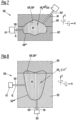
- Figs. 7 and 8 show respective sectional views through wax molds 58 having inner spaces 58' for forming the first and second patterns 50, 48 of removable material M of said rim 12.
- Each internal space 22', 24' is formed by the first and second patterns 50, 48, with each first and second pattern 50, 48 being formed by three, four, five or more pattern segments 50', 48' that are assembled to form the pattern 48, 50 of the respective internal space 22', 24'.
- first and second ends 48", 48"', 50", 50′′′ of the pattern segments 48', 50' comprise complementary shaped tongue and groove like features as indicated in Fig. 9 .
- other shapes complementary in shape can be provided at the respective ends 48", 50" of the pattern segments 48', 50'.
- the complementary shaped first and second ends 48", 48′′′, 50", 50′′′ enable the combining of the individual segments to a wheel shaped pattern 48, 50.
- An inner surface 58" of the respective molds 58 is shaped such that it has the inner shape of the respective rim 12 to be formed by the pattern 48, 50 or pattern segments 48', 50' formed in the respective wax mold 58, i.e. the wax mold 58 has an inner space 58' having a shape corresponding to an outer shape of said pattern 48, 50 or pattern segments 48', 50'.
- the wax i.e. the removable material M
- the wax is introduced into said inner space 58' of the mold 58 in liquid form from a reservoir 63 via a supply line 63'. Between 40 and 98% of said inner space 58' of the wax mold 58 is filled with liquid removable material M.
- the wax mold 58 is then moved to completely coat an inner surface 58" of said wax mold 58 with said liquid removable material M during a cooling of said mold 58. This can take place by cooling the mold 58 while simultaneously rotating the mold 58 about at least one axis and thereby exploiting the centrifugal force to coat the inner surface 58" of said wax mold, while forming a hollow pattern 48, 50.
- the wax of the pattern can be urged into contact with the inner surface 58" of the wax mold 58 to form the outer surface 48"", 50 ⁇ of the pattern 48, 50 or pattern segments 48', 50' of wax can be achieved free of defects whose outer surface 48"", 50 ⁇ is free of shrinkage effects.
- Such patterns 48, 50 form ideal parts of the mold 42 for forming the inner spaces 22', 24" of the rim 12.
- the removable material M is solidified in said wax mold 58 prior to the removal of the first and/or second pattern 50, 48 respectively the first and second pattern segments 48', 50'.
- wax pattern 48, 50 or wax pattern segments 48', 50' which avoid shrinkage effects at an outer surface 48"", 50 ⁇ of the wax pattern 48, 50 or wax pattern segments 48', 50' can be employed to form the wax pattern.
- the one or more patterns 48, 50 or wax pattern segments 48', 50' of removable material M may have a melting point selected in the temperature range of 80 to 140°C, preferably in the range of 95 to 120°C. Moreover, the one or more patterns 48, 50 or wax pattern segments 48', 50' of removable material M remain stable in shape to temperatures selected in the range of 60 to 100°C, preferably in the range of 70 to 95°C.
- the wax may be selected to be a wax molten at a higher temperature in a range from 60 to 140°C, in particular 70 to 120°C and to be solid at a lower temperature in a range from 30 to 100°C, in particular 60 to 90°C.
- the temperature difference between the higher temperature and the lower temperature is preferably selected to be less than 40°C, preferably less than 30°C, in particular less than 20°C and especially less than 10°C.
- the wax may have a viscosity of greater than 2000 mPas for a temperature of less than 85°C and a viscosity of less than 800 mPas for a temperature greater than 105°C.
- Such waxes have found to be particularly stable in shape up to their melting point and the transition between the liquid state and the solid state takes place over comparatively small temperature ranges making said waxes more cost effective in their use.
- the wax mold On forming the wax pattern 48, 50 the wax mold may be heated to a temperature below a solidification temperature of the wax, in particular to a temperature selected in the range of 1 to 40°C, in particular 5 to 25°C, below the solidification temperature of the wax. In this way the wax can be solidified in a more controlled manner and the shrinkage effects at the surface of the wax pattern 48, 50 can be reduced as the wax does not automatically solidify on contact with the surface of the mold cavity.
- a vacuum may be applied at said wax mold using a vacuum pump.
- a valve may be closed to maintain the pressure within the cavity.
- a liquid form of the removable material M may be introduced into the wax mold.
- 80% of the volume of the mold 18 may be filled with liquid material M, e.g. wax W.
- the wax mold may then be rotated about an axis of rotation, e.g. the axis of the rim while the wax mold is cooled, due to the pressurized gas in the wax mold and the rotation of the mold, the initially liquid wax covers the complete surface of the mold such that a wax pattern can be formed having the outer shape resembling that of the inner shape of the mold used in the RTM process, with the wax pattern having a hollow interior.
- an axis of rotation e.g. the axis of the rim while the wax mold is cooled
- Fig. 10 shows a side view of an assembly of second pattern segments 50' of removable material at a support apparatus 64.
- the support apparatus 64 is configured to support the patterns 48, 50 and their respective segments 48', 50' during the assembly of the components of the rim 12 prior to and/or during the introduction of the components of the rim 12 into the mold 42 in which the composite material forming the rim 12 is cured.
- the individual pattern segments 50' are connected at their ends 50". Once the pattern segments 50' have been combined to the first pattern 50, all of the sides of this are completely covered with one or more layers of webs of fiber material 54.
- the second pattern segments 48' are assembled at the covered first pattern 50 as shown in Fig. 11 .
- three of four sides of the second pattern segments 48" are covered with one or more layers of webs of fiber material 52 to from the inner space 22' of the tire receiving section 22.
- the covered and combined first and second patterns 50, 48 are subsequently covered with one or more further layers of webs of fiber material 56. Following this the covered patterns 48, 50 are introduced into the mold 42 as shown in Fig. 6 for the curing of the rim 12 to form the final rim 12.
- Fig. 12 shows a sectional view through a mold 58 for the first patterns 50 similar to that of Fig. 8 .
- the mold comprises projections 66 present which are distributed about the inner surface 58" of the mold 58 in order to form e.g. the ribs 34 and/or the elevated portion 36 at the inner surface 18' of the sidewalls 18 of said rim 12.
- each inner surface 18' of the sidewall 18 can comprise a plurality of evenly spaced apart ribs, for example between 8 and 120 such ribs 34 can be provided, whereas the elevated portion 36 can be either continuous and extend around the whole length of the bottom end of the rim 12 or several elevated portions 36 can be provided at regions where the spokes 16 are connected to the rim 12.
- Fig. 13 shows a partial side view of the second pattern 50 used to form the rim of Fig. 2 at a position where the spokes 16 are introduced into said rim 12.
- the apertures 40, 72 (see Fig. 14 ) of the rim are formed via projections 70 of said second pattern 50.
- the projections 70 are present in a respective recess 74 of said pattern 50.
- Fig. 14 shows a sectional view similar to that of Fig. 3 formed using the second pattern 50 according to Fig. 13 .
- the rim 12 comprises apertures 40, 74 integrally formed during the manufacture of said rim 12.
- the apertures 72 is inherently present at the bottom end 20 formed by the sidewalls 18, whereas the aperture 40 is present in the separating wall 26.
- simper forms of rims 12 can be formed using the method described in the foregoing namely rims 12 only having one internal space 22'.
- Such an internal space 22' could be formed e.g. in a manner similar to the internal space 22' of the tire receiving section 22, with the spokes then being connected to the rim 12 directly in the channel 28 formed in the separating wall 26.
- said channel 28 may be formed deeper and/or comprise recesses at positions where the spokes 16 are attached to the rim 12. If such a comparatively simple structure is selected the wax pattern 48 used can be produced as one without the need of combining several wax patterns 48, significantly reducing the cost of manufacture of such a rim.
- the resin R at elevated temperature and which is possible pressurized is more flowable than unpressurized resin R at room temperature and hence can flow more easily through the roving and the cavity in the mold in order to ensure, if possible, that no air pockets are formed in the composite material of the final device.
- the glass transition temperature of the resin can be increased temporally in the mold during the stepwise gradual increase in temperature to above the melting point of the wax to form the device.
- the liquid wax can then be removed via the openings and/or apertures present at the rim, e.g. at the position of the spokes.
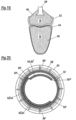
- Fig. 17 shows a view similar to that of Fig. 16 for a different type of pattern 48.
- the insert 38' of the pattern 48 comprises two stubs 38" via which the first pattern can be held in an aligned manner during the further handling of the pattern 48.
- the insert 38' can be held in an aligned manner at the support apparatus 64. The alignment being carried out relative to the two stubs 38".
- Fig. 19 shows a sectional view of the first and second patterns 48, 50 similar to Fig. 6 prior to the application of a third layer of roving of fiber material 56.
- the second pattern 50 may not have to be completely coated with the second roving of fiber material 54, but may be free of fiber material at the point of connection with the first pattern 48, since this comprises roving of first material 52 at this point of connection.
Landscapes
- Engineering & Computer Science (AREA)
- Mechanical Engineering (AREA)
- Chemical & Material Sciences (AREA)
- Composite Materials (AREA)
- Materials Engineering (AREA)
- Moulding By Coating Moulds (AREA)
- Injection Moulding Of Plastics Or The Like (AREA)
Claims (18)
- Verfahren zum Zusammenbauen einer Fahrradfelge (12), wobei das Verfahren die Schritte umfasst:Bereitstellen eines oder mehrerer Muster (48, 50) aus entfernbarem Material (M), wobei das eine oder die mehreren Muster (48, 50) zusammen eine äußere Form aufweisen, die einer inneren Form mindestens eines Teils der Felge (12) ähnelt;Bedecken mindestens einiger der Außenseiten des einen oder der mehreren Muster (48, 50) aus entfernbarem Material (M) mit einer oder mehreren Schichten von Bahnen aus Fasermaterial (52, 54, 56); wobei die eine oder die mehreren Schichten von Bahnen aus Fasermaterial (52, 54, 56) die Felge (12) bilden;Platzieren des einen oder der mehreren bedeckten Muster (48, 50) aus entfernbarem Material (M) in eine Form (42), wobei die Form (42) einen inneren Hohlraum (42') aufweist, wobei der innere Hohlraum (42') einer äußeren Form der Felge (12) entspricht;Erwärmen der Form (42) auf eine erste Temperatur in einem ersten Temperaturbereich,wobei die Fahrradfelge (12) einen ersten und einen zweiten Innenraum (24', 22') aufweist, die durch ein jeweiliges erstes und zweites Muster (50, 48) gebildet werden, wobei das erste Muster (50, 48) den ersten Innenraum (24') bildet und mit der einen oder den mehreren Schichten von Bahnen aus Fasermaterial (54) bedeckt ist, und gekennzeichnet durch Zusammenbauen des zweiten Musters (48, 50) aus jeweiligen zweiten Mustersegmenten (48', 50') an dem bedeckten ersten Muster (50, 48) aus zwei, drei, vier, fünf oder mehr zweiten Mustersegmenten (48', 50'), um das zweite Muster (48, 50) zu bilden, das mit einer oder mehreren weiteren Schichten von Bahnen aus Fasermaterial (52, 56) bedeckt ist, undwobei das kombinierte erste und zweite Muster (50, 48) mit einer oder mehreren weiteren Schichten von Bahnen aus Fasermaterial (56) bedeckt sind.
- Verfahren zum Zusammenbauen einer Fahrradfelge (12) nach Anspruch 1, wobei mindestens eines des einen oder der mehreren Muster (48, 50) durch drei, vier, fünf oder mehr Mustersegmente (50', 48') gebildet wird, die zusammengebaut werden, um das mindestens eine des einen oder der mehreren Muster (48, 50) zu bilden,wobei insbesondere die Mustersegmente mit einer oder mehreren Schichten von Bahnen aus Fasermaterial (52, 54, 56) bedeckt werden, bevor oder nachdem die Mustersegmente kombiniert werden, um das Muster zu bilden, und/oderwobei mindestens eines des einen oder der mehreren Muster (48, 50) einen oder mehrere erste Einsätze (38') umfasst, die integral darin gebildet sind.
- Verfahren zum Zusammenbauen einer Fahrradfelge (12) nach Anspruch 2, wobei mindestens einer der ersten Einsätze (38') konfiguriert ist, um mit einer Stützvorrichtung (64) zu interagieren, die verwendet wird, um die Felge (12) zusammenzubauen.
- Verfahren zum Zusammenbauen einer Fahrradfelge (12) nach einem der vorhergehenden Ansprüche,
wobei das erste Muster (50) durch drei, vier, fünf oder mehr Mustersegmente (50', 48') gebildet wird, die zusammengebaut werden, um das Muster (48, 50) des jeweiligen Innenraums (22', 24') zu bilden, bevor die jeweiligen Muster (48, 50), die den Innenraum (22', 24') bilden, mit der einen oder den mehreren Schichten von Bahnen aus Fasermaterial (52, 54, 56) bedeckt werden. - Verfahren zum Zusammenbauen einer Fahrradfelge (12) nach einem der vorhergehenden Ansprüche, wobei das erste Muster auch aus zwei, drei, vier, fünf oder mehr ersten Mustersegmenten (50') gebildet wird, um das erste Muster (50) zu bilden, und/oderferner umfassend den Schritt des Erwärmens der Form (42) auf eine zweite Temperatur in einem zweiten Temperaturbereich, und/oderferner umfassend den Schritt des Erwärmens der Form (42) auf eine dritte Temperatur in einem dritten Temperaturbereich.
- Verfahren zum Zusammenbauen einer Fahrradfelge (12) nach Anspruch 5,
wobei die erste Temperatur niedriger als die zweite Temperatur ist. - Verfahren zum Zusammenbauen einer Fahrradfelge (12) nach einem der Ansprüche 5 oder 6,
wobei die zweite Temperatur niedriger als die dritte Temperatur ist. - Verfahren zum Zusammenbauen einer Fahrradfelge (12) nach einem der vorhergehenden Ansprüche,
wobei während und/oder vor dem Erwärmen der Form (42) auf den ersten Temperaturbereich, optional während und/oder vor dem Erwärmen der Form (42) auf den zweiten und dritten Temperaturbereich, einen Unterdruck an die Form (42) angelegt wird, wobei der Unterdruck insbesondere mit einem Druck im Bereich von 0,8 bis 10-4 bar ausgewählt wird, und/oder ferner umfassend den folgenden Schritt:
Einführen eines Harzes (R) in die Form (42) vor und/oder während des Schritts des Erwärmens der Form (42) auf die erste Temperatur, insbesondere ferner umfassend den folgenden Schritt:Aushärten des Harzes (R) in der Form (42), wobei der Schritt des Aushärtens mindestens eines von der Anwendung von Wärme und UV-Licht umfasst, und/oderwobei der Schritt der Anwendung von Wärme das Erwärmen der Form (42) auf die zweite Temperatur und/oder das Erwärmen des Harzes (R) beim Einführen in die Form (42) umfasst. - Verfahren zum Zusammenbauen einer Fahrradfelge (12) nach Anspruch 8, wobei das Harz (R) beim Einführen des Harzes (R) in die Form (42) auf unter eine Aushärtungstemperatur des Harzes (R) erwärmt wird; und/oderwobei das Harz (R) eines von einem Einkomponentenharz (R), einem Zweikomponentenharz (R), das einen Härter umfasst, und einem Mehrkomponentenharz, das einen oder mehrere Härter umfasst, ist; und/oderwobei das Harz (R) ein Harz (R) auf Epoxidbasis, ein Harz (R) auf Polyurethanbasis, ein Harz (R) auf Cyanatesterbasis oder eine andere Basis, die zur Injektion oder Infusion geeignet ist, umfasst.
- Verfahren zum Zusammenbauen einer Fahrradfelge (12) nach einem der vorhergehenden Ansprüche,wobei das eine oder die mehreren Muster (48, 50) mindestens eines von einer oder mehreren Ausnehmungen (74) und Vorsprüngen (70) in einer Außenfläche (48"", 50"") davon umfassen; und/oderwobei das eine oder die mehreren Muster (48, 50) aus entfernbarem Material (M) aus Wachs hergestellt sind.
- Verfahren zum Zusammenbauen einer Fahrradfelge (12) nach einem der vorhergehenden Ansprüche,wobei das eine oder die mehreren Muster (48, 50) aus entfernbarem Material (M) in einem 3D-Druckverfahren, einem Spritzgussverfahren und einem Wachsgussverfahren hergestellt werden,wobei insbesondere das Wachsgussverfahren die Schritte umfasst:Bereitstellen einer Wachsform (58), die einen Innenraum (58') aufweist, der eine Form aufweist, die einer äußeren Form des Musters (48, 50) entspricht;Einführen des entfernbaren Materials (M) in den Innenraum (58') der Wachsform (58) in flüssiger Form; wobei der Schritt des Einführens des entfernbaren Materials (M) in die Wachsform (58) das Füllen von zwischen 40 und 99 % des Innenraums (58') der Wachsform (58) mit flüssigem entfernbarem Material (M) umfasst;Einführen von Gas (G) in das flüssige entfernbare Material (M), das in der Wachsform (58) vorhanden ist, und Druckbeaufschlagen des entfernbaren Materials (M), das in der Wachsform (58) vorhanden ist, mit einem Druckunterschied zwischen einer Außenseite des gebildeten Wachsmusters (48, 50) und einem Hohlraum innerhalb des Wachsmusters (48, 50), der im Bereich von 0,02 bis 20 bar ausgewählt ist;Bewegen der Wachsform (58), um eine Innenfläche (58") der Wachsform (58) vollständig mit dem flüssigen entfernbaren Material (M) zu beschichten; undVerfestigen des entfernbaren Materials (M) in der Wachsform (58).
- Verfahren zum Zusammenbauen einer Fahrradfelge (12) nach einem der vorhergehenden Ansprüche,wobei das eine oder die mehreren Muster (48, 50) aus entfernbarem Material (M) einen Schmelzpunkt aufweisen, der im Temperaturbereich von 80 bis 140 °C, vorzugsweise im Bereich von 95 bis 120 °C, ausgewählt ist; und/oderwobei das eine oder die mehreren Muster (48, 50) aus entfernbarem Material (M) bis zu Temperaturen, die im Bereich von 60 bis 100 °C, vorzugsweise im Bereich von 70 bis 95 °C, ausgewählt sind, formstabil bleiben; und/oderwobei das eine oder die mehreren Muster (48, 50) aus entfernbarem Material (M) bei Temperaturen unterhalb eines Schmelzpunkts des entfernbaren Materials (M) formstabil bleiben.
- Verfahren zum Zusammenbauen einer Fahrradfelge (12) nach einem der vorhergehenden Ansprüche,wobei das eine oder die mehreren Muster (48, 50) jeweils einen oder mehrere zweite Einsätze (38) aufweisen, die darin vorhanden sind, wobei die zweiten Einsätze fest an der Fahrradfelge (12) angebracht sind,wobei insbesondere die zweiten Einsätze (38) an Positionen für Speichen (16) der Felge (12) und/oder an einer Position eines Ventils bereitgestellt sind, das einem Rad (10) zugeordnet ist, das durch die Felge (12) gebildet ist, und/oderwobei die zweiten Einsätze (38) direkt oder indirekt an den ersten Einsätzen (38') angebracht sind.
- Verfahren zum Zusammenbauen einer Fahrradfelge (12) nach einem der vorhergehenden Ansprüche,wobei die eine oder die mehreren Schichten von Fasermaterial und/oder weitere Schichten von Bahnen aus Material (52, 54, 56) Kohlenstofffasern, Glasfasern, Basaltfasern, Holzfasern, Hanffasern, Aramidfasern bzw. Polyesterfasern in trockenem Zustand oder als Prepreg umfassen; und/oderwobei mindestens eines des einen oder der mehreren Muster (48, 50) an einer jeweiligen Stützvorrichtung (64) gestützt wird; und/oder wobei das eine oder die mehreren Muster (48, 50) aus entfernbarem Material bei Temperaturen unterhalb eines Schmelzpunkts des entfernbaren Materials (M) formstabil bleiben, und/oderwobei eines oder mehrere der Muster (48, 50) aus entfernbarem Material (M) durch erste Mustersegmente (48') und/oder zweite Mustersegmente (50') gebildet werden, die bei Temperaturen unterhalb eines Schmelzpunkts des entfernbaren Materials (M) formstabil bleiben,wobei insbesondere das erste Muster (48) durch erste Mustersegmente (48') gebildet wird, insbesondere nur durch erste Mustersegmente (48') gebildet wird, und/oder wobei das zweite Muster (50) durch zweite Mustersegmente (50') gebildet wird, insbesondere nur durch zweite Mustersegmente (50') gebildet wird, und/oderwobei die ersten Mustersegmente (48') und/oder die zweiten Mustersegmente (50') unter Verwendung eines Mustermaterials, das das entfernbare Material (M) umfasst, insbesondere daraus besteht, und/oder mittels Schweißen miteinander verbunden werden.
- Verfahren zum Zusammenbauen einer Fahrradfelge (12) nach Anspruch 14, wobei die ersten Mustersegmente (48') und/oder die zweiten Mustersegmente (50') an jeweiligen ersten und zweiten Enden (48", 48‴, 50", 50'") unter Verwendung des Mustermaterials, das das entfernbare Material (M) umfasst, insbesondere daraus besteht, miteinander verbunden werden, und/oderwobei (die) erste(n) und zweite(n) Enden (48", 48‴, 50", 50‴) der ersten Mustersegmente (48') und/oder der zweiten Mustersegmente (50') komplementär zueinander gebildet werden, und/oderwobei die ersten und zweiten Mustersegmente eine im Allgemeinen bogenförmige äußere Form aufweisen, wenn sie in einem Querschnitt davon betrachtet werden.
- Verfahren zum Zusammenbauen einer Fahrradfelge (12) nach einem der vorhergehenden Ansprüche, wobei das eine oder die mehreren Muster (48, 50) eine Außenfläche (48ʺʺ, 50ʺʺ) mit einer durchschnittlichen Oberflächenrauheit Ra unter 200 µm, insbesondere unter 150 µm und insbesondere unter 100 µm aufweisen, und/oder
wobei zwei Muster (48, 50) aus entfernbarem Material (M) bereitgestellt werden, wobei jedes Muster (48, 50) aus entfernbarem Material (M) eine äußere Form aufweist, die eine Form für eine innere Form eines jeweiligen Hohlraums der Felge (12) bildet, wobei das entfernbare Material bei Temperaturen unterhalb eines Schmelzpunkts des entfernbaren Materials (M) bei Standardtemperaturen und -drücken formstabil bleibt, und wobei dasselbe entfernbare Material (M) für jedes der zwei Muster (48, 50) aus entfernbarem Material (M) verwendet wird. - Fahrradfelge (12), die durch ein Verfahren nach einem der vorhergehenden Ansprüche erhalten wird, wobei die Fahrradfelge (12) aus Verbundmaterial gebildet ist, wobei die Fahrradfelge (12) einen oder mehrere Innenräume (22', 24') aufweist, die durch Wände (18, 26) gebildet sind, wobei eine Wanddicke der Wände (18, 26) der Fahrradfelge (12) eine vordefinierbare Wanddicke mit einer Toleranz der Wanddicke, die im Bereich von ± 0,5 mm, insbesondere von ± 0,1 mm, insbesondere von ± 0,05 mm, liegt, für eine Wanddicke, die im Bereich von 1 bis 4 mm ausgewählt ist, insbesondere für eine Materiallänge der Fahrradfelge (12), die von der Felge im Bereich von 1 bis 5 mm geschnitten ist, und bei einer Breite, die im Bereich von 0,5 bis 2,5 cm ausgewählt ist, aufweist,wobei insbesondere die Fahrradfelge (12) eine Toleranz der Wanddicke, die im Bereich von ± 0,3 mm, insbesondere von ± 0,2 mm, liegt, für eine Wanddicke, die im Bereich von 1 bis 4 mm ausgewählt ist, aufweist, und/oderwobei die Fahrradfelge (12) einen Hohlraumgehalt von weniger als 2 %, insbesondere von weniger als 1,5 %, aufweist, und/oder wobei die Fahrradfelge (12) eine Toleranz des Oberflächenprofils von ± 0,1 mm aufweist.
- Fahrradfelge (12) nach Anspruch 17, wobei die Fahrradfelge (12) eine Toleranz des Oberflächenprofils von ± 0,05 mm, insbesondere von ± 0,03 mm, insbesondere von ± 0,01 mm, aufweist, und/oderwobei die Fahrradfelge Verstärkungsrippen (34), Verstärkungswülste, Versteifungswellen und/oder Verstärkungsplattformen (36), die an mindestens einem Teil einer Innenfläche (34) der Fahrradfelge (12) ausgebildet sind, umfasst, und/oderwobei die Fahrradfelge (12) Einsätze (38) umfasst, die an Positionen der Fahrradfelge (12) vorhanden sind, die Positionen von Speichen (16) und/oder eines Ventils entsprechen, das einem Rad (10) zugeordnet ist, das durch die Felge (12) gebildet ist, und/oderwobei die Fahrradfelge (12) Öffnungen (40, 72) umfasst, die inhärent in mindestens einer Wand (18, 26) der Fahrradfelge (12) vorhanden sind.
Applications Claiming Priority (2)
| Application Number | Priority Date | Filing Date | Title |
|---|---|---|---|
| GB1913552.4A GB2587227A (en) | 2019-09-19 | 2019-09-19 | Method of assembling a bicycle rim, bicycle rim |
| PCT/EP2020/076106 WO2021053142A1 (en) | 2019-09-19 | 2020-09-18 | Method of assembling a bicycle rim, bicycle rim |
Publications (3)
| Publication Number | Publication Date |
|---|---|
| EP4003752A1 EP4003752A1 (de) | 2022-06-01 |
| EP4003752B1 true EP4003752B1 (de) | 2025-04-09 |
| EP4003752C0 EP4003752C0 (de) | 2025-04-09 |
Family
ID=68425559
Family Applications (1)
| Application Number | Title | Priority Date | Filing Date |
|---|---|---|---|
| EP20775277.5A Active EP4003752B1 (de) | 2019-09-19 | 2020-09-18 | Verfahren zum zusammenbauen einer fahrradfelge |
Country Status (6)
| Country | Link |
|---|---|
| US (1) | US20230347601A1 (de) |
| EP (1) | EP4003752B1 (de) |
| CN (1) | CN114450148A (de) |
| CA (1) | CA3150066A1 (de) |
| GB (1) | GB2587227A (de) |
| WO (1) | WO2021053142A1 (de) |
Families Citing this family (6)
| Publication number | Priority date | Publication date | Assignee | Title |
|---|---|---|---|---|
| USD1106019S1 (en) | 2020-10-26 | 2025-12-16 | Fratelli Manufacturing Co., Ltd. | Bicycle rim |
| US20230114290A1 (en) * | 2021-10-12 | 2023-04-13 | Sram, Llc | Natural fiber composite bicycle component |
| TWI894726B (zh) * | 2023-12-15 | 2025-08-21 | 李宜謙 | 二輪車轉動件及其製造方法 |
| TWI887903B (zh) * | 2023-12-15 | 2025-06-21 | 瑩信工業股份有限公司 | 自行車輪圈及其製造方法 |
| WO2025159095A1 (ja) * | 2024-01-22 | 2025-07-31 | 三菱ケミカル株式会社 | 繊維強化樹脂物品及びその製造方法、並びに、可融コア及びその製造方法 |
| TR2024005042A2 (tr) * | 2024-04-26 | 2024-07-22 | Mti Danismanlik Bilisim Kompozit Havacilik Makina Sanayi Ve Ticaret Anonim Sirketi | Bi̇r bi̇si̇klet janti |
Family Cites Families (11)
| Publication number | Priority date | Publication date | Assignee | Title |
|---|---|---|---|---|
| JPS59198127A (ja) * | 1983-04-27 | 1984-11-09 | M C L:Kk | ワックス模型の射出成形方法 |
| EP1197309B1 (de) * | 2000-10-04 | 2004-04-07 | Alcan Technology & Management AG | Verfahren zur Herstellung von Bauteilen aus Faserverbundkunststoffen |
| ITTO20010121A1 (it) * | 2001-02-13 | 2002-08-13 | Campagnolo Srl | Procedimento per la fabbricazione di un cerchio di ruota di bicicletta, dispositivo per l'attuazione del procedimento, e cerchio cosi' otten |
| CN100496956C (zh) * | 2006-06-13 | 2009-06-10 | 明安国际企业股份有限公司 | 自行车轮圈的制造方法 |
| CN101269611A (zh) * | 2007-03-23 | 2008-09-24 | 邱长埙 | 以碳纤维编织材制作的自行车轮圈结构及其方法 |
| DE202007018487U1 (de) * | 2007-04-24 | 2008-10-09 | Dt Swiss Ag | Felge und Vorrichtung zum Herstellen einer Felge |
| US8313155B2 (en) * | 2008-09-15 | 2012-11-20 | Edge Composites, LLC | Advanced composite rim having molded in spoke holes |
| DE102015102466A1 (de) * | 2015-02-20 | 2016-08-25 | Carbofibretec Gmbh | Maschinell gefertigte Verstärkungsfaserfelge für ein Fahrzeug und Verfahren zum Fertigen einer solchen Felge |
| EP3495158B1 (de) * | 2017-12-06 | 2022-10-12 | Campagnolo S.r.l. | Fahrradfelge und entsprechendes herstellungsverfahren |
| US11407253B2 (en) * | 2017-12-13 | 2022-08-09 | Falcon Composites Corp. | Bicycle rims and method of manufacture thereof |
| CN109627696A (zh) * | 2018-12-28 | 2019-04-16 | 东莞碳盈复合材料有限公司 | 一种碳纤维轮圈用复合材料及其制备方法和应用 |
-
2019
- 2019-09-19 GB GB1913552.4A patent/GB2587227A/en not_active Withdrawn
-
2020
- 2020-09-18 EP EP20775277.5A patent/EP4003752B1/de active Active
- 2020-09-18 WO PCT/EP2020/076106 patent/WO2021053142A1/en not_active Ceased
- 2020-09-18 US US17/764,000 patent/US20230347601A1/en active Pending
- 2020-09-18 CA CA3150066A patent/CA3150066A1/en active Pending
- 2020-09-18 CN CN202080064291.4A patent/CN114450148A/zh active Pending
Also Published As
| Publication number | Publication date |
|---|---|
| WO2021053142A1 (en) | 2021-03-25 |
| GB2587227A (en) | 2021-03-24 |
| CN114450148A (zh) | 2022-05-06 |
| EP4003752C0 (de) | 2025-04-09 |
| US20230347601A1 (en) | 2023-11-02 |
| CA3150066A1 (en) | 2021-03-25 |
| GB201913552D0 (en) | 2019-11-06 |
| EP4003752A1 (de) | 2022-06-01 |
Similar Documents
| Publication | Publication Date | Title |
|---|---|---|
| EP4003752B1 (de) | Verfahren zum zusammenbauen einer fahrradfelge | |
| US7858011B2 (en) | Method and apparatus for producing a rim | |
| KR100836520B1 (ko) | 무공압 주행 타이어 지지부 | |
| US10315461B2 (en) | Advanced composite rim having molded in spoke holes | |
| US20100019564A1 (en) | Wheel wound from fiber-reinforced plastic and method for its production | |
| USRE35335E (en) | Composite bicycle frame | |
| US8257631B2 (en) | Mold for use in making composite structures | |
| US10532498B2 (en) | Molding method for fiber-reinforced plastic structure, and vehicle wheel | |
| KR20110021878A (ko) | 터빈 블레이드 절반부의 제조 방법, 터빈 블레이드 절반부, 터빈 블레이드의 제조 방법 및 터빈 블레이드 | |
| KR20010075455A (ko) | 중공 단면을 갖는 섬유 강화 수지 구조체 및 그의 제조 방법 | |
| CN101909863A (zh) | 制造复合件的方法和风力涡轮机叶片 | |
| KR100853646B1 (ko) | 타이어 지지체 제조 방법 및 장치 | |
| EP3331681B1 (de) | Verbundwerkzeug mit mehreren abschnitten | |
| CN114083815B (zh) | 横梁的成型模具、横梁的成型工艺以及横梁 | |
| JP2024045675A (ja) | 複合材料のデバイスを形成する方法、パターン、デバイス | |
| CN102514210A (zh) | 一种复合材料预制件的成型方法 | |
| FI82414B (fi) | Saett vid tillverkning av formkroppar av fiberarmerad plast samt anordning foer anvaendning vid saodan tillverkning. | |
| CN106507742B (zh) | 一种制造复合材料空心帽材的方法 | |
| RU2845388C1 (ru) | Мастер-модель и способ изготовления мастер-модели | |
| JPS61114820A (ja) | プラスチツク成形品の製造方法 | |
| JPS5910898B2 (ja) | 合成樹脂成形品の製造方法 |
Legal Events
| Date | Code | Title | Description |
|---|---|---|---|
| STAA | Information on the status of an ep patent application or granted ep patent |
Free format text: STATUS: UNKNOWN |
|
| STAA | Information on the status of an ep patent application or granted ep patent |
Free format text: STATUS: THE INTERNATIONAL PUBLICATION HAS BEEN MADE |
|
| PUAI | Public reference made under article 153(3) epc to a published international application that has entered the european phase |
Free format text: ORIGINAL CODE: 0009012 |
|
| STAA | Information on the status of an ep patent application or granted ep patent |
Free format text: STATUS: REQUEST FOR EXAMINATION WAS MADE |
|
| 17P | Request for examination filed |
Effective date: 20220225 |
|
| AK | Designated contracting states |
Kind code of ref document: A1 Designated state(s): AL AT BE BG CH CY CZ DE DK EE ES FI FR GB GR HR HU IE IS IT LI LT LU LV MC MK MT NL NO PL PT RO RS SE SI SK SM TR |
|
| DAV | Request for validation of the european patent (deleted) | ||
| DAX | Request for extension of the european patent (deleted) | ||
| STAA | Information on the status of an ep patent application or granted ep patent |
Free format text: STATUS: EXAMINATION IS IN PROGRESS |
|
| 17Q | First examination report despatched |
Effective date: 20230202 |
|
| GRAP | Despatch of communication of intention to grant a patent |
Free format text: ORIGINAL CODE: EPIDOSNIGR1 |
|
| STAA | Information on the status of an ep patent application or granted ep patent |
Free format text: STATUS: GRANT OF PATENT IS INTENDED |
|
| INTG | Intention to grant announced |
Effective date: 20241030 |
|
| GRAS | Grant fee paid |
Free format text: ORIGINAL CODE: EPIDOSNIGR3 |
|
| GRAA | (expected) grant |
Free format text: ORIGINAL CODE: 0009210 |
|
| STAA | Information on the status of an ep patent application or granted ep patent |
Free format text: STATUS: THE PATENT HAS BEEN GRANTED |
|
| RAP3 | Party data changed (applicant data changed or rights of an application transferred) |
Owner name: ADULTIMUM AG |
|
| AK | Designated contracting states |
Kind code of ref document: B1 Designated state(s): AL AT BE BG CH CY CZ DE DK EE ES FI FR GB GR HR HU IE IS IT LI LT LU LV MC MK MT NL NO PL PT RO RS SE SI SK SM TR |
|
| REG | Reference to a national code |
Ref country code: GB Ref legal event code: FG4D |
|
| REG | Reference to a national code |
Ref country code: CH Ref legal event code: EP |
|
| REG | Reference to a national code |
Ref country code: IE Ref legal event code: FG4D |
|
| U01 | Request for unitary effect filed |
Effective date: 20250409 |
|
| U07 | Unitary effect registered |
Designated state(s): AT BE BG DE DK EE FI FR IT LT LU LV MT NL PT RO SE SI Effective date: 20250415 |
|
| REG | Reference to a national code |
Ref country code: CH Ref legal event code: U11 Free format text: ST27 STATUS EVENT CODE: U-0-0-U10-U11 (AS PROVIDED BY THE NATIONAL OFFICE) Effective date: 20251002 |
|
| PG25 | Lapsed in a contracting state [announced via postgrant information from national office to epo] |
Ref country code: ES Free format text: LAPSE BECAUSE OF FAILURE TO SUBMIT A TRANSLATION OF THE DESCRIPTION OR TO PAY THE FEE WITHIN THE PRESCRIBED TIME-LIMIT Effective date: 20250409 |
|
| PG25 | Lapsed in a contracting state [announced via postgrant information from national office to epo] |
Ref country code: GR Free format text: LAPSE BECAUSE OF FAILURE TO SUBMIT A TRANSLATION OF THE DESCRIPTION OR TO PAY THE FEE WITHIN THE PRESCRIBED TIME-LIMIT Effective date: 20250710 Ref country code: NO Free format text: LAPSE BECAUSE OF FAILURE TO SUBMIT A TRANSLATION OF THE DESCRIPTION OR TO PAY THE FEE WITHIN THE PRESCRIBED TIME-LIMIT Effective date: 20250709 |
|
| PG25 | Lapsed in a contracting state [announced via postgrant information from national office to epo] |
Ref country code: PL Free format text: LAPSE BECAUSE OF FAILURE TO SUBMIT A TRANSLATION OF THE DESCRIPTION OR TO PAY THE FEE WITHIN THE PRESCRIBED TIME-LIMIT Effective date: 20250409 |
|
| PG25 | Lapsed in a contracting state [announced via postgrant information from national office to epo] |
Ref country code: HR Free format text: LAPSE BECAUSE OF FAILURE TO SUBMIT A TRANSLATION OF THE DESCRIPTION OR TO PAY THE FEE WITHIN THE PRESCRIBED TIME-LIMIT Effective date: 20250409 |
|
| PG25 | Lapsed in a contracting state [announced via postgrant information from national office to epo] |
Ref country code: RS Free format text: LAPSE BECAUSE OF FAILURE TO SUBMIT A TRANSLATION OF THE DESCRIPTION OR TO PAY THE FEE WITHIN THE PRESCRIBED TIME-LIMIT Effective date: 20250709 |
|
| PG25 | Lapsed in a contracting state [announced via postgrant information from national office to epo] |
Ref country code: IS Free format text: LAPSE BECAUSE OF FAILURE TO SUBMIT A TRANSLATION OF THE DESCRIPTION OR TO PAY THE FEE WITHIN THE PRESCRIBED TIME-LIMIT Effective date: 20250809 |
|
| PG25 | Lapsed in a contracting state [announced via postgrant information from national office to epo] |
Ref country code: SM Free format text: LAPSE BECAUSE OF FAILURE TO SUBMIT A TRANSLATION OF THE DESCRIPTION OR TO PAY THE FEE WITHIN THE PRESCRIBED TIME-LIMIT Effective date: 20250409 |
|
| PGFP | Annual fee paid to national office [announced via postgrant information from national office to epo] |
Ref country code: CH Payment date: 20251002 Year of fee payment: 6 |
|
| PG25 | Lapsed in a contracting state [announced via postgrant information from national office to epo] |
Ref country code: CZ Free format text: LAPSE BECAUSE OF FAILURE TO SUBMIT A TRANSLATION OF THE DESCRIPTION OR TO PAY THE FEE WITHIN THE PRESCRIBED TIME-LIMIT Effective date: 20250409 |
|
| PG25 | Lapsed in a contracting state [announced via postgrant information from national office to epo] |
Ref country code: SK Free format text: LAPSE BECAUSE OF FAILURE TO SUBMIT A TRANSLATION OF THE DESCRIPTION OR TO PAY THE FEE WITHIN THE PRESCRIBED TIME-LIMIT Effective date: 20250409 |
|
| PLBE | No opposition filed within time limit |
Free format text: ORIGINAL CODE: 0009261 |
|
| STAA | Information on the status of an ep patent application or granted ep patent |
Free format text: STATUS: NO OPPOSITION FILED WITHIN TIME LIMIT |
|
| REG | Reference to a national code |
Ref country code: CH Ref legal event code: L10 Free format text: ST27 STATUS EVENT CODE: U-0-0-L10-L00 (AS PROVIDED BY THE NATIONAL OFFICE) Effective date: 20260218 |
|
| 26N | No opposition filed |
Effective date: 20260112 |