EP4002985B1 - Robotic lawn mower control - Google Patents
Robotic lawn mower control Download PDFInfo
- Publication number
- EP4002985B1 EP4002985B1 EP20735685.8A EP20735685A EP4002985B1 EP 4002985 B1 EP4002985 B1 EP 4002985B1 EP 20735685 A EP20735685 A EP 20735685A EP 4002985 B1 EP4002985 B1 EP 4002985B1
- Authority
- EP
- European Patent Office
- Prior art keywords
- mower
- cutting
- robotic lawn
- subregions
- lawn mower
- Prior art date
- Legal status (The legal status is an assumption and is not a legal conclusion. Google has not performed a legal analysis and makes no representation as to the accuracy of the status listed.)
- Active
Links
Images


Classifications
-
- A—HUMAN NECESSITIES
- A01—AGRICULTURE; FORESTRY; ANIMAL HUSBANDRY; HUNTING; TRAPPING; FISHING
- A01D—HARVESTING; MOWING
- A01D34/00—Mowers; Mowing apparatus of harvesters
- A01D34/006—Control or measuring arrangements
- A01D34/008—Control or measuring arrangements for automated or remotely controlled operation
-
- A—HUMAN NECESSITIES
- A01—AGRICULTURE; FORESTRY; ANIMAL HUSBANDRY; HUNTING; TRAPPING; FISHING
- A01D—HARVESTING; MOWING
- A01D34/00—Mowers; Mowing apparatus of harvesters
- A01D34/01—Mowers; Mowing apparatus of harvesters characterised by features relating to the type of cutting apparatus
- A01D34/412—Mowers; Mowing apparatus of harvesters characterised by features relating to the type of cutting apparatus having rotating cutters
- A01D34/63—Mowers; Mowing apparatus of harvesters characterised by features relating to the type of cutting apparatus having rotating cutters having cutters rotating about a vertical axis
- A01D34/74—Cutting-height adjustment
-
- G—PHYSICS
- G05—CONTROLLING; REGULATING
- G05D—SYSTEMS FOR CONTROLLING OR REGULATING NON-ELECTRIC VARIABLES
- G05D1/00—Control of position, course, altitude or attitude of land, water, air or space vehicles, e.g. using automatic pilots
- G05D1/0011—Control of position, course, altitude or attitude of land, water, air or space vehicles, e.g. using automatic pilots associated with a remote control arrangement
- G05D1/0044—Control of position, course, altitude or attitude of land, water, air or space vehicles, e.g. using automatic pilots associated with a remote control arrangement by providing the operator with a computer generated representation of the environment of the vehicle, e.g. virtual reality, maps
-
- G—PHYSICS
- G05—CONTROLLING; REGULATING
- G05D—SYSTEMS FOR CONTROLLING OR REGULATING NON-ELECTRIC VARIABLES
- G05D1/00—Control of position, course, altitude or attitude of land, water, air or space vehicles, e.g. using automatic pilots
- G05D1/02—Control of position or course in two dimensions
- G05D1/021—Control of position or course in two dimensions specially adapted to land vehicles
-
- G—PHYSICS
- G05—CONTROLLING; REGULATING
- G05D—SYSTEMS FOR CONTROLLING OR REGULATING NON-ELECTRIC VARIABLES
- G05D1/00—Control of position, course, altitude or attitude of land, water, air or space vehicles, e.g. using automatic pilots
- G05D1/02—Control of position or course in two dimensions
- G05D1/021—Control of position or course in two dimensions specially adapted to land vehicles
- G05D1/0212—Control of position or course in two dimensions specially adapted to land vehicles with means for defining a desired trajectory
- G05D1/0219—Control of position or course in two dimensions specially adapted to land vehicles with means for defining a desired trajectory ensuring the processing of the whole working surface
-
- G—PHYSICS
- G05—CONTROLLING; REGULATING
- G05D—SYSTEMS FOR CONTROLLING OR REGULATING NON-ELECTRIC VARIABLES
- G05D1/00—Control of position, course, altitude or attitude of land, water, air or space vehicles, e.g. using automatic pilots
- G05D1/02—Control of position or course in two dimensions
- G05D1/021—Control of position or course in two dimensions specially adapted to land vehicles
- G05D1/0268—Control of position or course in two dimensions specially adapted to land vehicles using internal positioning means
- G05D1/0274—Control of position or course in two dimensions specially adapted to land vehicles using internal positioning means using mapping information stored in a memory device
-
- G—PHYSICS
- G05—CONTROLLING; REGULATING
- G05D—SYSTEMS FOR CONTROLLING OR REGULATING NON-ELECTRIC VARIABLES
- G05D1/00—Control of position, course, altitude or attitude of land, water, air or space vehicles, e.g. using automatic pilots
- G05D1/02—Control of position or course in two dimensions
- G05D1/021—Control of position or course in two dimensions specially adapted to land vehicles
- G05D1/0276—Control of position or course in two dimensions specially adapted to land vehicles using signals provided by a source external to the vehicle
-
- A—HUMAN NECESSITIES
- A01—AGRICULTURE; FORESTRY; ANIMAL HUSBANDRY; HUNTING; TRAPPING; FISHING
- A01D—HARVESTING; MOWING
- A01D2101/00—Lawn-mowers
Definitions
- the present invention relates to a method of controlling a robotic lawn mower, associated systems, apparatuses and computer programs.
- Mowing lawns with conventional mowing robots requires boundary cables to be placed in order to locate the perimeter of a plot of land to be mowed.
- the cables constantly draw current, which is inefficient and consumes energy unnecessarily.
- Patents US8428776 B2 and US8706297 B2 disclose a virtual boundary feature that enables a robot mower to roam a fixed perimeter without employing boundary cables.
- the virtual boundary is defined by moving the robot mower around the perimeter, which is controlled by the user of the robot mower.
- a method of controlling a robotic lawn mower comprising the steps:
- control attribute comprises a cutting attribute.
- the cutting attribute is selected from a group consisting of: cutting-height, cutting-time, cutting-frequency and cutting-pattern.
- the method further comprises the step of defining one or more danger-zone subregions within the boundary using the graphical user interface.
- the method further comprises the step of automatically assigning a no-cutting attribute to a portion of a mower-safe region.
- the step of controlling the robotic lawn mower comprises controlling the robotic lawnmower to:
- the step of controlling the robotic lawn mower comprises generating a route in the first and subsequent portion of the mower-safe subregion to minimize time or distance traversing the second portion of the mower-safe subregion.
- the step of controlling the robotic lawn mower comprises generating a route to minimize number of times the first or subsequent portions of the mower-safe subregion are crossed by the robotic lawn mower.
- the method further comprises detecting a barrier obstructing the robotic lawn mower's traversal across a mower-safe subregion using the robotic lawn mower when traversing the plot of land and automatically generating a mowing route between the obstructed areas of the subregion via a portion of a mower-safe subregion that is assigned with a no-cutting attribute.
- the method further comprises recording sensor measurements using the robotic lawn mower when traversing the plot of land and updating a control attribute based on the sensor measurements.
- the method comprises the step of deploying different robotic lawn mowers to different subregions based on properties of the subregions and the assigned control attributes of the subregions.
- the method comprises the step of deploying different numbers of robotic lawn mowers to different subregions based on properties of the subregions and the assigned control attributes of the subregions.
- the step of defining a boundary of the plot of land using the graphical user interface comprises limiting the area of the boundary based on robotic mower capabilities.
- the method further comprises the step of determining an optimal charging point for a robotic lawn mower based on the defined boundary and subregions.
- boundaries and subregions of a plot of land including lawn islands to be mowed are defined by users via a mapping mechanism.
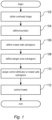
- FIG 1 is a flowchart of a method of controlling a robotic lawn mower, in accordance with an embodiment of the present invention. With reference to Figures 1 to 4 , the method has the following steps.
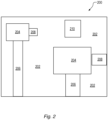
- Figure 2 represents an overhead satellite image 200 of a plot of land including lawns 202, houses 204 and obstacles including driveways 206, garages 208 and a playground 210.
- the satellite image 200 corresponds to the postal address of the plot of land, which can be provided by users or automatically detected by the robotic lawn mower. Machine learning algorithms can be used for improving the quality of the satellite image obtained.
- This step may comprise limiting the area of the boundary based on robotic mower capabilities, such as battery capacity or mowing speed.
- mower-safe subregions 304, 306-308 e.g. including lawn islands, paths, driveways
- Mower-safe regions may contain obstacles or buildings (e.g. the part of garage 208 in subregion 304 in Figure 3 ) that the robotic mower can detect and automatically avoid.
- 108 defining one or more danger-zone subregions 311 (e.g. play area, pond) within the boundary using the graphical user interface.
- danger-zone subregions 311 e.g. play area, pond
- a control attribute may comprise a no-cutting attribute or a cutting attribute assigned to one or more portions of the subregion.
- a no-cutting attribute is typically assigned automatically to a portion of a mower-safe region by the robotic mower, for example using a machine learning algorithm to detect an absence of grass on a driveway.
- cutting attributes are: cutting-height, cutting-time, cutting-frequency and cutting-pattern.
- the control attributes may be set up automatically by the robotic lawn mower or manually assigned by users (e.g. mowing a certain region of a golf course only during the night on certain days) for example using the graphical user interface.
- a navigation algorithm implementing a spiral pattern and/or row-by-row cutting pattern may be used to reduce the mowing times (e.g. mowing a grass area only once as a human would try to do manually).
- controlling the robotic lawn mower to traverse the plot of land while its operation in a subregion is based on (a) the location of the mower in relation to the plot of land, (b) the defined boundary and one or more subregions and (c) the assigned control attributes. While the robotic lawn mower is not in cutting operation (e.g. travelling on not-for-cutting portions of mower-safe subregions, parking, charging, etc.), the cutting blade(s) are turned off.
- step 112 of controlling the robotic lawn mower may comprise controlling the robotic lawnmower (310-314) to:
- Figure 3 illustrates that, with the mapping mechanism, a map 300 can be derived from the satellite image 200 of the plot of land.
- a user defines a boundary 302 and mower-safe subregions 304, 306-308 on the map via a graphical user interface.
- the dashed outline enclosing reference numerals 306-308 is one subregion.
- the user initially assigns a cutting attribute to the whole subregion 306-308, but the robotic mower reassigns (or additionally assigns) a no-cutting attribute to the portion 307, when it detects there is no grass on the driveway 206.
- the user is able to define different cutting attributes to the different subregions 304 and 306-308. For example, different a cutting heights or different cutting times may be assigned to the different respective subregions.
- the graphical user interface provides users with a variety of functions comprising, for example, classifying the plot of land into danger-zone regions (e.g. the playground 210) and mower-safe subregions (e.g. the subregions 304 and 306-308) where a robotic mower can safely be allowed to traverse under its own control.
- the classification may be implemented in a variety of ways. For example, if a subregion is classified by being given a specific name, then that name is a control attribute. For example, if the subregion is categorised by being referenced by a data storage variable, then that variable is a control attribute.
- the method 100 enables suggestions to be made in relation to the boundary 302 and the mower-safe subregions 304 and 306-308 based on the satellite image of the plot of land 200 using an image analysis technique.
- the method may also include generating a route in the first 306 and subsequent 308 mower-safe subregions to minimize time or distance traversing the second mower-safe subregion 307.
- the mower is routed on to the next lawn island 308 (if required) via, for example, a driveway portion 307 or pedestrian path (minimizing the time off the grass and/or distance across the path), until all lawn islands within the external boundary are covered
- the method may also include generating a route to minimize number of times the first 306 or subsequent 308 mower-safe subregions are crossed by the robotic lawn mower.
- the path planning algorithm minimizes the number of times a patch of grass is crossed, while making sure all the patches of grass are covered even in worst case scenario of sensory inaccuracies.
- mower-safe subregions 304 and 306 are adjacent to each other. According to another embodiment of the present invention (not shown), mower-safe subregions may be isolated.
- the method may also include detecting a barrier 402 obstructing the robotic lawn mower's traversal across a mower-safe subregion 404, 406, 307, 308.
- the barrier is detected using the robotic lawn mower when traversing the plot of land.
- a mowing route is automatically or manually generated between the obstructed areas of the subregion 404, 406 via a different mower-safe portion 307 of the subregion that is assigned with a no-cutting attribute.
- the step 112 of controlling the robotic lawn mower involves controlling the robotic lawnmower (410-414) to:
- barriers across divided subregions not marked on the map can be detected by the robotic lawn mower when in use and added to the map.
- a mowing route is automatically or manually generated for the robotic lawn mower to traverse between the divided portions of the subregions (e.g. using coordinates of the boundary, barrier and subregions defined on the map).
- a fence 402 is an example of a barrier dividing portions 404 and 406, which is not present or visible in the overhead image or was ignored when defining the subregions.
- the fence 402 is detected by the robotic lawn mower 410 and added to the map 400.
- the robotic lawn mower 410 re-routes via a different portion of a subregion (i.e.
- a mowing route may be prompted for and/or manually defined by users.
- the method may also include recording sensor measurements using the robotic lawn mower when traversing the plot of land and assigning or updating a control attribute based on the sensor measurements.
- Properties of the subregions including environmental factors (e.g. temperature), obstacles and inaccessible areas, moisture level and amount of leaves, may be detected by sensors on the robotic lawn mower when in use, then one or more of the control attributes can be automatically assigned, added to and/or updated for that subregion (e.g. weed density could be measured, or moisture level could be measured and the watering frequency assigned for that subregion should be updated accordingly, or e.g. grass length could be measured and the cutting height assigned for that subregion should be updated accordingly).
- the detected properties can be displayed on the graphical user interface, providing users immediate feedback on the properties of the subregions. For example, a city council may, based on the amount of leaves detected for a subregion, allocate appropriate workforce to clean the subregion.
- the control attributes may be used to manage other smart garden products within this environment, such as automatic watering systems.
- the method may also include deploying different robotic lawn mowers to different subregions based on properties of the subregions and the assigned control attributes of the subregions.
- Different robotic lawn mowers may be assigned to different subregions based on properties (such as the aforementioned properties) of the subregions and the assigned control attributes of the subregions, so that the control of the robotic lawn mower is scheduled for the subregions on an individual basis.
- the method may also include deploying different numbers of robotic lawn mowers to different subregions based on properties (such as the aforementioned properties) of the subregions and the assigned control attributes of the subregions.
- the method may also include determining an optimal charging point for a robotic lawn mower based on the defined boundary and subregions.
- the optimal charging point may be indicated on the graphical user interface. This makes mowing a large area easier and more efficient (e.g. for a golf course where a fleet of robots is in operation).
- portions 306, 308 of a subregion representing lawn areas that should be cut are assigned a cutting attribute.
- Portions of subregions representing areas that should not be mowed, which may or may not have grass are automatically detected and assigned a no-cutting attribute by the mower.
- the use of cutting attributes in the method 100 enables users to customise mowing tasks in a convenient manner, which is of significant practicality to the field of lawn mowing.
- FIG. 5 illustrates, in schematic form, a robotic lawn mower 500 comprising a mowing control module 502 implementing the method 100 in accordance with embodiments of the present invention, one or more lawn property detectors 504 (for detecting properties of the subregions), one or more visual sensor systems 506, a charging unit 508, one or more position sensors 510 and a user interface module 512.
- the user interface module 512 is integrated with the robotic lawn mower 500.
- the user interface module 512 is provided by another device that is able to display images (e.g. user's mobile phone) connected wirelessly to the mower directly or via the internet. The mower may then only have an on/off switch and an emergency stop button.
- the one or more positioning sensors 510 of the robotic lawn mower 500 are configured to determine the location of the robotic lawn mower 500, which comprises at least one Global Navigation Satellite System (GNSS) receiver.
- the GNSS receiver may be mounted on a receiving base station located in a charging hub, located at the charging point, that supplies charge to the charging unit 508 of the robotic lawn mower 500.
- a data fusion algorithm which processes GNSS signals, odometry data and Inertial Measurement Unit (IMU) signals, can be used to improve accuracy of position estimation in a complicated environment with a limited satellite connection, for example, places having many trees and concrete buildings.
- the positioning sensors 510 are capable of determining the location of the robotic lawn mower 500 to within 10 cm accuracy.
- the one or more visual sensor systems 506 of the robotic lawn mower 500 are configured to enable the detection of the edges of the lawn islands, obstacles on the lawn islands, and pathways connecting different lawn islands.
- the visual sensor systems may use a machine learning algorithm to identify grass.
- a variety of light detection and ranging (LIDAR) sensors can also be used for the detection of physical objects so that the robotic lawn mower 500 can be guided to move between the subregions without bumping into objects.
- LIDAR light detection and ranging
- the robotic lawn mower 500 is an example of an apparatus specifically adapted to carry out the steps of the method of controlling a robotic lawn mower described with reference to Figures 1 to 4 .
- Figure 6 illustrates a robotic lawn mower 600 according to another embodiment of the present invention, wherein a mowing control module 602, which implements the method 100 in accordance with embodiments of the present invention, is implemented on another source (e.g. cloud server).
- a mowing control module 602 which implements the method 100 in accordance with embodiments of the present invention, is implemented on another source (e.g. cloud server).
- one or more receiving units 604 of the robotic lawn mower 600 receive outputs of the mowing control module 602 so that the robotic lawn mower 600 is controlled by the mowing control module 602 in accordance with the methods described with reference to Figures 1-4 .
- Embodiments may be implemented by a computer program comprising computer readable instructions which, when run on suitable computer apparatus such as mowing control modules 502 or 602, causes the computer apparatus to perform the method described with reference to Figures 1 to 4 .
- a computer program product such as a disk or solid-state memory device may store the computer program.
- Figure 6 illustrates a system comprising a robotic lawn mower 600 and a processing unit 602 configured to control the robotic lawn mower 600 according to the method described with reference to Figures 1 to 4 .
- the one or more sensors are configured to observe the properties of the subregions in relation to lawn islands to be mowed.
- the robotic lawn mower comprises one or more security detectors, configured to report to users in alarming situations, for example, when the robotic lawn mower is stuck or stolen.
Landscapes
- Engineering & Computer Science (AREA)
- Radar, Positioning & Navigation (AREA)
- Remote Sensing (AREA)
- Aviation & Aerospace Engineering (AREA)
- Physics & Mathematics (AREA)
- General Physics & Mathematics (AREA)
- Automation & Control Theory (AREA)
- Life Sciences & Earth Sciences (AREA)
- Environmental Sciences (AREA)
- General Engineering & Computer Science (AREA)
- Harvester Elements (AREA)
Applications Claiming Priority (2)
| Application Number | Priority Date | Filing Date | Title |
|---|---|---|---|
| GB1910443.9A GB2580991B (en) | 2019-07-22 | 2019-07-22 | Robotic lawn mower control |
| PCT/GB2020/051567 WO2021014117A1 (en) | 2019-07-22 | 2020-06-29 | Robotic lawn mower control |
Publications (3)
| Publication Number | Publication Date |
|---|---|
| EP4002985A1 EP4002985A1 (en) | 2022-06-01 |
| EP4002985B1 true EP4002985B1 (en) | 2024-09-25 |
| EP4002985C0 EP4002985C0 (en) | 2024-09-25 |
Family
ID=67839736
Family Applications (1)
| Application Number | Title | Priority Date | Filing Date |
|---|---|---|---|
| EP20735685.8A Active EP4002985B1 (en) | 2019-07-22 | 2020-06-29 | Robotic lawn mower control |
Country Status (7)
| Country | Link |
|---|---|
| US (1) | US20220264793A1 (pl) |
| EP (1) | EP4002985B1 (pl) |
| AU (1) | AU2020318878A1 (pl) |
| ES (1) | ES2999648T3 (pl) |
| GB (1) | GB2580991B (pl) |
| PL (1) | PL4002985T3 (pl) |
| WO (1) | WO2021014117A1 (pl) |
Families Citing this family (11)
| Publication number | Priority date | Publication date | Assignee | Title |
|---|---|---|---|---|
| CN113138593A (zh) * | 2020-01-02 | 2021-07-20 | 苏州宝时得电动工具有限公司 | 自主机器人的地图创建方法、装置、设备及存储介质 |
| WO2022244143A1 (ja) * | 2021-05-19 | 2022-11-24 | 株式会社やまびこ | ロボット作業装置 |
| US12072711B2 (en) | 2021-11-30 | 2024-08-27 | Honda Motor Co., Ltd. | Travel route control of autonomous work vehicle using global navigation satellite system |
| EP4270138A1 (en) | 2022-04-28 | 2023-11-01 | Techtronic Cordless GP | Creation of a virtual boundary for a robotic garden tool |
| CN119212828A (zh) * | 2022-05-11 | 2024-12-27 | 株式会社电装 | 自走式作业机器人 |
| US20240065144A1 (en) * | 2022-08-31 | 2024-02-29 | Techtronic Cordless Gp | Creation of a virtual boundary for a robotic garden tool |
| CN115606393B (zh) * | 2022-11-02 | 2026-03-20 | 深圳市来语飞智能科技有限公司 | 割草方法和自动割草机 |
| CN116149337B (zh) | 2023-04-14 | 2023-07-07 | 未岚大陆(北京)科技有限公司 | 割草控制方法、设置方法、割草机、设置装置和电子设备 |
| SE2450597A1 (en) * | 2024-06-04 | 2025-10-07 | Husqvarna Ab | Improved navigation for a robotic lawnmower with regards to woody plants |
| CN121522692A (zh) * | 2024-08-13 | 2026-02-13 | 深圳乐动机器人股份有限公司 | 作业方向的确定方法、装置、园林作业设备 |
| CN119756402B (zh) * | 2024-12-25 | 2025-06-24 | 成都宜泊信息科技有限公司 | 停车场巡检机器人用路径规划方法和系统 |
Family Cites Families (11)
| Publication number | Priority date | Publication date | Assignee | Title |
|---|---|---|---|---|
| US7010425B2 (en) * | 2003-03-31 | 2006-03-07 | Deere & Company | Path planner and a method for planning a path of a work vehicle |
| US8428776B2 (en) | 2009-06-18 | 2013-04-23 | Michael Todd Letsky | Method for establishing a desired area of confinement for an autonomous robot and autonomous robot implementing a control system for executing the same |
| US8706297B2 (en) * | 2009-06-18 | 2014-04-22 | Michael Todd Letsky | Method for establishing a desired area of confinement for an autonomous robot and autonomous robot implementing a control system for executing the same |
| US8744626B2 (en) * | 2010-05-27 | 2014-06-03 | Deere & Company | Managing autonomous machines across multiple areas |
| US20110295423A1 (en) * | 2010-05-27 | 2011-12-01 | Noel Wayne Anderson | Condition based keep-out for machines |
| US9241442B2 (en) * | 2012-10-23 | 2016-01-26 | Daniel A. DIAZDELCASTILLO | Autonomous and remote control all purpose machine (ARCAPM) |
| JP6240384B2 (ja) * | 2012-11-29 | 2017-11-29 | ヤンマー株式会社 | 自律走行作業システム |
| US9420741B2 (en) * | 2014-12-15 | 2016-08-23 | Irobot Corporation | Robot lawnmower mapping |
| US9538702B2 (en) * | 2014-12-22 | 2017-01-10 | Irobot Corporation | Robotic mowing of separated lawn areas |
| CN109313253A (zh) * | 2017-05-26 | 2019-02-05 | 苏州宝时得电动工具有限公司 | 移动物体及其定位方法、自动工作系统、存储介质 |
| RU2668319C1 (ru) | 2017-10-27 | 2018-09-28 | Общество с ограниченной ответственностью "АгроДронГрупп" | Способ и система обработки зон посева сельскохозяйственных культур на основании данных мониторинга |
-
2019
- 2019-07-22 GB GB1910443.9A patent/GB2580991B/en active Active
-
2020
- 2020-06-29 EP EP20735685.8A patent/EP4002985B1/en active Active
- 2020-06-29 ES ES20735685T patent/ES2999648T3/es active Active
- 2020-06-29 WO PCT/GB2020/051567 patent/WO2021014117A1/en not_active Ceased
- 2020-06-29 US US17/629,264 patent/US20220264793A1/en active Pending
- 2020-06-29 PL PL20735685.8T patent/PL4002985T3/pl unknown
- 2020-06-29 AU AU2020318878A patent/AU2020318878A1/en active Pending
Also Published As
| Publication number | Publication date |
|---|---|
| PL4002985T3 (pl) | 2025-04-07 |
| US20220264793A1 (en) | 2022-08-25 |
| EP4002985A1 (en) | 2022-06-01 |
| ES2999648T3 (en) | 2025-02-26 |
| WO2021014117A1 (en) | 2021-01-28 |
| GB2580991A (en) | 2020-08-05 |
| EP4002985C0 (en) | 2024-09-25 |
| GB2580991B (en) | 2021-05-05 |
| AU2020318878A1 (en) | 2022-03-10 |
| GB201910443D0 (en) | 2019-09-04 |
Similar Documents
| Publication | Publication Date | Title |
|---|---|---|
| EP4002985B1 (en) | Robotic lawn mower control | |
| EP2169505B1 (en) | Distributed knowledge base for vehicular localization and work-site management | |
| EP2169503B1 (en) | Multi-vehicle high intensity perception | |
| EP2169507B1 (en) | Distributed knowledge base method for vehicular localization and work-site management | |
| US8224500B2 (en) | Distributed knowledge base program for vehicular localization and work-site management | |
| US9188980B2 (en) | Vehicle with high integrity perception system | |
| US8478493B2 (en) | High integrity perception program | |
| US8818567B2 (en) | High integrity perception for machine localization and safeguarding | |
| EP2547192B1 (en) | Method and system for navigating a robotic garden tool | |
| US9026315B2 (en) | Apparatus for machine coordination which maintains line-of-site contact | |
| EP2354878B1 (en) | Method for regenerating a boundary containing a mobile robot |
Legal Events
| Date | Code | Title | Description |
|---|---|---|---|
| STAA | Information on the status of an ep patent application or granted ep patent |
Free format text: STATUS: UNKNOWN |
|
| STAA | Information on the status of an ep patent application or granted ep patent |
Free format text: STATUS: THE INTERNATIONAL PUBLICATION HAS BEEN MADE |
|
| PUAI | Public reference made under article 153(3) epc to a published international application that has entered the european phase |
Free format text: ORIGINAL CODE: 0009012 |
|
| STAA | Information on the status of an ep patent application or granted ep patent |
Free format text: STATUS: REQUEST FOR EXAMINATION WAS MADE |
|
| 17P | Request for examination filed |
Effective date: 20220214 |
|
| AK | Designated contracting states |
Kind code of ref document: A1 Designated state(s): AL AT BE BG CH CY CZ DE DK EE ES FI FR GB GR HR HU IE IS IT LI LT LU LV MC MK MT NL NO PL PT RO RS SE SI SK SM TR |
|
| DAV | Request for validation of the european patent (deleted) | ||
| DAX | Request for extension of the european patent (deleted) | ||
| GRAP | Despatch of communication of intention to grant a patent |
Free format text: ORIGINAL CODE: EPIDOSNIGR1 |
|
| STAA | Information on the status of an ep patent application or granted ep patent |
Free format text: STATUS: GRANT OF PATENT IS INTENDED |
|
| RIC1 | Information provided on ipc code assigned before grant |
Ipc: G05D 1/00 20060101ALI20240319BHEP Ipc: A01D 34/00 20060101AFI20240319BHEP |
|
| INTG | Intention to grant announced |
Effective date: 20240419 |
|
| GRAS | Grant fee paid |
Free format text: ORIGINAL CODE: EPIDOSNIGR3 |
|
| GRAA | (expected) grant |
Free format text: ORIGINAL CODE: 0009210 |
|
| STAA | Information on the status of an ep patent application or granted ep patent |
Free format text: STATUS: THE PATENT HAS BEEN GRANTED |
|
| AK | Designated contracting states |
Kind code of ref document: B1 Designated state(s): AL AT BE BG CH CY CZ DE DK EE ES FI FR GB GR HR HU IE IS IT LI LT LU LV MC MK MT NL NO PL PT RO RS SE SI SK SM TR |
|
| REG | Reference to a national code |
Ref country code: GB Ref legal event code: FG4D |
|
| RIN1 | Information on inventor provided before grant (corrected) |
Inventor name: KANGRO, JOAN |
|
| REG | Reference to a national code |
Ref country code: CH Ref legal event code: EP |
|
| REG | Reference to a national code |
Ref country code: DE Ref legal event code: R096 Ref document number: 602020038303 Country of ref document: DE |
|
| REG | Reference to a national code |
Ref country code: IE Ref legal event code: FG4D |
|
| U01 | Request for unitary effect filed |
Effective date: 20241017 |
|
| U07 | Unitary effect registered |
Designated state(s): AT BE BG DE DK EE FI FR IT LT LU LV MT NL PT RO SE SI Effective date: 20241104 |
|
| PG25 | Lapsed in a contracting state [announced via postgrant information from national office to epo] |
Ref country code: NO Free format text: LAPSE BECAUSE OF FAILURE TO SUBMIT A TRANSLATION OF THE DESCRIPTION OR TO PAY THE FEE WITHIN THE PRESCRIBED TIME-LIMIT Effective date: 20241225 |
|
| PG25 | Lapsed in a contracting state [announced via postgrant information from national office to epo] |
Ref country code: GR Free format text: LAPSE BECAUSE OF FAILURE TO SUBMIT A TRANSLATION OF THE DESCRIPTION OR TO PAY THE FEE WITHIN THE PRESCRIBED TIME-LIMIT Effective date: 20241226 |
|
| PG25 | Lapsed in a contracting state [announced via postgrant information from national office to epo] |
Ref country code: RS Free format text: LAPSE BECAUSE OF FAILURE TO SUBMIT A TRANSLATION OF THE DESCRIPTION OR TO PAY THE FEE WITHIN THE PRESCRIBED TIME-LIMIT Effective date: 20241225 |
|
| PG25 | Lapsed in a contracting state [announced via postgrant information from national office to epo] |
Ref country code: RS Free format text: LAPSE BECAUSE OF FAILURE TO SUBMIT A TRANSLATION OF THE DESCRIPTION OR TO PAY THE FEE WITHIN THE PRESCRIBED TIME-LIMIT Effective date: 20241225 Ref country code: NO Free format text: LAPSE BECAUSE OF FAILURE TO SUBMIT A TRANSLATION OF THE DESCRIPTION OR TO PAY THE FEE WITHIN THE PRESCRIBED TIME-LIMIT Effective date: 20241225 Ref country code: GR Free format text: LAPSE BECAUSE OF FAILURE TO SUBMIT A TRANSLATION OF THE DESCRIPTION OR TO PAY THE FEE WITHIN THE PRESCRIBED TIME-LIMIT Effective date: 20241226 |
|
| REG | Reference to a national code |
Ref country code: ES Ref legal event code: FG2A Ref document number: 2999648 Country of ref document: ES Kind code of ref document: T3 Effective date: 20250226 |
|
| PG25 | Lapsed in a contracting state [announced via postgrant information from national office to epo] |
Ref country code: IS Free format text: LAPSE BECAUSE OF FAILURE TO SUBMIT A TRANSLATION OF THE DESCRIPTION OR TO PAY THE FEE WITHIN THE PRESCRIBED TIME-LIMIT Effective date: 20250125 |
|
| PG25 | Lapsed in a contracting state [announced via postgrant information from national office to epo] |
Ref country code: SM Free format text: LAPSE BECAUSE OF FAILURE TO SUBMIT A TRANSLATION OF THE DESCRIPTION OR TO PAY THE FEE WITHIN THE PRESCRIBED TIME-LIMIT Effective date: 20240925 |
|
| PG25 | Lapsed in a contracting state [announced via postgrant information from national office to epo] |
Ref country code: CZ Free format text: LAPSE BECAUSE OF FAILURE TO SUBMIT A TRANSLATION OF THE DESCRIPTION OR TO PAY THE FEE WITHIN THE PRESCRIBED TIME-LIMIT Effective date: 20240925 |
|
| PG25 | Lapsed in a contracting state [announced via postgrant information from national office to epo] |
Ref country code: SK Free format text: LAPSE BECAUSE OF FAILURE TO SUBMIT A TRANSLATION OF THE DESCRIPTION OR TO PAY THE FEE WITHIN THE PRESCRIBED TIME-LIMIT Effective date: 20240925 |
|
| PGFP | Annual fee paid to national office [announced via postgrant information from national office to epo] |
Ref country code: PL Payment date: 20250623 Year of fee payment: 6 |
|
| PGFP | Annual fee paid to national office [announced via postgrant information from national office to epo] |
Ref country code: GB Payment date: 20250619 Year of fee payment: 6 |
|
| PGFP | Annual fee paid to national office [announced via postgrant information from national office to epo] |
Ref country code: IE Payment date: 20250623 Year of fee payment: 6 |
|
| U20 | Renewal fee for the european patent with unitary effect paid |
Year of fee payment: 6 Effective date: 20250625 |
|
| PLBE | No opposition filed within time limit |
Free format text: ORIGINAL CODE: 0009261 |
|
| STAA | Information on the status of an ep patent application or granted ep patent |
Free format text: STATUS: NO OPPOSITION FILED WITHIN TIME LIMIT |
|
| 26N | No opposition filed |
Effective date: 20250626 |
|
| PGFP | Annual fee paid to national office [announced via postgrant information from national office to epo] |
Ref country code: ES Payment date: 20250714 Year of fee payment: 6 |
|
| U1N | Appointed representative for the unitary patent procedure changed after the registration of the unitary effect |
Representative=s name: SCINTILLA INTELLECTUAL PROPERTY LTD; GB |
|
| PG25 | Lapsed in a contracting state [announced via postgrant information from national office to epo] |
Ref country code: HR Free format text: LAPSE BECAUSE OF FAILURE TO SUBMIT A TRANSLATION OF THE DESCRIPTION OR TO PAY THE FEE WITHIN THE PRESCRIBED TIME-LIMIT Effective date: 20240925 |
|
| REG | Reference to a national code |
Ref country code: CH Ref legal event code: H13 Free format text: ST27 STATUS EVENT CODE: U-0-0-H10-H13 (AS PROVIDED BY THE NATIONAL OFFICE) Effective date: 20260127 |
|
| PG25 | Lapsed in a contracting state [announced via postgrant information from national office to epo] |
Ref country code: MC Free format text: LAPSE BECAUSE OF FAILURE TO SUBMIT A TRANSLATION OF THE DESCRIPTION OR TO PAY THE FEE WITHIN THE PRESCRIBED TIME-LIMIT Effective date: 20240925 |