EP4002645A1 - Power supply apparatus and power supply system - Google Patents
Power supply apparatus and power supply system Download PDFInfo
- Publication number
- EP4002645A1 EP4002645A1 EP19938843.0A EP19938843A EP4002645A1 EP 4002645 A1 EP4002645 A1 EP 4002645A1 EP 19938843 A EP19938843 A EP 19938843A EP 4002645 A1 EP4002645 A1 EP 4002645A1
- Authority
- EP
- European Patent Office
- Prior art keywords
- power supply
- obstruction
- power
- position information
- power reception
- Prior art date
- Legal status (The legal status is an assumption and is not a legal conclusion. Google has not performed a legal analysis and makes no representation as to the accuracy of the status listed.)
- Pending
Links
Images




Classifications
-
- H—ELECTRICITY
- H02—GENERATION; CONVERSION OR DISTRIBUTION OF ELECTRIC POWER
- H02J—ELECTRIC POWER NETWORKS; CIRCUIT ARRANGEMENTS OR SYSTEMS FOR SUPPLYING OR DISTRIBUTING ELECTRIC POWER; SYSTEMS FOR STORING ELECTRIC ENERGY
- H02J50/00—Circuit arrangements or systems for wireless supply or distribution of electric power
- H02J50/20—Circuit arrangements or systems for wireless supply or distribution of electric power using microwaves or radio frequency waves
-
- H—ELECTRICITY
- H02—GENERATION; CONVERSION OR DISTRIBUTION OF ELECTRIC POWER
- H02J—ELECTRIC POWER NETWORKS; CIRCUIT ARRANGEMENTS OR SYSTEMS FOR SUPPLYING OR DISTRIBUTING ELECTRIC POWER; SYSTEMS FOR STORING ELECTRIC ENERGY
- H02J50/00—Circuit arrangements or systems for wireless supply or distribution of electric power
- H02J50/60—Circuit arrangements or systems for wireless supply or distribution of electric power responsive to the presence of foreign objects, e.g. detection of living beings
-
- H—ELECTRICITY
- H02—GENERATION; CONVERSION OR DISTRIBUTION OF ELECTRIC POWER
- H02J—ELECTRIC POWER NETWORKS; CIRCUIT ARRANGEMENTS OR SYSTEMS FOR SUPPLYING OR DISTRIBUTING ELECTRIC POWER; SYSTEMS FOR STORING ELECTRIC ENERGY
- H02J50/00—Circuit arrangements or systems for wireless supply or distribution of electric power
- H02J50/20—Circuit arrangements or systems for wireless supply or distribution of electric power using microwaves or radio frequency waves
- H02J50/23—Circuit arrangements or systems for wireless supply or distribution of electric power using microwaves or radio frequency waves characterised by the type of transmitting antennas, e.g. directional array antennas or Yagi antennas
-
- H—ELECTRICITY
- H02—GENERATION; CONVERSION OR DISTRIBUTION OF ELECTRIC POWER
- H02J—ELECTRIC POWER NETWORKS; CIRCUIT ARRANGEMENTS OR SYSTEMS FOR SUPPLYING OR DISTRIBUTING ELECTRIC POWER; SYSTEMS FOR STORING ELECTRIC ENERGY
- H02J50/00—Circuit arrangements or systems for wireless supply or distribution of electric power
- H02J50/40—Circuit arrangements or systems for wireless supply or distribution of electric power using two or more transmitting or receiving devices
-
- H—ELECTRICITY
- H02—GENERATION; CONVERSION OR DISTRIBUTION OF ELECTRIC POWER
- H02J—ELECTRIC POWER NETWORKS; CIRCUIT ARRANGEMENTS OR SYSTEMS FOR SUPPLYING OR DISTRIBUTING ELECTRIC POWER; SYSTEMS FOR STORING ELECTRIC ENERGY
- H02J50/00—Circuit arrangements or systems for wireless supply or distribution of electric power
- H02J50/80—Circuit arrangements or systems for wireless supply or distribution of electric power involving the exchange of data, concerning supply or distribution of electric power, between transmitting devices and receiving devices
-
- H—ELECTRICITY
- H02—GENERATION; CONVERSION OR DISTRIBUTION OF ELECTRIC POWER
- H02J—ELECTRIC POWER NETWORKS; CIRCUIT ARRANGEMENTS OR SYSTEMS FOR SUPPLYING OR DISTRIBUTING ELECTRIC POWER; SYSTEMS FOR STORING ELECTRIC ENERGY
- H02J50/00—Circuit arrangements or systems for wireless supply or distribution of electric power
- H02J50/90—Circuit arrangements or systems for wireless supply or distribution of electric power involving detection or optimisation of position, e.g. alignment
Definitions
- the present invention relates to a power supply apparatus and a power supply system.
- a power supply apparatus outputs a radio wave, and a power reception apparatus receives the radio wave. By transmitting and receiving radio waves, power is supplied from the power supply apparatus to the power reception apparatus.
- a moving object may intervene between the power supply apparatus and the power reception apparatus.
- a moving object a moving obstruction
- the radio wave output from the power supply apparatus toward the power reception apparatus is blocked. That is, power supply processing is interrupted.
- the present invention provides a power supply apparatus capable of, regardless of the presence of a moving obstruction, preventing interruption of wireless power supply processing performed between the power supply apparatus and at least two or more power reception apparatuses.
- the present invention also provides a power supply system that includes the power supply apparatus.
- a power supply apparatus includes a power supply antenna, a directivity control unit, a position information acquisition unit, and a control unit.
- the power supply antenna is configured to emit, to a plurality of power reception apparatuses, a radio wave that is based on a power supply signal.
- the directivity control unit is configured to control directivity of the power supply antenna.
- the position information acquisition unit is configured to acquire position information indicating a position of an obstruction moving between the power supply antenna and at least one power reception apparatus of the plurality of power reception apparatuses. Based on the position information, the control unit is configured to determine a power reception apparatus, among the plurality of power reception apparatuses, to which power is to be supplied while avoiding the obstruction.
- the control unit is also configured to control the directivity control unit to steer the radio wave toward the determined power reception apparatus.
- the power supply apparatus is capable of preventing, regardless of the presence of a moving obstruction, interruption of wireless power supply processing performed between the power supply apparatus and the plurality of power reception apparatuses.
- a power supply system includes a plurality of power reception apparatuses, a power supply apparatus, and an obstruction position detection apparatus.
- the power supply apparatus is configured to supply power wirelessly to the plurality of power reception apparatuses.
- the obstruction position detection apparatus is configured to make a detection of a position of an obstruction moving between the power supply apparatus and at least one power reception apparatus of the plurality of power reception apparatuses.
- the obstruction position detection apparatus is configured to transmit a result of the detection to the power supply apparatus as position information.
- the power supply apparatus includes a power supply antenna, a directivity control unit, a position information acquisition unit, and a control unit.
- the power supply antenna is configured to emit, to a plurality of power reception apparatuses, a radio wave that is based on a power supply signal.
- the directivity control unit is configured to control directivity of the power supply antenna.
- the position information acquisition unit is configured to acquire position information from the obstruction position detection apparatus. Based on the position information, the control unit is configured to determine a power reception apparatus, among the plurality of power reception apparatuses, to which power is to be supplied while avoiding the obstruction.
- the control unit is configured to control the directivity control unit to steer the radio wave toward the determined power reception apparatus.
- the power supply system is capable of preventing, regardless of the presence of a moving obstruction, interruption of wireless power supply processing performed between the power supply apparatus and the plurality of power reception apparatuses.
- the power supply system is also capable of controlling the directivity of the power supply antenna in consideration of the actual position of the moving obstruction.
- a power supply system includes a plurality of power reception apparatuses, a power supply apparatus, and an obstruction control apparatus.
- the power supply apparatus is configured to supply power wirelessly to the plurality of power reception apparatuses.
- the obstruction control apparatus is configured to perform control of movement of an obstruction moving between the power supply apparatus and at least one power reception apparatus of the plurality of power reception apparatuses.
- the obstruction control apparatus is configured to transmit, to the power supply apparatus, position information indicating a position of the obstruction identified based on the control.
- the power supply apparatus includes a power supply antenna, a directivity control unit, a position information acquisition unit, and a control unit.
- the power supply antenna is configured to emit, to a plurality of power reception apparatuses, a radio wave that is based on a power supply signal.
- the directivity control unit is configured to control directivity of the power supply antenna.
- the position information acquisition unit is configured to acquire position information from the obstruction control apparatus. Based on the position information, the control unit is configured to determine a power reception apparatus, among the plurality of power reception apparatuses, to which power is to be supplied while avoiding the obstruction.
- the control unit is configured to control the directivity control unit to steer the radio wave toward the determined power reception apparatus.
- the power supply system is capable of preventing, regardless of the presence of a moving obstruction, interruption of wireless power supply processing performed between the power supply apparatus and the plurality of power reception apparatuses.
- the power supply system is also capable of dynamically controlling the directivity of the power supply antenna by, instead of detecting the actual position of the obstruction, using the position of the obstruction identified based on the control of the movement of the obstruction by the obstruction control apparatus.
- a power supply apparatus is capable of preventing, regardless of the presence of a moving obstruction, interruption of wireless power supply processing performed between the power supply apparatus and at least two or more power reception apparatuses.
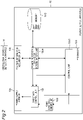
- FIG. 1 is a diagram illustrating a schematic configuration of a power supply system 100 according to the present embodiment.
- the power supply system 100 includes a plurality of power reception apparatuses 1, a power supply apparatus 10, and an obstruction position detection apparatus 11.
- the power supply apparatus 10 supplies power wirelessly to each of the power reception apparatuses 1.
- the power supply apparatus 10 In order to supply power, the power supply apparatus 10 outputs an electromagnetic wave (hereinafter referred to as radio wave) to each power reception apparatus 1.
- Each power reception apparatus 1 includes a power reception antenna 1a.
- a radio wave received by the power reception antenna 1a is converted into electrical energy.
- the power reception apparatus 1 is able to receive a supply of power.
- an obstruction 2 moves.
- the obstruction 2 moves along a direction 50.
- the obstruction 2 moves between the power supply apparatus 10 and at least one or more power reception apparatuses 1.
- the obstruction 2 moves between the power supply apparatus 10 (more specifically, the power supply antenna 10a) and each power reception apparatus 1 (more specifically, each power reception antenna 1a).
- the obstruction 2 when the obstruction 2 exists between the power supply apparatus 10 and a predetermined power reception apparatus 1, the obstruction 2 blocks the radio wave output from the power supply apparatus 10 to the predetermined power reception apparatus 1. That is, the obstruction 2 is a moving tangible object in the power supply system 100, and is capable of blocking radio waves output from the power supply apparatus 10 to the power reception apparatuses 1 in the power supply system 100. Thus, the power supply from the power supply apparatus 10 to the power reception apparatuses 1 can be blocked by the obstruction 2.
- the obstruction position detection apparatus 11 detects the position of the moving obstruction 2.
- the obstruction position detection apparatus 11 is communicably connected to the power supply apparatus 10. With this configuration, the obstruction position detection apparatus 11 is capable of transmitting the detection result (position information indicating the position of the obstruction 2) to the power supply apparatus 10. It is to be noted that the communication between the obstruction position detection apparatus 11 and the power supply apparatus 10 may be wired communication or wireless communication.
- the obstruction position detection apparatus 11 it is possible to employ any of various sensors, examples including a photoelectric sensor, a proximity sensor, an acceleration sensor, and a pressure sensor.
- the obstruction position detection apparatus 11 is also capable of detecting the position of the obstruction 2 using a signal from an RFID (radio frequency identifier) mounted on the obstruction 2.
- the obstruction position detection apparatus 11 may also be a device that includes various radars and/or a camera in order to detect the position of the obstruction 2.
- FIG. 2 is a diagram illustrating a specific configuration of the power supply apparatus 10. Next, a configuration of the power supply apparatus 10 will be described with reference to FIG. 2 .
- the power supply apparatus 10 which supplies power wirelessly to the power reception apparatuses 1, includes a power supply antenna 10a, a position information acquisition unit 10b, a processor 10c, a memory 10d, a power supply signal generation unit 10e, and a directivity control unit 10f.
- the power supply antenna 10a, the position information acquisition unit 10b, the memory 10d, the power supply signal generation unit 10e, and the directivity control unit 10f are connected to the processor 10c.
- the power supply antenna 10a emits, to each of the respective power reception apparatuses 1, a radio wave that is based on a power supply signal.
- the power supply antenna 10a may be an array antenna made up of a plurality of element antennas.
- the position information acquisition unit 10b is a communication unit, and is communicably connected to the obstruction position detection apparatus 11. With this configuration, the position information acquisition unit 10b acquires the above-described position information, which is the detection result acquired by the obstruction position detection apparatus 11.
- the power supply signal generation unit 10e includes a high-frequency circuit that generates power supply signals.
- the high-frequency circuit performs various kinds of processing, such as signal generation, distribution, amplification, and filtering.
- the directivity control unit 10f controls the directivity of the power supply antenna 10a. As described later, the directivity control unit 10f controls the directivity of the power supply antenna 10c4 so as to steer a radio wave to a power reception apparatus (power-supply-target power reception apparatus 1 to which power is to be supplied) 1 determined as power suppliable by the power reception apparatus determination unit 10a. By controlling the directivity, the main beam of the radio wave emitted from the power supply antenna 10a is directed to the power-supply-target power reception apparatus 1. That is, in the radio wave emitted from the power supply antenna 10a, the intensity of the beam in the direction toward the power-supply-target power reception apparatus 1 is maximized.
- the memory 10d which is a storage unit, stores various types of data.
- the memory 10d includes, for example, a random access memory (RAM) and a read only memory (ROM).
- RAM random access memory
- ROM read only memory
- the memory 10d stores various programs in a changeable manner.
- the memory 10d also stores, in a changeable manner, a correspondence relationship table D1 (see FIG. 4 ), which will be described later, and an obstruction position history information table D2 (see FIGs. 6 and 7 ), which will be described later.
- the processor 10c which is a control unit, includes a CPU (Central Processing Unit). For example, the processor 10c reads programs and data stored in the memory 10d. Based on a program that has been read, the processor 10c controls the power supply antenna 10a, the position information acquisition unit 10b, the memory 10d, the power supply signal generation unit 10e, and the directivity control unit 10f to execute a predetermined operation and a predetermined function. Also based on a program that has been read, the processor 10c performs predetermined calculation, analysis, processing, and control in blocks 10c1 and 10c4, which are implemented by the program in the processor 10c.
- a CPU Central Processing Unit
- the processor 10c includes, as functional blocks, an overall control unit 10c1 and a power reception apparatus determination unit 10c4.
- the overall control unit 10c1 controls operation timings of, for example, the position information acquisition unit 10b, the memory 10d, the power supply signal generation unit 10e, and the directivity control unit 10f.
- the power reception apparatus determination unit 10c4 determines a power-supply-target power reception apparatus 1, among the plurality of power reception apparatuses 1, to which power is to be supplied. More specifically, the power reception apparatus determination unit 10c4 determines the power-supply-target power reception apparatus 1 using the position information and the data stored in the memory 10d (the correspondence relationship table D1 and the obstruction position history information table D2).
- the power-supply-target power reception apparatus I means a power reception apparatus 1 capable of receiving wireless power supply from the power supply apparatus 10 while avoiding the obstruction 2 (without being affected by radio wave blocking by the obstruction 2). Between the determined power-supply-target power reception apparatus 1 and the power supply apparatus 10, the supply of radio wave from the power supply apparatus 10 is not interrupted by the obstruction 2 existing at the position identified by the position information.
- the power reception apparatus determination unit 10c4 controls the directivity control unit 10f to steer a radio wave to the power-supply-target power reception apparatus 1.
- the directivity control unit 10f controls the directivity of the power supply antenna 10a to steer the radio wave to the power-supply-target power reception apparatus 1.
- the directivity control unit 10f adjusts the phases and amplitudes of the power supply signals to the element antennas. This ensures that the directivity of the radio wave emitted from the power supply antenna 10a can be controlled. It is also possible that a plurality of directivity patterns are set in the memory 10d in advance, and that the directivity control unit 10f selects a suitable pattern based on the position of the power-supply-target power reception apparatus 1. It is also possible that the power supply antenna 10a is provided on a rotary table, and that the directivity control unit 10f mechanically controls the rotation of the rotary table to control the directivity of the radio wave to be emitted.
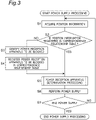
- FIG. 3 is a flowchart of operations associated with the power supply processing.
- the position information acquisition unit 10b acquires position information (which can be regarded as second position information indicating a second position of the obstruction 2) from the obstruction position detection apparatus 11.
- the position information indicates the position of the obstruction 2 detected by the obstruction position detection apparatus 11.
- the processor 10c determines whether the position identified by the position information acquired at step S1 (hereinafter referred to as the position acquired at step S1) is registered in the correspondence relationship table D1, which is stored in the memory 10d.
- FIG. 4 is an illustration of an example of the correspondence relationship table D1, which is stored in the memory 10d.
- the correspondence relationship table D1 is created in advance by a user before the power supply processing operation is started, for example.
- the position of the moving obstruction 2 is corelated to the identifier of the power reception apparatus 1 corresponding to the position.
- the position of the obstruction 2 is correlated to the identifier of the power reception apparatus 1 blocked by the obstruction 2 existing at the position.
- the wireless power supply from the power supply apparatus 10 to the power reception apparatus 1 identified by an identifier ID2 is blocked by the obstruction 2 existing at the position A.
- the wireless power supply from the power supply apparatus 10 to the power reception apparatus 1 identified by an identifier ID3 is interrupted by the obstruction 2 existing at the position E.
- step S2 illustrated in FIG. 3 it is assumed that the processor 10c determines that the position acquired at step S1 is not registered in the correspondence relationship table D1 (NO at step S2). For example, when the position acquired at step S1 is a position K, the position K is not registered in the correspondence relationship table D1 illustrated in FIG. 4 . In this case, the power supply apparatus 10 notifies that the position acquired at step S1 is not included in the correspondence relationship table D1.
- the user who recognizes the flow of NO (the above-described notification) at step S2 identifies the power reception apparatus 1 that is prevented from receiving power supplied from the power supply apparatus 10 when the obstruction 2 exists at the position acquired at step S1 (step S3). Then, the user registers, in the correspondence relationship table D1, which is stored in the memory 10d, the unregistered position acquired at step S1 and the identifier of the power reception apparatus 1 identified at step S3 and corresponding to the unregistered position (step S4). After step S4, the processor 10c starts the power reception apparatus determination processing at step S5.
- the processor 10c determines that the position acquired at step S1 is registered in the correspondence relationship table D1 (YES at step S2). For example, when the position acquired at step S1 is a position B, the position B is registered in the correspondence relationship table D1 illustrated in FIG. 4 . In this case, the processor 10c starts the power reception apparatus determination processing at step S5.
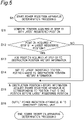
- FIG. 5 is a flowchart of a flow of a specific operations performed by the processor 10c in the power reception apparatus determination processing at step S5.
- the power reception apparatus determination processing will be described below with reference to FIG. 5 .
- the power reception apparatus determination unit 10c of the processor 10c4 compares the position acquired at step S1 with a "latest registered position", which is included in the obstruction movement history information table (hereinafter simply referred to as history information table) D2.
- the history information table D2 is stored in the memory 10d.
- FIG. 6 is an illustration of the history information table D2, which is stored in the memory 10d.
- the history information table D2 is array data in which pieces of the position information acquired by the position information acquisition unit 10b are arranged in time series.
- the history information table D2 exemplified in FIG. 6 indicates that the position information acquisition unit 10b has acquired the position information indicating the position B, the position information indicating a position C, and the position information indicating a position D in this order (time series).
- the position information acquisition unit 10b continuously receives position information indicating the same position a plurality of times, only the first position information, among the plurality of pieces of continuous information indicating the same position, is registered in the history information table D2.
- the position indicated by the position information registered last in time series is the above-described latest registered position.
- the latest registered position is the position D.
- step S12 illustrated in FIG. 5 as a result of the comparison at step S11, the power reception apparatus determination unit 10c4 determines whether the position acquired at step S1 is different from the latest registered position included in the history information table D2.
- step S12 it is assumed that the power reception apparatus determination unit 10c4 determines that the position acquired at step S1 is different from the latest registered position included in the history information table D2 (YES at step S12). For example, it is assumed that the position acquired at step S1 is the position E, and that the latest registered position included in the history information table D2 is the position D, as illustrated in FIG. 6 .
- the power reception apparatus determination unit 10c4 additionally registers, in accordance with the time-series order, the position information acquired at step S1 in the history information table D2, which is stored in the memory 10d.
- FIG. 7 illustrates a state in which position information indicating the position E is registered in the history information table D2, which is stored in the memory 10d, in the above-described example.
- step S14 the power reception apparatus determination unit 10c4 newly sets the position indicated by the position information added at step S13 as the latest registered position.
- the latest registered position included in the history information table D2 is the position E.
- the power reception apparatus determination unit 10c4 proceeds to the processing at step S15, which will be described later.
- step S12 it is assumed that the power reception apparatus determination unit 10c4 determines that the position acquired at step S1 and the latest registered position included in the history information table D2 are the same (NO at step S12). For example, it is assumed that the position acquired at step S1 is the position D and the latest registered position included in the history information table D2 is the position D, as illustrated in FIG. 6 . In this case, the power reception apparatus determination unit 10c4 proceeds to the processing at step S15.
- the history information table D2 is updated as follows.
- the position identified by the position information located at the end of the history information table D2 in time series is different from the position identified by the position information acquired at step S1
- the position information acquired at step S1 is added to the end of the history information table D2.
- the position identified by the position information located at the end of the history information table D2 in time series is the same as the position identified by the position information acquired at step S1
- the position information acquired at step S1 is not added to the end of the history information table D2.
- the acquired position information is not necessarily added to the end of the history information table D2.
- the position information acquisition unit 10b acquires position information different from the position information at the end of the history information table D2
- the acquired position information is added to the end of the history information table D2. It is to be noted that the position identified by the position information located at the end of the history information table D2 is the above-described latest registered position.
- the power reception apparatus determination unit 10c4 refers to the history information table D2, which is stored in the memory 10d. Then, the power reception apparatus determination unit 10c4 acquires position information (referred to as immediately preceding position information) that is one position before (immediately before) the latest registered position in time series in the history information D2.
- position information referred to as immediately preceding position information
- the immediately preceding position information previously received by the position information acquisition unit 10b is first position information indicating a first position of the obstruction 2.
- the position information received by the position information acquisition unit 10b at the present time is second position information indicating a second position that is after the obstruction 2 has moved from the first position.
- the first position is different from the second position.
- the power reception apparatus determination unit 10c4 determines a position (the above-described first position) identified by the immediately preceding position information (the above-described first position information). For example, in the example illustrated in FIG. 6 , the latest registered position is the position D, and the position identified by the immediately preceding position information is the position C. In the example illustrated in FIG. 7 , the latest registered position is the position E, and the position identified by the immediately preceding position information is the position D.
- the power reception apparatus determination unit 10c4 determines the power-supply-target power reception apparatus 1 using the immediately preceding position information and the correspondence relationship table D1, which is stored in the memory 10d. Specifically, the power reception apparatus determination unit 10c4 refers to the correspondence relationship table D1. Then, by this reference, the power reception apparatus determination unit 10c4 determines the identifier of the power reception apparatus 1 corresponding to the position identified by the immediately preceding position information. Then, the power reception apparatus determination unit 10c4 determines, as the power-supply-target power reception apparatus 1, the power reception apparatus 1 identified by the acquired identifier.
- the power reception apparatus determination unit 10c4 acquires an identifier ID4 of the power reception apparatus 1 corresponding to the position C in the correspondence relationship table D1 illustrated in FIG. 4 . Then, the power reception apparatus determination unit 10c4 determines, as the power-supply-target power reception apparatus 1, the power reception apparatus 1 identified by the identifier ID4.
- the power reception apparatus determination unit 10c4 acquires an identifier ID1 of the power reception apparatus 1 corresponding to the position D in the correspondence relationship table D1 exemplified in FIG. 4 . Then, the power reception apparatus determination unit 10c4 determines, as the power-supply-target power reception apparatus 1, the power reception apparatus 1 identified by the identifier ID1.
- the power reception apparatus determination unit 10c4 outputs, to the directivity control unit 10f, information including the identifier of the power-supply-target power reception apparatus 1 determined at step S15.
- the power reception apparatus determination unit 10c4 controls the directivity control unit 10f to steer a radio wave to the power-supply-target power reception apparatus 1 determined in step S15.
- the power reception apparatus determination processing at step S5 illustrated in FIG. 3 ends, and then the processing at step S6 illustrated in FIG. 3 is performed.
- the directivity control unit 10f controls the directivity of the power supply antenna 10c4 based on the control from the power reception apparatus determination unit 10a.
- the directivity control unit 10f supplies the radio wave generated by the power supply signal generation unit 10e to the power supply antenna 10a.
- the power supply antenna 10a is able to emit power toward the power-supply-target power reception apparatus 1 determined at step S15 illustrated in FIG. 5 .
- the power emitted to the power-supply-target power reception apparatus 1 is not blocked by the obstruction 2.
- step S7 the overall control unit 10cl determines whether a scheduled series of power supply processings has ended.
- the procedure returns to the processing at step 1.
- the power supply apparatus 10 ends the power supply processing illustrated in FIG. 3 .
- the power supply apparatus 10 includes the power supply antenna 10a, the directivity control unit 10f, the position information acquisition unit 10b, and the processor 10c.
- the power supply antenna 10a emits, to each of the plurality of power reception apparatuses 1, a radio wave that is based on a power supply signal.
- the directivity control unit controls the directivity of the power supply antenna 10a.
- the position information acquisition unit 10b acquires position information indicating the position of the obstruction 2 moving between the power supply antenna 10a and the power reception apparatus 1.
- the processor 10c determines a power-supply-target power reception apparatus 1, among the plurality of power reception apparatuses 1, to which power is to be supplied while avoiding the obstruction 2. Further, the processor 10c (power reception apparatus determination unit 10c4) controls the directivity control unit 10f to steer a radio wave to this power-supply-target power reception apparatus 1.
- the power supply apparatus 10 acquires position information indicating the position of the obstruction 2 at each power supply timing, thereby determining a power-supply-target power reception apparatus 1, among the plurality of power reception apparatuses 1, that is capable of receiving a radio wave without blockage by the obstruction 2.
- the power supply apparatus 10 is capable of dynamically controlling the directivity of the power supply antenna 10a by continuously acquiring position information indicating the position of the moving obstruction 2. This prevents interruption of the wireless power supply processing performed between the power supply apparatus 10 and the plurality of power reception apparatuses 1, regardless of the presence of the moving obstruction 2. In other words, even if there is a moving obstruction 2 that may interfere with power supply, efficient power supply processing is performed between the power supply apparatus 10 and the plurality of power reception apparatuses 1 without wireless power supply being interrupted by the obstruction 2.
- FIG. 8 For example, assume a case where the power supply apparatus 10 emits a radio wave to each power reception apparatus 1 without the position of the moving obstruction 2 taken into consideration. In this case, a problem as illustrated in FIG. 8 may occur. Specifically, as illustrated in FIG. 8 , there may be a problem in that radio waves emitted from the power supply apparatus 10 to the power reception apparatuses 1 are continuously blocked by the moving obstruction 2.
- the example illustrated in FIG. 8 can be understood as a least efficient example in terms of power supply.
- the power supply apparatus 10 is capable of, based on position information indicating the position of the moving obstruction 2, continuously changing the directivity of a radio wave emitted from the power supply apparatus 10, as described above.
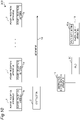
- FIG. 9 exemplifies a state in which using position information indicating the position of the moving obstruction 2, the power supply apparatus 10 dynamically controls the directivity of radio waves emitted from the power supply antenna 10a while avoiding the obstruction 2.
- FIG. 9 illustrates an example of the correspondence relationship table D1, which is stored in the memory 10d, and examples of the history information table D2 stored in the memory 10d at the end of step S5 in FIG. 3 and corresponding to time t1 to t4.
- the power supply apparatus 10 when the power supply apparatus 10 according to the present embodiment is not employed, it is necessary to, for example, determine and/or change the installation locations of the power reception apparatuses 1 and the power supply apparatus 10 in consideration of movement or the like of the obstruction 2, which is an obstruction element for radio waves.
- the number of power reception apparatuses 1 increases, the degree of freedom of their installation locations is limited, and it may be difficult to find appropriate installation locations.
- the directivity of the power supply antenna 10a is dynamically controlled based on position information indicating the position of the moving obstruction 2, as described above. This ensures that the installation of, for example, the power reception apparatuses 1 is easily determined.
- the power supply apparatus 10 further includes the memory 10d, which stores the correspondence relationship table D1.
- the position information acquisition unit 10b acquires position information indicating the current position of the obstruction 2 after movement.
- the processor 10c refers to the correspondence relationship table D1 and determines the identifier of the power-supply-target power reception apparatus 1 corresponding to the position identified by the immediately preceding position information (step S15 illustrated in FIG. 5 ).
- the processor 10c controls the directivity control unit 10f to steer a radio wave to this power suppliable power reception apparatus 1 (step S16 in FIG. 5 ).
- the power supply apparatus 10 is capable of automatically determining the power-supply-target power reception apparatus 1 based on the current position information, acquisition history of the past position information (history information table D2), and the correspondence relationship table D1. Accordingly, even if there is a change in the movement pattern of the obstruction 2, the power-supply-target power reception apparatus 1 is automatically determined without blockage by the obstruction 2.
- the position information acquisition unit 10b acquires position information transmitted from the obstruction position detection apparatus 11, which detects the position of the obstruction 2.
- the power supply apparatus 10 is capable of controlling the directivity of the power supply antenna 10a in consideration of the actual position of the moving obstruction 2.
- the position information acquisition unit 10b acquires the position information transmitted from the obstruction position detection apparatus 11.
- the position information acquisition unit 10b may acquire position information indicating the position of the obstruction 2 by any other method.
- FIG. 10 illustrates an example of a configuration of a power supply system 200 according to another embodiment.
- a programmable logic control unit (PLC) 20 is connected to the power supply apparatus 10. More specifically, in the configuration example illustrated in FIG. 10 , the PLC 20 is connected to and between the obstruction position detection apparatus 11 and the power supply apparatus 10. It is to be noted that the connection between the PLC 20 and the power supply apparatus 10 may be a wireless communication connection or a wired communication connection.
- the PLC 20 is an obstruction control apparatus that controls the movement of the obstruction 2 in accordance with a control flow set in the PLC 20.
- control information indicating how to move the obstruction 2 in terms of time is defined.
- the PLC 20 refers to the control information of the control flow (based on the control of the obstruction 2 by the PLC 20), and identifies the position of the obstruction 2 at a certain point of time. Then, the PLC 20 identifies the position as time passes, and continuously transmits position information indicating the identified position to the position information acquisition unit 10b.
- the power supply apparatus 10 position information acquisition unit 10b acquires the position information transmitted from the PLC 20, which controls the movement of the obstruction 2. It is to be noted that although the transmission source of the position information is different between the power supply system 100 and the power supply system 200, the other configurations and the operations described with reference to FIGs. 3 and 5 are the same between the power supply system 100 and the power supply system 200.
- the power supply apparatus 10 illustrated in FIG. 10 is capable of, without detecting the actual position of the obstruction 2, dynamically controlling the directivity of the power supply antenna 10a using the position information of the obstruction 2 included in the control flow of the PLC 20.
- the position information acquisition unit 10b is capable of acquiring position information not only from the PLC 20 but also from the obstruction position detection apparatus 11 (for example, via the PLC 20 or not via the PLC 20).
- the obstruction position detection apparatus 11 may be omitted.
Landscapes
- Engineering & Computer Science (AREA)
- Computer Networks & Wireless Communication (AREA)
- Power Engineering (AREA)
- Charge And Discharge Circuits For Batteries Or The Like (AREA)
- Radar Systems Or Details Thereof (AREA)
- Position Fixing By Use Of Radio Waves (AREA)
Abstract
Description
- The present invention relates to a power supply apparatus and a power supply system.
- Conventionally, there has been a technique for supplying power wirelessly (for example, see patent literature 1). A power supply apparatus outputs a radio wave, and a power reception apparatus receives the radio wave. By transmitting and receiving radio waves, power is supplied from the power supply apparatus to the power reception apparatus.
- PTL1:
JP149728/2016A - Incidentally, while power is being supplied wirelessly, a moving object (a moving obstruction) may intervene between the power supply apparatus and the power reception apparatus. When an obstruction exists between the power supply apparatus and the power reception apparatus, the radio wave output from the power supply apparatus toward the power reception apparatus is blocked. That is, power supply processing is interrupted.
- In light of the circumstances described above, the present invention provides a power supply apparatus capable of, regardless of the presence of a moving obstruction, preventing interruption of wireless power supply processing performed between the power supply apparatus and at least two or more power reception apparatuses. The present invention also provides a power supply system that includes the power supply apparatus.
- In order to solve the above-described problem, a power supply apparatus according to a first aspect of the present disclosure includes a power supply antenna, a directivity control unit, a position information acquisition unit, and a control unit. The power supply antenna is configured to emit, to a plurality of power reception apparatuses, a radio wave that is based on a power supply signal. The directivity control unit is configured to control directivity of the power supply antenna. The position information acquisition unit is configured to acquire position information indicating a position of an obstruction moving between the power supply antenna and at least one power reception apparatus of the plurality of power reception apparatuses. Based on the position information, the control unit is configured to determine a power reception apparatus, among the plurality of power reception apparatuses, to which power is to be supplied while avoiding the obstruction. The control unit is also configured to control the directivity control unit to steer the radio wave toward the determined power reception apparatus.
- With this configuration, the power supply apparatus is capable of preventing, regardless of the presence of a moving obstruction, interruption of wireless power supply processing performed between the power supply apparatus and the plurality of power reception apparatuses.
- A power supply system according to a second aspect of the present disclosure includes a plurality of power reception apparatuses, a power supply apparatus, and an obstruction position detection apparatus. The power supply apparatus is configured to supply power wirelessly to the plurality of power reception apparatuses. The obstruction position detection apparatus is configured to make a detection of a position of an obstruction moving between the power supply apparatus and at least one power reception apparatus of the plurality of power reception apparatuses. The obstruction position detection apparatus is configured to transmit a result of the detection to the power supply apparatus as position information. The power supply apparatus includes a power supply antenna, a directivity control unit, a position information acquisition unit, and a control unit. The power supply antenna is configured to emit, to a plurality of power reception apparatuses, a radio wave that is based on a power supply signal. The directivity control unit is configured to control directivity of the power supply antenna. The position information acquisition unit is configured to acquire position information from the obstruction position detection apparatus. Based on the position information, the control unit is configured to determine a power reception apparatus, among the plurality of power reception apparatuses, to which power is to be supplied while avoiding the obstruction. The control unit is configured to control the directivity control unit to steer the radio wave toward the determined power reception apparatus.
- With this configuration, the power supply system is capable of preventing, regardless of the presence of a moving obstruction, interruption of wireless power supply processing performed between the power supply apparatus and the plurality of power reception apparatuses. The power supply system is also capable of controlling the directivity of the power supply antenna in consideration of the actual position of the moving obstruction.
- A power supply system according to a third aspect of the present disclosure includes a plurality of power reception apparatuses, a power supply apparatus, and an obstruction control apparatus. The power supply apparatus is configured to supply power wirelessly to the plurality of power reception apparatuses. The obstruction control apparatus is configured to perform control of movement of an obstruction moving between the power supply apparatus and at least one power reception apparatus of the plurality of power reception apparatuses The obstruction control apparatus is configured to transmit, to the power supply apparatus, position information indicating a position of the obstruction identified based on the control. The power supply apparatus includes a power supply antenna, a directivity control unit, a position information acquisition unit, and a control unit. The power supply antenna is configured to emit, to a plurality of power reception apparatuses, a radio wave that is based on a power supply signal. The directivity control unit is configured to control directivity of the power supply antenna. The position information acquisition unit is configured to acquire position information from the obstruction control apparatus. Based on the position information, the control unit is configured to determine a power reception apparatus, among the plurality of power reception apparatuses, to which power is to be supplied while avoiding the obstruction. The control unit is configured to control the directivity control unit to steer the radio wave toward the determined power reception apparatus.
- With this configuration, the power supply system is capable of preventing, regardless of the presence of a moving obstruction, interruption of wireless power supply processing performed between the power supply apparatus and the plurality of power reception apparatuses. The power supply system is also capable of dynamically controlling the directivity of the power supply antenna by, instead of detecting the actual position of the obstruction, using the position of the obstruction identified based on the control of the movement of the obstruction by the obstruction control apparatus.
- A power supply apparatus according to the present disclosure is capable of preventing, regardless of the presence of a moving obstruction, interruption of wireless power supply processing performed between the power supply apparatus and at least two or more power reception apparatuses.
-
-
FIG. 1 is a diagram illustrating a schematic configuration of a power supply system according to an embodiment. -
FIG. 2 is a diagram illustrating a schematic configuration of a power supply apparatus illustrated inFIG. 1 . -
FIG. 3 is a flowchart of a flow of power supply processing performed by the power supply apparatus illustrated inFIG. 1 . -
FIG. 4 is a diagram illustrating an example correspondence relationship table illustrated inFIG. 2 . -
FIG. 5 is a flowchart of a flow of power reception apparatus determination unit processing performed by the power supply apparatus illustrated inFIG. 1 . -
FIG. 6 is a diagram illustrating an example history information table illustrated inFIG. 2 . -
FIG. 7 is a diagram illustrating an example updated history information table illustrated inFIG. 2 . -
FIG. 8 is an illustration of a state in which a radio wave output from the power supply apparatus is blocked by an obstruction. -
FIG. 9 is an illustration of a state in which a radio wave output from the power supply apparatus illustrated inFIG. 1 is transmitted to the power reception apparatus without being blocked by an obstruction. -
FIG. 10 is a diagram illustrating a schematic configuration of a power supply system according to another embodiment. -
FIG. 1 is a diagram illustrating a schematic configuration of apower supply system 100 according to the present embodiment. As illustrated inFIG. 1 , thepower supply system 100 includes a plurality ofpower reception apparatuses 1, apower supply apparatus 10, and an obstructionposition detection apparatus 11. In thepower supply system 100, thepower supply apparatus 10 supplies power wirelessly to each of thepower reception apparatuses 1. - In order to supply power, the
power supply apparatus 10 outputs an electromagnetic wave (hereinafter referred to as radio wave) to eachpower reception apparatus 1. Eachpower reception apparatus 1 includes apower reception antenna 1a. In thepower reception apparatus 1, a radio wave received by thepower reception antenna 1a is converted into electrical energy. Thus, by thepower reception antenna 1a receiving a radio wave, thepower reception apparatus 1 is able to receive a supply of power. - In the
power supply system 100, anobstruction 2 moves. For example, as illustrated inFIG. 1 , theobstruction 2 moves along adirection 50. Theobstruction 2 moves between thepower supply apparatus 10 and at least one or morepower reception apparatuses 1. In this respect, in the configuration example illustrated inFIG. 1 , theobstruction 2 moves between the power supply apparatus 10 (more specifically, thepower supply antenna 10a) and each power reception apparatus 1 (more specifically, eachpower reception antenna 1a). By the movement of theobstruction 2, the radio wave output from thepower supply apparatus 10 is blocked. - For example, when the
obstruction 2 exists between thepower supply apparatus 10 and a predeterminedpower reception apparatus 1, theobstruction 2 blocks the radio wave output from thepower supply apparatus 10 to the predeterminedpower reception apparatus 1. That is, theobstruction 2 is a moving tangible object in thepower supply system 100, and is capable of blocking radio waves output from thepower supply apparatus 10 to thepower reception apparatuses 1 in thepower supply system 100. Thus, the power supply from thepower supply apparatus 10 to thepower reception apparatuses 1 can be blocked by theobstruction 2. - The obstruction
position detection apparatus 11 detects the position of the movingobstruction 2. The obstructionposition detection apparatus 11 is communicably connected to thepower supply apparatus 10. With this configuration, the obstructionposition detection apparatus 11 is capable of transmitting the detection result (position information indicating the position of the obstruction 2) to thepower supply apparatus 10. It is to be noted that the communication between the obstructionposition detection apparatus 11 and thepower supply apparatus 10 may be wired communication or wireless communication. - As the obstruction
position detection apparatus 11, it is possible to employ any of various sensors, examples including a photoelectric sensor, a proximity sensor, an acceleration sensor, and a pressure sensor. The obstructionposition detection apparatus 11 is also capable of detecting the position of theobstruction 2 using a signal from an RFID (radio frequency identifier) mounted on the obstruction 2.The obstructionposition detection apparatus 11 may also be a device that includes various radars and/or a camera in order to detect the position of theobstruction 2. -
FIG. 2 is a diagram illustrating a specific configuration of thepower supply apparatus 10. Next, a configuration of thepower supply apparatus 10 will be described with reference toFIG. 2 . - The
power supply apparatus 10, which supplies power wirelessly to thepower reception apparatuses 1, includes apower supply antenna 10a, a positioninformation acquisition unit 10b, aprocessor 10c, amemory 10d, a power supplysignal generation unit 10e, and adirectivity control unit 10f. Thepower supply antenna 10a, the positioninformation acquisition unit 10b, thememory 10d, the power supplysignal generation unit 10e, and thedirectivity control unit 10f are connected to theprocessor 10c. - The
power supply antenna 10a emits, to each of the respectivepower reception apparatuses 1, a radio wave that is based on a power supply signal. For example, thepower supply antenna 10a may be an array antenna made up of a plurality of element antennas. - The position
information acquisition unit 10b is a communication unit, and is communicably connected to the obstructionposition detection apparatus 11. With this configuration, the positioninformation acquisition unit 10b acquires the above-described position information, which is the detection result acquired by the obstructionposition detection apparatus 11. - The power supply
signal generation unit 10e includes a high-frequency circuit that generates power supply signals. In order to generate a power supply signal, the high-frequency circuit performs various kinds of processing, such as signal generation, distribution, amplification, and filtering. - The
directivity control unit 10f controls the directivity of thepower supply antenna 10a. As described later, thedirectivity control unit 10f controls the directivity of the power supply antenna 10c4 so as to steer a radio wave to a power reception apparatus (power-supply-targetpower reception apparatus 1 to which power is to be supplied) 1 determined as power suppliable by the power receptionapparatus determination unit 10a. By controlling the directivity, the main beam of the radio wave emitted from thepower supply antenna 10a is directed to the power-supply-targetpower reception apparatus 1. That is, in the radio wave emitted from thepower supply antenna 10a, the intensity of the beam in the direction toward the power-supply-targetpower reception apparatus 1 is maximized. - The
memory 10d, which is a storage unit, stores various types of data. Thememory 10d includes, for example, a random access memory (RAM) and a read only memory (ROM). For example, thememory 10d stores various programs in a changeable manner. Thememory 10d also stores, in a changeable manner, a correspondence relationship table D1 (seeFIG. 4 ), which will be described later, and an obstruction position history information table D2 (seeFIGs. 6 and 7 ), which will be described later. - The
processor 10c, which is a control unit, includes a CPU (Central Processing Unit). For example, theprocessor 10c reads programs and data stored in thememory 10d. Based on a program that has been read, theprocessor 10c controls thepower supply antenna 10a, the positioninformation acquisition unit 10b, thememory 10d, the power supplysignal generation unit 10e, and thedirectivity control unit 10f to execute a predetermined operation and a predetermined function. Also based on a program that has been read, theprocessor 10c performs predetermined calculation, analysis, processing, and control in blocks 10c1 and 10c4, which are implemented by the program in theprocessor 10c. - As illustrated in
FIG. 2 , theprocessor 10c according to the present embodiment includes, as functional blocks, an overall control unit 10c1 and a power reception apparatus determination unit 10c4. - According to power supply processing flows (
FIGs. 3 and5 ), described later, the overall control unit 10c1 controls operation timings of, for example, the positioninformation acquisition unit 10b, thememory 10d, the power supplysignal generation unit 10e, and thedirectivity control unit 10f. - Using the position information acquired by the position
information acquisition unit 10b, the power reception apparatus determination unit 10c4 determines a power-supply-targetpower reception apparatus 1, among the plurality ofpower reception apparatuses 1, to which power is to be supplied. More specifically, the power reception apparatus determination unit 10c4 determines the power-supply-targetpower reception apparatus 1 using the position information and the data stored in thememory 10d (the correspondence relationship table D1 and the obstruction position history information table D2). - The power-supply-target power reception apparatus I means a
power reception apparatus 1 capable of receiving wireless power supply from thepower supply apparatus 10 while avoiding the obstruction 2 (without being affected by radio wave blocking by the obstruction 2). Between the determined power-supply-targetpower reception apparatus 1 and thepower supply apparatus 10, the supply of radio wave from thepower supply apparatus 10 is not interrupted by theobstruction 2 existing at the position identified by the position information. - The power reception apparatus determination unit 10c4 controls the
directivity control unit 10f to steer a radio wave to the power-supply-targetpower reception apparatus 1. In response to this control, thedirectivity control unit 10f controls the directivity of thepower supply antenna 10a to steer the radio wave to the power-supply-targetpower reception apparatus 1. - For example, when the
power supply antenna 10a is the above-described array antenna, thedirectivity control unit 10f adjusts the phases and amplitudes of the power supply signals to the element antennas. This ensures that the directivity of the radio wave emitted from thepower supply antenna 10a can be controlled. It is also possible that a plurality of directivity patterns are set in thememory 10d in advance, and that thedirectivity control unit 10f selects a suitable pattern based on the position of the power-supply-targetpower reception apparatus 1. It is also possible that thepower supply antenna 10a is provided on a rotary table, and that thedirectivity control unit 10f mechanically controls the rotation of the rotary table to control the directivity of the radio wave to be emitted. - Next, operations associated with the power supply processing performed by the
power supply apparatus 1 according to the present embodiment will be described with reference toFIG. 3. FIG. 3 is a flowchart of operations associated with the power supply processing. - At step S1 illustrated in
FIG. 3 , the positioninformation acquisition unit 10b acquires position information (which can be regarded as second position information indicating a second position of the obstruction 2) from the obstructionposition detection apparatus 11. In this respect, as described above, the position information indicates the position of theobstruction 2 detected by the obstructionposition detection apparatus 11. - Next, at step S2, the
processor 10c (for example, the power reception apparatus determination unit 10c4) determines whether the position identified by the position information acquired at step S1 (hereinafter referred to as the position acquired at step S1) is registered in the correspondence relationship table D1, which is stored in thememory 10d. -
FIG. 4 is an illustration of an example of the correspondence relationship table D1, which is stored in thememory 10d. The correspondence relationship table D1 is created in advance by a user before the power supply processing operation is started, for example. In the correspondence relationship table D1, the position of the movingobstruction 2 is corelated to the identifier of thepower reception apparatus 1 corresponding to the position. For example, in the correspondence relationship table D1, the position of theobstruction 2 is correlated to the identifier of thepower reception apparatus 1 blocked by theobstruction 2 existing at the position. - For example, in the example illustrated in
FIG. 4 , when the position of theobstruction 2 is a position A, the wireless power supply from thepower supply apparatus 10 to thepower reception apparatus 1 identified by an identifier ID2 is blocked by theobstruction 2 existing at the position A. Similarly, when the position of theobstruction 2 is a position E, the wireless power supply from thepower supply apparatus 10 to thepower reception apparatus 1 identified by an identifier ID3 is interrupted by theobstruction 2 existing at the position E. - Referring again to step S2 illustrated in
FIG. 3 , it is assumed that theprocessor 10c determines that the position acquired at step S1 is not registered in the correspondence relationship table D1 (NO at step S2). For example, when the position acquired at step S1 is a position K, the position K is not registered in the correspondence relationship table D1 illustrated inFIG. 4 . In this case, thepower supply apparatus 10 notifies that the position acquired at step S1 is not included in the correspondence relationship table D1. - The user who recognizes the flow of NO (the above-described notification) at step S2 identifies the
power reception apparatus 1 that is prevented from receiving power supplied from thepower supply apparatus 10 when theobstruction 2 exists at the position acquired at step S1 (step S3). Then, the user registers, in the correspondence relationship table D1, which is stored in thememory 10d, the unregistered position acquired at step S1 and the identifier of thepower reception apparatus 1 identified at step S3 and corresponding to the unregistered position (step S4). After step S4, theprocessor 10c starts the power reception apparatus determination processing at step S5. - As opposed to the above-described case, it is assumed that the
processor 10c determines that the position acquired at step S1 is registered in the correspondence relationship table D1 (YES at step S2). For example, when the position acquired at step S1 is a position B, the position B is registered in the correspondence relationship table D1 illustrated inFIG. 4 . In this case, theprocessor 10c starts the power reception apparatus determination processing at step S5. -
FIG. 5 is a flowchart of a flow of a specific operations performed by theprocessor 10c in the power reception apparatus determination processing at step S5. The power reception apparatus determination processing will be described below with reference toFIG. 5 . - At step S11 illustrated in
FIG. 5 , the power receptionapparatus determination unit 10c of the processor 10c4 compares the position acquired at step S1 with a "latest registered position", which is included in the obstruction movement history information table (hereinafter simply referred to as history information table) D2. In this respect, the history information table D2 is stored in thememory 10d.FIG. 6 is an illustration of the history information table D2, which is stored in thememory 10d. The history information table D2 is array data in which pieces of the position information acquired by the positioninformation acquisition unit 10b are arranged in time series. - The history information table D2 exemplified in
FIG. 6 indicates that the positioninformation acquisition unit 10b has acquired the position information indicating the position B, the position information indicating a position C, and the position information indicating a position D in this order (time series). In a case where the positioninformation acquisition unit 10b continuously receives position information indicating the same position a plurality of times, only the first position information, among the plurality of pieces of continuous information indicating the same position, is registered in the history information table D2. In the history information table D2, the position indicated by the position information registered last in time series is the above-described latest registered position. For example, in the history information table D2 illustrated inFIG. 6 , the latest registered position is the position D. - At step S12 illustrated in
FIG. 5 , as a result of the comparison at step S11, the power reception apparatus determination unit 10c4 determines whether the position acquired at step S1 is different from the latest registered position included in the history information table D2. - At step S12, it is assumed that the power reception apparatus determination unit 10c4 determines that the position acquired at step S1 is different from the latest registered position included in the history information table D2 (YES at step S12). For example, it is assumed that the position acquired at step S1 is the position E, and that the latest registered position included in the history information table D2 is the position D, as illustrated in
FIG. 6 . - In this case, at step S13, the power reception apparatus determination unit 10c4 additionally registers, in accordance with the time-series order, the position information acquired at step S1 in the history information table D2, which is stored in the
memory 10d.FIG. 7 illustrates a state in which position information indicating the position E is registered in the history information table D2, which is stored in thememory 10d, in the above-described example. - After step S13, at step S14, the power reception apparatus determination unit 10c4 newly sets the position indicated by the position information added at step S13 as the latest registered position. In the example illustrated in
FIG. 7 , the latest registered position included in the history information table D2 is the position E. - After the processing at step S14, the power reception apparatus determination unit 10c4 proceeds to the processing at step S15, which will be described later.
- As opposed to the above-described case, at step S12, it is assumed that the power reception apparatus determination unit 10c4 determines that the position acquired at step S1 and the latest registered position included in the history information table D2 are the same (NO at step S12). For example, it is assumed that the position acquired at step S1 is the position D and the latest registered position included in the history information table D2 is the position D, as illustrated in
FIG. 6 . In this case, the power reception apparatus determination unit 10c4 proceeds to the processing at step S15. - As can be seen from above-described steps S12, S13, and S14, the history information table D2 is updated as follows. When the position identified by the position information located at the end of the history information table D2 in time series is different from the position identified by the position information acquired at step S1, the position information acquired at step S1 is added to the end of the history information table D2. In contrast, when the position identified by the position information located at the end of the history information table D2 in time series is the same as the position identified by the position information acquired at step S1, the position information acquired at step S1 is not added to the end of the history information table D2.
- Thus, every time the position
information acquisition unit 10b acquires position information, the acquired position information is not necessarily added to the end of the history information table D2. When the positioninformation acquisition unit 10b acquires position information different from the position information at the end of the history information table D2, the acquired position information is added to the end of the history information table D2. It is to be noted that the position identified by the position information located at the end of the history information table D2 is the above-described latest registered position. - At step S15, the power reception apparatus determination unit 10c4 refers to the history information table D2, which is stored in the
memory 10d. Then, the power reception apparatus determination unit 10c4 acquires position information (referred to as immediately preceding position information) that is one position before (immediately before) the latest registered position in time series in the history information D2. - Here, it can be understood that the immediately preceding position information previously received by the position
information acquisition unit 10b is first position information indicating a first position of theobstruction 2. It can also be understood that the position information received by the positioninformation acquisition unit 10b at the present time (above-described step S1 inFIG. 3 ) is second position information indicating a second position that is after theobstruction 2 has moved from the first position. As can be understood from the above description, the first position is different from the second position. - The power reception apparatus determination unit 10c4 determines a position (the above-described first position) identified by the immediately preceding position information (the above-described first position information). For example, in the example illustrated in
FIG. 6 , the latest registered position is the position D, and the position identified by the immediately preceding position information is the position C. In the example illustrated inFIG. 7 , the latest registered position is the position E, and the position identified by the immediately preceding position information is the position D. - Further at step S15, the power reception apparatus determination unit 10c4 determines the power-supply-target
power reception apparatus 1 using the immediately preceding position information and the correspondence relationship table D1, which is stored in thememory 10d. Specifically, the power reception apparatus determination unit 10c4 refers to the correspondence relationship table D1. Then, by this reference, the power reception apparatus determination unit 10c4 determines the identifier of thepower reception apparatus 1 corresponding to the position identified by the immediately preceding position information. Then, the power reception apparatus determination unit 10c4 determines, as the power-supply-targetpower reception apparatus 1, thepower reception apparatus 1 identified by the acquired identifier. - For example, when the position identified by the immediately preceding position information is the position C in the history information table D2 illustrated in
FIG. 6 , the power reception apparatus determination unit 10c4 acquires an identifier ID4 of thepower reception apparatus 1 corresponding to the position C in the correspondence relationship table D1 illustrated inFIG. 4 . Then, the power reception apparatus determination unit 10c4 determines, as the power-supply-targetpower reception apparatus 1, thepower reception apparatus 1 identified by the identifier ID4. - When, for example, the position identified by the immediately preceding position information is the position D in the history information table D2 illustrated in
FIG. 7 , the power reception apparatus determination unit 10c4 acquires an identifier ID1 of thepower reception apparatus 1 corresponding to the position D in the correspondence relationship table D1 exemplified inFIG. 4 . Then, the power reception apparatus determination unit 10c4 determines, as the power-supply-targetpower reception apparatus 1, thepower reception apparatus 1 identified by the identifier ID1. - Next, at step S16 illustrated in
FIG. 5 , the power reception apparatus determination unit 10c4 outputs, to thedirectivity control unit 10f, information including the identifier of the power-supply-targetpower reception apparatus 1 determined at step S15. In other words, the power reception apparatus determination unit 10c4 controls thedirectivity control unit 10f to steer a radio wave to the power-supply-targetpower reception apparatus 1 determined in step S15. - Thus, the power reception apparatus determination processing at step S5 illustrated in
FIG. 3 (illustrated inFIG. 5 ) ends, and then the processing at step S6 illustrated inFIG. 3 is performed. Specifically, at step S6, thedirectivity control unit 10f controls the directivity of the power supply antenna 10c4 based on the control from the power receptionapparatus determination unit 10a. - By controlling the directivity, the main beam of the radio wave output from the
power supply antenna 10a is directed to the power-supply-targetpower reception apparatus 1 determined by the power reception apparatus determination unit 10c4. Then, thedirectivity control unit 10f supplies the radio wave generated by the power supplysignal generation unit 10e to thepower supply antenna 10a. Thus, thepower supply antenna 10a is able to emit power toward the power-supply-targetpower reception apparatus 1 determined at step S15 illustrated inFIG. 5 . The power emitted to the power-supply-targetpower reception apparatus 1 is not blocked by theobstruction 2. - Next, at step S7, the overall control unit 10cl determines whether a scheduled series of power supply processings has ended. When the overall control unit 10cl determines that the scheduled series of power supply processings has not ended (NO at step S7), the procedure returns to the processing at
step 1. In contrast, when the overall control unit 10cl determines that the scheduled series of power supply processings has ended (YES at step S7), thepower supply apparatus 10 ends the power supply processing illustrated inFIG. 3 . - As described above, the
power supply apparatus 10 according to the present embodiment included in thepower supply system 100 illustrated inFIG. 1 includes thepower supply antenna 10a, thedirectivity control unit 10f, the positioninformation acquisition unit 10b, and theprocessor 10c. Thepower supply antenna 10a emits, to each of the plurality ofpower reception apparatuses 1, a radio wave that is based on a power supply signal. The directivity control unit controls the directivity of thepower supply antenna 10a. The positioninformation acquisition unit 10b acquires position information indicating the position of theobstruction 2 moving between thepower supply antenna 10a and thepower reception apparatus 1. Based on the position information, theprocessor 10c (power reception apparatus determination unit 10c4), which serves as a control unit, determines a power-supply-targetpower reception apparatus 1, among the plurality ofpower reception apparatuses 1, to which power is to be supplied while avoiding theobstruction 2. Further, theprocessor 10c (power reception apparatus determination unit 10c4) controls thedirectivity control unit 10f to steer a radio wave to this power-supply-targetpower reception apparatus 1. - With this configuration, the
power supply apparatus 10 according to the present embodiment acquires position information indicating the position of theobstruction 2 at each power supply timing, thereby determining a power-supply-targetpower reception apparatus 1, among the plurality ofpower reception apparatuses 1, that is capable of receiving a radio wave without blockage by theobstruction 2. - Further, the
power supply apparatus 10 is capable of dynamically controlling the directivity of thepower supply antenna 10a by continuously acquiring position information indicating the position of the movingobstruction 2. This prevents interruption of the wireless power supply processing performed between thepower supply apparatus 10 and the plurality ofpower reception apparatuses 1, regardless of the presence of the movingobstruction 2. In other words, even if there is a movingobstruction 2 that may interfere with power supply, efficient power supply processing is performed between thepower supply apparatus 10 and the plurality ofpower reception apparatuses 1 without wireless power supply being interrupted by theobstruction 2. - For example, assume a case where the
power supply apparatus 10 emits a radio wave to eachpower reception apparatus 1 without the position of the movingobstruction 2 taken into consideration. In this case, a problem as illustrated inFIG. 8 may occur. Specifically, as illustrated inFIG. 8 , there may be a problem in that radio waves emitted from thepower supply apparatus 10 to thepower reception apparatuses 1 are continuously blocked by the movingobstruction 2. The example illustrated inFIG. 8 can be understood as a least efficient example in terms of power supply. - In contrast, in the
power supply apparatus 10 according to the present embodiment, thepower supply apparatus 10 is capable of, based on position information indicating the position of the movingobstruction 2, continuously changing the directivity of a radio wave emitted from thepower supply apparatus 10, as described above.FIG. 9 exemplifies a state in which using position information indicating the position of the movingobstruction 2, thepower supply apparatus 10 dynamically controls the directivity of radio waves emitted from thepower supply antenna 10a while avoiding theobstruction 2. - As illustrated in
FIG. 9 , when thepower supply apparatus 10 according to the present embodiment emits a radio wave to eachpower reception apparatus 1, the radio wave is not blocked by the movingobstruction 2.FIG. 9 also illustrates an example of the correspondence relationship table D1, which is stored in thememory 10d, and examples of the history information table D2 stored in thememory 10d at the end of step S5 inFIG. 3 and corresponding to time t1 to t4. - It is to be noted that when the
power supply apparatus 10 according to the present embodiment is not employed, it is necessary to, for example, determine and/or change the installation locations of thepower reception apparatuses 1 and thepower supply apparatus 10 in consideration of movement or the like of theobstruction 2, which is an obstruction element for radio waves. When the number ofpower reception apparatuses 1 increases, the degree of freedom of their installation locations is limited, and it may be difficult to find appropriate installation locations. In light of this situation, in thepower supply apparatus 10 according to the present embodiment, the directivity of thepower supply antenna 10a is dynamically controlled based on position information indicating the position of the movingobstruction 2, as described above. This ensures that the installation of, for example, thepower reception apparatuses 1 is easily determined. - The
power supply apparatus 10 according to the present embodiment further includes thememory 10d, which stores the correspondence relationship table D1. After acquiring position information indicating the past position of theobstruction 2, the positioninformation acquisition unit 10b acquires position information indicating the current position of theobstruction 2 after movement. Further, at step S1 illustrated inFIG. 3 , when the positioninformation acquisition unit 10b acquires the position information indicating the current position of theobstruction 2, theprocessor 10c (power reception apparatus determination unit 10c4) refers to the correspondence relationship table D1 and determines the identifier of the power-supply-targetpower reception apparatus 1 corresponding to the position identified by the immediately preceding position information (step S15 illustrated inFIG. 5 ). Then, theprocessor 10c (power reception apparatus determination unit 10c4) controls thedirectivity control unit 10f to steer a radio wave to this power suppliable power reception apparatus 1 (step S16 inFIG. 5 ). - With this configuration, the
power supply apparatus 10 according to the present embodiment is capable of automatically determining the power-supply-targetpower reception apparatus 1 based on the current position information, acquisition history of the past position information (history information table D2), and the correspondence relationship table D1. Accordingly, even if there is a change in the movement pattern of theobstruction 2, the power-supply-targetpower reception apparatus 1 is automatically determined without blockage by theobstruction 2. - In the
power supply apparatus 10 according to the present embodiment, the positioninformation acquisition unit 10b acquires position information transmitted from the obstructionposition detection apparatus 11, which detects the position of theobstruction 2. - With this configuration, the
power supply apparatus 10 according to the present embodiment is capable of controlling the directivity of thepower supply antenna 10a in consideration of the actual position of the movingobstruction 2. - In the above-described embodiment, the position
information acquisition unit 10b acquires the position information transmitted from the obstructionposition detection apparatus 11. However, the positioninformation acquisition unit 10b may acquire position information indicating the position of theobstruction 2 by any other method.FIG. 10 illustrates an example of a configuration of apower supply system 200 according to another embodiment. - As illustrated in
FIG. 10 , in thepower supply system 200, a programmable logic control unit (PLC) 20 is connected to thepower supply apparatus 10. More specifically, in the configuration example illustrated inFIG. 10 , thePLC 20 is connected to and between the obstructionposition detection apparatus 11 and thepower supply apparatus 10. It is to be noted that the connection between thePLC 20 and thepower supply apparatus 10 may be a wireless communication connection or a wired communication connection. - The
PLC 20 is an obstruction control apparatus that controls the movement of theobstruction 2 in accordance with a control flow set in thePLC 20. In the control flow, control information indicating how to move theobstruction 2 in terms of time is defined. With this configuration, by referring to the control information of the control flow, the position of theobstruction 2 at a certain point of time can be identified. - In the configuration example illustrated in
FIG. 10 , during the supply of power, thePLC 20 refers to the control information of the control flow (based on the control of theobstruction 2 by the PLC 20), and identifies the position of theobstruction 2 at a certain point of time. Then, thePLC 20 identifies the position as time passes, and continuously transmits position information indicating the identified position to the positioninformation acquisition unit 10b. Thus, in the example illustrated inFIG. 10 , the power supply apparatus 10 (positioninformation acquisition unit 10b) acquires the position information transmitted from thePLC 20, which controls the movement of theobstruction 2. It is to be noted that although the transmission source of the position information is different between thepower supply system 100 and thepower supply system 200, the other configurations and the operations described with reference toFIGs. 3 and5 are the same between thepower supply system 100 and thepower supply system 200. - Thus, the
power supply apparatus 10 illustrated inFIG. 10 is capable of, without detecting the actual position of theobstruction 2, dynamically controlling the directivity of thepower supply antenna 10a using the position information of theobstruction 2 included in the control flow of thePLC 20. - In the example illustrated in
FIG. 10 , the positioninformation acquisition unit 10b is capable of acquiring position information not only from thePLC 20 but also from the obstruction position detection apparatus 11 (for example, via thePLC 20 or not via the PLC 20). However, for example, in thepower supply system 200 illustrated inFIG. 10 , the obstructionposition detection apparatus 11 may be omitted. - Although the plurality of embodiments described above can be implemented independently, it is also possible to combine the embodiments with each other. Also, although the various features in the different embodiments can be implemented independently, it is possible to combine the features in the different embodiments with each other.
-
- 1
- Power reception apparatus
- 2
- Obstruction
- 10
- Power supply apparatus
- 10a
- Power supply antenna
- 10b
- Power reception apparatus determination unit
- 10c
- Processor
- 10c3
- Directivity control unit
- 10c4
- Power reception apparatus determination unit
- 10d
- Memory
- 11
- Obstruction position detection apparatus
- 100, 200
- Power supply system
- D1
- Correspondence relationship table
- D2
- Obstruction movement history information table (history information table)
Claims (6)
- A power supply apparatus comprising:a power supply antenna configured to emit, to a plurality of power reception apparatuses, a radio wave that is based on a power supply signal;a directivity control unit configured to control directivity of the power supply antenna;a position information acquisition unit configured to acquire position information indicating a position of an obstruction moving between the power supply antenna and at least one power reception apparatus of the plurality of power reception apparatuses; anda control unit configured to:based on the position information, determine a power reception apparatus, among the plurality of power reception apparatuses, to which power is to be supplied while avoiding the obstruction; andcontrol the directivity control unit to steer the radio wave toward the determined power reception apparatus.
- The power supply apparatus according to claim 1, further comprising a memory storing a correspondence relationship table showing a relationship between the position of the obstruction and an identifier of a power reception apparatus, among the plurality of power reception apparatuses, that corresponds to the position,wherein after the position information acquisition unit has acquired first position information indicating a first position of the obstruction, the position information acquisition unit is configured to acquire second information indicating a second position of the obstruction that has moved, andwherein upon the position information acquisition unit acquiring the second position information, the control unit is configured to:with reference to the correspondence relationship table, determine an identifier of a power reception apparatus, among the plurality of power reception apparatuses, that corresponds to the first position identified by the first position information; andcontrol the directivity control unit to steer the radio wave toward the power reception apparatus having the determined identifier.
- The power supply apparatus according to claim 1, wherein the position information acquisition unit is configured to acquire the position information such that the position information is transmitted from an obstruction position detection apparatus configured to detect the position of the obstruction.
- The power supply apparatus according to claim 1, wherein the position information acquisition unit is configured to acquire the position information such that the position information is transmitted from an obstruction control apparatus configured to control movement of the obstruction.
- A power supply system comprising:a plurality of power reception apparatuses;a power supply apparatus configured to supply power wirelessly to the plurality of power reception apparatuses; andan obstruction position detection apparatus configured to:make a detection of a position of an obstruction moving between the power supply apparatus and at least one power reception apparatus of the plurality of power reception apparatuses; andtransmit a result of the detection to the power supply apparatus as position information,wherein the power supply apparatus comprisesa power supply antenna configured to emit, to the plurality of power reception apparatuses, a radio wave that is based on a power supply signal,a directivity control unit configured to control directivity of the power supply antenna,a position information acquisition unit configured to acquire the position information from the obstruction position detection apparatus, anda control unit configured to:based on the position information, determine a power reception apparatus, among the plurality of power reception apparatuses, to which power is to be supplied while avoiding the obstruction; andcontrol the directivity control unit to steer the radio wave toward the determined power reception apparatus.
- A power supply system comprising:a plurality of power reception apparatuses;a power supply apparatus configured to supply power wirelessly to the plurality of power reception apparatuses; andan obstruction control apparatus configured to:perform control of movement of an obstruction moving between the power supply apparatus and at least one power reception apparatus of the plurality of power reception apparatuses; andtransmit, to the power supply apparatus, position information indicating a position of the obstruction identified based on the control,wherein the power supply apparatus comprisesa power supply antenna configured to emit, to the plurality of power reception apparatuses, a radio wave that is based on a power supply signal,a directivity control unit configured to control directivity of the power supply antenna,a position information acquisition unit configured to acquire the position information from the obstruction control apparatus, anda control unit configured to:based on the position information, determine a power reception apparatus, among the plurality of power reception apparatuses, to which power is to be supplied while avoiding the obstruction; andcontrol the directivity control unit to steer the radio wave toward the determined power reception apparatus.
Applications Claiming Priority (1)
| Application Number | Priority Date | Filing Date | Title |
|---|---|---|---|
| PCT/JP2019/028473 WO2021014496A1 (en) | 2019-07-19 | 2019-07-19 | Power supply apparatus and power supply system |
Publications (2)
| Publication Number | Publication Date |
|---|---|
| EP4002645A1 true EP4002645A1 (en) | 2022-05-25 |
| EP4002645A4 EP4002645A4 (en) | 2023-04-26 |
Family
ID=74193748
Family Applications (1)
| Application Number | Title | Priority Date | Filing Date |
|---|---|---|---|
| EP19938843.0A Pending EP4002645A4 (en) | 2019-07-19 | 2019-07-19 | Power supply apparatus and power supply system |
Country Status (5)
| Country | Link |
|---|---|
| US (1) | US11967835B2 (en) |
| EP (1) | EP4002645A4 (en) |
| JP (1) | JP7173349B2 (en) |
| CN (1) | CN114041257B (en) |
| WO (1) | WO2021014496A1 (en) |
Family Cites Families (27)
| Publication number | Priority date | Publication date | Assignee | Title |
|---|---|---|---|---|
| JP4318044B2 (en) * | 2005-03-03 | 2009-08-19 | ソニー株式会社 | Power supply system, power supply apparatus and method, power reception apparatus and method, recording medium, and program |
| US8469122B2 (en) * | 2005-05-24 | 2013-06-25 | Rearden, Llc | System and method for powering vehicle using radio frequency signals and feedback |
| JP4982598B2 (en) * | 2010-09-07 | 2012-07-25 | 株式会社東芝 | Wireless power transmission system, power transmission device and power reception device of the system |
| KR20130035905A (en) * | 2011-09-30 | 2013-04-09 | 삼성전자주식회사 | Method for wireless charging and apparatus for the same |
| US9948135B2 (en) * | 2015-09-22 | 2018-04-17 | Energous Corporation | Systems and methods for identifying sensitive objects in a wireless charging transmission field |
| US10270261B2 (en) * | 2015-09-16 | 2019-04-23 | Energous Corporation | Systems and methods of object detection in wireless power charging systems |
| JP6108915B2 (en) * | 2013-04-02 | 2017-04-05 | キヤノン株式会社 | Power receiving apparatus, control method thereof, and program |
| JP6258816B2 (en) * | 2013-10-29 | 2018-01-10 | パナソニック株式会社 | Wireless power transmission apparatus and wireless power transmission system |
| JP6366292B2 (en) * | 2014-02-10 | 2018-08-01 | キヤノン株式会社 | Electronic device, control method and program |
| JP6337797B2 (en) | 2015-02-13 | 2018-06-06 | オムロン株式会社 | Wireless power supply control system, wireless power supply control device, wireless power supply control method, and directivity information generation method |
| US9971015B2 (en) | 2015-04-10 | 2018-05-15 | Ossia Inc. | Techniques for imaging wireless power delivery environments and tracking objects therein |
| US9673665B2 (en) | 2015-06-30 | 2017-06-06 | Ossia Inc. | Energy delivery modulation in wireless power delivery environments |
| US11710321B2 (en) * | 2015-09-16 | 2023-07-25 | Energous Corporation | Systems and methods of object detection in wireless power charging systems |
| EP3855599B1 (en) * | 2015-12-24 | 2024-09-25 | Energous Corporation | Systems and methods of object detection in wireless power charging systems |
| KR20180039880A (en) * | 2016-10-11 | 2018-04-19 | 주식회사 위스텍 | Wireless charging system capable of adjusting radio wave path |
| US9991752B1 (en) * | 2016-12-07 | 2018-06-05 | Panasonic Corporation | Wireless power feeding method |
| JP6886295B2 (en) * | 2017-01-13 | 2021-06-16 | キヤノン株式会社 | Power supply device, control device and their control method, and program |
| JP6551755B2 (en) * | 2017-02-09 | 2019-07-31 | パナソニックIpマネジメント株式会社 | Control method of power transmission device in wireless power transmission system, and power transmission device |
| JP6918544B2 (en) * | 2017-03-28 | 2021-08-11 | キヤノン株式会社 | Power supply device and its control method, and program |
| JP6967867B2 (en) * | 2017-04-04 | 2021-11-17 | キヤノン株式会社 | Power transmission equipment and its control method, as well as programs |
| KR102423176B1 (en) * | 2017-08-21 | 2022-07-21 | 한국전자통신연구원 | Wireless electric power transmitting device and wireless electric power transmitting method |
| KR102029919B1 (en) * | 2017-09-11 | 2019-10-08 | 전자부품연구원 | Intelligent wireless power transmission device, charging system using intelligent wireless power and intelligent wireless power providing method |
| JP6970063B2 (en) * | 2018-08-20 | 2021-11-24 | 株式会社東芝 | Electronic devices, measuring devices and methods |
| JP6852028B2 (en) * | 2018-09-04 | 2021-03-31 | 株式会社東芝 | Electronic devices and methods |
| EP3867791B1 (en) * | 2018-10-17 | 2025-05-28 | VUBIQ Networks, Inc. | Multimode millimeter wave rfid systems and methods thereof |
| EP3836351B1 (en) * | 2019-03-14 | 2022-11-09 | OMRON Corporation | Wireless power transmission device, and wireless power transmission system |
| WO2021033236A1 (en) * | 2019-08-19 | 2021-02-25 | オムロン株式会社 | Wireless power transmission system |
-
2019
- 2019-07-19 JP JP2021534857A patent/JP7173349B2/en active Active
- 2019-07-19 CN CN201980098112.6A patent/CN114041257B/en active Active
- 2019-07-19 WO PCT/JP2019/028473 patent/WO2021014496A1/en not_active Ceased
- 2019-07-19 EP EP19938843.0A patent/EP4002645A4/en active Pending
- 2019-07-19 US US17/621,316 patent/US11967835B2/en active Active
Also Published As
| Publication number | Publication date |
|---|---|
| US20220360114A1 (en) | 2022-11-10 |
| JP7173349B2 (en) | 2022-11-16 |
| CN114041257A (en) | 2022-02-11 |
| US11967835B2 (en) | 2024-04-23 |
| EP4002645A4 (en) | 2023-04-26 |
| CN114041257B (en) | 2025-04-11 |
| JPWO2021014496A1 (en) | 2021-01-28 |
| WO2021014496A1 (en) | 2021-01-28 |
Similar Documents
| Publication | Publication Date | Title |
|---|---|---|
| US10770925B2 (en) | Electronic apparatus and method | |
| EP3481117B1 (en) | Point-to-point radio system, point-to-point radio apparatus, and communication control method | |
| JP6950632B2 (en) | Power transmission device that supplies power wirelessly and foreign matter detection method | |
| US11709243B2 (en) | Occupancy detection apparatus using multiple antenna motion sensing | |
| EP3896600A1 (en) | Mitigating adjacent rfid reader interference | |
| JP2020005468A (en) | Wireless power supply device and wireless power supply method | |
| US10555057B2 (en) | Wireless sensor system, communication device, sensor tag, and communication method | |
| US20150171977A1 (en) | Electronic apparatus and processing method of an electronic apparatus | |
| JP2020005469A5 (en) | ||
| JP2011205579A (en) | Data collection system, and wireless tag | |
| US9898630B2 (en) | Interrogation device, system including interrogation device, and program | |
| US20200057474A1 (en) | Electronic apparatus, measurement apparatus, and method | |
| EP4002645A1 (en) | Power supply apparatus and power supply system | |
| EP2472437A2 (en) | Radio frequency identification system | |
| JP2017527783A (en) | Medical device system and method for detecting medical device and mobile control unit of medical device system | |
| US20220060059A1 (en) | Wireless power transmitter apparatus capable of determining pairing of wireless power transmitter apparatuses and wireless power receiver apparatuses and transmitting sufficient power | |
| US11194036B2 (en) | Systems and methods for automatic motion detection | |
| KR102136677B1 (en) | Wireless power transmitter using camera and method for controlling thereof | |
| US10146970B2 (en) | RFID reader | |
| JP2019219354A (en) | Approach detection system | |
| US20240235264A1 (en) | Wireless power supply system, power transmitter, power receiver, and wireless power supply system control method | |
| US20210350195A1 (en) | Alarm system component with unpowered event detection | |
| EP3907711A1 (en) | Configurable alarm system component | |
| EP2674790A1 (en) | Device, system and method for metal detection | |
| KR20150104335A (en) | Monitoring apparatus having radar module |
Legal Events
| Date | Code | Title | Description |
|---|---|---|---|
| STAA | Information on the status of an ep patent application or granted ep patent |
Free format text: STATUS: THE INTERNATIONAL PUBLICATION HAS BEEN MADE |
|
| PUAI | Public reference made under article 153(3) epc to a published international application that has entered the european phase |
Free format text: ORIGINAL CODE: 0009012 |
|
| STAA | Information on the status of an ep patent application or granted ep patent |
Free format text: STATUS: REQUEST FOR EXAMINATION WAS MADE |
|
| 17P | Request for examination filed |
Effective date: 20211220 |
|
| AK | Designated contracting states |
Kind code of ref document: A1 Designated state(s): AL AT BE BG CH CY CZ DE DK EE ES FI FR GB GR HR HU IE IS IT LI LT LU LV MC MK MT NL NO PL PT RO RS SE SI SK SM TR |
|
| DAV | Request for validation of the european patent (deleted) | ||
| DAX | Request for extension of the european patent (deleted) | ||
| REG | Reference to a national code |
Ref country code: DE Ref legal event code: R079 Free format text: PREVIOUS MAIN CLASS: H02J0050230000 Ipc: H02J0050400000 |
|
| A4 | Supplementary search report drawn up and despatched |
Effective date: 20230324 |
|
| RIC1 | Information provided on ipc code assigned before grant |
Ipc: H02J 50/20 20160101ALI20230320BHEP Ipc: H02J 50/60 20160101ALI20230320BHEP Ipc: H02J 50/80 20160101ALI20230320BHEP Ipc: H02J 50/90 20160101ALI20230320BHEP Ipc: H02J 50/40 20160101AFI20230320BHEP |