EP4001268B1 - Method for synthesizing n-substituted phenyl-5-hydroxymethyl-2-oxazolidinone - Google Patents
Method for synthesizing n-substituted phenyl-5-hydroxymethyl-2-oxazolidinone Download PDFInfo
- Publication number
- EP4001268B1 EP4001268B1 EP20855573.0A EP20855573A EP4001268B1 EP 4001268 B1 EP4001268 B1 EP 4001268B1 EP 20855573 A EP20855573 A EP 20855573A EP 4001268 B1 EP4001268 B1 EP 4001268B1
- Authority
- EP
- European Patent Office
- Prior art keywords
- hydroxymethyl
- oxazolidinone
- substituted phenyl
- synthesizing
- epichlorohydrin
- Prior art date
- Legal status (The legal status is an assumption and is not a legal conclusion. Google has not performed a legal analysis and makes no representation as to the accuracy of the status listed.)
- Active
Links
Images

Classifications
-
- C—CHEMISTRY; METALLURGY
- C07—ORGANIC CHEMISTRY
- C07D—HETEROCYCLIC COMPOUNDS
- C07D263/00—Heterocyclic compounds containing 1,3-oxazole or hydrogenated 1,3-oxazole rings
- C07D263/02—Heterocyclic compounds containing 1,3-oxazole or hydrogenated 1,3-oxazole rings not condensed with other rings
- C07D263/08—Heterocyclic compounds containing 1,3-oxazole or hydrogenated 1,3-oxazole rings not condensed with other rings having one double bond between ring members or between a ring member and a non-ring member
- C07D263/16—Heterocyclic compounds containing 1,3-oxazole or hydrogenated 1,3-oxazole rings not condensed with other rings having one double bond between ring members or between a ring member and a non-ring member with hetero atoms or with carbon atoms having three bonds to hetero atoms with at the most one bond to halogen, e.g. ester or nitrile radicals, directly attached to ring carbon atoms
- C07D263/18—Oxygen atoms
- C07D263/20—Oxygen atoms attached in position 2
- C07D263/24—Oxygen atoms attached in position 2 with hydrocarbon radicals, substituted by oxygen atoms, attached to other ring carbon atoms
-
- C—CHEMISTRY; METALLURGY
- C07—ORGANIC CHEMISTRY
- C07D—HETEROCYCLIC COMPOUNDS
- C07D413/00—Heterocyclic compounds containing two or more hetero rings, at least one ring having nitrogen and oxygen atoms as the only ring hetero atoms
- C07D413/02—Heterocyclic compounds containing two or more hetero rings, at least one ring having nitrogen and oxygen atoms as the only ring hetero atoms containing two hetero rings
- C07D413/10—Heterocyclic compounds containing two or more hetero rings, at least one ring having nitrogen and oxygen atoms as the only ring hetero atoms containing two hetero rings linked by a carbon chain containing aromatic rings
Definitions
- the disclosure belongs to the field of pharmaceutical intermediate synthesis, in particular to a method for synthesizing N-substituted phenyl-5-hydroxymethyl-2-oxazolidinone.
- (R)-N-substituted phenyl-5-hydroxymethyl-2-oxazolidinone is the main structure of antibiotic linezolid intermediates and antithrombotic drug rivaroxaban intermediates Taking linezolid intermediates as an example, they are mainly synthesized by the following methods:
- CN 105 153 059 discloses a preparation method of oxazolidone compounds, which is characterized in that a nitrogen-bridged triaryloxy rare-earth metal coordination compound is used as a catalyst to catalyze the addition reaction among carbon dioxide, aromatic amines and alkylene oxide to prepare the oxazolidone compounds.
- the general formula of the catalyst is LLn(THF)3, and the chemical structural formula is disclosed in the specification, wherein Ln is a rare-earth metal selected from one of lanthanum, neodymium, samarium and yttrium, and THF is tetrahydrofuran; L represents a nitrogen-bridged triaryloxy ligand selected from one of L1H3, L2H3 and L3H3, L1H3 is aminotrimethylene[tri(4,6-dimethylphenol)], L2H3 is aminotrimethylene[tri(4,6-dichlorophenol)], and L3H3 is aminotrimethylene[tri(4-methyl-6-bert-butyl phenol)]; and the chemical structural formulae of the three ligands are sequentially disclosed in the specification.
- the method has the advantages of simple catalyst preparation process, low raw material cost and mild reaction conditions.
- the oxazolidone compounds prepared by the method have the advantages of high catalytic activity and wide substrate application range.
- CN 103 570 640 discloses a carbon dioxide one-pot method for directly preparing oxazolidine-2-one compounds.
- the method comprises the following steps: adding a catalytic amount of ionic liquid into epoxy compounds, carrying out reactions under a primary pressure of CO2, then adding aniline or aniline derivatives, and making the reactions going on so as to prepare the oxazolidine-2-one compounds.
- the carbon dioxide one-pot method has the advantages of no need to separate intermediate products, little using amount of catalyst, safe reaction operation, mild reaction conditions, no addition of any organic solvent in the reaction process, and environment-friendliness.
- This method has simple steps, but the epoxidation of (S)-1-chloro-3-(substituted phenylamino)-2-propanol is easy to racemize, and the proportion of chiral products is reduced.
- an aluminum-based catalyst is used in the reaction process, and the preparation of this catalyst requires expensive raw materials and complicated process. As a result, this method is not suitable for industrial production.
- (R)-N-substituted benzyl-5-hydroxymethyl-2-oxazolidinone is prepared by the reaction of benzylamine and (S)-epichlorohydrin.
- Carbonates used in this reaction are sodium carbonate, potassium carbonate, rubidium carbonate, etc.
- the conversion rate of more than 75% can be achieved only when the carbonate and triethylamine are greatly excessive, so that the production cost of this method is high.
- An objective of the disclosure is to provide a method for synthesizing N-3-R 2 -4-R 1 substituted phenyl-5-hydroxymethyl-2-oxazolidinone, which is advantageous in that it is simple, green and has high yield.
- a method for synthesizing N-3-R 2 -4-R 1 substituted phenyl-5-hydroxymethyl-2-oxazolidinone comprises: reacting from raw materials, 3-R2-4-R1-aniline and epichlorohydrin, and allowing the resulting product to react under alkaline conditions in a CO 2 atmosphere to obtain N-substituted phenyl-5-hydroxymethyl-2-oxazolidinone, wherein R 1 is a morpholine group, a morpholin-3-one group or a piperazine group, and R 2 is halogen, hydrogen or lower alkyl.
- the method is a one-pot process, which comprises: preparing 1-chloro-3-(3-R 2 -4-R 1 -phenylamino)-2-propanol from 3-R 2 -4-R 1 -aniline and epichlorohydrin as raw materials, wherein R 1 is a morpholine group, a morpholin-3-one group or a piperazine group, and R 2 is halogen, hydrogen or lower alkyl; adding an inorganic or organic base and introducing CO 2 to allow 1-chloro-3-(3-R 2 -4-R 1 -phenylamino)-2-propanol and CO 2 to undergo cyclization to obtain N-substituted phenyl-5-hydroxymethyl-2-oxazolidinone.
- reaction route of the method is as follows, wherein Formula (II) is 3-R 2 -4-R 1 -aniline, Formula (III) is epichlorohydrin, Formula (IV) is 1-chloro-3-(3-R 2 -4-R 1 -phenylamino)-2-propanol, and Formula (I) is N-substituted phenyl-5-hydroxymethyl-2-oxazolidinone:
- the 1-chloro-3-(3-R 2 -4-R 1 -phenylamino)-2-propanol is prepared by dissolving 3-R 2 -4-R 1 -aniline, epichlorohydrin and boron trifluoride diethyl ether into an organic solvent to react at 30-70°C for 12-24 h.
- the ratio of 3-R 2 -4-R 1 -aniline, epichlorohydrin and boron trifluoride diethyl ether is 0.8-5:1:0.05-0.2.
- the cyclization is carried out at a temperature of 20-100°C.
- the molar ratio of 3-R 2 -4-R 1 -aniline to the inorganic or organic base is 1:1-20.
- the organic base is selected from one or a combination of at least two of organic amines, sodium methoxide or sodium ethoxide.
- the organic amine is selected from one or a combination of at least two of triethylamine, tetramethylguanidine, 1,8-diazabicycloundec-7-ene, pyridine, piperidine, quinoline, 4-dimethylaminopyridine or N-methylmorpholine.
- the inorganic base is selected from one or a combination of at least two of sodium carbonate, potassium carbonate, trisodium phosphate or tripotassium phosphate.
- the method comprises preparing (5R)-3-[3-fluoro-4-(4-morpholinyl)phenyl]-5-hydroxymethyl-2-oxazolidinone or (R)-4-[4-(5-hydroxymethyl-2-oxooxazolidin-3-yl)-phenyl]-morpholin-3-one using 3-R 2 -4-R 1 -aniline and (S)-epichlorohydrin as raw materials, wherein 3-R 2 -4-R 1 -aniline is 3-fluoro-4-morpholinoaniline or 4-(4-aminophenyl)-morpholin-3-one.
- the method for synthesizing (R)-4-[4-(5-hydroxymethyl-2-oxooxazolidin-3-yl)-phenyl]-morpholin-3-one is as follows: 4-(4-aminophenyl)-morpholin-3-one, (S)-epichlorohydrin and boron trifluoride diethyl ether in a molar ratio of 1:1:0.06-0.2 are dissolved in an organic solvent to react at 70°C to obtain (S)-4-(4-((3-chloro-2-hydroxypropyl)amino)phenyl)morpholin-3-one; then pyridine or piperidine is added and CO 2 is introduced for cyclization at 30-50°C, thereby obtaining (R)-4-[4-(5-hydroxymethyl-2-oxooxazolidin-3-yl)-phenyl]-morpholin-3-one.
- CO 2 plays a key role in the process of cyclization, which, compared with the method reported by Organic Letters 201820 (16), 5036-5039 , avoids the cyclization process which causes racemization of the product. In addition, no catalyst is needed. As a result, the yield of chiral product of the reaction is increased and the production cost is reduced.
- the disclosure is beneficial in that N-substituted phenyl-5-hydroxymethyl-2-oxazolidinone can be prepared by the one-pot process using 3-R 2 -4-R 1 -aniline and epichlorohydrin as raw materials in a CO 2 atmosphere.
- the disclosure has such advantages as few steps, simple operation, cheap and easily available raw materials, mild reaction conditions, and high product yield, and is particularly suitable for industrial production of antibiotic linezolid intermediates and antithrombotic drug rivaroxaban intermediates.
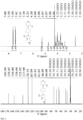
- the NMR spectrum of (5R)-3-[3-fluoro-4-(4-morpholinyl)phenyl]-5-hydroxymethyl-2-oxazolidinone prepared in Examples 1-6 is as shown in FIG. 1
- the NMR spectrum of (R)-4-[4-(5-hydroxymethyl-2-oxooxazolidin-3-yl)-phenyl]-morpholin-3-one prepared in Examples 7-12 is as shown in FIG. 2 .
Landscapes
- Chemical & Material Sciences (AREA)
- Organic Chemistry (AREA)
- Heterocyclic Carbon Compounds Containing A Hetero Ring Having Nitrogen And Oxygen As The Only Ring Hetero Atoms (AREA)
Description
- The disclosure belongs to the field of pharmaceutical intermediate synthesis, in particular to a method for synthesizing N-substituted phenyl-5-hydroxymethyl-2-oxazolidinone.
- (R)-N-substituted phenyl-5-hydroxymethyl-2-oxazolidinone


- The patent publication
WO9507271 
- As reported in this patent, 3-fluoro-4-morpholinoaniline reacts with benzyl chloroformate, and then under the protection of nitrogen and at a temperature controlled at - 78°C, the resulting product reacts with (R)-glycidyl butyrate in the presence of strong alkali n-butyl lithium to obtain the target product. This method uses highly dangerous and flammable n-butyl lithium, which requires the system to be free of water and oxygen, the reaction temperature is -78°C, so that this method is difficult to operate and dangerous, rendering it unsuitable for large-scale industrial production.
- The patent publication
WO2012114355 reports the following synthesis method:
- As reported in this patent, 3-fluoro-4-morpholinoaniline reacts with (R)-epichlorohydrin, the resulting product is cyclized with CDI (N,N'-carbonyldiimidazole) to obtain (5R)-3-[3-fluoro-4-(4-morpholinyl)phenyl]-5-chloromethyl-2-oxazolidinone which then reacts with sodium acetate in DMF as a solvent at 120°C, and the resulting product undergoes hydrolysis to obtain the linezolid intermediate. This process route has low yield, high impurities, many process steps and high cost.
- The patent publication
CN1772750 reports the following synthesis method:
- As reported in this patent, that 3-fluoro-4-morpholinoaniline reacts with triphosgene to generate (3-fluoro-4-(morpholinyl)phenyl)isocyanate, which then reacts with (R)-glycidyl butyrate to obtain the target product. Nevertheless, anhydrous lithium bromide and tributyl phosphine oxide used in this method are not readily available.
- The patent publication
WO2014045292A reports the following synthesis methods: - Method 1:

- Method 2:

- In the route of this patent, 3-fluoro-4-morpholinoaniline reacts with (R)-glycidol, then reacts with CDI or BOC anhydride, and undergoes cyclization with sodium methoxide to obtain the target product. This route has the following disadvantages: (R)-glycidol is expensive, easy to self-polymerize and generate heat, which results in potential explosion risk; 3-fluoro-4-morpholinoaniline and (R)-glycidyl butyrate are used as raw materials to react, and the reaction is incomplete, resulting in impurity dimers.
-
CN 105 153 059 discloses a preparation method of oxazolidone compounds, which is characterized in that a nitrogen-bridged triaryloxy rare-earth metal coordination compound is used as a catalyst to catalyze the addition reaction among carbon dioxide, aromatic amines and alkylene oxide to prepare the oxazolidone compounds. The general formula of the catalyst is LLn(THF)3, and the chemical structural formula is disclosed in the specification, wherein Ln is a rare-earth metal selected from one of lanthanum, neodymium, samarium and yttrium, and THF is tetrahydrofuran; L represents a nitrogen-bridged triaryloxy ligand selected from one of L1H3, L2H3 and L3H3, L1H3 is aminotrimethylene[tri(4,6-dimethylphenol)], L2H3 is aminotrimethylene[tri(4,6-dichlorophenol)], and L3H3 is aminotrimethylene[tri(4-methyl-6-bert-butyl phenol)]; and the chemical structural formulae of the three ligands are sequentially disclosed in the specification. The method has the advantages of simple catalyst preparation process, low raw material cost and mild reaction conditions. The oxazolidone compounds prepared by the method have the advantages of high catalytic activity and wide substrate application range. -
CN 103 570 640 discloses a carbon dioxide one-pot method for directly preparing oxazolidine-2-one compounds. The method comprises the following steps: adding a catalytic amount of ionic liquid into epoxy compounds, carrying out reactions under a primary pressure of CO2, then adding aniline or aniline derivatives, and making the reactions going on so as to prepare the oxazolidine-2-one compounds. The carbon dioxide one-pot method has the advantages of no need to separate intermediate products, little using amount of catalyst, safe reaction operation, mild reaction conditions, no addition of any organic solvent in the reaction process, and environment-friendliness. - Organic letters 2018 20 (16), 5036-5039 reports a two-step method for synthesizing (R)-N-substituted phenyl-5-hydroxymethyl-2-oxazolidinone using CO2 in the presence of an aluminum-based catalyst:

- This method has simple steps, but the epoxidation of (S)-1-chloro-3-(substituted phenylamino)-2-propanol is easy to racemize, and the proportion of chiral products is reduced. In addition, an aluminum-based catalyst is used in the reaction process, and the preparation of this catalyst requires expensive raw materials and complicated process. As a result, this method is not suitable for industrial production.
- Journal of Organic Chemistry, 70 (14), 5737-5740 reports the following synthesis methods:

- In this method, (R)-N-substituted benzyl-5-hydroxymethyl-2-oxazolidinone is prepared by the reaction of benzylamine and (S)-epichlorohydrin. Carbonates used in this reaction are sodium carbonate, potassium carbonate, rubidium carbonate, etc. In the process of reaction, the conversion rate of more than 75% can be achieved only when the carbonate and triethylamine are greatly excessive, so that the production cost of this method is high. However, this document does not report the preparation of linezolid intermediate (5R)-3-[3-fluoro-4-(4-morpholinyl)phenyl]-5-hydroxymethyl-2-oxazolidinone and rivaroxaban intermediate (R)-4-[4-(5-hydroxymethyl-2-oxooxazolidin-3-yl)-phenyl]morpholin-3-one. In addition, when this method is used to prepare the two intermediates, the yield is extremely low.
- The existing methods for preparing N-substituted phenyl-5-hydroxymethyl-2-oxazolidinone are not satisfactory for industrial production.
- An objective of the disclosure is to provide a method for synthesizing N-3-R2-4-R1 substituted phenyl-5-hydroxymethyl-2-oxazolidinone, which is advantageous in that it is simple, green and has high yield.
- The technical solution adopted by the disclosure is as follows:
A method for synthesizing N-3-R2-4-R1 substituted phenyl-5-hydroxymethyl-2-oxazolidinone, wherein the method comprises: reacting from raw materials, 3-R2-4-R1-aniline and epichlorohydrin, and allowing the resulting product to react under alkaline conditions in a CO2 atmosphere to obtain N-substituted phenyl-5-hydroxymethyl-2-oxazolidinone, wherein R1 is a morpholine group, a morpholin-3-one group or a piperazine group, and R2 is halogen, hydrogen or lower alkyl. - The method is a one-pot process, which comprises: preparing 1-chloro-3-(3-R2-4-R1-phenylamino)-2-propanol from 3-R2-4-R1-aniline and epichlorohydrin as raw materials, wherein R1 is a morpholine group, a morpholin-3-one group or a piperazine group, and R2 is halogen, hydrogen or lower alkyl; adding an inorganic or organic base and introducing CO2 to allow 1-chloro-3-(3-R2-4-R1-phenylamino)-2-propanol and CO2 to undergo cyclization to obtain N-substituted phenyl-5-hydroxymethyl-2-oxazolidinone.
- Specifically, the reaction route of the method is as follows, wherein Formula (II) is 3-R2-4-R1-aniline, Formula (III) is epichlorohydrin, Formula (IV) is 1-chloro-3-(3-R2-4-R1-phenylamino)-2-propanol, and Formula (I) is N-substituted phenyl-5-hydroxymethyl-2-oxazolidinone:

- In the disclosure, with (S)-epichlorohydrin as a raw material, (R)-N-substituted phenyl-5-hydroxymethyl-2-oxazolidinone is obtained; with (R)-epichlorohydrin as a raw material, (S)-N-substituted phenyl-5-hydroxymethyl-2-oxazolidinone is obtained; and with racemic epichlorohydrin as a raw material, racemic N-substituted phenyl-5-hydroxymethyl-2-oxazolidinone is obtained.
- Preferably, the 1-chloro-3-(3-R2-4-R1-phenylamino)-2-propanol is prepared by dissolving 3-R2-4-R1-aniline, epichlorohydrin and boron trifluoride diethyl ether into an organic solvent to react at 30-70°C for 12-24 h.
- Preferably, in the preparation of 1-chloro-3-(3-R2-4-R1-phenylamino)-2-propanol, the ratio of 3-R2-4-R1-aniline, epichlorohydrin and boron trifluoride diethyl ether is 0.8-5:1:0.05-0.2.
- Preferably, the cyclization is carried out at a temperature of 20-100°C.
- Preferably, the molar ratio of 3-R2-4-R1-aniline to the inorganic or organic base is 1:1-20.
- The organic base is selected from one or a combination of at least two of organic amines, sodium methoxide or sodium ethoxide.
- The organic amine is selected from one or a combination of at least two of triethylamine, tetramethylguanidine, 1,8-diazabicycloundec-7-ene, pyridine, piperidine, quinoline, 4-dimethylaminopyridine or N-methylmorpholine.
- The inorganic base is selected from one or a combination of at least two of sodium carbonate, potassium carbonate, trisodium phosphate or tripotassium phosphate.
- Preferably, the method comprises preparing (5R)-3-[3-fluoro-4-(4-morpholinyl)phenyl]-5-hydroxymethyl-2-oxazolidinone or (R)-4-[4-(5-hydroxymethyl-2-oxooxazolidin-3-yl)-phenyl]-morpholin-3-one using 3-R2-4-R1-aniline and (S)-epichlorohydrin as raw materials, wherein 3-R2-4-R1-aniline is 3-fluoro-4-morpholinoaniline or 4-(4-aminophenyl)-morpholin-3-one.
- Further preferably, the method for synthesizing (R)-4-[4-(5-hydroxymethyl-2-oxooxazolidin-3-yl)-phenyl]-morpholin-3-one is as follows: 4-(4-aminophenyl)-morpholin-3-one, (S)-epichlorohydrin and boron trifluoride diethyl ether in a molar ratio of 1:1:0.06-0.2 are dissolved in an organic solvent to react at 70°C to obtain (S)-4-(4-((3-chloro-2-hydroxypropyl)amino)phenyl)morpholin-3-one; then pyridine or piperidine is added and CO2 is introduced for cyclization at 30-50°C, thereby obtaining (R)-4-[4-(5-hydroxymethyl-2-oxooxazolidin-3-yl)-phenyl]-morpholin-3-one.
- In the method provided by the disclosure, CO2 plays a key role in the process of cyclization, which, compared with the method reported by Organic Letters 201820 (16), 5036-5039, avoids the cyclization process which causes racemization of the product. In addition, no catalyst is needed. As a result, the yield of chiral product of the reaction is increased and the production cost is reduced. The disclosure is beneficial in that N-substituted phenyl-5-hydroxymethyl-2-oxazolidinone can be prepared by the one-pot process using 3-R2-4-R1-aniline and epichlorohydrin as raw materials in a CO2 atmosphere. The disclosure has such advantages as few steps, simple operation, cheap and easily available raw materials, mild reaction conditions, and high product yield, and is particularly suitable for industrial production of antibiotic linezolid intermediates and antithrombotic drug rivaroxaban intermediates.
-
-
FIG. 1 is the NMR spectrum of (5R)-3-[3-fluoro-4-(4-morpholinyl)phenyl]-5-hydroxymethyl-2-oxazolidinone prepared in the examples; -
FIG. 2 is the NMR spectrum of (R)-4-[4-(5-hydroxymethyl-2-oxooxazolidin-3-yl)-phenyl]-morpholin-3-one prepared in the examples. - In order to make the objective, technical solution and advantages of the disclosure more clear, the disclosure will be further described in detail below with reference to the drawings and examples. It should be understood that the specific embodiments described here are only for explaining the disclosure rather than limiting the scope of protection of the disclosure.
- 20.0 g of 3-fluoro-4-morpholinoaniline, 9.5 g of (S)-epichlorohydrin and 0.9 g of boron trifluoride diethyl ether were dissolved in 200.0 g of N,N-dimethylformamide to react at 50°C for 16 h to prepare (S)-1-chloro-3-((3-fluoro-4-morpholinophenyl)amino)-2-propanol. Then, 32.1 g of triethylamine was added into the system which was then heated to 90°C. CO2 was introduced into the solution, and after the reaction was finished, the reaction mixture was filtered and then concentrated under reduced pressure. 100 ml of water and 200 ml of dichloromethane were added, and the system was layered. The organic layer was concentrated under reduced pressure, and then 100 g of ethyl acetate was added thereto. The mixture was heated to 85°C, slowly cooled to 5°C to crystallize, filtered and dried, thereby obtaining 22.6 g of (5R)-3-[3-fluoro-4-(4-morpholinyl)phenyl]-5-hydroxymethyl-2-oxazolidone, yield 74.8%, ee >99% as analyzed by chiral HPLC.
- The NMR data of (5R)-3-[3-fluoro-4-(4-morpholinyl)phenyl]-5-hydroxymethyl-2-oxazolidinone prepared in this example: 1H NMR (500 MHz, Chloroform-d) δ 7.43 (dd, 1H), 7.09 (dd, 1H), 6.90 (t, 1H), 4.72 (ddt, 1H), 4.02 - 3.90 (m, 3H), 3.89 - 3.83 (m, 4H), 3.72 (q, 2H), 3.03 (dd, 4H); 13C NMR (126 MHz, CDCl3) δ 156.35, 154.95, 154.39, 136.21, 133.27, 133.19, 118.82, 118.79, 113.91, 113.88, 107.49, 107.28, 77.35, 77.30, 77.10, 76.85, 73.12, 66.90, 62.49, 62.44, 50.98, 50.96, 46.37.
- 20.0 g of 3-fluoro-4-morpholinoaniline, 9.5 g of (S)-epichlorohydrin and 1.2 g of boron trifluoride diethyl ether were dissolved in 200.0 g of N,N-dimethylformamide to react at 40°C for 24 h to prepare (S)-1-chloro-3-((3-fluoro-4-morpholinophenyl)amino)-2-propanol. Then, 20.0 g of a 28% sodium methoxide solution in methanol was added to the system which was then heated to 95°C. CO2 was introduced into the solution, and after the reaction was finished, the reaction mixture was filtered and then concentrated under reduced pressure. 100 ml of water and 200 ml of dichloromethane were added, and the system was layered. The organic layer was concentrated under reduced pressure, and then 100 g of ethyl acetate was added thereto. The mixture was heated to 85°C, slowly cooled to 5°C to crystallize, filtered and dried, thereby obtaining 21.8 g of (5R)-3-[3-fluoro-4-(4-morpholinyl)phenyl]-5-hydroxymethyl-2-oxazolidinone, yield 72.2%, ee >99% as analyzed by chiral HPLC.
- 20.0 g of 3-fluoro-4-morpholinoaniline, 9.5 g of (S)-epichlorohydrin and 0.4 g of boron trifluoride diethyl ether were dissolved in 200.0 g of N,N-dimethylformamide to react at 60°C for 12 h to prepare (S)-1-chloro-3-((3-fluoro-4-morpholinophenyl)amino)-2-propanol. Then, 33.5 g of trisodium phosphate was added into the system which was then heated to 90°C. CO2 was introduced into the solution, and after the reaction was finished, the reaction mixture was filtered and then concentrated under reduced pressure. 100 ml of water and 200 ml of dichloromethane were added, and the system was layered. The organic layer was concentrated under reduced pressure, and then 100 g of ethyl acetate was added thereto. The mixture was heated to 85°C, slowly cooled to 5°C to crystallize, filtered and dried, thereby obtaining 22.3 g of (5R)-3-[3-fluoro-4-(4-morpholinyl)phenyl]-5-hydroxymethyl-2-oxazolidinone, yield 73.8%, ee >99% as analyzed by chiral HPLC.
- 20.0 g of 3-fluoro-4-morpholinoaniline, 9.5 g of (S)-epichlorohydrin and 0.9 g of boron trifluoride diethyl ether were dissolved in 200.0 g of N,N-dimethylformamide to react at 60°C for 16 h to prepare (S)-1-chloro-3-((3-fluoro-4-morpholinophenyl)amino)-2-propanol. Then, 12.9 g of tetramethylguanidine was added into the system which was then heated to 55°C. CO2 was introduced into the solution, and after the reaction was finished, the reaction mixture was concentrated under reduced pressure. 100 ml of water and 200 ml of dichloromethane were added, and the system was layered. The organic layer was concentrated under reduced pressure, and then 100 g of ethyl acetate was added thereto. The mixture was heated to 85°C, slowly cooled to 5°C to crystallize, filtered and dried, thereby obtaining 22.7 g of (5R)-3-[3-fluoro-4-(4-morpholinyl)phenyl]-5-hydroxymethyl-2-oxazolidinone, yield 75.2%, ee >99% as analyzed by chiral HPLC.
- 20.0 g of 3-fluoro-4-morpholinoaniline, 9.5 g of (S)-epichlorohydrin and 0.9 g of boron trifluoride diethyl ether were dissolved in 200.0 g of N,N-dimethylformamide to react at 60°C for 16 h to prepare (S)-1-chloro-3-((3-fluoro-4-morpholinophenyl)amino)-2-propanol. Then, 17.0 g of DBU was added into the system which was then heated to 55°C. CO2 was introduced into the solution, and after the reaction was finished, the reaction mixture was concentrated under reduced pressure. 100 ml of water and 200 ml of dichloromethane were added, and the system was layered. The organic layer was concentrated under reduced pressure, and then 100 g of ethyl acetate was added thereto. The mixture was heated to 85°C, slowly cooled to 5°C to crystallize, filtered and dried, thereby obtaining 22.3 g of (5R)-3-[3-fluoro-4-(4-morpholinyl)phenyl]-5-hydroxymethyl-2-oxazolidinone, yield 73.8%, ee >99% as analyzed by chiral HPLC.
- 20.0 g of 3-fluoro-4-morpholinoaniline, 9.5 g of (S)-epichlorohydrin and 0.9 g of boron trifluoride diethyl ether were dissolved in 200.0 g of N,N-dimethylformamide to react at 50°C for 18 h to prepare (S)-1-chloro-3-((3-fluoro-4-morpholinophenyl)amino)-2-propanol. Then, 15.4 g of quinoline was added into the system which was then heated to 70°C. CO2 was introduced into the solution, and after the reaction was finished, the reaction mixture was concentrated under reduced pressure. 100 ml of water and 200 ml of dichloromethane were added, and the system was layered. The organic layer was concentrated under reduced pressure, and then 100 g of ethyl acetate was added thereto. The mixture was heated to 85°C, slowly cooled to 5°C to crystallize, filtered and dried, thereby obtaining 22.1 g of (5R)-3-[3-fluoro-4-(4-morpholinyl)phenyl]-5-hydroxymethyl-2-oxazolidinone, yield 72.9%, ee >99% as analyzed by chiral HPLC.
- 20.0 g of 4-(4-aminophenyl)-morpholin-3-one, 9.7 g of (S)-epichlorohydrin and 0.9 g of boron trifluoride diethyl ether were dissolved in 200.0 g of N,N-dimethylformamide to react at 60°C for 14 h to prepare (S)-4-(4-((3-chloro-2-hydroxypropyl)amino)phenyl)morpholin-3-one. Then, 45 g of potassium carbonate was added into the system which was then heated to 90°C. CO2 was introduced into the solution, and after the reaction was finished, the reaction mixture was filtered and then concentrated under reduced pressure. 100 ml of water and 200 ml of dichloromethane were added, and the system was layered. The organic layer was concentrated under reduced pressure, and then 100 g of ethyl acetate was added thereto. The mixture was heated to 80°C, slowly cooled to 5°C to crystallize, filtered and dried, thereby obtaining 21.8 g of (R)-4-[4-(5-hydroxymethyl-2-oxooxazolidin-3-yl)-phenyl]-morpholin-3-one, yield 71.7%, ee >99% as analyzed by chiral HPLC.
- The NMR data of (R)-4-[4-(5-hydroxymethyl-2-oxooxazolidin-3-yl)-phenyl]-morpholin-3-one prepared in this example: 1H NMR (500 MHz, DMSO-d6) δ 7.63 - 7.56 (m, 2H), 7.44 - 7.37 (m, 2H), 5.23 (t, 1H), 4.70 (ddt, 1H), 4.20 (s, 2H), 4.09 (t, 1H), 4.00 - 3.94 (m, 2H), 3.84 (dd, 1H), 3.68 (td, 2H), 3.57 (ddd, 1H); 13C NMR (126 MHz, DMSO) δ 165.94, 154.45, 136.80, 136.66, 125.92, 117.99, 73.14, 67.69, 63.45, 61.62, 48.99, 46.00, 40.05, 39.96, 39.88, 39.79, 39.71, 39.62, 39.55, 39.46, 39.38, 39.29, 39.12, 38.96.
- 20.0 g of 4-(4-aminophenyl)-morpholin-3-one, 9.7 g of (S)-epichlorohydrin and 0.9 g of boron trifluoride diethyl ether were dissolved in 200.0 g of N,N-dimethylformamide to react at 50°C for 16 h to prepare (S)-4-(4-((3-chloro-2-hydroxypropyl)amino)phenyl)morpholin-3-one. Then, 13.1 g of tetramethylguanidine was added into the system which was then heated to 20°C. CO2 was introduced into the solution, and after the reaction was finished, the reaction mixture was concentrated under reduced pressure. 100 ml of water and 200 ml of dichloromethane were added, and the system was layered. The organic layer was concentrated under reduced pressure, and then 100 g of ethyl acetate was added thereto. The mixture was heated to 80°C, slowly cooled to 5°C to crystallize, filtered and dried, thereby obtaining 22.3 g of (R)-4-[4-(5-hydroxymethyl-2-oxooxazolidin-3-yl)-phenyl]-morpholin-3-one, yield 73.3%, ee >99% as analyzed by chiral HPLC.
- 20.0 g of 4-(4-aminophenyl)-morpholin-3-one, 9.7 g of (S)-epichlorohydrin and 0.9 g of boron trifluoride diethyl ether were dissolved in 200.0 g of N,N-dimethylformamide to react at 70°C for 13 h to prepare (S)-4-(4-((3-chloro-2-hydroxypropyl)amino)phenyl)morpholin-3-one. Then, 27.1 g of pyridine was added into the system which was then heated to 30°C. CO2 was introduced into the solution, and after the reaction was finished, the reaction mixture was concentrated under reduced pressure. 100 ml of water and 200 ml of dichloromethane were added, and the system was layered. The organic layer was concentrated under reduced pressure, and then 100 g of ethyl acetate was added thereto. The mixture was heated to 80°C, slowly cooled to 5°C to crystallize, filtered and dried, thereby obtaining 25.3 g of (R)-4-[4-(5-hydroxymethyl-2-oxooxazolidin-3-yl)-phenyl]-morpholin-3-one, yield 83.2%, ee >99% as analyzed by chiral HPLC.
- 20.0 g of 4-(4-aminophenyl)-morpholin-3-one, 9.3 g of (S)-epichlorohydrin and 2.8 g of boron trifluoride diethyl ether were dissolved in 200.0 g of N,N-dimethylformamide to react at 70°C for 13 h to prepare (S)-4-(4-((3-chloro-2-hydroxypropyl)amino)phenyl)morpholin-3-one. Then, 43.0 g of piperidine was into the system which was then heated to 50°C. CO2 was introduced into the solution, and after the reaction was finished, the reaction mixture was concentrated under reduced pressure. 100 ml of water and 200 ml of dichloromethane were added, and the system was layered. The organic layer was concentrated under reduced pressure, and then 100 g of ethyl acetate was added thereto. The mixture was heated to 80°C, slowly cooled to 5°C to crystallize, filtered and dried, thereby obtaining 26.9 g of (R)-4-[4-(5-hydroxymethyl-2-oxooxazolidin-3-yl)-phenyl]-morpholin-3-one, yield 88.4%, ee >99% as analyzed by chiral HPLC.
- 20.0 g of 4-(4-aminophenyl)-morpholin-3-one, 9.7 g of (S)-epichlorohydrin and 0.9 g of boron trifluoride diethyl ether were dissolved in 200.0 g of N,N-dimethylformamide to react at 60°C for 14 h to prepare (S)-4-(4-((3-chloro-2-hydroxypropyl)amino)phenyl)morpholin-3-one. Then, 17.3 g of DMAP was added into the system which was then heated to 30°C. CO2 was introduced into the solution, and after the reaction was finished, the reaction mixture was concentrated under reduced pressure. 100 ml of water and 200 ml of dichloromethane were added, and the system was layered. The organic layer was concentrated under reduced pressure, and then 100 g of ethyl acetate was added thereto. The mixture was heated to 80°C, slowly cooled to 5°C to crystallize, filtered and dried, thereby obtaining 20.9 g of (R)-4-[4-(5-hydroxymethyl-2-oxooxazolidin-3-yl)-phenyl]-morpholin-3-one, yield 68.9%, ee >99% as analyzed by chiral HPLC.
- 20.0 g of 4-(4-aminophenyl)-morpholin-3-one, 9.7 g of (S)-epichlorohydrin and 0.9 g of boron trifluoride diethyl ether were dissolved in 200.0 g of N,N-dimethylformamide to react at 30°C for 24 h to prepare (S)-4-(4-((3-chloro-2-hydroxypropyl)amino)phenyl)morpholin-3-one. Then, 26.8 g of N-methylmorpholine was added into the system which was then heated to 50°C. CO2 was introduced into the solution, and after the reaction was finished, the reaction mixture was concentrated under reduced pressure. 100 ml of water and 200 ml of dichloromethane were added, and the system was layered. The organic layer was concentrated under reduced pressure, and then 100 g of ethyl acetate was added thereto. The mixture was heated to 80°C, slowly cooled to 5°C to crystallize, filtered and dried, thereby obtaining 21.9 g of (R)-4-[4-(5-hydroxymethyl-2-oxooxazolidin-3-yl)-phenyl]-morpholin-3-one, yield 72.2%, ee >99% as analyzed by chiral HPLC.
- Among others, the NMR spectrum of (5R)-3-[3-fluoro-4-(4-morpholinyl)phenyl]-5-hydroxymethyl-2-oxazolidinone prepared in Examples 1-6 is as shown in
FIG. 1 , and the NMR spectrum of (R)-4-[4-(5-hydroxymethyl-2-oxooxazolidin-3-yl)-phenyl]-morpholin-3-one prepared in Examples 7-12 is as shown inFIG. 2 . - The specific embodiments described above have described the technical solution and beneficial effects of the disclosure in detail. It should be understood that the above-described embodiments are only the most preferred embodiments of the disclosure, and are not used to limit the disclosure.
Claims (10)
- A method for synthesizing N-3-R2-4-R1 substituted phenyl-5-hydroxymethyl-2-oxazolidinone, wherein the method comprises: reacting from raw materials, 3-R2-4-R1-aniline and epichlorohydrin, and allowing the resulting product to react under alkaline conditions in a CO2 atmosphere to obtain N-substituted phenyl-5-hydroxymethyl-2-oxazolidinone, wherein R1 is a morpholine group, a morpholin-3-one group or a piperazine group, and R2 is halogen, hydrogen or lower alkyl;
wherein the method is a one-pot process comprising: preparing 1-chloro-3-(3-R2-4-R1-phenylamino)-2-propanol from 3-R2-4-R1-aniline and epichlorohydrin as raw materials, wherein R1 is a morpholine group, a morpholin-3-one group or a piperazine group and R2 is halogen, hydrogen or lower alkyl; adding an inorganic or organic base and introducing CO2 to allow 1-chloro-3-(3-R2-4-R1-phenylamino)-2-propanol and CO2 to undergo cyclization to obtain N-substituted phenyl-5-hydroxymethyl-2-oxazolidinone. - The method for synthesizing N-3-R2-4-R1 substituted phenyl-5-hydroxymethyl-2-oxazolidinone according to claim 1, wherein with (S)-epichlorohydrin as a raw material, (R)-N-substituted phenyl-5-hydroxymethyl-2-oxazolidinone is obtained; with (R)-epichlorohydrin as a raw material, (S)-N-substituted phenyl-5-hydroxymethyl-2-oxazolidinone is obtained; and with racemic epichlorohydrin as a raw material, racemic N-substituted phenyl-5-hydroxymethyl-2-oxazolidinone is obtained.
- The method for synthesizing N-3-R2-4-R1 substituted phenyl-5-hydroxymethyl-2-oxazolidinone according to claim 1, wherein the 1-chloro-3-(3-R2-4-R1-phenylamino)-2-propanol is prepared by dissolving 3-R2-4-R1-aniline, epichlorohydrin and boron trifluoride diethyl ether into an organic solvent to react at 30-70°C for 12-24 h.
- The method for synthesizing N-3-R2-4-R1 substituted phenyl-5-hydroxymethyl-2-oxazolidinone according to claim 3, wherein the molar ratio of 3-R2-4-R1-aniline, epichlorohydrin and boron trifluoride diethyl ether is 0.8-5:1:0.05-0.2.
- The method for synthesizing N-3-R2-4-R1 substituted phenyl-5-hydroxymethyl-2-oxazolidinone according to claim 1, wherein the cyclization is carried out at a temperature of 20-100°C.
- The method for synthesizing N-3-R2-4-R1 substituted phenyl-5-hydroxymethyl-2-oxazolidinone according to claim 1, wherein the molar ratio of 3-R2-4-R1-aniline to the inorganic or organic base is 1:1-20.
- The method for synthesizing N-3-R2-4-R1 substituted phenyl-5-hydroxymethyl-2-oxazolidinone according to claim 6, wherein the organic base is selected from one or a combination of at least two of organic amines, sodium methoxide or sodium ethoxide.
- The method for synthesizing N-3-R2-4-R1 substituted phenyl-5-hydroxymethyl-2-oxazolidinone according to claim 7, wherein the organic amine is one or a combination of at least two of triethylamine, tetramethylguanidine, 1,8-diazabicycloundec-7-ene, pyridine, piperidine, quinoline, 4-dimethylaminopyridine or N-methylmorpholine.
- The method for synthesizing N-3-R2-4-R1 substituted phenyl-5-hydroxymethyl-2-oxazolidinone according to claim 6, wherein the inorganic base is selected from one or a combination of at least two of sodium carbonate, potassium carbonate, trisodium phosphate or tripotassium phosphate.
- The method for synthesizing N-3-R2-4-R1 substituted phenyl-5-hydroxymethyl-2-oxazolidinone according to claim 1, wherein the method comprises preparing (5R)-3-[3-fluoro-4-(4-morpholinyl)phenyl]-5-hydroxymethyl-2-oxazolidinone or (R)-4- [4-(5 -hydroxymethyl-2-oxooxazolidin-3 -yl)-phenyl]-morpholin-3-one using 3-R2-4-R1-aniline and (S)-epichlorohydrin as raw materials, wherein 3-R2-4-R1-aniline is 3-fluoro-4-morpholinoaniline or 4-(4-aminophenyl)-morpholin-3-one.
Applications Claiming Priority (2)
| Application Number | Priority Date | Filing Date | Title |
|---|---|---|---|
| CN201910771167 | 2019-08-20 | ||
| PCT/CN2020/074576 WO2021031533A1 (en) | 2019-08-20 | 2020-02-10 | Method for synthesizing n-substituted phenyl-5-hydroxymethyl-2-oxazolidinone |
Publications (4)
| Publication Number | Publication Date |
|---|---|
| EP4001268A1 EP4001268A1 (en) | 2022-05-25 |
| EP4001268A4 EP4001268A4 (en) | 2022-08-17 |
| EP4001268B1 true EP4001268B1 (en) | 2024-07-24 |
| EP4001268C0 EP4001268C0 (en) | 2024-07-24 |
Family
ID=74660096
Family Applications (1)
| Application Number | Title | Priority Date | Filing Date |
|---|---|---|---|
| EP20855573.0A Active EP4001268B1 (en) | 2019-08-20 | 2020-02-10 | Method for synthesizing n-substituted phenyl-5-hydroxymethyl-2-oxazolidinone |
Country Status (8)
| Country | Link |
|---|---|
| US (1) | US12312320B2 (en) |
| EP (1) | EP4001268B1 (en) |
| CN (1) | CN112409286B (en) |
| CA (1) | CA3148367C (en) |
| DK (1) | DK4001268T3 (en) |
| ES (1) | ES2987544T3 (en) |
| IL (1) | IL290582B2 (en) |
| WO (1) | WO2021031533A1 (en) |
Families Citing this family (1)
| Publication number | Priority date | Publication date | Assignee | Title |
|---|---|---|---|---|
| CN117586197B (en) * | 2023-06-25 | 2024-09-27 | 南京先进生物材料与过程装备研究院有限公司 | Method for preparing oxazolidinone and derivatives thereof by catalyzing carbon dioxide and epoxy amine under normal pressure |
Family Cites Families (12)
| Publication number | Priority date | Publication date | Assignee | Title |
|---|---|---|---|---|
| MY115155A (en) | 1993-09-09 | 2003-04-30 | Upjohn Co | Substituted oxazine and thiazine oxazolidinone antimicrobials. |
| JP3284238B2 (en) * | 2000-01-27 | 2002-05-20 | 独立行政法人産業技術総合研究所 | Method for producing oxazolidone |
| CN1155593C (en) * | 2002-01-25 | 2004-06-30 | 中国科学院上海有机化学研究所 | Process for reaction of CO2 on heterocyclic compound under co-catalysis of transistion metal complex and organic alkali |
| US7186844B2 (en) * | 2004-01-13 | 2007-03-06 | Mitsubishi Gas Chemical Co., Inc. | Method for producing cyclic carbamate ester |
| CN1772750A (en) | 2005-11-15 | 2006-05-17 | 郑州大学 | (R)-N-(3-fluoro-4-morpholine phenyl)-oxazolone-5-methyl alcohol preparation process |
| CN101817764B (en) * | 2010-05-26 | 2013-06-12 | 中国科学院长春应用化学研究所 | Preparation method of chain-like urea derivatives, cyclic urea derivatives and oxazolidinone |
| CN102000487B (en) * | 2010-10-19 | 2012-09-05 | 上海海事大学 | Method for capturing carbon dioxide |
| EP2595968B1 (en) * | 2011-02-24 | 2015-09-09 | Lee Pharma Limited | Novel process for preparation of linezolid and its novel intermediates |
| CN102311402B (en) * | 2011-07-18 | 2013-08-21 | 苏州敬业医药化工有限公司 | Preparation method of 3-substituted phenyl-5-hydroxymethyl oxazolidine-2-ketone |
| CN103570640A (en) * | 2012-07-30 | 2014-02-12 | 华东师范大学 | Carbon dioxide one-pot method for directly preparing oxazolidine-2-one compounds |
| WO2014045292A1 (en) | 2012-09-20 | 2014-03-27 | Symed Labs Limited | Improved process for the preparation of linezolid intermediate |
| CN105153059B (en) * | 2015-09-11 | 2018-03-06 | 苏州大学 | The preparation method of Yi Zhong oxazolidinone compounds |
-
2020
- 2020-01-19 CN CN202010062277.2A patent/CN112409286B/en active Active
- 2020-02-10 DK DK20855573.0T patent/DK4001268T3/en active
- 2020-02-10 ES ES20855573T patent/ES2987544T3/en active Active
- 2020-02-10 US US17/636,869 patent/US12312320B2/en active Active
- 2020-02-10 IL IL290582A patent/IL290582B2/en unknown
- 2020-02-10 EP EP20855573.0A patent/EP4001268B1/en active Active
- 2020-02-10 CA CA3148367A patent/CA3148367C/en active Active
- 2020-02-10 WO PCT/CN2020/074576 patent/WO2021031533A1/en not_active Ceased
Also Published As
| Publication number | Publication date |
|---|---|
| IL290582B1 (en) | 2025-08-01 |
| EP4001268A4 (en) | 2022-08-17 |
| CN112409286B (en) | 2022-08-05 |
| EP4001268C0 (en) | 2024-07-24 |
| CA3148367C (en) | 2024-03-05 |
| WO2021031533A1 (en) | 2021-02-25 |
| IL290582A (en) | 2022-04-01 |
| IL290582B2 (en) | 2025-12-01 |
| US20220267284A1 (en) | 2022-08-25 |
| US12312320B2 (en) | 2025-05-27 |
| CN112409286A (en) | 2021-02-26 |
| ES2987544T3 (en) | 2024-11-15 |
| DK4001268T3 (en) | 2024-09-09 |
| EP4001268A1 (en) | 2022-05-25 |
| CA3148367A1 (en) | 2021-02-25 |
Similar Documents
| Publication | Publication Date | Title |
|---|---|---|
| EP1768967A1 (en) | Novel intermediates for linezolid and related compounds | |
| NZ525923A (en) | Methods of producing oxazolidinone compounds | |
| CN109705011B (en) | A kind of synthetic method and intermediate of Upatinib intermediate | |
| Sharma et al. | Direct access to the optically active VAChT inhibitor vesamicol and its analogues via the asymmetric aminolysis of meso-epoxides with secondary aliphatic amines | |
| CN102212040B (en) | Novel preparation method for chiral 2-hydroxymethyl morpholine compounds | |
| ES2987544T3 (en) | Method for synthesizing N-substituted phenyl-5-hydroxymethyl-2-oxazolidinone | |
| CN111995565B (en) | Preparation method of (S) -2-piperidinecarboxylic acid | |
| CN112300212A (en) | Use of borane-pyridine complexes for the preparation of NK-1 receptor antagonists | |
| JP6225358B2 (en) | Process for producing 2-amino substituted benzaldehyde compounds | |
| CN117586197B (en) | Method for preparing oxazolidinone and derivatives thereof by catalyzing carbon dioxide and epoxy amine under normal pressure | |
| Higuchi et al. | General and convenient approach to flavan-3-ols: stereoselective synthesis of (-)-gallocatechin | |
| RU2792687C1 (en) | Method for synthesis of n-substituted phenyl-5-hydroxymethyl-2-oxazolidinone | |
| WO2024190326A1 (en) | Method for producing organic compound | |
| CN102311402B (en) | Preparation method of 3-substituted phenyl-5-hydroxymethyl oxazolidine-2-ketone | |
| CN102321042B (en) | Preparation method of 3-substituted phenyl-5-hydroxymethyloxazolidine-2-ketone | |
| CN111646991A (en) | Preparation method of avibactam sodium intermediate | |
| CN115894503B (en) | A method for preparing an azacyclopentane derivative | |
| Gong et al. | A convenient method for the synthesis of 2-oxazolidinones from ethylene carbonate and primary aryl amines | |
| Du et al. | Dirhodium‐catalyzed enantioselective C–H insertion of N‐(2‐benzyloxyethyl)‐N‐(tert‐butyl) diazoacetamide and its application for the synthesis of chiral GABOB | |
| HK40110391A (en) | Process for synthesizing naphthyridine derivatives and intermediates thereof | |
| CN106008492A (en) | Synthetic method for rivaroxaban | |
| Yeo | Kinetic resolution by lithiation of substituted 1, 2-dihydroquinolines and dihydrobenzoxazines | |
| CN118324651A (en) | A preparation method of chiral amide and its application | |
| CN117903039A (en) | Preparation method of 1-Boc-4- (2-carboxyphenyl) piperidine | |
| CN103755624A (en) | Synthetic method of piperidine derivative |
Legal Events
| Date | Code | Title | Description |
|---|---|---|---|
| STAA | Information on the status of an ep patent application or granted ep patent |
Free format text: STATUS: THE INTERNATIONAL PUBLICATION HAS BEEN MADE |
|
| PUAI | Public reference made under article 153(3) epc to a published international application that has entered the european phase |
Free format text: ORIGINAL CODE: 0009012 |
|
| STAA | Information on the status of an ep patent application or granted ep patent |
Free format text: STATUS: REQUEST FOR EXAMINATION WAS MADE |
|
| 17P | Request for examination filed |
Effective date: 20220215 |
|
| AK | Designated contracting states |
Kind code of ref document: A1 Designated state(s): AL AT BE BG CH CY CZ DE DK EE ES FI FR GB GR HR HU IE IS IT LI LT LU LV MC MK MT NL NO PL PT RO RS SE SI SK SM TR |
|
| A4 | Supplementary search report drawn up and despatched |
Effective date: 20220715 |
|
| RIC1 | Information provided on ipc code assigned before grant |
Ipc: C07D 413/10 20060101ALI20220711BHEP Ipc: C07D 263/24 20060101AFI20220711BHEP |
|
| DAV | Request for validation of the european patent (deleted) | ||
| DAX | Request for extension of the european patent (deleted) | ||
| GRAP | Despatch of communication of intention to grant a patent |
Free format text: ORIGINAL CODE: EPIDOSNIGR1 |
|
| STAA | Information on the status of an ep patent application or granted ep patent |
Free format text: STATUS: GRANT OF PATENT IS INTENDED |
|
| INTG | Intention to grant announced |
Effective date: 20240222 |
|
| GRAS | Grant fee paid |
Free format text: ORIGINAL CODE: EPIDOSNIGR3 |
|
| GRAA | (expected) grant |
Free format text: ORIGINAL CODE: 0009210 |
|
| STAA | Information on the status of an ep patent application or granted ep patent |
Free format text: STATUS: THE PATENT HAS BEEN GRANTED |
|
| AK | Designated contracting states |
Kind code of ref document: B1 Designated state(s): AL AT BE BG CH CY CZ DE DK EE ES FI FR GB GR HR HU IE IS IT LI LT LU LV MC MK MT NL NO PL PT RO RS SE SI SK SM TR |
|
| REG | Reference to a national code |
Ref country code: GB Ref legal event code: FG4D |
|
| REG | Reference to a national code |
Ref country code: CH Ref legal event code: EP |
|
| REG | Reference to a national code |
Ref country code: IE Ref legal event code: FG4D Ref country code: DE Ref legal event code: R096 Ref document number: 602020034630 Country of ref document: DE |
|
| REG | Reference to a national code |
Ref country code: DK Ref legal event code: T3 Effective date: 20240902 |
|
| U01 | Request for unitary effect filed |
Effective date: 20240823 |
|
| U07 | Unitary effect registered |
Designated state(s): AT BE BG DE DK EE FI FR IT LT LU LV MT NL PT RO SE SI Effective date: 20240902 |
|
| REG | Reference to a national code |
Ref country code: ES Ref legal event code: FG2A Ref document number: 2987544 Country of ref document: ES Kind code of ref document: T3 Effective date: 20241115 |
|
| PG25 | Lapsed in a contracting state [announced via postgrant information from national office to epo] |
Ref country code: NO Free format text: LAPSE BECAUSE OF FAILURE TO SUBMIT A TRANSLATION OF THE DESCRIPTION OR TO PAY THE FEE WITHIN THE PRESCRIBED TIME-LIMIT Effective date: 20241024 |
|
| PG25 | Lapsed in a contracting state [announced via postgrant information from national office to epo] |
Ref country code: PL Free format text: LAPSE BECAUSE OF FAILURE TO SUBMIT A TRANSLATION OF THE DESCRIPTION OR TO PAY THE FEE WITHIN THE PRESCRIBED TIME-LIMIT Effective date: 20240724 Ref country code: GR Free format text: LAPSE BECAUSE OF FAILURE TO SUBMIT A TRANSLATION OF THE DESCRIPTION OR TO PAY THE FEE WITHIN THE PRESCRIBED TIME-LIMIT Effective date: 20241025 |
|
| PG25 | Lapsed in a contracting state [announced via postgrant information from national office to epo] |
Ref country code: IS Free format text: LAPSE BECAUSE OF FAILURE TO SUBMIT A TRANSLATION OF THE DESCRIPTION OR TO PAY THE FEE WITHIN THE PRESCRIBED TIME-LIMIT Effective date: 20241124 |
|
| PG25 | Lapsed in a contracting state [announced via postgrant information from national office to epo] |
Ref country code: HR Free format text: LAPSE BECAUSE OF FAILURE TO SUBMIT A TRANSLATION OF THE DESCRIPTION OR TO PAY THE FEE WITHIN THE PRESCRIBED TIME-LIMIT Effective date: 20240724 |
|
| PG25 | Lapsed in a contracting state [announced via postgrant information from national office to epo] |
Ref country code: RS Free format text: LAPSE BECAUSE OF FAILURE TO SUBMIT A TRANSLATION OF THE DESCRIPTION OR TO PAY THE FEE WITHIN THE PRESCRIBED TIME-LIMIT Effective date: 20241024 |
|
| PG25 | Lapsed in a contracting state [announced via postgrant information from national office to epo] |
Ref country code: RS Free format text: LAPSE BECAUSE OF FAILURE TO SUBMIT A TRANSLATION OF THE DESCRIPTION OR TO PAY THE FEE WITHIN THE PRESCRIBED TIME-LIMIT Effective date: 20241024 Ref country code: PL Free format text: LAPSE BECAUSE OF FAILURE TO SUBMIT A TRANSLATION OF THE DESCRIPTION OR TO PAY THE FEE WITHIN THE PRESCRIBED TIME-LIMIT Effective date: 20240724 Ref country code: NO Free format text: LAPSE BECAUSE OF FAILURE TO SUBMIT A TRANSLATION OF THE DESCRIPTION OR TO PAY THE FEE WITHIN THE PRESCRIBED TIME-LIMIT Effective date: 20241024 Ref country code: IS Free format text: LAPSE BECAUSE OF FAILURE TO SUBMIT A TRANSLATION OF THE DESCRIPTION OR TO PAY THE FEE WITHIN THE PRESCRIBED TIME-LIMIT Effective date: 20241124 Ref country code: HR Free format text: LAPSE BECAUSE OF FAILURE TO SUBMIT A TRANSLATION OF THE DESCRIPTION OR TO PAY THE FEE WITHIN THE PRESCRIBED TIME-LIMIT Effective date: 20240724 Ref country code: GR Free format text: LAPSE BECAUSE OF FAILURE TO SUBMIT A TRANSLATION OF THE DESCRIPTION OR TO PAY THE FEE WITHIN THE PRESCRIBED TIME-LIMIT Effective date: 20241025 |
|
| U20 | Renewal fee for the european patent with unitary effect paid |
Year of fee payment: 6 Effective date: 20250219 |
|
| PG25 | Lapsed in a contracting state [announced via postgrant information from national office to epo] |
Ref country code: SM Free format text: LAPSE BECAUSE OF FAILURE TO SUBMIT A TRANSLATION OF THE DESCRIPTION OR TO PAY THE FEE WITHIN THE PRESCRIBED TIME-LIMIT Effective date: 20240724 |
|
| PG25 | Lapsed in a contracting state [announced via postgrant information from national office to epo] |
Ref country code: CZ Free format text: LAPSE BECAUSE OF FAILURE TO SUBMIT A TRANSLATION OF THE DESCRIPTION OR TO PAY THE FEE WITHIN THE PRESCRIBED TIME-LIMIT Effective date: 20240724 |
|
| PG25 | Lapsed in a contracting state [announced via postgrant information from national office to epo] |
Ref country code: SK Free format text: LAPSE BECAUSE OF FAILURE TO SUBMIT A TRANSLATION OF THE DESCRIPTION OR TO PAY THE FEE WITHIN THE PRESCRIBED TIME-LIMIT Effective date: 20240724 |
|
| PLBE | No opposition filed within time limit |
Free format text: ORIGINAL CODE: 0009261 |
|
| STAA | Information on the status of an ep patent application or granted ep patent |
Free format text: STATUS: NO OPPOSITION FILED WITHIN TIME LIMIT |
|
| 26N | No opposition filed |
Effective date: 20250425 |
|
| PG25 | Lapsed in a contracting state [announced via postgrant information from national office to epo] |
Ref country code: MC Free format text: LAPSE BECAUSE OF FAILURE TO SUBMIT A TRANSLATION OF THE DESCRIPTION OR TO PAY THE FEE WITHIN THE PRESCRIBED TIME-LIMIT Effective date: 20240724 |
|
| PG25 | Lapsed in a contracting state [announced via postgrant information from national office to epo] |
Ref country code: IE Free format text: LAPSE BECAUSE OF NON-PAYMENT OF DUE FEES Effective date: 20250210 |
|
| REG | Reference to a national code |
Ref country code: CH Ref legal event code: U11 Free format text: ST27 STATUS EVENT CODE: U-0-0-U10-U11 (AS PROVIDED BY THE NATIONAL OFFICE) Effective date: 20260301 |
|
| U20 | Renewal fee for the european patent with unitary effect paid |
Year of fee payment: 7 Effective date: 20260222 |
|
| PGFP | Annual fee paid to national office [announced via postgrant information from national office to epo] |
Ref country code: GB Payment date: 20260226 Year of fee payment: 7 |
|
| PGFP | Annual fee paid to national office [announced via postgrant information from national office to epo] |
Ref country code: ES Payment date: 20260302 Year of fee payment: 7 |
|
| PGFP | Annual fee paid to national office [announced via postgrant information from national office to epo] |
Ref country code: CH Payment date: 20260301 Year of fee payment: 7 |
|
| PG25 | Lapsed in a contracting state [announced via postgrant information from national office to epo] |
Ref country code: CY Free format text: LAPSE BECAUSE OF FAILURE TO SUBMIT A TRANSLATION OF THE DESCRIPTION OR TO PAY THE FEE WITHIN THE PRESCRIBED TIME-LIMIT Effective date: 20240724 |
|
| PG25 | Lapsed in a contracting state [announced via postgrant information from national office to epo] |
Ref country code: TR Free format text: LAPSE BECAUSE OF FAILURE TO SUBMIT A TRANSLATION OF THE DESCRIPTION OR TO PAY THE FEE WITHIN THE PRESCRIBED TIME-LIMIT Effective date: 20240724 |