EP3998327A1 - Fragrance composition - Google Patents
Fragrance composition Download PDFInfo
- Publication number
- EP3998327A1 EP3998327A1 EP20839991.5A EP20839991A EP3998327A1 EP 3998327 A1 EP3998327 A1 EP 3998327A1 EP 20839991 A EP20839991 A EP 20839991A EP 3998327 A1 EP3998327 A1 EP 3998327A1
- Authority
- EP
- European Patent Office
- Prior art keywords
- mass
- ingredient
- less
- odorant composition
- content
- Prior art date
- Legal status (The legal status is an assumption and is not a legal conclusion. Google has not performed a legal analysis and makes no representation as to the accuracy of the status listed.)
- Granted
Links
Images







Classifications
-
- C—CHEMISTRY; METALLURGY
- C11—ANIMAL OR VEGETABLE OILS, FATS, FATTY SUBSTANCES OR WAXES; FATTY ACIDS THEREFROM; DETERGENTS; CANDLES
- C11B—PRODUCING, e.g. BY PRESSING RAW MATERIALS OR BY EXTRACTION FROM WASTE MATERIALS, REFINING OR PRESERVING FATS, FATTY SUBSTANCES, e.g. LANOLIN, FATTY OILS OR WAXES; ESSENTIAL OILS; PERFUMES
- C11B9/00—Essential oils; Perfumes
-
- C—CHEMISTRY; METALLURGY
- C11—ANIMAL OR VEGETABLE OILS, FATS, FATTY SUBSTANCES OR WAXES; FATTY ACIDS THEREFROM; DETERGENTS; CANDLES
- C11B—PRODUCING, e.g. BY PRESSING RAW MATERIALS OR BY EXTRACTION FROM WASTE MATERIALS, REFINING OR PRESERVING FATS, FATTY SUBSTANCES, e.g. LANOLIN, FATTY OILS OR WAXES; ESSENTIAL OILS; PERFUMES
- C11B9/00—Essential oils; Perfumes
- C11B9/0007—Aliphatic compounds
- C11B9/0015—Aliphatic compounds containing oxygen as the only heteroatom
-
- A—HUMAN NECESSITIES
- A61—MEDICAL OR VETERINARY SCIENCE; HYGIENE
- A61K—PREPARATIONS FOR MEDICAL, DENTAL OR TOILETRY PURPOSES
- A61K8/00—Cosmetics or similar toiletry preparations
- A61K8/18—Cosmetics or similar toiletry preparations characterised by the composition
- A61K8/30—Cosmetics or similar toiletry preparations characterised by the composition containing organic compounds
- A61K8/31—Hydrocarbons
-
- A—HUMAN NECESSITIES
- A61—MEDICAL OR VETERINARY SCIENCE; HYGIENE
- A61K—PREPARATIONS FOR MEDICAL, DENTAL OR TOILETRY PURPOSES
- A61K8/00—Cosmetics or similar toiletry preparations
- A61K8/18—Cosmetics or similar toiletry preparations characterised by the composition
- A61K8/30—Cosmetics or similar toiletry preparations characterised by the composition containing organic compounds
- A61K8/33—Cosmetics or similar toiletry preparations characterised by the composition containing organic compounds containing oxygen
- A61K8/35—Ketones, e.g. benzophenone
-
- A—HUMAN NECESSITIES
- A61—MEDICAL OR VETERINARY SCIENCE; HYGIENE
- A61Q—SPECIFIC USE OF COSMETICS OR SIMILAR TOILETRY PREPARATIONS
- A61Q13/00—Formulations or additives for perfume preparations
-
- C—CHEMISTRY; METALLURGY
- C09—DYES; PAINTS; POLISHES; NATURAL RESINS; ADHESIVES; COMPOSITIONS NOT OTHERWISE PROVIDED FOR; APPLICATIONS OF MATERIALS NOT OTHERWISE PROVIDED FOR
- C09D—COATING COMPOSITIONS, e.g. PAINTS, VARNISHES OR LACQUERS; FILLING PASTES; CHEMICAL PAINT OR INK REMOVERS; INKS; CORRECTING FLUIDS; WOODSTAINS; PASTES OR SOLIDS FOR COLOURING OR PRINTING; USE OF MATERIALS THEREFOR
- C09D11/00—Inks
- C09D11/02—Printing inks
- C09D11/03—Printing inks characterised by features other than the chemical nature of the binder
-
- A—HUMAN NECESSITIES
- A23—FOODS OR FOODSTUFFS; TREATMENT THEREOF, NOT COVERED BY OTHER CLASSES
- A23L—FOODS, FOODSTUFFS OR NON-ALCOHOLIC BEVERAGES, NOT OTHERWISE PROVIDED FOR; PREPARATION OR TREATMENT THEREOF
- A23L27/00—Spices; Flavouring agents or condiments; Artificial sweetening agents; Table salts; Dietetic salt substitutes; Preparation or treatment thereof
-
- A—HUMAN NECESSITIES
- A61—MEDICAL OR VETERINARY SCIENCE; HYGIENE
- A61K—PREPARATIONS FOR MEDICAL, DENTAL OR TOILETRY PURPOSES
- A61K2800/00—Properties of cosmetic compositions or active ingredients thereof or formulation aids used therein and process related aspects
- A61K2800/40—Chemical, physico-chemical or functional or structural properties of particular ingredients
- A61K2800/41—Particular ingredients further characterized by their size
- A61K2800/412—Microsized, i.e. having sizes between 0.1 and 100 microns
-
- A—HUMAN NECESSITIES
- A61—MEDICAL OR VETERINARY SCIENCE; HYGIENE
- A61K—PREPARATIONS FOR MEDICAL, DENTAL OR TOILETRY PURPOSES
- A61K2800/00—Properties of cosmetic compositions or active ingredients thereof or formulation aids used therein and process related aspects
- A61K2800/40—Chemical, physico-chemical or functional or structural properties of particular ingredients
- A61K2800/41—Particular ingredients further characterized by their size
- A61K2800/413—Nanosized, i.e. having sizes below 100 nm
Definitions
- the present invention relates to an odorant composition.
- Patent Literature 1 it is proposed a fragrance composition that is a scent having good palatability and easily accepted, and has a relaxing effect.
- Patent Literature 1 JP 2008-101129 A
- an object of the present invention is to provide a novel odorant composition consisting of a small number of chemical compounds, which has good palatability allowing peoples to feel comfortable.
- the present inventors have focused on chemical compounds of aldehydes and ketones, based on various data of chemical analyses and sensory evaluation for the effective odorant composition and blending ratios of compounds. As a result, the present inventors have found that an odorant composition that is easily and universally accepted and allows a person to feel comfortable can be prepared with 15 or a smaller number of compounds out of predetermined compounds blended at appropriate ratios. As a result of additional studies, the present inventors have further revealed that 25 or a smaller number of compounds, which may include optional odorant ingredients, can be formulated, and have completed the present invention.
- the present invention includes the following aspects.
- the odorant composition of the present invention is prepared using a smaller number of chemical compounds than a conventional odorant composition, and still preserved good palatability allowing peoples to feel comfortable.
- the odorant composition of the present invention can enhance a positive emotion of a person who has smelled a scent of the odorant composition.
- the odorant composition of the present invention can be blended in perfumery and cosmetics, food and drink, a tobacco product, an ink, a drawing material, and the like, can be used for various materials such as a wrapping and packaging material and a toy, and can enhance commercial values thereof.
- An odorant composition of the present invention contains, as main ingredients, an ingredient (A) composed of aldehydes and an ingredient (B) composed of a ketone(s). That is, in the odorant composition of the present invention, when the total mass of ingredients contained in the odorant composition is 100.0% by mass, a total blending ratio of the ingredient (A) and the ingredient (B) is more than 50.0% by mass, preferably 53.0% by mass or more, more preferably 55.0% by mass or more, still more preferably 70.0% by mass or more, and further still more preferably 80.0% by mass or more.
- An upper limit value of the total blending ratio of the ingredient (A) and the ingredient (B) is not particularly limited, but is preferably 97.5% by mass or less, and more preferably 95.5% by mass or less.
- a blending ratio of the ingredient (A) is 40.0% by mass or more and 90.0% by mass or less.
- aldehyde of the ingredient (A) examples include propanal, 2-methylpropanal, 2-ethylpropanal, butanal, 2-methylbutanal, 2-ethylbutanal, 2-butenal, hexanal, 2-methylhexanal, 2-ethylhexanal, octanal, 2-methyloctanal, 2-ethyloctanal, heptanal, 2-methylheptanal, 2-ethylheptanal, 4-heptenal, 2,4-octadienal, nonanal, 2-methylnonanal, 2-nonenal, 2,4-nonadienal, 2,6-nonadienal, decanal, 2,4-decadienal, undecanal, 10-undecenal, 2,4-undecadienal, dodecanal, citronellal, citral, hydroxycitronellal, benzaldehyde, cinnamyl aldeh
- the aldehydes of the ingredient (A) are the essential ingredient (A1) composed of nonanal and the optional ingredient (A2) selected from the group consisting of decanal, heptanal, octanal, benzaldehyde, undecanal, hexanal, and combinations thereof.
- the blending ratio of the ingredient (A) is within the above range and the above-described chemical compounds are used as the aldehydes, it is possible to obtain an odorant composition in which the ingredient (B) and an ingredient (C) described later are blended and which has good scent palatability allowing peoples to feel comfortable.
- Aldehydes blending ratios of the essential ingredient (A1) and the optional ingredient (A2) in the ingredient (A) are appropriately adjusted such that the blending ratio of the whole ingredient (A) in the odorant composition satisfies the above range.
- a blending ratio of the ingredient (B) is 1.0% by mass or more and 20.0% by mass or less.
- Examples of the ketone of the ingredient (B) include an aliphatic ketone, a cyclic ketone, and an aromatic ketone. These ketones may be used singly or in combination of two or more kinds thereof.
- Examples of the aliphatic ketone include 2-hexanone, 2-methyl-3-hexanone, 5-methyl-2-hexanone, 2-heptanone, 3-heptanone, 4-heptanone, 2-methyl-3-heptanone, 5-methyl-3-heptanone, 2,6-dimethyl-4-heptanone, 6-methyl-5-hepten-2-one, 2-octanone, 3-octanone, 1-octen-3-one, 2-nonanone, 5-nonanone, 8-nonen-2-one, 2-decanone, 2-undecanone, 2-tridecanone, 2,3-heptanedione, 2,4-heptanedione, 2,5-heptanedione, 2,6-heptanedione, 3,4-heptanedione, and 3,5-heptanedione.
- cyclic ketone examples include menthone, isomentone, carvone, dihydrocarvone, pulegone, piperiton, 1-acetyl-3,3-dimethyl-1-cyclohexene, cis-jasmon, ⁇ -ilon, ⁇ -ilon, ⁇ -ilon, homofuronol, maltol, ethyl maltol, cyclotene, 3,4-dimethyl-1,2-cyclopentadione, sotolon, ⁇ -damascone, ⁇ -damascone, ⁇ -damascone, ⁇ -damascone, ⁇ -damasenone, ⁇ -damasenone, nootkatone, dihydronootkatone, ethyl maltol, cyclohexanone, 2-sec-butylcyclohexanone, ⁇ -ionone, ⁇ -ionone
- aromatic ketone examples include acetonaphthone, 1-phenylethanone (acetophenone), anisylideneacetone, raspberry ketone, p-methylacetophenone, anisylacetone, and p-methoxyacetophenone.
- sotolon has extremely strong aroma, and has an odor threshold of 0.001 ppb (in water), which is considered to be the smallest value among currently known chemical compounds. Therefore, it is not appropriate to blend 1.0% by mass or more of sotolon alone in the odorant composition of the present invention.
- a blending ratio of sotolon is limited to a very small value, and is specifically preferably 3 ⁇ 10 -8 % by mass or less.
- sotolon is favorably combined with other chemical compounds contained in the odorant composition of the present invention, and can further enhance the effect of the present invention. For this reason, sotolon is classified into a ketone in terms of chemical structure, but in the odorant composition of the present invention, sotolon is handled as a chemical compound of the ingredient (C) described later.
- the ketone of the ingredient (B) is selected from the group consisting of 6-methyl-5-hepten-2-one, cyclohexanone, 1-phenylethanone, 2-decanone, 2-undecanone, and combinations thereof.
- the blending ratio of the ingredient (B) is within the above range and the above-described chemical compound is used as the ketone, it is possible to obtain an odorant composition in which the ingredient (A) and the ingredient (C) described later are blended and which has good scent palatability allowing peoples to feel comfortable.
- the content of the ingredient (B) is preferably 3.0% by mass or more and 13.0% by mass or less, and more preferably 5.0% by mass or more and 13.0% by mass or less.
- the ketone of the ingredient (B) is 6-methyl-5-hepten-2-one, a combination of 6-methyl-5-hepten-2-one and 1-phenylethanone, or a combination of 6-methyl-5-hepten-2-one and 2-decanone, and when the total mass of ingredients contained in the odorant composition is 100.0% by mass,
- the ketone of the ingredient (B) is selected from the group consisting of 6-methyl-5-hepten-2-one, 1-phenylethanone, 2-decanone, 2-undecanone, and combinations thereof.
- the content of the ingredient (B) is 1.0% by mass or more and 12.0% by mass or less.
- the content of the ingredient (B) is 8.0% by mass or more and 11.0% by mass or less, and the ingredient (B) is 6-methyl-5-hepten-2-one or a combination of 6-methyl-5-hepten-2-one, 1-phenylethanone, and 2-decanone.
- the content of the ingredient (B) is 8.0% by mass or more and 10.0% by mass or less, and the ingredient (B) is a combination of 6-methyl-5-hepten-2-one and 1-phenylethanone or a combination of 6-methyl-5-hepten-2-one, 1-phenylethanone, and 2-decanone.
- the content of the ingredient (B) is 2.0% by mass or more and 5.0% by mass or less, and the ingredient (B) is 6-methyl-5-hepten-2-one, a combination of 6-methyl-5-hepten-2-one and 1-phenylethanone, or a combination of 6-methyl-5-hepten-2-one, 1-phenylethanone, 2-decanone, and 2-undecanone.
- the content of the ingredient (B) is 4.0% by mass or more and 9.0% by mass or less, and the ingredient (B) is a combination of 6-methyl-5-hepten-2-one, 1-phenylethanone, 2-decanone, and 2-undecanone.
- the content of the ingredient (B) is 1.0% by mass or more and 3.5% by mass or less, and the ingredient (B) is 6-methyl-5-hepten-2-one or a combination of 6-methyl-5-hepten-2-one, 2-decanone, and 2-undecanone.
- the odorant composition of the present invention contains the ingredient (C) composed of a chemical compound(s) other than the ingredient (A) and the ingredient (B).
- a blending ratio of the ingredient (C) is the balance excluding the total blending ratio of the ingredient (A) and the ingredient (B).
- the chemical compound of the ingredient (C) is selected from the group consisting of limonene, 1,8-cineole, menthol, 1-octanol, 3-hexyn-1-ol, 2-nonen-1-ol, dodecane, hexanoic acid, octanoic acid, nonanoic acid, 2(5H)-furanone, p-cymene, sotolon, and combinations thereof.
- the chemical compound of the ingredient (C) is selected from the group consisting of limonene, 1,8-cineole, menthol, nonanoic acid, 2(5H)-furanone, p-cymene, sotolon, and combinations thereof.
- preferred embodiments of the chemical compound and a blending ratio thereof are exemplified as follows.
- sotolon may be further blended.
- a blending ratio of sotolon is 3 ⁇ 10 -8 % by mass or less.
- the chemical compound of the ingredient (C) is selected from the group consisting of limonene, 1,8-cineole, menthol, 2-nonen-1-ol, hexanoic acid, octanoic acid, nonanoic acid, p-cymene, sotolon, and combinations thereof.
- the chemical compound of the ingredient (C) is a combination of limonene, 1,8-cineole, and menthol, a combination of limonene, 1,8-cineole, menthol, and p-cymene, or a combination of limonene, 1,8-cineole, menthol, 2-nonen-1-ol, and p-cymene.
- the chemical compound of the ingredient (C) is a combination of limonene and menthol, a combination of limonene, 1,8-cineole, and menthol, or a combination of limonene, 1,8-cineole, menthol, 2-nonen-1-ol, and nonanoic acid.
- the chemical compound of the ingredient (C) is a combination of limonene, menthol, and 2-nonen-1-ol or a combination of limonene, 1,8-cineole, menthol, 2-nonen-1-ol, and p-cymene.
- the chemical compound of the ingredient (C) is a combination of limonene, menthol, and 2-nonen-1-ol or a combination of limonene, menthol, 2-nonen-1-ol, and p-cymene.
- the chemical compound of the ingredient (C) is a combination of limonene, menthol, and 2-nonen-1-ol or a combination of limonene, menthol, 2-nonen-1-ol, nonanoic acid, and p-cymene.
- sotolon may be further blended.
- a blending ratio of sotolon is 3 ⁇ 10 -8 % by mass or less.
- a blending ratio (% by mass) of each chemical compound in Tables is a value when the total mass of ingredients contained in the odorant composition is 100.0% by mass.
- a 4-digit or 3-digit number following the number symbol "#" means a fromulation number.
- each of the leading numbers "15", “9", and “8” means the number of chemical compounds, and the last 2-digit number ("01", "02", or the like) means the line of formulation. That is, preferred forms according to the second embodiment of the present invention described in Tables 12-1, 12-2, 13-1, 13-2, 14-1, and 14-2 are classified into 19 lines represented by the numbers "01" to "32", and for each of the lines, there are formulation with 15 compounds, formulation with nine compounds, and formulations with eight compounds.
- the odorant composition of the present invention can be blended with perfumery and cosmetics, food and drink, a tobacco product, an ink, a drawing material, or the like as it is, in a state of being diluted with various solvents, or in a state of being combined with a liquid base material, a mist base material, a gel base material, a solid base material, paper, a fiber, a capsule, or the like.
- Examples of a solvent for dilution include: water; an alcohol such as ethanol or glycerin, a glycol such as ethylene glycol, propylene glycol, or dipropylene glycol; and vegetable fats and oils.
- a dilution ratio of the odorant composition is not particularly limited, and can be appropriately adjusted based on the kind of a chemical compound contained in the odorant composition, a blending ratio of the chemical compound, and the like.
- the dilution ratio include 1%, 0.1%, 0.01%, a range of 0.5% to 1%, a range of 0.1% to 0.5%, a range of 0.05% to 0.1%, a range of 0.01% to 0.05%, and a range of 0.005% to 0.01%.
- liquid base material and the mist base material examples include: water; an alcohol such as ethanol; a glycol such as ethylene glycol, propylene glycol, or dipropylene glycol; an aliphatic ester such as isopropyl myristate or triethyl citrate; an aromatic ester such as diethyl phthalate, dibutyl phthalate, or benzyl benzoate; a nonionic surfactant such as polyoxyethylene sorbitan monostearate; an anionic surfactant such as sodium polyoxylauryl ether phosphate; and a cationic surfactant such as lauryltrimethylammonium chloride or distearyldimethylammonium chloride.
- an alcohol such as ethanol
- glycol such as ethylene glycol, propylene glycol, or dipropylene glycol
- an aliphatic ester such as isopropyl myristate or triethyl citrate
- an aromatic ester such as diethyl
- the gel base material examples include: gelling agents extracted from various plants, animals, algae, microorganisms, and the like, such as carrageenan, gellan gum, tragacanth gum, agar, gelatin, and pectin; a metal soap used as a gelling agent, such as sodium stearate; and those formed from a water-soluble organic polymer such as polyvinyl alcohol or a cellulose derivative.
- gelling agents extracted from various plants, animals, algae, microorganisms, and the like such as carrageenan, gellan gum, tragacanth gum, agar, gelatin, and pectin
- a metal soap used as a gelling agent such as sodium stearate
- those formed from a water-soluble organic polymer such as polyvinyl alcohol or a cellulose derivative.
- the solid base material examples include a powder or a granular molded product of a material having physical adsorption capability and a large specific surface area, such as silica gel, alumina, or activated carbon.
- the capsule examples include: a capsule having an outer diameter of about 1 mm to several hundred mm; a microcapsule having an outer diameter of about 1 ⁇ m to 1000 ⁇ m; and a nanocapsule having an outer diameter of about 1 nm to 1000 nm.
- the kind, thickness, hardness, and the like of a wall material (material of a capsule wall) for containing the odorant composition are not particularly limited, and can be appropriately selected and adjusted according to use of a capsule (a microcapsule or a nanocapsule).
- the outer diameter of a capsule (a microcapsule or a nanocapsule) containing the odorant composition of the present invention can be measured using an electron microscope or the like after being dried and formed into a powder.
- the perfumery and cosmetics according to the present invention is not particularly limited, and examples thereof include: a perfume; a hair care product such as a shampoo, a rinse, or a hairdressing (a hair cream, a pomade, or the like); cosmetics such as a foundation, a lipstick, a lip cream, a lip gloss, a lotion, a cosmetic emulsion, a cosmetic cream, a cosmetic gel, a serum, a pack, an antiperspirant, and a deodorant; a health and hygiene detergent such as a face soap, a body soap, a bath agent, a laundry soap, a laundry detergent, a disinfectant detergent, or a deodorant detergent; a health and hygiene material such as an oral composition (a dentifrice, an oral cleanser, a mouthwash, a troche, a chewing gum, or the like), tissue paper, toilet paper, a diaper (a paper diaper, a diaper cover, or the like), a sanitary product (a napkin, a tampon
- the form (dosage form) of the perfumery and cosmetics is not particularly limited, and can be applied to various forms such as a liquid form, an emulsion form, a cream form, a paste form, a solid form, and a multilayer form.
- the perfumery and cosmetics can also be applied as a sheet agent, a spray agent, or a mousse agent.
- the food and drink according to the present invention is not particularly limited, and examples thereof include: confectionery such as caramel, candy, gum, tablet confectionery, cracker, biscuit, cookie, pie, chocolate, or snack, and mixes for producing these, such as a cake mix; a dessert such as ice cream, lact ice, sherbet, yogurt, pudding, jelly, or a daily dessert, and mixes for producing these; a dairy product such as butter, cheese, milk, or yoghurt; a soft beverage such as a fruit juice beverage, a vegetable beverage, a sports drink, a honey beverage, soy milk, a vitamin supplement beverage, a mineral supplement beverage, a nutritional drink, a nutritious drink, a lactic acid bacteria beverage, a milk beverage, or a non-alcoholic beer; a preference beverage such as green tea, black tea, oolong tea, herb tea, milk tea, or a coffee beverage; and general foods such as bread, soup, and various instant foods.
- confectionery such as caramel, candy, gum, tablet confectionery, cracker, biscuit,
- the tobacco product according to the present invention is not particularly limited, and examples thereof include a cigarette, an electronic cigarette, a heat-type cigarette, a chewing cigarette, and a snuff cigarette.
- a microcapsule or a nanocapsule containing the odorant composition of the present invention can be blended in an ink, and can be used as a fragrance ink for printing.
- the fragrance ink of the present invention can be applied to various printing methods such as offset printing, gravure printing, letterpress printing, and stencil printing, and a printed matter using the fragrance ink can be produced.
- a microcapsule or a nanocapsule containing the odorant composition of the present invention can be blended in a drawing material.
- the drawing material include crayon, chalk, dermatograph, black core, color core, fluorescent core, eyebrow, eyeshadow, eyeliner, and eyebrow liner.
- the odorant composition of the present invention can be used for a material such as paper, a fabric, a woven fabric, a knitted fabric, a nonwoven fabric, a rug, a plate material, an ornament, a wrapping and packaging material (a bag for food, a decorative box, wrapping paper, packing paper, a film, a cushioning material, a string, a handle, a wrapping article (a label, a seal, or the like), or a toy (a welfare toy, an intellectual training toy, an educational toy, stationery, or the like).
- a material such as paper, a fabric, a woven fabric, a knitted fabric, a nonwoven fabric, a rug, a plate material, an ornament, a wrapping and packaging material (a bag for food, a decorative box, wrapping paper, packing paper, a film, a cushioning material, a string, a handle, a wrapping article (a label, a seal, or the like), or a toy (a welfare toy, an intellectual training
- a solution was prepared by diluting each of the odorant compositions of Examples 1 to 4 to 0.01% with propylene glycol, and used as an evaluation sample.
- Each evaluation sample was immersed in filter paper, and for an impression of sniffing the scent, a sensory evaluation test was performed in which the degree of feeling that the scent fell under each of evaluation items described in Table 16 below was evaluated by five subjects in 11 stage of 0 point (a subject does not think at all that the sample is so) to 10 points (a subject completely thinks that the sample is so).
- Fig. 1 is a graph showing results of sensory evaluation 1 of scents of the odorant compositions of Examples 1 to 4.
- Fig. 1 Four graphs shown in Fig. 1 are results of Example 1, Example 2, Example 3, and Example 4 in order from the left. Note that the graph shown in Fig. 1 is obtained by plotting an average value (horizontal axis) of results (scores) obtained for each evaluation item (vertical axis) for each odorant composition. The same applies to Figs. 2 and 14 mentioned later.
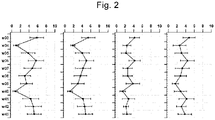
- Fig. 2 is a graph showing results of sensory evaluation 2 of scents of the odorant compositions of Examples 1 to 4.
- each of the evaluation samples of Examples 1 and 2 is an odorant composition that can enhance a positive emotion of a person who has smelled the scent.
- evaluation items (words) in the sensory evaluations 1 and 2 were selected under advice of a clinical psychologist. The same applies to sensory evaluation described later.
- a solution was prepared by diluting each of the odorant compositions of Examples 1501 to 1532 to 0.1% with propylene glycol, and used as an evaluation sample.
- Each evaluation sample was immersed in filter paper, and for an impression of sniffing the scent, a sensory evaluation test was performed in which the degree of feeling that the scent fell under each of evaluation items described in Table 18 below was evaluated by 20 (Japanese) subjects in 11 stage of 0 point (a subject does not think at all that the sample is so) to 10 points (a subject completely thinks that the sample is so).
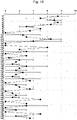
- Fig. 3 is a graph showing results of sensory evaluation of scents of the odorant compositions of Examples 1501 to 1532.
- Fig. 3 an average value (horizontal axis) of results (scores) obtained for each evaluation item (vertical axis) is plotted on one graph for each odorant composition.
- scores for the item "likable” are concentrated in the vicinity of about 5 to 6 points and higher than scores for the other evaluation items, and vary slightly depending on a sample.
- scores in a range of approximately 4 points to 6 points are obtained for the items “refreshing” and “relaxing”.
- scores for the items “mild”, “mellow”, “pleasant”, “cool”, “happy”, “positive”, and “affectionate” fall within a range centered on 4 points
- scores for the items “want to protect” and "identifying” fall within a range of approximately 3 points to 4 points and vary only slightly.
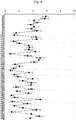
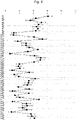
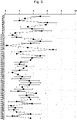
- Figs. 4 to 6 each show an example of results for an evaluation sample.
- Fig. 4 is a graph showing results of sensory evaluation of a scent of the odorant composition of Example 1502.
- Fig. 5 is a graph showing results of sensory evaluation of a scent of the odorant composition of Example 1505.
- Fig. 6 is a graph showing results of sensory evaluation of a scent of the odorant composition of Example 1530.
- the odorant compositions of Examples 1501 to 1532 have good scent palatability, allow a person to feel comfortable, and/or can enhance a positive emotion of a person who has smelled the scent.
- the tendency of having a high score for "strong” or “rich” is not necessarily a negative result because there may be an influence of a distance between a subject's nose and filter paper when the subject sniffs a scent.
- Example 1510 prepared in a similar manner to the sensory evaluation described above.
- the subjects included 36 Japanese, 13 Polish, 5 Taiwanese, and 2 Indians.
- Example 1510 had an approximately average result (score) for all the evaluation items, and therefore was considered to be appropriate to test scent palatability of a subject of a nationality other than Japan.
- Fig. 7 is a graph showing results of sensory evaluation of a scent of the odorant composition of Example 1510 by Japanese subjects.
- Fig. 8 is a graph showing results of sensory evaluation of the scent of the odorant composition of Example 1510 by Polish subjects.
- Fig. 9 is a graph showing results of sensory evaluation of the scent of the odorant composition of Example 1510 by Taiwanese subjects.
- Fig. 10 is a graph showing results of sensory evaluation of the scent of the odorant composition of Example 1510 by Indian subjects.
- An evaluation sample having a dilution ratio of 0.1% of the odorant composition of Example 802 was prepared by a similar procedure to that described above for Examples 1501 to 1532, and a sensory evaluation test was performed by 10 (Japanese) subjects.
- Fig. 11 is a graph showing results of sensory evaluation of a scent of the odorant composition of Example 802.
- Example 802 has a similar tendency to the results obtained using the odorant compositions of Examples 1501 to 1532 described above (see Figs. 3 to 6 ).
- Example 1502 ( Fig. 4 ) prepared based on Formulation No. 1502 belonging to the same line as Formulation No. 802
- the odorant composition of Example 802 has a larger difference between a score for a positive word and a score for a negative word, and provides a sharper result.
- the scores for the items "likable” and “pleasant” are obviously higher than the scores for the items "disliked” and "unpleasant”.
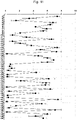
- Fig. 12 is a graph showing results of sensory evaluation of scents of odorant compositions of Example 802 and Comparative Example 1 to 4.
- Example 802 is indicated by a circle
- Comparative Example 1 is indicated by an upward triangle
- Comparative Example 2 is indicated by a square
- Comparative Example 3 is indicated by a rhombus
- Comparative Example 4 is indicated by a downward triangle.
- Example 802 an evaluation sample having a dilution ratio of 0.1% of the odorant composition of Example 802 and evaluation samples of three kinds of commercially available perfumes were prepared, and a sensory evaluation test was performed by 10 (Japanese) subjects by a similar procedure to that described above for Examples 1501 to 1532.
- perfumes used in this test were perfume 1 (product name “Petits et Mamans” manufactured by BVLGARI), perfume 2 (product name “Baby Powder” manufactured by DEMETER), and perfume 3 (product name “Creature d Anges” manufactured by Creature).
- GC-MS gas chromatograph mass spectrometer
- the numbers of chemical compounds detected and identified in the perfumes 1, 2, and 3 were 24, 24, and 43, respectively. Note that in each of the perfumes 1 to 3, there is a compound that has been difficult to identify from the obtained chromatogram and mass spectrum, and therefore it is considered that the number of chemical compounds actually contained is larger than the above.
- Fig. 13 is a graph showing results of sensory evaluation of scents of the odorant composition of Example 802 and the commercially available perfumes 1 to 3.
- Example 802 is indicated by a circle
- the perfume 1 is indicated by an upward triangle
- the perfume 2 is indicated by a rhombus
- the perfume 3 is indicated by a square.
- An evaluation sample having a dilution ratio of 0.1% of each of the odorant compositions of Examples 902 and 913 was prepared by a similar procedure to that described above for Examples 1501 to 1532, and a sensory evaluation test was performed by 11 (Japanese) subjects.
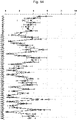
- Fig. 14 is a graph showing results of sensory evaluation of scents of the odorant compositions of Examples 902 and 913.
- Example 902 is indicated by a circle
- Example 913 is indicated by an upward triangle.
- the odorant composition of the present invention is prepared using a smaller number of chemical compounds than a conventional odorant composition, and therefore can be manufactured by a simple method, which is advantageous in terms of manufacturing cost.
- the odorant composition of the present invention has good palatability allowing peoples to feel comfortable.
- the odorant composition of the present invention can enhance a positive emotion of a person who has smelled a scent of the odorant composition.
- the odorant composition of the present invention having such an effect is blended in perfumery and cosmetics, food and drink, a tobacco product, an ink, a drawing material, and the like, and used for various materials such as a wrapping and packaging material and a toy, thereby enhancing commercial values thereof.
Landscapes
- Life Sciences & Earth Sciences (AREA)
- Health & Medical Sciences (AREA)
- Chemical & Material Sciences (AREA)
- Veterinary Medicine (AREA)
- Animal Behavior & Ethology (AREA)
- Public Health (AREA)
- General Health & Medical Sciences (AREA)
- Organic Chemistry (AREA)
- Engineering & Computer Science (AREA)
- Wood Science & Technology (AREA)
- Chemical Kinetics & Catalysis (AREA)
- Birds (AREA)
- Epidemiology (AREA)
- Oil, Petroleum & Natural Gas (AREA)
- Emergency Medicine (AREA)
- General Chemical & Material Sciences (AREA)
- Materials Engineering (AREA)
- Fats And Perfumes (AREA)
- Cosmetics (AREA)
Abstract
Description
- The present invention relates to an odorant composition.
- In recent years, various studies have been performed on psychological and physiological effects of a scent, and there is an increasing interest in stress reduction and relaxation effects in modern society.
- On the other hand, since palatability for a scent varies depending on a person, it is desired that the scent is easily accepted by many people while having a desired effect. For example, in
Patent Literature 1, it is proposed a fragrance composition that is a scent having good palatability and easily accepted, and has a relaxing effect. - Patent Literature 1:
JP 2008-101129 A - Nevertheless, in a conventional fragrance or flavor composition, in addition to a specific major compound as an active ingredient, many other ingredients are blended. For example, in the fragrance composition, as is described in
Patent Literature 1, an essential oil of Helichrysum stoechas extracted from that neutral fraction with an acidic and alkaline aqueous solution is an active blend of as many as 60 kinds of ingredients. - Considering the above situation, an object of the present invention is to provide a novel odorant composition consisting of a small number of chemical compounds, which has good palatability allowing peoples to feel comfortable.
- The present inventors have focused on chemical compounds of aldehydes and ketones, based on various data of chemical analyses and sensory evaluation for the effective odorant composition and blending ratios of compounds. As a result, the present inventors have found that an odorant composition that is easily and universally accepted and allows a person to feel comfortable can be prepared with 15 or a smaller number of compounds out of predetermined compounds blended at appropriate ratios. As a result of additional studies, the present inventors have further revealed that 25 or a smaller number of compounds, which may include optional odorant ingredients, can be formulated, and have completed the present invention.
- The present invention includes the following aspects.
- [1] An odorant composition consisting of: when the total mass of ingredients contained in the odorant composition is 100.0% by mass,
- 40.0% by mass or more and 97.5% by mass or less of an ingredient (A) composed of aldehydes;
- 1.0% by mass or more and 20.0% by mass or less of an ingredient (B) composed of a ketone(s); and
- the balance being an ingredient (C) composed of a chemical compound(s) other than the ingredient (A) and the ingredient (B), in which
- the aldehydes of the ingredient (A) are:
- an essential ingredient (A1) composed of nonanal; and
- an optional ingredient (A2) selected from the group consisting of decanal, heptanal, octanal, benzaldehyde, undecanal, hexanal, and combinations thereof,
- the ketone(s) of the ingredient (B) is selected from the group consisting of 6-methyl-5-hepten-2-one, cyclohexanone, 1-phenylethanone, 2-decanone, 2-undecanone, and combinations thereof, and
- the compound(s) of the ingredient (C) is selected from the group consisting of limonene, 1,8-cineole, menthol, 1-octanol, 3-hexyn-1-ol, 2-nonen-1-ol, dodecane, hexanoic acid, octanoic acid, nonanoic acid, 2(5H)-furanone, p-cymene, sotolon, and combinations thereof.
- [2] The odorant composition according to [1], in which
- the content of the ingredient (A) is more than 55.0% by mass and 95.0% by mass or less, and
- the content of the essential ingredient (A1) is 27.0% by mass or more and 64.0% by mass or less.
- [3] The odorant composition according to [2], in which
- the ingredient (B) is selected from the group consisting of 6-methyl-5-hepten-2-one, 1-phenylethanone, 2-decanone, 2-undecanone, and combinations thereof, and
- the ingredient (C) is selected from the group consisting of limonene, 1,8-cineole, menthol, 2-nonen-1-ol, hexanoic acid, octanoic acid, nonanoic acid, p-cymene, and combinations thereof.
- [4] The odorant composition according to [3], in which
- the content of the ingredient (A) is 75.0% by mass or more and 95.0% by mass or less,
- the content of the essential ingredient (A1) is 43.0% by mass or more and 62.0% by mass or less, and
- a content of the ingredient (B) is 1.0% by mass or more and 12.0% by mass or less.
- [5] The odorant composition according to [4], in which
- the content of the ingredient (A) is 75.0% by mass or more and 80.0% by mass or less,
- the content of the essential ingredient (A1) is 48.0% by mass or more and 55.0% by mass or less,
- the content of the ingredient (B) is 8.0% by mass or more and 11.0% by mass or less,
- the ingredient (B) is 6-methyl-5-hepten-2-one or a combination of 6-methyl-5-hepten-2-one, 1-phenylethanone, and 2-decanone, and
- the ingredient (C) is a combination of limonene, 1,8-cineole, and menthol, a combination of limonene, 1,8-cineole, menthol, and p-cymene, or a combination of limonene, 1,8-cineole, menthol, 2-nonen-1-ol, and p-cymene.
- [6] The odorant composition according to [4], in which
- the content of the ingredient (A) is 81.0% by mass or more and 85.0% by mass or less,
- the content of the essential ingredient (A1) is 58.0% by mass or more and 62.0% by mass or less,
- the content of the ingredient (B) is 8.0% by mass or more and 10.0% by mass or less,
- the ingredient (B) is a combination of 6-methyl-5-hepten-2-one and 1-phenylethanone or a combination of 6-methyl-5-hepten-2-one, 1-phenylethanone, and 2-decanone, and
- the ingredient (C) is a combination of limonene and menthol, a combination of limonene, 1,8-cineole, and menthol, or a combination of limonene, 1,8-cineole, menthol, 2-nonen-1-ol, and nonanoic acid.
- [7] The odorant composition according to [4], in which
- the content of the ingredient (A) is 81.0% by mass or more and 85.0% by mass or less,
- the content of the essential ingredient (A1) is 58.0% by mass or more and 62.0% by mass or less,
- the content of the ingredient (B) is 2.0% by mass or more and 5.0% by mass or less,
- the ingredient (B) is 6-methyl-5-hepten-2-one, a combination of 6-methyl-5-hepten-2-one and 1-phenylethanone, or a combination of 6-methyl-5-hepten-2-one, 1-phenylethanone, 2-decanone, and 2-undecanone, and
- the ingredient (C) is a combination of limonene, menthol, and 2-nonen-1-ol or a combination of limonene, 1,8-cineole, menthol, 2-nonen-1-ol, and p-cymene.
- [8] A product containing the odorant composition according to any one of [1] to [7], the product being selected from the group consisting of perfumery and cosmetics, food and drink, and a tobacco product.
- [9] A microcapsule or a nanocapsule containing the odorant composition according to any one of [1] to [7].
- [10] An ink containing the microcapsule or the nanocapsule according to [9].
- [11] A printed matter using the ink according to [10].
- [12] A drawing material containing the microcapsule or the nanocapsule according to [9].
- [13] A material using the odorant composition according to any one of [1] to [7].
- [14] The material according to [13], which is paper, a fabric, a woven fabric, a knitted fabric, a nonwoven fabric, a rug, a plate material, an ornament, a wrapping and packaging material, or a toy.
- The odorant composition of the present invention is prepared using a smaller number of chemical compounds than a conventional odorant composition, and still preserved good palatability allowing peoples to feel comfortable. In addition, the odorant composition of the present invention can enhance a positive emotion of a person who has smelled a scent of the odorant composition. The odorant composition of the present invention can be blended in perfumery and cosmetics, food and drink, a tobacco product, an ink, a drawing material, and the like, can be used for various materials such as a wrapping and packaging material and a toy, and can enhance commercial values thereof.
-
-
Fig. 1 is a graph showing results ofsensory evaluation 1 of scents of odorant compositions of Examples 1 to 4. -
Fig. 2 is a graph showing results ofsensory evaluation 2 of the scents of the odorant compositions of Examples 1 to 4. -
Fig. 3 is a graph showing results of sensory evaluation of scents of odorant compositions of Examples 1501 to 1532. -
Fig. 4 is a graph showing results of sensory evaluation of a scent of an odorant composition of Example 1502. -
Fig. 5 is a graph showing results of sensory evaluation of a scent of an odorant composition of Example 1505. -
Fig. 6 is a graph showing results of sensory evaluation of a scent of an odorant composition of Example 1530. -
Fig. 7 is a graph showing results of sensory evaluation of a scent of an odorant composition of Example 1510 by Japanese subjects. -
Fig. 8 is a graph showing results of sensory evaluation of the scent of the odorant composition of Example 1510 by Polish subjects. -
Fig. 9 is a graph showing results of sensory evaluation of the scent of the odorant composition of Example 1510 by Taiwanese subjects. -
Fig. 10 is a graph showing results of sensory evaluation of the scent of the odorant composition of Example 1510 by Indian subjects. -
Fig. 11 is a graph showing results of sensory evaluation of a scent of an odorant composition of Example 802. -
Fig. 12 is a graph showing results of sensory evaluation of scents of odorant compositions of Example 802 and Comparative Example 1 to 4. -
Fig. 13 is a graph showing results of sensory evaluation of scents of the odorant composition of Example 802 and commerciallyavailable perfumes 1 to 3. -
Fig. 14 is a graph showing results of sensory evaluation of scents of odorant compositions of Examples 902 and 913. - Hereinafter, embodiments of the present invention will be described in detail. Note that a specific form is not limited to the following embodiments, and changes in design and the like without departing from the gist of the present invention are also included in the present invention.
- An odorant composition of the present invention contains, as main ingredients, an ingredient (A) composed of aldehydes and an ingredient (B) composed of a ketone(s). That is, in the odorant composition of the present invention, when the total mass of ingredients contained in the odorant composition is 100.0% by mass, a total blending ratio of the ingredient (A) and the ingredient (B) is more than 50.0% by mass, preferably 53.0% by mass or more, more preferably 55.0% by mass or more, still more preferably 70.0% by mass or more, and further still more preferably 80.0% by mass or more. An upper limit value of the total blending ratio of the ingredient (A) and the ingredient (B) is not particularly limited, but is preferably 97.5% by mass or less, and more preferably 95.5% by mass or less.
- In the odorant composition of the present invention, when the total mass of ingredients contained in the odorant composition is 100.0% by mass, a blending ratio of the ingredient (A) is 40.0% by mass or more and 90.0% by mass or less.
- Examples of the aldehyde of the ingredient (A) include propanal, 2-methylpropanal, 2-ethylpropanal, butanal, 2-methylbutanal, 2-ethylbutanal, 2-butenal, hexanal, 2-methylhexanal, 2-ethylhexanal, octanal, 2-methyloctanal, 2-ethyloctanal, heptanal, 2-methylheptanal, 2-ethylheptanal, 4-heptenal, 2,4-octadienal, nonanal, 2-methylnonanal, 2-nonenal, 2,4-nonadienal, 2,6-nonadienal, decanal, 2,4-decadienal, undecanal, 10-undecenal, 2,4-undecadienal, dodecanal, citronellal, citral, hydroxycitronellal, benzaldehyde, cinnamyl aldehyde, α-amyl cinnamyl aldehyde, phenylacetaldehyde, vanillin, ethyl vanillin, furfural, and heliotropin.
- In a preferred embodiment, the aldehydes of the ingredient (A) are the essential ingredient (A1) composed of nonanal and the optional ingredient (A2) selected from the group consisting of decanal, heptanal, octanal, benzaldehyde, undecanal, hexanal, and combinations thereof.
- When the blending ratio of the ingredient (A) is within the above range and the above-described chemical compounds are used as the aldehydes, it is possible to obtain an odorant composition in which the ingredient (B) and an ingredient (C) described later are blended and which has good scent palatability allowing peoples to feel comfortable.
- Aldehydes blending ratios of the essential ingredient (A1) and the optional ingredient (A2) in the ingredient (A) are appropriately adjusted such that the blending ratio of the whole ingredient (A) in the odorant composition satisfies the above range.
- In a first embodiment of the present invention, when the total mass of ingredients contained in the odorant composition is 100.0% by mass,
- as the content of the essential ingredient (A1) of the ingredient (A),
- nonanal is contained in an amount of 30.0% by mass or more and 55.0% by mass or less,
- the aldehyde of the optional ingredient (A2) of the ingredient (A) is a combination of decanal, heptanal, and octanal, a combination of decanal, heptanal, and benzaldehyde, a combination of decanal, heptanal, and undecanal, a combination of decanal, heptanal, octanal, and benzaldehyde, or a combination of decanal, heptanal, benzaldehyde, and undecanal, and
- as the content of the optional ingredient (A2),
- decanal is contained in an amount of 4.0% by mass or more and 24.0% by mass or less,
- heptanal is contained in an amount of 2.0% by mass or more and 30.0% by mass or less,
- octanal is contained in an amount of 1.0% by mass or more and 15.0% by mass or less,
- benzaldehyde is contained in an amount of 1.0% by mass or more and 10.0% by mass or less, and
- undecanal is contained in an amount of 0.5% by mass or more and 12.0% by mass or less.
- In a preferred embodiment, when the total mass of ingredients contained in the odorant composition is 100.0% by mass,
- as the content of the essential ingredient (A1) of the ingredient (A),
- nonanal is contained in an amount of 33.0% by mass or more and 52.0% by mass or less, and
- as the content of the optional ingredient (A2) of the ingredient (A),
- decanal is contained in an amount of 12.0% by mass or more and 24.0% by mass or less,
- heptanal is contained in an amount of 2.0% by mass or more and 30.0% by mass or less,
- octanal is contained in an amount of 2.0% by mass or more and 13.0% by mass or less,
- benzaldehyde is contained in an amount of 1.0% by mass or more and 7.0% by mass or less, and
- undecanal is contained in an amount of 0.5% by mass or more and 12.0% by mass or less.
- In a more preferred embodiment, when the total mass of ingredients contained in the odorant composition is 100.0% by mass,
- as the content of the essential ingredient (A1) of the ingredient (A),
- nonanal is contained in an amount of 34.0% by mass or more and 52.0% by mass or less, and
- as the content of the optional ingredient (A2) of the ingredient (A),
- decanal is contained in an amount of 12.0% by mass or more and 24.0% by mass or less,
- heptanal is contained in an amount of 2.0% by mass or more and 30.0% by mass or less,
- octanal is contained in an amount of 2.0% by mass or more and 13.0% by mass or less,
- benzaldehyde is contained in an amount of 1.0% by mass or more and 7.0% by mass or less, and
- undecanal is contained in an amount of 9.0% by mass or more and 12.0% by mass or less.
- In a still more preferred embodiment, when the total mass of ingredients contained in the odorant composition is 100.0% by mass,
- as the content of the essential ingredient (A1) of the ingredient (A),
- nonanal is contained in an amount of 35.0% by mass or more and 52.0% by mass or less, and
- as the content of the optional ingredient (A2) of the ingredient (A),
- decanal is contained in an amount of 13.0% by mass or more and 24.0% by mass or less,
- heptanal is contained in an amount of 2.0% by mass or more and 30.0% by mass or less,
- octanal is contained in an amount of 5.0% by mass or more and 13.0% by mass or less,
- benzaldehyde is contained in an amount of 1.0% by mass or more and 6.0% by mass or less, and
- undecanal is contained in an amount of 9.0% by mass or more and 11.0% by mass or less.
- In a further still more preferred embodiment, when the total mass of ingredients contained in the odorant composition is 100.0% by mass,
- as the content of the essential ingredient (A1) of the ingredient (A),
- nonanal is contained in an amount of 40.0% by mass or more and 52.0% by mass or less,
- the aldehyde of the optional ingredient (A2) of the ingredient (A) is a combination of decanal, heptanal, octanal, and benzaldehyde, and
- as the content of the optional ingredient (A2),
- decanal is contained in an amount of 12.0% by mass or more and 18.0% by mass or less,
- heptanal is contained in an amount of 3.0% by mass or more and 8.0% by mass or less,
- octanal is contained in an amount of 8.0% by mass or more and 13.0% by mass or less, and
- benzaldehyde is contained in an amount of 3.0% by mass or more and 6.0% by mass or less.
- In a further still more preferred embodiment, when the total mass of ingredients contained in the odorant composition is 100.0% by mass,
- as the content of the essential ingredient (A1) of the ingredient (A),
- nonanal is contained in an amount of 43.0% by mass or more and 46.0% by mass or less, and
- as the content of the optional ingredient (A2) of the ingredient (A),
- decanal is contained in an amount of 13.0% by mass or more and 15.0% by mass or less,
- heptanal is contained in an amount of 3.0% by mass or more and 5.0% by mass or less,
- octanal is contained in an amount of 8.0% by mass or more and 10.0% by mass or less, and
- benzaldehyde is contained in an amount of 3.0% by mass or more and 5.0% by mass or less.
- In a second embodiment of the present invention, when the total mass of ingredients contained in the odorant composition is 100.0% by mass,
- the content of the ingredient (A) is more than 55.0% by mass and 95.0% by mass or less, and
- the content of the essential ingredient (A1) is 27.0% by mass or more and 64.0% by mass or less.
- In a preferred embodiment, when the total mass of ingredients contained in the odorant composition is 100.0% by mass,
- the content of the ingredient (A) is more than 75.0% by mass and 95.0% by mass or less, and
- the content of the essential ingredient (A1) is 43.0% by mass or more and 62.0% by mass or less.
- In an aspect of the preferred embodiment, when the total mass of ingredients contained in the odorant composition is 100.0% by mass,
- the content of the ingredient (A) is more than 75.0% by mass and 80.0% by mass or less, and
- the content of the essential ingredient (A1) is 48.0% by mass or more and 55.0% by mass or less.
- In another aspect of the preferred embodiment, when the total mass of ingredients contained in the odorant composition is 100.0% by mass,
- the content of the ingredient (A) is 81.0% by mass or more and 85.0% by mass or less, and
- the content of the essential ingredient (A1) is 58.0% by mass or more and 62.0% by mass or less.
- In still another aspect of the preferred embodiment, when the total mass of ingredients contained in the odorant composition is 100.0% by mass,
- the content of the ingredient (A) is 81.0% by mass or more and 85.0% by mass or less, and
- the content of the essential ingredient (A1) is 58.0% by mass or more and 62.0% by mass or less.
- In further still another aspect of the preferred embodiment, when the total mass of ingredients contained in the odorant composition is 100.0% by mass,
- the content of the ingredient (A) is 80.0% by mass or more and 85.0% by mass or less, and
- the content of the essential ingredient (A1) is 52.0% by mass or more and 57.0% by mass or less.
- In further still another aspect of the preferred embodiment, when the total mass of ingredients contained in the odorant composition is 100.0% by mass,
- the content of the ingredient (A) is 83.0% by mass or more and 87.0% by mass or less, and
- the content of the essential ingredient (A1) is 56.0% by mass or more and 59.0% by mass or less.
- In the odorant composition of the present invention, when the total mass of ingredients contained in the odorant composition is 100.0% by mass, a blending ratio of the ingredient (B) is 1.0% by mass or more and 20.0% by mass or less.
- Examples of the ketone of the ingredient (B) include an aliphatic ketone, a cyclic ketone, and an aromatic ketone. These ketones may be used singly or in combination of two or more kinds thereof.
- Examples of the aliphatic ketone include 2-hexanone, 2-methyl-3-hexanone, 5-methyl-2-hexanone, 2-heptanone, 3-heptanone, 4-heptanone, 2-methyl-3-heptanone, 5-methyl-3-heptanone, 2,6-dimethyl-4-heptanone, 6-methyl-5-hepten-2-one, 2-octanone, 3-octanone, 1-octen-3-one, 2-nonanone, 5-nonanone, 8-nonen-2-one, 2-decanone, 2-undecanone, 2-tridecanone, 2,3-heptanedione, 2,4-heptanedione, 2,5-heptanedione, 2,6-heptanedione, 3,4-heptanedione, and 3,5-heptanedione.
- Examples of the cyclic ketone include menthone, isomentone, carvone, dihydrocarvone, pulegone, piperiton, 1-acetyl-3,3-dimethyl-1-cyclohexene, cis-jasmon, α-ilon, β-ilon, γ-ilon, homofuronol, maltol, ethyl maltol, cyclotene, 3,4-dimethyl-1,2-cyclopentadione, sotolon, α-damascone, β-damascone, γ-damascone, δ-damascone, α-damasenone, β-damasenone, γ-damasenone, nootkatone, dihydronootkatone, ethyl maltol, cyclohexanone, 2-sec-butylcyclohexanone, α-ionone, β-ionone, γ-ionone, α-methylionone, β-methylionone, γ-methylionone, α-isomethylionone, β-isomethyiionone, γ-isomethylionone, furaneol, and camphor.
- Examples of the aromatic ketone include acetonaphthone, 1-phenylethanone (acetophenone), anisylideneacetone, raspberry ketone, p-methylacetophenone, anisylacetone, and p-methoxyacetophenone.
- Here, among the chemical compounds of the ingredient (B) exemplified above, sotolon has extremely strong aroma, and has an odor threshold of 0.001 ppb (in water), which is considered to be the smallest value among currently known chemical compounds. Therefore, it is not appropriate to blend 1.0% by mass or more of sotolon alone in the odorant composition of the present invention. In addition, when sotolon is blended in combination with another chemical compound, a blending ratio of sotolon is limited to a very small value, and is specifically preferably 3 × 10⁻⁸% by mass or less. In other words, with this blending ratio, sotolon is favorably combined with other chemical compounds contained in the odorant composition of the present invention, and can further enhance the effect of the present invention. For this reason, sotolon is classified into a ketone in terms of chemical structure, but in the odorant composition of the present invention, sotolon is handled as a chemical compound of the ingredient (C) described later.
- In a preferred embodiment, the ketone of the ingredient (B) is selected from the group consisting of 6-methyl-5-hepten-2-one, cyclohexanone, 1-phenylethanone, 2-decanone, 2-undecanone, and combinations thereof.
- When the blending ratio of the ingredient (B) is within the above range and the above-described chemical compound is used as the ketone, it is possible to obtain an odorant composition in which the ingredient (A) and the ingredient (C) described later are blended and which has good scent palatability allowing peoples to feel comfortable.
- In the first embodiment of the present invention, when the total mass of ingredients contained in the odorant composition is 100.0% by mass, the content of the ingredient (B) is preferably 3.0% by mass or more and 13.0% by mass or less, and more preferably 5.0% by mass or more and 13.0% by mass or less.
- In a preferred embodiment, the ketone of the ingredient (B) is 6-methyl-5-hepten-2-one, a combination of 6-methyl-5-hepten-2-one and 1-phenylethanone, or a combination of 6-methyl-5-hepten-2-one and 2-decanone, and when the total mass of ingredients contained in the odorant composition is 100.0% by mass,
- as the content of the ingredient (B),
- 6-methyl-5-hepten-2-one is contained in an amount of 4.0% by mass or more and 11.0% by mass or less,
- 1-phenylethanone is contained in an amount of 0.5% by mass or more and 4.0% by mass or less, and
- 2-decanone is contained in an amount of 1.0% by mass or more and 2.0% by mass or less.
- In a more preferred embodiment, when the total mass of ingredients contained in the odorant composition is 100.0% by mass,
- the content of the ingredient (B) is 5.0% by mass or more and 11.0% by mass or less.
- and
- the ketone of the ingredient (B) is a combination of 6-methyl-5-hepten-2-one and 1-phenylethanone or a combination of 6-methyl-5-hepten-2-one and 2-decanone, and
- as the content of the ingredient (B),
- 6-methyl-5-hepten-2-one is contained in an amount of 4.0% by mass or more and 11.0% by mass or less,
- 1-phenylethanone is contained in an amount of 1.0% by mass or more and 4.0% by mass or less, and
- 2-decanone is contained in an amount of 1.0% by mass or more and 2.0% by mass or less.
- In a still more preferred embodiment, when the total mass of ingredients contained in the odorant composition is 100.0% by mass,
- the ketone of the ingredient (B) is 6-methyl-5-hepten-2-one, and
- as the content of the ingredient (B),
- 6-methyl-5-hepten-2-one is contained in an amount of 6.0% by mass or more and 11.0% by mass or less.
- In a further still more preferred embodiment, when the total mass of ingredients contained in the odorant composition is 100.0% by mass,
- the ketone of the ingredient (B) is 6-methyl-5-hepten-2-one, and
- as the content of the ingredient (B),
- 6-methyl-5-hepten-2-one is contained in an amount of 8.0% by mass or more and 10.0% by mass or less.
- In the second embodiment of the present invention, the ketone of the ingredient (B) is selected from the group consisting of 6-methyl-5-hepten-2-one, 1-phenylethanone, 2-decanone, 2-undecanone, and combinations thereof.
- In a preferred embodiment, when the total mass of ingredients contained in the odorant composition is 100.0% by mass, the content of the ingredient (B) is 1.0% by mass or more and 12.0% by mass or less.
- In an aspect of the preferred embodiment, when the total mass of ingredients contained in the odorant composition is 100.0% by mass, the content of the ingredient (B) is 8.0% by mass or more and 11.0% by mass or less, and
the ingredient (B) is 6-methyl-5-hepten-2-one or a combination of 6-methyl-5-hepten-2-one, 1-phenylethanone, and 2-decanone. - In another aspect of the preferred embodiment, when the total mass of ingredients contained in the odorant composition is 100.0% by mass, the content of the ingredient (B) is 8.0% by mass or more and 10.0% by mass or less, and
the ingredient (B) is a combination of 6-methyl-5-hepten-2-one and 1-phenylethanone or a combination of 6-methyl-5-hepten-2-one, 1-phenylethanone, and 2-decanone. - In still another aspect of the preferred embodiment, when the total mass of ingredients contained in the odorant composition is 100.0% by mass, the content of the ingredient (B) is 2.0% by mass or more and 5.0% by mass or less, and
the ingredient (B) is 6-methyl-5-hepten-2-one, a combination of 6-methyl-5-hepten-2-one and 1-phenylethanone, or a combination of 6-methyl-5-hepten-2-one, 1-phenylethanone, 2-decanone, and 2-undecanone. - In further still another aspect of the preferred embodiment, when the total mass of ingredients contained in the odorant composition is 100.0% by mass, the content of the ingredient (B) is 4.0% by mass or more and 9.0% by mass or less, and
the ingredient (B) is a combination of 6-methyl-5-hepten-2-one, 1-phenylethanone, 2-decanone, and 2-undecanone. - In further still another aspect of the preferred embodiment, when the total mass of ingredients contained in the odorant composition is 100.0% by mass, the content of the ingredient (B) is 1.0% by mass or more and 3.5% by mass or less, and
the ingredient (B) is 6-methyl-5-hepten-2-one or a combination of 6-methyl-5-hepten-2-one, 2-decanone, and 2-undecanone. - The odorant composition of the present invention contains the ingredient (C) composed of a chemical compound(s) other than the ingredient (A) and the ingredient (B). When the total mass of ingredients contained in the odorant composition is 100.0% by mass, a blending ratio of the ingredient (C) is the balance excluding the total blending ratio of the ingredient (A) and the ingredient (B).
- In the odorant composition of the present invention, the chemical compound of the ingredient (C) is selected from the group consisting of limonene, 1,8-cineole, menthol, 1-octanol, 3-hexyn-1-ol, 2-nonen-1-ol, dodecane, hexanoic acid, octanoic acid, nonanoic acid, 2(5H)-furanone, p-cymene, sotolon, and combinations thereof.
- By combining these chemical compounds with the ingredient (A) and the ingredient (B), it is possible to obtain an odorant composition having good scent palatability allowing peoples to feel comfortable.
- In the first embodiment of the present invention, the chemical compound of the ingredient (C) is selected from the group consisting of limonene, 1,8-cineole, menthol, nonanoic acid, 2(5H)-furanone, p-cymene, sotolon, and combinations thereof. In this case, preferred embodiments of the chemical compound and a blending ratio thereof are exemplified as follows.
- (1) As the chemical compound of the ingredient (C), limonene is used, and when the total mass of ingredients contained in the odorant composition is 100.0% by mass, a blending ratio of limonene is 2.0% by mass or more and 16.0% by mass or less.
- (2) As the chemical compound of the ingredient (C), limonene and 1,8-cineole are used, and when the total mass of ingredients contained in the odorant composition is 100.0% by mass, a blending ratio of limonene is 2.0% by mass or more and 6.0% by mass or less, and a blending ratio of 1,8-cineole is 2.0% by mass or more and 10.0% by mass or less.
- (3) As the chemical compound of the ingredient (C), limonene and menthol are used, and when the total mass of ingredients contained in the odorant composition is 100.0% by mass, a blending ratio of limonene is 2.0% by mass or more and 6.0% by mass or less, and a blending ratio of menthol is 2.0% by mass or more and 5.0% by mass or less.
- (4) As the chemical compound of the ingredient (C), menthol and 1,8-cineole are used, and when the total mass of ingredients contained in the odorant composition is 100.0% by mass, a blending ratio of menthol is 2.0% by mass or more and 5.0% by mass or less, and a blending ratio of 1,8-cineole is 2.0% by mass or more and 10.0% by mass or less.
- (5) As the chemical compound of the ingredient (C), limonene, menthol, and nonanoic acid are used, and when the total mass of ingredients contained in the odorant composition is 100.0% by mass, a blending ratio of limonene is 1.0% by mass or more and 3.0% by mass or less, a blending ratio of menthol is 5.0% by mass or more and 7.0% by mass or less, and a blending ratio of nonanoic acid is 3.0% by mass or more and 5.0% by mass or less.
- (6) As the chemical compound of the ingredient (C), limonene, 1,8-cineole, menthol, and nonanoic acid are used, and when the total mass of ingredients contained in the odorant composition is 100.0% by mass, a blending ratio of limonene is 1.0% by mass or more and 3.0% by mass or less, a blending ratio of 1,8-cineole is 1.0% by mass or more and 2.0% by mass or less, a blending ratio of menthol is 5.0% by mass or more and 7.0% by mass or less, and a blending ratio of nonanoic acid is 3.0% by mass or more and 5.0% by mass or less.
- (7) As the chemical compound of the ingredient (C), menthol and p-cymene are used, and when the total mass of ingredients contained in the odorant composition is 100.0% by mass, a blending ratio of menthol is 16.0% by mass or more and 18.0% by mass or less, and a blending ratio of p-cymene is 1.0% by mass or more and 2.0% by mass or less.
- (8) As the chemical compound of the ingredient (C), menthol, nonanoic acid, and p-cymene are used, and when the total mass of ingredients contained in the odorant composition is 100.0% by mass, a blending ratio of menthol is 17.0% by mass or more and 19.0% by mass or less, a blending ratio of nonanoic acid is 0.5% by mass or more and 1.5% by mass or less, and a blending ratio of p-cymene is 1.0% by mass or more and 2.0% by mass or less.
- (9) As the chemical compound of the ingredient (C), menthol, nonanoic acid, and 2(5H)-furanone are used, and when the total mass of ingredients contained in the odorant composition is 100.0% by mass, a blending ratio of menthol is 4.0% by mass or more and 6.0% by mass or less, a blending ratio of nonanoic acid is 10.5% by mass or more and 12.5% by mass or less, and a blending ratio of 2(5H)-furanone is 3.0% by mass or more and 5.0% by mass or less.
- (10) As the chemical compound of the ingredient (C), 2(5H)-furanone is used, and when the total mass of ingredients contained in the odorant composition is 100.0% by mass, a blending ratio of 2(5H)-furanone is 4.0% by mass or more and 6.0% by mass or less.
- Note that in the above embodiments (1) to (10), sotolon may be further blended. When sotolon is blended, a blending ratio of sotolon is 3 × 10⁻⁸% by mass or less.
- In the second embodiment of the present invention, the chemical compound of the ingredient (C) is selected from the group consisting of limonene, 1,8-cineole, menthol, 2-nonen-1-ol, hexanoic acid, octanoic acid, nonanoic acid, p-cymene, sotolon, and combinations thereof.
- In an aspect of the present embodiment, the chemical compound of the ingredient (C) is a combination of limonene, 1,8-cineole, and menthol, a combination of limonene, 1,8-cineole, menthol, and p-cymene, or a combination of limonene, 1,8-cineole, menthol, 2-nonen-1-ol, and p-cymene.
- In another aspect of the present embodiment, the chemical compound of the ingredient (C) is a combination of limonene and menthol, a combination of limonene, 1,8-cineole, and menthol, or a combination of limonene, 1,8-cineole, menthol, 2-nonen-1-ol, and nonanoic acid.
- In still another aspect of the present embodiment, the chemical compound of the ingredient (C) is a combination of limonene, menthol, and 2-nonen-1-ol or a combination of limonene, 1,8-cineole, menthol, 2-nonen-1-ol, and p-cymene.
- In further still another aspect of the present embodiment, the chemical compound of the ingredient (C) is a combination of limonene, menthol, and 2-nonen-1-ol or a combination of limonene, menthol, 2-nonen-1-ol, and p-cymene.
- In further still another aspect of the present embodiment, the chemical compound of the ingredient (C) is a combination of limonene, menthol, and 2-nonen-1-ol or a combination of limonene, menthol, 2-nonen-1-ol, nonanoic acid, and p-cymene.
- Note that in the above aspects, sotolon may be further blended. When sotolon is blended, a blending ratio of sotolon is 3 × 10⁻⁸% by mass or less.
- Based on the above, preferable forms of formulation of the odorant composition of the present invention are exemplified in Tables 1 to 11, 12-1, 12-2, 13-1, 13-2, 14-1, and 14-2 below separately for the first embodiment and the second embodiment described above. Note that a blending ratio (% by mass) of each chemical compound in Tables is a value when the total mass of ingredients contained in the odorant composition is 100.0% by mass.
-
[Table 1] Ingredient Chemical Compound Formulation 1 Formulation 2 Formulation 3 Formulation 4 A Nonanal 45.40 50.10 42.41 51.20 Decanal 14.30 15.40 16.61 13.30 Heptanal 4.00 6.40 6.32 7.70 Octanal 8.60 11.20 11.92 9.90 Benzaldehyde 3.50 4.00 5.62 4.00 B 6-Methyl-5-hepten-2-one 9.30 6.80 10.52 10.40 1-Phenylethanone 0.00 0.00 0.00 0.90 C Limonene 5.10 3.10 3.00 0.00 1,8-Cineole 9.80 3.00 0.00 0.00 Menthol 0.00 0.00 3.60 2.60 Total 100.0 100.0 100.0 100.0 (Unit: % by mass) [Table 2] Ingredient Chemical Compound Formulation 5 Formulation 6 Formulation 7 Formulation 8 A Nonanal 36.28 47.08 49.84 41.60 Decanal 14.95 19.63 22.66 17.99 Heptanal 28.67 9.20 2.97 5.07 Octanal 0.00 0.00 6.01 0.00 Benzaldehyde 2.49 0.00 0.00 1.58 Undecanal 0.00 0.00 0.00 10.60 B 6-Methyl-5-hepten-2-one 7.89 9.69 8.08 4.56 1-Phenylethanone 0.00 1.82 2.44 0.00 2-Decanone 0.00 0.00 0.00 1.14 C Limonene 2.69 1.94 2.20 0.00 1,8-Cineole 3.77 0.00 0.00 0.00 Menthol 3.26 6.69 5.80 17.46 Nonanoic acid 0.00 3.95 0.00 0.00 Total 100.0 100.0 100.0 100.0 (Unit: % by mass) [Table 3] Ingredient Chemical Compound Formulation 9 Formulation 10 Formulation 11 Formulation 12 A Nonanal 43.0-46.0 48.0-51.0 41.0-43.0 41.0-51.0 Decanal 13.0-15.0 14.0-16.0 16.0-17.0 13.0-17.0 Heptanal 3.0-5.0 6.0-7.0 6.0-7.0 3.0-7.0 Octanal 8.0-10.0 10.0-12.0 11.0-13.0 8.0-13.0 Benzaldehyde 3.0-5.0 3.0-5.0 5.0-6.0 3.0-6.0 B 6-Methyl-5-hepten-2-one 8.0-10.0 6.0-8.0 10.0-11.0 6.0-11.0 C Limonene 4.0-6.0 2.0-4.0 2.0-4.0 2.0-6.0 1,8-Cineole 9.0-10.0 2.0-4.0 - 2.0-10.0* Menthol - - 3.0-4.0 3.0-4.0* Total (The total mass is adjusted to be 100.0% by mass.) (Unit: % by mass) * In Formulation 12, either one of 1,8-cineole and menthol is blended. [Table 4] Ingredient Chemical Compound Formulation 13 Formulation 14 Formulation 15 Formulation 16 A Nonanal 35.0-38.0 46.0-48.0 48.0-51.0 40.0-43.0 Decanal 14.0-17.0 19.0-20.0 21.0-24.0 16.0-19.0 Heptanal 28.0-30.0 8.0-10.0 2.0-4.0 4.0-6.0 Octanal - - 5.0-7.0 - Benzaldehyde 2.0-4.0 - - 1.0-2.0 Undecanal - - - 9.0-11.0 B 6-Methyl-5-hepten-2-one 7.0-9.0 8.0-10.0 7.0-9.0 4.0-6.0 1-Phenylethanone - 1.0-2.0 2.0-4.0 - 2-Decanone - - - 1.0-2.0 C Limonene 2.0-4.0 1.0-3.0 2.0-3.0 - 1,8-Cineole 3.0-5.0 - - - Menthol 3.0-5.0 6.0-8.0 5.0-7.0 16.0-18.0 Nonanoic acid - 3.0-5.0 - - Total (The total mass is adjusted to be 100.0% by mass.) (Unit: % by mass) -
[Table 5] Ingredient Chemical Compound Formulation 17 Formulation 18 Formulation 19 Formulation 20 A Nonanal 35.43 46.43 48.80 41.17 Decanal 14.59 19.36 22.19 17.80 Heptanal 27.99 9.07 2.91 5.02 Octanal 2.34 0.00 5.89 0.00 Benzaldehyde 2.43 0.00 2.08 1.56 Undecanal 0.00 0.00 0.00 10.50 B 6-Methyl-5-hepten-2-one 7.71 9.56 7.91 4.51 1-Phenylethanone 0.00 1.79 2.39 0.00 2-Decanone 0.00 0.00 0.00 1.14 C Limonene 2.63 1.92 2.15 0.00 1,8-Cineole 3.69 1.38 0.00 0.00 Menthol 3.19 6.60 5.68 17.28 Nonanoic acid 0.00 3.89 0.00 0.00 p-Cymene 0.00 0.00 0.00 1.02 Total 100.0 100.0 100.0 100.0 (Unit: % by mass) [Table 6] Ingredient Chemical Compound Formulation 21 Formulation 22 Formulation 23 Formulation 24 Formulation 25 A Nonanal 34.0-36.0 45.0-48.0 46.0-50.0 40.0-42.0 40.0-52.0 Decanal 14.0-16.0 18.0-21.0 20.0-23.0 16.0-18.0 12.0-18.0 Heptanal 27.0-30.0 8.0-9.0 2.0-4.0 4.0-6.0 3.0-8.0 Octanal 2.0-4.0 - 5.0-7.0 - 8.0-13.0 Benzaldehyde 2.0-4.0 - 2.0-3.0 1.0-3.0 3.0-7.0 Undecanal - - - 10.0-12.0 - B 6-Methyl-5-hepten-2-one 7.0-9.0 9.0-11.0 6.0-9.0 4.0-6.0 6.0-11.0 1-Phenylethanone - 1.0-3.0 2.0-4.0 - - 2-Decanone - - - 1.0-2.0 - C Limonene 2.0-4.0 1.0-3.0 2.0-3.0 - 2.0-6.0 1,8-Cineole 3.0-5.0 1.0-2.0 - - 2.0-10.0 Menthol 2.0-4.0 5.0-7.0 5.0-7.0 16.0-18.0 2.0-5.0 Nonanoic acid - 3.0-5.0 - - - p-Cymene - - - 1.0-2.0 - Total (The total mass is adjusted to be 100.0% by mass.) (Unit: % by mass) -
[Table 7] Ingredient Chemical Compound Formulation 26 Formulation 27 Formulation 28 Formulation 29 A Nonanal 34.77 46.12 47.83 40.88 Decanal 14.32 19.23 21.75 17.68 Heptanal 27.47 9.01 2.85 4.99 Octanal 2.30 0.00 5.77 0.00 Benzaldehyde 2.38 0.00 2.04 1.55 Undecanal 0.00 0.68 2.00 10.42 B 6-Methyl-5-hepten-2-one 7.56 9.50 7.76 4.48 1-Phenylethanone 1.87 1.77 2.34 0.00 2-Decanone 0.00 0.00 0.00 1.12 C Limonene 2.58 1.90 2.11 0.00 1,8-Cineole 3.62 1.37 0.00 0.00 Menthol 3.13 6.55 5.55 17.16 Nonanoic acid 0.00 3.87 0.00 0.70 p-Cymene 0.00 0.00 0.00 1.02 Total 100.0 100.0 100.0 100.0 (Unit: % by mass) [Table 8] Ingredient Chemical Compound Formulation 30 Formulation 31 Formulation 32 Formulation 33 Formulation 34 A Nonanal 33.0-35.0 45.0-47.0 46.0-49.0 40.0-42.0 40.0-52.0 Decanal 13.0-15.0 18.0-20.0 20.0-22.0 17.0-20.0 12.0-18.0 Heptanal 25.0-28.0 8.0-10.0 2.0-5.0 4.0-6.0 3.0-8.0 Octanal 2.0-3.0 - 5.0-7.0 - 8.0-13.0 Benzaldehyde 2.0-4.0 - 2.0-4.0 1.0-3.0 3.0-7.0 Undecanal - 0.5-1.5 1.0-3.0 10.0-12.0 - B 6-Methyl-5-hepten-2-one 7.0-9.0 9.0-11.0 7.0-9.0 4.0-6.0 6.0-11.0 1-Phenylethanone 1.0-3.0 1.0-3.0 2.0-4.0 - 0.5-2.0 2-Decanone - - - 1.0-2.0 - C Limonene 2.0-4.0 1.0-3.0 2.0-3.0 - 2.0-6.0 1,8-Cineole 3.0-5.0 1.0-2.0 - - 2.0-10.0 Menthol 3.0-4.0 5.0-7.0 5.0-7.0 17.0-19.0 2.0-5.0 Nonanoic acid - 3.0-5.0 - 0.5-1.5 - p-Cymene - - - 1.0-2.0 - Total (The total mass is adjusted to be 100.0% by mass.) (Unit: % by mass) -
[Table 9] Ingredient Chemical Compound Formulation 35 Formulation 36 Formulation 37 Formulation 38 Formulation 43 A Nonanal 40.10 37.16 31.78 34.04 34.40 Decanal 3.48 3.97 8.02 2.53 4.80 Heptanal 10.10 2.58 3.38 5.40 3.80 Octanal 3.77 3.73 1.91 3.24 2.90 Benzaldehyde 5.73 4.82 3.44 1.34 3.20 B 6-Methyl-5-hepten-2-one 7.83 3.12 5.19 3.50 3.90 Cyclohexanone 2.55 0.00 0.00 0.00 0.00 C Menthol 3.70 1.93 2.21 2.15 2.10 Dodecane 10.06 9.01 12.50 17.55 13.00 Hexanoic acid 0.00 9.25 11.99 6.65 9.30 Octanoic acid 6.81 7.65 8.12 11.45 9.10 Nonanoic acid 1.35 7.08 9.26 8.20 8.20 2(5H)-Furanone 1.76 0.00 0.00 0.00 0.00 1-Octanol 2.76 4.72 1.36 1.40 2.50 3-Hexyn-1-ol 0.00 4.98 0.84 2.55 2.80 Total 100.0 100.0 100.0 100.0 100.0 (Unit: % by mass) [Table 10] Ingredient Chemical Compound Formulation 39 Formulation 40 A Nonanal 35.0-45.0 30.0-40.0 Decanal 2.0-6.0 2.0-10.0 Heptanal 7.0-15.0 2.0-7.0 Octanal 2.0-6.0 1.0-5.0 Benzaldehyde 5.0-10.0 1.0-6.0 B 6-Methyl-5-hepten-2-one 3.0-10.0 2.0-7.0 Cyclohexanone 1.0-6.0 - C Menthol 2.0-5.0 1.0-3.0 Dodecane 7.0-15.0 8.0-18.0 Hexanoic acid - 6.0-13.0 Octanoic acid 3.0-8.0 7.0-12.0 Nonanoic acid 1.0-3.0 5.0-10.0 2(5H)-Furanone 1.0-4.0 - 1-Octanol 1.0-3.0 1.0-6.0 3-Hexyn-1-ol - 0.5-7.0 Total (The total mass is adjusted to be 100.0% by mass.) (Unit: % by mass) -
[Table 11] Ingredient Chemical Compound Formulation 41 Formulation 42 Formulation 44 Formulation 45 A Nonanal 22.59 20.0-25.0 31.50 27.0-42.0 Decanal 6.20 4.0-8.0 4.80 4.0-8.0 Heptanal 4.03 2.0-7.0 7.10 5.0-10.0 Octanal 2.85 2.0-5.0 3.30 2.0-5.0 Benzaldehyde 5.88 2.0-6.0 5.80 2.0-6.0 B 6-Methyl-5-hepten-2-one 7.28 3.0-10.0 7.60 3.0-10.0 Cyclohexanone 4.90 2.0-8.0 3.70 2.0-8.0 C Limonene 15.32 10.0-20.0 7.50 5.0-15.0 Menthol 2.99 2.0-5.0 3.40 2.0-5.0 Dodecane 15.00 10.0-18.0 12.40 10.0-18.0 Octanoic acid 3.95 2.0-5.0 5.40 3.0-7.0 Nonanoic acid 3.15 1.0-5.0 2.30 1.0-5.0 2(5H)-Furanone 3.70 2.0-5.0 2.70 2.0-5.0 1-Octanol 2.16 1.0-3.0 2.50 1.0-3.0 Total 100.0 * 100.0 * (Unit: % by mass) * The total mass is adjusted to be 100.0% by mass. -
[Table 12-1] Ingredient Chemical Compound #1501 #1502 #1503 #1504 #1505 #1506 #1509 #1510 #1511 #1512 A2 Hexanal 2.9 0.9 2.3 3.6 0.9 1.7 1.8 1.0 6.9 1.3 A2 Heptanal 1.3 1.6 1.6 2.0 1.8 1.4 3.2 1.2 3.2 1.4 A2 Benzaldehyde 0.7 2.2 0.8 1.3 0.6 0.2 1.3 0.3 0.7 1.0 B 6-Methyl-5-hepten-2-one 16.0 8.1 3.6 6.2 7.4 5.1 5.9 3.8 2.7 10.3 A2 Octanal 5.8 1.2 3.9 4.7 4.8 4.4 6.8 5.3 6.6 8.4 C Hexanoic acid 0.0 0.0 0.3 0.0 0.0 0.0 0.0 0.0 0.0 0.0 C p-Cymene 0.8 2.0 0.8 0.7 0.0 0.4 1.7 0.6 0.5 0.2 C 1,8-Cineole 0.0 3.9 0.0 0.0 1.1 0.0 0.0 0.0 0.0 0.0 C Limonene 1.2 2.8 0.4 1.7 1.5 18.5 1.0 4.3 0.6 1.2 B 1-Phenylethanone 1.0 1.9 0.0 1.7 1.1 0.2 1.2 0.9 0.6 0.0 A1 Nonanal 49.2 48.8 47.0 50.9 58.7 35.4 45.5 52.1 49.5 27.6 C 2-Nonen-1-ol 2.5 1.9 0.0 3.2 0.6 4.0 2.6 2.4 1.7 11.5 C Menthol 2.0 3.3 13.9 4.5 5.1 0.0 3.6 3.8 2.8 2.7 B 2-Decanone 0.0 0.9 1.3 0.5 0.7 2.1 2.0 1.4 1.1 0.9 A2 Decanal 10.5 15.1 14.0 17.2 14.6 10.0 15.0 15.4 15.4 14.8 C Octanoic acid 0.0 0.0 0.0 0.0 0.0 0.0 0.0 0.0 0.0 0.0 B 2-Undecanone 2.3 0.0 0.4 0.0 0.0 0.7 1.5 2.1 0.6 0.7 C Nonanoic acid 1.8 0.0 1.1 0.3 0.7 1.9 0.0 0.0 0.0 0.3 A2 Undecanal 2.1 5.5 8.4 1.6 0.5 13.9 6.8 5.5 7.1 17.6 Total 100.0 100.0 100.0 100.0 100.0 100.0 100.0 100.0 100.0 100.0 [Table 12-2] Ingredient Chemical Compound #1513 #1517 #1521 #1525 #1527 #1528 #1529 #1530 #1532 A2 Hexanal 2.8 0.4 1.0 0.6 0.0 0.3 1.4 0.6 0.4 A2 Heptanal 0.5 0.6 3.1 2.8 0.6 0.8 1.3 0.9 2.4 A2 Benzaldehyde 0.3 0.0 1.3 0.9 1.0 0.2 0.7 0.0 0.3 B 6-Methyl-5-hepten-2-one 1.3 2.8 3.4 4.9 8.2 3.1 7.8 2.3 6.3 A2 Octanal 3.1 3.0 4.8 4.2 3.3 3.1 5.3 3.6 3.7 C Hexanoic acid 0.0 0.0 0.0 0.0 0.0 0.0 0.0 0.0 0.0 C p-Cymene 0.2 3.2 0.2 0.5 0.3 0.2 0.2 0.3 0.2 C 1,8-Cineole 0.0 25.0 0.0 0.6 0.0 0.0 0.0 0.3 0.0 C Limonene 3.5 5.4 6.6 7.9 3.7 4.0 2.8 2.7 2.1 B 1-Phenylethanone 0.0 1.7 0.3 0.0 0.5 0.0 1.1 1.1 0.1 A1 Nonanal 56.0 40.9 48.5 47.8 43.5 56.9 55.8 58.9 59.2 C 2-Nonen-1-ol 7.0 1.7 2.6 2.3 6.0 9.7 2.7 8.4 3.1 C Menthol 2.4 2.1 0.0 2.9 2.9 2.9 1.9 2.6 0.0 B 2-Decanone 0.9 1.1 0.8 0.6 0.8 0.4 1.5 0.5 1.8 A2 Decanal 15.3 6.9 15.0 8.5 21.7 10.5 13.1 10.7 13.3 C Octanoic acid 0.0 0.0 0.0 0.0 0.0 0.0 0.0 0.0 0.0 B 2-Undecanone 1.0 0.0 0.4 0.3 0.1 0.0 0.1 0.3 0.0 C Nonanoic acid 0.1 1.9 2.1 0.0 0.3 0.1 0.0 0.0 0.2 A2 Undecanal 5.7 3.5 9.9 15.2 7.3 7.7 4.1 7.0 6.9 Total 100.0 100.0 100.0 100.0 100.0 100.0 100.0 100.0 100.0 [Table 13-1] Ingredient Chemical Compound #901 #902 #903 #904 #905 #906 #909 #910 #911 #912 A2 Hexanal 3.1 0.0 2.4 3.9 0.0 0.0 0.0 0.0 7.2 1.4 A2 Heptanal 0.0 0.0 1.7 2.1 1.8 0.0 3.5 0.0 3.3 1.5 A2 Benzaldehyde 0.0 2.4 0.0 0.0 0.0 0.0 0.0 0.0 0.0 0.0 B 6-Methyl-5-hepten-2-one 17.1 8.8 3.8 6.6 7.7 5.3 6.5 4.1 2.8 10.8 A2 Octanal 6.2 0.0 4.1 5.0 5.0 4.7 7.4 5.5 6.9 8.7 C Hexanoic acid 0.0 0.0 0.0 0.0 0.0 0.0 0.0 0.0 0.0 0.0 C p-Cymene 0.0 2.2 0.0 0.0 0.0 0.0 0.0 0.0 0.0 0.0 C 1,8-Cineole 0.0 4.2 0.0 0.0 1.1 0.0 0.0 0.0 0.0 0.0 C Limonene 0.0 3.0 0.0 0.0 1.5 19.4 0.0 4.5 0.0 0.0 B 1-Phenylethanone 0.0 0.0 0.0 1.8 1.2 0.0 0.0 0.0 0.0 0.0 A1 Nonanal 52.8 53.3 48.9 54.2 61.1 37.1 49.8 55.0 51.6 28.9 C 2-Nonen-1-ol 2.7 0.0 0.0 3.4 0.0 4.2 2.9 2.6 1.8 12.0 C Menthol 2.1 3.7 14.4 4.8 5.3 0.0 4.0 4.0 2.9 2.8 B 2-Decanone 0.0 0.0 1.4 0.0 0.0 2.2 2.1 0.0 0.0 0.0 A2 Decanal 11.3 16.5 14.6 18.3 15.2 10.5 16.4 16.2 16.1 15.4 C Octanoic acid 0.0 0.0 0.0 0.0 0.0 0.0 0.0 0.0 0.0 0.0 B 2-Undecanone 2.5 0.0 0.0 0.0 0.0 0.0 0.0 2.2 0.0 0.0 C Nonanoic acid 0.0 0.0 0.0 0.0 0.0 2.0 0.0 0.0 0.0 0.0 A2 Undecanal 2.3 6.0 8.8 0.0 0.0 14.6 7.4 5.8 7.4 18.4 Total 100.0 100.0 100.0 100.0 100.0 100.0 100.0 100.0 100.0 100.0 [Table 13-2] Ingredient Chemical Compound #913 #917 #921 #925 #927 #928 #929 #930 #932 A2 Hexanal 2.9 0.0 0.0 0.0 0.0 0.0 0.0 0.0 0.0 A2 Heptanal 0.0 0.0 3.3 2.9 0.0 0.8 0.0 0.0 2.5 A2 Benzaldehyde 0.0 0.0 0.0 0.0 1.0 0.0 0.0 0.0 0.0 B 6-Methyl-5-hepten-2-one 1.3 3.0 3.5 5.1 8.4 3.1 8.2 2.3 6.3 A2 Octanal 3.2 3.2 5.0 4.3 3.3 3.2 5.6 3.7 3.7 C Hexanoic acid 0.0 0.0 0.0 0.0 0.0 0.0 0.0 0.0 0.0 C p-Cymene 0.0 3.4 0.0 0.0 0.0 0.0 0.0 0.0 0.0 C 1,8-Cineole 0.0 26.9 0.0 0.0 0.0 0.0 0.0 0.0 0.0 C Limonene 3.6 5.9 6.9 8.2 3.8 4.1 3.0 2.8 2.1 B 1-Phenylethanone 0.0 0.0 0.0 0.0 0.0 0.0 0.0 1.1 0.0 A1 Nonanal 57.7 44.1 50.5 49.6 44.6 57.7 58.7 60.6 59.9 C 2-Nonen-1-ol 7.2 0.0 2.7 2.4 6.2 9.9 2.8 8.6 3.1 C Menthol 2.5 2.2 0.0 3.0 2.9 2.9 2.1 2.6 0.0 B 2-Decanone 0.0 0.0 0.0 0.0 0.0 0.0 1.6 0.0 1.8 A2 Decanal 15.7 7.4 15.7 8.8 22.2 10.6 13.8 11.0 13.4 C Octanoic acid 0.0 0.0 0.0 0.0 0.0 0.0 0.0 0.0 0.0 B 2-Undecanone 0.0 0.0 0.0 0.0 0.0 0.0 0.0 0.0 0.0 C Nonanoic acid 0.0 0.0 2.2 0.0 0.0 0.0 0.0 0.0 0.0 A2 Undecanal 5.9 3.8 10.3 15.8 7.4 7.8 4.3 7.2 7.0 Total 100.0 100.0 100.0 100.0 100.0 100.0 100.0 100.0 100.0 [Table 14-1] Ingredient Chemical Compound #801 #802 #803 #804 #805 #806 #809 #810 #811 #812 A2 Hexanal 3.2 0.0 2.5 3.9 0.0 0.0 0.0 0.0 7.3 0.0 A2 Heptanal 0.0 0.0 1.7 2.1 1.9 0.0 3.6 0.0 3.4 1.5 A2 Benzaldehyde 0.0 2.5 0.0 0.0 0.0 0.0 0.0 0.0 0.0 0.0 B 6-Methyl-5-hepten-2-one 17.5 9.0 3.8 6.7 7.8 5.4 6.6 4.2 2.8 11.0 A2 Octanal 6.3 0.0 4.1 5.0 5.1 4.8 7.6 5.7 7.0 8.9 C Hexanoic acid 0.0 0.0 0.0 0.0 0.0 0.0 0.0 0.0 0.0 0.0 C p-Cymene 0.0 0.0 0.0 0.0 0.0 0.0 0.0 0.0 0.0 0.0 C 1,8-Cineole 0.0 4.3 0.0 0.0 0.0 0.0 0.0 0.0 0.0 0.0 C Limonene 0.0 3.1 0.0 0.0 1.6 19.8 0.0 4.6 0.0 0.0 B 1-Phenylethanone 0.0 0.0 0.0 0.0 1.2 0.0 0.0 0.0 0.0 0.0 A1 Nonanal 53.9 54.5 49.6 55.2 61.8 37.9 50.9 56.3 52.6 29.3 C 2-Nonen-1-ol 2.7 0.0 0.0 3.5 0.0 4.2 3.0 2.6 0.0 12.2 C Menthol 0.0 3.7 14.6 4.8 5.4 0.0 4.0 4.1 2.9 2.8 B 2-Decanone 0.0 0.0 0.0 0.0 0.0 2.3 0.0 0.0 0.0 0.0 A2 Decanal 11.5 16.8 14.8 18.6 15.3 10.7 16.7 16.6 16.4 15.6 C Octanoic acid 0.0 0.0 0.0 0.0 0.0 0.0 0.0 0.0 0.0 0.0 B 2-Undecanone 2.5 0.0 0.0 0.0 0.0 0.0 0.0 0.0 0.0 0.0 C Nonanoic acid 0.0 0.0 0.0 0.0 0.0 0.0 0.0 0.0 0.0 0.0 A2 Undecanal 2.3 6.1 8.9 0.0 0.0 14.9 7.6 5.9 7.6 18.7 Total 100.0 100.0 100.0 100.0 100.0 100.0 100.0 100.0 100.0 100.0 [Table 14-2] Ingredient Chemical Compound #817 #821 #825 #827 #828 #829 #830 #832 A2 Hexanal 0.0 0.0 0.0 0.0 0.0 0.0 0.0 0.0 A2 Heptanal 0.0 3.3 2.9 0.0 0.0 0.0 0.0 2.5 A2 Benzaldehyde 0.0 0.0 0.0 0.0 0.0 0.0 0.0 0.0 B 6-Methyl-5-hepten-2-one 3.1 3.6 5.2 8.5 3.2 8.3 2.3 6.5 A2 Octanal 3.3 5.1 4.4 3.4 3.2 5.7 3.7 3.8 C Hexanoic acid 0.0 0.0 0.0 0.0 0.0 0.0 0.0 0.0 C p-Cymene 3.5 0.0 0.0 0.0 0.0 0.0 0.0 0.0 C 1,8-Cineole 27.5 0.0 0.0 0.0 0.0 0.0 0.0 0.0 C Limonene 6.0 7.1 8.4 3.8 4.1 3.0 2.8 2.2 B 1-Phenylethanone 0.0 0.0 0.0 0.0 0.0 0.0 0.0 0.0 A1 Nonanal 45.1 51.6 50.8 45.1 58.1 59.7 61.3 61.1 C 2-Nonen-1-ol 0.0 2.7 0.0 6.3 10.0 2.9 8.7 3.2 C Menthol 0.0 0.0 3.1 3.0 2.9 2.1 2.7 0.0 B 2-Decanone 0.0 0.0 0.0 0.0 0.0 0.0 0.0 0.0 A2 Decanal 7.6 16.0 9.0 22.5 10.7 14.0 11.1 13.7 C Octanoic acid 0.0 0.0 0.0 0.0 0.0 0.0 0.0 0.0 B 2-Undecanone 0.0 0.0 0.0 0.0 0.0 0.0 0.0 0.0 C Nonanoic acid 0.0 0.0 0.0 0.0 0.0 0.0 0.0 0.0 A2 Undecanal 3.9 10.5 16.2 7.5 7.8 4.4 7.3 7.1 Total 100.0 100.0 100.0 100.0 100.0 100.0 100.0 100.0 - In Tables 12-1, 12-2, 13-1, 13-2, 14-1 and 14-2, a 4-digit or 3-digit number following the number symbol "#" means a fromulation number. For each formulation number, each of the leading numbers "15", "9", and "8" means the number of chemical compounds, and the last 2-digit number ("01", "02", or the like) means the line of formulation. That is, preferred forms according to the second embodiment of the present invention described in Tables 12-1, 12-2, 13-1, 13-2, 14-1, and 14-2 are classified into 19 lines represented by the numbers "01" to "32", and for each of the lines, there are formulation with 15 compounds, formulation with nine compounds, and formulations with eight compounds.
- Note that for the line "13", there is no formulation with eight compounds, but there are formulation with 15 compounds and formulation with nine compounds. Formulations belonging to the same line are different in the number of chemical compounds used, but are similar to each other in the tendency of a scent. That is, for example, an effect of an odorant composition formulated with 15 compounds belonging to a certain line is also exhibited similarly by formulation with nine compounds or eight compounds belonging to the same line. In addition, there is a similarity in the tendency of a scent among lines. Specifically, although there are differences in the kinds and blending ratios of individual chemical compounds among 14 lines in total including "02", "04", "05", "09", "10", "11", "13", "21", "25", "27", "28", "29", "30", and "32", effects exhibited as a whole odorant composition are similar. In other words, the formulations belonging to these lines are within a standard formulation of the odorant composition according to the second embodiment of the present invention. The above-described matters will be explained more specifically in Examples described later.
- The odorant composition of the present invention can be blended with perfumery and cosmetics, food and drink, a tobacco product, an ink, a drawing material, or the like as it is, in a state of being diluted with various solvents, or in a state of being combined with a liquid base material, a mist base material, a gel base material, a solid base material, paper, a fiber, a capsule, or the like.
- Examples of a solvent for dilution include: water; an alcohol such as ethanol or glycerin, a glycol such as ethylene glycol, propylene glycol, or dipropylene glycol; and vegetable fats and oils.
- When a solvent is used, a dilution ratio of the odorant composition is not particularly limited, and can be appropriately adjusted based on the kind of a chemical compound contained in the odorant composition, a blending ratio of the chemical compound, and the like. Examples of the dilution ratio include 1%, 0.1%, 0.01%, a range of 0.5% to 1%, a range of 0.1% to 0.5%, a range of 0.05% to 0.1%, a range of 0.01% to 0.05%, and a range of 0.005% to 0.01%.
- Examples of the liquid base material and the mist base material include: water; an alcohol such as ethanol; a glycol such as ethylene glycol, propylene glycol, or dipropylene glycol; an aliphatic ester such as isopropyl myristate or triethyl citrate; an aromatic ester such as diethyl phthalate, dibutyl phthalate, or benzyl benzoate; a nonionic surfactant such as polyoxyethylene sorbitan monostearate; an anionic surfactant such as sodium polyoxylauryl ether phosphate; and a cationic surfactant such as lauryltrimethylammonium chloride or distearyldimethylammonium chloride.
- Examples of the gel base material include: gelling agents extracted from various plants, animals, algae, microorganisms, and the like, such as carrageenan, gellan gum, tragacanth gum, agar, gelatin, and pectin; a metal soap used as a gelling agent, such as sodium stearate; and those formed from a water-soluble organic polymer such as polyvinyl alcohol or a cellulose derivative.
- Examples of the solid base material include a powder or a granular molded product of a material having physical adsorption capability and a large specific surface area, such as silica gel, alumina, or activated carbon.
- Examples of the capsule include: a capsule having an outer diameter of about 1 mm to several hundred mm; a microcapsule having an outer diameter of about 1 µm to 1000 µm; and a nanocapsule having an outer diameter of about 1 nm to 1000 nm. The kind, thickness, hardness, and the like of a wall material (material of a capsule wall) for containing the odorant composition are not particularly limited, and can be appropriately selected and adjusted according to use of a capsule (a microcapsule or a nanocapsule). The outer diameter of a capsule (a microcapsule or a nanocapsule) containing the odorant composition of the present invention can be measured using an electron microscope or the like after being dried and formed into a powder.
- The perfumery and cosmetics according to the present invention is not particularly limited, and examples thereof include: a perfume; a hair care product such as a shampoo, a rinse, or a hairdressing (a hair cream, a pomade, or the like); cosmetics such as a foundation, a lipstick, a lip cream, a lip gloss, a lotion, a cosmetic emulsion, a cosmetic cream, a cosmetic gel, a serum, a pack, an antiperspirant, and a deodorant; a health and hygiene detergent such as a face soap, a body soap, a bath agent, a laundry soap, a laundry detergent, a disinfectant detergent, or a deodorant detergent; a health and hygiene material such as an oral composition (a dentifrice, an oral cleanser, a mouthwash, a troche, a chewing gum, or the like), tissue paper, toilet paper, a diaper (a paper diaper, a diaper cover, or the like), a sanitary product (a napkin, a tampon, or the like), a first-aid product (gauze, a first-aid adhesive plaster, a cotton swab, or the like), a cleaning product (wet tissue, cosmetic cotton, breast milk pad, or the like), a wet towel, or a mask; and an aromatic product such as an interior aromatic agent or a car colon.
- The form (dosage form) of the perfumery and cosmetics is not particularly limited, and can be applied to various forms such as a liquid form, an emulsion form, a cream form, a paste form, a solid form, and a multilayer form. In addition to these forms, the perfumery and cosmetics can also be applied as a sheet agent, a spray agent, or a mousse agent.
- The food and drink according to the present invention is not particularly limited, and examples thereof include: confectionery such as caramel, candy, gum, tablet confectionery, cracker, biscuit, cookie, pie, chocolate, or snack, and mixes for producing these, such as a cake mix; a dessert such as ice cream, lact ice, sherbet, yogurt, pudding, jelly, or a daily dessert, and mixes for producing these; a dairy product such as butter, cheese, milk, or yoghurt; a soft beverage such as a fruit juice beverage, a vegetable beverage, a sports drink, a honey beverage, soy milk, a vitamin supplement beverage, a mineral supplement beverage, a nutritional drink, a nutritious drink, a lactic acid bacteria beverage, a milk beverage, or a non-alcoholic beer; a preference beverage such as green tea, black tea, oolong tea, herb tea, milk tea, or a coffee beverage; and general foods such as bread, soup, and various instant foods.
- The tobacco product according to the present invention is not particularly limited, and examples thereof include a cigarette, an electronic cigarette, a heat-type cigarette, a chewing cigarette, and a snuff cigarette.
- A microcapsule or a nanocapsule containing the odorant composition of the present invention can be blended in an ink, and can be used as a fragrance ink for printing. The fragrance ink of the present invention can be applied to various printing methods such as offset printing, gravure printing, letterpress printing, and stencil printing, and a printed matter using the fragrance ink can be produced.
- In addition, a microcapsule or a nanocapsule containing the odorant composition of the present invention can be blended in a drawing material. Examples of the drawing material include crayon, chalk, dermatograph, black core, color core, fluorescent core, eyebrow, eyeshadow, eyeliner, and eyebrow liner.
- Furthermore, the odorant composition of the present invention can be used for a material such as paper, a fabric, a woven fabric, a knitted fabric, a nonwoven fabric, a rug, a plate material, an ornament, a wrapping and packaging material (a bag for food, a decorative box, wrapping paper, packing paper, a film, a cushioning material, a string, a handle, a wrapping article (a label, a seal, or the like), or a toy (a welfare toy, an intellectual training toy, an educational toy, stationery, or the like).
- Hereinafter, embodiments of the present invention will be described with reference to representative Examples, but the present invention is not limited to these Examples.
- Chemical compounds were blended according to blending ratios (% by mass) described in Table 15 to prepare odorant compositions of Examples 1 to 4. Note that the odorant compositions of Examples 1 to 4 correspond to
formulations 1 to 4 described in Table 1 above, respectively.[Table 15] Ingredient Chemical Compound Example 1 Example 2 Example 3 Example 4 Nonanal 45.40 50.10 42.41 51.20 A Decanal 14.30 15.40 16.61 13.30 Heptanal 4.00 6.40 6.32 7.70 Octanal 8.60 11.20 11.92 9.90 Benzaldehyde 3.50 4.00 5.62 4.00 B 6-Methyl-5-hepten-2-one 9.30 6.80 10.52 10.40 1-Phenylethanone 0.00 0.00 0.00 0.90 C Limonene 5.10 3.10 3.00 0.00 1,8-Cineole 9.80 3.00 0.00 0.00 Menthol 0.00 0.00 3.60 2.60 Total 100.0 100.0 100.0 100.0 (Unit: % by mass) - A solution was prepared by diluting each of the odorant compositions of Examples 1 to 4 to 0.01% with propylene glycol, and used as an evaluation sample. Each evaluation sample was immersed in filter paper, and for an impression of sniffing the scent, a sensory evaluation test was performed in which the degree of feeling that the scent fell under each of evaluation items described in Table 16 below was evaluated by five subjects in 11 stage of 0 point (a subject does not think at all that the sample is so) to 10 points (a subject completely thinks that the sample is so).
[Table 16] Symbol Item w1 likable w2 disliked w3 pleasant w4 unpleasant w5 strong w6 pungent w7 mild w8 mellow w9 rich w10 subtle w11 sweet w12 sour/acidic w13 astringent w14 medicinal w15 fatty w16 milky w17 fermented w18 alcoholic w19 floral w20 fruity w21 refreshing w22 warm w23 cool w24 foresty w25 earthy w26 green w27 musty w28 beast-like w29 detergent-like w30 solvent-like w31 acquired w32 impressive - Results thereof are shown in
Fig. 1 . -
Fig. 1 is a graph showing results ofsensory evaluation 1 of scents of the odorant compositions of Examples 1 to 4. - Four graphs shown in
Fig. 1 are results of Example 1, Example 2, Example 3, and Example 4 in order from the left. Note that the graph shown inFig. 1 is obtained by plotting an average value (horizontal axis) of results (scores) obtained for each evaluation item (vertical axis) for each odorant composition. The same applies toFigs. 2 and14 mentioned later. - As shown in
Fig. 1 , for all the evaluation samples of Examples 1 to 4, there was a tendency that scores were high for words indicating a positive impression (positive words) such as "likable", "pleasant", "floral", "fruity", "refreshing", and "impressive", and scores were low for words indicating a negative impression (negative words) such as "disliked", "unpleasant", "pungent", "astringent", "earthy", "musty", and "beast-like". In particular, in each of the evaluation samples of Examples 1 and 2, a result was obtained in which a difference between a score for a positive word and a score for a negative word was large. Therefore, it has been suggested that each of the evaluation samples of Examples 1 and 2 is an odorant composition having good scent palatability allowing peoples to feel comfortable. - Note that as a result of performing similar tests using evaluation samples having dilution ratios of 0.1% and 1%, a tendency similar to the above case of 0.01% was obtained. However, it has been suggested that in the odorant compositions of Examples 1 to 4, it is more preferable to set the dilution ratio to about 0.01%.
- In order to evaluate the degree to which a scent was appealing to an emotion of a person, evaluation items described in Table 17 below were set, an evaluation sample having a dilution ratio of 0.01% prepared in a similar manner to the
sensory evaluation 1 was immersed in filter paper, and a sensory evaluation test was performed by five subjects on feeling of sniffing the scent.[Table 17] Symbol Item w33 likable w34 unpleasant w35 affectionate w36 pleasant w37 positive w38 want to protect w39 unforgettable w40 disliked w41 happy w42 addictive w43 relaxing - Results thereof are shown in
Fig. 2 . -
Fig. 2 is a graph showing results ofsensory evaluation 2 of scents of the odorant compositions of Examples 1 to 4. - Four graphs shown in
Fig. 2 are results of Example 1, Example 2, Example 3, and Example 4 in order from the left. - As shown in
Fig. 2 , for all the evaluation samples of Examples 1 to 4, there was a tendency that scores were high for words indicating a positive emotion (positive words) such as "likable", "pleasant", "positive", "addictive", and "relaxing", and scores were low for words indicating a negative emotion (negative words) such as "unpleasant" and "disliked". In particular, in each of the evaluation samples of Examples 1 and 2, a result was obtained in which a difference between a score for a positive word and a score for a negative word was large. Therefore, it has been suggested that each of the evaluation samples of Examples 1 and 2 is an odorant composition that can enhance a positive emotion of a person who has smelled the scent. - In addition, as a result of performing similar tests using evaluation samples having dilution ratios of 0.1% and 1%, a tendency similar to the above case of 0.01% was obtained. However, it has been suggested that in the odorant compositions of Examples 1 to 4, it is more preferable to set the dilution ratio to about 0.01%.
- Note that the evaluation items (words) in the
sensory evaluations - Chemical compounds were blended according to blending ratios (% by mass) of Formulation Nos. 1501 to 1532 described in Tables 12-1 and 12-2 above to prepare 19 kinds in total of odorant compositions of Examples 1501 to 1532.
- A solution was prepared by diluting each of the odorant compositions of Examples 1501 to 1532 to 0.1% with propylene glycol, and used as an evaluation sample. Each evaluation sample was immersed in filter paper, and for an impression of sniffing the scent, a sensory evaluation test was performed in which the degree of feeling that the scent fell under each of evaluation items described in Table 18 below was evaluated by 20 (Japanese) subjects in 11 stage of 0 point (a subject does not think at all that the sample is so) to 10 points (a subject completely thinks that the sample is so).
[Table 18] Symbol Item t1 likable t2 strong t3 pungent t4 mild t5 mellow t6 rich t7 sweet t8 memorable t9 fermented t10 astringent t11 medicinal t12 pleasant t13 fatty t14 milky t15 alcoholic t16 floral t17 subtle t18 fruity t19 stinky t20 warm t21 cool t22 relaxing t23 foresty t24 earthy t25 disliked t26 green t27 musty t28 want to protect t29 beast-like t30 unpleasant t31 detergent-like t32 solvent-like t33 acquired t34 addictive t35 heavy t36 happy t37 nauseous t38 unforgettable t39 overcast t40 sweaty t41 refreshing t42 tobacco-like t43 enchanting t44 powdery t45 overwhelming t46 citrus t47 fecal t48 positive t49 sour/acidic t50 affectionate - Results thereof are summarized in
Fig. 3 . -
Fig. 3 is a graph showing results of sensory evaluation of scents of the odorant compositions of Examples 1501 to 1532. - In
Fig. 3 , an average value (horizontal axis) of results (scores) obtained for each evaluation item (vertical axis) is plotted on one graph for each odorant composition. - As shown in
Fig. 3 , for all the evaluation samples of the odorant compositions of Examples 1501 to 1532, scores for the item "likable" are concentrated in the vicinity of about 5 to 6 points and higher than scores for the other evaluation items, and vary slightly depending on a sample. In addition, scores in a range of approximately 4 points to 6 points are obtained for the items "refreshing" and "relaxing". In addition, scores for the items "mild", "mellow", "pleasant", "cool", "happy", "positive", and "affectionate" fall within a range centered on 4 points, and scores for the items "want to protect" and "enchanting" fall within a range of approximately 3 points to 4 points and vary only slightly. -
Figs. 4 to 6 each show an example of results for an evaluation sample. -
Fig. 4 is a graph showing results of sensory evaluation of a scent of the odorant composition of Example 1502. -
Fig. 5 is a graph showing results of sensory evaluation of a scent of the odorant composition of Example 1505. -
Fig. 6 is a graph showing results of sensory evaluation of a scent of the odorant composition of Example 1530. - From the results shown in
Figs. 4 to 6 , it can be seen that there is a tendency that scores are high for words indicating a positive impression or emotion (positive words) as described above forFig. 3 , and scores are low for words indicating a negative impression or emotion (negative words) such as "disliked", "unpleasant", "pungent", "astringent", "earthy", "musty", and "beast-like". - From these results, it has been suggested that the odorant compositions of Examples 1501 to 1532 have good scent palatability, allow a person to feel comfortable, and/or can enhance a positive emotion of a person who has smelled the scent.
- In addition, as a result of an statistical analysis uniquely found by the present inventors, in which the scores for the individual evaluation items are statistically analyzed using a correlation coefficient obtained by taking a relevance among the evaluation items into account, it has been found that the effects of the odorant compositions of Examples 1501 to 1532 described above can be supported. In particular, according to this statistical analysis, it has been suggested that the formulations belonging to the lines "02", "05", and "30" provide odorant compositions that can exhibit more favorable effects.
- It should be noted that, among the evaluation items, the tendency of having a high score for "strong" or "rich" is not necessarily a negative result because there may be an influence of a distance between a subject's nose and filter paper when the subject sniffs a scent.
- Next, a sensory evaluation test was performed by subjects of various nationalities using an evaluation sample having a dilution ratio of 0.1% of the odorant composition of Example 1510 prepared in a similar manner to the sensory evaluation described above. The subjects included 36 Japanese, 13 Polish, 5 Taiwanese, and 2 Indians.
- Note that a reason why the odorant composition of Example 1510 was used as the evaluation sample of the present test is that among Examples 1501 to 1532 described above, Example 1510 had an approximately average result (score) for all the evaluation items, and therefore was considered to be appropriate to test scent palatability of a subject of a nationality other than Japan.
- Results thereof are shown in
Figs. 7 to 10 . -
Fig. 7 is a graph showing results of sensory evaluation of a scent of the odorant composition of Example 1510 by Japanese subjects. -
Fig. 8 is a graph showing results of sensory evaluation of the scent of the odorant composition of Example 1510 by Polish subjects. -
Fig. 9 is a graph showing results of sensory evaluation of the scent of the odorant composition of Example 1510 by Taiwanese subjects. -
Fig. 10 is a graph showing results of sensory evaluation of the scent of the odorant composition of Example 1510 by Indian subjects. - As shown in
Figs. 7 to 10 , there was a tendency that an impression or feeling on the same evaluation sample slightly differed depending on the nationality of a subject, but as represented by a high score for the item "likable" in all the subjects, it has been suggested that the odorant composition of the present invention is a favorable scent regardless of the nationality. - Chemical compounds were blended according to blending ratios (% by mass) of Formulation No. 802 described in Table 14-1 above to prepare an odorant composition of Example 802.
- An evaluation sample having a dilution ratio of 0.1% of the odorant composition of Example 802 was prepared by a similar procedure to that described above for Examples 1501 to 1532, and a sensory evaluation test was performed by 10 (Japanese) subjects.
- Results thereof are shown in
Fig. 11 . -
Fig. 11 is a graph showing results of sensory evaluation of a scent of the odorant composition of Example 802. - From the results shown in
Fig. 11 , it has been confirmed that the odorant composition of Example 802 has a similar tendency to the results obtained using the odorant compositions of Examples 1501 to 1532 described above (seeFigs. 3 to 6 ). - In particular, as compared with the result of Example 1502 (
Fig. 4 ) prepared based on Formulation No. 1502 belonging to the same line as Formulation No. 802, it can be seen that the odorant composition of Example 802 has a larger difference between a score for a positive word and a score for a negative word, and provides a sharper result. In addition, it should be noted that, in both Example 802 (Fig. 11 ) and Example 1502 (Fig. 4 ), the scores for the items "likable" and "pleasant" are obviously higher than the scores for the items "disliked" and "unpleasant". - Next, an evaluation sample having a dilution ratio of 0.1% of an odorant composition prepared by blending chemical compounds according to blending ratios (% by mass) of the odorant composition of Example 802 and Comparative Example 1 to 4 described in Table 19 below was prepared, and a sensory evaluation test was performed by 10 (Japanese) subjects by a similar procedure to that described above for Examples 1501 to 1532.
[Table 19] Ingredient Chemical Compound Example 802 Compar. Ex. 1 Compar. Ex. 2 Compar. Ex. 3 Compar. Ex. 4 A2 Hexanal 0 0 0 0 0 A2 Heptanal 0 0 0 0 0 A2 Benzaldehyde 2.5 8.5 2.7 2.8 3.0 B 6-Methyl-5-hepten-2-one 9.0 31.4 0.0 10.2 1.0 A2 Octanal 0.0 0.0 0.0 0.0 0.0 C Hexanoic acid 0.0 0.0 0.0 0.0 0.0 C p-Cymene 0.0 0.0 0.0 0.0 0.0 C 1,8-Cineole 4.3 15.0 4.7 0.0 0.4 C Limonene 3.1 10.7 3.4 0.0 0.2 B 1-Phenylethanone 0.0 0.0 0.0 0.0 0.0 A1 Nonanal 54.5 0.0 59.9 61.3 66.9 C 2-Nonen-1-ol 0.0 0.0 0.0 0.0 0.0 C Menthol 3.7 13.0 4.1 0.0 0.4 B 2-Decanone 0.0 0.0 0.0 0.0 0.0 A2 Decanal 16.8 0.0 18.5 18.9 20.7 C Octanoic acid 0.0 0.0 0.0 0.0 0.0 B 2-Undecanone 0.0 0.0 0.0 0.0 0.0 C Nonanoic acid 0.0 0.0 0.0 0.0 0.0 A2 Undecanal 6.1 21.3 6.7 6.9 7.5 Total 100.0 100.0 100.0 100.0 100.0 - Results thereof are summarized in
Fig. 12 . -
Fig. 12 is a graph showing results of sensory evaluation of scents of odorant compositions of Example 802 and Comparative Example 1 to 4. - In
Fig. 12 , Example 802 is indicated by a circle, Comparative Example 1 is indicated by an upward triangle, Comparative Example 2 is indicated by a square, Comparative Example 3 is indicated by a rhombus, and Comparative Example 4 is indicated by a downward triangle. - From the results shown in
Fig. 12 , it can be seen that in the odorant composition of Example 802, scores for the items "likable", "mild", "mellow", "sweet", "pleasant", "floral", "fruity", "warm", "cool", "foresty", and "refreshing" are significantly higher than scores in the odorant compositions of Comparative Examples 1 to 4. In addition, in the odorant composition of Example 802, scores for the items "relaxing", "want to protect", "addictive", "happy", "unforgettable", "positive", and "affectionate" are also significantly higher than scores in the odorant compositions of Comparative Examples 1 to 4. It should be noted that all of the above items are words (positive words) indicating a positive impression or emotion of a person who has smelled the scent. - Next, an evaluation sample having a dilution ratio of 0.1% of the odorant composition of Example 802 and evaluation samples of three kinds of commercially available perfumes were prepared, and a sensory evaluation test was performed by 10 (Japanese) subjects by a similar procedure to that described above for Examples 1501 to 1532.
- The perfumes used in this test were perfume 1 (product name "Petits et Mamans" manufactured by BVLGARI), perfume 2 (product name "Baby Powder" manufactured by DEMETER), and perfume 3 (product name "Creature d Anges" manufactured by Creature). As a result of analysis with a gas chromatograph mass spectrometer (GC-MS), the numbers of chemical compounds detected and identified in the
perfumes perfumes 1 to 3, there is a compound that has been difficult to identify from the obtained chromatogram and mass spectrum, and therefore it is considered that the number of chemical compounds actually contained is larger than the above. - Results thereof are summarized in
Fig. 13 . -
Fig. 13 is a graph showing results of sensory evaluation of scents of the odorant composition of Example 802 and the commerciallyavailable perfumes 1 to 3. - In
Fig. 13 , Example 802 is indicated by a circle, theperfume 1 is indicated by an upward triangle, theperfume 2 is indicated by a rhombus, and the perfume 3 is indicated by a square. - From the results shown in
Fig. 13 , it can be seen that in the odorant composition of Example 802, scores for the items "likable", "mild", "mellow", "pleasant", "floral", "subtle", "fruity", "warm", "cool", "foresty", and "refreshing" are significantly higher than scores in theperfumes 1 to 3. In addition, in the odorant composition of Example 802, scores for the items "relaxing", "want to protect", "addictive", "happy", "positive", and "affectionate" are also significantly higher than scores in theperfumes 1 to 3. It should be noted that all of the above items are words (positive words) indicating a positive impression or emotion of a person who has smelled the scent. - Chemical compounds were blended according to blending ratios (% by mass) of Formulation No. 902 described in Table 13-1 above and Formulation No. 913 described in Tables 13-2 above to prepare odorant compositions of Examples 902 and 913.
- An evaluation sample having a dilution ratio of 0.1% of each of the odorant compositions of Examples 902 and 913 was prepared by a similar procedure to that described above for Examples 1501 to 1532, and a sensory evaluation test was performed by 11 (Japanese) subjects.
- Results thereof are summarized in
Fig. 14 . -
Fig. 14 is a graph showing results of sensory evaluation of scents of the odorant compositions of Examples 902 and 913. - In
Fig. 14 , Example 902 is indicated by a circle, and Example 913 is indicated by an upward triangle. - From the results shown in
Fig. 14 , it can be seen that the odorant composition of Example 902 and the odorant composition of Example 913 generally have similar scent tendencies to each other. In addition, particularly in the odorant composition of Example 902, there was a tendency that scores for the items "likable", "pleasant", and "refreshing" were higher than scores in the odorant composition of Example 913. - The odorant composition of the present invention is prepared using a smaller number of chemical compounds than a conventional odorant composition, and therefore can be manufactured by a simple method, which is advantageous in terms of manufacturing cost. In addition, the odorant composition of the present invention has good palatability allowing peoples to feel comfortable. In addition, the odorant composition of the present invention can enhance a positive emotion of a person who has smelled a scent of the odorant composition. The odorant composition of the present invention having such an effect is blended in perfumery and cosmetics, food and drink, a tobacco product, an ink, a drawing material, and the like, and used for various materials such as a wrapping and packaging material and a toy, thereby enhancing commercial values thereof.
Claims (14)
- An odorant composition consisting of: when a total mass of ingredients contained in the odorant composition is 100.0% by mass,40.0% by mass or more and 97.5% by mass or less of an ingredient (A) composed of aldehydes;1.0% by mass or more and 20.0% by mass or less of an ingredient (B) composed of a ketone(s); andthe balance being an ingredient (C) composed of a chemical compound(s) other than the ingredient (A) and the ingredient (B), whereinthe aldehydes of the ingredient (A) are:an essential ingredient (A1) composed of nonanal; andan optional ingredient (A2) selected from the group consisting of decanal, heptanal, octanal, benzaldehyde, undecanal, hexanal, and combinations thereof,the ketone(s) of the ingredient (B) is selected from the group consisting of 6-methyl-5-hepten-2-one, cyclohexanone, 1-phenylethanone, 2-decanone, 2-undecanone, and combinations thereof, andthe chemical compound(s) of the ingredient (C) is selected from the group consisting of limonene, 1,8-cineole, menthol, 1-octanol, 3-hexyn-1-ol, 2-nonen-1-ol, dodecane, hexanoic acid, octanoic acid, nonanoic acid, 2(5H)-furanone, p-cymene, sotolon, and combinations thereof.
- The odorant composition as claimed in claim 1, whereina content of the ingredient (A) is more than 55.0% by mass and 95.0% by mass or less, anda content of the essential ingredient (A1) is 27.0% by mass or more and 64.0% by mass or less.
- The odorant composition as claimed in claim 2, whereinthe ingredient (B) is selected from the group consisting of 6-methyl-5-hepten-2-one, 1-phenylethanone, 2-decanone, 2-undecanone, and combinations thereof, andthe ingredient (C) is selected from the group consisting of limonene, 1,8-cineole, menthol, 2-nonen-1-ol, hexanoic acid, octanoic acid, nonanoic acid, p-cymene, and combinations thereof.
- The odorant composition as claimed in claim 3, whereinthe content of the ingredient (A) is 75.0% by mass or more and 95.0% by mass or less,the content of the essential ingredient (A1) is 43.0% by mass or more and 62.0% by mass or less, anda content of the ingredient (B) is 1.0% by mass or more and 12.0% by mass or less.
- The odorant composition as claimed in claim 4, whereinthe content of the ingredient (A) is 75.0% by mass or more and 80.0% by mass or less,the content of the essential ingredient (A1) is 48.0% by mass or more and 55.0% by mass or less,the content of the ingredient (B) is 8.0% by mass or more and 11.0% by mass or less,the ingredient (B) is 6-methyl-5-hepten-2-one or a combination of 6-methyl-5-hepten-2-one, 1-phenylethanone, and 2-decanone, andthe ingredient (C) is a combination of limonene, 1,8-cineole, and menthol, a combination of limonene, 1,8-cineole, menthol, and p-cymene, or a combination of limonene, 1,8-cineole, menthol, 2-nonen-1-ol, and p-cymene.
- The odorant composition as claimed in claim 4, whereinthe content of the ingredient (A) is 81.0% by mass or more and 85.0% by mass or less,the content of the essential ingredient (A1) is 58.0% by mass or more and 62.0% by mass or less,the content of the ingredient (B) is 8.0% by mass or more and 10.0% by mass or less,the ingredient (B) is a combination of 6-methyl-5-hepten-2-one and 1-phenylethanone or a combination of 6-methyl-5-hepten-2-one, 1-phenylethanone, and 2-decanone, andthe ingredient (C) is a combination of limonene and menthol, a combination of limonene, 1,8-cineole, and menthol, or a combination of limonene, 1,8-cineole, menthol, 2-nonen-1-ol, and nonanoic acid.
- The odorant composition as claimed in claim 4, whereinthe content of the ingredient (A) is 81.0% by mass or more and 85.0% by mass or less,the content of the essential ingredient (A1) is 58.0% by mass or more and 62.0% by mass or less,the content of the ingredient (B) is 2.0% by mass or more and 5.0% by mass or less,the ingredient (B) is 6-methyl-5-hepten-2-one, a combination of 6-methyl-5-hepten-2-one and 1-phenylethanone, or a combination of 6-methyl-5-hepten-2-one, 1-phenylethanone, 2-decanone, and 2-undecanone, andthe ingredient (C) is a combination of limonene, menthol, and 2-nonen-1-ol or a combination of limonene, 1,8-cineole, menthol, 2-nonen-1-ol, and p-cymene.
- A product comprising the odorant composition as claimed in any one of claims 1 to 7, the product being selected from the group consisting of perfumery and cosmetics, food and drink, and a tobacco product.
- A microcapsule or a nanocapsule comprising the odorant composition as claimed in any one of claims 1 to 7.
- An ink comprising the microcapsule or the nanocapsule as claimed in claim 9.
- A printed matter using the ink as claimed in claim 10.
- A drawing material comprising the microcapsule or the nanocapsule as claimed in claim 9.
- A material using the odorant composition as claimed in any one of claims 1 to 7.
- The material as claimed in claim 13, which is paper, a fabric, a woven fabric, a knitted fabric, a nonwoven fabric, a rug, a plate material, an ornament, a wrapping and packaging material, or a toy.
Applications Claiming Priority (2)
| Application Number | Priority Date | Filing Date | Title |
|---|---|---|---|
| JP2019129679 | 2019-07-12 | ||
| PCT/JP2020/027171 WO2021010359A1 (en) | 2019-07-12 | 2020-07-11 | Fragrance composition |
Publications (4)
| Publication Number | Publication Date |
|---|---|
| EP3998327A1 true EP3998327A1 (en) | 2022-05-18 |
| EP3998327A4 EP3998327A4 (en) | 2023-08-09 |
| EP3998327B1 EP3998327B1 (en) | 2025-03-26 |
| EP3998327C0 EP3998327C0 (en) | 2025-03-26 |
Family
ID=74209905
Family Applications (1)
| Application Number | Title | Priority Date | Filing Date |
|---|---|---|---|
| EP20839991.5A Active EP3998327B1 (en) | 2019-07-12 | 2020-07-11 | Fragrance composition |
Country Status (5)
| Country | Link |
|---|---|
| US (1) | US12344815B2 (en) |
| EP (1) | EP3998327B1 (en) |
| JP (1) | JP7659253B2 (en) |
| CN (1) | CN114245820A (en) |
| WO (1) | WO2021010359A1 (en) |
Families Citing this family (1)
| Publication number | Priority date | Publication date | Assignee | Title |
|---|---|---|---|---|
| CN113046179B (en) * | 2021-02-09 | 2023-06-06 | 中国科学院昆明植物研究所 | A kind of dendrobium officinale floral composition and its preparation method and application |
Family Cites Families (12)
| Publication number | Priority date | Publication date | Assignee | Title |
|---|---|---|---|---|
| US6126930A (en) * | 1997-02-13 | 2000-10-03 | The Procter & Gamble Company | Spray compositions |
| JP2002285189A (en) | 2001-01-16 | 2002-10-03 | Kanebo Ltd | Perfumery composition |
| JP2004018431A (en) * | 2002-06-14 | 2004-01-22 | Kiyomitsu Kawasaki | Perfume composition for oral cavity and oral cavity composition containing the same |
| MX2007009506A (en) * | 2005-02-09 | 2008-03-13 | Flexitral Inc | Michael addition product and schiff's base aromachemicals. |
| JP2008101129A (en) | 2006-10-19 | 2008-05-01 | Shiono Koryo Kk | Perfume composition and cosmetics containing the same |
| WO2008138547A2 (en) * | 2007-05-11 | 2008-11-20 | Fraunhofer-Gesellschaft zur Förderung der angewandten Forschung e.V. | Improved infant formula containing an aroma composition for use as fragrance |
| WO2008155683A1 (en) * | 2007-06-18 | 2008-12-24 | Firmenich Sa | Malodor counteracting compositions and method for their use |
| KR101438368B1 (en) * | 2007-11-19 | 2014-09-12 | (주)아모레퍼시픽 | Perfume composition for expressing the fragrance of Ginseng flower(Panax ginseng C.A.Meyer) |
| KR102063448B1 (en) * | 2013-11-15 | 2020-01-09 | (주)아모레퍼시픽 | Perfume composition for expressing the fragrance of Lilium cernuum |
| KR20160094777A (en) * | 2015-02-02 | 2016-08-10 | (주)아모레퍼시픽 | Perfume composition for expressing the fragrance of fig |
| GB201604290D0 (en) * | 2016-03-14 | 2016-04-27 | Givaudan Sa | Perfume compositions |
| JP6646015B2 (en) * | 2017-07-07 | 2020-02-14 | 花王株式会社 | Pseudo odor composition of textile product odor after wearing |
-
2020
- 2020-07-11 WO PCT/JP2020/027171 patent/WO2021010359A1/en not_active Ceased
- 2020-07-11 US US17/625,598 patent/US12344815B2/en active Active
- 2020-07-11 CN CN202080050511.8A patent/CN114245820A/en active Pending
- 2020-07-11 JP JP2021533060A patent/JP7659253B2/en active Active
- 2020-07-11 EP EP20839991.5A patent/EP3998327B1/en active Active
Also Published As
| Publication number | Publication date |
|---|---|
| EP3998327B1 (en) | 2025-03-26 |
| US12344815B2 (en) | 2025-07-01 |
| JP7659253B2 (en) | 2025-04-09 |
| EP3998327A4 (en) | 2023-08-09 |
| JPWO2021010359A1 (en) | 2021-01-21 |
| CN114245820A (en) | 2022-03-25 |
| EP3998327C0 (en) | 2025-03-26 |
| WO2021010359A1 (en) | 2021-01-21 |
| US20220259518A1 (en) | 2022-08-18 |
Similar Documents
| Publication | Publication Date | Title |
|---|---|---|
| CN103535678B (en) | The purposes and fragrance and/or flavor substance composition for the reagent that the cyclonene limited strengthens as olfactory impression superadditivity | |
| JP4360654B1 (en) | Perfume citrus flavor enhancer | |
| US10828242B2 (en) | Artificial sweat composition | |
| TW496746B (en) | Composition for deodoring tobacco smell, deodorant for tobacco smell, and cigarette and tobacco package with reduced side-stream smoke smell | |
| CN109803632A (en) | High performance, high impact strength fragrance emitting accord | |
| WO2002035949A1 (en) | Deodorant composition for tobacco odor, deodorant for tobacco odor, and cigarette and tobacco package reduced in secondary smoke odor | |
| JP2002088391A (en) | Method and enhancer for enhancing perfume scent and persistence | |
| JP7462238B2 (en) | Agent for suppressing menthol irritation and method for suppressing irritation | |
| EP3998327B1 (en) | Fragrance composition | |
| JP2009179711A (en) | Tobacco odor deodorant | |
| CN102686547B (en) | 3,5-dihydroxy-2-menthenyl stilbene,plant extract containing same,method for collecting same,and application for same | |
| JP5655258B2 (en) | 7,10,13-hexadecatriene-16-orido, and fragrance composition, cosmetic, food and drink, toiletry product containing the same | |
| KR101723644B1 (en) | Perfume composition for masking body malodor and cosmetic composition comprising the same | |
| JP7033460B2 (en) | Modular fragrance mixture | |
| JP3765721B2 (en) | Tobacco odor deodorant | |
| CN102725033A (en) | Fragrancing process combining a topical fragrance with an oral fragrance | |
| JP6605563B2 (en) | Fragrance composition containing 2- (2-methyl-1-propenyl) -4-methylenetetrahydropyran | |
| JP6682155B2 (en) | Flavor improver | |
| JP6840168B2 (en) | Fragrance composition | |
| JPS59163305A (en) | Bad breath deodorant | |
| JP3801854B2 (en) | Tobacco odor deodorant | |
| WO2016125771A1 (en) | Composition for external use and use thereof | |
| WO2025142982A1 (en) | Food composition and masking agent for suppressing unpleasant odor | |
| JPS63130523A (en) | Deodorant candy | |
| JP2024149735A (en) | Cosmetic composition containing oxytocin secretion promoter made of kabosu essential oil and multifaceted emotion improving agent |
Legal Events
| Date | Code | Title | Description |
|---|---|---|---|
| STAA | Information on the status of an ep patent application or granted ep patent |
Free format text: STATUS: THE INTERNATIONAL PUBLICATION HAS BEEN MADE |
|
| PUAI | Public reference made under article 153(3) epc to a published international application that has entered the european phase |
Free format text: ORIGINAL CODE: 0009012 |
|
| STAA | Information on the status of an ep patent application or granted ep patent |
Free format text: STATUS: REQUEST FOR EXAMINATION WAS MADE |
|
| 17P | Request for examination filed |
Effective date: 20220110 |
|
| AK | Designated contracting states |
Kind code of ref document: A1 Designated state(s): AL AT BE BG CH CY CZ DE DK EE ES FI FR GB GR HR HU IE IS IT LI LT LU LV MC MK MT NL NO PL PT RO RS SE SI SK SM TR |
|
| DAV | Request for validation of the european patent (deleted) | ||
| DAX | Request for extension of the european patent (deleted) | ||
| A4 | Supplementary search report drawn up and despatched |
Effective date: 20230706 |
|
| RIC1 | Information provided on ipc code assigned before grant |
Ipc: A61K 8/35 20060101ALI20230630BHEP Ipc: A61K 8/31 20060101ALI20230630BHEP Ipc: A23L 27/20 20160101ALI20230630BHEP Ipc: A23L 27/00 20160101ALI20230630BHEP Ipc: A61Q 13/00 20060101ALI20230630BHEP Ipc: C11B 9/00 20060101AFI20230630BHEP |
|
| GRAP | Despatch of communication of intention to grant a patent |
Free format text: ORIGINAL CODE: EPIDOSNIGR1 |
|
| STAA | Information on the status of an ep patent application or granted ep patent |
Free format text: STATUS: GRANT OF PATENT IS INTENDED |
|
| INTG | Intention to grant announced |
Effective date: 20240911 |
|
| GRAJ | Information related to disapproval of communication of intention to grant by the applicant or resumption of examination proceedings by the epo deleted |
Free format text: ORIGINAL CODE: EPIDOSDIGR1 |
|
| STAA | Information on the status of an ep patent application or granted ep patent |
Free format text: STATUS: REQUEST FOR EXAMINATION WAS MADE |
|
| GRAP | Despatch of communication of intention to grant a patent |
Free format text: ORIGINAL CODE: EPIDOSNIGR1 |
|
| STAA | Information on the status of an ep patent application or granted ep patent |
Free format text: STATUS: GRANT OF PATENT IS INTENDED |
|
| INTC | Intention to grant announced (deleted) | ||
| INTG | Intention to grant announced |
Effective date: 20241121 |
|
| GRAS | Grant fee paid |
Free format text: ORIGINAL CODE: EPIDOSNIGR3 |
|
| GRAA | (expected) grant |
Free format text: ORIGINAL CODE: 0009210 |
|
| STAA | Information on the status of an ep patent application or granted ep patent |
Free format text: STATUS: THE PATENT HAS BEEN GRANTED |
|
| AK | Designated contracting states |
Kind code of ref document: B1 Designated state(s): AL AT BE BG CH CY CZ DE DK EE ES FI FR GB GR HR HU IE IS IT LI LT LU LV MC MK MT NL NO PL PT RO RS SE SI SK SM TR |
|
| REG | Reference to a national code |
Ref country code: GB Ref legal event code: FG4D |
|
| REG | Reference to a national code |
Ref country code: CH Ref legal event code: EP |
|
| REG | Reference to a national code |
Ref country code: DE Ref legal event code: R096 Ref document number: 602020048455 Country of ref document: DE |
|
| REG | Reference to a national code |
Ref country code: IE Ref legal event code: FG4D |
|
| U01 | Request for unitary effect filed |
Effective date: 20250326 |
|
| U07 | Unitary effect registered |
Designated state(s): AT BE BG DE DK EE FI FR IT LT LU LV MT NL PT RO SE SI Effective date: 20250401 |
|
| PG25 | Lapsed in a contracting state [announced via postgrant information from national office to epo] |
Ref country code: RS Free format text: LAPSE BECAUSE OF FAILURE TO SUBMIT A TRANSLATION OF THE DESCRIPTION OR TO PAY THE FEE WITHIN THE PRESCRIBED TIME-LIMIT Effective date: 20250626 |
|
| PGFP | Annual fee paid to national office [announced via postgrant information from national office to epo] |
Ref country code: GB Payment date: 20250626 Year of fee payment: 6 |
|
| PG25 | Lapsed in a contracting state [announced via postgrant information from national office to epo] |
Ref country code: NO Free format text: LAPSE BECAUSE OF FAILURE TO SUBMIT A TRANSLATION OF THE DESCRIPTION OR TO PAY THE FEE WITHIN THE PRESCRIBED TIME-LIMIT Effective date: 20250626 |
|
| PG25 | Lapsed in a contracting state [announced via postgrant information from national office to epo] |
Ref country code: HR Free format text: LAPSE BECAUSE OF FAILURE TO SUBMIT A TRANSLATION OF THE DESCRIPTION OR TO PAY THE FEE WITHIN THE PRESCRIBED TIME-LIMIT Effective date: 20250326 |
|
| PG25 | Lapsed in a contracting state [announced via postgrant information from national office to epo] |
Ref country code: GR Free format text: LAPSE BECAUSE OF FAILURE TO SUBMIT A TRANSLATION OF THE DESCRIPTION OR TO PAY THE FEE WITHIN THE PRESCRIBED TIME-LIMIT Effective date: 20250627 |
|
| U20 | Renewal fee for the european patent with unitary effect paid |
Year of fee payment: 6 Effective date: 20250709 |
|
| PG25 | Lapsed in a contracting state [announced via postgrant information from national office to epo] |
Ref country code: SM Free format text: LAPSE BECAUSE OF FAILURE TO SUBMIT A TRANSLATION OF THE DESCRIPTION OR TO PAY THE FEE WITHIN THE PRESCRIBED TIME-LIMIT Effective date: 20250326 |
|
| PG25 | Lapsed in a contracting state [announced via postgrant information from national office to epo] |
Ref country code: ES Free format text: LAPSE BECAUSE OF FAILURE TO SUBMIT A TRANSLATION OF THE DESCRIPTION OR TO PAY THE FEE WITHIN THE PRESCRIBED TIME-LIMIT Effective date: 20250326 |
|
| PG25 | Lapsed in a contracting state [announced via postgrant information from national office to epo] |
Ref country code: PL Free format text: LAPSE BECAUSE OF FAILURE TO SUBMIT A TRANSLATION OF THE DESCRIPTION OR TO PAY THE FEE WITHIN THE PRESCRIBED TIME-LIMIT Effective date: 20250326 |
|
| PG25 | Lapsed in a contracting state [announced via postgrant information from national office to epo] |
Ref country code: SK Free format text: LAPSE BECAUSE OF FAILURE TO SUBMIT A TRANSLATION OF THE DESCRIPTION OR TO PAY THE FEE WITHIN THE PRESCRIBED TIME-LIMIT Effective date: 20250326 |
|
| PG25 | Lapsed in a contracting state [announced via postgrant information from national office to epo] |
Ref country code: IS Free format text: LAPSE BECAUSE OF FAILURE TO SUBMIT A TRANSLATION OF THE DESCRIPTION OR TO PAY THE FEE WITHIN THE PRESCRIBED TIME-LIMIT Effective date: 20250726 |
|
| PG25 | Lapsed in a contracting state [announced via postgrant information from national office to epo] |
Ref country code: CZ Free format text: LAPSE BECAUSE OF FAILURE TO SUBMIT A TRANSLATION OF THE DESCRIPTION OR TO PAY THE FEE WITHIN THE PRESCRIBED TIME-LIMIT Effective date: 20250326 |
|
| PLBE | No opposition filed within time limit |
Free format text: ORIGINAL CODE: 0009261 |
|
| STAA | Information on the status of an ep patent application or granted ep patent |
Free format text: STATUS: NO OPPOSITION FILED WITHIN TIME LIMIT |
|
| REG | Reference to a national code |
Ref country code: CH Ref legal event code: L10 Free format text: ST27 STATUS EVENT CODE: U-0-0-L10-L00 (AS PROVIDED BY THE NATIONAL OFFICE) Effective date: 20260211 |
|
| REG | Reference to a national code |
Ref country code: CH Ref legal event code: H13 Free format text: ST27 STATUS EVENT CODE: U-0-0-H10-H13 (AS PROVIDED BY THE NATIONAL OFFICE) Effective date: 20260224 |
|
| 26N | No opposition filed |
Effective date: 20260105 |
|
| PG25 | Lapsed in a contracting state [announced via postgrant information from national office to epo] |
Ref country code: CH Free format text: LAPSE BECAUSE OF NON-PAYMENT OF DUE FEES Effective date: 20250731 |