EP3997693B1 - Apparatus and method for outputting an audio signal in a vehicle cabin - Google Patents
Apparatus and method for outputting an audio signal in a vehicle cabin Download PDFInfo
- Publication number
- EP3997693B1 EP3997693B1 EP19740339.7A EP19740339A EP3997693B1 EP 3997693 B1 EP3997693 B1 EP 3997693B1 EP 19740339 A EP19740339 A EP 19740339A EP 3997693 B1 EP3997693 B1 EP 3997693B1
- Authority
- EP
- European Patent Office
- Prior art keywords
- vehicle cabin
- acoustic
- audio
- audio signal
- vehicle
- Prior art date
- Legal status (The legal status is an assumption and is not a legal conclusion. Google has not performed a legal analysis and makes no representation as to the accuracy of the status listed.)
- Active
Links
Images
Classifications
-
- G—PHYSICS
- G10—MUSICAL INSTRUMENTS; ACOUSTICS
- G10K—SOUND-PRODUCING DEVICES; METHODS OR DEVICES FOR PROTECTING AGAINST, OR FOR DAMPING, NOISE OR OTHER ACOUSTIC WAVES IN GENERAL; ACOUSTICS NOT OTHERWISE PROVIDED FOR
- G10K15/00—Acoustics not otherwise provided for
- G10K15/08—Arrangements for producing a reverberation or echo sound
-
- H—ELECTRICITY
- H04—ELECTRIC COMMUNICATION TECHNIQUE
- H04S—STEREOPHONIC SYSTEMS
- H04S7/00—Indicating arrangements; Control arrangements, e.g. balance control
- H04S7/30—Control circuits for electronic adaptation of the sound field
- H04S7/305—Electronic adaptation of stereophonic audio signals to reverberation of the listening space
-
- H—ELECTRICITY
- H04—ELECTRIC COMMUNICATION TECHNIQUE
- H04R—LOUDSPEAKERS, MICROPHONES, GRAMOPHONE PICK-UPS OR LIKE ACOUSTIC ELECTROMECHANICAL TRANSDUCERS; ELECTRIC HEARING AIDS; PUBLIC ADDRESS SYSTEMS
- H04R2499/00—Aspects covered by H04R or H04S not otherwise provided for in their subgroups
- H04R2499/10—General applications
- H04R2499/13—Acoustic transducers and sound field adaptation in vehicles
Definitions
- the invention refers to a vehicle, comprising a vehicle cabin defining an acoustic space having specific aurally perceivable properties in a reference state, the vehicle comprising an apparatus for outputting an audio signal in the vehicle cabin.
- US 2019/208352 A1 and US 2019/208352 A1 disclose an apparatus for outputting an audio signal in a vehicle cabin with added reverberation.
- Respective vehicles comprising a vehicle cabin defining an acoustic space having specific aurally perceivable properties in a reference state, the vehicle comprising an apparatus for outputting or reproducing an audio signal in the vehicle cabin, e.g. implemented by a vehicle audio system, are generally known from prior art.
- the acoustic perception of audio signals output or reproduced in a vehicle cabin is essentially determined by the characteristics of the sound reverberation within the vehicle cabin and the acoustic space defined by the vehicle cabin, respectively.
- Claim 12 relates to a method outputting an audio signal in a vehicle cabin.
- a first aspect of the invention refers to an apparatus in a vehicle, i.e. particularly a passenger vehicle, such as a car, a truck, a van, etc., the vehicle comprising a vehicle cabin defining an acoustic space having, with regard to the acoustic perception of a person in the vehicle cabin -
- the term "person” generally refers to any person in the vehicle cabin, such as a driver or co-driver, for instance-, specific aurally perceivable properties in a reference state; as will be apparent form below, the aurally perceivable properties of the acoustic space are essentially defined by the reverberation in the vehicle cabin.
- the vehicle cabin typically, defines a coherent acoustic space.
- the aurally perceivable properties of the acoustic space are typically, (essentially) defined by the spatial dimensions, i.e. particularly the volume, of the vehicle cabin.
- structural components of the vehicle spatially delimiting the vehicle cabin such as parts of the vehicle body, typically, define the acoustic space.
- structural components of the vehicle disposed in the vehicle cabin such as seats, trim elements, etc., typically, also define the aurally perceivable properties of the acoustic space and the acoustic space, respectively.
- the reference state may refer to a state in which the vehicle cabin is unoccupied, particularly at specific physical conditions, e.g. at a specific temperature and/or at a specific pressure in the vehicle cabin.
- the acoustic space defined by the vehicle cabin has specific aurally perceivable properties, such as a specific reverberation, in the reference state.
- the reference state may particularly, refer to a state of the vehicle cabin in which acoustic properties of the (unoccupied) vehicle cabin or parameters relating to the acoustic parameters of the (unoccupied) vehicle cabin, e.g. the room impulse response of the vehicle cabin, reverberation, etc., are measured.
- the reference state may thus, refer to a tuning or tuned state of the vehicle cabin in which tuning of an apparatus for outputting an audio signal - the term "outputting" is to be understood as outputting as sound or playing back an audio signal - in the vehicle cabin is or has been performed.
- the reference state may particularly, refer to a state in which an acoustic impression modifying device of the apparatus is inactive.
- the vehicle comprises an apparatus (hereinafter “apparatus”) for outputting and/or reproducing an audio signal, e.g. a musical piece, in the vehicle cabin.
- apparatus for outputting and/or reproducing an audio signal, e.g. a musical piece, in the vehicle cabin.
- the apparatus can be implemented as a vehicle audio system or form part of a vehicle audio system.
- a respective audio signal may be provided from an audio signal source, e.g. a data carrier device, such as a USB-stick, a radio device, such as a FM radio, a network device, such as a network application (app, browser, etc.), a mobile device, such as a smartphone, smartwatch, tablet, notebook, etc.
- the apparatus may thus, be connectable or connected with a respective audio signal source.
- the apparatus comprises at least one audio outputting device configured to output and/or reproduce at least one audio signal, e.g. a musical piece, in the vehicle cabin.
- the at least one audio outputting device typically, comprises one or more audio outputting elements, such as loudspeakers. Each audio outputting element may define an acoustic channel of the at least one audio outputting device. Each audio outputting element may be assigned to a specific location or space, i.e. particularly to a specific seat, in the vehicle cabin.
- the one or more audio outputting elements are typically, arrangeable or arranged so as to output a respective audio signal in the vehicle cabin.
- the one or more audio outputting elements may be arrangeable or arranged at and/or in structural elements, e.g. instrument panels, pillars, doors, ceiling, etc., of the vehicle.
- the one or more audio outputting elements and the at least one audio outputting device respectively can be standard components of a vehicle audio system implemented by the apparatus.
- the at least one audio outputting device of the apparatus can be a standard audio outputting device of a vehicle audio system.
- the apparatus further comprises a hardware- and/or software-embodied acoustic impression modifying device configured to generate an acoustic space modification signal allowing for modifying the aurally perceivable properties of the acoustic space defined by the vehicle cabin, particularly with regard to a reference state.
- the at least one acoustic impression modifying device is thus, configured to generate acoustic space modification signal which, when output in the vehicle cabin through the at least one audio outputting device, allows for artificially modifying the aurally perceivable properties of the acoustic space defined by the vehicle cabin with regard to a reference state.
- a respective acoustic space modification signal thus, allows for artificially modifying the aurally perceivable properties of the acoustic space defined by the vehicle cabin with regard to a reference state.
- the aurally perceivable properties of the acoustic space defined by the vehicle cabin differ from the aurally perceivable properties of the acoustic space defined by the vehicle cabin in the reference state when a respective acoustic space modification signal is or has been output in the vehicle cabin.
- the different aurally perceivable properties of the acoustic space defined by the vehicle cabin generated by outputting a respective acoustic space modification signal in the vehicle cabin may particularly, result from a different reverberation or different reverberation characteristics in the vehicle cabin which has/have been created by outputting a respective acoustic space modification signal in the vehicle cabin.
- the apparatus thus, allows for outputting or reproducing an audio signal in the vehicle cabin with the option of enhancing, i.e. particularly modifying, the acoustic perception of audio signals output or reproduced in the vehicle cabin.
- an acoustic space modification signal may be a reverberation signal allowing for artificially modifying the reverberation properties of the acoustic space defined by the vehicle cabin with regard to the reference state.
- a acoustic space modification signal may be output separately or in combination with other audio signals.
- a respective acoustic space modification signal can also be mixed to an audio signal, e.g. a musical piece, which is outputtable or output in the vehicle cabin such that a mixed audio signal including one or more original audio signals and one or more acoustic space modification signals is generated and output in the vehicle cabin.
- the acoustic impression modifying device may be configured to modify the aurally perceivable properties of the acoustic space defined by the vehicle cabin from the reference state to a target state.
- the target state can be generally understood as a state in which the aurally perceivable properties of the acoustic space defined by the vehicle cabin differ from the aurally perceivable properties of the acoustic space defined by the vehicle cabin in the reference state.
- the or a target state may particularly, refer to specific aurally perceivable properties of an acoustic space different from the aurally perceivable properties of the acoustic space defined by the vehicle cabin in the reference state.
- the acoustic impression modifying device allows for changing the aurally perceivable properties of the vehicle cabin compared with the reference state which allows for creating the acoustic impression that a person is not located in the vehicle cabin but in a different acoustic environment.
- the target state may particularly, refer to specific aurally perceivable properties of a specific part of a specific acoustic environment, particularly of a specific building, for instance.
- the acoustic impression modifying device allows for changing the aurally perceivable properties of the vehicle cabin compared with the reference state which allows for creating the acoustic impression that a person is not located in the vehicle cabin but in a specific part of specific acoustic environment, such as a in specific building, such as a church, opera house, music club, etc., and/or in a specific part of a specific building, such as an orchestra pit, receiving studio, rehearsal room, etc.
- a specific acoustic environment may also refer to specific environments in a specific building but also to specific environments in nature, such as in a cave, in a desert, in a forest, etc.
- the vehicle may comprise a storage device, i.e. typically a data storage device, such as a memory, which is configured to store or stores, particularly pre-defined, aurally perceivable properties of at least one target state allowing for generating acoustic space modification signals that modify the aurally perceivable properties of the acoustic space defined by the vehicle cabin so as to generate the respective target state.
- the acoustic impression modifying device can use one or more aurally perceivable properties of at least one target state stored in a respective storage device for generating one or more modification signals allowing for modifying the aurally perceivable properties of the acoustic space defined by the vehicle cabin so as to generate or obtain a respective target state.
- Respective aurally perceivable properties of at least one target state may be stored in the storage device in categorized manner, i.e. with allocated categories.
- Respective categories may refer to parameters of a specific acoustic environment, such as of a specific building, e.g. building-related parameters, such as building time, building location, etc., venue-related parameters, such as opera house, concert house, music club, etc., which can be chosen by a person - or generally by a user - so as to select a desired target state.
- the person may choose parameters such as building time, building location, so as to select e.g.
- a respective storage device may be structurally assignable or assigned to the acoustic impression modifying device. Yet, it is also conceivable that the or a respective storage device may only be functionally assignable or assigned to the acoustic impression modifying device.
- the vehicle may comprise a communication device allowing for communicating with an external data storage device storing aurally perceivable properties of at least one target state and related acoustic space modification signals allowing for modifying the aurally perceivable properties of the acoustic space defined by the vehicle cabin so as to generate the respective target state via a wired or wireless communication link.
- a respective communication link can generally be established by a wired or wireless communication connection. Exemplary, wireless communication connections are Bluetooth-connections, Wifi-connections, etc.
- an acoustic space modification signal may be a reverberation signal allowing for modifying the reverberation properties of the acoustic space defined by the vehicle cabin, particularly with regard to the reference state.
- a respective reverberation signal may add reverberation to an audio signal, e.g. a musical piece, which is to be output in the vehicle cabin via the at least one audio outputting device.
- a respective reverberation signal allows for artificially modifying the aurally perceivable properties of the acoustic space defined by the vehicle cabin with regard to a reference state by artificially changing the reverberation properties of the acoustic space defined by the vehicle cabin, i.e.
- the at least one acoustic impression modifying device may thus, be configured to add reverberation to an audio signal which is to be output in the vehicle cabin via the at least one audio outputting device.
- Adding reverberation to an audio signal or audio signal component means that the reverberation level of the audio signal is (artificially) increased, particularly by signal processing of the audio signal which adds reverberation, with respect to a reference reverberation level, particularly the original reverberation level of the audio signal.
- the at least one audio outputting device may comprise a plurality of audio output channels each allowing for outputting an audio signal or an audio signal component of a specific audio signal in the vehicle cabin.
- the acoustic impression modifying device may be configured to add a first amount of reverberation to or from an audio signal or audio signal component which is to be output through a first audio output channel and to add a second amount of reverberation to or from an audio signal or audio signal component which is to be output through a second audio output channel.
- different acoustic channels of the at least one audio outputting device may output audio signals or audio signal components with different reverberation which may result in a multi-dimensional temporally and/or spatially resolved modification of the aurally perceivable properties of the acoustic space defined by the vehicle cabin.
- the apparatus may further comprise at least one audio receiving device configured to receive sound, e.g. noise, present in the vehicle cabin, particularly a sound different from an audio signal output in the vehicle cabin.
- the at least one audio receiving device is particularly, configured to receive sound from an internal and/or external sound source aurally perceivable in the vehicle cabin.
- the at least one audio receiving device may be embodied as a microphone device, for instance. Examples of respective sound receivable or received by the at least one audio receiving device is a human voice of a person, road sound, engine sound, etc. In other words, the term "sound" does typically, not refer to an audio signal which is to be output or output in the vehicle cabin.
- the at least one audio receiving device typically, comprises one or more audio receiving elements, such as microphones. Each audio receiving element may be assigned to a specific location or space, i.e. particularly to at least one specific seat, in the vehicle cabin.
- the one or more audio receiving elements may be arrangeable or arranged at and/or in structural elements, e.g. instrument panels, pillars, doors, ceiling, etc., of the vehicle so as to receive sound aurally perceivable in the vehicle cabin.
- the one or more audio receiving elements and the at least one audio receiving device respectively can be standard components of a vehicle audio system implemented by the apparatus.
- the at least one audio receiving device of the apparatus can be a standard audio receiving device of a vehicle audio system.
- the acoustic impression modifying device is
- Adding reverberation to received sound may significantly improve the effect of modifying the acoustic space in the vehicle cabin because not only the audio signal can be processed with regard to modifying the modifying the acoustic space in the vehicle cabin, particularly by adding reverberation, but also all other kinds of sound present in the vehicle cabin can be received and processed, particularly by adding reverberation, with regard to modifying the acoustic space in the vehicle cabin.
- Adding reverberation to the received sound means that the reverberation level of the received sound is (artificially) increased, particularly by signal processing of the received sound, with respect to a reference reverberation level, particularly the original reverberation level of the received sound.
- the at least one audio outputting device is thus also configured to output received sound present in the vehicle cabin with added reverberation.
- a respective sound modification signal may also be mixed to received sound which is outputtable or output in the vehicle cabin such that a mixed audio signal including the received sound and the sound modification signal is generated and output in the vehicle cabin.
- a respective mixed audio also includes an audio signal which is to be output or output in the vehicle cabin.
- the apparatus may further comprise at least one hardware- and/or software-embodied suppressing device configured to suppress undesired sound in the vehicle cabin, particularly acoustic feedback, generated by receiving an audio signal which is, upon processing, outputtable or output in the vehicle cabin via the at least one audio outputting device and/or by receiving sound present in the vehicle cabin which is, upon processing, outputtable or output in the vehicle cabin via the at least one audio outputting device.
- at least one hardware- and/or software-embodied suppressing device configured to suppress undesired sound in the vehicle cabin, particularly acoustic feedback, generated by receiving an audio signal which is, upon processing, outputtable or output in the vehicle cabin via the at least one audio outputting device and/or by receiving sound present in the vehicle cabin which is, upon processing, outputtable or output in the vehicle cabin via the at least one audio outputting device.
- undesired sound in the vehicle cabin by receiving an audio signal which is, upon processing, outputtable or output in the vehicle cabin via the at least one audio outputting device and/or by receiving sound present in the vehicle cabin which is, upon processing, outputtable or output in the vehicle cabin via the at least one audio outputting device can be suppressed.
- the suppression of the undesired sound can be performed with dynamic or static suppression levels ranging from 100% (complete suppression) to 0% (no suppression). Suppressing the signals of the undesired sound may require separating the undesired sound signals from the acoustic signals which are to be output in the vehicle cabin.
- the suppressing device may be embodied as or comprise one or more suitable filter devices.
- Suppressing undesired sound may require determining and/or extracting the respective undesired sound from the acoustic signals which are to be output in the vehicle cabin.
- the suppressing device may thus, be configured to determine and/or extract the respective sound which is to be suppressed from the acoustic signals which are to be output in the vehicle cabin.
- This determination and/or extraction may be realized by analyzing the acoustic properties, e.g. the frequency spectrum, of the sound with regard to (characteristic) acoustic properties, e.g. a specific frequency range, which can be assigned to the sound and/or which can be distinguished from acoustic signals not containing the sound, e.g. containing a human voice, instruments, etc. Once determined and/or extracted in respective manner, the sound may be suppressed as specified above.
- a second aspect of the invention refers to a vehicle comprising the apparatus for outputting an audio signal in the vehicle cabin of the vehicle, according to the first aspect of the invention.
- the apparatus comprises at least one audio outputting device configured to output an audio signal in a vehicle cabin; and at least one acoustic impression modifying device configured to generate an acoustic space modification signal allowing for modifying the aurally perceivable properties of an acoustic space defined by a vehicle cabin with regard to a reference state.
- a third aspect of the invention refers to a method for outputting an audio signal in a vehicle cabin defining an acoustic space having specific aurally perceivable properties in a reference state.
- the method comprises the step of generating, by an acoustic impression modifying device, an acoustic space modification signal allowing for modifying the aurally perceivable properties of the acoustic space defined by the vehicle cabin with regard to a reference state.
- the method further comprises outputting a generated acoustic space modification signal in the or a cabin so as to artificially modify the aurally perceivable properties of the acoustic space defined by the vehicle cabin with regard to the reference state.
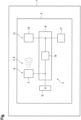
- FIG. 1 shows a principle drawing of a vehicle according to an exemplary embodiment.
- the sole Fig. shows a vehicle 1, e.g. a passenger vehicle, according to an exemplary embodiment.
- the vehicle 1 comprises a vehicle cabin 2 defining an acoustic space having, with regard to the acoustic perception of a person (not shown) in the vehicle cabin 2, specific aurally perceivable properties in a reference state.
- the vehicle cabin 2 typically, defines a coherent acoustic space.
- the reference state may refer to a state in which the vehicle cabin 2 is unoccupied, particularly at specific physical conditions, e.g. at a specific temperature and/or at a specific pressure in the vehicle cabin 2.
- the acoustic space defined by the vehicle cabin 2 has specific aurally perceivable properties, such as a specific reverberation, in the reference state.
- the reference state may particularly, refer to a state of the vehicle cabin 2 in which acoustic properties of the (unoccupied) vehicle cabin 2 or parameters relating to the acoustic parameters of the (unoccupied) vehicle cabin 2, e.g. the room impulse response of the vehicle cabin, reverberation, etc., are measured.
- the reference state may thus, refer to a tuning or tuned state of the vehicle cabin 2 in which tuning of an apparatus 3 for outputting an audio signal 4 in the vehicle cabin 2 is or has been performed.
- the vehicle comprises an apparatus 3 for outputting and/or reproducing an audio signal 4, e.g. a musical piece, in the vehicle cabin 2.
- the apparatus 3 can be implemented as a vehicle audio system or form part of a vehicle audio system.
- a respective audio signal 4 may be provided from an audio signal source 5, e.g. a data carrier device, such as a USB-stick, a radio device, such as a FM radio, a network device, such as a network application (app, browser, etc.), a mobile device, such as a smartphone, smartwatch, tablet, notebook, etc.
- the apparatus 3 may thus, be connectable or connected with a respective audio signal source 5.
- the apparatus 3 comprises at least one audio outputting device 6 configured to output and/or reproduce at least one audio signal 4, e.g. a musical piece, in the vehicle cabin 2.
- the audio outputting device 6 comprises one or more audio outputting elements 7, such as loudspeakers.
- Each audio outputting element 7 may define an acoustic channel of the audio outputting device 6.
- Each audio outputting element 7 may be assigned to a specific location or space, i.e. particularly to a specific seat, in the vehicle cabin 2.
- the one or more audio outputting elements 7 are typically, arrangeable or arranged so as to output a respective audio signal 4 in the vehicle cabin 2.
- the one or more audio outputting elements 7 may be arrangeable or arranged at and/or in structural elements (not shown), e.g.
- the one or more audio outputting elements 7 and the audio outputting device 6, respectively can be standard components of a vehicle audio system implemented by the apparatus 3.
- the audio outputting device 6 of the apparatus 3 can be a standard audio outputting device of a vehicle audio system.
- the apparatus 3 further comprises a hardware- and/or software-embodied acoustic impression modifying device 8 configured to generate an acoustic space modification signal 9 allowing for modifying the aurally perceivable properties of the acoustic space defined by the vehicle cabin 2 with regard to the reference state.
- the acoustic impression modifying device 8 is thus, configured to generate acoustic space modification signal 9 which, when output in the vehicle cabin 2 through the audio outputting device 6, allows for artificially modifying the aurally perceivable properties of the acoustic space defined by the vehicle cabin 2 with regard to the reference state.
- a respective acoustic space modification signal 9 thus, allows for artificially modifying the aurally perceivable properties of the acoustic space defined by the vehicle cabin 2 with regard to the reference state.
- the aurally perceivable properties of the acoustic space defined by the vehicle cabin 2 differ from the aurally perceivable properties of the acoustic space defined by the vehicle cabin 2 in the reference state when a respective acoustic space modification signal 9 is or has been output in the vehicle cabin 2.
- the different aurally perceivable properties of the acoustic space defined by the vehicle cabin 2 generated by outputting a respective acoustic space modification signal 9 in the vehicle cabin 2 may particularly, result from a different reverberation or different reverberation characteristics in the vehicle cabin 2 which has/have been created by outputting a respective acoustic space modification signal 9 in the vehicle cabin 2.
- the apparatus 3 thus, allows for outputting or reproducing an audio signal 4 in the vehicle cabin 2 with the option of enhancing, i.e. particularly modifying, the acoustic perception of the audio signal 4 output or reproduced in the vehicle cabin 2.
- an acoustic space modification signal 9 may be a reverberation signal allowing for artificially modifying the reverberation properties of the acoustic space defined by the vehicle cabin 2 with regard to the reference state.
- a acoustic space modification signal 9 may be output separately or in combination with other audio signals 4.
- a respective acoustic space modification signal 9 can also be mixed to an audio signal 4, e.g. a musical piece, which is outputtable or output in the vehicle cabin 2 such that a mixed audio signal including one or more original audio signals 4 and one or more acoustic space modification signals 9 is generated and output in the vehicle cabin 2.
- the acoustic impression modifying device 8 may be configured to modify the aurally perceivable properties of the acoustic space defined by the vehicle cabin 2 from the reference state to a target state.
- the target state can be generally understood as a state in which the aurally perceivable properties of the acoustic space defined by the vehicle cabin 2 differ from the aurally perceivable properties of the acoustic space defined by the vehicle cabin 2 in the reference state.
- the or a target state may thus, refer to specific aurally perceivable properties of an acoustic space different from the aurally perceivable properties of the acoustic space defined by the vehicle cabin 2 in the reference state.
- the acoustic impression modifying device 8 allows for changing the aurally perceivable properties of the vehicle cabin 2 compared with the reference state which allows for creating the acoustic impression that a person is not located in the vehicle cabin 2 but in a different acoustic environment.
- the target state may particularly, refer to specific aurally perceivable properties of a specific part of a specific acoustic environment, particularly of a specific building, for instance.
- the acoustic impression modifying device 8 allows for changing the aurally perceivable properties of the vehicle cabin 2 compared with the reference state which allows for creating the acoustic impression that a person is not located in the vehicle cabin 2 but in a specific part of specific acoustic environment, such as a in specific building, such as a church, opera house, music club, etc., and/or in a specific part of a specific building, such as an orchestra pit, receiving studio, rehearsal room, etc.
- a specific acoustic environment may also refer to specific environments in a specific building but also to specific environments in nature, such as in a cave, in a desert, in a forest, etc.
- the vehicle 1 may comprise a storage device 11, i.e. typically a data storage device, such as a memory, which is configured to store or stores, particularly pre-defined, aurally perceivable properties of at least one target state and related acoustic space modification signals 9 allowing for modifying the aurally perceivable properties of the acoustic space defined by the vehicle cabin 2 so as to generate the respective target state.
- a storage device 11 i.e. typically a data storage device, such as a memory, which is configured to store or stores, particularly pre-defined, aurally perceivable properties of at least one target state and related acoustic space modification signals 9 allowing for modifying the aurally perceivable properties of the acoustic space defined by the vehicle cabin 2 so as to generate the respective target state.
- the acoustic impression modifying device 8 can use one or more aurally perceivable properties of at least one target state and related acoustic space modification signals 9 stored in a respective storage device 11 for generating one or more modification signals 9 allowing for modifying the aurally perceivable properties of the acoustic space defined by the vehicle cabin 1 so as to generate a respective target state.
- Respective aurally perceivable properties of at least one target state and related acoustic space modification signals 9 may be stored in the storage device 11 in categorized manner, i.e. with allocated categories.
- Respective categories may refer to parameters of a specific acoustic environment, such as of a specific building, e.g. building-related parameters, such as building time, building location, etc., venue-related parameters, such as opera house, concert house, music club, etc., which can be chosen by a person - or generally by a user - so as to select a desired target state.
- the person may choose parameters such as building time, building location, so as to select e.g.
- a respective storage device 11 may be structurally assignable or assigned to the acoustic impression modifying device 8. Yet, it is also conceivable that the or a respective storage device 11 may only be functionally assignable or assigned to the acoustic impression modifying device 8.
- the vehicle 1 may comprise a communication device (not explicitly shown) allowing for communicating with an external data storage device 11 storing aurally perceivable properties of at least one target state and related acoustic space modification signals 9 allowing for modifying the aurally perceivable properties of the acoustic space defined by the vehicle cabin 2 so as to generate the respective target state via a wired or wireless communication link.
- a respective communication link can generally be established by a wired or wireless communication connection. Exemplary, wireless communication connections are Bluetooth-connections, Wifi-connections, etc.
- an acoustic space modification signal 9 may be a reverberation signal allowing for modifying the reverberation properties of the acoustic space defined by the vehicle cabin 2, particularly with regard to the reference state.
- a respective reverberation signal may add reverberation to an audio signal 4, e.g. a musical piece, which is to be output in the vehicle cabin 2 via the audio outputting device 6.
- a respective reverberation signal allows for artificially modifying the aurally perceivable properties of the acoustic space defined by the vehicle cabin 2 with regard to a reference state by artificially changing the reverberation properties of the acoustic space defined by the vehicle cabin 2, i.e.
- the acoustic impression modifying device 8 may thus, be configured to add reverberation to an audio signal 4 which is to be output in the vehicle cabin 2 via the at least one audio outputting device 6.
- Adding reverberation to an audio signal 4 or audio signal component means that the reverberation level of the audio signal 4 is (artificially) increased, particularly by signal processing of the audio signal 4 which adds reverberation, with respect to a reference reverberation level, particularly the original reverberation level of the audio signal 4.
- the audio outputting device 6 may comprise a plurality of audio output channels each allowing for outputting an audio signal 4 or an audio signal component of a specific audio signal 4 in the vehicle cabin 2.
- the acoustic impression modifying device 8 may be configured to add a first amount of reverberation to or from an audio signal 4 or audio signal component which is to be output through a first audio output channel and to add a second amount of reverberation to or from an audio signal 4 or audio signal component which is to be output through a second audio output channel.
- different acoustic channels of the audio outputting device 6 may output audio signals 4 or audio signal components with different reverberation which may result in a multi-dimensional temporally and/or spatially resolved modification of the aurally perceivable properties of the acoustic space defined by the vehicle cabin 2.
- the apparatus 3 comprises a receiving device 12 configured to receive sound present in the vehicle cabin 2, particularly a sound different from an audio signal 4 output in the vehicle cabin 2.
- the audio receiving device 12 is particularly, configured to receive sound from an internal and/or external sound source aurally perceivable in the vehicle cabin 2. Examples of respective sound receivable or received by the audio receiving device 12 is a human voice of a person, road sound, engine sound, etc. In other words, the term "sound" does typically, not refer to an audio signal 4 which is to be output or output in the vehicle cabin 2.
- the audio receiving device 12 comprises one or more audio receiving elements 13, such as microphones. Each audio receiving element 13 may be assigned to a specific location or space, i.e. particularly to at least one specific seat, in the vehicle cabin 2.
- the one or more audio receiving elements 13 may be arrangeable or arranged at and/or in structural elements, e.g. instrument panels, pillars, doors, ceiling, etc., of the vehicle 1 so as to receive sound aurally perceivable in the vehicle cabin 2.
- the one or more audio receiving elements 13 and the audio receiving device 12, respectively can be standard components of a vehicle audio system implemented by the apparatus 3.
- the audio receiving device 12 of the apparatus 3 can be a standard audio receiving device of a vehicle audio system.
- the acoustic impression modifying device 8 is configured to add reverberation to sound received by the audio receiving device 12. Adding reverberation to received sound may significantly improve the effect of modifying the acoustic space in the vehicle cabin 2 because not only the audio signal 4 can be processed with regard to modifying the modifying the acoustic space in the vehicle cabin 2, particularly by adding reverberation, but also all other kinds of sound present in the vehicle cabin 2 can be received and processed, particularly by adding reverberation, with regard to modifying the acoustic space in the vehicle cabin 2.
- Adding reverberation to the received sound means that the reverberation level of the received sound is (artificially) increased, particularly by signal processing of the received sound, with respect to a reference reverberation level, particularly the original reverberation level of the received sound.
- the audio outputting device 6 thus is also configured to output received sound present in the vehicle cabin 2 with added reverberation.
- a respective sound modification signal 9 may also be mixed to received sound which is outputtable or output in the vehicle cabin 2 such that a mixed audio signal including the received sound and the sound modification signal 9 is generated and output in the vehicle cabin 2.
- a respective mixed audio signal can also include an audio signal 4 which is to be output or output in the vehicle cabin 2.
- the apparatus 3 may further comprise a hardware- and/or software-embodied suppressing device 14 configured to suppress undesired sound in the vehicle cabin 2, particularly acoustic feedback, generated by receiving an audio signal 4 which is, upon processing, outputtable or output in the vehicle cabin 2 via the audio outputting device 6 and/or by receiving sound present in the vehicle cabin 2 which is, upon processing, outputtable or output in the vehicle cabin 2 via the audio outputting device 6.
- a hardware- and/or software-embodied suppressing device 14 configured to suppress undesired sound in the vehicle cabin 2, particularly acoustic feedback, generated by receiving an audio signal 4 which is, upon processing, outputtable or output in the vehicle cabin 2 via the audio outputting device 6 and/or by receiving sound present in the vehicle cabin 2 which is, upon processing, outputtable or output in the vehicle cabin 2 via the audio outputting device 6.
- undesired sound in the vehicle cabin 2, particularly acoustic feedback by receiving an audio signal 4 which is, upon processing, outputtable or output in the vehicle cabin 2 via the audio outputting device 6 and/or by receiving sound present in the vehicle cabin 2 which is, upon processing, outputtable or output in the vehicle cabin 2 via the audio outputting device 6 can be suppressed.
- the suppression of the undesired sound can be performed with dynamic or static suppression levels ranging from 100% (complete suppression) to 0% (no suppression). Suppressing the signals of the undesired sound may require separating the undesired sound signals from the acoustic signals 4 which are to be output in the vehicle cabin 2.
- the suppressing device 14 may be embodied as or comprise one or more suitable filter devices.
- Suppressing undesired sound may require determining and/or extracting the respective undesired sound from the acoustic signals 4 which are to be output in the vehicle cabin 2.
- the suppressing device 14 may thus, be configured to determine and/or extract the respective sound which is to be suppressed from the acoustic signals 4 which are to be output in the vehicle cabin 2.
- This determination and/or extraction may be realized by analyzing the acoustic properties, e.g. the frequency spectrum, of the sound with regard to (characteristic) acoustic properties, e.g. a specific frequency range, which can be assigned to the sound and/or which can be distinguished from acoustic signals 4 not containing the sound, e.g. containing a human voice, instruments, etc. Once determined and/or extracted in respective manner, the sound may be suppressed as specified above.
- the apparatus allows for implementing a method for outputting an audio signal 4 in a vehicle cabin 2 defining an acoustic space having specific aurally perceivable properties in a reference state.
- the method comprises the step of generating, by an acoustic impression modifying device 8, an acoustic space modification signal 9 allowing for modifying the aurally perceivable properties of the acoustic space defined by the vehicle cabin 2 with regard to a reference state.
- the method may further comprise outputting a generated acoustic space modification signal 9 in the vehicle cabin 2 so as to artificially modify the aurally perceivable properties of the acoustic space defined by the vehicle cabin 2 with regard to the reference state.
Landscapes
- Engineering & Computer Science (AREA)
- Multimedia (AREA)
- Physics & Mathematics (AREA)
- Acoustics & Sound (AREA)
- Signal Processing (AREA)
- Fittings On The Vehicle Exterior For Carrying Loads, And Devices For Holding Or Mounting Articles (AREA)
Description
- The invention refers to a vehicle, comprising a vehicle cabin defining an acoustic space having specific aurally perceivable properties in a reference state, the vehicle comprising an apparatus for outputting an audio signal in the vehicle cabin.
-
US 2019/208352 A1 andUS 2019/208352 A1 disclose an apparatus for outputting an audio signal in a vehicle cabin with added reverberation. - Respective vehicles comprising a vehicle cabin defining an acoustic space having specific aurally perceivable properties in a reference state, the vehicle comprising an apparatus for outputting or reproducing an audio signal in the vehicle cabin, e.g. implemented by a vehicle audio system, are generally known from prior art.
- The acoustic perception of audio signals output or reproduced in a vehicle cabin, the vehicle cabin defining an acoustic space having specific aurally perceivable properties in a reference state, e.g. in an unoccupied state, is essentially determined by the characteristics of the sound reverberation within the vehicle cabin and the acoustic space defined by the vehicle cabin, respectively.
- Given the above, there is an ongoing need for technically enhancing the acoustic perception of audio signals output or reproduced in a vehicle cabin though respective apparatuses for outputting or reproducing an audio signal in the vehicle cabin. Such enhancements specifically aim at a simple, yet reliable technical solution for individually modifying the characteristics of the acoustic space defined by the vehicle cabin.
- It is the objective of the present invention to provide a vehicle comprising an apparatus for outputting or reproducing an audio signal in the vehicle cabin which allows for enhancing the acoustic perception of audio signals output or reproduced in a vehicle cabin.
- This object is achieved by an apparatus according to Claim 1. The Claims depending on Claim 1 refer to possible embodiments.
Claim 12 relates to a method outputting an audio signal in a vehicle cabin. - A first aspect of the invention refers to an apparatus in a vehicle, i.e. particularly a passenger vehicle, such as a car, a truck, a van, etc., the vehicle comprising a vehicle cabin defining an acoustic space having, with regard to the acoustic perception of a person in the vehicle cabin - the term "person" generally refers to any person in the vehicle cabin, such as a driver or co-driver, for instance-, specific aurally perceivable properties in a reference state; as will be apparent form below, the aurally perceivable properties of the acoustic space are essentially defined by the reverberation in the vehicle cabin. The vehicle cabin typically, defines a coherent acoustic space.
- The aurally perceivable properties of the acoustic space are typically, (essentially) defined by the spatial dimensions, i.e. particularly the volume, of the vehicle cabin. As such, structural components of the vehicle spatially delimiting the vehicle cabin, such as parts of the vehicle body, typically, define the acoustic space. Yet, structural components of the vehicle disposed in the vehicle cabin, such as seats, trim elements, etc., typically, also define the aurally perceivable properties of the acoustic space and the acoustic space, respectively.
- The reference state may refer to a state in which the vehicle cabin is unoccupied, particularly at specific physical conditions, e.g. at a specific temperature and/or at a specific pressure in the vehicle cabin. The acoustic space defined by the vehicle cabin has specific aurally perceivable properties, such as a specific reverberation, in the reference state. The reference state may particularly, refer to a state of the vehicle cabin in which acoustic properties of the (unoccupied) vehicle cabin or parameters relating to the acoustic parameters of the (unoccupied) vehicle cabin, e.g. the room impulse response of the vehicle cabin, reverberation, etc., are measured. The reference state may thus, refer to a tuning or tuned state of the vehicle cabin in which tuning of an apparatus for outputting an audio signal - the term "outputting" is to be understood as outputting as sound or playing back an audio signal - in the vehicle cabin is or has been performed.
- The reference state may particularly, refer to a state in which an acoustic impression modifying device of the apparatus is inactive.
- The vehicle comprises an apparatus (hereinafter "apparatus") for outputting and/or reproducing an audio signal, e.g. a musical piece, in the vehicle cabin. The apparatus can be implemented as a vehicle audio system or form part of a vehicle audio system.
- A respective audio signal may be provided from an audio signal source, e.g. a data carrier device, such as a USB-stick, a radio device, such as a FM radio, a network device, such as a network application (app, browser, etc.), a mobile device, such as a smartphone, smartwatch, tablet, notebook, etc. The apparatus may thus, be connectable or connected with a respective audio signal source.
- The apparatus comprises at least one audio outputting device configured to output and/or reproduce at least one audio signal, e.g. a musical piece, in the vehicle cabin. The at least one audio outputting device typically, comprises one or more audio outputting elements, such as loudspeakers. Each audio outputting element may define an acoustic channel of the at least one audio outputting device. Each audio outputting element may be assigned to a specific location or space, i.e. particularly to a specific seat, in the vehicle cabin. The one or more audio outputting elements are typically, arrangeable or arranged so as to output a respective audio signal in the vehicle cabin. The one or more audio outputting elements may be arrangeable or arranged at and/or in structural elements, e.g. instrument panels, pillars, doors, ceiling, etc., of the vehicle.
- Notably, the one or more audio outputting elements and the at least one audio outputting device, respectively can be standard components of a vehicle audio system implemented by the apparatus. Hence, at least from a structural point of view, the at least one audio outputting device of the apparatus can be a standard audio outputting device of a vehicle audio system.
- The apparatus further comprises a hardware- and/or software-embodied acoustic impression modifying device configured to generate an acoustic space modification signal allowing for modifying the aurally perceivable properties of the acoustic space defined by the vehicle cabin, particularly with regard to a reference state. The at least one acoustic impression modifying device is thus, configured to generate acoustic space modification signal which, when output in the vehicle cabin through the at least one audio outputting device, allows for artificially modifying the aurally perceivable properties of the acoustic space defined by the vehicle cabin with regard to a reference state. A respective acoustic space modification signal thus, allows for artificially modifying the aurally perceivable properties of the acoustic space defined by the vehicle cabin with regard to a reference state. In other words, the aurally perceivable properties of the acoustic space defined by the vehicle cabin differ from the aurally perceivable properties of the acoustic space defined by the vehicle cabin in the reference state when a respective acoustic space modification signal is or has been output in the vehicle cabin. As indicated above, the different aurally perceivable properties of the acoustic space defined by the vehicle cabin generated by outputting a respective acoustic space modification signal in the vehicle cabin may particularly, result from a different reverberation or different reverberation characteristics in the vehicle cabin which has/have been created by outputting a respective acoustic space modification signal in the vehicle cabin.
- The apparatus thus, allows for outputting or reproducing an audio signal in the vehicle cabin with the option of enhancing, i.e. particularly modifying, the acoustic perception of audio signals output or reproduced in the vehicle cabin.
- As will be more apparent from below, an acoustic space modification signal may be a reverberation signal allowing for artificially modifying the reverberation properties of the acoustic space defined by the vehicle cabin with regard to the reference state.
- A acoustic space modification signal may be output separately or in combination with other audio signals. Thus, a respective acoustic space modification signal can also be mixed to an audio signal, e.g. a musical piece, which is outputtable or output in the vehicle cabin such that a mixed audio signal including one or more original audio signals and one or more acoustic space modification signals is generated and output in the vehicle cabin.
- The acoustic impression modifying device may be configured to modify the aurally perceivable properties of the acoustic space defined by the vehicle cabin from the reference state to a target state. The target state can be generally understood as a state in which the aurally perceivable properties of the acoustic space defined by the vehicle cabin differ from the aurally perceivable properties of the acoustic space defined by the vehicle cabin in the reference state.
- The or a target state may particularly, refer to specific aurally perceivable properties of an acoustic space different from the aurally perceivable properties of the acoustic space defined by the vehicle cabin in the reference state. As such, the acoustic impression modifying device allows for changing the aurally perceivable properties of the vehicle cabin compared with the reference state which allows for creating the acoustic impression that a person is not located in the vehicle cabin but in a different acoustic environment.
- The target state may particularly, refer to specific aurally perceivable properties of a specific part of a specific acoustic environment, particularly of a specific building, for instance. As such, the acoustic impression modifying device allows for changing the aurally perceivable properties of the vehicle cabin compared with the reference state which allows for creating the acoustic impression that a person is not located in the vehicle cabin but in a specific part of specific acoustic environment, such as a in specific building, such as a church, opera house, music club, etc., and/or in a specific part of a specific building, such as an orchestra pit, receiving studio, rehearsal room, etc. Yet, a specific acoustic environment may also refer to specific environments in a specific building but also to specific environments in nature, such as in a cave, in a desert, in a forest, etc.
- The vehicle may comprise a storage device, i.e. typically a data storage device, such as a memory, which is configured to store or stores, particularly pre-defined, aurally perceivable properties of at least one target state allowing for generating acoustic space modification signals that modify the aurally perceivable properties of the acoustic space defined by the vehicle cabin so as to generate the respective target state. As such, the acoustic impression modifying device can use one or more aurally perceivable properties of at least one target state stored in a respective storage device for generating one or more modification signals allowing for modifying the aurally perceivable properties of the acoustic space defined by the vehicle cabin so as to generate or obtain a respective target state. This may save computational resources of the acoustic impression modifying device because the acoustic impression modifying device can use stored acoustically perceivable properties from the storage device that generate a respective target state, such that it is not required to create respective acoustically perceivable properties.
- Respective aurally perceivable properties of at least one target state may be stored in the storage device in categorized manner, i.e. with allocated categories. Respective categories may refer to parameters of a specific acoustic environment, such as of a specific building, e.g. building-related parameters, such as building time, building location, etc., venue-related parameters, such as opera house, concert house, music club, etc., which can be chosen by a person - or generally by a user - so as to select a desired target state. As an example, the person may choose parameters such as building time, building location, so as to select e.g. the acoustic environment in a French church built in the 12th century as a target state such that one or more aurally perceivable properties of respective French churches are offerable or offered to the person for selection through a user interface, such as touch screen, for instance.
- A respective storage device may be structurally assignable or assigned to the acoustic impression modifying device. Yet, it is also conceivable that the or a respective storage device may only be functionally assignable or assigned to the acoustic impression modifying device. In this case, the vehicle may comprise a communication device allowing for communicating with an external data storage device storing aurally perceivable properties of at least one target state and related acoustic space modification signals allowing for modifying the aurally perceivable properties of the acoustic space defined by the vehicle cabin so as to generate the respective target state via a wired or wireless communication link. A respective communication link can generally be established by a wired or wireless communication connection. Exemplary, wireless communication connections are Bluetooth-connections, Wifi-connections, etc.
- As indicated above, an acoustic space modification signal may be a reverberation signal allowing for modifying the reverberation properties of the acoustic space defined by the vehicle cabin, particularly with regard to the reference state. As such, a respective reverberation signal may add reverberation to an audio signal, e.g. a musical piece, which is to be output in the vehicle cabin via the at least one audio outputting device. As such, a respective reverberation signal allows for artificially modifying the aurally perceivable properties of the acoustic space defined by the vehicle cabin with regard to a reference state by artificially changing the reverberation properties of the acoustic space defined by the vehicle cabin, i.e. by artificially increasing the reverberation properties (adding reverberation) of the acoustic space defined by the vehicle cabin. The at least one acoustic impression modifying device may thus, be configured to add reverberation to an audio signal which is to be output in the vehicle cabin via the at least one audio outputting device.
- Adding reverberation to an audio signal or audio signal component generally, means that the reverberation level of the audio signal is (artificially) increased, particularly by signal processing of the audio signal which adds reverberation, with respect to a reference reverberation level, particularly the original reverberation level of the audio signal.
- As indicated above, the at least one audio outputting device may comprise a plurality of audio output channels each allowing for outputting an audio signal or an audio signal component of a specific audio signal in the vehicle cabin. Thereby, the acoustic impression modifying device may be configured to add a first amount of reverberation to or from an audio signal or audio signal component which is to be output through a first audio output channel and to add a second amount of reverberation to or from an audio signal or audio signal component which is to be output through a second audio output channel. In other words, different acoustic channels of the at least one audio outputting device may output audio signals or audio signal components with different reverberation which may result in a multi-dimensional temporally and/or spatially resolved modification of the aurally perceivable properties of the acoustic space defined by the vehicle cabin.
- The apparatus may further comprise at least one audio receiving device configured to receive sound, e.g. noise, present in the vehicle cabin, particularly a sound different from an audio signal output in the vehicle cabin. The at least one audio receiving device is particularly, configured to receive sound from an internal and/or external sound source aurally perceivable in the vehicle cabin. The at least one audio receiving device may be embodied as a microphone device, for instance. Examples of respective sound receivable or received by the at least one audio receiving device is a human voice of a person, road sound, engine sound, etc. In other words, the term "sound" does typically, not refer to an audio signal which is to be output or output in the vehicle cabin.
- The at least one audio receiving device typically, comprises one or more audio receiving elements, such as microphones. Each audio receiving element may be assigned to a specific location or space, i.e. particularly to at least one specific seat, in the vehicle cabin. The one or more audio receiving elements may be arrangeable or arranged at and/or in structural elements, e.g. instrument panels, pillars, doors, ceiling, etc., of the vehicle so as to receive sound aurally perceivable in the vehicle cabin. Notably, the one or more audio receiving elements and the at least one audio receiving device, respectively can be standard components of a vehicle audio system implemented by the apparatus. Hence, at least from a structural point of view, the at least one audio receiving device of the apparatus can be a standard audio receiving device of a vehicle audio system.
- The acoustic impression modifying device is
- configured to add reverberation to sound received by the at least one audio receiving device. Adding reverberation to received sound may significantly improve the effect of modifying the acoustic space in the vehicle cabin because not only the audio signal can be processed with regard to modifying the modifying the acoustic space in the vehicle cabin, particularly by adding reverberation, but also all other kinds of sound present in the vehicle cabin can be received and processed, particularly by adding reverberation, with regard to modifying the acoustic space in the vehicle cabin. Adding reverberation to the received sound means that the reverberation level of the received sound is (artificially) increased, particularly by signal processing of the received sound, with respect to a reference reverberation level, particularly the original reverberation level of the received sound.
- The at least one audio outputting device is thus also configured to output received sound present in the vehicle cabin with added reverberation.
- As such, a respective sound modification signal may also be mixed to received sound which is outputtable or output in the vehicle cabin such that a mixed audio signal including the received sound and the sound modification signal is generated and output in the vehicle cabin. A respective mixed audio also includes an audio signal which is to be output or output in the vehicle cabin.
- The apparatus may further comprise at least one hardware- and/or software-embodied suppressing device configured to suppress undesired sound in the vehicle cabin, particularly acoustic feedback, generated by receiving an audio signal which is, upon processing, outputtable or output in the vehicle cabin via the at least one audio outputting device and/or by receiving sound present in the vehicle cabin which is, upon processing, outputtable or output in the vehicle cabin via the at least one audio outputting device. As such, undesired sound in the vehicle cabin, particularly acoustic feedback, by receiving an audio signal which is, upon processing, outputtable or output in the vehicle cabin via the at least one audio outputting device and/or by receiving sound present in the vehicle cabin which is, upon processing, outputtable or output in the vehicle cabin via the at least one audio outputting device can be suppressed. The suppression of the undesired sound can be performed with dynamic or static suppression levels ranging from 100% (complete suppression) to 0% (no suppression). Suppressing the signals of the undesired sound may require separating the undesired sound signals from the acoustic signals which are to be output in the vehicle cabin. The suppressing device may be embodied as or comprise one or more suitable filter devices.
- Suppressing undesired sound may require determining and/or extracting the respective undesired sound from the acoustic signals which are to be output in the vehicle cabin. The suppressing device may thus, be configured to determine and/or extract the respective sound which is to be suppressed from the acoustic signals which are to be output in the vehicle cabin. This determination and/or extraction may be realized by analyzing the acoustic properties, e.g. the frequency spectrum, of the sound with regard to (characteristic) acoustic properties, e.g. a specific frequency range, which can be assigned to the sound and/or which can be distinguished from acoustic signals not containing the sound, e.g. containing a human voice, instruments, etc. Once determined and/or extracted in respective manner, the sound may be suppressed as specified above.
- A second aspect of the invention refers to a vehicle comprising the apparatus for outputting an audio signal in the vehicle cabin of the vehicle, according to the first aspect of the invention. The apparatus comprises at least one audio outputting device configured to output an audio signal in a vehicle cabin; and at least one acoustic impression modifying device configured to generate an acoustic space modification signal allowing for modifying the aurally perceivable properties of an acoustic space defined by a vehicle cabin with regard to a reference state.
- All annotations regarding the apparatus of the first aspect of the invention apply mutatis mutandis to the vehicle of the second aspect of the invention.
- A third aspect of the invention refers to a method for outputting an audio signal in a vehicle cabin defining an acoustic space having specific aurally perceivable properties in a reference state. The method comprises the step of generating, by an acoustic impression modifying device, an acoustic space modification signal allowing for modifying the aurally perceivable properties of the acoustic space defined by the vehicle cabin with regard to a reference state. The method further comprises outputting a generated acoustic space modification signal in the or a cabin so as to artificially modify the aurally perceivable properties of the acoustic space defined by the vehicle cabin with regard to the reference state.
- All annotations regarding the apparatus of the first aspect of the invention apply mutatis mutandis to the method of the third aspect of the invention.
- Exemplary embodiments of the invention are described with reference to the Fig., whereby the sole Fig. shows a principle drawing of a vehicle according to an exemplary embodiment.
- The sole Fig. shows a vehicle 1, e.g. a passenger vehicle, according to an exemplary embodiment.
- The vehicle 1 comprises a
vehicle cabin 2 defining an acoustic space having, with regard to the acoustic perception of a person (not shown) in thevehicle cabin 2, specific aurally perceivable properties in a reference state. Thevehicle cabin 2 typically, defines a coherent acoustic space. The reference state may refer to a state in which thevehicle cabin 2 is unoccupied, particularly at specific physical conditions, e.g. at a specific temperature and/or at a specific pressure in thevehicle cabin 2. The acoustic space defined by thevehicle cabin 2 has specific aurally perceivable properties, such as a specific reverberation, in the reference state. The reference state may particularly, refer to a state of thevehicle cabin 2 in which acoustic properties of the (unoccupied)vehicle cabin 2 or parameters relating to the acoustic parameters of the (unoccupied)vehicle cabin 2, e.g. the room impulse response of the vehicle cabin, reverberation, etc., are measured. The reference state may thus, refer to a tuning or tuned state of thevehicle cabin 2 in which tuning of anapparatus 3 for outputting anaudio signal 4 in thevehicle cabin 2 is or has been performed. - The vehicle comprises an
apparatus 3 for outputting and/or reproducing anaudio signal 4, e.g. a musical piece, in thevehicle cabin 2. Theapparatus 3 can be implemented as a vehicle audio system or form part of a vehicle audio system. - A
respective audio signal 4 may be provided from anaudio signal source 5, e.g. a data carrier device, such as a USB-stick, a radio device, such as a FM radio, a network device, such as a network application (app, browser, etc.), a mobile device, such as a smartphone, smartwatch, tablet, notebook, etc. Theapparatus 3 may thus, be connectable or connected with a respectiveaudio signal source 5. - The
apparatus 3 comprises at least oneaudio outputting device 6 configured to output and/or reproduce at least oneaudio signal 4, e.g. a musical piece, in thevehicle cabin 2. Theaudio outputting device 6 comprises one or more audio outputting elements 7, such as loudspeakers. Each audio outputting element 7 may define an acoustic channel of theaudio outputting device 6. Each audio outputting element 7 may be assigned to a specific location or space, i.e. particularly to a specific seat, in thevehicle cabin 2. The one or more audio outputting elements 7 are typically, arrangeable or arranged so as to output arespective audio signal 4 in thevehicle cabin 2. The one or more audio outputting elements 7 may be arrangeable or arranged at and/or in structural elements (not shown), e.g. instrument panels, pillars, doors, ceiling, etc., of the vehicle 1. Notably, the one or more audio outputting elements 7 and theaudio outputting device 6, respectively can be standard components of a vehicle audio system implemented by theapparatus 3. Hence, at least from a structural point of view, theaudio outputting device 6 of theapparatus 3 can be a standard audio outputting device of a vehicle audio system. - The
apparatus 3 further comprises a hardware- and/or software-embodied acousticimpression modifying device 8 configured to generate an acoustic space modification signal 9 allowing for modifying the aurally perceivable properties of the acoustic space defined by thevehicle cabin 2 with regard to the reference state. The acousticimpression modifying device 8 is thus, configured to generate acoustic space modification signal 9 which, when output in thevehicle cabin 2 through theaudio outputting device 6, allows for artificially modifying the aurally perceivable properties of the acoustic space defined by thevehicle cabin 2 with regard to the reference state. A respective acoustic space modification signal 9 thus, allows for artificially modifying the aurally perceivable properties of the acoustic space defined by thevehicle cabin 2 with regard to the reference state. In other words, the aurally perceivable properties of the acoustic space defined by thevehicle cabin 2 differ from the aurally perceivable properties of the acoustic space defined by thevehicle cabin 2 in the reference state when a respective acoustic space modification signal 9 is or has been output in thevehicle cabin 2. As indicated above, the different aurally perceivable properties of the acoustic space defined by thevehicle cabin 2 generated by outputting a respective acoustic space modification signal 9 in thevehicle cabin 2 may particularly, result from a different reverberation or different reverberation characteristics in thevehicle cabin 2 which has/have been created by outputting a respective acoustic space modification signal 9 in thevehicle cabin 2. - The
apparatus 3 thus, allows for outputting or reproducing anaudio signal 4 in thevehicle cabin 2 with the option of enhancing, i.e. particularly modifying, the acoustic perception of theaudio signal 4 output or reproduced in thevehicle cabin 2. - As will be more apparent from below, an acoustic space modification signal 9 may be a reverberation signal allowing for artificially modifying the reverberation properties of the acoustic space defined by the
vehicle cabin 2 with regard to the reference state. - A acoustic space modification signal 9 may be output separately or in combination with other audio signals 4. Thus, a respective acoustic space modification signal 9 can also be mixed to an
audio signal 4, e.g. a musical piece, which is outputtable or output in thevehicle cabin 2 such that a mixed audio signal including one or more originalaudio signals 4 and one or more acoustic space modification signals 9 is generated and output in thevehicle cabin 2. - The acoustic
impression modifying device 8 may be configured to modify the aurally perceivable properties of the acoustic space defined by thevehicle cabin 2 from the reference state to a target state. The target state can be generally understood as a state in which the aurally perceivable properties of the acoustic space defined by thevehicle cabin 2 differ from the aurally perceivable properties of the acoustic space defined by thevehicle cabin 2 in the reference state. - The or a target state may thus, refer to specific aurally perceivable properties of an acoustic space different from the aurally perceivable properties of the acoustic space defined by the
vehicle cabin 2 in the reference state. As such, the acousticimpression modifying device 8 allows for changing the aurally perceivable properties of thevehicle cabin 2 compared with the reference state which allows for creating the acoustic impression that a person is not located in thevehicle cabin 2 but in a different acoustic environment. - The target state may particularly, refer to specific aurally perceivable properties of a specific part of a specific acoustic environment, particularly of a specific building, for instance. As such, the acoustic
impression modifying device 8 allows for changing the aurally perceivable properties of thevehicle cabin 2 compared with the reference state which allows for creating the acoustic impression that a person is not located in thevehicle cabin 2 but in a specific part of specific acoustic environment, such as a in specific building, such as a church, opera house, music club, etc., and/or in a specific part of a specific building, such as an orchestra pit, receiving studio, rehearsal room, etc. Yet, a specific acoustic environment may also refer to specific environments in a specific building but also to specific environments in nature, such as in a cave, in a desert, in a forest, etc. - The vehicle 1 may comprise a
storage device 11, i.e. typically a data storage device, such as a memory, which is configured to store or stores, particularly pre-defined, aurally perceivable properties of at least one target state and related acoustic space modification signals 9 allowing for modifying the aurally perceivable properties of the acoustic space defined by thevehicle cabin 2 so as to generate the respective target state. As such, the acousticimpression modifying device 8 can use one or more aurally perceivable properties of at least one target state and related acoustic space modification signals 9 stored in arespective storage device 11 for generating one or more modification signals 9 allowing for modifying the aurally perceivable properties of the acoustic space defined by the vehicle cabin 1 so as to generate a respective target state. This may save computational resources of the acousticimpression modifying device 8 because the acousticimpression modifying device 8 can use stored acoustic space modification signals 9 from thestorage device 11 for generating a respective target state such that it is not required to create respective acoustic space modification signals 9 through the acousticimpression modifying device 8 without actually creating such acoustic space modification signals 9. - Respective aurally perceivable properties of at least one target state and related acoustic space modification signals 9 may be stored in the
storage device 11 in categorized manner, i.e. with allocated categories. Respective categories may refer to parameters of a specific acoustic environment, such as of a specific building, e.g. building-related parameters, such as building time, building location, etc., venue-related parameters, such as opera house, concert house, music club, etc., which can be chosen by a person - or generally by a user - so as to select a desired target state. As an example, the person may choose parameters such as building time, building location, so as to select e.g. the acoustic environment in a French church built in the 12th century as a target state such that one or more aurally perceivable properties and related acoustic space modification signals 9 of respective French churches are offerable or offered to the person for selection through a user interface, such as touch screen, for instance. - A
respective storage device 11 may be structurally assignable or assigned to the acousticimpression modifying device 8. Yet, it is also conceivable that the or arespective storage device 11 may only be functionally assignable or assigned to the acousticimpression modifying device 8. In this case, the vehicle 1 may comprise a communication device (not explicitly shown) allowing for communicating with an externaldata storage device 11 storing aurally perceivable properties of at least one target state and related acoustic space modification signals 9 allowing for modifying the aurally perceivable properties of the acoustic space defined by thevehicle cabin 2 so as to generate the respective target state via a wired or wireless communication link. A respective communication link can generally be established by a wired or wireless communication connection. Exemplary, wireless communication connections are Bluetooth-connections, Wifi-connections, etc. - As indicated above, an acoustic space modification signal 9 may be a reverberation signal allowing for modifying the reverberation properties of the acoustic space defined by the
vehicle cabin 2, particularly with regard to the reference state. As such, a respective reverberation signal may add reverberation to anaudio signal 4, e.g. a musical piece, which is to be output in thevehicle cabin 2 via theaudio outputting device 6. As such, a respective reverberation signal allows for artificially modifying the aurally perceivable properties of the acoustic space defined by thevehicle cabin 2 with regard to a reference state by artificially changing the reverberation properties of the acoustic space defined by thevehicle cabin 2, i.e. by artificially increasing the reverberation properties (adding reverberation) of the acoustic space defined by thevehicle cabin 2. The acousticimpression modifying device 8 may thus, be configured to add reverberation to anaudio signal 4 which is to be output in thevehicle cabin 2 via the at least oneaudio outputting device 6. Adding reverberation to anaudio signal 4 or audio signal component generally, means that the reverberation level of theaudio signal 4 is (artificially) increased, particularly by signal processing of theaudio signal 4 which adds reverberation, with respect to a reference reverberation level, particularly the original reverberation level of theaudio signal 4. - As indicated above, the
audio outputting device 6 may comprise a plurality of audio output channels each allowing for outputting anaudio signal 4 or an audio signal component of aspecific audio signal 4 in thevehicle cabin 2. Thereby, the acousticimpression modifying device 8 may be configured to add a first amount of reverberation to or from anaudio signal 4 or audio signal component which is to be output through a first audio output channel and to add a second amount of reverberation to or from anaudio signal 4 or audio signal component which is to be output through a second audio output channel. In other words, different acoustic channels of theaudio outputting device 6 mayoutput audio signals 4 or audio signal components with different reverberation which may result in a multi-dimensional temporally and/or spatially resolved modification of the aurally perceivable properties of the acoustic space defined by thevehicle cabin 2. - The
apparatus 3 comprises a receivingdevice 12 configured to receive sound present in thevehicle cabin 2, particularly a sound different from anaudio signal 4 output in thevehicle cabin 2. Theaudio receiving device 12 is particularly, configured to receive sound from an internal and/or external sound source aurally perceivable in thevehicle cabin 2. Examples of respective sound receivable or received by theaudio receiving device 12 is a human voice of a person, road sound, engine sound, etc. In other words, the term "sound" does typically, not refer to anaudio signal 4 which is to be output or output in thevehicle cabin 2. - The
audio receiving device 12 comprises one or moreaudio receiving elements 13, such as microphones. Each audio receivingelement 13 may be assigned to a specific location or space, i.e. particularly to at least one specific seat, in thevehicle cabin 2. The one or moreaudio receiving elements 13 may be arrangeable or arranged at and/or in structural elements, e.g. instrument panels, pillars, doors, ceiling, etc., of the vehicle 1 so as to receive sound aurally perceivable in thevehicle cabin 2. Notably, the one or moreaudio receiving elements 13 and theaudio receiving device 12, respectively can be standard components of a vehicle audio system implemented by theapparatus 3. Hence, at least from a structural point of view, theaudio receiving device 12 of theapparatus 3 can be a standard audio receiving device of a vehicle audio system. - The acoustic
impression modifying device 8 is configured to add reverberation to sound received by theaudio receiving device 12. Adding reverberation to received sound may significantly improve the effect of modifying the acoustic space in thevehicle cabin 2 because not only theaudio signal 4 can be processed with regard to modifying the modifying the acoustic space in thevehicle cabin 2, particularly by adding reverberation, but also all other kinds of sound present in thevehicle cabin 2 can be received and processed, particularly by adding reverberation, with regard to modifying the acoustic space in thevehicle cabin 2. Adding reverberation to the received sound means that the reverberation level of the received sound is (artificially) increased, particularly by signal processing of the received sound, with respect to a reference reverberation level, particularly the original reverberation level of the received sound. - The
audio outputting device 6 thus is also configured to output received sound present in thevehicle cabin 2 with added reverberation. - As such, a respective sound modification signal 9 may also be mixed to received sound which is outputtable or output in the
vehicle cabin 2 such that a mixed audio signal including the received sound and the sound modification signal 9 is generated and output in thevehicle cabin 2. A respective mixed audio signal can also include anaudio signal 4 which is to be output or output in thevehicle cabin 2. - The
apparatus 3 may further comprise a hardware- and/or software-embodied suppressingdevice 14 configured to suppress undesired sound in thevehicle cabin 2, particularly acoustic feedback, generated by receiving anaudio signal 4 which is, upon processing, outputtable or output in thevehicle cabin 2 via theaudio outputting device 6 and/or by receiving sound present in thevehicle cabin 2 which is, upon processing, outputtable or output in thevehicle cabin 2 via theaudio outputting device 6. As such, undesired sound in thevehicle cabin 2, particularly acoustic feedback, by receiving anaudio signal 4 which is, upon processing, outputtable or output in thevehicle cabin 2 via theaudio outputting device 6 and/or by receiving sound present in thevehicle cabin 2 which is, upon processing, outputtable or output in thevehicle cabin 2 via theaudio outputting device 6 can be suppressed. The suppression of the undesired sound can be performed with dynamic or static suppression levels ranging from 100% (complete suppression) to 0% (no suppression). Suppressing the signals of the undesired sound may require separating the undesired sound signals from theacoustic signals 4 which are to be output in thevehicle cabin 2. The suppressingdevice 14 may be embodied as or comprise one or more suitable filter devices. - Suppressing undesired sound may require determining and/or extracting the respective undesired sound from the
acoustic signals 4 which are to be output in thevehicle cabin 2. The suppressingdevice 14 may thus, be configured to determine and/or extract the respective sound which is to be suppressed from theacoustic signals 4 which are to be output in thevehicle cabin 2. This determination and/or extraction may be realized by analyzing the acoustic properties, e.g. the frequency spectrum, of the sound with regard to (characteristic) acoustic properties, e.g. a specific frequency range, which can be assigned to the sound and/or which can be distinguished fromacoustic signals 4 not containing the sound, e.g. containing a human voice, instruments, etc. Once determined and/or extracted in respective manner, the sound may be suppressed as specified above. - The apparatus allows for implementing a method for outputting an
audio signal 4 in avehicle cabin 2 defining an acoustic space having specific aurally perceivable properties in a reference state. The method comprises the step of generating, by an acousticimpression modifying device 8, an acoustic space modification signal 9 allowing for modifying the aurally perceivable properties of the acoustic space defined by thevehicle cabin 2 with regard to a reference state. The method may further comprise outputting a generated acoustic space modification signal 9 in thevehicle cabin 2 so as to artificially modify the aurally perceivable properties of the acoustic space defined by thevehicle cabin 2 with regard to the reference state.
Claims (12)
- Apparatus (3) for outputting an audio signal (4) in a vehicle cabin (2) defining an acoustic space having specific aurally perceivable properties in a reference state, wherein the apparatus (3) for outputting an audio signal (4) in the vehicle cabin (2) comprises- an audio outputting device (6) configured to output an audio signal (4) in the vehicle cabin (2);- a acoustic impression modifying device (8) configured to generate an acoustic space modification signal (9) allowing for modifying the aurally perceivable properties of the acoustic space defined by the vehicle cabin (2) with regard to a reference state; characterized byat least one audio receiving device (12) configured to receive a sound present in the vehicle cabin (2), particularly a sound different from an audio signal (4) output in the vehicle cabin (2); whereinthe acoustic impression modifying device (8) is configured to add reverberation to the received sound present in the vehicle cabin (2); whereinthe at least one audio outputting device (6) is configured to output received sound present in the vehicle cabin (2) with added reverberation.
- Vehicle (1) comprising the apparatus (3) according to Claim 1.
- Vehicle according to Claim 2, wherein the acoustic impression modifying device (8) is configured to modify the aurally perceivable properties of the acoustic space defined by the vehicle cabin (2) from the reference state to a target state.
- Vehicle according to Claim 3, wherein the target state refers to specific aurally perceivable properties of an acoustic space different from the aurally perceivable properties of the acoustic space defined by the vehicle cabin (2) in the reference state.
- Vehicle according to Claim 4, wherein the target state refers to specific aurally perceivable properties of a specific part of a specific acoustic environment, particularly of a specific building.
- Vehicle according to any one of Claims 2 - 5, comprising a storage device (11) configured to store aurally perceivable properties of at least one target state and related modification signals allowing for modifying the aurally perceivable properties of the acoustic space defined by the vehicle cabin (2) so as to generate the respective target state.
- Vehicle according to any one of Claims 2 - 6, wherein the modification signal (9) is a reverberation signal allowing for modifying the reverberation properties of the acoustic space defined by the vehicle cabin (2) with regard to the reference state.
- Vehicle according to any one of Claims 2 - 7, wherein the acoustic impression modifying device (8) is configured to add reverberation to an audio signal (4) which is to be output in the vehicle cabin (2) via the at least one audio outputting device (6).
- Vehicle according to any one of Claims 2 - 8, wherein the at least one audio outputting device (6) comprises a plurality of audio output channels each allowing for outputting an audio signal (4) or an audio signal component of a specific audio signal (4) in the vehicle cabin (2), whereby
the acoustic impression modifying device (8) is configured to add a first amount of reverberation to or from an audio signal (4) or audio signal component which is to be output through a first audio output channel and to add a second amount of reverberation to or from an audio signal (4) or audio signal component which is to be output through a second audio output channel. - Vehicle according to any one of Claims 2 - 9, further comprising a suppressing device (14) configured to suppress undesired acoustic sound in the vehicle cabin (2), particularly acoustic feedback generated from receiving sound present in the vehicle cabin (2) and/or from receiving the audio signal (4) which is outputtable or output in the vehicle cabin (2) via the at least one audio outputting device (6).
- Vehicle according to any one of Claims 2 - 10, wherein the reference state refers to a state of an unoccupied vehicle cabin (2), particularly at specific physical conditions, e.g. specific temperature and/or pressure in the vehicle cabin (2).
- Method for outputting an audio signal (4) in a vehicle cabin (2) defining an acoustic space having specific aurally perceivable properties in a reference state, the method comprising the steps of:generating, by an acoustic impression modifying device (8), an acoustic space modification signal (9) allowing for modifying the aurally perceivable properties of the acoustic space defined by the vehicle cabin (2) with regard to the or a reference state,characterized by the steps of receiving by at least one audio receiving device (12) a sound present in the vehicle cabin (2), particularly a sound different from an audio signal (4) output in the vehicle cabin (2);adding reverberation to the received sound present in the vehicle cabin (2) by the acoustic impression modifying device (8);outputting received sound present in the vehicle cabin (2) with added reverberation by the at least one audio outputting device (6).
Applications Claiming Priority (1)
| Application Number | Priority Date | Filing Date | Title |
|---|---|---|---|
| PCT/EP2019/068601 WO2021004632A1 (en) | 2019-07-10 | 2019-07-10 | Vehicle, comprising a vehicle cabin defining an acoustic space |
Publications (2)
| Publication Number | Publication Date |
|---|---|
| EP3997693A1 EP3997693A1 (en) | 2022-05-18 |
| EP3997693B1 true EP3997693B1 (en) | 2025-03-12 |
Family
ID=67303450
Family Applications (1)
| Application Number | Title | Priority Date | Filing Date |
|---|---|---|---|
| EP19740339.7A Active EP3997693B1 (en) | 2019-07-10 | 2019-07-10 | Apparatus and method for outputting an audio signal in a vehicle cabin |
Country Status (4)
| Country | Link |
|---|---|
| US (2) | US11882427B2 (en) |
| EP (1) | EP3997693B1 (en) |
| CN (1) | CN114072873B (en) |
| WO (1) | WO2021004632A1 (en) |
Family Cites Families (15)
| Publication number | Priority date | Publication date | Assignee | Title |
|---|---|---|---|---|
| JP2636702B2 (en) * | 1992-10-01 | 1997-07-30 | ヤマハ株式会社 | Method for measuring sound absorption power of hall chair in a seated state and dummy sound absorber |
| US6091824A (en) * | 1997-09-26 | 2000-07-18 | Crystal Semiconductor Corporation | Reduced-memory early reflection and reverberation simulator and method |
| US20040086130A1 (en) * | 2002-05-03 | 2004-05-06 | Eid Bradley F. | Multi-channel sound processing systems |
| AU2003202084A1 (en) * | 2003-01-22 | 2004-08-13 | Shelley Katz | Apparatus and method for producing sound |
| CN2643592Y (en) * | 2003-02-11 | 2004-09-22 | 怡利电子工业股份有限公司 | Multimedia Car Audio |
| CN1722912A (en) * | 2004-07-15 | 2006-01-18 | 钰宝科技股份有限公司 | Multi-channel wireless audio system |
| EP1860911A1 (en) * | 2006-05-24 | 2007-11-28 | Harman/Becker Automotive Systems GmbH | System and method for improving communication in a room |
| EP1983799B1 (en) * | 2007-04-17 | 2010-07-07 | Harman Becker Automotive Systems GmbH | Acoustic localization of a speaker |
| CN201261432Y (en) * | 2008-09-12 | 2009-06-24 | 深圳市航盛电子股份有限公司 | Vehicle mounted karaoke apparatus |
| EP2444967A1 (en) * | 2010-10-25 | 2012-04-25 | Fraunhofer-Gesellschaft zur Förderung der Angewandten Forschung e.V. | Echo suppression comprising modeling of late reverberation components |
| CN106664473B (en) * | 2014-06-30 | 2020-02-14 | 索尼公司 | Information processing apparatus, information processing method, and program |
| CN105959875A (en) * | 2016-05-27 | 2016-09-21 | 贵州奥斯科尔科技实业有限公司 | Vehicle-mounted KTV control device |
| US10728691B2 (en) * | 2016-08-29 | 2020-07-28 | Harman International Industries, Incorporated | Apparatus and method for generating virtual venues for a listening room |
| TWI640983B (en) * | 2017-06-23 | 2018-11-11 | 國立臺灣科技大學 | Indoor sound effect simulation method |
| CN108834029A (en) * | 2018-08-11 | 2018-11-16 | 广东梦之音车载科技有限公司 | A kind of vehicle-mounted digital audio frequency power amplifier processor |
-
2019
- 2019-07-10 CN CN201980098287.7A patent/CN114072873B/en active Active
- 2019-07-10 EP EP19740339.7A patent/EP3997693B1/en active Active
- 2019-07-10 US US17/626,091 patent/US11882427B2/en active Active
- 2019-07-10 WO PCT/EP2019/068601 patent/WO2021004632A1/en not_active Ceased
-
2023
- 2023-11-16 US US18/511,866 patent/US12574699B2/en active Active
Also Published As
| Publication number | Publication date |
|---|---|
| US12574699B2 (en) | 2026-03-10 |
| EP3997693A1 (en) | 2022-05-18 |
| US20220377492A1 (en) | 2022-11-24 |
| CN114072873A (en) | 2022-02-18 |
| CN114072873B (en) | 2026-03-24 |
| US11882427B2 (en) | 2024-01-23 |
| US20240089693A1 (en) | 2024-03-14 |
| WO2021004632A1 (en) | 2021-01-14 |
Similar Documents
| Publication | Publication Date | Title |
|---|---|---|
| JP6580758B2 (en) | Management of telephony and entertainment audio on vehicle voice platforms | |
| US9508335B2 (en) | Active noise control and customized audio system | |
| CN104715750B (en) | Sound system including engine sound synthesizer | |
| KR102938747B1 (en) | Noise removal with improved frequency resolution | |
| US20180146290A1 (en) | Individual delay compensation for personal sound zones | |
| JP6870078B2 (en) | Noise estimation for dynamic sound adjustment | |
| US20180176705A1 (en) | Wireless exchange of data between devices in live events | |
| JP2011205692A (en) | Indoor communication system for vehicular cabin | |
| CN110012390A (en) | Listen to the low frequency sound field in environment | |
| CN108737930B (en) | Audible prompts in a vehicle navigation system | |
| US12192733B2 (en) | Method for audio processing | |
| CN106664473A (en) | Information processing device, information processing method, and program | |
| US20240331719A1 (en) | Apparatus for outputting an audio signal in a vehicle cabin | |
| US12574699B2 (en) | Vehicle, comprising a vehicle cabin defining an acoustic space | |
| JP4081768B2 (en) | Plural sound reproducing device, plural sound reproducing method, and plural sound reproducing system | |
| CN119091832A (en) | Sound source generation method, storage medium, electronic device and vehicle | |
| US10536795B2 (en) | Vehicle audio system with reverberant content presentation | |
| KR101405847B1 (en) | Signal Processing Structure for Improving Audio Quality of A Car Audio System | |
| JP2020163936A (en) | Sound processing equipment, sound processing methods, and programs | |
| WO2014209434A1 (en) | Voice enhancement methods and systems | |
| US20180084356A1 (en) | Speak-microphone system validating equipment | |
| CN119743703A (en) | Audio signal processing method, device, equipment and computer readable storage medium | |
| CN120512644A (en) | Space sound field partition control method, electronic equipment, vehicle and medium | |
| Theiß et al. | Investigation of self-masking effects for the evaluation of in-car communication systems | |
| CN110431855A (en) | Method for generating and exporting acoustic multi-channel signal |
Legal Events
| Date | Code | Title | Description |
|---|---|---|---|
| STAA | Information on the status of an ep patent application or granted ep patent |
Free format text: STATUS: UNKNOWN |
|
| STAA | Information on the status of an ep patent application or granted ep patent |
Free format text: STATUS: THE INTERNATIONAL PUBLICATION HAS BEEN MADE |
|
| PUAI | Public reference made under article 153(3) epc to a published international application that has entered the european phase |
Free format text: ORIGINAL CODE: 0009012 |
|
| STAA | Information on the status of an ep patent application or granted ep patent |
Free format text: STATUS: REQUEST FOR EXAMINATION WAS MADE |
|
| 17P | Request for examination filed |
Effective date: 20211129 |
|
| AK | Designated contracting states |
Kind code of ref document: A1 Designated state(s): AL AT BE BG CH CY CZ DE DK EE ES FI FR GB GR HR HU IE IS IT LI LT LU LV MC MK MT NL NO PL PT RO RS SE SI SK SM TR |
|
| DAV | Request for validation of the european patent (deleted) | ||
| DAX | Request for extension of the european patent (deleted) | ||
| P01 | Opt-out of the competence of the unified patent court (upc) registered |
Effective date: 20230530 |
|
| GRAP | Despatch of communication of intention to grant a patent |
Free format text: ORIGINAL CODE: EPIDOSNIGR1 |
|
| STAA | Information on the status of an ep patent application or granted ep patent |
Free format text: STATUS: GRANT OF PATENT IS INTENDED |
|
| INTG | Intention to grant announced |
Effective date: 20240517 |
|
| GRAJ | Information related to disapproval of communication of intention to grant by the applicant or resumption of examination proceedings by the epo deleted |
Free format text: ORIGINAL CODE: EPIDOSDIGR1 |
|
| STAA | Information on the status of an ep patent application or granted ep patent |
Free format text: STATUS: REQUEST FOR EXAMINATION WAS MADE |
|
| INTC | Intention to grant announced (deleted) | ||
| GRAP | Despatch of communication of intention to grant a patent |
Free format text: ORIGINAL CODE: EPIDOSNIGR1 |
|
| STAA | Information on the status of an ep patent application or granted ep patent |
Free format text: STATUS: GRANT OF PATENT IS INTENDED |
|
| GRAS | Grant fee paid |
Free format text: ORIGINAL CODE: EPIDOSNIGR3 |
|
| GRAA | (expected) grant |
Free format text: ORIGINAL CODE: 0009210 |
|
| STAA | Information on the status of an ep patent application or granted ep patent |
Free format text: STATUS: THE PATENT HAS BEEN GRANTED |
|
| INTG | Intention to grant announced |
Effective date: 20250204 |
|
| AK | Designated contracting states |
Kind code of ref document: B1 Designated state(s): AL AT BE BG CH CY CZ DE DK EE ES FI FR GB GR HR HU IE IS IT LI LT LU LV MC MK MT NL NO PL PT RO RS SE SI SK SM TR |
|
| REG | Reference to a national code |
Ref country code: GB Ref legal event code: FG4D |
|
| REG | Reference to a national code |
Ref country code: CH Ref legal event code: EP |
|
| REG | Reference to a national code |
Ref country code: DE Ref legal event code: R096 Ref document number: 602019067172 Country of ref document: DE |
|
| REG | Reference to a national code |
Ref country code: IE Ref legal event code: FG4D |
|
| PG25 | Lapsed in a contracting state [announced via postgrant information from national office to epo] |
Ref country code: RS Free format text: LAPSE BECAUSE OF FAILURE TO SUBMIT A TRANSLATION OF THE DESCRIPTION OR TO PAY THE FEE WITHIN THE PRESCRIBED TIME-LIMIT Effective date: 20250612 |
|
| PG25 | Lapsed in a contracting state [announced via postgrant information from national office to epo] |
Ref country code: FI Free format text: LAPSE BECAUSE OF FAILURE TO SUBMIT A TRANSLATION OF THE DESCRIPTION OR TO PAY THE FEE WITHIN THE PRESCRIBED TIME-LIMIT Effective date: 20250312 |
|
| PG25 | Lapsed in a contracting state [announced via postgrant information from national office to epo] |
Ref country code: ES Free format text: LAPSE BECAUSE OF FAILURE TO SUBMIT A TRANSLATION OF THE DESCRIPTION OR TO PAY THE FEE WITHIN THE PRESCRIBED TIME-LIMIT Effective date: 20250312 |
|
| REG | Reference to a national code |
Ref country code: LT Ref legal event code: MG9D |
|
| PG25 | Lapsed in a contracting state [announced via postgrant information from national office to epo] |
Ref country code: NO Free format text: LAPSE BECAUSE OF FAILURE TO SUBMIT A TRANSLATION OF THE DESCRIPTION OR TO PAY THE FEE WITHIN THE PRESCRIBED TIME-LIMIT Effective date: 20250612 |
|
| PG25 | Lapsed in a contracting state [announced via postgrant information from national office to epo] |
Ref country code: HR Free format text: LAPSE BECAUSE OF FAILURE TO SUBMIT A TRANSLATION OF THE DESCRIPTION OR TO PAY THE FEE WITHIN THE PRESCRIBED TIME-LIMIT Effective date: 20250312 |
|
| REG | Reference to a national code |
Ref country code: NL Ref legal event code: MP Effective date: 20250312 |
|
| PG25 | Lapsed in a contracting state [announced via postgrant information from national office to epo] |
Ref country code: LV Free format text: LAPSE BECAUSE OF FAILURE TO SUBMIT A TRANSLATION OF THE DESCRIPTION OR TO PAY THE FEE WITHIN THE PRESCRIBED TIME-LIMIT Effective date: 20250312 |
|
| PG25 | Lapsed in a contracting state [announced via postgrant information from national office to epo] |
Ref country code: BG Free format text: LAPSE BECAUSE OF FAILURE TO SUBMIT A TRANSLATION OF THE DESCRIPTION OR TO PAY THE FEE WITHIN THE PRESCRIBED TIME-LIMIT Effective date: 20250312 Ref country code: GR Free format text: LAPSE BECAUSE OF FAILURE TO SUBMIT A TRANSLATION OF THE DESCRIPTION OR TO PAY THE FEE WITHIN THE PRESCRIBED TIME-LIMIT Effective date: 20250613 |
|
| REG | Reference to a national code |
Ref country code: AT Ref legal event code: MK05 Ref document number: 1775708 Country of ref document: AT Kind code of ref document: T Effective date: 20250312 |
|
| PG25 | Lapsed in a contracting state [announced via postgrant information from national office to epo] |
Ref country code: NL Free format text: LAPSE BECAUSE OF FAILURE TO SUBMIT A TRANSLATION OF THE DESCRIPTION OR TO PAY THE FEE WITHIN THE PRESCRIBED TIME-LIMIT Effective date: 20250312 |
|
| PG25 | Lapsed in a contracting state [announced via postgrant information from national office to epo] |
Ref country code: SE Free format text: LAPSE BECAUSE OF FAILURE TO SUBMIT A TRANSLATION OF THE DESCRIPTION OR TO PAY THE FEE WITHIN THE PRESCRIBED TIME-LIMIT Effective date: 20250312 |
|
| PG25 | Lapsed in a contracting state [announced via postgrant information from national office to epo] |
Ref country code: SM Free format text: LAPSE BECAUSE OF FAILURE TO SUBMIT A TRANSLATION OF THE DESCRIPTION OR TO PAY THE FEE WITHIN THE PRESCRIBED TIME-LIMIT Effective date: 20250312 |
|
| PG25 | Lapsed in a contracting state [announced via postgrant information from national office to epo] |
Ref country code: PT Free format text: LAPSE BECAUSE OF FAILURE TO SUBMIT A TRANSLATION OF THE DESCRIPTION OR TO PAY THE FEE WITHIN THE PRESCRIBED TIME-LIMIT Effective date: 20250714 |
|
| PGFP | Annual fee paid to national office [announced via postgrant information from national office to epo] |
Ref country code: DE Payment date: 20250725 Year of fee payment: 7 |
|
| PG25 | Lapsed in a contracting state [announced via postgrant information from national office to epo] |
Ref country code: IT Free format text: LAPSE BECAUSE OF FAILURE TO SUBMIT A TRANSLATION OF THE DESCRIPTION OR TO PAY THE FEE WITHIN THE PRESCRIBED TIME-LIMIT Effective date: 20250312 Ref country code: PL Free format text: LAPSE BECAUSE OF FAILURE TO SUBMIT A TRANSLATION OF THE DESCRIPTION OR TO PAY THE FEE WITHIN THE PRESCRIBED TIME-LIMIT Effective date: 20250312 |
|
| PG25 | Lapsed in a contracting state [announced via postgrant information from national office to epo] |
Ref country code: AT Free format text: LAPSE BECAUSE OF FAILURE TO SUBMIT A TRANSLATION OF THE DESCRIPTION OR TO PAY THE FEE WITHIN THE PRESCRIBED TIME-LIMIT Effective date: 20250312 |
|
| PG25 | Lapsed in a contracting state [announced via postgrant information from national office to epo] |
Ref country code: CZ Free format text: LAPSE BECAUSE OF FAILURE TO SUBMIT A TRANSLATION OF THE DESCRIPTION OR TO PAY THE FEE WITHIN THE PRESCRIBED TIME-LIMIT Effective date: 20250312 Ref country code: EE Free format text: LAPSE BECAUSE OF FAILURE TO SUBMIT A TRANSLATION OF THE DESCRIPTION OR TO PAY THE FEE WITHIN THE PRESCRIBED TIME-LIMIT Effective date: 20250312 |
|
| PG25 | Lapsed in a contracting state [announced via postgrant information from national office to epo] |
Ref country code: RO Free format text: LAPSE BECAUSE OF FAILURE TO SUBMIT A TRANSLATION OF THE DESCRIPTION OR TO PAY THE FEE WITHIN THE PRESCRIBED TIME-LIMIT Effective date: 20250312 |
|
| PG25 | Lapsed in a contracting state [announced via postgrant information from national office to epo] |
Ref country code: SK Free format text: LAPSE BECAUSE OF FAILURE TO SUBMIT A TRANSLATION OF THE DESCRIPTION OR TO PAY THE FEE WITHIN THE PRESCRIBED TIME-LIMIT Effective date: 20250312 |
|
| PG25 | Lapsed in a contracting state [announced via postgrant information from national office to epo] |
Ref country code: IS Free format text: LAPSE BECAUSE OF FAILURE TO SUBMIT A TRANSLATION OF THE DESCRIPTION OR TO PAY THE FEE WITHIN THE PRESCRIBED TIME-LIMIT Effective date: 20250712 |
|
| REG | Reference to a national code |
Ref country code: DE Ref legal event code: R097 Ref document number: 602019067172 Country of ref document: DE |
|
| PG25 | Lapsed in a contracting state [announced via postgrant information from national office to epo] |
Ref country code: DK Free format text: LAPSE BECAUSE OF FAILURE TO SUBMIT A TRANSLATION OF THE DESCRIPTION OR TO PAY THE FEE WITHIN THE PRESCRIBED TIME-LIMIT Effective date: 20250312 |
|
| PLBE | No opposition filed within time limit |
Free format text: ORIGINAL CODE: 0009261 |
|
| STAA | Information on the status of an ep patent application or granted ep patent |
Free format text: STATUS: NO OPPOSITION FILED WITHIN TIME LIMIT |
|
| REG | Reference to a national code |
Ref country code: CH Ref legal event code: L10 Free format text: ST27 STATUS EVENT CODE: U-0-0-L10-L00 (AS PROVIDED BY THE NATIONAL OFFICE) Effective date: 20260121 |
|
| 26N | No opposition filed |
Effective date: 20251215 |
|
| REG | Reference to a national code |
Ref country code: CH Ref legal event code: H13 Free format text: ST27 STATUS EVENT CODE: U-0-0-H10-H13 (AS PROVIDED BY THE NATIONAL OFFICE) Effective date: 20260224 |
|
| PG25 | Lapsed in a contracting state [announced via postgrant information from national office to epo] |
Ref country code: LU Free format text: LAPSE BECAUSE OF NON-PAYMENT OF DUE FEES Effective date: 20250710 |
|
| GBPC | Gb: european patent ceased through non-payment of renewal fee |
Effective date: 20250710 |
|
| REG | Reference to a national code |
Ref country code: BE Ref legal event code: MM Effective date: 20250731 |
|
| PG25 | Lapsed in a contracting state [announced via postgrant information from national office to epo] |
Ref country code: GB Free format text: LAPSE BECAUSE OF NON-PAYMENT OF DUE FEES Effective date: 20250710 |
|
| PG25 | Lapsed in a contracting state [announced via postgrant information from national office to epo] |
Ref country code: BE Free format text: LAPSE BECAUSE OF NON-PAYMENT OF DUE FEES Effective date: 20250731 |
|
| PG25 | Lapsed in a contracting state [announced via postgrant information from national office to epo] |
Ref country code: FR Free format text: LAPSE BECAUSE OF NON-PAYMENT OF DUE FEES Effective date: 20250731 |
|
| REG | Reference to a national code |
Ref country code: DE Ref legal event code: R082 Ref document number: 602019067172 Country of ref document: DE Representative=s name: HAFNER & KOHL PARTMBB, DE |
|
| PG25 | Lapsed in a contracting state [announced via postgrant information from national office to epo] |
Ref country code: CH Free format text: LAPSE BECAUSE OF NON-PAYMENT OF DUE FEES Effective date: 20250731 |